First-ever vinyl edition of Magic Castles' 2014 cult album The Lore Of Mysticore. A hypnotic blend of shimmering psych pop, hazy drones, and kaleidoscopic guitar textures, this record captures the Minneapolis band at the height of their creative powers. Originally released in 2014, The Lore Of Mysticore stands as one of the most compelling documents of the contemporary psychedelic underground. Minneapolis-based Magic Castles craft a hypnotic and immersive sound that blends shimmering psych-pop, hazy drones, and kaleidoscopic guitar textures into expansive, sun-drenched songs. This first-ever vinyl edition brings the band's beloved debut album to wax for the very first time, offering fans a chance to experience its swirling, cinematic beauty in a format that truly does it justice. Essential listening for fans of The Brian Jonestown Massacre, The Asteroid #4 and Spacemen 3
quête:dron
Hello Spiral returns to the same North London block, the same triangulated geometry of balconies and courtyard, but with a shift of orientation. His previous record looked outward from the eighth floor, these four new recordings move inside, into the building’s arteries. Joe explores the hallways of the complex where he has lived and listened for years, using the same tool as before, an iPhone and its voice memo app. The recordings were made in situ, each exactly eleven minutes, captured without ceremony.
The hallways feel different. Less private, less scenic, more neutral. They are the connective tissue between hundreds of domestic units, a space of transit rather than rest. The carpet absorbs certain frequencies. The fire doors catch and release pockets of air. The lights hum. Elevators drone in soft cycles of arrival and departure. These are the institutional sounds of shared living, yet once recorded they begin to behave strangely. A kind of internal weather appears.
As with the previous album, Joe remains attentive to what is often overlooked, irrelevant or discarded. The hallways, with their scuffs and signage, their coded access and polite functionalism, provide an unexpectedly rich field. The ambience is not shaped by storms or scaffolding, not by birds or street spill. Instead the material is the building’s own breath, its mechanical rhythms, the low frequency traces of neighbours, the occasional shuffle of footsteps that pass but do not return.
Joe talks about this record as a possible middle chapter in a trilogy. If so, it sits between the exposed openness of the balcony and whatever comes next. A hinge point. These recordings continue Joe’s long practice of defamiliarization, sharpening attention to the unnoticed while withholding narrative. They invite repeated listening, not for revelation, but for the subtle shifts that occur when a familiar space is treated as an instrument.
- Hasiera 00:50
- 2: Iratzarri 0:37
- Sarrakio 02:10
- Dantza Bihurritua 03:50
- Desagertu 03:18
- Meditazioa I 02:09
- Besarkatu Ninduzun (Cdr Y Basandere Ahotsak) 03:50
- Meditazioa Ii 02:53
- Ametza Iii 02:06
- Oroipen 04:04
- Fallen Gaza 03:09
- Atseginzale Dantza 02:14
- Sua Eta Heriotza 00:59
- Agur Maria (Cdr Y Basandere Ahotsak) 03:55
- Bukaerako Dantza 04:03
- Amaiera 00:36
Una interpretación de Soinuarenbidea II debería partir de esta premisa: todo es posible, nada es aleatorio, y en sí mismo es un imposible de aleatoriedades. El escenario planteado explora la idea de realidad aumentada desde una percepción sonora, ambiental y colectiva. La obra transita hacia adelante y hacia atrás recreando experiencias extintas de porvenir incierto, tratando de facilitar un fin pacificador. Cada pieza sonora se crea, se despliega, se repliega y se destruye, en una torsión permanente de toda la realidad que hace posible cada fragmento musical, cada identidad acústica, cada espacio sonoro. Lo onírico, la ficción, y el viaje están continuamente presentes, y es en el transitar de cada fragmento donde se produce el diálogo de la exposición musical. Los elementos de esta ficción se recrean continuamente, en un continuum donde se entrelazan y se van contorsionando a medida que crecen o decrecen con cada fragmento de síntesis concreta. Los temas explícitamente musicales son el magma que conduce a dar voluptuosidad al disco, siendo la piel un contexto o límite que en sí mismo fluctúa indefinidamente en texturas y configuraciones posibles. Y la urdimbre del silencio es la síntesis que está continuamente presente y que trata de cohesionar los fragmentos en continua colisión expresiva. Las grabaciones de campo proporcionan el material sonoro concreto, y como un fractal sonoro cada una de ellas ofrece diferentes grados de interpretación que a su vez conduce a nuevos fragmentos y nuevas creaciones. Así que se puede pensar que esta es una síntesis de una posible realidad, pero interpretable en infinidad de maneras. Un movimiento y una estaticidad implícitas que generan estructuras y dinámicas acústicas. Lo que se escucha no es real, pero en sí mismo forma parte de la realidad, creando un escenario expectante. Lo cinematográfico, plástico y teatral, danzante y dinámico cobra importancia en este juego, porque se trata de contar una historia, una experiencia recreada desde los puntos de vista del arte visual. Es a su vez hilo conductor y entretenimiento, discurso político y puro divertimento. Es desde este espacio de convivencia artística que tiene sentido la totalidad y justifica el formato sonoro planteado. La contradicción de la obra es patente en el formato, y es a su vez el planteamiento de una accidentalidad en el devenir vital. Contenedor de Ruido recoge todas estas contradicciones y las manifiesta en la obra Soinuarenbidea II. Es una historia sonora, es un cuento acústico. Es un fragmento de vitalidad en imágenes audibles. Es una invitación a la reflexión, a la crítica, al disfrute, a la meditación, a la celebración. Y sobre todo es esperanzadora apreciación de la realidad como algo maleable que confeccionamos colectivamente, que requiere de una paciente observación y la participación colectiva global, en un mundo finito pleno de diversidades y del que ignoramos prácticamente todo, al que deberíamos volver con respeto y devoción.
Soinuarenbidea II-ren interpretazio batek premisa honetatik abiatu beharko luke: dena da posible, ezer ez da ausazkoa, eta, berez, ausazkotasun ezinezko bat da. Planteatutako agertokiak errealitate areagotuaren ideia aztertzen du, soinu-, ingurumen- eta talde-pertzepzio batetik abiatuta. Lanak aurrera eta atzera egiten du, etorkizun zalantzagarriko esperientzia desagertuak birsortuz eta helburu baketsua lortzen saiatuz. Soinu-pieza bakoitza sortu, hedatu, tolestu eta suntsitu egiten da, musika-zati bakoitza, identitate akustiko bakoitza eta soinu-espazio bakoitza ahalbidetzen dituen errealitate osoaren etengabeko bihurdura batean. Onirikoa, fikzioa eta bidaia etengabe daude presente, eta pasarte bakoitzaren joan-etorrian gertatzen da musika-erakusketaren elkarrizketa. Fikzio honen elementuak etengabe birsortzen dira, continuum batean, non sintesi zati zehatz bakoitzarekin hazi edo txikitu ahala elkar lotzen eta bihurritzen diren. Esplizituki musikalak diren gaiak diskoari atsegintasuna ematera eramaten duen magma dira, azala testuingurua edo muga izanik, testura eta konfigurazio posibleetan mugarik gabe aldatzen dena. Eta isiltasunaren irazkia etengabe presente dagoen sintesia da, zatiak etengabeko adierazpen-talkan kohesionatzen saiatzen dena. Landa-grabazioek soinu-material zehatza ematen dute, eta soinu-fraktal batek bezala, horietako bakoitzak interpretazio-maila desberdinak eskaintzen ditu, eta horrek, aldi berean, zati eta sorkuntza berrietara eramaten du. Beraz, pentsa daiteke errealitate posible baten sintesia dela, baina hamaika modutan interpreta daitekeena. Egitura eta dinamika akustikoak sortzen dituzten mugimendu eta estatikotasun inplizitu bat. Entzuten dena ez da erreala, baina, berez, errealitatearen parte da, eta agertoki espektakularra sortzen du. Zinematografikoak, plastikoak eta antzerkikoak, dantzariak eta dinamikoak garrantzia hartzen dute joko honetan, ikusizko artearen ikuspegitik birsortutako istorio bat, esperientzia bat, kontatzea baita helburua. Aldi berean, hari gidaria eta entretenimendua da, diskurtso politikoa eta dibertimendu hutsa. Elkarbizitzarako espazio artistiko honetatik osotasunak zentzua du eta planteatutako soinu-formatua justifikatzen du. Obraren kontraesana nabarmena da formatuan, eta, aldi berean, bizi-bilakaeran istripu-tasa bat planteatzea da. Zarata-edukiontziak kontraesan horiek guztiak jasotzen ditu eta Soinuarenbidea II obran adierazten ditu. Soinu istorio bat da, ipuin akustiko bat. Bizitasun zati bat da, irudi entzungarrietan. Hausnarketarako, kritikarako, gozamenerako, meditaziorako eta ospakizunerako gonbidapena da. Eta, batez ere, itxaropentsua da errealitatea modu kolektiboan egiten dugun gauza xaflakor gisa hautematea, behaketa pazientea eta partaidetza kolektibo globala eskatzen dituena, dibertsitatez betetako mundu mugatu batean, ia guztia kontuan hartzen ez duguna, eta errespetuz eta debozioz itzuli beharko genukeena.
An interpretation of Soinuarenbidea II should start from this premise: everything is possible, nothing is random, and in itself is an impossible randomness. The proposed scenario explores the idea of augmented reality from a sonic, environmental, and collective perception. The work moves back and forth, recreating extinct experiences of an uncertain future, seeking to facilitate a peaceful end. Each sound piece is created, unfolds, retreats, and is destroyed, in a permanent twisting of all reality that makes each musical fragment, each acoustic identity, each sonic space possible. The dreamlike, the fictional, and the journey are continually present, and it is in the transit of each fragment that the dialogue of the musical exposition takes place. The elements of this fiction are continually recreated, in a continuum where they intertwine and contort as they grow or diminish with each fragment of concrete synthesis. The explicitly musical themes are the magma that leads to the work's voluptuousness, the skin being a context or boundary that in itself fluctuates indefinitely in possible textures and configurations. And the warp of silence is the synthesis that is continually present and seeks to unite the fragments in a continuous expressive collision. The field recordings provide the concrete sound material, and like a sonic fractal, each one offers different degrees of interpretation that in turn lead to new fragments and new creations. So one can think of this as a synthesis of a possible reality, but interpretable in an infinite number of ways. An implicit movement and staticity that generate acoustic structures and dynamics. What is heard is not real, but in itself is part of reality, creating an expectant scenario. The cinematic, plastic and theatrical, dance and dynamic aspects take on importance in this game, because it is about telling a story, an experience recreated from the perspective of visual art. It is at once a common thread and entertainment, political discourse and pure entertainment. It is from this space of artistic coexistence that the whole makes sense and justifies the proposed sound format. The contradiction of the work is evident in its format, and it is, in turn, the presentation of an accidentality in the course of life. Noise Container gathers all these contradictions and manifests them in the work Soinuarenbidea II. It is a sound story, an acoustic tale. It is a fragment of vitality in audible images. It is an invitation to reflection, to critique, to enjoyment, to meditation, to celebration. And above all, it is a hopeful appreciation of reality as something malleable that we collectively craft, requiring patient observation and global collective participation, in a finite world full of diversity and of which we know practically nothing, to which we should return with respect and devotion.
Paisajes sonoros, diseño sonoro, drones y música grabada, realizada y arreglada para Contenedor de Ruido por David Aranaz. Coro: Basandere Ahotsak. Producido y mezclado por David Aranaz. Mástering: Estanis Elorza. Fotografía: David Aranaz. Texto: David Aranaz. Traducción: Saioa Aranaz Oreja. Trabajo y Diseño artístico: Cristina Martinez. Edición: Contenedor de Ruido Producciones y Sarbide Music. Distribución: Contenedor de Ruido.
Contenedor de Ruido agradece el apoyo en la realización de Soinuarenbidea II al coro Basandere Ahotsak y en especial a Eva Orbara Goicoa.
Soinuarenbidea II está dedicado al pueblo palestino.
Paisajes y objetos Sonoros, samplers y otras músicas transformadas para Soinuarenbidea II
Burlada: Paseos sonoros matinales por Merindad de Sangüesa, Calle Mayor, Capuchinas, Parque Uranga y varias iglesias y plazas. Pasajes del cotidiano: basura de papel, cristal y plástico.
Pamplona: Cementerio de San José. CEIP Sanduzelai /// Quinto Real: Fábrica de Armas, Puerto de Urkiaga y alrededores. Suite del silencio, bosques en movimiento /// Fábrica de armas de Orbaiceta: regatas, biosques, paseo sonoro hasta regata /// Belate: Puerto de Belate y alrededores. Vacas en pradera junto a las turberas /// Bardenas Reales: Suite de guitarra y Suite del silencio, estepa desértica /// Austria: Tranvías de Graz y Viena. Muchedumbre del metro de Viena.
Voces cinematográficas de: Matanza en Texas, Robocop, Espíritu Sagrado, Solo los Amantes Sobreviven, Voces de Gaza, Yojimbo, Terciopelo Azul, Los 7 Magníficos.
La pista A2 está dedicada a la memoria de David Lynch.
La pista B4 está dedicada a Eva Orbara Goicoa.
Pista A4: Contiene interpretaciones de piano de Three Piano Pieces Op.11 de Arnold Schoenberg.
Pista A5: Es una interpretación expandida con síntesis FM del Concerto Op. 24 - Etwas lebhaft - de Anton Webern.
Pista A7: Contiene la canción Besarkatu ninduzun (Letra de Josune López y música de Josu Elberdin) en interpretación de Basandere Ahotsak en la iglesia de Burutain bajo la tormenta.
Pista B2: Contiene la canción Recuerdos de la Alhambra (Fernando Tárrega) en interpretación torsionada de David Aranaz Sarasa.
Pista B14: Contiene la canción Agur María (Letra y Música de Estíbaliz Robles “Estitxu” y arreglo exclusivo de Alfonso Ortiz para Basandere Ahotsak) en interpretación de Basandere Ahotsak.
Equipamiento para Soinuarenbidea II.
Micros de condensador SE7, configuración XY y ORTF; Micros de cinta ORTIZ LUTHIER configuración XY y Blumlein; Grabadoras MARANTZ y ZOOM; Sintetizadores y samplers Elektron MONOMACHINE SPS-1, MACHINEDRUM SFX6 y MODEL:SAMPLES. Dave Smith MOPHO. Torso Electronics S-4. Sintetizador Modular 333 DIY; Guitarra clásica ALHAMBRA 6P; Esculturas Sonoras tipo Baschet, cristal y metales; Mesa Soundcraft FX16ii; Interface de Audio RME Babyface Pro FS; DAW Logic Pro; Procesamiento de modelado analógico con Acústica Audio, Waves, Softube, Brainworx, Sonible, Analog Obsesion, Tokio Dawn. Metering de Logic y RME DigiCheck . Amplificación Hafler PRO2400. Monitorización BW DM602 S3. Mezcla digital; Mastering híbrido.
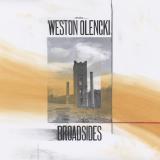
'In 2023, sound artist and composer Weston Olencki toured across the American South. Beginning in their hometown in South Carolina, they snaked a circuitous path from the mountains of West Virginia to the banks of the Mississippi River. As the miles accumulated, so did the initial seeds of new work.
'Instruments and artifacts they acquired hitched a ride in the backseat, while songs and sounds filled their portable recorder: water in its various states, the familiar insectoid buzz of those summer nights, trains cutting through the landscape, the traditional music that lived alongside the communities that kept it. Olencki took it all in, and over time, found ways that these experiences coalesced into a bramble-like perspective of time, where past, present, and future intersect in ways both barbed and beautiful.
'Broadsides, Olencki’s newest solo full-length is the multilayered result of this journey. The album follows their landmark release Old Time Music from 2022, which presented radical interpretations of traditional tunes from Appalachia and throughout the South alongside original compositions that drew significantly on archival recordings. On Broadsides, Olencki rejects delineations between the unmoored avant-garde and the rootedness of one’s cultural heritage, revealing their porous and intertwined nature. “My mother was a quilter. Her mother before that,” they write in the album’s liner notes. “Quilting, like music, is a practice of embedding knowledge and remembrance into the very core of the thing you are making. It’s not just about the materials, but how they’re reassembled, recontextualized, stitched, woven to form new patterns - the minutiae of craft holding significance to those looking to find it. Stories woven from stories, never told the same way twice.”
'Like all great road trips, Broadsides unfolds slowly and continuously, with moments of dramatic reverie punctuating the endless melt of highway in the rearview. We’re immediately confronted by the uncanniness of revisiting old haunts, as Southern storms break through the initial churn of the freight locomotives of Alabama. Olencki’s interpretation of the bluegrass standard “Foggy Mountain Breakdown” captures the euphoria of melancholy in motion. The permutational plucks of banjo are bounced around the frame by a computer, its pitches determined within algorithmic sequences and transcriptions of classic three-finger licks. The tonalities of old-time are smeared and stretched until all that’s audible is the insistence that Heaven might be real.
'In the album’s second half, “Omie Wise,” a murder ballad made famous by Doc Watson, follows an interlude recorded on the river in North Carolina in which the titular character’s body was laid. Ghostly echoes of a dozen other renditions float through the substrata as Tongue Depressor’s Henry Birdsey accompanies them on the pedal steel guitar. The album’s central composition, “all my father’s clocks,” is a profound meditation on entropy and impermanence. The sound of their father’s extensive clock collection ticks away as Olencki pulls a bow across the length of an autoharp sourced from a rural strip mall. The instrument was left as detuned as it was found, the resonance of its deep bass drone and clanging high-end the result of years of neglect and the warping effects of Southern humidity.
'Historically, broadsides were an early form of broadcasting, an often- musicalized telling of current news pasted in the public square. The name was later taken up by Sis Cunningham and Gordon Friesen in the 1960s, whose Broadside magazine published songs and social commentary when American folk music resurfaced as an urgent way of communicating the multifaceted politics of its time.
'Olencki borrows the phrase to recall both this old form of songmaking and that later prominent reexamination of traditional music’s role in modern life, but also to draw attention to the fragmented and machine- mediated way heritage is diffused in this very different, but no less pivotal, moment.
'As a sanitized past is used as justification for current violence and domination, we can turn to these artifacts to better understand the history of ourselves, but only if they are consciously pushed to evolve. Broadsides represents one personal, striking vision of what far-flung futurisms could be respun from = these high, lonesome sounds: a reflection of the unbridled joy and deep sorrow inherent to living together through time, and a desire to push further into the untold and unknown.'
On his debut album “Scattered Memories”, the composer, musician and true master on the Iranian spike fiddle kamancheh SABA ALIZADEH blends his instrumental virtuosity with spherical electronics, samples of Persian music instruments and field recordings from his hometown Tehran.
Born in Tehran in 1983 as son of the world renowned Tar and Setar virtuoso HOSSEIN ALIZADEH, SABA ALIZADEH studied the Iranian spike fiddle with SAEED FARAJPOURY and KEYHAN KALHOR plus photography and later experimental sound art with MARK TRAYLE at the California Institute of the Arts, Los Angeles. His musical activities that lead him all around the globe for performances (a.o. at Carnegie Hall) branch into 2 different areas: on the one side ALIZADEH is a highly reputated virtuoso on his traditional instrument, on the other he likes to approach music from a more experimental / technological aspect in his electronic / electro-acoustic pieces. This not being enough, he founded Noise Works in 2014, a platform and label for organizing experimental concerts and for the transfer of knowledge of music technologies among young Iranian musicians which makes him a central figure at the forefront of the current, very vivid Persian music scene that gained a lot of attention through artists like SIAVASH AMINI, PORYA HATAMI and of course SOTE who included a track by ALIZADEH on the compilation “Girih: Iranian Sound Artists” that he had curated.
In 2018, ALIZADEH self-released his debut “Scattered Memories” on CD in Iran which now, in a reworked version, sees its deserved world-wide release as LP and DL. Over the course of 10 tracks ALIZADEH melts his 2 musical worlds into 1: tradition meets modernism, eastern sounds meet western production, folklore meets contemporary electronics. An album that will appeal to an open-minded “world music” audience as well as fans of current streams like ambient or drone in its most subtle forms.
A chopped-and-screwed love letter to the sounds of rebajada – half-speed cumbia, pioneered by Sonido Dueñez in the 1990s, and born from an overheated turntable motor that didn’t make the crowd stop dancing. With Debit’s treatment, rebajada becomes an ethereal, at times intense ambient tapestry that’s also a history lesson.
Spend any amount of time pacing the streets of Monterrey, the bustling city in the north of Mexico where Delia Beatriz, aka Debit, grew up, and you’ll be sure to catch traces of cumbia echoing from Bluetooth speakers, DIY soundsystems, or car stereos. An Afro-Latin dance form and »practica cultural« originating in Colombia in the early 19th century, cumbia evolved rapidly in the early 1900s, as a localised sound played on drums and flutes quickly modernised to integrate European instrumentation like the accordion. When it reached Mexico in the 1940s, the sound shifted again, fusing with mariachi styles and integrating further vallenato folk elements. Eventually, cumbia spread across the entirety of Latin America, splintering into a spectrum of different musical styles such as chicha in Peru, and cumbia villera in Argentina. And over in Monterrey, cumbia inadvertently found its own idiosyncratic groove.
From the 1950s to the 1970s, waves of immigrants from across Mexico and Latin America headed to Monterrey to find work, making a home in Colonia Independencia. Colombian cumbia records, shipped in from Mexico City, Houston, and Miami, became the soundtrack of the neighbourhood, relaying familiar stories to a rural working class adjusting to their new industrial reality. The sound struck a chord with locals, and huge street parties hosted by ramshackle soundsystems known as sonideros unified the diverse community. So when cumbia rebajada materialised serendipitously in the 1990s, it emphasised and highlighted the memory distortions at the heart of the immigrant experience. Local record collector, selector, and sonidero Gabriel Dueñez had been playing cumbia for hours one night when disaster struck: his turntable’s motor overheated and slowed down, turning the music into a warped groan, with half-speed voices echoing over wobbly accordion drones and splashy drums. But the crowd kept dancing, and Sonido Dueñez realised he’d struck gold – cumbia rebajada was born.
Over the next few years, he dubbed a popular series of mixtapes, hawking them at the flea market on the dried-up Santa Catarina riverbed beneath El Puente del Papa, the bridge that links downtown Monterrey with Independencia. These woozy archives became the stuff of legend, poetically but subconsciously shadowing DJ Screw’s series of epochal cassettes that appeared over the border in Houston. Beatriz uses Sonido Dueñez’s first two tapes as the starting point for »Desaceleradas«, entering into a dialogue with time, culture, and geography as she recalls the sonic ecosystem that surrounded her decades ago, long before she emigrated to the USA. If 2022’s acclaimed »The Long Count« was an attempt to recover concealed pre-Columbian history in the face of colonisation, »Desaceleradas« jumps forward, figuring out how memory and shared celebration can resist a more contemporary form of cultural erasure. As AI systems scrape, blend, and decontextualise culture around us, leaving vapid slop, »Desaceleradas« proposes a slower, more careful, and ultimately more human kind of engagement. It’s an archive with a pulse.
On »Empty Room,« David Granström works with slow transformations, cyclical and isometric patterns as well as just intonation as a way to create harmonic stability, allowing his long-form pieces to develop their own unique temporal and spatial qualities. A prolific figure in Stockholm’s experimental drone scene and a collaborator of Hallow Ground label mates Maria W Horn and Mats Erlandsson, the Swedish composer navigates through moments of quietude and crushing volume on these five tracks. Sonically and atmospherically, the pieces on »Empty Room« simultaneously call to mind Fennesz’s most meditative work or the physical experience of seeing Sunn O))) live, blending guitar recordings and synthesised sounds with forceful effects similar to those of Mario Díaz de Leon’s Oneirogen project while still being as moving and delicate as Alessandro Cortini’s solo work. The album is marked by melodies and harmonies that are the product of a peculiar working process that turned the composer into an intent listener collaborating with, rather than simply using technology.
Having been invited by the self-organising artist group The Non Existent Center for a residency to Ställbergs Gruva, a defunct iron ore mine in Sweden’s Bergslagen region, Granström took his guitar as a starting point for his compositional work that heavily relies on real-time sound synthesis. »I seldomly use the instrument as a sound source in the final compositions and rather transcribe and orchestrate the harmonic structures using sound synthesis,« he explains. »On this album however, I chose to include the actual recordings of the guitar in order to extend the spectra between non-referential synthetic sounds and embodied referential sounds.« Working with precise tunings in order to blend the timbre of the synthesis with the harmonic structures of the composition, he created composite sound objects in which the harmonic elements blend into each other.
Through the re-amplification of synthetic musical materials from the inside of the abandoned mine, his original compositions were enriched with site-specific sound qualities before he further refined them in a singular working process. Granström works with algorithmic and generative processes, using the SuperCollider programming environment and thus blurring the lines between generative and creative forms of composition. »One of the things that I like about this way of working is that it creates a distance between myself as a composer and myself as a listener of the music that is produced entirely by the system,« he says. Granström’s technologically aided eschewing of the conventions of composing doesn’t make the end result any less personal, however. By listening again and again to the newly generated output, Granström simply took on a different role in the process of finalising the music, with the technology and the sounds becoming his co-authors.
By creating systems that generate music, he gains a new perspective on (musical) time, says Granström. »There doesn't have to be a fixed length to the music at all,« he explains. »And by writing music with this in mind, my focus tends to shift towards writing cyclical structures that gradually change and transform over time.« Simple parts, in other words, that emerge as the five complex wholes that form »Empty Room,« a record that itself seems to take on different forms with every new listen.
- 1: Europium Alluminate
- 2: A Circle And A Star (Vocals Susan Christie)
- 3: The Fallen By Watch Bird
- 4: Turning In Circles
- 5: Hud A Llefrith
- 6: Whispers Of Winter
- 7: Noctilumina
- 8: My Soul Was Lost, My Soul Was Lost, And No One Saved Me
- 9: Silver Chord (Vocals Wendy Flower)
- 10: Europium Alluminate (W/ Demdike Stare)
- 11: A Circle And A Star Part I
- 12: The Fallen By Watchbird (Video Edit)
- 13: Turning In Circles
- 14: Majic Milk
- 15: Whispers Of Winter (W/ Wendy Flower)
- 16: Noctilumina (W/ Anworth Kirk)
- 17: My Soul Was Lost, My Soul Was Lost & No One Saved Me
- 18: Silver Cord (W/ Samandtheplants & Wendy Flower)
- 19: A Circle And A Star Part Ii
Erweiterte Deluxe-Jubiläumsausgabe von "The Fallen By Watch Bird", das neben dem Originalalbum auch das Kompendium "The Watchbird Alluminate" enthält, alternative Versionen und Neuinterpretationen von u.a. Demdike Stare, The Focus Group, Anworth Kirk und Emma Tricca. Seit der ursprünglichen Veröffentlichung vor 15 Jahren hat sich Jane Weaver zu einer der markantesten und experimentierfreudigsten Stimmen aus UK entwickelt und eine Reihe von gefeierten Alben veröffentlicht, darunter "The Silver Globe", "Modern Kosmology", "Flock" und "Love In Constant Spectacle". Es ist ein psychedelischer Femme-Folk-Rock-Teppich, der Einflüsse aus dem osteuropäischen Kinderkino, deutschen Kunstmärchen, der TV-Musik der 70er Jahre und elektronischen Soundtracks der 80er Jahre aufgreift. Dieses konzeptionelle Album, das von Synths und Mystik durchdrungen ist, verwebt Bilder von abwesenden Seeleuten, Telekinese, Tierbotschaften und weißer Magie mit heidnischen Themen wie Tod und Wiedergeburt. Ein prägendes Meisterwerk aus ihrer ständig wachsenden Diskografie, das ihre Reise von ihren folkloristischen und poporientierten Anfängen bis hin zu den psychedelischen Synth-Pop-Experimenten von heute dokumentiert. Das Album umfasst sieben Kapitel und enthält Beiträge von Septième Soeur Wendy Flower vom Folk-Pop-Duo Wendy & Bonnie, das 1969 das Album Genesis veröffentlichte, Lisa Jen, der walisischen Sängerin auf Gruff Rhys' Candylion, der verstorbenen amerikanischen Folk-Pop-Sängerin Susan Christie und dem bosnischen Folk-Musiker und Violinisten Behar. Als Extra setzt "The Watchbird Alluminate" die Reise fort, indem es in Drone, Psychedelia, Folk und weitere Klanglandschaften eintaucht. Einzel-CD oder limitierte 2LP-Edition in Marineblau und Cremefarbenem Vinyl, Gatefold-Sleeve + Obi-Streifen & DL-Karte.
- 1: The Cottar
- 2: The Linton Wyrm
- 3: Snodgerss
- 4: Chamber
- 5: Wynne
‘Clyppan’ is an Old English verb meaning “to embrace” or “to clasp.” It also referred to an ancient ritual in which people gathered in a circle, singing together around a sacred shrine. It’s a fitting title for the latest release from Newcastle’s Smote – a visceral document of the band’s electrifying live set, captured within the walls of London’s Bear Bites Horse recording studio.
Following the release of their acclaimed 2024 album ‘A Grand Stream’, Smote embarked on an intensive tour schedule, refining their live performance along the way into something transcendental – a full-spectrum psychic voyage. Anyone who caught them at Supernormal, Supersonic, or this year’s Roadburn Festival can attest: Smote are an unforgettable sonic presence, a near religious experience.
Recognising the urgency and potency of the band’s current live form, Rocket Recordings encouraged Smote’s founder and sonic architect Dan Foggin to document their live set in the studio. It was a sound too powerful to be left undocumented – it was something that needed to be clasped for future generations.
On January 22, 2025 – the day before their thunderous performance at London’s ICA alongside labelmates Teeth Of The Sea – the four members of Smote entered Bear Bites Horse studio. With producer Wayne Adams at the controls, they laid down a live set brimming with raw, elemental power.
What emerged is ‘Clyppan’ – four drone-and-repetition driven incantations, distilled from the primal essence of Smote’s sound. These tracks channel something ancient and urgent, summoning spirits and revelations in their wake. It’s music as ritual, as invocation – pure aural sorcery.
So gather together. Form a circle. Join hands. And embrace the ecstatic, untamed energy of Smote in their most untethered and primal form.
“There's a clarity here that feels hard-won. Honing ideas first explored with his Organic Music series, Tiago Sousa unlocks the final puzzle pieces on Sustained Tones Vol 1. This music is enchanted, the way each layer moves in conjunction with the others: complex structures that feel less constructed than discovered, like stumbling upon ancient mechanisms still whirring beneath the earth. "Readily Reliance" opens as an effervescent sea, waves gilded in neon creating an enveloping sense of eternal motion. Bright organ timbres throw silhouettes and cast Sousa as the deft puppeteer keeping everything moving with an effortless precision. These evolving shapes suspend listeners somewhere between the physical and the cosmic, held in place by nothing but intention and sound.
Drones build rippling foundations in other places, using slower tempos to construct immersive, off-kilter sound worlds where minimalism becomes emotive, almost poignant. The fluctuating tones have a gossamer sheen, creating this interesting sonic dichotomy: a solid surface with fragile rotations beneath. It's music that commands attention; it is so much more than simply aural furniture. Sousa writes these beautiful sequences that are all interconnected, intricate sonic architecture that pulls us further into some kind of unknowable ether.
On the piano pieces, "Smooth Flow Into It" and "Swirling Mist and Thin Dust," Sousa shines sunlight through all the cracks. Washes of melody are effervescent, clouds clearing to reveal the day has not gone. Not yet. Positioned in the middle of Sustained Tones Vol 1, these pieces ground the album in something transcendent yet still earthen: moments of breath inside all that cosmic drift. Darkness finds its way through on "Restlessness," where Sousa smears sinuous electronics into a ghostly sonic mesh that seeps through the skin. It feels like a slow inhale, time suspended long enough to take note of where we are and how we feel before moving forward. Expressive, almost sparkling synth arrangements return to send us back into reality on closer "Becoming a Landscape." Its title hints at larger concepts at play throughout this album, where lines between our physical beings and the wider environment are blurred. The tones that echo throughout these six pieces mirror the echoes inside our bodies, from heartbeats and voices to something quieter, something much smaller and more elemental. By immersing us inside these mesmerising, beautiful soundscapes, Sousa immerses us within ourselves.’’
Brad Rose, 2025
- 1:
- 2:
- 3:
- 3: 4
Full of joy, they ran to meet him.
Then threw one of the shirts over each of them,
and when the shirts touched their bodies they were transformed into swans,
and flew away over the woods.
The record is comprised of a series of improvised recordings made over the course of an evening in Autumn ’23, captured at the Jabu home studio, south Bristol while Teresa was staying in town for a show. Everything was recorded into the desk in a single take and left as it was, no editing or overdubs, instruments were swapped around and effects units left buzzing ground hum scattered over the floor.
Teresa and Guest (Jasmine of Jabu) provided the vocals, taking words from anything at hand - poetry books, an old copy of the Whole Earth Catalog - their voices winding together, echoing out each other’s melodies. This approach is mirrored by the instrumentals, anchored by something at times - a bassline, one of Birthmark’s synth drones or a fizzing chord but always on the edge of collapsing in on itself or floating away. The tracks become more soporific as the record goes on (and as the night got later), ending on a refrain of ‘say you think its true’ as the instrumental finally dissolves the pedals get dialled up to 11 and Birthmark’s drones turn into distant lasers in a last swan song of feedback.
Recorded Sep 2023 in Bristol, BS3, by:
Teresa Winter (vocals, fx)
Guest (vocals, guitar, fx)
Birthmark (synth, fx)
A.Childs (samples, bass, guitar)
While listening to old Multer recordings for a potential 25 years anniversary edition we were highly impressed by the direct two track recording of this concert in 1999 due to both the concentrated and quiet audience and the setup of some of our songs, which were preversions for the following Neskt-10” release. All in all this concert is very intense, so instead of the anniversary edition we decided to release this concert; we hope you like it too…
Multer started working in the 1990s operating out of Dortmund, Ruhrgebiet. Steady and current members are Mal Hoeschen (who used to run the label Genesungswerk), Hellmut Neidhardt aka N (whohas released numerous LPs of his heavy guitar drone work outs) and Thomas K. Geiter, who has long been active in the alternative band scene of Dortmund. Multer have released work on labels such as Drone Records, Consouling Sounds, aufabwegen as well as on their own imprint Genesungswerk. They have played concerts internationally.
NPVR is the avant garde duo made up of the late Peter Rehberg and Nik Void. Editions Mego is proud to present their second and final release. No this is not some kind of Beatles synthetic AI that raises the dead reconstructed recordings but rather a new album made by the humans and their machines.
The initial meeting of Rehberg and Void was in London in 2016 and despite or due to their mutual awkwardness found solace and compatibility in the fact that they both had a similar electronic modular set up, along with matching cases to transport all. The idea to collaborate was an obvious and organic process as a means to connect their individual gear together and observe the outcome. The fruits of these initial experiments, recorded in London, resulted in the playful experimentation of their acclaimed 2017 release 33 33 (eMego 251).
Now in 2024 Editions Mego presents the logically titled follow up, 33 34. These sessions were recorded six months after the initial recordings at Peter’s home in Vienna. This was planned out as a mirror city release to the original London recordings. With Peter having access to his full studio set up this time around we encounter a rich audio landscape which organically folds together a variety of musical genres blurring any distinction between these forms so the resulting music hovers as a new cloud of sound. Any musical form, be it industrial, electro-acoustic, ambient, drone and techno all coexist and melt into the other as the ensuing result unveils a hypnotic swarm of divergent sounds (music). When active there were no lines or contexts with NPVR, either between sound or genre within these recordings or live where NPVR were at home playing at a techno club one night and an avant garde venue the next.
The initial session of these recordings was edited by Rehberg and sent to Void to further develop. Over time the final versions were agreed on and then shelved as other outside projects took over. The awkwardness had been surmounted and the two had become close friends. NPVR performed at a range of venues such as Tresor, Sutton House, Corsica, Blitz, Paris GRM #Focus2, LEV Festival and Rigas Skanumezs Festival. Following Rehberg’s untimely passing Void had difficulty listening back to the sessions but eventually thought it fit to complete and release this album, of which even the artwork (like 33 33, an image from Zurich photographer, Georg Gatsas) had been decided upon prior to Rehberg parting ways.
There is an unmistakable joy to these recordings. One encounters an enthralling exploration of their chosen machines which conveys the excitement of what can be randomly conjured when people speak through such devices. There is no grand statement or argument here, just the sheer thrill of creation and the recorded results of random encounters. The art of collaboration was always a mainstay of Rehberg’s practice from the advent of the MEGO adventure. Rehberg & Bauer was an initial collaboration with former business partner Ramon Bauer. Even at this stage one can hear a relaxed sense of delight in the sheer discovery of sound.
A mix made for the Wire magazine following the release of 33 33 hints at the freedom that comes with endless urge for exploration and discovery. Abstract tracks from Z'EV. Jérôme Noetinger and Jung An Tagen are included alongside British stalwarts The Fall and New Order. There were no lines between pop / academic / underground or mainstream in Rehberg’s world. All of it sat at the same table. It is just matter in the atmosphere, like the diverse exploration found in these recordings that comprise 33 34.
Towards the end of his life Rehberg was obsessing over the immense output of the German ambient musician Pete Namlook. An artist renowned for not only his sprawling catalogue of ambient masterpieces but one who often said his main inspiration was nature. This is apt with regards to the work of NPVR which also aligns with such thought as the intertwining of the two individual artists and their machines results in a natural symbiotic flow, as it happens, just like in the world around us.
"Ensomheden Vi Deler" ("The Loneliness We Share") is the result of a dialogue between the collages and the music of øjeRum, initiated by IIKKI, between December 2024 and July 2025.
øjeRum is Copenhagen based musician and collage artist Paw Grabowski.
With his collages, the distinctive feature of øjeRum's works is their ability to combine different historical and artistic periods, such as ancient sculpture, medieval frescoes, classical painting and photography, and to make them interact with one another. øjeRum is also renowned for his work as a musician, where he stands out for his surreal, mysterious and poetic universe. His music and art are closely linked. These two sides of the artist's work are constantly intertwined.
In his øjeRum guise, he plucks and strums his treated acoustic instruments, sounding at times like church bells, at times like angelic harp, at time like drones, and suspends the listener in the magic of his melodies. With a deep back-catalogue of releases since 2014 - spanning labels such as eilean rec., Room40, Line, Opal Tapes and many more - he continues exploring his minimal, textural and deeply personal style of ambient music.
The collage and music project "Ensomheden Vi Deler" ("The Loneliness We Share") is an exploration of loneliness, closeness and distance. A meditation on the fragile architectures and hidden shapes of human connection. This is his second release on IIKKI.
Fine Art Book, Ltd. to 500 copies:
Hand numbered & hand stamped / first edition and only edition (no re-print) / hardcover book (15 cm x 21 cm) on Wibalin Natural Cotton White / 80 pages, 35 collages printed on Freelife Vellum 120g/m2 / Swiss Binding / Coloured edges with neon green pantone / Neon Green pantone on front and back cover (logo, slot and circle) / Sticker on front cover.
US ambient powerhouse and Past Inside the Present label head Zake is one of the most prolific producers in the game. He puts out new music more often than most of us put out wheelie bins. That doesn't stop him from revising what has come before, as he does here. Wash Away was made with Lucy Gooch and Black Brunswicker back in 2020 and now gets a series of subtle edits before being dropped on heavyweight wax. It is a mirage of vocal whispers, soft drones, and mindless (in a good way) musical daydreaming marbled with acoustic strings and backed with signature tape hiss. Yet another crucial work from Zake and co.
A meditative, folk-inflected score rooted in improvisation, ‘Dragon’s return’ echoes the soul of A film long buried behind the Iron Curtain
With Dragon’s Return, Australian composer and multi-instrumentalist Oren Ambarchi and Norwegian guitarist Fredrik Rasten present a new, meditative score to Eduard Grecner’s eponymous 1967 Slovak cult film — a stark, black-and-white parable.
The album captures a unique live performance recorded at the Videodroom Festival during Film Fest Ghent in October 2024, where this new score premiered alongside the film in collaboration with the Slovak Film Institute. What began as a fleeting, improvisational encounter between music and image has since taken on a life of its own — an evocative sound world that retains its power even in the absence of visuals.
The album will be available on vinyl and all digital platforms from September 12 via VIERNULVIER Records. The vinyl edition includes an obi strip, a booklet with film stills, and extensive liner notes on the film.
The label is known for shedding new light on forgotten films through reimagined soundtracks — claire rousay’s acclaimed The Bloody Lady being the most recent example.
“Folklore meets avant-garde in an ancient drama - a ballad about love, hate and finding a way out of loneliness” - Rastislav Steranka (Slovak Film Institute)
Ambarchi and Rasten do not accompany the images so much as speak through them. Their interplay — on guitars, flutes, percussion, and voice — unfolds slowly, without a fixed destination, culminating in subtle, entrancing drones. With few breaks or ruptures, this trippy, folk-inflected continuous composition invites surrender.
Rasten’s 12-string guitar and delicate use of voice create layered textures that shimmer and shift. Ambarchi, known for his electro-acoustic work, here explores a radically softer mode — strumming, bowing and coaxing tones from his instrument as though it were a string section unto itself. He blows into shells, adding breath and texture to the sonic palette, touching on something elemental.
Together, they evoke a sound world that feels both ritualistic and strangely familiar — as if echoing from a forgotten ceremony or dreamed into being after hearing an old folk tale. Rooted in improvisation, the music speaks in tones both intimate and expansive, shaped live in dialogue with the film and with each other, with only minimal overdubs added afterward.
Introducing their first release, Label Unidentified Turning Object launch the four-track 'Unidentified Turning Object 001' EP, a highly inventive statement that blends astral drone, dubby downtempo, high-energy breaks and crystalline ambient textures.
Self-released and refreshingly unbound by mainstream expectations, 'Unidentified Turning Object 001 veers sharply away from conventional dancefloor tropes. Instead, it sketches a deeply immersive, almost sculptural experience.
Very Limited release in 4 different colors eco-vinyl : Blue, Dark Green, Green and Orange.
A rhythmic minimal ambient piece played with organic electronic sounds. Elements of electronic, psychedelic, and ethnic music are interwoven. The vinyl debut of Japanese composer / electronic musician NAT000. Mastered by ISAO KUMANO of Phonon, a Japanese audio equipment manufacturer. NAT000 : After performing live as a one-man drone under the name sonic mainly at 20000v in Koenji Tokyo and DOM in Nishi-Shinjuku (now EARTHDOM in Shin-Okubo), he became a band member of the hardcore bands BUTTHEAD SUNGLASS and ABRAHAM CROSS, which gained popularity in the underground scene in Tokyo in the 2000s.The Band has been performing in parks, abandoned buildings, and campgrounds. Since turning solo again, he has been producing electronic music and performing live using analog synths, samplers, drum machines, software, and effectors, and has privately released a CD of self-produced recordings. This album is a compilation of past works from those CDs and newly produced works for the album.
American ambient powerhouse zake is back with a meditation on stillness, memory and the quiet power of seasonal change. Rooted in the Midwestern winter that inspires much of his work, his latest album Cantus for Winter in Six Parts unfolds in slow-moving analogue drones, soft hiss and faint environmental textures that are both intimate and expansive and true to his signature style. Each piece drifts gently into the next, evoking cracked wood, falling snow, distant strings and the eerie calm of frozen landscapes. By the time the 19-minute finale arrives, you are lost in a world of solitude and reflecting deeply on many things that will ultimately leave you feeling restored.
LIMITED 300 ONLY TRANSPARENT SKY BLUE LP. HOUSED IN FULL COLOUR SLEEVE WITH POLYLINED INNER BAG & DOWNLOAD CODE
Two fields of existence collide as Nolla (Finnish psych/space rockers) & Mike Vest (Maximalist guitar guru, Bong, Blown Out, Drunk In Hell, Artifacts & Uranium, Modoki, Tomoyuki Trio, Mienakunaru etc) merge their creative visions for the third time.
Creating a steady and surreal exploration through astral planes. Nolla improvised the ground layer in their signature minimal space-rock style and MikeV wrapped everything up in lavish layers of fuzz, phased and U-Wah layered guitars.
Blending octaval tones, around an array of electronics & vocal harmonies. Resulting in a constant trance like psychedelic drone rock.
It's time to join the extraterrestrial communion, beyond the skies, convert into the mode of light and pay homage to his mighty eminence.
- Whispers For The Blessed
- Whispers For The Damned
- Whispers For The Living
- Whispers For The Dead
Das ist Kramers erstes Soloalbum seit fünf Jahren. Seine letzten Solo-LPs ,And The Wind Blew It All Away", ,Music For Films Edited By Moths" und ,Music For Pianos & Sunflowers" waren Teil seines 2020 AIR (Artist In Residence) Box-Sets für Joyful Noise Recordings. ,And The Wind Blew It All Away" war eine sanfte und magische Mystery Tour mit brodelnden akustischen Saiten, Orgeln, Klavieren und Mellotrons, Tonbandschleifen, gefundenen Klängen und einem Hauch von Percussion, untermalt von Kramers unverwechselbarer, eigenwilliger Singstimme und seinen Texten. Auf dieser neuen LP entfernt sich Kramer von Worten/Texten und widmet sich ganz den minimalistischen instrumentalen Drone-Gedichten, die ihn in seinen frühen Jahren als Komponist und Performer in der experimentellen ,Downtown"-Szene des New York der späten 70er Jahre erstmals faszinierten. Auf dieser neuen LP erkundet Kramer weiter die kreativen Umgebungen, die ihn zurück in den Wald der Ideen und organischen Einflüsse führen, die seit Jahrzehnten still vor sich hin brodeln, an einem Ort, an dem die Zeit immer Jetzt ist. Fans von Terry Riley, La Monte Young und Gavin Bryars werden von Kramers neuesten klanglichen Erkundungen fasziniert sein.
- A1: Thurston Moore - Drone Cognizance
- B1: Aaron Dilloway - Psychic Motor Disorder
- B2: Pharmakon - Blunt Instruments
- C1: Drew Mcdowall - Feedback
- C2: Mark Solotroff - Terminal '25
- D1: The Rita - 109 190
Inspired by Lou Reed’s groundbreaking 1975 noise opus Metal Machine Music, this collection assembles a formidable lineup of sonic provocateurs—Aaron Dilloway, Drew McDowall, Thurston Moore, Pharmakon, The Rita, and Mark Solotroff—to explore the outer edges of distortion, feedback, and raw electronic texture. Each artist channels the spirit of Reed’s original manifesto of anti-music, pushing their own boundaries through modular synthesis, tape manipulation, harsh noise, and industrial decay. The result is a visceral, immersive experience that celebrates chaos, confronts structure, and redefines what music can be.
- Escaping Encirclements
- Something Isn't Right
- Unreal Shapes (Dreamland Ii)
- A Mountain Doesn't Budge
- Untouchable
- Criss-Cross
- Under The Maples
- Not Too Late (To Take Revenge)
Gong Gong Gong aus Peking und Mong Tong aus Taipeh sind gleichgesinnte Duos, die für ihre cineastischen und rohen Klänge bekannt sind und transglobale Melodien mit unwiderstehlichen Grooves verbinden. Auf Mongkok Duel haben sich die Bands zusammengetan, um einen imaginären Soundtrack für einen verlorenen Kung-Fu-Film zu kreieren. Es handelt sich zweifellos um die musikalische Untermalung einer übernatürlichen Geschichte über Ehre, Intrigen und (natürlich) Rache. ,Mongkok Duel" knüpft an die langjährige Rhythm 'n' Drone-Kollaborationsreihe von Gong Gong Gong an und präsentiert die unverwechselbare Ästhetik beider Gruppen, indem es eine gemeinsame Sprache aus zyklischen Motorik-Rhythmen, sich entwickelnden Drones, texturierten Soundeffekten, knurrenden Gitarren und growlenden Bass-Hooks aufbaut. Geschrieben und live aufgenommen in den legendären Proberäumen der President Piano Co. in Mongkok, Hongkong, spielten die Bands auf den Instrumenten und Verstärkern des Studios, die noch aus der Gründungszeit der President Piano Co. im Jahr 1978 stammen. Die Aufnahmetechnik des Studios ist ein einzigartiges System, das vom Eigentümer Lee King Yat entworfen und eingerichtet wurde und dem Album seinen unverwechselbaren Vintage-Sound verleiht, ohne dabei an beeindruckender Klarheit einzubüßen.
- 1: Hometown 200
- 2: Our Lonely Hearts
- 3: Beautiful Day
- 4: Easy Feeling
- 5: Local Girl Builds A Rocket
- 6: Show Me Around
- 7: Clever (In The Eyes Of Others)
- 8: Conversations In The Dark
- 9: The Changes
- 10: Martin Amiss
- 11: The Final Joy Ride
Written in the Scottish Highlands, recorded on the West Coast in Largs and pressed on vinyl in East Lothian. Rapture Party was mixed and mastered by Jason Shaw and Fuzz Face Studios and is released by Last Night From Glasgow. ; The Joshua Hotel are an indie- pop trio from Inverness led by producer Joshua Mackenzie with Louis Slorach on guitar/ drones and Joshua Gilbert on drums/ percussion. Single Easy Feeling is released on Friday 21 March.
- My Former Self
- Your Aura
- The Animal In You
- Black Heart
- Narcissus
- Gloomy Sunday
- Vision
- In My Room
- The Bulls
- Près Des Ramparts De Sévill
- Catch A Fallen Star
- Your Love Is A Lesion
- Torment
- Empty Eyes
- Untitled
- Angels
- Caroline Says
- First Time
- Jacky
The complete recordings of the legendary Marc And The Mambas run of three live performances given at The Duke Of York's Theatre in London's West End in 1983. Restored from the original VHS tape recordings made by the late Peter 'Sleazy' Christopherson (Throbbing Gristle, Coil), these remain the only recordings that exist of Marc And The Mambas performing live. Originally released in 2012 on Marc Almond's (Soft Cell) own Strike Force Entertainment label as a CD/DVD set (long sold out), this edition, presented on vinyl for the first time, contains the 17 tracks from the SFE CD release, expanded to include the two bonus DVD-only tracks: 'Près Des Ramparts De Séville' and 'Jacky'. Completely remastered for vinyl by Martin Bowes (The Cage Studios). A combination of the chanson and torch songs which he still sings today, over piano, strings and woodwind-accompanied compositions. "It's quite a spectacle, especially when Almond hits his sweet spot of sinister lyrics, declared pompously over a droned string arrangement... Early signs of the full-on showtune and classical rearrangements that make up Almond's current albums are evident"(Record Collector). Presented on heavyweight double vinyl in a deluxe glossy gatefold sleeve featuring the extensive reminiscence by Marc Almond himself from the 2012 release. Also included is a reproduction of the 16-page programme printed for the three concerts in 1983. The stunning cover painting by Val Denham is exclusive to this release.
Kevin Sery is the ambient guitarist behind From Overseas and now returns with a brilliant follow-up and stylistic evolution of his 2020 debut, Home. This one was inspired by fatherhood and the artist's studies in environmental philosophy, which is why the eight luminous soundscapes feel both intimate and immense. Layers of shimmering guitar, airy drones and organic resonance add up to a sonic meditation on awe that cannot help but have a profound effect. From the cascading beauty of 'Appalaches' to the radiant calm of 'Infinite,' this is ambient music that is too emotional and cinematic to be simply left playing in the background. It's a contemplative heavyweight that demands and rewards your full attention.
Songs for Nothing was written upon Olan Monk’s return to the west coast of Ireland. The album is imbued with the influence of sean-nós singing, Irish language songs in the “old style” that often proclaim tales of love, loss and landscape; and also heavily indebted to the late Sinéad O’Connor’s confessional songwriting. Reconstructing these influences through their unique perspective has resulted in a fragmentary album veering between collaged pop, machinic rock and slow airs, “dedicated to Conamara and all who have called it home”. The western, Atlantic-facing edge of Ireland has a particular feeling and energy, one that permeates the release: the granite pulsates, the ocean and sky reflect intensities, seaweed rots on shingle shores, plants bloom, ancient trees come up for air from the drowned forest in Galway Bay, the sun splinters through the low clouds.
All songs written and arranged by Olan Monk
Vocals, guitars, piano and tin whistle performed by Olan Monk
Drum programming by Olan Monk featuring recordings of percussion performed by Michael Speers
Vocals on ‘Down 3’ and ‘Fate (Reprise)’ performed by Maria Somerville
Cello on ‘Blank Page’, ‘Oatmilk’, ‘Pomegranate’ and ‘Fate (Reprise)’ performed by Risteárd Ó’hAodha
Violin on ‘Corp’, ‘Down 3’ and ‘Drón Feadóige’ and accordion on ‘Amhrán Mhaínse’ performed by Peadar Tom Mercier
Bodhrán on ‘Corp’ and ‘Drón Feadóige’ performed by Aindriú De Buitléir
Harp on ‘10 Days’ performed by Róisín Berkeley
Flute on ‘10 Days’ performed by Dylan Kerr
Accordion on ‘Blank Page’ performed by Olan Monk
Recorded and mixed by Olan Monk
Additional mixing on ‘Can’t Wait’ by Patrick Burniston
Mastered by Noel Summerville
Photography by Charlie Joe Doherty
Artwork by Nicola Tirabasso
Thanks to Nic Tasker
With love to friends and family for their support in making this record
Dedicated to Conamara and all who have called it home
- Part I
- Part Ii
In einer mutigen, hypnotischen Hommage an Detroits ursprüngliche Avantgarde-Rock-Wurzeln verwandeln Schlagzeuger Larry Mullins (alias Toby Dammit) und der legendäre Bassist Mike Watt das eindringliche Mantra ,We Will Fall" von The Stooges in ein fast 40-minütiges Ritual aus Wiederholungen, Zurückhaltung und roher Atmosphäre. Mullins und Watt greifen den unheimlichen Puls und den narkotischen Drone des Original-Tracks von 1969 auf und treiben dessen tranceartigen Kern in unbekanntes Terrain. Mullins, bekannt für seine Arbeit mit Iggy Pop, Swans und Nick Cave, baut mit seiner Shruti-Box, Moog-Elektronik, Tabla und Gongs eine minimalistische Landschaft auf. Watts charakteristisches Low-End-Dröhnen verwandelt sich von einem subtilen Herzschlag zu einer Ganzkörperhalluzination. Das Ergebnis ist keine Coverversion, sondern eine erweiterte Beschwörung. Teils Séance, teils Trauergesang, teils freie Erkundung von Stimmung und Geist. Es ist ein langsames Brennen klanglicher Hingabe, das den Geist der Stooges ehrt und gleichzeitig die Tür zu etwas völlig Neuem öffnet: ein tiefes Eintauchen in das Heilige und Fremde. Dieses meditative und bedrohliche Stück ist auf zwei Seiten der LP aufgeteilt, die exklusiv für den Record Store Day Black Friday 2025 erhältlich ist. Die Hälfte der Pressung erscheint auf goldenem Vinyl, die andere Hälfte auf schwarzem, die Auswahl erfolgt nach dem Zufallsprinzip.
- Specimen 1.1
- Specimen 2.1
- Specimen 3.1
- Specimen 4.1
- Specimen 5.1
- Specimen 6.1
- Specimen 7.1
- Specimen 8.1
- Specimen 9.1
- Specimen 0.1
After screaming to the world You Don't Know What Chiptune Is, arottenbit returns with an even more radical and collective statement: You Don't Know What A Rework Is. Ten tracks, completely deconstructed and rebuilt by twenty Italian bands, each in their own sonic language. From drone swallowing the void to the most savage death metal, from visceral punk to a fearless flamenco twist, every track becomes an uncharted territory, a journey where arotttenbit's identity dissolves and multiplies into twenty new forms. Most of the recordings were captured by Otto himself with his mobile studio, during a tour across Italy that took him into basements, rehearsal rooms, and underground spaces, harnessing raw and direct energy from the bands in their natural environment. Mixing and mastering then came to life at Otto Engineering Labs, his personal sound-space where everything was stitched together and transformed into a single living organism.
[a] SPECIMEN 1.1.[FLC:011-015] (FEAT. FULCI)
[b] SPECIMEN 2.1.[ISK:006-008] (FEAT. JASON DAHLKE)
[c] SPECIMEN 3.1.[FSG:005-007] (FEAT. FOSGENE)
[d] SPECIMEN 4.1.[OVO:004-007] (FEAT. OVO)
[e] SPECIMEN 5.1.[UND:008-010] (FEAT. UNDERTAKERS)
[f] SPECIMEN 6.1.[HWF:007-009] (FEAT. HYPERWÜLFF)
[g] SPECIMEN 7.1.[3ST:009-010] (FEAT. THREESTEPSTOTHEOCEAN)
[h] SPECIMEN 8.1.[MBR:006-007] (FEAT. MASTER BOOT RECORD)
[i] SPECIMEN 9.1.[LXN:010-011] (FEAT. LESLIEXNIELSEN)
[j] SPECIMEN 0.1.[8NE:006-008] (FEAT. OTTONE PESANTE)
- The House With The Red Door
- Enthralled
- The Chamber Of Breathtaking Delights
- Consorting With The Devil
- What Once Was Shall Be Again And What Is Shall Be No More
- Apocrypha Through The Keyhole
- Hell On Earth New Eden
- Behind The Green Door
The story of Suffering began in the UK's West Midlands in 2012 and since those nascent days they have released a nefarious collection of occult black metal offerings, beginning with their debut album, 11, in 2018 and most recently the Symphonies: Diabolis EP in 2024. They have also built a reputation for intense, diabolical live performances, appearing alongside the likes of Esoteric, Ghost Bath, and Mol. The band recently signed with infamous label, Apocalyptic Witchcraft, with label founder Conor Droney describing Suffering's music as "dark, unflinching, and deeply atmospheric, exactly what we stand for." And now the first fruits of that new alliance are about to be unveiled, in the shadowed form of Things Seen But Always Hidden. Things Seen But Always Hidden is an enveloping nightmarish journey through temptation and spiritual destruction, an immersion in contrasting states of terror and ecstasy - it bewilders, consumes and possesses the power to change and scar. Each song seeps into the next, binding them into a grimoire of dehumanising ritual, yet they exist as powerful individual entities. There is 'Enthralled', constructed from classic black metal riffs and raw vocal exhortations_and something more, something imperceptible but profoundly affecting; 'What Once Was Shall Be Again And What Is Shall Be No More', a glimpse beyond the veil, a fall down the endless paths of inherited memory that binds you to this album, this place constructed from arcane sound; the fear filled and imperious 'Hell On Earth New Eden', driven by a ravenous, unholy hunger_each chapter in this tome of unmaking and desecration will burn itself into your mind. A fusion of blackest metal, ritualistic doom and unsettling, distressing atmosphere Things Seen But Always Hidden will never leave you, no matter where you run. The way to Things Seen But Always Hidden will be revealed by Apocalyptic Witchcraft on November 28th. But remember, once you have set foot on this path there is no way back_
- Enter
- High Force
- Crystal Eyes
- Birds Of Prey Side B
- Minutes And Days
- Moon Magic
- Euphoric Riot
- Rainbow Lake
Evolving from a solo-project of Christian Wilson Larsen to a dynasty including members of Serena Maneesh, Le Corbeau, Mindy Misty, Burning Motherfuckers, Next Life, Far From Tellus and Deathcrush, - Izakaya Heartbeat is seemingly a constellation in flux - complimentary to their psychedelic soundscape. "A pounding, drone infested body of work, "enter-rainbow lake" touches similar places that vintage black angels or even some of the more smacked out sonic youth soundscapes. Enveloping and immersive from the outset, the fusion of psychedelic dynamics with hardhitting musicianship is lethal." - Rough Trade (UK)
Dieses spezielle Vinyl-Boxset enthält den kompletten Original-Soundtrack des Spiels sowie die DLC-Musik für Stir of Dawn und Wounds of Eventide. Der 4LP-Schuber in limitierter Auflage ist mit einem maßgeschneiderten Coverartwork von Diego Minguez sowie bedruckten Innenhüllen mit Artwork von Jesús Campos „Nerkin“ verziert.
Blasphemous präsentiert eine alptraumhafte Variante des mystischen Katholizismus und der gotischen Architektur der Heimatstadt von The Game Kitchen, Sevilla. Das angesehene Metroidvania-Spiel ist voll von verdrehter religiöser Ikonografie und esoterischer Symbolik. Die eindringliche Musik des Komponisten Carlos Viola ist untrennbar mit der einzigartigen Atmosphäre des Spiels verbunden. Er übersetzt Themen wie Leid, Schuld und Einsamkeit in eine tief emotionale Musik, die von der Tragödie zur Transzendenz drängt.
Der Soundtrack beschwört ein spezifisches Gefühl von Ort und Zeit herauf und schöpft aus den Traditionen der spanischen Folkgitarre, mittelalterlichen Chorälen und orchestralen Verzierungen, um eine Art okkulte Kammermusik zu schaffen. Geschmeidige Streicher und schwebender Gesang kreuzen Wellen kolossaler Drones, bevor sie wieder im Morast versinken. Hypnagogische Passagen pulsieren mit übernatürlicher Kraft, während klagende, beunruhigende Klavierstücke für Momente des Alleinseins inmitten des Gemetzels sorgen. Violas prächtige Kompositionen werden durch Beiträge der Instrumentalisten Sergio Carmona (Bass) und Manuel Soto "Noly" (Gitarre) sowie durch die mitreißenden Gesangseinlagen von Nadia Torres und Dolores Berg unterstützt.
Wie das Spiel selbst ist auch die Musik von Blasphemous beunruhigend und von Leid durchdrungen, aber dennoch seltsam schön und fesselnd. Schnappen Sie sich Ihr Schwert und Ihren Rosenkranz, bevor Sie eintauchen - Sie werden beides gebrauchen können.
- A1: The Bug – Hooked (Hyams Gym, Leytonstone)
- A2: Ghost Dubs – In The Zone
- A3: The Bug – Believers (Imperial Gardens, Camberwell)
- B1: Ghost Dubs – Hope
- B2: The Bug – Burial Skank (Arches, Vauxhall)
- B3: Ghost Dubs – Dub Remote
- C1: The Bug – Alien Virus (West Indian Centre, Leeds)
- C2: Ghost Dubs – Down
- C3: The Bug – Militants (The Rocket, Holloway)
- D1: Ghost Dubs – Into The Mystic
- D2: The Bug – Dread (Mass Brixton)
- D3: Ghost Dubs – Midnight
When Chuck D proclaimed "Bass, how low can you go?" on Public Enemy's anthemic 'Bring the Noise,' maybe he was pre-empting or inciting the 10,000 fathoms-deep, spine-bending basslines and sub-quake tremors of 'Implosion.'
Implosion is a crushing split album, appropriately released on The Bug's own PRESSURE label. Mapping out a new form of spectral dub, the sound is deliberately immersive, introverted, and yes, definitely implosive. In pursuit of heavy lids, blurred vision, and merciless bass bin punishment, it’s one part meditation, two parts low-end theory, and essentially a confession of devoted sound system addiction.
As expected from a tag team featuring British soundlab explorer and 'London Zoo' composer Kevin Martin, aka The Bug, and Michael Fiedler, aka Jah Schulz—a long-time graduate of Germany's new school of sound system reggae culture—the duo approaches their target differently yet share the goal of keeping their sound "raw" (Fiedler) and "brutally minimal" (Martin). This proves that opposites can attract, even if their tools are different and their methods sometimes diverge.
From such a disparate combo, hailing from different geographical and aesthetic backgrounds, contrasts are certainly on display, even within each artist's own contributions. From the melancholia and transcendence of 'Alien Virus (West Indian Centre, Leeds),' to the duality of ascension and descension on 'Hope,' or the Sunn 0))) in dub, visceral drone of 'Dread (The End, London),' to the tripped-out repetitions of 'Midnight,' which reinvents Chain Reaction for post-millennials, the result is both sacred and narcotic. Each track illuminates the emotional impact and atmospheric pressure being explored across this deceptively sparse album—a mastery of tone and texture.
This collection might be as reduced, minimal, and deep as The Bug has ever gone, perhaps echoing the solemnity of his recent Kevin Richard Martin Black release and invoking the futurist steppas self-pioneered on his previous Pressure album. Alternatively, Fiedler‘s Ghost Dubs project ventures into his most heavyweight direction yet, which is no mean feat considering his previous, the critically acclaimed album Damaged, was a monstrously massive triumph of analogue weight and enviable sound design.
Implosion is ice-cool, a stark contrast to the warmth and sociability of traditional Jamaican roots and the current trends in digi-dub. Instead, the mood is soaked in tension and intense dread, finding an unexpected melting point where classic dub's stark rhythm attack, isolationist ambience's eerie drift, dub techno's floatation strategies, and even the relentless riffs of doom metal collide. As the bass-obsessed pair drop what is arguably the heaviest ambient dub album to emerge from any electronic sector—a moody counterpoint to The Orb's fluffy clouds, etc, Martin has cited The Roots Radics, Black Jade, and On U Sound's Pounding System as heavily influencing his approach to the album, while Fiedler has expressed his admiration for Adrian Sherwood's productions and Rhythm & Sound's enchanting soundscape. Yet, the super heavyweight pulsations, emotive resonances, and bone-rattling vibrations detonated here effortlessly go far beyond these influences.
Shadowy and elusive, there’s a mysteriousness at this record's core. A haunting moodiness oscillating between nostalgia and future shock. Despite the deadly fixation with SLOW and HEAVY, the album maintains a totally hypnotic swing throughout. Implosion and its lead single 'Imploded Versions' are testaments to being enveloped in bass, seduced by bass, submerged in bass, and utterly crushed by bass, as The Bug and Ghost Dubs seek to craft a new form of dub for zonal headz and Babylon seekers.
Mastered by Stefan Betke (a.k.a. POLE) at Scape Mastering studio, this record is heavy as f-ck without resorting to continuous distortion. It’s low-end worship taken to an absolute extreme, yet remains highly listenable and definitely danceable, albeit at the slowest of paces. Sacred and narcotic, this is low-end worship amplified to the max. Dive in if you dare.
- A1: Neon Pulse
- A2: Rapture In Blue W/ Cecile Believe
- A3: Haze W/ Ellie
- A4: A Silent Shadow W/ Bdrmm
- B1: New Life W/ Yunè Pinku
- B2: Greasy Off The Racing Line W/ Alison Mosshart
- B3: Until The Moon Starts Shaking
- C1: The Ghost Of Her Smile W/ Julie Dawson
- C2: Disturb Me W/ Yeule
- C3: In Keeping (Soon We'll Be Dust) W/ Walter Schreifels
- C4: Tremor
- D1: A Memory Wrapped In Paper And Smoke
- D2: I Feel You W/ Art School Girlfriend
Red Vinyl[30,88 €]
Tremor erscheint zu einem Zeitpunkt, an dem Averys Arbeitspensum für Außenstehende kolossal erscheint. Als Produzent, DJ, Musiker und Remixer, der ständig mit anderen zusammenarbeitet, hat er kürzlich DRONE:NODRONE von The Cure neu interpretiert, wofür er allgemeine Anerkennung erhielt. Seine Arbeit als eines von drei Mitgliedern von Demise of Love (eine Gruppe, die gemeinsam mit Ghost Culture und Working Men’s Club gegründet wurde) liefert derzeit den Soundtrack für die verschwommenen, undurchsichtigen Ränder der Tanzflächen auf der ganzen Welt. Das Album ist Averys erste Veröffentlichung bei Domino.
Die Platte ist voller unerwarteter Kollaborationen, darunter: Yeule, Art School Girlfriend, Ryan von bdrmm, Yune Pinku, Cécile Believe, Walter Schreifels von Rival Schools, Julie von New Dad und Alison Mosshart. „Tremor” wurde teilweise von David Wrench und teilweise vom legendären Alan Moulder gemischt. Es ist ein Breitwand-Album, auf dem sich Daniel mehr denn je auf Instrumentierung stützt und diese Klänge mit seiner charakteristischen, dunklen, techno-ähnlichen Produktion ergänzt. Es gibt wunderschöne melodische Parts, große elektronische Hits, härtere Grunge-Parts und wunderschöne Ambient-Momente, die einen wieder zur Ruhe kommen lassen.
For his last solo record ‘Through a Room’, Bill Nace shifted his usual saturated guitar sound and added tapes, hurdy gurdy, doughnut pipe, bird calls and the mysterious Japanese taishōgoto. Setting up for the final night of his three day residency at OTO with only the taishōgoto soundchecked, Nace hoped that Parker would arrive with his small soprano as its opposite. “I’ve been interested in state change, you know, playing until there’s a shift in time.” Known for his development of multiphonics to produce a constantly shifting pattern, Evan Parker has evolved an instantly recognizable sound - his work the soprano most distinct. Happily, it was the soprano Evan brought with him and as soon as the two start to play they entwine - taking off in a double helix of keys and reed primed for endless reconfiguration. Space warps under the velocity of playing, the pitch rising unrelentingly. It felt like unending lift off in the room, sheer energy until the last note makes remember your feet have been on the floor the whole time. Total time bending shredding.
–
"They had never played together before. They had never even met each other before this springtime 2024 concert at London’s Café Oto.
Evan Parker, circular breathing maestro of the saxophone, a legend in the universe that is Free Improvisation since the late 1960s and Bill Nace, one of the most intriguing experimental “noise” guitarists of the 1990s/2000s underground scene.
For those of us who have been enamored by the live and documented work of both these gents, this Café Oto duo was a must-hear event. It could have gone anywhere musically and that would have been totally fine. Particularly with Evan having a history of being thrown into a variety of challenging collaborations throughout his career, employing the learned elegance of trust in his own sensitivity to listening, responding, leading, following, sparring, intertwining, dialoguing, creating in the instant and, essentially, dignifying the non-hierarchical grace of chance.
The aesthetics of socialist consideration in Evan Parker’s playing, in his community of expanded and personal technique, for a younger player such as Bill Nace, strikes an exemplary model. This notion of respect would be entirely the reason Nace, when offered a residency at the most critical “new music” room in England, would request to play in duo with Parker.
Bill Nace came to prominence mostly during the apex of experimental music activity in and around Western Massachusetts in the early days of the aughts, with a focus on visual art and free improvisation guitar action. He could be found in the daytime hours, his head hanging down over a notepad, penning fine-tuned illustrations and abstract line drawings, while in the evenings he’d be attending any number of basement noise gigs, many of which he’d be participating in. His guitar style came across as being informed as much as by the physicality of his writing utensils in friction to the page as it was to his hearing and redefining of radical recordings ranging anywhere from the Black Unity Group to Black Flag.
Utilizing various metal files and other small cylindrical objects Bill would allow his guitar and amplifier to be in tandem with the improvisatory movements of his body as the instrument balanced, intentionally and, at times, precariously, upon his lap. The performances came across thrilling and daring and they would be mostly in the context of venues nothing more than a low-ceilinged damp and dank New England basement, a clutch of people hanging onto rusty pipes or sitting up on dilapidated washer/dryer machines, the shards of Bill’s “file guitar” sounds ringing out like the most alive music on Earth.
By the time Bill reached Café Oto in early 2024 he had relocated to Philadelphia all the while releasing a succession of collaborative LPs on his Open Mouth label to present his developing progression of solo and collaborative work. He also would find himself considerably engaged with playing the electric taishōgoto, a keyboard-activated string instrument from Japan which can exist as a one, two, four, five, or six string oblong sound object. Bill’s approach to the taishōgoto would not be too unlike his approach to the traditional electric guitar, though no outboard implements such as files, sticks, and rocks are utilized. The similarity would lie wholly with Bill’s full immersion of high velocity action-playing where, with the taishōgoto, an electric drone beauty occurs. The flurry of sonics and resultant harmonics emanating from the amplifier (which Bill opts to dial into with borderline loud-as fuck volume settings) furthers the meta-mantra properties of the instrument in an astounding display of drone dynamism.
This sound world of Bill’s two-stringed taishōgoto on this Café Oto night worked beautifully with Evan Parker’s improvisatory saxophone conceptions. The duology achieved instant lift off at ground zero only to find it’s eventual finale as if it were organically ordained. Time seemingly morphed from its ancient human construct of control, rendered inconsequential to the torrential transcendence of the room wildly activated by the magic resonance of the multi-directional pan-spatial sonance of the music as if it were some beatific blessing. It was one of those nights where art as a liberating force of spirit gifted the listeners with an offering of exaltation and joy. It was entirely mystical and mind blowing. A night of Total Music."
Thurston Moore, London, 2025
- A1: Charlie Big Potato
- A2: On My Hotel T.v
- A3: We Don't Need Who You Think You Are
- A4: Tracy's Flaw
- A5: The Skank Heads
- A6: Lately
- B1: Secretely
- B2: Good Things Don't Always Come To You
- B3: Cheap Honesty
- B4: You'll Follow Me Down
- B5: And This Is Nothing What I Thought I Had
- B6: I'm Not Afraid
- C1: King Psychotic Size
- C2: Make It All Change
- C3: Sane
- C4: The Pill’s Too Painful
- C5: Feel D1 - Painkillers
- D2: Jack Knife Gina!
- D3: The Decadence Of Your Starvation
- D4 80: ’S Mellow Drone
- D5: Breathing
Black[34,41 €]
Finally, back on vinyl after 20 years! Skunk Anansie’s seminal 3rd studio album Post Orgasmic Chill was released in 1999 when the band were at the height of their powers - the tour around this album saw the band headline Glastonbury. The album includes classics such as Secretly, Charlie Big Potato and You’ll Follow Me Down.
Gatefold sleeve with printed inner bag.
- Advance
- Extended Field
- Suspension
- Impulse Array
Extended Field vereint Horse Lords und Arnold Dreyblatt für die achtzehnte Ausgabe von FRKWYS, einer generationsübergreifenden Zusammenarbeit abenteuerlustiger Musiker, die sich von der klanglich strahlenden Welt der reinen Stimmung angezogen fühlen - einem alten Stimmungssystem, bei dem die Tonintervalle aus ganzzahligen Verhältnissen abgeleitet werden. Dreyblatt tauchte erstmals in den 1970er Jahren in New York in diesen Ansatz ein, während Horse Lords fast vier Jahrzehnte später begannen, dessen Möglichkeiten zu erforschen und anzuwenden. Gemeinsam schaffen sie eine lebendige harmonische Umgebung, die von ihrer gemeinsamen Leidenschaft für Rhythmus angetrieben wird und eine Verbindung von diskreter, aber verwandter Ästhetik für die Ewigkeit herstellt. Dreyblatt ist ein Pionier des psychoakustischen Phänomens und war von 1975 bis 1977 Assistent von La Monte Young, bevor er bei dem legendären Alvin Lucier an der Wesleyan University studierte. Er entdeckte die klangliche Kraft angeregter Saiten, rüstete einen Kontrabass mit Klaviersaiten nach und schlug mit schnellen Schlägen darauf, um einhüllende Wolken metallischer Obertöne zu erzeugen. Dreyblatts Album Nodal Excitation aus dem Jahr 1982 legte einen klanglichen Entwurf fest, der bis heute das Herzstück seiner pulsierenden Musik bildet. Schließlich zog er nach Berlin und leitete im Laufe der Jahre verschiedene Ensembles, die das kompositorische Gerüst, das er um seine klingenden Töne herum aufgebaut hatte, verstärkten und interpretierten. Im Gegensatz zu Dreyblatts hyperfokussierter Praxis haben Horse Lords einen ganz eigenen ekstatischen, hybriden Sound entwickelt: Hard-Driving-Rhythmen unterstützen eine Kollision aus traditioneller Ritualmusik, Free Jazz und spektral brillanten elektronischen Schauern psychoakustischer Klänge. Nachdem sie sich mit ihrem 2020 erschienenen Album ,The Common Task" eine treue Fangemeinde aufgebaut hatten, zog der Großteil der Band 2021 nach Deutschland, wobei sich Gitarrist Owen Gardner und Bassist Max Eilbacher in Berlin niederließen und Saxophonist Andrew Bernstein nur wenige Stunden entfernt in Bayern. Schlagzeuger Sam Haberman blieb in Baltimore, trifft sich aber weiterhin mit der Band für Albumaufnahmen, darunter das 2023 erscheinende Album ,Comradely Objects", und ausgedehnte Tourneen. Ohne es zu wissen, teilten beide Seiten ein gegenseitiges Interesse an der Musik des anderen. Anfang 2017 schlug Dreyblatts langjähriger Kollege und Freund Werner Durand ihm vor, sich die Band anzuhören. Er erinnert sich: ,Nachdem ich sie gehört hatte, antwortete ich schnell: ,Klingt großartig! Ein bisschen wie meine Musik. Ich habe noch nie von ihnen gehört!` Ich schickte ihnen eine Nachricht über ihre Bandcamp-Seite, und sie antworteten: ,Hallo! Danke für die Nachricht, wir sind große Fans deiner Musik!` Aber erst als Dreyblatt die Band im Oktober 2021 in Berlin sah, kreuzten sich ihre Wege endlich. Einige Tage später schlug Bernstein eine Zusammenarbeit vor. Dieser Prozess verlief langsam, aber sicher; beide Seiten waren sehr beschäftigt, und als die Musiker schließlich zusammenkamen, mussten sie unterschiedliche harmonische Vorstellungen miteinander in Einklang bringen und brauchten jemanden, der Haberman am Schlagzeug ersetzte. Dreyblatt schlug Andrea Belfi vor, einen angesehenen italienischen Schlagzeuger und Komponisten, der in Berlin lebt. In den folgenden Kompositionssitzungen lernten Horse Lords und Dreyblatt die Feinheiten der harmonischen Vorlieben des jeweils anderen kennen und fanden Wege, diese zu einem einheitlichen Klang zu verschmelzen. ,Andrew und Owen schlugen Strukturen für die Navigation durch meine Tonsysteme vor", erklärt Dreyblatt, ,während Max in SuperCollider gewichtete algorithmische Frequenzmuster entwickelte." Viele Bewohner des Stimmungsuniversums haben hartnäckige Überzeugungen darüber, was richtig und was falsch ist, daher ist die Geduld und Offenheit beider Seiten ziemlich ungewöhnlich, wobei die Partnerschaft faszinierende Akzente und Veränderungen hervorbringt. ,Als Fans von eingeschränkter/algorithmischer Kunst (nicht der schlechten Art!) haben wir beschlossen, diese Matrix in den Mittelpunkt unserer Entscheidungsfindung zu stellen, um uns sowohl eine nicht willkürliche Möglichkeit zu geben, die ansonsten unendlichen Möglichkeiten zu begrenzen, mit denen man bei der Komposition mit Zahlen konfrontiert ist, als auch einen Ausweg aus festgefahrenen Gewohnheiten", schreibt Gardner über die Schaffung von Grenzen für ihre harmonischen Welten. Anstatt den Prozess einzuschränken, zwang diese Entscheidung die Musiker, ihre Komfortzone zu verlassen, und erforderte mehr Einfallsreichtum und Bedachtsamkeit bei ihren Entscheidungen. Das Endergebnis ist weit mehr als die Summe seiner Teile, da beide Parteien sich auf die Ideen des anderen einlassen, ohne die Vorrangstellung ihrer eigenen Ideen zu opfern. Der galoppierende polyrhythmische Antrieb, der ein charakteristisches Merkmal der Musik von Horse Lords ist, bleibt allgegenwärtig, und ein Stück wie ,Extended Field" nutzt die numerische Matrix von Dreyblatts System sowohl harmonisch als auch rhythmisch. In dem sich endlos wandelnden Drone-Stück ,Suspension" umschmeicheln Horse Lords Dreyblatts gestreifte Bogenstriche mit ihren eigenen pulsierenden Tönen. Obwohl ihre Rolle in den jeweiligen Werken unterschiedlich ist und sie im Verhältnis zu anderen Elementen in unterschiedlichen Anteilen vorkommen, ist die harmonische Erforschung das Herzstück dieser atemberaubenden Zusammenarbeit. Wie man im Schlussstück ,Impulse Array" erkennen kann, führt das Stöbern der Horse Lords in Dreyblatts Matrix zu den klanglichen Entdeckungen, für die sie leben. Wie Gardner bemerkt: ,Jede Wendung offenbart einen überraschenden, aber irgendwie unvermeidlichen neuen Akkord, dessen Verlauf seltsamerweise an einen Bach-Choral erinnert, der sowohl sehr zielgerichtet als auch ohne Ziel ist."
Interstitial Spaces is Martin Brandlmayr’s debut release on Faitiche. In this award-winning radio collage, the well-known drummer and composer (Radian, Polwechsel) explores the quiet moments in music and film recordings.
The last notes of a piece of music fade out in the space. The pianist and the violinist remain frozen in place, holding their breath. The sound engineer sits silently at the desk. Once he has switched off his tape machine, the dull drone of a ship’s horn is heard in the distance. Otherwise, not a sound. Or was there something else hidden in the white noise?
Interstitial Spaces is based on short excerpts from music recordings, films, TV adverts and field recordings. Brandlmayr takes these quiet scenes, intervals in which nothing seems to happen, and brings them into the foreground, subjecting them to a microscopic spotlight. Moments in which one hears only the space itself, or the subtle presence of someone in the space: faint breathing, footsteps and the soft creak of a chair. We also hear preparations for an orchestra rehearsal: the musicians are all busy tuning their instruments, talking to each other, the concert has not yet begun.
This leads to a shift in perception: incidental details hidden in the hubbub of voices or in the silence suddenly take on a leading role. In the empty spaces, we discover various shades of noise, sharpening our awareness of sonic peculiarities. In a gentle rhythm, Brandlmayr’s radio collage offers a sequence of strange, not immediately identifiable sounds that are woven in the second part into a dense structure. At the end, the carefully captured sounds are released back into the empty space. Interstitial Spaces is a bold spectacle that celebrates the eventful uneventfulness.
Leviathan Whispers is an album of longings, laments, deliriums and drones, savage and sublime. Within are breaths, hums and bone songs for shadows and fl ames to dance to. Tim Hill is an inspirational fi gure within the UK arts, jazz, noise and improv world. A shapeshifting maverick exploring Britain's diverse musical traditions, from rough music to industrial folk, free jazz to dub, post-punk to avant-rock, incorporating ambient electronics, hymns and noise. Having worked with pioneering arts company Welfare State International, Tim’s performed inside Stonehenge, on the back of trucks at Notting Hill Carnival, leading giants through the streets of London, Dublin and Galway, at Olympic Torch events, celebratory feasts and leading humanist funerals. Tim is also festival director for The Sound of the Streets, a charity promoting outdoor music and musical director of the Wye Valley River Festival where he helps street bands across the country including The Big Noise in Taunton and Horns of Plenty in Oxford.
Leviathan Whispers is a spectral, contemplative selection of Tim's recorded work, including material created for art installations, outdoor projects, solo performances and personal meditations. Inspired by landscape and the eternal pull of Blake's Albion, baritone, alto and soprano saxophones are mixed with tape loops, old synths, recycled live recordings, woodwinds and reeds. Other sounds are processed by Colin Potter (Nurse With Wound) and drone artist Jonathan Coleclough. The album artwork and accompanying videos feature sound sculptures by Michael Fairfax (Royal Society of Sculptors) alongside unsettling visuals by fi lm-maker and junk-alchemist David Young. "an amazing player - there's a weight to his music with a wonderfully dark edge" Corey Mwamba / BBC Radio 3 Fans of Colin Stetson, John Surman, Anna Von Hausswolff , William Basinski and La Monte Young will fi nd much to savour on this new 12" LP. LAUNCH PARTY: we're holding a special launch event with a live performance and talk by Tim Hill on Saturday, 15th November inside a beautiful Victorian chapel beneath Royal Berks Hospital, Reading.
DarkSonicTales is a project by Rolf Gisler and his eponymous album his first for Hallow Ground. Having been granted an artist residency by the label in a 300 year-old farm house in the Swiss countryside in autumn 2019, the Lucerne-based musician and sound artist explored the peculiar sonic environment of the building and its surroundings through the use of field recordings, modular synthesizers, guitar, bass, kalimbas, a singing saw as well as self-built instruments. "DarkSonicTales" starts with kalimba sounds and field recordings, setting the stage for "Sonic Darkness"- a self-referential spoken word piece whose sinister jazz-like sound calls to mind Bohren & der Club of Gore. The following "Spring Feelings" contrasts insect sounds with harsh noise elements, elegiac drones and a throbbing rhythm. It's not quite what you'd expect from a piece with such a title, but the stories that Gisler tells throughout the record are more concerned with uncovering the hidden histories underneath what meets the eyes than (re-)creating idylls. The nine minute-long "I Still Believe" further underlines that by bringing together glistening synthesizer notes with industrial-like drones and field recordings that give it a palpable effect before Gisler unexpectedly changes course and quite literally bursts into song. Towards the end of "DarkSonicTales," the music becomes notably more minimalistic. Gisler experiments with the dynamics of modular drones on "Kind of Restless," juxtaposing birdsong and ominous electronic noises on "Best Buddies" before a mid-tempo beat emerges, making the record close on a decidedly hopeful note. These dark sonic tales, they have a happy ending. "DarkSonicTales" is an organic album in more than one sense of the word. Reacting to and reflecting the world around him as well as expressing his inner one, Gisler gives the sounds at the core of his multifaceted compositions space and lets them breathe. Working along stark contrasts and with surprising twists, he also shines a light on the atmospheric and emotional ambiguity of the world he encountered during his solitary artist residency-unearthing the hidden layers underneath what is perceivable.
Two years after making their bow via a fine contribution to the Claremont Editions 3 compilation, Nuremberg’s Neumayer Station are ready to drop their debut full-length excursion, the mesmerising and immersive Crossings.
The brainchild of drummer-turned-producer Michael Kargel, a musician with a bulging CV that includes stints in various German indie-pop and rockabilly bands, Crossings was co-produced and mixed by Frank Mollena (best known to Claremont 56 fans as the man behind the Fürsattl and Bambi Davidson projects), with additional contributions by Alexander Sticht and an impressive roll call of guest musicians plucked from Nuremberg’s vibrant musical underground.
Recorded at different points over the last three years, the eight tracks showcased on Neumayer Station’s inspired debut album draw influence from the hypnotism of classic German ‘kosmische’ recordings, the freewheeling and stoned headiness of CAN, and the gently unfurling beauty of sun soaked Balearica. Kargel, Mollena and their collaborators set the tone with opener ‘Unterführung’, where Sticht’s layered and sonically hazy vocalisations rise above space-rock guitar motifs, droning analogue synth sounds, languid bass and slow-motion drum breaks. With effects aplenty and all manner of melodic electronic flourishes, it’s a deeply psychedelic and mind-expanding affair.
‘Nalut’ follows, with Kargel’s own atmospheric howls and whistles cannily combining with sun-bright tropical guitars, echoing chords and delay-laden saxophone solos riding the dub-flecked, low-slung groove. The collective’s Balearic influences are explored in more sonic detail on ‘A Gentle Flow’, a shuffling and soft-focus affair marked out by emotive piano & jazz guitar, brushed percussion, sunrise-ready synths and pleasingly stretched-out electronic textures. Neumayer Station return to this drifting, morning-fresh and eyes-closed sound later in the LP, via the wonderous ‘Von der Morgenröte’.
The heady influence of spaced-out dub production techniques comes to the fore on ‘Bassrutscher’, an Alexander Sticht co-production rich in Americana-influenced guitar textures, metronomic dub bass, rim-shot heavy drums, mazy organ and orange-hued sundown sounds. It ushers in the more up-tempo shuffle of ‘Zielgerade’, an inner space, out-of-mind affair whose driving but loose-limbed groove provides a platform for exotic, droning and otherworldly guitar, sax and synth sounds. As with all great albums, Crossings gently builds towards a triumphant and memorable conclusion. The spacey Balearic/kosmische crossover of ‘Feeling Forst’, where darting intergalactic synth sounds rub shoulders with gentle acoustic guitars in a hallucinatory soundscape, tees up closing cut ‘Crossings’, the krautrock-rooted, sax-sporting slab of enveloping late-night beauty that first introduced listeners to Neumayer Station back in 2023. It’s a fitting conclusion to a staggeringly good debut album.
CAF? is really happy to welcome a new member in their family. Active in various projects since 1993(!), Héloïse is the latest solo project of Zurich-based singer and musician Sabina Leone. With her second EP “Rubbish Rubbish”, she explores endless musical possibilities with healthy greed. Her music builds on multiple layers, combining loops to merge voices and drums into hypnotic rhythms. Genuine, generous, gritty, Rubbish Rubbish is an adventurous journey through different genres: expect weird dub, Casio pop anthem, droney laments, and drums extravaganzas.
- Washing Machine
- One, Now
- No One
- No Where
- No One Is Free
- Until All Are Free
Unfolding ist Jessica Moss' meditativstes und klagendstes Soloalbum und vielleicht das erste in der jahrzehntelangen Diskografie der Violinistin und Komponistin aus Montreal, das man zu Recht als Ambient bezeichnen kann. Die ehemalige Mitglied von Silver Mt Zion und Black Ox Orkestar schöpft aus Postklassik, Drone, Minimalismus, Industrial/Metal, Power Electronics, Klezmer und anderen Folk-Traditionen. Es handelt sich hierbei nicht um abstrakte Ambient-Musik; vielschichtige Violinenmelodien, elektroakustische Bearbeitungen, intermittierende Stimmen und Percussion von Tony Buck, dem Schlagzeuger von The Necks, bringen zutiefst emotionale, genreübergreifende Kompositionen hervor, die von einem Geist der Suche und Beschwörung geleitet sind und sich in einer vorherrschenden Atmosphäre von Beschwörung und trauernder Zurückhaltung entfalten. Die Untrennbarkeit von Persönlichem und Politischem hat sich für Moss in den letzten zwei Jahren immer stärker herauskristallisiert. Als Kernmitglied der Montrealer Sektion von Musicians For Palestine hat sie mehrere Benefizkonzerte mitorganisiert und gespielt und im Frühjahr 2024 das Soloalbum For UNRWA veröffentlicht (das über 800 Unterstützer fand und Tausende von Dollar einbrachte). Später im selben Jahr zerbrach ihre langjährige Fernbeziehung aufgrund politischer Differenzen. In enger Zusammenarbeit mit dem Produzenten Radwan Ghazi Moumneh (Jerusalem In My Heart) entstanden ,Unfolding" in den letzten zwölf Monaten, dem zweiten Jahr des Völkermords in Palästina, als direkte Reaktion auf unser kollektives Miterleben, unsere kollektive Trauer, als Portal zur kollektiven Trauer, als Suchscheinwerfer durch unsere inneren Wettersysteme, auf der Suche nach einander in der Dunkelheit. Moss bewegte sich bereits in Richtung einer erhöhten Fragilität und einem tiefen Zuhören, ihre Musik wurde zunehmend langatmig und zeremoniell. Trotz der stark gesunkenen finanziellen Rentabilität von Tourneen wurde ihre Hingabe, Raum zu schaffen, Verflechtungen herzustellen und eine Verbindung zu einem intimen Live-Publikum aufzubauen, zu ihrem kreativen Leitstern, ihre Solo-Praxis wurde durch ihr Engagement und die Kommunikation in diesen Räumen geprägt. Die jüngsten politischen und persönlichen Umwälzungen haben diese ritualisierten, reparativen musikalischen Prozesse nur noch verstärkt. Die beiden langen Stücke auf der ersten Seite von Unfolding verkörpern diese Sensibilität. ,Washing Machine" verwebt Schichten von Streicherdrones und Filigranarbeit, sanft verzerrt durch Verzerrerpedale und Verstärkung, wobei unentzifferbare, ausgeblasene Sprechstimmen den Mix zeitweise als fragmentarische Palimpseste verhüllter Rezitationen und unbeschreiblicher Gefühle umhüllen. Der Ursprung des Stücks liegt in einer Telefonaufnahme einer europäischen Waschmaschine, die Moss aufnahm, als sie neben ihr saß, mit gebrochenem Herzen auf dem Badezimmerboden, und Trost fand, indem sie eine Melodie zu den mechanischen Obertönen der Waschmaschine summte, die ihren Zyklus durchlief. Das Herzstück des Albums, ,One, Now", beginnt als zarte Anrufung mit Basspuls, Glockenspiel und Glocken, gezupften Saiten und traurigen Lead-Violinenlinien, die von jüdischen und arabischen Modi beeinflusst sind. Umgebungsgeräusche, Feldaufnahmen und wortlose Gesänge werden hinzugefügt, während sich Violinenmelodien überlagern und zu einer hypnotisierenden Drone-Landschaft verschmelzen: eine halb improvisierte, lebendige Komposition, die durch Tony Bucks pinselstrichartiges Schlagzeugspiel und Moumnehs ,Schrei in die Leere" am Ende noch weiter belebt wird. Die zweite Seite ist ein vierteiliges Werk mit dem Titel ,no one / no where / no one is free / until all are free", das sich durch Umgebungsgeräusche, elegische postklassische Streicher und verzerrte harmonische Drones zu einem Höhepunkt aus liturgischer Orgel, rituellen Glocken und schimmernden elektronischen Spuren entwickelt, der die Bühne bereitet für den letzten Song des Albums: die erschütternde Chor-Komposition ,until all are free", eine weltliche Hymne, die aus Jessicas mehrspurigen Gesangsaufnahmen besteht (die sie aber gerne mit anderen im Konzert singen würde). Unfolding ist ,einem freien Palästina in unserer Lebenszeit" gewidmet. Danke fürs Zuhören.
- Oh!
- Color Coordinator (Feat. Eleanor Friedbgerger)
- Do You Like So So
- Wandering Eye
- Characters
- The Fiction Writer
- Purple On Time
- Moonface
- Floor Length
- All The Things That Feel Good
- Walking
NYC electronic music collective P.E. return with their third and final album Oh!, due October 3 on Wharf Cat Records. Oh! Is the sound of a startled exclamation punctuating an exit, and the embodiment of the music within: fun and fluorescent, fluid and flirty, dirty and a little dangerous. From their conception in 2017 through the NOPE Tape series, P.E. existed as an experiment in co-conspirited collaboration. Oh! continues to cast a wide net, featuring an expanded lineup from their original formation, including Eleanor Friedberger of The Fiery Furnaces on the lead single "Color Coordinator". The resulting music ranges wide as ever, from the jubilant grooves of the title track and "Color Coordinator" to "The Fiction Writer" - a tender duet between Veronica Torres and Jonny Campolo - through the city pop sounds of "(Do You Like) So So?" and "Purple On Time", and into the abstracted beyond. This isn't a goodbye, but a "see you around". A tear falls down the cheek of a stranger, dancing as they catch your smile in the reflection of a glass building. Ceremoniously, serendipitously, they sidewalk surf away, stepping on something sharp - "Oh!" - leaving a teardrop on the city pavement. Following the last P.E. show, Jonny Campolo fully embraced his persona of The Grayscale Clown. You can hear him crooning in pets (along with Nick Campolo and Chase Ceglie) and droning in Microfibers (featuring Keegan & Eugene of Decor). His brother Nick Campolo successfully uploaded his consciousness to the cloud. He & his simulacrum perform in the aforementioned pets and solo as Nick Nun Ca. Ben Jaffe was in a freak nuclear waste accident when his DNA merged with a puma - he is now known as The Puma Man. You can catch him prowling around NYC with Sleaze Generator and as a sax beast for hire. Bob Jones went on a silent meditation and forgot how to speak. He now quietly releases music under the name R.A. Jones (as on his recently released Whispered to A Child), and as Scythe with David West (on A Colourful Storm). Jonathan Schenke disappeared for six months without a trace; when he returned he had developed a nervous tic anytime he heard a 909 rimshot or a saxophone. His recent solo album Passages (on No Gold) features neither of the above, nor does his project Gift Horse with Matthew Hord. Veronica Torres headed west to pursue her studies, developing a ceramic polymer whose beauty has caused madness in certain individuals. Her band Cha Cha 9 is a darling of the Minneapolis scene. P.E. would like to say thank you from the bottom of our hearts to everyone who listened to our records and danced at our shows - your love is felt. Thank you so much to Wharf Cat Records for all of the support over the years. Thank you to the fans. Thank you Pill and Eaters. Mitwirkende
- A1: Greenteeth
- A2: Fen Creatures
- A3: War Ditches
- B1: The Promise
- B2: Fable Of Beauty
- B3: Another Eden
- B4: Descent
Cambridge’s acclaimed psych-folk quintet Fuzzy Lights return with their fifth album ‘Fen Creatures’. Following on from 2021’s critically lauded ‘Burials’ the band have created their most conceptually focussed work to date – a mediation on environmental crises that uses the folklore and history of East Anglia as a lens to examine humanity’s fractured relationship with the natural world.
The album operates across multiple historical timelines, from Iron Age hill forts to medieval plague houses, from Byron's Romantic-era environmental warnings to the immediate threat of rising sea levels, creating a temporal tapestry that weaves ancient stories with contemporary concerns.
Musically, the quintet, Rachel Watkins (vocals/violin), Xavier Watkins (guitar/electronics), Chris Rogers (guitar), Daniel Carney (bass), and Mark Blay (drums), have pushed deeper into experimental drone territories while maintaining the crystalline folk sensibilities that have become their signature.
Lead track ‘Greenteeth transforms the traditional cautionary tale of Jenny Greenteeth, the water spirit who lures children to their deaths. "When I read this story to my daughter, she was instantly drawn into it," Watkins notes. "There's something timeless about these tales and the way they speak to fundamental fears and connections that span generations."
Elsewhere, 'War Ditches' imagines the Iron Age dead of a Cambridge hill fort keeping watch over the land, their vigil ending as modern people lose connection with the earth. 'The Promise' creates an imaginary encounter with the ghosts of Landbeach village across multiple eras, connecting the 1665 plague with our recent pandemic experience through shared narratives of community resilience and loss.
Critics praised ‘Burials’ as "way beyond folk and folk in essence all at once" (Backseat Mafia) and "folk-rock looking back squarely at the early 1970s" (Financial Times), and 'Fen Creatures' promises to cement Fuzzy Lights' reputation as one of Britain's most vital contemporary folk acts. The album positions them firmly within the lineage of artists like Fairport Convention, Trees, and Comus who understood that engaging with tradition isn't nostalgic escapism, but a way of accessing older wisdoms about how to live in the world.
‘Burials’ press:
“...the musical battle between the fuzzy and the light makes Fuzzy Lights special.” MOJO ★★★★
“...a simmering, sinister undercurrent which often explodes with apocalyptic fervour.” SHINDIG ★★★★
“...subverting genre expectations and folk melodies.” FINANCIAL TIMES ★★★★
“Way beyond folk and folk in essence all at once, it's a record that’ll bring you much reward.” BACKSEATMAFIA - 8.3/10
“a genuine delight....a stirring and unsettling listen, goosebumps adding to the pleasure of timeless music played well, with perfect precision. Don’t leave it another eight years, eh?” FOLK RADIO
“...re-inventing the folk-rock playbook and dragging it screaming through an array of influences...Fuzzy Lights’ most unique, reflective and ambitious record to date” FOR THE RABBITS
As trans-Atlantic alchemists pulling from a shared dialectic that somehow encompassed both postmodern deconstructionist tendencies and a delightfully subversive sense of poptimism, it’s easy to see how David Cunningham and Peter Gordon immediately hit it off upon initially meeting each other back in the late-1970s at the height of their youthful transgressions. Having initially worked together on the second Flying Lizards’ LP fourth wall, with its ingenious fusion of dismantled rhythms and rearranged melodies juxtaposed against the slyly sultry singing of Snatch’s Patti Palladin— with Gordon adding a few sprinkles of mischievous sax in the mix— it’s no wonder the collaboration would lead to further musical adventures.
Which leads us directly to the genesis of The Yellow Box. Embarking on a collaborative exercise in the structural repurposing of music as untethered puzzle pieces in need of rearrangement with no predetermined outcomes, the duo gave birth to a project that would see them move through both time and recording studios across Europe, taking nearly two years from 1981-1983 to complete. Enlisting the great Anton Fier on drums from The Feelies/Lounge Lizards nexus and John Greaves on bass from Henry Cow/Soft Heap lore to round out their dueling creative counterparts, the album would be something of a lost treasure until its eventual release on Cunningham’s Piano imprint in 1996.
Cinematic in scope, and filled with drifting drones, beautiful counter-melodies, eery minimalism, Kraftwerkian synthesizers, looped voices, skronky interludes, and other shifting undercurrents of sound, it was an album that utilized both a diverse array of expressive languages, as well as early sampling techniques and prepared instruments, well before most people were thinking in such expansive, integrated terms at the dawn of the 80’s. But such is life at the vanguard of new music. And one of the reasons that it likely sat on the shelf for so long before finally being released well over a decade later. Like a sparser, less groove-oriented version of My Life in the Bush of Ghosts, or a more radical take on the experimental work of Can’s Holger Czukay, The Yellow Box stands at the crossroads of time and technology, fusing multiple strands of musical thought and compositional techniques into a disjointed whole that somehow still comes off as a conceptually complete record.
Now, here it is again, over 40 years later, with perhaps even more historical resonance than it had before, remade and remodeled just waiting to be rediscovered again.
Soft Centre is the new album by Iko Chérie, the solo project of French-born, London-based multiinstrumentalist Marie Merlet. She blends dub-inflected textures, pop tinged vocals, reverbdrenched guitars, Casio drones, and warm experimental noises - creating her own intimate, fragile sound. Self-produced and largely performed by Merlet, the album grew from an introspective process, with many sketches recorded in transit between tours. The result is a deeply personal work, balancing light and dark in a Lynchian dream-pop haze. Songs such as We Smoke That Peace Pipe and Bilbao shimmer between vulnerability and resilience, while the single Ghosted Ghosters of the Holy G captures the immediacy of a one-take dub bass. Some pieces retain the quality of improvised snapshots (Intelligent Women, Half a Metaphor) while others reveal her meticulous production process and songwriting craft (Tears in the Sea, Luciférine). Merlet defines Soft Centre as alive in radical tenderness, unguarded, open, and vivid. Influenced by Clarice Lispector"s prose, Diane di Prima"s poetry and Rachel Carson"s environmentalist writing, as well as Marie"s fascination with a vintage Roland Space Echo, the album is an invitation to connection that she describes as "... hopefully a meditation into healing." A versatile musician trained in classical piano, jazz, and electroacoustic composition, Merlet has long moved between different worlds of sound. She has worked with Laetitia Sadier in Monade, performs with Gina Birch (The Raincoats), Malphino, Yama Warashi, and several other groups. She recently appeared as guest singer on the latest Stereolab album. Her debut solo LP, Dreaming On (Elefant Records, 2015), revealed her singular melodic instincts; with Soft Centre she ventures further inward, shaping her own distinctive voice in experimental pop.
Léo Dupleix return to Black Truffle with Round Sky, following the enchanting Resonant Trees (BT119). The composer here performs on analogue synthesizer, harpsichord and spinet as one member of Asterales, a group that brings together four important figures in the international community of musicians working with just intonation: Dupleix, Jon Heilbron (double bass), Rebecca Lane (quarter-tone flute) and Frederik Rasten (guitars). The quartet perform three recent pieces by Dupleix, each of which is like a different view on the same landscape of unruffled calm, where the unique harmonic events made possible by just intonation flicker across melodies and harmonies like light on the surface of water.
The first side is dedicated to ‘Poème d’air’, composed while Dupleix was immersed in the music of 14thcentury ars nova composer-poet Guillaume de Machaut. A sustained study of the ‘sonic possibilities of low-pitched sounds in just intonation’, it begins with a long, rumbling pitch from Heilbron’s bass, soon joined by the organ-like tones of the composer on synthesizer. The piece is made up of cycling sequences of chords, each of which is repeated for several minutes before the music either freezes on a single harmony or silently pauses before the next episode begins. These structures are initially dominated by the bass and synthesizer, with Lane’s pure vibrato-less flute tone and Rasten picked harmonics adding flashes of colour. As the piece develops, flute and guitar become more prominent and the bass climbs to higher registers. The development culminates in a stunning episode around fifteen minutes in where the texture thins out, casting a spotlight on a melodic figure exploiting the uncanny sound of Lane’s quarter-tone flute.
On the second side we are treated to two briefer pieces, closer to the sound of Resonant Trees as they return harpsichord and spinet to the foreground. ‘Ghosts’ centres on a harpsichord melody that slowly expands as it repeats, growing from a haunting six-note cell to a flowing succession of notes whose shape become increasingly difficult to perceive. Alongside this melodic development, an increasingly lush accompaniment grows, with long tones from bass, flute, e-bowed guitar and synthesizer holding notes picked out the harpsichord melody in a swaying harmonic cloud. Dupleix notes that the concluding ‘Round Sky’ was written in the countryside in spring, a circumstance that seems far from irrelevant to the impression the piece makes when its euphonous spinet arpeggios emerge from a gentle synthesizer drone like a flower from a bud. Performed as a duo with Rasten, with both instrumentalists also singing, this title piece exemplifies what makes Dupleix’s music so unique: grounded in a rigorous application of just intonation principles yet as open as Harold Budd or Andrew Chalk to an uncomplicated, intuitive experience of beauty.
Anushka Chkheidze + Robert Lippok’s »Uncontrollable Thoughts« on Morr Music is the duo’s debut joint release. The Netherlands-based Georgian composer and the German sound artist from Berlin first met in 2019 in the context of a workshop programme that took place in Tbilisi, and later worked with Eto Gelashvili, Hayk Karoyi, and Lillevan on the massive »Glacier Music II« music and book project, released in 2021. This led them to engage in a less conceptually driven form of musicking and real-time composition that corresponds with their respective environments. They draw on traditions such as minimal music or late 1990s and early 2000s electronica to integrate subtle beats with elegiac organ drones, playful melodies with lush textures. The first document of an ever-shifting intergenerational dialogue, »Uncontrollable Thoughts« is a product of mutual listening outside time.
Though Chkheidze and Lippok had access to professional studios, they chose to rent a simple rehearsal space, equipped with only the bare essentials—bass and guitar amps as well as a small PA—to maintain immediacy in their working process. The music they made together corresponded to and drew on the respective possibilities and shortcomings of this studio, much like their collaboration in general is characterised by the care with which they approach each other's talents and ideas. While both had loosely defined roles—Chkheidze was responsible for the free-flowing beat programming and the evocative distortion came courtesy of Lippok, for example—they individually contributed in different ways to their joint process, which is as free of hierarchies as it is limitless. Hence, the duo’s focus on spontaneity and out-of-the-moment emergence makes them organically move beyond tried and tested conventions, resulting in music that seems to suspend time altogether.
When the first chimes on »Bird Song« announce a piece that sets rattling kickdrums against a backdrop of layered drones and rhizomatically entangled melodic elements, it becomes clear why »Uncontrollable Thoughts« carries this title: The album follows the constant detours of the subconscious of its makers, letting them explore moments of ecstasy such as on »Rainbow,« melancholy with »Field,« and the interplay of suspense and release through the ten-minute-long title track. But the different pieces also tie into one aother in various ways. The dirge-like organ drones on which »Rainbow Road« ends reappear in the beginning of »Uncontrollable Thoughts,« much like Chkheidze’s gentle yet emphatic piano chords on »Field« seem to provide the starting point from which the artist develops the striking motifs of the final piece »Opening«, whose title itself suggests that the record as a whole can and should be enjoyed as a loop. All this creates a unique, idiosyncratic temporal logic.
While there is much that sets Chkheidze and Lippok apart as solo artists, the major shared leitmotif in their respective bodies of work is the sonic engagement with space. »Uncontrollable Thoughts« is hence best understood as an extension of this practice; as an album that maps the geographies of their minds in motion, tracing musical movements as they melt into each other.
Downwards present Alexander Tucker in metamorphosis from psych folk to techgnostic bard, aided by notable guests – Justin K Broadrick, Regis, Phew, Karl D’Silva, JJOWDY, and Elvin Brandhi – in a quest for disordered convention and new thrills. One up to Tucker’s outings for Alter and The Tapeworm, and spiritual successor to his »Nonexistant« trio on Downwards, »Clear Vortex Chamber« is an enigmatic take on the brownfield edgelands where the eldritch intersects electronic heck. Decades of work spread between hardcore punk, psych rock, folk, and drone — including work with Stephen O’Malley (Ginnungap) and Neil Campbell (Astral Social Club, ESP Kinetic) — feed forward into this album’s unsteady machine rhythms and cranky junkyard atonalities, where Tucker panel-beats aspects of his previous sound with a newfound industrial thrust and cyber-punky lust that suits him dead well.
A crafty example of how to mutate without losing sight of yourself, the album’s eight parts feel like a cyborg patching itself into modernity. On opener »Udug« Tucker’s signature falsetto peals from a A Scanner Darkly-style scramble suit of stereo-strobing electronics, setting a melodramatic, neo-gothic tension that riddles the album thru the knotted, fractured industrial dancehall bullishness of »Mallets« with Yeah You’s feral gob Elvin Brandhi, via a pair of standout »Fedbck« parts with Tucker’s personal idol, Justin K Broadrick (Godflesh, Jesu, and the rest), featuring the Brum deity’s claw-handed riffs and howl on the first, and smeared with Karl D’Silva’s brass in its noctilucent second part.
Regis also proves a staunch foil for the album’s most robust, club-ready cut »Zona«, hammered out from buzzing metallic drums and monotone bass drones, and pitting his severed vox against Tucker’s own androgynous harmonies to recall aspects of The Ephemeron Loop via British Murder Boys, whilst scene legend, Can and Ryuichi Sakamoto spar Phew (aka Aunt Sally) ideally tempers the flow in a relatively soothing »Sansu«, sharing more cyber-romantic, recombinant sentiments with the channelling of Robert Wyatt gone Funk Bruxaria on »Folded«.
In between the folds of ceremony and commonality lies a perennial spring of musical expression.
A statement along the time continuum, or a testament to the resilient resourcefulness embedded in that truth, forms the philosophical approach of this album – the first outing of Dídac.
Studying an extensive archive of instruments, artifacts, and field recordings at the Musée d’ethnographie de Genève—a space steeped in folkloric gesture – Dídac encountered a cosmos of liturgical music and folk song. Anchored in reverance for tradition and transformation alike, this album navigates the old-world Mediterranean lore through a post-modern ambient lens, threading drone, gentle rhythm, electroacoustic textures and the crude tactility of archival material into one woven tapestry.
Under the guidance of Dr. Madeleine Leclair, Dídac was invited to work within one of the world’s most extensive ethno- musicological archives—L’AIMP. In the saturated basements and tape-lined backrooms of the museum, he submerged himself in the sounds of ritual and rural life: wax cylinders from the Eastern Mediterranean, tapes of liturgical hymn, the worn edges of communal song.
In a makeshift studio on the fourth floor of the museum, he sifted through the hours of material he collected, gradually discovering that the archive was no static source – It did not dictate; rather, it served as a companion—offering not answers, but questions. Not a beaten track, but a cluster of sonic clues and riddles. Samples do appear occasionally, tenderly interwoven into the dialogue of the songs. In Dídac’s self-titled debut, the past is not worn as ornament or kitsch; it is listened to and responded to. The museum, its archives, and the visit to Geneva became a foundational culisse of sorts, igniting a myriad of rough cuts and improvisational outtakes.
Dídac, or Diego Ocejo Muñoz, was born in Madrid in 1994 to a family of both Catalan and Castilian origin.
Brought up in a religious household, the influence of the Catholic Church innately shaped the social fabric, schooling and daily life. This lingering dominance led the adolescent Diego into a path of rejection of everything sacramental, promptly resorting to subversion in the shape of grafitti, skateboarding and underground music. Only later in life, after a rigorous venture as an acid and electro producer, the Church re-emerged before him in new light, invoking a deep fascination for its mysticism, iconography and choral tradition.
Spain in general and Catalonia in particular, has long served as a crossroads of the eastern–western Mediterranean continuum, with many of its cultures sharing aspects of way of life and ceremony. At the MEG, Diego found himself puzzled with this realization, resulting in a sonic amalgamation that reaches farther away from the rugged mountains of Catalonia than you might perceive at first encounter.
The deeply embedded memory of rite and public ceremony, religious hymn and landscape—sieved through the undercurrent of personal re-emergence, forms the emotional topography of this album. The record does not trace this landscape; it inhabits it. Its repetitive mysticism and ambient, wide-eyed gaze could possibly evoke (perhaps redundant) comparisons to artists such as Dimitris Petsetakis, or Popol Vuh’s late 70’s cinema scores.
The delicate lines between the sacred and the secular – between memory and re-invention – serve as a cipher to understanding this album in its entirety. Titles like Malpàs Mines or Pantocrator’s Portal Outro nudge toward a folkloric and devotional bedrock—places where labor and spirituality coexist, where names preserve both dust and veneration.
Nevertheless, this is far from mere nostalgia. It is a reclamation — singing alongside the spirits of the past, nurturing what still hums beneath the soil. It is an intimate reflection on tradition, rebellion, adolescence, ceremony and fantasy – a pastoral contemplation on what once was and what is to be.
- A1: Neon Pulse
- A2: Rapture In Blue W/ Cecile Believe
- A3: Haze W/ Ellie
- A4: A Silent Shadow W/ Bdrmm
- B1: New Life W/ Yunè Pinku
- B2: Greasy Off The Racing Line W/ Alison Mosshart
- B3: Until The Moon Starts Shaking
- C1: The Ghost Of Her Smile W/ Julie Dawson
- C2: Disturb Me W/ Yeule
- C3: In Keeping (Soon We'll Be Dust) W/ Walter Schreifels
- C4: Tremor
- D1: A Memory Wrapped In Paper And Smoke
- D2: I Feel You W/ Art School Girlfriend
Black Vinyl[27,94 €]
Tremor erscheint zu einem Zeitpunkt, an dem Averys Arbeitspensum für Außenstehende kolossal erscheint. Als Produzent, DJ, Musiker und Remixer, der ständig mit anderen zusammenarbeitet, hat er kürzlich DRONE:NODRONE von The Cure neu interpretiert, wofür er allgemeine Anerkennung erhielt. Seine Arbeit als eines von drei Mitgliedern von Demise of Love (eine Gruppe, die gemeinsam mit Ghost Culture und Working Men’s Club gegründet wurde) liefert derzeit den Soundtrack für die verschwommenen, undurchsichtigen Ränder der Tanzflächen auf der ganzen Welt. Das Album ist Averys erste Veröffentlichung bei Domino.
Die Platte ist voller unerwarteter Kollaborationen, darunter: Yeule, Art School Girlfriend, Ryan von bdrmm, Yune Pinku, Cécile Believe, Walter Schreifels von Rival Schools, Julie von New Dad und Alison Mosshart. „Tremor” wurde teilweise von David Wrench und teilweise vom legendären Alan Moulder gemischt. Es ist ein Breitwand-Album, auf dem sich Daniel mehr denn je auf Instrumentierung stützt und diese Klänge mit seiner charakteristischen, dunklen, techno-ähnlichen Produktion ergänzt. Es gibt wunderschöne melodische Parts, große elektronische Hits, härtere Grunge-Parts und wunderschöne Ambient-Momente, die einen wieder zur Ruhe kommen lassen.
- Dyret" 23 Bud
- Schizopen
- Disiplin
- Rosemalt
- Dissonsans
- Så Nært
- Påfugl & Psykopat
- Uvf
- For Min Skyld
- Ave
Dissonans marks a new chapter in a longer story and is the second album in an announced trilogy, following last year's Norwegian Grammy-nominated Resonans. For those who have been following Seigmen, the first thing they might notice about Dissonans is the album cover. Where their earlier covers have been simple, symmetrical, and minimalist, Dissonans instead offers a stripped-down, almost punk-like aesthetic. And, as the title suggests, this album is not what you might usually expect - even though the sound is still unmistakably Seigmen to the avid listener. The album's ten tracks range from majestic, drone-like sounds made on homemade equipment to high-tempo songs with drum riffs borrowed from a 35-year-old demo. It even leads the band into uncharted territory with the airy ballad Så Nært, which also serves as the third and final single ahead of the album release. All in all, Dissonans is a new album from a band that has, in a remarkable way, rediscovered fresh energy, creativity, and playfulness many years after once being Norway's leading rock band.
For more than thirty years, Arnaud Fournier has been shaping the landscape of the French expe-rimental scene. First within the duo HINT, a singular fusion of experimental, noise and indie music, he released three studio albums in the late 1990s and has continued to perform regularly ever since, including a live album with EZ3kiel in 2009. With La Phaze (1999), Dead Hippies (2013) and later Atonalist (2017), he has always instinctively sought to cross genres and stage dialogues bet-ween extremes. In 2025, with 100% Black Puzzle, he delivers his very first album under his own name, a work where saturated guitars, saxophones, trumpet, hypnotic loops and vast layers of drone meet. Mixed and mastered by Olivier "Cali" Fournier at Studioscope in Angers, 100% Black Puzzle gathers familiar faces around it. Its title resonates as an intentional echo, directly referencing 100% White Puzzle, HINT's debut album. Thirty years on, Arnaud Fournier rediscovers the same spirit of absolute freedom across these five tracks: no format constraints, no compromise on length. The title track, an eight-minute instrumental, sets the tone - a raw, urgent gesture, cap-tured in the moment. In his own words, it was about "finding myself once more in that first-song state of mind, without any confinement." With 100% Black Puzzle, Arnaud Fournier fully embraces signing the work under his own name. No pseudonym, no mask, but an unveiling: a profoundly intimate record, steeped in family and friendship, where noise and beauty constantly collide and entwine. Thirty years after shaking up the French indie scene with HINT, he delivers a body of work that is at once retrospective and forward-looking - a black puzzle that resounds like a rebirth. And what better way to "close the circle" than by heading back on tour?
- A1: Mis-Shapes 3 47
- A2: Pencil Skirt 3 11
- A3: Common People 5 51
- B1: I Spy 5 55
- B2: Disco 2000 4 34
- B3: Live Bed Show 3 29
- C1: Something Changed 3 19
- C2: Sorted For E’s & Wizz 3 40
- C3: F.e.e.l.i.n.g.c.a.l.l.e.d.l.o.v.e. 6 01
- D1: Underwear 4 06
- D2: Monday Morning 4 18
- D3: Bar Italia 3 44
- E1: Common People Drone Intro 3 28
- E2: Do You Remember The First Time? 4 00
- E3: Razzmatazz 4 44
- E4: Monday Morning 5 16
- F1: Underwear 5 17
- F2: Sorted For E’s & Wizz 4 34
- F3: Disco 2000 5 45
- F4: Joyriders 4 03
- G1: Acrylic Afternoons 6 01
- G2: Mis-Shapes 4 23
- G3: Pink Glove 5 09
- H1: Babies 6 41
- H2: Common People 7 33
Different Class (originally released October 30, 1995) is Pulp's most successful album, achieving multi-platinum sales and international acclaim, winning the 1996 Mercury Music Prize and debuting at #1 on the UK Album Chart. It also produced four Top Ten singles, including ‘Common People’. Four months prior to the release of the album, the band headlined the Pyramid Stage at Glastonbury Festival on Saturday 24 June. To celebrate the 30th anniversary of what is widely regarded as one of the best records of the era, this legendary Glastonbury performance, the audio wholly restored and released here for the first time, has been paired with the remastered album (each cut over 2 LPs) and is released as a deluxe 4LP boxset.
The audio has been remastered/mastered by Geoff Pesche at Abbey Road, overseen by Jarvis Cocker and Mark Webber, and is presented in a sturdy slipcase with a comprehensive, 28-page booklet featuring extensive notes from new interviews with the band members, plus previously unseen images from photographers Rankin and Donald Milne (who took the photos for the original release) and the band’s own archives. The original ‘aperture’ sleeve design, which invited purchasers to “Choose your own front cover”, came with six double- sided inserts/art cards of alternative cover images depicting cardboard cutouts of the band members in a variety of situations.
This has been fully recreated and a 12” by 12” poster featuring miniatures of the cutouts themselves is also included.
Amsterdam label Spectral Bounce recruits French club stalwart Chris Carrier for SPEC06 — Perfect Encounter. Active since 1994, the Parisian artist has released a wellspring of records on Robsoul, Slapfunk and his own Sound Carrier recordings, parallel to his longtime career as a DJ. Characterised by swirling delays and progressive arrangements, Perfect Encounter shows the producer exploring the mesmeric corners of tech house, ideally fitted to the Spectral Bounce aesthetic.
Opener “XLR8” starts with rolling toms that make way for fluid, modulated tones; each bar ebbs and flows to the sweeping synths set in motion by Carrier. Processed with a multitude of delays, rhythmic FX boldly swish above the drums, making for an immersive soundstage. Second track “Light Side” retains the billowing echoes but moves more nimbly, cutting things back to make for a spacious and breezy number. Its croaking synths hop around the stereo field, accompanied by tight percussion and a walking bassline.
The hallucinogenic “Third Moon” sees Carrier step further into trance-inducing territory. The track’s pulsing, syncopated bass note thrums underneath an arpeggio that evolves into a heady prismatic drone. While the chugging beat is ever-present, melodic refrains rise up and evaporate like wisps of vapour, alongside a vocal that fades away as quickly as it appears. The EP’s eponymous “Perfect Encounter” dials up the tension and closes the record with a mysterious touch. Speedy 16th note patterns propel the beat, creating shifty rhythms that rattle and hiss. A rasping, gelatinous synth and squeaky detuned tones resemble extraterrestrial signals — alien morse code for an enraptured dancefloor.
Credits:
Pruillip is a new Belgian band founded by Louis Evrard (Bert Dockx Band, Grid Ravage, Ottla) and Annelies Van Dinter (Echo Beatty, Takh & Naga Ghost). The duo started about 2 years ago after a request to play at De Nor, the open air sculpture park and venue of Dennis Tyfus. For this occasion Annelies and Louis decided to do a position switch and play each other's instruments: Annelies beating the hell out of the drums and Louis ripping up the guitar.
Pruillip: the record
Visceral meditation: that's what the self titled debut album of Pruillip is all about. Eight songs channeling elemental emotions, kickin' deep into the internal organs of the body. Low end frequency swagger droning up from Louis Evrard's amp, ready to slip into 'Place All Your Cards', slow burning sludge nugget, bolstered by the steady drum kicks of Annelies Van Dinter, where every note and strike seems to carry the weight of the world. Navigating through life, seducing you with her gloomy voice. Entering a quest into the unknown, a place you don't want to leave. A feeling increased by the abrasive and brutal 'Boterham': a punk sludge anthem for the hungry and the wild at heart, countered with the reverb-shrouded murmur 'Distracted Enthusiasm'. The lonely 'Zonnedauw' sets the mark of an apparently more resigned B-side, stretching the Pruillip universe with primitive, but so addictive, riffs in 'Mirrors', echoing vibes of 90's desert sessions while 'Offload' and the lucid state of Ataraxia seems to drift on raw emotions and a sweaty claustrophobic tension, which would fit perfectly in Wim Wenders Paris Texas movie. A whirlwind of a record, straight to the bone, leaving you flabbergasted and wanting for more.
The Sator Arepo, or Sator Square, is an ancient word puzzle comprising five palindromes that's etched on various historical sites throughout the Western world. Its origins are unknown, but the square has long been thought to hold magical properties, used as a charm against illness and evil, to cure insanity or to determine whether someone was guilty of witchcraft. Self-styled "punk ethnomusicologist", acoustician and musician Julien Hairon uses this mystical symbol as the starting point for his debut Judgitzu album in an attempt to reconnect with his Celtic heritage, exploring how its hallowed messages might harmonize with contemporary Tanzanian dance music.Hairon has been traveling across the world for over a decade, collecting field recordings from countries such as Indonesia, Australia, Cambodia, China and Bangladesh, and presenting them on his Les Cartes Postales Sonores label, re-issuing any curious cassettes and CDs he came across on the PetPets' TAPES imprint. It was during this time that he became fascinated by rituals that involved spirits, prompting him to examine his own ancestry when he returned to Brittany. "Many artifacts in the landscape remain," Hairon explains, "and the power of spirits is still palpable." He represents this Celtic mysticism on 'Sator Arepo' with murky drones and magickal synth tones, using xenharmonic scales (tuning outside of standard 12-tone equal temperament) that reach back to the ancient world. These sounds are augmented with fast-paced, sci-fi rhythms informed by his time in Tanzania; "Singeli has contaminated me," admits the producer.The most astonishing example of this is 'Miracle', a thrusting soundsystem experiment that layers serpentine, bagpipe-esque electronic wails over extravagant clusters of blocky percussion. Driven by the frenetic 175BPM pulse that echoes through the streets of Dar Es Salaam - popularized globally by forward-thinking producers like Sisso, Duke and Jay Mitta - Hairon opens up a rare conversation, seeking to draw parallels between today's most urgent dance forms and the archaic rituals of antiquity. On 'Vitalimetre', Hairon drives his sonic palette into the red, harmonizing with Dutch hardstyle and gabber, and splaying distorted drones over maddeningly blown-out kicks and ratcheting percussion. 'L'or Des Fous' takes a more meditative route, prioritizing Hairon's eccentric tonality with expressive sheets of pitch-warped sound that ghost walk across energized, rattling beats.If you heard Hairon's last Judgitzu release 'Umeme / Kelele', described by Boomkat as "one of 2019's deadliest dancefloor sessions," then you'll know how mindboggling this material can be. And with 'Sator Arepo', the French producer deepens his reach, grasping a world that we've almost forgotten and juxtaposing it with a landscape most of us barely comprehend.
An’archives presents Kagome Kagome, the first collaboration between France’s Delphine Dora and Japan’s Ayami Suzuki. Curious listeners might know Dora from the string of lovely, idiosyncratic albums she’s released over the past two decades, most recently for labels like Modern Love, Morc and Recital; she’s also worked with the likes of Michel Henritzi and Sophie Cooper. Suzuki’s performances, predominantly for voice, place her within a tradition of Japanese improvised music – see the music she’s made with artists such as Takashi Masubuchi, TOMO and Leo Okagawa – but her approach also takes in folk song, ambience and claustrophobic drone.
On Kagome Kagome, Dora and Suzuki play to their many strengths: a gentle, free-willed folksiness; long, aerated drone constructs; ghostly, time-warping explorations for voice. They met on Dora’s May 2024 tour of Japan, though they’d been in touch beforehand, with Dora proposing the collaboration to Suzuki, developed around “concepts of ‘otherworldliness’ and ‘impermanence’,” the latter says, “and explored the relationship between ‘the invisible’ and sound in Japanese culture – a common interest we share.”
They recorded across several days that month, with the sessions for Kagome Kagome taking place in Kanumi, in Tochigi prefecture, at a space named Center. “I was particularly looking forward to seeing Delphine encounter the vintage 104-year-old harmonium from Nippon Gakki Seizo Co. that had just been repaired at Center,” Suzuki recalls. “It was as if the harmonium had been waiting for Delphine to draw sound from it. I felt it was a beautiful relationship where they could guide each other.”
Indeed, there’s something channelled about the music that Dora and Suzuki made together in the session that constitutes Kagome Kagome. Dora’s harmonium might be the spine of the album, but Suzuki’s free- floating voice, and gaseous, muddied banks of electronics, wrap around the wheezing, ancient tonality of the harmonium beautifully – they, too, sound as though they were just waiting to be willed out of the daytime air. Their voices nestle together beautifully – “when we sang together in a tunnel,” Suzuki says, “there were times when we sang the exact same melody without planning. It happened so naturally that the boundaries between us became blurred.”
And that title? It’s drawn from a Japanese children’s song, and the song titles themselves constitute the song’s lyrics, in alternating Japanese (Romanized) and French language. Urban legend connects the song “Kagome Kagome” to the Nikko Toshogu Shrine, nearby Center, that Suzuki and Dora visited while they were in Kanumi. “The mysterious lyrics of ‘Kagome Kagome’ and its puzzle-like connection to Nikko Toshogu were a perfect fit for this mysterious album,” Suzuki reflects, “which I think has its own kind of puzzle-like elements.”
A deep album of prayer and magic, of divination and ritual, Kagome Kagome’s sense of serious play, its rich beauty, feels somehow dislocated from our time. If you’ve ever enjoyed the music of Nico, Kendra Smith, Charalambides, or other channelers of ghostly mystery, its eerie otherness will, somehow, feel oddly familiar.
Skin/Glove is the second LP by Belgian musician Mathieu Serruys, following the release of his B.A.A.D.M. debut On Germaine Dulac back in 2014. Compiled over the course of a fortnight, the record features material recorded over the past five years: creaks of ice buckling under heat, thick hums like nauseating headaches, plumes of evaporated organ hymns, frostbitten crackles of dying tape loops. These disparate sources are unified by the pervasive corrosion of pain and time, which presses into the surface of every sonic object. Melodies splinter under the strain of being pulled apart; drones tremble under the gathering gravity of fatigue; dissonances flicker like candles on the brink of extinguishment. Yet despite the emotional density of the material itself, the process of composition provides a route toward comprehending how these sounds and experiences are connected. Skin/Glove reads as a constellatory map of adversity and grief, beautifully coalesced through the cathartic distance of retrospect, haunted by the sibilant whispers of distinct memories in dialogue, latticed by lesions that fatefully and poignantly intersect.
- A1: Displacement (Kmru Rework) Feat Kmru
- A2: Reprisal (Penelope Trappes Rework) Feat Penelope Trappes
- A3: Empire Systems (Kevin Richard Martin Rework - Iced Mix) Feat Kevin Richard Martin
- B1: Ausencia (Mabe Fratti Hiatus Rework) Mabe Fratti
- B2: Persistence (Abul Mogard Rework)Feat Abul Mogard
- B3: Secretly Wishing For Rain (William Basinski & Gary Thomas Wright Rework)
A decade after its release, A Fragile Geography returns transformed. This limited edition cassette accompanies the AFG10 anniversary reissue, offering an inspired re-envisioning of Rafael Anton Irisarri’s landmark compositions. Reworks presents distinctive readings of these pieces, with each artist leaving their personal mark on the material. The titles remain unchanged, with the sole exception of “Hiatus,” reborn here as “Ausencia.” Together, these reimaginings extend the emotional cartography of the album into new terrains.
KMRU reframes “Displacement” with expansive, glimmering layers that open into meditative ambient landscapes. Nairobi born and Berlin based, he is known for morphing field recordings into vivid aural experiences, often capturing the texture of footsteps, foliage, and distant city life and weaving them into contemplative soundscapes. In this version he introduces subtle new sounds, including stringlike synths that trace and heighten the piece’s emotional arc. The result invites close listening, offering enveloping tones where the organic and the synthetic gently collide and flow.
Penelope Trappes renders “Reprisal” as a voice-led invocation of the delicate and the intimate. Her wistful vocals bloom with fragile sorrow, rising over shimmering strands of strings to create a sound world at once sacred and shadowed. She is adept at channeling inherited grief into music that is transcendent and otherworldly. The interplay of her voice, the strings, and her use of space and depth draws those qualities into Irisarri’s orbit, imbuing “Reprisal” with the same spiritual weight and clarity that define her most powerful work.
Kevin Richard Martin (a.k.a. The Bug) transforms “Empire Systems” into a cavernous “Iced Mix,” driven by polyrhythmic double bass motifs and sculpted from subterranean pressure and negative space. Known for pushing sound to its physical limits, Martin brings the stark intensity of his dub and noise infused practice into Irisarri’s architecture. The track seethes with harmonic distortion and erupts in white noise rhythms, its brooding low end depth and icy reverberant textures amplifying the tension. Vulnerability and force are set in stark relief, as silences feel as heavy as the bursts of sound themselves. The result is a stark study in atmosphere, restraint and impact, reframed through Martin’s singular lens of sonic mass and low end intensity.
On Side B, Mabe Fratti opens with a cinematic, dreamlike, Lynchian reimagining of “Hiatus” in her native Spanish (“Ausencia”). She threads cello and voice so wondrously that her rendering feels at once hauntingly beautiful and disquieting. Emotionally charged melodies shift in unexpected directions, while her soft, intimate vocals hover above Irisarri’s brooding synth textures. Fratti’s gift for blending experimental and avant pop sensibilities with visceral, emotionally powerful expression shines resplendently here. She gives voice to Irisarri’s reflections on the passage of time and his growing desire to reconnect with his familial roots.
Abul Mogard stretches “Persistence” into a vast drone elegy. A master of patient sound sculpting, Mogard layers evolving waves of analog synths into a dense shroud that radiates its own internal light. Gradual surges of tone and subtle harmonic shifts emphasize the piece’s endurance and inevitability. Irisarri’s original composition, in Mogard's hands, becomes a rumination on time’s unrelenting flow. Melancholy and transcendence coexist in equal measure in this engulfing, cathartic rework.
William Basinski and Gary Thomas Wright close the cycle with a spectral version of “Secretly Wishing for Rain.” Basinski’s field recordings of Reseda rainfall and birdsong, which open and close the rework, add a personal touch and evoke the imagined sound of a grainy film reel flickering to life. The piece suspends Irisarri’s yearning for the Pacific Northwest, lodging it hazily between memory, place and an unreachable dream. It feels like a fading recollection, half forgotten and half felt. A final gesture that dissolves the album into vapor, leaving the listener adrift in its lingering afterglow.
Mastered with great care by Stephan Mathieu and featuring a remixed version of the original artwork by Daniel Castrejón, this edition refracts the language of the original through new prisms. Less a return than a passage, across time, across interpretation, into uncharted emotional realms.
When the veil of perception thins, the unreal seeps in.Sound becomes fracture. Time loses structure.There is no intent, only resonance.No creator, only presence.No truth, only the dream.Dense drones, structural minimalism, and time-stretched loops converge to dissolve linearity and summon trance
Die Shoegaze-Indie-Rockband Living Hour aus Winnipeg wird im Oktober 2025 ihr neues Album veröffentlichen. Das von Jay Som produzierte Album ,Internal Drone Infinity" zeichnet die Bewegung von Orten und Menschen über die Grenzen des Selbst hinweg nach, die uns zu anderen Menschen machen, und bietet uns die Möglichkeit, uns daran zu erinnern und wiederzufinden, wer wir durch diesen Prozess geworden sind. Living Hour, bekannt für ihre sanften und schwebenden Klanglandschaften, setzt nun durch Momente von verschwommener Intensität härtere Grenzen innerhalb ihres Sounds.
Milky Clear Splatter Vinyl[48,11 €]
- A1: Sunset - Sonic Boom Remix (Ft/ Cian Ciaran)
- A2: There Is No Tomorrow - Resurrection Machine Remix
- A3: Fires In The Still Sea - Timothy J. Fairplay Remix
- B1: Blood - Hardway Bros Remix
- B2: No Place To Hide - Sonic Boom Remix
- B3: Sunset - Phil Kieran Remix
Following the reissue of their acclaimed debut album in July - Rocket Girl Records is proud to announce the second transmission in the triptych of releases from Welsh sonic alchemists, White Noise Sound (WNS): an exultant, transmutational remix album celebrating the band’s admired self-titled inaugural LP featuring Pete Kember/Sonic Boom, Cian Ciaran (Super Furry Animals), Phil Kieran (techno producer/DJ), Sean Johnson (Hardway Bros) and Timothy J Fairplay (Andrew Weatherall’s Scrutton Street Circle).
WNS’s cult 2010 self-titled debut saw the band channelling their own chimeric wall-of-sound - an incantation in layers of feedback, kosmische rhythms and celestial distortion. Now, that spell is rewritten.
Fold In Time - WNS1 Remixed sees an extraordinary line-up of artists from across the psychedelic and electronic spectrums dive deep into the band’s original recordings, dynamically reimagining the sonic architecture - unearthing new forms, hidden frequencies and arcane resonances.
Furthering the mythology of an album revered in underground circles - by peers and critics alike - these remixes push the band’s hypnotic, feedback-soaked sound into entirely new dimensions. Expect deep psych, repetitive beats, acid purity, expansive dubbed-out landscapes and spectral ambient drones. Tracks collapse and re-emerge, shimmering with new light.
“We wanted to honour the spirit of the original album while inviting some of our favourite artists to completely destroy it,” says White Noise Sound’s Adam Tovey.
- 1: Manuel (7:43)
- 2: Building Pyramids (8:5)
- 3: Fennel (07:14)
- 4: Selma (8:31)
- 5: Not Erotic / Cop Film (13:41)
East London based quintet IAN bring a sense of jovial camaraderie through their heavy, loud and droning post-rock dirges on debut album 'Come On Everybody, Let’s Do Nothing!' through UK charitable label Human Worth.
IAN (the band) are refreshing newcomers in the UK's heavy underground. The East London based quintet will be releasing their stirring debut album Come On Everybody, Let's Do Nothing! on Vinyl and Digital via independent label Human Worth on October 17th – a labour of love between five old friends and ex-bandmates from Exeter’s fertile early '00s DIY punk scene.
Self-described as "a band that appreciates the peaks and troughs of post-rock as much as the crunch of the riff," IAN's striking debut delivers five dirges that merge earth swallowing riffs with the atmospheres and dynamics of their post-rock heroes, such as Godspeed You! Black Emperor, with the bite and visceral heft of Cult Of Luna and Amenra. Thoughtfully captured by Wayne Adams (Petbrick, Big Lad) at his London based Bear Bites Horse studio, IAN craft slowly mounting riffs, with anguished screams, woven with elegant cello playing, field recordings and earthy timbres. Come On Everybody Let’s Do Nothing!, and the band IAN as a whole, is the culmination of 25 years of musical comradeship and the need to find inspiration in films, noise and the drudgery of middle-aged life.
Rising UK independent label Human Worth have pressed up a limited run of Eco Mix Vinyl, housed in a stunning sleeve designed by guitarist Craig Murray, with a very small batch of Bandcamp Exclusive Signed Prints. 10% of all profits will be donated to charity Mermaids – supporting trans, non-binary and gender-diverse children, young people and their families since 1995.
"A harsh mix of post-rock aggression and dark ambience. As jovial as they were incredible." ~ The Sleeping Shaman
- Swietenia Macrophylla
- Ceiba Pentandra
Die erste Zusammenarbeit zwischen dem japanischen Noise-Titan Masami Akita, alias Merzbow, dem legendären brasilianischen Schlagzeuger und Produzenten Iggor Cavalera und dem zukunftsorientierten italienischen Gitarristen und Sounddesigner Eraldo Bernocchi, ,Nocturnal Rainforest", schafft eine Klanglandschaft, die fast überwältigend dicht und verwirrend ist, aber niemals aggressiv oder chaotisch. Es ist ein vollständig immersives Erlebnis, das die jahrelange Arbeit des Trios im Bereich der extremen experimentellen Musik neu kontextualisiert, indem es sich auf Textur, Atmosphäre und sensorische Überlastung konzentriert. Der Noise selbst wird verwendet, um ein raffiniertes Maß an Konzentration zu provozieren; ,Nocturnal Rainforest" ist auf seine eigene Weise meditativ und umhüllt die Zuhörer mit Wellen von Verzerrungen, phantasmatischen, ungemessenen Rhythmen und verwirrenden, bearbeiteten Feldaufnahmen, aber es ist nicht für passives Hören gedacht. Entstanden durch eine Fusion von maßgeschneiderten Techniken, die das Trio seit Jahrzehnten entwickelt, existiert es in einer rohen und mystifizierenden Grenzzone zwischen dem organischen Bereich und der digitalen Welt - einem Ort, der zu vertraut ist, um ignoriert zu werden. Als einer der bekanntesten und produktivsten Noise-Künstler der Welt hat Akita vielbeachtete, genreprägende Alben auf so unterschiedlichen Labels wie Relapse, Important Records, Tzadik, Cold Spring und Soleilmoon veröffentlicht und mit einer Vielzahl von Künstlern zusammengearbeitet, von Keiji Haino und Mika Patton bis hin zu Melt-Banana und Boris. Seit 1979 hat er über 500 Merzbow-Alben veröffentlicht, darunter das Tape-Experiment ,Pornoise/1kg Vol.1" von 1984, das bahnbrechende Noise-Wall-Album ,Pulse Demon" von 1996 und das dubartige ,Merzbuddha" von 2005. Cavalera ist vor allem als Mitbegründer der brasilianischen Metal-Band Sepultura bekannt. Seit er die Band 2006 verlassen hat, beschäftigt er sich intensiv mit experimenteller Underground-Musik und arbeitet mit Künstlern wie Laima Leyton, Ninos Du Brasil, Raven Chacon, Linekraft, Petbrick, Pig Destroyer, Soulwax, Dwid Hellion, Shane Embury und anderen zusammen. Bernocchi begann seine Karriere in den 70er Jahren in verschiedenen Punkbands und wurde in den 80er Jahren bekannt, als er das postindustrielle Kollektiv Sigillum S mitbegründete und Kontakte knüpfte, die sich über die gesamte globale Underground-Szene erstreckten. Als aktives Mitglied der einflussreichen Illbient-Bewegung arbeitete er mit einigen der wichtigsten Persönlichkeiten des Genres wie Spectre, Bill Laswell und DJ Olive zusammen und nahm für WordSound sowie das Kult-Hip-Hop-Label Rawkus auf. Bernocchi hat seine innovativen Aktivitäten fortgesetzt, indem er als SIMM mit dem Grammy-Gewinner Grime MC Flowdan zusammengearbeitet und mit Harold Budd, Robin Guthrie von den Cocteau Twins, Gaudi Nils Petter Molvaer, Hoshiko Yamane und vielen anderen aufgenommen hat. ,Nocturnal Rainforest" ist das Ergebnis der kontinuierlichen musikalischen Entwicklung jedes einzelnen Künstlers, angetrieben von extremer Musik, aber gemildert durch Deep-Listening-Techniken, die Präsenz statt Distanzierung erwarten. Auf ,Swietnenia Macrophylla" vermitteln suggestive, feuchte Klanglandschaften zunächst ein prekäres Gefühl der Sicherheit, das an den Rändern durch schnurrende Schwingungen, die die Fauna des Dschungels imitieren, verschwimmt. Und diese Ruhe wird schnell durch perkussive, nebelhornartige Verzerrungen unterbrochen, die das Ausmaß der Vision des Trios verdeutlichen. Es handelt sich nicht nur um rohen Lärm, die raueren Elemente werden durch subtile Wellen wogender Atmosphäre und schwüle Low-End-Drones unterbrochen, bevor der Track in eine Symphonie computergenerierter Stottergeräusche übergeht. Es gibt ein ständiges Hin und Her zwischen organischen und künstlichen Klängen - bevor man sich an den DAW-verfälschten Lärm gewöhnt hat, trüben collagierte Bandübersteuerungen und zerschnittene Verstärkerbrummen die Atmosphäre, verwirren gezielt die Sinne und verschleiern die Quellen. Dieser Gedanke wird in ,Ceiba Pentandra" fortgesetzt, wenn das Trio den wimmelnden Klängen des Dschungels mit knurrenden, surrenden Elektronikklängen und dichten Interferenzen folgt. Was als Vogelgesang und Insektenchor beginnt, verwandelt sich in eine Wand aus ohrenbetäubender, transzendenter Vollspektrum-Textur, die sich wie ein langsam voranschreitender Sturm über einer schattigen Wildnis auftut.
Gun Metal Grey Marble Vinyl[36,35 €]
Perfect Location Records in partnership with the one and only Ear Candy Music is proud to announce 00-04, a compilation of early works by Bevan Smith aka Signer, New Zealand’s most prominent name in ambient electronica and dub techno.
Smith has been producing emotive chords, pop ambience, and thick dub-ospheres since before the turn of the century. His output is prolific, ranging from various solo monikers (Aspen, Introverted Dancefloor) and collaborations (Skallander, Feeling Flying) to unique projects (Touching the Void soundtrack, Isolated Dreams’ 24 EPs and counting). A rare artist with indie crossover appeal thanks to the 2004 Signer album The New Face of Smiling released on Carpark Records (Toro Y Moi, Beach House, Dan Deacon, Montag), Smith has played as a member of bands such as The Ruby Suns (Sub Pop), Over the Atlantic (Involve), and Glass Vaults (JUKBOXR).
Encompassing field recordings and evoking a cloudy coastal sky, 00-04 is a collection of mostly unheard material written in the early 2000s as Smith navigated the chaos and stress of living in London just after 9/11. A portion of this release may be recognisable to those familiar with the Involve catalog––“Drone Early,” for example, is an alternative version to the dub giant “1201A”––and to those acquainted with Signer’s 2002 Low Light Dreams (Carpark/Involve), an iconic album composed of processed guitar, dub-influenced bass, and synth drones; as if that doesn’t sound appealing enough, Low Light Dreams is home to “Building Memories Without You,” an unforgettably engulfing track featured on Fact Magazine’s 25 Best Dub Techno Tracks of All Time.
00-04 is a (re)issue both nostalgic and new, familiar yet unknown, fresh out of the archive. It possesses the Low Light Dreams aural palette while offering a carefully curated array of never before heard icy-cold moods, soothing minimalism, and shyly optimistic melodies, all glazed with recently finalized additions.
- A1: Cadux Plectere I
- A2: Lacinia Off Axis
- A3: Maris Stella Plectere Ii
- A4: Ere
- B1: Arborea Plectere Iii
- B2: Eve
- B3: Sidereus Plectere Iv
- B4: Lacinia In Axis
- C1: Veris Plectere V
- C2: Nova Pt I
- C3: Eve For String Orchestra
- C4: Nova Pt Ii
- D1: Matrix Plectere Vi
- D2: Maris Stella Plectere Vii
- D3: Lacinia Off Axis
- D4: Cycle Plectere Viii
Returning to Die Schachtel with his fourth full-length with the label, the Genoa born, Bologna based, guitarist and electroacoustic composer, Stefano Pilia, delivers “Lacinia”, a new, immersive cycle of compositions, delving deeper into the realm of metaphysical, spiritual, and divine meaning, weaving astounding arrangements of sonority from a palette of synths, strings, brass, organ, various electroacoustic instruments, and percussion. Resting at a refined intersection of the acoustic and electroacoustic, drone, and chamber music - overwhelmingly beautiful, delicate, and bold, - “Lacinia” stands as a high-water mark in Pilia’s already remarkable and forward-looking career.
Since its founding in Milan during the early years of the new millennium, Die Schachtel has occupied a singular place in the landscape of experimental music, issuing a carefully curated body of reissues and archival releases by historically significant figures and projects like Christina Kubisch, Luciano Cilio, Marino Zuccheri, Prima Materia, Claudio Rocchi, Lino Capra Vaccina, Gruppo di Improvvisazione Nuova Consonanza, Roland Kayn, and numerous others, balanced against bristling contemporary counterparts by the likes of Jim O'Rourke, Giovanni Di Domenico, Nicola Ratti, Luigi ArchettI, Valerio Tricoli, etc. Running like a spine through the label’s output is a deep dedication to the work of the Italian guitarist and electroacoustic composer Stefano Pilia. Now Die Schachtel returns with “Lacinia”, Pilia’s forth full-length with the label and their first release of 2024. Building on the ground of deeply personal engagement with metaphysical, spiritual, and divine meaning, explored within his previous LP with Die Schachtel, 2022’s “Spiralis Aurea”, “Lacinia” encounters the composer working in close calibration with various ensembles, including the Bologna based Ensemble Concordanze and Comunale di Bologna String Orchestra, weaving synths, strings, brass, organ, various electroacoustic instruments, and percussion into an astounding reconfiguration of immersive, contemporary minimalism that stands among Pilia’s most noteworthy releases to date. Issued by Die Schachtel in two special double vinyl editions and a CD edition, “Lacinia” features artwork by Bruno Stucchi/Dinamomilano, and is an absolute marvel that draws you in and doesn’t let go.
First emerging during the early 2000s, over the past two decades – via solo releases and numerous collations with artists like Oren Ambarchi, Valerio Tricoli, Alessandra Novaga, Z'EV, Andrea Belfi, David Grubbs, and numerous others - the Genoa born, Bologna based, guitarist and electroacoustic composer, Stefano Pilia has presented a singular voice within Italian experimental music, harnessing visceral energy and hands-on immediacy within delicately woven tapestries of sonority, each investigating the sculptural properties of sound and illuminating its relationship to space, memory, and the suspension of time. “Lacinia”, Pilia’s forth solo venture with Die Schachtel, encounters the composer reentering his longstanding practice of collaboration with various ensemble forms, including the Bologna based Ensemble Concordanze, for the albums central piece, “Lacinia Off Axis”, spinning stunning string confirmations by Pietro David Carami and Elena Maury on violin, Alessandro Savio on viola, and Mattia Cipolli on cello.
A new, important cycle of compositions by Pilia, “Lacinia” (meaning "lace" in Latin) builds upon the exploration of the metaphysical, spiritual, and divine dimensions through numbers, geometry, and the creation of tonal forms explored by 2022’s “Spiralis Aurea”, mirroring archetypal, immutable forms at the juncture of the abstract realm of mathematics and architectural structures in the physical world, expands the poetics and compositional ideas featured in its predecessor. Regraded by Pilia as both a series of individual compositions and a single work, “Lacinia” was conceived to “define a circular path (a sort of "rhizomatic lace") where the beginning and end touch, suggesting the concept of time not only as linear but also cyclical and ritualistic—an eternal return, a process of transformation where matter changes, its state changes, but without altering the invisible internal principle of mutation”, embarking upon a a series of “steps, degrees, and energetic quanta in a progression of archetypal whole numbers and transcendent creation.”
The resulting 16 tracks unfold as a series of complex sonic meditations. While deeply resonant with the minimalism of composers like Arvo Pärt, LaMonte Young, Pauline Oliveros, and Eliane Radigue, Pilia digs deep and moves far beyond the predictable tonal relationships and structures of that idiom, echoing the ancient liturgical and devotional music of composers like Gesualdo da Venosa, Monteverdi, and John Dowland, at a refined intersection of the acoustic and electroacoustic, drone, and chamber music.
Fascinatingly structured as a whole to include a number of motif returns, across which we encounter works like “Lacinia Off Axis” appearing in slightly different rendering, states, or evolutions three times, and compositions like “Eve” appearing twice in subtly different forms and arrangements - first for four oscillators, guitar and voice and then for string orchestra - as well “Maris Stella”, which similarly makes two appearances, first for horn trio, organ and percussion, and then for string orchestra, with “Lacinia” Pilia delves further into the world of chamber music than ever before, creating a deeply inward, mediative body of work the totality of which, guided by its rich string arrangements of arching, sorrowful tone, feels almost like a mass for some unproclaimed loss; simultaneously locked in the nuances of a moment, while managing to suspend time.
Perhaps most remarkable is Pilia's ability to create a remarkable sense of sonic cohesion while using such a varied number of ensembles and instrumentation. From the sprawling string arrangements delivered by Comunale di Bologna String Orchestra, under the direction of Paolo Mancini, and Ensemble Concordanze, and a flute trio (Cadux / Plectere) brilliantly played by Manuel Zurria, to pieces for sax, organ and percussion, violin duo and percussion, organ and percussion, Pilia manages to create a sense of singular, encompassing world that flows forward like a shifting stream.
Overwhelmingly beautiful, delicate, and bold, “Lacinia” is unquestionably a high-water mark in Stefano Pilia’s already remarkable, forward-looking career. Nothing short of a marvel of contemporary Minimalism that, through its shifting arrangements of harmonics, tonality, and texture draws flickering images of ancient forms of music into the present day, “Lacinia” is Issued by Die Schachtel in two special editions on double vinyl and a CD edition, featuring artwork by Bruno Stucchi/Dinamomilano. This is an immersive all-consuming listen that can’t be missed.
“Is all that we see or seem but a dream within a dream?” This quote from a poem by Edgar Allan Poe sums up the lamenting, primal work that is "All That We See or Seem"; a project conceived between Finland, England and Brazil. The self-titled album consists of two long-form pieces of droning mysticism hailing from the trio of Gruth (concept, production, electronics), Ellen Southern (vocals, field recordings, percussion) and Johanna Puuperä (violin, modular synthesizer, additional vocals).
The album opens straight into a thousand yard stare with “Myrskymielellä", adapted from a 1891 poem by the Finnish national poet, Eino Leino, who wrote it at the tender age of 13. Here a blank distant droning of synths and the sounds of flowing water hover underneath like a dark river observed from the air. This is a sound and feeling that will stay constant for the entirety of the piece´s thirty minute duration. It is a trance-inducing composition that slowly unfolds elements of pagan ancestry into its own life. At first, faint female vocals are introduced as distant spatial elements, which gradually advance into waves of cries and anguish as the piece progresses and moves further into the storm. The tranquility of the first half is slowly morphed into a full blown ceremony as driving ritualistic percussion and a foreboding witch-like presence shifts the piece into a Dead Can Dance-like territory. Here a constant enveloping mixture of violins, modular synths, field recordings and vocal screams creates the feeling of a grande finale. It is an astounding piece of music that develops like a drone symphony for the beginning of time.
With the second piece, “A Dream Within A Dream”, from Edgar Allan Poe´s 1849 poem, you are transported to the shores of an undisclosed island; a place where it´s only you, your thoughts and the endless emptiness. The continual sound of waves is soon brought together with a cloud of synths and mourning violins that will keep a steady dreamlike state during most of the piece´s duration. This time the wordless vocals feel almost angelic in their pageantry. The composition flows like a slow caress of the soul and feels like the spirit twin of Gavin Bryars' “The Sinking of the Titanic” with its lamenting slow movements towards the unknown.
Truly a ghost of a record, “All That We See or Seem” is an experience hard to shake and feels like entering sacred ground. We are in a place surrounded by earth, both ancient and present. "Let loose, Vanha, the rage of an earthly storm! Detach the elements, completely open the sky! In the Earth, let an incessant storm prevail, so that in my chest I would not feel the miserable pain” - Eino Leino
The Pitch is a quartet made up of Boris Baltschun, Koen Nutters, Michael Thieke and Morten Joh. Founded in Berlin in 2009, they play a hypnotic form of structured improvisation full of acoustic exploration and electronic intervention. On Neutral Star, The Pitch are joined by Australian guitarist/composer extraordinaire Julia Reidy for a record of star gazing electro-acoustic jazz.
Reidy's playing and compositional technique between Takoma-style fingerpicking and Glenn Branca'esque microtonality, perfectly complements the loose improvisational framework The Pitch is providing. Endless ≠ Limitless, a recent piece by Reidy and Joh, is transformed from a washed-out/obscured tape delay composition into a colorful, meandering ensemble piece with a swarming character - blooming with intrigue for the patient ear. The B-side strikes a more gentle tone: the 24-minute Neutral Star begins with a siren-like overtone whose drone-like flowing slowly morphs into a deterritorial modality with jazzy undertone. Accompanied by constant eruptions of vibraphone, clarinet, electronics and double bass punctuation – while permanently questioned by Reidy's drippingly pearly steel guitar work. Slowly evolving into new territories through the expansive instrumentation and keen listening between the players.
The fact that Neutral Star was recorded in one take (by Rabih Beaini in his Morphine Raum studio/venue) in front of a live audience and without overdubs is hard to believe, even for the trained ear. The recording appears to be too multilayered for a single snapshot, with its compositional structures constantly shifting and moving against themselves, counterintuitively and anti-cyclically. Reidy´s playing has been described as "unstable harmonic territory, and the collaboration with The Pitch interprets this concept brilliantly - adding further non-places to the territory. And the listener, however, is never left alone in the process of tectonic shifts - at least as long as their listening is attentive and contemplative at once.
- 1: Break A Leg
- 2: Burn
- 3: Under The Waves
- 4: Pestilence
- 5: Yeah, Right
- 6: Tomtom
The instrumentation returns to Cough’s two drums, bass, guitar and sax lineup, but adds some fresh elements. Live multichannel dubbing, now a standard of their shows, has been integrated into the performances, as have electronic drum triggers and samples as well as the occasional bass clarinet passage.
In the years since their initial dissolution, each member has pursued their own creative paths, including drone rock, avant techno, ambient, sonic collage, visual art, video work and more. In coming back together, the breadth of their collective practices are all integrated into the music.
- Manasi Devi
- Ghunghru
- Veil Of Illusion
- Vighnaharta
- Jamuniya
- Bound
- Shankara
- Fading Light
RED VINYL[23,11 €]
Litania is a doom/hindustan psych band from Italy and Serbia. The sound is based on drones, heavy riffing and inspired by ancient hindustan singing and playing (with instruments such as Sitar, Dilruba and Harmonium). Litania is also the title of our first album, eight tracks of evocative, hypnotic doom, where the raw power of guitars merges with the spiritual depth of Indian classical music. The songs, intense and dark, are interspersed with instrumental passages featuring sitar, dilruba, harmonium, and tanpura. The vocals, deep and ritualistic, draw inspiration from ancient Indian Ragas, evoking a sonic journey suspended between abyss and transcendence.
Black Vinyl[21,81 €]
Red vinyl. Litania is a doom/hindustan psych band from Italy and Serbia. The sound is based on drones, heavy riffing and inspired by ancient hindustan singing and playing (with instruments such as Sitar, Dilruba and Harmonium). Litania is also the title of our first album, eight tracks of evocative, hypnotic doom, where the raw power of guitars merges with the spiritual depth of Indian classical music. The songs, intense and dark, are interspersed with instrumental passages featuring sitar, dilruba, harmonium, and tanpura. The vocals, deep and ritualistic, draw inspiration from ancient Indian Ragas, evoking a sonic journey suspended between abyss and transcendence.
- Skyfall (Reg+Fast)
- Sk Web Web Sk Feat Nofuturesk
- Disheveled
- Pleading
- Goin Pro
- Txts Red On Imessage (Reg+Fast)
- Crochet - I Swear Feat Tnotsobad
- Offwrld
- Playboy (Reg+Fast)
- Enough
- Is That Watchu See In Mysele (Reg+Slowed)
- Vip (Reg+Slowed)
- Otr Feat Tnotsobad
- Fantasize (Reg+Fast)
- Crazy Keepyaclose (Fast+Reg)
- Whattitdo
- 007: (Reg+Slowed)
- Yw Sa
- Phone
In syrupy slow pursuit of a strong 2023 debut, Yungwebster's somnolent sequel is bolstered by pitch-perfect production from Space Afrika and Nathan Melja, who vaporise the rapper's auto-tuned post-Future drawl with euphoric orchestral drones, brittle micro-trap beats and weightless pads.
Over a decade ago at this point, Future released 'Codeine Crazy', the decelerated finale of 'Monster', one of his best-loved mixtapes. The track neatly summarised themes the Atlanta rapper had been circling for years at that point, layering his slurred, lean-dizzy rhymes over producer TM88's rubbery, melancholy synths. "Take all my problems and drink out the bottle," he moaned robotically, using the track's minor key bounce to represent the crushing delirium that followed fame and its tasting menu of intoxicants. It's still Future's high water mark creatively, and its traces can be observed in a full spectrum of contemporary sounds, from 6LACK's downtrodden, self-aware R&B to Lil Uzi Vert's feverish trap. But it's Yungwebster who's taken the haze to its logical conclusion, reimagining the Magic City-sculpted bumps as hypnagogic Actavis- 'n Xanax-hued ambient music. You could argue it was bound to happen - the more you sip, the slower it gets - and plays as a cracked mirror to cloud rap's long-smoked hybrid of Southern psychedelia and post-OutKast eccentricity.
Webster's opiated POV is clearer than ever before on 'II'. Just peep the cracks in his voice on the Space Afrika-produced opener 'Skyfall' as he coughs and splutters over watery samples, booming subs and SA's patented collage of soundtrack-ready strings and sirens. Presented at regular speed and in chipmunked form, it sets the pace for an album that, like its predecessor, constantly fucks with the timeline, pitching the whole master into doubletime or slowing it down to a crawl to present a curved, inebriated narrative rather than a straight line. Even without the tempo switches, Webster singles out beats that accent his warbled rhymes that sound as if they'll fall apart at any moment. French DJ and producer Nathan Melja backs 'Disheveled' with Black Ark-styled oscillations and airlock'd echoes, filtering the bassline until it almost disappears entirely; with room to breathe, Webster's able to take the lead - you might not be able to pick out the words, not entirely at least, but you get the message.
In fact it's Webster's voice that's the revelation on 'II' - with a coherent mix from producer tnotsobad, the nuances and fluttering tonalities emerge more vividly than they have before. It makes the flip between the regular speed and fast on 'Txts Red on iMessage' a textural decision, the different pace shifting the warbled cadences so Webster's voice becomes far more important than the additional elements. And on the album's Space Afrika-produced eight-minute centerpiece 'Crochet / I Swear', Webster's mumbled bio-mechanical whines create a much-needed foil for the decelerated boom-clack and suspended save room ambience. We get to encounter a personality here, not just an aesthetic, so as the album moves into its twilit fourth side, the beatless, voice-led somniferousness of 'YA SA' and ululating 'Phone' come off like a descent into tranquillised sedation. Rap has rarely sounded so chimeric.
"Ensomheden Vi Deler" ("The Loneliness We Share") is the result of a dialogue between the collages and the music of øjeRum, initiated by IIKKI, between December 2024 and July 2025.
øjeRum is Copenhagen based musician and collage artist Paw Grabowski.
With his collages, the distinctive feature of øjeRum's works is their ability to combine different historical and artistic periods, such as ancient sculpture, medieval frescoes, classical painting and photography, and to make them interact with one another. øjeRum is also renowned for his work as a musician, where he stands out for his surreal, mysterious and poetic universe. His music and art are closely linked. These two sides of the artist's work are constantly intertwined.
In his øjeRum guise, he plucks and strums his treated acoustic instruments, sounding at times like church bells, at times like angelic harp, at time like drones, and suspends the listener in the magic of his melodies. With a deep back-catalogue of releases since 2014 - spanning labels such as eilean rec., Room40, Line, Opal Tapes and many more - he continues exploring his minimal, textural and deeply personal style of ambient music.
The collage and music project "Ensomheden Vi Deler" ("The Loneliness We Share") is an exploration of loneliness, closeness and distance. A meditation on the fragile architectures and hidden shapes of human connection. This is his second release on IIKKI.
Fine Art Book, Ltd. to 500 copies:
Hand numbered & hand stamped / first edition and only edition (no re-print) / hardcover book (15 cm x 21 cm) on Wibalin Natural Cotton White / 80 pages, 35 collages printed on Freelife Vellum 120g/m2 / Swiss Binding / Coloured edges with neon green pantone / Neon Green pantone on front and back cover (logo, slot and circle) / Sticker on front cover.
The Alien Dub Orchestra is ragtag collective of Bavarian musicians, featuring members of The Notwist and G.Rag y los hermanos Patchekos. The cohort formed around the idea of performing the standards of the fabled Breadminster Songbook, aka the back-catalogue of lone dubman Elijah Minnelli. Minnelli is known for constructing wheezy, forlorn odes to his hometown, both as highly sought-after self-released 7" singles, and a critically-acclaimed debut album, ‘Perpetual Musket’ for FatCat Records, lauded by the likes of The Guardian, The Wire, and The Quietus. ‘The Alien Dub Orchestra: Plays the Breadminster Songbook’ finds group covering Minnelli’s cumbia-infused dub reggae with full band, playing an eclectic array of instruments including: guiro, accordion, melodica, sousaphone, trumpet and assorted percussion.
The tale begins in 2022, when Minnelli was invited to lend his unique dubbing style to a pair of remixes for The Notwist, and what followed was an ever-flourishing relationship between the Breadminster native and the wider Munich scene. The seeds of the Alien Dub Orchestra were sown during a support gig for The Notwist, where assorted musicians joined Minnelli for a encore, reinterpreting one of his dub remixes across woodwind, brass and assorted percussion.
“The idea of real, competent professionals playing something you’ve muddled together on a computer in a damp basement is quite overwhelming,” reflects Minnelli on the process, “hearing them interpret and improve these melodies is a real joy and privilege.”
Despite the non-traditional origins of the source material, the inherent musicality of Minnelli’s songwriting shines through across his releases, and this creative kinship is what attracted the Orchestra to reimagining his work. The first live collaboration led to recording sessions and further gigs, with the Orchestra building a full set of Minnelli’s music.
The resulting album puts forward the strongest case yet of the shared musical throughline between the acts, where cumbia, dub and folk sensibilities coalesce to something all together unique. The tracks are wrought new, with melodies fleshed out and broader instrumentation expanding the sonic possibilities of the compositions. The tactility of the tracks is perhaps best demonstrated on the gorgeous ‘Vine and Fig Tree’, with it’s layed vocals and expressive bassline returning as a cavorting sousaphone line. Elsewhere, fan favourite ‘SLATS’ sounds as if it was simply written to be performed this way.
To further instill the cylindrical nature of these collaborations, the entire second half of the album is made up of dub versions of the Orchestra’s renditions. For these dubs, Minnelli is joined by Raimund Wong, who had caught his ear with his ambitious live sets, a daisy chain of tape machines and FX pedals. Again, despite their differing creative processes, the two bonded over a shared love of dub music. Each dub was a one-take, with Minnelli riding the faders and Wong’s filters and FX supplying a sound that doesn’t seek to imitate dub, so much as it tries to be it’s own chaotic self. The droning, psychedelic hypnosis of ‘Pundit Dub’ stretches the material to a whole new realm that feels outside of anything else Minnelli has produced before, an ode to the benefits of recycling sound if ever there was one. The whole second half is a perfect closing note to an album that is undoubtedly a love letter to folk tradition, dub ideology and, most importantly, the joy of uninhibited collaboration.
Elijah Minnelli - voc, guiro, percussion
Philip Gross - accordion, melodica
Theresa Loibl - clarinet, melodica
Cico Beck - electronics, keyboards
Sascha Schwegeler - congas, steel drum, percussion
Micha Acher - sousaphone, trumpet
Markus Acher - drums, voc
Dub mixes performed live by Elijah Minnelli & Raimund Wong at Breadminster County Council Studios
Ostinato as resistance: Rafael Anton Irisarri’s landmark work reimagined. Marking the tenth anniversary of the American composer’s critically acclaimed album 'A Fragile Geography', this new edition arrives renewed, both sonically and visually.
First released in 2015 (Room40) during a period of personal upheaval and creative reinvention, it endures as a testament to resilience, transformation, and the connection we hold with the places that shape us.
Written in the aftermath of a devastating theft, A Fragile Geography was born out of loss. Just days before a cross-country move to New York, Irisarri’s entire Seattle-based studio was wiped out. Instruments. Recordings. Archives. Gone without a trace. He arrived on the East Coast to an empty room and the daunting task of starting over.
“This album wasn’t just a record; it was a lifeline,” Irisarri reflects. “It became a way to process the emotional chaos that followed: uprooting, instability, and ultimately, the slow, intuitive rebuilding of a life.”
Composed and recorded in the rural woods of the Hudson Valley, the album took shape in seclusion, surrounded by nature, and through a process guided by improvisation. Embracing limitations, Irisarri wove textural layers of field recordings with half-remembered melodies from his Seattle years, piecing them together like fragments of memory. Tracks like “Displacement,” “Hiatus,” and “Persistence” juxtaposed haunting stillness with restless momentum, mapping an inner terrain of grief, catharsis, and rebirth.
Among its defining sounds is “Empire Systems,” a monumental centerpiece built around a simple four-chord progression, organ textures, and guitar drones. Gradually, the track expands into layers of immersive loops and thick, enveloping distortion that wash over the listener like a rolling wave. Often cited as the album’s most majestic passage, it captures Irisarri at his most sonically ambitious. With a harmonically saturated structure crafted from restraint and repetition, it remains one of his most recognizable compositions: an exercise in the art of maximal minimalism.
From the outset, “Reprisal” received praise from BBC’s Mary Anne Hobbs, who championed the track on her radio show. Her support played a key role in introducing Irisarri’s work to wider audiences and solidifying his place within the lineage of electronic, drone, and experimental sound artists. A slow-burning elegy, the piece emerges from a haze of distortion and sub-bass, with dense, unrelenting drones carrying a sense of mounting tension. Just as it seems to collapse under its own weight, flickers of guitar emerge like distant light through fog. It’s a meditation on dissonance, resolve, and the elusive possibility of release.
The closing track, “Secretly Wishing for Rain,” is steeped in saudade: a longing for Seattle’s dour grey skies, lush green landscapes, and desaturated sunsets. Through it, Irisarri mourns a vanished chapter of life bound to the city, a time documented in scattered mementos and cherished collections, now permanently gone. A reflection on what could never be recovered: an era lost to time. Julia Kent’s looped cello motifs added a melancholic warmth to the track, marking the first collaboration between the two artists and sparking a musical dialogue that would keep growing in the years that followed.
More than a career highlight, A Fragile Geography has laid the foundation for Black Knoll studio, which Irisarri rebuilt from the ground up. The studio has since grown into a creative hub for countless projects, with Irisarri engineering records for iconic music figures like Terry Riley, Ryuichi Sakamoto, William Basinski, MONO, Devendra Banhart, Grouper, Emeralds, Steve Hauschildt, Julianna Barwick, and many others. Carried by its lasting influence, the album has quietly captured the ear of a younger generation, its sound and emotional arc finding new listeners in unexpected corners.
The album’s new visual language was reimagined in collaboration with Mexico City–based designer Daniel Castrejón. Irisarri captured ghostly images at Gaztelugatxeko Doniene, a historic coastal site in Bermeo, Euskal Herria. Castrejón then treated the photographs with distressed textures and spectral overlays. The final artwork channels the rugged, elemental forces that shaped both the music and Irisarri’s aesthetic, renewing his ties to ancestral ground inspired by the Basque homeland of his bloodline.
Mastered by Stephan Mathieu with exceptional attention to detail, this anniversary edition uncovers every nuance in the sound design, enhancing clarity and presence. With each listen, new elements emerge, inviting discovery and reconnection.
“I don’t experience this album as a document of grief anymore,” says Irisarri. “I hear adaptation and I'm reminded that when everything falls apart, something meaningful, maybe even beautiful, can emerge.”
Ostinato as resistance: Rafael Anton Irisarri’s landmark work reimagined. Marking the tenth anniversary of the American composer’s critically acclaimed album 'A Fragile Geography', this new edition arrives renewed, both sonically and visually.
First released in 2015 (Room40) during a period of personal upheaval and creative reinvention, it endures as a testament to resilience, transformation, and the connection we hold with the places that shape us.
Written in the aftermath of a devastating theft, A Fragile Geography was born out of loss. Just days before a cross-country move to New York, Irisarri’s entire Seattle-based studio was wiped out. Instruments. Recordings. Archives. Gone without a trace. He arrived on the East Coast to an empty room and the daunting task of starting over.
“This album wasn’t just a record; it was a lifeline,” Irisarri reflects. “It became a way to process the emotional chaos that followed: uprooting, instability, and ultimately, the slow, intuitive rebuilding of a life.”
Composed and recorded in the rural woods of the Hudson Valley, the album took shape in seclusion, surrounded by nature, and through a process guided by improvisation. Embracing limitations, Irisarri wove textural layers of field recordings with half-remembered melodies from his Seattle years, piecing them together like fragments of memory. Tracks like “Displacement,” “Hiatus,” and “Persistence” juxtaposed haunting stillness with restless momentum, mapping an inner terrain of grief, catharsis, and rebirth.
Among its defining sounds is “Empire Systems,” a monumental centerpiece built around a simple four-chord progression, organ textures, and guitar drones. Gradually, the track expands into layers of immersive loops and thick, enveloping distortion that wash over the listener like a rolling wave. Often cited as the album’s most majestic passage, it captures Irisarri at his most sonically ambitious. With a harmonically saturated structure crafted from restraint and repetition, it remains one of his most recognizable compositions: an exercise in the art of maximal minimalism.
From the outset, “Reprisal” received praise from BBC’s Mary Anne Hobbs, who championed the track on her radio show. Her support played a key role in introducing Irisarri’s work to wider audiences and solidifying his place within the lineage of electronic, drone, and experimental sound artists. A slow-burning elegy, the piece emerges from a haze of distortion and sub-bass, with dense, unrelenting drones carrying a sense of mounting tension. Just as it seems to collapse under its own weight, flickers of guitar emerge like distant light through fog. It’s a meditation on dissonance, resolve, and the elusive possibility of release.
The closing track, “Secretly Wishing for Rain,” is steeped in saudade: a longing for Seattle’s dour grey skies, lush green landscapes, and desaturated sunsets. Through it, Irisarri mourns a vanished chapter of life bound to the city, a time documented in scattered mementos and cherished collections, now permanently gone. A reflection on what could never be recovered: an era lost to time. Julia Kent’s looped cello motifs added a melancholic warmth to the track, marking the first collaboration between the two artists and sparking a musical dialogue that would keep growing in the years that followed.
More than a career highlight, A Fragile Geography has laid the foundation for Black Knoll studio, which Irisarri rebuilt from the ground up. The studio has since grown into a creative hub for countless projects, with Irisarri engineering records for iconic music figures like Terry Riley, Ryuichi Sakamoto, William Basinski, MONO, Devendra Banhart, Grouper, Emeralds, Steve Hauschildt, Julianna Barwick, and many others. Carried by its lasting influence, the album has quietly captured the ear of a younger generation, its sound and emotional arc finding new listeners in unexpected corners.
The album’s new visual language was reimagined in collaboration with Mexico City–based designer Daniel Castrejón. Irisarri captured ghostly images at Gaztelugatxeko Doniene, a historic coastal site in Bermeo, Euskal Herria. Castrejón then treated the photographs with distressed textures and spectral overlays. The final artwork channels the rugged, elemental forces that shaped both the music and Irisarri’s aesthetic, renewing his ties to ancestral ground inspired by the Basque homeland of his bloodline.
Mastered by Stephan Mathieu with exceptional attention to detail, this anniversary edition uncovers every nuance in the sound design, enhancing clarity and presence. With each listen, new elements emerge, inviting discovery and reconnection.
“I don’t experience this album as a document of grief anymore,” says Irisarri. “I hear adaptation and I'm reminded that when everything falls apart, something meaningful, maybe even beautiful, can emerge.”
Label text:
"Conrad Pack returns to SELN Recordings with a three track EP threading the needle between London sonics and
something beyond.
The primary tracks Praise and Guidance were recorded during the height of the Scram events organised by
Leeway (Guy Gormley), and hosted by the late soundsystem luminary Julian Fairshare at Ormside Projects. The
influence of this period, and in particular of Fairshare himself, on the music is clear; both are stepper-esq, leaning
heavily on London’s musical legacy past and present, whilst still pushing a contemporary sound.
Praise is essentially a Dub track. The percussion and bass are of a familiar steppers nature, with the synths
evoking a true Big Smoke feeling. Although the melody itself wouldn’t sound out of place in a UK Drill number, the
song overall still touches on Industrial and DIY sonics, being all the stronger for doing so.
Guidance follows in solid form. Amongst the driving percussion and staunch bassline, droning pads lock in a dense
mood whilst sparse choral melodies echo throughout. Think Shaka meets Muslimgauze, but recorded in a
Woolwich Office Block.
Grotto was originally produced for the group show “The Grotto” held in January 2021 at Ridley Road Project Space.
Restructuring the track from the original stems, Pack presents a new and enchanted “stereo version” for Praise EP.
Angelic atmospheres flow amongst scattered hi-hats as sporadic Freetekno Kicks reverberate across the void.
Most accurately described as “what Curley in a K Hole might have sounded like”. "
Born from a chance encounter in a Villejuif squat over a decade ago, Ciccio & 2mo have cultivated a singular musical language through spontaneous and genre-defying collaborations — notably around cult French band Cheveu.
The duo brings together two key figures from the fringes of the European underground: Olivier Demeaux (aka 2mo), a pioneer of France’s electronic avant-garde, leading projects like Heimat and Accident du Travail (Teenage Menopause, Bruit Direct), known for his explorations across lo-fi synthwave, spectral post-punk, and drone-infused textures; and Francesco Pastacaldi (Ciccio), a jazz-punk drummer and member of the explosive trio Jean-Louis and the angular groove unit Abacaxi (Carton Records), also a longtime collaborator of the maverick performer Fantazio.
Their debut album 24 96 (The Trilogy Tapes, 2021), born from a series of abrasive studio improvisations, was followed by a sold-out show at London’s Café OTO. That performance, released as Maremoto, captured the duo’s raw, physical energy in its purest form.
Since then, Ciccio & 2mo have brought their visceral live act to stages across Europe — from Sonic Protest in France to the Meakusma Festival in Belgium, where their live set was released as Live at Meakusma Festival 2024.
Now, the duo returns with Bouc & Rouages, a bold and hallucinatory second album commissioned by Hublotone. This new opus introduces three singular voices into the mix: operatic singers Léa Trommenschlager and Bianca Iannuzzi, and genre- blurring rapper Pauline Sampler (aka Frizzy P, known for her work with M. Cole). The result is a soundscape in constant tension — pulsing drum machines, organic percussion, saturated synth layers, and hypnotic, looping riffs.
Equal parts physical and disenchanted, the music of Ciccio & 2mo traces a thrilling, unstable path through noise psychedelia, industrial memory, and experimental pop.
Imagine Cosey Fanni Tutti rubbing up against pop, with Charles Hayward (This Heat) on drums — and you’re getting close.
- A1: Hosanna (Meridian)
- A2: First Born (Redeemed)
- A3: When Angels Speak Of Love
- A4: Doubleupptown (Larocque)
- A5: W-I-S (Above Every Other)
- A6: Pistol Poem (Leadbelly)
- A7: Whip Appeal (Pipn8Ez)
- A8: Seven Trumpets
- A9: Giz'aard ($Uckets)
- A10: Helpmeet (Iyadunni)
- B1: Flir2A
- B2: U&Me (Decemberseventeen)
- B3: Illbethere, 4Everandever
- B4: Alàáfía (Cita's World)
ALTERNATE COVER[27,52 €]
Honour's debut album is a ligament stretching from Lagos to London and to New York, curling across the diaspora and brushing the darker hues of blues, hip-hop, free jazz, ambient, gospel with Christian mythology and Yoruba folklore. As cinematic as it is painterly, Alàáfíà is a meditation on themes of life, death and love that pulls inspiration from the unexpected poetic profundity of casual conversations, field recordings, literature, ephemera, or personal archives. The result is an impressionistic vision in Black and Blur that both exhausts and implicates language_substantiating a mythos proposed by Fred Moten that sublimates boundaries between everywhere and nowhere; history and the present; the individual and the universal. Alàáfíà delineates a gothic landscape cut by overdriven beats, swooping orchestral blasts, choral bursts and ear- splitting fuzz, where the fleshly and spiritual realms commune. Dedicated to Honour's late grandmother, the title track began to take form after their last embrace and remains steeped in her influence and spirit_a tape-saturated composition that starts in Lagos and ends in London's smoke-stained cityscape, the song's dream-like quality developed out of the artist's grief and PTSD coping with this loss. Beneath the stretched guitar drones and stuttering loops, their grandmother's shared faith bubbles to the surface. "When Angels Speak of Love," borrows its title from two works by Sun Ra and bell hooks, respectively. Sculpting echoes of praise music into disorienting spirals perforated with syrupy DJ Screw-inspired breaks and sharp splinters of melancholic guitar, "When Angels Speak of Love" engages a conceptual dialogue with the spirits of both late thinkers, folding them into Honour's pantheon of ancestral guides. The album's ninth track, "Giz Aard ($uckets)," is a dirge of regimented drums which anchor this somber melody as it whirls into a blizzard of heartache, uncertain if its consequence will be death or eternal joy. The album's sole lyrical offering, "Pistol Poem (Lead Belly)," begins with a darkly humorous bar, "He went thru hell and back/ came back/ 2 get the strap," that swells into a haunting allegory based on the life of Philip "Hot Sauce" Champion. A modern take on the Blues, Honour's lyrics reify the artist's status as a student of both literature and popular culture, crossbreeding the artist's clever wordplay with additional references to Richard Pryor, Robert Johnson, Kelly Rowland & Bryon Gysin. Setting core principles of hip-hop, R&B, jazz and gospel music to atemporal soundscapes and compositions, Honour crafts a record that marinates in its own knotty contradictions. The ghosts that sit on the artist's shoulders have never been more tangible than with this emotive debut.
Ostinato as resistance: Rafael Anton Irisarri’s landmark work reimagined. Marking the tenth anniversary of the American composer’s critically acclaimed album 'A Fragile Geography', this new edition arrives renewed, both sonically and visually.
First released in 2015 (Room40) during a period of personal upheaval and creative reinvention, it endures as a testament to resilience, transformation, and the connection we hold with the places that shape us.
Written in the aftermath of a devastating theft, A Fragile Geography was born out of loss. Just days before a cross-country move to New York, Irisarri’s entire Seattle-based studio was wiped out. Instruments. Recordings. Archives. Gone without a trace. He arrived on the East Coast to an empty room and the daunting task of starting over.
“This album wasn’t just a record; it was a lifeline,” Irisarri reflects. “It became a way to process the emotional chaos that followed: uprooting, instability, and ultimately, the slow, intuitive rebuilding of a life.”
Composed and recorded in the rural woods of the Hudson Valley, the album took shape in seclusion, surrounded by nature, and through a process guided by improvisation. Embracing limitations, Irisarri wove textural layers of field recordings with half-remembered melodies from his Seattle years, piecing them together like fragments of memory. Tracks like “Displacement,” “Hiatus,” and “Persistence” juxtaposed haunting stillness with restless momentum, mapping an inner terrain of grief, catharsis, and rebirth.
Among its defining sounds is “Empire Systems,” a monumental centerpiece built around a simple four-chord progression, organ textures, and guitar drones. Gradually, the track expands into layers of immersive loops and thick, enveloping distortion that wash over the listener like a rolling wave. Often cited as the album’s most majestic passage, it captures Irisarri at his most sonically ambitious. With a harmonically saturated structure crafted from restraint and repetition, it remains one of his most recognizable compositions: an exercise in the art of maximal minimalism.
From the outset, “Reprisal” received praise from BBC’s Mary Anne Hobbs, who championed the track on her radio show. Her support played a key role in introducing Irisarri’s work to wider audiences and solidifying his place within the lineage of electronic, drone, and experimental sound artists. A slow-burning elegy, the piece emerges from a haze of distortion and sub-bass, with dense, unrelenting drones carrying a sense of mounting tension. Just as it seems to collapse under its own weight, flickers of guitar emerge like distant light through fog. It’s a meditation on dissonance, resolve, and the elusive possibility of release.
The closing track, “Secretly Wishing for Rain,” is steeped in saudade: a longing for Seattle’s dour grey skies, lush green landscapes, and desaturated sunsets. Through it, Irisarri mourns a vanished chapter of life bound to the city, a time documented in scattered mementos and cherished collections, now permanently gone. A reflection on what could never be recovered: an era lost to time. Julia Kent’s looped cello motifs added a melancholic warmth to the track, marking the first collaboration between the two artists and sparking a musical dialogue that would keep growing in the years that followed.
More than a career highlight, A Fragile Geography has laid the foundation for Black Knoll studio, which Irisarri rebuilt from the ground up. The studio has since grown into a creative hub for countless projects, with Irisarri engineering records for iconic music figures like Terry Riley, Ryuichi Sakamoto, William Basinski, MONO, Devendra Banhart, Grouper, Emeralds, Steve Hauschildt, Julianna Barwick, and many others. Carried by its lasting influence, the album has quietly captured the ear of a younger generation, its sound and emotional arc finding new listeners in unexpected corners.
The album’s new visual language was reimagined in collaboration with Mexico City–based designer Daniel Castrejón. Irisarri captured ghostly images at Gaztelugatxeko Doniene, a historic coastal site in Bermeo, Euskal Herria. Castrejón then treated the photographs with distressed textures and spectral overlays. The final artwork channels the rugged, elemental forces that shaped both the music and Irisarri’s aesthetic, renewing his ties to ancestral ground inspired by the Basque homeland of his bloodline.
Mastered by Stephan Mathieu with exceptional attention to detail, this anniversary edition uncovers every nuance in the sound design, enhancing clarity and presence. With each listen, new elements emerge, inviting discovery and reconnection.
“I don’t experience this album as a document of grief anymore,” says Irisarri. “I hear adaptation and I'm reminded that when everything falls apart, something meaningful, maybe even beautiful, can emerge.”
- Asshole
- Baby
- Caddy
- Daley
- Effortless Feat. Evidence
- Furthermore
- Grateful
- Heavy Lifting Feat. Haphduzn
- Instrument
- Jester
- Kilowatts Feat. Kurious
- Locusts
- Mash Feat. Mike The Martyr, Musab, And Muja Messiah
- Neptune
- Phidiophobia
- Past
- Quicksand
- Really
- Sean
- Trying
- Used To
- Velour
- Westbound
- Xxx
- Yearning Feat. Yoni Wolf Of Why?
- Zorro Feat. Zoodeville
Cassette[20,59 €]
Auf Jestures, dem weitläufigen neuen Album von Atmosphere, taucht Slug tief in die Komplexität des Lebens ein und konfrontiert uns mit den unerwarteten Reibungspunkten des häuslichen Alltags und der Stabilität im mittleren Lebensalter. Längst hat er den Glauben hinter sich gelassen, dass große Kunst großen Schmerz erfordert, und stellt die Vorstellung in Frage, dass Kreativität aus Traumata entstehen muss. Stattdessen erkundet ihr fünftes Album der 2020er Jahre eine andere Art von Spannung - eine, die in Reflexion, Verantwortung und den stillen Offenbarungen des Alltags verwurzelt ist. Das Ergebnis ist ein Album, das persönliche Entwicklung einfängt, ohne die Vergangenheit zu romantisieren oder die Zukunft zu fürchten. Das Format des Albums ist ebenso ambitioniert wie seine Themen: 26 Songs, die jeweils mit einem anderen Buchstaben des Alphabets beginnen und in der Reihenfolge von A bis Z angeordnet sind. Selbst die Gastbeiträge folgen diesem Muster - Evidence ist auf ,Effortless" zu hören, Kurious auf ,Kilowatts" und Musab, Muja Messiah und Mike the Martyr alle auf ,Mash". Die Trackliste mag zwar umfangreich erscheinen, doch viele dieser Songs sind überraschend kurz - oft nur ein oder zwei Strophen - und vermitteln ihre Kernaussagen mit chirurgischer Präzision. Der Effekt ist ein kuratiertes, fließendes Mosaik, das einen vollständigen emotionalen und kreativen Bogen spannt, ohne sich in die Länge zu ziehen. Jestures ist mehr als eine Retrospektive, es ist eine Meditation über Bewegung und Bedeutung - darüber, wie die Zeit uns prägt und wie selbst Alltägliches transformativ sein kann. Slug verbindet Vergangenheit und Gegenwart mit Leichtigkeit und verweist auf ikonische Atmosphere-Sounds, während er sich mit sich entwickelnden Beziehungen, Erinnerungen und Selbstbewusstsein auseinandersetzt. Ants reichhaltige Produktion bietet den perfekten Hintergrund und wechselt zwischen Electro-Glitch, düsteren Drones und verspieltem Twang. Im Kern ist Jestures eine Geschichte des Fortschritts, die auf eine Zukunft hinarbeitet, die von Widerstandsfähigkeit und kreativer Klarheit geprägt ist.
- Asshole
- Baby
- Caddy
- Daley
- Effortless Feat. Evidence
- Furthermore
- Grateful
- Heavy Lifting Feat. Haphduzn
- Instrument
- Jester
- Kilowatts Feat. Kurious
- Locusts
- Mash Feat. Mike The Martyr, Musab, And Muja Messiah
- Neptune
- Phidiophobia
- Past
- Quicksand
- Really
- Sean
- Trying
- Used To
- Velour
- Westbound
- Xxx
- Yearning Feat. Yoni Wolf Of Why?
- Zorro Feat. Zoodeville
Vinyl[32,35 €]
Auf Jestures, dem weitläufigen neuen Album von Atmosphere, taucht Slug tief in die Komplexität des Lebens ein und konfrontiert uns mit den unerwarteten Reibungspunkten des häuslichen Alltags und der Stabilität im mittleren Lebensalter. Längst hat er den Glauben hinter sich gelassen, dass große Kunst großen Schmerz erfordert, und stellt die Vorstellung in Frage, dass Kreativität aus Traumata entstehen muss. Stattdessen erkundet ihr fünftes Album der 2020er Jahre eine andere Art von Spannung - eine, die in Reflexion, Verantwortung und den stillen Offenbarungen des Alltags verwurzelt ist. Das Ergebnis ist ein Album, das persönliche Entwicklung einfängt, ohne die Vergangenheit zu romantisieren oder die Zukunft zu fürchten. Das Format des Albums ist ebenso ambitioniert wie seine Themen: 26 Songs, die jeweils mit einem anderen Buchstaben des Alphabets beginnen und in der Reihenfolge von A bis Z angeordnet sind. Selbst die Gastbeiträge folgen diesem Muster - Evidence ist auf ,Effortless" zu hören, Kurious auf ,Kilowatts" und Musab, Muja Messiah und Mike the Martyr alle auf ,Mash". Die Trackliste mag zwar umfangreich erscheinen, doch viele dieser Songs sind überraschend kurz - oft nur ein oder zwei Strophen - und vermitteln ihre Kernaussagen mit chirurgischer Präzision. Der Effekt ist ein kuratiertes, fließendes Mosaik, das einen vollständigen emotionalen und kreativen Bogen spannt, ohne sich in die Länge zu ziehen. Jestures ist mehr als eine Retrospektive, es ist eine Meditation über Bewegung und Bedeutung - darüber, wie die Zeit uns prägt und wie selbst Alltägliches transformativ sein kann. Slug verbindet Vergangenheit und Gegenwart mit Leichtigkeit und verweist auf ikonische Atmosphere-Sounds, während er sich mit sich entwickelnden Beziehungen, Erinnerungen und Selbstbewusstsein auseinandersetzt. Ants reichhaltige Produktion bietet den perfekten Hintergrund und wechselt zwischen Electro-Glitch, düsteren Drones und verspieltem Twang. Im Kern ist Jestures eine Geschichte des Fortschritts, die auf eine Zukunft hinarbeitet, die von Widerstandsfähigkeit und kreativer Klarheit geprägt ist.
- The Voice Of Water
- Lake Of Sphinxes
With »Roto«, Derek Piotr revisits the aqueous terrain first explored in his 2016 album »Drono«, where the paradox of water’s stillness and perpetual motion was refracted into looping voices and glitching textures. Conceived as a »spiritual successor« and recorded in 2019, the album has lain dormant for six years before surfacing on Discreet Archive. That stretch of silence seems to have deepened its charge – the sound feels unearthed rather than made, like a whirlpool biding its time in obscurity until now.
Unlike »Drono«’s mosaic of shorter pieces, »Roto« unfurls as two expansive half-hour tracks, allowing Piotr to probe repetition with greater intensity. Vowels accumulate until they shimmer with alien sentience, drones grow dense and psychoacoustic, and the smallest digital artifacts flicker like neural sparks. The result is a work that denies familiarity; recurrence here only breeds strangeness, unspooling into a procession of hidden pulses and altered voices that resist prediction, drawing the listener deeper into a submerged, otherworldly space.
Derek Piotr is a folklorist, researcher and performer whose work focuses primarily on the human voice. His work covers practices including fieldwork, vocal performance, preservation and autoethnography; and is primarily concerned with tenderness, fragility, beauty and brutality. He has collaborated with artists including Scott Solter, Nathan Salsburg and Thomas Brinkmann across various disciplines.
He is lead archivist and creative director of the Fieldwork Archive.
- Another Fugue
- Out In The Hinterlands
- A Field Day For Psychogeographers
- Orbiting London Overground
- Unrevealed Igneous Strata
- Let The Head Of Swedenborg Rest
- Downriver (After Iain Sinclair)
»Downriver« unfolds like a dérive through obscured geographies, echoing the psychogeographic journeys of Iain Sinclair. Just as Sinclair’s writing blurs the tangible and the imagined, Sequences, the project of Antwerp-based artist Niels Geybels, drifts into spaces where memory and environment overlap. Single-take recordings stretch into slowly mutating drones, fractured textures, and ghostlike voices that seem to seep in from unseen thresholds. The atmosphere is one of decayed grandeur, evoking disused monuments, neglected warehouses, and corners of the landscape where centuries of history accumulate beneath the surface.
This is music shaped by wandering without a map: a patchwork of distortion, hidden detail, and abrupt rupture. The sense of time loosens, the everyday unravels, and new contours emerge out of drift and delay. Downriver situates itself between sound art and environmental music, drawing listeners into liminal zones where place becomes porous, haunted by what has been and what might yet be.
Written and recorded by Niels Geybels Mastered by Jacob Calland
Teresa Rotschopf, a musician and composer from Vienna, presents her second solo album, »Currents and Orders« – a radical, delicate, yet grandiose sonic journey between experimental pop, new music, and improvised composition. The album will be presented live on August 27 as part of the »Pop-Kultur« festival (silent green, Berlin) and at the »ORF RadioKulturhaus« (Vienna) on 12 September.
»Currents and Orders« was recorded in an unusual location: a stalactite cave in Styria, Austria. Together with a small group of musicians (Maria Gstättner: bassoon, contraforte; Alex Kranabetter: tuba, trumpet, French horn; Patrick Dunst: saxophone, duduk; Florian Klinger: marimba, vibraphone, glockenspiel, cymbals, gong, stalactite; Patrick Pulsinger: gong, stalactite; Ulrich Schleicher: gong) and in co-production with Patrick Pulsinger, Rotschopf recorded the album in June 2023 – deep underground, far from daylight, but all the closer to archaic sounds and resonances.
The cave becomes not only an acoustic stage, but also a symbolic space of memory, retreat, and transformation. The album comprises four pieces – including two large-scale tracks:
- the opening, mantra-like title track »Currents and Orders« (over 10 minutes)
- the final, free-jazz, expressive »I Open My Gates (for You)« (over 20 minutes)
With a minimalist structure, choral voices, vibraphone, percussion, and wind instruments, fragile yet powerful soundscapes emerge, whose spatial depth is also palpable through the cave reverberation.
Rotschopf first developed the desire to record in a cave in the summer of 2022. What began as a visual and sonic image became a concrete project – supported by the Austrian Cave Association. In June 2023, Rotschopf and her musicians spent three days in a cave in the Styrian forest. Almost a kilometer of cable was laid, and equipment and instruments were carried deep underground. Rotschopf describes the recording situation as a kind of return to herself: »I descended into this cave, as if I could descend into myself, into my own womb ... What we did in the cave could just as easily be called ›recording music,‹ but it could also be called ›remembering‹ – remembering the earth, the cave, and humanity.«
»Currents and Orders« is an album like a ritual: haunting, atmospheric, bold in its form, and deeply rooted in both physical and emotional space. Music that takes its time, uses space, and pushes boundaries.
The pre-release single »O Please My Soul (Rest On My Back)« (release: July 17, 2025) is accompanied by a striking music video shot by Antoinette Zwirchmayr on 16mm film: Teresa Rotschopf holds a real owl in her hand – an image that is as magical as it is enigmatic.
Label owner Martin Hossbach read a review of Rotschopf's first solo album, »Messiah,« in 2018 and contacted the artist. Joint releases followed, including a drone album on the sub-label Martin Hossbach Score and a Pet Shop Boys cover version on Martin Hossbach Cover.
Teresa Rotschopf, Musikerin und Komponistin aus Wien, präsentiert mit »Currents and Orders« ihr zweites Soloalbum – eine radikale, zarte und zugleich groß angelegte Klangreise zwischen experimentellem Pop, Neuer Musik und improvisierter Komposition. Das Album wird am 27.8. im Rahmen des Festivals »Pop-Kultur« (silent green, Berlin) und am 12.9. im »ORF RadioKulturhaus« (Wien) live vorgestellt.
»Currents and Orders« entstand an einem ungewöhnlichen Ort: in einer Tropfsteinhöhle in der Steiermark, Österreich. Gemeinsam mit einer kleinen Gruppe von Musiker:innen (Maria Gstättner: Fagott, Kontraforte; Alex Kranabetter: Tuba, Trompete, Waldhorn; Patrick Dunst: Saxophon, Duduk; Florian Klinger: Marimbaphon, Vibraphon, Glockenspiel, Becken, Gong, Stalakmit; Patrick Pulsinger: Gong, Stalakmit; Ulrich Schleicher: Gong) und in Ko-Produktion mit Patrick Pulsinger nahm Rotschopf das Album im Juni 2023 auf – tief unter der Erde, fern von Tageslicht, dafür umso näher an archaischen Klängen und Resonanzen.
Die Höhle wird nicht nur zur akustischen Bühne, sondern auch zum symbolischen Raum der Erinnerung, des Rückzugs, der Transformation. So umfasst das Album vier Stücke – darunter zwei großformatige Tracks: - das eröffnende mantraartige Titelstück »Currents and Orders« (über 10 Minuten) - das finale, free-jazzig-expressive »I Open My Gates (For You)« (über 20 Minuten)
Mit minimalistischer Struktur, Chorstimmen, Vibraphon, Schlag- und Blasinstrumenten entstehen fragile und zugleich mächtige Klangwelten, deren räumliche Tiefe auch durch den Höhlenhall spürbar wird.
Der Wunsch, in einer Höhle aufzunehmen, kam Rotschopf im Sommer 2022. Was als visuelles und klangliches Bild begann, wurde zu einem konkreten Vorhaben – unterstützt vom Österreichischen Höhlenverein. Im Juni 2023 begab sich Rotschopf mit ihren Musiker:innen drei Tage lang in eine Höhle im steirischen Wald. Fast ein Kilometer Kabel wurde verlegt, Equipment und Instrumente tief unter die Erde getragen. Rotschopf beschreibt die Aufnahmesituation als eine Art Rückkehr in sich selbst: »Ich stieg in diese Höhle hinab, so als ob ich in mich selbst hinabsteigen könnte, in meinen eigenen Schoß [...] Was wir in der Höhle taten, könnte man ›Musik aufnehmen‹ nennen, genauso gut aber auch ›Erinnern‹ – Erinnern von Erde, Höhle und Menschsein.«
Currents and Orders ist ein Album wie ein Ritual: eindringlich, atmosphärisch, mutig in der Form und tief verwurzelt im physischen wie emotionalen Raum. Musik, die sich Zeit nimmt, Raum nutzt und Grenzen sprengt.
Die Vorab-Single »O Please My Soul (Rest On My Back)« (VÖ: 17.7.205) wird begleitet von einem eindrücklichen Musikvideo, das Antoinette Zwirchmayr auf 16mm-Film drehte: Teresa Rotschopf hält darin eine echte Eule auf ihrer Hand – ein Bild, das genauso magisch wie rätselhaft wirkt.
Labelbetreiber Martin Hossbach las im Jahr 2018 eine Rezension des ersten Rotschopf-Soloalbums »Messiah« und nahm Kontakt zu der Künstlerin auf. Es folgten gemeinsame Veröffentlichungen – etwa ein Drone-Album auf dem Sub-Label Martin Hossbach Score und eine Pet-Shop-Boys-Coverversion auf Martin Hossbach Cover.
- Flying North
- Commercial Breakup
- Weightless
- Europa And The Pirate Twins
- Windpower
- The Wreck Of The Fairchild
- Airwaves
- Radio Silence
- Cloudburst At Shingle Street
"The Golden Age of Wireless is the debut album by English musician Thomas Dolby. The album was originally released in May 1982. Several tracks have a submerged, barely audible layer of almost random sound that serves as a constant (and disturbing) subtext, occasionally erupting into a song. This sonic underworld is all part of Dolby's mechanical wizardry. Rolling Stone magazine awarded The Golden Age of Wireless four stars out of five, calling it ""one of the most impressive debuts"" of 1982. They compared the album's melodicism to the works of Paul McCartney and concluded that ""unlike many synthesizer bands from England, Dolby eschews morbid, droogy drones."" Musician magazine said the album was ""the best damned record to come out of Europe's current fascination with synth-pop. Period."" Theye added, ""Dolby is purely amazing. And best of all, he writes songs.""
The Golden Age Of Wireless is available as a limited edition of 1000 individually numbered copies on silver coloured vinyl and includes an insert. "
- Hiraeth
- Fills The Well
- Cantor Dew
- Vanishing Point
- Light In August
- Heim
- Dispossessed
- Aftenstjerne
Stripping away excess layers, Dispossessed lives up to its title. The band went into Causa Sui's Jonas Munk's studio on the last day of February 2025. In an a priori session, the first note played together since 2023's Dens - the conclusion of a trilogy and a live album all in less than a year. Has something shifted during the silence? Added aggression? Faster tempo? Darker ambiance? The feeling of losing time? Or is it simply the listener who's world has tilted? In a fast paced world, Edena Gardens shows us how to resist and tune to our own inner chord. Edena Gardens deals in subtle shifts that can only be summoned from something played for the first time. From the sludgy blasts of opener Hiraeth to the droning ambience of 10-minute ender Aftenstjerne. As always, the band travels far yet stays in the same internal realm. The band's own Jakob Skott has made minor edits to cut a record from hours of free improvisation, and every dubbed ambience has been culled directly from the material recorded that day, bringing into play the band's gestalt in a way that shows their both outer and inner workings: Dispossessed. Edena Gardens is: Jakob Skott: Drums (Causa Sui) Nicklas Sorensen: Guitar (Papir) Martin Rude: Baritone guitar & Bass (London Odense Ensemble)
- Irukandji Syndrome
- Goon Show
- Stepping On A Rake
- Teeth Marché
- Fairyland Codex
- Dunning Kruger's Loser Cruiser
- Bloodsport
- Joe Meek Will Inherit The Earth
- Bye Bye Snake Eyes
- Moscovium
Die genreübergreifenden Tropical Fuck Storm präsentieren ihr mit Spannung erwartetes viertes Album "Fairyland Codex" auf ihrem neuen Label Fire Records. Aufgenommen mit Co-Produzent Michael Beach im Dodgy Brothers Studio der Band in Nagambie, Australien, lassen uns die Songs auf "Fairyland Codex" in das Chaos eines schicksalhaften Erdrutsches eintauchen und die Charaktere herauspicken, die den drohenden Zusammenbruch der Gesellschaft besudeln. Sauer, bissig, anarchisch: Tropical Fuck Storm beherrschen das Wortspiel, das durch knurrende Gitarren, pulsierende Rhythmen und explosive Salven unterstrichen wird, und bevölkern ein Hinterland zwischen Licht und Dunkelheit. Das stimmliche Zusammenspiel zwischen Liddiard und den hochfliegenden Harmonien von Kitschin und Dunn schafft einen schwankenden Balanceakt, der durch die verzweifelten Erzählungen, die sich aus ihrer kollektiven Psyche entwickeln, noch verstärkt wird. Tropical Fuck Storm entstand, als The Drones - die vorherige Band von Gitarrist und Sänger Gareth Liddiard und Bassistin und Sängerin Fiona Kitschin - 2016 in eine Pause ging. Zusammen mit der Gitarristin, Keyboarderin und Sängerin Erica Dunn und der Schlagzeugerin Lauren Hammel hat die Gruppe eine Reihe von der Kritik gefeierten Alben veröffentlicht und sich einen Ruf für ihre aufrüttelnden Live-Shows erworben. Magenta farbenes Vinyl.
- A1: Lift Yr. Skinny Fists, Like Antennas To Heaven
- A2: Gathering Storm / Il Pleut À Mourir
- A3: Welcome To Barco Am/Pm
- A4: Cancer Towers On Holy Road Hi-Way
- B1: Terrible Canyons Of Static
- B2: Atomic Clock
- B3: Chart #3
- B4: World Police And Friendly Fire
- B5:
- C1: Murray Ostril: "...They Don't Sleep Anymore On The Beach
- C2: Monheim
- C3: Broken Windows, Locks Of Love Pt. Iii. / 3Rd Part
- D1: Moya Sings "Baby-O
- D2: Edgyswingsetacid
- D3:
- D4: Attention...mon Ami...fa-Lala-Lala-La-La
- D5: She Dreamt She Was A Bulldozer, She Dreamt She Was Alone In An Empty Field
- D6: Deathkamp Drone
- D7:
[b] A2 Gathering Storm / Il Pleut À Mourir [+Clatters Like Worry]
[c] A3 "Welcome To Barco AM/PM..." [L.A.X.; 5/14/00]
[i] B5 [...+The Buildings They Are Sleeping Now]
[o] D3 [Glockenspiel Duet Recorded On A Campsite In Rhinebeck, N.Y.]
[p] D4 "Attention...Mon Ami...Fa-Lala-Lala-La-La..." [55-St.Laurent]
[s] D7 [Antennas To Heaven...]
- Wedding In The Park
- Work From Smoke
- Parenthetically
- Every Five Miles
- Thos. Dudly Ah! Old Must Dye
- Is That A Rifle When It Rains?
- The C In Cake
- The Wrong Soundings
Gastr del Sol"s second album returns at last to the vinyl format - its first physical manifestation in well over a decade. Once again, a drop of the needle may ignite any number of queries, summed simply in one: What IS this music? Such is the potent energy of Crookt, Crackt, or Fly, retaining its otherworldly qualities some 32 years and countless musical movements since. Crookt, Crackt, or Fly expands upon The Serpentine Similar"s minimalist stance in unexpected ways, imposing further austerity in the soundscape but for an unpredictable expansive quantity periodically overflowing, waves of blood sluicing through the elevator doors. This is partially due to a change within the group dynamic: the departure of bassist Ken "Bundy" Brown and the arrival of a new partner for guitarist and singer David Grubbs - guitarist and sound fuckerer Jim O"Rourke. O"Rourke"s initial work with Gastr involved editing and recomposing recordings of the Grubbs-Brown-&-sometimes-John-McEntire lineup, producing an utterly outré collage of cut-ups and other types of tape processing. This became the "20 Songs Less" single, after which he was invited to play with the group. It was a time of flux; Brown recalls playing a Gastr show at the Metro around this time featuring himself, John McEntire, Grubbs and O"Rourke - and one of the pieces played was a Tortoise song! Throughout these shifts, Gastr del Sol"s music was never less than fully considered and composed, even in moments redolent with the suggestion of the random and the non-sequitur. Grubbs and O"Rourke made no attempt to replicate Serpentine"s arrangement of thick, scaly drones and hypnotic song-visions in their own partnership, finding Crookt, Crackt,"s sound instead in spiny, gamelan-like interactions between their (mostly acoustic) guitars, played precisely in and out of formation with bright, fleet-fingered abandon. O"Rourke"s fondness for field recordings and his capacity for tape manipulation intersected with Grubbs" sensibilities, edifying his evolving song style: written with increased sharpness and sly surreal humor, sung closer to silence. Halfway into "Work from Smoke", the sudden collapse of the sound-walls around us signals Crookt, Crackt"s major departure. From the thicket of guitars, a swell of drones and free-jazz squeals, made up of bass clarinet, vibraphone and organ, pulls the listener into an entirely other acoustic space. "Every Five Miles" derails in similarly tactile fashion: a guitar duet boils up thunderously, then fragments and spirals apart. As a free electric guitar part crops up, improbably holding the center, the acoustic space around it continues to disintegrate in ambient stereo. A wedding of folk music idioms to classical, improvised and modern compositional modes (including Gastr"s own formative post-punk mode), Crookt, Crackt, or Fly is a song-based reality steadily giving way to its alternative alchemies playing out within.
- Pax
- Lost Signals
- From Utsira
- Agf
- Den Hopsack
- Koen's Theme
- Vangen
- From Etne To The Edge Of Space
Les Dunes is an alternative band from Haugesund, Norway. Consisting of members from bands like The Low Frequency in Stereo, Undergrünnen, Lumen Drones, Helldorado and Action & Tension & Space. The band consists of Per Andreas Haftorsen on guitar, Morten Jackman on drums and Per Steinar Lie on bass. The result reminds of the fantastic slow-core era bands of the 90ies, like Codeine who create their own version of Explosions In The Sky songs or like Per Steinar Lie claims "it feels like the vibe of the early days of The Low Frequency in Stereo". The music is rooted in a thought of a long freeway drive at night where time stops and the mind flows.
Back from the undead in the fresh (because we believe in upgrades & afterlifes!) is this new pressing of the first of all Gastr del Sol records, The Serpentine Similar. It is one of several distinct initiators of a definitive musical drift in the 1990s, and a drift all of its own, to boot! At the time, this album was largely heard within an underground whose boundaries were clearly defined - but if today"s sound-pool of "commercial" music is deeper and wider than it was back then, it is without a doubt due to the cracking open of certain doors of perception by Gastr del Sol, alongside their esteemed others. The year was 1992. After a bruising run of tour dates the year before, the final lineup of Bastro, a power-trio of David Grubbs, Ken (Bundy) Brown and John McEntire, retired, exhausted. Shortly thereafter, they were rebirthed, sans drums, via a new set of ideas composed in the cut-down configuration of Grubbs on guitars, keyboards and vocals and Brown on bass. Playing in duo format opened up sound and intention, leaving the need for speed (and the stock in rock) out, while letting in an expanse of brooding, droning acoustic space that highlighted the songs" serpentine shapes. This was something so radically different as to require a new calling card: henceforth, Gastr del Sol. Signing to Teen Beat, Gastr del Sol completed The Serpentine Similar in late 1992 for release the following year (the DC reissue came in "97). In the final rendering, Serpentine"s roof-rent, white-sky execution was attenuated with several percussion appearances from the prodigal John McEntire. Over the next five years, his cameo presence was a constant in Gastr del Sol"s steadily-evolving tradition of significant breaks from tradition at every turn. There would be an even more significant tradition-breaker onboard for all this; following the release of The Serpentine Similar, Jim O"Rourke joined Grubbs in Gastr as Brown exited (to focus on Tortoise, with McEntire et al). For the new Gastr duo, a world of new directions in music awaited, the future became the past, and the music of Gastr del Sol emerged from the thin air, then returned there. Now, The Serpentine Similar has been returned to vinyl from the temporal streams of contemporary music listening, a glorious rematerializing of all its spatial details on LP for the first time in 20 years.
20th Anniversary Edition of «The Creep» by Slomo, this ambient doom masterwork is available on vinyl for the first time via Ideologic Organ. This is a storied album of verbal history, and emerged from a figurative long barrow deep within a virtual space of great depth and contemplation, an inverted framing of acoustic space with heavy floors ranging from the wake of COIL to the heaviest Japanese fire of psychedelia to the monuments of drone coagulating in the early ‘aughts. A first CDR edition in 2005 garnered focus of heavyweights like SUNN O))), Julian Cope, the esoteric legendary record store Aquarius, and the Wire.
Ideologic Organ are honoured to have been tasked to bring this to a limited LP for the very first time, and collaborated with mastering genius Rashad Becker to create a 61 minute single LP in a perfect cut.
Highly Ritualised Somnambulant Glumbient Downer band from Yorkshire, UK.
‘Slomo is a 2-piece made up of myself, Holy McGrail, and Howard «Iron Man» Marsden. Our debut album THE CREEP was released in a run of 100 copies on FUCK OFF & DI in 2005, after attracting a great buzz in its earlier promo form. THE CREEP is a single 1-hour-long track recorded live with minimal overdubs & zero eye-contact. Malnourished musical structures flourish, flounder and flag in virtual stasis.
Torn traverses the charnel realms of the grey area on his debut EP for DNO, ‘Taiga’. Steely beats and stony bass coalesce into chimeric rhythms across four enthralling constructions; techno and drum & bass seeping into each other like liquids in a solution, changing the very nature of both.
Opening with a solemn march shrouded in swathes of noise and jitter that blur the soundscape like the death throes of some unlucky video game character, ‘Wreak Havoc’ is an incessant builder. When it finally lets loose the chaos promised by its title, reinforced breakbeats rain down like great factory apparatus hammering out metal plates.
‘Whalebone’ is of a similarly industrial bent. Like a head full of rotor blades, it ripples with densely packed polyrhythms that rattle and whirr, new layers emerging from the churn to grab the consciousness before sinking back into the melee.
‘Taiga’, meanwhile, channelling the cold, ancient immensity of its boreal forest namesake, progresses at a plant-like pace — unhurried and purposeful. It's droning low-end seems to mask secrets, while a canopy of tangled percussion cuts angular shapes through the shadowy undergrowth.
And on ‘Stay’, the complex drumwork vibrates so rapidly around the track’s irradiated pads as to almost merge with them completely, rhythm and ambience becoming a singular hypnotic form.
A natural fit for DNO, Torn’s mystic machine music opens new pathways for the label’s darkling voyage through sound.
Rhythms of postmodern realism at the very bottom of the DNO.
Itara is the debut solo album by Paul Pèrrim—guitarist, composer, and anthropologist—featuring a set of guitar-driven compositions that blend hallucinatory acid folk, abstract blues, mutant Eastern jazz, surreal ambient, and free improvi-sation into a vivid and distinctive sonic tapestry.
With a background in ethnomusicology and a degree in Music Education, Pèrrim’s work bridges popular and experi-mental music. He contrasts the acoustic guitar’s austerity with the expansive possibilities of the electric guitar, drawing from late ’60s folk traditions, contemporary fingerstyle, sound collage, drone, psychedelia, and improvisation.
A key figure in the Canary Islands’ experimental scene, he released two albums in the 2010s under The Transistor Arkestra, a Catalan collective merging free jazz and psychedelia. As Transistor Eye, his solo project, he merges ana-log electronics with guitar, using vintage synths and effects.
In 2022, Pèrrim gained wider recognition through his appearance on Manos Ocultas (Philatelia Records) and the in-ternational tribute Solstice: A Tribute to Steffen Basho-Junghans (Obsolete Recordings). That same year, he founded GUITARRACO, a contemporary guitar festival in Tarragona, where he has shared the stage with Joseba Irazoki, Buck Curran, and Raphael Roginski.
Itara will be released in July 2025 via Keroxen. Recorded and produced by Pèrrim, the album features liner notes by critic Bill Meyer, who writes:
“While it’s common to call music cinematic these days, Pèrrim goes split-screen. One might say he composes econo, jamming scenes and sounds to psychedelic effect. But economy does not equate with poverty. Pèrrim draws upon a rich bank of musical notions, all of which he makes his own through the alchemy of recombination and transmutation.”
- Advance
- The Solitude Of Victory
- Ovidian
- Gravity Hill
- In Your City
- Exile
- Here Again W/ Birdy
- Frogs
- Strawberry
- Traveling Light From Afar
Color Vinyl[23,95 €]
Cleaning Out The Empty Administration Building ist Ross Farrars neuestes Werk aus rohem, gesprochenem Wort und experimentellem Sounddesign, hier präsentiert unter dem Namen R.J.F.. Der Frontmann der amerikanischen Bands Ceremony und SPICE begann dieses Soloprojekt zunächst als persönliche Herausforderung: Songs von Grund auf selbst zu schreiben, sich mit Instrumenten vertraut zu machen und dabei zugleich sein Unterbewusstsein freizulegen. Dabei ging es weniger um musikalische Virtuosität als um Verletzlichkeit - darum, etwas Ehrliches aus einem ungeschützten, unbearbeiteten, unpolierten Moment zu ziehen, kompromisslos amateurhaft und rein.Diese Sammlung zeigt Farrar im offenen, poetischen Dialog: mit Drumloops und gefundenen Klängen, durchbrochen von Gitarren, Bass und Tasteninstrumenten. Nach über zwanzig Jahren in der vertrauten wie chaotischen Welt von Band-Kollaborationen, legt Farrar all das ab - als Experiment. Das Ergebnis ist unverwechselbar und bewegend.Farrars Punk-Pathos ist in Spuren vorhanden, doch seine deutlichsten Einflüsse stammen von repetitiven Musikformen: Drone, No-Wave, Avant-Jazz und darüber hinaus. Seine nüchternen Texte erinnern an Lou Reed, Rowland S. Howard und andere große Exzentriker. Farrars Texte kreisen um Liebe, Sucht, Vaterschaft und das Leben in der heutigen Welt. ,Ich wollte Bilder schaffen, die die Menschen klar vor sich sehen können", sagt er. Farrar unterrichtete früher Schreiben und Literatur - und wendet hier ein einfaches Prinzip an, das er auch seinen Schülern mitgab: Nicht zu viel nachdenken. ,Ich habe mir einfach gesagt: Diese Songs sollen Spaß machen. Sie sollen nicht stressig sein. Zwei, drei Takes aufnehmen und dann gut ist. Nicht über jedes Geräusch den Kopf zerbrechen. Mach einfach das, was natürlich aus dir herauskommt - und wenn es sich gut anfühlt, dann nimm es."Aus hunderten freier Songs, die Farrar in den letzten Jahren mit geliehenem Equipment aufgenommen hat, kristallisierte sich dieses Album langsam heraus. ,Es kam einfach immer wieder."Der Ton von Cleaning scheint die Zeit zu verbiegen, versetzt die Hörer in eine Art Gang voller Songs, bei denen jede Tür in einen neuen Raum führt - Räume, die oft auf unheimliche Weise vertraut wirken. Der gurgelnde Bass des Openers ,Advance" taucht auch in anderen Stücken wieder auf, etwa im gespenstischen ,Ovidian", benannt nach Ovids Metamorphosen, in dem Farrar über das Wunder der Veränderung sinniert - begleitet von fernen Glockenklängen. Instrumentalstücke wie ,Gravity Hill" - ein Flattern aus Synth-Brummen und statischem Rauschen - oder ,Frogs", mit Saiteninstrumenten und perkussivem Topfschlagen, wirken wie tranceartige Zwischenspiele und verstärken die Wirkung der Texte drumherum.,Exile" blickt zurück auf Verluste, die sich nicht mehr reparieren lassen: ,So much of your heart caught in my exile", singt Farrar mit sanfter Resignation - über einer einsamen Klaviermelodie und schlingernden Gitarrenakkorden. Es ist das strukturierteste Stück der Sammlung und erinnert daran, dass Farrar ein Gespür für melodische Linien besitzt.Das Album endet mit ,Traveling Light From Afar", deutlich schneller als alle vorherigen Songs. Hier, über einem stoischen Motorik-Beat, spricht Farrar das zentrale Thema des Projekts direkt an:,I've been so young in my old age / Selfish & self-pitying / But that's just narcissism - man."Genau dieser Balanceakt - zwischen schonungsloser Selbstbefragung und der Klarheit, die mit dem Älterwerden kommt - schafft Raum für Entwicklung. Farrar leert das Gebäude - Zeile für Zeile.
Turnend Tapes is back with some superb cuts from Swiss duo Le Lab Registered. These have only previously been available on CD having dropped back in 2006 and are indicative of their experimental, rule-breaking techno sound which is full of life and imagination. 'The Pitch' kicks off with rugged drums and haunting synth notes, 'Radio Tirana' then layers spoken words into eerie synth modulations and moody drones and 'CB Music' is a slithering and minimal sound with retro-future chords. 'Broadcast All Electronic' shuts down with another wiry arrangement, bleeps, squeaks and the sound of muffled vocals and radio interference all adding an occult edge.
- A1: Benoit Pioulard - Xaipe
- A2: James Bernard - Ii Viii
- A3: Pausal - Nicotiana
- A4: The American Dollar - Second Sight
- A5: City Of Dawn - Brew Haven
- B1: Celer - Great Circles
- B2: Dawn Chorus & The Infallible Sea - Drala
- B3: Inquiri - They Come Around
- B4: Matsu - Desviacion
- B5: Karen Vogt & Rodrigo Stradiotto - Noctilucent
- B6: Drum & Lace - Per Me:ate
Hugely prolific American ambient artist and analogue drone don zake is back once again with some new re-imaginings of works from a wide range of artists from glitch-pop to post-rock. His singular sound is imprinted on all of the source material which becomes defined by dusty texture and frayed edges as he layers up immersive, meditative soundscapes such as highlights like a haunting take on Beno�t Pioulard's 'Xaipe,' the luminous 'Nicotiana Suite' with Pausal and a poignant reshaping of Inquiri's 'They Come Around.' Each remix reflects zake's deep respect for the originals while also adding something wholly his own.
36 and Past Inside The Present label head Zake return to their Stasis Sounds For Long Distance Space Travel project which is music designed not for the distracted world we inhabit, but for the still moments we so often neglect. Crafted with intention and restraint, it is a universe that suspends the listener in time across glacial soundscapes in which the duo conjures a sense of cosmic awe. Soft, slow-moving drones and textural washes drift like solar winds through the vacuum, suggesting the boundless calm of deep space. The production is rich, gentle with tonal shifts and barely-there harmonics that evoke both distance and intimacy, wonder and melancholy. It feels like music beamed in from the edges of the known universe. If you fancy a contemplative journey from the edge of Earth's thermosphere into the unknowable beyond, tune into Stasis Sounds on your best headphones.
- A1: Danger By Klaus Back + Tini Beier
- A2: Electrolysis By Eric Stone
- A3: Endurance Test By David Beast
- A4: Industrial Espionage By Peter Hunt
- A5: Interferences By Klaus Back + Tini Beier
- A6: Koan By Louis Reede
- B1: Middle Ages By Peter Janda + Fritz Koberl
- B2: Powers Of Darkness By David Beast
- B3: Racial Riots By David Beast
- B4: Resonances By Louis Reede
- B5: Submerged Cultures By Klaus Back + Tini Beier
- B6: Tinguely By Silvia Sommer
Featuring waves of neon synths, pristine machine funk, scorched ambient drones, gnarled bass lines, playful radiophonics & industrial percussion, this thrilling selection of obscure 1980's electronica is compiled by Zyklus (Alan Gubby / Revbjelde) and presented on 10" white vinyl. "On a teaching placement during the pandemic, I found a dusty cupboard above our college theatre holding 200+ library music CDs. Most of the discs were from the Arcadia Cosmos library, a prolific production house active during the late 1980s and early 1990s. I spent the next few weeks working through the discs and found several interesting electronic pieces although, pseudonym or not, I didn't recognise any of the composers involved. Further research kept leading to dead ends with Arcadia's owners having long vacated their last known address and web links either broken or abandoned. So more questions than answers remain about the library's provenance. For instance, who was / is the brilliantly named David Beast? Did Kraftwerk engage trans-european lawyers after hearing Endurance Test? Was Sylvia Sommer deliberately channelling vintage 1960's radiophonics by John Baker? What studio gear was used to create the distinctive Arcadia sound? And, for what appears to have been a UK-based company, why are so many of the album titles, tracks and composer names distinctly Germanic? If anyone has the answers please get in touch." Zyklus / Winter 2024
BACK IN PRINT! Glenn Branca’s first full-length album The Ascension is a colossal achievement. After touring much of 1980 with an all-star band featuring four guitarists (Branca, fellow composers Ned Sublette and David Rosenbloom, and future Sonic Youth member Lee Ranaldo) along with Jeffrey Glenn on bass and Stephan Wischerth on drums, Branca took his war-torn group into a studio in Hell’s Kitchen to record five incendiary compositions. Originally released in the summer of 1981, The Ascension effectively tears down the genre-ghettos between 20th century avant-garde and ecstatic rock ’n’ roll. On “The Spectacular Commodity,” chiming, shimmering tones unfold into sinister drone-territory à la Tony Conrad, while abrasive guitars and repetitive beats retain the raw primitivism of No Wave. The title track attains a densely packed, larger-than-life sound and (as author Marc Masters says best) “never stops climbing skyward.” With artist Robert Longo’s stark front cover that depicts Branca battling an unidentified man, The Ascension is a must-have record not only for fans of early Swans and Sonic Youth, but also of Steve Reich or Slint’s Tweez.
24,110 is the debut full-length from Philadelphia based ambient drone ensemble Soporus and is now available on vinyl. The group continues and expands nuclear power plant themes established on their Atomove Elektrarne ep with layered shimmering ambient guitar washes, droning bass, and lush keyboards. Features Matthew Stone and William Stichter from Saxon Shore and a guest guitar appearance from James Vella of Yndi Halda.
Soporus was founded as a side-project by Saxon Shore's Matthew Stone and William Stichter and focuses on their shoegaze-inspired, ambient drone instrumentals. Their catalog is informed by ideas of memory, family, and humanity's attempts to harness nuclear power, as evidenced through many of their song and album titles, including their newest, Windscale Pile No. 1, referencing the UK's worst nuclear accident. the titular tracks show Soporus at their most elegantly composed (Pt. I) and generative (Pt.II), with remaining tracks serving as a noisy and melodic. Now available on vinyl for the first time with spot gloss covers and a letterpress overwrap printed by William Stichter.
- Pusher Dub
- Early Dub (High Mix)
- Drongo Dub
- Dub Fever
- U-Man Bass (High Mix)
- Early Dub (Impro Mix)
- U-Man Bass (Impro Mix)
- Keep On Fire
- Dirty Eight
- Dub Fever (Obf Remix)
This studio collaboration between the French Dub pioneers and the famous Dub kids from Lyon seems to have been really prolific in terms of quality and quantity. All along these tracks, you can hear a successful hybridization between two major dub bands. The steppa rythms are mixing themselves with the ethnic ambiances of scratches, synths and drum rolls so precious for High Tone. Try to recognise which sound comes from which band on this album made of improvisations with electronic breaks and floating atmosphere.. To make it short, an awesome meeting displaying its devastating effects.
London-based DJ and producer Theo Kottis steps into a defining new chapter with his debut EP on Fabric Originals. A respected figure on the European scene, Theo has spent the last decade refining his craft, delivering euphoric, high-energy productions and magnetic performances that have earned him a dedicated following across the clubbing & festival circuits.
Following standout releases on tastemaker labels including Dekmantel - where his track Lighthouse was dubbed "song of the summer" by Resident Advisor - and Fuse London, Theo’s sound has become synonymous with nostalgia-soaked dancefloor moments, seamlessly fusing rave, garage & bassline textures. His tracks have seen support from top-tier selectors like Ben UFO, Francesco Del Garda & Eris Drew - & his sets at Panorama Bar, Lux Fragil, and Robert Johnson further cement his reputation as a selector with deep musical intuition.
Now releasing on Fabric Originals, Theo is on his best form - following a run of acclaimed EPs on Dekmantel and FUSE London, affirming his place as a versatile & vital force in underground music.
This new EP sees him channel his signature sound through the venue’s rich legacy & forward-thinking ethos. The result is a bold and genre-bending body of work, shaped by both personal reflection and creative momentum.
Opening track Drone was born out of angst - heard through the powerful synths, weighty bassline & unrelenting energy, capturing the tension of that moment. In contrast, Momentum introduces lush pads & evolving textures, expressing a sense of release and optimism, a reflection of renewed focus and belief in the road ahead. Together, the two tracks form a deeply personal narrative, blending emotional resonance with club-ready impact. With momentum building across 2024, this release signals an exciting evolution for Theo Kottis as he continues to shape dancefloors well into 2025 & beyond.
- Mirage
- Land Of Some Other Order
- The Dire And Ever Circling Wolves
- Left In The Desert
- Lens Of Unrectified Night
- An Inquest Concerning Teeth
- Raiford (The Felon Wind)
- The Dry Lake
- Tethered To The Polestar
- Untitled
Brown/Black smoke vinyl. Hex; Or Printing in the Infernal Method is the fourth full-length studio album by Earth. Contains a special vinyl only bonus track. Comes with 18"x24" poster exclusive to this release. Marking a new direction the band would follow in years to come, Hex stands in stark contrast to Earth's previous works. While retaining the extremely heavy doom/drone metal song structure of epic riffs over simple repetitive drum beats, the guitar was inflected with country influences that favored a cleaner reverb-heavy tone layered with acoustic instruments over the band's previous predilection for distortion. The press release cited diverse influences such as Ennio Morricone, Billy Gibbons, Neil Young's soundtrack to the movie Dead Man, country musicians Duane Eddy, Merle Haggard, and Roy Buchanan.
Spaceous and oblivious FM-synthesizer based New-Age & Dark-Ambient LP collaboration by Vera Dvale & Psykovarius. Dusty cosmic sonics interfere with slow growing pads, one-hit-percussions, metalic clanks, synth-flutes, psychedelic-SPA-melodies, dark long driven drones with monophonic bass drops, deep church organs and arpeggios. Execute time to listen to fog and space.
After the remarkable success and acclaim that greeted her second album Carry Them With Us (tak:til / Glitterbeat, 2023), Scottish composer and small pipes player Brighde Chaimbeul returns with a magic(k)al third album, Sunwise, which sees her push forward experimentally but also immerse her music more deeply in tradition, folklore and mystery.
Chaimbeul has travelled in a short time from her roots as a teenage piping contest winner into a fearless, widescreen artistry. She appeared on avant-pop paragon Caroline Polachek's last album, has collaborated with Canadian composer/saxophonist Colin Stetson on her previous album (and this one also) and in the last couple of years has graced the stages of premier experimental festivals such as Big Ears (USA), Le Guess Who? (NL) and Supersonic (UK).
Sunwise is a revelatory album, steeped in landscape, ritual, minimalism and the eternal presence of the drone.
- 1: Volitional Entropy
- 2: Inborn Scourge Unbound
- 3: Forsaken Offerings (To The Doomed Spirit)
- 4: Instinctual Prostration
- 5: The Undrownable Howl Of Evil
- 6: Barren Lamentation
You find yourself two thousand meters below the earth’s surface surrounded by overwhelming darkness. Cold and wet, the path has collapsed behind you. You have nowhere to go, but still you scream. You scream, and scream, echoing into the darkness, dissolving your throat like acid. It’s no use. There’s no way out. You die here. OSSUARY have made this cave for you.
“Abhorrent Worship” is a relentless, pummeling assault: 6 tracks in 37 minutes of cacophonous, suffocating evil punctuated with distorted, droning atmospheres. Hissing and dripping wet with bile, vocals incant beneath monstrous searing, chugging guitars and thunderous, pounding drums & bass at a primordial pace executed with precision and finesse.
Ossuary take their time between releases, which shows, and once again “Abhorrent Worship” is worth the wait. Once you press play there’s no going back, accept your fate happily or not. You die here. (KD)
Sindh's self-titled label kicks on with a third volume in his Komudo Series and again focuses on "mind and body movement." Across four tracks, Sindh looks to merge minimalism with rhythmic invention, starting with the rugged 'Psi' with its thudding kicks and moody synths. 'Fluid' then brings more lithe, urgent rhythms with deft sound designs adding a futuristic edge and 'Interstate' then brings more raw texture and tension with heavy drones and paranoid spoken words that pan about the mix. 'Resin' shuts down with a nice tight blend of kicks and hits that is easy to latch onto and get lost in. Play it loud.
One of Romania’s most important composers in the last half-century, Octavian Nemescu (1940-2020) is among the few that were not “part of the system”, managing to survive and compose in a world that felt more and more “empty”, fragile, confused and scarce in prophecies. The mystical approach to his art defines Octavian Nemescu as an essentialist who believed in the power of archetypes in which he found inspiration. His pieces always start from an idea that has spiritual, cosmogonic implications and often involves synthesizers, sounds from nature (buzz of bees) and the “ison” (drone). When defining “meta music” or “imaginary music”, Nemescu was an advocate of looking from above, from the top of the mountain. Silence is very important in his work in order to keep the sound flowing and to reflect on the sound from before, as a space, as a pause for thinking. Nemescu put forward another kind of music: a song that has not yet surfaced through human voice, any musical instrument, orchestra or other electro-acoustic means: an intimate, interior, introverted inner sound that focuses on the individual and the imagination. Imaginary music is a reaction, it comes in contrast to the spectacular, it is anti-show. For him, music had a ritualistic function, it served no cultural purpose.
This 3LP set collects eight pieces for variable ensemble, tape and electronics, composed between 1968 and 2015, selected together with Erica Nemescu, who also mastered the tracks. Most tracks have been previously released on different CD’s but never before on vinyl.
Emotional Rescue completes the series of non-defined reissues where the label licenses an all-time favourite, remasters and then reappraised with new interpretations by contemporary producers for today’s collectors.
After the series started back in 2019 with Hawkwind’s sprawling psychedelic electronics, featuring deep drone mixes by the esteemed digger Cherrystones (ERC074), the bouncing cosmic-Balearics of Thomas Leer with wonderful reworkings by friend and producer Bullion (ERC075) and then the post punk dubs of The Embrace and Timothy J Faiplay’s brooding italo-dub excursions (ERC076), there was always one artist and producer left out. Finally, then the percussive excursion of the early 80s band The Impossible Dreamers and their cult B side jam, Spin, coming with 9 minutes percussion-dub extravaganza of an extended reversion, plus a dub heavy reprise, by label go-to Dan Tyler (Idjut Boys /Noid), under his NAD moniker.
Started by a group of friends while at Exeter University that centered around Caroline Radcliffe, James Hood, Justin Adams and Nick Waterhouse, their debut 12” record is one of just three on the 100 Things To Do label. The other two releases have already been covered with the Hamburger All Stars ‘Swinging London’ 12” (ERC114) of 2022.
Recorded before the move to West London, ‘Life On Earth’ was a raw post punk vocal pop cut, with influences of dub, funk, hip-hop and African music shining through, there were in their own words, “young music fans starting out, with no agenda”.
However, it was on the B side that things got interesting. Enamored by the growing trend of extended 12” singles, they decided, with the A side wrapped up, to have some studio experimentation by recording a drumming jam, with all the members playing percussion, followed by some overdubbing. Memories are hazy, but at the time the band was an 8-piece, so the results a chaotic explosion, capturing the essence of that time. Featuring Nick and James on 4 hand piano, plus Caroline on Oboe, with some additional hollering and wooping vocals, Spin was a 5-minute burst of energy.
In effect, self-released in 1982, the band didn’t expect much to come of it, but the 12” acted as a calling card leading them to London and later signing for RCA. At the same time, Spin was being discovered in the early eighties alternative club world. On a trip to New York, the track was heard being played Downtown, and on enquiring it was discovered the DJ was playing a 7” that was never an official release but cut in the US solely for the club DJs there.
Its resonance extended further, to Italy and the Cosmic club of the resident, an ever-searching Danielle Baldelli, before being picked up a few years later by a young Andrew Weatherall during his pursuit of an alternative “Balearic” beat during the late eighties Summers of Love and has even recently received the Joe Clausell edit treatment back again in NYC.
For the remake to fit the label series, it was only right to ask label friend Dan Tyler to do what he does so well, putting the original through his array of dub machines and pedals, extending and cutting with aplomb to create an incendiary ‘Reversion’ that will send dancefloors literally in a spin. Teasing the percussion incandescent, looping and teasing, the piano held back before finally releasing in a haze of dub effects.
This is followed by the ‘Riddim Reprise’. Working with London based drummer Matt Bruce (Claptrap), this is the perfect DJ tool, taking the original idea of the band, to just jam see what happens, twisting it full of space echo and reverb, to offer a perfect 12” Extended Mix.
- Hypnagogia
- Hold My Hand
- Under The Spell Of Joy
- Bliss Out
- Hey Dena
- The Universe
- It All Washes Away
- Little Things
- 10: Day Miracle Challenge
- I'd Rather Be Dreaming
- Dream Cleaver
The album opens with "Hypnagogia," an ode to the space between sleep and wakefulness where we are open to other realms of consciousness. The song slowly builds along a steady pulse provided by bassist Pickle (Nicole Smith) and drummer Rikki Styxx. Tripped out saxophone bleats from guest player Gabe Flores swirl on top of the organ drones laid out by guest keyboardist Gregg Foreman. The band's choral objectives for Under the Spell of Joy are established right off the bat, with Bonnie Bloomgarden's melodic invocations bolstered by a choir, giving the album a rich and vibrant wall-of-sound aesthetic. The song ominously builds on its hypnotic foundation until it opens up into a raucous revelry at the four-minute mark. The portentous simmer of the opening track yields to the ecstatic rocker "Hold My Hand," where verses reminiscent of Velvet Underground's "I'm Waiting For The Man" explode into big triumphant choruses. From there the band launches into the title track, which marries the griminess of The Stooges with an innocence provided by a children's choir chanting the album's primary mantra "under the spell of joy / under the spell of love." Death Valley Girls have always vacillated between lightness and darkness, and on "Bliss Out" they demonstrate their current exuberant focus with a patina-hued pop song driven by an irrepressibly buoyant organ line laid down by keyboardist The Kid (Laura Kelsey). A similar cosmic euphoria is obtained on "The Universe," where alternating chords on the organ help elevate soaring saxophone and keyboard lines out beyond the stratosphere. If you're looking for transcendental rock music, look no further.
Emerging from the Kansai underground with a sense of ritual and restraint, G Version III returns with a slab of meditative pressure, carved for sound systems. Following last year’s cassette release on Digital Sting, the Kyoto-based producer deepens his exploration of experimental steppers and sacred low-end science.
TRK 1 treads heavy—medium-tempo four-to-the-floor steppers, soaked in 80s/90s UK dub DNA and wired with flickers of celestial synth energy, edged with something unknown.
TRK 2 drifts off-grid—a 100bpm oddity conjuring sacred synth rituals and off-beat spatial tension. Droning and eerily weightless, it hangs like a vapor of frozen scent in an echo chamber.
Flip the plate and TRK 3 and 4 ignite—raw, unrelenting steppers built to test the physical limits of the rig. No compromise, no decoration—just ritual voltage for the floor.
Riddim Chango’s 16th release channels something ancient through circuitry, born for the weight.
- August 6, 1999 04:39 Video
- August 9, 1999
- August 13 + 16, 1999 (Feat. Fire-Toolz) 02:55
- November 24, 1999
- April 19, 2000
- October 26, 2001
- July 27, 2007
State Change is the riveting new album from composer and performer Molly Joyce, out July 11, 2025 via FatCat Records’ 130701 imprint. Blending influences ranging from the 20th century modernist lineage to the spectral drones of Andy Stott, Missy Mazzoli, and Nico Muhly, State Change draws unflinchingly from the medical record of a childhood trauma for seven electro-acoustic tone poems — stark and oppressive in its medical aesthetic, yet ultimately cathartic and healing. Joyce crafted the album with Grammy-winning producer William Brittelle largely at Figure 8 Studios with engineer Michael Hammond.
When Joyce was seven years old, she was involved in a car accident that nearly amputated her left hand and required many intensive surgeries; to this day, her hand is still impaired. Joyce pushed through this life change, and over the past eight years, her reputation has swelled as one of her generation’s most daring, conceptually driven composers.
Joyce’s 2020 debut for New Amsterdam Records, Breaking and Entering, ruminated on this seismic shift in pieces for toy organ, voice, and electronic sampling of both sources. The New York Times noted her music’s “serene power”; The Washington Post described her as “one of the most versatile, prolific and intriguing composers working under the vast new-music dome.” Pitchfork lauded her 2022 album Perspective — a sonic portrait of disability built from interview recordings, also released on New Amsterdam — as “a powerful work of love and empathy that underscores the poison of ableism in American culture.”
- 1: Delete Key
- 2: Don't Protest (Too Much)
- 3: Flower Dragon
- 4: The Last Night
- 5: Bend
- 6: Never Die
- 7: Only Death Is Real
- 8: Organ Delay
- 9: September Goths
- 10: Rickety Ride
Despite the outright denial in its title, death is present in every one of the songs on Never Die, the collaborative album from MIDWIFE’s Madeline Johnston and Matt Jencik (of Implodes, Don Caballero, and Slint’s live band). Jencik held the tenderest thought imaginable when he came up with that phrase—Never Die—the fact that the people he loves eventually would, a certainty that feels impossible and remote, until the day it absolutely doesn’t. Never Die represents Jencik’s desperate bid to hold onto everyone he loves, to keep them on Earth so fiercely that they might enter the grave with claw marks on their skin.
Johnston, who recognizes the grace of mortality (and who, as MIDWIFE once sang: “I don’t wanna live forever,” over and over) serves as the spiritual guide for the album, transmuting the fear of death into an incentive to live more keenly and dearly. Following a number of ambient drone instrumental albums, Jencik felt the need to set himself a new creative challenge: to write vocal-heavy songs. He worked on them alone in his basement, recording directly to a four-track cassette. He sent those demos to a different collaborator to tinker with before that partnership eventually dissolved. Then, he thought of Madeline: the way her voice tended to glower in her songs, as well as her commitment to minimalism, which fell squarely within the project’s aesthetic and spiritual impulses.
“I was immediately drawn to what she was doing,” Jencik says. In both of their work, Jencik and Johnston understand minimalism as a vehicle for enormous, desperate and universal emotions. Entire worlds come in and out of existence between each of their sparse notes; a great breadth of feeling is bedded into the simple structure of their songs. Never Die offers a calm confrontation with the dour inevitability that bookends our lives. When the fact of death looms over life, it tends to denature every experience we have and every relationship we know we’ll eventually have to forfeit back to the Earth. No one, no matter how hard we love, makes it out of this alive thing. But we feel anyway. And we love anyway. And we sing anyway. Here, Jencik and Johnston have sung ‘die’ over and over, snowglobing life in the process.
- Ete
- Kharita
- Baynana
- Mudun
- Haigazian (October 22)
- Burj Al Murr (October 25 To 27)
- Markaz Azraq (December 6)
- Markaz Ahmar (December 6 Suite)
- Al Hisar (December 8)
- Holiday Inn (January To March)
- Holiday Inn (March 21 To 29)
- Al Irth
Mayssa Jallad is a Beirut-based bilingual singer-songwriter, architectural researcher and teacher. Her work deals with the highly personal as well as the political, as with her first solo album "Marjaa: The Battle of the Hotels", which explores the histories of urban battles that occurred before she was born, during the Lebanese Civil War, through a collaborative musical and architectural lens. "(Marjaa) is, as one might expect, a sombre affair largely comprised of Jallad's delicate vocals backed by acoustic guitar and ethereal synthesizer. Elsewhere, co-composer and producer Fadi Tabbal adds the crackle of distant artillery and a ghostly wind between the high-rise blocks." - Daniel Spicer, Songlines, April 2023 "Historical trauma, strings, drones, metallophones and buzuks wrap around powerful stories and gossamer vocals on Lebanese singer's tender, intimate debut. With shades of Nico, Jarboe and Elizabeth Fraser, '80s' 4AD fans will rejoice." - Andy Cowan, MOJO `Marjaa_' (tr. `reference') combined Mayssa Jallad's two main vocations: music and urban research/architectural history. The album was co-written with Fadi Tabbal and based on Mayssa's Historic Preservation master's thesis (`Beirut's Civil War Hotel District: Preserving the World's First High-Rise Urban Battlefield'). The thesis examined a 5-month conflict that took place within Beirut's skyscraper-laden luxury hotel district of Minet El Husn near the start of the Lebanese Civil War. Addressing a post-war generation who have never been taught this difficult history, `Marjaa_' was an attempt to process trauma, and "a call to protest for the renewal, rather than the recycling of the political class that once destroyed the country and holds us, to this day, hostage of its violence". In 2013, Mayssa founded indie-pop band Safar with guitarist Elie Abdelnour, releasing debut album In Transit with Lebanese indie label Ruptured in 2017, and follow-up EP Studies of an Unknown Lover in 2019. Both albums were produced by Lebanese producer Fadi Tabbal at Tunefork Studios in Beirut. Mayssa's most recent multi-genre collaborations include "Madina min Baeed" (2022) with electronic musician/producer Khaled Allaf; "Bi Kheir" and "Fil Aatma" (2022) with indie supergroup Baada Ab (Dani Shukri, Ezra Tenenbaum and Omaya Malaeb), released by Thawra records and Found Sound Nation. Next is the Versions version of Marjaa, which sees Civilistjävel! (aka Swedish producer Tomas Bodén) apply a stripped, dub methodology to Mayssa's original rich stems, refracting the Arabic source through the hazy prism of Northern European electronica. 140gsm vinyl, jacket printed on 20pt board with aqueous gloss coating, with a 3.5mm spine and a black paper inner dust sleeve.
6 months after the release of Ed Rain’s (one of Andrei Rusu, half of duo Khidja, solo projects) debut solo album ‘Met him on a Wednesday’, Malka Tuti records is presenting two Huge remixes for the title track’s collaboration with Fantastic Twins.On the A Side we have Pilooski on the banger duties. Heavy sub bass frequencies and edgy rhythms reminiscing of late 90s UK energies (but with a somewhat modern twist) push forward a dance track with a unique structure and unexpected sonic surprises. Big room IDM. Big Big Tip. On the flip side we finally managed to collaborate with one of our favourites Superpitcher. The Kompakt x Pachanga Boys x Hippie Dance xxx alumni is one of our all time favourite people and producers, and we are oh-so-happy that he joined us on this special ride.His interpretation of the track takes it into more “poppy” realms. The entire track is laid over a beautiful sub bass droney kind of bassline and the result is one of those “this has been on repeat the entire day” kind of songs. A melancholic hue paints the song with a ‘Happy-Sad’ kind of energy and gives it more emotional depth yet always keeps it playful.
Repress.
Marcal is back for round two on Dustin Zahn’s Enemy Records with “Cyber Dystopia.” Marcal’s trademark grooves and clever vocal processing make this one of his most exciting and hypnotic records yet. It’s pure class…there isn’t much else to say!
BUT we have to try anyway…
“Cyber Dystopia” starts off with Bionic Jungle, a trippy peak time roller sprinkled with uh, lifeforms or something? We haven’t been able to identify them, which is just proof that Marcal is living on another planet we haven’t been to yet. We’re standing by for the invite.
Moravex’s Paradox picks up where Bionic Jungle left off…chugging along in his signature style. It’s loopy. It’s tooly…but still heavy on the grooves, making it a perfect fit in deep and peak time sets alike.
Nothing About the United States hits a little harder and darker. Dissonant drones and catchy sound design take over, flipping the switch from “party” to “punish.” For fans of his recent track on Enemy, “Never Wrote This.”
Don’t Fear the Three is a classic Marcal percussive workout in heads-down mode. It’s as equally powerful as every other track on the record.
- A1: Gregory Moore - Excursions
- A2: Talee - Makes Me Wonder
- A3: Cantor Feat New Hook - Achtung! Achtung!
- A4: World Wild Web Feat Rasp Thorne - Scavengers
- A5: H L.m. - Fronde
- A6: New Hook - Unity
- B1: Montessori Feat Vongold - Ad Libitum
- B2: Sx2 - Buttons
- B3: Cantor - Hannett’s Dream (Modular Project Rework)
- B4: Aimes - Carissima
Underground Pacific is back with a new double vinyl compilation titled ‘The Only Good Wave is a Dead One’ that confirms, once again, its uncompromising taste for bold electronic music, psychedelic textures, and raw, electrified rock ‘n roll. This release brings together a varied group of artists, each of them adding something special to the journey.
The trip begins with “Excursions” by Gregory Moore, a piece that floats into a humid sonic world, between the nostalgic tones of vintage video game soundtracks, the Fourth World atmospheres of Jon Hassell, and the shimmering calm of ’90s Japanese ambient à la Takashi Kokubo.
Next comes Talee, the Rotterdam-based regular of the label, with “Makes Me Wonder”. Here, grunge-soaked vocals meet a tight dark disco groove, pierced by crystalline guitar chords that shimmer at the track’s heart. A song with its soul in the past and its feet in the club.
Label founder Cantor teams up once again with German duo New Hook on “Achtung! Achtung!”, an homage to the eponymous track by Italian producer Black Saagan. Fueled by vintage drum machines, punk-infused vocals, and melodies echoing the krautrock minimalism of Cluster, the track channels pure Cold War disco energy.
On “Scavengers”, Berlin based World Wild Web and Rasp Thorne deliver a pure mix of electro-rock noir – Suicide by way of David Lynch. Picture a never seen before episode of the series where Martin Rev and Alan Vega are playing live at the Roadhouse in Twin Peaks, while Laura Palmer slowly moves her head to the music, with a devilish smile on her face.
All the way from Grenoble to Berlin, H.L.M. deliver a dirty bass-driven anthem called ‘Fronde’. French spoken vocals spitfire over layers of distorted drones and hypnotic rhythms. The result is rough, hypnotic, and brings to mind the grooves of Death in Vegas.
New Hook return, this time solo, with ‘Unity’: a blend of groovy downtempo percussions, melancholic guitar riffs, and their signature brand of spoken word, a style that’s quickly become their sonic fingerprint.
Then it’s the turn of mexican-wave exponents Montessori featuring Vongold on “Ad Libitum”: a techy sunrise piece with soft pads, subtle build-ups, and an ecstatic sense of endlessness. After-party music for vast, open spaces.
Next up are SX2 from Ireland with their ‘Buttons’, offering a rolling tech-house banger laced with desert guitars. Psychedelic FX’s and whispered vocals drenched in delay slow the pace in a breakdown full of tension, preparing the floor to an euphoric release.
A dream from the pandemic era reappears: Cantor’s “Hannett’s Dream”, originally released in 2020 by Modular’s Project’s imprint ‘Nothing Is Real’ together with their own reworked version present also in two very limited vinyl-collector editions released by Underground Pacific. The introspection and hypnotic structure of the original cut here is replaced by a more stripped down arrangement, with a four-to-the-floor groove that is perfectly crafted for peak-time ignition.
Closing out the release is “Carissima” by the man behind iconic label Wonder Stories, Aimes – a Moroder-esque bassline and sensual vocals play on top of a warm groove that suddenly fractures into jazz-tinged, breakbeat mood, in the style of early Warp Records, just in time to get back into its disco-ish swing.
Contrary to what the title of this release might suggest, the wave isn’t dead at all. It’s well alive in the underground, reanimated by labels like Underground Pacific who are always ready to welcome artists who aren’t afraid to crash genres together and, above all, who are driven by the desire to make free-form, inspired pieces of music.
Hot summer rain hits the cracked pavement in uneven rhythms. A neon sign flickers above a café that never seems to close, its warm white light reflected in the wet ground like a fever dream. The air smells of summer and the world hums with an easy tone, as if the city itself is holding its breath. A light flooded film noir-ish scene, that needs a soundtrack like "POOL JAMS", the new album of INIT, the Berlin based duo, that already caused quite a stir with their albums for Hivern Discs and Optimo Music. This time, they bring their latest creations out on R.i.O. - a label, with whom they are deeply associated. Their fourth longplayer is a playful one. One that brings trip hopping feelings. That has r'n'b grace, without catering regular trademarks of the genre. Dub, trance, drone, is all there too. Yet, nothing is present in pure definition. Rather suggested, interwoven, or newly twisted in a songwriting style, that haunts and seduces. On top the voice of Nadia D'Alò dances, steps and hums tempting to the grooves she created with her partner in crime Benedikt Frey. Together they fashioned a record, that, as INIT puts it, is "some kind of old photo from an old dry empty pool that got faded by sunlight ". A dreamy, sunny piece of song art, made for endless smoky LA freeway drives, and other adventures that seek for infinite riddance. You can dream it. You can trance it. You can't escape it, as soon as it rotates in your dream device for sound and vision.
36 and Past Inside The Present label head Zake return to their Stasis Sounds For Long Distance Space Travel project which is music designed not for the distracted world we inhabit, but for the still moments we so often neglect. Crafted with intention and restraint, it is a universe that suspends the listener in time across glacial soundscapes in which the duo conjures a sense of cosmic awe. Soft, slow-moving drones and textural washes drift like solar winds through the vacuum, suggesting the boundless calm of deep space. The production is rich, gentle with tonal shifts and barely-there harmonics that evoke both distance and intimacy, wonder and melancholy. It feels like music beamed in from the edges of the known universe. If you fancy a contemplative journey from the edge of Earth's thermosphere into the unknowable beyond, tune into Stasis Sounds on your best headphones.
Following his 2019 debut on the label with Amphibious / Lucid Dreams, Bristol-based producer Drone returns to System Music for another exploration into the darker corners of sonic frequencies and low end pressure.
Entitled Flooded EP, this is Drone’s biggest project to date and features 4 original, epic tracks accompanied by an incredible remix from SP:MC. The EP kicks off with 20k, an introduction laden with off-kilter, haunting eeriness and pulsating bass and percussion. Next up is Entropy, a truly ethereal track. Spatially beautiful yet isolating and cold. The title track, Flooded, is a monster of a track which intimidates and excites with eyes down and gun fingers raised. Rounding off the body of work is Fear which hits hard with crisp drum patterns and a throbbing bassline, almost evoking a sense of nostalgia, tying it in seamlessly with a typically electrifying remix from SP:MC
The strength of Fan Club Orchestra's (FCO) trajectory lies in their nebulous, collaborative, and experimental nature, always with Laurent Baudoux at the centre. With its roots in the DIY impulses of the Brussels art and music scene of the late nineties, Baudoux rallied together a revolving cast of players with an unconventional ensemble of instruments to explore melancholic psychedelia that touched on drone and minimalism as readily as it carved minor pop hits from cracked electronics. Performances were often highly improvisational, aided by the barely controlled chaos that guest collaborators—such as American artist Mike Kelley—would inject into an appearance.
FCO self-released two albums in the early 2000s before finding a home with Sonig, where they released several more records up until their last with the label in 2013. This was a fitting frame as Sonig, like FCO, channelled the fervour and formalism of the experimental music history of the Rhineland, which includes Kraftwerk, krautrock, and key early electronic music studios.
Following an eleven year hiatus, Laurent Baudoux reassembled the group in 2024 and presented a new album with the esteemed Glaswegian label 12th Isle late in that same year. Building on the strength of the new iteration, and with the aim of reappraising some of the rich yet oblique history of the group through this new lens, FCO have remastered and reissued their 2013 album, 'An Insane Portrait'.
The recordings were originally commissioned in 2009 for Fabrizio Terranova's film 'Josée Andrei, An Insane Portrait' about the truly remarkable figure Josée Andrei. Shot in San Francisco, the film is an intimate portrait of Andre. Blind from birth, she is a witch, painter, photographer, tarot reader, and psychology and modern literature graduate.
'An Insane Portrait' captures a stripped-back FCO, with Baudoux working solely with original FCO member Ann Appermans. The configuration of Baudoux's electronics and Appermans' bass guitar yield a tender and preciously melodic suite of instrumentals.
Originally released on vinyl by Sonig in 2013, the remaster will again be presented by the label in a limited cassette edition and in digital formats, each featuring a bonus track that was not included in its original release.
The strength of Fan Club Orchestra's (FCO) trajectory lies in their nebulous, collaborative, and experimental nature, always with Laurent Baudoux at the centre. With its roots in the DIY impulses of the Brussels art and music scene of the late nineties, Baudoux rallied together a revolving cast of players with an unconventional ensemble of instruments to explore melancholic psychedelia that touched on drone and minimalism as readily as it carved minor pop hits from cracked electronics. Performances were often highly improvisational, aided by the barely controlled chaos that guest collaborators—such as American artist Mike Kelley—would inject into an appearance.
FCO self-released two albums in the early 2000s before finding a home with Sonig, where they released several more records up until their last with the label in 2013. This was a fitting frame as Sonig, like FCO, channelled the fervour and formalism of the experimental music history of the Rhineland, which includes Kraftwerk, krautrock, and key early electronic music studios.
Following an eleven year hiatus, Laurent Baudoux reassembled the group in 2024 and presented a new album with the esteemed Glaswegian label 12th Isle late in that same year. Building on the strength of the new iteration, and with the aim of reappraising some of the rich yet oblique history of the group through this new lens, FCO have remastered and reissued their 2013 album, 'An Insane Portrait'.
The recordings were originally commissioned in 2009 for Fabrizio Terranova's film 'Josée Andrei, An Insane Portrait' about the truly remarkable figure Josée Andrei. Shot in San Francisco, the film is an intimate portrait of Andre. Blind from birth, she is a witch, painter, photographer, tarot reader, and psychology and modern literature graduate.
'An Insane Portrait' captures a stripped-back FCO, with Baudoux working solely with original FCO member Ann Appermans. The configuration of Baudoux's electronics and Appermans' bass guitar yield a tender and preciously melodic suite of instrumentals.
Originally released on vinyl by Sonig in 2013, the remaster will again be presented by the label in a limited cassette edition and in digital formats, each featuring a bonus track that was not included in its original release.
- Les Maîtres Fous Part I
- Les Maîtres Fous Part Ii
LTD DIM GLEAM ED[24,79 €]
Haunting, discordant and deeply unsettling, `Les Maîtres Fous' (`The Mad Masters') was written by French post-metal collective Year of No Light in response to French filmmaker Jean Rouch's controversial 1950's docufiction of the same name. Commissioned by Musée Du Quai Branly in Paris for their 2012 `L'Invention Du Sauvage' exhibition, trance-metal pioneers Year of No Light approached the ritual practices of the Hauka movement as depicted in the film and responded with their uniquely hypnotic heaviness. Performed only twice, once at the exhibition on the 6th January, 2012 and again in Bordeaux on the 29th January, 2015; this release is a live recording of the second and final performance of `Les Maîtres Fous'. Whilst Year of No Light have a long history of collaboration with forward-thinking filmmakers and visual artists, the sensitivity of this documentary's problematic subject matter and the intensity of the band's performance made this performance both a physically and emotionally demanding experience; something that can be keenly felt upon listening. Founded in September 2001 by a collection of Bordeaux's heavy scene stalwarts as an ongoing side project encompassing elements of sludge metal and shoegaze, Year of No Light released their debut album, Nord, in 2006 to critical acclaim. The subsequent years however saw a significant lineup change with the band replacing their vocalist with a third guitarist to become a fully instrumental sextet incorporating aspects of black metal, drone electronica and dark ambient into their already formidable sound. 2010's four track epic Ausserwelt and the 2013 follow up Tocsin saw Year of No Light distilling their punishing sound even further; stalling the tempo to a glacial crawl and tuning guitars ever downwards to new uncharted depths. Consolamentum, the band's first full-length release in nine years and their first with Pelagic Records, brought the outfit's crushing double-drumming percussion to the fore as a masterclass in dynamic control saw Year of No Light embrace the highest highs and the lowest lows of the intervening years. Now approaching their 25th anniversary, `Les Maître Fous' is a pressing reminder that, despite the band's long and ongoing journey, Year of No Light have never been afraid to experiment, to take risks, to square up to life's ugliness and look it straight in the eye. FOR FANS OF Neurosis, Cult of Luna, SWANS, ISIS, Russian Circles, My Bloody Valentine, Chelsea Wolfe
Haunting, discordant and deeply unsettling, `Les Maîtres Fous' (`The Mad Masters') was written by French post-metal collective Year of No Light in response to French filmmaker Jean Rouch's controversial 1950's docufiction of the same name. Commissioned by Musée Du Quai Branly in Paris for their 2012 `L'Invention Du Sauvage' exhibition, trance-metal pioneers Year of No Light approached the ritual practices of the Hauka movement as depicted in the film and responded with their uniquely hypnotic heaviness. Performed only twice, once at the exhibition on the 6th January, 2012 and again in Bordeaux on the 29th January, 2015; this release is a live recording of the second and final performance of `Les Maîtres Fous'. Whilst Year of No Light have a long history of collaboration with forward-thinking filmmakers and visual artists, the sensitivity of this documentary's problematic subject matter and the intensity of the band's performance made this performance both a physically and emotionally demanding experience; something that can be keenly felt upon listening. Founded in September 2001 by a collection of Bordeaux's heavy scene stalwarts as an ongoing side project encompassing elements of sludge metal and shoegaze, Year of No Light released their debut album, Nord, in 2006 to critical acclaim. The subsequent years however saw a significant lineup change with the band replacing their vocalist with a third guitarist to become a fully instrumental sextet incorporating aspects of black metal, drone electronica and dark ambient into their already formidable sound. 2010's four track epic Ausserwelt and the 2013 follow up Tocsin saw Year of No Light distilling their punishing sound even further; stalling the tempo to a glacial crawl and tuning guitars ever downwards to new uncharted depths. Consolamentum, the band's first full-length release in nine years and their first with Pelagic Records, brought the outfit's crushing double-drumming percussion to the fore as a masterclass in dynamic control saw Year of No Light embrace the highest highs and the lowest lows of the intervening years. Now approaching their 25th anniversary, `Les Maître Fous' is a pressing reminder that, despite the band's long and ongoing journey, Year of No Light have never been afraid to experiment, to take risks, to square up to life's ugliness and look it straight in the eye. FOR FANS OF Neurosis, Cult of Luna, SWANS, ISIS, Russian Circles, My Bloody Valentine, Chelsea Wolfe. The Dim Gleam edition is kind of a beige vinyl colour
Sub Basics's Temple Of Sound is back with new music from Henry Greenleaf who appears under his new moniker, Greenteeth. It is a project he is clearly using to cook up smart back room minimal sounds going off this evidence: 'Loxton' is a slow motion and prowling groove but one with deep, menacing bass and nice louche percussion. 'Jungle Love' is another subversive sound with a snaking rhythm and dubby low ends, dusty hi hats and late night mischief. Last of, 'On & On & On' plays out over all of the flipside with shuffling drums that are light and airy and topped with wispy drones. It's delightfully hypnotic.
Glasgow-based Effective Dreaming—the solo project of Scottish artist and musician Iain Ross—unveils Dream Catalogue Vol. 1, arriving June 21st, 2025 (Summer Solstice) via Swedish experimental label Fluere Tapes.
Issued as a limited run of 50 cassettes, each adorned with hand-worked, corroded copper sheet inserts and labels, Dream Catalogue Vol. 1 feels less like a release and more like an unearthed artefact: weathered, humming, quietly alive. The materials echo the music’s exploration of fragile impermanence and erosion: oxidised metal, magnetic tape, hiss, hum. A tactile world where sound wears its decay like a patina.
Across its length, the album unfolds in a series of flickering vignettes—drifting, dissolving, reappearing. Shaped by synths, environmental recordings, tape loops, and soft drones, the pieces move like glints of light on water—never fixed, always in motion. Achingly beautiful melodies rise and vanish, tracing fragile pathways through a landscape of shifting sensations. Some moments glow with a gentle warmth, like sunlit glass or breath on a fogged mirror. Others slip into shadow: slow, submerged passages feel closer to memory than music. The album feels loose and weightless, yet dense with feeling—a presence more sensed than held.
There is no fixed narrative here—only fragments and artefacts, half-remembered places, echoes of dreams. Each track hovers just at the edge of clarity, evoking not specific stories, but moods, textures, and the quiet drift of time. It’s music that feels both intimate and remote, like overhearing a distant signal only you can understand.
The name Effective Dreaming is drawn from Ursula K. Le Guin’s The Lathe of Heaven, where a dreamer's visions alter the very fabric of reality—past and present reshaped, histories rewritten, unnoticed by all but the dreamer himself. In a similar spirit, Ross’s music inhabits a space where memory, perception, and matter blur—where each sound carries the residue of something once real, now transformed and dissolving as one drifts through the seams of the world.
Dream Catalogue Vol. 1 is a meditation on texture, transience, and the quiet resonance of what slips away.
For listeners of: Wave Temples, Dolphins Into the Future, Guenther Schlienz"
- Irukandji Syndrome
- Goon Show
- Stepping On A Rake
- Teeth Marché
- Fairyland Codex
- Dunning Kruger's Loser Cruiser
- Bloodsport
- Joe Meek Will Inherit The Earth
- Bye Bye Snake Eyes
- Moscovium
Die genreübergreifenden Tropical Fuck Storm präsentieren ihr mit Spannung erwartetes viertes Album "Fairyland Codex" auf ihrem neuen Label Fire Records. Aufgenommen mit Co-Produzent Michael Beach im Dodgy Brothers Studio der Band in Nagambie, Australien, lassen uns die Songs auf "Fairyland Codex" in das Chaos eines schicksalhaften Erdrutsches eintauchen und die Charaktere herauspicken, die den drohenden Zusammenbruch der Gesellschaft besudeln. Sauer, bissig, anarchisch: Tropical Fuck Storm beherrschen das Wortspiel, das durch knurrende Gitarren, pulsierende Rhythmen und explosive Salven unterstrichen wird, und bevölkern ein Hinterland zwischen Licht und Dunkelheit. Das stimmliche Zusammenspiel zwischen Liddiard und den hochfliegenden Harmonien von Kitschin und Dunn schafft einen schwankenden Balanceakt, der durch die verzweifelten Erzählungen, die sich aus ihrer kollektiven Psyche entwickeln, noch verstärkt wird. Tropical Fuck Storm entstand, als The Drones - die vorherige Band von Gitarrist und Sänger Gareth Liddiard und Bassistin und Sängerin Fiona Kitschin - 2016 in eine Pause ging. Zusammen mit der Gitarristin, Keyboarderin und Sängerin Erica Dunn und der Schlagzeugerin Lauren Hammel hat die Gruppe eine Reihe von der Kritik gefeierten Alben veröffentlicht und sich einen Ruf für ihre aufrüttelnden Live-Shows erworben.
Die genreübergreifenden Tropical Fuck Storm präsentieren ihr mit Spannung erwartetes viertes Album "Fairyland Codex" auf ihrem neuen Label Fire Records. Aufgenommen mit Co-Produzent Michael Beach im Dodgy Brothers Studio der Band in Nagambie, Australien, lassen uns die Songs auf "Fairyland Codex" in das Chaos eines schicksalhaften Erdrutsches eintauchen und die Charaktere herauspicken, die den drohenden Zusammenbruch der Gesellschaft besudeln. Sauer, bissig, anarchisch: Tropical Fuck Storm beherrschen das Wortspiel, das durch knurrende Gitarren, pulsierende Rhythmen und explosive Salven unterstrichen wird, und bevölkern ein Hinterland zwischen Licht und Dunkelheit. Das stimmliche Zusammenspiel zwischen Liddiard und den hochfliegenden Harmonien von Kitschin und Dunn schafft einen schwankenden Balanceakt, der durch die verzweifelten Erzählungen, die sich aus ihrer kollektiven Psyche entwickeln, noch verstärkt wird. Tropical Fuck Storm entstand, als The Drones - die vorherige Band von Gitarrist und Sänger Gareth Liddiard und Bassistin und Sängerin Fiona Kitschin - 2016 in eine Pause ging. Zusammen mit der Gitarristin, Keyboarderin und Sängerin Erica Dunn und der Schlagzeugerin Lauren Hammel hat die Gruppe eine Reihe von der Kritik gefeierten Alben veröffentlicht und sich einen Ruf für ihre aufrüttelnden Live-Shows erworben. Magenta farbenes Vinyl plus Band signiertem 30 x 30 cm Art Print, streng limitiert (100 Stück).
- Osmium 0
- Osmium 1
- Osmium 2
- Osmium 3
- Osmium 4
- Osmium 5
- Osmium 6
- Osmium 7
Limited edition white vinyl (800 copies) The self-styled ritualistic electro-mechanical ensemble OSMIUM is a veritable supergroup. Made up of Oscar-winning composer and instrumentalist Hildur Gudnadóttir, veteran engineer and producer James Ginzburg, Senyawa's idiosyncratic vocalist Rully Shabara and Grammy-winning sound designer / producer Sam Slater, while each member brings along a laundry list of accolades, the project is far greater than the sum of its parts. Alloying burnished electroacoustic soundscapes with dense, metallic drones, barbed rhythms and buckled, bio-mechanical vocalizations, OSMIUM's eagerly awaited debut album doesn't try to cast a rigid future. Rather, it tempers a viscous flow of unorthodox speculations that smolders through the distant past, blazing a trail all the way to the frontier of fate. Absorbed by questions about the relationship between humans and technology, tradition and progression, the individual and the group, OSMIUM channel their experience and expertise into a set of forward-thinking sonic interrogations that skewer established cultural preconceptions. And although genre is acknowledged - the album draws from folk, doom metal, 20th century minimalism, industrial music and extreme noise - there's never a sense that it's riveted firmly in place. Widely known for her soundtrack work (including `Joker' and `Chernobyl') Gudnadóttir plays the halldorophone, a unique cello-like electroacoustic instrument designed by Halldór Ulfarsson that allows the performer to harness unstable feedback loops. Taking his cues from this process, Slater (who has worked alongside Jóhann Jóhannsson, Ben Frost and others) generates rhythms using a self-oscillating drum he designed with KOMA Elektronik and Subtext boss and Emptyset member Ginzburg responds in kind, producing booming tambura-like sonorities from a device he developed himself based on the monocord, an ancient single- stringed resonator. OSMIUM synchronize the three unique instruments using a custom system of robotics to generate basic rhythms that underpin their improvisations and experiments, and Shabara's alien tones supply the band with their conceptual fulcrum. The vocalist is one of South Asia's most recognizable underground artists, and the sounds he's able to create using exhaustively rehearsed extended techniques are so distinctive that he's been studied by scientists back home in Indonesia. Never weighed down by needless sound design or modish ornamentation, it's music that feels authentically experimental; OSMIUM have figured out an awkward symmetry between their discrete approaches, concentrating their gaze on the outcome rather than the process. The result is a work of science fiction that's driven by interaction, conversation and sensation.
- Flowers Of Shandihar
- Eye Is The First
- From The Argo
- I Saw A Heron
- Calico Summoning
- Dog's Dream
- Oak Knower
- Night Mint
- Callahan
OPAQUE LAVENDER Vinyl[29,20 €]
Sally Anne Morgan is an artist and naturalist in the purest senses. Raised on old time and Appalachian folk traditions, Morgan"s artistry embodies the rich life of the communities and natural world she surrounds herself with. Based in Alexander, NC on the edge of Appalachia and the Pisgah National Forest, Sally"s blend of traditional technique and distinctly modern compositional approach are infused with the sounds of her garden, surrounding pastures, forests and mountains. Guest synthesis Sean Dunlap (Field Patterns) and hurdy-gurdy player Brian "Geologist" Weitz (Animal Collective) embellish pieces with droning thrums and sonic moss. Second Circle The Horizon is an album built on Morgan"s singular artistic voice as an improviser and composer intertwined with deft intuition. Morgan"s music highlights her bond with nature, and how its beauty and the beauty of artistic creation are interwoven. The album celebrates creation, revels in discovery, and marvels at the complex patterns, intersectional cycles and simple beauty of a creative life intertwined with the natural world.
Black Vinyl[20,59 €]
Inverted Hyperspace Splatter Vinyl[19,96 €]
Cassette[14,08 €]
Dummy is a rock band from Los Angeles comprised of Alex Ewell, Emma Maatman, Nathan O'Dell, and Joe Trainor. Their debut full-length "Mandatory Enjoyment" (Trouble in Mind) arrived in late 2021, becoming one of the year 's sleeper hits and garnering praise from Pitchfork, Stereogum, and more. Coming out of lockdown, the band spent two years touring in support of the record, and it is this transformational experience that pulses through "Free Energy ", the exhilarating follow-up to "Mandatory Enjoyment". A creatively restless band, Dummy (Ewell: drums, synths, bass; Maatman: vocals, synths, organ; O'Dell: vocals, guitar, organ; Trainor: guitar, bass, synths) wanted to get harder, dancier, more psychedelic for their next record. This meant applying explorative potentials of electronic textures to the elemental qualities of rock i.e. more vocal loops, sampling, more crazy rhythms, and playful synths - but make those samples of Trainor 's guitar, let Maatman sing bolder, experiment with using cold mechanical elements in warm and sparkly ways, and lean harder into traditional-yet-still-awesome forms of rock guitar experimentation like feedbackThe result is a record that celebrates music's ability to move the body, whether that be through a teeth-rattling wall of MBV-esque noise, a sticky pop chorus, or a joyous drum machine_or, if you're Dummy, maybe all of them in the same song. Pop music has always been a big part of Dummy's sound and it manifests in different ways all over Free Energy: the bubbly synth sequence made with a Korg EM1 popping all over "Nullspace," the revved-up drone-pop inspired by second and third wave Dunedin Sound bands like Look Blue Go Purple and Dadamah, and the motorik beat powering "Nine Clean Nails," perhaps the most confidently pop song Dummy has ever recorded and one that exemplifies "Free Energy "'s balancing of live performance intensity with electronic augmentations, the dancier rhythmic elements created out of a drum loop recorded by Ewell while the bridge recalls the Feelies with call-and-response guitars from O'Dell and expressive vocals from Maatman. "Free Energy " also features guest appearances from Oakland-based saxophonist and electroacoustic artist Cole Pulice (Moon Glyph) contributes saxophone and wind synths and Jen Powers of Powers / Rolin Duo (Astral Editions, Feeding Tube Records).
Far above the skylark sings And beats the air with joyful wings Till all the sky with music rings At high noon of the day With 2022's critically acclaimed album Ghosts, enigmatic Shropshire group HARESS markedout their own place in a growing landscape of artists navigating the world of the traditional and the rural in new ways. Ghosts led to the normally reclusive Haress venturing out from their base in the Shropshire Hills for live performances with the likes of Godspeed You! Black Emperor, Shovel Dance Collective, Big Brave, Steve Von Till and appearances at Supersonic and Krankenhaus Festivals - not to mention making fans of everyone from Kevin Martin to James Holden in the process. Skylarks is perhaps the natural conclusion of these past few years for the group. Whereas previous Haress recordings have embraced something of the unknown in the process of their making, Skylarks sees a well-travelled group of musicians carefully craft long and expressive pieces of music in a powerful and instinctual way. The music here might be long, but it never sprawls out of control. The telepathy present in live performance has been harnessed and used to carefully compose and arrange these four pieces, narrating a journey through landscape and time that is as powerful as it is beautiful. Inspired by found folk songs, the power of nature and the power of community and Ben Myers' brutal tale of resistance The Gallows Pole, Haress have created a genuinely epic soundtrack to a world both past and future, real and imagined. The ambience and atmosphere of the recording (expertly captured by Phil Booth of JT Soar Studio on location in the group's hometown of Bishop's Castle) is entirely natural, the sound of an ensemble playing live in the room around you. The only vocal interjection this time comes from a choir of voices, replicating the communal singing that has been the centrepiece of Haress live performances. When the voices emerge, it feels truly euphoric and heavy. Not heavy as in metal, but heavy as in the Earth itself - a primal, joyful gut punch to the system. "This blissed-out psychedelia is not quite pastoral – there’s nothing twee about these unwinding grooves – yet evokes water and wood, light and shadow, a place of forgotten labour and the absent human form with a beguiling grace" - Luke Turner on Ghosts, The Quietus Albums Of The Year 2022 "That timelessness of the old sounds but with an added tripped out modernity and dissonance hooked into the past by the power of drone is magical and exhilarating stuff – they are truly spellbinding – ancient and modern like British ragas or a damp searching for the soul of England take on the desert blues of a Tinariwen" - Jon Robb reviews Krankenhaus Festival 2023, Louder Than War
- A1: I'm Hurt (Trentmøller Remix); Remix – Trentmøller*
- A2: Hold On Tight (Wah Together Acid Remix); Remix – Wah Together
- A3: Love Reaches Out (Gift Remix); Remix – Gift (29)
- A4: Broken (Data Animal Remix); Remix – Data Animal
- A5: Let's See Each Other (Grimoose Remix); Remix – Grimoose
- B1: Love Reaches Out (Xiu Xiu Remix); Remix – Xiu Xiu
- B2: So Low (Ceremony East Coast Remix); Remix – Ceremony East Coast*
- B3: Nice Of You To Be There For Me (Annie Hart Remix); Remix – Annie Hart
- B4: My Head Is Bleeding (The Pleasure Majenta Remix); Remix – The Pleasure Majenta
- B5: Anyone But You (Tv Priest Remix); Remix – Tv Priest
- B6: I Don't Know How You Do It (Bdrmm Remix); Remix – Bdrmm
- C1: Love Reaches Out (Sonic Boom Remix); Remix – Sonic Boom (2)
- C2: My Head Is Lunacy (Lunacy Remix); Remix – Lunacy (16)
- C3: I'm Hurt (Glok Remix); Remix – Glok (2)
- C4: I Don't Know How You Do It (Dave Harrington Sweetener Remix); Remix – Dave Harrington (3)
- D1: Dragged In A Hole (Glove Remix); Remix – Glove
- D2: Love Reaches Out (Reality Delay Remix); Remix – Reality Delay
- D3: I Disappear (When You're Near) (Bodies Obtained Remix); Remix – Bodies Obtained*
- D4: Let's See Each Other (Davy Drones Dub Remix); Remix – Davy Drones
- D5: Anyone But You (Toflang Remix); Remix – Toflang
- D6: I'm Hurt (Melting Rust Opera Remix); Remix – Melting Rust Opera
Editions Mego reissue the 2001 release Asuma by Finnish artist Ilpo Väisänen. Originally released on CD this is the first ever vinyl issue, remastered by Rashad Becker. 2001 is a landmark year for the artist following a wave of success from the notable outfit Väisänen formed alongside Mika Vanio, Pan Sonic (as they were now known then). Following a string of highly acclaimed and influential releases such as “Vakio”, “Kulma”, “A’ and “Aaltopiiri” Pan Sonic had toured the globe extensively leaving a trail of blown expectations and rumours of all manner of objects in venues cracking or falling apart due to the immense sound the duo concocted with their unique instruments.
Taking a break from the ecstatic cacophony of Pan Sonic, Väisänen retreated to work on a solo release which conjured the spirits of the former outfit whilst simultaneously carving out a more personal take on these new electronic forms.
Asuma is a precise study of drones, rhythms, clicks, ambience and gentle confusion. Whilst inhabiting a zone of abstraction the results also move in a natural field as Väisänen’s native Finland permeates these recordings as much as the idea of experimentation itself.
Autioitu 1 opens the album as delicate pinball rhythms bounce across the spectrum as a hairy drone hovers underneath. The mood is both intriguing and unsettling. Tukahduttaja is a delightfully disorientating sound sculpture that is hard to pinpoint what it actually is. Klikki is comparable to a microscopic version of Pink Floyd’s “Several Species Of Small Furry Animals Gathered Together In A Cave And Grooving With A Pict”. Asumaton is a foreboding miniature acting like a segway to Vallitseva which embraces the icy clicks that punctuates much of the Pan Sonic output. Arvioimaton Ongelma is an audio riddle whilst Jaettu jitters around a dancefloor crawl. Autioitu closes proceedings as a gentle ambient thumper. Asuma is awash with contradiction and mystery. This is time wrapped in twisted turns and rewards a neat payoff for those interested in the absolute fringes of electronic ‘dance’ music.
South African composer and producer Jason van Wyk is continuously honing his craft, with each consecutive release feeling like a clear evolution of its predecessor. Through his albums and soundtrack commissions, van Wyk’s technique at perfectly balancing melody and atmosphere is now more apparent than ever.
Inherent, his sixth aptly named album, finds van Wyk distilling his sound to where each note seems to have implicit cinematic intent, revealing intricate new details with every listen. Inherent features large swaths of warm, wispy ambient, ghostly piano and widescreen drone. Yet, at the very moment when all seems to apex, van Wyk presses on by mining his past endeavors in club music, neo-classical and scoring work to create something else entirely.
Distorted guitars, percolating synth arpeggios and poignant beat design propel the contemplative ambient sections into the light, bringing van Wyk’s sound into previously unexplored territory.
- A1: Appear Disappear
- A2: Systemized
- A3: Blue Me Away
- A4: Hey Amour
- A5: Blackwater
- B1: Tu En Ami Du Temps
- B2: Intertidal
- B3: Mes Yeux De Tous
- B4: Shie That Drone
- B5: Off The Radar
Pear Northern Light Vinyl[26,47 €]
CD:
1. Appear Disappear
2. Systemized
3. Blue Me Away
4. Hey Amour
5. Blackwater
6. Tu en ami du temps
7. Intertidal
8. Mes yeux de tous
9. Shie that drone
10. Off the Radar
CD:
1. Appear Disappear
2. Systemized
3. Blue Me Away
4. Hey Amour
5. Blackwater
6. Tu en ami du temps
7. Intertidal
8. Mes yeux de tous
9. Shie that drone
10. Off the Radar
- 1: Overture
- 2: Illusions Of Polyphony
- 3: Echos Et Fantasies
- 4: In Simplicity We Trust
- 5: Octus
- 6: Volatiles
- 7: Resonances
- 8: 224 Steps
- 9: Subtracting The Superflous
Crafted entirely on an analog monophonic synthesizer with no overdubs, Pièces Monophoniques is a tribute to simplicity in an era of limitless digital possibilities. Since his debut album, Music For Prophet (Les Disques du Festival Permanent, 2017), Majorca-born composer Marc Melià, now a long-time resident of Brussels, has been redefining the contours of electronic music through a minimalist, reductionist approach. Much like a solitary hike through the vastness of mountains, where one carries only the essentials, Melià’s work invites listeners on a journey stripped of excess, focusing instead on the purity of sound and intention.
While some have dismissed monophonic music as overly simplistic, others have embraced its distinct charm. Historical records, such as those by Johannes Quasten, reveal that early Church leaders were drawn to monophonic music because it resonated with the era's cosmological beliefs, highlighting the harmony and unity of all creation. In an age of digital abundance, Marc Melià deliberately embraces constraint, crafting an album that thrives within a limited palette of choices. Yet, from these self-imposed boundaries emerges a stunning universe, brimming with rich textures and elegant harmonies. For his debut album, Melià worked exclusively with a Sequential Prophet. With Pièces Monophoniques, his third LP, he returns armed solely with an analog monophonic synthesizer and handcrafted MIDI sequences etched directly onto a single stereo track. These recordings seek to uncover beauty within the boundaries of limitations and simplicity, rejecting any embellishments that are not essential. Melià presents the bare skeleton of music, highlighting the power of absence and silence as creative forces. Like the hidden mass of an iceberg, what is not heard becomes as significant as what is heard.
The album navigates the boundary where the quest for an uninhibited emotional response intersects with the mechanical sounds generated by synthesizer circuitry. Despite being a collection of beatless tracks, a pulse occasionally surfaces, like in the closing piece, "224 Steps. A sharp sequence blended with multiple delays and reverbs creates the vaporous celestial specter of multiple voices in "Illusions of Polyphony", while "Échoes et Fantasies" conjures the illusion of dual harmony. The expansive reverbs and silences between the euphoric synth phrases in "Overture" transport us to an imaginary magestic landscape shaped out of an electric field. "Resonances," a one-note drone-like sequence, embodies the album's aims as a series of resonances created with the synth filter emerge from the fundamental note.
"Pièces Monophoniques," aims to contribute to a tradition that dates back to the dawn of humanity. After all, there is no denying that the earliest music crafted by humanity was monophonic, from the soothing lullabies sung to newborns to Gregorian chants, traditional labor songs, and the repertoire of solo compositions by countless composers.
- A1: I Can Never Say Goodbye (Paul Oakenfold ‘Cinematic’ Remix)
- A2: Endsong (Orbital Remix)
- A3: Drone Nodrone (Daniel Avery Remix)
- A4: All I Ever Am (Meera Remix)
- B1: A Fragile Thing (Âme Remix)
- B2: And Nothing Is Forever (Danny Briottet & Rico Conning Remix)
- B3: Warsong (Daybreakers Remix)
- B4: Alone (Four Tet Remix)
- C1: I Can Never Say Goodbye (Mental Overdrive Remix)
- C2: And Nothing Is Forever (Cosmodelica Electric Eden Remix)
- C3: A Fragile Thing (Sally C Remix)
- C4: Endsong (Gregor Tresher Remix)
- D1: Warsong (Omid 16B Remix)
- D2: Drone Nodrone (Anja Schneider Remix)
- D3: Alone (Shanti Celeste ‘February Blues’ Remix)
- D4: All I Ever Am (Mura Masa Remix)
- E1: I Can Never Say Goodbye (Craven Faults Rework)
- E2: Drone Nodrone (Joycut ‘Anti-Gravitational’ Remix)
- E3: And Nothing Is Forever (Trentemøller Rework)
- E4: Warsong (Chino Moreno Remix)
- F1: Alone (Ex-Easter Island Head Remix)
- F2: All I Ever Am (65Daysofstatic Remix)
- F3: A Fragile Thing (The Twilight Sad Remix)
- F4: Endsong (Mogwai Remix)
2x12" Vinyl[29,62 €]
"Mixes Of A Lost World", konzipiert und zusammengetragen von Robert Smith, ist eine neue Remix-Sammlung von Tracks aus The Cure's gefeiertem #1 Album "Songs Of A Lost World", das im November 2024 erschien. Das neue Set enthält 16 brandneue Remixe von Künstlern wie Four Tet, Paul Oakenfold, Orbital und vielen anderen. Die Deluxe-Edition enthält zusätzlich Remixe und Reworks von Chino Moreno (Deftones), Mogwai, 65daysofstatic und vielen mehr. Bei den Künstlern handelt es sich um Freunde von Robert, die die Songs in einer atmosphärischen und stimmungsvollen Art und Weise kreiert haben. Sie sind es, die diesem unglaublichen Album ihre Tiefe verleihen. Die meisten von ihnen stammen selbst aus Bands und begeben sich mit ihren Kreationen auf einen neuen Weg der Entdeckung.
In Marking A Boundary With The Turning Point, Ard Bit and Radboud Mens explore the tension between stasis and movement. Operating within the realm of drone and electroacoustic music, they construct a sonic landscape where sustained tones and microscopic events constantly shape and reshape each other. What initially appears static reveals itself to be rich with detail: tiny acoustic shifts breathe life into apparent stillness, inviting focused and attentive listening. The album emerged from a process where sound research, improvisation, and sound design merge. Self-built instruments, the search for timbre and texture, and recordings of the learning process itself form the foundation of these compositions. Rather than following a traditional musical structure, the result is a sonic field in which the minimal continually transforms, depending on the listener's perspective. Ard Bit (Ard Janssen) is a composer, sound artist, and field recordist based in Rotterdam, trained at the Institute of Sonology in The Hague. His work moves between improvisation and system-based composition, exploring the space between ambient, drone, and sound art. Radboud Mens is a sound artist with a decades-long practice grounded in minimalism, acoustic subtlety, and physical resonance. His work focuses on the perception of sound, the materiality of audio, and the creation of spatial listening experiences. Together, they present a layered and handcrafted album that doesn't narrate but questions. Marking A Boundary With The Turning Point is not a boundary, it's an invitation to listen beyond expectation.
Carrying on from recent archival releases from masters of Indian classical tradition such as Kamalesh Maitra and the Dagar Brothers, Black Truffle is pleased to present a previously unheard recording of a concert by Pakistani vocalist Salamat Ali Khan. Born to a musician family in Hoshiarpur in the northwestern state of Punjab, Khan moved with his family to Lahore in Pakistan after the 1947 partition of India, becoming a child musical prodigy. Khan was a master of the kyhal form of Hindustani classical vocal music, a style integrating influences from Middle Eastern musical traditions that gives the singer a great deal of improvisational freedom. Travelling widely across the globe from the 1960s until his death in 2001, Khan approached ragas performed in the kyhal style as expressive forums for risk-taking improvisation, enlivened by ceaseless ornamental invention.
This remarkable recording was captured by Michael Hönig (of krautrock legends Agitation Free) in concert at Berlin’s Neue Nationalgalerie as part of the MetaMusik festival in 1974 (which also featured Nico, Tangerine Dream, and Roberto Laneri’s Prima Materia, among many others). Khan, who is also heard accompanying himself on a specially tuned alpine zither (in place of the traditional swarmandal, an Indian style of zither), is joined by Shaukat Hussein Khan on tabla and Hussein Bux Khan on harmonium. The lack of a familiar underlying tanpura drone gives this performance a weightless, floating quality, with all three of the musicians playing masterfully with the interaction between silence and the pulse propelling each section of the raag.
As Khan explains in his opening remarks, this performance of the rainy season Raag Megh is divided into three parts, each with its own tempo and rhythmic scheme (tala). The opening vilambit, in a twelve-beat tala, stretches out for over twenty minutes, lingering for a long time in a space of meditative calm, Khan lightly strumming the zither while exploring the lower end of his range in languorously extended notes. Virtuoso tabla interjections at first barely state the tempo, and the interplay between musicians is so spacious that we hear scraps of audience noise and the squeak of the harmonium’s mechanism in between the notes. Gradually picking up rhythmic definition and melodic complexity, after around fifteen minutes the music builds dramatically, with Khan letting out emotive yelps and swooping scalar shapes ranging across his full vocal range. This flows seamlessly into the following jhaptal, at a faster tempo in ten beats, which then makes way for the concluding teental, very fast in sixteen beats, which becomes a frantic improvisational exchange of daring rhythmic disruptions from the tabla, flowing harmonium melodies, and a stunning variety of vocal approaches from Khan, ranging from rapid-fire staccato consonants to guttural growls.
Accompanied by stunning black and white concert photographs, the LP also contains a moving and entertaining recollection from acclaimed German musicologist Peter Pannke, looking back on his experience assisting Khan and his musicians in Berlin at the Metamusik festival (including a mouth-watering description of a feast cooked by the maestro himself). As Pannke describes in his account of attending the concert, the beauty and spiritual intensity of this music leaves the listener speechless.
- A1: Concerning Celestial Hierarchy. 3:50
- A2: The Day The Angels Cried 4:22
- A3: The First Language 4:22
- A4: She Burns In Devotion, Her Virtue Sweet Like Honey 4:12
- B1: There Is No Answer 3:52
- B2: To Those Who Mourn 8:17
- B3: Concerning The Law Of Angels 4.19
Acclaimed director and musician Jim Jarmusch and experimental lute player and composer Jozef van Wissem met nearly 20 years ago, forming a close bond after they ran into each other on the streets of New York City. In 2011, they began performing and producing records together. The follow up to “American Landscapes “ entitled “ The Day The Angels Cried” releases June 6 and coincides with a world tour. The duo weaves an intricate Lute and guitar string tapestry of droning, minimal free-folk compositions destined to captivate listeners with their dark hypnosis. This time vocals and electronics are added as well. Van Wissem’s work comes from a tradition of avant-garde minimalism and lends itself well to the director’s stark cinematic works. Jarmusch has played guitar in bands on and off since the late ‘70s. Van Wissem’s compositional style involves hypnotic circular musical phrases that allow for a lot of contemplative space between the notes. Their first live performance was in Issue Project Room in Brooklyn in October 2011, where they appeared together for a Van Wissem curated concert program called “New Music for Early Instruments.” The idea for their first album, Concerning the Entrance Into Eternity (Important Records) developed from their live performance. Jarmusch has said that he considers these songs as Van Wissem’s compositions, and sees himself as someone filling in the background to Jozef ’s foreground, like the “scenic” on a film shoot, the one who paints the backdrops. “The sound of the lute is as bright as the sun, a beautiful red color and my stuff sounds sort of like the moon, more like blue, like mercury.” .According to Van Wissem: We started with layers of instrumental parts.. Jim recorded a otherworldly Passerelle bridge guitar part to which we added vocals. This became the title track " The Day The Angels Cried" The lyrics for this song came to me during a vision I had in a dream. It was much like a vision Swedenborg writes about. In it he converses with angels. In my vision the angel looked down from the heavens upon the earth engulfed in flames. Recent events in Los Angeles and other parts of the world, have led me to believe that this dream was a premonition. “The Day The Angels Cried” ( Inc 040/41) releases June 6th on Incunabulum Records, right before the duo start their World tour. releases June 6, 2025 Jozef Van Wissem Voice, Baroque And Renaissance Lutes, 12 String Electric Guitar, Slide Guitar, Electronics, Found Recordings Jim Jarmusch Voice, Electric Guitars, Acoustic Guitars, Passerelle Bridge Guitar, Electronics, Found Recordings
LIMITED 300 ONLY CRYSTAL CLEAR VINYL WITH PURPLE BLOB AND BLACK SPLATTER. HOUSED IN FULL COLOUR MATT SLEEVE WITH POLYLINED INNER BAG AND DOWNLOAD CODE. NON-RETURNABLE.
Following his two sold out releases ‘Vertigo’ & ‘Water Music’ on Riot Season last year, the ever prolific Ivan The Tolerable returns with ‘An Orphan Form’
A beautifully strange and immersive suite that feels both otherworldly and rooted in something organic. Drawing on kosmische drift, loose-limbed jazz, and warped psychedelic textures, the record moves like a half-remembered dream.
Field recordings and nature sounds weave in and out, grounding the swirling synths and off-kilter rhythms in real earth and air. It's a record that doesn’t follow a straight line, but instead wanders, curious, alive, and quietly spellbinding.
Recorded in winter 2024 in Middlesbrough, UK and Utrecht, Netherlands
Oli Heffernan: bass/guitars/synths/drones/field recordings/electric piano
Mees Siderius: drums/percussion/vibraphone
Elsa Van Der Linden: saxophones/flutes
The Ottawa composer/performer and head of Black Bough Records plays every instrument on his CST debut: an accessibly avant-garde work of dark/ambient modern chamber music. Mark Molnar has been a linchpin of the Ottawa experimental music scene for over two decades, spanning contemporary classical, electroacoustic, industrial/noise, and improv. As a string player in a wide range of projects, an organizer and curator of innumerable shows, and via his own avantgarde label Black Bough Records, Molnar's unflagging contributions to independent music culture in Canada's capital city have been significant. EXO is his Constellation debut: a remarkable and bracing suite of post-classical composition on which Molnar plays every instrument. Meticulously self-recorded, primarily with strings, harp, and piano, EXO balances thematic melodicism, polytonality, and dissonance across three elegiac pieces of exquisitely expressive dynamism. This is exacting modern chamber music that blends formal and harmonic complexity with a solemn emotive sensibility accessible to a broad audience. Listeners that yearn for some edge and disquietude in a landscape of often all-too-approachable post-classical music should find EXO eminently worth their time and attention. While Molnar is a highly trained string player, and studied music under Aubrey Wolfe, microtonality with James Tenney, and composition with R. Murray Schafer, his trajectory has been entirely and intentionally outside the academy, signalling a socio-artistic commitment to DIY culture, forged from an early passion for the sonic worlds of post-hardcore, post-punk, no-wave, free improv, power electronics, and other independent/underground musics. His classically-informed works have been described as "tense currents of musical modernism invigorated with punk's raw vitality." EXO carries an undercurrent influenced by dark industrial and ambient metal in particular, with microphones purposely placed to pick up the low-end frequencies of the piano body, and of a bass drum positioned as a resonant skin in the acoustic space; an electroacoustic strategy organically meshed to the crisply defined and pristinely recorded pointillisms and polychords of strings, harp, and piano, which feed into this noisefloor of crepuscular sub-bass disquietude and decay. It's a production aesthetic that lends EXO a distinct undertow of tension and feeling, a sort of roiling maximalism where the chamber instrumentation traces arcs and waves of form and flow as if drawn from a dark, impervious ocean below. It also reinforces the profound hermeticism of Molnar's process, as a forbiddingly solitary creative act of immersion and navigation. The album artwork, featuring semiabstract stills of the sea by British photographer Ed Allen, further reifies this metaphor. The album's opening piece 'Sub Luna' (and its shortest at 8 minutes) showcases Molnar's adeptness at naturalistic and flowing complexity: tight cascades of climbing and descending chordal clusters hold their polytonal densities for various durations, yielding to more clarified harmonic suspensions and motifs, as melodic themes led primarily by violins in the higher registers provide a fractured lyricism. Molnar says: "the opening and closing figures of this piece act as opposing shorelines; the shorelines provide a reliable expression of range and key signature, and the tides come in and swallow them up, the motion of a body that addresses the relationship between states of lucidity and melodic figures." On 'Terre Sacer' everything happens in soupier waters, as a slow and doleful theme, anchored by grinding bass notes, circles in a gyre of dark resonances, until glistening strings gradually ascend to enrobe a plaintive and gently harrowing single-voiced ostinato over the composition's final third. Molnar's drone, ambient, minimalist, and goth-industrial influences are on display here. Side Two of EXO features the 18-minute multi-movement 'pallida Mors' (pale death): a waterfall of heterophony introduces dense chordal movements where strings are recorded and mixed to evoke pipe organ, in the album's most overtly dissonant and (anti)liturgical sequence. This gives way to ever more open and fragile spaces, before a resurgence of dark clusters and noise treatments introduces a final repeating piano coda, shrouded in devastated bass resonance, settling into what Molnar calls "a meditative hollow." Constellation is honoured to release this work by Mark Molnar, a longtime fellow-traveler whose selfless and boundlessly generous activities as an independent arts enabler sometimes obscure his own accomplished and uncompromising artistry. We trust EXO can help shed some much deserved light on this fine composer. Thanks for listening.
Harvey McKay delivers a powerful edit of Daniel Avery’s classic Drone Logic, raising the tempo and expanding on the original’s psychedelia with his own distinct aesthetic of soulful, slamming techno. A secret weapon in the DJ sets of both artists in recent months, as well as for Erol Alkan, this much-requested track is now pressed by Phantasy in a run of 500. Noise flies high!










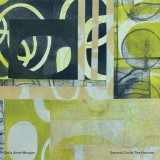
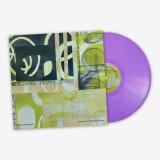


![Ilpo Väisänen - Asuma [2025 Remaster]](https://www.deejay.de/images/l/3/8/1144938.jpg)