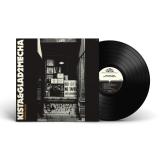
As Soul Capsule, Baby Ford and Thomas Melchior made some of minimal techno's most accomplished records. It has been many years since they stopped turning out new material - sadly - but their archive tracks are still in hot demand and undeniably relevant. While 1999's 'Lady Science' might be their most famous offering, this EP from 2001 on Aspect Music is no less vital and it will currently cost you well over L250 on second-hand markets. It is Ford's Trelik label who reissues it here in all its glory: the entirety of the a-side is taken up with 'Law Of Grace,' a delightfully deep and breezy minimal dub house roller with pensive chords draped over the frictionless drums. 'Meltdown' has a more experimental feel with brushed metal drums beneath a wordless vocal musing. The cult 'Lady Science' (Tek Mix) is also inched with the whole package being remastered by D&M to make this one utterly essential.
out of Stock
Last delivered 63 days ago available to reorder, subject to availability
Newly signed to indie heavyweights Heist or Hit (Westside Cowboy, Her’s) EP two: ‘Marionette’ has been produced by Daniel Fox (Sprints, Melts, Psychotic Monks, Naked Lungs, Nerves, Ronan Group) and it’s set to be seminal. A set text for future musicians with aspirations of innovation. “The theme of the marionette is present throughout each song, involving some aspect of a power struggle and a lack of control within oneself.” Opener ‘Chocolate’ bounces in on a synth line as slippery and hyperactive as anything Aphex Twin ever cooked up. Crispy offbeat electronic cymbals play counterpoint to atonal guitars and pugilistic drumming before the track dry-wretches its way into a nauseating cacophony of euphoria. It’s a tale of crippling social anxiety and a preference for an unflattering, lonely reality. The muted guitar pluck in the intro to ‘Crows’ is the sonic equivalent of biting one’s nails. An anxious, involuntary tic that speaks to the theme of guilt, especially surrounding digital culture: “children can watch what they please, just with viewer discretion.” The track lurches between textures, weaving themselves in and out of focus. Guitars blare like sirens, interrupting paranoid urban centres at 2am, while the bass sounds like the inside of an insomniac’s head on day four of a REM drought.
The metallic intent of ‘Discipline’ squats on the chest as though Steve Albini is your sleep paralysis demon. The pain of accountability spews from the industrial regularity of the beat, apt to the narrative of a soldier coming to terms with the lies that made him commit atrocious, violent acts. EP closer ‘Servant’ starts like a Spectrum loading screen. Dial-up modem-coded, it pauses for moments of white-noise-vomit and existential bloops. Fitting for a more abstract take on the idea of the power struggle filtered through religious imagery and self-awareness of one’s own actions, coupled with an inability to exert control over them. The band pile on the textures with sadistic glee until the evil is exorcized and the modem melts. Connection severed. Across the EP, vocalist Joseph has a tendency to hyper-fixate on themes of control and unhappiness. Creating rooms in which doom and isolation ricochet. Not that it’s all bad news “we like to think that by shedding light on the negative, it commands a sense of hope.” Influenced as much by the liminal-space horror and uncanny dread of Silent Hill as the existentialist theatre of The Twilight Zone or the absurdity of Twin Peaks, they occupy a space between unease and impulse. Makeshift Art Bar are not a band interested in being liked. They’re a band interested in being necessary. There’s so much eating and drinking in their work that multiple listens simply don’t satisfy; something new reveals itself on each return visit. Audacious. Idiosyncratic. Vital. A young band carrying identity, defiance and an uncompromising vision as if it isn’t a rare cargo.
Big Crown Records is proud to present Adult Themes, the latest full length offering from El Michels Affair. This album takes the band's "Cinematic Soul" aesthetic literally and sends the listener on a journey through a whirlwind of moods and energies. With their 2005 debut album Sounding Out The City, EMA spearheaded an instrumental funk / soul movement that inspired a slew of bands and even lead to the creation of a few independent record labels. El Michels has since lent his signature sound to artists from Adele to Dr John, Lana Del Rey to Aloe Blacc, and a who's who list of others. In 2016 he co-founded Big Crown Records and has since produced the lion's share of its output. A short stint as the touring band for Wu Tang Clan in 2007 led to the cult classics Enter The 37th Chamber (2009) and Return To The 37th Chamber (2017). Adult Themes marks the long awaited, highly anticipated return to an album of original compositions from El Michels Affair. In 2017 in between producing, playing, and recording on other artists' records Leon Michels began creating compilations of short interludes intended to be sampled by hip hop producers. Some of these wound up becoming songs by Jay Z & Beyonce, Travis Scott, and Don Toliver. These minute-long snippets were inspired by the dense moody work of `60s composers like David Axelrod, and Francois de Roubaix, as well as Moondog's brand of classical jazz. Michels was having so much fun creating these instrumental / orchestral nuggets that he decided to expand on some of the ideas and create what would become the soundtrack for a movie that has yet to be made, an imaginary film entitled "Adult Themes." The album plays like the colors on an artists pallet. Songs like "Rubix" and "Villa" are densely orchestrated with the hard-hitting drums that El Michels Affair is known for. On "Life of Pablo", Leon's son makes his first appearance on record and intros a song with an epic arrangement and a moving mood. "Hipps" is a drum heavy ballad that could've easily fit on EMA's debut record, Sounding Out the City. Other compositions like "The Difference" and "Kill The Lights" are bare, melodic mood pieces with sparse drums and sophisticated chord movement. All of these tunes come together to make perfect backgrounds for dialogue and action. One of the beautiful things about instrumental music is that the listener can decide what the narrative is. With Adult Themes El Michels Affair has created a "choose your own adventure" in musical form.
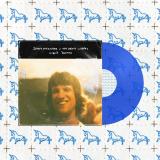
Factory Benelux presents a blue vinyl edition of Short Stories for Pauline, the ‘lost’ fourth album by cult Manchester group The Durutti Column. Limited to just 500 copies, this edition also features a new cover image by photographer Mark Warner.
Originally recorded by Vini Reilly in Brussels in November 1983, the 14 track album features several key Durutti works including College, A Room in Southport and (best of all) Duet. Recorded with Tuxedomoon viola player Blaine L. Reininger, this poignant instrumental proved - ironically – to be the downfall of the album, after Factory founder (and Durutti manager) Tony Wilson insisted that Duet form the basis of an entire neo-classical album. Thus Duet became Without Mercy in 1984, and Short Stories for Pauline was shelved.
Other guest musicians on the album include drummer Alain Lefebvre, harpist Anne van den Troost and sax player Eric Sleichim.
The seven tracks are imbued with a sound that is at times harsh and angular, yet always cultivates a dreamlike and sometimes epic imagery. It is the first album with vocals by the talented Elisa Brusati (then the singer of Noema) and lyrics by drummer and synth player Federico Rivoli. This choice has strengthened the band's cinematic and expressive inspiration, which in previous albums was entirely instrumental. The guitar and bass parts complement a less prominent use of synths and keyboards compared to the last album, "From Sunset to Dawn" although there is no shortage of themes and long psychedelic digressions, such as in the songs "Hidden Places" and "Sleeping Brain".
The seven tracks are imbued with a sound that is at times harsh and angular, yet always cultivates a dreamlike and sometimes epic imagery. It is the first album with vocals by the talented Elisa Brusati (then the singer of Noema) and lyrics by drummer and synth player Federico Rivoli. This choice has strengthened the band's cinematic and expressive inspiration, which in previous albums was entirely instrumental. The guitar and bass parts complement a less prominent use of synths and keyboards compared to the last album, "From Sunset to Dawn" although there is no shortage of themes and long psychedelic digressions, such as in the songs "Hidden Places" and "Sleeping Brain".
For nearly four decades, since its founding during the mid 1980s, the Belgian imprint, Sub Rosa, has continuously plumbed the depths of numerous, radical creative histories, assembling a catalog of releases that has almost no equivalent, while remaining nearly impossible to nail down. That said, for most of its run, Sub Rosa has been primarily recognized for its rigorous explorations of the lesser explored shadows of experimental sound practice (sound-art, sound-poetry, early electronic and electroacoustic music, free-improvisation, etc.), delivering a remarkable body of artifacts that have collectively helped to rewrite history in their wake. While it's always been impossible to anticipate where the label might take us next, threading their catalog are plenty of releases that throw further wrenches in the cogs, expanding our understanding of what they pursue, as in the case of a handful of titles, appearing as early as the 1980s, dedicated to ethnographic field-recordings from various parts of the world. Among the most striking and celebrated of these was 2017's Ethiopian Urban And Tribal Music: Mindanoo Mistiru / Gold From Wax, comprising an astounding body of recordings made by Ragnar Johnson and Ralph Harrisson in Ethiopia during 1971, reissuing material originally released by Lyrichord the following year. Now, Sub Rosa returns to the incredible work embarked upon by the pair and captured on that same trip with Ethiopian Musics 1971, comprising the recordings originally released by Ocora shortly after their completion, expanded in this edition to include an entire disc of never before released music. Widely regarded as some of the most important field-recordings ever made of indigenous Ethiopian folk music (as captivating and intoxicating as they are revelatory: providing insights into the roots of the country's singular traditions of popular music and jazz that have come to be celebrated the world over), this incredible collection is issued by Sub Rosa in a beautifully produced 2LP edition, complemented by a four page insert providing detailed descriptions of each song, as well as notes by the ethnomusicologists and recordists, as well as a 2CD edition, with a twelve page booklet. Insanely good and absolutely essential for any fan of field-recording, ethnomusicology, the music of Ethiopia, or the label's mission at large. Once again, Sub Rosa has defied our expectations and delivered a remarkably important intervention in the history of recorded sound.
Located in the Horn of Africa region of East Africa, few cultures are distinctly singular, while being so diverse (containing 80 distinct ethnic groups who speak 70 languages and 200 dialects) as that of Ethiopia. The home to some of the oldest surviving sects of Judaism, Christianity, and Islam (each contributing important aspects of its collective cultural body), particularly the country's culinary and musical traditions have become celebrated the world over, and (generally speaking) feel entirely independent of those of its neighbors. Given this, it's unsurprising that, during the summer of 1971, the young ethnographer, Ragnar Johnson, accompanied by Ralph Harrisson, traveled to Ethiopia to begin his brief career as a field recording ethnomusicologist, capturing material on reels of magnetic tape that would be subsequently released across three LPs for Lyrichord and Ocora, respectively, coming to form a cornerstone of documentation and study of the country's many indigenous musical traditions, as well as providing wide, global access to them for the first time. While Johnson's recording career was relatively brief, ending toward the end of the decade when he began to focus more on teaching in UK universities, with a focus on the anthropology of art and social anthropology, his impact on the field was lasting. Between 1971 and 1979, in addition to those he made in Ethiopia, he made hugely significant recordings in Yemen (also issued by Lyrichord before being reissued by Sub Rosa) and Papua New Guinea, which were originally released by David Toop's Quartz Publications to wide celebration, before being revisited by Ideologic Organ in 2023.
While it's worth noting that commercial releases of ethnomusicological recordings by labels like Folkways, Lyrichord, and Ocora were still in their relatively early days when he entered the field, Johnson's recordings quickly stood apart for their vivid qualities and clarity of space, allowing them to stand the test of time. As he later stated: "I used a Uher Report L stereo tape recorder, BASF quarter inch tapes at a recording speed of seven and a half inches per second with two directional microphones mounted to record an isosceles triangle of stereo sound," he reveals. "The location of the microphones and musicians was critical. The musicians were fully informed of all aspects of the recording process."
Johnson's recordings are extremely vivid, there is a clear sense of space and the cries of the flutes exist across the entire stereo field. It's a reflection of Johnson's skill as a field recordist that his recordings continue to be reissued over forty years later. "I used a Uher Report L stereo tape recorder, BASF quarter inch tapes at a recording speed of seven and a half inches per second with two directional microphones mounted to record an isosceles triangle of stereo sound," he reveals. "The location of the microphones and musicians was critical. The musicians were fully informed of all aspects of the recording process… I used to enjoy being in the moment and hearing something wonderful despite the stress of the vigilance required to ensure that the recordings were accomplished according to plan. The responsibility is to record and document the music as effectively as possible so that it has been preserved for posterity. It is better to actually record music than to sit in a seminar room debating the ethics of recording music." It is this very ethos and sense of clarity that can be encountered across the length of Ethiopian Musics 1971.
For the sake of clarity, the two LPs of material that comprise Ethiopian Musics 1971 should be regarded as a single body of recordings alongside those made in Ethiopia by Ragnar Johnson and Ralph Harrisson during the summer of 1971 (previously issued by Lyrichord and reissued by Sub Rosa), and as two that have, until now, remained historically distinct. The first LP gathers that material released by Ocora during the early 1970s on Musiques Ethiopiennes, while the second comprises (as far as we can tell) twelve never before issued recordings, expanding the journey and making this the definitive edition of the release with its incredible total of 23 recordings of songs, allowing it ever greater scope to achieve the recordists' modus operandi of capturing the broadest and most diverse cross section of Ethiopia's many musical cultures, ranging from different forms of urban music captured in Addis Ababa, documenting largely orally transmitted idioms within which lyrical content is given greater emphasis than the instrumental components (played on masenko fiddles, craar and bagana lyres, washint flutes and kabaro drums), to folk idioms hailing from the Danakil desert and the border regions with Sudan and Kenya. There are songs sung and played in bars, divination chants, laments, dances, Christian songs, and Amharic sung poetry, to only begin to scratch the surface.
Ethiopian Musics 1971 is one of those rare albums where each musical moment is pure, intoxicating gold, while also being greater through the sum of its parts. There are the many songs, forming a rich tapestry of remarkable range across the respective two LPs/CDs (moments that wondrously flirt with sonic abstraction; hypnotic rhythms; pulsing chant; melodies that, in structural arrangement and tonal combination, help us reframe how such a thing might be understood, and a great deal more), each imbued with a remarkable directness and emotive sensibility, and there is the stunning quality of these recordings themselves, transporting each sound to our ears as though we intimately share its creator's space, while being imbued with the pure heart and remarkable spirit with which they were made. As we said before, it's little wonder, once heard, why these recordings and this music feels as fresh and relevant (enduring more than 50 years) today as when they were made. Once again, Sub Rosa has raised the bar with this essential addition to the incredible work that Ragnar Johnson and Ralph Harrisson did back in Ethiopia during 1971, radically expanding our access to the sounds that they captured with these stunning, beautifully produced 2LP and 2CD editions. Absolutely engrossing from the first sounding to the last, this one can't be missed.
WRWTFWW Records unleashes the first ever release of legendary post-disco, funk, soul and electronic UK trio Imagination's cult album Night Dubbing in (well deserved) double LP format. The limited edition full-length comes with pristine audiophile treatment and luxurious packaging : a 45rpm and Half Speed Mastered DLP housed in heavyweight silver cardboard sleeve.
Imagination's singular 1983 album Night Dubbing is a refined deconstruction of black British soul and club pop, filtered through the deep studio and mixing techniques of dub music. Elegant, restrained, and, in its very own subtle way, radical, the record reshapes choice selections from the group's stellar catalogue into an immersive and out-of-this-world listening experience.
The special mixes on Night Dubbing are built on time and space. Basslines elongate and dissolve. Vocals appear, vanish, and reappear like ghosts. Drums fall away into vast silences, while echoes, tape edits, and precise engineering manoeuvres smoothly slide across the stereo field, revealing themselves like magic over repeated listens. Far from simple extensions or 12" versions, Night Dubbing treats the studio itself as an instrument, opening new dimensions of sound.
Often cited as a foundational record in the genesis of the house genre, the album also features the historic Larry Levan remix of "Changes", a Paradise Garage anthem that helped shape the direction of club music for decades to come.
More than 40 years on, Night Dubbing remains a seminal work. Its influence continues to echo through contemporary dance music, offering a blueprint for how pop could be transformed into something darker, stranger, more physical - a timeless sound that drifts effortlessly from the dancefloor into space.
Important note : it sounds amazing played on 33rpm too !
out of Stock
Last delivered 3 months ago available to reorder, subject to availability
ALERT: BIG 90s ITALIAN RAVE COMP - a lot of very in demand tunes on here.
Navigators
Franco Falsini and the Interactive Test Universe
There are musicians who follow their time.
And then there are those who seem to move along a different trajectory—like navigators crossing sonic eras without ever truly belonging to any one of them. The story of Franco Falsini belongs to the latter. It is a story that begins long before raves, before techno, before the word “electronic” had even become a recognizable musical genre. A story that moves across continents, technologies, and sonic visions, eventually arriving at a small creative laboratory born in Italy in the early 1990s: Interactive Test. This compilation is a fragment of that universe. But as often happens with the hidden histories of music, understanding it requires going back. Far back.
The Beginning: Machines, Tape and Space
In the late 1960s Franco Falsini leaves Italy and moves to the United States. It is not merely a geographical journey—it is also a journey into a new idea of music. At the time, synthesizers are only just emerging from research laboratories. Multitrack tape recorders allow musicians to build entire sonic worlds on their own. Technology is still far from standardized: every studio is almost an experimental workshop. In Virginia, Falsini builds one of his own. Among cables, oscillators, electric guitars and reels of magnetic tape, a kind of music begins to take shape that resembles nothing else being made at the time. It is not simply rock, and it is not yet truly electronic. It moves somewhere in the space between the two. Out of these explorations emerges Sensations' Fix, the project through which Falsini releases a series of albums during the 1970s. Records that seem to come from a parallel dimension: cosmic landscapes, electronically treated guitars, synthesizers drifting like satellites. Many years later those albums would be rediscovered as visionary works. But at the time they were simply the result of relentless curiosity. A curiosity that would never fade.
The City That Never Sleeps
In the 1980s Falsini’s trajectory leads him to New York. The city is a sonic organism in constant transformation. In its clubs and recording studios something entirely new is beginning to take shape: music built from drum machines, sequencers, and samplers, created for the body before the living room. It is the dawn of modern dance culture. Falsini works as a sound engineer, producer and experimenter. From close range he observes electronic music transforming into a global language. Machines become more accessible, computers begin entering studios, and rhythm takes on an increasingly central role. Yet even in this phase Falsini does not simply follow what is happening. He absorbs. Observes. Reimagines. When he eventually returns to Italy, he brings back not only technical experience but also a clear vision: the conviction that electronic music is an open space, a territory still waiting to be explored.
Tuscany, Early 1990s
At the beginning of the 1990s something is happening in Italy as well. In clubs, abandoned industrial warehouses and clandestine parties, a new scene is beginning to form. It is rave culture: a spontaneous movement bringing together DJs, producers and listeners in a collective experience driven by rhythm, technology, and creative freedom. It is within this context that Franco Falsini, together with his brother Riccardo, creates Interactive Test.
The name almost sounds like a scientific experiment. In many ways, it is. Interactive Test does not emerge as a traditional record label. It begins as a laboratory—a place where ideas, sounds and musical identities can be tested and explored. Around the Falsini studio in Tuscany a small constellation of artists and DJs begins to gather, helping to shape the sound of Italy’s emerging electronic scene. Among them are Andrea Giuditta, Francesco Farfa, Gabry Fasano, Roby Mastelloni, Roby J and many others. Each brings a different musical sensibility. But they all share the same intuition: electronic music is not a genre. It is a language.
The Laboratory of Identities
One of the most fascinating aspects of the Interactive Test universe is its constant play with identity. Franco Falsini releases music under several different names: Open Space, Youth Wave, Agent Fylfoyt, Man Myth Magic. These are not simply pseudonyms.
They are different sonic perspectives, as if each project were a window opening onto a parallel musical universe. Open Space, for example, explores more atmospheric and visionary territories. Youth Wave moves between electronic groove and club-oriented rhythms. Other projects experiment with digital psychedelia or hypnotic techno textures. Interactive Test becomes something more than a label. it becomes an ecosystem.
Domestic Machines, Infinite Worlds
Looking back today at the technology used in those productions, one might almost smile. Many tracks were created on Amiga computers, MIDI sequencers and analog synthesizers wired together in home studios—tools that appear modest when compared to today’s digital possibilities.
Yet precisely these limitations became a creative force. Every sound had to be built, shaped and reinvented. Sequences developed slowly, almost like living organisms. The tracks did not always follow traditional dance music structures; often they felt like genuine sonic journeys. Music built from space.
A Hidden Constellation
Many of the records released by Interactive Test in the 1990s remained for years almost invisible objects, circulating quietly among DJs, collectors, and devoted listeners. Yet it is precisely this underground existence that helped preserve them. Listening again today, one perceives something rare: the feeling of music that does not fully belong to its own time. Music suspended between different eras. Perhaps because it comes from a vision that both precedes and transcends trends.
Continuing the Journey
Looking at Franco Falsini’s entire path—from the electronic psychedelia of Sensations’ Fix to the rave culture of the 1990s—a surprisingly coherent line emerges.
A line defined by exploration.
Each project, each pseudonym, each record appears as a new route within the same great sonic voyage.
Interactive Test was one of its stations.
A laboratory.
A community.
A creative platform.
This compilation gathers some of its traces.
Not as a simple archive of the past, but as a map of a musical territory that continues to expand even today.
Like all true sonic explorations.
out of Stock
Last delivered 7 days ago available to reorder, subject to availability
Simple Symmetry’s recent gig in Cape Town yielded studio magic as they connected with singer Asandisa Siswana of the Thanda Choir on ‘Inkwenkwezi,’ which literally means star in Xhosa. Representing guidance, hope, and good fortune, her immensely powerful vocal performance made for a super potent mix with SS’s big room styling, and great remix material for Lipelis who brings it all back to crowd-pleasing bubble-gum house, while Peaking Lights shine some acid on the proceedings and Multi Culti A&R Thomas Von Party gives his new Teenage Engineering drum synth a workout on the Riddim Mix.
out of Stock
Last delivered 20 days ago available to reorder, subject to availability
Orange Splatter vinyl. "Sermon of Mockery" by Pyrexia is not an album that tries to be accessible - it is built to be heavy, direct, and unsettling, and it delivers exactly that. Released in 1993, it sits right in the middle of a key moment when American death metal was evolving into something more technical and extreme. The sound is rooted in the New York scene: tight, compact riffing, constant stop-and-go structures, aggressive drumming, and deep guttural vocals with no room for melody. It's not about speed alone, but about control - everything feels deliberate, almost surgical in how the songs are constructed. Lyrically, the album revolves around a strongly blasphemous and anti-Christian theme. It's not just shock value; it's more like an inverted liturgy, where religious symbols are twisted into something dark and violent. This concept is consistent throughout the music, lyrics, and visuals, as you can see in the booklet. It may not be a mainstream landmark, but it played a key role in shaping the brutal death metal sound that followed. It influenced many underground bands and is still regarded today as a cult record. Listening to it now, the production may feel dated, but that's also part of its strength - it's raw, honest, and uncompromising. In short, it's a record that perfectly captures a specific era and mindset within the genre.
Michael J. Sheehy has been making records for almost three decades, initially as founder and mouthpiece of mid-"90s cult band Dream City Film Club, then as a solo artist and frontman of rootsy garage rock act Miraculous Mule. He has toured with the likes of Kristin Hersh, Tindersticks, John Cale and Peter Murphy, while his songs have been utilised in films such as "Intimacy" and the TV show "Deadwood". Following a six-year hiatus, Sheehy has just "Don"t We Deserve Some Kind of Love?", his seventh solo album but first for Dimple Discs. "Don"t We Deserve Some Kind Of Love?" features contributions from Fiona Brice (violin), Sandy Mill (backing vocals), Ian Burns (drums) and Patrick McCarthy (guitar). It was recorded at home over a five-year period while Sheehy was a stay-at-home father and working evenings at a bar in Camden, north London.
Over the course of more than a decade, the French quartet Lost in Kyiv have refined a sound that fuses cinematic ambition, electronic precision, and visceral live energy into something unmistakably their own. With their new album, `We're All Going To Be Fine', they push that identity further than ever; sharpening their production, intensifying their dynamics, and embracing a darker, more immersive sonic architecture. Lost in Kyiv's music has always thrived on tension between the organic and the synthetic. On `We're All Going To Be Fine', that integration reaches a new level of clarity and depth. The writing and production process was long and exacting, allowing the band to refine every transition and tonal detail. Songs unfold with architectural precision, motifs are introduced subtly before expanding into vast, multi-layered climaxes. Dynamics are handled with patience and control, silence and minimalism are deployed as strategically as explosive crescendos. This careful pacing gives the album a cinematic flow and larger narrative in which struggle and compassion coexist. Guitars surge and recede in wide, panoramic arcs. At moments they shimmer and support, at others they thrash violently, accumulating layers of distortion and harmonic overtones. Acoustic instrumentation is interwoven with sequenced synth lines, pulsing arpeggiators, and carefully sculpted electronic textures that give the band's sound a sense of forward propulsion. Rhythm plays a central role in Lost in Kyiv's identity. The drums provide impact and structure, locking into intricate patterns that interact with bass-driven synth pulses. At times the groove feels almost mechanical, echoing the steady insistence of electronic music; at others, it breathes and swells with human elasticity. This interplay creates a powerful sense of movement, an impression that the music is always advancing, even in its most introspective passages. "We almost consider this album as the first record of a new version of the band. That's why we decided to use the name Lost in Kyiv now. We don't want to erase the past, but it really feels like a new direction. Artistically, I think this album marks the beginning of a new direction, louder and more metal-oriented than what we did before." (Lost in Kyiv) FOR FANS OF Russian Circles * P.G.Lost * The Ocean * Cult of Luna * Brutus * This Will Destroy You
Over the course of more than a decade, the French quartet Lost in Kyiv have refined a sound that fuses cinematic ambition, electronic precision, and visceral live energy into something unmistakably their own. With their new album, `We're All Going To Be Fine', they push that identity further than ever; sharpening their production, intensifying their dynamics, and embracing a darker, more immersive sonic architecture. Lost in Kyiv's music has always thrived on tension between the organic and the synthetic. On `We're All Going To Be Fine', that integration reaches a new level of clarity and depth. The writing and production process was long and exacting, allowing the band to refine every transition and tonal detail. Songs unfold with architectural precision, motifs are introduced subtly before expanding into vast, multi-layered climaxes. Dynamics are handled with patience and control, silence and minimalism are deployed as strategically as explosive crescendos. This careful pacing gives the album a cinematic flow and larger narrative in which struggle and compassion coexist. Guitars surge and recede in wide, panoramic arcs. At moments they shimmer and support, at others they thrash violently, accumulating layers of distortion and harmonic overtones. Acoustic instrumentation is interwoven with sequenced synth lines, pulsing arpeggiators, and carefully sculpted electronic textures that give the band's sound a sense of forward propulsion. Rhythm plays a central role in Lost in Kyiv's identity. The drums provide impact and structure, locking into intricate patterns that interact with bass-driven synth pulses. At times the groove feels almost mechanical, echoing the steady insistence of electronic music; at others, it breathes and swells with human elasticity. This interplay creates a powerful sense of movement, an impression that the music is always advancing, even in its most introspective passages. "We almost consider this album as the first record of a new version of the band. That's why we decided to use the name Lost in Kyiv now. We don't want to erase the past, but it really feels like a new direction. Artistically, I think this album marks the beginning of a new direction, louder and more metal-oriented than what we did before." (Lost in Kyiv) FOR FANS OF Russian Circles * P.G.Lost * The Ocean * Cult of Luna * Brutus * This Will Destroy You
Consistent funk operator Ralo is back with a brace of tunes that will shake your bones loose. First up is 'Broken Way', a magnificently jumbled rhythm made from languid bass and kicks, peppered with organic percussion and heated through with soft synths. It's atmospheric and real, like the overheard soundtrack to a party happening in your kitchen. 'Djembe' then brings out some brassy horns to take things to the next level. They jump out of the low-slung drums and add jazz, soul and colour that cannot be ignored. Gledd and Monsieur Van Pratt step up on the flip with cultured reworks that turn things up to 11.
out of Stock
Last delivered 73 days ago available to reorder, subject to availability
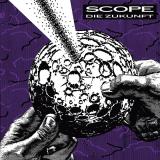
At the dawn of European techno, before the genre had fully taken shape, a small number of records hinted at what was to come—stripped-down, machine-driven and forward-looking. One of those records was “Die Zukunft” by Scope, a project formed by André Fischer (Recall IV) and Holger Wick (Konzept).
Originally released in 1989 on the now cult Suck Me Plasma label—founded by Talla 2XLC—"Die Zukunft” holds a special place in history as the label’s first release, marking a key moment in the transition from EBM and New Beat into early techno.
Scope’s sound captures this transitional phase with remarkable clarity. Built on minimal drum machine patterns, cold synthetic basslines and sparse melodic fragments, their music sits somewhere between late-80s electronic body music and the emerging techno aesthetic. Driven more by repetition and tension than by traditional song structures, the tracks create a hypnotic, forward-moving energy that reflects the experimental spirit of the time.
This reissue of “Die Zukunft”, limited to 500 copies on black vinyl and 200 copies on purple vinyl, brings together all original tracks from the first pressing alongside the iconic Cybotron Mix, offering a complete snapshot of Scope’s output at a pivotal moment in electronic music history.
out of Stock
Last delivered 4 days ago available to reorder, subject to availability
Jeffrey Alexander and the Heavy Lidders return with their best album yet, and a UK tour this August. Press by Silver PR
‘’On the alternate timeline where the Meat Puppets inherited the bulk of the Grateful Dead’s tourheads when Jerry Garcia died in 1995, none of this would be necessary, because Jeffrey Alexander and the Heavy Lidders are a household name for evolving their own musical space that overlays dusty folk, cosmic jazz, deep psych, free improv, and even (gasp!) indie rock, building an audience that ranges from open-eared curiosity seekers to deep committed music weirdos that’s also yielded the Heavy Lidders, an infamous sub-cult of concert tapers that you’re already sick of hearing about. A lot of other things are better over on that timeline, too.
But in this consensus reality (and probably the other one, too), Liquid Donnon catches the Lidders at their heaviest, “heavy” in the Lidderverse being far from a monolithic musical idea. There’s heavy like the album-opening “From Loch Raven to Fells Point,” one of several tracks with elegant and gnarled conversational jams featuring the core Lidders lineup of Alexander alongside guitarist Drew Gardner and bassist Jesse Sheppard (both of Elkhorn) and drummer Scott Verrastro. But there’s heavy, too, like “Calliope Walker” and “Tightroping,” featuring Gardner shifted to dream-space vibraphone, the former with saxophonist Tacuma Bradley, the latter with Christina Carter of Texas noise-psych legends Charalambides on veil-crossing wordless vocals, her first collaboration with Alexander in some 20 years.
But then there’s also heavy like the cover photo of Alexander’s late friend and album namesake Donnon, taken at a Dead show at Rich Stadium in Buffalo in 1989, a spirit threading through the songs and weaving unexpectedly into Alexander’s life decades later, emerging especially when Alexander passed through a near-death experience of his own. But, taken together, the different heavies of Liquid Donnon add up into a state of musical grace, where all the Heavy Lidders from all the universes come together as one. Just, like, imagine.
Convened in 2019 on Alexander’s relocation back to his native east coast, the Heavy Lidders are the latest hard-touring expression for the guitarist’s music, joining a vast and tangled discography (and tape list) that includes the beloved long-running west coast Dire Wolves Just Exactly Perfect Sisters Band and, before them, the Iditarod and Black Forest/Black Sea, as well as a bushel of solo play-all-the-instruments projects, a stint with Jackie-O Motherfucker, sessions with Kemialliset Ystävät and Avarus and others, and you’ll have to keep digging for the rest.
And while it’s not hard to find tapers at Lidders gigs (and they encourage you to be one), or to track themes and songs over Alexander’s many live releases, Liquid Donnon makes a new primary text, the original versions of six new pieces for the repertoire. The album closes with a devastating pairing of “Reservoir Drop” into “The Summer Song,” floating into a duo between Alexander’s guitar and Carter’s voice. Catch a half-dozen Lidders shows this summer, and you might not ever catch them playing it like that again, but you just might open the doorway back to that better place." - Jesse Jarnow (writer, WFMU DJ, producer and host of The Good Ol’ Grateful Deadcast)
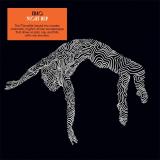
Growing together both personally and musically… That is indeed the good fortune of the musicians in the Marseille-based trio ubaq. We’re talking about bassist Antoine Carletto, guitarist Lucas Schemidt, and drummer Antoine Saussol, winners of the Rezzo springboard competition at Jazz à Vienne 2025. In their early twenties, they met in their late teens while still honing their musical skills. Nearly ten years later, they burst onto the scene, in perfect harmony, with their very first album, “Night WIP,” a follow-up to their EP, “20bis,” released in 2024. They owe their stylized stage name—written in lowercase with a “q”—to the ubac, that side of a mountain with very little sun exposure, where twilight reigns. “We liked that idea because we’re night owls,” says bassist Antoine Carletto. Hence the “night” for “nuit” and the “WIP” for “Work In Progress,” explains guitarist Lucas Shemidt. ubaq’s music is characterized by a nocturnal, melancholic heaviness, pierced by beams of light. “We love creating music that soothes us and highlights the precious nature of composing and playing in complete harmony,” says Antoine Carletto. “We cultivate complex tones, sometimes difficult to bear, whether they’re nostalgic or even verging on depression. But we manage to convey emotions without falling into clichés,” adds Antoine Saussol. Night and twilight serve as the perfect catalysts for this trio, which moves forward with perfect chemistry and harmony.
On this album, they feature the German-Armenian rapper and singer Talin, who is also based in Marseille. She appears on the track “Regarding Others,” where she chants that even though the year 2026 may see mothers weeping in every corner of the world, she still manages to smile. Thus, this track explores the three musicians’ relationship with the world and the necessity of looking at others. The unsettling “Sciatiq,” the haunting “Sakakinik,” and the ambivalence of “Flayosc”—the final track, on which the trio features trombonist Jules Regard—owe their titles to the musicians’ own observations and experiences. The multi-faceted track “Proud,” in two parts, is a tribute to Lucas Schemidt’s mother, who has since passed away. The presence of wind instruments—whether Jules Regard’s trombone or Mathieu Fabre’s saxophone on the intense track “From The Ending”—adds textures missing from the natural landscape depicted in “Night WIP.” This debut album captures the obsessions and introspective wanderings—sometimes anxious, sometimes enchanted—of a trio that cultivates melody as a pledge of warm fulfillment.
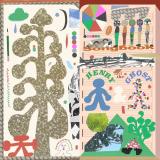
On his new album, Micha Acher rearranged compositions for bands such as Tied & Tickled Trio and Ms. John Soda from previous years.
Why are we interested in ghosts? What fascinates us about the eerie? According to cultural theorist Mark Fisher, the allure that the eerie possesses is not captured by the idea that we „enjoy what scares us“. It has, rather, to do with a fascination for the outside. For that which lies beyond standard perception, cognition or experience, as he writes in his book „The Weird and the Eerie“.
In fact, also none of the 15 pieces from Henry and the Ghost is really scary. On the contrary, they all feel strangely familiar. Like revenants or doppelgängers, which in fact they are. They have all been released before. But in a different form. In different line-ups. With different band projects such as Tied & Tickled Trio, The Notwist or the Alien Ensemble.
With the „Songbook“, Micha Acher's aim was, as he says, to find out how the familiar pieces sound in a chamber music instrumentation. Therefore he met with Theresa Loibl (bass clarinet, piano), Timm Kornelius (bassoon), Markus Rom (guitar, banjo, electronics) and Simon Popp (drums, percussion) in his living room for a musical séance in the summer of 2022. The séance lasted two days. Afterwards, Markus Rom (Oh No Noh), added some haunting electronical ideas.
The mood of most of the pieces is melancholic. There are surprising twists and siren-like melodies. Just as ghost stories should be. However, most of the songs sound very light-footed. With their feet in pop, folk, jazz and classical music. Pieces such as „Johanna“ with its wheezing harmonium and spooky piano, or the dreamy „Modest Farewell“ on the other hand have a cinematic flair. Immediately faces and scenes arise in the mind. But at the beginning, there is „Hamlet“. It starts with ghostly electronics and merges into a calm, almost classical guitar piece. Could it be that the ghost of Hamlet's father is hiding between the strings?
„34E“ begins with a banjo. Then the deep humming of Micha Achers sousaphone and the other brass instruments kick in. In the slow, solemn „Aelita“, the sousaphone starts a dialogue with a children's piano. With the banjo and the other wind instruments acting as mediators. The title of „All Tomorrow's Past“ brings Velvet Undergrounds „All Tomorrow's Parties“ to mind. Another ghost from the past. What connects the two pieces is free-floating percussion, which accompanies the sumptuous melodies.
„Arc“ takes us on an exhilarating voyage at sea, with the sousaphone providing powerful propulsion. Towards the end, things get quite turbulent. With the clarinet stirring up the water, before the sea calms down again. „Henry and the Ghost“ is characterised by a ghostly mood change between major and minor. In „Radio Four“ the banjo with its stoic chords keeps the lively brass section in check. „Solid Ground“ is imbued with melancholy. „Space Minor“ takes us into outer space, with the power of sousaphone and percussion.
„Tomorrows“ is filled with cautious optimism. And the concluding „Nordlead“ turns out to be a revenant of the instrumental „N.L.“ from The Notwist's legendary album „Shrink“ from 1998. In the new version, the piece sounds like a distant echo. One that also brings to mind how Micha Acher's music has evolved. Which new worlds he explored and opened up since the nineties. And yet Acher's signature is recognisable in every single note of this fascinating „Songbook“.
Drawing on the principles of infinite canons, the album is constructed around minimal, repetitive structures and music-box-like melodies that evolve gradually over repeated listens. Selected tracks from the album appear in Hideo Kojima's cult sci- fi video game DEATH STRANDING 2: ON THE BEACH. Recorded with guest musicians including Lori Goldston on cello, Eiko Ishibashi on piano, Tatsuhisa Yamamoto and Jem Doulton on drums, and Paz Maddio and Josephine Foster on vocals, the album was mastered by Amir Shoat
After the underground success of Collecting Dust the duo return with there second album “Thrifting Gems”. Sticking to there signature sound of hypnotic, melodic jazz samples, dusty drum beats and thought provoking lyrics seasoned with that 90s nostalgic hip hop sound.
Its the perfect album for those hazy summer nights,tracks like “Gotta Get Mine” featuring the legendary Masta Ace “It's Been a Long Time” and “Trying To Get By take you back to a time when you fell in love with Hip Hop.
Gang Starr Foundation member Big Shug joins them on a 90's boom bap throwback beat called “Straight Vibing” and there's even a homage track to the culture they represent called “2 the Grave”
Anyway! Sit back, place the record on your turntable, and drift off, to the beautiful
“Thrifting Gems”
out of Stock
Last delivered 4 months ago available to reorder, subject to availability
These days – on the new, ninth Fink album – Greenall is operating within a lineage of authentic, quietly revolutionary artists from England’s verdant southwestern toe. Artists like Michael Chapman. In 1970, the elusive acoustic guitar wizard released an album called Fully Qualified Survivor. The cult-classic served as a lodestar for Greenall – along with bandmates Tim Thornton and Guy Whittaker – as he began jigsawing together The City Is Coming to Erase it All, the follow-up to 2024’s Beauty In Your Wake. He even considered covering a song from it, but in the process, inadvertently stumbled into what became the album’s opener. ‘Wishing For Blue Sky’ circles a universal teenage ache: waiting for life to start. “No point dying of patience” goes the first lyric as crunching footsteps cue a resonant, open-tuned acoustic swaying into view. By 18, Greenall was fed up with waiting, so he left suburban Bristol and saw the world, sending postcards from the edge, waiting tables, squirreling away tips for the next flight. Thornton had similar experiences when the guitarist/drummer busked across Eur
This is nowstalgia more than nostalgia, though; there’s a parallel between these 18-year-olds and Fink’s autumn-aged family men. “You’re expected to be boring and settling down at this age,” Thornton says. “But we’ve still got this tremendous wanderlust. We want to go and discover, and also achieve things. It’s a nice life – home and family – but fuck, I can’t wait to get back out there.” City is a product of this hunger for discovery, and idolatry of the album as a form – like we had in 1974. City’s cover mirrors its interior, the first song is the greeting, the instrumental closer the conclusion. It’s a story. It’s a record for people who, like its creators, are curious. People who happily face a little cold for music, who light a crackling fire back home, who sit with these songs until they’re ready to chase after their own blue sky
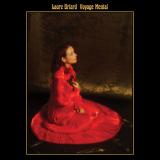
Every so often in music, we come across voices that achieve a certain timelessness, so naturally do they encapsulate both past and present. Laure Briard is one of these voices, retro in form but contemporary at heart, spanning a career rich in aesthetic twists and turns, never without her signature magic, a special kind of eternal filter. Her first album, Révélation (2015), reveals her yé-yé influences, a testament to her love for ‘60s French pop music. Her second studio album, Sur la piste de danse (2016), follows in this vein and finds Laure accompanied as always by her long-time bandmates who share an affinity for warm, catchy arrangements that never lose their appeal. Her tour of Brazil marks a turning point in her career, introducing her to the local indie scene and thus launching her collaboration with the band Boogarins, as well as inspiring the release of multiple EPs composed and performed in Portuguese. Today, her music is embellished by touches of bossa nova and a folk sensibility, boasting increasingly intricate arrangements, as exemplified by her 2019 release, Un peu plus d'amour s'il vous plaît. Several years later, the Californian desert captures the musician’s imagination with Ne pas trop rester bleue, a poignant musical journey inspired by the rich history of Western legends and the role they play in shaping our collective consciousness.
In Voyage Mental, Laure Briard draws upon an inner energy unearthed during a new stage in her life, where the thrill of spontaneous adventure is not accessible in quite the same way. The result is a collection of sophisticated, introspective songs, narrating a young mother’s quest for balance in the face of routine. The album, nostalgic but always tethered to the present moment, is also the fruit of her collaboration with Gaëtan Nonchalant, a talented musician known for coaxing poetry out of the mundane. The two of them co-wrote and recorded five tracks at Studio Nocturne, accompanied by her long-time sidekick Pieuvre, aka Vincent Guyot, Léo Blomov, Pierre-Louis Vizioz, and Hedi Bensalem. The gentle pop opener “Rocking Chair” sways steadily to the rhythm of dynamic drums, followed by “Train,” a ballad that extends an invitation to set sail and daydream alone. The folk escapade continues with “Golden Sun,” a duet featuring the 1960s cult American musician F.J. McMahon, who Laure contacted via the internet on a whim. “Golden Sun” is an unlikely encounter between two generations and two cultures, giving new life to an old forgotten demo on the other side of the Atlantic. And while Laure sings of wide open spaces, cowboys, and sunsets sinking into the sea, we feel the city surrounding her in “Miroir,” a song composed by Hedi Bensalem that laments the suffocation of living in a crowded metropolis where the sky is a distant gray smudge. This pressing need for air, this search for rest and total disconnection, is one of the album's central themes. It may also explain the ever-present sense of nostalgia that pervades the songs, a welcome respite in our current era of doomscrolling and darkness. Along the way, Laure soothes us with melancholy guitar, delivers poetry set to scattered piano notes, and takes us by the hand during lively, uptempo passages. We climb onto her wings, never straying too far from the ground, soaring joyfully above her moods.
Maqom Soul Launches Its Reissue Series with a Cult Classic from Uyghur Ensemble “Yashlik”.
Maqom Soul, a newly founded Uzbek label dedicated to reviving rare and overlooked music from Central Asia, proudly announces its debut release: a vinyl reissue of the seminal album by the Uyghur vocal-instrumental ensemble Yashlik, originally recorded and released in 1978.
Founded in 1973 as part of the Uyghur Music and Drama Theater in Almaty, Yashlik (which translates from Uyghur as Youth) quickly emerged as a groundbreaking force in the regional music scene. Though born out of a theatrical setting, the group transcended those boundaries with a unique blend of Uyghur folk melodies, jazz influences, Soviet estrada, and traces of psychedelic rock.
The ensemble’s founder and artistic director was Murat Akhmadiev, a prominent figure in both the musical and cultural-political life of Kazakhstan. The album being reissued is one of the rare recordings where synthesizers, electric guitars, and drums appear side by side with traditional Uyghur instruments. More than a musical experiment, it stands as a cultural document of its era a creative attempt to preserve identity through the language of modern sound. Originally recorded at the Melodiya studios in the late 1970s, the album’s initial pressing was distributed only within the Soviet Union. Now, over four decades later, listeners finally have the opportunity to experience this music in a lovingly remastered and reimagined edition.
According to the team at Maqom Soul, beginning the label’s journey with Yashlik was a conscious and symbolic choice: “This was a group that embodied youthful energy, deep respect for tradition, and a genuine thirst for innovation. Their music once played at festivals and on television, and then quietly disappeared. We’re bringing it back — not out of nostalgia, but as a living piece of art.”
Maqom Soul is committed not just to reissuing rare records but to restoring the presence of culturally significant music that helped shape the sonic identity of Central Asia. Forgotten music is also part of the future. Maqom Soul brings it back to the stage.
Nightcode EP finds UK deep-house craftsman Jacksonville in full control, lacing warm chords, swinging drums and basslines built for red-lit basements. Across “Nightcode”, “Ecstasy in Starlight”, “Octobers in Love” and “Blind Spot”, he fuses classic Detroit/UK house textures with his own emotional, story-telling touch—timeless deep house for DJs who play past sunrise.
Feedbacks:
Laurent Garnier : Octobers in Love <3 <3 <3
Nick Holder : dope
Gina Breeze (Classic / Get Up / Homoelectric) : Feeling the deepness! Look forward to playing.
Nightmares On Wax (Warp Records) : Ecstasy in starl;ight and Blind spot are my jams !
Josh Wink (Ovum) : Deep, old old school flavored with new school production.
Alexkid (Rawax / FUSE / NG Trax) : Lovely
Lauren Lo Sung (LOLiFE records, e1even records) : Octobers in love is nice!
Dj Hutch (Ambers / Rinse FM) : grooves
Louise Chen (NTS) : This is so so sooo good! Can't wait to play on the radio!
Rob Pearson (Evasive Records / Sine 102.6fm) : Nightcode is the standout for me, will play tonight on Evasive
Eviltron / Paul Donton (Bombis / Triangle) : Blind Spot and Ecstasy in Starlight are the ones on the
D'Julz (Bass Culture) : feeling night code and blind spot . merci!
Junior Sanchez (Strictly Rhythm / Cube Recordings) : Really Cool EP!
DJ Three : this is all very high quality house that feels very much a
nd_baumecker (Ostgut Ton) : Nightcode and Octobers In Love for me. Quality as usual.
Sasha (Last Night On Earth) : Downloading for Sasha
William Kiss (Rekids) : very nice!
Monty Luke (Rekids / Black Catalogue) : thx for this...
Mystic Bill (Classic / Trax / Relief) : Will try some of these out, thanks!
Carista : beautiful
Crackazat (Freerange / Local Talk) : Sick sick sick
Jhobei (Bizarre Trax / FUSE / Felon 5) : Nice smooth deep
Khadija (Rek'd / Rafiki Collective) : Danke
Ben Sims : Now downloading - will check asap!
DJ Bone (FURTHER) : Very nice tunes here, thanks
Bake (All Caps/Rinse FM) : thank you!
Dj Deep (Deeply Rooted) : very nice tracks!
Oliver $ (Classic Music Company / Play It Down) : nice one!
Tripmastaz (Plant 74) : Nightcode is tight
Harvey Sutherland (MCDE / PPU / Voltaire Records) : couple of nice tunes here!
Anthony Collins (Frank & Tony / Scissor & Thread) : super nice deep tunes
Marcel Dettmann : thx
Voigtmann (Subsequent) : Ecstacy in Starlight is the one!
Gerd (4Lux / Clone) : dope house trax from the phonogramme crew once again!
Groove Armada : Great EP - Love Nightcode, Ocotber is love so good too±
Harri (Sub Club) : nice, will play and support
Jorkes (Freeride Millenium) : ecstasy in starlight..yes yes yes yes
DJ Minx (Women On Wax Recordings) : Every one of these...top tier! I'm on 'em!
DJ Rocca (Nang Records, Mantra Vibes) : Great EP. Nightcode is great, super bassline indeed
Jacques Renault : Ectasy In Starlight for me here!
Geir Aspenes (G-Ha (Sunkissed)) : Thank u
Mark Farina : dig it
Âme (Innervisions) : thanks
Djebali ( ( djebali ) / INFUSE / Freak n Chic) : Love it ! thanks for sharing. Blind Spot is my fav
Jaye Ward (Dalston Super Store / Netil Radio) : wicked release!! night code is a belter!!! thx
Iron Curtis (Mule Musiq, Morris Audio) : thank you!
out of Stock
Last delivered 14 days ago available to reorder, subject to availability
Moods & Grooves Records proudly announces Turn-A-Round, the long-awaited return of D. Wynn & The R-Tyme Production. Marking his first release since 2002 on KMS Records, D. Wynn reconnects with the deeply soulful Detroit sound that defined his earlier work—timeless, emotive, and built for the dancefloor.
At the center of the release is “Love Ain’t Easy”, a heartfelt, soul-driven track featuring vocals from Record Time favorite Lavell Williams. The song carries special significance as Williams’ final known musical recording prior to his passing in 2018, giving the record both emotional weight and historical importance. The EP also includes “Use Me (U Turn Remix)”, a fresh take on R-Tyme’s most recognized work—previously reimagined by Carl Craig—alongside “Funk N The Drums,” a raw, percussion-heavy cut driven by deep funk and rhythmic intensity.
A foundational figure in Detroit’s electronic music movement, D. Wynn was instrumental in shaping the culture as part of the legendary Music Institute era, alongside pioneers such as Derrick May, Alton Miller, and Chez Damier. As one half of R-Tyme with Derrick May, he helped deliver seminal recordings including “Use Me” and “Illusion/R-Theme” on Transmat, leaving a lasting imprint on the global electronic music landscape.
This is more than a comeback. It’s a continuation of a legacy.
out of Stock
Last delivered 69 days ago available to reorder, subject to availability
DJ Support: Gilles Peterson and Lauren Laverne on 6Music, with club play from the likes of Axel Boman, Peter Kruder and Erol Alkan.
Photay drops epic acid breakbeat magic on ALWAYS COSMIC. The A-side features his remix of United Freedom Collective’s ‘Always Open’ (featuring the vocal talents of Falle Nioke) in both original and instrumental form. With early plays by Gilles Peterson & Lauren Laverne, the hype around this incredible track is building for good reason. There is an exceptional combination at play: slick, detailed, hifi dance production with powerful, prodigious talent on the drums – we call it ‘the PHOTAY advantage.’ The B-side brings expansive cosmic dub versions, the first track derived from the Always Open session, the second from Photay’s recent remix for Conclave & Toribio. Deep, emotional stuff that doesn’t lose track of fun-factor with sheer, un-fakeable excitement in the rhythm section!
out of Stock
Last delivered 3 months ago available to reorder, subject to availability
Cult reissue label Sticky Buttons returns with ‘Sweet Edits’, their first official foray into dancefloor edits featuring 4 remixes of Nigerian boogie legend Dizzy K by a hand picked set of superstar producers specially designed to get the party moving.
Starting with a bang, the A Side features a double hit of remixes to Dizzy K’s 80’s sleeper hit “Afrikan Jamboree”. First up is Clive From Accounts, frequent contributor to Razor-N-Tape and hot off the heels of his 2025 debut full length LP, Clive’s edit has gifted us a complete foot stomper, filled with popping synths and squelchy baselines the track has already been getting big plays by the likes of Optimo over the past 18 months. On track A2, well known dance floor magician Lipelis takes the reins, creating his Disco Dub version, expertly layering traditional african drums and vocal loops from the original to build a wonky club track laden with energy and soul as come to be expected from the artist.
Over on the B Side, South London based duo Make A Dance (M.A.D) take the formula from their own widely popular house inspired edits imprint to take apart Dizzy K’s “I’ll Never Love Again”, stripping it down into a teetering, chugging acid sprinkled weapon overlaid with a ferocious drum pattern destined to move even the stiffest hips. Last but not least, Japanese producer Mayurashka brings her signature subversive style to Sticky Buttons, flipping Dizzy’s K’s “Konga Mama” into a hypnotic tribal masterpiece, pulsating with a psychedelic techno edge ripe for blending in smokey club venues and dark mainrooms.
Four heaters not to be slept on. Hearing is believing and on this limited edition vinyl release the legend of Dizzy K sings again, finely tuned for 2026 dancefloors but always carrying the raw spirit of the original.
Mastered by Submarea Estudio
Cover Art Illustration by Alex Ram
out of Stock
Last delivered 4 months ago available to reorder, subject to availability
• “Guerrilla Girls!”, Ace Records’ much-anticipated first release of 2023, takes us on a thrilling ride from punk’s mid-70s origins, via the left-field post-punk groups, jangly female combos, grunge bands and vigilante Riot Grrrls of the 80s and 90s, to the she-punk bands of recent years – a five-decade alternative to the macho hegemony of rock.
• The collection highlights songs that emerged out of a dynamic underculture of female creative expression. What unites the featured artists is a healthy disregard for the way the music industry ties up its female performers into pretty, neo-liberal packages. From Patti Smith, universal mother of the punk movement, to the Bags, Bikini Kill and Skinny Girl Diet, this music is anti-A&R. Including lesser-known names such as San Francisco street punk Mary Monday and London-based experimentalists pragVec, it shows that, rather than being a few novelty bands existing on the margins, these performers represent a stronger, more three-dimensional version of the female experience.
• Glorious resistance was on display in the first wave of UK female-fronted punk bands. Poly Styrene’s charged vocals on X-Ray Spex’s ‘Iama Poseur’, for instance, were a deliberate refusal to be a pretty punkette. With 15 year-old Lora Logic on saxophone, X-Ray Spex epitomised a fearless, self-defined agency that was at odds with the pastel shades and flowery, submissive Laura Ashley version of 1970s girlhood. By the early 80s, there was a hugely vibrant scene propelled by the diverse rhythms and voices of post-punk feminism. Lora Logic had left X-Ray Spex to form the interweaving textures of Essential Logic, the Mo-dettes mangled ska and off-kilter pop, and Birmingham band Au Pairs sliced political rigour into their lyrics and funky guitar work.
• Some female artists took that elemental energy into pop, creating pop-punk with a twist. We’ve Got A Fuzzbox And We’re Gonna Use It!! made a statement on music technology and female power with a cheeky play on words. Their song ‘Rules And Regulations’ shows that what Guerrilla Girls do well is debunking – taking genres of popular song and turning them inside out – like the way the Pandoras and the Pussywillows would amp up the driving beat and high vocals of the 60s girl group style, and subvert it with a DIY garage element.
• In its fanzine culture, use of montage and DIY music, 90s Riot Grrrl bands such as Bikini Kill and Bratmobile drew direct inspiration from 70s punk, articulated through the prism of Third Wave feminism. Too often, Riot Grrrl gigs were invaded by men intent on heckling “the enemy”. Liz Naylor, manager of British Riot Grrrl band Huggy Bear, says that their concerts became war zones. From the US grunge and Riot Grrrl scenes emerged more female instrumentalists, with bands such as L7 and Babes In Toyland proving that it was possible to recruit cutting-edge drummers, bass players and guitarists. Lori Barbero, whose relentless power drumming is a major element of Babes In Toyland, took the one instrument that has been a staple of male rock’n’roll and made it her muse.
• In the 2000s a new generation of girl-punk bands drew on the Riot Grrrl underculture to form their own sound. London trio the Tuts refashioned C86, Riot Grrrl and lush dream pop on songs like the ironically titled ‘Let Go Of The Past’, while the Regrettes injected shots of ska and doo wop into their explosive West Coast pop-punk. What began with Patti Smith and 70s punk has grown into a vast, spikey infrastructure of girl music. Many take inspiration from their foremothers, like Skinny Girl Diet whose vigilante feminism and punk distortion has been championed in return by Viv Albertine of the Slits. As long as these female artists stay aware of their musical vision and what they are trying to express – in a sense, A&R themselves – the underculture will continue to grow and flower. And this “Guerrilla Girls!” compilation is a celebration of that power.
• The back sleeve of the release features a scene-setting introductory essay by Lucy O’Brien (author of She Bop: The Definitive History Of Women In Popular Music). Each of the two discs come in a swanky inner bag containing a track commentary by compiler Mick Patrick (Ace Records’ long-serving champion of female artists of all persuasions) and exclusive interviews with many of the featured artists by Vim Renault and Lene Cortina (founders of the Punk Girl Diaries webzine).
out of Stock
Last delivered 5 months ago available to reorder, subject to availability
the producer, multi-instrumentalist, DJ and record collector Gabriel Cyr AKA Teleseen releases 5th album 'The Emotional Life of Savages' via French imprint Goldmin Music.
African rhythms, Latin heat and otherworldly electronics collide like neurons, processed through a New York state of mind. The pancontinental sounds are mirrored in his own life, which has oscillated back and forth between various countries.
A jazz background combined with a love for house and techno are ingrained in the grooves. Also key is the samba, baile funk and MPB that inspired him while living in Rio de Janeiro, plus the sounds he reabsorbed on returning to NYC's club scene.
This wide range of influences spanning the global underground coalesces into a rich, vital and coherent whole. Warm and soulful, but also evoking an intoxicating, heady atmosphere, the hypnotic and ultra-rhythmic tracks subtly shift and build to fever pitch, due primarily to deft polyrhythmic drums and percussion - both played and sequenced.
"Working on this record I finally found myself able to manifest a certain sound I'd been hearing in my head for years, combining the rhythmic intensity of afro-house and afro-Brazilian music with the more cosmic sounds of Detroit and deep house", explains Cyr on his musical vision.
The gentle sundowner glow of 'Myrtle Avenue' with its textured synth waves and wandering Parrish-esque keys acts as a precursor to the potent nocturnal adventure to follow: 'Espelhos' captures a similar essence to Black Science Orchestra's classic 'Save Us (The Jam)', before the heat goes up and heads go down for the eastern-tinged, autotune-laden fire of 'Khalil'.
The album then intensifies further still on the percussion-heavy, big bottomed cosmic throb of 'Jaguar', whilst Brazilian flavour meets tech house rush on 'Fundos', before the party reaches its feverish close on the wiggling batucada- meets-tribal-house of 'Temporada De Seca'.
Born in the north eastern United States, as an adult Cyr has always been nomadic. He has sought to live and immerse himself in other cultures and absorb their sounds, but eventually always succumbs to the Big Apple's magnetic pull. Back home, a key inspirational catalyst for the album was the Brooklyn-based party Africainoir, where he's a resident DJ.
Alongside cutting his teeth producing illbient/hip hop and working as an engineer, he ran his own studio for period, before starting his own label Percepts, on which to release his dub techno style debut. He has since released on 100% Silk, Boomarm Nation and Feel Up Records, and now 'The Emotional Life Of Savages' marks Teleseen's first album for Goldmin.
Strut proudly presents the first-ever reissue of a landmark 1974 Ghanaian highlife classic Sikyi Highlife by Dr K. Gyasi & His Noble Kings, originally released on Essiebons.
A defining recording of the era, Sikyi Highlife bridges tradition and innovation at a pivotal moment in Ghanaian music. Deeply rooted in the classic 1950s–’60s highlife sound, K. Gyasi drew inspiration from the ancient sikyi drum-dance of the Akan people of southern Ghana, shaping the album’s rhythms around its distinctive pulse.
The vocal arrangements echo the traditional Akan modal style, grounding the music firmly in Ghana’s cultural heritage. Yet Sikyi Highlife is equally forward-thinking. As electric guitars became standard in highlife during the 1960s, the 1970s ushered in further experimentation. The Noble Kings broke new ground as the first highlife guitar band to incorporate keyboards and a full horn section into their sound, expanding the genre’s sonic possibilities while retaining its rootsy spirit.
Gyasi’s approach was part of a broader indigenisation movement among Ghana’s electric highlife bands in the post-independence era. Inspired by the nation’s ‘African Personality’ ethos and reinforced by Afrocentric messages arriving from American soul and funk, artists began reclaiming traditional forms within modern arrangements. Contemporaries included Koo Nimo, who revived the older palmwine style, and drummer Nii Ashitey, whose Wulomei band pioneered a folklorised Ga highlife sound from 1973.
Like many musicians of his generation, Gyasi was a passionate supporter of Ghana’s independence movement. In 1963, he travelled as a musical ambassador alongside Ghana’s first president, Kwame Nkrumah, performing across North Africa and the USSR and carrying Ghanaian culture onto the world stage.
The Noble Kings’ mid-’70s line-up featured some of the country’s finest musicians, including guitarist Eric Agyeman (who led the band at the time), Thomas Frimpong on drums and vocals, Ernest Honny on organ, and bassist Ralph Karikari - who was renowned for his innovative technique of translating the rhythms and tonal language of the traditional talking drum onto electric bass.
Upon its original release, Sikyi Highlife became one of the biggest-selling albums of the 1970s for Essiebons, earning Gyasi the affectionate honorary title of “Dr” from his devoted fans. Today, the album remains an evergreen classic, still cherished across Ghana and beyond.
San Diego’s Mrs. Magician has always bent surf music and punk into something delightfully off-kilter — sun-soaked, hook-heavy power pop with a lyrical fixation on life’s darker undercurrents. Their 2012 debut, Strange Heaven, was a nihilistic pop statement that grew into a cult classic. The 2016 follow-up, Bermuda, sharpened the edges with punchy, nervy songwriting. Both records were produced by John Reis (Rocket From The Crypt, Hot Snakes, Drive Like Jehu), cementing the band’s place in Southern California’s underground lineage. Now, in 2026, Mrs. Magician reemerges with their long-awaited third LP, Spiritual Hangover. Recorded at Dave Grohl’s Studio 606 and Singing Serpent Studios with producer Christian Cummings, Spiritual Hangover finds songwriter Jacob Turnbloom trading youthful nihilism for something more reflective. Where earlier records wrestled with existential dread through anthemic defiance, this new collection embraces uncertainty — an admission of ignorance in the face of the human condition, paired with a genuine longing for connection and understanding. The humor remains. The hooks are sharper than ever. But the perspective has shifted.
These songs feel less like a declaration of dominance and more like a celebration of fragility — an acknowledgment that life is fleeting, confusing, and still worth enjoying. The album features Andrew Montoya (drums) and Mark Rivera (bass) of The Sess, Ian Fowles (guitar) of The Aquabats, and John Reis (guitar). Spiritual Hangover channels the bright urgency of late-’70s power pop through a distinctly Californian lens — warm, melodic, and irresistibly alive. “Super fun, well crafted, with great melodies. It gives me that late ’70s power pop energy I loved so much as a kid. Every track has something joyous to grab onto. In a world full of bleak news, Spiritual Hangover is a warming blast of California sunshine.” — Walter Schreifels (Gorilla Biscuits/Quicksand)
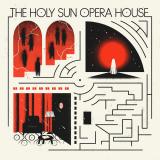
Holy Sun Opera House at its core is soprano and drummer Krissy Barker with composer dl Salo. Along with a revolving cast of collaborators, singers and performers, they create emotionally engaging and haunting symphonic music embellished by electronics, heavy drums and synthesizers. The group has been described as “Opera Cult” and as one who would play at the Roadhouse in Twin Peaks. They draw influence from early Dead Can Dance, Fever Ray and Klaus Nomi.
The Holy Sun Opera House is the group's self-titled debut set for release in May 2026 on the label Hologram Opera. The self-produced album was conceptualized as a way to describe an obsessive mind with music and inspired by the recurring dreams of singer Krissy Barker. In it is a realm of shifting rooms, dilapidated houses and passages. These unsettled rooms and spaces pose a striking confrontation of fear and anxiety from deep within.
In its conception, The Holy Sun Opera House was written as a passage through these ethereal dreams and spaces. The song Latched On depicts the compulsive psyche as a draining physical entity attached. While Voice of Gob, Decrepit Mansion, and Room with the Rain observe and attempt to find acceptance in this conflict. The Passages I & II travel between the curtains to the unknown entity residing in The Attic, who looks inside the mind of the dreamer and determines she has no soul.
The album blends genres with electro, darkwave, and contemporary classical music. The ritualistic passages of the choir throughout the album are reminiscent of Wicker Man and 1970's mystic cults, praising the deities residing within the dream. The arrangement of synths, electronics, heavy drums and operatic singing lend itself to something uniquely memorable.
Transformation, growth, and rebirth drive Ascent Effort, the latest release from Portland, Oregon trio Rhododendron. The title points upward, but not toward arrival. The record documents a period of change defined as much by instability as progress, where confusion and renewal unfold at the same pace.
Formed in 2019 while the band’s members were still in high school, Rhododendron’s Ezra Chong (guitar, vocals), Gage Walker (bass), and Noah Mortola (drums) set out to push their musical limits without regard for genre boundaries or audience expectation. For Ascent Effort, the band joined the roster of The Flenser, aligning with a label that has long championed artists who work in tension rather than comfort.
In the past seven years the trio has developed a sound rooted in technical precision and repetition. Drawing from the angular experimentation of underground rock in the 1980s and 1990s alongside elements of jazz, ambient, and progressive music, their compositions are deliberate with intensity. Riffs fracture and reform, rhythms lock into patterns only to break apart, and extended passages build pressure before shifting direction.
Performing regularly in Portland, the band has cultivated an intense and loyal local following. The live setting hardened the material. Songs grew heavier, sharper, more physical through repetition and high volume.
The material that became Ascent Effort was tested on tour before entering the studio. Written largely in sequence, the album traces a period of personal change and internal friction. Growth is not always clean; sometimes it grinds forward. Nothing resolves without cost. Confusion and strain do not sit outside the songs, they shape their architecture. That is what the band has accomplished with Ascent Effort, a work that is not always clean but well-shaped by struggle and growth. The Pacific Northwest lingers in the background of the record, its long winters and brief summers echoing the album’s shifts between abrasion and restraint. Ascent Effort does not offer catharsis in the traditional sense. It allows tension to remain. In that unresolved space, transformation takes form and a band in motion is revealed.
Immolation was founded after the demise of Rigor Mortis (NY), a band formed in May 1986 by Andrew Sakowicz (bass guitar, vocals) Dave Wilkinson (drums), and Robert Vigna (guitar) After recording the Decomposed and Warriors of Doom demos, Sakowicz left the band in early 1988 and was replaced by Ross Dolan, and the band's name was changed to "Immolation". The new lineup put out two studio demos, in 1988 and 1989, and gained a worldwide following in the underground death metal scene. Immolation signed a record deal with Roadrunner Records and released their debut album 'Dawn of Possession' in 1991. After leaving Roadrunner, the band released "Stepping on Angels," a compilation of demo releases and live tracks. In 1995 the band was signed by Metal Blade Records and released three albums: 'Here in After' ,'Failures for Gods', and 'Close to a World Below'. After their second album, drummer Craig Smilowski left the band and was replaced by Alex Hernandez. Their next three albums, 'Unholy Cult', 'Harnessing Ruin', and 'Shadows in the Light' were released by Listenable Records.
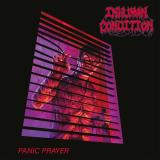
Coinciding with the band’s European tour in June 2026, High Roller Records re-releases “Rat God” (2021), “Fearsick” (2022), and the “Panic Prayer” EP (2023) by US death metal powerhouse Inhuman Condition.
Formed in late 2020, Inhuman Condition unites three seasoned veterans of the genre: Jeramie Kling (Overkill, ex-Venom Inc., ex-Massacre) on vocals and drums, guitarist Taylor Nordberg (Deicide, Umbilicus, ex-Massacre), and Terry Butler (Obituary, ex-Death, ex-Six Feet Under, ex-Massacre) on bass. With roots deeply embedded in the legacy of classic Florida death metal, the trio quickly established a reputation for delivering relentless, and unapologetically old-school extremity infused with modern precision and songwriting clarity.
The group’s debut full-length “Rat God” introduced their signature blend of crushing mid-tempo grooves, razor-edged riffing, and commanding vocal presence. Praised for its clear and powerful production, dynamic guitar work, and unmistakable homage to early 90s death metal, the album delivered headbanging anthems such as ‘Euphoriphobia’, ‘Crown of Mediocrity’, and ‘Planetary Paroxysm’, marking Inhuman Condition as a veritable force carrying the tradition forward.
With “Fearsick” (2022), the band sharpened their attack while staying true to their core identity. Featuring artwork by Dan Goldsworthy and produced by Jeramie Kling, the album expanded the sonic palette with atmospheric touches, crushing riff sequences, and memorable hooks, thus cementing the band’s status.
The “Panic Prayer” EP (2023) showcased three new tracks and a cover of Blue Öyster Cults ‘Godzilla’ alongside raw live recordings capturing the band’s ferocious stage energy.
High Roller Records’ 2026 re-issue campaign offers fans the chance to rediscover the early catalog in premium physical editions, celebrating the recordings that established Inhuman Condition as a modern standard-bearer of classic death metal intensity.
Fika Recordings are pleased to present Bring On The Apathy, the third solo record from Scottish songwriter Adam Ross. Adam Ross is an indie-folk songwriter based in north-east Scotland. He is a solo artist and has also led the cult indie band Randolph's Leap for over a decade, releasing music with legendary Fence Records and Lost Map as well as Olive Grove Records and Fika Recordings. He is known for his unique brand of articulate lyricism which blends humour, poignancy, wordplay and offbeat stories.. “Bring On The Apathy” was recorded onto tape, using traditional analogue techniques at Glasgow’s Green Door Studio with Samuel J. Smith. It showcases some of the most emotionally open, lyrically deft and characterful songwriting so far from one of Scotland’s most accomplished writers. The vintage recording approach brings a warmth and intimacy to a record which is in equal parts raw and organic while also beautifully arranged and performed as Adam is joined by a raft of excellent collaborators. The album itself is a reaction. Whether it be in the title, the lyrical content or the method in which the sounds were captured. “I was feeling fairly down and uninspired about the musical landscape” Adam explains. “The risk with digital recording where every instrument is overdubbed separately is that it can end up sounding metronomic, sterile and lacking personality.
I also started to get a bit freaked out by the topic of AI-generated music and the insidious, creeping impact it’s already having. I therefore decided that, as a bit of a protest, I wanted to make something that sounded extra-specially human and hand-crafted, where you could hopefully hear the interplay between musicians.” For this reason, Adam decided to record the majority of the album live, as a band, playing together in the same room without a click track. “I’d put a band together to tour my last album, Littoral Zone, and I really enjoyed the way we all worked together. Green Door Studio was chosen as the destination as it specialises in analogue sound production but it had an extra significance for Adam. “Green Door was the first studio I ever recorded in, back in 2009. This time around, the “unforgiving” nature of tape recording became an inspiration. “The musicians on the record are such great players that they rarely make mistakes, so there was a confidence there that we wouldn’t need to rely on copious amounts of editing or post-production, which isn’t always possible with tape anyway. The core band consisted of Owen Curtis-Williams on drums, Cameron Maxwell on bass, Pedro Cameron on violin, Gillian Fleetwood on harp and (long-time collaborator with Randolph’s Leap) Pete MacDonald on piano. Mercury Prize-nominated artist C Duncan was drafted in to write and perform backing vocal arrangements along with Amanda Nizich and Gillian Fleetwood. Adam says “I’d been listening to a lot of Bob Dylan, Karen Dalton and Bill Callahan records and I thought it might be interesting to apply those sorts of influences to my brand of Scottish quirk-pop”.