Die in der Nähe von Philadelphia geborene Lizzy McAlpine wurde bekannt, nachdem sie ihre eigenen Songs und Coverversionen auf Soundcloud und YouTube veröffentlicht hatte. Im Jahr 2020 veröffentlichte sie ihr erstes Album "Give Me A Minute", mit dem sie sich als aufstrebende Künstlerin etablierte und Tausende von Fans begeisterte. Im Jahr 2022 ging ihr Song "Ceilings" auf Tiktok viral und eroberte die Charts auf der ganzen Welt. Lizzy hat auch mit Niall Horan, Noah Kanan, John Mayer, FINNEAS und Jacob Collier zusammengearbeitet und sich in der Folk-Pop-Indie-Akustik-Szene einen Namen gemacht. Die 24-jährige Amerikanerin präsentiert nun "Older", eine neue Single, die ihr gleichnamiges drittes Opus ankündigt. Die Platte wurde in Los Angeles von Lizzy und Mason Stoops (Ryan Beatty, Del Water Gap) aufgenommen und produziert, mit einer zusätzlichen Produktion von Ryan Lerman von Scary Pockets, Jeremy Most (Emily King, Norah Jones) und Tony Berg (Taylor Swift, Boygenius)
Suche:drunk
Rhythm Cult is back again as last summer hit ‘PPPPP’ from youANDme gets a second special package of reworkings from a band of meticulously selected remixers from around the globe. This time we welcome the likes of Shed (50 Weapons, Ostgut Ton) and Johannes Albert (Live At Robert Johnson, Renate Schallplatten) to the Cult to provide exciting new iterations breathing their unique spirit into an already memorable track.
First up to the platter is raw techno purveyor Shed in his Head High guise, who serves up a faithful but turbo-charged rework. The original’s ludicrously addictive vocal refrain returns, orbiting endlessly across the soundscape while the drums get serious steroid enhancement creating a weighty groove that hits hard. One of Rhythm Cults' favourite house producers Ian Pooley comes next, returning to deliver a sublime raw house re-take as only he knows how. Filtering and manipulating the vocal cuts and old-school stabs, he creates a bumping excursion into the cavernous depths, complete with lush echoing dub chords and jackin’ percussion. One for the house heads and as always, dancefloor dynamite. The Drunken Diva ‘Scream Mix’ shifts down through the gears to create an almost lilting, off-kilter dub-influenced iteration. Perfect for those hot late-night summer dancefloor moments, this cut takes it deep and dark. Finally, Berliner Johannes Albert swoops in to direct the track into a crunchy minimal 808 territory. His rework is complemented by some slick vocal chopping and frequency-shifted segments elevating the track to a new plateau.
Another fine series of remixes ensures ‘PPPPP’ will be lighting up dancefloors this
summer season and beyond. Rhythm Cult continues its mission to showcase some
of the most talented and forward-thinking producers out there.
Visions Recordings is delighted to have Detroit's Julion D'Angelo and Chicago's SPECTER on the same record after years of trying to work together. These two Detroit masters of the deepness have released records on some of the best labels around, including Sound Signature, Tone Log, Freedom School , Tetrode , Sistrum and more.
These two tracks are original deep zmusic to dance to, but also to dive into and listen to all the details, the complex programming, and the search for unique sounds. It's special and that's why we love it and want to keep promoting it. Real music!
We fell in love with these tracks as soon as we heard them, and we hope you will too. Visions aims to maintain a high and varied standard, and once again we try to present you with quality and profoundness. enjoy the ride.
Duo Drunken Kong step up for their Drumcode debut.
The residents at Tokyo’s legendary Womb have a distinct sound signature, as dreamy melodic and vocal elements rub shoulders with the pair’s trademark groove-orientated rhythms to create hypnotic techno outings that span the breadth of the genre, from heads down rollers to peak-time pleasure.
Their maiden outing on Drumcode is an inspiring four-track work ‘I Want To See’ that lays down this sonic manifesto, with each track built around different vocal samples used to skilful effect.
EP opener ‘It’s Then’ brings atmosphere in spades, mixing up a chugging bottom end, a sleek synth line and a sublime vocal that simmers throughout.
The title track is another late-night dancefloor affair that shifts between function and fun, as a slick mix of polished grooves and hypnotising melodies build towards a thrilling crescendo. ‘That’s It’ brings peak-time energy against a plump electro backbone and ’90-tinged vocal.
The EP rounds out with evocative ‘Need It’, as a stirring vox and metallic drumlines propel the track forward.
Crackazat & Heist present: “Senses”. A stunning mini album that sees the artist deliver a heartwarming perspective on contemporary electronic music
On “Senses”, we see the pure talent of Crackazat come to life like never before. We’ve all danced to “Alfa” or his most recent hit on Heist “Demucha” and have heard his venture into the more poppy side of things with his 2022 album ‘Evergreen’ on Freerange. “Senses” however, is on another level. Crackazat takes you on a sonic journey exploring his musical personality with live keys, vocals, bass and production all coming from his studio in Uppsala, Sweden. The
jazzy horns that are featured throughout are recorded by Adeev and Ezra Potash, better known as the Potash twins. The duo took a sidestep from their recordings with John Legend, Robert Glasper and even Diplo to dive into this project with Crackazat and help him deliver arguably his best work to date.
The 6-track album starts off with the low-slung groove of ‘I need to know’. The whole atmosphere is warm, dreamy and seems to be written to lift your spirits, no matter where you are in life. Plucked strings, arpeggios and long horn notes give this song its energy, which is subtly supported by lo-fi drums and sparse bass licks.
“Do you think about me”, keeps the energy tight with a lovely drum groove and a sparse bass section. From the first note of the track, you get the feeling like the energy could change any moment. Halfway through this is exactly what happens, when uplifting keys and a buzzing lead take control of the track. The string arrangement is subtle enough to never overshadow the other instrumentation, but simply adds a beautiful layer to a track that’s already filled with
emotion. It’s all smiles when the energy of this track is set loose!
If “Do you think about me” is Crackazat in pop mode, “Freddie’s Groove” is Crackazat in full-on jazz mode. The nod to Freddie Hubbard is clear, and Crackazat cleverly takes ideas from both the jazz legend and his legendary French sampler, Pepe Bradock for this track. The horns are deep and moody, the groove is jazz-house at its best and Crackazat’s soft vocals have the perfect amount of fragility to fit the groove. The changeover into a stabby synth section
halfway through the track is a subtle reminder from the skilled producer that – even with all these musical elements – he can direct you to the front of the dancefloor with the twist of a note.
“Phantom” sees Crackazat move into a shuffling Latin-dance vibe. Here, the song reaches its full potential through the horn section, so it’s only fitting that this is the feature track for the Potash Twins. The Latin rhythms are lush, the key progression is on point and the energy on this track just keeps on going with layers and layers of horns, powerful vocal chops, and subtle but effective percussion changeovers.
“Endless life” is a track that feels like it’s building up momentum with every repetition. Whether it’s the broken beat groove, the offbeat keys or the sparse horn hits, chord hits or leads, there’s a certain energy in this track that takes a hold of you and simply doesn’t let go.
The outro “When we last met” is built around vibey drunk keys and a downtempo hip-hop groove. There’s a hint of old school D’angelo in this track and you can clearly hear the artist feels at ease with the path he’s taking the listener on. It’s a perfect ending to a record that showcases the beautiful world that Crackazat has crafted through his compositions and one thing is for sure: This is an album we will all keep coming back to for a long time to come.
Yours Sincerely,
Maarten & Lars
8 years almost to the day after releasing his unique re-interpretation album of his field recordings made in the late 90's in Tanzania, Kink Gong is back with another volume of bushmen madness. Here’s what Kink Gong aka Laurent Jean-neau has to say about his end of millennium trip:
‘’My experience in Tanzania is now over 20 years and most of the so called remix was started in Tanzania and left un-finished, then eventually retouched in Vienna, Paris, Shanghai, Kunming, Dali or Vientiane. 20 years later I searched my Tanzanian files and rediscovered unfinished tracks which are being now refreshed on this new record.
Back to the early days of the XXI century, when I lost my health trying to survive with the HADZAs, the last bushmen in northern Tanzania. In 1999 James Stephenson from NYC invited me to join his Hadzas friends. I would leave the bush to rest in a place with enough food and electricity and start to edit, loop and work on the original recordings, to trans-form them into organic abstract compositions, the only instrument I had recorded a lot with the Hadzas was the malimba and I bought different malimbas in Arusha to take back with me to Europe, I used either the original record-ings or me playing malimbas on some tracks and applied some electronic treatment to it, at that time I used Roland synths for some tracks.
The original recordings are related to scenes at night by the fire with the Hadzas, but also 3 different types of celebra-tions, Epeme Men was recorded on a moonless night with men and women singing and dancing in complete dark-ness in Mangola, an Hadza camp. Irawk Drum Under the Rain was recorded during daytime at a Multi ethnic gathering at the Franciscan Spanish catholic mission with a crowd dancing and singing under heavy rain while an IRAWK large (and wet) drum was being played, Northern Tanzania. Makonde Island was recorded in southern Tanzania at the boarder with Mozambique and is a pure scene of trance taking place on an island where the MAKONDE fishermen off the coast of Mtwara, get wild, hitting plastic containers for the sound, drunk and stoned men and women are hysterical-ly jumping and falling on each other, ending up with a few wounded.
Once again I'm responsible for this act of multicultural sabotage, but don’t forget that you can always listen to the origi-nal recordings on the Kink Gong recs collection. ‘’
Laurent Jeanneau, Berlin 2023
Melancholia is a made-up medical condition manifested in an incessant moment of reflection. The newest album is a soundtrack to different stages of it and the accompanying feelings. The extremes of those got illustrated by Wojtek Łebski who designed the graphic identity of the album.
"I wrote this music during the last 3 years which for me and to many others were the most bizarre time on the planet we live. Lots of dilemmas, problems, ups and downs, self-doubt and permanent anxiety I transformed into different frequencies of sound. From the very first song, you can hear my fascination with the bass and half-step music scene. Thanks to Mr Envee who mixed the album, it sounds exactly how I imagined - deep and worm. Welcome to the journey." - says the author.
Teielte is a very important person to U Know Me Records - his debut album was the first one in the history of the label. To honour the album properly, the "Melancholizm" was labelled with the number UKM 100 and it will be released exactly 12 years after the famous debut of Taielte's album "Homeworkz".
The album will be released in two versions - classic black LP and limited colour LP. What's special about the limited edition is that every copy is different and is numbered by hand (100 copies). Also, both versions have different covers designed by Wojtek Łebski
A new lick of paint for the House of Disco, serving you slick, sophisticated and just as stylish. Taking the keys for the thirtieth release, Dutch dynamo Cleanfield, who lays down a four track EP dripping in summer sun.
The A side opens with ‘Sunshy’ a disco house banger, complete with bumping bass, sun-kissed toplines and warped Kool & The Gang synth warbles, before ‘Oregano’, takes you on a Mediterranean flavoured, supercharged dream house journey spliced with tripped out arppegiated wanderings.
On the flip, ‘Krispy’ a tropical, synth-heavy party starter with sandy beaches and crystal-clear oceans in mind and ‘Caught In The Act’ an underwater sea sensation, drenched in drunken arps and a cocktail of chants, guitar licks and good vibes.
Having been a fan of Reelow for, well, as long as we care to remember, we are really proud to present you his new outstanding EP on Cellaa Music. Now residing on Ibiza, Reelow has enjoyed yet another successful year. With the talent taking a back seat, its the music hogging the spotlight and rightly so. Two new Tracks and two massive Remixes that look to the past whilst sitting firmly in the present.
- Leave Me Alone' riding on massive percussion and a tough house beat, with this tough Drums and drunken, wubby Sounds it is running right through its core. Plenty of sonic details flesh out the languorous but slightly groove and you'd imagine this Track is to be the sort of many Artits will love.
- Your Crowd' is again about little tiny details and how they evolve with time. This one take you on a voyage of natural rhythms and big Drums. Developing from harmonic FX Sounds and a infectious groove, the track is full of surprises as it twists and turns into different sounds that come and go to take it further than the dancefloor.
The first of the remixes comes from the in form, Massimo Cassini. He team up with a hypnotic rework of - Leave Me Alone' that demonstrates just why he is one to keep a close eye on as he gears up on the production front. Massimo is delivering a muscular house bomb, carefully placed FXs and a nice and catchy line to make this a dancefloor mover.
Next we have Cellaa Music Co Founder Martin Heyder providing a soulful tech house surrogate to the original of - Your Crowd'. His remix has a deeper houseier twist with a smooth 303 pad sound and a concrete percussive arrangement to convey a fantastic production.
We'll meet you on the Dance Floor!!!
- A1: Daaam!
- A2: Make Room
- A3: The Next Level
- A4: Da Liks
- A5: Hip Hop Drunkies
- B1: Only When I’m Drunk
- B2: At It Again
- B3: Best U Can
- B4: Hands 2 The Ceiling
- B5: Mj Pt.2 Feat. Planet Asia
Notoriously spirited, hard parrtyin' West Coast rap trio Tha Alkaholiks have returned with their first new studio album in over 10 years!
Combining fresh takes on some of the band's best known singles including "Daaam!" and "Make Room" PLUS several new songs, this album hits that '90s rap nostalgia spot!
Features special guests Planet Asia and spookybands!
- A1: Les Masques - Il Faut Tenir (1969)
- A2: Isabelle Aubret - Casa Forte (1971)
- A3: Christianne Legrand - Hlm Et Ciné Roman (1972)
- A4: Jean Constantin - Pas Tant D'chichi Ponpon (1972)
- A5: Billy Nencioli & Baden Powell - Si Rien Ne Va (1969)
- B1-: Marpessa Dawn - Le Petit Cuica (1963)
- B2: Jean-Pierre Sabar - Vai Vai (1974)
- B3: Sophia Loren - De Jour En Jour (1963)
- B4: Isabelle - Jusqu’à La Tombée Du Jour (1969)
- B5: Sylvia Fels - Corto Maltesse (1974)
- C1: Frank Gérard - Comme Une Samba (1972)
- C2: Ann Sorel - La Poupée Des Favellas (1971)
- C3: Charles Level - Un Enfant Café Au Lait (1971)
- C4: Andrea Parisy - Les Mains Qui Font Du Bien (1970)
- C5: Audrey Arno - Quand Jean-Paul Rentrera (1969)
- C6: Aldo Frank - T’as Vu Ce Printemps (1970)
- D1: Christianne Legrand - Cent Mille Poissons Dans Ton Filet (1972)
- D2: Clarinha - Lemenja (1970)
- D3: Hit Parade Des Enfants - Aquarela (1976)
- D4: Jean-Pierre Lang - Tendresse (1965)
- D5: Magalie Noël - Une Énorme Samba (1970)
- D6: Françoise Legrand - La Lune
Ever since the late 1950s bossa-nova revolution, Brazil’s influence on French music has been undeniable. Pierre Barouh, Georges Moustaki and a vast array of lesser known artists, all made the Musica Popular Brasileira (MPB) an axis of promotion at the service of a cool and metaphysical, modern and mixed Brazilian lifestyle. Some were seduced by the poetic languors of the bossa, some were looking for fun, and others just loved the American hybridization of jazz-bossa, jazz-samba.
What is bossa nova? One of its creators, Joao Gilberto said: "Its style, cadence, everything is samba. At the very start, we didn't call it bossa nova, we sang a little samba made up of a single note - Samba de uma nota so .... The discussion around the origins of bossa nova is therefore useless”. It is nevertheless useful to remember that these magnificent Brazilian songs, which the guitarist describes as samba, were shifted and balanced around improbable chords. "I like things that lean, the in-betweens that limp with grace," said Pierre Barrouh, quoting Jean Cocteau.
With emotion, arrangements for violin and supple guitar licks, bossa nova rapidly changed. A transformation that can be heard in the Tchic, tchic, French Bossa Nova 1963-1974 compilation, the result of a cultural reappropriation, which traveled through the United States and supplemented itself in France.
A musical revolution that has remained significant, bossa nova was born in Rio. From 1956 to 1961, Brazil lived through its golden years. In five years, the country had invented its modernist style. Elected president in 1956, Juscelino Kubitschek de Oliveira, an elegant man with a broad forehead, brandished a promising slogan: "Fifty years of progress in five years". He quickly got to work. Not worried about increasing debt, he launched the project for a new federal capital, Brasilia, designed by the communist architect Oscar Niemeyer. Volkswagen opened state-of-the-art factories and created the “fusquinha”, the Beetle. In Rio, the Vespa made its first appearance. The Arpoador Surf Club crew run into the “girl” from Ipanema, Helô Pinheiro - the tanned garota ("chick"), between a flower and mermaid, who at 17 walked by the Veloso bar, where the fiery author and composer, Tom Jobim and Vinicius de Moraes, were getting drunk on whiskey. From then on, bossa symbolized cool.
In 1958, Joao Gilberto recorded Chega de Saudade, which the directors of Philips denied, calling it "music for fagots". The marketing director, who believed in it, secretly pressed 3000 78-inch vinyls and distributed them at schools around Rio, creating a tidal wave.
American jazzmen then took over. In particular, trumpeter Dizzy Gillespie and guitarist Charlie Byrd. In November 1962, the Brazilian Ministry of Foreign Affairs funded a "Bossa-Nova" concert at Carnegie Hall in New York, inviting the genre’s pioneers. Unprepared, the show soon turned to disaster. But the troupe was invited to the White House by Jackie Kennedy. The first lady loved "the new beat" and in particular Maria Ninguem, a song by Carlos Lyra, later covered by Brigitte Bardot.
In Brazil, the 1964 military coup quickly ended this euphoria. The destructive atmosphere that ensued pushed many Brazilian musicians to leave, if not to exile. Thus, Tom Jobim, Sergio Mendes and Joao Gilberto arrived to the United States. In New York, Joao Gilberto met saxophonist Stan Getz. At the time, he was married to the Bahianese Astrud Weinert Gilberto, who had a German father. She had never sung before, but she knew how to speak English. Getz therefore asked her to replace her husband on The Girl From Ipanema. The Getz/Gilberto record with Tom Jobim on piano, was released in March 1964. Phil Ramone, the "pope of pop" was in charge of sound.
Bossa nova arrived in Paris through the classic “guitar-voice” channel (Pierre Barouh, Baden Powell, Moustaki…) But France loved jazz and Paris had already welcomed its American contributors. All these good people were to pass through Saint-Germain-des-Prés. The cabaret l'Escale became the Mecca of Latin American sound where one could find Pierre Barrouh and his friends, such as the Camara Trio, samba-jazz aces, whose only record was published by the Saravah label. With a band strangely called Les Masques (a band that included Nicole Croisille and Pierre Vassiliu, among others), the Camara Trio recorded an interesting Brazilian Sound, including the track Il faut tenir which is present on this tasty compilation of rarities.
Other enlightened musicians can also be found on the compilation, such as Jean-Pierre Sabar (songwriter for Hardy, Auffray, Leforestier ...) and the French pop rock organist Balthazar. In 1975, Sabar recorded Aurinkoinen Musiikkimatka on a Finnish label, which featured the crazy Vai, Vai, included on this record. We are now following the footsteps of Brazilian electronic musicians such as Sergio Mendes, Eumir Deodato or Marcos Valle who created funk and disco sounds on their keyboards and synthesizers. A style that influenced Véronique Sanson when she wrote Jusqu’à la Tombée de la nuit in 1969 for Isabelle de Funès, the niece of Louis and a great friend of Michel Berger - Sanson did end up singing this track on her 1992 Sans Regret record.
The pinnacle of exoticism and travel, Sylvia Fels’ Corto Maltese includes bongos, sea mist and ocean sounds. The title was taken from Jacky Chalard’s concept album written in 1974, Je suis vivant, mais j’ai peur (I am alive, but I am scared), based on Gilbert Deflez’s science fiction novel.
However, bossa nova extended the scope of popularity. "In the 1970s, I was a fan of Sergio Mendes, Getz / Gilberto. I fell in love with this music that I knew because I had been an orchestral singer, " explained Isabelle Aubret, who in 1971 delivered a composite record of covers by the very funky Jorge Ben, Orfeu Negro, Tom Jobim, Vinicius de Morais and Jean Ferrat. "I recorded this album for Meys Records in Paris, far from Brazil, with wonderful musicians, François Raubert, Roland Vincent, Alain Goraguer...". The latter wrote the arrangements for Casa Forte, a very percussive title borrowed from Edu Lobo, one of the initiators of the bossa who spent time in California. "Jazz and bossa came together and produced very rhythmic music. I love singing, it allows me to dream, to have fun, to feel a high on stage, and these songs brought me joy, made me swing, my singing felt like a dance.”
The world tours of French singers and their desire for the tropics, often brought them to Rio with its hills, forests, caipirinhas and tanned bodies. There are surprises though, like this Iemenja (Iemenja is the goddess of the sea in the Afro-Brazilian candomblé religion). Not unlike the composer and musician Jean-Pierre Lang, based in Sao Paulo, Claire Chevalier taught Brazil to Brazil. In 1970, the singer and painter published a 45-inch vinyl, Mon mari et mes amants (My husband and my lovers), under the improbable pseudonym of Clarinha (little Claire). She was then living in Rio, with her husband, Joël Leibovitz, who founded a band called Azimuth, and who owned a record label specialized in "sambas enredos" songs for samba school parades.
For its B side, she asked Pierre Perret to come up with lyrics for a song composed by Carlos Imperial: "Oh goddess of the sea, o goddess Iemenja, I bring a white rose to adorn your long hair ..." . "Perret came to see us, and we had fun, remembers Joël Leibovitz. We wrote Lemenja for fun, we recorded it at the Havaí studio, behind the Central do Brasil the central station. Erlon Chaves, the arranger who worked with Elis Regina, joined us" adding his share of Afro-Brazilian percussions and funky brass to the mix.
There is a common misunderstanding in Franco-Brazilian history: that bossa, admittedly hedonistic, is perceived as funny, even though the poets who wrote the texts are often philosophizing on the human condition. Its French interpreters pull it towards a carnival inspired universe, far removed from its fundamental essence. Thus, Jean Constantin covered the famous Samba da minha terra, an ode to the art of samba written by the classic Bahian composer Dorival Caymmi, renaming it with the enticing title of Pas tant de tchi tchi pompon: "On your pier there is no tchi tchi / when you arch your back, you know everything is alright ”(lyrics by Gérard Calvi). This expedited bossa aims for the absurd, but retains a certain elegance.
Indeed, Jean Constantin was not an idiot, the rather large man had a huge mustache and liked fantasy, (Les pantoufles à papa, Le pacha, inspired by cha-cha-cha-cha, salsa and jazz) but he was also the lyricist of Mon manège à moi interpreted by Edith Piaf, the composer of Mon Truc en plume by Zizi Jeanmaire and the soundtrack of François Truffaut’s 400 Blows. Le Poulpe, published in 1970, from which this bossa is extract, was arranged by Jean-Claude Vannier, an accomplice of Serge Gainsbourg’s Melody Nelson. In short: "There is enough of samba / By looking at the parasol / Because my poor cabeza / Is going to die in the sun".
Even the American actress Marpessa Down, who was at the heart of the bossa nova revolution with her role as Euridyce in Marcel Camus’ film Orfeu Negro, winner of the 1959 Cannes Palme d'or, fed the clichée with Je voudrais parler au petit cuica - "Tell me how you manage to always make people want to dance / It's true, I must admit that I cannot resist your magic" - in consequence, once can hear the cuica, a little drum inherited from the Bantu.
But bossa nova had many angles. Societal, of course, pushing actresses who were symbols of women's liberation like Brigitte Bardot, Jeanne Moreau, or Sophia Loren to engage in the exercise of accelerated bossa. In February of 1963, Sophia Loren made a record in French in Rome, Je ne t'aime plus, featuring the song De jour en jour, a bossa written by two Italians, Armando Trovajoli and Tino Fornai, which was released a little later by Barclay. Bossa accompanied the 1960s, a decade of moral liberation. Ann Sorel, who interpreted La Poupée des favellas, caused a sensation with L’amour à plusieurs, a provocative song written by Frédéric Bottom and Jean-Claude Vannier. As for the actress Andrea Parisy, she displayed her bourgeois cheekiness in Marcel Carné's Les Tricheurs before interpreting Les mains qui font du bien. And Magalie Noël, the friend of Boris Vian, who sung Johnny fais-moi mal, was hired to sing Une énorme Samba, composed by Alain Goraguer (arranger to Gainsbourg, Bobby Lapointe and Jean Ferrat) with lyrics by Frédéric Botton.
But in the end, of what wood is bossa nova made of? The answer is given by Christianne Legrand, daughter of Raymond the conductor, and sister to Michel the composer: "With me, with jà" - jà means "immediately" in Portuguese. In 1972, the singer, an expert in vocal jazz and a member of the Double Six, published Le Brésil de Christianne Legrand. Two songs included on the Tchic Tchic compilation that demonstrate how bossa, jazz, funk, rock, etc. work like a swiss army knife: the music is used to denounce broken systems, or miracles, HLM et ciné roman, Cent mille poissons dans ton filet, two songs from the O Cafona soundtrack, a successful telenovela broadcast, at the time in black and white, on TV Globo. The first was adapted in French by the fighter and friend of the Legrand tribe, Agnès Varda. The second is content with a play on words, jostling them into a summer fun.
Véronique Mortaigne
- 1: 23
- 2: Cross My Heart
- 3: Downtown Lover
- 4: All Bad Parts
- 5: Maybe Not Tonight
- 6: Body
- 7: Lifestyle
- 8: Undressed
- 9: Always Talking About You
- 10: Do You Know What I'm Thinking
Brighton four-piece Lime Garden return with their self-reckoning second album 'Maybe Not Tonight' So Young Records (the record label launched by So Young Magazine).
'Maybe Not Tonight' unfolds as a full night out, charting the pleasures and perils of partying and impulsive decisions.
Vocalist and guitarist Chloe Howard says: “The album is about a night out, from start to finish. As the night progresses, you’re having a great time, until your ex walks in with someone else. You hate the way you look but rather than going home, you press the big red button and get even more drunk. Eventually, you take yourself home full of melancholy, chaos and anger.”
Following their critically acclaimed 2024 debut 'One More Thing', which captured the raw live energy that earned them slots at festivals including Glastonbury and Green Man, Maybe Not Tonight sees Lime Garden expand their signature “wonk-pop” sound upwards and outwards. The result is their most intoxicating and luminous material to date.
- 1: Squish
- 2: Darkness, Be My Friend
- 3: Pick Your Heart Up
- 4: Fire Blooming Trees
- 5: Oh Well
- 6: Maybelline
- 7: Witch Hunt
- 8: Unbloom
- 9: Nervous Driver
- 10: Laurali
- 11: The Perfect Body
- 12: Drunk On The Ballroom Floor
'Squish' is the debut album from London-based Gretel, produced by Seth Evans (credits inc Black Midi, Geordie Greep, HMLTD, Shame). It is a grungy, hooky, expressive guitar record inspired by the likes of PJ Harvey, Sonic Youth and Smashing Pumpkins and features the singles 'Unbloom', 'Maybelline' and 'Darkness, be my friend'. 'Squish' is released on 180G Black vinyl housed in a gatefold sleeve and features an A2 poster.
Clear Vinyl[22,65 €]
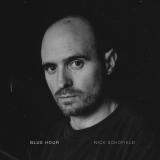
Blue Hour is Nick Schofield’s first foray into ambient jazz music. The album is an ambient ode to Miles Davis’ In A Silent Way, and opens up Schofield’s sonic palette to introduce his childhood instrument, drums, with his contemporary ambient-electronic practice. Blue Hour features the intuitive, and totally improvised, trumpet playing of Scott Bevins (No Cosmos, Busty and the Bass).
Schofield grew up playing drums, but turned to creating experimental-electronic music when studying Electroacoustics at Concordia University. Well-known for his signature ambient aesthetic, Schofield has been called a “dazzling electronic artist” by Aquarium Drunkard and a “synth maven” by Constellation Records. Blue Hour marks the first time that he has merged his percussion practice with his ambient electronic explorations, and it is all in the service of reinterpreting Miles Davis’ 1969 watershed recording In a Silent Way.
Schofield improvised all of the drumming and main synthesizer parts over the course of a single day, recording in a church in Ottawa. These foundational layers comprise tender Moog pulses and Roland Juno-6 pads, some of which would not be out of place on the back half of Another Green World or Music Has the Right to Children.
If this was to be a reflection of In a Silent Way, of course there would need to be trumpet. Schofield invited Bevins to record the missing piece of the album during a one day recording session, where Bevins improvised all his trumpet parts having never heard the songs before. Scott Bevins’ contribution gives the music a leading instrumental voice, and his intuitive approach shows a perfect understanding of how to both integrate and elevate the compositions.
Blue Hour is itself a profound reference, an ambient adaptation, a dream realized and an uncanny synthesis of sounds, styles, and personal history.
Black Vinyl[20,97 €]
Blue Hour is Nick Schofield’s first foray into ambient jazz music. The album is an ambient ode to Miles Davis’ In A Silent Way, and opens up Schofield’s sonic palette to introduce his childhood instrument, drums, with his contemporary ambient-electronic practice. Blue Hour features the intuitive, and totally improvised, trumpet playing of Scott Bevins (No Cosmos, Busty and the Bass).
Schofield grew up playing drums, but turned to creating experimental-electronic music when studying Electroacoustics at Concordia University. Well-known for his signature ambient aesthetic, Schofield has been called a “dazzling electronic artist” by Aquarium Drunkard and a “synth maven” by Constellation Records. Blue Hour marks the first time that he has merged his percussion practice with his ambient electronic explorations, and it is all in the service of reinterpreting Miles Davis’ 1969 watershed recording In a Silent Way.
Schofield improvised all of the drumming and main synthesizer parts over the course of a single day, recording in a church in Ottawa. These foundational layers comprise tender Moog pulses and Roland Juno-6 pads, some of which would not be out of place on the back half of Another Green World or Music Has the Right to Children.
If this was to be a reflection of In a Silent Way, of course there would need to be trumpet. Schofield invited Bevins to record the missing piece of the album during a one day recording session, where Bevins improvised all his trumpet parts having never heard the songs before. Scott Bevins’ contribution gives the music a leading instrumental voice, and his intuitive approach shows a perfect understanding of how to both integrate and elevate the compositions.
Blue Hour is itself a profound reference, an ambient adaptation, a dream realized and an uncanny synthesis of sounds, styles, and personal history.
- 01: Rotting
- 02: Long Day
- 03: Fargo
- 04: Cheer Up
- 05: Standstill
- 06: Huckleberry Flynn
- 07: Crashing Down
- 08: It's Too Bloody Anyway
- 09: Close Enough Away
- 10: Trust
- 11: Passerby
- 12: Three Cheers
- 13: Beatdown
- 14: Latchkey Kid
- 15: Decycling
- 16: Sloppy Fucking Drunk
- 17: Landmine Lullabye
American Steel is the last great band to come out of Berkeley's 924 Gilman scene. Forged in the same ¬res as Operation Ivy, Crimpshrine, and Rancid, these soulful punks have at long last decided to unearth their self-titled album from 1998. AmSteel evolved into one of the most artful and sophisticated punk bands around, but this quartet began as a truly raw and wrathful DIY outfit, and we're grateful for the opportunity to share this 17-song hidden gem. We have been begging the band to release this material since Red Scare first began. Literally pestering them for twenty years. Listen to this dynamic debut and you will understand why.
- A1: Pat Bio - Guide Us Jah
- A2: Don Bruce - Watiyo
- A3: Johnny Keslar - Wadada
- B1: Orits Williki - Fight The Fire
- B2: Majah Kungu - Wayo Nack In Town
- B3: Oby Onyioha - Raid Dem Jah
- C1: Georgy-Gold Owoghiri - Wonderful Holiday
- C2: B G. And Fibre - Drunken Driver (Dub)
- C3: Alphonsus Idigo - Mystic World
- C4: Sheila & Des Majek - Mother Nature
- D1: Jan Blast - Reggae Rigmarole
- D2: Alpha Kuffa - Messiah I
- D3: Bob Dazzy - Abandon Nation
A collection of fourteen digital reggae, deep roots and dub rarities from the Nigerian underground, spotlighting a time when Jamaican reggae entwined with Nigerian styles, politics and consciousness, creating a bridge between Lagos and Kingston. Fight the Fire is a companion piece to Soundway"s seminal "Doing it in Lagos" and "Nigeria Special" compilations, celebrating the innovation and musical experimentation of Nigeria in the 80s. Features rare tracks from key figures of the time including Oby Onyioha (with a crucial Burning Spear cover) and Orits Williki.
- 1: Purgatory
- 2: In The Morning
- 3: Highway Ii
- 4: Hollywood
- 5: Country Suep
- 6: Patronised
- 7: The Rain
- 8: Big Jump
- 9 10: Days
- 10: Fornever
The track shows SUEP at their best - glistening synth pop with Marr-esque jangle, sweet but emotionally incisive. Singer Georgie Stott - also known for being the keyboardist of the recently ended Porridge Radio - is at peak performance, marrying catchy melodies with off-kilter storytelling.
Receiving acclaim across BBC 6 Music and the indie press for their ‘car boot sale’ pop music, SUEP rummage through the jumble bin of music history, selecting and reassembling its best parts into something playful, strange and deeply artful. The band are affiliates of the Gob Nation collective - including The Tubs, Sniffany & The Nits, Ex-Void, and others., described by the Guardian as uniting around “a leftfield sensibility, lacerating wit and snotty attitude.”
With a slightly darker edge than their delightful EP Shop or last year’s groovy The Rain, Highway II tells the story of hope slamming into disappointment - a Valentine’s date gone wrong. Tears, cigarette breaks, running makeup and snotty sleeves paint a picture of painful emotional dislocation. It comes with an incredible, multilayered dance-routine music video from frequent collaborator, artist Jess Power.
Singer Georgie Stott says: “The lyrics for this poured out of me on Valentine’s Day when me and my partner went out on a date in the Limehouse area, over the river from where we lived in Rotherhithe. I got drunk too quickly, he got grumpy, and tears started streaming down my face because I just wanted to have a nice romantic time. We made up in the Canary Wharf Wetherspoons at the end of the night, but I went to have a cigarette before, to get out all my sobs and wrote all the lyrics on my phone in one go. Then at a practice studio we quickly wrote it around some chords I made up in the room.”
Forever is a confident debut, a masterpiece of modern indie songcraft. Across the album SUEP dip into country, synthpop, garage rock, post punk, and pub rock, but always retain their signature penchant for melodic hooks, snappy structures and straight-to-the-heart lyrics. Artfully unpretentious, the album was recorded by friend Matt Green, best known for his work with The Tubs, and mixed by Mike O’Malley of the band caroline.
Led by Georgie Stott and Joshua Harvey, SUEP have become fixtures of south-east London’s underground through a series of shared living spaces, improvised studios and DIY venues. Now with George Nicholls (The Tubs, Joanna Gruesome, GN Band), William Deacon (PC World), and Louis Forster (The Goon Sax, Expiry) completing the line up, their debut is finally on its way.
Forever is a glimpse into one of the best bands on the scene, not fitting into any trend, but also never fading into obscurantism - SUEP are a band that wear a joie de vivre loosely but fashionably. Now is their time to shine.
- A1: 6Up 5Oh Cop-Out (Pro/Con)
- A2: Skeleton Appreciation Day In Vestal, Ny (Bones)
- A3: Front Street
- B1: ?Aikido! (Neurotic/Erotic
- B2: White Knuckle Jerk (Where Do You Get Off?)
- B3: Cover This Song (A Little Bit Mine)
- B4: Thermodynamic Lawyer Esq, G F.d
- C1: Red Moon
- C2: Lysergide Daydream
- C3: The First Step
- C4: Jimmy Mushrooms' Last Drink Bedtime In Wayne, Nj
- D1: Chemical Overreaction / Compound Fracture
- D2: Everything Is A Lot
Will Wood's very first LP displays a variety of genres, with a chaotic homemade anti-folk feel and an experimental edge. "Everything is a Lot" began its long production in 2014, when the singer-songwriter was still 20 years old and performing drunken alt-comedy at open mics. With no funding, Wood led a slapdash band into the studio to bring songs mainly from his teenage years to life, and the unstructured production process and youthful experimentation gave it a uniquely loose and chaotic feel. The debut LP's sound is defined by Wood's Jay Hawkins-esque vocal delivery, an out-of-tune old upright piano, wailing wind instruments, jangly guitar, high-powered yet loose drums, and sardonic overdriven kazoo solos. Delivering everything from swing jazz and twee indie pop to pseudo-mariachi and waltz, these sounds and their accompanying bizarre lyrics come together to match the existential title, "Everything is a Lot." Will Wood's early career can be primarily defined by his experimental vocal delivery, honky-tonk piano smashing, and darkly edgy songwriting. While his stylings have matured and taken on a more precise approach, his refusal to conform to expectations and constant shifts in the genre have continued to be hallmarks of his songwriting and production. In his "Will Wood and the Tapeworms" releases (Everything Is A Lot in 2015, SELF-iSH in 2016), audiences can see the first glimpses into what would eventually become his signature style, presented in a uniquely raw and chaotic state of potential.
- A1: A Wish For Us No Spirit
- A2: Christmas Together No Spirit
- A3: Snow Drop Jazzyhan, Breadsim
- A4: Cosy By The Hearth Mondo Loops
- A5: Warm Hearts Vhskid
- A6: Winter Whispers Morningtime
- B1: By Candlelight Maelstro, Mondo Loops
- B2: Hot Chocolate By The Fire Pajama Boy, Drunk Urameshi
- B3: Peppermint Mocha Steezy Prime, Spaniel Mac
- B4: Snowlight Kiabits, Dani Catalá
- B5: All These Presents (And Still No Socks) Casiio, Sling Dilly
- B6: Merry Christmas Krynoze, Meno
- C1: Snowflake Flowray, Okinami
- C2: Sleigh Bells Okinami, Solar Body
- C3: White Village Kiabits, Dani Catalá
- C4: The Old Town Dani Catalá, Casiio
- C5: Home In Christmas Softy, Lucid Keys
- C6: December Glow Erwin Do, Coloured Rocks, Sheath
- D1: Noel Harmony Lock, Toti Cisneros
- D2: Merry Haze Jam'addict
- D3: Snow All Day Softy, Lock
- D4: Rudolph's Eve (Feat. Lofiluc) Phlocalyst, Viktor Minsky
- D5: Grandma's Gift Softy, Kainbeats
- D6: Opening Presents Xander., Lucid Keys
- D7: Toys Under The Tree Lucid Keys, Marsquake