
13

Seven and the Ragged Tiger - Originally released in 1983, Seven and the Ragged Tiger was the final Duran album with the original five members (until 2004). This third album was the first of Duran's to reach #1 in the UK charts. 'The Reflex' was remixed by Nile Rodgers and released as the third single on the album, it became the first US and second UK #1 single.

Die psychedelischen Hardrocker WORSHIPPER haben mit ihrem dritten Album "One Way Trip" ihren grandiosen Balanceakt zwischen klassischem Hardrock und Old School Heavy Metal perfektioniert, dem die Truppe aus Boston, Massachusetts durch eine gesunde Dosis Psychedelika zu einem rauschenden Höhenflug verhilft. Sowohl Rock als auch Metal drehen sich vor allem um die Hooks und Riffs der Gitarren, die das amerikanische Quartett als echte Leckerbissen in üppigen Portionen auftischt. Textlich werfen WORSHIPPER einen kaleidoskopischen Blick auf den menschlichen Zustand durch eine psychedelische Linse. Dabei wurde die Reihenfolge der Tracks durch den psychologischen Horror Thriller "Jacob's Ladder (In der Gewalt des Jenseits)" beeinflusst, in dem ein Veteran des Krieges in Vietnam von Flashbacks und monströsen Visionen geplagt wird, durch die das Album ein loses zirkuläres Konzept erhält. Als WORSHIPPER im Jahr 2014 gegründet wurden, war es für Sänger und Gitarrist John Brookhouse, Schlagzeuger Dave Jarvis, Bassist und Backgroundsänger Bob Maloney und Gitarrist Alejandro Necochea von Anfang an klar, dass sich ihre neue Band angesichts der hohen Konzentration gleichgesinnter und talentierter lokaler Kollegen deutlich abheben musste. Mit dem Ziel, etwas aufregend Neues auf den Tisch zu bringen, setzte die immer noch intakte Originalbesetzung auf makelloses, berauschendes und wuchtiges Material, mit einem Fokus auf das Schreiben von echten Songs mit eingängigen Melodien, unheimlichen Gesangsharmonien und Doppelgitarren-Großtaten. WORSHIPPERs Talent für eingängiges, episches Songwriting blieb nicht lange unbemerkt, und schnell hatten die Amerikaner einen Plattenvertrag in der Tasche. Es dauerte nur wenig länger, bis die universell gepriesenen Alben "Shadow Hymns" (2016) und "Light in the Wire" (2019) für weltweite Bekanntheit sorgten. Mit "One Way Trip" können WORSHIPPER nicht nur die hohen Erwartungen erfüllen, die an ihr drittes Album geknüpft waren, sondern die Bostoner haben hörbar Spaß daran, genau das zu tun, was sie am besten können: Großartige Songs für ein Album schreiben, das nur Volltreffer enthält!

Notorious - Notorious signified a musical change for Duran in 1986. Produced by Nile Rodgers, it focuses on brassy numbers and Chic inspired dance rock. Over time, it has become a cult favourite of fans for the more mature compositions and sophisticated directions. It was the first album to feature the band as a trio with the departure of Roger and Andy Taylor.

Big Thing - The band continued to explore different styles and culminated in Big Thing which was released in 1988. The album was a reflection on the musical climate which was changing towards the late 80s and had a more experimental and electronic approach compared to earlier Duran releases.

At the latest with the release of the albums "Zauberberg" and "Königsforst", in the mid-1990s, one associates GAS, Wolfgang Voigt's very own artistic cross-linking of the spirit of Romanticism and the forest as an artistic fantasy projection surface, with intoxicatingly blurred boundaries of post-ambient infatuation and the impenetrable thicket of abstract atonality. The distant, iconic straight bass drum marching through highly condensed, abstract sounds taken from classical music by the sampler or modulated accordingly, and the enraptured gaze through pop art glasses into the hypnotic thicket of an imaginary forest, manifested over the years this unique connection of audio and visual, which to understand fully, then as now, would be neither possible nor desirable.
Quite the opposite. The album GAS - DER LANGE MARSCH once again invites us to follow the deep sounding bass drum, to give in to its irresistible pull into a psychedelic world of 1000 promises. In the process, the journey leads us past stations of memories sounding from afar, from "Zauberberg" to "Königsforst" and "Pop", from "Oktember" to "Narkopop" and "Rausch", back and forth, now and forever.
Way. Destination. Loop. - Forest loop.
No beginning. No end.
Spätestens mit der Veröffentlichung der Alben „Zauberberg“ und „Königsforst“, Mitte der 1990er Jahre verbindet man mit GAS, Wolfgang Voigts ganz eigene künstlerische Vernetzung mit dem Geist der Romantik und dem Wald als künstlerische Fantasie-Projektionsfläche, rauschhaft verschwimmender Grenzen von post-ambienter Betörung und dem undurchdringlichen Dickicht abstrakter Atonalität. Die entfernt, durch stark verdichtete, abstrakte, der Klassik durch den Sampler entnommene oder entsprechend modulierte Klänge marschierende, ikonische gerade Bassdrum, der entrückte Blick durch die Pop-Art Brille hinein in das hypnotische Dickicht eines imaginären Waldes, manifestierten über die Jahre diese einzigartige Verbindung von Audio und Visuellem, die ganz verstehen zu können, damals wie heute, weder möglich noch wünschenswert wäre.
Ganz im Gegenteil. Das Album GAS - DER LANGE MARSCH lädt uns einmal mehr ein, der tief tönenden Bassdrum zu folgen, ihrem unwiderstehlichen Sog hinein in eine psychedelische Welt der 1000 Verheißungen nachzugeben. Dabei führt die Reise vorbei an aus der Ferne klingende Stationen der Erinnerungen von “Zauberberg” bis “Königsforst” und “Pop”, von “Oktember” bis “Narkopop” und “Rausch”, vor und zurück, in alle Ewigkeit.
Weg. Ziel. Loop. - Waldloop.
Kein Anfang. Kein Ende.

„Drifts and Surfaces“ ist ein dreiteiliges Set, wobei jedes Werk aus Auftragsarbeiten hervorgeht und durch gemeinsame Themen vereint wird: der Fluss zwischen ephemerer Bewegung und alltäglichem Stillstand, das Paradoxon von außergewöhnlicher und alltäglicher Schönheit und der Ehrgeiz und Müßiggang, der das Leben im 21. Jahrhundert ausmacht Saxl nutzt weiterhin kammermusikalische Ensembles neben analogen Synthesizern und digitalen Experimenten und vertieft sich dabei in strukturelle Emotionen und die lebendigen Details kleiner Handlungen. Während ihre bahnbrechende LP „The Blue of Distance“ (2021) Feld-Aufnahmen aus den Adirondacks und dem Lake Superior verarbeitete, stammt Saxls Quellenmaterial hier vor allem aus Live-Percussion und anderen Instrumenten. Das Projekt begann 2018 im Brooklyner Stadtteil Red Hook in dem Proberaum, den sich Saxls Band mit dem Percussion-Trio Tigue teilt. Später im selben Jahr spielten sie gemeinsam eine Residency und nahmen das Stück auf. 2021 begann sie ein neues Auftragswerk mit Third Coast Percussion aus Chicago. Der Titel „Drifts“ bezieht sich auf den Roman von Kate Zambreno aus dem Jahr 2020, in dem die Protagonistin von der Arbeit von Chantal Ackerman fasziniert ist, die die typisch weiblichen, unsichtbaren Formen der häuslichen Arbeit als ebenso wertvoll darstellt wie Tätigkeiten, die gemeinhin als produktiv angesehen werden. Saxl stellt „Drifts“ im Geiste dieser feministischen These auf: „Es fühlt sich an, als gäbe es hier eine kleine Reihe von Frauen, die diese Idee erforschen und kleine Aktionen feiern, von denen ich hoffe, dass ich deren Arbeit fortsetze.“ Das letzte Stück, „Surfaces“, wurde vom Guggenheim Museum in Verbindung mit der Alex Katz-Retrospektive im Jahr 2022 in Auftrag gegeben. Die Gruppe - bestehend aus Henry Solomon am Baritonsaxophon, Robby Bowen am Glasmarimbaphon und Saxl - lehnt sich an leichte, nachdenkliche Töne an, die von der Gegenwartsbezogenheit des bahnbrechenden Malers inspiriert sind. Katz' Arbeit beschäftigt sich mit der optischen Wahrnehmung von „schnell vergehenden Dingen“, wie der Liminalität der Dämmerung, wenn die Umrisse eines Objekts beginnen, undeutlich zu werden. „Die Art und Weise, in der sich unsere Wahrnehmung der Dinge verändert, nicht weil sie sich verändern, sondern weil wir uns verändern“, erklärt Saxl. „Ich wollte, dass sich diese wirklich kleinen Veränderungen dramatisch anfühlen, um die imaginäre Bewegung in seinen Gemälden widerzuspiegeln.“ Tritt man zurück, um „Surfaces“ innerhalb des Sets zu betrachten, findet Saxl den Strom, der sich durch die gesamte Arbeit zieht, das Konzept des Selbst als Teil von etwas Größerem. „Katz‘ Darstellung mehrerer Generationen von New Yorker Künstlern hat mich dazu inspiriert, darüber nachzudenken, dass es kein individuelles ‘Ich' als Künstler gibt, ohne die Künstler, die vor mir kamen, und die Gemeinschaft der Künstler, mit denen ich zusammengewachsen bin. Die Grenzen zwischen uns verschwimmen, und ich habe das Gefühl, dass ich auf einer verwobenen Oberfläche getragen werde, die von der Gemeinschaft um mich herum gebildet wird. Gleichzeitig weiß ich aber auch, dass ich mich irgendwann nach innen wenden und allein hinausschwimmen muss.“

This isn't just a seminal album. It is an estuary. All the black rivers that would form Brazilian funk/hip-hop flow through it. Led by Paulista pianist Salvador Silva Filho - Dom Salvador - 'Som, Sangue, e Raça' from 1971, one year after the explosion of Tim Maia on the scene, catalyzed the bossa nova and jazz background of its leader with the rhythm and blues of its members like saxophonist Oberdã Magalhães, nephew of samba-enredo master Silas de Oliveira and future leader of Banda Black Rio, who since the group Impacto 8 (which had, among others, Robertinho Silva on drums and Raul de Souza on trombone) had already been trying to reconcile MPB with Stevie Wonder and James Brown. Add to all this a mixture of samba, Nordestino accent, and even the black side of the Jovem Guarda represented by the authorial presence of Getúlio Cortes (older brother of Gerson King Combo, our James Brown 'cover') in 'Hei! Você'. Alongside these elements and the presence of Rubão Sabino (bass), who still called himself 'Rubens', drummer Luis Carlos (another member of Black Rio), the record enlists the trumpet and flugelhorn of symphonic musician Darcy in place of the original Barrosinho (yet one more founder of Black Rio), who was traveling during the recording but would end up being a leading force of the band.
The album 'Som, Sangue e raça' paves the way for future generations of musicians and producers of the Carioca scene at the beginning of the 1970s. The lyrics that dealt with the question of race and the explosive fusion of samba, soul, jazz, and funk, elaborated by Dom Salvador and his troupe, Abolição, established the bases for the development of new sounds and tendencies in Brazilian music.

When Mano asked Gebrüder Teichmann to do a remix for Joãozinho Morgado, the King of Drums (O Rei dos Tambores) the two brothers couldn´t get more excited:
Starting from a love for dirty fast Kuduro beats those two pale potatoes, who spent years in dark Berlin basement underground clubs have been infected by energetic Angolan rhythms.
During their stays and musical collaborations in Luanda, they soon found Semba, Kazukuta, Kilapanga, Rumba and Merengue and all that fantastic musicians and music of the 60´s and 70´s golden age of Angolan music. Morgadinho was originally recorded at Gravisom studio in Lisbon, where Joãozinho Morgado orchestrated a groovy jam session with the Turma da Bênção project by Conjunto Angola 70 & Paulo Flores. Joãozinho was accompanied by Botto Trindade (Solo Guitar), Pirika Duia (Viola Ritmo), Mayo Bass (Viola Bass) and Galiano Neto (Percussion). The session was coordinated by Armando Gobliss.

ACT OF CREATIONs intensives, komplexes und kompromissloses Melodic-Death-Metal-Album "Moments To Remain" fängt die Energie der Band perfekt ein und wartet mit einer massiven Soundwand auf, die stets genügend Raum für die feinen Nuancen des ureigenen Bandsounds lässt.
"Moments To Remain" kann man als die Fortsetzung der letzten drei ACT OF CREATION Alben verstehen, dennoch sollte man es als eigenständigen Release betrachten.
Das ganze Album beruht auf dem Konzept, einen kompletten Tag Revue passieren zu lassen und über bestimmte Themen nachzudenken, während man am Wasser sitzt.
Das Ergebnis ist ein Album, welches trotz aller Komplexität keinerlei Kompromisse bei der Durchschlagskraft eingeht und somit den Hörer auf eine hochemotionale Reise durch die musikalische Welt von ACT OF CREATION einlädt.

Seit mehr als zwei Jahrzehnten verfolgen Dr. Dog ihre Hingabe an die Alchemie des Musikmachens. Als es an der Zeit war, ihr elftes Studioalbum aufzunehmen, wählte die aus Philadelphia stammende Band einen vielschichtigen Prozess aus, der eine tiefere Synergie zwischen den fünf Mitgliedern (Bassist Toby Leaman, Lead-Gitarrist Scott McMicken, Rhythmusgitarrist Frank McElroy, Keyboarder Zach Miller und Schlagzeuger Eric Slick) erforderte. Diese Reise begann mit einer gemeinsamen Session in einer Hütte in den Wäldern von Pennsylvania, von wo aus Dr. Dog sich nach und nach ihren Weg zu dem fröhlich-unbefangenen Psych-Rock ihrer neuen, selbstbetitelten LP bahnten. McMicken übernahm bei "Dr. Dog" zum ersten Mal in der Geschichte der ausgesprochen egalitären Band das Ruder als Produzent, abgemischt wurde das Album vom mehrfachen Grammy-Gewinner Matt Ross-Spang (Jason Isbell, Drive-By Truckers). Getreu dem eklektischen Geist, der die Band schon immer beseelt hat, wechseln die 11 Tracks auf "Dr. Dog" von Soul über Surf-Rock bis hin zu symphonischem Pop mit einer Ausgelassenheit, die durch die wiederbelebte kreative Energie beflügelt wurde. Ihr erstes komplettes Album seit "Critical Equation" von 2018 zeigt Dr. Dog als eine Band, die noch immer, nach über zwanzig Jahren ihrer Karriere, zusammenwächst und sich weiterentwickelt.

Fuenf Typen, zu viele Instrumente und ehrliche Geschichten im bayrischen Slang. Geschichten wie Bilder von Kindheit, Frauen, Bier und Gemüsebrühe, von Emanzipation und vom Aufbruch ins Unbekannte. Da sind Lieder, die der ganzen scheiss Welt den Mittelfinger zeigen andere, die sie mit einem schulterzuckenden "Jamei!" umarmen. Und über alldem der Klang der sanften Brise des stillzirpenden, rauschenden, endlosen Oberpfaelzer Hinterlands. Im Versuch die Welt in Musik zu fassen entziehen sich die "Widersacher aller Liedermacher" lieber einer kategorischen Einordnung und manövrieren zwischen Folk, Rock und Jazz, zwischen Hip-Hop und Klassik in einer zügellosen Freiheit, die irgendwie 60er-Jahre-Woodstock-Vibes durch den Hypophysenlappen wabern laesst.

Following a ten-year hiatus, multi-instrumentalists Rafael Anton Irisarri and Benoît Pioulard return with »How to Color a Thousand Mistakes«, their third LP together as Orcas. Building on the electronic minimalism of »Orcas« (2012) and the Twin Peaks-inspired haze of »Yearling« (2014), the duo have expanded their sound and vision into a full-spectrum ensemble.
In the time since their last major collaboration, Irisarri and Pioulard have done plenty on their own, while also traversing significant life changes: relocation from Seattle to New York, separation and divorce, illness, hospitalizations, and the loss of siblings, parents, and friends. Yet from these tribulations, they gleaned inspiration to reconstruct their lives, creating music with new collaborators and partners. Recorded in a variety of studios and cities including Brooklyn, Cambridge, Oxford, Seattle, and upstate New York, the resulting album, under the tutelage of UK producer James Brown (Arctic Monkeys, Kevin Shields, Nine Inch Nails), is a patiently-crafted beast, equally inspired by impressionism, British new wave, and dream pop.
With Irisarri’s guidance and Brown’s encouragement, Pioulard brings his velvety voice to its harmonized peak on songs like »Wrong Way to Fall« and the Durutti Column-indebted »Fare«. Where his most recent solo albums for Morr Music (»Sylva« and »Eidetic«) navigated foggy forests of ambient pop and stacked tape loops, here his characteristic blur shifts into focus with a unique degree of clarity and confidence. »How fare against balance do I / Navigate my errors?«, Pioulard sings in a heartbreaking tenor, echoing the album’s broader themes of introspection, grief, loss, trial and trauma.
Lead single, »Riptide«, is a summary of Pioulard’s life changes and personal upheavals in the past decade, »flitting eastward toward a yen deep in the past« and learning to glide through the tumult of ocean waves, as a metaphor for the punches one takes in pursuit of grace. Its towering, key-changing midsection arrives with the monumental drumming of Slowdive’s Simon Scott, a long-time friend and cohort who appears on most songs in the set. Scott’s quintessentially English, jazzier approach offers a balance of force and restraint as the backdrop for Irisarri’s majestic guitars, analog synth lines, and Martin Heyne’s Fender Rhodes counterpoints.
Second single, »Next Life«, began as a sketch by Scott, and reached its final form in the hands of Pioulard and Irisarri, at a point that each had endured major concurrent losses, finding a commonality in the need to gaze over the horizon while acknowledging the unavoidable bittersweetness of letting go – not only of people, but of routines, places, and expectations. It’s one of Orcas’ most nuanced pieces, with a mid-tempo, sunset glow that unfolds into a sparkling, slide-guitar finale as it disappears in the rear view.
On third-act highlight, »Bruise«, Scott is doubled on the drum kit by MONO’s Dahm Majuri Cipolla, whose Liebezeit-influenced metronomy anchors a nimble bass groove from Andrew Tasselmyer (of Hotel Neon), and some of the album's most syncopated, spaced-out interplay, courtesy of Puerto Rican guitar player Orlando Méndez (a childhood friend of Irisarri’s). Originally a droney, fingerpicked guitar demo, »Bruise« is the most storied composition here, having gone through almost a dozen versions and lyrical edits, with Brown distilling hours of improvised performances into the final arrangement.
Throughout »How to Color a Thousand Mistakes«, Irisarri uses his deep well of production experience to paint the stereo field with meticulously designed textures, exemplified on the slow burn of »Heaven’s Despite« and the heady rush of »Swells«. As a mixing and mastering engineer with Black Knoll, he has built a client list that reads as a who’s-who of modern, forward-thinking composition, including Temporary Residence, All Saints Records, and Ghostly International, among many others.
As with previous collaborations, Irisarri and Pioulard bring disparate styles and specialties to the table, but with an interpersonal dynamic that transcends friendship into brotherhood, their open-minded workflow and mutual respect are evident at every turn. »How to Color a Thousand Mistakes« brims with tight, complex art rock songwriting, masterful production, and sonic versatility, informed by a plethora of genres and tonal hues. The title might promise answers, but the gravitational center of the album is the dawning realization that, as you reckon with the infinite whims of the cosmos, there could be none.

BLOOD MOON' COLOURED VINYL[28,78 €]
The UK’s first and only emo band Los Campesinos! return with their highly-anticipated seventh album, All Hell. It is perhaps their most ambitious and assured album yet, whilst simultaneously recalling everything we’ve come to love about LC! over their faultless discography. Recorded between October 2023 and February 2024, it is the first album to be wholly self-produced by band member Tom Bromley (having co-produced previous albums Sick Scenes and NO BLUES). The album is also self-released on the band’s own Heart Swells record label.
In the band’s words All Hell is an album about…
Drinking for fun and drinking for misery // adult acne // adult friendship // football // death and dying // love and sex // late-stage capitalism // Orpheus // day dreaming // night terrors // the heart as an organ and as a burden // suburban boredom // Tears of the Kingdom // the punks on the playlist // increments of time // climate apocalypse // the moon the moon the moon ///
Los Campesinos! have become one of the most important and influential cult acts in the UK since they formed in the mid-2000s. Starting out in the Cardiff indie scene and soundtracking Budweiser adverts, the seven-piece’s musical evolution since then has been slow, steady and remarkable. From the frenzied chaos of debut album Hold On Now, Youngster… (2008) through 2010 breakthrough Romance is Boring and the self-mythologising of latter day highlights NO BLUES (2013) and Sick Scenes (2017), their discography is an interconnected web of niche references, big swings and unflinching honesty.
Making self-professed sleeper hits for weeping dipshits, they’re as influenced by The Beautiful South as they are US emo, with emotional intensity and connection always at the core. Their lyrics are a treasure trove of football references, tales of romantic woe and painfully frank exorcisms, which have been tattooed across hundreds of fans’ bodies and served as comfort and insight during that break-up you had (there’s a reason the band’s tagline is “your ex-girlfriend’s favourite band”).
Now with the release of All Hell, Los Camp! approach their third decade as a band more brilliant, more potent and more vital than ever.

After his debut album 'Happy Floating' in 2022, Leipzig-based producer Damian Dalla Torre returns to Squama with 'I Can Feel My Dreams'. Developed during a residency in Santiago, Chile, it incorporates electronic, jazz and ambient influences utilizing Andean quena flutes, synthesizers and field recordings and again centering on collaborations with fellow artists like Ruth Goller, Miriam Adefris and Christian Balvig.
A wistful haze runs throughout the album, coming out at the end, there's both light and darkness and no need to choose.
Cold is the self-titled debut studio album by Jacksonville-based rock band Cold and was originally released in 1998. Discovered by A&R man Fred Durst (from Limp Bizkit), Cold burst onto the scene with their self-titled album, a potent blend of raw emotion, haunting melodies, and powerful instrumentation. Led by vocalist Scoot Ward, the band quickly garnered attention for their introspective lyrics and intense live performances. The singles culled of the album ""Go Away"" and ""Give"" showcased Ward's ability to convey deep-seated emotions with raw honesty, while tracks like ""Confession"" and ""End of the World"" captivated listeners with elements of alternative rock, metal, and post-grunge into a cohesive sonic tapestry. Cold is available on vinyl for the first time and includes an insert.
Over atmospheric instrumentation expanded by cinematic structure and pacing, Pearlty presents Knifeplay somewhere between dream-pop influenced shoegaze and lofty slowcore, never fully committing to one or the other in its insistence on creating an immersive, organic world.
Originally released in 2019, Knifeplay’s vivid debut Pearlty documents songwriter Tj Strohmer’s expressions of early adulthood in what he describes as “the journey from innocence to experience.”
Written during a time of immense inspiration, Strohmer was able to peel himself away from detached nihilism, uncovering the physicality and therapeutic powers of songwriting. Newly emboldened by this discovery and the talented community surrounding him, Strohmer channeled this revelation into his work, taking Knifeplay from a bedroom experiment that merely wrote songs to a more substantial project with a purpose.

SHHE, Scottish-Portuguese sound artist and producer Su Shaw, is releasing new mini-album, ‘DÝRA’, on July 19th via One Little Independent Records. The ambient project took form during a self-directed artist residency in the Westfjords of Iceland, influenced by the tranquillity of the Dýrafjörður fjord. Immersed in a distinct landscape with quietly monumental surroundings, Shaw began documenting her experience of the environment through field recordings and environmental data captured across several geographical locations.
‘DÝRA’ is an exploratory and mesmerising durational piece, evocative in its construction, inviting listeners to imagine their own space and scale within a landscape. Reflective, textured, and pensive, with expansive synths that further showcase Shaw’s deftness in sculpting immersive and introspective soundscapes.
Dýrafjörður is a 32-kilometre-long fjord in the Ísafjarðarbær municipality, in the Westfjords of Iceland. Shaw originally embarked on a 10-day residency in 2018, during which the village experienced an immense storm, hindering her schedule. Shaw explains, “It was my first visit to Iceland, and I’d made myself a meticulous itinerary in advance, which included recording at the summit of some of the peaks in the fjord. When the storm arrived after only a few days, it made any kind of travel challenging – so partly out of necessity to be able to continue developing the project, I began recording my immediate surroundings instead – attuned to incidental sounds from around the village and fluctuating weather states – and I quickly built up an archive of the environment”.

7A Records are proud to present our deluxe reissue of Mungo Jerry’s Electronically Tested. Released on July 19th, the album has been remastered and expanded with four bonus tracks and features extensive liner notes including Ray Dorset’s own recollections.
Electronically Tested, Mungo Jerry’s second album, was first released in March 1971. Even the title clued in listeners that this was no ordinary record. As Ray Dorset reveals, “I came up with the name of the album. Durex used to have ‘electronically tested’ written on their packets. I thought that was quite the talking point, if people in the know said, ‘That’s the same name as on the packet of condoms!’ It was taboo to mention stuff like that.” Electronically Tested offered hints of the familiar via its inclusion of the UK #1 Hits “In the Summertime” and “Baby Jump,” but elsewhere, the album was pure, eclectic Mungo Jerry. Every side of Dorset’s talents as a singer, songwriter, and musician came to the fore on Electronically Tested, with his bandmates John Godfrey, Paul King, and Colin Earl–as well as producer Murray– joining him to create a joyful noise: “It’s got a lot of tracks that could have been singles in their own right. It was good for me to be able to play all that kind of stuff”. Mungo Jerry’s singular sound has been described as rock, folk, blues, country, good-time music, jug band music, pub rock, and gypsy rock–and that’s just a partial list. One can hear all of those elements in the disparate, timeless songs that form Electronically Tested. How would Mungo himself describe it? “It’s kind of rocky stuff. It’s got social commentary. It’s got all sorts of influences in there. It’s really best to say it’s Mungo Jerry music.” Electronically Tested originally peaked at # 14 on the U.K. Albums Chart the week of April 14, 1971.
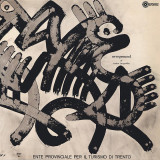
Sonor Music Editions presents this restored issue of Maestro Sandro Brugnolini's Overground. This elusive masterpiece in library music captures the most impressive work, alongside Underground (1970), of the Italian composer and alto sax player.
Sandro Brugnolini was a prominent member of the Modern Jazz Gang, a famous Italian jazz group, during the 1950s and 60s, which also included Amedeo Tommasi, Cicci Santucci, and Enzo Scoppa. The group was active from 1956 to 1965 and produced some remarkable albums such as Miles Before And After (1960) and the original soundtrack from Gli Arcangeli (1962), which featured the renowned American jazz singer, Helen Merrill. Subsequently, he recorded many of the genre's most iconic releases, including Feelings (1974), albeit uncredited, and ventured into Psychedelic Lounge Funk and Progressive Jazz Beat tunes.
Overground was released on Sincro Edizioni Musicali in 1970 as the soundtrack to Enrico Moscatelli and Mario Rigoni's documentary Persuasione, commissioned by Ente Provinciale Per Il Turismo Di Trento, a local tourism board in Italy, with music composed by Sandro Brugnolini and Luigi Malatesta featuring some of the best musicians in Italy at the time like Angelo Baroncini and Silvano Chimento on guitars, Giorgio Carnini on piano and organ, Enzo Restuccia on drums, and Giovanni Tommaso on bass and effects. The music spans from underground Psychedelic Prog. Rock with swirling organs, trippy effects, and distorted fuzz guitars to sophisticated Lounge grooves with Avant-garde orchestrations.
The music has been transferred and remastered from the original master tapes. It has been lacquer cut in stereo by Jukka Sarapää at Timmion Cutting and packed in a thick cardboard sleeve featuring a fully restored painting by Umberto Mastroianni licensed by Centro Studi dell’Opera di Umberto Mastroianni
