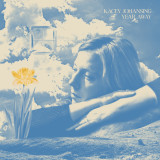
Sea Blue in Coke Bottle Clear Vinyl.
Because Hold, Jack Tatum's fifth album under the moniker Wild Nothing, was written in the aftermath of new parenthood during the pandemic, it was probably inevitable that it would be searching and existential music. But during the recording process, the artist known for synth-pop tastefulness used it as an opportunity to reach for a new sonic maximalism and wider set of influences. With contributions from longtime collaborator Jorge Elbrecht, Tommy Davidson of Beach Fossils and Hatchie's Harriette Pilbeam, first single "Headlights On" features an acid house-worthy bass groove and breakbeat that prove Tatum is playing for the rafters. Tatum produced the rest of the record on his own, partially out of necessity, due to the challenges of the pandemic. The songs were eventually brought to Adrian Olsen at Montrose Recording in Richmond to begin recording drums and filling in the gaps. While largely a product of isolation, Hold also reflects the things Tatum has learned from collaborators, both on previous records and during his acclaimed work with Japanese Breakfast and Molly Burch. The rest of the record was mixed by Geoff Swan, who listeners might know for his work with Caroline Polachek and Charli XCX. Swan put Tatum's vocals high in the mix, and throughout the album, he embraces playful vocal processing like never before. Tatum moved from Los Angeles back to his home state of Virginia about five years ago in search of a scaled-back lifestyle. The relatively suburban environment - and the occasional regret it inspired - proved to be great artistic fodder. It's the paradox of modern America - the suburbs are supposed to be stultifying to art, but they are so full of human desperation perfect for dramatizing. On "Suburban Solutions", he presents an anti-jingle with an acidly bright synthesizer melody, imploring you to sign on the dotted line, put your feet up, and embrace sweet oblivion. Adding to the song's menacing cheeriness is a chorus-sung bridge, made with assistance from Molly Burch and Tatum's wife, Dana, It was loosely inspired by the classic Martika song "Toy Soldiers" and the long-ago pop craze for children's choirs, and he embraces the trend's less-than-stellar reputation. By design, Hold dwells in uncertainty and fear, but in a package that encourages meditation and a bit of fun. "In the face of the pandemic, I think being a parent really forced my hand," Tatum said. "I felt that I had no other choice but to have a positive outlook on the world. Because if I were to give in at any moment and say, "Oh, everything is horrible," then I'll feel as if I've lost and I've given up on my son being able to thrive in this world."
Поиск:dur
Все
Sea Blue in Coke Bottle Clear Vinyl LP + artist signed art print. Only 200 available.
Because Hold, Jack Tatum's fifth album under the moniker Wild Nothing, was written in the aftermath of new parenthood during the pandemic, it was probably inevitable that it would be searching and existential music. But during the recording process, the artist known for synth-pop tastefulness used it as an opportunity to reach for a new sonic maximalism and wider set of influences. With contributions from longtime collaborator Jorge Elbrecht, Tommy Davidson of Beach Fossils and Hatchie's Harriette Pilbeam, first single "Headlights On" features an acid house-worthy bass groove and breakbeat that prove Tatum is playing for the rafters. Tatum produced the rest of the record on his own, partially out of necessity, due to the challenges of the pandemic. The songs were eventually brought to Adrian Olsen at Montrose Recording in Richmond to begin recording drums and filling in the gaps. While largely a product of isolation, Hold also reflects the things Tatum has learned from collaborators, both on previous records and during his acclaimed work with Japanese Breakfast and Molly Burch. The rest of the record was mixed by Geoff Swan, who listeners might know for his work with Caroline Polachek and Charli XCX. Swan put Tatum's vocals high in the mix, and throughout the album, he embraces playful vocal processing like never before. Tatum moved from Los Angeles back to his home state of Virginia about five years ago in search of a scaled-back lifestyle. The relatively suburban environment - and the occasional regret it inspired - proved to be great artistic fodder. It's the paradox of modern America - the suburbs are supposed to be stultifying to art, but they are so full of human desperation perfect for dramatizing. On "Suburban Solutions", he presents an anti-jingle with an acidly bright synthesizer melody, imploring you to sign on the dotted line, put your feet up, and embrace sweet oblivion. Adding to the song's menacing cheeriness is a chorus-sung bridge, made with assistance from Molly Burch and Tatum's wife, Dana, It was loosely inspired by the classic Martika song "Toy Soldiers" and the long-ago pop craze for children's choirs, and he embraces the trend's less-than-stellar reputation. By design, Hold dwells in uncertainty and fear, but in a package that encourages meditation and a bit of fun. "In the face of the pandemic, I think being a parent really forced my hand," Tatum said. "I felt that I had no other choice but to have a positive outlook on the world. Because if I were to give in at any moment and say, "Oh, everything is horrible," then I'll feel as if I've lost and I've given up on my son being able to thrive in this world."
Jenny from Thebes begann, wie viele Alben der Mountain Goats, mit John Darnielle am Klavier, bis ein Text entstand. Dieser Text, "Jenny was a warrior / Jenny was a thief / Jenny hit the corner clinic begging for relief", wurde zu "Jenny III", einem Song, der eine Herausforderung darstellte, der er sich nie zuvor gestellt hatte: eine Fortsetzung zu einem seiner beliebtesten Alben zu schreiben.
Der Katalog der Mountain Goats ist voll von wiederkehrenden Charakteren_Jenny, die ursprünglich in dem ihren Namen tragenden Stück All Hail West Texas auftaucht, sowie in "Straight Six" von Jam Eater Blues und dem Transcendental Youth side two jam "Night Light", ist einer von ihnen, jemand, der unerwartet in einen Song eintritt und die Ohren der Fans spitzt, die darauf erpicht sind, die verschiedenen Erzählstränge fortzusetzen, die sich durch die Diskografie der Mountain Goats ziehen, bevor sie im Nebel verschwinden.
In diesen Liedern wird Jenny weitgehend durch ihre Abwesenheit definiert, und diese Definition wird ihr von anderen Charakteren gegeben. Sie läuft vor etwas weg.
Diese Merkmale sind betörend, sowohl für die Figuren, die ihre Geschichte bisher erzählt haben, als auch für den Zuhörer. Sie laden zu bestimmten Fragen ein: Wer ist Jenny wirklich? Wovor läuft sie weg? Nun, sie ist eine Kriegerin und eine Diebin, und da es sich um ein Album der Mountain Goats handelt, ist es eine sichere Wette, dass das, wovor sie flieht, etwas Schlimmes ist. Etwas katastrophal Schlimmes. Jenny from Thebes ist die Geschichte von Jenny, ihrem Haus im südwestlichen Ranchstil, den Menschen, für die dieses Haus ein Ort der Sicherheit ist, und der westtexanischen Stadt, die sich mit ihrer Existenz nicht anfreunden kann. Es ist eine Geschichte über das Individuum und die Gesellschaft, über Sicherheit und Schutz und diejenigen, die sich dafür entscheiden, sich um sie zu kümmern, wenn es sonst niemand tut. Aufgenommen im legendären The Church Studio in Tulsa, Oklahoma, mit der Grammy-prämierten Produzentin/Technikerin Trina Shoemaker, ist Jenny from Thebes eine üppige Sammlung von Songs, die Darnielle als Sängerin und die Mountain Goats als Band vorantreibt, indem sie ihre klangliche Palette wieder einmal erweitert und sich an Einflüsse wie Godspell, Jim Steinman und The Cars anlehnt. Getragen von den Bläser- und Streicherarrangements von Matt Douglas, der verträumten Gitarre der Bully-Leaderin (und Bleed Out-Produzentin) Alicia Bognanno und den Backing Vocals von Kathy Valentine von den Go-Go's und Matt Nathanson, ist Jenny from Thebes ein Musical von großem Ausmaß, ein Melodram mit detailreichen Charakteren und mitreißenden Emotionen.
Jenny from Thebes begann, wie viele Alben der Mountain Goats, mit John Darnielle am Klavier, bis ein Text entstand. Dieser Text, "Jenny was a warrior / Jenny was a thief / Jenny hit the corner clinic begging for relief", wurde zu "Jenny III", einem Song, der eine Herausforderung darstellte, der er sich nie zuvor gestellt hatte: eine Fortsetzung zu einem seiner beliebtesten Alben zu schreiben.
Der Katalog der Mountain Goats ist voll von wiederkehrenden Charakteren_Jenny, die ursprünglich in dem ihren Namen tragenden Stück All Hail West Texas auftaucht, sowie in "Straight Six" von Jam Eater Blues und dem Transcendental Youth side two jam "Night Light", ist einer von ihnen, jemand, der unerwartet in einen Song eintritt und die Ohren der Fans spitzt, die darauf erpicht sind, die verschiedenen Erzählstränge fortzusetzen, die sich durch die Diskografie der Mountain Goats ziehen, bevor sie im Nebel verschwinden.
In diesen Liedern wird Jenny weitgehend durch ihre Abwesenheit definiert, und diese Definition wird ihr von anderen Charakteren gegeben. Sie läuft vor etwas weg.
Diese Merkmale sind betörend, sowohl für die Figuren, die ihre Geschichte bisher erzählt haben, als auch für den Zuhörer. Sie laden zu bestimmten Fragen ein: Wer ist Jenny wirklich? Wovor läuft sie weg? Nun, sie ist eine Kriegerin und eine Diebin, und da es sich um ein Album der Mountain Goats handelt, ist es eine sichere Wette, dass das, wovor sie flieht, etwas Schlimmes ist. Etwas katastrophal Schlimmes. Jenny from Thebes ist die Geschichte von Jenny, ihrem Haus im südwestlichen Ranchstil, den Menschen, für die dieses Haus ein Ort der Sicherheit ist, und der westtexanischen Stadt, die sich mit ihrer Existenz nicht anfreunden kann. Es ist eine Geschichte über das Individuum und die Gesellschaft, über Sicherheit und Schutz und diejenigen, die sich dafür entscheiden, sich um sie zu kümmern, wenn es sonst niemand tut. Aufgenommen im legendären The Church Studio in Tulsa, Oklahoma, mit der Grammy-prämierten Produzentin/Technikerin Trina Shoemaker, ist Jenny from Thebes eine üppige Sammlung von Songs, die Darnielle als Sängerin und die Mountain Goats als Band vorantreibt, indem sie ihre klangliche Palette wieder einmal erweitert und sich an Einflüsse wie Godspell, Jim Steinman und The Cars anlehnt. Getragen von den Bläser- und Streicherarrangements von Matt Douglas, der verträumten Gitarre der Bully-Leaderin (und Bleed Out-Produzentin) Alicia Bognanno und den Backing Vocals von Kathy Valentine von den Go-Go's und Matt Nathanson, ist Jenny from Thebes ein Musical von großem Ausmaß, ein Melodram mit detailreichen Charakteren und mitreißenden Emotionen.
Jeder, der genau hinschaut, kann erkennen, dass Cincinnati, OH, derzeit eine wahre Brutstätte musikalischer Kreativität ist, und die drei Mitglieder von The Serfs - Dylan McCartney (Gesang, Perkussion, Gitarre, Bass, Elektronik), Dakota Carlyle (Elektronik, Bass, Gitarre, Gesang) & Andie Luman (Gesang, Synthesizer) - und ihre jeweiligen Nebenprojekte (The Drin, Crime of Passing, Motorbike) sind unbestreitbar im Zentrum der New-Underground-Szene von Cincinnati. Nach der Veröffentlichung von Alben auf dem Berliner Minimal-Synth-Label Detriti und dem in Seattle ansässigen DREAM Records im Jahr 2018 bzw. 2022 macht die Band für ihr drittes und bisher bestes Album den Schritt zu Trouble In Mind. "Half Eaten By Dogs" gibt dem modernistischen Twitch von Future-Forward-Bands wie Total Control oder Cold Beat sowie dem post-industriellen Dancefloor-Grime von Skinny Puppy, Dark Day, This Heat oder Factrix einen entschiedenen Midwestern-Spin. "Half Eaten by Dogs" ist ein Blick durch ein Fernrohr in eine dystopische Vision, in der eisverkrustete Synthie-Harmonien triefende chemische Rhythmen und aufgebohrte elementare Rockformationen beherrschen. Die Musik ist eine Mischung aus düsterem Drum- und Synthesizer-Industrial und stygischen Gitarreninstrumenten, mal mit vorsichtiger Paranoia, mal mit melodischem Trotz und Ausgelassenheit (und in manchen Momenten mit Mundharmonika, Saxophon oder Flöte). "Half Eaten By Dogs" fasst erfolgreich alles zusammen, was The Serfs bisher erreicht haben, aber mit weitaus größerer Absicht und Zielsetzung als ihre vorherigen Alben. Es gibt Songs zum Tanzen und Songs, die man während eines Sturms oder beim Fahren durch die Straßen der Welt in sich aufnehmen kann. Es mag für die Band ein weiterer Schritt hinunter in die Katakomben sein, dabei aber auf dem Weg zu etwas Höherem.
Unzählige wollten Thomas Rainer aufhalten, ihn stürzen und haben alles getan, um ihn Dreck fressen zu sehen. Sie belächelten ihn für seine Vision, für seinen grenzenlosen Willen, seinen Herrschaftsanspruch erbauen, zu untermauern und zu mehren. Doch das ist Vergangenheit. Längst pflastern sie als besiegte Gegner seinen Weg, hängen als Trophäen an den Wänden seines Hauptquartiers. Er kam, sah, siegte - und führt nun seinen endgültigen Triumphzug durch die Straßen der gefallenen Städte. "Veni Vidi Vici" lautet der Name des Kreuzzugs, mit dem Thomas Rainer Mauern einreißen, Armeen auslöschen und ganze Reiche zu Fall bringen wird. Mit ihm oder gegen ihn - etwas anderes lässt dieser Tanzdiktator nicht gelten. Überlege dir gut, ob du an seiner Seite durch ein Meer aus willigen Gespielinnen und rauschender Sünde waten und dich selbst so fühlen willst wie der berüchtigte Caligula - oder ob du als Verlierer von der Geschichte vergessen werden willst.
NACHTMAHR haben ihre "Kriegserklärung" propagiert - und liefern mit dem gleichnamigen Song nur einen von vielen Beweisen für die Überlegenheit dieses Club-Kolosses. Doch das ist erst der Anfang: "Tradition" wird mit seinem infernalischen Maschinen-Beats gleich hinterhergejagt, "Mütterchen Russland" ist voller marschierender Wucht und russischer Epik, das langsame, wogende "Die letzten Dämme" oder die allumfassende Industrial-Vernichtungswaffe "Hoffnung" als zertrümmernder Schlusspunkt erweisen sich als übermächtige Attacken zeitgemäßer Clubkultur. Geschmierter denn je läuft seine Industrial Infanterie, unter der stolz in die Höhe gereckten Standarte des Austrian Imperial Industrial versammelt der Trümmergeneral ein einschüchterndes Arsenal schwerer Waffen, die jeden Club in seine Einzelteile zerlegen werden und die Konkurrenz aus der Geschichte fegen werden wie eine lästige Fliege.
Die Welt wird brennen. Entzündet an den Überresten der untergegangenen Gegner, spiegelt sich im Widerschein dieses Triumphs der musikalischen und körperlichen Exzesse eine neue Weltordnung des Industrial, ein in Stein gemeißelter Beweis für die Überlegenheit von NACHTMAHR. Dabei ist es bedeutungslos, ob der Herr der übermächtigen Beat-Brigade flirrende Industrial-Exzesse, donnernde EBM-Rammböcke, schleppende Rhythmen oder noisigen Terror in die Schlacht schickt: Das Ende wird stets dasselbe sein, NACHTMAHR werden das Schlachtfeld stets als Sieger verlassen. Den Gegnern schallt es in den Ohren, die Frauen flüstern es andächtig: "Veni vidi vici" - bis in alle Ewigkeit.
Orchestral Manoeuvres In The Dark (OMD) return with their 14th studio album Bauhaus Staircase, over six years after the triumph of their Top 4-charting record The Punishment of Luxury. The album was born from the impetus to kickstart new explorations during lockdown when as Andy McCluskey admits: “I rediscovered the creative power of total boredom.”
The album’s first offering as a single is the title track which serves as a nod both to Andy McCluskey’s love of the Bauhaus era & the power of protest art. “I am a huge lover of visual arts especially mid 20th century movements” Andy comments. “The song is a metaphor for strength and artist passion in the face of criticism and adversity. When times are hard there is a tendency for Governments to look at cutting funding for creativity just at the moment when the arts are most needed to nourish our souls. It seems appropriate that the song and its eponymous album were created during Covid Lockdown.”
Ranging further from the beautiful film noir ballad of ‘Veruschka’ and the dance stylings of ‘Anthropocene’ - a term for the current epoch in Earth’s evolution to the sinister ‘Evolution Of Species’ and the hectic ‘Kleptocracy’ - OMD’s greatest straight-up protest song - the new album is a broad electronic sonic masterpiece that lyrically tackles the topics of the future. The record closes on ‘Healing’ - a moment of reflective calm.
By rights OMD should be in semi-retirement performing classics like Enola Gay and Maid Of Orleans on the nostalgia festival circuit like so many peers. Instead they’ve created a landmark album worthy of their finest work. Bauhaus Staircase remains unmistakably the work of a duo who are still perfectly in sync 45 years after their first gig at legendary Liverpool club Eric’s.
“I’m very happy with what we’ve done on this record" McCluskey summarises. “I’m comfortable if this is OMD’s last statement.”
In March of 2020, after learning that a dear friend’s life was coming to an end, Johansing sat down and in one sitting wrote the song “Daffodils”. An elegiac tribute to someone facing death with grace and curiosity, the lyrics confront Johansing’s own mortality by observing the brief lifespan of a Hlower. Only a week later when the world came to an abrupt standstill, she soon found herself processing this recent loss while trying to make sense of a new global reality. Across the ensuing months, Johansing found herself increasingly untethered by a world of isolation and political upheaval.
Having been a frequent touring member of bands like Hand Habits and Fruit Bats, and often being called into the studio to lend her harmonies and multi-instrumental talents to records, Johansing’s phone no longer rang. Living in Los Angeles she feared her musical community was vanishing, as friends and collaborators continually announced they were leaving the city. It was in returning to her piano nightly that she found the greatest solace, feverishly writing the songs that would be collected on her next album. Resulting from this new sense of time and focus was a deepening of her songwriting. As Johansing recalls, “I felt like a metamorphosis happened during that time. There was a lot of personal growth and healing.”
Throughout Year Away Johansing traverses uncharted emotional landscapes brought upon by the changes occurring all around her. The forced self-reflection of the moment is aptly captured by “Old Friend”, featuring an aching melody and swooning production that recalls the best of Harry Nilsson. The epic piano and saxophone-driven “Smile with My Eyes” addresses the loss of community as friends became distant and political divides between family grew. On “Smile” Johansing pushes her vocals further than ever, expanding her range and using her peerless voice as the singular instrument it is. Facing the loss of a family home due to environmental destruction, “Shifting Sands” is marked by soaring Hlutes, Hield recordings and glassy synthesizers that nod to Japanese New Age.
“Daffodils”, the stunning album centerpiece, is built from a pastiche of looping samples, swirling Mellotron and dazzling vibraphone. “Keep your heart open wide, you never know your time / Keep your heart wild, true Hlower child”, Johansing sings as she says goodbye to an elder, while the band reaches a grief-stricken crescendo of woodwinds and chiming bells. On the title track, Johansing takes listeners on an eerily meditative journey of collective experiences. “I wanted to keep the progression simple and repetitive so that musically we could add new elements little by little, while the emotional tone of the lyrics becomes increasingly more strained and expressive”. The song grows to a fever pitch as Johansing sings higher than she thought possible; the tension of the repeating chords Hinally resolving into a hopeful coda as multiple soloists weave around each other.
Amidst heavier themes, Johansing still leaves room for her love of irresistible pop melodies and lush production. The driving “Last Drop” and mid-tempo “Valley Green” are two of her catchiest songs to date. On the former Johansing sings the anthemic chorus, “As if it were the last drop, and nothing ever lasts forever / As if it were the last stop, too far out to come back ever”, longing for a love that she’ll never take for granted, while also admitting that she doesn’t always know how good she has it. “Valley Green” features shimmering layers of 12- string guitars, stacked horns and an impeccable solo by co-producer and multi- instrumentalist Tim Ramsey (Vetiver, Fruit Bats), hinting at a love for bands like NRBQ.
Having been eager to capture the initial spark of songwriting, Johansing booked time at Highland Park’s 64 Sound Studio the week that it reopened. Over the course of three days, she and her band gathered basic tracks for 10 songs, before returning home to Hinish the record with Ramsey. Setting forth to make an album that paid homage to the music that kept them company during the months spent alone together, the duo pulled inspiration from a wide net including Burt Bacharach, John Carroll Kirby & Haruomi Hosono. Ramsey’s newfound love of early digital synthesizers dovetailed effortlessly with Johansing’s fondness for classic 70’s horn and string arrangements, creating a sound that is distinctly modern yet warm and familiar.
Once again Johansing called upon some of the Hinest players of Northeast Los Angeles’ vibrant music community to lend a hand with the record. The 70s R&B-folk of “Watch It Like a Show” features an electric guitar solo from Hand Habits’ Meg Duffy, while album closer “Endless Sound” boasts backing vocals from electronic musician Kaitlyn Aurelia Smith and swooping Indian-inspired violins from Amir Yaghmai (HAIM, The Voidz). The record shines brightly thanks to an ace mix from veteran producer Rob Schnapf (Beck, Elliott Smith, Cat Power), woodwinds from Logan Hone (John Carroll Kirby, Eddie Chacon), and a featured rhythm section of drummer Josh Adams (Jenny Lewis, Bedouine) and bassist Todd Dahlhoff (Feist, Devendra Banhart). Recorded across multiple studios including LA’s famed Sunset Sound, the album remains steadfastly buoyed by the adept engineering of Tyler Karmen (MGMT, Alvvays).
Though born of turbulent times, Year Away is ultimately interested in moving forward. The album ends with “Endless Sound,” where Johansing laments seismic global changes, (“The water is hotter, the mighty thaw / The current’s reversing, the last are lost”) but vows to keep going (“No storm can take me down / Endless light, endless sound”). It’s Year Away’s resilience that shines through despite the darkness. It’s a sound all her own and Johansing’s most cohesive set of songs yet.
- A1: Sharaktah Blumen Wachsen Durch Beton 02:47:00
- A2: Sharaktah Verletzt 03:26:00
- A3: Sharaktah Rot 02:53:00
- A4: Sharaktah Emelie 03:38:00
- A5: Sharaktah Zimmer In Orange 04:37:00
- A6: Sharaktah X Edo Saiya Sommerhaus 03:11:00
- A7: Sharaktah Gedankenkarussell 02:54:00
- B1: Sharaktah Bring Mich Zu Den Anderen 02:17:00
- B2: Sharaktah Revolution 03:10:00
- B3: Sharaktah Lass Sie Renn 02:22:00
- B4: Sharaktah Woodstock Im Garten 02:53:00
- B5: Sharaktah Schwarze Rosen 02:56:00
- B6: Sharaktah I'm A Punk 03:00:00
- B7: Sharaktah Feat. Clueso Wie Stellst Du Dir Die Welt Vor 04:46:00
SHARAKTAH ist in einem winzigen Dorf in Norddeutschland aufgewachsen und diesem schnell entwachsen. Seit seiner frühen Jugend macht der 24 Jährige Musik und schreibt Texte, damals noch im Schuppen seines Opas, mittlerweile in seiner neuen Wahlheimat Hamburg. Seine Songs sind kleine Hymnen seiner Generation, mit denen er nahbare Geschichten erzählt und mit seinen melancholischen, zerrissenen Texten und seinem Sound - der die Tür zu einer Welt aus Hip Hop und Grunge, Rap und verzerrten Gitarren öffnet - die aktuelle Stimmung wie den Nagel auf den Kopf trifft.
Für ihr neues Album Light, Dark, Light Again musste Angie McMahon durch´s Feuer gehen. Der zweite Longplayer der Singer-Songwriterin ausMelbourne entstand aus der Asche eines harten, aber jahrlangen Beziehungswechsel, privater Zusammenbrüche und erschütternder Offenbarungenüber sich selbst.
Manchmal hatte McMahon das Gefühl, auseinander zu fallen. Aber stattdessen hielt sie durch und fand heraus, dass Hoffnung, Freude und Erleichterung auf der anderen Seite des Schmerzes liegen. Light, Dark, Light Again ist ein Album, das davon handelt, sich der Angst zu stellen und zu lernen, dass sie ein Tor zu etwas Größerem und Besserem sein kann. Es zeigt, dass die einzige Gewissheit im Leben ist, dass alles endet, und alles wieder beginnt - dass es Leben und Tod und wieder Leben gibt, dass es Licht und Dunkelheit und wieder Licht.
Hier kommt das ultimative Rockerlebnis. Die Best Of 1LP von Nazareth ist eine Symphonie von Rockhymnen, die dich umhauen wird. Spür die Kraft der Liebe und des Schmerzes mit den eindringlichen Melodien von "Love Hurts". Lass deiner Fantasie freien Lauf mit dem epischen "Dream On", in dem Träume durch elektrisierende Gitarrenriffs Wirklichkeit werden.
Machen Dich bereit, deine wilde Seite zu entfesseln mit dem zeitlosen
Klassiker "Hair Of The Dog", einer headbangenden Reise durch die Jahrhunderte.
Die Best Of 1LP von Nazareth garantiert einen adrenalingeladenen Ritt in das Herz des Rock 'n' Roll.
Verpasse nicht deine Chance, diese legendäre Sammlung kultiger Tracks zu besitzen. Holen Dir jetzt jetzt dein Exemplar und lass Dich von der Musik auf eine wilde, unvergessliche Reise mitnehmen.
- One Of Many Voices
- Dreams Of Lamp Filament Numbers
- The Full Del Monte Variety (Ft.malcolm Delmonte)
- Momma Mia! Imade You Some Sangria( Ft.malcolm Del Monte & Kadesha Drija)
- The Provocation (Ft. Malcolm Delmonte)
- Ajourney Towards Total Inward Isolation
- Then, Nothing
- Let’s See What You Could Have Won
- The Jolly Green Giant (Ft. My Name Isian)
- Milk Tray Man (Ft. Mathias Kom)
- Jet From Gladiator (Ft. Kadesha Drija)
- Malcolm, Come Back
- Plenty Of Fish In The Sea
- Better Than We Could Have Been (Ft. The Full Cast)
Orange vinyl, 100 only
Cardiff-based, DIY-folk-pop collective, Quiet Marauder, are set to release their 5th album at the end of October 2023. This follows on from their madcap 111-song debut album, MEN (2013), as well as the more recent Tiny Men Parts (2020) and The Gift (2021), and continues their long-established relationship both with their label, Bubblewrap Collective, and Canadian collaborators, The Burning Hell.
Recorded in a Snowbird Studios pop-up in Lourinha, Portugal, Introducing Malcolm Del Monte continues the band’s fascination with high concepts and musical, album-length storytelling. At its core, it is an album about self-identity, isolation, and our innate fluctuations as human beings. Set during the pandemic, the album's a very loosely autobiographical (read: almost entirely false) account of band leader Simon M. Read's day-to-day life during Covid lockdowns with partner, Kadesha Drija, and imaginary friend, Malcolm Del Monte.
Choosing to largely avoid the topic of the pandemic altogether, Introducing Malcolm Del Monte instead charts the highs and lows of these living arrangements. These range from outrageous daytime drinking (high) to disagreements on the nature of perversion (low), with the first half of the album covering Malcolm’s emergence and ultimate expulsion from the house. With his absence being sorely felt, the second half sheds light on the alternative voices looking to fill that Malcolm-shaped space: a murderous green giant; a despondent Milk Tray Man; and a broken-necked, hypersexual Jet from Gladiators.
As with their previous story-based albums, the foreground narratives act to enable background allusions to other core concerns: the power of nostalgia; advertising and cultural consumption; well-being and isolation; balancing acts of the self. Ultimately, the album’s message is of striking a balance between self-questioning and improvement, and most of all, not being too hard on yourself when things don’t feel quite right.
Sonically and seamlessly ranging from alt-folk to industrial synth to melodic indie-pop, Introducing Malcolm Del Monte covers a lot of ground. Injected with the musicality of Quiet Marauder themselves, as well as Canadian kindred spirits, The Burning Hell, instrumentation includes flute, piano, chunky bass, acoustic and electric guitar, programmed beats, synthscapes, bamboo clarinet, bongos, and a heap load of vocals. Indeed, alongside the main lead voices of Simon M. Read, Kadesha Drija and Malcolm Del Monte (Rowan Liggett) there are guest performances from My Name Is Ian and The Burning Hell’s Mathias Kom.
The album will be preceded by lead single and video Momma Mia! I Made You Some Sangria! on 22nd September,
Auf ihrem neuen Album vereint Lucky Lo Menschen durch Musik, indem sie Licht auf die dunkle Seite der Existenz wirft und Traumata in Triumph verwandelt. Mit ihren aufrichtigen und farbenfrohen Alternative-Pop-Songs bewegt sich die Musik der schwedischen Künstlerin im Bereich organischer und handgespielter Klänge ihrer Band und gelegentlicher Anspielungen auf größere Pop-Produktionen. The Big Feel dreht sich thematisch um große Lieben, tiefe Sorgen, berauschende Freuden und Reflexionen über aktuelle Bewegungen wie Klimawandel, sexuelle Freiheit und psychische Gesundheit. Die Musik lädt alle, Jung und Alt, dazu ein, ein kollektives Gefühl der Zugehörigkeit und Gemeinschaft zu entwickeln. CD und LP enthalten zwei exklusive Bonustracks.
Tori Zietsch aka Maple Glider trifft erneut ins Schwarze: Nach "To Enjoy is the Only Thing" das zweite Album der in Melbourne/Naarm lebenden Sängerin und Songschreiberin. Herzzerreißend und hoffnungsvoll zugleich.
Maple Glider, auch bekannt als die in Melbourne/Naarm lebende Künstlerin Tori Zietsch, kehrt mit ihrem neuen Album "I Get Into Trouble" zurück, dem Nachfolger ihres beeindruckenden Debüts "To Enjoy is the Only Thing". Auf "I Get Into Trouble" beschäftigt sich Zietsch mit ihrer christlichen Kindheit, ihrer Beziehung zu ihrem Körper, damit was Einwilligung und Scham für sie bedeutet und dem Tod von Beziehungen, sowohl romantischen als auch familiären. Die Musik dreht sich um die Texte, erforscht diese zutiefst persönlichen Themen und dient oft als Selbstkatharsis, die durch die Schönheit von Zietschs künstlerischen Schaffen und ihrem schrägen Sinn für dunklen Humor zum Leben erweckt wird. Obwohl das Album manchmal herzzerreißend ist, ist es letztendlich hoffnungsvoll und wirft ein Licht auf neues Leben, neue Liebe und den Wunsch, Frieden und Verbindung mit diesen Erfahrungen zu finden. In Toris Worten fand sie "Trost in der Natur, bei Roadtrips, dem Schlafen unter riesigen Eukalyptusbäumen, bei langen Wanderungen, beim Schwimmen im Süßwasser, bei Mahlzeiten auf dem Campingplatz, in dem Geruch der Baumrinde, dem Vogelgezwitscher, dem Summen des Flusses, der Zeit mit Tieren, dem Aufwachen im Meer."
'To Enjoy is the Only Thing' hat Maple Glider über 10 Mio. Steams eingebracht, einen Auftritt bei NPR's Tiny Desk, Stephen Colbert's #PlayAtHome Serie sowie Lob von Pitchfork, NPR Music, Stereogum, Paste, KCRW, Gorilla vs Bear, Consequence, triple j, NME und Rolling Stone. Ihre Musik wurde als "hypnotisch" (PItchfork) und "erhaben" (Paper) beschrieben, und wie Stereogum es ausdrückte, "einige Stimmen im Indie-Bereich treffen einfach ins Schwarze".
Die einzigartigen Aufnahmen von Charles Mingus' Konzertreihe im weltberühmten Birdland, von 1961 bis 1962 - zum ersten Mal veröffentlicht!
Die originalen Tonbänder, die zur Aufnahme der Radiosendungen verwendet wurden, wurden speziell für diese Veröffentlichung aufgespürt, gereinigt und neu gemastert. Die beiliegenden Aufnahmen, die bisher nur in Form von Bootlegs veröffentlicht wurden, zeigen Mingus inmitten einer höchst kreativen Phase. Abwechselnd am Bass und am Klavier spielt er mit einer wechselnden Band, darunter Yusef Lateef, Roland Kirk, Jaki Byard, Booker Ervin, Pepper Adams sowie die Mingus Charles McPherson, Dannie Richmond und andere.
Diese unglaublich seltenen Aufnahmen, die in einem Keller in der Bronx untergebracht sind, bekommen ihre beste klangliche Aufbereitung seit 1962. Das Herzstück dieses Paketes ist ein 44-seitiges Buch mit einem Vorwort von Christian McBride, einem höchst informativen 15.000 Wörter umfassenden Essay von Brian Priestley und einem neuen Interview mit Charles McPherson, das Kontext und Insider-Informationen zu den Daten und der Zeit liefert. All dies ist Design und mit seltenen Fotos und Ephemera illustriert durchgehend illustriert.
Bei der Konzeption von 'Switched-On' orientierte sich Pachy García, alias Pachyman - Multi-Instrumentalist aus L.A. -, am Reggae der Lovers-Rock-Ära und dem legendären Studio One. Doch das Album ist auch eine Hommage an die Ära, in der Musiker begannen, Synthesizer für herrlich schräge Bleeps und Bloops zu manipulieren. Seine Entwicklung wird auf You Looked at Me deutlich, wo ein Krautrock-artiger Beat mit Synthies, die an Boards of Canada erinnern, verschmilzt. Pachys Sound erweitert sich auf Trago Coqueto, einem frechen Liebeslied, das durch das Prisma eines Cocktails gesungen wird und eine Ode an seine puertoricanischen Wurzeln ist.
His new EP, "Nostalgic For The Future", was inspired by an experience he had during a lucid dream that evoked a paradoxical and enigmatic feeling. Also influenced by the artists of his childhood such as Daft Punk, Alan Braxe or Jestofunk, this new project is imbued with house sounds.
By using artificial intelligence in the conception of "Nostalgic for The Future", Fhin proposes an innovative vision to tackle eternal and inexhaustible themes of music: love, the meaning of our existence or the intensity of our emotions.
„A Celebration I – Live in North America“ ist das neue Live-Album von Obscura. Fans können nun die pure Energie und rohe Intensität ihrer Bühnenpräsenz erleben, die in dieser Live-Aufnahme zum ersten Mal makellos eingefangen wurde.
Das Album wurde zwischen 2022 und 2023 im Rahmen der „A Valediction World Tour“ der Band in den USA, Kanada und Mexiko aufgenommen und nimmt die Hörer mit auf eine Reise durch Obscuras Diskographie, mit Fanfavoriten aus Alben wie „Cosmogenesis“, „Omnivium“, „Akroasis“, „Diluvium“ und der Chartstürmer „A Valediction“.
A Celebration I wurde von Fredrik Nordström im Fredman Studio gemischt und gemastert, wo der Mastermind der Band, Steffen Kummerer, mit ihm zusammenarbeitete, um die perfekte Setlist auszuwählen, die er mit den Fans teilen konnte.