Introducing Human Behaviour Records, a vibrant new realm where music meets the soul, a home for fresh, innovative sounds and frequencies that resonate with the very essence of what makes us uniquely human. A journey into the deep, timeless grooves of dance music, blending rhythms and harmonious beats that transcend space and time. Our mission is to create a profound, unforgettable connection with all those who hear it, inviting listeners to lose themselves in the universal pulse that binds us together. We hope to spark a sense of unity, bringing together individuals from all walks of life and fostering a community built on shared experience and creative expression.
First up one up on the label is Nic David with his highly anticipated EP “Magnetic”. It pushes and pulls the boundaries of house and electro, connecting frequencies that attract positive feelings and inspire irresistible movement on the dance floor. Followed by A2 we have “The Feelin” a track that takes you on a journey with no destination, an ever-evolving ride through funky basslines and enlightened melodies. B1 taking a turn into the harder sounds with “Work it (Listen up)” capturing the mind with heavy drums and mind altering sounds through peak moments. And for the final track we are proud to have none other than Nate S.U for the remix of “Work It”. A forward thinking human known for his hypnotic sounds, creating timeless music that sits on its own throne. His take on “Work It” fuses electronic textures and a rock inspired rhythm, pushing the boundaries from the ordinary.
quête:e freq
Kein zeitgenössischer Italiener war in der Zeit nach dem Ersten Weltkrieg als Instrumentalkomponist so erfolgreich wie Ottorino Respighi mit seinen vierstimmigen symphonischen Gedichten „Fountains Of Rome”,
„Pines Of Rome” und „Feste Romane”. In diesen Werken erlebte die Programmmusik eine großartige
Wiederbelebung. Besonders bemerkenswert ist Respighis Kunst der Instrumentierung, mit der er Orchestermusikern wie Richard Strauss und Maurice Ravel Konkurrenz machte. Er bediente sich einer aus
vielen Quellen destillierten Musiksprache, einer Art „Euro-Impressionismus“, der modernistische Einflüsse
nicht ausschloss.
Die audiophile Vinyl-Serie The Original Source präsentiert herausragende Aufnahmen der 1970er Jahre
in ganz neuer Klangqualität. Dafür haben die renommierten Emil Berliner Studios die originalen Vier- und
Achtspur-Bänder mit eigens für die Produktion der Serie entwickelten Technologien in 100% analoger Qualität (AAA) neu gemastert und geschnitten. Die klanglichen Unterschiede zu den Originalveröffentlichungen sind beträchtlich: Größere Klarheit, mehr Feinheiten und Verbesserungen im Frequenzgang, zugleich
weniger Nebengeräusche, Verzerrungen und Komprimierungen ermöglichen ein audiophiles Hörerlebnis wie
nie zuvor.
Auf 180g Vinylplatten und in einer Deluxe-Gatefold Edition mit Originalcovers und -texten werden die
Exemplare dieser Serie limitiert und nummeriert veröffentlicht, begleitet von zusätzlichen Fotos und Faksimiles der Aufnahmeprotokolle und Bandkartons.
Carlo Maria Giulini, Los Angeles Philharmonic Orchestra
Beethoven: Sinfonie Nr. 3 »Eroica« (Original Source Series...
Beethoven begann mit der Komposition seiner Dritten Symphonie, kurz nachdem seine zunehmende Taubheit und seine Selbstmordgedanken öffentlich bekannt geworden waren. Der „heroische“ Stil dieser Symphonie kann als musikalischer Ausdruck seines Triumphs über sein persönliches Leiden interpretiert werden.
Aber die Symphonie hat auch eine enorme musikalische Bedeutung: Mit der „Eroica“ erweiterte Beethoven
die symphonische Form und veränderte damit die Erwartungen an eine vierteilige Symphonie für die nächsten zwei Jahrhunderte.
Giulinis Aufnahme mit dem Los Angeles Philharmonic Orchestra gilt als Referenzaufnahme.
Die audiophile Vinyl-Serie The Original Source präsentiert herausragende Aufnahmen der 1970er Jahre
in ganz neuer Klangqualität. Dafür haben die renommierten Emil Berliner Studios die originalen Vier- und
Achtspur-Bänder mit eigens für die Produktion der Serie entwickelten Technologien in 100% analoger Qualität (AAA) neu gemastert und geschnitten. Die klanglichen Unterschiede zu den Originalveröffentlichungen sind beträchtlich: Größere Klarheit, mehr Feinheiten und Verbesserungen im Frequenzgang, zugleich
weniger Nebengeräusche, Verzerrungen und Komprimierungen ermöglichen ein audiophiles Hörerlebnis wie
nie zuvor.
Auf 180g Vinylplatten und in einer Deluxe-Gatefold Edition mit Originalcovers und -texten werden die
Exemplare dieser Serie limitiert und nummeriert veröffentlicht, begleitet von zusätzlichen Fotos und Faksimiles der Aufnahmeprotokolle und Bandkartons.
Herbert von Karajan, Anne-Sophie Mutter, Berliner Philharmoniker
Mozart: Violinkonzerte Nr. 3 & Nr. 5 (Original Source Series...
Manche Sensationen geschehen ohne großes Aufsehen, da sie fast selbstverständlich erscheinen. Ein solcher
Moment ereignete sich im Februar 1978 in der Berliner Philharmonie, als Herbert von Karajan die 14-jährige
Geigerin Anne-Sophie Mutter mit Mozarts G-Dur-Konzert dem Berliner Publikum vorstellte. Nachdem die
junge Musikerin ihre Feuertaufe mit Bravour bestanden hatte, strahlte der Dirigent und die Musiker der
Berliner Philharmoniker applaudierten begeistert – ein seltenes Ereignis. Ihre Mitmusiker und das Publikum
waren sich gleichermaßen bewusst, wie vielversprechend ihr Debüt gewesen war.
Die audiophile Vinyl-Serie The Original Source präsentiert herausragende Aufnahmen der 1970er Jahre
in ganz neuer Klangqualität. Dafür haben die renommierten Emil Berliner Studios die originalen Vier- und
Achtspur-Bänder mit eigens für die Produktion der Serie entwickelten Technologien in 100% analoger Qualität (AAA) neu gemastert und geschnitten. Die klanglichen Unterschiede zu den Originalveröffentlichungen sind beträchtlich: Größere Klarheit, mehr Feinheiten und Verbesserungen im Frequenzgang, zugleich
weniger Nebengeräusche, Verzerrungen und Komprimierungen ermöglichen ein audiophiles Hörerlebnis wie
nie zuvor.
Auf 180g Vinylplatten und in einer Deluxe-Gatefold Edition mit Originalcovers und -texten werden die
Exemplare dieser Serie limitiert und nummeriert veröffentlicht, begleitet von zusätzlichen Fotos und Faksimiles der Aufnahmeprotokolle und Bandkartons.
London Symphony Orchestra, Claudio Abbado
Strawinsky: Petruschka (Original Source Series #10)
Petruschka ist eines von drei Balletten, die Igor Strawinsky während seiner „russischen“ Periode komponierte. Mit Petruschka zeigte Strawinsky seine neo-folkloristische Seite und brachte eine bunte Straßenmenge mit einem Zauberer und seinen Puppen, Händlern und Mumien auf die Ballettbühne. Damit zeigte
er der Welt, dass Jahrmarkt und klassische Musik kein Widerspruch sind.
Dies ist eine der wenigen Produktionen der DG, bei der parallel digital auf 2 Spuren und analog auf 8
Spuren aufgenommen wurde. Durch die Verwendung des analogen 8-Spur-Masters ist diese Aufnahme nun
zum ersten Mal in rein analoger Form erhältlich.
Die audiophile Vinyl-Serie The Original Source präsentiert herausragende Aufnahmen der 1970er Jahre
in ganz neuer Klangqualität. Dafür haben die renommierten Emil Berliner Studios die originalen Vier- und
Achtspur-Bänder mit eigens für die Produktion der Serie entwickelten Technologien in 100% analoger Qualität (AAA) neu gemastert und geschnitten. Die klanglichen Unterschiede zu den Originalveröffentlichungen sind beträchtlich: Größere Klarheit, mehr Feinheiten und Verbesserungen im Frequenzgang, zugleich
weniger Nebengeräusche und Verzerrungen ermöglichen ein audiophiles Hörerlebnis wie nie zuvor.
Auf 180g Vinylplatten und in einer Deluxe-Gatefold Edition mit Originalcovers und -texten werden die
Exemplare dieser Serie limitiert und nummeriert veröffentlicht, begleitet von zusätzlichen Fotos und Faksimiles der Aufnahmeprotokolle und Bandkartons.
- A1: Streets Of Africa
- A2: Breeze At Dawn
- A3: E Dey Pain Me
- A4: Where You Dey
- A5: Nature Taking Over (Ft Pupajim & Ras Tinny)
- B1: Asking Why
- B2: Mountains Move
- B3: Green White Green
- B4: No Doubt
- B5: Shining
- C1: Streets Of Dub
- C2: Dub At Dawn
- C3: E Dey Dub Me
- C4: Where You Dub
- C5: Dub Taking Over
- D1: Asking Dub
- D2: Mountains Dub
- D3: Green Dub Green
- D4: No Doubt Dub
- D5: Shining Dub
Crowned Eagle is the powerful new album from Alpha Steppa and long-time collaborator Nai-Jah. Blending ten potent vocal tracks with ten heavyweight dubs, this double-sided journey is inspired by Nai-Jah’s Nigerian heritage: an exploration of ancestral wisdom, modern struggle and spiritual resilience. Musically, the album bridges old and new, weaving together roots reggae, dub, afrobeat and beyond, all through the unmistakable lens of Alpha Steppa’s signature style: deep, spacious and defiantly conscious. Following the success of their Streetdub video series across social media, which has reached millions and featured frequent high profile collaborators, Alpha Steppa and Nai-Jah are set to take their sound worldwide with a global tour in 2026.
"Alpha Steppa is paving the way for a generation who are keen to tread new waters." DJ Mag
“One of the most prolific and inventive dub producers around.” Wire
“A serious player in the sound system world.” Mixmag
“Obliteratingly heavy bass.” Q Mag
Prolific beat pharmacist par excellence Brendon Moeller continues his hot streak with a return to Samurai to serve up the exquisite craftsmanship of Shadow Language. Across 15 fresh productions the seasoned house and techno producer demonstrates yet more variations on his rejuvenated sound since pivoting towards 160 tempo zones. Heavyweight dub techno pulses collide with D&B pressure and dubstep snarl, delivered with devastating restraint and mediative warmth.
Moeller's dub-informed, high-grade production hit a hot streak as he started to experiment with faster tempos and more broken rhythms, reaching into thrilling new sound fields where fast-slow rhythmic intrigue meets with spatial subtlety and constantly evolving synth voices. The past year has seen him release a swathe of albums, from Further on Samurai to outings on Constellation Tatsu, ESP Institute and Quiet Details that all burst with inspiration, each distinct from the last and offering an original perspective on this rich seam of crossover electronics.
Shadow Language shows Moeller burrowing even deeper into this new era of his work, continuing the hypnotic approach set out on Further while edging more forthright ingredients into the mix. From the outset 'Division By Zero' hits with immediacy even as it dips into a dubwise breakdown, with snatches of vocal and even the iconic loom bird making the slightest of appearances. 'Feral Hymn' finds a curious kind of uplift in the synth chord that twists in and out of the mental techno murmurations of the rhythm section. 'Impermanence' has some snarling bass that belongs in the gnarliest tech-step, while the nagging hats ticking through 'Junkyard Syntax' hint at a shockout without resorting to brute force. The majestic dub techno chords of 'Driftform' create a through-line across Moeller's extensive catalogue, but here they dominate the mix above a spongy bed of sub bass throb and framed by the tiniest slithers of percussion.
Throughout the album, it's the implications Moeller suggests with the tools at his disposal that create a powerful energy. Restraint governs the delivery, guiding the listener in deeper until they find a maximal experience from each elegantly understated roller. The weight and presence is abundant across every track, fuelled by the invigorating power of each tone and frequency while avoiding the clutter of overloaded arrangements.
Finding the notes in between and half-hidden rhythms, Moeller himself perfectly summed up his latest opus as he continues to develop his own compelling Shadow Language.
2026 Repress
When Guy J launched his new label, Early Morning, it was clear each release would carry his signature intensity. Now, with this third release, Guy J continues to prove that Early Morning is an intimately personal venture.
Comprising nearly 15 minutes of music, the material presents a hypnotic experience through two meticulously crafted tracks. The opener, Silver Lake, showcases the hallmarks of his style, building layer upon layer until the arrangement transforms into a dynamic fusion of deep emotion and unbridled energy. With a controlled balance of musical motifs, frequency shifts, and refined arrangements, the track oscillates between moods, culminating in an exhilarating high made to ignite the dance floor.
The second track, Evo, opens with a melody-infused bassline that nods to the 1980s, interwoven with synths reminiscent of early Frankfurt's electronic scene. Overlaid with vocal elements evoking meditative depth, Guy J uses every technique in his repertoire, shifting unexpectedly between structured sequencing and bursts of psychedelia. The track takes listeners on an immersive, unexpected journey.
This third release from Early Morning solidifies the label's vision, promising a bright future for dance floors worldwide.
- A1: The Whip Hand
- A2: Aegis
- A3: Dyslexicon
- B1: Empty Vessels Make The Loudest Sound
- B2: The Malkin Jewel
- B3: Lapochka
- C1: In Absentia
- C2: Imago
- C3: Molochwalker
- C4: Trinkets Pale Of Moon
- D1: Vedamalady
- D2: Noctourniquet
- D3: Zed And Two Naughts
Noctourniquet And then everything went black, at least for a while, at least for The Mars Volta. In the months and years following their fifth full-length, Octahedron, Omar kept on at his usual fearsome creative pace. In fact, he ramped up his output considerably, starting up his own Rodriguez Lopez Productions label and releasing a slew of solo albums. It was a practice he’d begun shortly after De-Loused’s release, with his solo debut A Manual Dexterity: Soundtrack Volume One, but as the decade reached its close, Omar grew to rely upon his solo recordings as an outlet for his prolific creativity, these albums often exploring musical pastures far beyond even The Mars Volta’s wide-ranging parameters. Before choosing to release music under his own name, Omar would always play it to Cedric first, to see if the frontman thought it had potential to become Mars Volta music. Shortly after Octahedron’s completion, Cedric flagged one batch of tracks Omar had cut with Deantoni Parks, a brilliant drummer and composer who’d briefly occupied the Mars Volta drumstool in-between Jon Theodore and Thomas Pridgen’s tenures, and whose volcanic creativity and unique, unpredictable approach to rhythm and composition had quickly made him one of Omar’s favourite artistic foils.
As with the music that made up Octahedron, the new tracks Cedric had optioned for The Mars Volta often veered far from the riotous, Grand Guignol visions of their earlier releases. It possessed the punchy, song-based focus of Octahedron, though this was a considerably darker, more menacing strain of pop, with synthesisers figuring heavily in the productions. Cedric took the tracks in 2009 and set about writing songs to the music. But no more new Mars Volta music would be heard until 2012. The years that passed in-between were nonetheless momentous, and busy, witnessing an unexpected reunion of the members of At The Drive-In, and Cedric joining his own side-project, Anywhere. But there wasn’t any sign of life within the Mars Volta until Omar, Cedric and their bandmates took to the road for a series of live shows in the spring of 2011, billed as The Omar Rodriguez-Lopez Group, debuting the songs that would become Noctourniquet. The album followed the next year, and it remains one of The Mars Volta’s finest, its electronic textures staking out unfamiliar but fertile new ground.
An unsettling, subtly turbulent listen, Noctourniquet found Cedric sketching out a story about “some sort of device that stops the darkness from bleeding”, drawing influence variously from the nursery rhyme Solomon Grundy, the Greek myth of Hyacinthus and the song Birth, School, Work, Death by British underground rockers The Godfathers. It was an album of dystopian futurism, signalled by the paranoid cyber-rock of opener The Whip Hand and its unnerving chorus, “That’s when I disconnect from you”. But it was also an album of inspired, unexpected moves and uncanny invention, like how Dyslexicon seemed to eerily evoke Blondie’s Rapture, before rushing headlong into its bruising chorus, tempos shifting restlessly throughout like quaking earth beneath the listener’s feet, or how Aegis put a brave new spin on The Mars Volta’s trademark rewiring of salsa’s overdriven passions, or how Cedric had never sounded as scary as he did on The Malkin Jewel’s mutant burlesque shuffle. Tracks like Molochwalker were sleek and concise in a way The Mars Volta had never really attempted before – which was all part of Omar’s plan.
“It had all been guitar, guitar, guitar, overdubs, everything fighting for space in the same frequency,” he explains. “So for Noctourniquet, it was all about subtracting elements, of sticking to how I made demos.” Deantoni’s presence helped revivify the group, playing against cliché and expectation, and taking each song in unexpected directions. “I’d beatbox a rhythm for him to play, to go with my guitar part, and he’d come back with three or four alternate options. It was so great.” Similarly, Cedric had never sung better than on Noctourniquet, staking out a fearsome spectrum from the chilling Tom Waitsian growl of The Malkin Jewel to the keening, beautiful vocalisation on Vedamalady, rising to match some of Omar’s most deft, most immediately effective and melodic songs yet. Indeed, Noctourniquet is the sound of a band discovering new ways to do familiar things, renewing their commitment to their mission, finding fresh inspiration a decade in, and shaking off any complacency that might have come with ten years of acclaim and success.
Hello Spiral returns to the same North London block, the same triangulated geometry of balconies and courtyard, but with a shift of orientation. His previous record looked outward from the eighth floor, these four new recordings move inside, into the building’s arteries. Joe explores the hallways of the complex where he has lived and listened for years, using the same tool as before, an iPhone and its voice memo app. The recordings were made in situ, each exactly eleven minutes, captured without ceremony.
The hallways feel different. Less private, less scenic, more neutral. They are the connective tissue between hundreds of domestic units, a space of transit rather than rest. The carpet absorbs certain frequencies. The fire doors catch and release pockets of air. The lights hum. Elevators drone in soft cycles of arrival and departure. These are the institutional sounds of shared living, yet once recorded they begin to behave strangely. A kind of internal weather appears.
As with the previous album, Joe remains attentive to what is often overlooked, irrelevant or discarded. The hallways, with their scuffs and signage, their coded access and polite functionalism, provide an unexpectedly rich field. The ambience is not shaped by storms or scaffolding, not by birds or street spill. Instead the material is the building’s own breath, its mechanical rhythms, the low frequency traces of neighbours, the occasional shuffle of footsteps that pass but do not return.
Joe talks about this record as a possible middle chapter in a trilogy. If so, it sits between the exposed openness of the balcony and whatever comes next. A hinge point. These recordings continue Joe’s long practice of defamiliarization, sharpening attention to the unnoticed while withholding narrative. They invite repeated listening, not for revelation, but for the subtle shifts that occur when a familiar space is treated as an instrument.
- A1: See See Rider
- A2: Release Me (And Let Me Love Again)
- A3: Sweet Caroline
- A4: Runaway
- A5: The Wonder Of You
- B1: Polk Salad Annie
- B2: Yesterday
- B3: Proud Mary
- B4: Walk A Mile In My Shoes
- B5: Let It Be Me
On Stage is a live album by legendary American singer Elvis Presley. Recorded in Las Vegas in 1969-1970, the album was a follow-up to From Memphis to Vegas/From Vegas to Memphis. Unlike its predecessor, On Stage is focused on songs that weren’t associated with Elvis previously. The album features the worldwide number one single “The Wonder of You”, written by Baker Knight and originally recorded by Vince Edwards. Some other notable songs include “Sweet Caroline” (Neil Diamond), “Yesterday” (The Beatles) and “Proud Mary” (Creedence Clearwater Revival). “See See Rider” would eventually become Elvis’ frequent opening songs during concerts up until his last show. The album brings Elvis’ charismatic stage presence straight to your living room, and contains nothing but classic songs to sing along to. Pressed on transparent red vinyl, this record is available as a limited edition of 2500 individually numbered copies.
Nacho Marco drops Colors in Dub Vol.1—deep house soaked in warm analog dub. From the hypnotic “Midnight Blue” and its Satoshi Tomiie remix to the raw pulse of “Bumblebee Yellow” and “Electric Green,” this wax rides late-night frequencies straight from Valencia to Paris.
DJ Feedbacks :
Francois Kevorkian (Wave) : Love the Satoshi mix
Eddie Fowlkes (Detroit Wax, Rekids, Classic Music Company) : thanks
Travis Kirschbaum (Warehouse Preservation Society) : Loving this. Especially Midnight Blue!
Sascha Dive : Midnight Blue for me!!
Brothers' Vibe (Luv4Wax) : Super ep, great works!!
Radio Slave (Rekids) : Another superb ep from Phonogramme and Satoshi's mix is great.
Giles Smith : "midnight blue" is nice
Alexkid (Rawax / FUSE / NG Trax) : Totally my vibe. <3
Aleqs Notal : Yes !!
Italojohnson (Italojohnson) : Track 1 for me!
Ben Sims : Now downloading... will check asap!
Okain (Talman / Infuse / Pleasure Zone) : Electric Green is dope!
Satoshi Tomiie (Abstract Architecture) : Receiving great feedback from the dance floor!
Steffi (Dolly) : lovely release!!
Laurent Garnier : Cool tracks
DJ Bone (FURTHER) : Electric Green and Satoshi Tomiie remix work for me.
Harri (Sub Club) : lovely stuff, will play and support
Rob Pearson (Evasive Records / Sine 102.6fm) : lovely - right up my street, cheers ;-)
Felix Dickinson (Futureboogie, Rush Hour, Cynic) : Solid E.P. current fave Electric Green
Jorkes (Freeride Millenium) : lovely, thanks so much. xo
Kassian (Phonica White / Heist Recordings) : wicked
Jaye Ward (Dalston Super Store / Netil Radio) : massive quality as ever!! super deep and pulsing gear, electric green is ace! thx
Tim Sweeney (Beats In Space) : Sounds great
Chloe Caillet (Smile Records) : love this!
Stevie Cox (Sub Club) : really lush, thank you !
Raresh (ar:pi:ar) : thanks
Ame (Innervisions) : thanks
Geir Aspenes (G-Ha (Sunkissed)) : Thank u
Saoirse (Body Movements) : Super nice dubby vibes
Amotik : Very nice :)
Kai Alce (Real Soon) : Satoshi remix is hot!
Domenic Cappello (Subclub) : nice dubby house
Cee ElAssaad (ENSOULED) : Just the way I like it! dubby and groovy.
Mike Shannon (Cynosure) : Excellent work here from Valencia's finest!
The new 012 series opens with “Waveform Studies”, a project that brings together fresh talents on the platform, merging their visions of bleep and hypnotic techno through an interplay of deep and raw frequencies. To launch the EP, label head Claudio PRC sets the tone with “Pulse”, a deep and immersive techno journey, followed by the haunting and mesmerizing soundscapes of “Vacuum” by French DJ and producer Eman. Next, Italian artist Riccardo De Polo contributes “Aseptic”, a raw, hypnotic, and minimalistic techno banger, which seamlessly leads into the spacey and dreamy textures of “Voluta” by Venezuelan-born, Berlin-based DJ and producer Isabel Soto. Finally, emerging artist Leo Cologna closes the release with “Sinus”, a digital bonus that fully embodies the spirit of this compilation. The graphic design and visual aesthetics is curated by the Berlin artist Medas, adopting the light drawing technique, reflecting the rigor and abstraction of the sound and emphasizing the essence of the musical content.
All tracks are written and produced by the respective artists. Artwork by Medas. Mastered at Incidence Studio.
For over six decades, Charlemagne Palestine (b. 1947, New York) has been a pioneering composer, performer, and multimedia artist, celebrated for his ecstatic sonic explorations and ritualistic, metaphysical performances. Emerging from the cross-disciplinary New York art scene of the 1960s and ’70s, he helped shape a heretical edge of minimalism alongside figures like Conrad, Riley, Niblock, and Glass. Trained as a Jewish cantor and later as the carillonneur at St. Thomas Church, Palestine cultivated a deep fascination with resonance and overtone—an obsession that evolved through his use of percussion, early synthesizers, and monumental piano works, influencing artists from John Cale to Nick Cave.
Animated by a spirit of ecstatic play and what he calls his »meschugge« (Yiddish for »crazy«) sensibility, Palestine’s universe blends the sacred and the absurd, filled with soft toys, ritual gestures, and immersive sound environments. Rejecting the »minimalist« label in favor of a maximalist, »spontanimalist« approach, he creates long-form, resonant performances that transform spaces into vibrating, living organisms—opening portals into the nature of time, sound, and devotion.
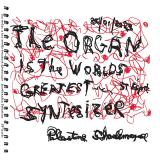
In the same vein, the aptly titled live record »The Organ is the World’s Greatest Synthesizer« – performed during the Sonic Acts Festival at Amsterdam’s Oude Kerk in 2025, and taking its title and cover art from a drawing realized by Palestine himself during the concert – adds to his opaque yet vibrant personal mythology and intimate transcendence, marking a return to the Staalplaat catalog after »Fffroggssichorddd« (2020) and »Music for Big Ears« (2001).
Beginning with a resonating bell and his falsetto overtone singing, then surrendering to the endless, wild soundscapes of tone-feeling and beat frequencies generated by the church’s organ, across 40+ minutes, single sound sources evolve into clusters, entangle fully with one another, and establish their own spatial existence and aural architectures. We witness the traces of something that can be described as a perpetual performance, a test for the ever-changing interaction between artist, instrument, space and, ultimately, us.
Since Palestine has always defined his execution as a form of anti-composition - of simply »being in the music« as if inhabiting a space - the true power of »The Organ is the World’s Greatest Synthesizer« lies in encapsulating a moment of Palestine’s practice in its most authentic, live dimension. Sound becomes at once subtle substance and strange telluric force, animating physical forms from some unknown channel beyond and within, accessible only through our sensorium. The point in this liminal temple of tone, timbre and frequency is not to learn anything but to simply enter. Palestine earns once again his self-given title of contemporary shaman by keeping this sonic portal open, allowing us to witness and make it last.
»I have always felt and heard and mixed the sounds in my world as liquids not as solids. Sonic liquids are material that is endlessly transformable. But I’m not crazy about people who go around defining stuff.«
- A. Let's Hot One
- B. Hello Long Goodbye
Celebrating their 40th anniversary in 2025, Japan's ska scene pioneers The SKA FLAMES - still going strong and continuing to exert a huge influence
both domestically and internationally - will release five 7-inch singles over three consecutive months!!
The second installment also features two titles released simultaneously!
This collection includes two original tracks frequently performed live - the long-awaited “HELLOLONG GOODBYE” and “LET'S HOT ONE” - much to
the delight of fans and selectors alike.
L. Eugene Methe is an Omaha based singer-songwriter and musician with a discography spanning over twenty years. His last two lyrical based albums were released on Grapefruit Records. As a studio musician he has contributed violin and piano on a diverse group of albums by Simon Joyner, Refrigerator, Mountain Goats, the Renderers, Naturaliste, Expensive People and many more.
Dennis Callaci from the band Refrigerator has released collaborative records with John Davis, Heimito Kunst, Simon Joyner and others as well as a myriad of solo LPs over the last 35 years. He runs the Shrimper record label. His fourth book is out in 2025 on Bamboo Dart Press.
The Last Chance Lottery is a collaborative record featuring the music of Methe and the vocals/lyrics of Callaci. Cinematic and outre in tone, the record does not forsake melody or tunesmithery, but strips much of it bare to paint it with surprising found sounds, abstraction and a balance between what these two fellas do best. The album was mastered by Al Jones as Marginal Frequency to further tightrope those two worlds. Features cover art and liner notes by Callaci.
Second LP of duets by these longtime VHF family staples, here delivering 2 side-long epics of “minimalist” bliss. Both sides feature Daniel on piano and Richard on zither, with rippling waves of sound recalling classics like Charlemagne Palestine’s “Strumming Music” (Dan is a frequent collaborator with C.P.) and Richard’s “Advent.” “Persian Carpets I” is a real-humans performance full of tiny variants in rhythm and attack, rising and falling in intensity – sometimes a rush of sound, sometimes a cloud of soft overtones and phantom notes. “Persian Carpets II” is more spare, with quiet and careful piano alongside Richard’s subdued accompaniment – a gorgeous bath of pointillist sound that rewards close listening.
Melodies International’s next record features a previously unreleased collaboration between the Ariwa camp (Mad Professor’s label and studio) and rising UK R&B artist Abel Miller — a Lovers Rock cover of the classic 1960s Philadelphia soul track “Everytime I See My Baby” by The Delfonics.
A few years ago, Mad Professor teamed up with frequent collaborator and multi-instrumentalist virtuoso Black Steel — who regularly records bass, guitar, keys, and vocals for Ariwa Studios (“he can play anything” Mad Professor tells us) — to record a series of Lovers Rock covers of songs by The Delfonics. Mad Professor’s love for 60s and 70s US soul is no secret and shines through much of his production, but he realised he had never heard this particular song, originally written by Thom Bell and William Hart. For the session, they brought in Ashanti Selah on keys and Horseman on drums, with Abel Miller delivering the lead vocals. Mad Professor and his son Joe Ariwa recorded and produced the track.
Since their first reissue project with Mad Professor a few years back (Ariwa Sounds: The Early Sessions LP), he has occasionally performed with the Melodies crew — most recently on Floating Points’ Sunflower Soundsystem this past summer. At their Osaka gig a couple of years ago, he closed the show with this track, immediately blowing everyone’s minds. When asked what it was, he told the team that Melodies could release it!
The 7” single will be available in November, featuring the original studio version on one side and the live dub version Mad Professor performed in Japan on the flip (vinyl exclusive). Mastered by Frank Merritt at The Carvery, with printed sleeve artwork by Nevil Bernard.
- 1: This Land Is Your Land
- 2: Satan S Jeweled Crown
- 3: I Walk The Line
- 4: Follow That Dream
- 5: Not Fade Away
- 6: Around And Around
- 7: Whole Lotta Shakin Going On
- 8: Summertime Blues
- 9: Up On The Roof
- 10: Stay
- 11: Stand By Me
- 12: Crying
- 13: Twist And Shout
- 14: Do You Love Me
- 15: Money
- 16: Green Onions
- 17: Boom Boom
- 18: Mona
- 19: Lucille
- 20: I Fought The Law
- 21: Have Love Will Travel
- 22: Love Is Strange
- 23: Pay Me My Money Down
In addition to performing his own compositions, the legendary Bruce Springsteen has, throughout his career, covered numerous songs by artists he most admired and favoured.
Presented here are 23 original artist tracks that Springsteen covered most frequently, offering a clear window into a wide range of musical influences that mark his own work: Rhythm & Blues, Rock 'N' Roll, Doo-Wop, Soul, and Folk, and artists such as Elvis Presley , Pete Seeger , Woody Guthrie , The Isley Brothers , Little Richard , Eddie Cochran, Chuck Berry, John Lee Hooker, and many more.