Soon after their 1978 debut on the Brian Eno-produced »No New York«, a compilation that defined the No Wave scene, James Chance's group Contortions had already evolved – getting sharper, tighter and just plain faster. Despite the loss of keyboardist Adele Bertei and bassist Geoge Scott (who refused to sign a new contract demanded by Chance and his then partner, band manager Anya Phillips) Contortions were firing on all cylinders, and their first full-length album, 1979's »Buy«, is a marvel of hot-wired energy.
Led by the brash yelps and free-sax squawks of Chance, Contortions spit out fiercely rhythmic tunes charged by the wiry guitar lines of Jody Harris and the dizzying slide guitar of Pat Place. With drummer Don Christensen slipping in pointillist beats and David Hofstra's infectious basslines, the songs on Buy crackle with both precision and abandon. Opener »Designed to Kill« shoots sparks of sound in all directions, while »Contort Yourself« is a nihilistic dance number wherein Chance instructs listeners to twist into knots, physically and mentally. "It's better than pleasure, it hurts more than pain," he snarls, later imploring, "You better try being stupid instead of smart."
Heavily influenced by the showman funk of James Brown (whose »I Can't Stand Myself« the band had covered on »No New York«), Contortions coined a downtown dance-punk sound that had immediate influence on subsequent No Wave bands – including Place's Bush Tetras and Bronx trio ESG – as well as the burgeoning disco movement. On »Buy«, Contortions' self-invented template is imprinted so hard into the grooves that it sounds like they're about to break, capturing a combustible band in all its fiery fury.
Blume presents two pieces composed in 1970 by the American pianist and composer David Tudor (1926-1996), one of electronic music's most important pioneers, for the Pepsi-Cola Pavilion, a unique artist-designed and programmed space for Expo '70 in Osaka, Japan, created by Experiments in Art and Technology (E.A.T.). Pepsibird and Anima Pepsi deploy electronic technology as a means to experience sound in ways that are anything but matter of fact, rendering liberated environments within and through which one might democratically express and commune. Viewed through the lens of what was, is, and might have been, they offer the tools for time travel: an unmediated encounter with radical, optimistic ideas that gave way to the complex cultural landscape of our time.
Initially trained on organ and then piano, Tudor emerged as a leading figure within New York's musical vanguard after his groundbreaking 1950 performance of Stefan Wolpe's Battle Piece and the American premiere of Pierre Boulez's Second Sonata. Within less than a year he had joined the Merce Cunningham Dance Company as its accompanist, a role he kept until his death, and began one of his most lasting creative relationships with John Cage, who would state that his entire output between 1951 and the end of the 1960s was written with Tudor in mind. Christian Wolff, Earle Brown, Morton Feldman, Sylvano Bussotti, Mauricio Kagel, and Karlheinz Stockhausen all wrote works for him during the 1950s and '60s. Through indeterminacy and chance-based methods, Tudor was noted for radically intervening with the works he played, often making them entirely his own, and it was this same singularity of vision that led him to gradually abandon the piano in favor of electronic process, through which he began working as a composer in his own right.
His engagement with electronics dates to the early 1950s and Cage's Project for Music for Magnetic Tape. By the following decade the pair had moved to live electronics, with Tudor rendering works like Cartridge Music and Variations II through contact microphones and complex systems of feedback and amplification. Before modular synthesizers existed, he designed and built his own electronics, often with engineers from Bell Laboratories, producing dozens of unique instruments and processing tools that helped lay the groundwork for the technological needs embraced by most electronic musicians ever since. A clear marker of his emergence as a composer came in 1966 with 9 Evenings: Theatre and Engineering, where he premiered Bandoneon! (a combine), turning the cavernous performance space into a feedback instrument and a total environment. The event led directly to the founding of E.A.T. the following year by the engineers Billy Klüver and Fred Waldhauer, alongside Robert Rauschenberg and Robert Whitman.
Among the most ambitious of E.A.T.'s projects was the Pepsi-Cola Pavilion, for which Tudor composed four pieces between March and April 1970: Pepsibird, Anima Pepsi, Pepscillator, and Microphone. Together with Forrest "Frosty" Myers, Robert Whitman, the sculptor and filmmaker Robert Breer, and the architect John Pearce, he was tasked with the design and function of the building: a 120-foot diameter steel and polyvinyl dome, shrouded in mist and fog and lit in the evenings by a square of intense blue-white xenon light. Tudor worked with Gordon Mumma and Fred Waldhauer on a unique sound system capable of processing and variable distribution through 37 speakers, controlled both by automated means and by the performer, and with Lowell Cross on a sound-activated laser deflection system inside the pavilion's mirrored performance hall.
Both pieces are an advanced form of musique concrète: libraries of tape recordings, live mixed and processed through the pavilion's sound console and distributed through 8 channels of stationary and rotating patterns designated by Tudor's instructions (small circle, great circle, large rhomboid, spiral, small triangles, small ovals). Pepsibird is focused upon a physical interiority, its source tapes being recordings of the brain wave activity of humans and animals: cat's eye, nerve firing, bats, EKG, alpha waves, a modified nightjar. Recorded in situ in 1970 and mixed down to stereo, it retains a striking sense of the space and ambience that Tudor achieved in performance. For more than eighteen minutes he merges subtle textures and pulses, at times resembling birdsong, within a blanket of vast, resonant ambience of subaquatic density, foreshadowing the relationship to the natural world of later works like Rainforest IV (1973).
Anima Pepsi is centered on the exterior: field recordings that Tudor made of animal and insect sounds (mosquitoes in a jar, a fly on flypaper, a wasp chewing, a beetle walking) and a mix of human and animal sounds that he called the "funny tape". Where Pepsibird deploys interior sounds in ways that allude to the natural world, Anima Pepsi pushes the sounds of nature and humanity toward the otherworldly through the clear presence of electronic sounds and processing, moulding detailed, pointillistic patterns of abstract sonority into gauzy blankets of ambience and space.
The collaboration did not last: less than a month after the opening, Pepsi withdrew its support, fired E.A.T., and disregarded Tudor's tapes, which according to accounts had to be smuggled out by staff, playing its own soundtrack in the pavilion for the rest of the Expo. Heard today, Pepsibird and Anima Pepsi anticipate many territories of later electroacoustic practice, from field recording to live processing, while the terms on which they were made, radically unpredictable, indeterminate, and experimental to the core, reconfigure what we've come to expect from electronic process, making one wonder if the past was ahead. Issued by Blume in a highly limited vinyl edition of 300 copies on red vinyl, with a 20-page LP-size booklet containing You Nakai's essay and newly commissioned liner notes by Bradford Bailey.
Cosmo Dance is the artistic alias of Cosimo Mandorino, an Italian producer and DJ who has been active in the electronic music scene for more than twenty years, as well as the founder of the label Mirella. Produced and finalized in Napoli during a series of short stays, and developed with the contribution of Raffaele Arcella and Dario di Pace, "Cosmo-logic" unfolds within a parallel, plausible, and dystopian universe where humans and machines coexist in constant tension and perpetual conflict. A musical narrative shaped by rebellious computers, wars between binary systems, and universal unified languages, the record stands as a manifesto to the early era of Italo-Disco, while remaining deeply infused with influences from cosmic disco and stripped-down electronic funk. The tracks make extensive use of mechanical rhythms, voice modulators, vocoders, and analog effects, exploring sonic territories forged through iconic instruments such as the Korg MS-20.
For some time I had hoped to release a full body of work from Tito. Ever since I heard him at Mr. Bean’s Music Club, and revisited records that started appearing around 2018, it felt clear that there was a
particular sensitivity behind the music — curious, rhythmic, spacious, unpredictable. Mostly in the sense that his references and musical background naturally pull from many places at once. When the idea of releasing Plane Of Existence on vinyl started becoming real, it immediately made sense for O Sótão Records.
Based in Porto, Tito Romão first built his path as a drummer, later expanding into composition andproduction through different instruments and collaborations. While drumsare his main instrument, he also studied cello and taught piano for a short period. Later he developed his Arctween project, DJing, and gradually shaping his own language under a new moniker. From Forbidden Cuts in 2018 to Dance Of The Spheres via Discotexas in 2020, his catalogue has slowly traced a path between groove-based experimentation and more immersive sound design.
The years that followed brought even more movement. Together with Gazpa, a longtime friend fromskateboarding days, he released Gaztween’s I through Jazzego Records in 2020, later followed by II in
2025. Around the same period he was also producing Ping Pong,eventually released in 2024 through
Jorge Caiado’s Mad Luv Records. For a couple of years he has held a Saturday residency at the iconic
Mr. Bean’s, still playing regularly with the house band and moving freely between instruments.A lot of that openness leaks into Plane Of Existence. Tito started producing the album during 2024, often late after work, without looking for a clear destination. By 2025 the concept slowly revealed itself. Therecord became an ode to Karlheinz Stockhausen, Manuel Göttsching, and to the modern ambient scene, while carrying traces of jazz, hip-hop and dub throughout its structure.
A heavy, club-focused tribute vinyl. The MONOLOG mixes lead with live instrumentation, shifting from sultry-house "BUTTER' to heavy Afrobeat "STARTIN". The flip features a peak-time powerhouse "WHO'S BAD" and the techno weapon "MIRROR". Built for the selector's essential crates.
The debut release from DAZ-I-KUE's funk/rare groove label FANTASTIC 45's delivers a pair of covers of ESTHER WILLIAMS classic "LAST NIGHT CHANGED IT ALL". Atlanta's JILL ROCK JONES evokes LYN COLLINS or VICKI ANDERSON, while VINNIE D'AGOSTINO drops his "saxstrumental" version.
Recorded spontaneously in Brooklyn and created entirely without written compositions, this album is an essential release for fans of ambient music, spiritual jazz, meditation, and deep listening. Features Isaiah Collier on drums and tenor sax and produced by Sonny Daze.
=============================
A spontaneous musical transmission exploring healing, unity, laughter, and limitless possibility.
Recorded in Brooklyn, New York in 2025, Openness is a fully improvised full-length album from legendary ambient pioneer and sonic mystic Laraaji. Created without pre-written compositions or arrangements, the recording captures a rare moment of collective presence, where every sound emerges from intuition, listening, and trust in the unknown.
Guided by what Laraaji describes as a state of openness, the album unfolds as a meditation on timelessness, inexhaustible supply, right guidance, seamless unity, prosperity, healing, gratitude, understanding, relationship, and transformation. Moving fluidly between meditative vocals, Fender Rhodes, Moog synthesizer, zither, gong, and piano, Laraaji channels a deeply personal yet universal musical language intended for a global audience seeking connection, renewal, and inspiration.
A defining element of the recording is Laraaji's celebrated Laughter Meditation, woven throughout the performance as both a musical and spiritual practice. His joyful vocal expressions become an instrument unto themselves, creating moments of release, playfulness, healing, and communal connection. The laughter serves as a reminder that openness is not only a path toward deeper awareness, but also toward celebration, recreation, gratitude, and collective well-being.
The session features acclaimed saxophonist and composer Isaiah Collier on drums and tenor saxophone, bringing a responsive, exploratory energy to the recording. Producer Sonny Daze opens the album with a spoken invocation and shapes its expansive atmosphere throughout with the legendary Roland Space Echo RE-201, adding warmth, depth, and cosmic texture to the music's unfolding journey.
Described by Laraaji as a "vital music transmission," Openness was revealed spontaneously in the studio while remaining fully present to each new moment. The result is an immersive listening experience that feels both ancient and immediate—a celebration of right community, right recreation, right medicine, and the transformative power of creative freedom.
"This music is revealed and recorded spontaneously in Brooklyn, NY, with the attending presence of dear Sonny Daze and dear Isaiah Collier. Being totally in the new moment and allowing fresh communication to arrive, I remained open while touching various studio instruments. Being in channeling mode throughout the recording session, I sensed the world audience for whom this vital music transmission is intended."
Atlanta-to-Brooklyn producer & MPC renaissance man FUGITIVE ARTIFACT steps correct with a sharp 12" exploration of house music. "IN SERVICE TO THE JACK" pushes further into the outer reaches of deep house & timeless windy city jackin, weaving in cosmic keyboards, bubbly synths & warped basslines.
Cruising at the intersection of their classic deep house glide & dedicated jazz funk wizardry. Side A sports a lowkey mid-tempo keyboard affair, cut with an electro undercurrent while the flip presents an elegant piece of late-night dancefloor dreaminess with "PERFECT DESIGN".
Division 81 Records is proud to present Step Like a Giant, a collection of songs from acclaimed Swedish vocalist and songwriter Cecilia Stalin, capturing a remarkable period of her artistic journey on the vibrant UK jazz scene of the early 2010s.
Best known worldwide as the unforgettable voice of Koop, Cecilia has long been celebrated for her ability to blend jazz, soul, and lyrical storytelling into performances of extraordinary warmth and depth.
Step Like a Giant shines a light on that creative era, revealing an artist whose songwriting is every bit as compelling as her unmistakable voice.
Inspired by the spiritual legacy and boundless imagination of John Coltrane, the album is both a tribute and a personal statement. Rich with soulful vocals, adventurous harmony, and emotionally resonant compositions, Cecilia honors Coltrane's fearless pursuit of expression while crafting music that is entirely her own.
These recordings capture the intimacy and creative energy of a thriving musical community, offering listeners a timeless collection that feels as relevant today as when it was first created.
Beautifully presented on vinyl by Division 81 Records, Step Like a Giant is an essential release for jazz collectors, longtime Koop fans, and listeners drawn to soulful, contemporary songwriting.
Somewhere beyond familiar frequencies, Space Terminal opens the gates to a new transmission. The latest various artists compilation from Ovelha Trax assembles a selection of producers navigating the intersection of electro, breaks and machine-driven club music. Inspired by the aesthetics of science fiction, dystopian electronics and late-night warehouse energy, the record unfolds as a journey through fractured rhythms, powerful basslines and futuristic sound design. Each contribution offers a different perspective on contemporary electro. From razor-sharp drum programming and robotic funk to warped synth sequences, acid-infused textures and rolling breakbeats, Space Terminal moves between deep atmospheric moments and uncompromising peak-time pressure. While every artist brings their own sonic identity, the compilation remains unified by a shared vision: forward-thinking dance music built for powerful sound systems. This is the mission to an abandoned orbital station, where analogue machines continue broadcasting into the void and broken transmissions become dancefloor anthems. Drawing influence from Detroit electro, UK breakbeat and modern bass music, the release embraces both nostalgia and innovation without settling for either. Pressed on limited edition vinyl, Space Terminal is another chapter in Ovelha Trax’s ongoing mission to showcase uncompromising underground music from artists pushing electro and breaks into new dimensions. Boarding has begun. Destination unknown. For Fans Off: DJ Stingray 313 • Helena Hauff • Jensen Interceptor • Privacy • ERP • Client_03 • Versalife • Silicon Scally Detroit Influenced, Machine Funk, Broken Rhythms, Sci Fi aesthetics, Warehouse Energy, Analogue synthesis, Futurristic club music.
Diffuse Reality presents Hashashin - BASTION. A 12inch vinyl and digital release built on solid, robust Techno. Four tracks driven by a constant groove that keeps the energy flowing from the very first beat. Dynamic, enveloping drums create a powerful and playful sonic experience. Without a doubt, this is a record that will earn a permanent place in your bag, shaking foundations wherever it lands. Closing the EP is Achtervolging, a powerful breaks cut designed as a moment to catch your breath, recharge, and prepare for what comes next.
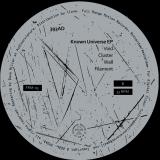
Full Range Motion co-founder 393AD returns to his own label with 'Known Universe EP', providing four more introspective modular-based jams using Perkons as the main rhythm box. The Amsterdam-based DJ, producer, and nightlife devotee opens the EP with 'Void' a percussive, rolling, and fluttering cut. 'Cluster', on the same side, is a devious tool in the right hands with its abstract groundwork and overwhelming single stab 3D sound design. Over on the flip, 'Wall' is straitjacket paranoia-techno in stripped form. Closing this EP is 'Filament', the name itself providing a vivid cosmic image for the track: intertwining, spiralling melodies connecting filmic scenes of interstellar dust.
Ever-evolving Amsterdam duo ANOTR continue their forward momentum with the release of their highly anticipated third studio album, ‘Withness’, out via their own imprint No Art. Rooted firmly in dance music, ‘Withness’ sees the pair refine their sound into their most dance-floor focused and cohesive project to date.
Born during their global tour, ‘Withness’ was shaped in real time: written, tested and refined on dancefloors across the world. Following the expansive, genre-blurring approach of their 2025 LP ‘On A Trip’, the duo felt a pull back toward the club - not as a limitation, but as a unifying space. “We really wanted to have a wide variety of songs that we can play out and create moments,” they explain. “Every track needed to make sense wherever people come together to dance.”
That intention sits at the heart of ‘Withness’. A title that reimagines the idea of “witnessing” into something more active and collective. ‘Withness’ is an album about experiencing life with others. It’s about the moments you share, the people who shape them, and the energy that becomes real only when you’re fully present. The album captures the collective high of friendship. Whether in a packed club, at a festival, or in a living room with friends, the album is designed to soundtrack moments of connection.
“The memories you make with people, they’re the witness of those moments. Withness is about being in it together.” - ANOTR
Sonically, the album marks a clear evolution. Drawing from their early club roots while building on the songwriting confidence developed on their previous records, classic drum machines and 909 samples sit alongside warm, 80s-tinged textures, layered vocals and modern production techniques, creating a sound that feels both nostalgic and forward-thinking.
A key part of the process was spontaneity. The duo embraced a free-flowing, collaborative studio environment, often working with a rotating cast of contributors. Their now-signature “open mic” approach encouraged anyone in the room to experiment with melodies, lyrics and vocal ideas. This energy translates directly into the album’s standout moments. From the euphoric pull of ‘Withness’ to the groove-led ‘Do It With Ya’, the uplifting ‘Paradise’, each track is built to live beyond a single setting.
The LP comes at a timely moment, as their single ‘Talk To You ft. 54 Ultra’ has become the biggest global breakout dance single this year. Sitting firmly in Spotify’s Global Top 200, it has surpassed 175 million streams, and is currently No. 21 in the UK Singles Chart. Spotify have tipped it in their much-coveted global ‘Sound Of The Summer 2026’ list and other highlights include peaking at No. 7 in Shazam’s Global Chart, No.1 on Beatport Top 100 and gaining over 600M UGC views so far.
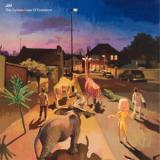
When the first JIM album Love Makes Magic was released in 2023, it was the end product of an experiment that had begun during the strange days of the pandemic. Cooped up in his studio, James Baron started fiddling about with an as-yet unnamed new album idea. It became Vicious Charm’s first LP release. Labelled variously as Balearic, folktronica, blue-eyed soul and Laurel Canyon, Love Makes Magic was perhaps all and none of those things: a record rooted less in Californian mythology than in Baron’s own musical world, somewhere between Sherwood, Nottingham, classic songwriting, electronic soul and the no-nonsense good times that have long run through his work under his other monikers (principally the anagrammatic Ron Basejam and, of course, Crazy P) One thing was indisputable, it connected with people... and still does.
The album was a minor hit, appearing in many a Best of 2023 chart and voted Album of the Year in Bill Brewster’s Furtive 50. A tour and a few memorable festival appearances – his 2024 We Out Here Festival being one of those wonderfully timed ‘moments’ - perfectly captured the horizontal vibes on the album, while injecting some live energy into its delivery. While there was a follow-up remix album for Love Makes Magic, JIM was already preparing a sophomore LP: “I wrote the majority of The Curious Case Of Existence in a couple of months at the beginning of 2024, then it was just a case of making the record over the next couple of years in between everything else.”
Following the success of two collaborative releases (EMC “The Show”/2008 and Ace & Edo G “Arts & Entertainment” /2009), Masta Ace joins forces with the metal faced MF Doom for Son of Yvonne, a highly personal concept album that celebrates the life and legacy of Ace’s recently departed Mother. Like his 2004 landmark Disposable Arts, Son of Yvonne is meticulously constructed with stories, settings, and characters that resonate with flesh and bone humanity. Interstitial vignettes provide a thematic backbone to the experience, and each track complements and completes the previous to form a narrative whole: a sometimes visceral, sometimes nostalgic slice of Ace’s young life in Brownsville, Brooklyn. Entirely underscored by MF Doom’s iconic Special Herbs instrumentals, Son of Yvonne features the Juice Crew general Big Daddy Kane, new comers Pav Bundy (The Bundies), Reggie B and even MF Doom on the mic. It’s Masta Ace’s no frills flow, however, that looms largest above the dusty samples and digger loops that define Doom’s production. Ace’s photo-realistic rhymes about stick-up kids, spraycan artists and wack emcees add extra gravity to his already celebrated reputation as “truly an under-appreciated rap veteran and underground luminary” (Allmusic Guide). Like Eminem recalls in his 2008 autobiography The Way I Am, “Masta Ace had amazing storytelling skills. His thoughts were so vivid.” TRACKLIST: A1. DJ Ski's Intro A2. Ninteen Seventy Something A3. Son Of Yvonne B1. Da Pro B2. Store Frontin B3. Me & My Gang B4. Crush Hour feat Pav Bundy C1. Think I Am feat Big Daddy Kane & Mf Doom C2. Fresh Fest Reggie B C3. Hoe-Tel-leftovers C4. Slow Down D1. Home Sweet Home feat Pav Bundy D2. Dedication D3. I Did It D4. In Da Spot feat Milani The Artis D5. Outtakes
Tessellate launches their new white label series featuring edits and reworks of some older records. For the first edition they welcome Mike The Connector.
Though Scratch may have at times seemed crazy, it is worth noting that creative
genius appears so because geniuses see things others do not see and inhabit
realities unseen. As the music on this album reveals, Lee Perry's Black Ark creations
re-arrange the familiar into something new and magical.
Lee spent his early days working with legendary producers Coxsone Dodd, Duke Reid,
Joe Gibbs, Clancy Eccles and Prince Buster, and by 1968 he was an independent
producer, naming his studio musicians The Upsetters and scoring instrumental hits
with innovative rhythms that helped forge the new reggae style. In 1970-1971 he
produced what many consider the greatest works by the Wailers; in 1968 one of his
Upsetters productions hit #5 on the UK pop chart and more hits followed. That gave
him the funds to build his own studio and in 1973 the legendary Black Ark was born.
Among the many landmark classics cut at Black Ark are such incisive political
commentaries as Max Romeo's "War Ina Babylon," and Junior Murvin's "Police and
Thieves" (covered by the Clash). The Congos' "Heart of the Congos" album is a roots
classic and there are many wonderful obscure singles such as Carlton and the Shoes'
"Better Days." Many dub creations made innovative use of Scratch's sonic wizardry via
echo, phasing, reverb, fanging, wah-wah and various sound effects.
It all came to an end in 1978 as Lee, besieged by extortionists, freeloaders, religious
fanatics and assorted pilgrims, let the studio lapse. And then he set it on fre, some
say due to frustration, others say from mental collapse. He left Jamaica, collaborated
with musicians around the world, toured as a sort of mystic trickster/ shaman and
prospered. But his work at Black Ark will always stand as his ultimate creative
achievement.
Fans and headz worldwide have been clamoring for a follow- up, but all Emapea wanted to do was just 'zone out.' And that's what happened, with the release of Emapea's twenty song album Zoning Out, Volume 1. Emapea's cuts are meant for the listener to get lost in - but they're not only for chilling, or when deep in thought, but also for getting in that crucial head-nod zone, like when the DJ drops the dopest beat. Expertly crafted and sequenced, the album presents a boom-bap journey that's dreamy and spacey while remaining tough and jazzy. "Check It Out" exemplifies the mood with its smooth drums, chiming keys, subtle sax riffs, and hip hop shout-outs. The vibe expands on "Motion", adding an exotic, worldly flavor to the seductively loping rhythm. And "Classy" features a smokey saloon piano melody that cruises smugly out of jeep-beat speakers.
Step into the backroom of the Bordello, the lights dim and the soundtrack adopts a different tone. L.F.T. leans against the wall. Nestled under his arm, Sonic Boom: four tracks of acid-inflected electro disruption. Love, Fist, Tears is no stranger to the more gnarled side of the machines, and that unadulterated rawness is evident from the needle drop of “Locked in My Head.” From its bent and buckled intro, the track launches a beat that punches before drawing the listener in for more. Vocoder lyrics are mangled with distortion, static soaked chords blighted by corrosive chemicals and industrial decay as the knives are drawn from the outset (and this is only the beginning). Blistered and cracked beats are doused in a pestilent haze for “Las Plagas” and a message of intent is firmly stated: there will be no let up on Sonic Boom, no reprieve. “Ningen” opens the flip. Grisly, petrol smeared beats splutter below a juddering synthline that coils and twists with serpentine menace. A probing tom is lanced before being set alight in the finale. Sinister and unsettling, “Schmutzig Personality” is as physically powerful as it is psychologically gripping. Barrages of drums rain down, barbed snares and sharpened claps, as an assault of acid is further weaponised by machined vocals. L.F.T. doing what he does with an EP that will leave bodies and speakers broken.
Following on from his electric appearance on Diamonds in the Night, Tallac returns with a four‑tracker of low‑orbit elation. Tessitura blends floor‑facing energy with sleek space synths, elegant undercurrents washed in bold bars to produce a one‑of‑a‑kind sound. Drums hit hard on “Carbon Copy,” driving percussion providing the launchpad for synthlines to swoop and soar. Tempos are taken down a notch for the analogue embrace of “Kiss Me Quick.” Notes bend and flow in this smoky dreamscape, samples pulling the listener ever deeper. The rumbling kicks and hissing hi‑hats of “Pythia” are punctured by a throbbing beat; gliding above the rolling snares and luxurious breaks is a melody that thrums with palpable intensity and unbridled joy, a track made to ignite audiences. Never adhering to genre tags or style pigeonholes, Tessitura closes with “Cybersyn.” Touches of cosmic melt into late‑night glow‑stick energy, dawn’s light piercing the warehouse windows while the speakers continue to bounce blissfully.
SOULMEEX record label reaches its tenth release in less than two years with Bleib Yummy, the new EP by Nürnberg-based artist Schmidt in Rio.
Martin Schmidt develops a distinctive sound rooted in the spirit of electronic music’s golden era, blending italo, disco and house with a playful and unmistakably personal touch. His productions combine analogue textures, infectious grooves and a healthy dose of eccentricity, creating music that feels both familiar and unexpected.
With Bleib Yummy, Martin delivers a four-track EP that fits naturally into the SOULMEEX universe: raw but refined, playful but never superficial, and driven by the timeless energy of the dance floor.
Oráculo Records has always had a special interest in pushing electronic music towards unexplored territories, and it is precisely within this microcosm that IP307 emerges. Blending the most dub- infused and mechanical forms of electro with industrial, EBM and even post-punk, the project delivers a hypnotic, forceful and deeply cathartic sound.
Behind IP307 is Israel Padilla, founder of Banshees Records and one of the leading figures of the industrial scene in the Iberian Peninsula. With “IP307.1”, he presents six interconnected compositions, each with its own distinct identity while contributing to a coherent vision of seemingly opposing styles, reimagined into a singular language.
The result is neither a nostalgic exercise nor a stylistic collage. Instead, it reflects the experience, technical mastery and artistic vision of someone fully capable of expanding the path opened by pioneers such as Clock DVA in their later works, or Atom™, both through his solo output and as part of ASA alongside Esplendor Geométrico.
New sonic artillery for the most forward-thinking listeners already embracing this emerging strand of dark electro through our recent releases such as Occulimus by Mystic Letter K or the work of Maman Küsters, “IP307.1” offers another essential chapter in the evolution of this new form of sound. Welcome to the future. Welcome to IP307.
Norwegian folk artist Juni Habel's latest album Evergreen In Your Mind is largely an ode to letting go, and at it’s inquisitive heart can be found ‘Pearl Cloud Song’. An instrumental four-and-a-half minutes, it came from a guitar tuning that Habel stumbled upon, the song tumbling out of the discovery on its own accord. Lush and vibrant and bristling with life, it’s a beautiful backdrop to stepping into nature, bringing together a simple drum machine pattern, steel-string guitar, pedal steel, considered effects, and the flicker of a voice somewhere in the far-off distance. Juni says "it gives the sensation of flying." With such ingredients it was rife for a remix.
'Pearl Cloud Song Reformations' is a very limited 12" (also available digitally) which features two remixes/reformations from Tom Sharkett and Minotaur Shock and also includes Juni Habel's original version. There will only be 200 ever made.
Tom Sharkett is a producer from Manchester, now based in Todmorden. Having cut his teeth as a founding member of synth-wave band W. H. Lung. Tom has gone on to forge his own path as an electronic artist with music on Optimo Music, DFA and Test Pressing. His work leans towards dark, wonky and psychedelic electronics and his edit of LCD Soundsystem’s ‘Home’ grabbed the attention of James Murphy which led to an official DFA release. The cosmic choogle of his 'Pearl Cloud Song Reformation' is Sharkett's first remix committed to vinyl since.
Minotaur Shock is the long-standing electronic project of Bristol-based producer David Edwards. With a discography spanning labels like 4AD, Melodic and Bytes, Edwards balances pastoral charm with IDM sensibilities, creating soundscapes that are as much about the heart as they are the head.
Not only has the Montreal native cemented his place as one of the most talented producers in the dubstep scene, but his incredible work ethic, energy, and passion—matched by his undeniable talent—mean his ascension is quite simply inevitable.
DDD has been proud to play our part in his career journey, and things are taking another step forward with the phenomenal album Rites.
A tour de force of audio sorcery, savagery, and sacrilege, Rites subjects the listener to Wraz.’ trademark mix of filthy 140 dubstep, thumping trap flavours, and industrial grittiness.
This is expertly melded with stunning, captivating, suspense-filled interludes that provide counterpoints to the bass punishment in ways that are both tension-inducing, yet beautiful.
Featuring collaborations with label bossmen Truth and DDD favourite Hypho, Wraz.’ sonic understanding of his craft feels unparalleled throughout. Each track brings its own unique flavour, while sitting together as a body of work with remarkable cohesion.
Keep a lookout for this as the first DDD vinyl drop of 2026—alongside its full digital release—Rites marks a seismic moment for both Wraz. and the 140 scene.
Wraz. is putting the world to Rites, while we’re living in his universe.
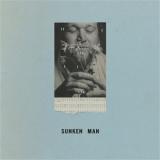
Michael Rawls, Frontmann von Sunken Man, wuchs zwischen Suffolk und Norfolk in Virginia auf. Auf der einen Seite die Stille einer Kleinstadt, auf der anderen der Lärm der Großstadt. Rawls baute sich ein erfülltes Leben abseits der Musik auf: Finanzberater, Unternehmer, Familie _ und trotzdem tauchten die Songs immer wieder auf. Dann ging eine Ehe in die Brüche, und in der Stille eines Hauses, in dem ein Kind schlief, fing er an, ernsthaft zu schreiben. Songs über Liebeskummer und Neuanfänge. Darüber, jemanden neu zu lieben, während man das, was vorher war, immer noch mit sich trägt. Rawls brachte die Songs zu Matthew E. White ins Spacebomb Studio in Richmond. White produzierte das Album; Alan Parker, der unter anderem schon mit Bon Iver, Lucy Dacus und Dijon zusammengearbeitet hat, spielte alle Instrumente selbst. Das Album wurde vom dreifachen Grammy-Gewinner Alex De Jong abgemischt und von TW Walsh gemastert. Das Ergebnis sind neun Songs, die irgendwo zwischen Springsteens emotionaler Direktheit und Wilcos melodischer Intelligenz angesiedelt sind. Liebeskummer, ja - aber auch Hoffnung. Die Art von Hoffnung, die man sich erst verdienen muss.
On the occasion of the centenary of composer Pierre Henry,
Transversales Disques is very glad to announce the release of these lost tapes "Variance" & "Duo" by the electroacoustic music pioneer.
"Pierre Henry was born in 1927 in Paris. He began studying music as early as the age of 7. In 1944, guided by Olivier Messiaen, he envisioned and began composing the music of the future.
His meeting with Pierre Schaeffer was pivotal to his creative path, leading the two of them to found the G.R.M. (Groupe de Recherches Musicales).
"Inventing new compositional techniques that would, in time, become widely used on a large scale, he continually gave this music a far-reaching power no one had anticipated at the outset.
He also forged a sound entirely his own — as instantly recognizable as that of the most famous jazz musicians."
Blind Harmonies returns with its third release, welcoming the Greek artist Sera J for a deeply immersive EP where power and sensitivity exist in perfect balance.
Across four meticulously crafted compositions, Sera J unfolds a distinctive sonic language with emotional depth. Rooted in precision yet guided by instinct, these four pieces embody a refined balance between functionality and storytelling. The release invites the listener into a journey where rhythm becomes emotion and movement becomes memory.
Rather than relying solely on intensity, the EP finds its strength in contrast. Pulsating grooves give way to luminous melodies, subtle harmonic shifts, and moments of quiet reflection, allowing emotion to emerge naturally through carefully sculpted sound. It is music that breathes, evolves, and leaves space for interpretation.
With its third chapter, Blind Harmonies continues to shape a catalogue driven by honesty, depth, and enduring artistic expression, where every release is conceived not only for the moment, but for what remains long after the music fades.
December 2012 I showed up totally exhausted in Vancouver BC after touring stupidly and relentlessly for however many straight months and got a job at a call centre raising money for the Red Cross. It was a scent free office but one time this woman cooked a piece of fish in the microwave for 10 minutes on low and hot boxed the whole office - we got sent home early no pay. There was the other woman I named the Call Centre Coltrane because her pitch and routine usually involved improvised flights of fancy that went off in both directions at once somehow landing back down with a credit card number and a donation. I used to sleep under the desk. I was there a few months and at the time I reconnected with John Brennan who I had played with briefly in Montreal at the Mutek Festival. In Montreal John was running an experimental music night at a burrito shop downtown called Garbage Night. While in Vancouver I began connecting with the music scene there and would go hang out with the Shearing Pinx lads who I think lived with Sydney the bass player at the time. I knew Nic and Jer from an AIDS Wolf Tour and was so stoked to get to know them both better. I really fell in love with that era of Vancouver's music scene.
Fast Forward to today. 2024
Actually it was the dying days of 2023 but you get it and John asks if I'll sit in with Earth Ball and I keep thinking about Earth Balance, the vegan butter everyone eats here. I brought my aching bones and my ipads on the beautiful ferry named the Queen of Oak Bay and out to Nanaimo BC, home of the nanaimo bar (a dessert treat - special to this region - that seems to be more popularly found under the weird glass sneeze guards in office building deli's out east in Ontario.... anyhoops ). No one in Nanaimo wants to talk to me about the famous treat. I asked a couple of people. Silence. Nanaimo is like London, Ontario but more fried and by the sea. The town is filled with blown out old sea dawgs with tin coffee pots and loose leaf tobacco, then there's the usual streetfolk you find in this part of the Canadian Pacific Northwest and a bunch of bohemians who I guess have left Vancouver behind - that fine city having become uninhabitable for those not making over 100k a year. And then up the way are all the retirees.
Yup Nanaimo is a strange one. They mined the shit out of this region and Nanaimo is surely haunted by those buried in mining shafts or maimed by the heavy machinery or blown up by accident in the explosives store house. And when Earth Ball fire up the amps in Izzy and Jer's basement you can hear the voices of the ghosts hum through electrical lines and out the speakers, Kellen's hued feedback, Izy's sturdy basslines, Jer's paperbag guitar tone and rumble pack zaps, Liam's (aka the Kid) sheets of sound and Brennen's multidirectional drums.
You wouldn't guess Earth Ball was auto-composing and from what my rat brain can tell - the lyrics are improvised too...Improvising lyrics and singing them is the hardest thing to do in all of music.. Izzy and Jer are pros. And their attitudes are pro too.
The live show is scorched and without naming names they've been known to make headliners nervous. Lucky ones will get to see them live as they tour this beast of a record entitled ‘It’s Yours’ (out May 17th on Upset The Rhythm) and I hope I'm one of them.
But now you, fan of fun but totally fucked up music, have the opportunity to Ball with them thanks to Upset The Rhythm. Enjoy
-Alex Moskos, Montreal QC, Feb 2024
Label-resident Stefan Vincent drops his first vinyl for Dynamic Reflection. And what an EP 'Elephant's Foot' is; three mesmerizing originals and an outstanding Linzatti remix on top.
Stefan's shedding his 'upcoming' status more and more and turning himself into an artist to watch. This EP is another solid step in that direction.
This latest project by Groovedesign Kollective is rooted in movement, thoughtful tension, joyful repetition and dreamy release.
United Tribes
The Groovedesign factor shapes itself in the opening track 'United Tribes' by repositioning intimacy over chaos, a life affirming sound that belongs to those magic early morning hours that really shape experiences. And generations. A unique blend of Afro, Funky beat and Disco Clubby grooves merging with visionary House piano's themes within a rich, deep electronic tapestry and dubby effects.
Supremes
This track perfectly complements the previous yet it is its own groove and carries great dancefloor weight. Further developing the concept of exquisite fusion and fine contamination between already blurred genre's lines, where feelings and emotions meet their sonic counterparts.
Feeling the dancefloor comes as a second nature to Groovedesign: unrelenting yet subtle, innovative yet grounded. Their music carries experience and innovation without announcing itself, guided by an intuitive sense of energy rather than formulas.
Earth hat die moderne Musik maßgeblich geprägt - von Experimental Metal über Electronic/Ambient bis hin zu Stoner Rock - und Künstler von SUNN O))) über The Bug bis hin zu Godflesh beeinflusst. Die Geschichte von Earth wurde in der gefeierten Dokumentation "Even Hell Has Its Heroes" aus dem Jahr 2023 festgehalten. Das dritte Album von Earth, "Pentastar: In the Style of Demons" aus dem Jahr 1996, ist ein Klassiker der trägen Riff-Verehrung, der vor einer dicken, verzerrten Schmiere nur so strotzt, in der Black Sabbath, Hawkwind, Hendrix, Drone und Ambient-Musik miteinander verschmelzen. Das Ergebnis fühlt sich an wie eine lange, einsame Fahrt durch die Wüste, mit dem inneren und/oder äußeren Weltraum als einzigem Ziel. Als wohl rockorientiertestes Album der Band enthält "Pentastar: In the Style of Demons" die zeitlose ,Hit"-Single "Tallahassee". Diese 30-jährige Jubiläumsausgabe erscheint auf grünem Vinyl und enthält einen limitierten "Wraparound"-Kunstdruck mit einer Neuinterpretation des Albumcovers durch den zeitgenössischen Künstler Matt McCormick.
Keen listeners who have dug below the surface of Oren Ambarchi"s triple-digit discography know that alongside hypnotic minimalism, veins of irreverent and joyously wayward exploration run deep. Cooked is something of a landmark in Oren"s work, bringing this gloriously cuckoo sensibility right into the heart of his most high-profile solo work. Carrying on the grand Ambarchi tradition of meticulously constructed all-star studio jams (which reached new heights with Shebang), Cooked brings together collaborators from Australia, Germany, Japan and Sweden for two side-long epics where the foot keeps tapping even as the mind boggles. Cooked is a long way from the spacious, light-dappled grooves of Ghosted, but Oren"s Swedish bandmates play starring roles here, with Johan Berthling"s double bass anchoring both sides, and drummer Andreas Werliin lending his delicate touch to the second piece, "Sleight of Hand". Beginning with glistening layers of electric 12-string guitar, "Sleight of Hand" takes some key cues from electric Miles touchstones like "Feio" or his epic take on David Crosby"s "Guinnevere", with Berthling"s sparse basslines punctuating an almost weightless cornucopia of shifting detail, glimmering with subtle contributions from Michiko Ogawa on sho and James Rushford on a panoply of acoustic keyboards. Suddenly, everything is overwhelmed by a knotty, hyper-complex "solo" from Marcus Pal on digital synthesis, teleporting us to an alternate history where Allan Holdsworth traded the SynthAxe for Xenakis" UPIC. Building with additional drums and percussion from Will Guthrie to a peak of sizzling intensity, the music then goes sideways into a gently surreal coda, where some distinctly Zawinul-esque chords and Fredrik Rasten"s guitar float over a sprightly rhythm box, the avian inventions of Swedish virtuoso whistler Isak Hedtjärn wafting atop the sunlit stew.
We welcome Art Bleek on klakson! this paris based producer/musician already released some nice quality house music on labels like connaisseur recordings but is also know for his more jazz orientated projects, playing live sax and piano! this EP brings you 3 beautifull, deep and soulfull tracks with a nice distinctive drive. Larry Heard meets Metro Area meets Raiders of the Lost Arp!
Terminal Recordings launches with a four-track split release.
The A-side, produced by Luis Malon, delivering two cuts driven by heavyweight basslines, broken rhythms and machine-controlled tension. Make Shoot sets the system in motion with relentless groove and low-end pressure, while Inside Your System dives deeper into a darker, more hypnotic environment where fractured percussion and synthetic textures take control.
On the B-side, Molen takes over the signal with a pair of electro transmissions. Pathcord unfolds through precise sequencing, robotic funk and evolving circuitry, building a dynamic journey across interconnected rhythms. Codec closes the release with sharper frequencies, coded melodies and futuristic electro architecture designed for late-night dance floor communication.
Enya begann im Herbst 1998 mit der Arbeit an "A Day without Rain" und veröffentlichte es zwei Jahre später am 21. November 2000. Mit über 15 Millionen verkauften Exemplaren ist es Enyas bestverkauftes Album und das fünftmeistverkaufte Album des Jahres 2001 weltweit. In Deutschland und Österreich erreichte "A Day without Rain" jeweils Position 1 der Albumcharts.