Following the widely acclaimed release of Body Shell in Spring 2025, Carré returns to Tempa, for a new EP, ‘Hibiscus’, featuring a collaborative track with LA-artist Bbyafricka, highlighting the synergy of West Coast Rap & London Soundsystem culture.
Connected by warmth and groove that define where Carré is musically right now, each of the four tracks on ‘Hibiscus’ stands on its own, yet together they continue to showcase Carré’s flair for producing sleek dubstep with melodic verve. From the shimmering ‘Warm Light’, the razor-sharp edge of ‘X Effect’, the deep stepper ‘Ride It Out’ to the stripped back ‘Hibiscus’ which glows with the addition of Bbyafricka’s sultry vocals, the EP is a concise statement of Carré’s evolving sound.
Speaking about the collaboration, Carré says, “I’d been a fan of Bbyafricka’s sound, style, and tone — tracks like ‘Baton Rouge’ and ‘Dumbo’ really stood out to me — and I could already imagine how her voice would fit with my production. The fact that she’s from LA made the connection feel even more natural. When I reached out, she was down straight away and came back with something I genuinely loved. She captured the energy of the track perfectly, and together I think we created something that feels authentic and even better than I’d imagined.”
For Bbyafricka, working on ‘Hibiscus’ was a moment of overcoming writer's block, “this song was me coming out of it on a weekend spent in Joshua tree, sitting outside looking at the view and the solar panels. I think you can envision what my view was when you play the song,” she explains.
Carré’s next outing on Tempa is a welcome return, signifying the home run she’s on as a producer and marking another impressive instalment in the producer's growing catalogue. In the last three years, Carré has quickly become a leading figure in the contemporary wave of artists pushing the true school Dubstep sound to new places and new audiences, expanding on the roots laid down by the likes of Skream, Benga, and Loefah.
Cerca:e razor
This first new volume of edits from Big Baba finds Elado digging with intent rather than on a purely nostalgic tip. Fresh off his Razor-N-Tape run, he opens the series by rewiring rare global grooves for contemporary club floors. The EP moves fast and wide as Bollywood disco mutates into techno on 'Disko Disko!', while Yeah Yeah flips obscure 80s Thai boogie-funk into something elastic and punchy. 'EL SOL' slides in as a proto-house warm-up weapon, patient but charged. Then there's 'YOR YOR', a joyous Bukharian disco edit that feels almost mythical in its rarity. Colourful and confident, and full of heat.
Double 12" release
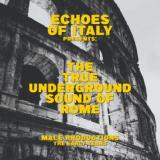
The Story — From the Streets of Rome to the Male Productions Label
In the early 1990s, Rome lived in a kind of suspended moment. The city was still tied to its historic clubs, yet in the outskirts—inside abandoned warehouses, quarries along the coastline, and the wooded parks north of the capital—something new was beginning to stir. A nocturnal, constantly shifting movement fuelled by a hunger for freedom and a sonic curiosity that reached far beyond the mainstream.
Moving through this ferment was Francesco “Chicco” Furlotti. First an organizer of unconventional parties and underground nights, he soon became one of the driving forces behind Rome’s itinerant rave scene. Furlotti sensed that a wave of change was about to sweep across the city. It wasn’t just about parties: it was the rise of a culture, a new way of thinking about music, community, and belonging.
It was within those nights—later held with official permits, properly built sound systems, and an ever-growing crowd—that Furlotti recognized the existence of a distinctly Roman sound, and the need to capture it, preserve it, and give it tangible form.
So, in 1991, he decided to take a bolder step: to found an independent record label—small, determined, and far removed from the commercial logic that dominated at the time.
That was the birth of Male Productions.
Male was not a label like any other: it was a workshop, a gathering point, a creative hub where DJs, producers, friends, and wanderers converged. Within that environment, an artistic core took shape—Stefano Di Carlo, Leo Young, and Mauro Tannino, along with other collaborators orbiting around Furlotti. From their synergy emerged a project whose very name declared its mission:
The True Underground Sound of Rome.
The collective did not simply aim to release music; it sought to tell a story of Rome through sounds that defied categorization: house, techno, ambient, electronic mysticism, psychedelic visions… a unique blend, instantly recognizable, emotional, and experimental. The sessions unfolded using essential yet razor-sharp gear: Roland drum machines, analogue synthesizers, Akai samplers, stripped-down mixers. Few tools, endless imagination.
The first result of this work was the 12” Secret Doctrine, released in 1991 in an extremely limited run—around 500 promotional copies, according to accounts. The record captured something that until then had floated only in the air of Roman raves: enveloping atmospheres, deep rhythms, melodies built to make the mind travel far beyond the dancefloor. A sound that did not imitate what was happening in Detroit, London, or Berlin, but absorbed those influences and re-sculpted them with a distinctly Roman sensibility.
Yet, precisely because it was independent and detached from commercial circuits, Male’s output remained sparse: few EPs, few copies, irregular distribution. Over time, those records became rare artifacts—almost mythical objects within the Italian electronic scene. The legacy of Male Productions seemed destined to survive only in the memories of those early years, in the stories told after raves, and in the private archives of a handful of collectors.
Many years later, thanks to the almost accidental rediscovery of a few original copies of the first two releases issued by Male Productions, it became possible to undertake a meticulous process of recovery and restoration of the audio etched into those grooves, with the aim of preserving as fully as possible the quality and character of that unrepeatable sound.
We are therefore able today to present — at last in a complete and faithful form — the first two mixes created for Male Productions, now released on a double vinyl that brings back into the present the exact moment when it all began: the nomadic nights of the raves, Furlotti’s vision, the creativity of Di Carlo, Young and Tannino, and the sonic identity of a Rome in the midst of transformation.
This is not merely a reissue.
It is a historical document.
A fragment of a culture that changed the city.
The authentic sound of the Roman underground, finally returned to the world.
Alistair Colling vs. Tortured Soul featuring Sabina
When You Find Your Love…Hold On 25th Anniversary Mixes
25 years ago, at the turn of the millennium, downtown NYC was spoiled with record stores. In this pre-digital age, vinyl was king for club DJs, and shops such as Downtown 161, Dance Tracks, and Vinyl Mania peppered lower Manhattan, thriving businesses that supported an expanding scene of local and international DJs. Perhaps the largest and most established of these was Satellite Records, an institution of club sounds that also spawned multiple record labels, including the deep-house imprint Central Park Recordings.
At this time, Central Park Recordings and Satellite Records owner Scott Richmond signed a demo in need of a vocal from young British producer Alistair Colling, and enlisted John-Christian Urich to write it, who had just had a massive hit with “I Might Do Something Wrong” the debut Tortured Soul single on Central Park. He in turn brought in Sabina Sciubba of then newly-formed band Brazilian Girls to record the vocal, and with Jon Cutler on remix duties the record was complete. Tortured Soul went on to release numerous deep house classics like “Fall In Love,” “How’s Your Life” and have continued to tour as a groundbreaking live-house act to this day (of which RNT co-founder JKriv was bassist and collaborator for 10 years).
For the 25th anniversary of this turning point release, Razor-N-Tape has rebooted and remastered the original and classic Jon Cutler mixes, which have never been reissued in any format since the original release. RNT also commissioned two new exemplary remixes from DJ Spinna and musclecars, connecting the dots between the deep-house lineage of the past and present. Presented in a gorgeous jacket that calls back to the graphical style of the original Central Park Recordings aesthetic, this 12” is an absolute essential for any lover of soulful club sounds or purveyor of NYC dance music history.
With "Let There Be Light", Sina XX delivers a fiercely contemporary techno album rooted in heritage, futurism, and pure club energy. From the opening collaboration with Hebi Snake - merging Caribbean bele rhythms with razor-sharp sound design - to the cinematic closing moment of "I Can See Through Clouds" and its emotional depth, this record is engineered for both body and mind.
There are echoes of Detroit's activist ethos, early Berlin minimalism, and the global tribal lineage that has always driven dance culture forward. Designed for selectors who appreciate detail, tension, and grooves that evolve with purpose.
First vinyl drop from UKG cult Posh Defects. A much-needed side branch of Frits Wentink's ever-reliable Swap Shop Institute. Six cuts of pure dancefloor heat: wobbling basslines, razor-sharp snares, and a heavy dose of two-step NRG. An essential pack of garage-house bumpers, written, produced, and curated by the artist of many names.
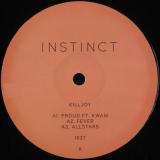
Burnski's Instinct label kicks on with more filthy low-end wobblers, this time with Killjoy the man behind the buttons. He opens up with 'Proud' (feat Kwam) which has a dirty low-end sleaze and blasts of busted bass topped with grimy bars and razor sharp percussion. It's pure filth for lip-curling disgust. Then 'Fever' drops into punchy speed garage energy with hustling drums and more warped bass and 'Allstars' gets lose on a glitchy two-stepper. The flip side shows yet another look with 'Lovestruck ' packed with pitched up vocal hooks and slamming drums and 'Shout' rounds out with icy cool.
Roto makes his PILLZ debut with Lose Yourself, a high-voltage statement from one of Spain’s fastest-rising names. Across four razor-sharp cuts, the EP reflects a shared vision between artist and label: music with deliberate intent—sometimes hypnotic, sometimes fast and direct, and at moments pared down to pure introspection. Lose Yourself carries that spirit throughout, built to lock the floor under peak-time pressure while opening space for release in the glow of sunrise. Already echoing through the underground, it’s primed to soundtrack the circuit.
With this release, Roto steps forward as one of the new voices shaping tomorrow’s dance floor, balancing mystery, pace, and stripped-back tension.
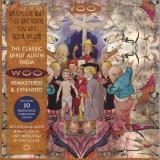
- A1: Swingtime
- A2: Pokhara + C H. Revisited
- A3: A Wave
- A4: The Cleaner
- A5: Wah Bass
- A6: The Attic
- B1: Razorblades
- B2: White And Whiter Still!
- B3: Wapping
- B4: Life In Shadows
- B5: The English Style Of Rowing
- C1: Whichever Way You Are Going, You Are Going Wrong
- C2: Lovelorn
- C3: Ruby Ruby
- C4: Rosehips
- C5: Tibetantrains
- C6: It's Love (Reworked)
- D1: Baa Lamb
- D2: Twinkle Toes
- D3: Dobbins Lost His Coconuts (Revisited)
- D4: A Western Sunset
- D5: The Very End Of The Attic
Black Vinyl[35,92 €]
Italian DJ/producer Gledd delivers an EP of fiery afro edits for his first outing on Razor-N-Tape. Taking a deep dive into his crates of African Boogie, Highlife and Zouk fodder, the Saint Wax Records boss presents a driving and hypnotic 4-tracker primed for the floor with just the right amount of studio polish.
The second chapter after “neverlost”, “closer” blends samplebased production with classic songwriting – like a sonic mosaic of warmth and groove. Lyrically “hippiesque,” Sepalot explores natural beauty, unity, equality, and self-determination. Guest features shine: Blu delivers sharp lyricism, and Illa J surprises
with soulful vocals on “My Own Way.” For fans of The Avalanches, Caribou, and Madlib – Closer is lush, human, and unforgettable.
Sepalot is one of those rare artists whose sonic palette refuses to be boxed in. His music exists in the fertile space between multi-layered sophistication and playful unpredictability – a quality rooted in his eclectic upbringing. From skate-punk beginnings to soul all-nighters, from obsessive vinyl digging to
deep immersion in hip-hop’s golden era, Sepalot has carried the art of sampling like a badge of honor. His beats are mosaics – meticulously pieced together fragments of sound forming an intricate whole. Beyond the studio, he’s explored these influences as DJ, producer, and live performer, leading the
Sepalot Quartet across Europe’s jazz festivals, and more recently with his experimental band Tikhet alongside Angela Aux
With “closer”, the upcoming second chapter following his 2023 album “neverlost”, Sepalot distills his broad musical world into a sample-based yet song-driven statement. The production feels warm and tactile – think needle-on-vinyl crackle meeting modern songwriting clarity. Lyrically, it’s “hippiesque” in the best
way: themes of natural beauty, unity, democratic awareness, equality, and spiritual introspection weave through the tracklist.
The guest list is just as inspired: legendary wordsmith Blu delivers razor-sharp verses, while Illa J – brother of the late J Dilla – steps away from his signature rap to surprise with soulful vocals on “My Own Way.” Together, they amplify the album’s humanist core, balancing groove-heavy production with
lyrical depth.
Fans of artists like The Avalanches, Caribou, DJ Shadow, or Madlib will find plenty to love here, but Closer carries its own unique fingerprint – a testament to Sepalot’s ability to merge hip-hop grit with songwriting grace. If “Neverlost” was a map, “Closer” is the destination: lush, thoughtful, and deeply human.
Highly recommended for anyone ready to hold hands, open their mind, and let the beat guide them.
Kicking off 2026 in style! Here we have volume 5 of the annual Razor-N-Tape Family Affair series. As always a wide-ranging collection of vibes and grooves from the extended international Razor-N-Tape network, this year’s vinyl sampler includes label newcomers and veterans across 6 tracks. Recloose, Medlar & Daisybelle, Misiu, Saucy Lady, Anoraak and Marina Trench deliver in their respective signature styles, taking us on a genre-bending tour of genres and sounds. From House to Disco, Dub to Breaks, and Chuggers to Pumpers, there’s bit of something for everyone here…fun for the whole Family!
After being part of the inner circle of the ESHU family for many many years, finally it's time for Yasin Engwer's solo debut EP. His first contributions date from 2012 when SYS released their first EP on ESHU, the production trio consisting of Sinan Alakus, Steven Siwalette and Yasin. Also a recent collaboration with Jocelyn was released on ESHU and he's an important part of the mega producer crew Dilated Pupils that has been releasing beats since 2014. His long going career and hard work now finally gets rewarded with his own Onyx EP. A carefully curated club pack of razor sharp, minimalistic dub house. It's been selected by digging through 10 years of unfinished beats on long lost hard drives. And of course, it also includes collabs with his SYS crew and fellow Nijmegen producer Space Ventura. It's a classy collection of dub driven, forward pushing, tech grooves in typical ESHU fashion. An EP that's been long overdue, but perfect on time.
- A1: Hurts And Noises
- A2: Wake Up
- A3: I Don't Wanna Be A Rich
- A4: Terrorist Bad Heart
- A5: Provocate
- A6: Lucifer Sam (Pink Floyd)
- B1: Happy!?
- B2: So Lazy
- B3: I Feel Down
- B4: Stupido
- B5: Guilty
- B6: Caroline Says (Loo Reed)
UILTY RAZORS, BONA FIDE PUNKS.
Writings on the topic that go off in all directions, mind-numbing lectures given by academics, and testimonies, most of them heavily doctored, from those who “lived through that era”: so many people today fantasize about the early days of punk in our country… This blessed moment when no one had yet thought of flaunting a ridiculous green mohawk, taking Sid Vicious as a hero, or – even worse – making the so-called alternative scene both festive and boorish. There was no such thing in 1976 or 1977, when it wasn’t easy to get hold of the first 45s by the Pistols or the Clash. Few people were aware of what was happening on the fringes of the fringes at the time. Malcolm McLaren was virtually unknown, and having short hair made you seem strange. Who knew then that rock music, which had taken a very bad turn since the early 1970s, would once again become an essential element of liberation? That, thanks to short and fast songs, it would once again rediscover that primitive, social side that was so hated by older generations? Who knew that, besides a few loners who read the music press (it was even better if they read it in English) and frequented the right record stores? Many of these formed bands, because it was impossible to do otherwise. We quickly went from listening to the Velvet Underground to trying to play the Stooges’ intros. It’s a somewhat collective story, even though there weren’t many people to start it.
The Guilty Razors were among those who took part in this initial upheaval in Paris. They were far from being the worst. They had something special and even released a single that was well above the national average. They also had enough songs to fill an album, the one you’re holding. In everyone’s opinion, they were definitely not among the punk impostors that followed in their wake. They were, at least, genuine and credible.
Guilty Razors, Parisian punk band (1975-1978). To understand something about their somewhat linear but very energetic sound, we might need to talk about the context in which it was born and, more broadly, recall the boredom (a theme that would become capital in punk songs) coupled with the desire to blow everything off, which were the basis for the formation of bands playing a rejuvenated rock music ; about the passion for a few records by the Kinks or the early Who, by the Stooges, by the Velvet mostly, which set you apart from the crowd.
And of course, we should remember this new wave, which was promoted by a few articles in the specialized press and some cutting-edge record stores, coming from New York or London, whose small but powerful influence could be felt in Paris and in a handful of isolated places in the provinces, lulled to sleep by so many appalling things, from Tangerine Dream to President Giscard d’Estaing...
In 1975-76, French music was, as almost always, in a sorry state ; it was still dominated by Johnny Hallyday and Sylvie Vartan. Local rock music was also rather bleak, apart from Bijou and Little Bob who tried to revive this small scene with poorly sound-engineered gigs played to almost no one.
In the working class suburbs at the time, it was mainly hard rock music played to 11 that helped people forget about their gruelling shifts at the factory. Here and there, on the outskirts of major cities, you still could find a few rockers with sideburns wearing black armbands since the death of Gene Vincent, but it wasn’t a proper mass movement, just a source of real danger to anyone they came across who wasn't like them. In August 1976, a festival unlike any other took place in Mont-de-Marsan – the First European Punk Festival as the poster said – with almost as many people on stage as in the audience. Yet, on that day, a quasi historical event happened, when, under the blazing afternoon sun, a band of unknowns called The Damned made an unprecedented noise in the arena, reminiscent of the chaotic Stooges in their early adolescence. They were the first genuine punk band to perform in our country: from then on, anything was possible, almost anything seemed permissible.
It makes sense that the four+1 members of Guilty Razors, who initially amplified acoustic guitars with crappy tape recorder microphones, would adopt punk music (pronounced paink in French) naturally and instinctively, since it combines liberating noise with speed of execution and – crucially – a very healthy sense of rebellion (the protesters of May 1968 proclaimed, and it was even a slogan, that they weren’t against old people, but against what had made them grow old. In the mid-1970s, it seemed normal and obvious that old people should now ALSO be targeted!!!).
At the time, the desire to fight back, and break down authority and apathy, was either red or black, often taking the form of leafleting, tumultuous general assemblies in the schoolyard, and massive or shabby demonstrations, most of the time overflowing with an exciting vitality that sometimes turned into fights with the riot police. Indeed, soon after the end of the Vietnam War and following Pinochet’s coup in Chile, all over France, Trotskyist and anarcho-libertarian fervour was firmly entrenched among parts of the educated youth population, who were equally rebellious and troublemakers whenever they had the chance. It should also be noted that when the single "Anarchy in the UK" was first heard, even though not many of us had access to it, both the title and its explosive sound immediately resonated with some of those troublemakers crying out for ANARCHY!!! Meanwhile, the left-wing majority still equated punks with reckless young neo-Nazis. Of course, the widely circulated photos in the mainstream press of Siouxsie Sioux with her swastikas didn’t necessarily help to win over the theorists of the Great Revolution. It took Joe Strummer to introduce The Clash as an anti-racist, anti-fascist and anti-ignorance band for the rejection of old-school revolutionaries to fade a little.
The Lycée Jean-Baptiste Say at Porte d’Auteuil, despite being located in the very posh and very exclusive 16th arrondissement of Paris, didn’t escape these "committed" upheavals, which doubled as the perfect outlet for the less timid members of this generation.
“Back then, politics were fun,” says Tristam Nada, who studied there and went on to become Guilty Razors’ frontman. “Jean-Baptiste was the leftist high-school in the neighbourhood. When the far right guys from the GUD came down there, the Communist League guys from elsewhere helped us fight them off.”
Anything that could challenge authority was fair game and of course, strikes for just about any reason would lead to increasingly frequent truancy (with a definitive farewell to education that would soon follow). Tristam Nada spent his 10th and 11th unfinished grades with José Perez, who had come from Spain, where his father, a janitor, had been sentenced to death by Franco. “José steered my tastes towards solid acts such as The Who. Like most teenagers, I had previously absorbed just about everything that came my way, from Yes to Led Zeppelin to Genesis. I was exploring… And then one day, he told me that he and his brother Carlos wanted to start a rock band.” The Perez brothers already played guitar. “Of course, they were Spanish!”, jokes their singer. “Then, somewhat reluctantly, José took up the bass and we were soon joined by Jano – who called himself Jano Homicid – who took up the rhythm guitar.” Several drummers would later join this core of not easily intimidated young guys who didn’t let adversity get the better of them.
The first rehearsals of the newly named Guilty Razors took place in the bedroom of a Perez aunt. There, the three rookies tried to cover a few standards, songs that often were an integral part of their lives. During a first, short gig, in front of a bewildered audience of tough old-school rockers, they launched into a clunky version of the Velvet Underground's “Heroin”. Challenge or recklessness? A bit of both, probably… And then, step by step, their limited repertoire expanded as they decided to write their own songs, sung in a not always very accurate or academic English, but who cared about proper grammar or the right vocabulary, since what truly mattered was to make the words sound as good as possible while playing very, very fast music? And spitting out those words in a language that left no doubt as to what it conveyed mattered as well.
Trying their hand a the kind of rock music disliked by most of the neighbourhood, making noise, being fiercely provocative: they still belonged to a tiny clique who, at this very moment, had chosen to impose this difference. And there were very few places in France or elsewhere, where one could witness the first stirrings of something that wasn’t a trend yet, let alone a movement.
In the provinces, in late 1976 or early 1977, there couldn’t be more than thirty record stores that were a bit more discerning than average, where you could hear this new kind of short-haired rock music called “punk”. The old clientele, who previously had no problem coming in to buy the latest McCartney or Aerosmith LP, now felt a little less comfortable there…
In Paris, these enlightened places were quite rare and often located nex to what would become the Forum des Halles, a big shopping mall. Between three aging sex workers, a couple of second-hand clothes shops, sellers of hippie paraphernalia and small fashion designers, the good word was loudly spread in two pioneering places – propagators of what was still only a new underground movement. Historically, the first one was the Open Market, a kind of poorly, but tastefully stocked cave. Speakers blasted out the sound of sixties garage bands from the Nuggets compilation (a crucial reference for José Perez) or the badly dressed English kids of Eddie and the Hot Rods. This black-painted den was opened a few years earlier by Marc Zermati, a character who wasn’t always in a sunny disposition, but always quite radical in his (good) choices and his opinions. He founded the independent label Skydog and was one of the promoters of the Mont-de-Marsan punk festivals. Not far from there was Harry Cover, another store more in tune with the new New York scene, which was amply covered in the house fanzine, Rock News (even though it was in it that the photos of the Sex Pistols were first published in France).
It was a favorite hang-out of the Perez brothers and Tristam Nada, as the latter explained. “It’s at Harry Cover’s that we first heard the Pistols and Clash’s 45s, and after that, we decided to start writing our first songs. If they could do it, so could we!”
The sonic shocks that were “Anarchy in the UK”, “White Riot” or the Buzzcocks’s EP, “Spiral Scratch” – which Guilty Razors' sound is reminiscent of – were soon to be amplified by an unparalleled visual shock. In April 1977, right after the release of their first LP, The Clash performed at the Palais des Glaces in Paris, during a punk night organised by Marc Zermati. For many who were there, it was the gig of a lifetime…
Of course, Guilty Razors and Tristam were in the audience: “That concert was fabulous… We Parisian punks were almost all dressed in black and white, with white shirts, skinny leather ties, bikers jackets or light jackets, etc. The Clash, on the other hand, wore colourful clothes. Well, the next day, at the Gibus, you’d spot everyone who had been at this concert, but they weren’t wearing anything black, they were all wearing colours.”
It makes sense to mention the Gibus club, as Guilty Razors often played there (sometimes in front of a hostile audience). It was also the only place in Paris that regularly scheduled new Parisian or Anglo-Saxon acts, such as Generation X, Siouxsie and the Banshees, the Slits, and Johnny Thunders who would become a kind of messed-up mascot for the venue. A little later, in 1978, the Rose Bonbon – formerly the Nashville – also attracted nightly owls in search of electric thrills… In 1977, the iconic but not necessarily excellent Asphalt Jungle often played at the Gibus, sometimes sharing the bill with Metal Urbain, the only band whose aura would later transcend the French borders (“I saw them as the French Sex Pistols,” said Geoff Travis, head of their British label Rough Trade). Already established in this small scene, Metal Urbain helped the young and restless Guilty Razors who had just arrived. Guitarist for Metal Urbain Hermann Schwartz remembers it: “They were younger than us, we were a bit like their mentors even if it’s too strong a word… At least they were credible. We thought they were good, and they had good songs which reminded of the Buzzcocks that I liked a lot. But at some point, they started hanging out with the Hells Angels. That’s when we stopped following them.”
The break-up was mutual, since, Guilty Razors, for their part, were shocked when they saw a fringe element of the audience at Metal Urbain concerts who repeatedly shouted “Sieg Heil” and gave Nazi salutes. These provocations, even still minor (the bulk of the skinhead crowd would later make their presence felt during concerts), weren’t really to the liking of the Perez brothers, whose anti-fascist convictions were firmly rooted. Some things are non-negotiable.
A few months earlier (in July 1978), Guilty Razors had nevertheless opened very successfully for Metal Urbain at the Bus Palladium, a more traditonally old-school rock night-club. But, as was sometimes the case back then, the night turned into a mass brawl when suburban rockers came to “beat up punks”.
Back then, Parisian nights weren’t always sweet and serene.
So, after opening as best as they could for The Jam (their sound having been ruined by the PA system), our local heroes were – once again – met outside by a horde of greasers out to get them. “Thankfully,” says Tristam, “we were with our roadies, motorless bikers who acted as a protective barrier. We were chased in the neighbouring streets and the whole thing ended in front of a bar, with the owner coming out with a rifle…”
Although Tristam and the Perez brothers narrowly escaped various, potentially bloody, incidents, they weren’t completely innocent of wrongdoing either. They still find amusing their mugging of two strangers in the street for example (“We were broke and we simply wanted to buy tickets for the Heartbreakers concert that night,” says Tristam). It so happened that their victims were two key figures in the rock business at the time: radio presenter Alain Manneval and music publisher Philippe Constantin. They filed a complaint and sought monetary compensation, but somehow the band’s manager, the skilful but very controversial Alexis, managed to get the complaint withdrawn and Guilty Razors ended up signing with Constantin with a substantial advance.
They also signed with Polydor and the label released in 1978 their only three-track 45, featuring “I Don't Wanna be A Rich”, “Hurts and Noises” and “Provocate” (songs that exuded perpetual rebellion and an unquenchable desire for “class” confrontation). It was a very good record, but due to a lack of promotion (radio stations didn’t play French artists singing in English), it didn’t sell very well. Only 800 copies were allegedly sold and the rest of the stock was pulped… Initially, the three tracks were to be included on a LP that never came to be, since they were dropped by Polydor (“Let’s say we sometimes caused a ruckus in their offices!” laughs Tristam.) In order to perfect the long-awaited LP, the band recorded demos of other tracks. There was a cover of Pink Floyd's “Lucifer Sam” from the Syd Barrett era – proof of an enduring love for the sixties’ greats –, “Wake Up” a hangover tale and “Bad Heart” about the Baader-Meinhof gang, whose actions had a profound impact on the era and on a generation seeking extreme dissent... On the album you’re now discovering, you can also hear five previously unreleased tracks recorded a bit later during an extended and freezing stay in Madrid, in a makeshift studio with the invaluable help of a drummer also acting as sound engineer. He was both an enthusiastic old hippie and a proper whizz at sound engineering. Here too, certain influences from the fifties and sixties (Link Wray, the Troggs) are more than obvious in the band’s music.
Shortly after a final stormy and rather barbaric (on the audience’s side) “Punk night” at the Olympia in June 1978, Tristam left the band ; his bandmates continued without him for a short while.
But like most pioneering punk bands of the era, Guilty Razors eventually split up for good after three years (besides once in Spain, they’d only played in Paris). The reason for ceasing business activities were more or less the same for everyone: there were no venues outside one’s small circuit to play this kind of rock music, which was still frightening, unknown, or of little interest to most people. The chances of recording an LP were virtually null, since major labels were only signing unoriginal but reassuring sub-Téléphone clones, and the smaller ones were only interested in progressive rock or French chanson for youth clubs. And what about self-production? No one in our small safety-pinned world had thought about it yet. There wasn’t enough money to embark on that sort of venture anyway.
So yes, the early days of punk in France were truly No Future!
- 1: Break It Up
- 2: Suicide Bomber
- 3: Conquer The World
- 4: Up Against The Wall
- 5: Johnny Thunders Lived In Leeds
- 6: Where Did It Go?
- 7: Apathy
- 8: Waiting (For You To Call Me)
- 9: Government
- 10: Big Mistake
- 11: Just For You
- 12: The Kids Can't Be Trusted With Rock 'N' Roll
- 13: Hope You're Having Fun
- 14: Falling For You
- 15: Amalia
- 16: Second Best
- 1: Mail Order Bride
- 2: Stick 'Em Up
- 3: Black Lightning
- 4: Diagnosis
- 5: Lying Low
- 6: Shallow
- 7: Lock Up
- 8: Conspiracy Theory
- 9: Hooked On You
- 10: Hit It
- 11: My Baby's Become A Right Wing Extremist
- 12: I'm Celebrating
- 13: Do You Wanna Know?
- 14: Don't Tell Me Everything's Alright
- 15: I Don't Wanna Dance
- 16: My Mind's On Strike
- 17: New Love
"Singled Out" kommt als auf 1000 Stück limitierte Doppel-LP auf farbigem Vinyl (LP1 blau / LP2 kirschrot) im Klappcover oder als glänzende CD! Dreiunddreißig Tracks! Alle 7"-Singles der Band bis jetzt! Das sind alle ihre A- und B-Seiten! Mit dabei sind zwei bald erscheinende Singles, von denen eine als kostenlose 7" der nächsten Ausgabe des SAFETY PIN MAGAZINE beiliegt. Die andere gibt's als streng limitierte Lathe-Cut-7". Um Komplettisten zu begeistern oder zu ärgern, wird gleichzeitig eine dritte (Standard-)7"-Single veröffentlicht, deren A- und B-Seite hier nicht enthalten sind. Cyanide Pills veröffentlichten 2009 ihre erste 7"-Single ,Break It Up", gefolgt von weiteren 14 fantastischen 45er-Singles, zuletzt eine Split-Single mit den Schweizer Nasty Rumours Anfang letzten Jahres. Die meisten dieser Veröffentlichungen enthielten exklusive B-Seiten, die auf keinem Album zu finden sind und die Damaged Goods für ,Singled Out" zusammengestellt haben. Schön, sie alle an einem Ort zu haben, oder? Alle Tracks wurden im Billiard Room in Leeds mit dem Produzenten Carl ,Razorblade" Rosamond aufgenommen. ,Einflüsse? Hmm, nun, wir hören nicht nur Punkrock, das taten auch die frühen Bands nicht, weil es noch keinen gab", sagte Leadsänger Phil 2023 im Gespräch mit dem Magazin ,Vive le Rock". ,Wir mögen natürlich die üblichen Verdächtigen, unsere Favoriten sind die belgische Band The Kids, X-Ray Spex und Buzzcocks. Wir mögen Satan's Rats, The Tours, Knots, The Fingers, Panic, Kleenex, Crime, The Terrorways, Victims, Wipers, The Briefs, The Spits, The Plugz, Bad Nerves, Nasty Rumours, solche Sachen, jede Menge Sachen, Syd Barrett, The Kinks, MC5, Stooges, Bowie, Ruben and the Jets, Kim Fowley, John Lee Hooker, Howlin' Wolf. Die Liste geht weiter und weiter und weiter."
Challenger was the debut and unique album from the iconic and unique italo disco band Baby's Gang. Altough oficially it had only two singles (Happy Song and Challenger), some other labels found extra tracks to be released as single (America) when Memory Records decided to focus on new releases. Produced by Anfrando Maiola (KOTO), Stefano Cundari and Alessadro Zanni, 'My LIttle Japanese Boy' is one of those tracks so it was worth buying the album. The album did not neither included the original version for Happy Song, but a 'Remix'. Probably someone back in the days should have made this EP including both track...now we have done it. This 12" included the original versions plus two Razor's Edit to make it more DJ Friendly.
For SIDE B's fourth release, an EP by Portugal's own DJ Dextro is in line. Ultra efficient, fine tuned techno is put under a microscope by the international mainstay for this record. Using high pressure in the low-end and creative textures to decorate the tracks, Dextro solidifies his place as a mainstay with a biting performance on home turf. Balancing his uncompromising sound with mystical synth work, Dextro opens 'Lost Frame' with the title track. In this A1, he rolls straight into a tunnel with flashing percussion and lurking melodies far out in the stereo field. Dancefloor focused but with a hint of mysticism, 'Lost Frame' creates a captivating ambiance to introduce the project with promises of earworm groove. Quick to follow up, 'Disclosure Of Who We Are' sees more space between the elements, creating a whipping effect in the rhythm and rich in sound design. Synth stabs cut through a booming kick, creating urgency in an EP that was lacking none to begin with.
This spirit is maintained on the record's flip to the B side - this time with an added bit of funk and shuffle. 'Liberdade' throws a vicious synth sequence forward for peaktime use and sees Dextro define his space with concentrated transitions and booming percussive hits. Swinging along with the occasional vocal sample to emphasize the obscurity, the producer maintains his delivery of razor sharp focus in all of his elements. To conclude, 'Panoplia Abstracta' settles things with an ambient, even meditative fourth track. Staying insistent with his kick, Dextro lets go of the wheel to drift his record from the body to the mind with progressive arrangement and soothing textures to see off a whirlwind of an EP for SIDE B records. Words by Noah Hocker
2LP 2026 Repress
Written and produced in a country house surrounded only by vast, empty landscapes and an endless sky,
‘Suicide Disco’ is the fruit of a 3-year long collaboration and Years of Denial’s debut LP for Veyl.
Urged to escape from crowded cities and information overload, the duo sharpened their sound and working
process through isolation and introspection, crafting 11 songs filled to brim with enormous hooks, New
Wave nostalgia and razor-sharp production details.
Barkosina’s voice echoes and oscillates against Jerome’s snares, profound and wounded at once. Her
expressionist narrative take us to unknown yet familiar places, amplified by dub delays and otherworldly
reverbs. Each track tells a story based on the intensity of relationships, a touching and distorted invitation
into intimacy and complicity
2026 REPRESS + DOWNLOAD
Years Of Denial is back on Veyl with their second LP 'Suicide Disco Vol. 2'. The follow up to 2019’s 'Suicide Disco', the duo makes a triumphant return, elevating their distinct sound which fuses dark wave, goth, newbeat, post-punk, EBM, and techno. The LP features 12 tracks all written and produced at Ark of Noise studio, located miles away from the polluted noise of social turbulences, immersed in isolation, creative indulgence, and poetic writing.
From the start, 'Art Break' provides the perfect warm-up, gently cleansing the palette and re-introducing us to Barkosina’s lustful vocals with a slow-burning pace that only marks the beginning. 'Wrong' picks things up, injecting a dose of body music for an infectious piece that bleeds into 'La Pendue' which keeps the energy rising. Next up, 'Mr. Guillotine' delivers a razor sharp edge, carving out a fresh post-punk feel which then brings us to the brooding, 'Never Satisfied'.
'Lover’s Crime' marks the halfway point of the record and one of the album’s standout tracks. Undeniably seductive with an ominous feel, the pair keep this mood going with 'City Lights' and then smash things open with 'Dancing With Demons'. After the devious message sent with 'The Letter', we are submerged in the romantic melancholia of 'Death Of A Lover' and 'Regarding the Pain of Others' before closing things out with 'Social Anxiety' which features vocals by longtime collaborator Broken English Club. The result is an immersive journey through the pair’s self described, Suicide Disco sound, and further builds on the Years of Denial form and legacy.
Bilingual rapper/producer Joe Cupertino, hailing from Cupertino, California, follows his 2024 mini-album RE: with a 7" single featuring two standout tracks. RE: was conceived as a thematic counterpart to his 2025 release DE: (focused on destruction), while RE: explored the theme of regeneration.
Side A features "Wagamama," with Mamiko Suzuki (chelmico) on vocals and production by longtime collaborator T-Razor. The mellow jazz arrangement evokes a daydream-like atmosphere, perfectly matching the bittersweet theme of the title.
Side B, "Ruby," features Lil' Leise But Gold and production by Ryuju Tanoue (w.a.u). The track blends Brazilian, reggae, and Afrobeat influences into an alternative, cross-genre groove that embodies Joe Cupertino's unique sound.
(Grey & Black Splatter effect 12’’ vinyl) Supported by leading artists such as Charlotte de Witte, Mha Iri, Amelie Lens, Klaudia Gawlas, Thomas Schumacher and more. Vibes Addikt, the label of N.O.B.A proudly unveils its latest vinyl release: a full-power EP from French producer Sta’an.
After previously appearing on the imprint, Sta’an returns with his first complete EP on Vibes Addikt, this time delivering a fully immersive project pressed on a grey splattered vinyl, echoing the aesthetic of the label’s previous collectors’ editions.
With five striking tracks oscillating between techno and hard trance, Sta’an showcases his signature intensity: driving kicks, razor-sharp synths, hypnotic atmospheres and high-voltage energy built for peak-time moments. Each track channels a raw yet modern rave spirit, perfectly aligned with the identity of Vibes Addikt.
With this explosive release, the label continues to push its techno-trance hybrid forward, cementing its place among the most impactful underground platforms for DJs seeking pure, cutting-edge dancefloor power.
2026 Repress
HOLY GRAIL ALERT!!! Following on 2021’s massive reboot of Midnight Magic’s seminal classic Beam Me Up, Razor-N-Tape have now unearthed a bit of NYC indie disco history with 'I Found Love.'
Although recorded over 10 years ago in Midnight Magic’s nascent early period that produced many of their legendary hits, the song never received an official release; until now it has been heard only by select ears and lucky concert-goers. The package comes with a grip of luminous remixes by Dimitri From Paris & DJ Rocca, Sophie Lloyd, Perel, some solicited at the time of recording and some brand new, but all exceptionally fresh!
Here are some words about the song by the band:
“'I Found Love' was recorded in a fever on the heels of releasing 'Beam Me Up' New York dance music wizard Tommie Sunshine approached us about a co-write saying we should go as big as possible. So we did, it is one of our all time favorite vocal performances from our singer, Tiffany Roth. We had big plans, too, for a release but nothing quite felt right until meeting the Razor N Tape crew almost a decade later. Finally the stage is set, the lights are on, and we're ready. This song is very special to us because it is the last unreleased recording of our original lineup. We dedicate its release to our late bandmates Andrew Frawley and Jason Disu.”
Straight from the heart of the 1991 UK rave scene — CUT001, later known as Rabbit City 001, captures the raw underground energy of the era. Originally a short-run white label promo, the record became an instant cult classic.
Produced by Blow alongside Colin Faver (Kiss FM legend RIP), the release was born out of London’s early rave network — record shops packed with weekend ravers, distributors playing new cuts down the phone, and pirate radio pushing the boundaries.
- A1: Eclypso
- A2: Relaxin' At Camarillo
- B1: Come Sunday
- B2: He's A Real Gone Guy
- C1: Stella By Starlight
- D1: Juju
- D2: Harlem Blues
This is joy beyond expectation the arrival of a new Ryo Fukui recording. Captured on June 26, 2004, this live session documents the ninth anniversary concert of Slowboat, the jazz club Fukui founded and considered his musical home. The trio features Ryo Fukui on piano, Benisuke Sakai on bass, and Yoshihito Eto on drums. Fukui was 56 years old at the time, and his playing is powerful and expansive, yet still marked by delicacy and razor sharp precision. In terms of energy, stamina, and technique, he was entering a true period of artistic maturity. He delivers the music of his beloved Phineas Newborn Jr. and Tommy Flanagan with depth and elegance, and approaches the works of Wayne Shorter—an early-life influence—with thrilling intensity. The performance captures Fukui at a moment of profound fulfillment, offering a truly compelling glimpse into his late career brilliance.
Repress!
Midnight Magic’s perennial disco anthem 'Beam Me Up' announced itself as an instant classic from the moment of its release in 2010, and at long last the band has teamed up with fellow Brooklynites Razor-N-Tape for a 10-year-anniversary package (minus one lost year) that once again establishes the timeless quality of the song with a fresh and versatile package of new remixes.
Norwegian space-disco don Prins Thomas delivers a sprawling and elegant mix, grounding melodic and psychedelic elements over a bumping percussive disco rhythm treatment, stretching out over 8 minutes of blissful breakdowns, delays and driving bass lines. Kim Ann Foxman takes the song to a darker and dubbier place with her 'Beam Me To The Basement Mix,' layering samples of singer Tiffany Roth’s vocal and insistent acid synths over a heavy and pulsing low end. Each Other, a new project by Max Pask and NYC club royalty Justin Strauss, crafts an extended peak-time stormer of a mix, with churning analog drum and synth production that is somehow ravey, New-Wavey and lush all at once.
These three mixes truly capture an entire club night in one record, each a beautifully unique interpretation that showcases the inimitable talent and creativity of the remixers, and is also a testament to the enduring perfection of the original. Grab this record immediately and beam yourself back to the dance floor!
Portuguese powerhouse Ka§par joins the Snuff Trax family!
With the »Catch 22« EP, he delivers three precisely crafted club tracks bursting with energy and soul. Stripped-back, razor-sharp grooves intertwine with raw, preacher-style vocals, lush pads, and fierce basslines — a hypnotic blend designed to move both body and mind.
As a special treat, 2Jack4U turn up the heat with their psychedelic acid remix that pushes the EP into full-blown dancefloor ecstasy.
»Catch 22«: Pure dancefloor alchemy, straight from Lisbon on Snuff Trax.
Partisan and PILLZ join forces once again, this time tapping into the innovative sound world of Brazilian live act Lucas. His signature style, twisted beeps, energetic glitches and razor-sharp mechanics, takes centre stage on Sign, a vinyl journey built for the peak hours. Each track is packed with calculated machine funk, emphatic drums and a relentless bassline drive. Lucas’ rising reputation across Europe stems from his electrifying live sets, where he seamlessly shifts between electro, techno and house. This record captures that same kinetic spirit, playful and powerful, built to move the floor.
A rave-ready trip from an artist breaking all the rules.
Default Mode by Raleigh & Takenaga continues the newly established X series – Harmony’s platform for new voices and limitless exploration. Hailing from Prague, the duo embodies the next wave of adventurous sound design and musical talent from the imprint’s home town.
Incentive Program opens the EP’s A side with a drifting, trance-tinged flow wrapped in sweeping pitch movements and fractured vocals. The track sets a shadowy, almost sinister atmosphere, pulling all witnesses into its slow-burn gravity. It’s a steady build, tipping the floor over the edge. Stiff Envelope pulls you into its depths as it continues to build tension with resonating synth hits that quiver over a powerful trance foundation. With a few moments of silence that let its unsettling atmosphere settle across the stereo field before swinging back in at full force, this one is tailor-made for big systems.
B side’s Ground Floor carries on with metallic swells and shimmers that ring underneath the surface as the tension built on the A side bursts, settling into a grounding four-on-the-floor moment and leaving just enough time to breathe before Raleigh stirs up a concoction of devious vocals, snappy percussion, and a seductive bassline that lifts the mood tastefully. Takenaga wraps up the record with Head Count, a razor-sharp blend of crisp percussive cuts and stuttered crumbles that are seeking the perfect pitch all the way, climbing up and down. Heads are counted on a lively groove that radiates playful momentum and commands the dance floor to get in formation, keeping a tight rhythmic focus. Infused with the pulse of UK club culture, this track delivers a fresh and forward-thinking sound perfect for adventurous turntables.
‘The second volume of Elementa Obscura moves with even greater force toward the dancefloor : six tracks straddling the lines between industrial, electro, and wave. From FIUME’s cold, pounding opener to Memorex’s spacious analog explorations, Nyxloid’s metallic EBM visions, and Ole Mic Odd’s razor-edged electro workout, the compilation spans the full spectrum of the underground. Spanish newcomer Thai Lady Boy brings chaos with a fractured industrial techno cut, while RNXRX closes with a ritualistic music excursion.
Strictly limited to 250 copies, vinyl-only. No repress.
All tracks mastered by MA Spaventi in Barcelona.
Activity FM returns with AFM002, a high-impact VA exploring the outer edges of electro and breaks. On the A-side, two US heavyweights lead the charge: Detroit’s AMX kicks off with Out My Mind, a sleek and soulful cut with razor-sharp bass and icy vocals, followed by Florida’s Exzakt, a true legend, who drops Fvck That Sh1t - a no-holds-barred club weapon full of pressure and punch.
On the flip, Venezuelan pioneers step in: ARA-U (London-based), head of No Static / Automatic, delivers Feels Like Dancing, a gritty analog heater dripping with machine funk, while Barcelona’s Phran, co-founder of ACA and Vimana, closes with Archivo Criminal, a playful yet driving track built for deep, late-night moments.
Activity FM returns with AFM002, a high-impact VA exploring the outer edges of electro and breaks. On the A-side, two US heavyweights lead the charge: Detroit’s AMX kicks off with Out My Mind, a sleek and soulful cut with razor-sharp bass and icy vocals, followed by Florida’s Exzakt, a true legend, who drops Fvck That Sh1t - a no-holds-barred club weapon full of pressure and punch.
On the flip, Venezuelan pioneers step in: ARA-U (London-based), head of No Static / Automatic, delivers Feels Like Dancing, a gritty analog heater dripping with machine funk, while Barcelona’s Phran, co-founder of ACA and Vimana, closes with Archivo Criminal, a playful yet driving track built for deep, late-night moments.
Ladies and gentlemen, please reserve a warm welcome to the eighth Outdom Records’ release on wax, proudly introducing an already known artist on the label, Denis Kostitsyn, with his new five-tracker EP: “Funny Games”.
A record as cheeky as its title suggests, Funny Games features an adventurous blend of techno, minimal, electro and tech-house, sprinkled with acid squelches, UK breaks & 2 steps grooves and a dash of dubby hypnotic atmosphere. Expect nothing less than Denis’ trademark creativity: playful, gritty and endlessly groovy, a proper bag of surprises for discerning selectors who love their tracks unpredictable, yet razor-sharp on the floor.
Denis Kostitsyn, respected Arma17 club resident and vinyl digger, strong producer with past acclaimed EPs on Exarde, Mung Records and also showcased on our previous Virtual Tools Vol.2 Series with “Rvbbit Hole”. This time, Kostitsyn dives deep into a palette of raw, analog-sounding textures and 90s-minded grooves, shaping tracks that carry both a vintage touch and a futuristic spirit. His production is full of twists—between hypnotic atmospheres, shuffling percussions, heavy basslines, and sudden left turns that keep the crowd locked and guessing. Built as pure dancefloor weapons, each piece doubles as both a tool and a trip, playful in form but deadly in effect!
Outdom Records once again shines a light on forward-thinking underground artistry—music that grooves, mutates, and flips expectations, while staying true to the label’s quirky yet uncompromising DNA.
WARNING: Handle with care, drop with confidence.
‘Before the Odysee, there was the Iliad; a tale of the golden age of heroes and warriors.'
The idea behind the Iliads series was to return to the sound of the golden age of Jungle/Drum & Bass, and more specifically the original ‘heroes’ of the Odysee label.
This fourth and final instalment concludes the series; bringing all the different styles of the original Odysee sound together in a grand finale. From deep atmospheric beauty to sinister dystopian breakbeat fury; Iliads IV has it all.
Oubliette immediately creates a feeling of unease and paranoia. The rapid injection of different breakbeats gives the track an unsettled feel; with nervy piano jangles and moaning samples adding to this atmosphere. The track drops with punching subs and razor-sharp curling breaks from amidst the desolation of the atmosphere of the intro. The call and response style is used to cut from break to break maintaining the unease of the intro. The drums & bass break down into a
dystopian landscape of sound, before dropping once more to take the track towards its conclusion.
A Point In Time with its obvious reference to a compilation series on a certain well-loved atmospheric Jungle label is all about conjuring nostalgia. There are notable references to bygone days; the infamous bulb bass and bleeps of the Warehouse days of glory, and the tearing mentasms that enter in the approach to the breakdown. The breaks are crisp and complex, the sub-lines deep and dark; a track truly built for a dark sweaty basement club where the bass bins
are pushed to their limits!
Love & Desire is a sultry deep atmospheric roller full of subtle references to the early UK Garage sound of the mid 90’s or even Deep dub Tech-House. The elegant curls of the Apache break that takes centre stage in this track are complimented by sweeping pads and a set of deep synth stabs that form the rhythmic backbone. The subs drop deep amidst a palette of avant-garde electronica, as the spoken word vocals call out “my love....my desire.”
We really hope you’ve enjoyed the Iliads series as much as we have; they represent a very special sound that is close to the very heart of what we at Odysee are about. As much as they focus the lens on the past, we truly believe they have had a profound effect on our future....in as much as they have brought us back to the raw essence of our sound.
Andy & Tilla
Another YUKU classic in the making: More introspective than some of Muskila's earlierwork, but still heavy and rhythmic. One of the highlights is a collab with Aunty Razor,who brings her powerful Yoruba rap energy into the mix; her flow cuts right through thelow-end and adds a whole new dimension.
The release also includes remixes from Toumba and Hassan Abou Alam, who eachtook the tracks somewhere else; warped, clubby, but still in line with the mood of theproject.
Peach Discs’ last EP of 2025 comes from DJ & producer Leibniz. Hopefully you can hear why we chose to wait till club season is fully upon us to put this one out – "Corridor" is a deeply heads-down, groove-forward record that casts an enveloping atmosphere across its minimal, tunneling arrangements built for dark rooms and long nights.
Across the EP's four tracks, Leibniz (real name Moritz Paul) picks a vibe and runs with it – themes persist, the focus narrows and what we get is something approaching a mood. Drawing inspiration from early 2000s techno records from the likes of Archetype while combining the ambient warmth of Kompakt’s Pop Ambient compilations and GAS releases with the clarity and weight of early dubstep and 2-step, he dived into a process of self-sampling, resampling shorter demos and ideas into full arrangements, or "making in-between tracks that help make the tracks.”
The pair of tracks on the record's A-side are made up of little more than razor-sharp percussion, billowing, restless pads and an infectious bassline, but it's the way these carefully considered elements are put together that do the damage on the floor.
Flip it over and Ten Ten breaks the 4x4 spell for a moment, leaning into a heavily swung, garage-indebted sound inspired by the king of swing himself, El-B. "If my drums resemble just a bit of the ones of El-B, I‘m happy." We reckon he can be happy. Finally, TTL takes us back to the persistent, driving energy of the A-side, with just a hint of hardgroove flavour and the kind of wonked-out fx that always suits the B2 of a record.
- A1: Military Cut
- A2: Mc Battle
- A3: Basketball Throwdown
- A4: Fantastic Freaks At The Dixie
- A5: Subway Theme
- A6: Cold Crush Bros At The Dixie
- B1: Double Trouble At The Amphitheater
- B2: South Bronx Subway Rap
- B3: Street Rap
- B4: Busy Bee At The Amphitheater
- B5: Fantastic Freaks At The Amphitheater
- B6: Gangbusters
- B7: Rammellzee & Shockdell At The Amphitheater
- B8: Down By Law
- C1: B Boy Beat
- C2: Yawning Beat
- C3: Crime Cut
- C4: Gangbusters
- C5: Cuckoo Clocking
- C6: Meetings
- C7: Military Cut
- C8: Razor Cut
- C9: Subway Theme
- C10: Busy Bees
- C13: Jungle Beat
- D1: Wildstyle Scratch Tool
- D2: Baby Beat
- D3: Jungle Beat
- E1: Fantastic Freaks Live At The Dixie
- C11: Down By Law
- C12: Baby Beat
GATEFOLD VINYL 2LP - TRANSPARENT BLUE + ORANGE, A2 Colour Poster, 5x Film Set Photos, Flexi Disc, Sticker Sheet
Blurring the lines between fiction and documentary, the seminal film Wild Style, directed by Charlie Ahearn and developed alongside Fred Braithwaite aka Fab Five Freddy, offered an iconic snapshot of the emerging New York hip hop scene in the early ‘80s. Considered one of the first hip hop films, it documents the styles, culture, attitudes, and most importantly, the music of this evolving era. The accompanying soundtrack remains one of the most influential in hip hop history, featuring a who’s who of artists who stood out during the movement’s nascent block party days.
“Making hip hop’s first and most beloved feature film, Wild Style, with Charlie Ahearn and creating the original music is one of my proudest accomplishments.” - Fab 5 Freddy
In celebration of Arrow Films restoring the original Wild Style film in 4K, Mr Bongo is proud to present this special-edition reissue package. The release comes as a double LP pressed on transparent blue and orange vinyl, offering a freshly curated tracklist that brings together the finest songs from previous editions, the full sought-after instrumental album, and Kenny Dope’s top edits. Also included are an A2 colour poster, five film set photos, a flexi disc containing Fantastic Freaks Live at the Dixie, and a Wild Style sticker sheet.
Originally released on Animal Records, founded by Chris Stein of Blondie fame, the soundtrack focuses on the hip hop scene as it evolved from the streets to the recording studio. Co-produced by Stein and Braithwaite, it features the Double Trouble pairing of Rodney Cee and KK Rockwell, The Chief Rocker himself Busy Bee, and the mighty line-ups of both The Cold Crush Brothers and The Fantastic Freaks, to name but a few. The music offers a transportive glimpse into the streets of the South Bronx, capturing the free-form, roaming nature of the film - it’s rough around the edges, but utterly absorbing.
Behind those foundational voices of hip hop’s first wave was a selection of backing beats that have underpinned and influenced the genre ever since. Easily mistaken for lifted breakbeats from old records, the songs on the Wild Style soundtrack are all unique creations. Overseen by Braithwaite and Stein, with Stein also on guitar and effects, they were intended as a homage to those early breakbeats. Drummer Lenny “Ferrari” Ferraro, who played for Aretha Franklin before emerging on the punk scene, and bassist David Harper laid down many of the iconic grooves, two somewhat forgotten participants in shaping a legendary sound.
Over time, the Wild Style soundtrack, with its Charlie Chase and Grand Wizard Theodore scratches, recurring sounds and motifs, and indelible lyrics, has become a hip hop touchstone: endlessly sampled and referenced, the bedrock of so much music to follow. It perfectly encapsulated the essence of the film, the scene, and hip hop’s emergence from the Bronx to the attention of the wider world. It was, and remains, the blueprint.
After a feature on last year’s VA Family Affair comp, Tokyo-based producer Yuu Udagawa drops her first solo EP on Razor-N-Tape. With releases on Freerange and Compost under her belt, Yuu has been developing a subtle and moody deep house sound that she displays across the 3 original songs of the Urban Physicality EP. Each track vibrates with dark chordal textures, pulsating drums and chopped vocal samples, beautifully layered to develop and slowly build. To round out the record, Tokyo producer Takuya Matsumoto turns in a throbbing late-nite remix of the EP’s title track, with a tougher drum profile, cavernous bass and masterful sound design.
Sealand returns with its fourth vinyl release, bringing together Mykoz, Inqoherent and RVOLT for a fierce and emotional journey through cutting-edge hardcore sounds.
The title track Net runners by Mykoz and Inqoherent has already been tearing up festivals across Europe - a high-impact banger built on distorted energy, razor-sharp percussion and a dark futuristic pulse that defines the Sealand spirit.
Inqoherent's Sense of Touch dives deeper, blending haunting melodies with relentless drive, while Mykoz's I'm Losing My Mind captures the tension between emotion and chaos in pure dancefloor form.
To close the record, RVOLT reshapes Mykoz's There Is A Storm Coming into a powerful, crossbreed/industrial remix - heavy, raw and built to destroy big systems.
Net runners marks a new chapter for Sealand: 12'' format vinyl, high quality full coloursleeve in a protective shrinkwrap sleeve