For release number 045, Luv Shack Records brings together two long time contributors Jakobin and ROTCIV for a split EP thats brimming with references to early 90s electronica.
Jakobin lays the foundation with the bubbly, trance infused „Drawan“, follows up with the spooky, upbeat electro of „Skulpt“, and finishes off with „Octagonial Tribe“, a track that oscillates between laid back melodies and squelchy acid sequences.
On the flip-side, ROTCIV showcases his signature style of industrial new beat madness: „Frenesy“ marries breakbeats with syncopated synthesizer sequences, „No More Room in Hell“ sound like a late 80s Italo Disco instrumental on steroids, while „The Confidence“ opts for broken beats and ethereal FM-flutes. As a digital bonus, ROTCIV gifts us with a heavy hitting, acid infused track by the name of „Living Art“.
Buscar:ear dis
To say that The Sinseers play oldies would be a misnomer. Fronted by bandleader and son of East Los Angeles Joey Quiniones, the group has quietly chipped away at the sounds of R&B and soul for the last half-decade. Quinones and his crew have continuously created a distinctive vibe that explores all aspects of a timeless genre, bringing together their interpretation of music through an unmistakable modern lens.With their most recent effort, the aptly titled Sinseerly Yours (Colemine 2023), the band recorded most of the album live in the studio. With Quinones on vocals and keys, vocalist Adriana Flores, Christopher Manjarrez on bass, Francisco Floreson on guitar, Bryan Ponce on guitar and vocals, Luis Carpio on drums and vocals, saxophonists Eric Johnson and Steve Surman, and Jose Luis Jimenez on trombone, The Sinseers achieves their most fully realized sound to date.All of the album's stunning tracks were recorded in a converted studio space in Rialto, California, known as Second Hand Sounds. The converted studio space, which used to be a dentist's office, allowed the group to experiment with their sound like never before - this time, the group managed to take a series of big swings, only to emerge with a fuller, more pronounced version of themselves. Despite those new strides, the band remains wholly committed to its sonic aesthetic while injecting its brand of vibrant 21st-century cool.Of course, the group has never been the type to shy away from their influences as they expertly toggle between 60s pop vis-à-vie early Beatles records to obscure dancehall Jamaican tunes - all fully extrapolated and reinterpreted through modern Chicano soul sound that the group has built their everlasting repertoire on.Quinones and bandmates have continued to apply what they've learned from their previous releases and their relentless touring schedule throughout the country. It's clear here that the work is paying off, putting to practice their musical chops thoroughly with all members expertly honing their sound. The melting pot of ideas is showcased with incredibly lush orchestrations and arrangements, married with pitch-perfect harmonies, allowing the group to further solidify themselves in the pantheon of the Southern Californian songbook.
My Dinosaur Life is the fourth studio album by the American rock band Motion City Soundtrack. Produced by Mark Hoppus (bassist Blink-182), the album was released on January 19, 2010, by Columbia Records. The album's theme largely centers on growing older; its lyricism, written by Pierre, concerns such subjects as relationships, drug abuse, and procrastination. Musically, the album retains the band's sound with less of an emphasis on the Moog synthesizer. Drummer Tony Thaxton broke his arm prior to recording, which led the band to use a drum machine on early recordings. The album's music is inspired by post-hardcore music; Pierre cited Archers of Loaf, Fugazi, and Dinosaur Jr. as inspirations for the album's sound. Their only major-label release, My Dinosaur Life was well received by music critics. The album represented their highest peak position in the U.S., charting at #15 on the Billboard 200. My Dinosaur Life is available as a limited edition of 1000 numbered copies on purple & red marbled vinyl and includes a printed innersleeve.
"Té De Flores Silvestres" is the result of the dialogue between the Belgium photographer Michael Roemers and the Argentinian musician Federico Durand initiated by IIKKI, between February 2023 and May 2024.
Federico Durand’s music is a weave of sound searching introspection and delight through simple melodies, made in the heart of Argentina. Federico likes music, gardens, John Keats’ poetry, collecting stamps and Earl Grey tea. Since 2010 he has been released on some labels such as 12k, Home Normal, IIKKI, Spekk, White Paddy Mountain, LAAPS and more.
Michael Roemers, a child of the borders, was born in 1987 in the Belgian village of Plombières, studying sound at the Institute of Broadcasting Arts in 2008. He discovered the power of the image, and became passionate about photography. He began his photographic career following Belgian underground music bands as they toured Europe, capturing crazy moments on stage and backstage. Then, he decided to devote himself to a personal project, to capture his native Wallonie region, highlighting the richness and a part of these Belgian traditions region while exploring the themes of identity, memory and membership.
Since 2021, Michael Roemers has added a new string to his bow by running the Vice Versa podcast with his partner Sébastien Van Malleghem. This podcast explores the themes of photography, art and culture by giving voice to renowned guests in these fields. Té De Flores Silvestres is his first book.
Fine Art Book, Ltd. to 400 copies:
Hardcover book printed on Glossy Modern Paper 170g/m2 // 80 pages, 19cm x 22.5cm, 50 photos // Front cover points and back cover logo embossed // Selective UV varnish // Hand-numbered.
alphacut sets off into brushy tribal jungle
the early 2010s have been a prosperous era for a lotta fast dance and bass music. dubstep's magic was fading due to brosounds taking over but the idea of some fresh air inbetween drums and basslines was thankfully carried on into the jungles too. not only halftime but also tribal beats grew strong, whether it being in warm dubby or cold darker reincarnations.
speaking of living on, this plate is not only a sequel to that era but also a tribute to the one like morphy, who brought dubby tribal brushy jungle onto alphacut around that time. it light up a spark to head for new territories, its soul is vibing on in 45seven and especially in this new alphacut - post morphem!
rude operator are opening with a minimal dancehall feel, wriggling from 8bar to 8bar, switching tensions with patterns with a slice of footwork dna inside - zero chances to freeze!
rainforest is stepping on with enlightening skanks and mystic basses under a riddim one simply can't escape as well.
paradox effects is not only flipping sides but vibes pretty much too. keeping it tribal and one-seventy but much darker with an amen from the vaults in a bunker-conrete jungle - the raw and free sound of leipzig.
dreadmaul is closing with a masterpiece which could have been executed by the homaged dubbing don himself. moody pads meet distant dub sirens and robotic amen leftovers step up into a hypnotising groove, taking you back down in the woods.
we are happy to be back with a solid round-up package which should never leave your tribal crates again, zooom!
Island Boogie arrives four years after Meecham’s previous full-length, Music Not Safari, and sees the veteran producer deliver his most ‘personal’ set yet – a collection of kaleidoscopic, cosmic-leaning, dub disco-influenced neo-boogie excursions inspired by his love of the custom-built soundsystem at Rotation Garden Party, an annual micro-festival founded by a group of friends including his former Chicken Lips production partner Dean Meredith. It's fitting, then, that the EP begins with a superb interpretation of ‘'Dévoilez-Vous’ by T-Kutt, AKA Meredith and long-term studio partner Ben Shenton. The pair’s ‘AM FM Club Mix’ sits somewhere between classic Prelude-style electrofunk, NYC proto-house and early British interpretations of American house music. Séverine Mouletin’s chopped-up improvised vocals weave in and out of sun-bright keyboard riffs, colourful synthesiser motifs, heady synth-strings, D-Train style synth-bass and delay-laden machine drums. It’s a superb re-imagination of one of the album’s most stellar moments.
The EP’s other headline-grabbing remix comes courtesy of Leng co-founder Paul Murphy AKA Mudd. He reworks title track ‘Island Boogie’, teasing out the spacey synths and languid jazz-funk grooves of Meecham’s original mix and dialling them up to the max. The resultant revision sparkles with crunchy clavinet licks, mazy synth and electric piano solos, and spacey chords rising above a mid-tempo dancefloor groove. To complete a strong package, Meecham adds two dubs in his distinctively stripped-back, tape echo-heavy style. He first takes on EP title track ‘Dévoilez-Vous’, wrapping vintage drum machine hits in oodles of space echo and dub delay while devoting more time and space to the killer bassline, Rupert Brown’s infectious hand percussion, and Mouletin’s vocalisations.
To round off the EP, he dubs out album epic ‘La Cassette’, another collaboration with Mouletin that also features additional percussion by Brown. Like the original synth-powered dancefloor dubs of the early-to-mid-80s that have long been an inspiration, Meecham’s ‘La Cassette’ dub features key musical elements – many drenched in trippy effects – popping in and out of the mix, while his sturdy drums and memorable bassline spar with Brown’s percussion below.
2025 Repress
Operation Sole like the summer, hopefully, imminent; “Operazione Sole” like the 1967 song by Peppino Di Capri, considered, perhaps wrongly, the first ska in Italy, but certainly the first to talk about Jamaica and upbeat rhythms.
The record you have in your hand is intended to be a testimony to how much the sounds born in Kingston between the '60s and '70s had a significant influence on local pop.
With the first explosion of reggae in England between 1968 and 1970, as well as with the rise of Bob Marley to a worldwide cult phenomenon, parallel to the all-English phenomenon of Two Tone and the ska revival, Italy, always attracted by the new trends not only English, he certainly couldn't stay on the sidelines.
Therefore these innovative and unknown upbeat sounds, derived from the blues of the 1950s and mixed with a Caribbean sauce, have also taken hold in the Bel Paese.
It began as early as 1959 with the song “Nessuno” by Mina, considered to all intents and purposes a Jamaican shuffle, to arrive in a few years at blue-beat (I4 di Lucca, Claudio Casavecchi) and ska (Margherita, Peppino Di Capri , Silvano Silvi, Renzo and Virginia) and be exposed to the first reggae (for example Jo Fedeli and his Italian version of “Israelites” by Desmond Dekker). Thus, we quickly reach the end of the decade of the economic boom and the culture, styles, references change: everything becomes more busy (on a cultural, artistic and political level).
After a stalemate phase that lasted more than five years, Bob Marley's reggae (considered a sort of new Messiah) conquers the planet, including Italy: the producers and artists, even at a high level, for a few years do not remain at all indifferent to this novelty and decide to introduce the "upbeat", primarily reggae, into the various pop repertoires: well-known names such as
Loredana Bertè, Mario Lavezzi, Rino Gaetano, Ivano Fossati, Ilona Staller, Adriano Celentano, Edoardo Bennato throw themselves headlong into new sonic adventures, in a pioneering way, but often with excellent results.
The "Operazione Sole" collection wants to take the credit, instead, of proposing and discovering lesser-known artists (with the exception of Gino Santercole, former associate and relative of Il Molleggiato), often real meteors in the Italian musical panorama, who have tried to achieve (or achieve again) success by adapting the pop that was so popular in those years to the new black sounds prevailing in the West.
We are in the early 80s and we range from the most classic reggae, to Italo-disco contaminated by dub up to the true Neapolitan style which, on more than one occasion, in its being endemically "black" and full of groove, has wrung out the watch out for agreements made in Kingston and London.
“Operation Sun”: a pleasant philological work, but surrounded by an equally pleasant aura of disengagement.
- A1: Master Heartache
- A2: Hard Rain Fallin
- A3: Lady Of Fire
- A4: Lake Isle Of Innersfree
- A5: Pumped Up
- B1: Kingdom Come
- B2: I Got A Woman
- B3: Hell Hound
- B4: Helium Head (I Got A Love)
- B5: Ain't Got Hung On You
Hard-rocking Brooklyn trio Sir Lord Baltimore’s highly sought-after debut album is a legendary precursor of the heavy metal genre, a 1971 Creem review of the disc perhaps the first to ever use the term. The group benefited from the songwriting and production team of Mike Appel and Jim Cretecos, Appel the future manger of Bruce Springsteen and Cretecos already heady from success with The Partridge Family; recorded at Vantone Studios in New Jersey, it
was mixed to fine effect by Eddie Kramer at Electric Ladyland, fresh from his work with Jimi Hendrix. Guitarist Louis Dambra co- arranged the material with Appel and Cretecos; he had earlier played in garage band The Koala as Louis Caine, and here his screeching guitar
is a major draw, backed by plodding bass from Gary Justin, as front man John Garner shrieks his vocals while pounding furious drumbeats. Aside from a tough cover of Ray Charles’ “I Got A Woman” and a track inspired by Yeats’ poem “Lake Isle Of Innersfree,” the album features heavily-stoned acid rock originals, delivered the Sir Lord Baltimore way.
"Androids may not yet dream of electric sheep, but maybe computers do sing sad songs."
In 2013, Tzoukmanis released ‘Hope Is The Sister Of Despair’, issued here for the first time on vinyl with 4 previously unreleased tracks.
The album was made following the end of a relationship and the happy/sad feeling is everywhere in this music. Sequences twinkle and nag, soft pads pour balm on tired ears and when drums do appear they provide an intimate framework rather than a call to the dance floor. The album taps into a rich vein of sequencer romanticism, from Tangerine Dream-obsessed-‘Berlin School’ daydreamers to the whole nebula of music inspired by Warp’s Artificial Intelligence series. It also looks forward, prefiguring the return today, in troubled times, to the comforting inner space of ‘90s-worshipping ambient techno.
The German word ‘weltschmerz’, roughly translating as ‘world sadness’, fits this music well. The melancholy it inspires feels collective, almost heartening. Sorrow might be said to infuse the technology’s basic building blocks – Leibniz’s binary ‘one’ bereft of its ‘zero’, its presence twinned with absence. But there is hope, too, in the network of actions and decisions that have been fashioned here into melody and rhythm.
Sometimes music is supposed to feel weird and indescribable. It’s the moments of clarity within the dense, sonic mess that often feels the most satisfying. That’s the space that Earth Tongue occupy. At times, their songs are shrill and disorientating, other times their reverb-washed textures and instantly- familiar hooks can wrap you in a warm, loving embrace. The one consistent thread through their music, however, is the thick and all encompassing fuzz. Guitarist Gussie Larkin has become a master of the fuzz-smothered riff, and along with Ezra Simons’ off-kilter drumming, they’ve been sending punters into transcendental states since they began gigging in their home town of Wellington, New Zealand in 2016. Floating Being will be released this June 21st. The album was pieced together throughout their travels of Australia and Europe, with the finishing touches being added in their hometown. The album contains songs they’ve been playing live for the past year, and it captures the raw, primitive energy that exists within their live performance. Earth Tongue embrace the imperfections in their playing and recording - drawing influence from early 70s psych and prog rock. The last thing they wanted was to create a shiny, over-produced record - with that in mind, they recorded the drums to an old 8-track Tascam reel-to-reel in a friend’s garage in Melbourne. The result is a punchy, raw and fuzzy journey into psych-rock with songs that weave between melodic and jarring. Unexpected twists and turns leave the listener in a disorientated yet satisfying haze.
Given The Fall's penchant for iconoclasm, it's no surprise that they decided to say goodbye to the '70s with a series of gigs at Northern England's gruffest halls. The band's formidable live show was met with even more derision and disorder than customary during these late '79 and early '80 performances, and they skillfully amplified such sentiments back at the crowd. Totale's Turns, The Fall's first live album, was released on Rough Trade just prior to their pivotal third album, 1980's Grotesque. "The difference between you and us is that we have brains," shouts Mark E. Smith to open Totale's Turns as the band breaks into the rollicking "Fiery Jack," their latest single at the time. Each player is at their jagged best: Marc Riley and Craig Scanlon's splintering guitars, Steve Hanley's thunderous bass and Smith's combative sneer reverberate over "Rowche Rumble," "Choc-Stock" and "Spectre Vs. Rector" more than any studio would ever allow. Totale's Turns never panders to live-record conventions, serving instead as a gripping exhibit of The Fall en masse and arguably the most accurate document of the group to date. Superior Viaduct's edition is the first time that Totale's Turns has been available on vinyl domestically. Liner notes by Brian Turner.
Old Saw, the enigmatic New England collective led by Henry Birdsey (Tongue Depressor), return with their third long-playing record, Dissection Maps. It is not enough to trace the fields. The choreo-cartographic demands the casting of stone, a grassfire, a carnival; something with which to rupture the horizontality of existence and imagine the vertical. Earth is the eighth morning, folded against the week's work. The field is a line drawing of oblivion. The house is a forest in the shape of a womb. America is a quarry in the image of god. (Aidan Patrick Welby – 2024) “The band captures the American stretch, the spaces in-between and the hollowness that haunts us along those routes…fades the radio to static to let the nothingness linger among the soul.” (Raven Sings the Blues) “evokes an ambience of prayer-like solemnity that celebrates something decidedly terrestrial, what the label describes as “a rusted and granular shadow world where the dive bar meets the divine.” It recalls one of those junkyard shrines built by some sincere eccentric, improbably wonderful forms of weathered stone and scrap metal standing like totems to an unrecognised religion rooted in the earth around us.” (Various Small Flames)
Repressed for the first time in 2 years, Note price change. Sermonizing Black Nationalism, Pan-Africanism and the benefits of a healthy and just lifestyle during the height of the Bad Boy/Roc-AFella era of nihilistic excess in the late 90's, Dead Prez also signed to a major label (Loud/Columbia) despite leaning much more towards the burgeoning indie aesthetics of the day. But this was a good thing – using major label muscle to wake up righteous hip-hop fans who might have fallen asleep at the wheel. The group itself – consisting of MCs stic.man and M-1, who produced or co-produced most of the duo’s music – was formed in Tallahassee, Florida in the early 1990's.
By later that decade, the duo had started making significant waves, having their music heard on the soundtracks to “Soul In The Hole” and “Slam,” as well as appearing on albums by Big Pun and The Beatnuts. By 1998, they released their first official single, the serious, stark “Police State,” on Loud, appropriately brought to the label by Lord Jamar of Brand Nubian. After building a solid rep over the next two years with fiery live performances, in 2000 they unleashed their debut album, Let’s Get Free.
The album was a welcome return to provocative and often radically political rhetoric that hearkened back to hip-hop forebears including The Coup, Public Enemy and KRS-One (as well as poetic descendants like the Last Poets and Watts Prophets). Let’s Get Free was critically acclaimed and benefited from multiple singles, including the infectious, thick analog drive of “Hip-Hop” “It’s Bigger Than Hip-Hop,” with a remix co-produced by a young Kanye West; “Mind Sex” (with Abiodun Oyewole of the Last Poets); and the poignant “I’m An African.”
But the singles weren’t the only worthy songs, as just about every cut here has deeper meaning than most full albums by their early 2000's peers. Highlights: the thought-provoking, anti-drug album opener “Wolves”; “We Want Freedom” “They Schools” and “Propaganda” . All in all, this is one of the more underrated and possibly Top 5 fully-realized political hip-hop albums of all time.
"Reissued for the first time on vinyl here’s the second album of Jamaican reggae singer George Faith, originally released on Hollywood records back in 1979.
"Wonderful soul reggae melodies backed by the likes of Sly & Robbie, Aston 'Family Man' Barrett, Tommy McCook, Earl 'Chinna' Smith and more. Produced by the one and only Bunny Lee at Harry J Studios and mixed by Scientist at King Tubby’s Studios!"
"I wish I could turn or turn back" "Sometimes it’s hard to resist the feeling that there was a crucial turn in life out of which everything else flowed. Maybe in our more reasonable frames of mind we can dismiss that thought and take our plans and intentions very seriously. But, there’s often a lurking conviction that, like the oak from the acorn or the movie from its opening scene, it is already all there. In the first moment of Relics of Our Life, anything could happen, anything could come next. But as the suspense is broken with the first notes, the world of the record springs up as both an internal experience and a landscape of which we will learn something, but definitely not everything. The songs induce a swimming sense of cycling repetition and variation where shifting details tilt the ground under us. The round and round doesn’t make us dizzy; like breathing the right way, it makes us both heavier and higher. "Pawliczek’s songs can be located in the company of the greats of Flying Nun Records – maybe the delicacy of The Great Unwashed with the heavy heart of The Verlaines and smartness of The Chills. But, ultimately, his interests are elsewhere – a heart-break song over an earthly lover feels like only the tipping point for longing and devotion that outstrips the personal. In this sense, Popul Vuh for their hymnal geometry and switched-on Palestrina, and Terry Riley for cosmic elation come to mind. The songs have sweeping and cinematic proportions and depths of field constrained by a pop economy love of leanness. "But who’s supplicating whom here? The songs’ devotional quality is not upward to the sacred or even outward to the profane. It’s more like a magnetism between its elements – sounds, voices and rhythms. The track No Talk intones “why don’t you talk to me?” over a driving guitar and one feels visited by some kind of archaic god on whom the tables have been turned, finding himself jealous of our thousand little thoughts. The record finishes with his distorted lilting dance, trying to seduce us with some red red wine that is no one’s blood, but everyone’s favorite drug." -- Karina Gill (Cindy, Flowertown) 2024
Sea Blue Vinyl[27,31 €]
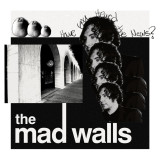
Eight years since the breathtaking Somewhere Anywhere EP, The Mad Walls return to re-ignite psych rock with this gorgeous, floatily heavy, effortlessly groovy and sublimely sinuous debut LP. Driven by bone shaking acoustic guitar, visceral drums, wonderfully trippy basslines and the throwaway perfection of Christopher Mercado’s spooked vocals. Pure rock n’ roll yet devoid of cliché. Informed by, but no way in hock to, early MC5, Skip Spence, Sonic Youth, Syd Barrett and Jefferson Airplane when they still all lived together.
Recorded on tape in Mercado’s garage, there’s a DIY heart with epic results across sixteen songs. Only one track over three minutes and some under thirty seconds. “It’s just chatter about life and human feelings. Stylized human expression”. - Is Christopher's self effacing explanation of his mind bending, playful, storytelling. It opens with the walloping drum canter/bass attack of WHO WANTS TO DIE FOR RELIGION. Passes through the furious distorted acoustic guitar solo on I TELL YOU HOW I FEEL. The woozy, elastic time-stretching of COOL TRIPPER. The brief, funky lurch of IN YOUR DREAM YOU ARE NO ONE. The almost lush, cinematic SEVEN DAYS which conjures Serge Gainsbourg by way of Moby Grape. HIP COMMA’s floaty strut and the groovy raga of MAKA THE NATIVE, which has not one but two ‘breath solos’. CLOUDS OF DUST is a skeletal Krautrock fragment and THERE ONLY IS a luminous psych-pop single. Final track APPLES ends the album with a sinewy twelve bar blues and a killer psych guitar break. Bliss.
Somehow the MAD WALLS manage woozily florid and sharp as a blade. Studiedly detailed but effortless. Whip smart and dumb. And as we said at the start - just gorgeous…
Black[25,17 €]
Eight years since the breathtaking Somewhere Anywhere EP, The Mad Walls return to re-ignite psych rock with this gorgeous, floatily heavy, effortlessly groovy and sublimely sinuous debut LP. Driven by bone shaking acoustic guitar, visceral drums, wonderfully trippy basslines and the throwaway perfection of Christopher Mercado’s spooked vocals. Pure rock n’ roll yet devoid of cliché. Informed by, but no way in hock to, early MC5, Skip Spence, Sonic Youth, Syd Barrett and Jefferson Airplane when they still all lived together.
Recorded on tape in Mercado’s garage, there’s a DIY heart with epic results across sixteen songs. Only one track over three minutes and some under thirty seconds. “It’s just chatter about life and human feelings. Stylized human expression”. - Is Christopher's self effacing explanation of his mind bending, playful, storytelling. It opens with the walloping drum canter/bass attack of WHO WANTS TO DIE FOR RELIGION. Passes through the furious distorted acoustic guitar solo on I TELL YOU HOW I FEEL. The woozy, elastic time-stretching of COOL TRIPPER. The brief, funky lurch of IN YOUR DREAM YOU ARE NO ONE. The almost lush, cinematic SEVEN DAYS which conjures Serge Gainsbourg by way of Moby Grape. HIP COMMA’s floaty strut and the groovy raga of MAKA THE NATIVE, which has not one but two ‘breath solos’. CLOUDS OF DUST is a skeletal Krautrock fragment and THERE ONLY IS a luminous psych-pop single. Final track APPLES ends the album with a sinewy twelve bar blues and a killer psych guitar break. Bliss.
Somehow the MAD WALLS manage woozily florid and sharp as a blade. Studiedly detailed but effortless. Whip smart and dumb. And as we said at the start - just gorgeous…
- Last Epoch Theme
- Burning Forest
- In Preparation
- Keepers Camp
- Escape From The Fortress Vaults
- What She Left To Remember
- Fires Before Dawn
- Bastion Of The Sun
- War Machines Of Solarum
- Eterra
- Highlands
- Ascending The Summit
- Inferno And Fury
- The End Of Time
- Crystal Mines: Crystal Lotus
- Shattered Remains
- The Temple Of Eterra
- Twisted Fire
- The Precipice
- Above The Black
- The Council Chambers
- The Sheltered Wood
- The Forsaken Trail
- The Ritual Site
- Guardian Of Ruins
- The End Of Ruin
- Ruins Of Welryn
- Shadows Whisper
This epic loot sees the epoch-making score for time-hopping action RPG Last Epoch blessing heavyweight wax.
28 tracks chosen by composer Erik Desiderio have been specially mastered for vinyl and will be pressed onto heavyweight discs. These slip into a deluxe double gatefold sleeve with artwork by the team at Eleventh Hour Games.
Desiderio had to cast his mind through time to soundtrack each of the game’s four different epochs of Eterra, with the music of this release focusing mainly on the brighter Divine Era and the darker, apocalyptic Ruined Era. Most eras of the game have a natural, acoustic sound to them with more traditional instrumentation, while the Ruined Era focuses on warped synthetic and acoustic sounds. Over the course of the game’s Early Access period, the composer was able to gather fan feedback, which in turn helped shape the final score.
Some less well-known instruments and techniques colour the music. The sound of the lute helped capture the beauty of the world, while the scratchy, intense tagelharpa embodied the conflict of a war-torn land. In the Ruined Era, fretless bass guitar and expressive Ebow serve to create a sense of unease, with melodic material returning from earlier eras.
Choral lyrics were sung in Old Norse, in particular on the “Last Epoch Theme” with its stirring refrain “Fyoern Oowled” (trans. “Ancient Era”). Vocalists include Ffion Elisa, Colm McGuiness, Mason Lieberman and Matt Lambert.
“Let us advance our mortal bodies up Where hearts and minds will go Let’s walk, let’s roll.” So sings Madeleine Peyroux on the upbeat title track of her captivating tenth album, Let’s Walk, the acclaimed singer-songwriter’s most assured, courageous work to date. Powered by the distinctive, honeyed croon that delivered her from the Paris streets to concert halls, these ten unabashedly personal songs, all co-written by the versatile Peyroux, deftly interweave jazz, folk, and chamber pop, with themes ranging from the confessional to the political, from whimsy to yearning. In every note, Peyroux digs deep, rendering this exquisite work with the disarming grace and gravitas of an artist in peak form. Let’s Walk was a long time coming, but well worth the wait. Following Peyroux’s 2018 album, Anthem, the enforced isolation of the global pandemic made any real-time community gathering impossible. From a creative standpoint, however, Covid offered Peyroux a silver lining: she seized the opportunity to hunker down with longtime collaborator, multi-instrumentalist Jon Herington (Steely Dan, Lucy Kaplansky). The pair reflected on the seismic era at hand and wrote and re-wrote in what Peyroux calls “a shadow of reckoning.” When multi-Emmy-and-Grammy-winning producer Elliott Scheiner (Fleetwood Mac, The Eagles) heard a sampling of the new material, including “Let’s Walk,” he mandated “no covers” for the album. The longtime studio veteran knew the time was ripe to highlight Peyroux’s incisive, often topical lyrics meshed with Herington’s ear for melody and arrangements.