Deniz Cuylan set out to explore his own distinctive sound on his 2021 solo debut album 'No Such Thing As Free Will.' The album signaled the Turkish musician's first bold step into the spotlight following a winding 15-year path in the music industry playing in multiple bands with home bases dotted all over the globe - Stockholm, NYC, Istanbul - and tackling a wide array of styles both on the stage and in the studio. Now settled into his current home in Los Angeles, Deniz lends his instrumental talents to create scores for independent films and recurring Netflix original series, yet these projects inevitably fulfill the sonic backdrop for another artist's vision. Looking inward on his own for the first time, 'No Such Thing As Free Will' laid the groundwork for his own personal soundtrack, one that fused his love of classical guitar, introspective jazz, and ambient expressionism with his whimsical compositional ear. Over a magical 6-track journey, 'No Such Thing As Free Will' painted a lush cinematic narrative with Deniz's guitar as its guide, delivering an album that "seems to invent new languages for the guitar" (The Guardian) and receiving glowing comparisons to legends like Steve Reich, The Durutti Colum's Vini Reilly, Glenn Branca, and Bert Jansch. With such a singular foundation exposed on a debut album, many artists would stay true to their inventive winning formula and find out if lightning could strike twice. Deniz is not one of those artists. An explorer at heart, Deniz unveils a beautifully alluring and lightly adjusted language on his mesmerizing second album 'Rings Of Juniper.' The record continues to spotlight Deniz's exquisite guitar work and hypnotic compositional skills, yet it boasts a punchier, refined, and more immediate tone right from the start. Accented by a desire to once again uncover a new shade of his sonic palette with the support of a talented cast of friends and artistic collaborators, 'Rings Of Juniper' lays bare a rich, dynamic, and evocative sound that Deniz lovingly refers to as Mediterranean Minimalism.
Search:ear dis
Following their debut Glastonbury Festival performance, Broadside Hacks in collaboration with British Underground today announce the UK premiere of The Broadside Hack; a new documentary telling the story of the young vanguard of UK artists sharing radical interpretations, proto-feminist narratives and queer histories through the lens of British traditional folk song. An accompanying live album of the songs performed in the film will also be released in December on LP and digitally. Having enjoyed its US premiere at SXSW in March, The Broadside Hack is a short music documentary produced by British Underground, created with the aid of a grant from Arts Council England and PRS Foundation. Directed by Crispin Parry and filmed by The Northern Cowboys, It explores the influence of traditional folk songs on a new generation of musicians, filmed just as the UK was emerging from the dark days of the pandemic. The documentary was made in collaboration with music collective Broadside Hacks and features influential artists and groups from the new folk scene, including Rough Trade signees caroline, former Goat Girl bassist Naima Bock, whose acclaimed album Giant Palm was released on Sub Pop earlier this year, Shovel Dance Collective, Thyrsis, Broadside Hacks and Boss Morris. Discovering a fresh vitality in the tunes and new histories in the stories they tell, the film includes conversations, dances and intimate performances filmed at Peter Gabriel’s Real World Studios in Box, Wiltshire between 17th and 19th August 2021. The live concert and screening of The Broadside Hack arguably marks the close of the first chapter in the story of the UK’s new folk scene; a story in which Broadside Hacks has been central. Initially formed as a folk night, the pandemic forced it to change its shape, morphing into a collective of young, like-minded musicians who met to play folk music in South London. “An adventurous exploration of traditional music by the young and folk curious” - The Times // “All your favourite players in one Sunday League team” - Loud And Quiet // "The band play old folk songs, those so old their authors have been lost in time, and inject in them such life, depth and emotion that it's extremely affecting" - The Quietus // Side 1 A1 Boss Morris - Up The Hill A2 Interview Shovel Dance Collective - ‘A Collective Authoring of History’ A3 Shovel Dance Collective - The Bold Fisherman / My Husband Has No Courage In Him A4 [Interview] Thyrsis - ‘Collaboration Across Space and Time’ A5 Thyrsis - Single Sailor A6 [Interview] Naima Bock (Broadside Hacks) - ‘Retracing Beginnings’ A7 Broadside Hacks - Gently Johnny. Side 2 B1 Shovel Dance Collective - Merrily Kissed the Quaker B2 [Interview] Shovel Dance Collective - ‘Queering Folk Songs of the Past’ B3 Thyrsis - Godstow Bridge B4 [Interview] Naima Bock (Broadside Hacks) - ‘The Broadside Hacks Folk Club’ B5 Broadside Hacks - Rain and Snow B6 Boss Morris - Young Collins
- 1: Tiempos De La Miseria
- 2: Me Robaron
- 3: Crudo Soy
- 4: La Madres Lloran
- 5: Eliminación
- 6: Desde Afuera
- 7: Asesinos
- 8: Se Ve En Tu Cara
- 9: Cipayos, Traidores Y Vendidos
- 10: Sin Caras
- 11: No Estoy Convencido
- 12: Curiosidad
- 13: ?Por Qué?
- 14: Tú Lo Enseñaste
- 15: Lucha Para Que Te Escuchen
- 16: Corrido Jodido
- 17: Escaleras
- 18: Llegan Empujando
- 19: Nada Cambia
- 20: Achicados
- 21: En Mi Opinión
- 22: No Te Debo Nada
- 23: Levántate
- 24: La Caída De Latinoamérica
- 25: Nos Quieren Como Siempre
- 26: No Me Vengan A Salvar
- 27: Déjanos En Paz
- 28: Tierra De Libertad
- 29: Victorias Y Ganancias
- 30: Unidad Prohibida
- 31: That's Right We're That Spic Band
- 32: Poco A Poco
- 33: Suéltalo
- 34: Migra Violencia
- 35: Viejos Patéticos
- 36: Del Pasado Al Presente
- 37: Esto No Trae Precio
- 38: A Los Inseguros
- 39: Tomando Los Golpes
- 40: No Existen Palomas Blancas En Mi Barrio
- 41: No Va A Haber Revolución
- 42: ?Quién Es El Pendejo Más Grande?
- 43: ?Qué Pasó Con La Paz?
- 44: Metiendo Sal En La Llaga
- 45: ?Vas A Regresar?
- 46: Hardcoregoismo
- 47: Naciste Con Voz
- 48: Ilegal, ¿Y Qué?
- 50: Identidad Perdida
- 51: Vendedores De Dolor
- 52: 500 Anos
- 53: ?Ahora Quién Se Queja?
- 54: Lengua Armada
- 55: ?Qué Paso Con La Paz? (Alt. Version)
- 56: Peleamos
- 57: Escupiendo En Tu Propia Cara
- 58: Que Te Conviene
- 59: Me Lo Paso Por El Culo
- 60: Cobardes
- 61: Desde El Barrio
- 62: Sin Título
- 63: Somos Peligrosos
- 64: No Se Acabó
- 65: Lo Que Queremos
- 66: ?Qué Me Importa?
- 67: Mediocre
Repress!
European version of the long overdue LOS CRUDOS Discography collection. LOS CRUDOS, formed in Chicago's Pilsen neighbourhood in the early 90's, are a Latino punk band with a strong socio-political message and an extremely militant DIY attitude. During their first incarnation, spanning the years 1991 to 1998 the band self-released their own records, printed their own merch, booked their own shows and toured relentlessly around the world. From South America to Japan including a 3 month European tour in the winter of 1996. They spoke to the freaks the outsiders and the minorities and were not afraid of confronting the white middle class punk who reigned supreme during the terrible 90's. A time which will not be remembered for their hardcore output except for a few exceptions, in which CRUDOS are surely included. Their sound, far from being a copycat of whatever flavour of the month was reigning at the time was heavy rooted in the golden years of European and Latino American ferocious hardcore punk. With bands as IMPACT, WRETCHED, OLHO SECO, TERVEET KADET or MASACRE 68 as obvious influences in a time when the simple mention of any of those bands (or any non English speaking bands really) was usually met with a laugh or a joke. They sang in Spanish, with aggression and conviction and that made their message spread out widely, reaching thousands of Spanish speaking punks both in Latino America and Spain as well as inside USA where third generation Latino kids surely were missing a voice within the punk scene. The band split up in 1998 after a really intense year of touring and reformed in 2008. The band will be undertaking their first ever Scandinavian tour in July/ Agust 2016. This collection, originally released as a benefit for MRR magazine last year, includes all the LOS CRUDOS output plus compilation tracks as well as a couple demo tracks and an unreleased song. The European version comes in a gatefold sleeve and brings a 40 page booklet with flyers and the lyrics of all songs.
Track list: 1. Tiempos De La Miseria 2. Me Robaron 3. Crudo Soy 4. La Madres Lloran 5. Eliminación 6. Desde Afuera 7. Asesinos 8. Se Ve En Tu Cara 9. Cipayos, Traidores y Vendidos 10. Sin Caras 11. No Estoy Convencido 12. Curiosidad 13. ¿Por Qué? 14. Tú Lo Enseñaste 15. Lucha Para Que Te Escuchen 16. Corrido Jodido 17. Escaleras 18. Llegan Empujando 19. Nada Cambia 20. Achicados 21. En Mi Opinión 22. No Te Debo Nada 23. Levántate 24. La Caída De Latinoamérica 25. Nos Quieren Como Siempre 26. No Me Vengan A Salvar 27. Déjanos En Paz 28. Tierra De Libertad 29. Victorias y Ganancias 30. Unidad Prohibida 31. That's Right We're That Spic Band 32. Poco a Poco 33. Suéltalo 34. Migra Violencia 35. Viejos Patéticos 36. Del Pasado Al Presente 37. Esto No Trae Precio 38. A Los Inseguros 39. Tomando Los Golpes 40. No Existen Palomas Blancas En Mi Barrio 41. No Va A Haber Revolución 42. ¿Quién Es El Pendejo Más Grande? 43. ¿Qué Pasó Con La Paz? 44. Metiendo Sal En La Llaga 45. ¿Vas A Regresar? 46. Hardcoregoismo 47. Naciste Con Voz 48. Ilegal, ¿Y Qué? 50. Identidad Perdida 51. Vendedores De Dolor 52. 500 Anos 53. ¿Ahora Quién Se Queja? 54. Lengua Armada 55. ¿Qué Paso Con La Paz? (Alt. Version) 56. Peleamos 57. Escupiendo En Tu Propia Cara 58. Que Te Conviene 59. Me Lo Paso Por El Culo 60. Cobardes 61. Desde El Barrio 62. Sin Título 63. Somos Peligrosos 64. No Se Acabó 65. Lo Que Queremos 66. ¿Qué Me Importa? 67. Mediocre
Jon K and Elle Andrews’ MAL imprint returns with a new LP from one of the London experimental underground's best kept secrets, Rory Salter aka Malvern Brume. His music is rare, eccentric and mysterious - somewhere between Coil's bleak ritual magick and the BBC Radiophonic Workshop's most experimental, minimal fringes.
Malvern Brume operates just beneath the radar, occasionally turning up at Café OTO lineups and on a smattering of releases for Low Company, Alter, Infant Tree and Kasual Plastik - but he’s never one to shout too loudly about his work. ‘Body Traffic’ is his most interesting set to date, laying bare a process melting found sounds, field recordings and spoken word into throbbing, pulsing rhythms. It’s an evocation of a fraught mindset during the early weeks of lockdown in 2020; sequestered in his flat next to a trainline, the infrasonic - and more audible - rumbles of rolling stock and a nagging sense of dread infecting his ambiguously discomfiting recordings.
Operating in a headspace that values world-building and vivid, visual emotionality, Salter’s careful melodies are familiar - the distant, weeping melancholia of 1970s British TV hangs off the recordings like net curtains, and his atmosphere loops into experiments that weave through bare traces of industrial music, blank-faced electro pop, and hedonistic Brummie techno, all reduced to a cinder.
The mood is set on the bellyaching resonance and crawling walls of the title tune, while 'Through Beaked Fog Horns' is drowned beneath morning mists: lopsided synth drones choke and drift, percussion mutates into inebriated bubbles, and tape-f*cked environmental whirrs create an atmosphere that’s hard to decipher in one take.
‘Moss Spines Clenched’ follows cryptic stains on peeling flocking, and the icy creep of ‘Tense Branches Waver’ quivers beyond a cracked windowpane. The artist’s voice appears from beneath a cardboard box fort in the imaginary world of ‘Cornered Into Sleat’ as a distant drum beats out a marching thud and traffic squeals are sculpted into chirpy whistles, before ‘Bri Dun’ resolves the eerie tension in an OOBE-like ascent above the dado-rail and across the tracks, watching himself fade into a dissociative bliss.
"All chatter falls quiet…” Salter murmurs thru saturation and white noise. It’s a sound that’s gonna stick with us for a while.
- A1: Die Achse - Under The Church
- A2: Nostlagie Eternelle - Peace Of Mind
- A3: Years On Earth - As You're Told
- A4: If, Bwana - Tiny Bladders
- A5: Stefan Schrader - Attempt To Rap
- B1: Misteek - Bump Beat
- B2: M Rendell - Cv In
- B3: Dix Ferro - Bienvenidos A Neuchatel
- B4: Sluik - Open Window
- B5: Pornosect - Pressure Level
- B6: The Horse He's Sick - Projectile Fascination
- C1: M Nomized - Nitsed
- C2: John J Lafia - Life Is Short
- C3: Interaccion - Newton
- C4: Die Mysteriosen - Spurhund
- C5: Homage A Brinkmann - Franzosisch
- D1: Solanaceae Tau - Tekno Pop
- D2: Ob Ovo + Sha 261 - The Cia, It Dances
- D3: Collectionism - We Are All Children Of God
- D4: Upm - Anstalt
- D5: Wolfgang Wiggers - Slightly Mental
Rich-poor divide widens. Unemployment soars. The East and West eyeball each other on the brink. 2022 isn't too far off the 1980s. Contort Yourself know this.
Following the huge success of the prophetic 80s Underground Cassette Culture Vol 1, Vol 2 is set to hit shelves and screens with the same brand of distortion soaked didactics.
Twenty one tracks from across the globe make up this second installment with nothing being constant. Instead, the overarching message is one of wanton abandonment; burnt-out artists peddling an electronic punk profanity, marginalised musicians spitting on the establishment and industry.
Rusted guitar strings, cobbled drum machines and fire in the belly; this is the recipe.
A soundtrack of despondent despair, a lament of languid lechery, an anthem of what was then and still is now.
"Meat. The story needs meat. (And blood ... coagulated blood (Gore)). The substance we are seeking here lies beyond the bare bones of fact, thewhen and the where (founded in 1988, Mülheim an der Ruhr) or personneland instruments (a trio since 2016, built around keyboards, saxophone, bass & drums). The story is more than the sum of its facts. Mysteries may very well lurk here or there along the way. What keeps the final two foundermembers going after all this time Do Morten Gass and Robin Rodenberg have skeletons locked in their closets How dearly we would we love to know the answer to that one, alas the most beautiful puzzles tend to remain unsolved.Including their debut Gore Motel' (1994), BOHREN & DER CLUB OF GORE have amassed an impressive eight longplayers. Four album titles allude to the night - their debut was followed by Midnight Radio' (1995), Sunset Mission' (2000), and Black Earth' (2002), whilst the most recent instalment carried the name Piano Nights' (2014). The nocturnal quartet was punctuated by Geisterfaust' (2005), Dolores' (2008) and a mini-album entitled Beileid' (2011), adding rather eerie overtones to the after hours ambience. The BOHREN & DER CLUB OF GORE legend has grown stronger both at home and abroad with every record they have released and every show they have played. Strange as it may seem, there is a uniform consistency to their reception. Whatever the band does, critiques are unfailingly positive, yet repetitious. References, links and associations recur almost word for word. Consider the arrival of Christoph Clöser in 1997, by way of illustration. When he joined the group, his saxophone replaced the departing Reiner Henseleit's guitar as one of the defining instruments in the band. This was arguably the sharpest break in their sound to this day and a significant marker in terms of the band's reverence for Dutch instrumentalists GORE (the clue is in the name), whose repetitive riffs paved the way for how the guitar would be deployed in a post-everything future. Nevertheless, this fissure in the BOHREN continuum has barely merits a mention in the greater scheme of things. Similarly conspicious by their absence in the BOHREN chronicles are the numerous instruments which they added to the mix - vibraphone, organ, tuba, bass trombone to name just a few. The introduction of choirs at least had a clear visual impact. Since Thorsten Benning left at the end of 2015, the band has continued as a trio, sharing shifts on the drums (although they have equipped themselves with mechanical brushes). A decrease in personnel was conversely accompanied by quantum leaps forward in the group's musical development - or more precisely, minor adjustments triggered major effects. Such changes may not get any easier to spot in the future, such is the intensity of internal imagery sparked by the music, a maelstrom of distractions so powerful that its promises are too sweet and too dangerous in equal measure. The music of BOHREN & DER CLUB OF GORE opens up remarkable rooms of association, from a warm burrow to a pristine secret lodge, from a
dusky woodland tavern to a smoky quayside dive. Individual and collective floods of images rush forth irresistibly. Loneliness is not at all problematic: empty multi-storey car parks, nighttime drives, remote bridges to nowhere. All in your mind. This is the temptation, a sweet, guilt-free addiction. It's all in your mind - and only there. These sinister crackling songs are invitations to secrete oneself in darkness. With track titles such as 'Maximum Black', 'Zombies Never Die' or 'Dandys Lungern Durch Die Nacht', the mind wanders inexorably into filmic spaces.
Echoing the masters of midnight cinema, stories evolve all by themselves. As the American Film Noir Foundation observed so smartly: 'the vivid co-mingling of lost innocence, doomed romanticism, hard-edged cynicism, desperate desire, and shadowy sexuality.' Their definition of Film Noir serves just as well as an appraisal of the group, 'Bohren For Beginners'.
Which says it all really, doesn't it A final word of warning! Sources close to the band describe the double CD
released in October 2016 as a gateway drug to the Bohren universe. Enter at your own risk, some have never found their way out again."(by Lars Brinkmann)
Belgian artist Melawati steps up to Ellum Audio with an arresting debut album, Artimia. Produced with an array of modified machines and modular synths, it is a testament to finding beauty in chaos.
Martijn Ravesloot aka Melawati makes music out of mistakes. He comes from an indie background but has always admired Aphex Twin while playing in bands such as The Subs and working in theatre. He has a love of experimenting with soundwaves that gives rise to his complex, experimental and improvised sounds. He first met Maceo Plex while jamming and that session turned into the track 'Daliah' which dropped on Ellum Audio and was remixed by Tale of Us.
After that, Melawati wrote this most absorbing and beautiful album during the pandemic in a dark studio attic in the heart of Brussels. He set about recording live experiments on analog synths and then deconstructed and reconstructed them into the tracks presented here. The angelic tones of guest vocalist Lisa Jane feature on two tracks though the pair have never met, and Melawati is now set to take his impressive live show to Tomorrowland. His life has changed since writing the album, he now has two children and lives on a farm, but the power of this music where organic and alien worlds intersect remains utterly compelling.
Opener 'I Just Want To Go Walking' pairs a heavenly vocal with celestial chords and a bustling broken beat that strikes a powerful emotional note right from the off. The excellent 'Riddles' showcases more majestic synth work and molten melodies that suspend you in mid-air while 'Slow Pulse' is an intense layering of drones and heavy drum tumbles that again offsets light and dark, tension and release. 'Red Herring' rests with beautifully pensive synth patterns that twinkle, warp and melt before your very ears and 'You And I' takes off on a rubbery groove overlaid with heart-aching keys and shimmering, wordless vocals. 'Somebody' is brain-soothing synth bliss with lush patterns and icy drums that gently unfold to get you in a trance and the gorgeous 'Radiate' then offers a widescreen and cosmic ambient interlude. The heartbroken synths of 'Let Your Love Wash Over Me' speak of the end of a cosmic love affair and 'Violent Thoughts' rebuilds on smooth arps and smeared pads over downtempo drums. The final trio of tracks offers rousing breakbeats on 'New White Noise', uplifting synth catharsis on 'Pain And Pressure' and a melancholic lullaby on 'Stellar'.
Artimia is a beautiful mix of harmony and dissonance, of real emotional power and improvised musical elegance.
- A1: Jingle Bells
- A2: Santa Claus Is Comin' To Town
- A3: Have Yourself A Merry Little Christmas
- A4: What Are You Doing New Year's Eve?
- A5: Sleigh Ride
- A6: The Christmas Song
- A7: The Secret Of Christmas (Bonus Track)
- B1: Good Morning Blues
- B2: Let It Snow! Let It Snow! Let It Snow!
- B3: Winter Wonderland
- B4: Rudolph, The Red-Nosed Reindeer
- B5: Frosty The Snow Man
- B6: White Christmas
- B7: We Three Kings Of Orient Are (Bonus Track)
- B8: O Little Town Of Bethlem (Bonus Track)
First Lady of Song Ella Fitzgerald overcame the challenges of a tumultuous youth through music, her performances with the Chick Webb Orchestra at the Savoy Ballroom and distinctive scat singing leading to early recordings and the 1938 breakthrough, ‘A Tisket A Tasket.’ After recording bebop LPs for Decca, manager Norman Granz launched the Verve label to allow her to broaden her musical horizons, exploring the Great American Songbook. Released in 1960, Ella Wishes You A Swinging Christmas sees her tackle Christmas classics as only Ella can, the lavish orchestration overseen by noted conductor Frank de Vol.
First Word Records is very proud to bring you a brand new album from Takuya Kuroda!
Takuya Kuroda is a highly respected trumpeter and arranger born in Kobe, Japan and based in New York City. 'Midnight Crisp' is Takuya's seventh studio album, entirely self-produced and following 2020's highly acclaimed 'Fly Moon Die Soon', also released on UK label First Word (winner of the Worldwide Award's Label of the Year in 2019). Consisting of six new tracks, this once again sees Takuya displaying his unique hybrid sound, blending soulful jazz, funk, post-bop, fusion and hip hop.
After following the footsteps of his trombonist brother playing in big bands, he relocated to New York to study jazz & contemporary music at The New School in Union Square; a course he graduated from in the mid-noughties. It was here that Takuya met vocalist José James, with whom he worked on the 'Blackmagic' and 'No Beginning No End' projects.
Following graduation, Takuya established himself further in the NYC jazz scene, performing with the likes of Akoya Afrobeat and in recent years with DJ Premier's BADDER band. Premier said "The BADDER Band project was put together by my manager, and an agent I've known since the beginning of my Gang Starr career. He said, 'What if you put a band together that revolved around a trumpet player from Japan named Takuya Kuroda? He's got a hip-hop perspective and respect in the jazz field…"
Takuya Kuroda is already incredibly prolific, releasing six albums in the past decade and fortifying a solid reputation in the global jazz scene. 2011 saw the release of Takuya's independently-produced debut album, 'Edge', followed by 'Bitter and High' the following year and 'Six Aces' on P-Vine in 2013. Takuya was signed to the legendary Blue Note Records in 2014 for his album 'Rising Son', as well as appearing on their 2019 cover versions project, 'Blue Note Voyage'. He released his 5th album 'Zigzagger' on Concord in 2016, which also featured Antibalas on a reimagining of the Donald Byrd classic 'Think Twice'.
His last album was the afore-mentioned 'Fly Moon Die Soon' on First Word, which received plays and support from the likes of Pitchfork, Earmilk, Bandcamp Weekly, Worldwide FM, All About Jazz, Apple Music, Tidal, Stereogum, Treble, Brooklyn Vegan, FIP (France), Tony Minvielle, Jazz FM, Huey Morgan (BBC 6 Music), BBC Radio 3, Novena Carmel, KCRW and tons more DJs, tastemakers, selectors, radio stations, bloggers & magazines.
The new project 'Midnight Crisp' will be released October 21st 2022 on vinyl, CD and digital, worldwide via First Word Records.
Falling Floors is a psych-rock three piece, formed in the pandemic out of a desire for distraction from dark times and an unending stream of shit news (seriously, what the fuck is going on?) There’s no master plan, no grand ambition, no product-market fit, just a shared love of 60s psych, 70s rock, and the fearless, genre-less experimentation of Krautrock and early prog to get us through.
Riding the trans-Pennine underground (up the hill and out of the crags, down there, you know?), you can hear magical sounds coming out of the Valley. On a cold and wet Calderdale winter, the band recorded their self-titled first album, DIY, live, in two days in Hebden Bridge. Rawness not perfection and feel over finesse were the aims. This album, a trans-Atlantic joint release by Riot Season (UK) and Echodelick (US), lives by slips, fuck-ups, and simple, joyous expression.
Falling Floors is Rob Herian (ex-feral stoner rockers Early Mammal) on guitar and vocals, Harry Wheeler (no ravers The Family Elan) on bass and keys, and Colin Greenwood (ex-shoegaze folk rockers No Sorrows) on drums. It’s no one’s project, and no one’s in charge. But there’s enough in common to keep it honest.
These two minimal synth-pop pearls were first released on the compilation “Walkin’ After Midnight” in 1982 and are in the same vein as early 80’s singles by Carol (Breakdown) and Rive Gauche (Friends Are Friends). Both tracks on the 7” are a delightful proof of the lively and creative music scene in Brussels during the early eighties, supported by labels such as Factory Benelux and Les Disques Crépuscule and the famous venue Plan K. 300 copies TIP!
To confuse parts for the whole is inevitable with Palm. Drummer Hugo Stanley, bassist Gerasimos Livitsanos and guitarists/vocalists/high school sweethearts Eve Alpert and Kasra Kurt started making music together as teenagers, and spent much of their twenties in the kind of proximity unusual for adults, outside of touring bands and the International Space Station. For a number of years the band consumed the lives of its members to a point of exhaustion: “To be honest I think we got a little burnt out. There were times where it wasn’t clear if we’d make another record,” says Alpert. It was only after multiple freak injuries followed by a pandemic, forced a pause - from touring but also from writing, rehearsing, even seeing each other- that the four were able to regroup and see a way forward again.
On their latest effort, Nicks and Grazes, Palm embrace discordance to dazzling effect. “We wanted to reconcile two potentially opposing aesthetics,” Kurt says. “To capture the spontaneous, free energy of our live shows while integrating elements from the traditionally gridded palette of electronic music.” In order to avoid what Kurt refers to as “Palm goes electro,” the musicians spent years educating themselves on the ins and outs of production by learning Ableton while also experimenting with “the percussive, textural, and gestural potential” of their instruments. To this end, the band continued the age-old tradition of instrument-preparation, augmenting guitars with drumsticks, metal rods and, at the suggestion of Charles Bullen (This Heat, Lifetones), coiling rubber-coated gardening wire around the strings. The unruliness of the prepared guitar on songs like “Mirror Mirror” and “Eager Copy” contrasts with the steadfast reproducibility of the album’s electronic elements.
While Palm cite Japanese pop music, dub, and footwork as influences on this album’s sonic palette, they found themselves returning time and again to the artists who inspired them to start the group over a decade ago. “When we were first starting out as a band, we bonded over an appreciation of heavy, aggressive, noisy music,” Alpert reflects. “We wrote parts that were just straight-up metal.” Kurt adds, “I found myself rediscovering and re–falling in love with the visceral, jagged quality of guitars in the music of Glenn Branca, The Fall, Beefheart, and Sonic Youth, all important early Palm influences.” Returning to the fundamentals gave Palm a strong foundation upon which they could experiment freely, resulting in their most ambitious and revelatory album to date.
Judas Triste is a metatechno band based in Porto, created by David Machado, Dora Vieira and Nuno Oliveira to announce a new era of darkness to planet Earth. Born in the shadows of Favela Discos, this prophetic trio of alchemist-musicians transfigures electricity operating an ensemble of electronic appliances and objects mechanically abused. Between explosive discharges of distortion and mysterious atmospheres, the ruthless art of Judas Triste is harsh, perverse and heavily based on improvisation.
After their debut self-titled album released in 2018, Antropomância is their second Sacrificial editorial release, an ancient lost rite of divination through human entrails. This was materialized in a 7’’ Vinyl through a Blood Pact between the record labels Love And Hate and Favela Discos.
Antropomância encapsulates two Bestial musical profanations named "Antropomância" and "Corpo Aberto", written and produced during Seven sessions of musical experimentation and technical violation. The cover was psychographed by the painter João Alves, and the Abject contains in its inside a 16 pages facsimile of Book of the Open Body.
Detroit based 3-piece combining a blend of industrial, deathrock, drum machines, gothic elements, soundtrack scapes, spaghetti western guitars and a thick, rumbling bass tone. Features new mixes by Adam Stilson, mastering by Rafael Anton Irisarri and a re-imagining of the original artwork by Chris Samuels. The vinyl & CD packaging includes a 12-page booklet of photos, lyrics and images from the original release date, (2012/2013). The story of Ritual Howls begins in a southwest Detroit basement in the early winter of 2012. Singer/guitarist Paul Bancell had been writing and performing solo as well as in several bands and was looking for collaborators for a new project. Ben Saginaw (bass) and Chris Samuels (synths, drums, drum machines) were acquatances that became natural fits. With the help of a friend (Jeff Navarre), they recorded their first full-length in Ben's art studio using a laptop. Paul tracked vocals at home in his bedroom and, not wanting to relinquish control, mixed and mastered the album himself. A formidable introduction to the band's haunting, cinematic blend of twangy industrial rock, their self-titled album established the band as a unique force in the landscape of dark music, both past and present. Separated by a decade, four LPs, two EPs later, Ritual Howls is an impressively cohesive first effort and testament to the band's vision that, even in its infancy, forged a distinct sound that has only matured with perfection over time. Past support from outlets like Stereogum, FACT, Tiny Mix Tapes, Self-Titled, Paste, Post-Punk, CVLT Nation + more. Track listing: 01. The Year Of Fear 02. Cemetery Guards 03. Keep Those Stones Up 04. L’Atalante 05. Rosabelle Believe 06. Anchorites 07. Hell Fuck 08. The Mark 09. Sacred Awe
BRETT is a new label celebrating the co-dependent scenes of techno and contemporary art.
A sub label of Inland’s Counterchange imprint, each edition will feature music selected by Ed Davenport (Inland / Counterchange), paired with cover art curated by Nils Petersen (Flipping The Coin).
BRETT is dedicated to the spirit of Berlin’s early club scene, where cross-pollination and spirited discourse between musicians and visual artists etched the blueprints for a new techno-culture.
001 finds co-creator and long-time Berlin ex-pat Inland at the helm, delivering four surging, up-tempo club tools, plus 2 brainwave-activating noise experiments. Celebrated Irish-born artist Mariechen Danz provides a photograph of her visionary sculpture, ‘Statue for Gesticulation’, for the cover artwork.
The towering super-human structure bears a multitude of nurturing hand-gestures, suggesting support, comfort and togetherness. Built from roughly textured grey concrete and resembling a technoid, monolithic bunker or industrial space in itself, the loving, humanist symbols of peaceful action mirror the culture of inclusion, love and acceptance practised on the dance floor.
Staging an attempt to gloss their music, Gentle Stranger
say it recalls “throwing a bouncy ball into a hall of mirrors.”
It’s telling that normal routes of describing music - your
typical band boilerplate of “such and such meets such and
such” or “we just play guitar, us, and leave the writing up to
you” - doesn’t suffice for the London collective; instead a
more arcane, more potent image is fired back, a wonky
and poetic idea that’s instantly more arresting, more
substantial.
For the newly initiated, Gentle Stranger are a selfdescribed “post-clown” outfit that oscillate between musical
forms, achieving a bewildering, almost Joycean
experimental sweep; pastiche, parody, burlesque, earnest
composition, genre interrogation and progression - they
cover it all. Their renowned live performances see the trio
cycle through an arsenal of musical instruments,
apparatus, tackle, and stuff. The set (part of the reason for
their now cult-like following) hangs together intricately, a
fractal clockwork machine that relies on movement and
spatial-awareness as much as it does timing and
musicality.
Upon witnessing the Gentle Stranger live show (‘show’
here is most certainly in the theatrical, carnivalesque,
extravaganza sense of the word), it’s tempting to question
whether they could reiterate, reshape, and condense this
uniquely visual and visceral spectacle into recorded music
- and the answer is yes. The latest update of the Gentle
Stranger sound lands in the form of ‘Upon Return’, their
barnstorming third album.
Gentle Stranger reportedly enjoy “revelling in the
disarray” of ‘Upon Return’, this ornate and finely wrought
mind palace - it’s a riveting and often joyous experience
soundtracked by strange, strange, and stranger music.
Available on black vinyl LP.
Blue Vinyl[25,17 €]
Svart Records unleashes a heady brew of nocturnal Post-Punk atmosphere and avant-garde Metal from Swedish Goth-tinged Doom Rock band Shaam Larein. The new album, “Sticka en kniv i världen” literally meaning: “stick a knife into the world”, is a ravishing, cut-throat statement of Shaam Larein’s heavy intent, that casts a new shadow of stunning darkness. Formed in 2018, Shaam Larein released their debut album “Sculpture” in 2020 to raptured underground praise, earning them an instant booking to the prestigious Roskilde Festival and planting them on the radar of cult artists such as Chelsea Wolfe. Now signed to Finland’s Svart Records, whose reputation has been forged on bringing new heavy rock artists such as Messa, Green Lung and Beastmilk from the underground into the limelight, Shaam Larein is soon to be hot on the tongues of the cult grapevine. Named after their auteur-like visionary singer Shaam Lerein, who was brought up on Russian classical art and the cinema of Tarkovsky, composes and visualizes their dark materials, cementing Sticka En Kniv I Världen” as an utterly unique take on bat-winged heavy rock. With a devout appreciation of the mystic powers inherent in heavy music, Shaam Larein will ignite memories of Swedish Metal artists such as In Solitude, who swayed towards the eclectic and gothic atmospheres Shaam’s music touches on in their later days. With artist friends from back home in Uppsala, Pelle Åhman making the Album cover and his brother Gottfrid Åhman, both of In Solitude fame, making four videos for Shaam Larein, the links weave closer, but it is to artists like Chelsea Wolfe, Ruth Rundle & Marissa Nadler that you can imagine fans drawing parallels and opening their heart to the enigmatic sound of “Sticka En Kniv I Världen”. Shaam describes her music as “a touch of aggression mixed with passion” and “Sticka En Kniv I Världen” for her is about finding the light through a sea of darkness “accepting the melancholy and seeing the beauty of what lies underneath our mysterious sound”. For a world of heavy rock hungry for a new wave of something dark and mysterious, Shaam Larein has it all in unparalleled dosage, just waiting to be discovered. “Sticka En Kniv I Världen” is released on December 9th by Svart Records.
Black Vinyl[25,17 €]
Svart Records unleashes a heady brew of nocturnal Post-Punk atmosphere and avant-garde Metal from Swedish Goth-tinged Doom Rock band Shaam Larein. The new album, “Sticka en kniv i världen” literally meaning: “stick a knife into the world”, is a ravishing, cut-throat statement of Shaam Larein’s heavy intent, that casts a new shadow of stunning darkness. Formed in 2018, Shaam Larein released their debut album “Sculpture” in 2020 to raptured underground praise, earning them an instant booking to the prestigious Roskilde Festival and planting them on the radar of cult artists such as Chelsea Wolfe. Now signed to Finland’s Svart Records, whose reputation has been forged on bringing new heavy rock artists such as Messa, Green Lung and Beastmilk from the underground into the limelight, Shaam Larein is soon to be hot on the tongues of the cult grapevine. Named after their auteur-like visionary singer Shaam Lerein, who was brought up on Russian classical art and the cinema of Tarkovsky, composes and visualizes their dark materials, cementing Sticka En Kniv I Världen” as an utterly unique take on bat-winged heavy rock. With a devout appreciation of the mystic powers inherent in heavy music, Shaam Larein will ignite memories of Swedish Metal artists such as In Solitude, who swayed towards the eclectic and gothic atmospheres Shaam’s music touches on in their later days. With artist friends from back home in Uppsala, Pelle Åhman making the Album cover and his brother Gottfrid Åhman, both of In Solitude fame, making four videos for Shaam Larein, the links weave closer, but it is to artists like Chelsea Wolfe, Ruth Rundle & Marissa Nadler that you can imagine fans drawing parallels and opening their heart to the enigmatic sound of “Sticka En Kniv I Världen”. Shaam describes her music as “a touch of aggression mixed with passion” and “Sticka En Kniv I Världen” for her is about finding the light through a sea of darkness “accepting the melancholy and seeing the beauty of what lies underneath our mysterious sound”. For a world of heavy rock hungry for a new wave of something dark and mysterious, Shaam Larein has it all in unparalleled dosage, just waiting to be discovered. “Sticka En Kniv I Världen” is released on December 9th by Svart Records.
LTD ETERNAL RETURN ED.[27,69 €]
Somewhere between the late 1990s and the early 2010s, the rif largely disappeared from mainstream rock & pop. Its transformative power - the rif as a means to transport the listener into another dimension - became an art cherished only in the underground of rock and metal. One of the strong proponents of that transformative power is ASTROSAUR, an overlooked gem in the international heavy psyche rock and post- metal scene. The Norwegian power trio has been employing the rif as their principal mode of transport since their 2017 debut album Fade In // Space Out. Now, with the release of their third album Portals, ASTROSAUR are sounding more expansive and convincing than ever, delivering an intuitive exploration of the infnite powered by soaring guitars and surging grooves. With their third full-length album, ASTROSAUR have delivered an incredibly diverse and musically challenging and satisfying experience, showing that this band is greater than the sum of its truly great parts. Over the course of fve tracks and 48 minutes, the band use the best traits of the aforementioned genres to take you on a sonic journey into the deepest caverns of space and time. First single «Black Hole Earth» is masterclass soaring post-rock guitars, with its magnifcent main melody, which is ofset against a blistering desert rock rif, like a star ship phasing in and out of hyperspace, alternating between crushing your guts and showing you the most marvellous views of deep space. From a compositional viewpoint, «Eternal Return» is a mind-blowing afair. This giant psychedelic prog epic has been built from diferent themes and motifs that take turns in appearing, shifting form and developing as they go along. Segueing into new themes or returning to earlier ones, «Eternal Return» gloriously comes full circle, ending the mind-boggling journey of Portals. With the addition of vibraphones, Moog and acoustic guitars, the sound of ASTROSAUR is fuller and more diverse than ever before. From the soaring overture of «Opening» to the glorious fnale of «Eternal Return», Portals shows the next great post-metal band at their most accomplished. Fans of dynamic rifs and intricate compositions can once again rejoice as they're able to tune in and fade out once more with another wild ride courtesy of this exciting Norwegian powerhouse. Limited Eternal Return Vinyl Edition!
Black Vinyl[21,81 €]
LTD ETERNAL RETURN ED.
Somewhere between the late 1990s and the early 2010s, the rif largely disappeared from mainstream rock & pop. Its transformative power - the rif as a means to transport the listener into another dimension - became an art cherished only in the underground of rock and metal. One of the strong proponents of that transformative power is ASTROSAUR, an overlooked gem in the international heavy psyche rock and post- metal scene. The Norwegian power trio has been employing the rif as their principal mode of transport since their 2017 debut album Fade In // Space Out. Now, with the release of their third album Portals, ASTROSAUR are sounding more expansive and convincing than ever, delivering an intuitive exploration of the infnite powered by soaring guitars and surging grooves. With their third full-length album, ASTROSAUR have delivered an incredibly diverse and musically challenging and satisfying experience, showing that this band is greater than the sum of its truly great parts. Over the course of fve tracks and 48 minutes, the band use the best traits of the aforementioned genres to take you on a sonic journey into the deepest caverns of space and time. First single «Black Hole Earth» is masterclass soaring post-rock guitars, with its magnifcent main melody, which is ofset against a blistering desert rock rif, like a star ship phasing in and out of hyperspace, alternating between crushing your guts and showing you the most marvellous views of deep space. From a compositional viewpoint, «Eternal Return» is a mind-blowing afair. This giant psychedelic prog epic has been built from diferent themes and motifs that take turns in appearing, shifting form and developing as they go along. Segueing into new themes or returning to earlier ones, «Eternal Return» gloriously comes full circle, ending the mind-boggling journey of Portals. With the addition of vibraphones, Moog and acoustic guitars, the sound of ASTROSAUR is fuller and more diverse than ever before. From the soaring overture of «Opening» to the glorious fnale of «Eternal Return», Portals shows the next great post-metal band at their most accomplished. Fans of dynamic rifs and intricate compositions can once again rejoice as they're able to tune in and fade out once more with another wild ride courtesy of this exciting Norwegian powerhouse. Limited Eternal Return Vinyl Edition!
Tape
»No Date Tapes 2« is the second official cassette release from Harry Bertoia's tape archive and, like the first cassette, these recordings were chosen from a small collection of tapes in Bertoia's archive missing recording dates.
This cassette is packaged in a metallic shell and produced on super-ferro tape for incredible analog sound.
Bio:
Harry Bertoia first gained some artistic visibility in the early 1940s, then came into prominence with his sculptural, ergonomic chairs, produced by Knoll Furniture beginning in 1952, which quickly became classics of modernist furniture. Inspired by the resonant sounds emanating from metals as he worked them and encouraged by his brother Oreste, whose passion was music, Harry restored a fieldstone "Pennsylvania Dutch" barn as the home for this experiment in sounding sculptures which he had begun in the late 1950s. Bertoia was an obsessive composer and relentless experimenter, often working late into the night and accumulating hundreds of tapes of his best performances; Oreste, too, would explore and record the sculptures' sounds during his annual visits to his brother's home in rural Pennsylvania.
Harry Bertoia's recently dismantled Sonambient barn collection was an attentive listener's paradise full of warm, expressive instruments that were gorgeous visually and audibly. Nothing could prepare you, even on return visits, for the overwhelming experience of entering the spacious wood and plaster interior where gongs, some of them giant, hung among the ranks of standing sculptures of various metals. Over nearly twenty years of adding, culling and rearranging, Bertoia carefully selected nearly 100 harmonious pieces ranging in height from under a foot to more than fifteen feet. He considered this barn a full experience, sights and sounds comprising not a collection of works, but one piece unto itself. It was here, deep in the woods, that his Sonambient recording work took place.
Learning by experimentation was common for Bertoia and he mastered the art of tape recording, turning the Sonambient barn into a sound studio with four overhead microphones hanging from the rafters in a square formation. He would experiment with overdubbing by performing along to previous recordings, sometimes backwards, constantly improving his methods while also honing his performance skills. Bertoia was a careful editor of his own work and only chosen recordings remained, each with a date and carefully considered observations written on a note included with each tape. Through these pieces of paper a the artist's logic can be uncovered, a careful approach to composition, ideas, feelings and forms. The story of Sonambient barn collection will slowly be told through the release of recordings from the archive as well as installations and performances built from Bertoia's own recordings, lectures and a book.
Rising from the berliner underground, Longhair have earned with the years a notorious reputation on the scene supported by some of our favourite imprints. Amsterdam's Italo-tastemakers "Bordello a Parigi", "Permanent Vacation" and Paramida's "Love on the Rocks" have found a place for the trance-spacey sound of the berliner based duo.
"Axis Mundi" is a space oddity that rises from our living room all the way to the solar system, Earth, Saturn and Pluto until the end of the Galaxy, no borders, the limit is set by yourself. Hammering and corrosive basslines, full of small little details and shining hidden stars in form of brilliant melodies that will make an exciting journey thru the Milky way.
Longhair show here their great versatility blending different subgenres that vary from Indie dance, leftfield house, Nu-Disco and everything in between and adding their particular cosmic touch and some trancy elements. A record that will work great either at the club wearing our favourite dancing shoes or chilling at home at our sofa.
Get ready for a cosmic trip, to the infinity and beyond..
On behalf of re:discovery records, it is with great excitement that we announce the joint compilation from Facil and Prototype 909 called 'Excerpts from 1993-1995.
As most know, Prototype 909 was a legendary acid techno act from New York that toured the circuit as one of the premier rave acts from America during the 1990s.
Facil was a side small duo project that only made one album and a few appearances on a handful of compilations. The A-side features two Facil tracks. 'Tree Frog' has an amazingly robotic ambient dub electro sound. A killer track that will have dancefloor patrons staring at each other with blank wtf faces. '700x7' completes the A-side with ambient dub gem. Floaty and airy melodics balance out a devastating 808 drum beat.
This is ambient dub in the truest example. The b-side then offers two spacey trance beauties with 'Transit' & 'Planet S' from Prototype 909. The EP finishes with more space junk ambient dub with 'Same Place' by Facil.
Overall, a great look into the window of early to mid-1990s New York ambient dub.
Emotional Response presents Elektronik Body Girl, a musical alter-ego of artist Shelbatra Jashari, with production by soFa elsewhere. Spontaneously born out of 2 souls in an imaginary industrial wasteland of earthly survivors, this Belgo-Albanian postpunk extravaganza is perfectly suited for our unreal times.
Infused with raw attitude and improvisational approach, Shelbatra is an artist, dancer, performer, and singer in search of challenges and expressive forms into new territory, with an individual way in dealing with the ""empowering feminine" and its representation - a vision central to her artistic creation.
Teaming up with Brussels based soFa DJ, they debut an EP of challenging story-telling comes backed with a wonderfully conjured beatdown remix by label associate, Tolouse Low Trax, to act as a seal of (dis)approval.
First known as a DJ and selector and then compilation curator of the "elsewhere" series of albums across multiple labels - including Emotional Response (ERS042) - soFa recent collaborations as Mameen 3 on Bongo Joe, CCCVVV on Strangelove Music and the highly praised album with Houschyar and Okay Temiz on Second Circle, has established him as a producer of repute in an incredibly short time space.
Taking a production backseat to underpin Jashari's performance, his percussive, atmospheric oeuvre allows her vocals to explore roots in both Kosova and Belgium, molding a focus on the art of "the other" or the outsider. Outside the "normality"", a different energy is heard. Exploring elements of the human body, the human condition and its representation in various "thinking" systems and political contexts, EBG is manifestation in sound and movement.
Uusi Aika is a fresh new ensemble from Finland. Their self-titled debut album will be released by We Jazz Records on 25 November 2022. The band's music could be described as introspective and meditative, but that's only a part of the story. The instrumentation is acoustic and their sound organic to the bone, but the music's slowly unfolding character brings to mind some deep abstract electronic music or experimental dub explorations at times. That is, there's power just under the surface, just beautifully out of focus.
Otto Eskelinen says: "Lately I have been playing mostly folk music and using traditional instruments, such as ancient flutes. Now I felt that I wanted to play the saxophone again, and to do it in a small group setting, while searching for new compositional approaches and also ways of playing together with others. I wanted to create a band that would play something connected to free jazz, but with a distinctly melodic approach. I wanted the sound of the band to be gentle and peaceful, all acoustic. The main inspirations here stem from the history of Japanese sound aesthetics, new age, early 20th century art music and jazz giants such as Lester Young and Jan Garbarek."
Uusi Aika has already debuted live in Helsinki, where their performance at Odysseus Festival this summer was met with remarkable enthusiasm.
100% GALCHER was by all accounts a game-changer when it landed in 2013 as an hour of original music from a relatively unknown producer ushered in by the beloved mix series Blowing Up The Workshop. Galcher Lustwerk's signature sound — a smoky stream-of-consciousness baritone shadow-boxing with beats, informed by funk, rap, rhythm, and blues — felt like an epiphany, impossibly hypnotic and complete. Resident Advisor writes, "100% GALCHER laid out a louche, lysergic and resolutely black take on deep house." Pitchfork remembers the music's immediate impact: "It's the sort of gem you felt inclined to pass around” — and by year-end list time, word-of-mouth intensified. It was Resident Advisor and Juno's mix of the year, and earned a top-ten placement in FACT Magazine's albums list, as well as Philip Sherburne's personal rundown for Spin." Since then, select songs from 100% GALCHER have seen small-run pressings, while the album has lived primarily on SoundCloud and YouTube as a low-key cult legend. The gateway into Lustwerk's now well-established catalog, known for its reliability as a late-night listen and its prophetic vision for the near future of underground dance music. RA would later name it a mix of the decade, citing its influence and imagination: “Original in every sense — unknown, unheard and unbelievably good.” In late 2022, marking ten years since he first recorded the material, Lustwerk returns to Ghostly International to release 100% GALCHER as a remastered limited-edition double LP.
Lustwerk is a product of the Midwest. Growing up in Cleveland, he'd tape over his parents’ cassettes and spend hours at his family computer recording loops and designing artwork for the jewel cases of burned CDs. In high school, he turned to Ableton Live and absorbed every electronic music magazine he could find at the local Borders Books store. In excerpts from the 100% GALCHER liner notes, Lustwerk looks back: "My dad drove me to this shop on the westside Bent Crayon, where I would get anything the blogs told you to get + whatever the clerk recommended. CDs stayed in their packaging, there was always an overflow of vinyl stacked on the floor. I was too shy to listen to anything before buying."
As a college student at RISD, he played in noise bands, plugged into Providence's DIY scene via Myspace, and started DJing weeknights at bars downtown. There he connected with Young Male and DJ Richard, who would go on to found White Material Records and offer their third release to Galcher Lustwerk, an alias realized via CAPTCHA test, a perfect artifact of its internet age. By 2012, Lustwerk had drifted to New York City and settled into a graphic design job, quickly growing disenfranchised by office culture. "Some days I felt like a token, other days I felt invisible." At night, he and his friends were carving out their own space
"Music gives us the illusion that time is not time, but space. It is then that the music transforms from process to object, which I find a very interesting thought; a materialisation of the sound process. Sound is matter." - Noémi Büchi
Noémi Büchi's debut album 'Matter' captures the tension between growth and decay, consonance and dissonance, mirroring Büchi's own catharsis through music. Her most personal material to date, 'Matter' is an opus of refined, sculpted beauty, one that aims to blur the distinction between ephemerality and physicality. Inspired by late romantic classical music and early 20th century contemporary music, 'Matter' is driven by the compositional methodologies of Igor Stravinsky, Alexander Skrjabin, Gustav Mahler and György Ligeti to modern sound forms, adapting and expanding upon their ideas in an awe-inspiring exploration of cutting-edge potency and tactility.
Büchi structures the electronic works that constitute 'Matter' in movements, stratifying myriad instrumental parts like the constituent sections of an orchestra. During her work on the album, Büchi engaged in extensive research, obsessively studying specific chords and progressions, and searching for transcendent intonations with resonant properties; complexions of sound with the ability to connect with the listener's body. Transforming our inner worlds into zones of suspension and levitation, Büchi exposes the listener to intoxicating slipstreams of sound. Prominent voices ascend, tectonic disturbances threaten the foundations, perception and sensation becomes subject to elemental countercurrents and inversions. 'Matter' illustrates the fraught pursuit of momentary equilibrium, and makes the fragility of euphoria tangible.
Composer & sound artist Noémi Büchi creates electronic, symphonic maximalism. Her music is defined by delicate electronic-orchestral forms and textural rhythms. She strives for a combination of harmonic and dissonant sonorities, to evoke both intellectual and emotional euphoria. Büchi has appeared on the Light of Other Days and Visible Dinner labels, and is now an affiliate of -OUS, releasing 'Hyle' her debut EP on the label in spring 2022. As well as her solo output, Noémi Büchi is currently working with Feldermelder on their collaborative project Musique Infinie. Their debut album will also be released via -OUS in the near future.
Debut album by Dutch producer w1b0, who passed away in August, to be released in November on U-TRAX.
Wibo Lammerts' sudden death on August 15thshocked the worldwide electro community, and also left the record label, that had been working on the debut album with the artist known as w1b0 for the past two years, dumbfounded and in grief.
Wibo had jokingly always called his upcoming debut album 'his legacy', which now sadly has become a painful truth. With the support of Wibo's family, U-TRAX is now doing the only thing that doesn't feel totally wrong: proceed as planned, and release 'When Humans Ruled The Earth' on November 11.
W1b0 made quite a name for himself with heavy electro tracks that he released on labels like Bass Agenda, Hilltown Disco and Discos Antónicos. Standing at 202 meters, and combined with a cheerful character, most people remember him as the gentle giant of electro.
For this album, Wibo wanted to steer away from the dark and heavy electro he mostly made until then. The idea of having a platform to create delicate electronic music in different styles, and make it a showcase of his versatility, was very appealing to him. And that is where he and U-TRAX found each other.
The full-length album (over 75 minutes on cd and digital) comes after 'The Pilex Program EP', released in October, that featured a remix by Detroit's Ectomorph of 'Pilex Driver' and saw 'Program Yourself To Feel' remixed by a well-known Dutch producer that recently created the new 'techno alias' Human Form.
As usual with U-TRAX, the album comes in three different editions, with the 11-track double vinyl version containing the Ectomorph and Human Form remixes. The CD and digital version boast original versions only, plus four additional tracks: 'Alternate Reality Interface', 'Mixed Matter Fluctator', 'Synthetic', and 'In There'. The cassette version more or less has the same track list as the CD/digi version, but has both aforementioned remixes and a bonus track in the incredibly hypnotizing 'I Wanted You', a track that unfortunately couldn't be on the CD and vinyl versions.
Buyers of the physical releases get treated on superior quality products, another trademark of U-TRAX. The vinyl edition boasts over one hour of music, on two 180 grams, green vinyl discs, in a black & white & neon green gatefold sleeve. The eye-catching artwork is created by Utrecht artist Leffe Goldstein, known amongst others for his psychedelic beer can designs for Utrecht brewery Maximus. Wibo, being the beer lover he was, had zero doubts about having Leffe Goldstein do the cover for his album. The CD has a total playing time of 75 minutes and comes in a beautiful 6-panel digipack, while the cassette will have full-color on-body print and comes in a plastic-free Maltese cross fold-up sleeve.
Opener 'Acid Whip' is one of the oldest compositions on this album, in which a dark 303 bassline hums over layers of spacey strings. Wibo named it after the legendary Whip It party in Amsterdam's De Melkweg. 'Alternate Reality Interface' then presents bouncy rhythms toying around with all sorts of analog (bass) synthesizers, before we go really deep with the epic ambient techno track 'Wandering Souls'.
Then things get a little lighter spirited: 'Mixed Matter Fluctator' is an electro track that builds on sounds created by Matt Buggins. It has very strong Detroit influences, the city Wibo loved so much and that he made a pilgrimage to with a group of friends that called themselves 'The Techno Tourists'. The tempo goes up a notch in 'Program Yourself To Feel', that halfway opens up in wide science fiction strings that evoke memories of Star Wars, the movie series that Wibo was a great fan of, and that was the source of many of his tracks' names. The Human Form remix opens the vinyl edition of this album and is a downright belter of a track.
Next is a somewhat experimental intermezzo named 'Synthetic'. Erratic beats and pounding bassdrums get accompanied by very subtle eerie-sounding strings, before melancholic synthesizers and piano chords take over. This is an excellent prelude to the epic 'Hologram Computing', a track that is one of our favorites. It slowly and softly builds and builds, before a pounding bassdrum breaks loose and a hypnotic arpeggio takes you to higher planes.
Not ready to letting the listener relax, w1bo then serves 'Beilstein Reference', which again presents his trademark cocktail of down-to-earth electro rhythms and catchy melodies, covered in all sort of little sounds and noises, giving the song a lot of energy. What follows is 'Hit me', a track loosely based on a song by Dutch indie rock band Mr. Joe Abe. Wibo met the band's singer on a camping site while being on holidays and the two decided Wibo should do a remix of one of their songs. Nothing was left of the original except the vocals, and the result is a remarkable cheerful, poppy electro song.
'Anticipated Input' is one of the more recent tracks Wibo made for this album, combining electro, acid and, yes: epic strings. But not all is peace and quiet on this album, as 'Pilex Driver' shows. This is w1b0 going experimental in a danceable fashion: Industrial sounds make the track sound like we're passing a construction site that is playing loud electro music. On the vinyl version of this album, Ectomorph totally decomposed the original and made it into a mysterious, almost subdued, and totally brilliant electro track that sees a main role for the retro Roland CR drum machines sounds.
TFHats, Wibo's fellow member of the Transhumanism collective, added lyrics to 'Cartesian Coordinates'. His vocals add a pleasant New Wave flavor to this song, that has breaks that remarkably reminds one of Nirvana's 'Smells Like Teen Spirit'. What follows is the most personal track on this album. 'Fornan' is a song that Wibo made for his wife Nanette, and was added as the last piece of the puzzle that creating an album is. The warm Detroit techno atmosphere in this electro song couldn't be a more beautiful tribute to his love, and mother of their two young boys.
The album then takes a surprising detour through a 1980s landscape with 'In There', that features the Joy Division-esque vocals of another one of Wibo's friends, indicated only as Vincent. The super slow and gloomy track is a treat for anyone that loved the darker side of New Wave. The album has a worthy closer in the sensitive, yet playful 'Schlegel Diagram'.
h 08: Hit Me (w1b0's Slugfest Assault Dub) feat. Mr Joe Abe
Die Originalbesetzung von Black Ox Orkestar ist nach einer 15-jährigen Pause wieder zusammen. Die aus der fruchtbaren Montréaler Post-Punk-Agit-Prop-Szene der frühen 2000er Jahre hervorgegangene Band besteht aus Scott Gilmore, Jessica Moss und Thierry Amar von Thee Silver Mt. Zion (Amar komponiert und spielt auch weiterhin Bass für Godspeed You! Black Emperor) und Gabriel Levine von Sackville. Black Ox Orkestar haben Mitte der 2000er Jahre zwei gefeierte Alben mit aufgewühltem akustischem Avant-Folk veröffentlicht, auf denen sie osteuropäische und nordafrikanische Folklore durch die Linse einer düsteren, resonanten Indie-Rock-Sensibilität erforschten und Interpretationen von Instrumentalstücken aus verschiedenen jüdischen, rumänischen und arabischen Traditionen den Originalen gegenüberstellten. Auch dank Gilmores politisch aufgeladenem jiddischen Gesang sind diese frühen Alben für eine neue Generation von Musikern und Fans der jiddischen, Klezmer- und jüdischen Diaspora-Musik zu Meilensteinen geworden. Das von Greg Norman (Jason Molina, Nina Nastasia, Electrical Audio) hervorragend produzierte Album Everything Returns macht genau da weiter, wo die Band aufgehört hat: ein einschneidend atmosphärisches, melancholisches und doch entschlossenes Album einzigartiger moderner jüdischer Folkmusik, bei dem Klavier, Geige, Kontrabass, Klarinette und Cymbalom die Kerninstrumentierung bilden und die Gesangsstücke hauptsächlich auf Jiddisch gesungen werden. ENG Everything Returns reunites the original Black Ox Orkestar lineup following a 15-year hiatus. Arising from the fertile Montréal post-punk agit-prop scene of the early 2000s, the band comprises Scott Gilmore, Jessica Moss and Thierry Amar of Thee Silver Mt. Zion (Amar also continues to compose and play bass for Godspeed You! Black Emperor) and Gabriel Levine of Sackville. Black Ox made two acclaimed albums of roiling acoustic avant-folk in the mid-2000s, exploring Eastern European and North African folkways through the lens of a gritty, resonant indie rock sensibility, juxtaposing interpretations of instrumentals from various Jewish, Romani and Arabic traditions with originals led by Gilmore's politically-charged Yiddish vocals. These early albums have since become lodestars for many among a new generation of Yiddish, Klezmer and radical Jewish diasporic music practitioners and fans. First revealing its resurrection in February 2022 with a surprise flexi 7" single issued by left journal Jewish Currents as a gift to its thousands of subscribers, Black Ox has indeed fully and fruitfully reunited. Exquisitely recorded by Greg Norman (Jason Molina, Nina Nastasia, Electrical Audio), Everything Returns picks up right where the band left off: an incisively atmospheric, melancholic yet resolute album of uniquely modern Jewish folk music, with piano, violin, upright bass, clarinet and cymbalom making up the core instrumentation, and the vocal tunes sung primarily in Yiddish, alongside album centerpiece "Viderkol" and closer "Lamed-Vovnik" where English also features. This is not fusion music, but diaspora music: a cross-cultural call and response of musical lexicons, emerging from the history of Jewish persecution and displacement, the musicology of 19th century repertoire from Jewish shtetls , the improvisational traditions of nusakh in Jewish music and taqsim in Arabic music, and a wider polyglot dialogue of Jewish, Slavic, Arabic, and Central Asian musical traditions. Lyrically and stylistically, Everything Returns connects key current issues_from refugees forced to leave their homes, to the return of fascism and exclusionary nationalism_with the legacy of modernist Yiddish poetry and song. The new Black Ox Orkestar album is a sublime, poetic, politically-informed statement of re-energized diasporic musical intent, where Gilmore's voice and the band's simmering arrangements conjure an ardent, doleful balladry that echoes the sound and sensibility of artists like Tindersticks, The National, Nick Cave and Leonard Cohen. Everything Returns is a haunting, richly textured, darkly sparkling song cycle at once from a vanished world and very much of our time and place. Thanks for listening.
"Love Is Overtaking Me", originally released in 2008 comprises 21 demos and home recordings of unreleased pop, folk and country songs from Arthur"s vast catalogue. While much critical and popular affection for Russell"s music has come about well after his untimely death from AIDS in 1992, many fellow artists believed in his genius and were drawn to collaborate with him during his lifetime. The legendary producer John Hammond (Billie Holiday, Bob Dylan, Bruce Springsteen) recorded Russell on several occasions; a number of these recordings can be heard on "Love Is Overtaking Me". Alongside songs recorded with various incarnations of The Flying Hearts, a group formed by Russell with Ernie Brooks whose shifting line up included, by turns, Jerry Harrison, Rhys Chatham, Jon Gibson, Peter Gordon and Peter Zummo as well as Larry Saltzman and David Van Tieghem. Several other Russell projects are represented on Love Is Overtaking Me, including The Sailboats, Turbo Sporty and Bright & Early. Compiled from over eight hours of material, "Love Is Overtaking Me" reaches back further to Russell"s first compositions from the early `70s and spans forward to his very last recordings, made at home in 1991. Chris Taylor of Grizzly Bear contributed mixing, restoration and editing to the album, whose tracks were selected by Audika"s Steve Knutson, Ernie Brooks and Russell"s companion, Tom Lee. Several songs feature prominently in Matt Wolf"s film "Wild Combination: A Portrait of Arthur Russell". Extensive "Love Is Overtaking Me" liner notes by Tom Lee provide an intimate perspective on Russell"s diverse catalogue, which spanned an extraordinary diversity of styles and won the love of artistic communities that would seem utterly disparate, from Philip Glass, John Cage and Allen Ginsberg to rock bands like The Talking Heads and The Modern Lovers; the pre-Studio 54 disco-party scene of Nicky Siano"s Gallery and David Mancuso"s Loft; and DJ-producers like Francois Kevorkian and Larry Levan, among others.
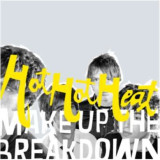
Hot Hot Heat’s classic debut album, ‘Make Up The
Breakdown’, filled with smart, energetic, dancepunk hits, returns to vinyl with this fully remastered
LP edition.
AllMusic called the album “an addictive, densely
packed pop gem that ranks among 2002’s best
albums,” and Pitchfork agreed, including it on their
list of The Best Albums Of 2002.
Following closely on the heels of their critically
acclaimed ‘Knock Knock Knock’ EP, ‘Make Up the
Breakdown’ is Hot Hot Heat's first full length,
recorded with Jack Endino at Vancouver, BC’s
Mushroom Studios (with engineering help from
Chris Walla of Death Cab for Cutie).
SPIN Magazine had this to say about ‘Knock
Knock Knock’: “Some retro new wavers hang
themselves on their own skinny ties. While their
peers lip-synch to Cure 45s, these Canucks take
subtler cues from early ‘80s synth disco. It’s not
new-wave worship, it’s the sound of punk teaching
itself to dance.”
‘Make Up The Breakdown’ delivered on the
promise hinted at on the EP. ‘Hot Hot Heat’ (along
with peers like Radio 4 and The Rapture) blended
angular post-punk twitch with danceable pop,
effectively (and finally) persuading white dopes on
punk to get on the good foot in the early 2000s.
Opaque yellow vinyl.
RIYL: A Hawk And A Hacksaw, Leonard Cohen, Daniel Kahn, Xylouris White, Arooj Aftab, Tindersticks, Nick Cave, Alasdair Roberts, Geoff Berner, The Klezmatics. Deluxe 180gLP with 350gsm Arktika jacket/inner + 36”x12” art/lyrics fold-out + DL. CD in gatefold jacket + art/lyrics fold-out. Recorded by Greg Norman (Jason Molina, Nina Nastasia, Electrical Audio). Everything Returns reunites the original Black Ox Orkestar lineup following a 15-year hiatus. Arising from the fertile Montréal post-punk agit-prop scene of the early 2000s, the band comprises Scott Gilmore, Jessica Moss and Thierry Amar of Thee Silver Mt. Zion (Amar also continues to compose and play bass for Godspeed You! Black Emperor) and Gabriel Levine of Sackville. Black Ox made two acclaimed albums of roiling acoustic avant-folk in the mid-2000s, exploring Eastern European and North African folkways through the lens of a gritty, resonant indie rock sensibility, juxtaposing interpretations of instrumentals from various Jewish, Romani and Arabic traditions with originals led by Gilmore’s politically-charged Yiddish vocals. These early albums have since become lodestars for many among a new generation of Yiddish, Klezmer and radical Jewish diasporic music practitioners and fans. First revealing its resurrection in February 2022 with a surprise flexi 7” single issued by left journal Jewish Currents as a gift to its thousands of subscribers, Black Ox has indeed fully and fruitfully reunited. Exquisitely recorded by Greg Norman (Jason Molina, Nina Nastasia, Electrical Audio), Everything Returns picks up right where the band left off: an incisively atmospheric, melancholic yet resolute album of uniquely modern Jewish folk music, with piano, violin, upright bass, clarinet and cymbalom making up the core instrumentation, and the vocal tunes sung primarily in Yiddish, alongside album centerpiece “Viderkol” and closer “Lamed-Vovnik” where English also features. This is not fusion music, but diaspora music: a cross-cultural call and response of musical lexicons, emerging from the history of Jewish persecution and displacement, the musicology of 19th century repertoire from Jewish shtetls, the improvisational traditions of nusakh in Jewish music and taqsim in Arabic music, and a wider polyglot dialogue of Jewish, Slavic, Arabic, and Central Asian musical traditions. Lyrically and stylistically, Everything Returns connects key current issues from refugees forced to leave their homes, to the return of fascism and exclusionary nationalism—with the legacy of modernist Yiddish poetry and song. The new Black Ox Orkestar album is a sublime, poetic, politically-informed statement of re-energized diasporic musical intent, where Gilmore’s voice and the band’s simmering arrangements conjure an ardent, doleful balladry that echoes the sound and sensibility of artists like Tindersticks, The National, Nick Cave and Leonard Cohen. Everything Returns is a haunting, richly textured, darkly sparkling song cycle at once from a vanished world and very much of our time and place. Tracklist: 1 Tish Nign 2 Perpetual Peace 3 Oysgeforn / Bessarabia Hora 4 Mizrakh Mi Ma’arav 5 Skotschne 6 Viderkol (Echo) 7 Epigenetik 8 Moldovan Zhok 9 Lamed-Vovnik
Brandneues Album des US-Future-Funk-Produzenten Yung Bae featuring Channel Tres, EarthGang, Jon Batiste, AWOLNATION, Cosmo's Midnight, Pink Sweat$, u.a. 'Groove Continental: Side A' ist ein Sommeralbum voller Wohlfühl-Disco, Funk, Hip-Hop & Soul. Yung Bae, ein Vertreter des Vaporwave-Subgenres Future Funk, kombiniert Electro-Funk-Sounds mit japanischen 1980er City-Pop-Samples zu einem verspielten Disco-Pop. Bierfarbenes 180g Vinyl.
Comprehensive box of 6 LPs / EPs and the band's first rare 7inch.
Aroma Di Amore is/was Belgian’s premier cult band. Since the early eighties ADA innovatively combined electronics with rock. With a mix of razor-sharp Flemish lyrics and unconventional song structures the group earned a cult status in Belgium and abroad. 40 years later they conclude their career with a few last concerts and a vinyl box set spanning the years 1983-1987.
At the notorious Rock Rally of 1982 Aroma Di Amore stands out with their wonderful handling of the Flemish language, a deep bass, typical cold new wave drums, biting guitar riffs with the occasional flavor of absolute madness. Frontman Jos Verlooy adopts the stage name Elvis Peeters. The explanation for this remarkable pseudonym choice: in 1977 – the period of the singer's musical awakening – one of the two famous rocking Elvises (not Costello, but Presley) succumbs to his pill addiction. So, dixit Verlooy, there is an Elvis vacant. A banal surname belongs next to that exotic first name. A combination that breathes rock 'n' roll, according to the singer.
His companion Gerry Vergult – who very much determines the sound with his metallic riffs, somewhat indebted to Jean-Marie Aerts – adopts the stage name Fred Angst. Completely in line with the depressing zeitgeist of the 1980s. Gerry eats and breathes music. Besides composing most of ADA’s songs, he records & self-produces a few fantastic dark en loner solo minimal wave tracks as Fred Angst. He is still musically active, more towards the electronic leftfield nowadays under the moniker Zool.
It is clear from an early age that companion Elvis Peeters possesses the gift of the word. As an adolescent he published the punkzine “Dus”. The punk spirit stimulates Peeters. He begins to transform the poetry that he has been entrusting to paper for some time into song lyrics. It is on a whim and without any stage experience that punk friends Peeters and Angst register for the Rock Rally as Aroma di Amore. On a bed of post-punk and cold wave (Joy Division, Wire and Sisters of Mercy are the main influences), they initially let out playful, minimalist and nonsensical slogans such as "Doe De Mafia" (1982) and "Gorilla Dans De Samba" (1983). Later on, the tone becomes more serious, although Peeters' choice of words continues to show a penchant for absurdism and sarcasm. No one in Dutch songwriting imitates this verbal elasticity, certainly at that time.
The numerous songs about war are downright horrifying. In the 1980s, an arms race is underway. When the Belgian government decides to install nuclear missiles in 1981, Aroma di Amore asks for one minute of silence in the hall during performances. In "Lauwe Oorlog" (1983), Peeters exposes the core of his unrest: “paraat voor de parade / de vrede wordt begraven / met militaire eer”. To this day, the frontman of AdA still proudly wears his at least 30 year old 'atomic energy, no thanks!' button.
In 1984 Aroma releases Koude Oorlog on the new and independent Brussels label Play It Again Sam. The traditional press and radio ignore the record, but in the alternative circuits the mini-album does not go unnoticed, and the group starts to build a solid fan base, resulting in more and more offers for gigs. There's also interest in the Netherlands, and due to the international contacts of PIAS, the record also ends up in France, Switzerland, Spain and Canada.
Encouraged by this modest success, the group returns to the studio for a 12" single. With new group member Frits De Cauter on sax, they record "Voor De Dood". To this day, Voor De Dood remains the most popular AdA song, as evidenced by the countless compilations on which the song has appeared.
AdA goes to the Netherlands to record their next album “De Sfeer Van Grote Dagen”. The people from Nasmak have built a new studio in Eindhoven and one of the members, Theo Van Eenbergen (later Henry Rollins), will be the producer. “De Sfeer Van Grote Dagen” is the group's most adventurous album, and the reviews are again unanimously favorable. However, sales are disappointing and PIAS proposes to recruit Chris Reed of Red Lorry Yellow Lorry and record a new single with him. "Zonder Omzien" is recorded at the prestigious Pyramid Studio. However, PIAS is waiting to release the album and in the meantime AdA is recording a number of extra tracks with producer Ludo Camberlin, including "Koekoek In De Stad". Towards the end of the year, Lo and Elvis travel to Africa for a few months and as a result the group comes to a standstill. In this period, Zonder Omzien is released.
At the beginning of 1986, Peeters and Meulen return, and Andrea Smits leaves the group. Luc Pillards is hired as a replacement, and when Ludo Camberlin presents himself as a new label boss and producer (Anything But Records), they start recording their first full album for the label. “Harde Feiten" kicks in immediately, and the group is back up to cruising speed. In the first week of release, the record even appears in the bestseller list of the record stores.
At the beginning of 1987 the recordings for the second album start, this time in a production by Peeters and Angst themselves. Shortly after the shooting, AdA goes to Switzerland for a short but successful tour, with Men 2nd and Cas & Organized Crime as support act. "Koudvuur" is published in the autumn and considered to be their strongest record so far by the group, the reactions are rather low. Both the reviews in the press and the sales are disappointing and put a damper on the joy. Nevertheless, the group is invited to perform in Valencia, Spain, where they have an unexpected success.
MUTANT SOUNDS BLOG
Aroma Di Amore have always been outsiders, even within the confinement of the alternative rock circuit. Their peculiar blend of raw guitars, electronics, Dutch lyrics and unconventional song structures was too hybrid for many. Those howewer who, without prejudice, would lend an ear to the band's music, discovered an energetic, authentic and uncompromising collective that stood above all trends. While so many Belgian "connaisseurs" had their doubts about the possibilities of international recognition for a band singing in Dutch, Aroma Di Amore toured France, Switzerland and Spain; their records figured in alternative charts from Poland to Canada.
From beginning to end the nucleus of Aroma Di Amore consisted of Elvis PEETERS, who in a inimitable, possessed way delivered his highly original lyrics, and Fred ANGST, guitarist mastering the heaviest riffs as well as refined tapestries of sound. Furthermore, the line-up varied throughout the band's carreer with:- H.K. (Guitarist from 1982 until 1983)- Andrea SMITS (Organ from 1982 until 1985)- Luc PILLARDS (Synthsizer in 1986)- Jan WANDELAAR (Guitar and synthesizer in 1986)- Pulcherie (Saxophone in 1983)- Wout DOCKX (Bass from 1987 until 1988)and especially- Lo MEULEN (Bass from 1983 until 1987)and the late Frits DE CAUTER (Saxophone from 1984 until 1986) contributing to the music.
Box Set includes: Gorilla Dans De Samba 7" (1983), Voor De Dood 12" (1984), Koude Oorlog LP (1984), De Sfeer Van Grote Dagen 12" (1985), Zonder Omzien 12" (1986), Harde Feiten LP (1986), Koudvuur LP (1987)
First-time reissue of Aroma Di Amore's debut album, originally released in 1984.
Aroma Di Amore is/was Belgian’s premier cult band. Since the early eighties ADA innovatively combined electronics with rock. With a mix of razor-sharp Flemish lyrics and unconventional song structures the group earned a cult status in Belgium and abroad. 40 years later they conclude their career with a few last concerts and a vinyl box set spanning the years 1983-1987.
At the notorious Rock Rally of 1982 Aroma Di Amore stands out with their wonderful handling of the Flemish language, a deep bass, typical cold new wave drums, biting guitar riffs with the occasional flavor of absolute madness. Frontman Jos Verlooy adopts the stage name Elvis Peeters. The explanation for this remarkable pseudonym choice: in 1977 – the period of the singer's musical awakening – one of the two famous rocking Elvises (not Costello, but Presley) succumbs to his pill addiction. So, dixit Verlooy, there is an Elvis vacant. A banal surname belongs next to that exotic first name. A combination that breathes rock 'n' roll, according to the singer.
His companion Gerry Vergult – who very much determines the sound with his metallic riffs, somewhat indebted to Jean-Marie Aerts – adopts the stage name Fred Angst. Completely in line with the depressing zeitgeist of the 1980s. Gerry eats and breathes music. Besides composing most of ADA’s songs, he records & self-produces a few fantastic dark en loner solo minimal wave tracks as Fred Angst. He is still musically active, more towards the electronic leftfield nowadays under the moniker Zool.
It is clear from an early age that companion Elvis Peeters possesses the gift of the word. As an adolescent he published the punkzine “Dus”. The punk spirit stimulates Peeters. He begins to transform the poetry that he has been entrusting to paper for some time into song lyrics. It is on a whim and without any stage experience that punk friends Peeters and Angst register for the Rock Rally as Aroma di Amore. On a bed of post-punk and cold wave (Joy Division, Wire and Sisters of Mercy are the main influences), they initially let out playful, minimalist and nonsensical slogans such as "Doe De Mafia" (1982) and "Gorilla Dans De Samba" (1983). Later on, the tone becomes more serious, although Peeters' choice of words continues to show a penchant for absurdism and sarcasm. No one in Dutch songwriting imitates this verbal elasticity, certainly at that time.
The numerous songs about war are downright horrifying. In the 1980s, an arms race is underway. When the Belgian government decides to install nuclear missiles in 1981, Aroma di Amore asks for one minute of silence in the hall during performances. In "Lauwe Oorlog" (1983), Peeters exposes the core of his unrest: “paraat voor de parade / de vrede wordt begraven / met militaire eer”. To this day, the frontman of AdA still proudly wears his at least 30 year old 'atomic energy, no thanks!' button.
In 1984 Aroma releases Koude Oorlog on the new and independent Brussels label Play It Again Sam. The traditional press and radio ignore the record, but in the alternative circuits the mini-album does not go unnoticed, and the group starts to build a solid fan base, resulting in more and more offers for gigs. There's also interest in the Netherlands, and due to the international contacts of PIAS, the record also ends up in France, Switzerland, Spain and Canada.
Encouraged by this modest success, the group returns to the studio for a 12" single. With new group member Frits De Cauter on sax, they record "Voor De Dood". To this day, Voor De Dood remains the most popular AdA song, as evidenced by the countless compilations on which the song has appeared.
AdA goes to the Netherlands to record their next album “De Sfeer Van Grote Dagen”. The people from Nasmak have built a new studio in Eindhoven and one of the members, Theo Van Eenbergen (later Henry Rollins), will be the producer. “De Sfeer Van Grote Dagen” is the group's most adventurous album, and the reviews are again unanimously favorable. However, sales are disappointing and PIAS proposes to recruit Chris Reed of Red Lorry Yellow Lorry and record a new single with him. "Zonder Omzien" is recorded at the prestigious Pyramid Studio. However, PIAS is waiting to release the album and in the meantime AdA is recording a number of extra tracks with producer Ludo Camberlin, including "Koekoek In De Stad". Towards the end of the year, Lo and Elvis travel to Africa for a few months and as a result the group comes to a standstill. In this period, Zonder Omzien is released.
At the beginning of 1986, Peeters and Meulen return, and Andrea Smits leaves the group. Luc Pillards is hired as a replacement, and when Ludo Camberlin presents himself as a new label boss and producer (Anything But Records), they start recording their first full album for the label. “Harde Feiten" kicks in immediately, and the group is back up to cruising speed. In the first week of release, the record even appears in the bestseller list of the record stores.
At the beginning of 1987 the recordings for the second album start, this time in a production by Peeters and Angst themselves. Shortly after the shooting, AdA goes to Switzerland for a short but successful tour, with Men 2nd and Cas & Organized Crime as support act. "Koudvuur" is published in the autumn and considered to be their strongest record so far by the group, the reactions are rather low. Both the reviews in the press and the sales are disappointing and put a damper on the joy. Nevertheless, the group is invited to perform in Valencia, Spain, where they have an unexpected success.
MUTANT SOUNDS BLOG
Aroma Di Amore have always been outsiders, even within the confinement of the alternative rock circuit. Their peculiar blend of raw guitars, electronics, Dutch lyrics and unconventional song structures was too hybrid for many. Those howewer who, without prejudice, would lend an ear to the band's music, discovered an energetic, authentic and uncompromising collective that stood above all trends. While so many Belgian "connaisseurs" had their doubts about the possibilities of international recognition for a band singing in Dutch, Aroma Di Amore toured France, Switzerland and Spain; their records figured in alternative charts from Poland to Canada.
From beginning to end the nucleus of Aroma Di Amore consisted of Elvis PEETERS, who in a inimitable, possessed way delivered his highly original lyrics, and Fred ANGST, guitarist mastering the heaviest riffs as well as refined tapestries of sound. Furthermore, the line-up varied throughout the band's carreer with:- H.K. (Guitarist from 1982 until 1983)- Andrea SMITS (Organ from 1982 until 1985)- Luc PILLARDS (Synthsizer in 1986)- Jan WANDELAAR (Guitar and synthesizer in 1986)- Pulcherie (Saxophone in 1983)- Wout DOCKX (Bass from 1987 until 1988)and especially- Lo MEULEN (Bass from 1983 until 1987)and the late Frits DE CAUTER (Saxophone from 1984 until 1986)contributing to the music.
First-time reissue of Aroma Di Amore's 2nd album, originally released in 1986.
Aroma Di Amore is/was Belgian’s premier cult band. Since the early eighties ADA innovatively combined electronics with rock. With a mix of razor-sharp Flemish lyrics and unconventional song structures the group earned a cult status in Belgium and abroad. 40 years later they conclude their career with a few last concerts and a vinyl box set spanning the years 1983-1987.
At the notorious Rock Rally of 1982 Aroma Di Amore stands out with their wonderful handling of the Flemish language, a deep bass, typical cold new wave drums, biting guitar riffs with the occasional flavor of absolute madness. Frontman Jos Verlooy adopts the stage name Elvis Peeters. The explanation for this remarkable pseudonym choice: in 1977 – the period of the singer's musical awakening – one of the two famous rocking Elvises (not Costello, but Presley) succumbs to his pill addiction. So, dixit Verlooy, there is an Elvis vacant. A banal surname belongs next to that exotic first name. A combination that breathes rock 'n' roll, according to the singer.
His companion Gerry Vergult – who very much determines the sound with his metallic riffs, somewhat indebted to Jean-Marie Aerts – adopts the stage name Fred Angst. Completely in line with the depressing zeitgeist of the 1980s. Gerry eats and breathes music. Besides composing most of ADA’s songs, he records & self-produces a few fantastic dark en loner solo minimal wave tracks as Fred Angst. He is still musically active, more towards the electronic leftfield nowadays under the moniker Zool.
It is clear from an early age that companion Elvis Peeters possesses the gift of the word. As an adolescent he published the punkzine “Dus”. The punk spirit stimulates Peeters. He begins to transform the poetry that he has been entrusting to paper for some time into song lyrics. It is on a whim and without any stage experience that punk friends Peeters and Angst register for the Rock Rally as Aroma di Amore. On a bed of post-punk and cold wave (Joy Division, Wire and Sisters of Mercy are the main influences), they initially let out playful, minimalist and nonsensical slogans such as "Doe De Mafia" (1982) and "Gorilla Dans De Samba" (1983). Later on, the tone becomes more serious, although Peeters' choice of words continues to show a penchant for absurdism and sarcasm. No one in Dutch songwriting imitates this verbal elasticity, certainly at that time.
The numerous songs about war are downright horrifying. In the 1980s, an arms race is underway. When the Belgian government decides to install nuclear missiles in 1981, Aroma di Amore asks for one minute of silence in the hall during performances. In "Lauwe Oorlog" (1983), Peeters exposes the core of his unrest: “paraat voor de parade / de vrede wordt begraven / met militaire eer”. To this day, the frontman of AdA still proudly wears his at least 30 year old 'atomic energy, no thanks!' button.
In 1984 Aroma releases Koude Oorlog on the new and independent Brussels label Play It Again Sam. The traditional press and radio ignore the record, but in the alternative circuits the mini-album does not go unnoticed, and the group starts to build a solid fan base, resulting in more and more offers for gigs. There's also interest in the Netherlands, and due to the international contacts of PIAS, the record also ends up in France, Switzerland, Spain and Canada.
Encouraged by this modest success, the group returns to the studio for a 12" single. With new group member Frits De Cauter on sax, they record "Voor De Dood". To this day, Voor De Dood remains the most popular AdA song, as evidenced by the countless compilations on which the song has appeared.
AdA goes to the Netherlands to record their next album “De Sfeer Van Grote Dagen”. The people from Nasmak have built a new studio in Eindhoven and one of the members, Theo Van Eenbergen (later Henry Rollins), will be the producer. “De Sfeer Van Grote Dagen” is the group's most adventurous album, and the reviews are again unanimously favorable. However, sales are disappointing and PIAS proposes to recruit Chris Reed of Red Lorry Yellow Lorry and record a new single with him. "Zonder Omzien" is recorded at the prestigious Pyramid Studio. However, PIAS is waiting to release the album and in the meantime AdA is recording a number of extra tracks with producer Ludo Camberlin, including "Koekoek In De Stad". Towards the end of the year, Lo and Elvis travel to Africa for a few months and as a result the group comes to a standstill. In this period, Zonder Omzien is released.
At the beginning of 1986, Peeters and Meulen return, and Andrea Smits leaves the group. Luc Pillards is hired as a replacement, and when Ludo Camberlin presents himself as a new label boss and producer (Anything But Records), they start recording their first full album for the label. “Harde Feiten" kicks in immediately, and the group is back up to cruising speed. In the first week of release, the record even appears in the bestseller list of the record stores.
At the beginning of 1987 the recordings for the second album start, this time in a production by Peeters and Angst themselves. Shortly after the shooting, AdA goes to Switzerland for a short but successful tour, with Men 2nd and Cas & Organized Crime as support act. "Koudvuur" is published in the autumn and considered to be their strongest record so far by the group, the reactions are rather low. Both the reviews in the press and the sales are disappointing and put a damper on the joy. Nevertheless, the group is invited to perform in Valencia, Spain, where they have an unexpected success.
MUTANT SOUNDS BLOG
Aroma Di Amore have always been outsiders, even within the confinement of the alternative rock circuit. Their peculiar blend of raw guitars, electronics, Dutch lyrics and unconventional song structures was too hybrid for many. Those howewer who, without prejudice, would lend an ear to the band's music, discovered an energetic, authentic and uncompromising collective that stood above all trends. While so many Belgian "connaisseurs" had their doubts about the possibilities of international recognition for a band singing in Dutch, Aroma Di Amore toured France, Switzerland and Spain; their records figured in alternative charts from Poland to Canada.
From beginning to end the nucleus of Aroma Di Amore consisted of Elvis PEETERS, who in a inimitable, possessed way delivered his highly original lyrics, and Fred ANGST, guitarist mastering the heaviest riffs as well as refined tapestries of sound. Furthermore, the line-up varied throughout the band's carreer with:- H.K. (Guitarist from 1982 until 1983)- Andrea SMITS (Organ from 1982 until 1985)- Luc PILLARDS (Synthsizer in 1986)- Jan WANDELAAR (Guitar and synthesizer in 1986)- Pulcherie (Saxophone in 1983)- Wout DOCKX (Bass from 1987 until 1988)and especially- Lo MEULEN (Bass from 1983 until 1987)and the late Frits DE CAUTER (Saxophone from 1984 until 1986)contributing to the music.
First-time reissue of Aroma Di Amore's 3rd album, originally released in 1987.
Aroma Di Amore is/was Belgian’s premier cult band. Since the early eighties ADA innovatively combined electronics with rock. With a mix of razor-sharp Flemish lyrics and unconventional song structures the group earned a cult status in Belgium and abroad. 40 years later they conclude their career with a few last concerts and a vinyl box set spanning the years 1983-1987.
At the notorious Rock Rally of 1982 Aroma Di Amore stands out with their wonderful handling of the Flemish language, a deep bass, typical cold new wave drums, biting guitar riffs with the occasional flavor of absolute madness. Frontman Jos Verlooy adopts the stage name Elvis Peeters. The explanation for this remarkable pseudonym choice: in 1977 – the period of the singer's musical awakening – one of the two famous rocking Elvises (not Costello, but Presley) succumbs to his pill addiction. So, dixit Verlooy, there is an Elvis vacant. A banal surname belongs next to that exotic first name. A combination that breathes rock 'n' roll, according to the singer.
His companion Gerry Vergult – who very much determines the sound with his metallic riffs, somewhat indebted to Jean-Marie Aerts – adopts the stage name Fred Angst. Completely in line with the depressing zeitgeist of the 1980s. Gerry eats and breathes music. Besides composing most of ADA’s songs, he records & self-produces a few fantastic dark en loner solo minimal wave tracks as Fred Angst. He is still musically active, more towards the electronic leftfield nowadays under the moniker Zool.
It is clear from an early age that companion Elvis Peeters possesses the gift of the word. As an adolescent he published the punkzine “Dus”. The punk spirit stimulates Peeters. He begins to transform the poetry that he has been entrusting to paper for some time into song lyrics. It is on a whim and without any stage experience that punk friends Peeters and Angst register for the Rock Rally as Aroma di Amore. On a bed of post-punk and cold wave (Joy Division, Wire and Sisters of Mercy are the main influences), they initially let out playful, minimalist and nonsensical slogans such as "Doe De Mafia" (1982) and "Gorilla Dans De Samba" (1983). Later on, the tone becomes more serious, although Peeters' choice of words continues to show a penchant for absurdism and sarcasm. No one in Dutch songwriting imitates this verbal elasticity, certainly at that time.
The numerous songs about war are downright horrifying. In the 1980s, an arms race is underway. When the Belgian government decides to install nuclear missiles in 1981, Aroma di Amore asks for one minute of silence in the hall during performances. In "Lauwe Oorlog" (1983), Peeters exposes the core of his unrest: “paraat voor de parade / de vrede wordt begraven / met militaire eer”. To this day, the frontman of AdA still proudly wears his at least 30 year old 'atomic energy, no thanks!' button.
In 1984 Aroma releases Koude Oorlog on the new and independent Brussels label Play It Again Sam. The traditional press and radio ignore the record, but in the alternative circuits the mini-album does not go unnoticed, and the group starts to build a solid fan base, resulting in more and more offers for gigs. There's also interest in the Netherlands, and due to the international contacts of PIAS, the record also ends up in France, Switzerland, Spain and Canada.
Encouraged by this modest success, the group returns to the studio for a 12" single. With new group member Frits De Cauter on sax, they record "Voor De Dood". To this day, Voor De Dood remains the most popular AdA song, as evidenced by the countless compilations on which the song has appeared.
AdA goes to the Netherlands to record their next album “De Sfeer Van Grote Dagen”. The people from Nasmak have built a new studio in Eindhoven and one of the members, Theo Van Eenbergen (later Henry Rollins), will be the producer. “De Sfeer Van Grote Dagen” is the group's most adventurous album, and the reviews are again unanimously favorable. However, sales are disappointing and PIAS proposes to recruit Chris Reed of Red Lorry Yellow Lorry and record a new single with him. "Zonder Omzien" is recorded at the prestigious Pyramid Studio. However, PIAS is waiting to release the album and in the meantime AdA is recording a number of extra tracks with producer Ludo Camberlin, including "Koekoek In De Stad". Towards the end of the year, Lo and Elvis travel to Africa for a few months and as a result the group comes to a standstill. In this period, Zonder Omzien is released.
At the beginning of 1986, Peeters and Meulen return, and Andrea Smits leaves the group. Luc Pillards is hired as a replacement, and when Ludo Camberlin presents himself as a new label boss and producer (Anything But Records), they start recording their first full album for the label. “Harde Feiten" kicks in immediately, and the group is back up to cruising speed. In the first week of release, the record even appears in the bestseller list of the record stores.
At the beginning of 1987 the recordings for the second album start, this time in a production by Peeters and Angst themselves. Shortly after the shooting, AdA goes to Switzerland for a short but successful tour, with Men 2nd and Cas & Organized Crime as support act. "Koudvuur" is published in the autumn and considered to be their strongest record so far by the group, the reactions are rather low. Both the reviews in the press and the sales are disappointing and put a damper on the joy. Nevertheless, the group is invited to perform in Valencia, Spain, where they have an unexpected success.
MUTANT SOUNDS BLOG
Aroma Di Amore have always been outsiders, even within the confinement of the alternative rock circuit. Their peculiar blend of raw guitars, electronics, Dutch lyrics and unconventional song structures was too hybrid for many. Those howewer who, without prejudice, would lend an ear to the band's music, discovered an energetic, authentic and uncompromising collective that stood above all trends. While so many Belgian "connaisseurs" had their doubts about the possibilities of international recognition for a band singing in Dutch, Aroma Di Amore toured France, Switzerland and Spain; their records figured in alternative charts from Poland to Canada.
From beginning to end the nucleus of Aroma Di Amore consisted of Elvis PEETERS, who in a inimitable, possessed way delivered his highly original lyrics, and Fred ANGST, guitarist mastering the heaviest riffs as well as refined tapestries of sound. Furthermore, the line-up varied throughout the band's carreer with:- H.K. (Guitarist from 1982 until 1983)- Andrea SMITS (Organ from 1982 until 1985)- Luc PILLARDS (Synthsizer in 1986)- Jan WANDELAAR (Guitar and synthesizer in 1986)- Pulcherie (Saxophone in 1983)- Wout DOCKX (Bass from 1987 until 1988)and especially- Lo MEULEN (Bass from 1983 until 1987)and the late Frits DE CAUTER (Saxophone from 1984 until 1986)contributing to the music.
First-time reissue of Aroma Di Amore's 3rd EP, originally released in 1985.
Aroma Di Amore is/was Belgian’s premier cult band. Since the early eighties ADA innovatively combined electronics with rock. With a mix of razor-sharp Flemish lyrics and unconventional song structures the group earned a cult status in Belgium and abroad. 40 years later they conclude their career with a few last concerts and a vinyl box set spanning the years 1983-1987.
At the notorious Rock Rally of 1982 Aroma Di Amore stands out with their wonderful handling of the Flemish language, a deep bass, typical cold new wave drums, biting guitar riffs with the occasional flavor of absolute madness. Frontman Jos Verlooy adopts the stage name Elvis Peeters. The explanation for this remarkable pseudonym choice: in 1977 – the period of the singer's musical awakening – one of the two famous rocking Elvises (not Costello, but Presley) succumbs to his pill addiction. So, dixit Verlooy, there is an Elvis vacant. A banal surname belongs next to that exotic first name. A combination that breathes rock 'n' roll, according to the singer.
His companion Gerry Vergult – who very much determines the sound with his metallic riffs, somewhat indebted to Jean-Marie Aerts – adopts the stage name Fred Angst. Completely in line with the depressing zeitgeist of the 1980s. Gerry eats and breathes music. Besides composing most of ADA’s songs, he records & self-produces a few fantastic dark en loner solo minimal wave tracks as Fred Angst. He is still musically active, more towards the electronic leftfield nowadays under the moniker Zool.
It is clear from an early age that companion Elvis Peeters possesses the gift of the word. As an adolescent he published the punkzine “Dus”. The punk spirit stimulates Peeters. He begins to transform the poetry that he has been entrusting to paper for some time into song lyrics. It is on a whim and without any stage experience that punk friends Peeters and Angst register for the Rock Rally as Aroma di Amore. On a bed of post-punk and cold wave (Joy Division, Wire and Sisters of Mercy are the main influences), they initially let out playful, minimalist and nonsensical slogans such as "Doe De Mafia" (1982) and "Gorilla Dans De Samba" (1983). Later on, the tone becomes more serious, although Peeters' choice of words continues to show a penchant for absurdism and sarcasm. No one in Dutch songwriting imitates this verbal elasticity, certainly at that time.
The numerous songs about war are downright horrifying. In the 1980s, an arms race is underway. When the Belgian government decides to install nuclear missiles in 1981, Aroma di Amore asks for one minute of silence in the hall during performances. In "Lauwe Oorlog" (1983), Peeters exposes the core of his unrest: “paraat voor de parade / de vrede wordt begraven / met militaire eer”. To this day, the frontman of AdA still proudly wears his at least 30 year old 'atomic energy, no thanks!' button.
In 1984 Aroma releases Koude Oorlog on the new and independent Brussels label Play It Again Sam. The traditional press and radio ignore the record, but in the alternative circuits the mini-album does not go unnoticed, and the group starts to build a solid fan base, resulting in more and more offers for gigs. There's also interest in the Netherlands, and due to the international contacts of PIAS, the record also ends up in France, Switzerland, Spain and Canada.
Encouraged by this modest success, the group returns to the studio for a 12" single. With new group member Frits De Cauter on sax, they record "Voor De Dood". To this day, Voor De Dood remains the most popular AdA song, as evidenced by the countless compilations on which the song has appeared.
AdA goes to the Netherlands to record their next album “De Sfeer Van Grote Dagen”. The people from Nasmak have built a new studio in Eindhoven and one of the members, Theo Van Eenbergen (later Henry Rollins), will be the producer. “De Sfeer Van Grote Dagen” is the group's most adventurous album, and the reviews are again unanimously favorable. However, sales are disappointing and PIAS proposes to recruit Chris Reed of Red Lorry Yellow Lorry and record a new single with him. "Zonder Omzien" is recorded at the prestigious Pyramid Studio. However, PIAS is waiting to release the album and in the meantime AdA is recording a number of extra tracks with producer Ludo Camberlin, including "Koekoek In De Stad". Towards the end of the year, Lo and Elvis travel to Africa for a few months and as a result the group comes to a standstill. In this period, Zonder Omzien is released.
At the beginning of 1986, Peeters and Meulen return, and Andrea Smits leaves the group. Luc Pillards is hired as a replacement, and when Ludo Camberlin presents himself as a new label boss and producer (Anything But Records), they start recording their first full album for the label. “Harde Feiten" kicks in immediately, and the group is back up to cruising speed. In the first week of release, the record even appears in the bestseller list of the record stores.
At the beginning of 1987 the recordings for the second album start, this time in a production by Peeters and Angst themselves. Shortly after the shooting, AdA goes to Switzerland for a short but successful tour, with Men 2nd and Cas & Organized Crime as support act. "Koudvuur" is published in the autumn and considered to be their strongest record so far by the group, the reactions are rather low. Both the reviews in the press and the sales are disappointing and put a damper on the joy. Nevertheless, the group is invited to perform in Valencia, Spain, where they have an unexpected success.
MUTANT SOUNDS BLOG
Aroma Di Amore have always been outsiders, even within the confinement of the alternative rock circuit. Their peculiar blend of raw guitars, electronics, Dutch lyrics and unconventional song structures was too hybrid for many. Those howewer who, without prejudice, would lend an ear to the band's music, discovered an energetic, authentic and uncompromising collective that stood above all trends. While so many Belgian "connaisseurs" had their doubts about the possibilities of international recognition for a band singing in Dutch, Aroma Di Amore toured France, Switzerland and Spain; their records figured in alternative charts from Poland to Canada.
From beginning to end the nucleus of Aroma Di Amore consisted of Elvis PEETERS, who in a inimitable, possessed way delivered his highly original lyrics, and Fred ANGST, guitarist mastering the heaviest riffs as well as refined tapestries of sound. Furthermore, the line-up varied throughout the band's carreer with:- H.K. (Guitarist from 1982 until 1983)- Andrea SMITS (Organ from 1982 until 1985)- Luc PILLARDS (Synthsizer in 1986)- Jan WANDELAAR (Guitar and synthesizer in 1986)- Pulcherie (Saxophone in 1983)- Wout DOCKX (Bass from 1987 until 1988)and especially- Lo MEULEN (Bass from 1983 until 1987)and the late Frits DE CAUTER (Saxophone from 1984 until 1986)contributing to the music
First-time reissue of Aroma Di Amore's 4th EP, originally released in 1986.
Aroma Di Amore is/was Belgian’s premier cult band. Since the early eighties ADA innovatively combined electronics with rock. With a mix of razor-sharp Flemish lyrics and unconventional song structures the group earned a cult status in Belgium and abroad. 40 years later they conclude their career with a few last concerts and a vinyl box set spanning the years 1983-1987.
At the notorious Rock Rally of 1982 Aroma Di Amore stands out with their wonderful handling of the Flemish language, a deep bass, typical cold new wave drums, biting guitar riffs with the occasional flavor of absolute madness. Frontman Jos Verlooy adopts the stage name Elvis Peeters. The explanation for this remarkable pseudonym choice: in 1977 – the period of the singer's musical awakening – one of the two famous rocking Elvises (not Costello, but Presley) succumbs to his pill addiction. So, dixit Verlooy, there is an Elvis vacant. A banal surname belongs next to that exotic first name. A combination that breathes rock 'n' roll, according to the singer.
His companion Gerry Vergult – who very much determines the sound with his metallic riffs, somewhat indebted to Jean-Marie Aerts – adopts the stage name Fred Angst. Completely in line with the depressing zeitgeist of the 1980s. Gerry eats and breathes music. Besides composing most of ADA’s songs, he records & self-produces a few fantastic dark en loner solo minimal wave tracks as Fred Angst. He is still musically active, more towards the electronic leftfield nowadays under the moniker Zool.
It is clear from an early age that companion Elvis Peeters possesses the gift of the word. As an adolescent he published the punkzine “Dus”. The punk spirit stimulates Peeters. He begins to transform the poetry that he has been entrusting to paper for some time into song lyrics. It is on a whim and without any stage experience that punk friends Peeters and Angst register for the Rock Rally as Aroma di Amore. On a bed of post-punk and cold wave (Joy Division, Wire and Sisters of Mercy are the main influences), they initially let out playful, minimalist and nonsensical slogans such as "Doe De Mafia" (1982) and "Gorilla Dans De Samba" (1983). Later on, the tone becomes more serious, although Peeters' choice of words continues to show a penchant for absurdism and sarcasm. No one in Dutch songwriting imitates this verbal elasticity, certainly at that time.
The numerous songs about war are downright horrifying. In the 1980s, an arms race is underway. When the Belgian government decides to install nuclear missiles in 1981, Aroma di Amore asks for one minute of silence in the hall during performances. In "Lauwe Oorlog" (1983), Peeters exposes the core of his unrest: “paraat voor de parade / de vrede wordt begraven / met militaire eer”. To this day, the frontman of AdA still proudly wears his at least 30 year old 'atomic energy, no thanks!' button.
In 1984 Aroma releases Koude Oorlog on the new and independent Brussels label Play It Again Sam. The traditional press and radio ignore the record, but in the alternative circuits the mini-album does not go unnoticed, and the group starts to build a solid fan base, resulting in more and more offers for gigs. There's also interest in the Netherlands, and due to the international contacts of PIAS, the record also ends up in France, Switzerland, Spain and Canada.
Encouraged by this modest success, the group returns to the studio for a 12" single. With new group member Frits De Cauter on sax, they record "Voor De Dood". To this day, Voor De Dood remains the most popular AdA song, as evidenced by the countless compilations on which the song has appeared.
AdA goes to the Netherlands to record their next album “De Sfeer Van Grote Dagen”. The people from Nasmak have built a new studio in Eindhoven and one of the members, Theo Van Eenbergen (later Henry Rollins), will be the producer. “De Sfeer Van Grote Dagen” is the group's most adventurous album, and the reviews are again unanimously favorable. However, sales are disappointing and PIAS proposes to recruit Chris Reed of Red Lorry Yellow Lorry and record a new single with him. "Zonder Omzien" is recorded at the prestigious Pyramid Studio. However, PIAS is waiting to release the album and in the meantime AdA is recording a number of extra tracks with producer Ludo Camberlin, including "Koekoek In De Stad". Towards the end of the year, Lo and Elvis travel to Africa for a few months and as a result the group comes to a standstill. In this period, Zonder Omzien is released.
At the beginning of 1986, Peeters and Meulen return, and Andrea Smits leaves the group. Luc Pillards is hired as a replacement, and when Ludo Camberlin presents himself as a new label boss and producer (Anything But Records), they start recording their first full album for the label. “Harde Feiten" kicks in immediately, and the group is back up to cruising speed. In the first week of release, the record even appears in the bestseller list of the record stores.
At the beginning of 1987 the recordings for the second album start, this time in a production by Peeters and Angst themselves. Shortly after the shooting, AdA goes to Switzerland for a short but successful tour, with Men 2nd and Cas & Organized Crime as support act. "Koudvuur" is published in the autumn and considered to be their strongest record so far by the group, the reactions are rather low. Both the reviews in the press and the sales are disappointing and put a damper on the joy. Nevertheless, the group is invited to perform in Valencia, Spain, where they have an unexpected success.
MUTANT SOUNDS BLOG
Aroma Di Amore have always been outsiders, even within the confinement of the alternative rock circuit. Their peculiar blend of raw guitars, electronics, Dutch lyrics and unconventional song structures was too hybrid for many. Those howewer who, without prejudice, would lend an ear to the band's music, discovered an energetic, authentic and uncompromising collective that stood above all trends. While so many Belgian "connaisseurs" had their doubts about the possibilities of international recognition for a band singing in Dutch, Aroma Di Amore toured France, Switzerland and Spain; their records figured in alternative charts from Poland to Canada.
From beginning to end the nucleus of Aroma Di Amore consisted of Elvis PEETERS, who in a inimitable, possessed way delivered his highly original lyrics, and Fred ANGST, guitarist mastering the heaviest riffs as well as refined tapestries of sound. Furthermore, the line-up varied throughout the band's carreer with:- H.K. (Guitarist from 1982 until 1983)- Andrea SMITS (Organ from 1982 until 1985)- Luc PILLARDS (Synthsizer in 1986)- Jan WANDELAAR (Guitar and synthesizer in 1986)- Pulcherie (Saxophone in 1983)- Wout DOCKX (Bass from 1987 until 1988)and especially- Lo MEULEN (Bass from 1983 until 1987)and the late Frits DE CAUTER (Saxophone from 1984 until 1986)contributing to the music.
LIMITED EDITION PICTURE DISC EDITION OF PAUL DRAPER'S NEW
ALBUM CULT LEADER TACTICS .Meaty art-rock, austere orchestral
interludes & driving future pop - Classic Rock 8/10 Cult Leader Tactics is
sleek & smart, full of melody, humour and flair - Record Collector 4*
Former Mansun frontman, Paul Draper, returned in early 2022 with a
collection of his finest songwriting since the bands' imperial phase
Cult Leader Tactics', is a self-help manual on how to become a complete cult in
the music industry & is his first solo album since 2017's much- lauded Spooky
Action'. Cult Leader Tactics' offers a satirical analysis of the self- help manual
genre. A guide on how you can get to the top of your chosen profession, or ahead
in life & in affairs of the heart, by acting in a Machiavellian manner, employing
dirty tricks or Cult Leader Tactics' to achieve your life goals. After experiencing
these types of human behaviours & themes, the album arrives at the conclusion
that the only true answer in life is love. Paul plays most of the instruments on the
album, including lead vocals, guitar & various Moogs & synthesisers. An album
produced with long-time collaborator & acclaimed producer Paul P-Dub' Walton
(Massive Attack, The Cure, Bjork) at Loft Studios, it also includes guest
appearances from Porcupine Tree's Steven Wilson & Gam of the band Sweat' as
well as featuring a 288-person C.L.T. Lockdown Choir. Cult Leader Tactics' offers
a selection of Paul's most focused & ambitious work so far, a brilliantly dark
commentary on an industry he is all too aware of. Kscope are proud to present a
limited Picture Disc edition of Cult Leader Tactics'.
- A1: U Roy - Get Ready
- A2: Linval Thompson - Bubble Up
- A3: Triston Palma - Bad Minded
- A4: Robert Ffrench - Rebel Girl
- A5: 3T 1F - Coche
- A6: Little Kirk - Bad Boy Fi Dem (Disco Mix)
- A7: Al Campbell - Let Them Prosper
- B1: Early B - Funny Tricks
- B2: Jolly Stewart - Cool Youth
- B3: Lover Boy - Gwaan Go Dance
- B4: Phillip Frazer - The Siren
- B5: Sassafras - Dance Inna Braeton
- B6: Sammy Dread - Each One Teach One
2022 Repress
During the 80's dancehall era a number of record producers claimed to be the real authentic sound of downtown Kingston but Ossie Thomas' Black Solidarity label, operating out of Delamare Avenue in the heart of the ghetto, was the real deal ....
This was the start of the 70's when the political rivalry got heated between JLP and the PNP, - also the shots start fire ....
I said to myself if you're going die, you're going die ... from that me not scared of Kingston' Ossie Thompson.
This album provides an insightful glimpse into life in these unforgiving Kingston neighbourhoods describing not only the poverty and desperation, but also how at times, styles, fashions and the cathartic joys of music, and the dancehall could transform this harsh environment into one of joyous celebration ...
Bill Summers is a latin jazz percussionist from New Orleans who ventured in to jazz funk and soul in the 70s and early 80s. He also played with Herbie Hancock’s Headhunters and worked on film scores such as “The Color Purple”. He recorded four albums for the Prestige label from which these two rare groove vocal tracks are taken. The two-stepper “Come Into My Life” was written by Alphonse Mouzon and produced by Skip Scarborough (Earth Wind & Fire). Originals on both songs sell for £50 each, if you can find them, two for price of one here. “Don’t Fade Away” features vocals by Leo Miller and was produced by Ndugu (Chocolate Jam Company/The Crusaders). From The period, Bill Summers had a disco hit with “Straight To The Bank”.
- 1: Runner: I. Sixteenths
- 2: Runner: Ii. Eighths
- 3: Runner: Iii. Quarters
- 4: Runner: Iv. Eighths
- 5: Runner: V. Sixteenths
- 6: Music For Ensemble And Orchestra: I. Sixteenths
- 7: Music For Ensemble And Orchestra: Ii. Eighths
- 8: Music For Ensemble And Orchestra: Iii. Quarters
- 9: Music For Ensemble And Orchestra: Iv. Eighths
- 10: Music For Ensemble And Orchestra: V. Sixteenths
‘Runner is a calmly luminous orchestral piece with the pulsating, propulsive
rhythms that animate much of Mr. Reich’s music.’ – New York Times
‘Reich interweaves the two groups to create a dense textural tapestry that sounds like his most native orchestral thinking to date. A beautiful and dramatically charged masterpiece.' – San Francisco Chronicle
Nonesuch Records releases the first recordings of Steve Reich’s Runner (2016) and Music for Ensemble and Orchestra (2018), performed by the Los Angeles Philharmonic and conducted by Susanna Mälkki.
Reich says Runner is written “for a large ensemble of winds, percussion, pianos, and strings. While the tempo remains more or less constant, there are five movements, played without pause, that are based on different note durations. First, even sixteenths, then irregularly accented eighths, then a very slowed-down version of the standard bell pattern from Ghana in quarters, fourth a return to the irregularly accented eighths, and finally a return to the sixteenths but now played as pulses by the winds for as long as a breath will comfortably sustain them. The title was suggested by the rapid opening and my awareness that, like a runner, I would have to pace the piece to reach a successful conclusion.”
“Music for Ensemble and Orchestra is an extension of the Baroque concerto grosso where there is more than one soloist,” the composer continues. “Here there are twenty soloists – all regular members of the orchestra, including the first stand strings and winds, as well as two vibraphones and two pianos. The piece is in five movements, though the tempo never changes, only the note value of the constant pulse in the pianos. Thus, an arch form: sixteenths, eighths, quarters, eighths, sixteenths. Music for Ensemble and Orchestra is modeled on my Runner, which has the same five movement form.”
Nonesuch has recorded every new piece of music by Steve Reich since 1985, beginning with The Desert Music and continuing through 2018’s Pulse/Quartet, resulting in 22 albums and the two box sets Phases in 2006 and Works: 1965-1995 in 1997. Most recently, the label released his Reich/Richter, performed by Ensemble intercontemporain and conducted by George Jackson, in June 2022. The Times said, ‘What a delight to be able to focus on the music, delivered here with a clever mix of pinprick precision and reverberant haze by 14 members of Ensemble Intercontemporain. The more intently you listen, the more subtleties emerge among the shifting, criss-crossing textures and phrases, sometimes coloured with gentle melancholy but decisively upbeat by the end. Reich/Richter is an ear-tickling tonic and a happy companion to Reich’s newly published book, Conversations.’ Nonesuch will put out a collection of Reich’s complete works in 2023.
Reich released a book earlier this year, Conversations, that includes dialogues with past collaborators, fellow composers, musicians, and visual artists who have been influenced by his work, including: David Lang, Brian Eno, Richard Serra, Michael Gordon, Michael Tilson Thomas, Russell Hartenberger, Robert Hurwitz, Stephen Sondheim, Jonny Greenwood, David Harrington, Elizabeth Lim-Dutton, David Robertson, Micaela Haslam, Anne Teresa de Keersmaeker, Julia Wolfe, Nico Muhly, Beryl Korot, Colin Currie, and Brad Lubman. The Wall Street Journal called the book ‘a testament to the influence of an idea – one that triggered a cultural turning point,’ and the New York Times said, ‘The joy of the book is to hear artists from a variety of disciplines and backgrounds rhapsodizing about their relationship to Reich’s music and how it influenced their own creative processes.’
Steve Reich has been called ‘America’s greatest living composer’ (Village Voice), ‘the most original musical thinker of our time’ (New Yorker), and ‘among the great composers of the century’ (New York Times). His music has influenced composers and mainstream musicians all over the world. Music for 18 Musicians and Different Trains have earned him two Grammy Awards, and in 2009, his Double Sextet won the Pulitzer Prize. Reich’s documentary video opera works – The Cave and Three Tales, done in collaboration with video artist Beryl Korot – have been performed on four continents. His recent work Quartet, for percussionist Colin Currie, sold out two consecutive concerts at Queen Elizabeth Hall in London shortly after tens of thousands at the Glastonbury Festival heard Jonny Greenwood (of Radiohead) perform Electric Counterpoint followed by the London Sinfonietta performing his Music for 18 Musicians.
In 2012, Reich was awarded the Gold Medal in Music by the American Academy of Arts and Letters. He has additionally received the Praemium Imperiale in Tokyo, the Polar Music Prize in Stockholm, the BBVA Award in Madrid, and the Golden Lion at the Venice Biennale. He has been named Commandeur de l’Ordre des Arts et des Lettres and has been awarded honorary doctorates by the Royal College of Music in London, The Juilliard School, and the Liszt Academy in Budapest, among others. ‘There’s just a handful of living composers who can legitimately claim to have altered the direction of musical history and Steve Reich is one of them,’ states the Guardian.
Redefining what an orchestra can be, the Los Angeles Philharmonic (LA Phil) is as vibrant as Los Angeles, one of the world's most open and dynamic cities. Led by Music & Artistic Director Gustavo Dudamel, this internationally renowned orchestra harnesses the transformative power of live music to build community, foster intellectual and artistic growth, and nurture the creative spirit. This is the third recent recording by the orchestra on the label; the others were the Louis Andriessen pieces The only one and Theatre of the World. Additionally, the Los Angeles Philharmonic’s recordings of The Gospel According to the Other Mary and Must the Devil Have All the Good Tunes?, with Yuja Wang, released on Deutsche Grammophon, are included in this year’s John Adams Collected Works boxed set. Nonesuch also released an LA Phil recording of Adams‘ Naïve and Sentimental Music in 2002.
Susanna Mälkki is sought-after at the highest level by symphony orchestras and opera houses worldwide. About to embark on her final season as Chief Conductor of the Helsinki Philharmonic Orchestra, she concludes a seven-year tenure with a distinctive dynamism and imaginative flair to her programming. In addition to a full season in Finland, she will lead the Helsinki orchestra on tour to the prestigious Lucerne and Edinburgh festivals, New York’s Carnegie Hall, and Washington’s Kennedy Centre this season.
- 1: Turpe Est Sine Crine Caput
- 2: Não Fale Com Parede
- 3: Espêlho
- 4: Lem - Ed - Êcalg
- 5: Ôlho Por Ôlho, Dente Por Dente
- 6: Metrô Mental
- 7: Teclados
- 8: Salve-Se Quem Puder
- 9: Animália
Módulo 1000 were not messing around when they made 'Não Fale Com Paredes’. It holds its own, not just as a raw, heavy, experimental “Brazilian” psychedelic rock album, but as a raw, heavy, experimental psychedelic rock album, full-stop!
Formed in Rio de Janeiro in 1969, Módulo 1000 honed their craft as the house band in clubs and resorts in São Paulo where they predominantly covered American artists such as Jimmy Hendrix as well as British giants, Led Zeppelin. After acquiring a taste for fame following the performance of one of their tracks at the Rio International Song Festival, the band focussed their attention on composing original material. Their manager, Marinaldo Guimarães, encouraged the band to explore their experimental and creative sides. This, in parallel with the explosion of experimental music in Brazil, resulted in the band performing alongside heavyweights such as O Têrço; there was a happening in the air.
Módulo 1000 recorded just one album. Released on Top Tape records in 1972, it featured Eduardo Leal on bass, Candido Faria on drums, Daniel Cardone on guitar, violin and vocals, and Luiz Paulo Simas on organ, piano, and vocals. 'Não Fale Com Paredes' was produced by the popular DJ, Ademir Lemos, and came housed in a fold-out cover featuring tripped-out artwork and design by Wander Borges. However, due the uncompromising nature of its wild, heavy psychedelic rock sound, the album was destined not to be played on the radio in Brazil. Rumours suggest that the label didn't understand the album, and as a result, it wasn't promoted or marketed. Thus, like many other underground cult classics, it was lost in the ether, only later to be rediscovered by a new audience at a different time.
One thing is certain, you definitely know when you've heard Módulo 1000. The sound is raw, heavy and at points quite aggressive, more Black Sabbath than Os Mutantes. It floats between psychedelic rock, prog rock, early metal, and dare we say, displays elements of proto-math-rock.
The band’s discography includes a 7" single, as well as their music being featured on several compilations for Odeon Records, additionally they released a 7" single under their alias 'Love Machine' for Top Tape Records. These compositions are included as bonus tracks on the CD version of our reissue.
Strut present 3 separate reissues of the 1970s album trilogy from Idris Ackamoor & The Pyramids. As students at Antioch college, Ohio, alto saxophonist Idris Ackamoor, flautist Margaux Simmons and bass player Kimathi Asante created three lasting monuments in sound — Lalibela, King of Kings, and Birth / Speed / Merging, a trio of albums produced without any label backing or distribution between 1972 and 1976. Their music is unique among the varied canon of avant-garde and experimental music of 1970s America: high intensity African-styled percussion topped with songs, chants, and horns, laced with African instruments and arranged into long, flowing suites that surge and roll.
The debut album by the Pyramids was inspired by the group's visit to the Lalibela monastery in Egypt, and was recorded in Yellow Springs Ohio in early 1973. Drawing on the teachings of Cecil Taylor and the influence of John Coltrane, combined with a barrage of intense percussion, the album evolves over several long-form pieces, Initially only 500 copies were pressed and sold to friends and followers in the local area.
MILK GREY VINYL
100% GALCHER was by all accounts a game-changer when it landed in 2013 as an hour of original music from a relatively unknown producer ushered in by the beloved mix series Blowing Up The Workshop. Galcher Lustwerk's signature sound _ a smoky stream-of-consciousness baritone shadow-boxing with beats, informed by funk, rap, rhythm, and blues _ felt like an epiphany, impossibly hypnotic and complete. Resident Advisor writes, "100% GALCHER laid out a louche, lysergic and resolutely black take on deep house." Pitchfork remembers the music's immediate impact: "It's the sort of gem you felt inclined to pass around" _ and by year-end list time, word-of-mouth intensified. It was Resident Advisor and Juno's mix of the year, and earned a top-ten placement in FACT Magazine's albums list, as well as Philip Sherburne's personal rundown for Spin." Since then, select songs from 100% GALCHER have seen small-run pressings, while the album has lived primarily on SoundCloud and YouTube as a low-key cult legend. The gateway into Lustwerk's now well-established catalog, known for its reliability as a late-night listen and its prophetic vision for the near future of underground dance music. RA would later name it a mix of the decade, citing its influence and imagination: "Original in every sense _ unknown, unheard and unbelievably good." In late 2022, marking ten years since he first recorded the material, Lustwerk returns to Ghostly International to release 100% GALCHER as a remastered limited-edition double LP. Lustwerk is a product of the Midwest. Growing up in Cleveland, he'd tape over his parents' cassettes and spend hours at his family computer recording loops and designing artwork for the jewel cases of burned CDs. In high school, he turned to Ableton Live and absorbed every electronic music magazine he could find at the local Borders Books store. As a college student at RISD, he played in noise bands, plugged into Providence's DIY scene via Myspace, and started DJing weeknights at bars downtown. There he connected with Young Male and DJ Richard, who would go on to found White Material Records and offer their third release to Galcher Lustwerk, an alias realized via CAPTCHA test, a perfect artifact of its internet age. By 2012, Lustwerk had drifted to New York City and settled into a graphic design job, quickly growing disenfranchised by office culture. "Some days I felt like a token, other days I felt invisible." At night, he and his friends were carving out their own space, throwing parties in small basements, office buildings, and off-beat karaoke bars in Manhattan, influenced by series such as Mr. Sunday in Gowanus and The Bunker at Public Assembly. The lifestyle started to bleed into Lustwerk's musical vision. He remembers the night it clicked in Providence, partying and listening to tunes with Morgan Louis and Alvin Aronson. He went back to New York and pieced together his bedroom setup: a Dave Smith Tempest drum machine, a Waldorf Blofeld synthesizer, and a TEAC cassette recorder. Early snippets went straight to SoundCloud, where Lustwerk tested the crowd. Comments and messages offered instant feedback. One DM proved to be the greenlight: from Matthew Kent, an invitation to his burgeoning mix series Blowing Up The Workshop. 100% GALCHER traveled fast and far. A phenomenon he could only enjoy for a short period before discovering that nearly all the masters of the tracks got wiped by water damage to his computer. "The only copies were now on the 192kbs mp3 mix I sent Matt." Until now, after Lustwerk revived the lost tracks and handed them to Josh Bonati for remastering. "The original mix was never mastered so I hope older fans can find something new here." Hearing the enhanced set for the first time delineated by tracklist reveals this was a proper album all along. Sly synth interludes (all titled "Stem") clear the air for raspy house anthems like "Fifty" and "Parlay," the set's original breakout. Themes present across Lustwerk's catalog first materialize in this iconic run _ the link between the meditative state of Midwest driving and the solitary comedowns of nightlife. Lust- werk, the narrator, is an elusive character, a secret agent of the club, embodied by the hooks: "One minute I'm on / next minute I'm gone," he reminds us on cult-favor- ite "Put On." These narcotic, one-line refrains stick with you; look no further than the original YouTube upload of "Kaint" to know that fans can't let these phrases go. While recorded alone, 100% GALCHER was a collective moment. A decade later, Lustwerk sees the legacy as shared: "Making music can be an alienating experience, especially for DJs who travel a lot, it's all super isolating. It's easy to express lone- liness in the music itself, but when it comes down to getting things done, putting music out, you def should go on that journey w other people, friends, or maybe just a group of people online, build things with your friends then they can build to help you."
SoiSong is the stunning but short-lived partnership of Coil co-founder Peter "Sleazy" Christopherson and veteran Russian electronic experimentalist Ivan Pavlov. Though friends since 1997, the project birthed roughly a decade later in Bangkok, where Christopherson relocated following the death of his Coil collaborator John Balance in 2004. Named after the Thai word for `two' along with a notorious red-light district street nearby, the duo dialed into a cryptic language of lurching synthetics, Eastern minimalism, and interdimensional glitch, oscillating between elegance and mayhem. qXn948s collects some of their earliest recordings, and remains as transgressive and transcendent a listen now as it was upon its release a decade and a half ago. Pavlov characterizes SoiSong as less a musical group than a "utopian, semi-alien platform for collaboration, devoid of pronounced personality or centralized authority_ more like a message from elsewhere that anyone is welcome to participate in and spread." Every facet of the project was disruptive and oblique: self-released CDs packaged in elaborate origami that had to be destroyed to be accessed; a website with password protected sections, where different passwords were provided for different events, objects or releases; performance merchandise of headphones and a Walkman melted shut so the music can only be heard as long as the set of batteries last. Theirs was a muse as unprecedented as it was uncompromising, equal parts pranks and profundity. qXn948s began with samples and software composed intuitively in tandem before a large monitor, then progressively processed and scrambled into bewildering arrangements of digital frequencies, alternately spartan and claustrophobic, uneasy and uncanny. Vignettes of small melody emerge and are obliterated; gamelan-esque tones spiral above cybernetic pulse programming and funereal didgeridoo; skeletal piano meanders in the distance while flickering circuitry pummels patterns of white noise. Pavlov describes his and Christopherson's chemistry as "unspoken and sincere, and very efficient." That music this aggressively disorienting and complex congealed in a smoothly organic fashion is testament to the rare vision of its creators.
Clear Vinyl
SoiSong is the stunning but short-lived partnership of Coil co-founder Peter "Sleazy" Christopherson and veteran Russian electronic experimentalist Ivan Pavlov. Though friends since 1997, the project birthed roughly a decade later in Bangkok, where Christopherson relocated following the death of his Coil collaborator John Balance in 2004. Named after the Thai word for `two' along with a notorious red-light district street nearby, the duo dialed into a cryptic language of lurching synthetics, Eastern minimalism, and interdimensional glitch, oscillating between elegance and mayhem. qXn948s collects some of their earliest recordings, and remains as transgressive and transcendent a listen now as it was upon its release a decade and a half ago. Pavlov characterizes SoiSong as less a musical group than a "utopian, semi-alien platform for collaboration, devoid of pronounced personality or centralized authority_ more like a message from elsewhere that anyone is welcome to participate in and spread." Every facet of the project was disruptive and oblique: self-released CDs packaged in elaborate origami that had to be destroyed to be accessed; a website with password protected sections, where different passwords were provided for different events, objects or releases; performance merchandise of headphones and a Walkman melted shut so the music can only be heard as long as the set of batteries last. Theirs was a muse as unprecedented as it was uncompromising, equal parts pranks and profundity. qXn948s began with samples and software composed intuitively in tandem before a large monitor, then progressively processed and scrambled into bewildering arrangements of digital frequencies, alternately spartan and claustrophobic, uneasy and uncanny. Vignettes of small melody emerge and are obliterated; gamelan-esque tones spiral above cybernetic pulse programming and funereal didgeridoo; skeletal piano meanders in the distance while flickering circuitry pummels patterns of white noise. Pavlov describes his and Christopherson's chemistry as "unspoken and sincere, and very efficient." That music this aggressively disorienting and complex congealed in a smoothly organic fashion is testament to the rare vision of its creators.
100% GALCHER was by all accounts a game-changer when it landed in 2013 as an hour of original music from a relatively unknown producer ushered in by the beloved mix series Blowing Up The Workshop. Galcher Lustwerk's signature sound — a smoky stream-of-consciousness baritone shadow-boxing with beats, informed by funk, rap, rhythm, and blues — felt like an epiphany, impossibly hypnotic and complete. Resident Advisor writes, "100% GALCHER laid out a louche, lysergic and resolutely black take on deep house." Pitchfork remembers the music's immediate impact: "It's the sort of gem you felt inclined to pass around” — and by year-end list time, word-of-mouth intensified. It was Resident Advisor and Juno's mix of the year, and earned a top-ten placement in FACT Magazine's albums list, as well as Philip Sherburne's personal rundown for Spin." Since then, select songs from 100% GALCHER have seen small-run pressings, while the album has lived primarily on SoundCloud and YouTube as a low-key cult legend. The gateway into Lustwerk's now well-established catalog, known for its reliability as a late-night listen and its prophetic vision for the near future of underground dance music. RA would later name it a mix of the decade, citing its influence and imagination: “Original in every sense — unknown, unheard and unbelievably good.” In late 2022, marking ten years since he first recorded the material, Lustwerk returns to Ghostly International to release 100% GALCHER as a remastered limited-edition double LP.
Lustwerk is a product of the Midwest. Growing up in Cleveland, he'd tape over his parents’ cassettes and spend hours at his family computer recording loops and designing artwork for the jewel cases of burned CDs. In high school, he turned to Ableton Live and absorbed every electronic music magazine he could find at the local Borders Books store. In excerpts from the 100% GALCHER liner notes, Lustwerk looks back: "My dad drove me to this shop on the westside Bent Crayon, where I would get anything the blogs told you to get + whatever the clerk recommended. CDs stayed in their packaging, there was always an overflow of vinyl stacked on the floor. I was too shy to listen to anything before buying."
As a college student at RISD, he played in noise bands, plugged into Providence's DIY scene via Myspace, and started DJing weeknights at bars downtown. There he connected with Young Male and DJ Richard, who would go on to found White Material Records and offer their third release to Galcher Lustwerk, an alias realized via CAPTCHA test, a perfect artifact of its internet age. By 2012, Lustwerk had drifted to New York City and settled into a graphic design job, quickly growing disenfranchised by office culture. "Some days I felt like a token, other days I felt invisible." At night, he and his friends were carving out their own space
Earl McKenzie & Clive Gardiner are two lifelong friends who grew up together in Southall, West London, UK. Their mutual love of soul and funk inspired them to form a 7-piece band, The Class of 78, while still at school and years later became the duo, McKenzie & Gardiner. They made their first demos in 1983 followed soon after by a 12" single ”From Time” which became a highly sought-after Boogie-Funk Rare Groove. With their reissue of Timestamp—an album that has been championed and promoted by funk luminaries like Dam-Funk and Funk Freaks—the duo offer a deluxe edition to the 2014 version that’s been long sold out. Included, is an expanded version which has been remastered and repackaged as the appropriately titled, Timestamp: The Collection. To boot, this double disc LP is equipped with detailed liners that includes a lyric sheet, making this CQQL Records’ bespoke reissue something special!
Shelter Press extend a quietly cine-poetic invitation to visit the Outer Hebrides via immersive sounds - field recordings of psalm singing and local dialect - collected and arranged by interdisciplinary artist Joshua Bonnetta, going hand-in-hand with Shelter Press’ core interests in the fading light of its 10th year in operation. A beautiful artefact - complete with 60 page photobook.
Accompanied by an evocative photo study and access to an accompanying film and essay, Bonetta’s second release for Shelter Press following 2016’s ‘Lago’ imparts a real feel for the archipelago, off the north west coast of Scotland, where he was stationed during an artist’s residency during 2017-2019. Stitched together from observant field recordings and interviews with residents on the islands of Barra, Berneray, Harris, Lewis & North Uist, the work elicits a sense of timelessness in its slow drift between shores, hills, standing stones and the intimacy of its voices, including Gaelic spoken word, folk song and whistling. Save for the appearance of a plane overhead, the sounds of car and boat motors, plus a little bit of electronic disturbance that pull you into the modern era; the results practically imagine what it would have been like to visit the islands with a recording device at any point since the last ice age.
For Bonetta, who hails from rural Canada, the similarities between his formative landscapes and those of Scotland must have appeared familiar, perhaps a subconscious recall/reminder that the two places shared a landmass, albeit 425 million years ago. His sound sensitive subtlety and cinematic ear in arranging his collected sounds serves to highlight the way the modern world only just infringes on Innse Gall’s ancient landscapes and only relatively modern tongues (if we’re thinking in geologic terms of scale). We hear the sounds of its avian population seamlessly eliding its humans in the whistling of Alick Macauley, and the natural cadence of of its mild oceanic climate mirrored in lilting Gaelic folksong, here performed by Calum McDonald, Joey Morrison, and Maggie Smith, and more generally practiced by only a tiny percentage of Scotland’s population (some 1%) but still surely alive in its meridian isles where time moves much more slowly.
With the nuance and poetry expected of a Shelter Press title, ‘Innes Gall’ reflects on the area’s anglicised name, meaning “islands of the strangers”, with calming, soberly documentarian results as heartwarming and fascinating as a visit to the area, just without the effort of travel, and from the comfort of your own living space. Bonnetta is incapable of ignoring the cinematic frame, and intersperses each shot with enough poetry to keep you entranced.
Tape
By its very nature, intuition is something of which we easily lose sight. Music however, as both bridge and secret technology, connects the natural, artificial, and the earned. It can act as both a reminder of cultures and people gone, while materialising and alchemising from thin air elements not to be found on any periodic tables, and visions no human can see.
»Pin down the dust« is the first meeting of Nighte - Christina Carter (Charalambides) and Mari Maurice (more eaze) - and it feels both automatic and natural. The collaboration stems from a spontaneous decision by the duo to start playing together weekly. “That's how this music was made,” explains Carter, “with gut feeling as the guiding principle. Mari understands the music I've made on such a deep level that playing with her feels so natural.”
The result of this meeting is inarguably some of the most beautiful music to ever emerge from either Carter or Maurice. The structures are spacious, generous, and gentle, with scraped violin strings and seemingly ancient moans strewn sparingly like falling leaves on a picnic blanket. Having begun life as freeform interplays between the duo recorded live at Maurice’s house, overdubs were later added and the material mixed by Maurice alone into finalised pieces.
Maurice’s varied instrumentation litters the background with distant and oneiric miscellanies, from groaned saxophone phrases and heavenly organ drones to glissandi guitars. Carter’s voice sits in the centre, embodying and channelling (mostly) wordless human ecstasy - and at times unease - amidst the allotment of blossoming sounds. Maurice & Carter’s clairvoyant connection notwithstanding, music always offers a portal back to our buried intuitions. “Pin Down The Dust” is both a tribute and a guide to this spontaneity and instinct, putting aside thought in favour of feeling.
- A1: Grave Of The Fireflies Drama
- A2: Grave Of The Fireflies Setsuko And Seita ~ Main Title
- A3: Grave Of The Fireflies Burned Field
- A4: Grave Of The Fireflies Mother's Death
- A5: Grave Of Fireflies Early Summer
- A6: Grave Of The Fireflies By The Pond
- A7: Grave Of The Fireflies To The Sea
- A8: Grave Of The Fireflies Beach
- A9: Grave Of The Fireflies Parasol
- B1: Grave Of The Fireflies Drama
- B2: Grave Of The Fireflies Under The Cherry Blossoms
- B3: Grave Of The Fireflies Drops
- B4: Grave Of The Fireflies Moving
- B5: Grave Of The Fireflies Brothers
- B6: Grave Of The Fireflies Firefly
- B7: Grave Of Fireflies Grave Of Fireflies
- B8: Grave Of The Fireflies Sunset
- B9: Grave Of The Fireflies Shura
- B10: Grave Of The Fireflies Elegy
- B11: Grave Of The Fireflies Futari ~ End Title
Album Collection[44,16 €]
Directed by Isao Takahata, "Grave of the Fireflies" is now available in the analogue edition series of the popular ""Studio Ghibli"" works! !
Image album collection and soundtrack collection of the movie
"Grave of the Fireflies" released in 1988, two titles
A precious analogue board with the latest remastering and a complete reprint of the jacket, obi,
commentary, roundtable discussion, score, script (excerpt), etc.
Grave of the Fireflies Soundtrack Collection (Original LP release date 1988.6.25) All 20 tracks
Music: Yoshio Mamiya
Yoshio Mamiya is in charge of the music for the main part of the movie.
This album is literally a soundtrack board that contains not only the music but also
the dialogue and sound effects of the movie. Select and record famous scenes.
* Saddle-stitched 16 liner notes (includes the script of the part recorded on the LP) included.
The Sol Power All-Stars are back once more on the Rocksteady Disco label with some superb new covers of much-loved British funk band Cymande. Each one brings a fresh perspective while paying heed of the Afro-roots of the originals. 'Anthracite' (feat Denise Henderson) opens up and is designed for moaner dance floors with cosmic synth work and big, bouncing drums. There is a deeper and more steamy sense of rhythm to the tropical sounds of 'Getting It Back' while the Parkway dub of 'Anthracite' sounds like early house music. Two versions of 'Genevieve' offer shuffling rhythms and big horn stabs and stomping, ass-wiggling Afro-jazz.
Quoth is the brainchild of Alex Egan (Utter) and Mike Smaczylo (Half Edge). Singular in focus, this newly minted (sub)label harnesses the pair’s diverse and expansive tastes in weird and hallucinatory sonics, aimed squarely at the dancefloor. We're very proud to present ‘Barney’s Maze’, a four-track EP of twisted techno, drawing influence from IDM, bass, and older strains of textural music.
‘Barney’s Maze’ is the work of Nottingham producer Coralie (aka Steven Randall). It fell on our ears strangely dislocated from time and place. Its sound world is utterly modern, technical and weird; mangled sonics slip deftly out of reach of easy categorisation. But the spirits evoked feel ancient, spectral resonances of a psychedelic continuum older than memory.
Haunting voices predominate: human, not too human, but captured and distorted by technology, cut from any source of context and voided of meaning. The sonic spaces conjured here are cavernous; great cathedral-like structures resonating with the collapsed centuries of digital time. Broken techno rhythms roll echoing in an artificial void with synthetic voices, raised to synthetic heavens. Strains of the sacred glimmer within a form that’s entirely profane, the most human of constructs.
It’s a stunning EP - moody, atmospheric and gorgeous, each track a world unto itself, but fully primed for the dance. We recommend it wholeheartedly.
Coralie tells us it’s dedicated to his dog.
Available on hand stamped vinyl, limited to 200 copies (including insert), and digital formats. Mastered by Beau Thomas at Ten Eight Seven.
Talented multi-instrumentalist Flevans returns with his most musically expressive and personal long player, 'A Short Distance To Fall'.
A largely instrumental album, though peppered with lush vocal samples throughout, 'A Short Distance To Fall' is a listening experience and one meant to be savoured from start to finish - drawing you in and guiding you through an ever changing musical world, taking in snippets of electronica, disco, funk, beats, soul and downtempo - delivering them all with a warm, musical, lo-fi aesthetic.
With nods to luminaries such as The Avalanches, early Ninja Tune and Nightmares on Wax through to contemporaries such as Folamour and Art of Tones, the challenge was to create something cohesive that could traverse the different genres he loved whilst remaining true to the Flevans sound.
Diverse and eclectic, yet warm and cohesive throughout - from the atmospheric beats of 'In Shadows' the uplifting radio-ready warmth of first single 'It Take The Whole Day', the lurching groove of 'We Walk Alone' through to the driving disco of 'Digits' and 'I Got Soul', the album rewards repeated listens, never sitting still on one style or sound.
Exclusive to INDIE STORES: Hiss and Shake Records to release ‘Logically Yours’ – a limited edition, 5 x LP boxset of 50 essential recordings from seminal post-punk icon Lora Logic including 2 classic Essential Logic albums, early single releases, EPs, B-sides, rarities, vinyl exclusives + first new Essential Logic studio album in 43 years! Includes the classic Rough Trade Records releases ‘Beat Rhythm News (Waddle Ya Play?) + ‘Pedigree Charm’ + 2 retrospective compilations of early single releases, EPs, B-sides, rarities + vinyl exclusives ‘Aerosol Burns & Other Misdemeanours’ + ‘No More Fiction’ + new studio album ‘Land of Kali’ (first in 43 years) + 20 page booklet with introduction from Celeste Bell + Lora Logic Q+A. Susan Whitby, aka Lora Logic was one of the most distinctive talents from the post-punk era known for her intoxicating, rough-around-the-edges, yet exhilarating sax playing and haywire vocal style. Her offbeat, occasionally arresting lyrics tackled alienation, sexism, poverty and urban isolation, and with a complete disregard for convention, she carved her own path not only in her short-lived music career but also personal life. She was still in her teens when she answered an ad in Melody Maker “Looking for young punks,” and in 1976, with her friend Marion Elliot (aka Poly Styrene), she formed the punk band X-Ray Spex and acquired the pseudonym, Lora Logic. The duo soon achieved notoriety with the irresistible feminist protest single, ‘Oh Bondage Up Yours’ (1977) – Logic arguably stealing the show with her thrilling punk sax. “X-Ray Spex was my first band, I happened to be accepted, It happened to work, I happened to get famous overnight. I’d been playing sax in a cupboard in my room; I thought I better do something.” However, just prior to recording 'Germ Free Adolescents' (1978), X-Ray Spex's debut album, she found herself unexpectedly ousted from the band. With abundant enthusiasm and encouragement from Geoff Travis, founding director of Rough Trade Records, she went on to form Essential Logic, creating some of the most liberating and exciting music of the early post-punk era, not only as Essential Logic, but also as a solo artist. Hiss and Shake Records are pleased to present a limited edition boxset of 50 essential recordings from the irresistibly engaging Lora Logic archive, allowing for a new generation to become aware of her incredible creative output. Across 5 LPs, ‘Logically Yours’ includes in their entirety, the classic Rough Trade Records releases ‘Beat Rhythm News (Waddle Ya Play?) (1979) – Essential Logic’s sole studio album, and Lora’s solo album, ‘Pedigree Charm’ (1982) – her last studio album before turning her back on the music business, sad and disillusioned and fighting drug addiction, which saw her turn to a Hare Krishna lifestyle, alongside Poly Styrene, embracing a fresh new chapter. This totally absorbing and definitive collection also includes two retrospective compilations; ‘Essential Logic – ‘Aerosol Burns & Other Misdemeanours’, which comprises early single releases, B-sides and oddities including the gloriously chaotic ‘Aerosol Burns’, the essential punk/disco ‘Music Is A Better Noise’, and ‘Fanfare In the Garden’, showcasing Lora at her most pop. In addition, ‘Essential Logic – ‘No More Fiction’; contains 10 vinyl exclusives, including ‘Do You Believe in Christmas?’, recorded with the Krishna Kids Choir in 1985, alongside tracks recorded circa 1997, with Martin Muscatt, Dave Farren (Bad Manners) and Gary Valentine (Blondie), forming the basis of what would have been Essential Logic’s third studio album, ‘No More Fiction’. Having recently returned to the studio refreshed and rejuvenated, ‘Logically Yours’ also includes ‘The Land of Kali’ (co-produced by Youth), the first new Essential Logic studio album in 43 years, and features the forthcoming new single ‘Prayer for Peace’, a re-imagining of the X-Ray Spex track from the tragically overlooked album, ‘Conscious Consumer’ (1995) on which Lora also played sax. “Poly Styrene and I were living in a Krishna community in Worcestershire in the early 80s. We came together for the first time musically after X-Ray Spex to record the original version of this song. In 2019, I decided to record my own take as a tribute to the special times we shared. I hope Poly likes this new version too.” Further tracks penned for release from the album include the dystopian, lockdown-inspired ‘Alien Boys’ and ‘Sky Rocket’, written with daughter Malini, about the fairground of life. Despite her short-lived career in the music business, Lora still managed to perform and appear on releases with many artists including US experimental rock band Red Crayola between 1978 and 1981, and also appeared on recordings by The Stranglers, The Raincoats, Kollaa Kestää, Dennis Bovell, Swell Maps and later, Boy George. Undoubtedly an iconic figure of the UK post-punk scene, Lora Logic’s boldness, adventurousness and sense of fun can be seen as an influence on numerous female artists today including Karen O from Yeah Yeah Yeahs, Peaches and St. Vincent among others. Tracklisting: Essential Logic ‘Beat Rhythm News (Waddle Ya Play?)’ (1979). A1 ‘Quality Crayon Wax OK’ A2 ‘The Order Form’ A3 ‘Shabby Abbott’ A4 ‘World Friction’ B1 ‘Wake Up’ B2 ‘Albert’ B3 ‘Alkaline Loaf in the Area’ B4 ‘Collecting Dust’ B5 ‘Pop Corn Boy (Waddle Ya Do?)’…… Lora Logic – ‘Pedigree Charm’ (1982). A1 ‘Brute Fury’ A2 ‘Horrible Party’ A3 ‘Stop Halt’ A4 ‘Wonderful Offer’ A5 ‘Martian Man’ B1 ‘Hiss and Shake’ B2 ‘Pedigree Charm’B3 ‘Rat Allé’ B4 ‘Crystal Gazing’…..Essential Logic – ‘Aerosol Burns & Other Misdemeanours’. A1 ‘Aerosol Burns’ (1978) – Debut single A2 ‘World Friction’ (1978) – ‘Aerosol Burns’ B-side A3 ‘Eugene’ (1981) – Single A4 ‘Tame the Neighbours’ (1981) – ‘Eugene’ B-side A5 ‘Music Is A Better Noise’ (1981) – Single A6 ‘Moontown’ (1981) – ‘Music Is A Better Noise’ B-side B1 ‘Fanfare In the Garden’ (1981) – Single B2 ‘Stereo’ (1982) – ‘Wonderful Offer’ single B-side B3 ‘Rather Than Repeat’ (1981) – ‘Wonderful Offer’ single B-side B4 ‘The Captain’ (1979) – ‘Fanfare In The Garden’ B-side B5 ‘Soul’ (1983) – Previously unreleased on vinyl B6 ‘Stay High’ – Previously unreleased on vinyl….. Essential Logic – ‘No More Fiction’. A1 ‘Essential Logic’ (1991) – Vinyl exclusive A2 ‘On The Internet’ (1998) – Vinyl exclusive A3 ‘Under The Great City’ (1997) – Vinyl exclusive A4 ‘No More Fiction’ (1998) – Vinyl exclusive A5 ‘Love Eternal’ (1997) – Vinyl exclusive B1 ‘Barbie Be Happy’ (1998) – Vinyl exclusive B2 ‘Not Me’ (1998) – Vinyl exclusive B3 ‘The Beautiful and the Damned’ (1997) – Vinyl exclusive B4 ‘Marika’ (1997) – Vinyl exclusive B5 ‘Do You Believe in Christmas?’ (1985) with the Krishna Kids Choir – Vinyl exclusive……Essential Logic – ‘Land of Kali’ (2022). A1 ‘Prayer For Peace’ A2 ‘Alien Boys’ A3 ‘Mother Earth’ A4 ‘Never Know’ A5 ‘Charming Every Cupid’ B1 ‘Sky Rocket’ B2 ‘Serious’ B3 ‘Fallible Soldiers’ B4 ‘Land of Kali’ B5 ‘Beyond’
First trained in his church choir, Print played in R&B bands in high school and later developed a reputation as a standout rapper. On Adventures in Counter-Culture, he experiments with the synths, keyboards, and drum machines that connected the musical dots of those early days.
Print began pursuing his career as a musician in 2001, working on several hip hop projects including his collaborative project Soul Position with DJ/Producer RJD2. Releasing The Unlimited EP & 8,000,000 Stories on Rhymesayers Entertainment with RJ, Blueprint began work in 2004 on what would become his first solo album, 1988. The success of that album allowed him to tour extensively throughout North America and Europe, before returning home to focus on writing and recording his next album. When he sat down to work on this sophomore effort, Print began with the dark, soulful and sample heavy hip hop of the early 90's, but soon found himself hitting a creative wall. What shook him loose was a new mission: to create an album that encompassed every facet of music he knew, blurring genre lines and bringing it back home as one cohesive listening experience. The more he worked to pair new found interest in rock & electronic music with his love of hip hop, the more he was able to break down that creative barrier.
Thus began his Adventures in Counter-Culture, a monumental undertaking that would involve reinventing himself as a musician and person. His growing cynicism with the world, his disdain for pop culture, the state of politics, and an apathetic, uninspired society, all worked as fuel to inspire this sophomore album. Moved by the impact that sampling lawsuits were having on the music community, Blueprint also decided to return to his roots and began writing and producing his own original content.
First trained in his church choir, Print played in R&B bands in high school and later developed a reputation as a standout rapper. On Adventures in Counter-Culture, he experiments with the synths, keyboards, and drum machines that connected the musical dots of those early days.
Print began pursuing his career as a musician in 2001, working on several hip hop projects including his collaborative project Soul Position with DJ/Producer RJD2. Releasing The Unlimited EP & 8,000,000 Stories on Rhymesayers Entertainment with RJ, Blueprint began work in 2004 on what would become his first solo album, 1988. The success of that album allowed him to tour extensively
throughout North America and Europe, before returning home to focus on writing and recording his next album. When he sat down to work on this sophomore effort, Print began with the dark, soulful and sample heavy hip hop of the early 90's, but soon found himself
hitting a creative wall. What shook him loose was a new mission: to create an album that encompassed every facet of music he knew, blurring genre lines and bringing it back home as one cohesive listening experience. The more he worked to pair new found interest in rock & electronic music with his love of hip hop, the more he was able to break down that creative barrier.
Thus began his Adventures in Counter-Culture, a monumental undertaking that would involve reinventing himself as a musician and person. His growing cynicism with the world, his disdain for pop culture, the state of politics, and an apathetic, uninspired society, all worked as fuel to inspire this sophomore album. Moved by the impact that sampling lawsuits were having on the music community, Blueprint also decided to return to his roots and began writing and producing his own original content.
Los Angeles Free Music Society (LAFMS) formed in the mid-1970s as a loose-knit experimental music collective and multimedia publishing vehicle. Founded by teenage Le Forte Four members Chip Chapman, Joe Potts and Rick Potts and soon joined by Tom Recchion of Doo-Dooettes, LAFMS incorporated free improvisation, modular synthesizers, tape music, sampling, musique concrète, homemade instruments, noise, mail art and avant-rock in permissive and anarchic sessions at the Raymond Building and Poo-Bah Record Shop in old Pasadena. Inspired by The Residents, LAFMS self-released records and periodicals, organized performances and connected with fellow outsiders via post in the years before punk. Their uninhibited, egalitarian ideal of music-making and DIY distribution would influence generations of underground musicians.
Poo-Bah Records, with its import bins and backroom jam space, attracted the pseudonymous artists forming the initial incarnation of long-running collective Smegma. Early members Ju Suk Reet Meate, Dennis Duck, Cheez-it Ritz, Big Dirty, Amazon Bambiand Dr. Id contributed to various LAFMS compilations and combinations before several core members relocated to Portland, Oregon in 1975, where they recorded their debut album Glamour Girl 1941. Originally released on the LAFMS label in 1979, the LP combines rock instrumentation with tape, synthesizer, horns and voice in a tempestuous cauldron of anti-academy improv and alien noise. Beyond its roots in LAFMS, Smegma would help shape the early Portland punk scene in the late '70s alongside Wipers and Neo Boys. In more recent years, they have collaborated with Merzbow and Wolf Eyes.
This first-time vinyl reissue is limited to 500 numbered copies. Comes with insert.
• Formed by drummer Bill Curtis in 1970, the Fatback band started off as a funk band although when disco began to break in 1974, they added that four-to-the-floor wrinkle to their sound to serve up some classics. In 1975 Fatback released both their fifth and sixth albums - “Yum Yum” and “Raising Hell” - in the same year. Although singles had been released Stateside as early as 1971, it was not until 1975 that Fatback began to appear on singles here.
• Their third UK 7” – ‘Yum Yum (Gimme Some)’ - got to number 40 in the UK charts in August. Later in November, ‘Are You Ready (Do The Bus Stop)’ got to number 18, which helped propel the “Raising Hell” LP into the top 20. This album also spawned the Top 10 hit ‘Spanish Hustle’ in early 1976. Both “Yum Yum” and “Raising Hell” have been out of print on vinyl for decades. These new editions allow funky Fatback fans to drop the needle and get back into the groove.
Sky Blue Vinyl[35,25 €]
Ltd edition Double Sky Blue Vinyl, Gatefold sleeve w/ spot gloss, liner notes + DL card. Classic Double Black vinyl, Gatefold sleeve w/ spot gloss, liner notes + DL card. Bending scuzzy boundaries, ‘Good Bad Not Evil’ is a coming-of-age garage rock classic record. Full of hedonistic delinquent anthems, the fourth studio album from Atlanta punks Black Lips reaches it’s 15 year anniversary. This deluxe edition includes unearthed photos and new liner notes from Jared Swilley and King Khan. The second disc features B-sides and rarities including ‘Cruising’, ‘I Wanna Dance With You’ and ‘Leroy Faster’. ‘Good Bad Not Evil’ perfectly encapsulates the disillusionment of the mid-00s America, slammed between warehouse parties, DIY generator shows and scattered party pics, which was recorded in a little house in Atlanta that had been converted into a studio called the Living Room. Referencing Shangri-Las in the title, this is where their knack for garage gems met Motown; with bass heavy grooves (later remixed by Diplo), a certified country twang and unabashed bravado. Instant hits like ‘Veni Vidi Vici’, ‘Cold Hands’, ‘Bad Kids’ and ‘O Katrina!’ immediately became Black Lips staples. This was a band caught in the eye of the storm, the touring continued, the parties didn’t stop, this was a band bending the scuzzy boundaries of their chosen genre. The record was hailed by the likes of Pitchfork, who proclaimed, “Black Lips are a go-to band for vintage lo-fi freaks, and their raucous live shows have helped them cross over outside of crusty dive bars. ‘Good Bad Not Evil’, however, is the record where naysayers, disinterested friends and acquaintances, people on the street, and anyone else within earshot has to sit up, shut up, and listen.” …and, shut up and listen they did. “A perfect tapestry of sordid pleasure.” NME // “The same rapturous energy as the Sonics and the 13th Floor Elevators.” The Guardian // Track List: Disc One – Good Bad Not Evil. A1 I Saw A Ghost (Lean) A2 O Katrina! A3 Veni Vidi Vici A4 It Feels Alright A5 Navajo A6 Lock and Key A7 How Do You Tell a Child That Someone Has Died B1 Bad Kids B2 Step Right Up B3 Cold Hands B4 Off The Block B5 Slime and Oxygen B6 Transcendental Light… Disc Two - B-Sides & Rarities. C1 Cruising C2 Make It C3 I Wanna Dance With You D1 Best Napkin I Ever Had D2 My Trouble D3 Leroy Faster D4 Buried Alive
Black Vinyl[31,72 €]
Ltd edition Double Sky Blue Vinyl, Gatefold sleeve w/ spot gloss, liner notes + DL card. Classic Double Black vinyl, Gatefold sleeve w/ spot gloss, liner notes + DL card. Bending scuzzy boundaries, ‘Good Bad Not Evil’ is a coming-of-age garage rock classic record. Full of hedonistic delinquent anthems, the fourth studio album from Atlanta punks Black Lips reaches it’s 15 year anniversary. This deluxe edition includes unearthed photos and new liner notes from Jared Swilley and King Khan. The second disc features B-sides and rarities including ‘Cruising’, ‘I Wanna Dance With You’ and ‘Leroy Faster’. ‘Good Bad Not Evil’ perfectly encapsulates the disillusionment of the mid-00s America, slammed between warehouse parties, DIY generator shows and scattered party pics, which was recorded in a little house in Atlanta that had been converted into a studio called the Living Room. Referencing Shangri-Las in the title, this is where their knack for garage gems met Motown; with bass heavy grooves (later remixed by Diplo), a certified country twang and unabashed bravado. Instant hits like ‘Veni Vidi Vici’, ‘Cold Hands’, ‘Bad Kids’ and ‘O Katrina!’ immediately became Black Lips staples. This was a band caught in the eye of the storm, the touring continued, the parties didn’t stop, this was a band bending the scuzzy boundaries of their chosen genre. The record was hailed by the likes of Pitchfork, who proclaimed, “Black Lips are a go-to band for vintage lo-fi freaks, and their raucous live shows have helped them cross over outside of crusty dive bars. ‘Good Bad Not Evil’, however, is the record where naysayers, disinterested friends and acquaintances, people on the street, and anyone else within earshot has to sit up, shut up, and listen.” …and, shut up and listen they did. “A perfect tapestry of sordid pleasure.” NME // “The same rapturous energy as the Sonics and the 13th Floor Elevators.” The Guardian // Track List: Disc One – Good Bad Not Evil. A1 I Saw A Ghost (Lean) A2 O Katrina! A3 Veni Vidi Vici A4 It Feels Alright A5 Navajo A6 Lock and Key A7 How Do You Tell a Child That Someone Has Died B1 Bad Kids B2 Step Right Up B3 Cold Hands B4 Off The Block B5 Slime and Oxygen B6 Transcendental Light… Disc Two - B-Sides & Rarities. C1 Cruising C2 Make It C3 I Wanna Dance With You D1 Best Napkin I Ever Had D2 My Trouble D3 Leroy Faster D4 Buried Alive
The story about the lost recordings of Ghia continues: Following the recently released "At The Hilton" single, our label is extremely proud to present "Curaçao Blue", the band's first full-length album. And it is simply mind-blowing, to say the least! The LP features 10 unreleased tracks in a similar Balearic vein as featured on the single.
Incredibly, it was only just a few months ago that these tracks were rediscovered on some old tapes by band members Lutz Boberg and Frank Simon. Could anyone imagine that two physics students from a small German town could create such beautiful, thrilling music in their home studio? Although the technical aspects in the creation of the band's earliest tracks may have been straightforward, the outcome is high-quality, creative, modern jazz-funk, with one step in the electro-funk genre due to the use of a drum machine and synthesizer basslines. The album features mostly 4-track recordings, based mainly on the musicians' weapons of choice: a DX21 keyboard (later updated to the legendary DX7) and a guitar. Many things had to be done live in just one take, though the artists were unafraid of using overdubbing techniques to weave their instrumental journeys. The DIY aesthetics just add more beauty and uniqueness to the songs and compositions, and the result is an extremely harmonic work of undeniable musicality. Ghia delivers Balearic jazz-funk at its finest.
Though the music was recorded in Germany, Ghia had a true relationship with the Balearic region and effortlessly applied the vibes to their compositions. As a side note, one track on their earliest demo tapes was called "3 AM at Moëf Gaga" and we did not know what it meant. The band explained that Moëf Gaga is a nightclub on the Spanish coast that is actually still active today. Boberg and Simon, the two original band members of Ghia, visited the club in the early 80s and spent their holiday close to the sea. With their music, they intended to create a summery vibe, capturing a relaxed and soulful view of the seashore, likely with a drink in hand... Perhaps a Blue Curaçao?
The album starts with a revised version of the title track. The drums in this take are much punchier, and we thought that it would fit just perfectly as an introduction. We continue with the already classic "Down At The Hilton" that was featured on the single, but like us, we are sure you could happily listen to this track on repeat. Next up, "Jump In The Water" opens with a catchy delayed melody, which develops into another perfect jazz-funk piece with an extended guitar solo. Another remarkable song might be "In The Fast Lane". As the name suggests, an uptempo number, now with an electro-funk beat combined with speedy keyboard solos that almost sounds like a marimba. On side B, the album keeps the relaxed seaside vibes flowing. To round out the album, we are treated to two pieces that originated after the return home, with memories of the Spanish coast fading but still lingering, likely recorded between 1986 and 1988. Both are instrumental versions of songs to be used later for studio sessions with their new band member, singer Lisa Ohm (who you will hear on Ghia's next album!). On "Crystal Silence In Dub" we get a perfect downtempo groove, positively reminding us of the sound of the 1980s UK funk scene. The album ends with "Keep Your House In Disorder", here as an earlier, rougher, and funkier take than on the final vocal version, which could be found on the B-side of the "What's Your Voodoo" single.
We hope you love this album as much as we do! Nothing like this has yet been released out of Germany. We hardly can recall any privately produced, home recorded jazz-funk/fusion from the 1980s as free, creative, and uninhibited as Ghia's Curaçao Blue. The playful and creative approach, coupled with those nostalgic tones should make this LP an essential pick for any record collection, whether you are a DJ, a home listener, a music lover, or a modern jazz-funk/synth-funk aficionado.
The album is out now on The Outer Edge, the new label by record collector DJ Scientist, aka John Raincoatman. We also want to thank Frederic Stader for his awesome work mastering and sound restoration of the material on this LP.
Following a collaborative release on Sherelle and Naina's Hooversound Recordings and EPs on Sneaker Social Club, WNCL Recordings and his own Club Glow (ran alongside Denham Audio, LMajor and Borai), contemporary UK breaksmith Mani Festo readies four typically lairy cuts of gun-finger, rush-in-the-rave energy.
Mani Festo has become something of a breakbeat assassin in recent years with a deserved spotlight being shone on the producer as one of the brightest artists to emerge from within the dark 'n' dutty UK breaks and electro scene. What you see is what you get from Mani Festo; what you're getting is a screwface and a smacked jaw.
'Leviathan' kicks things off with its stripped-back, grime-like textures - distorted kicks, frantic claps and growls from the belly of the beast blend on a minimal-breaks sequence that packs quite a punch despite its uncluttered soundwaves. 'Tethys' follows in a similar vein; distorted screams come from a brass-creature deep in the darkness, scattered percussion and step-tipped production blur the lines between garage, breaks and electro.
Large wubs and basslines guide the listener front left (just make sure you've got your protective earplugs in!) on 'Night Drive' before 'With U' strays down an emotional and introspective route with its otherworldly atmospherics, jungle tones and contemplative stillness - a creative combining of both heaven and hell.
Last 30 copies in stock now. The album is now in the Scottish album of the year shortlist. LP on very Limited HILL FOG CLEAR vinyl. Co-produced by Stephen McAll and Shimmy-Disc founder Kramer. First pressing on “Hill Fog” Colored Clear Vinyl, limited to 500. RIYL: Mazzy Star, The National, Will Oldham / Bonnie “Prince” Billy, Nick Drake. Constant Follower’s debut album "Neither Is, Nor Ever Was" was borne out of a respect for change, and the inevitable passing of time that frightens, comforts and humbles every one of us at once. It is a haunting testimonial to the temporary joys and fleeting moments that define the human experience no matter the individual passages it takes. The name of the outfit itself is a reflection of those things that we carry through life, for better or worse, that ultimately make us who we are. The current band consists of Stephen McAll (vocals, acoustic guitar, electric guitar, synth, bass), Andrew Pankhurst (electric guitar), Amy Campbell (backing vocals and synth), and McAll’s partner Kessi Stosch (backing vocals, synth and bass). "Neither Is, Nor Ever Was" co-produced by Scottish singer-songwriter Stephen McAll and the legendary record producer Kramer. The recording for the album began in early 2020 at La Chunky studios in Glasgow with engineer Johnny Smillie. This was interrupted by the birth of McAll’s daughter. If you listen closely, her cries are just audible during some of Kessi’s backing vocals, and shortly afterwards by Covid 19 restrictions. McAll began recording the rest at his own CFFC studio in Stirling. The recording was then beautifully mixed by Kramer. Once the LP was complete Kramer also did the final mastering. The videos for the release are truly short films that have been submitted to film festivals. They are enchanting, ethereal and immersive, the band’s visuals are as moving and cinematic as their sound. Martin J Pickering, who is renowned for his work with Dua Lipa, Paloma Faith and Lethal Bizzle, is behind their latest music video for “Set Aside Some Time”. The result - intense pangs of emotion interspersed with moments of reflection and acceptance, an ephemeral ode to the passing of time. Tracks: Side A 1. I Can’t Wake You 2. The Merry Dancers On TV 3. Set Aside Some Time 4. Spirits In The Roof Tree 5. Altona Side B 6. Weave of the World 7. One Word Away 8. Little Marble 9. What’s Left To Say 10. WEICHA
Los Angeles Free Music Society (LAFMS) formed in the mid-1970s as a loose-knit experimental music collective and multimedia publishing vehicle. Founded by teenage Le Forte Four members Chip Chapman, Joe Potts and Rick Potts and soon joined by Tom Recchion of Doo-Dooettes, LAFMS incorporated free improvisation, modular synthesizers, tape music, sampling, musique concrète, homemade instruments, noise, mail art and avant-rock in permissive and anarchic sessions at the Raymond Building and Poo-Bah Record Shop in old Pasadena. Inspired by The Residents, LAFMS self-released records and periodicals, organized performances and connected with fellow outsiders via post in the years before punk. Their uninhibited, egalitarian ideal of music-making and DIY distribution would influence generations of underground musicians.
In 1977, LAFMS released Blorp Esette, one of several compilations tracking the collective's growth and wild-eyed experimentation. Ace Farren Ford, an early LAFMS recruit from the Poo-Bah circle, produced the album and solicited cover artwork by Don Van Vliet (Captain Beefheart). Ford appears in various configurations alongside members of Smegma, Le Forte Four and "unknown artist" (as the credit for more than one piece reads). The Residents, showing their affinity with LAFMS, contributed "Whoopy Snorp" for their first non-Ralph Records release. Blorp Esette shows the artists grasping for new, non-idiomatic voicings and collaborative modes, anticipating LAFMS affiliates and offshoots such as Airway, Human Hands and Monitor. A second volume would come out in 1980, featuring Ford's punk band The Child Molesters. If you're looking for the missing link between mid-'70s art practice and outsider music, then look no further.
This first-time vinyl reissue is limited to 500 numbered copies. Comes with inserts.
Tall Black Guy chases his extraordinary 2021-released collab LP, Of Process and Progression alongside emcee Ozay Moore, with the long awaited instrumental version. The record is a celebration of hip-hop and its many influences, especially jazz, funk, soul, and R&B. And now that it’s available in instrumental form, listeners can fully dive into and unpack the layers, samples, and sounds comprising the release.
In speaking about his approach to the album’s production, TBG explains the process as follows: "When myself and Ozay decided to come together to make OP&P, we really wanted to make it to where there were no skips. And the production had to be top notch.” He goes on to say that he didn’t want to just sample, but instead add live instrumentation and collaborations with other musicians to craft the sound they wanted.
“I wanted to make sure Ozay had a lot of space to get his point across in the songs he was coming up with,” TBG says. And while you can certainly hear that space in these instrumentals, they stand on their own as stunning odes to hip-hop and the genres that birthed it. This album is also brimming with musical Easter eggs on each song, particularly on repeated listens as the layers begin to unravel themselves to your ears.
There is so much to love and discover within the instrumentals of OP&P, and for fans of TBG’s past work, it exists as another triumph in what’s becoming one of hip-hop’s most thrilling discographies.
Amsterdam based Mausovic Dance Band make madcap music intent on expanding musical universes. Powered by elastic rhythms and some potent dub wizardry, the five-piece are synonymous with flipping global music traditions and creating new, sound-system stylised, synth powered, dance-floor experiments. Whilst their 2019 debut album on Soundway Records offered a frenetic mix, imbued by the Colombian champeta, Ghanaian highlife and spaced out disco, their new forthcoming album Buckaroo Bank, set for release on Swiss label Bongo Joe Records, feeds off the industrial sounds of New York City, post punk and early electronic explorers. At the very centre of the project is the dub, the Mauskovic echo chamber, guided by their universal hero Lee Scratch Perry and made possible by their studio friend Kasper Frenkel who provided the tools this new Mauscovic riddim philosophy. A proper family band (4 of them are related), and fronted by Nico Mauscovic who is also part of Zamrock touring band W.I.T.C.H., the group have released various singles since their debut album including on Berlin label Dekmantel and most recently, on experimental Swiss label Bongo Joe, their perfect home for brand new album Buckaroo Bank.
Debut single for NEW label set up by Savage Pencil (Art), Al From Hell (Printer) and Agitated Records.. primarily to release tasty limited 7” records by awesome new musics.. first release is by Pensylvanian guitar manglers Laurel Canyon, evoking strains of the Stooges via a distinct Pacific Northwest pop filter.. Fluid, Tad, Screaming Trees, Mudhoney etc..are easy points of reference.. but these songs have fire and melody in equal measure and burn their own path, recorded earlier this year with Steve Albini. Punk rock band Laurel Canyon – Nicholas Gillespie, Serg Cereja, and Dylan Loccarini – formed in 2019 when Nick and Serg met through a mutual friend in their hometown of Allentown, Pennsylvania. After connecting over a shared interest in both Arthur Rimbaud and The Stooges, the two began to rehearse together in Serg’s garage. By October 2020, Serg and Nick began composing original songs together as Laurel Canyon. Following their first release, “Two Times Emptiness” b/w “Enemy Lines,” in May 2021, Nick and Serg traded in their characteristic jangle for fuzz pedals and established a relationship with veteran producer Bryce Goggin (Pavement, The Lemonheads) at Trout Recording in Brooklyn. They released their 5-track EP “Victim” digitally on January 14, 2022, rounding out the line-up with bassist Dylan Loccarini. The artist Savage Pencil, who has created artwork for Big Black and Sonic Youth, drew the EP cover. Singles “Daddy’s Honey” and “Eczema” created a buzz online and were featured in Spotify playlists “All New Rock” and “Smells Like Stream Spirit.” Their debut LP, recorded by Bryce Goggin and Steve Albini, will be released in early 2023. More news on that real soon!
Matthew Doty didn't set out to write a solo album. His first batch of weightless and brightly lit material under the name Deserta began to take shape in 2017. Shortly after finding out he was going to be a father, Doty started working on a batch of songs inspired by the joy and the unknown of the world he was about to enter. That inspiration is the sonic and emotional backbone of debut album Black Aura My Sun.
Like a hot air balloon headed straight for the stratosphere, Deserta reveals yet another side of the songwriting Doty has spent decades refining. As experimental as it is enthralling, Black Aura My Sun applies the vapor-trailed production values and sublime dynamics of Doty's previous group projects (including post-rock band Saxon Shore and the synth-laced post-punk of Midnight Faces) to a shoegaze-y sound that splits the difference between Slowdive and Sigur Rós.
Doty began finding his own musical voice in the early '00s with the sky-piercing efforts of Saxon Shore. While it was initially a collaboration with Josh Tillman (a.k.a. Father John Misty), Doty was Saxon Shore's only consistent member over the course of five acclaimed records. His responsibility spilled over into everything from booking shows to the songs themselves. He was never completely alone in his pursuit of post-rock perfection, however, so Deserta is very much a new endeavor: a trial-by-fire that was written, recorded, and mixed in total solitude.
Deserta expands and contracts, with chords that drift like clouds, drums that drag and dissipate, and hooks that hang in the air for what feels like forever. That doesn't mean Black Aura My Sun is a subtle or soft record. It actually whips up quite a racket and is particularly heavy when piped through a pair of headphones.
Deserta is Doty's main creative outlet right now and a one-way ticket to another dimension entirely.
Following the long-awaited Paradise Of Delusion LP from 2021, An’archives announces Lunatic Pearl, a 10” EP by Japanese psych-pop legends Shizuka. As with the material on Paradise, 狂気の真珠 Lunatic Pearl draws from the deep well of music the quartet recorded in 2001, this time from two studio sessions. Here, though, the group’s classic line-up of Shizuka, Maki Miura, Jun Kosugi and Seven is augmented – on the a-side, they’re joined by Yasushi Nagata on guitar; flip the record, and Kazuhide Yamaji chimes in on acoustic guitar and bass.
Both Nagata and Yamaji were members of long-running Tokyo psych-out gang Dip (also known as dip the flag); Yamaji eventually joined Shizuka for a time, appearing with them on the 2010 DVD, Owari No Nai Yume, released by PSF. Part of Lunatic Pearl finds Shizuka in Paisley Underground mode, the spaced-out acoustic mantras of “Shiroi Inochi” and the instrumental “The Street The Fairy Goes” surprisingly reminiscent of the smeared, slow-motion psychedelics of Opal’s early EPs. The latter, a weightless blur, hovers in the air on dreamy drifts of DX-7, drifting melodies landing on the track like an astral traveller, lost and delirious.
“Lunatic Pearl” itself is a monster, one of Shizuka’s most rock-reverent moments, its bold riff soaring over a rhythm section that thuds menacingly, as though they’re the kings of the rumbling spires. “Signs”, another track from the Studio EUN session, features some gloriously unhinged playing from Miura, as though he’s tearing the song’s seams apart, as the group push Shizuka’s simple, perfect song into the stratosphere. Brief yet perfectly formed, Lunatic Pearl is another gorgeous entry in the Shizuka discography.
To Move is a new project by the trio of Anna Rose Carter (Moon Ate the Dark), Ed Hamilton (Dead Light) and Alex Kozobolis. Four-handed piano meets analogue manipulations to absolute wondrous effect from the London based friends.
We´re carried into a time and place not afraid to embrace a sense of optimism - even if it comes wrapped in a certain distorted shape. Transporting, blissful tones emanate free of concerns from the unifying keys; at least until the melodies are pulled and dragged from purity to become something wholly else – their own lived life; fitted with obstructions and unpredictability. The intertwining pianos linger like lovers in unison, full of drift, rhythm and life; all while analogue electronics and tape manipulations degrade and move them from their original form and closer towards earth itself.
The album came to light while Anna and Ed were temporarily residing in the English countryside between 2016 and 2019. Musical weekend visits from Alex turned into the fruitful collaboration presented here. 'To Move' is a compelling musical storyboard with a name that captures the essence of their music better than any written essay could do. This is music to resonate to, music to dance to, music to engulf your being. As for fans of the Sonic Pieces sound – if there is one – this record hits as close to home as it could do.
Originally formed in 1989 by mastermind Snorre Ruch, Marius Vold, & B
Yard Faust (Emperor), Norwegian band Thorns' has inspired a great
number of acts such as Satyricon, Mayhem, Dissection, & Emperor,
mainly due to Snorre's highly influential style of playing & creating riffs on
the early Thorns' demo tapes
So impressed was Euronymous of Mayhem, that Snorre became second guitarist
in the band for a while & his riffs were used in classic Mayhem tracks. Thorns'
was the band's debut (& only, thus far) full-length studio album. It was released in
2001 & is a cult slice of highly individual Norwegian black metal, including
experimental & sometimes industrial influences along with synth passages to
create a chilling yet clinical slice of extremity. The album was notable for
featuring Satyr of Satyricon on vocals, a duty shared between songs with the
vocal talent of Aldrahn (ex-D dheimsgard) & the recording line-up also featured
Hellhammer of Mayhem on drums. The outcome was a unique & original album
which is today considered a cult classic release by critics.This edition of 'Thorns'
is presented on single black vinyl, including printed inner sleeve with lyrics.
RELEASE OF THE CLASSIC 1996 SWEDISH BLACKENED DOOM METAL
MASTERPIECE OF MELANCHOLY 'FOR SNOW COVERED THE
NORTHLAND'.The roots of Ancient Wisdom trace back to 1992 when the
project was formed by Marcus E Norman (Throne of Ahaz/Bewitched) in
Ume, Sweden as Pain', then Ancient'
After the release of the first demo 'In The Eye Of The Serpent' in 1993, the name
was updated to Ancient Wisdom' & the recording of the second demo, 'Through
Rivers Of The Eternal Blackness' swiftly followed in December of 1993. On the
back of this, a deal was signed with Italian label Avantgarde Music, leading to the
recording of the full- length debut album,For Snow Covered The Northland'. The
studio sessions took place in December of 1994, though the album did not see
the light of day until 1996.
'For Snow Covered The Northland' was a triumphant journey of atmospheric &
melodic blackened doom metal, with sombre & hypnotic guitar leads permeating
the album to great effect amid the anguished screams. Also utilising acoustic
guitar & piano/keyboard passages, the opus overall exudes an ambience of deep
melancholy & despair. The album was recorded at The Garageland Studio &
produced by Henrik Kjellberg, plus drum programming was made by Fredrik
Thorendal, founding member of Swedish legends, Meshuggah.
' For Snow Covered The Northland' has been remastered for this release &
contains a bonus disc featuring extensive rare material from the early years of the
band, including the 'In The Eyes Of The Serpent' & Through Rivers Of The Eternal
Blackness' demos, plus rare promo & rehearsal tracks.
This enthusiastic and erratic set of live performances from rock n' roll's perennial imp of the perverse, Alex Chilton, marks the first time anyone beyond the hardy handful who attended the first night of his UK solo shows will get an earful of Chilton's distorted stock of Memphis psychobilly at its best Includes 9 previously unissued cuts!
After the relative success of The Bitter Springs' last album, The Odd Shower, Simon Rivers promptly disbanded the long-running group and began recording his first solo album, Like Yer Wounds Too, under the name Poor Performer. As Jim Wirth wrote of a recent Bitter Springs reissue, "Weaving the messy threads of suburban life into dense tapestries, he has something of the Go-Betweens' gift for melody, something of Mark E Smith’s ear for language, something of Vic Godard’s common touch, and almost none of the acclaim that should have been his due." This holds true for Poor Performer's debut album, though the songs seem based around a loose concept of issues dealing with middle-age self-reflection . . . though nothing nearly as navel-gazing as that statement might imply! Rivers: "For as long as I can remember, I've been either making records or planning to make them. But for once, this is a record I didn't really plan to make. The strange circumstances of the Covid lockdown led to its coming together. I'd lost my Dad to a demential-related death, retired from work due to mental stress, and was shielded for seven months . . . I took my banjo, my Dad's Yamaha keyboard and a few of my guitars, and booked a month of studio days at One Cat with the brilliant Jon Clayton at the controls . . . after a week or so of recording backing tracks, Jon said, "I think 57 songs is a bit ambitious, Si", so together made the decisions that shaped this record and its accompanying EP." With 7" 45s now nearly as expensive to make as a full vinyl LP, a decision was made to include likely contenders on a bonus CD EP, which certainly rivals the album in quality and perhaps generally exceeds it in immediacy, but Like Yer Wounds Too is more of a grower than anything yet released by Tiny Global Productions, and one of the releases we're most proud to present to the public. Humour, insight and brilliance abound. Album tracks: Golden London Leaves / Kempton Park / Life U Chose / Hard To Be Happy / Lil' Bro / Sleepy Little Town / No Escape From Me And You / Right As Rain / The Point / Our Souls / The Frog's Tale / Can You Whistle? / Something's Gonna Kill Ya ep tracks: The World Has Had Enough / 2 Hard 2B Happy / For A While / Get Up Them Stairs / Daylight Robbery
BLACK VINYL REPRESS
NYC´s Superbloom debut LP Superbloom is Brooklyn’s latest entry into the alternative rock scene. Their debut album, “Pollen” is a 12-track love-letter to heavy alternative music that spans infectiously bouncy hard rock, instantly nostalgic acoustic songs, sing-along choruses and undeniable hooks. The album was mastered by Will Yip (Quicksand, Mannequin Pussy, Code Orange), mixed by Joe Reinhart (Remo Drive, Joyce Manor, Hop Along) and produced by Superbloom. The album’s two recent singles, “Whatever” and “Mary on a Chain” have both landed in several Spotify curated playlists including All New Rock, New Alt-Rock Mixtape, Noisy and Alternative Noise. While the album’s feedback-laced instrumentation is hard-hitting at every turn, the band’s sonic signature is embedded in the vocal performance that fills each track with complex layering, earworm melodies and lush harmonies that deliver discoveries of nuanced detail with each listen. Press Quotes: "Your next grunge revival obsession." -The Noise "...buzzing guitars that aren’t too far away from the ones that dominated DGC Records during their heyday... reminiscent of a bygone era when rock dominated the airways. Superbloom are most definitely a guitar band and they play their instruments loud and with the urgency of a ticking time bomb, it’s aggressive and in-your-face, but also catchy as hell." -The Alternative "The group's sonic approach is rooted in the fuzzy guitar atmospherics of bands like Hum and Amusement Parks on Fire. The hooks are plentiful, the arrangements lean and mean, and there's a bouncy rhythmic quality to much of their work so far." -No Echo
. It's 2021 and Vancouver’s Bootlicker are back with their first full length. Experimenting with various lineups and sounds since 2017, these 14 original tracks flesh out their most realized expression. Following four EP’s and two demos, their self-titled debut stays true to the noise cultivated in the previous offerings. That raw, blown-out production countered with clean guitar sound and Internationally-informed take on a UK82 delivery remains. Everything that made the band what they were on their previous output is polished into a ball of fire that will not be contained. Their mid-tempo, menacing posture of tracks like "Herd The Sheep" and "State Of Fever" give way to the D-beat totality of "Master" or "Two Faced" proving there are still ideas in the tank. There won’t be much left but scorched earth by the time it comes to rest. FFO: Mau Maus, Discharge, SSD. Every copy of this LP comes with 16 page zine-style lyric insert full of illustrations by band member and visual artist Athena.
• Formed by drummer Bill Curtis in 1970, the Fatback band started off as a funk band although when disco began to break in 1974, they added that four-to-the-floor wrinkle to their sound to serve up some classics. In 1975 Fatback released both their fifth and sixth albums - “Yum Yum” and “Raising Hell” - in the same year. Although singles had been released Stateside as early as 1971, it was not until 1975 that Fatback began to appear on singles here.
• Their third UK 7” – ‘Yum Yum (Gimme Some)’ - got to number 40 in the UK charts in August. Later in November, ‘Are You Ready (Do The Bus Stop)’ got to number 18, which helped propel the “Raising Hell” LP into the top 20. This album also spawned the Top 10 hit ‘Spanish Hustle’ in early 1976. Both “Yum Yum” and “Raising Hell” have been out of print on vinyl for decades. These new editions allow funky Fatback fans to drop the needle and get back into the groove.
Repress incoming...
Number 94 in the Brazil45 series is one for the Brazilian boogie lovers out there.
The vocal and instrumental group Os Carbonos from São Paulo had a long career that straddled the 60s, 70s and 80s. 'Pássaro Selvagem' is taken from the latter years of their career. Its a bass driven, boogie-funk groove (with a bassline not too dissimilar to Queen 'Another One Bites The Dust') that is Brazilian boogie at its finest. Taken from the B-side to a 7" campacto released in 1981 on Copacabana records, its proven to be a favourite of Luke Una and we foresee it becoming a staple in your DJ box for years to come too.
The B-side comes from one of our all-time favourite artists, the mighty Sandra Sa. Sandra is a wonderful vocalist, her intense and recognisable style is one of THE voices of the Brazilian boogie golden era. Check out her classic album 'Vale Tudo' (MRBLP230) on Mr Bongo for further proof of her credentials here. 'Palco Azul' is also taken off a 7" single from 1981 and is a feel-good dancefloor groover with punchy brass stabs, warm keys and uplifting chord changes. It contains all the right elements that we have come to associate with that knockout late 70s / early 80s Brazilian sound.
Having previously graced the label with IFSDIGI002 and as part of the IFSDIGIV001 record which landed earlier this year, Kodama marks his return to Infernal Sounds with a 4 track solo EP on their main catalogue. As to be expected from the producer he showcases his musical and melodic prowess throughout, touching on darker tones whilst displaying the lighter, nibble notes we've all come to expect to hear from him.
'Gekko' opens up the EP, beautifully constructing a kaleidoscope of emotion and spanning textures, whilst 'Fijit' hits a little differently, layering daunting droplets of reverb, revealing a sinister underbelly to the overall vibe.
The B-side opener, 'Sneakers' leads with drawing melodies, before breaking into a bass-infused medley. 'Wiretap' finishes the EP with accurate precision, again providing an example of Kodama's use of melodic structures, whilst drawing you down a spectrum of sound and feeling.
It's one of those EP's which isn't particularly packed with out-right bangers for the dancefloor, but more of a display of the newer 140 sound, and a selection of tunes which cohesively gel into a neat little package. For the DJ's who love to build, these are dying to be part of your collection and are perfect to get the crowd on the correct vibe.
House royalty right here. An unmistakable voice over the decades, from the late ‘80s till the present day, Byron Stingily’s falsetto tones are some of the purest around. Whether hitting the high notes as part of Ten City or in his solo songs, his gospel-tinged, uplifting voice has soundtracked countless euphoric moments.
Club Chi’ll Records welcome Byron to the label as he delivers a signature, piano-laden, hands in the air vocal house gem in the form of ‘Can’t Help It’. Not stopping there, they enlist the expertise of Wade Teo, Spaces Between and Soul Clap to add their trademark flavour to proceedings with four distinctive remixes.
Early support Louie Vega & Smokin Jo.
- A1: The Magical Hand Of The Night
- A2: Believe Me, After You
- A3: My Beautiful Bird, Pt 1
- A4: Greengrocer
- A5: My Death Is Infamy For You
- A6: You Can Reduce The Distances
- B1: My Heart, I Mistakenly Gave You My Heart
- B2: My Beautiful Bird, Pt 2
- B3: Where Did The Spring Go?
- B4: Six Days In The North And I Didn&Apos;T Even Miss You
- B5: I Returned Without You
- B6: Winter Is The Nude Garden
- B7: My Beautiful Bird, Pt 3
Tehran-born, Manchester-based artist Parham Ghalamdar provides a suite of raw & candid amateur-performed Persian folk, pop songs and poetry - all pulled from the audio on his parents archive of homemade VHS recordings documenting intimate, joyous & illicit gatherings in turn-of-the-century Iran.
"Beautiful Apparitions is a collection of audio excerpts from digitized VHS tapes recorded by my parents in early-noughties Iran. The footage depicts the secret double lives of Iranians drinking, dancing, and singing to celebrate life when owning a VHS player was illegal in the Islamic Republic. The footage is an amateur performance of pop and folklore songs about love, loss and life. Although many Iranians must have recorded such vivid moments, they are rarely made available publicly. Such tapes would usually have been well hidden, lost, or purposefully destroyed."
— Parham Ghalamdar
URBAN WARFARE
Music has always been a common means to deal with global events – so does this new release on Snork Enterprises by Lee Holman. Having actually performed in Ukraine shortly before the war, Lee Holman clearly has chosen the title of his new release by purpose. “Urban Warfare” dedicates for titles, all of them bearing names with military connotation, to the recent events in Ukraine and beyond.
The musical means of his choice to process the happenings are raw, straight forward electronic sounds echoing from the underground. His combination of beeping, roaring and crooked tunes creates a dystopian atmosphere in each track – yet, each in its unique way. This makes the release a diverse collection of four tracks of unadorned urban club sounds dashing through present day history.
LEE HOLMAN
An uncompromising underground ethos, Lee Holman has garnered support from a host of Techno's brightest names.
Performing in clubs since the late nineties, he has travelled throughout Europe, North America, South America, Asia and everywhere inbetween, compounding a reputation for his unique vision on Techno. Playing a fusion of deep, raw and energetic electronics, his sound creates a myriad of tension, constructing the perfect combination of musicality for club appearances.
Performances both as a live act and as a DJ have unlocked opportunities to share hallowed ground with Techno’s elite, appearing in prestigious underground venues such as TRESOR Berlin, Corsica Studios London, 8Bahn Arnhem, Sub-Scape Antwerp, Move Medellin, Tag Chengdu, Arkham Shanghai, Nechto events Kyiv + many more.
Production has earned him international recognition, leaving his mark at the forefront, building a reputation for consistency, originality and delivering his dynamic sound on both cutting edge and classic Techno Labels. Generating consistent support, he has remixed for high profile artists such as Aubrey and Gary Beck and has himself been remixed by leading Techno mainstays ranging from Orlando Voorn to Mike Dehnert.
Founding the Kawl Imprint, the label’s aim was to provide diversity in Techno and this formula was immediately picked up on and amounted to rave reviews and impressive charts and plays by leading connoisseurs of the underground.
This year, his releases have been frequent and in demand, with his production skills confirmed for Knotweed Records, Science Cult, Shaded Music, Nechto and more, adding to an already excellent discography.
With an ever expanding release schedule, combining remixes and a new label project called Demarcation, Lee Holman promises to be unrelenting in his definition of essential timeless Techno.
Double LP, Gatefold sleeve, DL card with Bonus tracks. 2CD Gatefold wallet + booklet. Remastered and re-appraised 31-track collection of Pearls Before Swine rarities from the private tape collection of the late, great Tom Rapp. Also available as an expanded 45 track double CD collection. For the first time on vinyl, this beautiful collection brings together alternate versions of Rapp originals ‘The Jeweler’, ‘Translucent Carriages’ and ‘Rocket Man’. It also includes jaw-dropping covers of Rapp’s contemporaries Cohen, Dylan and Joni Mitchell, with bonus download material featuring seven amazing live versions plus a never before released intimate show at The Other End circa 1976. A goldmine of possibilities from a prospector with a silver tongue and stories to tell. ‘The Wizard Of Is’ is a weird and wonderful trip inside its creator’s mind, from sonnets and space hymns to stories of revolution and the war. It’s an American Gothic fantasy that straddles old tyme America and the outer edges of an imagined stratosphere. “Extremely influential.” Rolling Stone. // “A more intoxicating version of folk psychedelia.” Wire magazine. // “Shimmering folk hymns.” Spin magazine. // “Unabashedly poetic.” Crawdaddy. // Track listings: VINYL Side A A1 Where Is Love? A2 Butterflies (Alternate Version) A3 Love, You Are Not Alone A4 Grace Street A5 Translucent Carriages (Alternate Version) A6 Space. Side B B1 Rocket Man (Alternate Version) B2 City Of Gold (Alternate Version) B3 For Free B4 Wizard Of Is (Alternate Version) B5 Riegal (Alternate Version) B6 Sail Away (Alternate Version) B7 Footnote/When The War Began. Side C C1 Everybody's Got Pain (Alternate Version) C2 Crawling Towards Bethlehem C3 I'm Going To The City (Alternate Version) C4 Can't Go Back C5 Prisoner Of War C6 Another Time (Alternate Version) C7 If You Don't Want To (I Don't Mind) (Alternate Version) C8 (Oh Dear) Miss Morse (Alternate Version). Side D D1 The Jeweler (Alternate Version) D2 The Lincoln Dream D3 There's No Other (Like My Baby) D4 Roadside Hotel D5 Song About A Rose (Alternate Version) D6 Mary Mary D7 Crew Man D8 Suzanne D9 Oh Sister D10 Full Fathom Five/I Shall Not Care. Bonus download tracks: 1 Translucent Carriages (Live) 2 Island Lady (Live) 3 Morning Song (Live) 4 Marshall (Live) 5 Ballad to An Amber Lady / I Saw the World (Live) 6 Prayers Of Action / Candle (Live) 7 Rocket Man (Live)……. CD. Disc One: 1 Where Is The Love? 2 Butterflies (Alternate Version) 3 Love, You Are Not Alone 4 Grace Street 5 Translucent Carriages (Alternate Version) 6 Space 7 Rocket Man (Alternate Version) 8 City Of Gold (Alternate Version) 9 For Free 10 Wizard Of Is (Alternate Version) 11 Riegal (Alternate Version) 12 Sail Away (Alternate Version) 13 Footnote / When The War Began 14 Translucent Carriages (Live) 15 Island Lady (Live) 16 Morning Song (Live) 17 Marshall (Live) 18 Ballad to An Amber Lady / I Saw the World (Live) 19 Prayers Of Action / Candle (Live) 20 Rocket Man (Live)… Disc Two: 1 Everybody's Got Pain (Alternate Version) 2 Crawling Towards Bethlehem 3 I'm Going To The City (Alternate Version) 4 Can't Go Back 5 Prisoner Of War 6 Another Time (Alternate Version) 7 If You Don't Want To (I Don't Mind) (Alternate Version) 8 (Oh Dear) Miss Morse (Alternate Version) 9 The Jeweler (Alternate Version) 10 The Lincoln Dream 11 There's No Other (Like My Baby) 12 Roadside Hotel 13 Song About A Rose (Alternate Version) 14 Mary Mary 15 Crew Man 16 Suzanne (Alternate Version) 17 Oh Sister 18 Full Fathom Five / I Shall Not Care 19 Frog In The Window (Live at The Other End, 1972) 20 There Was A Man (Live at The Other End, 1972) 21 The Jeweler (Live at The Other End, 1972) 22 Another Time (Live at The Other End, 1972) 23 Every Change Is A Release (Live at The Other End, 1972) 24 Rocket Man (Live at The Other End, 1972) 25 Love/Sex (Live at The Other End, 1972)
Berlin electronic duo Donna Regina recorded two songs for the 10th edition of the Snowflakes Christmas Singles Club. In ‘Weihnachten Woanders’ (‘Christmas Somewhere Else’), singer Regina Janssen reflects on how it feels to spend Christmas away from home. Somewhere else, in a strange town where nobody knows your name and no one is waiting for you. You miss the familiar sounds of Christmas, like the child that sings ‘Stille Nacht’ and you dream of being home again. It’s a feeling many people can relate to. Especially this year, a year in which so many people were forced to flee from their homes. Günter Janssen, the other half of Donna Regina and Regina’s husband, lays down a minimalistic tapestry of synths and drum rolls. A loop of street sounds, a sample taken from sound artist Paula Schopf’s 2021 album ‘Especios En Soledad’, forces its way into the song, and in the end overpowers voice and other instruments. ‘Weihnachten Woanders’ very much captures the year 2022 and the worrying times we are living in, in both lyrics and music.
‘Christmas With You’, the B-side of the single, was originally written and recorded by Polish indie band Old Time Radio for their 2009 Christmas album 'Sketches For Another Christmas Songbook'. Donna Regina again goes for a minimalistic electronic sound, but also adds a certain melancholy to the song. Partly due to the synths that in places resemble the sound of an organ, an instrument that appeared on so many Christmas recordings from the 1950s and early 1960s. The love-hate relationship many people have with Christmas is perfectly laid down in the lyrics: “We watch the cartoons / We sing out of tune / Kiss by the fireplace / Listen to those horrible songs / Do we know / It’s Christmas time at all?”.
Regina and Donna Janssen debuted as Donna Regina in 1990 with the single 'Avec Le Temps' and released their debut album 'Lazing Away' in 1992 on Our Choice, a German sublabel of Rough Trade. In 1999, after four albums on Strange Ways Records, they signed to their current label Karaoke Kalk. Since then, they have released eight albums for the label. In 2015, Karaoke Kalk also released 'Dis Cover', a compilation of Donna Regina songs recorded by other artists like Dean & Britta, Bernard Burgalat, Mouse On Mars and many others. Donna Regina’s songs have been featured on compilations of labels like Rough Trade, Sonar Kollektiv, Klant Elektronik, Milan and Rolling Stone. Donna Regina was not Günther’s first band. In the early 1980s he was part of a Neue Deutsche Welle act with a very Christmas-related name: Heilige 3 Köninge ('Holy 3 Kings'). Their sole album, 1982's 'Zum Teufel Met Dem Kamel' has become very collectable. Günther was also featured as songwriter and musician on German singer Romie Singh's 1986 CBS album 'Masters' and later ventured into writing music for television and film. Regina Janssen also recorded as a vocalist with French musician Bertrand Burgalat, and sang several songs on his 2005 album ‘Portrait-Robot”.
Metallic Silver Vinyl[25,17 €]
Këkht Aräkh is the Ukrainian project founded in 2018 by Dmitry Marchenko. The debut album Night & Love was initially released on the Finnish label Livor Mortis in 2019 and it’s now seeing a worldwide reissue via Brooklyn label Sacred Bones.
Dmitry’s intent to experiment with standard black metal canons previously seen at play in Through the Branches to Eternity EP (2018) solidify further on Night & Love, he mentions “back then I had an idea of combining Darkthrone’s Transilvanian Hunger type of black metal with early Internazionale or Croatian Amor vibe.”
Described as ambient or atmospheric black metal, this debut presents Këkht Aräkh’s signature dichotomy of harsh traditional early Norwegian black metal and the more ethereal and delicate melodies. On the other hand the lyrics are romantic and melancholic, clearly influenced by a stark Gothic imagery, and serve as an extra layer of mystery to the already suggestive body of work. The album beings with a soft acoustic intro in “As the Night Falls…” before descending into the raw and raucous “Elegy for the Memory of Me” and “Den Venstre Hånd På Den Høyre”, both songs that are drenched in the more traditional black metal style of raspy, high-pitched vocals, dense, tremolo- picked riffs and fast paced drums. It is however songs like “Night” and “Love” that really set this album apart. “Night” is a softly spoken word ambient track that with a beautiful piano synth work that permeates throughout it aids in the romantic delivery and conjuring of imagery of the night. “Love” is a spellbinding and melancholic song, equal in its romanticism but one that displays a deeper sorrow and tenderness supported by calming field recordings of trickling water.
The intertwining of black metal, dark folk and ambient repeats itself, culminating in a quietly hummed outro “...And Never Ends (Eternal Love)” that alludes to and completes the album’s first track.
Black Vinyl[25,17 €]
Këkht Aräkh is the Ukrainian project founded in 2018 by Dmitry Marchenko. The debut album Night & Love was initially released on the Finnish label Livor Mortis in 2019 and it’s now seeing a worldwide reissue via Brooklyn label Sacred Bones.
Dmitry’s intent to experiment with standard black metal canons previously seen at play in Through the Branches to Eternity EP (2018) solidify further on Night & Love, he mentions “back then I had an idea of combining Darkthrone’s Transilvanian Hunger type of black metal with early Internazionale or Croatian Amor vibe.”
Described as ambient or atmospheric black metal, this debut presents Këkht Aräkh’s signature dichotomy of harsh traditional early Norwegian black metal and the more ethereal and delicate melodies. On the other hand the lyrics are romantic and melancholic, clearly influenced by a stark Gothic imagery, and serve as an extra layer of mystery to the already suggestive body of work. The album beings with a soft acoustic intro in “As the Night Falls…” before descending into the raw and raucous “Elegy for the Memory of Me” and “Den Venstre Hånd På Den Høyre”, both songs that are drenched in the more traditional black metal style of raspy, high-pitched vocals, dense, tremolo- picked riffs and fast paced drums. It is however songs like “Night” and “Love” that really set this album apart. “Night” is a softly spoken word ambient track that with a beautiful piano synth work that permeates throughout it aids in the romantic delivery and conjuring of imagery of the night. “Love” is a spellbinding and melancholic song, equal in its romanticism but one that displays a deeper sorrow and tenderness supported by calming field recordings of trickling water.
The intertwining of black metal, dark folk and ambient repeats itself, culminating in a quietly hummed outro “...And Never Ends (Eternal Love)” that alludes to and completes the album’s first track.
White Vinyl[28,53 €]
There are only a few figures in music whose work influences and
shapes a genre as a whole. This is undoubtedly true of the Swede
Esbjörn Svensson. With his trio e.s.t., the pianist and composer
wowed audiences beyond age and genre affiliations. And his
influence on jazz as a whole reverberates to this day and already
within the second and third generation of musicians worldwide.
‘HOME.S.’ is Esbjörn Svensson’s only solo album and the sheer
existence of such a recording and its completely unexpected
discovery over a decade after its creation are nothing less than a
sensation: Since the early 1990s, Svensson focused almost his entire
creative energy and recording activities on his work with e.s.t.. Thus,
these new recordings are not only the first, but practically the only
ones that show Svensson in a setting other than that of the trio:
Intimate, concentrated and completely one with himself. The
recordings for ‘HOME.S.’ were made only a few weeks before
Esbjörn Svensson’s sudden death on June 14, 2008. Svensson
recorded the music in his Swedish home.
For almost ten years afterwards, the album rested untouched in his
wife Eva Svensson’s personal archive. Here, she tells the story
behind the discovery of the album and the music: “After Esbjörn’s
passing, I made sure all the contents of his computer were saved to
backup hard drives. And then I basically left them untouched for the
next ten years. At the point where I eventually felt ready to look into
the material, I soon realised that there was something I wanted to
look into.
“I took the hard drive and went to Gothenburg to meet with Åke
Linton, the sound engineer who had worked on all e.s.t. albums as
well as on their live shows. He was also the one who had helped me
to save the material from Esbjörn’s computer in the first place. So he
probably already knew that there was something hidden in there. But
nobody had listened to it.
“We went to his studio. And we pressed the start button. Then there
was a total silence and we couldn't speak for the entire time the music
was playing. After it finished, at first we were not able to say anything,
because we were both so touched and surprised that it was all there,
and that it was so beautiful. The tracks seemed to follow one another
like pearls on a string. After we just had sat there for a while we
agreed: This is really good. Musically, but also from a sound
perspective.”
A double shot of Y2K digi thrillers from Sydney via Bromley electro-dub producer Jeff Dread. Part of the city’s burgeoning network of blunted bass and sound system culture, Dread worked in parallel with the likes of Sheriff Lindo, Andy Rantzen and Ali Omar, issuing two dynamite albums on Creative Vibes in 1999 and 2001.
Utilising the Atari 1020 Ste, Dread would frantically live mix up to 9 tracks direct to CD-R, echoing the same rough and ready low tech intuition as Jamaican trailblazers King Tubby, Scientist and Jack Ruby and their UK-based disciples Jah Shaka, Adrian Sherwood and Mad Professor. While unmarked discs of his indulgently durational sessions litter the archives, this plate showcases versions immortalised by two crucial compilation CDs. Wicked stepper ‘Dub The Farmer’s Daughter’ burrows the ear canal with its addictive melodica and tightly coiled acid synth lines, edited for high impact by Sheriff Lindo for his volume of Dub For the Masses (Dread would curate its successor), while ‘Out On A Limb’ hails from Just Is, a double album sequenced by legendary Sydney queer party crew Club Kooky. A bass bin creeper that was extended with horns for his second longplayer Return From Alpha One, it’s this unembellished work in progress that really stings.
With Dread’s allegiance to local sound system heavyweights Firehouse, these totally brained studio jams are tried and tested weapons, finally blasting on the sacred 7” format.
True concept albums are actually few and far between. While it can be said that The Who’s Tommy and Quadrophenia, or Pink Floyd’s The Wall were designed from the ground up, that’s not necessarily the case for equally mythical, yet composite, albums such as Bowie’s The Rise And Fall of Ziggy Stardust…, or Lou Reed’s Berlin. In France, the genre established its pedigree in the 1970s with Serge Gainsbourg, then in the early 1980s with Léo Ferré. Cri d'amour by Mélanie Chédeville adds to this list of albums that tell a story through characters.
Cri d'amour was produced in a seaside setting, which may explain its flowing, organic character. It is all by herself that the violinist-by-training composed, wrote and arranged this collection of string-drenched songs that recall Jean-Claude Vannier’s work for Serge Gainsbourg. The latter would undoubtedly have been impressed by Mélanie’s fine-cut lyrics and melodies that are as raw as they are sophisticated, vocalized in a sprechgesang recalling his own. The deliberately retro palette, up to the bass sound so typical of 1960s English rock, betrays an artist indebted to the creator of Bonnie & Clyde and Initials B.B. through a sensual, clear tonality. Yet, polyrhythms borrowed from the late afro-beat legend Tony Allen, and the touches of guitar, piano, percussion and synthesizers distilled here and there by Éric and Mélanie, end up giving the whole affair a resolutely atemporal color.
Mélanie was sixteen with a head full of Beethoven and Brahms when she succumbed to an unexpected fascination for the world of Éric, a pianist, composer and sound engineer, who regularly delivered scores for Marc Dorcel’s X-rated films. She evokes him in L'Alpha-bêta and Le Pornographe, through whispered choruses that would suit the late Julee Cruise or Vanessa Daou to a tee, and explicit allusions to a “sword of Damocles” of “XXL” dimensions.
These are not the only texts on this album that remind us of the Franco-American author Anaïn Nin’s erotic poems, a model that Mélanie willingly takes on, adding to the list of her literary influences alongside Apollinaire and his Debauched Hospodar:
Some may find this album old-fashioned, which, far from being a flaw, is a credit to the fine musician that Mélanie is. Others will call it a charming album, which is not a bad way to describe it, provided that it is a powerfully relentless charm.
Black Vinyl[19,96 €]
Pink Vinyl
Molly Lewis's compositions seem to float into our ears from distant shores. They're otherworldly, drawn more from landscapes of dream than from anywhere you could find on a map. Lewis is a unique presence in music today. Her trademark whistle, which brings to mind the great Peruvian soprano Yma Sumac, has graced recordings of everything from Schumann lieder and Brazilian jazz to Spaghetti Western ballads and noir lounge. Lewis's collaborations are diverse: La Femme, Sébastien Tellier and Dr. Dre. She's performed around the globe, at Shanghai's Yuz Museum, the Cannes Film Festival, Mexico City's Salón Los Angeles, and across the whole of New Zealand. Lewis's 2021 debut EP, The Forgotten Edge, was produced by Tom Brenneck (Charles Bradley, Amy Winehouse). It was a critical success, drawing praise from The New York Times and NPR, and landing Lewis a spot on CBS Sunday Morning. Now, Lewis and Brenneck have teamed up again for her second EP, Mirage, bringing aboard Brazilian guitarist Rogê, as well as percussionist Gibi Dos Santos and keyboardist Roger Manning. Capacious and atmospheric, Mirage is Lewis's most hypnotic effort yet. Like Eden's Island (1970) by eden ahbez_whose "Nature Boy" is covered in one of Mirage's standout moments_the album is based on Lewis's visions of an imaginary island. The lush, oceanic textures of Mirage transport us to the sands of an unknown beach_all alone or in the company we've always dreamt of keeping.
Before he co-founded the legendary Sunday afternoon event Body & Soul with fellow New York DJs Danny Krivit and Francois Kevorkian in 1996, Joaquin "Joe" Claussell was the driving force behind Instant House, an eclectic production outift who released a series of uplifting deep house records, several of which were spun by David Mancuso at the 90s iteration of his influential Loft parties.
In 1993, Instant House released their deepest single, Lost Horizons, through Jungle Sounds Recordings. The A-side, ‘Lost Horizons (The Mind Travel Saturday Night Sunday Morning Mix)’ is a seventeen-minute and twenty-second sojourn into the vibrant club sounds of early 90s NYC. Driven by a Latin-accented man-machine beat that marches into infinity, it comes backed by two shorter mixes, ‘Lost Horizons’ and ‘Lost Horizons (Percussion Bonus)’. Twenty-nine years later, Isle of Jura presents an official vinyl and digital reissue of this slow-burning deep cut.
The Instant House story begins in the late 80s at Dance Tracks, an East Village record store established by the businessman, DJ, and graphic designer Stan Hatzakis. Patronised by New York trendsetters like Frankie Knuckles and Larry Levan, Dance Tracks was considered one of the world's best underground dance music retailers.
During the winter of 1991, Stan got together with one of his best customers, Tony Confusione, to make music. A wall street guy by day and a keyboardist by night, Tony was also a serious DJ. Not long after their first recording sessions, they invited another Dance Tracks fixture, Joaquin "Joe" Claussell, to join them in Tony’s state-of-the-art home studio in Long Island. He brought a vibrant, percussive edge to the sample-based tracks Stan and Tony were cooking up. Emboldened, the three DJs began recording together as Instant House. That year, they released the Dance Trax EP.
In 1992, after Instant House had dropped two certified classics, 'Over' and 'Awade', for Jungle Sounds Records, Stan exited the group and sold Dance Tracks to Joe and his business partner, Stefan Prescott. Following Stan's departure, Joe and Tony headed into the studio for a special recording session. “I just remember how powerful the connection was while we were making that record,” explains Joe, recalling the creation of ‘Lost Horizons (The Mind Travel Saturday Night Sunday Morning Mix)’. “It was a very spiritual encounter in the studio.”
While laying out the drum patterns, sound effects, and arrangement, Joe explained the vibe to Tony, who played the lush cosmic chords and an effortless keyboard saxophone line over the top. “That was Tony completely feeling himself,” Joe reflects. “He performed majestically.”
After the release of the Lost Horizons 12”, Joe received a phone call from Cisco International Corp. A plane flight later, he was sitting in their label offices in Tokyo, talking to a senior record executive who wanted to introduce Lost Horizons to Japan. “What they were primarily doing at the time was pressing classical records - we’re talking thousand dollar plus classical reissues - and they wanted to license and distribute Lost Horizons,” Joe remembers. Three years later, Joe and Tony released 'Asking Forgiveness', their final 12” as Instant House, before parting ways with full hearts.
In the context of his career as a DJ, remixer, and producer, Joe is known for long songs and compositions. As Lost Horizons illustrates, he’s carried that impulse with him since his foundational days. “When I produce, I don’t believe in the beginning or endpoint of anything,” Joe explains. “I really despise the rules. To me, that’s not true to the art of creation. I just believe there is a flow in creation. When we were making music in the 90s, we were restricted by format, but that record could have gone on forever.”
The 12” is housed in a full sleeve jacket by Bradley Pinkerton based on the original release design.
- 1: Bad Boys (Feat. Flo Rida)
- 2: All Night Long
- 3: Good Night Good Morning (Feat. Ne-Yo)
- 4: The Silence
- 5: Broken Heels
- 6: Nothing But The Girl
- 7: Dumb
- 8: Overcome
- 9: Perfect
- 10: Start Without You (Feat. Laza Morgan)
- 11: You Broke My Heart
- 12: Bury Me (6 Feet Under)
- 13: It's Over
- 14: Gotta Go
- 15: Dangerous
- 16: They Don't Know
- 17: Before The Rain
- 18: Hallelujah
Alexandra Burke is truly one of the UK"s most distinguishable powerhouse voices, having sold over 5 million records in the UK. The London-born singer has also become one of the UK"s most sought-after West End leading ladies. Alexandra first rose to fame winning the fifth series of The X Factor in 2008 with an iconic duet with idol Beyoncé, to an audience of over 10 million. Debut #1 single "Hallelujah" was Christmas #1 and went on to sell over 1 million copies, a first for a British female solo artist. Debut #1 album "Overcome" spent over a year on the UK Album Chart, earning three BRIT Award nominations. In late 2010, Alexandra released "Overcome: Deluxe Edition" securing her third chart-topper with "Start Without You" and included a brand new version of fan-favourite "The Silence". To celebrate one million copies sold worldwide, Alexandra has curated her own definitive version of "Overcome". The 18 songs across the 2 LP set features the bonus tracks "Dangerous" and "It"s Over". Pressed on limited edition white vinyl, the album is packaged in a gatefold sleeve with stunning printed inner sleeves and an exclusive poster.
White Vinyl
Technological agitation. Narcissism fatigue. A galaxy of isolation. These are the new norms keeping Weyes Blood (aka Natalie Mering) up at night and the themes at the heart of her latest release, And in the Darkness, Hearts Aglow. The celestial-influenced folk album is her follow-up to the acclaimed Titanic Rising. (Pitchfork, NPR, and The Guardian admiringly named it one of 2019's best.) While Titanic Rising was an observation of doom to come, And in the Darkness, Hearts Aglow is about being in the thick of it: a search for an escape hatch to liberate us from algorithms and ideological chaos. "We're in a fully functional shit show," Mering says. "My heart is a glow stick that's been cracked, lighting up my chest in an explosion of earnestness." And in the Darkness, Hearts Aglow opens with the wistful, winsome "It's Not Just Me, It's Everybody," a song about the interconnectivity of all beings, despite the fraying of society around us. "I was asking a lot of questions while writing these songs. Hyper-isolation kept coming up," Mering says. "Our culture relies less and less on people. Something is off, and even though the feeling appears differently for each individual, it is universal." Other tracks follow in kind. The lullaby-like "Grapevine" chronicles the splintering of a human connection. The otherworldly dirge "God Turn Me into a Flower" serves as allegory about our collective hubris. "The Worst Is Done" is an ominous warning, set against a deceivingly breezy pop melody. "Chaos is natural. But so is negentropy, or the tendency for things to fall into order," she says. "These songs may not be manifestos or solutions, but I know they shed light on the meaning of our contemporary disillusionment."
- A1: Alexander Robotnick - Problemes D'amour (Demo)
- A2: Mya & The Mirror - Hesitation (Usa Version)
- A3: Naif Orchestra - Check-Out Five (Radio Version)
- A4: Mon Bijou - Just A Lover (Style Version)
- B1: Mon Bijou - Mon Bijou
- B2: Gina & The Flexix - I Wanna Believe (Usa Version)
- B3: Naif Orchestra - Ring Me Up
- B4: Naif Orchestra - Broad-Line
Pioneers, that’s what we call them. Not properly a giant team, but a bunch of forward thinking producers. In the heyday of the italo disco there was some forward thinking, a new way to address the club scene. 1985 is the golden year and if you want to get to the core of the synth-pop experience look no further ! This previously unreleased compilation collects a series of unbelievable tracks. An outstanding vision featuring la crème de la crème of the early 80s scene. All the way from electro wizard Alexander Robotnick to the astonishing performance of vocalist Mya Fracassini, through the French connection of Bigazzi brothers of Mon Bijou.
Felix Laband’s The Soft White Hand is the masterwork of an artist who expresses himself through musical and artistic collage acting together to reinterpret his sources and to express significant elements of his own personal story.
Released by Munich-based Compost Records, the 14-track album is Laband’s first full-length offering since the critically acclaimed Deaf Safari in 2015. It is heralded by the single “Derek and Me”, and is being pressed on vinyl for distribution globally.
In The Soft White Hand Laband works with source materials that will be familiar to those who know his previous four records – Thin Shoes in June (2001), 4/4 Down the Stairs (2002), Dark Days Exit (2005) and especially Deaf Safari which reached deep into the South Africa scene and its political culture to inspire its vocal and music sampling. However, the disengagement he felt from his homeland during his latest album’s creation – an abiding sense of untethered-ness to place and space, exquisitely rendered in tracks like “Death of a Migrant” – is perceptible in Laband’s desire to illuminate instead aspects of his own life.
“For this album, my source material became almost autobiographical as opposed to African statements I’ve worked with previously,” says the artist. “I have sampled a lot from documentaries from the 80s crack epidemic in impoverished African American communities and believe my work speaks unapologetically for the lost and marginalised, for those who are the forgotten casualties of the war on drugs. In the past, I have had my issues with substance abuse, and I know first-hand about the nightmares and fears, what it feels like to be isolated and abandoned.”
Few artists have managed to air these intimate aspects of their life so luminously as Laband does in tracks like “5 Seconds Ago”, “They Call Me Shorty” and in the strange and meditative “Dreams of Loneliness”. “I’ve been building this weird, autobiographical story using other people talking. It’s kind of humorous but it is also sad and beautiful,” says Laband.
Yet, as in all of Laband’s recorded output, the delineations between emotions are never starkly drawn and The Soft White Hand is also shot through with beauty. Nature appears in recordings made in his garden in the intimate early morning hours, whether as in the calls of the Hadada Ibis and other birdsong in “Prelude” or of the vertical-tail-cocking bird in “Derek and Me”. The last is a wonderful track with Derek Gripper, the South African experimental classical guitarist of international renown, whose 2020 song “Fanta and Felix” imagines a meeting between Fanta Sacko and Laband.
Laband’s eloquence in reinterpreting classical composers such as Beethoven in “We Know Major Tom’s a Junkie” is another thrilling aspect of the new record. “I’ve been properly exploring classical music on this album,” explains Laband, “taking melodies from classical compositions and reinterpreting them”. A fresh quality comes to his work through this sonic adventuring: the tender manipulation of the mundaneness of the computer’s AI voice to reimagine and reinvent iconic lyrics and melodies in strange and unexpected configurations.
The Soft White Hand is Laband’s most cohesive body of work to date. Yet it remains, in its sheer artistic scope, impossible to describe fully. Darkness abuts the gossamer light. A song that summons the sunrise and all the hope of a new day could also be about the final dipping down of the sun that portends a troubled night ahead. Interludes are invitations to expand outwards or shift inwards. Mistakes and “weird fuckups” in the sound are cherished as convincing statements against what Laband calls the “grossness” of perfect sound in modern music.
For this world-leading electronic artist, the boundaries are unfixed. He is inspired by the German Dada artist, Hannah Höch, who memorably declared: “I wish to blur the firm boundaries which we self-certain people tend to delineate around all we can achieve.” His music consequently reflects a primal artistic impulse that is also visible in Laband’s considerable visual art output as seen recently in several solo exhibitions such as that held in the No End Gallery in Johannesburg in 2019 and in the works he produced during his 2018 Nirox Foundation Artists Residency. “My music is always about collage, as is my art,’’ he affirms. “Everything I do is collage. It is a medium I find very interesting because you are taking history and distorting it and changing its meaning and turning it upside down and back to front.” In her book Recollections of My Non-Existence, Rebecca Solnit calls collage “literally a border art”; it is “an art of what happens when two things confront each other or spill onto each other”.
With The Soft White Hand, Laband is confirming his singular ability to achieve this in both art and music, melting the divisions between the two creative disciplines until they become one. He is also affirming his belief that an album of music should be more than a collection of unrelated tracks, but should unfold a fully integrated, cohesive story as in the song cycles of the great classical composers. In doing so, he claims his position as one of the most significant artists working today.
Artist Statement – Felix Laband – August 2022
When the Khmer Rouge took their captives for processing, they identified their class enemies by looking at their hands. If they were sunburned, rough and calloused, they were those of a peasant, a proletarian to be spared. But if they were soft and white, then they were those of a city-dweller, an intellectual or bourgeois, an adversary to be liquidated.
In calling this album The Soft White Hand, I was reflecting on the Cambodian genocide and how it resonates in contemporary South Africa. The apartheid era is over, and gone with it is white political domination. Yet economic and social privilege is still held in soft white hands. But those who grasp it know just how tenuous is their hold, how it singles them out, and my music reflects their subconscious fears, the stress and guilt of clinging on to what others envy and desire.
The soft white hand of the title suggests to me a further image, one that relates to all of postcolonial Africa. In my mind’s eye, I see the soft, duplicitous handshake of the smooth representatives of the superpowers making deals and promising gifts that benefit only them, and not their African dupes.
Yet, soaring above the wailing of sirens sampled from the first day of the invasion of Ukraine, my music is also about love gained and passion lost. It is about the tender caress of a soft white hand that conducts you into a place of dreams to be enfolded by nocturnal melodies.
In 'Christmas Morning', a song recorded for the 10th edition of the Snowflakes Christmas Singles Club, California folk singer Annie Jay remembers how special Christmas mornings were to her as a child. It was a magical moment. When she got older, the mystery of Christmas slowly disappeared. But not everything is gone. There is still the gathering together with loved ones every Christmas. And there are still children who wake up on Christmas morning and feel the same excitement that she felt when she once felt as a child. Annie Jay sings it all in a soft and sweet voice that is very easy to fall in love with and accompanies herself with the instrument that she fell in love with: the banjo. ‘Blue Christmas’, the song on the B-side of the single, has been covered by thousands of other artists since first recorded in the late 1940s and especially since Elvis Presley recorded it for his 1957 Christmas album. It only takes Annie Jay two minutes to make the standard hers - as if Billy Hayes and Jay W. Johnson wrote ‘Blue Christmas’ with her banjo and her vocal harmonies in mind.
Annie Jay lives in Upland, California and grew up with the music of Kenny Loggins, James Taylor, Carol King and Fleetwood Mac. After first teaching herself to play ukulele and guitar, her life changed when she discovered the banjo. It was then that she decided to follow the path of music. It brought her a BA of Arts in Music from the University of La Verne and it made her travel to Europe to play her music. Annie Jay formed the folk duo Your Companies and debuted in 2016 with the solo album 'Love Is All Around'. Earlier in 2022, she released the 6-song EP 'Time And Space' and a split 7" with California indie act Eatpianokeys, to which she contributed the beautiful song 'Talking To Plants'.
Since 2018, BBE Music has been leading the field in reissuing rare modern jazz from Japan’s golden period spanning the late 60s to the early 80s. The J Jazz Masterclass Series continues to present the finest in Japanese jazz with Planets by Masaru Imada Trio + 1. Originally released in 1977 as a private press album, Planets showcases the refined playing and sophisticated compositions of one of Japan’s leading pianists, Masaru Imada. In a fifty-plus year career he has released over 40 albums, including several that have won awards from some of Japan’s leading music publications and has recorded with leading US jazz artists such as David Sanborn, Brecker Brothers, Steve Gadd, and Grover Washington Jr. Imada’s Bosendorfer piano is joined by the drums of Tetsujiro Obara and the bass of Kunimitsu Inaba, augmented by Yuji Imamura on percussion. The opening title track on Planets (featured on J Jazz vol 3) is a wafer-thin modal waltz, beginning with gentle bells and shells, followed by Obara’s deft brush work and Inaba’s hypnotically pliant bass that gives a discrete yet steady support to the gossamer melody from Imada-san’s piano. The other standout track is the suite, Sea's Pasture, an epic piece that undulates and heaves, like the dark endless ocean, rich with mystery and each side of the album ends with a solo piece on the haunting Bosendorfer. Planets comes with full reproduction of the original artwork with obi strip, extra photos, a translation of the original sleeve note and a 3000 word new sleeve note by Tony Higgins including an interview with Masaru Imada himself. The J Jazz Masterclass Series is curated by Tony Higgins and Mike Peden for BBE Music.
- 1: The Train Kept A-Rollin
- 2: For Your Love
- 3: You're A Better Man Than I
- 4: Evil Hearted You
- 5: Shapes Of Things
- 6: I Ain't Done Wrong
- 7: Heart Full Of Soul
- 8: Good Morning Little Schoolgirl
- 9: Still I'm Sad
- 10: I Wish You Would
- 11: I'm A Man
- 12: I Ain't Got You
- 13: Stroll On (From The Motion Picture "Blow Up")
- 14: I'm Not Talking
Blue Vinyl[26,85 €]
Charly Records presents THE BEST OF THE YARDBIRDS The Yardbirds blend of blues, rock and pyschedelia paved the way for heavy rock… The definitive introduction to one of the UK's most successful and influential groups of the Sixties. This comprehensive band overview draws on the hugley important Giorgio Gomelsky recordings that defined the sound of The Yardbirds during their pivotal period 1963 through 1966. The distinctive and groundbreaking blues style of Eric Clapton features on half these tracks, whilst Jeff Beck and his pioneering brand of swaggering, ear-bending, psychedelic rock takes lead guitar duties on the rest. The compilation features the group's hits from the era, including the top 10 singles “Shapes Of Things”, “For Your Love”, “Still I'm Sad” and “Heart Full Of Soul”, as well as “Stroll On” from the soundtrack to the cult 1960’s film ‘Blow-Up’ scored by Herbie Hancock. Part of a new and lavish “Best of” series highlighting the key artists in the Charly Records catalogue.
AN EXCLUSIVE NEW LABEL DEDICATED TO JAZZ, HARD BOP, R&B AND SOUL MASTERPIECE IN STRICTLY LIMITED CLEAR VINYL EDITION.
Limited Clear Vinyl edition, 500 copies! Recorded in NYC in 1958 and originally released in 1959 as “The Cecil Taylor Quintet - Hard Driving Jazz” this is in fact the only existing document of the meeting between John Coltrane and Cecil Taylor. Even if caught at an early stage in their career the two masters show great personality and deep respect for each other while trumpeter Kenny Dorham sticks more to his familiar bop idiom.
Cordially backed up by Chuck Israel on bass and Louis Hayes, Coltrane swings madly on Taylor’s dissonant comping producing a rare, fascinating friction between two worlds. A must for every Coltrane maniac out there.
Limited Clear Vinyl edition, 300 copies! This is Lee Morgan’s second release as a leader. At the time of the recording (1956) Morgan was just 18 and he was already shining like a mature soloist and solid band leader. Another attracting point in this set is that the most of the tracks are composed by the great Benny Golson. A beautiful hard swinging bop session featuring Hank Mobley on tenor, Horace Silver on piano, Paul Chambers on bass, Charlie Persip on drums – plus the obscure Kenny Rodgers on alto sax. Originally released on Blue Note in 1957 this album stands as a strong early piece in Lee Morgan discography
Side A: 1. Whisper Not - 2. Latin Hangover - 3. His Sister
Side B: 1. Slightly Hep - 2. Where Am I - 3. D’s Fink
Super deep n’ rolling ambient junglist mutations from hyped cloakroom attendent Florian T M Zeisig and mysterious XPQ? operator PVAS, uniting under the NUG moniker for a highly atmospheric session beamed directly from that short-lived, elusive sweetspot in the mid 90’s when Omni Trio and DJ Crystl collided with Mo Wax’s Some Scientific Abstract Type Shit! and Gescom’s Disengage, all red lights dappling thru a dense fog of smoke.
Rinsed out under the timeless influence of “bong & sterni” - who sound like a legendary Berlin ambient duo, but are just weed and beer - Zeisig and PVAS collide in midair for a stereo-swirled recollection taking us back to 1995 - that Autechre radio show on Kiss FM, peak Mo Wax, Kodwo Eshun’s ‘club trax’ column, just before everything went fully tasteful. Throwing links to more contemporary refractions found on various J. Albert workouts as much as Skee Mask’s most vapourised breaks, the NUG sound keeps toes and heads off the ‘floor with a rugged but lush suite of rave suspension systems making critical use of negative space and recoiling dub dynamics.
One for the early hours of the club, ‘Not Many People Here yet’ gives acres of room to bounce off the walls, while the ruder ‘Filthy Club’ sounds like the backroom heard from ceramic tiled bogs, and you’re already healthily zonked for the zombie float of ‘Is Under The Blanket.’ The radiant pads and swingeing breaks of ‘Morpheus’ dial up Skee Mask’s most pendulous rave visions, and ‘Napping Under God’ rolls out on 9 minutes of webbed breakbeat for the locked-in steppers, with Florian’s ambient texturing fully coming into effect on the blurry-eyed flex of ‘Lite.’
Double Groovy / Trans-Pacific Express by Big Boss Man, one of two limited edition of 500 vinyl 45s to be released simultaneously of essential killer funk. The tracks from the accompanying single (Juju Funk / Return Of Baron Samedi) have already received very strong radio responses from around the world. They have both been supported by Gideon Coe and Cerys Mathews at BBC Radio 6 Music, with Nasser Bouzida discussing the rhythm influences of Return Of Baron Samedi on the Cerys show. Many specialist funk shows from Australia, Germany, France Canada and the US have also been supporting those tracks. Expect further support for this the second single Double Groovy as it is sent to radio and goes live on streaming services. This is set to be an essential 45 for funk DJs. Grab a copy of this very limited release while you can. The tracks are also set to appeal to fans of one of Big Boss Man’s biggest tracks ‘Sea Groove’, which is currently one of the UK’s biggest home-grown funk recordings on Spotify currently close to 7 million streams. This is the second single, the two sides of which will be sent to radio though Sept / October / November. These are the first new releases from Big Boss Man since their fourth album Last Man on Earth on Blow Up Records. A Side – Double Groovy B Side – Trans-Pacific Express
Cosimo and The Hot Coals represents the very
roaring sound of 20s, a time machine will drag
you to the New Orleans infamous jazz clubs
where history was made.
This new record is a journey on the early
American railways.
A journey made by an Italian emigrant
discovering the American dream and looking
forward to meet the love of his life. One of the
most liked "new school" band by Michael Bublé
with over 3 milions views on TikTok.
Re-mastered from the original master tapes.
180 gr vinyl pressed by Optimal in Germany using the Metal Mothers from Pallas.
Facsimile reissue using the original photo by Jean-Pierre Leloir.
Double insert using an original color photo by JP Leloir.
Each record has been visually checked to prevent defects.
Recorded October 22, 1958, Olympia hall, Paris.
Original LP issue: Brunswick 87 903.
“They’d been living in Europe for months. They’d appeared in Cannes and at Knokke (…) yet the only thing missing was the consecration that a great concert in Paris would bring. They won that last battle with astounding brio, in front of an audience of connoisseurs. There were many there who thought modern jazz had never been so well- served in Paris.” (Jazz Magazine). Hard bop had arrived! Hallelujah! On its first French appearance, in July ‘58 at the Cannes Festival – the first and only Cannes jazz festival – the Donald Byrd Quintet had brought the house down. Yet four of its five members were relatively unknown in France… The French knew that the leader had replaced Kenny Dorham in the Jazz Messengers, that Doug Watkins was the Messengers’ bassist, and that pianist Walter Davis Jr. was still only 18 when he’d played with Charlie Parker. As for Art Taylor, even if his name meant something to fans, it was still difficult for people to have a more precise idea of his musical qualities. Only Bobby Jaspar was well-known to Paris audiences, and the tour marked the return of the prodigal son, the musician who’d decided, after setting the Club St. Germain on fire, to try his luck in the States early in 1956 – J.J. Johnson had hired him, and then Miles Davis (for a short spell) before Donald Byrd brought him into the group he was taking to Europe. This new tour would climax at the Olympia theatre during one of the “Jazz Wednesdays” that were organised there, ever since the Jazz At Carnegie Hall” tour – Zoot Sims, JJ. Johnson, Lee Konitz, Phineas Newborn – had inaugurated the series a little earlier. Byrd and his band took pains not to disappoint a Paris audience they knew to be particularly fickle, and they astutely varied the public’s pleasures throughout the evening. The complicity that united the rhythm section – Walter Davis Jr., Doug Watkins and Art Taylor – was much in evidence on Ray’s Idea; mistrusting the traps of the spectacular at all costs, Donald Byrd, producing brilliant inventions on the trumpet, took the lion’s share of the honours on a theme that was then much in fashion, Dear Old Stockholm, adapted from a Swedish traditional song; on Flute Blues, Bobby Jaspar proved he was still a specialist on that instrument, and Paul’s Pal showed that, on tenor, the playing of Sonny Rollins hadn’t gone unnoticed. It must be said that it didn’t have much effect on the discreet lyricism underlying the choruses he played during his “St. Germain” period. The Olympia spectators weren’t sparing in their applause for the five musicians. How else could they have reacted, faced with the fire the band showed during a tune like The Blues Walk? It wouldn’t take much for us to applaud, too, even if it is fifty-five years later…
Text – Alain Tercinet
- A1: Sharon Jones & The Dap-Kings - Ain't No Chimneys In The Project
- A2: Wayne Champion - It's Xmas Time
- A3: Bey Ireland - All I Want For Christmas Is A Go-Go Girl
- A4: Hot & Sassy - Christmas Strutt
- A5: Bill Deal With Pure Pleasure - It Feels Like Christmas
- A6: Major Handy - I Won't Be Home For Christmas
- B1: Sam Applebaum - The Year Around Christmas
- B2: Ray Williams & The Space Men - Santa Claus
- B3: Bobby Peterson - Christmas Presents
- B4: Tiny Powell - Christmas Time Again
- B5: Eddie &The De-Havelons - Xmas Party
- B6: Fred Sabastian - Everybody Is A Santa Claus
- C1: Ruth Harley - Christmas Is
- D1: Ruth Harley - Santa Baby
** INITIAL 400 LPs CONTAIN A BONUS 7" OF A RARE XMAS SOUL 45! **
** THE 4th VOLUME OF RARE & HIP-SHAKING SEASONAL GROOVES!! **
Dear Santa, we just loved "Santa's Funk & Soul Christmas Party," Volumes 1-3 TRLP-9013, TRLP-9027, TRLP-9050, and we have really tried to be good this year! Please bring us a whole 'nother album's worth of rare and obscure Christmas-themed funk and soul!
When the third volume of "Santa's Funk & Soul Christmas Party" was released in 2015, everybody involved was certain that it would be the final one. For years, the curators had been looking for "Christmas Rare Grooves" until they finally realized there was nothing left to discover that would justify a fourth volume. Sure, it would have been an easy task to dig through the catalogues of major labels to come up with 40 minutes of more-or-less trivial Christmas soul music. But who on earth would want that kind of album? Since the foundation of Tramp Records in 2003, the label has gained a high reputation as one of the very few German reissue labels of obscure funk, soul, and jazz music. 99% of the songs originate from 7" singles, the small and handy standard-format of the 1960s, which, like Santa's sleigh magically circling the planet on Christmas Eve, spins at forty-five revolutions per minute on the turntable.
So, what can you expect from this, the fourth volume of a series which had ostensibly been completed with only three volumes? After some seven years of digging across the world wide web with open ears and eyes, never tiring of the hundreds of (mainly) shitty songs, hoping to find that kind of monster soul or funk track that constituted the hallmark of the previous volumes, the compilers slowly and surprisingly began to see a fourth volume taking shape. Finally, after more than two thousand days, a complete album's worth of quality tunes had been discovered and secured for release.
"Santa's Funk & Soul Christmas Party Vol. 4" contains a highly diverse selection of obscure Christmas songs. For example, take Bey Ireland's garage-mod-rocker "All I Want For Christmas Is A Go-Go Girl," is something to get you go-going around the tree! Do you prefer mirror-balls to tinsel? Check out Bill Deal with Pure Pleasure. Too fast? How about the dazzling-melancholic "I Won't Be Home For Christmas"? Do you prefer rap music while you wrap presents? Then your choice is going to be Hot & Sassy. Old-School-Hip Hop at its best. Every single song has a compelling reason to be included in this extraordinary selection. Not least is the opening track by Sharon Jones & the Dap-Kings. Their contribution represents the soul sound of the 21st century. Charming soul music with sociocritical lyrics, something you rarely find in the current musical landscape.
Even though the selected tracks that the two compilers and their worker elves proudly present on "Santa's Funk & Soul Christmas Party Vol. 4" are unbelievable, they are very real and will be the surprise gift from Santa this season that can be enjoyed year-round! It took seven years to complete, but believe us when we say it was well worth the wait. Merry Christmas, everybody!
Key selling points:
- initial 400 LPs contain a BONUS 7" of a ULTRA-RARE Christmas soul 45
- ALL but one song appear on CD, Vinyl LP and digital for the very first-time
- the vinyl LP comes with a full album download code
- fold-out CD-booklet and gatefold LP come with liner notes and label scans
Luuk van Dijk has unveiled his hotly-anticipated debut album First Contact, out 11th November on his own Dark Side Of The Sun label. The Dutch DJ and producer’s maiden LP is the end result of a long and intense voyage of discovery.
Years in the making, it’s a project that Luuk can fully stand behind and be proud of. Next to a search for his own identity and his own place in music, it has also become a passage
through time.
By far his largest body of work to date, the 13-track release kicks off with the suitably-titled ‘Cosmiq’, a deep, grooving sonic exploration that immediately sets the tone. “Because of this
track I wanted to make an album to showcase my other kind of music that people won’t maybe expect of me,” Luuk explains.
Next up is the shimmering, ethereal sounds of ‘Love You’, a track that features the irresistible vocals of US singer-songwriter Dawn Richard and will be released as a single in October. “She really brought this track to a whole new level,” says Luuk. “I couldn’t be more happy with the result.”
Further collaborations come in the form of ‘Wolf’, a majestic, strings-led house cut featuring Steve Burton of oneofmanysteves; ‘Master Plug’, a deep, jackin’ number with Chicago artist
Kid Enigma; and the Detroit-indebted ‘Together We Rise’, punctuated by the spiritual vocals of MC Roga. “I tried making a track the way they used to make music,” Luuk says of the latter.
“With as few machines as possible, just a mixer, sampler and some synths.” Additional highlights include the enchanting ‘Let The Bass Kick’, orchestral ‘Lightning
Striking’ and hypnotic ‘Hot Stuff’, before ‘Knowing How To Love’ closes things out on a peculiarly wistful note. “The last track of the album, also a track that started as an interlude and
ended up being a full song,” says Luuk.
“This song basically sums up how I’ve been feeling the years 2020 and 2021, very emotional, sad, but also hopeful. Everything will be alright.”
One of the hottest new names coming out of Amsterdam’s bustling club scene, Luuk van Dijk is currently making waves in international waters with his infectious take on spirited house
music.
He has already released on labels like Hot Creations, Cuttin’ Headz, Solid Grooves Records and Eastenderz have established his name as a house music prodigy.
He launched Dark Side Of The Sun in 2020 with the aim of exploring a broader approach to his signature style.
First Contact represents a vivid sonic snapshot of one of electronic music’s brightest young talents.
Early DJ Support :
Jamie Jones
Marco Faraone
Carl Craig
Yuksek
Sasch BBC
CamelPhat
Paco Osuna
Stacey Pullen
Tocadisco
Duper, the new release from Morgan Geist, is a not-so-subtle callback to his 2001 EP, Super. "I was working most days with Kelley Polar on our new vocal project, Au Suisse, which isn't really dance music at all," he explains. "I started fooling around with these instrumental tracks at night for fun. Each track was in a different style, but they seemed to work nicely as a group. By the time I asked Kelley to contribute strings to the A-side, the record really started feeling like the sequel to Super."
Super Duper - get it?
Indeed, the playful synth riffs and sweeping disco strings of "Twilight Express" echo the palette of Geist's cult classic "24K" and early Metro Area. "Black Test Car" is a unique collision of minimal, almost Krautrock-style drums, sound library textures and spacy electro percussion. Meanwhile, "Feeling Is Mutual" is a rare acid outing that pushes beyond the usual comfort zone, the 303 acting more as feather than hammer on top of major-key modulations. "I love a lot of Aphex Twin and I love sweet, "quiet storm"-style R&B," says Geist. "I figured, why not?"
Means&3rd returns to Unveiled Nuance with 002 following the label's debut 'Thought Contortion'. This time coming armed with 4 tracks providing a more direct club sound and falling in line with NUANCE001's affinity for low-end, tight percussion and underlying tribalism.
‘Aberrance’ opens Side A with a broken rolling kick drum and FM-type polyrhythmic stabs which reach a
kinetic climax with further patterns of distorted FM crunch and propulsive percussion that sit next to alien
sound FX. ‘Life’s Glorious Mosaic’ gives way to a much more mesmerising mood, utilising classic CR-78
percussive shots to provide energy amongst a sea of delicately delayed glassy synth chirps, spacious and
mystic, the perfect hypnotic spell.
‘Kairos’ is the first cut on side B, picking up the pace with deep and dense shamanic formant drones
juxtaposed against ethereal stabs which provide rest bite from the heavy groove, a chance for the ear to get lost in a moment of psychedelia before seeing us out with the return to the solid rhythm. ‘Discordianism’ closes out the EP, anchoring around the repetitive grit of the lead synth, textured stabs unfold next to squeezed shots of phased synth work that subtly lay underneath it, the whole track, reduced in nature,perfect as a layered tool.
Pressed on 140g black Vinyl, reverse board full colour print sleeve with poly-lined inner sleeve.
Produced, Programmed and Mixed by Means&3rd
Mastered by Neel @ Enisslab, Rome
Cut @ Schnittstelle Berlin
Design by Means&3rd
Pressed By Matter Of Fact, Güstrow, Germany
Distributed by Rubadub, Glasgow
Twisted and irreverent, The Rabbits combined ear-splitting guitar shrapnel with one of punk’s greatest-ever snot-nosed vocalists. With hints of PIL or Chrome, but beamed in from a parallel dimension and filtered through the warped lens of visionary loner Syoichi Miyazawa. First-ever vinyl release, fully remastered from the band’s original early ’80s cassette releases, and housed in a sturdy tip-on sleeve. Includes a double-sided, printed insert. Edition of 500
Singer-songwriter Syoichi Miyazawa’s tale is a confounding one.
He grew up in a small town in Yamagata Prefecture (in northern Japan), loved Dylan and The Beatles, and had very little exposure to, or interest in, underground music. And yet, shortly after 24-year-old Miyazawa arrived in Tokyo in 1978, he began performing solo shows at tiny clubs in the city, singing and playing guitar. His performances quicky devolved from brisk acoustic jaunts to lengthy, heavy dirges sung in a snot-nosed wail over a blown-out electric guitar detuned to produce a kind of sonic sludge.
At one of his earliest gigs, a mutual friend introduced him to Endo Michiro, who would soon become the legendary front man of Japanese punk icons The Stalin. It turned out Miyazawa and Endo had attended Yamagata University at the same time just a few years earlier, but hadn’t known each other at school. In Tokyo, they became fast friends, moved into the same apartment building, and for years were inseparable. Endo played guitar and drums on Miyazawa’s debut release, the “Christ Was Born in a Stable” flexi disc. But while Endo was social and outgoing, Miyazawa preferred to be alone, avoiding concerts unless he was performing.
Despite these antisocial tendencies, Miyazawa came to despise playing solo. In 1982, an eccentric high school student named Chika introduced herself at one of Miyazawa’s gigs, and Miyazawa asked if she’d play bass. She agreed and drafted two of her friends to play second guitar and drums. The Rabbits were born.
Miyazawa wrote the tunes, and had a clear vision for the group, but struggled to get the sound he wanted from the other members. His second guitarist was more of a fusion player, and Miyazawa took great pains to get him to tone down the shredding. The group quickly went through multiple line-up changes. Frustrated with the sound of their first proper recording (self-released as the “X1(x)” cassette), Miyazawa spent a full year mixing their second cassette, “Winter Songs,” on his own.
The hard work paid off — the sound of “Winter Songs” is striking, and unlike anything the band’s peers produced. There’s liberal use of delay on the vocals, giving the music a psychedelic feel, but the guitars are caustic, cutting through the mix like metal shrapnel. The rhythm section seems on the verge of teetering out of control throughout, an overdriven and pummeling current below abrasive slabs of guitar and vocals. Even at their most aggressive, though, The Rabbits had strong pop sensibilities, complete with cooing backing vocals and the occasional harmonica solo. Miyazawa delivers his borderline nonsensical lyrics with equal amounts of menace and gaiety, consistently riding that fine line as only a natural oddball can. At times, the band sounds like a distant cousin of PiL, Chrome or The Homosexuals, but beamed in from a parallel dimension and filtered through Miyazawa’s warped lens.
Although The Rabbits briskly sold all 500 copies of the "Winter Songs" tape, live audiences at the time seemed dumbfounded by the group, and would stare at them in silence. After two years together, The Rabbits called it quits in 1984.
When asked if any of the many legendary groups (Les Rallizes Desnudes, G.I.S.M., etc.) he shared stages with left an impression, Miyazawa recently revealed that he always left the venue as soon as he finished performing, so he never caught any of the other bands…
All of which is to say —
The Rabbits are one of the great punk bands of the early ’80s, but their leader had no interest in the punk scene and always thought he was making “normal” music. They rubbed shoulders with a slew of notable groups of the era, and their singer was best friends with arguably the most famous Japanese punk of all time, but Miyazawa shunned fraternization and purposefully distanced himself from his peers.
Could this be why so few underground music fans are familiar with the group, even in Japan? Why they seem to have been written out of the official history of Japanese punk? One can never know for sure, but Mesh-Key hopes to remedy this travesty by offering this compilation, the first-ever official LP by The Rabbits, to a new generation of punk and psychedelic music connoisseurs.
credits
Ingredient is the elegant collaboration of Toronto poets, composers, producers and dear friends Ian Daniel Kehoe and Luka Kuplowsky. Their self-titled release is an enigmatic electronic avant-pop record attuned to the micro and macro perspectives of the natural world. Ingredient is an album whose lyrics are more poem than lyric, and whose songs exist in a merger of house music, philosophically-minded lyricism and contemporary R&B. One might recall electronic and art-pop luminaries such as Yukihiro Takahashi, The Blue Nile, and Arthur Russell, or connect it to contemporaries like Nite Jewel, Westerman and Blood Orange. A distinct world of dance, of questions, of secrecy and ultimate softness.
Eight years of friendship forges strange telepathy.
In the summer of 2020, Ian Daniel Kehoe was entrenched in a new feeling of heaviness; psychosomatic symptoms had started to proliferate; stress made new pores across the body, bending sensitivity into pain. His days were met with confusion, detachment, sleeplessness and pain without causation. Disfigured, he felt that what had been central and centering was blown out to the periphery of things. In a moment of self-preservation he reached out to his dear friend Luka Kuplowsky to make an album together. For Kehoe, it was an instinctual grasp for the anchoring truthfulness of deep friendship and the potential for a dedicated creative collaboration. Kuplowsky’s presence was light, supportful and curious, eager to explore musically the sounds they were mutually drawn to: house music, ambient pop, dub. The duality between Kuplowsky and Kehoe – between the Aflight and the Unmoored – is a portrait of a friendship whose exchanges came easy and produced an outpouring of song. Creation and therapy crisscross. In email correspondence that catalogs their process of collaboration, affection abounds: “feels bare without the Luka Licks”, or “Love you so much”, or “Kinda just overwhelmed with deadliness coming in at all angles.” When their voices first come in together on “Wolf,” that harmony arrives in a dramatic avant-pop sound that is bold and wondrous.
Kuplowsky and Kehoe both arrive at Ingredient as established artists whose works are committed to language’s propensity to provoke and mystify. Kuplowsky’s 2020 album Stardust is an idiosyncratic and otherworldly blend of pop and jazz romanticism grounded by Cohen-esque vocals and a stirring philosophical curiosity. Kehoe’s entrance into the new decade has hatched four records of pop experimentation, most recently 2022’s Yes Very So, a euphoric and bold album of poetic synth-pop and meditative ambient instrumentals. Kuplowsky and Kehoe’s union as Ingredient is a beautiful and unusual chemistry that integrates their distinct approaches while bringing forth a newness: a sound that alternates between cinematic technicolor and dubbed out fogginess; a lyricism that exchanges their lucid and clear poetics for a playful and obtuse verse. The album intuitively taps into the opposing emotional states of Kuplowsky and Kehoe during the conception of the record, contrasting the buoyancy of trumpeting keyboards (“Resurface”), angelic synthesized voices (“Come”), and rolling bass (“Photo”) with the record’s underlying darkness of whirring buzzsaw textures (“Transmission”), whooping sirens (“Wolf”) and murky ambience (“Illumination”). Lyrically, this duality arises in the record’s flux between openness (“Variation”, “Raindrop”) and existential dread (“Wolf”). “Illumination” most clearly crystalizes this opposition, reconciling the verses’ neurotic yearning for enlightenment with the chorus’ liberating doctrine of negation: “no more devotion… no more delusion”. Amidst the gradations of light and dark, Kuplowsky and Kehoe trade indelible, lush melodies as though their voices are made of a substance that melts easily one into the other. The harmony of poetry, sound, and texture cuts through your brain fog like a wet diamond.
Ingredient’s self-titled record was assembled by Kuplowsky and Kehoe over the course of six months in a home studio they frequented daily. Amidst synthesizers and drum machines they composed, re-composed, and workshopped a wide array of music, ultimately focusing on a set of eight songs that lived in a shared musical and philosophical world. Recording days often ended in basketball games at a local court or a rooftop commune over a pot of tulsi tea and a crossword puzzle. Kuplowsky brought in the Blue Cliff Record – the classic anthology of Chan Buddhism – whose inscrutable and sublime insights remained constant throughout the recording process as an activator of reorientation and reflection. While Kehoe was frequently rendered physically immobile by bouts of anxiety, a patience and mutual caring governed the pace of their creation; rest, stretching and meditation became equally important as the act of arrangement. Invited into their intimate circle of composition was Thom Gill, whose heavenly voice uplifts “Variation” and “Raindrop,” and Karen Ng, whose alto sax simmers and dances around the funky strut of “Raindrop.”
The lyrics on Ingredient reflect the persistence of change, the infinite variability of nature where randomness and divergence are no accidents. In Daoism, duality, in the form of Yin and Yang, is not contradictory as it is in Western idealist philosophy, but rather composes the eternal and lived paradox of our changeless-changing universe: changeless because all is change, and changing because the dynamism of the Dao makes each moment transformational. Kuplowsky and Kehoe refract this way of seeing the world, as in Variation: “Variation in the natural world / there it is.” Ingredient is an experience of the manifold ways of saying there it is of the transformational world, and there it is, unfolding. Elsewhere, change and ephemerality is addressed through the record’s preoccupation with non-human perspectives, reorienting the listener to the wolf, the mouse, the emerald frog, the centipede, the bird, the fly in the lamp. The album cover visualizes this fascination with the striking image of a reddish-orange frog atop a defamiliarized landscape of dark green leaves. Mirroring the exploratory process of the record’s collaboration, the frog also signals the amphibian’s natural inclination to leap into boundless potential. Kuplowsky and Kehoe’s lyrics manifest philosopher and ecologist Timothy Morton’s concept of “the mesh,” drawing attention to the “vast, entangled web” of interconnectedness that connects all life forms and interweaving the songwriters’ shared wonder into the Animal’s unknowability. As Luka narrates in the breakdown of the dance-floor ready “Photo,” “the closer we observe things, the further they retreat into abstraction.” In Ingredient’s ecosystem, perception is a reversible fractal where the world’s minutest details mirror the shape of the cosmos.
According to the Dao, the path to healing starts by reorienting perception away from the self and toward the self’s subsumption in Totality. For Kehoe, collaborating with Kuplowsky became the reorientation necessary for the self-preservation he was seeking, opening up a shared creative practice to navigate and soften the complexity of his psychological shattering. The album begins with Kuplowsky intoning “colossal faith” which bounces around the stereo field in a cloud of echo, and it is the enormity of “faith” that centers both Kuplowsky and Kehoe’s collaboration and their inquisitiveness in the vast mysteries of our very being. Truth in Ingredient is not an essential nugget, but a bending of the light – it is the equivocal entanglement of how we are in nature as nature, but with a plea or prayer under our breath that marks our felt distance from what we are a part of: “carry me towards the mountains of my birth / returning to the nest / the silence of the earth.”
What is this?
This delight of flicker and bent landing so delicately upon the ear?
It’s “peeled”, JJ+JS’ first outing on Daisart. It’s their second album, following their 2020 debut release as a duo, “1”, which saw JJ – John Jones (AV Moves, Geo Rip, among others) – and JS – Jesse Sappell (of Motion Ward) – flex their collaborative energies across an album of deep, textured meanderings in rhythm and sound on the perennial Lillerne Tapes. “peeled” sees the two pick up where they left off and veer into a ~ place ~ of sound, of sorts.
This place is likely familiar to those following the duo's output and goings-on, as one together and as themselves apart, but with a tweak to the framing of projects past, naturally. Where we find ourselves with “peeled” is reflective of the two’s interest in jamming without a specific destination in mind, a distillation of the two’s interests in a range of sounds and styles.
And though there is some arcane resemblance to all manner of ethereal music of the past, on this vaporous dream of a record, the haze shimmers somehow; the shake’s shudder is dissimilar.
There’s a pair of key interventions on this collection: one a wistful vocal guesting from Izella on the not-quite-folk mood ‘Lily Pad’, the other on ‘Syntropy’, where Daisart’s J pitches layers of texture and chord in polyrhythmic impression. Both bring something refined to the table on which JJ+JS work air into mirage, color into scene, folding the mundane into the magical.
For those of you versed in the catalogs of picnic, Motion Ward, West Mineral, and Experiences Ltd, a wander akin awaits on “peeled” – but this is not a much of a muchness likeness; more so a refreshing, important addition to the expanding catalog these two artists are crafting.
– Nico Callaghan
new pressing on red & black swirl vinyl. RIYL: New Order, Drab Majesty, The KVB, Black Marble, The Soft Moon. Layering synths, guitars, electronic percussion and live drums, Houses of Heaven fuses early industrial and techno rhythms with the melodicism of shoegaze and a heavy dose of dub-influenced effects on their first full-length album titled 'Silent Places.' Written against the backdrop of the Northern California wildfires, ever-growing tent cities and the continued rise of empty luxury housing in the Bay Area, the album explores the intimate experiences that transpire within the chaotic confines of modern living. Opener "Sleep" basks in the tension surrounding the album's inception with blown-out kick drums, claustrophobic verses, and deteriorating vocal effects. Sharp arpeggiated synths and woozy strings neutralize the track's subterranean anxiety with texture and sensuality. Produced by Matia Simovich (Inhalt) and with engineering credits that include Monte Vallier (Weekend) and John McEntire (Tortoise), it's a potent introduction to the muscular sound design underpinning the album. Booming taiko drums sound the beginning of "Dissolve the Floor," the album's most club-ready track. A pulsing arpeggio gives the song its industrial heartbeat while disintegrating tape delay throws menace into the hazy atmosphere. The undulating techno beat breaks and repairs itself with seductive and satisfying timing. "In Soft Confusion" doesn't stray from the album's obsidian narrative as it envisions and ponders the aftermath of human extinction. Sonically speaking, though, it's the album's most uptempo offering with Tecon's supremely infectious chorus vocal hook and Beck's dizzying guitar riffs. The intricate electronic drum programming is elevated by Ott's live drumming, which lends a refreshingly human touch to the potentially icy, and often mechanical, sonic territory of synthdriven music. Adding density to the album's shadowy allure are the unusual sounds and vintage outboard effects that Tecon and Simovich impressively maneuver into the album's tonal palette. Great care has been taken to finesse familiar pop structures with an inventive edge. It's this mindfulness of past and present that is sure to secure Silent Places as a standout album in the new decade. Also Available From Houses Of Heaven: Remnant 12" EP
Widely-loved electronic maestro Gigi Masin returns with ‘Vahinè' – a mini album of beautiful and distinct music that is unmistakably his, sounding better than ever.
Masin always pours his heart into composing, but here it takes on a potent new level of heavy emotion – as it’s a tribute to his late wife, who sadly passed away last year.
“There is a Tahitian dance called ‘Aparima’. It consists of graceful, sinuous and fascinating movements, which tell you stories and legends about love or tradition. The ‘Vahinè' are now dancing, the Tahitian females, with smiles and gestures that could be symbolic or descriptive but are always gentle, harmonious, charming. I was watching this documentary, it was almost 4 in the morning, but I couldn't sleep; I was in front of the television for hours, my wife had passed away the day before, and I was watching hands and arms swaying.
I told myself that maybe it’s so, at the end of the road it’s possible to realize dreams, and I’m sure that she is finally able to dance like never before, and is able to move without any impediment, with no suffering, free to make all the movements that she couldn't make for so long, turning to me with a smile and a wink. So, in the clouds, you will discover and see an extraordinary 'Vahinè', because she will move and dance and smile until the end of time.”
Gigi Masin
A future-retro dreamscape where stripes of early evening sun pour through partially closed venetian blinds; kalimba, piano and steel pans meet on the incredibly evocative ‘Marilene (Somewhere in Texas)’.
The Balearic/Italo house heart of ‘Barumini’ throbs throughout a celestial epiphany, whilst ‘Shadye’ is a sun blinded ambient mirage where angelic voices and electric guitar intertwine, before more heavenly music ensues on the trance-like ‘Malvina’.
A heart-wrenchingly beautiful evocation of transitioning to the other side, ‘Valerie Crossing’ is Gigi’s compelling and inspirational take on death, with a vivid evocation of something spiritual, existential and metaphysical. His exemplary approach shows decease not as a cause for despair, but a philosophical and poetic exploration of where souls go, when they leave their earthly bodies.
Masin closes with ‘Vahinè' – a twitchy, levitational piece of sublime deep techno, which transmits high strength vibrations of powerful emotions. On both this track, and the album of the same name, there’ s no pseudo intellectual ambient posturing with cod academic angles tagged on; This is music of real substance, coming from a real place. It’s saturated with feelings, but turns mourning into affecting art, and even a beacon of hope.
Clear Vinyl Remastered Version
First vinyl pressing of Baroque by Japanese composer and multi-instrumentalist Susumu Yokota. The full length album was originally released by United Sounds Of Blue in 2014, a subdivision of Frogman Records in CD format. Now it is being re-released by Barcelona-based record label Modern Obscure Music as a double LP and in digital format. Baroque is one of the most significant albums of Susumu signed under his original name, and this is the first time the album will be pressed on a double LP 12". Yokota, was an eclectic, highly prolific electronic musician and composer from Japan who died in 2015 at 54. "There is always fear, rage, and ugliness existing behind beauty. I have been trying to express ki-do-ai-raku (the four emotions: joy, anger, sorrow, and happiness) through music. I would like to express even one's hidden emotion with reality. It's my eternal goal." Baroque is a clear example of this, thought the deep listeing of the album you can experiment all of that feelings in just one record and feel how his music infulenced the next generation of producers during the two next decades till today. The Tokyo-based artist devoted his time and creative energy to achieving this goal, and the result is a vast discography that begins with banging early acid house tracks in the 1990s, moves across the next two decades to include deep house and Detroit-influenced techno, a stunning run of ambient electronic albums and, in his last decade, a glorious confluence that wove his various skills into a series of borderless electronic records. Modern Obscure Music team is really excited to bring this gem to the light, Baroque is remastered and distributed in two 12" to be played in clubs and home sound-system bringing the best quality of sound to have the best experience. Susumu Yokota (?? ? Yokota Susumu, or ???·??? Susumu Yokota (April 22,1960 - March 27, 2015) Also known by the pseudonyms Stevia and Ebi, among other.
After almost two years from the LP "Morphé", Pellegrino returns with a single of his Zodyaco ensemble project and its distinctive musical identity between Mediterranean mysticism and Latin splendour.
Quimere, title of the single, are a metaphor for an inexpressible desire, an impossible dream, two interpretations of a song in the shadow of the sun that warms up Naples at the sunset of its summer, that invisible wall that divides souls, or perhaps an impossible love suspended between the stars and their reflections on the sea.
12 of the heaviest early tracks by the master of rebetika music. Markos Vamvakaris sings from the hash dens of the Greek ports of the 1930s - mournful, poetic, bitter music of love and long nights. Rebetika is the sound of Greece and Asia Minor clashing amid civil war, mass population exchange, and the anarchy of the late 19th and early 20th centuries. Poetic, mournful, and bitter, rebetika music was born in the hash dens (tekes) of Mediterranean ports, its verses whispered in Greek prisons before spilling out to the greater population in the 1930s, propelled in no small part by a series of remarkable recordings by Markos Vamvakaris. Markos, as he’s known to this day, sang heady, drugged out songs of love, pain and yearning at brothels, bars and hash dens in the port of Piraeus. He arrived as a youth in 1917, working as a skinner in a tannery. By the time he picked up the bouzouki around 1924, he was fully taken by the life of the manges, the lowest rungs of the Greek social ladder. They lived by their own code and in total opposition to the rest of the population, and rebetika was their music. On these twelve early tracks, recorded in Athens between 1932 and 1936, Markos was already a master of the bouzouki. His forceful, clean playing compliments his hoarse voice and his stunning rhythmic sensibility, the result of his years as a champion zebekiko dancer. Tracks build and spiral outward, his open-note drones and melodic lines drawing calls of ecstasy and encouragement from his fellow musicians. Translations of songs like “Hash-Smoking Mortissa” and “In The Dark Last Night” provide a glimpse into the life and language of the manges - Ottoman cafe music, the calls of displaced Greeks of Smyrna, the chaos and suffering of port life, it all comes through Markos’ songs. These recordings, incredibly rare and expertly remastered, mark the height of rebetika, the brief period between the music’s emergence on the recording scene in the early 1930s and government censorship of all lyrics starting in 1936. During the Axis occupation there was no rebetika recording, and though Markos had some hits in the years after the war, he never again attained this level. These are the dizzying, entrancing, and heaviest works of one of the great artists of the 20th century. Pressed on 160gm vinyl, includes full size 8 page booklet with historical notes, rare photos, and lyric translations.
HEAVENLY ALBUMS TO BE RE-ISSUED ON VINYL - STARTING WITH ‘HEAVENLY vs SATAN’. Heavenly released four albums in the early 1990s. Skep Wax Records are going to re-issue all four of them over a two year period. Classic black vinyl. The albums will include a 7” booklet with lyrics and new sleeve notes by the members of the band. Heavenly were one of the pioneers of indiepop. Formed from the smouldering ashes of Talulah Gosh, they took all that energy and attitude and used it to fuel catchy, infectious pop melodies. The influence of 60s girl groups was never far from the surface. This was girl-pop, but with the girls in control. Loved by many but derided as ‘twee’ by some, Heavenly ignored the increasingly macho environment of the contemporary UK scene and forged a separate path, along with other bands on the Sarah Records label. Later, having co-released their albums on K Records in Olympia, Heavenly toured the US, hooking up with bands in the embryonic riot grrrl scene. Heavenly’s quiet feminism became louder and more articulate, and the hostility of the UK music press became irrelevant. Heavenly came to an abrupt and tragic end when drummer Mathew Fletcher took his own life in 1996. After a year’s hiatus, the group reformed as the short-lived Marine Research, before going their separate ways musically. Amelia Fletcher and Rob Pursey currently play in The Catenary Wires and Swansea Sound. Peter Momtchiloff plays in Would-Be-Goods and Tufthunter. HEAVENLY vs SATAN – THE FIRST LP. Recorded in the Oxfordshire countryside, the first Heavenly album was a bid to make a pure pop record. The punk noise of Talulah Gosh had exploded and expired. Amelia had had a go at making a disco hit (‘Can You Keep A Secret’, subsequently released on Fierce Recordings), which was fun, but wasn’t going to trouble the charts. Unbothered by critical or popular reactions, the new band decided to immerse themselves in the creation of a sweet, tuneful pop record. It’s true that the punk influences aren’t hard to discern (Mathew’s favourite band was The Ramones), but it’s Pete’s elegant guitar and Amelia’s melodies and multi-layered harmonies that win out on these recordings. The eight-track album was released as CD, LP and cassette by Sarah Records. Subsequent versions included a Danceteria LP and cassette (France), a Quattro CD (Japan) and a CD by K Records (US). These versions included various additional tracks from early 7” releases. The Skep Wax re-issue of ‘Heavenly vs Satan’ includes Heavenly’s first two Sarah Records singles – ‘I Fell In Love Last Night/Over And Over’ and ‘Our Love Is Heavenly/Wrap My Arms Around Him’. The vinyl reissue of second album ‘Le Jardin de Heavenly’ will follow in early summer 2023. ‘The Decline and Fall of Heavenly’ and ‘Operation Heavenly’ will arrive in 2024. Tracklisting 1 Cool Guitar Boy 2 Boyfriend Stays The Same 3 Lemonhead Boy 4 Shallow 5 Wish Me Gone 6 Don’t Be Fooled 7 It’s You 8 Stop Before You Say It 9 I Fell In Love Last Night 10 Over And Over 11 Our Love Is Heavenly 12 Wrap My Arms Around Him
The album is a very eccentric ride, from one feeling and world to the opposite, reflecting a life spent thirsting for experience, discovery, and a little chaos. It is my hope that through sharing my “life on earth” with others, they will get the inspiration to walk their own path, reflect on the Truths they uncover, and enjoy the trip of it all.. The album was produced by Mikey Mike and Dave Cobb.
Finnish metalheads have always been puzzled by the question of which is our country's first heavy metal band. Svart Records gives the answer. It's Hard Rock Sallinen, which was founded in 1974, and so far we haven't found an older Finnish metal band. If you have better information, you can contact the history and UFO department of our record company. In any case, the band's founder and bass singer Seppo Sallinen says he is looking into the band's background. -"Even though Hard Rock Sallinen was our country's first heavy band, it wasn't my first band. I already played with my nephew Juke Salline in various gigs in Ostrobothnia, covering Led Zeppelin, Cream and other contemporaries with the band Jew's Harp", When Hard Rock Sallinen was founded, the source of inspiration for the line-up moved to the heavier department, when Rainbow, Deep Purple, Uriah Heep, Mountain, Aerosmith and Cactus were selected as influences. The band started with the name Sallinen, but the words hard and rock were soon added to the name. This was simply due to the fact that the band was mistaken for a hit band based on the name at early gigs. After facing an aggressive and drunken crowd, the band changed into Hard Rock Sallis to make a clear difference to the music taste of the trampers. It took a long time before the band signed their first recording contract, when in the early 1980s the Finnish Zero Records signed the band. The debut album Heavy Metal Symphony began to take shape quickly and the album recorded at Esko "Suikki" Jääskä's Botnia Sound Studio still evokes emotions in its creators. -"Contemporary critics and the public liked the record, musically it is on point, but of course the overall sound is a product of its time. Of course, it's great that the album is being re-released after 40 years, because the original edition has become a valuable collector's rarity", Seppo Sallinen says about his feelings. Why then did Hard Rock Sallinen stop already in 1984? The background is a familiar story: the band worked excellently, but in Finland at that time there were no managers, proper gig sellers or really any infrastructure that could have pushed heavy rock forward. The result was only frustration and the band simply disappeared from the world map.
While frontman Tom Greenhouse’s off-kilter observations and bizarro anecdotes remain front and centre, this time round the band up their game with a more vigorous sound that keeps pace with Greenhouse’s wholly distinctive lyrical style. Greenhouse continues to revel in telling increasingly surreal short stories, rejoicing in the power of the deadpan one-liner and bedecking his songs with far-flung cultural references. But now the band employ a variety of techniques with improved pro- duction, from the impulsively bashed keyboards and jubilantly repetitive guitar stabs that have be- come their trademark, to flirtations with–heaven forbid!–melody, chord progressions and arrangements which elevate their tried-and-tested blueprint into a more exciting and cohesive whole.
Opener Musicians is the perfect embodiment of this conscious development. Here, Greenhouse re- counts a sarcastic tale of half-truths that see him galavanting around town trying to put a band to- gether. Sonically, it begins with a caustic callback to the group’s first EP Crap Cardboard Pet and its über-minimalist aesthetic. But by the end of the song a joyous festival of afrobeat-inspired in- struments including samba whistles, bongos and saxophones are added to the mix as the front- man, ironically, fails in his mission to recruit more players.
With Get Unjaded, the band have somehow conjured something close to pop, without abandoning the repetition and wit that’s relished by their early fans. I Lost My Head also adopts a jangle-pop sheen with a luscious synth melody, as the frontman ditches the spoken-word for a surly croon (his first known attempt at actual singing!) that provides a welcome breather from the onslaught of dense recantations that are the band’s bread-and-butter.
While the lyrics here are still often humorous and political, Greenhouse has also notably expanded his interests on this album to include a new host of topics. The influence of extraterrestrials, for ex- ample, infiltrates the subject matter frequently. On The UFOs, the mysterious protagonist Blinkus Booth’s isolationist lifestyle is apparently interrupted by the spectres of otherworldly visitors, while closer The Neoprene Ravine feels like an extract from a deep space rock opera. Here, jaunty and angular instruments pile-on as we are fed images of an interstellar Spinal Tap, the titular fictional band “The Neoprene Ravine” who are “the alien equivalent of the Velvet Underground” and include an alien Lou Reed yelping “too busy sucking on my little green ding dong!”.
Meanwhile, Hard Rock Potato is propelled by a vortex of keys and synths, a real noise-pop gem comprised of real guitar chords (!) and rock-orientated riffs. Here the stream-of-consciousness lyrics take shots at the sinister financial industry, and include one of the many top-tier one-liners on the album: “It’s not gambling if you’re wearing a tie (even if you’ve got no trousers on)”.
On Sod’s Toastie, The Cool Greenhouse have pushed their distinctive flavour of post-punk to the point of perfection – their incongruous riffs, alchemical instrumental chemistry, and irreverent spo- ken-word vocals are a delight throughout. Sod’s Toastie is hilarious at times, and at others just hilariously good – a not-so-difficult second album.
Yellow and black splatter
While frontman Tom Greenhouse’s off-kilter observations and bizarro anecdotes remain front and centre, this time round the band up their game with a more vigorous sound that keeps pace with Greenhouse’s wholly distinctive lyrical style. Greenhouse continues to revel in telling increasingly surreal short stories, rejoicing in the power of the deadpan one-liner and bedecking his songs with far-flung cultural references. But now the band employ a variety of techniques with improved pro- duction, from the impulsively bashed keyboards and jubilantly repetitive guitar stabs that have be- come their trademark, to flirtations with–heaven forbid!–melody, chord progressions and arrangements which elevate their tried-and-tested blueprint into a more exciting and cohesive whole.
Opener Musicians is the perfect embodiment of this conscious development. Here, Greenhouse re- counts a sarcastic tale of half-truths that see him galavanting around town trying to put a band to- gether. Sonically, it begins with a caustic callback to the group’s first EP Crap Cardboard Pet and its über-minimalist aesthetic. But by the end of the song a joyous festival of afrobeat-inspired in- struments including samba whistles, bongos and saxophones are added to the mix as the front- man, ironically, fails in his mission to recruit more players.
With Get Unjaded, the band have somehow conjured something close to pop, without abandoning the repetition and wit that’s relished by their early fans. I Lost My Head also adopts a jangle-pop sheen with a luscious synth melody, as the frontman ditches the spoken-word for a surly croon (his first known attempt at actual singing!) that provides a welcome breather from the onslaught of dense recantations that are the band’s bread-and-butter.
While the lyrics here are still often humorous and political, Greenhouse has also notably expanded his interests on this album to include a new host of topics. The influence of extraterrestrials, for ex- ample, infiltrates the subject matter frequently. On The UFOs, the mysterious protagonist Blinkus Booth’s isolationist lifestyle is apparently interrupted by the spectres of otherworldly visitors, while closer The Neoprene Ravine feels like an extract from a deep space rock opera. Here, jaunty and angular instruments pile-on as we are fed images of an interstellar Spinal Tap, the titular fictional band “The Neoprene Ravine” who are “the alien equivalent of the Velvet Underground” and include an alien Lou Reed yelping “too busy sucking on my little green ding dong!”.
Meanwhile, Hard Rock Potato is propelled by a vortex of keys and synths, a real noise-pop gem comprised of real guitar chords (!) and rock-orientated riffs. Here the stream-of-consciousness lyrics take shots at the sinister financial industry, and include one of the many top-tier one-liners on the album: “It’s not gambling if you’re wearing a tie (even if you’ve got no trousers on)”.
On Sod’s Toastie, The Cool Greenhouse have pushed their distinctive flavour of post-punk to the point of perfection – their incongruous riffs, alchemical instrumental chemistry, and irreverent spo- ken-word vocals are a delight throughout. Sod’s Toastie is hilarious at times, and at others just hilariously good – a not-so-difficult second album.
What It Means To be Human is the second in a series of four albums from Jasper Høiby’s Planet B, featuring saxophonist Josh Arcoleo and drummer Marc Michel, that focus on global topics of vital importance - Humanity, Climate Change, Artificial intelligence and Monetary Reform. This album seeks connection. A connection between humanity and the planet, between the problems we all face and about an opportunistic optimism to fix them. The mastermind is Jasper Høiby, the esteemed and revered Danish bassist and the deeply reflective, expressive and visionary artist. Whilst there are many moments that display the virtuosity and hard-hitting grooves of Phronesis, the long-standing band that shot Jasper to the limelight, Planet B offers additional rewards of subtle expression. The music is captivating and highly absorbing, enhanced by soundscapes of electronics and interspersed with powerful, emotive speech by some unique and forward-thinking female minds including Grace Lee Boggs, Ruby Sales and Jane Goddall. They all share a profound understanding of the world, only achievable through practical wisdom, each offering their individual take on where we are as a species and what we can do to improve. At the heart of the album is the trio. A group of like-minded and creative souls where the focus is all about the collective sound. As a whole, the music is a powerful, mesmerising and poignant display of musicianship, integrity and storytelling. What it Means To Be Human is an album at the forefront of the creative European scene.
Certain to become a staple of countless Christmas and Holiday music
collections for many years to come, More The Merrier, the 8-song holiday
EP from pop artist and songwriter Sarah Reeves featuring the song,
"Winter Wonderland (feat
Clark Beckham)" will fit perfectly alongside Bing and Nat and the Vince Guaraldi
Trio. Listeners are sure to experience all of the sounds and feelings the holidays
have to offer or remind us of, from the lighthearted, jazzy fireside moments to the
sacred. More The Merrier was produced and arranged by Ben Schofield and Mark
Campbell. Sarah signed her first record deal at age 18. For more than a decade, in
addition to pursuing her own artistry, she has dedicated a vast portion of her
career to writing songs for other artists and TV and film. Her music has appeared
in Disney Plus and National Geographic's six- part original series " Welcome To
Earth," starring Will Smith; Disney's Raya and the Last Dragon international trailer;
promos for "American Idol " and UFC; and on television series across major
networks like ABC, NBC, CBS, FOX and Netflix, among others. " Winter
Wonderland is one of the first songs I play every year at the beginning of the
Christmas season, "shares Reeves. " It is simple, classic and I was so excited to
record my own version. I asked my friend who is an incredible artist named Clark
Beckham to join me on this song. He was the perfect addition. I hope this song
brings a magical feeling of warmth and nostalgia this Christmas."
Reeves has also been featured on tracks by high-profile DJs, including Gatt so,
Laidback Luke, Justice Skolnik, R3HAB, and Armin Van Buuren. Having amassed
more than 65 million career on-demand streams, the Curb | Word Entertainment
artist has garnered 26 million Pandora lifetime streams and over 37.5 million
YouTube views to date.
DJ Different dons his Terraform alias as he begins his journey in ‘Entering The Void’ on CYBERDOME; exploring phat electro bass-lines and party-starting ghettotech energy with its crosshairs fixated firmly on the club environment.
Born and raised in the culturally rich city of Malmo, the Swedish producer has previously released on London based label Deeply Cultured, Distant Hawaii, Mood Of Era, 1Ø PILLS MATE and Traxx Underground, spanning atmospheric techno, ethereal breakbeat and chunky electro.
‘Ultrasonic’ is an ear-wriggling cut of stripped-back psychedelia. As David Holmes would say, all the best electronic music tracks are made up of only a few components. Here, typical electro synth stabs, robotic vocal sampling and sparse precision allows the track room to breathe, whilst maintaining a deep and funk-driven groove.
‘Ghettotech’ sounds how you would expect it to; pounding kicks, frantic atmospherics and lairy screw-face hype combine on a certified fire-starter, before ‘Exiting The Void’ introduces itself on a footwork vibe that evolves into a sequence of interstellar-dungeon dub-electro.
‘The Rise of the Slavs’ takes its inspiration from the diverse group of tribes who lived in Central and Eastern Europe in the 6th to 10th centuries, establishing the foundations for the Slavic nations; it’s marching rhythm beaming historical context into 21st Century dance music.
Eugene Lamont Johnson a.k.a E Lamont Johnson or Lamont Johnson holds the distinction of being the first internationally recognized fretless bassist in R&B music. Born April 20th 1955 in Highland Park, Michigan. Lamont rose to prominence as a session musician on Gloster Williams &The King Vision’s 1977 gospel album project “Together” (Gospel Roots -5005). In the same year Lamont featured as part of the celebrated Detroit based band Brainstorm their best-selling 1977 album “Stormin’” for Tabu Records. Brainstorm was initially formed during 1975 by bandleader and saxophonist Charles ‘Chuck’ Overton, and included lead vocalist Belita Woods, Lamont Johnson on Fretless bass, Renell Gonsalves on drums, Trenita ‘Treaty’ Womack on percussion, flute and backing vocals, Bob Ross (a.k.a Professor RJ Ross) on keyboards, Gerald ‘Jerry’ Kent on guitar, Jeryl Bright on trombone and ‘Leaping’ Larry Sims on trumpet and flugelhorn. The album was recorded during 1976 and released the following year. It contained the disco hit “Loving Is Really My Game” the popular “Wake Up And Be Somebody” and the radio hit “This Must Be Heaven” a beautifully crafted ballad featuring the lead vocals of Lamont which still receives continued airplay to this day. Lamont did not feature on the band’s two subsequent album projects “Journey To The Light” (Tabu 35327) in 1978 and “Funky Entertainment” (Tabu 35749) in 1979.
The year1978 was to prove to be one of the most prolific of Lamont’s recording career, playing bass on three studio albums. Firstly, on Hamilton Bohannon’s “On My Way” (Mercury SRM-i-3710), Jimmy McKee’s “First Time Out” (Champion- 8083N5) and Keith Barrows “Physical Attraction” (Columbia JC-35597) albums respectively. The final project of that year would be Lamont’s own album project “Music Of The Sun” (Tabu-35455) featuring Lamont on both bass guitar and vocals, the album also spawned two lead 45’s “Sister Fine/Yours Truly, Discreetly” and “Hey Girl/Differently”.
During 1979 Lamont would feature as a guest bassist on a further two studio album projects, firstly the self-titled debut album of fellow Detroit musicians Chapter 8 (Ariola 50056) followed by another self-titled album “Nightflyte” (Ariola 50060) who’s line-up included Howard Johnson prior to him embarking on a solo career. During 1980 Lamont began work on a second solo album for Tabu. Two lead 45 singles were recorded “Rock You Baby/Something More” (Tabu ZS9-5521) followed by the album’s title song “Rhumba” backed with the modern soul favourite “Masta Luva” (ZS9-5525) for whatever reason CBS/Tabu decided to shelve the remainder of the project. Later recording projects to feature Lamont instrumental talents were Was Not Was ‘s “Tell Me I’m Dreaming and Robert Lowe’s “Double Dip” jazz funk album. Later solo CD album projects from Lamont, “This Must Be Heaven” arrived in 2004 and “Amore’ Dance” in 2001 both on his own Allee Records Label. From the mid 70’s through to the present day, Lamont has been a notable electric bass instructor in the Detroit area and beyond. As well as the previously mentioned projects, Lamont and many of his prot’eg’es work can be found on many other world renown artists recording projects the most notable being, Earth Wind & Fire, The Dramatics, Anita Baker, Lady Gaga, Alicia Keys, Phyllis Hyman, Beyonce, Howard Johnson, David T. Walker, Aretha Franklyn, Stevie Wonder, Herbie Hancock, George Duke, The Temptations, The Winans amongst others.
Fast forward to the present and Soul Junction have licensed two previously unissued dance orientated Lamont Johnson produced compositions for this 45sinlge release with more to come. Under the project/artists name of “Lamont Johnson & Eugene” the recordings feature several different local Detroit musicians and vocalists. The a-side is a male vocally led early 90’s mid-tempo feel good dance number. While the b-side in contrast is a more synthesized bass driven 80’s female dancer which should appeal to the Boogie crowd,
Enjoy.
Written and recorded between 1972 and 1982 in Western Oregon, Back to the Woodlands is a previously unreleased, and nearly lost, album made by Ernest Hood during the same era as his near mythical album Neighborhoods . A visionary combination of field recordings, zithers, and synthesizers, Back to the Woodlands offers an unprecedented depth of access to this singular artistic mind. Born into a musical family, Ernest Hood began a promising career as a jazz guitarist during the 1940s, touring internationally with his brother Bill Hood and the saxophonist Charlie Barnet , before contracting polio in his late twenties. The disease left Ernest unable to play the guitar and confined him to a wheelchair for the rest of his life. It also forced him to adapt and innovate around his musical practices in the face of adversity; Hood's value of sound matured with a remarkably democratic and nonhierarchical approach and application. Taking up the zither, a less physically-demanding stringed instrument to the guitar, embarking upon the unprecedented process of incorporating field recordings into his work as early as 1956, and eventually discovering the synthesizer, Hood's music became imbued with optimism and subtle cultural critique. This ethos and technique - refined over the coming decades - would lay the groundwork for a sprawling body of radio work, mail order recordings for homebound listeners, and Neighborhoods , self- issued as a small vinyl edition in 1975. Where Neighborhoods , a nostalgic opus, drawing from a well of collective memory of the 1950s, is defined by traces of human activity, Back to the Woodlands leaves the modern world behind, delving into Hood's love for nature. Only recently discovered in his archives, the album dramatically expands his concept of "musical cinematography," imagistically triggering states of sensory memory from within its zither and synthesizer melodies, intertwined with field recordings made during Hood's extensive travels throughout Oregon. If Neighborhoods is a retreat into the gauzy joys of a romanticized past, Back to the Woodlands is an immersion in the timeless sanctuary of the natural world. A fascinating counterpoint to its predecessor, Back to the Woodlands brings us even closer to Hood's belief in the transportive qualities of sound; that field recordings could serve as a vehicle for the imagination and liberation, particularly for those with similar mobile disabilities as his own. Across the album's twelve compositions, the rippling instrumental harmonics - shifting between abstraction and playful melody - fold so seamlessly into the birdsong, bubbling brooks, and other environmental ambiences, that they often give the impression of having been recording within the landscapes toward which they whisper. Falling somewhere between the immersive calm of healing music and New Age, the creative field recording practices of sound ecologists world building for Folkways, and the jazz infected ambiences during Obscure / Editions EG's highest heights, Back to the Woodlands sculpts an singular proximity of music for its moment; a form of ambient sonic realism that draws the consciousness toward its surroundings as much as within. Working closely with his estate to maintain his original vision, Freedom to Spend has restored and remastered this never before released, lost masterpiece by Ernest Hood from the original tapes. Ernest Hood's Back to the Woodlands will be issued on vinyl, as well as on CD in combination with its contemporary Where the Woods Begin , with new liner notes by Michael Klausman . On behalf of Ernest Hood and Freedom To Spend, a portion of the proceeds from this release will benefit Oregon Wild, an organization dedicated to protecting and restoring Oregon's wildlands, wildlife, and waters as an enduring legacy for future generations.
- A1: Love Song
- A2: Young Bastards
- A3: Stop It
- A4: Blind Man
- A5: Skin O Daayba - Complex Habits No.3
- A6: We Are Waiting
- B1: Mantra
- B2: Skin O Daayba - Feedbackless World
- B3: Cupping Glass
- B4: Half Monk Half Herring
- B5: Ukoidm - Fishing (Edit)
- B6: Eric
- B7: In The Garden
- B8: Sequencer
- C1: Who Are We
- C2: Hit
- C3: Yozti 2
- C4: Voices Cricket
- C5: Attempt To Raise Hell
- C6: Anna's Assignment
- D1: In Our Culture (Surname Version)
- D2: Lesson 4 Voices
- D3: Intermission
- D4: Chicken
- D5: Untitled
- D6: Against Soap
- D7: Bereshit
- D8: Caretakers
Black Truffle is pleased to announce Uri Katzenstein’s Audio Works, produced in collaboration with Holon’s Centre for Digital Art. Spanning sculptural installation, performance, video art, and many other media, Katzenstein’s absurdist, poetic, and often hilarious work made extensive use of sound and music. This, however, is the first release dedicated to the artist’s audio work, collecting 28 tracks produced between the early 1980s and 2017. Compiled from dozens of hours of recordings left uncatalogued (and in some instances unheard) at the artist’s death in 2018, these four sides are a treasure trove, offering a captivating glimpse into a uniquely uninhibited creative practice. Predominantly recorded alone, with some contributions from regular collaborators such as Ohad Fishof on the later pieces, many of these tracks stem from Katzenstein’s time living in New York in the 1980s. Feeding on the cross-pollination of post-punk energy, radical art practice, and new media possibilities that characterised the New York scene at this time, many of Katzenstein’s recordings squeeze multilayered vocal experimentation into synth-based miniatures with a distinctively pop twist, their forms ruptured with anarchic bursts of free-form electronics, sounds from self-built instruments, and field-recorded snatches of the outside world. Katzenstein’s electronic production calls up touchstones of skewed 80s art pop like Laurie Anderson, Ambitious Lovers, and Scritti Politti, but imbued with DIY directness and economy of means. The arrangements of synths, percussion, and noise elements are invigoratingly raw and, at times, almost austerely minimal. On ‘Intermission’, thick distorted chords accompany a wandering portamento melody, inhabiting the wayward carnival space of Roedelius’ most unhinged efforts. Many of the tracks centre on Katzenstein’s multi-tracked vocal performances, often moving between multiple languages, (most commonly English, German, French, and Hebrew). A bewildering range of vocal approaches are present on these pieces, from sweet wordless harmonies to hammed-up growls and monastic recitations. On ‘Skin O. Daayba – Complex Habits no. 3’, improvised resonance singing against a backdrop of echoing electronics and radio snatches. ‘Half Monk Half Herring’ layers multi-lingual syllabic fragments, crossing sound poetry techniques with melodic invention in a way rarely heard outside of Caetano Veloso’s Araçá Azul. On ‘Attempt to Raise Hell’, Katzenstein’s distorted voice spits out streams of alliterative nonsense (‘the hemlock of Henry, he was a hermit…purple pumpkin pulsates to pops’), while on the hilarious ‘Eric’, Katzenstein appears to instruct a small boy simultaneously in basic French and German conversation. On ‘Chicken’, vocal harmonies accompany the pecking and clucking of the titular fowl. Moving from bent, outsider synth pop to snatches of Jo Jones-esque automated instrumental clang and absurdist linguistic experiments, these are far more than footnotes to an artist’s gallery works. Accompanied by extensive, beautifully written liner notes by Roee Rosen and the little information that exists on the individual tracks, Katzenstein’s Audio Works inhabits an outer fringe of DIY pop and sonic experiment reminiscent of Pascal Comelade or Die Welttraumforscher, where accessible forms convey radical interrogations of song, word, and sound.
A wise character once reminded her to tread the heavy ground with light feet. After a whirlwind two years since moving back to Hong Kong and starting from scratch, Xiaolin has re-emerged from the depths of her studio stronger than ever with a second EP - her first vinyl release to date.
Inspired by the Tower card from the Tarot, Tower Moment EP is a cosmic journey through four stages of healing: darkness, acceptance, transformation and freedom.
The record begins with “Dark Night” (of the Soul), followed by the gentle comfort of “Safe With Me”, a nostalgic electro ballad. On Side B: a chuggy tune layered with textures and samples, “Lemuria”, transports listeners to a surreal land of self-discovery, while Blue Hour completes the experience with his anthemic “Elevator” remix.
With her signature mix of 909 kicks and 808 breaks blended with acid bass lines, subtle percussion and ethereal melodies, Xiaolin’s organic approach to techno and electro showcases her colourful palette and sensitivity as a musician, along with a love for jazz and warm synth sounds from the early 90’s era.
What does it mean to be a traveler in a fixed place? An adventurer in
domestic space? A troubadour in a confined microcosm, or a
constellation of microcosms—that is, a microcosmos? These are the
questions Nashville musician, songwriter, and published poet Lou Turner
(aka Lauren Turner, Styrofoam Winos) was reflecting on as she wrote her
luminous third solo album, Microcosmos
She says of the cosmic country record, "Musically, these songs are mostly in the
country/folk vein of the 70s songwriter but lyrically they're challenging some of
those tropes or totally subverting them altogether, talking about commitment and
love—the small microcosmic things that make up the fabric of everything."
With her warm and welcoming voice and nylon- stringed acoustic guitar
foregrounded over sparse yet playful arrangements, Microcosmos is a meditation
on what it means to privilege cultivation over consumption and to ponder larger
realities from within the shell of the fixed reality of a home. The reward is the
adventure to be found in stillness and observation, the discovery of the
otherworldly in earthly matter, the revelations of groundedness. Turner generously
offers up these wonders to the listener, sharing hers, and inviting us to find our
own.
- A1: Ataxia - Detroit Gospel
- A2: Ataxia & Andres - Pine Island
- A3: Ataxia - Language
- B1: Ataxia & Dj Minx – Maxia
- B2: Ataxia - Spit In Your Percolator
- B3: Ataxia - 98 Degrees
- C1: Ataxia - Number Streets
- C2: Ataxia - The Formulator
- C3: Ataxia - The Pusher
- D1: Ataxia & Mister Joshooa - Feels Like
- D2: Ataxia – Wm
- D3: Ataxia - Dance The Bridge
Having torn up raves for well over a decade, the Detroit duo Rickers and Ted Krisko AKA Ataxia present their debut longplayer ‘Out Of Step’. Featuring guest spots from close peers DJ Minx, Andrés and Mr Joshooa, they twist house, techno, electro, breakbeat and rave into revitalized new shapes; embellished with a touch of soul, funk and hip hop. With backgrounds in hardcore and punk, Ataxia’s debut is suffused with that energy, attitude, and approach; this is raw, lean and unashamedly no-nonsense dance floor tackle that goes straight for the jugular. Heavily analogue, the album experiments with tape saturation, which harks back to the duo’s formative years in bands, recording demos to cassettes. These straight-up, in-the-red tracks give preference to overdriven drum machines, rather than generic polished sheen, but conversely, it’s all deceptively well-crafted too; ‘Out Of Step’ is a standout record that’s big in character, bringing to mind the renegade spirit of Underground Resistance, and the bombastic brilliance of The Prodigy and Chemical Brothers.
Defiantly optimistic despite the state of the world, a “life is good” vocal sample meets minor chords sliding over 808 hats on the exemplary house/techno pumper ‘Detroit Gospel’, before a lighter moment on the album, but no less impactful with its hefty low-end thump, is ‘Pine Island’ featuring Motor City hero Andrés. Together they cook up a Motown-inspired house cut awash with horn swells and backup singers, bouncing to wide swung funk bass, in classic 313 style. ‘Language’ turns the club on its head – busting out one of the most distinct basslines in recent times, and bristling with buzzy, undulating chords, whilst ‘Maxia’ features influential Detroit royalty DJ Minx. Inspired by her classic ‘A Walk In The Park’, with a fat distorted kick and stealthy bass groove, this is low-slung, stripped-back, heads-down coolness. The high-tech funk of ‘Spit In Your Percolator’, is laser-guided in its efficiency, with a strobe-like, increasingly intensifying energy, peppered with clever, tripped up vocal chops. With the next cut, conveyor belt noises and fast churning low-end gives way to a dubbed-out breakdown, on the deep breakbeat roller ‘98 Degrees’. Charged with a blistering, rave intensity, ‘Number Streets’, is a futuristic distorted techno workout that booms through the subs, whilst ‘The Formulator’ mixes filtered snippets, abstract synth noises and melodic bleeps with a bassline echoing Paperclip People’s ‘The Floor’. Closer to the UK definition of hardcore, combining 4/4 and breakbeat, ‘The Pusher’ evokes the spirit of late 80s orbital raves, adding a natty keys solo, and deadly bass used sparingly, for even deadlier effect. ‘Feels Like’ sees Rickers and Ted team up their studiomate and fellow TV Lounge resident and club booker, Mister Joshooa. Inspired by Photek but also almost UKG in style, this breakbeat session is stamped with MJ’s signature chopped vocals and intricate rhythmic interplay. The bubbling, wobbly loose swing of ‘WM’ is constructed around a classic chopped-up MTV cribs sample, with a filtered vocal creating a far out psychedelic effect – all of which is propelled apace by a huge bruising LFO. The LP concludes in fine style with ‘Dance The Bridge’, where bouncy beats and wigged-out keys meet bright, gently uplifting synth chords that bring a clear-skied mood; ending the record as it began, on an optimistic note.
‘Out Of Step’ marks another chapter in the ongoing relationship between Life and Death co-founder DJ Tennis and Ataxia. Their connection goes back to the earliest days of the label, where they played gigs together on some of Tennis’ initial visits to Detroit. It’s a friendship that’s blossomed organically over the last decade through their shared love of punk and hardcore, and led to the fruition of one of Ataxia’s most compelling projects to date. Labels to release Ataxia’s output include legendary Detroit techno imprints Planet E and KMS, plus the seminal American house label Nervous Records. Their catalogue also includes music for Visionquest, Leftroom, 20/20 Vision and Seth Troxler’s Play It Say It.
Rico Friebe returns with a second part to JENNI, his initial full length album from early 2022.
The furthermore ongoing personal story of empathy, tragedy and hope continues with a cycle of orchestral compositions, leading Friebe's work into unforeseen directions.
A soundtrack of the soul with the uniquely natural and timeless touch of orchestra music..
The 6th release in the 'Foundations' series of classic House curated by DJ Spinna and Kai Alce, Sandee's 1988 masterpiece Notice Me joins seminal tunes from Ralph Rosario, Dreamer G, Cajmere, Chip E & K-Joy and Tyree Cooper to complement this amazing selection of hugely significant and killer heritage tracks. Written by Robert Clivilles and co-produced with David Cole (C+C Music Factory), the pedigree of Notice Me is seriously enhanced by the vocals of Latina singer and original member of the vocal group Exposè, Sandeé (Sandra Casañas) and the sound editing of long time Clivilles & Coles collaborator, the producer and percussionist Luis Rivera. Bass heavy and featuring a drum break that inspired so many great House cuts Notice Me was picked up by DJs of the calibre of Frankie Knuckles and Roman Ricardo on release in 1988. Notice Me became a dancefloor favourite at legendary clubs such as Tunnel and Palladium in New York City and the Riviera in Chicago , subsequently reaching number 9 in the Billboard Dance Charts in 1989. Tragically both Sandeé and David Cole died at far too early ages (46 and 32 respectively) but their places in the pantheon of House music history are assured as the vocalist and the co-producer of Notice Me. Indeed it is an era defining track and definitely a must have in your vinyl collection. A word about the Foundation Series from its curators: Kai:“Well my interest in 7”s is new. I have been a collector of 12”s all my life, House & Disco. Being inspired by JRocc after playing one of Discogs’ Crate Diggers events, my initial focus was on finding House 7”s which proved to be harder than I thought… Most were not available in 7” format & the popular ones that existed were quite rare. So now me and Spinna are trying to fill some of those empty spaces.” Spinna:“45 DJing has become a new excitement among vinyl DJs, but although endlessly repressed on other formats, a few classic house titles have simply never been pressed on 7” vinyl. We ran our ’45 wish list past BBE and the rest is history. When creating the edits we tried to imagine we worked for the original record label and were cutting the ‘radio edit’. The aim: to keep the heart of the track intact while reducing the length to fit the format.”
Written and recorded between 1972 and 1982 in Western Oregon, Back to the Woodlands is a previously unreleased, and nearly lost, album made by Ernest Hood during the same era as his near mythical album Neighborhoods. A visionary combination of field recordings, zithers, and synthesizers, Back to the Woodlands offers an unprecedented depth of access to this singular artistic mind.
Born into a musical family, Ernest Hood began a promising career as a jazz guitarist during the 1940s, touring internationally with his brother Bill Hood and the saxophonist Charlie Barnet, before contracting polio in his late twenties. The disease left Ernest unable to play the guitar and confined him to a wheelchair for the rest of his life. It also forced him to adapt and innovate around his musical practices in the face of adversity; Hood’s value of sound matured with a remarkably democratic and nonhierarchical approach and application.
Taking up the zither, a less physically-demanding stringed instrument to the guitar, embarking upon the unprecedented process of incorporating field recordings into his work as early as 1956, and eventually discovering the synthesizer, Hood’s music became imbued with optimism and subtle cultural critique. This ethos and technique - refined over the coming decades - would lay the groundwork for a sprawling body of radio work, mail order recordings for homebound listeners, and Neighborhoods, self-issued as a small vinyl edition in 1975.
Where Neighborhoods, a nostalgic opus, drawing from a well of collective memory of the 1950s, is defined by traces of human activity, Back to the Woodlands leaves the modern world behind, delving into Hood’s love for nature. Only recently discovered in his archives, the album dramatically expands his concept of “musical cinematography,” imagistically triggering states of sensory memory from within its zither and synthesizer melodies, intertwined with field recordings made during Hood’s extensive travels throughout Oregon. If Neighborhoods is a retreat into the gauzy joys of a romanticized past, Back to the Woodlands is an immersion in the timeless sanctuary of the natural world.
POWERWOLF, one of the most successful current metal bands, have returned with the tour edition of their successful latest album, Call Of The Wild and Missa Cantorem II, out November 11, 2022 via Napalm Records. Just in time for the start of their European headline tour, which will take the Wolves - with their greatest production ever – through the big halls in Europe, the two releases will be released in a bundle format and individually. Following the very successful and critically acclaimed streaming event The Monumental Mass: A Cinemtaic Metal Event (#1 on the Official German Album Charts), POWERWOLF once again makes a strong impact on the international music scene. Right on time for the Wolfsnächte 2022 headline tour, the band is releasing their successful album, Call Of The Wild, as a tour edition with new artwork, once again created by the great Zsofia Dankova. In addition, the band is releasing the vocal cover album Missa Cantorem II, on which eleven well-known international singers reinterpret the eleven songs of Call Of The Wild. The releases will be available both individually and in a bundle, as CD or in different vinyl versions with additional A1 poster. Missa Cantorem II forms a sonic alliance with some of the best singers in metal, including Blind Guardian’s Hansi Kürsch, Sabaton’s & Majestica’s Tommy Johansson, Kissin' Dynamite’s Hannes Braun and Amaranthe’s and Dynatzty’s Nils Molin, who pay befitting homage to the 2021 hit album Call Of The Wild. Each song of the album is honored by its own vocal cover, which allows all songs on the album to shine in a new light. Title track “Call Of The Wild” is newly sung on Missa Cantorem II by none other than the legendary Hansi Kürsch. The result is a perfect interplay of his unmistakable voice and the iconic POWERWOLF sound. One of the album's biggest hits, the live anthem "Dancing With The Dead", is refined by Kissin' Dynamite singer Hannes Braun with his versatile and distinctive voice, while the Amaranthe and Dynatzty singer Nils Molin makes "Alive or Undead" his own, and Sabaton string wizard and Majestica singer Tommy Johansson gives "Sermon Of Swords" a fresh coat of paint. On the Wolfsnächte 2022 tour, POWERWOLF will once again prove that they have truly earned their outstanding status in the metal scene
Repress in soon, note new price. Algernon Cadwallader was an emo band from Philadelphia comprised of Peter Helmis (Bass/Voc 2005-2012), Joe Reinhert (Guitar 2005-2012), Nick Tazza (Drums 2005-2008), Colin Mahony (Guitar 2005-2008) and Tank Bergman (Drums 2008-2012). Their succinct, evocative songwriting stretched across raw, distinctive vocal stylings and signature "twinkly" guitars have earned them near-cult status. Since their disbandment, publications including Rolling Stone and Spin have cited them on "Best of Emo" lists and credited them with influencing a new wave of emo. The members have gone on to play in a number of important DIY and indie bands, including Hop Along. For the ten-year anniversary of Algernon Cadwallader's first full length, "Some Kind of Cadwallader," Lauren Records and Asian Man Records are reissuing the record along with their second album, "Parrot Flies" (2011), and a new self-titled collection LP. The 16-track collection includes EPs, B-sides, previously unreleased versions, and two covers. Side A reflects one era of Algernon Cadwallader, and Side B the other. “Ten years and many label rosters’ worth of imitators later, Some Kind of Cadwallader still leaps out of the speakers...” - Pitchfork “Some Kind Of Cadwallader is essentially the starting point for the entire emo revival and thus also required listening for anyone interested in how DIY indie rock took shape in the past decade...” Stereogum…..
Robert Groslot's Concerto for Bass Guitar and Orchestra represents the
next step in the evolution of the bass guitar
Groslot's composition pushes the instrument to its technical limits, while creating
a unique symbiosis between the soloist and the orchestra. Although he may not
be the first composer to write for the bass guitar in a symphonic setting, Groslot
brings a level of artistry and sophistication to the composition that will continue
and accelerate the legitimation of the bass guitar within contemporary classical
music. "The idea of a concerto for bass guitar is something that I have been
dreaming of for decades. Since its invention, the bass guitar has firmly
established itself as an essential and integral part of practically every genre of
music. The bass guitar, as we now know it, was invented and produced by Leo
Fender starting in 1951. The more portable bass guitar, in comparison to the large
and unwieldy double bass, was capable of playing at higher volumes via
amplification and satisfied the new sonic demands created by the widespread
use of electrification in popular music. By increasing the overall scale of the
electric guitar and only using the lowest four strings (E, A, D, G), Fender gave birth
to a new instrument. Traditional double bassists could quickly adapt, with the
added benefit of more accurate intonation due to the frets. Hence the original
name: The Precision Bass. At the same time, guitarists could also become bass
players when called upon. As a result, many of the early bass guitarists began
their musical life as guitar players, with the most well-known example being Paul
McCartney of The Beatles.
The fact that the bass guitar had no direct lineage like the evolution of the piano
or violin over time, led to a variety of disparate playing styles without any
fundamental methodology. Unlike the more traditional instruments, the bass
guitar does not sit upon a foundation of centuries of proven methods and
established schools of playing. The evolution of the bass guitar has been a
patchwork of trial and error by active musicians. This has led to a plethora of
personal approaches and hybrid-styles, effectively leading to the rapid evolution
of bass guitar technique. Given its relatively young history, it is remarkable how
the bass guitar has grown from being an instrument taken up out of necessity, or
as an afterthought, to being as respected and vital to modern music as any of the
older, more established instruments." - Thomas Fiorini
- 1: An Experience
- 2: Stay
- 3: Calling Me Home
- 4: White Lilly
- 5: Eternal Winter
- 6: A Second Time
- 7: Beside The Well
- 8: Apparition
- 9: Down And Up
- 10: Me In My Glas
- 11: Kingdom Comes
- 12: Only The Wind
- 13: Final Charity
- 14: The Tyger
- 15: Wolf In A Trap
- 16: Frantic Pain
- 17: An Experience (Single Version)
- 18: Doloures Echo
- 19: Response
The Local Moon (East Berlin 1987/88) The name The Local Moon originated from an intimation by the oriental jester Nasreddin that every city had its own moon. This idea did not go without a certain local colour in the bipolar frontline city of Berlin; from an astropolitical view, its divided sky never saw a full moon, the light conditions were ideologically broken. From the black light of those years emerged The Local Moon. René Le Doil and Ronald Lippok took wings like two crows from a pigeon’s nest when quite suddenly in 1987 light entertainment permeated East Berlin’s Offground and the two musicians were hired for the New Romantic revue New Affair. Before that, Le Doil had been involved in the Stattgespräch fashion spectacle and in Allerleirauh, the “thing of light, space, sound and leather”. Lippok had been the drummer for Rosa Extra, one of the earliest punk rock bands in East Berlin. Together with his brother Robert, who had already come into the picture with an avant-punk project named after the Jules Verne novel Fünf Wochen im Ballon (Five Weeks in a Balloon), Ronald Lippok then founded the post-punk commune Ornament & Verbre- chen, for whom Le Doil would occasionally guest as an... more credits released July 20, 2022 Tape (Side A, B, C – Track #1 - #16) Music by The Local Moon, recorded in April 1987 René Le Doil: accordion, bass, guitar, keyboards, piano, voice Ronald Lippok: acoustic guitar, keyboards, percussion, voice Produced by The Local Moon Single (Side D – Track #17 - #19) Music by The Local Moon, recorded in May 1988 René Le Doil: keyboard Ronald Lippok: keyboard, voice Charlotte Jansen: oboe, voice Alex Wolf: percussion Bo Kondren: emax, traktor Detelf Pegelow: guitar Robert Lippok: clarinet, ethno brass Produced by Bo Kondren Recorded at Gunther Krex Studio Vinyl published by Henryk Gericke Texts and liner notes by Henryk Gericke Remastered by Calyx/ Bo Kondren Digital distribution via aufnahmeundwiedergabe.de
Laila Sakini's new album 'Paloma' arrives via Modern Love and is her most striking and ambiguous to date - a pointed and timely meditation on hope and hierarchies that riffs on Zbigniew Preisner's magical "The Double Life of Veronique" score and enduring outsider music tome "The Langley Schools Music Project". Subtly transcendent, fathoms-deep music.
When Laila Sakini's debut album ‘Vivienne’ arrived in 2020, it felt like the record we were waiting for to map out our tangled reactions to an uninvited reality. Never self-consciously strange, it revealed itself slowly and cautiously, like a shadow in the corner of the eye, or an alchemical symbol in a bowl of alphabet spaghetti. This time around Sakini has worked her unique world-building to an even finer point, forming six tracks around a theme that's so close to our heart it's almost beating in time. Initially inspired by Krzysztof Kieślowski's 1991 arthouse classic "The Double Life of Veronique", the cult Polish director's enduring modern fairytale that serves as a cosmic rumination on identity and choice. Detailing two identical women - both singers, both in love - the film lets one live as the other dies, forcing us to consider the implications of art and endurance in the face of life's myriad challenges.
Sakini takes Polish composer Zbigniew Preisner's influential score for the film and uses it as a jumping-off point for ‘Paloma’, bending the more grandiose moments into baroque awkwardness on opening track 'Fluer D'Oranger' and evoking the mood of scene-setting cues 'Weronika' and 'Véronique' on the recorder-led 'The Light That Flickers In The Mirror'. And while Preisner's score zeroed in on the musical virtuosity of the film's lead characters, Sakini reinterprets that as a metaphor for self-discovery. Playing piano, violin, glockenspiel, timbale, recorder, and occasionally singing, Sakini captures a mood of innocence that immediately transports the listener back to simpler times. Her music isn't self-consciously simplistic, but forcing herself to interface with instruments impulsively rather than studiously, her sounds are all heart, no filigree.
In spirit, it reminds us of cult Canadian album "The Langley Schools Music Project", a collection of 1970s recordings of school kids singing rudimentary renditions of pop songs in a school gymnasium. That album's genius was in the bottling of hope and innocence: the feeling of joy from hearing and wholesomely interacting with music that's known and loved without a sense of hierarchy or desire for cultural clout. Sakini subtly subverts this by evoking the amateur spirit in the most bewitching way; instead of sourcing her ideas from Bowie, Fleetwood Mac and the Beach Boys, her stock is the established art canon, and by reforming those sounds she makes an insightful comment on intellectualism and access. European classical music is all too often trapped behind the frosted glass of respectability and assumed skill - craft replaces spirit, and technique replaces soul. By approaching these gestures from a different angle, Sakini softens the edges sonically and intellectually, finding music that bubbles with emotion, and most strikingly - hope.
Her choice of instruments and the way she interacts with them allows us to feel as if we're not only listening but contributing. It's a bottom-up way of absorbing art that's traditionally been top-down, and a reminder that we're all part of the experience, whether we're humming along to the remnants of a theme as it dribbles out of an ear in the shower, or dreaming of spotlights in a parallel life that may or may not be real. Sakini's music is nostalgic in a sense, but nowhere near the buttered popcorn and high-fructose candy migraine of the Netflix/Spotify algorithm generation of regurgitated churn. She makes sounds that remind us of what time and experience may have stolen from us, and how we might recover it.
The fifth release of the CiM re-issues is his debut EP for the deFocus-label dating back from 2000. With 'Service Pack' Simon Walley subtly moved away from the dancefloor, creating a pack full with ear tickling and mind twisting electronica. Pure bliss. Now re-mastered and re-cut on Delsin Records.
(reissue)
Pluto Shervington's move from his native Jamaica to Miami had a huge influence on the musician, singer, engineer and producer's sound. That is captured in this gloriously fresh take on reggae: it reflects The Magic City's bright lights and shiny metropolitan feel, technological advancements of the time and urban swagger of the people. It was recorded by the former member of the Tomorrow's Children show band at Earthman Studio in late 80's Miami and brings in lashings of funk, soul and disco to the clean digital sounds and fleshy reggae drums. His own mic work adds to a sound that calls 'urban reggae folklore' and makes for a superb listen.
Introducing Jaisiel; The Canary Islands’ answer to Bacalao. After years modestly honing his craft in Madrid and Tenerife and re-appropriating forgotten dollar bin gems for his label Ears On Earth, Jaisiel has found a home on Antinote with his shimmering ‘On the Universe’ EP. Tinged with a late 80s sound are 3 tracks of convertible top down, shirts unbuttoned, neon glow dance music.
Opening the Maxi 12” is the ecstatic ‘Talk To Nature’ replete with chirps, coos and woofs. Its catchy melody a subtle nod to ATB’s seminal anthem 9PM (Till I Come) which was once quoted as sublimating sexuality with its “purring titillation”. There is an equally evocative fluidity to ‘Talk To Nature’ found in Jaisiel’s use of pitch bent guitar, climaxing snare rolls and pounding kick drum. However it’s all very lighthearted when compared to ‘Embrace The Unknown’ a driving and mystical track filled with vocoder commands, tinny drones and synth stabs whose accompanying pointed bass line makes this the perfect song for peak time transitions. Raving into the sunrise on the Carretera El Saler is ‘On The Universe’ a contemplative and melancholic closer. Still vibrating with residual dance NRG, the central vocoder breakdown beckons you to reach for trance, to consider The Universe, as it were.
What ties together this On The Universe EP is Jaisiel’s penchant to upcycle 80s and 90s trance dance sounds in a clear and fresh flavour, distinctly Spanish, while simultaneously using just-enough-cheese catch phrases without being too cliché or pastiche. Talk To Nature, Embrace The Unknown, On The Universe…
- A1: Somyot Tassanphan - It's Not Raining All Over The Sky
- A2: Wongchan Pairot - Deceived
- A3: Ruangthong Thonglantom - Wedding Tomorrow
- A4: Wongchan Pairot - Begging The Moon
- A5: Songphan Kwanphoon - Touch
- A6: Komin Nilwong - Majesty Above The Sky
- A7: Poonsak Pattayakosol - Look
- A8: Phongsri Woranuch - Sorry Letter
- B1: Phon Pornphakdee - Frightening
- B2: Thanongsak Phakdithewa - One Love
- B3: Wongchan Pairot - Lonely
- B4: Ruangthong Thonglantom & Winai Chulabusapa - Swan & Crow
- B5: Phongsri Woranuch - The Farmstead Awaits You
- B6: Chen Yenkhae - Poor Homeless People
- B7: Nanta Pitanilapalin & Naris Aree - Love Me For A Long Time
- B8: Suwanna Seneewong - Beyond Desire
Begging the Moon is a collection focused upon an early-to-mid 20th century style of Thai popular song, commonly named Phleng Thai sakon (meaning "song which is both Thai and universal"). With recordings taken from the end of WWII until the start of the 1960s, many of these tracks may also be referred to as Luk krung (meaning "child of the city") a more urbanised style of popular song that is in contrast to the Thai country music known as Luk thung ("child of the field").
Following the Thai cultural revolution of the 1930s and the following reign of west-leaning premier Plaek Phibunsongkhram, Thai culture began to adopt more and more western influences - with Thai traditional and classical music starting to incorporate western notation and particularly Jazz-orientated themes. Thai folk melodies were also adapted to create "ramwong" - a merging of popular western dance music styles such as the tango or rumba, spear-headed at the time by the pioneering Suntaraporn band.
In the years following the end of WWII, the Phleng Thai sakon began to gradually develop sub-genres such as phleng talad (market songs) or phleng chiwit (life songs) focused on rural topics, and sung with rural accents. A little while later this would lead to a formal demarcation in the music - with the polished and western ballad-orientated music known as Luk krung, and the more traditional/country style now dubbed Luk thung. The gap between the two would then widen, both musically and culturally, right up to the present day.
The recordings compiled here can broadly be categorised as being in the former Luk krung style, though some tracks may touch on rural subjects and motifs. However that is not to say they are overpowered by western musical influence - many of these tracks display potent aspects of traditional Thai music within their beguiling and romantic arrangements.
Thanks to Peter Doolan/Monrakplengthai.
Beatservice Records are thrilled to present the hotly-anticipated third album from Oslo-based production maestro, Third Attempt. 'The Novel Sound' follows on from the widely acclaimed 'Beats From The Quarantine' album released in April 2021, and further compliments the young artist's deserved reputation as one of the dance underground's most exciting talents to emerge in recent years.
Third Attempt (aka Torje Fagertun Spilde) has been dazzling us with his far-reaching music since arriving in the Beatservice fold with 'Shoreline' back in 2018, and since then his ever-evolving repertoire has continued to serve up immaculate sonic surprises. The fast-rising 23-year old artist has wasted no time making his indelible mark, displaying a frenetic work rate alongside an impeccable ear for constructing compelling leftfield grooves.
'The Novel Sound' opens with the rolling deviance of 'Freak Out', where a dusty string sample makes way for vocal samples, scratches, and searing sirens permeating a bass-heavy groove, setting the tone magnificently for the music that's primed to unfold. Next, we arrive in the mid-tempo chug of 'Age Of Steam'. Evolving over a crisp, club-ready rhythm, heavy funk guitars, dancing keys and distant vocal stabs cascade over driving bass before soaring strings herald the arrival of a slick breakdown section. The icing on the cake arrives as bubbling acid joins sensational horn motifs, breaking down once again for a starry-eyed beatless passage that leaves us yearning for a reprise.
'My Girl' features amorous vocal samples hovering over an irresistible disco beat, with alluring rhythm guitars and dreamy e-piano chords setting the scene for rousing horns to blast off into blissful summer skies. Before we've found time to catch our breath, 'Nu Funk' arrives with snappy hip hop samples scratched over tight beats and a delectable bass guitar hook. The groove pauses for dubbed-out space delays to echo into the night before a singing lead guitar joins the rhythm elements to burst back into life, with flute motifs, elegant strings, and otherworldly sweeps elegantly meandering across the panorama.
Set over a groove that arrives like a cool summer breeze, 'Sunbeam Symphony' drifts over soul-soothing chords, weighted bass and slick, rolling beats. Hypnotic keys guide us into position as the drums build energy and the bass notes power us forward. Third Attempt's dextrous keyboard solo dazzles momentarily before subsiding for a dub-infused break, with spaced-out vocal chops and rising sweeps building tension before the groove resumes and the virtuoso solo once again majestically soars. Maintaining the sun-kissed meditations, 'Definite' effortlessly floats through waves of thick bass, funk guitar chops and elegantly fused samples, with seductive chords, hypnotic horns and laser-tight drums combining to create a near overpowering dream state.
The heavy trip-hop rhythms of 'Nightfall' enrapture the listener as rich chords discreetly beckon, with cascading congas, mysterious melodies and exotic refrains building before the glorious lead vocal appears like a hyper-luminous flash of light. The chords disappear into the nothingness, before the carefully selected sample of 'Working Man' drifts in to fill the empty space. Smokey drums soon arrive, joined by weighted bass, foggy chords and an enigmatic whistle lead, fusing to conjure a half-lit world lifted from the pages of an evocative film noir novel.
The enlivening tablas, glitchy effects and saucer-eyed sweeps of 'Greed' hide subliminal messages casting a knowing eye over the consumer-driven society and self-help culture that pervade our society, before we arrive at the album's charmed finale. 'Last Winter Of My Childhood' yet again manages to transport the listener into a gently hallucinatory realm, with drowsy bass notes, tripped out pads and emotive strings building to a profound and rush-inducing crescendo.
'The Novel Sound' once again sees Third Attempt dextrously merging expansive musical aesthetics that fuse trip-hop, funk, soul and disco to deliver a sound that – although endowed with vintage sensibilities – feels proudly up to date. Continuing his breathtaking development in dazzling style, the album feels destined to echo over blissed-out sunsets, back-room excursions and twilight skies for many years to come.
2022 limited edition of this Japanese no wave gem from 1982. With extended liner notes and interviews with band members about the recordings of the album, as well as unpublished photographs from 1981 by Jibiki Yuichi.
The Japanese punk rock movement known as Tokyo Rockers began in the summer of 1978. It incubated an independent music culture as well as a host of fascinating, individualistic musicians. One of the more striking units was the male-female duo Maria 023. NON played bass for them, and it was here that she first attracted attention. However, Maria 023 was short-lived, and NON would not reappear until the following year, August 1979, on stage at the legendary concert event "Drive to 80s". Her unbilled performance at the event consisted of several songs for solo bass and vocals, and her combination of intensity and a distinctly female emotionality made a striking impression. In the months that followed, NON continued to play solo and she became a pivotal presence among the female rockers on the scene at the time.
Finally she shifted from solo to group performance, and formed NON BAND. After several member changes, the line-up stabilized into a unique trio with Kinosuke Yamagishi on violin and clarinet, and Mitsuru Tamagaki on drums. It was with this line-up that the group reached a musical peak. At the same time, the Japanese punk and new wave rock scene was moving in a new direction, as a second generation of artists appeared and mushrooming independent labels began to play an increasingly important role. I myself started a label called Telegraph Records in 1981 and worked hard on record releases and building a distribution network.
Since starting the label, I had wanted to release a record by NON BAND. There were many vicissitudes before it could happen, but in February 1982 NON BAND's first album was released as a 10-inch LP on Telegraph Records, the label's fifth release. In the early Japanese indies scene, if a release sold 1000 copies it was counted as a significant success. The NON BAND album went through several repressing and sold 2000 copies. The album was a hit and the band's critical reception and popularity suddenly took off.
The shows that followed the release of the album were given a boost by the addition of two female rockers, the guitarist Kummy and keyboard player Mitsuwa. The group was reaching a real musical peak and everyone expected more great developments, but just six months after the release of the album the group would grind to a halt. Members quit the band one after another, and with no possible replacements to be found, NON herself faded away from the scene.
NON BAND's career in the early Japanese indies scene was thus short-lived. But their sole album was reissued twice on CD, and remained popular with listeners. However, the group's history was to have a second chapter.
NON ended up returning to her hometown, snowy Hirosaki in the far northern prefecture Aomori. There she raised two children and took over the running of the family business, an arts supplies store. Her thoughts turned once again towards music, and in 1999 she took up her bass again and began to sing. She invited two fabulous musicians, Keiji Haino and Tatsuya Yoshida, to Hirosaki, and performed together with them as well as solo. This marked the beginning of a new phase for her, and she played live in Tokyo and released a solo album, "ie". She got back in touch with Yamagishi and Tamagaki and reformed NON BAND. They added Emi Sasaki on accordion and began to play a handful of gigs each year, bringing a mature depth to their undiminished power and dazzling a new generation of fans. In 2012 the group released an album of recent live performances entitled " NON BAND Liven' 2009-2012". I released the album on the newly reanimated Telegraph Records.
NON still lives in the north, in Hirosaki. The city is famous for its summer Neputa festival. The first track on this album, "Duncan Dancin'" is almost a theme song for NON BAND, but its rhythm is taken from the ohayashi music that is performed in this festival, as large floats and troupes of dancers wind their way through the streets. The title refers to the legendary dancer, Isadora Duncan. The image perfectly represents NON herself: Isadora Duncan dancing to the earthy rhythms bubbling up out of the north land.
Nov 9, 2016 Jibiky Yuichi (Telegraph Factory)
In order to achieve a meticulous sound quality the reissue version is cut on 12" vinyl instead of the original 10" format. The original cover artwork has been reproduced and there are liner notes by Jibiky Yuichi with unpublished photos of NON BAND.
2022 marks the 25th anniversary of Suction Records, the Toronto-based electro/IDM label founded in 1997 by two emerging producers, Lowfish (aka Gregory De Rocher) and Solvent (aka Jason Amm), the latter still overseeing the label to this day. The label’s inaugural release was a split Lowfish/Solvent 12”, marking both artists’ debut vinyl appearance.
Gregory and Jason had known each other since high-school, but a deeper friendship was forged during their university years, after Gregory introduced Jason to early Rephlex releases by Aphex Twin and µ-Ziq. Gregory had been making electronic music in his bedroom for more than a decade, but it was those Rephlex releases that ignited Jason’s passion to do the same. After several years of obsessive gear buying, music making, and playing tracks for each other, Lowfish and Solvent had hit their stride, and their demos even attracted the interest of legendary early IDM labels labels Skam (for Lowfish), and Isophlux (for Solvent). But things were slow-moving in those days — letters, faxes, phone calls… nothing was panning out. So that’s when they decided to start their own label, and put out 300 copies of this 12”, suction001.
The label was heavily inspired by contemporary artists like AFX, Autechre, and Panasonic, but on suction001, those influences collided with their ‘80s synth-pop and industrial roots to create something unique. 25 years later, it still sounds fresh, and like nothing else out there. On suction001, 808 drum machines are run through distortion and breakbeats are chopped and mangled, contrasting with melodic OMD-style leads and catchy synth-pop basslines — a sound the label would refer to as ‘distortion pedal new wave.’
Over the past 25 years, Suction’s sound has morphed and evolved, but in recent years has shifted back to it’s original Rephlex-inspired roots. That makes 2022 the perfect year to revisit this wild, 1997 debut, now reissued in a new, expanded edition for it’s 25th anniversary. The reissue adds 2 bonus tracks — a 1999 remix by Detroit electro-punk duo ADULT., along with a previously-unreleased version of Lowfish’s A1 cut, and also features new and improved artwork, including an insert with full label discography.
Limited to 500 copies, and comes with a Bandcamp download card.
- A1: Fantastic
- A2: Keep It On (This Beat)
- A3: I Don't Know
- A4: How We Bullshit
- A5: Fat Cat Song
- A6: The Look Of Love
- B1: Estimate
- B2: Hoc N Pucky
- B3: Beej N Dem
- B4: Pregnant (T3)
- B5: Forth & Back (Rock Music)
- B6: Fantastic 2
- B7: Fantastic 3
- C1: Keep It On
- C2: 5 Ela Remix
- C3: Give This Nigga
- C4: Players
- C5: Look Of Love (Remix)
- C6: Pregrent (Baatin)
- D1: Things U Do (Remix)
- D2: Fat Cat (Remix)
- D3: Fantastic 4
- D4: What's Love Gotta Do With It (Look Of Love Remix)
- D5: 2 You 4 You
Available again. Note price increase. The contributions of the late Detroit producer James DeWitt Yancey –better known to the world as J Dilla to the world of hip-hop can't be overstated, and nowhere is his legacy more apparent than his work as a member of Slum Village. A founding member of the trio, (Alongside rappers T3 and Baatin) Dilla provided the group's distinctly esoteric, free-wheeling sound, built around winding basslines, quirky drumbeats, subtle low-end frequencies, and classic jazz & soul samples. Against the backdrop of Dilla's rich production, T3 and Baatin's free-flowing style of rhyming would also earn wide critical praise, leading to comparisons as the successors to A Tribe Called Quest. (A label they themselves have rejected.) It's on Slum Village's 1997 studio debut, Fan-Tas-Tic Vol. 1, that all these elements come together in the most proficient manner. An instant hit among Detroit's underground hip-hop scene, the album seemed to combine all the best elements of the reigning alternative and gangsta styles of hip-hop into one cohesive style that was a hit among critics. Fan-Tas-Tic's influence extended far beyond Detroit, as its sound heavily influenced the sounds of D'Angelo, Erykah Badu, and The Roots just to name a few. (Roots drummer ?uestlove has even declared that: "Hands down this album birthed the neo-soul movement.") Ne'Astra Media Group now presents the album reissued on vinyl, for the first time in several years. Every wobbling bass note of J Dilla's production has been preserved and every freestyle line of T3 and Baatin has been re-created, to maintain the legacy of a late-90s rap classic, and the legend of one of hip-hop's greatest beatsmiths.
For most of us, life is a series of human interactions; some good, some bad, some happy, some sad. But what would life be without those peripheral characters who plant themselves into our worlds through the sheer force of their presence? Whether we speak to them or not, those vibrant contrasts to the everyday tide of ordinary people are a magical part of the human experience. Oddballs and misfits, flamboyant instigators or low-key game changers, we all clock them on our own hectic journeys, and they make the day a little brighter. Everyone has their favourite people.
Following the runaway success of their first one-shot single in 2020, Favourite People reconvene for a full-length of blues-tinged cuts stemming from sessions at Selva Studios in Brooklyn. The project’s roots predate the studio, from scattered jams and sweaty nights in New York nightspots to impromptu recordings on cruise ships, but the flashpoint of inspiration that truly set the album in motion was the arrival of a blonde 1960s Fender Telecaster. From there, the motley crew of sharp-shooting string slingers and sticks men set about crafting paeans to those striking souls who make the world a more colourful place.
The emphasis here is on the kind of forward-facing, electrically charged mix you felt (whether you realised it or not) hearing early Sabbath or Priest for the first time. With their undeniable bias towards vintage soul, Favourite People are far from heavy metal, but the same lineage of blues and by extension jazz informs the music, while the tonal crunch of that 70s era guides the sound. Feasting on tasteful overdrive and leaning on the unmistakable flavour of tape for much of the recording, the deal was sealed on this purposeful exercise in vibe thanks to the near-mythical texture of Guy Davie’s EMI Nigeria console at Electric Mastering.
Across the album there are mellow shades and bursts of good-time get-down exuberance, but the lead singles capture the essence of the band in no uncertain terms.
‘Promise Of Nibbles’ brings the Favourite People MO into sharp relief with a low-slung, hard swinging blues confection full of overheating organ and duelling guitars in pursuit of Southern-stewed boogie (im)perfection.
‘We’ll Be Late To The Party’ turns up the tempo and dials in the fuzz, striking an anthemic note which lands somewhere between urgent highway escapism and euphoric communal revelation.
‘Mass and Mustiness’ leans in on the funk dimension of the group’s sound with the sweetest licks and chops on that fabled telecaster backed up by an acutely angled beat and the slinkiest of b-lines.
These are but three of the vibrant vignettes laid down by this quietly unassuming collective of heads down jammers, loose groovers and vintage sound freaks –heavy grooving instrumentals pulled from their own moments of pure musical magic and captured on disc for your listening, dancing, living, loving pleasure.
Clear Vinyl
New Nordic jazz duo Svaneborg Kardyb sign to Gondwana Records and announce NPR Tiny Desk session and captivating third album Over Tage
Svaneborg Kardyb are Nikolaj Svaneborg - Wurlitzer, Juno, piano and Jonas Kardyb - drums, percussion a multi award winning duo from Denmark, where they won two "grammys" at the Danish Music Awards Jazz 2019: New artist of the year and Composer of the year. ?Drawing on Danish folk music and Scandinavian jazz influences, including Nils Frahm, Esbjörn Svennson and Jan Johansson's landmark recording Jazz På Svenska, their music is an exquisite and joyful melding of beautiful melodies, delicate minimalism, catchy grooves, subtle electronica vibes, Nordic atmospheres and organic interplay, all underwritten by the sheer joy of playing together. "We started in the earliest of mornings over the blackest of coffee, sometimes even without talking, just music.
Immediately we felt a connection between our personal style of playing and the compositions emerged like out of nowhere. The vibe from these early sessions is still the backbone of our little band".
Svaneborg Kardyb hail from Aalborg, in Jutland, in the north of Denmark where they first met in 2013 and discussed the possibility of creating a duo over late night talks. Six years went by as they both explored other projects before they eventually realised the idea of making music together. Like their new label mates, Vega Trails, Svaneborg Kardyb are a duo, a format that gives them a lot of space to occupy - or leave blank. "We enjoy the simplicity and focus it gives to the interplay. We come from very different musical backgrounds; Nikolaj from Scandinavian jazz, and Jonas from Roots, blues and folk, so the music is a sum of our personal contributions and doesn't thrive to be anything else than that. It's quite unique for us to have this shared musical tongue and friendship".
Their music is intentionally simple at first glance, but evolves and unfolds through listening over time, with plenty of room for exploration, reflection and improvisation. Their aim is to create music that is as honest and intimate as possible "with melodies and rhythms so strong that we are left as only the messengers". And their fast-developing music chemistry allowed them to give little thought to what their musical influences were. Giving their music a captivating charm. "We explored whatever sounds and musical structures our duality gave birth to and through long jam-sessions we found small seeds of ideas that turned into tunes. Danish traditional songs, community singing and hymns are a big inspiration too. Both the tonal language, the lyrical melodies and the way generations can gather around the music, is something that is close to our hearts".
Over Tage (over roofs) is their third album, following Knob (2019) and Haven (2020) and marks their debut for Gondwana Records a label noted for working with artists such as Mammal Hands, Portico Quartet and GoGo Penguin whose music, like that of Svaneborg Kardyb delights in exploring the fertile spaces between genres. For the duo it is their most serious and thoughtful record to date. "It may be our strongest and most honest record so far. Doubts and uncertainty were kind of the foundation for the sounds of the album but there is also hope and lots of uplifting moments and we're very pleased with how it came out." And it is that mixture of elevation and thoughtfulness, honesty and intimacy that makes the music of Svaneborg Kardyb so special and Over Tage such a joy to listen to. The world awaits.
Mondays at The Enfield Tennis Academy, x2 LPs of long-form, lyrical, groove-based free improv by acclaimed guitarist & composer Jeff Parker's ETA IVtet. Recorded live at ETA (referencing David Foster Wallace), a bar in LA’s Highland Park neighborhood with just enough space in the back for Parker, drummer Jay Bellerose, bassist Anna Butterss, & alto saxophonist Josh Johnson to convene in extraordinarily depth-full & exploratory music making. Gleaned for the stoniest side-length cuts from 10+ hours of vivid two-track recordings made between 2019 & 2021 by Bryce Gonzales, Mondays at The Enfield Tennis Academy is a darkly glowing séance of an album, brimming over with the hypnotic, the melodic, & patience & grace in its own beautiful strangeness. Room-tone, electric fields, environment, ceiling echo, live recording, Mondays, Los Angeles. Jeff Parker's first double album & first live album, Mondays at The Enfield Tennis Academy belongs in the lineage of such canonical live double albums recorded on the West Coast as Lee Morgan’s Live at the Lighthouse, Miles Davis' In Person Friday & Saturday Night at the Blackhawk, San Francisco & Black Beauty, & John Coltrane's Live in Seattle.
While the IVtet sometimes plays standards &, including on this recording, original compositions, it is as previously stated largely a free improv group —just not in the genre meaning of the term. The music is more free composition than free improvisation, more blending than discordant. It’s tensile, yet spacious & relaxed. Clearly all four musicians have spent significant time in the planetary system known as jazz, but relationships to other musics, across many scenes & eras —dub & Dilla, primary source psychedelia, ambient & drone— suffuse the proceedings. Listening to playbacks Parker remarked, humorously & not, “we sound like the Byrds” (to certain ears, the Clarence White-era Byrds, who really stretched it).
A fundamental of all great ensembles, whether basketball teams or bands, is the ability of each member to move fluidly & fluently in & out of lead & supportive roles. Building on the communicative pathways they’ve established in Parker’s -The New Breed- project, Parker & Johnson maintain a constant dialogue of lead & support. Their sampled & looped phrases move continuously thru the music, layered & alive, adding depth & texture & pattern, evoking birds in formation, sea creatures drifting below the photic zone. Or, the two musicians simulate those processes by entwining their terse, clear-lined playing in real-time. The stop/start flow of Bellerose, too, simulates the sampler, recalling drum parts in Parker’s beat-driven projects. Mostly Bellerose's animated phraseologies deliver the inimitable instantaneous feel of live creative drumming. The range of tonal colors he conjures from his extremely vintage battery of drums & shakers —as distinctive a sonic signature as we have in contemporary acoustic drumming— bring almost folkloric qualities to the aesthetic currency of the IVtet's language. A wonderful revelation in this band is the playing of Anna Butterss. The strength, judiciousness & humility with which she navigates the bass position both ground & lift upward the egalitarian group sound. As the IVtet's grooves flow & clip, loop & repeat, the ensemble elements reconfigure, a terrarium of musical cultivation growing under controlled variables, a tight experiment of harmony & intuition, deep focus & freedom.
For all its varied sonic personality, Mondays at The Enfield Tennis Academy scans immediately & unmistakably as music coming from Jeff Parker‘s unique sound world. Generous in spirit, trenchant & disciplined in execution, Parker’s music has an earned respect for itself & for its place in history that transmutes through the musical event into the listener. Many moods & shapes of heart & mind will find utility & hope in a music that combines the autonomy & the community we collectively long to see take hold in our world, in substance & in staying power.
On the personal tip, this was always my favorite gig to hit, a lifeline of the eremite records Santa Barbara years. Mondays southbound on the 101, driving away from tasks & screens & illness, an hour later ordering a double tequila neat at the bar with the band three feet away, knowing i was in good hands, knowing it would be back around on another Monday. To encounter life at scales beyond the human body is the collective dance of music & the beholding of its beauty, together. – Michael Ehlers & Zac Brenner
Emerging from a live recording at St.Mary's Episcopal Cathedral in 2021, Alliyah Enyo’s ‘Echo’s Disintegration’ is a transformational project; a coded reflection on loss, metamorphosis and rebirth.
It’s a work of two parts, each incarnation informed by the parameters of the recording environment. In the initial live performance, Alliyah harnesses the organic echo and reverb formed by the vast open space of the cathedral. Her luminous vocals break through a dense sea of layered noise, a reverberating wailing drenched in heartache.
Her words are fractured and frayed, broken into segments, and enshrouded in mysticism. Yet through the ambiguity, there’s an innate spirituality to the work; iridescent melodies are heightened by the imposing presence of the surroundings.
The five studio tracks, made in retrospect, carry the live performance within the DNA of their reinterpreted sounds and loops. Recorded in Glasgow’s renowned Green Door Studio, constructed reel-to-reel tape loops further fragment and transform compositions, evoking the intoxicating tape feedback of Eliane Raidgue and the harrowing loops of William Basinski.
There’s a radiant clarity to the recordings, Alliyah’s voice implemented as the guiding instrument, the heady sensuality of her vocals layered and echoed in enchanting formation. Through the agony and longing, we reach reincarnation in the culminating euphoria of ‘the healer’. We’re left amongst the blissful reverberations of an awakened soul.
Echo’s Disintegration is the debut album by Alliyah Enyo. The work has received early support from Jack Rollo (NTS), Lucinda Chua (NTS), Pako Vega (Fade Radio, Athens), Elina Tapio (Radio Radio, Amsterdam), Conna Harrawy (INDEX:records) and Martyna Basta (Unsound festival).
Alliyah Enyo - Bio
Alliyah Enyo is an Edinburgh-based artist. She comes from a visual-arts background which is evident in her theatrical live performances that encompass elaborate stage design and choreographed dance. She recently performed her 9-month collaborative project ‘Selkie Reflections’ for Hidden Door festival, working with dancers and classical musicians to explore Siren and Selkie myth. She has performed at multiple venues across Scotland and previously supported Erika De Casier.
Somewhere Between Tapes - Bio
Somewhere Between Tapes is a Glasgow-based record label, formed in 2022 via connections made at local community radio station Clyde Built Radio and at Green Door Studio’s sound workshop.
The label is primarily drawn to working with artists who use experimental processes, often as part of an interdisciplinary practice, where live performance and visual accompaniments are intrinsic to the work. Our focus is on diaristic, sensitive approaches to sound, from ethereal ambient to avant-folk and psychedelic-infused electronics.
The label is run by Lizzie Urquhart and Tim Dalzell. Both are residents at Clyde Built and have contributed to Mutant Radio, Refuge Worldwide, Lyl Radio and Rinse FM. Collaboratively and independently their shows are characterized by their reflective nature, designed for deep listening. This is supplemented by their online mix series ‘Somewhere’, and involvement in co:clear; a new collaborative listening series formed with Conna Haraway of INDEX:Records that commenced with a performance by Berlin-based artist Perila.
Sababa 5 finally deliver their long-promised, and self-titled album of original instrumentals, built around the band"s distinct mix of Middle Eastern psych, funk and disco groove. Across these eight songs, the group blends the Afro disco, reggae, jazz, funk and a plethora of Middle Eastern traditions, whilst traveling time and space, drawing a musical, cultural and geographical line from Somalia to Iran, via Ethiopia, Sudan, Egypt and Turkey, from the late 70s & early 80s to today. Thus Sababa 5 create a unique psychedelic groove that builds on the approach that the likes of the Daptones have taken to working independently, writing, producing and recording original music, with their own modern take on 70s soul and funk.
- A1: Philipp Gorbachev - Ivan, Come On, Unlock The Box (Kraviz Edit)
- A2: K-Hand - The Box
- B1: Nikita Zabelin - Bells
- B2: Vladimir Dubyshkin - Lose Yourself
- C1: Barcode Population - Marduk
- C2: Roma Zuckerman - Geburt Part 2
- D1: Barcode Population - Internum
- D2: Nina Kraviz - I Believe I Can Fly (Klm Delayed Flight Version)
2022 Repress
Trip Recordings follows the huge success of its first three releases with a third double-vinyl album, once more curated by label owner Nina Kraviz and featuring gatefold artwork by in-house artist Tombo. The release draws on contributions from established Trip members Kraviz, Population One and Nikita Zabelin, in addition to new artists added to its expending roster including K-Hand, Philipp Gorbachev, Vladimir Dubyshkin and Roma Zuckerman.As established with the label's first three releases, TRP004 will function as a soundtrack to a scenario and its accompanying artwork from Kraviz and Tombo. The title 'Ivan, Come On! Unlock The Box!' (, ! !) is inspired by the track contributed by Philipp Gorbachev (Comeme/PG Tunes), from which Kraviz has extrapolated a story of a rule-defying Russian maverick who is 'searching for the key to the future'.Set for release in mid-November, TRP004's two twelve-inches orbit around a nucleus of talent drawn from label boss Nina Kraviz's homeland of Russia. In addition to 'I Believe I Can Fly (KLM Delayed Flight Version) - one of her own 'road tracks' produced during the producer's hectic global touring schedule - Kraviz has enlisted a quartet of her countrymen for this latest collection. Philipp Gorbachev contributes his most uncompromisingly techno track yet, while Moscow's Nikita Zabelin follows his label debut on TRP003 ('De Niro Is Concerned') with the sinister minimalism of 'Bells'. In addition, TRP003 marks the label debuts of Vladimir Dubyshkin and Roma Zuckerman, both of whom were recommended to Kraviz by Zabelin. The former - a true outsider, just 17 years of age and based in the remote Russian town of Tambov - follows an early 2015 LP for SUB-AMP Records with the disorienting off-kilter techno of 'Lose Yourself', while the latter marks his first ever release despite years of producing with the unsettling 'Geburt Part 2'.
Completing TRP004 are two defiantly individual international artists: K-HAND makes her Trip debut following a two-decade career that's seen her become on of Detroit's true underground, and relatively unsung, heroes. Her contribution, 'The Box', finds her clipping effortlessly within Trip's aesthetic, with a heady textured acid potboiler. Two more Barcode Population tracks, excavated from a mine of undiscovered Nineties-made rarities, complete the release with furiously paced techno rollers which will remain strictly vinyl-only.
- A1: Shadowland
- A2: Nina Simone
- A3: F***Ing Idiots
- A4: Sitting Still
- A5: Olive Hollow
- A6: Sheep Of The Long White Cloud
- B1: The Ballad Of Clayton Looby
- B2: No More Travelling
- B3: Will It Yet Be Thus
- B4: Invisible Things
- B5: Back Room
- B6: Tudor Blues
Fronted by brothers Peter O'Doherty and Reg Mombassa, Dog Trumpet have been playing, writing and recording their
music since the early 90s. Reg and Pete were founding members of iconic Australian band Mental As Anything, who hit
the charts around the world with “Live It Up”. The band made a mark with their left field mix of music, art, video and
humour and leading eventually to ARIA awards and induction into the Hall of Fame in 2009.
• Recorded and produced by Peter at home in his 'South Road' studio, the brothers have created an inventive and original
body of work distinguished by an eccentric and offbeat harmonic warmth and melodic drive propelled by Reg's distinctive
slide guitar and Peter's elegant acoustic guitar and mandolin. Their poetic, yet at times absurdist lyrics are set against a
sonic backdrop that could loosely be described as a meld of rock and roll, psychedelic folk, country and semi-abstract
blues.
• “Shadowland” is the duo’s brand new album, recorded earlier this year, with the guys playing all the instruments
themselves. Amidst a group of songs with all sorts of subject matter (including the sheep of New Zealand, and Nina Simone)
is the very direct “F***ing Idiots”, about the human race and its continuing desire to wage wars.
• The inner sleeve features all the lyrics and wonderful paintings by both Reg and Peter.
Horse Lords return with Comradely Objects, an alloy of erudite influences and approaches given frenetic gravity in pursuit of a united musical and political vision. The band's fifth album doesn't document a new utopia, so much as limn a thrilling portrait of revolution underway. Comradely Objects adheres to the essential instrumental sound documented on the previous four albums and four mixtapes by the quartet of Andrew Bernstein (saxophone, percussion, electronics), Max Eilbacher (bass, electronics), Owen Gardner (guitar, electronics), and Sam Haberman (drums). But the album refocuses that sound, pulling the disparate strands of the band's restless musical purview tightly around propulsive, rhythmic grids. Comradely Objects ripples, drones, chugs, and soars with a new abandon and steely control. This transformation came, in part, due to circumstance. Sidelined from touring their early 2020 album The Common Task in a world turned upside down, Horse Lords promptly returned to their Baltimore practice space and began piecing together the music that became Comradely Objects (Bernstein, Eilbacher, and Gardner have since relocated to Germany). Removed from their tried and true method of refining new music on the road, the quartet invested less energy ensuring live playability and more rehearsing and recording. The deliberate writing and tracking process, a rarity since the band's earliest days, led to a collection of pieces that signal a new peak of creativity and musical heft without devolving into studio sprawl or frippery. Comradely Objects reflects familiar elements of Horse Lords' established palette_the mantra-like repetition of minimalism and global traditional musics, complex counterpoint, the subtleties of microtonality, a breadth of timbres and textures drawn from all across the avant-garde_with some standout stylistic innovations. At different moments, the album veers closer to free jazz than anything else in the band's catalog, channels spectral electroacoustic tones, and throbs with unexpected yet felicitous synth. While these new elements are evidence of additional studio time and care, Comradely Objects retains the dizzying obsessive rhythmic energy that galvanizes the best moments of the band. Music for people who like Mdou Moctar, This Heat!, Battles, Ndagga Rhythm Force, Can, Captain Beefheart, Art Ensemble of Chicago, LaMonte Young.