Поиск:ear dis

Стили
Все
THE TYDE - ONCE

THE TYDE

ONCE

12inchDM3
DUST AND MEMORY
17.04.2026

Originally released in 2001, Once is the debut album by The Tyde and a quietly influential title from the late-'90s / early-2000s West Coast indie pop scene. Rooted in warm melodic guitars, subtle psychedelic textures, and introspective songwriting, the album occupies a distinctive space between indie pop, folk-rock, and California psychedelia. While never a mainstream release, Once steadily built a loyal following over the years, earning its reputation as a cult classic among fans and collectors. Its understated production, emotional restraint, and timeless melodies have allowed the album to age exceptionally well, making it as relevant today as it was upon release. This 25th anniversary reissue offers a strong opportunity to reintroduce an overlooked catalogue gem to both established fans and new listeners. With the continued demand for high-quality reissues and historically important indie titles, Once fits perfectly within current collector and indie-focused retail trends. The album's enduring appeal, combined with the anniversary context, gives it solid long-term catalogue value beyond initial release interest.

Сделать предзаказ17.04.2026

он должен быть опубликован на 17.04.2026

29,83
LIS FEATURING VERONIKA RUD WESSBER - IN THE WAKE OF BLUE
  • 1: The Promise
  • 2: Longing
  • 3: In The Wake Of Blue
  • 4: Flux
  • 5: Vapor
  • 6: When Birds Flock
  • 7: The Endless Thread
  • 8: The Quiet Edge
  • 9: Shadows In Bloom

April Records proudly presents the new album from Danish trombonist and composer Lis Wessberg. Her most personal album to date, In The Wake of Blue is a song-driven work exploring transience, love, and transformation. Expanding her writing while remaining rooted in her distinctive instrumental voice, Wessberg creates an intimate musical landscape where lyric, melody, and texture carry equal weight. Wessberg has established herself as a leading voice on the European jazz scene through her band Yellow Map and a series of acclaimed releases on April Records. Her previous album, Twain Walking (2024), marked her first step into English-language songwriting and earned a Danish Music Award nomination in 2025 for the track Behind the Walls. In The Wake of Blue develops this direction further. The album draws on images from nature - sea, tides, clouds, mist, and birds - used as emotional anchors rather than abstractions. These elements frame songs that move from uncertainty and loss toward openness, connection, and renewal. The title reflects this arc: "blue" as melancholy, depth, and memory, and what emerges in its wake. Vocalist Veronika Rud is central to the album"s sound, bringing vulnerability and clarity to the songs. Rather than a traditional singer-led project, the music unfolds as a dialogue between voice and trombone, with Wessberg"s warm, airy tone mirroring and extending each song"s emotional core. At times the two move in close unison; elsewhere, they diverge and reconnect. The core ensemble - Steen Rasmussen (piano and keys), Lennart Ginman (bass), and Jeppe Gram (drums) - provides a responsive, understated foundation, while string quartet Live Strings appear on two tracks, expanding the ensemble"s depth and resonce. In The Wake of Blue offers a quietly assured statement from an artist continuing to refine a voice that speaks as clearly through brass as it does through words.

Сделать предзаказ17.04.2026

он должен быть опубликован на 17.04.2026

23,11
Liliane Donskoy - Intégrale Acousmatique
также имеющийся в продаже

Box Set[110,71 €]


Metaphon is pleased to present this première edition, which brings together a near-complete collection of the acousmatic works of Liliane Donskoy, recorded in the 1970s and 1980s.

Liliane Donskoy (*1933) is a French, classically trained pianist, music teacher, and composer of both instrumental and acousmatic music. She began her musical training at an early age, undertaking private piano studies with Yves Nat at the age of thirteen, shortly after the Second World War. During the 1960s and 1970s, she pursued advanced studies with prominent figures of twentieth-century music, including Darius Milhaud, Olivier Messiaen, Pierre Schaeffer, and Guy Reibel, and participated in courses led by Karlheinz Stockhausen, Luciano Berio, György Ligeti, and Iannis Xenakis.

Despite this extensive and diverse training, Donskoy encountered limited institutional and professional opportunities to fully realize her artistic vision. A decisive turning point occurred in 1977, when she gained access to the facilities of the Institute of Psychoacoustics and Electronic Music (IPEM) in Ghent. There, she realized and completed the majority of her acousmatic compositions.

Donskoy’s oeuvre is characterized by a high degree of structural complexity, precision, and expressive intensity. Her work reflects a pronounced and distinctive artistic temperament, manifested through a rigorous exploration of sound material and form. Notwithstanding its artistic significance, her music has remained largely unknown, as her compositions were neither widely circulated nor formally released, leading to their relative obscurity until the present publication.

Сделать предзаказ17.04.2026

он должен быть опубликован на 17.04.2026

63,24
Liliane Donskoy - Intégrale Acousmatique (Boxset)
также имеющийся в продаже

slipcase edition[63,24 €]


Metaphon is pleased to present this première edition, which brings together a near-complete collection of the acousmatic works of Liliane Donskoy, recorded in the 1970s and 1980s.

Liliane Donskoy (*1933) is a French, classically trained pianist, music teacher, and composer of both instrumental and acousmatic music. She began her musical training at an early age, undertaking private piano studies with Yves Nat at the age of thirteen, shortly after the Second World War. During the 1960s and 1970s, she pursued advanced studies with prominent figures of twentieth-century music, including Darius Milhaud, Olivier Messiaen, Pierre Schaeffer, and Guy Reibel, and participated in courses led by Karlheinz Stockhausen, Luciano Berio, György Ligeti, and Iannis Xenakis.

Despite this extensive and diverse training, Donskoy encountered limited institutional and professional opportunities to fully realize her artistic vision. A decisive turning point occurred in 1977, when she gained access to the facilities of the Institute of Psychoacoustics and Electronic Music (IPEM) in Ghent. There, she realized and completed the majority of her acousmatic compositions.

Donskoy’s oeuvre is characterized by a high degree of structural complexity, precision, and expressive intensity. Her work reflects a pronounced and distinctive artistic temperament, manifested through a rigorous exploration of sound material and form. Notwithstanding its artistic significance, her music has remained largely unknown, as her compositions were neither widely circulated nor formally released, leading to their relative obscurity until the present publication.

Сделать предзаказ17.04.2026

он должен быть опубликован на 17.04.2026

110,71
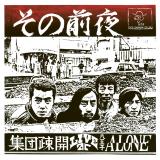
Shūdan Sokai - Live At 八王子 Alone

First time reissue of JP free jazz rarity, pre-Seikatsu Kōjyō Iinkai group.

The single album self-released by the quartet Shūdan Sokai in 1977 is one of the most vital documents of mid-seventies Japanese free jazz, documenting Tokyo’s free scene at the precise moment when it began to shift to a handful of tiny venues on the western fringes of the city. In Free Jazz in Japan, Teruto Soejima identifies the extant venue Aketa no Mise in Nishi-Ogikubo as the pioneer of this decamping from the centre: a cramped basement beneath a rice shop, seating just 20 people. Musician-run, operated on a shoestring, these spaces offered a vital site for community, creativity, and a small measure of financial independence — “even though it was in a basement, in spirit it was a loft.”

Among the most active of the new venues was Alone in Hachiōji, nearly an hour from Shinjuku, in a district shaped by universities, lower rents, and a thriving counterculture. Originally opened in 1973 as a jazu kissa, Alone was unusually spacious and equipped with a stage, grand piano, and drum kit. Around 1974, Junji Mori and Yasuhiro Sakakibara began working there, booking free jazz players on weekends and establishing the venue as a crucial hub. Mori recalls early appearances by figures including Kazutoki Umezu, Toshinori Kondo, and others who would define the scene.

In early 1976, Umezu and pianist Yoriyuki Harada — recently returned from New York’s loft jazz environment, where they had played with musicians such as David Murray and William Parker — formed Shūdan Sokai with Mori and drummer Takashi Kikuchi. The name, meaning “mass evacuation,” pointed to their self-chosen exile in Hachiōji. With Alone as their home base, the quartet developed a music characterized by an infectious sense of enjoyment and a willingness to integrate free jazz with elements of song structure. Harada switched between piano and bass; the group experimented with rap-like vocal pieces, jabbering nursery rhymes over bass rhythms.

They returned to Alone on December 24 to record Sono zen’ya (Eve), releasing it on their own Des Chonboo Records, partially funded by advertisements from local businesses printed on the rear cover. The closing “Ballad for Seshiru,” dedicated to Harada’s newborn son, unfolds over a delicate piano melody that moves into emphatic chords as intertwining alto lines rise and spiral.

Alone closed in September 1977, and Shūdan Sokai soon dissolved, later morphing into the expanded Seikatsu Kōjyō Iinkai Orchestra. What remains is a recording rooted in a specific place and moment: a fiercely independent scene sustained by small rooms, close listening, and collective commitment.

нет на складе

Закажите сейчас, и мы закажем товар для вас у нашего поставщика.

28,15

Последний логин: 7 дн. назад
Cloud Management & Vivien Goldman - Whoops Wrong Planet

Cloud Management return to Altin Village & Mine for a unique collaboration with New York writer and creative polymath Vivien Goldman.

A pairing spanning generations and geography, but with a musical overlap that is quite fitting in both process and result. Cloud Management’s jammy, improvisational approach to their dubby electronics blends well with Goldman’s idiosyncratic vocal style, which has its origins in the early days of post–punk and UK dub experimentalism. Cloud Management blend many historical aspects of German electronic music into something distinctly their own, while retaining a view well beyond those borders or any particular era. This approach fits well with Goldman’s deep multidisciplinary career, not easily defined because of its eclectic abundance across disciplines, yet always orbiting around music as its foundation.

When it comes down to it, these are great tracks created in the same way they sound: loose but refined, circling and turning inwards and outwards, back onto themselves. A dub of a dub of a dub, but never falling too far from the source — the minimalism necessary to deliver a direct, steady resolve and a gripping listen.

The B–Side of the record features three remixes by artists from across the globe, all with strong connections to the front line of dancehall, dub, and electronic music experimentalism. Longtime Equiknoxx member Time Cow from Kingston (Jamaica), delivers a version of »Quick Cover Up« that represents a major overhaul of the original. This remix strips away much of the looseness of the source material and leans into a lush yet slightly darker atmosphere, created by layered synths and a masterful use of underlying percussion and melodic stabs.

Up next are Twin Cities, Minnesota–based Feel Free Hi Fi, who take on »Judge Judge.« The duo tighten things up, overlaying weighty vintage string synths and digi–flute melodies. This version feels designed for smoky, late–night dub sound system sessions, harkening back to dub’s foundations.

Last but not least is London’s Pat Orburn. Stripped way down, the remix rides an interplay between alternating minimalism and a more lo-fi but lush exuberance, somewhat reminiscent of a bossa nova–esque minimal synth sound. This version’s lo–fi pop sensibility provides a fitting contrast and completes an eclectic yet copacetic trio of remixes for the record.

Сделать предзаказ

Этот продукт еще не вышел. Ты можешь сделать предзаказ, как только он появится на складе, продукт будет подготовлен к пересылке.

23,11
Barrington Levy - 21 Girls Salute LP
  • A1: River Jordan
  • A2: Mary Long Tongue
  • A3: 21 Girls Salute
  • A4: Ful­llment
  • A5: In Dis Time
  • B1: Lets Do Right
  • B2: The Day Had Just Begun
  • B3: Lets Clean It Up
  • B4: John Tom
  • B5: Mercy

Barrington Levy's 3rd LP for Jah Life, another killer selection from the fruitful works of the Wright/Lawes/Levy axis. From the golden era of the Radics at Channel 1, mixed by Scientist at Tubby's, 10 tracks, great all the way thru. Finally available again, this was only repressed once before in the late 1990's, other than its original release in the early '80s. Featuring iconic cover art by the late NYC legend Jamaal Pete and pressed from the original mothers, identical to the original press.

нет на складе

Закажите сейчас, и мы закажем товар для вас у нашего поставщика.

22,27

Последний логин: 7 дн. назад
Fez The Kid & BRUK - Rum Runna LP

Fez The Kid & BRUK

Rum Runna LP

12inchRUPLDN032
Rupture LDN
14.04.2026

When we were thinking about making an EP for Rupture, the first few tracks happened to already be finished, and fit together really nicely - but getting that final track done ended up being a bit more of a challenge!

The vision was to convey our individual styles in collaboration as best as we could - with dance ready tracks that also carry emotion. Rum Runna, as the A1 of the EP, all started from a break we found that had one of the loudest subs cutting through. Instead of looking for something else, we decided to lean into this and maximise the energy, before finally breaking through with the 808s. Drifting Through The Mist is more of a rolling vibe, focussed on vocals and funk to lift spirits in the dance, all the while teasing an amen drop that leans into a ragga fusion.

Northwest Passage is one of the earliest tunes we got finished - being made quite soon into our first meeting I believe. The result is a darker tip that focusses on dissonance and sub pressure that really thrives in the bassbins. Our final tune on the EP, Original Secret, is the most emotionally charged on the EP, again utilising our love for unique percussion and bongo hits along with rolling breaks, carefully chopped snares, atmospheric pads and emotional vox samples.

We are more than proud to release this body of work on one of our all time favourite labels, and have had the utmost pleasure to work with the team every step of the way.

нет на складе

Закажите сейчас, и мы закажем товар для вас у нашего поставщика.

18,91

Последний логин: 9 дн. назад
Various - WEDNESDAY MORNING 6AMss (2x12")
  • A1: Evangelina - Hoyt Axton
  • A2: Lady Love - Lou Rawls
  • A3: Castles In The Air - Don Mclean
  • A4: Why Have You Left The One You Left Me For - Crystal Gayle
  • A5: Lost In Love - Air Supply
  • A6: Danny's Song - Anne Murray
  • B1: Train In The Distance - Paul Simon
  • B2: The Bargain Store - Dolly Parton
  • B3: We're Gonna Change The World - Matt Monro
  • B4: Run Like The Wind - Barbara Dickson
  • B5: Stumblin' In - Suzi Quatro & Chris Norman
  • B6: Matrimony - Gilbert O'sullivan
  • C1: You Belong To Me - Carly Simon
  • C2: The Best Is Yet To Come - Clifford T Ward
  • C3: Daylight Katy - Gordon Lightfoot
  • C4: Deeper Than The Night - Olivia Newton-John
  • C5: Warm Feeling - Lindisfarne
  • C6: The Danger Of A Stranger - Stella Parton
  • D1: Who What When Where Why - Dionne Warwick
  • D2: 99 Miles From La - Art Garfunkel
  • D3: Calypso - John Denver
  • D4: Old And Wise - The Alan Parsons Project
  • D5: Theme From 'Taxi' (Angela) - Bob James

Bob Stanley’s latest compilation “Wednesday Morning 6AM” literally turns back the clocks.

In the late 70s and early 80s, there was a parallel world of hits that people only heard when their clock radio went off. BBC Radio 2 had little time for the Top 40 music played by Radio 1 and beamed into living rooms by Top Of The Pops. Radio 2 effectively created a chart of its own playing singles or album tracks that their DJs enjoyed and wanted to share with their listeners. These tracks were given multiple plays on rotation and became earworms for millions of listeners.

“Wednesday Morning 6AM” is the warming soundtrack of eating breakfast or driving to school or to work in the cold and dark early hours to the sound of Art Garfunkel’s ‘99 Miles From LA’, Dolly Parton’s ‘The Bargain Store’, Hoyt Axton’s ‘Evangelina’, Paul Simon’s ‘Train In The Distance’ and Air Supply’s ‘Lost In Love’.
Other featured artists include Gilbert O’Sullivan, Crystal Gayle, Carly Simon, John Denver, Lou Rawls, Lindisfarne, Bob James, Stella Parton and Dionne Warwick.
The 2-LP version includes the bonus track ‘Danny’s Song’ by Anne Murray.

Сделать предзаказ13.04.2026

он должен быть опубликован на 13.04.2026

30,04
Mike Parker - Echo Disintegrator 2x12"

Returning with his first artist album in 13 years, revered techno innovator Mike Parker continues to shape out his explorations around 170 with his latest work for Samurai Music, Echo Disintegrator. Transcending genre lines with his unmistakable sonic stamp, the seasoned US producer crafts an extended trip through his exacting, lithe frequencies and brutalist rhythms. As evidenced on recent EPs Envenomations and Sabre-Tooth, Parker can comfortably slip into a hard-stepping D&B structure and make it his own. 'Earth Energy Imbalance' leaps forth with precision and purpose, wrapping atonal synth shapes around the stark beat in staggering high definition. 'Positronic Tentacles' finds a similar rolling momentum, even threading ruthlessly trimmed vocal snatches into the lyrical pulse of the lead tones. 'Radiative Force' teases its own mutant funk out of the envelopes shaping the molten sonics coursing through the middle of the frequency range. Elsewhere, Parker explores a variety of accented grooves around typical D&B tempos, remaining reliably broken while dipping into half-time space on 'Lunar Nocturne' and finding a low-slung swagger in the carefully deployed pressure of 'Ghost Rain' and 'Echo Disintegrator'. 'Beat Activator' pivots on a dense bed of bass with a crooked, off-beat slant before 'Dragon Bravo' casts a similarly dembow-informed beat into a dense tapestry of cyclical machine shrieks and snarls. There is a ruthless consistency to Parker's approach across Echo Disintegrator, riding the loops without flinching and forcing the focus deep into the minutae of every sonic element. Both brilliantly functional and profoundly subtle, there's a visceral, physical quality to the sound design that makes it a listening experience like no other.

На складе от24.04.2026

28,36

Последний логин: 8 дн. назад
The Appetizers - Keep Your Step LP
  • 01: Feel Like Dancing
  • 02: Thicker Than Water
  • 03: A Message From The Meters
  • 04: Catch This
  • 05: Fussy Girl
  • 06: Cool And Deadly
  • 07: The Life
  • 08: Keep Your Step
  • 09: Make It Reggay
  • 10: Behind My Shoulders
  • 11: Stormy Weather
  • 12: We Shall Overcome

Killer Groove Records proudly presents "Keep Your Step", the explosive comeback by Italian rock steady & early reggae ambassadors The Appetizers, a soulful celebration of reggae's timeless spirit.


"Keep Your Step" marks the band's much-awaited return, landing April 10th on limited edition LP, CD digipack and digital format featuring two exclusive bonus tracks.

The Appetizers deliver a masterclass in roots reggae music with their highly anticipated second studio album, bridging Jamaica's golden age with contemporary relevance. "Keep Your Step" is a heartfelt sonic journey where the band blends rocksteady and early reggae with funk and soul influences to create a sound that's both genuine and refreshingly modern.

The fourteen tracks move fluidly between infectious dancefloor fillers and socially conscious lyrics. From the laid-back swing of "Feel Like Dancing" to the hypnotic rhythm of "Thicker Than Water", the band demonstrates their versatility while remaining true to the roots of Jamaican sound. "A Message from The Meters" pays tribute to the legendary funk pioneers, while the instrumental "Catch This" and "Make It Reggay" highlight the band's musical prowess and the deep connections between reggae and funk.

Meanwhile, tracks like "Fussy Girl" and "Behind My Shoulders" explore love's complexities with humor and soul. The album's heart lies in its social consciousness. "Cool and Deadly", "The Life", "Stormy Weather" and the album title track "Keep Your Step" tell stories of perseverance through life's struggles.

With the hopeful anthem "We Shall Overcome," The Appetizers deliver a timely message about genuine human connection in a social media-dominated era. The digital edition closes with "Get Some Rollin'" and "Swing and Sway," rounding out the journey with two additional gems.

"Keep Your Step" pays homage to Jamaican music legends, from Jackie Mittoo and Tommy McCook to Toots & the Maytals, while carving out The Appetizers' own distinctive sound. This is a groove made for both the dance floor and the soul, proving that reggae's power to inspire, unite, and uplift remains as vital as ever.

The production stays true to The Appetizers' signature sound: organic tones, deep groove, and that live-room vibe you only get when real musicians are locked in together. Luca Monza and Claudio Mambrini, the band's core members, handled the artistic production. Mastering came courtesy of the great JJ Golden (Black Pumas, Sharon Jones & The Dap-Kings, Jr. Thomas & The Volcanos, The Frightnrs) at Golden Mastering in Ventura, California. JJ is one of the most trusted engineers working in this sound, ensuring every ounce of warmth and authenticity came through.

The Appetizers are a rocksteady and early reggae band formed in Milan in 2020 by musicians deeply embedded in the Italian and international reggae scene. Musicians from different paths united by a shared vision: recreating that vintage Caribbean and American sound with authenticity, respect and a forward-thinking edge.

Drawing inspiration from Jamaica's golden era and channeling the soul of Delroy Wilson, Alton Ellis, the early Wailers, and The Upsetters, The Appetizers carry forward the essence of bass culture with a pure, fully organic approach.

Their debut album Listen Up! (2022), released via Belgian imprint Badasonic Records (home to The Slackers, The Aggrolites, David Hillyard & Victor Rice), featured ten original tracks and a dub cut by Victor Rice. Distributed across Europe, the UK, the US, and Japan, it quickly earned international recognition among reggae connoisseurs and selectors worldwide.

Following extensive touring, including shows with The Slackers, Black Uhuru, Skip Marley, and more, the band returned to the studio to record "Keep Your Step", their second album produced by Killer Groove Records. Here the band expands its musical language, weaving together the spirit of historic Jamaican labels like Studio One and Treasure Isle with '60s funk, arriving at a warm, organic, and timeless sound: soul, Jamaican roots, and modern sensibility in perfect balance. Their lyrics explore heartbreak, social issues, and reflections on life and music, performed with dedication and respect for tradition while always pushing forward.


If you're into The Skatalites, The Ethiopians, and those classic Caribbean rhythms, this one's for you.

Сделать предзаказ10.04.2026

он должен быть опубликован на 10.04.2026

23,32
Various - Remixed With Love by Dave Lee (Selected Works) LP

Remixed With Love has set the benchmark for disco reworks for over a decade, with Dave Lee universally recognised as the most trusted name in the field when it comes to respectfully updating dancefloor classics from the original multi-tracks.

With original vinyl editions long deleted and constant demand from DJs and collectors, this brand-new one-off, vinyl-only release has been made possible via a fresh licensing deal with Sony Music, allowing eight of the most requested mixes from the catalogue to be pressed together for the first time.

This is not a repress; it is a bespoke, limited selection, and once the pressing has sold through, it cannot be repeated.

нет на складе

Закажите сейчас, и мы закажем товар для вас у нашего поставщика.

25,84

Последний логин: 9 дн. назад
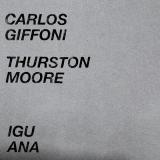
Carlos Giffoni & Thurston Moore - IGUANA (TAPE)

Carlos Giffoni reconnects with Thurston Moore for two sides of loose-limbed axe noise, oscillator worship and hard-phased, Spacemen 3-style feedback.

Giffoni’s been on a roll recently. Since the No Fun founder returned to the scene with »Vain¡, a genius set of synth mutations that appeared in iDEAL back in 2018, he’s been slowly ramping up the activity, dropping the celestial »Dream Walker« on Stephen O’Malley’s Ideologic Organ in 2024 and following it with »Pendulum«, a bumper compendium of collaborations, just a few weeks back. For those who remember Giffoni’s first trip round the block, he was always able to hold his own chopping it up in person, not just by mail.

Just scrub through his early catalog and you’ll see collabs with Nels Cline and Chris Corsano, Merzbow, Jim O’Rourke and Lasse Marhaug, and of course, Thurston Moore. The two rekindle their thing on »IGUANA’« picking up where 2001’s fabled »4 Guitars Live« performance left off. Here, Giffoni straddles a tabletop synth and FX while Moore attacks his signature Jazzmaster with a drumstick and a screwdriver – vibes fully intact.

Moore is on blistering form, sounding as if he’s taken a step back to refresh his approach since the early ‘00s when he could be spotted moonlighting on any number of basement-adjacent noise sides. Sawing at his strings and turning the guitar into a shrieking resonator, he leaves only faint vapours of the classic Sonic Youth sound as opiating accents on his animalistic wails and rumbles. On the opening half, his whammy – assisted shreds are balanced out by Giffoni’s off-world whirrs and airlocked vibrations, building a dense wall of noise towards an unexpectedly elegiac conclusion. At some point, Giffoni’s rasping churr transforms into a simmering shudder and Moore’s into hymnal drones – squint a bit and you could almost call it pretty.

Of course, they ramp things up on the flip, dissolving the melancholia with smokey white noise and twangy, post-Derek Bailey chimes that Giffoni accompanies with aggy oscillations. Like every great taped noise set, the recording quality is crucial - »IGUANA« was captured from the pit by Guillermo Hernandez Avendano, the dad of Lia Miranda who provides the cover photo. It’s that kinda show.

Сделать предзаказ10.04.2026

он должен быть опубликован на 10.04.2026

19,75
Guilty Razors - Complete Recordings 1977 - 1978

UILTY RAZORS, BONA FIDE PUNKS.


Writings on the topic that go off in all directions, mind-numbing lectures given by academics, and testimonies, most of them heavily doctored, from those who “lived through that era”: so many people today fantasize about the early days of punk in our country… This blessed moment when no one had yet thought of flaunting a ridiculous green mohawk, taking Sid Vicious as a hero, or – even worse – making the so-called alternative scene both festive and boorish. There was no such thing in 1976 or 1977, when it wasn’t easy to get hold of the first 45s by the Pistols or the Clash. Few people were aware of what was happening on the fringes of the fringes at the time. Malcolm McLaren was virtually unknown, and having short hair made you seem strange. Who knew then that rock music, which had taken a very bad turn since the early 1970s, would once again become an essential element of liberation? That, thanks to short and fast songs, it would once again rediscover that primitive, social side that was so hated by older generations? Who knew that, besides a few loners who read the music press (it was even better if they read it in English) and frequented the right record stores? Many of these formed bands, because it was impossible to do otherwise. We quickly went from listening to the Velvet Underground to trying to play the Stooges’ intros. It’s a somewhat collective story, even though there weren’t many people to start it.
The Guilty Razors were among those who took part in this initial upheaval in Paris. They were far from being the worst. They had something special and even released a single that was well above the national average. They also had enough songs to fill an album, the one you’re holding. In everyone’s opinion, they were definitely not among the punk impostors that followed in their wake. They were, at least, genuine and credible.

Guilty Razors, Parisian punk band (1975-1978). To understand something about their somewhat linear but very energetic sound, we might need to talk about the context in which it was born and, more broadly, recall the boredom (a theme that would become capital in punk songs) coupled with the desire to blow everything off, which were the basis for the formation of bands playing a rejuvenated rock music ; about the passion for a few records by the Kinks or the early Who, by the Stooges, by the Velvet mostly, which set you apart from the crowd.
And of course, we should remember this new wave, which was promoted by a few articles in the specialized press and some cutting-edge record stores, coming from New York or London, whose small but powerful influence could be felt in Paris and in a handful of isolated places in the provinces, lulled to sleep by so many appalling things, from Tangerine Dream to President Giscard d’Estaing...
In 1975-76, French music was, as almost always, in a sorry state ; it was still dominated by Johnny Hallyday and Sylvie Vartan. Local rock music was also rather bleak, apart from Bijou and Little Bob who tried to revive this small scene with poorly sound-engineered gigs played to almost no one.
In the working class suburbs at the time, it was mainly hard rock music played to 11 that helped people forget about their gruelling shifts at the factory. Here and there, on the outskirts of major cities, you still could find a few rockers with sideburns wearing black armbands since the death of Gene Vincent, but it wasn’t a proper mass movement, just a source of real danger to anyone they came across who wasn't like them. In August 1976, a festival unlike any other took place in Mont-de-Marsan – the First European Punk Festival as the poster said – with almost as many people on stage as in the audience. Yet, on that day, a quasi historical event happened, when, under the blazing afternoon sun, a band of unknowns called The Damned made an unprecedented noise in the arena, reminiscent of the chaotic Stooges in their early adolescence. They were the first genuine punk band to perform in our country: from then on, anything was possible, almost anything seemed permissible.

It makes sense that the four+1 members of Guilty Razors, who initially amplified acoustic guitars with crappy tape recorder microphones, would adopt punk music (pronounced paink in French) naturally and instinctively, since it combines liberating noise with speed of execution and – crucially – a very healthy sense of rebellion (the protesters of May 1968 proclaimed, and it was even a slogan, that they weren’t against old people, but against what had made them grow old. In the mid-1970s, it seemed normal and obvious that old people should now ALSO be targeted!!!).
At the time, the desire to fight back, and break down authority and apathy, was either red or black, often taking the form of leafleting, tumultuous general assemblies in the schoolyard, and massive or shabby demonstrations, most of the time overflowing with an exciting vitality that sometimes turned into fights with the riot police. Indeed, soon after the end of the Vietnam War and following Pinochet’s coup in Chile, all over France, Trotskyist and anarcho-libertarian fervour was firmly entrenched among parts of the educated youth population, who were equally rebellious and troublemakers whenever they had the chance. It should also be noted that when the single "Anarchy in the UK" was first heard, even though not many of us had access to it, both the title and its explosive sound immediately resonated with some of those troublemakers crying out for ANARCHY!!! Meanwhile, the left-wing majority still equated punks with reckless young neo-Nazis. Of course, the widely circulated photos in the mainstream press of Siouxsie Sioux with her swastikas didn’t necessarily help to win over the theorists of the Great Revolution. It took Joe Strummer to introduce The Clash as an anti-racist, anti-fascist and anti-ignorance band for the rejection of old-school revolutionaries to fade a little.

The Lycée Jean-Baptiste Say at Porte d’Auteuil, despite being located in the very posh and very exclusive 16th arrondissement of Paris, didn’t escape these "committed" upheavals, which doubled as the perfect outlet for the less timid members of this generation.
“Back then, politics were fun,” says Tristam Nada, who studied there and went on to become Guilty Razors’ frontman. “Jean-Baptiste was the leftist high-school in the neighbourhood. When the far right guys from the GUD came down there, the Communist League guys from elsewhere helped us fight them off.”
Anything that could challenge authority was fair game and of course, strikes for just about any reason would lead to increasingly frequent truancy (with a definitive farewell to education that would soon follow). Tristam Nada spent his 10th and 11th unfinished grades with José Perez, who had come from Spain, where his father, a janitor, had been sentenced to death by Franco. “José steered my tastes towards solid acts such as The Who. Like most teenagers, I had previously absorbed just about everything that came my way, from Yes to Led Zeppelin to Genesis. I was exploring… And then one day, he told me that he and his brother Carlos wanted to start a rock band.” The Perez brothers already played guitar. “Of course, they were Spanish!”, jokes their singer. “Then, somewhat reluctantly, José took up the bass and we were soon joined by Jano – who called himself Jano Homicid – who took up the rhythm guitar.” Several drummers would later join this core of not easily intimidated young guys who didn’t let adversity get the better of them.

The first rehearsals of the newly named Guilty Razors took place in the bedroom of a Perez aunt. There, the three rookies tried to cover a few standards, songs that often were an integral part of their lives. During a first, short gig, in front of a bewildered audience of tough old-school rockers, they launched into a clunky version of the Velvet Underground's “Heroin”. Challenge or recklessness? A bit of both, probably… And then, step by step, their limited repertoire expanded as they decided to write their own songs, sung in a not always very accurate or academic English, but who cared about proper grammar or the right vocabulary, since what truly mattered was to make the words sound as good as possible while playing very, very fast music? And spitting out those words in a language that left no doubt as to what it conveyed mattered as well.
Trying their hand a the kind of rock music disliked by most of the neighbourhood, making noise, being fiercely provocative: they still belonged to a tiny clique who, at this very moment, had chosen to impose this difference. And there were very few places in France or elsewhere, where one could witness the first stirrings of something that wasn’t a trend yet, let alone a movement.

In the provinces, in late 1976 or early 1977, there couldn’t be more than thirty record stores that were a bit more discerning than average, where you could hear this new kind of short-haired rock music called “punk”. The old clientele, who previously had no problem coming in to buy the latest McCartney or Aerosmith LP, now felt a little less comfortable there…
In Paris, these enlightened places were quite rare and often located nex to what would become the Forum des Halles, a big shopping mall. Between three aging sex workers, a couple of second-hand clothes shops, sellers of hippie paraphernalia and small fashion designers, the good word was loudly spread in two pioneering places – propagators of what was still only a new underground movement. Historically, the first one was the Open Market, a kind of poorly, but tastefully stocked cave. Speakers blasted out the sound of sixties garage bands from the Nuggets compilation (a crucial reference for José Perez) or the badly dressed English kids of Eddie and the Hot Rods. This black-painted den was opened a few years earlier by Marc Zermati, a character who wasn’t always in a sunny disposition, but always quite radical in his (good) choices and his opinions. He founded the independent label Skydog and was one of the promoters of the Mont-de-Marsan punk festivals. Not far from there was Harry Cover, another store more in tune with the new New York scene, which was amply covered in the house fanzine, Rock News (even though it was in it that the photos of the Sex Pistols were first published in France).
It was a favorite hang-out of the Perez brothers and Tristam Nada, as the latter explained. “It’s at Harry Cover’s that we first heard the Pistols and Clash’s 45s, and after that, we decided to start writing our first songs. If they could do it, so could we!”
The sonic shocks that were “Anarchy in the UK”, “White Riot” or the Buzzcocks’s EP, “Spiral Scratch” – which Guilty Razors' sound is reminiscent of – were soon to be amplified by an unparalleled visual shock. In April 1977, right after the release of their first LP, The Clash performed at the Palais des Glaces in Paris, during a punk night organised by Marc Zermati. For many who were there, it was the gig of a lifetime…
Of course, Guilty Razors and Tristam were in the audience: “That concert was fabulous… We Parisian punks were almost all dressed in black and white, with white shirts, skinny leather ties, bikers jackets or light jackets, etc. The Clash, on the other hand, wore colourful clothes. Well, the next day, at the Gibus, you’d spot everyone who had been at this concert, but they weren’t wearing anything black, they were all wearing colours.”

It makes sense to mention the Gibus club, as Guilty Razors often played there (sometimes in front of a hostile audience). It was also the only place in Paris that regularly scheduled new Parisian or Anglo-Saxon acts, such as Generation X, Siouxsie and the Banshees, the Slits, and Johnny Thunders who would become a kind of messed-up mascot for the venue. A little later, in 1978, the Rose Bonbon – formerly the Nashville – also attracted nightly owls in search of electric thrills… In 1977, the iconic but not necessarily excellent Asphalt Jungle often played at the Gibus, sometimes sharing the bill with Metal Urbain, the only band whose aura would later transcend the French borders (“I saw them as the French Sex Pistols,” said Geoff Travis, head of their British label Rough Trade). Already established in this small scene, Metal Urbain helped the young and restless Guilty Razors who had just arrived. Guitarist for Metal Urbain Hermann Schwartz remembers it: “They were younger than us, we were a bit like their mentors even if it’s too strong a word… At least they were credible. We thought they were good, and they had good songs which reminded of the Buzzcocks that I liked a lot. But at some point, they started hanging out with the Hells Angels. That’s when we stopped following them.”

The break-up was mutual, since, Guilty Razors, for their part, were shocked when they saw a fringe element of the audience at Metal Urbain concerts who repeatedly shouted “Sieg Heil” and gave Nazi salutes. These provocations, even still minor (the bulk of the skinhead crowd would later make their presence felt during concerts), weren’t really to the liking of the Perez brothers, whose anti-fascist convictions were firmly rooted. Some things are non-negotiable.
A few months earlier (in July 1978), Guilty Razors had nevertheless opened very successfully for Metal Urbain at the Bus Palladium, a more traditonally old-school rock night-club. But, as was sometimes the case back then, the night turned into a mass brawl when suburban rockers came to “beat up punks”.

Back then, Parisian nights weren’t always sweet and serene.

So, after opening as best as they could for The Jam (their sound having been ruined by the PA system), our local heroes were – once again – met outside by a horde of greasers out to get them. “Thankfully,” says Tristam, “we were with our roadies, motorless bikers who acted as a protective barrier. We were chased in the neighbouring streets and the whole thing ended in front of a bar, with the owner coming out with a rifle…”
Although Tristam and the Perez brothers narrowly escaped various, potentially bloody, incidents, they weren’t completely innocent of wrongdoing either. They still find amusing their mugging of two strangers in the street for example (“We were broke and we simply wanted to buy tickets for the Heartbreakers concert that night,” says Tristam). It so happened that their victims were two key figures in the rock business at the time: radio presenter Alain Manneval and music publisher Philippe Constantin. They filed a complaint and sought monetary compensation, but somehow the band’s manager, the skilful but very controversial Alexis, managed to get the complaint withdrawn and Guilty Razors ended up signing with Constantin with a substantial advance.

They also signed with Polydor and the label released in 1978 their only three-track 45, featuring “I Don't Wanna be A Rich”, “Hurts and Noises” and “Provocate” (songs that exuded perpetual rebellion and an unquenchable desire for “class” confrontation). It was a very good record, but due to a lack of promotion (radio stations didn’t play French artists singing in English), it didn’t sell very well. Only 800 copies were allegedly sold and the rest of the stock was pulped… Initially, the three tracks were to be included on a LP that never came to be, since they were dropped by Polydor (“Let’s say we sometimes caused a ruckus in their offices!” laughs Tristam.) In order to perfect the long-awaited LP, the band recorded demos of other tracks. There was a cover of Pink Floyd's “Lucifer Sam” from the Syd Barrett era – proof of an enduring love for the sixties’ greats –, “Wake Up” a hangover tale and “Bad Heart” about the Baader-Meinhof gang, whose actions had a profound impact on the era and on a generation seeking extreme dissent... On the album you’re now discovering, you can also hear five previously unreleased tracks recorded a bit later during an extended and freezing stay in Madrid, in a makeshift studio with the invaluable help of a drummer also acting as sound engineer. He was both an enthusiastic old hippie and a proper whizz at sound engineering. Here too, certain influences from the fifties and sixties (Link Wray, the Troggs) are more than obvious in the band’s music.

Shortly after a final stormy and rather barbaric (on the audience’s side) “Punk night” at the Olympia in June 1978, Tristam left the band ; his bandmates continued without him for a short while.

But like most pioneering punk bands of the era, Guilty Razors eventually split up for good after three years (besides once in Spain, they’d only played in Paris). The reason for ceasing business activities were more or less the same for everyone: there were no venues outside one’s small circuit to play this kind of rock music, which was still frightening, unknown, or of little interest to most people. The chances of recording an LP were virtually null, since major labels were only signing unoriginal but reassuring sub-Téléphone clones, and the smaller ones were only interested in progressive rock or French chanson for youth clubs. And what about self-production? No one in our small safety-pinned world had thought about it yet. There wasn’t enough money to embark on that sort of venture anyway.

So yes, the early days of punk in France were truly No Future!

нет на складе

Закажите сейчас, и мы закажем товар для вас у нашего поставщика.

21,43

Последний логин: 13 дн. назад
Stephan Eicher - Spielt Noise Boys

2025 Reissue.


Münchenbuchsee, a suburb of Bern, Switzerland. Stephan Eicher is the youngest of three children. His father, a radio and TV repairman, is also a jazz violinist and a sound tinkerer in his spare time. In the family home's converted fallout shelter turned studio, Mr. Eicher experiments with homemade sequencers, tortures handcrafted drum machines, and abuses reel-to-reel tape recorders—all under the fascinated gaze of young Stephan.

The boy quickly develops a musical curiosity, exploring sound through various experiments and wanderings. Alongside his younger brother Martin, Stephan crafts audio plays on a homemade multi-track recorder (essentially several cassette decks hooked together!), which they write, record, add sound effects to, and perform for family and friends. Just a couple of nice kids, really...

Then comes 1972, and Lou Reed's Transformer album changes everything for the Eicher kids. For 13-year-old Stephan, it's a revelation—especially "Vicious", the opening track, which he plays on repeat for months. He convinces his father to buy him an electric guitar. Not stopping there, his father also builds him a tube amp using an old radio.

Then comes adolescence. A rough one. Stephan leaves home at 16 and moves to Zurich. With obvious artistic talent, he persuades his art teacher to help him get into F+F, a radical, alternative art school—despite his young age. Accepted, he starts learning video techniques, determined to become a filmmaker.

At F+F, Stephan organizes Dada-style happenings and concerts with a group of friends known as the Noise Boys. Among them: one of his teachers on bass, Veit Stauffer on drums (who would later found ReR/Recommended Records), his girlfriend Sacha on vocals, and Stephan on guitar. In one of their early performances, they release a remote-controlled mouse covered in dull razor blades into the audience to create panic and chaos. Keeping with this aggressive, confrontational spirit, they once played a concert while wearing headphones blasting Tristan and Isolde, trying to perform their own songs simultaneously—to maximize the cacophony. The goal was always the same: clear the room.

Their “songs,” if you can call them that, followed suit. Take "Hungeriges Afrika", for instance—performed entirely with power drills and some drum feedback.

To make ends meet, Stephan returns to Bern on weekends to work as a waiter at the Spex Club, the city’s main punk venue. On September 16, 1980, during a show by proto-electro group Starter, the police raid the club and arrest everyone. Stephan, who manages to avoid arrest, seizes the opportunity to “borrow” Starter’s gear left behind. He suddenly finds himself in possession of a Roland Promars synth, a Korg MS20, and a gorgeous CR78 drum machine, which he runs through a Big Muff distortion pedal to get that perfect gritty sound.

He then sets out to reinterpret some Noise Boys tracks, reworking them during impromptu sessions recorded on a dictaphone (yes, a dictaphone—now the lo-fi sound makes more sense, doesn’t it?). He ironically titles the resulting cassette "Stephan Eicher spielt Noise Boys" ("Stephan Eicher plays Noise Boys"). This gem features seven tracks, which are the ones reissued here.

Back in Zurich, he visits his friends Andrew Moore and Robert Vogel, who have a DIY cassette duplication setup. They make 25 copies of Stephan Eicher spielt Noise Boys for Stephan and his friends. Robert encourages him to visit Urs Steiger of Off Course Records and play him the tape.

Without much hope, Stephan shows up at Urs’s office. But Urs is instantly hooked and suggests releasing a 7” single. Due to space constraints, they reluctantly drop two of the seven tracks ("Hungeriges Afrika" and "One Second"). As for the musical score featured on the cover—it was randomly chosen and remains a mystery to this day. Calling all music theory nerds!

The 7-inch is pressed in 750 copies and released in the first week of December 1980—a date Stephan remembers well, as it’s the same week John Lennon was killed. Smartly, Urs sends a promo copy to François Murner, Switzerland’s answer to John Peel, who hosts a show on alternative station Sounds. Murner falls in love with the record and starts giving it airtime. To Stephan’s surprise, sales follow—and people actually seem interested in his music.

Even this modest underground success scares Stephan a bit. He stops making music for a year and moves to Bologna, where he works as a programmer at Radio Città, a feminist radio station.

Meanwhile, Stephan’s younger brother Martin, who’s also involved in the punk scene, joins the band Glueams as a singer and guitarist. Glueams, named after the fanzine run by two of its members (drummer Marco Repetto and bassist GT), eventually rebrands as Grauzone. Stephan is invited to their shows to project hacked Super 8 visuals live on stage.

Urs Steiger, now working on a compilation titled Swiss Wave – The Album, asks Grauzone to contribute alongside bands like Liliput, Jack and the Rippers, The Sick, and Ladyshave (Fall 1980).

For the album, Martin tasks Stephan with producing their recording sessions. Under Stephan's artistic direction, two tracks emerge: "Raum" and "Eisbär". During "Eisbär", Martin plays a minimalist bass line borrowed from post-punk band The Feelies (just an open string). Drummer Marco Repetto struggles to keep time. Later that evening, unhappy with the takes, Stephan builds a four-bar drum loop from a ¼-inch tape and uses it instead of the flawed original. He then adds bleepy synths and wind sounds to complete the track’s icy vibe before handing it over to Urs.

The Swiss Wave – The Album compilation is released quietly at first, but things snowball thanks to "Eisbär", which eventually becomes a smash hit—selling over 600,000 singles.

Meanwhile, Stephan plays in a rockabilly band called SMUV (named after Switzerland’s social security agency) and begins producing artists, including the debut album of Starter (1981), which includes a more pop-oriented version of "Minijupe".

By early 1982, Stephan starts spending time with the post-punk girl band Liliput (formerly Kleenex). They’re older than him, and he happily drives them around in his Renault Major, acting as their roadie.

By 1983, Grauzone—signed to the major label EMI, which turned out to be a misstep—is falling apart. Stephan begins to pivot toward a more mainstream pop sound with his debut solo album Les Chansons Bleues.

But that... is already another story.

нет на складе

Закажите сейчас, и мы закажем товар для вас у нашего поставщика.

23,11

Последний логин: 13 дн. назад
Aziz Balouch - Spanish Cante Jondo And It's Origin In Sindhi Music (BOOK)

66 pages, 175 x 129mm paperback w/ litho printed cover & french flaps.

The second outing for our short run book publishing imprint, The End books, takes the form of a reprint of Spanish Cante Jondo and Its Origin in Sindhi Music, originally published in Spanish in 1955 under the name Cante Jondo: Su Origen y Evolución and later in this English translation.

Aziz Balouch here presents his theory on the roots of flamenco's 'deep song' in modern-day Pakistan, a cultural journey that mimics the routes of his own life, having been brought up among the Islamic mysticism and devotional songs of Sindh before travelling to Gibraltar in the early 1930s and becoming transfixed with the cante jondo across the border in southern Spain. Positing this concept through personal accounts rather than solid theoretical backing, this text provides a valuable account of an extraordinary existence that crossed remarkable geographical, musical, and spiritual boundaries. Issued here with a new introduction from anthropologist of sound, the senses and Islam, Stefan Williamson Fa.

"It would be easy to place Balouch on the fringes, as an eccentric footnote in flamenco history. But that misses the shape of his life and work. He was a figure who moved intuitively across boundaries that our present categories of nation, genre, discipline tend to fix in place. His work predates the founding of the academic discipline of ethnomusicology, the global circuits of world music, and the marketplace logic of fusion projects by decades. He was not an ethnographer or a proto–world musician, but someone for whom the deep song of Andalusia and the devotional song of the subcontinent resonated along the same fault lines of feeling, and who spent his life trying to trace them.

This book is one of the few surviving traces of that attempt. To read it now is to encounter a perspective that resists tidy narratives of influence or origin, despite its title and what he claims to do. It stands instead as evidence of an idiosyncratic musical imagination, one that relied less on proof than on listening, and on the belief that certain echoes carry farther than history can easily explain."

— Stefan Williamson Fa

Сделать предзаказ10.04.2026

он должен быть опубликован на 10.04.2026

19,12
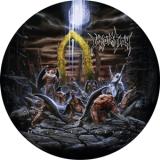
IMMOLATION - HERE IN AFTER (PICTURE DISC)

IMMOLATION

HERE IN AFTER (PICTURE DISC)

Pict-VinylBOBVPD1192
Back on Black
10.04.2026

Death Metal's dissonant masterpiece returns on picture disc! Revisit the 1996 seminal classic from New York's titans of extremity.

Сделать предзаказ10.04.2026

он должен быть опубликован на 10.04.2026

35,50
BNNYHUNNA - PSALM FUNK LP

BNNYHUNNA

PSALM FUNK LP

12inchSDBANULP48
SDBAN ULTRA
10.04.2026

On Psalm Funk, Bnnyhunna deepens the artistic language he first articulated on his celebrated debut Echoes of a Prayer. Rather than retracing familiar ground, the Amsterdam-based composer and producer expands his palette, allowing rhythm and space to carry as much narrative weight as harmony and lyricism.

While Echoes of a Prayer felt personal and devoted, Psalm Funk opens things up. Gospel harmonies stay central to his music, but now they are energized by smooth funk rhythms and heightened by the flexibility of jazz improvisation. Bnnyhunna moves between styles effortlessly, in a way that nothing seems borrowed, but everything feels lived in.

At the center of the record is an understanding of space. Silence acts not as an absence but as a structure. Breath, restraint, and patience shape the music just as much as basslines and backbeats. This awareness of dynamics allows the album to grow without losing its focus. It signifies a subtle but important change in Bnnyhunna as an artist, moving from inward reflection to forward momentum, from prayer as personal dialogue to prayer as a physical expression. The clarity, discipline, and emotional depth that marked his debut remain, now directed into something more rhythmically confident and spiritually uplifting.

Fusing gospel, funk, jazz, and African rhythmic traditions, Psalm Funk serves as both a meditation and an outpouring. It invites deep thought while demanding a physical response.

The album includes collaborations with American saxophonist Braxton Cook, trumpeter Sheila Maurice-Grey of Kokoroko, 3DDY, and Reggie Dartey, among others. The singles "Sorry Not Sorry" and "Waiting For You" have already hinted at the project's range, while the latest single, "The Heart Part 2," further expands on the album's dynamic and emotional scope.

To celebrate the release, Bnnyhunna will tour the Netherlands in April, with performances in Amsterdam, Rotterdam, and Nijmegen before heading to the UK for a show at The Great Escape.

Released in October 2024, Bnnyhunna's debut album Echoes of a Prayer was created as a dialogue with God, a personal call expressed through sound. The record resonated both with fans and media, gaining support from platforms like 3voor12, Rolling Stone Africa, and Afromixx. It reached the airwaves of BBC Radio 1 in the UK, KEXP in the US, J-Wave in Japan, and 3FM in the Netherlands, and landed in playlists such as BUTTER, Morning Rhythm, and Vanguard.

In 2025, Echoes of a Prayer earned the Edison Pop award for Soul/R&B/Funk and received Grammy consideration for Best Alternative Jazz Album. On stage, Bnnyhunna established his presence with performances at festivals such as Lowlands, Couleur Cafe, Brick Lane Jazz Festival, Dour, and Super Sonic Jazz, as well as his first tour in Japan.


Upcoming live shows:
10/04/26 - BIRD, Rotterdam (NL)
11/04/26 - Doornroosje, Nijmegen (NL)
12/04/26 - Tolhuistuin, Amsterdam (NL)
13/05/26 - The Great Escape, Brighton (UK)

Сделать предзаказ10.04.2026

он должен быть опубликован на 10.04.2026

23,95
Sweater - Future Moves

Sweater

Future Moves

12inchMOVES007
Small Moves
10.04.2026out soon

With spring and summer right around the corner, Small Moves returns with it’s 7th release, this time showcasing Sweaters distinct Philadelphia sound. After the success of the Post Play EP, this 5 track EP solidifies Sweaters place as one of the top producers in the US and beyond. From House to Tech House to Breaks, this EP has got every mood covered. With lots of early support, don’t sleep on this one!

Сделать предзаказ

Этот продукт еще не вышел. Ты можешь сделать предзаказ, как только он появится на складе, продукт будет подготовлен к пересылке.

13,40
Marion Brown - Awofofora

First time reissue of JP / US free jazz rarity.

The 1970s were Marion Brown’s most searching decade, a period during which he sought to move beyond the free jazz of the previous era and find more personal approaches to structuring improvisation and composition. After leaving New York for Europe in 1967, Brown began reshaping his music into what he described as “a more deliberate kind of music that had more structure to it,” pacing it so that moods and modes could develop over time. Albums such as In Sommerhausen, Afternoon of a Georgia Faun, Geechee Recollections, and Sweet Earth Flying trace this evolution: rhythmic structures moved to the foreground, harmony receded, and composition became a matter of orchestrating interlocking rhythmic parts as one would polyphonic lines.

Released in 1976, Awofofora is an overlooked but crucial entry in that sequence. At the time, its use of funk and reggae beats, electric guitars, and grooves drawn from contemporary Black popular music led some to misread it as a jazz-rock detour. In retrospect, it is entirely consistent with Brown’s methodology. As he admired in the Art Ensemble of Chicago, the stimulus comes from within the community. Here Brown filters Afro-Caribbean rhythms and funk through his own sensibility, abstracting their structural qualities rather than adopting surface style.

“La Placita,” making its first recorded appearance, layers distinct rhythmic phrases in a manner reminiscent of African drum ensembles, over which Brown and trumpeter Ambrose Jackson spin extended improvisations. The standard “Flamingo” is reshaped through diasporic rhythm and lyrical soloing, while “Pepi’s Tempo” and “Mangoes” harness crisp funk and reggae grooves to generate what Brown called a “manifestation of community” through collective improvisation. Even the overdubbed solo feature “And Then They Danced” reflects his structural thinking, ingeniously re-voicing a duet composition for two alto saxophones performed by one player.

This was the only recording by a short-lived band that briefly polarized audiences during festival appearances in 1976. Yet Brown consistently sought unity across change: different sounds, same principles — rhythm as structure, melody as architecture, collective improvisation, and above all, the primacy of tone. Awofofora stands not as a departure, but as a vivid synthesis of the elements he had been refining since the late 1960s, its grooves and golden alto lines conveying a sound drawn, in his words, “from life and from the world of experience.”

Сделать предзаказ10.04.2026

он должен быть опубликован на 10.04.2026

28,15
Продуктов на странице:
N/ABPM
Vinyl