Percussive P (who has previously released on the label with FR037 & our remix on THCFR001) is a top quality producer who I wish had more music/releases out there. I used to play a tune of his called "Gunsmith" a lot in sets, as well as a lot of his collabs with Kid Lib which I was a big fan of. I'd previously collaborated with him on a tune for Dublinquents a few years ago and I was quite keen on doing a new collaboration with him for Meeting Of The Minds, so he sent me some tracks he had started, I picked my favourite to work on and that led to "Impatience".
Fluid Haunts is a solid producer who I was familiar with, but it wasn't until his music was drilled into my head by Dwarde who was playing a few select tunes from him in every single b2b set we had together, that I started to really appreciate his skills. Dwarde would play "Not Your Ordinary Love Song" without fail, in any given moment and time, and it would always get a great reaction from the crowd, so I had to get in touch to see if he'd be up for working with me & thankfully he was! We ended up making "Pineapple Soup" together & I can't remember why it's called that, I think he named the tune ????
Hobzee is one half of Silent Dust (him & Zyon Base) & I used to chat regularly with him and trade music with him on AOL Instant Messenger (showing my age here!) a long while back. He got back in touch with me about wanting to work on music together and he had an early version of "Sunspots" done. It was very promising sounding so I was quite keen to get involved with him on it and I'm grateful that I was able to get him on Future Retro London after many many years of IM chats!
Usually, I limit my collaborations on Meeting Of The Minds to producers that are fairly established and already somewhat known to other people, but for those who don't know who Eff is, she is a potentially familiar face to anyone who has attended a Future Retro London event, as she has been on the door for every single one. One day after a Distant Planet event in Bristol, she mentioned to me that she had an idea for a track inspired by a PFM tune and she already had the title in mind for it, which is "Wavebreak". I was curious about how this would sound in reality, so we met up to work on the tune & she said it was pretty much like how she had envisioned it & I liked how it sounded, so I thought it would be worth putting out on a future Meeting Of The Minds release, which ended up being this one.
Big up to all the artists involved on this edition of Meeting Of The Minds, it's quite a long and arduous task putting together each one, which is why there was such a gap between Vol. 9 & 10 and Vol. 11 & 12. I plan on getting the series back into something more regularly occurring, so hopefully I can actually stick to that plan!
Buscar:ear dis
DK takes ‘em to church! The connections between Black Gospel traditions and dance music are strong and deep, and in this latest masterclass from the Mr. K Edits series Danny Krivit explores two under-the-radar but powerful examples. After the success of his disco-funk hit ‘This Feelin’, the Washington DC-based Frank Hooker turned from the club to the chapel, releasing a full-length album of worship music set to the early ’80s sound of post-disco boogie. ‘Rise and Shine’ is a clear precursor to piano house — full of energy and giving all the hands in the air vibes of the best gospel. Danny’s edit extends the too short original and adds a sneaky isolation of the chorus vocals for an extra theatrical touch. Also hailing from the DC area, Lafreda’s ‘Church Girl Church’ is a quirky 12-inch from 1983 that has remained largely undiscovered, just the sort of left-field pick you’d expect the deep digging Krivit to have lurking in his crates. Mr. K’s edit melds Lafreda’s impassioned vocals with the stomping dub version to create an unexpectedly powerful cut that is the very embodiment of fierce.
Spandau Ballet, one of the most influential bands in British music, announce the release of their definitive early years collection, "Everything Is Now – Vol 1: 1978-1982" - a comprehensive 9-disc box set featuring their groundbreaking first two albums alongside a wealth of previously unavailable material. It includes a beautiful 44 page book with original photos from fellow Blitz Kid Graham Smith and new commentary from the whole band.
Released September 12th on Parlophone, this meticulously curated collection captures the band's origins and meteoric rise from Blitz Club favourites to chart-topping innovators. The set includes their seminal albums "Journeys To Glory" (1981) and "Diamond" (1982) on vinyl, plus six CDs of singles, remixes, BBC sessions, demos, and a Blu-ray of Dolby Atmos mixes, videos and rare live footage.
This collection showcases the band's evolution through their formative and revolutionary period, from the electronic-infused new wave of early singles like "To Cut A Long Story Short" and "The Freeze" to the funk-influenced sophistication of "Chant No. 1" and "Instinction." They were simply the most cutting edge, futuristic band in the world, at the centre of a creative scene that defined the 1980s.
This box set features all the band's early classics including "To Cut A Long Story Short," "Chant No. 1," "Muscle Bound," "Paint Me Down," “Instinction” and "She Loved Like Diamond," and presents multiple versions of tracks that trace their development from initial demos to extended 12" club mixes.
The Blu-ray component includes Dolby Atmos and stereo remixes by acclaimed producer Steven Wilson, alongside original music videos, BBC TV appearances and the complete 56-minute concert from New York's Underground Club in 1981.
"Everything Is Now – Vol 1: 1978-1982" stands as the definitive document of Spandau Ballet's revolutionary early period, when they helped define the sound and style of a generation.
CD1: Journeys To Glory Era Singles, Remixes & Versions
CD2: Diamond Era Singles, Remixes & Versions
CD3: Diamond – 12” Singles Box Set
CD4: BBC Session 1981 / BBC In Concert Bournemouth 1982
CD5: BBC In Concert Paris Theatre 1982
CD6: Demos
Blu-Ray (Disc 7): Dolby Atmos, Promos & Extras
LP1 (Disc 8): Journeys To Glory
LP2 (Disc 9): Diamond
- A1: Joon - Papa Don't Preach
- A2: Desire - Angel
- A3: Sally Shapiro - Holiday
- A4: Dlina Volny - Hollywood
- A5: Farah - Gang Bang
- B1: Mothermary - Like A Virgin
- B2: Club Intl - Lucky Star
- B3: Love Object - Frozen
- B4: Orion - Into The Groove
- B5: Number One Pop Star - Hung Up
- B6: Double Mixte - La Isla Bonita
- C1: Juno Francis - Beautiful Stranger
- C2: Glüme - Material Girl
- C3: In Mirrors - I'm Addicted
- C4: Causeway - Crazy For You
- C5: Mothermary - Like A Prayer
- D1: Jorja Chalmers - Justify My Love
- D2: Pink Gloves - What It Feels Like For A Girl
- D3: Lou Rebecca - Burning Up
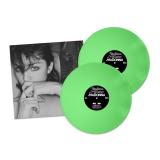
Since 2006, listeners have been curious about the origin of the label name Italians Do It Better. Some say it's an homage to Italo Disco, others guess it's related to ancestry, but in fact it's a nod to the iconic T-shirt Madonna wears in the "Papa Don't Preach" video circa 1986.
Fast forward to a world pandemic... To encourage creativity & lift spirits, Italians Do It Better President, Megan Louise asked every artist “If you could cover your favourite Madonna song…What would it be?”
As a tribute to their label muse & the impact Madonna’s music has had on the world around us, Italians Do It Better are sharing a compilation of covers simply titled “Italians Do It Better”. One of the tracks (“Lucky Star” by Club Intl) is even produced by Max Kamins, the son of Mark Kamins, the New York DJ who helped break Madonna in the early 1980's. From the experience he says “Dance music was the soundtrack of my early childhood. Working on "Lucky Star" reconnected me not only to my father, but also reminded me that a good song is timeless".
Executive produced by Johnny Jewel, the compilation is a passport to 20 covers from the bedrooms of 19 artists across 10 different countries.
- Cannock - In A Discord
- One Day In June
- So Please
- Blank Thoughts
- Cycle Stealing
- Love Devotion Ballad
- Melancholy Evening
- Subway Smell
- Waiting For The Night
- Japan (Bonus Track)
- Digitalgefühle Im Synthetikland (Bonus Track)
- Requiem - On This Earth (Introduction)
- On This Earth (Hunters)
- Angel
- Crystal Ball
- Bottom Line
- Steven
- Listen Boy
- It‘s Hard To Imagine
Die frühen Achtzigerjahre waren für den härteren Rock aus Deutschland eine ganz besondere Zeit. Der ausufernde Progressive Rock und der sogenannte Krautrock waren am Ausklingen, der Punk musste dem New Wave weichen und der Heavy Metal begann Fahrt aufzunehmen.
Einige Bands saßen zwischen 1980 und 1983 zwischen den Stühlen und können gar als „das fehlende Glied“ bezeichnet werden. In diesem Boxset
befinden sich gleich drei Schmuckstücke und Geheimtipps, die heute sogar aufregender klingen als damals. REQUIEM kamen aus Stuttgart
und lieferten auf ihrer einzigen LP einen Mix aus Hardrock, Pomprock und Progressive Rock. Gitarrist Tommy Clauss wurde später mit Bands wie ZAR
berühmt, bei denen auch ex-Uriah Heep Sänger John Lawton dabei war.
SPHINX ist eine andere Geschichte, denn hier haben ein paar italienische Gastarbeitersöhne im Raum Stuttgart eine Band gegründet. So wurde
das Debüt „Here We Are“ vom Label als „Made In Italy“ verkauft, was natürlich nur eine Verkaufsstrategie war. SPHINX nehmen das voraus,
was uns Jahre später unter Anderem Dream Theater lieferten. Eine frühe Version des Prog Metal, oder ein Vorläufer davon. Das gleiche Album wurde
von einem anderen Label 1985 als „Burning Lights“ erneut ins Rennen geschickt; dieses Mal mit einem Heavy Metal-tauglichem Coverartwork.
LIMERICK aus Saarbrücken haben als Schülerband 1980 eine heute sehr rare Single aufgenommen. Das einzige Album erschien dann 1983 – mit
deutschen Texten! Regional war der kräftige Rock mit Dialekt im Gesang sehr erfolgreich und spielte Shows mit Kim Wilde und Climax Blues Band.
Die Gruppe ist heute wieder aktiv und wurde kürzlich im Magazin Rock Hard gefeatured
- A1: Music Is My Life Ft. Unlimited Touch
- A2: You Got Me Dancing Ft. Audrey Wheeler & Cindy Mizelle
- B1: Come Away Ft. Kerri Chandler
- B2: Seven Mile Ft. Moodymann
- C1: The Star Of A Story Ft. Lisa Fischer
- C2: Change Your Mind Ft. Bernard Fowler
- D1: All My Love Ft. Robyn
- D2: Free To Love Ft. Karen Harding
- E1: Feel So Right Ft. Honey Dijon
- E2: How He Works Ft. Nico Vega
- F1: Joy Universal Ft. Two Soul Fusion
- F2: Igobolo Ft. Joaquin Joe Clausell
- G1: It's All Good Ft. Bebe Winans, Debbie Winans Lowe & Korean Soul
- G2: Touch The Sky Ft. Tony Momrelle
- H1: Love Has No Time Or Place (Louie Vega & Elements Of Life)
- H2: Dreamin Ft. Cindy Mizelle
Limited repress!
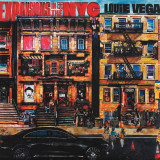
What is it about New York City, that concrete jungle that continually inspires the creative spirit? From Warhol’s Factory to Larry Levan’s Paradise Garage to David Mancuso’s Loft, collectives that celebrate and nurture unfettered, organic artistry have been absolutely intrinsic to the story of this sprawling metropolis. Its latest chapter is being written at the hands of ‘The Maestro’, Grammy Award winner Louie Vega and his Expansions NYC parties, the sound documented in his latest album Expansions In The NYC (Nervous Records).
Starting in February 2019 in Manhattan and Brooklyn venues, Vega’s Expansions NYC parties have their origin not in his revered prowess as a DJ but rather his whole-hearted appreciation of the different elements of the dance floor surrounding him: the dancers, the musicians who bring their instruments to join him ad-hoc on the night, the small, dedicated crowd of clubbers whose ears to the ground keep them informed on the underground party information. The events included 6-hour DJ Sets with Louie under his select curation, and would usually end with 3 AM jam sessions involving keyboardists, guitar players and poets all performing in front of a jam packed crowd. In just a few short years the Expansions NYC events have evolved into an NYC-clubland institution, an intimate celebration of house, funk, disco, afro, R&B and more.
As with his parties, so goes his album. The collective vibe that forms the beating heart of Expansions NYC parties is absolutely front and centre in Expansions In The NYC, Vega drawing in one of the most comprehensive lists of collaborators in recent memory. House heavyweights Honey Dijon, Joe Claussell, Moodymann, Kerri Chandler and Anané rub up against legendary vocalists Bernard Fowler, Cindy Mizelle, Lisa Fischer, Audrey Wheeler and Tony Momrelle. Gospel royalty BeBe Winans and Debbie Winans, pop icon Robyn and rising star Karen Harding sit alongside disco-era champions Unlimited Touch, Cuban jazz pianist Axel Tosca, Nico Vega, Two Soul Fusion with Josh Milan and Vega and underground legend DJ Spinna. At the centre of it all, fingerprint on every beat, touch on every groove, sits a master at work, weaving the individual threads into a rich dance music tapestry.
"In the past few years I’ve found new inspiration both from the musicians I’m working with and the audiences coming to see me at my DJ shows,” Vega says. “So for me this album represents new beginnings, bringing together a beautiful mosaic of artistic perspectives to express musically what we call Expansions In The NYC."
At its heart, Expansions In The NYC is a love letter to New York, as much as melting pot as the city it represents, the scope of its line-up possible only because of the influence and reverence of Vega the artist, the DJ, the producer, the curator. In creating this album, Louie Vega has once again utterly enriched the lives and libraries of music lovers the world over, far beyond the hustling streets of NYC that have so indelibly left their mark on his work.
Born in Antwerp in 1939, Ferre became a true icon in the sixties, adored by youngsters and hippies and hated by the establishment. His successful debut album in 1966, which featured the hits “Ring Ring, I’ve Got to Sing,” “Crucified Jesus,” and “Drunken Sailor,” brought him an international breakthrough with concerts in Paris, London, and Hamburg, leading to a contract with the famous French Barclay label. The next three albums did not equal the initial commercial success — a pressure the music business was happy to put on his shoulders. Still, these three albums, reissued in their original packaging and artwork on vinyl for the very first time, are loaded with hidden gems, combining folk, blues, and psychedelics in Ferre’s original songs.
Grignard sadly succumbed to throat cancer in 1982 at the early age of 43.
Mwandishi is one of Herbie Hancock's first departures from his traditional jazz sounds. The album which was recorded in a single session on New Year's Eve is a much more spacier effort compared to his earlier works, created by Hancock's us of electronic effects devices. His sextet is the most progressive ensemble he played with and he took the next step in the future of jazz. The music on Mwandishi is beautifully atmospheric and the long tracks leave plenty of space for improvisations by the group. A fantastic recording with sonic layers of earth, existence and expression.
Herbie Hancock is one of the most prolific jazz pianists of the 20th century. A child prodigy, he played with the greats such as Donald Byrd and Miles Davis. As he was a bit of a geek, he enjoyed gadgets & buttons and he was one of the first to embrace and master the electric piano, but he always stayed true to the acoustic sound. In fact, he always bounced back and forth between his electronic and acoustic sound, touching upon almost every development in R&B, Funk and Jazz while retaining an original and distinctive voice.
Released by Hegoa Records and Night School Records.
Greatest Heads is the fourth album by the radical Basque- Berlinesque group Al Karpenter. A deconstruction of structured “rock” music, here Al Karpenter re-imagine “the band” to explore the intersection between Free music, afro-beat, the avant garde and gonzo rock.
If Theodore Adorno wrote “To Write Poetry after Auschwitz is Barbaric” in 1949, Al Karpenter attempts to answer the difficult question today; what kind of music can be done in the face of a genocide? Álvaro Matilla, Marta Sainz, Enrique Zaccagnini & Mattin’s response to the planet’s slipping into a vortex of hate is to create a music ecstatic, a music of protest bursting with multiple musical languages and glossaries, full of overlapping histories and thrilling tensions.
Greatest Heads posits a plurality of musics both in opposition and intertwined: Al Karpenter play rock instruments pulled apart in the studio in post-production. Distorted rhythm chunks bit-crushed and dissipated, segments of freedom oppressed by waves of sound invading from every direction. The interplay between the chief instrumentalists and renowned, storied sound artist Mattin creates something akin to ESP freedom-seekers Cro Magnon playing in Miles Davis’ early 70s groups, The Los Angeles Free Music Society tightening up into a clenched fist of plunderphonics and runaway percussion.
We Are All Karpenters opens Greatest Heads with the most straight-forward song refrain of the record accompanied by a band that soon crash into eruption, imagining Sun City Girls in full free rock mode.
The modulating synth sound soon sucks the band into its wake to create a spine-chilling climax of distorted sound, made fully orgasmic with mastering engineer Rashad Becker’s attention to detail. On Izugarrizko Buruak (Greatest Heads), Matilla intones in Basque over a mangled distorto-beat. A Brand New Astraphobia creates a black space for a heavily processed guitar to blow up before falling to earth at night, a gentle figure serenading the coming end.
On Side B, the band begins by being masticated by a brutal phaser, squelching and stretching the music into new territories. The overt message of Stop The Genocide! is besieged by violence before Worm City aggressively samples the ghosts of soul music, mixing in noise bursts, prepared piano and swiping, abstracted sound. Epic closer Perfect Love feels like a beat poetry performance on a burnt world, still grasping for community, for home, for some sort of human love. A Mad love, then; an angry love fuelled by solidarity and collaboration.
The band’s cascading layers of references and polyglottal musics attempt to create the perfect lover, alive with rage and disorientating ecstasy: Al Karpenter.
- Nihilism For Dummies
- Crap Circles
- Pain In The Assery
- Biblical Loophole
- Vinegar, Soap, & Holy Water
- Counterfeit Coins
- Frequency Illusion Master
- Liquidate The Living Body
- All Hot Dogs Are In-Bred
- Closed Fists Closed Minds
- End Of An Ear
Deaf Club continues their scathing indictment of society with their second full-length album, being released on Southern Lord and Three One G: We Demand a Permanent State of Happiness. Fast wit and faster blast beats are mainstays of the band, but there is also a sense of growth. This is their strongest songwriting yet, incorporating more hooks and good old-fashioned moments to mosh while staying as weird as ever. Raygun guitar riffs and unexplainable sounds abound. Justin Pearson, Brian Amalfitano, Scott Osment, and Jason Klein excel at inciting emotion in the face of apathy and voicing disgust amid a world rapidly burning.
Transparent green vinyl. After an uncomfortably long five-year hiatus-likely spent arguing about time signatures, chord progressions, and who forgot to bring snacks to rehearsals-Glutton is finally back. The beloved (by at least a few people) trio is ready to unleash their questionable wisdom upon an unsuspecting world with their upcoming album: "Skiva heter Vishnu!" On their latest outing, Glutton boldly ditches vocals (likely realizing that nobody was really listening to their lyrics anyway) and commits fully to an instrumental format. This time around, it's only guitar, bass, and drums-because who needs keyboards or vocalists when you have enough distortion pedals and élan? Guitarist Eirik Orevik Aadland (Spurv), bassist Ola Mile Bruland (Actionfredag, Jordsjo), and drummer Jonas Eide Hollund (Mt. Mélodie) clearly didn't bother to consider commercial viability while crafting this sonic oddity, delivering tracks like "Hallux Valgus," "Orkensur," and "Rematusenogennatt" with absurd seriousness and delightfully misplaced confidence. Expect a reckless fusion of punk attitude, jazz complexity, and prog rock pretentiousness, presented with complete sincerity and zero self-awareness (well, almost zero). Each track is carefully constructed to give the illusion of a band deeply serious about their art, while simultaneously admitting that they may have no idea what they're doing. Whether you're a sophisticated music connoisseur with an ear for complexity, or just someone who enjoys pretending to appreciate weird music, Glutton's latest record promises to be precisely the type of organized hotchpotch you didn't realize your life was lacking. "Skiva heter Vishnu!" - because of course it does.
- Dubinator - Dubinator (Jam Hot Version)
- Martha And The Muffins - Echo Beach (Lee Groves Remix)
- Dubmones Feat. Earl 16 & Oku Onuora - I Believe In Mira
- Dubblestandart - Evil Burma Dub
- Dubxanne Feat. Claire Parsons - Running Up That Hill
- Dub Stax - Time Is Tight (Dub)
- Don Letts Dub Cartel - One People
- Aaron - Blue Moon (Dub Edit)
- Dubblestandart Feat. Marcia Griffiths - Holding You Clo
- Dubxanne Feat. Toogah - Fade To Grey
Echo Beach proudly presents: Don Letts - The Rebel Dread - legendary film and video director, disc jockey and musician. Don Letts, in his capacity as a selector (it"s not for nothing that he hosts his own show on BBC6 radio), enthusiastically accepted the invitation to create a compilation from Echo Beach"s extensive catalog to mark its 30th anniversary. A splendid and crisp selection.
- A1: The Look
- A2: The Bay
- A3: Heartbreaker
- A4: Lately
- A5: A Thing For Me
- B1: Love Letters
- B2: My Heart Rate Rapid
- B3: I'm Aquarius
- B4: Reservoir
- B5: The Light
- C1: Salted Caramel Ice Cream
- C2: Everything Goes My Way
- C3: Corinne
- C4: This Could Be Beautiful (It Is)
- C5: Night Owl
- D1: Old Skool
- D2: Walking In The Dark
- D3: Things Will Be Fine
- D4: Right On Time
- D5: You Could Easily Have
Yellow & Blue 2x12" Limited Edition[34,66 €]
Celebrating 20 years of defining, and redefining, electronic alt-pop - Metronomy ‘GREATEST HITS’ is the first comprehensive collection of their “smash hits” spanning across all 7 studio albums, and will be release alongside a separate album of BBC Sessions.
Formed in 1999 by Joseph Mount, Metronomy has released six acclaimed studio albums and become one of the UK's most influential electronic acts. Known for their distinctive visual aesthetic, innovative production techniques, and energetic live shows, Metronomy continues to bridge the gap between experimental electronic music and accessible pop. From the charm of early tracks like "You Could Easily Have Me" to the sophisticated pop of "The Look" and the dance floor magic of "Love Letters," Metronomy's distinctive sound has consistently pushed boundaries while maintaining their unmistakable identity.
The previously unreleased BBC Sessions reveal another dimension to these songs, capturing their magnetic live energy and Joe’s evolving approach to arrangement and performance, all recorded between 2009-2019 across BBC6Music, BBC Radio 1 & BBC Radio 2.
Australia's powerhouse Hammond Organ trio Cookin' On 3 Burners serve up a heavy double-sider, offering DJs and collectors a taste of what's to come from their first studio LP in six years, due October 2025. With a 27-year legacy in the global funk and soul scene, CO3B have earned praise from the likes of Dusty Groove, Wax Poetics, and Rolling Stone Australia, and boast over 2 billion streams worldwide — thanks in part to their breakout hit "This Girl" (Kungs remix).
Side A – Cookin' The Books
A gritty, upbeat Hammond-led instrumental cooked low and slow in the heart of Melbourne's funk scene. It's all business up front — deep pocket drums, greasy organ licks, and guitar work that snaps and struts. No vocals, no fat — just a raw funk workout that's ready for the crates.
Side B – Give a Little Bit More (feat. Stella Angelico)
A classic-feeling, mid-tempo soul joint with a message that cuts deep. Longtime collaborator Stella Angelico delivers a powerful vocal performance about generosity, empathy, and turning things around when it matters. With uplifting lyrics, smooth horns, and a groove that nods to vintage 45s, this one lands straight in the heart — timeless, spiritual, and soul-drenched.
Captured live to tape at Soul Messin' Studios using vintage gear, the record oozes warmth and authenticity. Supported with airplay from Craig Charles (BBC6) and limited to just 500 copies on black vinyl in a Soul Messin' Records disco sleeve, this 45 is a must-stock item for funk, soul, and groove-focused retailers.
FFO: The Meters, El Michels Affair, Menahan Street Band, Quantic, Daptone Records
- A1: Malavoi - Te Traigo Guajira
- A2: Los Caraibes - Donde
- A3: Tropicana - Amor En Chachacha
- A4: Ryco Jazz - Wachi Wara
- A5: Eugene Balthazar - Dap Pignan
- A6: Roger Jaffort - Oye Mi Consejo
- A7: Les Kings - Oriza
- B1: Les Supers Jaguars - Tatalibaba
- B2: Super Combo De Pointe A Pitre - Serrana
- B3: L'ensemble Abricot - Se Quedo Boogaloo
- B4: Henri Guedon - Bilonga
- B5: Les Aiglons - Pensando En Ti
- B6: Los Martiniquenos - Caterate
In Guadeloupe, many people think that jazz and ka music are like a ring and a finger. To some extent, the same could be said about so called Latin music and the music played in the French West Indies.
Both aesthetics were born in the Caribbean and bear so many connections that they can easily be considered cousins. In constant dialogue, there are lots of examples of their fruitful alliance and have been for a while. The English country dance that used to be practiced in European lounges came to be called kadrille in Martinique and contradanza in Cuba. They both featured additional percussion instruments inherited from the transatlantic deportation. Drawing from shared feelings about the same traumatized identity – later to be creolized – it would be hard not to assume that they were meant to inspire each other. The golden age of the orchestras that graced the Pigalle nights during the interwar period further proves the point. As soon as the 1930s, Havana-born Don Barreto naturally mixed danzón and biguine music in a combo based at Melody's Bar. In the following decade, Félix Valvert, a conductor who was born and raised in Basse-Terre in Guadelupe, also worked wonders in Montparnasse with La Coupole, which was an orchestra made up of eclectic musicians. Afro- Caribbean performers of various origins were often hired on rhythm and brass sections in jazz bands, which used to enliven the typical French balls of the capital. In the 1930s and onwards, Rico’s Creole Band was one of them.
Martinican violinist-clarinettist Ernest Léardée, who would become the king of biguine music as well as the main figure of French Uncle Ben's TV commercials (a dark stigma of post-colonial stereotypes), had musicians from the whole Caribbean sphere play at his Bal Blomet – and they all enchanted "ces Zazous-là" (according the words of Léardée's biguine-calypso piece). In les Antilles (French for French West Indies), music history started to speed up in the 1950s, when trade expanded and radio stations grew bigger. The Guadelupean and Martiniquais youth tuned in their old galena radio sets to South American and Caribbean music. As for the women traders, les pacotilleuses, they bought and sold goods across different islands (the "passing of items through various hands" was thought to be most pleasurable) and brought back countless sounds in their luggage. Such was the case of Madame Balthazar, who once returned from Puerto Rico with the first 45rpm and 33rpm to ever enter Martinique.
Out of this adventure was created the famous Martinican label La Maison des Merengues, a music business she opened and undertook with her husband and which proved to be a major landmark. At the end of the 1950s, in Puerto Rico, Marius Cultier competed in the Piano International Contest playing a version of Monk's Round 'Midnight. He won the first prize and this distinction foreshadowed everything that was to come. Cultier, the heretic Monk of jazz, was quickly praised for writing superb melodies, always tinged with a twist that conferred a unique sound to his music. It didn't take long for the gifted self-taught musician to get to play with Los Cubanos, making a name for himself thanks to his impressive maestria on merengues.
The rest is history. Besides, in the late 1950s, Frantz Charles-Denis, born into the upper middle class in Saint-Pierre and better known by his first name Francisco, went back home after working at La Cabane Cubaine – a club located rue Fontaine where he had caught the Latin fever. Francisco's music was therefore heavily marked by his Cuban cousins' influence, which gave the combos he led a specific style and also led to renewal. Things were swinging hard in La Savane, located in the main square in Fort-de-France. He set up the Shango club close by and tested out the biguine lélé there, a new music formula spiced up with Latin rhythms. Soon afterwards, fate had him fly to Puerto Rico and Venezuela.
As for percussionist Henri Guédon (percussions were only a part of his many talents), he was born in Fort-de-France in May 22nd 1944, the day marking the celebration of the abolition of slavery. As an old man, he could remember that in " his father's Teppaz, a lot of hectic 6/8 music was constantly playing...". In the opening lines of his Lettre à Dizzy, a small illustrated collection of writings published by Del Arco, he highlighted the huge impact that cubop had on him as a teenage boy, around 1960. He eventually turned out to be the lider maximo in La Contesta, a big band steeped in Latin jazz. He was also the one who originated the word zouk to describe music which brought the sound of the New York barrio to Paris. It was the culmination of a journey that started in Sainte-Marie: "a mythical place for bélé, the equivalent of Cuban guaguancó". In the early 1960s, the tertiary economy developed to the detriment of agriculture. Yet rural life was where roots music emerged in Martinique and in Guadeloupe.
Record companies played a major part in the process of Latin versions sweeping across the islands – before reaching everywhere else. Producer Célini, boss of the great Aux Ondes label, and Marcel Mavounzy, both the head of Émeraude records - a firm which was founded in 1953 - as well as the brother of famous saxophonist Robert Mavounzy, were big names to bear in mind. Although there were many of them - all of whom are featured on this record - Henri Debs was definitely the major figure in the recording adventure. He proved to be so influential that he even got compared to Berry Gordy. In the mid 1950s, when he acquired his first Teppaz, he worked on his first compositions: a bolero and a chachacha. Then, he became the one man who made people discover Caribbean music, from calypso to merengue. He was among the first ones to rush out to San Juan, Puerto Rico, to buy records and distribute them through a store run by one of his brothers in Fort-de-France. He had members of the Fania All Star come and perform there, which he was madly proud about. He was also the first one to pay attention to Haitian music, such as compas direct and various other rhythms which would soon flood the market. As a result, many of the combos hitting his legendary studio would end up boosted by widespread "Afro-Latin" rhythms. However, he never denied his identity: gwo ka drums were given a major role, although they were instruments which had long been banned from the "official" music spheres. The present selection bears witness to such a creative swarming. Here are fourteen tracks of untimely yet unprecedented cross-fertilization: all types of music rooted in the Creole archipelago have found their way, whatsoever, to the tracklisting. Whether originating from the city or being more rural, they all go back to what Edouard Glissant, in an interview about the place of West Indian music in the Afro-American scope, called "the trace of singing, the one which got erased by slavery." "It is so in jazz, but also in reggae, calypso, biguine, salsa... This trace also manifests through the drums, whether Guadelupean, Dominican, Jamaican or Cuban... None of them being quite the same. They all point to the idea of a trace, seeking it out and connecting to each other through it. This is the hallmark of the African diaspora: its ability to create something new, in relation to itself, out of a trace. It may be the memory of a rhythm, the crafting of a drum, a means of expression which doesn't resort to an old language but to the modalities of it." The opening track features one of the emblematic orchestras of this aesthetic identity, criscrossing many music types from the archipelago. The 1974 Ray Barretto guajira – Ray Barretto was a major New York drummer influenced by Charlie Parker and Chano Pozzo – is magnificently performed by Malavoi, a legendary Fayolais group (i.e from Fort-de-France). Additionally, the compilation ends on a piece by Los Martiniqueños de Francisco. It symbolically closes the circle as it is a genuine potomitan of Martinique culture which also functions as a tireless campaigner for Afro-Caribbean music. Practicing the danmyé rounds (a kind of capoeiria) to the rhythm of the bèlè drum, it delivers a terrific Caterete, a kind of champeta of Afro- Colombian obedience which was originally composed by Colombian Fabián Ramón Veloz Fernández for the group Wgenda Kenya. The icing on the cake is Brazilian Marku Ribas, who found refuge in Martinique in the early 1970s, bringing his singing to the last trance-inducing track. These two "versions" convey the whole tone of a selection composed of rarities and classics of the tropicalized genre, swarming with tonic accents and convoluted rhythms. It is the sort of cocktail that the West Indians never failed to spice up with their own ingredients. For instance, the Los Caraïbes cover of Dónde, a famous Cuban theme composed by producer Ernesto Duarte Brito, has a typical violin and features renowned Martinique singer Joby Valente and his piquant voice.
The track used to be – or so we think – their only existing 45rpm. The meaningful Amor en chachachá by L'Ensemble Tropicana, a band which included Haitian musicians among whom was composer and leader Michel Desgrotte, also recalls how Latin music was pervasive in the tropics in the mid-1960s. They were the ones keeping people dancing at Le Cocoteraie in Guadelupe and La Bananeraie in Martinique. Around the same time, another "foreign" band, Congolese Freddy Mars N'Kounkou's Ryco Jazz, achieved some success on both islands by covering Latin jazz classics – such as their adaptation of Wachi Wara, a "soul sauce" by Dizzy Gillespie and Chano Pozo whose interweaving of strings and percussions can have anyone hit the dancefloor. How can you resist Dap Pinian indeed, a powerful guaguancó by Eugene Balthazar, performed by the Tropicana Orchestra and published by the Martinique-founded La Maison des Merengues? It also acts as a symbol of the maelstrom at work. Going by the name Paco et L'orchestre Cachunga, Roger Jaffory used to play guaguancó too: his Fania-inspired Oye mi consejo is one example of his style. Baila!!!!! Dancing was also one of the Kings' focus points. Oriza is a Puerto Rican bomba and a "classic" originally composed by Nuevayorquino trumpeter Ernie Agosto, which reserves major space for brasses, giving it a special sheen.
Emerging from the New York barrios crucible was also La Perfecta, a Martinique group originating from Trinidad, whose name directly references the totemic Eddie Palmieri figure as well as his own band, also called La Perfecta. Here they borrow Toumbadora from Colombian producer and composer Efraín Lancheros and interpret it by emphasizing percussions, which set fire to the track even more than the wind instruments. The same goes for Martinique's Super Jaguars, who use Tatalibaba – a composition by Cuban guitarist Florencio "Picolo" Santana which was made famous by Celia Cruz & La Sonora Matencera – as a pretext for sending their cadences into a frenzy. In a more typically salsa vein, the Super Combo, a famous Guadelupean orchestra from Pointe-Noire that was formed around the Desplan family and had Roger Plonquitte and Elie Bianay on board, adapt Serana, a theme by Roberto Angleró Pepín, a Puerto Rican composer, singer and musician also known for his song Soy Boricua. Here again, their vision comes close to surpassing the original. In the 1970s, L'Ensemble Abricot provided a handful of tracks of different syles, hence reaching the pinnacle of the art of achieving variety and giving pleasure. They played boleros, biguines, compas direct, guaguancó and even a good old boogaloo - the type they wanted to keep close to their hearts for ever, "pour toujours", as they sang along together in one of their songs. Léon Bertide's Martinican ensemble excelled at the boogaloo which had been composed by Puerto Rican saxophonist Hector Santos for the legendary El Gran Combo.
Three years later, in 1972, Henri Guédon, with the help of Paul Rosine on the vibraphone, tackled the Bilongo made famous by Eddie Palmieri. Such a classic!!!!! And so were the Aiglons, the band from Guadelupe: choosing to execute Pensando en tí, a composition by Dominican Aniceto Batista, on a cooler tempo than the original, they noticeably used a wonderfully (un)tuned keyboard in place of the accordion. On the high-value collectible single – the first one released by Les Aiglons under the Duli Disc label – there is a sticker classifying the track under the generic name "Afro". Now that is what we call a symbol. Jacques Denis
Mythical soul/boogie record recorded in Louisiana by Nigerian multi instrumentalist Rick Asikpo when he was studying in Houston. Layers of synths wash over drawn out, Earth, Wind and Fire inspired grooves, moving from the uptempo “Disco Life” and “Jam” to the languid boogie and two step soul of “Love” and Donny Hathaway-esque “Let’s Get High”. The album is shot through a Texan/Nigerian filter that stands as a missing link between the dancefloor experiments of Houston and Lagos. As featured on Soundway’s seminal “Doing It In Lagos” compilation.
- A1: The Look
- A2: The Bay
- A3: Heartbreaker
- A4: Lately
- A5: A Thing For Me
- B1: Love Letters
- B2: My Heart Rate Rapid
- B3: I'm Aquarius
- B4: Reservoir
- B5: The Light
- C1: Salted Caramel Ice Cream
- C2: Everything Goes My Way
- C3: Corinne
- C4: This Could Be Beautiful (It Is)
- C5: Night Owl
- D1: Old Skool
- D2: Walking In The Dark
- D3: Things Will Be Fine
- D4: Right On Time
- D5: You Could Easily Have
Black 2x12" Vinyl[32,35 €]
Celebrating 20 years of defining, and redefining, electronic alt-pop - Metronomy ‘GREATEST HITS’ is the first comprehensive collection of their “smash hits” spanning across all 7 studio albums, and will be release alongside a separate album of BBC Sessions.
Formed in 1999 by Joseph Mount, Metronomy has released six acclaimed studio albums and become one of the UK's most influential electronic acts. Known for their distinctive visual aesthetic, innovative production techniques, and energetic live shows, Metronomy continues to bridge the gap between experimental electronic music and accessible pop. From the charm of early tracks like "You Could Easily Have Me" to the sophisticated pop of "The Look" and the dance floor magic of "Love Letters," Metronomy's distinctive sound has consistently pushed boundaries while maintaining their unmistakable identity.
The previously unreleased BBC Sessions reveal another dimension to these songs, capturing their magnetic live energy and Joe’s evolving approach to arrangement and performance, all recorded between 2009-2019 across BBC6Music, BBC Radio 1 & BBC Radio 2.
- A1: Talco - Noche Especial
- A2: Dj Lelewel - Piano Dub (Milord Remix)
- A3: El Latino Man - Boss En San Andrés
- A4: Ray Ridha - Non Va Bene (Luca Sorrentini Remix)
- B1: Vanitas By Contessa Pinina Garavaglia - Audace Ci Piace (New Sound Mix)
- B2: Tonny Montana - Amore Me Conbenso
- B3: All Trouvee - Darling (Instrumental)
- B4: Gabriella Bove - Autoblu
An incredible journey through the dark and seductive soundtracks of the Italian nights, this compilation takes you deep into the after-hours soul of Rimini, Riccione, and Milan between the late 1980s and the early 1990s — a period of wild experimentation, underground parties, and sonic exploration. Eight rare and visionary tracks, all produced in the Belpaese, reflect a sound that was too ahead of its time to be fully appreciated back then, yet feels incredibly fresh and relevant today, as if they were made for the dancefloors of now.
In the middle of this evocative collection, a blasting remix by Milord stands out — a peak-time weapon that has already destroyed dozens of dancefloors with its hypnotic energy and raw power. Also featured is the stunning debut of Luca Sorrentini, who breathes new life into an obscure Italo-Arabic track originally composed by Ray Ridha
Credits.
- No Sabes Que Me Siento Bien
- Mujer
- Dama
- Son Las 5
- En El Campo
- Everybody Is Free Bonus Track
- Ensueño
- El Tren Del Señor Taylor
- Atardecer De Un Verano
- Buscando Un Hogar
- Psiquiatra
- Dirty Girl Bonus Track
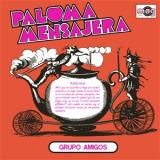
"Paloma mensajera" (featuring members of New Juggler Sound / Laghonia) shows the shift that was taking place within Peruvian rock away from psych and hard rock which had predominated during the early 70s. The style adopted by Grupo Amigos (and other bands and artists during this period) highlights the influence of soft rock, UK, US and Latin American folk rock and, above all, the desire to keep the melodic greatness of The Beatles alive. This reissue includes bonus tracks and extensive liner notes. DESCRIPTION "Paloma mensajera" (featuring members of New Juggler Sound / Laghonia) shows the shift that was taking place within Peruvian rock away from psych and hard rock which had predominated during the early 70s. The style adopted by Grupo Amigos (and other bands and artists during this period) highlights the influence of soft rock, UK, US and Latin American folk rock and, above all, the desire to keep the melodic greatness of The Beatles alive. The positive reception albums by artists such as We All Together, Telegraph Avenue and Zulu garnered between 1972 and 1975, marked a change of paradigm and in preferences within the Peruvian rock scene. Eclecticism gained new ground, to the detriment of the sectarian and orthodox, while melody grew more present and visible, moving away from the progressive experimentation that typified underground Peruvian rock up to the beginning of the 70s. For their first single on MAG, included on this reissue, the band adopted a formula in which Beatles harmonies converged symmetrically with folk motifs. 'Dirty Girl' was a hit on the radio. A full album followed but only a fairly small number of copies of the album were pressed, which seems to have been the main reason for omitting it from the historical accounts of Peruvian rock music from the late 90s onwards. In "Paloma mensajera" all compositions were penned by the group, after several years during which cover versions were a staple. Some of the musical resources that the band had at their disposal in terms of composition and arrangements are striking and even surprising, considering that they were a debut band, whose members were under the age of 20. The arrangements included the clever use of a Moog synthesizer which had just arrived at the MAG studio. The success achieved by the Beatles tribute performances played by the members of Grupo Amigos for decades have eclipsed the songs that Edmundo, Andrés Da Ros and Simón Ames composed with youthful enthusiasm and energy between 1972 and 1973 to the point where they have almost been forgotten. This re-release of "Paloma mensajera" should help rectify this major injustice. It includes bonus tracks and extensive liner notes.
- A1: Heartbreaker (Bbc 6Music Session - February 2008)
- A2: What Do I Do Now? (Bbc 6Music Session - June 2009)
- A3: On Dancefloors (Bbc 6Music Session - June 2009)
- A4: Not Made For Love (Bbc Radio 2 Session - November 2009)
- B1: She Wants (Bbc 6Music Session - April 2011)
- B2: Some Written (Bbc 6Music Session - April 2011)
- B3: The Look (Bbc 6Music Session - April 2011)
- B4: Corinne (Bbc 6Music Session - June 2011)
- C1: Love Letters( Bbc 6Music Session - March 2014)
- C2: I’m Aquarius (Bbc Radio 1 Session - March 2014)
- C3: Reservoir (Bbc 6Music Session - June 2014)
- C4: Night Owl (Bbc 6Music Session - July 2016)
- C5: Old Skool (Bbc 6Music Session - May 2017)
- D1: You Could Easily Have Me (Bbc 6Music Session - July 2019)
- D2: Wedding Bells (Bbc Radio 1 Session - September 2019)
- D3: Lately (Bbc Radio 1 Session - September 2019)
- D4: Salted Caramel Ice Cream (Bbc 6Music Session - October 2019)
Celebrating 20 years of defining, and redefining, electronic alt-pop - Metronomy ‘GREATEST HITS’ is the first comprehensive collection of their “smash hits” spanning across all 7 studio albums, and will be release alongside a separate album of BBC Sessions.
Formed in 1999 by Joseph Mount, Metronomy has released six acclaimed studio albums and become one of the UK's most influential electronic acts. Known for their distinctive visual aesthetic, innovative production techniques, and energetic live shows, Metronomy continues to bridge the gap between experimental electronic music and accessible pop. From the charm of early tracks like "You Could Easily Have Me" to the sophisticated pop of "The Look" and the dance floor magic of "Love Letters," Metronomy's distinctive sound has consistently pushed boundaries while maintaining their unmistakable identity.
The previously unreleased BBC Sessions reveal another dimension to these songs, capturing their magnetic live energy and Joe’s evolving approach to arrangement and performance, all recorded between 2009-2019 across BBC6Music, BBC Radio 1 & BBC Radio 2.