"Don't Turn Me From Your Door" - John Lee Hooker (g, voc), Earl Hooker, Eddie Kirkland (g), a.o
John Lee Hooker is not only a mystery but also an interesting man to study. Some, like the author Jacques Demêtre called the musician from Mississippi »the most raw and African of all blues players from a musical point of view«, while the critic Net Hentoff was awestruck by Hooker’s unfiltered power of expression that could scare the pants off a listener taken unawares. The numbers on this LP bear witness to the fact that Hooker’s musical language could stir one’s emotions deeply, even without the meaty 'boom boom'. Each title is like a raw diamond, which is intentionally uncut and is to be perceived with directness. With a stutter and a slur in his speech, the singer declaims his song over a twangy guitar, which is driven along by the rhythmic meter. A final farewell is taken sluggishly and sullenly in the forthright text of "You Lost A Good Man", and even a song without words ("Misbelieving Baby") ponders a question in a purely instrumental monologue. Apart from a dash of boogie ("Pouring Down Rain") Hooker avoids all manner of sweet sounds and harmonies. He remains austerely raw, mercilessly honest, occasionally unforgiving and denies all thoughts of any kind regarding going 'back to the roots'. This sound IS the root of it all.
This Speakers Corner LP was remastered using pure analogue components only, from the master tapes through to the cutting head. More information under pure-analogue.
All royalties and mechanical rights have been paid.
Recording: 1953 in Cincinnati (OH) and July 1961 in Miami (FL)
Cocteau Twins were a Scottish rock band active from 1979 to 1997. The original members were singer Elizabeth Fraser, guitarist Robin Guthrie, and bassist Will Heggie, who was replaced by multi-instrumentalist Simon Raymonde in 1983. The group has earned much critical praise for its innovative, ethereal sound and the distinctive soprano vocals of Fraser.
Four-Calendar Café is the seventh album by Scottish band Cocteau Twins. It was originally released on 18 October 1993 on Fontana. The album distinguished itself from the rest of the Twins' catalogue in two major areas: The sound was much more pop-oriented and less ambient than previous works, and Liz Fraser's lyrics were much more intelligible than usual.
Milk & Kisses is the eighth and final studio album by Cocteau Twins, issued by Fontana Records in March 1996. It proved to be their last
The song ''Rilkean Heart'' was a homage to Jeff Buckley, who was a lifelong lover of the work of poet Rainer Maria Rilke.
only 1 copy exists of this heavy melodic progressive concept lp valued in excess of £10,000. fresh from the incredible success of Rick Wakemans early concept lps (he drummed with Wakemans band) Barney and his ex band mates Warhorse made this sensational lost heavy prog lp as a promo acetate to get an official release, Barney wrote all the songs and sings. Musically complex it begins with a spoken intro and tells the tale of Koneg Son Of Odin, as he quests to find meaning and death in battle. Keyboards and guitar interweave, with further spoken interludes, and culminating in an epic prog workout featuring fluid soloing electric leads as Koneg dies on the battlefield and is taken by Valkyries to Valhalla. The original gold hand made cover is reproduced as a gatefold with sleevnotes by the actual Rick Wakeman. Barney James, an ex British Army Commando, and ex Gracious, Legend, and Warhorse, and actor in The Sweeney and Derek Jarmans Jubilee, is also now in Valhalla, and his lost lp is here Issued for the first time with the full permission of his two daughters.
Hyperspace will be Beck’s 14th album, following 2017’s Colors, which won Best Alternative Music Album and Best Engineered Album, Non-Classical at the 61st GRAMMY Awards earlier this year. Hyperspace’s new dimensions in sound are the result of Beck’s most collaborative efforts to date. Seven of the album's 11 tracks—including single “Uneventful Days” and “Saw Lightning” (as featured in the Beats by Dr. Dre Powerbeats Pro campaign and also included with pre-orders)—feature co-writing and co-production from Pharrell Williams. Elsewhere in Hyperspace, “See Through” is co-written/co-produced by frequent Beck collaborator Greg Kurstin, “Star” is co-written/co-produced by Paul Epworth, “Stratosphere” features back-up from Chris Martin, the album’s title track features guest vocals from Terrell Hines, and “Die Waiting” is co-written/co-produced by Cole M.G.N. with backing vocals from Sky Ferreira. Longtime Beck bandmates Jason Falkner, Smokey Hormel and Roger Manning Jr. feature on much of the album as well.
“The Vale” is in immersive electronic album of dark soundtrack work. It’s the first of several Everyday Dust releases scheduled for Castles in Space in 2021.
Everyday Dust is RJ McConnell. Based in Scotland, RJ ditched piano lessons when he realised I had no interest in being an instrumentalist. Instead he wanted to create his own musical works from the ground up. He goes on, “I was much happier working my way through music theory books on my own and applying my learning to my own music. We had a little home studio when I was a child. My Dad was also a musician and was involved in local amateur theatre where he prepared and operated all the sound cues on reel to reel tape. So from an early age I was messing around with tape machines, making tape loops and recording music. For years I tried to make the most interesting tones I could from a Yamaha home keyboard by passing it through my Dad’s guitar pedals, or recording to tape and playing it back at different speeds etc. My first proper synth was the Roland SH101.” He went on to study music and sound for theatre and worked for many years as a theatre composer before branching into larger events and eventually film and documentary work.
The Vale story starts in 2018. RJ again, “I was brought in as composer for an independent horror short that was being filmed in Istanbul. The film was a vampire movie, very atmospheric and beautifully shot. I was aware of being a Scottish composer on a Turkish film and therefore didn’t want to attempt in any way to make anything that sounded traditionally Turkish. I wanted to represent the idea of these ancient beings who had existed in one of the oldest cities in the world for centuries. I wondered how I could imply this “ancient” world with the instruments I had to hand. I recorded various old metal whistles, which were slowed right down to become eerie arcane horn blasts that sounded like they had come from another time. I also recorded lots of melodica, which was again slowed down to sound like wheezing old harmonium drones. I spent another day recording inside an old piano, plucking individual strings and also hammering them percussively with wooden beaters. Using synthesizers and effects as the “glue” to bring these sounds together I started to work on the cues for the film. I had scored most of the film by the time I heard it was being cancelled. The concept and story had been taken over by a streaming site who wanted to make it into a series - with a drastically different tone and style.
“Later that same year I had worked on a project that incorporated the folklore of a celtic water sprite who kept the waterfalls and streams running smoothly so they could turn the mills of the local village. In return the villagers would bring the water sprite bannocks (Scottish flatbreads) each day. I started to daydream about a darker, Lovecraftian twist on this story. Some Ancient One dwelling in the forests and controlling the water - the very life essence of the village - in return for offerings of the soul. The concept was filed away in the back of my mind for some months.
“The following year I was on a flight to visit my friend in Bodrum. He had been the producer and editor on the original disbanded Vampire film, and I found myself thinking about the project again. I wondered if the sound cue files were still on my laptop, which they were. It had been a year since I’d even heard them. Hearing the eldritch folk-tinged sounds of the whistles and plucked strings my mind instantly returned to the idea of the Lovecraftian folk horror story. I started jotting down notes and musical ideas and by the time I landed in Bodrum I already had the album title - The Vale. Having the album concept and prototype ideas to work with was a huge head start in making the album. Although all of the original cues were so dramatically developed and transformed that they really just served as the initial clay on the wheel.
“I used a Doepfer A100 modular synth to create the animalistic yelps, conches and horns that were improvised over the original cues as a response to the arcane “folk” world of the acoustic instruments. This half-acoustic half-modular landscape was the sonic scene-setter I needed to move onto the composition and musical journey of the album. I composed and developed most of the musical parts on an Oberheim Matrix 6 synthesizer. However all the percussion, rhythmic sequences and ornamental synth sounds were created from improvised modular sessions multitrack recorded. A lot of editing later, the soundtrack to the movie in my mind was finally there.
South London-based band Soothsayers are set to release their ninth studio album 'We Are Many'. Held together by heavy basslines, solid grooves, and socially and politically charged lyrics; the album takes the listener into different sonic spaces with elements of dub, Afrobeat, improvisational jazz and electronica.
The initial steps in recording 'We Are Many' came in January 2019 when the band's founders - saxophonist Idris Rahman and trumpeter Robin Hopcraft - set out on a journey to Brazil. With executive production in the Sao Paulo studio by renowned music journalist and author David Katz, they hooked up with bass player and producer Victor Rice who they'd met sharing the bill at Freedom Sounds festival in Cologne, Germany a year earlier. Victor organised a session in Studio Traquitana, home of acclaimed Brazilian band Bixiga 70, and invited a selection of local musicians. Percussionist and singer Ligia Kamara contributed lyrics and melodies written in the studio, and drummer Bruno Buarque, guitarist Joao Erbetta and bassist Victor provided some solid, personality-driven input. Fresh and vital, what came out was a fascinating blend of Soothsayers' dub and Afrobeat mixed with distinctly Brazilian inflections.
After arriving back in the UK, Idris and Robin set about creating the remainder of the album in a different, yet complimentary way, and called on the services of Wu-Lu and Kwake at their The Room studio in South London. Things started to take shape very quickly, Wu-Lu and Kwake combining Soothsayers' music with electronic elements, while also referencing elements of the current UK jazz scene.
When lockdown hit in March 2020, there was still a lot of work to do in order to complete a full album and Robin and Idris set about working on tracks with their musicians remotely. Having time to consider the album as a whole, they found strong connections between the music recorded in Brazil and the tracks recorded in London and they set about fusing and combining these elements further into a satisfying whole.
UK based Sengalese singer Modou Toure was enlisted to guest on one track while percussionists Satin Singh and Maurizio Ravalico were engaged to help affirm a sound-world where Brazilian flavours, such as the low-end Surdo drum, were combined with sounds more readily associated with reggae and Afrobeat.
Soothsayers' three part vocal harmony is a defining factor in this album. With strong references to the vocal styles of reggae legends such as The Gladiators, Mighty Diamonds, Heptones, and Abyssinnians; it has benefited from the long-standing friendship between Robin, Idris and Julia Biel. Lyrics, melodies and harmonies were presented, discussed, explored and recorded at Idris' and Julia's home studio in Streatham in a relaxed and positive way, with concepts from social and political commentary turned into powerful songs.
Themes cover political observations of Trump and beyond alongside Brazil's president Bolsanaro (Rat Race), speaking out against increasing levels of violence from the Brazilian government towards its native and indigenous people (Love And Unity) and keeping hopeful despite the impending horrors of a no-deal Brexit (We Won't Lose Hope).
Elsewhere they discuss striving to create space for meditation and reflection against the background noise of 24/7 news and social media (Move In Silence), the daily grind (No Sacrifice) and workers' rights (Slave), while highlighting those that fall through the cracks in society and end up without a permanent address, what led to this and how close we all are from this happening (One Step Away).
'We Are Many' represents a positive and uplifting statement in the face of challenging times - the overriding force, power and positivity of the music to continue forward, pushing the boundaries of musical concepts into the future.
"Whilst heavy questions of life and death and the future of our species surround us all, music is a guide that can help us perceive the challenges in a different way - a guide that can help us towards a deep inner peace. If we listen, music can help light the way. We hope you will listen, and we hope you will experience the joy, meditative power and beauty in the connection of different musical cultures that was experienced in the creation of this album."
Nach Crazy Rhythms Of Mata Hari, Shake Your Bones, dem Cool Cat Club und Born To Hula! Folgt nun der 5. Teil der DJ-Set Serie auf Stag-O-Lee. Wie auch bei den Vorgängern handelt es sich hier um einen auf 80 Minuten eingedampftes DJ-Set von einem verdienten Recken der Zunft - Keb Darge. Gaz Mayall folgt direkt mit Volume 6. Linernotes: Rockabilly didn't cross my world until the early nineteen eighties at a Dirtbox weekender in Bournemouth, until then I was a pure northern soul boy. I didn't really get stuck into collecting the stuff until a decade later, but when I did what a wonderful world of tunes opened up to me, and I went wild on it. I was very lucky to be doing a record stall in Camden market at the time just across from Boz Boorer and Neil Scott's stall. They along with other serious collectors Dave Vickers, Barney Koumis, Cosmic Keith, Jim Fox, Dave Crozier, and many others taught me all I needed to know. I only ever made one great rockabilly discovery which none of them knew, "Little Bit Lonesome" by Charles Ross, but I was happy enough buying all their recommendations as they were all new and exciting for me. I have done several rockabilly comps before, but sadly the Philippines typhoon in 2013 destroyed my village and forced me to sell the bulk of my collection. Here are some of my favourites that I never got round to putting out before that happened. Two of the aforementioned collectors are no longer with us. I therefore dedicate this comp to Dave Vickers and Cosmic Keith who both had a huge influence on my life and my musical taste.
10th Anniversary reissue of Cloud Nothings acclaimed and beloved debut album.
Clear w/ Opaque Light Blue Marble LP - Uncoated Jacket with Spot UV Gloss on Cover Photo, w/ download card.
It’s been 10 years since the release of Turning On, Cloud Nothings’ debut album. Singer-songwriter Dylan Baldi was just 18 years old when he began recording the album, creating each track in his parents’ basement in Cleveland, Ohio. Over one winter, Baldi produced an album of taut, lo-fi guitar-pop songs, playing each instrument himself. His music gained traction in the increasingly popular music blog circuit, allowing Baldi to book his first shows in new places, like New York City. He gathered a band together to play live, and Cloud Nothings were on their way.
The band has accomplished a great deal since Turning On, signing to Carpark Records, releasing seven albums, and headlining numerous international tours. Yet, their debut isn’t dusted over in the band’s history. Turning On still remains the stripped-back core of Cloud Nothings style: raw and grungy, filled with catchy earworms that are surprisingly pop. The album carries all the stored potential of someone ready to venture off into the world, a feeling that bursts with energy even 10 years later.
All the tracks on Turning On are eruptive and restless, its lo-fi quality embodying the desperate need to record an idea by any means necessary. Songs like “Hey Cool Kid” encapsulate Baldi’s talent for churning, hook-filled guitar. The vocals on songs like “Can’t Stay Awake” are distorted, with scattered lyrics that echo the angst of a teenage diary. As a whole, the album delivers dissonance and edge, without sacrificing the authentic romanticism of someone who is on the verge of something big and doesn’t know it yet.
To anyone who has heard the music of Kikagaku Moyo, it should come as no surprise that the band’s origins lie in hours upon hours of late-night jamming, illuminated by nothing more than the geometric patterns playing behind the band’s eyelids, resulting in a natural, free-floating sound, as of-the-earth as it is intergalactic. It may be surprising that the band sharpened their improvisational skills by busking on the streets of their native Tokyo. It may be surprising that the band’s overall sound may owe as much or more to the Incredible String Band as it does to Acid Mother’s Temple.
But what’s perhaps most surprising about Forest of Lost Children, the band’s face-melting, recorded-ritual sophomore album, is how utterly centered and mature the band sounds, especially given their relatively short lifespan as a band. Boundless though they may be, Kikagaku Moyo here sound anything but lost, their child-like wonder manifested in a confident, courageous exploration of sound. Labels – psychedelic, folk, prog-rock, psychedelic-folk-mixed-with-prog-rock – do little to accurately reflect the spectrum of influences on display, let alone the more impactful realization of completeness in Kikagaku Moyo’s songs.
Easily one of the most shimmering crown-jewels in the rapidly expanding BBiB catalog, look for Kikagaku Moyo and Forest of Lost Children to be found taking shape in the expanded minds of listeners everywhere. - Ryan Muldoon
Past Inside The Present is pleased to announce Repetition Hymns, a double album from the enigmatic Black Swan. Comprised of 19 vignettes, the relatively short tracks impart a strong forward momentum despite the 80-minute runtime. Repetition Hymns is thus particularly well-suited to the temporal distortion of quarantine, in which each day feels like an endless repeating loop. Our bleeding hearts are in need of drone like never before. In the decade since the release of In 8 Movements, Black Swan's 2010 debut, the anonymous producer has built a reputation for his unique brand of tape-based symphonic drones. While the author behind the moniker remains hidden, Black Swan is still able to surprise and captivate. The dark symphonic deconstructions of those early works have slowly evolved, making space for lighter textures and tranquil meditations on sound, expanding the palette of tones while staying true to an identity in flux.
Issued on 7" vinyl for the first time, this is a licensed release of the song extracted from the "Skinhead Moonstomp" LP on Trojan Records in 1970, 50 years ago.
This is a cracking Boss Reggae cover of Nancy Sinatra's mega hit and a huge early Reggae anthem.
Incredibly this very much in demand song has never been released on 7" vinyl up to now!
THAT IS NICE 1971 - That is Nice has only been available on the "Skinhead Moonstomp" Special Edition CD.
This is a Symarip original and it is the complete opposite of "These Boots Are Made For Walking".
Here the gritty voice of Roy Ellis serves admirably the sad, pensive melody and simple lyrics of this melancholic love ballad. Simply beautiful.
A very rare gem and a perfect finish to this outstanding double sider single.
out of Stock
Last delivered 5 years ago available to reorder, subject to availability
Miles in Tokyo is a live album recorded on July 14, 1964, by the Miles Davis Quintet (featuring Sam Rivers, Ron Carter, Herbie Hancock and Tony Williams) at the Tokyo Kōsei Nenkin Kaikan, Shinjuku, Tokyo, Japan. It is the first recording of Davis in Japan and the only album to showcase an early incarnation of his Second Great Quintet featuring Sam Rivers on tenor saxophone, following George Coleman’s departure. After this, Wayne Shorter’s appointment completed the classic line-up which recorded such albums as ESP and Miles Smiles, through to Miles in the Sky. The legendary Miles in Tokyo album is now available on vinyl in Europe for the first time. The heavyweight gatefold contains a 4 page-booklet glued inside, like the original
1969 Japanese LP version.
180 GRAM AUDIOPHILE VINYL
• GATEFOLD SLEEVE WITH 4 PAGE BOOKLET
• FOR THE FIRST TIME AVAILABLE ON VINYL IN EUROPE
• RECORDED IN 1964 AT THE TOKYO KŌSEI
NENKIN KAIKAN, SHINJUKU, TOKYO
• THE MILES DAVIS QUINTET FEATURING SAM RIVERS, RON CARTER, HERBIE HANCOCK
AND TONY WILLIAMS
• This is the first ever vinyl reissue of ‘Soul Galore’, the 1966 album by the all time great Jackie Wilson
• Featuring 12 Big City Soul masterpieces and classic mod dancers.
• Standouts including ‘Brand New Thing’, ‘So You Say You Wanna Dance’, ‘Stop Lying’ and the title track ‘Soul Galore’
• Jackie Wilson was one of the greatest singers who remained with Brunswick since his early days with a dazzling record of 54 US Hot 100 and 49 R&B single chart entries
• Reissue is on 140g black vinyl with original artwork and printed inner sleeve
The recording debut of Elia y Elizabeth (or Elisabeth, as it appears originally credited in the first edition of this single) took place in Spain in 1971 with Juan Carlos Calderón, one of the most prestigious producers and arrangers in the country.
These first versions of "Fue Una Lágrima" and "Cae la Lluvia" appear full of rich and intrincated orchestral arrangements, a very different approach to both songs from the tropical feel that producer Jimmy Salcedo added when they were later re-recorded for Codiscos in his native Colombia. The duo would record there a handful of songs between 1972 and 1973 (compiled in our past release "La Onda de Elia y Elizabeth" VAMPI 160), mixing soft-pop with a touch of tropical-pastoral funk, singer-songwriter sweetened by the subtle perfume of Caribbean music and psychedelia, which remain among us as part of the most wonderful pop legacy of all time.
These early versions of two of the most celebrated songs by Elia y Elizabeth are reissued here for the first time, with remastered sound and housed in a picture sleeve with the original artwork.
out of Stock
Last delivered 5 years ago available to reorder, subject to availability
Goat Girl’s new album ‘On All Fours’ was produced by Dan Carey (Kae Tempest, Black Midi, Franz Ferdinand) in South London in early 2020. This new record sees the band veer away from the confrontational lyricism of their debut and indicates Goat Girl’s maturing perspectives in discussing the world’s injustices and social prejudices, using the music to explore global, humanitarian, environmental and mindful wellbeing.
Throughout ‘On All Fours’, Goat Girl’s frequent use of sci-fi synthesisers, off-beat chord progressions, analogue drum machines, diverse vocal styles and distinct, gritty guitars fuses a musical language that expresses both former characteristics and newer developments of the band’s sound and vision.
"New York, N.Y. is a high point in the work of leading jazz composer and arranger George Russell. Russell was an early advocate for Modal Jazz and the conceptualizer of the influential Lydian Chromatic Concept of Tonal Organization. For this 1959 Decca classic, Russell assembled an all-star orchestra, including John Coltrane, Bill Evans (a frequent Russell collaborator), Art Farmer, Bob Brookmeyer and Milt Hinton, among others. Singer Jon Hendricks provided beatnik-style, stream-of-consciousness narrations that opened and closed this landmark album.
Verve’s Acoustic Sounds Series features transfers from analog tapes and remastered 180-gram vinyl in deluxe gatefold packaging."
Today Margot share new single Walk With Me via Full Time Hobby. The Peckham band ended 2019 supporting Swimming Tapes on their U.K. as well as releasing their debut EP earlier this year. New single Walk With Me is a song about empathy, depression and the power of talking. All channelled by frontman Alex Hannaway's pastel vocal hues and searingly honest delivery. Walk With Me works as a conversation between someone experiencing a depressive episode and another trying to understand. "It’s about listening, friendship, understanding, I’ve had experiences where friends, family members have been patient, they’ve been persistent and caring, and it’s this that has really helped me in my life" explains Hannaway. In addition to the official video, the band have also shared a 'Karaoke Video' for the single. "We've been using home karaoke sessions to blow off steam during the lockdown period. Often feeling confined, bored, angry, frustrated; the elation and release of belting out familiar songs in our living room felt cathartic. So it felt perfect for the video, capturing not only the isolation of lockdown but also the communal, spirited moments too" explain Margot. Margot comprises of five friends who moved from the suburbs of south London to Peckham after finishing University. In two separate bands at the time, drunken nights out discussing the merits of a merger evolved into the first few rehearsals. It went well - Margot formed in 2018 and released a steady stream of singles across the year. The band employ a DIY ethic, self-producing their recordings in their home studio. After ending 2019 supporting Swimming Tapes on their UK tour, the band released their debut EP in February 2020 and are set to support Dana Gavanski on her upcoming tour in March 2021. Margot's nuanced blend of dream-pop, neo-psychedelia and jangle-guitar create a propulsive, cruising feel reminiscent of Real Estate or War on Drugs. Expect to hear more from them in 2020.
Wretched Cuts is the new solo EP by gender-nonconforming techno artist, Projekt Gestalten. The release comes via the New York’s Mild Fantasy imprint run by DJ Elle Dee and features three original themes focusing on introspective techno plus a remix by veteran, The Lady Machine.
The project reflects an array of themes using as the starting point the story of Estamira and the Brazilian documentary of the same name, telling her life story. Estamira was an incredibly enlightened older woman who scattered one of the largest landfills of Rio de Janeiro for food. Not because she had to, but because she loved that place as she loved “her own children” and enjoyed making a living out of other people’s disposable goods. Simultaneously, while dealing with schizophrenia and abuse, she believed she was a superior spiritual being whose magical powers could control time, space, and other elements of nature.
The tracks are inspired by some of her most memorable quotes and moments that made an impact on Projekt Gestalten. “Wise People In Reverse” goes into a darker approach and samples Estamira’s voice talking in a mysterious unknown language with an unrevealed force, using only a broken piece of a telephone that she had just found it in the trash. “Morte Macaca” takes a rhythmic approach towards dub techno, and “Holographic Principle” gets trippier and hallucinogenic with Projekt Gestalten’s signature acid lines. The Lady Machine’s “Wise People In Reverse” remix takes the original theme to a driving, peak hour approach and transforms it into an effective DJ tool.
“There are no more innocent people on Earth, only wise people in reverse”.
out of Stock
Last delivered 5 years ago available to reorder, subject to availability
Ever since his early teenager days Kareem El Morr has been working on tracks in the studio. Techno was and has always been the basis. Dirty, raw and in a positive way escalating are his sets, which he has been playing since the mid of the noughties. Not being limited when playing in the clubs or producing in the studio makes him undisputedly one of the most versatile artists in Munich. How multi-faceted he is, is now being shown on his latest RFR release.
“Supersonic” throws the gate open wide to electroid sceneries. Not a few will be reminded of I-F’s “Playstation” by the first sounds of the decently wobbeling bassline. Sick bassline variations, breaky drum parts and a pinch of Neo-Goa – any questions? „Quake“ portrays Morr’s infinite and unconditional love to Techno. Reminiscences of Detroit’s High Tech Jazz are floating relentlessly through widely varied rooms, which we absolutely adore since the Basic Channel era.
On the flip Morr expands his driving functionality by a melodic component. “Blaze” kicks in with a lot of delay, distorted bells and Highspeed drums. This ain’t no dance, this is a ceremony! „Trance with Benefits“ marks the ending of the “Supersonic EP”. Pictures of wafts of mist, whose intensity is being ruptured by the first rays of sunlight penetrating the club on an early Sunday morning. Happy people lying in each other’s arms, unified by the principle that Techno would be nothing without Trance.
out of Stock
Last delivered 5 years ago available to reorder, subject to availability
Nahawa Doumbia's new album Kanawa concisely captures this current moment in Malian history. The singer, whose storied career spans more than four decades, reflects on the immigration crisis from the Malian perspective in the title of her new album Kanawa. Across eight songs recorded in Bamako with a band including traditional and modern instruments, Doumbia merges her early work that relied on a spare expression of her trademark didadi rhythm with the bombastic range of contemporary Malian pop. The beautifully complex musical accompaniment that results is courtesy of the large ensemble she pulled together with producer and arranger (and day one collaborator) N'gou Bagayoko. The band features two highly expressive Malian string instruments, the ngoni and the slightly smaller kamalé ngoni, as well as a variety of percussion, drum programming, karignan (a metal scraper) and acoustic and electric guitars. Doumbia's daughter, a celebrated singer with her own group and busy concert schedule, Doussou Bagayoko sings on "Adjorobena," a song about patience, tolerance and living in peace. Doumbia weaves together a roadmap of her psyche when it comes to the good and bad life has to offer. She talks about marriage and women leaving home to join another through the metaphor of a tree in the garden; she includes gunshot samples in the song "Foliwilen" to honor the bravery of hunters, soldiers and other courageous people; she uses a bird in "Djougoh" to talk about lazy people; and, in "Ndiagneko" she advises people to ignore critics, just do you. Mali has gone through an intense period of regional strife and terrorist incidents over the last ten years and Doumbia roots the album in tragic local concerns with deep global implications. "The meaning of Kanawa is so simple. We see our children trying to cross the ocean all the time. I said that many of our children die in the ocean and some of them die while crossing the Sahara. But I ask them why do they leave their country? They said that they leave because of the family situation or problems like poverty and unemployment. I ask them to stay and work in their country. I call on the UN and African leaders so that we can coordinate our efforts to find a solution, to create jobs for them so that young people stop leaving. That's why I chose it as the title of my album so that everybody can learn from it and also so that there is a reduction in the number of people emigrating. So that some will hear the message and stay home and grow the land. Leaving is not the only solution. My message is to help the youth find jobs."
out of Stock
Last delivered 5 years ago available to reorder, subject to availability
Transversales Disques is very glad to announce the release of the never released before piece Un Monde Lacéré by electroacoustic music pioneer Pierre Henry. This piece is a special tribute to Jacques Villeglé and his work. It is the world opening performance of this
opus, recorded in studio Son/Ré. Pierre Henry was born in 1927 In Paris. He started studying music as early as the age of seven. In 1944, guided by Olivier Messiaen, he imagined and started composing music for the future. His meeting with Pierre Schaeffer was crucial for his creation. Inventing new technical composition processes which in time have become widely used on a large scale, he has constantly given this music a far reaching power no one expected at the start. He
has also invented his own sound, as easily distinguishable as the sound of the most famous jazz musician.
out of Stock
Last delivered 5 years ago available to reorder, subject to availability
Floofy - An ear-bugging flute, a huge Moog bassline and cosmic synths, what more do you need for an ecstatic club anthem?
Charlize - Let’s add a “Spacer Woman” style handclap towards the lush pads. Rex club dance floor approved.
Lezaki - Inspired by a fond memory of a one-time festival at the polish seaside, a fusion between disco and trance elements. Long-lasting friendships will develop while you get lost in the song.
out of Stock
Last delivered 4 years ago available to reorder, subject to availability
Switch is the tenth studio album by Dutch rock band Golden Earring, released in 1975 as the follow-up of the band’s international breakthrough album Moontan. Switch actually marked a switch for Golden Earring, as it was more influenced by funk and prog than any of the band’s previous or subsequent releases. Lead single “Kill Me (Ce Soir)” perfectly demonstrates how Golden Earring experimented with a new sound. This reissue comes with a 4 page insert. Switch is available as a limited edition of 1500 individually numbered copies on transparent blue vinyl.
NEP was a loose multimedia collective formed in 1982 Zagreb, ex-Yugoslavia. The founder Dejan Krsic collaborated with various artists in a quest of re-thinking the stale concepts of art history, position of the author and the barriers between pop and elitist high culture. Heavily influenced by Walter Benjamin and Andy Warhol in theory and Brian Eno and Kraftwerk in music, Krsic created NEP as an umbrella term (meaning Nova Evropa or New Europe) of diverse rule-breaking activities, covering graphic design, music, photography, video, news-media and theoretical work. Musically NEP focused on experiments in ambient and tape-music, self-released and hard to find compilation tapes like "The Cassette Played Poptones" (1988). Deeply immersed in pop-culture, politics and art theory Krsic's search for perfect pop music with cutting critical edge peaked in 1989, the year 'Decadance' track was conceived in studio. Fox & His Friends published the single in 2017 with Snuffo Remix on B-side. It received rave reviews in music press like MixMag and DJ Mag and it is still played on dance-floors around the world. But the story around the NEP is musically (as well as artistically) much wider: for the first time Fox & His Friends team compiles best cuts from unreleased and rare NEP tapes, covering the period from 1985 to 1989 on POP NOT POP abum. Dejan Krsic is now famous graphic designer and art historian in Croatia. Other collaborators include Laibach and Borghesia photographer Jane Stravs, artist and TV director Gordana Brzovic, Jovan Culibrk, now Bishop at The Serbian Orthodox Church and Anja Rupel, singer of cult Yugoslavian synth-pop group Videosex as well as the other members of Videosex, Iztok Turk and Janez Krizaj who produced some of the tracks. Other collaborators were talented producers Robert Logozar and Davor Daga Devcic, singers Linda Cooper, Natalija, Alexx Kovacs... The list of collaborations is long. Some of the memorable moments on POP NOT POP album are early demo version of Decadance 'How Do I Dance To This Music?' with blue movies samples and drum machine experiments like early Cabaret Voltaire, then Krsic's reinterpretation of legendary Kraftwerk's Trans Europe Express anthem as 'Transcendance', or 'Radical Chic', where Dejan himself and Anja Rupel from Videosex make lovely couple of dandy-esque fashionistas, singing chart-friendly radio synthpop tune that contrasts the A-side (The 'NOT POP' side) - full of experiments, dark wave and industrial nods to Test Department and Cabs. B-side is 'THE POP' side that will surprise most of the NEP followers from their early experimental cassette days. Sunny, danceable, joyfull pop that reveals the many faces of NEP. As Kraftwerk today is more of a concept than a band, NEP does the same by re-writing its products (musical, graphical, theoretical, activist) and constantly puts them in permanent state of change or re-mix. In the future, only NEP logo will be enough to consider something an art piece, and NEP will be everybody who wants to, as their Art Manifest claims. Until that day comes, 'POP NOT POP' is a document of how the vivid and creative were art-scenes in socialist Yugoslavia. Some of the graphic work, cut-ups from theory and Manifesto are also included on this LP, designed by Dejan Krsic aka NEP himself. This release is made from the original master tapes and published for the first time on vinyl.
out of Stock
Last delivered 5 years ago available to reorder, subject to availability
In a time where everyone from Whitney Houston to Frank Zappa have been re-created in hologram form, where Grimes recently suggested in an interview that “we were at the end of human art”; there could scarcely be a better time for genre-shifting Leeds-based six-piece Team Picture to bring forth the thrillingly expansive synth-pop opus of their debut album The Menace of Mechanical Music.
Inspired by an early 20th century essay under the same name by American marching band leader John Philip Sousa, Team Picture take a look at the automation of creativity on this, their first record with a fully settled line up. Themes centre around the value of creative identity in an automated age, the increasingly disposable nature of art and where that leaves its creators. At twelve songs split into a three-part suite; The Menace of Mechanical Music is emphatically maximalist.
Tracks like the breathy, twinkling Flowerpots, Electric Beds and Handsome Machines’ Icarus-like striving for the sun are an antidote to a music world awash with digital production manipulation and songs written to algorithm. In debating the loosening of the human grip on creativity, Team Picture have poured every last drop of emotion into the recording process.
The group’s now trademark three-way vocal delivery and blurring of textures takes on new structure and purpose. They’ve always had a self-awareness to themselves, too. Initially grouped in with the guitar psych crowd, thanks to their fledgling repeato-rock, they were quick to disassociate themselves from that on 2018's mini-album Recital. With The Menace of Mechanical Music, they expand their sound further still, pirouetting from the likes of Sleeptype Auction – which glimmers like a late 80’s 4AD artefact – through various FX-laden dreamscapes, to the squelchy post-punk of closer Quit Reading. Yet the group were as much influenced by the work of the Early Netherlandish painter Hieronymus Bosch, and his triptych The Garden of Earthly Delights, as they were music touchstones ranging from Kate Bush, Cass McCombs and The Cure.
It’s Sousa words that resonate most deeply within the record however: “The fears of Sousa echo the fears of today's musician,” says Lewis of the late band leader’s 1907 text. “The re-appropriation of funds and support that the artist needs to survive, the gradual erosion of musicianship and self-improvement, that art will become disposable, and that our cultural identity will disappear.”
Recorded with producer Matt Peel (W.H Lung, Eagulls), half the group were unemployed during the session and a daily routine would see them undertake universal credit meetings and job interviews in the morning, before heading to the studio to work into the night. “It was an anxious process but an enjoyable one” says the band’s guitarist Josh Lewis. Indeed, beyond the increasingly golden gated idea of ‘making it’ as an artist, this new album is simply about surviving as one.
Sousa’s vision of a society that had deferred to automation, where babies were rocked to sleep by wheels and pulleys, and people no longer played piano with their own hands. Well over 100 years later and on the precipice of a technological shift never seen before, The Menace of Mechanical Music is the most human response that Team Picture could have given.
THERION have always been a band that have challenged themselves to explore new paths, while remaining true to their musical core values. For their 17th studio album, mastermind Christofer Johnsson and his collaborator Thomas Vikström have created something that has been previously unthinkable to the guitarist and the singer. "We have done the only thing that was left of all the different angles to explore", explains Christofer. "We have decided to give the people what they kept asking for. 'Leviathan' is the first album that we have deliberately packed with THERION hit songs."
True to the Swede's words, the album opens with the catchy and swift tune 'The Leaf Of The Oak Of Far' featuring female and male antiphonal singing as well as a choir that seems to have evolved straight out of THERION's breakthrough full-length "Theli" (1996). This is immediately followed by the obvious highlight 'Tuonela', in which Christofer cleverly underscores this hit-track's Finnish vibe by employing NIGHTWISH’s "metal voice" Marko Hietala. Next up in this parade of future fan-favourites is the title track 'Leviathan' that offers classic THERION material with operatic female vocals and a massive choir.
Christofer Johnsson's passion for classic voices, choirs, and orchestral elements as well as his penchant for epic melodies in combination with rock and metal shines clearly through the following sing-along ballad 'Die Wellen Der Zeit', which indicates another nod to German romantic composer Richard Wagner. "Ever since 'Theli', Wagner has been and will always be at the core of THERION", emphasises Christofer. "When we started to combine metal and opera, it was something new and original. Today, symphonic metal has long been a firmly established genre."
When THERION came into being in 1988 by changing name from the already existing band BLITZKRIEG, which was founded a year earlier, Christofer had rather taken inspiration from SLAYER's "Reign In Blood" among other classic metal albums. At the beginning, the Swedes were firmly rooted in death metal, a genre which they helped to define, as witnessed by their debut album "Of Darkness...." (1991). Yet even back then, there were hints of "something else" lurking beneath the rough surface.
The use of female vocals is another core ingredient of THERION today, which developed gradually. CELTIC FROST had basically introduced the female element to extreme metal on "To Mega Therion" in 1985. THERION began with both a female and male vocalist emulating a church like choir already in their sophomore full-length 'Beyond Sanctorum' (1992). With Symphony "Masses: Ho Drakon Ho Megas" (1993) and "Lepaca Kliffoth" (1995), Christofer continued to developed his trademark sound by gradually drifting towards cleaner vocals and more keyboards. With "Theli", the Swedes had firmly established a reputation of pushing the boundaries of metal in the 90s – among such acts as their compatriots TIAMAT, THE GATHERING, and MOONSPELL that were often referred to as "gothic metal" at the time.
THERION continued to break new ground leaving inspiration for others to follow in their wake: On "A'arab Zaraq - Lucid Dreaming" (1997), Christofer further explored the use of Near Eastern music in metal which he had already begun in 1992, while "Secret Of The Runes" (2001) dared to have Swedish lyrics in some songs. While critics were left confused and fans challenged, THERION were often ahead of their times and vindicated in hindsight. Even the band's 25th anniversary excursion "Les Fleurs Du Mal" has by now overcome the initial shock the album caused and is only beaten in terms of streaming by the classic "Vovin" (1998).
When Christofer faced the question of where to go next after the dramatic "Beloved Antichrist" (2018) had finally fulfilled his musical mission, his answer is "Leviathan" named after a giant sea monster from Judeo-Christian myth that has roots in Babylonic lore: THERION have created a giant hit album – and for the first time in the history of the Swedes, their fans are not asked to explore something new, but simply to lean back and enjoy the best from their band!
“The earth shall rise again...”
AMOR/LEMUR finds the Glasgow quartet AMOR in partnership with Norwegian improvising ensemble LEMUR to hopeful and ecstatic effect. Conceived before the onset of Covid 19 but finished during spring lockdown, their eponymous EP is the most loose, alive and elevated recording in AMOR’s catalog. AMOR/LEMUR takes the template of throbbing avant disco expanded upon on previous recordings for Night School and lifts it into new
territories, with new tonalities and unexpected turns on the journey. More than anything, the expanded, near- cinematic expression of human connectivity feels like a lightning new energy to grasp in the dark.
Following a revelatory concert in Glasgow in January 2020 wherein the two sets of musicians met and performed together for the first time, a recording session was arranged the following day, resulting in the most elevated permutation of AMOR’s art to date. Each track was built upon a rhythmic bedrock of percussion and drums performed by Paul Thomson and samples/synthesizer by Luke Fowler. Thomson used bamboo Javanese gamelan (most notably on For You) and scrap metal, as well as traditional percussion and drums while Fowler incorporated processed ambient field recordings recorded in enclosed acoustic spaces around Glasgow. Singer/pianist Richard Youngs contributes some of the most bright and mindful work of his career. Acoustic bass player Michael Francis Duch, whose lush playing as ever provides the elastic spine to each song, scored the string parts for LEMUR on piano at home in Norway. The addition of swelling strings and drones fills out the AMOR sound significantly, lending a sonorous tone to 8 minute, epic closer For You or an ascending melodic introduction to Stars Burst that feels like a new morning dawning on a world saved from certain death. With the circumstances of lockdown forcing the musicians to work differently, a thread of optimism and utopia grounded in the moment weaves through these tracks. Unravel reveals a spine tingling vocal from Youngs. It’s a song about the simultaneously grounding and ecstatic effect of love, feeling connected to others. It’s a simple message, “I’m finding myself in your smile, always unravels me” speaks of ego death, the dissipation of the material into a nirvana of pure energy, the power of surrender. This isn’t a quasi-religious message, this is the power of each other, a love song to connection in a temporary age of isolation. Stars Burst is a play on the inner and outer cosmos, with narrator Youngs exploring wonder to a pounding galloping rhythm and snake-charming synth. It’s an open dance, with the group locked in together for the wild ride. Fear is the centerpiece of the record, starting with drones and scraped overtones before swirling synth notes filter upwards to meet reverberating minor chords. Over 8 minutes of tight but loose playing, Youngs is the shaman instructing us to use Fear as a celebration of the moment, embrace it and jump into the unknown. The only way to overcome your fear is to feel it, use it as an energy. The use of the studio as an instrument throughout side 2 is particularly important, with the dubbing and mixing prowess of engineer Paul Savage (who mixed unattended due to lockdown restrictions) and tape manipulations performed by Jason Lescallet coming into play. For You closes out with a largely instrumental, evolving composition that uses many of the abstract and novel aspects of this permutation to aid the trance. It’s massive, an unfurling creature with unexpected tonalities and serious heft.
Houston’s reputation for developing first-class jazz acts is well-established, as a stream of young players have been distinguishing themselves for decades…among those musicians and mentors who stood tallest, Bubbha Thomas was no exception (and a major key-player) in this long tradition of talent.
Before becoming an artist and educator, Bubbha Thomas (born 1937) was a Fourth Ward kid who grew up in a music-filled household. In High School he divided his time between music & basketball (he excelled at both) and studied with jazz legend Conrad “Prof” Johnson. “Prof” would later bring jazz glory to Texas with the Kashmere Stage Band, the group of teenagers who would win the “Best High School Stage Band In The Nation” prize in Mobile, Alabama in 1972 and who were anthologized in 2006 on Now-Again’s ‘Thunder Soul’ (which led to the 2010 Jamie Foxx documentary of the same name).
After finishing college, Bubbha got drafted in the service (he was a Korean War veteran) and would return to Houston in the early 1960s where he found work as a session drummer for the Duke and Peacock labels. Thomas drummed on recordings by O.V. Wright, Buddy Ace and the Mighty Clouds of Joy. He was playing his own stuff and backing luminaries such as R&B singer Chuck Jackson and homegrown legends like Lightnin’ Hopkins. Bubbha Thomas also teamed up with some of his equally legendary peers (like guitarist Melvin Sparks & organist Leon Spencer) and eventually established his own group, the Jazz Merchants.
Bubbha learned every style that was thrown at him and he played straight-ahead jazz with renowned artists before the political and social upheaval of the late 1960s led him to a path first charted by Coltrane and Sun Ra…the result of these new found influences was the incredible spiritual jazz ensemble ‘The Lightmen’, who released four incredible recordings in the 1970s. Their first album ‘Free As You wanna be’ predates the deep-set, maverick jazz issued by the likes of Tribe and Strata East and is a harbinger of some of the best in the 1970s jazz underground. The Lightmen albums eventually fell out of print until 2017 when the Now-Again record label brought them back into circulation and generated new interest in Bubbha Thomas’ work.
Thomas had a storied career as a drummer and bandleader, but perhaps his most enduring work is that as founder of Houston’s Summer Jazz Workshop, a remarkable program that nurtured upcoming talent for generations...we can’t begin to count the number of young people who benefitted from the exposure to music-arts because of Bubbha Thomas and what he meant to the Houston music community. In his career he earned five Grammy nominations and authored a pair of books. Next to this he was also a writer/editor for several local newspapers, ran one of the first Houston African American Television shows and he hosted a radio program on KYOK. Impressive to say the least!
Bubbha Thomas passed away in March 2020 at the age of 82. It was obvious he was a principled, fiery & wise person…and any anger he felt at America’s (and the world’s) injustices he met with music, intellect, activism and unity!
Next to his work with ‘’The Lightmen’’, Bubbha also released the fantastic (solo) album ‘Life & Times’ in 1985. ‘Life & Times’ (which we are proudly presenting you today) is particularly interesting to boogie-enthusiasts because of its high doses of funky twerks, solid grooves, crazy synth work, soulful vocals and excellent drum-beats courtesy of Mr. Thomas himself. You’ll quickly find yourself shaking hips the moment the needle hits the first track! The whole album is backed by a fantastic cast of all-star players and includes Howard Harris (Ruth Copeland), Dwight Sills (Bobby Lyle - TLC), Jerry McPherson (Donna Summer), Leo Polk (Kashmere Stage Band), John Gordon (Strata East) and Jackie Simley (Queen Latifah - Lionel Richie). All of the above makes this LP an essential purchase for any self-respecting fan and collector.
Tidal Waves Music now proudly presents the FIRST ever vinyl reissue of this fantastic album (originally released in 1985 on Lightin’ Records). This rare record (original copies tend to go for large amounts on the secondary market) is now finally back available as a limited 180g vinyl edition (500 copies) complete with the original artwork.
Four albums in, the convenient and generalized catchphrase for Here Lies Man’s erudite sound — if Black Sabbath played Afrobeat — might seem a little played out. But Ritual Divination is perhaps the best rendering of the idea so far. Particularly on the Sabbath side of the equation: The guitars are heavier and more blues based than before, but the ancient rhythmic formula of the clave remains a constant.
“Musically it’s an opening up more to traditional rock elements,” says vocalist/guitarist/ cofounder Marcos Garcia, who also plays guitar in Antibalas. “It’s always been our intention to explore. And, as we travelled deeper into this musical landscape, new features revealed themselves.”
The L.A. based band comprised of Antibalas members have toured relentlessly following their breakout 2017 self-titled debut. Their second album, You Will Know Nothing and an EP, Animal Noises, both followed in 2018. Third album No Ground To Walk Upon emerged in August 2019. All of them were crafted by Garcia and cofounder/drummer Geoff Mann (former Antibalas drummer and son of jazz musician Herbie Mann) in their L.A. studio between tours. Ritual Divination is their first album recorded as the full 4-piece band, including bassist JP Maramba and keyboardist Doug Organ.
Ritual Divination continues with an ongoing concept of HLM playing the soundtrack to an imaginary movie, with each song being a scene. “It’s an inward psychedelic journey, the album is the trip,” Garcia says. “The intention and purpose of the music is to create a sonic ritual to lift the veil of inner space and divine the true nature of reality.”
Likewise, musically and sonically, the album is self-reflexive. “On this album the feel changes within a song,” Garcia says. “Whereas before each song was meant to induce a trancelike state, now more of the songs have their own arc built in.” Similarly, the guitar sounds themselves herein eschew the fuzz pedals of previous recordings, going for the directness of pure amp overdrive and distortion using an interconnected rig of 4 amplifiers. And, here, the well-versed live band is able to record as a unit, giving it much more of a live and dynamic feel.
Rough Trade named the band’s self-titled debut in their prestigious Top 10 Albums of 2017. BBC 6 & Classic Rock Magazine deemed it among the year’s best, as well as countless other press outlets singing its praises. Each subsequent album furthered the band’s reputation for genre-smashing rhythmic experimentation, topping many year-end lists as well as earning features from countless metal and indie rock outlets, plus cover stories in weekly papers.
“We’re very conscious of how the rhythms service the riffs,” Garcia explains. “Tony Iommi’s (Black Sabbath) innovation was to make the riff the organizing principle of a song. We are taking that same approach but employing a different organizing principle: For Iommi it was the blues, for us it comes directly from Africa.”
Ritual Divination will be available on LP, CD and download on January 22nd, 2021 via RidingEasy Records.
Four albums in, the convenient and generalized catchphrase for Here Lies Man’s erudite sound — if Black Sabbath played Afrobeat — might seem a little played out. But Ritual Divination is perhaps the best rendering of the idea so far. Particularly on the Sabbath side of the equation: The guitars are heavier and more blues based than before, but the ancient rhythmic formula of the clave remains a constant.
“Musically it’s an opening up more to traditional rock elements,” says vocalist/guitarist/ cofounder Marcos Garcia, who also plays guitar in Antibalas. “It’s always been our intention to explore. And, as we travelled deeper into this musical landscape, new features revealed themselves.”
The L.A. based band comprised of Antibalas members have toured relentlessly following their breakout 2017 self-titled debut. Their second album, You Will Know Nothing and an EP, Animal Noises, both followed in 2018. Third album No Ground To Walk Upon emerged in August 2019. All of them were crafted by Garcia and cofounder/drummer Geoff Mann (former Antibalas drummer and son of jazz musician Herbie Mann) in their L.A. studio between tours. Ritual Divination is their first album recorded as the full 4-piece band, including bassist JP Maramba and keyboardist Doug Organ.
Ritual Divination continues with an ongoing concept of HLM playing the soundtrack to an imaginary movie, with each song being a scene. “It’s an inward psychedelic journey, the album is the trip,” Garcia says. “The intention and purpose of the music is to create a sonic ritual to lift the veil of inner space and divine the true nature of reality.”
Likewise, musically and sonically, the album is self-reflexive. “On this album the feel changes within a song,” Garcia says. “Whereas before each song was meant to induce a trancelike state, now more of the songs have their own arc built in.” Similarly, the guitar sounds themselves herein eschew the fuzz pedals of previous recordings, going for the directness of pure amp overdrive and distortion using an interconnected rig of 4 amplifiers. And, here, the well-versed live band is able to record as a unit, giving it much more of a live and dynamic feel.
Rough Trade named the band’s self-titled debut in their prestigious Top 10 Albums of 2017. BBC 6 & Classic Rock Magazine deemed it among the year’s best, as well as countless other press outlets singing its praises. Each subsequent album furthered the band’s reputation for genre-smashing rhythmic experimentation, topping many year-end lists as well as earning features from countless metal and indie rock outlets, plus cover stories in weekly papers.
“We’re very conscious of how the rhythms service the riffs,” Garcia explains. “Tony Iommi’s (Black Sabbath) innovation was to make the riff the organizing principle of a song. We are taking that same approach but employing a different organizing principle: For Iommi it was the blues, for us it comes directly from Africa.”
Ritual Divination will be available on LP, CD and download on January 22nd, 2021 via RidingEasy Records.
A folk/bluegrass troubadour from Vermont who delves into shape-note traditions and Appalachian ballads and makes it all beguilingly his own. His guitar lines have the fancy fingerwork of a crack banjo player and his banjo lines have the tugging suspensions of a jazzer.’ – Guardian
‘Amidon is a rare Americana artist whose … signature banjo-strewn style … and disparate mix of influences play into a sound that is at once archaically rootsy and savvily refined.’ – Wall Street Journal
Sam Amidon considers his new self-titled album the fullest realization to date of his artistic vision. It comprises his radical reworkings of nine mostly traditional folk songs, performed with his band of longtime friends and collaborators. Amidon produced the record, applying the sonic universe of his 2017 The Following Mountain to these beloved tunes, many of which he first learned as a child. ‘Pretty Polly,’ for example, was one of the first traditional tunes he learned to play, and ‘Time Has Made A Change’ is a song that his parents – singers who were on the 1977 Nonesuch recording Rivers of Delight with the Word of Mouth Chorus – sang around the house when he was young. Amidon will perform two concerts at Kings Place in London on October 3. A limited number of tickets will be available in the venue, as well as tickets to stream the event from home. Further details are available here.
Amidon and his frequent band of multi-instrumentalist Shahzad Ismaily and drummer Chris Vatalaro were joined in the studio by Belgian guitarist Bert Cools (who played on his last EP), as well as Amidon’s wife, Beth Orton, who adds vocals on three songs. Acoustic bassist Ruth Goller and saxophonist and labelmate Sam Gendel also play on the album, which was mixed by Leo Abrahams. Sam Amidon was mostly recorded live in the studio. Amidon arranged the songs, which are traditional tunes, with the exception of Taj Mahal’s ‘Light Rain Blues’, Harkins Frye’s ‘Time Has Made A Change’, and ‘Hallelujah’, which is an 1835 William Walker shape-note tune using earlier words by Charles Wesley, found in the Sacred Harp collection of early American folk-hymns.
Sam Amidon is Amidon’s fifth recording on Nonesuch and follows the 2019 EP Fatal Flower Garden (A Tribute to Harry Smith). Additional recordings include his 2017 album The Following Mountain and Kronos Quartet’s Folk Songs the same year, on which he was a featured singer along with Rhiannon Giddens, Natalie Merchant, and Olivia Chaney; Lily-O in 2014; and his label debut, Bright Sunny South, in 2013.
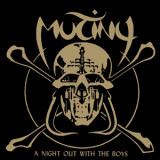
- Rare P-Funk album from 1983 - Funkadelic/Parliament All-Star Line-Up - First ever vinyl reissue - Comes with a repro of the original insert - 180g Black Vinyl Edition - Limited to 500 copies, comes with obi strip // Jerome "Bigfoot" Brailey is an American drummer who started performing in the early 1970s with several R&B groups from the likes of The Unifics, The Chambers Brothers and The Five Stairsteps where he developed his unique style and finesse on drums. Later in 1975 he joined George Clinton's P-Funk collective and has appeared on many of Parliament & Funkadelic's most popular recordings (some of which he also co-wrote). Brailey played on classic albums like `Mothership Connection' and `One Nation Under A Groove'. Samples from that body of work (and his drum arrangements) have since then appeared on hundreds of hip hop and contemporary R&B songs by renowned artists such as Kendrick Lamar and Childish Gambino. Jerome Brailey is a member of the Rock and Roll Hall of Fame (inducted in 1997) and part of their `50 greatest drummers in the Hall' list (stating that his drum style kept Parliament-Funkadelic rooted in the old-school `James Brown-style funk')_next to this achievement, he was proclaimed by Rolling Stone as one of the `100 Greatest Drummers of All Time' for his steady kick drum, shifty hi-hat action and intricately unpredictable snare patterns. Brailey earned numerous Gold and Platinum records with the P-Funk Organization and has worked as a session drummer for many talented artists such as Herbie Hancock, Buddy Miles, Snoop Dogg and Pharoah Sanders. George Clinton's funk empire was not without its disagreements and Jerome Brailey's `Mutiny' project was a direct result of just such a disagreement (as well as one of the more notable offshoots of the P-Funk axis). Mutiny performed in a style not far removed from the classic P-Funk style and with a lot of emphasis on the dual lead guitar work, but what makes them unique compared to their contemporaries is that at times their recordings also emit a darker, more sinister feeling. Besides Brailey on drums (and on most of the lead vocals) Mutiny featured a funk-alumni line-up and released three amazing and collectible albums: `Mutiny On The Mammaship' (CBS, 1979), `Funk Plus The One' (Columbia, 1980) and `A Night Out With the Boys' (J. Romeo, 1983)_these were followed by two comeback albums: `Aftershock' (Rykodisc 1995) and `Funk Road' (Catbone, 2013). The `Mutiny' album we are proudly presenting you today (A Night Out With The Boys) is an underrated gem made by musicians who defined the funk scene of the '70s and '80s! Featuring an all-star line-up that includes Rodney Curtis (Fred Wesley, Maceo Parker), Michael Hampton (Funkadelic-Parliament, Deee-Lite), Kenni Hairston (Cameo) and Maceo Bond of Osiris/Afrika Bambaataa fame! `A Night Out With The Boys' has it all: Jerome's trademark drumbeats, funky bass grooves, driving riffs accented by stinging synth parts, slow spacey (and prominently featured) guitars, top-notch lead vocals and chants that recall Sly Stone's "Loose Booty". The whole album is a hot dance jam with crisp percussion_an extremely infectious, locked-in-the-pocket bass-heavy monster-funk-bomb that any serious self-respecting funk fanatic must have in his/her collection!
Itzhak Perlman, the supreme violinist of his time, performs the supreme works for unaccompanied violin. In preparing the Bach Sonatas and Partitas, Perlman sought authenticity through the score itself, not through musicological research: “Music is a language, and, performed responsively, with musical logic as guide, it will make sense.”
Bach’s Sonatas and Partitas are a landmark not only of the solo violin repertoire but of all music history. No composer before or since has created a comparable architectural miracle, or made better use of the violin’s polyphonic capabilities, than did Bach in this set of six works. The improvements in instrument-making introduced by such experts in the field as Niccolò Amati and his pupil Antonio Stradivari meant that performers and composers could now push the tone and power of the violin to bold new limits. The Second Partita also includes a Chaconne which appears to stand outside space and time. Its complexity, power and splendor make it in a way the keystone of the entire musical edifice — a magnificent set of variations on a single theme which exploits the violin’s full harmonic and contrapuntal potential. While the great virtuosos of the nineteenth century, Paganini chief among them, expanded the instrument’s technical capabilities, Bach had already established its limits in terms of polyphony.
Perlman made several earlier attempts at recording the set, none of which was ever released, then performed it live on stage at venues around the world. In other words, he had the wisdom to wait until he had achieved a level of excellence in both performing and understanding this music before committing it to disc. The most practised of ears may detect a subtle difference in tone between the C major and A minor Sonatas, which he recorded on the “Soil” Stradivarius, and the other four works, recorded on the Guarneri del Gesù “ex-Sauret”.
Terry Gross is an engrossing trio composed of guitarist Phil Manley (Trans Am), bassist Donny Newenhouse, and drummer Phil Becker. The trio are also connected as owners and engineers at Bay Area recording spot El Studio, where they began improvising together as a way to test the boundaries and gear of the studio. Their loose, organic chemistry burgeoned into a deep camaraderie and a sound both expansive and exacting. The three experienced musicians crafted their first fulllength album through the pure joy of playing together with no expectations. With the tapes rolling on their rehearsals, the band captures the exuberance of live performance and elevates those recordings through a deft use of the studio as their collective instrument. On their debut LP Soft Opening, Terry Gross channels their cosmic powers and considerable chops into a gleefully mesmerizing odyssey fit for an arena. Soft Opening took shape over the course of 2016-2019, with Terry Gross writing and refining their songs. "Space Voyage Mission" and "Worm Gear" parallel one another as sinuous jams that pulse with adamantine fervor. Each mountainous epic churns spellbinding repetition and simplicity into dizzying gallops that take hairpin turns into sinewy riffing and elysian vocal melodies. Phil Manley's guitar takes on a constellation of tones across "Space Voyage Mission" with drifting delays soaring over the Newenhouse and Becker's driving rhythm section which all succumb to frothing overdrives that spin the song into entirely new pastures. The hypnotic throb of "Worm Gear" grows all the more enchanting as Newenhouse and Becker add subtle shifts to the single-chord barrage. "Specificity (Or What Have You)" contrasts these two in its more traditionally pop-oriented structure while retaining its predecessors wide-eyed energy and delves further into the album's lightheartedyet-earnest take on sci-fi tropes from space and time travel to the singularity. As Terry Gross, Phil Manley, Donny Newenhouse, and Phil Becker are sonic scientists traversing the borderlands of rock. Soft Opening captures the simple joy of a no-holds-barred trio in stunning detail, transporting the listener into the splendor and freedom of rock.
For years Supercrush confined themselves to the limitations of the
two-song 7’ single format, demonstrating a mastery of hyper efficient
song-craft, while leaving their audience wondering if a more expansive work would ever emerge.
SODO Pop answers that question, delivering on the promise of those 7’ singles and then some with 36 minutes of guitar pop alchemy. With a full-length album, the band is for the first time afforded the space to stretch out, allowing for explorations into more ambitious song structures, varied compositions, and additional instrumentation.
But those who enjoyed the of the brevity of the band’s early material needn’t worry, there are still plenty of compact two and a half to three minute gems here in the tradition of the group’s tried and true superpop formula.
Blues singer and harmonica player Brian Knight (1939-2001) is counted as one of the initial members of The Rolling Stones. Co-founder of Brian Jones first band together with Ian Stewart and Dick Taylor (later Pretty Things) among others. Musical disagreement with Jones, who fancied Bo Diddley and Chuck Berry while Knight was a Muddy Waters follower, led to his departure from the group - later to be replaced by Jagger and Richards. He formed his own "Blues By Six" band, frequently with Charlie Watts on drums, and spent the following years touring and playing London clubs. In the seventies he continued with Bradford-Knight Blues Band. Always a high profile act on the English blues circuit Knight has performed with many known artists through the decades, as Rick Wakeman, Peter Green, Paul Jones, Zoot Money, Ronnie Lane, Charie Watts, Chris Farlowe...and many more. After two successful decades of touring and performing he finally got to record his debut in 1981on the independent label PVK Records. The album is a mix of standard blues and rock numbers as traditional "white blues", sometimes reminding of early British R&B from Cyril Davies or Alexis Korner. It features Dick Heckstall-Smith (Colosseum) on sax, Peter Green on guitar and Stones own Charlie Watts on drums
On Palberta5000, Ani Ivry-Block, Lily Konigsberg, and Nina Ryser max out traditional pop forms_blowing the genre out into lush, kinetic extensions_to create their own hardcore style of popular music. Together these 16 adventurous, hyper-melodic tracks represent the band's most accessible album by far_one that is bursting at the seams with vocal hooks and exuberant playing. Palberta5000 was recorded with Matt Lambozza (PALM, Shimmer), whose Peekskill, New York, studio is located in the original home and family lamp-store of Paul Reuben (Pee Wee Herman). Lambozza's recording and mix capture the band's rollicking instrumentation and vocal precision with greater clarity than anyone has before. Tracks like the emotionally chaotic "Before I Got Here," which charges hard before turning on a dime into a hypnotic krout-surf outro, convey the panicked feeling of falling in love, while Palberta's ear for pop music makes itself apprent on heart-melting harmonies like those fround on "Corner Store." Adding variation to Palberta5000's well thought-out song cycle are lavish downtempo jams ilke the slow waltz that is "The Way That You Do," and the enchanting "Red Antz." Taken together, these songs create a full album experience, and one that is sure to excite the band's devoted following while welcoming new fans along for the ride.
On Palberta5000, Ani Ivry-Block, Lily Konigsberg, and Nina Ryser max out traditional pop forms_blowing the genre out into lush, kinetic extensions_to create their own hardcore style of popular music. Together these 16 adventurous, hyper-melodic tracks represent the band's most accessible album by far_one that is bursting at the seams with vocal hooks and exuberant playing. Palberta5000 was recorded with Matt Lambozza (PALM, Shimmer), whose Peekskill, New York, studio is located in the original home and family lamp-store of Paul Reuben (Pee Wee Herman). Lambozza's recording and mix capture the band's rollicking instrumentation and vocal precision with greater clarity than anyone has before. Tracks like the emotionally chaotic "Before I Got Here," which charges hard before turning on a dime into a hypnotic krout-surf outro, convey the panicked feeling of falling in love, while Palberta's ear for pop music makes itself apprent on heart-melting harmonies like those fround on "Corner Store." Adding variation to Palberta5000's well thought-out song cycle are lavish downtempo jams ilke the slow waltz that is "The Way That You Do," and the enchanting "Red Antz." Taken together, these songs create a full album experience, and one that is sure to excite the band's devoted following while welcoming new fans along for the ride.
his is the first vinyl re-issue of Marc Almond’s 4th solo album, “The Stars We Are”, since the album’s original release in September 1988. This re-issue is a limited edition double vinyl that couples the original album with a second record that compiles together all the Bsides of the associated singles as well as two first-timeon-vinyl extended versions of album tracks ‘The Stars We Are’ (Full Length Version) and ‘These My Dreams Are Yours’ (Through The Night Mix). The final extra track included is Marc's solo version of ‘Something’s Gotten Hold Of My Heart’, which after the album’s original release, was re-recorded with the 1967 hit song’s original singer Gene Pitney, creating a duet that became a UK #1 single for four weeks in early 1989.
“The Stars We Are” was the first of two albums recorded for Parlophone and was Marc Almond’s return to a highly infectious and chartable pop. The first single ‘Tears Run Rings’ confirmed the revitalised, unabashed pop that characterised the record and reached #26 on the UK Singles Chart. The album was recorded with an assembled band ‘La Magia’ which comprised of former Willing Sinners members Annie Hogan, Billie McGee and Steve Humphries as a core unit. The album is a shimmering arc of musical textures, compulsive melodrama and euphoric uplift. As well as further
singles ‘Bitter-Sweet’ (UK#40) and ‘Only The Moment’ (UK#45), the album contains an homage to goth sensibilities in ‘Your Kisses Burn’ a duet with Nico (her last ever studio recording) as well as an extravagant mini-operetta, ‘Kept Boy’, a duet with cult chanteuse
Agnes Bernelle.
Contains sleeve notes from celebrated cult poet and biographer, Jeremy Reed.