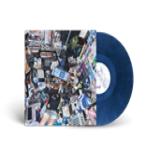
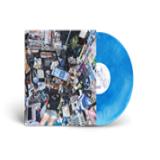
Nina Wilson, better known as Ninajirachi, is an Australian electronic producer who released her debut album I Love My Computer is a concept record built on her connection with her PC, swiping between genres of EDM, tech-house, speed garage, dubstep, and hyperpop. Wilson builds on the legacy of early-2000s and 2010s Australian electronic artists like PNAU and Flume using technology as a medium, a motif, and a mirror for reflection.
Between remixing Princess Nokia, Deadmau5 & The Neptunes, releasing on Nina Las Vegas’ NLV Records and RL Grime’s Sable Valley, Ninajirachi has performed at Lollapalooza, EDC, Laneway, Listen Out, Splendour, Falls Festival, and more and toured with Mallrat, Charli XCX, Porter Robinson and Cashmere Cat.
Nina Wilson, better known as Ninajirachi, is an Australian electronic producer who released her debut album I Love My Computer is a concept record built on her connection with her PC, swiping between genres of EDM, tech-house, speed garage, dubstep, and hyperpop. Wilson builds on the legacy of early-2000s and 2010s Australian electronic artists like PNAU and Flume using technology as a medium, a motif, and a mirror for reflection.
Between remixing Princess Nokia, Deadmau5 & The Neptunes, releasing on Nina Las Vegas’ NLV Records and RL Grime’s Sable Valley, Ninajirachi has performed at Lollapalooza, EDC, Laneway, Listen Out, Splendour, Falls Festival, and more and toured with Mallrat, Charli XCX, Porter Robinson and Cashmere Cat.
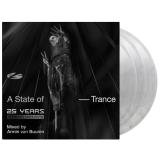
For twenty-five years, A State Of—Trance has united trance lovers around the world, evolving from a radio show into a global movement and one of the most influential brands in electronic music.
To celebrate this remarkable milestone, Armin van Buuren presents A State Of—Trance 25 Years - Selected Highlights, a special mix featuring a personally curated selection of ASOT tracks that highlight some of the biggest moments, memories, and milestones from the past quarter century.
Bringing together timeless classics, scene-defining anthems, and exclusive new interpretations, the mix also includes brand-new remixes of beloved ASOT favorites by some of today’s most exciting trance artists, including Andrew Rayel, ReOrder, Matt Fax, and Dan Harrison.
Honoring the past while embracing the future, A State Of—Trance 25 Years - Selected Highlights is a celebration of the music, artists, and global community that have shaped the journey—twenty-five years together, all united by one sound: A State Of—Trance.
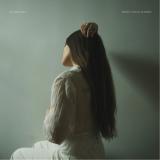
Gia Margaret’s acclaimed debut album, There’s Always Glimmer, is finally back in print on vinyl in Europe. Informed by the likes of Juliana Barwick, Stina Nordenstam and Linda Perhacs, this understated, self-produced record threads rich elements of folk, shoegaze and ambient electronics whilst retaining the exposed charm of her early bedroom recordings. This limited eco-mix pressing was first made available from her merch desk on her recent European tour and is now available from select record stores.
BLOOM, the 2026 Grammy Award-winning album from four-time Grammy-nominated singer, songwriter, and vocal powerhouse Durand Bernarr, is a landmark release from one of contemporary R&B's most celebrated voices. The album also earned Grammy nominations for Best Traditional R&B Vocal Performance ("Here We Are") and Best R&B Song ("Overqualified"), further cementing Bernarr's reputation as one of the genre's most innovative artists. BLOOM explores the concept of love beyond romantic intimacy, weaving together themes of self-love, personal growth, friendship, community, accountability, and the freedom to cultivate spaces where love can flourish. Rich in soulful songwriting and genre-blending production, the album showcases Bernarr at the height of his creative powers.
“Carl layers willowy guitar arpeggios, foggy keyboards, and chimes over Windy’s murmured intonations and rippling basswork. Everything sounds fresh and unaffected in the careful hands of these two gentle souls. Pick it up, lie back, and allow it to lull you into an undisturbed reverie.” Big Takeover
At the time of original release it was written that the album "will transport the listener to other plains of reality.” (Acid Test). Meanwhile, Alternative Press called it “alluring and addictive.” and CMJ called it "expansive, daydream enhancing music.”
The pair have also recently released their collaborative album with Optigan Conservatory, which can be revisited here. A beautiful and hermetic energy larger than the sum of its parts was captured in the collaborative process of making this album. There are echoes of the earliest releases from Windy & Carl as well as refractions of the same opacity that surfaced in the early kranky catalog.
A fine time to be shining a light on these label stalwarts as the dark Autumn evenings roll in
Gi Gi describes his process as “dubwise sampledelia.” It begins with fragments and ends somewhere else entirely, destabilizing its source material until it stops pointing backward. A borrowed sound, looped and bent, eventually forgets where it came from; it stops referencing anything but itself.
This liquid sensibility shaped his earlier work, music that hovered between drift and propulsion, suggesting the dance floor without fully stepping onto it. Presence was implied, edges stayed soft. The center was always there, but diffused like mist on a screen.
With In Lieu, that center comes into focus. Half written in Texas, half in Australia, the shift isn’t simply geographic, but internal. The record moves with a coiled, anticipatory energy; the drums arrive with more force and the bass organizes the room instead of melting into it. It's dense with the feeling of more bodies in the frame. Textures still smear and refract, but they move around a clearer axis.
Where past records circled their core, these inhabit it, pulling closer to the body. “Some Of” and “Arque” lean into low-end pressure without abandoning his instinct for drift. "Pink Dirt" circles around mechanical drums and dizzying vocal chops, head-down and visceral. Elsewhere, voices gain newfound contour, materializing in “Downswept” with intimate musings and nearly forming a lead vocal on the title track before dissolving again.
In Lieu moves with a newfound confidence, compressing inward, sounding closer to the source of its own pulse.
Modeight returns with four new cuts from label head Silat Beksi, moving across broken grooves, stripped minimal house and hazy after-hours moods. A1 "Belpaese 3000" opens on a loose summer feel, built around off-centre drums, elastic funk phrasing and a surreal vocal line that feels half-sung, half-invented. Sampled folk details and a crunchy acid twist in the breakdown give the track its own oddball tension. A2 "Alpha Style" keeps things tighter and more direct, locking into a pumping minimal house flow with clipped modular stabs, warm female vocal phrases and light atmospheric drift. It is playful, controlled and built with the floor in mind. On the flip, "For The Heads" goes deeper into late-night territory - reduced, driving and sharply focused, with a rolling pulse and enough pressure to carry a room without overstatement. "Soft Collapse" closes the record on a softer axis, layering blurred vocal tones, textured percussion and a gentle after-hours motion that stretches naturally from the first warm-up hours into the early morning.
We're absolutely stoked to welcome Swedish producer Sacred Grove for his second appearance on Parodia.
Four High speed racing tracks that perfectly find the sweet spot between intensity and softness, keeping the groove rolling.
The record set the tone with Earthbound, a percussive heater with an ever going groove, followed by Quest, an eternal eye-closed dancefloor aquatic jam.
B side offers Fever (Mushroom Mix) keeping the energy going, pedal to the metal, certified 4am banger.
Closing the race, "Heart" further cements the atmospheric sensitivity of the record and the enchanting magic that radiates from Sacred Grove power.
As they say, horses (hustlers) don't stop, they keep going!
Some recordings herald the future in ways that are impossible to see in real time. Teodros Makonnen With His Organ (ቴዎድሮስ መኮንን ከኦርጋኑ ጋር), by the artist Teodros Makonnen, also known as Teddy Mak, is one of those. Today, electronic sounds, synthesizers, and digital production are taken for granted in Ethiopian music, but in the early 1980s, they were novelties that polarized opinion. Even to this day, the story of Teodros Makonnen’s legacy has never been properly told. He played a decisive role in defining the sound of the digital era of Ethiopian music that emerged in the 1980s and beyond, both as a keyboard player and as a producer, songwriter, performer, and sound designer.
Ethiopian music was at a crossroads in the early 1980s. Much like music in the rest of the world, technology and automation heralded either a quantum leap in musical development or the annihilation of musicianship, depending on who you’d ask. The changes were incremental nonetheless, but with the benefit of hindsight one can clearly see that the changes meant different things in different contexts. Drum machines and electric organs came to replace many hotel bands because, all of a sudden, one musician could control drums, melody, and accompaniment. Teodros was one of the first musicians in Ethiopia to explore the possibilities this opened up.
Teodros’ father, Captain Makonnen Beri, was a chief pilot at Ethiopian Airlines and a music enthusiast at that. This would prove important to his development, as Makonnen brought back a piano from Germany, which would lead to the first steps in Teodros’ long musical career. Captain Makonnen’s work as Head of Flight Operations and as a pilot exposed him to the wider world that was far from commonplace for most Ethiopians. In a house where music captivated the whole family, the piano gave Teodros’ talent an outlet. Not only was a piano at home rare in Ethiopian households, his father also brought an Indian teacher to their home to teach Teodros and his brother, Captain Samuel Makonnen, music theory (solfeggio or ear training) and piano. Teodros and his youngest brother, the late great Dereje, a member of both the legendary Ibex Band and the Ethiopian reggae group Dallol, took up music from that point onward, with Teodros beginning to develop his proficiency at the age of eight. His father encouraged him to practice tirelessly at home, and Teodros later received musical schooling at the German School in Addis Ababa. His obvious talent led to studies and formal education at the Yared School of Music, followed by continued studies in American jazz at Northern Virginia Community College in Virginia. Teodros cut his teeth professionally in his mid-teens, not only as a keyboardist, but also as an arranger for the Wabi Shebelle and Dahlak bands in the 1970s. He mastered electronic sequencing early, rising to prominence through the midnight recording sessions held during the military curfew. The pressures imposed by the curfew required precise and disciplined recordings, and Teodros delivered just that. This, in turn, led to collaborations with iconic artists such as Mulatu Astatke, Aster Aweke, Menelik Wossenachew, Tilahun Gessesse, Mahmoud Ahmed, and Alemayehu Eshete. In those days, he sat in as a keyboardist with the Dahlak Band when Dawit Yifru took a hiatus to study in Russia, and also with the Ethiostar Band. He secured a residency at the Wabi Shebelle Hotel with the Shebele Band, together with Zelalem Tadese (drums), later succeeded by Elias Bekele, Mulugeta Hailu (bass), Teferi ‘Bibisha’ Mengesha (guitar), Kumelachew G/Selassie (trumpet), and Teshome Deneke (saxophone). A friendly competition developed between the bands associated with the Ras Hotel (the Ibex Band), Ghion Hotel (the Dahlak Band), and Wabi Shebelle Hotel (the Shebele Band). The music scene at Wabi Shebelle saw teenagers commanding the spotlight in an industry otherwise dominated by musicians of an older generation. At the Wabi Shebelle Hotel, Teodros met a diplomat from Saudi Arabia and later visited him at his home in Addis Ababa, a meeting that had unexpected musical consequences. The man owned a Yamaha double-deck keyboard. That evening, they recorded Teodros Makonnen With His Organ (ቴዎድሮስ መኮንን ከኦርጋኑ ጋር) in one take. This recording, a cornerstone in the early digital sound of Ethiopian music, came about almost by chance, simply because Teodros got the opportunity. Traditional Ethiopian songs were cast in a wholly electronic style. Once freed from backing duties, Teodros’ keyboards could explore dreamlike soundscapes that took Ethiopian music in new directions. Even though the cassette contained well-known Ethiopian songs, they were given highly original arrangements, performed on an electric organ with drum machine backing and rhythm patterns that left the listener with suggestive, lingering sounds. “Libesh Kabashen” (also known as “Anchi Bale Game”) and “Odu Gol Golesa” wrap you in the very stuff that dreams are made of. Originally released on cassette only, this recording exudes a mystique that surpasses even some of the most obscure Ethiopian recordings of the day. It remained more or less unknown outside of Ethiopia until now. Some of the tracks, like “Addis Fikir,” are permeated with an almost naive buoyancy, free-floating sounds that lost contact with the ground the moment they were conceived. Others, like “Meche New Hageren Yemayew” and “Lelitu Alnega Alegn,” carry a moodier, quirkier timbre, with pulsating rhythms in the background. Yet even the darker pieces contain an unmistakable wave, something essentially Ethiopian. If most recordings of Teodros’s contemporaries at the time were teeming with atmosphere, his songs seem instead at home in the stratosphere, almost ethereal. Some of the music here could be filed under “lullabies,” were it not for the recurring, almost brooding feeling that engulfs the listener on the aforementioned tracks. You could easily be forgiven for drifting into a blissful haze as the music washes over you.
Up to the advent of electronic music production, Ethiopia was totally dominated by big bands on the one hand, and small groups on the other. The former were tied to large institutions such as the military, the latter emerged from the entertainment industry, in hotel bars and nightclubs. These groups were commercially driven, and bands ultimately had to foster a mercenary approach to employment, albeit not to the passion for music. In the light of this, Teodros’ musical legacy can be seen in two ways. On the one hand, he is a key player in Ethiopian music from the 1970s onwards, leaving an indelible mark through hundreds of compositions and arrangements, including soundtracks for numerous documentary films and advertisements for different companies. On the other hand, the way he and others employed electronics brought Ethiopian music onto a fork in the road.
The replacement of traditional instruments with electronic equipment was seen as impending doom by some. Others, like Teodros, saw new avenues for performance, production, and creativity. Just as later producers like Abegasu Shiota of Admas, Teodros was a trailblazer who opened paths that it took Ethiopian music as a whole more than a decade to rush into. The hotel scene had already been pushed toward electronic music by financial necessity and cost-cutting. Today’s revived global interest in Ethiopian music from the seventies and eighties, alongside a broader resurgence, has changed the reasons for using digital means of music production. They have become tools for musical dreaming. This is where the dreaming began.
New formation Broken Code gets their first release on Natural Positions with remixes by Will Hofbauer and Patrice Meiner. Papi can’t get to the phone right now. It’s late, but eventually the elusive late night lover picks up and the game is on. Will Hofbauer and Patrice Meiner make sure you make it through the night, rewired, refreshed and ready for a new dawn.
Papi Pt. II is the product of a late night jam session at Max Bulk studios, re-coded for the wax aficionado by four of South East London’s loneliest robots. Their soundsystem affiliates Will Hofbauer and Patrice Meiner reinterpret the original, picking up the pace and then breaking it down for a final early morning rotation. This release has all the flavours to bake the cake that keeps you awake.
credits
“Capsule” is the debut album from Modis, the new solo project of Argentinian producer Rafael Caivano (a.k.a. Frikstailers, a.k.a. Klik & Frik). The album will be released on Latinambient, the newly launched label curated by Populous. In this LP, Modis draws inspiration from some of the great unconventional classics of electronic music, from Mort Garson (Mother Earth’s Plantasia) to Boards of Canada and Aphex Twin’s most emotional work. Each song in Capsule opens a dialogue
Space Ghost returns with Back From Reality, his first solo album since 2022. Blending ambient, downtempo and house, the LP explores themes of escapism, introspection and the search for moments of calm in an increasingly overwhelming world. Out October 9th, 2026 via Space Ghost’s own Peace World Records.
Drawing influence from late '90s and early 2000s ambient and electronic music, the record channels the nostalgic atmosphere of PS2-era video game soundtracks, console startup screens, and save menus. “I used to play games like Spyro, Crash, Ape Escape, Gran Turismo. It's fun for me to reimagine songs that could have lived in games from that era. ” The project reveals Space Ghost's interest in writing music for video games, with tracks such as "System Reset" reimagining an alternate PS2 startup screen or “VGM” visualizing a stage selection screen for an imaginary game.
Visually, the project emulates the minimalist design trends of album artwork from the same era: sparse industrial landscapes paired with minimal type. Space Ghost took the cover photo himself while driving around the quiet, empty Oakland ports at night. Tracks like “Sugar Cube” and “Back From Reality” mimic these late night environments and create a downtempo zone for listeners to get lost in. “One of my favorite things to do after writing songs, is to drive around Oakland listening to them. It's almost like the final test for the songs, to see if their emotion holds up.
”
Written over the course of five years, Back From Reality reflects Space Ghost’s experience of balancing everyday life with the desire to be creative. “This album is me coming home from my day job and returning back to the place where I feel the joy and freedom in making my music. If I could, I would work on my music full time, but for now it's part time and often a form of escapism. ” Beneath its calming surface, the LP quietly wrestles with larger questions. Against the backdrop of global conflict, environmental decline, and economic uncertainty, the album searches for small moments of optimism through creativity and introspection. Back From Reality holds a moment of space away from these overwhelming times, allowing listeners to pause and recharge.
Back From Reality releases on Peace World Records October 9th, 2026
We are so excited to welcome back Tigerskin with a brand-new Album. This 12” is the vinyl version
showcasing six deep, euphoric and banging tracks taken from the full album.
The digital album features twelve brand new tunes by Alex Krüger and delivers his 3rd studio album as Tigerskin.
“Image” not only continues his search for the ultimate dance floor deepness, and contrary to just imitating his own “best selling” club grooves, it rather displays his ongoing artistic progress as a producer and composer of electronic music.
Opposed to his 2013 album “All Those Goodbyes”, which musically rooted in the early 90s and included a ton of collaborations with friends and long time partners, “Image” focuses more on Alex’s general musical roots and shows his compositional preferences. Apart from a few samples, this time around it doesn’t feature any co-productions at all nor did Alex use crazy or special gear to create the tunes. Many sounds are coming from natural and acoustic sources. Expect 80s New Wave references or spooky Wagner-esque bits to pop up next to dusty downbeat interludes. Euphoria next to relaxation. Tigerskin’s journey leads him from ironic comments on the present times via deep, occasionally melancholic or dark and hypnotic material up to the final tune, a homage to the infamous German brothers, Thomas and Klaus.
Tigerskin’s love for experimentation and cross-genre diversity on “Images” is more tangible than ever before.
Electronic music legends Soft Cell release ‘Out Come The Freaks’, the very first single from singer Marc Almond and multi-instrumentalist and producer Dave Ball’s final album ‘Danceteria’. Download and stream the track, featuring vocals from the late Dave Ball and special guest vocals from Nona Hendryx.
‘Out Come The Freaks’ is a cover of Was (Not Was)’s mutant disco classic and sends Soft Cell into prime disco territory, conjuring the hedonist spirit of early 80s Manhattan and a Danceteria floor filler spun by DJ Mark Kamins. There couldn’t be a more fitting alternative disco banger to pull back the curtain with and beckon you into the world of ‘Danceteria’. The final album is a homage to the legendary nightclub where young Marc and Dave would party until the small hours after the recording sessions for their seminal 1981 debut ‘Non-Stop Erotic Cabaret’. The final flourish of glitter to Soft Cell’s ‘Out Come The Freaks’ comes courtesy of guest vocals from Nona Hendryx, the iconic singer, one third of Labelle of ‘Lady Marmalade’ fame, and producer of Lisa Lisa and Bush Tetras.
This is the very first material to be released from ‘Danceteria’, Soft Cell’s forthcoming sixth and final album. It is also the first time new music has been released since the sad, untimely passing of Dave Ball in October 2025. Almond led the tributes, describing Ball as a “brilliant musical genius” and the world’s media hailing Dave as an electronic music pioneer. Dave finished ‘Danceteria’ very close to his passing and it is in full tribute to him that the album release goes ahead as planned. More details are to follow very soon about the release date.
JUNO & Jamek Ortega link up for ‘Deep Breath’ on Crosstown Rebels.
Following an impressive label debut earlier this year alongside Alex Wann on ‘Allo’, crowned Pete Tong’s Essential New Tune, Germany’s JUNO returns to Crosstown Rebels with ‘Deep Breath’ in collaboration with longtime production partner Jamek Ortega. Immediately drawing listeners into a hypnotic, percussive world, snaking rhythms and rattling cowbells build steadily beneath an atmospheric backdrop, before a commanding vocal emerges to anchor the groove. The release continues a relationship that has seen the pair produce across labels including Arodes’ Unreleased Records, Wired World, and more, as well as regular back-to-back performances. On the flip, ‘Sloppy Disk’ sees JUNO step up solo, locking into a driving four-to-the-floor groove where a rolling bassline provides the foundation for pensive chords to drift alongside subtle melodic flourishes, steadily expanding the track’s atmosphere before tumbling into a sweeping, cinematic finale.
JUNO has accelerated onto the scene with hits like ‘Last Dance’ on Magnifik Music and a Hot Mix for Pete Tong on BBC Radio 1, firmly earmarking him as one to watch. Meanwhile, DJ/producer Jamek Ortega continues to connect with audiences worldwide with outings on Three Six Zero, MoBlack, Abracadabra, Madorasindahouse, and more, picking up heavy rotation from the likes of Keinemusik, Solomun, Tiësto, and Black Coffee. Here, the pair show no signs of slowing down as they join forces once again, stepping onto Damian Lazarus’s imprint and marking a major milestone in their respective trajectories.
Sometimes things go quickly. After meeting Canadian artist Pascale Project early this year (twice in one month) on the same dancefloor of a crusty underground club in Neukolln, we sent this Berlin-based DJ and producer a short appreciation email to show curiosity and interest in her unreleased music. Our hope was to listen to it and maybe just maybe start a record-release project. Pascale sent back quickly, and she shared some fantastic club music with us. We had separate listens to the full playlist, and, funnily/coincidentally, we chose the same 4 tracks as highlights from the big playlist. One week later, Pascale emailed us back, mentioning the tracks she would feel/see/love to be released on the label, and they were the exact same ones we had naturally and unanimously chosen. Stars aligned for sure. Having long been active in the Montreal music scene, Pascale absorbed the essence of all her different experiences and years of training and creating, and then let it all start Sparkling into the 22nd Basic Moves release entitled "Watch EP". The record is based on the concept of losing and breaking things up, and eventually finding it all back. Reflecting hope in between the fog of life. It is clever modern underground club music rooted in the textures and energies of the golden days of progressive house, breakbeats and (real!) tech-house. These 4 tracks reflect an artist who expresses herself honestly, fully understands how to creatively arrange and produce club music, and never loses sight of the dancefloor, as she is often found on that dancefloor herself. Dive in and let us know what you think of it. We are stoked to play out and vibe on these tunes for real!
Mysticisms’ explores the previously unknown Dub House, Digidub and electronic Street Soul of Manchester émigré Andrew Fitzgerald aka Atone on a 6 track EP, shape shifting from dark basements to summer fields, the music is wide-screen dreams, mixing psychedelic temperaments with ecstatic memories.
Dub Dats is a compendium of a life around or making music, beats, dubs; menageries of sound that encompass a love of reggae mixed with the influences of youth. Growing up in Thatcher’s then declining Manchester housing estates, Fitzgerald found escape first as a young roadie, just aged 15, sorting ‘cigarettes and alcohol’ for visiting bands. Rubbing shoulders with the likes of The Buzzcocks, Ian Dury and The Slits, was a great way to learn the ropes, while avoiding becoming another juvenile delinquent.
A love of Bowie, Kraftwerk, Motown, film scores and the emerging electronic and industrial bands like Throbbing Gristle led to a first studio, featuring the unique and faithful DR-55 Dr. Rhythm, soon followed by Sequential Circuits Pro One, Juno 60, Roland 303 (x 2), Roland 808 and Space Echo.
Working on music solidly, a release finally appearing on Robs Records, before losing all the equipment in a robbery. Manchester was shifting, gangs and “Gunchester” meant it was time to move on and when ‘an out’ appeared, Fitzgerald was landing in Sydney and settling into a new life.
Hooking up with Ali Omar, who he’d met while doing a stint in Brixton, London; the two worked solidly on music, gigging continuously, hanging with the likes Severed Heads and living a good life of that post acid-house party era. The loss of Ali to cancer, still young, hit hard and period “quite liked the madness” ensued. Rehab and starting again, Atone has been gaining some interest.
With 2 EPs of early works recently released on Tonal Oceans, Dub Dats looks deeper, with the dubbed house grooves of title cut, Dats and, the intriguingly named, Somewhere In France With Eric Random. Complimented by the electronic dub of Keep On, the soulful, slow breaks torch song, I Be There, the sample heavy Sound Of Soul and closing, trippy Unlike You, this is a multi-genre producer of considerable capability and talents.
Finally getting his due, Dub Dats perfectly fits the Dubplate Series, broadening its soundscape, while also standing out as its own, sonic release.
Adam Ten and Yamagucci team up on Rekids with ‘Keep Workin’’. Label head Radio Slave steps up with a remix.
Frequent collaborators Adam Ten & Yamagucci drop 'Keep Workin’' on Rekids, with a remix from label boss Radio Slave. The single is an irresistible club tool with immeasurable bass weight. Bold, rubbery drums and grinding low-end combine in bouncy fashion while a vocal fragment loops up top to create perfect dance floor tension. Brighter chords eventually rise through the mix, providing emotional release that will get hands in the air and take things to the next level.
On the remix, Radio Slave strips the original ‘Keep Workin’’ back to dusty, shuffling drums with jazzy flourishes. The track has a live, lived-in feel, complete with vulnerable piano keys that haunt the spaces above its weighty groove and transfix any crowd with eerie beauty.
Adam Ten is a long-time House innovator, Maccabi House co-founder and Upon You Records and Higher Ground artist, with over twenty Top 10 Beatport releases and millions of streams to his name. He blends the grit of Techno with escapist melodies in versatile, curious sets and productions that have earned him bookings worldwide. Yamagucci has made an equal impact on the world stage through his field recordings and organic percussion, adding a unique twist to his tracks on labels like Disco Halal, as well as Diynamic and Crosstown Rebels, labels that Adam Ten and Yamagucci have also collaborated on together.
Ezra Feinberg's third album Soft Power sees the composer-guitarist enlist an impressive array of fellow musicians including Mary Lattimore, David Moore (Bing & Ruth), Jefre Cantu-Ledesma, Robbie Lee and share the life affirming lead single 'Future Sand'.
Defined by its abundance of melodies, repeating figures and ecstatic improvisations, Soft Power exudes an enlightened and transformative spirit to empower the listener. Feinberg, a practising psychoanalyst and former founding member of the San Francisco psychedelic collective Citay (Dead Oceans / Important Records) resides in the artistic enclave of upstate New York's Hudson River valley. Initial recordings emerged in the late summer of 2020, before added synthesis with collaborator John Thayer (Arp, Sunwatchers) during early 2021. Soft Power follows previous albums 'Recumbent Speech' (2020) and 'Pentimento and Others' (2018).
Feinberg artfully transcends the listener to an enriched place, his compositions distinguished by the deep humanity that lies at their core, plugging the listener into a state of wide eyed being, open and alive. Soft Power then is Ezra's own mantra but also one of power giving - a colourful catharsis translated into music.
Feinberg's music always speaks to the listener, but Soft Power, in whispering, speaks loudest.
"Much like everyday life, I wanted to convey these very plain, simple, tranquil, nearly quotidian aspects, but each piece contains this arc in which that form expands, is broken out of, so what starts out like a painting of flowers in a seaside motel turns into a riot of color and sound, or you feel slipped into a dream that feels like it could go on forever"
“When the flesh gets cut off the soul, it’s not the end.”
More than forty years after hardCORPS emerged from a Brixton basement, ‘Metal & Flesh’ returns in a new expanded edition on double vinyl and CD, newly remastered with the full involvement of surviving members Rob Doran and Clive Pierce. Born from the collision of punk, analogue synthesisers, sequencers, disco, reggae and experimental studio techniques, hardCORPS created electronic music that was as physical and emotional as it was mechanical. The arrival of French vocalist Regine Fetet gave the group its defining identity, placing her raw, uncompromising voice against the dense machinery of Hugh Ashton, Clive Pierce and Rob Doran. Working mainly with a Roland System 100, several Roland MC4 sequencers and later an additional MC500 and Atari ST 1040 computers, etc. pp., hardCORPS always transformed limitations, accidents, distortion and human imperfection into part of the music itself. Although rooted in the early 1980s, ‘Metal & Flesh’ refuses easy nostalgia, retaining the tension, space and character that made hardCORPS unlike their contemporaries. Yet, shall we eventually mention Kraftwerk, maybe let’s quote Ian Shirley from Record Collector magazine: „’Je Suis Passée‘ was not only a love letter to Kraftwerk but penned with such verve, passion and precision that Ralf and Florian probably would have accepted a blind date at a Düsseldorf cocktail bar (…).“ And as Martin Rushent famously said in 1990: “Hard Corps were ignored in their time. Perhaps it is the burden of the adventurous and the innovative to be ignored in their time, which is sad. Don’t ignore them now.”
This new edition has been carefully remastered to preserve that character and dynamics rather than simply making the recordings louder or more ‘modern’, while the artwork has likewise been developed to reflect the band’s original identity. Metal & Flesh’ is not merely an artefact of the 1980s, but a rare and fiercely individual document of four people discovering what happens when human instinct and machines collide.
Remastered by Martin Bowes. Graphic design by hard CORPS and Steve Lippert.
Gatefold sleeve gloss lamination, printed inner sleeves with lyrics, two double-sided hand-numbered.
Following the events of Pussy Disco (SCCD 021) ...
The nights in Hong Kong did not remain a secret for long. Word spread silently through the feline world, and the gatherings grew until the music no longer belonged to a single hidden basement. The cats had found something of their own.
Their new destination became Macau. Long after midnight, when the casino floors fall silent and the roulette wheels come to rest, they emerge from hidden passages and forgotten service corridors to throw their own secret parties. The gaming tables become dance floors.
The remixes played during these nights were all commissioned by the legendary feline Primadonna Disco Queen Beast (PDQB), reimagining tracks from the original Pussy Disco album. The most celebrated DJ cats perform with nothing but their claws, tracing the grooves like perfectly balanced styli. Their oversized ears become living loudspeakers, carrying every microscopic detail through the vast halls.
Before dawn, the music fades. The cats disappear without a sound, leaving the roulette tables exactly as they found them. When the first employees arrive, there is no sign that anything happened during the night.
Over the years, PDQB commissioned countless remixes of tracks from Pussy Disco. The eleven collected on this double vinyl were all played during the legendary Sunrise Sessions - the final hours before daybreak, when the parties reached their absolute peak. These are the remixes the cats returned to again and again, making them the undisputed classics of Macau's underground feline nightlife.
After the sell-out sensation of the album 'Soul Drums’, the Steve White Trio return with a special 7” single, as they take on Deep Purple’s ‘Mandrake Root’. A fitting tribute to Jon Lord, with a Hammond-heavy groove, White shows his range and power from behind the kit. It is backed by the original ‘Sunburn’, written by Joel White and Chris Hague, who complete the brilliant Trio.
’Soul Drums’ was the inaugural release in the new Acid Jazz Jazz Sessions series earlier this year and, remarkably, the first album bearing the name Steve White. After a storied session career and long association with Paul Weller, as a member of the Style Council and as the heartbeat of Weller’s solo band on ‘Wildwood', 'Stanley Road', 'Heavy Soul’ and ‘As Is Now’, the Trio sees Steve return to his jazz and filmic influences, with a true modernist touch.
The 7” release coincides with a special appearance at the 100 Club on 17 September.
Berlin-based edit specialist Voodoocuts knows exactly how to tease out the best bits of any of the source tunes he works with. He's been doing it for years now on labels like Juice on Wax and Uluru, and now heads to Ritmo for his latest 7" bomb. 'Riddim Freak' gets this one going with a reggaeton rework of a Missy Elliott classic. It's an inspired pairing that has elastic bass and trampoline-like kicks with rave horns, fat-assed brass band energy and plenty of that original Missy attitude. 'Work This' takes another of the rap queens' most welcome jams and flips and reverses it into an early electro and hip-hop blend with old school drums and many magnificent samples all bringing it to life in full colour.
A limited 45, lifting two of the most transportive moments from Manifest, the fifth studio album from BALTHVS, and pressing them together on a standalone 7". "Eternal Flow" closes Side A of the LP, a slow-building groove that became the lead single of the album campaign. "Pale Blue Dot" opens Side B, a meditation on smallness and the cosmos that stretches out over nearly five minutes.
BALTHVS is the Colombian trio of guitarist and producer Balthazar Aguirre, bassist Johanna Mercuriana, and drummer Santiago Lizcano. Over five years the band has amassed more than 140 million streams, performed in over 26 countries, earned a Libera Awards nomination, and appeared at Electric Forest, Austin City Limits, Outside Lands, Lollapalooza, Jam Cruise, and SXSW Sydney. Manifest, out 10/9/2026, marks their most adventurous work to date, reaching past psychedelic rock into drum and bass, Ethio-jazz, and trip hop.
This 7" is a collector's companion to that album, not a reissue of it. Both sides are drawn from the LP sequence and paired here as a standalone 45 for the shops and the heads who chase the format. Limited to 300 copies worldwide. The band supports the release with a US fall tour running October 8 through 25.
Formed in Montreal, eight-piece funk band Cane and Abel melded Caribbean elements with soul, blues and psych, frontman Frenchie Thompson holding plenty of bite and the full horn section including former Dragonaires trumpeter Norris Ridguard. After early singles on GRT, the group signed to Epic and relocated to the US but made their biggest splash in France, where they cut two LPs in 1972; this self-titled rarity has Thompson’s ‘Girl You Move Me,’ percussionist Blinky Bostic’s ‘Who’s Gonna Take The Weight,’ and likeable takes of Wilson Picket’s ‘Don’t Knock My Love,’ ‘Green Grass’ and ‘Toe Hold.’ A lost funk classic!
Do Da Doo' Returns with New Life on Definitive Recordings
SPECIAL VINYL ONLY RELEASE
Definitive Recordings revisits one of its most iconic releases with a fresh reissue of Robotman feat. Marshall Jefferson - 'Do Da Doo', originally released in 1992. A cornerstone of the label's early catalogue, the track returns with newly re-recorded vocals by house legend Marshall Jefferson, bringing renewed energy to a timeless classic.
Robotman, a moniker of Richie Hawtin (aka Plastikman), represents an essential chapter in the evolution of house and techno. As one of the most influential figures in electronic music, Hawtin helped shape the sound of acid and minimal techno while co-founding the legendary Plus 8 label alongside John Acquaviva. His forward-thinking productions and groundbreaking DJ sets have defined generations of dance music culture.
On this release, the original Plastikman Acid House Mix stands as a true highlight. Spanning 12 minutes, it delivers a deep and hypnotic acid journey driven by classic TR-909 drums and a signature TB-303 bassline. The instantly recognizable vocal 'Got the Do Da Doo' sits prominently within the groove, creating a powerful and timeless club moment that defined an era.
On the flipside, Detroit's DJ Minx brings a fresh perspective with a groove-heavy house interpretation. Known as the 'First Lady of Wax' and a key figure in Detroit's scene, Minx reshapes the vocal into a rhythmic element, layering it into a shuffling and classic house framework. Her version adds warmth and swing while staying rooted in the track's original spirit.
With this reissue, Definitive Recordings celebrates a landmark release that continues to resonate across generations, combining legendary artists, timeless production, and the enduring energy of house music.
The eighth helping of these Perro Bueno Edits is as delicious as Kinder Buenos (we have kids, don't judge us). Once again it is an anonymous affair from the in-house team, whoever that may be, and this one opens with 'SDBO', which is a new flip of, we're told, a "rare African cover version of a much-loved disco classic". It has a perfect mix of disco glam and Afro earthiness with soaring melodies and funk drums that can't fail to get you locked in. 'LEHA' on the B-side is another Afro-funk gem that is rebuilt with layers of chunky percussion and drums, interplay between male and female vocals and fat bass that anchors the whole thing perfectly.
Melbourne producer Jordan Brando releases his new Fixation EP today via DJ Tennis’ Life and Death. The four-track project marks Brando’s debut on the label and arrives as he continues to establish himself as one of Australia’s top new club exports.
Fixation is built around raw, bass-driven grooves, moving between the shuffling percussion and hypnotic vocal hook of the title track, the tougher techno edge of “Vibration,” and the classic house influence running through “The Bassline.” “After Dub” eases the pace without losing that foundation, closing the EP on a warm, melodic note.
The release extends a growing connection between Life and Death and the current wave of Australian producers making an impact worldwide. It follows recent projects from Brando’s Not Without Friends collaborators Luke Alessi and William Kiss, who both joined the label at the end of 2025. Together, the three have built momentum around a shared strain of forward-thinking club music and recently reunited in New York City for a Raw Cuts event this summer.
Born and raised in Melbourne, Brando has developed a reputation for the breadth of his productions and DJ sets, with his original music and remixes appearing across dance charts around the world. While his solo work has earned support from international tastemakers such as Pete Tong (via his BBC Radio 1 show), he’s performed with Kiss and Alessi at Heide Museum of Modern Art, Beyond the Valley, London’s Night Tales and Rippon Lea Estate.
After a run of performances spanning Australia, New Zealand and Europe—including Lost Village, Beyond the Valley, Night Tales and Melbourne’s Collingwood Town Hall—Fixation finds Brando entering his next chapter with one of electronic music’s most respected labels, further cementing his place among a generation of Australian artists reshaping the international club landscape.
Bristol's Pessimist returns to UVB-76 Music with four tracks, zero filler and no wasted space. He is one of drum & bass's most distinctive voices and shows why once more here. 'Pess One' opens with clinical precision - pin-sharp drums where every element earns its place 'Pony Boy Club' drives harder, laser bleeps piercing cavernous reverb and kicks that never quit. 'NRG-97' reaches back into a nostalgic palette with dread-filled bass and dark percussion. Closing track 'Under Surveillance' is the moodiest of the lot - a claustrophobic, paranoid and unsettling world of Terminator terror.
Michael J. Blood makes his second appearance on a Clone subsidiary! The enigmatic producer, rumored to be from Manchester, UK, draws on the two cities that influenced so many before him: classic Detroit and Chicago vibes and deepness, with a fresh, timeless twist. A perfect fit for our Royal Oak imprint.
One of the biggest underground rave anthems of the early 90's produced by Gordon Matthewman (Dj Edge) and Doug Osbourne (Sourmash).
The track perfectly bridged the gap between early 90s UK rave, European hard trance, and sinister warehouse techno. It is instantly recognizable by its slow-building, intense tension, heavy pounding kick, and the stark, ominous, distorted synth stabs that cut through the eerie acid lines.
With its massive dancefloor appeal, it was quickly snapped up for major compilations, notably appearing on the highly influential Reactivate 8 compilation put out by React Records. Original vinyl pressings on the iconic XVX label remain highly sought after by old-school electronic music collectors worldwide. This is your chance to own this Rave Classic on an official Repress from the XVX Label.
A DJ, producer and significant figure in contemporary electronic music, Marcel Dettmann steps forward to contribute to Running Back’s ongoing Mastermix series. Whereas previous editions of Mastermix have taken an ear to the sound of lapsed, legendary clubs such as Wild Pitch and Front, Dettmann’s curation deftly captures the man himself in ongoing perpetual motion, raiding the vault for his own precision-tooled edits, long-employed on dancefloors to devastating effect. Alongside a continuous mix, this release arrives as a 3LP gatefold, and as a limited edition cassette.
Closely associated with Berlin’s techno landscape, Dettmann was born and raised in the former GDR, then later immersed in the bleary-eyed counter cultural landscape of post-unification Berlin. Initially oriented by post-punk, industrial and new-wave music, Dettmann has been DJing since 1993, always expanding and perfecting his repertoire. He later began working behind the counter at the city’s tastemaking rave boutique Hard Wax, and a decade after he first dropped a needle, became (and remains) resident at notable local nightspot Berghain/Panorama Bar, where his instincts have helped sculpt the signature sound of both main dancefloors.
Of course, you’re probably not asking, “Who is Marcel Dettmann?” More importantly, you might want to know; just what treats has he gifted us here? The trip begins with a simple pitch-shift skywards, transforming Identified Patient’s creeping ‘The Female Medical College of Pennsylvania’ into a peak-time freakout, before an alternate take on Toctronic’s ‘Bis uns das Licht vertreibt’ emerges from the vaults for the first time. Dating from 1995, and one of Dettmann’s all-time favourites, Cristian Vogel’s ‘Untitled’ clambers back into the box with respectable cuts, while John Bender’s ‘Victims of A Victimless Crime’ kicks off the flip sporting a new arrangement, transporting us back to the foundations of a confident, stripped-back sound.
A few subtle edits to Clark’s perilously funky ‘Dirty Pixie’ takes us to Dettmann’s remix of Junior Boys. Produced in 2010, it transposes the Canadian duo’s sophisticated pop with our curator in his minimal prime, and has since become an irresistible prize for high-minded diggers. The same can be said for Experimental Products’ explosive proto-electro anthem ‘Who Is Kip Jones?’, empowered from pricey Discogs purgatory with just the slightest of tweaks. It’s deservedly sandwiched between the guiding influences of Chicago and Detroit in the form of Mutant Beat Dance’s raw ‘The Human Factor’ and a shimmering new version of previous solo production ‘Water’, featuring close friend and Ostgut Ton ally, Ryan Elliot.
The second half of the Mastermix seamlessly connects the mechanical past and digital present of EBM and industrial in the dance, with Dettmann’s instincts as a guiding hand. Severed Heads’ iconic ‘We Have Come To Bless This House’ emerges with mere nips and tucks, while Nitzer Ebb’s ‘Shame’ is significantly reimagined as a highwire act of rhythm and tension, setting up a sensual second take on a 2017 remix of ‘Limbo’ from Swiss synth heroes, Yello.
Core musical memories are shaken and stirred with a context-shifting take on Frank Duval’s emotional classic ‘Ogon’, while Ian North’s ‘Sex Lust You’ and Ford Proco’s notable Coil collaboration ‘Expansion Naranja’ effectively throb with only minor adjustments, respectfully imagined as “shadow versions”. Meanwhile, a simple breakbeat lifts Albert Kuningas’s ‘Astraalprojektio’ in the direction of wide-eyed dancefloors, while a fresh take on K-Alexi Shelby’s ‘Season of The Real’ inexplicably emerges somehow even funkier than before.
The conclusion of the compilation leads back to Das Tier from the prolific experimentalist Conrad Schnitzler, whose swirling synths and hypnotic vocals are duly tightened by Dettmann, but only as he puts it, “in conversation with the original.” Concluding three discs and thirty years of commitment to the dancefloor, this Mastermix not only offers us the opportunity to eavesdrop on this endless exchange, but to gain some sought-after material for our own record collections.
MCRV019 – VA – Phase Drift. Passage is a graceful and emotionally nuanced four-track journey through modern deep tech house. Blending reimagined echoes of early 2000s deep sounds with forward-thinking production, the release moves between moods and textures with surgical control and quiet sophistication. It’s an EP that balances warmth and restraint, melancholy and motion — built for selectors who appreciate finely tuned emotional arcs.
A1. Stephano Franca – Arriving opens with a fluid, introspective piece. Gentle and melancholic, it glides with cinematic poise, drawing listeners into a state of suspended reflection.
A2. Dot – Distance Call introduces a percussive, tribal undercurrent — earthy and grounded, yet full of bounce. It energizes the space while maintaining depth and groove.
Flipping over, B1. Reenday – Last Call (Nicolas Barnes Remix) brings a refined sense of cold elegance. Dubby and atmospheric, it’s a minimalist piece that evokes distance and stillness — a cool breath in the night.
Closing the release, B2. Jeronimo Watson – On The Prowl is a deep tech gem — emotive, seductive, and sharply detailed. With a slow-burning energy, it brings the record to a confident and composed close.
From Brazilian talent Stephano Franca to Dot and Nicolas Barnes, two of the label’s most precise and consistent producers, and rising standout Reenday, a finalist of the ANTS: NEXT GEN Artist Program 2025, this release represents the current essence of MixCult. It is sealed by the distinct touch of Jeronimo Watson, whose Los Angeles–rooted sound closes the circle with style.
Phase Drift. Passage is not just a collection of tracks — it’s a refined toolkit for navigating emotional shifts and dancefloor narratives, framed by elegance and intention.
The rock band Golden Earring is one of the world’s best-known Dutch bands. During the 70's, they made it to the Billboard charts with their hit "Radar Love". Over the years, they became known for their powerful live performances and timeless hits, playing to large audiences around the world.
During their acoustic touring in 1994, the Golden Earring recorded the album Face It. The album consists of a surprisingly fresh and versatile collection of songs. Recorded live at guitarist George Kooyman's home studio, it has a great vibe and brought the band three hit singles, “Hold Me Now”, “Angel”, and “Johnny Make Believe”. The last one grew into a classic by playing it dozens of times during concerts. Influences from the country music can be found on “The Unforgettable Dream”. Those experiments ensured that this band was still developing and could record a lot of different music styles.
Face It is available as a limited edition of 1000 individually numbered copies on white vinyl. The sleeve is finished with leather laminate, and the package comes with an A4 insert.
Twenty-five years after its original release, Markus Guentner's debut album In Moll returns in a special anniversary reissue on Black Knoll Editions, reaffirming its place as one of the defining ambient recordings of the early 21st century.
Released in 2001 during the formative years of Kompakt's influential Pop Ambient series, In Moll emerged from a period of rapid transformation in electronic music. New technologies, expanding digital networks, and shifting creative possibilities allowed artists to imagine entirely new sonic worlds. Amid this fertile landscape, Guentner's music stood apart. Combining delicate melodic fragments, slow-moving harmonies, and a remarkable sense of spatial depth, In Moll introduced a distinct artistic voice whose impact can still be felt a quarter-century later.
The album arrived shortly after Guentner's contributions to the inaugural Pop Ambient compilation, including the now-beloved "Regensburg 1," named after his Bavarian hometown. Those early recordings immediately captured the attention of Kompakt founders Michael Mayer and Wolfgang Voigt. Recalling his first encounter with the music, Mayer describes listening to a demo CDR with Voigt while wandering through Cologne late into the night, replaying the tracks for hours. "We knew that we had found something outrageously beautiful and we wanted the whole world to listen."
Across its running time, In Moll unfolds like a series of dreamlike landscapes, inviting the listener into a world that feels both familiar and strangely other. Bells, hisses, distant textures, and slow-moving bass tones drift through vast expanses of atmosphere while luminous synthesizer washes seem to blur the horizon in a fine digital mist. The album's transportive qualities are matched by a remarkable sense of compositional discipline. Every gesture feels deliberate, every texture carefully placed. Balancing warmth and melancholy with restraint, Guentner created a body of work that rewards both close listening and complete surrender.
Reflecting on the album twenty-five years later, Wolfgang Voigt describes Guentner as "one of the first, but also one of the most important ambient artists" associated with Kompakt, calling his music "an integral, timeless part of the long history of pop ambient." Music critic and former Pitchfork Editor-in-Chief Mark Richardson, who reviewed In Moll upon its original release, similarly noted that the album "marked the arrival of an important new voice," and today regards it as "one of the finest ambient releases of the decade."
The album's influence continues to extend far beyond its original audience. For many listeners, In Moll served as an entry point into a new understanding of what ambient music could be. Black Knoll boss Rafael Anton Irisarri first encountered the album shortly after its release in 2001. "It immediately opened a door to a world of music I didn't know existed," he recalls. "At a time when I was still discovering my own creative voice, Markus showed me entirely new possibilities for what electronic music could communicate." Simply put, "The Sight Below would not have existed without In Moll paving the way."
Far from a historical curiosity, In Moll continues to feel strikingly contemporary. What once sounded futuristic now feels timeless, its patient pacing, attention to detail, and sense of wonder remaining entirely intact. The album's enduring power lies not only in its influence, but in the curiosity it continues to inspire, inviting listeners to step inside its world and lose themselves within it.
To mark its twenty-fifth anniversary, Black Knoll Editions presents the most complete edition of In Moll to date. Newly remastered in full analog by Rafael Anton Irisarri, this expanded release pairs the original album with a newly reworked interpretation by Markus Guentner himself, revisiting the material through the lens of twenty-five years of artistic development. The anniversary edition also features a new visual presentation designed by Guentner, offering a visual counterpart to the album's continued evolution. Together, these recordings and visuals celebrate both the enduring legacy of In Moll and its ability to reveal new dimensions twenty-five years later.
This 25th Anniversary Edition on Black Knoll Editions celebrates a recording whose quiet impact has only grown with time, preserving a work that remains as evocative, singular, and essential today as it was in 2001.
Twenty-five years after its original release, Markus Guentner's debut album In Moll returns in a special anniversary reissue on Black Knoll Editions, reaffirming its place as one of the defining ambient recordings of the early 21st century.
Released in 2001 during the formative years of Kompakt's influential Pop Ambient series, In Moll emerged from a period of rapid transformation in electronic music. New technologies, expanding digital networks, and shifting creative possibilities allowed artists to imagine entirely new sonic worlds. Amid this fertile landscape, Guentner's music stood apart. Combining delicate melodic fragments, slow-moving harmonies, and a remarkable sense of spatial depth, In Moll introduced a distinct artistic voice whose impact can still be felt a quarter-century later.
The album arrived shortly after Guentner's contributions to the inaugural Pop Ambient compilation, including the now-beloved "Regensburg 1," named after his Bavarian hometown. Those early recordings immediately captured the attention of Kompakt founders Michael Mayer and Wolfgang Voigt. Recalling his first encounter with the music, Mayer describes listening to a demo CDR with Voigt while wandering through Cologne late into the night, replaying the tracks for hours. "We knew that we had found something outrageously beautiful and we wanted the whole world to listen."
Across its running time, In Moll unfolds like a series of dreamlike landscapes, inviting the listener into a world that feels both familiar and strangely other. Bells, hisses, distant textures, and slow-moving bass tones drift through vast expanses of atmosphere while luminous synthesizer washes seem to blur the horizon in a fine digital mist. The album's transportive qualities are matched by a remarkable sense of compositional discipline. Every gesture feels deliberate, every texture carefully placed. Balancing warmth and melancholy with restraint, Guentner created a body of work that rewards both close listening and complete surrender.
Reflecting on the album twenty-five years later, Wolfgang Voigt describes Guentner as "one of the first, but also one of the most important ambient artists" associated with Kompakt, calling his music "an integral, timeless part of the long history of pop ambient." Music critic and former Pitchfork Editor-in-Chief Mark Richardson, who reviewed In Moll upon its original release, similarly noted that the album "marked the arrival of an important new voice," and today regards it as "one of the finest ambient releases of the decade."
The album's influence continues to extend far beyond its original audience. For many listeners, In Moll served as an entry point into a new understanding of what ambient music could be. Black Knoll boss Rafael Anton Irisarri first encountered the album shortly after its release in 2001. "It immediately opened a door to a world of music I didn't know existed," he recalls. "At a time when I was still discovering my own creative voice, Markus showed me entirely new possibilities for what electronic music could communicate." Simply put, "The Sight Below would not have existed without In Moll paving the way."
Far from a historical curiosity, In Moll continues to feel strikingly contemporary. What once sounded futuristic now feels timeless, its patient pacing, attention to detail, and sense of wonder remaining entirely intact. The album's enduring power lies not only in its influence, but in the curiosity it continues to inspire, inviting listeners to step inside its world and lose themselves within it.
To mark its twenty-fifth anniversary, Black Knoll Editions presents the most complete edition of In Moll to date. Newly remastered in full analog by Rafael Anton Irisarri, this expanded release pairs the original album with a newly reworked interpretation by Markus Guentner himself, revisiting the material through the lens of twenty-five years of artistic development. The anniversary edition also features a new visual presentation designed by Guentner, offering a visual counterpart to the album's continued evolution. Together, these recordings and visuals celebrate both the enduring legacy of In Moll and its ability to reveal new dimensions twenty-five years later.
This 25th Anniversary Edition on Black Knoll Editions celebrates a recording whose quiet impact has only grown with time, preserving a work that remains as evocative, singular, and essential today as it was in 2001.
Over 10 years ago, Leon Michels released his first full length record, Sounding Out The City. It was Michels' first full length record under the moniker El Michels Affair. At the time, the budding retro soul scene consisted of mostly organ quartets a la The Meters and of course, Sharon Jones & The Dap Kings were in the early days of their ascent to world domination. Leon Michels, who was 18 when recording Sounding Out The City began, had just released Thunder Chicken, the first record by his high school band The Mighty Imperials. At the time of SOTC, Michels was just discovering early rocksteady, afrobeat, and 60's garage rock, which inevitably crept its way into the songwriting. He purchased a Tascam 388, an 80's 1/4" reel to reel 8 track intended for home recordings, and began recording music in a 10x10 box with no windows that also doubled as his childhood bedroom. Along with fellow Mighty Imperials Nick Movshon, Homer Steinweiss, and Sean Solomon, and Michael Leonhart, Thomas Brenneck, and some of the musicians from The Dap Kings, Michels recorded the LP over a two year period. Upon it's release, it received some rave reviews and the small deep funk community ate it up, but due to the lack luster promotion and distribution the rest of the world was slow to catch on to the instrumental gems featured on SOTC, which Michels appropriately labelled as "cinematic soul". However, in 2005 it found it's way into the hands of the people who were organizing a series of concerts for Scion that paired bands with MC's. El Michels Affair was contacted about playing one show with Raekwon The Chef of Wu Tang Clan fame. The show was such a success it led to a tour, and then to another set of concerts that featured multiple members of the Wu-Tang Clan. This eventually led to the release of El Michels Affair's second record, "Enter the 37th Chamber" which introduced them to a much larger audience and has been their most successful release to date. Michels has since gone on to produce and co-produce numerous records for powerhouse soul artists like Lee Fields. He shares songwriting credits with Adele, Jay-Z, Ghostface Killah, Aloe Blacc, and has played on records by Ray LaMontagne, Lana Del Rey, The Black Keys and Dr. John.
When Swingrowers released their debut in Sept 2012, electro swing was a bubbling cultural zeitgeist. This Italian band were among the earliest pioneers who helped shape the sound of the vintage-influenced genre. Their debut 12 track collection paved the way for the brilliant albums that followed and indeed for the ongoing popularity of the genre. A little rougher around the edges but with all the early promise on show, this album completes a 4 piece set for fans and collectors.
Swingrowers went on to release a further 3 studio albums, toured internationally, playing major festivals includingMontreux Jazz Festival, Glastonbury, Boomtown and Tokyo’s Blue Note Festival. Their music has to date amassedmore than 100 million streams worldwide on Spotify alonewith videos clocking up many millions more.
Pronounceditself is a revelation. It stood the test of time as one of the earliest complete and fully-realised Electro Swing albums that seamlessly blend 20’s and 30’s influences - violin, gypsy jazz guitar, saxophones and swing music - with polished contemporary production. Here, superb musicianship meets great songwriting meets a unique modern sound from Swing Hop to Drum n Bass with jazz-inflected vocals in English and Italian.
As we approach the 15 year anniversary, Pronounced is being released on wax for the first time.
This releasecompletes Swingrowers’ entire album discography on vinyl, joining existing editions of Remote, Outsidein and Hybrid.
For long-time fans, collectors and anyone who discovered electro swing through artists such as Caravan Palace and Parov Stelar, Pronounced is a chance to finally own the sound of a young band (and indeed an up-start young genre) at the very start of their career.
Do not adjust your tuning! Cowper emerges disc in hand from the liminal static, exposing us all to his peculiar brand of outsider club chaos. Boldly, slowly, Goa-ing into the fray, these three tracks chew your ear off in the sonic language of acid, trance and progressive house, churning and gurning their way deep into the darkness. In the time since the first dispatch of edit excellence, Cowper’s Between Stations has firmly established itself as an essential underground outpost, adding tape releases by Tolouse Low Trax, Zato and Miles J Paralysis to a growing catalogue of genre-fluid mayhem, consistently captured by his essential Noods Radio shows. Introducing itself with a gut punching kick and gurgling prog throb, the first track here is simultaneously upbeat and downcast, a glorious gloom-core ode to narcotic indulgence.
Extra-terrestrial pads and choral synth hark back to childhood days of Perfect Dark before a trance lead interrupts all remaining neural connections. When that snare lands in the second half we’re in fully fledged techno-pagan mode, red-faced and rushing right till the end. Assuming that even xenomorphs dance sometimes, this end of the world apocalypso is absolutely their jam. Track 2 tunnels further into the planetary core, 16bit woodblocks and bells sitting atop synthetic swells and hoover-ish vamps, before a hooning bassline drops like a sledgehammer on your unsuspecting ear drums. An unexpected, but very welcome left turn into mid track breakbeat provides a moment of airy reprise before we lock back into the cavern-shaking groove until the run out abates. For the encore, Cowper didgeri-doesus with the oscillating bass and molasses-apache break of a techno-tribal, prog-frog delicacy. Complete with the type of mantra vocal usually found on pound-bin trance or superspenny Dream House rarities, and a little acid-gwamph resonance abuse Josh Wink would be proud of, this chug-athon sounds a bit like Psychic TV tuning into Psy-trance, which is a very good thing indeed. Dark, dense and musky stuff that will drive a proper dance floor wild.
Ramjac Corporation, aka Paul Chivers, emerged from the UK's late-'80s rave underground, performing live at parties like Sunrise, Energy, Back to the Future, Fun-da-Mental and Synergy. Building tracks with an Atari computer and an E-MU 12-bit sampler, turning severe technical limitations into raw, elastic club music, 88-92: It is What it Was gathers music born in bedrooms then tested in front of crowds at warehouse raves, while the culture was still inventing itself without boundaries, completelyfree.
Ramjac was the original artist on Irdial Discs, following label founder Akin Fernandez's Aqua Regia, and introduced Lee Purkis' In Sync and Neuropolitique to the label, shaping the singular catalogue of that extraordinary imprint alongside Luke Slater's Morganistic, Thee J Johanz and Anthony Manning.
That legacy is now revisited by Musique Pour La Danse, with the release of a limited edition vinyl and digital edition featuring extended liner notes by Nick Halkes of XL Recordings, Positiva and Kicks Like A Mule fame, who witnessed the early Ramjac period first-hand. The release is illustrated by Grant Fulton, who created the visual identity for The Shamen's Synergy events and Orbital albums.
This album presents music written exclusively between 1988-92 and forms the foundation of Ramjac Corporation's ongoing live performances. Restored from the original floppy discs, the recordings preserve the uniquerelationship between early digital technology, sampling culture and live improvisation that defines the Ramjac approach.
Mixed for release for the first time by Trevor Lancaster-Smith, whose 90s engineering work encompassed Leftfield, Faithless and Roni Size, the album brings these compositions into sharp focus while preserving the character of the original instruments and performances. Not just a historical document, 88-92: It is What it Was is a living body of work: music created then, realised now, and continuing to surprise and evolve.
,The Long Ear" ist das Debütalbum von Noh Age _ Charmaine Lee (Parabolmikrofon, Feedback, Gesang), John McCowen (Kontrabassklarinette, Bb- Klarinette, Blockflöte) und Li-Chin Li (Sheng) bei Kou Records - live aufgenommen über drei Tage bei Brooklyn Recording im März 2026 live aufgenommen und von Randall Dunn (Sunn O))), Oneohtrix Point Never) produziert. Das Parabolmikrofon hat seine eigene Geschichte: ein Überwachungsinstrument aus dem Kalten Krieg , das dafür konzipiert war, aus der Ferne zu lauschen, um das zu orten und zu verstärken, was sonst unhörbar bleiben würde. Hier ist es nach innen gerichtet - nicht auf einen Feind, sondern auf den Klang selbst, der durch vier Vintage-Röhrenverstärker geleitet wird. Die Parabolantenne spürt Resonanzen auf, die durch den Raum übertragen werden, und stellt sich auf Frequenzen ein, die von Kontrabassklarinette, Sheng und Gesang erzeugt werden, bis sich eine Rückkopplung entlädt - ein vierter Interpreter mit eigener, unvorhersehbarer Wirkmacht. Das Ergebnis ist spektrale Musik in ihrer viszeralsten Form - verwurzelt in der Tradition von Gérard Grisey, Kaija Saariaho und Iancu Dumitrescu, doch herkommend von der Überwachungsstelle, dem Abhörposten, der Abhörleitung. In sechs Stücken, die auf kompositorischen Rahmenwerken aus zellulären Automaten und grafischen Partituren basieren, bewegt sich das Trio zwischen extremen Registerbereichen - CBC-Grundtöne gegen dichte Sheng-Cluster-Klänge , die kristallklaren Obertöne von Blockflöte und Mini-Sheng - während das Feedback durch all das wandert, sich verdichtet, auslöscht, wiederkehrt. Cover- und Rückseitengestaltung von Shintaro Kago - einem in Tokio ansässigen Manga-Künstler und Pionier der ,Ero-Guro"-Tradition, der international für seine Arbeit an Flying Lotus' ,You're Dead!" (Warp, 2014) bekannt ist. Aufgenommen, gemischt und produziert von Randall Dunn. Zusätzliche Synthesizer und Sounddesign von Randall Dunn. Gemastert von Ben Greenberg. Dolby-Atmos-Mischungen von Ben Greenberg. Schablonenschnitt von Paul Gold bei Salt Mastering.
Faitiche presents the debut solo album by cellist, sound artist, and composer Topu Lyo: “quiet scenes from tokyo” brings together sixteen miniatures for solo cello and tape echo that oscillate between abstracts drones and rhythmic pizzicato sketches – all recorded at Topu’s Tokyo apartment. The constant traffic noise from a nearby highway has become an accompanying soundtrack for his compositions and can be heard on the recordings. Topu’s playing is marked by a distinctive idiom oriented more towards abstract electronic studio effects than classical technique.
The artist spoke to Jan Jelinek about his work:
JJ: A solo cello album may seem like an odd fit for a label that has to date released only music that is electronic in the broadest sense. But I think “quiet scenes from tokyo” complements the Faitiche repertoire exceptionally well. Its sixteen miniatures showcase the cello in all its complexity: the bowed passages sometimes recall a tape feedback drone; the pizzicato playing conjures up the percussion recordings of Moondog; and the abstract textures might be mistaken for the product of a granular sampler rather than rapid finger work on the cello. I’m constantly surprised by just how rich and varied this album is – without ever losing the charm of its sketch-like quality. Could you say a few words about the making of your album – first of all, from a rather technical perspective: what production tools did you use, and why?
TL: My production tools were very sparse. Just a solo cello and my Roland 301 Space Echo, which I only used at the end, running everything through it during mixing, tape only. After years of working with electronics, pedals, and synthesizers, moving to Tokyo pushed me toward minimizing my setup. But my aesthetics shifted too, toward simplicity. I wanted to strip everything back to just the acoustic cello and see how far I could push it — replicating some of my favorite electronic effects through extended technique: slow portamento, LFOs, filters, detune, noise. I’d also been listening to a cassette of ocean sounds for years. When I moved to Tokyo I was horrified to find myself living directly across from a freeway. Eventually the freeway started sounding almost identical to the ocean — and that ended up playing a prominent part in the recording.
JJ: That’s super interesting: mimicking electronic production as a compositional idea for the cello! You say the sound of the freeway is crucial to the album: I, too, tend to interpret steady traffic noise as a positive soundscape – do we hear the freeway on the album? I can also hear other field recordings, for example on “a street car with announcements”. Can you say a bit about how these field recordings influence your playing?
TL: Yes, you can hear the freeway on the album! The freeway is most prominent in “old trees in lonely spring”, “yuyake koyake”, and “the moon” (you can clearly hear individual cars). When I first began recording I had my balcony door shut tightly, but after a while I began leaning into the highway sound and slowly opening the door little by little to control the amount of noise. “streetcar with announcements” was a moment I was recording and a car passed by making announcements in the background. I loved how it sounded! Same thing with “yuyake koyake”, and later I realized that every day at 5pm the same song plays to mark sunset, telling children it’s time to go home. Having this bedrock of sound puts less pressure on me to put music on top or to play more notes.
JJ: It’s astonishing how much this differs from what I’d imagined: I’d been picturing peaceful landscape recordings, but had never thought of a freeway. Which goes to show how open to interpretation traffic noises are. So the room by the freeway had a major influence on the album – how are you going to perform it live?
TL: The contrast between the freeway and the beautiful landscape in my head couldn’t have been starker. I too was imagining a beautiful landscape in which to create the album, but somehow it still worked out. I've been going back and forth a lot on live shows and I think the most honest way is to have it the most stripped down. I was thinking of using traffic samples etc., but I think the duet really comes from the background sounds from every unique venue/environment. So as it stands, I’ll just be doing acoustic solo cello.
Forty years of cassette releases, pressed for the first time on vinyl
First of two instalments exploring the previously unreleased sonic archives of one of Poland’s most enigmatic
living artists - with its first volume focused on his deep listening practice and spiritual reverie (recorded 1990–2013)
The last time Andrzej Dudek-Dürer took a banknote bearing the face of the Polish anarchist Jarosław Dąbrowski from his pocket to trade it for a pair of shoes was in 1969. He bought them for 120zł - the equivalent of 100€ today - and never replaced them since then. Only rebuilt them, year after year, drawing a needle and thread through the leather each time it split, closing one wound before the next one opened. It became a ritual of precision, stitching a record of another year into their soles.
That same year, in Wrocław, he arrived at a conclusion that would recalibrate everything that followed. Convinced he was the reincarnation of Albrecht Dürer, he adopted the surname Dudek-Dürer, stopped cutting his hair and began wearing the same garments every day. It was the first ritual of many, though he wouldn't have called it that yet. Look closely enough, over the decades, and it is always the same gesture, returning in different material: hair growing in a single unbroken strand, a needle drawing thread through leather, sitar strings pulled taut across a neck he built with his own hands and magnetic tape spooling forward inside the cassette boxes stacked against his walls.
None of this began in a vacuum. Dudek-Dürer emerged from the Wrocław neo-avant-garde, in a Polish art world where an exhibition could be cancelled overnight by the stroke of a censor's pen. In 1973, his exhibition Auto-crucifixion was shut down by the state, and for a time he found himself blocked from exhibiting his own art at all - the one force in his life that ever came close to cutting the thread.
He seemed to experience it differently. In 1974, after long, patient research into sitar craftsmanship, he built his first prototype with his brother, a knowledgeable luthier. In 1978, in a smoked-out jazz club, he took his first steps into sound recording with the unreleased album Jazz From Underground with his first band. By 1979, recognition started to travel further than he could.
Turning toward Far-Eastern philosophy, meditation and the idea of reincarnation was another language of freedom for him. It was a way of claiming an inner territory the state could not reach, a border it could not close. Mail Art served a parallel function, reaching further out: in a country that restricted travel and expression, sending and receiving art through the postal system became an act of quiet rebellion.
The body, in his understanding, is only an envelope readied for constant transformation. From this came Metaphysical Telepathy: during the years he could not leave Poland, he treated that confinement as a rehearsal room, sending his mind out ahead on the same thread his body would later follow. Living Sculpture grew from the same root with performances of stillness beside static art objects, until the boundary between the object and the man beside it simply dissolved. Camera Meditation extended the same instinct into photography: a shutter click flattening three dimensions into two so that a single instant could be held forever. Inspired by the pioneers of self-portrait photography like Robert Cornelius, he used it to document time itself, and kept explaining to me: "You know. This is not about vanity. This is about observing time passing.”
The isolation did not end suddenly. It ended the way his own philosophy had already predicted it would, from the inside first. Mail Art quietly solved the problem politics couldn't. Correspondence built during years of confinement slowly worked its way through doors the state itself had kept locked. Contacts made through folded paper and stamps became invitations. Ultimately, invitations became passports.
In 1983 he made his first trip outside Poland, to Germany, in search of the audio technology he couldn’t get his hands on before. In 1985, he was invited by the Indian embassy in Poland to give a sitar concert on an instrument he had spent a decade patiently stringing together - half sitar, half tanpura, built from patience and determination. After the collapse of the People's Republic of Poland, the travels kept unspooling: South Korea, then Mexico, then Australia, Canada, New Zealand, Singapore, Japan and the United States - each stop leaving behind its own small knot of tape, tied off and carried home.
In the decades since, recognition arrived at the same unhurried pace: he conducted workshops at UC Berkeley, served as vice-president for artistic affairs of the Union of Polish Art Photographers and the Union of Polish Visual Artists between 2010 and 2014 and received the Bronze Medal for Merit to Culture - Gloria Artis. His visual work gradually entered collections including the National Museums of Warsaw, the Stedelijk Museum, Tate Modern, MoMA and the Venice Biennale. His musical practice, by contrast, never found that kind of room - left to circulate quietly, sharing his cassette tapes directly, waiting for someone willing to follow it further.
It took months before I could find a way to reach Andrzej Dudek-Dürer - his presence online is very close to nonexistent. Surprisingly, LinkedIn turned out to be the only door still open, a faintly absurd irony given everything else about him. I packed the strict minimum for a three-day trip and an empty notebook and made my way to Wrocław. His headquarters sits in the neighbourhood of Grabyszyn: a two-storey pre-war house that has belonged to his family for generations. The man who opened the door was long-haired, long-bearded, in his trademark leather shoes and patched jeans. We sat in his living room, in front of a computer where decades of recordings sat organised in cryptically named files, surrounded by books and objects that had arrived one layer at a time, leaving room for only two chairs in the middle. His shoes sat by the door, rebuilt so many times they had become their own quiet sculpture. Cassette tapes filled boxes against the walls, almost unlabelled, each one a spool of thread holding decades of sound that had never once been asked for, until now.
I listened for hours: meditating in front of strangers on the porch of a Seoul temple until the tourists stopped taking photos and simply waited with him; a stand-off with border guards at the US–Mexico crossing over an instrument they couldn't identify and didn't trust; a session with the Stockhausen family that he still, decades later, describes like it happened last week. All of it interrupted, occasionally, by the smell of soup boiling and fresh bread warming on the ceramic stove. After two days, it felt like being handed the end of a very long thread and asked, gently, to keep following it. I left with a USB drive holding his full discography, signed with his unmistakable signature.
Astral Meditations From A Living Statue is a length of that thread, drawn out from the boxes stacked against his walls - recordings gathered from different rooms, different countries, different decades. This first record breathes slowly: incense-thick, meditative, built for stillness. A cutting-edge séance in outer space where machines learn how to dream.
It begins with the neo-classical improvisations of Andrzej, space-delayed, recorded at Klub Muzyki i Literatury in Wrocław in 2002. 'When..So' opens the curtains with a deep-rooted meditation accompanied by slow-decaying piano figures illuminated by a candle-lit spirit gathering.
Los Angeles, 1990: a dormant villa, a grand piano, the voice of Bonnie Barnett. 'Exception' is captured in a single room, in a single afternoon - voice and keys circling each other, neither one leading, until the silence between the notes starts to feel like the instrument.
'The Meta...' and 'Tired Of...', recorded at Studio Morandi in Ponte Nossa, Italy, in 1992, settle into a sitar drone built entirely from patience - overtones stacking and beating against each other, strung by a man who never once set foot in India. 'Mastery Of...' follows, recorded the same year at Studio Suski in Łomianki, pushing that same hum further still, until pitch dissolves into a spectral reverie. 'Transcendental Sound', from 2000, closes the first record in a slow bath of celestial frequency - better heard beside the shores of the Odra river.
More than fifty years after deciding that a life could become an artwork, Andrzej Dudek-Dürer continues to inhabit that decision. His shoes keep wearing thin against the earth's crust. His hair keeps growing, one strand at a time. His cassette tapes keep spooling in the dark of their boxes.
Now the thread finds its last shape: a single unbroken groove, spiralling inward from the outer edge to the label at the centre. Never cut - the way nothing else in his life ever was. Drop the needle and it will find that groove and follow it, the same way a needle once followed leather, once followed a border it couldn't cross, once followed string into an instrument that didn't exist until he built it. This record is the other end of a thread that has been travelling for fifty years. For the length of both sides, it rests here, in your hands. This is a timeless proof that the Lord of the New Age was never lost."
Bristol trio Jabu return with their first release for two years. Following on from their widely acclaimed third LP ‘A Soft and Gatherable Star’, this stand-alone double A-side Disco Mix 12” features four exclusive new tracks, while signposting fresh material currently being written, recorded and mixed for their forthcoming LP, due 2027.
If 2023 LP ‘Boiling Wells’ documented Jabu learning to be a live band, leaning into writing collectively in-the-moment, ‘A Soft and Gatherable Star’ took that record’s ad-hoc/mixtape blueprint, and fleshed out their transformation from an outfit rooted in hiphop and dubstep, to a guitar-based band with a unique take on dream-pop. It saw them described by The Face as “an experiential trio blending the raw edge of industrial dub with dreamy layers of ambient pop and shoegaze", and by The Wire as “like Mazzy Star remixed by The Mad Professor“.
Jabu have continued to grow in the space between releases, touring regularly for the first time, playing festivals such as Rewire and Le Guess Who?, and supporting the likes of Maria Somerville and AR Kane. Their extended live line-up now regularly incorporates those that contributed to ‘A Soft and Gatherable Star’, with new material often further developed as it gets passed back and forth between collaborators. Cellist Josh Horsley (Powders / Nightingale Floor) and multi-instrumentalist Will Yates (aka Memotone) both feature here, under the guiding hand of Birthmark’s mixing.
Titled after the rural, estuarine landscape bordering their Bristol hometown, ‘Severn Flood Plain’ sees the band pivot towards a more jagged and up-tempo, post-punk sound. It runs on a nagging drum machine pulse that feels closer to Joy Division than Sly Stone; while the echo-laced vocals and tremolo guitar phrasing hark back to the ‘50s slapback sound of Lee Hazlewood or Duane Eddy. Written and sung by Jasmine Butt, the lyrics describe a visit to a friend near the mouth of the Severn, and hint towards a darkness that can also be felt across that tidal landscape.
Dropping the pace to a languorous, sensual sprawl, ‘Where You Run To’ is plaintive and yearning, an opiated, ethereal flipside to ‘Severn Flood Plain’s more urgent, anxiety-laced opener. Alex Rendall’s vocals glide over a stripped, metronomic backdrop, eventually entwining with Memotone’s ghostly, processed clarinet.
If the band’s musical reference points appear to have shifted, their process remains indebted to dub and still very much rooted in the multicultural cross-pollination peculiar to their home city of Bristol. Both tracks are extended, with dub versions courtesy of Birthmark. The band sat in on those sessions, completing the circle that began with J’s on-stage mixing of their live sets. The strands provided by Will and Josh provide introspective counterpoint to the sound system leanings.
Jabu’s influences are threaded together as naturally here as on their long-running NTS radio show, ‘Music For Lovers’, which now occasionally guests on the Early Bird show slot. They are due to play World of Echo’s ‘Expected Music 2.0’ at London’s Walthamstow Trades Hall on 21st November with Loopsel, Insides, Giulio Erasmus, Thomas Bush, and Raime amongst others.
In August 2022, Australia-based, French born fourth-world music legend Ariel Kalma was invited to participate in BBC Radio 3"s Late Junction series of special collaborations. The program pairs artists that have not previously collaborated to create new music together. Kalma was quick to suggest working together with two musicians whom he has never met - the International Anthem recording artists Jeremiah Chiu & Marta Sofia Honer, whose critically-acclaimed duo debut Recordings from the Âland Islands had been released just a few months earlier. Kalma sent an invitation to Chiu and Honer, which was received with great enthusiasm. Chiu had been a fan of Kalma"s work for a long time, even citing him as a major influence on his approach to electronic music composition. After meeting their goal of 20 minutes worth of music for the program (which was four pieces total), the three musicians were satisfied in what they would present, and sent along their work to the producers of Late Junction; but simultaneously they felt like there was much more to be said, more work to be done. There were several pieces that they had nearly completed that weren"t sent for inclusion in the radio program, and there were many ideas for refining those that had. The three musicians collectively agreed that they would continue work together and try to push the music further. The Closest Thing to Silence is the result of their efforts to take the collaboration further.
Futurismo are proud to present DEVO’s NITROUS NIGHTMARE, Halloween Live ‘75. Never before released, or heard in it’s entirety, this legendary live performance is presented here in it’s full chaotic glory on limited edition 2xLP and 2xCD. The live release all hardcore Devo fans have been waiting for, Nitrous Nightmare demonstrates a band harnessing their artistic greatness in the purest of forms. This mythic performance captures Devo perfecting some of their most iconic concepts in the raw. Expertly restored, this live recording makes for a thrilling experience, it also captures Devo as a lightening rod for hostility. On Halloween 1975, Devo took the stage at the WHK Auditorium in Cleveland, in a supporting capacity for jazz legend Sun Ra, to perform for a raucous crowd dressed in the finest of Halloween cliché. Already riding high on Nitrous Oxide and booze supplied by the sponsoring radio station, this unaware horde was expecting to see a slick cover band churning out renditions of Bad Company hits, only to be subjected to an act of subversive performance art that would send the growingly aggravated crowd into eventual meltdown. Physical threats ensued, but Devo played on. Acting as a live companion release to Futurismo’s much lauded Art Devo, the tracklist featured here showcases the origins of de-evolution theory in a live setting. These songs would become some of their most famous material, with this recording believed to be the very first time ‘Jocko Homo’ was performed in front of a live audience; the full 12 minute version documented here is sure to please fans, even if it displeased the urban hippies and horror masked onlookers that evening. Whilst Devo may have felt they were trapped inside a negative energy vortex during that era, it is clear in retrospect that the band was using this energy to carve out the genesis of a sonic and visual art that has truly stood the test of time. The music performed that evening would mutate culture for decades to come, long after the denizens of the auditorium packed away their cheap vampire costumes and returned to their day jobs. Spanning 2xLP’s of unreleased live material, most of which has never been heard before, this wondrous performance draws purely from that integral early history. Mixed and mastered directly from recordings kept in the bands personal vaults, this live collection showcases why Devo was, and still is, one of the most important bands in American history. De-evolution is real. The art of DEVO is real. Here is the evidence. This 2xLP is housed in a gloss laminated wide spined sleeve. It has a tracklist that has been sourced directly from the archives, and contains colour inner sleeves and a fold-out containing archival imagery and liner notes by Gerald V Casale.
Scott Fagan’s new album Soon, 55 years in the making, revives songs from his lost 1971 Broadway rock opera.
Alongside songwriting partner Joe Kookoolis, Fagan conceived and wrote the rock opera, an age-old story of an artist forced to make a devil’s bargain between their principles and success, intending it to be the follow-up to his classic 1968 debut, South Atlantic Blues. But fate intervened. The production (which starred Fagan and a young Richard Gere) closed early, the album was shelved, never to be recorded or heard. Until now.
Recorded over seven days in July 2025 at the hallowed Sam Phillips Recording Service in Memphis with a crack rhythm section, the thirteen songs on Soon illustrate Fagan’s extraordinary facility and range as a singer and songwriter of great sensitivity, passion, and humour.
From its rousing gospel opener (“Let The World Begin Again”), through fiery, protest songs (“Faces Names and Places”, “Straight”), and tender-hearted ballads (“Child of Sympathy”, “To Touch the Sky”), the album is by turns, uplifting, mournful, righteous, giddy, soulful (title track, “Soon), and anthemic (closer, “Please Be Well”). This feels like an album of lost classics waiting to be rediscovered.
Scott Fagan has been waiting a long time for the world to hear these songs. The long, long wait is over, Soon.
Scott Fagan’s new album Soon, 55 years in the making, revives songs from his lost 1971 Broadway rock opera.
Alongside songwriting partner Joe Kookoolis, Fagan conceived and wrote the rock opera, an age-old story of an artist forced to make a devil’s bargain between their principles and success, intending it to be the follow-up to his classic 1968 debut, South Atlantic Blues. But fate intervened. The production (which starred Fagan and a young Richard Gere) closed early, the album was shelved, never to be recorded or heard. Until now.
Recorded over seven days in July 2025 at the hallowed Sam Phillips Recording Service in Memphis with a crack rhythm section, the thirteen songs on Soon illustrate Fagan’s extraordinary facility and range as a singer and songwriter of great sensitivity, passion, and humour.
From its rousing gospel opener (“Let The World Begin Again”), through fiery, protest songs (“Faces Names and Places”, “Straight”), and tender-hearted ballads (“Child of Sympathy”, “To Touch the Sky”), the album is by turns, uplifting, mournful, righteous, giddy, soulful (title track, “Soon), and anthemic (closer, “Please Be Well”). This feels like an album of lost classics waiting to be rediscovered.
Scott Fagan has been waiting a long time for the world to hear these songs. The long, long wait is over, Soon.
With the stunning Planes In Reverse, Sascha Funke, the Berlin-born producer and DJ, and long-time member of the Kompakt family, releases his first album in almost a decade, since 2017’s Lotos Land. It’s a welcome return for one of the most eloquent and elegant producers in electronic and dance music, someone who’s always been able to say more with less, and the ten tracks here, moving effortlessly between techno, house, minimalism, disco house, and home listening tunes, are all gorgeously sculpted miniatures. With guest appearances from partner Julienne Dessagne (Fantastic Twins), with whom Funke has also worked in Saschienne, there’s something homely and family about it, too; a family of sounds, a home of tone. There’s also something consummate about Planes In Reverse, as though Sascha Funke has perfected the album format. There’s no flab here, no excess – it plays out like a perfectly designed experience, ten tracks, coming in under fifty minutes, an album where every moment matters.
It’s full of variety, but everything has the unmistakable Funke thumbprint, one that was developed during the late ‘90s / early ‘00s minimal techno and microhouse moment, but which was always open to other ideas and other sounds, too. Planes In Reverse came together quickly for Funke: “Last winter, I had two or three new tracks, which gave me a core feeling: ‘Ah, this could be the direction of something like an album.’ Sometimes it can be very easy that you wrap it up and then it becomes something coherent and solid. This happened within two or three months; it was very fast and direct.” Everything fell into place – the ten tracks revealed themselves, the album sat together as a whole, and the final piece of the puzzle was returning home again to Kompakt, who have supported Sascha Funke from the very start, releasing his first single, “Campus”, back in 1999.
Planes In Reverse opens stealthily with “What You See”, where rhythms percolate and bass prowls while gaseous textures fill the sonic spectrum. It’s also the first appearance of Fantastic Twins on the album; here, she speaks a hypnotic mantra, a prelude to the title track, where Dessagne has a pure pop moment, her voice ecstatic and vibrant. Indeed, Planes In Reverse plays out like thesis and antithesis ending in synthesis, the tracks nestling next to each other even as they shuttle between sounds, genres, perspectives. There are some beautiful moments dropped throughout Planes In Reverse – the heavenly textures that make the title track feel so cloud-bound; the glassy and orbital tones that drop from the skies through the disco house inspired “Karat”; the clamour and clatter of hyper-edited voices shuffling through “Splitter”; or the field recordings of Sascha’s son football training session that drop “Zockers” into a different place and space, slowly giving way to a beautifully paced electro-pop mantra. “In Germany,when the kids play a computer game, or when they play football, we describe it as zocken. They’re the players, they’re the Zockers.“ Funke explains.
Planes In Reverse winds down with the beautiful “Kruso”, where ticklish, loving arpeggios careen around the room, and drift-work chords shimmer and shuttle between your ears. It’s a perfect comedown to an album that feels breathes in and out at an organic pace, nothing above 130 BPM, everything sitting together just so. Indeed, that’s the feeling you take away from Planes In Reverse; it sums up the spirit of Sascha Funke productions perfectly, while also existing beautifully as its own world dreamt unto itself. It’s Sascha Funke down to the very essence. Nothing unnecessary, nothing extraneous: Pure Funke.
I love the shared experience of music more than almost anything, but the longer I exist in the industry, the harder it is to stay emotionally connected to an album once it’s reduced to numbers and statistics. So I wanted to release this in a way that feels more human—and affordable, especially in wartime. Your support helps create more music, not ads for ICE. Someday the machine will get it, but for now I just want this to feel like an experience again.
Reconcile at the Tile Works, Recorded Live, was captured inside Moravian Tile Works in Doylestown, Pennsylvania. A place built by artist Henry Chapman Mercer, who spent the early 1900s shaping tiles by hand, one at a time. No shortcuts. Just craft, fire, and time. That spirit is all over this record. Some of these songs I haven’t played in years because of how they made me feel and what they conjured in me.
Reconcile at the Tile Works, Recorded Live, won’t be on streaming services. Because art and music deserve more. If you want to hear it, go where music still lives:
Support artists directly. Support the shops that keep the culture alive.
The chart-topping, multi-Platinum and Ivor Novello-winning Passenger returns with a new album ‘Wild Love’. Passenger - real name Mike Rosenberg - was inspired by recently (and unexpectedly) becoming a husband and father. ‘Wild Love’ captures the whirlwind of emotions as their relationship developed - the excitement, the upheaval, the trepidation and the joy. Passenger says, “Going from a working relationship to a romantic one is scary. The older you get, the more of the spikier sides of love you’ve seen. Things go sour for all sorts of reasons and with someone so close, the stakes are so much higher. ‘Wild Love’ is the title track because it sums up the theme of the album. Do you give in to your doubts and do nothing, or do you face your fears and go for it? I wrote the song as I was realising that the choice was obvious.” While the ‘Wild Love’ album charts the couple’s personal experiences - taking the plunge, cherished early memories together, the realisation that this new love could be one that lasts - the single ‘It Was Gonna Be You’ is an outlier from a previous chapter in his life, a story of discovering that relationships can rapidly unravel. It is set to a classic Passenger sound of bright, buoyant melody coloured with flourishes of piano and Americana-tinged guitar twangs. The uplifting, energised atmosphere of the ‘Wild Love’ album opens with its most direct moment, the infectious ode-to-change of the live favourite ‘Boomerang’. The title track and centrepiece ‘Wild Love’ will also be familiar from shows, a delicate piano-based country song which taps into the elation and fear that came as the couple’s relationship took shape. There are sonic surprises too, such as the way in which the frisky ‘Caution To The Wind’ draws on both ‘70s Elton John and the insistent keys of Bruce Hornsby and the Range’s ‘The Way It Is’, or the ‘80s synth embellishments on ‘Lightning Strikes’. A rare cover is also included with his take on Taylor Swift’s ‘Willow’, the song that soundtracked the couple’s blossoming love.
The chart-topping, multi-Platinum and Ivor Novello-winning Passenger returns with a new album ‘Wild Love’. Passenger - real name Mike Rosenberg - was inspired by recently (and unexpectedly) becoming a husband and father. ‘Wild Love’ captures the whirlwind of emotions as their relationship developed - the excitement, the upheaval, the trepidation and the joy. Passenger says, “Going from a working relationship to a romantic one is scary. The older you get, the more of the spikier sides of love you’ve seen. Things go sour for all sorts of reasons and with someone so close, the stakes are so much higher. ‘Wild Love’ is the title track because it sums up the theme of the album. Do you give in to your doubts and do nothing, or do you face your fears and go for it? I wrote the song as I was realising that the choice was obvious.” While the ‘Wild Love’ album charts the couple’s personal experiences - taking the plunge, cherished early memories together, the realisation that this new love could be one that lasts - the single ‘It Was Gonna Be You’ is an outlier from a previous chapter in his life, a story of discovering that relationships can rapidly unravel. It is set to a classic Passenger sound of bright, buoyant melody coloured with flourishes of piano and Americana-tinged guitar twangs. The uplifting, energised atmosphere of the ‘Wild Love’ album opens with its most direct moment, the infectious ode-to-change of the live favourite ‘Boomerang’. The title track and centrepiece ‘Wild Love’ will also be familiar from shows, a delicate piano-based country song which taps into the elation and fear that came as the couple’s relationship took shape. There are sonic surprises too, such as the way in which the frisky ‘Caution To The Wind’ draws on both ‘70s Elton John and the insistent keys of Bruce Hornsby and the Range’s ‘The Way It Is’, or the ‘80s synth embellishments on ‘Lightning Strikes’. A rare cover is also included with his take on Taylor Swift’s ‘Willow’, the song that soundtracked the couple’s blossoming love.
»Breathing Soil« is the third full-length album by Swiss musician and performance artist Elischa Heller. As a member of groups such as Film 2, Beurre, or 222Rn as well as in his live practice as a solo artist and his performances, notions of physical and temporal presence have always informed his multi-genre approach. These two side-long compositions centre around drone music and are both intended as an invitation to listen deeply as they are a product of deep listening itself. Drawing on Heller’s live practice, which aims to create shared social experiences, this music mediates between matter and metaphysics.
»If we recognise that we and the world around us are nothing but vibrations and oscillations, drone music can get in touch with a profound aspect of our ways of being,« says Heller. »It enables us to get in tune with our surroundings and each other.« Hence, resonance serves as the guiding principle of his work. As Heller explains, the title »Breathing Soil« can be read in two ways: As a description of how one breathes in the soil and gets in touch with the Earth through the sound, or that it is the soil itself that resonance, with sound serving as the connective tissue between different forms of being.
»Breathing Soil« relies on radical forms of reduction that treat sound as raw form—as vibrations and oscillations whose subtle acceleration and deceleration can have wide-reaching consequences. Meant to be played on speakers, the subtle shifts in dynamics, timbre, and volume of these two pieces are supposed to resonate with the rooms in which they are played. This music aims to make the things sing.
Although nearly two decades after its release the legendary album Eksel by D'Arcangelo has achieved cult status, it is worth remembering that it all started in the early 90s in Rome. The twin brothers Fabrizio and Marco D'Arcangelo sculpted this electronic IDM treasure with a minimalist arsenal of hardware and analog synthesizers, achieving a raw though sophisticated sound that immediately caught the attention of Aphex Twin & Grant Wilson Claridge, Rephlex record label heads themselves.
While in 1993 and 1994 a large part of the European scene was carried away by the faster, more commercial rhythms of hardcore or eurodance, the D'Arcangelo brothers preferred to look toward the mental landscapes and abstract textures coming out of Detroit and Warp Records. By fusing the machine-like coldness of electro with melancholic melodies and complex rhythm structures, the Italian duo became one of the undisputed pioneers of braindance music in Mediterranean Europe.
Looking back, Eksel—released on Rephlex in 2007—stood as a challenge to the listening habits of its time. Positioned between mental experimentation and dancefloor functionality, the album moves effortlessly between hypnotic club contexts and intimate, detail-rich home listening. Now twenty years later, its legacy continues to resonate among collectors and lovers of analog sound. Eksel stands as proof that electronic innovation extended far beyond the major hubs of London or Berlin, strengthening the dialogue between British IDM and the Italian school, and establishing D'Arcangelo as architects of a distinctive sound.
Marco D'Arcangelo looks back on the album's origins with characteristic wit: "Eksel was conceived to celebrate our 40th Birthday. At Rephlex, they thought we should include a Roman attribute, just to remind people of our so-called 'ancestry'—which isn't really anything, but being born in Rome did sound cool. The XL in Roman numerals is 40, spelled 'Eksel'. And funnily enough, this year we are turning 60 (oh my god!), and 60 in Roman numerals is LX, spelled 'Leks'."
For this release, the partnership brings together a range of elements into a cohesive and refined sonic language. D'Arcangelo seamlessly blend leftfield electronica, avant-garde techno, and glitch, shaping a forward-thinking sound. Vintage synthesizers intertwine with crisp programmed percussion, while melodic structures interact with classic 808 rhythms. This deluxe reissue also exclusively includes RFLX1902 and Electronic Lounge, two tracks from the same era never before pressed on vinyl. The result is a warm and reflective body of work, deeply rooted in electro's legacy, yet unmistakably oriented toward the future.
A quiet intensity permeates Chantal Michelle’s music, like a veiled flame. Even at its most spare and delicate, an undulating tension unsettles the ear through wavering microtonal interference and uncanny spatial juxtaposition. She takes seriously the mandate of the composer to foster new relationships between various types of sounds, bringing together disparate field recordings, instrumental stems, and the sounds of circuitry in unheard configurations. Resolution is elusive, in its place a sense of oblong cyclicality and prickly uncertainty. When the veil is pulled back, we find more depth, more complexity, and more mystery.
Unit of Heart, Michelle’s second album of 2026, presents two interrelated pieces that highlight diverging compositional modes. Here she brings in two key collaborators: Patrick Shiroishi, who contributes flutes and saxophones throughout, and poet Funto Omojola, whose words and voice bookend the title composition. Both compositions unfold gradually, but where the album’s a-side “Sudden Oceans” presents a minimal tonal palette focused entirely on the subtle grain of wind instruments, “Unit of Heart” proceeds linearly, moving through passages of synthesizer, environmental recordings, and full-cheeked wails of saxophone. Both encourage a state of focused listening as the scope of the music deepens and widens.
“Sudden Oceans” allows the listener to hover in rippling currents of air, breath overlapping breath in a shimmering patchwork. All flutes and saxophones on the piece are played by Shiroishi, which are molded by Michelle into a pattern that resembles the flow of tidal waters, surging and receding moment to moment as the tonal density increases. Expansive and recursive, it reflects both the restorative awe and eerie disquiet of encountering the sublime. The first and last sounds we hear are the gentle rush of unmediated breath as Shiroishi connects and disconnects from his flute.
Michelle’s skill at presenting the familiar as preternatural comes to the fore on “Unit of Heart, ” one of her most ambitious works. Omojola’s voice begins with a melody that could be a lullaby, but as it’s bounced around the stereo field it takes on a haunted quality. Their poem, reprinted on the LP’s inner sleeve, hints at a similar type of transformation: “I mean this is where our mouth turns saliva into spears only a throat can recognize. ” Pads of downy synthesizer billow and are subsumed by a discordant ringing. The climactic section features atonal electronics and field recordings, first of water and then the evening call of insects, processed in such a way to transform them into pulsating bursts of noise. What we think we know about the world, what is elemental, can change with even the slightest adjustment of the lens.
“These songs were written just before and while in my first stint in rehab at 20 years old. They were recorded about 4 days after I got out. Broke, walking on freshly sober baby giraffe legs, I sold my car and moved back in with my mom to make that recording happen. At a time where I had no direction, the mission of capturing sonically the love that unraveled my heart at that age became my North Star. These songs have sat in the vault for 8 years, and somehow never managed to collect dust. Anytime I’d revisit them, the glow they carried upon conception still shined bright. For years I’ve known there would be a time to let them loose, and that time has finally come. It took nearly a decade of gaining life experience and perspective to truly appreciate the beauty of young love, courage in the face of unknowning at such a formative time in a lifespan, and belief in magic that can break your heart as quickly as it can mend it. I hope these songs can serve as a reminder of the lessons we all learn from early heartbreak and that belief, and even more so, a looking glass at how our hearts are capable of forever expanding to find love that’s true.”
— Briston Maroney
“These songs were written just before and while in my first stint in rehab at 20 years old. They were recorded about 4 days after I got out. Broke, walking on freshly sober baby giraffe legs, I sold my car and moved back in with my mom to make that recording happen. At a time where I had no direction, the mission of capturing sonically the love that unraveled my heart at that age became my North Star. These songs have sat in the vault for 8 years, and somehow never managed to collect dust. Anytime I’d revisit them, the glow they carried upon conception still shined bright. For years I’ve known there would be a time to let them loose, and that time has finally come. It took nearly a decade of gaining life experience and perspective to truly appreciate the beauty of young love, courage in the face of unknowning at such a formative time in a lifespan, and belief in magic that can break your heart as quickly as it can mend it. I hope these songs can serve as a reminder of the lessons we all learn from early heartbreak and that belief, and even more so, a looking glass at how our hearts are capable of forever expanding to find love that’s true.”
— Briston Maroney
Thirty tracks to celebrate three decades in the game, the LP is home to music from artists that have helped shaped the sound of the label over the years. Featuring a mixture of both original tracks and iconic catalogue remixes, expect to hear top-shelf cuts from the likes of Netsky, Grafix, S.P.Y, Etherwood, Nu:Logic, Lens, Hoax, Gabriella Bongo and more.
Pressed across five 12" white vinyl records and housed in a premium two-piece lift-off box, this special 30th anniversary edition is the ultimate collectors item.
Physically tethered to this reality, yet creatively unmoored from any earthly restraints, Holy Fawn freely slip in and out of metal, shoegaze, electronic, alternative, and rock as if inhabiting multiple states of sonic existence all at once. Blazing new trails both seen and unseen as well as heard and unheard (but always felt), the Arizona quartet—Ryan Osterman, Evan Phelps, Alexander Rieth, and Austin Reinholz—continue to cover uncharted territory on their second full-length offering, Dimensional Bleed.
The group emerged in 2018 as a critical and fan favorite with their debut LP, Death Spells. Stereogum said the music is “all so beautiful,” while Heavy Blog Is Heavy went as far as to christen it “a landmark.” Thrice and Deafheaven each invited the band on tour, and Lamb of God’s Randy Blythe was effusive in his praise.
In 2020, Holy Fawn shared The Black Moon EP, which the Phoenix New Times hailed as “a ferocious slab of twilight guitar crunch.” In the midst of the Global Pandemic, Holy Fawn carefully assembled what would become Dimensional Bleed. Due to the closure of their practice space and de facto headquarters, the bulk of creation and recording happened remotely. Ryan performed vocals and electronics at home, while Austin and Evan tracked and mixed out of Evan’s studio. This time around, they enlisted Mike Watts The Dillinger Escape Plan, Glassjaw, The Dear Hunter for mixing and additional production and Mike Kalajian for mastering.
Tiger Stripes continues the ‘A Tiger Never Loses Its Stripes’ EP series on Rekids, with part two arriving 30th October 2026. The EP follows part one, released earlier this month, and previews his upcoming sophomore album, his first in two decades, due out later this year.
First up, Tiger Stripes’ 'Strike' is a raw, heavy, swinging warehouse cut with stark lasers and a moody vocal refrain that will lock the floor into a steady march. 'ID' flips the script with funkier bass riffs and dub effects hanging above a lighter, funkier groove, but still locked into irresistible loops. There is a playful touch to 'Nothing To Do', too, where dusty drums, darker synths and prying bass motifs all shuffle and swing with confidence. The soulful 'Free As A Bird' closes with a delightfully dubby skip, lush chords, and expert sound design that brings immeasurable character alongside a well-worked vocal.
Founder of the Strange Idols label, Tiger Stripes has spent over two decades forging his own path with standout releases on Hot Creations, Kaoz Theory, Kwench Records, and more. After stepping back to focus on his indie-rock project Little Lies, he made a full return in 2024 and quickly recaptured the form that’s made him an international favourite.
Radio Slave’s Rekids was founded in 2006 and has since spawned successful offshoots with the Techno-focused Rekids Special Projects in 2017 and its newest sublabel, REK’D, in 2024. With Matt Edwards as the sole A&R, Rekids has been crucial in developing early artist careers and has become a haven for established acts in House and adjacent genres, recently featuring Harry Romero, Tal Fussman, DJ Minx, The Hacker, and many more.
To close out the year, Life In Patterns presents Spektrum II, the second installment in the compilation series curated by Ferdinger. This 16-track VA, scheduled to release in early December 2024, comes as a double vinyl with four digital bonus tracks and download codes.
Spektrum II ventures into the depths of dynamic techno, combining driving beats with intricate, groove-rich patterns. The compilation seamlessly shifts from deep, dubby tones to bright, euphoric moments, embodying the labels signature sound. Its a bold exploration of diverse sonic textures, blending harmonic and dissonant elements for an immersive listening experience.
Long before streaming services, podcasts, or even the compact disc, there was Tellus—a radically ambitious publication that imagined recorded sound as an exhibition space. Founded in 1983 in downtown New York, Tellus transformed the humble audio cassette into a magazine, commissioning and publishing new works by musicians, composers, visual artists, poets, writers, choreographers, and performers who were reshaping the boundaries of contemporary art. Each issue invited listeners into a world where no wave, industrial music, spoken word, Fluxus performance, electroacoustic composition, downtown pop, conceptual art, and avant-garde experimentation could coexist on equal footing. More than forty years later, Earth Libraries proudly presents TELLUS: The Audio Cassette Magazine Anthology Vol. 1, the first comprehensive anthology devoted to the groundbreaking publication. The story of Tellus begins, fittingly, at the Rum Runner Bar on Canal Street. There, in 1983, visual artist Joseph Nechvatal, curator Claudia Gould, and composer Carol Parkinson conceived an entirely new kind of publication. Portable cassette players were transforming how people experienced music, and the trio saw an opportunity to use the cassette itself as a curatorial medium—one capable of circulating work that traditional record labels, galleries, and magazines simply couldn't accommodate. Early recordings by Sonic Youth and Liquid Liquid sit alongside works by James Tenney, George Brecht, Takehisa Kosugi, Carol Parkinson, Y Pants, Live Skull, Shelley Hirsch, Lenny Pickett, Paul Dresher, Gregory Whitehead, and dozens of other artists whose work helped define one of the most fertile creative communities of the era. For Earth Libraries, restoring Tellus represents a continuation of the label's commitment to preserving overlooked musical histories. Working from the original cassette masters, every recording on TELLUS: The Audio Cassette Magazine Anthology Vol. 1 has been carefully restored and newly mast
NOW Music proudly presents the next release in the ‘ERA’ series with NOW That's What I Call An Era - Ballroom Blitz: 1967-1976 celebrating the colourful world of glam rock, pop and unforgettable chart hits that defined the early-to-mid 1970s, with a selection of pop gems from the late 1960s. Pressed across three stunning coloured vinyl LPs – red, white and gold – showcasing the era’s biggest stars, instantly recognisable anthems, novelty favourites and enduring singalongs from one of the most distinctive periods in UK pop history.
Early DJ Support: Massimiliano Pagliara, Paranoid London, Logan Fisher, Terry Farley, James Holroyd, Rocky (X Press 2), Francois K, Marcel Vogel, Sean Johnston, Austin Ato, Ron Basejam, Richard Rogers, Oliver Dollar, Crazy P and many more
Creating an international name for itself over the past decade as a sample pack label, Samples From Mars made its inevitable venture into the music world originally as a home for founder Teddy Stuart’s work. Long before making samples, Stuart garnered credits working as a grammy-nominated recording engineer in the hip hop world, and DJing / producing with Justin Strauss as A/JUS/TED, for labels such as DFA, Domino Records and Southern Fried Records. Now the label is set to release a variety of genres - house, disco, techno, ambient, all with a vintage tinge and a focus on high quality, analog production.
Enter Salt Queen. Visual artist and musician Magali van Caloen together with Samples From Mars founder, Teddy Stuart. Based in New York, the duo combine hardware dance aesthetics with dry, salty takes on familiar club moments into music that sits somewhere between funny, raw and unpredictable.
Salt Queen’s debut ‘ARE U OK’ is an acid-laced, deadpan spoken word track with an opening line that snaps any room to attention. A disorienting club encounter unfolds over Italo-inflected 808s and a relentless 303 bassline. There are no chords and no melodies - just a skeletal groove and an intimate voice circling the dancefloor. Drifting between concern and provocation, the vocal runs through cliché club conversations before destabilizing completely into a siren-laden crash out. The ‘Freak Nasty Club Mix’ ditches the plot and lets the hardware breathe, with a thick SH-101 bassline anchoring the first half before a sudden switch into an unrelenting acid pattern that refuses to settle. Two versions of the same wild night out.
For those with an ear to the Afro-Latin scene in New York City, Doug Gomez is one of the main men. His infusion of those sounds into a deep house framework is sublime, always, and not least on this fourth instalment in his series for his Merecumbe Recordings label. 'Dis a Way of Life' is a collab with fellow heady house hero Trinidadian Deep, and is a spine-tingling affair with spiritual pads that stir your soul as rasta vocals add to the dubbed-out feels. 'Dance Activator' is more about movement, with supple drums swaying beneath jazzy synth expressions that ring out into an infinite sky. On the flip is the warm deep house bubbler 'Sonic Uprising' and a remix by Trinidadian Deep that turns up the colour and soul. Pure class.
Polygonia and Simon Popp present ‚Apiformes‘, the second collaborative release from the two Munich-based artists.
As with 2023‘s ‘Candid’, ‘Apiformes’ was born from pure improvisation. Originating from the stems of four concerts, additional elements were built on from a foundation of live recordings — an intuitive endeavor by the musicians with such integrated effects to give one the impression of a sole sonic organism, and mystifying which sound is coming from which performer. Rapid creative decisions create an intriguing sense of aliveness, producing a uniquely vibrant buzz of jazz and electronic influences.
The duo set an otherworldly tone in their latest release, with leanings towards acoustic and percussion-heavy instrumentation, combined with playful synthetic musings which create a sense of opening up: an intriguing and earnest exploration of the ethereal, and what is available in nature as a window to the divine. Named for the scientific name for bees, the project’s mix of warm, dynamic improvisation and sequenced synth instrumentalisation mimic the similarly complex mathematical structures of a bee colony: a visual and sonic world made up of geometric shapes, mating dances and navigation patterns, sensations perhaps most energetically available through a sense of wonder rather than logical extrication.
Following their self-proclaimed LP trilogy (2020-2024), Straw Man Army returns with a new songwriting experiment in the form of True North; a collection of 11 songs written for acoustic instruments over three 72 hour sessions at a cabin, isolated in the woods north of NYC. The result is a concept album in practice as opposed to subject alone. Attuned to both the spiritual and political dimensions of seeking refuge in our times, it asks what exactly we mean by “peace” in this era of increasing violence, incarceration, and skepticism towards a future worth living. Does it feel like relaxation, does it tend towards silence? Is it the cooling of our collective rage? Not here. On True North, peace is a spiritual contradiction; a chimera incorporating our innermost desires and the brutality of the world that surrounds us. The album’s central character is a “sleepwalker” trudging through the waking nightmares that have defined daily life since the release of 2024’s Earthworks. Because True North is music that dreams. Sonically, the band toys with the aesthetics of psychedelia, folk, and kosmiche music for contrast, creating a still pool into which their deepest anxieties ripple and flow and flower into ever darker shapes. And while the musical palette plays on tropes of peace—lush piano instrumentals, fingerpicking guitars, gong, vocal harmony—the subject remains steeped in environmental collapse, death, mental breakdown, and the rejection of our most closely held myths. The clash of these forces is the engine that turns the musical wheel. True North is the sound of music mourning a future that never took place and a bout of anticipatory grief for something that’s only just begun…
****COVER WITH AUGMENTED REALITY**** Argentinian producer Translate synthesises states of consciousness and perceptions into his semantics of sound, creating a distinct language of mental techno through hypnotic repetition, precision and deeply immersive atmospheres. His presence in this realm extends through his label Relativity, whose latest EP brings together tracks by Mike Parker and Oscar Mulero, while his own productions have appeared on Svreca’s Semantica Records. For his DIG release, Translate shifts into a broader spectrum, revealing a side of his production that has remained unexplored until now. DIG Curated captures this moment of a new sonic expansion between his signature hypnotic journeys and a stripped-down techno sound. Expansive opens the record with Translate’s distinct mental techno, pushed into an added psychedelic dimension. With a vast and trippy sound, the track steadily fills the space, inviting the dancers to go inward and simultaneously reach out into a collective morphic field. With Discursive, the coordinates shift, introducing a very stripped-down techno side of Translate’s production and a palette rarely heard from him before. Reduced to its essential elements, the track cuts directly through the floor with a functional groove, whilst retaining the tension embedded in his sonic DNA. On the B side, Fuse accelerates with fast-moving pads, mechanical drums and swerving loops that gradually lock the body into trance. Quirky textures spiral throughout, with robotic glitches sounding like organic beings. Coefficients closes the record by pulling the listener into rich bass and expanding loops over a cold melody that guides the final journey into a cosmic unfold. Hypnotic sci-fi vocals emerge from an interplanetary future, traversing space in search of earthly traces. The record ends suspended somewhere between the transmission and unknown, like a sonic threshold. Words by Lora Mateeva Animation/Artwork - Marcin Pospiech Master - Nihad Tule Graphist - Ferdinand Prat
DJ Support: Vladimir Ivkovic, Calm, LefTo, Dawn Again, Dream Chimney, Alexis Le-Tan, Afterlife, Sofa Elsewhere, Kreggo, Froid Dub, Johan Blende, Sean Johnston, Fabio De Luca, Dr. Rob, Leo Mas, Mark Broadbent, Patch, Stefano Tucci, DJ Nova
Three years after dropping Rapido Super studio on Hell Yeah, Caramel 3000 has slowed things down even further for his new eight-track LP, Super Tempra. This playful work gets stranger but even more inviting than ever with his signature OB-6 synth and the Eurorack modular, oodles of springy reverb, delayed balafon and scattered spoken-words. Caramel 3000 splits his time between the muddy waters of the Barene, south of the Venice Lagoon, and the dim light of a studio in Anderlecht. When not cruising in his sun-bleached wooden boat, he cherishes in the little light that reaches him at his shelter in Anderlecht. Renata and Piero, the couple on the artwork, once passed through that studio. This irregular sonic fusion of this EP came out of that visit. It's a fantastical collage that dissolves the boundaries between devotion and daydream with syrupy choir voices and fragments of Nancy Fraser lectures drifting in and out like the plot of a half- remembered hallucination. Quotes from legendary Italian singer Ornella Vanoni, children’s percussion and mystic melodies are looped and modulated into slow-burning psych - outs.
After the ancient sci-fi dub of the opener, 'Corsa Nudi' pairs the occult with the primitive, 'Arena Deriva' melts to watery droplets and glacial waves, and 'Acqua Tofana' is polyrhythmic tribalism from another dimension. 'Lente Virtus' marries melodic innocence to trippy humid density and 'Soft-shell Crab' is a woozy kaleidoscope with the happy accidents left in. 'Cacciatore di Frodo' is a haunting apparition from the deep and 'Vittoria Foresta' suspends you between the earthly and the otherworldly. Super Tempra is half the speed but twice the depth and full of wonder.
Active since 2007, Toronto's Raz Fresco has built one of the most respected catalogs in underground hip-hop as both a rapper and producer. From his acclaimed Magneto Was Right series to collaborations with legendary producers including DJ Muggs (Soul Assassins), Pete Rock, Cookin Soul, Nicholas Craven, Futurewave, and many others, Raz has consistently delivered uncompromising, self-contained bodies of work that have earned him a devoted global following.
Described by Raz himself as "the album that defines everything Raz Fresco has worked towards," WHY EQUALS SELF stands as his most personal and fully realized statement to date. Blending razor-sharp lyricism with rich, self-produced soundscapes, the album reflects nearly two decades of artistic growth while reaffirming his place as one of the underground's most prolific and enduring voices.
Statik Selektah links with Nina Sky for a limited 7" release, bringing together two names deeply rooted in the city’s hip-hop and club history.
Boston-born producer and DJ Statik Selektah has spent the last two decades building one of the most consistent catalogs in underground and independent hip-hop, working with artists including Nas, Joey Bada$$, Bun B, Action Bronson and countless others. Nina Sky — twin sisters Nicole and Natalie Albino — broke through in the early 2000s with their global hit “Move Ya Body,” becoming a defining voice in New York’s crossover between hip-hop, R&B, dancehall and club music.
The full vocal version appears on the A-side, backed with the instrumental on the flip.
Pressed in a strictly limited edition of 100 copies, this one is made for collectors, DJs and anyone looking to add a proper modern 45 to the crates.
This collection compiles all of Crow's studio albums with their original '69-'71 lineup. Crow Music, Crow By Crow and Mosaic are each individually packaged with a liner note insert - all contained in a pizza box style package!
Crow Music gives listeners organ-laden funk wonderment! Combining gritty blues with nasty, hard-charging garage rock, this album includes their Billboard Hot 100 hit "Evil Woman (Don't Play Your Games With Me)."
Crow By Crow sees the band really turning up the heat! Their sophomore release spawned two minor hits, the Larry Williams cover “Slow Down” and an original, “Cottage Cheese.”
Mosaic carried early ‘70s rock to new heights, blending a new mixture of country and blues. With heavy steel pedal on “Watching Can Waste Up The Time,” Mosaic was Crow’s last effort to make it big before vocalist David Wagner departed the group.
MIO: Memories in Orbit is one of 2026 best games so far. With a synthwave-induced melody, blissful choir voices echoing the main theme of the game, buzzing electronic noises and a hint of groovy patterns, this track captures the very essence of the game. Reminiscent of other iconic OST like Power Glove’s Far Cry 3: Blood Dragon and Ben Prunty’s FTL: Faster Than Light.
Limen brings together two artists whose musical paths converge around a shared sensitivity to listening, resonance, and the evocative power of sound.
Recorded at Ritmo e Blu Studio during a five-day residency between spring and summer 2025, the album emerged from a series of spontaneous encounters free from predetermined structures. The pieces preserve their original form, retaining the immediacy and temporal flow of the dialogues as they first unfolded.
Subsequent interventions were conceived not as revisions, but as an exploration of the open spaces already present within the recordings—deepening what remained unspoken and extending resonances without altering the music's natural evolution.
The title, derived from the Latin word for “threshold,” reflects the nature of the project itself: a place of passage between improvisation and composition, silence and vibration, memory and imagination. Limen inhabits a suspended territory where listening becomes an experience of openness, presence, and transformation.
---
Lino Capra Vaccina
Lino Capra Vaccina is one of the most distinctive voices in Italian experimental music. A percussionist, composer, and pioneer of minimalist and meditative sound practices, he first emerged in the early 1970s as a founding member of the influential group Aktuala, whose visionary fusion of ancient traditions, improvisation, and contemporary research anticipated what would later become known as world music.
Over a career spanning more than five decades, Vaccina has cultivated a unique artistic language centred on vibration, resonance, and the transformative power of sound. His landmark 1978 album Antico Adagio remains a touchstone of European minimalism, while his collaborations have included figures such as Franco Battiato, Juri Camisasca, Markus Stockhausen, Keith Tippett, Paolo Tofani, and many others.
Whether working with percussion, piano, electronics, or voice, Vaccina's music seeks a state of suspension and contemplation. His compositions unfold as immersive sonic environments whereancient echoes and contemporary sensibilities meet, inviting listeners into an experience that is at once intimate, spiritual, and timeless.
---
Luca Formentini
Luca Formentini is an Italian composer, sound artist, and improviser whose work unfolds at the intersection of experimentation, atmosphere, and deep listening. Active since the late 1990s, he has developed a highly personal language in which guitar, voice, field recordings, and electroacoustic processes become tools for exploring memory, perception, and the expressive potential of sound itself.
His music resists easy categorization, moving freely between ambient, contemporary composition, improvisation, and sound art. Throughout his career he has released numerous solo works and collaborated with a wide range of internationally acclaimed musicians, including Holger Czukay, Robert Rich, Markus Stockhausen, Steve Jansen, Theo Travis and Steve Lawson.His recordings have appeared on labels across Europe, Asia, Australia, and the United States.
Rooted in a practice of attentive listening and sonic exploration, Formentini creates evocative musical landscapes that invite reflection rather than certainty, opening spaces where silence, texture, and resonance become as meaningful as melody itself.
Other Plans is the fifth full-length album by Swedish composer, producer, and vocalist Daniella Ljungsberg, and her third release on ORTHODOX. Returning to her early training in Baroque and Renaissance music, Ljungsberg reimagines these formative influences through the electroacoustic language she has developed over the years. Across seven tracks, harpsichord, double bass, bassoon, and trombone intertwine with modular synthesis, field recordings, and digital processing, moving between intimate songwriting and minimalist composition. Swedish folk echoes, Baroque sensibilities, and meticulous sound design dissolve into a singular musical landscape shaped by memory, nostalgia, and imagination. Created in a time of uncertainty and disorientation, Other Plans carries a delicate tension between melancholy and hope, transforming the act of looking back into a means of moving forward.
LA producer/vocalist Sweet Love Under Tyranny arrives with her self-titled EP (à La Carte Records, 11/6) — four tracks, nineteen minutes of nocturnal dance music built on coldwave and Italo pulled through new romantic melodrama. Co-produced with Matia Simovich (Inhalt) at Infinite Power Studios, mastered by Josh Bonati. The reference points span the pop confidence of Stacey Q and early Madonna, the airtight vocal architecture of Yazoo, and the coldwave romance running through the artist's own history as co-writer on Kontravoid's "Maskerade" (~200k Spotify streams since 2021's "Faceless" LP). Her voice cuts from aching falsetto to guttural growl over synth lines placed with the precision of someone thinking hard about where a chorus should sit in a mix. Post-punkcom: "a nocturne of neon-kissed bliss, a siren's serenade whispered through the haze of LA's twilight pulse." Pressed as a limited single-sided 12" in two variants (black-in-clear; clear).