Modi Bardo, an alumnus of Moonshine Recordings, is another who on the surface appears to be at the nascent era of their sound experiments, but in truth is a longtime explorer of outer realms of Dub.
There is much to mention here which can be uncovered with the correct keywords, but one of the early bright points would be Spacelings and Bassheads, the Detroit-based Psych duo Modi Bardo was half of, who although seemingly limited in the realms of recorded output (with only a compilation appearance each via the Electro visionaries Interdimensional Transmissions and Booty bass / Techno orientated Intuit-Solar) where in fact not-so-limited in the era in the way of public performance, even performing at the renowned Packard Plant renegades in the 90's with UR on occasion.
Forward to now, and Modi Bardo has created something that reaches for unknown territory in Dub. With an establishing A side that is deep and primordial in tone, a' la Challenger Deep and Babe Roots releases, this proves to be merely a fantastic tone setter for the B side, which seems to find a zone where Dub Techno, Half Time, and Autonomic DnB have not quite gleaned yet. Truly a record unlike any other, while somehow being an invaluable tool for DJ's exploring the links between the aforementioned sounds and even Dancehall and Jungle in the mix.
A must for all those chasing the evolution of dub reflective arts, and the adventurous DJ in general.
At the outset of the project, Jupp assembled a palette of instruments and sounds which evoke a moment in musical history when digital studio technology just started to take over from analogue. Eschewing Belbury Poly’s earlier mid 70s obsessions, to focus on that period around 1983, when artists who could afford it started to experiment with samplers. It was a musical moment dominated by the sounds of Prophet 5, DX7 & PPG synthesizers, Fairlight & Synclavier music computers, TR808 drum machine & Simmons Drums (those ubiquitous hexagonal drum pads) and of course the much-maligned fretless bass.
It’s also an era that’s now seen as something of a golden age for fantasy, sci-fi, comics, book, TV, movies and games (particularly in Britain where it was often fuelled by a post punk reaction to Thatcher’s regime). In Jupp’s memory these things go hand in hand; as a child his nerdy fandom was soundtracked not as it was for most by Heavy Metal, but by the electronic pop of Bill Nelson, Yellow Magic Orchestra, Japan, and Frank Chickens. Also, by otherworldly TV soundtracks & production music of the era: Elizabeth Parker and Paddy Kingsland at the BBC, The Parry Music Library, Rod Argent’s new age library albums and even Clannad’s Robin of Sherwood score.
Courant Zéro is the new moniker of Montréal multi-media installation artist and Kohlenstoff label co-founder Maxime Corbeil-Perron, signalling his return to purely recording-based electronic music production following several years focused on award-winning experimental film and audio-visual works. Solari channels his cinematic sensibility and decade-long exploration of sound art and electroacoustic counterpoint into deep cuts of maximalist ambient electronica. Drawing on his early background as a pianist and jazz drummer, Corbeil-Perron weaves a fabric of melodic and rhythmic vectors with his unique timbral palette, intersecting modern composition, IDM, ambient, glitch, and noise on a debut album brimming with sonic detail and emotive resonance. A fixture of Montréal’s sound art community as both creator and curator since the early 2010s, Corbeil-Perron’s work has ranged from “hypnotic A/V onslaught” (FACT Magazine) to the “richly nuanced acousmatic journey” of his 2018 EP Polychrome (Bandcamp Best Contemporary Classical Of The Month), with earlier electronic and techno-adjacent projects like Political Ritual, Dresden, and Le poisson d’argent garnering accolades from avant-music outlets A Closer Listen, Silence and Sound, and Musicworks, among others. Courant Zéro mobilizes this cumulative wealth of explorative sonic experience in the service of distinctive compositional architectures and electronic music pathways that fans of Floating Points, Jan Jelinek, Squarepusher, Tim Hecker, and Oneohtrix Point Never should find compelling.
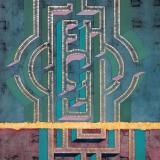
Courant Zéro’s debut is a vibrant sonic rebus at the junction of electronic, electroacoustic, noise and ambient music that resists easy categorisation. Solari strikes a compelling balance of unsettled disorientation and hospitable warmth, teeming with real feeling throughout. The album’s cover art painting Cryptography I by Yen-Chao Lin represents this prevailing sensibility, its mazelike circuitry distinctly carved and crisply rendered, while filigreed with handmade detail and artisanal patina. Thanks for listening.
Montréal-based sound artist Steve Bates expands his strategies and stylistic influences on An Infinite Antenna, his second solo album for Constellation, giving freer reign to melodic components and textural dynamics: leftfield synth work, deconstructed drum machine, pointillist electric guitar, and radiostatic blur are all part of the new brew swirling around his bruitist signal-bending and field-recording sensibility. Arguably a more ambient album than his acclaimed 2022 Constellation debut, An Infinite Antenna is at the same time more densely packed with ideas, dynamics, evocations and earworms. Coming out of the anarcho-punk scene of the Canadian Prairies in the 1990s, Bates founded Winnipeg’s experimental sound festival Send + Receive in 1998 before moving to Montréal to become Sound Coordinator at Hexagram (Concordia University), delving further into sonic research and theory, tape-based composition, and installation work. Alongside the curatorial arc of his own sound art label The Dim Coast, Bates released several solo and collaborative albums on ORAL_records leading up to All The Things That Happen, the 2022 Constellation debut praised by Boomkat for its “grittily iridescent ambient billow rendering maximalist panoramas” and by Backseat Mafia as “extraordinary soundscapes of unstable, destructive cacophony and tender calm, echoes of the threat of power.” Where that album was noisier and single-minded, made with the self-imposed limit of a Casio SK-1, Bates plays more widely with instrumentation and atmospheres on An Infinite Antenna, also drawing on his post-hardcore roots in seeking a sort of track-by-track concision nonetheless driven by the album’s coherence as a seamless work. “I was trying to set durations I associate with punk rather than the longer, sprawling music coming from more ambient styles (that I very much love), and while I wasn’t able to quite pare it down to Minutemen durations, I had that reduction to essential elements as a sort of whisper over my shoulder.” Incorporating source recordings made throughout 2023-2025, including at artist residencies and site-specific sound installation visits in Bosnia and Herzegovina (the album’s cover photo was taken in Sarajevo), Austria, Greece, and Saskatchewan, An Infinite Antenna combines Bates’ “idea of slowly scanning a radio dial” with a soundworld of recurring timbral and textural touchstones that forge an integrated whole.
The album’s 12 tracks work effectively as stand-alone pieces, replete with shifting undercurrents, buried melody, and stuttering kinetics, and as a sequential flow where the brief interstitial silences between them are like short pauses to flip the next page in a sketchbook of perspectival studies of a wide but singular tableau. The glistening atonal synth expressionism of opener “Pink pink pink pink…pink pink” drifts gently toward submerged ambience, darkened by the noised rumble and static interference of “Green as a ghost”, which introduces broken beats and piano chords in its denouement. Tracks like “Battles and sieges and street trees” and “Easier sad than done” work the foundations of low-end field-recording resonance, but dappled with lovely melodic droplets of treated guitar and synth. “Waste, songs of the world” and “Disaster loans” are among the album’s most explicit stylistic references to posthardcore, with distorted ambient bass and gently abrasive drum sampling. Closing track “Swamps and factories”, the album’s longest piece, is perhaps most reminiscent of Bates’ previous record with its sustained dissonant glimmer-drone, but the journey An Infinite Antenna traces to get there is Bates at his most dynamic, diverse, distinctive, and engaging. Thanks for listening.
Bright Madness is the third album from the improvising trio of Wendy Eisenberg, David Grubbs, and Bonner Kramer, a glorious afternoon"s worth of instant compositions laid down in Asheville NC in the early spring of 2025. The sound of Eisenberg, Grubbs, and Kramer doing their damnedest to dazzle one another is encompassing, flowing from shell-game sleights of hand to effortless beauty in the flicker of an ear, a lyrical group sound, with an insistent, vivid and immediate feel.
Montréal-based sound artist Steve Bates expands his strategies and stylistic influences on An Infinite Antenna, his second solo album for Constellation, giving freer reign to melodic components and textural dynamics: leftfield synth work, deconstructed drum machine, pointillist electric guitar, and radiostatic blur are all part of the new brew swirling around his bruitist signal-bending and field-recording sensibility. Arguably a more ambient album than his acclaimed 2022 Constellation debut, An Infinite Antenna is at the same time more densely packed with ideas, dynamics, evocations and earworms. Coming out of the anarcho-punk scene of the Canadian Prairies in the 1990s, Bates founded Winnipeg's experimental sound festival Send + Receive in 1998 before moving to Montréal to become Sound Coordinator at Hexagram (Concordia University), delving further into sonic research and theory, tape-based composition, and installation work. Alongside the curatorial arc of his own sound art label The Dim Coast, Bates released several solo and collaborative albums on ORAL_records leading up to All The Things That Happen, the 2022 Constellation debut praised by Boomkat for its "grittily iridescent ambient billow rendering maximalist panoramas" and by Backseat Mafia as "extraordinary soundscapes of unstable, destructive cacophony and tender calm, echoes of the threat of power." Where that album was noisier and single-minded, made with the self-imposed limit of a Casio SK-1, Bates plays more widely with instrumentation and atmospheres on An Infinite Antenna, also drawing on his post-hardcore roots in seeking a sort of track-by-track concision nonetheless driven by the album's coherence as a seamless work. "I was trying to set durations I associate with punk rather than the longer, sprawling music coming from more ambient styles (that I very much love), and while I wasn't able to quite pare it down to Minutemen durations, I had that reduction to essential elements as a sort of whisper over my shoulder." Incorporating source recordings made throughout 2023-2025, including at artist residencies and site-specific sound installation visits in Bosnia and Herzegovina (the album's cover photo was taken in Sarajevo), Austria, Greece, and Saskatchewan, An Infinite Antenna combines Bates' "idea of slowly scanning a radio dial" with a soundworld of recurring timbral and textural touchstones that forge an integrated whole. The album's 12 tracks work effectively as stand-alone pieces, replete with shifting undercurrents, buried melody, and stuttering kinetics, and as a sequential flow where the brief interstitial silences between them are like short pauses to flip the next page in a sketchbook of perspectival studies of a wide but singular tableau. The glistening atonal synth expressionism of opener 'Pink pink pink pink_pink pink' drifts gently toward submerged ambience, darkened by the noised rumble and static interference of 'Green as a ghost', which introduces broken beats and piano chords in its denouement. Tracks like 'Battles and sieges and street trees' and 'Easier sad than done' work the foundations of low-end field-recording resonance, but dappled with lovely melodic droplets of treated guitar and synth. 'Waste, songs of the world' and 'Disaster loans' are among the album's most explicit stylistic references to posthardcore, with distorted ambient bass and gently abrasive drum sampling. Closing track 'Swamps and factories,' the album's longest piece, is perhaps most reminiscent of Bates' previous record with its sustained dissonant glimmer-drone, but the journey An Infinite Antenna traces to get there is Bates at his most dynamic, diverse, distinctive, and engaging. Thanks for listening
Courant Zéro is the new moniker of Montréal multi-media installation artist and Kohlenstoff label co-founder Maxime Corbeil-Perron, signalling his return to purely recording-based electronic music production following several years focused on award-winning experimental film and audio-visual works. Solari channels his cinematic sensibility and decade-long exploration of sound art and electroacoustic counterpoint into deep cuts of maximalist ambient electronica. Drawing on his early background as a pianist and jazz drummer, Corbeil-Perron weaves a fabric of melodic and rhythmic vectors with his unique timbral palette, intersecting modern composition, IDM, ambient, glitch, and noise on a debut album brimming with sonic detail and emotive resonance. A fixture of Montréal's sound art community as both creator and curator since the early 2010s, Corbeil-Perron's work has ranged from "hypnotic A/V onslaught" (FACT Magazine) to the "richly nuanced acousmatic journey" of his 2018 EP Polychrome (Bandcamp Best Contemporary Classical Of The Month), with earlier electronic and techno-adjacent projects like Political Ritual, Dresden, and Le poisson d'argent garnering accolades from avant-music outlets A Closer Listen, Silence and Sound, and Musicworks, among others. Courant Zéro mobilizes this cumulative wealth of explorative sonic experience in the service of distinctive compositional architectures and electronic music pathways that fans of Floating Points, Jan Jelinek, Squarepusher, Tim Hecker, and Oneohtrix Point Never should find compelling. Title track "Solari" opens the album with a cavernous ambient glitch-drone soundscape that envelops ever-shifting timbres of modular arpeggiation, serving as introduction to the clarion call of "En deçà du réel", an homage to video artist Manon Labrecque, where layers of interweaving melodic counterpoint played on Buchla and other synths slowly build to widescreen immersive intensities; "I have this vision of Labreque vibrating eternally between two frames of magnetic VHS tape_ the slow pace of the piece also inspired by Tarkovsky's approach to scenography" says Corbeil-Perron. "Strange Aorta" is ectoplasmic ambient with wistful melody lines transmuting along a central filament, awash in shifting waves of low-end and ricocheting tonal glitch, the title a reference to "the thumping rhythm beating around the main melody_and the heavy remnants of grief related to my father's passing and a brutal confrontation with my own mortality a few years back." Tracks like "La peau des dents" and "Eroding Us" are more firmly rooted in electroacoustic and aleatory systems music, where colliding loops are shaped into unstable flows of deconstructed slippage and reconvergence. Those two pieces bookend the album's pivotal center: the gorgeous piano digitalia of "Horizon n'arrête" and the skittering electronica of 9-minute opus "Unyeldd", its loping broken beat and cascading melodic glitter like a cluster of wind-up music boxes in a dappled forest _ and for Corbeil- Perron also partly inspired by now fellow Constellation labelmates Do Make Say Think: "I spent a lot of time rediscovering their records after seeing them last September 2024 which definitely influenced this piece." Courant Zéro's debut is a vibrant sonic rebus at the junction of electronic, electroacoustic, noise and ambient music that resists easy categorisation. Solari strikes a compelling balance of unsettled disorientation and hospitable warmth, teeming with real feeling throughout. The album's cover art painting Cryptography I by Yen-Chao Lin represents this prevailing sensibility, its mazelike circuitry distinctly carved and crisply rendered, while filigreed with handmade detail and artisanal patina. Thanks for listening.
The Montréal psych-ambient synth-droners return with Sequence Three, their first album in five years and the final instalment in the group's opening trilogy of records that began with Sequence One in 2019. The spectral supergroup co-founded by Stephen Ramsay (Young Galaxy) and Jace Lasek (The Besnard Lakes), usually joined in some capacity by Lasek's Besnard bandmate Olga Goreas, deliver another dose of its trademark longform slowburn jams, forged from restored vintage synths and analogue electronic gear. Lasek and Ramsay don their seasoned producer hats to apply rockist sound design to minimalist tracks, saturated with tube compression, drenched in pink and brown noise, all queasy modulation, sparse beats, and languorous melodic lines. Evoking a humid dawn on a gas giant, these alien drone anthems meld the numinous transcendentalism of Spiritualized and Cluster with the eroded grit of William Basinski and GAS. Light Conductor has been tagged "heavyweight analogue synth nirvana" by Uncut Magazine and praised for its "fabulous, epic, shimmeringly radiant kosmische" by Electronic Sound, among other accolades. Sequence Three consolidates these strengths, while leaning into the darker disquietude that has always been an undercurrent of Light Conductor's aesthetic. Opener "She Glitters The Dust" fades up slow with intertwining detuned synth loops, a languorous lullaby beat dropping at the 3-minute mark, accompanied by insectoid shimmers and a tease of melody that's eventually given free reign over the song's second half. Aptly titled, it's as if a transmission captured within a cosmic dust cloud has provided the raw material for the band to jam on, tease out, and terrestrialize. An echo of that beat sets the tranced pulse for "Omenize", the centerpiece of Side One and the fulfilment of Light Conductor's one-vocal-track-per-album directive. With layered harmonies by Goreas and Lasek, this is the group at its ethereally anthemic best, the devotional floating-in-space bliss attenuated by another gently warped denouement. "Ghost City Radio" closes out Side One with the band's most overtly anxious tune to date, deceptively stolid in its simple bass guitar riff and filter-swept hi-hat: groove stripped to its minimum as the foundation for an extended spokenword sample of a doomsaying prepper/preacher, a sort of homage to that early hallmark of their Godspeed compatriots, done up through the lens of Light Conductor's inimitably destabilized celestial ambience. (Lasek mixed the most recent two GY!BE albums.) Side Two offers up "High In The Orange Air", a beatless, squelching, bubbling ostinato drone and the album's most orthodox ambient kosmische track. This provides the set and setting for 15-minute closer "Supercontinent", which starts off in similar territory but gradually yields to a submerged and reversed techno pulse pumping through coruscated chordal drone, gaining in woozy mesmeric psych intensity over its inexorable hypnagogic trajectory. Sequence Three rounds out a satisfying trio of full-lengths that Light Conductor has released on Constellation, featuring vibrantly minimal geometric cover art designed by label co-founder Ian Ilavsky that integrates the trilogy as a visual series as well. In keeping with the previous two albums in the set, the Deluxe 180gLP includes a 12"x24" art poster. Thanks for listening.
A clerestory - a bright or "clear" level or "story" - is an upper section of wall, most often in a church punctuated by windows. It is a powerful image for grasping this luminous new music from Jules Reidy. Light casts shadows, of course, and logics of shadowing, mirroring, and distorted reflection - of key importance for Reidy"s work as a whole - inform the sumptuous surfaces of Clerestory. "Shadow Symmetric" is a string quartet commissioned and performed by the JACK Quartet as part of their JACK Studio program. The piece makes simultaneous use of two pitch sets, beginning from the same starting point but expanded using different scaling to produce what Reidy describes as "two offset spectral layers." "Clerestory Windows" offers up a distorted mirror image of the string quartet, arranged as a series of episodes that each remake the material in their own way. It begins with an arrangement of the string quartet material for MIDI strings and voices, repositioning its rigorous harmonic exploration somewhere between the Lovely Music Ltd universe and a 90s RPG soundtrack. This episode derives from Reidy"s installation Inside, Crystals and Circuitry, held in Stockholm in 2025. The piece moves into a lyrical 12-string acoustic guitar air performed at the installation opening, before the strings from the first side reappear. From this emerge flickering arpeggios, achieved by arranging the string quartet material for the RMI, an early digital synthesizer. Clerestory is a meditation on fundamental dynamics of human experience: orientation and disorientation, the hazy borders the hazy borders between the material and the spiritual, and the instability of identity.
Weezer founding member and original bassist, Matt Sharp, while working on a series of “lost-albums” from the cutting room floor of his creative-life, stumbled upon a curious multi-track reel of analog tape. This mysterious reel found at the bottom of a treasure chest of other master recordings just happened to contain Weezer's very first studio sessions. These were the very same recordings that were responsible for earning the band a record contract for their iconic debut “Blue” album. These newly discovered sessions feature raw, vividly emotional and ecstatic versions of the band's timeless hit songs Say It Ain’t So and Undone (The Sweater Song.) Sharp and legendary music producer Joe Chicarrelli took these recordings to Los Angeles’ famed East/West Studios to take a deeper look into this mythic reel of 1-inch Ampex tape. What the two men quickly discovered was the original lineup (with guitarist Jason Cropper) in an infectious, explosively joyful, feral form. Making the decision to honor the original intention of the music and the traditional technology of the era, the songs were remixed from top to bottom, from tape to vinyl, in a 100% analog process.With Sharp as producer and Chicarrelli on the mix, the result of these sessions makes up the entirety of “1192” (named after the month and year it was originally recorded.) The illuminating spirit of the performances on 1192 are guaranteed to turn the world upside down for blue album fans everywhere. This album stands on its own as an essential entry into the band’s discography and is crucial to understanding the first chapter in Weezer's storied history.
“Music for me, is rarely complete,” says GODFLESH mastermind Justin Broadrick, “but it has to reach a point where enough is enough. Creatively, there has to be self-discipline. One has to end it.” Broadrick is primarily referring to the nebulous process of writing and arranging songs into their various potential shapes, but he could just as easily be describing GODFLESH’s imminent conclusion. Just three years after the hypnotic crunch of Purge, 25 years after an uncertain hiatus that nearly scuttled the band, and 38 years since GODFLESH’s inception, Broadrick and bassist-at-arms Ben Green set out to mercilessly crush this cold world with their tenth and penultimate album, this year’s Decay. “Decay was born from the same sessions as Purge,” Broadrick declares of the new record’s six tracks. “It was one huge pool of songs. I picked what I felt was appropriate for what I wanted to achieve with Purge, with the intention of releasing the songs that didn't fit as a new album within a year of Purge being released. Unfortunately, two years passed whilst considering external labels, so that I didn't have to self-release GODFLESH anymore, but it took an awful lot of time to establish a comfortable home for me. The recordings were done, but as usual for me, I did change a lot of stuff once I came back to it.” Now, GODFLESH is ready to unleash an even bolder, bleaker series of sounds in Decay. These songs arrive shortly after Broadrick released a public statement about major abdominal surgery he underwent earlier this year.
The works of Kansanturvamusiikkikomissio, the predecessor of Radiopuhelimet, reissued on vinyl in September Kansanturvamusiikkikomissio—better known as KTMK—was a hardcore punk band from Oulu, founded in the fall of 1983 by guitarist Jarno Mällinen, drummer Jyrki Raatikainen, bassist Pekka Salonsaari, and vocalist Antti Penttilä. The band managed to only play a handful of shows before their first five songs were released in the fall of 1984 on the praised Finnish Hardcore compilation Yalta Hi-Life, released by Barabbas Records. After the 1985 debut album 666, internal conflicts within the band began to drive Kansanturvamusiikkikomissio into a dead end, which was resolved by bringing in Jukka Kangas as the second guitarist. Spurred by this renewed enthusiasm, KTMK recorded a six-song EP titled Seitsemäs pasuuna in early 1986 for Dekadenz’s Fuck label, featuring the underground hits Jeesus oli venäläinen kantoraketti and Boogie-mies. Now reissued for the first time ever, the EP includes five KTMK tracks originally released on the Yalta Hi-Life compilation as bonus material. The band’s final concert took place at Mimmiteekki in Muhos, Finland on March 1st, 1986. Just a few weeks later, Mällinen, Raatikainen, and Kangas formed Radiopuhelimet, who have also played some concerts consisting entirely of KTMK songs during their career. One of these shows took place on February 18th, 2006, at the Vastavirta club in Tampere, Finland and was later released on DVD that same year under the title Radiopuhelimet Plays Kansanturvamusiikkikomissio.
Ten years after All My Demons Greeting Me As A Friend introduced AURORA’s extraordinary musical universe to a global audience, The Moth Tapes takes listeners back to where it all began.
Built from intimate early recordings, demos and previously unreleased material from the original era, ‘All My Demons Greeting Me As A Friend (The Moth Tapes)’ opens AURORA’s archive to offer a new perspective on the creative foundations of her landmark debut and on the beginnings of an artistic journey that has since taken her around the world.
Unrefined and deeply personal, The Moth Tapes is both a celebration of where AURORA began and a bridge to the artist she has become.
Errands is the first duo recording from Marja Ahti, Swedish-Finnish sound artist and electroacoustic composer, and John McCowen, a native of Southern Illinois, now residing in Iceland, whose work centres on a radical exploration of clarinet multiphonics. Working without the aid of electronics, McCowen has spent years finessing performance techniques that allow him to layer beating patterns and split tones that belie their source in a monophonic instrument. Ahti, in contrast, has built up a stunning body of work in recent years using a classic electroacoustic palette of electronic, field recordings and instrumental sounds. Sharing a bill at the 2024 iteration of Stockholm’s Edition Festival, the pair discovered a sensibility shared across their different sonic means, beginning the collaborative process that would eventually result in the mercurial side-long pieces heard on Errands.
The word ‘errand’ suggests something purposeful but routine, and Ahti’s and McCowen’s work is suffused with the everyday. Meeting with McCowen to record in Iceland, Ahti used the opportunity to gather field recordings, capturing not the natural sublimity often associated with the country—think Chris Watson’s shifting glaciers—but everyday life in Reykjavik. Snatches of bustling streets and what could be humming engines thread between static sinewaves, stretches of clarinet resonances and fleeting textures, the latter often at once visceral and impossible to identify. Errands: we are a long way from the grandiose framing devices favoured by the pioneers of electroacoustic music, yet many of their principles are at work here. The gradual metamorphosis of one sound into another, the carefully achieved ambiguity between the acoustic and electronic, the treatment of the stereo field as a compositional element: all of these link Ahti and McCowen’s music to the electroacoustic tradition, yet their sensibility is radically different. The overall effect is a kind of stillness, but one at peace with continuous change. Like the unwieldy but somehow stylish everyday forms captured in the Hertta Kiiski photographs that adorn the record's sleeve, the music seems to prize a kind of deliberate awkwardness, interrupting static held textures not with an abrupt cut, but with a quick fade, suddenly revealing background as foreground.
Ahti and McCowen’s world is everyday and unornamented, but also shadowed by the numinous. Halfway through 'Chorales', we hear an arrangement for overdubbed recorders of an early motet of Messiaen’s, O sacrum convivium! Played on recorders, the piece shrinks into delicacy and dim memories of childhood music lessons, while at the same time its harmonies retain the grandeur of their liturgical origin. This double quality inflects much of what follows on Errands, including snatches of field-recorded water or air, which seem at once elemental and domestic. Enlivened with countless details that repay repeated relistening, Errands is a record that leaves the listener ready to open their ears anew to their own sound environment.
"The grass is greener_ elsewhere_" Brain Damage told us with their debut album, released in 2002. Yet here, they've reached full maturity. Rarely has a "made in France" dub album strayed so far from the Jamaican model while still harboring, in every detail, so many references and tributes to the inventors of the style (King Tubby / Lee Perry), as well as to many of the key figures in its evolution (Tikiman / Rhythm & Sound, Dub Syndicate, etc.). The recording studio, 7/11 Laboratory, is used here as a true musical instrument. The optimal use of three-dimensional stereo effects will immerse the listener in soundscapes ranging from classic space echoes and Mont Blanc tunnel-style reverberations to crackles, electronic interference, exogenous samples, and other parasitic noises coming straight from Babylon. For this album, continuing in the vein of his previous collaborations with the international dub scene (Zion Train, Alpha & Omega, Disciples, Spectre, Lab°_), Brain Damage traveled to London to record two tracks at Conscious Sounds Studio with Jamaican-born singer Tena Stelin. With the melancholic "Spirit World," one is reminded of the fruitful collaborations between Massive Attack and Horace Andy, while on "Genetic Weapon," the tone becomes more overtly assertive. Two vocal tracks, then, woven into these ten compositions, where the emotional moods and atmospheres will shift with each listen. "Always Greener (On the Other Side)" emerges as the manifesto of music conceived as cinema for the ear...
Baltimore's End It is telling it like it is on their debut album, Wrong Side Of Heaven, set for release this summer. The hardcore band has built a reputation through being unapologetically outspoken, playing fast, ripping songs, and putting on an electrifying live show. Now they're ready to enter their next era. Formed in 2017, the band consists of vocalist Akil Godsey, drummer Chris Gonzalez, guitarist Ray Lee, and bassist Patrick Martin. Signed to Flatspot Records, End It came out strong with the release of their self-titled EP the same year they started, and followed it up with 2020's One Way Track EP. In the summer of 2022, the band took the hardcore world by storm with their Unpleasant Living EP, solidifying the Baltimore outfit as one of the most exciting acts in the genre. Following the release, End It embarked on a packed touring and festival schedule across North America and Europe, playing alongside No Warning, Terror, Cold World, Drain, Speed, Angel Du$t, Scowl, and many more. The band's reach goes even farther with breakout single "New Age Slavery" featured on the soundtrack for Tony Hawk's Pro Skater 3 + 4. No matter where they are and what they're doing, End It is true to keeping things authentically them and that shines through on the forthcoming Wrong Side Of Heaven. Entering Salad Days Studio with renowned producer Brian McTernan (Turnstile, Snapcase, Hot Water Music) the band came in with a few demos and wrote the majority of the album during the two month recording process in early 2025. Taking direction from classic hardcore, thrash, and soul music, End It has crafted a 15 song magnum opus centered on "Spreading awareness of the change that's coming to Americans, personal growth, and maintaining the ethics and integrity of hardcore."
The word ‘Tystnad’ – literally translated – means silence. In this case, the Silence is less that of zen buddhism or that of John Cage, rather the name of the studio where Flowers Must Die – carriers of the torch of Swedish psychedelia for now nearly 20 years – retreated to make their most head-expanding album to date. Located near the Norwegian border in the verdant rural Värmland region, Silence Studios has been a countercultural hub for decades, attaining a legendary status as a residential outpost where bands can retreat to stretch out creatively and focus their psychic powers.
From just such origins, Flowers Must Die have crafted a collection of expansive and incandescent jams that maps out a lysergic trajectory between the idealistic, anything-goes mania of early ‘70s psychedelia and the 21st century. Tystnad is the sound of a band buoyed by the afterglow of their last Rocket release, 2017’s Kompost and its attendant touring, and expanding into extrapolations that marry the wildest free improv with haunting melody.
If Tystnad, as the band claim, is to be their last recording made in one room at the same time, then it displays a formidable escape velocity. Who’s to say whether Flowers Must Die have tapped into a Swedish continuum, one including the like of Pärson Sound, Dungen or Goat. What’s clear is that Tystnad is a timeless treatise, and a potent channeling of spirits –transcending genre in search of enlightenment anew.
A queer Black musician and daughter of Nigerian immigrants, Oladokun has become a vital cultural voice, writing songs that explore identity, faith, mental health, and social justice with honesty and restraint. Since her 2020 breakthrough, she has released two critically acclaimed albums, earned a finalist nod for Americana Artist of the Year, and saw her protest anthem "iseeamerica" named a finalist for the Recording Academy's Special Merit Award for Best Song for Social Change. Praised by The New York Times and Billboard for her ability to turn quiet introspectioninto lasting impact, Joy Oladokun has brought her music to national television on The Tonight Show Starring Jimmy Fallon, CBS Saturday Morning, and Austin City Limits, while her songs have been featured across major TV series. With collaborations spanning artists like Chris Stapleton, Brandi Carlile, and Maxo Kream, she is entering her next chapter by bringing an even broader, bolder sound to the table, continuing to prove herself as an artist who not only bends genre but bridges culture.
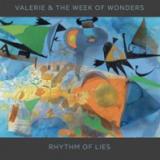
Burns with brothers Brian and Ewan Mcfie at Glasgow School of Art in the early 1980s. Drawing comparisons to Simple Minds, U2 and R.E.M, their post-punk sound attracted attention from John Peel who aired their single Too Late in 1984. The band signed to A&M and released Real Surprise in 1985 which became a BBC Radio 1 Single of the Week. However, like many bands of the time, their recording deal collapsed. For decades, all that remained were those two singles and a box of unreleased demos. During lockdown, the band revisited the tapes, finally bringing a remarkable lost chapter of Scottish post- punk back to life. In 2025 the band decamped to Beetroot Studios in Airdrie with producer Stuart MacLeod to work on new material. Rhythm of Lies is released by Last Night From Glasgow on blue vinyl and CD. This album is a must have for new and returning fans alike.
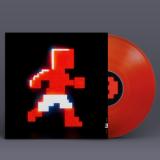
Featuring Nicholas Semrad (Empire of the Sun), Stu Brooks (Nine Inch Nails, Danny Elfman), Tim Lefebvre (David Bowie) and vocalist Gretchen Parlato, this new hardhitting, synth-fueled album distills Guiliana's vision into eight cinematic compositions that fuse retro production with futuristic playing. Transmitted through an original 8-bit visual universe created by artist and long-term collaborator Steve Wall, BEAT MUSIC 2.0 draws inspiration from early gaming culture and electronic music, looking both to the past and the future for answers. Guiliana's compositional voice is on full display alongside the energetic and precise grooves that define his singular approach. In an age increasingly shaped by automation, BEAT MUSIC 2.0 keeps its focus on human connection and collaboration.
Originally released in 1978. A Classic Reggae album re-released on 180 gram vinyl and produced by Linval Thompson with extensive sleeve notes.
Recorded at Channel One Recording Studio & Harry J's Recording Studio.
Cornell Campbell is one of an elite group of Jamaican reggae singers who has weathered the changes throughout the music's development - in his case, from the ska era to right up to date - whilst retaining their relevance. Witness his recent alliance with UK Afrobeat/reggae band The Soothsayers or Jazmine Sullivan's R & B hit Need U Bad, which sampled his classic 'Queen Of The Minstrel' -a song that still sounds fresh more than thirty years later.
Sweet Baby was pressed on bright red vinyl, which only added to the excitement when you saw the selector position it carefully on the deck.
On the LP cover was a painting of Cornell wearing an emerald green shirt and framed by a lurid sky, which might have left some people wondering if it was a soul album. It wasn't, although there is certainly soul in the grooves, and especially on R&B covers like Gonna Take A Miracle - first recorded by the Royalettes -and Darling You Send Me, which Sam Cooke had introduced to the US Billboard charts some twenty years earlier.
Both are among the highlights but then the whole album is good in truth, and a heartfelt I Need Somebody and My Sweet Baby, plus the two-step favourite Just Enough were regularly played on sound system. Blinded By Love, I Didn't Know and Can't Hide My Love are tinged with melancholy and like the seductive Whenever You Need Me, display all the hallmarks of a classic Cornell Campbell side -swooping vocals, a driving rhythm and seductive lyrics included.
Nearly forty years later, it is gratifying to know there is still no mistaking him when his records are played in a dance. That relaxed vocal style draws you in but it's his falsetto, quivering with understated emotion that hooks you and turns you into a lifelong fan.
Released 50 years on from the bands' formation, the forthcoming Psycho Tornado features 10 blistering new tracks recorded in 2025. Psycho Tornado will be unleashed on coloured vinyl and CD, and will rumble into your home in September 2026. The Rezillos are a new wave/ punk band formed in Edinburgh, Scotland in 1976. Known for their colourful, retro-futuristic style and playful attitude, they stood out from the darker punk acts of the time. Their music blended fast punk rhythms with pop melodies, sci- fi themes and a sense of humor. Their debut album, Can't Stand The Rezillos (1978) is considered a classic of the era. The band initially split in 1978 and with some members going on to form The Revillos, with a similar name and sound. But The Rezillos later reunited in 2001 and continue to perform live, maintaining a cult following for their energetic performances and distinctive style.
Released 50 years on from the bands' formation, the forthcoming Psycho Tornado features 10 blistering new tracks recorded in 2025. Psycho Tornado will be unleashed on coloured vinyl and CD, and will rumble into your home in September 2026. The Rezillos are a new wave/ punk band formed in Edinburgh, Scotland in 1976. Known for their colourful, retro-futuristic style and playful attitude, they stood out from the darker punk acts of the time. Their music blended fast punk rhythms with pop melodies, sci- fi themes and a sense of humor. Their debut album, Can't Stand The Rezillos (1978) is considered a classic of the era. The band initially split in 1978 and with some members going on to form The Revillos, with a similar name and sound. But The Rezillos later reunited in 2001 and continue to perform live, maintaining a cult following for their energetic performances and distinctive style.
»Pipe Dreams II & III« presents two new, side-long organ works by Mary Jane Leach, extending the sonic investigations of her 1989 landmark »Pipe Dreams«. Recorded in Ghent and Cologne, the two side-long pieces use shifting stops, resonance and beating tones to turn the pipe organ into a vivid, physical field of sound.
When »Pipe Dreams« was issued on vinyl for the first time by Blume in 2017, it was effectively the first time many of us encountered Mary Jane Leach’s music, finally placing her work in its proper historical context amid the searching Downtown milieu of Julius Eastman, Arthur Russell, Arnold Dreyblatt, Ellen Fullman, Philip Corner, Daniel Goode, and Peter Zummo. Leach collaborated with most of these artists at one point or another, either in Downtown Ensemble or as a guest on their records.
Now »Pipe Dreams II« and »Pipe Dreams III« arrive, recorded in 2023 and 2024 at Miry Concertzaal in Ghent, Belgium, and Kunst-Station Sankt Peter in Cologne, respectively.
»When I was a young child, my family lived next door to a church, where my mother was the organist. I spent many hours lying on the floor of the sanctuary listening to the music, letting the sound of the organ envelop me. I also liked to play the piano loudly with the pedal down, producing clouds of sound, much to my family’s annoyance. These two organ pieces explore some of my earliest musical interests and aesthetics.
In 1989, I lived in a tower attached to St Peter’s Church in Cologne, where I had access to its organ. It had two sets of pipes, front and back, which could create antiphonal effects. I spent countless hours exploring the possibilities of all the permutations of notes, space, and the resulting sound phenomena. I wrote »Pipe Dreams« for that organ. Fast forward to 2023, when I was asked to create a piece for organ for a concert at the Miry Concertzaal in Ghent, Belgium: »Pipe Dreams II«. I had a few days to familiarise myself with the organ, its available stops, and the layout of the console. I choreographed stop changes for a volunteer, as I couldn’t reach them myself. Some amazing sounds began to happen, and at one point the sound was so visceral that I felt as though I were taming a wild beast.
»Pipe Dreams III« was performed in 2024 on the organ that I had spent so much time playing in 1989–90. One big difference, though, was that the console was totally new and computerised. Having access to the organ for only a few hours before the concert, I decided that I did not have enough time to feel comfortable with the console and should not attempt to recreate the piece I had written in 1989. I would instead use the same sequence of stops and perform an improvised piece. I loved the sounds that were being created, and I was having so much fun that at one point I even started to laugh quietly. I began to visualise the beating notes as if they were atoms, opening them up to expose their innards, with the beating, higher-pitched notes — neutrons and protons — shimmering at the top, and the lower notes — the electrons — throbbing away at the bottom. I was playing notes not so much for their pitch value, but for how they affected the notes and sound phenomena already being played. Instead of a time signature, I timed the entries by listening to the beating patterns, waiting for the right moment to enter. And no, I wasn’t hallucinating.«
Following the success of Naturalisten’s release “Forms”, E2-E8 is back with the latest offering from Milan-based artist Joseph Tagliabue. “Espansione” presents a meticulously crafted sonic exploration that transcends conventional genre boundaries. It is a double LP consisting of four distinct parts: an ambient concept presented in Part 1 & 2, and four techno tracks in Part 3 & 4. This structure makes for a multifaceted listening experience, seamlessly blending organic textures with synthetic manipulations.
Part 3 & 4 pivot towards the dancefloor, presenting four tracks of driving, progressive techno. This transition from meditative ambient to hypnotic rave is executed with precision, showcasing Tagliabue’s versatility. These cuts are designed for late-night immersion, while maintaining the album’s overall sense of depth and trance and channeling a deep, immersive rave experience.
The album as a whole is a sophisticated sound collage, highlighting Tagliabue’s mastery of sonic manipulation. The dense sonic flow, characterised by echoes of distant temples and molten synthetic modulations, creates a compelling auditory and potentially visual experience. The interplay between organic and synthetic, combined with the album’s thematic depth, makes Espansione a noteworthy evolution in Joseph’s artistic expression. A work designed to be both deeply listened to, and physically experienced.
Early support comes from Vladimir Ivkovic, Marco Shuttle, Konduku, among others.
Named after a now-shuttered nightspot that overlooked the beach on Italy's picturesque Tuscan coast, Maxime Denuc's 'Club Imperiale' is a work of speculative historical fiction, a record that imagines a point of creative symbiosis between the Catholic church and the ecstatic dancefloors of the early '90s.
Using a MIDI-controlled pipe organ, Denuc creates dense clouds of impossible-to-play notes that ricochet backwards and forwards through history, from Rome's reverberant cathedrals to the white, sandy beaches of the Balearic Islands.
Two years ago, the Brussels-based French composer was forwarded a surprising video by a Belgian fan. It was shot during a Wedding at a church in Menorca, where the organist was playing 'Infinite End', the lead track from 2022's 'Nachthorn'. Immediately, Denuc knew that this was the thematic backdrop he'd been waiting for; he imagined the aftermath of the event, wandering through small villages and teetering on a cliff's edge, finding a provincial nightclub and retracing his steps back to the beach to witness the
sunrise.
out of Stock
Last delivered 15 days ago available to reorder, subject to availability
Elderberry Jak was and is arguably the finest rock band to come out
West Virginia. It is certainly an arguable case if its single album is an accurate indicator, as the recording reveals a quartet as strong as any number of its more well-known, more commercially successful hard
rock contemporaries--bands such as Free, the James Gang, the
Guess Who, and Three Dog Night--all with which Elderberry Jak shared a variety of sonic attributes. The band came together in the fall of 1969, with bass player Dave Coombs and lead vocalist Joe Cerisano (Silver Condor, Trans-Siberian Orchestra) as its co-founders. The two had previously played together in Coombs' outfit J.B. and the Bonnevilles
. The Bonnevilles formed in 1965 and developed over the next few years into the most outstanding and popular group in the entire state of West Virginia. Upon the demise of J.B. and the Bonnevilles in 1969,
the duo formed a new unit called Kaboose, which lasted seven months. Then, with the addition of Tom Nicholas on guitar and Joe Hartman behind the drum kit, they became Elderberry Jak, named after the elderberry wine made by an uncle of Coombs. The quartet had soon become a powerful unit, mixing hard-driving rock with invigoratingly tight funk. The band traveled throughout their home states, Ohio and Pennsylvania, for performances, eventually earning a record deal with
Kenny's brother Leland Rogers in Memphis. The result was the first-
rate Long Overdue, released in 1970
Rochester, NY's The Jet Black Berries existed at the strange and fertile intersection of post-punk restlessness, roots-rock mythology, psychedelic revival, and science-fiction dread. Emerging from the band’s earlier incarnation as New Math, the group refocused in the mid-1980s with a new name, a new vision, and a sound that moved beyond the limits of punk rock and new wave. What followed was darker, stranger, and more ambitious: country-rock ghosts, rockabilly swing, western balladry, psych-punk atmosphere, and beat-inspired storytelling fused into one singular vision. After feeling stymied in their previous form, the renewed band set its sights on breaking out to other countries and, conceptually, other planets.
Recorded in two days in August of 1984, Sundown on Venus was originally released by Enigma/Pink Dust after the newly reconfigured band signed with Enigma. The original 1985 release, however, arrived with complications. Enigma wanted additional material included, so the album was packaged with a bonus 12-inch featuring extra tracks, including a song written for the film The Return of the Living Dead, ill-chosen cover songs, and re-recordings of older New Math material.
Now, the Sundown on Venus Definitive Edition restores the album to what the band originally envisioned it in 1985. Released on CD for the first time with 12 songs newly remastered & re-presented with focus, this "Definitive Edition" brings attention back to the album’s dark narrative arc & unusual genre chemistry. Though the original album received press coverage on both sides of the Atlantic in outlets including Cash Box, Billboard, CMJ, Interview, and the UK’s SOUNDS, Sundown on Venus never found the commercial audience its ambition deserved. What once slipped through the cracks of underground rock history now stands as a missing link between cowpunk, psych revival, rockabilly, goth, post-punk, Americana, & cinematic sci-fi storytelling.
The late sixties and early seventies spectacle of Jamaican Deejays taking their live performances out of the dance halls and translating them into hit records, not only marked the beginning of forty years of dance hall driven music on the island but also provided the original inspiration and template for the global dominance of rap and hip hop.
The art of deejay was now rightly recognised and the toasters or talk over artists advanced from introductions and interjections to stringing complete sets of lyrics together and riding the rhythm for the entire length of the song.
Deejays including U Roy, I Roy, Dennis Alcapone, Big Joe ,Little Joe and Prince Jazzbo who built their reputations working live on sound systems,now went one step beyond and moved on to become recording deejays with entire catalogues of hit singles and albums to their credit.
Throughout the seventies a whole host of mic men followed in their wake including Dillinger,Dr.Alimando,Clint Eastwood and Jah Stitch.
Talking records were not new, but 'talk over' records were...the repercussions of this uniquely Jamaican phenomenon would go on to reverberate worldwide...
Gi Gi describes his process as “dubwise sampledelia.” It begins with fragments and ends somewhere else entirely, destabilizing its source material until it stops pointing backward. A borrowed sound, looped and bent, eventually forgets where it came from; it stops referencing anything but itself.
This liquid sensibility shaped his earlier work, music that hovered between drift and propulsion, suggesting the dance floor without fully stepping onto it. Presence was implied, edges stayed soft. The center was always there, but diffused like mist on a screen.
With In Lieu, that center comes into focus. Half written in Texas, half in Australia, the shift isn’t simply geographic, but internal. The record moves with a coiled, anticipatory energy; the drums arrive with more force and the bass organizes the room instead of melting into it. It's dense with the feeling of more bodies in the frame. Textures still smear and refract, but they move around a clearer axis.
Where past records circled their core, these inhabit it, pulling closer to the body. “Some Of” and “Arque” lean into low-end pressure without abandoning his instinct for drift. "Pink Dirt" circles around mechanical drums and dizzying vocal chops, head-down and visceral. Elsewhere, voices gain newfound contour, materializing in “Downswept” with intimate musings and nearly forming a lead vocal on the title track before dissolving again.
In Lieu moves with a newfound confidence, compressing inward, sounding closer to the source of its own pulse.
out of Stock
Last delivered 18 days ago available to reorder, subject to availability
For its third release, Ambient Sans turns to one of the most quietly beloved works in Japanese ambient music.
Recorded at Biwa Studio in 1989, White Morning is the work of Fumio Miyashita — composer, arranger, and multi-instrumentalist whose output through the late 1980s and early 1990s occupies a singular space between healing music, environmental sound, and meditative ambient. Where his contemporaries were mapping the exterior world, Miyashita turned inward: his music was designed for the body as much as the ear, conceived explicitly for rest, focus, and presence.
White Morning distills that vision into its purest form. Two extended pieces — 目覚め (See The Light) and 朝の祈り (Morning Prayer) — built from soft synthesizer layers, delicate acoustic textures, and a stillness that feels less composed than discovered. Music that doesn't impose itself. Music that simply stays.
Originally released on CD in 1991 and circulated quietly ever since among devotees of kankyo ongaku and Japanese new age, White Morning has never appeared on vinyl — until now. Essential listening for anyone drawn to the environmental music of Hiroshi Yoshimura, the meditative depth of Satoshi Ashikawa, or the healing ambient of Klaus Wiese.
out of Stock
Last delivered 25 days ago available to reorder, subject to availability
Following their critically acclaimed debut album, released earlier this year on Sir Runnin’ Records, the extraterrestrial dub explorers return with another heavyweight release. Once again, UFO Collectivedelivers their unique blend of deep roots and heavy dub—this time in the form of a brandnew 7” record on BCSM.
If you’re searching for a roots tune with an otherworldly twist, “Desert Roots” is exactly what you’ve been waiting for. Driven by a thunderous bassline and a rock-solid rhythm, the track rolls through an endless desert landscape in search of the next dub session. Deeply rooted in the traditions of classic soundsystem culture while reaching far beyond earthly boundaries, this production is made for selectors, soundsystems, and lovers of authentic dubwise music alike.
Prepare for another heavyweight submission as the infamous UFO Collective returns to lift you into higher dimensions. Buckle up, drop the needle, and let “Desert Roots” guide you on a cosmic dub journey.
out of Stock
Last delivered 25 days ago available to reorder, subject to availability
Introducing the second release from Principauté de Bowl-Air — PBAVINYL002
Principauté de Bowl-Air is a label founded by DJ Bowlcut, a key figure in supporting Seoul’s underground scene through Seoul Community Radio. The project presents his vision of deep, glitchy minimal house music, woven with the story of a secret micronation hidden in the heart of Seoul.
Following the debut vinyl release, PBAVINYL002 features an original track by DJ Bowlcut alongside reinterpretations by his friends Slowmouth and Furz.
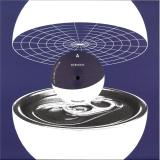
The cover artwork references one of the first K-pop acts to introduce rave sounds to Korean audiences — Seo Taiji and Boys. Their first techno album featured an image of the top of an aluminum can, and PBAVINYL002 draws from the same visual reference. The track “Dig This” also reworks elements from their song “You in Illusions (Techno Taiji Mix).”
The A-side opens with “Falling”, a hypnotic-groove track built around deep synths and designed for afterhours. It works as a perfect DJ tool for gently guiding the crowd into a subtle trance state, further enhanced by the vocal sample “Everybody Falling, Anybody Feel that Falling?”, which pulls listeners into a slow, spiraling moment.
The second A-side track, “Dig This”, takes direct inspiration from one of the earliest K-pop tracks to feature rave stabs, TB-303, and classic rave elements — “You in Illusions (Techno Taiji Mix)”. DJ Bowlcut reuses many of the same samples that Seo Taiji originally layered, reconstructing them into a deep minimal cut with a distinctive Mentasm stab woven into the minimal house framework.
The B-side features remixes by Slowmouth and Furz.
Slowmouth transforms “Falling” into a brighter, more festive exploration that reveals the hidden layers of the original hypnotic groove.
Furz, meanwhile, turns “Dig This” into a funky, dancefloor-ready banger aimed at a wider crowd.
out of Stock
Last delivered 2 days ago available to reorder, subject to availability
For the third instalment of our wax series, we welcome the regional talent Bood on board with a gorgeous four-tracker that perfectly defines our sound.
This EP was produced from the heart with some sounds from the analog and early era 16-bit digital domains, and a sprinkle of wild imagination.
In it are deeper house tones for a variety of dancefloors, and different times of the day.
out of Stock
Last delivered 2 days ago available to reorder, subject to availability
Some recordings herald the future in ways that are impossible to see in real time. Teodros Makonnen With His Organ (ቴዎድሮስ መኮንን ከኦርጋኑ ጋር), by the artist Teodros Makonnen, also known as Teddy Mak, is one of those. Today, electronic sounds, synthesizers, and digital production are taken for granted in Ethiopian music, but in the early 1980s, they were novelties that polarized opinion. Even to this day, the story of Teodros Makonnen’s legacy has never been properly told. He played a decisive role in defining the sound of the digital era of Ethiopian music that emerged in the 1980s and beyond, both as a keyboard player and as a producer, songwriter, performer, and sound designer.
Ethiopian music was at a crossroads in the early 1980s. Much like music in the rest of the world, technology and automation heralded either a quantum leap in musical development or the annihilation of musicianship, depending on who you’d ask. The changes were incremental nonetheless, but with the benefit of hindsight one can clearly see that the changes meant different things in different contexts. Drum machines and electric organs came to replace many hotel bands because, all of a sudden, one musician could control drums, melody, and accompaniment. Teodros was one of the first musicians in Ethiopia to explore the possibilities this opened up.
Teodros’ father, Captain Makonnen Beri, was a chief pilot at Ethiopian Airlines and a music enthusiast at that. This would prove important to his development, as Makonnen brought back a piano from Germany, which would lead to the first steps in Teodros’ long musical career. Captain Makonnen’s work as Head of Flight Operations and as a pilot exposed him to the wider world that was far from commonplace for most Ethiopians. In a house where music captivated the whole family, the piano gave Teodros’ talent an outlet. Not only was a piano at home rare in Ethiopian households, his father also brought an Indian teacher to their home to teach Teodros and his brother, Captain Samuel Makonnen, music theory (solfeggio or ear training) and piano. Teodros and his youngest brother, the late great Dereje, a member of both the legendary Ibex Band and the Ethiopian reggae group Dallol, took up music from that point onward, with Teodros beginning to develop his proficiency at the age of eight. His father encouraged him to practice tirelessly at home, and Teodros later received musical schooling at the German School in Addis Ababa. His obvious talent led to studies and formal education at the Yared School of Music, followed by continued studies in American jazz at Northern Virginia Community College in Virginia. Teodros cut his teeth professionally in his mid-teens, not only as a keyboardist, but also as an arranger for the Wabi Shebelle and Dahlak bands in the 1970s. He mastered electronic sequencing early, rising to prominence through the midnight recording sessions held during the military curfew. The pressures imposed by the curfew required precise and disciplined recordings, and Teodros delivered just that. This, in turn, led to collaborations with iconic artists such as Mulatu Astatke, Aster Aweke, Menelik Wossenachew, Tilahun Gessesse, Mahmoud Ahmed, and Alemayehu Eshete. In those days, he sat in as a keyboardist with the Dahlak Band when Dawit Yifru took a hiatus to study in Russia, and also with the Ethiostar Band. He secured a residency at the Wabi Shebelle Hotel with the Shebele Band, together with Zelalem Tadese (drums), later succeeded by Elias Bekele, Mulugeta Hailu (bass), Teferi ‘Bibisha’ Mengesha (guitar), Kumelachew G/Selassie (trumpet), and Teshome Deneke (saxophone). A friendly competition developed between the bands associated with the Ras Hotel (the Ibex Band), Ghion Hotel (the Dahlak Band), and Wabi Shebelle Hotel (the Shebele Band). The music scene at Wabi Shebelle saw teenagers commanding the spotlight in an industry otherwise dominated by musicians of an older generation. At the Wabi Shebelle Hotel, Teodros met a diplomat from Saudi Arabia and later visited him at his home in Addis Ababa, a meeting that had unexpected musical consequences. The man owned a Yamaha double-deck keyboard. That evening, they recorded Teodros Makonnen With His Organ (ቴዎድሮስ መኮንን ከኦርጋኑ ጋር) in one take. This recording, a cornerstone in the early digital sound of Ethiopian music, came about almost by chance, simply because Teodros got the opportunity. Traditional Ethiopian songs were cast in a wholly electronic style. Once freed from backing duties, Teodros’ keyboards could explore dreamlike soundscapes that took Ethiopian music in new directions. Even though the cassette contained well-known Ethiopian songs, they were given highly original arrangements, performed on an electric organ with drum machine backing and rhythm patterns that left the listener with suggestive, lingering sounds. “Libesh Kabashen” (also known as “Anchi Bale Game”) and “Odu Gol Golesa” wrap you in the very stuff that dreams are made of. Originally released on cassette only, this recording exudes a mystique that surpasses even some of the most obscure Ethiopian recordings of the day. It remained more or less unknown outside of Ethiopia until now. Some of the tracks, like “Addis Fikir,” are permeated with an almost naive buoyancy, free-floating sounds that lost contact with the ground the moment they were conceived. Others, like “Meche New Hageren Yemayew” and “Lelitu Alnega Alegn,” carry a moodier, quirkier timbre, with pulsating rhythms in the background. Yet even the darker pieces contain an unmistakable wave, something essentially Ethiopian. If most recordings of Teodros’s contemporaries at the time were teeming with atmosphere, his songs seem instead at home in the stratosphere, almost ethereal. Some of the music here could be filed under “lullabies,” were it not for the recurring, almost brooding feeling that engulfs the listener on the aforementioned tracks. You could easily be forgiven for drifting into a blissful haze as the music washes over you.
Up to the advent of electronic music production, Ethiopia was totally dominated by big bands on the one hand, and small groups on the other. The former were tied to large institutions such as the military, the latter emerged from the entertainment industry, in hotel bars and nightclubs. These groups were commercially driven, and bands ultimately had to foster a mercenary approach to employment, albeit not to the passion for music. In the light of this, Teodros’ musical legacy can be seen in two ways. On the one hand, he is a key player in Ethiopian music from the 1970s onwards, leaving an indelible mark through hundreds of compositions and arrangements, including soundtracks for numerous documentary films and advertisements for different companies. On the other hand, the way he and others employed electronics brought Ethiopian music onto a fork in the road.
The replacement of traditional instruments with electronic equipment was seen as impending doom by some. Others, like Teodros, saw new avenues for performance, production, and creativity. Just as later producers like Abegasu Shiota of Admas, Teodros was a trailblazer who opened paths that it took Ethiopian music as a whole more than a decade to rush into. The hotel scene had already been pushed toward electronic music by financial necessity and cost-cutting. Today’s revived global interest in Ethiopian music from the seventies and eighties, alongside a broader resurgence, has changed the reasons for using digital means of music production. They have become tools for musical dreaming. This is where the dreaming began.
out of Stock
Last delivered 12 days ago available to reorder, subject to availability
»Cosmogonical Ears« is Amosphère's first album for Hallow Ground. Following her contribution to the Swiss label’s »Epiphanies« compilation and her 2021 full-length debut »More Die of Heartbreak« on 33-33, it features three expansive pieces. The Paris-based composer and multidisciplinary artist delves deeper into themes of time, space, cosmology, human perception, and psycho-physical effects, crafting profound sonic meditations. Drawing on a minimalist approach while blending electronic and acoustic elements, Amosphère’s long-form compositions are living, breathing entities whose sonic richness and evocative power unfold gradually over time, putting »Cosmogonical Ears« in direct kinship with previous Hallow Ground releases by artists such as Kali Malone and FUJI|||||||||||TA.
The album opens with its longest piece, »Land of eternal delight,« composed for the Buddha10 exhibition at the Museo d'Arte Orientale in Turin. Written during three years of isolation—a period in which Amosphère explored meditation practices and diverse belief systems—it merges mythology with personal transcendental experiences, reflecting on a challenging time for humanity. »By blending Buddhist philosophy and sculpture with my own meditation practices, I sought to explore a way for people to transcend the boundaries of space and time—not as a believer, but as an observer,« she explains. Featuring handmade ceramic instruments and recorded by Thomas Lefevre, the piece combines Amosphère’s electronic organ with Marc Lochner’s flute contributions, creating a sound that is simultaneously minimalist and expansive.
The concept of teleportation and how it challenges traditional notions of time and space serves as the foundation for the second piece. »Recent advances in quantum physics suggest that teleportation might be possible through quantum entanglement,« Amosphère notes. »What if science fiction is becoming reality—or has already existed in ancient times?« Drawing inspiration from theories proposed by physicists such as Roger Penrose, Amosphère again worked together with flutist Lochner, this time using her VCS 3 synthesizer. »Teleportation« weaves single notes into intricate, non-linear patterns that defy conventional logic, creating a complex auditory tapestry. The last piece »Black hole in, white hole out« was recorded on Corsica and features Miao Zhao’s bass clarinet drones alongside Amosphère’s church organ. It imagines the possible sound of crossing a black hole while also suggesting the study of its theoretical exit and its potential applications for large-scale time and space travel.
The questions posed by »Cosmogonical Ears« do not yield straightforward answers. Instead, Amosphère’s restrained yet intricately layered compositions require full immersion and concentration from the listener. As expressed by the album’s title—which envisions the birth of a new universe through listening—»Cosmogonical Ears« offers an experimental approach to auditory perception as a tool for seeking truth, freedom, and harmony between the outer world and the inner self.

















![The Jet Black Berries - Sundown on Venus [Definitive Edition] (LP)](https://www.deejay.de/images/l/3/8/1268738.jpg)