Buscar:earl young

Estilos
Todo
Poison Idea - Pearls Before Swine: The Early Years Volume 2 (LP)

Kicking off the collection, we have POISON IDEA performing their first ever gig as a high-velocity punk band on New Years Eve 1980 – truly an incredible find. “We put our gear in shopping carts and pushed it to the venue” Jerry recalls as well as the reaction from Portland’s first wave of hardcore kids, “They only had 30 seconds in a song to throw each other around and pogo, so they’d go for it. It came naturally, like the music possessed them”. The embryonic versions presented here of future POISON IDEA classics like “Give It Up” and “Castration” are played in a more quirky and herky-jerky manner than how they would appear three years later on their debut seven-inch EP, Pick Your King. This recording also holds the most unfiltered display of Germs vocalist Darby Crash’s influence on Jerry. “His voice gave me the license to go” states Jerry. “You didn’t have to be a trained singer. Just open up your soul and scream”.

The remainder of this release is culled from a recording done in June of 1981 at a birthday party for Kim Kincaid, vocalist for local punk group, Neo Boys. The event was held at the short-lived but groundbreaking punk venue for Portland, Clockwork Joe’s. “Clockwork Joe’s was like Peter Pan’s island of lost boys” Lang recollects, “There was a lot of booze, a lot of drugs and a lot of young kids”. Hearing this ferocious, tightly-wound set, one can only imagine the sweaty debauchery that occurred that night, especially during the pounding rendition of “Underage” presented here, yet another future Pick Your King track.

Reservar08.05.2026

debe ser publicado en 08.05.2026

25,42
Tha God Fahim - Tha Dark Shogunn Saga Vol. 3 LP

Tha God Fahim's timeless creative instincts have been evident from the moment his art began to circulate. Emerging unexpectedly from the epicenter of trap music, the Atlanta emcee quickly distinguished himself with sharp wordplay and atmospheric production that couldn't be further from the monotonous sounds echoing Around Him. With Just A Few Projects To His Name, Tha God Fahim Was Still A Hungry Young Talent On The Rise when he unleashed Tha Dark Shogunn Saga in late 2016. Among his most memorable early releases, the album kicked off an unprecedented creative explosion, as Fahim cemented his status with more than 50 projects released over the next two years. Followed by an equally compelling sequel released just a few
months later, the overall saga became an important moment in Tha God Fahim's rise, evoking shadowy street corners and smoke-filled hallways. Nearly a decade later, Fahim is expanding this series into a full trilogy with Tha Dark Shogunn Saga, Vol. 3. Reviving the unmistakable vibe of the original projects, the new collection finds our hero back in warrior mode, sharpening his lyrical blade over rich production from Cookin Soul, Nicholas Craven, Fortes, and Fahim himself.

No en stock

Haga su pedido ahora y le encargaremos el artículo en nuestro proveedor.

33,82

Ültimo hace: 4 Días
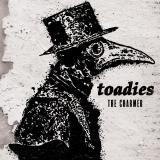
Toadies - The Charmer LP

Toadies

The Charmer LP

12inchLPSPFR149C
SpaceFlight Records
01.05.2026
También disponible

Black Vinyl[34,03 €]


The Charmer, Toadies first full-length studio album in nearly a decade, also happens to be one of the last records recorded by famed engineer Steve Albini (Nirvana, Pixies, PJ Harvey) before his death in 2024. The raw, guitar-driven collection places the platinum-selling band firmly back in the Alternative Rock pantheon that sparked their early success, while sounding right at home with the dozens of younger contemporary rock bands they've influenced.

Reservar01.05.2026

debe ser publicado en 01.05.2026

35,25
Rickey Kelly - My Kind Of Music LP + Mp3
  • A1: The Ark
  • A2: The Masai
  • A3: Dream Dance
  • B1: Belize
  • B2: As You Are
  • B3: Danakil Warrior

Our latest Holy Grail reissue is this private press spiritual jazz gem out of California from Rickey Kelly and his vibes & marimba. Features Diane Reeves (vocals) & Adele Sebastian (flute)!

Heavyweight 180g LP with tip-on sleeve, individually numbered 1-1000, card enclosed for liner notes & audio download

"Rickey, I know these are your friends, the guys you went to school with, but if you wanna record an album, you record with musicians who have been playing their whole life; whatever you write, they'll put their whole life into it. You play with your friends; they may not even play in tune."

These are the words of Slave guitarist Kevin Johnson, and they were to change the course of young Rickey Kelly's life.

It was 1978, and music student Kelly had approached Johnson with a tape of rough demos of some songs he'd written. A San Francisco native, Kelly had recently moved the short distance south to study music at LA City College in East Hollywood. He was a member of E.W. Wainwright Jr.'s African Roots of Jazz, and was spending up to 10 hours a day in practice on both vibes and marimba. He also played with Horace Tapscott, and had his own band made up of fellow students, but it was his ambition to make an album that led to the conversation with Johnson. It was a turning point in his education, and a decision was looming.

The next thing Johnson said was "You call the best jazz musicians. How'd you like to play with Billy Higgins?", a line that would seal it for anyone; for a youngster like Rickey just starting out in the business, you just don't turn down the opportunity to play with the likes of highly accomplished musicians, especially those of the calibre of legendary jazz drummer Billy Higgins.

Some calls were made and the date was set to record at Studio Masters on Beverly Blvd, a studio set up just a few years previous in 1973, owned and operated by Dot Records founder Randy Wood with his son John. Some of the other music professionals set to record with Kelley that day were flautist Adele Sebastian, bass player Tony Dumas, saxophonist Charles Owens and vocalist Diane Reeves, none of whom had previously played with Kelly before.

Kelly was impressed with the studio, with the gold records displayed on the walls and the famous musicians hanging out. 'It took a lot of humility for me to record with them, I mean I was nobody, nothing, and for not a lot of money either' remembers Rickey in a later interview with Calvin Lincoln, 'It taught me a lot, to practice hard, and study for the rest of your life, to give your all, and there's a lot of all to give'.

As the recording session took place, John Wood was listening in. He was impressed. Kelly didn't have the funds to manufacture and release the album himself, so Wood suggested it was pressed up on his in-house studio label, Los Angeles Phonograph Records, and thus the LP 'My Kind of Music' was released early in 1979. The album also saw a subsequent pressing soon afterwards on Dennis Sullivan's New Note label.

Kelly remains humble and proud of his debut album to this day. 'I was still a beginner' he says, 'These masters walked in, smiling, and gave me something worth gold'.

No en stock

Haga su pedido ahora y le encargaremos el artículo en nuestro proveedor.

24,16

Ültimo hace: 13 Días
Elephanz - LOVE. HURT. REPEAT LP
  • A1: Follow Your Love
  • A2: That's In My Head
  • A3: The Novel Of Our End
  • A4: Mother
  • A5: I Don't Wanna Know
  • B1: My Feet On The Ground
  • B2: Invisible
  • B3: Streets Of Rage
  • B4: In A Porcelain Shop
  • B5: What Is Love

Fifteen years after their first album "Time for a Change", and drawing on the experience of two others ("Elephanz" 2017, and "Rien de personnel" 2023), ELEPHANZ now returns with a fourth album that carries the scent of first loves, the kind you sing from the heart with your hands gripping a guitar.

"Love. Hurt. Repeat." tells, across ten songs, the story of a return to oneself, like coming home after years spent roaming the world, only to realize that everything you needed to understand yourself was already there at the starting line.

To help you understand what this new album makes me feel, I'd like to tell you about my first meeting with Jon and Max in 2009, when I became the band's bassist. Sixteen years ago, I discovered these two young men and set off in their family Kangoo van on my very first tour.

Through our early rehearsals around the piano of their childhood, I discovered their love for pop music in all its breadth, always in search of harmonies and melodies that touch the heart in the simplest way and gently ease your sorrows along the way. With them, I learned to appreciate the mainstream hits I had previously dismissed on principle, and I discovered the demanding art of melody as I listened to them sing about love and friendship through unforgettable catchphrases.

Listening today to some of the songs from their new album, I think back to those two young men with a big-city rock look, shut away in the living room of their family home, talking only about leaving that dull countryside behind to live the big life in the capital (Streets of Rage). What I once took for a kind of revenge against the hostile environment of their adolescence was in fact an almost vital need to find their place among others, to feel understood in order to feel at ease in their own skin.

Today, I find them again with the same guitar and the same inexpensive Juno as back then, but with the confidence shaped by years of concerts, writing, studio encounters, and all kinds of experimentation. The music of this fourth album has never been so close to that of their earliest days, but their voices have been set free. They no longer sing about who they dreamed of becoming, but about who they have always been, their most distant concerns, sometimes even their darkest ones, yet always in search of the light.

It is as if ELEPHANZ had to travel all the way around the world to come face to face with themselves again. There is no longer any shame in being who you are, and it is even the best way to understand yourself, to exist and to heal. To heal from grief and heartbreak, to understand the child you once were and the one who carried them (Mother), to forgive yourself and finally learn to love yourself.

That is what makes this record as sensitive as it is powerful and strikingly truthful. It was written and recorded like a cry, live, in just a few weeks, using the instruments of their beginnings: sharp bass and drums, powerful guitars, and synthesizers that are at times soaring, at times carriers of liberating melodies. The art of ballads remains, as does that of universal pop songs.

There is a beautiful urgency here, the urgency of finding oneself again in order to understand oneself through both pain and beauty, and "Love. Hurt. Repeat." is its most perfect expression.

Reservar24.04.2026

debe ser publicado en 24.04.2026

22,65
John Corabi - New Day
  • 1: New Day
  • 2: That Memory
  • 3: Faith, Hope And Love
  • 4: When I Was Young
  • 5: One More Shot
  • 6: 199
  • 7: Laurel
  • 8: Good To Be Back Here Again
  • 9: Love That’ll Never Be
  • 10: Cosi´ Bella
  • 11: Your Own Worst Enemy
  • 12: Everyday People

Rock legend John Corabi—renowned for his work with Mötley Crüe, The Scream, Union, ESP, and The Dead Daisies—steps into the spotlight with “New Day” his first full-length solo album of original material. Recorded in Nashville during the summer of 2025 and produced by multi-platinum songwriter and producer Marti Frederiksen (Aerosmith, Ozzy Osbourne, Buckcherry), the album fuses classic ’70s rock, soul, and blues influences into a sound that is both timeless and deeply personal. The record features the previously released singles “Così Bella (So Beautiful)” (2021) and “Your Own Worst Enemy” (2022), now fully integrated into a rich collection of tracks that showcase Corabi’s commanding vocals, heartfelt lyrics, and masterful songwriting.

Throughout the album, Corabi is joined by Marti Frederiksen, who adds backing vocals, guitars, piano, and percussion; Evan Frederiksen, providing drums, bass, B3 organ, electric guitar, mandolin, and programming; Richard Fortus (Guns N’ Roses) on lead guitar; and Paul Taylor (Winger, Steve Perry) contributing piano, organ, and clavinet. Together, they create an organic, instrument-driven sound built on real performances, melodic interplay, and soulful energy. A trip down to memory lane mostly with a nostalgic mood offering intimate everything that is in between acoustic moments to richly layered arrangements rockers: “New Day” is a journey through the heart of rock, infused with soul and blues sensibilities, and inspired by the melodic grandeur of early Boston and Queen. With a European tour planned for February/March 2026 and additional shows through late spring and summer, Corabi is poised to bring this music directly to fans, delivering both powerful live energy and emotional resonance. More than just a solo debut, “New Day” is John Corabi’s personal testament to rock’s enduring spirit—an exploration of melody, soul, and authenticity, played with passion and conviction at every turn.

Reservar24.04.2026

debe ser publicado en 24.04.2026

26,85
LOS RETROS - EARLY DAYS 2016-2019
  • 1: Deep Sleep
  • 2: Room Gloom
  • 3: Someone To Spend Time With
  • 4: Without You
  • 5: Old Times
  • 6: To My Friends
  • 7: Wave The Blue
  • 8: Roundabout
  • 9: American Spirits
  • 10: Diabla
  • 1: To A Lover
  • 12: Within This Love

Early Days (2016-2019) is a new collection of previously unreleased songs from Mauri Tapia a.k.a Los Retros. From a young age, Tapia has been a prolific songwriter, spending his teenage years writing and recording song after song. Influenced by soft rock and left-field South American pop, Early Days (2016-2019) captures the sound of this formative era Streaming everywhere today, Early Days consisting of 15 tracks, recorded from Mauri's parents' living room using nothing more than an old four-track recorder, that only existed in low quality online, now mastered, sequenced, and physically released for the first time. It was during these sessions that Los Retros created the song "Someone to Spend Time With", now certified Gold. Early Days comes with a companion visual for "Without You", edited by close friend and collaborator Ross Harris from found footage of early Los Retros tour stops. Check out Los Retros proper debut "Odisea" released simultaneously too. FFO soul, bedroom pop, indie, modern jazz, downtempo, soft rock, Mac DeMarco, Thee Sacred Souls, Skinshape, Men I Trust, Too Slow To Disco

Reservar17.04.2026

debe ser publicado en 17.04.2026

28,36
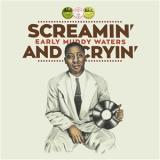
MUDDY WATERS - SCREAMIN' AND CRYIN'(EARLY MUDDY WATERS)
  • 1: Gypsy Woman
  • 2: Little Anna Mae
  • 3: I Can't Be Satisfied
  • 4: I Feel Like Going Home
  • 5: Train Fare Home
  • 6: Sittin' Here And Drinkin
  • 7: You're Gonna Miss Me (When I'm Dead And Gone)
  • 8: Mean Red Spider
  • 9: Streamline Woman
  • 10: Muddy Jumps One
  • 11: Little Geneva
  • 12: Canary Bird
  • 13: Screamin' And Cryin
  • 14: Where's My Woman Been
  • 15: Rollin' And Tumblin' Part 1
  • 16: Rollin' And Tumblin' Part 2

The Definitive Origins of the Chicago Electric Blues. Witness the birth of a legend. This essential collection captures Muddy Waters at the most pivotal moment of his career: the transition from a Mississippi Delta traveler to the "King of Chicago Blues." Muddy Waters was an ambitious young man who saw little future in Mississippi. In 1943, he headed for the bright lights, big city of Chicago, where he soon connected with blues giant Big Bill Broonzy, who began featuring Muddy as an opening act at his club dates. Within a year, Muddy had switched to electric guitar and formed his first blues combo, quickly becoming an established figure on Chicago's club scene. In 1947, Muddy came to the attention of the fledgling Aristocrat Records, just as Leonard Chess-then running a nightclub called the Macomba Lounge-invested in the company. Working frequently with pianist Sunnyland Slim, Muddy recorded a split session with him for Aristocrat in December 1947. This collection begins there: eight Aristocrat 78 rpm releases (sixteen sides), recorded between 1948 and 1950 and presented here in chronological order of release. Just three years later, Leonard and his brother Phil Chess would buy out Aristocrat's remaining partners and rename the label Chess Records-ushering in a new era of Chicago blues that would reverberate around the world. Includes extensive liner notes by Muddy Waters expert Fred Rothwell.

Reservar17.04.2026

debe ser publicado en 17.04.2026

27,31
Junior Dell & The D-Lites - Whole Lotta Skankin’ LP

Let's see now – you just love that hugely fertile foundation period of Jamaican pop music from the birth of ska, through the spectacularly brief two year heyday of rocksteady up to and including the arrival of the first incarnation of reggae a.k.a. early or 'boss' reggae. But you're also aware that the pioneers of these sounds (including The Pioneers!) won't be creating music in these styles or touring forever – so what do you do?

Well, if you're Neil Anderson, owner of Original Gravity Records, the creation bit isn't a problem. You put forth period-authentic style material from a 'roster' of acts – such as Junior Dell & The D-Lites - that in reality consist mostly of yourself (you are a multi-instrumentalist and lyricist after all!) and whichever extra musicians and session singer you rope in for a given track. In the case of Junior Dell & The D-Lites that singer was Adrian Dell – soon to be dubbed (no pun intended) 'Junior' - first appearing on 2021's uptempo ska tribute to Salvadoran retro-dancing internet sensation Aranivah, entitled Miss Aranivah. And you keep putting out stuff so profusely and effectively that there are clamours for you to tour 'the band' which - er - doesn't really exist. What a botheration! Still, maybe your session singer could become – well - a permanent singer? Maybe you can rustle up assorted bredren to become the rest of the band and...you know what? That might just work!

And so, in the blink of an eye, Junior Dell & The D-Lites becomes a bona fide actual live band fronted by a young Jamaican singer playing fresh 60s/70s-style Jamaican music with an energy last seen and heard in, well, the 1960s and 70s. And it tours so effectively that there are clamours for 'the band' – or more accurately, now – the band - to release an album. Wait...what now? And, by the way, you've got a European tour coming up in April wouldn't it be great if the album was ready to tour by then? Pressure drop? Pressure rise more like!

Then again, Junior Dell & The D-Lites have done so many sure-shot singles to date that assembling them along with a new cut, an extended version of one of the singles and re-recordings of two of the label's previous singles that were originally by 'label mates' The Regulators should be a cinch. So expect all the hits: bluebeat banger 20 Flight Ska, the euphoric ska bounce of the aforementioned Miss Aranivah and the title track, a de rigueur smattering of covers (opener Jump Around, midway markers Praise You and Just Can't Get Enough, and one of the re-recordings, closer Don't Look Back In Anger), early reggae groovers Cool Right Down, Last Night Reggay, Can't Stop The Reggae (in a new extended form) and crowd-pleasing new one Mi Try along with the other Junior Dell re-recording - the gorgeous Why Why Why which nods to the period of reggae between the sound of '69 and the arrival of roots.

Don't you brag and don't you boast but that's a Whole Lotta Skankin' going on! Do the ska, do the rocksteady, do the reggay, why– it's another scorcher!

No en stock

Haga su pedido ahora y le encargaremos el artículo en nuestro proveedor.

21,81

Ültimo hace: 28 Días
Guilty Razors - Complete Recordings 1977 - 1978

UILTY RAZORS, BONA FIDE PUNKS.


Writings on the topic that go off in all directions, mind-numbing lectures given by academics, and testimonies, most of them heavily doctored, from those who “lived through that era”: so many people today fantasize about the early days of punk in our country… This blessed moment when no one had yet thought of flaunting a ridiculous green mohawk, taking Sid Vicious as a hero, or – even worse – making the so-called alternative scene both festive and boorish. There was no such thing in 1976 or 1977, when it wasn’t easy to get hold of the first 45s by the Pistols or the Clash. Few people were aware of what was happening on the fringes of the fringes at the time. Malcolm McLaren was virtually unknown, and having short hair made you seem strange. Who knew then that rock music, which had taken a very bad turn since the early 1970s, would once again become an essential element of liberation? That, thanks to short and fast songs, it would once again rediscover that primitive, social side that was so hated by older generations? Who knew that, besides a few loners who read the music press (it was even better if they read it in English) and frequented the right record stores? Many of these formed bands, because it was impossible to do otherwise. We quickly went from listening to the Velvet Underground to trying to play the Stooges’ intros. It’s a somewhat collective story, even though there weren’t many people to start it.
The Guilty Razors were among those who took part in this initial upheaval in Paris. They were far from being the worst. They had something special and even released a single that was well above the national average. They also had enough songs to fill an album, the one you’re holding. In everyone’s opinion, they were definitely not among the punk impostors that followed in their wake. They were, at least, genuine and credible.

Guilty Razors, Parisian punk band (1975-1978). To understand something about their somewhat linear but very energetic sound, we might need to talk about the context in which it was born and, more broadly, recall the boredom (a theme that would become capital in punk songs) coupled with the desire to blow everything off, which were the basis for the formation of bands playing a rejuvenated rock music ; about the passion for a few records by the Kinks or the early Who, by the Stooges, by the Velvet mostly, which set you apart from the crowd.
And of course, we should remember this new wave, which was promoted by a few articles in the specialized press and some cutting-edge record stores, coming from New York or London, whose small but powerful influence could be felt in Paris and in a handful of isolated places in the provinces, lulled to sleep by so many appalling things, from Tangerine Dream to President Giscard d’Estaing...
In 1975-76, French music was, as almost always, in a sorry state ; it was still dominated by Johnny Hallyday and Sylvie Vartan. Local rock music was also rather bleak, apart from Bijou and Little Bob who tried to revive this small scene with poorly sound-engineered gigs played to almost no one.
In the working class suburbs at the time, it was mainly hard rock music played to 11 that helped people forget about their gruelling shifts at the factory. Here and there, on the outskirts of major cities, you still could find a few rockers with sideburns wearing black armbands since the death of Gene Vincent, but it wasn’t a proper mass movement, just a source of real danger to anyone they came across who wasn't like them. In August 1976, a festival unlike any other took place in Mont-de-Marsan – the First European Punk Festival as the poster said – with almost as many people on stage as in the audience. Yet, on that day, a quasi historical event happened, when, under the blazing afternoon sun, a band of unknowns called The Damned made an unprecedented noise in the arena, reminiscent of the chaotic Stooges in their early adolescence. They were the first genuine punk band to perform in our country: from then on, anything was possible, almost anything seemed permissible.

It makes sense that the four+1 members of Guilty Razors, who initially amplified acoustic guitars with crappy tape recorder microphones, would adopt punk music (pronounced paink in French) naturally and instinctively, since it combines liberating noise with speed of execution and – crucially – a very healthy sense of rebellion (the protesters of May 1968 proclaimed, and it was even a slogan, that they weren’t against old people, but against what had made them grow old. In the mid-1970s, it seemed normal and obvious that old people should now ALSO be targeted!!!).
At the time, the desire to fight back, and break down authority and apathy, was either red or black, often taking the form of leafleting, tumultuous general assemblies in the schoolyard, and massive or shabby demonstrations, most of the time overflowing with an exciting vitality that sometimes turned into fights with the riot police. Indeed, soon after the end of the Vietnam War and following Pinochet’s coup in Chile, all over France, Trotskyist and anarcho-libertarian fervour was firmly entrenched among parts of the educated youth population, who were equally rebellious and troublemakers whenever they had the chance. It should also be noted that when the single "Anarchy in the UK" was first heard, even though not many of us had access to it, both the title and its explosive sound immediately resonated with some of those troublemakers crying out for ANARCHY!!! Meanwhile, the left-wing majority still equated punks with reckless young neo-Nazis. Of course, the widely circulated photos in the mainstream press of Siouxsie Sioux with her swastikas didn’t necessarily help to win over the theorists of the Great Revolution. It took Joe Strummer to introduce The Clash as an anti-racist, anti-fascist and anti-ignorance band for the rejection of old-school revolutionaries to fade a little.

The Lycée Jean-Baptiste Say at Porte d’Auteuil, despite being located in the very posh and very exclusive 16th arrondissement of Paris, didn’t escape these "committed" upheavals, which doubled as the perfect outlet for the less timid members of this generation.
“Back then, politics were fun,” says Tristam Nada, who studied there and went on to become Guilty Razors’ frontman. “Jean-Baptiste was the leftist high-school in the neighbourhood. When the far right guys from the GUD came down there, the Communist League guys from elsewhere helped us fight them off.”
Anything that could challenge authority was fair game and of course, strikes for just about any reason would lead to increasingly frequent truancy (with a definitive farewell to education that would soon follow). Tristam Nada spent his 10th and 11th unfinished grades with José Perez, who had come from Spain, where his father, a janitor, had been sentenced to death by Franco. “José steered my tastes towards solid acts such as The Who. Like most teenagers, I had previously absorbed just about everything that came my way, from Yes to Led Zeppelin to Genesis. I was exploring… And then one day, he told me that he and his brother Carlos wanted to start a rock band.” The Perez brothers already played guitar. “Of course, they were Spanish!”, jokes their singer. “Then, somewhat reluctantly, José took up the bass and we were soon joined by Jano – who called himself Jano Homicid – who took up the rhythm guitar.” Several drummers would later join this core of not easily intimidated young guys who didn’t let adversity get the better of them.

The first rehearsals of the newly named Guilty Razors took place in the bedroom of a Perez aunt. There, the three rookies tried to cover a few standards, songs that often were an integral part of their lives. During a first, short gig, in front of a bewildered audience of tough old-school rockers, they launched into a clunky version of the Velvet Underground's “Heroin”. Challenge or recklessness? A bit of both, probably… And then, step by step, their limited repertoire expanded as they decided to write their own songs, sung in a not always very accurate or academic English, but who cared about proper grammar or the right vocabulary, since what truly mattered was to make the words sound as good as possible while playing very, very fast music? And spitting out those words in a language that left no doubt as to what it conveyed mattered as well.
Trying their hand a the kind of rock music disliked by most of the neighbourhood, making noise, being fiercely provocative: they still belonged to a tiny clique who, at this very moment, had chosen to impose this difference. And there were very few places in France or elsewhere, where one could witness the first stirrings of something that wasn’t a trend yet, let alone a movement.

In the provinces, in late 1976 or early 1977, there couldn’t be more than thirty record stores that were a bit more discerning than average, where you could hear this new kind of short-haired rock music called “punk”. The old clientele, who previously had no problem coming in to buy the latest McCartney or Aerosmith LP, now felt a little less comfortable there…
In Paris, these enlightened places were quite rare and often located nex to what would become the Forum des Halles, a big shopping mall. Between three aging sex workers, a couple of second-hand clothes shops, sellers of hippie paraphernalia and small fashion designers, the good word was loudly spread in two pioneering places – propagators of what was still only a new underground movement. Historically, the first one was the Open Market, a kind of poorly, but tastefully stocked cave. Speakers blasted out the sound of sixties garage bands from the Nuggets compilation (a crucial reference for José Perez) or the badly dressed English kids of Eddie and the Hot Rods. This black-painted den was opened a few years earlier by Marc Zermati, a character who wasn’t always in a sunny disposition, but always quite radical in his (good) choices and his opinions. He founded the independent label Skydog and was one of the promoters of the Mont-de-Marsan punk festivals. Not far from there was Harry Cover, another store more in tune with the new New York scene, which was amply covered in the house fanzine, Rock News (even though it was in it that the photos of the Sex Pistols were first published in France).
It was a favorite hang-out of the Perez brothers and Tristam Nada, as the latter explained. “It’s at Harry Cover’s that we first heard the Pistols and Clash’s 45s, and after that, we decided to start writing our first songs. If they could do it, so could we!”
The sonic shocks that were “Anarchy in the UK”, “White Riot” or the Buzzcocks’s EP, “Spiral Scratch” – which Guilty Razors' sound is reminiscent of – were soon to be amplified by an unparalleled visual shock. In April 1977, right after the release of their first LP, The Clash performed at the Palais des Glaces in Paris, during a punk night organised by Marc Zermati. For many who were there, it was the gig of a lifetime…
Of course, Guilty Razors and Tristam were in the audience: “That concert was fabulous… We Parisian punks were almost all dressed in black and white, with white shirts, skinny leather ties, bikers jackets or light jackets, etc. The Clash, on the other hand, wore colourful clothes. Well, the next day, at the Gibus, you’d spot everyone who had been at this concert, but they weren’t wearing anything black, they were all wearing colours.”

It makes sense to mention the Gibus club, as Guilty Razors often played there (sometimes in front of a hostile audience). It was also the only place in Paris that regularly scheduled new Parisian or Anglo-Saxon acts, such as Generation X, Siouxsie and the Banshees, the Slits, and Johnny Thunders who would become a kind of messed-up mascot for the venue. A little later, in 1978, the Rose Bonbon – formerly the Nashville – also attracted nightly owls in search of electric thrills… In 1977, the iconic but not necessarily excellent Asphalt Jungle often played at the Gibus, sometimes sharing the bill with Metal Urbain, the only band whose aura would later transcend the French borders (“I saw them as the French Sex Pistols,” said Geoff Travis, head of their British label Rough Trade). Already established in this small scene, Metal Urbain helped the young and restless Guilty Razors who had just arrived. Guitarist for Metal Urbain Hermann Schwartz remembers it: “They were younger than us, we were a bit like their mentors even if it’s too strong a word… At least they were credible. We thought they were good, and they had good songs which reminded of the Buzzcocks that I liked a lot. But at some point, they started hanging out with the Hells Angels. That’s when we stopped following them.”

The break-up was mutual, since, Guilty Razors, for their part, were shocked when they saw a fringe element of the audience at Metal Urbain concerts who repeatedly shouted “Sieg Heil” and gave Nazi salutes. These provocations, even still minor (the bulk of the skinhead crowd would later make their presence felt during concerts), weren’t really to the liking of the Perez brothers, whose anti-fascist convictions were firmly rooted. Some things are non-negotiable.
A few months earlier (in July 1978), Guilty Razors had nevertheless opened very successfully for Metal Urbain at the Bus Palladium, a more traditonally old-school rock night-club. But, as was sometimes the case back then, the night turned into a mass brawl when suburban rockers came to “beat up punks”.

Back then, Parisian nights weren’t always sweet and serene.

So, after opening as best as they could for The Jam (their sound having been ruined by the PA system), our local heroes were – once again – met outside by a horde of greasers out to get them. “Thankfully,” says Tristam, “we were with our roadies, motorless bikers who acted as a protective barrier. We were chased in the neighbouring streets and the whole thing ended in front of a bar, with the owner coming out with a rifle…”
Although Tristam and the Perez brothers narrowly escaped various, potentially bloody, incidents, they weren’t completely innocent of wrongdoing either. They still find amusing their mugging of two strangers in the street for example (“We were broke and we simply wanted to buy tickets for the Heartbreakers concert that night,” says Tristam). It so happened that their victims were two key figures in the rock business at the time: radio presenter Alain Manneval and music publisher Philippe Constantin. They filed a complaint and sought monetary compensation, but somehow the band’s manager, the skilful but very controversial Alexis, managed to get the complaint withdrawn and Guilty Razors ended up signing with Constantin with a substantial advance.

They also signed with Polydor and the label released in 1978 their only three-track 45, featuring “I Don't Wanna be A Rich”, “Hurts and Noises” and “Provocate” (songs that exuded perpetual rebellion and an unquenchable desire for “class” confrontation). It was a very good record, but due to a lack of promotion (radio stations didn’t play French artists singing in English), it didn’t sell very well. Only 800 copies were allegedly sold and the rest of the stock was pulped… Initially, the three tracks were to be included on a LP that never came to be, since they were dropped by Polydor (“Let’s say we sometimes caused a ruckus in their offices!” laughs Tristam.) In order to perfect the long-awaited LP, the band recorded demos of other tracks. There was a cover of Pink Floyd's “Lucifer Sam” from the Syd Barrett era – proof of an enduring love for the sixties’ greats –, “Wake Up” a hangover tale and “Bad Heart” about the Baader-Meinhof gang, whose actions had a profound impact on the era and on a generation seeking extreme dissent... On the album you’re now discovering, you can also hear five previously unreleased tracks recorded a bit later during an extended and freezing stay in Madrid, in a makeshift studio with the invaluable help of a drummer also acting as sound engineer. He was both an enthusiastic old hippie and a proper whizz at sound engineering. Here too, certain influences from the fifties and sixties (Link Wray, the Troggs) are more than obvious in the band’s music.

Shortly after a final stormy and rather barbaric (on the audience’s side) “Punk night” at the Olympia in June 1978, Tristam left the band ; his bandmates continued without him for a short while.

But like most pioneering punk bands of the era, Guilty Razors eventually split up for good after three years (besides once in Spain, they’d only played in Paris). The reason for ceasing business activities were more or less the same for everyone: there were no venues outside one’s small circuit to play this kind of rock music, which was still frightening, unknown, or of little interest to most people. The chances of recording an LP were virtually null, since major labels were only signing unoriginal but reassuring sub-Téléphone clones, and the smaller ones were only interested in progressive rock or French chanson for youth clubs. And what about self-production? No one in our small safety-pinned world had thought about it yet. There wasn’t enough money to embark on that sort of venture anyway.

So yes, the early days of punk in France were truly No Future!

No en stock

Haga su pedido ahora y le encargaremos el artículo en nuestro proveedor.

21,43

Ültimo hace: 32 Días
Stephan Eicher - Spielt Noise Boys

2025 Reissue.


Münchenbuchsee, a suburb of Bern, Switzerland. Stephan Eicher is the youngest of three children. His father, a radio and TV repairman, is also a jazz violinist and a sound tinkerer in his spare time. In the family home's converted fallout shelter turned studio, Mr. Eicher experiments with homemade sequencers, tortures handcrafted drum machines, and abuses reel-to-reel tape recorders—all under the fascinated gaze of young Stephan.

The boy quickly develops a musical curiosity, exploring sound through various experiments and wanderings. Alongside his younger brother Martin, Stephan crafts audio plays on a homemade multi-track recorder (essentially several cassette decks hooked together!), which they write, record, add sound effects to, and perform for family and friends. Just a couple of nice kids, really...

Then comes 1972, and Lou Reed's Transformer album changes everything for the Eicher kids. For 13-year-old Stephan, it's a revelation—especially "Vicious", the opening track, which he plays on repeat for months. He convinces his father to buy him an electric guitar. Not stopping there, his father also builds him a tube amp using an old radio.

Then comes adolescence. A rough one. Stephan leaves home at 16 and moves to Zurich. With obvious artistic talent, he persuades his art teacher to help him get into F+F, a radical, alternative art school—despite his young age. Accepted, he starts learning video techniques, determined to become a filmmaker.

At F+F, Stephan organizes Dada-style happenings and concerts with a group of friends known as the Noise Boys. Among them: one of his teachers on bass, Veit Stauffer on drums (who would later found ReR/Recommended Records), his girlfriend Sacha on vocals, and Stephan on guitar. In one of their early performances, they release a remote-controlled mouse covered in dull razor blades into the audience to create panic and chaos. Keeping with this aggressive, confrontational spirit, they once played a concert while wearing headphones blasting Tristan and Isolde, trying to perform their own songs simultaneously—to maximize the cacophony. The goal was always the same: clear the room.

Their “songs,” if you can call them that, followed suit. Take "Hungeriges Afrika", for instance—performed entirely with power drills and some drum feedback.

To make ends meet, Stephan returns to Bern on weekends to work as a waiter at the Spex Club, the city’s main punk venue. On September 16, 1980, during a show by proto-electro group Starter, the police raid the club and arrest everyone. Stephan, who manages to avoid arrest, seizes the opportunity to “borrow” Starter’s gear left behind. He suddenly finds himself in possession of a Roland Promars synth, a Korg MS20, and a gorgeous CR78 drum machine, which he runs through a Big Muff distortion pedal to get that perfect gritty sound.

He then sets out to reinterpret some Noise Boys tracks, reworking them during impromptu sessions recorded on a dictaphone (yes, a dictaphone—now the lo-fi sound makes more sense, doesn’t it?). He ironically titles the resulting cassette "Stephan Eicher spielt Noise Boys" ("Stephan Eicher plays Noise Boys"). This gem features seven tracks, which are the ones reissued here.

Back in Zurich, he visits his friends Andrew Moore and Robert Vogel, who have a DIY cassette duplication setup. They make 25 copies of Stephan Eicher spielt Noise Boys for Stephan and his friends. Robert encourages him to visit Urs Steiger of Off Course Records and play him the tape.

Without much hope, Stephan shows up at Urs’s office. But Urs is instantly hooked and suggests releasing a 7” single. Due to space constraints, they reluctantly drop two of the seven tracks ("Hungeriges Afrika" and "One Second"). As for the musical score featured on the cover—it was randomly chosen and remains a mystery to this day. Calling all music theory nerds!

The 7-inch is pressed in 750 copies and released in the first week of December 1980—a date Stephan remembers well, as it’s the same week John Lennon was killed. Smartly, Urs sends a promo copy to François Murner, Switzerland’s answer to John Peel, who hosts a show on alternative station Sounds. Murner falls in love with the record and starts giving it airtime. To Stephan’s surprise, sales follow—and people actually seem interested in his music.

Even this modest underground success scares Stephan a bit. He stops making music for a year and moves to Bologna, where he works as a programmer at Radio Città, a feminist radio station.

Meanwhile, Stephan’s younger brother Martin, who’s also involved in the punk scene, joins the band Glueams as a singer and guitarist. Glueams, named after the fanzine run by two of its members (drummer Marco Repetto and bassist GT), eventually rebrands as Grauzone. Stephan is invited to their shows to project hacked Super 8 visuals live on stage.

Urs Steiger, now working on a compilation titled Swiss Wave – The Album, asks Grauzone to contribute alongside bands like Liliput, Jack and the Rippers, The Sick, and Ladyshave (Fall 1980).

For the album, Martin tasks Stephan with producing their recording sessions. Under Stephan's artistic direction, two tracks emerge: "Raum" and "Eisbär". During "Eisbär", Martin plays a minimalist bass line borrowed from post-punk band The Feelies (just an open string). Drummer Marco Repetto struggles to keep time. Later that evening, unhappy with the takes, Stephan builds a four-bar drum loop from a ¼-inch tape and uses it instead of the flawed original. He then adds bleepy synths and wind sounds to complete the track’s icy vibe before handing it over to Urs.

The Swiss Wave – The Album compilation is released quietly at first, but things snowball thanks to "Eisbär", which eventually becomes a smash hit—selling over 600,000 singles.

Meanwhile, Stephan plays in a rockabilly band called SMUV (named after Switzerland’s social security agency) and begins producing artists, including the debut album of Starter (1981), which includes a more pop-oriented version of "Minijupe".

By early 1982, Stephan starts spending time with the post-punk girl band Liliput (formerly Kleenex). They’re older than him, and he happily drives them around in his Renault Major, acting as their roadie.

By 1983, Grauzone—signed to the major label EMI, which turned out to be a misstep—is falling apart. Stephan begins to pivot toward a more mainstream pop sound with his debut solo album Les Chansons Bleues.

But that... is already another story.

Disponible a partir del18.05.2026

23,11

Ültimo hace: 13 Días
Tucker Zimmerman - I Wonder If I'll Ever Come True  LP
  • 1: It All Depends On The Pleasure Man
  • 2: Watching Heroes Come And Go
  • 3: Slide On
  • 4: So It Goes
  • 5: Let's Start Over Again
  • 6: Taoist Tale
  • 7: Welcome To Mass Media
  • 8: Song
  • 9: Advertisement For Amerika

Orange Vinyl with exclusive illustrated notes/lyric insert ltd to 300 w/w.“Zimmerman conjures up a kind of Arcadian folk surrealism that is utterly his own” MOJO Never released before collection featuring Ian A Anderson & Maggie Holland recorded 72-80 is among Tucker’s finest - Free-ranging, Playful, Intimate - his Songpoet imagination unbound and in full bloom now on colour Vinyl for first time with (exclusive to this version) illustrated lyric insert with notes from Tucker.Recorded between 1972-80 this is the first ever release for ‘I Wonder If I’ll Ever Come True’ a stunningly beautiful, homegrown collection by Songpoet Tucker Zimmerman and friends. The range and depth is astonishing. From the heady surreal journey of ‘It All Depends’ Upon the Pleasure Man’, to the uplifting Gene Clark-esque 'So It Goes’, to some of his most beautiful & touching love songs in ‘Let’s Start Over Again’ & ‘Song’. Only one song has seen the the light of day before now - ‘Taoist Tale’ from his 1984 album ‘Word Games’. This recording from a decade earlier loses no power in its folkier stripped down style driven by Tucker’s strong narrative.

While living in bucolic seclusion in Belgium with Marie-Claire, Tucker invited visiting musicians (Derroll Adams, Wizz Jones, Maggie Holland, Dave Evans, Ian Anderson) into his home studio to play and live tape whatever songs he had at hand. Maggie Holland and Ian A Anderson feature, while Tucker found a freeing simplicity in just guitar, ’70s organ, bass and piano. We are so grateful to Ian A Anderson, who carefully kept and curated these recordings from 50 years ago. “Every time I would leave, Tucker would hand me another tape full of songs”. Ian worked with Tucker and ourselves to present this wonderful album. The collection is among Tucker’s finest - free-ranging, playful, intimate - his Songpoet imagination unbound and in full bloom. The ethos, the playing, the freedom, feels like Ronnie Lane’s time in the Welsh Borders. Unhurried, liberated, down-home and cosmic. Extraordinary music made among friends.
"Startling collection of intimate, home-recorded songs from the cult singer-songwriter adored by David Bowie and Big Thief alike.

When I first interviewed Tucker Zimmerman back in 2015 neither of us had any idea that, a decade later, he would be venerated by a new coterie of young fans, touring with maximal folk-rockers Big Thief and recipient of a concerted reissue campaign by the wonderful Big Potato Records. Last year I eulogised the “Arcadian folk surrealism” of his 1974 LP *Over Here In Europe but, if anything, this informal collection of intimate home-studio recordings is even better. Recorded between 1973 and 76 whilst living in Belgium and hosting such visiting folk musicians as Derroll Adams, Wizz Jones, Maggie Holland, Dave Evans, and Ian A. Anderson this is the kind of assured, organic freewheeling folk music that has the mellow, introspective rough-edged feel of some lost private-press LP, the kind rightly revered by Endless Boogie’s Paul Majors as “real people” music. A true find.” Andrew Male MOJO 4/5
“Here's a charming oddity: an unreleased album dating from the mid-Seventies by an American-born songwriter beloved of David Bowie and, more recently, Adrianne Lenker of the folk-rock band Big Thief. Zimmerman's a bohemian type who eschewed the big time for a life of gigging around Europe. He, his wife, Marie-Claire, and a handful of friends recorded these songs in seclusion in the Belgian countryside, and what songs they are. Slide On could have come from the Byrds when they discovered country music, Let's Start Over Again captures the dreamlike experience of being in love with unsettling clarity. This is a real unearthed gem.” 4/5 The Times

Reservar10.04.2026

debe ser publicado en 10.04.2026

23,32
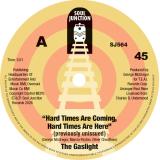
The Gaslight - Hard Times Are Coming, Hard Times Are Her (7")

The earliest foundations of the Detroit Harmony group ‘The Gaslight’ came when future lead singer Oliver “Butch” Cheatham via an introduction by his sister Jackie joined a group known as ‘The Young Sirs’ who recorded, “There’s Something The Matter (With Your Heart/African Love” for Magic City during 1969. The group included Oliver’s future brother -in-law Allen Cocker (Jackie’s future husband).

Oliver and Allen went on to form a new vocal quartet with Curtis “Kippy” Anderson and Michael Eatmon. Under the group name of ‘The Gaslight’ they signed to Uptight Productions Incorporated, a local production company founded by local businessmen Marvin Figgins and Arnold Wright. The Gaslight were the only vocal harmony group signed to Uptight Productions and as such, it was they who made the most recordings across two label imprints Grand Junction and Black Rock. The Gaslight’s first single “I Can’t Tell A Lie/Here’s Missing You” was released on Grand Junction (GJ1001) in 1970, For the groups second single Figgin’s placed them under the guidance of legendary producer/songwriter, the late George McGregor under whom they recording “Drifting Away/If You See Her” Grand Junction (GJ1002) released in 1971 For their next release Figgin’s switched the group to his Black Rock label to record “Out Of My Hand/I’m Only A Man” Black Rock (2002) under the pseudonym of Butch & The Newport’s With “Butch” being Oliver’s nickname. A later, second release of “I’m Only A Man” but with a different flip side “I’m Gonna Get You” came out on Grand Junction (GJ1100) in 1973 with the performing artist credits reverting back to ‘The Gaslight’.

Upon leaving Uptight Production’s the group found a new home when George McCregor took them to a new fledgling label T.E.A.I (an abbreviation for “Tellin’ Everybody About It”) owned by ‘The Dramatics’ Road Manager Charles Underwood. ‘The Gaslight’s’ first and only release for T.E.A.I, was the mellifluous 1975 double sider “Just Because Of You/It’s Just Like Magic”. Underwood had precured a working relationship with Polydor Records who picked the release up for national distribution three months later. As good as the record was due to poor promotion it failed to make any notable noise and eventually sank with the group soon after breaking up.

During Soul Junction’s later dealings with the late Oliver Cheatham, respected UK Collector Andy Rix mentioned he owned a three track acetate containing the two mentioned T.E.A.I/Polydor tracks plus a third unissued dance track “Hard Times” which through a licensing deal with Charles Underwood Soul Junction now present to you on a three track 45, released under its full title “Hard Times Are Coming, Hard Times Are Here” backed with a previously unissued mix of “Just Because Of You” alongside the issued 45 version of “It’s Just Like Magic”.

No en stock

Haga su pedido ahora y le encargaremos el artículo en nuestro proveedor.

18,07

Ültimo hace: 32 Días
Prince Istari Meets Erik Satie - Inna Heavy Dub Encounter LP

Green Sleeve 2026 Repress

The earliest musical memories of young Prince Istari are of his mother beautifying the home with her piano playing. She would repeatedly play the tranquil pieces of Erik Satie. Skipping school and sitting in the sun, young Prince would listen to these catchy, calm compositions.

In the first week of 2024, the older Prince Istari rediscovered himself and found a box containing his mother's old sheet music. He transferred them to his computer and began spinning dub versions from them. It became a tapestry. As his mother used to say: "To weave a net, one must first spin." The form of the pieces dictated the direction each would take. The heavy dub transforms here into a light weightiness until it dissolves into a pure piano piece accompanied by a synthesizer. However, the last piece is much older, from the time when Prince was still known as Istari Lasterfahrer. The ending includes a distorted recording of Huberta, Prince's mother, playing a Gnossienne by Satie. At the end, she turns the sheet music, and the record can be turned back to the beginning.

In the essence of its material, this record rejects the Loudness War. The originality of the compositions guided the dub within their tracks, thereby imparting to each a form descriptive of its essence.

No en stock

Haga su pedido ahora y le encargaremos el artículo en nuestro proveedor.

18,45

Ültimo hace: 20 Meses
Yungmorpheus & Real Bad Man - The Chalice & The Blade LP 2x12" +7"

Real Bad Man and YUNGMORPHEUS are excited to announce their new album The Chalice & The Blade is out now. The album features Boldy James, Kool Keith, Grip, Blu, Fatboi Sharif, and more.

YUNGMORPHEUS is a highly innovative rapper that consistently endeavors to redefine the boundaries of originality and elevate the art of lyricism. Earlier this year, YUNGMORPHEUS dropped his critically acclaimed album “From Whence It Came” which received praise from The FADER, NPR, SPIN, and was hailed by QUIP Mag as “Everything you need from a hip-hop record.”

Since 2020, Prolific LA-based producer and designer Adam Weissman (Real Bad Man) has been on a sensational run releasing albums with Boldy James, Smoke DZA, and Pink Siifu. The Chalice & The Blade will be Real Bad Man’s third album of the year following his remarkable collaborations with Blu (“Bad News”) and Kool Keith (“Serpent”).

The Chalice & The Blade showcases a unique ambiance marked by a stoney and atmospheric quality, interspersed with elements of funk. Real Bad Man explains the album making process, "I always tailor the music to the artist I’m collaborating with. I sent Morpheus a bunch of beats that he’d sound good over and once he started picking them, that set the path. We’d record and I’d make more beats, and move stuff around, get rid of some songs and record new ones. It was a good process. I like being able to adjust as we go, I think that makes for a good album. We left some songs on the cutting room floor. Cream rises."

YUNGMORPHEUS discussing the new album, “‘The Chalice & The Blade’ is an album primarily rooted in dichotomies; contemplation of action vs action itself, inner locus vs outer locus, pursuit for self vs pursuit for others. Honesty is always the centerpiece. Play if you want cause I’m not!”

On The Chalice & The Blade, the seamless synergy between Real Bad Man and YUNGMORPHEUS takes center stage, showcasing an extraordinary chemistry that elevates every track to new heights of musical innovation.

Reservar03.04.2026

debe ser publicado en 03.04.2026

37,40
Anne Clark - Our Darkness

Anne Clark

Our Darkness

12inchDE-340
Dark Entries
31.03.2026

Doubting all the time. Fearing all the time. Our Darkness descends upon Dark Entries with a reissue of Anne Clark’s epochal proto-house masterpiece from 1984. As a young poet, Clark found herself drawn to London’s emerging punk scene. She became acquainted with Psychic TV affiliate David Harrow, with whom she would collaborate on 1983’s Changing Places and 1984’s Joined Up Writing. “Our Darkness,” off the latter album, was released as a single on Ink Records that same year, and became an underground club hit. It’s a singular piece of music: Clark’s lyrics, delivered with equal parts muscular confidence and unease, speak of urban alienation and heartbreak, while Harrow’s production pummels the listener with hydraulic beats and gloom-laced arpeggios. The song’s spirit would prove influential on both the early Chicago house and Detroit techno scenes, where mechanistic funk and existential despair could catalyse dancefloor mayhem. This reissue offers three versions of “Our Darkness”: the original 12” remix, the Razormaid mix, and a previously unreleased dub version uncovered by David Harrow. Also included is the extended mix of “Sleeper in Metropolis,” another dancefloor hit of Clark’s, as well as the elegiac “Poem for a Nuclear Romance.” The record includes an insert with liner notes and lyrics. “Our Darkness” channels timeless longing and contemporary dismay, a classic overdue for a little light shed upon it.

No en stock

Haga su pedido ahora y le encargaremos el artículo en nuestro proveedor.

16,18

Ültimo hace: 12 Días
YASUHITO OHNO - MUSIC IN DNA

YASUHITO OHNO

MUSIC IN DNA

12inchEMC-029LP
Em Records
30.03.2026

Specs: Wrapped in shrink, DL code, insert with liner notes

"Music in DNA" is an album recorded in the early 1980s in New York City by Yasuhito Ohno, a young Japanese man breaking free from the constraints of his homeland. The album is a naive burst of outsider DIY enthusiasm, inspired by the multiple avant-garde movements of the era, in music, painting and performance, as well as the native energy of 80s NYC. Ohno channeled his youthful “edge” and zeal into open-minded lo-fi musical explorations using a mere two machines: the then-new technological glories of a four-track cassette recorder and that polyphonic synthesizer masterpiece, the Roland Juno-60; on several pieces he vocalizes. These seven tracks have a zestful, innocent, anything-goes charm, free from preciousness and self-consciousness: a raw and youthful human spirit at play in a new world. Ohno was also inspired by the humanistic promise of the general technological developments of the day, including DNA research, personal computing, and early computer graphics, an example of which can be found on the cover. Ohno later returned to Japan, becoming a renowned composer/producer. In an era of jaded cynicism, "Music in DNA" is a welcome taste of big-hearted innocence, a revival of a raw self. Available on CD/LP/Digital, with E/J liner notes.

Reservar30.03.2026

debe ser publicado en 30.03.2026

22,48
Yasuhito Ohno - Music in DNA

Yasuhito Ohno

Music in DNA

12inchEMC029LP
EM Records
27.03.2026

When you notice the cheerful mystery playing with the synths, the edges of this small world start to look slightly distorted. In any era, someone is always creating mysterious music on their own. (7FO)

----------------------------

Music in DNA is an album recorded in the early 1980s in New York City by Yasuhito Ohno, a young Japanese man breaking free from the constraints of his homeland. The album is a naive burst of outsider DIY enthusiasm, inspired by the multiple avant-garde movements of the era, in music, painting and performance, as well as the native energy of 80s NYC. Ohno channeled his youthful "edge" and zeal into open-minded lo-fi musical explorations using a mere two machines: the then-new technological glories of a four-track cassette recorder and that polyphonic synthesizer masterpiece, the Roland Juno-60; on several pieces he vocalizes. These seven tracks have a zestful, innocent, anything-goes charm, free from preciousness and self-consciousness: a raw and youthful human spirit at play in a new world. Ohno was also inspired by the humanistic promise of the general technological developments of the day, including DNA research, personal computing, and early computer graphics, an example of which can be found on the cover. Ohno later returned to Japan, becoming a renowned composer/producer. In an era of jaded cynicism, Music in DNA is a welcome taste of big-hearted innocence, a revival of a raw self. Available on CD/LP/Digital, with E/J liner notes.

Reservar27.03.2026

debe ser publicado en 27.03.2026

21,81
SNAIL MAIL - RICOCHET

SNAIL MAIL

RICOCHET

12inchOLELP2209
Matador/Beggars Group
27.03.2026
  • Tractor Beam
  • My Maker
  • Light On Our Feet
  • Cruise
  • Agony Freak
  • Dead End
  • Butterfly
  • Nowhere
  • Hell
  • Ricochet
  • Reverie
También disponible

RED COLOURED VINYL EDIT[21,81 €]


This is her first album in five years, she returns with a renewed sense of clarity and control, asserting herself as a generational songwriter with a sharpened perspective. While her early work chronicled the emotional turbulence of young love, Ricochet reveals a deeper fixation: time, mortality, and the quiet terror of watching the things you love slip away. The album"s 11 songs are steeped in introspection, anxiety, and acceptance - an acknowledgment that the world keeps turning regardless of what"s unfolding in your own small orbit.

Reservar27.03.2026

debe ser publicado en 27.03.2026

21,81
SNAIL MAIL - RICOCHET

SNAIL MAIL

RICOCHET

12inchOLELPE2209
Matador/Beggars Group
27.03.2026

This is her first album in five years, she returns with a renewed sense of clarity and control, asserting herself as a generational songwriter with a sharpened perspective. While her early work chronicled the emotional turbulence of young love, Ricochet reveals a deeper fixation: time, mortality, and the quiet terror of watching the things you love slip away. The album"s 11 songs are steeped in introspection, anxiety, and acceptance - an acknowledgment that the world keeps turning regardless of what"s unfolding in your own small orbit.

Reservar27.03.2026

debe ser publicado en 27.03.2026

21,81
Iivana Mišukka & Arja Kastinen - Iivana Mišukka (Tape)
  • 01: Maanitus &Amp; Tšiižik
  • 02: Markka
  • 03: Melkutus
  • 04: Letška
  • 05: Kuuen Parin Hoirola
  • 06: Brišatka
  • 07: Tšiižik
  • 08: Kirkonkellot
  • 09: Kirkonkellot Korkea
  • 10: Hoirola, 3 Parin
  • 11: Lippa
  • 12: Kyngäkiža
  • 13: Ristakondra
  • 14: Vanha Polkka
  • 15: Viistoista
  • 16: Vanha Valssi
  • 17: Kiberä
  • 18: Maanitus Kuokan Kanteleella
  • 19: Tuuti Lasta Nukkumahe
También disponible

Vinyl[22,65 €]


Death Is Not The End present a further volume of Arja Kastinen's eerie amalgamations of 110 year old wax cylinders with her own meticulously transcribed takes, this time focussing in on Armas Otto Väisänen's field recordings of kantele player Iivana Mišukka (b. 1861 d.1919).

"Ivana Mišukka (1861–1919) was one of the Karelian kantele players recorded by the folk music researcher Armas Otto Väisänen on wax cylinders in 1916 and 1917. In the early 20th century, the remote areas of Border Karelia were undergoing the final phase of a transformation in musical culture, with the ancient runo song tradition giving way to newer forms of music. This transition is reflected in Mišukka's repertoire and choice of instrument. The ancient small kantele, hollowed out of a single piece of wood, was already rare at the turn of the century. Mišukka's kantele was a new type of instrument with 26 strings, constructed of several parts, but he played it using the traditional plucking technique. Like other Border Karelian kantele players, his repertoire consisted of music rooted in runosong culture, as well as newer dances and songs from the east and west. Most of the recorded material falls into the latter category.

Ivan Bogdanov Mišukka was born out of wedlock in Suursara village, Suistamo, on 1 May 1861. He began playing the kantele at the age of five or six, quickly mastering the instrument. In adulthood, he was considered one of the area's best master players. Mišukka was landless for most of his life and lived in different parts of the Suistamo parish. His first wife, Tekla Markintytär, died in 1897 at the age of 40, and his second wife, Jevdokia Filipintytär Jeminen, died in 1907 at the age of 50. Seven children were born from the first marriage, two of whom died young. The third wife, Maria Ignatintytär Gurnan (Kuurnanen), was a well-known master of lamentations. Together with Maria, Iivana Mišukka worked as a tenant farmer in the village of Suursara. Mišukka suffered from rheumatism, which prevented him from participating in physical work like Maria. This was apparently partly the reason why Iivana Mišukka went to earn extra money by playing the kantele on gig trips. He often had other traditional artists from Suistamo as his travelling companions, such as the runosingers Konstantin Kuokka and Iivana Onoila. Iivana Mišukka died in Leppäsyrjä village, Suistamo, on 18 May 1919 at the age of 58, and his kantele was donated to Teppana Jänis.

Mišukka only used 14 of the 26 strings on his kantele, playing the same tunes either a fourth higher or lower. He tuned his kantele to the major scale using fifths, except for a low seventh scale degree on the upper strings, but not below the fundamental. Since he did not use the seventh note of the scale on the upper strings at all, he could use the major scale both lower and a fourth higher with this tuning. According to Mišukka, the sound of higher, or 'finer', strings is 'more beautiful', while that of lower ones is 'greater'. Among runosingers, the size of the thirds varied, ranging from major to minor to neutral. A similar phenomenon can be observed in kantele tunings, where the third, sixth and seventh scale degrees vary in a comparable way.

During a meeting, Väisänen suggested that Mišukka play the smaller kantele belonging to Konstantin Kuokka. The idea was to bring it closer to the horn to improve the recording quality. However, the kantele was completely out of tune, and now Mišukka tuned it to the Lydian scale (track 18).

Using the old plucking technique, Mišukka placed his right middle finger on the fundamental tone, his right index finger on the second scale degree, his left middle finger on the third scale degree and his left index finger on the fourth scale degree, and his right thumb on the fifth. The thumb also played the notes above the fifth note of the scale. As Mišukka remarked to Väisänen: 'Peigaloll' tuloo enemb ruadoa' (the thumb has to do more work). However, he did not use the seventh note of the scale on the upper strings at all. Below the fundamental note, he played the seventh and sixth notes of the scale with his right middle finger of and the fifth note of the scale with his right ring finger. This fifth scale degree below the fundamental is almost always used as a drone. Sometimes, when the melody required it, Mišukka, like other players, also varied the fingering. He would also occasionally strike the same string with the side of his fingernail after plucking it.

The wax cylinder recordings of Karelian kantele players are kept in the archives of the Finnish Literature Society in Helsinki, Finland. Copies were made of them onto reel-to-reel tapes in both the 1960s and 1980s. The 1960s copies are mono and the 1980s copies are stereo. However, not all kantele recordings from these decades have survived.

The sound of the kantele is difficult to hear in wax cylinder recordings due to its low volume, and it occasionally becomes completely obscured by noise. During the copying process, the cylinder sometimes rotates unevenly, resulting in breaks or jumps in the music. Additionally, the rotation speed of the cylinder in the copies does not correspond to the performance speed of the original music, which alters the pitch. However, since Väisänen's precise notes are available in the archive, it is possible to deduce the melodies, their speed, and the tuning level of the kantele in the recordings. Of the copies of the original recordings from the 1960s and 1980s, I have selected the one that best met the requirements of this publication and adjusted the speed of the recording to align with Väisänen's notes. To enhance the listening experience, I have replayed the songs, which now partly overlap the old recordings on this release."

— Arja Kastinen

Reservar27.03.2026

debe ser publicado en 27.03.2026

16,39
Iivana Mišukka & Arja Kastinen - Iivana Mišukka LP

Death Is Not The End present a further volume of Arja Kastinen's eerie amalgamations of 110 year old wax cylinders with her own meticulously transcribed takes, this time focussing in on Armas Otto Väisänen's field recordings of kantele player Iivana Mišukka (b. 1861 d.1919).

"Ivana Mišukka (1861–1919) was one of the Karelian kantele players recorded by the folk music researcher Armas Otto Väisänen on wax cylinders in 1916 and 1917. In the early 20th century, the remote areas of Border Karelia were undergoing the final phase of a transformation in musical culture, with the ancient runo song tradition giving way to newer forms of music. This transition is reflected in Mišukka's repertoire and choice of instrument. The ancient small kantele, hollowed out of a single piece of wood, was already rare at the turn of the century. Mišukka's kantele was a new type of instrument with 26 strings, constructed of several parts, but he played it using the traditional plucking technique. Like other Border Karelian kantele players, his repertoire consisted of music rooted in runosong culture, as well as newer dances and songs from the east and west. Most of the recorded material falls into the latter category.

Ivan Bogdanov Mišukka was born out of wedlock in Suursara village, Suistamo, on 1 May 1861. He began playing the kantele at the age of five or six, quickly mastering the instrument. In adulthood, he was considered one of the area's best master players. Mišukka was landless for most of his life and lived in different parts of the Suistamo parish. His first wife, Tekla Markintytär, died in 1897 at the age of 40, and his second wife, Jevdokia Filipintytär Jeminen, died in 1907 at the age of 50. Seven children were born from the first marriage, two of whom died young. The third wife, Maria Ignatintytär Gurnan (Kuurnanen), was a well-known master of lamentations. Together with Maria, Iivana Mišukka worked as a tenant farmer in the village of Suursara. Mišukka suffered from rheumatism, which prevented him from participating in physical work like Maria. This was apparently partly the reason why Iivana Mišukka went to earn extra money by playing the kantele on gig trips. He often had other traditional artists from Suistamo as his travelling companions, such as the runosingers Konstantin Kuokka and Iivana Onoila. Iivana Mišukka died in Leppäsyrjä village, Suistamo, on 18 May 1919 at the age of 58, and his kantele was donated to Teppana Jänis.

Mišukka only used 14 of the 26 strings on his kantele, playing the same tunes either a fourth higher or lower. He tuned his kantele to the major scale using fifths, except for a low seventh scale degree on the upper strings, but not below the fundamental. Since he did not use the seventh note of the scale on the upper strings at all, he could use the major scale both lower and a fourth higher with this tuning. According to Mišukka, the sound of higher, or 'finer', strings is 'more beautiful', while that of lower ones is 'greater'. Among runosingers, the size of the thirds varied, ranging from major to minor to neutral. A similar phenomenon can be observed in kantele tunings, where the third, sixth and seventh scale degrees vary in a comparable way.

During a meeting, Väisänen suggested that Mišukka play the smaller kantele belonging to Konstantin Kuokka. The idea was to bring it closer to the horn to improve the recording quality. However, the kantele was completely out of tune, and now Mišukka tuned it to the Lydian scale (track 18).

Using the old plucking technique, Mišukka placed his right middle finger on the fundamental tone, his right index finger on the second scale degree, his left middle finger on the third scale degree and his left index finger on the fourth scale degree, and his right thumb on the fifth. The thumb also played the notes above the fifth note of the scale. As Mišukka remarked to Väisänen: 'Peigaloll' tuloo enemb ruadoa' (the thumb has to do more work). However, he did not use the seventh note of the scale on the upper strings at all. Below the fundamental note, he played the seventh and sixth notes of the scale with his right middle finger of and the fifth note of the scale with his right ring finger. This fifth scale degree below the fundamental is almost always used as a drone. Sometimes, when the melody required it, Mišukka, like other players, also varied the fingering. He would also occasionally strike the same string with the side of his fingernail after plucking it.

The wax cylinder recordings of Karelian kantele players are kept in the archives of the Finnish Literature Society in Helsinki, Finland. Copies were made of them onto reel-to-reel tapes in both the 1960s and 1980s. The 1960s copies are mono and the 1980s copies are stereo. However, not all kantele recordings from these decades have survived.

The sound of the kantele is difficult to hear in wax cylinder recordings due to its low volume, and it occasionally becomes completely obscured by noise. During the copying process, the cylinder sometimes rotates unevenly, resulting in breaks or jumps in the music. Additionally, the rotation speed of the cylinder in the copies does not correspond to the performance speed of the original music, which alters the pitch. However, since Väisänen's precise notes are available in the archive, it is possible to deduce the melodies, their speed, and the tuning level of the kantele in the recordings. Of the copies of the original recordings from the 1960s and 1980s, I have selected the one that best met the requirements of this publication and adjusted the speed of the recording to align with Väisänen's notes. To enhance the listening experience, I have replayed the songs, which now partly overlap the old recordings on this release."

— Arja Kastinen

Reservar27.03.2026

debe ser publicado en 27.03.2026

22,65
CARTER THE UNSTOPPABLE SEX MACHINE - Straw Donkeys: The Complete Singles (2x12")
  • A Sheltered Life
  • Sheriff Fatman
  • Rubbish
  • Anytime Anyplace Anywhere
  • Bloodsport For All
  • After The Watershed (Early Learning The Hard Way)
  • The Only Living Boy In New Cross
  • Do Re Me, So Far So Good
  • The Impossible Dream
  • Lean On Me I Won't Fall Over
  • Lenny And Terence
  • Stuff The Jubliee! (Extra Special Radio Only Version)
  • Glam Rock Cops
  • Let's Get Tattoos
  • The Young Offender's Mum
  • Airplane Food
  • Born On The 5Th Of November
  • Road Rage
  • And God Created Brixton
  • The Undetake And The Hippy Protest Singer

Formed in 1987 by Fruitbat and Jim Bob, Carter The Unstoppable Sex Machine burst onto the scene with their signature style of punk-pop infused with samples, drum machines, and social commentary. Join Jim Bob and Fruitbat, as they take a retrospective look back at the complete Carter U.S.M. singles, from 1988 to 1997.

First released in 1995, 'Straw Donkey' is an essential introduction to Carter The Unstoppable Sex Machine, featuring the U.K. Top 20 singles 'The Only Living Boy In New Cross', 'After The Watershed (Early Learning The Hard Way)', 'Rubbish', and 'Lean On Me I Won't Fall Over', along with classics such as 'Sheriff Fatman', 'Anytime Anyplace Anywhere' and 'Bloodsport For All'.

Reservar20.03.2026

debe ser publicado en 20.03.2026

30,88
The Leaf Library - After The Rain, Strange Seeds LP
  • A1: ) Colour Chant
  • A2: ) Still & Moving
  • A3: ) The Reader’s Lamp
  • A4: ) Sun In My Room
  • A5: ) Carry A River In Your Mouth
  • B1: ) Catch Up, Isobel
  • B2: ) A Ship In The Sky
  • B3: ) Some Circling
  • B4: ) There Was Always A Golden Age

London quartet The Leaf Library return with their bold new album After The Rain, Strange Seeds. A luminous collection of pastoral indiepop, drawing inspiration from suburban isolation, unreliable memories and the surreality of the weather. Their most immediate and melodic work to date, the richly evocative songs brim with chiming guitars, buzzing organs and warm, dulcet strings, evoking Yo La Tengo’s more contemplative moments, The Clientele’s autumnal jangle pop and early Stereolab’s motorik melodicism. The sound of the album is defined by mixer John McEntire, whose work with Stereolab and Yo La Tengo (as well as a member of Tortoise/The Sea And Cake) have been major inspirations to the band.
The album explores themes of memory and place, albeit through an abstract haze – returning again and again to specific moments frozen in time: midsummer bright hot days in the Chilterns (“Sun In My Room”), meteorology and the strange movement of the weather (“Colour Chant”), red kites circling over suburban motorways (“Some Circling”), and the uncanny feeling of dusk and nighttime creatures on “The Reader’s Lamp” (titled by celebrated film director Peter Strickland). The lyrics are vivid yet elliptical, strung with abstract ideas and imagery, conjuring a gently unsettling, though never unwelcoming atmosphere. Not quite trusting your own recollection of things, while marvelling at the oddness of the natural world, the album’s title a good summation of the mix of strangeness and hope contained within.

As on past albums the band - founded by singer Kate Gibson and ex-Saloon guitarist Matt Ashton in the mid 2000s, and now completed by drummer Lewis Young and bassist Gareth Jones - have involved their extended musical family, including guitarist Mike Cranny (of fellow drone pop travellers Firestations) and keyboardist Irina Shtreis, both members of the Leaf Library live band. The album also sees the return of James Underwood’s Iskra Strings, a quartet that features on 4 tracks, with sumptuous arrangements by Daniel Fordham, as well as regular contributor Melinda Bronstein on vocals and Will Twynham (Dimorphodons) on harpsichord. They also welcomed Paddy Milner (on Hammond organ) and Scott McKeon (guitar) – both current members of Tom Jones’ band – for a startlingly delicate rolling crescendo to closing track “There Was Always A Golden Age”.
After The Rain, Strange Seeds is their 4th studio album. The result is The Leaf Library’s most accomplished and affecting work, John McEntire’s mix bringing a bold clarity to the band’s meticulous arrangements – closer to how they sound live than anything they’ve done before.

Reservar20.03.2026

debe ser publicado en 20.03.2026

22,90
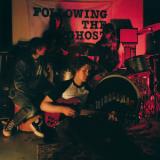
Middleman - Following The Ghost LP
  • A1: Csn
  • A2: D Istractions
  • A3: Carry The Lie
  • A4: All But The Flame
  • A5: Vacant Days
  • B1: The Furthest Place
  • B2: Long Goodbye
  • B3: Morning All The Time
  • B4: Following The Ghost

“It’s hard to find your way, following the ghost,” sings Noah Alves on the title track from Middleman’s debut album, as the band explores ideas of how being chained to the past can hinder your forward momentum into the future. This creates a thrilling duality to the debut LP from the London DIY four-piece made up of Alves, Harper Maury, Rory White and Ted Foster. They are all young, in their early-to-mid-twenties, and very much focused in the now, harnessing an energy, urgency and rawness that feels fresh, alive and viscerally present. However, it’s also clear there’s a deep love of music that was made before they were born: the taut, wiry assault of Mission of Burma; the raspy yet melodic charge of The Replacements; the pioneering punk of Wipers, fleshed out via the more restrained and tender moments of Big Star or Neil Young. The result is a beautiful dichotomy of a record that both pays tribute to a rich musical lineage that the band are a part of, while also resisting the urge to get sucked into a dead end of nostalgia, mythology and recycling past glories.

Reservar13.03.2026

debe ser publicado en 13.03.2026

23,11
Remigio Ducros - America Giovane LP
  • 01: Country Feeling
  • 02: Black Not Coloured
  • 03: Ride On
  • 04: Hendrix Memento
  • 05: Week-End Down Town
  • 06: Sunday In Central Park
  • 07: On The West Road
  • 08: Village Blues
  • 09: Black Congregation
  • 10: The New Phylosophy
  • 11: Campus Sit In
  • 12: Rock - H
  • 13: Lonesome Voice
  • 14: The State Of Harlem

America Giovane is part of a reissue series produced in collaboration with Edizioni Leonardi (Milan, Italy), dedicated to extremely rare library music LPs originally released between the late 1960s and early 1970s — most of which had never been reissued until now. These recordings are finally made available again for collectors and library music enthusiasts.

Remigio Ducros, pianist and composer and author of around 20 library music LPs, presents with America Giovane ("Young America") a heterogeneous compendium of musical styles drawn from the United States — perfectly suited as a soundtrack to late '60s and early '70s hippie gatherings and countercultural events.

Reservar06.03.2026

debe ser publicado en 06.03.2026

28,36
Daniela Casa - America Giovane N.2 LP
  • 01: N.y.c. 42Nd
  • 02: Beta Lady
  • 03: Colorado River
  • 04: Spyralis
  • 05: Third World Tango
  • 06: Fix
  • 07: Champs Rock
  • 08: Icarus
  • 09: Big Sure
  • 10: Kentuchy Fried Chicken
  • 11: Puertorico Slum
  • 12: Soft Bird

Daniela Casa (1944–1986) was a singer and composer, and the wife of fellow library music artist Remigio Ducros, author of America Giovane ("Young America"), an LP that ideally precedes this second chapter. Originally released in 1975, America Giovane N. 2 is today — like much of the Edizioni Leonardi catalog — extremely rare and highly sought-after by collectors.

Musically, it shares with the aforementioned America Giovane a remarkable stylistic diversity: from folk to psychedelia, from funk to rhythm and blues. Unlike the first volume, however, this record reveals a more pronounced jazz aura — "Fix" and "Soft Bird" are virtually two brief free-jazz excursions — which makes the album even more compelling and distinctive.

America Giovane N. 2 is part of a reissue series produced in collaboration with Edizioni Leonardi (Milan, Italy), dedicated to extremely rare library music LPs originally released between the late 1960s and early 1970s — most of which had never been reissued until now. These recordings are finally made available again for collectors and library music enthusiasts.

Reservar06.03.2026

debe ser publicado en 06.03.2026

28,36
Cheeba’s Funky Rock Ensemble - Drug-Crazed London Hippies / You Wanna Ride? (7")

Cheeba’s Funky Rock Ensemble are back with two sides of funky rock breaks for hairy b-boys !

After the great feedback of their debut release 18 months ago, they went back into the studio soon afterwards to record some more slices of hip-hop orientated funky-psyche beats aimed at the dancefloor. Since then, both new tracks have been on a one-off dubplate and getting aired all over the country to an enthusiastic reception - so it’s about time we got them out there for everyone else to, like , just dig, maaaaan !

DRUG-CRAZED LONDON HIPPIES takes you down to the seedy back street clubs of late 60s swinging Soho - to the early discotheque scene and the psychedelic experience of numerous young rock groups and their fans. With heavy fuzz, funky beats and dirty flute loops this takes you straight to those hedonistic dancefloors in the early hours.

YOU WANNA RIDE ? Stays in the same era and same counter-culture, but on the other side of the Atlantic with the free festival vibe of alternative lifestyles in California. More fuzz-rock sounds, blended with heavy beats , screaming hammond and wordless female vocals to take you on a deep trip - to lose yourself in a field as the sun rises.

No en stock

Haga su pedido ahora y le encargaremos el artículo en nuestro proveedor.

18,07

Ültimo hace: 69 Días
PARIS FORD Feat. Gina Lewis - Roll A Skate (7")

Paris Ford Bass Player Musician In the earliest years of New York’s post-disco era when roller skating rinks were packed to the rafters and dance floors were alive with funk, R&B, and early electro grooves a young artist named Paris Ford laid down a recording that would quietly endure for decades.

Roll a Skate was supposed to be release on Streetwise Records, the influential New York dance label founded by producer and DJ Arthur Baker
home to seminal club classics and cutting-edge dance sounds of the early ’80s.

Only few month ago, Paris Ford, the artist has uncovered the original 2-inch, 24-track master reel of that recording the very masters from which Streetwise pressed its vinyl rediscovered after nearly 40 years.

Listening back, even Arthur Baker reflected that if he’d heard what Ford had captured back then, he would have released it as a second single a testament to the timeless energy and feel of the recording.

No en stock

Haga su pedido ahora y le encargaremos el artículo en nuestro proveedor.

19,75

Ültimo hace: 20 Días
Naoki Zushi - Paradise Lp

Naoki Zushi

Paradise Lp

12inchWOE020LP
World Of Echo
27.02.2026
  • こびと
  • ハレルヤ:左?
  • 孤独のハープ弾き
  • パラダイス:真昼
  • Black Hole
  • 紫の夕べ
  • 目の前の天使達
  • Another Lonely Harpist
  • They’ve Gone, They Will Come
  • パラダイス
  • 童話
  • Spirit In My Hair
 
1

World Of Echo announces the reissue of two remastered albums by Japanese guitarist and songwriter Naoki Zushi, 1988’s Paradise, and 2005’s III. Two classics of Japanese psychedelia, both Paradise and III were originally released on Org Records, the imprint of Shinji Shibayama of acid-folk group Nagisa Ni Te, with whom Zushi has guested on second guitar for decades. Both intimate and expansive, rich with revelatory songwriting and blasted, sky-scouring guitar, these reissues return these albums to print for the first time since the 2000s. It’s the first time III has been officially released on vinyl, with an extra, previously unreleased track, “Under The June Moonlight.”

Recorded in Kyoto’s Townhouse Studios in mid 1987 and released in limited-to-500 vinyl pressing in 1988, Paradise emerged from a scene in Kansai, Japan that was embracing the idiosyncracies of 1970s singer-songwriters, the soaring solos of early seventies psychedelia, and the DIY impulse of 1980s post-punk. While Zushi’s musical history stretched back to the early eighties – he was a founding member of Jojo Hiroshige’s noise outfit Hijokaidan – he found his feet with groups like Hallelujahs, whose dream-pop collection Niku O Kuraite Chikai Wo Tateyo was recently reissued by Black Editions, and Idiot O’Clock.

Paradise appeared two years after that Hallelujahs album and share much the same membership – Zushi’s backing band on several of the songs includes Shibayama on drums and Ken-Ichi Takayama (aka Idiot) on electric guitar, though just as often, Zushi plays all the instruments himself. The coordinates here are wide-reaching – you can hear the volume and intensity of Neil Young & Crazy Horse (on “Hallelujah: Left Side” and “Paradise: Midday”), the slow-motion magic of Galaxie 500, the idiosyncratic spirit of The Only Ones, all mixed up with tender guitar miniatures and stumbling garage-psych-pop moves.

Seven years later, after the transitional album Phenomenal Luciferin, Zushi released III. Perhaps his masterpiece, it’s already been bootlegged on vinyl, but this reissue is the real deal. The album was recorded at Studio Nemu over seven years, and sees Zushi backed by Shibayama (bass) and Masako Takeda (drums), his erstwhile bandmates in Nagisa Ni Te. By this stage, Zushi had started to really stretch out, and many of the songs on III swoon languorously, taking their sweet time to say what they need to say. It’s rich with lovely, melancholy songs, in a similar realm to bandmates Nagisa Ni Te, of course, but you can also hear traces of everything from Syd Barrett’s The Madcap Laughs, through seventies private press loner folk, to the slow-burn meanderings of the likes of early Low or Damon & Naomi.

When interviewed by Shibayama in the mid-nineties, Zushi said of Paradise, “it was a sort of collection of songs that had meant something to me up to that point… it was my paradise. I wanted to create paradise.” That’s something Zushi achieves on both of these albums – visionary Japanese psychedelia, en route to paradise. - Jon Dale

Reservar27.02.2026

debe ser publicado en 27.02.2026

23,49
Leila - Courtesy of Choice ۲۵ … asides and besides (3x12")

To celebrate its 25th anniversary, XL Recordings today announce a special, expanded version of Leila’s acclaimed second album Courtesy Of Choice. Originally released on 11th September 2000, the album followed the success of her Rephlex Records debut Like Weather and felt like a broadcast from a futuristic radio station no one else could tune into. Twenty-five years on, alongside collaborations with the likes of Bjork, Aphex Twin and Terry Hall and iconic performances at the likes of the V&A and Venice Biennale, more and more listeners have found the frequency. While Courtesy of Choice's influence continues to transmit through contemporary culture. the Iranian-born, London-raised producer remains utterly singular:

"I realised very early on that people don't really belong anywhere. That's what gives me the freedom to do any kind of music...I don't feel any commitment or loyalty to anything. My commitment is to noise." – Leila


This new version, Courtesy Of Choice… asides and besides, re-presents the original 14 track album — including the previously vinyl-only “Relax the Pleasuredome” — alongside a wealth of unreleased material. Leila chose to re-edit rather than remake the album (she has all the original data… midi and audio), choosing to set the parameters of only recovering buried details while preserving its spirit. “I wanted this reissue to be honest,” she explains. “Nothing added, just making sure the performances came through as they were meant to.” Among the twenty unheard tracks are Roya Arab’s striking collaboration on Cabaret classic “Mein Herr,” the surrealist collage “A Reasoning” with a sample of Max Ernst, the hypnotic “Acid Frog Fave,” the digi rave blowout “Birdie Rave,” and “techyarr”’s future forever funk from the realm of primetime Neptunes. Together they reveal both the breadth of Leila’s vision and the enduring power of an album that continues to sound ahead of its time.

No en stock

Haga su pedido ahora y le encargaremos el artículo en nuestro proveedor.

36,09

Ültimo hace: 75 Días
Sun Palace - Raw Movements / Rude Movements LP (2x12")
  • A1: Raw Movements 5 52
  • A2: Love Train Ii 4 47
  • A3: Palace Strut 4 10
  • B1: Coral Reef 4 52
  • B2: Street Beat 4 41
  • B3: What's The Time 5 53
  • Rude | Movements
  • C1: Rude Movements 7 49
  • C2: Movement I 6 10
  • D1: Movement Ii 7 40
  • D2: Movement Iii 7 59

Repress !

Way back in 1981, two musicians got together to make a record. Mike Collins played guitar and had just bought a Roland CR78 - the first programmable drum machine. Keith O'Connell played Fender Rhodes piano and Prophet 5 synthesizer. Excited about the quirky and unusual instrumental track they'd composed, when the duo entered London's Utopia Studios to finish off their creation, neither could have predicted what was to follow... Now viewed by many as one of the most influential early electronic dance records, 'Rude Movements' was swiftly picked up on by David Mancuso, who used it to devastating effect at his infamous 'Loft Parties', in turn introducing it to Larry Levan, Frankie Knuckles, David Morales and Kenny Dope, a group of young DJs who would go on to write the blueprint for dance music as we know it.

In the more than 35 years since its release, 'Rude Movements' has continued to inspire and excite, sampled by The Bucketheads' classic House track 'Whew!' (featured on recent BBE compilation '20 years of Henry Street Records') and listed by a veritable 'who's who' of dance music's elite as an all-time favourite. Rare and much sought-after on vinyl, BBE are happy to announce the release of a fully remastered version of 'Rude Movements' presented alongside the original demo version 'Raw Movements', plus three other versions of the iconic track. Also included on the vinyl package are the Afrika Bambaata inspired 'Street Beat' and 808/MiniMoog workout 'Palace Strut', as well as three other 80s SunPalace compositions. CD and digital versions expand the catalogue still further, with more experimental SunPalace magic. Timeless original, quirky and unique, these recordings are set to inspire yet another generation of DJs,
producers and music fans.

No en stock

Haga su pedido ahora y le encargaremos el artículo en nuestro proveedor.

28,15

Ültimo hace: 14 Días
Young Kulcha & The 18th Parallel - More Work To Be Done

For several years now, Young Kulcha has been establishing himself as the favourite of European sound systems. The young German-Congolese artist sets dub and reggae parties alight with his sharp lyrics and voice reminiscent of some of the most admired reggae artists such as Hugh Mundell, Dennis Brown and Garnett Silk.

With ‘More Work To Be Done’, Young Kulcha presents a track that encourages younger generations to remain optimistic and resilient despite the difficult times our societies are going through. Accompanied by the exceptional Swiss studio band The 18th Parallel, ‘More Work To Be Done’ plunges us straight into a Jamaican sound system party from the early 1980s, where the combination of Roots Radics and Scientist would have shaken the neighbourhood with their unparalleled heavy sound. With a dub B-side by Westfinga, the new European generation pays tribute to Jamaican legends with this musical bombshell!

No en stock

Haga su pedido ahora y le encargaremos el artículo en nuestro proveedor.

12,56

Ültimo hace: 78 Días
Donovan - Mellow Yellow

Donovan Philips Leitch is a Scottish singer-songwriter and guitarist who in the 1960s developed an eclectic and distinctive style that blended folk, jazz, pop, psychedelia, and world music. He emerged from the British folk scene and reached fame in the UK in early 1965 before replicating this in the US the following year, baring the fruits of the blossoming, successful, and eventually long collaboration with record producer Mickie Most.

Fast forward to 2018 and we're very pleased to say we're re-issuing these wonderful albums on our own state51 Conspiracy label - these are the first two of five, with another special release to follow in 2019. All five were cut at Abbey Road, pressed on 180g audiophile vinyl and lovingly re-created to replicate the original releases. They are all strictly limited to just 300 copies for the world too.

No en stock

Haga su pedido ahora y le encargaremos el artículo en nuestro proveedor.

27,94

Ültimo hace: 7 Años
NONNA FAB - DEEPER DANCE ARCHIVES LP

Quite out-of-the-blue, a stunning debut album from Movement And Soul's Nonna Fab...
An exceptional musicality permeates the cuts here, from Claussell / Trent style Deep House meditations, to tripped-out Jazz influenced electronica akin to Mills' recent Spiral Deluxe output.
We're also immersed in Minimal Vision type early 90's dream-House vibes, a dash of Broken Beat and a beautiful beatless piece to wrap it all up.
Incredibly accomplished work from this young new talent !!

No en stock

Haga su pedido ahora y le encargaremos el artículo en nuestro proveedor.

18,70

Ültimo hace: 8 Días
Cardinals - Masquerade LP

Cardinals

Masquerade LP

12inchSOYOUNG044
So Young
13.02.2026

Today Cork's acclaimed Cardinals announce their much-anticipated debut album 'Masquerade'. Set to land February 13th on tastemaker label So Young Records, the ten song album was recorded with producer Shrink at RAK Studios, London across the summer. It's a record that is at once grand and intimate, awash with romance and flickers of holy imagery, and most of all, it's an undeniable fulfilment of the innate promise the band have shown since their earliest beginnings. These are emotionally expansive songs, some simmering with an undercurrent of violence, cynicism or fervent discontent (Anhedonia, The Burning of Cork, Barbed Wire) and others gleaming with a bright-eyed vulnerability. A vivid first half contrasts a darker second and crafts a record with a clear A-side and B-side. A nod to the band’s collective love of vinyl, that tonal shift takes its cue from a variety of expected and unexpected influences - from the brittle honesty of folk to the theatrical melodrama of goth-rock. Formats and Quantities

Reservar13.02.2026

debe ser publicado en 13.02.2026

23,32
REBOOT & SHOKË - House Call EP

Nick Curly and Marc Scholl present the next chapter on Cécille Records - a collaboration where Reboot meets a new generation of Italian talent, Shokë.

Frankfurt-based Reboot, a key member of the Cécille family, joins forces with the young and rising Naples-based duo Shokë for their debut on Cécille Records. Naples and Italy as a whole, has been home to a strong and loyal Cécille fanbase for decades, making this collaboration a natural next step.

The connection was sparked through shared ties within the Italian scene, with Blackchild playing a key role in bringing the artists together and connecting Shokë and Reboot early on. From the very first studio sessions, a strong and organic synergy emerged …one that is clearly reflected in the music.

The result is a collection of powerful, timeless house tracks with depth, groove, and character, blending experience with fresh energy while carrying the unmistakable spirit of Cécille Records.

No en stock

Haga su pedido ahora y le encargaremos el artículo en nuestro proveedor.

12,56

Ültimo hace: 3 Meses
Truus de Groot presents Plus Instruments - Unnoticed (Tape)
  • A1: For Safety
  • A2: I Don't Like It
  • A3: Lies And Flies
  • A4: Pain In My Heart
  • A5: My Guns
  • A6: Puzzle
  • B1: Slither
  • B2: Slow Soak Poetry
  • B3: Throw It Out
  • B4: Sexy Machine (Feat. Cosmo Vitelli)
  • B5: Love In A Nutshell
  • B6: Myaa

After nearly five decades of relentless innovation, Truus de Groot's Plus Instruments project shows no signs of slowing down. The ninth album, Unnoticed, finds the `dutch Pioneer diving deeper into the experimental synthesiser palette than ever before, delivering 12 tracks of minimalist, analogue noise and her signature vocals.

Recorded at The Ranch in Escondido, Unnoticed showcases her continued evolution as an artist. Often referred to as the "Queen of the Dutch Underground," de Groot has is a stalwart of the experimental underground music scene since establishing Plus Instruments in 1978 in Eindhoven. Her journey has taken her from the punk rock explosion of the late '70s Netherlands to the No Wave scene of early '80s New York.

The Plus Instruments project has always been characterised by its ever changing nature and collaborative spirit. She has worked with an impressive roster of artists over the years , spanning continents and genres, including James Sclavunos (Nick Cave), Jim Duckworth (Gun Club), most recently, Miguel Barella and Cosmo Vitelli, who co-writes, produces and adds programming to standout track "Sexy Machine." This creative partnership has opened new avenues for de Groot's explorations, as she continues to plough yet another field of creativity.

Now based back in the Netherlands, she continues her work while maintaining the core elements that have made Plus Instruments a touchstone for electronic music innovators. Her influence can be heard in everything from Electroclash to Cold Wave, with younger artists regularly seeking collaboration with the veteran experimentalist. Unnoticed arrives as de Groot enters her sixth decade of music-making, proving that true artistic vision only grows stronger with time.

Reservar11.02.2026

debe ser publicado en 11.02.2026

12,56
Manuel Sahagun - Feed The Flame EP

Out of Buenos Aires, Argentina the ever-consistent Manuel Sahagun comes
correct for Sounds of Style Records with our 6th release titled “Feed The
Flame EP”.
With excellent releases on Freerange, Pomme Fritte and Fortunea we are
excited to welcome Manuel to the team!
We start off with a jam that's funky and moving titled “Stressed Out’ that’ll give
the heads something to think about while the dance floor boogie’s. Next up is
“1000 Shamans” with a nice spoken word over a funky chugger that will turn
out the heads whether its early in the night or full-on boogie till the sun comes
up.

The B side starts off with our title track “Feed The Flame” which gets to the
feels of classic House music that we love so much! We round out the ep with
“Younger Brother” that ties a catchy spoken word over solid chord work and
bumping low-end to round out this quality record!
Already getting play by DJ Sneak, Toomy Disco, Jay West, DJ Dazy, Mateo
Dufour, Cory Wells, Sound Process & more.
Up next, we have Eddie Leader ”Need To Pivot EP” that is due out January 30th!

No en stock

Haga su pedido ahora y le encargaremos el artículo en nuestro proveedor.

17,86

Ültimo hace: 3 Meses
Stars - Dancin People / Dancin People Part 2 (7")

Soul-Funk-Disco-grail officially reissued for the first time by Backatcha Records. Recorded and released in 1981, Stars' core line-up consisted of the musicians from Aura (‘Freex’, ‘Last Stop’, and ‘Sunshine Love’). “Stars was a band name and not a band”, explains keyboard player Steven Young. It was a studio group made up of mostly players from their neighbourhood band Hooker in Corona, Queens, that’d performed on the New York live circuit since the early 1970s. At the helm of Starbase Sounds was the Cadle Brothers trio: producer Ray Cadle, bassist Jules Cadle, and an older brother as financial backer, leading to the creation of the short-lived Starbase Sounds label. It released a total of four singles, including this rare 45 bomb, and three previous singles from The Freex Machine and Aura, all equally prized and sought after, and all reissued for the first time by Backatcha Records.

No en stock

Haga su pedido ahora y le encargaremos el artículo en nuestro proveedor.

16,18

Ültimo hace: 3 Meses
Earl Sixteen & The 18th Parallel - My Son

With a career spanning over 50 years, Earl Sixteen is one of the major artists in the history of Jamaican music. He has been produced by some of the biggest names in the business, from Studio One to Jah Shaka, Lee ‘Scratch’ Perry and Mad Professor. Earl Sixteen has always stood out for the accuracy of his performances and the smooth depth of his voice.

Today, in collaboration with Switzerland most active studio group of the last decade, The 18th Parallel, he presents his new single ‘My Son’, written by the genius lyricist Marc Ismail. The lyrics touch on the harsh reality of the younger generations in Jamaica who grow up in precarious conditions and, in some cases, have no choice but to turn to crime. Here, the elder's voice urges young listeners to take a hard look at themselves and weigh the consequences of their decisions.

The message is enhanced by Earl Sixteen's performance and the extraordinarily powerful rhythm section of The 18th Parallel. B side features a scorcher dub by Westfinga: 'Hear My Dub'. A masterpiece of contemporary roots reggae!

Reservar06.02.2026

debe ser publicado en 06.02.2026

12,56
Esa Pethman - In Belgium 1967

Esa Pethman

In Belgium 1967

7"-VinylWJ075001
WE JAZZ
06.02.2026

We Jazz Records kicks off their new series of archival 7" releases with Esa Pethman "In Belgium 1967" released 23 September 2022. The two-tracker is licensed from the Belgian VRT radio archives and both of the pieces are previously unreleased. Finnish jazz legend Pethman, heard here on alto flute and tenor sax, joins forces with European jazz greats such as Heinz Bigler, Uffe Karskov and Jean Fanis. This is a small but valuable piece of unheard European jazz history from the early heyday of modern jazz. The physical release is a quality "inside-out"-styled EP with 3mm spine and small center hole on the 45rpm vinyl.

An excerpt from the liner notes by Mikko Mattlar:

"Esa Pethman (b. 1938) was one of the key figures of modern Finnish jazz in the 1960s. His album The Modern Sound Of Finland was the first Finnish modern jazz album and his composition "The Flame" a true modern Fenno-jazz evergreen.

Pethman was born in Kuusankoski, 135 kilometres from Helsinki in the Kymenlaakso area. The jazz scene was active even though it was an area of rural landscapes and paper mills. Pethman discovered jazz when he heard a Charlie Parker record being played at a local music shop in the late 1940s. Following Parker, bebop became his favourite style of jazz.

Young Pethman played flute and saxophone in local bands who accompanied schlager singers. They played tangos and waltzes for dancers, but usually started a typical dance event with an hour of jazz. In 1959 Pethman moved to Helsinki to study music at the Sibelius Academy. Back then it was a strictly classical music academy, but Pethman later described the studies as crucial for his development and career. He quickly made his way to studio sessions and into the best orchestras in Helsinki.

As a student of composition, Pethman also began writing his own music. "The Flame" was a melody he just got on his mind one night, and he decided to write it down. The catchy composition was released as a 7" single in 1964, a year before Pethman's debut album. Both records stand as benchmarks for modern Finnish jazz. The album consisted entirely of Pethman's compositions, not versions of jazz standards like a lot of the Finnish jazz released until then.

In the mid 1960s, Finnish jazz was also taking its first international steps. Pethman's quintet took part in the first Montreux Jazz Festival in Switzerland in June 1967. At the Montreux jazz band competition, the quintet came in fourth of the twelve contestants. Despite not winning the competition, the band got an honourable mention, and Pethman was now recognized outside Finland.

In December 1967 Pethman travelled to Brussels. His visit was organised by the national Finnish broadcasting company Yleisradio and their jazz program producer Matti Konttinen. Konttinen was supposed to go to Brussels with Pethman, but the musician ended up traveling alone.

In the Decca recording studios Pethman played two songs. He recorded a version of his most famous composition "The Flame", where he played the alto flute and was accompanied by Belgian musicians. On Swiss saxophonist Heinz Bigler's composition "Like Steel", Pethman played the tenor saxophone. The band was now more international, consisting of Bigler, the Italian Francesco Santucci, the Dane Uffe Karskov, a Belgian rhythm section and Pethman. After 55 years, Pethman still remembers Bigler's remarkable skills as a saxophonist.

The two-day visit included the recording session, a dinner and a concert. Pethman and the other non-Belgian musicians came to Brussels mainly to play at a jazz concert organised by the European Broadcasting Union EBU. They played at the studio first, and the concert was held the following day. Pethman and all the other soloists played as members of an international big band. The studio and live session were produced by the Belgian Radio and Television jazz section leader Elias Gistelinck."

No en stock

Haga su pedido ahora y le encargaremos el artículo en nuestro proveedor.

16,39

Ültimo hace: 3 Años
Lily Rae Grant - Poison Ivy / Forget About (7")
  • A1: Poison Ivy
  • B1: Forget About

Her natural command on stage, paired with a voice that feels quietly seasoned, has made her one of the most exciting young live musicians emerging from the region. Now, with her first release, a double single featuring the raw, one-take folk recording 'Poison Ivy' and the dreamlike, psychedelic shimmer of 'Forget About' -- Grant introduces the full spectrum of her sound. One track close to the bone, the other lost in a dream, both unmistakably hers. 'Poison Ivy' was recorded when Grant was just 16, in a spontaneous midnight session after finally playing her songs to her dad. With only one microphone, no click, and a single take, the track became a time capsule of her earliest songwriting voice -- fragile, real, and impossible to recreate.

Now featuring Dan Bridgewood-Hill's evocative violin, it stands as a folk recording filled with warmth, instinct and unfiltered emotion. "I tried re-recording it," she says, "but nothing touched the magic of that first take." In contrast, 'Forget About' showcases Grant's emerging production instincts. Influenced by Zero 7, the song began as a kitchen jam before evolving into a lush mix of psychedelic keys, airy electronics and indie- rock textures. Self- recorded in Logic, the track reveals a new dimension to her writing, cinematic and rhythmically hypnotic

Reservar06.02.2026

debe ser publicado en 06.02.2026

14,71
St. David - Deep House Damage EP

St. David Unleashes 'Deep House Damage EP' on Definitive Recordings.

Definitive Recordings is proud to present a brand-new four-track outing from Italian house innovator St. David, titled 'Deep House Damage EP'. Following his acclaimed remixes earlier this year for label classics like 'Good Music' (John Acquaviva, Dan Diamond, Alex D'Elia, Nihil Young) and 'Do It' (Las Americas), St. David now steps forward with a full EP that delivers nothing less than pure oldschool house fire.

The release opens with 'Touch Me (Sexy Hard Dub)', a shuffling house cut with a vintage edge, driven by a rolling bassline and a sensual spoken-word female vocal that sets a playful, club-ready tone. 'I Like It Deep' heads into deep house territory, pairing organ stabs and a steady oldschool beat with both male and female spoken-word phrases, creating a hypnotic, afterhours mood. On 'Dub Swagin'', the energy kicks back up with stomping drums, chopped samples, and filtered percussion. All wrapped in unmistakable 90s house flavor. Closing things out, 'Gonna Work It' is a peak-time smasher stacked with classic vocal samples and grooving organ chords that lift the track into euphoric territory.

Born in Bari, St. David (real name Davide Disanto) has carved a reputation as one of today's most authentic purveyors of oldschool house. Deeply inspired by the American house scene, his tracks blend groove, funk, and raw analog warmth, consistently topping vinyl charts and earning support from global heavyweights like The Martinez Brothers, Riva Starr, Jovonn, and Chris Stussy. He is the founder of Theory of Swing Records, a vinyl-only label dedicated to preserving the magic of 90s house. His music has been featured on Cinthie's DJ-Kicks and he has released on respected imprints including Snatch! Records, Body N' Deep, Heist Recordings, Skylax, and Let's Play House.

With 'Deep House Damage EP', St. David confirms his role as one of the most vital voices in contemporary house, channeling the spirit of the past into tracks made for the dancefloors of today.

No en stock

Haga su pedido ahora y le encargaremos el artículo en nuestro proveedor.

14,71

Ültimo hace: 82 Días
PHILLY ALL STARS - REIMAGINED  CLASSICS FROM THE CITY OF BROTHERLY LOVE   ERIC KUPPER REMIXES  LP 3x12"
 
9

Remixer extraordinaire Eric Kupper takes a set of epic, lost recordings from 1982, that feature the cream of the crop session musicians behind the soulful sound of Philadelphia - Earl Young (Drums), Ronnie Baker (Bass), Norman Harris (Guitar), Lenny Pakula (Organ), Larry Washington (Percussion), Vince Montana, Jr (Vibes, Keyboards), John Bonnie (Saxophone) - along with powerhouse vocalists Joe Freeman, David Simmons, Bobby Love and Ron Tyson, and lovingly applies his own modern sheen, spinning them into ear candy for today’s listener as well as those who were there from the very beginning. These incredible remixes, which have individually been topping the charts on Traxsource, can now be had in one place - this exclusive 3-LP vinyl collection that is not just a tribute to the past, but a vibrant continuation of the legacy these legendary musicians helped create.

No en stock

Haga su pedido ahora y le encargaremos el artículo en nuestro proveedor.

34,24

Ültimo hace: 68 Días
Various - Wizzz! French Psychorama Volume 5 (67-75)

The journey through French-speaking pop archives continues with this fifth volume, packed with fuzz, gimmicks, and dissent. Far from the charts, the selected tracks display a great creative freedom, often backed by corrosive humor. Welcome to the surprising, kaleidoscopic, and colorful world of the late sixties and early seventies, Wizzz!
Born in Montauban, Robert Pico stumbled into music by chance when he met René Vaneste, then artistic director at Pathé-Marconi. René brought him to Paris to record his first 45 RPM EP in 1964. A year later, Pierre Perret introduced him to Vogue, where he recorded his second album with Claude Nougaro’s orchestra. Sylvie Vartan then introduced him to RCA, where he recorded four singles, including the astonishing "Chien Fidèle," a track backed by a hair-rising fuzz guitar. Alongside his solo career, he also composed for other artists like Alain Delon (the song was recorded but remains unreleased), Magali Noël, Bourvil, and Georges Guétary. In the Paris of the sixties, he mingled with Mireille Darc, Elsa Martinelli, Marie Laforêt, France Gall, Françoise Hardy, Petula Clark, Régine, Dani, Serge Gainsbourg, Joe Dassin, Franck Fernandel, Charles Level, and Roland Vincent. Despite his efforts and winning a Grand Prix Sacem for his final record, Robert Pico didn’t achieve the expected success in show business and decided to leave Paris and return to the Southwest, where he devoted himself to writing. He is the author of 23 books (including Delon et Compagnie, Jean-Marc Savary Editions 2025, a memoir about his youth and his many encounters). Today, he is relieved to never have become a celebrity and devotes himself to his work with passion.
In 1969, the Franco-Italian movie Erotissimo was released, directed by Gérard Pirès (who later directed Taxi in 1998, written and produced by Luc Besson). This pop comedy features Annie Girardot, Jean Yanne, Francis Blanche, Serge Gainsbourg, Nicole Croisille, Jacques Martin, and Patrick Topaloff. The soundtrack was written by Michel Polnareff and William Sheller, with lyrics by Jean-Lou Dabadie. "La Femme Faux-cils," performed by Annie Girardot. It recounts the feelings of a rich CEO's wife who seeks to develop her sex appeal under the influence of advertisement and magazines. Groovy, sparkling and light, this track, with ITS lush arrangements humorously critiques consumer society and feminine beauty standards.
“Je suis l’Etat” (1967) is the flagship track of the first EP by singer-songwriter Spauv Georges, aka Georges Larriaga, better known as Jim Larriaga (1941-2022). Born into a family of bakers, the young man was initially planning to become a hairdresser when he discovered English-speaking music through Elvis Presley and the Beatles. After this revelation, he decided he would become a songwriter and gave himself five years to succeed. He recorded his first two EP’s independently for RCA under the pseudonym Spauv Georges; meaning “that poor George”, a nickname given to him by the mother of her friend Jean-Pierre Prévotat (future drummer of the Players, Triangle, or Johnny Hallyday). Portraying a depressed and eccentric young man, Spauv Georges created corrosive and amusing songs that didn’t reach a wide audience, despite a TV appearance with Jean-Christophe Averty.
Supported by his loyal friend and fellow songwriter Jean-Max Rivière, Georges Larriaga met the future singer Carlos in the early '70s, then Sylvie Vartan’s assistant. He wrote songs for Carlos, including the popular "La vie est belle," "Y’a des indiens partout," and "La cantine", which went onto become a huge hit in 1972. He also composed for Claude François (“Anne-Marie”, 1971), Charlotte Julian (“Fleur de province”, 1972), helped launch child singer Roméo (who sold 4 million records), and later wrote the hit "Pas besoin d’éducation sexuelle" (1975) for the young Julie Bataille. In 1971, Jim recorded an album for Disc'Az: “L’univers étrange et fou de Jim Larriaga”, which featured pop gems like “La maison de mon père”.
The story of the song "Zoé" began when Pierre Dorsay, artistic director at Vogue Records, asked Swiss singer and musician Pierre Alain to write a song for a new female singer. The inspiration came when he realized that Zoé (the artist's name) was also the name of France's first atomic battery, created in 1948, which consisted of uranium oxide immersed in heavy water! The lyrics reflect a bubbling energy that must be handled with caution, while the instrumentation echoes this atomic theme, notably with the use of a theremin.
Zoé’s career lasted only as long as a single 45 RPM, but it seems Christine Fontane was the vocalist behind this pseudonym, who is known for several EPs, a good "popcorn" album in 1964, and a handful of children’s singles in the '70s. Regardless, the photograph on the cover is of a different girl entirely.
Later, Pierre Alain continued his career, writing songs for himself, Marie Laforêt, Danièle Licari, Alice Dona, Arlette Zola (3rd place in Eurovision 1982), and achieving multiple gold and platinum records in Canada. Also an inventor with several patents, president of the Romande Academy, and head of the French Alliance in Geneva, he now composes atonal music, books, and poetry. Moreover, he is also the host of "Les Mardis de Pierre Alain" at "Le P'tit Music'Hohl" in Geneva.
Filled with oriental choruses and fuzz guitar, "Fou" is from Jacques Da Sylva's only EP released by Vogue in 1967. Despite the quality of this recording, all traces of this singer disappear after this first effort.
Valentin is a baroque pop singer born in Belgium. He is the songwriter and composer of most of the tracks on his three singles released in the late 60s in Canada. A legend says that he reincarnated himself as Jacky Valentin during the 1970s for a rock'n'roll revival career in Belgium, but his older brother sadly debunked this story. Valentin's first two singles were arranged by Claude Rogen, a Parisian session pianist who had come to Canada to promote the song “Mister A Gogo”, a cover of David Bowie’s “Laughing Gnome”, adapted by singer Delphine, his wife at the time. Far from his usual network, Claude Rogen arranged music for Polydor, including the arrangements for “Je suis un vagabond” in 1969, a jerk tune with string arrangements and a furious optimism.
Jacques Malia wrote, composed, and recorded his only 45 EP for Festival in 1966. “Histoire de gitan” is an incredible beat track with bohemian scat that tells the story of a gypsy musician who came to Paris to make it in the Music-Hall, to no avail. The hero of the song and its author probably shared a similar fate, as Jacques Malia faded into anonymity after this remarkable attempt.
Bernard Jamet recorded two EPs for Barclay in the late sixties and co-wrote several songs with Christine Pilzer, Pascal Danel, and prolific songwriters Michel Delancray and Mya Simile. The track “Raison Légale” (1968), his masterpiece, immerses the listener in a courtroom right when a murderer is being judged, with jerk rhythm and free arrangements. A unique, paranoid, judicial, and psychedelic oddity.
Jean-Pierre Lebrot-Millers started his career in show business in 1967 as a singer and songwriter for the Philips label. After three singles, he wrote several songs of a new kind with his friend Pierre Halioche, in the midst of the sexual liberation movement and the democratization of drugs. With provocative lyrics, “Les filles du hasard” and “Barbara au Chapeau Rose” were released on a Philips singles in 1968. The character of Barbara was inspired by a queen of Parisian nightlife during the psychedelic years: model Charlotte Martin, who dated Eric Clapton from 1965 to 1968, then Jimmy Page from 1970 to 1983. Jean-Claude Petit’s arrangements, with a table-filled intro, soul brass, and Hendrixian guitar, emphasize the flamboyance of a hedonistic and sexy character, whose dog is named Junkie because “Junkie est un nom exquis”! The track was recorded live in three takes with a full orchestra.
Upon its release, the record was censored by Europe 1 and RTL due to its references to drug use. Jean-Pierre Lebrot was then banned from the airwaves and later dismissed by his record label. He changed his artist name to Jean-Pierre Millers, while his companion Pierre Halioche became D. Dolby for a new dreamy composition, “Chilla”, which Jean-Pierre produced himself with arrangements by Jean Musy. Once again, the song was immediately censored everywhere. After this setback, he decided to stop singing and started taking on odd jobs to support his Swedish wife and their son until the day he met Jean-Pierre Martin, then production manager at Decca, who had worked with Manu Dibango. Martin offered Jean-Pierre Lebrot-Millers, then employed at Rank Xerox, the position of artistic director at Decca. He accepted and became, a year later, promotion director (radio, press, TV). He worked on Julio Iglesias’s first album for Decca, which became a massive hit and allowed him to meet Claude Carrère. The latter asked him to write new songs and find their performers, much like a “talent scout.” It’s through him that Jean-Pierre discovered Julie Pietri and Corinne Hermès. He composed “Ma Pompadour” for Ringo, Sheila’s husband, and took the microphone again for the syncope hit “Rendez-Vous” in 1982.
That same year, Jean-Pierre Lebrot-Millers tried to release a track for which he had heavily gone into debt: “Si la vie est un cadeau”. Having recorded it in London, he presented it to numerous professionals, all of whom refused to get involved. The same thing happened with Antenne 2 and the Sacem when he proposed the song as France’s entry for Eurovision. He then met Haïm Saban, who was producing cartoon soundtracks and had just launched the Goldorak theme song. Saban, having listened to the song, declared it had the potential to become a hit. He sent Jean-Pierre and Corinne Hermès to meet the CEO of the Luxembourg radio and television network. The latter received them, asked to hear a verse and chorus a cappella in his office, and immediately hired them to represent Luxembourg at Eurovision 1983. They reworked the arrangements and recorded a new version with Haïm Saban as co-producer. The song ended up winning Eurovision 1983, a great comeback for our hero. He continued producing and hung out with the band Nacash in Belgium when a couple came to introduce their daughter for an impromptu audition in a hotel room. The girl sang “Les démons de minuit” while dancing to a radio cassette. Impressed, he had her take singing lessons for a year and composed a song for her (for which he had the melody and title, but no lyrics). This required him to go on the hunt for a lyricist, who ended up being Guy Carlier. They recorded the song, which was initially a ballad, at Bernard Estardy’s CBE studio, and gave the singer a new name: Melody. They showed the song around their industry network without success. Later, Estardy called Jean-Pierre to suggest changing the rhythm and making it pop-rock. Orlando, Dalida’s brother, liked the result and decided to co-produce the track. “Y’a pas que les grands qui rêvent » became a classic hit. The song has since been covered by Juliette Armanet (as a ballad, like the original) and Valentina.

Born into an aristocratic Breton family, Hervé Mettais-Cartier worked as a DJ at Queen Kiss, a nightclub in Poitiers, where he formed the band Les Concentrés with Michel (an actor) and Christian (a radio technician). Together, they created a repertoire of whimsical songs (“Ma bique est morte”, “J’suis un salaud”, “Fils de dégénéré”...) that they performed on stage dressed in white (in homage to “concentrated milk”). They performed at Bliboquet and Olympia in 1968 for the 10th edition of the “Relais de la chanson Française” organized by L’Humanité-Dimanche and Nous les Garçons et les Filles, sponsored by Pepsi Cola. Winners in the author-composer category, alongside Danish singer Dorte, their visibility allowed them to record a 45, and appear on television in Jean-Christophe Averty’s show. The A-side of the disc features Bruno le ravageur, a casatchok dedicated to Bruno Caquatrix, the director of Olympia, nicknamed in the song “Coq Atroce” or “croque-actrices”. The B-side is dedicated to “Fils de dégénéré”, a quirky tribute to Hervé's aristocratic roots, mixing absurdity with sophisticated vocal harmonies.
After Les Concentrés, Hervé Mettais-Cartier formed the duo La Paire et sa Bêtise with his friend Olivier Robert. They performed in Parisian cabarets and toured with Pierre Vassiliu. In the late 1970s, Hervé began a solo career. He recorded two albums for the Motors label in 1978 and 1979, which did not achieve their anticipated success due to lack of promotion. In 1980, he met Bernadette, with whom he started a family and created a “Chansons à voir” (songs to see) show that he performed until his death at the end of 2024.

Publicité comes from the final EP by the Missiles (Ducretet Thomson, 1966), a disc that also includes “La (nouvelle) guerre de cent ans”, featured on Volume 4 of our Wizzz! series. Please refer to the booklet for the story of the band.

“He’s 1.82 meters tall, 28 years old, weighs 135 kg, is black and Belgian”: this is the description of singer Hegesippe on the back of his sole single (Decca, 1967). He appears on the album cover wearing a Greek toga, like a hippie gag – we are at the end of the year 1967. In “Le crédo d’Hegesippe”, this former bodyguard of Antoine and the Charlots plays the delightful card of the thick brute converted to Flower-Power and non-violence, with arrangements by Jean-Daniel Mercier, aka Paul Mille.
“Ethéro-disco” was released on a promotional record for clients of the Maréchal company (Liège, Belgium) for the New Year 1979. Over a funky rhythm, celebrity impersonations (Brigitte Bardot, Jacques Dutronc, Fernandel…) deliver an enigmatic text about pharmaceutical products like ether, bismuth, and aspartate. The track was composed by Dan Sarravah (responsible for Joanna's “Hold-up inusité” featured on Wizzz! Volume 3) and Tony Talado, who was also a singer (one 45 in 1967), songwriter (with over a dozen credits between 1964 and 1985 in various styles from surf music to disco), author (Devenez Végétarien, Dricot Editions, 1985), ad designer, and psychologist.

Décollez-les is on the A-side of Mamlouk's only single, a pseudonym for Marsel Hurten, who is known for his work on several EPs in the late sixties, as well as composing music for Hervé Vilard’s “Capri, c’est fini”, Claude Channes' “La Haine”, Annie Philippe’s “On m’a toujours dit”, and Nancy Holloway’s “Panne de Cœur”.
This strange song, with Afrobeat horns and absurd dialogues between a chef and his kitchen staff, is the result of a collaboration between Marsel Hurten and one of his neighbors, a photographer from Pavillon-sous-Bois (93), where the musician settled after returning from the Algerian War. A music video was shot to promote the record.
Marsel Hurten was born in Tourcoing (59) into a musical family. At a young age, he joined the brass band founded by his grandfather, playing the piston before studying trumpet at the conservatory, as well as teaching himself how to play the guitar. As an orchestra musician, he toured in France, Belgium, Germany, and England. He released a series of solo 45’s between 1965 and 1968 for the DMF and Az labels before stopping recording to focus on working for other artists (Gilles Olivier, Noëlle Cordier…).
“L’amour nu” (Vogue, 1971) is the work of the short-lived Belgian band Mozaïque. The track, written by singer Jacques Albin, closely resembles another of his compositions, “Carré Blanc”, which he recorded in 1969 for Disc’AZ.
Represented by the Lumi Son micro-label based in Marignane (Côte d'Azur), Jean-Marc Garrigues released two 45 RPMs in the late sixties, defending the French jerk sound. The song “Je dis Non” is a short, joyful ode to youth, pop music, and rebellion.
Songwriter and performer Jacques Penuel released three singles. The first one, “Astronef 328” (Fontana, 1969), features a dizzying series of chords punctuated by sound effects, a sci-fi story, and arrangements by Jean-Claude Vannier.

We would like to sincerely thank Pierre Alain, Moon Blaha, Marsel Hurten, Bastien Larriaga, Jean-Pierre Lebrot-Millers, Bernadette Mettais-Cartier, Robert Pico, Olivier Robert, Claude Rogen, Micky Segura.
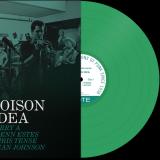
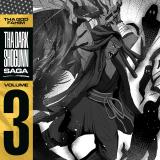
No en stock

Haga su pedido ahora y le encargaremos el artículo en nuestro proveedor.

23,11

Ültimo hace: 3 Meses
BUNDLE OF HISS - AUDIO DESIGN SESSIONS: 1987-1988
  • Swamp
  • Sleep No More
  • Amphetamine
  • White
  • Drown
  • What Dreams May Come
  • Rabies
  • Strobe
  • 12: Gauge

This release resurrects a long-lost cornerstone of Seattle's early grunge history, showcasing Bundle of Hiss, featuring future Mudhoney and TAD guys and singer Jamie lane, one of the genre's missing links. Between 1986 and 1988, when Seattle was still a circuit of small clubs, four-track tapes and bands sharing drummers and singers, Jack Endino went in to record one of the most solid - and most unfairly invisible - outfits of that scene: BUNDLE OF HISS. Two sessions (1986 at Reciprocal and 1987/88 at Audio Design) fell into limbo, stored in the basement of Mudhoney-Drummer Dan Peters and for years they were a kind of pre-grunge legend, everyone knew they existed, but there was no record, until Loveless Records from NYC released both on CD. The second one, Audio Design Sessions, now sees the light of vinyl for the first time, just as it should have come out in the late '80s: a basement document turned into a collectible artifact. For those who want real grunge, not the domesticated version. It gathers the core of those 1987-1988 recordings done by Endino: the moment when the band is tighter, darker and closer to what the press would later call the "Seattle sound": minor-key melodies, thick fuzz, vocals on the edge, and that mix of hard rock, punk and Sabbath-like heaviness we'd later hear in Mudhoney, TAD or early Soundgarden. And Jack Endino himself summed up these sessions: "Vintage Seattle grunge from one of the original practitioners_ I always felt sad that this hard-working band never managed to get a record out and was almost lost to history. It was a pleasure -and a technical pain!- to resurrect all this." Kinda key release of the early grunge days, first-generation material, recorded by the scene's producer, at the exact moment Seattle was shifting from noisy punk to that heavy, shadowy rock that later blew up. It sounds raw, young and dangerous: this is not a polished compilation, it's a snapshot of the scene.

Reservar30.01.2026

debe ser publicado en 30.01.2026

23,49
Lucy Kitt - Telling Me LP
  • Blink
  • Waiting Game
  • Telling Me
  • Lonely Rose
  • Sweet Time
  • Tides
  • Like This
  • What Would I Do
  • Without Her Loving You
  • Missing Out
  • Resting Blues

British singer-songwriter Lucy Kitt unveils her highly anticipated second album, Telling Me, a deeply personal collection that shifts focus from introspection to storytelling, capturing the lives and struggles of those closest to her. Drawing from her love of 70’s Laurel Canyon folk, 90’s indie rock, and country music, Kitt crafts narratives that blend her own experiences with compassionate observations of loved ones. Based on a raw acoustic “three chords and the truth” style of songwriting that ripples throughout, the album expands with full-band arrangements that give a huge range and richness to the sound.

Though influenced by American musical traditions, the Essex-native maintains her distinctive voice and authenticity, ensuring the music remains unmistakably her own. Following her 2018 debut Stand By, this new record represents a more mature approach to songwriting, written during her early 30s and completed in the 2021 lockdown – a storybook of songs capturing that moment in time.

Musically, Telling Me showcases Kitt's stripped-down acoustic foundations, while incorporating fuller arrangements that blend her love of Nick Drake, Bob Dylan, Gram Parsons, Joni Mitchell and Joan Baez, with music she loved as a teenager such as The Lemonheads and Veruca Salt. The album features collaborations with an impressive roster of musicians, including Jay Starkey on drums, Nashville-based pedal steel virtuoso Spencer Cullum, Treetop Flyer’s Sam Beer and longtime collaborator Pat Kenneally on drums and piano.

Recorded between 2021-2023 at London's Lightship 95 studio at Trinity Buoy Wharf, the album was co-produced and engineered by Dave Holmes, with some musicians contributing remotely from Nashville and London.

Kitt's commitment to authenticity extends to every aspect of the album, from the down-to-earth, home-based album artwork which represents her life right now as a musician and a working mum, with all the wonderful chaos that comes along with it. Also her decision to maintain her natural accent throughout her vocals. "I have always retained my authentic self in my songs," she explains. "Always singing with my own accent, despite the influences of all the bands and artists over the years."

Kitt has been songwriting and performing for over 20 years, starting in a riot grrl band in her teens in her hometown of Romford, Essex, before evolving into the thoughtful folk storyteller she is today. A semi-finalist at the BBC Young Folk Awards in the early 2000s, she has performed at major festivals including Glastonbury and Cambridge Folk Festival, building a reputation for intimate, lyrically-focused performances.

Telling Me is a resplendent collection of songs, capturing the human experience with great empathy, honesty and musical sophistication that has become Lucy Kitt's signature.

Reservar30.01.2026

debe ser publicado en 30.01.2026

19,20
Bert Jansch - Bert at the BBC (4x12")

Bert At the BBC is a comprehensive collection of Jansch’s appearances at the BBC, featuring over eight hours of rare and unreleased recordings, including live-on-air spots, studio sessions and full concerts straight from the BBC vaults, delving further into this legendary performer’s canon. Bert Jansch was the very essence of folk music, providing inspiration for everyone from Paul Simon and Neil Young to Led Zeppelin and countless folk revivalists. This unparalleled limited-edition compendium is available as a 4xLP and 8xCD set, housed in a coffee-table book set with a lavish 40-page book tracing the recordings from Bert’s earliest moments at the BBC. It includes interviews and insights from Lauren Laverne, Jools Holland, Johnny Marr, Jacqui McShee, Bob Harris, Bernard Butler, Mark Radcliffe and many more. Twenty broadcasters, producers and collaborators contribute at length to the booklet, with great affection for this gentle, maverick genius. Bert’s BBC legacy remains the most significant and exciting untapped reservoir of his music. The undeniable advantage of recordings made for broadcast is that they were, by their nature, created for public consumption and, barring live-on-air appearances – which might go well or go badly, but were going out either way – were explicitly signed-off by the artist as representations of his art that were good enough to be heard. The set is compiled by Colin Harper, author of Dazzling Stranger: Bert Jansch and the British folk and blues revival (Bloomsbury, 2000), who contributes detailed liner notes to the package. The release is mastered by IFTA award-winning engineer Cormac O’Kane. The vinyl release features 48 tracks on LP and is accompanied by a download card with over six hours of extras spanning 1966–2009, including BBC4’s St Luke’s concert (2003), and a complete Queen’s Hall, Edinburgh concert (2004) for BBC Radio Scotland. It is also available as a special 8xCD set containing all 147 tracks and encased within a coffee-table book. Bert Jansch At The BBC is an epic and enduring trail, 45 years in the making. “He was that rarity, a musician who really did deserve to be regarded as a legend.” The Guardian // “As a guitar player there was no one like him. He was jazz and blues and folk but there was a whole world in there that was just him, esoteric”

Reservar30.01.2026

debe ser publicado en 30.01.2026

64,08
The Just Joans - Romantic Visions of Scotland LP
  • A1: ) Think Fast, Make Conversation
  • A2: ) Here Come The Rugby Boys
  • A3: ) Limpet
  • A4: ) Drinking On A Weeknight
  • A5: ) Back On The Meds
  • A6: ) The Day We Missed The Train
  • B1: ) Oh Veronica, How Right You Are
  • B2: ) Romantic Visions (Prepare For Disappointment)
  • B3: ) Strictly Presbyterian
  • B4: ) Everybody’s Moving To Australia
  • B5: ) Say You’ll Never Leave Me

The Just Joans' new album Romantic Visions of Scotland finds the Glasgow band in characteristically melancholic form, pairing shambling indie pop with sharp observations on romantic pratfalls and everyday dis-appointments, all delivered with sardonic Scottish wit, fronted by siblings David and Katie Pope, whose wry lyrics and heartfelt vocals remain at the heart of the band’s distinctive sound.
Originally inspired by a grandiose exhibition title spotted on Glasgow buses in 2019 for a show at the Nation-al Museum of Scotland called Wild and Majestic: Romantic Visions of Scotland, the new album arrives six years later as a collection of semi-autobiographical snapshots from the Central Belt of Scotland. Whilst some of the details have been exaggerated for comic (or tragic) effect, the songs are based on personal experience of mundane failings, bitter regrets and missed opportunities that make up an unremarkable life.
Recurring themes of nostalgia for a bygone era and the fear of being left behind by lovers, friends and peers run throughout the album. Musically and lyrically, the band channels Village Green-era Kinks, with nods to The Television Personalities, The Smiths and Dolly Mixture.
In the past they have always recorded by themselves in a variety of bedrooms, living rooms – and the occasional toilet. For the first time they have abandoned their DIY recording practices to create what songwriter David Pope calls, “a corporate behemoth in an actual studio.” The album was recorded at Chem19 in Blan-tyre with Paul Savage, who is best known as a founding member of local legends The Delgados. He has also produced and recorded the likes of Teenage Fanclub, Arab Strap and Camera Obscura, and has captured a slightly more muscular version of the band while retaining their ramshackle charm.
The album artwork by vocalist and painter Katie Pope depicts Motherwell Train Station – an ordinary, boring place that speaks to the subject matter of the songs, but with a hint of potential escape. As David Pope ex-plains, “For me, the painting reminds me of the ending of Billy Liar in which Billy tries and fails to leave his hometown for the bright lights of London. Half the band also live in Motherwell, so it seemed appropriate.”
Funded by Creative Scotland, the recording allowed the band to bring in bass and cello arrangements, adding depth and a sheen of musical proficiency to their signature sound.
About The Just Joans - The Just Joans were formed in Glasgow in 2005 by songwriter David Pope. Early demos were collected together and released as a loose concept album, Last Tango in Motherwell, in 2006. Chris Elkin joined on guitar and was followed shortly after by David’s younger sister, Katie, on vocals and Fraser Ford on bass. Over the years they have released EPs and albums on WeePOP! and Fika Records and have gained a cult following as Scottish pop miserabilists.
The current line-up consists of Katie Pope (vocals), David Pope (vocals, guitar), Chris Elkin (lead guitar), Fraser Ford (bass), Arion Xenos (keyboards) and Jason Sweeney (drums).
Press Quotes:
“They fit snugly into the scratchy, low budget Scottish indie tradition of The Delgados and Arab Strap… There’s mischief in this miserabilism.” - Mojo 4*s
“Glasgow’s The Just Joans have documented the romantic pratfalls of a generation of indie kids with sardonic wit and a shambling musical style where Stephin Merrit lies down with The Vaselines.” - Uncut
“Funny and sad, it’s the kind of song that made Red House Painters, The Magnetic Fields and The Wedding Present’s early albums so easy to embrace; an unpretentious sharing of relatable gloom.” - Record Collector

Reservar23.01.2026

debe ser publicado en 23.01.2026

22,65
Henning Schmiedt - Mikis Theodorakis: Lost Songs LP
  • 1: The Cricket
  • 2: My Sea
  • 3: If You Seek Joy From The Sun
  • 4: Andante Ma Non Troppo
  • 5: The Poet And The Rose
  • 6: Freedom
  • 7: Con Calore
  • 8: Mosso
  • 9: The Lake By Lamartine
  • 10: Moderato
  • 11: Wings
  • 12: Greek Melody
  • 13: Thantalos
  • 14: Ode To The Moon
  • 15: The Linden Tree (Der Lindenbaum)

To mark what would have been Mikis Theodorakis' 100th birthday in 2025, Intuition released a very special album: 'Lost Songs' - fourteen previously unpublished compositions by the world-renowned Greek composer, presented here for the first time in a remarkable solo piano version by German pianist Henning Schmiedt. A remarkable moment took place in 2009 at Mikis Theodorakis' studio in Athens: Henning Schmiedt personally played his piano arrangements of the 'Lost Songs' to Theodorakis himself. Some of the melodies sparked the composer's memory, while others did not - but he listened attentively, offered comments and gave guidance that directly influenced the final versions of the pieces.

As such, 'Lost Songs' can be considered a posthumous release with the composer's blessing. These pieces offer a glimpse into Theodorakis' expressive power and artistic maturity from a very young age - most of the 'Lost Songs' were written in the early 1940s and provide a compelling window into the formative years of one of the most important composers of the 20th century.

'Lost Songs' is available on 180g vinyl and digipak CD editions.

Reservar23.01.2026

debe ser publicado en 23.01.2026

30,67
LO BORGES - LO BORGES

LO BORGES

LO BORGES

12inchVAMPI338
Vampisoul
21.01.2026

Before he turned 20, Lô Borges released one of the most captivating albums to come out of Brazil's rich musical landscape - a record that somehow flew under the radar at the time but has since become a cult favorite for listeners around the world. Recorded in the same whirlwind year as the legendary "Clube da Esquina" - the groundbreaking collaboration with Milton Nascimento and Beto Guedes - this self-titled solo debut finds Lô Borges in full creative flight. Pressured by Odeon Records to deliver a solo project, Borges responded with a burst of youthful brilliance, sometimes writing a song in the morning and laying it down in the studio that very night. The result? An album that's spontaneous, heartfelt, and sonically stunning. From the shimmering guitars of 'Você Fica Melhor Assim' to the dreamy melodies of 'Cançao Postal' and the jazz-infused groove of 'Calibre,' the album blends Brazilian popular music with rock, soul, and subtle psychedelic touches. It's got the intimate spirit of a bedroom recording, but with the musical sophistication of legends - with collaborators like Toninho Horta, Tenorio Jr., Nelson Angelo, and of course, Beto Guedes helping bring Borges' vision to life. Fans of Caetano Veloso, Gilberto Gil, or early Nascimento will feel right at home here - but Lô Borges brings his own voice, at once tender and electrifying, to every track. The guitars are fuzzy, the harmonies rich, and the songwriting nothing short of magical. Though it didn't make a splash in 1972, "Lô Borges" has only grown in stature over the years. It's the kind of album you discover once, then return to again and again - a timeless treasure from a young artist who helped redefine Brazilian music from the ground up. If you're into warm, soulful songwriting with a touch of experimental edge, this record is waiting for you. Give it a listen - and see why "Lô Borges" is considered one of Brazil's most underrated masterpieces. Reissue on 180g vinyl.

No en stock

Haga su pedido ahora y le encargaremos el artículo en nuestro proveedor.

28,53

Ültimo hace: 3 Meses
Todd Terry presents Sound Design - Bounce To The Beat

The combination of Todd Terry and Hard Times is synonymous in the world of House Music. The legendary DJ/Producer, a true pioneer of the genre, was among the first US artists to play at the intimate, vibrant gatherings in the North of the UK in the early ‘90s. Forever linked by "A Night In The Life," the live mix released in 1995 that set a new benchmark for mix-tapes, it is a collaboration that has continually blossomed, forging a bond that remains strong over 30 years later.

1995 also saw Todd Terry make his first impact on the label with the seminal club smash "Bounce To The Beat." Following his chart breakthrough with 'Can You Party’ in ‘88, the legendary 'The Unreleased Project’ series, which spawned club hits such as “Jumpin’”, and just a few months ahead of topping the charts with his remix of Everything But The Girl’s ‘Missing’, label boss Steve Raine seized the perfect moment to bring his friend on
board at Hard Times Records with the signing of Bounce To The Beat. "I can still remember pressing play, hearing those beats for the very first time and thinking we had big track on our hands" says Raine. "It was our second release on the label, but it would be the track that firmly placed us at the forefront of the scene, both here in the UK and globally."

Hard Times & Todd Terry now revive 'Bounce To The Beat' with a 2024 reimagining, featuring two of house music’s most exciting young stars, delivering two powerful remixes that promise to dominate dancefloors this summer and beyond.

Dutch producer and Up The Stuss label head, Chris Stussy, takes the track on a '90s- inspired journey, blending progressive strings, high-energy bassline and original vocal, for an exhilarating ride. "I remember discovering Todd’s productions back in the days when I started to dig for that 90’s sound. He’s one of the artists that inspired me massively. He has proven that he owns the art of making timeless music as his productions are still being played till this day all across the globe. To be remixing ‘Bounce To The Beat’ is something special for me personally and I tried to give it a 90’s touch with a modern twist." says Chris.

London’s own Dan Shake offers a fresh twist with a 2Step-inspired remix, featuring an Armand-esque bassline that pulsates and evolves, building to an epic crescendo that is set to ignite mass hysteria on the dancefloor.

"Bounce To The Beat was actually one of the first records I bought when I started collecting house music. So to come back 15 years later and remix this iconic track for the legendary label Hard Times was both surreal and very, very fun," shares Dan.

Two exemplary reworks of Todd Terry presents Sound Design’s 'Bounce To The Beat'. For Vinyl and Digital release on Hard Times alongside the Original and ‘Tee’s Freeze Mix.’

No en stock

Haga su pedido ahora y le encargaremos el artículo en nuestro proveedor.

16,39

Ültimo hace: 49 Días
Nightbus - Passenger LP

Nightbus

Passenger LP

12inchMELO146LP
Melodic
16.01.2026
  • Somewhere, Nowhere
  • Angles Mortz
  • False Prophet
  • Fluoride Stare
  • The Void
  • Ascension
  • Just A Kid
  • Host
  • Landslide
  • Renaissance
  • 7: Am
  • Blue In Grey

2026 Repress

Flickering in ultraviolet, there is an elusive place where blue pill meets red, ups become downs, and day merges with night. Those liminal spaces where anything is possible is where you’ll find Nightbus and their hypnotic debut album Passenger. Doom, uncertainty, and opportunity lurk in the shadowy corners of their murky existence with stops at disassociation, co-dependency, and addiction before reaching its final destination - a glimmer of hope.

The in-between of Nightbus’ own Gotham lies where Manchester’s city pulse meets Stockport’s outer realm. An audio-visual entity formed among a musical family of friends, freaks, and foes in messy mills and after hours on dancefloors alike, their sound bleeds from tension where collective creative forces are bound together and collide with the fallout of being torn apart. Before even playing a show, their So Young released single ‘Mirrors’ – a knowing nod of respect to some well-known gloomy Northerners - may have made old school indie heads shimmy at shows in Salford’s The White Hotel but also signalled the duo’s knack for offering listeners a Bandersnatch approach to hitchhiking their own personal Nightbus in whatever direction they choose to take. “Everyone can have their moment with our songs; the music is our response to who we are as young people, living in the city full of this energy right now,” they say.

Whilst reverb hefty melodies and dread-filled loops embody isolation from writing at each of their home studio set-ups, magic happens in the ether across 90s trip-hop, indie sleaze and electronica; Jake’s production layers Olive’s pop sentimentality with drums and samples whilst tales of a cast of faceless characters place Olive as puppet master; her severed self’s perspective manipulating their stringed limbs at arm’s length to see how their stories play out when scenes reflecting her own lie close to the bone. “It’s a bit fucked; like having this out of body experience with a made-up movie running through my head,” she says. “As I write I can see they’re all from a similar world, but they allow me to explore different feelings without giving away part of myself.”

Recorded at The Nave in Leeds with producer-engineer Alex Greaves (Heavy Lungs, Working Men’s Club), surprise and danger lies in every crevice. Brooding whispers turn to chants on 6-minute opus ‘Host.’ Improvised when performed live, its immersive shift in tempo leads to hefty dub courtesy of Jake’s pedals. Even then, you won’t know shit’s hit the fan until its mid-point reveal when ominous bass blasts a thunderous soundtrack as its protagonist defiantly walks away after committing the perfect crime. “It makes you wait, and more songs should have sirens,” Olive grins.

Leaning deeper into alter-egos via the video game-psychological horror of a Silent Hill dystopia, the band’s Fight Club moment ‘Angles Mortz’ turns its literal translation of death angles on its head as it reflects upon kink and internalised shame reincarnated as pride. Elsewhere the ice cool ‘Landslide’ is a Requiem for a Dream about the addiction of being in a band; ‘The Void’ explores co-dependency and estranged relationships; and carefully selected samples revive house track ‘Just A Kid’ from the band’s early incarnation. Passenger’s every direction is to face challenges head on. “That is what’s so great about horror; you can see through predictable patterns so when the unexpected occurs it's more realistic and uncomfortable… I want to own the dark stuff!”

As for Passenger’s first single, the pulsating ‘Ascension’ is a spiralling deep dive into death, suicide, and legacy around who or what we leave behind. A noughties club banger by way of NYC beats - ergonomically designed for those who like to stay out a little too often and too late - it throbs like a house party’s partition wall as the literal levelling up undergoes a neon transformation; blue glitching to pink, diffusing the white construct of the Nightbus Matrix. “It really does feel like the end of something and was purposely written that way,” they say, “the ascension is like a firework going off!”

With wheels in motion, Nightbus has become a movement surpassing sonic realms. Between shows from Porto to Brighton taking in The Great Escape, Rotterdam’s Left Of The Dial and Paris’ Supersonic; DJing; remixing; guesting (BDRMM’s Microtonic album); and even enlisting talented like-minds to craft a 3-part queer coming-of-age music video series which ties in with a new ‘hyperpop’ phase in the evolution of their popular Nightbus Soundsystem club night, heads are now being turned from sports brands to high-end fashion designers. “There are things we can’t reveal just yet,” tells Olive, “but we’re excited about the direction this beast we’ve created is heading.” As the album philosophises and asks one ultimate question; what does it truly mean to be ‘Passenger’? Nightbus may not claim to offer a definitive answer, but it might make you feel a bit better about those demons.

Reservar16.01.2026

debe ser publicado en 16.01.2026

22,27
Younger Than Me - The Golden Age Of Love Pt.2

Younger Than Me

The Golden Age Of Love Pt.2

12inch90SWAX5PT2
90's Wax
16.01.2026

Whilst YTM is at home presenting dancefloor focussed material, we see him explore the other side too, with "Memory Is A Clock" like the earlier "Vortix", he ditches the 4x4 for breakbeat territory. Whilst the bass keeps the solid metronome you would expect, "Memory Is A Clock" is a track that takes a few moments, contemplative melody and trademark arpeggios take the lead. When it comes to the other collaborations on the record, the appearance of Brame And Hamo on "Raver's Heart Is A Mess" sees them lean into the Progressive nature both artists love so much. Then Pablo Bozzi lends his own unique outlook to "We Don't Know The Way, We Just Stay" in one of the standout tracks, epitomising Younger Than Me’s ability to create profound experiences.

The album concludes with "Music Will Never Stop, Heartbeat Will Never Fade, Party Will Never End", less of a title and more of a personal philosophy – the perpetual essence of rave culture and its timeless impact on music. A rhythmic belter, juxtaposed with incendiary synth-lines and staple catchy sequence work, finishing the record with one of the true highpoints. In addition the release also features four digital bonus tracks, including "The Other Face Of Loneliness" and a Prog Dance Reshape of one of the records more eclectic cuts "Zarathustra Dance" all offering an extended exploration into the creative landscape YTM inhabits.

No en stock

Haga su pedido ahora y le encargaremos el artículo en nuestro proveedor.

14,92

Ültimo hace: 3 Meses
Miniseries - Pilot LP

Miniseries

Pilot LP

12inchRIPS010LP
Rips
16.01.2026

‘Pilot’ is the debut album from London quintet Miniseries. Channelling the epic sweep of TV themes and movie soundtracks into resplendent space rock they explore themes of youth and ageing, heartbreak and paranoia, euphoria and existential dread.

Songwriter Doug Morch (Longview) had been working on largely acoustic folk songs when he met Angela Gannon (The Magic Numbers) at Glastonbury 2017. Romance and musical collaboration ensued. The band coalesced in the hallowed environs of Farringdon's The Betsey Trotwood pub – a musical nexus where burgeoning indie and Americana scenes collide – where they met fellow songwriter and guitarist Dermot Watson (from Brighton's The Dials) and drummer Danny Abbasi and were joined by Doug's former bandmate Aidan Banks on bass. When they came together, their indie folk mutated into motorik art rock, with their first single being an eight-minute jam called "Road".

When it came to capturing their sound, the band reached for maverick musician and producer Sean Read. They recorded tracks at Read's Famous Times studio in Clapton, London, as well as at Edwyn Collins' Clashnarrow in Helmsdale, Scotland – one of the world's most breathtaking and idiosyncratic studio locations, adding unquantifiable magic to the proceedings.

For the closing track "May You Always", they headed to another studio imbued with tangible inspiration: Blueprint Studio in Salford with producer Craig Potter (Elbow) at the helm. For the song, Dermot drew cinematic inspiration from the Withnail & I line "I'll never play The Dane", the song is about realising that the things you aspired to in youth will never come to pass and being at peace with that realisation.

The recurring themes of youth and ageing are apparent in the resplendent lead track ‘You're Gold’ – a heartfelt call for young people to reject materialism and exploitative influencer culture in search of life's deeper meaning, with stylistic nods to The Pixies and early Stereolab.

On the opposite end of the spectrum, "Sepia" explores old age and fading memories through dementia, where the ending descends into chaos like a fragmenting mind. Elements of "Sepia" are foreshadowed in the album's opening track, the instrumental "Pilot Theme", which pays homage to TV theme music, invoking spy thrillers or perhaps something otherworldly from science fiction.

“Offcumdens” is a Calder Valley, Yorkshire term for people who live in the area but come from somewhere else. Hailing from Bury, Lancashire, Morch wrote the song while living in Hebden Bridge (and watching too much Happy Valley) and found himself being an offcumden. It’s a pop at the kind of local nativism which breeds intolerance and an illustration of the sinister rise of wider political populism.

Miniseries' Pilot is just the beginning of the story. Enthralling and atmospheric, the London quintet have created something familiar yet timeless. As singer Doug Morch says, "It's the Miniseries Pilot episode. Like the TV episode a studio makes to test whether it's viable.” In the age of streaming and box-sets, this is an album to truly binge on. We can’t wait to hear what happens next.

Reservar16.01.2026

debe ser publicado en 16.01.2026

19,96
MULUKEN MELLESSE - MULUKEN MELLESSE WITH THE DAHLAK BAND (ETHIOPIQUES)

Swan Song

The vinyl LP at the heart of this éthiopiques 31 tracks 2 to 11 was one of the very last vinyl records ever released in Ethiopia. But above all it represents, we felt, the absolute masterpiece of the Ethiopian Groove – the Swan Song of Swinging Addis. The album leaves a clear idea for posterity of the level of sophistication and mastery that modern Ethiopian music had achieved, before being crushed under the Stalino-military heel of the Derg – as the bloody revolution that was unfolding came to be called.

Ethiopia1976.

The Revolution that broke out in February 1974 rolled on in a ruthless march. The whole of Ethiopian society was utterly stunned. The bouquets of flowers handed joyfully to the first tanks of the coup d'état were to wilt very rapidly. From September 1976 to February 1978, 18 months of Red Terror (the name given by the junta itself) spilled blood throughout the country. This fratricidal conflict took its heaviest toll among students and youth. The shift from feudalism to a cruel and primitive Stalinism left the country's citizens deeply traumatised, and snuffed out any pretence of activism, whatever the sector of society. This ice age was to last for seventeen long years.

ሙሉቀን፡መለሰ Mulukèn Mellèssè Muluqän Mälläsä

It was three tracks by Muluken that served as the opener for éthiopiques-1 more than 25 years ago. Seven more tracks appeared on éthiopiques-3 and 13, all accompanied by The Equators, which was soon to become the Dahlak Band.

The first track, Hédètch alu, also the very first piece that Muluken ever recorded, left audiences both unsettled and amazed. Reflecting the singer's extremely young age (he was just 17 at the time), this angelic voice mystified many, who thought they were in fact listening to a feminine voice. He was not yet 22 when he released his last vinyl record in 1976 with Kaifa Records (KF 39LP), one of the very last to be issued in Ethiopia, before the cassette tape became the dominant medium for music distribution – and before the new revolutionary regime put a stop to all independent musical life, via an unspeakable barrage of prohibitions and other persecutions.

Mulu qèn, literally, “A well filled day”. This tender maternal intention wasn't enough to ward off the cruelty of fate. His mother's premature death drove Muluken to leave his native Godjam, in northeast Ethiopia, to live with an uncle in Addis Ababa. Born Muluken Tamer, he took his uncle's last name – Mèllèssè.

The spelling Muluken appeared in his administrative records. Transcription of Amharic to the Latin alphabet, both in Ethiopia and for scholars, gives rise to controversies and quibbles that can never be neatly settled. French allows for a closer approximation of the original pronunciation, thanks to its battery of accent marks, confusing as they may be to anglophones.

Between rather accommodating administrative record-keepers and the various versions that pop up in interviews given by the artist, Muluken's year of birth oscillates between 1953 and 1955…

1954? One thing is certain: the artist's talent made itself known very early indeed, because he got his start in 1966-67, at the age of 13 or 14. Photos from the period attest to his extreme youth. It's a strange sort of initiation for a very young teenager to become a sensation in the heart of Addis's nightlife at the time, Woubé Bèrèha – the Wilds of Woubé. And what's more, in the club of the Queen of the Night, the Godjamé Assègèdètch Alamrèw herself, the very same that was portrayed by Sebhat Guèbrè-Egziabhér in his novel-memoir Les Nuits d’Addis Abeba2… The legendary female club owner who is remembered to this day by the capital's ageing boomers.

Muluken first tried his hand at the drums, before he grabbed the microphone. He emigrated briefly to the Zula Club, across the street from the old Addis Post Office, one of the ground-breaking bars of the burgeoning musical scene, before joining the Second Police Band in 1968, for around three years. He spent a few months with the short-lived Blue Nile Band founded by saxophonist Besrat Tammènè. As the musical scene grew increasingly successful, and pulled slowly but decisively away from its institutional ties, Muluken released his first 45rpm single in February 1972 (Amha Records AE 440). It was included in two LP Ethiopian Hit Parade compilation albums in September of the same year. All in all, Muluken released eight two-track 45s and the same number of original cassette tapes between February 1972 and 1984, the year that he departed for permanent exile in the USA. After converting to Pentecostalism in 1980, Muluken gradually abandoned all secular musical activity. In 1985, at the end of a concert in Philadelphia, he decided to quit concerts and recording for good. Mèlakè Gèbré, the historic bass player from the Walias band who was playing with him that night, recalls that everything appeared so irredeemably diabolical in Muluken's eyes, that it was to be the end of his contribution to Ethiopian Groove.

The end of the story, the beginning of a legend.

Dahlak Band, forgotten by History

Aside from his personal history and vocal talents, it must be remembered that Muluken Mèllèssè was one of the biggest names in the musical innovations that marked the end of the imperial period. These éthiopiques aim to convince those who are just discovering this hidden gem... As for Ethiopians themselves, they are to this day captivated by this singular and atypical figure in the Abyssinian pop landscape – even though he withdrew from public life some 40 years ago. Incorrigible devotees of poetic twists, of more or less hidden meanings, Ethiopians appreciate above all the care Muluken took in choosing his lyrics and the writers who penned them, such as Feqerte Haylou, Alemtsehay Wodajo and, here, Shewalul Mengistu (1944-1977). Love songs, written by women, a far cry from the conventional drivel that pleases sappy sentimentalists.

Muluken is equally acclaimed for his perfectionism when it came to music, the opposite of the overly casual approach that is all too common. He remained a faithful partner of musicians who came from a lineage that borrowed from several inventive and pioneering bands (Venus, Equators, Dahlak). Amongst them were certain artists who began their musical lives with Nersès Nalbandian at the Haile Sellassie Theatre and who come of age in around 1973 – at just the wrong time, you might say. Among them were the pillars Shimèlis Bèyènè (trumpet), Dawit Yifru (keyboards) and Tilayé Gèbrè (sax & flute). Most notably Tilayé Gèbrè, certainly one of the most important musicians, composers and arrangers of his generation, of the end of the imperial era, and of the early years of the Derg.

It was only in 1981 that a miraculous opportunity arose for Tilayé to escape the Stalinist paradise of the dictator Menguistou Haylè-Maryam. Once again it was Amha Eshèté (1946-2021) who provided a solution. The spirited and courageous producer, who had been in exile in Washington since 1975, succeeded, thanks to his incredible perseverence, in bringing the Walias Band to the USA. It was, in fact an extended Walias Band comprising ten musicians3, six of whom chose to slip away after a few concerts and the recording of an LP (The Best of Walias, WRS 100). Tilayé Gèbrè was one of these. He has been living in the USA ever since. There he joined the then-nascent Ethiopian diaspora, which lived largely unto itself, and was making only very modest headway in the American musical market. It seems unfair that Tilayé Gèbrè and the Dahlak Band were not able to benefit earlier from the public recognition that they do deserve.

A similar draining away of the top-rate talents would lead to the reorganization of the major groups of the “Derg Time”. The remaining artists spread themselves around between Ibex Band (renamed Roha Band), Ethio Star Band and a remodeled Walias Band. That spelled the end of the Dahlak Band.

With this record, produced by the essential Ali Abdella Kaifa a.k.a. Ali Tango, we can appreciate everything that the Derg not only destroyed, but also prevented from flourishing. This gem of Ethiopian-style afrobeat came out in 1976 (and, by way of a parenthesis, before the FESTAC 1977 in Lagos, which was attended by an impressive delegation of Ethiopian musicians — although Fela was already personna non grata in his own country). Despite everything that might distinguish this ethio-groove from Fela’s music – no colonial axe to grind, no question of political confrontation with the authorities, no claims to negritude or Africanism for the Ethiopian musicians, and less extrovertion! –, this LP fits beautifully into the saga of intense and electrified soul of the new “African” groove that Fela and Manu Dibango embodied so well from that point onwards.

In restoring this record to its place in the afrobeat epic, it can be seen that, if nothing else, the timeline bestows a legitimate pedigree and a historical primacy to works that had no international impact when they were originally released.

Warning! Masterpiece!

No en stock

Haga su pedido ahora y le encargaremos el artículo en nuestro proveedor.

20,59

Ültimo hace: 3 Meses
SOULS OF MISCHIEF & ADRIAN YOUNGE - ADRIAN YOUNGE PRESENTS: THERE IS ONLY NOW

The sixth album from legendary hip-hop group Souls of Mischief, There Is Only Now, is a unique cinematic 90s crime tale of love, loss, and revenge. A conceptual collaboration with producer Adrian Younge and the first release on his freshly launched Linear Labs Records label, There Is Only Now gets its inspiration from a near fatal incident involving group members A-Plus, Opio, Tajai, and Phesto early in their careers. Set in 1994, There Is Only Now serves as a bookend to two decades of music since the release of their seminal debut album, `93 Til Infinity. Souls of Mischief and Adrian Younge have created a hip-hop album like no other. The result of a special moment for all involved, There Is Only Now proves that after two decades in the rap game hip-hop's Fab Four remains committed to the expansion of their legacy as hip-hop innovators and pioneers. Enthält unbegrenztes Streaming von There Is Only Now über die kostenlose Bandcamp-App und außerdem den hochwertigen Download als MP3, FLAC und mehr.

Reservar09.01.2026

debe ser publicado en 09.01.2026

23,49
Andy Fairweather Low - The Invisible Bluesman
  • My Baby Left Me
  • Rollin And Tumblin
  • Got Love If You Want It
  • Gin House Blues
  • Baby What You Want Me To Do
  • When Things Go Wrong
  • Matchbox
  • Mystery Train
  • So Glad You're Mine
  • Bright Lights, Big City
  • Lightnin's Boogie
  • Lifeis Good

Throughout a professional career defined by early pop successes, every single one of Andy Fairweather Low's performances has been shaped by his blues, gospel and soul influences, and although the many hits he has enjoyed have to some extent overshadowed his undeniable credentials as a great bluesman - his talent for the blues hasn't escaped the notice of some of the world's finest artists who have drawn on his skills as a guitarist and singer Eric Clapton of course leads this impressive list of Andy's discerning employers and collaborators which includes, BB King, Benmont Tench, Bill Wyman, Bob Dylan, Bonnie Raitt, Buddy Guy, Charlie Dore, Charlie Watts, Chris Barber, Chris Rea, Clarence 'Gatemouth' Brown, Dave Edmunds, David Crosby, David Gilmour, David Sanborn, Donald 'Duck' Dunn, Edie Brickell, Elton John, Emmylou Harris, Garth Hudson, George Harrison, Georgie Fame, Gerry Rafferty, Helen Watson, Jackson Browne, Jeff Beck, Jimi Hendrix, Jimmy Page, Joe Cocker, Joe Satriani, John Mayall, Kate Bush, Levon Helm, Linda Ronstadt, Lonnie Donegan, Mary J. Blige, Mick Hucknall, Otis Rush, Paul Weller, Paul Young, Pete Townshend, Phil Collins, Richard and Linda Thompson, Rick Danko, Ringo Starr, Roger Waters, Ronnie Lane, Sheryl Crow, Steve Gadd, Steve Winwood, Stevie Nicks, The Impressions, The Who, Van Morrison, Warren Zevon, and hundreds more. But, despite the blues having become such a hugely popular genre internationally these days, and Andy having been in the thick of it for most of his professional life, he has largely missed the recognition he deserves in that field because up until now, he has never released a blues album. That's why I wanted to make a record that reveals the identity of the Invisible Bluesman to the world beyond his existing loyal fans. Meet Andy Fairweather Lowdown!

Reservar

El artículo no se ha publicado. Tú puedes reservar ahora el artículo y después de ser pagado se te será enviado.

25,42
ronnie mcneir - makes a move LP

The tapes for “Ronnie McNeir Makes A Move” were found in Mickey Stevenson’s extensive master tape collection. A full new LP of classic McNeir is an absolute treat for his many soul fans; particularly in Europe where he is so admired.
Ronnie recorded over twenty tracks with Mickey Stevenson’s production company in 1971. Eleven of these were featured on his RCA LP “Ronnie McNeir”, but another ten were left in the vaults.

The title track, ‘Let’s Make A Move’ is an urgent, exciting funk sound, composed with Ronnie’s frequent writing partner, Andre Moore. ‘I’m Sorry’ is an earlier version of ‘Gone Away’ which featured on the 1972 RCA “Ronnie McNeir” LP, without the female singer’s vocal response track.
‘Say You’ is the Motown song first recorded by the Monitors in 1965. It has a more laid-back treatment here, giving it a whole new dimension. We issued the single version on a Kent Select 45 in 2022; both versions are featured on the CD. Another re-envisaged Motown number is ‘The Girl’s Alright With Me’ which features Hodges, James, Smith & Crawford’s backing vocals − as do other tracks on this album. Surprisingly, Bob Dylan’s ‘Blowing In The Wind’ is also covered; in a pleasing, jaunty treatment.

‘My Day Will Come’ is a slow-burning number Ronnie co-wrote with his wife Mona. It is one he is particularly proud of and has been picked up by modern soul DJs as a potential crossover hit. ‘Tell Your Mama’ is a sensuous, Marvin Gaye-influenced groove, while ‘East Side, West Side’ is more streetwise, dealing with the social problems that face many young people.

As a multi-instrumentalist, heavily influenced by jazz, it comes as no surprise that Ronnie would record two jazz / soul instrumental jams which he simply named ‘Ronnie’s Bag #1’ and ‘Ronnie’s Bag #2’. The tracks are keyboard-lead, piano and possibly organ – or more likely one of the early synthesisers that Ronnie pioneered. ‘Ronnie’s Bag #1’ is more jazz-oriented, while ‘Ronnie’s Bag #2’ goes funky.

No en stock

Haga su pedido ahora y le encargaremos el artículo en nuestro proveedor.

26,85

Ültimo hace: 4 Meses
ANDY BOAY - YOU TOOK THAT WALK FOR THE TWO OF US LP

This is the first new Andy Boay album since 2013’s In The Light. I recorded it in January 2024 to a Yamaha MT8X 8-track cassette recorder in my room at the New York Center for Creativity & Dance in the East Village of Manhattan.

I mixed it in June 2024 with Joe Santarpia and Roberto Pagano at the Idiot Room in San Francisco. The three songs on Side A (“HBM,” “If I Ever Come Off,” and “You’re In The Air Now”) were initially arranged over several live performances using a multi-track looper. When I then sat down to track them to my tape machine, I meticulously sang and played out all repeating parts, layering and ping-pong-bouncing each doubled take to another tape-track. In this way I hoped to maintain the hypnotic quality of the looped parts while keeping them organic, singular, and fleeting. Side B is a triptych of more carefully arranged pop songs: a tremolo & mod-delay elegy to youth called “Careless,” bookended by two variations on the same theme — the stark, mellotron prayer of “One & One” and the lonesome after-hours funk of “I Want More”. The line “You took that walk for the two of us” has a dual meaning. In 2011, my friend Spencer Gilley took a long walk through Montreal while listening to demos I’d recorded.

He described the experience to me as magical, ecstatic, inspiring. His encouragement from that moment still echoes every time I sit down to write or record. Less than a year later, I met Florida musician Thomas Fekete. We formed a deep, brief friendship that lasted until his death in 2016. Thom entered my life during a chaotic time and helped me find direction and courage. He took me on a tour that shifted the course of my life. We bonded over surviving cancer as young men, Florida’s noise scene, and the strange lives we led as touring guitarists (he in Surfer Blood, me in Mac DeMarco’s band). Thom could always warmly anticipate all of my joy, humor, and curiosity—and all of my pain, anxiety, and fear. In this way, it felt like he was also taking that walk for the two of us—gently guiding me down a path he had already traveled. Andy Boay (Andy White) began playing and recording music as a teen in Orlando during the early 2000s, exploring noise, psych, and pop in bands and solo projects.

He has played in the duo Tonstartssbandht with his brother Edwin since 2007. He spent six years playing guitar in the touring band for Mac DeMarco. Andy Boay’s music taps the euphoric and the sorrowful, both onstage amongst friends and strangers, and tracking alone at his 8-track in the studio. These days he lives and works in the East Village neighborhood of New York City.

Reservar19.12.2025

debe ser publicado en 19.12.2025

28,78
The Philly All Stars - The Love I Lost (7")

Limited Edition Eric Kupper Mix Of This Lost Classic From The Vaults Of America, Fully Licensed 100 Demos Only
The musical cream of the crop (MFSB / The Salsoul Orchestra) behind the soulful Sound of Philadelphia - Earl Young (drums), Ron Baker (bass), Norman Harris (guitar), Lenny Pakula (organ), Larry Washington (percussion), Vince Montana, Jr. (vibes) - joined forces with powerhouse vocalists David Simmons, Joe Freeman, Ron Tyson and Bobby Love at Philadelphia's historic Virtue Studios in 1982 to record some of the genre's biggest hits. This small, but sensational set of lush recordings, which were mixed at Alpha Studios - ensuring that every note and nuance was captured with the highest fidelity, recently caught the attention of the famed producer and remixer Eric Kupper. Kupper cut his teeth working as a keyboardist and guitarist for such producer/remixers as David Morales, Frankie Knuckles, Arthur Baker, Peter auhofer, and Richie Jones to name a few. Since 1986, he has performed on, remixed, and/or produced over 1400 records for artists spanning all contemporary musical genres. Presented here is "The Love I Lost"

No en stock

Haga su pedido ahora y le encargaremos el artículo en nuestro proveedor.

12,82

Ültimo hace: 5 Meses
Richard Youngs - Hidden LP

The inimitable Richard Youngs returns to Black Truffle with this third full-length for the label, Hidden. Like CXXI and Modern Sorrow, Hidden unfolds across two side-long pieces at once eminently listenable and possessed of the ‘bloody-minded’ dedication to ‘having an idea and sticking with it’ that Youngs himself has identified as one of the key qualities of his work.

At the core of both pieces are rapid, randomised arpeggios generated with a Moog Grandmother, hypnotic patterns that wouldn’t be out of place on a Berlin School classic. Alongside these arpeggios, across the seventeen minutes of the first side-long piece Youngs builds an airy structure of shakers, synthetic handclaps and a brief, repeated sample, impossible to identify but sounding like a glitched foghorn. Over the top we hear his unmistakable voice, repeating single syllables—Ha, Ho—with a slow delay, something like a lonely one-man-band take on Anthony Moore’s Pieces from the Cloudland Ballroom or a more musical elaboration of the hypnotically overlapping delayed phonemes of Anton Bruhin’s Rotomotor. Like much of Youngs' work, the arrangement of sounds is sparse, each layer punctuated by spaces that allow others to shine through, in a way that seems to have more to do with dub or early hip-hop than high-brow models of musical reductionism.

On the flipside, the arpeggios return, now accompanied by ringing, filtered guitar chords and long flute tones. The use of a similar ground layer across the two pieces with strikingly different overdubs calls up Youngs' first solo record, the classic Advent, reminding us of how consistent ‘theme and variations’ is as an approach in his enormous body of work. Joined by handclaps and a chiming sound, the piece almost feels like it is about to achieve dance-floor lift-off at times, only for the percussion to disappear and leave the listener once again floating among the guitar and flute, now joined by occasional cut-off vocal snippets, like a radio turned quickly on and off. The suspension of these disparate elements over the steady foundation of the Moog arpeggios might remind some listeners of the free-form studio explorations of Moebius & Plank and Holger Czukay or even give a nod to Youngs’ formative encounter with Cabaret Voltaire.

Like some of Youngs’ much-loved work with Simon Wickham-Smith, Hidden approaches relatively familiar sounds and instruments from skewed angles, delighting in loose structures of interaction that border on gleeful incoherence while remaining outwardly beautiful. Coming up to almost four decades of persistent activity, like little else in contemporary music Youngs’ work beams with the simple joys of exploration and experiment.


No en stock

Haga su pedido ahora y le encargaremos el artículo en nuestro proveedor.

22,27

Ültimo hace: 3 Meses
Noriko Miyamoto - Push 2x12"

Noriko Miyamoto

Push 2x12"

2x12inchBBE695ALP
BBE
05.12.2025

BBE Music is proud to present the latest J Jazz Masterclass Series reissue, 1978 soul/jazz tour de force album ’Push’ by Noriko Miyamoto. For the first time, this critically acclaimed series that delves deep into the history of Japanese Jazz will be releasing an album by a Japanese female singer, Noriko Miyamoto produced by one of the legendary figures in Japanese Jazz, Isao Suzuki. The release of her incredible debut album, ‘Push’, coincided with a surge in popularity for local female jazz singers such Kimiko Kasai, Yasuko Agawa, etc. that crossed over into the pop market. It was originally released by the now-defunct label, Yupiteru Records in 1978. Since then, it has been reissued a few times in Japan but recently, along with a surge of worldwide interest in old Japanese music, ‘Push’ has been gaining a cult status among foreign music heads, with the price for an original pressing skyrocketing in the second hand record market. This reissue of ‘Push’ will be the first time ever that this album will be officially released worldwide. Long before R&B music went onto enjoy mainstream success in Japan, a soul music and disco loving lady, Noriko Miyamoto who started her music career working as a dancer at the legendary Tokyo disco, ‘Mugen’, was inspired by Tina Turner’s performance there and decided to became a soul singer. It was at a time in the early 1970s when there were only a handful of female songstresses who sang soulfully in Japan. In 1977, Miyamoto was scouted by Isao Suzuki to join his band, Soul Family and subsequently, with their backing, he produced Push, an album that kickstarted her career. It is an album that exquisitely combines her jazzy and soulful vocals with Suzuki’s acoustic bass and precocious playing from his youthful and vibrant group at the time. Along with Sadao Watanabe, Terumasa Hino, Masabumi Kikuchi and George Otsuka, bassist, cellist, multi-instrumentalist, composer, arranger, producer and band leader, Isao Suzuki was considered to be one of the most influential figures in Japanese jazz history. Beloved by many in the Japanese jazz scene as “Oma-san”- Suzuki was renowned for developing young talent.

No en stock

Haga su pedido ahora y le encargaremos el artículo en nuestro proveedor.

35,25

Ültimo hace: 5 Meses
Black Spiders - Sons Of The North LP
  • 1: Stay Down
  • 2: Kiss Tried To Kill Me
  • 3: Just Like A Woman
  • 4: Easy Peasy
  • 5: Blood Of The Kings
  • 6: St Peter
  • 7: Mans Ruin
  • 8: Medusas Eyes
  • 9: Si El Diablo
  • 10: What Goods A Rock Without A Roll

Originally released in Feb 2011, next year it will be 15 years young and like every teenager it wants to make a racket. So, in February 2026 the band will be doing just that, with some very special shows celebrating their debut album. Tour Dates for 2026 : Exeter Cavern 12/02/26, Cardiff Fuel 13/02/26, London Lexington 14/02/26, Edinburgh Bannermans 20/02/26, Nottingham Rescue Rooms 21/02/26
"The gauntlet for best album of 2011 is being thrown down early!" Metal Hammer. // “Black Spiders are pure genius, AND, they go onstage on time!” Duff McKagan (yeah, him off Guns n Roses)..// “Their apocalyptic three-man axe assault is awe-inspiring“ Rock Sound..// “Another monolithic slab of thunderous rock. This Sheffield-based quintet have managed to harness the powers of Angus Young and priapic death punks Turbonegro and distil it into a brew fit for Odin himself” KKKK Kerrang. SONS OF THE NORTH was the much anticipated debut album by the United Kingdoms very own rock juggernaut BLACK SPIDERS. Quite literally ten tracks of galloping rock and thunderous roll, heads down, no nonsense, ear splintering, gut wrenching organic, melodic goodness. Classic Rock and Metal Hammer Magazines hailed them as ‘Ones to Watch’, Kerrang, Rock Sound, Big Cheese Magazines, Subba Cultcha and Thrash Hits all reviewed.

Reservar21.11.2025

debe ser publicado en 21.11.2025

24,79
Evan Parker & Bill Nace - Branches

Evan Parker & Bill Nace

Branches

12inchROKU043
OTOroku
21.11.2025

For his last solo record ‘Through a Room’, Bill Nace shifted his usual saturated guitar sound and added tapes, hurdy gurdy, doughnut pipe, bird calls and the mysterious Japanese taishōgoto. Setting up for the final night of his three day residency at OTO with only the taishōgoto soundchecked, Nace hoped that Parker would arrive with his small soprano as its opposite. “I’ve been interested in state change, you know, playing until there’s a shift in time.” Known for his development of multiphonics to produce a constantly shifting pattern, Evan Parker has evolved an instantly recognizable sound - his work the soprano most distinct. Happily, it was the soprano Evan brought with him and as soon as the two start to play they entwine - taking off in a double helix of keys and reed primed for endless reconfiguration. Space warps under the velocity of playing, the pitch rising unrelentingly. It felt like unending lift off in the room, sheer energy until the last note makes remember your feet have been on the floor the whole time. Total time bending shredding.


"They had never played together before. They had never even met each other before this springtime 2024 concert at London’s Café Oto.

Evan Parker, circular breathing maestro of the saxophone, a legend in the universe that is Free Improvisation since the late 1960s and Bill Nace, one of the most intriguing experimental “noise” guitarists of the 1990s/2000s underground scene.

For those of us who have been enamored by the live and documented work of both these gents, this Café Oto duo was a must-hear event. It could have gone anywhere musically and that would have been totally fine. Particularly with Evan having a history of being thrown into a variety of challenging collaborations throughout his career, employing the learned elegance of trust in his own sensitivity to listening, responding, leading, following, sparring, intertwining, dialoguing, creating in the instant and, essentially, dignifying the non-hierarchical grace of chance.

The aesthetics of socialist consideration in Evan Parker’s playing, in his community of expanded and personal technique, for a younger player such as Bill Nace, strikes an exemplary model. This notion of respect would be entirely the reason Nace, when offered a residency at the most critical “new music” room in England, would request to play in duo with Parker.

Bill Nace came to prominence mostly during the apex of experimental music activity in and around Western Massachusetts in the early days of the aughts, with a focus on visual art and free improvisation guitar action. He could be found in the daytime hours, his head hanging down over a notepad, penning fine-tuned illustrations and abstract line drawings, while in the evenings he’d be attending any number of basement noise gigs, many of which he’d be participating in. His guitar style came across as being informed as much as by the physicality of his writing utensils in friction to the page as it was to his hearing and redefining of radical recordings ranging anywhere from the Black Unity Group to Black Flag.

Utilizing various metal files and other small cylindrical objects Bill would allow his guitar and amplifier to be in tandem with the improvisatory movements of his body as the instrument balanced, intentionally and, at times, precariously, upon his lap. The performances came across thrilling and daring and they would be mostly in the context of venues nothing more than a low-ceilinged damp and dank New England basement, a clutch of people hanging onto rusty pipes or sitting up on dilapidated washer/dryer machines, the shards of Bill’s “file guitar” sounds ringing out like the most alive music on Earth.

By the time Bill reached Café Oto in early 2024 he had relocated to Philadelphia all the while releasing a succession of collaborative LPs on his Open Mouth label to present his developing progression of solo and collaborative work. He also would find himself considerably engaged with playing the electric taishōgoto, a keyboard-activated string instrument from Japan which can exist as a one, two, four, five, or six string oblong sound object. Bill’s approach to the taishōgoto would not be too unlike his approach to the traditional electric guitar, though no outboard implements such as files, sticks, and rocks are utilized. The similarity would lie wholly with Bill’s full immersion of high velocity action-playing where, with the taishōgoto, an electric drone beauty occurs. The flurry of sonics and resultant harmonics emanating from the amplifier (which Bill opts to dial into with borderline loud-as fuck volume settings) furthers the meta-mantra properties of the instrument in an astounding display of drone dynamism.

This sound world of Bill’s two-stringed taishōgoto on this Café Oto night worked beautifully with Evan Parker’s improvisatory saxophone conceptions. The duology achieved instant lift off at ground zero only to find it’s eventual finale as if it were organically ordained. Time seemingly morphed from its ancient human construct of control, rendered inconsequential to the torrential transcendence of the room wildly activated by the magic resonance of the multi-directional pan-spatial sonance of the music as if it were some beatific blessing. It was one of those nights where art as a liberating force of spirit gifted the listeners with an offering of exaltation and joy. It was entirely mystical and mind blowing. A night of Total Music."

Thurston Moore, London, 2025

Reservar21.11.2025

debe ser publicado en 21.11.2025

26,85
Mauricio Einhorn - Mauricio and Horns LP 2x12"

'Mauricio and Horns' by Bossa Nova legend and harmonica master Mauricio
Einhorn is produced by Jacques Muyal, with the Idriss Boudrioua Orechestra
arranged by Rafael Rocha and with guest artists Paquito D'Rivera and Lula
Galvao
In jazz, we all know the harmonica master, Mr. "Baron" Toots Thielemans, but we are
equaly fortunate to have our "Prince", Mauricio Einhorn. His early contributions in the
1950s to the birth of the Samba Jazz movement in Brazil played a pivotal role in the
creation of Bossa Nova, a genre that quickly became an integral part of the jazz world.
The influence of jazz on Brazilian music - exemplified by the great Carlos Lyra in
"Influencia Do Jazz" - was so profound that local musicians embraced it to forge a
new musical identity. Many of Einhorn's compositions have become timeless
standards performed worldwide since the early 1950s and '60s.
Together with another giant of the scene, alto saxophonist Idriss Boudrioua,
Mauricio's music gets an even grander presentation than ever before. This time, he
teamed up with an exceptionally talented young musician: a big band arranger and
trombonist named Rafael Rocha, who wrote all the arrangements and conducted the
recordings. Rafael's arrangements are nothing short of magical. They are never
overdone, always respecting the beauty of the original harmonies while infusing them
with his deep passion for jazz. His trombone solos recall the phrasing of Frank
Rosolino, and he modulates the pieces with swirling harmonies that evoke the very
roots of Brazilian jazz. In every track, Rafael enhances Mauricio's elegant and
expressive phrases without ever overpowering the artist, creating a "wall of sound"
that gracefully floats alongside Mauricio.

Reservar21.11.2025

debe ser publicado en 21.11.2025

35,59
Khan Jamal - Give the Vibes Some
  • 1: Pure Energy 09:8
  • 2: Clint 06:53
  • 3: 5.000 Feet Up 1:19
  • 4: Give The Vibes Some 05:51

On “Cold Sweat,” James Brown famously called to “give the drummer some.” In 1974, Philadelphia vibraphonist Khan Jamal called to Give the Vibes Some, with superb results. Pianist and composer Jef Gilson’s PALM label gave Jamal the platform he needed to deliver a thorough exploration of contemporary vibraphone. After launching PALM in 1973, Gilson quickly demonstrated that he would only produce records not found anywhere else. Give the Vibes Some, PALM number 10, was another confirmation of this guiding principle.


Raised and based in Philadelphia, Khan Jamal took up the vibes in 1968, after two years in the army during which he was stationed in France and Germany. Decisively drawn to the instrument by the work of the Modern Jazz Quartet’s Milt Jackson, Jamal studied under Philadelphia vibraphone legend Bill Lewis and soon made his debuts in the local underground.


Early in 1972, Jamal made his first recording, with the Sounds of Liberation. The band attempted an original fusion of conga-heavy grooves with avant-garde jazz soloing. Saxophonist Byard Lancaster, an important figure in Jamal’s development, contributed much of the solo work. Later in 1972, Jamal made his leader debut with Drum Dance to the Motherland, a reverb-drenched, never-to-be-replicated experiment with live sound processing. Both albums appeared on the tiny musician-run Dogtown label.


“We couldn’t get no play from nowhere. No gigs or recording sessions or anything. So I took off for Paris,” Jamal recalled in a Cadence interview with Ken Weiss. “Within a few weeks, I had a few articles and I did a record date. It didn’t make me feel good about America.” That was in 1974, while Byard Lancaster was recording the music gathered on Souffle Continu’s recent The Complete PALM Recordings, 1973-1974.


Jamal’s record date delivered Give the Vibes Some. At its core, it was an exploratory solo vibraphone album, even if two tracks added (through technological resourcefulness?) a très célèbre French drummer very much into Elvin Jones appearing under pseudonym for contractual reasons. Another track, for which Jamal switched to the vibes’s wooden ancestor, the marimba, added young Texan trumpeter Clint Jackson III. The most notable article published on Jamal during this stay in France was a Jazz Magazine interview. Jamal’s last word there were “The Creator has a master plan/drum dance to the motherland.” “Give the vibes some” could be added to this programmatic statement.

Reservar21.11.2025

debe ser publicado en 21.11.2025

25,84
Sophie Agnel - Learning

Sophie Agnel

Learning

12inchROKU045
OTOroku
21.11.2025

“In a concert, I show something with a beginning, a middle and an end. But, there is no end. Of course, there is no end. Because I am the music, and I am still here.” - Sophie Agnel

‘Learning’ - Sophie Agnel’s first solo LP, feels like the dark, physical inversion of her excellent ‘Song’ which came out on Relative Pitch earlier this year. Sinking her unique sound into vinyl for the first time, the LP arrives as Agnel recovers from a brain tumour - a shocking discovery that will require Agnel to start again with the piano. It’s a terrifying prospect, but Agnel has been here before, having reorientated herself almost entirely away from her early classical training over the last 4 decades of her work.

‘When I was young I had very good ears, oriole absolute. Then later I began to make strange sounds with my piano, to do different kinds of music. I was more interested in the sounds than the melody, for example. I remember once I sat down in a shop to try to read the scores of Schubert and there was a light emitting a very strong bzzzzzzz. And I couldn't listen to my oriole internal - I couldn't read the score. I was entirely subjugated by the sound of the light. And I understood that something had changed. Ten years before I could read and not hear the light. Now I understood that my ears were completely different. I was more open to the sounds of life.”

Born in Paris in the 60’s and playing her parents piano as soon as she could stand up, Agnel quickly grew tired of the classical world. What frustrated her was the strange disconnect between the frame of the piano and its keyboard - a weird boundary that seemed to form some hushed code of etiquette. “The first thing I put inside the piano was a plastic goblet. I’d seen a few pianists do it: Fred Van Hove, for example, put rubber balls inside his. But what didn’t appeal to me was that there seemed to be no link between the pianos outside and inside.”If you see Agnel play now, the body of her piano is littered with fish tins, ping pong balls, wooden blocks - not that you’d recognize their sounds. Having absorbed the language of the European avant-garde, Agnel is known for pulling the piano’s interior outside of itself by tipping her handbag into it. But these ‘strange sounds’ don’t just come from Cage - they also share the poetic force of Cecil Taylor and ‘Learning’ demonstrates that Agnel’s work on the piano's keyboard is just as important as what she’s littered on its strings. The record lets loose her ability to unleash a formidable sound mass and then rope it back to one single, clarifying note. With one hand, Agnel plays 88 tuned drums and on the other an enormous guitar - with the LP rotating through oncoming trains, and blues harmonica and feedback. It’s single minded stuff, borne out of a dedication to a wholly personal language of gesture, accumulation and deft reduction. “Maybe when I’m 80 I will not need anything,” Agnel says in a recent film made at her home. “I will do the same but with one note, and one finger. Maybe it's enough.”

‘Learning’ arrives in a reverse board sleeve designed by Jereon Wille. Recorded live at Cafe OTO by Billy Steiger on 6th June 2023 and 4th June 2024. Mixed by James Dunn and Benjamin Pagier. Side B edited by Benjamin Pagier. Mastered and cut by Loop-O. Front photograph by Aimé Agnel. Typography and layout by Jeroen Wille.

Reservar21.11.2025

debe ser publicado en 21.11.2025

25,42
Kevin Morby - This Is A Photograph

The story begins with Kevin Morby absentmindedly flipping through a box of old family photos in the basement of his childhood home in Kansas City. Just hours before, at a family dinner, his father had collapsed in front of him and had to be rushed to the hospital. That night Morby still felt the shock and fear lodged in his bones. So he gazed at the images until one of the pictures jumped out at him: his father as a young man, proud and strong and filled with confidence, posing on a lawn with his shirt off. This was in January of 2020. As the months went on and the world dramatically changed around him, Morby felt an eerie similarity between his feelings of that night and the atmosphere of those spring days. Fear, anxiety, hope and resilience all churning together. The themes began twisting in his mind. History, trauma and the grand fight against time. Having the courage to dream, even while knowing the tragedy that often awaits those who dare to dream. While his father regained his strength, Morby meditated on these ideas. And then, he headed to Memphis. He moved into the Peabody Hotel and spent his days paying tribute and genuflecting to the dreamers he admired. In the evening, he would return to his room and document his ideas on a makeshift recording set-up, with just his guitar and a microphone. The songs, elegiac in nature, befitting all he had seen, poured out of him.Produced by Sam Cohen (who also worked on Morby’s Singing Saw and Oh My God), This Is A Photograph features musical contributions from longtime staples of Morby’s live band, as well as old friends and new collaborators alike. If Oh My God saw Morby getting celestial and in constant motion and Sundowner was a study in localized intent, This Is A Photograph finds Morby making an Americana paean, a visceral life and death, blood on the canvas outpouring. As Morby reminds us early on, time is undefeated. So what do we do while we’re still here? This is a photograph of that sense of yearning

Reservar21.11.2025

debe ser publicado en 21.11.2025

20,97
Mazalda - Science Fiction

Mazalda

Science Fiction

12inchCATALP043
CATAPULTE RECORDS
14.11.2025

Released here for the first time on vinyl, Science-Fiction is one of Mazalda's early albums, originally released in 2008 on CD only. Mazalda is a legendary band for anyone who's been to French venues and festivals in the last 20 odd years ; the Lyon-based collective have played – literally – thousands of shows, always with a high level of breathtaking musicianship, sensitivity and energy.

Although mostly known for their fruitful collaboration with raïsinger Sofiane Saidi in the late 2010's, Mazalda started off as a street brass-band circa 2001. Soon, they integrated specific modern elements to their sound : 70's analog synths, psychedelic guitars, electric mandoline, Wurlitzer piano, Ewi electronic saxophone.

Stéphane Cézard, Mathieu Ogier, Lucas & Adrien Spirli, Gilles Poizat and Julien Lesuisse were influenced by numerous styles of instrumental music from across the Eurasian continent since their teenage years ; yet with Science-Fiction they broadened their field of inspiration to both pop and experimental horizons. Gilles Poizat (Orchestre Tout-Puissant Marcel Duchamp) and Julien Lesuisse (Crimi)'s clear and melodic vocals pair with a great sonic depth created by the countless possibilities of instrumental combinations.

Mazalda chose to record a handful of cover versions such as the majestic opener " Thu Og Eg " by Icelandic prog musician Gunnar Thordarson, or a funk-fuelled version of a 1920's protest song by Neapolitan singer Alfredo Bascetta. A majority of the selection, though, is masterfully penned by members of the band.

Science-Fiction captures the fresh and boundless creativity of a young band of mates who, as well as being top-rank interprets, draw unique inspiration from timeless musical wells. It just wasn't fair that this album never got released on vinyl or online. Meanwhile, Mazalda are still alive and well, as they released their latest album Special Key in 2023 (Airfono) and are currently playing shows across France and Europe with Franco-Egyptian singer Hend Alrawy (Orange Blossom) as "Zerzura".

Reservar14.11.2025

debe ser publicado en 14.11.2025

17,86
Various - NOW That's What I Call An Era - Disco: 1973-1980 (3x12")
  • A1: Chic – Le Freak (Edit)
  • A2: Sister Sledge – We Are Family (Single Edit)
  • A3: Gloria Gaynor - I Will Survive (Single Version)
  • A4: Sylvester – You Make Me Feel (Mighty Real)
  • A5: Chaka Khan – I'm Every Woman
  • A6: Candi Staton – Young Hearts Run Free
  • A7: Diana Ross - Upside Down
  • A8: Sheila & B. Devotion – Spacer (7'' Edit)
  • B1: Amii Stewart – Knock On Wood (7” Edit)
  • B2: The Three Degrees - Givin' Up Givin' In
  • B3: Eruption - I Can't Stand The Rain
  • B4: Boney M. - Daddy Cool
  • B5: Village People – Ymca
  • B6: Michael Zager Band - Let's All Chant
  • B7: Lipps Inc. - Funkytown (Single Version)
  • B8: Dee D. Jackson - Automatic Lover
  • C1: Donna Summer - Macarthur Park (Single Version)
  • C2: Earth, Wind & Fire With The Emotions - Boogie Wonderland
  • C3: Mcfadden & Whitehead - Ain't No Stoppin' Us Now (Single Version)
  • C4: Marvin Gaye - Got To Give It Up
  • C5: Harold Melvin & The Blue Notes Featuring Teddy Pendergrass - The Love I Lost (Single Version)
  • C6: George Mccrae – Rock Your Baby
  • C7: Tina Charles - I Love To Love
  • C8: Andrea True Connection - More, More, More (Single Version)
  • D3: A Taste Of Honey - Boogie Oogie Oogie
  • D4: Diana Ross - Love Hangover
  • D5: Grace Jones - I Need A Man
  • D6: Amanda Lear - Follow Me (Single Version)
  • D7: Patrick Juvet – I Love America
  • D8: Frantique - Strut Your Funky Stuff (Single Version)
  • E1: Baccara - Yes Sir, I Can Boogie
  • E2: Belle Epoque – Black Is Black
  • E3: Alicia Bridges - I Love The Nightlife (Disco 'Round) (Single Version)
  • E4: Rose Royce - Car Wash (Single Version)
  • E5: The Real Thing – Can You Feel The Force (7” Single Version)
  • E6: Kool & The Gang - Ladies Night (Edit)
  • E7: Barry White - You See The Trouble With Me (Single Version)
  • E8: Yvonne Elliman - If I Can't Have You
  • F1: Elton John - Are You Ready For Love ('79 Version Radio Edit)
  • F2: Heatwave - Boogie Nights
  • F3: The Emotions - Best Of My Love
  • F4: Labelle - Lady Marmalade (Single Version)
  • F5: Cheryl Lynn - Got To Be Real
  • F6: Odyssey - Native New Yorker
  • F7: Thelma Houston - Don't Leave Me This Way (Single Version)
  • F8: Donna Summer - Last Dance (Single Version)
  • D1: Frankie Valli & The Four Seasons – December, 1963 (Oh, What A Night)
  • D2: The Trammps – Disco Inferno (Single Edit)

NOW Music proudly presents the next release in our “NOW That’s What I Call An Era” series – NOW That's What I Call An Era - Disco: 1973-1980 – a dazzling celebration of the golden age of disco.


This stunning 3LP set, pressed on blue, violet and pink vinyl, showcases 48 essential tracks that lit up the dancefloors, charts, and airwaves at the height of disco fever — an era when glittering anthems, euphoric grooves, and iconic vocal performances defined nightlife around the world.


LP1 opens in iconic style with Chic’s monumental ‘Le Freak’ followed by Sister Sledge’s equally legendary ‘We Are Family’, and Gloria Gaynor’s empowering #1 ‘I Will Survive’. Anthems follow from Sylvester with ‘You Make Me Feel (Mighty Real)’ and Chaka Khan with ‘I’m Every Woman’, ahead of the timeless ‘Young Hearts Run Free’ by Candi Staton and the first side finishes with production by Chic’s Nile Rodgers and Bernard Edwards on massive hits for Diana Ross with ‘Upside Down’, and Sheila & B. Devotion with ‘Spacer’. Flip the LP over for Amii Stewart’s version of ‘Knock On Wood’ followed by The Three Degrees, Eruption and the first smash from Boney M., ‘Daddy Cool’. The Village People topped the chart with ‘YMCA’ which has become an enduring party favourite, which leads to the infectious ‘Let’s All Chant’ from the Michael Zager Band, Lipps Inc. with ‘Funkytown’ and to close the first LP, sci-fi disco from Dee D. Jackson with ‘Automatic Lover’.


LP2 begins with Donna Summer’s epic version of ‘MacArthur Park’, before Earth, Wind & Fire with The Emotions bring pure euphoria on ‘Boogie Wonderland’, and McFadden & Whitehead with the floor-filling ‘Ain’t No Stoppin’ Us Now’. Great vocals from Marvin Gaye and Harold Melvin & The Blue Notes come ahead of George McCrae’s ‘Rock Your Baby’, one of the collections’ earliest and inspirational moments. UK artist Tina Charles hit the top with ‘I Love To Love’, and Andrea True Connection complete the side with the ear-worm ‘More More More’ whilst over on the other side legends Frankie Valli & The Four Seasons hit dancefloor gold and the #1 spot with ‘December, 1963 (Oh, What A Night)’, ahead of The Trammps with their era-defining ‘Disco Inferno’. A Taste Of Honey, Grace Jones and a second appearance from Diana Ross are up next – before the LP closes with an enduring classic, ‘Follow Me’ from Amanda Lear, Patrick Juvet’s ‘I Love America’, and Frantique with ‘Strut Your Funky Stuff’.


LP3 bursts to life with the international smash and UK #1, ‘Yes Sir, I Can Boogie’ from Baccara, before a huge hit cover from Belle Epoque with ‘Black Is Black’. Next; Alicia Bridges, Rose Royce and UK chart toppers The Real Thing, ahead of funk-infused disco brilliance from Kool & The Gang and Barry White – whilst the side closer is Yvonne Elliman’s ‘If I Can’t Have You’, from the Saturday Night Fever soundtrack and over on the final side there’s a stellar run of Disco nuggets: kicking off with Elton John’s irresistible ‘Are You Ready For Love’, originally released in 1979 and a #1 in 2003 along with ‘Boogie Nights’ from Heatwave, The Emotions with ‘Best Of My Love’, and LaBelle’s influential ‘Lady Marmalade’. The anthemic ‘Got To Be Real’ from Cheryl Lynn is next ahead of the trio of closing tracks: Odyssey with the sublime ‘Native New Yorker’, Thelma Houston’s Grammy-winning ‘Don’t Leave Me This Way’, and fittingly, Donna Summer’s iconic ‘Last Dance’, ending the collection in perfect style.


An unforgettable journey through the songs that defined the dancefloor: NOW That’s What I Call An Era – Disco: 1973-1980 — the definitive celebration of disco’s golden age.

No en stock

Haga su pedido ahora y le encargaremos el artículo en nuestro proveedor.

37,19

Ültimo hace: 5 Meses
The McCrary - Emerge

The McCrary

Emerge

12inchBBE817ALP
BBE Music
07.11.2025
  • 1: Emerge
  • 2: Kung Fu
  • 3: If It's Difficult
  • 4: Matter Of Time
  • 5: People Run On Love
  • 6: Be A Father To Your Son
  • 7: Distance, Ain't No Problem Baby
  • 8: To Be Understood
  • 9: Even If The World
  • 10: You've Got A Friend

Originally released in 1973 and pressed in very small quantities, Emerge is the second album by the McCrary family and their non-gospel debut. Long sought after by collectors and modern-soul and funk connoisseurs, it's an exemplar of what was considered "progressive soul" in the early 70s as well as what emerged a generation later as "neo-soul." This long-overdue reissue was produced with the full cooperation of the McCrary family and gives this remarkable record wide distribution and easy accessibility for the very first time since its initial low-key release over half a century ago. The McCrary family started out as a gospel group in their native Youngstown, Ohio but turned to secular music upon relocating to Los Angeles in 1970 and recording this album for the tiny Cat’s Eye label of Beverly Hills. The music veers between sophisticated, jazzy R&B (Charity McCrary’s beautiful “Matter Of Time”) to occasionally grittier funk (as on “Kung Fu”). “Be A Father To Your Son” and “People Run On Love” bear messages that are still relevant decades later. The McCrarys would later gain wider recognition with their hit “You” featuring Stevie on harmonica and with “Any Old Sunday” which was memorably covered by Chaka Khan.

Reservar07.11.2025

debe ser publicado en 07.11.2025

32,14
Various - Stars from Another Sky Pt. 1: Film Songs from the Subcontinent Before the World Was Torn Asunder, 19

"It may surprise some that, after two decades of silent films, when Alam Ara broke the silence in 1931, it and every South Asian talkie that followed was what we in the West think of as a "musical." Music had been integral to the culture's staged drama going back to the Gupta Dynasty — sometime between the 4 th and 6 th Century CE. Since its inception, South Asian cinema drew heavily from Marathi, Parsi, and Bengali musical theatre and silent film screenings were often accompanied by live music to mimic a live staged experience.

When sound films arrived, actors with serious singing skills became the next wave of stars. Songs were performed live while shooting, with musicians hidden off-camera, to the side or sometimes even in trees. Playback singing — the practice of dubbing a real singer's voice over a lip-syncing actor — didn't become standard until the 1940s.

Thus, the biggest stars of the 1930s were also the greatest singers, with some, like Govindrao Tembe and Pankaj Mullick, excelling as both composers and vocalists. None, however, were more beloved than K.L. Saigal, whose emotional, untrained crooning captivated audiences across the subcontinent. Saigal's voice inspired a young Lata Mangeshkar, who vowed to become India's greatest filmi singer to win his heart. Sadly, Saigal grew increasingly addicted to alcohol, unable to perform without it, and passed away at age 42, seven months before the Partition. Lata never married.

This collection features some of the earliest songs from South Asian cinema, sourced from CDs and LPs found in Jackson Heights, Queens, Coney Island Avenue in Brooklyn, Lexington Avenue in Manhattan, and Oak Tree Road in Iselin, New Jersey — areas home to vibrant immigrant communities. South Asian immigration to New York and New Jersey surged after the 1965 Immigration and Nationality Act, which lifted non-European quotas. By the 1990s and 2000s, the region's Indian, Pakistani, and Bangladeshi media outlets flourished, especially in Jackson Heights, where such stores outnumbered the total number of regular record shops throughout the five boroughs.

The nascent period of sound film featured a limited palette of musical styles, predominantly Marathi Bhagveet, like the Ghazal, but with greater flexibility of subject matter and rhythm, and Rabindra Sangeet, the approximately 2,000 songs and poems composed by Bengali Nobel laureate Rabindranath Tagore. But there was some evolution as well, with the success of South Asian cinema's first woman composer, the classically trained Saraswati Devi, and the introduction of Western instruments including the piano and Hawaiian guitar.

While much of the music was dark and brooding, perhaps exemplified best by Devika Rani's interpretation of Saraswati Devi's "Udi Hawa Mein" from 1936's Achhut Kannya (Untouchable Maiden), there were moments of brightness, such as R.C. Boral's "Lachhmi Murat Daras Dikhaye" sung by Kanan Devi in Street Singer, an otherwise thoroughly depressing film from 1938 that cemented Devi's and co-star K.L. Saigal's superstardom.

This selection was chosen to emphasise a range of expressivity, instrumentation and style achieved even within the decade's relatively limited scope, setting the listener up for the relative explosion of possibility in the 1940s, to be covered in the next installment of this series."

No en stock

Haga su pedido ahora y le encargaremos el artículo en nuestro proveedor.

16,18

Ültimo hace: 6 Meses
VARIOUS - EL BAILADOR DE LA ESQUINA
  • Super Combo Los Famosos - El Bailador De La Esquina
  • Sexteto Manaure - Bajo El Trupillo Guajiro
  • La Protesta De Colombia - El Campesino
  • Sonora Guantanamera - Sal Y Agua
  • Orquesta Salsa Panamericana - El Fantasma Salsero
  • La Integracin - Hecho Y Derecho
  • Galileo Y Su Banda - No Me Conviene Tu Amor
  • The Latin Brothers - Llorars
  • Piper Pimienta Y Su Orquesta - El Sufrido
  • Fruko Y Sus Tesos - Soy Tu Dueño

This curated collection highlights hard-to-find salsa 45s from the Discos Fuentes vaults-deep cuts that have long flown under the radar but still light up dance floors today. These tracks, once pressed in small numbers, feature top tier musicianship, fiery brass, unforgettable grooves, and lyrical gems that reflect the rich diversity of Colombia's musical landscape. Among the featured artists are: Super Combo "Los Famosos" with their irresistible barrio anthem 'El Bailador de la esquina', capturing the spirit of Cali's street life, Sexteto Manaure, delivering a poignant son that blends regional pride with poetic nostalgia, La Protesta de Colombia, a revolutionary Barranquilla outfit that gave a young Joe Arroyo his early spotlight and channeled the rebellious pulse of the times. This compilation also includes a range of studio experiments and covers-where artists like Piper Pimienta, Galileo y Su Banda, and La Integración reimagined beloved hits, from boleros to vallenatos, through a distinctly Colombian salsa lens. These obscure gems, long scattered across dusty crates and forgotten jukeboxes, now find new life. They speak not just to the past, but to a timeless rhythm that still moves dancers and dreamers alike.

Reservar24.10.2025

debe ser publicado en 24.10.2025

22,27
PATTY WATERS - YOU LOVED ME LP

Patty Waters

YOU LOVED ME LP

12inchCORTIZONA015
CORTIZONA
23.10.2025

First time release on vinyl of the breathtaking songs Patty Waters recorded with engineer Steve Atkins in 1970 at the Coast Recordings studio, together with the unreleased single 'My One And Only Love' and a recorded live session at Lone Mountain College in 1974.

The album 'You Loved Me' is the missing link between her two groundbreaking pioneering and highly acclaimed ESP-Disk records from the end of the 60's and her post 90's releases. The missing link between the radical ingenue of the 1960s and her late 90's songs wherein she expressed the resolution of all of her life's moments through mature readings of traditional songs and jazz standards. This collection aims to provide that missing link and to finally complete the picture of her storied recording career.

In what would have been her third LP, the 'You Loved Me' album serves as the inverse of Patty's debut. While her debut "Sings" concerned itself with themes of heartbreak, loneliness and yearning, there's an abundance of love, joy and togetherness on "You Loved Me".

Or in Patty's own words:

"I was a young girl alone at age 19, I was longing for love and dreaming of how wonderful love could be"

On 'You Loved Me' Patty Waters velvet voice captures this longing for love, straight from her soul to your heart. Crossing the border of the avant garde jazz entering a strange zone, somewhere between spiritual jazz, early folk vibes on the songs on the A-sides while the 14 minute composition 'Touched By Rodin In A Paris Museum' on the B-side is (dixit David Stubbs for Uncut in 2004) a brilliant extended showcase for the uneasy Cageian minimalism of her piano playing.

'You Loved Me' proves also again why Albert Ayler introduced her to ESP-Disk president Bernard Stollman, impressed Miles Davis, Pharoah Sanders and Henry Grimes with her concerts and can count Patti Smith and Yoko Ono (to name a few) amongst her fans.

No en stock

Haga su pedido ahora y le encargaremos el artículo en nuestro proveedor.

21,43

Ültimo hace: 6 Meses
Agalloch - Pale Folklore LP 2x12"

Agalloch

Pale Folklore LP 2x12"

2x12inch2974583EIW
EISENWALD
17.10.2025
También disponible

Black Vinyl[45,25 €]


Effortlessly picking up from their excellent demonstration cassette, it sees the band refining their sound even further. An audio amalgamation combining the profoundness of early Ulver, with the gloom of old Katatonia and exalted boldness of Fields of the Nephilim, thus adding unique elements of nostalgia and atmosphere to their own melodic interplay of guitars and excellent musical framework.

The album contains strong signs of a band that knew at a young age how to draw their canvas. Very Scandinavian in nature, and influenced by the American landscape of the Pacific Northwest, it firmly put Agalloch on the map and raised eyebrows about what a band from North America would be capable of. As a person that grew up checking out records based on their cover-artwork alone, this album is particularly notable for such an experience, considering the wooden cover with a gold emblazoned logo engraved. This is music that glorifies the night sky, envisions campfire magic, heralds nature over humans, arcane arts & poetry, and worships the beauty of a crackling fireplace. It could be the soundtrack for a lone wanderer striving through a wintry storm, only to end up knocking on a faded
wooden door to find shelter in a desolate cabin. In many ways the sound of forlorn times.

If you are looking to fill your heart with woodsmoke and the fire of
the mountain's spirit, look no further.

"Pale Folklore was a watershed moment in American heavy music, when a few young musicians with a shared love of underground death metal - and broad personal tastes beyond - turned their already virtuosic talents toward a fresh hybrid of metal and neofolk through a gothic lens." - Daniel Lake / author of USBM: A Revolution of Identity in American Black Metal

Reservar17.10.2025

debe ser publicado en 17.10.2025

45,25
Agalloch - Pale Folklore LP 2x12"

Agalloch

Pale Folklore LP 2x12"

2x12inch2974581EIW
EISENWALD
17.10.2025
También disponible

Smoke Vinyl[45,25 €]


Effortlessly picking up from their excellent demonstration cassette, it sees the band refining their sound even further. An audio amalgamation combining the profoundness of early Ulver, with the gloom of old Katatonia and exalted boldness of Fields of the Nephilim, thus adding unique elements of nostalgia and atmosphere to their own melodic interplay of guitars and excellent musical framework.

The album contains strong signs of a band that knew at a young age how to draw their canvas. Very Scandinavian in nature, and influenced by the American landscape of the Pacific Northwest, it firmly put Agalloch on the map and raised eyebrows about what a band from North America would be capable of. As a person that grew up checking out records based on their cover-artwork alone, this album is particularly notable for such an experience, considering the wooden cover with a gold emblazoned logo engraved. This is music that glorifies the night sky, envisions campfire magic, heralds nature over humans, arcane arts & poetry, and worships the beauty of a crackling fireplace. It could be the soundtrack for a lone wanderer striving through a wintry storm, only to end up knocking on a faded
wooden door to find shelter in a desolate cabin. In many ways the sound of forlorn times.

If you are looking to fill your heart with woodsmoke and the fire of
the mountain's spirit, look no further.

"Pale Folklore was a watershed moment in American heavy music, when a few young musicians with a shared love of underground death metal - and broad personal tastes beyond - turned their already virtuosic talents toward a fresh hybrid of metal and neofolk through a gothic lens." - Daniel Lake / author of USBM: A Revolution of Identity in American Black Metal

Reservar17.10.2025

debe ser publicado en 17.10.2025

45,25
IAN - COME ON EVERYBODY, LET'S DO NOTHING!
  • 1: Manuel (7:43)
  • 2: Building Pyramids (8:5)
  • 3: Fennel (07:14)
  • 4: Selma (8:31)
  • 5: Not Erotic / Cop Film (13:41)

East London based quintet IAN bring a sense of jovial camaraderie through their heavy, loud and droning post-rock dirges on debut album 'Come On Everybody, Let’s Do Nothing!' through UK charitable label Human Worth.

IAN (the band) are refreshing newcomers in the UK's heavy underground. The East London based quintet will be releasing their stirring debut album Come On Everybody, Let's Do Nothing! on Vinyl and Digital via independent label Human Worth on October 17th – a labour of love between five old friends and ex-bandmates from Exeter’s fertile early '00s DIY punk scene.

Self-described as "a band that appreciates the peaks and troughs of post-rock as much as the crunch of the riff," IAN's striking debut delivers five dirges that merge earth swallowing riffs with the atmospheres and dynamics of their post-rock heroes, such as Godspeed You! Black Emperor, with the bite and visceral heft of Cult Of Luna and Amenra. Thoughtfully captured by Wayne Adams (Petbrick, Big Lad) at his London based Bear Bites Horse studio, IAN craft slowly mounting riffs, with anguished screams, woven with elegant cello playing, field recordings and earthy timbres. Come On Everybody Let’s Do Nothing!, and the band IAN as a whole, is the culmination of 25 years of musical comradeship and the need to find inspiration in films, noise and the drudgery of middle-aged life.

Rising UK independent label Human Worth have pressed up a limited run of Eco Mix Vinyl, housed in a stunning sleeve designed by guitarist Craig Murray, with a very small batch of Bandcamp Exclusive Signed Prints. 10% of all profits will be donated to charity Mermaids – supporting trans, non-binary and gender-diverse children, young people and their families since 1995.

"A harsh mix of post-rock aggression and dark ambience. As jovial as they were incredible." ~ The Sleeping Shaman

Reservar17.10.2025

debe ser publicado en 17.10.2025

26,77
Wolfgang Pérez - Só Ouço

"Taking influence from the pioneers of Música Popular Brasileira, Wolfgang Pérez has crafted an exquisite album of summery experimental pop music that encapsulates the beauty and chaos of modern Brazil. A must-listen for fans of Tom Zé, Gilberto Gil, Kiko Dinucci, Negro Leo, Ricardo Dias Gomes, and João Gilberto.

Genre-blending songwriter, arranger, and guitarist Wolfgang Pérez is set to release his highly anticipated new album Só Ouço in July 2025 on Hive Mind. Known for his unique fusion of influences, the German-Spanish artist first captured attention with his 2021 debut WHO CARES WHO CARES (Fun In The Church), followed by the critically acclaimed Spanish-language album AHORA (BAUMUSIK, 2024).

Só Ouço is the fruit of an 18-month creative residency in Rio de Janeiro, where Pérez collaborated with a group of young Brazilian musicians. Deeply inspired by the city's sounds and rhythms, the album marks an exciting chapter in Pérez’s evolving artistic journey.

In 2022, Wolfgang Pérez arrived in Rio de Janeiro on a university exchange to study composition, and quickly found himself immersed in the city’s rich musical landscape. Introduced early on to Rio icons like Thiago Nassif, Arto Lindsay, and Ana Frango Elétrico, what began as a semester turned into a transformative three-semester stay. Pérez absorbed the city's contrasts - it's beauty, its people, it's chaos and violence, all it's contradictions and life - while deeply studying Brazilian music at UFRJ/UNIRIO under the guidance of masters Josimar Carneiro, Marcello Gonçalves and Almir Cortes.

Wolfgang spent the first 6 months or so soaking in as much as possible, going to shows, to the baile funk parties, walking the streets, hiking the mountains in and around Rio, listening to music, making friends, learning where to go and where not to, learning the language, learning the slang, incorporating the culture. He used the time to forget himself in the vibrance of the city.

After this the band came together through a series of chance encounters and happy accidents...some loose jam sessions led to shows around Rio, where Wolfgang, alongside Luis Magalhães (bass), Pedro Fonte (drums) and Paulo Emmery (electric guitar), started to flesh out some of Wolfgang's compositions. At a show at Audio Rebel they met Angelo Wolf (owner of Wolf Estúdio and engineer for artists such as Bala Desejo, Dora Morelenbaum, Zé Ibarra, Marcos Valle, Antonio Neves and Ana Frango Elétrico); moved by the music, Wolf offered Pérez residency and studio time at Wolf Estúdio, providing the foundation for Só Ouço. Angelo was a catalyst for the production of Só Ouço, his openness and generosity helping to shape the sound of the record. Carol Maia, a young guitarist, lyricist and singer brought a sensitivity and tenderness to the songs, while Antonio Neves helped to pull together the brass and woodwind players who would complete the lush sound of the album.

Meticulously arranged, and beautifully composed, Só Ouço is a joy to listen to and surprising at every turn. Classic songwriting and cutting edge production blend to produce an album that is by turns tender and gentle, abrasive and unsettling, a joyful celebration of life in all its complexity."

No en stock

Haga su pedido ahora y le encargaremos el artículo en nuestro proveedor.

23,49

Ültimo hace: 6 Meses
Ruth - Polaroïd Roman Photo (40th Anniversary Edition) + 7"

INTEMPORARY AND INDETRONABLE FRENCH COLD WAVE CLASSIC in a SPECIAL EDITION to celebrate the 40th anniversary of this mythical album.


This edition includes a 45T with 2 previously unreleased tracks, available nowhere else.


Thierry Müller, who initiated the RUTH project, is not at his first try when the album POLAROÏD/ROMAN/PHOTO including the eponymous track is released in 1985. His older brother Patrick along with one of their cousins make his musical education and he quickly becomes familiar with contemporary and experimental music. He starts quite early to tinker sounds on old tape recorders by himself but it is in 1977 that Thierry launches with some friends his first group, ARCANE, while studying at the School of Applied Arts. Their sound is weird, a mixture of saturated scratches and feedback tapes: there is no discographic or scenic testimony of this experience.


Alongside ARCANE, Thierry is already working solo on his ILITCH project / concept, an experimental and innovative work, whose first album Periodmindtrouble is released in 1978 on the Oxigène label. Despite insubstantial sales, this album brings Thierry recognition and success in the very elitist circles of experimental and underground music.


ILITCH’s musical bias was too narrow for Thierry’s ceaseless experimental curiosity, parallel to these activities, he therefore develops a Punk project called RUTH ELLYERI with the author, actress and photographer Murielle Huster. The title is an anagram of Thierry Müller (the complete name is Ruth M. Ellyeri). The character is meant to impersonate one of his schizophrenic facets and allows him to extend his field of expressions to musical styles differing from those in ILITCH.

From this work, the very cult punk piece Mescalito emerges, song that can be found on the mythical but unfortunately very rare compilation 125g de 33 1/3 tours (1979) of the Oxigène label (first “french punk” sampler). At the end of 1978, he meets Philippe Doray at the Oxigene office. Doray is another big name of French experimental music. Thierry moves to his home near Rouen, a remote farmhouse with a music studio made of odds and ends.


They work on their respective creations but meet from time to time on experimentations in common, including CRASH (a tribute to JG Ballard) As early as 1982, a first version of the track Polaroïd/Roman/Photo is out under the name of the project RUTH. “I wanted to write a piece to make the girls dance and make fun of the boys. I plugged a small handmade clock on my Farfisa organ as a sequencer. I had a small Roland synth-guitar, I put the organ in it and that’s how it started.” Philippe is quite amused by the idea of working on a more Pop project and offers to write the text. Thierry works on other tracks for the future LP and asks some friends to write other texts : Edouard Nono, visual artist, writes the lyrics of Mots, Frédérique Lapierre those of Misty Mouse and Tu m’ennuies . It is her voice you hear on these 2 tracks and on the first version of Polaroïd/Roman/Photo. Later, Thierry settles down in the Anagramme recording studio to carry out acoustic sound recordings. But when the sessions are over, the 2 musicians are not too happy with the results of Polaroïd/Roman/Photo: according to them, they lack “flamboyance”. They decide then to record a new female voice with a professional singer and the sound engeneer Patrick Chevalot offers to mix the track in the Synthesis studio “so that it blows out”.


With his tape ready and the help of Jacques Pasquier (S.C.O.P.A. / Invisible records where Ilitch’s second album, 10 Suicides, is released) he starts to contact record companies. “I visited almost all the major record companies and was thrown out every time. Only at RCA’s I found someone interested in my music. It was Francis Fottorino who had signed Kas Product but when it reached the the big boss, no way! Philippe Constantin from Virgin records raised some hope but in vain.


The album was finally released in 1985 with Paris Album, a small independant label.” The album barely sells 50 copies in 1985, despite the eponymous title as a potential success. « In 2004, 2 DJs Marc Colin and Ivan Smagghe discover the track Polaroïd/Roman/Photo and decide to exhume it from oblvion. They release it on a compilation called So Young but so cold (Tigersushi) and then with Born Bad records on the BIPPP compilation in 2008. Thanks to them, the track and the album start a new life.


Alongside his activity as graphic designer, Thierry Müller carries on producing music under his name, those of ILITCH and RUTH for his own creations and various collaborations.

No en stock

Haga su pedido ahora y le encargaremos el artículo en nuestro proveedor.

23,95

Ültimo hace: 3 Meses
The Philly All Stars - Bad Luck

In 1982, the elite, core musicians (MFSB / The Salsoul Orchestra) behind the soulful Philly Sound - Earl Young (drums), Ron Baker (bass), Norman Harris (guitar), Lenny Pakula (organ), Larry Washington (percussion), Vince Montana, Jr. (vibes) - and powerhouse vocalists David Simmons, Joe Freeman, Ron Tyson and Bobby Love convened at Philadelphia’s historic Sigma Sound and Virtue Studios to record some of the genre’s biggest hits. This small, but amazing set of lush recordings, which were mixed at Alpha Studios - ensuring that every note and nuance was captured with the highest fidelity, recently caught the attention of the famed producer and remixer Eric Kupper. Kupper got his start working as a keyboardist and guitarist for such producer/remixers as David Morales, Frankie Knuckles, Arthur Baker, Peter Rauhofer, and Richie Jones, just to name a few. Since 1986, he has played on, remixed, and/or produced over 1400 records for artists spanning all contemporary musical genres. Presented here is “Bad Luck” which features Simmons’ incomparable lead vocals and a brilliant remix by Kupper. This release is not just a tribute to the past, but a vibrant continuation of the legacy these legendary musicians helped create.

No en stock

Haga su pedido ahora y le encargaremos el artículo en nuestro proveedor.

12,82

Ültimo hace: 5 Meses
Billy Arnell - Tough Girl (7")

Billy Arnell

Tough Girl (7")

7"-Vinyl1001A
Holly
10.10.2025

An extremely rare Northern Soul 45 RPM single originally released in 1965 on the Holly label, Billy Arnell And The Sparkles "Tough Girl" was the product of two childhood friends that lived less than a block apart in suburban Fairlawn, New Jersey in the early 1960s - Billy Smith and Lou Hemsey.

Billy played guitar and sang; Lou played guitar and wrote songs, so they decided to form a band. They added friends Eddie Hoffman on organ and Jack Gullone on drums and began playing lots of gigs locally as Little Willie & The Sparkles. They were young, ambitious, and imagined themselves as the next Beatles. By a stroke of fate, they met Joe Martin of Apex-Martin Distributors in Newark, NJ, who caught the band's live show and was duly impressed. That meeting led to the recording session for the "Tough Girl" single. When they recorded the first version of the song, the producer wasn't happy, nor was Joe Martin - so he fired that producer and brought in the young, up and coming producer, George Kerr. Kerr didn't care much for the band, so they redid the entire thing without Hoffman and Guilone - with just Billy singing and Lou playing guitar.

The pair of old friends were buoyed by session aces Eric Gale on guitar, Bernard Purdie on drums, Bobbie Banks on organ, as well as a bass player whose name has been lost to time. In addition to those changes, they used the studio horn section that Hemsey arranged for, plus two trumpets, two saxes and two vibes players. The resulting single was an infectious amalgamation of rock and soul. Billy changed his surname to Arnell for the 45 release (because he thought it sounded more "show-biz") and the rest is pop history. Arnell later started a record company (Fire Sign Records) and purchased a recording studio (112 Greene Street Recording) in the trendy SoHo section of Manhattan with Steve Loeb.

As for the rest of The Sparkles, Hoffman became a teacher somewhere on Long Island, Guilone graduated from the Culinary Institute of America in Massachusetts and ended up living in Northern New Jersey. Hemsey became a well-known recording engineer, composer (Lou was the one who wrote "Tough Girl"), guitarist, arranger, orchestrator, editor, film director and producer for records and commercials.

Reservar10.10.2025

debe ser publicado en 10.10.2025

12,56
Stefano Pilia - Lacinia LP 2x12"

Stefano Pilia

Lacinia LP 2x12"

2x12inchDSZEIT19-LP
Die Schachtel
10.10.2025

Returning to Die Schachtel with his fourth full-length with the label, the Genoa born, Bologna based, guitarist and electroacoustic composer, Stefano Pilia, delivers “Lacinia”, a new, immersive cycle of compositions, delving deeper into the realm of metaphysical, spiritual, and divine meaning, weaving astounding arrangements of sonority from a palette of synths, strings, brass, organ, various electroacoustic instruments, and percussion. Resting at a refined intersection of the acoustic and electroacoustic, drone, and chamber music - overwhelmingly beautiful, delicate, and bold, - “Lacinia” stands as a high-water mark in Pilia’s already remarkable and forward-looking career.

Since its founding in Milan during the early years of the new millennium, Die Schachtel has occupied a singular place in the landscape of experimental music, issuing a carefully curated body of reissues and archival releases by historically significant figures and projects like Christina Kubisch, Luciano Cilio, Marino Zuccheri, Prima Materia, Claudio Rocchi, Lino Capra Vaccina, Gruppo di Improvvisazione Nuova Consonanza, Roland Kayn, and numerous others, balanced against bristling contemporary counterparts by the likes of Jim O'Rourke, Giovanni Di Domenico, Nicola Ratti, Luigi ArchettI, Valerio Tricoli, etc. Running like a spine through the label’s output is a deep dedication to the work of the Italian guitarist and electroacoustic composer Stefano Pilia. Now Die Schachtel returns with “Lacinia”, Pilia’s forth full-length with the label and their first release of 2024. Building on the ground of deeply personal engagement with metaphysical, spiritual, and divine meaning, explored within his previous LP with Die Schachtel, 2022’s “Spiralis Aurea”, “Lacinia” encounters the composer working in close calibration with various ensembles, including the Bologna based Ensemble Concordanze and Comunale di Bologna String Orchestra, weaving synths, strings, brass, organ, various electroacoustic instruments, and percussion into an astounding reconfiguration of immersive, contemporary minimalism that stands among Pilia’s most noteworthy releases to date. Issued by Die Schachtel in two special double vinyl editions and a CD edition, “Lacinia” features artwork by Bruno Stucchi/Dinamomilano, and is an absolute marvel that draws you in and doesn’t let go.

First emerging during the early 2000s, over the past two decades – via solo releases and numerous collations with artists like Oren Ambarchi, Valerio Tricoli, Alessandra Novaga, Z'EV, Andrea Belfi, David Grubbs, and numerous others - the Genoa born, Bologna based, guitarist and electroacoustic composer, Stefano Pilia has presented a singular voice within Italian experimental music, harnessing visceral energy and hands-on immediacy within delicately woven tapestries of sonority, each investigating the sculptural properties of sound and illuminating its relationship to space, memory, and the suspension of time. “Lacinia”, Pilia’s forth solo venture with Die Schachtel, encounters the composer reentering his longstanding practice of collaboration with various ensemble forms, including the Bologna based Ensemble Concordanze, for the albums central piece, “Lacinia Off Axis”, spinning stunning string confirmations by Pietro David Carami and Elena Maury on violin, Alessandro Savio on viola, and Mattia Cipolli on cello.

A new, important cycle of compositions by Pilia, “Lacinia” (meaning "lace" in Latin) builds upon the exploration of the metaphysical, spiritual, and divine dimensions through numbers, geometry, and the creation of tonal forms explored by 2022’s “Spiralis Aurea”, mirroring archetypal, immutable forms at the juncture of the abstract realm of mathematics and architectural structures in the physical world, expands the poetics and compositional ideas featured in its predecessor. Regraded by Pilia as both a series of individual compositions and a single work, “Lacinia” was conceived to “define a circular path (a sort of "rhizomatic lace") where the beginning and end touch, suggesting the concept of time not only as linear but also cyclical and ritualistic—an eternal return, a process of transformation where matter changes, its state changes, but without altering the invisible internal principle of mutation”, embarking upon a a series of “steps, degrees, and energetic quanta in a progression of archetypal whole numbers and transcendent creation.”

The resulting 16 tracks unfold as a series of complex sonic meditations. While deeply resonant with the minimalism of composers like Arvo Pärt, LaMonte Young, Pauline Oliveros, and Eliane Radigue, Pilia digs deep and moves far beyond the predictable tonal relationships and structures of that idiom, echoing the ancient liturgical and devotional music of composers like Gesualdo da Venosa, Monteverdi, and John Dowland, at a refined intersection of the acoustic and electroacoustic, drone, and chamber music.

Fascinatingly structured as a whole to include a number of motif returns, across which we encounter works like “Lacinia Off Axis” appearing in slightly different rendering, states, or evolutions three times, and compositions like “Eve” appearing twice in subtly different forms and arrangements - first for four oscillators, guitar and voice and then for string orchestra - as well “Maris Stella”, which similarly makes two appearances, first for horn trio, organ and percussion, and then for string orchestra, with “Lacinia” Pilia delves further into the world of chamber music than ever before, creating a deeply inward, mediative body of work the totality of which, guided by its rich string arrangements of arching, sorrowful tone, feels almost like a mass for some unproclaimed loss; simultaneously locked in the nuances of a moment, while managing to suspend time.

Perhaps most remarkable is Pilia's ability to create a remarkable sense of sonic cohesion while using such a varied number of ensembles and instrumentation. From the sprawling string arrangements delivered by Comunale di Bologna String Orchestra, under the direction of Paolo Mancini, and Ensemble Concordanze, and a flute trio (Cadux / Plectere) brilliantly played by Manuel Zurria, to pieces for sax, organ and percussion, violin duo and percussion, organ and percussion, Pilia manages to create a sense of singular, encompassing world that flows forward like a shifting stream.

Overwhelmingly beautiful, delicate, and bold, “Lacinia” is unquestionably a high-water mark in Stefano Pilia’s already remarkable, forward-looking career. Nothing short of a marvel of contemporary Minimalism that, through its shifting arrangements of harmonics, tonality, and texture draws flickering images of ancient forms of music into the present day, “Lacinia” is Issued by Die Schachtel in two special editions on double vinyl and a CD edition, featuring artwork by Bruno Stucchi/Dinamomilano. This is an immersive all-consuming listen that can’t be missed.

No en stock

Haga su pedido ahora y le encargaremos el artículo en nuestro proveedor.

46,43

Ültimo hace: 7 Meses
Erik K Skodvin - Schächten

Erik K Skodvin's feature-length score to Thomas Roth's thriller "Schächten" feels like the epitome of all his musical projects, conjuring a dark cinematic trip through 1960's post-WWII Vienna in a film that touches on topics such as law, justice & revenge.

Releasing a soundtrack as a stand-alone album can be challenging; and "Schächten" is by no means a typical listening experience. The record contains 24 more or less short pieces evolving through dramatic movements, underlaying menace and deep emotive scenes. One thing that stands out is the linear atmosphere throughout the story which creates a wholeness that keeps your attention to the very end. Set in wintery Austrian landscapes in dimly saturated colours, the film's dramatic events with dark political undertones feels like a perfect situation for Skodvin's atmospheric collages - perhaps sounding closer than ever to his early works as Svarte Greiner or Deaf Center. Cello, violin, piano, analogue synth and plenty of hardly recognizable instrumentation come together in a record that feels very organic in its subdued tones. The score also features percussion by Andrea Belfi as well as a Chopin piano interpretation by Kelly Wyse to the bizarrely schizophrenic piece "Judenfreund".

With the contemporary world sliding into darkness again, listening to the soundtrack feels like coming to terms with ones own anxieties - something that in the end comes through as a cleansing experience. As quoted in the film "Everyone is their own devil. And we make this world our hell".

Short synopsis : "Vienna 1960s - The young Jewish business man Victor has to witness how the prosecution of a Nazi crime against his family fails. The political and legal system is still virtually run by former Nazis with large parts of society being entangled in the past. When Victor also loses his grief ridden father and his girlfriend’s family opposes their relationship and his identity, Victor begins to loose faith in formal justice and takes matters in his own hands."

No en stock

Haga su pedido ahora y le encargaremos el artículo en nuestro proveedor.

26,51

Ültimo hace: 6 Meses
Jackie Mittoo - Reggae Magic LP 2x12"

Jackie Mittoo’s ‘Reggae Magic’ is a new collection from the great Jackie Mittoo. The album features a mixture of classic tunes and rarities from the period 1967-74, when Mittoo was at the height of his musical powers. Mittoo’s solo career began after the end of The Skatalites in 1965. He began pushing new musical boundaries, creating a uniquely identifiable organ-led funky reggae sound that owed as much to Booker T and The MGs, Jimmy Smith, Stax and Motown as to the post-ska and emergent rocksteady island rhythms of Kingston, Jamaica. His solo work at the legendary Studio One spanned seven albums and hundreds of singles.

Aside from producer and founder Clement ‘Sir Coxsone’ Dodd, it’s hard to think of anyone more central to the sound and success of Studio One than Mittoo; keyboard player extraordinaire, songwriter, arranger, musician, truly the Keyboard King at Studio One. Jackie Mittoo had been the youngest founding member of The Skatalites (at age 16), probably the most important group in Jamaican music. After they split, he became leader of the three pivotal groups at Studio One – The Soul Brothers, The Soul Vendors and Sound Dimension. He also became musical director for Studio One, helping create countless hits for singers Ken Boothe, Bob Andy, The Wailers, John Holt, Delroy Wilson and more – unforgettable tunes like Alton Ellis’ ‘I’m Still in Love with You’, Marcia Griffiths’ ‘Feel Like Jumping’, The Heptones’ ‘Baby Why’ and others. Between 1965 and 1968, many of the tunes created at Studio One can be attributed to Mittoo – timeless instrumental tracks, recorded either under his own name or those of The Soul Brothers, Soul Vendors and Sound Dimension, that have become the basis for literally 1000s and 1000s of Jamaican songs over many decades, giving the music an unsurpassed longevity.

The endurance of his music was as a direct result of significant developments in Jamaican music in the 1970s, namely the creation of three important new styles: Dub, Deejay and Dancehall. In the early 1970s Mittoo’s instrumental tracks were used as the musical source for a series of classic Studio One dub albums. At the same time Deejays at Studio One, including Dillinger, Prince Jazzbo and Dennis Alcapone, began toasting over these same popular rhythms to create their own new songs. In the mid-70s, a new generation of Studio One singers and deejays, including Sugar Minott, Freddie McGregor, Johnny Osbourne, Michigan & Smiley and others, began once again creating new melodies over these original instrumentals, signalling the birth of a new Jamaican style that became known as ‘dancehall’.

As dancehall swept across the island, rival producers copied these now classic rhythms. These original Jackie Mittoo-driven tunes spread like a virus throughout Jamaican music; be they the instrumental cuts to tunes such as Alton Ellis’ ‘Mad Mad’ , ‘I’m Just A Guy’, Larry Marshall’s ‘Mean Girl’, Slim Smith’s ‘Rougher Yet’, and instrumentals such as Mittoo’s classic ‘Hot Milk’ or ‘One Step Beyond’, The Sound Dimension’s ‘Real Rock’, ‘Heavy Rock’, ‘Full Up’, ‘Drum Song’, ‘Rockfort Rock’ … and the list goes on. These tracks became a constant soundtrack to the island, emitting from the ever-present sound of speaker boxes strung up around dancehalls. This recycling travelled even farther afield; The Sound Dimension’s instrumental ‘Real Rock’, updated by Willie Williams on his classic ‘Armageddon Time’ was in turn covered by The Clash. Lily Allen sampled Mittoo’s debut solo single ‘Free Soul’ for number one hit ‘Smile’; Dawn Penn’s ‘You Don’t Love Me (No, No, No)’, accompanied by The Soul Vendors, was revived by Penn and producers Steely & Cleevie in 1994, since covered by Rihanna, Ghostface Killah, Stephen Marley, Damian Marley and Beyonce. And so it goes; an endless time-leaping, continent-hopping diasporic musical map of the world with all roads essentially leading back to one man – Jackie Mittoo.

No en stock

Haga su pedido ahora y le encargaremos el artículo en nuestro proveedor.

28,78

Ültimo hace: 7 Meses
Alberto Baldan Bembo - Io E Mara

A Milan-born multi-instrumentalist of Venetian heritage, Alberto Baldan Bembo was a gifted vibraphonist, organist, pianist, arranger, and composer whose work bridged jazz, pop, and film music. By the early 1960s, he was performing with Italy’s leading ensembles, including I Menestrelli del Jazz and Bruno De Filippi’s group, and soon became an in-demand session musician. For several years, he toured with the legendary Mina, providing the piano and organ backbone to her live shows—a role that sharpened the cinematic sensibility and refined musicianship that would later define his soundtrack work. In the years to come, he would be celebrated for his scores to films such as L’Amica Di Mia Madre (1975) and Lingua Argento (1976), earning a place alongside Piero Umiliani, Alessandro Alessandroni, Berto Pisano, and other luminaries of Italy’s golden age of soundtrack and library music.

Io E Mara is the soundtrack to a film that was never made. Originally released on the CGD label in 1969, this debut album from the brilliant Maestro Baldan Bembo is a sophisticated concept-album tracing 24 hours in the life of two young lovers. Told entirely through music, the record unfolds as a continuous suite of ten tracks, where cinematic lounge, bossa, and jazz flavors mingle to create a dreamlike atmosphere. Baldan Bembo’s signature piano and organ are masterfully complemented by Mara’s ethereal vocals, while immersive soundscapes of crashing waves, seagulls, and rain showers enhance the feeling of a deeply personal and intimate journey. A cast of exceptional musicians brings this vision to life, including Bruno De Filippi on electric guitar and sitar, Carlo Milano on electric bass, Rolando Ceragioli on drums, and Pasquale Liguori on sound effects. This singular work not only showcases the burgeoning talent of a future soundtrack master but also features the original pop art front cover by Italian cult illustrator Guido Crepax.

Reservar03.10.2025

debe ser publicado en 03.10.2025

30,21
Rapture - Rapture LP

Rapture

Rapture LP

12inchNA5285LP
NOW-AGAIN RECORDS
26.09.2025
  • A1: In My Life
  • A2: Playing Around
  • A3: Do You Wanna
  • A4: Turn On Your Funk-A-Phizor
  • A5: The Beat Won't Leave You Hangin
  • A6: On The Way To The World
  • B1: Happiness Is
  • B2: Send My Love
  • B3: Oh I Love You So
  • B4: Down At The Disco
  • B5: Let Me Put It In Your Ear
  • B6: Errol Flynn

A photo in Rodney Stepp’s scrapbook sums this period in his life in music. It’s 1974, The Spinners were headliners at the “Zaire 74” music festival, a sideshow to Muhammad Ali’s fabled “Rumble in the Jungle” fight with George Foreman. Among the faded snapshots, there’s a picture of Stepp backstage posing arm in arm with Ali; another image shows The Greatest seated at Stepp’s Fender Rhodes alongside vocalist Etta James. It was all a dream for this Naptown wunderkind, who had previously recorded for Herb Miller’s LAMP Records as the Diplomatics and had issued the sweet soul killer “Young Girl” as Jazzie Cazzie and the Eight Sounds on a rare Knaptown 45. (These recordings have been documented on the Now-Again LAMP anthology and our Loving On The Flipside compilation.) But as exciting as his rise out of those local status was, as exciting as it was to headline festivals and arenas and appear on late night talk shows, Stepp grew restless with the mechanical routine of being a sideman. He grew tired of playing the same charts night after night. He was hungry for a creative outlet that mimicked his earliest days in recorded music. So, in 1978, Stepp left The Spinners and returned to Indianapolis, where he established an all-stargroup of musicians–including members of Jazzie Cazzie and the fabled Amnesty–and he named the band Rapture. They inspired countless others. They recorded an album’s worth of material. Now-Again’s Egon first got tapes from Stepp in 2002 and dutifully transferred them, but the time was not right for a foray into this wealth of material. Come 2025, and this is the first time it Rapture’s music is seeing the light of day, a triumphant, late career moment for Stepp and a cause for celebration of those intrigued by deep, sweet soul and disco funk

Reservar26.09.2025

debe ser publicado en 26.09.2025

28,99
DEAD FAMOUS PEOPLE - WILD YOUNG WAYS
  • Vampirella
  • Ghost Girl
  • Wild Young Ways
  • Little Flashes Of Yesterday
  • How To Be Kind
  • Go Home Stay Home
  • All Hail The Daffodil
  • In Praise Of Right Now
  • With Wings We'll Soar The Heavens
  • Gladwrap
  • Life Said To The Boy
  • Clean Hanky
  • Left

If you're a serious music fan but not a native Kiwi, your first awareness of New Zealand's fab music scene may have come from the debut of The Chills' mesmerising Kaleidoscope World collection of early singles. Within a few years, a great number of NZ acts saw music released by various UK and US labels . . . generally to great praise and enthusiasm. That this occurred without any of these acts having to move abroad to further their chances was nearly as delightful a feat as the music itself. The exception to this was Dead Famous People, radical in a snap decision after a five-song 12" for Flying Nun, Lost Persons Area, to change hemispheres and make a go for it in London. It started well. Three London recordings were added to three from their Flying Nun EP and put out by Billy Bragg's Utility label - about as perfect a mini-album as there's ever been. Response was positive, more songs recorded, the group did a John Peel session and played out often, but the vaguely impoverished group began to fall apart. Singer and primary writer Dons Savage - determined to make it - had a near-miss at becoming Saint Etienne's singer on an early take of their 'Kiss And Make Up' cover, and there was a fine performance from her on The Chills' 'Heavenly Pop Hit' . . . but dismay had set in. Upon learning of her mum's passing back home, Dons returned to NZ and was quiet for decades. Most of their London recordings were later released later in minuscule quantities by very small labels, but these saw scant press or attention and enjoyed next-to-no sales. Their moment had passed, and the band has suffered the strange fate of being the least-known of the truly brilliant acts associated with Flying Nun. Listening to these `lost' songs, it seems unfathomable that they could have fallen by the wayside. No NZ songwriter comes as close to equalling Martin Phillipps' pop brilliance as Dons. Her superbly sweet vocals, delicious harmonies and sophisticated arrangements aside, the songs dealt perceptively with universal follies of youth and yearning in tandem with a then-unusual twist of lyrics dealing matter-of-factly with her sexuality at a time when `women's music' was seen as exclusionary (segregated into its own bin in shops, if it existed there at all), and the riot grrrl movement was years away, later breaking through due to its radical stance. Dons is a pioneer in myriad ways, the irony of her transcendent brilliance failing to propel a greater career may rest in the fact that she leapt to the head of the class too quickly for people to grasp it; a fate that's befallen so many musical geniuses acknowledged today but less in their time - something rather tragically acknowledged in old pal Martin Phillipps' song with The Chills, 'A Song For Randy Newman, Etc.' None of these thirteen songs fails to deliver something both immediate and unique. And we're proud to debut 'Vampirella"', a magical fantasy song of longing and intrigue - surely one of the most perfect tunes to ever sit around unreleased for decades! Dons is again busy conjuring new songs; in the meantime we're delighted to unveil these obscure gems from the past.

Reservar19.09.2025

debe ser publicado en 19.09.2025

24,79
D Stone - Time selection EP

D Stone debuts on Heist Recordings with a record that shows us why he's one of the hottest talents in house music right now

Chloe Caillet is in on it. Cinthie is in on it. SG lewis and Demi Riquísimo are in on it too. So are Folamour, Barry Can't Swim and, of course, Dam Swindle. In on what exactly?

In on the fact that D Stone might be the most exciting young producer and DJ you will find in the house scene right now. Oh, and he's also a great guy who says Heist was his dream label to release on. When we found out we were fans of on each other, it was only logical that we signed his 'Time Selection' EP; A 5-track record that shows us how cool and catchy underground house music can be if it's done well.

D Stone, born Daan Steenhuizen has had a meteoric rise in the scene in the past years and has only just finished his study at the Conservatory, where Lars was one of his mentors. His vinyl debut was on Cecille in 2023 with that absolute anthem 'Total unison'. He then released on Cinthie's 803 Crystal Grooves in 2024 and has a busy 2025 with releases on Chloe Caillet's label Smiile, Semi Delicious, a release planned for Barry Can't Swim's fresh label 'Earth's only paradise' and now, Heist. He's been touring relentlessly in between, already playing legendary places like Ibiza's Pikes, Amsterdam's Shelter and with big shows planned at Warehouse project and in Australia, you can just feel all the right things happening for him.

The 'Time Selection' EP kicks off with 'Yes I Am', an upbeat house track with plenty of hints of the old school, playful vocal chops and above all, some lovely piano work. It's stripped back, but full of energy, with driving 909 percussion, retro flutes and a rolling bass line. It's as much a pallet cleanser in a set as it is a teasing mid-set highlight.

'Move Over' features the vocals of ELY and sees D Stone dive deeper into vintage house territory, with a classic bassline and percussion that stays true to the core of the classic drum machines, hinting as much towards the electro-pop sound of New Order and the futurism of early Mr. Fingers releases. The vocal is daring and cute at the same time, and does a great job tapping into the nostalgia of the pop-house cross-over songs of the early 90s.

'Time Selection' is arguably the heaviest cut of the record, much in style of his breakthrough track 'Total Unison'. This track is built around a strong piano theme, supported by driving 909 drums, strings and cleverly placed disco bleeps to keep the track accessible and uplifting. Add to that a big breakdown, and you'll understand why we've been reaching for this track peak set for the past months.

On the flip, we've got 'One Thing', a subtle and introverted track built around a bumpy disco bassline with a hook that's silly on first listen but will end up being the one thing you'll keep humming for the rest of the day. In short, it's a banger in disguise.

The last track of the EP is 'Everything from the Organ', a track where D Stone is not afraid to show his love for throwback ravey elements. There's organ licks, horns and chopped vocals that propel you straight to the front-left of whichever dancefloor D Stone is reigning at that moment.

Don't sleep on the Heist debut of one of Amsterdam's biggest talents, cause this one will go like hot cakes! As always, enjoy the music and play it loud!

Yours, Maarten & Lars

No en stock

Haga su pedido ahora y le encargaremos el artículo en nuestro proveedor.

11,72

Ültimo hace: 3 Meses
Deo Cadaver - Zombie Radio (LP 2x12")

Infoline proudly presents a compilation of tracks by Deo Cadaver on double 12' inch vinyl LP! Active from 1987 to 1993, Geneva-based trio Deo Cadaver stood at the vanguard of Switzerland’s electronic body music scene. Formed at just 17 years old, the group drew early influence from the visceral intensity of acts like The Young Gods, Front 242, Laibach, and Skinny Puppy—but quickly forged a sound and performative presence entirely their own. Their live shows became infamous: loud, theatrical, and uncompromising. Covered in grey-green clay and fake blood, suspended from chains, or locked in cages wired with sensors, projections, and video monitors, Deo Cadaver unleashed chaotic storms of samples, distorted drum machines, live percussion, and seismic basslines. At the center stood a vocalist whose voice and energy pushed the limits of physical endurance. Despite their undeniable force, Deo Cadaver remained largely unknown beyond their immediate circles. “There was no support structure—barely any venues, press, or labels for what we were doing,” they reflect. “Apart from our parents and a few community associations, we were completely on our own.” The internet, still confined, offered no relief. Connections were built face-to-face, and tapes were copied by hand. Still, the band found kinship in the Swiss experimental collective MXP, alongside other likeminded outliers pushing electronics beyond the dancefloor. Their spirit was one of invention, defiance, and independence.
While Belgium reveled in its New Beat wave and the UK fell into euphoric ecstasy, Deo Cadaver raged in the shadows—loud, isolated, and ahead of their time. This compilation finally brings their work into the light: a long- overdue snapshot of an uncompromising force from the margins of EBM history

No en stock

Haga su pedido ahora y le encargaremos el artículo en nuestro proveedor.

28,99

Ültimo hace: 6 Meses
DUSTED ANGEL - THIS SIDE OF THE DIRT
  • Plastic People
  • Death Crushes Hope
  • Redman
  • This Side Of The Dirt
  • Kiss O Shame
  • Little Lizzy
  • The Thorn
  • Seeking The Dawn
También disponible

Transparent orange vinyl[24,58 €]


Dusted Angel is a band that likes to keep it in the family. Made up of a group of close friends that have known each since the early 80s, stemming from playing in various intertwined bands engraved in the extended Santa Cruz family of friends. Featuring Ed Gregor, guitar (hedgehog, no use for a name), Eric "Dog" Fieber, guitar (Mock, creature, fire sermon) Steve Ilse drums (creature, Herbert, Automatic Animal) Clifford Dinsmore vocals (Bl'ast!, Seized Up, Spaceboy) and Eliot Young (Lost in Line, Seance) on bass. Formed in 2009, Dusted Angel is a sleeping giant that awakens from time to time to enlighten people with their unique brand of heavy, heavy groove laden music. Now it's time for a new album via Heavy Psych Sounds Records!

Reservar19.09.2025

debe ser publicado en 19.09.2025

21,81
DUSTED ANGEL - THIS SIDE OF THE DIRT

DUSTED ANGEL

THIS SIDE OF THE DIRT

12inchHPSLTD359
HEAVY PSYCH SOUNDS
19.09.2025

Transparent orange vinyl, limited to 300 copies. Dusted Angel is a band that likes to keep it in the family. Made up of a group of close friends that have known each since the early 80s, stemming from playing in various intertwined bands engraved in the extended Santa Cruz family of friends. Featuring Ed Gregor, guitar (hedgehog, no use for a name), Eric "Dog" Fieber, guitar (Mock, creature, fire sermon) Steve Ilse drums (creature, Herbert, Automatic Animal) Clifford Dinsmore vocals (Bl'ast!, Seized Up, Spaceboy) and Eliot Young (Lost in Line, Seance) on bass. Formed in 2009, Dusted Angel is a sleeping giant that awakens from time to time to enlighten people with their unique brand of heavy, heavy groove laden music. Now it's time for a new album via Heavy Psych Sounds Records!

Reservar19.09.2025

debe ser publicado en 19.09.2025

24,58
Variuos - ZAMAAN YA SUKKAR – SMR45-02

Maggid Tewfik – Mazzika Nicab Parts 1 & 2:

Released in 1973, Mazzika Nicab by Egyptian film director and iconic figure Maggid Tewfik is a trippy instrumental journey into the experimental realms of baladi music. Known for his prolific career as a director and DOP in over 30 Coptic films, Tewfik’s composition, split in two parts, presents a moody yet undeniably cheeky tune that is unlike anything found in Egyptian music over the ages.

The track is a hypnotic blend of Eastern rhythms and Latin grooves, featuring an early drum machine that guides the track through its jubilant and stormy atmosphere. This mechanical beat is paired with funky garage sounds, creating a psychedelic fusion that evokes images of an epic cinematic score, where belly dance meets the raw energy of late-60s experimental rock. Belly-dance sci-fi perhaps..?

Muhammad Al-Najjar
London, April 2025

credits
Audio restoration and vinyl mastering: Colin Young
Lacquer cut: Timmion cutting lab
Sleeve and label artwork: Grotezk Studio
Under License of Sono Cairo

No en stock

Haga su pedido ahora y le encargaremos el artículo en nuestro proveedor.

18,91

Ültimo hace: 7 Meses
Variuos - ZAMAAN YA SUKKAR – SMR45-03

Georgette Sayegh & Melhem Barakat – Belghi Kull Mawaidi & Instrumental:

Finally, hopping across from Egypt to Lebanon for this infectious number, Georgette Sayegh delivers what some consider her magnum opus in a captivating duet together with Melhem Barakat, and on the flipside a stripped-down instrumental version that’s equally catchy.

Georgette Sayegh is a legendary Lebanese singer and actress known for her tender and dulcet voice that echoed the grace and beauty of the inimitable Fairuz yet carried its own unique warmth. Her passion for collecting vinyl at an early age formed her eclectic musical palette, and she eventually caught the eyes of the Rahbani brothers and played the lead role in a monthly play written by Fairuz’s son, Ziad. Georgette’s household classic "Yay Yay Ya Nassini” shot her to stardom across the Arab world in the 1970’s, and till this day carries the exact same nostalgia of a Lebanese summertime anthem – flirtatious, jolly, and unfettered. In Belghi Kull Mawaidi (I cancel all my appointments), Sayegh’s voice entwines with compatriot and fellow household staple, Melhem Barakat in an emotional display of longing and depth - her voice delicate yet powerful, effortlessly blending with Barakat's commanding baritone.

The instrumental version on the flipside (surprisingly a stereo mix) reveals a highly catchy arrangement that is lush and emotive, driven by strings that glide smoothly through the melody, while brass instruments add a touch of drama. The rhythm section, punctuated by a steady percussion, anchors the track, allowing the interplay of instruments to build a sense of urgency and longing, accurately reflecting the struggles and emotional resilience that defined Sayegh’s own life.

This reissue, remastered with painstaking care, brings both versions of Belghi Kull Mawaidi back to life, making it an essential addition to any avid listener, DJ or collector’s shelf. It captures the timeless beauty of two of Lebanon's most cherished musical icons, their voices and instruments merging to create a track that resonates through the ages.

Muhammad Al-Najjar
London, April 2025

credits
Audio restoration and vinyl mastering: Colin Young
Lacquer cut: Timmion cutting lab
Sleeve and label artwork: Grotezk Studio
Under License of Voix de L'Orient

No en stock

Haga su pedido ahora y le encargaremos el artículo en nuestro proveedor.

18,91

Ültimo hace: 7 Meses
Mr.  Theolonius - Clap Ya Hands /WEB Edits rework 7"

Give It Up Or Turnit a Loose (Edit) by James Brown b/w Web (Edit) by Hampton Hughes / Give It Up or Turnit a Loose (Bonus Breaks) by James Brown| Galaxy Sound Company — GSC45-044, test pressing | The long-running @galaxy_sound_company imprint has been responsible for some superb re-edits over the years, most of which are pleasingly purist in tone — meaning they are pro rearrangements with no added effects but & needless new beats or cheap trickery like so many out there— making any of their releases cop-on-site. & as you can hear from the test pressing, the 44th in the stellar series delivers yet again.

Side A is a masterclass in breakbeat editing of a b-boy classic sample source. Yes, there are many killer JB edits out in the universe, but when you see that the legendary Black Cash & Theo AKA Thelonious Beats take a turn, you know you gotta cop this mutha on site. Here the edit master bravely returns to one of the main sources of the dawn of hip-hop — JB’s comp “In The Jungle Groove” which was released in 1986 to capitalize on it’s popularity in the genre at the time. The comp is named for a breakdown section that appears in “Give It Up Or Turnit a Loose” which is the workout we have here. JB quiets the band down to handclaps, footstomps & congas played by Johnny Griggs. After he raps a little, JB cues legendary drummer Clyde Stubblefield back in, followed by bassist Bootsy Collins & the rest of the band. JB wasn’t intentionally trying to create a perfect batch of hip-hop samples in the late 60s & early 70s, but he couldn’t have succeeded any better if he had been. This edit may enter well-worn territory but he uniquely delivers an edit that showcases why it inspired so many & still delivers the goods to help you get your party started off right & quickly.

Next up on the flipside we are treated to an edit of “Web” by Hampton Hughes, from his 1974 David Axelrod produced & arranged album “Northern Windows”. Heads will recall it as the core sample for “Off the Record” by Hieroglyphics, from the 1998 LP “3rd Eye Vision”. This jazz-funk burner features a stellar line-up:
Piano/keyboards = Hawes
Trumpet = Allen DeRienzo, Snooky Young
Trombone = George Bohanon
Sax/flute = Jackie Kelso, Jay Migliori, William Green
Electric Bass = Carol Kaye
Drums = Spider Webb

But wait, GSC ain’t done yet! We get some bonus beats from the A-side. Another reason why doubles are highly recommended when you need assistance in your set.

No en stock

Haga su pedido ahora y le encargaremos el artículo en nuestro proveedor.

10,50

Ültimo hace: 7 Meses
YS - BURN

YS

BURN

12inchPERF000
Perf
12.09.2025

Sticking a dirty thumb in the eye of fate, our third collaboration sees this marrow deep family malarky turn official as Pace Yourself teams up with YS’s own imprint ERF REC for a split release. As if our status as minor celebrities and footnotes of the underground could level off no further: the unification no one asked for is here. Sticking it to the man, handing your arse to ya on plate; cauterising infected suburban minds world over.

Burn is the second YS album and written as a direct follow-up album to Brutal Flowers. If their first album was an exercise in the incremental, a construction of poise and patience, Burn, should be taken way the fuck at it’s word: it quite literally finds catharsis in twisted reverse. Birthed out the malignant kick found in deconstruction and chaos. Evil twin, psychotic younger sibling, call it what the hell you like. It might take you a moment to get the lay of the land in this darkly mutated world. Like a bug eye’d native first confronted with a zippo, the hit is radical and instant: a new way for the world to go up in smoke.

Splice the Seattle slacker scene with the spliffhead soundsystem culture of the 90s Bristol trip-hop scene, then cross-breed that with the DIY optimism and glee in creation found in the cut-and-paste worlds of skate, graffiti and hiphop, now run that through the skitzo basement mind of John.T. Gast and you’re close to the kind of scorched earth and spiked suburbia that birthed Burn.

Dunno quite what YS have been ingesting of late but this massively twisted LP touches on a host of gloriously fucked totemic underground sources while not sounding much like any of them. It has the ballsy swagger and hard flipping of the script as Massive Attack’s seminal Blue Lines. Indeed, the eponymous album tracks sound similar - the opener ‘Burn’ is like a hard nosed jammed out redux of ‘Blue Lines’. Getting into a kind of slow-spinning overdubbed maximal euphoria ending with mumbled downer vocals, struggling to conceal their tongues in their cheeks there’s an air of paranoia and proto-conspiracy theory. It’ll leave you scratching your head, feeling like you’ve stepped into a New World Order governed by a cacophony of drop outs, dope fiends and apocalyptic stoners. A cracked out world somewhere between Richard Linklater’s movie Slacker (1990) and Marc Singer’s Dark Days (2001).

The rest of the album parts like a tongue on a wine glass: Smith and Mighty, Bandulu, ambient Luke Slater records, Wah Wah Wino, Nurse with Wound, Land of the Loops, Placid Angels, Adrian Sherwood, Urban Tribe and DJ Shadow can all be heard in momentary splatters - but Burn like other works by YS, is its own ritual beast. ‘Moth’, a track which has been knocking about the underground deejai circuit for many moons, is a real raw chopped and screwed slice of stoner erotica that reeks of obsession and unrequited desire. Elsewhere, on tracks like ‘Switch’, ‘Trying’ and ‘Drift’ the throughline from Brutal Flowers can be heard. Underneath the driving heavy gravity the trademark emotional intimacies of YS linger: eternal recurrence, ghosts of static and shortwave, worn memories of the playful and painful sort. The brief moments where flashes of orchestral ambience get out from underneath the swagger are so pure, personal and unguarded that for a moment they leave you completely lonesome. In the album’s closer ‘End’, you can hear the fleeting promise and DIY possibilities of an analogue world and embers of ash that flutter in its wake: where it seemed, for a brief moment, that collective of DJs, engineers, rappers, graffiti artists and skate crews were emerging from the streets, giving the middle fingers to the system, before just as quickly disappearing back to the doldrums of obscurity. ‘End’ is a bittersweet ode to early soundsystem culture, MCs and pirate radio - an out of step time where for a moment the underdogs and weirdos seemed to be kicking on the door of something bigger.

A veritable teenage doof suite dosed with desire, claustrophobia and deviance. Burn is a good old howl at the moon: lonely, raw, and out for blood; basement style exegesis at its best. A thump to the gut, a stud through your blood. A dubbed-to-death classic straight out of the annals of nowhere. A perfect post card from oblivion. A bleak, bold and personally ferocious vision of tomorrow and tomorrow and tomorrow.

This is everything that record collectors skip dates for. Fuck the scene and keep that shit underground. That’s what it is all about. Know what I mean, if you do? You’re in…

No en stock

Haga su pedido ahora y le encargaremos el artículo en nuestro proveedor.

23,32

Ültimo hace: 6 Meses
FERRE GRIGNARD - CAPTAIN DISASTER (1968)

FERRE GRIGNARD

CAPTAIN DISASTER (1968)

12inchSMR034
STARMAN Records
12.09.2025

Born in Antwerp in 1939, Ferre became a true icon in the sixties, adored by youngsters and hippies and hated by the establishment. His successful debut album in 1966, which featured the hits “Ring Ring, I’ve Got to Sing,” “Crucified Jesus,” and “Drunken Sailor,” brought him an international breakthrough with concerts in Paris, London, and Hamburg, leading to a contract with the famous French Barclay label. The next three albums did not equal the initial commercial success — a pressure the music business was happy to put on his shoulders. Still, these three albums, reissued in their original packaging and artwork on vinyl for the very first time, are loaded with hidden gems, combining folk, blues, and psychedelics in Ferre’s original songs.

Grignard sadly succumbed to throat cancer in 1982 at the early age of 43.

Reservar12.09.2025

debe ser publicado en 12.09.2025

23,95
FERRE GRIGNARD - I WARNED YOU (1978)

FERRE GRIGNARD

I WARNED YOU (1978)

12inchSMR036
STARMAN Records
12.09.2025

Born in Antwerp in 1939, Ferre became a true icon in the sixties, adored by youngsters and hippies and hated by the establishment. His successful debut album in 1966, which featured the hits “Ring Ring, I’ve Got to Sing,” “Crucified Jesus,” and “Drunken Sailor,” brought him an international breakthrough with concerts in Paris, London, and Hamburg, and led to a contract with the famous French Barclay label. The next three albums did not equal the initial commercial success — a pressure the music business was happy to put on his shoulders. Still, these three albums, reissued in their original packaging and artwork on vinyl for the very first time, are loaded with hidden gems, combining folk, blues, and psychedelics in Ferre’s original songs.

Grignard sadly succumbed to throat cancer in 1982 at the early age of 43.

Reservar12.09.2025

debe ser publicado en 12.09.2025

23,95
Red Hot Organization - Red Hot & Country
  • 1: Teach Your Children (With Crosby, Stills And Nash)
  • 2: Rock Me On The Water
  • 3: Forever Young
  • 4: The T.b. Is Whipping Me (With Syd Straw)
  • 5: Crazy
  • 6: Matchbox
  • 7: Folsom Prison Blues
  • 8: You Gotta Be My Baby
  • 1: Up Above My Head/Blind Bartimus (With Jerry Sullivan And Tammy Sullivan)
  • 2: Willie Short
  • 3: Fire And Rain
  • 4: If These Old Walls Could Speak
  • 5: When I Reach The Place I'm Going
  • 6: Keep On The Sunny Side (With Earl Scruggs And Doc Watson)
  • 7: Close Up The Honky Tonks
  • 8: Pictures Don't Like
  • 9: Goodbye Comes Hard For Me
Reservar08.09.2025

debe ser publicado en 08.09.2025

30,29
Naoki Zushi - III (LP 2x12")

Naoki Zushi

III (LP 2x12")

2x12inchWOE021LP
World Of Echo
05.09.2025

World Of Echo announces the reissue of two remastered albums by Japanese guitarist and songwriter Naoki Zushi, 1988’s Paradise, and 2005’s III. Two classics of Japanese psychedelia, both Paradise and III were originally released on Org Records, the imprint of Shinji Shibayama of acid-folk group Nagisa Ni Te, with whom Zushi has guested on second guitar for decades. Both intimate and expansive, rich with revelatory songwriting and blasted, sky-scouring guitar, these reissues return these albums to print for the first time since the 2000s. It’s the first time III has been officially released on vinyl, with an extra, previously unreleased track, “Under The June Moonlight.”

Recorded in Kyoto’s Townhouse Studios in mid 1987 and released in limited-to-500 vinyl pressing in 1988, Paradise emerged from a scene in Kansai, Japan that was embracing the idiosyncracies of 1970s singer-songwriters, the soaring solos of early seventies psychedelia, and the DIY impulse of 1980s post-punk. While Zushi’s musical history stretched back to the early eighties – he was a founding member of Jojo Hiroshige’s noise outfit Hijokaidan – he found his feet with groups like Hallelujahs, whose dream-pop collection Niku O Kuraite Chikai Wo Tateyo was recently reissued by Black Editions, and Idiot O’Clock.

Paradise appeared two years after that Hallelujahs album and share much the same membership – Zushi’s backing band on several of the songs includes Shibayama on drums and Ken-Ichi Takayama (aka Idiot) on electric guitar, though just as often, Zushi plays all the instruments himself. The coordinates here are wide-reaching – you can hear the volume and intensity of Neil Young & Crazy Horse (on “Hallelujah: Left Side” and “Paradise: Midday”), the slow-motion magic of Galaxie 500, the idiosyncratic spirit of The Only Ones, all mixed up with tender guitar miniatures and stumbling garage-psych-pop moves.

Seven years later, after the transitional album Phenomenal Luciferin, Zushi released III. Perhaps his masterpiece, it’s already been bootlegged on vinyl, but this reissue is the real deal. The album was recorded at Studio Nemu over seven years, and sees Zushi backed by Shibayama (bass) and Masako Takeda (drums), his erstwhile bandmates in Nagisa Ni Te. By this stage, Zushi had started to really stretch out, and many of the songs on III swoon languorously, taking their sweet time to say what they need to say. It’s rich with lovely, melancholy songs, in a similar realm to bandmates Nagisa Ni Te, of course, but you can also hear traces of everything from Syd Barrett’s The Madcap Laughs, through seventies private press loner folk, to the slow-burn meanderings of the likes of early Low or Damon & Naomi.

When interviewed by Shibayama in the mid-nineties, Zushi said of Paradise, “it was a sort of collection of songs that had meant something to me up to that point… it was my paradise. I wanted to create paradise.” That’s something Zushi achieves on both of these albums – visionary Japanese psychedelia, en route to paradise. - Jon Dale


g Under The June Moonlight vinyl only bonus track

Reservar05.09.2025

debe ser publicado en 05.09.2025

30,04
Chris Gerber - Welcome to the WWW

The internet was young, the drums were flowing. Chris Gerber channels early 2000s house – tribal, techy, dubby. With a B-side for the hearts, remixed by Eira Haul for deeper dimensions. Computer Toys. Now on vinyl. No software required.

No en stock

Haga su pedido ahora y le encargaremos el artículo en nuestro proveedor.

11,72

Ültimo hace: 22 Días
DRAB MAJESTY - CARELESS

DRAB MAJESTY

CARELESS

12inchDAISC675
Dais Records
05.09.2025

In the smoggy orange light of a new millennium, the young Deb Demure would take the bus, once a week, from his home in crumbling Hollywood to his grandmother's apartment, nestled in the pastel pristineness of Beverly Hills. During these visits, Deb couldn't help but notice the disconnect between the glow of his grandmother's temple, and the downtrodden, alienated figures that populated the seats of the mass transit that took him there. Week after week, he would observe these characters: fading B-movie starlets, leisure-suited alcoholics and forgotten civil servants. But one fateful commute home, as the twilight waned to the purple Los Angeles night, he realized these figures were not as lost as they appeared - there was a nobility in their failure, reflective of the dignity of the city's vanishing golden era. They were survivors, in need of a voice: a spokesperson for every color of hope and hopelessness, transcendent of gender and time; Drab Majesty became Deb's musical podium for this undertaking. Raised in a music-centric household, Deb would find the time to teach himself to play his father's right-handed guitar upside down and left-handed; an unorthodox fashion from where his earliest understanding of chords and harmony were conceived. Exploring the bins of discarded vinyl in his neighborhood thrift stores, his toolkit expanded with the subterranean sonic gems of the recent past. Influences range from the virtuosic arpeggiated guitar work of Felt's Maurice Deebank and the grittier pop progressions of Red Lorry Yellow Lorry's Chris Reed as well as Steve Severin from Siouxsie and The Banshees. He also studied the harmonic oscillations and utilization of the occult power of vibratory frequency present in New Age sounds of Greek artist, IASOS. In terms of orchestration, he consciously culls from the seaside maximalism of Martin Dupont and mechanized grooves of early Depeche Mode. Like a dualistic pendulum, his vocals swing from a preistly baritone to a choir boy's falsetto reflecting the sepulchral ambiance of church visits with his grandmother. Currently the drummer for Los Angeles lo-fi rock ensemble Marriages and having honed an unorthodox home recording style, Deb sources his sounds from a repository of "mid-fi" synthesizers and other lesser-quality instruments. Following the release of his debut cassette EP, "Unarian Dances", he also shared a split 12" with synth pop forefathers, Eleven Pond. During the Spring of 2015, Drab Majesty signed with Dais Records and released his first single, Unknown to the I, as a introduction for his first initial foray into the album format, romantically titled Careless. Written over the course of 2 years, "Careless" is a compendium of songs that have outlasted a malicious burglary of his studio, his struggles with substance addiction, and most recently, the death of his beloved grandmother.

Reservar05.09.2025

debe ser publicado en 05.09.2025

22,27
DRAB MAJESTY - CARELESS

DRAB MAJESTY

CARELESS

12inchDAISC575
Dais Records
05.09.2025

In the smoggy orange light of a new millennium, the young Deb Demure would take the bus, once a week, from his home in crumbling Hollywood to his grandmother's apartment, nestled in the pastel pristineness of Beverly Hills. During these visits, Deb couldn't help but notice the disconnect between the glow of his grandmother's temple, and the downtrodden, alienated figures that populated the seats of the mass transit that took him there. Week after week, he would observe these characters: fading B-movie starlets, leisure-suited alcoholics and forgotten civil servants. But one fateful commute home, as the twilight waned to the purple Los Angeles night, he realized these figures were not as lost as they appeared - there was a nobility in their failure, reflective of the dignity of the city's vanishing golden era. They were survivors, in need of a voice: a spokesperson for every color of hope and hopelessness, transcendent of gender and time; Drab Majesty became Deb's musical podium for this undertaking. Raised in a music-centric household, Deb would find the time to teach himself to play his father's right-handed guitar upside down and left-handed; an unorthodox fashion from where his earliest understanding of chords and harmony were conceived. Exploring the bins of discarded vinyl in his neighborhood thrift stores, his toolkit expanded with the subterranean sonic gems of the recent past. Influences range from the virtuosic arpeggiated guitar work of Felt's Maurice Deebank and the grittier pop progressions of Red Lorry Yellow Lorry's Chris Reed as well as Steve Severin from Siouxsie and The Banshees. He also studied the harmonic oscillations and utilization of the occult power of vibratory frequency present in New Age sounds of Greek artist, IASOS. In terms of orchestration, he consciously culls from the seaside maximalism of Martin Dupont and mechanized grooves of early Depeche Mode. Like a dualistic pendulum, his vocals swing from a preistly baritone to a choir boy's falsetto reflecting the sepulchral ambiance of church visits with his grandmother. Currently the drummer for Los Angeles lo-fi rock ensemble Marriages and having honed an unorthodox home recording style, Deb sources his sounds from a repository of "mid-fi" synthesizers and other lesser-quality instruments. Following the release of his debut cassette EP, "Unarian Dances", he also shared a split 12" with synth pop forefathers, Eleven Pond. During the Spring of 2015, Drab Majesty signed with Dais Records and released his first single, Unknown to the I, as a introduction for his first initial foray into the album format, romantically titled Careless. Written over the course of 2 years, "Careless" is a compendium of songs that have outlasted a malicious burglary of his studio, his struggles with substance addiction, and most recently, the death of his beloved grandmother.

Reservar05.09.2025

debe ser publicado en 05.09.2025

22,27
Various - HIP HOP COLLECTED - THE NEXT CHAPTER LP 2x12"
 
26
También disponible

Red & White Vinyl[37,61 €]


Hip Hop Collected will take you on a musical journey through the history of hip hop. This 2LP covers the first 20 years of the genre, showcasing 25 early pioneers who participated in the rise of hip hop. This compilation features music from the new labels that started to rise from the underground scene, like Sugar Hill Records, Profile and of course Def Jam. Including artists that defined a genre, a lifestyle and most of all, artists that inspired millions of young kids with both socially critical lyrics as well as classic party anthems.

This hip hop compilation album is part of the new Collected compilation series, which is a collaboration between Universal Music and Music On Vinyl. The compilations bring together the biggest and best names of its genre, combined with forgotten hits and less discovered gems, giving the listener an experience of both nostalgia and uncovering new musical grounds at the same time.

The 2LP features Kurtis Blow “The Breaks”, Grand Master Flash & The Furious Five “The Message”, Beastie Boys “She’s On It”, Rob Base & DJ E-Z Rock “Get On The Dancefloor”, and Eric B. & Rakim “Paid In Full” amongst many others.

Hip Hop Collected is available as a limited edition of 5000 individually numbered copies on red (LP1) and white (LP2) coloured vinyl. The album includes an insert with liner notes, photos and credits.

No en stock

Haga su pedido ahora y le encargaremos el artículo en nuestro proveedor.

39,71

Ültimo hace: 3 Meses
Mystical Powa, Danny Red & Eddie Tbone - Zion / Kunta Kinte

Influenced by the vibrant Caribbean community and the reggae sounds that permeated his environment, Danny Red was drawn to music at a young age. His journey began in the 1980s, but it was in the early 1990s that Danny Red truly started to make his mark in the reggae scene. Rise to prominence was marked by his unique voice and his commitment to the Rastafari movement, which heavily influenced his music. In the 1990s, as dancehall began to dominate the reggae scene, Danny Red stayed true to his roots reggae origins, focusing on socially conscious themes and spiritual messages.

Known for his powerful vocal delivery and a profound lyrical approach, Danny Red’s music often explores themes of cultural identity, social justice, and spiritual awareness. Here teamed up with south Italian collective Mystical Powa to bring lyrically rich and musically vibrant single. Exploring Rasta believe in holy place called Mount Zion that awaits for each good person. Backed with highly popular anthem horn piece entitled Kunta Kinte played by Eddie T-Bone. Both tunes comes with tuff dub versions ready to mash up all dances worldwide.

No en stock

Haga su pedido ahora y le encargaremos el artículo en nuestro proveedor.

17,61

Ültimo hace: 8 Meses
DRAB MAJESTY - CARELESS

Drab Majesty

CARELESS

12inchDAISC775
Dais Records
02.09.2025

In the smoggy orange light of a new millennium, the young Deb Demure would take the bus, once a week, from his home in crumbling Hollywood to his grandmother's apartment, nestled in the pastel pristineness of Beverly Hills. During these visits, Deb couldn't help but notice the disconnect between the glow of his grandmother's temple, and the downtrodden, alienated figures that populated the seats of the mass transit that took him there. Week after week, he would observe these characters: fading B-movie starlets, leisure-suited alcoholics and forgotten civil servants. But one fateful commute home, as the twilight waned to the purple Los Angeles night, he realized these figures were not as lost as they appeared - there was a nobility in their failure, reflective of the dignity of the city's vanishing golden era. They were survivors, in need of a voice: a spokesperson for every color of hope and hopelessness, transcendent of gender and time; Drab Majesty became Deb's musical podium for this undertaking. Raised in a music-centric household, Deb would find the time to teach himself to play his father's right-handed guitar upside down and left-handed; an unorthodox fashion from where his earliest understanding of chords and harmony were conceived. Exploring the bins of discarded vinyl in his neighborhood thrift stores, his toolkit expanded with the subterranean sonic gems of the recent past. Influences range from the virtuosic arpeggiated guitar work of Felt's Maurice Deebank and the grittier pop progressions of Red Lorry Yellow Lorry's Chris Reed as well as Steve Severin from Siouxsie and The Banshees. He also studied the harmonic oscillations and utilization of the occult power of vibratory frequency present in New Age sounds of Greek artist, IASOS. In terms of orchestration, he consciously culls from the seaside maximalism of Martin Dupont and mechanized grooves of early Depeche Mode. Like a dualistic pendulum, his vocals swing from a preistly baritone to a choir boy's falsetto reflecting the sepulchral ambiance of church visits with his grandmother. Currently the drummer for Los Angeles lo-fi rock ensemble Marriages and having honed an unorthodox home recording style, Deb sources his sounds from a repository of "mid-fi" synthesizers and other lesser-quality instruments. Following the release of his debut cassette EP, "Unarian Dances", he also shared a split 12" with synth pop forefathers, Eleven Pond. During the Spring of 2015, Drab Majesty signed with Dais Records and released his first single, Unknown to the I, as a introduction for his first initial foray into the album format, romantically titled Careless. Written over the course of 2 years, "Careless" is a compendium of songs that have outlasted a malicious burglary of his studio, his struggles with substance addiction, and most recently, the death of his beloved grandmother.

No en stock

Haga su pedido ahora y le encargaremos el artículo en nuestro proveedor.

22,27

Ültimo hace: 8 Meses
Krash Slaughta - B-Boy Mastamind (Remix)

2026 repress

A timely reminder, if one were ever needed, of the mic skills of Gang Starr’s Guru, new 45 single B-Boy Mastamind is also a timely reminder of the production skills of Krash Slaughta. Last heard of round these parts earlier in the year with MF Doom remix Air and before that with his Phill Most Chill collabo Definition Of Ill, Krash is at home with the remix or edit as he is with the original material. This one finds our man using a ‘pella on which ol’ Baldhead Slick comments on his OG mic status to young pretenders over a phat beat and a sitar-led-sample that positively reeks of the ‘Age of Aquarius’ with an equally dope but totally different vibe to the jazzy DJ Krush original effort. Comes in a limited run of 200 camouflage-splatter and 100 standard black slabs of wax. Check!

No en stock

Haga su pedido ahora y le encargaremos el artículo en nuestro proveedor.

13,87

Ültimo hace: 8 Meses
PHILEMON ARTHUR AND THE DUNG - PHILEMON ARTHUR AND THE DUNG
  • In Kommer Gösta
  • Du Är Min Ende Vän
  • Missan Spinner
  • Subjekt Och Predikat
  • Dyngan Rinner I Takt
  • Om Ni Tycker Jag Undviker Er
  • Ingenting I Din Hjärna
  • Stanna Där Ni Är
  • Naturen
  • Scoutvisan
  • Jag Vill Va I Fred
  • En Liten Stuga
  • Lille Pelle
  • Godda' Gösta
  • Min Hund
  • Blomman
  • Mor Anka
  • Men Va Fanken
  • Henning I Sin Presenning
  • Hedersmannen
  • All Makt Åt Folke
  • Den Sista Veckan
  • Får Jag Spy I Ditt Paraply?
  • Reinkarnerad Exakt Som Förut

Reissue of Philemon Arthur and the Dung's debut album, originally released in 1972. Comes with a bonus 12" where Philemon Arthur play a Bob Hund track, and Bob Hund play Philemon Arthur. Two still anonymous youngsters from Skåne, in the far south of Sweden are making music that divide music Sweden in two halves with their bold vocals, experimental lyrics and fantastic songs. Either you love them or the opposite. Clearly there are influences from early rock bands as Velvet Underground and Rolling Stones and others. But they make something completely of their own out of it with accordion, guitar, biscuit jars, granny's radiator and some other stuff. 1972 they were awarded a Swedish Grammis. Of course there was no one to receive it. The Grammy awards were shut down for 15 years after that.

Reservar29.08.2025

debe ser publicado en 29.08.2025

35,08
Ash Ra Tempel - Ash Ra Tempel LP

Ash Ra Tempel

Ash Ra Tempel LP

12inchMG.ART611
MG.ART
22.08.2025
 
2
También disponible

140g Transparent Vinyl[28,36 €]


2025 Repress


Ash Ra Tempel is the eponymous debut studio album by the Krautrock band Ash Ra Tempel. It features guitarist Manuel Göttsching with drummer Klaus Schulze and bassist Hartmut Enke.
Engineered by Conny Plank it was recorded in March 1971 and released in June 1971 on Ohr Records.

This 50Th Anniversary Album will be Released in Memoriam of all the Musical Contributors to this Release and on Manuel Göttsching´s MG.ART label. It´s the fourth and headlining edition in this series and was finalised, carefully overseen by Manuel Göttsching himself in the late Autumn of 2022.

Much has been written about the record and band.

Having finished a first musical chapter with their Steeple Chase Bluesband and still at very young age of only 17 and 18 years old Manuel Göttsching and Hartmut Enke met Klaus Schulze. Together they started to write and and compose what, to many, became one the holy grails of Psychedelic Rock and early Electronic Music -
the German variant which was later also named "Krautrock":

Ash Ra Tempel´s self-titled first album "Ash Ra Tempel".

"The trio of Klaus Schulze, Manuel Göttsching and Hartmut Enke decided to abandon conventional composition and song writing, in favour of free-form improvising and developing a new musical language. As such, they became notorious for jams that could exceed 30 minutes." Says Discogs. "Some of these recordings can be found on Manuel Göttsching´s "The Private Tapes" releases", which will be re-released on MG.ART as well, following this edition.

"Krautrocksampler" author Julian Cope mentioned it to be "… one of the greatest rock 'n' roll LPs ever made." (Julian Cope Presents Head Heritage | Unsung | Reviews | Ash Ra Tempel - Ash Ra Tempel". 15 March 2000.)

AllMusic called the album "both astonishingly prescient and just flat out good, a logical extension of the space-jam-freakout ethos into rarified realms."

Here we would like the Band to be heard, for what can easily be said as the first time in 50+ years, with the exception of some early Journalists for whom the young Manuel Göttsching wrote a statement of intent (the original text can be found inside this edition) as following:

"Our musical concept is based on a combination of blues rock and delicate collages of electronic sound. These two elements should remain inseparable. And in their complex unity, the different musical philosophies of each musician find a common sweet spot. Our music is a permanently impulsive experience left to develop as it will, starting from a common fixed point of departure. This is where the difficulty of the music begins: No standardized formulation of our music can and should be possible. Only the constant reaction within the band can determine the musical result. And this requires constant listening with full concentration on the part of the creators. The idea of a particular musician will be - if flexible enough - absorbed by the others, transposed to their own instrument, and reflected back into the music as an individual contribution. This reciprocity within the band is then transferred over to the audience. And this process means that their reaction is not only a contribution to the end result; it actually makes them jointly responsible for the creation of the final musical product.

On our album, the track "Amboss" represents the first layer. Conventional instruments communicate familiar music which is in part expanded through electronic means. In the second track of the album - "Traummaschine" - the actual basic sound approach is dissolved into an electronic Nirvana which no longer allows the concrete identification of actual instruments. Innocent, virgin listening, free from any and every association, can finally begin - and the music can be absorbed and processed free from the limitations of categorization. That is the purpose of our music: To convey freedom without any predetermined criteria or traditions.

Thank you for your attention."
(Taken from the original A-R-T Bio 1970)


Hartmut Enke, Manuel Göttsching and Klaus Schulze aka. Ash Ra Tempel travelled to Hamburg in March 1971 to record their debut, with assistance of another Icon, legendary engineer Conny Plank.
The rest is history.

No en stock

Haga su pedido ahora y le encargaremos el artículo en nuestro proveedor.

28,36

Ültimo hace: 8 Meses
Ash Ra Tempel - Ash Ra Tempel LP

Ash Ra Tempel

Ash Ra Tempel LP

12inchMG.ART611TV
MG.ART
22.08.2025
 
2
También disponible

black EP[28,36 €]


2025 Repress

Ash Ra Tempel is the eponymous debut studio album by the Krautrock band Ash Ra Tempel. It features guitarist Manuel Göttsching with drummer Klaus Schulze and bassist Hartmut Enke.
Engineered by Conny Plank it was recorded in March 1971 and released in June 1971 on Ohr Records.

This 50Th Anniversary Album will be Released in Memoriam of all the Musical Contributors to this Release and on Manuel Göttsching´s MG.ART label. It´s the fourth and headlining edition in this series and was finalised, carefully overseen by Manuel Göttsching himself in the late Autumn of 2022.

Much has been written about the record and band.

Having finished a first musical chapter with their Steeple Chase Bluesband and still at very young age of only 17 and 18 years old Manuel Göttsching and Hartmut Enke met Klaus Schulze. Together they started to write and and compose what, to many, became one the holy grails of Psychedelic Rock and early Electronic Music -
the German variant which was later also named "Krautrock":

Ash Ra Tempel´s self-titled first album "Ash Ra Tempel".

"The trio of Klaus Schulze, Manuel Göttsching and Hartmut Enke decided to abandon conventional composition and song writing, in favour of free-form improvising and developing a new musical language. As such, they became notorious for jams that could exceed 30 minutes." Says Discogs. "Some of these recordings can be found on Manuel Göttsching´s "The Private Tapes" releases", which will be re-released on MG.ART as well, following this edition.

"Krautrocksampler" author Julian Cope mentioned it to be "… one of the greatest rock 'n' roll LPs ever made." (Julian Cope Presents Head Heritage | Unsung | Reviews | Ash Ra Tempel - Ash Ra Tempel". 15 March 2000.)

AllMusic called the album "both astonishingly prescient and just flat out good, a logical extension of the space-jam-freakout ethos into rarified realms."

Here we would like the Band to be heard, for what can easily be said as the first time in 50+ years, with the exception of some early Journalists for whom the young Manuel Göttsching wrote a statement of intent (the original text can be found inside this edition) as following:

"Our musical concept is based on a combination of blues rock and delicate collages of electronic sound. These two elements should remain inseparable. And in their complex unity, the different musical philosophies of each musician find a common sweet spot. Our music is a permanently impulsive experience left to develop as it will, starting from a common fixed point of departure. This is where the difficulty of the music begins: No standardized formulation of our music can and should be possible. Only the constant reaction within the band can determine the musical result. And this requires constant listening with full concentration on the part of the creators. The idea of a particular musician will be - if flexible enough - absorbed by the others, transposed to their own instrument, and reflected back into the music as an individual contribution. This reciprocity within the band is then transferred over to the audience. And this process means that their reaction is not only a contribution to the end result; it actually makes them jointly responsible for the creation of the final musical product.

On our album, the track "Amboss" represents the first layer. Conventional instruments communicate familiar music which is in part expanded through electronic means. In the second track of the album - "Traummaschine" - the actual basic sound approach is dissolved into an electronic Nirvana which no longer allows the concrete identification of actual instruments. Innocent, virgin listening, free from any and every association, can finally begin - and the music can be absorbed and processed free from the limitations of categorization. That is the purpose of our music: To convey freedom without any predetermined criteria or traditions.

Thank you for your attention."
(Taken from the original A-R-T Bio 1970)


Hartmut Enke, Manuel Göttsching and Klaus Schulze aka. Ash Ra Tempel travelled to Hamburg in March 1971 to record their debut, with assistance of another Icon, legendary engineer Conny Plank.
The rest is history.

No en stock

Haga su pedido ahora y le encargaremos el artículo en nuestro proveedor.

28,36

Ültimo hace: 8 Meses
American Football - American Football LP 3x12"
  • Silhouettes
  • Every Wave To Ever Rise (Feat Elizabeth Powell)
  • Uncomfortably Numb (Feat Hayley Williams)
  • Heir Apparent
  • Doom In Full Bloom
  • I Can’t Feel You (Feat Rachel Goswell)
  • Mine To Miss
  • Life Support

The quietest voices can be the most durable.

American Football’s original triumph, on their 1999 self-titled debut, was to reunite two shy siblings: emo and post-rock. It was a pioneering album where lyrical clarity was obscured and complicated by the stealth musical textures surrounding it.

Like Slint’s Spiderland, or Codeine’s The White Birch, even Talk Talk’s Laughing Stock, American Football asked far more questions than it cared to answer. But there wasn’t a band around anymore to explain it, anyway. The three young men who made the album – Mike Kinsella, Steve Holmes, and Steve Lamos – split up pretty much on its release.

Fifteen years later, American Football reunited (now as a four-piece, with the addition of Nate Kinsella). They played far larger shows than in their original incarnation and recorded their long-anticipated second album, 2016’s American Football (LP2). The release was widely praised, but the band members still felt like their best work was yet to come.

‘I feel like the second album was us figuring it out,’ says Nate. ‘For me, it wasn’t quite done. I knew there was still more.’

Enter American Football (LP3). ‘We put a lot of time and a lot of energy into it,’ says Mike. ‘We were all thoughtful about what we wanted to put out there. Last time, it was figuring out how to use all of our different arms. This time, we were like – Ok we have these arms, let’s use them.’ The band used the same producer, Jason Cupp, and recorded the album at the same studio (Arc Studios in Omaha, Nebraska) as its predecessor – yet they approached it in a markedly different way. There was a determination to let the songs breathe, to trust in ideas finding their own pace. The final result is a definite, and deliberate, stretching of the band.

As a result, LP3 is less obviously tethered to the band’s past than the second album. An immediate contrast between LP3 and its two predecessors is its cover. The two previous albums featured the exterior and interior of a residence in the band’s original hometown of Urbana, Illinois (now attracting fans for pilgrimages and photo opportunities), by the photographer Chris Strong. But American Football knew that LP3 was an outside record. Instead of the familiar house, this time the cover photo (again by Strong) features open, rolling fields on Urbana’s borders. It is a sign of the album’s magnitude in sound, and of the band’s boldness in breaking away from home comforts.

American Football also joked that LP3’s genre was ‘post-house’, because of this very conscious visual break. But, in a strange way, there are links in LP3 with an actual post-house genre: shoegaze. The more exploratory members of the original British shoegaze scene were inspired by the dreamtime and circularity of house music (ambient house in particular), cherishing its sonic possibilities. That spirit drips into LP3, most obviously on ‘I Can’t Feel You’, a collaboration with Rachel Goswell of Slowdive.

The album also features Hayley Williams from Paramore on the album’s catchiest moment, ‘Uncomfortably Numb’, and Elizabeth Powell, of the Québécoise act Land Of Talk. Mike wrote lyrics in French especially for her.

LP3 is contemplative, rich, expressive, yet with a queasy undercurrent. It is heavy with expectancy, revealing its ideas slowly, eliciting the hidden stories people carry around with them. ‘I feel like my lyric writing has changed a lot over the years,’ says Mike. ‘The goal is to be conversational, maybe to state something giant and heavy, but in a very plain way. But, definitely in this record, I keep things a little more vague.’ As on the first album, the lyrics on LP3 may seem confessional and concentrated, but the more you scrutinize them, the further their meaning slinks away. Or, as Mike tellingly sings on ‘I Can’t Feel You”: I’m fluent in subtlety.

‘Somewhere along the way we moved from being a reunion band to just being a band,’ says Steve Holmes. American Football is now a bona fide ongoing focus, and they are making some of the best music of their lives. American Football (LP3) stands with two other rare reunion successes – Slowdive and My Bloody Valentine’s mbv – as a fine example of how a band refinding one another can augment, rather than taint, their legacy.

‘I think that there are those albums, or the music that you heard when you were younger, and they imprint on you,’ says Nate. ‘And no matter where you go, or what you do they’re always there.’ He is talking of Steve Reich – an early and ongoing influence on American Football – but he might as well be reflecting what is said of his own band, and the ardent following they inspire. American Football stands as an enduring symbol of elusive emotional landscapes, where introspection can be as dramatic as confrontation

Reservar15.08.2025

debe ser publicado en 15.08.2025

27,31
Giuseppe Ielasi / Jack Sheen - The Vestige LP

The Vestige is the first fruit of a new intergenerational collaboration between Giuseppe Ielasi, a quietly prolific key contributor to the European experimental music scene for over twenty years, and Jack Sheen, a young composer-conductor-sound artist from Manchester whose recent projects have seen him moving seamlessly from enigmatic chamber music composition and installations to conducting the London Symphony Orchestra. Their materials and working methods differ significantly, with Ielasi having focussed for many years on electro-acoustic techniques alongside his ongoing commitment to the guitar, and Sheen primarily composing for traditional instruments. More important, though, is what they share: a fascination with what Sheen calls “mysterious, liminal musical material,” using irregular repetition and cyclical forms to create structures at once alive with activity and almost static, as well as a rigorous exploration of spatial diffusion and the interaction of sound event and environment. Working individually with a library of acoustic instrument sounds from Sheen’s recent projects and Ielasi’s guitar, the pair eventually met for several days at Ielasi’s home studio in Monza, sculpting the fourteen pieces that make up The Vestige. Like Ielasi and Sheen’s solo works, the record shows an exquisite attention to details of sequencing and pacing, the sound palette and compositional approach consistent throughout while each piece asserts its own identity. The twenty-five seconds of the opening piece serve as an entrée into the record’s distinctive world of sound: repeated chirps fluctuate in volume as they move across the stereo spectrum, woven between strangled snatches of string glissando against a backdrop of percussive ticks, long tones, and white noise. Across the remaining thirteen pieces, Ielasi and Sheen sketch further dimensions of the ambiguous space, where distinctions between pitch and noise, repetition and irregularity, electronic and acoustic remain pointedly unclear. As the record’s title suggests, the origins of the sounds we hear have become remote: while at moments we get flashes of timbres and attacks that could come from wind instruments, bowed strings, or prepared guitar, these remain vestigial traces, glimpsed through a veil of shifting white noise textures. These textures are themselves difficult to trace, suggesting artefacts of the recording process, electronic synthesis, amplified room sound, rubbed instruments or objects. The Vestige shows an unusual degree of attention to frequency range as a compositional tool, something it shares with the hyper-subtle variations of Ielasi’s electroacoustic works and the deliberately ‘unbalanced’ midrange-heavy ensemble of Sheen’s Sub. Here, movement between episodes is as much about adding or removing a frequency band as it is about changes in density, harmonic content, or instrumental texture. Tracks are marked by the sudden appearance of subbass or exaggeration of high frequencies in otherwise similar material, contributing to our sense that these fourteen pieces are like different views on a scene that we can never quite see clearly. While calling up a range of past music, from the early works of Rolf Julius to Simha Arom’s recordings of layered polyrhythms embedded in the background sounds of central African villages to the temporal distortions and layered hiss of DJ Screw, the alluring and disconcerting world of The Vestige is entirely its own.

No en stock

Haga su pedido ahora y le encargaremos el artículo en nuestro proveedor.

23,11

Ültimo hace: 9 Meses
Various - Maybe I'm Dreaming LP 2x12"

‘Maybe I’m Dreaming’ is the latest collection selected by Mikey Young (Total Control, EddyCurrent Suppression Ring) and Keith Abrahamsson (Founder and Head of A&R at AnthologyRecordings), the mangled minds behind the beloved ‘Follow the Sun’, ‘Sad About the Times’,and ‘…Still Sad’ compilations. The twenty tracks of ‘Maybe I’m Dreaming’ make a conscious(and unconscious) detour from its predecessors, sourced entirely from private press releases,spanning new decades and production modes within homespun folk, soft rock and otherwise70s and 80s FM radio adjacent music.  The magic of ‘Maybe I’m Dreaming’ is the untold story of the artists behind these songs; thosewho missed the big time, but whose song craft and unrequited care hit the right notes, bothhigh and low.
Where ‘Follow the Sun’ and ‘Sad About the Times’ introduced us to the fame chasing, ambitioncrashing crooners who missed their shot in the mainstream, ‘Maybe I’m Dreaming’ delvesdeeper into the isolated wilds - a private world where production quirks, late-night tape hiss andone-man studio dreams were not necessarily a choice but the hand that was dealt.
With the parameters set to ‘private press only’, Young and Abrahamsson follow a circuitous trailof invention and emotion, documenting a spirit that’s more homespun, sometimes lonelier andoften a little weirder. The guitars still strum, but the keyboards’ hum is more prevalent andprecious; wistful harmonies brush up against lo-fi drum machines; a bittersweet fog lingeringover even the brightest melodies.
As with their previous collaborations, Young and Abrahamsson weren’t interested inconstructing a museum or drafting a historical survey. ‘Maybe I’m Dreaming’ is a sentimentalmixtape, assembled late at night when the mind wanders and old memories blur with imaginedfutures, those within reach and those far too mysterious to ever encounter. Songs wereunearthed in personal collections, deep YouTube burrows, dilapidated web archives and thedim corners of Discogs, with many selections tied not only to intuition but to personalconnection.  Some tracks arrived via friends - Kelley Stoltz, a frequent guide for Young, tipped him off toboth Peter Kraemer’s lost gem ‘Let the Light Slip’ and Awakening’s revelatory closer - addingan unseen but deeply felt thread of camaraderie to the compilation.
The journey takes in a wide, strange sweep: The Watson Brothers Band’s ‘Just Whistle’ opensthe collection with a sigh and a shrug, a song that feels like it’s been waiting for decades to beheard again. Jim Huxley’s ‘Tessa on a Magazine’, rediscovered after a long and winding searchby Young, shimmers with a distinctly Australian melancholia. The heartbreak of Rick Penta’s‘My Story Changes’ and Twice As Nice’s delicate ‘Thoughts of You’ float easily alongside themore buoyant, radio-dream sheen of Barracuda’s ‘Baby I Love You’ and MAK’s sunshinedappled ‘That’s Life’.
Widening the aperture to the late 1970s and early 1980s allows for a deeper exploration intoevolving production techniques and musical technologies. The Squad’s ‘D.L.M.H.I.M.A.’ andChristoph Spendel Group’s ‘Forever’ crackle with the kind of bedroom synth warmth that couldonly come from the analogue age, while the soulful, yearning undercurrent of Awakening’s‘Gotta Do Somethin / Might As Well Cultivate’ caps the collection with a call for action - ormaybe just acceptance - in an accidental Brian Eno ‘Here Come the Warm Jets’ parroting.
While ‘Maybe I’m Dreaming’ moves away from the ‘sad man with guitar’ archetype that hoveredover its predecessors, it remains tethered to a familiar emotional gravity - a balance of longingand lightness that defines this corner of the musical universe. Each track shuffles gentlybetween resignation and hope, sadness and serenity, as if the artists themselves were chasinga dream just beyond reach, recording not for fame but for the simple act of getting it, thatprimal, creative itch, out into the world.
Available on CD and 2LP, featuring the third eye-opening artwork of Dang Wayne Olsen. Thedouble LP set arrives in an outrageous double-wide spine jacket with printed inners and adream journal entry by Pacific Northwest artifactual authority Josh Lewellen.

No en stock

Haga su pedido ahora y le encargaremos el artículo en nuestro proveedor.

27,86

Ültimo hace: 9 Meses
LATE NIGHT DRIVE HOME - AS I WATCH MY LIFE ONLINE LP 2x12"
  • As I Watch My Life Online
  • She Came For A Sweet Time
  • Day 2
  • Opening A Door
  • American Church
  • Modern Entertainment
  • Uncensored On The Internet
  • If I Fall (Would You Crawl Under My Skin)
  • Deadstar
  • If I Knew I Was Dying (I Would Stare At The Sun)
  • Last Seen Online
  • Terabyte
  • She'll Sleep It Off

late night drive home have never known a world without Wifi - without access to the endless stream of joy, sorrow, heartbreak, and hope that we all tune in and tune out to on the daily. In many ways, the guys can"t really extricate themselves from that reality - even their band name comes from a random Wikipedia page - but they"re trying to at least grapple with it. "Most of us grew up on the internet with unsupervised access at a very young age," says singer Andre Portillo. "As we started foreseeing all the outcomes - both good and bad - of this kind of access and advancement, we started writing... forming a sound and message that would become our next record." The culmination of that, then, is the buoyant yet ominous as I watch my life online, the band"s debut album. late night drive home was born in El Paso, Texas, and Chaparral, New Mexico, hardworking communities where folks built their houses by hand and collars were mostly blue. Comprising guitarist Juan "Ockz" Vargas, singer Andre Portillo, drummer Brian Dolan, and bassist Freddy Baca, the entirely self-taught quartet released their first digital EP as a full band, 2021"s Am I sinking or Am I swimming?, and blew up with the single "Stress Relief," a blast of early-Aughts indie that racked in tens of millions of streams. After they signed with Epitaph Records in 2023 - and releasing 2024"s grunge-inspired 3 song EP i"ll remember you for the same feeling you gave me as i slept - they found themselves playing stages their indie idols previously shredded: Coachella, Shaky Knees, Austin City Limits, and Kilby Block Party. Since the end of the pandemic, though, the band had been dreaming up as i watch my life online. "I started thinking about the time after the pandemic and how much things were changing," says Vargas. "So the whole album is a critique of social media and the way we use the internet to distance ourselves from each other." The resulting suite of tracks is a series of online vignettes that hammers home the band"s message: the photos on your phone shouldn"t be your identity; your posts aren"t your inner monologue. A bigger life is lived where there"s no service - in your hometown on a late night road with your friends, and on stage, where the band finally found their destination after that long drive.

Reservar08.08.2025

debe ser publicado en 08.08.2025

29,83
Anberlin - New Surrender

Anberlin

New Surrender

12inchMOVLP3245
Music On Vinyl
08.08.2025
  • 1: The Resistance
  • 2: Breaking
  • 3: Blame Me! Blame Me!
  • 4: Retrace
  • 5: Feel Good Drag
  • 6: Disappear
  • 1: Breath
  • 2: Burn Out Brighter (Northern Lights)
  • 3: Younglife
  • 4: Haight Street
  • 5: Soft Skeletons
  • 6: Miserabile Visue (Ex Malo Bonum)

New Surrender is the fourth studio album by American alternative rock band Anberlin, released in 2008. It marked their first album under a major label, Universal Republic Records, after signing with them in 2007. The album blends alternative rock and emo influences, featuring a mix of energetic and introspective tracks. Songs from the album are “Breaking”, “Miserable Visu (Ex
Malo Bonum)” and “Feel Good Drag” which was originally released on their earlier album Never Take Friendship Personal, but in this re-recorded version became the most successful single.The album peaked at number 13 on the Billboard 200 and number 5 on the Billboard Modern Rock/ Alternative Albums chart. It was produced by Neal Avron, known for his work with bands like Yellowcard and Fall Out Boy.

New Surrender is available on black vinyl and includes an insert with lyrics.

Reservar08.08.2025

debe ser publicado en 08.08.2025

29,37
VARIOUS - ALL THE YOUNG DROIDS: JUNKSHOP SYNTH POP 1978-1985 (LP 2x12")
 
24
También disponible

Black Vinyl[27,69 €]

MB Crystal Vinyl[32,73 €]

LTD Trans Pink Vinyl[27,69 €]


Compiled by Philip King
“And then came the rise of synth pop : blokes with dodgy haircuts hunched over keyboard-operated
machines stuffed with wires and do-it-yourself tone oscillators making sounds like a brood of geese
passing gas in a wind tunnel. Whoopee! This is the way the ‘70s ended : not with a blood-curdling bang
bang but with a cheap, synthesized, emasculating whimper.”
NICK KENT, NME.

All The Young Droids: Junkshop Synth Pop 1978-1985 is a new compilation that charts the
underbelly of the epoch-defining sound of the synthesiser in 80s popular music. Compiled by Philip
King (previously seen compiling All The Young Droogs, Glitterbest and Boobs - The Junkshop
Glam Discotheque), the music here connects the dots between DIY synth enthusiasts grappling with
new, cheap synthesisers at the tail-end of punk and wannabe, jobbing songwriters enthral to the new
music pioneered by Gary Numan, Depeche Mode and Daniel Miller’s Mute Records. Featuring rare
tracks of auto-didactic progressive pop music, proto-techno punk, shoot-for-the-stars-land-in-the-gutter
chart flops and heralded, underground synth classics, School Daze paints a picture of beautiful failure.
Complete with extensive sleeve notes written by King and never before seen imagery, all 24 tracks
were remastered by RPM in-house engineer Simon Murphy, many from vinyl copies due to lost master
tapes. The story told on All The Young Droids is one of the dawning opportunity presented by both the
emergence to the market of cheaper analog synthesisers and the distribution networks plus indie labels
that exploded with the advent of punk music in 1976. While the music that sprouted out all over the
globe in the wake of these factors was decried as fake, plastic, a refutation of punk’s guitar-led
revolution, it’s telling that much of the music on All The Young Droids.. was created in bedrooms,
ramshackle studios and home-made set ups with often borrowed equipment. In the era of record labels
jumping to capitalise on the success of The Sex Pistols, The Clash (both on major labels, of course)
these artists struggled to stand out from a new gold-rush with next to no budget or PR team. With radio
and labels desperate for the new Yazoo, what resulted was a testament to necessity being the mother
of invention.

At the time, the synthesiser was the music of the future, a shiny new machine that could paint like an
orchestra with a single finger and a 4-track. In the hands of Manchester avant-pranksters Gerry & The
Holograms it’s a pulsing, sardonic weapon.. the only instrument on the Messthetics classic lampooning
of New Wave fashion. In Hamburg, a 16 year old Andreas Dorau used it to write and record (with his
female classmates on vocals) a global smash in Fred Vom Jupiter (later licensed to Mute Records).
The hard-to-find English version (Fred From Jupiter, natch) is included here. Many artists with alreadystoried careers caught the bug and recorded synthesiser-fuelled peons to space, computers, the future
and, of course, love-interests. Harry Kakoulli, late of Squeeze, recorded a solo album in 1979 that
included the incredible power-synth-pop smash-that-never-smashed I’m On A Rocket. Similarly, Ian
North of Neo and American Power Pop stalwarts Milk ’n’ Cookies bought a Korg MS20 and used a
tape machine to record We’re Not Lonely, an absolute lost-classic of minimal synth pop. We’re Not
Lonely also features on the Junkshop Synth Pop sampler 7” twinned with John Howard unreleased
track You Will See, released April 12th 2025.

There are plenty of compilation debuts in evidence. Sole Sister were a mysterious trio who were
featured on the Scaling Triangles compilation of female-fronted, queer-adjacent post-punk /
underground music that also featured The Petticoats. Selwin Image were from San Francisco and
featured members of the recently defunct power pop/punk group The Pushups. Their stupidly catchy
The Unknown fizzes with New Wave energy - think XTC to Sparks but remains unreleased until now.
Dream Unit’s A Drop In The Ocean is an early synth wave cut, positively teaming with Joy Division
instrumentation, previously only released on a long-forgotten and super rare, self-released EP.
Incandescent Luminaire’s Famous Names belies an archetypal struggle of a small-town trying to
make it in a cruel industry but is a thrilling New Romantic-Synth Wave cross over with a OMD
gloominess that’s a joy to hear. Feminist Minimal Wave track I Am A Time Bomb by performance artist
Peta Lilly and Michael Chance is a revelation destined for new found cult status. It was released on 7”
and lost until now.

The flipside to the subterranean, never-made-it synth pop mentioned above are the ambitious, even
fruity attempts at success that have a perennial elegance to their confidence. New Jersey-ite Billy
London (real name Ed Barth) tried to cash in on the synth boom with Woman, released by a major
label, a lurching new wave track built on the Louie Louie rhythm and a wonderfully camp Lou Reedstyle sleazy vocal before exploding in the synthesised chorus. The song bombed but with a chorus like
this, you have to wonder why? Ex-Glitter Band member John Springate’s My Life is truly epic, with
doomed chord progressions and massive sounding drums turning into at least 3 different songs in the
course of the track. Before you wonder what’s going on the song resolves with a glorious return to the
main refrain.

The dry-ice-dressed dance floor is well catered for too. Design’s Premonition and Vision’s Lucifer’s
Friend are stone-cold minimal synth bangers, well loved but given a new lease of life here. The
Warlord’s The Ultimate Warlord was released in 1978, a homespun proto Hi NRG banger that was
later re-recorded by The Immortals in Canada who had a club hit with it. One-man- band Disco
Volante’s No Motion was re-issued by Synth wave label Medical in 2012 but makes its first vinyl
compilation appearance here. Close your eyes and you can imagine what Lawrence of Felt would have
sounded like with some cheap Korgs a little earlier in his career. Gibraltar-based trio The Microbes
imagined a computer programming people to dance - how prescient - and ended up with a propulsive,
robo-funk track with splendid rubbery bass playing over a tectonic drum machine. Previously picked up
by Belgian label Stroom TV, Dee Jay Bert & Eagle’s heavily Euro-accented I Am Your Master
demands the listener to “come to paradise!” In a frankly terrifying manner.
All The Young Droids is the first compilation to peel away from the narrative that dour, Minimal Synth
and Cold Wave were the only musical children of the first rush of synth pop. Philip King and School
Daze Records describe a much more complicated world: along with the austere, Brutalist children of
Daniel Miller (who produced Alan Burnham’s Bowie-Low-influenced Science Fiction here) was a
plethora of desperate cash-ins, accidental mainstream hits, ambitious pop dramas and major label
punts that went nowhere. Crucially, the compilation blurs the line between junk and treasure. What if the
two things are interchangeable. What if it’s all science fiction?

No en stock

Haga su pedido ahora y le encargaremos el artículo en nuestro proveedor.

32,82

Ültimo hace: 9 Meses
VARIOUS - ALL THE YOUNG DROIDS: JUNKSHOP SYNTH POP 1978-1985 (LP 2x12")
 
24
También disponible

Black Vinyl[27,69 €]

LTD Trans Pink Vinyl[32,82 €]

LTD Trans Pink Vinyl[27,69 €]


Compiled by Philip King
“And then came the rise of synth pop : blokes with dodgy haircuts hunched over keyboard-operated
machines stuffed with wires and do-it-yourself tone oscillators making sounds like a brood of geese
passing gas in a wind tunnel. Whoopee! This is the way the ‘70s ended : not with a blood-curdling bang
bang but with a cheap, synthesized, emasculating whimper.”
NICK KENT, NME.

All The Young Droids: Junkshop Synth Pop 1978-1985 is a new compilation that charts the
underbelly of the epoch-defining sound of the synthesiser in 80s popular music. Compiled by Philip
King (previously seen compiling All The Young Droogs, Glitterbest and Boobs - The Junkshop
Glam Discotheque), the music here connects the dots between DIY synth enthusiasts grappling with
new, cheap synthesisers at the tail-end of punk and wannabe, jobbing songwriters enthral to the new
music pioneered by Gary Numan, Depeche Mode and Daniel Miller’s Mute Records. Featuring rare
tracks of auto-didactic progressive pop music, proto-techno punk, shoot-for-the-stars-land-in-the-gutter
chart flops and heralded, underground synth classics, School Daze paints a picture of beautiful failure.
Complete with extensive sleeve notes written by King and never before seen imagery, all 24 tracks
were remastered by RPM in-house engineer Simon Murphy, many from vinyl copies due to lost master
tapes. The story told on All The Young Droids is one of the dawning opportunity presented by both the
emergence to the market of cheaper analog synthesisers and the distribution networks plus indie labels
that exploded with the advent of punk music in 1976. While the music that sprouted out all over the
globe in the wake of these factors was decried as fake, plastic, a refutation of punk’s guitar-led
revolution, it’s telling that much of the music on All The Young Droids.. was created in bedrooms,
ramshackle studios and home-made set ups with often borrowed equipment. In the era of record labels
jumping to capitalise on the success of The Sex Pistols, The Clash (both on major labels, of course)
these artists struggled to stand out from a new gold-rush with next to no budget or PR team. With radio
and labels desperate for the new Yazoo, what resulted was a testament to necessity being the mother
of invention.

At the time, the synthesiser was the music of the future, a shiny new machine that could paint like an
orchestra with a single finger and a 4-track. In the hands of Manchester avant-pranksters Gerry & The
Holograms it’s a pulsing, sardonic weapon.. the only instrument on the Messthetics classic lampooning
of New Wave fashion. In Hamburg, a 16 year old Andreas Dorau used it to write and record (with his
female classmates on vocals) a global smash in Fred Vom Jupiter (later licensed to Mute Records).
The hard-to-find English version (Fred From Jupiter, natch) is included here. Many artists with alreadystoried careers caught the bug and recorded synthesiser-fuelled peons to space, computers, the future
and, of course, love-interests. Harry Kakoulli, late of Squeeze, recorded a solo album in 1979 that
included the incredible power-synth-pop smash-that-never-smashed I’m On A Rocket. Similarly, Ian
North of Neo and American Power Pop stalwarts Milk ’n’ Cookies bought a Korg MS20 and used a
tape machine to record We’re Not Lonely, an absolute lost-classic of minimal synth pop. We’re Not
Lonely also features on the Junkshop Synth Pop sampler 7” twinned with John Howard unreleased
track You Will See, released April 12th 2025.

There are plenty of compilation debuts in evidence. Sole Sister were a mysterious trio who were
featured on the Scaling Triangles compilation of female-fronted, queer-adjacent post-punk /
underground music that also featured The Petticoats. Selwin Image were from San Francisco and
featured members of the recently defunct power pop/punk group The Pushups. Their stupidly catchy
The Unknown fizzes with New Wave energy - think XTC to Sparks but remains unreleased until now.
Dream Unit’s A Drop In The Ocean is an early synth wave cut, positively teaming with Joy Division
instrumentation, previously only released on a long-forgotten and super rare, self-released EP.
Incandescent Luminaire’s Famous Names belies an archetypal struggle of a small-town trying to
make it in a cruel industry but is a thrilling New Romantic-Synth Wave cross over with a OMD
gloominess that’s a joy to hear. Feminist Minimal Wave track I Am A Time Bomb by performance artist
Peta Lilly and Michael Chance is a revelation destined for new found cult status. It was released on 7”
and lost until now.

The flipside to the subterranean, never-made-it synth pop mentioned above are the ambitious, even
fruity attempts at success that have a perennial elegance to their confidence. New Jersey-ite Billy
London (real name Ed Barth) tried to cash in on the synth boom with Woman, released by a major
label, a lurching new wave track built on the Louie Louie rhythm and a wonderfully camp Lou Reedstyle sleazy vocal before exploding in the synthesised chorus. The song bombed but with a chorus like
this, you have to wonder why? Ex-Glitter Band member John Springate’s My Life is truly epic, with
doomed chord progressions and massive sounding drums turning into at least 3 different songs in the
course of the track. Before you wonder what’s going on the song resolves with a glorious return to the
main refrain.

The dry-ice-dressed dance floor is well catered for too. Design’s Premonition and Vision’s Lucifer’s
Friend are stone-cold minimal synth bangers, well loved but given a new lease of life here. The
Warlord’s The Ultimate Warlord was released in 1978, a homespun proto Hi NRG banger that was
later re-recorded by The Immortals in Canada who had a club hit with it. One-man- band Disco
Volante’s No Motion was re-issued by Synth wave label Medical in 2012 but makes its first vinyl
compilation appearance here. Close your eyes and you can imagine what Lawrence of Felt would have
sounded like with some cheap Korgs a little earlier in his career. Gibraltar-based trio The Microbes
imagined a computer programming people to dance - how prescient - and ended up with a propulsive,
robo-funk track with splendid rubbery bass playing over a tectonic drum machine. Previously picked up
by Belgian label Stroom TV, Dee Jay Bert & Eagle’s heavily Euro-accented I Am Your Master
demands the listener to “come to paradise!” In a frankly terrifying manner.
All The Young Droids is the first compilation to peel away from the narrative that dour, Minimal Synth
and Cold Wave were the only musical children of the first rush of synth pop. Philip King and School
Daze Records describe a much more complicated world: along with the austere, Brutalist children of
Daniel Miller (who produced Alan Burnham’s Bowie-Low-influenced Science Fiction here) was a
plethora of desperate cash-ins, accidental mainstream hits, ambitious pop dramas and major label
punts that went nowhere. Crucially, the compilation blurs the line between junk and treasure. What if the
two things are interchangeable. What if it’s all science fiction?

No en stock

Haga su pedido ahora y le encargaremos el artículo en nuestro proveedor.

32,73

Ültimo hace: 9 Meses
BRUCH - THE HARBOUR OF THE BROKEN HEARTED
  • Halfway Through
  • Fade To Disgrace
  • A Drop
  • A Dormant Whirlwind
  • The Mess
  • The Vampire
  • Stillleben
  • The Optimist
  • The Crusher
  • The Harbour Of The Broken Hearted
  • Young Lovers

Bruch once again proves to be a grim and bighearted crooner and multi-layered genre-bender between repetitive pulsating electronic music and brilliant organ minimalism, between destructive rock'n'roll and world-embracing pop. Bruch is Philipp Hanich's alter ego as a music producer. Born and raised in Munich / Germany, he has been living and working in Vienna / Austria as a visual artist and musician for 20 years now. He is equipped with a long pedigree of DIY-counterculture, gathered since the early 2000s whilst touring with different bands, creating off-spaces and co-running the labels Totally Wired Records (2012-2016) and Cut Surface (since 2016). The Harbour of the Broken Hearted (THOTBH) can be a state of mind, ramshackle but transcendent. Oscillating between the repetitive pulses of electronic music and organ-orchestrated minimalism, Bruch throws out comforting loops of sound just like fishing nets, that suck you into his stories unwaveringly. His evocative and unadorned vocal style adds to Bruch's depth, soul and sincerity. Drifting and driven amidst uplifting gloom. At times, solemnly striding against foggy and dogmatic black-and-white-thinking, rearing up in opulent resistance, then again just hopelessly beautiful and achingly wistful. Occasionally, Bruch's laid-back observations can also end in a wild ride. By introducing The Crusher, Bruch enters the harbour with full sails of self-reflexion - and we realize, sometimes it's all just about having to endure yourself. Or_ is it all about love? In the end, each and every of THOTBH's songs turns out to have a cathartic quality. Bruch's THOTBH might not be a safe space, but it accepts us as we are. With our doubts, our own frailties and our shortcomings. No need for embarrassment within the fragile. No need for shame and fear in expression. No need to shy away from creating something beautiful. You better learn to spell ,Sehnsucht" - as it turns out to be the everlasting keyword!

Reservar18.07.2025

debe ser publicado en 18.07.2025

22,27
The Impossible Dreamers - Spin

Emotional Rescue completes the series of non-defined reissues where the label licenses an all-time favourite, remasters and then reappraised with new interpretations by contemporary producers for today’s collectors.

After the series started back in 2019 with Hawkwind’s sprawling psychedelic electronics, featuring deep drone mixes by the esteemed digger Cherrystones (ERC074), the bouncing cosmic-Balearics of Thomas Leer with wonderful reworkings by friend and producer Bullion (ERC075) and then the post punk dubs of The Embrace and Timothy J Faiplay’s brooding italo-dub excursions (ERC076), there was always one artist and producer left out. Finally, then the percussive excursion of the early 80s band The Impossible Dreamers and their cult B side jam, Spin, coming with 9 minutes percussion-dub extravaganza of an extended reversion, plus a dub heavy reprise, by label go-to Dan Tyler (Idjut Boys /Noid), under his NAD moniker.

Started by a group of friends while at Exeter University that centered around Caroline Radcliffe, James Hood, Justin Adams and Nick Waterhouse, their debut 12” record is one of just three on the 100 Things To Do label. The other two releases have already been covered with the Hamburger All Stars ‘Swinging London’ 12” (ERC114) of 2022.

Recorded before the move to West London, ‘Life On Earth’ was a raw post punk vocal pop cut, with influences of dub, funk, hip-hop and African music shining through, there were in their own words, “young music fans starting out, with no agenda”.

However, it was on the B side that things got interesting. Enamored by the growing trend of extended 12” singles, they decided, with the A side wrapped up, to have some studio experimentation by recording a drumming jam, with all the members playing percussion, followed by some overdubbing. Memories are hazy, but at the time the band was an 8-piece, so the results a chaotic explosion, capturing the essence of that time. Featuring Nick and James on 4 hand piano, plus Caroline on Oboe, with some additional hollering and wooping vocals, Spin was a 5-minute burst of energy.

In effect, self-released in 1982, the band didn’t expect much to come of it, but the 12” acted as a calling card leading them to London and later signing for RCA. At the same time, Spin was being discovered in the early eighties alternative club world. On a trip to New York, the track was heard being played Downtown, and on enquiring it was discovered the DJ was playing a 7” that was never an official release but cut in the US solely for the club DJs there.

Its resonance extended further, to Italy and the Cosmic club of the resident, an ever-searching Danielle Baldelli, before being picked up a few years later by a young Andrew Weatherall during his pursuit of an alternative “Balearic” beat during the late eighties Summers of Love and has even recently received the Joe Clausell edit treatment back again in NYC.

For the remake to fit the label series, it was only right to ask label friend Dan Tyler to do what he does so well, putting the original through his array of dub machines and pedals, extending and cutting with aplomb to create an incendiary ‘Reversion’ that will send dancefloors literally in a spin. Teasing the percussion incandescent, looping and teasing, the piano held back before finally releasing in a haze of dub effects.

This is followed by the ‘Riddim Reprise’. Working with London based drummer Matt Bruce (Claptrap), this is the perfect DJ tool, taking the original idea of the band, to just jam see what happens, twisting it full of space echo and reverb, to offer a perfect 12” Extended Mix.

No en stock

Haga su pedido ahora y le encargaremos el artículo en nuestro proveedor.

18,45

Ültimo hace: 9 Meses
Artículos por página
N/ABPM
Vinyl