Numbers 28, 29 & 30 in the Jazzman Holy Grail Series.
Fable is a small independent record label started in Austin, Texas in the early 1970s by a young trombone player named Michael Mordecai. In autumn 1975 he debuted a trio of albums on Fable by Austin bands 47 Times its Own Weight, Steam Heat and Starcrost. With only 1000 of each pressed, and each carrying a different emphasis on soul, funk or jazz, all 3 have gone on to become highly sought after by collectors and DJs around the world.
We meet with Michael at our UK offices and over several hours he tells us the highs and lows of running Fable Records, leaving no stone unturned and with success and tragedy in equal measure. We also speak with members of all 3 bands, and they share with us interesting stories and cool anecdotes of the wild times in the mid '70s when their records were made. We acquire informative press cuttings and some awesome posters & flyers, and all of this we publish in a booklet included with each LP which are housed in a US-style tip-on sleeve. Jazzman Records - We Dig Deeper.
out of Stock
Last delivered 5 years ago available to reorder, subject to availability
Bastard Jazz is proud to present the new EP from Vancouver's AstroLogical, also known as one half of production duo Potatohead People. With a long list of collaborations outside of the group ranging from Pomo, Phife Dogg, Illa J and Chin Injeti - Astro's new EP "Private World" resides somewhere in between jazz, soul, ambient and future electronic vibes with it's lush keys, chunky breaks, and deep musicality.
Nate Drobner aka. AstroLogical is a multi-instrumentalist producer/composer based in Vancouver, B.C. Canada.
After releasing a number of solo instrumental hip-hop projects through the net label Jellyfish Recordings in the early 2010's under the AstroLogical alias, he had began focusing his energy on the producer duo Potatohead People; a collaborative project with his old friend Nick Wisdom, eventually getting noticed signed by Brooklyn-based record label Bastard Jazz in 2012 (with the help of Nightmares On Wax). Their 2018 full-length sophomore album 'Nick & Astro's Guide To The Galaxy' was released to great acclaim and led them to be invited to Jazzy Jeff's annual Playlist Retreat alongside such luminaries as Lord Finnese, Young Guru, and Pharaohe Monch.
out of Stock
Last delivered 7 years ago available to reorder, subject to availability
Pelican, the instrumental quartet whose singular vision of heavy music eschews classification, have announced their first full length in six years, Nighttime Stories, is due June 7th via Southern Lord Recordings.
The eight-song set marks the band’s first release written front to back with guitarist Dallas Thomas, who took over guitar duties upon founding member Laurent Schroeder-Lebec’s departure in 2012. In the process of writing the album the quartet endured a slew of realisations, tragedies, and glimmers of optimism that guided the creative process to the most potent work of their nineteen-year career.
Though the new material veers towards the darker tone characteristic of Pelican’s early songwriting, it’s hard to imagine a previous incarnation of the band writing songs as meticulously crafted and detail-oriented as those within Nighttime Stories, where the compositions recall everything from the triumphant call-to-arms of classic Dischord, to the vicious troglodyte battery of the Melvins, to the dynamic interwoven melodies of bottom-heavy indie cult heroes Chavez.
Nighttime Stories was an album title initially proposed for Tusk, the hallucinatory art-grind band that included Pelican members Trevor Shelley de Brauw, Larry Herweg, and Schroeder-Lebec, in addition to vocalist Jody Minnoch. The writing of Nighttime Stories was instigated shortly after Minnoch’s unexpected death in 2014, and some of the dissonant viscera and dark psychedelic structures that were characteristic of Tusk’s sound began to unconsciously inform the album’s direction. In homage to their departed colleague, Pelican applied the previously discarded title and pulled many of the song titles from notes Minnoch had sent to inspire the direction of the unrealized album. As the writing of Nighttime Stories progressed Thomas also experienced a heavy loss with the passing of his father, to whom the album pays tribute on opening track “W.S.T.” (on which Dallas performed his guitar parts on his father’s Yamaha acoustic).
Pelican have always excelled at vacillating between the savage sounds of various niches of metal underground and the more delicate and nuanced sounds of Midwest’s cerebral indie community, proving that they can make either end of the spectrum more vibrant and compelling through the art of contrast. With Nighttime Stories, the pendulum has swung back to the angst and ire of their younger years while delivering it with the nuance and wisdom that’s come with nearly two decades of writing and performing. Pelican head out on a ten date US tour in June with more dates in the works for later in the year (see dates below).
Celebrating its 25th anniversary, Far Out Recordings proudly presents two albums of previously unheard Azymuth demo recordings from 1973-75
Since their debut album release in 1975, Azymuth have risen to rank alongside the world’s greatest jazz, funk and fusion artists. As young men in Rio de Janeiro, they stood out for both their exceptional talent as musicians, and their wild rock ‘n’ roll antics in the predominantly middle-class worlds of bossa nova and jazz. Their signature ‘Samba Doido’ (crazy samba) sound ruptured the tried and tested musical structures of the day, resulting in what can only be described as an electric, psychedelic, samba jazz-funk hybrid.
Before they became Azymuth, José Roberto Bertrami (keyboards), Ivan ‘Mamão’ Conti (drums), Alex Malheiros (bass) and Ariovaldo Contesini (percussion) played backing band to just about every major artist in Brazil. Bertrami was also contracted as an arranger and songwriter at some the biggest labels of the era: Polydor, Philips, Som Livre, and EMI being just a few. Azymuth’s name can be found on record sleeves by the likes of Jorge Ben, Elis Regina, Marcos Valle, Ana Mazzotti and countless others. But at the dawn of the seventies, fascinated by developments in improvisational music - from jazz in the US, to progressive rock in the UK and of course samba, bossa and tropicália on home turf - the energetic young group were inspired and ready to move forward. Any spare moment in which they weren’t in sessions and writing music for other artists, they would be carving out their own sound.
These previously unheard recordings took place between 1973-75 at Bertrami’s home studio in the Laranjeiras district of Rio de Janeiro. At the time of recording, there was nothing in Brazil, less the world that sounded anything like them, so perhaps it’s unsurprising that when Bertrami presented his demos to the record companies he had been working for, he was turned away, and told in effect that the music was ‘wrong’.
One of the demos ‘Manhã’ would be picked up by Som Livre and Azymuth released their seminal debut album in 1975. Throughout the late seventies and eighties, the group released a series of now classic albums for Milestone Records, before taking an indefinite hiatus to pursue their individual careers.
When English producers Joe Davis and Roc Hunter arrived in Brazil in 1994 to record the first Azymuth album in over a decade, Bertrami dug out the demos which had sat virtually untouched for over twenty years. Joe recalls how he was “blown away by the freedom and intensity of the music, as well as the genius of the ideas musically.” Beginning a long and fruitful relationship, ‘Prefacio’ would be the first track Azymuth recorded for Far Out Recordings and was released on the Carnival album (1996).
Along with ‘Manhã’ and ‘Prefacio’, only a handful of these demos were ever professionally recorded and released, making this the first opportunity to hear many of these early Azymuth compositions in their raw, original form.
On every track the frenetic energy in the studio is palpable, giving the recordings a beautifully personal feel and a sense of the phenomenally creative vision Bertrami, Malheiros and Conti were realising at the time. Fifty years on, Azymuth’s earliest recorded music retains an ineffable, futuristic quality, standing amongst their most captivating and moving work.
Credits:
Keyboards: José Roberto Bertrami (Mini Moog Series One, Arp Omni, Arp 2600, Arp Solina Strings, Fender Rhodes 88, Hammond B3 with box speaker, Clavinet with Wah Wah)
Drums: Ivan ‘Mamão’ Conti
Bass: Alex Malheiros
Percussion: Ariovaldo Contesini
Produced by Azymuth and Jose Roberto Bertrami
Recorded at José Roberto Bertrami’s home studio in Laranjeiras, Rio De Janeiro, Brazil between 1973–1975.
Issue and project co-ordinator: Joe Davis
Tape transfers by Roc Hunter (thanks to Simon Hitner)
Mastered by Daniel Maunick at the Sugar Shack, Lanark, Scotland
Mastered by Frank at Carvery Cuts
All tracks published by Far Out Music Publishing/Westbury Music LTD
out of Stock
Last delivered 10 months ago available to reorder, subject to availability
Celebrating its 25th anniversary, Far Out Recordings proudly presents two albums of previously unheard Azymuth demo recordings from 1973-75
Since their debut album release in 1975, Azymuth have risen to rank alongside the world’s greatest jazz, funk and fusion artists. As young men in Rio de Janeiro, they stood out for both their exceptional talent as musicians, and their wild rock ‘n’ roll antics in the predominantly middle-class worlds of bossa nova and jazz. Their signature ‘Samba Doido’ (crazy samba) sound ruptured the tried and tested musical structures of the day, resulting in what can only be described as an electric, psychedelic, samba jazz-funk hybrid.
Before they became Azymuth, José Roberto Bertrami (keyboards), Ivan ‘Mamão’ Conti (drums), Alex Malheiros (bass) and Ariovaldo Contesini (percussion) played backing band to just about every major artist in Brazil. Bertrami was also contracted as an arranger and songwriter at some the biggest labels of the era: Polydor, Philips, Som Livre, and EMI being just a few. Azymuth’s name can be found on record sleeves by the likes of Jorge Ben, Elis Regina, Marcos Valle, Ana Mazzotti and countless others. But at the dawn of the seventies, fascinated by developments in improvisational music - from jazz in the US, to progressive rock in the UK and of course samba, bossa and tropicália on home turf - the energetic young group were inspired and ready to move forward. Any spare moment in which they weren’t in sessions and writing music for other artists, they would be carving out their own sound.
These previously unheard recordings took place between 1973-75 at Bertrami’s home studio in the Laranjeiras district of Rio de Janeiro. At the time of recording, there was nothing in Brazil, less the world that sounded anything like them, so perhaps it’s unsurprising that when Bertrami presented his demos to the record companies he had been working for, he was turned away, and told in effect that the music was ‘wrong’.
One of the demos ‘Manhã’ would be picked up by Som Livre and Azymuth released their seminal debut album in 1975. Throughout the late seventies and eighties, the group released a series of now classic albums for Milestone Records, before taking an indefinite hiatus to pursue their individual careers.
When English producers Joe Davis and Roc Hunter arrived in Brazil in 1994 to record the first Azymuth album in over a decade, Bertrami dug out the demos which had sat virtually untouched for over twenty years. Joe recalls how he was “blown away by the freedom and intensity of the music, as well as the genius of the ideas musically.” Beginning a long and fruitful relationship, ‘Prefacio’ would be the first track Azymuth recorded for Far Out Recordings and was released on the Carnival album (1996).
Along with ‘Manhã’ and ‘Prefacio’, only a handful of these demos were ever professionally recorded and released, making this the first opportunity to hear many of these early Azymuth compositions in their raw, original form.
On every track the frenetic energy in the studio is palpable, giving the recordings a beautifully personal feel and a sense of the phenomenally creative vision Bertrami, Malheiros and Conti were realising at the time. Fifty years on, Azymuth’s earliest recorded music retains an ineffable, futuristic quality, standing amongst their most captivating and moving work.
Credits:
Keyboards: José Roberto Bertrami (Mini Moog Series One, Arp Omni, Arp 2600, Arp Solina Strings, Fender Rhodes 88, Hammond B3 with box speaker, Clavinet with Wah Wah)
Drums: Ivan ‘Mamão’ Conti
Bass: Alex Malheiros
Percussion: Ariovaldo Contesini
Produced by Azymuth and Jose Roberto Bertrami
Recorded at José Roberto Bertrami’s home studio in Laranjeiras, Rio De Janeiro, Brazil between 1973–1975.
Issue and project co-ordinator: Joe Davis
Tape transfers by Roc Hunter (thanks to Simon Hitner)
Mastered by Daniel Maunick at the Sugar Shack, Lanark, Scotland
Mastered by Frank at Carvery Cuts
All tracks published by Far Out Music Publishing/Westbury Music LTD
out of Stock
Last delivered 10 months ago available to reorder, subject to availability
'Buntús Rince' translates from Irish as 'basic rhythms', and this new compilation explores how Irish musicians were influenced by strands of different genres of music from around the world, merging them to create their own unique sounds. The compilation features some of the most innovative and talented figures in the history of Irish music and includes rare Irish jazz, fusion and folk outliers from the 1970s and early 1980s from musicians relatively unknown outside of Ireland.
Often regarded as a musical backwater, the 1970s finally saw Ireland begin to make its mark on international music. The nature of this feat is all the more commendable, considering how isolated and conservative the country still was in the middle of the last century. The emergence of acts like Skid Row, Thin Lizzy and Van Morrison instilled in budding young Irish musicians the belief to dream big.
Unlike many other European countries, Ireland had not benefited from the cultural impact of immigration. Pioneering Irish musicians did not have access to the type of vibrant music scenes ubiquitous to most European cities at that time. With no talented players or even in some cases recordings of the music, they had to cultivate and invent their own small scenes.
A jazz scene had begun to blossom in Dublin in the late 1950s. Self-taught players like Noel Kelehan and Louis Stewart emerged as the Irish standard-bearers. Their level of musicianship saw them play with some of the world's most renowned artists. The 1960s would see the emergence of the 'beat' scene in Ireland, with groups like Granny's Intentions, Taste and Eire Apparent finally challenging the hegemony of Irish Showbands. Change was in the air.
The late 1960s also saw many Irish emigrants returning home, bringing with them inspiration from the new styles and sounds of London and further afield. The arrival in the late 1960s of pirate radio stations like Radio Caroline, new music magazines and the availability of music on vinyl meant that different genres were now becoming more accessible. The musical landscape of the country began to transform and evolve, influencing a new generation of musicians in the process.
The 1970s saw advancements in studio technology. 8-track studios began appearing in Dublin, offering more opportunities for groups to record singles and albums. Synthesizers and other instruments were also becoming easier to acquire as the younger generation turned to electric jazz and fusion music.
While the level of musicianship was high, the levels of opportunities in Ireland were still very limited. Many groups and solo musicians had to emigrate to try and succeed.
Thankfully for those who remained, this new emerging scene didn't go totally unnoticed and local labels began to take a chance on more obscure Irish groups. Labels like Mulligan and also producers like John D'Ardis and Terri Hooley championed and documented music from the Irish underground of the 1970s.
Their valuable work is a common thread which connects many of the tracks on this compilation. From the soaring flute playing of Brian Dunning, to the swinging piano of Noel Kelehan and the sonic force of Jolyon Jackson's synthesizers; 'Buntús Rince' lifts the lid on a vastly underappreciated period of Irish music history.
One for the collectors.
Debutant Dextre arrives on Echovolt with Sleep Axis, a fine first outing whose four ear-catching club cuts beautifully blur the boundaries between dreaminess and restlessness. It's a set of tracks tailor-made for the early morning hours, where wakefulness and insomnia often battle for supremacy.
The young Warsaw producer's debut is confident and quietly impressive, offering a quartet of cuts that wrap alien lead lines, intergalactic electronics and drowsy, occasionally spacey chords around machine grooves and thickset synthesizer basslines that variously draw influence from deep house, electro and Motor City techno. For proof, check the spacey dancefloor warmth of '128 Organs', the weighty, bleep-sporting shuffle of 'Napoleon' and the rushing positivity of 'Nobilis', whose sun-bright lead lines are more playful than a toddler on a sugar rush.
Considering He Was A Self Taught Pianist, Brian Auger's Progress Into The Heart Of The British Modern Jazz Scene Of The Late 1950's And Early 60's Was Particularly Impressive. He Gained Invaluable Experience The Hard Way, Paying His Dues At The Cottage Club, And The Original Ronnie Scotts On Gerrard Street, Working With Renowned Saxophonists Tommy Whittle, Dick Morrisey And Jimmy Skidmore - And Sessions In Smoky East End Pubs With His Friend, Arguably Britain's Greatest Jazz Saxophonist Tubby Hayes.
The Inclusion Of Several Of His Rare, Early 60's Piano Trio Tracks On Both Volumes Of 'back To The Beginning - The Brian Auger Anthology' Brought Long Overdue Attention To Brian's Early Jazz Career, Which Many Were Simply Unaware Of Prior To Their Release. The Enthusiastic Reaction To Those Tracks That Stuck In Brian's Mind, And Later, Fate Intervened, As He Himself Explains, "a Couple Of Years Later, Ken Greene, The Music Director Of Bogie's, Called And Told Me That He Was Starting A Project, To Whit, A Week At Bogie's With A Different Jazz Piano Trio Each Night".
The Material Brian Decided To Play Features Tracks From A Selection Of His Musical Influences, Heroes And Friends Including 'chelsea Bridge' By One Of His Favourite Composers, The Great Billy Strayhorn, Freddie Hubbard's Ever Green 'little Sunflower', The Much Loved Standard 'there Is No Greater Love' Which Brian Used To Play In His Original Early 60's Piano Trio, And His Own Composition Victor's Delight He Wrote A Tribute To The Great English Jazz Musician Victor Feldman Who He First Discovered Via His Tenure With The Cannonball Adderley Quintet.
Surprisingly, This Is Brian's Very First Jazz Piano Album Of His Illustrious And Award Winning Career, And Marks A Return To The Instrument And The Music That First Entranced And Enthralled Him As A Young Boy. His Musical Journey, Which Began In Austere Post War London, And On Which He Absorbed So Many Varied Styles Of Music, And Literally Took Him Around The World, Enrapturing Audiences Worldwide, Has Indeed Come Full Circle.
In January 1985 The Beloved emerged via a John Peel session (Produced by a very young Mark Radcliffe). They had a second session broadcast in October and didn't release their first single, A Hundred Words, until early 1986.
On the independent Flim Flam label they released a further 3 singles/eps , later compiled as an album, Where It Is.
By autumn 1987 they had slimmed down from 4-piece to the original founding duo of Jon Marsh & Steve Waddington.
Jon went to NY to pursue some label interest, meet some heroes - Mantronik, Latin Rascals.
& came back with a record box full of early house cuts. Within weeks he was tipped off by a friend about a semi-secret party in a gymnasium in Bermondsey. He went searching and found Shoom.
Having already shared the record box with Steve he took him to the club within a few weeks, knowing full well he would be equally enthused/entranced!
Having just been signed to WEA , notionally as a poster-fodder pop group, the band experienced a seismic shift in direction. Their first attempt , Acid Love, was on promo 12' within months. Their second house track was Your Love Takes Me Higher, first released in early 1989 with great club support but zero radio play.
The third was Sun Rising, late summer that year which became their first hit single.
The album, Happiness, a distillation of the fun & optimism & energy of the 88/89 (acid) house scene was released in 1990 to great acclaim and YLTMH even got a second release and just scraped into the top 40 at #39!
A remix album, Blissed Out, was released In autumn 1990, with a new recording It's Alright Now as a single.
Awoke is the most complete track from their last collaborative sessions.
Jon continued recording as The Beloved with his wife Helena as co-writer/co-producer.
Their first release in early 1993 was the single Sweet Harmony which was a major hit record worldwide.
Both single and the accompanying album Conscience were their biggest selling releases.
A further album X, with the single Satellite arrived in 1996.
A re-released Sun Rising and a best-of, Single File in 1997.
Then silence.
Remixes as The Beloved, several releases under different names (on Junior Boys Own, & NRK), and a full time dj career until 2005/6.
Still silence.
'I can't split up with myself so i think of it as hibernation' says Jon.
Until now. Music that is both old & new.
After The First Wave Of Artists That Have Broken The Ice With Their Way Of Combining Contemporary Symphonic Music With Electronica And Jazz On The European Side (olafur Arnalds, Nils Frahm, Max Richter) - Now There Is A New Generation Of Young Musician Breaking Boundaries On A New Level. Especially In Germany There Is A New Wave Of Artists That Bring The Thing On A Whole New Level. These 20 - 25 Year Old People Don't Just Imitate What The Bigger Names In The Scene (the Fathers) Have Done But Develop The Style To A Totally Different Level And Add New Ideas Instead Of Just Copying What The Older Guys Did. This New Wave Of Artists Have A Huge Musical Knowledge, Have Studied At The Best Music Academies, Learned To Play "classical" Instruments And Know How To Improvise On A Very High Level. They Have Been Raised In 2 Different World: Studied The History Of (contemporary) Classical Music And Also Been Influenced By What's Happening In Electronica Evolution Of The Last 25 Years. Ralph Heidel Is One Of These New Kids In The German Scene. Coming From Munich, The 25 Year Old Extremely Talented Musician Studied Saxophone And Composition At The Munich Academy Of Music (known For Being The Best Music School In Germany. Think Julliard Or Berklee). He Graduated In 2018.leering Everything About The Music Of 20th Century Composers (charles Ives, Alfred Schnittke, Giöyrgi Ligeti Etc). At The Same Time He Grow Up With The Music Of Electronic Producers Like Alvo Noto, Boards Of Canada, Jon Hopkins, Jan Jelinek, Four Tet Since Early Days. And: He Comes From A Jazz Musicians Family And Has Grown Up By Listening To The Jazz Collection Of His Father. Studied Saxophone Since Age Of 12 With A Big Passion For The More Advanced Jazz. In His Own Music All This Comes Together. "moments Of Resonance" Are Seven Compositions Full Of Brilliant Little Ideas, Harmonic Complexity, Unheard Music Surprises, Clever Citations, Dramatic Evolutions, Big Explosive Moments, Meditative Moments And Euphoric High Points. This Album Is An Extremely Emotional Work Of Art For Strings, Saxophone, Drums, Bass And Electronics. Ralph Heidel And His 7 Piece Ensemble Homo Ludens Connect Contemporary Chamber Music With Electronica, Ambient, Post Rock And Avant-garde Jazz. On A Highest Possible Musical Level - Without Getting Too Abstract And Incomprehensible. Everything Is Composed And Improvised. Nothing Is Sampled. You Find Wild Punk-jazz Parts That Recall John Zorn Or Mahavishnu Orchestra And Romantic Passages That Make You Think About European Impressionistic Composers Like Ravel Or Debussy. But Nothing Is Imitated, Everything Gets Broken Up Through An Expressive New Way Of Using Harmonization And Melodic Composing. Sometimes The Band Flies Through An Ambient And Drone Universe But One Moment Later The Music Evolves Into An Explosive, Impossible To Describe Musical Moment. One Of Heidel's Biggest Ability Is To Melt Electronic And Organic Elements Into A New Unheard Sound.
With a celestial voice that's been streamed over 3 million times thanks to acclaimed features with The Kite String Tangle, Golden Vessel and label mate Sampology, Brisbane-based artist Tiana Khasi (Kah-see) shares her debut EP, 'MEGHALAYA', out 29 March via Soul Has No Tempo.
The Sampology-produced debut is a rich tapestry of styles and influence, with inspiration drawing from themes of self-empowerment, family and heritage, collaborating with contemporary musicians while studying jazz. ''Meghalaya' is both geographic and spiritual. It's a place I creatively resort to seeking affirmation of my identity and for true holistic inspiration. I wanted to create a body of work that honestly showed where I was at musically and personally. I felt the growing pains of being a young woman, mixed race/Australian born and studying jazz. I was neither here nor there.'
'Nuketown', the first single from the forthcoming release, is out now following global premieres with Complex UK & London's Worldwide FM. Upon hearing early mixes, Gilles Peterson handpicked the track to feature on his most recent compilation, Brownswood Bubblers Thirteen, via Brownswood Recordings. Touted by local tastemakers and HypeMachine blog Purple Sneakers as "the debut single we didn't know we needed", 'Nuketown' has found airplay with national stations triple j & Double J, placement in Spotify's Just Chill playlist, rotation with Sydney's FBi Radio, and enthusiastic support from community radio and online media around the country and beyond.
"A flawless example of the kind of music we can expect from Tiana going forward. [Nuketown] creates something completely original, drawing elements from jazz but never chasing a particular sound or vibe. Everything comes naturally, taking you on a journey with the instrumentation matching the ebbs and flows of Tiana Khasi's sweet vocals. It serves as an exemplary debut for the young artist, and can only mean better things are on the horizon." - Complex UK
A keystone artist in her hometown whose live reputation precedes her via her work fronting local jazz/hip-hop collective Astro Travellers, Tiana Khasi's voice has been praised as "elegant" (Life Without Andy), "most dope" (Audiosteez) and "as venomous as it is honey-sweet" (Happy). A trained jazz vocalist, Tiana's unique sound is heavily influenced by her Samoan and Indian heritage, and has seen her support Jamaican-American "TrapHouseJazz" sensation Masego, Swedish soul artist Fatima and acclaimed Australian collective 30/70.
The late Deben Bhattacharya was a noted Bengali record producer, ethnomusicologist, poet, documentarian, radio producer, and all around renaissance man. Having moved from Northern India to London as a young man, Bhattacharya began working for the BBC as a radio producer. In 1955, having worked all possible angles to securing funding, Bhattacharya traveled to India to record musicians. The success of this trip allowed him to travel again soon after to the countries of the Middle East. With recordings from Turkey, Syria, Jordan, Iraq, Iran, and Afghanistan, as well as India and Pakistan, this LP is one of the best and earliest documents of the diverse and rich musical traditions of the Middle East. Subtitled 'A Sound Travelogue by Deben Bhattacharya', 'Music On The Desert Road' is exactly that, a beautiful and flowing document of the region's sound.
out of Stock
Last delivered 7 years ago available to reorder, subject to availability
The New Creation were a local Los Angeles group who during 1974 recorded the H.B. Barnum produced 'The Fish Song' a tribute song dedicated to the door to door fish sellers of Whiting H&G. With the flipside again a tribute song dedicated to Elijah Muhammad the leader of Afro-American religious and political movement ,The Nation Of Islam. At the time of release the song received little radio airplay due to the radio stations deeming it a commercial song and demanding spot payments for it's promotion. Undeterred the group self promoted and distributed the 45 amongst the local community and the audiences at their shows. The group continued to perform right through until the early 1980's often sharing the stage with Philadelphia's The Delfonic's, L.A,s own The Youngheart's, New York's Cool & The Gang (who also recorded a LP track dedicated to Whiting H&G). Fast forward to the present and 'The Fish Song' and it's flipside 'Elijah Knows' has become a very desirable and sought after 45 (although most copies of the few copies found are not in great shape) amongst Lowrider, Crossover, Sweet and Group Harmony collectors both in Europe and the 45's native USA.
Shortly after Joe Lewandowski's afro-house explorations comes the sophomore EP of Les Yeux Orange Records young alumni Ensthal (formerly known as n.stal) with a four-tracker depicting the dream-like state and excitation of a hazy night wandering in Paris, his hometown. While its opener, « Selective Behavior », is a full-on disco-house joint inviting us to put an end on quick judgments and hypocrisy, N.M.W. channels a Parisbound Detroit techno vibe and takes us to a journey of unadulterated warehouse fun, one organ at a time. On the flip comes « The Liquor Store », a five-minute auditory hallucination where keys and strings collide and disappear in the echoes of the heights of Montmartre. « Charlotte À L'Étage » finally closes our adventure on a jazzier note, an improvisation of sorts for the early-risers and those who, most likely, did not chose to sleep.
The Conspiracy Hailed From Mount Pleasant, A College Town In The Center Of Michigan. Originally Formed As The Allusions, They Became Nino & The Nomads Before Changing Their Name To The Conspiracy In 1966. For The Next Few Years The Group Stayed Busy On The Live Circuit. "we Were Booked All Over The State," Remembers Singer Aquilino Soriano. "every Weekend We'd Be Somewhere. We Were About Two And A Half Hours From Detroit, So We'd Go Down South, We'd Go Up North, We'd Go Everywhere. There Was This Network Of Teen Clubs Where Kids Didn't Have To Be 21 And Everybody Could Go. It Was Fantastic." In 1967 The Group Had What Aquilino Describes As "probably Our Apex Moment". Kustom Amplifiers Sponsored A Statewide Battle Of The Bands Tournament, And The Conspiracy Battled Through Several Rounds Of Competition To Make It All The Way To The Finals In Saginaw. "it Was A Statewide Thing That Culminated There," Remembers Aquilino. "question Mark & The Mysterians And A Couple Of Others That Were Notables Were Also In It - And We Won It! We Got Our Award From Bob Seger." The Prize Was Thousands Of Dollars Worth Of Gigs And A Tuck And Roll Kustom Pa System, Which The Band Put To Use As They Moved Forward Into 1968, Brimming With Confidence. A Roving Capitol A&r Man Caught Their Show In Cadillac, Michigan, And Encouraged Them To Write Some Original Songs And Go Into The Studio. So In 1968 That's What They Did. `dream World' And `with You' Were Recorded At A Studio In Grand Rapids And The Session Turned Out Exceptionally Well. "it Just Floored Me That We Didn't Sit Down And Write Some More Songs," Says Aquilino, "because I Thought We Did A Pretty Good Job." `dream World' Is Particularly Great With A Soulful Lead Vocal, An Insistent Fuzz Guitar Line, Waves Of Hammond Organ, A Catchy, Harmonized Chorus And An Insistent Dance Groove. Shades Of The Doors, The Young Rascals, The Blues Magoos And Src. A Mixdown Of The Tape Was Forwarded To Their Contact At Capitol Records, But Ultimately No Deal Was Signed. "we Were Just Starting To Separate From High School," Remembers Aquilino. "it Was The Start Of That Transition. I Was Class Of '67, They Were Class Of `68. There Was The War In Vietnam. You Could Go To College To Avoid The Draft. It Was A Lot Of Decisions And I Guess What Happened Is Nothing Really Happened From Us Recording. I Mean They Liked It, They Made Us An Offer, But I Think That The Parents Weren't Really Happy With That. I Think That There Was Some Dissent In The Band Too." The Conspiracy Broke Up In Early 1969 And The Tape Of The Only Original Songs They Ever Played Remained Unreleased And Unheard Until 2018, When Soriano Brought The Original 1" 8-track Session Tape Into Earthling Studios In El Cajon, California, Where It Was Mixed And Mastered By Mike Kamoo For This Release. "getting This Out On Vinyl - It's What We Dreamed Of!" Aquilino Grins. "even If It Took Fifty Years To Happen!" Mike Stax
Brand new 7' EP from Glasgow's Vital Idles, following on from the band's well-received debut LP and a rigorous Marc Riley BBC 6 Music session from last year. Vital Idles are touring Europe in support of the EP, finishing up in the UK playing a series of UTR showcase parties in celebration of the label's 15 year history.
If there isn't yet a tradition of following a magnificent debut album with a, shoelaces-tightened, excellent mission statement of an EP (one would be forgiven to think that the debut long player was the mission statement already, breaking in on the scene/ry with such unmissable and rarely seen sensory delight, but then upon hearing the subsequently released EP one is tempted to think: "Wow! That debut was truly astonishing but now they are REALLY on a mission!"), well, if this tradition doesn't already exist - and thinking about Young Marble Giants' scene-defining "Final Day" 7", Pylon's absolutely essential "!!" 10" and Carla Dal Forno's recent-yet-already-classic "The Garden" 12" one might argue that this tradition is undoubtedly fully existent (more so: alive and well) — then this self-titled extended play from much beloved Glasgow quartet Vital Idles would surely be a striking argument for the genesis of such a tradition.
On the other hand, when taking sides with the many seasoned critics arguing that this tradition has indeed long been established, one might confidently list this effort as a bona fide example of such practice, sharing with the aforementioned not only an astute and accomplished artistic ability but also a sense of minimalist psychedelia that transcends restrictions set by redundant referencialism and grateless genre parameters such as "Post Punk" or "Minimal Pop" (on which the same critics, of course, often disagree).
That being said, ping-ponging from gritty post punk smashes to minimal pop moments and vice versa, Vital Idles' sphere of stripped-down efficiency and sharp personal observation also brings to mind crucially overseen half-chord-wonders Glorious Din as well as antipodean contemporaries like Constant Mongrel (who also had their latest release mastered by the fantastic M. Young), Primo! (who also had their latest release mastered by the fantastic M. Young) and Terry (who also had their latest release mastered by the fantastic M. Young).
The EP reveals itself as a steady, hypotenusal rise of intensity and momentum, starting with the hallucinogenic restrain of opener "Break A", building tension throughout the gothic-noise flourishes of "Seconds" and "Rustle Rustle" and culminating in "Careful Extracts", a 2 minute burst of carefree introspection that might as well be the unintentional answer to early career highlight "My Sentiments": "just me and my/ tired ire/ a a a a a a a a a a"
In conclusion: Vital Idles' debut was truly astonishing but - wow! - now they are truly on a mission.
Based in Montreal before a recent move to Berlin, Ombossa appeared on DVS1's Mistress Recordings in 2015. Lately he has started his own imprint Zu:Hause with Akatana, and has collaborated with the latter on an album. The young and talented French producer is now set to have another EP released on Fracture in the early months of 2019. ZI brings you on a trippy ride that will drive dancefloors in a second state, it is tasteful techno, delicate yet powerful. On remix duty, Svreca in pure Semantica fashion goes darker and makes it more industrial for a perfect tool in the darkness of a warehouse, or a long and almost endless tunnel without any light.
Johnny Clarke & King Tubby & Dillinger & Prince Jazzbo feat. Tommy McCook & The legendary Aggrovators & The Mighty Diamonds - Soul Jazz Records presents Bunny Lee: Dreads Enter the Gates with Praise - The Mighty Striker Shoots the Hits!
Soul Jazz Records presents this new collection featuring the heavy 70s roots reggae of Bunny
Lee - a living legend, one of the last of the great Jamaican record producers who helped shape
and define reggae music in the 1970s from a small island sound into an internationally
successful musical genre.
From teenage fan to young record plugger for Duke Reid, Sir Coxsone and other early
pioneering Jamaican musical entrepreneurs, Lee has spent his whole professional life inside the
Kingston music industry. In the 1970s he rose up to become one of the major record producers
in Jamaica alongside Lee 'Scratch' Perry and the other 'small axe' producers who broke the
dominance of the 'big tree' producers that had ruled Jamaican music in the 1960s.
Featuring some of the heaviest Jamaican artists, including Johnny Clarke, King Tubby, Dillinger,
Prince Jazzbo, Tommy McCook, The legendary Aggrovators (featuring Sly and Robbie), The
Mighty Diamonds and more, the album is a rollercoaster ride of rare, deep and classic 1970s
roots, dub and DJ sounds.
During this era, 'flying cymbals', crashing reverbs, dark echoing thunderclap gunshots and
other 'implements of sound' filled his record productions as Bunny Lee explored the outer limits
of dub with his friend King Tubby in the mix on wild versions that accompanied any 45. A
Bunny Lee record provides a creative and mysterious hidden guide to reggae music itself, a
double-sided three-minute intangible history lesson etched in wax.
Bunny Lee was one of the first Jamaican producers to travel to England in the late 1960s, at
the beginning of the nascent British reggae music industry as record companies such as
Trojan, Pama and others began licensing Jamaican music in the UK to supply the expanding
West Indian communities living up and down England. Lee encouraged other Jamaican
producers to do the same, including Lee Perry, Harry J and Niney The Observer and also
became a conduit between the British music industry and numerous younger Island-based
producers - a frequent flyer reggae ambassador, a musical courier exchanging tapes for
royalties.
Bunny Lee's first recordings in the late 1960s were mainly rock steady but as the 70s
approached the music soon began to mutate and slow down into 'reggae' as the sound became
heavier, more rootsy and the sound itself began to change with the explosion of dub.
Lee was at the forefront to this dramatic musical shift into roots reggae and by this time had
become a major producer, capable of working with whoever he chose as world-famous singers,
DJs and musicians lined up to work with the charismatic man. Lee also employed a fluid but
stable set of crack session musicians who he named The Aggrovators.
Most of the recordings featured here come from the mid 70s, a time when Bunny Lee was
definitely in the zone, releasing heavyweight singles at an almost unstoppable rate. Bunny
Lee's career stretches over five decades and he has upwards of 2,000 production credits on
vinyl.
This album comes with extensive sleevenotes, an interview with Bunny Lee and exclusive
photography. The album is available as a CD pack with 24-page booklet, massive triple LP vinyl
with digital download code, house inner and full notes, as well as digital album.
Naeth makes his debut on new Irish label Move Slow Records following an EP release on Memphis label Future Everything in 2017. The Dublin-based producer wears his 90s and early 2000s influences on his sleeve and has delivered something truly special with this two-track house EP that journeys into breaks.
Produced in the middle of a rare Irish heatwave, the title track Poolhall Lovers brims with the optimism of school day summers, while the B-side It's My Job veers into the more sombre side of this promising young producer's talents.
The release is accompanied by artwork and a series of animations by Mason London (former Boiler Room art director).
Lowell Dunbar and Robert Shakespeare are the renowned Jamaican rhythm section that has worked with a range of international stars, including Bob Dylan, Mick Jagger, Joan Armatrading, Garland Jeffries and countless others. They first came to know each other in the early 1970s, when both were based in rival bands playing in clubs on Kingston's Red Hills Road and started working together at Channel One studio in the mid-1970s, when Sly was musical arranger for the Revolutionaries house band and Robbie the main bassist for Bunny Lee's Aggrovators. After a stint of international touring in Peter Tosh's Word, Sound and Power band, which exposed them to the tastes and markets of overseas audiences, the pair joined forces more concertedly with their Taxi label, producing hits with Gregory Isaacs, Dennis Brown, Sugar Minott and the Wailing Souls. At the same time, as the driving force behind the Compass Point All Stars, they brought Grace Jones to prominence worldwide and made Gwen Guthrie a star through reggaefied disco, and then brought Black Uhuru into the top spot in the wake of Bob Marley's passing. Then, when Jamaican music went digital with the 'Sleng Teng' craze of the mid-1980s, Sly and Robbie made the shift in that direction too, becoming among the most prominent producers as the 80s gave way to the 90s. Dubs For Tubs: A Tribute To King Tubby is a digital dub salute to the King issued shortly after his terrible murder; it is mostly comprised of synthesizer re-cuts of classic Jamaican rhythms, with 'Dub For Joy' being a tough re-working of the Heptones' 'Love Me Girl' and 'Dub To Make You Move And Groove' a take on their 'Party Time'; Dennis Brown's 'Here I Come' is here mutated to 'Dub For Roots People' and his 'Here I Come' anthem shifted into the spongy 'Dub For All Seasons.' An intriguing offshoot of 'Sleng Teng' is among the other highlights.
'For The Colleagues Of Ubu & Their Authorities' is the brainchild of Vienna based vinyl enthusiast, DJ & producer The Reboot Joy Confession. What once started as a series of mixes has been expanded into this compilation, on which he brings together diverse genres of music like electronica, modern minimalism, folk, post-rock, avant-garde or modular music, which also reflect his own versatile musical taste. 'As I stopped thinking in genres, my attempt was to merge my musical taste in the most fluent way possible onto one record. There are mesmerizing songs from some of my favourite contemporary artists - I feel a timelessness in their music, I can ´t get tired of. With the compilation I wanted to create a contemplative, fictitious, surreal world, merging those different styles together. Giving it that title, I wanted the listener to be able to imagine a tale that is building up with each song. I am really happy about the outcome of this compilation and hope that many other listeners can feel the magic.' The compilation includes the surreal work of Swiss producer Dim Grimm (also known as Dimlite), as well as a collaboration between Merz & Julian Sartorius Drum Ensemble who radically altered the original version of 'The Hunting Owl' into a monstrous percussive live version. Taken off the debut album from one of Poland ´s most interesting musicians at the moment, Waclaw Zimpel & Kuba Ziolek, 'Wrens' is a fusion of folk, jazz and modern minimal music. Experimental pop musician & filmmaker Tujiko Noriko appears with an emotional piece that challenges the paths between pop and avant-garde. Gerhard Zander, whose musical work started on the outskirts of experimental pop music in the early seventies in Germany, delivers a modular synth masterpiece with unique sounds, textures and a far-out synth choir. Rock and ambient influenced musician Helen Money (also known as Alison Chesley) is a Los Angeles based cellist and composer who appears with a massively dark post-rock song called 'MF', which was recorded at Steve Albini's Electrical Audio studio in Chicago in 2009. Often compared to Frank Zappa and known for their richness of ideas, Liverpool's a.P.A.t.T. contribute the hypnotic 'Young Free & Parasite', with references to British glam, post-punk or synth rock, but in a fresh and obscure sounding outfit. SSELLF, the moniker of New Zealand ´s Christoph El Truento, inspired by post-punk and noise. 'Visitors' is simple and simply in your face, with lo-fi drums, distorted synths and raw vocals by Christoph himself. After a few seclusive years, The Reboot Joy Confession returns with a new, crispy and soulful track. Cinematic strings written by Martin Riedler, arranged by Flip Phillip, and recorded at the established Vienna Konzerthaus, based on a properly arranged drum outfit and played by a villain named Gurlimu. Both strings and drums are guiding through the whole song and culminate in Glockenspiel and Rhodes melodies. Oceaneer aka Japanese pianist Oneechan Nanashi completes the compilation with her beautiful and profound composition 'The Sea, Forever'. She describes her music as 'improvised instrumental underwater music from the bottom of the Pacific Ocean, played with broken instruments, directed by the spirit of drowned people who are talking through the hands of the pianist. It's lonely and bleak music for the dead.'
Midday Moon is a survey of ambient and experimental music that emerged from Australia and New Zealand between 1980 and 1995. These recordings are sourced from a rich variety of micro-labels, private pressings, theatre soundtracks and artists' personal archives. Curated by Melbourne based DJ and archivalist, Sanpo Disco (a.k.a Rowan Mason), the collection delves deep into the world of outsider music that emerged in Australia and New Zealand in the latter half of the twentieth century, as synthesisers and early workstations began to enter the consumer marketplace. The record is an odyssey in itself, a journey that takes listeners into the unsung world of Australian new age composers. There are stories abound within this volume, from the mysterious disappearance of Helen-Ripley Marshall after the release of her 1988 album 'Green Chaos', to the journey of American-born, Perth based blues/rock guitarist John Heussenstamm, who unexpectedly turned his finger to 'ambient' music in the late 80's; and again from Melbourne based Ros Bandt, who made a series of recordings exploring the resonance of a hollow concrete cylinder 5 stories beneath busy Collins Street in Melbourne's CBD. Compiled by Sanpo Disco / Mastered by Mikey Young . '(Ambient music is) a surrounding influence that induces calm and a space to think... it can accommodate many levels of listening attention without enforcing one in particular.' - Brian Eno / 'A richer and more diverse ambient genre began to form. Music that crafts a unique cultural geography of landscapes and atmospheres: real and imagined, natural and man-made. Some artists turned their attention to the singular acoustic ecologies of overlooked spaces around the country. Others fostered interests in non-Western music cultures and instruments. The common thread is their use of new technologies to conjure interior and exterior regions, through acoustic and synthesised sounds.' - Sanpo Disco
In 1991 Baritone Tiplove released the highly acclaimed 'Young Ladies Drive Me Crazy' 12' on Easy Street
Records introducing the world to the bizarre minds of this fictional duo. The 12' was well received and
followed up by the cassette only LP 'Livin Foul' which has gone on to be a highly sought after rarity and has
even been called the greatest cassette only rap album. In 2017 Diggers With Gratitude released the first of a
planned three part series of unreleased Baritone Tiplove material, recorded across the late 80's and early 90's.
Now, in December 2018, In Effect Recordings and Diggers With Gratitude are proud to announce the second
EP in this series.
Many people know Baritone as the alter ego of the multi-talented Phill Most Chill (aka Soulman) who has been
enjoying somewhat of a resurgence in popularity of late amongst hip-hop vinyl fanatics. Recent collaborations
with DJ Format ('The Foremost') and Paul Nice ('The Fabreeze Brothers') have been widely acclaimed, as
have his numerous guest appearances, and our previous release of vintage material from Phill, 2011's 'All
Cuts Recorded Raw', remains our best selling release to date and is now highly sought after. Suffice it to say
we expect these to sell out quickly, don't say we didn't warn you!
White Shadows In The South Seas is the title of a book written in 1919 by Frederick O'Brien as part of a trilogy he wrote based on his experiences living in the Pacific islands in the early part of the 20th century. His book was taken as the starting point for a film to be directed, initially, by Robert Flaherty (famous at the time for his groundbreaking documentary / fiction film Nanook Of The North) with W.S.Van Dyke as his support. The film, ultimately, apart from the title, had little to do with O'Brien's book and Flaherty left the film after a few months leaving Van Dyke to finish it.
I purchased O'Brien's book, along with many others, from Basement Books, a secondhand bookstore in Melbourne/Australia. Part of my 'Islomania' and on going fascination with all things Pacific. When I discovered there was a 1929 silent film based on the book I sought it out and started to present it as part of my 'Live Music/Silent films' repertoire. Tabu by Frederick Murnau, which coincidently also had Flaherty as co-director originally, was the first film I ever wrote / improvised a score for and presented as a live film/music performance. My repertoire extends to over 23 films now.
My eclectic and diverse musical and artistic interests extend into 'Hawaiian', 'Exotica', 'Ambient' and 'Electronic' Music. I have produced several volumes of so called 'Electronic, Ambient, Exotica' on CD and Vinyl, including Kiribati, Globe Notes, Rayon Hula ( on Vinyl, CD and digital format ) and most recently, New Globe Note on Vinyl and White Shadows In The South Seas on CD.
White Shadows In The South Seas features some of the music presented in my live screenings of the 1929 silent film.
The film is the story of Dr. Matthew Lloyd, an alcoholic doctor who is disgusted by the exploitation by white people of the natives on a Polynesian island. The natives dive for pearls, however, numerous accidents occur and one diver dies. In anger, Dr. Lloyd punches Sebastian, the employer. As revenge and to prevent further interruption of his activities, he tricks Dr. Lloyd onto a ship with a diseased crew (thinking they are ill) and his men rough him up and send the ship off into a storm. Dr. Lloyd survives and is washed ashore on an island where none of the natives have ever seen a white man before. Lloyd is rescued and ultimately falls in love with the chief's daughter, who is Taboo, hence Lloyd is prevented from pursuing his love for her. An incident occurs and a young boy is thought to have drowned but Lloyd is able to revive him, earning him points and permission with the chief's daughter. Lloyd begins to realise that the local islanders have no sense of the value of the black pearls which grow in abundance around their island and he starts to dive for them and collect them. One morning the white man Sebastian unexpectedly turns up on a scooner and starts to offer the islanders trade for their pearls. Llloyd tries to interrupt the encounter and is shot and dies. His wife and the islanders morn for his dead body and, symbolically, the passing of a way of life.
Mike Cooper plays - Electric and acoustic lap steel guitars / electronics / Zoom Sampletrack / Kaos Pad / Casio SK1 / Korg Drum Machine / Self Made Instruments.
It also features field recordings made on Pulau Ubin by Mike Cooper during a month as Artist In Residence for The Artist Village / Singapore.
I would like to acknowledge and thank Lawrence English (Room40 Records) for his assistance and encouragement with the original recordings and the CD version of White Shadows In The South Seas.
All music written and played by Mike Cooper PRS/MCPS - except Po Mahina (trad. Arr. Cooper) and Hilo Hanakahi (trad. Arr. Cooper)
Recorded and Mixed at the Steelworks in Rome 2012/2013.
A White Shadow In The South Seas
In February 2014 'A White Shadow In The South Seas' was the title of an audio-visual installation I made at the Teatro In Scatola in Rome, Italy, presented as part of a series of sound installations titled 'Visitazioni' produced by Proposte Sonore.
The essay below, as well as our collection of Hawaiian shirts, Exotica and Hawaiian vinyl records, was an inspiration for this installation.
'..the transformation and reconstitution of the souvenir commodity as an indigenous ethnic art form and a scarce relic of Hawai'i's romanticized past...' from - Clothing and Textile Reasearch Journal - From Kitsch to Chic by Marcia A. Morgado.
And....
Michael Thompson's Rubbish Theory (1979)
' ...a critical aspect of Western culture is the pre-disposition to see objects in terms of two overt categories: the transient and the durable. Objects identified as transient have finite life spans and lose value over time, whereas those identified as durable have infinite lives and over time increae in value....category assignments are arbitrary, but once assigned a category membership determines relative value. Fashion apparel-by defenition-is assigned to the transient category; paintings commonly are designated durables....how is it that transient objects.. ( e.g. Hawaiian shirts and vinyl records ) ..sometimes become durables.
Objects assigned to the rubbish category are largely invisible, have no value and, ideally, no life span. Fashion for example, no longer worn and relegated to the back of the wardrobe has fallen into the covert rubbish category. But rubbish can be rescued and transformed. Thompson says ' What I believe happens is a transient object gradually declining in value and in expected life span may slide across into rubbish. Here it exists in a timeless and valueless limbo where it has a chance to be re-discovered and be successfully transformed to a durable. Such transferes are radical: objects gradually slide from transcience to rubbish, but the transformation from rubbish to durable involves an all-or-nothing leap across two boundaries, that separating the worthless from the valuable and that between the covert and the overt. Things drift into obscurity but they leap into prominence.
The delightful consequence of this hypothesis is that in order to study the social control of value we must study rubbish.
The rubbish-to-durable transformation is accompanied by the development of highly specialized knowledge derived from the discovery of subtle variations and complex details that went unnoticed in the objects transient stage. The discoveries initiate renewed interest in the object and its market value begins to climb. As prices soar beyond the reach of ordinary people, the object becomes available only in high priced collectors' markets. Furthermore, as market values rise, the aesthetic value of the object undergoes a reassessment as well, and it becomes increasingly apparent that the objects intrinsic beauty has been overlooked. Ultimately the object is re -assigned as a durable and becomes recognized as a timeless classic.
Exotica, Ambience and Pacificism - A dialogue with Mike Cooper & Professor Philip Hayward Deputy Pro Vice Chancellor of Research Southern Cross University, Lismore, Australia.
'tomb', The Third Full Length Album From Thousand
Oak, Ca's Angelo De Augustine, Addresses Lost
Love, The Cost Of Honesty And The Ramifications Of
Regret. It's A Deeply Inward Album But, Like The
Best Albums About Heartbreak, 'tomb' Transforms
Pain Into Beauty. 'this Album Is At Its Core A Prayer
For Hope And Clarity, And A Prayer For Love,' Says
De Augustine.
The Record Is A Significant Shift From His Earlier
Home Recordings, Such As Previous Album 'swim
Inside The Moon'. It Was Recorded At Nyc's
Reservoir Studios With His Friend And Renowned
Musician Thomas Bartlett (aka Doveman), Whose
Credits Include Work On Albums For Sufjan Stevens,
Glen Hansard And Rhye.
'tomb' Is A Musical Breakthrough For De Augustine,
With Bartlett's Artful Production Spotlighting His
Increasingly Impressive Songwriting.
The Simple Strength Of Songs Like 'time', 'you
Needed Love, I Needed You' And 'kaitlin' Will
Remind Listeners That De Augustine Is Among The
Best Of The Rising Crop Of Young, Emotionally
Compelling Singer Songwriters.
Lost Futures is a new label that explores experimental and often radical approaches to dance music from the past. In a musical landscape that increasingly claims to seek and reward new forms and ideas, Lost Futures delves into the recent past to revisit forward-thinking, optimistic projects that, owing to the social, musical or outright political climate, perhaps struggled to find an audience. Allowing only time to re-contextualise these leftfield, sometimes misunderstood and ultimately human bodies of work, Lost Futures taps into the inherent idealism of rave.
LF001 trips back until the early nineties to revisit the alternative scene emerging from the Dutch city of Utrecht. Here, three young men - DJ Zero One (Sander Friedeman), TJ Tape TV (Arno Peeters) and DJ White Delight (Richard van der Giessen) - joined forces to form 'The Awax Foundation'. Inspired by the transcendent and revolutionary electronic music arriving on their shores imported from Chicago and Detroit, combining their knowledge, gear and ever-expanding vinyl collection allowed additional freedom in paying sincere tribute to these intoxicating sounds, while also developing their tastes in a more personal, eclectic direction.
The musical flavours of Awax initially leaned toward acid house and the roots of techno. However, with three different mindsets in the mix, their tastes were rarely fixed. One thing each shared in common was a devotion to collecting rare sounds, specifically more adventurous and international samples than those emanating from the increasingly-hard, masculine dance music emerging from the Netherlands during the period. Inspired by the cross-over global sound of bands like Suns of Arqa, or 'World Music', as it was perhaps patronisingly termed at the time, the trio became interested in the idea of making techno with 'ethnic instruments'.
Of course, this being 1992, none of The Awax Foundation had access to such instruments, instead, they had a vast, collective library of samples from all over the world. There were no collaborations and no clear plan. Instead, they set to work using a Yamaha TX16W sampler, the legendary Atari 1040ST computer, a cheap mixing desk and a couple of low-end synths and FX machines. When Richard mentioned the project to his friend, Akin Fernandez, the London DJ and owner of cult label Irdial Discs, Fernandez was intrigued enough to invite the trio to record a one-hour show for his 'Monster Music Radio' series on London's then-burgeoning Kiss FM.
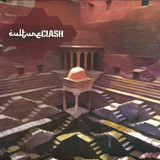
Forced to come up with a name, 'CultureClash' seemed like the obvious choice, even if the members of Awax were only creatively sparring among themselves. Along with the term 'ethno-techno', slightly dubious to a hopefully more conscious Western audience in 2017, these were the only guiding principles to the quietly ambitious project that soon combined cutting-edge machine rhythms with samples sourced from everywhere from Bolivia to Togo, and inspired by everything from Ravi Shankar's epic soundtrack to the Oscar-winning movie Ghandi, to the technical limits of their own setup requiring a dazzling degree of cut-and-paste work. Some tracks even emerged out of academic studies within the ethnomusicology department at The University of Amsterdam.
The show aired on October 2nd, 1992, recorded in one blistering take and without any rehearsals, traversing a huge variety of tempos and styles. If the performance wasn't seamless, it was undeniably thrilling, fresh and ambitious. As such, several labels, including Fernandez's aforementioned Irdial Discs expressed an interesting in commercially releasing CultureClash, while another imprint proposed a series of twelve-inches and an album. But the sheer complexity of the project meant that it never saw the light of day, while the trio embarked on different journeys ahead, both creative and personal.
Twenty five years later, and the original CultureClash lineup and founding members of The Awax Foundation provide the sound of the first release from Lost Futures. An otherworldly, ambitious and optimistic compilation, accompanied by extensive sleeve notes from the trio, CultureClash is a timeless ode to experimentation in dance music's ever-overlapping culture.
DJCJ returns to his home on West End Communications, after a solid 4-tracker released on the the SMS digital series earlier this year. Powerful and energetic tracks to start, balanced with electro/ambient cuts on the flip."
DJCJ (real name Craig Johnston, CJ) (22 years young) has also released with my friends over at Craigie Knowes, both solo and under the Highfield Casuals alias as a collab project with our very own The Burrell Connection.
Anders Trentemøller's career is a travel-heavy one, with his touring schedule taking him pretty much all over the world. But it's his home port that's inspired his latest project, the sprawling, stunning compilation mix 'Harbour Boat Trips Vol. 02: Copenhagen'. Clocking in at just over an hour long, the compilation sees Trentemøller curate and craft sixteen songs into a heavy, hazy mix that ranges from shoegaze to electronica, featuring both familiar and celebrated artists like A Place to Bury Strangers (with a new Trentemøller remix) and Slowdive to more obscure finds, as well as Trentemøller's own tracks and remixes, most notably a brand new Trentemøller cover of Neil Young's classic 'Transformer Man'. The mix sees him pick up a thread he left off earlier in his career. In 2009 he put together 'Harbour Boat Trips - 01: Copenhagen', a compilation mix comprised of his favourite music, both Danish and international, from across four decades, loosely inspired by the motion and movement of Copenhagen's busy harbour. Closing in on a decade later, we're getting the second edition, with 'Harbour Boat Trips - 02' arriving this November.
On her deeply moving debut album At Weddings, Sarah Beth Tomberlin writes with the clarity and wisdom of an artist well beyond her years. Immeasurable space circulates within the album's ten songs, which set Tomberlin's searching voice against lush backdrops of piano and guitar. Like Julien Baker and Sufjan Stevens, she has a knack for transforming the personal into parable. Like Grouper, she has a feel for the transcendent within the ordinary.
Born in Jacksonville, Florida, and now based in Louisville, Kentucky, Tomberlin wrote most of At Weddings while living with her family in southern Illinois during her late teens and early twenties. At 16, she finished her homeschooling curriculum and went to college at a private Christian school she describes, only half-jokingly, as a "cult." By 17, she had dropped out of school, returned home, and begun to face a period of difficult transition in her life. The daughter of a Baptist pastor, Tomberlin found herself questioning not only her faith, but her identity, her purpose, and her place in the world.
"I was working, going to school, and experiencing heavy isolation," Tomberlin says of the time when she first began writing the songs on At Weddings. "It felt monotonous, like endless nothingness. It was a means to get through to the next step of life." In songwriting, Tomberlin found relief and lucidity she had trouble articulating otherwise. When she was 19, she wrote "Tornado" on her parents' piano, and began to develop confidence in her music. A year later, she had written enough songs to fill an album.
Throughout At Weddings, Tomberlin's lyrics yearn for stability and belonging, a near-universal desire among young people learning to define themselves on their own terms for the first time. "I am a tornado with big green eyes and a heartbeat," she sings on "Tornado," her voice stretching to the top of her range. Rich, idiosyncratic imagery — a fly killed with a self-help book, brown paper bags slashed violently open, clouds that weep over a lost love — sidle up to profound realizations about learning to be alive in this world. "To be a woman is to be in pain," Tomberlin notes on "I'm Not Scared." On "A Video Game," she muses, "I wish I was a hero with something beautiful to say."
Tomberlin cites the hymns she grew up singing in church as her greatest musical influence, and while At Weddings in many ways documents the unlearning of her childhood faith, it's easy to hear the reverential quality of sacred music in her songs. "A lot of hymns talk about really crazy stuff — being saved from the depths and the mire, judgment. When you actually realize what you're singing, it becomes really overwhelming," Tomberlin says. "I grew up singing in church. I was still helping to lead worship when I started coming to terms with the realization that I didn't know if I believed. I felt nauseous and shaky reading these words I was singing and feeling their intensity. If I did believe this, how could I sing these words without being scared out of my mind That's what's influenced how I write."
At Weddings is laden with reverence for music itself, for the power it has to heal others and help people navigate their lives. It is a record about learning to love oneself and others without reservation, from a place of deep sincerity — a lifelong challenge whose tribulations Tomberlin articulates beautifully. "My number one goal with my music is for honesty and transparency that helps other people find ways to exist," she says. With At Weddings, this remarkable young songwriter offers up comfort and wonder in equal measure.
a1 | Any Other Way
a2 | Untitled 1
a3 | Tornado
a4 | You Are Here
a5 | A Video Game
b1 | I'm Not Scared
b2 | Seventeen
b3 | Self Help
b4 | Untitled 2
b5 | February
"In 1978, Nova performed for Obama. Well, kind of: Nova was the band for the Punahou School prom in Honolulu, Hawaii, and a young student named Barack (known then as 'Barry') was in attendance.
Backtrack to 1976, and Nova was the opening band for Donald Byrd at the nearby Blaisdell Arena. The day was Sunday, June 27. The following day, Isaac Hayes would perform on island for the admission price of $1.
Nova, led by singer Checo Tohomaso, was one of several go-to party bands during the golden era of Hawaii funk and soul music in the mid-1970s through early 1980s.
The band's infectious gospel-funk-disco can be heard on their sole release, a self-titled 1980 LP that feels like one big party recorded live in the studio. (Check out the Marvin Gaye-inspired 'I Feel Like Getting Down' on the 2016 'Aloha Got Soul' compilation on Strut Records).
The story is all too familiar, however: funk band releases LP, the music goes dormant in years to follow, and today original copies sell for hundreds online.
Not long after the album's 1980 release, Checo met Marvin Gaye, who was living on Maui (where George Benson also resided). Shortly after, Marvin invited Checo and his counterparts to join his multi-city tour across Europe. Videos of Checo rocking keyboards, percussion and singing background vocals for Marvin Gaye's last European tour can be found online.
Checo, born in Florida yet raised in lush Manoa Valley as well as Okinawa, Japan, now resides in Vancouver, Canada, where he leads the VOC Sweet Soul Gospel Choir and continues to deliver his signature sound: high energy, positive, 'sweet soul' music.
AGS-7010 features two non-stop groovers with a 7' edit by Roger Bong on the A-side. LP reissue in the works!"
16 early vocal & jazzy tunes from the Golden Age of Jive & Kwela in South Africa. Released originally on fragile shellac discs only. Shellac is a very delicate material but the music survived thanks to the archives of ILAM. A truly great source of South African music is being preserved here for new generations, to inspire young and hopeful musicians and singers from all over the world. 180gram vinyl.These pearls of musical genius were recorded in the glory years of jive and kwela, the years 1940-1965 . On side A it is not difficult to recognise the similarities to American popular music like R&B and small combo close harmony singing.
But most of all notice that typical South African swing, that jive, that incredible smooth form of African jazz on side B; Kwela!
The rarest and most treasured finds are collected here, some with the original spoken intro's, 'sketches' as these were called. Characteristic conversations between the musicians, often in a humoristic slang, always extremely funny.
Now available as the fourth issue in the series 'Township Jive & Kwela Jazz'.
A captivating collection of early singles by the renowned Zimbabwean Mbira master and a true African music icon. The songs were mostly recorded in the 1970's, during the buildup to the Chimurenga revolution,
and were only ever released in Stella's home country. Deep resistance & culture. 'I am a rebel', smiles the 70-year-old Stella Chiweshe. Her album 'Kasahwa: Early Singles' offers a fascinating introduction to the world
of Mbira, with the term not only referring to the instrument, consisting of 22 to 28 metal keys mounted on a wooden healing tree body, but also to a musical genre - and on a much wider level, to an entire culture and deeply spiritual
lifestyle, very much at the core of the young Zimbabwean nation. 'Kasahwa' is a collection of impossible-to-find early seven inches, eight cuts spanning the period from 1974 to 1983 and representing Mbira in its purest
form. None of these songs has been released outside of Africa so far.
American composer and multi-instrumentalist Alvin Curran has remained one of the great emblems of experimental music for the last half-century. In 1966, along with Frederic Rzewski and Richard Teitelbaum, Curran co-founded Musica Elettronica Viva, a seminal gesture in collective free improvisation. In the early '70s, his solo work would become a crucial bridge between minimalist traditions on both sides of the Atlantic.
Canti E Vedute Del Giardino Magnetico, Curran's solo debut, was recorded by the artist himself and issued on Ananda, the small Italian imprint started by Curran and fellow composers Giacinto Scelsi and Roberto Laneri. The piece itself was put together in the winter of 1973 and presented for the first time at Teatro Beat 72 (Rome's The Kitchen).
Encouraged by the work of Terry Riley, La Monte Young, Charlemagne Palestine and Simone Forti, Curran binds the listener to aberrant notions of place and time: blending field recordings (wind, high-tension wires, beach waves, etc.) with simple and often primitive instruments. Across two sidelong tracks, Giardino Magnetico forms a lyrical collage of synthesizer, glass and metal chimes, plastic tubes, brass and the composer's alluring voice - converging in an immersive realm of Curran's inner / outer experiences.
This first-time vinyl reissue is recommended for fans of Harry Bertoia, Michel Redolfi and Lino Capra Vaccina.
Having previously featured on Comb and Razor's popular compilation 'Brand New Wayo', Caribou's 'The Longest Mixtape: 1000 Songs For You' (twice) and remixed by numerous DJs including Kornél Kovács. It has long been over due that Nigerian synth-funk legend Dizzy K gets the reissue he deserves, teaming up with London based record label Sticky Buttons for a very special double LP compilation.
Dizzy K Falola is one of Nigeria's most adored disco funk artists form the early 80's. His career was propelled by EMI Nigeria who brought him to notoriety with his first album 'Excuse Me Baby', released in 1982. Excuse Me Baby became an instant success in Nigeria and within 3 months he was back in the studio recording his second album and touring with international superstars such as The Whispers. The success of his work came both from the creative collaboration of musicians and their progressive style of synth-funk and disco influenced heavily by western artists. The team included Nkono Teles, Felix Liberty and Dizzy K's mentor and manager Tony Okoroji amongst others who together formed the disco funk that infected the homes, streets and clubs of Lagos. Noted in 'Hip Hop Africa: New African Music in a Globalizing World', Dizzy K's song titled Saturday Night Raps which features on Excuse Me Baby is thought to have been on of the earliest examples of commercial African Rap music. It was examples like this that showed Dizzy K was bringing something new to the Nigerian boogie scene.
With careful restoration by Colin Young at See Why Audio, (who's expertise and talents have graced some of the most iconic reissues of recent years, including "Who Is William Onyeabor" and Charanjit Singh's "Synthesizing: Ten Raga's to a Disco Beat") and vinyl mastering conducted by The Carvery, cutting the masters on a Neumann VMS70 mastering lathe originally used in Nashville's CBS studio to cut Motown classics. This is an uncompromising vinyl package covering Dizzy K's first 3 albums from '82-'84. Compiled for the dance floor and offering Sticky Buttons take on the bright boogie goodness of Dizzy. With personal liner notes from the artist and fresh artwork by the team this is a record that cuts to the point.
The 2nd Release On 823, A Creative Project Founded By Ta-ku, Is Featuring The Label Debut Of Portland Wunderkind Quickly, Quickly.
823 Is Also The Numerical Representation Of The Phrase 'thinking Of You'. It Represents The Appreciation For The People/ideas/places That Inspire Us And Push Us Forward. As A Label We Are Proud To Present A Series Of Musical Releases That Showcase The Artists Musical & Visual Endeavors. The Artwork Is Shot By The Artist Themselves & Each Release Has An Accompanying Photo Zine That Acts As A Visual Story That Compliments The Music They Wrote At That Time.
There's A Maturity To The Sound Of Portland, Oregon-based Producer Quickly, Quickly That Makes It Difficult To Believe He's Just 17 Years Old. Using Elements Of Jazz, Hip Hop, And R&b, Quickly, Quickly Weaves A Tapestry Of Wispy Productions That Feel Equally Inspired By The Dusty Drums Of Early '90s Boom Bap As They Do By The Whimsical Electronics Of Head-turning Contemporaries Like Tennyson. Taking Over On Vocals, Bass, Drums, And Piano, He Offers Insight Into A Greater Understanding Of Musicality, There's Time Devoted To Each Audible Layer And It Shows.
Ta-ku:
graham First Caught My Eye With His Film Photography - It Was Only Co-incidental That He Also Made World Class Sounds & Made Me Ever So Jealous With His Musical Talent At Such A Young Age. Graham Is One Of Those Wunderkinds That Have Managed To Create Such A Strong Musical Identity For Himself And Makes It Look So Effortless. Graham Is The Reason Why I Started 823. He Is The Epitome Of Someone Who Embodies That Free Flowing Creative Energy That Needs To Be Showcased To The World!
Music Has Always Been A Part Of Quickly, Quickly's Life, As He Started Playing Piano When He Was Two Years Old. This Love Of Music Shaped His Young Life And Created A Solid Musical Foundation For Future Efforts. In 5th Grade Quickly, Quickly Found Hip-hop, Citing Common Market, J Dilla, Blue Scholars, And The Pharcyde As Early Influences. With His Love Of Hip-hop And Early Musical Background, It Seemed Only Right That Quickly Would Begin To Produce His Own Music.
Having Now Made Beats For Around Six Years, Quickly, Quickly Is Producing At The Top Of His Game. The Production On His Debut Ep over Skies' Is As Easy-going As It Is Complex, And The Fact That There Are No Samples On The Ep Makes It All The More Impressive. Inspired Heavily By The Sky And The Many Forms It Takes, This Ep Blends Genres And Crosses Musical Borders With Ease.
After their psychedelic tour to Alice's Wonderland on their adventurous second album, CRuNCH 22, the Tel Aviv based Rhodes, turntables & drums power-trio, is back with "LUSH FLUSH", a fiercer than ever EP of raw, in-your-face grooves.
Opening track "Cairo" places a persistent Egyptian orchestra sample on top of a Led Zepplin-styled heavy beat; "Osaka" sounds like an early 2000s indie-pop with vocals sampled from a japanese folk song; "Baba" fuses Middle Eastern leads with broken beats; "Minderbinder" is a quirky afrobeat and "Young & Happy" is an odd metered pseudo-house track. While this list might seem as eclectic as you can get, the band's unique instrumentation and live playing style manages to make it sound completely coherent.
On the flip side of this 12" vinyl are three remixes by some of Israel's finest producers: Markey Funk's space-rock version of Cairo; Mule Driver's techno edit of Baba; and Obas Nenor's house remix of Young & Happy take these tunes deep into the dancefloor, making the "LUSH FLUSH" EP an important tool in any DJ's arsenal.
'syncho Sound System & Power' Features The Music Of Nigeria Fuji Machine,
Which Includes Some Of The Country's Finest 'fuji' Master Drummers And Singers, And Is Newly Recorded By Soul Jazz Records In Lagos, Nigeria. Fuji Is The Heavily Percussive And Improvisational Style Of Nigerian Popular Music, At Once Modern And Yet Deeply Rooted In The Traditional Islamic Yoruba Culture Of Nigeria.
Here On This Album Nigeria Fuji Machine's Striking And Powerful Lead Vocalist Taofik Yemi Fagbenro Soars Above A Wild And Energetic Backdrop Of Polyrhythms Played On Traditional Talking Drums, Trap Drums, Electronic And Street Percussion To Create A Powerful Wall Of Intense Sound. Fuji Is A Hi-energy Street Music, Heavily Percussive Which Evolved Out Of The Islamic Celebration Of Ramadan, Which Became A Major Event In Mid-20th Century Lagos. Groups Of Young Men Walked Through Muslim Neighbourhoods At Night Singing Improvised 'wéré' Music To The Accompaniment Of Pots, Pans, Drums, Bells
And Anything Else Available, Waking Believers For The Early Morning Prayer. By The Early 1970s This Music Had Crossed-over Into Popular Nigerian Culture Where It Came To Be Known As Fuji, First Made Popular By The Artist Alhaji Sikiru Ayinde Barrister, As The Music Began To Be Performed Commonly At Parties And Social Events. In The 1970s And 1980s Three Nigerian Artists - King Sunny Adé, Chief Ebonezer Obey And Fela Kuti - All Secured International Major Record Deals Bringing Popularity To The Nigerian Musical Styles Of Juju (adé And Obey) And Afro-beat (fela Kuti's Unique Mixture Of Highlife, Funk And Jazz) Abroad, But In The Process Ignoring Much Of Nigeria's Rich Musical Landscape. Fuji Is, Alongside Highlife, Juju, Afro-beat, Sakara, Afro-reggae, Waka, Igbo Rap, Apala And Numerous Others - One Of These Central Styles Of Nigerian Music. The Singer Barrister Described The Music As Follows: 'fuji Music Is A Combination Of Music Consisting Of Sakara, Apala, Juju, Aro, Afro, Gudugudu, And Possibly Highlife.' Juju Performer King Sunny Adé Described The Difference Between The Two
Styles Of Fuji And Juju Somewhat Competitively Thus: 'fuji Music Is More Or Less Like My Music Without Guitars. It's Like I'm Singing In A Major Key And They Are Singing In A Minor. The Music Itself Is The Music Of Juju Music.' Today Fuji Remains A Powerful Popular Music With Deep And Powerful Islamic Roots
Which Continues To Modernise And Attract New Generations Of Young Nigerians And Nigeria Fuji Machine's 'syncho Sound System & Power' Is A Powerful And Intense Musical Experience. This Album Is Released As A Limited-edition Heavyweight Vinyl Edition (+free Download Code), Deluxe Cd And Digital Format.
After a wildly successful collaboration on Thatmanmonkz's 'Turn It Out' from the LP, Columbus-ing, Dave Aju suggested they should continue their production streak for a new percussive tracks project. At the same time, Aju had finally kept his word to legendary Bay Area club/underground MC and personality, Foxxee aka Foxxee Brown aka Lawrence Petty, to work on a track together as well. Petty being a core part of the infamous Ya Mama's House radio show on 106 KMEL alongside Pete Avila and David Harness that introduced legions of young Bay Area DJs to real House Music, includ-ing Aju, in the early 90s. While Aju & Monkz had originally been working on more of a slick club romance narrative angle over some robust tumbling drums, some very tragic news had struck their hometown - at an under-ground event in Oakland California, more than 30 people including many dear friends and stalwarts of the local dance music community had been trapped inside a building and killed in a fire that broke out while doing what they love, in the now-infamous Ghost Ship. Lawrence and Aju immediately acknowledged and agreed that the track should serve as a tribute to the event and the loved ones affected by it. But decidedly, rather than it being a solemn requiem of sorts, it should reflect the communal power, strength and uplifting spirit of the underground scene they all helped build and knew so well. At first entitled They Sleep We Live, a representative reference to the iconic arm tattoo of the late Jonny Igaz aka Nacht, one of the more well-known and active DJs whose life was lost that tragic evening, and a lyrical direction idea for Lawrence for a direct tribute to the SF Bay Area scene,
out of Stock
Last delivered 3 years ago available to reorder, subject to availability
Sfetsas formed GFO in 1976, in order to accomplish an ambition dating back to his 1960's Avant-garde period in Paris: to create a piece of work that would expand the boundaries of Greek traditional music. The result is a Progressive-Jazz Fusion masterpiece comprising complex and intriguing compositions, and performed by Athens' best musicians of the day.
.
Sfetsas grew up on the island of Lefkada where he studied classical music from an early age at the local conservatory. At the same
time he was genuinely connected to traditional music and especially to the sound of the clarinet, the lead instrument in the region's
folk music. From a young age Sfetsas would perform with Gypsy orchestras in local feasts. It was this experience that inspired him
to create the GFO after his return from Paris in 1975. Sfetsas founded the orchestra while working at the National Radio, an orchestra comprised mostly of members of the Variety Music Orchestra, who had a solid background in both classical and traditional music. In that way, he was able to realise his ambition. Something he could not do in Paris, since it was impossible to find musicians trained
in both musical cultures.
The recordings on this album, forming only a small part of his overall body of work with GFO, are previously unreleased. The music
was recorded Stereo on Reel Tape and with high standards for the time, with the current mastering process highlighting even more
the quality of the recordings. The result is a truly impressive and pure audiophile album.
Bluestaeb's Evolution From A Beatmaker To A Producer Is His Sophmore Album everything Is Always A Process'.
He Is One Of The Key Figures Of A New Generation Of Up And Coming Hiphop Beatmakers, Who Have Emancipated From Genre Thinking And Instead Merge Old School Aesthetics With A New School Attitude And Organic Instrumentation.
Everything Is Always A Process Re-iterates Bluestaeb's Overall Approach To Life (and Thinking), But Also Has Direct Reference To The Making Of The Album Itself, Which Began With Moving From Berlin To Paris In 2015 In The Search Of New Influences And A New Creative Environment.
Created Between 2015 And Early 2018, Eiaap Embodies The Process Of This Transition - As Well As Collaboration With Instrumentalists And Vocalists From All Over The World And Recording In Different Studios In Paris, London & Berlin.
"meeting All Those Musicians And Trying Out New Ways Of Producing By Using Real Analogue Synths, Rhodes, Drums And Percussion Etc. Made It Possible To Overcome The Creative Boundaries Of A Home Studio With Just A Midi Keyboard" / Bluestaeb
Influenced By Madlib's "shades Of Blue" And Trained In African Drum Techniques Such As Djembé And Daruka, Bluestaeb Had Been Crafting His Own Beats Since His Teenage Years And Gradually Found His Sound Identity Through Experimenting With Hiphop And Jazz - First To Be Heard By A Broader Music Community In 2013, When He Released His Debut Album "1991 Extraterrestrial" (radio Juicy). Since Then The Prolific Young Artist Has Released Numerous Solo And Collaboration Projects ("b.l.u.e. Friday" In 2015 And - sidekicks With S. Fidelity In 2016). In 2016, He Produced Collaborative Album "lit - Lost In Translation With Rapper Juju Rogers, A Keen Manifesto Against Racism, Xenophobia And The Rise Of Anti-heroes Such As Donald Trump.
Today, Bluestaeb Lives And Works In Paris And Berlin And Is Set To
Release His Third Solo Album everything Is Always A Process', A
Smooth Neo Soul-induced Epic Featuring Artists Such As Noah Slee, Harleighblu And Melodiesinfonie, Via Jakarta Records In 2018.