Originally released in 1963, and arranged by four distinctive musicians, among them alto sax genius Benny Carter, "Recipe for Soul" stands as one of Ray Charles's most eclectic and erratic releases of the period. A highly varied sequence of pop standards, lowdown blues, Jazz big band numbers, after-hours ballads and country tunes like Harlan Howard "Busted" one of his best early-'60s singles.
HIGHLIGHTS: Los Nivram recorded some of the best '60s Spanish garage nuggets, being this rare EP containing the original 'Sombras' their most sought-after release by collectors worldwide. Reissued on 7" for the first time. DESCRIPTION: Quintessence of the best nuggets-type of music from Europe, the scant discography of the Catalan-band Los Nivram -- just two obscure EPs, eight tremendous tracks, half of them absolutely great -- perhaps represents the most precise example of the excellent level that the Spanish garage sound acquired during the golden years of the genre, basically the second half of the '60s, its glory days, and a few later examples from the early '70s. Los Nivram started their career heavily influenced by The Shadows, in fact they took their name after one of their songs (that also happened to be their leader and bass player's surname spelt backwards). They would soon push their sound forward, evolving from instrumentals to a repertoire sung in their native Spanish language, after being blown away by the UK beat and R'n B bands of the time. 'Sombras' stands out no just as the best song in Los Nivram's repertoire but also as one of the most interesting nuggets recorded at the time and one of the most sought-after garage records by collectors worldwide. Reissued on 7" for the first time.
Originally released on 23rd April 1990, ‘Life’ was Inspiral Carpets’ debut record and reached #2 in the UK album charts, featuring the band’s most notable single ‘This Is How It Feels’. Regarded as one of the main components of the Madchester movement in the early 90s, the Inspirals went on to release a further three albums on Cow Records (via Mute Records) before disbanding in 1995.
This release sees ‘Life’ re-issued on vinyl for the first time since its original release and will be housed in a standard 12” sleeve on limited edition 140g gold vinyl.
out of Stock
Last delivered 4 years ago available to reorder, subject to availability
Honey Soundsystem Records (aka HNYTRX) is pleased to present its final twelve inch of 2016, the 'Sensual Works' EP by Beesmunt Soundsystem. Unbeknownst to each other, the Honey crew in San Francisco and the Beesmunt duo in Amsterdam have been brothers from another mother working away in their respective zones for years. A bit of internet sleuthing and the two entities found each other, perplexed by the similarities in namesake and good vibes. Before exchanging a single word, earlier this year David and Luigi of Beesmunt sent Honey some demos. They were a declaration of peace and understanding of sorts and both "sound systems" immediately fell into one. The three tracks romanced all the Honey sensibilities including references to San Francisco 80's Hi-HRG synths, early House drum machine workouts, and melodic lines you can make-out on a dancefloor to. To make the marriage official, Honey enlisted its own Jason Kendig to remix the A-side into a no-nonsense thumper with a heart of gold. We think these tunes are going to become as reliable on the dancefloor as the Sequential Circuits drum sounds and DX7 patches they employ. Whether it be ending sets with the euphoric Blissed Out' or peak-time banging call and response of Playin' Myself', Honey finally shares its best kept secret weapons of the year with the eager public.
strumentalist Teddy Lasry's story is noteworthy not just in regards to the music he released, but in the ways approached the craft of composing and experimenting with sounds and sonics.
Always intrigued with the capabilities of instruments, their groove and their feel, it was very much his family’s influence that helped to fuel these life long affections. As a performer in a parisien cabaret, Teddy’s father Jacques would mingle with giants like Serge
Gainsbourg and Charlie Chaplin (impressed by his ability to improvise, Chaplin wanted him to become his accompanist, but the pianist politely refused). Jacques and his wife (Teddy’s mother Yvonne), would later become members of the innovative experimental group Les Structures Sonores, and surround their children’s lives with sounds. Electronic music was still in its infancy and Les Structures Sonores, with their resonators that produced long, mysterious tones, were deemed ‘cosmic’. It was the era of the launching of the first Russian Sputnik and every time a radio or television station wanted music for their science fiction programs, they turned to one of their compositions. Showing a natural ability with multi instrumentalism, Teddy was rewarded with a spot in the band, allowing him to really explore unconventional methods of composition.
Following a brief stint with Ariane Mnouchkine's avant-garde Théâtre du Soleil after graduating school, Teddy joined the pioneering prog band Magma, with whom he would record three groundbreaking records during the early 1970s (According to former member
Laurent Thibault, their album Mëkanïk Dëstruktïẁ Kömmandöh and its sound were strong influences on David Bowie during the recording
of Low and Iggy Pop’s The Idiot at Hérouville). Despite the successes with these projects, Teddy was constantly searching for new ways
of expressing himself through music, leading him into the beginnings of a solo career that would last the better part of three decades.
Teddy’s transition into his solo career came with contrasting fortunes, in that he was now becoming a music to image composer but with the unfortunate realisation that his eyesight was gradually worsening (due to being diagnosed with retinitis pigmentosa at an early age). Nonetheless, his solo career would begin in 1975, and for the rest of the decade his sound would become increasingly mired in electrified Funk-Fusion and its endless sonic possibilities. The resulting music would serve to highlight Teddy’s love affair with the possibilities found within tireless instrumentation, with the flute and particularly synthesisers becoming a mini-obession of his (he once spent a 7,000 Francs loan, which was meant to be spent on fixing his roof, on synths).
To this day Teddy continues to record and experiment with music, a passion which in many ways has never left his sid, even at the age of 75. His career was one that was fuelled by innate curiosity and an intrinsic desire to discover new methods of expressionism, be it through the realms of Jazz-Funk, ambient electronics, Swing music or indeed through the medium of instrumentation itself. On this compilation, we look to encapsulate the essence of his innovative sound, and from start to finish a sense of his ingenious approach to composing structure and mood is made abundantly clear. The funk-jazz fusion style that embodied the majority of his 70s work is on full display here, with the vibrant flute driven "Los Angeles", the Miles Davis inspired "Blue Theme", the progressive and driving
"Chamonix", and the deeply intricate "Krazy Kat", along with one of his finest 80s slow jams, "Funky Ghost". Two cuts off the ‘Back To
Amazonia’ album are also featured (Teddy’s last album including his Prophet T8, Yamaha DX7 and Oberheim drum machines). "Raising
Sun in Bali" and the title piece both emphasise an ever present passion for synthesisers. "Birds of Space", a standout track off the e=mc2 album, closes the comp, and is a fitting way to end this journey.
Pulled together in close collaboration with Teddy and his family, this collection of songs looks to introduce new listeners to his work and we are proud to present this limited and carefully remastered compilation on vinyl, including extensive liner notes.
out of Stock
Last delivered 23 months ago available to reorder, subject to availability
For their 9th release Slam City Jams welcomes the fabulous Manuel Darquart to the family!
After brilliant releases on imprints like Wolf Music or Coastal Haze and recently getting remixed by the Italo-House legend Don Carlos, we are happy to have the duo on the label with their „Down 2 Dance“ EP. Originally from New Zealand but now living in London, Manuel Darquart bless us with a record full of balearic bliss, backed with a dope remix by Tech Support.
We are kicking things off with the title track, a deep, yet uplifting Italo-House tune: „Down 2 Dance“ is full of sweet chords, perfectly cheesy sax stabs and this catchy vocal cuts we just can’t get out of our head. On „Cultivating Yucca“ Manuel Darquart maintains the Italian vibe but
gets even more balearic with warm pads, some muted trumpets and of course: The slight sound of the ocean.
On the flip things get interesting with „Prince Of The Rinse“: Distorted 808s paired with a funky lead that builds up steadily and finally dissolves into a wonderful synth solo. A tune that reminds of the early Funkineven on Apron Records. To round this record off, we invited
Londons finest Tech Support to give the title track his remix treatment: He added his signature 80s sound to the original and perfecftly stripped back the tune to its essentials, with gated snare drums and little synth blips. What more can you ask for?!
out of Stock
Last delivered 2 years ago available to reorder, subject to availability
The original Soundtrack to Greek-German director Nikias Chrssos’ new feature, ‘A Pure Place’, scored by John Gürtler (Eigenlicht, COUNTER019), with his studio partner Jan Miserre, and featuring a track by chameleonic British artist Shackleton.
The script for A Pure Place had a dizzying effect on John Gürtler & Jan Miserre; their minds reeling with the possibilities.
From Persian sheep bells, Chinese sheng, prepared trombone, quarter-tone piano, a beaten-up cembalo, hand percussion, and a room full of synthesizers, embryonic compositions and experiments came to life early on in the project.
An electro-acoustic extravaganza, the soundtrack for A Pure Place takes a deep bow towards the many magnificent composers and scores from the late 60s and 70s where orchestral arrangements met with tape loops, psychedelia, and instruments from across the globe. Listening to that era of film music, anything seems possible.
The minimalist tones of ‘Ritual Bells’ set the dial to weird in the opening sequence of the movie, whilst ‘The Island’ makes use of ambient vocals recorded through an oil drum, gently introducing one of the score’s main themes with a distant quarter-tone cembalo.
Acclaimed British artist Shackleton’s eerie original version of ‘Fust’s Song’ (also included) was a tonal keystone for the entire soundtrack. Gürtler and Miserre translated his psychedelic electronic blueprint, layering acoustic instruments and bottom-heavy percussion in their ‘Paradox Paradise’ production style. The vocals, written by Chryssos, and sung by the cast on set, capture the sonics of the actual crypt-like space where cult leader Fust addresses with his following.
‘A Glimpse of the Other Side’ speaks of love and death in a 70s-indebted composition reflecting John and Jan’s shared love for melancholic and suspenseful chord progressions. Meanwhile, the sparkling synths of ‘Athens’ - the children discovering neon-lit civilisation after years confined on the island - transplant us to an entirely different era.
Greek artist Maroulita del Kol features heavily throughout - her choir of vocals on ‘Erotica’ were recorded late at night in the studio foyer, capturing its unique tiled reflections and concrete reverb.
On ‘Purification’ Maroulita’s voice guides us alongside a Moog bass drone, building to an ecstatic climax, whilst she also features in the film’s disco-centric ending credits on ‘Gatoula Mou Mikri’.
out of Stock
Last delivered 4 years ago available to reorder, subject to availability
Hungry Shells, the seventeenth entry in RVNG Intl.’s intergenerational collaborations series FRKWYS, brings together vocalist, multi- instrumentalist, and sound artist Ka Baird with avant-garde composer and radical performance art pioneer Pekka Airaksinen. Recorded six months before Pekka’s passing, Hungry Shells alchemizes separate but similar spiritualistic practices, canvassing Baird’s voice and synthesizer rituals and Airaksinen’s lysergic sound explorations into startling, surreal landscapes.
Pekka Airaksinen, who left this realm for another in May 2019, is recognized as a pioneering composer both in and outside his native Finland’s fringe art community. A founding member of the late 60s art and music collective The Sperm, Airaksinen discovered Buddhism in the early 1970s, eventually establishing a number of meditation centers around Finland. Throughout his career Airaksinen embraced a degree of obscurity and anonymity that was inspired by his Buddhist learnings, and afforded him complete creative freedom. As he explained, “The less success you have, the more time there is to develop things.”
Ka Baird, who found her musical footing in Chicago playing in Spires That In The Sunset Rise before moving to New York to pursue her solo career, has developed a practice based in forms of active and engaged embodiment. Inspired by Charlemagne Palestine’s Body Music, Baird’s performances explore physical extremes as a catalyst for charged immediacy and presence. “I’m interested in the
places between precision and something unrestrained,” she told The Wire in 2019. Drawing on minimalism’s ecstatic deployment of duration and endurance, her recordings explore the outer limit sounds of her voice and its synthesis with developing music technology.
Airaksinen and Baird convened in Utrecht in the fall of 2018 to write, rehearse, and record Hungry Shells ahead of a performance at the Dutch festival institution Le Guess Who? Sessions took place between contemplative walks along the city’s medieval canals, and, for Airaksinen, lengthy meditations in his hotel room. Early on in the trip, Pekka shared ODO with Ka, a collection of Buddhist parables that he divinely received while meditating. After translating several of these texts from Finnish to English the duo used them as text for the album, and a sort of psychic foundation.
The Ethiopians are one of the great vocal groups to come out of Jamaica. Singing songs of life and times as they found them, themes that resonated with the people of the Island that made them such a treasured group. Lenard Dillon (b. 9 December, 1942, Port Antonio, Jamaica) the founding member of the Ethiopians began his singing career at Clement 'Coxonne' Dodd's Studio One. Initially he recorded under the name of Jack Sparrow, and backed by the Wailers, cutting 'Ice Water' and 'Suffering In The Land'. Under The Wailers encouragement, he went on to form his
own vocal group. Recruiting singers Stephan Taylor (b.1944, Portland, Jamaica) and Aston 'Charlie' Morris to become The Ethiopians. They cut 'Live Good', 'Why You Gonna Leave Me Now' and 'Owe Me No Pay Me'. Although receiving favourable response, Aston Morris decided to leave the band and the remaining pair carried on and cut 'I'm A Free
Man' and 'Don Dead Already' and 'For You'. On meeting contract builder Leebert Robertson who had recently returned to live in Jamaica, ashad he wanted to get into the music business, a session was booked for Treasure Isle Studios. The session produced their seminal 'Train To Skaville' track, which became an immediate hit in Jamaica and in the UK, when in 1967 it reached number 40 in the charts. They also cut 'Engine 54', which became the title of their debut album. Its
follow up 'I Need You / Do It Sweet', did not fare so well and the band moved over to Sonia Pottinger's stable, where they cut 'The Whip / Cool It Amigo' which revived their fortunes and proved another big hit for the band. Two more hits followed 'Stay Loose Mama' and 'The World Goes Ska', after which the band decided to return to a trio, adding
Melvin 'Mellow' Reid to the line up. The band now hit another run of successes with producer JJ Johnson 'Everything Crash, 'Gun Man', 'Hong Kong Flu' and 'The Selah'. Many hits followed leading the band to work with a variety of Jamaican producers. Such tracks as 'I Want To Be a Better Man, ' Conquering Lion', 'Fire A Mus Mus' Tail', and the timeless 'Reggae Hit The Town' to name a few. Two albums 'Reggae Power' (1969) and 'Woman Capture Man' (1970), pulled a lot of these tunes together. Sadly Taylor was killed in 1975 after been struck by a van in a road accident. Dillon returned to Port Antonio till 1977, when he was persuaded to return to Treasure Isle studios with producer Niney The
Observer and cut the Rasta based album 'Slave Call'. Additional members who joined for this album were Bro Fatty, Bro Ewing, Bro T, Mello and Hychi Dread. An album that showed all the Ethiopians magic had not been lost.
For this release we have included the full 'Slave Call' set, 'Ethiopian National Anthem', 'Slave Call', 'Guilty Conscience', 'Hurry On', 'Mus Follow Babylon'(on CD Edition), 'Train To Skaville (1977 version, on CD Edition), 'Culture', 'Obeah Book', 'Let It Be' and 'I Love Jah'. Alongside some of the bands early hits including the original version of 'Train To Skaville', 'Engine 54', the great and poignant 'Everything Crash', 'Reggae Hit The Town' and 'The Selah'. An interesting set to remind us what a great group the Ethiopians really were.
out of Stock
Last delivered 3 years ago available to reorder, subject to availability
Deepfunk / soul super rarity flipped with one of the best deep soul sides ever recorded, the family had some great images so we opted for a picture sleeve on this one, 400 copies only. forget about finding an O.G. Researched by our man, Brian Sears
Papa Bear And His Cubs were the brainchild of Eddie Disnute Sr., aka Papa Bear. A native resident of Hampton, Arkansas. Eddie started his music career in gospel then transitioned into secular music after moving to Milwaukee, Wisconsin in 1963. While living in Milwaukee with his wife and children, Eddie played with a group called the Fenders but eventually decided to start a group of his own with his kids aptly named Papa Bear And His Cubs.
Eddie Sr., a naturally gifted musician, taught his children how to play music. Creativity is a part of the Disnute DNA and before long Eddie's cubs were perfecting chops of their own. Papa Bear And His Cubs started performing together around the late 1960s. Although a few memorable gigs came their way, Wisconsin proved to be too cold for the Disnutes so they made their way back to Hampton, Arkansas.
The family continued to perform in Arkansas then made another move to Houston, Texas where they hoped to break into the music scene down south. They lived there for nearly three years and even recorded at SugarHill Studios, yet nothing materialized and the recordings remain a mystery to this day. For their final move, the Disnutes returned home to Hampton after Eddie's wife Christine (aka Mother Goose) received word that her father was ill.
In 1975 the group recorded their only vinyl record at Sam Griffith's home recording studio in Camden, Arkansas. Disnute Sr. recalls it only taking "one night, and one take" for both "Sweetest Thing On This Side Of Heaven" and "You're So Fine" to be born. Both songs have an entrancing quality that is inescapable and will surely resonate with listeners for years to come.
The group continued to perform until the early 1980s, at which point the cubs were bears themselves, who decided to go their own separate ways. When thinking back to their prime days, one thing will always remain clear in Eddie Sr.'s memory, "we could play, all it took was a countdown of 1, 2 ,3, 4 and we're gone".
out of Stock
Last delivered 7 years ago available to reorder, subject to availability
The Levellers have been a gang on the road for over thirty years and, unable to tour since early 2020 due to COVID, they were bored.
As the band started to arrive at their home for the last quarter of a century - Metway Studios - to film and record a ‘live in the studio’ set, a second nationwide lockdown was announced, making it impossible for Simon to make the trip down from Scotland…what to do?.
With everyone eager to play, there was no turning back. The band sent Simon their final takes, while he recorded his parts at home.
What you can see and hear on The Lockdown Sessions is the Levellers few people get to witness.
Old friends doing what they do best - having a riot. Of their own. The excitement of being back together is palpable.
The Lockdown Sessions is available on three limited edition coloured vinyl LPs or CD, with each format including a DVD of the full film of the Levellers, live in the studio running through songs from the last album, Peace and some of their greatest hits.
Composer, electronic music innovator, and Pere Ubu's original synthesist Allen Ravenstine returns to Waveshaper Media with the diptych LP (comprised of 1 EP per side) Nautilus / Rue De Poisson Noir, the final two parts in Raventine’s Tyranny of Fiction series. Waveshaper Media first came into contact with Ravenstine when we interviewed him in 2012 for our modular synthesizer documentary I Dream Of Wires.
Nautilus / Rue De Poisson Noir brings together 21 of the prodigious composer’s recent lyrical and abstract compositions collectively comprised of the sounds of analogue and digital synthesizers, alongside traditional acoustic instruments. The first 10 recordings, subtitled Nautilus, are found on Side A of this LP while the second 11, Rue Du Poisson Noir, comprise Side B.
Using a singular blend of acoustic and electronic instrumentation, each track on Nautilus, weaves its own wayward travelogue amidst stray bits of audio verité and wafting musical fragrances—by turns tropical and foreboding. Rue De Poisson Noir takes cues from its fragmentary companion both in palette and approach, slithering between cinematic intrigue, off-brand jazz, avant-garde mischief, and fried electro without ever batting an eye. Together they form a beguiling collection of hyperrealist miniatures that remains strange, restless, inquisitive and — most of all — evocative throughout.
For those in the know, Allen Ravenstine has been one of the most creative synthesizer players of the past forty-plus years. Ravenstine started out in the mid-1970s experimenting in his Cleveland apartment with an analogue EML 200 synthesizer, eventually creating a piece in 1975 that became known as Terminal Drive. While he had no intention of releasing his compositions, word got out about the kind of sounds he was experimenting with, which led to an invitation to join pioneering “avant garage” group Pere Ubu for the recording of the group’s first 45, “Thirty Seconds Over Tokyo.” He soon joined Pere Ubu full-time, bringing to the band’s sound unpredictable textures, effects, bleeps, squalls, pulsating washes of sound—whatever he felt could enhance the soundscape of the band’s performances and recordings.
By the early 1990s, Ravenstine had grown sick of the road, band infighting and the music industry in general. Deciding a change was needed, he opted to forego music altogether, making his living as an airplane pilot. His music career remained in limbo until 2012, when an interview for the I Dream Of Wires documentary, alongside Robert Wheeler who had succeeded him as Pere Ubu’s synthesist, turned into a recording session for the duo, leading to a series of collaborative releases. As well as having his 1975 Terminal Drive recordings released to great acclaim in 2017, Ravenstine has been prolific in recent years, with Nautilus / Rue De Poisson Noir now marking his 4th solo full-length.
out of Stock
Last delivered 4 years ago available to reorder, subject to availability
Following up on 2017's phenomenally received 'All Right' / 'Innerspace' single on BMTM, Tim Reaper returns to the label with two gorgeous slices of cruising atmospherics that hark back to the seminally lush sounds of Lucky Spin, Dee Jay Recordings and early Good Looking Records.
'Stand Up' layers Demon's Theme-esque strings over hypnotically alternating chords, while submarine beeps deliver head-nodding rhythms over the shuffling breaks and bumping bass lines. If the words 'Speed' and 'Mars Bar' mean anything to you, you should listen to this immediately.
'The Tranquility Track' takes us into more melancholy territory, with filtered Steve Reich-style marimba loops and haunting pads dancing over the vintage break edits for which Tim Reaper has become famous.
Strictly for those who understand the power of a mesmerising groove.
out of Stock
Last delivered 3 years ago available to reorder, subject to availability
On January 27th, 1990, Helmet entered the stage of New York’s equally famous and infamous CBGB’s. What followed was an explosive live show, set during the earliest days of the band’s career. Getting ready to release their debut album “Strap It On” in March that year, Helmet propelled themselves through a staccato-heavy set of tracks that would soon earn them worldwide acclaim in the Punk scene. The first side of this brand-new live album features the CBGB’s set for the first time ever on vinyl and CD, while the second half contains an equally energetic performance, recorded in 1993 at the Big Day Out Festival in Melbourne, Australia. With tracks such as ‘Ironhead’, ‘Better’ and ‘In the Meantime’, the setlist strikes a perfect balance between the band’s hits and hidden gems from their early years. “Live and Rare” is available on 1LP 180g Vinyl as well as a CD Digipak Edition for the first time ever via earMUSIC, to be released worldwide on November 26th, 2021.
Long a collector favourite, this early stereo recording presents a set of lively American light classics: ‘Mexican Rhapsody’ (Robert McBride); ‘Savannah River Holiday’ (Ron Nelson); ‘Kentucky Mountain Portaits’ (Lyndol Mitchell); ‘Joe Clark Steps Out’ (Charles G. Vardell Jr.). Recorded in the Eastman Theatre, Rochester NY, October 28, 1956 with a Schoeps M201 microphone in the centre and Neumann U-47’s on the left and right sides.
Spoken word recordings from Gregory Corso, Tina May Hall, Sam Lipsyte, Christine Schutt, Gary Lutz, Allen Ginsberg, Dawn Raffel, Jason Schwartz, Kathryn Scanlan, Scott McClanahan, & Terry Southern. About 40 years ago, in a record shop on Long Island during a weekend visit there to see my parents, i found a double-LP that looked like something i should definitely buy. It was called "BIG EGO", by the The DIAL-a-POEM POETS. On the cover was a picture of John Giorno (a great poet Ed Sanders had turned me on to) on a NYC rooftop with Philip Glass, Meredith Monk, and two kids. It cost $2. I bought it and rushed back to my parents house, where i still had my old turntable in the basement, not far from my Jimi Hendrix and Zappa Crappa posters, and my framed portrait of John Cage. My copy of Eno's "Discreet Music" was still on the turntable, having been left there years before, when i'd fled Long Island for good. I lifted it from the platter, gently slid it back into its sleeve, like a priceless religious artifact, and put Side A of the Dial-a-Poem LP on. I almost lost my mind while listening to it. The next day i went back to the same record shop looking for more DIAL-A-POEM LP's. i found two. One had a long list of names on the back, some famous, and some i'd never heard of before. I bought both LP's, and an hour later, for the first time in my life, i was exposed to the art of Laurie Anderson, whom i'd never heard of before. This was 1978. Her contribution was a piece called "Time To Go". It changed my life. Or at least, that’s how I remember it. I was just a kid, so there were a lot of moments like that, around then. Nowadays, these moments can be had in seconds, with a click of the cursor. That evening, as i sat alone by my imaginary campfire (ie; that record player in my parents basement), i promised myself that someday, somehow, i would embark upon a WORDS & MUSIC project that might move people the same way i was moved when i first heard Laurie, and Robert Wilson & Christopher Knowles, and Burroughs, and Ginsberg, and Corso, and Anne Waldman, and John Ashbery, and the great Charles Olson, and so many others. Words, for the very first time, had wielded the same power as music. And it was visceral. Just like music. It ran deep. It was a FEELING. John Giorno died in 2019, but he kept poetry alive like nobody's business. I was lucky enough to have spent some time with him in the early 1980's, when i was briefly a member of The Fugs, and often found myself surrounded by those Ginsberg called, "...the greatest minds of my generation". Ed Sanders (who'd ushered me into that scene) once told me that when he came to NYC, it was easy to go to a cafe, or to St Marks Church, and hear Burroughs, Corso, Ginsberg, and all the greats, reading their poetry. He said that even if you were just a bum on the street, you could just walk right up to them, and start a conversation. They were totally accessible, if they were in the right mood at that particular moment. So i was shocked when Sanders told me he didn't approach any of them, not even once, til he'd been going to their readings for nearly ten years. "For almost a decade, I went to every reading, every lecture, every panel discussion. But I never went near them. Never approached them. Not even once", Sanders told me. "For ten years, all I did, was listen." It took me four decades, but ... better late than never. I finally made WORDS & MUSIC, Book One.
Game returns after their 2019 full-length No One Wins with the Legerdemain EP. Piercing the listener with nonstop aural carnage, the EP would be an apt soundtrack to the armageddon. Part Venom, part Death Side, all live and loud, Legerdemain offers no restful moments. An instrumental masterclass with blistering drumming from Jonah Falco, weird and wonderful guitar melodies conjured up by Cal Baird, and a rumbling and decapitating buzzsaw bass by Nicky Rat, the release's finishing move is an ever-changing vocal tone by Ola H. Legerdemain can be a rewarding, or punishing, aural journey depending on your perspective. The new release, which was recorded and mixed by Jonah and mastered by extreme music legend Arthur Rizk finds Game leaning heavily into their metal influences, with sounds of early 80s UK steel given extra ferocity through the lens of Japanese hardcore punk from the same era. Having toured multiple times in Europe and North America, Game, which features members of Fucked Up, Arms Race and Violent Reaction, is equally comfortable playing to punks, metalheads and everyone in between. ‘Legerdemain’ is a magician’s term meaning sleight of hand, a key skill of deception. The term is used as a metaphor for our current post-truth society where governments, technocracies, and financial institutions use smoke and mirrors to create a farcical and bewildering existence where one cannot know if something is real or not in order to cover up social injustice and mechanisms that drive inequality. As Legerdemain progresses, one is being continually dragged along towards an apocalyptic ending on "Release", which reflects on this current predicament as a nuclear explosion approaches with nothing left to do except give into the madness. There is a constant cycle of rising again, fighting against wrongdoing, exhaustion, and endings. The lyrics in Polish, English and a sprinkle of French, represent the multinational members of the band, who feel culturally in a no man’s land, which in fact is everyone’s experience in 2021. Legerdemain tries to answer this anomie with urgent metal punk that is hauntingly relevant. Check out the music video for single "Atomowa Rekonstrukcja," from NYC punk freaks D4MT Labs here
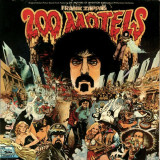
Frank Zappa’s “200 Motels” was a miraculous feat, a cinematic collision of the venerated musician and composer’s kaleidoscopic musical and visual worlds that brought together Zappa and his band, The Mothers, Ringo Starr as Zappa – as “a large dwarf” – Keith Moon as a perverted nun, Pamela Des Barres in her acting debut, noted thespian Theodore Bikel, the Royal Philharmonic Orchestra, and an incredible assortment of characters (both on screen and off) for a “surrealistic documentary” about the bizarre life of a touring musician. In celebration of “200 Motels” golden anniversary, Zappa Records, UMC and MGM have assembled a definitive Super Deluxe six-disc box set of the beloved, yet hard to find, soundtrack for release on November 19. Fully authorized by the Zappa Trust and produced by Ahmet Zappa and Zappa Vaultmeister Joe Travers, the monstrous 200 Motels 50th Anniversary Edition brings together the original soundtrack, newly remastered by Bernie Grundman at Bernie Grundman Mastering, along with a staggering amount of unreleased and rare material unearthed from FZ’s Vault, including original demos, studio outtakes, work mixes, interviews and movie ads, along with newly discovered dialog reels, revealing an early audio edit of the film. Also included is a wealth of never-before-heard audio documentary material surrounding the project. The six-disc set will be housed in a 64-page hardcover book in a handsome 12” x 12” slipcase. The packaging replicates the original booklet updated with revealing new liner notes from Pamela Des Barres, Ruth Underwood and Joe Travers, as well as Patrick Pending’s essay from the 1997 reissue, and is chock full of motion picture artwork, stills and images, from the film and its making, many which have never been seen before. This must-have collector’s release will also include a custom “200 Motels” keychain and Do-No-Disturb motel door hanger and a full-size replica of the original movie poster. Years in the making, all the audio was meticulously identified and transferred over several years as Travers dug through the Vault to create a new high resolution 96K/24B digital patchwork stereo master from the original analog tapes. The Vault material was mastered by John Polito in 2021. The remastered 200 Motels soundtrack will also be reissued on vinyl as a 2LP pressed on 180-gram black vinyl and on a 2CD format - both will include a smaller version of the movie poster.
With the release of Sweet Inspirations At Muon, the first appearance on vinyl of Tori Kudo’s mythical early ‘80s primitive rock gang Sweet Inspirations, another piece of the seemingly endless puzzle of the Japanese underground has fallen into place. Recorded some time in 1982 at Yokohama venue Muon – precise details are sketchy – we’re now given another chance to discover what was going on in Kudo’s mind just before he formed the group he is now best known for, the ragtag gang of pro and amateur musicians that was Maher Shalal Hash Baz.
Sweet Inspirations were one of several groups formed by Kudo around this time. He’d already released the visionary naïve-art album, Tenno, in collaboration with Reiko Omura, in 1980, and a trip to New York the following year led to the recording of Atlantic City, under the name La Consumption 4. Returning to Japan, Kudo first formed Guys’N’Dolls with Jun Yoshiwara (bass) and Kiyoaki Iwamoto (drums); Yoshiwara carried over into Sweet Inspirations, who existed for a few years, their membership, at various times, featuring Asahito Nanjo (High Rise etc.), Jutok Kaneko (Kousokuya), Yoshio Kuge (Les Rallizes Denudes etc.), 3C123 and many more.
The material here was originally released, without permission, by the Cragale label on CD-R in 2000. It was one of a sudden wave of archival CD-Rs that Cragale pumped out that year of material recorded at Muon, which was owned by Kohei Iehara, who co-founded Cragale with Tamotsu Hongo. In the context of the recent unleashing of material from the Kudo archives – the 9CD At Goodman set, the reissue of the first two Maher Shalal Hash Baz cassettes and the Noise LP, and the tantalising glimpses of other historical gems via Tori’s own Bandcamp page – hearing Sweet Inspirations with such clarity fills in a significant piece of the puzzle; here is Kudo, just before Maher, channelling the rough conceptualism of Red Krayola and the glinting, staggered rhythms of Syd Barrett into extended blooms of ragged glory, sketching out future classics like “Manson Girls”; A bonus CD includes a cover of a song by legendary South Korean rock group San Ul Lim.
DJ Cam & sommelier Frédéric Beneix present Wine4Melomanes, an eclectic and unique
compilation album concept, matching fine wines with rare pieces of music produced in the
same year.
Connecting the complexity, sensuality, liveliness of a drink with the harmony, arrangements,
voice, orchestration, rhythm and melody of a song, Wine4Melomanes tours France,
Germany, Holland, the USA and even Slovakia in search of only the finest musical flavours.
Ranging from jazz, to pop-rock, to blue-eyed soul from the early 70s right through to 2016,
Wine4Melomanes is defined by its sense of musical opulence, with warm rich tones and
understated quality evident throughout. DJ Cam is known for his pioneering abstract hip-hop musical
compositions, his virtuoso use of technology and his fascination for acoustic jazz gaining him
international acclaim.
Long a collector favourite, this early stereo recording presents a set of lively American light classics: ‘Mexican Rhapsody’ (Robert McBride); ‘Savannah River Holiday’ (Ron Nelson); ‘Kentucky Mountain Portaits’ (Lyndol Mitchell); ‘Joe Clark Steps Out’ (Charles G. Vardell Jr.). Recorded in the Eastman Theatre, Rochester NY, October 28, 1956 with a Schoeps M201 microphone in the centre and Neumann U-47’s on the left and right sides.
No other pairing in the history of Darkwave ever matched the unfettered creativity, resolve, and DIY attitude from the collaboration between the two creative minds that compromise Lebanon Hanover.
The meeting of the Swiss musician Larissa Georgiou, aka Larissa Iceglass and British artist William Maybelline a decade ago in the latter’s hometown of Sunderland in the UK, was a monumental occasion, reverberating throughout the European music scene and even across the Atlantic.
Lebanon Hanover would emerge from the peak of the world-wide minimal wave revival, with their 2011 split 7-inch record with La Fete Triste issued as the catalog debut of Europe’s most ubiquitous Techno-Industrial EBM labels, Aufnahme + Wiedergabe
With Berlin as their new physical home, William and Larissa would soon, however, join the Fabrika Records family. From here, they would go on to release two full-length albums through the Athens based label, starting in early 2012 with their winter debut LP The World Is Getting Colder, and it’s All Hallows Eve follow up Why Not Just Be Solo.
It was Lebanon Hanover’s 2013 third studio outing Tomb for Two that would go on to cement the duo’s legacy, with the album’s single “Gallow Dance” becoming a post-punk anthem for the times, with artwork became the band’s defacto logo. Not only that, the song “Sadness is Rebellion”, also featured on the album, became the band’s official Mantra.
Two years would pass before the release of 2015’s critically acclaimed fourth record, “Besides the Abyss”. In the intervening years, William and Larissa, initially a couple, would find other partners, and relocate to Athens.
Meanwhile, Lebanon Hanover as a live act would expand rapidly in popularity, exceeding capacity during their performances at Wave Gotik Treffen in Leipzig, and performing sold-out shows across Europe and the UK.
With the playful Babes of the 80s maxi-single released in the interim, three years would pass before the next record from Lebanon Hanover, with 2018’s Let Them Be Alien, the band’s fifth studio album.
At the dawn of the global pandemic, where dystopian nightmares that were only ever seen before within the pages of books and flashes of silver screen celluloid, has become a daily reality, a new kind of darkness envelops the world. It was at this Lebanon Hanover returned, sharing a glimmer of hope with the single “The Last Thing,” the duo’s first song from their forthcoming sixth studio album Sci-Fi Sky.
Spanning an epic journey across ten tracks that wander through industrial landscapes, and ascend beyond the atmospheric aether, Sci Fi Sky is Lebanon Hanover’s most cohesive artistic statement to date. With their icy hearts on their sleeves, this is the culmination of a decade’s worth of musical creativity radiating from the minds of both Iceglass and Maybelline, and altogether an otherworldly beacon of hope in a time of sheer darkness.
out of Stock
Last delivered 4 years ago available to reorder, subject to availability
‘Eighteen Movements’ is a collection of recordings captured at live performances between 2017 – 2019. The record’s rich textures combine ambient, tribal rhythms, field recordings, ritualistic vibes, and a meditative feeling that runs through the entire LP. Đ.K. is in full flight mode, illustrating the project’s aptitude for deep transcendence.
Đ.K. is a DJ, composer & producer based in Paris, France. A versatile and prolific artist, D.K. has cultivated an eclectic body of work in recent years, with acclaimed output on renowned labels including Antinote, Melody As Truth, 12th Isle, Good Morning Tapes, Music From Memory’s Second Circle imprint, and L.I.E.S. (as 45 ACP).
Luminous and mesmeric, D.K.’s work combines finetuned traces of house, synth pop, ambient, balearic, minimalism, and fourth world music, creating energies and soundscapes which aim to invoke elevated forms of consciousness.
Prismatic tones exchange space with devotional drums on ‘Clarity’ and ‘Echo Chamber’, as Đ.K. hits a hypnotic stride somewhere between Jon Hassell, HTRK & a Folkways percussion ensemble. With ‘Full Consciousness’ meditation bells ring out across a progression of gleaming new age emanations, conjuring an entrancing spell. Movements of pulse and ether.
On ‘Mirror’, sonorous, elaborate percussive phrases are interwoven with drifting ambient vapours, while ‘The Other Side’ veers into broad, rolling blasts of dub and Antipodean drone, a cavernous trance evoking the early roots of Ras Michael and Yabby You, pared back to resolute drum sequences and infused with esoteric chimes and sultry synthesis.
The finale of ‘Eighteen Movements’ represents one of Đ.K..’s most ambitious recordings. ‘Awakening’ is an epic tone poem of aqueous, outer planetary resonance that completes this mercurial cycle with a poignant, euphoric fadeout. Chronicled in the moment, alternating between rhythm and repose, momentum and aviation, 'Eighteen Movements' sees Đ.K. voyaging further, into vast, uncharted outskirts of sound. A collection of movements for heightened states and new diversions.
Mastered by Jose Guerrero at Plataforma Continental. Graphic Design by Javi Tortosa.
out of Stock
Last delivered 4 years ago available to reorder, subject to availability
Stargazing from the sands of the Niterói beach, Tempos Futuros is low-end-led Brazilian futurism from one of Brazil’s most prolific and influential bassmen. As one third of legendary trio Azymuth, Alex Malheiros has pioneered a unique fusion of space-funk, samba and jazz since the early seventies. His playing can be heard on the records of Jorge Ben, Milton Nascimento, Roberto Carlos, Marcos Valle, and Mark Murphy (to name a few), and he’s performed and toured with everyone from Stevie Wonder to Chick Corea.
Written and recorded in Niterói, Brazil, overlooking Guanabara and the beaches, mountains and forests of Rio de Janeiro, Tempos Futuros has deep roots in Brazilian soil. The rhythms of Malheiros’ homeland have always permeated his music. But just like the Oscar Niemeyer designed Niterói Contemporary Art Museum which stands spaceship-like over the water, Tempos Futuros - while inspired by terrestrial forms, reaches out, deep into the great unknown.
Produced by acclaimed London-based producer Daniel Maunick, who has worked with Marcos Valle, Azymuth, Terry Callier, and Ivan Conti, the funk comes full circle. Daniel’s father Jean-Paul “Bluey” Maunick and Alex Malheiros shared a reciprocal stream of influence throughout the 80s, between London and Rio; Azymuth and Incognito; brit-funk and samba-funk. But just as with Azymuth’s music, you can also hear the influence of stateside jazz-funk masters like Roy Ayers, Weather Report, Lonnie Liston Smith, Mtume and Pleasure.
Tempos Futuros features Alex’s daughter, a Brazilian star in her own right, vocalist Sabrina Malheiros, Brazilian percussion master Sidinho Moreira, London based saxophonist Sean Khan, Marcos Valle’s go-to drummer Massa, and Brazilian keyboard player Dudu Viana. Featuring the late Azymuth keyboard maestro Jose Roberto Bertami on Fender Rhodes, the title track “Tempos Futuros” was originally recorded as a demo in 1995. On this finished version, Alex Malheiros used Bertami’s original keyboard take, explaining the posthumous release.
out of Stock
Last delivered 4 years ago available to reorder, subject to availability
MASSIMO NAPOLI is a DJ from Catania with a passion for jazz and black music. He began his musical career in the early 90s playing funk, hip hop, and acid jazz in clubs, contributing to the spreading of the most eclectic and refined sounds in Sicily.
Departing from club culture with particular emphasis on electronic dub, Galathea unfolds into many influences and styles, making it a unique listening experience. Mediterranean culture, afro and cinematic melodies, jazz, spiritual echoes, and soothing beats lead the listener into a subliminal escape, where the fluidity and the convergence of genres freely progress intoa dream-like journey.
b A2: Afrique (Vocal Video Version) feat. Kadi Koulibaly
out of Stock
Last delivered 4 years ago available to reorder, subject to availability
The EON label's fourth vinyl release features an original from Birmingham producer Jayson Wynters with Chicago innovator Hieroglyphic Being on the remix.
Wynters - who along with label founder Adam Shelton has been at the heart of the Birmingham scene for years - has already impressed this year with his biggest EP yet on mighty Dutch label Delsin. Here he invites us ever deeper into his nebulous deep techno world with a superb new single 'Filtered Xploits.' It's a punchy but dynamic cut with lush ambient pads smeared across a cosmic sky while chattery percussion and lithe synth power onwards. It has a futuristic soul that recalls early Detroit techno and might be his best work yet.
Both Shelton and Wynters have long shared a love for the idiosyncratic sounds of Chicagoan Jamal Moss aka Hieroglyphic Being, the hugely prolific boss of Mathematics Recordings. He was one of the first artists they bonded over five or so years ago and that love only deepened when they caught him playing a standout set at Freerotation in 2017. After hooking up there, Jayson later hung out with Moss on a visit to Chicago before tapping him up for this remix.
In his hands, 'Filtered Xploits' becomes a brilliantly raw and textured track with layer upon layer of fractured melody and gurgling acid. The prickly, jacked up drums will make an impact on any floor, and as the chords shine through the mix they bring a sense of hope and optimism.
These are two more expertly crafted tracks from artists at the top of their game.
out of Stock
Last delivered 4 years ago available to reorder, subject to availability
For a duo whose youthful energy rejuvenated the world of house music at the start of the 2010s, it seems incredible that Disclosure are now into their second decade of musical life. The incredible vigour of those early records, the spark of invention and ever-onward musical thrust, remains with the Disclosure brothers, Howard and Guy Lawrence, to this day. The emphasis throughout DJ-Kicks is on motion. After a brief ambient introduction from Pépe's Life Signs, Disclosure keep the energy high, in a mix that showcases the wonderful malleability of a house beat in the right hands. From sub bass to disco samples, African funk to 303 tweak, all is welcome in Disclosure's house, with the mix allowing individual songs space to breath even as the pace remains harefooted.
out of Stock
Last delivered 3 years ago available to reorder, subject to availability
Seattle-born preacher’s son Luther James Rabb played sax with Jimi Hendrix in the Velvetones and after forming popular horns-based rock act Ballin’ Jack, moved to Los
Angeles, where soul harmony trio West Coast Revival was born. Early singles for United Artists were produced by Howard Scott and Lonnie Jordan of War, and their sole LP, released in 1977, is an exceedingly rare soul-funk gem, with solid vocal harmony, hard funk breaks, and a touch of sophisticated strings. ‘My Mind Is At Ease’ is a breakbeat special and ‘Feelin’ Allright’ rides a meaty bass groove, both underlining the War connection; our edition comes with bonus love song ‘Beautiful Girl,’ an early single B-side. Overall, this is prime soul-funk with uncommon elements, ripe for rediscovery by all discerning funk fans.
out of Stock
Last delivered 4 years ago available to reorder, subject to availability
AUF TOGO is the long-time collaboration of Sasa Crnobrnja
(from In Flagranti and Mytron & Ofofo) and Clement Cachot-Coulom
(from The Fabulous Penetrators and Big Girls).
After multiple singles and EPs on Leng Records and SaS Recordings, including two collaborative EPs with the tentacular outfit Becker & Mukai, acclaimed by fans and DJs alike, most of their time has been spent writing, recording and bringing to life the 8 amazing tracks that form their debut album “Movements”.
“Movements” follows in the steps of Auf Togo’s previous releases and won’t disappoint the early fans, but it also offers a completely new proposition. Their signature blend of slamming percussion, driving bass lines, psychedelic guitar hooks, fat analogue synths are expertly mixed with new musical ventures across the tracks: from the louche Hawaiian jazz of Along The Dotted Line to the psych-funk of Pan Con Tomate, the electronic wanderings of Mexico to the cinematic intensity of Radical Departures.
The result is a spell-binding summer album, one to listen to on a coastline somewhere under the Mediterranean sun, and one that is not afraid to wear its many influences on its sleeve, from 70s psych-rock to Balearic Beat, Space Disco and Afro Beat. The scope of “Movements” is wide and proves a captivating and gratifying listen.
Debut album from supergroup with members of In Flagranti and Mytron & Ofofo Pressed on 12” vinyl with artwork drawn and designed by Award winning animator Erica Russell UK/EU marketing campaign led by Neighborhood and specialist press/DJ by Your Army, with previous support from Mixmag, Trax, Ransom Note, NTS, Bill
Brewster, Andrew Weatherall and more.
out of Stock
Last delivered 4 years ago available to reorder, subject to availability
By way of some cosmic miracle, only one Total Hell pops up
when the band moniker is searched on Discogs. And that would
be the band responsible for the five-song blast of heavy metal
sounds at hand. Now active for about two years plus change
and exported from the very metal and punk fertile New Orleans,
Total Hell is DD Deth (aka Drew Owen—Sick Thoughts
wheelman, Trampoline Team etc) on drums / vocals, Henry
Hell (John Henry of Static Static, Heavy Lids) on bass / vocals,
and guitarists Jason “Panzer” Craft (Persuaders, Tirefire) and
Michael Maniac (Michael He-man of Trampoline Team).
If self-deprecation is beyond the listener’s processing skills,
then please know that as self-described purveyors of the “New
Wave of Shitty Heavy Metal”, Total Hell’s big-boy debut is
not “shitty” in any manner whatsoever. These four recordings
(“Desecrate”, “Clones From Hell”, “Violator”, and “Disfigured”)
are melodic monstrosities that hit with a wall-to-wall, floorto-
ceiling hugeness, while doing so in an economical manner.
There will be no mistaking this for Broken Bones screeching out
of an iPhone inside the vegan squat. On the flip, this is no Bob
Rock joint. DD Deth elaborates: “Recorded on a Tascam 8-track
cassette live at home (aka “The Parkway”) by Michael He-Man
and the process was a nightmare. Original tape crapped out on us
back in early 2020 so we had to redo the whole thing. Intros and
interludes were done last minute by me with the cheapest midi
keyboard on the net.” Well, color Goner Records impressed.
One might get momentarily lost in the cavernous drums that
introduce opener “Desecrate”, but soon the buzzsaw-riff-wall
will crush one into a smudge on the bathroom floor. Without
rocking some safety goggles and diving headfirst down a
terminology rabbithole, this is punk jumping into the sack
with metal and leaving black boots on the bedroom floor rather
than white hightops. Xmas came early for fans of Anti-Cimex,
Celtic Frost, pre-shit Discharge, Motörhead, Blitz, Midnight,
Venom, Broken Bones and...one gets the picture.
SIM CARD HØLDER is not a band. It is the hybrid child of Ian Bruner, Drone Operatør and Gajek. It's procreation date is hard to pin down, but it started 2020 with an Insta chat and one of Ian's piano improvisations recorded in his Colorado living room. From there the album grew in separated covid lockdown wombs at three different locations in Germany. Ian's shadowy instrumentation of light piano and heavily layered and long believed to be dead soundscapes were digested, replanted and grown-over by Drone Operatør's and Gajek's uncompromising and individual sense for song structures and sounds. When finally all body parts were assembled in early 2021 the baby was already fluent in different languages.
Sim Card Hølder grows slowly while meandering through dense and open fields. It switches from calm and dreamy moods to wild fractured outbursts without fragmenting into the arbitrary. A raw spiritual power keeps every part connected and in perfect motion. Each song is a portal into multiple universes that suck you in on thick piano carpets, sharp saxophone spikes and buzzing quadcopter wings, warming insect intestines, blasting raw drums and slow healing winds, screeching synth rhymes, dissonant orchestral tales and floating blue melodies. It's a demanding ride but thoroughly deeply relaxing. The perfect soundtrack to rewind your mind.
k 11: Alone_ (rendered altitude) [feat. Drone Operatør & Ian Bruner]
In 1976, KISS dropped the bombshell on the world being DESTROYER, an album that originally received resistancefrom fans due to the band exploring a new sound and has long become the quintessential and all-time best selling KISS studio album. Exploding with concert staples and KISS Army favorites like “Detroit Rock City,” “Shout It OutLoud,” and “God Of Thunder” – the album’s new sounds came from the softer side of songs like “Do You Love Me?,”and songs heavy with orchestral arrangements including “Great Expectations” and their surprise hit single “Beth.”
Castles in Space is thrilled to present Luke Requena’s debut solo album, “Mirror Stage”. As the Lacanian title suggests, it is a collection of meditations and self-reflection translated into sonic explorations of the space that connects the macrocosm and the microcosm. Inspired largely by Tarkovsky’s film Solaris, the making of Mirror Stage was a musical journey of internal struggle across subconscious landscapes.
Requena is a composer and multi-instrumentalist based in Vancouver, BC. Although his main source of sound is analog synthesizers, he also integrates santur, guitar and organs into his pieces. Drawing influences from artists such as Günter Schickert, early Pink Floyd, and classical Persian music, “Mirror Stage” emits waves of sonic and lush textures while exploring the dark cosmos. It’s a genuinely enthralling work.
Luke has already released a double album, “Nocturnal/Seasonal” with John Jeffrey, drummer of Moon Duo, for the Castles in Space Subscription Library as part of the new age electronic jazz project, Oscilloclast.
Germany-based metal band OBSCURA launch trilogy concept on stunning new album “A Valediction”. The group’s first (sixth overall) album for Nuclear Blast pivots on many fronts. Advanced, elegant, and yet refreshing, “A Valediction” sums up past endeavors effortlessly as it gazes with purpose and conviction into the future. OBSCURA are fan-renowned and critically acclaimed for challenging and then expanding upon norms. From “Cosmogenesis” (2009) through “Diluvium” (2018), the band flourished and made significant progress in a musical genre unprepared for a creative shot of German invention. “A Valediction” spearheads OBSCURA into a new era of extreme metal.
Guitarist/vocalist Steffen Kummerer founded OBSCURA in 2002. Early on, he set out to improve, redefine, and push forward. Under his self-label creation, the Bavarian released debut album “Retribution” (2006), followed by heavy touring throughout Europe. Word quickly spread that a brand-new band from the south of Germany was on the rise. Buzz lead to a deal with U.S.-based Relapse Records. The first record out was “Cosmogenesis”. In Europe, Metal Hammer Germany awarded the album 6/7 while in the U.S., “Cosmogenesis” hit the Billboard charts at #71. The cross-continental praise and fevered momentum landed OBSCURA on high-profile tours in Europe, North America, and Japan.
When follow-up “Omnivium” arrived in 2011, they upped their chart success (Billboard #11; Media Control #14), received more accolades from publications like Terrorizer, Rock Hard, and Decibel, had another massive round-world tour cycle, while enhancing and making progress on their clever brutality. OBSCURA further developed their sound on “Akróasis” (2016). Moored by jaw-dropping tracks like ‘Sermon of the Seven Suns,’ ‘Ode to the Sun,’ and the title track, “Akróasis” elevated OBSCURA to the highest levels of international renown, having climbed up the Billboard charts (#5) as well as earning top marks in Rock Hard (8.5/10), Metal Hammer Germany (6/7), and Revolver (4/5). The Germans toured the world yet again, playing over 100 shows in support of “Akróasis”.
OBSCURA’s most significant accomplishment was, however, just around the corner. The final part of a tetralogy, “Diluvium” (2018), fiercely pursued OBSCURA’s multi-album transformation into musical innovators and metal powerhouses. Music videos for the title track, ‘Emergent Evolution’ and ‘Mortification of the Vulgar Sun,’ in concert with a substantial interest in virtuosic, forward-thinking metal, posited OBSCURA in the good graces (yet again) of the worldwide press in addition to rocketing up, for the very first time, the official album charts in Germany (#58) and Switzerland (#93). The Germans also topped out at #3 on the Billboard Heatseekers chart with “Diluvium”.
OBSCURA‘s stats have been impressive: Twenty years active; six highly prized albums; over 600 shows on four continents. Worldwide fan and press engagement—the videos for ‘The Anticosmic Overload,’ ‘Akróasis,’ and ‘Diluvium’ have over 4.5 million views—is only getting stronger the longer OBSCURA continue to offer up and interact with (via play-throughs and member/gear spotlights) their very captive audience. This is only the tip of Kummerer’s custom ESP guitar, however. A Valediction finds OBSCURA turning the page to a new chapter in the band’s evolution. A year in the works, the songwriting sessions followed a new approach, where the framework was relaxed, allowing new inspirations, imagining, and opportunities to arise. Songs like the opening epic ‘Forsaken,’ the '80s-tinted ‘When Stars Collide’ (featuring Soilwork/The Night Flight Orchestra frontman Björn Strid), the brutal groove of ‘Devoured Usurper,’ the ethereal artistry of ‘Heritage,’ and the fleet-fingered title track benefitted compositionally (refined structures) and aesthetically (more dynamism) from OBSCURA’s restyled songwriting stratagem.
OBSCURA wrote, recorded, and finalized “A Valediction” during the pandemic. The stipulations of working during this time allowed OBSCURA to work cross-country, tracking each respective part—drums, guitar, and bass—in national studios across The Netherlands, Austria, and Germany. Once the pieces were completed, the recordings were shipped off to award-winning producer Fredrik Nordström and Studio Fredman (In Flames, Architects) in Gothenburg, Sweden, where Kummerer and Münzner completed vocals and acoustic guitars using custom-built ENGL amps. Nordström was also tapped to mix and master. The final result is a deeper, heavier, yet more rounded production.
Lyrically, “A Valediction” is layered in structure and meaning. The word ‘valediction,’ by definition, deals with goodbyes and farewells. In a way, this is auf wiedersehen to the four-part album series while also addressing complex topics of Kummerer’s personal life. Instead of obscuring issues of loss, death, and abandonment in metaphor and allusion, the German laid bare his torment across songs like ‘Forsaken,’ ‘Solaris,’ ‘In Unity,’ ‘The Neuromancer,’ and ‘In Adversity.’ But for every line of desperation, he also offers positivity. Indeed, new beginnings—physical, emotional, or environmental—can provide light in the darkness. Lauded artist Eliran Kantor (Testament, Helloween) was brought on board to visualize the leitmotif. The bronze-themed colourway Kantor used exemplifies OBSCURA’s resistance to individual and sonic corrosion.
In 2021, OBSCURA will lighthouse their musical prowess, thematic complexity, and lyrical ambition on “A Valediction”. The group continue to be a beacon for change. No doubt OBSCURA’s new stats will amaze, but what they’re focused on is the release of “A Valediction” and then taking it on the road. Several high-caliber tours of Europe, North America, and Asia are planned through to 2023, with routes are in the works for the band to visit Australia, South America, and beyond. Truly, there is no band quite like OBSCURA. “A Valediction” proves that persistence, perseverance, and enterprising minds can achieve anything. Welcome to the next level!
Born in 1999, Charlie Hickey grew up in South Pasadena,
just minutes from Downtown Los Angeles. Raised by two
singer-songwriter parents, Charlie’s second language was
music since day one. As early as grade school, he was
making sense of the world through songwriting, and by
middle school he was writing, recording and performing
songs that attracted a community of collaborators and could
silence a room.
A turning point for Charlie came at around the age of
thirteen, when he covered a song by then up-and-coming
artist Phoebe Bridgers, who was still in high school herself.
The two quickly became friends and collaborators, setting
Charlie on an exciting new musical path. Years later,
Bridgers introduced Charlie to songwriter, drummer, producer
and her bandmate Marshall Vore, who noticed something
special about Charlie. The two began writing and recording
songs together, and soon Charlie dropped out of school to
work on his music full-time.
Charlie Hickey’s first proper single was ‘No Good at Lying’
and it’s the first track on ‘Count The Stairs’. The Marshall
Vore-produced track introduces us to Charlie’s evocative
storytelling and features Phoebe Bridgers on backing vocals.
“I’m no good at lying / on my back or through my teeth / but
I’m good at dreaming / I can do it in my sleep,” he sings over
hushed guitars and a whimsical banjo, searching for truth as
his unconscious mind runs wild and bleeds into reality. It’s a
slow, quiet, and understated peek to the world of Charlie
Hickey, who is barely of legal drinking age, but taps into such
universal themes that showcase a wisdom beyond his years
and exudes promise for what’s to come.
Born in 1999, Charlie Hickey grew up in South Pasadena,
just minutes from Downtown Los Angeles. Raised by two
singer-songwriter parents, Charlie’s second language was
music since day one. As early as grade school, he was
making sense of the world through songwriting, and by
middle school he was writing, recording and performing
songs that attracted a community of collaborators and could
silence a room.
A turning point for Charlie came at around the age of
thirteen, when he covered a song by then up-and-coming
artist Phoebe Bridgers, who was still in high school herself.
The two quickly became friends and collaborators, setting
Charlie on an exciting new musical path. Years later,
Bridgers introduced Charlie to songwriter, drummer, producer
and her bandmate Marshall Vore, who noticed something
special about Charlie. The two began writing and recording
songs together, and soon Charlie dropped out of school to
work on his music full-time.
Charlie Hickey’s first proper single was ‘No Good at Lying’
and it’s the first track on ‘Count The Stairs’. The Marshall
Vore-produced track introduces us to Charlie’s evocative
storytelling and features Phoebe Bridgers on backing vocals.
“I’m no good at lying / on my back or through my teeth / but
I’m good at dreaming / I can do it in my sleep,” he sings over
hushed guitars and a whimsical banjo, searching for truth as
his unconscious mind runs wild and bleeds into reality. It’s a
slow, quiet, and understated peek to the world of Charlie
Hickey, who is barely of legal drinking age, but taps into such
universal themes that showcase a wisdom beyond his years
and exudes promise for what’s to come.
Muscle Shoals singer-songwriter Dylan LeBlanc releases his new EP,
‘Pastimes’, a self-produced collection of covers of songs from Glen
Campbell, Bob Dylan, the Rolling Stones, Led Zeppelin, Buffalo
Springfield and JJ Cale that inspired him to create his own acclaimed altcountry sound.
‘Pastimes’ is released on orange coloured vinyl.
LeBlanc shared his thoughts about his cover of Led Zeppelin’s ‘Going to
California’: “When I was 15 years old I got my first paying gig at a local
coffee shop called Juri’s,” says LeBlanc. “I remembered this girl that sat
behind me in class and I bonded over Led Zeppelin ‘IV’. I remember I
had gotten a Led Zeppelin box set that year for Christmas, and her
favorite song was ‘Going to California’. I rushed home to learn that song
for her and spent hours in my room at my grandmother’s house where I
lived at the time so I could play it for her and impress her. This song will
always hold a special place in my heart. I love this record and this era of
music that I think will always remain untouchable forever and always.”
Each song was chosen for its deeply personal impact: JJ Cale’s
‘Sensitive Kind’ takes LeBlanc back to the smoky dive bars his father
would bring him along to as a child. Buffalo Springfield’s ‘Expecting to
Fly’ reminds him of teenage joyrides, speeding through the country and
listening to music to escape life’s harsh realities. He learned the art of
storytelling through songs with the Rolling Stones’ haunting ‘Play With
Fire’ and Bob Dylan’s ‘Blind Willie McTell’ - a track that he compares to
reading a Southern Gothic Faulkner novel. And Glen Campbell’s ‘Gentle
on My Mind’ is a song he remembers from his early childhood, when his
grandfather, also a guitarist, would throw parties where friends would
gather to drink and sing and forget their troubles.
‘Pastimes’ was recorded at Fame Recording Studios in Muscle Shoals,
live and with as few takes as possible in order to capture a sense of
authenticity. Says LeBlanc, “I feel like music is nothing more than a
spiritual endeavour to widen the horizons and heighten the senses of the
things inside of everyone that sometimes feel unreachable.”
Dylan LeBlanc has spent the last decade releasing four acclaimed
albums, winning praise for his arresting alt-country style, collaborating
with the likes of Emmylou Harris and Brittany Howard, and sharing
stages with heavyweights like Bruce Springsteen and Lucinda Williams.
“One of modern country’s most interesting voices, in both senses of the
term.” - Uncut
“Sublime voice and evocative songwriting.” - Nashville Scene
Far View’ is a compilation of tracks from Joel Vandroogenbroeck’s series of library
music releases for the Coloursound label, a uniquely trippy catalogue of music
vignettes long overdue for their day in the library music sun, remastered from the
original analogue reels.
The late Joel Vandroogenbroeck was among the rare breed of musicians who defy
all categorization, using music conventions to explore the far reaches of human and
cosmic consciousness. After passing through the jazz and rock worlds from the
1950s through the ‘70s, Joel found new outlets for his expansive vision in the ‘80s
with the Swiss library music label Coloursound. ‘Far View’ draws tracks from these
releases, which form a unique entry in the genre of library music. For the uninitiated,
this is just one way to begin a brilliant musical trip through Vandroogenbroeck’s
undersung career.
A musical prodigy from youth, Joel arrived at Brussels’ classical Music Conservatory
in the early ‘50s, but his studies were curtailed by the revelation of jazz. Soon, Joel
was touring in groups around Europe and beyond with luminaries like Eje Thelin,
Stan Getz, Bob Brookmeyer and Zoot Sims. As time passed, his musical
consciousness continued to expand: time spent in Africa sparked a deep exploration
of the music of the Middle East. The new rock sounds from England, like The Beatles
and Jimi Hendrix, were mind-blowing. And from Germany came the krautrockers,
with something completely else again.
Vibing on the eclectic energies of the day, Vandroogenbroeck formed Brainticket,
whose approach to composition fused jazz, rock and a mélange of global musical
traditions, combining a Western rhythm section and analogue synthesizers with an
astonishing array of acoustic instruments; ethnic flutes, sitar, harp, kalimba and all
manner of percussion. Steeped in diverse approaches of playing and listening,
Brainticket drew from prog rock and psych, traditional sounds and minimalist music,
all of which passed through their hands like the tributaries that formed the basis of
what would soon be known as New Age music.
In the late 1970s, Vandroogenbroeck began composing for sound libraries, with
recordings to be used as underlay music in films, radio and television. Gunter
Greffenius’ Coloursound Library was formed in 1979 with an inclusive vision of
music, including experimental, progressive rock, and some of the earliest examples
of ambient music - styles not well represented in other libraries. Coloursound gave
Joel the freedom to create music in any style or genre, and over the next decadeplus, he embarked on a musical journey that is unmatched anywhere in the world of
library music. Working under the pseudonyms VDB, his output on Coloursound is
some of his most sublime and otherworldly - ranging from dark electronics to
imagined music of the ancient past to ethereal ambient sounds of the future, which
makes sense, as Joel’s records were always ahead and in and out of their time.
Joel VandroogenbroeckJ passed away in in December 2019, while work was being
done assembling this collection. Curated by David Hollander, whose ‘Unusual
Sounds’ album and book of the same name delightfully explore the library music
world, ‘Far View’ draws from ten of Joel’s Coloursound albums with lovely cohesion.
Featuring brilliantly remastered sound, liner notes from David Hollander, album art
designed by Robert Beatty and reproductions of the Coloursound album jackets, ‘Far
View’ is an entry point to Joel Vandroogenbroek’s mind-bending body of work - sonic
soma to expand your consciousness and vibrate with the cosmos.
1. Some records hit you with an instant impression of timeless brilliance, and Low Life’s Dogging is one of those records, what the wise call “an instant classic”. 2. From Squats to Lots: The Agony and the XTC of Low Life is more like their second album Downer Edn (read Edition), a little more withdrawn, a little more textured. Complex. Rich. Which is to say: you’re going to need some time with it. 3. Some show, some grow. Low Life have done both. This one is a grower. Spend some time with this one. It’s got that nuanced flavour. Don’t guzzle. Sip. Savour. 4. Sip it, and sense the recurring brilliance of Mitch Tolman’s lyrics, exploring the usual territory of gutter life, lad life, punk life, low life. The dirge. Disgust and shame in white Australia. Council housing, bills piled to the neck, substance abuse and rehabilitation, the fallen lads and lasses who stood too close to the flame, loss and loneliness, from squats to lots. Un-Australian gutter symphony. 5. There is a celebration of resilience and that’s a central theme of this record and a time like ours needs a record like Agony & XTC. Low times are coming through, but if you’re low they won’t get to you. 6. Iggy Pop’s Bowie produced studio rock masterpieces ‘The Idiot’ and ‘Lust For Life’ are important reference points to the 3rd album sounds of Low Life. Here comes success! 7. ‘The Agony and Ecstasy’ is a 1985 novel by Irving Stone about the life of Italian Renaissance painter Michelangelo. Stone wrote another novel about the single eared painter Vincent Van Gogh called ‘Lust For Life’. This synchronicity hit me. 8. Iggy and the Stooges are a pretty safe reference for Low Life (and all good rock music). Iggy and the Stooges are a low life’s Michelangelo, but solo Iggy like Lust for Life is a better reference for this particular incarnation of Low Life, which is to say they are studio rock albums. 9. Bowie later referred to this period of his life as profoundly nihilistic. But Iggy looked at it as the period of his life that saved him from an early grave. This confrontation is Low life lore. 10. Let’s stick to this, because there’s something about this era of Bowie that makes sense with Low Life’s new album, particularly Low. One should never miss the Low in our new album from Low Life. Producer and studio boss Mickey Grossman has the ear for the Low, and he has carved out a little statue of David right here. 11. Mickey’s ears are recording, mixing and producing the best of Sydney, most notably the Oily Boys Cro Memory Grin. A great companion record to this one. Use Agony & XTC AFTER Oily Boys. Not on an empty stomach, and don’t try to operate heavy machinery (bobcat, bulldozer etc). 12. The relationship between Low Life and Sydney hardcore should not be understated, but it also shouldn’t guide how to listen to Agony & XTC. This is not austere, disciplined music. 13. Think, like, if Poison Idea were given the kind of studio time and budget as Happy Mondays. You wouldn’t play it to a teenager. It’s not for children. This is a mature flavour, one for the adults who have had to contend with failure and hardship, medical bills and disappointed family members, betrayed lovers and worrisome growths, police brutality and tooth decay, humiliating bowels and collapsed septums, detoxing and drying out, for those who have seen themselves as corrupted and putrid and unloveable, for those who endure all of this and aren’t willing to lie down and cop it sweet: Low Life are still here and they ain’t going nowhere. NOTES ON HOW NOT TO LISTEN TO AGONY AND XTC OF LOW LIFE: 1. Don’t think of shoe-gaze. It suggests a safe passage to 90’s reminiscences, a vogue style of our time, but nothing to do with Low Life style. Low Life style is always of its time. The content changes. Agony & XTC shares weight of records like My Bloody Valentine’s Loveless and Slowdive’s Kebab, records that were laboured on after the songs were recorded, songs that were written as they were recorded. 2. We can call these “studio albums” as opposed to albums built in the heat of live performance. Studio albums from the 90’s are called shoe-gaze by some journalist nerds, but we know better than to use words like this. 3. Studio albums are excessive and, at the same time, so empty. Agony & XTC, Loveless, Kebab, Rumours: excessive! And empty. This is not to suggest this is Low Lite, some throwback, soft. A band like Low Life can make an overproduced studio rock album without having to use the word shoe-gaze. So, don’t think studio albums mean anything especially 90’s. Don’t look back. 4. Let’s lose these distasteful labels, like “shoe-gaze”, “rehab rock”, “stab”, “guitar OD overdrive”, “western Sydney wonder”. They can fade out. A low life was once referred to as a vagabond. Who uses this term today? Nobody. Language can murder. Words can die. Kill ‘em all! - Daniel 'DX' Stewart, Melbourne, 2021.