The union of Antwerp synthesist David Edren and Tokyo minimalist Hiroki Takahashi is a fit so natural as to feel preordained. Both traffic in subtle shades of contemplative electronics, marked by patience, space, and poetic restraint. And both have rich histories of curation and collaboration – Edren in the duo Spirit & Form alongside Bent Von Bent, and Takahashi as proprietor of the Kankyō record shop, as well as one fourth of cosmic ambient quartet UNKNOWN ME. Mutual fans of one another’s work, they began sharing stems in the latter half of 2020, which slowly blossomed into a collection of multi-hued compositions inspired by notions of connectivity and impermanence, translated for east and west: Flow | 流れ.
Opener “Dusk Decorum | 黄昏 礼節” maps the mood of what’s to come, elegantly pirouetting and percolating through an expanding vista of looming stars and half-light horizons. Takahashi describes Edren’s arrangements as evoking “a strange feel, something we haven't heard much of before.” The sensation is one of “in-betweenness,” a restless current whispering beneath the beauty, like seasons seen in time-lapse footage: flickering but infinite, transience turned permanent. Takahashi’s signature sculpture garden tones plot spiral patterns over which Edren cascades dazzling pointillist synthesizer coloration. The pieces veer between delicate and dilated, micro and macro, their aperture forever softly in flux.
From the oscillating orchestral lullaby of “Stalactime | 鍾乳石時計” to the sweeping, sparkling dream sequence closer, “Shift Register | シフトレジスタ,” the album achieves the elusive goal of being more than the sum of its parts. This is music of rare air, elevated and amorphous, shimmering just out of reach. Though Edren and Takahashi have yet to cohabitate the same room in person (a fact that should be rectified soon by an astute festival booker), their palettes and poise are perfectly paired, twin fragilities woven into seven radiant and regenerative vibrational states. The cover design of a beatific, beaded leaf rippling on the surface of a hidden pond aptly captures the record’s muted majesty. Takahashi’s quiet pride is justified: “We are very happy with this time-consuming and carefully crafted work.”
Suche:east to west
Already in its title, Plume Girl’s debut thoroughly lets things go and takes them in – all at once. “In the End We Begin” is the first solo full-length from Sowmya Somanath, a Hindustani classical singer/composer and half of alt-pop duo Felt Out. Plume Girl’s music takes inspiration from the semi-regular musical form of the rāga (translated as ‘tinting’), invoking mood and atmosphere, each rāga thought to have its own distinct nature and personality, brought to life through improvisation. String swells and Somanath’s searching vocalisations envelop every track’s own blissful chamber. Exploring imagined binaries along the way — eastern vs. western, traditional vs. experimental, acoustic vs. electronic, Sowmya sees music as a curious dialogue between divine Self and an invisible reality. Beneath the illusion of a chromatic world, there remains a blissful oneness.
Plume Girl’s songs sit between ambient Hindustani music and emotionally-encumbered pop. In front of backdrops comprising sundrenched drones or glitches, sketched out beats, and criss-crossing glissandi or flutes, Somanath both murmurs intimately and spirals upwards into soaring choruses. The lyrics ponder innermost thoughts, never more literally than on the blissful emo folk closing track: ‘In my heart I know / what’s in my heart / I know what’s in my…’
“When I began writing this music, I was fresh off of an experience that completely twisted my reality,” explains Somanath. It was the end of a years-long relationship, and the blossoming of a long-buried love hidden in plain sight: “a best friend of a decade, my musical partner, someone who had always seen me completely…At once, I felt grief and loss. At once, excitement and love.”
DJ Support: Sasha, Marco Faraone, Robin M, Just Her, FKA Mash, Paul Van Dyk, Adriatique and CamelPhat
Bedouin joins forces with vocalist Marieme for their latest release ‘Reason’, available now on the duo’s Human By Default label. The track marks part of the imprint’s fifth anniversary celebrations.
‘Reason’ blends Bedouin’s hypnotic grooves and emotive melodies with Marieme’s soulful, evocative voice. Her lyrics explore themes of identity, freedom, and self-perception, resulting in a collaboration that balances movement with emotional depth.
Comprised of Tamer Malki and Rami Abousabe, Bedouin has spent over a decade developing a genre-blending sound rooted in their Middle Eastern heritage and Western upbringing. Their music has appeared on Crosstown Rebels, Big Beat, and more, while their Ibiza residency SAGA—now at Chinios Ibiza—has become a staple of the island since 2017. The duo has also performed at Coachella, Tomorrowland, Kappa Futur, Burning Man, Ushuaïa, and Hï Ibiza.
Marieme, born in Mauritania and raised between Senegal and the US, brings a distinctive storytelling approach through her recent singles ‘Harmony’, ‘Tell Me’, and ‘Havana Nights’. Her work promotes self-love and liberation, expressed with a powerful vocal presence.
‘Açid Blüüs Räägs Vol.2’ is the latest evolution of the sound of last year’s Volume 1. The debut album was described by Joe Banks for Shindig! Magazine as; “Shivering slabs of drone blues transcendentalism…a burning junkyard of sheet metal blues… Hot stuff.” Volume 2 builds on the skronk blues guitar, sax and electronic drones of it’s predecessor, to explore cosmic free jazz, concrete exotica and dub, channelling influences of Moondog, Terry Riley, 75 Dollar Bill and Wolf Eyes. Playing like the imagined film soundtracks to a dystopian, re-wilded, post eco crash world in the style of Tarkovsky's ‘Stalker’ and ’Solaris’, Jodorowsky's surreal desert western ‘El Topo’, or the early novels of JG Ballard. This new collection sees the addition of minimal analogue drum machine loops as well as live instrumental contributions from the new players of the ever evolving Invocation band, plus some superstar guest contributors.
Featuring five brand new tracks, including the forthcoming single; ‘Cosmic Fanfare’, has already picked up BBC 6 Music support from Gideon Coe. The new album was mixed by Alex McGowan (aka Captain Future) of Space Eko Studios and features Invocation band regulars Rick Jensen of Apocalypse Jazz Unit, Skronk and Oneirologist on sax and bass clarinet, Will Emms aka Tiki Eerie on melodica, horns and claviola, plus special guest appearances from Duke Garwood on clarinet and Mikey 'Moondog' Chestnut of Snapped Ankles on bass synth. “….Acid fried kosmiche blues meets drone raag transcendentalism”. Jonny Halifax is a primitivist free blues outsider, sonic shaman of the acid fuzzed lap steel guitar, demented blower of the howling harmonica of doom. His new band project now combines avant swamp blues heaviosity with kosmic free jazz experimentalism in a fluid collective of godless raag brut improvisations - sonic visions of an hallucinatory apocalyptic near future. Inspired by Henry Flynt’s avant bluegrass experiments fusing country blues with eastern acoustic musical stylings, Spacemen 3’s contemporary sitar music, and the monolithic drone doom immersion of Sunn 0))), THE JONNY HALIFAX INVOCATION build hypnotic instrumental soundscapes using lap steel and homemade slide guitars, harmonica and alto sax. Underpinned by layers of acoustic and electronic drone instruments and fed through an arsenal of pedalboard electronics that would make Kevin Shields weep, the blues are transmogrified, unhinged, reduced and re-imagined as intoxicating, trance-inducing, feedback-drenched noise paintings. THE JONNY HALIFAX INVOCATION follows Jonny’s junkshop skronk blues one man band Honkeyfinger, and the Julian Cope endorsed gospel fuzz psychedelia of Jonny Halifax & The Howling Truth, whilst not forgetting his ambient drone metal side project; Deathenteredinerror. His musical CV also includes studio contributions to tracks by Andrew Weatherall’s Two Lone Swordsmen, UK metal behemoths Orange Goblin, Heck and Melting Hand.
Syncretic marks the debut full-length from Australian duo Bhairavi Raman, a Western and Carnatic violinist, and Nanthesh Sivarajah, a mridangam player and versatile percussionist. Both artists share a Tamil heritage, a current that hums across the album. Raman, from South India, and Sivarajah, from Sri Lanka, draw lines that connect Western practice and Carnatic tradition. This hybrid is central to Raman’s approach as a violinist, an instrument itself caught between East and West since the late 18th century. Her playing folds history, lineage and experimentation into music that acknowledges inheritance while gently rewiring its circuitry.
Expanding on traditional music can be a precarious practice, but Syncretic never feels heavy-handed. Raman and Sivarajah exercise measured restraint, letting the Carnatic framework breathe even as it is refracted through contemporary tools. Delays, looping, subtle layering and synthesized harmonies tilt tradition into a new light without disguising it.
Even within a contemporary framework, Raman’s rigorous Carnatic training under gurus Sri S. Varadarajan (India), Sri Murali Kumar (Australia) and Sri Gopinath Iyer (Australia) is unmistakable. She captures the spiritual and emotional essence of each raga: on Seven, the playful raga Bahudari becomes both centrepiece and conduit, while on the traditional piece Thunbam Nergayil, drawn from a Tamil poem, we hear a deeply personal iteration, a weeping euphony of mixed emotions hitting all at once. Tradition here is absorbed, expanded and reframed.
Sivarajah’s command of the mridangam, honed by his gurus Sri Jambunathan (Sri Lanka), Sri Balasri Rasiah (Australia) and Sri T. R. Sundaresan (India), is central to his original composition Guardian. He sustains tradition while extending it through layering and sound-spatialisation. The mridangam here functions as both a structural and ornamental force, mapping continuity between inherited form and contemporary sonic architecture.
Syncretic resonates as a space where Tamil heritage, diasporic memory and contemporary practice coalesce. Culture, like sound, circulates, transforms and persists. Tradition is not an archive but living material, a soundworld that lingers in the ears and the imagination.
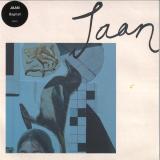
Operating on the fringes of pure improv, organised chaos, minimal composition, lo-fi electronics and Italian spaghetti westerns, wide-eyed and with a healthy dose of DIY aesthetics lies the world of Jaan. It’s a poetic & cosmic universe, exploring “discreet music” whilst wandering on the edges of the Cat People soundtrack & Brian Eno’s more experimental output, in which you might yourself find floating, wandering or in the middle of a market place.
Jaan is a collective of one, a deliberately anonymous activistic unit with strong ties to the international art scene. Purposefully bypassing the know-it-all of the the internet & embracing the bygone mystery of dusty old archives and deep-dive searching, remarkably little is known about this project. Jaan is lead by veteran experimental sonic alchemist Jaan; they operate between Greenland, the Middle East and Europe, with frequent associates Lisqa, Mashid & Schneorr N. acting as local hubs for collaboration and exploration.
The purpose of this wilful obscurity: full focus on the actual music, whether live events or on recordings. Which brings us to Baghali, their first for World of Echo. It’s a deeply personal album, much like slowly browsing old family albums filled with vaguely remembered tales, some still very much present, some faded, leaving but a ghost-like reflection of what once was. Baghali was compiled over the course of a year on the road, trapped in snow storms, waiting for cancelled flights and stuck rides. It’s made up of snippets of diary, quick recordings on road sides, abandoned buildings, garden ruins, vast desert and focussed studio sessions, following a collage-like aesthetic and steeped in an exploration of non-lineair storytelling. There’s broken memories, a sense of displacement and an occasional yearning for what can’t be again, clouded in fever and unrest, but there is also hope, wonderment and bright colours seeping through the cracks in the wall. Jaan weaves home-made instruments, old tape loops, broken synths, beat-up reeds, dusty beat boxes and the occasional doom guitar squall into a tapestry of fractured sound, with tracks following their own inherent logic rather than following formats. Sounds crash in and out, field recordings placing the listener firmly in an environment then throwing several perspectives at once onto them, with individual elements - a wandering clarinet, a lone mandoline, a beat out of place yet perfectly in place - slowly walking in and out & doing their thing.
The whole album is alive, breathes, takes a wrong turn, gets lost, somehow finds its way again - effortless and with a unique sense of space and flow.
Baghali is released digitally and on vinyl in an edition of 300 on 3rd October 2025.
Indian Summer of Love finds The Bongolian immersed in a new set of sounds and influences for a new Belle Epoch. It’s a musical landscape informed by the Sixties psychedelia of India via a Haight Ashbury happening.
It’s a kaleidoscopic vision that takes us from a 20th century Fin de Siècle and lands us in the here and now of the 21st Century. It’s for dancers, for seekers and is all underscored by The Bongolian’s trademark heavy rhythms and breaks. It’s another fine instalment of essential cuts for the dancefloor and for high fidelity listening, quality is guaranteed.
From the East to the West, welcome to the Indian Summer of Love. Nasser Bouzida performs drums, percussion, guitars and keys whilst the album features several new flavours to the Bongolian sound with the prominent instrumentation of sitars and bansuri, along with flute, trumpet, saxophone and trombone performances from several stellular international guest musicians.
Westcoast’s vinyl imprint “Muted Noise” returns with another timeless release by Eastern Europe’s own Sapurra. Adding further depth to the record, the release also includes remixes by Adam Collins and label boss Halo Varga, both respected figures in the underground scene. Their reinterpretations bring fresh perspectives to Sapurra’s originals, reshaping the rhythms and injecting their signature sounds while preserving the essence of the tracks.
We’re back in the groove with the next instalment of our 45s, where killer music always wins over oddball cover art. This time we’re serving up a Balearic, under-the-radar sunset jam from obscure Belgian outfit North South East West. Soulful, warm, and effortlessly cool, it’s the kind of track that makes you want to quit your job and move to somewhere hotter.
To stretch out the magic, we called on Peckham’s finest, Medlar, who turns in a dubbed-out, spacey flip that sends the original into orbit. It’s deep, trippy, and built for the mix — you’ll want two copies just to keep it going.
File next to: forgotten private press yacht soul, poolside AOR, and those records that get Shazams pinging when they hit the turntable.
- A1: Leningrad Jazz Ensemble - Aria
- A2: Sh Jazz Quintet - Delilah
- A3: Josef Blaha Trio - Inter Mezzo Forte
- A4: Csaba Deseo Ensemble - Beyond The Csitári Mountains
- A5: Manfred Ludwig-Sextett - Skandinavia
- B1: Anatoly Vapirov - Mystery
- B2: Zbigniew Namyslowski - Piatawka
- B3: Andrzej Trzaskowski Quintet - Synopsis (Expression I)
- C1: Tomsits Quartet - Dhrupad
- C2: Nicolai Gromin Quartet - Corrida
- C3: Valery Kolesnikov, Vyacheslav Novikov, Vladimir Molotkov & Alexander Christidis - Rainbow
- D1: Tone Jansa - Goa
- D2: S+Hq - My Girl (And Other Things)
- D3: Pege Jazz Workshop - Hungarian Folk Song
One of the most politically charged terms of the 20th century, the Iron Curtain was a metaphor for political and cultural division. In a post-war telegram Winston Churchill referred to the fault line that ran through Europe between East and West as "an Iron Curtain is drawn down upon their front. We do not know what is going on behind".
In this two-part album, as far as jazz is concerned, we will showcase, describe and celebrate exactly what was 'going on behind'. We see that music is the power supreme, with the ability to transcend all barriers, be they physical, political or metaphorical.
Our liner notes illustrate the complex and contradictory history of Soviet jazz, and the tracks we've chosen cover the key period of the early 1960s to the 1980s. It was during these dark years of the Cold War that the Soviet Union and its satellite states produced a number of outstanding artists playing in a variety of styles. The impact of modernism, from hard bop and Latin to modal and cool jazz, had found its way through cracks in the curtain. The deeply-felt ancestral strains of traditional European folk music were combined with the exciting new and progressive sounds of the West, and a radical, intoxicating brew was created that no amount of guns, tanks or polonium tea could overcome.
We chronicle the triumph of jazz at a time of extreme geopolitical conflict. What went on behind the Iron Curtain in these countries was once mysterious and unknown to the West, but the perseverance of their artists provided sound and light amid the secretive, dark days of the communist-capitalist standoff. There was no end of life-affirming spiritual jazz behind the Iron Curtain.
"Whether it's by improvisation in the African-American jazz tradition, or by a village kobza player standing on top of a damn hill - he feels connected to the stars."
Mr Bongo proudly presents an official reissue of an iconic, exploratory album by Indian maestro of the sitar, Ananda Shankar, aptly titled 'Ananda Shankar And His Music'.
Released on His Master's Voice in 1976, the album is a sublime collage of sitar-funk, traditional Indian classical music and psychedelic grooves, from the Indian sitarist, composer and musician. Nephew to India’s legendary sitar virtuoso Ravi Shankar, Ananda’s musical family and upbringing led to a deep respect and love of the wealth of music that emanated from his birthplace. His travels to the west coast of America in the late ‘60s though, saw Shankar immersed in the full swing of psychedelic rock. The collision of these two musical worlds with a whole range of other Eastern and Western influences on 'Ananda Shankar And His Music', is a truly entrancing combination.
First big in the UK in the mid-‘90s jazz/rare groove club scene, when it was unearthed by adventurous DJs and crate diggers, the sensational Indian-funk tracks 'Streets Of Calcutta' and 'Dancing Drums' became firm dancefloor favourites. The mixture of drum-heavy funk with Indian music and psychedelia is the perfect melting pot. Flavourful and balanced, it still feels fresh and exciting 40 years on.
Like a fine wine, this album keeps getting better with age and once-overlooked tracks are now seen in a new light. Aside from the main 'club' cuts that many have praised and loved, 'The River' is a part blissed-out, Balearic gem, part cosmic wild west soundtrack, that would provide the perfect complement to any sunset session. Elsewhere, 'Dawn' is a spiritual and meditative journey into Indian classical music, with ‘Cyrus’ floating you away to heavenly heights. On a different tip, 'Back Home' fuses styles and themes via an organ and Moog-infused, tripped-out excursion, whilst 'Renunciation' hits with a psych-rock sentiment to its sitar-soaked grooves.
A beautiful time capsule of Eastern culture meets Western influence, where experimentation and intrigue produced a fusion of sounds that still sound as vibrant and alluring as they have ever been.
(repress on black vinyl, originally released in 2019) Supported by many deejays worldwide, most notably Solomun. Moodfamily's favourite four-piece returns home after many journeys. Impatient as we are, we had to hear their stories. Skilfully combining influences, sounds and experiences from east and west, they translated their stories into a new EP oozing with drama, melancholy and determination. The EP describes itself as the soundtrack for an adventure to mysterious outskirts around the globe, starting with 'Whale Parade'.
This prelude takes you to a hidden land after wandering through forests for many months. Guitar, piano and percussion gently move in and carry you away. By the second track, 'All Day I Zama', a slow beat dictated by a banket of percussion evolves to a vigorous and groovy track with moaning vocals as the main theme. In title track 'Gold Town' you will settle yourself in a covered wagon, heading for dodgy settlements on a misty mountain range, accompanied by a grieving trumpet. As the wagon slows to a crawl, 'Ghajar' emerges; a downtempo emotion-filled song, where the piano and a scorching synth interchange melodies and tales.
Open Space is proud to present our first ever full-length LP by LA’s newest 3-man band, Puli. Some words from our dear friend Matt McDermott below:
In recent years, a cadre of musicians from the east side of Los Angeles have reestablished the city of angels as the first city of Balearica. Alex Ho’s “Move Through It” followed in the lumbering footsteps of Project Sandro’s “Blazer.” Now, there’s a new landmark for the floating west coast sound. Swirling, the first album from LA supergroup Puli.
If you’ve got your ear to the ground you know the names involved here. Drummer and producer Damon Palermo’s pedigree stretches back a good 15 years or so, starting off with dub punks Mi Ami. Phil Cho is one of the busiest DJs, musicians and advocates for the deep stuff in LA, throwing legendary hillside parties under the Third Place banner. John Jones, the preternaturally talented guitarist and electronic tinkerer, records as AV Moves, is a key member of the Suzanne Kraft and Baba Stiltz live configurations and plays in The Trilogy Tapes-affiliated act Geo Rip.
But this listing of personnel and credentials puts too fine a point on it. Puli are three close friends who go to parties, DJ and get tacos together, repairing to their Chinatown studio a few times a week and coming out with remarkably textured, idiosyncratic downtempo jams. Building off the solid foundation of their 7-inch of heavyweight dubs for Melbourne’s Constant Delay, Swirling is an exploration of new horizons in chill out.
“Ramona” acts a statement of purpose—with halftime/double-time dub-tinged rhythms, hazy yet bright synth motifs and atmospheric guitar from Jones, not terribly far from the expansive approach of Japanese dub aesthetes Pecker. “Cloudy,” meanwhile, is a sort of deconstructed and bittersweet Balearic pop featuring Cho’s ethereal vocals. “Bongo Springs” is steppers’ house not far from close LA peer Benedek or the Mood Hut crew up north.
But what truly sets this record apart is the space and layers in the production—while it’s nominally an electronic record, Puli is a band that has slowly crafted these songs in the rehearsal space. “Havana Jam” cruises along a sliding roundwound bass guitar take with dubby chords and textural guitars. Palermo’s hand drums and live percussion enmesh perfectly with icy pads on “Leech Seed Dub.” Cho is back on the mic for the gorgeous closer, “C.S.B.”, underpinned by breakbeat and trunk-rattling sub bass. Puli doesn’t sound like anyone else, and is ultimately reflective of the city itself. Listening to Swirling feels like navigating a warren of side streets in the eternal sunshine. Take the drive and dive.
Highly original material on a very limited EP... be quick!
POLYPHONIC WAVES OF SOULFUL MADRIGALS
The power of duality is an inscrutable thing: we’re endlessly fascinated by the interplay between light and darkness, East and West, voice and silence, our senses tingling from the compelling synergies that thrive in perceived opposites. Drawing from an urbane Antwerpian upbringing and a Moroccan family lineage, the Brussels-based multidisciplinary artist Younes Zarhoni, embraces these very dualities in all of his projects, exploring those murky areas of contrast and bringing all their ambiguous energy to crystal clear focus.
A longtime staple of the local electronic music scene with his hypnotic techno outings as YZ, Zarhoni’s latest focus is on the compositional power of pure harmony and silence: namely, his polyphonic renditions of medieval mystical poetry, sung in multiple voices and left to solemnly radiate beyond their given spatial grounds. Stripped of all instrumental accompaniments, what you get is Gregorian chant meets Boyz 2 Men, articulated by the lyrical ineffability of Arabic tongues and finding their rhythm in the silences that act as the juncture between observation and anticipation.
These sparse stanzas tread under an elusive referential threshold, conjuring visions of architecture and archaism, madrigals and MTV, the sacred and the profane ~ ostensibly disparate elements that seamlessly fold themselves into the radicality of the compositions. In these 20 minutes of verse, Zarhoni oversteps the margins of categorization to deliver an immersive story of song, flowing freely and sustaining the arc of the narrative long after it has ebbed into silence.
2024 Repress
Mariah was a Japanese outfit in the field of art pop, way back in the very late 70s and early 80s with 5 albums up their score from 1980 to 1983. The album from 1979 entitled as “Mariah” was actually made before the band Mariah was formed, and was released as a solo album by Yasuaki Shimizu. The album at hand is the fifth and for the time being last album in this row, released as a double vinyl back in 1983. Original copies, that are at least in very good condition, are hard to find. The brand new reissue on Everland, unlike the original and the first vinyl reissue from 2015, comes housed in a thick and artfully designed gatefold sleeve with OBI, which finally does justice to the progressive spirit of the music you will find here.
The musical basement of Utakata No Hibi is a fusion of dreamy synthesizer pop and haunting new wave music, that could be found all around the globe back in 1983. In the vein of TEARS FOR FEARS or more adventurous DAVID BOWIE stuff, with a touch of KRAFTWERK or even BRIAN ENO here and there, but all this gets spiced up with an atmosphere of Japanese traditionalism, with a few bits and pieces from the old music from this Far East island, which sounds so magic to us Westeners. The progressive, wacky art pop of this project was led by the popular Japanese composer and musician Yasuaki Shimizu, a relentlessly exploratory saxophonist who even dared to rework Johann Sebastian Bach’s cello suites for saxophone.
As brilliant as this man is, the music on „Utakata No Hibi“ turns out to be. And the master himself approved and much appreciated the brandnew remastering of this album by assisting a highly professional team of sound engineers who dusted off the ancient tape reels. For certain the record sounds and feels 80s through and through, electronic to the very rhythmical bone of each song sugar coated with catchy melodies that resemble Japanese classic and Enka music, which is a kind of folksy pop music. The listener gets directly drawn into a feverish dream of steaming Far Eastern cities and their darkest and most depraved corners where you find everything cheap in sleazy bars and unlighted backyards and alleys. The next moment he strolls through a beautiful Japanese park surrounded by a sea of blossoms. This change in mood and style you will experience in the sparsely instrumented tune „Shisen“, which indeed comes closest to classic Japanese folk tunes without any too catchy and pop oriented melodies. But we certainly find these harmonies allover the album. Some tunes even feel like ancient BEACH BOYS compositions and Brian Wilson creations played by a then contemporary electronic pop act and sung in Japanese.
An amazingly colorful album with songs that are based on solid substance rather than cheap pop structures. This is music for the bold listeners and music lovers and this awesome reissue should quickly find it’s way into the record collections of 80s synth and art pop aficionadoes.
Yasuaki Shimizu did what he wanted with MARIAH, pushed the borders of popular music further than anybody would have thought. Listen to a track like „Shonen“ with a repetitive rhythm pattern that hypnotizes you and somehow silky melodylines by saxophone and synth piano upon which a female voice sings in a very spiritual way. Praising pop or whatever this can be called, it is sheer magic put in music. I wonder if this would have made it into the charts back then, but you never know. It is a piece of musical art that shall be listened to.
2024 repress.
Dive into the spiritual depths of Carnatic Music (Southern Indian classical music) - An enchanting journey of devotion and transcendence pulsates with raw sincerity and profound spirituality, casting a spell that transcends boundaries of belief.
Originally released on CD in 2000 from South Indian Carnatic music label and reissued on vinyl and digital first time in 2019 by Time Capsule. New 2024 repress vinyl has different tracks on the B side and it still remains as the reverse cut as the 2019 version.
2024 new vinyl repress with different track list on the side B. Reverse Cut Vinyl - This record plays from the inner groove to the outer groove. Comes with a hype sticker.
Born into a musician family steeped in the south Indian tradition of vocal music, the Mumbai-raised singer took advantage of the city’s cosmopolitism to study northern Hindustani disciplines, one of the few vocalists to train in both. Now revered as one of the greatest living exponents of Carnatic music, she received an Oscar nomination for her work on Ang Lee’s Life of Pi.
Within the first minute of opener Sada Bada (Slokam), Jayashri’s intensely spiritual vocals give a clear indication of why she has been increasingly embraced by a new generation of western listeners who’ve made the natural leap from ambient soundscapes to new age and devotional music. Accompanied on the following Bhajeham Bhajeham by a hypnotic rhythmic backing of mridangam drums, bells and the drone of a tambura, over its epic twenty-minute length she stretches her voice into a variety of spellbinding forms – her softly enunciated dedications to Shiva enveloping you with their immersive warmth and cosmic beauty. Keshvaya Namaha is an invocation to Lord Vishnu, the protector of creation and one of the other major deities of the Hindu tradition, while Raghavam recites the names and attributes of two of his most popular avatars: the heroic Rama and the playful, loving Krishna.
One of the album’s new-found devotees is label boss Kay Suzuki: “every time I listen I’m amazed at how such a small ensemble can create such a deep musical landscape. The incredible production plays a big part. That intricate percussion sounds so clear and sits in all the right pockets rhythmically and sonically. Just by following this groove I’m put into a timeless zone, but when her voice hits on top of that gorgeous drone sound and I focus on the details of her small melodies within melodies, my heart centres and I find myself in a blissful place.”
As professor of cultural and political theory in Universicty of East London, Jeremy Gilbert states in the album’s liner notes, the mesmerising sincerity and deep spirituality of these songs present an intense and spiritual charge that will appeal to an audience well beyond believers and devotees of Hinduism.
(comes with a poster) The Klein blue horizon, gliding seagulls, a ferry purring between two languid islands, dotted with ultra-white villages and ancient ruins... These idyllic visions run through Glika, the ultimate musical project of Les Cyclades. An exciting electronic odyssey from West to East, from Belgian effervescence to Greek mysticism.
In 2020, confined to the neighborhoods of Yser and Mystère in Brussels, Alex and Ludo dream of Greek islands, of scorching sun on their skin, of salty baths, chilled ouzo and braised octopus. But everywhere, time stands still. Must one necessarily move to travel? To levitate? In the absence of Elsewhere, the Franco-Canadian duo will compose the imaginary soundtrack to their escape.
Glika (which means "sweet" in Greek) perfectly synthesizes the musical influences of Les Cyclades: a cosmic saxophone inherited from Alex’s dub and free jazz past, an architect-pastry chef-botanist from Normandy, and Ludo’s "Balearic" tracks, a musician-performer-wine lover who frequented his first raves in 1995 in Houston, Texas.
From a hedonistic encounter on a friendly terrace in the 19th arrondissement of Paris to their chosen exile in Brussels, these hypersensitive jacks-of-all-trades first danced and mixed records. Before creating their own phantasmagorical sonic territories, where cinema and poetry meet more or less human voices, brass instruments, synthesizers and analogue drum machines.
A searing fragment of Greek filmmaker Theo Angelopoulos's "Eternity and a Day" preludes Glika. Then, on Yser Mystère - the names of the two stations on tram 51 that physically linked Alex and Ludo's psyches during the lockdown - Alex's astral sax balances out the industrial mechanics of a locomotive, against a backdrop of urban soundscapes.
And then a rising bpm dominates Alocasia, with its deep and sensual light foot. So sunny. From one track to another, there are interludes influenced by Xenakis, Vangelis and Jean-Michel Jarre. Seminal heroes of the Cyclades... But soon, the duo unleash hostilities at the helm of Epigone, their meta-techno anthem. "I know", "You know", echoes Alex.
Laughs of friends, "mouth noises," and "bizarre rhythms" still dominate Parc Fou, while DRAM eyes the minimalist techno of Detroit. So dear to Ludo's heart... And what about PAME, that post-modern Greek epic.Or Glossa, a timeless track that finishes with a fascinating - because diffracted - elegance, this multi-sensory journey through Les Cyclades. Let's close our eyes. Silencio! Hay Banda!
By Eléonore Colin, journalist (and friend!!)
Feedback Waves - the new imprint from independent label Rings of Neptune - is proud to present Trill, the first and only album by Palomatic. Almost thirty years after its original release on CD in 1995, this beautiful nine-track work is now available on vinyl for the first time.
Palomatic is an alias of Koji Takahashi, an active member of the bubbling Japanese electronic music scene of the early-to-mid 90s. Besides his solo work, he was a core member of Takahashi Tektronix (with Nic Yoshizawa) and Mutron (with Kiyoshi Hazemoto, aka Interferon), as well as working as a synth programmer for supergroup Denki Groove.
Following the release of his debut track 'Halo' on Syzygy Records in 1993, Takahashi made a series of contributions to compilations on the scene-defining Transonic label. His first and only full-length album, Trill, combined these tracks with original material to form an absorbing and versatile standalone statement of the Palomatic sound.
From the oscillating lilt of 'Flutter', which opens proceedings at a measured 104bpm, through to the symphonic epilogue of 'Soar', Trill is rooted in the fertile territory between organic and synthetic sounds - ground that was nourishing the work of many likeminded producers worldwide at the time. West Coast psychedelia and East Coast funk, the moody bass weight of Bristol trip-hop and Sheffield bleep, and the chemical rush of German techno and Belgian trance: with a distinctly Japanese sensibility, Trill drew these strands together into an elegant musical tapestry. The result is timeless - indeed, album centrepiece 'Foaming Waves' would sound right at home on the faster-paced dancefloors of today.
This double LP features an alternative artwork by Feedback Waves co-founder Max Binski.
repressed !
Jasper Byrne Aka Sonic (sonic & Silver / Accidental Heroes) Spent The Late 90s & 00s Dropping Releases On Pretty Much Every Legendary D&b Label Going (reinforced, Metalheadz, Renegade Hardware, Formation, Virus, Soul:r And His Own Space Recordings), Before Mysteriously Disap-pearing To The Far East & Re-emerging Years Later As A Hit Indy Computer Games Developer (lone Survivor) & Soundtrack Artist (hotline Miami).
After A Chance Encounter With Dead Man's Chest At A Gig In La (where Jasper Had Been Working On A Game And Wholeheartedly Soaking Up The Local Low End Theory Music Scene), It Quickly Emerged The Two Had Shared Similar Musical Stories, Straying From Previous D&b Careers And Into The Musical Wilderness, Only To Drift Back Toward The Tempo With A New Found 'outsider' Approach And Eerily Familiar Conclusions..
After Teasing Us With 2018's 110174 Mixtape (ltd Edition Cassette Only Release) And His Appear- Ances On Blunted Breaks Vol.1, 2019 Sees Sonic Mark His Return To The World Of Dance Music Proper With This Two Part, Heavyweight Ep For Western Lore.
Blending Techno, Footwork, La Bass, Hardcore, Synthwave And D&b Under A Loose Jungle Tekno Framework, 110174 Sees Sonic Crafting Beats, Breaks & Bass With An Artisanal Deftness Rarely Seen.
2023 Repress
Hypnus starts the year by sharing Feral's third, and soon also fourth, solo record as Climbing Himalaya comes delivered in two parts. The first part is a grand display of his essence; a cavernous setting flooded by deep tribal beats and psychedelic ambiance that surely will get most bodies moving. From start to finish we dance upwards along the cliffs, ascending effortlessly like the wind toward the peak.