East London record shop World of Echo debuts on the other side of the counter with a reissue of Two Wishes, the solitary 12" by Anglo-German collective, Mutabor!. Seemingly lost to time, Mutabor! were first brought to World of Echo's attention when drummer/singer, Gary Asquith, played at the shop's first birthday celebrations while promoting one of his other bands, Rema Rema. And so the story goes...
Mutabor! emerged wraith-like from the monochromatic grit of Berlin's art punk underground late in 1981 when Asquith left London to set up temporary residence in the city following a chance meeting with Malaria's Bettina Koster backstage at a Birthday Party gig at the Lyceum earlier that year. Beguiled by the possibilities of collaboration, musical and otherwise, he was soon to make his own contributions to what was an already fecund scene. Partnering with Koster, and Gudrun Gut and Manon Duursma also of Malaria!, Mutabor! were publicly birthed via an impromptu performance at punk rock polestar the Risiko. Asquith found himself playing percussion in what would be a first, while the rest of the band ossified in front of him in typically idealistic post-punk democracy. Little documentation of the performance survives beyond that which exists in the memories of those playing - that itself shaky enough - though there was clearly sufficient encouragement for them to commit to a recording session.
Later that winter, the four booked time at Music Lab, the studio operated by Harris Johns, for what would ultimately be their only studio visit. Two songs were laid to tape, and soon after a photoshoot was to take place at Koster's flat, resulting in a handful of images that, along with the music, comprise the sum total evidence of the band's existence. 1001 Nights and Treats both found their way to Peter Kent, a co-founder of 4AD who had recently left the label with the ambition of starting his own imprint. Entitled Two Wishes, the two track 12" was to be the first and only release on Loaded. It seems that Mutabor! were to represent a series of firsts and lasts, a trend that continues now as they open the World of Echo imprint.
It's fitting to think of Mutabor! in these prescient terms given how they sounded. Berlin at that time shared a spiritual axis with New York, the conceptual & aesthetic discordance of no wave and a nascent off-beat dance culture underpinning much of the respective creative activity. There are shared signifiers, but even in that context, Two Wishes sounds oddly out of step, moving to its own unusual rhythm. 1001 Nights stutters along on a tribal beat that seems to run independent of skronking sax, spidery guitar lines and deadpan vocal incantations, the ghosts of two songs meeting in some kind of incompatible voodoo union. On the reverse, Treats slows down and dims the lights further, as Asquith sardonically recites desirous threats as an increasingly malevolent sax and guitar grinds behind him. No surprise the darkness within the music given the parent bands and the backdrop of a crepuscular early 80s Berlin, though there remains a complex compositional element to these songs that suggests a broader spectrum of emotion - desire, romance, and ultimately, infinite possibility.
Recut and mastered, Two Wishes is now presented with the original front cover artwork alongside additional imagery, including a 16 page booklet, all culled from Asquith's own archive. A brief bolt of energy at a crucial juncture in music history, Mutabor!'s story is emblematic of the mutli-verse of post-punk and the creativity its ideology necessitated.
Cerca:echo collective
GES: Anthology of American Pop Music
Six great pop standards remembered: five pop songs are dissected by sampler, stretched, compressed, and re-collaged. In this way, their identity is lost. What remains is a vague concreteness: flashes of déjà vu and remote echoes that evoke the original.
GES (Gesellschaft zur Emanzipation des Samples)
-
Active members: Helmut Schmidt, Jan Jelinek
Founded: 2009
Headquarters: Federal Court of Justice, Karlsruhe, Germany
-
GES Glossary
Acoustic Surveillance Series
A 7-inch vinyl record series curated by GES focussing on historical methods of acoustic surveillance. Each record introduces a surveillance system from the past. Starting with Uguisubari in 2017, the series will continue with the release of Orecchio di Dionisio in 2021. GES is open to further suggestions on this subject.
Bundesgerichtshof (German Federal Court of Justice), Karlsruhe
“The use of audio samples as artistic practice may justify the infringement of copyright and intellectual property rights.” (ruling of the German Federal Court of Justice pertaining to Metall auf Metall II, 2016). The court is also the official headquarters of GES.
Circulations
What happens to copyright claims when music from a passing car is captured in a street recording? Is it legal to use this recording freely or is it necessary to obtain licensing rights? Circulations re-enacts this recording situation: audio players are placed in public spaces, where they reproduce the desired sample material. The acoustically choreographed space is then recorded, creating a field recording in which everyday noises circulate together with seemingly incidental music.
Emancipation of Sampling
Fuelled by its criminalization, the act of sampling existing recordings forfeited some of its artistic prestige (see Sampling). GES wishes to rehabilitate and re-emancipate the practice of sampling as a form of art in its own right. Strategy: 1. Name samples and sources explicitly. 2. Choose samples that are as popular and as recognizable as possible (Beatles, Carpenters, etc.). 3. The editing and manipulation of the sample must not compromise its recognizability (negotiable). 4. Use as many samples as possible. 5. Always name more sample sources than were actually used in the composition.
Field Recording
A compositional practice widely used in sound art and ethnomusicology that involves the recording of natural acoustical phenomena. Two additional requirements are usually imposed: The recording process should take place outside a studio environment, i.e. outdoors. And the person recording does not generate any of the acoustic material him/herself. GES expands this definition by introducing the concept of choreographed public space (see Circulations).
Gambling
An acoustic event favoured by GES, already used in numerous sound collages (must take place in public). The most popular option is thimblerig, a cup and ball gambling game commonly played in the street. Compositional instruction by GES: Place an audio playback device in the proximity of a thimblerigger. Play works for orchestra (by Debussy or Mahler). Move slowly towards the gamblers with a microphone.
Helmut Schmidt
Multiple identity and fictional character devised by GES. Figures variously within the semiotic system of GES as member, guest artist or public representative. Following the historical example of Subcommandante Marcos (EZLN).
Kraftwerk
The German band founded by electropop musicians Florian Schneider-Esleben and Ralf Hütter (a.k.a. Die Prozessoren) is the natural enemy of GES. Protected by computer-generated avatars, Kraftwerk operates a quote-hostile cultural hegemony. Their strategy: Install a special brand in the collective consciousness by means of a sophisticated system of quotations and references that may in turn not be quoted by anyone else. Other bands with such delusions of omnipotence: U2, Metallica.
Marcel Duchamp
As the inventor of the readymade, Duchamp may be viewed as a precursor to the art of sampling. However, the artist is appreciated above all for his sonorous qualities, as his vocal silence has often been sampled and processed. It was the inspiration for Jelinek's radio play Zwischen.
Orecchio di Dionisio
This 65-meter-deep limestone cave in the Sicilian town of Syracuse, carved out of a hillside in ancient times, has exceptional acoustics: A person standing at the cave entrance can hear every word whispered deep down inside it. The painter Michelangelo da Caravaggio gave it its name (The Ear of Dionysius) in 1608. The cave indeed resembles an ear and – according to Caravaggio – had a specific function: The tyrant Dionysius I imprisoned his political prisoners in the cave in order to spy on them. Orecchio di Dionisio will be featured in the Acoustic Surveillance Series in the near future.
Sampling
Compositional practice whereby recorded music is fragmented, turned into sound collages and transferred into different contexts of meaning. Since the advent of affordable sampling technology in the 1990s, the music industry has been trying to criminalize and/or promote the practice. Both strategies are driven by the same principle: Profit.
Uguisubari
Sound-making floorboards in Japanese temple and castle complexes, featured in the Acoustic Surveillance Series in 2017. In the Edo period, the “nightingale floor” (literal translation of uguisubari) was a popular acoustic warning system. The principle was straightforward: When someone stepped onto the boards, nails would rub against metal clamps beneath the floor, creating a tell-tale squeaky sound that was said to resemble the chirping of the Japanese nightingale.
Wind
A generator of acoustic events and an amplifier/transmitter of existing sounds. A meteorological form of energy appreciated by the GES on account of its unpredictability. A series about wind as an acoustic phenomenon is planned. Working title: Hotel Corridors.
Zwischen (Between)
Radio play by GES member Jan Jelinek based on recordings of various public interview situations. From the speech of the interviewees (all of them eloquent personalities) the pauses between coherent utterances were extracted and assembled. What we hear is an archaic body language: modes of breathing, word particles and onomatopoeic turmoil. A key question for GES: Which comes first, personal rights or artistic freedom? For Zwischen, Jelinek used only recordings by public figures that were already available to the public.
From Mille Plateaux to Leaf, Staubgold and Raster-Noton, ~scape, or on his own label Ripatti, the Finnish artist Sasu Ripatti aka Vladislav Delay has been exploring various iterations of the dub culture vs. electronica, since 1997. His sonic crafts and unique signature sound has been sought after by an eclectic range of bands and artists, ranging from Massive Attack, Hauschka, Black Dice, Autopoieses, Animal Collective or AGF.
Somewhere between the old-school electronica culture, the soundscaping, the experimental paths of Lee Perry and Adrian Sherwood, ghostly clubbing anthems, minimalism, pop, jazz, without being, influenced, Vladislav Delay is building a drifting and coherent sound enigma.
Vladislav Delay met Sly Dunbar and Robbie Shakespeare (the most prolific Jamaican rhythm section and production duo) thanks to a series of jam sessions. Trumpet player Nils-Petter Molvaer had been asked by the Jamaicans to join them and he invited Delay alongside guitar player Eivind Aarset to tag along, which eventually turned into the Nordub project.
The result of these jam sessions turned into an album, mixed and mostly produced by Vladislav Delay, released on the label Okeh. It was also followed by an extensive series of live dates. This one-shot reunion was the beginning of another story: a trio composed by Delay, Dunbar and Shakespeare.
In January 2019, Vladislav Delay went to Kingston and spent some days at The Anchor studios, to record drums and bass with S&R, some voice takes and a series of atmospheric field recordings. Back to Finland, Delay started to experiment with this precious material, mixing and overdubbing, in the comfort and quiet of his studio, based on the island of Hailuoto, Baltic Sea, Northern Finland, giving another feeling to the Jamaican trip.
This became a tribute to the 'dub spirit', but in a very personal way, far beyond any influence or "the obvious". 500-PUSH-UP is two worlds collapsing, merging, also showing some intriguing approach of the Jamaican groove, used as a filigree, like the echo or the ghost of reggae, converging and conversing with a post-industrial and experimental approach. To file beside experiments - for instance - such as Lee Perry's 'Scientist Rids The World Of The Evil Curse Of The Vampires' or the On U-Sound productions.
Washington collective, The 3 Pieces, privately-pressed Iwishcan William on their own DL Records in 1982. The 12 has Discogs, for one, confused. Is it soul, rap, jazz, go-go, funk, electro, or educational? By nature of its birthplace and date of birth, it`s all of those.
Synths shimmer in harp-like glissando. The bass grumbles, rumbles, machine-made. The beat pops and locks. The whole thing grooving and exuding positivity. One part the cosmic funk of say Cloud One`s Patty Duke. Another, the balearic chug of Will Powers` Adventures In Success. Like Brother D it looks to “agitate, educate, and organize”, and stirs in the sentiments of Razzy`s I Hate Hate. Imagine if the Last Poets jammed with sister Sarah Webster Fabio. Keys parp like car horns, a real trumpet blows a Don Cherry solo, but the track really revolves around its sweet Sesame Street call-and-response chorus:
“I wish love. I can love. I will love. I am love.”
Swiss gentleman DJ and Phantom Island resident, Lexx, produces a killer remix - smoothing out the OG`s jerky edges, upping its sophistication. Making clear the contributions of Lexx` new bubbling electronics. rescuing a clipped guitar, previously lost deep in the mix, and moving the children’s voices to the fore. Ensuring you’ll remember that
““I am” is the glory of a wish come true.”
Idjut Boy Dan Tyler then ties up the package, well he actually kinda sends it out into space - expanding everything in echo. NYC Peech Boys-esque delay. The result is a mind-blowing, psychedelic, almost ambient, Larry Levan-like, Paradise Garage dub. Where fragments of song fly at you from four corners. Trippily pan from left to right. The horn blasts now paying tribute to King Tubby`s Hi-Fi. François Kevorkian going bang!
All carefully mastered with love from the original master tapes by Sam Berdah at The Wall studios.
Recumbent Speech, Ezra Feinberg’s second album, opens with a lament. Named for the Robert Frost poem, “Acquainted with the Night” was written during one of the many devastating spectacles of injustice under our current regime. Repeating flutes and synths beam out of a low-end darkness, reflecting a collective sense of loss and alienation. Rising slowly, thickening with guitars and strings, “Acquainted with the Night” lifts off, and so too does the album from there. The second track, “Letter to my Mind,'' features the dynamic interplay of Feinberg's guitar with the loose and playful drumming of Tortoise's John McEntire, both pushing and pulling atop a looping bass figure. "Palms Up" begins with a lockstep pulse recalling early Terry Riley before jumping into an Ashra-like jam with Afrobeat accents. Side B opens with "Ovation," a tryptic with McEntire on drums which sets a wide lens onto a sweeping landscape, with soaring flutes, wordless vocals, and a hypnotic bassline played on a humming fretless that recalls classic ECM jazz-fusion. The piece plunges into an ambient, interior space before reemerging with a guitar solo fried through an old Space Echo effects processor, conjuring lidded Pompeii-era Pink Floyd. The album's title-track finale, "Recumbent Speech," features the magical pedal steel of Chuck Johnson. Unwinding atop a Balearic analog synth pattern, Feinberg stretches textures of Fender Rhodes and acoustic guitar around Johnson’s lyrical steel, with nods to Japanese ambient legend Hiroshi Yoshimura, as well as Cluster & Eno. Recumbent Speech refers to the possibilities, pleasures, fears, and fantasies that occur the moment the noise dies down, when we are recumbent, in repose but still awake, still speaking, and still aware of ourselves as part of the maddening world. Ezra Feinberg is a guitarist, composer, and psychoanalyst living in Jackson Heights, NY. Feinberg was the founding member of the San Francisco psychedelic rock collective Citay, releasing albums on Important Records and Dead Oceans throughout the 2000s. After relocating to NYC, he issued his first solo record, Pentimento and Others, on his imprint Related States and on cassette on Stimulus Progression in 2018. The release, his first since Citay folded in 2012, earned praise from numerous music outlets including Paste Magazine, The Wire, Stereogum, Vice, and Aquarium Drunkard. In recent years, Feinberg has performed and toured near and far with Jefre Cantu-Ledesma, Steve Gunn, Alexander Turnquist, Cruel Diagonals, Daniel Carter, Jonas Reinhardt, Christopher Tignor, Kath Bloom, Robbie Lee, High Aura’d, Glasser, Ava Mendoza, Buck Curran, Real Estate, and many others, and has ongoing studio collaborations with Jefre Cantu-Ledesma and Arp, contributing both guitar and songwriting to the last Arp album Zebra.
Minyo Crusaders rework historic Japanese folk songs (min'yo) with Latin, African, Caribbean and Asian rhythms for their debut album 'Echoes of Japan'.
Releases from Ryuichi Sakamoto, Haruomi Hosono and Midori Takada have re-ignited global interest in Japanese music and 'Echoes of Japan' marks the arrival of a big band like no other.
'For Japanese people, min'yo is both the closest, and most distant, folk music' explains band-leader Katsumi Tanaka: 'We may not feel it in our daily, urban lives, yet the melodies, the style of singing and the rhythm of the taiko drums are engrained in our DNA'. Initially indifferent to min'yo, a tragic event in recent Japanese history set Tanaka on his current path: 'Following the Tohoku earthquake of 2011, I reflected on my life, work and identity. A fan of world music, I began searching for Japanese roots music I could identify
with. Discovering mid-late 20th century acts Hibari Misora, Chiemi Eri and the Tokyo Cuban Boys, I was
captivated by their eccentric arrangements and how they mixed min'yo with Latin and jazz.'
Originally sung by fishermen (Kushimoto Bushi; Mamurogawa Ondo), coal miners (Tanko Bushi) and sumo wrestlers (Sumo Jinku), these songs deal with topics such as the returning spirits of ancestors (Hohai Bushi), Japan's smallest bird (Toichin Bushi) and a bride's love for her husband's pockmarked face (Otemoyan).
Minyo Crusaders are one of the most hyped acts on the Tokyo music scene that went national in 2018 through festivals such as Fuji Rock. The band features veterans of the Tokyo roots music scene such as bassist DADDY U (Ska Flames), keyboardist Moe (Kidlat), sax player Koichiro Osawa (Matt Sounds/ J.J. Session), Yamauchi Stephan (J.J. Session), percussionist Mutsumi Kobayashi (Banda de la Mumbia), conga player Irochi (Cubatumb) and vocalist Meg (DJ collective Tokyo Sabroso).
- Wild blend of Japanese folk music with cumbia, boogaloo, Ethio jazz, Afro funk + more
- Ry Cooder, Mario Galeano (Ondatropica/Frente Cumbiero), Clap! Clap! are all fans
- European touring plans for autumn/fall 2019
- Includes Japanese lyrics + English translations
- Lacquers cut @ The Carvery
Theresa Stroetges has and always will be a traveler. Under the name Golden Diskó Ship or as a member of bands like Soft Grid or the improv collective Epiphany Now!, the Berlin-based multi-instrumentalist has continuously been moving through the fringes of experimental music, but also extensively explored the possibilities of tried and tested formulas - whether folk, rock, techno or pop. With her fourth solo album, her first for the Karaoke Kalk label, the Golden Diskó Ship is yet again venturing into unknown territory. »Araceae« is inspired by environmental changes and the eerie feelings that arise when faced with natural beauty - when everything seems perfect on the surface but something feels off underneath it all. As a whole, it is notably more focused on electronic grooves that provide the foundation for Stroetges’s poetic long-form storytelling.
Partially conceived during a residency in India, »Araceae« is the first Golden Diskó Ship record to feature two guest musicians. For »Wildly Floral, Slightly Damp,« Stroetges collaborated with percussionist Dripta Samajder who with his Sri Khol contributes complex rhythms to a driving beat that wouldn’t be out of place in the record bags of daring DJs. Sophia Trollmann takes over saxophone duties for »Ortolan,« a riveting coming-together of intricate, IDM-flavoured techno and jazz-inspired improvisation. Both are integral standout tracks on an album that clearly follows a holistic plan. Already the opener »Clouds of Neon Limelight« dips into anthemic synth pop territory, but unfolds into a great saga full of ominous undertones and Stroetges’s trademark: layered vocals that at once evoke feelings of uncanniness and intimacy.
It’s a juxtaposition that runs throughout »Araceae,« thus enforcing the album’s overall themes of sensual experience and alienation. »Game of Biryani« for example lends some of its musical structures from pop music, calling into question traditional songwriting conventions which here reappear as irritating echo effects rather than recycled old tropes. With the lush »Limping over the Prairies« and the adventurous »Glow-in-the-Dark Gloves,« Stroetges further challenges her audience by applying noise and a heavy dose of autotune respectively to disorientating effect.
The couple makes for an impressive finale of an album that scrutinises our ideas of what is natural - whether in music or the world around us. »Araceae« was inspired by the travels of its creator, but also sets out to ascertain what lies beyond everything that eyes or ears can perceive.
Sludge machine music slapped through the infinite mixing desk by SRS - the combined mind of Sunun and Robin Stewart. At any pointData Fossil'sgiddy industrial riddims could collapse under their own weight. There are Sunun inputs and there are Robin Stewart inputs - but everything is offered up to their machines gladly for an output of nu-human-beat. Voices drift through the mix in hushed Italian and Robin's gruff roboticized drawl, floating dub chords left hanging for cavernous subs and rattled bones, distant harps and arps, a sudden blast of trills. 'Spit Fossil' itself is a clipped noise-pop wonder - the aural equivalent of a lights-on Avon dancefloor with only the weirdest left standing.
Recorded on the rooftop of a housing project called Camelot in 2018, the two Bristol locals debuted the live / unplanned collaboration in an inflatable arena called 'Toldo' in the Brunswick Club ballroom (RIP). Then again at Young Echo at the Cube Microplex - a night where it's said anything is possible (Sunun even dubbed Guest's live human heartbeat there recently….). IfData Fossilis hard to describe - it's just the sound of the musical freedom of a city that will never run dry.
It's a high Bokeh honour to welcome Sunun back after we helped release her 2018 debut,Ooid EP. Her live show continues to be the most inspiring re-use of dub principles we've witnessed (again and again). Time only grows her music outwards causing the Young Echo collective to demand she join them. SinceOoid,she's released a 12" of MPC wonders with close Bristol pals Cold Light.
Recently bearing his dub-side to all that didn't know on Trilogy Tapes'Time Travel EP, Robin Stewart is half of world conquering techno-cult Giant Swan. Also a veteran of Rwdfwd stable of imprints (Fuckpunk and NoCorner) - his music DNA is equal parts shoegaze and steppas. In 2020 he was officially recognised for having the largest collection of Bokeh t shirts.
F.S.Blumm enters Andi Otto's studio with a whole palette of strings and a mission to create quirky, peaceful soundscapes. The artists intertwine acoustic and electric guitars, harps, electric bass, psaltery and cello in eleven electronica compositions ranging from neo-classical gravity ("Entangleland") to spaced-out dub jams ("Active Fault Map"). "Yukiyama" evolves in multilayered patterns braided over warm tape-noise. "Kilani" reminds of Rabih Abou Khalil's ECM recordings, with its oriental scale and a beat that counts to seven. The tunes shine most when silence takes over, when the sounds find space to unfold and decay. Far from being trivial ambient lullabies, these compositions burst with detail: Bells rattle, a kalimba resonates, and vintage synths induce their voltage into the acoustic framework. Andi Otto and F.S.Blumm have been musical collaborators in the studio as well as on stages between Berlin and Tokyo for more than a decade now, the heyday being their previous duo album "The Bird And White Noise" in 2014. On "Entangleland", Andi Otto contributes the cello, harp and synth recordings and takes care of the mixing. Compared to his recent releases on Multi Culti or Shika Shika, these tracks are less dancefloor oriented. The calm of this album is a flourishing environment for Otto to pluck the acoustic cello which we usually hear in a more processed way in his solo works. F.S.Blumm contributes guitar and bass recordings as well as saturated percussion echoes from his self-made spiral box. Blumm is famous for his acoustic solo productions since his early outings on Morr Music or Tomlab. He has also appeared on Pingipung a few times, for example with his album "Up Up And Astray" or as a Lee 'Scratch' Perry collaborator with the "Quasi Dub Development" project. He recorded three duo albums together with Nils Frahm and is a member of the mighty "Jeff Özdemir & Friends" collective in Berlin. "Entangleland" sees the two artists weave together a mass of acoustic motifs, synthetic melodies, riddims and improv jams where the magic emerges from the sum of the parts. "It's not about accompanying a cello theme with the guitar or vice versa," Andi Otto says. "Entangling sound means letting go of hierarchies, that no one is first. Our studio is not a control room, it's a place of imagination where we take things apart and make things whole."

LIMITED EDITION 300 ONLY WHITE VINYL
There was a terrible egregious shift in vibration the day the transmission arrived. It came to me in a dream, as was natural for these particular occurrences, and left no time for preparation. The sound was unmistakable, a low baritone that echoed wildly and reeked of ancient fumes. A deeply monumental and monolithic apparition stood before what appeared to be a crowd of hexagonal beings. The vibrations worked through them in an apparent communicatory way, though would be impossible to translate in any logical linguistic fashion. I don’t know how but I knew they were aware of me, though their disposition was imminent of their consciousness as being collective, rather than individual; and were largely unbothered by my presence.
Once the transmission had finished it was clear that there had been a tamper. The kind of which Id seen before, and had resulted in definite yet undefinable change in the fabric of reality.
I initially stumbled upon the odd and highly dangerous musical practices of Perhaps while on an assignment in Bermuda. There had been rumors of a local tribesman partaking in occult practices, of which I knew was native strictly to the Goat Bleeding Bad Men of the Congolese jungle. These rumors intrigued my journalistic nature, so I took the afternoon off in the hopes to possibly glean something that would be an easy pitch to a tabloid back home.
Upon arrival it was clear there was a strange foreign intervention within the community of the tribe, which was largely uninhabited upon first glance. Much of the surrounding foliage had been strung with the entrails of various animals and there were several disturbing fixtures composed of bones and various organs lining the commune. I managed to track down the tribesman, who appeared to be in some deep trance and was entirely unable to communicate, though seemed to be fixated on a single task: the drawing of a peculiar symbol. My researching the symbol resulted in only one hit, a piece of musical literature by a band Perhaps, who I later found to be recording in the area just weeks before.
It didn’t take long for me to become fully fixated on Perhaps, who were anything but coy about their whereabouts and metaphysical practices. Wherever they went a small commune followed, which was typically composed of deranged acid freaks, occultists, and Norweigian dairy farmers who had sold all their assets to follow the band after “hearing their music speak from the mountains”. After managing to crack into one of their camps that was stationed in an abandoned motel, I spoke with Jim Haney of Perhaps regarding their cultish practices, who gave little in way of detail but claimed to be working towards a deconstruction of reality through a linguistic utilization of vibration.
My stint with the cosmic beings through the telekinetic transmission had lead to one conclusion; that Perhaps have been in the works on something new. It seems as if they may have landed on the result which Haney had mentioned years ago. Through my continued interest I’ve procured the names of other members of this current project, which include: Sean Mcdermott, Tom Weeks, Ricky Petraglia, David Khoshtinat, Ben Talmi, Makoto Kawabata, Lucas Brode, Isiah Mitchell, Olivia Kieffer, Tyler Skoglund, Chang Chang. Though I can’t say exactly what is to come, it seems as if the ideas that were proposed during my initial meet may have been surpassed. Perhaps’ plans have begun to surface, and we are all at risk, for whatever that means. The great column and the vibrational prismic beings have shifted their attention to earthly matters, it would be foolhardy to not heed their warning. Though, self-preservation may be an impossibility.
Sam Hailstone Dec 24/ 2019
First released on digital formats back in 2016, and here now given a richly deserved full vinyl release, 'Holy Science', the debut outing from Amirtha Kidambi and her New York based quartet The Elder Ones, is a work of dazzling singularity. Delicately yet unashamedly divulging its complex network of influences at every turn, 'Holy Science' simultaneously disperses of boundary and limitation, emerging as an album steeped in tradition yet located firmly in the futuristic present.
Amirtha Kidambi, the Elder Ones' leader, composer and vocalist, was a child of South Indian heritage, and she grew up immersed in the tradition of devotional singing, joining in with free-form, improvised Bhajans on regular Sundays. She began simultaneously accompanying her voice with the harmonium from the age of three.
These formative experiences continued to instruct and merge with her ongoing musical explorations as she went on to study Classical music, all the while ingesting the Punk, R&B and Rap that surrounded her. A particularly significant discovery was that of free and avant jazz, and in particular the music of Alice and John Coltrane, in whom Kidambi found clear echoes and parallels with those Bhajans and Ragas of her earliest musical awakenings.
All these influences collide on 'Holy Science', at times as explosive blasts of sky-opening thunder, at others as moments of soothing, meditative bliss. These holy bursts are enacted by Kidambi's assembled musicians and are given permission to explore the science of spiritual alchemy, plundering their individual and collective soul for the sake of musical expression, and all of the unpredictable and profound revelations such an approach might yield.
'Holy Science' is a work underpinned by traditions, be they the Bhajan spirituals, or the Jazz and Classical avant gardes, that are in their own manner, archetypal. But perhaps most importantly, all of these forms contain an inbuilt capacity for discovery and progression.
Amirtha Kidambi's musical pathway has been defined by a studied determination to occupy this specific space, the unbounded realm of improvisation and exploration, summoning the acquired instruments of experience, knowledge, culture and tradition to unlock secrets of the past, present and future. The most cherished music is often remarked upon as having a timeless quality – ancient, modern and futuristic, all at once. And so it is with 'Holy Science'.
With their third album ‘Fluid Motion’, Melbourne’s 30/70 are set to soar into higher territory as the face of Australia’s newest wave of soul-influenced brilliance.
From the swirling opening pads of “Brunswick Hustle” all the way through to the sax-laden shimmer of “Flowers” at its close, ‘Fluid Motion’ is an instant classic, effortlessly shifting between neo-soul and languid, Dilla-esque tendencies, astral-facing jazz textures and authentic vignettes of UK club music history.
It’s a formula that those already caught in 30/70’s celestial web are fully aware of; first defined on the local heat of their 2015 debut ‘Cold Radish Coma’ and majestically expanded upon with their critically acclaimed 2017 release ‘Elevate’ on Bradley Zero’s Rhythm Section INTL (mixed by Hiatus Kaiyote’s Paul Bender). ‘Elevate’ did exactly that - elevating both the scope of the band’s sound as well as their standing in the local and international community.
Since the last record was released, the music has brought the band on world tours and to the attention of the wider public and key tastemakers alike. Strongly supported by the likes of Gilles Peterson, Tom Ravenscroft, Jamie Cullum, Matthew Halsall and Bradley Zero, the UK has become something of a second home for 30/70.
London in particular has openly embraced the soulful sounds of Melbourne, as evidenced by Gilles’ latest Brownswood compilation ‘Sunny Side Up’ which features three tracks from 30/70 members: Ziggy Zeitgeist, Horatio Luna and Allysha Joy. The record is a follow up to his era-defining survey of the UK Jazz scene ‘We Out Here’, the compilation that kickstarted a whole generation of London’s under-the-radar Jazz kids to global headlining heights. It would appear we’re about to witness this same effect take place for the Melbourne contingent, of which 30/70 lead the charge. The city’s invasion is well and truly upon us.
While London is undoubtedly in love with what’s happening in Melbourne right now, this is no one way love affair. The 30/70 collective have had their ears to the ground and plugged into the sound of the UK underground. This new album takes inspiration from the syncopation of Broken-Beat, the immediacy of Grime’s and Dub’s sonic aesthetic to create something that is a truly global amalgamation of local sounds, finessed by Allysha Joy’s instantly recognisable vocals; the rawest and realest of voices.
Strangelove’s latest release turns left somewhere near the edge of the Atlantic, with Electricidade Estética” documenting a vibrant window into the musical landscape of 1980’s counter-culture Portugal. Compiling early un-issued works, DWART’s organic Ash-Ra Balearics meld with spikey Iberian electronics, coalescing around the floating beauty of ‘Mate’, reissued for the first time on vinyl. With emergent music technologies of the era enthusiastically adopted by Lisbon’s avante-garde, there was a collective desire by DWART and their contemporaries to push existing sonic boundaries;- Post new wave sounds melded with distinctive local sensibilities. Vítor Rua & Jorge Lima Barreto of the legendary Telectu (whom Antoñio currently tours with) were regular collaborators while composer/ guitarist Nuno Rebelo and guitarist/singer Bernardo Devlin feature throughout. Antoñio & Manuela Duarte’s search for an artistic language melded a continuing curiosity with aural and physical dualities: experimental pop integrated with performance art, mathematics sound-tracked on canvas, organic found sounds at ease alongside synthetic drum machines. The 9 songs found here document the early emergence of their own ‘Electricidade Estética’ (Big shouts to Invisible Cities & Steele Bonus- early champions of ‘Mate’) Vital Sales Points: Follow up to the labels previous releases - Frank Harris & Maria Marquez ‘Echoes’ and previous Portuguese release Lena d’Água ?- Jardim Zoológico
Initially a duo formed in Berlin, FITH have since multiplied and expanded to become a revolving collective of musicians and poets spread out across a Paris/Manchester/Berlin axis. The project, currently comprised of members Dice Miller, Enir Da, Rachel Margetts, ChrIs Lmx, & Arnaud Mathé gesture towards notions of the literary salon, expanded cinema happenings, and the ancient traditions of Greek oratory and religious sermons. Driven by the spell of the spoken word, minimal percussive refrains, oneiric textures & deep melodic synths, FITH channel cinematic imagery, enigmatic narratives & spiritual frenzy.
Their self-titled debut 12' album was released via their collectively run imprint Wanda Portal in November 2016, a 'quietly alluring debut of post punk tempered avant-pop songs' (Boomkat) that laid out the project's foreboding mystique and intoxicating dream sequences with a lurking, devastating sense of purpose and (mis)direction. Other outings have included myriad solo collections of poetry, a two-track release of lurid dissonance and elegiac elevation (Signs / Cornerstone, December 2016) and an extraordinary reinterpretation of the soundtrack for cult film & iconic document of modern alienation Wanda (1971, dir. By Barbara Loden)
With Swamp, their sequel to this activity and their first appearance on Outer Reaches, FITH become a refined force, on a record where all their compelling pluralities and attributes are honed and augmented; everything dilated to delirium. The atmosphere here is one of veiled dread and psychic disturbance, a haunting and macabre psychedelia strewn with echo and dub FX, fragmentary fever dream poetics, elemental drum patterns and volatile synthetic interference. Although the collective conserve the raw crux of their earlier material their execution is, in this special instance, heightened by an intent to broaden and prolong their unique strain of intensity.
Emphatically sinister openers like Forest and Pound present sidereal sequences before building to barrelling, corrosively processed percussion, paroxysmal free jazz and a baleful, concrète-inflected score of electronics, while Swamp introduces phasing currents and a vocal evocative of a chorale from some forgotten giallo film. Elsewhere l'au delà (the beyond) presents a stunning, sombre passage to another state entirely, like some desolate new inflection on Coil's Going Up, before Bialystok shifts into a finale of transportive and meditative evaporation. Together these tracks make for an incredibly immersive and congruous conception; an utterly complete and mesmerising document.
In Swamp's various dimensions perhaps there's comparisons to be drawn with the ritualistic krautrock of Conny Plank and Holger Czukay's Les Vampyrettes, with the hallucinatory, tribal rhythm cycles of Shackleton & Anika's Behind The Glass collaboration, with the primeval drone of Jeremie Sauvage, Mathieu Tilly and Yann Gourdon's France project, with the echoic, disquieting chamber intimacies of Tuxedomoon's Pink Narcissus material and with Lucrecia Dalt's eerie free verse abstractions. But really, we've not heard anything like this before.
Discussing their own inspirations and touchstones the collective cites Franz Kafka, Dario Argento, Lucrecia Martel's La Ciénaga (The Swamp - the film the record is named after) and Yiddish ghost theatre as figures, works and artforms that were prominently drawn upon during the making of Swamp. Yet whilst their imprints could be traced by some, they resemble more of a covert presence within a nuanced whole rather than obvious aspects which moor this record to any familiar setting.
Instead, the acutely unsettling yet poignant spoken word of Miller and the mercurial nocturnes and visitations produced by Margetts, Lmx, Mathé and Da make for a record of strange, novel and striking energies. In revealing the remarkable location and period in which Swamp was recorded Margetts and Miller give a vivid indication as to how these energies are so potently invoked:
'The record was mostly recorded in a caretaker's wing of a 17th century castle in Normandy. It was early March 2018, and our first encounter with the Spring. We had no idea how everything would unfold. There was a lot of tension. Some of us felt compelled to get out the attic room where we had set up our makeshift recording studio and just walk and walk down the vast flat meadows and explore the relics of the wartime barracks, others wanted to keep recording. The outside was serene and inviting, and even though we had been cooped up indoors recording for long stretches of time, we could see from the corner of our eyes, the branches of the trees quivering; an impersonal energy blew through us and then things just happened.'
Anadol is a psychedelic synth folk project by Gözen Atila, a Turkish sound artist and photographer based in Berlin. Her third album Uzun Havalar is based on collective improvisations of middle eastern folk songs called „uzun hava“. They turn out as rich, atmospheric synth ballads. A diverse roster of improvising musicians creates their fascinating complexity. Anadol recorded them during extensive sessions in Istanbul. You can hear drummers laughing and playing guitars, composers howling, announcements in French and screams in no language, record collectors playing oscillators, and trumpets through spacious echoes. Anadol represents Gözen Atila’s liberation from a rather academic approach to electronic composition which she pursued during her music technology studies in Istanbul. She calls her education the „darkness of serious music“ where she first tried to belong, then to break free with the help of lo-fi synth pop. As a producer of radio plays and an expert field recording artist she has developed a distinct sense of timing, editing and sound design. Her Anadol project walks in the footsteps of lone synth experimentalists like Bruce Haack and The Space Lady with their childlike curiosity for electronic sounds, pushing the boundaries of minimal equipment. On Uzun Havalar she translates her experimental background into these floating folk ballads. The album was originally released on tape via Kinship in 2018.
Spencer Parker invites Swedish artist Billie Jo to Work Them Records with five driving techno cuts entitled 'The Ravenous' EP featuring a remix from Me Me Me boss Man Power.
Hailing from Stockholm, Billie Jo is a founding member of the .WAV collective and resident DJ at Gothenburg's Rottweiler when not performing at clubs like Tresor. She now joins Work Them Records, bringing an array of robust productions with her.
With its pounding drums and ghostly vocals, 'Erroneous' quickly sets the tone of the release, leading into 'Saturn' with its glassy textures and echoing effects. 'Ravenous' then takes us into murkier territories, generating a duskier aesthetic with its twisted sounds before British producer Man Power provides a vigorous reinterpretation under his newly minted MPX moniker, which focuses on raw club tracks, featuring hard stabs and acid licks.
With its saw-like lead and trippy atmospherics, 'Dir Vsseu' sounds like being pulled through a vortex, making way for the powerful 'Planet 9' which concludes the package with metallic elements and subtle pads.
Following their hotly tipped 2018 debut album 'On' - Altin Gün returns with an exhilarating second album. 'Gece' firmly establishes the band as essential interpreters of the Anatolian rock and folk legacy and as a leading voice in the emergent global psych-rock scene. Explosive, funky and transcendent.
Some words from the label:
The world is rarely what it seems. A quick glance doesn't always reveal the full truth. To find that, you need to burrow deeper. Listen to Altin Gün, for example: they sound utterly Turkish, but only one of the Netherlands based band's six members was actually born there. And while their new album, Gece, is absolutely electric, filled with funk-like grooves and explosive psychedelic textures, what they play - by their own estimation - is folk music.
'It really is,' insists band founder and bass player Jasper Verhulst. 'The songs come out of a long tradition. This is music that tries to be a voice for a lot of other people.'
While most of the material here has been a familiar part of Turkish life for many years - some of it associated with the late national icon Neset Ertas - it's definitely never been heard like this before. This music is electric Turkish history, shot through with a heady buzz of 21st century intensity.
Pumping, flowing, a new and leading voice in the emergent global psych scene.
'We do have a weak spot for the music of the late '60s and '70s,' Verhulst admits. 'With all the instruments and effects that arrived then, it was an exciting time. Everything was new, and it still feels fresh. We're not trying to copy it, but these are the sounds we like and we're trying to make them our own.'
And what they create really is theirs. Altin Gün radically reimagine an entire tradition. The electric saz (a three-string Turkish lute) and voice of Erdinç Ecevit (who has Turkish roots) is urgent and immediately distinctive, while keyboards, guitar, bass, drums, and percussion power the surging rhythms and Merve Dasdemir (born and raised in Istanbul) sings with the mesmerizing power of a young Grace Slick. This isn't music that seduces the listener: it demands attention.
Altin Gün - the name translates as 'golden day' - are focused, relentless and absolutely assured in what they do. What is remarkable is the band has only existed for two years and didn't play in public until November 2017; now they have almost 200 shows under their belt. It all grew from Verhulst's obsession with Turkish music. He'd been aware of it for some time but a trip to Istanbul while playing in another band gave him the chance to discover so much more. But Verhulst wasn't content to just listen, he had a vision for what the music could be. And Altin Gün was born.
'For me, finding out about this music is crate digging,' he admits. 'None of it is widely available in the Netherlands. Of course, since our singers are Turkish, they know many of these pieces. All this is part of the country's musical past, their heritage, like 'House of The Rising Sun' is in America.'
As Verhulst delves deeper and deeper into old Turkish music, he's constantly seeking out things that grab his ear.
'I'm listening for something we can change and make into our own. You have to understand that most of these songs have had hundreds of different interpretations over the years. We need something that will make people stop and listen, as if it's the first time they've heard it.'
It's a testament to Altin Gün's work and vision that everything on Gece sounds so cohesive. They bring together music from many different Anatolian sources (the only original is the improvised piece 'Soför Bey') so that it bristles with the power and tightness of a rock band; echoing new textures and radiating a spectrum of vibrant color (ironic, as gece means 'night' in Turkish). It's the sound of a band both committed to its sources and excitedly transforming them. It's the sound of Altin Gün. Incandescent and sweltering.
Creating the band's sound is very much a collaborative process, Verhulst explains.
'Sometimes me or the singer will come in with a demo of our ideas. Sometimes an idea will just come up and we'll work on it together at rehearsals. However we start, it's always finished by the whole band. We can feel very quickly if it's going to work, if this is really our song.'
Just how Altin Gün can collectively spark and burn is evident in the YouTube concert video they made for the legendary Seattle radio station KEXP. In just under 20 minutes they set out their irresistible manifesto for an electrified, contemporary Turkish folk rock. It's utterly compelling. And with around 800,000 views, it has helped make them known around the world.
'It certainly got us a lot of attention,' Verhulst agrees. 'I think a lot of that interest originally came from Turkey, plenty of people there shared it.'
That might be how it began, but it's not the whole tale. The waves have spread far beyond the Bosphorus. What started out as a deep passion for Turkish folk and psychedelia has taken on a resonance that now travels widely. The band has played all over Europe, has ventured to Turkey and Australia and will soon bring their music to North America for the first time.
'Not a lot of other bands are doing what we do,' he says, 'playing songs in that style and seeing folk music in the same way.'
Parallel Minds Is A Group Of Like-minded Musicians, Djs, And Graphic Artists Working Together To Bring Compelling, Progressive Electronic Music From Toronto, Canada To The Rest Of The World. Spearheaded By Ciel, And Newcomers Daniel 58, And Yohei S.—who Have Variously Released Music On Labels Like Shanti Celeste's Peach Discs, Allergy Season, Coastal Haze, And Neo Violence—the Collective Offers On Its Inaugural Va Release Four Diverse Cuts Of House, Breakbeat, And Hardcore To Energize Your Body And Comfort Your Soul. The A Side Features Two Slamming House Cuts, With The A1 Offering By Discwoman Signee Ciel And A2 By Yohei S. Clocking In At A Frenetic 134bpm, "hind Sight Is 360" Is A Peak-time Dancefloor Banger Featuring What Has Become Trademark Characteristics Of Ciel's Productions: Intricate Drum Programming And Lush, Jungle-inspired Pads. "eastern Rankin" Is A Slower, More Hypnotic Percussion Track That Demonstrates Incredibly Effective Use Of Space And Delay. Its Minimalist Structure And Echoing Drums Would Sound Ideal In A Dark Warehouse. The B Side Opens With An Even Bigger Bang, With A Track That Would Best Be Described As Indian Hardcore. "mana Sadhana" By Raf Reza Under His New Alias, Radiant Aural Faculty, Is A Vibrant Mixture Of Hindi Vocal Samples Layered Meticulously In Between Freaked-out Synths And Thumping Breakbeat Drums. Completing The B Side Is The Aptly-titled "space Bubble" By Daniel 58. Drawing On Influences From Ambient, Trance, And Breaks, The Promising Toronto Artist Closes Out The Release On A Dreamy Note, Employing Nostalgic Melodies On Top Of Tough-as-nails Drums And Deep Rolling Sub-bass. As First Releases Go, Parallel Minds One Offers A Taste Of Something For Everyone, From A City That Has Perhaps Been Overlooked But Deserves A Second (third, And Fourth) Listen.
Domestic Exile are proud to present the devastatingly deplorable and malevolent recordings (that are sure to corrode yet electrify your ears) by Glasgow's very own KLEFT.
KLEFT aka Vickie McDonald is rooted in and has actively propagated the underground DIY radical queer punk and feminist movement here in Glasgow. Their projects have included the skull crushing sludge doom of Cartilage, the unflinching and infamous multi- membered hard core stars that were DIVORCE and the sacrificial, druid drone glitch of MOURN. Alongside these projects they have uncompromisingly disrupted, motivated and facilitated collective endeavors to take down the capital power structure of the dominant system of patriarchal club venues and abhorrent fuckers in this town.
For this record 'H+ Sexualis', KLEFT explores the neo-modern space where flesh is left behind. Negotiating, analyzing and tearing to shreds the relationship and balance between flesh and technology. KLEFT's expansive and palpable sonic offerings delve into themes of transhumanism and body hacking and seep into our collective skin begging the question; can flesh ever be created digitally. Does a lack of physicality alienate human experience in a post transhumanism society Are we all destined to be skinless yet digitally connected Will the body become superfluous Toward "the utopian dream of the hope for a monstrous world without gender," as stated on Donna Haraway's essay ''A Cyborg Manifesto.'
From the opening track 'Ossein' the listener grasps a foreboding lethargic build up, lurking out of the spatial ritualistic shadows into a sea of suffocating nothingness. A void where there is no gravity. Skeletal and brittle shattering rhythms which echo DMZ / Skull Disco dubstep alongside the more frozen, glacial ominous explorations of grime are often felt proving KLEFT is an artist whose inspirations run deep and wide and generally exist in the darkest recesses of our subconscious. These fearful, disjointed rhythms are set against weightless atmospheric oscillated synths, as if roaming through bleakly opaque, claustrophobic narrow corridors on a first person survival horror video game such as Resident Evil.
Moving through to 'CMBR', KLEFT's dissonant, degrading soundscape ferociously ascends. The resilient kick drum is propulsive and pulverizing akin to 'ardcore tekno - or intense gabba if you have the guts to adjust the tempo up to +8 - aesthetics that overwhelm and agitate finally revealing it's grotesque biological / amorphous bio structure. Elevating the repetitive 4/4 kick to a destructive, distorted banger of a track as layers of converging atonal noise and sound design simultaneously further enhances the sense of imminent radioactive contamination.
Next is 'Writhe, Squirm, Broken' continuing the convulsive, nauseating permutations of the prior track but reconfigured like a mangled, gruesome Cronenberg-esque parasite that has infiltrated an open wound, excruciatingly feeding off of the inner anatomy of it's hosts body from within. Repulsively reformulating the shape and dimension. The intro is akin to a panic stricken bouncy ball contracting and expanding, the spring reverb building momentum and traveling further away in distance and speed.
'Hackfleisch Deluxe' is a muuurrderous stomper and is one of the more grime / bass orientated tracks that deconstructs and disrupts the tempo familiar to sub-low producers on Black Ops / Jon E Cash / DJ Dread D. The crawling, plummeting frequency of the synth is a nauseating rush of coagulating blood to the heed; a deep throbbing sensory depravation in sharp, paradoxical contrast with the driving harmony layered on top which proves to be infectiously addictive. Furthermore are splintering programmed vocal samples that gives a sense of artificial disorientation, mind over matter, a possible hint at our evolving sentient cognition within a nightmarish simulated, augmented reality
Second to last we have 'Keratin' which is filled with the near fatal dissolving thud of Djax-Up acid that gives the impression that you're a biologist peering through a microscope into a petrie dish and witnessing the rapid and furious genetic cellular replication of bacterial and viral organisms.
Culminating in 'Bruised and Bleeding Hands' where the squashed density of a deflated and depressurized helium filled balloon and elastic umbilical cords, barbed wire and copper wires grind n' coil around the lens of a zooming camera. Taking no prisoners, this is a punishing grime weapon. A phat, surgical kick drum bulldozes its way thru causing carnage, syncopated punching snares after every rave stab and dizzying third beat. It won't be long until ye hear this on Silver Drizzle's youtube channel in the near future.
This record transports us to the hyperkinetic mutation scene on the cult cyberpunk film Tetsuo The Iron Man where the organic flesh / mechanical rust of the Iron Man metamorphoses with the Metal Fetishist during the rebirth sequence and we say 'LONG LIVE THE NEW FLESH!''.
Norwegian artist Tarjei Nyga°rd first touched on the ESP Institute spectrum in 2016 with a limited red flexidisc of Bleusa that accompanied issue 21 of New York City's acclaimed Love Injection fanzine, and since then, his poetic music has been a staple in our arsenal (especially during Summer), for its ability to effectively direct moods is second to none. Across the four tracks on this debut EP, Tarjei paints quite viscerally using the most fundamental of tools—melodic and rhythmic hooks—and as obvious as this may sound on paper, its his deliberate approach to songwriting that brings these productions to life. Bleusa is literally dripping with a sense fantasy and adventure—island pads, golden bent notes, even a cameo bird-call from the infamous Acid House loon—yet Tarjei exhibits a mature level of restraint, a highly sophisticated sleaze recognizable to refined pleasure-seekers. Forus Echo furthers this notion but expands into full-blown rapids of ecstasy, rolling over soft-thumping percussion that mimics the human heart while smothering the listener in euphoric waves of pads and delays. Side B shifts us from the melodic dynamic heard thus far over to a strong rhythmic palette, not acknowledging any specific reference point but loosely hearkening back to early-era turntablism, the demented title track Lost In Lindos is a aquatic beat thats both deep and buoyant, the type of liquid tool that works at any BPM. Øylie closes the EP with a signature ESP vibe that has us lying on our backs, drawing finger pictures in the opium smoke above, feeling the warm embrace of collective consciousness while telepathically harmonizing our plans for a bright utopian future.
Jac Berrocal, David Fenech and Vincent Epplay return with Ice Exposure, their second album for Blackest Ever Black. A sequel and companion piece of sorts to 2015's Antigravity, its title couldn't be more apt: sonically it is both colder, and more exposed - in the sense of rawer, more volatile, more vulnerable - than its predecessor, capturing the combustible energy and barely suppressed violence of the trio's celebrated live performances with aspects of noir jazz, musique concrète, no wave art-rock, sound poetry and spectral electronics all interpenetrating in unpredictable and exhilarating ways. While there are moments of great sensitivity and even a cautious romanticism, the prevailing mood is one of anxiety, paranoia, and mounting psychodrama: close your eyes and Ice Exposure feels like a dissociative Hörspiel broadcasting from the seedy backstreets of your own troubled mind. Before he picks up an instrument or opens his mouth, Berrocal's unique and compelling presence can be felt: a combination of studied, glacial cool and anarchic, in-the-moment intensity that has served him well over a long and storied career. It was honed during his time as a theatre and film actor, and in the 70s Paris improv scene, it powered his influential Catalogue group in the 1970s, numerous seminal, sui generis solo sides, and far-sighted collaborations with the likes of Nurse With Wound, Lol Coxhill, Pascal Comelade and James Chance which have seen him come to be valorised by two generations of avant-garde agitators and eccentrics. Now in his eighth decade, it comes with an added gravitas, perhaps, but no less energy or vitality. On Ice Exposure, his lyrical, instantly recognisable trumpet playing is a key feature - see especially the ghostly, dubwise take on Ornette's 'Lonely Woman', the dissolute exotica of 'Salta Girls', and the sublime echo-chamber soliloquy 'Opportunity'. But more often it's his voice that commands centre-stage, whether casually discharging surreal poetic monologues or moaning in animal despair - a vocal tour de force that transcends language and culminates in the Dionysian frenzy of 'Why', Berrocal's half-spoken, half-howled exclamations jostling with David Fenech's slashes of dissonant guitar, over Badalamenti-ish, panther-stalk drums. Fenech's origins are in the mail-art scene of the early '90s, when he led the Peu Importe collective in Grenoble, and since then, in addition to his own recordings he has worked as a software developer at IRCAM and played with Jad Fair, Rhys Chatham and many others. Together with Vincent Epplay he is responsible for Ice Exposure's inspired arrangements and vivid, vertiginous sound design. Epplay is a visual artist and composer with particular interest in aleatory composition, concrete, and the reappropriation of vintage sound and film material. He and Fenech fashion a remarkable mise-en-scene for Berrocal to inhabit, one that embraces cutting-edge electronics while also paying homage to the best traditions of outlaw jazz and libidinous rock'n'roll ('Soundcheck' invokes the brutish spirit of Berrocal's hero Vince 'Rock N Roll Station' Taylor). On 'Blanche de Blanc', Berrocal's voice is framed by a groaning, ghoulish orchestra of industrial drones, while 'Equivoque' evokes the most humid and hostile Fourth World landscapes and 'Panic In Surabaya' lives up to its name, a hectic, pulse-quickening concrète collage that leaves you gasping for air. This is a searching and singular trio operating at the absolute peak of their powers, with an interplay that transcends studio and stage and occurs at an almost telepathic level. Ice Exposure is a triumph of that group mind, an underworld dérive as life-affirming as it is unnerving and psychologically precarious.
Panic In Surabaya
Metric Systems is the name of a covert project of over 20 years duration. It has moved across multiple continents, under multiple names. The 8 songs that make up 'People in the Dark' were recorded between 2000 and 2016 in various locations across Sydney, Melbourne and New York. The bright-eyed sci-fi fascination of Australia's Clan Analogue collective intertwines with the more sinister facets of modern technology - echoed voices pepper the album like fragments of a surveillance tape collected by our digital panopticon. A pervasive sense of paranoia and unease winds its way through these 8 tracks that move between techno, downtempo and more abstract strains of electroacoustic experimentation. Fittingly housed in a striking sleeve by American photographer Trevor Paglen, whose MacArthur-winning work revolves around these same themes of omnipresent surveillance and data mining.
'People in the Dark' opens with the wordless vocals of 'Your Room', drifting over the unspooling synthesizer sequence that seems to swell and recede from the foreground like the ebb and flow of a lapping tide, lapsing into dreamy ambience before the drums come back in. The smartly programmed drums are the focus of 'Chinatown Warehouse', whose hip-hop swing gives a distinct 'nod factor' to the otherwise hazy mechanics of the track. On 'Laika', a 303 line weaves its way across the subdued mid-tempo groove, gently recalling the ambient-acid of Susumu Yokota's 'Ebi' project. The penultimate track, 'Stellarwind' starts with a dark, foreboding drone before shining pads arc over like a glimpse of light through the track's murky darkness, the tension between these two poles moving together as the song unfolds.
This record reflect just a small selection from a large archive of recorded materials. All songs written and produced by Kate Crawford and Bo Daley.
Eastern Bloc Warsaw is a new Polish record label founded by Piotr Klejment, based in Warsaw, Poland - the first country in Europe where the transition from the communist system to democracy took place. It is a definition of desire for freedom combined with respect and a sense of belonging to places. The main goal of label is to promote music and artists from former Eastern Bloc.
Piotr Klejment started music journey as a DJ in 2005. His DJ sets mixed together very disparate styles. Years ago, along with friends, he founded a group called Underground Perception. They invited a lot of prominent artists (for example Juan Atkins, Kevin Saunderson, Joey Beltram, Marcel Dettmann) and gave them a chance to play for the first time in Poland in the legendary M25 Club. He stayed there as an artistic manager and resident for three years. His two first releases appeared on Technosoul Records (also a collective of DJ's & producers from Poland, which member he also was). The releases came out with remixes by Perc, Sleeparchive and Polish techno legend - Echoplex.
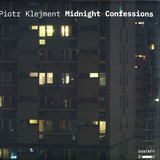
Photography on the cover of EP 'Midnight Confessions' shows authentic Warsaw bloc .
Composer, multi-instrumentalist and mixed-media artist, Takehisa Kosugi has stood on the forefront of the Japanese avant-garde for over six decades. In the 1960s, he was part of Japan's first improvisational music collective, Group Ongaku, and contributed to Fluxus in New York. In 1969, he founded the influential, experimental ensemble The Taj Mahal Travellers, and in 1975 he would release his first solo album, Catch-Wave.
"Mano-Dharma '74" features improvised violin drones and voice with various oscillators, echo delays and layered tape experiments that the artist made in New York in 1967. While Kosugi's continuously changing spectrum of sound shifts gradually (almost imperceptibly), photocell synthesizers create ultra-low frequencies to disturb the crestless sound waves. The brighter the light is, the harsher the noise becomes.
After 5 years of silence, Dadub are summoning their magic spell on BAS006. - Rituals of Resistance" makes use of tribal drums, ghostly echoing samples taken from the collective consciousness. Emotive techno in it's dubbiest prime evokes scenes of territories uncharted by global repression. Dadub present their very own vision of techno politics. Not shy to tap into a glitch, familiar sounds emerge from a well orchestrated chaos. An acutely bass driven sense for rhythm combines with the inevitable esoteric beauty of hand-crafted Italian techno. This is the sound track for all those who yearn for an inner revolution.
The second of Polytechnic Youth's ace new LPs for July, sees a mighty set from Austria based synth pop duo Mitra Mitra. Following previous releases on Peripheral Minimal and their own Micromort label, not to mention a lathe cut right here on PY that sold out in 20 minutes in Dec. 2015.
The band was formed in Vienna in late 2014 by Violet Candide and Mahk Rumbae. Originally from New Zealand, Violet Candide is a founding member of the Crazy Hospital DJ collective, and one of the organisers of the legendary 'Future Echo' club night in Vienna, and is one half of 'Anesthetic Hairpins'; whilst British musician Mahk Rumbae is known for his work as a member of the industrial/experimental project 'Konstruktivists', 'Oppenheimer MkII' (with Andy Oppenheimer of Oppenheimer Analysis) and his solo techno project 'Codex Empire'.
After working together on one of Violet's solo songs, 'Heat', the pair decided to continue working together and formed Mitra Mitra as a more full time project, with the aim of writing electronic songs not tied to any particular influence or style. However, if there was such a thing as a signature PY sound- arguably this LP (alongside last year's Vorderhaus full length), encapsulates it most. Beautifully icy cold synth pop straight outta' early prime era Mute / Blackwing studios output. Serene yet melodic, edgy, dry icy hooks and delicious grooves aplenty all over this record. Eight wonderful tracks where quality and sheer melodic guile of the song writing never dips and attention truly is held across the whole set, ....no mean feat indeed.
Available as a 300 pressing LP only, destined to sell out rapid style as have all previous releases by both artist and label.
On Video Age's forthcoming album Pop Therapy, out June 22nd via Inflated Records, longtime friends and songwriting partners Ross Farbe and Ray Micarelli conjure up a thrilling assortment of experimental pop songs. Using a palette of vintage synthesizers and the propulsion of a Sequential Circuits Drumtraks drum machine, the New Orleans-based group's buoyant synth-pop echoes from some imagined vision of the past, leaning on an invented nostalgia to soundtrack an ideal future that never arrived. Video Age brings that future fully to life on Pop Therapy. Emerging from New Orleans' DIY scene and label collectives, Farbe and Micarelli were intrigued by each other's songwriting among several curiously satisfying guitar pop bands. As a producer and prolific engineer, Farbe has helmed some of the most exciting releases from genre-pushing New Orleans artists, whose singular visions are made possible with his gifted ear and love of tape recording. Micarelli's talent for crafting simple, tangible melodies complements Farbe's studio world-building, letting ideas drift until they emerge into impressive arrangements. The pair's seemingly effortless gift for crafting earworm hooks was glimpsed on their 2016 debut Living Alone, a gorgeous collection of guitar-driven melancholy. On Pop Therapy, they're joined by Duncan Troast, Nick Corson and Jordan Odom, taking inspiration from the limitless possibility on sonic canvases of the late 1970s and early 1980s (Yellow Magic Orchestra, McCartney II, Donald Fagen's The Nightfly). Where Living Alone catalogued the solitude of reflecting on what was and could have been, the sentimental love songs on Pop Therapy gaze longingly at the likeliness of a brighter tomorrow.
- A1: Encie´ndelo (Feat. Dj Jigu¨e & Yissy Garci´a)
- A2: Compan Eros Tropicales (Feat. Dj Jigu¨e)
- A3: Bomba (Feat. El Individuo)
- A4: Dia´spora (Feat. Negro Wadpro)
- A5: Ciclo De La Vida (Feat. Luz De Cuba & Kamerum)
- A6: Traketeo (Feat. Luz De Cuba)
- B1: Carambuko (Feat. Joao Pglagarto)
- B2: Soy Libre (Feat. El Individuo)
- B3: Number One (Feat. Nin O Fony)
- B4: Encontra´ndome (Feat. Sigrid)
- B5: Blues De Mi Barrio (Feat. Yasek Manzano)
- B6: Eshu (Feat. Kamerum)
- B7: Hasta Pronto (Feat. Dj Jigu¨e & Yissy Garci´a)
For A Long Time, Electronic Music Has Been Understood In Terms Of Sounds Rooted In Particular Places: The Styles Of House And Techno Inextricably Wedded To Detroit, Or The Early '90s Jungle Sound Which Carries Echoes Of London. But That's Something Which Is Changing - In Latin America More Than Anywhere Else. A New Project, Led By Gilles Peterson And Rum Maker Havana Club (that Created The Havana Cultura Platform In 2007 To Promote The Island's Contemporary Culture), Shines A Light On Cuba's Fast-mutating, Rhythmically-adventurous Underground. It's A Scene Where Old Ideas Are Transplanted Into New Contexts, And Like-minded Scenes Are Brought Together In New Dialogues.
Havana Cultura: ¡su´belo, Cuba! Showcases An Extended Network Of Like-minded, Forward-thinking Musicians Driving Cuba's Music Forward. Following Repeated Trips To Connect With Venues, Collectives And Djs, Peterson And Will Lv - One Half Of Lv, Who've Released On Hyperdub And Keysound Amongst Others - Linked Up With Dj Jigu¨e, A Much-respected Producer And Dj, Whose Guampara Label Has Charted New Directions For Cuban Music. He's Been Profiled By The Fader And Vice, And The Album Features His Extended Network Of Collaborators, Connecting Afro-cuban Traditions With Contemporary Movements And Ideas.
The Album Provides A Snapshot Of A Unique Club Culture That's Fast Evolving. On The One Hand, It's Indebted To Cuba's Unique Characteristics, Where Regularly-practised Traditions Are Coloured By Intermittently-experienced Cultures From Outside. On The Other, It's Part Of A Global Shift Toward De-centred Club Music, With Homegrown, Influence-grabbing Dance Cultures Tilting Attention From Club Culture's Traditional Epicentres. It Offers A New Side To Havana That's Firmly Rooted In Its Past.
Twenty-eight Years Ago, Pissed-off Twelve-year-olds Around The Universe Discovered A New Planet, A Black Planet. Public Enemy's Aggressive, Benihana Beats And Incendiary Lyrics Instilled Fear Among Parents And Teachers Everywhere, Even In The Border Town Of Laredo, Texas, Home Of The Future Founders Of The Latin-funk-soul-breaks Super Group, Brownout. The Band's Sixth Full-length Album (out May 25th) Fear Of A Brown Planet Is A Musical Manifesto Inspired By Public Enemy's Music And Revolutionary Spirit.
Chuck D., The Bomb Squad, Flava Flav And The Rest Of The P.e. Posse Couldn't Possibly Have Expected That Their Golden-era Hip Hop Albums Would Sow The Seeds For Countless Public Enemy Sleeper Cells, One That Would Emerge Nearly Three Decades Later In Austin, Texas. Greg Gonzalez (bass) Remembers A Kid Back In Junior High Hipped Him To The Fact That Public Enemy's bring The Noise' Is Built On James Brown Samples, While A Teenaged Beto Martinez (guitar) Alternated Between Metal And Hip-hop In His Walk-man, And Adrian Quesada (guitar/keys) Remembers Falling In Love With Public Enemy's Sound At An Early Age. when I Got Into Hip Hop, I Was Looking For This Aggressive Outlet . . . And I Didn't Even Understand What They Were Pissed Off About, Because I Was Twelve And Lived In Laredo . . . But I Loved It And I Felt Angry Along With Them.'
Joseph Abajian (fat Beats' Owner) Must Have Sensed The Deep Hip-hop Well Lying Beneath The Versatile Band's Latin-funk Veneer. i Thought Their Sound Would Work Covering Public Enemy Songs,' Abajian Says, And, it Was Good To Know They Were P.e. Fans . . . We Came Up With A Track Listing And They Went To Work.' Despite The Band's Eagerness To Work On New Original Material (an Album Of Original Songs Is Slated For Next Year), They Couldn't Pass Up The Opportunity To Pay Homage To This Iconic And Influential Posse.
Translating Sample-based Music To A Live Band Turned Out To Be More Of A Challenge Than They Anticipated. Adrian Tried To Get Inside The Bomb Squad's (public Enemy's Producers/beat-making Team) Head In Order To Find The Inspiration To Reinterpret P.e.'s Songs: imagine The Bomb Squad Going Back In Time And Getting The J.b.s (james Brown's Funky Backing Band) In The Studio And Setting Up A Couple Analog Synths And Then Playing Those Songs.' While Some Songs Closely Follow The Original Musical Blueprint, Others Use The Source Breakbeats As Jumping-off Points Later Sweetened By Trombonist Mark speedy' Gonzales' Horn Arrangements, Synth Wizardry Courtesy Of Friend-of-the-band Peter Stopschinski, And Dj Trackstar's Turntable Scratches. But Don't Listen Expecting To Hear Paint-by-numbers Recreations Of Classic Public Enemy Jams. our Approach Is Never In The Tribute Sense,' Adrian Explains. we've Always Taken It And Made It Our Own, Whether It's The Brown Sabbath Thing Or This Public Enemy Thing.' Coming Off Numerous Tours As Brown Sabbath And Even A Stint Backing The Late Legend Prince, Brownout Is Arguably The Tightest And Funkiest Band On The Road Today And They're Psyched To Bring This Revolutionary Music To The People. For A Band Without An Overt Political Agenda, They Collectively Couldn't Resist The Opportunity To Play This Music Live, Especially Now. if There's Any Way That We Can Use The Already Political And Protest Nature (of P.e.'s Music), We Would Like To Try,' Beto Says. the Album's Title, Fear Of Brown Planet Is Definitely A Relevant Idea Today And We're Not Afraid To Put It Out There, Because We Want To Speak Out.' By Reinterpreting These Hip Hop Classics In Their Unique Style And Channeling The Spirit Of Public Enemy That First Echoed Around The World And Captured Their Imaginations All Those Years Ago, Brownout Is Doing Exactly That.
Following two previous excursions into degraded tape loops, fuzzed-out ambience and bittersweet moments of tenderness, O$VMV$M return to Idle Hands to complete a trilogy of LPs with 12 vignettes from the underbelly of the Bristol scene.
Bound to Young Echo's ever-swelling cult of wayward sonics, individually Amos 'Jabu' Childs and Sam 'Neek' Barrett have plenty of irons in the fire. Childs deals in forlorn, vocal-led introspection alongside Alex Rendall and Jasmine Butt as Jabu, while Barrett can be found laying down punishing modern grime variations alongside Kahn, or delving into more traditional soundsystem sonics in Gorgon Sound. Meanwhile the pair were clearly heard laying down some of the tones that seep out of the uncredited Young Echo collective LP from earlier this year. Their production work behind Rider Shafique's killerLion7" on Lavalava was unmissable, and their blunted beats behind Manonmars' debut LP are awaited with anticipation.
As O$VMV$M, the pair enter a particular sound world that mixes cosy nostalgia with creeping dread. Even at its most mellow, a sense of unease hovers beneath the surface, and that's what makes their approach so compelling. The sound palette is broad, from pitch-shifted RnB vocal licks to foggy trumpets crawling at half speed, but over it all a dense blanket of dust gives the sensation of peering back through time.
Putting paid to the idea that immersive music needs to be long and drawn out, the dose response on these condensed mood capsules is quick and strong. In a little over 20 minutes O$VMV$M take you far and wide. The trip over the past three LPs has been an adventure for both label and artists - Sam and Amos have shaped out a style that now feels like a fully formed entity independent of their other ventures. We look forward to seeing where O$VMV$M heads from here.
Belgium-based Composer Christina Vantzou's Fourth Full-length For Kranky Ventures Further Into The Uniquely Elusive And Evocative Mode Of Ambient Classical Minimalism Which Has Become Her Signature: A Fragile Synthesis Of Contemplative Drift, Heady Silences, And Muted Dissonance. In Regards To The New Album She Speaks Of Focusing Particular Attention On The Effects Of The Recordings On The Body, And Of 'directing Sound Perception Into An Inner Space.'
No. 4 Took Shape Across Roughly Two Years, Incorporating A Diverse Array Of Musical And Conceptual Collaborators, Including Fellow Kranky Artists Steve Hauschildt And John Also Bennett (of Forma) As Well As Angel Deradoorian (ex-dirty Projectors), Clarice Jensen, Beatrijs De Klerck, And Members Of Belgium's Echo Collective. During The Creation Process Vantzou Wanted To 'blur Lines Of Hierarchy,' And Thus Allowed All Ensemble Members And Technical Assistants To Add Or Delete Elements. Despite Such A Spectrum Of Input The Eleven Tracks Feel Distinctly Cohesive, Weaving Elegant Textures And Resonant Open Spaces Within A Twilit Landscape Of Eclectic Instrumentation: Piano, Harp, Vibraphone, Voice, Strings, Marimba, Synthesizers, Gong, And Bells.
Vantzou Describes The Recording Process As One Of Prepared Spontaneity: That Is, 'having Plenty Of Ideas Ready To Explore Going Into The Session, But With Enough Time To Depart From Those Ideas And See What Happens.' This Mindset Of Premeditated Exploration Informs The Album's Emotive Textural Intuition, With Hushed Drones And Delicate Gestures Eliding In The Periphery Of The Mix. She Cites Sleep And 'the Loosening Of Time' As Two Formative Practices In Her Private And Professional Life, Which Manifests In The Quietly Hallucinatory Properties Of Vantzou's Music. No. 4 Feels Both Endless And Ephemeral, Immersive And Immaterial. It's A Music Of Horizon Lines And Half-light, Mapped With Feeling And Foresight.
Recorded In New York City And Brussels. Mixed In Berlin.
A Portion Of This Work Was Funded By A Generous Grant From The Flemish Community In Belgium.
- A1: Never
- A2: Rocksteady
- A3: Sedated Private
- A4: Transmission 1
- A5: Psychology Of Destructive Cult Leaders
- A6: Hake
- B1: Dominocro
- B2: Bigger Heads
- B3: Here
- B4: Still Yours
- B5: Untitled
- B6: Wolfe
- C1: Anye
- C2: Stare
- C3: Oh, Won't You
- C4: Transmission 2
- C5: Red Dot, Green Light
- C6: Baron
- D1: Oran
- D2: Nothing
- D3: Home
- D4: Kidney Punch
- D5: Grid Lock
- D6: Wicked Ones
Spread across two 180g discs, spanning 24 cuts and served in a gatefold sleeve designed by members and affiliates, the Young Echo LP is a capsule intended for cementation through time.
It's been almost five years since their last album. As a group, extended radio submissions, prolonged studio sessions and notorious club nights make up the cogs of time. Over the course of these years, the network has grown continually, both as one, and with singular, multi-directional paths from each of the 11 artists that make up the Young Echo collective, counting Jabu, Vessel, Kahn, Neek, Ishan Sound, Ossia, Manonmars, Bogues, Rider Shafique, chester giles and Jasmine towards the crew, with projects such as Bandulu, FuckPunk, O$VMV$M, Gorgon Sound and ASDA adding to the table in their individual ways.However, this record aims not to be judged on any single producer or vocalist. It is most effective as a whole, simply titled Young Echo. Of course each of the artists has an important part to play, but it is very much about the act of balance, accepting individualism to form a greater whole.A good example is the welcome addition of new energy coming from Jasmine (1/3 of Jabu) who injects endless space with her vocals, perfectly answered by the cool-killin' wordplay of Manonmars - who makes his long awaited debut here - sharing stage with the immediate poetry of ASDA's very own chester giles, along the mighty sound of Rider Shafique, and Bogues' versatile style that can flit between rap & song within seconds. Five very different vocalists that could've tried to find a compromise, but instead choose to connect in different ways, finding their niche in the equal range of rhythms and sounds that sprawl in this shared space, the juxtaposition.
Detuned soundsystem stylings, love songs swaying in hacked up ambience, skeletal dancehall, microphone technique, dread electronics, outsider pop, this record manifests the outcome of the shapeshifting anarchy which rears it's head when no one idea can rule, embracing the diversities when one path must be made up of many.
A kind of intimate scrapbook of the startling collaboration between the techno maestro and this long-standing musical collective based in Bishkek, devoted to the roots music of Kyrgyzstan. Loose-leaved but balanced, lucid and intimate, it sets out from stunning a cappella and virtuosic komuz and kylak, mouth harp and traditional percussion: not field, but expert studio recordings, using marvellous vintage microphones, made over several days in Berlin. Further, a few of these are deftly treated by Moritz, using Reichian de-synced double-tracking, and discreet effects. Also two ten-minute dubs: a deadly, signature Berlin steppers, plus its version; and an echoing, mystical drum session, recorded live on stage in Bishkek. And a side-long, dream-like summation: the locomotive, oceanic, clangorous, dread Facets. Ravishing, rooted, searching music; beautifully presented.
Milan based collective Just This return with two VA releases to continue their 'Broken Promises' series. With the aim of documenting the progression of cultural movements, the label have pursued underground material since 2010. Broken Promises Part 3 and Part 4 are due for release on 1st December and 8th December respectively, and each feature four new tracks channelling refined techno with minimalist, ambient sentiments.
Hunter/Game open Part 3 with 'Distance', a meditative journey through ambient textures using expansive synths and vast acoustics. Next, Architectural brandishes 808 drums for a tense workout on 'Electric Soul'. On the B-side, label co-owner Pisetzky explores the darker side of minimal on 'Anterial', whilst Altman plays with moody bass and ricocheting percussion on 'Shapes'.
Part 4 opens with a shuffling rhythmic framework on Inland's 'Aechmea', followed by 'Zona', a pointillist groove by Ben Gibson, aka one half of the collaborative project Dyad. On My Flower's 'Kundal', a cyclical melody wanders through eerie acoustics whilst Hiver navigates a broken beat framework with glitchy distortions and dub echoes on 'Stellar Parallax Landing'.
Silencio celebrates the first year of the label with a double-pack vinyl aptly titled Uno.
Comprising of new and established artists, the tracks on Uno collectively summarize the the feel of this label's year, while giving us a hint of what to expect in the year to come.
Click Box & Stefan Dichev kick off the release with 'Memories'. Presenting a collaborative production that will prove over and over again why sound is one of the strongest senses tied to memory. Engineered with emotionally responsive rhythms that roll into a rocksteady baseline, this track evokes feelings with finesse. "Memories" also features funky squiggle sounds and trailing even-tempered tones to punctuate its procession. This is one you'll want to relive every time the opportunity arises.
New comer Wave Particle Singularity has done it again. 'Virtue' is a tremendous track that will quickly establish itself as one of your new favorite things. The drum sequence, accented by beguiling background sounds and curious vocals, gallops throughout this selection with all its feet off the ground together in each smooth stride. Plus, it also comes fully equipped with a pleasingly unpredictable pace in the form of some moody, well-orchestrated changes that result in a perfectly adjusted attitude. Never a dull moment on the dance floor.
Guaranteed.
Kepler.'s latest offering 'Tool A' possess all the qualities one would normally associate with a fine wine because the taste left on the palate after its consumption is both complex and satisfying. During its ascent, effects that compress a thousand echoes into a single sample ride alongside an active baseline that ripples accordingly. Subtle, flavorful snippets bleep and bloop in complete balance, giving this cut a coordinated, contemplative vibe that brings everything into focus.
With his first track on Silencio, Yuuki Hori's 'Scene 5' is truly a unique item. This electromechanicaly exotic sounding export from Japan makes an impression with layers that are neatly stacked and minimal to the max. Its main feature, a sample that seemingly mimics the mating call of a male bullfrog, rhythmically ribbits in harmony with the beat, bellowing over the entirety of this track. All the various elements of this composition come together in a natural way that feels symbiotic and sounds superb.
Another Silencio first, Jorge Ciccioli's 'TD8' has a deliberate intention to create momentum, with a deep, penetrating baseline that rises to the occasion by descending the darkest depths of its own digital horizon. In the midst of the mix the listener is greeted with a clever chorus that effectively sounds like air vibrating, or in layman's terms "blowing", within an empty glass bottle. As it goes through the motions, observe how every note is noticeably nuanced in an effort to reflect the subtle changes that take place.
Closing out the release and year for Silencio, is Laughing Man with 'Reach Out'. Hard, heavyand heavenly are all terms that could be used to express the sentiment of this selection.
Notice how right from the get go this production profoundly pounds out its agenda with a solid, speedy beat that relentlessly rocks throughout the recording. Accompanied by aseries of wavy, spirited vocal layers, ringing bells and an inspired intersection of cymbals,this track is one hell of a ride that will enable you to make contact with the other side.
FOUR313 is a Detroit group of Deejays, musicians and producers from the 1st wave of the Detroit techno dance movement. Blake, Eddie, Santonio & Thomas have joined forces as the unit FOUR313, a group name with meaning and purpose, and that is to preserve Detroit's "true" history in dance music and support the DJ culture through vinyl releases. The debut album of FOUR313 will be released with the launch of their new record label called "Ther Label". FOUR313 will collectively release special limited edition vinyl of brand new recordings starting at the beginnning of 2017.
The terrific opening salvo of this thrilling prospect of a label, imprint of the eleven-strong, Bristol-based collective.
Intensely intimate, dread ruminations about racism, being and the UK — rooted in the dub poetry of LKJ and Mutubaruka — in tense, widescreen settings by Amos Childs, out of Jabu and O$VMV$M, and Sam Kidel, moonlighting from The Death Of Rave.
Hotly recommended.
Pure worries from Leipzig — three club burners steeped in Detroit traditions, distilling the explorations in collective, nervy hypnosis of KM live sets. As the music slowly unfurls, there he is at every turn, subtly tweaking its parameters, redistributing its weight, pricking its grooves into a state of utterly infectious perpetual movement.
The two visions of Chilazon track opposite pathways: the first is twelve minutes of gorgeous, dubwise, aquatic techno, spattered with kicks and razor-sharp hi-hats, and smeared with ghostly echoes, then a terse mesh of broken drums, escalating to a quiet yet feverishly intense peak. Lanthanum is calligraphic swordplay, its toms and bass stabs warily circling one another in a graceful steppers' dance, spaced-out and fathoms-deep.
Just This is a Milan based label collective.
Just This is the expression of a social, metropolitan and underground movement we are living and going through all together.
Our Mission is to give room and importance to Art and Music which are still evolving day by day.
Just This is aimed to frame these changes, which are going to be the picture of today and the future memory of the cultural movement of this age, throughout a series of messages, images and sensation drawn inside the audience.
Furthermore, thanks to the energy, the happiness and the magic charm of our parties and events, talented and unique artists, from all over the world, use their way to interpret music to communicate people the real core of this change:
the future is changing...