Geoff Farina’s Southern Records tenure was not just about Karate. His late-90s guitar-and-vocal solo output included
the bedroom-recorded Usonian Dream Sequence that echoed The Secret Stars’ intimate lo-fi sentiments, Reverse Eclipse that rode the more delicate fringes of Unsolved-era Karate, and the single Steely Dan, a paean to a contemporaneous guilty pleasure. FFF collects all three long-out- of-print releases here on vinyl for the first time, fastidiously packaged and punctu- ated with Farina’s written reflections on their making.
Geoff Farina’s Southern Records tenure was not just about Karate. His late-90s guitar-and-vocal solo output included
the bedroom-recorded Usonian Dream Sequence that echoed The Secret Stars’ intimate lo-fi sentiments, Reverse Eclipse that rode the more delicate fringes of Unsolved-era Karate, and the single Steely Dan, a paean to a contemporaneous guilty pleasure. FFF collects all three long-out- of-print releases here on vinyl for the first time, fastidiously packaged and punctu- ated with Farina’s written reflections on their making.
There is a pivotal scene in “August in the Water” (dir. Sōgo Ishii, 1995) where the surface of a pool turns into a stone wall. The water that gave the protagonist's life its meaning becomes a threat. As you fall through this stone wall, you appear in a set of underwater coral-reef corridors, and one of the most beautiful musical themes begins to play: Aquatic Ambience, composed by David Wise for Donkey Kong Country (1994). It's a theme that represents the weightless vibe of your new deep-sea life, where you go about your mundane errands, collecting bananas while driving on a swordfish, or, as HerzMayhem put it: "Poor monkey... always swimming, never going anywhere..."
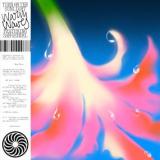
Synthetic Water Music is the second of three compilations, following Synthetic Bird Music and timed to mappa's 10th anniversary. As with the birds, it gathers friends of the label, artists who have released with mappa or played our shows. Most of the music is new, made to measure for this compilation, much of it from Central and Eastern European hands. Birds and water mix well, so please feel invited to play them together, creating your own environments.
Where the birds were in one flock, water is dispersed across four chapters. You live your life as a droppity drop: vapour in the heavens, condensing in clouds, falling into a swamp, trickling into the deepest sea.
Tlālōcān (Cassette 1, Side A)
A place of eternal spring, of aquatic energy that nourishes everything and allows all things to bloom. Bubbly and splishy-sploshy, it is full of dripping sounds and moist caverns (“Emerald Pool” by Pauline Anna Strom), a landscape filled with living fountains (“Oh, to be a Fountain” by Eva Sajanová) and winding streams that flow through the area, forming part of its organic architecture. It is also a paradise reserved for those whose deaths were water-related, where the aquatic and terrestrial beings live in symbiosis and perspectives shift rapidly, from observing a single droplet (Shakali, Lau Nau) to dew (Feronia Wennborg & Lucy Duncombe) and on to flowing currents (Visible Cloaks) that gradually transform into river music (Ursula K. Le Guin & Todd Barton).
Nephelora (Cassette 1, Side B)
A celestial anti-gravity sound world made of evaporation, steam and the formation of clouds, as if looking at “The Sky At The Bottom of the Well” (by Natalia Beylis) or at “The Cloud That Never Rains” (by Henrique Vaz).
If a cloud never rains,
it is not a cloud at all, but a veil that parches the earth with its gaze.
It generates only its own shadow —
a looming mass of suspended longing,
a sky that hoards but never yields,
a reservoir that swallows every river and returns nothing but echoes.
The water in this world is often invisible but sometimes all the more present, as Bint Mbareh describes it: “Recently been obsessed with invisible waters because I come from a place where you have to imagine the water is there even though you cannot see a river, a sea, usually no rain, so water is in the air, the voice and the imaginal realm, drought is imagined to be negotiable.”
Žaboglach Zha-bo-glahch (Cassette 2, Side A)
A fusion of Scottish lochs and Slovak ponds: a misty, foul-smelling, swampy realm, the kind of place that swallowed Artax from The NeverEnding Story. Stagnant waters full of decay become a blooming habitat for sirens (“thereby losing the weightless delight of being swept along with it” by Adam Badí Donoval) and beings straddling the line between fauna and flora, inventing their own communication systems (“Water-lily phase” by Action Pyramid).
R'lyeh (Cassette 2, Side B)
A brooding sunken city at the bottom of the ocean. It’s a journey to get there. Let this chapter guide you, from the shore down to the depths, to the gates of an unexplored world that is inherently dark, unfathomable, and beyond the limits of human perception: starting with seasickness ("Seasick" by Nikolaienko), passing through a classic Poe-esque maelstrom ("Flurry at the Whirl-pull" by Atte Elias Kantonen), a gateway into the darkness and emptiness of the ocean floor, and finally traversing the city itself (“last waves of 2025” by Jules Reidy).
But what is pulling you to a place like this that only a few explore and even fewer leave? Maybe “the darkness that water can contain, the expanse of things we don't know and that can trigger fear instincts even as we try to rationalise them and think we are in control of the rest of nature” (“supercritical fluids” by Diane Barbé).
Dive in and surface wherever you like. Always swimming, never going anywhere. Just don’t forget to take water breaks.
P.S. Birds, then water, can you guess what comes next? Synthetic Soil Music, an elegy for insects and worms? Synthetic Glaciers, or maybe Pollinators? Which sounds would you miss the most if they disappeared? Or what if the third one never comes at all, and somebody, or something, makes Synthetic mappa Music instead. Don't you worry, with the right training data, it can all be replicated, better than the real thing.
Poem by Alea Coble (February 2026) - Written for Andrew Weathers, Chattonooga Recording Project
Listen to my story and everything will come out true. - Bessie Smith
35° 02' 44.27" N -85° 18' 34.85" W:
Howl. Hammer strikes firing pin. Its echo ricochets over river bend. The woodpecker’s syncopated pop-pop-pop clink and thwap in time with cops practicing prayer at the firing range.
Quick. Sketch a few constellations onto a postcard: empty shotgun shells, these pre-forgotten fossils snaking rusted railroad spikes, like snagged rosary, fallen poplar petals draped over cerulean glass ashtray scattered along glittering fractures, ignored like a treaty. Train tracks reverberate necrophilic boomerang-hunger for mountain air without that coal dust. Eat. Eat. Everything is real estate. Even the air is for sale. Buy it cheap while I.C.E. carves through the valley along the Trail of Tears in unmarked SUVs, traffic stops.
Howl. Callback to estranged entanglements oscillating over holler and highway. Meet on the porch. Haint-blue ceiling. Some ghosts can’t get through anyway. They got tied up on the Walnut Street Bridge by a mob of white spit. Howl. The South should scare you.
But the woodpecker is still nesting, hungry, typing uncannied punctuation marks into black oak: a deed. Home? Takes a side-eyed knowing to call by name. The moon sickles in a sweating glass of iced tea.
Speculation cycle: symmetry as ancient as sour-dank betrayal of the tongue, bitter bones binding blood and lead, alchemical forgetting like I found a hairbrush in the yard while planting wild irises, like someone is charging $10 for an old glass Coke bottle, like semicolons itching restless under new sod from no-one-knows-where. Howl. Sing back. History is soil-in-stereo.
How will this line end? Like riverbank? Like atlatl arching hope smash-through a stained glass window? Words fall out of the sky, and 30 American flags snap at attention on the bridge. Howl. A shift in the wind gallops through the streets tossing her head back, laughing.
Tennessee River, who once kissed Pangea, how she softens at the knuckle-suck of it all, that secret-sweet stowed in the feathers of sandhill cranes lifting up on warm summer breeze: slow-shooting stars bending toward unbothered brevitas.
Howl. The red wolf knows her truest kin is always her shadow’s shadow.
With her new album Trespasser, Grace Potter introduces a beautifully unruly cast of characters who step into forbidden spaces with absolute abandon. As the spiritual sequel to 2023’s Mother Road, the four-time Grammy nominee’s seventh studio LP continues the kaleidoscopic storyline shaped by her many road trips from her Topanga Canyon home to her part-time residence in her native Vermont (a journey she’s made eight times in the last five years, usually on her own). But while Mother Road was born from a desperate need for solace in the midst of emotional freefall, Trespasser reveals an artist firmly anchored in her singular vision.
The latest chapter in a career marked by endless transformation and elite recognition—including sharing stages with rock & roll icons like the Rolling Stones & Robert Plant and earning praise from legends like Bob Dylan and Bonnie Raitt—Trespasser ultimately lights the way toward a more unbound and expansive means of moving through the world. Produced by her husband and frequent collaborator Eric Valentine (Queens of the Stone Age, Weezer, Slash) and recorded in a cross-country journey beginning at her home in Topanga with Benmont Tench, continuing in Nashville with Mother Road session players (members of Cage the Elephant, Kings of Leon, and Train), and completed in Vermont with members of her longtime live band, the album echoes its origins with a wayward sound that spans from stripped-bare soul to cosmic country to hellraising rock & roll—all while orbiting Potter’s force- of-nature voice and lavishly imagined storytelling. “We’ve always been taught that the trespassers are the bad guys, but to me it’s not about reckless rebellion,” says Potter. “It’s about exploring, physically and mentally and emotionally, and being willing to step outside the narratives we’ve accepted. Because in my experience, the places we’re told not to go are exactly the ones that show us who we really are.”
With her new album Trespasser, Grace Potter introduces a beautifully unruly cast of characters who step into forbidden spaces with absolute abandon. As the spiritual sequel to 2023’s Mother Road, the four-time Grammy nominee’s seventh studio LP continues the kaleidoscopic storyline shaped by her many road trips from her Topanga Canyon home to her part-time residence in her native Vermont (a journey she’s made eight times in the last five years, usually on her own).
But while Mother Road was born from a desperate need for solace in the midst of emotional freefall, Trespasser reveals an artist firmly anchored in her singular vision. The latest chapter in a career marked by endless transformation and elite recognition—including sharing stages with rock & roll icons like the Rolling Stones & Robert Plant and earning praise from legends like Bob Dylan and Bonnie Raitt—Trespasser ultimately lights the way toward a more unbound and expansive means of moving through the world. Produced by her husband and frequent collaborator Eric Valentine (Queens of the Stone Age, Weezer, Slash) and recorded in a cross-country journey beginning at her home in Topanga with Benmont Tench, continuing in Nashville with Mother Road session players (members of Cage the Elephant, Kings of Leon, and Train), and completed in Vermont with members of her longtime live band, the album echoes its origins with a wayward sound that spans from stripped-bare soul to cosmic country to hellraising rock & roll—all while orbiting Potter’s force- of-nature voice and lavishly imagined storytelling. “We’ve always been taught that the trespassers are the bad guys, but to me it’s not about reckless rebellion,” says Potter. “It’s about exploring, physically and mentally and emotionally, and being willing to step outside the narratives we’ve accepted. Because in my experience, the places we’re told not to go are exactly the ones that show us who we really are.”
La Isla Borrego gathers fragments and echoes from the last few years. Based on an invented dream, this is not a composition, but a sediment; not a field recording, but an archive of mistreated memories.
There is no map for La Isla Borrego. Instead, there is the architecture of an invented dream: an accumulation of acoustic residue shipwrecked on the conscious island of the last six years. Sounds are not emitted, but reflected and bounced.
A catalogue of biographical errors; a series of echoes salvaged from a dissolving timeline. Assembled between the 2020 static air of Lisbon and the 2026 volcanic humidity of Tenerife, the album operates under the "bamboo sun": a light that does not illuminate, but instead casts shadows over what was once real.
Not all tropical escapes are meant to soothe. Some are meant to seduce… and unsettle.
On Haunted Bossa Nova, Creepxotica reimagines the language of classic exotica through a darker, more cinematic lens—where swaying rhythms and lush melodies drift through shadows instead of sunlight. This isn’t background music for a carefree afternoon. It’s a late-night transmission from a hidden lounge at the edge of a dream.
Built on the bones of traditional bossa nova and mid-century exotica, the album pulses with nylon-string guitars, vibraphone shimmer, and hypnotic percussion—but everything feels just slightly off-center, like a memory slipping out of reach. There’s a tension beneath the beauty, a sense that something unseen is moving just beyond the music. Each track unfolds like a scene, contributing to a larger atmosphere that’s immersive, cohesive, and quietly haunting.
What sets Haunted Bossa Nova apart is its intention. This is not nostalgia for nostalgia’s sake—it’s a deliberate evolution. Creepxotica honors the lineage of the genre while pushing it into more mysterious territory, blending tropical warmth with ambient unease and cinematic depth. The result feels less like a throwback and more like a lost soundtrack—discovered, not created.
Sonically rich and meticulously arranged, the album invites deep listening. Every tone, every pause, every echo has purpose. It’s exotica for those who crave mood over kitsch, atmosphere over imitation.
For listeners drawn to the edges of jazz, lounge, and ambient soundscapes, Haunted Bossa Nova offers something rare: a fully realized world that lingers long after the final note fades.
ARCA unfolds as a modern parable, where the ancient biblical plagues become subtle echoes of the afflictions we have created. through ten distinct compositions, it explores the human shadows - hope and fear, violence and greed, resentment and perfectionism - that we cast upon the world and upon ourselves, crafting a fragile, fractured existence. each track serves as a mirror reflecting our flaws and contradictions, inviting listeners to confront the quiet turmoil within and around us.
amidst this sonic journey, the music becomes a space for reflection and reckoning, gently urging us to acknowledge these plagues not as distant curses, but as intimate truths. it is an invitation to recognize our own power offering a path toward redemption and renewal in the turbulent landscape we call home.
Winner of the 2026 César Award for Best Original Music, the Arco soundtrack is composed by Arnaud Toulon.
Blending sweeping orchestral passages with delicate electronic textures, Toulon’s music accompanies Arco’s temporal wanderings in an expansive sonic journey. An immersive, sensitive, and luminous soundtrack that echoes the great works of Joe Hisaishi while asserting a distinctly contemporary identity. Balancing poetry and dramatic tension, the score stands as a fully-fledged experience in its own right, emerging as a striking cinematic work.
Directed by Ugo Bienvenu, Arco won the César Award and the European Film Award for Best Animated Feature in 2026. It also won the Cristal for Best Feature Film at Annecy in 2025, and was presented at the 2025 Cannes Film Festival and selected for the 2026 Oscars.
Film:
Best Animated Film and Best Original Score at the 2026 César Awards / 2026 European Film Awards / 2025 Cristal Award for Best Feature Film at Annecy
Screened at the 2025 Cannes Film Festival
Nominated for the 2026 Academy Awards
Distributed in over 40 countries
VOD already available in France
Music:
Nearly 1.5 million streams
1,000 vinyl records sold
Over 177,000 views on the live session of “Clouds Away” by Arnaud Toulon x November Ultra
CD released in Japan in April 2026
International releases (movie)
2025
October: France + Belgium
December: Netherlands
2026
January: Portugal, Czech Republic, Spain, China
February: Latin America, Taiwan, Turkey, India
March: Greece, South Korea, Italy, Australia, Estonia, UK, Hungary, Romania
April: Latvia, Germany, Hong Kong, Bosnia & Herzegovina, Austria, Poland, Japan, Switzerland
BERLINCIAGAY launches its first vinyl release, welcoming DJ Beluga92 for a dreamy and twisted journey through house, tech and electro. Rooted in analog textures and emotions,
BCG001 captures a driving and cinematic side of Berlin nightlife while still carrying enough tension for the late-night hours.
Mastered and lacquer cut by Mike Grinser at Manmade Mastering and pressed by Matter Of Fact, the EP feels intentionally physical and warm, embracing the depth and movement of analog sound.
DJ Beluga92 recently delivered a live set at Rex Club Paris, which can also be heard through the BERLINCIAGAY #10 mix series. We are very excited to finally present this release on vinyl.
A1 “Rip Meine Maschine” is Labelheads Tom Peters’ absolute favorite from the EP. A twisted roller driven by a distinctive male vocal, hypnotic groove and restless energy. The track became a closing moment during Tom’s latest US tour, where he played BASEMENT’s Studio in NYC, Vice Underground’s warehouse party in Los Angeles and Midnight Service in Miami.
A2 “System Effect” moves into a more dreamy and emotional direction. Floating vocals repeating “this is the sound” drift through housy pads and spacious textures, creating a track that feels both euphoric and trippy at the same time.
B1 “GA_Entry after 7AM” rounds off the record beautifully with spacey atmospheres, analog synth work, echoes and reverbs. It feels like the afterglow of a long night, designed for the early morning hours on the dancefloor or the journey home afterwards.
BERLINCIAGAY is a statement. A different perspective on Berlin club culture. Less aggressive, less functional, more emotional, dreamy and intimate.
out of Stock
Last delivered 7 days ago available to reorder, subject to availability
For the second chapter of JESUS LOVES SKYLAX, we return to the source: raw emotion, machine soul, and the sacred pulse of the underground. A continuation of the Todd Edwards spirit — not imitation, but devotion. On the A-side, Byron The Aquarius opens with “House Music Was Good While It Lasted (Goodtimes)” — a bittersweet sermon in sound. Dusty, looping, hypnotic — somewhere between lost tapes and eternal truth, echoing the soul of Detroit at its most intimate. UK craftsman Tom Carruthers follows with “Crank Up” — raw, skeletal, almost industrial in its tension. A direct lineage from early machine music, channeling the stark energy of Cabaret Voltaire through a house framework. No compromise. Just rhythm and intent.
Flip the record.
Blue Mondays deliver “Warm Up For Ron Hardy (Disco Mix)” — a fever dream built for the booth. Loose, emotional, and dangerously effective. A tribute not in name, but in spirit — the kind of record that lives between two worlds, where disco dissolves into house under strobe lights and sweat. Closing the EP, CNVX – “L’Amour (Floorfillers Remix)” hits with pure peak-time electricity. Acid lines twisting through the mix, driven and ecstatic — a modern weapon forged in the language of the underground. A direct nod to the timeless pressure of Floorfillers energy, built for dancers who still believe.
✝ JESUS LOVES SKYLAX ✝
He still does.
out of Stock
Last delivered 21 days ago available to reorder, subject to availability
Over the course of more than a decade, the French quartet Lost in Kyiv have refined a sound that fuses cinematic ambition, electronic precision, and visceral live energy into something unmistakably their own. With their new album, `We're All Going To Be Fine', they push that identity further than ever; sharpening their production, intensifying their dynamics, and embracing a darker, more immersive sonic architecture. Lost in Kyiv's music has always thrived on tension between the organic and the synthetic. On `We're All Going To Be Fine', that integration reaches a new level of clarity and depth. The writing and production process was long and exacting, allowing the band to refine every transition and tonal detail. Songs unfold with architectural precision, motifs are introduced subtly before expanding into vast, multi-layered climaxes. Dynamics are handled with patience and control, silence and minimalism are deployed as strategically as explosive crescendos. This careful pacing gives the album a cinematic flow and larger narrative in which struggle and compassion coexist. Guitars surge and recede in wide, panoramic arcs. At moments they shimmer and support, at others they thrash violently, accumulating layers of distortion and harmonic overtones. Acoustic instrumentation is interwoven with sequenced synth lines, pulsing arpeggiators, and carefully sculpted electronic textures that give the band's sound a sense of forward propulsion. Rhythm plays a central role in Lost in Kyiv's identity. The drums provide impact and structure, locking into intricate patterns that interact with bass-driven synth pulses. At times the groove feels almost mechanical, echoing the steady insistence of electronic music; at others, it breathes and swells with human elasticity. This interplay creates a powerful sense of movement, an impression that the music is always advancing, even in its most introspective passages. "We almost consider this album as the first record of a new version of the band. That's why we decided to use the name Lost in Kyiv now. We don't want to erase the past, but it really feels like a new direction. Artistically, I think this album marks the beginning of a new direction, louder and more metal-oriented than what we did before." (Lost in Kyiv) FOR FANS OF Russian Circles * P.G.Lost * The Ocean * Cult of Luna * Brutus * This Will Destroy You
Over the course of more than a decade, the French quartet Lost in Kyiv have refined a sound that fuses cinematic ambition, electronic precision, and visceral live energy into something unmistakably their own. With their new album, `We're All Going To Be Fine', they push that identity further than ever; sharpening their production, intensifying their dynamics, and embracing a darker, more immersive sonic architecture. Lost in Kyiv's music has always thrived on tension between the organic and the synthetic. On `We're All Going To Be Fine', that integration reaches a new level of clarity and depth. The writing and production process was long and exacting, allowing the band to refine every transition and tonal detail. Songs unfold with architectural precision, motifs are introduced subtly before expanding into vast, multi-layered climaxes. Dynamics are handled with patience and control, silence and minimalism are deployed as strategically as explosive crescendos. This careful pacing gives the album a cinematic flow and larger narrative in which struggle and compassion coexist. Guitars surge and recede in wide, panoramic arcs. At moments they shimmer and support, at others they thrash violently, accumulating layers of distortion and harmonic overtones. Acoustic instrumentation is interwoven with sequenced synth lines, pulsing arpeggiators, and carefully sculpted electronic textures that give the band's sound a sense of forward propulsion. Rhythm plays a central role in Lost in Kyiv's identity. The drums provide impact and structure, locking into intricate patterns that interact with bass-driven synth pulses. At times the groove feels almost mechanical, echoing the steady insistence of electronic music; at others, it breathes and swells with human elasticity. This interplay creates a powerful sense of movement, an impression that the music is always advancing, even in its most introspective passages. "We almost consider this album as the first record of a new version of the band. That's why we decided to use the name Lost in Kyiv now. We don't want to erase the past, but it really feels like a new direction. Artistically, I think this album marks the beginning of a new direction, louder and more metal-oriented than what we did before." (Lost in Kyiv) FOR FANS OF Russian Circles * P.G.Lost * The Ocean * Cult of Luna * Brutus * This Will Destroy You
TRANSMISSIONS #1 connects four distinct Skylax signals into a single flow. Each track comes from a precise moment, a specific context, and a clear dancefloor function. Together, they form a transmission built on movement, use and continuity. A1. F.T.G – Tribute ’89 (Fuckthegovernment #001 Mix) is a raw drum-machine workout positioned between dark Chicago house and late-’89 European techno. Stripped, direct and uncompromising, Tribute ’89 quickly became an underground staple, heavily played by Ricardo Villalobos and Raresh — a foundational Skylax signal. A2. Nick Beringer – 57th Corner, taken from Second Floor (Wax Classic, 2016), is a tech-leaning deep house cut marked by restraint, precision and late-night tension, capturing Beringer at a pivotal point in his long-standing relationship with Skylax. B1. Floorfillers – Love Is Growing delivers a powerful house-disco statement rooted in old-school foundations, where filtered disco loops, raw drum programming and uplifting swing echo the lineage of DJ Sneak, Paul Johnson, early Roulé / Crydamoure-era French touch and classic Chicago jack — a modern floor-driver with timeless intent. B2. Nicolas Aftalion – Rue des Wallons brings deep, soulful house with a strong Kerri Chandler influence; warm chords, chunky drums and emotional weight firmly grounded in early ’90s US garage tradition. Supported by Cinthie, it closes the transmission with groove, balance and purpose. TRANSMISSIONS #1 — built to move, built to last, signals in motion. Four tracks. Four signals. Still moving.
out of Stock
Last delivered 21 days ago available to reorder, subject to availability
Kreng transports us through the swirling darkness and into the unknown with “Wormhole”, his first album in over a decade.
What does a trip towards another world sound like? We’re about to find out. The master of tension, melancholy, and the deranged is back after a long period working in the worlds of theatre and cinema. Last seen on Miasmah with the grief stricken The Summoner, Kreng now returns with Wormhole, following closer in the footsteps of the cult classics L’Autopsie Phénoménale de Dieu and Grimoire.
Starting with “You Are Here”, the listener travels through a vacuum of spacious minimalism and edge-of-your-seat tension. Within the journey, we are pulled and lured towards a mystic inner core and beyond, encountering drifting fragments of old-world nostalgia on the way: echoes of empty jazz bars sit alongside hellish, Hieronymus Bosch-like scenarios.
Surrendering to the album reveals a surprisingly reflective beauty beneath its darkness; it's a true home-listening gem that unfolds like a Lovecraftian cosmic horror-mystery in the way only Kreng could deliver. Forget everything you know and enter the secret door…
out of Stock
Last delivered 4 months ago available to reorder, subject to availability
‘Confession' is an album of quiet upheaval. An album about closeness that arrives late and unexpectedly. About stability rubbing up against desire. About the way friendship can suddenly tilt into something charged — and how that charge unsettles everything around it. Where earlier work often observed from a distance, Confession turns inward. The voice is closer, warmer, less shielded. “This wasn’t the album I intended to make,” says Carla dal Forno. “I originally wanted something veiled and abstract, but I realised I couldn’t hide behind abstraction — the songs only worked when I leaned into emotional truth.”
This is dal Forno’s fourth LP, written and recorded over several years in a small country town, in a studio housed inside a partially abandoned hospital. Long corridors, humming lights, emptied rooms — a place built for care and waiting, now quiet enough for thoughts to echo. That stillness shapes the record: intimate, watchful, unadorned. “I live in a small country town that offers a stillness my life didn’t previously have,” she explains. “In that quiet, feelings I might’ve ignored in a busy city grew loud.” Dal Forno sings plainly and conversationally, with an emotional precision that sharpens the everyday into something quietly unsettling.
The album moves through paired states: going out and staying in, wanting and withholding, devotion and distraction. Domestic calm set against private unrest. A long-held relationship offers safety and routine, while a newer connection opens emotional fault lines — longing, jealousy, fantasy, self-exposure. “At the heart of the album is a friendship that became emotionally charged in an unexpected way,” dal Forno says. “That shift brought daydreaming, jealousy, tenderness, confusion, self-awareness — and eventually acceptance.”
The drama here is internal, incremental, lived. Musically, Confession feels lighter on its feet than its subject matter suggests. Melodic basslines anchor the songs while guitars, harmonies, and gently off-kilter rhythms move around them. There’s a looseness, even a playfulness — “like the sensation of tension lifting once you finally admit something to yourself,” as dal Forno puts it. The album traces a subtle arc: attraction blooming where it shouldn’t; obsession quietly taking hold; fantasy overtaking reality; clarity arriving slowly, sometimes painfully. Visually and emotionally, Confession returns to modest spaces: backyards, beds, night streets, overgrown paths. “The record exists in that contrast,” dal Forno reflects. “Peaceful surroundings, unsettled interior.”
Like all of dal Forno’s work, Confession resists clean conclusions. It doesn’t moralise desire or romanticise restraint. Instead, it lingers in the in-between — where love is stable but not total, where yearning teaches as much as it hurts, where solitude becomes a form of care. Plain-spoken but emotionally complex. Rooted and restless. Held together by bass, breath, routine, weather. An album about admitting what you feel —and living with what that admission changes.
out of Stock
Last delivered 51 days ago available to reorder, subject to availability
French label Latency presents ‘Estradas (Versions)’ - a dynamic reimagining of the acclaimed collaboration between drummer-composer Valentina Magaletti and Afro-Portuguese producer Nídia. Following Estradas’ recognition as one of 2024’s Best Albums by Pitchfork, The Wire, Resident Advisor, Artforum, Bandcamp, and more, ‘Estradas (Versions)’ invites a diverse lineup of producers and DJs to deconstruct and reimagine the raw percussive language initially crafted by Magaletti and Nídia. Where the original Estradas channeled their distinct rhythmic sensibili- ties into a bold sonic statement, this collection pushes those ideas further - opening the material to radical transformation across tempo, genre, and mood.
One of the leading baile funk innovators from Belo Horizonte, Dj Anderson do Paraíso opens the release by transforming “Andiamo” into a slow-burning, hallucinatory drift. Mexico-based Rosa Pistola and Freebot follow with “Rapido,” infusing it with syncopated, raw heat drawn from the pulse of underground Latin dancefloors. Lebanese-Australian producer Dj Plead pares “Sicilia” down to its core, distilling its essence into stripped-back, polyrhythmic ten- sion. On “Mata,” Brazilian DJ and producer BADSISTA delivers a fierce, bass-heavy version driven by slicing synths and unrelenting club pressure. Multidisciplinary artist FAUZIA sharpens the rhythmic intricacy of “Nasty” with her signature blend of speed and emotion.
London-born DJ, producer, and label founder Sherelle - known for her high-octane 160bpm mix of footwork and jungle - injects “Estradas” with blistering breakbeat energy, reframing its urgency through a razor-sharp UK lens. Chinese musician and sound artist Yu Su offers a fluid, atmospheric reinterpretation of the same track, softening its edges while preserving its momentum. Scottish composer and producer Fergus Jones pulls “No Promises” into hypnotic new rhythmic terrain. Dominican producer and multidisciplinary artist Kelman Duran stretches “Ta A Bater Ya” into a shadowy, reverberant space, while Lebanese composer and multi-instrumentalist Charif Megarbane and its Cosmic Analog Ensemble reimagines it with layered, cinematic textures echoing vintage library music and psych-jazz soundtracks.
These artists treat Estradas as raw material - reframing its structures and reactivating its rhythmic possibilities through entirely new prisms. What emerges is not a conventional remix album, but a vibrant constellation of versions : a response to Estradas’ percussive provoca- tions, and an extension of its spirit of exploration - all while keeping its pulse alive.
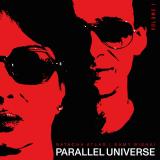
Parallel Universe – Volume 1 marks the latest collaboration between Natacha Atlas and Samy Bishai — a bold reimagining of the musical crossroads between East and West. While its textures echo retro-futurism and electronic lineage, the spirit of the record is unmistakably present-tense — rooted in a boldly contemporary vision of Arabic pop, refracted through experimental production.
For their third album As You Please, Citizen is looking inward. Pairing up again with longtime producer Will Yip, the band presents twelve songs that fuse aspects of their entire catalog into one neoteric whole. While the cathartic melancholy of their debut Youth and the jarring intensity of 2015's Everybody is Going to Heaven are both present, the most welcome addition to Citizen's arsenal on As You Please is the range of auxiliary instrumentation and sonic experimentation on the album. This is most notable on "In the Middle of it All," where vocalist Mat Kerekes is sampled singing the song title in a modulated, haunting chorus that echoes throughout the song. The addition of organs and unconventional drum effects on songs like "You Are A Star" and "Medicine" create shifting emphases on tension and frailty, while the huge choruses of songs like opener "Jet" and "I Forgive No One" are reminders that while Citizen dove headfirst into uncharted territory with their new album, the band is still as good as ever at writing emotionally-charged anthems. As You Please presents Citizen's vision at the most focused it has ever been - it is delicately crafted to provoke at every moment.
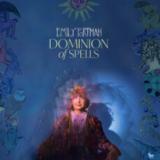
The album is a powerful reaffirmation of human creativity: "My music has always been about connection, bringing enduring old stories into conversation with contemporary life," Portman says. "This album is a collective, entirely human-made effort, and it's richer because of it." Renowned for her luminous songwriting and distinctive voice in contemporary folk, Portman steps into bold new territory with an album that charts a heroine's midlife journey through dark woods in search of wonder. Drawing on ballads and folktales, Dominion of Spells explores themes of burnout, misogyny, motherhood, miscarriage and personal transformation, weaving lived experience with mythic imagery and traditional folk narratives. The title track, Dominion of Spells , reclaims a 17th- century phrase once used to diagnose women as "disordered", drawing on the myth of the wandering womb and the long history of medical misogyny. Portman transforms these ideas into a vision of a freer, fairer realm where women's bodies are understood rather than feared. The first single, Turn Again , is a tender meditation on parenthood, inspired by her young son's imaginative shapeshifting games and echoing the Tam Lin ballad, where steadfast love breaks a powerful spell. Elsewhere, the album explores women's right to move safely after dark, genderswapped retellings of heroic quests, miscarriage, phone addiction and the restorative power of creative practice.
There is a particular kind of strangeness that arrives on long drives across Europe. Flat light, service stations and fields stretching endlessly past the window. It might look mundane at first glance, but becomes faintly surreal when the tiredness of touring blurs the edges of everything.
That feeling became the quiet engine behind Driving Through Belgium, the debut solo album from Anton Pearson, best known as one of the guitarists in respected post-punk outfit Squid. The title grew from a track that felt like the record’s centrepiece, which itself came from the recurring image of extensive periods on the road across the continent. It is a record shaped in the margins of touring, and finessed in the in-between hours.
Across six pieces, Pearson leans into atmosphere, texture and space. It is ambient in spirit, adjacent to contemporary classical in feeling, but composed less with notes in mind than with sound itself. The compositions rarely began with harmony or melody, with Pearson instead responding to his environment and sounds in real time, placing trust in his instinct.
Although initial inspiration came from the road, the album was recorded in a studio he shares in Brighton, and marks his first fully solo project made in that setting. It gave him access to not only new tools and techniques, but a hitherto un-experienced freedom. Much of the process began experimentally, feeding instruments into unfamiliar chains, pitching loops into unexpected registers and playing with previously unused synthesizers simply to see what they might reveal. Many of the sounds were created out of pure curiosity, wanting to understand a piece of equipment or technology, and then following wherever it led.
The album was built with this experimentation at its core, as Pearson would layer then extract, processing stacks of sound until things blur and confuse. Guitars dissolve into drones, a Pianet Clavinet dances against muddier textures whilst a Korg PS-1000 occasionally cuts through with its glittering top end. On ‘Driving Past the Muscular Cows in Belgium’, a flat, still drone is pushed through valve amps until it growls and tightens with tension, before receding again. Even the trumpet, which Pearson freely admits he is not technically proficient at, is embraced in its naivety, its squeaks left intact rather than corrected. The twin ‘Tintinnabulation’ pieces frame the record with looping, pitched bell like tones, accidental discoveries that became structural anchors. Meanwhile, ‘Teeth to Cut the Grass’ deliberately introduces abrasion, some of the harshest textures on the record, a refusal to become passive background music.
That embrace of imperfection is central. In contrast to the hyper-analytical precision of his band, Pearson was keen to honour first takes. If something felt good, it would stay. The end result is an album that favours looseness, instinct and the energy of creation itself. If Squid thrives on propulsion and tension, Anton Pearson finds his energy in suspension on Driving Through Belgium. It is curious rather than declarative, creating a space where experimentation feels playful again.
‘Warm Waves’ first appeared in 2020, ten years after Turn On The Sunlight’s debut self-titled album was first released in Japan. During that decade, Turn On The Sunlight’s Jesse Peterson and Mia Doi Todd welcomed their first child and co-founded a music venue in Los Angeles. When performance spaces were required to close at the start of the pandemic, Jesse’s focus shifted back towards home recording. Since ‘Warm Waves,’ five more Turn On The Sunlight albums have followed (including ‘Drives To The Beach,’ also on Tokonoma Records), all of which can be seen as an expansion of the musical direction set forth on this album.
The group heard on ‘Warm Waves’ consists of musicians who Mia and Jesse were regularly playing with at the time - Sam Gendel, Mitchell Brown, Andres Renteria & Gabe Noel - joined by Laraaji, Arji & Luis Pérez Ixoneztli, making their first recordings together.
The group’s blended signal was routed through Mitchell’s tape loops and modular synthesizer, which contributed to the unique communal sound of these recordings. Further extending this approach, Carlos Niño then reprocessed and reimagined ‘Passing Rain’ with Jamael Dean for his Elemental Beat Mix.
Originally released one week into the official lockdown period, some listeners found the warm, collective sound well-suited for the time of introspection and shifting priorities that followed. Now, in 2026, ‘Warm Waves’ returns on vinyl to once again encourage peaceful contemplation and open-hearted togetherness, in echo of the spirit of its creation.
Credits
Sam Gendel: Saxophone & Electronics on A1, A2, A3, B1, B2, B3
Laraaji: Voice & Zither on A3
Luis Pérez Ixoneztli: Bird Sounds on A1, Aerophones & Water Drums on B2
Mia Doi Todd: Voice on A1, A2, B2, B3; Piano on A3
Jesse Peterson: Guitar, Bass, Organ & Bird Sounds on A1; Organ on A2; Guitar & Bass on A3; Wooden Whistles, Guitar, Ukulele & Piano on B1; Ice Breaking on B3
Andres Renteria: Percussion on A1, A2, B1, B2, B3; Marimba & Percussion on A3
Mitchell Brown: Synthesizers & Magnetic Tape on A1, A2, A3, B2, B4
Gabe Noel: Bass on A2, A3, B1
Arji: Bells & Shells on A3
Carlos Niño: Production / Remix on B4
Jamael Dean: Additional Keyboards on B4
Produced, mixed & recorded by Jesse Peterson
Except B4, produced by Carlos Niño
‘Warm Waves’ first appeared in 2020, ten years after Turn On The Sunlight’s debut self-titled album was first released in Japan. During that decade, Turn On The Sunlight’s Jesse Peterson and Mia Doi Todd welcomed their first child and co-founded a music venue in Los Angeles. When performance spaces were required to close at the start of the pandemic, Jesse’s focus shifted back towards home recording. Since ‘Warm Waves,’ five more Turn On The Sunlight albums have followed (including ‘Drives To The Beach,’ also on Tokonoma Records), all of which can be seen as an expansion of the musical direction set forth on this album.
The group heard on ‘Warm Waves’ consists of musicians who Mia and Jesse were regularly playing with at the time - Sam Gendel, Mitchell Brown, Andres Renteria & Gabe Noel - joined by Laraaji, Arji & Luis Pérez Ixoneztli, making their first recordings together.
The group’s blended signal was routed through Mitchell’s tape loops and modular synthesizer, which contributed to the unique communal sound of these recordings. Further extending this approach, Carlos Niño then reprocessed and reimagined ‘Passing Rain’ with Jamael Dean for his Elemental Beat Mix.
Originally released one week into the official lockdown period, some listeners found the warm, collective sound well-suited for the time of introspection and shifting priorities that followed. Now, in 2026, ‘Warm Waves’ returns on vinyl to once again encourage peaceful contemplation and open-hearted togetherness, in echo of the spirit of its creation.
Credits
Sam Gendel: Saxophone & Electronics on A1, A2, A3, B1, B2, B3
Laraaji: Voice & Zither on A3
Luis Pérez Ixoneztli: Bird Sounds on A1, Aerophones & Water Drums on B2
Mia Doi Todd: Voice on A1, A2, B2, B3; Piano on A3
Jesse Peterson: Guitar, Bass, Organ & Bird Sounds on A1; Organ on A2; Guitar & Bass on A3; Wooden Whistles, Guitar, Ukulele & Piano on B1; Ice Breaking on B3
Andres Renteria: Percussion on A1, A2, B1, B2, B3; Marimba & Percussion on A3
Mitchell Brown: Synthesizers & Magnetic Tape on A1, A2, A3, B2, B4
Gabe Noel: Bass on A2, A3, B1
Arji: Bells & Shells on A3
Carlos Niño: Production / Remix on B4
Jamael Dean: Additional Keyboards on B4
Produced, mixed & recorded by Jesse Peterson
Except B4, produced by Carlos Niño
Toronto’s Ducks Ltd. (formerly Ducks Unlimited), the bright jangle-pop duo of Tom McGreevy (lead vocal, guitar, bass, keyboards) and Evan Lewis (guitar, bass, drum programming), accomplish the impossible. The pair craft songs that play to very specific inspirations without drowning underneath them—immediately evidenced on their critically acclaimed EP, Get Bleak, and sharpened on Modern Fiction, their debut LP. “The Servants, The Clean, The Chills, The Bats, Television Personalities, Felt,” Evan rattles off. “Look Blue Go Purple is one I reference a lot with our production.” Echoes of ‘80s indiepop abound, but they never overwhelm. This is not a nostalgic record, after all, nor is it a derivative one. Instead, across 10 cheery-sounding songs, Ducks Ltd. explore contemporary society in decline, examining large scale human disaster through personal turmoil (hence the title, taken from a university course called Gnosticism and Nihilism in Modern Fiction, influenced by Graham Greene novels. Bookish indie fans, look no further.)
Writing the album was intimate. Tom drafted the nucleus of a song on an unplugged electric guitar and brought it over to Evan’s apartment, where the pair sat in his bedroom, placing percussive beats from a drum machine under nascent melodies, passing a bass back and forth, adding organs and bridges where necessary. “It’s computer music trying extremely hard not to sound like computer music,” Tom jokes. Fearful that limited and expensive studio time would kneecap the project creatively, eroding their charming naivete, the pair re-recorded the album in a storage space owned by Evan’s boss. Ornamentation through collaboration followed: there’s Aaron Goldstein on Pedal Steel in the Go-Betweens’ “Cattle and Cane”-channeling interlude “Patience Wearing Thin,” Eliza Niemi on cello (“18 Cigarettes,” a song loosely inspired by a 1997 Oasis performance of “Don’t Go Away”), and backing harmonies from Carpark labelmates The Beths (on an ode to friendship at a distance, “How Lonely Are You?,” “Always There,” and on the sped-up Syd Barrett stylings of “Under The Rolling Moon.”) While in his native Australia due to covid-19, Evan worked closely with producer James Cecil (The Goon Sax, Architecture in Helsinki) on Modern Fiction’s finishing touches—at one point, in the mountains of the Macedon Ranges in Victoria, recorded a string quartet (featured on “Fit to Burst,” “Always There,” “Sullen Leering Hope,” “Twere Ever Thus,” “Grand Final Day.”)
It’s danceable, depressive fun, with some relief: in “Always There” and “Sullen Leering Hope,” Modern Fiction’s faithful heart. “There’s a tendency in my writing, because of my world view, to be very bleak.” Tom explains. “A quality I don’t always see in myself and really appreciate in others is the courage to go on.” And yet, the record manages resiliency—enough for pop fans to fall in love with.
WRWTFWW Records is thrilled to announce their 5th archival release taken from cult Tokyo label FORM@ RECORDS' catalogue, this time with the first-ever vinyl edition of Re-Form Ver-1.0. The remarkable, yet not widely known, 1999 remix compilation is now available as a limited edition 45rpm cut double LP housed in a heavyweight sleeve, as well as in digital format.
Originally only available on CD in extremely limited quantities, Re-Form Ver-1.0 resurfaces as a fascinating document of FORM@ RECORDS' late-1990s creative peak. Re-imagining key pieces from the label's catalogue, the remix collection offers a rare glimpse into Tokyo's electronic underground, where techno, house, ambient, and IDM breathe freely through FORM@'s soulful and exploratory vision.
Highlights include two remixes of Missing Project's adored gem "Poisson D'Avril" (including its well known ethereal ambient Galaxy Dub which appeared on Music From Memory's Virtual Dreams II) as well as the otherworldly Fossil (aka the legend Virgo) Mix of Penance's "Cure & Soul". Throughout, the compilation balances dancefloor sensibility with introspective listening, embodying the warm human approach to machine music FORM@ RECORDS excels in.
Another essential time capsule from a crucial era of underground music, Re-Form Ver-1.0 echoes the spirit of Warp's Artificial Intelligence era, alongside the forward-thinking energy of Ken Ishii, Carl Craig, The Black Dog, and Ian O'Brien, while keeping its feet and individuality firmly rooted in local context - the magic recipe for creating a universal, timeless language of electronic expression.
Re-Form Ver-1.0 follows the vinyl edition of Virgo's Landform Code (1998) and Remnants (1999), as well as the FORM@ compilations Art Form I (1997) and Art Form 2 (1998), further expanding WRWTFWW's archival series dedicated to uncovering hidden gems of late '90s Japanese electronic music.
out of Stock
Last delivered 4 months ago available to reorder, subject to availability
Célia Oneto Bensaid reveals the full palette of the master of minimalism: original works, opera and film transcriptions, hypnotic flashes and introspective tenderness.
This album paints a sensitive and vibrant portrait of a composer in constant metamorphosis, for whom repetition becomes breath, emotion and light.
These resonances together form the true ‘Echoes’ of Philip Glass
[b] The Poet Acts (Music from the motion picture "The Hours") [Arr. for Piano Solo by Michael Riesman and Nico Muhly]
[d] "Trilogy" Sonata: II. Knee Play 4 (From" Einstein on the Beach") [Arr. for Piano Solo by Paul Barnes]
[e] "Trilogy" Sonata: I. Dance (From "Akhnaten", Scene 3) [Arr. for Piano Solo by Paul Barnes]
[f] Mad Rush The Hours (Music from the motion picture "The Hours") [Arr. for Piano Solo by Michael Riesman and Nico Muhly
“One of Berghain’s longest-serving residents, Luke Slater has been defining bleepy, polyrhythmic, industrial-strength techno as Planetary Assault Systems since the mid-nineties. P.A.S albums tend to come together in their own time:
“External signals and signs combine until the recipe feels right, both musically and from being ‘out there’,” Slater adds. “10 years since I released Arc Angel on Ostgut Ton, and it’s a fitting pleasure to combine live show ideas and studio work for the new album, served up with raw energy” That patience runs through his whole Ostgut catalogue; since Temporary Suspension brought its machine-tooled weight and alien feeling to the label in 2009, each P.A.S. release on Ostgut Ton has been its own quest for discovery, from The Messenger’s search for sounds not yet present in club music to Arc Angel’s focus on melody to the deep hypnosis of Plantae.
His new album, Planetary People has the deliberate imagination and depth of a record that took its time, shaped as much by live rooms and crowds as by the studio.
“Into The Night” creates a haunting, dystopic environment of corroded acid saturated in echo, absorbing from the first second. “Labyrinth” breaks into buoyant tribal percussion, modulated chirps trading off over propulsive drums. “Quadrant 10” is clean, delay-drenched techno, buzzing with noise splatters over saturated thuds. “Sermon Of The Light Tides” scrambles metallic bell sequences that distort and evolve throughout, reminiscent of a dial-up modem crossed with a game of Frogger, squelching between percussive bursts and stripped-back kicks. “Brave Cosmo” is tormentingly menacing, eerie synths panning around buried vocal fragments over frantic percussion. “Retina Burn” rolls on fierce, cement-mixer 909 cycles, rave stabs over a ride that locks you in, the whole track stuttering and repeating before stripping back to a bare echoing kick and building itself again. “Thunder Major” barrels on open hats and reverb-drenched claps ricocheting through twisting wreaths of delay, mesmeric and relentless. “Beton Brut” marches juggernaut percussion stamping through hall reverb so vast you can visualise the room, the darkest and most unrelenting track on the record. “No Ninja” crunches in metallic and immediate, a wiry plucked lead threading through glitch with the bass held low and deep, mixed so precisely you can see every layer stacked in your mind’s eye. “Ha Jam” is danceable techno with plenty of funk and a sophisticated looseness, a vocal laugh bouncing off clanging metal blocks and rave stabs. “Lynx” lowpasses its rave stabs and crystalline beeps, chirpy hats ticking, cold metal repeats, old school and mesmeric. “Generation Slip” closes everything out, ominous and churning, skittering percussion and electrical sparks rattling through steel, a freight train barrelling on into oblivion.
out of Stock
Last delivered 2 days ago available to reorder, subject to availability
Transformation, growth, and rebirth drive Ascent Effort, the latest release from Portland, Oregon trio Rhododendron. The title points upward, but not toward arrival. The record documents a period of change defined as much by instability as progress, where confusion and renewal unfold at the same pace.
Formed in 2019 while the band’s members were still in high school, Rhododendron’s Ezra Chong (guitar, vocals), Gage Walker (bass), and Noah Mortola (drums) set out to push their musical limits without regard for genre boundaries or audience expectation. For Ascent Effort, the band joined the roster of The Flenser, aligning with a label that has long championed artists who work in tension rather than comfort.
In the past seven years the trio has developed a sound rooted in technical precision and repetition. Drawing from the angular experimentation of underground rock in the 1980s and 1990s alongside elements of jazz, ambient, and progressive music, their compositions are deliberate with intensity. Riffs fracture and reform, rhythms lock into patterns only to break apart, and extended passages build pressure before shifting direction.
Performing regularly in Portland, the band has cultivated an intense and loyal local following. The live setting hardened the material. Songs grew heavier, sharper, more physical through repetition and high volume.
The material that became Ascent Effort was tested on tour before entering the studio. Written largely in sequence, the album traces a period of personal change and internal friction. Growth is not always clean; sometimes it grinds forward. Nothing resolves without cost. Confusion and strain do not sit outside the songs, they shape their architecture. That is what the band has accomplished with Ascent Effort, a work that is not always clean but well-shaped by struggle and growth. The Pacific Northwest lingers in the background of the record, its long winters and brief summers echoing the album’s shifts between abrasion and restraint. Ascent Effort does not offer catharsis in the traditional sense. It allows tension to remain. In that unresolved space, transformation takes form and a band in motion is revealed.
Transformation, growth, and rebirth drive Ascent Effort, the latest release from Portland, Oregon trio Rhododendron. The title points upward, but not toward arrival. The record documents a period of change defined as much by instability as progress, where confusion and renewal unfold at the same pace.
Formed in 2019 while the band’s members were still in high school, Rhododendron’s Ezra Chong (guitar, vocals), Gage Walker (bass), and Noah Mortola (drums) set out to push their musical limits without regard for genre boundaries or audience expectation. For Ascent Effort, the band joined the roster of The Flenser, aligning with a label that has long championed artists who work in tension rather than comfort.
In the past seven years the trio has developed a sound rooted in technical precision and repetition. Drawing from the angular experimentation of underground rock in the 1980s and 1990s alongside elements of jazz, ambient, and progressive music, their compositions are deliberate with intensity. Riffs fracture and reform, rhythms lock into patterns only to break apart, and extended passages build pressure before shifting direction.
Performing regularly in Portland, the band has cultivated an intense and loyal local following. The live setting hardened the material. Songs grew heavier, sharper, more physical through repetition and high volume.
The material that became Ascent Effort was tested on tour before entering the studio. Written largely in sequence, the album traces a period of personal change and internal friction. Growth is not always clean; sometimes it grinds forward. Nothing resolves without cost. Confusion and strain do not sit outside the songs, they shape their architecture. That is what the band has accomplished with Ascent Effort, a work that is not always clean but well-shaped by struggle and growth. The Pacific Northwest lingers in the background of the record, its long winters and brief summers echoing the album’s shifts between abrasion and restraint. Ascent Effort does not offer catharsis in the traditional sense. It allows tension to remain. In that unresolved space, transformation takes form and a band in motion is revealed.
Transformation, growth, and rebirth drive Ascent Effort, the latest release from Portland, Oregon trio Rhododendron. The title points upward, but not toward arrival. The record documents a period of change defined as much by instability as progress, where confusion and renewal unfold at the same pace.
Formed in 2019 while the band’s members were still in high school, Rhododendron’s Ezra Chong (guitar, vocals), Gage Walker (bass), and Noah Mortola (drums) set out to push their musical limits without regard for genre boundaries or audience expectation. For Ascent Effort, the band joined the roster of The Flenser, aligning with a label that has long championed artists who work in tension rather than comfort.
In the past seven years the trio has developed a sound rooted in technical precision and repetition. Drawing from the angular experimentation of underground rock in the 1980s and 1990s alongside elements of jazz, ambient, and progressive music, their compositions are deliberate with intensity. Riffs fracture and reform, rhythms lock into patterns only to break apart, and extended passages build pressure before shifting direction.
Performing regularly in Portland, the band has cultivated an intense and loyal local following. The live setting hardened the material. Songs grew heavier, sharper, more physical through repetition and high volume.
The material that became Ascent Effort was tested on tour before entering the studio. Written largely in sequence, the album traces a period of personal change and internal friction. Growth is not always clean; sometimes it grinds forward. Nothing resolves without cost. Confusion and strain do not sit outside the songs, they shape their architecture. That is what the band has accomplished with Ascent Effort, a work that is not always clean but well-shaped by struggle and growth. The Pacific Northwest lingers in the background of the record, its long winters and brief summers echoing the album’s shifts between abrasion and restraint. Ascent Effort does not offer catharsis in the traditional sense. It allows tension to remain. In that unresolved space, transformation takes form and a band in motion is revealed.
Steve Louw’s 2026 album, Traces Of The Flood, is a ten-track sonic adventure where each track etches into your aural subconscious. Having retained his collaboration with career-long friend and critically acclaimed producer Kevin Shirley (Joe Bonamassa, Black Country Communion, Beth Hart, Joanne Show Taylor), Traces of the Flood celebrates his rich contribution and commitment to Steve’s talent. The musicians that appear on the past four records, from Headlight Dreams to Traces of the Flood, are a band in every sense.
Vladislav Delay, primarily known as a highly regarded electronic music innovator, steps ahead with his acoustic jazz quintet. Echoing the forward-looking vd musical vision always ahead of the curve, the new album does not fit into any specific category, forging a path of its own across the 10 tracks. Recorded at Candybomber Studio in Berlin, the album brings vd together with Maria Bertel, Lucio Capece, Derek Shirley and Max Loderbauer. This is shape-shifting, elastic music that exists left of any given timeline.
Based in Hailuoto in Northern Finland, Vladislav Delay has never fit into any given mould as an artist. His prolific, at times mythical output has elevated him to a veritable legend status in all music cycles appreciating a unique artistic voice. Be it his forward-reaching recent releases as Vladislav Delay on his own Rajaton imprint, his Ripatti alias, or playing metallic percussion with the Moritz Von Oswald Trio, Vladislav Delay always has A SOUND. And that sound is ever-evolving, as his new jazz album shows. What "jazz" is this? There are certainly liquid elements there in the mix, not unlike the ones heard on previous vd productions. Then again, this is acoustic quintet music by and large, but not any specific kind we have ever heard before. Isn't that the whole point of "jazz"? Whatever came before is a springboard, not a limitation.
Laurel Halo returns with an album of original soundtrack music, composed for the film Midnight Zone by visual artist Julian Charrière. Following the path of a drifting Fresnel lighthouse lens as it descends through the Clarion-Clipperton Fracture Zone — a remote abyssal plain in the Pacific Ocean, rich in rare metals and increasingly targeted for deep-sea mining — the film traces a descent into one of Earth’s last untouched ecosystems.
Charrière’s film reveals the deep not as void, but as a luminous biome teeming with fragile life: bioluminescent creatures, swirling schools of fish, and elusive predators. The suspended lens becomes an abyssal campfire, attracting species caught in the tides of uncertainty, their futures hanging in the balance.
Echoing this tension, Halo’s compositions evoke a sensory freefall, where gravity falters and light and sound flicker in uncertain rhythms. Midnight Zone is a sonic drift through the space between what we seek to extract, fail to understand, and must protect.
Halo’s score evokes the life that exists beyond our physical airbound capacity. The material features long, subtle passages of electro-acoustic ambient, drone and sound design, slowly flowing and unfolding with rich detail. The music, composed largely on a Montage 8 synthesizer and Yamaha TransAcoustic piano at the Yamaha studios in New York City, possesses an uncanny quality: that of synthetic waveforms being amplified and sung through the stringboard of the physical body of the TransAcoustic piano. Combined with stacks of violin and viol da gamba, the music on Midnight Zone possesses trace elements of a human hand in an otherwise sunken landscape. Patient, submerged, and alive. The album will be the third on Halo’s imprint, Awe.
The film is central to Charrière’s current solo exhibition Midnight Zone. The exhibition engages with underwater ecologies, exploring the complexity of water as an elemental medium affected by anthropogenic degradation. Reflecting upon its flow and materiality, profundity and politics, its mundane and sacral dimensions, the solo show acts as a kaleidoscope, inviting us to dive deep.
out of Stock
Last delivered 5 months ago available to reorder, subject to availability
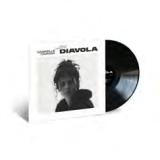
Die Traumstimme von Joshua Redmans Album „where are we“ mit ihrem Blue-Note-Solo-Debüt!
Als Saxofonist Joshua Redman 2023 sein Album „where are we“ veröffentlichte, ließ nicht nur er damit
aufhorchen, sondern auch die Sängerin auf allen Tracks: Gabrielle Cavassa. Das weltweite Echo war imposant, in Deutschland hieß es “Top-Sängerin“ (Stereoplay) und “bringen die Luft im Studio zum Flirren“
(Süddeutsche Zeitung). Bei der darauffolgenden Welttournee des Redman Quartet begeisterte die Sängerin
erneut das Publikum auch in Deutschland.
Mit ”Diavola“ gibt Gabrielle Cavassa jetzt ihren Einstand bei Blue Note. Dort kann sie erstmals auf
großer Bühne ihr Können als Sängerin und Songwriterin zeigen, sowie als Interpretin von Jazz-Standards
(z.B. “Prisoner of Love“) und klassischem Pop (“Could It Be Magic“) bis hin zu brasilianischen Songs (“To
Say Goodbye“ von Edu Lobo). Cavassas Stimme ist sinnlich und intensiv, obwohl sie mit den Melodien
und Tempi spielt, bleiben Seele und Aussage der Songs intakt.
“Diavola“ wurde koproduziert von Joshua Redman und Don Was und überzeugt auch durch brillante
Arrangements und exquisite Musiker: Jeff Parker an der Gitarre, Paul Cornish am Klavier, Larry Grenadier
am Bass, Brian Blade am Schlagzeug und Joshua Redman bei zwei Titeln am Tenorsaxofon.
out of Stock
Last delivered 5 months ago available to reorder, subject to availability
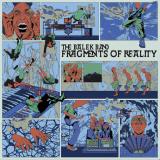
Some grooves don’t rush to the dancefloor — they crawl there, slow and heavy, like smoke wrapping around a bassline. With Fragments of Reality, The Balek Band sculpt an electronic funk that lives between shadow and light — an end-of-the-world fever dream, a Barjavel-style Ravage where chaos turns nihilistic.
No sequencer grid here — just four musicians sharing the same room, shaping air and tension together: drums locked tight with a slap bass, a guitar dripping with echo and heat, and a one-man orchestra behind his machines, weaving acid lines and synth arpeggios while mixing the band live — drenching it in delay, reverb, and saturation, like a dub producer in a Kingston studio, Lee Scratch Perry or King Tubby conjuring ghosts through smoke.
This isn’t fusion — it’s friction. A living ritual where the TB-303 hums, and machines don’t dominate but converse with the human pulse. Each track feels like a night that refuses to end — that humid in-between where trance slips into languor, and the body starts to think for itself.
The record recalls the cosmic jazz of Alain Mion or Eddy Louiss meeting the fiery energy of West African afrobeat musicians freshly arrived in a smoky Belleville basement in the mid-’80s. When The Balek Band summon ghosts, it’s only to reshape them — bending the past into something futuristic, alive, and strangely refreshing. Both disciplined and delirious, Fragments of Reality feels like a promise at dawn: dark funk for the late hours, slow acid for warm blood.
This EP isn’t nostalgic, though it remembers. It’s a transmission from a parallel past — a moment when jazz players met drum machines and decided never to stop playing. Each note sweats, each rhythm breathes. You can almost see the light cutting through the haze, faces half-awake, half-possessed.
The Balek Band aren’t recreating a moment — they’re keeping it alive.
Flesh and cables. Impulse and patience.
A band, not a loop.
A trip, not a format.
out of Stock
Last delivered 4 months ago available to reorder, subject to availability
Oceanine, Jolanda Moletta’s third album and her first for Beacon Sound, is a powerful and ethereal statement of artistic community. Expanding on her previous work, each track represents a collaboration with a different female vocalist, with the foundational elements being generated entirely by her own voice. By turns haunting, enchanting, and inspiring, you won’t want to come up for air once you’ve been pulled under. Representing a musical practice that is distinctly feminist, this is an album with a longer view in mind, to an age when the altars were to goddesses and women were centered as powerful beings representing the earth’s cycles of regeneration and renewal. Oceanine then, in all its beauty, can be viewed as an album of survival. It is deeply transportive, accessing something that lies within all of us. As the late, great Lithuanian folklorist and archaeologist Marija Gimbutas noted, “We must refocus our collective memory. The necessity for this has never been greater as we discover that the path of 'progress' is extinguishing the very conditions for life on earth.”
Jolanda Moletta is a multimedia artist and one-woman electronic choir. She creates wordless compositions through extended vocal techniques, integrating wearable-controlled live processing, alongside symbolic visuals. Moletta considers her performances to be a collective ritual and creates her Sonic & Visual Spells following the cycles of nature and the moon. Jolanda's 2022 critically acclaimed album Nine Spells was released on the Ambientologist label, followed by Night Caves on Whitelabrecs in 2025. Moletta’s artistic practice is a radical and spiritual journey through sound art, ritual, and the symbolic archaeology of the feminine.
Oceanine is inspired by sirens, water nymphs, and the timeless call of the sea. At its core lies Jolanda’s deep, lifelong connection to the Mediterranean Sea and to the ancient and modern myths and folklore that have emerged from its waters. Growing up by the Mar Ligure, Jolanda was surrounded by stories carried by salt, wind, and waves: legends of sirens, echoes of ancient voices, and the sea as both origin and oracle. This intimate relationship with the Mediterranean is not merely a backdrop, but a living source that shapes Oceanine’s emotional, symbolic, and sonic world.
Each track features a different female vocalist, creating a rich tapestry of voices, styles, and perspectives. This artistic choice not only broadens the album’s sonic palette, but also deepens its narrative core: celebrating the power, beauty, and mystique of feminine energy through myth, history, and sound.
The entire album is built exclusively from the human voice, processed and layered, yet always remaining voice, and nothing else. For each piece, Jolanda invited every vocalist involved to contribute a raw stem: a short, unedited melodic fragment of just a few seconds, inspired by the album’s themes. These intimate vocal seeds became the foundation of each track: the guest artists’ voices appear as brief, melodic stems, while the entire surrounding “orchestral” fabric is created solely from Jolanda’s own layered and processed voice. In this way, Jolanda’s voice becomes the Ocean itself, embracing, absorbing, and carrying the sirens’ calls within a vast, immersive soundscape. Every song is a unique expression of the feminine experience, revealing its depth, complexity, and emotional range, echoing the call of the sea and the many faces of the siren archetype.
The figure of the siren has transformed across centuries. In myths of Ancient Greece and Rome, sirens were hybrid beings, part woman, part bird, whose irresistible songs lured sailors to their doom. During the Middle Ages, the image shifted toward the half-woman, half-fish figure, often associated with temptation and danger. Historically, the voice of women has often been feared. Sirens were considered harbingers of misfortune not simply because they seduced or destroyed, but because they were powerful liminal beings.
In Ancient Greek, sirens functioned as psychopomps: figures who existed between worlds and guided souls, especially between life and death. Their songs were believed to carry forbidden knowledge, including prophetic insight and the ability to reveal truths about fate and the future. The danger of the sirens lay in what they revealed: knowledge that humans were not meant, or ready, to hear.
Oceanine confronts this legacy head-on. The voices heard throughout the album are not merely beautiful: they are dark and luminous, wild and enchanting, magical, soothing, dreamy, and at times fractured or distorted. They whisper, lament, beckon, and enchant. Like sirens, they skim the surface of the water and sink into its depths, hovering on the edge between tenderness and danger, vulnerability and power. They rise toward the sky, dissolve into mist, and return as echoes charged with raw, elemental emotion: voices that seduce, warn, mourn, and remember. They refuse to be reduced to decoration.
Alongside the album’s release in May, Oceanine will also unfold as a visual and performative work through a short art film. The film includes a live session recorded inside a sea cave facing the Mar Ligure, the very coastline where Jolanda spent her childhood, dreaming of sirens and listening to the sea as if it were speaking directly to her. This site-specific performance reconnects the music to its place of origin, allowing the voice to resonate within stone, water, and air, and transforming the cave into both a sanctuary and a threshold between myth and reality.
What if the sirens’ songs were considered dangerous because they carried another truth, an ancient truth long forgotten?
Oceanine embraces the idea that we are still deeply woven into myth. Though we may see ourselves as rational and modern beings, our world is saturated with ancient symbols and archetypes, often distorted, simplified, or stripped of their original meaning. And if those symbols are allowed to shift, if the mirror once held by the siren becomes an invitation to look beyond appearances and into what has been obscured, then we may finally uncover a deeper truth and reclaim the voice that was always ours.
Oceanine is not just an album. It is a reclamation, a spell, and a call from the depths.
Iconic Atlanta quintet SEVENDUST is back with its 15th studio album, ONE, set for release on May 1, 2026 via Napalm Records. The upcoming full-length LP forges ten simultaneously lean and gut-punching tracks out of gargantuan riffs, seismic grooves, and signature soul-stirring hooks, once again produced by Michael “Elvis” Baskette (Alter Bridge, Falling In Reverse, Mammoth). The group, comprised of Lajon Witherspoon (vocals), Clint Lowery (lead guitar, backing vocals), John Connolly (lead guitar, backing vocals), Vince Hornsby (bass), and Morgan Rose (drums), busts down the door with the first single “Is This The Real You”. Its swaggering fretwork alternately wallops and gallops in lockstep with a pummeling rhythm anchored by thunderous drums. The riff rolls and seethes, and the vocals swing from guttural growls into the embrace of a jazz-y chantable chorus.
A hummable lead ties the bridge together. Echoes of a tensely picked single-note set the tone for “Threshold.” Lajon’s delicate delivery gives way to a contentious distortion-boosted refrain. Then, there’s “Unbreakable,” which has all the makings of a clarion call for the collective and a future live staple. Strains of soft piano slip into the undertow of a towering hook punctuated by a promise, “We were meant to be unbreakable… even when we’re at our lowest lows. And if it gets too cold, I’ll never let you go.” The title track succinctly sums up the record as a whole. Bellowing out of a maelstrom of roaring distortion, Lajon’s voice reaches heavenly heights. For over three decades, SEVENDUST have made countless fans feel a part of something special. The group’s community isn’t passive. Members of the “7D Army” make a very active commitment to being part of this family – as evinced by sold-out shows worldwide and innumerable tattoos of the band’s logo and lyrics. Since 1994, the band has quietly built a legacy without parallel, encompassing sales of nearly eight million albums, a GRAMMY® Award nomination for “Best Metal Performance,” three Top 15 entries on the Billboard 200, hundreds of millions of streams, and the fierce loyalty of millions of listeners in every corner of the globe.
A century-old grand piano, a secluded house surrounded by the greenery of Brittany, no internet connection, and a reel-to-reel recorder.L'Écho de Bretagne, the new EP by Niklas Paschburg, set for release from fall 2025 via Nettwerk Music Group, is a solo piano record as essential as it is intense. An album made of silences, space, slowness. A music that doesn't chase impact, but truth.
the album release is march 26th - 2026.
If his previous work, Mexican Alps (2025), marked the first time the German composer and producer created an ambient-electronic album without his instrument of choice, the piano, L'Écho de Bretagne emerges as a direct response to that absence. "It was exactly the lack of piano that brought about the need for this new record, which instead puts that instrument, so vital to me, at the very center, stripping everything else away," Niklas explains.
Born in 1994, Paschburg has shaped over the years a musical path deeply connected to travel, nature, and introspection. From his debutTuur Mang Welten(2016) toOceanic(2018),Svalbard(2020),Panta Rhei(2023), and the aforementionedMexican Alps— alongside soundtracks, remixes, and collaborations with artists like RY X, Hania Rani, Ásgeir, and Bryan Senti — his sound bridges neoclassical, electronic, ambient, and pop-driven composition.
WithL'Écho de Bretagne, the Hamburg-born, Berlin-based musician continues his exploration by seeking solitude in nature, much like he did onSvalbard, but this time with an even more radical choice: disconnecting completely from the internet, and switching off both computer and smartphone for a while, in order to fully immerse himself in his new music. "I rented an old cottage in Paimpol, Brittany, where I knew there was a grand piano," he recounts. "When I got there, I discovered that not only was the piano more than a hundred years old, but it was also of an unknown brand, never restored, and quite difficult to play. But that gave it a unique character, and I didn't give up. Sure, it was an instrument left to its own fate, I couldn't play anything too fast. But how fascinating was that? I'm convinced that setting limits, instead of giving yourself total freedom when composing, can become an extraordinary source of inspiration."
As for the decision to temporarily detach from a life that demands we stay constantly connected, Niklas describes it as both a creative and human experiment. "I had my laptop and phone with me, just in case, but I kept them turned off. That choice made me wantL'Écho de Bretagneto be a fully analog work, even in how it was recorded." A way of clearing the mind. "I don't think I've ever been as calm as I was during those days in Paimpol. Even though I was working on a very specific project and didn't have much time, that period was more relaxing than any vacation."
Not that it was free of hiccups. "I'd borrowed a reel-to-reel recorder small enough to travel with me, but after recording a session on the piano, I realized it wasn't working properly, the sound was distorted, full of crackles. I got worried, because I wasn't near any big city where I could find a technician. Luckily, I figured out the problem was the old tape reels I had brought along. That was the only time I had to go online, to order new ones. But it was just for a moment. I shut everything off again right after." At that point, Niklas was waiting for the new tapes to arrive. He found out, completely by chance, from a local UPS courier that they had been delivered to a nearby village. "Since my phone was off, I couldn't track the shipment. So one day I asked this delivery guy, who didn't know anything about it. But from that point on, we'd see each other daily and talk… That's what being disconnected also means: reconnecting with people around you, even strangers. It was thanks to that courier that I found out where the tapes had ended up. And he even helped me get them back, writing directions for me on a scrap of paper."
But there's another element that makes this new EP unique.L'Écho de Bretagnewas recorded entirely live; its tracks are all improvised, complete with their imperfections. This approach leads to a sound that is pure, profoundly organic, and deeply authentic, intentionally preserved to give the listener the feeling of a live performance happening in their own living room. The touch of fingers on the keys, the breath of the wood, the tension of the vibrating string, all become part of the music. There is no construction, only expression. "Even now, when I listen back to it, I feel that moment I gave myself to step away from everything: from reality, from words, from noise." The result is a collection of suspended melodies and atmospheres, reflecting a state of the soul. A refuge from the rush of time. A pause from the world.