With their upcoming sixth studio album, “What A Time To Be Alive” , The Lone Bellow embarks on a bold new chapter while honoring the deep bonds that have defined their journey. Written collaboratively for the first time with their full touring band—founding members Zach Williams, Brian Elmquist, and Kanene Pipkin joined by drummer Julian Dorio and multi-instrumentalist Tyler Geertsma—the album channels the raw, ecstatic energy of the band’s live show into a dynamic collection of songs that pulse with warmth, honesty, and human connection. Recorded live in Muscle Shoals, AL, after a writing retreat in a converted Kentucky firehouse, the album is both a celebration and a reckoning: of friendship, loss, love, and resilience. From the gritty, Stones-tinged opener “After The Rain” to the soul-stirring closer “What A Time To Be Alive,” the record captures the joy and vulnerability that have long defined The Lone Bellow’s sound—lush harmonies, heartfelt lyrics, and genre-blurring arrangements steeped in folk, rock, and gospel. The album’s creation was marked by setbacks, including the theft of early recordings, but the outpouring of support from their fanbase reaffirmed what the band has always known: their music is a shared experience. That spirit echoes throughout the album, whether in anthems like “Common Folk” and “I’m Here For You,” or in intimate reflections like “You Were Leaving” and “Night Goes Black.” Since their acclaimed 2013 debut, The Lone Bellow has appeared on The Tonight Show, Austin City Limits, and The Late Show, topped Americana charts, and headlined storied venues from Carnegie Hall to the Ryman Auditorium. But with their next album, they reaffirm their commitment not just to making music, but to building community—on stage, in song, and around the table.
"The Grotesque Within" is what we proudly call our first true self-produced album. Recorded in the winter of 2025 between Outside Inside Studio in Treviso and our own home studio, it marks a raw and uncompromising chapter in our sound. The record weaves a dense narrative inspired by the unsettling atmosphere found in the works of Thomas Ligotti - where reality constantly threatens to unravel, and horror seeps into the everyday. Much like Ligotti's existential tales, The Grotesque Within doesn't simply portray darkness - it observes how the absurd and the horrific have become indistinguishable from our modern reality. Each track is a confrontation - with the bizarre, the dissonant, and the disturbingly familiar.This is not just an album. It's a descent into the uncanny that already surrounds us.
Neon Green Vinyl. Limited to 350 copies. "The Grotesque Within" is what we proudly call our first true self-produced album. Recorded in the winter of 2025 between Outside Inside Studio in Treviso and our own home studio, it marks a raw and uncompromising chapter in our sound. The record weaves a dense narrative inspired by the unsettling atmosphere found in the works of Thomas Ligotti - where reality constantly threatens to unravel, and horror seeps into the everyday. Much like Ligotti's existential tales, The Grotesque Within doesn't simply portray darkness - it observes how the absurd and the horrific have become indistinguishable from our modern reality. Each track is a confrontation - with the bizarre, the dissonant, and the disturbingly familiar.This is not just an album. It's a descent into the uncanny that already surrounds us.
Rhiza Semar presents its fourth chapter with Yildizlara, a four-track odyssey shaped from shadow, rhythm, and elemental texture. Crafted as both visceral tools and introspective journeys, the record navigates between ominous density and luminous release, guided by a deep awareness of space, myth, and matter. As an artist, Hitam paves the way for a new sound emerging from his burrows to build bridges between electronic subgenres while shaping a landscape unmistakably his own. Orb Weaver opens the cycle with jagged IDM rhythms that coil and release like threads of a web pulled taut. Originally composed for the graduation project of fashion designer Tim van der Plas, who's collection was inspired on climbing out of depression, its atmosphere is dark and ceremonial, with textures scraping against silence until catharsis emerges from the tension. A confrontation between inner turmoil and release. On Vanishing of the Anasazi, cavernous reverbs carry traces of lost structures, percussion echoing as if across ruins. A relentless drive holds the ghost of ritual processions, summoning a spectral energy that feels at once monumental and hollowed-out. The track suspends itself between presence and absence, architecture and collapse, leaving the listener in a space where echoes become the only surviving form of memory. Mesh Grip plunges downward into subterranean force. A thundering groove rumbles like minerals being unearthed, goblin-like figures at work in hidden shafts, chiseling away at stone in endless rhythm. From this pressure, a sudden swell of melancholy pads rises, reframing the heaviness with emotional resonance as if the whispers of angelic guardians seep into the caverns, transforming extraction into elegy. What begins as pure drive of endurance evolves into an introspective meditation. Closing the release, Yildizlara unfolds as an epic ascent. Layered rhythms rush forward with urgency, intricate yet propulsive, while chopped vocals bring back a sensual human element, scattering like signals across the night sky. Animalistic atmospheres dart through the mix as spectral cries and furtive movements, adding a primal dimension to the drive. What begins as erratic and untamed slowly converges into warmth and ultimate catharsis: a cosmic tale inscribed in sound, both intimate and monumental, familiar yet born of hidden memory. Yildizlara is both innovative and ancestral; a release where turbulence becomes ritual, and where rhythmic complexity unearths fragments of hidden memory. Beneath its dark and erratic surfaces lies a strange familiarity, like echoes of a primal past resurfacing through sound, reminding us of worlds once known but long concealed. Words by A. Veyra
out of Stock
Last delivered 6 months ago available to reorder, subject to availability
Swiss artist Lukas Traxel releases his powerful debut album One-Eyed Daruma on We Jazz Records, March 10. The trio features Traxel on double bass, Otis Sandsjö on sax and Moritz Baumgärtner on drums. Compact, deep, and organic to the bone, Traxel & co's sound echoes the innovations of rhythmically driven avantgarde jazz while keeping things moving at all times. There's both drive and freedom to this sound.
ONe-Eyed Daruma features eight new compositions by Traxel, who crafted the outline for the album while dealing with the loss of his father. The group came together after an open invitation from the Zurich jazz club Moods to present a new group. The trio of Traxel, Sandsjö and Baumgärtner creates a full, symphonic, and powerful body of sound despite the instrumentation without a harmony instrument. The trio functions as a collective where the boundaries between composition, melody, and accompaniment are in flux, while keeping the common goal of creating new music together in sight at all times. Traxel reports that after playing bass in various groups with guitar and/or piano, he wanted to create a counterpoint of sorts with his new group and specifically go about it with a more sparse setup. As One-Eyed Drama proves, the idea behind the trio dynamic is a strong one and the unit makes use of their extra space in creating evocative, moody, swinging creative jazz with a distinguishable fingerprint of its own.
Lukas Traxel says:
"The process of composing this music while dealing with the loss of a loved one resulted in a writer's block at first. The notes would just not flow out of my pen until I noticed a mysterious-looking figure in the right upper corner of my piano. It was a daruma, an eyeless figure that in the Japanese tradition brings luck and prosperity. According to the myth, the first eye must be drawn onto the figure while expressing a wish. The second eye can be added only if the wish comes true. My daruma is meant to stay one-eyed as my wish, strongly connected and intertwined with my now gone father, is not meant to be fulfilled. The feeling of unfulfillment and imperfection of life serves as a common thread throughout this album, right down to its title. In a similar fashion, a composition remains incomplete until it is interpreted by musicians, and given form as music. That being said, for me playing together with this trio symbolises the upside: the sense of fulfillment in music and life.
Our musical influences include the American composer and singer Caroline Shaw, Swiss pianist Colin Vallon's trio, and composer/singer-songwriter Gabriel Kahane. In addition, I have listened a lot to the trio albums of Jimmy Guiffre and Sonny Rollins. Besides that, my musical heroes like Charlie Haden, John Coltrane, and Keith Jarrett always flow into the music. Another very important influence in the music is the work of American visual artist Agnes Martin, in whose works the imperfection of a multiplicity of repetitions results in a lively big whole in the end. (See "Wild Flower")
Live, the trio takes a lot of freedom in interpreting this music, yet we have a deeper, almost pop-like attitude towards the live performance as an experience. For me it's always important to build a strong narrative with the band while on stage."
One-Eyed Daruma by Lukas Traxel is released on 10 March 2023 by We Jazz Records on LP/CD/digitally. The LP edition is shelved in an inside-out sleeve and pressed on white vinyl. The CD is housed in a cardboard digisleeve with UV lacquer finish.
out of Stock
Last delivered 3 years ago available to reorder, subject to availability
Bless the Maker: the Great Houses of Laced Records and Funcom have forged a temporary trade agreement to bring you the expansive soundtrack for ‘Dune: Awakening’ on vinyl. The hit survival game has garnered critical praise for its incredibly faithful and detailed realisation of the Dune universe - from its sprawling vistas to deep lore and political intrigue. The music is integral in recreating the atmosphere of Arrakis, conjuring not only its striking landscapes but the human experience of life on the planet. Recorded live at Air Studios in London with The Chamber Orchestra of London, Knut Avenstroup Haugen’s soundtrack conjures a planetary sense of scale.
Arcing strings shimmer and twist weightless in the air like heat rising from the desert floor, while resonant brass evokes dawn stretching out across the sands. The luscious acoustic instrumentation is enhanced and elevated by rippling electronics, capturing Dune's singular blend of science fiction and spiritual tradition. Soaring vocal performances from Clara Sorace, Eurielle and Emília Rovira Alegre centre this sense of the sacred, pushing the soundtrack to ecstatic emotional peaks. Black heavyweight double vinyl. 24 tracks from the acclaimed 2025 survival game. Widespined outer sleeve Printed, spined inner sleeves. Bespoke sleeve artwork by Funcom.
out of Stock
Last delivered 8 months ago available to reorder, subject to availability
Following the reissue of The Pocket of Fever, Ambient Sans presents the second chapter in Masahiro Sugaya’s visionary work for the avant-garde performing arts company Pappa TARAHUMARA.
Founded by Hiroshi Koike in 1982, Pappa TARAHUMARA blended dance, theater, music, and visual art into abstract, immersive stage worlds. Sugaya’s compositions became the sonic counterpart to this radical aesthetic—minimal yet deeply evocative, combining electronics, ambient textures, and delicate melodic gestures into a sound language both intimate and expansive.
Music From Alejo marks his first original stage score for the company: a work where repetition and silence intertwine with shimmering synthesizers and dreamlike motifs, conjuring atmospheres that feel suspended between reality and reverie. More structured than The Pocket of Fever yet equally poetic, the album reveals Sugaya’s gift for translating movement into sound, balancing modern composition with subtle echoes of Japanese tradition.
Reissued for the first time on vinyl, Music From Alejo includes a printed insert featuring an exclusive interview with the artist, alongside photographs from our visit to his home in Japan. Essential listening for anyone drawn to the ambient minimalism of Hiroshi Yoshimura, Midori Takada, or Brian Eno—reimagined here through the lens of Tokyo’s experimental scene of the 1980s.
out of Stock
Last delivered 7 months ago available to reorder, subject to availability
Rising from Warsaw’s underground, Infernal Flame conjure a bleak and uncompromising vision on their debut full-length The Grave. Originally self-released digitally on February 13, 2025, the album now sees its first physical incarnation through Apostasy Records - soon available on CD, vinyl and cassette. Across nine tracks, the Polish quartet fuse the weight of cavernous death metal with the scorched atmosphere of black metal, forging a sound that feels both raw and deliberate - a ritual equal parts feral energy and fatal precision. From the slow-grinding opener “Dreadead” through the tar-soaked menace of “Cauldron of Black Tar,” the feverish descent of the title track and the final farewell of “Godbye,” The Grave unfolds like a single, unbroken passage through dread and decay. Formed in 2024 and operating deliberately outside the label system, Infernal Flame channel a rehearsal-room immediacy that recalls the early second-wave spirit while carving out a distinctly modern darkness. Still largely unreviewed and shrouded in underground obscurity, The Grave stands as an intense and authentic statement - from a band intent on burning their own path through Poland’s black/death scene.
Helsinki quartet Alder Ego, led by drummer/composer Joonas Leppänen, returns with their new album "III" on 9 April on We Jazz Records. A follow up to their successful 2018 We Jazz album, "III" finds Leppänen and his bandmates extracting more depth and punch out of their tenor sax + trumpet + double bass + drums setup, which echoes the greats in the game, such as Ornette Coleman, yet adds a readily identifiable edge to it all. Leppänen's writing is evolving, becoming more and more of a signature of the band and sounding delightfully angular yet easily flowing. On "III", Alder Ego features Leppänen on drums, Jarno Tikka (of OK:KO) on tenor sax, Tomi Nikku (of Bowman Trio) on trumpet and the new addition Nathan Francis on bass.
Kicking off with a key track introducing the band's deep sound, "Love And Maladies", "III" moves through a sonic landscape which is constantly surprising yet identifiable as Alder Ego guided by Leppänen's musical vision at all times. This is true even during moments when the composer himself steps aside, namely in the Tikka–Nikku duo cut "Impermanence" and Nathan Davis's highly memorable solo outing "Nathan's World".
The album's many highlights include singles "November Ghost" and "I Saw It In a Dream", plus the stunning closing track "Ephemeral", featuring Natalia Castrillon on harp.
Alder Ego "III" is available on We Jazz Records on as orange and black vinyl editions, digitally, plus as a bundle bringing together "III" and the band's 2018 album "II".
out of Stock
Last delivered 5 years ago available to reorder, subject to availability
Loaded with tension and anchored by bold textural and stylistic contrasts, Sam Slater’s third solo full-length finds the British sound artist, composer, and engineer grappling with his creative contradictions head-on.
Having spent a life time in bands and producing records, Sam transitioned somewhat by accident through his work with Johan Johansson into working as a composer on high profile projects such as his collaboration with Hildur Guðnadóttir on the Grammy Award-winning Joker and Chernobyl, and with Pulitzer Prize-winning journalist Mstyslav Chernov on the soundtrack to the lauded 2000 Meters to Andriivka. Having a vast set of interests and influences is an asset when helping realise a directors vision for a soundtrack, but one's own musical voice can end up being constrained. In Lunng, Slater has gone back to his wildly divergent range of influences and rather than shy away from the extremes, he's used them to create a singular vision.
Take the opening track “Heatsick”: Slater imagines an extravagant fusion of 2000s drone metal and vintage British brass, welding ear-splitting overdriven drones and blown-out choral vocals to stirring trombone swells from veteran player Hilary Jeffery. On paper, it’s hard to imagine—but Slater’s intentionality conducts these polarizing elements into a surreal blur of sonic extremes, with the guitars’ relative harshness softened by Jeffery’s eerily nostalgic colliery echoes.
His last solo album, I do not wish to be known as a Vandal (Bedroom Community, 2022), showcased this breadth by assembling a team of collaborators including Sam Dunscombe and Yair Elazar Glotman. On this record he’s linking up with acclaimed multi-instrumentalist Maria W. Horn, idiosyncratic sax virtuoso Bendik Giske, versatile percussionist Adam Betts, and the aforementioned Jeffery, Slater ushers these players toward a lattice of calculated confutations.
Working to explore the tension between the divergent practices of his collaborators—Lunng was meant to be challenging. On “Praya”, Giske’s familiar overblown horn phrases are almost vaporized, vanishing among Slater’s weightless synths and Horn’s chillingly hoarse vocals. There are traces of Horn’s Funeral Folk project, but Slater shifts the emphasis, letting her voice brush past the other elements like a hallucination.
Slater’s use of extremes isn’t just in the micro; dynamics drive the album’s overall flow. “Praya” sets the stage for the record’s heaviest, most prickly moment: “Passengers”. Here, Horn’s voice cracks, rasps, and gurgles over serrated synths and Betts’ ritualistic drums. Slater turns an industrial symphony into a folk opera—dark, dramatic, and strangely beautiful—etched with Giske’s fluttering phrases.
But the mood soon shifts. Slater careens toward chaos, unleashing double-time rhythms and piercing textures familiar to anyone with a soft spot for classic black metal. These grotesque incongruities are deliberate; Slater surveys years of musical conflict and leans in, using dissent as fuel to build kinetic energy.
The weight of sentimentality bears down on “Black Metal Rewind (Night Drive Astra, 2006)”, melting teenage memories into hypnagogic ambience—shoegaze dreams whirled with angelic choral delusions. On “Death by Nostalgia, 1688”, he ventures further into polarizing territory, distorting AutoTuned voices with cryptic strings and medieval tonalities, unsettling any stable sense of past or present.
In this record Slater focuses on pure energy, color, and mood. Lunng distills years of listening into a bracing brew—boiling each sound down to its essence, then serving it with unflinching intent.
This is the sound of Innershades... next part of the Homage to the sound of Belgian clubs in the late 80's, early 90's. Inspired by records from iconic labels and stores as R&S, Music Man, USA Import and Antler Subway. Music that didn't stop at the border but also got picked by the resident dj's of the underground clubs in Rotterdam.
out of Stock
Last delivered 81 days ago available to reorder, subject to availability
Killer Groove Records proudly presents the debut 45 by Italian cinematic funk trio Atabasca. A syncopated journey where funk, psychedelia, and cinematic groove merge into a timeless narrative suspended between rhythm and vision.
"Cacopoulos" and "Kundela Mawedi" mark the birth of Atabasca's sonic universe: the first two singles from the upcoming self-titled debut album,which will be released on March 27 in limited-edition LP, CD digipack, and digital formats.
On the A-side, "Cacopoulos" is an impetuous, visionary ride that fuses the power of instrumental groove with the evocative imagery of library music and Italian golden-age soundtracks. From the first beat, listeners are drawn into a dry, dusty landscape driven by a primal drum groove and the acid twang of a guitar that evokes the spirit of classic Westerns. Indeed, "Cacopoulos" pays homage to I Quattro dell'Ave Maria (Ace High) and to the legendary Eli Wallach, the sly outlaw who turns deception into revenge, a subtle yet powerful nod that ties the trio's sound to imagery steeped in dust, dreams, and redemption.
On the flip side, the sound of an old lap steel guitar evokes the gentle waves of the sea, opening the doors to "Kundela Mawedi", a dreamy track with exotic tones and heavenly atmospheres. The sonic journey unfolds through hypnotic rhythms and echoes of ancient cultures, where ethereal voices and warm, entrancing bass lines intertwine with psychedelic riffs and evocative guitar melodies, merging into a soundscape rich in warmth and mystery. The chorus, with its unexpected choral chant, adds a spark of magic. An elegant twist that gently stirs the dreamlike mood and transports the listener into a new sonic dimension, steeped in mysticism and tribal vibrations. "Kundela Mawedi" is more than just a song: it's a sensory experience, a musical ritual where tradition meets psychedelia, sand meets sea, and the soul dances upon the waves of time.
Recorded in a single take, the session captures the raw energy and natural atmosphere of the performance. Artistic production was handled by the trio alongside Andrea Fabrizii (digger, musician, producer, and catalogue curator for CAM Sugar), while Riccardo Ricci mastered the tracks at Velvet Room Mastering Studio in Brighton.
A killer double-sider, blending psychedelic and funk moods with percussive, jazzy textures. A must-have gem for every groove-loving DJ.
Like a desert blooming within the evergreen forests of the planet's far north, a unique, alien, disruptive environment: this is the vision behind Atabasca, the project of Luca Mongia (guitars, lap steel, keyboards, vocals), Paolo Mazziotti (bass, keyboards, vocals), and Valerio Pompei (drums, percussion, vocals). Individually active for over twenty years on both national and international scenes, the three musicians came together in 2023 to create a project that merges experience, experimentation, and creative freedom. Their music is imaginative and at times dreamlike, blending the classic concept of the instrumental trio with the worlds of film scoring and sound design.
Atabasca's sound moves through jazz-funk, world, and cinematic territories, weaving together afrobeat, desert, and psychedelic influences into a personal and timeless language. Each piece is a scene; each sound, a fragment of a world, a journey between reality and imagination where groove, texture, and organic timbre merge into a singular sonic ecosystem: a perpetually shifting balance that generates new inner landscapes.
Fans of Khruangbin, Surprise Chef, and instrumental psych-funk, take note!
out of Stock
Last delivered 8 months ago available to reorder, subject to availability
In 2017, at Documenta Kassel (but in Athens), I invited José Jiménez Bobote, a remarkable gitano artist from the Tres Mil Viviendas neighbourhood in Seville, to record a series of actions in specific locations in the Greek capital. Ancient Greece and modern Greece. I wanted him to draw sound from the city, to strike it as only a flamenco artist can, with his feet. To hit the ground and make it moan, ring out with noises evoking significant moments in history: from Diogenes the Cynic and the Apostle Paul’s sermon at the Areopagus to Rosa Eskenazi’s resistance to the Nazi-German occupation, and the ups and downs of police Inspector Costas Haritos’s survival at the European Bank during the PIGS crisis. Bobote struck the ground and Athens responded, sending back echoes of the past, in an exceptional anachronistic exercise. In flamenco it is possible for several times to sound simultaneously.
We took seventeen hours of footage, and water from many wells.
I then shut away producer, musician, and friend Raül Refree with this material so that he could take the long titles and use them as scores, turning them into mere songs. It was very important to think in terms of songs. The tracks had to have the capacity to be songs, the kind of thing one whistles while absent-mindedly walking down the street. Generally speaking, the scores—that is, the texts—defended the use and abuse of the loose coins that people carry around in their pockets. Loose change as a kind of everyday fetishism against big financial capital. Pistis! Refree managed to coax that distinctive unity of songs, their bright catchiness, from the amalgamation of sounds that would, in other hands, end up being labelled concrete music. Peter Szendy would be pleased and grateful. Being able to sing under one’s breath something that others consider simply noise.
Seven songs, yes. And if you get the chance, take a stroll through Athens with them: the locations are clearly defined. If not, then let Athens fill your home with all its ancient wisdom, boring into your ears like worms, making holes in history.
Listen, and, as people used to say, turn up the volume!
Pedro G. Romero, Santa Marta, Colombia, November 2025
Comes with booklet with song lyrics written by Pedro G. Romero. Limited edition of 250 vinyl records.
Federsen’s Alt/Dub imprint returns with its second instalment of its Artist Series featuring Forward Memory, Thomas + James, Gradient and Beppu.
Federsen, known for his deep Dub Techno sound, launched his label Alt Dub in 2024. The imprint focuses on warm and spacious dub aesthetics, carrying the torch for Dub Techno’s origins. Since its debut release in early 2024, Alt Dub has expanded with collaborations and artist series featuring names like cv313 and Fletcher, establishing itself as a forward- thinking force in modern Dub Techno.
Forward Memory’s ‘Scholz’s Star’ leads the release, laying down organic percussion and twitchy, oscillating synth grooves alongside, subtly evolving textural components and evolving bottom end swells.
Glaswegian duo Thomas + James follow next with ‘Chosen Colour’, a deep immersive journey fuelled by billowing ethereal pads, bumpy bass stabs and a raw, reduced rhythm section.
Respected Dub Techno artist Gradient follows next on the flip side with ‘Vibes Realm’, delivering his signature floaty style via shimmering dub stabs, crisp drums and a swaying bottom end drive.
Beppu’s ‘Conversions’ then concludes the EP, shifting gears once again as spiralling dub echoes, hissy atmospherics and wide bass intertwines with delayed, broken rhythms.
out of Stock
Last delivered 7 months ago available to reorder, subject to availability
Whitelands' second album Sunlight Echoes builds on their elemental debut - that won them fans from Slowdive to David Jonsson - with a more expansive sound that takes them out of the shoegaze shadows to somewhere bigger, better and brighter. Produced by long-time collaborator Ian Flynn and mixed by double Grammy Award-winner Eduardo De La Paz (New Order, The Horrors, The Charlatans, The KVB, Drug Store Romeos), there are soaring string arrangements (by Iskra Strings) and Lush guest vocals from labelmate Emma Anderson. "We're coming back with a lot more maturity and realness," says singer and guitarist Etienne Quartey-Papafio of their step up. "It shows in how much more emotional our music has become." With maturity comes a newfound confidence, so not only are there stunning melodies everywhere, but Etienne's vocals are front and centre throughout. "It's been really cool to watch Etienne push through boundaries," adds bassist Vanessa Govinden. "I like the direction we've taken on this album. We're taking a risk. It's half and half." She's right - the first half of the album has an almost Britpop breeziness, that belies the serious subject matter that inspired the songs, while the second half gets heavier, in all senses, with added grit and gravitas."This album is one of enduring," says Etienne of the overarching theme. "We had family that were dying, I was broke, there was a shortage of my ADHD medication_ I was suffering, but not just me, everyone around me was too." "The last two years have been challenging," concludes Vanessa. "The universe really fucked with us. That's why there are themes of loss, disconnection, fragmentation and yearning, but on the other side there is also unity and hope." Sunlight Echoes is a poetic, melodic statement of intent from this formidable band. Whitelands have fought back and triumphed in the face of adversity.
The journey through French-speaking pop archives continues with this fifth volume, packed with fuzz, gimmicks, and dissent. Far from the charts, the selected tracks display a great creative freedom, often backed by corrosive humor. Welcome to the surprising, kaleidoscopic, and colorful world of the late sixties and early seventies, Wizzz!
Born in Montauban, Robert Pico stumbled into music by chance when he met René Vaneste, then artistic director at Pathé-Marconi. René brought him to Paris to record his first 45 RPM EP in 1964. A year later, Pierre Perret introduced him to Vogue, where he recorded his second album with Claude Nougaro’s orchestra. Sylvie Vartan then introduced him to RCA, where he recorded four singles, including the astonishing "Chien Fidèle," a track backed by a hair-rising fuzz guitar. Alongside his solo career, he also composed for other artists like Alain Delon (the song was recorded but remains unreleased), Magali Noël, Bourvil, and Georges Guétary. In the Paris of the sixties, he mingled with Mireille Darc, Elsa Martinelli, Marie Laforêt, France Gall, Françoise Hardy, Petula Clark, Régine, Dani, Serge Gainsbourg, Joe Dassin, Franck Fernandel, Charles Level, and Roland Vincent. Despite his efforts and winning a Grand Prix Sacem for his final record, Robert Pico didn’t achieve the expected success in show business and decided to leave Paris and return to the Southwest, where he devoted himself to writing. He is the author of 23 books (including Delon et Compagnie, Jean-Marc Savary Editions 2025, a memoir about his youth and his many encounters). Today, he is relieved to never have become a celebrity and devotes himself to his work with passion.
In 1969, the Franco-Italian movie Erotissimo was released, directed by Gérard Pirès (who later directed Taxi in 1998, written and produced by Luc Besson). This pop comedy features Annie Girardot, Jean Yanne, Francis Blanche, Serge Gainsbourg, Nicole Croisille, Jacques Martin, and Patrick Topaloff. The soundtrack was written by Michel Polnareff and William Sheller, with lyrics by Jean-Lou Dabadie. "La Femme Faux-cils," performed by Annie Girardot. It recounts the feelings of a rich CEO's wife who seeks to develop her sex appeal under the influence of advertisement and magazines. Groovy, sparkling and light, this track, with ITS lush arrangements humorously critiques consumer society and feminine beauty standards.
“Je suis l’Etat” (1967) is the flagship track of the first EP by singer-songwriter Spauv Georges, aka Georges Larriaga, better known as Jim Larriaga (1941-2022). Born into a family of bakers, the young man was initially planning to become a hairdresser when he discovered English-speaking music through Elvis Presley and the Beatles. After this revelation, he decided he would become a songwriter and gave himself five years to succeed. He recorded his first two EP’s independently for RCA under the pseudonym Spauv Georges; meaning “that poor George”, a nickname given to him by the mother of her friend Jean-Pierre Prévotat (future drummer of the Players, Triangle, or Johnny Hallyday). Portraying a depressed and eccentric young man, Spauv Georges created corrosive and amusing songs that didn’t reach a wide audience, despite a TV appearance with Jean-Christophe Averty.
Supported by his loyal friend and fellow songwriter Jean-Max Rivière, Georges Larriaga met the future singer Carlos in the early '70s, then Sylvie Vartan’s assistant. He wrote songs for Carlos, including the popular "La vie est belle," "Y’a des indiens partout," and "La cantine", which went onto become a huge hit in 1972. He also composed for Claude François (“Anne-Marie”, 1971), Charlotte Julian (“Fleur de province”, 1972), helped launch child singer Roméo (who sold 4 million records), and later wrote the hit "Pas besoin d’éducation sexuelle" (1975) for the young Julie Bataille. In 1971, Jim recorded an album for Disc'Az: “L’univers étrange et fou de Jim Larriaga”, which featured pop gems like “La maison de mon père”.
The story of the song "Zoé" began when Pierre Dorsay, artistic director at Vogue Records, asked Swiss singer and musician Pierre Alain to write a song for a new female singer. The inspiration came when he realized that Zoé (the artist's name) was also the name of France's first atomic battery, created in 1948, which consisted of uranium oxide immersed in heavy water! The lyrics reflect a bubbling energy that must be handled with caution, while the instrumentation echoes this atomic theme, notably with the use of a theremin.
Zoé’s career lasted only as long as a single 45 RPM, but it seems Christine Fontane was the vocalist behind this pseudonym, who is known for several EPs, a good "popcorn" album in 1964, and a handful of children’s singles in the '70s. Regardless, the photograph on the cover is of a different girl entirely.
Later, Pierre Alain continued his career, writing songs for himself, Marie Laforêt, Danièle Licari, Alice Dona, Arlette Zola (3rd place in Eurovision 1982), and achieving multiple gold and platinum records in Canada. Also an inventor with several patents, president of the Romande Academy, and head of the French Alliance in Geneva, he now composes atonal music, books, and poetry. Moreover, he is also the host of "Les Mardis de Pierre Alain" at "Le P'tit Music'Hohl" in Geneva.
Filled with oriental choruses and fuzz guitar, "Fou" is from Jacques Da Sylva's only EP released by Vogue in 1967. Despite the quality of this recording, all traces of this singer disappear after this first effort.
Valentin is a baroque pop singer born in Belgium. He is the songwriter and composer of most of the tracks on his three singles released in the late 60s in Canada. A legend says that he reincarnated himself as Jacky Valentin during the 1970s for a rock'n'roll revival career in Belgium, but his older brother sadly debunked this story. Valentin's first two singles were arranged by Claude Rogen, a Parisian session pianist who had come to Canada to promote the song “Mister A Gogo”, a cover of David Bowie’s “Laughing Gnome”, adapted by singer Delphine, his wife at the time. Far from his usual network, Claude Rogen arranged music for Polydor, including the arrangements for “Je suis un vagabond” in 1969, a jerk tune with string arrangements and a furious optimism.
Jacques Malia wrote, composed, and recorded his only 45 EP for Festival in 1966. “Histoire de gitan” is an incredible beat track with bohemian scat that tells the story of a gypsy musician who came to Paris to make it in the Music-Hall, to no avail. The hero of the song and its author probably shared a similar fate, as Jacques Malia faded into anonymity after this remarkable attempt.
Bernard Jamet recorded two EPs for Barclay in the late sixties and co-wrote several songs with Christine Pilzer, Pascal Danel, and prolific songwriters Michel Delancray and Mya Simile. The track “Raison Légale” (1968), his masterpiece, immerses the listener in a courtroom right when a murderer is being judged, with jerk rhythm and free arrangements. A unique, paranoid, judicial, and psychedelic oddity.
Jean-Pierre Lebrot-Millers started his career in show business in 1967 as a singer and songwriter for the Philips label. After three singles, he wrote several songs of a new kind with his friend Pierre Halioche, in the midst of the sexual liberation movement and the democratization of drugs. With provocative lyrics, “Les filles du hasard” and “Barbara au Chapeau Rose” were released on a Philips singles in 1968. The character of Barbara was inspired by a queen of Parisian nightlife during the psychedelic years: model Charlotte Martin, who dated Eric Clapton from 1965 to 1968, then Jimmy Page from 1970 to 1983. Jean-Claude Petit’s arrangements, with a table-filled intro, soul brass, and Hendrixian guitar, emphasize the flamboyance of a hedonistic and sexy character, whose dog is named Junkie because “Junkie est un nom exquis”! The track was recorded live in three takes with a full orchestra.
Upon its release, the record was censored by Europe 1 and RTL due to its references to drug use. Jean-Pierre Lebrot was then banned from the airwaves and later dismissed by his record label. He changed his artist name to Jean-Pierre Millers, while his companion Pierre Halioche became D. Dolby for a new dreamy composition, “Chilla”, which Jean-Pierre produced himself with arrangements by Jean Musy. Once again, the song was immediately censored everywhere. After this setback, he decided to stop singing and started taking on odd jobs to support his Swedish wife and their son until the day he met Jean-Pierre Martin, then production manager at Decca, who had worked with Manu Dibango. Martin offered Jean-Pierre Lebrot-Millers, then employed at Rank Xerox, the position of artistic director at Decca. He accepted and became, a year later, promotion director (radio, press, TV). He worked on Julio Iglesias’s first album for Decca, which became a massive hit and allowed him to meet Claude Carrère. The latter asked him to write new songs and find their performers, much like a “talent scout.” It’s through him that Jean-Pierre discovered Julie Pietri and Corinne Hermès. He composed “Ma Pompadour” for Ringo, Sheila’s husband, and took the microphone again for the syncope hit “Rendez-Vous” in 1982.
That same year, Jean-Pierre Lebrot-Millers tried to release a track for which he had heavily gone into debt: “Si la vie est un cadeau”. Having recorded it in London, he presented it to numerous professionals, all of whom refused to get involved. The same thing happened with Antenne 2 and the Sacem when he proposed the song as France’s entry for Eurovision. He then met Haïm Saban, who was producing cartoon soundtracks and had just launched the Goldorak theme song. Saban, having listened to the song, declared it had the potential to become a hit. He sent Jean-Pierre and Corinne Hermès to meet the CEO of the Luxembourg radio and television network. The latter received them, asked to hear a verse and chorus a cappella in his office, and immediately hired them to represent Luxembourg at Eurovision 1983. They reworked the arrangements and recorded a new version with Haïm Saban as co-producer. The song ended up winning Eurovision 1983, a great comeback for our hero. He continued producing and hung out with the band Nacash in Belgium when a couple came to introduce their daughter for an impromptu audition in a hotel room. The girl sang “Les démons de minuit” while dancing to a radio cassette. Impressed, he had her take singing lessons for a year and composed a song for her (for which he had the melody and title, but no lyrics). This required him to go on the hunt for a lyricist, who ended up being Guy Carlier. They recorded the song, which was initially a ballad, at Bernard Estardy’s CBE studio, and gave the singer a new name: Melody. They showed the song around their industry network without success. Later, Estardy called Jean-Pierre to suggest changing the rhythm and making it pop-rock. Orlando, Dalida’s brother, liked the result and decided to co-produce the track. “Y’a pas que les grands qui rêvent » became a classic hit. The song has since been covered by Juliette Armanet (as a ballad, like the original) and Valentina.
Born into an aristocratic Breton family, Hervé Mettais-Cartier worked as a DJ at Queen Kiss, a nightclub in Poitiers, where he formed the band Les Concentrés with Michel (an actor) and Christian (a radio technician). Together, they created a repertoire of whimsical songs (“Ma bique est morte”, “J’suis un salaud”, “Fils de dégénéré”...) that they performed on stage dressed in white (in homage to “concentrated milk”). They performed at Bliboquet and Olympia in 1968 for the 10th edition of the “Relais de la chanson Française” organized by L’Humanité-Dimanche and Nous les Garçons et les Filles, sponsored by Pepsi Cola. Winners in the author-composer category, alongside Danish singer Dorte, their visibility allowed them to record a 45, and appear on television in Jean-Christophe Averty’s show. The A-side of the disc features Bruno le ravageur, a casatchok dedicated to Bruno Caquatrix, the director of Olympia, nicknamed in the song “Coq Atroce” or “croque-actrices”. The B-side is dedicated to “Fils de dégénéré”, a quirky tribute to Hervé's aristocratic roots, mixing absurdity with sophisticated vocal harmonies.
After Les Concentrés, Hervé Mettais-Cartier formed the duo La Paire et sa Bêtise with his friend Olivier Robert. They performed in Parisian cabarets and toured with Pierre Vassiliu. In the late 1970s, Hervé began a solo career. He recorded two albums for the Motors label in 1978 and 1979, which did not achieve their anticipated success due to lack of promotion. In 1980, he met Bernadette, with whom he started a family and created a “Chansons à voir” (songs to see) show that he performed until his death at the end of 2024.
Publicité comes from the final EP by the Missiles (Ducretet Thomson, 1966), a disc that also includes “La (nouvelle) guerre de cent ans”, featured on Volume 4 of our Wizzz! series. Please refer to the booklet for the story of the band.
“He’s 1.82 meters tall, 28 years old, weighs 135 kg, is black and Belgian”: this is the description of singer Hegesippe on the back of his sole single (Decca, 1967). He appears on the album cover wearing a Greek toga, like a hippie gag – we are at the end of the year 1967. In “Le crédo d’Hegesippe”, this former bodyguard of Antoine and the Charlots plays the delightful card of the thick brute converted to Flower-Power and non-violence, with arrangements by Jean-Daniel Mercier, aka Paul Mille.
“Ethéro-disco” was released on a promotional record for clients of the Maréchal company (Liège, Belgium) for the New Year 1979. Over a funky rhythm, celebrity impersonations (Brigitte Bardot, Jacques Dutronc, Fernandel…) deliver an enigmatic text about pharmaceutical products like ether, bismuth, and aspartate. The track was composed by Dan Sarravah (responsible for Joanna's “Hold-up inusité” featured on Wizzz! Volume 3) and Tony Talado, who was also a singer (one 45 in 1967), songwriter (with over a dozen credits between 1964 and 1985 in various styles from surf music to disco), author (Devenez Végétarien, Dricot Editions, 1985), ad designer, and psychologist.
Décollez-les is on the A-side of Mamlouk's only single, a pseudonym for Marsel Hurten, who is known for his work on several EPs in the late sixties, as well as composing music for Hervé Vilard’s “Capri, c’est fini”, Claude Channes' “La Haine”, Annie Philippe’s “On m’a toujours dit”, and Nancy Holloway’s “Panne de Cœur”.
This strange song, with Afrobeat horns and absurd dialogues between a chef and his kitchen staff, is the result of a collaboration between Marsel Hurten and one of his neighbors, a photographer from Pavillon-sous-Bois (93), where the musician settled after returning from the Algerian War. A music video was shot to promote the record.
Marsel Hurten was born in Tourcoing (59) into a musical family. At a young age, he joined the brass band founded by his grandfather, playing the piston before studying trumpet at the conservatory, as well as teaching himself how to play the guitar. As an orchestra musician, he toured in France, Belgium, Germany, and England. He released a series of solo 45’s between 1965 and 1968 for the DMF and Az labels before stopping recording to focus on working for other artists (Gilles Olivier, Noëlle Cordier…).
“L’amour nu” (Vogue, 1971) is the work of the short-lived Belgian band Mozaïque. The track, written by singer Jacques Albin, closely resembles another of his compositions, “Carré Blanc”, which he recorded in 1969 for Disc’AZ.
Represented by the Lumi Son micro-label based in Marignane (Côte d'Azur), Jean-Marc Garrigues released two 45 RPMs in the late sixties, defending the French jerk sound. The song “Je dis Non” is a short, joyful ode to youth, pop music, and rebellion.
Songwriter and performer Jacques Penuel released three singles. The first one, “Astronef 328” (Fontana, 1969), features a dizzying series of chords punctuated by sound effects, a sci-fi story, and arrangements by Jean-Claude Vannier.
We would like to sincerely thank Pierre Alain, Moon Blaha, Marsel Hurten, Bastien Larriaga, Jean-Pierre Lebrot-Millers, Bernadette Mettais-Cartier, Robert Pico, Olivier Robert, Claude Rogen, Micky Segura.
out of Stock
Last delivered 8 months ago available to reorder, subject to availability
'In 2023, sound artist and composer Weston Olencki toured across the American South. Beginning in their hometown in South Carolina, they snaked a circuitous path from the mountains of West Virginia to the banks of the Mississippi River. As the miles accumulated, so did the initial seeds of new work.
'Instruments and artifacts they acquired hitched a ride in the backseat, while songs and sounds filled their portable recorder: water in its various states, the familiar insectoid buzz of those summer nights, trains cutting through the landscape, the traditional music that lived alongside the communities that kept it. Olencki took it all in, and over time, found ways that these experiences coalesced into a bramble-like perspective of time, where past, present, and future intersect in ways both barbed and beautiful.
'Broadsides, Olencki’s newest solo full-length is the multilayered result of this journey. The album follows their landmark release Old Time Music from 2022, which presented radical interpretations of traditional tunes from Appalachia and throughout the South alongside original compositions that drew significantly on archival recordings. On Broadsides, Olencki rejects delineations between the unmoored avant-garde and the rootedness of one’s cultural heritage, revealing their porous and intertwined nature. “My mother was a quilter. Her mother before that,” they write in the album’s liner notes. “Quilting, like music, is a practice of embedding knowledge and remembrance into the very core of the thing you are making. It’s not just about the materials, but how they’re reassembled, recontextualized, stitched, woven to form new patterns - the minutiae of craft holding significance to those looking to find it. Stories woven from stories, never told the same way twice.”
'Like all great road trips, Broadsides unfolds slowly and continuously, with moments of dramatic reverie punctuating the endless melt of highway in the rearview. We’re immediately confronted by the uncanniness of revisiting old haunts, as Southern storms break through the initial churn of the freight locomotives of Alabama. Olencki’s interpretation of the bluegrass standard “Foggy Mountain Breakdown” captures the euphoria of melancholy in motion. The permutational plucks of banjo are bounced around the frame by a computer, its pitches determined within algorithmic sequences and transcriptions of classic three-finger licks. The tonalities of old-time are smeared and stretched until all that’s audible is the insistence that Heaven might be real.
'In the album’s second half, “Omie Wise,” a murder ballad made famous by Doc Watson, follows an interlude recorded on the river in North Carolina in which the titular character’s body was laid. Ghostly echoes of a dozen other renditions float through the substrata as Tongue Depressor’s Henry Birdsey accompanies them on the pedal steel guitar. The album’s central composition, “all my father’s clocks,” is a profound meditation on entropy and impermanence. The sound of their father’s extensive clock collection ticks away as Olencki pulls a bow across the length of an autoharp sourced from a rural strip mall. The instrument was left as detuned as it was found, the resonance of its deep bass drone and clanging high-end the result of years of neglect and the warping effects of Southern humidity.
'Historically, broadsides were an early form of broadcasting, an often- musicalized telling of current news pasted in the public square. The name was later taken up by Sis Cunningham and Gordon Friesen in the 1960s, whose Broadside magazine published songs and social commentary when American folk music resurfaced as an urgent way of communicating the multifaceted politics of its time.
'Olencki borrows the phrase to recall both this old form of songmaking and that later prominent reexamination of traditional music’s role in modern life, but also to draw attention to the fragmented and machine- mediated way heritage is diffused in this very different, but no less pivotal, moment.
'As a sanitized past is used as justification for current violence and domination, we can turn to these artifacts to better understand the history of ourselves, but only if they are consciously pushed to evolve. Broadsides represents one personal, striking vision of what far-flung futurisms could be respun from = these high, lonesome sounds: a reflection of the unbridled joy and deep sorrow inherent to living together through time, and a desire to push further into the untold and unknown.'
Joe Claussell reimagines 3 tracks from Patrick Gibin's 2024 successful debut album 'Strength In Numbers' for Mother Tongue. These are not simple remixes but complete translations into the NYC legend's own language where the words Cosmic and Spiritual go hand by hand. The depth of these new versions is another testament of Joe's ability to always push the Sound to new heights!
'Let It Go' is manipulated into a dancefloor opus rich of sonic surprises and magnificent synth workouts.
'Joint Purpose' is present here in two versions, the deep and complex 'Teenage Music' mix and the thunderous 'Dub Dub' take which is exactly how it's called: an epic out of body bass experience.
'In This Together' comes in a full 15 minutes suite with tempo and mood changes which echoes the best 70's fusion and finally in a more ethereal form ('Voice Of Innocence Version') to close the double pack.
A breathtaking travel into Claussell's endless creative imagination where boundaries are won and Music is all that matters!
out of Stock
Last delivered 3 months ago available to reorder, subject to availability
Through crushing riffs and haunting vocals, it reflects on loss, the forces of nature, and existential struggle. The production balances raw intensity with a deep, immersive atmosphere, enhancing the album's emotional depth. The album opens with a song in Latin, setting the tone with a ritualistic invocation. As its title suggests, it serves as a reminder to preserve one's inner purity in a decaying world, weaving ancient echoes into the album's foundation.
Todeslied follows as a hymn to death, carrying a solemn mood. The record also draws upon literary inspirations: one track is based on The Road by Cormac McCarthy, evoking apocalyptic desolation and the desperate fight for survival, while Dress in flames gives voice to the fury and imprisonment of Bertha Mason, the tormented character in Charlotte Bronte's victorian novel Jane Eyre. Compared to her previous release, which was more personal, Moonstone marks a shift towards greater collaboration within the band, with a more unified approach to songwriting and arrangements. The album, featuring two tracks by bassist Francesca Papi, has been arranged and refined together with Davide Rosa (guitar) and Fabio Orticoni (drums). The release also includes a powerful tribute to Bathory with a reinterpretation of Shores in Flames.
Recorded at Produzione Rumorose, mixed by Maurizio Baggio, and mastered by Giovanni Versari, this record represents a powerful evolution in the band's sound, sharpening their identity and pushing the boundaries of their musical expression.
Through crushing riffs and haunting vocals, it reflects on loss, the forces of nature, and existential struggle. The production balances raw intensity with a deep, immersive atmosphere, enhancing the album's emotional depth. The album opens with a song in Latin, setting the tone with a ritualistic invocation. As its title suggests, it serves as a reminder to preserve one's inner purity in a decaying world, weaving ancient echoes into the album's foundation.
Todeslied follows as a hymn to death, carrying a solemn mood. The record also draws upon literary inspirations: one track is based on The Road by Cormac McCarthy, evoking apocalyptic desolation and the desperate fight for survival, while Dress in flames gives voice to the fury and imprisonment of Bertha Mason, the tormented character in Charlotte Bronte's victorian novel Jane Eyre. Compared to her previous release, which was more personal, Moonstone marks a shift towards greater collaboration within the band, with a more unified approach to songwriting and arrangements. The album, featuring two tracks by bassist Francesca Papi, has been arranged and refined together with Davide Rosa (guitar) and Fabio Orticoni (drums). The release also includes a powerful tribute to Bathory with a reinterpretation of Shores in Flames.
Recorded at Produzione Rumorose, mixed by Maurizio Baggio, and mastered by Giovanni Versari, this record represents a powerful evolution in the band's sound, sharpening their identity and pushing the boundaries of their musical expression.
Following the reissue of The Pocket of Fever, Ambient Sans presents the second chapter in Masahiro Sugaya’s visionary work for the avant-garde performing arts company Pappa TARAHUMARA.
Founded by Hiroshi Koike in 1982, Pappa TARAHUMARA blended dance, theater, music, and visual art into abstract, immersive stage worlds. Sugaya’s compositions became the sonic counterpart to this radical aesthetic—minimal yet deeply evocative, combining electronics, ambient textures, and delicate melodic gestures into a sound language both intimate and expansive.
Music From Alejo marks his first original stage score for the company: a work where repetition and silence intertwine with shimmering synthesizers and dreamlike motifs, conjuring atmospheres that feel suspended between reality and reverie. More structured than The Pocket of Fever yet equally poetic, the album reveals Sugaya’s gift for translating movement into sound, balancing modern composition with subtle echoes of Japanese tradition.
Reissued for the first time on vinyl, Music From Alejo includes a printed insert featuring an exclusive interview with the artist, alongside photographs from our visit to his home in Japan. Essential listening for anyone drawn to the ambient minimalism of Hiroshi Yoshimura, Midori Takada, or Brian Eno—reimagined here through the lens of Tokyo’s experimental scene of the 1980s.
a1. Straight Line Floating In The Sky
a2. Oldfashioned
b1. An Afternoon When Fish Appeared
b2. Mistral
b3. Alejo's Theme
out of Stock
Last delivered 8 months ago available to reorder, subject to availability
French house mainstay Franck Roger has been cooking up timeless, deep sounds for decades and right now he is in a superb run of form. Seasons Limited is where he lands next with more of his signature sounds. 'Exodus' opens with a fat, warped bassline and far-sighted chords that hark back to early Detroit. 'Sokette' is much more dusty and minimal, and again has echoes of artists like Omar-S from the Motor City. 'Push It' is a more elastic groove with some aching vocal hooks and diffuse chord work to make this perfect for the late-night sessions.
out of Stock
Last delivered 8 months ago available to reorder, subject to availability
Wa Yo Set's unstoppable momentum continues as they finally release their highly anticipated 2026 album, "Echoes"!!
In addition to the cover of Hikaru Utada's “Automatic,” which garnered attention as a lead single, and “WMN” featuring the up-and-coming rapper Tipleso,
the album includes numerous sophisticated original tracks.
Experience the one-of-a-kind Wa Yo Set sound, effortlessly moving between JAZZ, SOUL, FUNK, and HIPHOP.
Planet Beyond – Selected Cuts Volume 1 marks the first release on Ruiger Records, presenting the distinctive world of ES — a Dutch producer, multi-instrumentalist, and visual artist whose work flows effortlessly between live performance and studio creation.
Selected from an ever-growing archive built over the years, the music emerges from a deep vault of unreleased recordings spanning a wide range of moods and ideas. This collection offers a deeper look into a vivid creative universe of sound and feeling — a story that unfolds through rhythm, tone, and emotion. Each track adds a new shade to the journey, like a jigsaw falling into place, revealing new dimensions with every turn.
The music moves through eras and atmospheres — carrying echoes of ’90s electronic music and shaped by the spirit of ’70s jazz & funk. It’s expressive, natural, and percussive, full of motion and detail, where live playing, studio craft, and imagination merge into one seamless flow. The sound drifts from deep, funky electronic grooves to spacious, cinematic, and cosmic landscapes — music that invites you deeper with every listen. It sounds both new and familiar — as if rediscovering something ageless, still unfolding.
out of Stock
Last delivered 5 months ago available to reorder, subject to availability
DIN SYNC DUB is an exploration of communication through sound. Six tightly packed experimental dub tracks use bass-heavy vibrations to rattle both body and mind, pushing the limits of self-expression in the hope of fostering deeper human connection.
The drive for more efficient and precise communication tools—whether between man and machine or machine and machine—has been a foundational force in the evolution of technology. This duality, the way we interface with computers and the way we speak to one another, is at the heart of DIN SYNC DUB. For this album, N1_SOUND looks back to 1980, drawing inspiration from Roland’s Din Sync—a 40-year-old synchronization technology once used to link musical machines in perfect harmony. While connecting machines to produce precisely sequenced music is nothing new, it’s the tension between perfection and imperfection—the mistakes of both man and machine—that gives DIN SYNC DUB its voice, its emotional rawness.
The journey begins with “Horizontal Hang”, which crashes through the door with a relentless bassline and crystalline synths. “Such Love” introduces a throbbing, guitar-driven groove, while “Intuition Dub” channels the spirit of Jah Shaka, offering a rhythmic pulse that echoes dub’s deep roots. “Us All” provides a moment of introspection with its sparse, three-dimensional melodies, before “Joy” reintroduces chaos, creating a post-dubstep soundscape that dismantles everything in its path. The album closes with “Mauzy” , a hopeful yet fragmented conclusion, reflecting the ever-evolving nature of technology and connection.
By the mid-to-late 1980s, Din Sync was superseded by the more widely adopted MIDI, yet obsolescence is built into the nature of all technology. Just as our relationship with machines shifts and fades, so too does our understanding of how those changes shape us. Before we can grasp the impact, the world has already moved on.
DIN SYNC DUB, the first full-length LP from Spiritual World, pulses with energy, on the edge of malfunction—a manifestation of the tension between the digital and the organic, the past and the present.
out of Stock
Last delivered 5 months ago available to reorder, subject to availability
“There's a clarity here that feels hard-won. Honing ideas first explored with his Organic Music series, Tiago Sousa unlocks the final puzzle pieces on Sustained Tones Vol 1. This music is enchanted, the way each layer moves in conjunction with the others: complex structures that feel less constructed than discovered, like stumbling upon ancient mechanisms still whirring beneath the earth. "Readily Reliance" opens as an effervescent sea, waves gilded in neon creating an enveloping sense of eternal motion. Bright organ timbres throw silhouettes and cast Sousa as the deft puppeteer keeping everything moving with an effortless precision. These evolving shapes suspend listeners somewhere between the physical and the cosmic, held in place by nothing but intention and sound.
Drones build rippling foundations in other places, using slower tempos to construct immersive, off-kilter sound worlds where minimalism becomes emotive, almost poignant. The fluctuating tones have a gossamer sheen, creating this interesting sonic dichotomy: a solid surface with fragile rotations beneath. It's music that commands attention; it is so much more than simply aural furniture. Sousa writes these beautiful sequences that are all interconnected, intricate sonic architecture that pulls us further into some kind of unknowable ether.
On the piano pieces, "Smooth Flow Into It" and "Swirling Mist and Thin Dust," Sousa shines sunlight through all the cracks. Washes of melody are effervescent, clouds clearing to reveal the day has not gone. Not yet. Positioned in the middle of Sustained Tones Vol 1, these pieces ground the album in something transcendent yet still earthen: moments of breath inside all that cosmic drift. Darkness finds its way through on "Restlessness," where Sousa smears sinuous electronics into a ghostly sonic mesh that seeps through the skin. It feels like a slow inhale, time suspended long enough to take note of where we are and how we feel before moving forward. Expressive, almost sparkling synth arrangements return to send us back into reality on closer "Becoming a Landscape." Its title hints at larger concepts at play throughout this album, where lines between our physical beings and the wider environment are blurred. The tones that echo throughout these six pieces mirror the echoes inside our bodies, from heartbeats and voices to something quieter, something much smaller and more elemental. By immersing us inside these mesmerising, beautiful soundscapes, Sousa immerses us within ourselves.’’
At the end of the Sixties, the production of soundtracks for small and big classics of Italian cinema is now joined by another business which has proved to be less profitable but more creative and, in best case, free from the constraints imposed by clients on duty: the composition of music libraries. Almost all of the artists for the eighth art have finalized at least one or more music libraries. Names famous and not, old and young composers, real outsiders and meteors, usually hidden behind pseudonyms: this is the case, for example, of Braen and Peymont. The first needs no introduction, it was the one adopted by the former arranger, multi- instrumentalist, singer and composer Alessandro Alessandroni. The second is closely linked to the mysterious American composer, but resident in Italy, David Hoyt Kimball. The two are authors in different measure of an interesting album with an experimental background, “Paese Sotto Inchiesta” (1971), originally published by Flirt Records.
The titles of the tracks appear in connection with the socio-cultural climate of Italy after 1968 and can be relocated as a background for journalistic-like images. The latter is a hypothesis not supported by facts, but some titles seem to be referred to the perception of a subsisting economic backwardness of the southern regions compared to the other ones; to a situation of collective tension, thanks to the global revolutions; in addition to the new concerns with an ecological background. Overall, the seventeen tracks on the album are mostly 'dirty', characterized by an even atonal setting, with long repetitions in a noisy key, more fundamental reverbs and echoes for the different keyboard instruments. In a few words, abstract sounds, some guitar notes, echoes of Gruppo Di Improvvisazione Nuova Consonanza, flute melodies and proto- ambient intuitions. Composers like Alessandro Alessandroni and David Hoyt Kimball deserve to be rediscovered.
*Following the essence of the work, for this press, MPI release a 100% recycled vinyl that reduce waste, minimize environmental impact and support the planet*
out of Stock
Last delivered 8 months ago available to reorder, subject to availability
A student of the Weatherall school of DJing, Asa Tate has showcased an astonishingly mature approach to production over the years that belies his age. You’d be forgiven for thinking these 4 tracks had been discovered from a dusty DAT tape, locked away in the vaults of a northern Italian club and rediscovered after 30 years....Listen more closely and you’ll notice the contemporary production flair and more recent influences that make this EP a perfect reinterpretation of the mid 90s house sound: sitting somewhere between dream house and Morales finest work under the red zone moniker.
The EP wastes no time in setting it’s intentions with the A1 Title Track, “Replica” - after a brief and floaty progressive house intro the refrain “ E-e-e-e-e-e-e-ECSTASY” echoes loudly over sampled vocals, euphorias piano chords, throbbing lead synths and a bouncy tech house bass line.
“89” is a sultry deep house cut featuring rising Spanish star, Dariam Coco on Vocals. It floats like a butterfly, but stings like a bee, as the soft chords are interrupted with huge drum fills deftly transforming an after party jam to a peak time moment.
We continue to “ Unknowns” - a masterclass in building tension and holding it - this track simmers with restrained intensity for almost 6 minutes. It’s trademark Asa Tate production at its most understated and classy. We round of the EP with the fittingly titled “Last Dance” , a wistful composition that brings us back down to earth slowly, safely and gently; always grooving but never pushing - this one is the soundtrack to the end of a long summer day and reaffirms Asa Tate’s claim to be a modern master of Deep House.
out of Stock
Last delivered 30 days ago available to reorder, subject to availability
The Dynamite Coorporation is the brainchild of Robbert Peperkamp aka @infestmusic and Tommy Willetts aka @thenightservicecommute. After meeting in music school their joint interest in jazz, breaks, tape and dark cinematic soundscapes resulted in a collaboration that led to this fantastic album.
Expect dark cinematic soundscapes, Drums, trumpets, guitar, keys and resample madness.
out of Stock
Last delivered 8 months ago available to reorder, subject to availability
The Dynamite Coorporation is the brainchild of Robbert Peperkamp aka @infestmusic and Tommy Willetts aka @thenightservicecommute. After meeting in music school their joint interest in jazz, breaks, tape and dark cinematic soundscapes resulted in a collaboration that led to this fantastic album.
Expect dark cinematic soundscapes, Drums, trumpets, guitar, keys and resample madness.
out of Stock
Last delivered 8 months ago available to reorder, subject to availability
Futura Resistenza is pleased to present the latest release from the prolific, restlessly creative composer-performer Anthony Pateras, two side-long pieces - one performed by Callum G'Froerer on double-bell trumpet, the other sung by Clara La Licata - in which soloists are accompanied by numerous pre-recorded tracks of their own instrument or voice, creating acoustic halls of mirrors where the distinction between live performer and recorded accompaniment becomes difficult to perceive. Palimpsest Geometry (2020) for double-bell trumpet & tape works with rapidly pulsed single trumpet notes, at brisk tempos that hover at the perceptual threshold between rhythm and tremolo. The interaction between different rates of pulse produces skittering echoes, as if G'Froerer's layers of trumpets were really a single sound bouncing around the sonic space. There Is A Danger Only Our Mistakes Are New (2021) for voice & tape goes to work on a see-sawing two-note melodic cell, insistently transposed and transposed again, hummed or sung with open vowels, contracting to a semitone and expanding to a minor third. More than anything in the canon of Western art music, the piece calls up the criss-crossing repeated figures of Inuit vocal games or the interlocking repetitions of Banda-Linda music, where rhythmic and harmonic displacements of repeated motifs fuse together individual parts into the illusion of an impossibly rich and multi-faceted unitary sonic organism. Essentially homogeneous in texture yet built up from constantly changing details, broadly static yet always moving and shifting, these pieces exemplify Pateras' recent work while also pushing it into a new, strikingly immediate direction. Here, form grows organically out of the material itself; the results are sparkling, immersive, and quietly uncompromising. (Francis Plagne)
out of Stock
Last delivered 8 months ago available to reorder, subject to availability
The night is restless, the streets eerily silent... only distant echoes and haunting rhythms fill the air. Halloween 2025 drags you deep into the atmosphere of a world forever changed.
As shadows lengthen and whispers grow louder, the familiar coziness of Lofi Girl’s room takes a darker turn. This 20-track compilation gathers artists from across the globe to conjure chilling melodies and spectral beats, the perfect soundtrack for the spooky season. Press play, and lose yourself in a soundtrack where the undead roam and even the walls seem to listen.
Album First Released 1980 Now Available On 180 Gram Vinyl And Cd. All Songs Are Performed By Byron Lee's Allstars. Featuring Ken Lazarus, Jo-jo, Keith Lynn, Smokey 007, Hubert Lee And Cecil Barker. All The Tracks Originally
Recorded In The Mid-sixties, Were Produced By Alty East, One Of The First Producers Of Ska In Jamaica. Dvertising In Riddim, Black Echoes And Record Collector Magazine
In spring 2022, Sankt Otten released their album “Symmetrie und Wahnsinn”, and now the next record is ready to enlighten our maltreated minds. “Tote Winkel” (Blind spots) is once again part of an album series with a geometric context, both creatively and musically.
Stephan Otten and Oliver Klemm made productive use of 2021, which has been decelerated to the maximum by Corona. For the first time, an external studio was booked (Mühle der Freundschaft, Bad Iburg) and the pool of analog synthesizers and other sound generators there was dusted off. Sankt Otten came up with the master plan to first free the spirit of 50 years of German electronic music trapped in the antiquated keyboards and oscillator housings, then to dismantle it, turn it inside out and reinterpret it. Echoes of music from Düssel- dorf are joined by sounds familiar from the Weserbergland, or mystical, sublime arcs of sound and, of course, the sequences typical of the Berlin School - whether side by side or interwoven. In a departure from the usual way of working, the majority of the tracks were created in the studio and in part from improvisations, which makes “Tote Winkel “ the most organic material we have heard from Sankt Otten to date.
New York-based Rafael Anton Irisarri mastered “Tote Winkel”, as he has done on productions by Biosphere, Ryuichi Sakamoto, Tycho, Terry Riley, Fennesz and many more. As part of the series of graphic covers, this extraordinary die-cut artwork was also designed by Daniel Castrejon. The vinyl version comes in a die-cut cover and colored vinyl, the CD in an elegant cardboard slipcase.
The Osnabrück duo Sankt Otten, founded in 1999, have been releasing on DENOVALI since 2009. “Tote Winkel” is their 14th album of timeless (instrumental) music. The band has dedicated itself to the holy trinity of Krautrock, Ambient and contemporary Elecronics.
out of Stock
Last delivered 9 months ago available to reorder, subject to availability
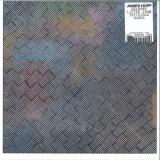
Shadows Lifted from Invisible Hands is an autobiographical record, comprised of four songs that Hoff refers to as ambient media. Each track is composed from sources drawn from his own involuntary aural landscape, specifically musical earworms and tinnitus frequencies.
Neither sound nor a daydream, the earworm (or stuck song) emblematizes music as a commercial form—immediate, ubiquitous, and persistent. Likewise, tinnitus is inaudible and unscrupulous, manifesting across a spectrum of frequencies at will. The cognitive swirling of these phenomena provides an ambivalent, internal soundtrack that scores a person’s movement through the world.
Those suffering from tinnitus or those who have grown accustomed to the “Tinnitus Effect” in movies will likely recognize the buzzing pitches on the record, but will likely not recognize the songs. Distorted and distilled, Shadows Lifted from Invisible Hands features altered versions of four commercial pop songs: Blondie’s “Heart of Glass,” David Bowie’s “Space Oddity,” Madonna’s “Into the Groove,” and Lou Reed’s “Perfect Day.”
Having been haunted by these songs on and off for years, Hoff tweaks the tracks, transposing and recomposing them for orchestral instrumentation. Speaking back to these involuntary echoes, these tracks go to great lengths to obfuscate their sources; to be sure not to simply re-introduce each earworm, as though they were samples. Otherwise, what’s the point? No one needs another stream.
Besides, earworms are not music, although we perceive them as such. They are non-cochlear and exist as an affective force that is neither subjective nor objective, which is to say they are an invasive—and alien—phenomenon. Like tinnitus, they are aggravated by economic, social, and environmental forces as well as emotional states, mental health, and aging. Hoff doesn’t underplay his own struggles with mental health in discussing the record—noting a long history of depression and its acuteness over the last few years, which serve as the backdrop to the composition of this record.
Scratch any pop song hard enough and you’ll find sadness underneath it. Subdermal, the songs on this record evoke a type of ephemeral weariness and despair. By recasting the original songs through their shadowy doubles, Hoff provides a window into the dark core of pop music. At the center of which lies capitalism’s desperate attempt to replicate itself through a cheap high built on echoing refrains. Just below the surface the listener finds a hangover of shadows dancing through the mind.
out of Stock
Last delivered 9 months ago available to reorder, subject to availability
With their highly anticipated fourth album, The Third Sleep, Norwegian progressive rock band Oak delivers a striking exploration of societal complacency and the struggle of the individual. The album contrasts light and darkness, both thematically and musically, seamlessly blending folk-inspired acoustic passages with the raw intensity of progressive metal, evoking echoes of Opeth and beyond. Expanding on the lyrical themes of The Quiet Rebellion of Compromise, The Third Sleep ventures deeper into the subconscious, weaving suggestive and poetic storytelling with sharp social commentary. More outward-looking than its introspective predecessor, the album invites the listener to engage, interpret, and reflect. With a rich musical foundation that spans classical piano, electronica, progressive and hard rock, Oak has carved out a distinctive sound-both captivating and challenging in equal measure. Recorded in Ljugekroken (Oslo), the album was mixed by David Castillo (Katatonia, Leprous, Opeth) and mastered by Jacob Holm-Lupo (White Willow, Donner) at Dude Ranch Studio, Sandoya. Prepare to experience The Third Sleep, a thought-provoking journey through sound and emotion.
out of Stock
Last delivered 9 months ago available to reorder, subject to availability
A meditative, folk-inflected score rooted in improvisation, ‘Dragon’s return’ echoes the soul of A film long buried behind the Iron Curtain
With Dragon’s Return, Australian composer and multi-instrumentalist Oren Ambarchi and Norwegian guitarist Fredrik Rasten present a new, meditative score to Eduard Grecner’s eponymous 1967 Slovak cult film — a stark, black-and-white parable.
The album captures a unique live performance recorded at the Videodroom Festival during Film Fest Ghent in October 2024, where this new score premiered alongside the film in collaboration with the Slovak Film Institute. What began as a fleeting, improvisational encounter between music and image has since taken on a life of its own — an evocative sound world that retains its power even in the absence of visuals.
The album will be available on vinyl and all digital platforms from September 12 via VIERNULVIER Records. The vinyl edition includes an obi strip, a booklet with film stills, and extensive liner notes on the film.
The label is known for shedding new light on forgotten films through reimagined soundtracks — claire rousay’s acclaimed The Bloody Lady being the most recent example.
“Folklore meets avant-garde in an ancient drama - a ballad about love, hate and finding a way out of loneliness” - Rastislav Steranka (Slovak Film Institute)
Ambarchi and Rasten do not accompany the images so much as speak through them. Their interplay — on guitars, flutes, percussion, and voice — unfolds slowly, without a fixed destination, culminating in subtle, entrancing drones. With few breaks or ruptures, this trippy, folk-inflected continuous composition invites surrender.
Rasten’s 12-string guitar and delicate use of voice create layered textures that shimmer and shift. Ambarchi, known for his electro-acoustic work, here explores a radically softer mode — strumming, bowing and coaxing tones from his instrument as though it were a string section unto itself. He blows into shells, adding breath and texture to the sonic palette, touching on something elemental.
Together, they evoke a sound world that feels both ritualistic and strangely familiar — as if echoing from a forgotten ceremony or dreamed into being after hearing an old folk tale. Rooted in improvisation, the music speaks in tones both intimate and expansive, shaped live in dialogue with the film and with each other, with only minimal overdubs added afterward.
out of Stock
Last delivered 9 months ago available to reorder, subject to availability
Montreal indie rock trio Plants and Animals announce "The Jungle", their fifth studio album set to be released October 23rd via Secret City Records. Their shortest album yet and certainly their boldest, "The Jungle" is eight acts in a world full of noise. The album is auto-produced and was recorded at Mixart, their studio in Montreal. The band explains : "We started working on this a couple of years ago. Warren was afraid for a friend's health. He thought he was self-medicating too much and not taking care of himself. He couldn't let go of this image of an overworked dude swallowing too many sleeping pills and falling asleep with the stove on. So it began as the place next door, sometime before Greta Thunberg turned the expression into a rallying cry, where Earth is the house and the people are sleeping. It's terrifying, and on the whole we're not unlike this friend, are we?" "The Jungle" starts with electronic drums that sound like insects at night. A whole universe comes alive in the dark. It's beautiful, complex and unsettling. Systematic and chaotic. All instinct, no plan. Voices taunt,"yeah yeah yeah." This tangled time in which we find ourselves is reflected back in shadows. Every song is such a landscape. The first one grinds to a halt and you become a kid looking out a car window at the moon, wondering how it's still on your tail as you speed past a steady blur of trees. You watch a house go up in a yellow strobe that echoes the disco weirdness of Giorgio Moroder, Donna Summer and David Bowie. You get pummelled by a rhythm then set free by a sudden change of scenery_the wind stops, clarity returns. You're under a streetlight in Queens, soft-focus, slow motion, falling in love. You speak French now too, in case you didn't already. Bienvenue. These are personal experiences made in a volatile world, and they reflect that world right back at us, even by accident. There's one song Nic sings to his teenage son who was dealing with climate change anxiety and drifting into uncharted independence. The band carries it out slowly together into a sweet blue horizon. Warren wrote the words to another shortly after losing his father. It's about the things we inherit not necessarily being the things we want. In a broader sense, that's where a lot of people find themselves right now.
At the end of the 1980s, Mariolina Zitta approached the world of natural sounds, studying musicology and developing a passion for speleology. Her encounter with Walter Maioli was fundamental, guiding and influencing her definitive research into sound archaeology and the primitive sources of musical acoustic phenomena. In these recordings Mariolina conducts a magical ritual as a cave priestess, celebrating the icons par excellence of the mysteries of the an ancestral enchantment on the border between consciousness and dreams, a symbolic liturgy of primordial reverberations, echoes and whistles. Edition of 200 copies.
Evolving further with each release, ASC delivers his latest monumental album on Spatial, a varied and memorable journey through stunningly realised fusion of modern and classic atmospheric breakbeats.
A1 - Mystic Street
Setting a murky tone with light cymbals and synthwork flecking the intro, Mystic Street calmly purrs and growls towards a drop of analogue kicks and a sparse, menacing drum pattern to kick off this incredible album. Enveloped by a dense cloud of darkly atmospherics, the track coils with tension, each element rippling through the mix like distant memories as the suitably enigmatic bassline rumbles beneath.
A2 - Convergence
Straight into the beats with a DJ-friendly two step intro, ASC utilises sparse, sci-fi hits and persistent danceable breakbeats with a melodic bassline. As the atmosphere builds, percussive tones punctuate the swirling pads, creating a luscious sense of forward motion with echoing samples and effects combining in the mix to create a dreamlike soundscape perfect for the dancefloor and headphones alike.
B1 - Invisible Borders
No ASC album would be complete without an amen workout, and we certainly have that here as Invisible Borders rushes into view with simmering intent, melodic samples tore from battlegrounds of yesteryear providing a truly epic atmosphere, rippling breakbeat trickery teasing the listener before crushing full contact amens arrive with panache and veracity - twisted across yearning bass with an unflinching fighting spirit.
B2 - Celestial Bodies
Up next a moment of calm as we soak up the charms of the dreamlike Celestial Bodies, a soothing journey of beats, breaks and atmosphere from Spatial's label head. Melodic notes ripple across the mix with old school breaks filtering to and fro, conjuring images of a cosmic journey unfolding, where old school breakbeat rhythms pulse like distant constellations, echoes shimmering in the vast expanse of ASC's versatility.
C1 - Losing Track Of Time
Into an absolute stunner next as ASC unleashes a modern classic which has a wonderfully instant familiarity to it - like it was lifted directly from the golden era of atmospheric drum & bass. The old school breaks have a distinctive feel while a variety of pads teaming with life swirl around above. A myriad of spirited melodies develop and maintain your attention with classic 808 basslines to complete this remarkable composition.
C2 - Slipstream
Switching up the vibe in style, ASC delivers an intense, cosmic intro to Slipstream which builds gradually with whooshing effects and long female vocals before a crisp, crunchy slice of Hot Pants breakbeat heaven tears through the mix, chock-full of excitable edits portrayed in a brilliant clarity. Warm sub bass punctuates the track while a reverberating earworm melody slowly etches itself into your mind.
D1 - Paradigm Shift
A good old fashioned roller up next as Paradigm Shift sees ASC blend a superb 2-step rhythm with a sumptuous smooth bassline - guaranteed to move the dancefloor. Atmospherics take no back seat either as elegant synthwork swirls and washes across the soundscape with subtly used vocal samples adding texture and warmth to an impressively layered mix that maintains its pace right through to an echoing conclusion.
D2 - Transmitter
Sending us back to interstellar space for an inspired mission through vast unexplored star systems, Transmitter sees ASC create a stunningly evocative, ethereal collage of atmospherics with sonar-like beeps punctuating and persisting throughout. Driving the track along are the superbly programmed drums, filtered and layered with twisted, distorted vocal samples to complete this exhilarating album in pure Spatial style.
out of Stock
Last delivered 8 months ago available to reorder, subject to availability