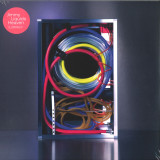
In the fall 2021, Belgian saxophone player Robin Verheyen was invited by Kunstencentrum KAAP and W.E.R.F. records to play a solo concert during AMOK festival in the beautiful Bruges baroque church Walburga. The haunting concert was recorded in its entirety and additionally an extra recording session was scheduled in the Chamber Music Hall of the Bruges Concertgebouw. Both rooms have one thing in common: special acoustics. The playful dialogue Robin created with both spaces created an extremely unique sound and formed the basis for the title of this first solo album: Playing The Room.
Over the past two decades, Robin Verheyen has proven to be not only one of Belgium's brightest saxophonists of his generation, but also that he is a musical jack-of-all trades. Within his band with dEUS frontman Tom Barman - TaxiWars - he demonstrated his ability to rock, while with Bach Riddles he showed that he is no stranger to baroque music either. In his own bands he was often surrounded with illustrious American jazz greats like Joey Baron or Marc Copland, but with 'Playing The Room' Robin proves that he can hold his own as well and what an exceptional musician and improviser he is.
Playing The Room offers the listener a musical journey full of discoveries on the edge of spirituality and virtuosity. The album will be officially released on W.E.R.F records on Friday, May 5, and will be available in a limited edition on vinyl. An absolute must-have for any musical connoisseur.
Heres some new Detroit Hip Hop on FXHE approved by Omar S!
Sonny Dulphi & Pat2Dope is the Hi Tech to Hip Hop. They have the same energy as Milf Melly and King Milo from Hi Tech, in fact Milf Melly and Sonnydulphi are Cussins.
This Double 7" comes in a Dope ASS Dual 7" Booklet in plastic jacket.
Ursprünglich 1991 veröffentlicht, war dies das vierte Studioalbum der Band, das über Atlantic Records erschien. Es erreichte Platz 29 der US Billboard HeatseekersC hart und ist bis heute eines der meistverkauften Alben der Band. Enthält die berühmten Tracks "Coma", "Frankenstein" und "Horrorscope".
Limited Edition in blau-schwarz marmoriertem Vinyl.
Chart-topping afro house label MoBlack Records, favoured by the likes of Dixon, Black Coffee and Ame, returns with another scintillating four track sampler. Deep, emotive, richly textured afro-infused house cuts from the likes of Emmanuel Jal, Zakes Bantwini, Mowgan, Yass and Fnx Omar.
Boot proudly present Micall Parknsuns 6th studio LP "Still..." on limited edition single black vinyl. With killer features from Kyza, Scriblah, Joker Starr, AyePee, Josiah and Naughtz. Produced by Micall Parknsun, Aypee and Apollo with cuts by Jazz T. Killer artwork by Glen Stone. Includes the smashes "Still... "and "Kept Going"
yet is a slippery word in English. Amorphous, these three letters in dierent contexts can define contrast or emphasis, set a place in time, show an expectation that something will occur or, paradoxically, that it is likely to stop.
It is this mercurial nature that makes yet the perfect title for Tresor’s latest compilation: the label follows on from the more explorative sections of 2021’s landmark Tresor 30 boxed set with a compilation, featuring 13 artists making music that resists easy definition.
Every track hints at and borrows from the familiar yet none follow the expected path: halfway through Deserto, Nandele & A-Tweed dramatically reveal a very dierent sonic landscape that was initially suggested; DJ Sotofett collaborates with Sri Lankan artist Kavadi with results that are unlike anything in the Norwegian producer’s catalogue as yet.
Further invention can be found as Jean Redondo’s Hypersonic moves across spaces inhabited by digital hardcore and hyperpop before swerving o-road and into a futuristic hip-hop section; on No Longer Human, Ireen Amnes takes a dierent path at the crossroads melding hyperpop, trance, and sci-fi soundtrack atmospherics, Significant Other heads towards UK Bass and Dubstep, and France’s Willis Anne skims by the outskirts of footwork with a piece that is almost completely uncategorisable.
Yet more sonic experimentation comes from E-Saggila, Nadia Struiwigh, NVST, Solid Blake, and Viikatory who oer unique takes on the well-established electro blueprint, while Ryan James Ford, and Nit. both find ways to blend elements normally found in ambient pieces with those heard on a dancefloor.
The feel of the compilation is yet again reflected in the enigmatic artwork by Malik Arbab, where shapes and colours suggest animals and plants but in a world that appears to be transient and constantly evolving.
Elkka’s deep intuition is the unifying thread throughout Cardiff-born DJ and producer’s illustrious career. Vibrant releases for Local Action, Ninja Tune and her own label and party, femme culture, have marked her as an unstoppable force within the London underground.
This recognition metabolised when she was awarded BBC’s prestigious Essential Mix of the Year in 2021, spotlighting her radiant blend of classic house, breakbeat and experimental electronica to the world over.
As the next curator of DJ-Kicks, Elkka is voyaging through rave euphoria. “This is a really special moment for me because DJ-Kicks has been a formative part of my musical education,” she says.
An intoxicating journey through Chicago house and disco, leftfield techno, UK bass and electro-punk, Elkka conjures up an atmosphere that is as primed for the club as it is the listener’s interior world.
LP COLOUR IS CLEAR. New vinyl edition of the second album from USA emo / indie rock band The Appleseed Cast. Originally released in 2000 on Deep Elm Records.
From Washington DC group Chuck Brown & The Soul Searchers, the latin belter “Berro e Sombaro” has been sampled and re-edited over the years, but not issued in it's original form on the single side of a 7". It was first released as the closing track on Chuck’s “Bustin Loose” album from 1979 where the go-go- funk title track was centre stage. “Berro e Sombaro” came through on the 80s rare groove scene. The ‘b’ side is an exclusive 7” edit of the Gamble & Huff composed masterpiece “Never Gonna Give You Up”, also from the same album, and never previously on 7” single.
Flautist Johanna Orellana teams up with Carmen Villain for a collection of horizontal, pastoral field recordings and close mic-ed flute sounds that zero in on the instrument’s unstable resonance and levitational magic. There’s no cringe virtuoso business or fourth world firewalking here - just sonic purity, sublime minimalism and the precise capture of time, place and poetry.
You might have come across Johanna Orellana before if you’ve listened to Carmen Villain’s music (or seen her perform live), and Villain appears here in a producer’s role, using her engineering expertise to impart a level of restraint and sonic fidelity that’s quite startling. There are only really two central elements to the album: environmental recordings and flute. There’s no psychedelic delay, no cavernous reverb; no audible treatments at all - Orellana and Villain instead force us to consider the flute and its musical lineage.
‘El Jardín I’ introduces the instrument as a physical conduit; Orellana allows her breath to distort the sound - the padded pat pat of the keys forms a kind of rhythm, closely recorded so it’s amplified and jarring, linking to primal wind instruments like conch shells, bamboo flutes and wooden whistles. Recalling the way in which Debit interfaced with the ancient world using AI- assisted tech on last year’s ‘The Long Count’, Orellana uses a comparatively modern contemporary transverse flute, an instrument with roots that stretch back through the baroque era, into Medieval Europe, back to the Byzantine era and into Asia. The component that connects the instruments and eras is breath, and its amplification and modification through differently shaped pipes and vessels.
Orellana lets the environment sing: insects, rushing water and zephyr-like winds form a stage that presents her mortal energy, suggesting a harmony between our use of breath and its environmental ubiquitousness. Her technique is steeped in folk history and decouples itself from expectation by rooting itself in nature. It allows her to bridge the gap between equal temperament and less ordered (less commercially-focused) microtonality without overstating the concept. Other sounds waft in from the sidelines; what might be an Indian bansuri, stray notes, a gust of air.
There’s a link to the foundational new age recordings that Joanna Brouk made with Maggi Payne back in 1980, but Orelanna also absorbs the outdoor folk magic of Fonal or Stroom, and the improvisational grist of Bendik Giske or legendary US horn duo Nmperign.
JIMMY EDGAR's latest release for Innovative Leisure, LIQUIDS HEAVEN, is a psychedelic canvas of future R&B, euphoric bass, mutant tear-theclub-up rap, foundation-splintering noise, and gossamer soul.
On a surface level, it is a starburst of avant-garde fusion, collecting a diverse cast of eccentric geniuses and re- configured into an anthology of n - musique concrete.
As with all of his work, there is a deeper and subversive intent.
Do not mistakenly believe that LIQUIDS HEAVEN is merely a technicolor dream of ethereal abstractions. It bangs as hard as anything to ever bump from a subwoofer.
Over a polychromatic blast of crunk, bounce on Everybody like a rap
rave inside a 31st century space station. Bite That 2 finds Trinidad James spitting flames over booty- shaking, wall- crumbling bass. On Ya, 645AR chirps over a metallic chassis of booming industrial funk.For all the high energy propulsion, there is a counter-balance of melancholic beauty.
The album's opener, Euphoria features a Liz Y2K vocal that levitates with plaintive longing. The Milk- aided Dreams 1000000 sounds like the chimerical soundtrack to a manga utopia that needs to be imagined. Milk also appears on the finale, Never Leave, which
captures a bittersweet sadness, the wistful emotion of the tide slipping away.
Jimmy's career has been a series of fascinating left- turns. Signed to Warp Records as a teenage electronic music prodigy, his work needs a scholarly bibliography to properly assess. He's recorded for the world's most respected imprints (Warp, K7, Hotflush, Innovative Leisure and his own New Reality Now).
Raised in Detroit, there have been stints soaking up inspiration in Berlin, Atlanta, LA, and New York. His list of close collaborators includes the most innovative musicians of the millennium, including Hudson Mohawke, Danny Brown, SOPHIE, DAWN, Mykki Blanco, Vince Staples, and several full projects with Machinedrum
as J-E-T-S.
Jazz music has more than its fair share of overshadowed figures that whilst contributing much to the music have little presence in its collective conscious. One such musician is the talented multi-reedist, Sahib Shihab. Born Edmond Gregory, as he was known before he adopted the Muslim faith in 1946, Sahib Shihab's music background shows a deep and significant evolution, influenced by Thelonious Monk, Dizzie Gillespie (his experience in Dizzie's band marked Sahib's switch to Baritone, the instrument he became most readily associated with), and above all by Charlie Parker's Bop. Had it not been for the post-war migration of many top American jazz musicians to Europe, it is quite likely that the legendary Clarke-Boland Big Band might never come into existence. Sahib, one of this musicians disillusioned with the politics and racism of the United States, accepted to join the band of Quincy Jones for an European tour in 1959. When the tour ended, Shihab he remained in Europe where he joined, in 1961, the Clarke-Boland Big Band. The collection 'Companionship', whose line up consists of seven elements which derives from this original band, spotlights the consummate musicianship and individuality of Sahib Shihab and is testimony to his special musical gifts - not only as a top-rank flautist and baritone saxophone but also as a composer. Furthermore, it provides a welcome reminder of the high quality of the Clarke-Boland Big Band's rhythm section, the lively style of vibraphonist Fats Sadi and the power and personality of two of the C-BBB's horn-playing stalwarts, Benny Bailey and Ake Persson. Here's a real rarity, surely a desert island disc. This double album has it all from frantic banging percussive workouts to modal numbers to beautiful ballads. It's a staggeringly good piece of music and worth every penny of the price tag it commands. Let's have a look to the most significant pieces. Francy Boland's "Om Mani Padme Hum", taken from a Tibetan prayer, shows Shihab in exuberant mood, playing against a vigorous percussion background and making dramatic use of his special technique of combining voice and flute. Boland contributes an incisive, effervescent solo. "Bohemia After Dark", a classic original by bassist Oscar Pettiford which he first recorded back in August 1955, finds Shihab in exultant form on baritone. "Companionship" has a Bossa Nova beat and features Bailey on flugelhorn and Shihab on flute, playing with a limpid, floating sound. Bailey's minor-key original, "Stoned Ghosts" was, he says, inspired by listening to some music written by Bela Bartok before he emigrated to the United States. The piece has an infectious back-beat pulse and showcases the superb walking technique of Jimmy Woode. In "Con Alma" Shihab's mellow flute set against a churning 12/8 beat in this stylish Boland arrangement. Woode's performance of the superb Mei Torme ballad, "Born To Be Blue", reveals his great affection for the song. "lt is the perfect combination," he says, "a beautiful melody married to a great lyric. I really love that tune." It is a song of rueful resignation, putting a brave face on the blues. "Balafon" is an up-tempo Francy Boland original written for the French mime artist, Marcel Marceau. The rhythm section really cooks on this track with Kenny Clarke's cymbal work outstanding. Boland's solo here is notable for its neat, left hand punctuations. "Calypso Blues" has been written by Nat King Cole and Don George. lt tells the wry and wistful tale of a Trinidadian in New York desperately homesick for the land where everything 5 so much cheaper (in New York "a dollar buy, a cup of coffee and a ham on rye") and the girls more natural than the artificial, painted beauties of New York. Woode's composition, "Sconsolato" is a haunting theme in A minor and it brings to a close a truly fascinating album. This is dynamic music played with vigour, verve and vitality - and it is an enormous pleasure to rediscover it. A shadowy fugitive from his home in the land of jazz, Sahib Shihab remains a true unsung figure, worthy of more attention. With his equally expert technique on Baritone, Flute, Alto and Soprano saxophones and his capacity to adapt easily to a variety of musical settings. His warm, individual, singsong sound in improvisation and his unusual and interesting compositions mark him out as a hidden treasure in the dusty corners of jazz archive.
Omni AM presents the long-awaited reissue of “Can We Get / Keep Doing That.” This timeless record sent dance music in a new direction. Euphoria Record’s vaults are open and finally, for the first time since 1997, this seminal tech-house classic is available to everyone for the very first time in over 25 years. This 1997 indie record was Euphoria Records second release – and their first international record. Whether you agree with it or not, many people consider this one of the pioneering records of American Tech-House. Both sides and several mysterious alternate versions have graced the decks of DJs like Evil Eddie Richards, Terry Francis, Derrick Carter, Tyler Stadius, and Magda. The list goes on.
We were lucky. Curve Pusher lovingly remastered the original four tracks from the 1997 studio masters. Then, he went a step further, and remastered some previously unreleased versions – including a live version in Chicago that encapsulates what Omni AM was back then: ambient house. There’s a bit of Chicago, a bit of London, a bit of New York, and a bit of Tokyo in every second of these classic, genre-defining tracks.
A1.
“Can We Get” happily sits with the finest works of Ron Trent, Chez Damier, and Mood II Swing – and goes further, as Omni AM has never feared genre definitions. It opens with classic deep house chords, floating synth pads, and sparse vocals. The bassline is deep and warm. Marky Star and Adam Collins expertly work the percussive effects but always keep the theme simple and clear. Everyone knows this is a classic house track because it hypnotizes you.
A2.
“Keep Doing That” continues the theme with another classic late-night killer. However, this one is totally different – almost industrial, yet clearly housey and ambient. It drives deep into a tough groove that just builds and builds. The dub-influenced bass line gives way to a more angular synth riff that both offsets and adds to the track's forward thinking sound design. It’s dark and dirty, yet terribly sexxxy at the same time. It was and always will be mesmerizing. Once again, musical magic by Marky Star and Adam Collins.
B-Sides
The flip side features two remixes of “Keep Doing That” by UK tech-house legend Mark Ambrose. His bubbly, psychedelic take on the track pumps up the percussive Chi-town groove while going in a distinctly London afterhours direction. Trippy, for sure. Fun for all, for sure. These remixes are guaranteed to make your afterhours weird.
Global pointing Brazilian jazz trio releases their new album Agôra, that sparkles with electric funk and Herbie-esque eclecticism. It features a myriad of guest vocalists and musicians including Brazilians Xênia França and Zé Leônidas, Jembaa Groove's Ghanaian singer Eric Owusu and South African artists Bongani Givethanks & Mpho Nkuzo
Re-wiring the concept of 'fusion' for 2023, Agôra is Brazilian trio Caixa Cubo's resurgent new record with the title referring to 'now', based upon the intuitive and fluid nature of the trio's method, and this inspired recording. With shoots to black music culture, from Brazil to Brooklyn, Ghana and South Africa, Agôra is the group's ninth album yet is their first where they've invited guests, mainly singers, onto each track and follows their last, Angela from 2020, released on Heavenly Records, which won a BBC 6 Music Album of the Year (Huey Morgan's selection) granting them much deserved international recognition.
The core musical elements of Caixa Cubo are Henrique Gomide (keys), João Fideles (drums) and Noa Stroeter (bass), all from São Paulo, Brazil and where they met as teenagers and would continue their friendship and musical bond at the Royal Conservatory in The Hague, Netherlands. Now all in their mid thirties, João and Noa live back in the city where it all started but Henrique has settled in Cologne, Germany where the recording of Agôra took place, over the course of 3 days, at the home cum studio of Chris 'Dusty' Doepke, their friend and owner of the label they signed to, Jazz & Milk.
In line with all their creations where flow and energy provide the magic, allowing what the moment provides, the album shines not only for its virtuosity but for its minimalism, the depth of space, and for the first time, the ability to figure in and outside of the jazz fold, as the trio decided, for the first time, to bring in singers and add a new aesthetic to their sound.
"Agôra is a wake-up call to reality, a reminder that the infinite possibilities of technological progress should not disconnect us from the earth, from eye-to-eye relationships, and from moments lived in person" the band are keen to point out. "And that we must not be consumed by greed, for all we truly possess.... is the NOW."
Turning hope and metaphor into music, the debut single Sábado, an electrified future- jazz-fizz reflects perfectly the spontaneity that permeated the entire recording of the album. "When we got to the studio, we had no idea what we were going to record. We started playing a groove, kind of inspired by Gilberto Gil's 80s albums, and our drummer João started singing this funny song 'Sábado Barrigudão' (Big Belly Saturday) alongside the bass groove and that was that". Inspired by their city of birth, São Paulo, it features long time collaborator and vocalist Zé Leônidas, with cuicas, tamborim, agogo and shakers providing the most obvious Brazilian affect from the album.
Dreams is the band's first foray into R'n'B melding the group's simple and sporadic instrumentation of drums, keys and bass into a Jill Scott inspired song that could have been born in Brooklyn yet sung by Brazilian singer and Grammy nominated Xênia França and Zé Leônidas in both English and Portuguese. Xênia recently performed online for hip-to-it website Colors and it's her latest collaboration with Caixa Cubo, having first met in 2009 for a series of live performances.
South African artists Bongani Givethanks & Mpho Nkuzo come to the record with a wholly different approach on Ndiyakhangela, providing spoken word and vocal refrains on top of an Afro-Brazilian percussion jam with a delivery and verse in Xhosa, Zula and Ndebele. Asase is the album opener and features vocals of Eric Owusu who is part of highlife pioneer Pat Thomas's live band and most recently, co-leader of Jembaa Groove, an Afro-soul band from Berlin. It's a synth wig out with djembe grooves and offers a brand new take on Afro-soul-jazz.
Other contributions come from Cologne based jazz singer Rebekka Ziegler (Oblique Sunshine), São Paulo based guitarist Eduardo Camargo (Caio & Eric) and trumpet player Matthias Schriefl on Kismeti, a gorgeous and rolling number that ebbs and flows, exemplifying the group's effortless ability to craft a sound energised by a belief in one-self and the idea of having faith without the need to look at each other for verification.
As drummer and percussionist João Fideles perfectly surmised upon arriving for the recording session, "What drums do you have? Whatever you have, I'll use it". Agôra is testament to nearly 20 years of camaraderie, friendship and most importantly, trust.
To many crowds the world over PBR Streetgang are known and loved for their talents behind the turntables, selecting at most major festivals and clubs of note but to others they are producers and remixers whose eclectic taste and evolving style has seen them enjoy longevity and critical acclaim. This album is a rare selection of originals and remixes that shows the breadth of their work.
Featuring early original hits that propelled them into the limelight, like ‘Downstroke’ and ‘J2Thab’, and more recently their stand out disco tinged nugget from their debut album ‘Late Night Party Line’.
Previously un-pressed remixes like the cult classic rework of Romathony’s – 'Bring You Up' and the slow chuggy sleaze of Bryan Ferry – One Night Stand and the teary eyed euphoria of their remix Hot Chip’s - 'Melody Of Love'.
This compilation represents an honest retrospective of the production and remix talents of PBR - always keeping true to their sound and themselves.
Limited Vinyl Press.
DJ Support from a very broad base.. from Paul Woolford and Bicep to Jennifer Cardini and Daniel Baldelli.
First drop of the year from XCPT landing in March, introduces the 4th chapter of the Time Horizon saga, delivering six firm contributions courtesy of Pushlock, Eduardo, Marco Segato, Low End Activist and Cel, plus a re-mastered version of “FWD” by 2nd II None, previously released back in 2007.
Mastered & cut by Marco Pellegrino at Analogcut
Design by Linkin Bios
A royal refugee turned Soul survivor. On his debut album Free Me, Burundian-born JP Bimeni astonishes with a voice that recalls Otis Redding in his prime whilst resonating with the soul of Africa. A refugee who's been living in London since the early 2000s, Bimeni sings songs of love and loss, hope and fear, with a conviction that comes from the extraordinary experiences life has thrown at him.
A descendant of the Burundian royal family, Bimeni fled Burundi aged 15 during the 1993 civil war. Following three attempts on his life - at school he watched as his schoolmates were murdered, he was then chased by motorcycle militia-men and finally poisoned by doctors in hospital - he was given refugee status and fled to the UK where he's remained ever since. Music has provided the solace that Bimeni has needed to move forward with his life: 'If I didn't have music I don´t know how I would have survived everything', he says. With it's classic 60s-sounding Motown and Stax-inspired grooves the album was written by musical director Eduardo Martiìnez and songwriter Marc Ibarz and Bimeni imbues these tales of love and loss with his tragic experiences making 'Free Me' a deep soul soundtrack to his pained life: 'When I sing I feel like I'm cleansing myself: music is a way for me to forget'.
"Le Disque De l'Art Gué" highlights in a 10-track compilation the avant-garde and dreamlike work of Fizzè, in between medieval ballad, acoustic industrial and psychedelic world music. It includes original tracks from "Kulu Hatha Mamnua" and "Manoeuvres d'Automne" albums released in 1987 + unreleased materials and remixes by Fizzè.
Compilation, concept and production by Fizzé, Orsett & Fischer
Analog mastering by Tim Stollenwerk
Drawings, obi strip and insert layout by Anne-Marie Gratton
The record cover represents the acrylic painting "Till" by Alex Rabus
This is another piece to my musical puzzle. After "The Forced..." album, I still felt there was further I could go in... So again, with David's support, we ended up here...what a place! Never stops amazing, what happens while making music from the soul. This album is dedicated to my amazing Mum Sylvia (all I am)! Pearls Don't Lay On The Shore will be released physically as 2 x 12" vinyl LP - each single copy coming in a unique coloured pressing - on March 27th 2023, followed by the digital release on March 31st 2023.
Emotional Rescue dives back in the world of post punk experiments and early synthesised electronics to present another of the labels iconoclastic 7" 'collectors specials', with a look at Stockholm's Staalfagel.
Born in 1977, Erik Fritjofsson and Petter Brundell merged and formed Staalfagel out of the suburbs of Jakobsberg. Like so many at the time, the duo was tired of Prog, Jazz and Symphonic Rock and formulated something new and against at the same moment; a time where drummers were jettisoned in place of drum machines and the inspirations of artists like Creedence Clearwater Revival, Devo and Pere Ubu were thrown in the mix to fervent results.
With Micke Kjell soon joining on bass, they toured Sweden constantly, the manic machine beat, beating guitars and strange synth sounds defeated the throng and led to a considerable following. Recorded live to tape with no overdubs or mixing, the faithful CR 78 drum machine, the results radiate energy.
Release just 4 records in 2 years (1980 - 1982), Utan Rymddrakt Pa Uranus appeared as their last ever release. Jettisoning the punky-funk vocals of previous releases, the single is a pure electronic groove. Funk bass and guitar atop, its short form simplicity is perfection distilled in 2 parts of less than 3 minutes, conjoined like some reggae dream, with 'Uranus II' acting the dub 'version' counterpoint.
Discovered and shared by long-time friend, DJ and collector, Gary The Tall steps out from behind the decks and microphone of his long running NTS show to present an exemplary "Reversion". Teaming up with master producer and label affiliate, Timothy J Fairplay on engineering duties, they keep the originals' straightforward charm, deceptively editing, looping and reversing with aplomb, for a killer flip side.
Eight individual projects with various international origins, these two ep’s contain reworked and remixed material of Takuya Sogimoto’s early work that has been released on acido in 2020 and 2022, as well as some unreleased trax from 1994/95. Packaged in two editions of 300 copies, released separately.
In the early 1990s, a handful of black metal artists were enticed by the possibility of conjuring new fantastical worlds from the deep isolation of their home setups. Rather than the dense metal sound of their existing projects, this new direction would be centred around intimate synth soundscapes: forlorn organs and otherworldly MIDI theatrics.
The music on ASCEND is predominantly from self-produced, self-distributed releases, typically manufactured in small numbers. Though some artists producing this style of music, most notably Mortiis and Burzum, gained wider recognition outside underground circles, it is only in recent years that the sound and its influence has really been appreciated. This is particularly the case with the late Matthew Davis and his recently reappraised Secret Stairways project, whose song ‘Lammas Tide’ (from the 1997 Enchantment of the Ring album) appears on ASCEND. A simple home recording on a Yamaha KX-W392 manages to be both elegant and tortured, ambiguously devotional and recalling latter years Popol Vuh.
This battle between dark and light is a constant thread through ASCEND, with simple minimal synth lines that can be both delicate and menacing. Compilation opener ‘The Dark Dreamquest’ from Italian black metal group Evol is loaded with occult warning, and Finnish act Kadotus 609’s ‘The Summoning Through Crimson’ is languid, twisted and dark. In spite of the darkness, several pieces of the music on ASCEND have formal similarities with the sometimes saccharine new age music that rose to prominence in that era: but to a rougher, darker ends. The closing song from Darkthrone icon (and past NTS radio host) Fenriz, under his Neptune Towers pseudonym, pulls us further out, with ‘To Cold Void Desolation’ — an astral synth project, akin to ’70s kosmische muzik masters Harmonia.
The gentler side can often amplify an uncannily sinister edge, heard in German act Dolch’s ‘Tumulus’, where orc marching horns contrast against delicate rompler harps and softly whispered chanting. It hammers home a deep loneliness and detachment constant throughout ASCEND, made possible by these unusual contrasts, both unsettling and otherworldly.
Limited edition LP release for DAYTIME TV’s debut album ‘nothing’s on but everyone’s watching’: Following up the rapturously received CD release of their debut album, DAYTIME TV are proud to release a very limited- edition vinyl release of the album to coinside with a slew of live activity and support from Radio 1, BBC Scotland (TV),
Scruff of the Neck and more. The album’s lead single ‘little victories’ garnered incredible support from: Spotify (New Music Friday, All New Rock, The Rock List (incl. playlist cover) and many others), Apple Music (New Music Daily, The New Rock, New In Rock, New In Alternative), BBC Radio 1, Amazing Radio (B-List) and Scruff of the Neck (the band headlined the Scruff of the Neck stage at this year’s The Great Escape).
Obscure and Rare album of Spacey Fusion grooves, played by a group that includes Robert Rockwell on reeds, plus Bobby Lyle on piano and electric piano. Lyle's presence gives the album a nice groove.
Bob Rockwell, born in Miami, Oklahoma, is an American jazz saxophonist who emigrated to Denmark in 1983 and has lived ever since.
Three choice cuts from the back catalogue of Isomise, oscillating between house and techno with a deeply psychedelic edge.
Originally released on separate EPs throughout 1995 via the short lived but influential London based Flagbearer Records. The A side Intersection blends UK rave with a nascent tech house groove and hypnotic vocal while the B side is reserved for two expansive acid techno trips.
From samba and bossa nova through to baile funk, with carioca expressions of jazz, rock and hip hop in between, the sound of Rio de Janeiro, while continually evolving, has always held an unnameable quality which reflects the magic and mystique of the city itself. Multi-instrumentalist and arranger Antonio Neves is the city’s newest trailblazer: the enfant-terrible of Rio’s music scene, leading a vital and diverse constellation of both emerging and well-known artists advancing the city’s musical legacy.
“It all started one sleepless night, after watching a Quincy Jones documentary”. Inspired by the legendary music magnate, Neves began writing a list of artists residing in Rio de Janeiro “people that I admire, that I consider geniuses of their instruments, who share with me affinities, anxieties and projects.” The list included some of Brazil’s most revered living musicians who Neves has worked with in recent years: Hamilton de Holanda, Leo Gandelman and Dorival Caymmi. Neves also called on some of Brazil's most exciting emerging talents including Alice Cayymii and Ana Frango Eletrico.
A Pegada Agora É Essa (The Sway Now) is Neves’ second album: a vibrant portrait of the current Brazilian music scene. From the regional to universal, popular to erudite, samba to rap, Latin rhythms to jazz, MPB and pop to good old rock'n'roll, Neves walks with fluency and mastery amongst all the musical genres that Brazil has to offer.
“My offer to the musicians was complete freedom to express themselves through the songs I proposed – classics like “Summertime”, “Luz Negra” and “Noite de Temporal”, and compositions of my own – creating a space of authorship for the band and the guests. A space for inventions, purges, delusions, laughter. The idea was to bring the freedom of jazz crossed by Brazilian rhythms, such as the traditionals Partido Alto (A Pegada Agora É Essa) and Jongo (Jongo no Feudo and Luz Negra); rhythms of African-Brazilian religions like Candomblé (Noite de Temporal) and Umbanda (Forte Apache); and a tribute to newest Rio de Janeiro’s contribution to Brazilian music, the Funk Carioca (Simba)”.
Coming from a musical family, Antonio’s father, Eduardo Neves, was a renowned conductor and a professor at Juilliard School of Music and the California Jazz Conservatory. In the bohemian neighbourhood of Lapa, aged 14, Antonio began his career as a drummer, before experimenting with brass. He would soon become a skilled trombonist and arranger achieving the recognition of his teachers and peers. It wasn’t long before he would be playing with some of the biggest names in Brazilian music, such as Hamilton de Holanda, Leo Gandelman, Moreno Veloso, Kassin and Elza Soares.
His debut album as a trombonist was PA7 (2017, Rock It), released at the same time he was travelling the world playing with artists like Moreno Veloso, Kassin and Leo Gandelman, and recording the albums Jobim, Orquestra e Convidados (2017, Biscoito Fino), with Mário Adnet and Paulo Jobim; and Elza Soares Canta e Chora Lupi (2017, Coqueiro Verde Records). More recently, Neves was the arranger for the acclaimed Little Electric Chicken Heart album, by Ana Frango Elétrico, which has been nominated for a Latin Grammy and voted 2019’s ‘Brazilian Music Revelation’ by The Art Critics Association of São Paulo.
In 1975, under the oppressive air of military dictatorship in Brazil, brothers Lelo and Zé Eduardo Nazario invited bassist Zeca Assumpção to join their musical experiments in a basement under Sao Paulo’s Teodoro Sampaio Street. As teenagers, the trio had already been playing together in Hermeto Pascoal’s Grupo, alongside guitarist Toninho Horta and saxophonist Nivaldo Ornelas, and it was while working together under Hermeto’s direction that the Paulista rhythm section (as they were then known) began to realise their own potential.
With many nightclubs and venues closed in the mid-70s and government censors dictating the output of radio, TV and art galleries, many Brazilian artists fled during the years of dictatorship. But underground, Grupo Um were fusing avant garde ideals with contemporary jazz and Afro Brazilian rhythm; making phenomenally free and expressive music - in stark contrast to the sterile, conservative conditions being imposed above ground.
Just like Hermeto Pascoal’s Viajando Com O Som from the following year, Starting Point was recorded over two days at Vice-Versa Studios, by revered engineer Renato Viola. The studio was one of the best in Sao Paulo and musicians communicated with engineers through cameras and a monitor, allowing the group complete immersion in the process. They also made use of the studio’s hemispherical tiled room, which served as an acoustic reverberation chamber.
The album begins with Zé Eduardo Nazario’s thunderous drum solo on “Porão da Teodoro”, before clearing the clouds with the lone Berimbau which opens “Onze Por Oito”. Built around a hypnotic electric bass line, heady Fender Rhodes improvisations, and more rip-roaring drums, it’s a rapturous, electrifying freak-jam in 11/8.
Like some invertebrate deep-sea curiosity, the free-form “Organica” is made up of Lelo Nazario’s playfully eerie prepared piano, with Zé Eduardo’s percussion flurries darting around Assumpçao’s double bass. The equally non-conformist, percussion-only piece “Jardim Candida” features many of Zé Eduardo’s home-made instruments, including a long saw blade played with vibraphone sticks and violin bow. While working with Hermeto, Zé Eduardo famously built his own all-in-one percussion set-up known as the “Barraca de Percussão” (Percussion Tent) - the first of its kind in Brazil, which he would also use on Hermeto Pascoal’s Viajando Com O Som and throughout his career.
“Suite Orquidea Negra'' (Black Orchid Suite) was written by Lelo Nazario as the score for an imaginary movie - the story of a rare, black orchid which produced a substance meant to cure all diseases, but which had mysteriously disappeared from the laboratory… “As a screenplay it’s not very good” reflects Lelo in jest, “but the music ended up being very interesting, the way its parts are chained to one another carries a little of the mystery I imagined for the movie.”
The album closes with the triumphant “Cortejo dos Reis Negros” (Procession of Black Kings) - a groovy variation on the Maracatu rhythm, with a two-note bassline underpinning piano improvisations, exultant wordless vocals, cuicas, slide-whistles and a very special guest appearance from Zé’s dog Bolinha.
Starting Point was to mark the inception of one of Brazil’s most daring instrumental groups. Their debut now sits in the lofty echelon of otherworldly 70s Brazilian music, alongside the likes of Marcos Resende & Index’s self-titled debut, Cesar Mariano & Cia’s Sao Paulo Brasil, Azymuth’s debut and indeed Hermeto Pascoal’s Viajando Com O Som. But just like all of those titles, which were either shelved or largely ignored at the time, Grupo Um - so radically ahead of their time - struggled to find a label to release their debut album. So Lelo kept the tapes safe in his archives, which is where they sat for almost half a century. Finally, almost fifty years later, this mesmerising piece of history is here, and it was only the beginning...
Grupo Um’s Starting Point will be released by Far Out Recordings, on vinyl LP, with an insert featuring unseen photos and liner notes by the Nazario brothers, as well as a CD on 17th February 2023.
Stunning big band music from Finnish composer Kerkko Koskinen with saxophonist Linda Fredriksson and UMO Helsinki Jazz Orchestra. "Agatha 2" is an album that continues the saga from "Agatha", released in 2007. Koskinen composes highly dynamic, emotive and expressive music for Finland's premiere jazz orchestra UMO. Linda Fredriksson (lately present due to their very successful album "Juniper" on We Jazz Records) shines as the soloist, who understands Koskinen's vision in its entire potential. This is cinematic, moody music for of the large canvas. The album also marks the first new release for Helsinki's Ricky-Tick Records (in collaboration with We Jazz Records and Grotto Editions) for over a decade.
Limited edition 7" VINYL COLLECTION
Dynamite cuts gives you a wonderful hard to find Jazz 45, from the Canadian P.M label. Bernie Senensky, a superb piano player, set the pace with this Hard Piano driven jazz groove. With a little treasure on the flips with Beloved Gift, a superb interlude that ends with Heavy bass hip hop vibes
Eric Clapton’s eponymous first solo album, originally released in August 1970, represents one of rock history’s most successful reinventions. After emerging as one of the seminal guitar heroes of the ’60s, the English superstar decisively re-established his musical priorities with Eric Clapton. The album marked Clapton’s transition from flashy instrumental icon to well-rounded recording artist, downplaying sonic pyrotechnics in favour of a song-focused ensemble approach that would lay the groundwork for his massively successful solo career. For the occasion, he surrounded himself with a new cast of American musicians, tapping into a rootsy musical foundation that provided an inspired framework for his talents. This Anniversary Deluxe Edition presents Eric Clapton – Eric Clapton in three separate mixes –
The Eric Clapton Mix, The Delany Bramlett Mix and The Tom Dowd Mix (The UK Version). The Eric Clapton mix is being released in full for the first time. This anniversary collection also includes some singles, alternate versions and session outtakes.
NYC’s Jkriv delivers a package of proto and golden era house re-edits for longtime pals Pleasure of Love.
The Razor N Tape label co-founder has reliably delivered dancefloor ready cuts on Z Records, Glitterbox, Barefoot Beats, Rocksteady Disco as well as his own imprint. On his first Pleasure of Love release Jkriv explores house in all its NYC glory; extending the energy on mid-late 80s proto (Got a Thing, Don’t Take Your Love Away) and masterfully looping and building tension with underappreciated early 90s house (G.D., Feel It). Expert level re-rubs by one of NYC’s finest producers.
King of Town (KoT), originally from Johannesburg but now in the UK, is back after a nearly a decade hiatus from his mutant disco-inflected remixes.
Prior to his long break, King of Town remixed the likes of Franz Ferdinand, Slow Club, Alice Russell, the Detachments and the Phenomenal Handclap Band.
His remix of Desmond and the Tutus' 'Kiss You on the Cheek', released on Tigersushi in 2009, has become a regular feature of Spotify playlists and has racked up a few million listens across various streaming platforms.
For this release KoT serves up four exclusive re-edits.
Lord Have Mercy is a retouch of Willie West's slow-burn R&B lament of his own elegiac defiance, where KoT underpins West's groove with a 303 acid bassline and synth flourishes.
Swimming in Your Eyes is a beefing up of Pasteur Lappe's 1979 Rhodes-heavy space disco groove.
Troubles of this World takes OV Wrights ridiculously soulful take on a gospel classic and transforms it into a retro-futurist track aimed firmly at the dancefloor.
And with Khomo Tsaka Deile Kae KoT nods towards his roots and inserts drive and snap into fellow South African Marumo's 1982 kwela-touched stomper.
As always the artwork has been completed by the very talented Pedro Carvalho de Almeida.
Next up on Toolroom’s 4-track vinyl sampler series is a tasty collab from label founder, Mark Knight and dance music royalty, Armand van Helden, a fresh new edit of a revered club weapon from Julio Navas, Gustavo Bravetti and David Amo, Kiss FM regular, majestic and Sydney-native Alex Preston.
Up first label boss, Mark Knight enlists Grammy nominated Armand van Helden for their debut collaboration, 'The Music Began To Play'. Kicking off with a hard-hitting house groove and electrified bassline that drives the record, before dropping into the track's golden moment and sampling the 1979 classic disco cut 'I Don't Need No Music' by T.J.M; a gem of a record that encapsulates both Mark and Armand’s love for classic cuts.
Next up, a record that became a cult hit of the underground and one that defines the true sound of Toolroom's heritage, Julio Navas, Gustavo Bravetti and David Amo’s 'Raw'. Refreshed for 2022, we see one of France's hottest exports, Tony Romera, deliver a high energy, club focused remix of 'Raw', bringing the classic club record back to dancefloors and sound systems across the globe!
Up next is another heater from Majestic, who debuts on Toolroom with ‘Annie’. Recapping one of the hottest summers on record, Majestic embodies the Balearic, Ibizan heat, sampling Kid Creole & the Coconuts 1982 hit, 'Annie I’m Not Your Daddy', turning a slice of calypso / disco, into a club ready record for the dancefloor. From the brass melody to the hooky guitar riff, majestic lays down his signature style with a Groove Armada-esque vibe throughout.
Rounding things off is label favourite, Alex Preston with his unique blend of 4 to the floor dance music and live funk guitar riffs that have swept through clubs, moving feet, and bringing those feel-good vibes. Ticking all the right boxes on this one, 'Hunching' kicks off with its infectious groove and bassline, throwing in some lush strings, guitar flits and an 80's inspired saxophone break that adds some serious flavour to the record.
Gated kick off 2023 with a corker of a remix package, featuring an epic electro workout from Radioactive Man and lo-fi deep house from Max Wheeler of Anushka fame.
Marcela Dias Sindaco’s breathy Portuguese vocals always lent themselves to remixes and these five cuts use them to great effect.
Keith Tenniswood’s storming version of Missao Controle kicks off the EP, with a near-8-minute bass-heavy acid monster that retains the original’s funky elements but pushes them way into the future.
German upstarts not even noticed take Extincao nice and deep for those loved-up dancefloor moments, again bringing in melodic elements from the original, but twisting them just enough to flow into a dreamy acidic breakdown.
Flip to the B and Anushka’s Max Wheeler goes it alone, with a deep and crackly analogue house version of Dois Lados. Injected with just a smidgeon of jazz, this is definitely one for the heads.
Next up, longtime Gated collaborator Dip Shim, whose debut album only just dropped, brings a straight-up electro jam version of Pro Meu Bem, with haunting pads and insistent arpeggios.
Rounding off the EP is Perseus Traxx’s deeper than deep take on Missao Controle, a tripped out reverby journey laden with his signature hardware sound.
Paul Hammock es el artista por todos conocido como Cignol, sin lugar a dudas uno de los genuinos revolucionarios dentro del sonido electro de la última década y media. Sus trabajos llevan surcando nuestros Technics desde 2008 a través de los sellos de vanguardia electrónica del nuevo milenio.
En su decimocuarta referencia en vinilo, el sello Valenciano HC Records, tras una imparable y ecléctica línea editorial, publica el nuevo trabajo del genio de Dublín titulado Binary Choices. Un maxi en el que nos domina un profundo sentimiento de melancolía cósmica a través de cuatro cortes que nos sumergen en una odisea espacial.
Adentrarse en cada corte del vinilo es como viajar hasta diferentes cuerpos celestes y dejarse sorprender por su atmósfera ensoñadora, y es que solo es necesario que transcurran 58 segundos de Binary Choices, primer corte de la cara A, para sentirnos arropados por un sentimiento de suma nostalgia, alegría y futurismo. Una inteligente combinación de pads, sintes y brillantes percusiones que nos adentran en un astro inexplorado repleto de extrañas vegetaciones, increíbles seres multicolores y horizontes infinitos que activan nuestra sinestesia.
Un emocionante, decidido y contundente ritmo 4x4 a baja velocidad nos traspasa el alma al surcar la superficie de Broken Circle. Un recuerdo olvidado en forma de aterciopelado sonido se crea frente a nuestros ojos en la consecución del compendio de melodías intimistas que componen sus 4:14 minutos, en los que encuentra sosiego nuestra mente y bálsamo nuestro alma.
La cara B del vinilo regresa al cristalino, eléctrico y veloz ritmo roto con Momentum Gateway, track en el que sus dominantes y ácidas cadenas de bajos se enrollan y juegan en sincronía perfecta con sus diferentes capas de teclados y su vibrante e iridiscente pad.
En el último planeta al que nos transporta Cignol, suena en cada uno de sus parajes Validity Movement, track con el que nos dejamos guiar por su grueso y áspero bajo principal, que contrasta con los delicados sintes y atmósferas que lo rodean. Una experiencia sónica tan delicada, íntima y eficiente que podría servir tanto como banda sonora en la creación de un nuevo universo como en la contemplación de su ocaso final.
Finalmente, por un lado, el trabajo de master del lanzamiento ha sido llevado a cabo por Steve Voidloss en Black Monolith Studios en Londres y, por otro, Dani Requeni completa esta obra con la dirección del arte gráfico de la misma.