"after releasing an album in 2017 on the late lyon-based label s.k. records, and a tape on lost dogs entertainment, the duo OD Bongo — aka édouard ribouillault and amédée de murcia — have teamed up with carton records, zamzamrec, prix libre record, and basalte to present bongoville, the latest episode in their musical saga.
for nearly ten years, OD Bongo has been performing across europe, often late into the night, carrying drum machines, samplers, and synths. the duo's raw setup is designed for instinctive interaction, allowing them to shape their tones and mutant beats.
bongoville captures this energy in a story tinged with hazy techno, rusty dub and industrial trap, with juke & gqom influences. the rhythms bounce, accelerate, disintegrate, creak and eventually explode in a cloud of laughing gas.
in this frantic stop-motion race, chaos comes alive with heavy reverb: a possessed rollercoaster tracing saturated colours and playful distortions, where the loop prevails, where the delays stretch and where the bass saturates.
since 2015, édouard ribouillault and amédée de murcia blend genres such as techno, dub, noise and industrial in a wild bass music bubble."
Cerca:edo b
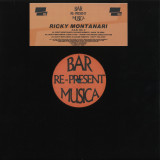
BAR Musica is happy to come back with its BAR Musica Re-Present catalogue and is even happier to welcome back the Italian legend Ricky Montanari - to confirm the respect and friendship with us.
Ricky Montanari has always been a forward thinking in both his production and sets. The tracks in this H.O.M. Vol II are some unreleased gems produced together with his studio partners Davide Ruberto and Edo Lo Zio in the early 2000 that never got released.
This release is dedicated to all the respect and the gratitude to Ricky, for always be a friend!”
Yan Tregger, born Edouard Joseph Scotto Di Suoccio, is a prolific French-Italian composer, trumpeter, arranger, and library music specialist.
Tregger built a vast and varied catalogue of over 1,400 works registered with SACEM as a library music composer.
His output spans funk, jazz-funk, psychedelic disco, electronic experiments, film soundtracks, advertising jingles, and even relaxation music.
This LP is a compilation of rare or unreleased tracks made by the Maestro in The 70's.
"The Happening by Tomorrow Comes The Harvest is the least case, a provocative confrontation. It's a challenge or dare to the idea that music can be useful if we are able to experience it. I would imagine that to many, music having an objective beyond the listener doesn't make sense because the general thought is that Music is made for us to consume, to make us remember, to influence us and to make us feel something. The Happening does all those things but much more. What it does is expand the scope from us to "it". Creating and constructing music for the subject of existence is a tall order.
The concept of The Happening is about the beginning and the end of Time and Space; the initial point of when reality starts and its conclusional apex. In the beginning, there is a great light. And from this light, comes life. Life is lived until it isn't.
This is what The Happening implies. It speaks about a 9-minute frame in reality, used to emphasize something that happened a very long time ago, something that happened in its creation and what will eventually happen far in the future.
The Happening was of an accidental birth. The love child of three musicians (Jeff Mills, Prabhu Edouard and Jean-Phillippe Dary) who was just asked to play "something" so that the camera crew could have extra b-roll for all the previous footages of the band while they were working in the recording studio in the North of Paris for their album Forbidden Planet. There was no discussion of what they'll do, no plan, no direction other than to use music to reach a level of consciousness.
Somehow within these transformative 9 minutes, something was felt by each of them, explored to its furthest point, which lead to this extraordinary creation. The Happening refers to the life and death of everything living thing. Infinity."
Jeff Mills
- A1: Mind Against - Babylon
- A2: Dyzen - Formula
- A3: Tim Engelhardt & Solique - Symmetry
- B1: Tharat - Napalm
- B2: Rafael Cerato & Laherte - Error Error
- B3: Sean Doron & Theuss - Hold Out Ft. John Hood
- C1: Sideral - Grace
- C2: Cay - Who I Am
- C3: Sam Shure - Boom Boom
- D1: Gespona - Game Over
- D2: Yet More - They Want Me
- D3: Fat Cosmoe & My Flower - Wanna More
- E1: Read The News & Julian Koerndl - Sad Sculptures
- E2: Upercent - Blue Space
- E3: Fedele - Mountain Kisses
- F1: Remcord - I Know
- F2: Edone - Madness Diary
- F3: Hardt Antoine - Do You Want Me
- G1: Tiello & Ccinni - I Love(D) You
- G2: Momery - Just The Same
- G3: Skala - Unheard Tremor
- H1: Senzor - Nebu
- H2: Timelapse & Adran - Feeling
- H3: Just Iris - Invisible Hug
The second vinyl release from Exxtra Beats Records delivers a dynamic 4-track EP showcasing the label's commitment to cutting-edge electronic house music. Featuring a diverse lineup of artists, this Various Artists release explores a range of styles, from driving electro to raw acid, making it a must-have for dancefloors and collectors alike. A bold statement of the label's evolving sound.
Bliss Point is proud to present the long awaited reissue of lost italo house gem Soft Keys – Bubbles.
Recorded in Trieste in 1993 by Edoardo Milani and Tullio Battisti, “Bubbles (Soap Mix)” is a slice of colorful, sun-soaked euphoria, a track delightfully leftfield and playful in a way so rarely found in club music. Originally released on Italy’s Promo Music label, it was quickly lost to time, a masterpiece locked away on an extremely hard to find 12”, soon growing in notoriety among DJs and collectors.
Bliss Point’s reissue of this classic includes two remixes from contemporary luminaries, each interpreting the timeless sound of Bubbles for the 21st century. Tokyo’s boys be kko explores the soaring complexity of the original, and New Yorker Olive T offers a thumping take on its deep and tender heart. The original “Acapella” version is also included.
This reimagining of Soft Keys – Bubbles is remastered and recut by Dubplates & Mastering, and features an homage to the original 12” sleeve designed by Brandon Oxendine.
Just a few months after the release of "Shine," his debut solo album featuring some of the finest R'n'B voices of the moment, Stefano Cosi presents his new single "That's On Point" on Angis Music, already home to the HUMA project of which he is part along with pianist Alberto Lincetto. The single, which boasts the important collaboration with UK soul legend Omar, was written and produced remotely during Covid, waiting for the right moment to be released. Now it seems that the moment has finally arrived and to complete the offer alongside the original version are two remixes by Abacus, prominent figure in the deep house scene since the '90s, plus a mid-tempo dub version by Italian talent Edoardo Della Bitta aka EDB. Don't miss out on this future classic!
- A1: Casper, Favorite, Kollegah - Mittelfinger Hoch 3 36
- A2: Kollegah - Halbautomatik 4 06
- A3: Casper - Elefant (Ich Bleib Stehen) 3 51
- A4: Favorite, Olli Banjo - Krieg 4 39
- A5: Kollegah, Favorite, Farid Bang - Westdeutschlands Kings 2 50
- B1: Shiml - Unter Null 2 58
- B2: Favorite - Superman 3 55
- B3: Selfmade Records - Skit 0 32
- B4: Slick One, Edo Maajka - Bruderkrieg 3 28
- B5: Casper, Favorite - 2X Mehr Wie Du 4 10
- C1: Kollegah, Sun Diego - G's Sterben Jung 4 24
- C2: Shiml, Montanamax - Er & Ich 2009 3 32
- C3: Favorite - Lebenswerk 3 30
- C4: Casper - Vatertag 3 38
- D1: Shiml - Mit Jedem Atemzug 4 33
- D2: Kollegah, Favorite - Jebiga 2 58
- D3: Casper, Marteria - Rock 'N' Roll 3 44
- D4: Casper, Favorite, Kollegah, Shiml Dampfwalze - 6 19
Nach den ersten Charterfolgen von Kollegah, Favorite und Shiml folgt der zweite Labelsampler von Selfmade Records, "CHRONIK II", auf dem auch Selfmade-Neuzugang Casper erstmals vertreten ist.Auf 18 Tracks erlebt man die vier höchst unterschiedlichen Rapper Casper, Favorite, Kollegah & Shiml in Höchstform, sowohl solo, als auch auf gemeinsamen Songs. Nachdem die erste Hälfte des Samplers in erster Linie nach vorne geht und Spaß macht, werden gegen Ende auch sanftere Töne angeschlagen.Mit Olli Banjo, Marteria, Edo Maajka, Farid Bang, MontanaMax & SunDiego konnte man sich außerdem erstklassige Features an Land ziehen, die "CHRONIK II" endgültig zur Pflicht für jeden Deutschrap-Fan machen!Produziert wurde der Sampler zum Großteil vom mehrfachen Gold- und Selfmade-Hausproduzenten Rizbo, sowie von Newcomerproducer TiKay One. Weitere Produktionen stammen von Bjet, Alper, Joshimixu & Mauvais Garcon."CHRONIK II" macht die Ausnahmestellung von Selfmade Records im Deutschrap eindrucksvoll deutlich. Wer glaubt, deutsche Rapmusik sei nicht mehr interessant, wird hier vom Gegenteil überzeugt. Nie war ein Labelsampler vielseitiger und musikalisch hochwertiger.Neben der CD liegt "CHRONIK II" als besonderer Bonus die DVD "Selfmade Vol.1" bei. Diese DVD ist keineswegs nur Beilage, sondern ein vollwertiges, eigenständiges Produkt mit 2 Stunden Material. Sie enthält neben einer ausführlichen Tourdokumentation, Studioimpressionen und nie gesehenem Making Of-Material exklusive Einzelbeiträge aller Künstler. So sieht man etwa Casper als Reporter auf der Berlinale oder Favorite bei einem außergewöhnlichen Konzert in einer JVA.
- A1: Alberta Balsam - Anthem
- A2: Alden Tyrell - Lockstate
- B1: Aleksi Perala - 74R1721101
- B2: Alex Ranzino - Confessions
- C1: Anthony Rother - Blown Fuse
- C2: Dexter - Pumapunku
- D1: Detroit In Effect - Get To It (Dutchman Mix)
- D2: Dim Garden - Flot Marlot
- D3: Dj Sotofett - Bachi
- E1: Dj K - Detroit (313)
- E2: Dopplereffekt - Dyson Sphere
- F1: Dpx - Memorymode
- F2: E-Gzr - Acidic Metalurgics (Dj Sotofetts 909 Deep Mix)
- G1: Edo8 - Acidkadootje
- G2: E R.p. - Ugly Pretty June
- H1: The Exaltics - The Fierce Fighting
- H2: Frequency - Darkheart Energy
- I1: Gen-Y - Moon Soon
- I2: John Heckle - Dxxxiii
- J1: Head Front Panel - Jocco
- J2: Kreggo - Sonar Juggler
- K1: Legowelt - La Nuit Invisible
- K2: Lenson - Warehouse Memories
- L1: Mr Ho Medicine Ft Gedvile Bunikyte
- M2: Ovuca - Fi3Ac2142060 (Chris Callahan Edit)
- N1: Privacy - Starcrash
- N2: Prz - This Time
- O1: Acid Freq - Empty Streets
- O2: Ryan James Ford - Eendrachtsplein (Ret Mix)
- P1: Sansibar - Connect
- P2: Steffi | - 50 Heads
- L2: Ngoni Egan - Mvuma
- M1: Ocb - Clone Corp
Sonic Transmutations is an extended compilation album celebrating over three decades of Clone Records. Marking the 31 years - which is coincidentally the national Dutch telephone code - the 8x12 inch box set draws together veteran talent and emerging iconoclasts, transmitting a frequency rooted the imprint's signature blend of essential dance music while journeying off into territories unknown. In a constant state of unfolding, morphing across phases of matter, Sonic Transmutations purveys an elemental energy that stands in testament to Clone's enduring legacy and explorations of sounds and structures.
Met trots presenteren Rosa Ana, Nosa en Soulution het album “GOLDEN HOUR”. Het album telt een zevental tracks, waarvan er geen één onder de drieëneenhalve minuut komt. Waardoor je volwaardige tracks kunt verwachten. Het is een bijzonder muzikaal project met kwetsbare onderwerpen die de drie bezig gebben gehouden. Producer Soulution heeft letterlijk alles uit de kast getrokken om zijn gevestigde sound (als vaste producer van Fat Windjacks en zijn internationale projecten met onder andere Edo G, Talib Kweli, Bahamadia enzovoort) te ontwikkelen.
The debut LP from Italy's own Alex Fernet, just another taste of the italo renaissance.
Music and lyrics by Alex Fernet. All vocals, bass lines, synths and guitar parts performed by Alex Fernet
Recorded and mixed by Edoado "Dodi" Pellizzari at Overdrive Recording Studio, Castello di Godego
Drums and percussions by Diego Dal Bon
© 2023 Costello's (Milan) & People's Potential Unlimited (Washington DC)
Sampling Moods Records was founded in 2015 by Edoardo Danielli. It revives his legacy and philosophy thanks to sam sampling moods, a cultural association established in his memory in 2018. The label focuses on contemporary Garage House and essential interpretations of rare groove hits and other underground Disco classics. As a work of art that touches our mood, Sampling Moods Records tries to make us rediscover the power and love of House music.
The long-awaited reissue of Toba makes it clear, once and for all, to fans and industry insiders that disco music produced in Italy between the late 70s and early 80s had no chance of success. What was disparagingly called "spaghetti disco", considered a poor imitation of real American disco music, only good for Japanese cartoons. This was the main reason that prompted Italians to record their songs abroad, as Fratelli La Bionda with their pseudonym D.D.Sound in Munich. Luigi Figini, with "Supercool" and "Percussion Sundance" by Edo Martin and Pino Santapaga (the same as "Step By Step" by Koxo), claimed that Kash was a one-off Swedish disco project, a lie that came to light when an Italian test pressing from the previous year, made by GDB, was posted !!! Amin-Peck followed the trend of passing off their songs as foreign music on the intuition of their Roman producers. So ''Love Disgrace'' was released on 7'' by a label called Connection, which never really existed, created for the purpose by Giancarlo Meo, confident that this would bring success to the Bolognese duo who were already creating 'proto Italo-Disco tracks' with a new-wave trend. To make the whole operation seem real, the London agency Ellie Jay Ltd. was involved, contacting Andy Fernbach of Jacobs Studios Ltd. The vinyl was also produced in the UK, otherwise the deception would have been discovered, then imported to Italy by Best Record. Italo-Disco was officially born after this, in 1982, not before! Everything makes sense now ! Real events that actually happened and purely invented names and anecdotes. Just think, even the image of Tony Balch used for the cover of Toba was taken from Grand Theft's 1978 album "Have You Seen This Band?" and reproduced on the new redesigned cover, as were the heads of the other musicians. The idea of a real band called Toba had finally come to fruition and would lead to a second sensational success the following year. Now it all makes sense! Facts and anecdotes that really happened and names and circumstances that are purely fictional. Finally, everything adds up! Real things and invented names of musicians and collaborators. It's important to clarify what we've said above, but we haven't talked about "Make Your Mind Up" and "Don't Take It" and the two masterful remixes performed by Dave Mathmos. In short: with the original versions we'll make Italo-Disco purists happy, with the remix versions we'll please new younger followers with more modern sounds and versions more in line with today's tastes and trends.
- Hasiera 00:50
- 2: Iratzarri 0:37
- Sarrakio 02:10
- Dantza Bihurritua 03:50
- Desagertu 03:18
- Meditazioa I 02:09
- Besarkatu Ninduzun (Cdr Y Basandere Ahotsak) 03:50
- Meditazioa Ii 02:53
- Ametza Iii 02:06
- Oroipen 04:04
- Fallen Gaza 03:09
- Atseginzale Dantza 02:14
- Sua Eta Heriotza 00:59
- Agur Maria (Cdr Y Basandere Ahotsak) 03:55
- Bukaerako Dantza 04:03
- Amaiera 00:36
Una interpretación de Soinuarenbidea II debería partir de esta premisa: todo es posible, nada es aleatorio, y en sí mismo es un imposible de aleatoriedades. El escenario planteado explora la idea de realidad aumentada desde una percepción sonora, ambiental y colectiva. La obra transita hacia adelante y hacia atrás recreando experiencias extintas de porvenir incierto, tratando de facilitar un fin pacificador. Cada pieza sonora se crea, se despliega, se repliega y se destruye, en una torsión permanente de toda la realidad que hace posible cada fragmento musical, cada identidad acústica, cada espacio sonoro. Lo onírico, la ficción, y el viaje están continuamente presentes, y es en el transitar de cada fragmento donde se produce el diálogo de la exposición musical. Los elementos de esta ficción se recrean continuamente, en un continuum donde se entrelazan y se van contorsionando a medida que crecen o decrecen con cada fragmento de síntesis concreta. Los temas explícitamente musicales son el magma que conduce a dar voluptuosidad al disco, siendo la piel un contexto o límite que en sí mismo fluctúa indefinidamente en texturas y configuraciones posibles. Y la urdimbre del silencio es la síntesis que está continuamente presente y que trata de cohesionar los fragmentos en continua colisión expresiva. Las grabaciones de campo proporcionan el material sonoro concreto, y como un fractal sonoro cada una de ellas ofrece diferentes grados de interpretación que a su vez conduce a nuevos fragmentos y nuevas creaciones. Así que se puede pensar que esta es una síntesis de una posible realidad, pero interpretable en infinidad de maneras. Un movimiento y una estaticidad implícitas que generan estructuras y dinámicas acústicas. Lo que se escucha no es real, pero en sí mismo forma parte de la realidad, creando un escenario expectante. Lo cinematográfico, plástico y teatral, danzante y dinámico cobra importancia en este juego, porque se trata de contar una historia, una experiencia recreada desde los puntos de vista del arte visual. Es a su vez hilo conductor y entretenimiento, discurso político y puro divertimento. Es desde este espacio de convivencia artística que tiene sentido la totalidad y justifica el formato sonoro planteado. La contradicción de la obra es patente en el formato, y es a su vez el planteamiento de una accidentalidad en el devenir vital. Contenedor de Ruido recoge todas estas contradicciones y las manifiesta en la obra Soinuarenbidea II. Es una historia sonora, es un cuento acústico. Es un fragmento de vitalidad en imágenes audibles. Es una invitación a la reflexión, a la crítica, al disfrute, a la meditación, a la celebración. Y sobre todo es esperanzadora apreciación de la realidad como algo maleable que confeccionamos colectivamente, que requiere de una paciente observación y la participación colectiva global, en un mundo finito pleno de diversidades y del que ignoramos prácticamente todo, al que deberíamos volver con respeto y devoción.
Soinuarenbidea II-ren interpretazio batek premisa honetatik abiatu beharko luke: dena da posible, ezer ez da ausazkoa, eta, berez, ausazkotasun ezinezko bat da. Planteatutako agertokiak errealitate areagotuaren ideia aztertzen du, soinu-, ingurumen- eta talde-pertzepzio batetik abiatuta. Lanak aurrera eta atzera egiten du, etorkizun zalantzagarriko esperientzia desagertuak birsortuz eta helburu baketsua lortzen saiatuz. Soinu-pieza bakoitza sortu, hedatu, tolestu eta suntsitu egiten da, musika-zati bakoitza, identitate akustiko bakoitza eta soinu-espazio bakoitza ahalbidetzen dituen errealitate osoaren etengabeko bihurdura batean. Onirikoa, fikzioa eta bidaia etengabe daude presente, eta pasarte bakoitzaren joan-etorrian gertatzen da musika-erakusketaren elkarrizketa. Fikzio honen elementuak etengabe birsortzen dira, continuum batean, non sintesi zati zehatz bakoitzarekin hazi edo txikitu ahala elkar lotzen eta bihurritzen diren. Esplizituki musikalak diren gaiak diskoari atsegintasuna ematera eramaten duen magma dira, azala testuingurua edo muga izanik, testura eta konfigurazio posibleetan mugarik gabe aldatzen dena. Eta isiltasunaren irazkia etengabe presente dagoen sintesia da, zatiak etengabeko adierazpen-talkan kohesionatzen saiatzen dena. Landa-grabazioek soinu-material zehatza ematen dute, eta soinu-fraktal batek bezala, horietako bakoitzak interpretazio-maila desberdinak eskaintzen ditu, eta horrek, aldi berean, zati eta sorkuntza berrietara eramaten du. Beraz, pentsa daiteke errealitate posible baten sintesia dela, baina hamaika modutan interpreta daitekeena. Egitura eta dinamika akustikoak sortzen dituzten mugimendu eta estatikotasun inplizitu bat. Entzuten dena ez da erreala, baina, berez, errealitatearen parte da, eta agertoki espektakularra sortzen du. Zinematografikoak, plastikoak eta antzerkikoak, dantzariak eta dinamikoak garrantzia hartzen dute joko honetan, ikusizko artearen ikuspegitik birsortutako istorio bat, esperientzia bat, kontatzea baita helburua. Aldi berean, hari gidaria eta entretenimendua da, diskurtso politikoa eta dibertimendu hutsa. Elkarbizitzarako espazio artistiko honetatik osotasunak zentzua du eta planteatutako soinu-formatua justifikatzen du. Obraren kontraesana nabarmena da formatuan, eta, aldi berean, bizi-bilakaeran istripu-tasa bat planteatzea da. Zarata-edukiontziak kontraesan horiek guztiak jasotzen ditu eta Soinuarenbidea II obran adierazten ditu. Soinu istorio bat da, ipuin akustiko bat. Bizitasun zati bat da, irudi entzungarrietan. Hausnarketarako, kritikarako, gozamenerako, meditaziorako eta ospakizunerako gonbidapena da. Eta, batez ere, itxaropentsua da errealitatea modu kolektiboan egiten dugun gauza xaflakor gisa hautematea, behaketa pazientea eta partaidetza kolektibo globala eskatzen dituena, dibertsitatez betetako mundu mugatu batean, ia guztia kontuan hartzen ez duguna, eta errespetuz eta debozioz itzuli beharko genukeena.
An interpretation of Soinuarenbidea II should start from this premise: everything is possible, nothing is random, and in itself is an impossible randomness. The proposed scenario explores the idea of augmented reality from a sonic, environmental, and collective perception. The work moves back and forth, recreating extinct experiences of an uncertain future, seeking to facilitate a peaceful end. Each sound piece is created, unfolds, retreats, and is destroyed, in a permanent twisting of all reality that makes each musical fragment, each acoustic identity, each sonic space possible. The dreamlike, the fictional, and the journey are continually present, and it is in the transit of each fragment that the dialogue of the musical exposition takes place. The elements of this fiction are continually recreated, in a continuum where they intertwine and contort as they grow or diminish with each fragment of concrete synthesis. The explicitly musical themes are the magma that leads to the work's voluptuousness, the skin being a context or boundary that in itself fluctuates indefinitely in possible textures and configurations. And the warp of silence is the synthesis that is continually present and seeks to unite the fragments in a continuous expressive collision. The field recordings provide the concrete sound material, and like a sonic fractal, each one offers different degrees of interpretation that in turn lead to new fragments and new creations. So one can think of this as a synthesis of a possible reality, but interpretable in an infinite number of ways. An implicit movement and staticity that generate acoustic structures and dynamics. What is heard is not real, but in itself is part of reality, creating an expectant scenario. The cinematic, plastic and theatrical, dance and dynamic aspects take on importance in this game, because it is about telling a story, an experience recreated from the perspective of visual art. It is at once a common thread and entertainment, political discourse and pure entertainment. It is from this space of artistic coexistence that the whole makes sense and justifies the proposed sound format. The contradiction of the work is evident in its format, and it is, in turn, the presentation of an accidentality in the course of life. Noise Container gathers all these contradictions and manifests them in the work Soinuarenbidea II. It is a sound story, an acoustic tale. It is a fragment of vitality in audible images. It is an invitation to reflection, to critique, to enjoyment, to meditation, to celebration. And above all, it is a hopeful appreciation of reality as something malleable that we collectively craft, requiring patient observation and global collective participation, in a finite world full of diversity and of which we know practically nothing, to which we should return with respect and devotion.
Paisajes sonoros, diseño sonoro, drones y música grabada, realizada y arreglada para Contenedor de Ruido por David Aranaz. Coro: Basandere Ahotsak. Producido y mezclado por David Aranaz. Mástering: Estanis Elorza. Fotografía: David Aranaz. Texto: David Aranaz. Traducción: Saioa Aranaz Oreja. Trabajo y Diseño artístico: Cristina Martinez. Edición: Contenedor de Ruido Producciones y Sarbide Music. Distribución: Contenedor de Ruido.
Contenedor de Ruido agradece el apoyo en la realización de Soinuarenbidea II al coro Basandere Ahotsak y en especial a Eva Orbara Goicoa.
Soinuarenbidea II está dedicado al pueblo palestino.
Paisajes y objetos Sonoros, samplers y otras músicas transformadas para Soinuarenbidea II
Burlada: Paseos sonoros matinales por Merindad de Sangüesa, Calle Mayor, Capuchinas, Parque Uranga y varias iglesias y plazas. Pasajes del cotidiano: basura de papel, cristal y plástico.
Pamplona: Cementerio de San José. CEIP Sanduzelai /// Quinto Real: Fábrica de Armas, Puerto de Urkiaga y alrededores. Suite del silencio, bosques en movimiento /// Fábrica de armas de Orbaiceta: regatas, biosques, paseo sonoro hasta regata /// Belate: Puerto de Belate y alrededores. Vacas en pradera junto a las turberas /// Bardenas Reales: Suite de guitarra y Suite del silencio, estepa desértica /// Austria: Tranvías de Graz y Viena. Muchedumbre del metro de Viena.
Voces cinematográficas de: Matanza en Texas, Robocop, Espíritu Sagrado, Solo los Amantes Sobreviven, Voces de Gaza, Yojimbo, Terciopelo Azul, Los 7 Magníficos.
La pista A2 está dedicada a la memoria de David Lynch.
La pista B4 está dedicada a Eva Orbara Goicoa.
Pista A4: Contiene interpretaciones de piano de Three Piano Pieces Op.11 de Arnold Schoenberg.
Pista A5: Es una interpretación expandida con síntesis FM del Concerto Op. 24 - Etwas lebhaft - de Anton Webern.
Pista A7: Contiene la canción Besarkatu ninduzun (Letra de Josune López y música de Josu Elberdin) en interpretación de Basandere Ahotsak en la iglesia de Burutain bajo la tormenta.
Pista B2: Contiene la canción Recuerdos de la Alhambra (Fernando Tárrega) en interpretación torsionada de David Aranaz Sarasa.
Pista B14: Contiene la canción Agur María (Letra y Música de Estíbaliz Robles “Estitxu” y arreglo exclusivo de Alfonso Ortiz para Basandere Ahotsak) en interpretación de Basandere Ahotsak.
Equipamiento para Soinuarenbidea II.
Micros de condensador SE7, configuración XY y ORTF; Micros de cinta ORTIZ LUTHIER configuración XY y Blumlein; Grabadoras MARANTZ y ZOOM; Sintetizadores y samplers Elektron MONOMACHINE SPS-1, MACHINEDRUM SFX6 y MODEL:SAMPLES. Dave Smith MOPHO. Torso Electronics S-4. Sintetizador Modular 333 DIY; Guitarra clásica ALHAMBRA 6P; Esculturas Sonoras tipo Baschet, cristal y metales; Mesa Soundcraft FX16ii; Interface de Audio RME Babyface Pro FS; DAW Logic Pro; Procesamiento de modelado analógico con Acústica Audio, Waves, Softube, Brainworx, Sonible, Analog Obsesion, Tokio Dawn. Metering de Logic y RME DigiCheck . Amplificación Hafler PRO2400. Monitorización BW DM602 S3. Mezcla digital; Mastering híbrido.
Superb EP, Bringing some Acid mental Techno, Some heavy Hard techno and a pinch of Techno exploration, experimental beats...
A Beautifull 01
- Ku Kisantu Kikuenda Ku
- Lolango
- Agardja-Dja
- Na Bolingo Conseil Ezali Te
- Congo Mibale
- Minoko
- Edo Aboya Ngai
- Lolo Soufire
- Kamalandua
- Mobali Na Ngai Azali Etudiant Na Mpoto
- Tembe Na Tembe
- Lola
- Mosaka Ya Kilo
- Nzela Claude
- Mokili Macaramba
- Sukola Motema Olinga
- Moi, C'est L'originalité
Sixteen wonders from the first three years of Franco’s own imprint Les Editions Populaires, founded in 1968. Mostly OK Jazz, performing ravishing rumbas and bolero ballads in Lingala, traditional songs in Kikongo, Kimongo, and even Yoruba, collaborations with Ngoma artists Camille Feruzi and Manuel d’Oliveira, and their own tough take on US funk.
Glorious music. Bim.
- 1: Top 0 List
- 2: Born To Roll
- 3: The Inc Ride
- 4: Conflict (With Guru)
- 5: Slaughterhouse
- 6: Ladder Of Success (With Phonte, Wordsworth & K-Hill)
- 7: Reminds Me (With Edo G)
- 8: Freedom House
- 9: I Refuse
- 10: Wishing
- 1: Fly Wunz
- 2: Out Da Box (With Tony Touch, Large Professor & Pete Rock)
- 3: Uncle Larry
- 4: Ace Radio
- 5: Ain't U Da Masta
- 6: Ya Hardcore
- 7: All Alone (With Torae)
- 8: Juanita Estefan (Feat. Stricklin)
- 9: The B-Side Freestyle