INTEMPORARY AND INDETRONABLE FRENCH COLD WAVE CLASSIC in a SPECIAL EDITION to celebrate the 40th anniversary of this mythical album.
This edition includes a 45T with 2 previously unreleased tracks, available nowhere else.
Thierry Müller, who initiated the RUTH project, is not at his first try when the album POLAROÏD/ROMAN/PHOTO including the eponymous track is released in 1985. His older brother Patrick along with one of their cousins make his musical education and he quickly becomes familiar with contemporary and experimental music. He starts quite early to tinker sounds on old tape recorders by himself but it is in 1977 that Thierry launches with some friends his first group, ARCANE, while studying at the School of Applied Arts. Their sound is weird, a mixture of saturated scratches and feedback tapes: there is no discographic or scenic testimony of this experience.
Alongside ARCANE, Thierry is already working solo on his ILITCH project / concept, an experimental and innovative work, whose first album Periodmindtrouble is released in 1978 on the Oxigène label. Despite insubstantial sales, this album brings Thierry recognition and success in the very elitist circles of experimental and underground music.
ILITCH’s musical bias was too narrow for Thierry’s ceaseless experimental curiosity, parallel to these activities, he therefore develops a Punk project called RUTH ELLYERI with the author, actress and photographer Murielle Huster. The title is an anagram of Thierry Müller (the complete name is Ruth M. Ellyeri). The character is meant to impersonate one of his schizophrenic facets and allows him to extend his field of expressions to musical styles differing from those in ILITCH.
From this work, the very cult punk piece Mescalito emerges, song that can be found on the mythical but unfortunately very rare compilation 125g de 33 1/3 tours (1979) of the Oxigène label (first “french punk” sampler). At the end of 1978, he meets Philippe Doray at the Oxigene office. Doray is another big name of French experimental music. Thierry moves to his home near Rouen, a remote farmhouse with a music studio made of odds and ends.
They work on their respective creations but meet from time to time on experimentations in common, including CRASH (a tribute to JG Ballard) As early as 1982, a first version of the track Polaroïd/Roman/Photo is out under the name of the project RUTH. “I wanted to write a piece to make the girls dance and make fun of the boys. I plugged a small handmade clock on my Farfisa organ as a sequencer. I had a small Roland synth-guitar, I put the organ in it and that’s how it started.” Philippe is quite amused by the idea of working on a more Pop project and offers to write the text. Thierry works on other tracks for the future LP and asks some friends to write other texts : Edouard Nono, visual artist, writes the lyrics of Mots, Frédérique Lapierre those of Misty Mouse and Tu m’ennuies . It is her voice you hear on these 2 tracks and on the first version of Polaroïd/Roman/Photo. Later, Thierry settles down in the Anagramme recording studio to carry out acoustic sound recordings. But when the sessions are over, the 2 musicians are not too happy with the results of Polaroïd/Roman/Photo: according to them, they lack “flamboyance”. They decide then to record a new female voice with a professional singer and the sound engeneer Patrick Chevalot offers to mix the track in the Synthesis studio “so that it blows out”.
With his tape ready and the help of Jacques Pasquier (S.C.O.P.A. / Invisible records where Ilitch’s second album, 10 Suicides, is released) he starts to contact record companies. “I visited almost all the major record companies and was thrown out every time. Only at RCA’s I found someone interested in my music. It was Francis Fottorino who had signed Kas Product but when it reached the the big boss, no way! Philippe Constantin from Virgin records raised some hope but in vain.
The album was finally released in 1985 with Paris Album, a small independant label.” The album barely sells 50 copies in 1985, despite the eponymous title as a potential success. « In 2004, 2 DJs Marc Colin and Ivan Smagghe discover the track Polaroïd/Roman/Photo and decide to exhume it from oblvion. They release it on a compilation called So Young but so cold (Tigersushi) and then with Born Bad records on the BIPPP compilation in 2008. Thanks to them, the track and the album start a new life.
Alongside his activity as graphic designer, Thierry Müller carries on producing music under his name, those of ILITCH and RUTH for his own creations and various collaborations.
quête:edo b
- A1: Malavoi - Te Traigo Guajira
- A2: Los Caraibes - Donde
- A3: Tropicana - Amor En Chachacha
- A4: Ryco Jazz - Wachi Wara
- A5: Eugene Balthazar - Dap Pignan
- A6: Roger Jaffort - Oye Mi Consejo
- A7: Les Kings - Oriza
- B1: Les Supers Jaguars - Tatalibaba
- B2: Super Combo De Pointe A Pitre - Serrana
- B3: L'ensemble Abricot - Se Quedo Boogaloo
- B4: Henri Guedon - Bilonga
- B5: Les Aiglons - Pensando En Ti
- B6: Los Martiniquenos - Caterate
In Guadeloupe, many people think that jazz and ka music are like a ring and a finger. To some extent, the same could be said about so called Latin music and the music played in the French West Indies.
Both aesthetics were born in the Caribbean and bear so many connections that they can easily be considered cousins. In constant dialogue, there are lots of examples of their fruitful alliance and have been for a while. The English country dance that used to be practiced in European lounges came to be called kadrille in Martinique and contradanza in Cuba. They both featured additional percussion instruments inherited from the transatlantic deportation. Drawing from shared feelings about the same traumatized identity – later to be creolized – it would be hard not to assume that they were meant to inspire each other. The golden age of the orchestras that graced the Pigalle nights during the interwar period further proves the point. As soon as the 1930s, Havana-born Don Barreto naturally mixed danzón and biguine music in a combo based at Melody's Bar. In the following decade, Félix Valvert, a conductor who was born and raised in Basse-Terre in Guadelupe, also worked wonders in Montparnasse with La Coupole, which was an orchestra made up of eclectic musicians. Afro- Caribbean performers of various origins were often hired on rhythm and brass sections in jazz bands, which used to enliven the typical French balls of the capital. In the 1930s and onwards, Rico’s Creole Band was one of them.
Martinican violinist-clarinettist Ernest Léardée, who would become the king of biguine music as well as the main figure of French Uncle Ben's TV commercials (a dark stigma of post-colonial stereotypes), had musicians from the whole Caribbean sphere play at his Bal Blomet – and they all enchanted "ces Zazous-là" (according the words of Léardée's biguine-calypso piece). In les Antilles (French for French West Indies), music history started to speed up in the 1950s, when trade expanded and radio stations grew bigger. The Guadelupean and Martiniquais youth tuned in their old galena radio sets to South American and Caribbean music. As for the women traders, les pacotilleuses, they bought and sold goods across different islands (the "passing of items through various hands" was thought to be most pleasurable) and brought back countless sounds in their luggage. Such was the case of Madame Balthazar, who once returned from Puerto Rico with the first 45rpm and 33rpm to ever enter Martinique.
Out of this adventure was created the famous Martinican label La Maison des Merengues, a music business she opened and undertook with her husband and which proved to be a major landmark. At the end of the 1950s, in Puerto Rico, Marius Cultier competed in the Piano International Contest playing a version of Monk's Round 'Midnight. He won the first prize and this distinction foreshadowed everything that was to come. Cultier, the heretic Monk of jazz, was quickly praised for writing superb melodies, always tinged with a twist that conferred a unique sound to his music. It didn't take long for the gifted self-taught musician to get to play with Los Cubanos, making a name for himself thanks to his impressive maestria on merengues.
The rest is history. Besides, in the late 1950s, Frantz Charles-Denis, born into the upper middle class in Saint-Pierre and better known by his first name Francisco, went back home after working at La Cabane Cubaine – a club located rue Fontaine where he had caught the Latin fever. Francisco's music was therefore heavily marked by his Cuban cousins' influence, which gave the combos he led a specific style and also led to renewal. Things were swinging hard in La Savane, located in the main square in Fort-de-France. He set up the Shango club close by and tested out the biguine lélé there, a new music formula spiced up with Latin rhythms. Soon afterwards, fate had him fly to Puerto Rico and Venezuela.
As for percussionist Henri Guédon (percussions were only a part of his many talents), he was born in Fort-de-France in May 22nd 1944, the day marking the celebration of the abolition of slavery. As an old man, he could remember that in " his father's Teppaz, a lot of hectic 6/8 music was constantly playing...". In the opening lines of his Lettre à Dizzy, a small illustrated collection of writings published by Del Arco, he highlighted the huge impact that cubop had on him as a teenage boy, around 1960. He eventually turned out to be the lider maximo in La Contesta, a big band steeped in Latin jazz. He was also the one who originated the word zouk to describe music which brought the sound of the New York barrio to Paris. It was the culmination of a journey that started in Sainte-Marie: "a mythical place for bélé, the equivalent of Cuban guaguancó". In the early 1960s, the tertiary economy developed to the detriment of agriculture. Yet rural life was where roots music emerged in Martinique and in Guadeloupe.
Record companies played a major part in the process of Latin versions sweeping across the islands – before reaching everywhere else. Producer Célini, boss of the great Aux Ondes label, and Marcel Mavounzy, both the head of Émeraude records - a firm which was founded in 1953 - as well as the brother of famous saxophonist Robert Mavounzy, were big names to bear in mind. Although there were many of them - all of whom are featured on this record - Henri Debs was definitely the major figure in the recording adventure. He proved to be so influential that he even got compared to Berry Gordy. In the mid 1950s, when he acquired his first Teppaz, he worked on his first compositions: a bolero and a chachacha. Then, he became the one man who made people discover Caribbean music, from calypso to merengue. He was among the first ones to rush out to San Juan, Puerto Rico, to buy records and distribute them through a store run by one of his brothers in Fort-de-France. He had members of the Fania All Star come and perform there, which he was madly proud about. He was also the first one to pay attention to Haitian music, such as compas direct and various other rhythms which would soon flood the market. As a result, many of the combos hitting his legendary studio would end up boosted by widespread "Afro-Latin" rhythms. However, he never denied his identity: gwo ka drums were given a major role, although they were instruments which had long been banned from the "official" music spheres. The present selection bears witness to such a creative swarming. Here are fourteen tracks of untimely yet unprecedented cross-fertilization: all types of music rooted in the Creole archipelago have found their way, whatsoever, to the tracklisting. Whether originating from the city or being more rural, they all go back to what Edouard Glissant, in an interview about the place of West Indian music in the Afro-American scope, called "the trace of singing, the one which got erased by slavery." "It is so in jazz, but also in reggae, calypso, biguine, salsa... This trace also manifests through the drums, whether Guadelupean, Dominican, Jamaican or Cuban... None of them being quite the same. They all point to the idea of a trace, seeking it out and connecting to each other through it. This is the hallmark of the African diaspora: its ability to create something new, in relation to itself, out of a trace. It may be the memory of a rhythm, the crafting of a drum, a means of expression which doesn't resort to an old language but to the modalities of it." The opening track features one of the emblematic orchestras of this aesthetic identity, criscrossing many music types from the archipelago. The 1974 Ray Barretto guajira – Ray Barretto was a major New York drummer influenced by Charlie Parker and Chano Pozzo – is magnificently performed by Malavoi, a legendary Fayolais group (i.e from Fort-de-France). Additionally, the compilation ends on a piece by Los Martiniqueños de Francisco. It symbolically closes the circle as it is a genuine potomitan of Martinique culture which also functions as a tireless campaigner for Afro-Caribbean music. Practicing the danmyé rounds (a kind of capoeiria) to the rhythm of the bèlè drum, it delivers a terrific Caterete, a kind of champeta of Afro- Colombian obedience which was originally composed by Colombian Fabián Ramón Veloz Fernández for the group Wgenda Kenya. The icing on the cake is Brazilian Marku Ribas, who found refuge in Martinique in the early 1970s, bringing his singing to the last trance-inducing track. These two "versions" convey the whole tone of a selection composed of rarities and classics of the tropicalized genre, swarming with tonic accents and convoluted rhythms. It is the sort of cocktail that the West Indians never failed to spice up with their own ingredients. For instance, the Los Caraïbes cover of Dónde, a famous Cuban theme composed by producer Ernesto Duarte Brito, has a typical violin and features renowned Martinique singer Joby Valente and his piquant voice.
The track used to be – or so we think – their only existing 45rpm. The meaningful Amor en chachachá by L'Ensemble Tropicana, a band which included Haitian musicians among whom was composer and leader Michel Desgrotte, also recalls how Latin music was pervasive in the tropics in the mid-1960s. They were the ones keeping people dancing at Le Cocoteraie in Guadelupe and La Bananeraie in Martinique. Around the same time, another "foreign" band, Congolese Freddy Mars N'Kounkou's Ryco Jazz, achieved some success on both islands by covering Latin jazz classics – such as their adaptation of Wachi Wara, a "soul sauce" by Dizzy Gillespie and Chano Pozo whose interweaving of strings and percussions can have anyone hit the dancefloor. How can you resist Dap Pinian indeed, a powerful guaguancó by Eugene Balthazar, performed by the Tropicana Orchestra and published by the Martinique-founded La Maison des Merengues? It also acts as a symbol of the maelstrom at work. Going by the name Paco et L'orchestre Cachunga, Roger Jaffory used to play guaguancó too: his Fania-inspired Oye mi consejo is one example of his style. Baila!!!!! Dancing was also one of the Kings' focus points. Oriza is a Puerto Rican bomba and a "classic" originally composed by Nuevayorquino trumpeter Ernie Agosto, which reserves major space for brasses, giving it a special sheen.
Emerging from the New York barrios crucible was also La Perfecta, a Martinique group originating from Trinidad, whose name directly references the totemic Eddie Palmieri figure as well as his own band, also called La Perfecta. Here they borrow Toumbadora from Colombian producer and composer Efraín Lancheros and interpret it by emphasizing percussions, which set fire to the track even more than the wind instruments. The same goes for Martinique's Super Jaguars, who use Tatalibaba – a composition by Cuban guitarist Florencio "Picolo" Santana which was made famous by Celia Cruz & La Sonora Matencera – as a pretext for sending their cadences into a frenzy. In a more typically salsa vein, the Super Combo, a famous Guadelupean orchestra from Pointe-Noire that was formed around the Desplan family and had Roger Plonquitte and Elie Bianay on board, adapt Serana, a theme by Roberto Angleró Pepín, a Puerto Rican composer, singer and musician also known for his song Soy Boricua. Here again, their vision comes close to surpassing the original. In the 1970s, L'Ensemble Abricot provided a handful of tracks of different syles, hence reaching the pinnacle of the art of achieving variety and giving pleasure. They played boleros, biguines, compas direct, guaguancó and even a good old boogaloo - the type they wanted to keep close to their hearts for ever, "pour toujours", as they sang along together in one of their songs. Léon Bertide's Martinican ensemble excelled at the boogaloo which had been composed by Puerto Rican saxophonist Hector Santos for the legendary El Gran Combo.
Three years later, in 1972, Henri Guédon, with the help of Paul Rosine on the vibraphone, tackled the Bilongo made famous by Eddie Palmieri. Such a classic!!!!! And so were the Aiglons, the band from Guadelupe: choosing to execute Pensando en tí, a composition by Dominican Aniceto Batista, on a cooler tempo than the original, they noticeably used a wonderfully (un)tuned keyboard in place of the accordion. On the high-value collectible single – the first one released by Les Aiglons under the Duli Disc label – there is a sticker classifying the track under the generic name "Afro". Now that is what we call a symbol. Jacques Denis
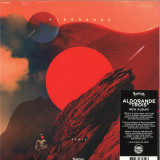
ALDORANDE is a band of five groove adventurers, led by their founder and captain Virgile Raffaëlli, who are pushing the boundaries of music with boundless passion and unparalleled instrumental mastery. After two critically acclaimed albums, the group returns with Trois, the final chapter of their cosmic trilogy, recorded on tape at a prestigious Parisian studio.
Trois is an epic album, driven by bold instrumental explorations and waves of celestial choirs. Drawing inspiration from the 70s fusion movement, it honors the genre’s masters while adding a unique, contemporary twist. The galactic textures and sophisticated arrangements transport the listener on an unforgettable astral journey.
Once again, Favorite Recordings has poured its heart and soul into this album. Every note, every arrangement has been meticulously crafted to capture the essence of that era, with a relentless drive to ensure that every step of production and recording stays as true as possible to the genre’s iconic references.
On drums, Mathieu Edouard lays down a killer groove that leaves no one indifferent. Florian Pellissier, on keyboards, unfolds an interstellar sound palette with a spectacular collection of instruments: Fender Rhodes, Yamaha CP-70B, Moog Minimoog Model D, Sequential Prophet 5, ARP Solina String Ensemble, Roland Juno 106, Roland Jupiter 8, and Oberheim OB-8. On percussion, Erwan Loeffel scatters a jungle of intoxicating rhythms. Laurent Guillet, on guitar, fires off hypnotic, irresistible riffs, while Virgile Raffaëlli, on bass, anchors the entire experience with deep, melodic bass lines that give the band a captivating and unique dimension.
Get ready to take off with ALDORANDE and their album Trois, which promises to take you beyond the stars.
''Stop'' is the emblem of Italo-Disco par excellence even if in 1983 it was inserted by Carlo Favilli and Stefano Zito on the B-side of the 12''of the nascent label House of Music. However, the song, although recorded in a hurry and with evident sound defects, is the perfect example of the musical genre that was developing in Italy in those very early 80s. ''Stop 4 Remixes'' is long-awaited answer that followers have been waiting for over 4 decades and now it lives with its own light with 4 new versions that testify how the piece was a driving force for the entire Italo-Disco movement."Pushed Up'' is the remix by Woody Bianchi, who according to Claudio Casalini (who does not allow any discussion on this matter) is the best Italian disc-jockey for the technical quality of the mixes and the artistic choice of the pieces to play. It would take a book to retrace the stages of his prestigious career. So here just a bravo' to Gino (Woody Bianchi). Ditto with potatoes for Danilo Braca who works assiduously in the clubs of the Big Apple, spinning only tracks by Italian composers and arrangers. Once again this Italian DJ-producer (Danyb is his old nickname), author of two very pregnant extensive versions: ''The Remix'' and ''Re-Visited'', shows his ability as a 'remixer', known everywhere, but especially in Ibiza especially where the DJs ((DJ Harvey included) often use his ''edits' existing only on pen drive. Among those who have madly loved ''Stop'' near Florence there are certainly Luca Pardini (Dirtyelements), Guido Sonato and Edoardo Guccione (Drunkdrivers) who when they are together form the renowned they Tuscan trio of DJ-producers Dirtyelements & Drunkdrivers with very interesting and successful experiences on Pusic Records, Masterworks Music, Samosa Records and Lego Funk. The approach to sounds in their ''Acid Re-Solution Remix'' is absolutely decisive. Here too, skill and passion seasoned with a pinch of art and... why not?... madness !!!
- A1: Overture
- A2: Hama's Song Performed By Yazdan Qafouri
- A3: Riders From The West March
- A4: The Witan
- A5: An Ill Omen
- B1: The Beast Is Rabid
- B2: Who Dares Occupy Isengard?
- B3: Call The Men To Arms
- C1: The Wisest Move
- C2: The Line Of Helm
- C3: Arise, Arise Now
- C4: Edoras Burns
- D1: Call The Retreat
- D2: Surround The Keep
- E1: Pretty Words Will Not Save You
- E2: A Wraith
- E3: What Does Mordor Want With Rings?
- F1: Helm Hammerhand Still Stands
- F2: For Hope
- F3: Out Of Time
- G1: One Small Chance
- G2: A Shield-Maiden Of Rohan
- G3: The Hornburg Will Fall
- H1: Let Mercy Rule The Day
- H2: The Tenth King Of Rohan
- H3: Adventure Beckons
- H4: Paris Paloma - "The Rider
- H5: Secret Tunnels
- H6: Lament For Helm
- H7: Ben O'leary - Hama's Song (Hearth Edit)
1-800 FANTASY is the third studio album from producer, artist, and visionary, BLK ODYSSY. In what represents somewhat of a sonic shift for BLK ODYSSY - from the dark, brooding blend of R&B & G-Funk to a brighter, warmer and more upbeat Alternative leaning sound - the concept album tells a coming of age story of a teenage boy in the 90s navigating the unfamiliarities of love and lust. The 13-track album includes the previously released singles, “WANT YOU,” “XXX (feat. Wiz Khalifa),” “STANK ROSE (feat. Joey Bada$$),” & “CHANGES” - as well the song, “PHASE,” which was premiered via COLORS. This latest project marks a pivotal moment in BLK’s career, cementing his role as a forward-thinking artist who continues to push the boundaries of R&B and beyond. “Between exploring a new level of storytelling and also a new world of production and songwriting, this record has been a new chapter for me as an artist.” BLK ODYSSY says about the new album. Pressed on Baby Blue Galaxy vinyl, includes double sided insert.
- A1: Edo River - Carnation
- A2: Futari Bun No Atsui Yum - Yakushi Nakanishi
- A3: Stardust Night - Jadoes
- A4: Don't Call Me On The Phone - Keiko Kimurai
- B1: Samugari - Tomoki Kikuchi
- B2: Mayonaka No Denwa - Yumi Seino
- B3: Fuyu Kitari Naba - Takaki Horigome
- B4: Spacewalk - Midori Hara
- C1: Me Ni Mienai Mono- Emi Necozawa
- C2: Umi Ni Ukabu Piano - Nanako Sato
- C3: Harumi Futo - Kyoko Furuya
- C4: Fly High - Escalators
- D1: Weekend Night - Mitsuko Horie
- D2: Moonlight, Starlight - Namihiko Ohmura
- D3: Nostalgic Spaceman - Chikako Ueno
- D4: F.w.y. - Hiroshi Sato
Ein prächtiges Doppelalbum (2x LP) im Gatefold welches die besten Beispiele eines bis vor kurzem sehr unterschätzten Genres enthält.
Jetzt ist es natürlich der angesagteste Sound überhaupt.
Aus dem umfangreichen Nippon Columbia-Katalog hat Cunimondo Takiguchi die heißesten Stücke der innovativsten Schöpfer des City Pop-Genres zusammengestellt.
Wenn man dann noch die berühmte hohe Produktionsqualität und Qualitätskontrolle von Gearbox hinzunimmt, hat man einen frühen Anwärter auf die Compilation des Jahres!
After a string of celebrated releases for labels like Eglo, Neroli, and Sounds Familiar, Patrick Gibin unveils his debut album on his own Mother Tongue imprint, showcasing his signature dedication to all things deep and soulful.
Standout collaborations include tracks with Kaidi Tatham, such as “Gear Up Rudi!” and “Let It Go,” with Kaidi also delivering a rare vocal performance on the title track. Patrick’s early house and acid influences shine on “No Matter What” and “Joint Purpose (Alternative Mix),” while his notorious love for boogie is on full display in “Team Spirit” and the Sandra St. Victor collaboration, “Come Mornin’.”
Sandra, best known as the powerhouse voice of The Family Stand, brings her unmistakable vocal brilliance to the album, enhancing its emotional depth and soulful energy. The album closes with the mellow outro “In This Together,” another title that shows the mindframe and ethic behind Mother Tongue in all its endeavours. This collective spirit is further reflected in the contributions of Italian talents Edoardo della Bitta and Alberto Lincetto, whose musical artistry added a vital dimension to the album’s rich and soulful sound.
It’s all about Strength in Numbers!
- A1: Reality - Richard Sanderson
- A2: En Revant - Claire Keim
- A3: Lady From Amsterdam - Catherine Deneuve
- A4: Mockin' Bird Blues - Virginia Vee
- A5: Un Souvenir Heureux - Diane Dufresne
- A6: Get It Together - Chantale Curtis
- B1: Destinée - Guy Marchand
- B2: Laisse-Moi Rever - Lara Fabian
- B3: L'amour En Héritage - Nana Mouskouri
- B4: Le Ciel, La Terre Et L'eau - Isabelle Aubret
- B5: Maldonne - Christiane Legrand
- B6: Play A Little Game - F R. David
- C1: You Call It Love - Karoline Krüger
- C2: Pleure Pas La Bouche Pleine - Marino Marini
- C3: Les Malheurs D'alfred - Pierre Richard
- C4: Ballade De Clérambard - Marie Laforet
- C5: Maybe In Time - Reginald
- C6: Je N'ai Pas Dit Mon Dernier Mot D'amour - Nicole Crois
- D1: Les Mondes Engloutis - Mini-Star
- D2: Your Eyes - Cook Da Books
- D3: My Life - Mireille Mathieu
- D4: Pour L'amour - Annick Thoumazeau
- D5: Puissance Et Gloire - Herbert Léonard
- D6: La Wally - Wilhelmenia Wiggins Fernandez
Zum ersten Mal alle großartigen Songs von Vladimir Cosma auf einer Doppel-Vinyl.
Darunter die berühmten 80er Jahre Titel "Dreams" und "Your Eyes". Vladimir Cosma (* 13. April 1940 in Bukarest) ist ein rumänisch-französischer Filmkomponist, Violinist und Dirigent. Vladimir Cosma wurde in eine Musikerfamilie geboren, sein Vater ist der Dirigent Teodor Cosma. Nachdem Vladimir Cosma am Bukarester Conservatorium den ersten Preis in den Fächern Violine und Komposition gewonnen hatte, setzte er sein Studium ab 1963 am Conservatoire national supérieur de musique in Paris fort, wo er mit Nadia Boulanger zusammenarbeitete. 1966 lernte er den Filmkomponisten Michel Legrand kennen, der sein Interesse für die Filmmusik weckte und für den er zunächst als Arrangeur arbeitete. 1967 begann seine langjährige Zusammenarbeit mit dem Regisseur Yves Robert, die bis zu dessen Tod im Jahr 2002 andauerte. Im Laufe seiner Karriere hat er eine Reihe von Regisseuren mehrmals die Filmmusik geschrieben, für Yves Robert (13 Filme), Pierre Richard (fünf Filme), Pascal Thomas (elf Filme), Claude Zidi (zehn Filme), Gérard Oury (fünf Filme), Édouard Molinaro (sechs Filme), Claude Pinoteau (sieben Filme) oder Francis Veber (sieben Filme). Er vertonte außerdem drei Filme von Louis de Funès und zwei von Jean-Paul Belmondo.
- A1: Dj Cam - Dj Cam Theme
- A2: Cutee B - Jazz Ob Piano
- A3: The Right Vibes - What Is Jazz
- A4: Reminiscence Quartet - Inspiration
- A5: Bob Sinclar - Gym Tonic
- B1: Calm - People From The Sun And The Earth (Dixon's Advc)
- B2: Tom & Joy - Queixume (Masters At Work Remix)
- B3: Salomé De Bahia - Outro Lugar
- B4: Bob Sinclar Feat Ron Carroll - House Music
- B5: Africanism Presents Bob Sinclar, David Guetta, Joachim
- C1: East - Bundle O'jazz
- C2: La Yellow 357 - Quelle Sensation Bizarre
- C3: Somethingalamode Feat Karl Lagerfeld - Rondo Parisiano
- C4: 4 00 Am In The Mourning (Putsch'79 Remix)
- C5: Bob Sinclar - New New New (Avicii Remix)
- D1: Artofdisco Presents Accident In Paradise - Don't Be Late
- D2: Africanism Presents Dj Gregory - Bloc Party
- D3: Bangbang - Shoot The Model (Teen Remix Edited By Shield)
- D4: Bob Sinclar & Dimitri From Paris Feat Byron Stingily
- D5: Artofdisco Presents Dj Yellow - Mosheeba
- E1: Louise Vertigo - Où Est La Femme ?
- E2: The Mighty Bop Feat Duncan Roy - Too Deep
- E3: Africanism Presents Dj Gregory Feat Salomé De Bahia
- E4: Bob Sinclar Feat Sofiya Nzau - Digane
- F2: Kid Loco - She's My Lover
- F3: Artofdisco Presents Vince - Superworld (Dj T & Booka Shade Remix)
- F4: Bob Sinclar Feat Steve Edwards - World Hold On (Children Of The Sky)
- F5: Artofdisco Presents Farrell Lennon - Ten Thousand Women
- E5: Africanism Presents Martin Solveig - Edony (Clap Your Hands)
- F1: The Mighty Bop Feat Ejm - Freestyle Linguistique
To celebrate the 30th anniversary of bob sinclar"s iconic label, Yellow Productions, step into the catchy world of the french touch with an exceptional and limited boxset with 3 LP vinyl records plus a poster. Discover hits, unreleased nuggets and rare tracks ranging from house to trip-hop, jazz and hip-hop. Discover some of the biggest names on the electronic music scene : Like Dimitri From Paris, Dj Gregory, Kid Loco, Martin Solveig and David Guetta!
- Intro
- Via - Santiago .04.02.2023
- L'odore Della Morte - Madrid 10.03.2023
- Bomaye - Prag 08.12.2022
- La Parabola Dei Battagghi - Zürich 04.12.2022
- Paradise Crew - Zaragoza 07.01.2023
- La Verita - Marghera 25.04.23
- St. Pauli (No In No Out) - Hamburg 04.11.2022
- A La Patchanka - Torino 21.04.2023
- Il Tempo - Valladolid 12.03.2023
- Testamento Di Un Buffone - Potsdam 15.12.2023
- Tarantella Dell'ultimo Bandito Oviedo 03.02.2023
- Onda Immobile - Kiel 20.01.2024
- Garage Jukebox - Santiago 04.02.2023
- Muro Di Plastica - Bochum 18.11.2022
- Dalla Pallida Miro - Berlin 05.11.2022
- Danza Dell'autunno Rosa - Lindau 09.12.2023
- La Mano De Dios - Barcelona 03.03.2023
- La Carovana - Amsterdam 27.11.2022
- Malandia - Chemnitz 19.01.2024
- Tortuga - Burgos 11.02.2023
- La Torre - Hannover 11.12.2022
- Un'idea - Bologna 24.04.2023
- Outro
COLORED VINYL[24,79 €]
Ein Livealbum (nochmal) ist eine recht offensichtliche und doch für Talco passende Idee zum Jubiläum. Im Jahr 2022 hatten Talco beschlossen, ein Mischpult für die "Videogame"-Tour zu mieten. Die Möglichkeit, jedes Konzert mitzuschneiden, verlockte, und am Ende der Tournee gab es etwa 35 Sets, aus denen ein echtes Live-Album werden konnte. Und genau um "echt" geht es. Es durfte nichts gefälscht, neu aufgenommen oder überspielt werden, nichts bereinigt werden. Das moralische Diktat, live darzustellen, wer Talco ist, mit der Musik, Entschlossenheit, den Witzen, dem goliardischem Unsinn, der Herzlichkeit der Menschen, all das musste erhalten bleiben und daher "wahr" sein, nicht perfekt oder künstlich, sondern wahr. Ein echtes DIY-Projekt, an dem die gesamte Talco-Familie mitgewirkt hat: von Tontechnikern Matteo "Houdini" Piccolo - der alle Live-Auftritte der Tournee aufgenommen hat - und Edoardo "Dodi" Pellizzari (Overdrive Recording Studio), der das Album abgemischt hat, bis hin zu den Beiträgen der gesamten Band, die während einer anderthalbjährigen Europa-Tournee aufgenommen wurden. Talco in eigenen Worten: "Wir hätten nie gedacht, dass wir noch einmal ein Live-Album machen würden, aber vielleicht haben wir es nach weiteren 10 Jahren nötig. Viele Bands erreichen ein Ziel, und feiern es mit einer Best Of-Compilation, aber die Greatest Hits einer Live-Band kann nur ein Live-Album sein." Und hier sind nun die essentiellen Songs der bisherigen 20 Jahre-TALCO-Karriere, aufgenommen zwischen 2022 und 2024 in unterschiedlichen Städten, eine traumhafte Set-List vor den besten Fans der Welt. Immer daran denkend, dass ein Ziel nicht das Ende ist, sondern ein neuer Weg, der zu gehen ist. 2LP klassich schwarz oder Jewelcase-CD!
- Intro
- Via - Santiago .04.02.2023
- L'odore Della Morte - Madrid 10.03.2023
- Bomaye - Prag 08.12.2022
- La Parabola Dei Battagghi - Zürich 04.12.2022
- Paradise Crew - Zaragoza 07.01.2023
- La Verita - Marghera 25.04.23
- St. Pauli (No In No Out) - Hamburg 04.11.2022
- A La Patchanka - Torino 21.04.2023
- Il Tempo - Valladolid 12.03.2023
- Testamento Di Un Buffone - Potsdam 15.12.2023
- Tarantella Dell'ultimo Bandito Oviedo 03.02.2023
- Onda Immobile - Kiel 20.01.2024
- Garage Jukebox - Santiago 04.02.2023
- Muro Di Plastica - Bochum 18.11.2022
- Dalla Pallida Miro - Berlin 05.11.2022
- Danza Dell'autunno Rosa - Lindau 09.12.2023
- La Mano De Dios - Barcelona 03.03.2023
- La Carovana - Amsterdam 27.11.2022
- Malandia - Chemnitz 19.01.2024
- Tortuga - Burgos 11.02.2023
- La Torre - Hannover 11.12.2022
- Un'idea - Bologna 24.04.2023
- Outro
Black Vinyl[22,90 €]
Ein Livealbum (nochmal) ist eine recht offensichtliche und doch für Talco passende Idee zum Jubiläum. Im Jahr 2022 hatten Talco beschlossen, ein Mischpult für die "Videogame"-Tour zu mieten. Die Möglichkeit, jedes Konzert mitzuschneiden, verlockte, und am Ende der Tournee gab es etwa 35 Sets, aus denen ein echtes Live-Album werden konnte. Und genau um "echt" geht es. Es durfte nichts gefälscht, neu aufgenommen oder überspielt werden, nichts bereinigt werden. Das moralische Diktat, live darzustellen, wer Talco ist, mit der Musik, Entschlossenheit, den Witzen, dem goliardischem Unsinn, der Herzlichkeit der Menschen, all das musste erhalten bleiben und daher "wahr" sein, nicht perfekt oder künstlich, sondern wahr. Ein echtes DIY-Projekt, an dem die gesamte Talco-Familie mitgewirkt hat: von Tontechnikern Matteo "Houdini" Piccolo - der alle Live-Auftritte der Tournee aufgenommen hat - und Edoardo "Dodi" Pellizzari (Overdrive Recording Studio), der das Album abgemischt hat, bis hin zu den Beiträgen der gesamten Band, die während einer anderthalbjährigen Europa-Tournee aufgenommen wurden. Talco in eigenen Worten: "Wir hätten nie gedacht, dass wir noch einmal ein Live-Album machen würden, aber vielleicht haben wir es nach weiteren 10 Jahren nötig. Viele Bands erreichen ein Ziel, und feiern es mit einer Best Of-Compilation, aber die Greatest Hits einer Live-Band kann nur ein Live-Album sein." Und hier sind nun die essentiellen Songs der bisherigen 20 Jahre-TALCO-Karriere, aufgenommen zwischen 2022 und 2024 in unterschiedlichen Städten, eine traumhafte Set-List vor den besten Fans der Welt. Immer daran denkend, dass ein Ziel nicht das Ende ist, sondern ein neuer Weg, der zu gehen ist. 2LP klassich schwarz oder Jewelcase-CD!
- A1: Effroyables Jardins (Générique)
- A2: Sabotage
- A3: Arrestation
- A4: Le Trou
- A5: Effroyables Jardins Par Leszek Mozdzer (1Ère Version Piano)
- A6: Métamorphose À L'hôpital
- A7: Une Vie Pour Une Vie
- B1: Effroyables Jardins (Générique 2Éme Variation)
- B2: Reminiscence
- B3: Mariage
- B4: Clown
- B5: Effroyables Jardins (Ge?Ne?Rique De Fin)
- B6: Effroyables Jardins Par Leszek Mozdzer (2Éme Version Piano)
- B7: Effroyables Jardins Par Leszek Mozdzer (3Éme Version Piano)
A Colourful Storm presents Effroyables Jardins, a soundtrack composed by Zbigniew Preisner for Jean Becker's eponymous film. Given limited distribution during its initial release, the soundtrack's lustre has only strengthened and it is now considered a lost gem of contemporary chamber composition. An understated triumph of the oeuvre of Preisner, who closely collaborated with Polish director Krzysztof Kie?lowski and was responsible for the film scores of Dekalog, The Double Life of Véronique and the Three Colours trilogy.
"Krzysztof and Zbigniew really found each other, as they were deeply complementary in their need of emotional expression," reflects actor Juliette Binoche upon her work in Three Colours: Blue. A Colourful Storm cites no other film leaving a greater impact on them than Three Colours: Red. These would be the last films the duo worked on together, before Kieslowski's retirement and untimely death.
Effroyable Jardins marks Preisner's post-Kieslowski era of solo composition, shifting from devotional harmonies into a beautifully restrained style of neo-Romanticism. It is his second soundtrack for Jean Becker, following Francis Ford Coppola's commission for The Secret Garden, the César-winning Élisa, and Edoardo Ponte's Between Strangers. Its leitmotif - a delicate, sparse melody for piano and organ, appears only during the opening sequence and, like Preisner's most powerful soundtracks, takes on a life of its own. Compositions for violin, harp and percussion are interspersed with haunting variations on a theme and a masterful use of silence. His music haunts the grieving Julie in Blue, soundtracks Valentine's epiphany in Red, and evokes the sublimity of moments in everyday life.
- A1: Damon Ramsey&Dj Spen - Back To Africa (Club Mix)
- A2: House Rules - Hyena
- A3: Olivia De Lanzac(Feat Kawele Multimanwa) - Chocolate
- A4: Bob Sinclar - Sea Lion Woman (Tiago Maioli Remix)
- B1: Rio Dela Duna - En La Mar (Erik Hagleton Rework) (The C
- B2: Gregory Cabyan - Carnaval
- B3: Nick Chatelain&Danny Chatelain(Feat Yerichö - Ya Te
- C1: Martin Solveig - Edony (Alaia & Gallo Remix)
- C2: Dj Gregory - Block Party (Federico Scavo Remix)
- C3: Eddie Amador&Rio Dela Duna - Underground
- D1: Bart & Baker(Feat Ashley Slater) - Satchmo's Tears
- D2: Erik Hagleton - Together Forever (Erik Hagleton & Chris
- D3: Bob Sinclar - Samba In Hell (Roger Sanchez Reboot)
Entdecken Sie zum ersten Mal auf Vinyl, das 4. Album der großartigen Crew von Yellow Productions: Africanism All Stars. Unter der Leitung von Bob Sinclar und mit dJ Spen, Federico Scavo, Roger Sanchez, Eddie Amador, Bt&Baker, Martin Solveig, DJ Gregory...
As one of the most enigmatic figures of the 1970's Italian soundtrack and library music network Emma De Angelis and her short recording career provides thirsty fans of speedball psychedelic rock and drum heavy instrumental funk with a tight discography rivalling many of the long-standing bastions of the otherwise male-orientated business. * Strictly limited to 1000 copies.*
.
Born in Rocca di Papa, near Rome, into a flourishing musical environment Emma was the younger sister of future award-winning composers Guido And Maurizio De Angelis, a duo, who under names like Oliver Onions and Dream Bags, would write chart-topping lyrical theme tunes for a wide range of Italian crime, Giallo and Spaghetti Western films featured alongside full scores by Ennio Morricone and the Magnetic System composers (Bixio Frizzi Tempera).
With encouragement from her brothers, Emma, who would also write music under the pseudonym of Juniper, would record a tight clutch of solo-penned material and seldom credited studio contributions to Guido And Maurizio's film commissions, such as the score for Giuliano Carnimeo's Simone e Matteo: Un gioco da ragazzi (aka Convoy Buddies). While simultaneously pursuing a career as an illustrator and set designer the De Angelis family contacts would lead Emma to the offices of Romano Di Bari, whose up-and-coming Flirt label was finding success providing custom built mood music for use in TV and film. Alongside important composers like Alessandro Alessandroni, Gerardo Iacoucci and A. R. Luciani, the young Emma Di Angelis would record a small number of tracks for a compilation called Underground Mood (credited in the small print to E De Angelis - not to be confused with Italian singer Edoardo De Angelis). It is from this rare LP that the record you are now holding is compiled. Within the Flirt family of labels Emma De Angelis would also share schedules with other important female composers such as Daniela Casa and Giulia Kema' De Mutiis - both of whom have appeared on dedicated Finders Keepers releases.
The tracks on this record provide us with a rare glimpse into Emma De Angelis' short musical career before she became a full-time visual artist. With an unknown personnel or studio date it is easy to speculate a potential family jam in Piero Umiliani's Sound Workshop studio in 1972. One only has to take a listen to Guido And Maurizio's instrumental theme Gangster Story from Enzo G. Castellari's 1973 thriller High Crime (which later appeared on Tarantino's Death Proof soundtrack) or the trippy title theme to Paolo Poeti's kinky 1976 drama Inhibition to spot the family resemblance
S
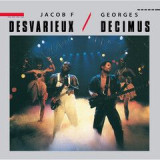
Brand new vinyl reissue to celebrate the 40th anniversary of seminal
album Yelele by Georges Decimus and Jacob Desvarieux, from zouk
pioneers Kassav', includes the massive worldwide crossover hit "Zouk-la
se sel medikaman nou ni"
Whether in concert, or on the radio or TV, the image of Kassav' remains vivid in
the minds of listeners and spectators. The group, founded in 1979 by Jacob
Desvarieux, Georges and Pierre-Edouard Decimus, has become legendary, putting
Guadeloupe and Martinique on the musical map of the world. Touring the world
with zouk, a musical movement introduced and popularized by Kassav', their
albums have repeatedly been rewarded with both gold and platinum discs.
A victim of Covid in 2021, the loss of Jacob Desvarieux leaves a huge void.
The mix of Jacob Desvarieux and George Decimus with Jocelyne Beroard, JeanPhilippe Marthely, Patrick Saint-Eloi and Jean-Claude Naimro has played sold out
concerts in 82 countries. With texts recounting real life in the Caribbean world
their lively music draws on the rhythms of Guadeloupe's gwo-ka and Martinique's
ti-bwa. Transcending the well-defined codes of Caribbean music, they have turned
the 1980s and all the succeeding decades into a fabulous ballroom.
They have been welcomed in Japan and the USSR, where they became the first
group of black musicians to tour. Forty years after the group's creation, their
timeless hits continue to resonate
Lovesick is an Italian based band formed of Paolo Roberto Pianezza and Francesca Alinovi. Two multi-instrumentalists, whose influences are deeply rooted in the American country, rock"n"roll and western swing music of the 40s and 50s. In addition to their vocal harmonies, Paolo plays electric and acoustic guitar, as well as lap steel, Resonator and Dobro guitar. Francesca plays double bass with the addition of a brush pad, a percussion built into the double bass to keep the rhythm with a drum brush. The duo is joined by Alessandro Cosentino on fiddle and drums. Lovesick have played as opening act for Ben Harper, JD McPherson, Zucchero, ToquinIo and Edoardo Bennato and they have played big festivals all around Europe, alongside the likes of The Offspring, Social Distortion, Walter Trout, Fu Manchu, Secondo Casadei Orchestra and Ten Years After.
2025 Repress
Operation Sole like the summer, hopefully, imminent; “Operazione Sole” like the 1967 song by Peppino Di Capri, considered, perhaps wrongly, the first ska in Italy, but certainly the first to talk about Jamaica and upbeat rhythms.
The record you have in your hand is intended to be a testimony to how much the sounds born in Kingston between the '60s and '70s had a significant influence on local pop.
With the first explosion of reggae in England between 1968 and 1970, as well as with the rise of Bob Marley to a worldwide cult phenomenon, parallel to the all-English phenomenon of Two Tone and the ska revival, Italy, always attracted by the new trends not only English, he certainly couldn't stay on the sidelines.
Therefore these innovative and unknown upbeat sounds, derived from the blues of the 1950s and mixed with a Caribbean sauce, have also taken hold in the Bel Paese.
It began as early as 1959 with the song “Nessuno” by Mina, considered to all intents and purposes a Jamaican shuffle, to arrive in a few years at blue-beat (I4 di Lucca, Claudio Casavecchi) and ska (Margherita, Peppino Di Capri , Silvano Silvi, Renzo and Virginia) and be exposed to the first reggae (for example Jo Fedeli and his Italian version of “Israelites” by Desmond Dekker). Thus, we quickly reach the end of the decade of the economic boom and the culture, styles, references change: everything becomes more busy (on a cultural, artistic and political level).
After a stalemate phase that lasted more than five years, Bob Marley's reggae (considered a sort of new Messiah) conquers the planet, including Italy: the producers and artists, even at a high level, for a few years do not remain at all indifferent to this novelty and decide to introduce the "upbeat", primarily reggae, into the various pop repertoires: well-known names such as
Loredana Bertè, Mario Lavezzi, Rino Gaetano, Ivano Fossati, Ilona Staller, Adriano Celentano, Edoardo Bennato throw themselves headlong into new sonic adventures, in a pioneering way, but often with excellent results.
The "Operazione Sole" collection wants to take the credit, instead, of proposing and discovering lesser-known artists (with the exception of Gino Santercole, former associate and relative of Il Molleggiato), often real meteors in the Italian musical panorama, who have tried to achieve (or achieve again) success by adapting the pop that was so popular in those years to the new black sounds prevailing in the West.
We are in the early 80s and we range from the most classic reggae, to Italo-disco contaminated by dub up to the true Neapolitan style which, on more than one occasion, in its being endemically "black" and full of groove, has wrung out the watch out for agreements made in Kingston and London.
“Operation Sun”: a pleasant philological work, but surrounded by an equally pleasant aura of disengagement.
" Brand new vinyl reissue to celebrate the 40the anniversary of zouk pioneers Kassav’ .
Who hasn’t retained at least one memory of the group Kassav’ from their youth? For whether in concert, or onthe radio or TV, the image of Kassav’ remains vivid inthe minds of listeners and spectators.
The group,founded in 1979 by Jacob Desvarieux, Georges andPierre-Edouard Décimus, has become legendary, putting Guadeloupe and Martinique on the musicalmap of the world. Touring the world with zouk, amusical movement introduced and popularized by Kassav’, their albums have repeatedly been rewarded with both gold and platinum discs .A victim of Covid in 2021, the loss of Jacob Desvarieux leaves a huge void. The mix of Jacob Des varieux and George Decimus with Jocelyne Béroard, Jean-Philippe Marthély, Patrick Saint-Éloi and Jean-Claude Naimro has played soldout concerts in 82 countries. With texts recounting reallife in the Caribbean world their lively music draws on the rhythms of Guadeloupe’s gwo-ka and Martinique’sti-bwa. Transcending the well-defined codes of Caribbean music, they have turned the 1980s and all the succeeding decades into a fabulous ballroom.
They have been welcomed in Japan and the USSR, where they became the first group of black musicians to tour. Forty years after the group’s creation, their timeless hits continue to resonate. "