8
También disponible
Clear Vinyl[28,53 €]
Clear Vinyl[28,53 €]
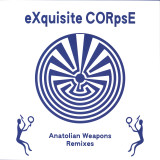
Following up on last year's acclaimed Integration 12", Robbert Heynen unlocks his incredible back catalogue for four acidic reinterpretations from Greek maestro Anatlolian Weapons.
Proceeds of the record will be donated to Legacy of Hope foundation, an Indigenous led charitable association which educates and raises awareness about the history and on-going impacts of Canada's residential school system.

Classic black vinyl plus bonus 7"-single with two exclusive tracks! Babydoll is the fifth Rat Columns album and, following 2021's Pacific Kiss, the second to be released on Tough Love. The recordings took place in Perth, Western Australia, partially by engineer Jason Hayles in a 1960's office building that formerly housed the secretarial pool of a successful mattress company, and partially by DW in an industrial unit, and feature the ensemble cast of Taylah McLean, Chris Grunwaldt, Scott Payne, Richard Ingham, Cohen Bourgault and, of course, DW himself. It was then mixed and mastered in Melbourne by Mikey Young and Joseph Carra, respectively. Babydoll seems to mark a return to a murkier, dirgier Rat Columns format. Distortion is fetishized again and many small amplifiers were tortured in the album's production. Tempos have drifted down and the lyrical concerns move ever inward, in an inverse bloom. The mood is dour, introspective, circular, the songs long, and short attention spans are neglected. 'Cerulean Blue' churns through a crystalline memoryscape, homaging low-brow grunge auto-fiction and a partial history of mid-period rave. 'Life In The Jungle' is a fever dream of imperialist wartime fantasy projection. 'Heavenly Assault' attempts a crushing density amid visions of transcendent devotion. 'Virtual Sweden' takes us ever northwards into the frosted tip of Scandinavian détente. 'Babydoll', like 'Cerulean Blue', homages a primarily imagined low-cosmopolitan world of alt-lit digi-poets, bedroom fantasists, underwater prisons for gorgeous, gorgeous girls. 'Bees Make Honey' lets more sophisticated music machines into the conversation, and marks the first use of vocal tuning software on a Rat Columns album, albeit in an avant-amateurist fashion. 'Jane, I Live For You' enters the space-ballad race, dreaming of synthetic folk-rockers, leaning on sampler keybeds in the half-light. 'December' is yet another tribute to fallen Stars, mansions on the hill, winter skin in cashmere sweaters, truth in education, love, faith, (im)purity. In all these respects, it is a classic Rat Columns record. Because all Rat Columns records are classic records.

Funk The System! The recipe is simple: Dig deep, listen to your heart, record everything you got on a dusty old desktop computer, leave it to simmer for the time of a pandemic, and if it's still fresh, serve it up on the finest plate of black wax! This collaboration started in Dusseldorf in the year 2018. Locked up for a week in the Flanger Studios, Wolf Muller and Credit 00 recorded everything: from the jaw harp to smartphone apps, chopping up GDR Jazz breaks and squeezing the Funk out of every synthesizer and drum machine at hand. You will hear the open mindedness towards all sorts of musical influences from the first note. Each of the five tracks showcases a wild mix of flavours: Disco Reggae, B-Girl Breakbeats, Protest Folk, Subway Funk, Tabla Rhythms, you name it... they'll take it and shake it! It is obvious these two got sonically socialized and educated by the multiculturalism of Hip-Hop in their early days. After the first Recording Session, the tracks fermented for some time until they were cracked open again. This time in Leipzig at Credit 00's Westend Workshop. That's also where Rizmi from Birmingham joined the team and lent her voice to the title track. She reinterpreted the lyrics of the obscure German 1980s Workers' Rock Song, that Wolf digged out for the Intro Skit of ,,Funk The System". A long time in the making, Rat Life is very happy to finally publish this EP!

The Art of Surrender marks a return to life, sown from primal impulses and hard-won emotional truths. Unrestrained melodic rapture soars above a relentless kick drum, speaking a need to move, to dance, to love. The music is as ambitious as its origins are personal. Tignor plays with scale, crafting multi-movement epics alongside one-minute miniatures. The smallest, most fragile violin gestures, where the finger barely touches the string to extract natural harmonics exist side by side with angular, exotic melodies, asymmetric rhythms, and rapid-fire string crossings. On this LP, Tignor digs even more deeply into the violin and its technicolor reimaginings under his electroacoustic treatments. Christopher Tignor is a composer, violinist, lecturer, and software engineer. His emotionally charged scores and unique focus on live, performance-based electroacoustic practice has won acclaim within both the classical and experimental communities across 10 LPs on the Western Vinyl and New Albion record labels. He creates the live performance software he uses, shared freely. As a composer he has written and recorded work for ensembles including The Knights, A Far Cry string orchestra, and Brooklyn Rider string quartet, performing alongside them at premiere venues including Carnegie's Zankel Hall. As a string arranger he has worked with Helios, Jefre Cantu-Ledesma, John Congleton, This Will Destroy You, Meshell Ndegeocello, and several other artists at the boundaries of popular music. This music breathes, swoons and swoops elegiacally, in the same way a crack symphony might on a good night." MAGNET // "A bulwark against the ambient clatter of everyday life...sheer technical mastery" BANDCAMP (ALBUM OF THE DAY) // "Tignor creates a muttered hum of activity that burbles at the fringes of an internally focused halo of sustained, glowing chords, and the effect is powerful." NPR // "Making computers coexist in harmony with acoustic instruments in a live setting is more easily imagined than achieved. But Christopher Tignor, a young composer and performer shaped as much by his work in downtown nightclubs as by his formal education at Bard College and New York University, proves that it can be done." THE NEW YORK TIMES // "Absurdly talented"

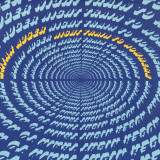
Alien Transistor is proud to announce a reissue of Such December, the fourth album by Japanese indie folk-pop artist, Gratin Carnival. Listeners might already know Gratin Carnival from their appearance on the Alien Parade Japan compilation of indie pop groups working with brass and woodwind; compiled by Markus Acher of The Notwist and Saya of Tenniscoats, it introduced this beautiful genre to the wider world. Gratin Carnival’s “Just Watching” was one of the many highlights of that compilation, and its gentle bossa-folk glide reappears on Such December.
Originally released in 2020, Such December captures beautifully the happy-sad charm of Gratin Carnival. The project of Koreyuki Mitsunaga, Gratin Carnival started in 2011; Mitsunaga had been home recording for some time and decided on the name as an umbrella for his music-making. Mitsunaga’s main instruments are guitar, which he uses to great effect throughout, his gorgeous acoustic playing reminiscent of players like Ueno Takashi of Tenniscoats or João Gilberto, and alto saxophone and clarinet. Those three instruments make up the core of Gratin Carnival’s sound, along with Mitsunaga’s charmingly doleful singing.
Recording at his parents’ home, with a four-track cassette recorder and a MacBook, Mitsunaga created Such December during 2020, though the songs on it stretch back to 2016. The closing “On The Train” was the first song written for the album – “a song about a small trip,” Mitsunaga recalls – and from there, he built a beautiful collection of songs that sit together perfectly. There’s great clarity in Mitsunaga’s writing, with nothing extraneous getting in the way of the lucid arrangements and gorgeous melodies; there’s something of chamber jazz about it at times, so it’s no surprise that Mitsunaga shares his love of Benny Goodman’s small group playing.
He's also a fan of Japanese folk artists like Kenji Endo and Kyouzou Nishioka, and grew up listening to Japanese popular music, The Beatles, and The Carpenters. You can hear trace elements of all this in Such December, in the clear-headedness of the melodic decisions made by Mitsunaga, and the quiet charm of the song’s gentle arrangements. They take on different shapes live, too, where Mitsunaga often invites other musicians to join in – his live band currently includes Masafumi Ezaki (trumpet), Nahoko Kamei (bass clarinet, piano, keyboards) and Tadashi Yonago (trombone, self-made instruments).
As with plenty of musicians from the Japanese underground, Mitsunaga is involved in other music, too – he’s been working with The Otoasobi Project, which performs music in collaboration with individuals with learning disabilities, and their families; and he’s also involved in improvised music. With Such December, though, you get to hear Mitsunaga’s music at its most personal and individual, ten songs of still, gorgeously poised indie folk-pop, where the swooning clang of six strings meets the breathy bliss of woodwind and brass.

Brutter continue with their deep dives into the endless possibilities of beat music. The duo has a gravitation towards headstrong bass drums and pulsating patterns that contain remnants of everything from dub to disco, from hip-hop to mechanical workshop. On their fourth album 'Outta', Brutter steps out of their good dogmatic rhythm skin and brings strings into the mix. Auto-harp and lap steel guitar contribute twisted sweet tones and floating comments to everything that otherwise thumps and beats. 'Outta' gives a precise sound picture of where Brutter has ended up after 10 years of digging for rare beat metal. Brutter is the duo consisting of Norwegian brothers Christian and Fredrik Wallumrød, founded in 2012. Christian Wallumrød is a well renown pianist and composer, releasing music since 1996 on labels like ECM Records, Jazzland and Hubro. Fredrik Wallumrød was educated at the Trondheim Music Conservatory, same as his brother, with focus on drums and jazz as a genre. He has later changed his course for rock/metal and more pop-oriented music, such as Span / El Caco / Dog Almighty, in addition to his work with singer/songwriter Susanna and soul / r&b artist Jarle Bernhoft. Christian Wallumrød – drum machines, electronics, auto harp Fredrik Wallumrød – drums, drum synth, electronics, lap steel.

Caedite Eos is thrilled to present SlugoS’ EP for its third release. This time, the label owner brings us two pure hardtechno tracks titled "Crime" and "Punishment," showcasing SlugoS's signature style.
Adding to the excitement, we’ve collaborated with Education Club (UVB + Hurtado) and Not A Headliner, who have created two remarkable remixes, infusing SlugoS’s already killer tracks with their own distinctive touch.

Funky riffs and jazz arrangements written and performed by her children and their
band Don't Fight the Feeling underpin Fabio's poetry, giving her words gravity. "I
feel that these poems represent the epitome of my experimenting with the
integration of music and poetry in a Black idiom taken from the rich source of
inspiration welling from the Black experience here in America," explains Fabio in
the album's liner notes.
Often referred to as the "mother of Black studies," Fabio is recognized for her
contributions to founding the West Coast Black Arts Movement and for helping to
establish Black Studies as an academic discipline. As a poet, performer, scholar,
educator, and cultural critic, she published countless poetry collections, wrote for
local and national publications, including Black World and Black Scholar, and
recorded four albums with Folkways.

Known for her contributions to the Black Arts Movement of the 1970s,
Sarah Webster Fabio published a plethora of poetry collections and
works of cultural criticism
Together to the Tune of Coltrane's "Equinox" is her fourth and final record for
Folkways, and sees her vivid language and distinctive voice becoming enmeshed
with a dynamic backdrop of exploratory jazz. Fabio pays homage to Black jazz
and blues musicians Duke Ellington, Bessie Smith, Billie Holiday, and John
Coltrane. Fabio's "Together" is set to the tune of Coltrane's "Equinox," in which her
words "compose the air."
Often referred to as the "mother of Black studies," Fabio is recognized for her
contributions to founding the West Coast Black Arts Movement and for helping to
establish Black Studies as an academic discipline. As a poet, performer, scholar,
educator, and cultural critic, she published countless poetry collections and
works of cultural criticism, wrote for local and national publications, including
Black World and Black Scholar, and recorded four albums with Folkways.

Celebrated composer, performer, saxophonist, soloist, band leader, educator, activist, and mixed-media artist Matana Roberts returns with a new installment of their acclaimed Coin Coin series. For over a decade, Coin Coin has been the central artistic project for Roberts, a remarkable exploration of American ancestry and the nature of memory through "sound quilting": modern composition that draws on a wide range of musical sources and traditions, along with research-driven historical and genealogical narratives that yield prose and poetry both spoken and sung, field recordings, and graphic scores. The Quietus declares "when the 12-album cycle is complete, it will be regarded as a singular masterpiece of 21st century sonic and narrative art" and Pitchfork calls it "one of the most provocative ongoing bodies of work by any American musician." Coin Coin Chapter Five: In the garden... is the first new recorded audio chapter since 2019 and centers upon reproductive rights, summoning the story of a family ancestor who died in early adulthood, from a cause kept obfuscated and hushed, shrouded in disinformation and shame. Roberts reimagines diaristic and oral narratives, delivered in strident streams of spoken word that punctuate the hour-long work, with recurring musical themes frequently accompanied by the declarative refrain "my name is your name / our name is their name / we are named / we remember / they forget." As Roberts writes in the accompanying liner notes essay: I find it absolutely disgusting that the same trauma my grand ancestor, whose story we are telling in this chapter, is closely mirroring the experiences of some poor soul today as I write this... Our aforementioned grand, who perished at a young age, leaving her growing children motherless, did not have to die. The negative consequences of her death have reverberated down through generations in my family line, in the same way that a similar resounding might happen for someone else's ancestral line generations from today. While often jazz-adjacent, and with Matana's inimitable saxophone and indomitable voice at the core, Roberts situates Coin Coin outside the Jazz genre and within heterodox pathways of post-modern composition, electroacoustic music, sound collage, experimental voice, and sound art. In the garden... undeniably continues to express and expand upon the project's magnificent iconoclasm, nonetheless being the most jazz-inflected chapter since Coin Coin Chapter Two: Mississippi Moonchile(2013). Recorded in Brooklyn with a stellar acoustic ensemble that includes Stuart Bogie, Gitanjali Jain, Darius Jones, Matt Lavelle, Mike Pride, Ryan Sawyer, Corey Smythe, and Mazz Swift, abetted by some sparkling pieces featuring modular synthesis courtesy of album producer Kyp Malone (Bent Arcana, TV On The Radio), In the garden... traverses a vivid stylistic array of thematic overtures, excursions and set pieces, ranging from spacious textural invocations to gorgeously tempered horn-led compositions to driving free jazz and exhilarating through composed bursts of cacophony. With storytelling spoken-word lead vocals by Roberts channeled recurringly throughout, alongside various other deployments of layered and group voices, the album is alternately a meditation and fever dream of narrative potency. This is some of the most intense and intensive music Roberts has composed and captured to date, richly conceived and deeply felt, restless yet focused, unflinchingly substantive and unique. Coin Coin Chapter Five: In the garden... channels epigenetic trauma and tragedy with teeming complexity and fierce beauty _ a eulogy, testimony, and celebration, melding music and language in a stunning polychromatic flow of vernaculars and poetics. A powerful work of subjective commemoration and historical-cultural communion that speaks indelibly to the present moment.
2x10” in 350 gsm widespine jacket w/interior colour flood + 300 gsm printed inners + 20”x 10” fold-out insert + DL card
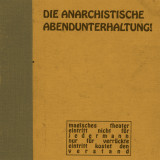
In 1995 the self-titled full-length debut of Die Anarchistische Abendunterhaltung (DAAU) was released. The band consisted of four young, 'classically derailed' musicians who played their own compositions with acoustic instruments such as violin, cello, clarinet and accordion. Their work contained influences from Roma music, Eastern European folk, klezmer and jazz, but was performed with the energy, rebellious spirit and Sturm und Drang of a bona fide punk band. DAAU was part of the fertile Antwerp scene, which also produced dEUS, Zita Swoon and Kiss My Jazz, and soon signed an international record deal with Sony Classical.
The group's influential first record, which has been out of print for a while, is now finally being released again and is available on vinyl for the very first time.
In those early days, DAAU consisted of four young, classically trained musicians who tackled their instrumental compositions with a true punk spirit. 'If we'd had guitars, bass or drums at that time, we would probably have been just another rock band', says accordionist Roel Van Camp, who, together with his schoolmates Buni Lenski on violin, the latter's brother Simon on cello and Han Stubbe on clarinet made up the Antwerp quartet. 'With our acoustic instruments we tried to create our own version of the music we loved listening to, from sixties rock and prog to new wave.'
The quartet, which initially played in streets and cafes, appealed to a diverse audience and sometimes joked that they were a classically trained unit that had 'gone off the rails'. 'As befits teenagers, we wanted to shake things up', Stubbe remembers, 'even though we always kept cherishing our classical backgrounds.' Van Camp: 'Our education was never supposed to feel like a straitjacket. We were free-spirited enough to ignore the laws and regulations of the music academy and to create our own sound. Our compositions were open to influences from Roma music, Eastern European folk, klezmer and jazz'. 'That eclecticism was a direct result of the zeitgeist', Han Stubbe adds. 'We loved different styles and happily mixed them together'.
The monniker Die Anarchistische Abendunterhaltung was derived from Steppenwolf, a novel by German writer Hermann Hesse about a character who was outside society. 'In the book, the narrator talks of a theatre', Van Camp explains. 'And at the entrance there is a warning sign sign that says: if you go in here, you are guaranteed to lose your mind. That was an apt description of the way our music worked'.
Almost all tracks on DAAU's first album were 'Drieslagstelsels' (or 'three-course rotations'). The term referred to an agricultural method of the early Middle Ages, but also to the fact that each song of the group consisted of three major movements. Van Camp: 'The titles of those pieces referred to our method of writing. We piled up a huge bunch of ideas, because we wanted to tell more than just one story. With each composition, we took the listener for a ride'.
In 1995 the self-titled full-length debut of Die Anarchistische Abendunterhaltung (DAAU) was released. The band consisted of four young, 'classically derailed' musicians who played their own compositions with acoustic instruments such as violin, cello, clarinet and accordion. Their work contained influences from Roma music, Eastern European folk, klezmer and jazz, but was performed with the energy, rebellious spirit and Sturm und Drang of a bona fide punk band. DAAU was part of the fertile Antwerp scene, which also produced dEUS, Zita Swoon and Kiss My Jazz, and soon signed an international record deal with Sony Classical.
The group's influential first record, which has been out of print for a while, is now finally being released again and is available on vinyl for the very first time.
In those early days, DAAU consisted of four young, classically trained musicians who tackled their instrumental compositions with a true punk spirit. 'If we'd had guitars, bass or drums at that time, we would probably have been just another rock band', says accordionist Roel Van Camp, who, together with his schoolmates Buni Lenski on violin, the latter's brother Simon on cello and Han Stubbe on clarinet made up the Antwerp quartet. 'With our acoustic instruments we tried to create our own version of the music we loved listening to, from sixties rock and prog to new wave.'
The quartet, which initially played in streets and cafes, appealed to a diverse audience and sometimes joked that they were a classically trained unit that had 'gone off the rails'. 'As befits teenagers, we wanted to shake things up', Stubbe remembers, 'even though we always kept cherishing our classical backgrounds.' Van Camp: 'Our education was never supposed to feel like a straitjacket. We were free-spirited enough to ignore the laws and regulations of the music academy and to create our own sound. Our compositions were open to influences from Roma music, Eastern European folk, klezmer and jazz'. 'That eclecticism was a direct result of the zeitgeist', Han Stubbe adds. 'We loved different styles and happily mixed them together'.
The monniker Die Anarchistische Abendunterhaltung was derived from Steppenwolf, a novel by German writer Hermann Hesse about a character who was outside society. 'In the book, the narrator talks of a theatre', Van Camp explains. 'And at the entrance there is a warning sign sign that says: if you go in here, you are guaranteed to lose your mind. That was an apt description of the way our music worked'.
Almost all tracks on DAAU's first album were 'Drieslagstelsels' (or 'three-course rotations'). The term referred to an agricultural method of the early Middle Ages, but also to the fact that each song of the group consisted of three major movements. Van Camp: 'The titles of those pieces referred to our method of writing. We piled up a huge bunch of ideas, because we wanted to tell more than just one story. With each composition, we took the listener for a ride'.

Call Me By Your Name, the film by Luca Guadagnino, is a sensual and transcendent tale of first love, based on the acclaimed novel by André Aciman.
Summer of 1983, Northern Italy. An American Italian is enamored by an American student who comes to study and live with his family. Together they share an unforgettable summer full of music, food, and romance that will forever change them.
The film received widespread critical acclaim, particularly for Chalamet, Hammer and Stuhlbarg's performances, Guadagnino's direction, and the screenplay. Call Me By Your Name won a variety of awards, including an Academy Award, BAFTA, GLAAD and the 23rd Critics' Choice Award amongst others. Sufjan Stevens' song "Mystery of Love" was also nominated for the Academy Award for Best Original Song.
Luca Guadagnino wanted the film's music to be connected to Elio, a young pianist who likes to transcribe and adapt pieces to get close to Oliver. The music is used to reflect the time, the characters' family, level of education and "the kind of canon they would be a part of."
Guadagnino found himself resonating with Sufjan Stevens' lyricism through his work and initially asked Stevens to record an original song. Eventually, Stevens contributed three songs to the soundtrack: "Visions of Gideon", which was used at the end of the film, "Mystery of Love," which was featured in the film's first trailer, and a new rendition of "Futile Devices" with piano. Stevens penned the songs by using the script, the book, and the conversations with the director about the characters. It marks Sufjan Stevens' first soundtrack for a feature film.
Call Me By Your Name is available as a limited edition of 15.000 copies on "Velvet Purple" coloured vinyl. The 2LP is housed in a deluxe gatefold sleeve with rainbow laminate finish and includes printed innersleeves, an insert with movie stills, and a poster.
Call Me By Your Name, the film by Luca Guadagnino, is a sensual and transcendent tale of first love, based on the acclaimed novel by André Aciman.
Summer of 1983, Northern Italy. An American Italian is enamored by an American student who comes to study and live with his family. Together they share an unforgettable summer full of music, food, and romance that will forever change them.
The film received widespread critical acclaim, particularly for Chalamet, Hammer and Stuhlbarg's performances, Guadagnino's direction, and the screenplay. Call Me By Your Name won a variety of awards, including an Academy Award, BAFTA, GLAAD and the 23rd Critics' Choice Award amongst others. Sufjan Stevens' song "Mystery of Love" was also nominated for the Academy Award for Best Original Song.
Luca Guadagnino wanted the film's music to be connected to Elio, a young pianist who likes to transcribe and adapt pieces to get close to Oliver. The music is used to reflect the time, the characters' family, level of education and "the kind of canon they would be a part of."
Guadagnino found himself resonating with Sufjan Stevens' lyricism through his work and initially asked Stevens to record an original song. Eventually, Stevens contributed three songs to the soundtrack: "Visions of Gideon", which was used at the end of the film, "Mystery of Love," which was featured in the film's first trailer, and a new rendition of "Futile Devices" with piano. Stevens penned the songs by using the script, the book, and the conversations with the director about the characters. It marks Sufjan Stevens' first soundtrack for a feature film.
Call Me By Your Name is available as a limited edition of 15.000 copies on "Velvet Purple" coloured vinyl. The 2LP is housed in a deluxe gatefold sleeve with rainbow laminate finish and includes printed innersleeves, an insert with movie stills, and a poster.
It's not because one might have worked with people like Jimi Hendrix, John McLaughlin and Rod Stewart throughout their career that Italo-Disco wouldn't get the best of your work. A great example of the Italian phenomenon's infectiously widespread grip is British rock keyboardist Brian Auger's path, when he found himself in a Milanese recording studio during the mid 80's and recorded his last known release in that decade. Powerfully fusing decades of rock and jazz education with the synthetic hysteria of the time (and culture), the result is a classic downtempo number that has found its way into some of our favorite DJ sets for a while now. Vocal and instrumental are featured on the A-side and in addition the B-side offers a new remix where things take somewhat of a catastrophic turn into what sounds like Brian getting on the wrong train to a K-hole, probably not for most dance floors. Meticulously remastered at manmade mastering in Berlin.

Public Service Broadcasting kündigt This New Noise an, den neu abgemischten und neu gemasterten Live-Mitschnitt ihrer gefeierten BBC Proms-Show 2022 in der Londoner Royal Albert Hall, der am 8. September 2023 über Test Card Recordings veröffentlicht wird. Bei This New Noise, einer Feier der Macht des Radios, die anlässlich des hundertjährigen Bestehens der BBC geschrieben wurde, tat sich die Band mit dem 88-köpfigen BBC Symphony Orchestra unter der Leitung von Jules Buckley zusammen. Es war eine herausragende Aufführung bei den BBC Proms 2022 und wurde von The Telegraph mit 5* bewertet, der es als "eine klangvolle, zeitgemäße und letztlich berührende Show" bezeichnete. Gründungsmitglied J. Willgoose, Esq. hat das Konzert von Grund auf neu abgemischt, um der vielschichtigen Aufführung noch mehr Tiefe und Textur zu verleihen und sie in einem neuen Licht zu zeigen. This New Noise ist das zweite Mal, dass Public Service Broadcasting einen Auftrag für die BBC Proms erhalten hat. Im Jahr 2019 spielte die Band ein Orchesterarrangement ihres 2015er Studioalbums The Race for Space mit dem Multi-Story Orchestra anlässlich des 50. Jahrestages der ersten bemannten Mondmission. Public Service Broadcasting lehrt seit mehr als einem Jahrzehnt "die Lektionen der Vergangenheit durch die Musik der Zukunft". Das Debütalbum Inform - Educate - Entertain aus dem Jahr 2013 nutzte Archivsamples des British Film Institute als Audioportale zur Battle Of Britain, dem Gipfel des Everest und darüber hinaus. Zwei Jahre später nutzte The Race For Space ähnliche Methoden, um die Rivalität und den Heroismus der Supermächte im Orbit und auf dem Mond zu loben. Als Indie-DIY-Phänomen hat das Album mit über 100.000 verkauften Exemplaren allein im Vereinigten Königreich inzwischen Goldstatus erreicht. Im Jahr 2017 erforschten sie gemeinsam mit Stimmen wie James Dean Bradfield von den Manic Street Preachers in Every Valley auf bewegende Weise die Gemeinschaft und die Erinnerung an den Aufstieg und Fall der britischen Kohleindustrie. Ihr bisher ehrgeizigstes Projekt, Bright Magic, bringt den Hörer in das Herz und die de facto Hauptstadt Europas, die kulturelle und politische Metropole, die die "Hauptstadt" der Bundesrepublik Deutschland ist - Berlin. Das Ende 2021 erschienene vierte Album der Band, das auf Platz 2 der britischen Albumcharts einstieg, wurde von Electronic Sound als "ihr bisher ehrgeizigstes, unkonventionellstes und majestätischstes Werk, ihr glorreicher kreativer Höhepunkt, ihr Magnum Opus" beschrieben, DIY meinte, "es blühte am ruhigsten auf und brach am glühendsten aus" und Clash meinte, es "zementierte den Ruf von PSB als vitaler Act an der Spitze ihres Spiels". Das Album enthielt auch mehrere BBC Radio 6 Music A-Listed Singles, darunter "People, Let's Dance" ft. EERA und "Blue Heaven" ft. Andreya Casablanca.
d 1.4A CELLO SINGS IN DAVENTRY FT. SETH LAKEMAN

Public Service Broadcasting kündigt This New Noise an, den neu abgemischten und neu gemasterten Live-Mitschnitt ihrer gefeierten BBC Proms-Show 2022 in der Londoner Royal Albert Hall, der am 8. September 2023 über Test Card Recordings veröffentlicht wird. Bei This New Noise, einer Feier der Macht des Radios, die anlässlich des hundertjährigen Bestehens der BBC geschrieben wurde, tat sich die Band mit dem 88-köpfigen BBC Symphony Orchestra unter der Leitung von Jules Buckley zusammen. Es war eine herausragende Aufführung bei den BBC Proms 2022 und wurde von The Telegraph mit 5* bewertet, der es als "eine klangvolle, zeitgemäße und letztlich berührende Show" bezeichnete. Gründungsmitglied J. Willgoose, Esq. hat das Konzert von Grund auf neu abgemischt, um der vielschichtigen Aufführung noch mehr Tiefe und Textur zu verleihen und sie in einem neuen Licht zu zeigen. This New Noise ist das zweite Mal, dass Public Service Broadcasting einen Auftrag für die BBC Proms erhalten hat. Im Jahr 2019 spielte die Band ein Orchesterarrangement ihres 2015er Studioalbums The Race for Space mit dem Multi-Story Orchestra anlässlich des 50. Jahrestages der ersten bemannten Mondmission. Public Service Broadcasting lehrt seit mehr als einem Jahrzehnt "die Lektionen der Vergangenheit durch die Musik der Zukunft". Das Debütalbum Inform - Educate - Entertain aus dem Jahr 2013 nutzte Archivsamples des British Film Institute als Audioportale zur Battle Of Britain, dem Gipfel des Everest und darüber hinaus. Zwei Jahre später nutzte The Race For Space ähnliche Methoden, um die Rivalität und den Heroismus der Supermächte im Orbit und auf dem Mond zu loben. Als Indie-DIY-Phänomen hat das Album mit über 100.000 verkauften Exemplaren allein im Vereinigten Königreich inzwischen Goldstatus erreicht. Im Jahr 2017 erforschten sie gemeinsam mit Stimmen wie James Dean Bradfield von den Manic Street Preachers in Every Valley auf bewegende Weise die Gemeinschaft und die Erinnerung an den Aufstieg und Fall der britischen Kohleindustrie. Ihr bisher ehrgeizigstes Projekt, Bright Magic, bringt den Hörer in das Herz und die de facto Hauptstadt Europas, die kulturelle und politische Metropole, die die "Hauptstadt" der Bundesrepublik Deutschland ist - Berlin. Das Ende 2021 erschienene vierte Album der Band, das auf Platz 2 der britischen Albumcharts einstieg, wurde von Electronic Sound als "ihr bisher ehrgeizigstes, unkonventionellstes und majestätischstes Werk, ihr glorreicher kreativer Höhepunkt, ihr Magnum Opus" beschrieben, DIY meinte, "es blühte am ruhigsten auf und brach am glühendsten aus" und Clash meinte, es "zementierte den Ruf von PSB als vitaler Act an der Spitze ihres Spiels". Das Album enthielt auch mehrere BBC Radio 6 Music A-Listed Singles, darunter "People, Let's Dance" ft. EERA und "Blue Heaven" ft. Andreya Casablanca.
[d] 1.4A CELLO SINGS IN DAVENTRY [FT. SETH LAKEMAN]
[d] 1.4A CELLO SINGS IN DAVENTRY [FT. SETH LAKEMAN]

Color Vinyl[28,99 €]
"A marvellous piece of lazy rock"n"roll that does for the current American new wave what Teenage Fanclub"s "A Catholic Education" did for British guitar music... Almost unintentionally they"ve forged one of the most refreshing American noises for ages," - NME "Perhaps because one half of Pavement lives in New York City and the other in a sleepy, rural, central California town called Stockton, the spirit of the band"s music is split right down the middle. Simultaneously sophisticated and unpretentious, heartfelt and totally goofy - but always entirely sincere - Pavement exhibits its genius casually. The group"s first full-length album, Slanted and Enchanted, is brimming with beautiful pop songs, soured a bit by the rhythmic clamour of harder guitar rock. You can hear Pavement"s effortless charm in the evocative lyrics of songs like "Loretta"s Scars" ("How can I make my body shed for you?") and, ultimately, in the sheer, clangy joyfulness of the band"s playing. Pavement does lapse occasionally into superdense experimental noise fests, but it more than compensates for these indulgences with 10 cuts of solid songwriting. No matter where Pavement lived, it would be brilliant." - Entertainment Weekly

Black Vinyl[24,16 €]
"A marvellous piece of lazy rock"n"roll that does for the current American new wave what Teenage Fanclub"s "A Catholic Education" did for British guitar music... Almost unintentionally they"ve forged one of the most refreshing American noises for ages," - NME "Perhaps because one half of Pavement lives in New York City and the other in a sleepy, rural, central California town called Stockton, the spirit of the band"s music is split right down the middle. Simultaneously sophisticated and unpretentious, heartfelt and totally goofy - but always entirely sincere - Pavement exhibits its genius casually. The group"s first full-length album, Slanted and Enchanted, is brimming with beautiful pop songs, soured a bit by the rhythmic clamour of harder guitar rock. You can hear Pavement"s effortless charm in the evocative lyrics of songs like "Loretta"s Scars" ("How can I make my body shed for you?") and, ultimately, in the sheer, clangy joyfulness of the band"s playing. Pavement does lapse occasionally into superdense experimental noise fests, but it more than compensates for these indulgences with 10 cuts of solid songwriting. No matter where Pavement lived, it would be brilliant." - Entertainment Weekly
