
Reservar24.04.2026
debe ser publicado en 24.04.2026
33,19 €
debe ser publicado en 24.04.2026

Second chapter in the Alkaline series. Five electro cuts and one techno excursion, crafted by two artists with decades of dedication to electronic music.
On Side A, Raakel Bloody Raakel brings decades of discipline and formal training into a sharp, uncompromising sound. Active since the late 90s and rooted in both classical education and underground culture, his work reflects precision, intensity and structural control.
On Side B, Roi delivers three focused electro pieces forged through years of experimentation and dancefloor experience. His approach blends coherence, tension and forward motion, driven by a continuous commitment to evolving the language of electronic music.
Two trajectories. One alkaline framework. Built for those who understand the craft.
Cosmic Tribe · Research & Development in Sound.
En el almacen y preparando para el envío
Nonna Fab returns with his fourth release on his own imprint Movement and Soul Records, with the first single on the label, 'Eternal Between'.
This is a 3-track soulful house EP with two versions from Nonna and a beautiful remix from Trinidadian Deep.
Eternal Between is an instrumental soulful house record with a true exploration of the deeper side of dancefloor and movement.
The Spiritual Rhythm mix does exactly what it says on the tin, with the focus on a deeper, introspective dance floor cut. Explorative piano jam, rolling bassline and deep Juno stabs.
The Deeper Dub does exactly what B-sides were made for, percussive rhythms, stripped back synths and a deeper dive into the track. A broken beat style bassline and huge pads. Suitable for peak-time or the breather.
And the first ever remix on a Movement and Soul Records, Nonna invites Trinidadian Deep to put his touch on the rhythm.
Spacious, expansive and percussive with some true signature-style elements to the remix...
El artículo ya está en camino a nosotros y se espera que sea enviado desde 30.09.2026.

STRICTLY CONFIDENTIAL: WE WRITE TO YOU WITH ALARMING NEWS ABOUT THE EXTRA-TERRESTRIAL SPECIMEN DISCOVERED IN THE FORBIDDEN FOREST IN JULY 2017. THIS LIFEFORM, CODE-NAME “DARLING”, ESCAPED FROM THE TOP-SECRET SAFE TRIP ORGANISATION HOLDING FACILITY LATE LAST NIGHT.
ALL THAT WAS LEFT INSIDE THE SUBJECT’S ENCLOSURE WAS A PRESSED POLYVINYL DISC CONTAINING TWO PIECES OF ELECTRONIC MUSIC. THE FIRST, WHICH WE HAVE TITLED “WHEN SHE HATES ME”, SOUNDS LIKE A CALL TO A DISTANT MATE OR PARTNER, COMPOSED AT SUNRISE AND SHOT THROUGH WITH BLISSFUL POSITIVITY. THE OTHER, NOW KNOWN AS “ISLE OF RED”, COMBINES SURGING DRUMS WITH POIGNANT AND MELANCHOLIC SOUNDS THAT ARE CLEARLY UNEARTHLY IN ORIGIN.
debe ser publicado en 30.09.2026

Lunfardo presents Heroica, the fifth chapter in its conceptual series, inspired by the Three Defences of Paysandú, events that remain embedded in the city’s memory and the history of Uruguay.
Among them, the Heroic Defence of Paysandú (1864–1865) stands as the most enduring symbol: a weeks-long resistance led by Leandro Gómez against overwhelming forces during the Brazilian intervention and allied advance. Across generations, these events have come to embody resistance, sacrifice and permanence.
Heroica is Lunfardo’s tribute to Paysandú, the city where the label was born.
The release explores this narrative through the work of Andrew Lagowski, one of experimental electronic music’s enduring figures. Active since the early 1980s, Lagowski has released more than 60 albums and over 10 vinyl singles, leaving a lasting mark across electronic, experimental and techno music.
For Heroica, Lunfardo revisits selected works from Lagowski’s 1995–2000 CD era, presented on vinyl for the first time, alongside a contemporary composition produced in September 2024.
Bridging archival electronics and contemporary vision, Heroica unfolds through themes of resistance, memory and permanence.
Artwork by @estudio.polar
For more info @Lunfardo.records
debe ser publicado en 30.09.2026

What began as a pandemic-era radio show on Openlab FM and Ralph Lawson's sonic escape hatch into distant electro worlds has since become a consistent home for the genre. Exit Planet Earth returns from hiatus with a new chapter, and Manchester's Jonny Strinati, aka Kalcagni, is the ideal artist to reopen the transmission. Already well-versed in the EPE universe through the radio show and releases on Cosmoba and Distrito 91, Strinati drops relentless machine beats, intricate synth programming that references all forms of electro from Kraftwerk to Drexciya, with dynamic bass and cinematic designs. It's an intergalactic mind trip as much as a dance floor workout and the production is next level. Welcome back!
El artículo ya está en camino a nosotros y se espera que sea enviado desde 30.09.2026.

Five years on from its first outing, Standards & Practices returns with a second volume of Out of Practice that assembles a roster of exclusive, unreleased material that moves between broken techno, electro, dub techno and bass-heavy experimentation. The strength lies in its range: in this third 12" instalment, Patrick Russell's opener brings meditative dub pressure, Ghost Warrior's 'Second Wave' is a sparse, suspensory underwater world, Pessimist layers deft percussion into fractured rhythm science and Blood Music's 'Figures For Laser' has a cascade of 8-bit melodies adding futurism to jazzy, off-grid drums in what is an eerie and engaging closer. A snapshot of a label finding new ways to bend electronic music's tried and tested boundaries.
El artículo ya está en camino a nosotros y se espera que sea enviado desde 30.09.2026.
Hara Discs is proud to present the first EP from Sheffield-based DJ Harry Shackleton, co-owner of Grub Records and one half of DJ duo Wow & Flutter. This release draws influence from their longstanding residency at underground electro party Control., melding together sounds which have made this one of the North of England’s best kept secrets for the past 7 years. In an extremely long-winded and uncertain move, he has finally donned his rather fetching production hat and completely self generated the alias Hypno Disc with which he aims to unleash some music that is 100% OK.
The EP and alias are a homage to the late 90s and early 00s TV show Robot Wars. The title track combines the carnage of Craig Charles with something a bit UK and tribal. The remaining tracks bear the names of robots which took part in the wars. These are written from the perspective of the robots and as such are internal monologues of what each robot was thinking. The concept comes from an early fascination with this show and how it made the artist feel as someone growing up in the UK around 2000.
We hope you enjoy this release. Complaints will be tolerated.
CEASE!!!
debe ser publicado en 30.09.2026

Lityk deivers 4 tunes for a complete travel.
Starting with a freebreak tune that turn 4/4 banging in a old school Okupe style...
Then comes a pure Pumpin booster.
The flip opens with a cheezy pumpin teknoDub old school tune, pure tribounette :)
Last track is a revendicative hardfloor banger !
Wicked open minded sounds !
debe ser publicado en 30.09.2026
Every coastline develops its own rhythm. The Adriatic is no exception.
For decades, Italy’s eastern coast has been shaped by funk, Cosmic Disco, Balearic sounds, Italo Disco, House, Latin rhythms, Brazilian music and countless other influences. Rather than blending into a single style, these musical worlds have lived side by side, constantly inspiring new generations of DJs, musicians and dancers. For more than fifteen years, Soul Fingers and Funk Rimini have explored that landscape from different perspectives. Founded by Claudio Cavallaro in 2013, Soul Fingers grew into a vinyl-driven community where groove matters more than genre. Its philosophy has always been simple: if the groove is right, genres stop mattering. Brothers Ricky and Francesco Cardelli developed Funk Rimini into a project rooted in funk, disco, live performance and electronic production. Anima Adriatica is where these two journeys meet.
The project didn’t begin with the ambition of making an album. It began behind the turntables. As DJs, Claudio Cavallaro and Ricky Cardelli found themselves constantly searching for records capable of connecting distant musical worlds inside their sets; from Afrobeat into disco, from hip hop into Latin, from Brazilian grooves into boogie, from cosmic electronics into deep funk. Sometimes those records existed. More often, they didn’t. So they stopped searching and started writing them. Not records designed to belong to one genre, but records designed to travel between genres. That space between musical worlds became Anima Adriatica.
The music grew through spontaneous jam sessions with Ricky and Francesco Cardelli, drummer Enrico Mao Bocchini and, gradually, a wider circle of musicians, singers and longtime friends, making Anima Adriatica less a traditional band than the beginning of an open collective. Recorded at SynthPosio Studio, founded by Ricky and Francesco Cardelli inside Rimini’s iconic skyscraper, the project also carries a symbolic connection to the building itself, where many Italo Disco classics (including records by Betty Miranda, The Creatures and many others) were recorded decades earlier.
Betty Miranda returns not as a nostalgic guest, but as a bridge between generations. On the title track she performs a spoken-word text written by Claudio Cavallaro, reflecting on the invisible thread connecting the Adriatic dancefloor across time. From Baia degli Angeli to Cocoricò, from the legendary clubs of Riccione to today’s independent communities gathered around projects such as Soul Fingers and Funk Rimini, the places have changed, but the dancefloor continues to tell the same story. Much like Pier Vittorio Tondelli’s Rimini captured the Adriatic through literature, Anima Adriatica imagines its soundtrack.
Brazilian musician Daniel Plentz (Selton) expands that vision on Açúcar and Alegria, bringing another coastline into the story. Across its four tracks, the EP moves naturally between analogue funk, boogie, Brazilian music, underground disco, cosmic textures and the wider Black musical tradition, with All Down The Line paying tribute to the Paradise Garage era.
Released by Bordello A Parigi, the project found its natural home through a shared love of adventurous dance music, records and club culture. More than the title of an EP, Anima Adriatica marks the beginning of an open collective; a meeting point where musicians, DJs, producers and friends continue building bridges between genres, generations and communities.
Because Anima Adriatica doesn’t live inside a genre. It lives between genres. If soul music has always reflected the places where it was born, Anima Adriatica is simply our own Adriatic Soul.
debe ser publicado en 30.09.2026
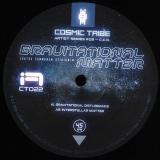
For CT022, Cosmic Tribe presents the third edition of the Artist Series featuring C.C.O. (Contra Communem Opinionem), the project of Swiss artist Florian Büchel.
The original material selected here explores a more direct and linear side of his music, combining atmospheric structures, subtle acid elements and elegant melodic progression.
On Side B, both reinterpretations move the material toward more dancefloor-oriented territory. Raakel Bloody Raakel reshapes Gravitational Disturbance into a recognizable acid-electro interpretation with increased groove and syncopation, while Romphea takes Interstellar Matter into heavier and darker contemporary electro-breaks territory with increased low-end weight and a more direct club approach.
The result creates a clear contrast across both sides: progression and musical development on Side A, followed by two alternative perspectives built around movement and dancefloor energy.
Class & Energy in a limited edition of 150 copies
En el almacen y preparando para el envío

VOL. 4[25,84 €]
Following the success of Denshi Ongaku No Bigaku Vol. 1 and Vol. 2, Cosmocities returns with the third instalment of its celebrated compilation series dedicated to the rich and ever-evolving world of Japanese electronic music. Compiled by label owner Matt Soulie, Denshi Ongaku No Bigaku Vol. 3 continues the journey through Japan’s diverse sonic landscape, bringing together pioneering artists, cult favourites and contemporary innovators across ambient, house, jazz-infused electronics and experimental sound design.
A carefully curated snapshot of Japanese electronic music past and present, Denshi Ongaku No Bigaku Vol. 3 showcases the depth, innovation and enduring influence of one of the world’s most inspiring musical cultures.
Since its inception, the Denshi Ongaku No Bigaku project has paid tribute to a musical culture that has profoundly influenced the Cosmocities vision. Where the first volume explored dreamy ambient textures and deep electronic moods, and the second shifted focus towards boogie-laden rhythms and jazz-fuelled dancefloor excursions, Volume 3 finds a natural balance between introspection and movement.
The compilation opens with Yosi Horikawa’s sublime “Bubbles”, an ambient masterpiece whose delicate organic textures gently set the tone. Chari Chari’s “Luna de Ritmos” follows with deep, ethereal house atmospherics before Force Of Nature’s hypnotic “Skyy High” guides listeners further into immersive territory.
The journey continues through the experimental electronics of XTAL’s “Skygazer” and the analogue warmth of Takuya Matsumoto’s “Jump Rope Music”, while regular Cosmocities contributor Yuu Udagawa delivers the sophisticated high-tech jazz house groove of “Little Secrets”.
On the second half of the collection, Kuniyuki’s remix of Slow Didi’s “Follow Me” brings rich jazz-inflected elegance, leading seamlessly into the futuristic techno-swing fusion of DJ Eiji Takehana featuring Yusuke Nakamura’s “Deep Track Jazz”. Tominori Hosoya’s “Summer Dreamers” adds a deeply emotional and dreamlike house moment before Azzurro’s “Just A Touch Of Love” shifts the focus firmly towards the dancefloor with a hypnotic late-night thumper.
Closing the compilation is AcidGelge’s “Fatality 4”, a beautifully spacey and atmospheric finale that leaves the listener suspended somewhere between the club, the cosmos and the imagination.
El artículo ya está en camino a nosotros y se espera que sea enviado desde 01.10.2026.
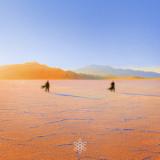
PRAANA unveil their highly anticipated album Insight Out on Colorize, a deeply immersive body of work that explores reflection, connection and emotional growth through the duo’s signature cinematic lens.
Built around themes of reflection, presence and human connection, Insight Out creates a rich sonic landscape where atmospheric textures, subtle rhythms and emotive songwriting coexist with effortless grace. Featuring collaborations with Susie Ledge, Tina Parol, Freddie Elmberg and Courtney Storm, the album showcases PRAANA’s ability to create music that feels both intimate and expansive. An alias of Tritonal, PRAANA have amassed over 30 million streams, earned sustained support on SiriusXM Chill and recently completed U.S. tour dates in Chicago, Denver and a sold-out Elsewhere Rooftop show in Brooklyn.
Insight Out stands as a fully realised artistic statement, offering a space for stillness, reflection and meaningful escape through sound.
debe ser publicado en 01.10.2026

"Surface Noise Isn’t A Crime" continues NOREPRESS’ exploration of texture, pressure, and imperfect sound as core elements of underground electronic music. Across four tracks, the release moves through Deep Tech House, Dub Techno, Electro, and Breakbeat without settling into fixed genre boundaries, balancing functionality with experimentation throughout.
A1. Tvardovsky feat. Andrey Zverev – Flute Meditation opens the record with a dense, slowly unfolding trip built on dub space, electro tension, and hypnotic Tech House movement. Organic flute phrases drift through layered percussion, evolving bass pressure, and spacious analog textures, creating a strange collision of futurism and nostalgia. The track resists obvious peak-time formulas, choosing gradual transformation over immediate impact and rewarding deeper immersion with every transition.
A2. Osman Öz – Regrets moves into softer territory without losing rhythmic weight. Warm breakbeat structures, airy melodic fragments, and fluid low-end movement give the track a calm but persistent momentum. Osman Öz keeps the arrangement restrained and precise, allowing groove and atmosphere to carry the emotional core of the composition naturally.
On the B-side, Kirill Matveev appears under his Natural Piece Of Aloe alias with two contrasting interpretations of the project’s dub-informed language.
B1. Salto Mortale is playful, unstable, and constantly mutating. Rhythms stretch and reorganize themselves around shifting tonal fragments, while the arrangement moves with the loose unpredictability of an improvisation session. Despite its complexity, the track never loses control, maintaining a strong forward pull through every unexpected turn.
Closing the record, B2. Columbo Beat, Kirill Matveev - Sundub pushes deeper into darker territory. Acid sequences slice through heavy dub atmospheres while rugged drums and saturated low-end pressure drive the track forward with raw physical energy. Distortion, space, and movement interact continuously, turning the track into a hypnotic late-night tool designed for more adventurous dancefloors.
"Surface Noise Isn’t A Crime" captures NOREPRESS at its most confident: raw textures, deep space, broken edges, and timeless club influences reconstructed into a modern dub-driven framework.
NOREPRESS is a division of MixCult Records
En el almacen y preparando para el envío

Split#5 marks the fifth and final installment of the Split series on the Various Artists catalogue of Pi Electronics, pairing Spanish producer Hurtado and Greek producer Nikitas Grs. Despite their distinct approaches, Hurtado's industrial-leaning broken beat funk and Nikitas Grs' psychedelia-infused noise techno converge through a shared aesthetic of textured sound design, raw energy and dark atmospheres. On the A-side, Hurtado showcases his trademark production style through the driving cuts "Show of Force" and "Bad Company", while "The End", featuring vocals by Genevieve GV, reveals a more experimental side of his production. The B-side welcomes Nikitas Grs with two compositions that blur the boundaries between techno, trance and industrial music. The live version of "Susano" unfolds as a rolling, hypnotic dancefloor trip, while "Anoriotos" balances heavy rhythmic impact with an underlying sense of ambient nostalgia. The digital bonus track, "Pollinator 5000", reveals yet another facet of Nikitas Grs' sound palette: a relentless piece of noise-techno that rounds off the release with uncompromising intensity.
En el almacen y preparando para el envío

Blackwater Label’s Goldenboy sub-label third chapter is an ode to the immensity and vastness of the sea, a journey across deep waters, uncertain ports and endless horizons. "Never Give Up" is dedicated to the memory of Alessio Fantozzi, a pioneer of the waters whose spirit continues to resonate through those who choose to venture beyond the shore. This four-way collaboration is our tribute to him: four artists, four visions, one voyage into the unknown. Loris Ligonzo opens the journey with "Subalpine Nocturne", a Balearic-tinged deep house excursion that invites us to dive into the sonic ocean Blackwater has been navigating for more than a decade, warm, hypnotic and submerged. With "Apparently", T/Error brings us into an unsafe and gloomy harbour. Dark electro and suspended tension create the feeling of a vessel waiting to depart, caught between the certainty of the shore and the call of new waters. Stefano Rocchi contributes "Mushy", acting as the propulsion system of our pirate vessel, the Blackwater Ship. Acid-infused electro drives the journey deeper into the abyss, with no fear for those who trust the... more credits releases September 24, 2026 Written and Performed by V/A Mastered by Stefano Rocchi at Niumen Studio,Rome Produced by Blackwater Label, 2026 Distributed by Triple Vision, Rotterdam Nvmqvam Cede // Vsqve Ad Finem
En el almacen y preparando para el envío
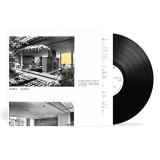
Blue vinyl[27,31 €]
Brazilian artist Rubel isn’t one to be pigeonholed and typecast into staying in one sound. Casas, the follow-up to his debut album Pearl from 2015, brought a bigger, more epic, and richer production quality to the table. Fusing the worlds of MPB and hip hop, Rubel’s sophomore LP built on the momentum of its predecessor, gaining a Latin-Grammy nomination along the way. Mr Bongo is proud to be giving Casas its first worldwide release on vinyl and CD outside of Brazil and Japan.
The cliché they say is that the second album is always the trickiest; however, Rubel doesn’t seem to have had any problems on Casas. It’s a fountain of creativity and originality, marking an artist in full flow.
Conceived after Rubel spent six months living in Los Angeles, Casas is MPB-leaning at its core but is also driven by a hip hop inspired pulse. There is a clear influence from hip hop’s aesthetic across the 2010s woven subtly but fundamentally throughout. Nods to Frank Ocean, Kendrick Lamar and Tyler, The Creator can be heard across an album full of playful edge and personality. Luscious string-led arrangements and tracks that explore the rich folkloric rhythms of Brazil, sit next to songs with low-fi drum machines and features from acclaimed Brazilian rappers.
One of the highlights of the album, ‘Mantra’, starts with a traditional Brazilian rhythm that morphs into a hazy hip hop beat. A sublime song with a hooky call and response chorus, it features a guest appearance and verse by the Brazilian MC Emicida. Another highlight is the epic ‘Colégio’ (College) which further showcases the melding of stripped back drum machine beats with cinematic, sweeping arrangements. Elsewhere, ‘Partilhar’ is a swaying, heartwarming hug. A tale of longing and love that has become a singalong fan favourite at Rubel’s concerts.
Casas also shines a light on a string of key players in Brazil’s new vanguard, such as Pedro Fonte, Gus Levy, and Brazilian rapper / poet Rincon Sapiência to name a handful. The record has pop sensibilities yet also feels underground. It beats with the heart of a singer-songwriter, a feeling that was felt so strongly on Pearl, yet this time is bolstered by a level of arrangement and richness of sound that take it to another dimension - soaring horn and string sections elevating the songs from home recording to stadium-ready anthems. Keeping that intrinsic beauty and simplicity of a well-constructed song yet reframing it within a pop context is the true gift of this album.
Casas cemented Rubel’s status as one of Brazil’s leading contemporary talents and a key figure enriching the country’s already effervescent scene.
debe ser publicado en 01.10.2026
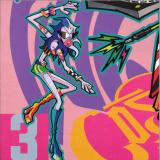
Cosmic Voodoo is an immersive musical experience that combines the best of cosmic disco with the pulsating energy of contemporary electronica. Through alternating synthesizers and acoustic instruments, this project presents an irresistible arsenal of sounds.
This is the third volume of four that will create a unique graphic work created by the famous Aldo Drudi.
Written and produced by Daniele Baldelli, undisputed master of cosmic-disco, and Mattia “Matta” Dallara, sound explorer and producer of Cosmic Temple, this EP is a journey that evokes dreamy and nostalgic atmospheres, perfectly in line with disco roots.
The tracks unfold between enveloping grooves, spacey synthesizers and rhythms that pay homage to the 1980s, generating a sound that is both classic and innovative. An electronic tribal ritual, a dancing spell that can transport the listener to a parallel universe full of psychedelic sounds and magnetic beats.
Ideal for those who like to lose themselves in the depths of sound and be guided by vibrations that oscillate between past and future.
En el almacen y preparando para el envío
“Neither from here nor from there” is often used to describe migrant identities in territorial terms. In the case of Siete Catorce, it works better temporally: his music has always been so far ahead of its moment that it ultimately carved out a space of its own within both Latin American and global electronic music.
Born in Mexicali and shaped between the Bay Area and northern Mexico, his musical identity emerged through hip hop, dubstep, and the independent borderland scenes. After several years in Mexico City — without a clear place inside the local circuit — he created his own space through his music, developing a distinctive DJ/live set and a singular vision of contemporary Mexican electronic music, becoming a key figure within the city’s most forward-thinking underground.
In 2026, he releases El Valle, his first album in nearly three years. The record moves through different currents of electronic music — ambient, techno, cumbia, and tribal — filtered through a unique rhythmic language marked by syncopation, unpredictable breaks, and a constant tension between restraint and energy.
The album opens with “Mexicali,” alongside Andre Pereda, a tribal track stripped down to its percussive essence, evoking the genre through an ambient and synthetic approach. From there, “Aragón” and “El Rancho” progressively increase the tempo and intensity, combining cadenced phrases with minimalist tribal beats and unexpected turns.
In the second half of the album, now moving through territories of 140 BPM and beyond, tracks like “Montecarlo 1” and “Tierra Roja” drift between futuristic bass music and large-scale techno structures. This is followed by the 8-minute epic “East LA,” where Siete Catorce expands the energy of syncopated techno before releasing it into a pre-Hispanic tribal journey with flute and all the drums required for the occasion.
The closing section arrives with “Tlatelolco,” accelerating into an epic cumbia infused with trance references, and “Los Pinos,” a direct and forceful finale sustained by some of the album’s most precise sound design.
More than genres, Siete Catorce’s work is defined by meticulous sound design and an exceptional rhythmic sensibility — qualities that have established him as one of the most respected drum programmers of his generation.
En el almacen y preparando para el envío

On Last Night At Marienbad's latest, the imprint brings together three of the brightest souls found within the realms of Jazz, namely Mauricesax, 9ick and Milan93, with their collective talents synergising effortlessly on 'A Garden Between Us', alongside a stellar cast of remixers who add even further delight between the grooves….
As a genre, Jazz has perhaps lent itself the most to other musical universes, in that its curious heart, endlessly experimental nature, and parameter-defying spirit have wrapped itself deep within the core of countless albums, scenes, and music makers. It's a genre that welcomes reinvention, consistently defying its contents and always reaching out to find new methods of expressionism. Electronic music, in its many forms, has truly embraced Jazz perhaps like no other movement of music has, with a truly astonishing array of records surfacing in the past 40 years which have blended Jazz's unique motifs with grooves, chords, and emotive excellence. From 90s Jazz house and UR Techno, through to Future Jazz, downtempo, and Hip Hop, and around many other suns, there remains such an intrinsic and symbiotic relationship between the two musical realms that caters to those who wish to live music both within and out with themselves.
As practitioners of blending electronica and Jazz, few do it like the trio of Mauricesax, 9ick, and Milan93. All three are known for their distinctive soundscapes, yet share commonalities in terms of musical language, feel, and sense of progression. Bringing them together allows for overlaps in their sounds to emerge, and just like Jazz itself, this is where the intrinsicness of sound begins to blossom. 9ick brings his softly evolving vibe to the table, one which was so prevalent and celebrated on his 2025 album 'SMIL'; Milan93 draws from his focal point of exploring fill-laden grooves and a myriad of emotive sensibilities; and Mauricesax draws up his extensive musicality that exists at the corner of jazz, electronic, and experimental music, along with running musical workshops all over the globe.
'A Garden Between Us' represents the trio's core tenets, with this immediately obvious from the record's opener, 'Rhodora'. A gentle solo piano quickly evolves into a series of powerful rhythmic pulses, with brass lines bringing vitality and feel to proceedings. The track shifts gears with purpose, transitioning between musical vignettes of the highest order, with the synth work doing much to bind the transitions together. 'Tulip' emerges slightly differently, with glossy Rhodes tones and an unravelling rhythmic undercurrent setting an enthralling stage. The track flourishes amongst sweeping textures, coming up for air amongst a deeply hypnotic rhythmic section that holds on and never lets up. 'Honeysuckle' lands next, which sees the trio emerge with a boundless, dynamic soundscape. The drums shift within the undertones, as keys, chords, horns and hip-hop vocal samples dance around the pulse, capturing the imagination with their narrative-like placement. Wrapping up the A side comes 'Camellia'. A dazzling array of harmonic sounds converges around the transfixing rhythm section, which emerges from deep below to lavishly roll out over the midsection, with the delicateness of the instrumentation a real highlight here.
The B side features two exquisite remixes, with Pacific Coliseum's version of 'Tulip' landing first. Beginning with a signature four to the floor to get things going, his careful handling of the source material is seen in the tactful introduction of the blissful elements that made the original cut so impactful, with great focus placed on emotive fidelity. The result is a summer-bound house number that reimagines the original in all the right ways, flipping it into a euphoria-driven jazz-laden pacer that reaches for the heavens as much as it drives right into the heart. Teuteu then showcases their take on 'Honeysuckle', and at 9 minutes long, represents the longest cut on the record - and the experience is all the richer for it. Leaning heavily into dance music flavours, Teuteu shifts perspective totally into the realm of the club, with the walls beating hard to the kicks. The sax lines that drift ethereally up top keep eyes closed and souls full, as the dance shifts into the next phase.
An experience that drifts from the daydreaming, to soul-warming through to the club shaking - what else is left to experience, except for 'A Garden Between Us' and how it will brighten up life itself….
debe ser publicado en 02.10.2026

Pain threaded with joy is the sound of survival. On The Hard Truth, Wynonna isn"t letting go of either one, carrying everything she"s endured and reinventing herself as an artist. This ten-track tribute to deep sorrow and dogged persistence strips away layer after layer of the lush production that defined Wynonna"s previous recordings, delivering in its place her most personal and powerful work yet. ANTI- is proud to continue its tradition of embracing American legends and giving them a platform to reach new heights. The Hard Truth has a major contributor in the form of producer Cactus Moser, Wynonna"s partner in music and life. Wynonna and Moser shared songwriting duties on The Hard Truth, and the resulting tracks were recorded to capture and compliment the raw power he"d witnessed decades ago. What they"ve created together is an unvarnished elegy to the dead and the missing, an album that pays tribute to choosing love in the face of suffering. Through instrumentation and arrangements unlike any record in Wynonna"s four-decade career, The Hard Truth rolls in like a night train hitting listeners on the blind side.
debe ser publicado en 02.10.2026

Emerging in 2023, Die Anstalt are a Berlin-based post-punk and minimal synth trio who quickly established themselves with a blistering fusion of early EBM, synth-punk, and classic post-punk. Their sound channels the grit and tension of 1980s industrial sub cultures while feeling unmistakably contemporary. Recently signed to City Slang worldwide, the band are reissuing their independently released debut album through the label. They have also announced a UK and Ireland tour supporting A Place to Bury Strangers, alongside a hometown headline show at Berlin's legendary SO36 in November 2026.
Die Anstalt sound like no one else, even if everyone hears something different. Depending on who you ask, you'll catch traces of Malaria!, Boy Harsher, DAF, early EBM, synth-punk, or X-Mal Deutschland. Then there's the surf guitar, a detail that shouldn't work but somehow holds the whole thing together. The result is theatrical, confrontational, hypnotic, and relentlessly physical. They write slogans that stick. They're appropriately furious. Live, they're less a concert than a controlled explosion.
Their songs give voice to generational exhaustion, the dystopian absurdities of the present, warmongers, the manosphere, and the constant sense that the world is coming apart at the seams. Somehow, they also sound unmistakably like Berlin. That doesn't happen often, maybe once a decade, if we're lucky.
Most of all, Die Anstalt are proof that beneath the noise, the algorithms, and the endless churn of industry discourse, something vital still burns: rage, conviction, and hope in equal measure. At their core, they are a punk band. No posturing. No compromise. No messing around. They don't ask for permission. They burn it all down.
Die Anstalt, 2023 in Berlin gegründet, bewegen sich zwischen Post-Punk, Minimal Synth und frühem EBM. Innerhalb kürzester Zeit hat sich das Trio mit einer kompromisslosen Mischung aus Synth-Punk, klassischem Post-Punk und der rauen Energie der industriellen Subkulturen der Achtziger einen Namen gemacht – und klingt dabei nie nostalgisch, sondern entschieden gegenwärtig. Kürzlich unterschrieb die Band weltweit bei City Slang, wo nun auch ihr zunächst in Eigenregie veröffentlichtes Debütalbum neu erscheint. Im Herbst 2026 begleiten sie A Place to Bury Strangers auf deren UK- und Irland-Tour, bevor sie im November mit einer Headline-Show im legendären SO36 nach Berlin zurückkehren.Die Anstalt klingen vor allem nach sich selbst – auch wenn jede*r etwas anderes hört. Die einen denken an Malaria!, andere an Boy Harsher, DAF, frühen EBM, Synth-Punk oder X-Mal Deutschland. Und dann ist da diese Surf-Gitarre, die eigentlich nicht funktionieren dürfte und doch alles zusammenhält. Die Anstalt sind theatralisch, konfrontativ und hypnotisch. Sie schreiben Parolen, die hängen bleiben. Ihre Wut ist berechtigt. Live gleichen sie einem kontrollierten Ausbruch.Ihre Songs finden Worte für die Erschöpfung einer Generation, für die dystopischen Exzesse der Gegenwart, für Kriegstreiber, die Manosphere und die Absurditäten unserer Zeit. Irgendwie klingen sie dabei unverkennbar nach Berlin. Das passiert nicht oft – vielleicht einmal pro Jahrzehnt, wenn wir Glück haben.Vor allem aber beweisen Die Anstalt, dass unter dem Lärm, jenseits von Algorithmen, Trends und dem endlosen Gerede der Musikindustrie noch immer etwas brennt: Wut, Haltung und Hoffnung zugleich. Im Kern sind Die Anstalt eine Punkband. Kein Posieren. Keine Kompromisse. Kein Bullshit. Sie bitten nicht um Erlaubnis. Sie reißen alles nieder.
debe ser publicado en 02.10.2026
This VA release brings together four producers who share a common language: hypnosis, movement, and an obsessive attention to sound design. Across two sides of vinyl, the record moves through different shades of deep and mental techno, held together by a sense of restraint and clarity rather than force.
Na Nich opens the A-side with a mental yet groove-driven piece, where impeccable sound quality meets a clean, deliberate design. LFO-driven elements float underneath the surface, almost speaking, giving the track a voice of its own without ever breaking its hypnotic hold.
Forest On Stasys follows with a tribal and deep approach that still hits with weight. Shakers and layered percussion drive the movement forward, building a rhythmic body that feels both organic and controlled.
On the B-side, Translate stays true to a purely mental identity: repeating LFOs and speaking tones that fold in on themselves, always kept clean and precise, letting the repetition do the work.
Save Your Atoll & Gabriele Santucci close the record with a deep, tribal-leaning cut full of groove and motion. Bongos, shakers, and background percussion build a danceable hypnosis, where every element serves the movement.
Four tracks, four voices, one shared sense of direction — a record built for the floor, but never at the expense of detail.
debe ser publicado en 02.10.2026
The final installment of the GIANT SKY trilogy, Giant Sky III, will be released on October 2nd, 2026, preceded by the single "Fleeting Glimpse", which offers the first taste of the new album. A companion postlude album, The Further We Go The Deeper It Gets, will follow on October 16th, 2026. Together, the two records complete an ambitious body of work that has seen Viken explore a broader and more introspective musical landscape than ever before. "Fleeting Glimpse" provides an evocative introduction to the final chapter of the GIANT SKY trilogy. While Viken"s band Soup has become renowned for its emotionally charged, crescendo-driven soundscapes, GIANT SKY allows him to embrace an even wider palette of influences. Drawing from alternative art rock, post-rock, electronica, ambient music, indie, folk, and progressive rock, the project balances immersive atmospheres with memorable melodies. In an era increasingly dominated by algorithms, artificial intelligence and digital perfection, Viken has consciously taken the opposite path. GIANT SKY is built around the human element of music-making, embracing imperfections and authenticity as artistic strengths. "This album has been with me for a long time. Some of the ideas on Giant Sky III go back many years, and in a way it feels like a cross section of the last 25 years of my life as a composer. We live in a time where music is increasingly shaped by algorithms, AI and endless digital possibilities. I suppose this record is my way of walking upstream a little bit - taking the slower route, trusting the human imperfections, and letting the music find its own shape. It wasn"t a quick album to make, but I"m proud of what it became: ambitious where it needed to be, modest where it should be, and above all, honest." - Erlend Viken
debe ser publicado en 02.10.2026
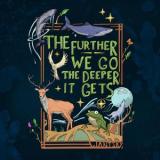
The final installment of the GIANT SKY trilogy, Giant Sky III, will be released on October 2nd, 2026, preceded by the single "Fleeting Glimpse", which offers the first taste of the new album. A companion postlude album, The Further We Go The Deeper It Gets, will follow on October 16th, 2026. Together, the two records complete an ambitious body of work that has seen Viken explore a broader and more introspective musical landscape than ever before. "Fleeting Glimpse" provides an evocative introduction to the final chapter of the GIANT SKY trilogy. While Viken"s band Soup has become renowned for its emotionally charged, crescendo-driven soundscapes, GIANT SKY allows him to embrace an even wider palette of influences. Drawing from alternative art rock, post-rock, electronica, ambient music, indie, folk, and progressive rock, the project balances immersive atmospheres with memorable melodies. In an era increasingly dominated by algorithms, artificial intelligence and digital perfection, Viken has consciously taken the opposite path. GIANT SKY is built around the human element of music-making, embracing imperfections and authenticity as artistic strengths. "This album has been with me for a long time. Some of the ideas on Giant Sky III go back many years, and in a way it feels like a cross section of the last 25 years of my life as a composer. We live in a time where music is increasingly shaped by algorithms, AI and endless digital possibilities. I suppose this record is my way of walking upstream a little bit - taking the slower route, trusting the human imperfections, and letting the music find its own shape. It wasn"t a quick album to make, but I"m proud of what it became: ambitious where it needed to be, modest where it should be, and above all, honest." - Erlend Viken
debe ser publicado en 02.10.2026
debe ser publicado en 02.10.2026
The Soft Chaos captures the essence of music “in the moment “ - the interaction of three musicians within the improvisation. It embodies the true spirit and essence of “jazz” - music created spontaneously, yet within the boundaries of an art form that has influenced the sound of modern music and many genres for nearly a century.
A collaborative, improvisational, and free-form trio project led, produced, and mixed by Nathan Haines with Joe Kaptein (keyboards) and Elijah Whyte (drums), recorded in just one day at Auckland Lab Studios.
The Soft Chaos showcases live, in-the-moment, top-quality musicianship with a vintage vibe reminiscent of classic 1970s experimental jazz rock, but with a modern jazz-house aesthetic, featuring live human lead drums and synthesisers rather than programmed beats.
debe ser publicado en 02.10.2026

AMBASSADE ventures into the world of Manrira - a dark, alluring feminine presence that confronts systems driven by value, profit, and power. Emerging from dystopian structures, Manrira exists in the liminal space where organic and digital forces collide, merge, and mutate. This new audiovisual work is devoted to the enchanting acoustics of the human voice and its relationship to bodies, architectures, and shifting environments. At the heart of Manrira is the human voice - alive, breathing, and full of presence. It flows like a living instrument, shaping space and emotion. Manrira explores the voice as resonance, as body, and as spatial event. Manrira moves from dynamic song compositions into extended structures, blending live bass, neo-classical elements, ethereal vocals, drum machines, breaks, and techno-driven textures. The result is an immersive experience that invites the audience to listen closely and reconsider their connection to sound, space, and their surroundings.
debe ser publicado en 02.10.2026

*** Special edition on yellow flame colored vinyl. Comes with a poster and stickers *** AMBASSADE ventures into the world of Manrira - a dark, alluring feminine presence that confronts systems driven by value, profit, and power. Emerging from dystopian structures, Manrira exists in the liminal space where organic and digital forces collide, merge, and mutate. This new audiovisual work is devoted to the enchanting acoustics of the human voice and its relationship to bodies, architectures, and shifting environments. At the heart of Manrira is the human voice - alive, breathing, and full of presence. It flows like a living instrument, shaping space and emotion. Manrira explores the voice as resonance, as body, and as spatial event. Manrira moves from dynamic song compositions into extended structures, blending live bass, neo-classical elements, ethereal vocals, drum machines, breaks, and techno-driven textures. The result is an immersive experience that invites the audience to listen closely and reconsider their connection to sound, space, and their surroundings.
debe ser publicado en 02.10.2026

ARMOR, a new alias by Pascal Pinkert (Ambassade / Dollkraut). A few years ago he visited Turkey and Lebanon to collaborate with artists such as trip-hop legend Zeid Hamdan and Egyptian singer Maii. While many of these recordings found their way into Dollkraut releases, revisiting the material sparked the need for a new outlet. With ARMOR, Pinkert dives deeper into the space between folk traditions and electronic experimentation. Hypnotic drones merge with Middle Eastern percussion, while subtle rhythmic structures fuse with immersive soundscapes.
debe ser publicado en 02.10.2026

Sublime frequencies from the golden era of ambient electronica.
Plumbing hidden depths beneath a deceptively tranquil surface, MLO's mid-90s masterpiece Io is an overlooked gem from a golden era for ambient electronic music. Originally released in 1994, Jon Tye and Pete Smith's collaborative album responded to the growing chill-out movement by leaning into classical and avant-garde influences from Satie, Debussy and Cage through to Soft Machine, Incredible String Band and Eno. Recorded across various studios stacked with classic and rare synths, Io was patiently composed into slowly unfolding suites punctuated with ripples of arrhythmic interference to arrive at a purist vision of true ambient.
The next instalment in Forever Records' ongoing reissue series shines a light back on this landmark piece of UK electronica with the first official reissue since its original edition on Rising High. As well as the original double LP pressing and a new CD digipak version, there will also be a uniquely numbered, limited edition housed in a gatefold sleeve that comes with a bonus 10" featuring two previously unreleased versions of the album's opening cut, 'Wimborne'.
Press response to Io:
"Not so much ambient, more environmental music, Io lets you bring as much (or as little) of your surroundings in as suits your mood. Every listen can be different. Interactive ambient at last.”
IO is pure ambience. Relying on motif as opposed to melody, MLO have produced a truly evocative album.
Peter McIntyre, Mixmag, UK 1994.
"MLO's influences range from the likes of Eric Satie and the intellectual salon music of his era to the more predictable reference point of dubby, modern techno, though they feel, perhaps rather contentiously, that "ambient music can exist in isolation from the rest of the dance music arena". Can it? Take a trip to Io, and find out."
Generator Magazine, UK 1994.
"If you like your ambient deep and moody with long chords that creep along at approximately the speed of drying paint then check out MLO’s Io."
Mixology, UK 1994.
"MLO set the controls for the heart of headspace for their first full album release. Io is top grade ambient brain… Ace album…"
Select, UK 1994.
debe ser publicado en 02.10.2026

Sublime frequencies from the golden era of ambient electronica.
Plumbing hidden depths beneath a deceptively tranquil surface, MLO's mid-90s masterpiece Io is an overlooked gem from a golden era for ambient electronic music. Originally released in 1994, Jon Tye and Pete Smith's collaborative album responded to the growing chill-out movement by leaning into classical and avant-garde influences from Satie, Debussy and Cage through to Soft Machine, Incredible String Band and Eno. Recorded across various studios stacked with classic and rare synths, Io was patiently composed into slowly unfolding suites punctuated with ripples of arrhythmic interference to arrive at a purist vision of true ambient.
The next instalment in Forever Records' ongoing reissue series shines a light back on this landmark piece of UK electronica with the first official reissue since its original edition on Rising High. As well as the original double LP pressing and a new CD digipak version, there will also be a uniquely numbered, limited edition housed in a gatefold sleeve that comes with a bonus 10" featuring two previously unreleased versions of the album's opening cut, 'Wimborne'.
Press response to Io:
"Not so much ambient, more environmental music, Io lets you bring as much (or as little) of your surroundings in as suits your mood. Every listen can be different. Interactive ambient at last.”
IO is pure ambience. Relying on motif as opposed to melody, MLO have produced a truly evocative album.
Peter McIntyre, Mixmag, UK 1994.
"MLO's influences range from the likes of Eric Satie and the intellectual salon music of his era to the more predictable reference point of dubby, modern techno, though they feel, perhaps rather contentiously, that "ambient music can exist in isolation from the rest of the dance music arena". Can it? Take a trip to Io, and find out."
Generator Magazine, UK 1994.
"If you like your ambient deep and moody with long chords that creep along at approximately the speed of drying paint then check out MLO’s Io."
Mixology, UK 1994.
"MLO set the controls for the heart of headspace for their first full album release. Io is top grade ambient brain… Ace album…"
Select, UK 1994.
debe ser publicado en 02.10.2026

Houston’s premier street griot is stepping into his most profound chapter yet with his highly anticipated upcoming album, O.Y.N. Throughout a decorated career that spans over 1.2 billion global streams and a fiercely loyal fanbase, Maxo Kream—born Emekwane Ogugua Biosah, Jr.—has established himself as one of rap’s most authentic, uncompromising storytellers. From the raw trenches of Alief to the critically acclaimed triumphs of Punken, Brandon Banks, Weight of the World, and his triumphant 2024 independent pivot Personification, Maxo has long been celebrated by Pitchfork, NPR, and Complex for his cinematic, hyper-detailed world-building. Now, O.Y.N. finds the Houston icon turning his gaze inward, pairing his signature Texas grit with an expansive, global perspective that redefines his artistic boundaries.
If his previous work was about Maxo taking full creative control as an independent force, O.Y.N. is about him uncovering who he is at his core. Following the passing of his father, Maxo found himself searching deeper for his family origins, leading to a pivotal moment of artistic and personal rebirth. For the first time in his life, Maxo traveled to Lagos, Nigeria, anchoring his new music in a profound celebration of his Nigerian heritage. The emotional centerpiece of this journey is the JPEGMAFIA-produced single “Time Out,” an introspective track that moves away from the frantic energy of his past releases to offer a stripped-back look at love, loss, and legacy. Featuring a heavy, resonant drum presence on the outro, the song’s accompanying music video was filmed on location in Lagos, capturing Maxo navigating his ancestral roots in real-time.
While O.Y.N. reaches new emotional depths, it doesn't sacrifice the hard-hitting, volatile street persona that made Maxo a star. The album expertly balances soul-baring vulnerability with cutting-edge hip-hop experimentation, showcasing elite chemistry with some of the genre's most forward-thinking visionaries. Look no further than “Fake Jeezy,” a collaborative explosion featuring Denzel Curry and masterminded by JPEGMAFIA. The track is a masterclass in industrial chaos, combining sharp lyricism and early-2000s trap imagery with cold, surreal visual aesthetics. This duality highlights Maxo's unique positioning in the culture as a trusted street general who can effortlessly trade bars with rap's avant-garde elite.
From his early days flipping Kendrick Lamar's “Rigamortis” to sharing marquee tracks with the likes of A$AP Rocky, Travis Scott, and Tyler, The Creator on hits like “Big Persona,” “Cracc Era,” and “Cracc At 15,” Maxo Kream has always been a rapper's rapper. O.Y.N. represents the ultimate synthesis of this incredible journey. It is an album born from the soil of Alief but elevated by the spirit of Lagos—a raw, beautiful, and heavy-hitting testament to an artist who has survived his past, honored his losses, and fully embraced his destiny.
En el almacen y preparando para el envío

Twenty-five years after his debut album I’m Serious permanently altered the DNA of Southern hip-hop, Tip "T.I." Harris is officially closing this chapter with KILL THE KING, his twelfth and final studio album. For a man who has spent over two decades as the self proclaimed “King," the project’s title speaks volumes. This is not a surrender of the crown to a rival, but rather a symbolic death of the ego. T.I. is choosing to dismantle the moniker on his own terms, trading the battlefield for peace, legacy, and the freedom to step out of the booth and into the next phase of his life as an actor and family man.
Rather than leaning on pure nostalgia, KILL THE KING proves T.I. is walking away while his pen is still razor-sharp. The project is anchored by the certified gold lead single "LET 'EM KNOW," produced by long-time collaborator Pharrell Williams, which sets an immediate tone of veteran-level precision and polished bravado. Across the 18-track album, T.I. pulls together a masterclass of multi-generational talent that bridges the gap between his trap origins and modern dominance. The album boasts heavy-hitting Southern anthems like "DOPE BOYS ACADEMY” featuring 2 Chainz, Jeezy, and T-Pain, alongside soulful reflections from the Dr. Dre produced track "WHERE I’M FROM" with Anderson .Paak, Atlanta eloquence with Usher on "GORGEOUS," and moody, atmospheric cuts featuring Summer Walker and YoungBoy Never Broke Again.
Ultimately, KILL THE KING is designed to leave nothing unsaid, directly addressing the trials, tribulations, triumphs, and the undeniable imprint he’s left on global hip-hop culture. To mark the end of this historic era, T.I. isn't just letting the music speak for itself; he will be taking his final bow on the road with The King Succession Tour, bringing his sons Domani and King along to officially pass the musical torch. With this final statement, T.I. ensures that the trap music foundation he helped lay the framework for what will endure long after he sets down the mic. The King is dead; long live the legacy.
debe ser publicado en 02.10.2026

For ten years Spike Fuck has existed more as a messy myth than an art- ist; sporadic works forever poised on the precipice of triumph, rumours of death or insanity and so on. Spike’s mission is to distill the sacred and profane, balancing the melancholy and humour of life; “to be alive is to be traumatised.” Luckily, the devotion to his music persevered, some- what bolstered by his inconsistency and inaccessibility. This inexplicable goodwill towards his artistry is perhaps partly due to Spike’s timeless, pained and confessional lyricism, though more pointedly, the fragility of a life mired in addiction. His being or works does not question the virtue of life, but simply addresses the numb, pragmatic and far more immediate matter of surviving another day, an almost ineffable senti- ment only justified by his distinct, poetic audaciousness. Free from his arresting thoughts, evidence, the long anticipated debut album, is a bra- zen proof of life statement. Convicted by the outlandish idea of evidenc- ing a ‘you had to be there’ mentality, the record honours the presence in body, a record to be felt, never to be rationalized.
The material on evidence touches on elements of new wave, glam, soul and doo-wop, citing Pere Ubu, New York Dolls, The Temptations and Bettye Swan as key influences. Melodically it emits the energy of a down- and-out CBGBs band who cashes in by recording a lucrative Christmas album.
Spike frequently uses sonic and lyrical juxtapositions to perform comic twists of sincerity, a reflection of society's obsession with ‘getting a rise’. On “Bored to Death,” a scuzzy, laidback and soulful tune, paired with morbid ragebait lyrics that payoff as a stand up joke “when I look up at the sun it makes me so happy cause I know one day it’s gonna kill me, and it’ll kill you too!” Lead single “All By Myself” carries on in this fashion; with feelgood, family-friendly punk doo-wop production, Spike is misleading on if his joy comes from the pride in solitude, or from lone- liness and a ‘give me everything’ mentality in the act of shooting heroin. The vocal performances oscillate between being blasé, vulnerable and manic; “Sweet Release” meets power-ballad criteria solely due to Spike’s deteriorating cries into the void, the jittery delivery on “Getting Sober” embodies religious fanaticism while sounding like a pop song written by Suicide for a David Lynch film.
evidence is an album that lives outside the limits of discourse; its purpose is eponymous and self-evident. It is what it is, and is subject to interpretation. There is no point in interrogating attachments, virtue or value. The only rightful way to live is to be.
a 01. CAN'T GET IT UP 4:38
b 02. HAD YOUR WAY 4:04
[c] 03. SWEET RELEASE [3:27]
[d] 04. BORED TO DEATH [3:31]
[e] 05. ALL BY MYSELF [2:38]
[f] 06. GETTING SOBER [3:33]
[g] 07. BLUELIGHT[4:35]
[h] 08. HATE ME [7:44]
[a] 01. CAN'T GET IT UP [4:38]
[b] 02. HAD YOUR WAY [4:04]
[c] 03. SWEET RELEASE [3:27]
[d] 04. BORED TO DEATH [3:31]
[e] 05. ALL BY MYSELF [2:38]
[f] 06. GETTING SOBER [3:33]
[g] 07. BLUELIGHT[4:35]
[h] 08. HATE ME [7:44]
[a] 01. CAN'T GET IT UP [4:38]
[b] 02. HAD YOUR WAY [4:04]
[c] 03. SWEET RELEASE [3:27]
[d] 04. BORED TO DEATH [3:31]
[e] 05. ALL BY MYSELF [2:38]
[f] 06. GETTING SOBER [3:33]
[g] 07. BLUELIGHT[4:35]
[h] 08. HATE ME [7:44]
[a] 01. CAN'T GET IT UP [4:38]
[b] 02. HAD YOUR WAY [4:04]
[c] 03. SWEET RELEASE [3:27]
[d] 04. BORED TO DEATH [3:31]
[e] 05. ALL BY MYSELF [2:38]
[f] 06. GETTING SOBER [3:33]
[g] 07. BLUELIGHT[4:35]
[h] 08. HATE ME [7:44]
[a] 01. CAN'T GET IT UP [4:38]
[b] 02. HAD YOUR WAY [4:04]
[c] 03. SWEET RELEASE [3:27]
[d] 04. BORED TO DEATH [3:31]
[e] 05. ALL BY MYSELF [2:38]
[f] 06. GETTING SOBER [3:33]
[g] 07. BLUELIGHT[4:35]
[h] 08. HATE ME [7:44]
debe ser publicado en 02.10.2026
Surprises are nice. Unexpected, delightful - Vision Fortune last released music in 2015, and so odds were off that we’d hear from them again.
But against all odds, Vision Fortune III is coming out on Gringo Records, following the release of their last album ‘Country Music’ on ATP Records.
The trio first agreed to record a new album as somewhat of a dare over a marathon pasta and wine heavy luncheon in Palermo, Sicily. Waking up with sore heads, they realised in mild panic that flight tickets had been purchased, a cottage in rural Wales was booked, and it was too late to pull out.
And so it was - the Fortunes arrived in Machynlleth Wales in Spring of the following year. The rules were simple - takes were live, songs minimal and the fireplace kept roaring.
Drummer Andres Ayerbe’s strict roast lamb dinner cooking schedule resulted in an album less frenetic and agitated than previous work - instead, III explores a softer, more subdued and subtle side of Vision Fortune. Additional overdubs were recorded in New York City and Birmingham, by AC Williams and Alex Townend. III was completed - a new, leaner Vision Fortune. Like a good lamb dinner - more meat, less fat.
Press Quotes for Country Music:
"An impressively brutal record" NME 8/10
"Immersive and introspective musique concréte rippling rippling with dub rhythms, orchestral strings, tolling bells and discordant drones coming close to the alien beauty of Mica Levi's sonically extreme soundtrack work." Uncut 7/10
"Unsettling, strangely cathartic and hook-free (in a good way)." Dazed ("Twenty albums to look out for in 2015")
"Assembling whole scrapyards of sound and turning them into something better than what went before" The Guardian
"Swaddling the senses in soundwaves, Minimal ambient sketches and harsh electronics abound on this fascinating 12-song affair" The FADER
"Basically just one long, connected droney throb. But it's an awesome long droney throb." Brooklyn Vegan
debe ser publicado en 02.10.2026

Stone Age Is Now: Poems from Lithic is the new album by musician and poet Caleb Nichols - both a companion piece to his book Lithic: A Hyperballad (Harbor Editions 2026) and a follow-up to his album Stone Age Is Back (Royal Oakie 2025). Across twelve tracks Nichols interpolates poems from Lithic: A Hyperballad with tracks from Stone Age Is Back, bringing new depth to his indie-rock and alt-folk compositions. A meditation on grief, but not in the ways you’d expect, the album explores what it means to be living and dying right now, in this moment of extraordinary change.
Inspired by the raw immediacy of Neil Young, early REM, and Califone, Nichols adhered to a first-take best-take rule and tracked the album in just five days. Produced by Nichols, the album was engineered by Jay Pellicci (Deerhoof, Om, Sleater-Kinney) at Brother’s (Chinese) Recording in Oakland, CA, with Nichols later recording the spoken word overdubs after hours at an empty bar in San Luis Obispo, CA. Pellicci later mixed the tracks and David Glasebrook (Patti Smith, Peter Case, Sugar Candy Mountain) mastered the album at The Garden Shed in Oakland, CA.
Featuring even more experimentation than Stone Age Is Back, the album is peppered with field recordings captured by Nichols from many locations, including Kew Gardens, London; Llan Tysilio, Yns Mon; Treborth, Gwynedd; a secret beach in Bangor; Kelvingrove Park, Glasgow; and Broad Street in San Luis Obispo, CA. In addition to contributions from band members John Metz and Aaron Kroeger, the album features saxophone by Lorenzo Coretese , and Rhys Trimble provides the Welsh translation and performance you hear on “Orme Dream At The Car Park”. Additionally, Nichols took some liberties adapting the poems from the book to the recordings. “You’ll notice that there are differences between the printed poems and the poems recorded here. That is because a poem is never finished and can exist in multiple instances at the same time, like in quantum mechanics. The cat in Schrodinger’s box is both alive and dead; at the bottom of the cliff, our eyes are both: closed and open” says Nichols.
debe ser publicado en 02.10.2026
Kukangendai are the innovative three-piece Kyoto based experimental rock band formed in 2006 with Junya Noguchi on guitar and vocals, Keisuke Koyano on bass, and Hideaki Yamada on drums. Since 2016 the band have set up shop in their studio and venue space, Soto, which houses an incredibly well tuned and powerful sound system that has become a well known destination for touring musicians. In March of 2025, Marionette was celebrating a belated 10 years of activity with label showcases across Japan in collaboration with Dotei Records, and Soto was inevitably one of the stops as many label alumni have set foot in the venue over the years. This is where I got to experience Kukangendai perform for the very first time and knew right then we were destined to work together.
Kukangendai embody an undeniable sense of timing and precision through collage-like repetition of minimalist phrases that manifest as a single unified rhythm. Their latest offering for Marionette, titled Baquet Wheel, is a purely acoustic endeavor, remarkably recorded live using Taku Unami's special binaural microphone. The trio seamlessly twist polyrhythms and melodies rooted in jazz, krautrock, blues, and Tuareg producing a timeless sound that preserves the primitive and memory evoking narratives buried deep within the music. Over the course of five tracks, the visceral nature of Kukangendai’s dynamic evolves from playful riffs that are seemingly familiar yet strikingly original, making it impossible to discern exactly when this material was conceived.
Kukangendai have maintained a prolific yet relatively low profile for the last two decades, with a handful of self-released editions on their own labels (Soto and Leftbrain) as well as a collaborative album with pioneering electronic music composer Ryuichi Sakamoto in 2018, then venturing outside Japan in 2019 to release their first widely distributed album on Ideologic Organ, a label curated by Sunn O)))’s Stephen O'Malley. Other collaborative projects to date include an album produced with rap group Moe and ghosts, live performances with Keiji Haino and with poet Gozo Yoshimasu, productions with the Chiten theater company, and most recently a remix album of their works featuring Carl Stone and Madteo.
debe ser publicado en 02.10.2026
Der dritte Teil der Pentimento-Trilogie. Aufgenommen am 23. Mai 2015 in der Londoner St John at Hackney-Kirche während Jon Hassells letztem Live-Konzert, gemeinsam mit Rick Cox und John von Seggern. Themen, Motive und Riffs aus Hassells letzten beiden Alben – "Listening To Pictures" und "Seeing Through Sound" – durchziehen diese einzigartigen, halb-improvisierten Variationen. Sorgfältig abgemischt und bearbeitet von Jon Hassell und seinem langjährigen Weggefährten Jeff Rona, bildet dieses Werk einen würdigen Abschluss für die Renaissance der Pentimento-Reihe in seiner späten Schaffensphase.
debe ser publicado en 02.10.2026
Allison de Groot ist eine Clawhammer-Banjo-Spielerin aus Winnipeg, Kanada, deren Schaffen die Old-Time-, Bluegrass- und Folk-Traditionen umfasst. Als Preisträgerin des Steve-Martin-Preises für herausragende Leistungen im Bereich Banjo und als Nominierte für die Auszeichnung ,Instrumentalistin des Jahres" der Americana Music Association ist sie wohl vor allem für ihr Duo mit der Geigerin Tatiana Hargreaves bekannt, dessen Alben ,Hurricane Clarice" und ihr selbstbetiteltes Debütalbum Anerkennung seitens der IBMA, der Canadian Folk Music Awards und der JUNOs fanden. Rich Ruth ist ein in Nashville ansässiger Multi-Instrumentalist (geb. Michael Ruth), der bei Third Man Records aufnimmt. Seine Soloalben schöpfen aus Ambient, Spiritual Jazz, Minimalismus und synthgetriebenem Post-Rock - Kompositionen, die mit sich wiederholenden Drones und Synthesizern beginnen und sich durch Zusammenarbeit weiter entfalten. Er ist zudem ein Drittel von ,Shrunken Elvis", einem Trio aus Nashville, das aus langen Autofahrten durch Europa und winterlichen Jam-Sessions hervorgegangen ist und Ruth mit dem Pedal-Steel-Gitarristen Spencer Cullum sowie dem Gitarristen Sean Thompson in einem gemeinsamen kreativen Raum vereint, in dem Intuition Vorrang vor Ehrgeiz hat. Ihr vielbeachtetes, selbstbetiteltes Debüt erschien im Jahr 2025. Die beiden kamen zusammen, als Ruth im Begriff war, ein Soloalbum für de Groot zu produzieren. Im Laufe von etwa einem Jahr in Ruths Studio in Nashville veränderte sich das Projekt still und leise: Die beiden begannen gemeinsam zu komponieren, und das Ergebnis ist ebenso sehr von Raum und Prozess geprägt wie von der Melodie. De Groots Clawhammer-Banjo durchläuft Loops und Delays und wird dabei mit Ruths Synthesizer- Arrangements so kombiniert, dass die haptische Unmittelbarkeit akustischer Instrumente mit den umhüllenden Eigenschaften der Elektronik in Einklang gebracht wird. Patrick M'Gonigle steuerte durchgehend Violinen- und Streicharrangements bei, während Shrunken-Elvis-Bandkollege Spencer Cullum bei mehreren Titeln seine Pedal-Steel-Gitarre einbringt und der Klangpalette des Albums eine weitere Ebene atmosphärischer Tiefe verleiht. Kurz nach Fertigstellung des Albums präsentierte die Gruppe das Material erstmals live beim Big Ears Festival als einen der Überraschungsauftritte der Veranstaltung - ein reduziertes, minimalistisches Set, das den Geist der Aufnahmen widerspiegelte. Das Album fängt zwei unterschiedliche musikalische Stimmen ein, die weniger einen gemeinsamen Nenner als vielmehr eine neue, gemeinsame Sprache finden.
debe ser publicado en 02.10.2026
