Belarusian post-punk / synth pop group Molchat Doma have always exuded the kind of brutalist aesthetic of the architecture that adorns their album art. It's cold, gray, imposing, industrial and yet there are human hearts beating within those foundations. In the wake of their breakthrough success in 2020, the trio endured a polarity of experiences, from the nadir of an uprooted life and forced relocation away from their native Minsk to the apex of headlining massive shows across the world. It was in this headspace that the band settled into their new home of Los Angeles to finish writing their fourth album Belaya Polosa, a testament to change in difficult times, a love letter to the digital pulse of the `90s, and a technicolor reinvention of the band's somber dancefloor anthems. From the opening synth swell and drum machine throb of "Ty Zhe Ne Znaesh' Kto Ya," to the goth / post-punk austerity of "Son", to the swirling electronic textures mixed with reverb-drenched guitar flourishes, expansive space, and yearning vocals of title track "Belaya Polosa" - that suggests Depeche Mode at their most reflective or The Cure at their most downtrodden - to the sultry and seductive "Chernye Cvety"_ a track reminiscent of Duran Duran's early `90s output in its fusion of dreamy guitars and authoritative mechanized beats _ and the interwoven layers of instrumentation, soaring chorus, and melodic sophistication of "Ya Tak Ustal", it's clear that Molchat Doma are operating on another level. Molchat Doma gained following with earlier albums that sound like third-generation bootlegs of banned recordings from the Eastern Bloc made after a few key entries in the Factory Records catalog were smuggled in from the West. Belaya Polosa propels them into a new direction while retaining their cold minimalist delivery they're known for. The basement grime and dirty tape-head sound of their previous work are now making space for digital luster and shimmering production values. And while Molchat Doma's broadened aural spectrum adds a synesthetic power to Belaya Polosa, the mood remains rooted in stark and unflinching self-reflection. Molchat Doma retain the duality of being both cold and feverish in their delivery while pushing their music into expanded territories through an armory of new textures. The trio continue to harness the sound of harrowing beauty thriving under harsh realities.
Suche:el fin
The core members of Jaubi are true masters of their craft, coming from a rich lineage of accomplished musicians. Kashif Ali Dhani is a classically trained tabla master from the Punjab gharana, and is the accompanist of choice on the local scene for some of Pakistan's great classical vocalists and instrumentalists, as well as in Europe and the USA. Zohaib Hassan Khan is a 7th generation sarangi master, who has performed globally, and is one of only 3 professional sarangi players left in Pakistan. Multi-instrumentalist, composer and Jaubi bandleader Ali Riaz Baqar aka Ila Zair began his musical journey as a hip-hop enthusiast, evolving into a jazz guitarist following the exposure to the genre’s rich sampling culture. He then became a disciple of the Senia-Shahjahanpur gharana, a lineage of musicians specialising in the sarod. His playing now focuses on merging North Indian classical music with modern jazz harmony on a traditional, unaltered 6-string electric guitar.
The collaborative relationship between the core group and wider collaborators dates back to April 2019, when 22a label founder and multi-instrumentalist Tenderlonious and EABS/Bloto keyboard and synth maestro Marek ‘Latarnik’ Pędziwiatr travelled to Lahore, Pakistan to take part in some improvised recording sessions with Jaubi. Nothing whatsoever was written down during the recording sessions – no sheet music, no song titles. It was sincere, bottled lightning. All egos were left behind, with hearts and souls being opened and poured into the music. The result has been described as spiritual jazz-fusion meets psychedelic Hindustani classical with nods to golden era hip hop.
An adventurous and absorbing record ‘A Sound Heart’ is the next chapter for Jaubi, both sonically and spiritually. The title is inspired from a verse in the Holy Qu’ran (26:89), where one comes to God with a spiritual or sound heart (Qalb) which is sincere, without doubts and free of materialistic attachments. Importantly it refers to a state where the heart is spiritually healthy and content with only God. A Sound Heart’s basis is goodness, rooted in love. In this case, it is the love for one’s creator. The album also acts as a tribute to fallen heroes, paying respect to the greatness that has come before, casting new light via cross-cultural collaboration and improvisation.
Throughout this incredible journey, meditative ragas blend with Herbie Hancock-esque motifs, joined by lament-filled contemporary melodies intertwining with the intricate sounds of the sarangi and earthy layering of the tabla. A true masterpiece of composition from start to finish.
Finnish quartet Superposition returns with their second album, "II", on We Jazz Records. The band will premiere their new album live on the same day at Helsinki"s Odysseus Festival, organised by We Jazz. Led by drummer Olavi Louhivuori, Superposition features Linda Fredriksson and Adele Sauros on saxes and Mikael Saastamoinen on bass.
- Jacob Miller – Westbound Train
- Hortense Ellis – People Make The World Go Round
- Horace Andy – Aint’ No Sunshine
- Soul Vendors – Swing Easy
- The Heptones – Choice Of Colours
- Jackie Mittoo And The Brentford Disco Set – Choice Of Music Part 2
- Prine Jazzbo – Fool For Love
- Conrnell Campbell – Ten To One
- Winston Francis – Don’t Change
- Jackie Mittoo – Jumping Jeshosophat
- Tony Gregory – Get Out Of My Life Woman
- Dub Specialist – Darker Block
- Little Joe – Red Robe
- Devon Russell – Make Me Believe In You
- Jerry Jones – Compared To What
- Ken Boothe – Thinking
- Anthony Creary – Land Call Africa
- Jackie Mittoo – Fancy Pants
New one-off pressing coloured vinyl 18th anniversary edition of the long-out-of-print Studio One Soul 2, the long-awaited second volume of one of the largest selling Soul Jazz Records’ Studio One collections.
Studio One Soul 2 takes us deep into Jamaica’s long-standing fascination with American Soul and Funk music.
Featuring a host of seminal Reggae artists who all first established their careers at Studio One before finding worldwide success. Featured artists include Horace Andy, The Heptones, Cornell Campbell, Ken Boothe, Jackie Mittoo, Jacob Miller and many more A-Class Studio One legends interpreting both classic and littleknown American Soul and Funk tunes by the likes of Curtis Mayfield, Bill Withers, The Five Stairsteps, Marvin Gaye, The Stylistics, Lee Dorsey, Al Green, Syl Johnson and more.
Curtis Mayfield is without a doubt the main soul influence for many reggae groups in the 1960s and 70s. Cornell Campbell’s ‘Ten to One’ featured here is a stunning recut of the original Studio One single by The Mad Lads who first covered this Curtis-penned hit for the Impressions. Another great Curtis Mayfield production, The Five Stairsteps and Cubie’s ‘Don’t Change’, is interpreted by Studio One soul man Winston Francis. Similarly, Devon Russell’s superb ‘Make Me Believe in You’ is, if anything, superior to Curtis Mayfield’s ground-breaking original.
While American Soul and Funk remain a constant source of inspiration on this album, classic DJs such as Prince Jazzbo and Little Joe also used these rhythms to ride vocal toasts over to serious effect. This selection features a mixture of classics, super-rare and unreleased tracks from Studio One all lovingly digitally re-mastered for this release. The vinyl edition also comes on super-loud double vinyl housed in gatefold sleeve and with download code. The new CD edition comes as digipack plus booklet. Another essential Studio One release.
Thandii (aka Jessica Berry, Graham Godfrey) first made waves with their debut album A Beat To Make It Better in 2023. The album gained somewhat cult critical acclaim long after its release, with listeners luxuriating in the unusual sound collaged from offcuts of Soul, Lo-fi Hiphop & Psych. Thandii’s world comes bolstered by collaborations with esteemed artists such as Michael Kiwanuka, Inflo, SAULT, Joy Crookes, Jordan Rakei, and Little Simz. The duo’s sophomore offering comes in the form of two companion albums Dream With You & Come As You. The two albums make up a single conceptual statement celebrating dissonance, contradiction, polarity and opposition.
The pair believe that binary thinking has a lot to answer for in today’s world and is often used to divide us as a people. ‘We wanted to explore what it felt like to hold disparate notions in both hands whilst making the music. Starting with the title tracks, we explored the idea of unashamedly being your authentic self in every moment - this is admirable for those that can live their life in an uncompromising way. In contrast to that idea, we explored those moments where we perhaps wished we were more than our reality - a dreamed up, imagined self’. It’s no surprise that duality is central to what Thandii is all about with the pair co-writing, co-recording & co-producing from their seaside studio HaloHalo in Margate, Kent.
The albums each have a distinct flavour of their own. Dream With You is built on cassette-tape-driven lofi beats, art-pop melodies and soulful piano breaks. Whilst Come As You explores more experimental song-form that wouldn’t seem out of place on Tender Buttons - Broadcast or Dots And Loops - Stereolab. Jessica’s voice is the transcendent, ethereal form that shapeshifts between the realms of the two statements; dancing playfully through falsetto harmonies, confessional spoken word, detuned alter egos and haunting choirs. Key collaborators on the albums include bass player Jonathan Harvey and pianist Steve Pringle, both members of Margate’s burgeoning Arts scene. Thandii escaped London nearly a decade ago, their sights set on creating a means for prolific expression, without the distractions that the city can bring. The albums find them in an exploratory stage, throwing paint at the canvas with joyful abandon, gifting themselves permission for uncensored expression. The LPs muse on relationships - romantic, platonic & familial - community, self-worth, self love, healing and boundaries, at times from differing perspectives. This contrast of opinion makes for rich listening throughout a vast emotional landscape
Isik Kural returns with Moon in Gemini, a luminous scrapbook of slow-flowing narratives couched in intuitive and symbolic storytelling. Bending a playful take on environmental music to the folk song form, Isik's vocals coo atop pastoral field notes, airy chamber instrumentation and archival recordings culled from a curious musical life. A tender pastiche coalesces across the suite of Moon in Gemini's fourteen pieces, and Isik invites the listener to daydream as-deep-as-possible. "The songs on Moon in Gemini don't mind being slower or taking their time to reach the listener," says Isik, who wanted the title to speak to the album's dreamy, liminal nature. "I enjoyed how the phrase could be used to describe an object, a time or a place simultaneously," he explains. Similarly and subsequently, these songs contain a multiplicity of sonic artifacts, moments and spaces that span Isik's rich musical career to date. With the bulk of the album realized between Amasya, Turkey and Isik's current home in Glasgow, in both domestic and studio recording environments, additional tracks unearthed from his personal recording archive lend their lush patina. The record emerged as a fertile space to reimagine a handful of previously unreleased songs and unfinished ideas spanning the past fifteen years of his life and work, including streetside sounds documented while growing up in Turkey and recordings made while studying music engineering in Miami, Helsinki and Glasgow. Looking to the more recent past, Isik found himself wanting to build upon some of the methodologies and textures explored on his 2022 album in february, seeking a newly intimate, vocal-forward sound. He points to the track "film festival" from that album as a door through which to enter Moon in Gemini, where sample-based arrangements are presented in the context of asymmetrical "build ups and progressions" and ambience and vocals intertwine. Inspired in part by listening to iconic, if not sometimes misunderstood, singers such as Nina Simone, Aldous Harding and Ed Droste of Grizzly Bear, Isik aimed to carve out a new space for his voice on Moon in Gemini, experimenting with novel recording and mixing techniques. Captured at his aunt's farmhouse in Amasya during an extended three week recording session, we find Isik's vocal high in the mix, front-and-center and on newly expressive terms. As a songwriter, Isik is an intuitive and playful lyricist who allows his deep love of literature to flow through his off-kilter texts. Here, echoes of Silvina Ocampo's poem "Dialogues of the Silence" reverberate from the margins of "Most Beautiful Imaginary Dialogues". Likewise, Elliott Smith and Virgina Astley shapeshift through "Behind the Flowerpots," some lines of which were based on misheard lyrics from Smith's "Stickman" and Astley's "Some Small Hope." Attuned to the magic of happy coincidences, other unexpected "themes and connections between tracks flourished" during the recording process, resulting in some songs being more "thematically and lyrically connected to each other compared to previous records." The duos "Prelude" and "Interlude" as well as "Grown One Iota" and "After a Rain" explore connected stories, while "Almost a Ghost" and "Behind the Flowerpots" serendipitously emerged out of a conversation with Stephanie "Spefy" Roxanne Ward, whose balmy vocals heard highlighting in february return and call out to Isik's in sweet dialogue. Plumbing these new potentials of structure and songwriting, Isik also developed a taste for an expanded sonic palette, one enriched by the lulling undertones of live woodwinds and strings. The resulting collaborations with flutist Tenzin Stephen, harpist Kirstin McCarlie and clarinet player Giulia Tamborino envelop the record in an altogether "dreamier sound," swaying pastel and awash in lunar light. Moon in Gemini, brimming with natural imagery and lullaby-inflected tones, tunes into states of being where the wonder filled sound of everyday is heard and felt, perfectly imperfect in its poetry; where the invisible steps forward; where dauntless ghosts wait around every corner and play enriches the soul; where bird song fills sun-soaked afternoons and carries us on its wings into each enchanted evening. Isik Kural's Moon in Gemini will be released on vinyl, Japanese import CD, and digital editions on September 6, 2024. On behalf of Isik and RVNG, a portion of the proceeds from this release will benefit Mor Çaty Women's Shelter Foundation, whose social work at their solidarity centers and shelters supports women building lives unhindered by gender-based discrimination and male violence under free and equal conditions.
Lukas de Clerck brings us the ancient greek instrument, the aulos, of which his new interpretation of long form expression is coaxed forth on this tremendous recording. Lukas de Clerck explores a niche of archaeological research in music; the aulos is a historical Greek instrument that Lukas analyzed and reinterpreted by a luthier in modern times_navigating this impression as an artwork or living sculptural object, as there is an absence of historical partitions or written information about how to recreate technique on the instrument. Lukas de Clerck has interpreted information from the rare archaeological resources and visual art of the classical Greek period to recreate both playing technique and possible sound timbres with the instrument. With his contemporary approach to drone, post-minimalist music, and contemporary folk, we find a deeply satisfying and compelling, even playful set of songs, timbral exercises and compositions. An important document of new music meets contemporary archaemusicological research via Stephen O'Malley of SUNN O)))'s label Ideologic Organ. _ The telescopic aulos is speculative: might it have existed? It takes on features from the historical aulos, a double-reed instrument of which we know how it looked but little about what music was played on it or how it would have really sounded. It's an instrument without the limitations of canon or manual, providing creative freedom and awakening curiosity. The new instrument featured on this album is ancient and futuristic at once. The aulos has no tone holes; instead, each of the two tubes consists of three parts that can slide into each other. In this sense, the metal pipes bear a certain resemblance to the principle of a trombone. However, since both hands are already in use to hold both tubes, the sliding has to be done by way of gravity and the help of a «phorbeia», a leather mask which helps keep the reeds in place. The aulos's material is metal (instead of wood), which gives it a certain electronic allure and intensity, as well as a variety of sonic possibilities and textures. It produces overtones efficiently and allows them to play with their microtonality. The aulos Lukas plays on this recording was developed at Brasserie Atlas, a temporary occupation of a former brewery in the heart of Brussels where Lukas lives. It is quite a poetic coincidence that the birthplace of the instrument is named after the Greek titan condemned to carry the sky, while this instrument needs to be turned skywards to lower its pitch with the help of gravity. At Brasserie Atlas, Lukas has found collaborators who have shared in the process of building this new instrument: the collective Noir Métal has constructed the tubes, in this way becoming instrument builders; the phorbeia has been manufactured by Jot Fau; a former water reservoir in the vast cellar of the building carried the instruments' resonance for its first sounds. The place has left an imprint on this new instrument. With all of the telescopic aulos' layers, its sonic, musical and extra-musical components are still unfolding their potential as a medium for discovery and research, next to being an instrument of great musical potential. The music on The Telescopic Aulos of Atlas reflects this spirit. In several miniature pieces, it presents an encyclopaedia of musical possibilities that the instrument offers while keeping an intense and corporeal sonic specificity. The short pieces are studies that reflect on the sonic possibilities of this instrument that are yet to be explored. It meanders, searches and interacts with itself and the space. It needs to answer common expectations of old instruments being harmonious or pleasing. It transports a kind of experimental archaeology that, by formulating hypotheses in the present, allows us to reflect on what might have been in the past and simultaneously questions concepts of beauty, harmony or virtuosity. However, in the end, this instrument might have never existed before. -Julia Eckhardt
Kato Hideki's Statement: "The Walk is the first collaboration between me and my brother from another mother, Kramer. We started working together in the late summer in 2023, discussing the thematics and the sonic palette of the album. We shared strong connections with the writings by Robert Walser and Basho - both of them walked, dreamed, lived and died on the road. Ambient music was our natural plane for us to transduce the power of their literature into our music as signifiers. Neither of us imagined just to make 'another ambient record', nor a direct translation of their writings. My instinct was to use various modal colors with modulation - slow yet structured music that sounds deceivingly similar to ambient music. Kramer's genius was apparent to me: his ability to elaborate the music as a composer / musician with his keen ears; to frame the album conceptually, sonically and musically as a producer. What you hear in this album is a true collaboration between two artists who trusted each other to let the music transcend. Here you have it, enjoy YOUR walk - dream, live and die well!" Kato Hideki - Brooklyn, NY on April 3rd, 2024 Kramer's Statement: "Sometime in the latter 20th Century, I became aware of the art of The Brothers Quay, two American animators living in London and making the most beautiful works of art I'd ever experienced in cinema. I noted that some of their work was inspired by_ 'the writings of Robert Walser'. Fast forward to 2024 and I have now read every word there was to read (translated into English) by this unique Swiss-German writer. I'd waited decades to find the right 'environment' in which to create music in dedication to this great prose writer and poet, and in 2023, I found that it was not 'the right environment' that I'd been waiting for, but rather, the right collaborator. Kato Hideki and his extraordinary work as composer for film, dance and just about every other creative discipline you can imagine, was equally as inspiring to me for this project as the words and worlds of Walser and Basho. Our journey in collaborative composition began all over the global map, but arrived at the same physical endpoint, and at the very same point in time. I'm not sure that I would even be interested in music at all, unless there were other artists to partner with as I worked. Working alone means Nothing to me. This months-long act of co-creation i have shared with Kato for "THE WALK" has made me as happy to be alive as Walser and Basho were so happy to be alive while on their walks, as evidenced by their extraordinary descriptive powers, knowing that the world around them - so simple yet so very complex - made life so wondrous, and so well worth the sometimes seemingly insurmountable struggles of finding a way to survive Today, so that we might try again Tomorrow." - Kramer, April 9, 2024 (Asheville, NC)
This is the second package of remixes for the hypnotic folk music of the Ainu a cappella group Marewrew.
Ukouk Remixes Pt. 02 is dedicated to dub-infused remixes, featuring Elijah Minnelli and Peter Presto on a 7" single.
Elijah Minnelli is a producer of dub music. The London-based artist specialises in a fusion of folklore and dub, which he masterfully demonstrates on his latest release Perpetual Musket on the FatCat label. His remix of Marewrew's Uekap is a deep and breathing take on the mesmerising round singing vocals, dubbed in a live take through his mixing desk. The chopped vocals are used like percussion instruments. Elijah Minnelli has also contributed a moody DJ mix to the Pingipung podcast series, sharing some of his knowledge of pre-reggae roots music from the Caribbean and South America.
Pingipung founder Peter Presto remixes the same track, Uekap, with his unmistakable dubby playfulness. The vocals are merry, the groove stumbling and slow. The flute melody qualifies as a perfect stress antidote.
The electronic dub trio Cloud Management added their version of Honkaya to the digital package. There is an Andi Otto remix in the bundle, Hunpe Yan Na. The song is about a whale that has stranded ashore; Otto dubs the song with Heiko Gogolin’s bass clarinet, blown organ pipes and his cello. Finally, Californian folk wizard Contact Field Orchestra adds his atmospheric, haunted version of Etukuma Kara.
Quill was a Boston-based rock band that had national exposure when they played the Woodstock festival in August of 1969.
The quintet got together in 1967 and played New England and New York over the next few years, getting
some positive regional press for their combination of high- wattage rock with elements of psychedelia and jazz,
and what would later be identified as performance art. Most of the songwriting was handled by John and Dan Cole,
who tended to deliver fairly complex pieces that lent themselves to elaborate performances, sometimes involving some heavy audience participation as well.
Coming out on September 6th on Sharptone Records, Sundiver is Boston Manor’s fifth album and one that represents a glimmering dawn for the Blackpool five-piece. Grown from a seedbed of optimism and sobriety, the LP celebrates new beginnings, second chances and rebirth. With two members recently stepping into fatherhood, hope is baked into every note. “Datura came out of these really dark few years over the hangover of the pandemic,” Henry reflects. “I'd been struggling a lot with drinking and not taking care of myself and bad mental health and stuff. We wanted Sundiver to be the next morning of the following day.” He explains that it feels good this time round to write through the lens of positivity. “The themes began to emerge, of rebirth, spring, dawn, sunshine and then other elements just started to fit into that.” It was during the making of Sundiver that Henry found out he was going to be a dad. This album is a significant one for the band. Originally coming out of the emo and pop punk scene, they’ve explored sonics and genres throughout their career, taken risks and achieved more than they could ever had dreamed of. They’ve grown up as Boston Manor – their lives and the world changing around them. They’re now taking stock, at a crossroads of the band they were and the band they could be.
While writing the album, they revisited the bands that shaped them in the late 90s and early 00s. “I was listening to the music I loved when I was a teenager and I just thought, why don't we make music like our favourite bands?”, guitarist Mike Cuniff remembers with a smile. “So we brought our interests to the table that way. Y2K kind of vibe. There are elements of Deftones, there are elements of Portishead in there, some Garbage, The Cardigans.” He laughs and adds NSYNC to the list of inspirations. From this cocktail of classics comes a dynamic and ambitious record, rich with depth, groove and more hooks than Peter Pan’s nightmares. Lyrics that foxtrot from parallel universes to personal growth, vivid dreamscapes to raw grief. Individually they’re single strokes full of meaning and magic. Together they’re a landscape.
Container (out Feb 15th) is the first single and it’s them at their best – impassioned and infectious. “This song is about the stagnancy of life creeping up on you & how that can bring about change.,” Henry explains, citing Ocean Song by US band Daughters as an inspiration.
The concept of the butterfly effect is present on Sundiver – how small actions can lead to big changes. This is no clearer than on their second single, Sliding Doors (out April 5th). It has the golden sound of late 90s Lollapalooza rock – think Smashing Pumpkins - rebooted with crisp 2024 production and a potent heaviness. In the lyrics Henry wonders, what if?, pondering on what could be. The idea that there are infinite versions of you whose lives splinter off in different directions at every decision you make. That there’s another you out there somewhere right now reading this sentence, and another me writing it. “So much is down to chance and circumstance,” Henry says. “You might catch that train and your life totally changes. Or you might miss it and things stay the way they are.”
Heat Me Up (out May 30th) is defiant and victorious, the audio equivalent of quitting your shit job and driving into the hot summer sun with a head full of dreams. “The lyrics are about love and gratitude,” Henry shares. “Another theme on the record is just appreciating what you have. It’s about not taking for granted the things that you've been afforded.”
There was some natural magic in the creation of Sundiver. They worked with their usual producer, Larry Hibbitt, and engineer, Alex O’Donovan, but instead of recording in London again they ended up in the green pastures of Welwyn Garden City. “Because Larry lives out in the countryside now, it was a way different environment and way different experience recording this time,” Mike remembers. “That contributed a lot to the brighter sound of the record.” The daily barbecues they had during their recording sessions imbued the process with harmony – five old friends spending quality time together and making quality music.
However, the album is by no means one-note. Birthing this new world they’ve created wasn’t without it’s pain, and that can be heard in the heavier moments on Sundiver. What Is Taken Will Never Be Lost is the most-stripped back on the album, a slow rock number seasoned with the downtempo Portishead influence. The heartfelt lyrics are Henry’s way of processing the loss of his grandfather, who died in a hospice last year(?). “It was just fucking horrible. It was always cold when I went there and they were always trying to get rid of me. The song title, What Was Taken Can Ever Be Lost, is the idea of his memory fading at the time because of dementia.” Henry goes onto explain that shoeboxes of photographs, diaries and a legacy is what he’s left behind. “He lived a really rich life and it has really impacted me and my father. His legacy is etched into the fabric of history in a very small way.” This song continues the connection between his grandfather and the band, as his painted face is emblazoned on the cover of the very first Boston Manor EP, Driftwood. As well as emotionally heavy themes, there’s heaviness in the music of Sundiver too. The closing song, Oil In My Blood, descends into an intense shoegaze outro with Debbie Gough from Heriot screaming hellfire. It’s in moments like this that the band show us aggression and fury can be as much a part of positive change as quiet introspection. The last lyrics of the song, “It resets and starts again,” leaves us in contemplation as the final chord rings out.
Touring the US, Europe and Japan over the years makes for an impressive CV, but if you know anything about Boston Manor you’ll know that they’re all about their hometown. Their choice to work with Blackpool-based photographer Nick Barkworth is testament to that. They’ve been working with him since the pandemic. “He captures Blackpool in a light that really reflects the weirdness and quirkiness of the town,” Henry says.” He's got a really good way of presenting that.” For the Sundiver cover, Nick photographed a 30ft tall abstract glass sculpture made by the local artist John Ditchfield. A striking and bewitching monolith that’s familiar to them but unusual to most people. “It has such kind of a gravity and power to it,” Henry describes the sculpture which stands in a field just outside of the seaside town. “It reminds me of either an explosion or a star or a supernova. To me it represents new life, power and radiance.” Boston Manor have got a knack for that - connecting the otherworldly and the everyday, the stars and the streets.
They’re a band known for using their music to make bigger statements about society. This time round they’re harnessing the uplifting power of music, and the communion it creates, as an antidote to the daily doom and isolation. “It seems like absolute chaos out there at the moment,” Henry says. “You’ve got Gaza and Israel, you've got Russia, you've got the fact that 40% of the world is going to have an election this year and increasingly most governments are leaning very far to the Right. The internet is dividing everybody, people are getting poorer and more desperate. It's really, really scary.” They considered trying to tackle the weight of it all in their music. “We could’ve written Welcome to the Neighbourhood on steroids, where it's just absolute darkness and misery”. He’s referring to their 2018 concept album that deals with class, inequality and the bleaker side of Blackpool. “But I think it's really important to write something that people can be immersed in and find some sort of solace in. Somewhere they can escape to from the modern day pressures and everything that’s going on. We’re all in this together.”
The Deslondes are a five-piece group of dudes from New Orleans. The band splits up songwriting and lead vocal duties among its five members, continuing its democratic ethos and musical versatility. Multiple members have released solo recordings between their sophomore release, Hurry Home (2016) and their previous release Ways & Means (2022). Now, with their latest record, Roll It Out the band continues to build on their inventive take on New Orleans country and R&B. Roll It Out finds the band leaning on the country-folk of their debut along with the sometimes-psychedelic, electrified gospel-soul sound of their previous records The sound will continue to draw comparisons to the country-funkiness of The Band, Link Wray, and others but Roll It Out is the sound of a band that understands the history of American music, while embracing their own contemporary approach.
"The debut album of Berlin’s favourite two-thirds Welsh, one-third Danish instrumental psych-disco trio, out Aug 30th. Imagine Jaki, JJ and Jarre*** locked in a room together, with a memo from John Carpenter that reads “Goblin + Swans = ?”. Something like that. Raw drums, bass, vintage organs and synths are utilised to brutal effect via 7 epic songs that deliver disco disquietude, krautrock, oscillating horror soundtracks and beyond.
Or, as the band themselves insist: ""the Nicki Minaj of dungeon synth"".
The band name is the Greek classifying nomenclature for man: aka The Talking Animal. As promulgated by Anthony Burgess.
Zammit A.D. – drums, organs, synths. TNT Taylor – 4-string electric bass. Fred Alert – Moog, Dominion, percussion
featuring guest vocals from Gemma Ray. Recorded and mixed by Ingo Krauss (Swans, Einsturzende Neubauten) at Candy Bomber, Berlin. Produced by Zoon Phonanta
The band has had a difficult birth. They got together, did two shows (one with Gruff Rhys), then pandemic struck, leaving them far apart. They got back together, then Fred broke his back in an accident. When they finally reconvened, they recorded, then their other musical projects took over (eg Jon Spencer & The Hitmakers, The Third Sound). The album and live plans were then delayed by more broken limbs. Now fully healed they are poised to heal you back in gratitude, at their soon to be announced in-person performances.
*** Liebzeit (Can), Burnell (Stranglers), Jean-Michel"
The next album in our Cuban Classics series is a hard one to pigeonhole. It’s a real oddity, unique and not in keeping with the majority of Cuban albums we know, but it's all the better for this. Coming courtesy of Juan Almeida, the Fantasia LP is an eclectic and epic, instrumental ride through Latin jazz-funk, trippy electronics and orchestrated classical music. Sounding at points like a full-blown orchestrated score to a dusty animated film extravaganza, with phrases and passages repeating like the appearance of ghostly spectres throughout the recording. At others, it busts into exotic funk, psychedelic-trippiness and Afro-Cuban percussion.
As rich and varied as the record, so too was Juan Almeida's (Juan Almeida Bosque) life. A descendant of African slaves born in a poor neighbourhood in Havana in 1927, Almeida went from bricklayer to university law student, through which he would meet Fidel Castro. He played a key role in the Cuban revolution, becoming the only black commander and famously voicing “Aqui no se rinde nadie!” (“Nobody here surrenders!”) when outnumbered at the start of the offensive. Castro would later make him one of his vice presidents, but Almeida’s legacy does not stop there. He also became the composer of over 300 popular Cuban songs, many of them recounting his days as a guerrilla.
Produced, orchestrated and conducted by Rafael Somavilla, who worked on a vast array of Cuban recordings including Raúl Gómez's 'Instrumental' which we also reissued on Mr Bongo, the feel of Fantasia is big, luscious, grand and pop-classical. It has become a highly sought-after, cult Cuban rarity amongst collectors and like many great albums, every repeat listen brings with it new elements previously unnoticed. Such is its richness and depth. A truly mesmerising, off-the-beaten-track instrumental record.
The true test of originality for any musician comes when you hear an instrument being played and you instantly know who’s playing it. For electric guitarists, certainly Hendrix qualifies; Page and Clapton, too. Maybe Eddie Van Halen before the legion of imitators. You probably have your own list, but to us, standing toe-to-toe (or pick-to-pick) with those legends is Television guitarist and solo artist Tom Verlaine. His self-taught, jazz-influenced style, largely devoid of effects, and vibrato tone (oh, that tone!) makes any Verlaine solo unmistakably a Verlaine solo. That he was quite an accomplished, idiosyncratic songwriter is just a bonus. Real Gone Music is very, very proud to announce that we have arranged with the Verlaine estate to release Tom’s last three solo albums on LP; Songs and Other Things was the last record he released, in the same year (2006) as the all-instrumental Around. As the title indicates, this was indeed a return to lyrics and vocals, the first record with “songs” since 1990’s The Wonder (although the first track, “A Parade in Littleton”—one of the “Other Things”—is a low-key, funky instrumental that would have been home on a late Talking Heads album). The time off clearly allowed Verlaine to build up a strong cache of compositions, with “Nice Actress” and “The Earth Is in the Sky” among the highlights. The record also marks a welcome return of Verlaine’s enigmatic lyrics, which as always prompt head scratching while somehow making intuitive sense. But in the end, it’s the amazing guitar work—ably supported by Fred Smith of Television fame and Jay Dee Daugherty of The Patti Smith Group among others—that elevates Songs and Other Things to essential status, worthy of its exalted position as the final release of Tom Verlaine’s career. Bassist and original engineer Patrick Derivaz has mastered the album for its vinyl debut; Verlaine’s long-time partner Jutta Koether contributes notes. Teal vinyl pressing!
Die Hohepriester des finsteren Dooms kehren mit "Evil Remains" zurück, ihrem sechsten Album und dem ersten für Hammerheart Records!"Evil
Remains" ist ein hakengeladener Heavy Metal-Thrill-Ride in Nosferatu-Nächten!
Zurück nach einer sechsjährigen Pause mit voll aufgeladener schwarzer Magie, hat Castle einen Moloch von Riffs in einer hakengeladenen Mischung
aus Doom und psychedelischem Classic Metal abgeliefert. Elizabeth Blackwells geisterhafter, vollblütiger Gesang trägt zur majestätischen
Doom-Atmosphäre bei und ist eine elektrische Hexenhymne des Todes und des Wahnsinns: "Hear my warning, heed my call".
Aufgenommen bei Raincity Recorders in Vancouver B.C. von Produzent Jesse Gander (Anciients, 3 Inches Of Blood, Brutus), hält "Evil Remains"
klanglich die Waage zwischen warm und kuschelig und der bombastischen Kraft einer alternativen Stadionrockband. Bassistin/Sängerin Elizabeth
Blackwell und Gitarrist/Sänger Mat Davis bringen ihre einzigartige weibliche und männliche Gesangsattacke und ihre glühenden, schlangenartigen
Riffs zu schwindelerregenden neuen Höhen.
Empty Empty is Cinema Paradiso's 3rd album. Cinema Paradiso functions as a trio without a leader, consisting of Kurt Van Herck (Brussels Jazz Orchestra, Dizzie Gillespie Big Band, Bert Joris Quartet), Eric Thielemans (A Snare is a Bell, EARR, Talking About the Weather) and Willem Heylen (KRAKk, Aki, Sargam).
After his guest contributions on several tracks during the recording sessions that resulted in the compilation of the first two albums (Volume I and Volume II), Jozef Dumoulin (Lidlboj, The Red Hill Orchestra, True Company) was involved in the entire creation and recording process of Empty Empty.
Now focusing on original compositions (along with some Indian chants and a piece by Claude Debussy), this album also distinguishes itself from the previous two albums by presenting a new sonic landscape. Blending the rich timbres and textures of both the acoustic and electric sonic worlds of the musicians, we were looking to get a strong, direct, full sound that still retains enough detail and acoustic warmth.
The album was recorded and mixed by Joris Caluwaerts (Stuff) at his Finster Studio in Antwerp.
Dutch artist LEYO delivers his debut album via Cécille Records this September, comprised of eight originals and featuring collabs with Toman and Thierry Ganz.
LEYO is a project based out of Amersfoort in the Netherlands, marking its beginnings here with an LP composed utilising a
full band set up, vocals from Thierry Ganz and a singular collaborative appearance from fellow Dutch artist, Toman. The debut album showcases LEYO’s depth of influences, straddling the lines throughout between soulful electro-pop and funkinfused disco jams through to more raw house and sun drenched lounge cuts.
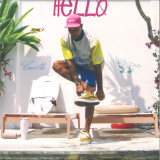
Opener ‘Hello (Intro)’ sets the tone with bumpy drums, psychedelic guitar tones and a dreamy phone call voice before
‘Don’t Do It’ picks up the pace, blending funky guitar lick, organic percussion and resonant synth leads with sporadic vocal
chants. Thierry Ganz first appearance on the album follows with ‘Know Your Name’, merging together Ganz hypnotic vocal
stylings with choppy bass stabs, cinematic strings and crisp disco drums. ‘Open Up The Trunk Do It’ then shifts gears into
jazz-tinged raw house territory via twinkling keys, saturated drums and a vacillating low-end drive.
Up next LEYO welcomes both Toman and Thierry Ganz into the mix for ‘That Booty’, a high octane disco house jam fuelled
by swinging drums, soulful vocals and tension building atmospherics. ‘That’s Why’ then brings down the pace to a more
dreamy aesthetic with fluttering keys and wandering synths intertwined with congas and breathy vocals. The final full
length track ‘Without You’ then lays down a shuffled rhythm section and plucked guitar lines with hypnotic chords and
filtered vocals throughout its six and a half minute duration before ‘On My Mind ft. Thierry Ganz (Outro)’ concludes the
package in a fully- fledged funk fashion, Ganz lays down his signature vocal style uttering the tracks title while underpinned
by wandering bass notes, bouncy drums, wandering guitar notes and Moog style synth licks.
George Strait kommt zurück mit seinem 31. Studioalbum Cowboys And Dreamers!
Als der unangefochtene König der Country-Musik hat George Strait mehr als 105 Millionen Alben verkauft
und über 60 bedeutende Unterhaltungsindustriepreise sowie unzählige Nominierungen erhalten. Zudem ist
er der einzige Künstler in der Geschichte, der über drei Jahrzehnte hinweg jedes Jahr einen Top-10-Hit hatte.
Zum Album findet der Hitmacher folgende Worte: „Ich widme diese Platte meinem langjährigen Manager und Freund Erv Woolsey und meinem langjährigen Fiddleplayer und Freund Gene Elders, die am
selben Tag, am 20. März 2024, gestorben sind sowie meinem langjährigen Freund und Roadmanager Tom
Foote, den wir am 29. April 2024 verloren haben. Ich werde all die schönen Zeiten, die wir zusammen
hatten, nie vergessen. Mögen sie in Frieden mit unserem Herrn Jesus Christus ruhen.“
- Ocean Motion Mildew Mind
- Yes Sir Ree
- I Can’t Stand It
- Country Time
- If I Were A Poet
- Torero Piece
- Peachy Keen-O
Carving an unlikely and elaborate niche in the stoney academic landscape
which she once shared with the likes of Phill Niblock, John Cage and Sorel
Hayes, the excitable proto-punk poèmes sonores of the linguistic loose
cannon known as Beth Anderson first rolled through New York in the mid-
1970s (from Kentucky via San Francisco) like a jumbled tumbleweed of lost
Letterism, face paint and threadbare drummy funk to astonish gallery floors,
lecture theatres and loft apartment stages.
One thousand leagues under the radar of the commercial music industry,
with a sense of humour that elevated way above her highbrow peer group,
the music of Beth Anderson has successfully evaded the pressing plant for
most of her creative career, and not unlike fellow New York gallery actionist
Suzanne Ciani, it has taken decades to successfully collect and contextualise
these early recordings - expanding her elusive discography beyond the rare
and mysterious solo single entry in the process.
When uttered amongst the type of vinyl vampires that haplessly gravitate
between both art school vintage vanity pressings and family funded plunder
funk, there’s an outside chance that the name Beth Anderson might muster
some vague recognition on account of her one and only solo wax sojourn
into the expansive DIY market. In 1980 the 45rpm single, ‘I Can’t Stand It’,
combusted into the consciousness of adventurous participants with its deep
rhythmic backbeat (courtesy of future Sonic Youth / Dinosaur Jr producer
Wharton Tiers, member of the new wave band Theoretical Girls), climaxing
with two colourful and commanding linguistic tantrums before disappearing in
a puff of smoke leaving would-be fans dumbstruck without so much as a
label name or distribution contact to explain what they had just heard.
For those who have spent the subsequent years on the edge of that same
seat, it might come as some comfort knowing that somewhere out there,
there is also a contrasting world of gallery patrons and experimental sound
poetry enthusiasts that similarly didn’t know that their regular performance
poet Beth Anderson even made the ambitious pop record. For the uninitiated,
the enigmatic Beth Anderson has straddled both sides of the art / rock fence
placed between two equally niche pastures.
Hopefully this first ever vinyl compendium will succeed in joining the dots,
loops, yelps, squeaks, beats and repeats. Let us follow Beth’s lineage, along
her magnetic tape highways crossing multiple boundaries in a hope to bridge
unlikely anti-genres like ‘yoga punk’, ‘ramble rap’, ‘combustion pop’ and
‘formroom funk’… all of which were officially neatly bracketed under the
curious Text-Sound movement where Beth garnered utmost respect as a key
practitioner.