Fourteen new and previously unreleased tracks from some of the most exciting current bands from Seattle, Washington's vibrant alternative-rock underworld.
Continuing in the spirit of regional compilation albums like 1988's Sub Pop 200, "From Far It All Seems Small" serves as a snapshot of the contemporary Seattle scene.
"From Far It All Seems Small" jumps off the speakers with an onslaught of fuzz and an abundance of hooks. You might find yourself flipping the sleeve over, expecting to see a release date from the 1990's, but no, these are Seattle's finest here and now! - Jackson Long (KEXP, HMS Studio)
A wonderful document of the current moment of Seattle indie. - Ole Johnson (Painter Man Records)
A collection of songs that will get stuck in your head by Seattle's best alt-rockers. - Ellen Rumel (PNW music photographer)"
Search:el fin
Kazy Lambist's return heralds the start of an endless summer. Elegant, hedonistic and unstoppable, the music of Kazy
Lambist's music is designed to make you dream in a hammock, dance in a cosy lounge or on a dancefloor bathed in hypnotic sunshine.
With an undeniable international reputation - double platinum single and sextuple gold export single with hits such as
On You, Doing Yoga and Headson - Kazy Lambist defends his album with a world tour, with Kid Francescoli.
He just finished a tour in the US opening for Kid Franecscoli and will be touring in Germany in October:
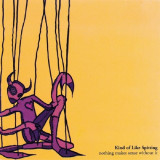
Nothing Makes Sense Without It, the seminal sophomore LP by Kind of Like Spitting, is finalyl getting the deluxe reissue that it deserves.. The group's second album, originally released in 2000, is a heartbreakingly tender effort, with songwriter Ben Barnett's signature, sullen voice aching across twelve slow-burners. Now, 24 years after its original vinyl pressing, the album has been reissued as a deluxe 2xLP featuring an entire extra LP of demos and unreleased tracks. Whether you're replacing your worn out original pressing or just discovering Nothing Makes Sense Without It, this reissue is a must have for both longtime die-hards or any fan of the music of Kind of Like Spitting's northwest indie contemporaries like Death Cab For Cutie, Pedro The Lion and Elliott Smith.
- A1: Platform 9 ¾
- A2: The Hogwarts Express
- A3: Welcome To Hogwarts
- A4: Wand Dance
- A5: Albus Severus Potter
- A6: The Blanket
- A7: Hut On The Rock
- A8: A Malfoy
- A9: Anything From The Trolley, Dars?
- A10: Ministry Of Magic
- A11: St Oswald S
- A12: Wizarding World
- A13: Shadows And Spirits
- B1: Privet Drive
- B2: Into Mcgonalgall S Office
- B3: The Forbidden Forrest
- B4: Edge Of The Forest
- B5: Dragons!
- B6: Dumbledore
- B7: Staircase Ballet
- B8: The Duel
- B9: Invisibility Cloak
- B10: Moaning Myrtle
- B11: Scorpius Alone
- C1: Dementors
- C2: Expecto Patronum
- C3: In Trouble (Again)
- C4: Slytherin Dormitory
- C5: The Owlery
- C6: A New Prophecy
- C7: The Augurey
- C8: Extraordinary General Meeting
- C9: Godric S Hollow
- D1: Paint And Memory
- D2: Something Written
- D3: The Final Battle
- D4: The Arrival
- D5: Lilly And James
- D6: Burning Bed
- D7: A Nice Day
- D8: A World Of Darkness
- D9: Another Hogwarts
Harry Potter And The Cursed Child is a play based on the latest magical Harry Potter story, written by Jack Thorne from an original story written by J.K. Rowling, Thorne and John Tiffany. It’s the eighth story in the Harry Potter series and the first official to be presented on stage. The critically acclaimed production is the most awarded new play in theatre history with a record-breaking eleven nominations and won another record-breaking nine awards, including Best New Play at the 2017 Laurence Olivier Awards. The music is written, composed, performed, and recorded by Grammy and Ivor Novello Award-winner Imogen Heap. It is presented as four contemporary musical suites, each showcasing one of the play’s theatrical acts. This unique new album format from Imogen Heap chronologically features the music heard in the stage production, further reworked to transport listeners on a sonic journey through the world of Harry Potter and the Cursed Child. Harry Potter And The Cursed Child is available as a limited edition of 1000 individually numbered copies on translucent yellow coloured vinyl. This 2LP is housed in a gatefold sleeve and includes an 8-page booklet.
- Roland Alphonso - Live Desire (Trombone Version)
- The Skatalites - Live Wire
- Lynn Taitt - Ska-Ta-Shot (Take 2)
- Roland Alphonso - Step Down (Low Riff)
- Jackie Mittoo - Warlock
- Roland Alphonso - Determination (Take 2)
- Roland Alphonso - Determination (Take 5)
- Don Drummond - Love In The Afternoon
- Roland Alphonso - El Cid (Take 4)
- Johnny Moore - Red Is Danger (Take 3)
- Roland Alphonso - V.c.10 (Take 3)
- Johnny Moore - Yogi Man (Take 1)
- Roland Alphonso - Tough Talk (Take 1)
- Roland Alphonso - Tough Talk (Take 4)
“On August 5th 1962, after 300 years of British rule, which had soaked the earth of the island in blood, Jamaica was finally independent. The country that the British left behind was certainly a place of widespread poverty and deep inequality, but there seems to have been a real burst of confidence that came with independence. Newsreels of the day show well-dressed crowds reacting with enthusiasm and excitement, and the era found its perfect soundtrack in the boldness and exuberance of ska music, which was erupting all over the island.
This optimistic mood found probably its greatest artistic expression in the music of the Skatalites, who formed in June 1964 as a kind of Jamaican supergroup. Philip “Justin” Yap was a young, upcoming producer who had used members of the Skatalites for his first tunes, recorded either at RJR (Radio Jamaica and Redifussion) or at Federal studios. As Steve Barrow documented in the sleevenotes for Pressure Sounds’ reissue of the classic “Ska-Boo-Da-Ba” album, Justin had also befriended Clement “Coxsone” Dodd, and when Coxsone opened his own Studio One facility in December 1963, Justin immediately switched most of his production work to this new recording room. Studio One opened just in time to catch the formation of the Skatalites, and is where Justin recorded most of his classic Skatalites sides. He also recorded lots of excellent instrumentals with a smaller brass section, still mainly using members of the Skatalites, but crediting instead the composer or arranger of the tune. Combined with Coxsone’s own recordings, these productions for Justin’s Top Deck and Tuneico labels really captured the members of the Skatalites at their magnificent best in the unique atmosphere of Studio One.”
- Old Friends
- Cadmium
- Then Again
- Aphasia
- Visiting
- Waveform
- Size Of The Moon
- New Friends
Debut LP by Pinegrove from Montclair, New Jersey. On Cardinal, the band's captivating blend of indie rock, pop and country elements is more vivid, fine-tuned and addictive than on their previous released EP's. Painting his emotions onto these songs with colorful and kinetic strokes, vocalist and guitarist Evan Stephens Hall moves through Cardinal's eight songs with an unforgettable energy and passion, with a vocal performance that is pleasantly reminiscent of Will Oldham and Built to Spill's Doug Martsch. Highlighted by the downtrodden nostalgia of twangy opener "Old Friends" and the climactic refrain of "Size of the Moon," where the confession "I Don't Know What I'm Afraid Of" is just as much of a sing-a-long as it is an emotional breakdown, moods don't stay in one place for very long on Cardinal - they are carefully crafted and revisited throughout to continually evoke the album's central themes of memory, longing and deep introspection.
Placid aka Paul Wise is chief in command at ‘We’re Going Deep’ – an expanding online community and record label, born from lifelong affair with the many shades of electronic rhythm and obsession for collecting records since 1988. He’s spent the last 3 decades moving heads and feet at venues, parties and fields across the UK and beyond.
On a mission to share and release new music via his label, you’ll find only the best in Acid, Electro, IDM, Techno and Deep House for the dance floor, front room or your headphones making the cut. For the 10th and final edition of his much prized various artist series, he unearths more machine fuelled magic: offering another set of equally excellent music from stellar talent.
Starting the dance, Dutch maestro Boris Bunnik dons his Versalife mantle to opens with ‘Skirmish 101’. Setting the machines to cycle, Bunnik fires a hefty slab of bass to bring down the walls whilst pristine robot like rhythms set your body in motion, all enveloped with sparse synthesis and shimmering effects. Crashing the joint with ‘Acid Baby’ - The Acid Pimp drops a no holds barred, riotous 303 workout that’s nothing short of a tour de force in exorcising the power of Roland’s most celebrated silver box. Putting pedal to the metal with drums and reverb, a smiley face or grimace is guaranteed!
Longtime collaborators Jamie Anderson & Owain K reset the dial on the flip with ‘Basement Dub’, a house paced workout that glides at a steady pace. Evoking the spirit of Mood II Swing whilst immersed in the depths of an underwater realm. Ending on the upbeat note of Konerytmi’s ‘Aamunkoitto’, the Finnish producer reflects a breezy disposition with a joyful melody, step-to electro beat and rolling acid bassline – all perfectly balanced to keep your calm and head out in the right direction, a great way to sign off on this highly collectable series.
- A1: Bye Bye Betty
- A2: Moments Of Joy
- A3: Lemongrass Citronella
- A4: Cant Stand In The Past
- A5: Besafe Airtel
- A6: Today Only Happens Once
- A7: Incense Holder
- A8: Salt And Sugar Look The Same
- A9: A Lead Balloon
- B1: Sandalwood In The Summer
- B2: How They Made It
- B3: Somewhere In Time
- B4: Old Plates And Desirable Traits
- B5: Drawing To Relax And Pass The Time
- B6: The Maybes Are Endless
- B7: Yume-No-Yume
- B8: Twice
- B9: Expected To Fade
Music From Memory is pleased to announce the upcoming release of ‘Salt And Sugar Look The Same’, a collaborative album from Tim Koh and Sun An.
Tim Koh is an American multi-instrumentalist and visual artist born and raised in Los Angeles. He has been touring, releasing music and showing art works internationally for nearly two decades. Sun An is a Southern California-based graphic designer, art director, and sound designer who has self-released music since 2012.
‘Salt And Sugar Look The Same’ plays somewhat like a dreamlike collage; across 18 short compositions, finger-picked guitars melt with electronics and warped samples to create a form of American Primitivism bent and refracted through Tim and Sun’s unique lens.
Their collaborative journey unfolded gradually, exchanging snippets via email over the span of a year or so, Sun in LA and Tim in Berlin. Amidst personal struggles and uncertainties, the act of recording and composing became a refuge, a safe space where they could navigate life's complexities together. Though they didn't converse much, mostly just sending music, their musical dialogue spoke volumes, shaping a narrative that evolved naturally over time. As they shared their musical ideas, they discovered a profound sense of connection and understanding with one another. The music became a conduit for healing, bridging the gaps between them and offering comfort in times of need.
Their musical influences and backgrounds anchored them. From reminiscing about past scenes to exploring cultural intricacies of being Korean American in Los Angeles, infused with a natural sense of shared identity, their collaboration reflected a mergence of old and new memories into a hallucinatory, dream-like experience. Across the 18 compositions that make up the album, incense emerges as a poignant motif, symbolizing the passage of time. Each incense stick becomes a vessel carrying the essence of moments gone by, while the holder becomes the custodian of these ephemeral memories.
‘Salt And Sugar Look The Same’ invites the listener on a boundary-transcending journey of introspection, joy, and pain, creating an experience that lingers long after the last note fades.
Sleeve art by Brian DeGraw, design by David McFarline.
Los York's became the epitome of Peruvian garage sound. Two of the best and wildest songs contained on their last LP had never appeared on a single despite their enormous potential for the dance floor and the interest they aroused among DJs since their rediscovery in the 60s scene. Set the dance floor on fire with the first time 45 issue of this Latin garage double-sider. DESCRIPTION After two successful albums on MAG, supported by a handful of singles, the Peruvian garage beat band Los York's culminated their disagreements with their label by leaving it in 1969 and signing a new contract with Virrey. Along the way there was an album to finish for which they had already recorded a good part of the instrumental tracks. "Los York's 69" finally saw the light of day on MAG but, to the surprise of its fans, the voice of its charismatic singer, Pablo Luna, had been replaced by that of the no less iconic Pablo Branda, also known as Melcochita. The all-round artist, trained in the studios of MAG as a skilled percussionist, guitarist and sonero, proved himself to also sing and shout with the same energy and attitude as the brilliant Pablo Luna. On top of that, it is rumored that it was another MAG artists, Los Teddy's, who actually completed the instrumental tracks for some cuts on the album, something that seems consistent with the much more energetic and surfy style of songs like 'El Sicodélico'. Two of the best and wildest songs contained on their last LP had never appeared on a single despite their enormous potential for the dance floor and the interest they aroused among DJs since their rediscovery in the 60s scene. Set the dance floor on fire with the first time 45 issue of this Latin garage double-sider: 'El Sicodélico' and 'El Loco'.
- A1: My Old Man 3 42
- A2: This Old Dog 2 31
- A3: Baby You're Out 2 38
- A4: For The First Time 3 02
- A5: One Another 2 46
- A6: Still Beating 3 02
- A7: Sister 1 18
- B1: Dreams From Yesterday 3 27
- B2: A Wolf Who Wears Sheeps Clothes 2 49
- B3: One More Love Song 4 01
- B4: On The Level 3 48
- B5: Moonlight On The River 7 03
- B6: Watching Him Fade Away 2 23
LP im Klappcover! Es war der Abstand - der zeitliche, räumliche und methodische - der Mac DeMarco zu "This Old Dog", dem ersten Longplayer seit "Salad Days" von 2014, inspirierte. Mit einer Handvoll Demos in der Tasche, die er in New York geschrieben hatte, zog er von Queens nach Los Angeles und realisierte nach ein paar Monaten in der neuen Heimat, dass dieser Abstand ihm neue Perspektiven eröffnete. Mac DeMarco sagt: "I demoed a full album, and as I was moving to the West Coast I thought I'd get to finishing it quick. But then I realized that moving to a new city, and starting a new life takes time. Usually I just write, record, and put it out; no problem. But this time, I wrote them and they sat. When that happens, you really get to know the songs. It was a different vibe." Mit dem Poppen und Klicken der CR-78 und dem akustischen Geklimper des Album-Opener "My Old Man" sowie dem von Synthesizern durchzogenen zweiten Song "This Old Dog" wird schnell klar, dass Mac DeMarco diesmal tief in die Trickkiste gegriffen hat. Auf "This Old Dog" sind die Synthesizer stärker verwurzelt als auf seinen bisherigen Releases, aber trotzdem achtet DeMarco sorgfältig darauf, dass diese den Rest der Instrumente und den "unplugged"-Eindruck des Albums nicht überschatten. Oder wie er erklärt: "This is my acoustic album, but it's not really an acoustic album at all. That's just what it feels like, mostly. I'm Italian, so I guess this is an Italian rock record." ENG Gatefold LP! This Old Dog by Mac DeMarco (A.K.A. 26-year old McBriare Samuel Lanyon DeMarco) is his third album and first full-length since 2014's Salad Days. The album opener "My Old Man" and title track "This Old Dog" show a new sonic direction and a glimpse into the very personal nature of this record. It was a little space-in time, location (he moved from Queens to Los Angeles), and method-that inspired DeMarco while making This Old Dog. Arriving in California with a grip of demos he'd written in New York, he realized after a few months of setting up his new shop that the gap was giving him perspective. DeMarco says, "I demoed a full album, and as I was moving to the West Coast I thought I'd get to finishing it quickly. But then I realized that moving to a new city, and starting a new life takes time. Usually I just write, record, and put it out; no problem. But this time, I wrote them and they sat. When that happens, you really get to know the songs. It was a different vibe." DeMarco wrote some demos for "This Old Dog" on an acoustic guitar, an eye-opening method for him. "The majority of this album is acoustic guitar, synthesizer, some drum machine, and one song is electric guitar. So this is a new thing for me." And right from the offset, from the pops and clicks of the CR-78 and acoustic strums on the album-opening "My Old Man," and the synth-drenched beauty of the second track, "This Old Dog," it's clear that DeMarco's bag is filled with new tricks indeed. This Old Dog is rooted more in a synth-base than any of his previous releases, but he is careful not to let that tactic overshadow the other instruments and overall "unplugged" mood of the work. "This is my acoustic album, but it's not really an acoustic album at all. That's just what it feels like, mostly. I'm Italian, so I guess this is an Italian rock record."
- A1: Grafix – Blue Dreams 3 58
- A2: Degs – Levitate Your Mind Featuring – Unglued 4 11
- A3: Keeno – I Wonder Featuring – Ellie Madison 5 22
- B1: Fred V – Sad Jungle 4 09
- B2: Drs & Dynamite – Fix It All Featuring – London Elektricity 5 29
- B3: Nu Tone – The Moment Featuring – Lea Lea 4:35
- C1: Todd Terry – Bounce To The Beat Remix – Serum (2) 4 30
- C2: Kings Of The Rollers – You Got Me Remix – S P.y. 5 21
- C3: Urbandawn – Egregor 4 55
- D1: Inja – Sanctuary 4 05
- D2: Yazzus, Magnum Larry – Desire 4 40
- D3: Missing & Mr Time – Original 90S 4 07
- E1: S P.y.– Step & Flow (Vip) 4 09
- E2: Loxy & Ink – The Herald 5 53
- E3: Polaris – Distant 6 29
- F1: Bop & Subwave – Dead Almost 4 17
- F2: Mitekiss – Something Real Featuring – Ruth Corey 5 13
- F3: Tolima Jets – Clams 4 30
- G1: Etherwood – American Fruity 6 20
- G2: Logistics – Sleeper Dub 4 21
- G3: Think Tonk – Falling For Yooo 4 11
- H1: Roberto Surace – Joys Remix – Unglued 4 36
- H2: Whiney – Hallowed 3 41
- H3: Kanine – Snake Eyes 4 27
- H4: Radiax – Tech Trick 4 08
Warehouse Find!
Marking the first chapter of Hospital Records’ 2020 story is the return of their flagship compilation series, ‘Sick Music 2020’. Loaded with 25 brand new tracks from the world of drum & bass, ranging from fresh original productions to exclusive new remixes and future classics from the Hospital Records family and some very special guests. The album kicks off the year with first-class sonics from the likes of London Elektricity, Kings Of The Rollers, S.P.Y, Grafix, Inja, Fred V, Unglued, Urbandawn, DRS & Dynamite, Kanine and more.
This single comprises two stand out tracks from “Power-Fuerza” (1972), one of the best Latin funk albums ever recorded, with all the right ingredients to shake dance floors worldwide. Produced by boogaloo-don Bobby Marin, these tracks are a vibrant tapestry, weaving together the raw energy of the South Bronx streets and the soulful melodies born from the band's Puerto Rican heritage. The Bronx in the 1970s, marked by the presence of notorious gangs, presented a complex and challenging urban landscape reflected in abandoned buildings and neglected public spaces. The prevalence of street gangs, such as the Ghetto Brothers, contributed to an atmosphere of heightened tension and occasional violence. The Ghetto Brothers, originating from the Melendez family who moved from Puerto Rico to the South Bronx in the 1950s, faced challenges involving violence and crime. Despite this, Benjy Melendez, a key figure, directed the group towards community improvement. The Ghetto Brothers embraced music, crafting a potent, NYC-flavored musical fusion that caught the attention of record mogul Ismael Maisonave (Salsa Records). Their collaboration resulted in the recording of eight tracks in a single electrifying day at Manhattan's Fine Tone Studios, skillfully produced by Latin studio maestro Bobby Marin (Harvey Averne, La Lupe, Brooklyn Sounds…) This musical odyssey showcases the band's ability to seamlessly blend genres, creating a NYC-flavored stew that captivates listeners with its authenticity.
What might appear to be the most unlikely collaboration of 2024 proves also to be one of the most invigorating listens of the year! Shackleton & Six Organs of Admittance are in full aural/metaphysical alignment in their mutual effort to become Jinxed By Being. On first listen, it becomes immediately clear that this fusion of Shackleton"s bass heavy cosmic dread and Six Organs" ritual folksong makes total sense. Longtime listeners know that both Shackleton and Six Organs of Admittance have been unafraid to pursue their muse into any and all encroaching depth of darkness or outer boundary of potential dissonance - in fact, that has always been their default mode, finding more of resonance way out there in the process. They also share that ol" maverick psychedelic ritual transcendental music vibe, don"t they? And a fascination with repetition and cycles. And a mutual inspiration drawn from alternative tunings and literature...all this considered, it"s been basically inevitable that Ben Chasny and Sam Shackleton would work together. It took a while for them to find each other-and once they did, it was almost eerie, how preordained it felt. When the music started coming, though-that"s when it got really eerie. The mood rises from the music like smoke, a sure signal of total integration. Jinxed by Being finds Shackleton & Six Organs of Admittance delighting in their synthesis. Reveling in the unique sonic textures found in the collage, they launch small details that unfold into a massive space and often multiply into lines of dimensional space, crossing the stereo spectrum with enervating motility. Here lies all the proof you need against the danger of categorizing by perceived genre rather than intention-encounters like Shackleton & Six Organs of Admittance might never have found the linear space in which they sit next to each other, beyond alphabets and other institutional organizing principles. Rearrange your libraries-or you might miss getting Jinxed By Being.
Cloudy Vinyl[25,00 €]
Baby Blue & Halloween Orange Vinyl. In their decade-plus together, the four-piece_Julia Shapiro (guitar, vocals), Lydia Lund (guitar, vocals), Gretchen Grimm (drums, vocals), and Annie Truscott (bass, vocals)_have created a resonant body of work. Live Laugh Love is a natural continuation. Against the bizarre backdrop of the past few years, Chastity Belt remained a supportive space for the members to grow and experiment, drawing on the ingredients most essential to their process since the beginning: authenticity and levity. Recorded over three sessions in as many years (January 2020, November 2021 and 2022), the focus became more about enjoying their time together in the studio than making it feel like work. Their ease and familiarity with engineer Samur Khouja in LA, who also recorded their last album, made for a particularly enjoyable process. Once completed, they returned to renowned engineer Heba Kadry who mastered the album.Album opener "Hollow" sets the tone with a gently driving rhythm while guitar layers stream like sun rays through an open car window. A warmth radiates through Shapiro's voice, even while grappling with feeling lost and stuck. "The older I get," Shapiro says of the lyrics, "the more I realize that I might just always feel this way, and it's more about sitting with the feeling and accepting it, rather than trying to fight it." That wisdom seems to anchor Live Laugh Love. Chastity Belt has never shied from navigating the spectrum of difficult emotions, and an existential thread weaves throughout the subject matter. And yet the songs feel more grounded than ever; there's a sense of quiet confidence and self-assurance that comes with being less numb and more present. Facing discomfort takes more fortitude, after all.Live Laugh Love finds the members in their prime as musicians. Their parts trace intricate patterns over one another, but there's room to breathe between the layers. Everyone contributes to the writing, sometimes switching instruments, and for the first time, all four members sing a song. It's never been more apparent that they are creative siblings, cut from the same belt. "We've been playing music with each other for over a decade," says Shapiro, "so it really does feel like we're all fluent in the same language, and a lot of it just happens naturally.""Laugh" seeks in the balm of friendship, aware of the anticipatory nostalgia that hits during a good time that you're already missing before it's gone; the heavier guitar tones on "Chemtrails" streak ominous chord progressions over Grimm's precision timekeeping, lamenting memories that won't fade easily. During a transitional time, Truscott came across a note in their phone that read, "it's not hard all day, just sometimes," which inspired a poignant line in the chorus of "Kool-Aid," their first song as lead vocalist on a Chastity Belt recording. Another standout, "I-90 Bridge" shines with a silvery melody that soars as Lund belts one of the most resounding moments on the album: "Tell your girlfriend she's got nothing to fear/I'm set in my head/My body's a different story." The track "Blue" saunters nonchalantly with a wink; you can almost hear Shapiro's smile as she sings "Faking it big time/So I can hit my stride/Man, it feels good to be alive," channeling early Chastity Belt channeling early '90s before channeling the late Elliott Smith in a spiral of distortion and insight: "Don't get upset about it/It's gonna pass/Tell all your friends about it/They're gonna laugh.""We have such a strong sense of each other's musical inclinations" says Lund. "I think this allows for a lot of playfulness_we can kinda surprise each other, like a good punchline would."

Released in 1999 on Taylor Deupree’s 12k label, »optimal.lp« was the debut album by Dan Abrams under his Shuttle358 moniker. For its 25th anniversary, Keplar presents it on vinyl for the first time with three previously unreleased tracks—the digital version also includes a alternative version of »Tank«—as well as a new artwork recreated by Daniel Castrejón and a remaster by Andreas LUPO Lubich based on the original pre-masters that were been restored and cleaned up for the reissue project by Abrams. »optimal.lp« was inspired by the rich tradition of ambient music and the rhythmic complexity of 1990s electronica while also sharing many traits with the then-emerging clicks’n’cuts movement, making it a true sui generis piece of work—both informed by tradition and visionary, idiosyncratic and seminal for many artists after him.
Abrams developed an interest in ambient music when he was still a child, scouring through cassette tapes of environmental sounds, new age music, and world percussion. Discovering Brian Eno’s »Thursday Afternoon« as a young teenager marked a turning point for him. »It gave me the idea that ambient music could be an intentional creative act, that tone itself is a legitimate form of expression,« he says today. During the 1990s, he increasingly immersed himself in the electronica scene and the output of labels such as Instinct, where Deupree worked as an Art Director and released his first records as Human Mesh Dance. Abrams found a home on 12k after sending Deupree a demo tape that would later evolve into »optimal.lp,« released as the label’s fifth catalogue number.
Abrams was still in college when he started experimenting with a sound module, his laptop and a mixer as well as a MIDI card and a small controller. »Each note was composed in MIDI and played back when I was ready to record,« he explains his working process at the time. »The tracks could be replayed, but the sound interactions with glitches and noise would be a little different each time. I decided to base the concept of the album on these interactions.« Each piece started with a single sound or tone that, as Abrams puts it, already contained the entire composition: »I let these interactions guide me, and tried to complement them as I added sounds. It’s a conversation of sorts with the medium.«
While refining this technique that he would go on to use on every album until 2004’s »Chessa,« reissued by Keplar in 2021, he also used the first-ever Native Instrument product, the Generator soft synth, to write the record’s title track—possibly making it the first album on which it was being used. »optimal.lp« is marked by this curious interplay of cutting-edge technology, the limitations with which every college student with a small budget is faced, and boundless creativity. »I’ve talked with other artists about how we feel about our early work,« Abrams says today. »We all agreed that there were elements that remain a part of us in a timeless way, despite our techniques—or lack thereof—at the time. ›optimal.lp‹ has a lot of things that will always be with me, that are me. I think I left some clues in there for my future self.«
This sense of timelessness remains tangible after a quarter of a century after the album’s original CD release and is even being expanded upon by the vinyl reissue, which is complemented by three pieces that were made while Abrams was working on the album. The digital release even features an entirely new take on the original album’s final piece, »Tank.« While Abrams let one of the masters go through his customised reverb unit when preparing the reissue, he started recording the results of this accidental dialogue between past and present. It’s a fitting tribute to an album whose delicate circular rhythms, rich textures, and ethereal melodies are precisely so exhilarating because their interplay seems to suspend the passing of time altogether.
On her sophomore album "Germ in a Population of Buildings", upsammy moves through her surroundings with the curiosity of a place-bending landscape architect. The album is rooted in her interest for ambiguous environments in constant shift, and the feeling of discovering strange patterns in different ecosystems. Often, the Amsterdam-based artist finds herself zooming in and out beyond a place's most recognizable surface features to inhabit the microscopic and gigantic. Gathering field recordings and evocative environmental sounds, she shapes this source material into vibrating electro-acoustic rhythms and unstable, psychedelic textures. upsammy's debut album, 2020's critically-acclaimed "Zoom", was praised for its careful reimagining of IDM, evolving vignettes that nodded towards the dancefloor without being shackled to its rigid set of rules. On "Germ in a Population of Buildings" her process has evolved considerably; the skeletal trace of IDM is still present but it's been trapped in amber, allowing her unique sonic landscape to develop organically. 'Being is a Stone' is a proof of concept in many ways, layering upsammy's contorted voice in rickety patterns beneath a lattice of fragile rhythms and faintly melancholy synths. It's never immediately obvious where the sounds are coming from - a hiccuping beat might be glass cracking underfoot, and larger pulses could be wet concrete, rusted iron or bent plastic. As the sounds develop they morph into each other, demolishing what came before and building on top of the ornamental wreckage. On the dynamic 'Constructing', upsammy's sound design fluxes through hyperactive bass music structures, abstracting expectations at every turn. Often her sounds are whisper quiet, rattling and vibrating until heavier masonry drops and disrupts the structure. And when discernible rhythms subside into the background, like on the album's eerie title track, they become almost illusory, morphing between the real world and the electronic. upsammy's processed voice works like a bridge between these realms, snaking between stark, whimsical melodies on 'Patterning', arching from AutoTuned detachment into cooing, dreamy intimacy. By considering the harmonies between each location she's visited, upsammy has been able to build a unique topology that's an uncanny digital amalgam of her lived experience. It's a thoughtful alternative in an era more concerned with flatting the landscape than crumpling it and examining its peaks and troughs.
Stefano De Santis kicks off this Best Of Various with Murk, as the name suggests its a dark workout from one of Rome’s finest producers. Following that are Batavia Collective from Jakarta. When we first heard the live demo for this we were blown away and had to get it out on TLM. Batavia Collective are Elfa Zulham on drums, Doni Joesran on keys and Kenny Gabriel on synth bass. All mixed by Stefano De Santis. Rounding off the A side we have Cormac Fulton and his follow up to Perplexed on TLM025 with a new track called Loungeware. Based in Salford this is another atmospheric track from Cormac featuring Netherlands born but now Rio de Janeiro based flautist Floor Polder. Floor also appeared on Steve Conry’s rework of Guinu - Eletromadinga which featured on Colin Curtis Presents Jazz Dance Fusion 4 Part 2. Loungeware was mixed by Steve Conry and Matt Cox. Onto the AA side and we have Montreal resident Mike Perras with Soullous, a superb dancefloor track, live drums and amazing keys, in fact everything you want from house music. Next up is Future Jazz Ensemble from Vibo Valentia who follow on from their Rough Time EP TLM028 and appearance on TLM030 with another broken jazz monster of a track called Over The Rainbow. Finishing off side AA is Takahiro Fuchigami from Fukuoka with another fine track called Outer Heaven, a great follow up to Strange Acquaintance which was on TLM034.
Rare debut LP by the eccentric Peruvian singer Jean Paul "El Troglodita", known for his wild performances and extreme way of life. Enrique Roberto Tellería made his Peruvian television debut in 1965 under the stage name Jean Paul El Troglodita and wearing an imitation leopard skin suit. He would switch from melodic calm to shouting wildly or suddenly drop to the floor on his knees and smash the furniture like crazy. At the age of 19, DisPerú signed him to the label on the strength of these early performances. His first single included a freely translated version of 'Secret Agent Man' in Spanish. He began to work on the eleven cover versions that would feature on his first LP immediately, writing all his own lyrics and accompanied by the beat band Los Steivos. Despite the predominance of English beat music in Peru, the album only included three songs directly related to the British invasion: 'Bus Stop' by The Hollies, also played in raga rock style; 'Paint it Black' by The Rolling Stones; and 'The House of the Rising Sun', which follows the arrangement recorded by The Animals. So most songs come the American songbook. Apart from 'Tema de El Troglodita' (a versión of 'Secret Agent' by The Challengers), we find the bluesy 'Mustang Sally' (Sir Mack Rice). Two other US numbers, originally performed with orchestral accompaniment, were adapted to fit the rock band format: 'Poor Side of Town' (Johnny Rivers) and 'Take Me to the Moon' (Kaye Ballard). 'El verdadero amor' ('True Love'), an uncredited version is in a similar vein. The Spanish song 'Negro es negro' (Los Bravos) and the Brazilian track 'Que todo se vaya al infierno' (Roberto Carlos) also feature on the LP. El Troglodita's association with the so-called nueva ola, indicated on the back cover, needs clarification. In Peru, nueva ola was a mixed bag rather than a specific musical style and encompassed slow rock, twist, bossa nova and all the styles that the record industry produced to tame the wild rock 'n' roll impulses of teenagers in the early sixties. The Peruvian artists that performed these inoffensive Spanish adaptations of Paul Anka, Neil Sedaka or Frankie Avalon, were presented as successful models of youth culture. This was until 1964, when the Beatles with their mop-top haircuts hit the charts, vindicating rock 'n' roll and imposing the group format over the soloist model. Meanwhile the press continued to call any youth music recorded during the rest of the decade nueva ola. Jean Paul noted these distinctions early on and distanced himself from it in several statements. He saw his performance more in a style as a solo artist as following in the footsteps of e.g. Los Saicos. His 'hippie' lifestyle got him arrested by the new de facto military government in 1968, who accused him of promoting drug consumption and corrupting the Peruvian youth. The charges were soon dropped but his reputation was tarnished, and he ended up emigrating to Central America. The album includes Spanish sung versions of British beat songs and covers of the American songbook as well as various international hits.
Pure Mania is the debut album by The Vibrators, who have always been considered one of the most important punk pioneers in the UK. The band was formed in 1976 by Ian 'Knox' Carnochan, Pat Collier, John Ellis and John 'Eddie' Edwards. In 1976 they were backed by Sex Pistols producer Chris Spedding, who recommended the band to the successful RAK label. The band had legendary shows on John Peel's BBC Radio 1 and played the pioneering punk venue: London's Roxy Club. The band supported Iggy Pop and Mott the Hoople frontman Ian Hunter. Pure Mania has always been considered a true punk classic that was essential to the birth of the British punk scene. Even the Stiff Little Fingers took their name from a track on the album. The Guinness Encyclopedia of Popular Music also named Pure Mania as one of the 50 greatest punk albums of all time. Pure Mania is available as a limited edition of 1000 individually numbered copies on translucent magenta coloured vinyl.
UK/NL reeds player, composer and producer Finn Peters presents his new 10", Red, Green and Blue; The three track EP of Nu Jazz/Broken Beats is being released on the artist's own Mantella Records imprint and sees a return to solo recording (after a decade hiatus) for the award winning Jazz maverick, beloved of Gilles Peterson and fans of cosmic jazz.
Influences include Compass Point Records, Africa Bambaata, Yusef Lateef and Walter Gibbons. It is heavy sounding with MPC3000 and SP 12 drum breaks, heavy African and Brazilian percussion, ethereal flute choirs and analogue synths a plenty.