Taped in 1957, Anita Sings the Most was the only recording session ever, either live or at the studio, on which Anita O'Day was backed by the legendary pianist Oscar Peterson, who appears here with his trio of that time, featuring guitarist Herb Ellis and bass giant Ray Brown. Anita's most enduring collaborator, drummer John Poole also performs on the date, which is one of the singer's very best. O'Day, herself, considered it among her finest recordings. THE COMPLETE LP + 3 BONUS TRACKS - 180-gram VIRGIN VINYL LIMITED EDITION of 1,000 COPIES.
Search:el fin
Warehouse Find!
It always gives us an extra little buzz to bring you a debut release from a new artist, especially when you know it’s going to be the launch pad for someone that is going to grow to become a heavyweight player. Parisian Larry Quest has been slowly but surely paying his dues, promoting, DJing and generally immersing himself in the underground House Music scenes of Paris and then London after moving to Hackney eight years ago. Growing up playing in punk bands, then studying Jazz at music college has given him the attitude as well as the skillset to create music which is both intensely raw and rugged whilst still being musical and deep. For his debut EP he delivers four drumheavy cuts which bring together elements of Detroit techno and house to form a forward-looking sound which will make an impact wherever you play them.
Opener Conun Drums packs a serious punch with simple synth line sitting on top of a lo-slung bumpy groove. Perfectly timed synth stabs bring a touch of light to the thumping bass and metallic percussion and already we get a sense that we’re in safe hands with Larry Quest at the controls.
Red C Mellow D follows, treading similar water with live drums laying the foundation and touches of colour coming from echoing synth lines and an acidic bassline.
Flip over for the curiously titled A Frog Rovin’, which is about as quirky and off-kilter as the name suggests. The major tonality brings an optimistic vibe which sits in contrast to the thundering saturated 909 drums and speakerwobbling low-end.
Closing out this brilliant release we have Solar Assailer which plays with our sense of time as drums and filtering stabs dance around the beat completely throwing us off the scent of where the one is. Finally the elements fall into place and lock into the groove which is underpinned by the pulsing throb of the bassline. Larry’s jazz background rears it’s head now and then, coming out in the little flourishes of fusion-era chord sequences and moogy lead lines. What a debut, we hope you agree!
Repress.
La Rama is back with a repress of the incredible Bunzinelli release! After only receiving half of our pressing the first time around, we finally tracked down our master plates and pressed up another batch.
Slightly flipped artwork and a full label sleeve for the occasion :-)
La Rama Records is proud to present four fresh feelers from our friend Bunzinelli. These tracks have weathered the storm of no-fun to provide joy and elation for the living to come... psychedelic feelings to help it all fall back in to place.
Bunzinelli has been personally involved in serving sonic treats to the world via his label and mix series Chambre Noire. He was also part of the team behind Cosmic Tones which in 2019 released 'Montreal Pleiades' featuring his first musical outing alongside local major players Priori, Dust-e-1, URA, Temple's M. Salaciak & R. Weng (the wizard behind our first release as Dj Medallion).
METAL HAMMER - 8/10 review. FOR FANS OF : Lustmord, Om, Sunn O))) . “An exercise in freeform ambience, ritualistic repetition and the rapturous, womb-like power of bass…strange and affecting. We remain lucky to share in the great man’s vision.”
It’s a dream diary narrating a passage through Summer Isle where Flying Saucer Attack are wafting out of a window, a distant Fairport Convention are being remixed by dub master Adrian Sherwood, celestial scanners Tangerine Dream are trying to drown out Bert Jansch and Hawkwind are playing Steeleye Span covers, all prised out of time yet bound to its singularity.
Released periodically on three of 2024’s full moons – April 23rd’s Pink Moon, July 21st’s Buck Moon and October 17th’s Hunter Moon – the three-album cycle, “Triptych”, is (Steve Von Till from Neurosis) Harvestman’s most ambitious undertaking yet.
Guest musicians including Al Cisneros of Sleep / OM who plays bass on one track for each LP, of which he will also mix a dub version on the B-Side of each LP. Dave French of Yob, Sanford Parker and Wayne from Petbrick all make appearances.
Released periodically on three of 2024’s full moons – April 23rd’s Pink Moon, July 21st’s Buck Moon and October 17th’s Hunter Moon – the three-album cycle, “Triptych”, is (Steve Von Till from Neurosis) Harvestman’s most ambitious undertaking yet.
Guest musicians including Al Cisneros of Sleep / OM who plays bass on one track for each LP, of which he will also mix a dub version on the B-Side of each LP. Dave French of Yob, Sanford Parker and Wayne from Petbrick all make appearances.
It’s a dream diary narrating a passage through Summer Isle where Flying Saucer Attack are wafting out of a window, a distant Fairport Convention are being remixed by dub master Adrian Sherwood, celestial scanners Tangerine Dream are trying to drown out Bert Jansch and Hawkwind are playing Steeleye Span covers, all prised out of time yet bound to its singularity.
Bone White opaque + Black Galaxy effect vinyl in dub style jacket (jacket sleeve with centre hole cut out so label shows throug
Drawn to the megaliths, ruins and ancient sites mapped out along the British and European mainland’s geographical and psychic landscapes, the folklore and apocrypha forever resurfacing as portals from a rational world, “Triptych” is a meditation forged from traces and residues, and an hallucinatory recollection of artists who have tapped into that enduring otherworldliness embedded within us all.
Woven together from home studio recordings that span two decades, this fifth outing as Harvestman finds parallels with nature’s cycles not just in its release dates but in the repeated structure that binds each album, like an imprint refracted though three separate strata. “Part One”, as with the forthcoming Parts Two and Three, starts on a collaboration with Om bassist and long-term friend of Steve’s, Al Cisneros, with a dub take opening the B-Side. Here, the opening track “Psilosynth" orbits a grandfather-clock mechanism passing through a nebula haze, all waved on by an acid-fried deity. From there on, “Part One” journeys through the elegiac “Give Your Heart To The Hawk”, with the sampled poetry like a documentary retrieved from a long-lost world, Philip Glass wistfully attending a rescue beacon from the far corner of the universe on Coma, as well as percussion recordings performed by Steve and friend Dave French (drummer of Yob) on a rusted torn open stock tank outside Steve’s barn, treated bagpipes and old reel-to-reel recordings, all reiterated across the next volumes in ever more out-there contexts.
If “Triptych” is a multi- and extra-sensory experience, it extends to the remarkable glyph-style artwork of Henry Hablak, a map of correspondences from a long-forgotten ancient and advanced civilization. As with “Triptych” itself, it’s an echo from another time, an act of binding, a guide to be endlessly reinterpreted, and a signpost to the sacred that might not indicate where to look, but how.
SCART records begins its journey with music from the mind of TRONTSEPHORE !
–
Hailing from the wild side of Dublin, Trontsephore cites influences such as Skee Mask, Om Unit, and Al Wooton as inspiration,
and his music is certainly crafted with the kind originality and quality those artists are known for.
The Elephant EP, on gorgeous transparent Orange vinyl, exudes breakbeats of finesse and sonic electro experiments, as we journey
deep into the realms of the subconscious.
On the B-side, ‘Elephant’ is twisted into a heavy techno mammoth, with remix from the mysterious INVNTR.
c b1 Elephant INVNTR remix
INVNTR remix
Brainwave Research Center returns with their 3rd Electronic music LP. Their DIY approach to creating music has forged a unique sound that is not experimental music, but music born out of experimentations with analog synthesizers. Feel Free is the third installment of their first four part series and captures the feelings and emotions of a summer season.
The A-side begins with a soundtrack to a daydream; imagining the life of a earthworm. Followed by a teeth-grinding drive through the grime of Brooklyn streets in Interceptor iii. Side A finishes out with that summer euphoria that comes from laying in the grass under the sun through dusk and watching the moon rise.
The B-side begins in a startling manner; an attempt to capture the feeling of falling in your dreams. The music continues down a darker path that reminds us of their second LP, Mosaic, with electronic experiments mixed with acoustic elements. The side concludes with two songs that capture the nostalgic feelings of summer.
Feel Free offers you a glimpse into the musings of everyday life for brainwave research center. Recommended if you like analog / digital synthesizers, sequencers, hand-played melodies, simplistic clock-like rhythms
Keep It Simple!
That's what Tony Allen told me, whether on stage, in the recording studio or when we were working together on the album "The Source"(Blue Note 2017) in my studio. Obviously, if he repeated it at will, it's because it's so difficult, to express the essential, not to scatter, over-play, over-arrange. So natural for him, so constraining for others! For years he pushed us, the members of his group to develop our projects. I had something in mind, necessarily with him, unfortunately his unexpected demise decided otherwise.
It took a moment to accept his departure, to accept being a voice, to find a new path. The desire to continue the work started together, that of mixing styles, sounds to appropriate them and create new, authentic. The desire also to meet new people, another energy.
After composing music for this project, I asked my friend Ben Rubin, musician and producer to help me record it. I found in NYC what I was looking for, a sense of urgency, that of doing, generous and committed musicians. I knew Jason Lindner, a musician that I have been following for a long time and he was the first person I thought of for pianos and synthesizers. He has this ability to find new and powerful sounds, with a direct and unadorned playing. For the drums, I didn't especially thought about a musician whose playing could come close or far to Tony's. Ben suggested Josh Dion to me, I've been following him since his "Paris Monster" project, I love his ability to make his drums sound like a new instrument by playing the bass synth with his right hand, that forces him to keep it simple! He also plays 2 tracks in drum/synth mode on the album.
I'm also happy that he agreed to sing a song on this album.
So we recorded at the Figure8 recording studio in Brooklyn, Eli Crews providing the sound recording, we decided with Ben to create a powerful and assumed sound from the take. Many biases on the tones, whether on the drums and the keyboards. Back in my studio in Paris, I continued to search, to dig while recording additional saxophones, percussions and keyboards.
I met Tchad Blake during a week-long mixing seminar. His work on the album on is radical.
Keep it simple?
Difficult but I try to remain so on all the phases of evolution of this project, from writing to production, in the improvisation parts. Where I feel it the most is in the immediate joy of playing with Jason and Josh, of tweaking a few sounds in my studio to create the unexpected, surprise in the structures, authenticity. Simple as the desire to go towards something essential, to seek oneself, to find oneself, to doubt but also to invent oneself.
- A1: Magic Momentum
- A2: Rockets To Mars
- A3: The News These Days
- A4: Life (Skit)
- A5: Love Vibration
- B1: Original Flow
- B2: Hold On
- B3: Surviver (Skit)
- B4: Tatamaka Pt.1
- B5: Tatamaka Pt.2
- C1: Time (Skit)
- C2: Time
- C3: Jinja (Skit)
- C4: Kochirakoso
- C5: Our Tactus
- C6: Nah Personal
- D1: No Chains
- D2: Push Comes To Shove
- D3: We No Let Y'all In
- D4: Mexico (Skit)
- D5: Future For Our Children
We Release JAZZ is very happy to announce an exciting new body of work by Joseph Deenmamode aka Mo Kolours. The singular musical spirit’s new 21-track album Original Flow is available as a double LP housed in a heavy 350gsm sleeve with original artwork by Mo Kolours himself and the classic WRJ obi strip, as well as in digipack CD and digital formats.
A catalog of critically acclaimed records, including his self-titled debut (2014), ‘Texture Like Like Sun’ (2015), 2018 album ‘Inner Symbols’ and three companion EPs, established Deenmamode as a prodigious musician and vocalist. Pitchfork extolled his “hypnotic, tribal-infused dance grooves”, DJ Mag appreciated the “colourful celebration of soundsystem culture”, and Resident Advisor advocated that “no one sounds quite like Mo Kolours”. Musical analogies were drawn by The Guardian as “The best album Curtis Mayfield never made with A Tribe Called Quest and Lee Perry” and Mojo as “like Marvin Gaye produced by J Dilla”.
Five years ago, Deenmamode moved to the Japanese countryside. Far away from familiarity, he contemplated his place and further questioned his identity. “I had none of my ‘own’ people around. I had time to really find what makes me tick musically. Japan has helped me go back to those subconscious leanings, really go deep, and reflect the aspects that make up my story”.
The tracks on ‘Original Flow’ have been constructed from sessions, improvisations and soundbites captured around the world during this time; collecting contributions from musicians including Deenamode’s brothers Reginald Omas Mamode and Jeen Bassa plus Andrew Ashong, Charles Bullen, Dwaye Kilvington, Eddie Hick, Stefan Asanovic, Myele Manzanza, Ross Hughes, and Tom Dreissler. Deenamode says “I’m proud of this album’s creative process. Coming from a tradition of scouring through hours of records, I wanted to create my own samples, to find that perfect loop that no other producer could put their hands on. I decided to invite a group of friends and acquaintances, who also happen to be incredible musicians, to a studio in Crystal Palace to improvise based on some loose ideas I had. We spent all day, and recorded everything”.
‘Original Flow’ is an album of UK street-soul nouveau, future indigenous jazz fusion, Rasta Segga, Nyahbinghi jazz, Malagasy Hebrew hip hop. While retaining a spirit of exploration and improvisation, it sees Deenmamode grow and flex beyond beat tape brevity, expanding composition and stretching his musical muscle to play live with other musicians. Themes of empowerment, overcoming adversity, and mental liberation coexist with notes from ancient history, futurism, and science, as well as musings on family and togetherness.
‘Magik Momentum’ springs from a discussion that features at the start of the song, an inspiring mentor answering a question from Deenmamode about improvisation and what role it plays in life when planning and manifesting the future. ‘Rockets to Mars’ questions the lack of care for the billions of people with nothing, while governments plan to explore space. “This sparked a comparison in my mind to a Sonny Okuson song that I would reference when performing. Okuson’s song talked of the lack of resources in many communities in the world, while governments go to the moon”.
He says the music behind ‘The News These Days’ is “possibly my favourite on the album”. Looped like he would a late sixty jazz-fusion sample, there was nothing added and the track was complete within a matter of minutes. “It was the first and best moment from the entire Crystal Palace session”, he adds. The album’s contrasting title track with minimal instrumentation played solo by Deenamode. While frustratingly searching for gems in past recordings, he thought in a burst of ego, “I don’t need no-one else to make a dope beat!” picked up his ravanne, (the traditional frame drum of his fathers home-land of Mauritius), pressed record, and started to play. He says, “In my thoughts were the rhythms of the Nubians in Upper-Egypt and Sudan, the swing of the huge drums played by Mauritanian women, of-course the Sega beat of Mauritius, and the ever inspiring beat of James Yancey”.
Driven by UK broken beat, Cuban congas, Nigerian and Mauritian inflections, ‘Love Vibration’ follows the concept that all emotions carry a vibratory frequency and pays homage to the frequency of creation and the power of love. The two part ‘Tatamaka’ tells of the history of Deenmamode’s ancestors, the maroons of Mauritius. “We are people who managed to run from our oppressors and find refuge in a corner of the island called ‘Le Morne’ where they could not reach us. One bloody day they came in numbers to re-capture, to revenge. Many of us chose to jump to our deaths, rather than be taken back into subjugation. The poem by Creole Richard Sedley Assonne says; “there were hundreds of them, but my people, the maroons chose the kiss of death over the chains of slavery”. Tatamaka was the name of a famed maroon leader who was murdered for claiming his, and our people’s freedom. The song is the imagined journey of escape and freedom by an ancestor of the maroons of Le Morne”.
Born in the west midlands and raised on the traditional sega music of his father’s Indian Ocean homeland of Mauritius alongside records by the likes of Jimi Hendrix, Santana and Michael Jackson; his influences expanded with late 90s jungle and drum and bass nights in Bristol, experiments at art college in Camberwell, and the rich culture of Peckham, “at the time we called it the Afro Quarters of London” says Deenmamode, adding hip hop, dub, soul and soundsystem styles to his individual sound.
He explains, “I love drum music, from hand-drums to 808s. I love music from the ancient past, heritage music, indigenous music, traditional music passed down from the beginning of time. Music from the body, hand claps, grunts and foot stomps. Music with audible depth, busy, bustling, highly charged. Music from the soul, the music from beyond. I love music from the islands and the mountains. The music of the streets, hustle music, alleyway beats. Club music”.
He describes the creative process as thinking in images. “The visual world and the world of sound seem to intermingle in my thought process. When I play the drum with my eyes closed, a world of imagery dances and moves with beat. Improvised drumming feels like I am listening to what I want to hear, rather than trying to play what I want to hear. Following the rhythm and finding new pathways to walk within the patterns is what I experience. In this way I often feel I am just a listener, instead of the player”.
Original Flow is pressed on biovinyl, a sustainable alternative to traditional vinyl. Biovinyl replaces petroleum in S-PVC by recycling used cooking oil or industrial waste gases, resulting in 100% CO2 savings in bio-based S-PVC production. Furthermore, it is 100% recyclable and reusable, embracing the circular economy ideology.
- A1: La Leçon Particulière
- A2: Le Passager De La Pluie, Par Anne Sila
- A3: Bilitis
- A4: La Valse Du Mariage, Par Reina Kitada
- A5: La Chanson De Mélissa, Par Lorène Devienne
- A6: Itinéraire D’un Enfant Gâté
- B1: Un Homme Et Une Femme
- B2: 13 Jours En France, Par Anne Sila
- B3: Concerto Pour La Fin D’un Amour
- B4: Les Étoiles Du Cinéma
- B5: Love Story, Par Katia Plachez & Lorène Devienne
- B6: The Final Dot (Titre Inedit)
Francis Lai is France's best-selling international film composer, with hits such as "Love Story", "Bilitis" and "Un Homme et une Femme".
International hits in the USA, Germany, the UK and South America, as well as in Korea and Japan, where the Francis Lai Orchestra recorded the tribute album "13 Jours au Japon" just a few months ago, during a tour that took them to Tokyo, Osaka, Nagoya and elsewhere.
A limited-edition Vinyl featuring the composer's cult tracks, including the 100 million-stream digital hit "La Leçon Particulière", "Concerto Pour la Fin d'Amour", five songs and, for the first time, his unpublished posthumous work "The Final Dot".
"13 Jours au Japon" (13 Days in Japan) is the ultimate vinyl tribute, featuring 25 musicians and singers covering the multi-award-winning works of the man nicknamed in the USA: "the artistocrat of melody"!
Christina Kubisch’s Stromsänger finds this legendary sound artist at the top of her game mixing electromagnetic wave recordings with a score for six voices, creating powerful results. Stromsänger is based on a collaboration with the Norwegian vocal ensemble Trondheim Voices and on a special experience while researching and recording electromagnetic waves in the city of Trondheim.
“The general theme of the composition is the idea of sounds which travel. During a tram ride from the city up to the hills with an old tram I discovered not only stunning views of the surrounding landscape but as well a special soundscape. Wearing a custom made induction headphones, I could hear the normally hidden electromagnetic fields of the tram, which were so impressive and musical to me that I immediately decided to base my piece for Trondheim Voices on this discovery.
As a start, a series of pure vocal recordings were produced by Trondheim Voices while listening to a choice of electromagnetic tram sounds and following score instructions. This material was mixed in my Berlin studio and afterward was played back through a multi-loudspeaker setup into the room of the Elisabeth Church in Berlin and was instantaneously recorded. The emerged recording was played back and recorded again. The process of playing back the previous recording was repeated numerous times, generating numerous “re-recordings”, until the voices sounded aethereal and abstract. The last one of these recordings became the very beginning of the Stromsänger piece.
Part A is based on the electromagnetic sounds of the waiting tram and previously recorded voices. The singers come on stage and start to sing together with their recorded part which slowly fades out while the live singing takes over: a kind of choral for electrical tram waves and voices.
Part B is based on the actual tram ride with strong and intense electromagnetic sounds. The single recordings were treated electronically and were divided into six channels. Each singer has chosen one of these files and improvises with the magnetic sounds as a soloist or in duos or trios.
Part C is based on the itinerary of the tram ride to Lian, where a pilgrim's path starts. The names of the single stops, which have very beautiful and poetic names, are performed together as a kind of "sound poetry". The singers walk around on stage and/or can choose special positions for their performance. The recording of the word "Lian", the final stop, was recorded beforehand and played back and re-recorded several times in the open Norwegian landscape near the final tram stop. The voices slowly disappear and fade out.”
Christina Kubisch, 2024
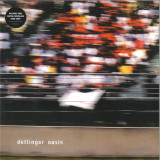
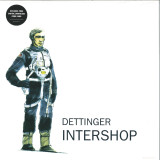
Dettinger’s Intershop and Oasis have long been held, by many fans of ambient and electronic music, to be some of the finest albums in their field. Produced by the mysterious Olaf Dettinger, about whom not much is publicly known, they were some of the earliest full-lengths released by the then-nascent Kompakt, and in many ways, they both articulated and defined the sound that would come to be known as Pop Ambient, while also existing, somehow, to the leftfield of any clearly recognisable genre.
Beautiful, sui generis works, it is a rare pleasure to see them being reissued on vinyl for a new generation of listeners to embrace. Originally released on CD only in 1999, Intershop was Kompakt’s first artist full-length. The music here simmers and broods, with opulent banks of tone marking out territory for rhythms that seem to be built from the clacking detritus of technology – hisses, thunks, knocks. Bass is deployed carefully, each drop a dubbed-out depth charge; drones spin and spiral, warping and weaving between the beats.
Oasis, released in 2000, refined the palette that Dettinger had explored on its predecessor. A blurred crusade of ambient texturology, its unassuming patterns, and subtle, incremental dynamics, admit to real beauty, and a kind of abstract sensuality that you don’t often experience with music that is, perhaps, similarly tooled, but not as poetic. Through seemingly simple gestures – whether lushly expansive repetitions, hyper-acute tremolo tones, or ear-tickling rhythms – it builds complex emotional resonance. It’s no surprise to discover Oasis is held in high esteem by artists like Panda Bear of Animal Collective, who once said of Dettinger, “For us, he was the dude.”
There is, of course, other music to know Dettinger by, too – his three excellent EPs for Kompakt, Blond (1998), Puma and Totentanz (1999), the latter of which, Michael Mayer once argued, “invented dubstep.” There is also a small, yet graceful run of compilation contributions, many of which can be found on Kompakt’s Total and Pop Ambient series. All this music has plenty to recommend it, sharing a clarity of purpose, and a rare, human warmth and depth. But Intershop and Oasis are the releases that distil Dettinger’s singular vision, and allow him, should he wish, to claim his place as a modern master of ambient and electronic music.
Dettingers Intershop und Oasis werden von vielen Fans von Ambient und elektronischer Musik seit langem als einige der besten Alben in diesem Bereich angesehen. Produziert von dem mysteriösen Olaf Dettinger, über den nicht viel bekannt ist, gehörten sie zu den ersten Alben, die von der damals aufstrebenden Plattenfirma Kompakt veröffentlicht wurden. In vielerlei Hinsicht formulierten und definierten sie den Sound, der später als Pop-Ambient bekannt werden sollte, während sie gleichzeitig irgendwie links von jedem klar erkennbaren Genre existierten.
Es ist eine seltene Freude zu sehen, dass diese wunderschönen Werke auf Vinyl wiederveröffentlicht werden, um sie einer neuen Generation von Hörern zugänglich zu machen. Ursprünglich wurde Intershop 1999 nur auf CD veröffentlicht und war Kompakts erstes komplettes Künstleralbum. Die Musik hier brodelt und brütet, mit opulenten Klangbänken, die das Territorium für Rhythmen abstecken, die aus dem klappernden Gerümpel der Technik gebaut zu sein scheinen – Zischen, Klopfen, Schaben. Der Bass wird sorgfältig eingesetzt, jeder Drop ist eine synchronisierte Tiefenladung; Drones drehen und winden sich spiralförmig und verflechten sich zwischen den Beats.
Oasis, das im Jahr 2000 erschien, verfeinerte die Palette, die Dettinger auf seinem Vorgänger erkundet hatte. Ein verschwommener Kreuzzug der Ambient-Texturologie, dessen unaufdringliche Muster und subtile, schrittweise Dynamik echte Schönheit und eine Art abstrakter Sinnlichkeit zulassen, die man nicht oft bei Musik erlebt, die vielleicht ähnlich ausgestattet, aber nicht so poetisch ist. Durch scheinbar einfache Gesten – seien es üppig ausladende Wiederholungen, hyperakute Tremolotöne oder ohrenbetäubende Rhythmen – baut sie eine komplexe emotionale Resonanz auf. Es ist keine Überraschung, dass Oasis von Künstlern wie Panda Bear von Animal Collective hoch geschätzt wird, der einmal über Dettinger sagte: “Für uns war er DER Typ”.
Es gibt natürlich auch noch andere Musik, die Dettinger bekannt macht – seine drei ausgezeichneten EPs für Kompakt, Blond (1998), Puma und Totentanz (1999), von denen letztere, wie Michael Mayer einmal kühn behauptete, “den Dubstep erfand”. Es gibt auch eine kleine, aber feine Reihe von Compilation-Beiträgen, von denen viele auf Kompakts Total- und Pop-Ambient-Serien zu finden sind. All diese Musik ist sehr empfehlenswert und zeichnet sich durch eine klare Zielsetzung und eine seltene, menschliche Wärme und Tiefe aus. Aber Intershop und Oasis sind die Veröffentlichungen, die Dettingers einzigartige Vision destillieren und es ihm ermöglichen, seinen Platz als moderner Meister der Ambient- und elektronischen Musik zu behaupten, sollte er dies wünschen.
Dettinger’s Intershop and Oasis have long been held, by many fans of ambient and electronic music, to be some of the finest albums in their field. Produced by the mysterious Olaf Dettinger, about whom not much is publicly known, they were some of the earliest full-lengths released by the then-nascent Kompakt, and in many ways, they both articulated and defined the sound that would come to be known as Pop Ambient, while also existing, somehow, to the leftfield of any clearly recognisable genre.
Beautiful, sui generis works, it is a rare pleasure to see them being reissued on vinyl for a new generation of listeners to embrace. Originally released on CD only in 1999, Intershop was Kompakt’s first artist full-length. The music here simmers and broods, with opulent banks of tone marking out territory for rhythms that seem to be built from the clacking detritus of technology – hisses, thunks, knocks. Bass is deployed carefully, each drop a dubbed-out depth charge; drones spin and spiral, warping and weaving between the beats.
Oasis, released in 2000, refined the palette that Dettinger had explored on its predecessor. A blurred crusade of ambient texturology, its unassuming patterns, and subtle, incremental dynamics, admit to real beauty, and a kind of abstract sensuality that you don’t often experience with music that is, perhaps, similarly tooled, but not as poetic. Through seemingly simple gestures – whether lushly expansive repetitions, hyper-acute tremolo tones, or ear-tickling rhythms – it builds complex emotional resonance. It’s no surprise to discover Oasis is held in high esteem by artists like Panda Bear of Animal Collective, who once said of Dettinger, “For us, he was the dude.”
There is, of course, other music to know Dettinger by, too – his three excellent EPs for Kompakt, Blond (1998), Puma and Totentanz (1999), the latter of which, Michael Mayer once argued, “invented dubstep.” There is also a small, yet graceful run of compilation contributions, many of which can be found on Kompakt’s Total and Pop Ambient series. All this music has plenty to recommend it, sharing a clarity of purpose, and a rare, human warmth and depth. But Intershop and Oasis are the releases that distil Dettinger’s singular vision, and allow him, should he wish, to claim his place as a modern master of ambient and electronic music.
Dettingers Intershop und Oasis werden von vielen Fans von Ambient und elektronischer Musik seit langem als einige der besten Alben in diesem Bereich angesehen. Produziert von dem mysteriösen Olaf Dettinger, über den nicht viel bekannt ist, gehörten sie zu den ersten Alben, die von der damals aufstrebenden Plattenfirma Kompakt veröffentlicht wurden. In vielerlei Hinsicht formulierten und definierten sie den Sound, der später als Pop-Ambient bekannt werden sollte, während sie gleichzeitig irgendwie links von jedem klar erkennbaren Genre existierten.
Es ist eine seltene Freude zu sehen, dass diese wunderschönen Werke auf Vinyl wiederveröffentlicht werden, um sie einer neuen Generation von Hörern zugänglich zu machen. Ursprünglich wurde Intershop 1999 nur auf CD veröffentlicht und war Kompakts erstes komplettes Künstleralbum. Die Musik hier brodelt und brütet, mit opulenten Klangbänken, die das Territorium für Rhythmen abstecken, die aus dem klappernden Gerümpel der Technik gebaut zu sein scheinen – Zischen, Klopfen, Schaben. Der Bass wird sorgfältig eingesetzt, jeder Drop ist eine synchronisierte Tiefenladung; Drones drehen und winden sich spiralförmig und verflechten sich zwischen den Beats.
Oasis, das im Jahr 2000 erschien, verfeinerte die Palette, die Dettinger auf seinem Vorgänger erkundet hatte. Ein verschwommener Kreuzzug der Ambient-Texturologie, dessen unaufdringliche Muster und subtile, schrittweise Dynamik echte Schönheit und eine Art abstrakter Sinnlichkeit zulassen, die man nicht oft bei Musik erlebt, die vielleicht ähnlich ausgestattet, aber nicht so poetisch ist. Durch scheinbar einfache Gesten – seien es üppig ausladende Wiederholungen, hyperakute Tremolotöne oder ohrenbetäubende Rhythmen – baut sie eine komplexe emotionale Resonanz auf. Es ist keine Überraschung, dass Oasis von Künstlern wie Panda Bear von Animal Collective hoch geschätzt wird, der einmal über Dettinger sagte: “Für uns war er DER Typ”.
Es gibt natürlich auch noch andere Musik, die Dettinger bekannt macht – seine drei ausgezeichneten EPs für Kompakt, Blond (1998), Puma und Totentanz (1999), von denen letztere, wie Michael Mayer einmal kühn behauptete, “den Dubstep erfand”. Es gibt auch eine kleine, aber feine Reihe von Compilation-Beiträgen, von denen viele auf Kompakts Total- und Pop-Ambient-Serien zu finden sind. All diese Musik ist sehr empfehlenswert und zeichnet sich durch eine klare Zielsetzung und eine seltene, menschliche Wärme und Tiefe aus. Aber Intershop und Oasis sind die Veröffentlichungen, die Dettingers einzigartige Vision destillieren und es ihm ermöglichen, seinen Platz als moderner Meister der Ambient- und elektronischen Musik zu behaupten, sollte er dies wünschen.
Melbourne/Naarm-based musician and curator Rama Parwata, known for being the backbone drummer in bands such as Kilat, Whitehorse and Rinuwat, releases his second major solo album titled ‘Ceases’ on Cassauna/Important Records.
Parwata's gripping new electro-acoustic work is a sonic exploration within the realms of post-free-jazz and experimental electronics. At its core, ‘Ceases’ navigates the liminal spaces between rhythm and noise, structure and chaos. The album traverses a vast emotional and conceptual landscape, touching upon themes of impermanence, transformation, and the cyclical nature of existence.
At the forefront of the album is Parwata's emotive compositional and performative approach, which serves as both anchor and catalyst for the album's journey. The percussion performance is cymbal heavy accompanied by deeply meditative drones and slow moving melodies. The wash of sound touches on a spiritualism akin to Coltrane’s “A Love Supreme Part 4: Psalm”, albeit with a modern electronic vision á la Tim Hecker. With a keen sense of textural intricacy Parwata favours the emotional expression of electro-acoustic composition, weaving complex poly-textures that ebb and flow with hypnotic, prayer-like intensity. Each performative gesture creates a visceral immediacy that draws the listener deeper into the celestial, otherworldly sonic framework.
The diverse array of electronic elements, meticulously crafted and seamlessly integrated into the fabric of the album are a testament of Parwata’s capacity for acousmatic composition. From pulsating synthesizers to glitched-out samples, the electronic timbres in "Ceases" serve as both sonic embellishments and structural foundations, blurring the boundaries between organic and synthetic, acoustic and digital. Honing in on the electronics, a listener could be convinced they were hearing anything from spiritual-jazz, 90s rave, dungeon synth or doom. Through judicious composition, Parwata imbues each sound with a sense of transcendental allure and paints a soundworld that has a distinct ‘outerness’. At times the narrative is pointedly bleak but over a few passages the sonic language often bends toward rejuvenation; finding respite in cadence. The title itself suggests a sense of cessation, of endings and beginnings intertwined—a motif that reverberates throughout the album.
"All our dreamers lose to the light" - from "Angels Go Home" When the pandemic began, and the world shut down, so did the process of creating for Iron & Wine's Sam Beam. In its place was a domesticity that the singer hadn't felt in a long time, and although it was filled with many rewards, making music was not one of them. Reflecting on that time, Beam notes: "I feel blessed and grateful that I and most of my friends and family made it through the pandemic relatively unscathed compared to so many others, but it completely paralyzed the songwriter in me. The last thing I wanted to write about was COVID, and yet every moment I sat with my pen, it lingered around the edges and wouldn't leave. This lasted for over two years." The journey back began with a recording session in Memphis to record a handful of Lori McKenna tracks for the EP Lori with friend and producer Matt Ross-Spang. The cathartic experience reconnected Beam with his love for making music, and soon enough the paralysis had passed, and he was finishing lyrics and booking studio time for what would become Light Verse. Light Verse was recorded with engineer and mixer Dave Way at his studio Waystation high up in Laurel Canyon (with an additional session at Silent Zoo Studio with a 24-piece orchestra), with a host of talented musicians joining Beam: Tyler Chester, Sebastian Steinberg, David Garza, Griffin Goldsmith, Beth Goodfellow, Kyle Crane, and Paul Cartwright. And, Fiona Apple joined Beam on vocals for the duet "All In Good Time." Beam lyrically once again takes focus on a series of both fictional and personal insights, filled with desperate characters and wide-eyed optimists, offering promise and a dose of heartache, tears and laughter, life and love. Taking stock in the album's title, he jokes, "Light verse is a form of poetry about playful themes that often uses nonsense and wordplay, and it's my first official Iron & Wine comedy album!_. Just kidding_." While true this may be Iron & Wine's most playful record, Beam says the title mostly reflects the way the songs were born with joy after the heaviness and anxiety of the pandemic. Where recent records like Beast Epic or Weed Garden gave air to the disquiet of middle-aged frailty and brokenness, these songs trade that for the focus acceptance can bring. Moment by moment, they delight in being pointed or silly (or both) and attempt beauty over prettiness. Light Verse arrives April 26th, and it's Iron & Wine's seventh full-length overall and fifth for Sub Pop Records. Fashioned as an album that should be taken as a whole, it sounds lovingly handmade and self-assured as a secret handshake. Track by track, its equal parts elegy, kaleidoscope, truth, and dare.
Yellow Vinyl[32,56 €]
Prolific singer-songwriter Kathryn Williams and recently reinvigorated troubadour Dan Willson (aka Withered Hand) have announced a collaboration album, ‘Willson Williams’, out April 26th.
‘Willson Williams’ witnesses the meeting of two likeminded musicians who’ve built their successful, independent careers on inventive folk instrumentation, reflective and sincere lyricism, and not a small amount of self-deprecation. Their modest confessionals, written poetically and over nostalgic and atmospheric melodies, are as relatable as ever, and together they find new ways to unpack their feelings.
One overarching theme on the album is that of grief, when the writing process saw them both, tragically, in mourning for separate loved ones; Dan for his brother Karl and his friend Scott Hutchinson of Frightened Rabbit, and Kathryn for her friend, comedian and BBC Radio 4 presenter Jeremy Hardy. They explain that “the initial premise and starting point for us was discussions and open conversations on bereavement. We’d both recently lost friends who were also in the public eye, and we talked about the strange place between personal loss and the communal grieving of a public figure”. Contrastingly, the music on ‘Willson Williams’ is warm, heartfelt and even cheerful, an opposing nature that is completely in keeping with both their humour and candidness.
gold LP[32,98 €]
Returning after three years with their second studio album, Double Dog Dare, WHITE DOG have been revelling in a state of creative flux and are poised to share their revelations with the world. Formed in 2015 in Austin, Texas, White Dog began with a shared vision of blazing, fuzzed-out rock that drew gleefully from their home city's rich cultural melting pot. Emboldened by an us-against-the-world gang mentality and inspired by everything from dusty roots rock to explosive old school prog, the band's self-titled album emerged in 2021, courtesy of natural home Rise Above Records, and immediately stood out as a sophisticated, earthy and characterful new strain of retro rambunctiousness.
Recorded over a period of eight days at Stuart Sikes Audio (with engineer Andrew McCalla) in Austin, Double Dog Dare takes all of the debut album's deftly assembled ingredients and allows them to fly free, liberated from expectation. At times mellower than its predecessor, at others strident and ferocious, these new songs showcase White Dog's organic development, with elements of everything from wistful southern rock to crusty-eyed jazz rock finding a place. Somehow even more fluid and fiery than before, this band are growing and expanding before our ears.
Now free to peddle their incendiary wares, they return to the stage with their strongest material to date, and a newfound enthusiasm for giving The Riff the respect and imagination it deserves.
black LP[31,72 €]
Returning after three years with their second studio album, Double Dog Dare, WHITE DOG have been revelling in a state of creative flux and are poised to share their revelations with the world. Formed in 2015 in Austin, Texas, White Dog began with a shared vision of blazing, fuzzed-out rock that drew gleefully from their home city's rich cultural melting pot. Emboldened by an us-against-the-world gang mentality and inspired by everything from dusty roots rock to explosive old school prog, the band's self-titled album emerged in 2021, courtesy of natural home Rise Above Records, and immediately stood out as a sophisticated, earthy and characterful new strain of retro rambunctiousness.
Recorded over a period of eight days at Stuart Sikes Audio (with engineer Andrew McCalla) in Austin, Double Dog Dare takes all of the debut album's deftly assembled ingredients and allows them to fly free, liberated from expectation. At times mellower than its predecessor, at others strident and ferocious, these new songs showcase White Dog's organic development, with elements of everything from wistful southern rock to crusty-eyed jazz rock finding a place. Somehow even more fluid and fiery than before, this band are growing and expanding before our ears.
Now free to peddle their incendiary wares, they return to the stage with their strongest material to date, and a newfound enthusiasm for giving The Riff the respect and imagination it deserves.
Disco Segreta breathes new life into two of the most elusive and coveted italo disco tracks of all time!
Originating from the paradisiac island of Sardinia, Italy, Susy Pintus embarked on her musical journey alongside her brother at Radio Cagliari Centrale, one of Sardinia’s very first “free radios,” which opened its doors in 1977. Her singing career took flight in 1978, and by 1979, she attained national acclaim with her single “C’Est Magnifique,” a disco reinterpretation of the renowned Cole Porter track.
However, Susy’s most sought-after single undoubtedly remains her 1986 italo-disco 45 featuring the tracks “Fragile” and “Live for Your Love”. These compositions, expertly arranged by Italian jazz piano virtuoso Danilo Rea and superstar musician Aldo Tamborrelli, weave a captivating tapestry of sound using instruments like Yamaha DX7 and CP80, Roland Juno 60 and JX 8P, as well as the omnipresent Linn 9000. The result is a distinctive blend of italo-disco, synth-pop, and a touch of the “balearic” vibe.
Originally released in a limited run of 1500 copies on a 45, these tracks have become exceedingly rare over time, finding their way into the wishlists and collections of discerning italo-disco enthusiasts.
Now, Disco Segreta proudly reissues these two exceptional italo disco gems, granting them the expanded 12” treatment they rightfully deserve.
This deluxe edition includes the original tracks, meticulously remastered to meet contemporary standards without destroying the feel of the originals, along with two remixes of “Fragile” and “Live For Your Love” by Italian wonder Cosimo Mandorino aka Cosmo Dance.
Arð stammen aus Northumbrien. Die Erfinder des Monastic Doom Metal errichten mit ihrem sehnsüchtig erwarteten zweiten Album "Untouched by Fire" einen weiteren beeindruckenden Meilenstein auf dem Weg ihres rasanten Aufstiegs. Sowohl musikalisch als auch textlich erklimmt Bandkopf Mark Deeks neue Höhen. Arð setzen ihre Mission fort, die Kultur, das Erbe und die Identität der alten nordenglischen Region Northumbria zu erforschen. Das Debütalbum "Take Up My Bones" folgte den Legenden und dem Jahrhundert der Wanderung der Reliquien des Heiligen Cuthbert von Lindisfarne (634-687). Die Geschichte des neuen Albums, wirft ein Schlaglicht auf eine ganz andere Art von Heiligen. Arð erzählen vom Kriegerkönig Oswald (604-642), der Northumbria mit Feuer und Schwert schmiedete, indem er die Reiche von Bernicia und Deira vereinigte. Seine Zeitgenossen bis ins Frankenreich hinein, sahen Oswald als den mächtigsten angelsächsischen König auf der Insel an. Arð zeichnen mit "Untouched by Fire" seinen Aufstieg zur Macht nach. Die Reise beginnt mit seiner Jugend im Exil. Seine Mutter war aufgrund einer Familienfehde nach Norden in das irische Machtzentrum Dal Riada an der schottischen Westküste geflohen. Oswalds Weg führt weiter über siegreiche Schlachten, in denen Oswald jene Territorien zurückgewann, die bereits sein Vater Æthelfrith beansprucht hatte. Am Ende steht die Gründung des Königreichs Northumbrien. Musikalisch bleiben Arð ihrem ursprünglichen Doom-Kurs treu. Die charakteristischen, Stil prägenden "Mönchschöre" sind weiterhin stark präsent, wie man es von einem Musiker erwarten kann, der neben seiner Tätigkeit als Bestseller-Autor, Klavierlehrer und Keyboarder bei der führenden britischen Black-Metal-Band WINTERFYLLETH auch als Chor-Arrangeur und -Dirigent arbeitet. Doch Deeks bereichert seinen Doom Metal auch durch neue Elemente, wie zum Beispiel über das gesamte Album verstreute, wohlplatzierte Prog-Momente. Die Kompositionen auf "Untouched by Fire" spiegeln die auch auf der Bühne gewachsene Erfahrung und das gewonnene Selbstvertrauen des Bandkopfs in Form eines konzentrierten Songwriting und einer größeren Dynamik wider. Diese Entwicklung wird durch die kraftvolle und organische Produktion von Markus Stock (EMPYRIUM, THE VISION BLEAK) deutlich gemacht - da Arð das Album in der Klangschmiede Studio E aufgenommen haben. Als Deeks Arð im Jahr 2019 gründete, wagte der Komponist nicht einmal in seinen kühnsten Träumen darauf zu hoffen, was alles in den kommenden Jahren passieren würde. Seine Demos brachten ihm bald einen Plattenvertrag ein und die erste Auflage des Debütalbums "Take Up My Bones" (2022) war schon ausverkauft, bevor das Album in die Läden kam. Es folgten mehrere Auflagen und auch alle limitierten Editionen waren schnell vergriffen. Die ersten Auftritte der Band, z.B. beim Prophecy Fest in Balve, verbreiteten den Ruf von Arð als hervorragender Live-Act durch Mundpropaganda wie ein Lauffeuer. Die Band wurde nicht nur in der weltweiten Metal- und Musikpresse gefeiert, sondern landete sogar im deutschen Staatsfernsehen, wurde von der renommierten britischen Zeitung The Guardian interviewt und in der BBC sowie anderen britischen Medien mit ihrem speziellen "Organic Doom" Konzert erwähnt - für die Deeks Stücke von "Take Up My Bones" neu arrangiert hatte, um sie mit Band und einer echten Orgel in Huddersfield zu spielen. Dieses Konzert findet sich in voller Länge als CD und DVD in der limitierten Artbook Edition. Mit dem zweiten Album "Untouched by Fire" legen sich Arð die eigene Messlatte gleich um mehrere Stufen höher auf. Perfekt arrangierte Monastic Doom Songs mit hoher Dynamik und unverfälschtem Songwriting finden in einer opulenten Produktion ihre Entsprechung. Es ist Zeit, die Augen zu schließen und sich von Arð aus Northumbrien in eine Zeit entführen zu lassen, in der germanische Kriegerkönige mit Schwert und Feuer und einem neuen Gott als Sieghelfer an ihrer Seite neue Reiche erschufen. Ein blutiges Fest für die Raben, ein Goldschatz für die Ohren!
Repress of Child's self-titled debut album. Combine the heavy emotion of the blues, the tone and raw power of hard rock, the finesse of soul and a twist of 60's psychedelia. It will give you a visceral musical experience that plays directly to your being. That is CHILD. Living for their art, the pubs, the booze, the endless highways and the blues is what makes this band who they are. Child are a must see for those who are worshippers at "the electric church". The freedom and power of a live performance is important to CHILD in their approach to music, endeavouring to never perform the same way twice. They look forward to once again bringing this to the world on their continued search for sonic paradise. Since the release of their runaway self-titled debut in 2014, Child have continued to develop their unique brand of heavy blues through constant writing and extensive national/international touring. The band released the follow-up 'Blueside' in December 2016, which builds on this foundation to deliver a disc of pure sonic expression whilst following in the long tradition of the blues. 2018 saw the release of Child's first EP, simply titled 'I'. Recorded live to tape, 'I' is a glimpse into the boundless directions that could be taken on upcoming releases.