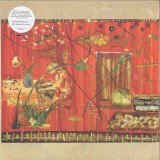
2020 Re-issue of Keith Kenniff's debut under his Goldmund moniker. Originally only released on CD in 2005 via John Twells' Type Recordings, this album of rare and unusual minimalist beauty is now presented as a vinyl edition for the first time.
Multi-instrumentalist Keith Kenniff is a busy man. He has appeared as Helios on a number of acclaimed releases, including Deaf Center’s ‘Neon City EP’, and released a debut album ‘Unomia’ on Merck records which has appeared on many best of 2004 lists. All this while studying at the prestigious Berklee College of Music, and playing drums, guitar or contributing production to a host of amazing musicians. Kenniff lives and breathes music, something that is very obvious when hearing tracks under any of his pseudonyms.
As Goldmund, Kenniff has disregarded the electronic elements of his music almost entirely in favour of just a piano, a microphone and occasionally a guitar. ‘Corduroy Road’ is thirteen tracks of pure recording, the sound of the piano being opened and the feet on the pedals, the sound of fingers pressing lovingly onto the keys. This is a record of rare and unusual beauty, so shocking and yet unpretentious in its simplicity. When the guitar does emerge from beside the delicately touched piano, it serves as a balancing point for the record. Weaving in and out of the melodies, it adds another layer to what is already incredibly moving music.
‘Corduroy Road’ is rooted in Kenniff’s love of folk music from the American Civil War. We can hear this directly from his rendition of Civil War era classic ‘Marching Through Georgia’, but the influence carries throughout the record. There is an unheard voice which propels each track through history, maybe the ghosts of dying soldiers whispering in a long forgotten bar. Every haunting note drifts deep into the psyche and is lost in the ether of nostalgia. In this way it is a concept recording of sorts, it certainly has a narrative and has to be listened to in sequence. The story has clear themes; loss, history, friendship, camaraderie, forgiveness and hope, all clearly marked out by musical segments. It is no surprise that Kenniff’s passion for cinema shines through so strongly.
It would be hard to draw comparisons to music so rooted in folk traditions, but the music evokes traces of Ryuichi Sakamoto, Mark Hollis, Keith Jarret or even Eno’s more piano based compositions. Yet influence seems unimportant when listening to this deeply personal work. Just let it sink in and drift into the psyche.
quête:el fin
Ryan Lee West aka Rival Consoles announces details of his highly anticipated new album Articulation, released on Erased Tapes on 31 July 2020.
‘Articulation’, the lead track and album centrepiece, links the record back to the analogue fluidity and colour of 2016’s Night Melody. The division of varying time signatures, intertwined with a complex structure of notes, creates an expression of a moving structure and conjures a dreamy motorik energy. Ryan Lee West explains, "The title track is about articulation and playfulness with shape and time. Its structure is very machine-like, but I was really interested in how melody and sense of story could develop out of this, and it became an exploration of mathematical structures - patterns and shapes having a conversation. I love that something on paper can appear rigid and calculated, but then take on new meaning based on the context that surrounds it, or how it changes over time."
Articulation (which follows 2018’s Persona) was conceived with a very visual way of thinking, unusual for the London musician and producer. During the writing process Ryan drew structures, shapes and patterns by hand to try and find new ways of thinking about music, giving himself a way to problem-solve away from the computer. The album title references a piece by the avant-garde contemporary composer Györgi Ligeti, though not for its music, but for the non-traditional graphic score that accompanied it.
“I find electronic music is often battling to say something with integrity because technology and production can easily get in the way. I think the goal of a lot of electronic composers is to find a balance between the vision of the idea and the power of possibilities on the computer. With a pen and paper sketch you can compose and rethink ideas without technology getting in the way, so for me it acts as a very helpful tool to refresh the process.” - Ryan Lee West
The idea of using analogue drawings and tools to bolster digital creations can be heard in the structure of the pieces that make up Articulation from the broody techno opener ‘Vibrations on a String’ all the way to the album’s boundless closer ‘Sudden Awareness of Now’. While the anthemic rise and fall of ‘Still Here’ and the beatless ambient meditation ‘Melodica’ evoke a certain nostalgia, ‘Forwardism’ achieves the very opposite by burying its melody within the fast-paced rhythm of its pulsating synths.
Rising out of birdsong heard from his studio window, ‘Sudden Awareness of Now’ has a particular urgency about it and seems to perfectly capture a longing for escape. Built around a simple and repetitive melodic theme, expanding and retracting over the course of its seven-minute odyssey, Lee West explains; “I like the fact that if you say something over and over again in music, then over time it can become something else, something reflective.”
Since the release of Persona, Ryan Lee West has taken his captivating live A/V set to all corners of the world. Last seen live on stage with 17 players of the London Contemporary Orchestra for a sold-out orchestral performance at Southbank Centre’s Queen Elizabeth Hall in January 2020.
Meanwhile Lee West has kept busy. After contributing an exclusive track titled ‘Them Is Us’ to Adult Swim’s coveted Singles series, he recently shared the beautifully textured solo piano piece Winter’s Lament on this year’s Piano Day. He has also been in high demand as a composer, scoring Charlie Brooker’s much talked about Black Mirror episode Striking Vipers, composing original music for Secret Cinema presents Stranger Things as well as renowned choreographer Alexander’s Whitley’s groundbreaking new work Overflow which was set to premiere at London’s Sadler’s Wells Theatre this spring.
Articulation will be available worldwide on 31 July, with live activities to be announced as soon as the situation allows safe event planning
Sublime, unique, sexy and peculiar unreleased scores by electronic and jazz pioneer Ron Geesin, made for the sublime, unique, sexy and peculiar films by maverick director Stephen Dwoskin. There. we’ve said it. And if you have not heard of one or either of these two dudes it doesn’t really matter. Geesin made great music and worked with Pink Floyd. Dwoskin made odd films, most of them are in the BFI permanent collection. They are great and a bit strange.
These superb unreleased soundtracks come from a fascinating, progressive and important period in British film history. They represent an intriguing collaboration between the lively Ron Geesin from Scotland and the American Stephen Dwoskin, who both met in London.
Musically they are minimal, charismatic and quite groundbreaking. Here is the story…
HISTORY:
Steve Dwoskin arrived in London in 1964, aged 25, with several 16mm films in his trunk, shot in the cold-water flats of Greenwich Village. He had been on the fringe of the Factory scene, and some of his films starred Beverly Grant, ‘the queen of the underground’. But they had scarcely been seen, and they didn’t have soundtracks. For almost a year they stayed in the trunk, and stayed silent. Then he met Ron Geesin, somewhere around Portobello Road.
‘Slept last night, completely dressed after working over 12 hours on sound tracks at Ron’s,’ wrote Dwoskin in his diary for 29 July 1965. ‘My films are not anywhere near being anything. I need more energy, more concise and positive ideas and less inhibition. And of course space, money and people.’ Dwoskin, who taught and practised graphic design by day, had recently decided to stay in London beyond the term of the Fulbright scholarship that had brought him there.
Ron, living with Frankie in a basement flat in Elgin Crescent – they would marry the next year, with Dwoskin as best man – was about to leave the Original Downtown Syncopators, the trad jazz band he had joined aged seventeen-and-a-half, and was trying to go solo. On stage he would make vigorous use of piano and banjo; at home Frankie had bought him a new kind of instrument – a tape recorder. ‘Soon I had one tape recorder, two tape recorders, three tape recorders.’
Ron, wrote Dwoskin in his unpublished autobiography, ‘loved to record, and to cut and splice the quarter-inch recording tape to make new sounds. This triggered in me the idea of getting back to my films and finishing them’. Soon he was living in a dank basement in Denbigh Road, a few minutes’ walk from Elgin Crescent. Ron’s soundtracks for Dwoskin’ films, recorded in the Geesins’ flat, encompassed Ron’s very eclectic range of styles – madcap piano and fretted banjo as well as tape manipulation.
Aside from Ron’s soundtracks, some of which belong to films that no longer exist (including Pot Boiler), Frankie would act in one of the films that Dwoskin either lost or never finished during these years. He was disabled, having contracted polio as a child, and Ron and Frankie were both carers and collaborators; Ron had met him when he was struggling into his car.
There was no London equivalent to the underground film scene that Dwoskin had known in New York, and his films remained unseen until such a scene began to come into being, in the autumn of 1966. Some of them made their debut at the Mercury Theatre, near Notting Hill Gate, that September. Dwoskin wrote that Alone, starring Zelda Nelson (from Ron Rice’s Chumlum), and Chinese Checkers, with Beverly Grant and Dwoskin’s friend Joan Adler, went over best.
Soon both Dwoskin and Geesin became involved in the nascent London Film-Makers’ Co-op, which put on screenings in Better Books on Charing Cross Road – ‘if you can call them screenings,’ Ron recalls; ‘I’d call it fifteen blokes in various stages of disarray, peering through the smoke’. One or more of the films had been ‘striped’ with magnetic audiotape; with others ‘we had no means of direct syncing to the picture, so he started the film and I started the tape recorder’.
In the same autumn, Dwoskin moved into a flat almost opposite the Geesins on Elgin Crescent. More collaborations followed, including Naissant, on which Gavin Bryars, whom Geesin had met during a stint on the northern club circuit with novelty act Dr Crock and His Crackpots, played double bass.
Around the end of 1967 Geesin released his first solo LP, A Raise of Eyebrows, and Dwoskin won recognition the Fourth Experimental Film Competition, aka EXPRMNTL 4, an occasional film festival staged at Knokke-le-Zoute in Belgium. By now the films had optical soundtracks.
It was only after this that Dwoskin completed his first ‘British’ films, including Me Myself and I, with Barbara Gladstone, an American dancer who had appeared in Barbara Rubin’s Christmas on Earth, and with whom Dwoskin and Geesin had at one point devised a stage show, never produced. For Moment, a single-shot film, Geesin provided his most experimental score yet. At the time of its debut in 1970, Dwoskin and the Geesins were sharing a house in Ladbroke Grove.
By then, Ron was working with Pink Floyd, and soon afterwards he and Frankie moved out to the country, to be replaced by Bryars both in the house and as Dwoskin’s principal collaborator.
Until now these scores have remained part of the Geesin Archive and have never been issued.
New album from the Parisian producer.
Label say:
Because, at La Creme Garcia Club, a private circle of discerning smokers in Barcelona, Blundetto was in heavy rotation in the playlists. So heavy that these people of good taste for legal activity on this side of the Pyrenees yet prohibited from profits, had the idea of becoming the privileged partners of a new album. Without scrutiny, without intervention in the artistic, but with a single watchword: let Blundetto return to his first love of world sound.
The result is a stereo trip illustrated by Mossy Giant's artwork. A trip around the world without leaving your couch.
An offer that cannot be refused.
Ten years had passed since Bad Bad Things; it was the occasion to celebrate this decade by reviving its state of mind. The one who mixes collaborations, atmospheres, and styles. Exiled to the green, in musical autarky from several albums, Blundetto has therefore returned to the rhythm of city life and studios. He has changed his way of operating, opened his repertoire, and invited friends to new titles that he had written for them.
The circle of intimates already present on Bad Bad Things (Hindi Zahra, General Electric, Chico Mann) has widened to include regular accomplices (Biga Ranx) and to extend to artists with whom Blundetto felt an obvious connection (Crime Apple, Leonardo Marques). Guided by this roadmap written by Blundetto, all succeeded in painting with their colors and spreading their musical soul in the project, either taking the rhythmic direction of Brazil, Africa, or Latin America, getting dizzy in Jamaican fumes or chopping at the salient angles of hip hop.
Dive into the new openings of Clément Petit’s arrangements, now more sophisticated than those on which Blundetto evolved, and now capable of bringing an orchestral dimension made of strings and brass, creating a direct opening on the emotions, an automatic generator of images to accompany the soundtrack by the producer Blackjoy.
Whatever the orientation, each guest becomes a unique and essential part while Blundetto remains the common thread, the cement and the final varnish of a musical mosaic called Good Good Things.
Matthew Kirkis aka Destiny71z is back with the third and final instalment in his tweaked out EP series. 4 more experimental club cuts, dripping and acidic, created using a stacked modular hardware set up. These playful cuts bounce through house, techno, garage and electro with an aquatic touch. Loose, electric and stunning throughout.
- 1: Waldo (Feat. Petter Eldh, Dan Nicholls & Tilo Weber)
- 2: Tremendoce (Feat. Petter Eldh, Dan Nicholls, Tilo Weber, Jonas Kullhammar & Per "Texas" Johansson)
- 3: Oisters (Feat. Petter Eldh, Dan Nicholls & Tilo Weber)
- 4: Abysmal (Feat. Petter Eldh, Dan Nicholls & Tilo Weber)
- 5: Koppom (Feat. Petter Eldh, Dan Nicholls & Tilo Weber)
- 6: Ity Bity (Feat. Petter Eldh, Dan Nicholls & Tilo Weber)
- 7: Sapiens (Feat. Petter Eldh, Dan Nicholls & Tilo Weber)
- 8: Bobby (Feat. Petter Eldh, Dan Nicholls, Tilo Weber & Ruhi Erdogan)
- 9: Fruehling (Feat. Petter Eldh, Dan Nicholls & Tilo Weber)
- 10: Atombahn (Feat. Petter Eldh, Dan Nicholls & Tilo Weber)
Berlin-based Swedish saxophonist Otis Sandsjö returns with the eagerly-awaited sequel to "Y-OTIS". On "Y-OTIS 2", released by Helsinki's We Jazz Records on July 24, Sandsjö and his close associate, bassist/producer Petter Eldh (of Koma Saxo), deepen their vision of genre-bending, forward-looking "liquid jazz" of tomorrow. The core group also includes Dan Nicholls on keys and Tilo Weber on drums, and also featured on the album are Swedish jazz greats Jonas Kullhammar (of Koma Saxo) and Per "Texas" Johansson, cellist Lucy Railton and trumpeter Ruhi-Deniz Erdogan.
Diving deeper into "Y-OTIS 2", you'll find details and ideas galore. The album is an inviting and inspiring audio mosaic, which links back into the previous Sandsjö/Eldh collaborations, namely "Y-OTIS" and "Koma Saxo". The result is a balanced album which quenches your thirst while making you more thirsty in the process. In other words, the many micro moods and sonic levels herein invite repeated listening, while the underlying rhythmic approach is informed as much by hip hop and electronica as by jazz, making the music approachable in a very natural way.
It seems unnecessary to pull the album apart by name-checking individual tracks but just for the sake of easy introduction, the single cuts "tremendoce", "ity bity" and "abysmal" offer one idea of signposts along which to navigate. "tremendoce" brings in Swedish jazz great Jonas Kullhammar (of Koma Saxo) and Per "Texas" Johansson, introducing an infectious flute loop integrating into the Y-OTIS sound, making it organic to the bone. "ity bity" could be built on a new wave synth sample (but it's not) and "abysmal" brings more serene, even ambient-sounding sonic pathways onto the map. It all belongs together, and makes for a sound that is instantly recognisable and constantly fresh. This is "Mauerpark liquid jazz" for the new decade.
Berlin-based Swedish saxophonist Otis Sandsjö returns with the eagerly-awaited sequel to "Y-OTIS". On "Y-OTIS 2", released by Helsinki's We Jazz Records on July 24, Sandsjö and his close associate, bassist/producer Petter Eldh (of Koma Saxo), deepen their vision of genre-bending, forward-looking "liquid jazz" of tomorrow. The core group also includes Dan Nicholls on keys and Tilo Weber on drums, and also featured on the album are Swedish jazz greats Jonas Kullhammar (of Koma Saxo) and Per "Texas" Johansson, cellist Lucy Railton and trumpeter Ruhi-Deniz Erdogan.
Diving deeper into "Y-OTIS 2", you'll find details and ideas galore. The album is an inviting and inspiring audio mosaic, which links back into the previous Sandsjö/Eldh collaborations, namely "Y-OTIS" and "Koma Saxo". The result is a balanced album which quenches your thirst while making you more thirsty in the process. In other words, the many micro moods and sonic levels herein invite repeated listening, while the underlying rhythmic approach is informed as much by hip hop and electronica as by jazz, making the music approachable in a very natural way.
It seems unnecessary to pull the album apart by name-checking individual tracks but just for the sake of easy introduction, the single cuts "tremendoce", "ity bity" and "abysmal" offer one idea of signposts along which to navigate. "tremendoce" brings in Swedish jazz great Jonas Kullhammar (of Koma Saxo) and Per "Texas" Johansson, introducing an infectious flute loop integrating into the Y-OTIS sound, making it organic to the bone. "ity bity" could be built on a new wave synth sample (but it's not) and "abysmal" brings more serene, even ambient-sounding sonic pathways onto the map. It all belongs together, and makes for a sound that is instantly recognisable and constantly fresh. This is "Mauerpark liquid jazz" for the new decade.
- A1: Unoxuno - Manifestación En La Superficie
- A2: Quum - Persecución
- A3: Alan Courtis- Los Fieltros
- A4: Pabloreche - Residuo
- A5: Alfredo Horacio Pérez - Avalokiteshvara I
- A6: Unoxuno - Buenos Aires Psicótico
- A7: Luis Marte - Simples Máquinas
- A8: Quum - Stress
- A9: Pabloreche - Rompo
- A10: Conducto - Círculos
- A11: Esófago Zombie - On-Off
- B1: Las Cintas Magnéticas - Pistas Nro 4 & 8
- B2: Zigo - Delureos
- B3: Conducto - Malla
- B4: La Espora Invasora - Comegato
- B5: Jaime Genovart - Querandíes
- B6: Francisco Ali-Brouchoud - Bashō
Late 20th Century outsider music from the outskirts of Buenos Aires featuring Alan Courtis, Pablo Reche, Quum and many more artists from the Argentinian underground.
Setting out as an archaeological excavation, literally exhuming material which has been under the surface for more than two decades, this special compilation features work by established and under the radar artists that helped set the now fertile Argentinian underground.
All tracks were directly digitized from the original cassettes masters (half of them never previously released either). The emphasis being to maintain the original sound quality as it was produced at the time (hence the cassette format). The compilation also showcases a broad spectrum style of music that was done at a specific time with very primitive gear - not by choice but because of the obvious economic restrictions of accessing sophisticated equipment forced these musicians on the DIY road. Domestic tape recorders making cassette loops, broken record players, toy keyboards and the noisy ‘fingers on circuitry’ long before Nicolas Collins championed it on Hand-made electronic music.
Whilst some artists actually had access to professional synths and drum machines (Unoxuno, Quum, Jaime Genovart), they still lacked of standard recording equipment. A crucial document then showing how their unique approach to music making influenced the forthcoming experimental scene of South America making these artists influential cult figures of the underground.
Compiled by Juan José Calarco y Pablo Reche
Digitized & Mastered by Juan José Calarco
Repress
Pink Vinyl
The DJ Producer is a legend and has been a force to recon with for well over 2 decades. Unlike some veterans this hot piece man meat still keeps reinventing himself, pushing the envelope with every new piece of music he creates. That's what true artists do, they push boundaries and keep their hearts and souls in it full force till the bitter fucking end and amen for that.
So yeah.. about this record.
Can't Describe It (Finally) is a killer uplifting Rave slammer using a classic sample from the past in a track for the future.
Cant Fuck With Me on the flip is a 210 BPM UK Hardcore Techno banger that embodies everything great about that signature UK sound filled with a ton of Fuck you's for that extra dose of Fuck Off Power.
No A or B sides on this Pink Punk as Fuck vinyl. This one is AA all the fucking way!
Blast these fuckers loud & proud people. This ain't no easy listening elevator music I can tell you...
The sixth and absolutely final chapter in the EROS story.
This buy-on-sight collection of homages to the raw, decadent & formative birth of club music wraps things up with yet another stand out selection of cuts.
Darker, more electronic & mind-bending moments, mingling with an altogether more strobe-lit and full-tilt take on the glorious Disco supernova from whence we all came.
Musique Pour La Danse presents Roomservice, Dutchman Orlando Voorn's forgotten yet unforgettable IDM-leaning, home-listening electronica / techno album from 1994 under his Living Room alias, originally released on the producer's cult Night Vision label.
Praised unequivocally by those lucky enough to have heard it, this criminally underrated record nonetheless deserves pride of place when talking about forward-thinking electronic music from the early 90s.
While it is widely acknowledged that Orlando Voorn's productions are one of the most fascinating prisms through which to experience a European take on the Detroit sound, Roomservice is also a strong reminder that the paradigm shift from sweaty raves to enhanced home listening, championed by Warp's Artificial Intelligence series, early Rephlex releases, along with projects such as The Black Dog, Plaid or Autechre was in fact not only limited to British artists.
As its name indicates, The Living Room is not geared for warehouses but instead interested in a more intimate and domestic setting. As such, it does not contain over the top bangers, but it's hard to find any filler in this album where all the tracks are killer, catchy and memorable. All displaying a sophisticated yet immediate focus on warm melodies and grooves no heavier than a feather, these emotional cuts provide a wonderful and intricate soundscape for introspective listeners to explore, and they will surely find echoes of ideas developped by Manuel Gottsching, Steve Reich and Pat Metheny scattered accross the album.
While some tracks are rhythmic and would fill a dancefloor in a second with their four to the floor or broken beats, the album also gives room for more ambient excursions to occur and develop brilliantly. But once again, it's more likely you'll end up dancing on your couch rather than dozing off.
2020 might be the most difficult year in recent history for dancefloors worldwide, yet that's not going to stop Musique Pour La Danse from reissuing this gem of an album for listeners, dancers, and DJs of today and tomorrow.
Words by Ed Isar.
- A1: Berserk In A Hayfield - After Dusk
- A2: The Lord - Controversial
- A3: Silicon Valley - Electro Switch
- A4: Neutron Scientists - Cabaret Futurama
- A5: Lives Of Angels - Artificial Ignorance
- B1: Modern Art - Golden Corridor
- B2: The Lord - Gonna Dream My Life Away
- B3: Echophase - Controlled Experiment
- B4: Disintegrators - Radioactive
- B5: Mystery Plane - Burning Desire
- B6: Modern Art - Dimension 2
Here is the highly anticipated sixth volume of the well received electronic compilation series from the relaunched 1980's color tapes label. As with the other volumes you can find great examples of cold wave, minimal wave and synth electronics and pro to EDM made by obscure British bands in the 1980's such as: Berserk In A Hayfield, Lives of Angels, Silicon Valley, Modern Art, Disintegrators, Echophase, The Lord and Mystery Plane
"Up there with V-O-D selections, the Color Tapes series so far has provided invaluable insight to hidden or much lesser-known currents of the ‘80s cassette subculture which gave birth to myriad artists, styles and industry conventions whose influence can still be felt over 30 years later. " - Boomkat
“Electronic work that’s way different from mainstream pop of the period - often forgedout of the same instrumentation as the hits - but in a stripped down way - with lots of dark and moody corners!” Dusty Groove
“Evil Synths and evil beats” - Norman Records
“Gary Ramon’s re-born Color Tapes imprint is every bit as essential as it’s Minimal Wave and electro-focused predecessors” - Juno
Limited edition of 500 copies comes with poster insert
"Listening To Pictures", Jon Hassells erste neue Arbeit seit fast einer Dekade, war eine lebhafte Anordnung von Instrumentals in seinem einzigartigen 'Fourth World' Sound aus Jazz, Dub und electroacoustischen Techniken. Mit "Seeing Through Sounds" dringt Hassell tiefer in unbekannte, imaginäre Regionen. Die Atmosphären sind dichter, das Werk klingt nachdenklicher als sein Vorgänger, eine gewisse Spannung lauert in dunklen Ecken. In der Mitte des Albums bemerkt man ein Ruckeln, Stottern, Störgeräusche, bevor langsam wieder Ruhe einkehrt, um schliesslich mit überwältigenden Klängen das Finale einzuleiten, bei dem Avantgardisten wie William Basinksi und The Caretaker grüssen. "Seeing Through Sounds" enthält einige der detailliertesten und verfrachtesten Musiken in der langen Karriere des 'Fourth World' Pioniers.
Principal is the new solo project by producer and musician Rasmus Allin, who’s first album Treacherous Dub will be released on the Copenhagen-based label StereoRoyal in July 2020.
Best described as an homage to old-school Jamaican dub, Principal’s music features live recorded drums and other instruments. Fused with electronic elements, it celebrates the sound of the original dub pioneers.
Born in 1970, Rasmus Allin has been working as a producer, musician, and songwriter since the mid-nineties, primarily within the realm of electronic music. Inspired by the British trip hop and drum ‘n’ bass scene, he soon gravitated towards Jamaican dub, rocksteady, and reggae. "I found my inspiration in the old Jamaican dub masters like Lee Scratch Perry, King Tubby, Augustus Pablo, and Scientist. I’ve spent endless hours in the studio trying to replicate their sound, using old tape delays, filter boxes, and modulation effects,” he says.
In 2002, Allin formed the band Junkyard Productions, playing major venues and festivals like Elysee Montmartre, Le Triptyque, Télérama Dub Festival, and Roskilde Festival while touring through Denmark, Germany, Switzerland, and France. Alongside this, he continued to hone his skills in producing, co-writing, and remixing music, working with top Danish pop and reggae acts the likes of Natasja, Pharfar, Wafande, Shaka Loveless, and the British girl band All Saints.
Treacherous Dub will be released on vinyl and all major streaming platforms, and will be Allin’s first album of pure instrumental dub tracks —an ambition he’s been wanting to fulfil for years. Marking his debut as a solo artist, the album also marks his premiere as a visual artist, with the album cover lithograph made by Allin himself. For Rasmus Allin, the collaboration with StereoRoyal offered “the perfect opportunity to give the tracks the finishing touches.”
StereoRoyal is a Danish library music label founded in 2010 by and specializes in off-kilter music for film and TV. Originally, the label focused on electronic genres, but over the years has grown to include a broader variety of music produced by some of the most talented composers in Scandinavia.
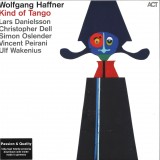
‘Kind of Tango’ is a kaleidoscope of shifting emotions. Wolfgang Haffner’s conception of tango has drama and propulsion in it but also melancholy and longing, with room for frenetic outbursts too. All this is unified by his inimitable groove and feel that commentators have called “an absolute dream,” “magical” and “profoundly relaxed.” Alongside trusted co-protagonists Christopher Dell and Lars Danielsson, he has two guests with him who defy all the clichés associated with tango: guitarist Ulf Wakenius cut his teeth musically in Oscar Peterson’s band and his Swedish heritage always shines through in his playing; Vincent Peirani is one of the leading innovators on the accordion and he finds new ways to define the instrument’s role in the tango. Also, young pianist Simon Oslender makes a first appearance with the band. Jazz and tango find a natural yet constantly shifting equilibrium - to be heard particularly effectively on ‘Close Your Eyes And Listen’ by Astor Piazzolla. In addition to compositions by Haffner himself and by his band members, pieces by the celebrated Argentinian bandoneon player and composer are the focal point of the album. Piazzolla’s innovations with the tango, such as bringing jazz into it, date from around 1955. Haffner and the tango
seem perfectly matched to each other. Tango is no longer a fixed style nowadays, it is above all an attitude to playing and an attitude to life. Wolfgang Haffner’s approach to tango is both authentic and new. It is his and his alone and it is irresistible.
Something a little different from Athens of the North, Crisrail (Chris Rael) is an almost-LP of mad out there funky post punk from Silver Spring, Maryland, USA. Rated and played this out for some time but it has remained mostly under the radar due to scarcity. I could compare it to The Cure but it's so much more. 500 ONLY
"Playing instruments didn't come naturally to me, but I loved it so much I kept doing it and got better. When I started composing seriously in my early twenties, I didn't have much confidence in my voice or instrumental abilities, but my imagination was on fire and I was determined to create music that sounded like nothing else. I would find my place in the constellation of sound by carving a niche that was so unique, musical virtuosity wouldn't be a factor. I was inspired by Tom Scott of the Muffins, Maryland's legendary progressive jazz quartet, and owner of Black Pond Studios in Rockville, where Game of Music was recorded. It was my first solo release; I played everything except Tom's horn and flute parts. Lacking confidence to perform, I was very much a studio rat and became facile at overdubbing solo tracks. New music reviewers praised it at the time, but its distribution was limited and it's been out of print for decades. Listening now, it's more musically muscular than it felt to me at the time. It's incredibly gratifying that more people can hear it again, thanks to Athens of the North." - Chris Rael
Artist previously known for his work as “Mirage Man” returns as “Kaltstam” presenting a three tracker of techno and electro jams.
The streamlined yet gloomy opening track “Reach 4 the heat only if you’re bustin’” sets an energetic tone for the release to start with. This should cater your needs easily if you’re into dancing in the more aggressive manner.
“The Divide” interprets nordic melancholy in the form of trancey pads, echoed stabs and a distorted bass drum. An observant listener might pick up some classic breakbeat vibes from the drum section as well.
“Cattle prod” is the oddball of the trio. Is it nu school breaks? Is it electro? Does it bang? ... Find out by listening to the title track of the record. - Play it fast or slow, it’s your call.
Black Truffle is pleased to announce a new solo album by Eiko Ishibashi, her first for the label, following on from the duo recording Ichida alongside bassist Darin Gray. Hyakki Yagyō (Night Parade of One Hundred Demons) was produced for the ‘Japan Supernatural’ exhibition at The Art Gallery of New South Wales, Sydney focusing on ghost stories and folklore from the Edo period onwards. As with The Dream My Bones Dream (Drag City, 2018), the album is a response to troubling questions about Japanese history, and the influence of the past upon the present, but finds Ishibashi shifting further away from her earlier piano-led songwriting and showing a deepening interest in electronics and audio collaging.
The two sidelong parts of Hyakki Yagyō feature layered synthesisers, acoustic instrumentation, recited verse and field recordings, at times densely mixed but always with a subtle interplay of changing elements. The influence of European and American forerunners as diverse as Alvin Curran, David Behrman and Strafe Für Rebellion can be traced, yet at the same time Ishibashi evokes the flute and string sounds associated with Japanese storytelling, and draws directly on the subversive literary tradition of Kyoka (‘mad poetry’) with a verse by the 15th-century poet Ikkyū Sōjun repeated throughout the album. Revisiting what has gone before, re-thinking what is possible musically, as a way of articulating what else might be possible in the future.
As Ishibashi’s liner notes make clear, the album reflects an attention to persistent dangers, myths and evasions in Japanese culture – as well as the lurking uncertainties that might threaten positive change. This would seem to be manifested in the emerging melodies soon met by dissonance, erratic collisions and near silence, as well as the eerie manipulation of the double-tracked vocals. Ishibashi’s underlying concerns ring true more widely of course. Hyakki Yagyō is a work of multiplicities, and mystery, a landscape where nothing is as it seems at first, and everything is vulnerable to sudden violent interruptions.
The album was produced with regular collaborators Jim O’Rourke (double bass) and Joe Talia (percussion), and features dancer and choreographer Ryuichi Fujimura performing Ikkyū’s satirical tanka. O’Rourke’s immersive mix creates a three-dimensional effect, with Ishibashi’s various sound sources enmeshing and interacting in captivating ways.
Pressed on coloured vinyl and presented in a deluxe package with an inner sleeve featuring and artist portrait and liner notes from Eiko Ishibashi. Cover and label design by Shuhei Abe.
Back cover design by Lasse Marhaug. Mixed and mastered by Jim O’Rourke.
key selling points:
- Black Truffle is pleased to announce a new solo album by Eiko Ishibashi, her first since her acclaimed 2018 Drag City release The Dream My Bones Dream.
- This album finds Ishibashi shifting further away from her earlier piano-led songwriting and showing a deepening interest in electronics and audio collaging.
- Hyakki Yagyō (Night Parade of One Hundred Demons) was produced for the ‘Japan Supernatural’ exhibition at The Art Gallery of New South Wales, Sydney focusing on ghost stories and folklore from the Edo period onwards and is a response to troubling questions about Japanese history, and the influence of the past upon the present.
- Produced with regular collaborators Jim O’Rourke (double bass) and Joe Talia (percussion), O’Rourke’s immersive mix creates a three-dimensional effect, with Ishibashi’s various sound sources enmeshing and interacting in captivating ways.
- The two sidelong parts of Hyakki Yagyō feature layered synthesisers, acoustic instrumentation, recited verse and field recordings, at times densely mixed but always with a subtle interplay of changing elements, hinting at an influence of European and American forerunners as diverse as Alvin Curran, David Behrman and Strafe Für Rebellion.
- Pressed on coloured vinyl and presented in a deluxe package with an inner sleeve featuring an artist portrait and liner notes from Eiko Ishibashi. Mixed and mastered by Jim O’Rourke.
vinyl only / 180 grams
Finishing off the initial "series" of Krab's vinyl-only records in style, KRB003 centres around 3 signature cuts from German duo Cedric Dekowski & Felix Reifenberg and a stellar remix from Yamen & Eda. The EP divulges into the multi-genre capabilities and eclectic nature of the HardWorkSoftDrink label owners, as there are seamless transition between genres, modular synths and all things in between are highlighted throughout the label's latest record.
Starting off with a slow burner, Act 1 is a hypnotic listen, formed around strung out sounds, glitchy breakdowns and a captivating overlaying melody. Laus highlights the pairs unique ability to shift genres seamlessly as they deliver a cut full of heavy hitting acid and emotion heavy synths suitable for any dance floor.
Internet dial up appears the theme throughout the B-side, as Feelsliker delivers a fast paced minimal roller that is stacked to the brim with bleeps, bloops and modular madness. Finishing off the record is a remix from French Duo Yamen & Eda, a pair of artists that boast a distinguished taste for electronic music. Dance floor ready, B2 is constructed around a heavy hitting bass line and an assembly of inimitable modular synths.
Jori Hulkkonen was born and raised in a small town named Kemi with a population of 20,000, in the north of Finland. Since the early 80s, his musical influences have been on the side of electronic music, quite eclectic style for a 10-year-old boy who grew up in this period still marked by the seal of the Cold War. At the end of the 1980s, Jori's passion for electronic music was reinforced when he discovered its most abstract and minimal part: techno from Detroit and House Music from Chicago. Excellent DJ, he played in the best clubs and festivals in Europe. Jori Hulkkonen is an artist well known and extremely respected in the Nordic countries for his pioneering status, with his love of music and his involvement in making it known.
- A1: Flying Between The Clusters Of Trees Without Buoyoant, Floating Wing Beats
- A2: He Was Beginning To Despair Of Ever Knowing
- A3: Like Sleepwalkers Ghosting Through A Dreamscape
- A4: Lions In The Supermarket Don‘t Sound Like Humans
- B1: Misty Fog Covering The Side Window
- B2: He Or She Will Then Drill Into The Pulp To Reach The Root Canal
- B3: Into Your Brain - A News Report Said The Line Carried 13,000 Volts Of Electricity
- B4: The Film Is About A Clown Who Leaves His Circus And Lives In A Building Near The Railway Station
- B5: She Wanted Her To Grow Up In A Nice House With A Backyard, So She Could Play
- C1: The Drawings Were Rearranged, As If By Magic
- C2: He Didn‘t Seem The Kind Of Guy Who Would Just Get Talking To A Stranger
- D1: Pigeons Dancing On The Roof
- D2: When They Returned Home After Midnight
- D3: I Wanted To Hold Her Close And Whisper In Her Ear That She‘d Be Fine
- D4: Good Bye My Love
This time, RØDHÅD tunes into a place of reflection and reformation on his most avant-garde project to date: WSNWG – BACK TO ZERO. Intended to provide a space for solo releases, the imprint comes at a crucial turning point, as society circles in on itself during the pandemic.
RØDHÅD christens the label with MOOD, his first ambient experimentalist release, comprised of his own solo archival material mostly from 2017/2018, working on a plane of spontaneity, devoid of set structures. The result is a life-giving, intimate and solipsistic work. Awash with field recordings, droning loops and subtle granulations, the sparse soundscapes on the 18- track album are deeply profound and satisfying.
Collating a myriad of emotions through this sonic venture, RØDHÅD demonstrates his kaleidoscopic nature as a producer of atmospheric and ambient soundscapes, as well as his legacy provider of dance floor energies. The album will have unique artwork contributed by DJ & producer Silent Servant.
To say Fredfades and Jawn Rice are House music producers would be sneering at their efforts across genres like Hip Hop, Soul, and Jazz. The Mutual Intentions collaborators have forged a sound together in classic House, siphoning a myriad of influences through their intricate constructions in the studio as solo acts since first meeting in 2007. Becoming fast friends over a shared love of the dusty beats of an SP1200, Jawn Rice and Fredfades started working together while the Mutual Intentions collective gestated around them. Individual works by Jawn and Fred dot the collective’s back catalogue like various nodes of evolution through the course of MI’s output.
“We’ve always been sharing sketches,” explains Jawn Rice, “but I feel that these past years have been more productive in getting some of these sketches out as songs with Fredrik. It’s just a continuation of our friendship.” Emboldened by this friendship and with their finely tuned skills in the studio,
honed to near-perfection, they eventually started making music together. Following two seminal solo LPs – Fredfades’ Warmth and Jawn Rice’s Highlights – the pair consolidated their music as a duo in 2019, striking out with their electrifying debut, Jacuzzi Boyz. In a fusion between Jawn’s electronic inclinations and Fred’s soulful eccentricities, Jacuzzi Boyz established the duo as a new force workingNew Release Information within the broad scope of House music, with a sound imbued in the origin story of House and the genre’s hip-hop allegiances.
In 2020 they continue to pursue music together in the sophomore LP, Luv Neva Fades. Following the release of the title track and lead single, Luv Neva Fades finds the producers cementing their artistic voice and re-enforcing their commitment to a singular sound. Lush Rhodes keys and bouncing percussion lay the foundations for the album, while buoyant bass-lines and sparkling synthesisers provide
the catalyst for a crooning vocal or ruminating melody. It’s a record that thrives in a sultry mood; an LP that basks in the warmth of its analogue origins and cools in the shade of languid chord progressions.
Like Jacuzzi Boys, this album is an extended collaborative affair, as Mutual Intentions’ reach stretches across the Atlantic with guest appearances from Byron the Aquarius, Javonntte, Arthur Kay, Bendik HK and the SP1200 that started it all. Shimmering melodies, hazy harmonies and boisterous beats draw Fredfades and Jawn Rice out of the jacuzzi and onto the dance floor, moving under shimmering stars, where the duo cement what they started with Luv Neva Fades.
"There's a fresh new undercurrent to his fourth LP, Everything Will Grow Again, the first single of which (Carrie) was released on 17 April. The album sees Fakear fusing styles with more muscle than before, ushering in hints of Mount Kimbie, Floating Points and Jon Hopkins and embracing accidental synth sound effects.
It’s been six years since the worldwide success of “La Lune Rousse”, his first oriental-inspired EPs released by Nowadays Records, and the halting, vibrant vocals that catapulted Fakear onto the scene, with the musician now finding himself keeping on-stage company with heavyweights such as M.I.A. and Bonobo.
Everything Will Grow Again is a more candid, sincere exploration of harmonisation this time, with a sturdier technical weave underpinning the whole. The background murmurs of Jupiter-8 synths and a Matrix Brute recur over the album’s eleven tracks. Fakear’s long-standing communion with nature, a source of inspiration to him from the very start, are combined with his trademark acoustic chords on tracks such as “Together” and “Sekoia”. An entire section of the album has a decidedly club-inspired feel (“Structurized”), opening out into a series of analogue waves of sound reminiscent of Mount Kimbie and Moderat (“Linked”)."
d 4. Rituals feat. Luiza Fernandes
[e] 5. Carrie [feat. Alex Metric]
The second release from Wax Ninja, a Moscow-based record-shop-turned-record-label, is the longed-for gem cut by Artem Xio, the humble leading light of the local underground scene. Can't Stop Now EP is a universal musical weapon, perfect for a DJ bag in which a variety of genres - from hip-hop and jungle to garage house and techno - coexist peacefully. Each side reflects Xio's stages of formation: not only as a collector, DJ and artist, but primarily as a an educated listener with a sensitive ear. The title track Can't Stop Now was written in 2010 to be rethought 10 years after and become a house banger powered by emotionally charged vocals. The dramatic opus that is Crucial Moment pleases with its Detroit-style anguish, while the U Took My Love, an ode to electric organ, gives out some proper Jersey house vibe. Raw and heavy, True School was born out of an unreleased remix for the local rap group, and finally Now U Know takes you back to the beginning of 00s thanks to Cream Soda d'n'b rework. In other words, this "unstoppable" EP is a true delight both for nostalgic old school heads and for those who expect some quality time on the dancefloor.
DJ Feedbacks: (please find all feedbacks in the pdf sheet)
Laurent Garnier: “GREAT EP -- Love the whole thing”
Tensnake: “can't stop now is big thanks”
Robert Owens: ''cool tracks!"
Ka§par: "“For me the house tracks are fun and all, but it's the
Cream Soda jungle mix that's got me into this release,
thanks!”
Anja Schneider: “Great thx .”
Portable: “Wonderful summer vibes post lockdown!”
Black Madonna: “Nice!”
Moodsetter: “Damn Yeaaah !!!
This is classic New York underground sound...
what a vibe !!!
I just L. O. V. E. I. T !!!
We are happy to welcome UK-based producer Native Cruise on Slam City Jams. The guy was on our radar since his releases on No Bad Days and Fruit Merchant that easily combined house music with new-age synths, a wave/EBM touch and balearic sounds.
His „Human Nature“ EP is no exception with five outstanding tracks that differ in tempo and vibe.
The opener „Crew Talk“ is a percussion heavy tune with lots of cowbells, a funky DX7 bass line, deep pads and dramatic chords that build up and up towards the end.
„Elsewhere" is the most housey track on this record, with four-to-the-floor 808s and bittersweet strings that burst out into euphoria. Closing down the A-side is „Fooled Again“, a balearic cut that feels like a day in the sun with it's little synth blips and arps.
On the flip we find the title track „Human Nature“ that might be the hidden jam on this EP. Hard hitting Linn Drums, digital synth bells and those haunting vocals we can’t get out of our heads. Finally we have „Not Long Now“ a perfectly atmospheric deep tune, that sits somewhere between ambient and reggaeton and will make fans of DJ Python more than happy.
In 1976, seven Cabo Verdean musicians going by the name Voz Di Sanicolau gathered in a small recording studio in Rotterdam where they laid down an album of fearsome coladeira songs inspired by the music of their home island of Sao Nicolau.
The album took only a few days to record, which may explain the unexpected urgency that fires each track. Treble-soaked electric guitar lines snake back and forth through percussion-and-cavaquinho driven rhythms rooted in the sound of the islands established by the previous generation of Cabo Verdean emigres; subtle keyboards wash through the background, and the vocals, traded between Joana Do Rosario and To-Ze, alternately push the music forward and soar above it. The resulting album is both deeply felt and fiercely executed, and in its grooves one hears the sound of some of the finest Cabo Verdean musicians of their era locked in complete unity of purpose.
It should have been the beginning of something extraordinary; but the pressures of making ends meet forced the musicians back to their day jobs, and Voz Di Sanicolau vanished as quickly as they had appeared, leaving their lone album, Fundo de Mare Palinha, as sole proof of their existence. Forty-four years later the album sounds as fresh as it did the day it was recorded. It is unknown if dutch sound engineer Frans Rolland, who oversaw the recordings, knew he was helping to make history: during these sessions, Joana Do Rosario, whose majestic vocals were crucial to the sound of Voz Di Sanicolau, became the first Cabo Verdean woman ever to appear on a long playing record.
Sometimes, what seems “to be” ... isn’t. And what “was” actually wasn’t. What’s "in" is sometimes out. And what was thought to be "north" is sometimes south.Similarly, up until now, there just wasn’t enough ... of TOO MUCH.
That’s how its been, ever since dynamic-duo TOO MUCH — Rich Morel & Ian Svenonius – let the world listen in on their once-in-a-millenia electro-beat gobstopper “PATENT LEATHER” (MERGE RECORDS); the monster hit which defined dance floors since its release in 2019.
“PATENT LEATHER” a bewitching blend of lechery and love, was tattooed on the brain of every loitering lothario in every night-club, roadhouse, and streetlight latrine in both the free and not-so-free worlds.It was so incessant; it shook houses down, burned parliament, and crashed the stock market. Dancers everywhere pleaded for more.
TOO MUCH have finally relented and deigned to give the heaving, begging, prostrate mass a new mess of motor-robot rhythm rockers. Yes, that's correct. TOO MUCH have a full length record and they call it ... “CLUB EMOTION.”
CLUB EMOTION is nine songs of pure ecstacy perfectly suited for the club, the car or the closet.Its a pure joy to listen to in one’s bedroom or at the beach. On a stroll, at a drive-thru, or while careening through the astral-plane, looking for a ro- mantic rendezvous.
Nightports is based on a simple but unbreakable rule of restriction: only sounds produced by the featured musician can be used. Nothing else. These sounds can be transformed, distorted, translated, processed and reprocessed, stretched, cut, ordered and reordered without limitation.
Nightports is about amplifying the characteristics of the musician – celebrating what’s particular about them, finding sounds that nobody else can make, constructing a complex sonic weave that, however radical the transformations, still bears the watermarks of its origin.
“Within the depths of the drum takes, we found hidden melodies, chords, structures and bass lines which we distilled and exaggerated to realise this album,” Slater explains. “On the one hand, this album is fully improvised in that all drum performances were spontaneous, intuitive and responsive; however, they were then subjected to editing and manipulation to arrive at a sound that is neither purely improvised nor constructed.”
Nightports w/ Betamax will be released on CD, digital and limited edition vinyl LP. As with the prev-
ious album, the vinyl is packaged in an intricate die-cut sleeve, designed by Split.
Recorded in one day in February 2018 with The Comet Is Coming’s Betamax at Malcolm Catto’s Qu-
atermass Sound Lab studio.
The Comet Is Coming continue their stratospheric trajectory, this record follows 2019’s Trust In The Lifeforce of the Deep Mystery.
Rival Consoles is 21-year old IDM-smith Ryan Lee West from Leicester in the Midlands of England. After having supported his city neighbours and label comrades Kyte on an extensive European tour in November 2008, West locked himself away all winter to finish his first full-length album, set to see the light of day in mid 2009. In the meantime fans of his debut 'The Decadent EP' will be pleased to hear that on February 23, 2009 Erased Tapes Records will release an exclusive 4-track 7" single / download bundle ? Rival Consoles' take on classical music entitled 'Helvetica'. Instead of X-Box versus Playstation, here West plays classical against dance music! Influenced by impressionists like Claude Debussy and modern electronic artists such as Autechre and Daft Punk, Ryan Lee West created a unique signature sound for Rival Consoles. A playful and brutal mix of electronic beats, emotive piano melodies and warm synth string arrangements. Ryan repeatedly performed at the Tate Britain Museum in London where he drew over 2000 visitors into his unpredictable, yet detailed sound drawings. He was the first to represent Erased Tapes Records at the British Music Week 2007 in Cologne, Germany. Limited to 500 copies only: with download code. Album due later in the year, and it will be one of the years hittest tips...
- A1: Can't We Be Friends?
- A2: Isn't This A Lovely Day?
- A3: Moonlight In Vermont
- A4: They Can't Take That Away From Me
- A5: Under A Blanket Of Blue
- A6: Tenderly
- B1: A Foggy Day
- B2: Stars Fell On Alabama
- B3: Cheek To Cheek
- B4: The Nearness Of You
- B5: April In Paris
- C1: Don't Be That Way
- C2: Makin' Whoopee
- C3: They All Laughed
- C4: Comes Love
- C5: Autumn In New York
- D1: Let's Do It
- D2: Stompin' At The Savoy
- D3: I Won't Dance
- D4: Gee, Baby, Ain't I Good To You?
- E1: Let's Call The Whole Thing Off
- E2: These Foolish Things
- E3: I've Got My Love To Keep Me Warm
- E4: Willow Weep For Me
- E5: I'm Putting All My Eggs In One Basket
- F1: A Fine Romance
- F2: Ill Wind
- F3: Love Is Here To Stay
- F4: I Get A Kick Out Of You
- F5: Learnin' The Blues
Waxtime Boxset Series Ella Fitzgerald & Louis Armstrong - The Essential Albums ‘Ella & Louis’ and ‘Ella & Louis Again’ Louis Armstrong and Ella Fitzgerald were capable of producing magic that few jazz singers could match.
Their infrequent studio collaborations yielded true masterpieces. After cutting several sides backed by big bands for Decca in the late forties and early fifties, Ella and Louis were summoned by producer Norman Granz in 1956-57 to make three albums that would become legendary jazz classics. This 3-LP set compiles their two complete small group albums, Ella & Louis (Verve MGV4003) and the 2LP set Ella & Louis Again (Verve MGV4006-2).
Ella & Louis *****Down Beat “Ella & Louis is one of the very, very few albums to have been issued in this era of the LP flood that is sure to endure for decades.” (Nat Hentoff) Voted number 636 in Colin Larkin’s All Time Top 1000 Albums
Ella & Louis Again (2lp Set) ***** Down Beat “This set is more relaxed and more successful than their previous cooperative venture. It can hardly fail to break sales records for them both.” (Leonard Feather)
Produziert und aufgenommen von Arca, definiert KiCk i eine neue Ära in der Multiplex-Welt der venezolanischen Künstlerin, Sängerin, DJ, Performerin und Komponistin. Mit Björk, Rosalía, Shygirl und SOPHIE hat Arca zum ersten Mal Kollaborateure in ihre Welt eingeladen. Zuvor produzierte sie für Björk, Kayne West und FKA twigs, komponierte Musik für das MoMA, erschuf gewaltige Noise-Skulpturen oder legte bei Festivals als DJ auf. Mit KiCk i wird nicht nur die Freude gefeiert, die Arca in ihrem Leben finden konnte, sondern auch der manchmal beschwerliche Weg, den sie dafür zurücklegen musste. Ihre Bemühungen, ihr venezolanisches Erbe und ihre trans-lateinamerikanische Identität zu versöhnen, entpuppen sich als Reggaetón und spanischem Pop. Aber KiCk i ist nicht nur eine Pop-Platte oder eine experimentelle Platte, oder auch nur eine Mischung aus beiden, sondern alles auf einmal - und noch so viel mehr. Je nachdem, wo man die Nadel aufsetzt, findet man Bubblegum, raue Geräusche, elektronische Psychedelia, Balladen, Knaller, Gelächter, Tränen, Leidenschaft und Glaubensäußerungen - Klänge und Ideen, die nicht einfach miteinander verschmelzen, sondern gleichzeitig in einer Quantenüberlagerung koexistieren. "Ich möchte nicht an ein Genre gebunden sein", erklärt Arca. "Ich will nicht als eine Sache abgestempelt werden." Wo sie jetzt ist, endet das Nicht-Binärsein nicht mit ihrer geschlechtlichen Identität. Es ist zu einer Denkweise geworden, bei der keine eine Sache nur eine Sache sein muss, bei der mehrere Bedeutungen, mehrere Realitäten in überlagertem Gleichgewicht koexistieren können. In diesem Raum zwischen den Staaten, in dem das eine Ding das andere ist, hat Arca ein riesiges Feld unerschlossener kreativer Kraft entdeckt.
Italian producer Clap! Clap! returns to Bristol's Black Acre with his third album, ‘Liquid Portraits’. Born and bred in Florence, Cristiano
Crisci’s musical career extends back to the mid-90s where he started out as a rapper, before picking up a saxophone and exploring
both jazz and jazz/punk fusion with Trio Cane, and then returning to his electronic roots with A Smile For Timbuctu project - a
collaborative effort that released four albums and performed across Europe. By 2008, Crisci decided to strike it out on his own as Digi
G’Alessio, channeling the same hip-hop meets electronic music energies as those animating the nascent Los Angeles beat scene for a
string of EPs and albums. Soon Crisci hit upon a new formula when he started combining samples from the African continent with
energetic drum programming. The results led to the birth of Clap! Clap! in 2013, which has since been recognised and supported by the
likes of Paul Simon and Gilles Peterson. The stripped-back, high-energy yet inventive sound caught the attention of Black Acre with
whom Crisci has been working with ever since, including his first and second albums ‘Tayi Bebba’ and ‘A Thousand Skies’. Returning
to Black Acre, Clap! Clap!’s third album once again deploys his inimitable technique in fine style, however with new eyes as this new
project signifies a definite shift in his work having spent the last few years learning the art of mixing which has lead to some
breakthroughs: “In recent years I’ve spent a lot of time studying essential mixing techniques. I then built an acoustic-treated room and
set up my new studio. I started to convert digital into analogue and vice versa with good converters and achieved sounds that I’ve
never heard before from my speakers. This had a huge positive impact on my mixes and result on my music.” Entitled ‘Liquid Portraits’, the album - as the name suggests - is a collection of sonic paintings, an attempt at capturing furtive, subconscious memories through sound. The tracks reference trips Crisci took and people he met – from southern Italy to Hokkaido via the Kif Mountains of Morocco – as well as more abstract ideas of loss, calmness, and childhood. Having been approached by Paul Simon to work on his 2016 album ‘Stranger To Stranger’ after Simon discovered ‘Tayi Bebba’ through his son, Clap! Clap! is no stranger to collaborations and this album features a small cast of talents, such as south Italy percussionist Domenico Candellori (‘Southern Dub’), Belgian artist Martha Da’ro (‘Moving On’) and harpist Kety Fusco (‘Rising Fire’)
It's no big secret: The elements of trance music have always played a vital part in the music of Prins Thomas. In fact, there are scholars who argue that these stylistic attributes were the ramp that shot his disco into space. But let's not pour hot coffee onto the cold one. When the king they call Prins sent a loose bunch of tracks to Gerd Janson to get some sort of feedback, it was like an epiphany: the calling for the missing link between "Logic Trance" compilations of yesteryear and the honey for the strobe light bees of today has finally been answered. Naturally, it's not all ice cannons and glow sticks, endorphins and euphoria. The private and poetic Prins stands just one step behind the sweaty one - in alphanumeric track list order. If there has ever been something like thinking-(wo)mans-trance, this is the album for it.
Black Vinyl Edition
The Log and the Leeway follows a 6 year journey of personal exploration and drastic change for Bram Bosteels and his singular Kaboom Karavan universe. What entails is a sound-curiosity of rare format, following a metamorphosis that goes beyond the musical.
Early in the process, Bram was struck by the word/concept of a Leeway : the gradual departure from an intented course due to external influences. Following a boyish fascination for explorers travel journals, logbooks and the far fetched corners of the world, he could not have forseen how fitting of a title he had chosen. Drastically all of a sudden one day, completely unexpectedly, Bram experienced his own father dying in front of him from a rare disease. Shocked and confused by this intense encounter, his perspectives and musical course departed from its original path. But at the same time it was an enlightenment and a necessary influence for him to realise the initial idea and finish this album, started over half a decade before.
The ones familiar with Kaboom Karavan already know that nothing really sounds quite like it. Bram’s musical (and non-musical) universe is of the rare breed that seems to be entirely his own. Self-contained, but never opaque. Quite the opposite actually. Bram never pushes us away, instead, by listening to his music we are given view to a synesthetic wunderkammer of images, places, objects and possibilities. Distant but magnetic, alien but intimately familiar, Kaboom is folk music from another dimension. Listening to The Log and the Leeway is like waking up next to a bonfire in the middle of a swamp wearing somebody else’s clothes: You may not know how you got here, but whatever is happening seems to very directly involve YOU. What will happen?
Note from Erik K Skodvin (Miasmah): All the sounds, fabrics, instrumentation and stories that binds The Log and the Leeway together go far beyond what can be touched up in this simple writeup. As someone who have followed this journey since the beginning, and seen it shift from lighthearted fun to the most crepuscular personal experience, heard the stories behind (almost) every field recording and gone through boundless amounts of clips, visual details, notes, and inspirations – I can only say that it is with great pleasure and certain nostalgia I can present this record in full through Miasmah and close this quite extraordinary chapter. Bram is without doubt the most fascinating person I know. Like I told him in April 2020 during a trying time: “If everything fails, we´ll open a Kaboom Karavan museum” - an idea that might not be as far-fetched as it sounds.
Featuring: Cover painting by John Lurie. 16 page booklet of Musical illustration / collagés by Walter Dhoogh & Erik K Skodvin that more or less connects (or confuses) the dots between the music and stories behind. Mastered by Lupo at Loop-O
As a long-time admirer of his work, R&S/Apollo boss Renaat has signed up Italian craftsman Nuel for a stunning concept album that finds the artist becoming "my own imaginary band" after ten years of personal growth and exploration. Nuel has been revered in underground techno circles for many years. He is a meticulous sonic sculptor who has made some of the most meditative and hypnotic electronic grooves of the last decade on labels like Semantica, Kontra-Musik and Sublunar. He also put out cult classic and highly sought after album 'Trance Mutation', which found him playing all the sounds himself on a wide array of instruments. 'Fantasia' is physical, dance-able music but crafted from unfamiliar sound sources that make it as suited to a campfire gathering as an experimental club setting. It's expertly assembled and utterly unique.
Originally recorded direct to disc and released by Incus in 1978, this new edition from Treader is pressed from the original stampers. Hand-finished sleeve.
‘Parker uses rapid tonguing techniques and circular breathing to create a sound all his own, marked by the simultaneous intonation of multiple notes. One hears a note as well as all the residual tones around it; each breath ends up sounding like a battle between the different registers of the horn. At various times, Parker’s saxophone sounds like dolphin speech, electronic tape squeals, or human murmurs; namely, anything but what it actually is. His language on the instrument is essential listening for anyone interested in acoustic experimental music’ (AllMusic).
‘Eight years after Topography Of The Lungs, and two years after his Saxophone Solos, Monoceros was the most muscular statement of Evan Parker’s solo saxophone muse. Superbly recorded, it seemed to place the listener within the chaotic air flows of the saxophone’s own tubing. Philip Clark said: ‘Parker’s dialogue with the saxophone throws up so much that is unexpected, and indeed unknowable, that the problem he faces is how to keep pace with his own invention’’ (The Wire, Best Albums Of The Year).
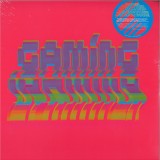
Following January’s acclaimed vinyl debut from Exterior and summer’s much-loved Kota Motomura EP, Edinburgh’s Hobbes Music label ends 2019 with its first album release, also a debut, from GAMING, a fresh new braindance electronica project straight outta Glasgow, from producer and musician Alan Bryden.
GAMING is a new solo outing that brings together a lifelong love of music and technology and creating left field, rhythmic electronica. It’s the sound of IDM, nineties techno and mensch maschine computer music that is as spontaneous as it is programmed.
“Scenes From A Deserted City is a collection of tracks that started as a set of riffs, loops, rhythms and grooves and unfurled around a sense of growing unease about the future of the urban environment around me.
It’s an album that started out as sound…and ended up as a way of telling stories about the age of anxiety we live in, how our world is changing, and how we find a way through that.
This is DIY electronica from Glasgow – it was made on a growing collection of digital and analogue synths and FX units, including a bunch of modular racks, each with its own idiosyncrasies and character that belies the assumption of the binary.
The studio where it was recorded – an abandoned, and often very cold, school building reclaimed by the community some twenty years ago – offered up stories of resilience, even when all seems lost. (I’m not sure what the mice contributed but they definitely climbed in and out of some synths).
This album is ultimately about my changing relationship with Glasgow, a city I’ve lived in for more than 25 years. It’s about how I feel now about the increasing sense of urban decay and how the city can be a very isolating place. It’s about how I reflect on my younger creative self trying to find a direction but mainly feeling a sense of dislocation and not fitting in. And it’s about the questions I have about how that relationship is changing, how it will be forced to move forward.
The result is a soundtrack for walking home on your own, in that headphone bubble when it’s just you focusing on that music that makes sense to you alone. It’s for early in the morning, after the night before, or going to work with the memories of that slipping and sliding inside your head. It’s about how it feels to be both elated and lonely, to be lost in the familiar, despairingly hopeful.”
ALAN BRYDEN (Glasgow, August ‘19)
For their sophomore album, Chemical Reaction, Galaxians have stripped back the music and pumped up the vocals. Emma Mason's unstoppable voice elevates the group to a fully-formed musical act. This new LP is all about her voice.
Mason's powerhouse vocal on the West End Records-inspired Chemical Reaction beckons you onto the dancefloor. Jed Skinner's bright and breezy synth melodies allow the song to really breathe, whilst Sam Bell's front-and-centre conga groove (straight out of Double Exposure's My Love Is Free) and Matt Woodward's intricate rolls ramp up the track's energy and momentum. The shorter Mama Ghetto Vogue Edit is brought to life by Darren Pritchard, vogue dancer and mother of Manchester's House of Ghetto, who meets a neon wonderland in the electrifying video.
Elsewhere on the album, Heartbreaker champions female empowerment and personal freedom over a pounding boogie groove. It's a tight arrangement which drops into a delay-drenched Levanesque drum break before crescendoing back into a final chorus via one of Skinner's trademark JX-3P synth solos.
On the proto-house funk of Fight For Love, where Emma flexes her vocal chords to jaw-dropping effect, a failing relationship is thrust into the spotlight over a punchy Linn Drum groove. On the silky shuffle of after-hours jam Work It Out, which brings to mind the classic Sly & Robbie Compass Point productions, Emma croons about a lover, her voice cast in a softer, more subdued glow. Heat of the City sizzles with the essence of an urban summer, and is peppered with heart-stopping hand claps.
Third single Horizon sees the band in more reflective low-key mode, and could be their minor hit of the summer. There's some neat drum programming here, intertwined with Woodward's intricate fills and hi-hat playing.
On Not The Money, Mason's vocal shifts to a lower register in the mid-section, bringing to mind Grace Jones at her most commanding.
All in all it's a life-affirming experience, one born out of a sense of community and collaboration. Seven years on from their early explorations Chemical Reaction sees Galaxians retain sight of the principles that make their output, and dance music as a whole, so vital - commonality of experience, singular moments shared by a crowd, and rhythm as the best medicine.
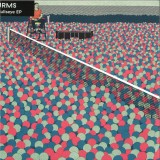
Gudu Records returns with its fourth release, courtesy of a debut EP from London-based newcomer, JRMS. His music will already be anyone who has caught Gudu boss Peggy Gou's DJ sets over the past couple of years, with JRMS tracks being mainstays of her mixes, including her 2019 DJ-Kicks compilation.
The memorable title track is a percussive, elasticated house delight, blending springing breaks with disorienting rave stabs. This taste for naive melody is further cemented on the loose-limbed 'Shake', while '3' defies it's purely numeric title with gleefully offbeat electro and a shuffling card deck of drums leading forward delicious oscillations. Finally, 'Solo' cruises on with space and sunsets in mind, a rich house journey that underscores both the distinct and versatile promise of JRMS.
DRUMIRA features four heavyweight tracks by Stefan Schneider, ghanaian drummer Nicholas Addo Nettey and percussionist Sven Kacirek (Hamburg).
Nicholas Addo-Nettey was a former percussionist with Fela Kuti and his famous Africa 70 band during the most legendary years of his career. He has left band in 1979 in Berlin where he has been living ever since. His early solo album PAX NICHOLAS from 1971 has gained fame through a reissue in 2009.
It is interesting to note that DRUMIRA was first released anonymously in 2011 in a minuscule private pressing edition which only had a Spiegelmotiv hand stamp on the sleeve. Due to legal issues in 2009 with some of the mapstation releases, Stefan Schneider decided to put his project on hold until things got cleared. After nine years the record finally finds a place in the mapstation catalogue and gives full credit to all musicians involved. The EP comes with a luxurious hand assembled sleeve in a small edition.
Music-wise this EP is most distinguished by the combination of slow paced dark electronics and inimitable percussion patterns by Nicholas Addo-Nettey.
Nicholas Addo-Nettey: Percussion
Stefan Schneider: Electronics
Sven Kacirek: additional percussion
Rose Colour Vinyl[19,96 €]
Repress
MARA is the debutalbum of Munich-based jazz group FAZER. The young musicians combine African and Latin rhythms with dubby basslines and melancholic melodies. The unusual lineup with two drummers (Simon Popp, Sebastian Wolfgruber), bass (Martin Brugger), guitar (Paul Brändle) and trumpet (Matthias Lindermayr) leaves an open space for unfettered improvisation. Through the concept of repetition and finely measured dynamics, Fazer create a drawing energy that can be felt directly at their live shows and has been captured perfecty on this record.
Our first vinyl will go with a big bang!
Early support from Mano Le Tough, Dave DK, Maceo Plex, John Digweed, Gardens of God, Ame, Silicone Soul, Hunter/Game, Kevin De Vries, Massimiliano Pagliara, Fideles, Paul Ritch, Shall Ocin, Raxon, Mind Against, Ae:ther, Ilija Djokovic, Jeremy Olander, Frank Maurel, Alexi Delano & more
Barcelona based producer Adwer returns to his Bolygo Records imprint in 2020 with five alluring cuts entitled "Our Genome" EP with remixes from Amandra and Marc Pinol. Adwer has left his mark on the overall electronic music scene in the last few years through his melodic leaning productions that've picked up support from the likes of Sasha, John Digweed, Joris Voorn and Laurent Garnier. Adwer aims to capture emotion within his music with his synth focused tracks and euphoric vibrations that continue to solidify his reputation of being a purveyor of innovative sound design and gentle sonics.
"Our Genome" EP sees him deliver the first release of the new decade on his Bolygo label where he invites remixes from the Ahrpe Records label boss and French producer Amandra and Spain's Marc Pinol who is renowned for releases on John Talabot's Hivern Discs imprint.
"Messing with the DNA" begins proceedings with thudding kicks, growling bass rolls and dreamy oscillations fluttering underneath before "Recombinant" deploys undulating euphoria through tranquil tones, deep vibrations and progressing synth notes that unravel escapist intentions.
Amandra's remix of "Recombinant" lays focus on raw, crunchy percussion, lo-fi experiments and murky pads that keep you locked throughout whereas Marc Pinol's remix of "Messing with the DNA" offers up electro-styled grooves, cosmic waves and acid-tinged oscillations that carry outer space feels.
"Our Genome" then rounds things off with meandering, 80s styled synths, ethereal, revolving modulations and rumbling bass frequencies to finish.
While the ongoing global pandemic means our chances to gather and dance beneath deep blue skies are likely to be limited, there’s never been a greater need for warm, positive and life-affirming music. NuNorthern Soul has decided to do its bit by offering up a brand new 'Summer Selections' sampler that’s packed to the rafters with magical musical treats lifted from some of the label’s most potent forthcoming releases.
The EP begins with something rather special from Canadian producer Igor B: a gentle, sunrise-ready soundscape rich in languid hand percussion, bubbly synthesizer lines and glistening guitars. Entitled 'Deep Breath', the track is just one of the many highlights you’ll find on his forthcoming debut album, “Stranded Seaside”.
There’s a similarly tactile and immersive feel to 'Early Morning Ferry' by George Koutalieris, a Greek producer whose debut album 'Stop, Look, Listen' will be released by NuNorthern Soul later in the year. On his contribution to 'Summer Selections Two', Koutalieris wraps lilting, sun-soaked guitar solos and soft-touch electronics around a chunky groove that doffs a cap to the more laidback end of the 1970s West Coast rock spectrum.
Next up, long-time friend of the family Chris Coco delivers a stunning interpretation of 'Dinum', an overlooked neo-classical/ambient fusion track by Faroe Islands-based producer Kristian Blak’s Yggdrasil project. Coco’s simmering, string-drenched re-imagining is featured here as a teaser of NuNorthern Soul’s reissue of the 2014 track in the autumn, which will also feature a mind-blowing 10-minute rework by Mike Salta – an artist who is also featured on 'Summer Selections Two'.
This time round you’ll find Salta collaborating with Mortale on the starry, EP-ending ambient bliss of 'Bells of Burgibba', a deliciously drowsy mixture of twinkling electric piano motifs, chiming lead lines and woozy pads taken from the forthcoming “Celestial Hike EP”. It paddles in similar sonic waters to label boss Phil Cooper’s stretched-out, slo-mo Balearic dub of new signing Faint Waves’ 'Aphrodesia', a teaser of the artist’s “Islands In Time EP” which can be found elsewhere on 'Summer Selections Two'.
No NuNorthern Soul label sampler would be complete without a contribution from BJ Smith, an artist who has been with the imprint from its earliest days. Smith returns to the imprint with another reminder of his uncanny ability to deliver ear-catching cover versions that re-cast classic cuts as loved-up rays of Balearic sunshine. This time round Smith takes us on a huggable shuffle through Prefab Sprout’s 'All the World Loves Lovers', re-imagining it as a future Balearic anthem and a summer 2020 sing-along. It’s not only a sneak peak of what we can expect from 'Dedication to the Greats Volume 3', his first covers collection for nigh on six years, but also a life-affirming highlight of an EP that oozes musical positivity from start to finish.
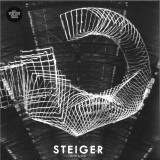
Ghent's Steiger are a piano trio, but not in the classical sense. With their versatile style, influenced by different musical genres such as jazz, rock, pop, classical and electronic music, they try to find a balance between composition and improvisation through the use of experimentation and electronics.
Considered pioneers of the Belgian jazz crossover scene, Steiger have been active for 6 years and have recently found themselves performing at major jazz venues in Flanders, picking up numerous accolades along the way.
The trio's highly anticipated sophomore album 'Give Space', released 14th September on Sdban Ultra, was recorded at 7 different locations, with the music composed to fit and fight these locations within a dialogue of acoustics, atmospheres and appetition. Field recordings, reverbs, ambient sounds, all collected within the search for the unpredictable, were given space within this dialogue as the essential part of the encounter. As a result, the locations emerge somewhat as a fourth member of the trio. The music - sometimes fixed, sometimes completely free - takes on an ever-changing journey into their multi-faceted world.
Big South West energy here as young Bristolians Litherland make their debut on new North Devon label with the dreamy, rolling, old school / new school breaks of ' Ida's World'.
'Keffala Breaks ' drops the tempo, adds some grit, and keeps drifting along, before up and coming Italian electro duo Hiver finish things up with a deep and streamlined version of Ida's World.
Höga Nord Rekords proudly presents Birds from London. Birds or Katie Wilkinson is relatively new as a producer but has been DJ-ing and playing in bands for the last nine years, marinating herself in interesting underground music. This 7”, Transcendental Phases/Tunnel Vision is her first release on Höga Nord Rekords.
Birds is a declaration of love to electronic music and psychedelia. The vocals in Tunnel Vision bares traces from the psychedelic pioneers of the 60’s – Think Roky Erikson with a Roland 303! Birds’ music is powerful and monotonous and she creates a dirty, warm and monumental soundscape. The production is airy and dynamic
Wilkinson mean that “we must try and find harmony in what we have and try and aim towards something positive, despite the fact that we live in a society that’s been completed fucked via the selfish behaviour of others (and most probably, ourselves at times).” With Brexit and the new wave of racism, spreading over Europe Birds makes music for a generation left with little hope but with the desire for something too long for.
Following up Batozsek’s four slices on Vol 2, Ecdisis Vol 3 is fresh and ready to wreak some havoc.
Some familiar names from the first volume of these series return for the third instalment as well as an otherworldly figure in the electronic music world.
Up first is Vinilette, returning after her excellent appearance on Ecdisis Vol 1. A brood of beats take hold for Vinilette’s rework of Flux of Pink Indians’ “Nothing Is Not Done.” Tribal, this rhythmic romp is inspired by the 1986 piece on Uncarved Block. Layers of kick drums, bongos and toms echo and
judder as a cold line circles and closes ever tighter. Following we have the head honcho, Juanpablo with his extended edit of Mac Blackout’s “Do The Dance In Your Head” which original version came out in Valencia’s imprint B.F.E. in 2011. The original song with its guttering guitar strings and nicotine
stained vocals, proves ample ground for the Frigio boss to work with. The intro is given room, adopting a doom disco march, before the fearsome crash of strings. The lyrics, a lurid tale brimming with menace, are sweetened with twirling notes in this grisly stomper. The final attack sequence comes care of Mick Wills with his amazing cut of an unreleased track by Argentina’s great producer NGLY. Dark and looming this distortion streaked encounter will leave bodies and speaker cones raw. Three edits with one central vision. This is music that cuts to the bone, these are tracks that continue
that intent first established by Ecdisis Vol 1. A collection with a serious impact, no doubt.
Reemerging from the threshold of the cosmic vortex, Black Lodge returns with another sonic artifact that is charged with vigorous chaotic energy, known as EXPERIMENT_ZERO. Accounts of the radiant object's origin are as mysterious as the raw energy that utters from its core. Following a close study, the guardians of the portal suspect that "Experiment Zero" was a primordial experiment rooted in the slam jack pits and DIY warehouse rituals of ages passed. A sonic dialog constructed of various languages, spanning from roots-house jak to bare-knuckled electro are revealed across the artifact - a revolutionary tale that surpasses the constructs of ephemerality, with a refusal to be ignored. Across the release the listener is confronted with fearless acid lines that are underscored by a tone of revolution, and sets the stage for a human voice that switches between modes of a sharp and mutated presence. The power of such sonic objects are both celebrated and rejected by various tribal societies. It is all dependent on the belief structures and traditional histories of its members. Those that belong to the cult of Ron Hardy, Mad Mike Banks, Traxx, and JTC will welcomingly be drenched in its riotous energies. It is for the dedicated, not the light-hearted. After further research it has been discovered that, Experiment Zero is the product of Dona, aka Dj Plant Texture and Mike Tansella Jr. of Son of Traders, both products of the ancient mercantile city of Bari in Southern Italy. Previous works from these artists have been featured on Creme Organization, Gravitational Waves, Unknown to Unknown, and Illian Tapes. All sonic experimentation was recorded in one take to capture the raw energy of instantaneous collaborative sound craft operating in flux. Black Lodge's 4th release is sure to find a space in the music collections of those seeking to travel within the uncanny portals that unforgivingly defy the status quo. Mastered by: Alex J Michalski Label design: Kosmik Pressing: Deepgrooves (NL)
Trad Vibe Records is proud to announce the Cassettes of the three first albums by French Jazz-Funk band, Cortex: Troupeau Bleu, Cortex Vol.2 and Pourquoi, all originally recorded between 1975 and 1978.
This is the very first time that these 3 masterpieces will be available together in Tapes. This French Jazz group has become a cult classic for Jazz-Funk addicts worldwide. From the US to Japan and across the world, many are the stars of Hip-Hop, Rap and Electronic music, who have sampled the compositions of Alain Mion with Cortex. These 3 albums have become mythic collectable classics and a favorite for international funk collectors for years! Everyone will now be able to discover or re-discover this trilogy; and one of the finest and most representative bands from the French Jazz scene of the 70
Trad Vibe Records is proud to announce the Cassettes of the three first albums by French Jazz-Funk band, Cortex: Troupeau Bleu, Cortex Vol.2 and Pourquoi, all originally recorded between 1975 and 1978.
This is the very first time that these 3 masterpieces will be available together in Tapes. This French Jazz group has become a cult classic for Jazz-Funk addicts worldwide. From the US to Japan and across the world, many are the stars of Hip-Hop, Rap and Electronic music, who have sampled the compositions of Alain Mion with Cortex. These 3 albums have become mythic collectable classics and a favorite for international funk collectors for years! Everyone will now be able to discover or re-discover this trilogy; and one of the finest and most representative bands from the French Jazz scene of the 70
The late engineer and producer Paul C’s fingerprints are all over this single from Ultramagnetic MC’s, perhaps the defining release of their career. While earlier records gave notice of their strange and unique talents, they were loveably messy affairs. This, however, is the real deal, as polished as their early sound would ever be.
‘Give the Drummer Some’ grabs a fistful of different elements – from James Brown, Dee Felice Trio and James Brown – but bends them to its own purpose. This is a song with a momentum of its own and endlessly quotable lyrics. One of which, of course, was sampled by The Prodigy – huge hip-hop fans – for ‘Smack My Bitch Up’ in 1997. The now hugely rare 7” of ‘Give the Drummer Some’ edits this out to make it more radio-friendly, but this reissue reverses that cut, giving you the original lyrics. If anyone knows why Kool Keith also changes the word ‘rappers’ to ‘monkeys’ for that edit, answers on a postcard…
The brilliant B-side harks back to the time when every group had a song dedicated to their DJ. ‘Moe Luv’s Theme’ sees Kool Keith at his most straightforward, singing the praises of the turntable skills of Moe Luv. It would be throwaway were it not for the effortless repurposing of Jackie Robinson’s oft-sampled ‘Pussyfooter’. That – and the presence of one of the world’s great MC’s at the height of his powers – elevates it far above a footnote.
A focal point for the unique punk-funk that was coming together in Bristol as the bridge from the 70s to the 80s arrived, Maximum Joy was formed by Glaxo Babies multi-instrumentalist Tony Wrafter and 18 year old vocalist Janine Rainforth. Soon they drafted in additional Glaxo Babies in the form of drummer Charlie Llewellin and bassist Dan Catsis, along with guitarist John Waddington, fresh from The Pop Group. The group set about making a one-of-a-kind mix of funk, punk, pop, jazz, dub, soul, afrobeat and reggae; creating a brilliant burst of danceable tunes wrapped around elastic basslines and complex percussion, punctuated by melodic horns and stabs of guitar, all of it highlighting Rainforth’s naturally enthusiastic vocal style. They immediately took their place on the rosters of influential labels like Y and 99 with iconic debut single Stretch, as the band had clearly captured something special.
Entering 1982, Kevin Evans had replaced Catsis as Maximum Joy set out to make what would be their only full length LP. Recording at Berry Street and The Lodge with producers Adrian Sherwood (On-U-Sound legend), Dave Hunt (Flying Lizards, Pigbag, This Heat) and Pete Wooliscroft (Kate Bush, Talk Talk, Peter Gabriel, OMD, This Heat) the band would mix practiced grooves with imaginative improvisation. The results were absolutely jaw-dropping.
Station M.X.J.Y. kicks things off with Dancing On My Boomerangand promptly sets forth the blueprint for bands like !!! and The Rapture to capitalize on nearly twenty years later. In fact, those bands can only dream of the mix of driving percussion and spectral shards of guitar that Maximum Joy has clearly already mastered. Do It Todayannounces itself immediately with Rainforth delivering a looping and infectious vocal melody that the others dance around playfully, as handclaps keep the stomping groove intact, leaving a dancehall hit for outer space circling your turntable.
If you ever wondered what it would sound like if ESG and The Slits combined forces, Let It Take You There has the answer for you. Llewellin periodically delivers a cascade of marching band percussion while Waddington’s classic R&B riffs are transformed into a slithering snake trying to keep pace with Evans locked in groove as Rainforth’s singsong vocals are reduced to whispered echoes. They close out side one with the delicious slab of pop that is Searching For A Feeling. Clearly pronouncing the band’s intention to find the positives in a dire time for England, they look to rally those around them to focus on making real change in the face of opposing voices via one of Rainforth’s most delightful deliveries.
Side two sees Wrafter stretching out on Where’s Deke?, showcasing what had already been obvious, as he is the band’s secret weapon, often coloring each tune with his horns, sometimes in several styles just seconds apart. He underlines that feeling with the raucous and bouncy Temple Bomb Twist, before they hit a straight groove in Mouse An’ Me, like a dub infected Train In Vain. Well, if The Clash had ever allowed themselves to properly lose their minds on the dancefloor.
A funky afrobeat flute and guitar battle breaks out (way cooler than it sounds) before Rainforth rallies the troops to not only fill up the disco, but also the surrounding streets in political resistance to Thatcherism via All Wrapped Up. It is entirely genuine and their activism has none of the menace of the others in their scene, but rather a feeling of sharp optimism amongst this danceable masterpiece. It is that optimism that always set Maximum Joy apart, and makes their grooves all the more irresistible today.
Sadly, the upward trajectory of the band was cut short as Rainforth left the group, and soon afterwards seemed to stop making music altogether. The reasoning seemed destined to remain a mystery, until earlier this year when she gave a brave interview to The Guardian where she revealed that an assault by someone in the industry caused her to retreat entirely from music for nearly three decades. Luckily, Janine has embraced music once again, and she refuses to let the magic that was Station M.X.J.Y. be lost as well.
Theresa Stroetges has and always will be a traveler. Under the name Golden Diskó Ship or as a member of bands like Soft Grid or the improv collective Epiphany Now!, the Berlin-based multi-instrumentalist has continuously been moving through the fringes of experimental music, but also extensively explored the possibilities of tried and tested formulas - whether folk, rock, techno or pop. With her fourth solo album, her first for the Karaoke Kalk label, the Golden Diskó Ship is yet again venturing into unknown territory. »Araceae« is inspired by environmental changes and the eerie feelings that arise when faced with natural beauty - when everything seems perfect on the surface but something feels off underneath it all. As a whole, it is notably more focused on electronic grooves that provide the foundation for Stroetges’s poetic long-form storytelling.
Partially conceived during a residency in India, »Araceae« is the first Golden Diskó Ship record to feature two guest musicians. For »Wildly Floral, Slightly Damp,« Stroetges collaborated with percussionist Dripta Samajder who with his Sri Khol contributes complex rhythms to a driving beat that wouldn’t be out of place in the record bags of daring DJs. Sophia Trollmann takes over saxophone duties for »Ortolan,« a riveting coming-together of intricate, IDM-flavoured techno and jazz-inspired improvisation. Both are integral standout tracks on an album that clearly follows a holistic plan. Already the opener »Clouds of Neon Limelight« dips into anthemic synth pop territory, but unfolds into a great saga full of ominous undertones and Stroetges’s trademark: layered vocals that at once evoke feelings of uncanniness and intimacy.
It’s a juxtaposition that runs throughout »Araceae,« thus enforcing the album’s overall themes of sensual experience and alienation. »Game of Biryani« for example lends some of its musical structures from pop music, calling into question traditional songwriting conventions which here reappear as irritating echo effects rather than recycled old tropes. With the lush »Limping over the Prairies« and the adventurous »Glow-in-the-Dark Gloves,« Stroetges further challenges her audience by applying noise and a heavy dose of autotune respectively to disorientating effect.
The couple makes for an impressive finale of an album that scrutinises our ideas of what is natural - whether in music or the world around us. »Araceae« was inspired by the travels of its creator, but also sets out to ascertain what lies beyond everything that eyes or ears can perceive.
The Berlin based label Sonar Kollektiv has been waiting for it anxiously: Key Elements' debut album leads Jazz music into the new decade down-the-line. The music Key Elements create is fresh, merciless and ruthless and has always the finger on the pulse of the time. The album's eight tracks are all far away from Broken Beat nostalgia or Beatmaking nedism, they breathe inspiration from the young, thriving British jazz scene. Key Element's initiator, DJ and producer Marian Tone, built up a reputation in the Berlin hiphop, soul and jazz scene over the years (also as a co-founder of Beatkollektiv). With all of his compositions you always feel this heritage and his love and passion for hiphop. But the other two allys within ëKey Elementsû, drummer Waldi and the keyboard or bass player Jim Dunloop made their contribution with compositions and ideas as well. An album which was initially designed to be a mere solo project became an effort of a trio over the years being inherently consistent.
Introducing new sounds into the continuing MANHIGH project with Azteka Tekno, emerging Moscow producer Ober Dada finds rare power with his refined combinations of EBM and techno. Fusing concepts from Dadaist, Futurist, and Suprematist art with vocal guests from the Krasnodar Opera on ‘Tomorrow No’ and ‘Erdefalt’, the sophistication of his vision is immediately apparent in the arrangements and structures. With lyrics sourced from World War I-era apocalyptic poetry and a forthcoming opera from the artist, these two efforts show uncommon complexity in their running times, with layers of vocals and melodies trading off in sections with punishing rhythms that move between lashing breakbeats and straighter 4/4 sections. The comparably straightforward title track prominently features the producer’s own snarling vocal refrain, repeated through heavy distortion over pounding kicks and wayward electronics, while a contrasting melodic sequence enters from the breakdown for needed relief. Again featuring Ober Dada’s voice, ‘Hey’ foregrounds its wandering keyboard line for a comparatively restrained but still intense study on the styles found across the record.
Evod and Oisel are back on limited catalog with a split vinyl release. Evod’s A1 is a minimal, elegant and clean track, characterized by a simple, yet deep, melody. Drums are linear like the structure of the track, perfect for this kind of refined work. A2, on the other hand, is a dancefloor oriented track, fiery right from the start. Various piano sequences intersect with powerful 909 drums, recalling the original 90’s style. A3 is a perfect tool : a shattered piano melody changes constantly on a 4/4 beat, the result is a work that no listener will ever find boring. U4 by Oisel is full of randomic ambient sounds that dialogue with a deep bassline sequence and dynamic drums, resulting in a track that, almost spontaneously, is always changing. As Oisel experiments with different composing styles, U2 is suspended in the void: high frequencies raids, random bells melodies, granulated hi hats, confused samples of dialogues distinguish the track.
Khruangbin has always been multilingual, weaving far-flung musical languages like East Asian surf-rock, Persian funk, and Jamaican dub into mellifluous harmony. But on its third album, it's finally speaking out loud. Mordechai features vocals prominently on nearly every song, a first for the mostly instrumental band. It's a shift that rewards the risk, reorienting Khruangbin's transportive sound toward a new sense of emotional directness, without losing the spirit of nomadic wandering that's always defined it. And it all started with them coming home. By the summer of 2019, the Houston group_bassist Laura Lee Ochoa, guitarist Mark Speer, drummer DJ Johnson_had been on tour for nearly three-and-ahalf years, playing to audiences across North and South America, Europe, and southeast Asia behind its acclaimed albums The Universe Smiles Upon You and Con Todo El Mundo. They returned to their farmhouse studio in Burton, Texas, ready to begin work on their third album. But they were also determined to slow down, to take their time and luxuriate in building something together. Musically, the band's ever-restless ear saw it pulling reference points from Pakistan, Korea, and West Africa, incorporating strains of Indian chanting boxes and Congolese syncopated guitar. But more than anything, the album became a celebration of Houston, the eclectic city that had nurtured them, and a cultural nexus where you can check out country and zydeco, trap rap, or avant-garde opera on any given night. In those years away from home, Khruangbin's members often felt like they were swimming underwater, unsure of where they were going, or why they were going there. But Mordechai leads them gently back to the surface, allowing them to take a breath, look around, and find itself again. It is a snapshot taken along a larger journey_a moment all the more beautiful for its impermanence. And it's a memory to revisit again and again, speaking to us now more clearly than ever.
Lascelle 'Lascelles' Gordon - the driving force behind Vibration Black Finger – astonishes us yet again with a magnificent second album. Once more his inspiration is drawn from the obscure spiritual jazz collectives of the 1970s where he employs a vast array of like-minded collaborators to create a listening experience infused with an ever-present undercurrent of personal expression and cultural empowerment that's as enriched with ideas as it is progressive in its form.
Having earned his chops as founding member of the Brand New Heavies, Campag Velocet and Heliocentric World, Lascelle's latest album Can You See What I'm Trying to Say bursts with energy and vivid contrasts, flowing effortlessly between beat-laden grooves, oscillating improvisations, soulful recitations, audio verité and moody atmospherics. The album drops like a post-hip-hop reimagining of foundational genres, with a prayer to the future.
''Can You See What I'm Trying to Say' is a quote from Marion Brown, the great alto saxophonist' explains Gordon. 'The album was put together over the last three years, not in the conventional way of going into the recording studio with musicians, but starting from ideas I had on various formats (cassettes, mini disc, DATs & reel to reel). I also used field recordings. I did a lot of home recording with long time musical friends Ben Cowen & Diana Gutkind, some of them going back 20 years. The voices of my nieces (heard on Law of the Universe) were recorded 25 years ago. 'Only in a Dream' and 'Empty Streets' are the only songs that were recorded live in the studio.'
'I was blown away by the New Life Trio 'Empty Streets' (from 1978) and was fascinated by the vocals' continues Lascelles. 'I always thought it would be great to cover this tune'. Such is the power of this song, it's used to open the album, with vocalist Ebony Rose turning in a thoroughly haunting vocal performance. While not a concept album as such, Lascelles has nonetheless conceived and presented Can You See What I'm Trying to Say to be heard as a complete listening experience, with each track blending into the next, resulting in a seamless expression of music.
Following 'Empty Streets', some instrumental interludes segue into a dimensional drift of beats, space synths, horns and electronics; there's a vocal reprise of 'Acting For Liberation', sung with gusto by Maggie Nichols, and then there's the album's momentous finale, 'Only In A Dream', which takes off as an ominous drone before a delicious bassline from the late Ken Kambayashi transforms it into an intense, soaring epic which finally descends onto another world.
In a career spanning several decades, Lascelle Gordon remains an omnivorous musical force, whether as DJ, collaborator or radio broadcaster. As amply demonstrated on Can You See What I'm Trying to Say, he refuses to rest on his laurels and continues to impress with music that is as rich, vital and contemporary as anything he's done before, covering an incredible amount of musical ground in the process.
The premise for Quindi Records is simple – to represent music with a universality at its core.
Without adhering to specific genre tropes, the releases are intended to have a meaning and purpose in all kinds of situations – a social soundtrack as much as a stimulating experience,
feeding emotions and the psyche with a sentimental palette of sounds. Lovers’ music, loners’ music, music for friends and family alike.
Woo makes for a perfect choice to meet this loose concept head-on – the music of Clive and Mark Ives straddles disparate worlds and finds its own peculiar balance. On one hand it’s delicate synthesizer music with a minimalist bent, while on the other their joyous, twinkling harmonies have an immediacy that speaks to the soul. You can detect privacy in their craft – the brothers originally recorded their music in relative isolation in London in the 70s, 80s and early 90s. It’s only in recent years their sublime work has enjoyed a wider audience through an extensive run of reissues.
Arcturian Corridor ? presents a rare, previously unreleased piece of music from Woo – the expansive suite of the title track that unfurls across five parts. It’s an enchanting listen that shows a new breadth and depth to the duo – detailed drum programming and a broader palette of synth tones cascading in elegant unison. The name refers to Arcturus, the fourth brighteststar in the night sky. As Woo themselves explain, “The Arcturian Corridor is said to be a channel of light that brings unconditional love and wisdom from Arcturus to Earth.”
In addition to the 20-minute A-side piece, Woo also presents a new version of “Love On Other Planets”, a standout piece from their 1990 album ?Into The Heart of Love? . The fragile subtlety of the original has been embellished here with rich new passages that turn it into a kind of electronica epic, although still marked out with the sensitivity one expects from a Woo record.
Two remixes complete the set, both furthering Quindi’s modus operandi as a genre-agnostic force for cosmically charged music. Dublin’s Wah Wah Wino collective present their Wino Wagon manifestation for a tastefully strange house version of the fifth part of “Arcturian Corridor” that channels the freakiness of Pepe Bradock, the robo-funk of Metro Area and a soupcon of pop nous. British duo Ultramarine maintain the stylistic ambiguity as they channel decades of expressive experimentation between live band dynamics and machine soul on their version of the title track’s second chapter.
- A1: Mind Up (Feat Andrew Ashong)
- A2: Future (Are We Living!?) (Are We Living!?)
- A3: String Stingalings
- B1: Us (Feat Afua)
- B2: Check (Feat El Train)
- B3: Choppa Fiesta
- C1: Give Me Some Of That (Feat Afua)
- C2: Good Ol' Love (Feat Sol Goodman)
- C3: Whole Again Hooligan (Feat Sol Goodman)
- D1: Glide (Feat Emeson)
- D2: Take Me To The Gutter (Feat Sol Goodman)
- D3: I Remember
Producer and multi-instrumentalist J-Felix returns with his
future blend of boogie, p-funk, disco and soul on his
sophomore album ‘Whole Again Hooligan’. Influenced by the
musicianship of Roy Hargrove’s The RH Factor, James
Brown and George Clinton, Joe elaborates on the concept of
the record: "My mum used to call me a hooligan when I was
growing up which was probably quite accurate, but there's
something about finishing a creative project as a musician that
makes you feel whole again”.
‘Whole Again Hooligan’ features a plethora of guest talent
including Brighton producer El Train, vocal flair Jerry Clavier
aka Sol Goodman, soul veteran and stellar DJ – Emeson,
and classically trained musician Afua. The records magic
moments are catalysed through a collaborative ethos, a skill
honed on J-Felix’s debut LP '101 Reasons'.
Constantly soaking up a mind-boggling array of influences –
through touring internationally as Alice Russell and Swindle's
guitarist, being an in-demand DJ (holding residencies at
Patterns, Brighton and Queen of Hoxton, London), hosting
a radio show on 1BTN, supporting the likes of Roy Ayers and
George Clinton, the list is endless... through which J-Felix's
penchant for all things funk has been perfected.
“The spirit of disco is more than alive and well for this” – Mixmag
“This guy’s got it going on!” - Huey Morgan (BBC 6Music)
“A sublime journey through squelchy electro-funk, tripped-out neo-soul and woozy hip-hop beats” - NME
“J-Felix aka Joe Newman crafts a solid tune with smooth gliding funk guitars, an undeniable bassline that magnetizes the eardrums and hard-hitting groove to match.” – EARMILK
“Excellent.. So many reasons to listen to J-Felix’ music” – FIP
“Tru Thoughts’ rising talent” – The Telegraph
After years of searching for the elusive sensation of heart-rending beauty, Avondlicht releases his debut album on 3 April, 2020 on all digital platforms. The LP will be out on 8/4.
Hyperromance is the culmination of an emotional and geographical journey, as Belgian producer Matthias Dziwak sought to find and examine idealised moments of true romance within the less-than-romantic reality of existence.
Having already achieved a great deal with his initial run of EPs for labels like PIAS, Fog Mountain and Unit Delta Plus, Antwerp-based Dziwak became obsessed with the concept of Hyperromance – “a moment or idea so heavily romanticised that it seems impossible to be really experienced.” The melancholic feeling it sparked in his heart set him off on a journey through Argentina, Chile and Uruguay, via a month-long stay in Amsterdam and finally to settling for six months in Portugal. Throughout this time he made field recordings and began writing pieces that would feed into the finished album. Along the way he found a full spectrum of moments that allowed him to view the world in a truly romantic way, from the majesty of the Andean mountains and the snow falling on the Amsterdamse Grachten to encountering love in Lisbon. At other times he found himself lost, adrift and heartbroken, pulled back to Earth, as is the cyclical nature of the human experience.
Musically, Hyperromance’s grapple with day-to-day reality and rose-tinted fantasy is embodied through the contrast between organic instrumentation and high-definition electronics. Dziwak began writing his songs as simple piano pieces, which then transferred to a staple of synths and sound processing as they became more wholly defined. Sonically, the sound sweeps from modern classical and bombastic electronica to evocative ambient, even touching on jungle and techno along the way. Rather than being defined by genre associations though, Hyperromance is shaped by the swooning beauty of its composition, as the music pulls you in and out of richly rendered moments of joy and pain following Dziwak on his personal journey of truth and beauty. With visceral life experiences woven into the fabric of the record, Hyperromance is expressive on the most intimate level. It’s a record that dazzles with searing bright wonderment and casts creeping shadows as the time passes – a journey as nuanced as life itself, elevated by romance and grounded by reality, beautifully told by Avondlicht.
The third vinyl-only release on Form&Terra Records is all about "Get together". Four artists gather on the 12 inch record to undertake a journey into electronic music together. First, Peter F. Spiess saddles his shimmering "Celluloid Pony" with minimal and techno vibes and rides high into the air via rough sound structures and flashing melodies. There Cie built his "Wolkenburg" and floats with it groovy and with great attention to detail into new layers of the atmosphere. On the B side, "Numbers Talk" by Prakash from Gran Canaria enchants with a wonderful groove that is as deep and blue as his home in the Atlantic Ocean. Markus Funke ushers in the final trip back to Cologne with his dubby techno monster "Levissima". Four wonderful tracks for all discoverer who have a thirst for adventure on the dance floor.
Pleamar(Spanish for high tide) is the first collaborative release between Chancha Vía Circuito and El Búho for Wonderwheel Recordings, and stands as one of the most refreshing EP's within the Latin American downtempo electronic genre.
On this release the vision of both artists is united as one. This unity is reflected through "Real Fun, Wow!"'s artwork, presenting an image of a centered eye, reminiscent of historic drawings from tide studies. The representation of Earth, with a central circle surrounded by two ellipsoids that rotate and align in perfect harmony, mirrors the meeting of the two producers, the moment when the seawater reaches its apex andPleamaroccurs.
Like a metamorphosis that - without knowing it - we had been waiting a long time for, the EP reconstructs Pedro and Robin's encounters over the years. It transports us into the history of migrant sounds, the salvaged sound of floral jungles, high mountain forests and the ocean deep. We hear a sonic beauty filled out by deep personal stories - four humble and honest tracks that demonstrate the fusion of these artists and both them and the genre into new territory.
Starting with "Oruga"'s deep ambience, dub atmospheres and space echo reverberations, the album follows this line of reverberated rhythms and relaxed percussion lines throughout, carrying us along with a pulsating, deep, natural tempo. "El Mago Georges", perhaps the Pleamar'sjewel, is bursting with life - impactful depth and perfectly tuned melodies yet tribal and delicate at the same time. "Murga del Viento'' recalls another meeting of these two minds: El Búho's much-loved remix of "Sueño en Paraguay" a beautiful track from Chancha Vía Circuito ("Amansará" 2014). Here the whistle meets the owl from the previous track and the two birds take us a step forward in this collaboration with chords superimposed on a haunting bass. The release ends with "Una Pulgada de Silencio", a track of cosmic synthesizers, trickling water samples and the voice of argentine folk singer Gus Goncalves. Through Pleamar we come to find a much needed peace and clarity hidden beneath the rolling waves, a deep-sound escape to get lost in.
Jazz funk and gritty rare grooves ensemble from down under - Kerbside Collection - return with their third record "Smoke Signals"! Continuing in a down home, instrumental approach, but this time crafting newer ideas and flavours into their spectrum of warm, analogue, dusty grooves from much more Fender Rhodes electric jazz elements, to New Orleans sprinklings alongside their 60's inspired West Coast style.
"Smoke Signals" continues the wilder tones, textures and 'library' sounds of extra instrumentation found on their last output "Trash or Treasure", whilst introducing hints of fusion and cinematic analogue electric colours into the mix bringing things into early 70s territory. Opening with the lush, analogue synth and keys palate of "Waiting Game", reminiscent of some classic Air "Moon Safari" grooves, before the album properly begins with a fresh rendition of the Rhodes heavy Cedar Walton 70's jazz funk classic "Jacob's Ladder".
Then straight into the street-styled jazz bongo breaks and funky flute of "Traffic", a skankin' New Orleans reggae homage to one of its finest Creole dishes, featuring funky Hammond organ courtesy of guest Jake Mason (Cookin' on 3 Burners) and tasty piano work from multi instrumentalist Andrew Fincher who handles both guitar and keys on the whole record.
The middle of the record comes with a steaming afro funk workout, and a low slung N'awlins styled blues 'n' soul groove, both featuring the fruity, low-end brass action of Papa Jo on the big baritone sax, before taking a gentle emotional breather with a delightful, soft, soulful, Rhodes ballad, and a 'waltz-jazz-wig-out' attributed to their label's A&R Mr Mellow (reminiscent of some humorous UK acid jazz à la Corduroy and James Taylor Quartet) featuring some beautiful jazzy Flugelhorn, and acoustic double bass.
The album wraps up with another cover - a grittier reinterpretation and arrangement of a Bob James 80s jazz funk classic "Westchester Lady" complete with funky flute and soaring guitar solo, before finishing with the explosive rock funk workout and title track "Smoke Signals", rounding out a record with a full spectrum of handmade jazz funk, reggae, soul, library and gritty rare grooves all recorded to tape machine.
Long-time collaborators, longer-time best friends, lifelong analog appreciators; the German duo Iron Curtis & Johannes Albert join cosmic forces once again for another LP mission 'Moon II', a heartfelt voyage through the sounds, movements, styles and machines that created this music in the first place.
Think late 80s New York, early 90s Sheffield and the perennial sounds of Italo and Detroit, 'Moon II' is a lunar safari that celebrates the deepest foundations of house, techno and electronic soul while resolutely refusing to get nostalgic. Written and recorded during an intense two-and-a-half month session in Berlin last autumn, there's a consistency and tangible narrative running throughout as the pair play inspiration ping-pong over the course of 10 tracks.
A little Drexcyian glacial nod here, a hazy Boards Of Canada wink there. The Other People Place, Kerrier District, Environ Records, the Hacienda, Sub Club, Heaven 17, classic electro… All these ingredients are constantly bubbling in the mix for both Curtis and Albert (as individuals and even more so as a duo) and the end result is an album that works as a proper album should. Peaks, troughs, dreamy departures and all beautiful things in between.
Taking off where their debut collaborative album 'Industrie & Zärtlichkeit' (soon to be retitled 'Moon I') left us three years ago, the opening modem sounds on the intro track 'Canggu Laundry Club' dial us into a special sense of time and space.
It's a space where anything feels possible; Visual-inspired acid lines on 'Tiger Trek', lino-spinning body pops and windmills to the street sounds electro style of 'The Ultimate Seduction', the club-focused, Traxx-style Cutie Schamuthie collaboration 'Hurting', the melancholy plucks and struts of 'Feingold', the provocative, slinky, smoky finale piece 'Nektar'… The list of intergenerational and cross-genre landmarks on this adventurous body of work go and on, each track complementing the last as they fuse to create a bigger collective picture. A picture that's charmed together through the consistent use of key classic studio machines.
They call it Introverted Electronic Body Music, we call it warm, free-spirited and ultimately timeless. Perfect for your sets, your afterhours or your headphones alike; it's time to let Iron Curtis and Johannes Albert take you to the Moon and back… Once again.
Fantastic first album of Tunisian producer Azu Tiwaline, melting psychedelic dub, industrial and hypnotic techno deeply rooted in her berber culture, supported by Lena Willikens, Nicola Cruz, Toma Kami and Violet, to name a few!
Azu Tiwaline is a new name for a new spirit: one of a producer inspired by the need to explore her origins, rooted in the Tunisian Sahara. The Call to a different sound, organic and raw, vibrating in the great spaces of the African desert where trance music resonates... Ecstatic ritual.
Her first album, Draw Me A Silence, conceived as a diptych, reveals the multiple facets of her identity. Uniting the bonds that connect Berber music, dub culture and techno hypnosis, Azu Tiwaline invites us to refocus on our senses and our Nature. She knows how to use contrasts between light and the invisible, exploring the complexity of our emotions and the mystery that emanates from them, in a polyrhythmic chiaroscuro that runs through each one of her tracks, and of which we discover, as we go along, all the outlines.
Draw Me A Silence Part. I (to be released in February 2020), delivers the most hypnotic variant of her music, centered on dark percussive rhythms and a skillful use of repetition; each of the 5 tracks ineluctably carrying the listener into a trance. Two major tunes particularly illustrate the artist's imagination: "Itrik" and "Berbeka", perfectly synthesizing the heritage of Berber trance music and her techniques derived from minimalist and repetitive electronic music.
The continuation, Draw Me A Silence Part. II (to be released in April 2020), gives prominence to a deep heritage drawn from the dub culture and its numerous bass music filiations. This second part thus gives a new breath in the use of sound space, exploited in a much broader way, leaving all their space to complex syncopated percussive lines, supported by massive basslines dedicated to the best sound-systems. Omok, the first of the five tracks of this Part II is the perfect demonstration of this, playing here the essential role of a bridge to the darker waters of this album's end.
Each of these two parts exist as an Entity, and it is only when they are united that they will reveal their full meaning. Thus, in May, Draw Me A Silence will find its final form in a double-vinyl unifying them. Listening to this album in its entirety offers us a wide panorama of the sound landscapes visited by Azu Tiwaline, who seems to breathe primitive sounds of a faraway desert into a music with modern tones - and vice versa. A resolutely hybrid sound and a singular experience, playing with contrasts and nuances to catch the listener in vast and so far unexplored territories.
Uniting cosmic tones and lovely notes, unique sound collages and electronic noises, Muzak pour ascenseurs en panne ("Muzak for Broken Lifts"), Brigitte Barbu's first album, explores a dreamy universe, at the crossroads of electronica and the 70s’ post-tune-in/drop-out, echoing shadows of the peculiar doppelgänger; Pépé Bradock. Ça Plane pour Brigitte Barbu…
Resonant guitar notes, odd sounds, electronic hallucinations, and unexpected warm synth layers all gather together in Brigitte Barbu's first enigmatic album. Recorded and mixed during a reclusive one-week residency in a very special studio, under the benevolent cubic radiation of "Our Lady of the Ark of the Covenant,” using a computer, synthesizers, and various string instruments, giving birth to this resolutely unique album. The guitars were sharply disciplined, propelling strings into strange and hypnotic limbos, somewhere between a weightless journey through time and a fresh science lab experiment.
A perky cosmic album running away from rules and gravity.
"I wanted to compose an ethereal abstract Hip-Hop LP" says Brigitte, "with guitar as a brainwashed instrument, mirroring machines and computers, even if surely far from being unplugged". So much for that… With a real introspective dimension, the record stands out for its pure whimsical mood. The artist had strict rules for composing: “Each track is based on the association between a title chosen for its consonances, an open tuning, a random tempo and frequencies chosen for their supposed effects, real or imagined, on the mind, body & soul.” For example: Taro Patch -> Whale -> 93,75 BPM or Dobro -> Bear-> 118,125 BPM, Air Resistance -> Open Em -> Panther-> 480 BPM etc.
Brigitte surgically framed an electro-acoustic compendium, finding its atmospheric mothership… Brigitte Barbu, referring to a special interlude from a vintage release "Escalope de Dingue” (Fool’s Cutlet), explains that Muzak pour Ascenseurs en Panne is in fact a custom tribute to family, friends, triggered cosmonauts, René Clément and the card game where the winner is the bearded monarch nonchalantly stabbing himself in the head. It’s a lot!
The long awaited third album from much loved vintage synth maestros Billy Bainbridge and Mike Johnston, finally finds its home on Ghost Box Records. This is unironically joyful and melodic electronica; informed by library music, music for children’s TV and a deep passion for the history of music technology.
Plone are very much part of Ghost Box’s DNA. They were a central part of the 90s retro-futuristic scene in Birmingham that included Broadcast and Pram and to which the label has always had strong ties through graphic designer and co-manager, Julian House. They are also cited by the label’s other boss, Jim Jupp, as a major influence on his work as Belbury Poly.
The band was formed as a three-piece in the mid-90s and their debut single, Press a Key, was championed by John Peel. The first album, For Beginner Piano, was released on Warp Records in 1999. Their warm, witty and unfunky music stood out from the crowd, almost in defiance of the moody and masculine post-rave electronica of their contemporaries.
A selection of bootlegged demos from the early 00s was rumoured to be the follow up album, but it never materialised. After that Billy went on to tour with Broadcast and later formed Seeland with another former band member Tim Felton (also of Ghost Box’s Hintermass). Meanwhile Mike formed the ZX Spectrum Orchestra, released solo singles as Mike in Mono and was a member of The Modified Toy Orchestra.
Twenty years on and Plone have reconvened as a duo with a third album, Puzzlewood. It’s compiled from material recorded at various points since the “lost album”, right up to the present day.
The eight damaging new movements on XIBALBA’s Años En Infierno culminate into the band’s most brutalizing material to date, with more death metal energy than ever fueling the album, with their trademarks breakdown savagery fully on display in every track.
The LP was produced by Arthur Rizk (Cro-Mags Power Trip, Inquisition) and completed with artwork by longtime collaborator Dan Seagrave (Dismember, Entombed, Suffocation).
For the past thirteen years, Xibalba has been dedicated to carving a sound which combines unadulterated aggression booming out of the vocals, an ultra-heavy low-end frequency, colossal death metal riffs, brutal hardcore breakdowns, and a trademark groove now synonymous with the group.
Showing no mercy and keeping their cultural message intact with their fourth full-length, Años En Infierno takes these conventions and finds a new way of expression that the band defines as, “more harsh, brutal, and creative in a metaphorical sense.''
2020 sees the release of Smoove & Turrell's 6th studio album Stratos Bleu – a slightly different direction for the boys as they take influences from their infamous DJ sets where they fuse northern soul with funk and electronica.
The production is a marriage of everything that they grew up on fused with elements of modern music, taking influences from Chicago House to Massive Attack, Inner City to Kruder & Dorfmeister but with the distinctive drum heavy dancefloor production Smoove is famous for.
For lyricist Turrell the album is a throwback to the rose-tinted halcyon days of his youth, from stealing his Dad's aftershave to hearing house music for the first time. The challenge for both was about finding the right balance between the Smoove & Turrell sound that has brought them such a fanatical following and the raw dance music they grew up on, while always striving to be original.
Do It - the first single from the album is recognizably a Smoove & Turrell dancefloor destroyer and leads into the glorious analogue bubbler It Ain't Working – slated as their second single.
The tougher electronic sound will be a surprise to some but those denizens of the night who have seen these guys work a crowd from the DJ booth will know what to expect – extraordinary lyricism and tight beats.
The ecstatic breakbeat fueled This Time keeps the album peaking but of course there is always shade with the blinding light on a Smoove & Turrell album and downbeat tracks like Never Wanted You More and Talk About Nothing bring you back to a balearic heyday for vocal electronic dance music
Our second release this year yet again explores the deep side genres of electronic music and deep house.
The man SMBD aka Simbad has been on our wish list for quite a while now and we are super delighted that It finally worked out to welcome him for a full release on our label after his contribution to the first Dampé Ep we did last year. After a string of releases on labels like Apron, Freerange and BBE there is not much introduction needed for this house veteran.
These five tracks range from soulful house to darker break beat material and ambient soundscapes. Especially the great title track “Purple Winds” is a beautiful emotional piece of music. The closing track “Man Madol” for us is very reminiscent to early Detroit electronic music. “Piano Lick” and “Glory” are packed with soul, funk, disco and basically just good times on the dancefloor while the moody and acid break beat excursion “ – 8 – “ is winding deeper and deeper and deeper …
Not much more needed to be said here, we will let the music speak and let you enjoy these excellent tunes!
After he hit their sweet spot with a little 3/4 psychedelia on the ‘Kraut Jazz Futurism’ compilation, new Berlin based imprint Kryptox founded by the Gomma & Toy Tonics crew (yes, that new label dedicated to new jazz electronica phenomenas from the uprising German scene) do the sensible thing and tie down nomadic percussionist Niklas Wandt for his first ever solo EP. Anyone with a dancing shoe dipped in the underground will recognize the dungareed Berliner from collaborative outings with Bufi-body popper Wolf Muller, synth shaman Sascha Funke or his NDW dream team Neuzeitliche Bodenbeläge (whose funky bassman Timo Hein helps out here), and now he’s rolling (mostly) solo with four tracks of far out head music. Largely built around improvised drum jams recorded in Wandt’s rehearsal space in Berlin, the sounds on the EP mutated and matured before assuming their final form under the mix
Rome's Egisto Sopor has been making little waves with his releases for quite a while now. As Polysik, he’s put out music on Legowelt’s Strange Life Records, on 100% Silk label, and on Mike Paradinas' Planet Mu. As ‘TheAwayTeam’ he’s released a DVD ‘Relax & Sleep’ and a cd ‘Star Kinship’ on Japanese label Moamoo, and he's also one half of the low key video unit AAVV (whose work has graced many of the important releases of new lofi electronic movement). This time around he delivers another fine instalment to the Edizioni Mondo's kaleidoscopic catalogue. If you've been following Egisto Sopor's productions over the years, chances are you're already familiar with the visual, highly cinematic, quality of his works – it's music that don't evoke just emotions, it suggests landscapes, painting vivid pictures as it builds up. In the same way, Flora e Fauna tells the story of an extemporaneous, surreal walk in Rome. The 8-track album, organically navigates through imaginary urban and maritime scenarios, with an expansive sound palette that draws on deep and shimmering atmospheres, occasionally drifting from blissful textures and sub-aquatic, swirling moods to eerily quiet, suspended moments, often perfused by subtle field recordings of city life, wild animals and distant shores. Take a deep breath and soak away.
The third release from Night Dreamer’s essential “Direct-to-Disc” sessions sees an incredible meeting between legendary US saxophonist Gary Bartz and leading UK spiritual jazz ensemble, Maisha, featuring two Bartz classics and three brand new joint songs written by both Bartz & Maisha in close collaboration. Having cut his teeth playing with the likes of Charles Mingus, Max Roach, Art Blakey and finally in 1970, Miles Davis at the peak of his electric period, Gary Bartz became a leading figure of the early-to-mid 70s spiritual jazz movement, releasing a string of ground-breaking albums on legendary NYC jazz label Prestige Records with his NTU Troop, featuring classics such as “Celestial Blues”, “Uhuru Dance” and “I’ve Known Rivers”, before collaborating on Blue Note Records with the Mizell Brothers on the anthemic jazz funk of “Music Is My Sanctuary”. An oeuvre much loved by soul jazzers and hip hop fans alike. Led by drummer Jake Long, Maisha have been central to the UK’s jazz explosion, and have fast become the UK’s most exciting and in-demand young spiritual jazz ensemble, from steller shows at Jazz re:freshed, Total Refreshment Centre & Church of Sound and supporting the Sun Ra Arkestra, to releasing their critically acclaimed debut LP, “There Is A Place” on Gilles Peterson’s Brownswood Recordings in 2018. Theirs is an organic & explosive sound that blends influences from afrobeat and broken beat to Persian music, with a deep love and understanding of jazz, particularly the heritage of spiritual jazz led by titans such as Pharoah Sanders, Alice Coltrane and of course, Gary Bartz. Which makes this collaboration even more special. Bartz was first invited to share a stage with Maisha by Gilles Peterson to headline the inaugural We Out Here festival. Their chemistry was rich and instantaneous, certainly a two-way street, with the young musicians reinvigorating the legend’s performance and wowing the intergenerational festival audience. A European tour followed, including a London Jazz Festival highlight at the Royal Festival Hall, celebrating the 50th anniversary of his album “Another Earth”, originally featuring fellow legends, Pharoah Sanders, Charles Tolliver, Stanley Cowell, and John Coltrane’s own bassist, Reggie Workman. Now the relationship has evolved into a special straight-to-disc recording for Night Dreamer Records, that captures the vitality of their collaboration. Whilst Bartz and Maisha reinvent classic Bartz compositions “Uhuru Sasa” and “Dr Follows Dance”, extending the pieces into long piece improvised grooves, their recording session gave birth to three brand new joint compositions, written the very same day. These include the propulsive “Leta’s Dance” that magically combines the Bartz’ soulful musical lyricism with Maisha’s African-jazz influences, and the organic jazz funk of “Harlem to Haarlem”, featuring a hot solo from guest trumpeter Axel Kaner-Lidstrom of Cykada & Levitation Orchestra fame. Like previous Night Dreamer efforts from afrobeat star Seun Kuti & Egypt 80, and the beautiful
collaboration between Brazilian stars Seu Jorge & Rogê, the album was recorded in Haarlem’s Artone Studio, a stones throw from Amsterdam, in just one-take, straight-to-disc, avoiding postproduction embellishments and retaining the purity of the performance lost in modern recording techniques. This record really is an event, in and of itself, a meeting of talents, minds, generations and zeitgeist moments, captured in a unique and pure manner. The music does not disappoint, as Maisha have been inspired to reach new heights whilst we find Bartz truly reinvigorated, and both artists in tune to the spirit of the other.
If you want a snapshot of where techno stands in any given year, and a preview of where it’s headed, look no further than Drumcode’s A-Sides compilation. Since 2012 it has marked the label debuts of countless vital Drumcode artists and affiliates, from Layton Giordani, Wehbba and Boxia, to Amelie Lens and ANNA, no less.
Every year, new names are unearthed, tried and true techno contributors serve up their best, and icons of the industry land their debut on Adam Beyer’s storied label. The 2020 edition hits with 13 tracks, eight coming from label debutants.
Part three houses Eats Everything’s searing rave bomb ‘Organico’ and Dubfire’s ice-cool electro offering ‘Deadbug’, both artists landing their maiden contributions to DC after long affiliations with Beyer.
Harvey McKay, also steps up to close out the EP with a heavyweight, head spinner in the form of ‘Find Yourself’.
When people talk about Italian dance music, they tend to focus on Rome and Napoli rather than Bologna. Yet the city in Northern Italy not only played a key role in the development of “Italo-house” in the late 1980s and early ‘90s, but also boasts a vibrant contemporary scene. To prove the point, Boogie Café has put together “Bologna On The Move”, a four-track selection of sizzling hot cuts from some of the city’s latest wave of deep and soulful dance music talents.
Leading the charge is Sam Ruffillo, a producer who first appeared on Boogie Café last year following an impressive 2018 debut on Irma Dance floor. He kicks off proceedings with the infectious “U Make Me Sing”, a heavyweight slab of rolling breakbeat goodness rich in tight vocal samples, jazzy guitar licks and wonderfully warm and weighty bass.
Later in the EP Ruffilo returns to action alongside Brine, another rising star with links to legendary Italian label Irma. “Request Line” is a fine slab of chunky, U.S garage-influenced deep house that sees the duo pepper swinging drums and toasty bass with heady organ stabs, cut-up vocal samples and trippy electronics.
Fittingly, Brine gets a chance to showcase his skills as a solo producer via “Star Chaser”, a looser and jazzier house excursion that doffs a cap to the glory years of jazz-funk whilst championing rich deep house synth riffs, jaunty bass and more spaced-out vocal snippets.
You’ll hear a similar jazz-funk influence at the heart of the EP’s only contribution from Red Rooster founder and former House of Disco artist D’Arabia. The most experienced of the three artists on show, he offers up “Straight Outta Fire”, a bouncy, deep and percussive affair that wraps drowsy male vocals, sustained chords and harmonica samples around disco-influenced house beats and what may well be the squelchiest bassline ever to emerge from Bologna.
DJ Support:
Bedmo Disco, Lord leopard, Melon Bomb, Dave Harvey, Haze City, Aroop Roy, Lay Far , Danvers, Kassian, Dave Jarvis,
Jimmy The Twin & Cengiz.
Rising Manchester star FINN takes the helm for the next release on Ruf Kutz with two hyper-real contemporary raw bangers crafted for maximum emotional impact backed with remixes from RK big guns RUF DUG & GLOWING PALMS.
Even though he's a comparative youngun, this is by no means Finn's first time at the rodeo - he's a label boss, an NTS pioneer, a Boiler Room veteran, a Defected Records Old Boy and also holds down the coldest twitter account on the information superhighway. It's a big deal to us that we managed to snare him for a release on his ascent to whatever accelerated dimension he is headed for.
Purposely conceived as raw club tracks after a heavy Paul Johnson listening session, TRICK TRICK and BELLE THEME contain many of his beloved hallmarks while also showcasing new creative pathways - the title of the EP surely alluding to what Finn is about to pull from up his sleeve...
Opener TRICK TRICK is many things all at once - a raw turbo-jacker, a hugely emotive bassline roller, a super-fresh club banger that has few elements, yet uses them with such efficiency it's impossible not to be drawn up into its vapour trail.
BELLE THEME winds the pace & harmonic tension up with manic abandon as we find ourselves in Finn's familiar 130-plus territory but while the tempo is slamming he somehow manages to drape everything in a lacy coating, as if we were playing a bonus level from a lost Studio Ghibli PS1 beat-em-up.
Back in the real world we flip the record for 2 textbook Ruf Kutz remixes. First up label boss RUF DUG guts Trick Trick and serves up the fillet on an unashamedly tech-house bed, purpose-built for DC10 circa 2009 - meanwhile Ruffy's partner in crime GLOWING PALMS dips into his secret stash of double doves and takes Belle Theme for an unforgettable night out in a Burnley warehouse.
Of the release Ruf Dug says "It's been a big thrill to follow Finn"s development over the years since we first met. I've been hoping to collaborate with him for quite a while so for it to be finally happening especially at this stage in his career is a genuine mega buzz!"
Finn says: "Been a keen Ruf Kutz fan since Rachel's Team in 2016! So happy to contribute to the label with two rough (ruf) and ready club tracks - late night/early morning hymns"
As we travel further along the murky 2020 time-continuum we are pleased to deliver the next release for Pure Space Recordings. This time from one of Melbourne’s most acclaimed producers, Rings Around Saturn.
Rings Around Saturn delivers us with two club focussed tracks that skilfully toe the line between electro and bass music.
On the A-sde you will find ‘Grip’, a heavy hitter that’s weight comes from the deep sub-rhythms and hefty drum programming. The melodic, acid-infused arpeggios that fill the tracks body seemingly pull you further and further off the ground until finally the suspension is released through a glistening breakdown.
On the flip you will find ‘Subterranean Electro’, a track titled aptly to describe its heady electroism. Here deep bass is met with skittering pads, and tension fuelled melodies whilst a constant rhythm that feeds the tracks subterranean ecosystem. The gritty melody is fast and jittery keeping you on your toes whilst you complete your journey.
A1 was first played at Inner Varnika Festival 2019. B1 was included in Andy Garvey’s RA Podcast.
Despite this difficult time for everyone, one thing we all still have and need is music. Therefore after much thought we have decided to continue with the new Cod3 QR, providing a diverse style of electronic music that will hopefully help lift your spirits.
With previous releases including tracks from the likes of Agents of Time, JoeFarr, Nicolas Bougaieff, Madben and raising talent R.O.S.H; plus support from from Djs like Laurent Garnier, who licensed one of the previously released tracks to his Tsugi 'Electro' mix (Francois V ‘Electro’ taken from Cod3QR001) Cod3QR’s profile is steadily growing as a label releasing quality music.
With music being the main focus you'll have to wait another 2 months to find out who is behind this latest release. The curiosity continues.
Head to their Instagram page (ig: cod3qr) for clues to the artist identities of Cod3QR001, 002, 003, 004, 005, 006 & 007!
Ma Sha Ru announce the launch of Kindergarten Records with their second EP, Zer0: a chaotic blend of club-ready electro, broken UK bass and gnarled techno. Respectively based in New York and Berlin, their music is born of the intense bursts of time this transatlantic couple spend together.
Recorded in summer 2019, Zer0 finds producers Ma Sha and Rù delving deeper into the dark and trippy impulses hinted at with their debut.
Opener Slew is a bubbling cauldron of UK bass rhythms and agitational tension, while the title track Zer0 builds it’s ominous electro around a vocal sample of robot struggling with a mathematical quandary, ghosts rattling in the machine. Things get eerier still on the flip, It’s a Forest Rave paying
homage to a journey deep into the woodland near Vilnius in Lithuania, menace dripping from branches as pounding, gabber-indebted kicks propel dubby keys and a distorted video game lead. Showers rounds off the record with their most experimental effort to date, a broken 140bpm stepper that stumbles and stomps around its delicate, icy core.
"Don't Let The Ink Dry", produziert von Aaron Dessner von The National, ist ein Werk von extremer Sensibilität und Fantasie. Die Britin Eve Owen, die als Gastsängerin auf dem The National Album "I Am Easy To Find" zu hören und bereits mehrfach mit The National aufgetreten ist, nahm sich für ihr Solo Debütalbum ganze drei Jahre Zeit. Während dieser Periode verbrachte die 20-jährige ihre Sommerferien mit Dessner in New York, wo sie mit ihm schrieb und Songs aufnahm. Dieser kreative Prozess war für Owen eine willkommene Zuflucht von ihrem stressigen Schulalltag. Die Sängerin entdeckte ein neues Gefühl von Freiheit und Zugehörigkeit und entwickelte einen ganz eigenen Sound: wild aber doch zart, unruhig aber differenziert genug, um auch die flüchtigsten Gefühle einzufangen. Aufgenommen wurde im Long Pond Studio, einer umgebauten Scheune und ein altes Bauernhaus tief im Hudson Valley. Passend zum Ambiente gibt Owen sich stellenweise dem Folk hin, allerdings mit elektronischen Experimenten angereichert. Mit Hilfe von Musikern wie dem Multi-Instrumentalisten Rob Moose (Bon Iver, Perfume Genius) und dem Pianisten Thomas Bartlett (alias Doveman, der u.a. mit David Byrne, St. Vincent und Father John Misty gespielt hat) gelangen es ihr und Dessner, einen detailverliebten, experimentellen und eigenwilligen Sound zu entwickeln. "Don't Let The Ink Dry" behandelt intensiv Owens Kampf mit Angst, Entfremdung, Verletzlichkeit und Selbsterhaltung.
- A1: Destroying The Track Feat Sadat X & El Da Sensei
- A2: Party People (Fly Mix) Feat Rita J
- A3: Filtre 2 (Skit)
- A4: Love (It’s That) Feat Finsta (Finsta Bundy)
- A5: Not A Given Feat Dumi Right (Zimbabwe Legit)
- A6: 16Mm (Skit)
- B1: Chilhood Dream Feat Napoleon Da Legend
- B2: Keep Soul (Skit)
- B3: Waitin Feat Ls Brigandes
- B4: Dirty Bomb Feat Dirt Platoon
- B5: Lost Feat Miss Kraze
- B6: Like A Dust (Skit)
Blue Vinyl
After the hot first single with Sadat X (Brand Nubian) & El Da Sensei (Artifacts), Moar present the full LP Boom Bap Mentality featuring the legendary Dumi Right (Zimbabwe Legit), the underground Finsta (Finsta Bundy), the explosive duet Dirt Platoon, le real Mc Napoleon da Legend, Rita J from Chicago, LS Brigandes from NYC & the newbie & homie Miss Kraze from Nantes (France). All beats produced by Moar on the MPC’s & SP1200 with many taste of Jazz, Soul & Sera Groove vinyl samples ! Cuts by Moar himself & Dj Impact (Switzerland)
Axel Larsen is one of those prolific bedroom artists who spend their day composing nuggets music with improbable set-up, it can be home made synth, cheap rhythm box, 4 tracks tape recorders, delays or whatever is possible to find to create the weirdest tunes. Axel is from the Simple Music Experience crew, member as Haydée of Radiante Pourpre, Violent Quand On Aime, Simplists, etc.. representing the modern electronic DIY punkish french scene.
We are really excited to welcome him on board and release his first solo record as a 10 inch on our « Special series » MMS.10 inch - Limited to 200 copies only.
Where does electronic music lead you? To the inside, to a calm and warm place where sound resonates with your body in quiet bliss, or to the outside where the rhythm wants you dance, even without moving? „WTMCT“ gives an answer to these questions that is complex yet extremely easy to understand in an immediate sentient and emotive way.
Menelaos music is unusual and unlikely both with respect to the structure and arrangement of tracks, and the materiality and spatiality of the sound. And yet these sounds convey an immediate sensation of familiarity and ease, of beauty and relaxation. Menelaos utilizes loudness and extreme dynamics in a thoughtful and intriguing way to accentuate strange runaway sounds while maintaining the continuity of the flow of the tracks, which is Ambient to the core. This is a rare art in our time, where hypercompressed and superoptimized glossy sounds dominate most of Ambient, drone and even deep listening music.
In this aspect the album follows and refines the subtle production skills of seminal electronic artists like Jan Jelinek or Terre Thaemlitz a.k.a. DJ Sprinkles. What is genuinly special about Menelaos music is the natural and seemingly effortless fusion of challenging experimentalism and a warm and soothing organic sound-design. This shows exemplary in the collaborative tracks with trombonist and bass trumpet player Achim Fink, a founding figure of the Cologne jazz and free improvisation scene of the eighties. Achim is uncompromisingand in times disruptive play merges perfectly into Menelaos serene soundscapes.
This way „WTMCT“ became a genuine album. It tells a story. It invites deep exploration but it does not demand it, thus transcending common notions of how Ambient or Electronica should sound. Text: Frank Eckert
The Album includes also some warm sampels (my live with the wave vol 1+ 2) from the Detroit legend Mike Huckaby to whom i very thankful.
Limited edition of 170
Tyyni is the third album by Finnish-born sound artist and musician Cucina Povera aka Maria Rossi. The second album recorded using a more studio-based scenario – as opposed to last year’s Zoom, a collection of in-situ, spontaneous recordings – Tyyni feels like a slowly unfurling mediation on the clash between nature and mechanical living, a rumination on the complexities of modern life that begin to unveil more about the inner landscape of the artist as it progresses. A Finnish word referring to still, serene weather, the title belies a new note of turmoil in Cucina Povera’s soundworld. Tyyni represents a more detailed focus on the sculpting of sounds that curl around Rossi’s hymnal vocal performances. It’s a more adventurous work than Rossi’s previous output that goes further into noise elements and vocal abstraction while maintaining the balance and ecclesiastical ecstasy of her debut Hilja.
While tension at the core of Cucina Povera is always prevalent, previously it was organic sounds that were used to counterpoint Rossi’s singing but on Tyyni these are often replaced with aggressive synths and distortion, profane clashes with the seemingly sacred hymns. Whether close mic’d and intoning in a loop or in full flight, Maria Rossi’s voice remains in the foreground, set here against a more synthetic backdrop. This development builds new worlds for Cucina Povera, a digital environment which brings in a sense of the alien for Rossi’s vocal to duel. The effect is often dazzling. On Salvia Salvatrix, an ode to the medicinal plant used to ward off evil spirits, Rossi’s invocation is encircled by a distorted synth sound tearing at the fabric of the composition. It’s an inspired juxtaposition, leaving the listener to appreciate both sounds as separate and as a duet. Anarkian kuvajainen embraces a sense of chaos, an accidental transmitting mobile phone’s pulse is swept up gently with looped synth swells as Rossi’s prayer-like vocal rhythmically teases the composition into loops that embrace and then drift apart. Teerenpeli flirts with a minimal beat rendered by sampler and processed, layered field recordings of capercaillies, while Side A ends with one of Rossi’s most beautiful, simple tracks yet recorded. Varjokuvatanssi is an a cappela recording built on top of a wordless glossolalia, a shadowy interplay which foregrounds the solo vocal.
Pölytön nurkka is the most melodic song yet recorded by Cucina Povera. While it still maintains an off-the-cuff performance style, the synthesized chimes and 4/4 beat are smothered by a distorted synthesizer which almost replicates the bravado of an electric guitar feedbacking into the night. Rossi’s subject matter talks of trying to start anew, getting rid of extraneous material, perhaps still feeling powerless to affect positive change. On Haaksirikkoutunut, the protagonist vocal is lost, a vessel rudderless on the ocean, buffeted by waves metaphorical or real, digital, atonal chords gurgling and splashing against the bow, a storm forever brewing on the horizon. Saniaiset recalls Coil in its eldritch, nocturnal tone and digital-bell like synth, Rossi’s half-spoken/half-sung voice attaining a creepy tone before flipping into flight. Album closer Jolkottelureitti uses an escalating, sequenced synth that splinters into both abrasive tones and harmonising chords creating a kosmische effect, reminding the listener of Kluster or synth-era Popol Vuh, all the while elevated by Rossi’s searching vocalising.
For an artist with such a singularly unique musical language, Cucina Povera is continually teasing new strands and emotive tones from an evolving palette. Most importantly, Tyyni appears to be pulling back the veil to uncover an artist finding a synergy between her own emotional inner world and practice. As such, on her third album, Maria Rossi has found a third way between abstraction and extraneous emotion, personal experience turned inside out to reveal more about the listener.
After releasing their critically acclaimed debut LP “NOW” just last September, The people at Malka Tuti felt it was the time to continue pushing the name SHARI VARI to new realms & territories... A Remix Pack was born. For the remix pack, Malka Tuti chose a few close friends of the family to give new life and new interpre- tations to the now “instant classic” songs by the Hamburg duo.... The Ep begins with Fantastic Twins’s mid tempo, Coil inspired, break-beat groove, slowly building up in emotion with warm pads and 90’s vibe acid lines to- wards an epic catharsis. Benedikt Frey takes it from there, remixing a personal favourite - New York City, turning it into a dark trip- hop inspired journey, cleaning those distinct vocals, echoing Beth Gibbons’s smokey high tones.... On the B-side we find Black Merlin’s 11 minute trippy mid tempo dance floor banger. Cuts and slices from the original vocals of the song Dance Alone, laid carefully on top of a repetitive modular bass line, and sprinkled on top - those out-worldly sounds and FX that makes the track simply HUGE. Last but not least, Düsseldorf’s very own Lucas Croon’s Dub Version, released digitally last year, final- ly sees its day on wax. 90’s Break beat beats, gated vocals and everything else that takes to make a dance floor hit the roof.
"Aix" is an outstanding piece of work by Italian electro-acoustic savant Giuseppe Ielasi, originally released in 2009 on Taylor Deupree's 12k label, the follow-up to 2007’s "August" (12k) and Ielasi's first collaboration with Nicola Ratti as "Bellows", also out in 2007 (Kning Disk). Originally only released on CD (12k), the album got a very limited vinyl issue on Czech label Minority Records in 2010. Keplar presents this extraordinary and timeless collection of 9 evocative minimalist soundscapes on vinyl again after 10 years.
From the original press release in 2009:
"With Aix we see Ielasi building his layered, atmospheric music around rhythmic grids. Most of the time these are quite irregular and the pulses are not neccessarily stable or clear. Where his previous work approached sound in a linear fashion Aix imposes a strong vertical development with the aforementioned grid and a production consisting of ons and offs, employing as much improvisation as Ielasi’s previous work, but in a different way.
Despite the self-imposed grid structure, Aix relies heavily on randomization. Not in the traditional sense of sound placement but instead of the spatialization of sounds, echoes, reverbs and the stereo image. As a result, Aix has an amazing sense and clarity of space as the small fragments of sound breathe and find their own place in the mix, thanks to Ielasi’s sublime skills as a mixer and engineer.
Ielasi relied heavily on numerous short samples and combining them in ways that fell into his groove; some found from others' recordings and many more recorded during the past year. We hear fragments of percussive (acoustic) objects, drums, piano, trumpet, guitar, and, of course, synthetic textures. Although there is a distinct rhythmic pulse to Aix, Ielasi manages to mold it into something wonderfully languid and warm... and strangely inviting."
Composed and recorded by Giuseppe Ielasi in Aix-en-Provence, Autumn 2008. Remaster by Giuseppe Ielasi. Cover photograph "Construction, Barcelona" by Taylor Deupree. Layout by Dan Dudarec/Marco Ciceri.
For more than 20 years Giuseppe Ielasi has been releasing his recordings on labels like Erstwhile Records, Häpna, Kning Disk, Dekorder, 12k, Entr'acte or Editions Mego, as well as on his own label Senufo Editions.
The label Keplar has been on a long hiatus and is now back with its KeplarRev series presenting vinyl re-issues of essential electronic albums from the 90's and 00's, as well as new recordings by momentous electronic and ambient artists.
- A1: Noir
- A2: Des Plumes Dans La Tete
- A3: Au Nombre Des Choses
- A4: Within The Orderly Life
- A5: Le Brasier De Tristesse
- A6: Anthracite
- B1: Pour Les Oiseaux
- B2: The Plot
- B3: Blanche Comme L'infini
- B4: Everything Will Be Fine
- B5: Notre Etrangere
- B6: Beast
- B7: Strangers Forever
- B8: Murmure
- B9: Situation Finale
- B10: Blanc
- B11: For C
- B12: Derniere Etape Avant Le Silence Ii
Active since the late 1990s, Brussels-based Frenchman Sylvain Chauuveau is an unsung pioneer of a now burgeoning scene and was making elegant post-classical compositions years ahead of celebrated current peers like Max Richter, Nils Frahm, Olafur Arnalds, Dustin O’Halloran and Hauschka.
Now reissued in a remastered, first-ever vinyl edition, ‘Simple’ was originally released in 2012 as a CD collection of Sylvain’s works for cinema - a set of out-of-print, rare, and unreleased tracks composed between 1998-2010 that span stark / minimal electronic drones, processed guitar explorations, chamber pieces, solo piano and two 40-piece string orchestra recordings.
Chauveau’s work here sounds as fresh and relevant today as it did back then and its author is long overdue some recognition / reappraisal of his role in helping prepare the ground for today’s scene. His music has been praised by numerous peers - Ryuichi Sakamoto listed ‘Nocturne Impalpable’ as one of his Top 5 records; Hauschka and Peter Broderick have admitted his influence and Jóhann Jóhannsson, Adam Wiltzie (A Winged Victory / Stars Of The Lid) and Fennesz have also praised his work.
“Occupies the twilit area where downbeat, muted experimental electronic music melts into downbeat, muted chamber music” - Pitchfork “One of the most brilliant minds of French Music” - Les
InRocks
For fans of Max Richter, Olafur Arnalds, Nils Frahm, Johann Johannsson, Erik Satie, Arvo Pärt, Labradford, Mogwai, Peter Broderick and Hauschka.
If you’ve visited Ibiza in the last few years, there’s a fair chance you’ll have encountered DJ Pippi and Willie Graff. The experienced duo has been DJing together on the White Isle for years, finding time between sundown sets to make music together in Italian veteran Pippi’s home studio. The pair’s first collaborative EP dropped on Drumpoet Community way back in 2007, with the belated follow-up appearing a decade later on Compost Disco. Here they make their bow on Leng with the “Lunares EP”, a typically warm and woozy collection of cuts named after the Spanish word for “polka dots” (a fashionable item in Spain and the Balearic islands throughout the 1980s).
They begin with the slow-burn sunrise bliss of “Lunares”, a shuffling and glassy-eyed affair in which evocative, emotion-rich strings, heady vocal samples, echoing sitars and lilting guitars slowly rise above a thickset backing track rich in dubby bass, swelling pads, starry electronics and snappy drums. Capable of tugging at the heartstrings, it’s a sublime slab of mood-enhancing bliss perfect for both weary dancing and sofa-bound relaxation. “Saxolicious” lives up to the premise of the title, with Pippi and Willie wrapping snaking, effects-laden saxophone solos around a languid, slow motion groove bristling with hazy intent. Expect chiming electric piano chords, dreamy pads, rolling grooves and another fine bassline that will worm its way into your subconscious, spark up a spliff and stay there for days.
The EP’s final musical moment is, if anything, even more spaced-out and intoxicating. Employing extra-slow beats and a prominent jazzy bass guitar part, the pair invites us to get locked in to a chuggy rhythm. Throw in druggy synth lines, tactile electric piano stabs and some suitably cosmic effects and you have a hallucinatory treat that would no doubt have gained the approval of the late, great Andrew Weatherall.
‘Garlands’ was the Cocteau Twins’ debut album, released in the early autumn of 1982. It was the only album they made with original bassist Will Heggie. Describing it as “haunting,” “spellbound,” “diaphanous” and discerning a “frosting of sweetness,” the critics wore out their adjectives; this was rock music - just - but it was conjured in the unlikeliest environment from the strangest of material.
This is ‘Garlands’ first vinyl pressing in over ten years, remastered from the original analogue tapes, pressed on 140g black vinyl and includes a digital download code. ‘Victorialand’, Cocteau Twins’
fourth album, was released in spring 1986. The largely acoustic, nonpercussive album was made with Elizabeth and Robin, while Simon was working on This Mortal Coil’s second album.
Dif Juz labelmate Richard Thomas guested on tabla and saxophone. The Guardian said “It’s not quite ambient, but it’s definitely not rock’n’roll even by the Cocteaus’ standards, building on the moments of guitar shimmer from the previous years’ EPs, while also stripping back at points to where it’s nothing but a Guthrie guitar line and Fraser’s voice.
‘Victorialand’ is remastered from the original analogue tapes,
pressed on 140g black vinyl and includes a download code.
4 elements mystical project... Solid first. Of course, earthians dancefloor. Banger tellurik force ! Second comes with the Liquid/air element, a tribal invocation ! The flip opens with an aerian sound, clouds of infectious gaz witch turns more and more threatening till it double-kick ! Finally... the erruption... the pure fire... that one moving under... kickless. The glass becomes liquid... an acid fire inside !
Here comes the new EPITETH ETH !
003 like Control 3 !
The sample used here by Sucre Rose on his remix is a vocal that Ingler and Lize'N'Eliaz prononced while doing this dune... Trye vocal sample from them :) A pure hasard as Hardcore sometime requieres to buil a legend :)
The second tune, from Bombardier, is an oldschool truely industrial tune, noisy and unconfortable that stick to the Uncivilized World label... Crazy shit !
B side starts with a remix from DJ Kony of PTH15 from Ingler and finished with a pure jewel from Sucre Rose who opens and close the EP.
Visual is from Hô.
records comes in a shrinkwraped printed sleeve full color !
LTD 300
On his third solo album, following the success of "Éternel été", the founder of the electro duo Nôze is exploring, through piano and synths, the encounter between poetry and song. In this new work he has set to music verses by William Shakespeare, Victor Hugo, Pablo Neruda and on three songs, those of the poet Marceline Desbordes-Valmore, a pioneer of romanticism who notably influenced Verlaine and Baudelaire.
But what does this Oh !, giving its title to Ezéchiel Pailhès' third solo album, stand for? Is it an Oh ! of surprise, admiration or pain? "It is rather the Oh ! found in romantic poetry" says the French composer and singer with his deep and sweet voice. "An interjection that refers to a form of lament", even though it can convey other emotions such as complaint, nostalgia, a sad delight or a longed-for solace.
In Tout va bien, his previous album released in 2017, Ezéchiel Pailhès had set two Shakespeare sonnets to music. One of them, "Eternal été" has become a great success, thanks to its lines tinged with spleen and bliss. "Poetry, and its musicality, have always been part of my universe. For this new album, I therefore wanted to explore further the adaptation of poems into songs. "Bien Certain" is, once again, taken from William Shakespeare. "Tu te rappelleras" comes from Pablo Neruda's collection La centaine d'amour. "Oh ! Pourquoi te cacher ?" is from Victor Hugo. As for "Sans l'oublier", "La sincère" and "J'avais froid", they were all written by Marceline Desbordes-Valmore, a 19th century French poetess, still fairly unknown".
With Oh !, Ezechiel Pailhès has become more of a singer than ever before, through seven songs and four instrumental compositions, with intimate and warm modulations, carried by hypnotic piano melodies, instruments with unusual timbre and a subtle electronic production that recalls his past productions with his former duo Nôze.
"I wanted to expand my music further into songs" Ezéchiel adds, "to work more with my voice as a solo instrument and to limit the overlapping of voices and choirs found in my previous records". Produced in his Montreuil home studio, Oh ! is nevertheless imbued with an emotion found in his previous albums, close to 'saudade' or a slight melancholy, sometimes enhanced by chosen texts that evoke the disappointment of love, the longing, the distance between two people, or even men's weakness. "These poems evoke themes that may seem far from the concerns of our times. Yet, they are timeless and eternal; they manage to convey emotions that can often be difficult to say or write."
Among the texts chosen for this new album, the verses of the poet Marceline Desbordes-Valmore (1786-1859) are on a par with William Shakespeare's sonnets or Pablo Neruda's poem found on the same record:
" Sans l'oublier, on peut fuir ce qu'on aime.
On peut bannir son nom de ses discours,
Et, de l'absence implorant le secours,
Se dérober à ce maître suprême,
Sans l'oublier ! "
(…)
" Sans oublier une voix triste et tendre,
Oh ! que de jours j'ai vus naître et finir !
Je la redoute encore dans l'avenir :
C'est une voix que l'on cesse d'entendre,
Sans l'oublier ! "
"Without forgetting, we can run away from what we love.
Banish their name from our conversations,
And, begging the absence for consolation,
Escape the grip of this supreme master,
Without forgetting! "
(…)
"Without forgetting a sad and gentle voice,
Oh, how many days have I seen rise and fall!
And still I fear from the future:
A voice that can no longer be heard,
Without forgetting! "
Although less known today than her male counterparts, Marceline Desbordes-Valmore marked her times and the Romantic movement through the quality of her texts and her formal inventions, which Balzac admired, and whose influence seems to have been decisive on Verlaine and Baudelaire.
"Marceline Desbordes-Valmore's poetry is highly musical," says Ezéchiel with admiration. "Her artistry with rhythm and repetition sounds very good and takes on a new dimension when set to music. She even meant for some of her texts to become songs"
- A1: Two Kingdoms
- A10: Le Chateau, Bleu Celeste
- A11: My Garden
- A12: Borders (Feat Sarah Linhares)
- A13: Projections (Feat Sarah Linhares)
- A14: Light & Shade (Feat Majin Blobfish)
- A15: Elevation
- A16: Natural Mystic (Feat Sarah Linhares)
- A17: Xxx
- A2: Knees Wet (Feat Sarah Linhares)
- A3: Overboard (Feat Sarah Linhares)
- A4: Alchemy
- A5: Alchemy (Feat Sarah Linhares)
- A6: Royal Seed
- A7: Home
- A8: Lucid Dream
- A9: A Part Of Me
Pacific Shore makes modern melancholy hip-hop-soul-jazz with love. The duo’s "road music” evokes a dreamlike and cinematic musical journey. In the studio and on stage, the duo shows that machines, live instruments, and vocals can make electronic music organic, warm, and alive.
Immersed in the studio for a while, the duo are back with the album "Two Kingdoms", their biggest project so far. Without complex, these 17 tracks transport us between vaporous pop/funk groove and hybrid experimentations. A lively, moving and poetic work in search of a certain sense of life on Earth.
As Ying and Yang the album is a combination of two interdependent chapters, we find the voice of their faithful friend and collaborator Sarah Linhares on the tracks Overboard, Knees Wet, Borders among others. As well as the very intriguing Majin Blobfish on Light & Shade and the appearance of a new voice from Pacific Shore on several titles: Two Kingdoms, Home, A Part of Me...
Following hot on the heels of his acclaimed 2nd album 'Solar Nights' German producer Tim Bernhardt, AKA Satin Jackets, returns to bring some much needed warmth to the winter with the release of the 'Golden Cage' EP.
Featuring three brand new instrumental tracks, the EP sees Bernhardt venture into more introspective territory, eschewing the more upfront pop direction of recent collaboration with Panama, 'Electric Blue', for something softer and more intimate.Â
Easing us into the EP, ''offee and Feels' is both classic Satin Jackets and aptly titled. A comforting blend of warm synth pads, gently unfolding arpeggios and plaintive guitar all wrapped in soft gauzy textures, 'Coffee and Feels' is just the thing to kickstart your day on a mellow autumnal morning.
'Meridian Gateway' meanwhile delivers the kind of optimistic yet wistful melodies that Bernhardt has time and time again shown himself to be a master of. Built around a series of poignant piano notes the track gently unfolds and reveals itself, shimmering like the first frost of the year catching the morning's rays.
Closing the EP we have 'Mercury Moments' which injects the susurration of distant voices into the mix of sparkling melodies, echoing chimes and finger clicking rhythms to stunning, emotive, effect.
Whilst 'Solar Nights' showcased Bernhardt's skill at crafting thoughtful left field pop music and coaxing the best out of lyricists and singers alike, the 'Golden Cage' EP reveals he's still a dab hand when it comes to crafting dreamlike nu-disco, as warming as a mug of gluhwein in midwinter.
The Advent (Cisco Ferreira) delivers his first full-length Electro album in 17 years. Released this May on Sync 24's burgeoning Cultivated Electronics label, 'Life Cycles' finds the past meeting the future. Because, to get a truer feel for this new long-player, we should head back even further to a 1995 classic - The Advent's debut album, 'Elements Of Life'. In fact, fans will recognise a nod to the original artwork of that seminal release, as 'Life Cycles' takes us full circle, containing unreleased Electro gems from the '90s, available for the first time.
"I have been making electro music for nearly 3 decades now and excited to see that it is in demand with this new wave of talented producers out there. 'Life Cycles' is an album where I explore my older past and connect with the future, 2020 and this new electro generation," says Cisco. Ever since Cisco Ferreira discovered Acid House in the London clubs he frequented, his journey has been about making his mark on the electronic music scene.
Fresh from college he landed a job as assistant sound-engineer in several recording studios where he learned the art of translating feelings to frequencies, recording high profile artists from the world of Rock, Pop, Dance and Reggae. When acid label, Jack Trax moved in next-door, Cisco started recording for the likes of Adonis, Fingers Inc, Marshall Jefferson and Derrick May.
These rendezvous sparked the inspiration for his first EPs on R&S and Fragile. By 1994 Ferreira had signed a record deal for 12 EPs and 3 albums together with Colin McBean. This was the beginning of an era during which the duo set a worldwide standard for high quality underground Electro and Techno.
They hit the world with a refreshing sound, both as The Advent, and G Flame (Cisco) and Mr G (the alias Colin still uses today). Nowadays The Advent is a solo project for Cisco as he bombards crowds around the world with his trademark raw, energetic sound.
As much as The Advent is known for uncompromising Techno, so his Electro has been a huge influence for a lot of young Electro artists today (including his own son and sometime Electro collaborator, Zein) and when you listen to 'Life Cycles' you'll understand why. From the moment the beats kick in on track 1, 'Music Is Life' we're met with full on Advent power. The album explores classic old-school Electro vibes from the tough machine funk of tracks like 'This Is Not' and 'Vast' to the acid excursions on 'Panda', via some the ghetto boogie of 'L.U.' or 'Stasis V2'. And lest we forget what an amazing live performer The Advent is, there's even the deeply hypnotic 'Live@Motor 1998'.
Japanese industrial / avant-garde synth duo group A partner with choreographer/performer Dana Gingras and Montréal media artist Sonya Stefan as well as Finnish lighting designer Mikko Hynninen for 'anOther', the multimedia project developed and premiered at Agora de la danse, Montréal, April 2018.
Performance, installation of televisions, sound, light and image converging to create an exhilarating event placing a living, breathing and transmuting body at the heart of the experience.
“A hybrid of art installation and electroacoustic performance, anOther transports us into a post-feminine fourth dimension, whose atmosphere is as enticing as it is paradoxically unsettling. This jewel of experimental choreography will thrill visual art and underground music aficionados.” - Mélanie Carpentier, Le Devoir
The Current Inside”, Marja Ahti's sophomore album for Hallow Ground, plays with the theme of currents - connecting and animating movements in the form of air, water and electricity. It approaches sound as a poetic medium, focusing both on the experience of sound as form and energy and on a loosely narrative arc, suggesting a riddle on the relations between the sounds. It implements alternative as well as intuitive tunings, analog and digital synthesis, recordings of sonorous spaces and vessels, electromagnetic fields transduced into audio, acoustic close-ups of elements in motion and other field recordings. Fluently connecting quite diverse sound sources, Ahti's music lingers in a zone between abstract sonorities and vaguely familiar acoustic environments.
The first half of the album consists of ”The Altitudes”, a piece commissioned by Ina GRM for Présences Électronique and Sonic Acts. It was inspired by descriptions of the layers of Earth's atmosphere. Imagining a movement through layers of air, the piece unfolds with a slow intensity, interweaving concrete sounds and closely tuned electronic sonorities. Traversing the altitudes, a landscape of entangled elements, masses and currents emerges. The air around us has weight and it presses against everything it touches. As gravity pulls it to Earth, it is sensed as pressure. The rotation of the planet, the angle of the sun at any new moment sets the elements in motion in a chain reaction.
The other side consists of four shorter pieces. ”The Currents” opens with a dance of trembling charged movements. ”Lost Lake” extracts resonant tones from a trail of close-up recordings of winter environments, while ”Fluctuating Streams” channels streaming air in different forms. The closing track, ”Sundial”, could be construed as the steady turning of the planetary angle towards the sun, unfolding through fragments of everyday activity against the backdrop of piercing, slowly twisting, suspended tone.
Marja Ahti (b. 1981) is a musician and composer based in Turku, Finland. Originally from Sweden, Ahti has been a part of the Finnish experimental music scene for more than ten years in different constellations. She is currently active in the duo Ahti & Ahti with her partner and as a member of the Himera artist/organizer collective. Her critically acclaimed 2019 solo debut, Vegetal Negatives, explored a new formal language and sonic palette inspired by a short text by René Daumal.
Repress
+ DJ Sotofett Ultra Vires Dub
SAFT is proud to present the official re-issue of the 1986 Joan Bibiloni Band classic 'The Boogie'. The vocals by Deborah Carter still sound as relevant and uplifting as ever. The sought after guitar licks of Bibiloni have appealed to a lot of generations ever since he started making name for himself in the early eighties. While in recent times some of the more experimental work has been re-issued and compiled through some respected labels, the dancefloor classic 'The Boogie' still remains the pinnacle of the guitarist more dancefloor oriented work.
In this re-release package you can find an original version (A1), that is exactly the same as on the 7" that first appeared through Bibiloni's own Blau imprint in 86'. Also on the A side, an extended DJ-friendly version that spans just over five minutes is present.
For the flipside, Norwegian dancefloor expert DJ Sotofett has crafted a surreal dub tainted experience from the original which spans over 13 minutes and touches a lot of ground. Whilst starting with a percussive intro, Sotofett uses a lot of FX and dub style delays to work slowely towards an intense dancefloor experience. Around eight minutes some grandiose synth work is being introduced while the dub elements keep on singing. DJ Sotofett's version is called Ultra Vires Dub for a reason.
Studio Mule drops “Anthologia”, the final chapter of a close look on the work of the Tokyo born DJ and producer Takayuki Shiraishi, a jack of all trades, that sways through Tokyo’s vast music scene since the late 70’s, a time when post punk grooves called the tune. As part of the band BGM he released in 1980 the album “Back Ground Music” on the legendary Osaka based underground label Vanity. Last October Studio Mule reissued BGM’s no wave, free funk mini-mal treasure. A few Month earlier Studio Mule already published “Missing Link”, a thrilling retrospect on Takayuki Shiraishi's unreleased material from the late 1980s, a creative period of which only a little ever saw the light of the day.
And now “Anthologia”, a record that is dedicated to his work during the years 1990 to 1996, a time span, in which Shiraishi moved on to produce house, downbeat and playful electronica. In 1995 he released the ambient/techno 12inch “Spectral Colours” on the R&S sublabel Apollo under the alias Planetoid. Two years later he manifested his techno leaning creativity under his given name on the album “Photon”, a record that helped launching Japan’s techno scene. It was followed by two more long players, that display his wide musical taste with ambient, house, breakbeat and other genre blending styles. Besides producing, Shiraishi was also a prominent figure of Tokyo’s club nightlife, DJing alongside Jeff Mills as well as Krautrock icons like Holger Czukay.
“Anthologia” features three unreleased tunes of this lapse of time, as well as highlights some work Shiraishi produced together with his friend Jun Sonohara as Musica Nova and a hidden gem he tuned in for the “Isolated Audio Players 1” compilation, published by the Tokyo based Pickin' Mushroom Recordings label in 2000.
The three unreleased tracks display his love for diversification. “Distant Thunder” is a drone driven ambient voyage, that slowly melds into a gentle rhythmic sensation driven by loose hi-hat patterns and a soft chord crescendo. On the opposite, “Lapis Lazuli” comes around as a mellow melodic downbeat trip enlarged with twisted rhythms and cosmic infiniteness. “A Voy-age” shows his love for house music with a grooving arrangement that comes close to the kinky house gems of contemporary producers like Lowtec. Also, the already known “Isolated Audio Players 1” compilation tune “Flicker” is located in the house spheres, delivering nervous jacking minimal vibes emerging from a precise produced dance of melodies, grooves and sound effects.
In comparison, the four Musica Nova tracks show again another side of Takayuki Shiraishi’s many musical talents. “Birds in Paradise” is an elegant triphop tranquilizer, while tunes like “Nocturnal Tribes” and “Green on Green” express his passion for electronic arrangements that think out of the box with airy melodies, slow-motion big beat rhythms, jazz particles and an overall cosmic sound complexion. The tune “Shifting Sand” goes the same direction, while adding esoteric reverberations and a touch of Drum and bass.
Together the eight tracks turn “Anthologia” into something more than just an anthology of Takayuki Shiraishi’s work. In association, all compositions work like an album that overwhelms with a reasoned story-arc, who slowly rises to a hypnotizing peak, from where all downswings to a calm finish, that makes you want to start all over again.
Golden Days is the late completion of Ethimm’s EP trilogy on Light of Other Days and it continues exactly where the group left off 4 years ago. What started as the groups signature „tension music“, oscillating between dark repetition and moody improvisations is slowly morphing into a production style that features a heavy pop sensibility infused with conciliatory optimism.
The opener and title track of the EP recounts the meeting of a new lover in an autumn sunset. Starting with dreamy piano chords, a rhythmic bass and handclaps, it provides a beautiful musical backdrop for Tizi’s longing voice. During the course of the track, modulating synths and plucked guitars join her vocals as she sings about the „Golden Days“ spent with her lover.
Over & Out starts off in typical Ethimm fashion. Dubbed guitars, minimal beats and a sparse piano melody sets the tone for Elisabeth Thimm’s fragile vocal. In Over & Out Elisabeth negotiates her wish for freedom and how she breaks with her daily constraints. Albeit initially being drained in melancholy, the track ends on a musically hopeful note when a beautiful chord progression suddenly appears, colliding with an extended synth solo from outer space.
On Echoes in the Distance, glorious arpeggios accompany a sophisticated 303-style bass line and haunting vocals. The track follows one of Elisabeth’s dreams into a frantic, nondescript, deserted backdrop and slowly morphes into the most ecstatic piece of the EP. The multi-layered arrangement combined with Ethimm’s yearning voice on top, sound like about 3 tracks seamlessly sticked together. The track ends in pure ecstasy and the listener is left with the exciting feeling of wanting more.
The EPs finale is made up of the hopeful and minimalistic Day by Day, a track reminiscent of the balearic pop from the 1980ies. Gracefully and drained in beachside sunshine, Ethimm reminds us not to waste our days with unnecessary actions and focus on the beautiful small things in life.
Gigantic producer/DJ from Scotland, Creep Woland, lands back on the Astral Black heli-pad with his 'Chamberlain' EP. Four blistering breaks-led, club ready, jungle tracks intended as an ode to the rolling bass and rainy days that raised him. Picking up near enough where his Close Reading debut left off, Chamberlain sees a more refined and honed execution of the hard hitting electronica Woland has become known for.
Informed by the experience of playing to dance-floors, as well as educational journeys down to London for radio sets, these new tracks are fine tuned and bass heavy - perfect for existential club experiences or the driving of sports vehicles. The subdued intrigue of EP opener 'Imposter Syndrome' sets the mystical and reflective tone of the record, while down the line junglist anthems 'Medieval Draw' and '0800-Falkirk Triangle' call for slow motion gun finger. Written at a time of personal hardship and mastery of oneself, the hopeful promise of closer 'Lord Chamberlain' acts as a sonic representation of the proverbial light at the end of the tunnel of this particular time in Woland's life.
Recently, Chamberlain EP's 'Imposter Syndrome' has been receiving early radio support from Rinse FM's Jossy Mitsu & Impey on NTS, whilst his debut release Close Reading received radio support from the likes of Josey Rebelle (in her award-winning Essential Mix), Om-Unit and JD. Reid as well as critical acclaim from FACT, CLASH & Hyponik. In addition to its various accolades, Close Reading also lead to Woland being handpicked by Lanark Artefax as the opening act for his 'Enter The Gateway' performance, and has since performed alongside the likes of Om-Unit, Proc Fiskal, DJ Storm and more.
2x12"
Having made initial waves on Cold Recordings and Osiris, Eric Baldwin returns now to Tectonic to release his eponymous album ’Cocktail Party Effect’, bringing his South London roots to Berlin for an all-weekender, under strobe lights.
Drawn by his appetite for powerful rhythmical forms and inspired by the likes of Daphne Oram, The Residents and Captain Beefheart - Eric takes uses background in sound design, knowledge of hacking VST software and adapted spring reverbs and other hardware, to create a truly unique vision of contemporary electronic music. It sits somewhere between Jeff Mills, Aphex Twin & Squarepusher - held together by a connective UK Bass Music spinal chord. A weird but intriguing beast.
We open the track with Japanese cocktail recipes, before moving into the only vocal track of the album, ‘Talking To Bricks’ featuring Bristol vocalist Redders on fine form - charged with disjointed energy and run ragged across a technologically charged dancehall style beat. The LP progresses through the rolling breaks and bleeps of ‘For The Memory Exchange’, into an IDM side-step in the shape of ‘Brutalism’, moving into the gentle, beautiful flickering glitches of ‘PDA’, before we get to the hyperactive twitching alien charge of ‘War On Codex’.
Taking a leap in another direction, we reach ‘Cause For Bad Shelving’, which sounds a bit like Squarepusher when he was on late 90s, immaculate form - taking the tempo up a few notches, while building melancholy. ‘Lack Of Wrong Format’ then gives us a moment to breathe, before diving into ‘Deerhorn’ which brings us right back to the dancefloor. Things are then turned inside out with the jittery wonder of ‘I Get It (Lost Banknote)’, redirected via the industrial clangs of ‘Low_Rise’, before rounding off our sonic adventure with the ponderous tones of ‘Loner’ - which leave you glowing and drifting off into space.
A bold album that’s just brim with a strong sense of originality, direction and grand narrative. From international dancefloors to post-clubbing ear-worms, Cocktail Party Effect is just getting started and you’ll be hearing his name more and more now.
- A1: Bop - Magic.gif
- A2: Keeno - Lost For Words (Feat Walk R & Natalie Wood)
- A3: Phase - Ringer
- A4: Royalston - Mark's Shibari Groove
- B1: Villem - Stereogram
- B2: Facing Jinx - Rest Assured
- B3: Etherwood - Nowhere To Go But Everywhere
- C1: A Fruit - Bike Paths
- C2: Kimyan Law - Kaleido
- C3: Ac13 - Techniquest
- C4: Illexxandra - Emergency Medical Hologram
- D1: Whiney - Close To You
- D2: Bop & Unquote - Drifting Away
- D3: Polaris - Computer Music
- D4: Frederic Robinson - Skip
- E1: Askel & Elere & Trisector - Last Days
- E2: Natus - Kind Words
- E3: Whytwo - Armour
- F1: Lung - Stop Crying
- F2: Miss Redflower - Conundrum
- F3: Synkro - Driveway
- G1: S P Y - Black Flag
- H1: Lakeway - Massive
After thirteen years and over ninety releases, Med School has stacked the chairs and closed it's doors. As a final farewell to the label, the “Med School: Graduation” compilation celebrates the life of Hospital Records’ sister label, as well as the musicians and culture that defined it.
With 23 brand new tracks from label stalwarts such as Bop, Keeno, Etherwood and Whiney as well as the new blood that was always so important to the labels experimental output.
In Med School fashion, the album brings together a myriad of drum & bass stylings and beyond. From the microfunk movements of Bop to Illexandra’s warped emergency warnings, Lakeway’s upfront grime beats to the unique electronic musings of Frederic Robinson, A. Fruit and Kimyan Law.
Representing the serene side of Med School is Etherwood’s “Nowhere To Go But Everywhere”, alongside beautiful contributions from Keeno, Natus and Polaris. The tribal infusions of Royalston’s stepper “Mark’s Shibari Groove” and Lung’s technofused rabbit hole “Stop Crying” switch up the pace to reflect the breadth of Med School’s outputs. The compilation also calls back to the very beginnings of the label with a special VIP treatment of S.P.Y’s first release in the Hospital camp, MEDIC1 “Black Flag”.
Whiney not only brings in his deep new stepper “Close To You” but is also the man behind the continuous mix on the album, seamlessly bringing together all 23 tracks for one final salute to Med School Music.
“Medschool was an amazing label for taking risks. from Syntax to The Erised and everything in between... Without risks and new talent we cannot grow. Without you believing in our risks and new talent we are nothing”
In 1981, London-based E.G. Records released the debut album from a young Ghanaian group called Edikanfo. Edikanfo quickly rose to international notoriety following the release of “The Pace Setters” because of the infectious, forward-looking highlife meets afro-funk synthesis the band committed to tape. But the album also caught an additional wind of publicity due to its producer, the already legendary British musician and sound conceptualist Brian Eno. During that time, Eno was researching and openly propagating West African musics. He often mentioned his love of Fela Kuti and called his own rhythm-driven experiments the search for a “vision of a psychedelic Africa.” He had recently been collaborating with The Talking Heads on their Avant-funk masterpiece “Remain in Light” and with The Talking Heads frontman David Byrne on “My Life in the Bush of Ghosts,” an album which foretold the sort of cross-pollination and global music interconnectivity that today we take for granted. Eno and Edikanfo’s work together at Studio One in Accra (Ghana) was yet another inspired morphing of soundworlds and processes and a significant touchstone for both artists. As Brian Eno recently noted: “the actual recording sessions were joyful - the band played with such verve that you couldn't resist.”
But just when the sky seemed the limit for Edikanfo, the coup d’état in Ghana on the last day of 1981, tragically put the brakes on the band’s quickly developing fortunes. For years after that, the country endured enforced curfews at night, which of course ultimately gutted the live music scene in Accra and elsewhere. Because of this and other financial setbacks, the band ceased activity and its members spread out in exile, all over the world. It clearly seemed as though the story of Edikanfo, one of Ghana’s greatest bands of that era, had come to a premature end.
Now, almost four decades later, Edikanfo has returned. And with its surviving members gearing up to reissue and tour their classic 1981 album, “The Pace Setters,” the band is once again excitedly pointed towards the future.
Inspired by the nocturnal city life, Syntax Error emerges from the dark and lights up your ears with a bunch of new techno shooting stars. Clearly, it is time for a night rave – of course all Syntax Error style.
For all vinyl lovers, he pushes four full-flavored techno tracks through the turntables. Already the first beats of A1 “Finnisage” hit right in the middle of the dusty underground heart. Starting with a pure beat, he builds up level by level and creates his signature sound – an energizing drive, wobbly bass lines all wrapped in spherical sounds. The following tracks “Powder”, “Vegan Monster” and “DT Style” continue this exciting symbiosis of dramaturgy and driving beats.
In the digital version, Syntax Error adds four tracks and enlarges his vinyl ep to a digital album. “Deep Saw” clearly keeps its promise, “Elakt” and “Future” go with full steam ahead through the night, whereas “Test1” finally hijacks you into an experimental sound conglomerate just ready for dawn.
Repress
A triumphant return to old form after classic bangers like PROTOTYPE (KOMPAKT 92), FREQUENCY (KOMPAKT 102) or MAXIMIZE (KOMPAKT 145), but also a bold step in a new sonic direction: Kompakt ally REX THE DOG presents his latest offering SICKO - a brand new 12" packed with two incorruptible rabble-rousers that hit the floor right behind the ears, employing sharply focussed thrust and dramatic sweeps to stunning effect.
Having started out with just one synth in 2004 -
the same vintage Korg 700S that was used by Mute Records founder Daniel Miller for his legendary "Warm Leatherette" outing -, REX THE DOG knows perfectly well how to squeeze the most out of a limited set of sounds. A growing intimacy with analog gear finally lead the producer to design and build his very own array of modular synthesizer components, including a sampler fittingly called RTD-001.
Armed with this barn-storming DIY attitude, and using gear he made with his own hands, Rex pulls two strikingly muscular rabbits out of his hat: the A-side's title cut SICKO is a raw, pounding cut-up fest that builds a scary amount of tension just with a few distinct elements, while the flipside's KORGASMOTRON loads up its bleep-ridden
chassis with a succulent, sweeping vocal and some well-placed acid drops. Both tracks showcase a leaner, cleaner, but also meaner approach to dance music, making this a particularly thrilling entry in REX THE DOG's oeuvre.
"BRUK" is a new platform for fresh variations on the soundsystem ethic, in particular where high-end sound design intersects with formidable bassweight. It's an artist-focused endeavour geared towards producers with range, depth and ingenuity in their sound.
The first transmission comes from "FFT", the latest alias from accomplished producer Josh Thompson. Thompson established the Super Hexagon label with long time friends J. Wiltshire and Arthur Scott-Geddes and he's also released on heritage label R&S (as Alma Construct) and the excellent offbeat techno upstarts Power Vacuum, and more recently developed the FFT moniker via essential drops on The Trilogy Tapes as well as Super Hexagon.Thompson helps launch BRUK with a two-pronged attack that shows off the breadth of his artistic scope.
The lead 12" is a dynamic club release that pivots between razor-sharp drum programming, hyphy synth acrobatics, breakbeat science and dub-loaded atmospheres. If there's one constant that runs through all Thompson's work, it's a resounding confidence with melody, and that comes through even in the rowdy chops of "Month" – a track that exudes hope even in its gnarliest bars. From the dreadweight minimalism of "Fask" to the expansive electronica shock out of "Sacrifice (The Truth Mix)", this is a head-twisting release that feeds into the vital new energyreverberating around the 150+ axis.
Accompanying that 12" is a cassette album which provides that polar opposite side to FFT – a collection of compelling beatless ruminations under the banner of Total Self-Fulfilment. Gliding from low frequency industrial textures to expressive synth modulation, this is far from static music, even as it moves without the aid of a traditional rhythm section.
It's a strong first chapter for BRUK, with future releases lined up from artists similarly poking at the fabric of contemporary club music to find their own unique spaces for expression.
die ANGEL, the duo project of ILPO VÄISÄNEN (ex-PAN SONIC) & DIRK DRESSELHAUS aka SCHNEIDER TM, starts its 3rd decade of sonic explorations with the release of album #10 which bears the programmatic title "Utopien I".180g LP and DL on KARL.
die ANGEL (or just ANGEL in the early days) was born in 1999during a joint European tour of PAN SONIC and SCHNEIDER TM with the aim to use electronics, string instruments and effect loops to develop a sonic world that goes beyond fixed structures and clearly defined genres. Coming from different musical backgrounds proved quite an advantage for the duo as it meant that ILPO VÄISÄNEN (ex-PAN SONIC) & DIRK DRESSELHAUS (SCHNEIDER TM) had to find their particular modus operandi: communication through noise and action, instant composition, spirit.
Over the course of over 2 decades now, die ANGEL crafted a catalogue of 9 albums released on labels like EDITIONS MEGO or EDITION TELEMARK that were recordings of either the core duo or featured like-minded artists like cellist HILDUR GUDNASDOTTIR, OREN AMBARCHI, LUCIO CAPECE or BJ NILSEN. die ANGELdelve deep into the microcosms of tones, shaping nuanced layers of abstract sound that integrate elements of Musique Concrète, Minimal Music, Industrial, Noise, Blues and Psychedelia, and yet bear the unmistakable die ANGEL signature.
"Utopien I" is not only the duo's latest effort (feat. OREN AMBARCHI) but also a clear political call: in a world of a general decline, we need new ideas and approaches to design the future.
All tracks performed & recorded December 2015 - January 2016
by Ilpo Väisänen & Dirk Dresselhaus at ZONE, Berlin
Overdubs on 'Cargo Cult'by Oren Ambarchi (Milano, Italy) April – May 2016
Edited & mixed by Dirk Dresselhaus May 2016 at ZONE, Berlin
Mastered by Helmut Erler at D&M, Berlin, December 2019
Ilpo Väisänen : electronics & effects
Dirk Dresselhaus : electric guitar & effects
Oren Ambarchi : electric guitar & effects
On his new record "Companionship", London-based Soft-Rock, Soul and Disco artist Joel Sarakula keeps the mood easy and the grooves deep. Ten new songs see Sarakula develop a deeper, more introspective lyrical style from his previous works as he celebrates and laments friendships, love and loneliness. Interspersed with a few standout up-tempo tracks to keep the ship sailing, "Companionship" is a chill-out album and listening experience of the highest order.
"Companionship" opens with "Midnight Driver", a driving soft-rock fantasy where the narrator laments his partner's nocturnal habits: 'When she's coming up, it gets me down'. The Californian sun-kissed guitars, vocal stylings and percussion all help to set a cinematic mood which unsurprisingly also makes it a great driving song. On the introspective "King Of Clowns", Sarakula creates a pop song that calls to mind the craftmanship of Hall & Oates and Elvis Costello. Both an admission of guilt and an unapologetic statement of intent, his low vocal careens in the dangerous divide between self-pity and self-parody: "My bad decisions worked out for a while, I'd do my dance tried to make you smile, I'll never wise up it's just the way I am". These confessions all occur over a down-tempo funk groove complete with some vintage synthesizer musings that makes the track ready to be sampled for a hip-hop record.
"Sunshine Makes Me" steps straight out of its mid-1970s swimming pool, heavily dripping in jazz fusion to dry off in the cold light of today's sunshine. The chorus is a mantra of desire, needs and reality that sees Sarakula sing 'Sunshine makes me lose my mind, thirty degrees and my eyes get so wide. Dreaming big and living slow, don't you know that time is on our side". On "Companionship", Joel Sarakula, prolific writer, producer, performer and multi-instrumentalist finally unleashes his chill-out pretensions. In this follow up to the critically acclaimed "Love Club" (2018) he develops a deeper and more mature compositions and production style. His love of all things vintage extends to a devotion to analog synthesizers and on "Companionship" you can hear a genuine love of synthesis that at moments is reminiscent of 70s synth production pioneers Todd Rundgren and George Duke.
Joel Sarakula will tour "Companionship" through Europe and the UK this Spring and Summer 2020 with his musical companions. Born in Sydney, based in London and a true internationalist, Sarakula tours with pickup bands sourced from each territory he plays in: a Barcelona band for Spain, a Berlin band for Germany and so forth. This cross-cultural exchange is a sly nod to the golden era of the 1960s and 1970s when travelling US pop, soul and blues artists would do the same.
Be With hereby presents aural perfection.
Don’t let the title mislead you, “Much Too Much” by Sass has just the right amount of everything, whether you’re talking about the vocal or the instrumental. And that’s as true now as it was when it was originally released back in 1982.
In 1981 The Jack Sass Band, as they were known, were still working the NYC club circuit. Along with the likes of Change, The BB & Q Band and High Fashion, they were part of the Little Macho Music phenomenon and that’s how they ended up in an 8 track studio on 7th Avenue near 20th Street, where Little Macho recorded demos.
Produced by the band’s vocalist Mic Murphy, who also wrote the track along with fellow band member LaForrest Cope, the band needed just one session to capture “Much Too Much”. The recording studio just so happened to be run by Silvio Tancredi and when the tracks were finished he offered to put them out on his 25 West record label. The vocal version and an instrumental mix were released as a 12" the following year. Mic tells us this meant Sass “were one of the few bands to have a record release while still playing on the club circuit. So the reaction exceeded our expectations at the time”.
According to Mic “Much Too Much” was something a little different from the band’s live sound at the time, “it was more R&B smoothed out than the more funk rock we usually leaned into”. Indeed, the track glides with grace, poise and patience. The elegant, easy tempo, combined with the magnificent melody and Mic’s signature sublime vocal conjures magic. The blend of deep boogie-funk power and heavenly sweetness is both infectious and goosebump-inducing.
Over on the flip-side, the instrumental slaps harder. Without Mic’s vocal it’s just pure groove, with nothing to stop you vibing all night - the bassline, the drums and the melody still connect. Hard. Pick your side, you won’t lose.
Working directly with Mic Murphy means that the audio for this re-issue of the classic 12" comes from the original tapes. Cut at 45 RPM and released in a plain sleeve, we’ve made sure this record is well up to the job of having a permanent place in every DJ’s bag. As far as we’re concerned, this is essential stuff.
Mic told us just how much it means to him to have “Much To Much” re-issued: “It’s an amazing feeling to have something you created almost 40 years ago still have relevance and even more amazing to be considered among the Northern Soul boogie anthems. And it’s especially important to me that we’re available again on vinyl”.
Who put the dance into Factory Records?”
Be With would like to refer you to FAC 59.
Working with founding member Tony Henry, we’re honoured to present the reissue of 52nd Street’s crucial debut single “Look Into My Eyes”, backed with “Express”. Originally released on Factory Records in Summer 1982, this ultra-rare 12" is a double-sider in the truest sense. Unrivalled Manchester jazz-funk-boogie-soul.
Both “Look Into My Eyes” and “Express” came out of a five day recording session in the spring of 1982 at Revolution Studios in Cheadle Hulme, just outside Manchester. Rob Gretton had just signed the band to Factory, snatching them from under the noses of RCA and WEA Records who had been sniffing around and seemingly ignoring Tony Wilson’s concerns that Factory might not be the right home for a black soul act. Rob clearly thought different.
The band of Tony Henry on guitar and vocals, bass player Derek Johnson, drummer Tony Thompson, lead vocalist Beverley McDonald and John Dennison on keyboards were put in the studio with A Certain Ratio’s drummer Donald Johnson producing the sessions. The band also found themselves with an interesting new member.
The back cover of the finished record credits synth F/X to a mysterious “Be Music”. Turns out that’s Bernard Sumner. Yes, that one. Tony Henry explains that bringing Bernard in was another part of Rob Gretton’s plan, “Barney was a real soul boy at heart and had always wanted to produce and work with black artists… with 52nd Street, he was an honorary member”. The results suggest he fit right in.
“Look Into My Eyes” squeezes so much aural pleasure into one side of a 12" single. A strutting, rich, soul-gliding funk with bass and guitar high in the mix above twisted, bubbling synths. Like Nile and Barney drenched outside the Haçienda that first summer. How can something be this liquid loose whilst sounding so, so tight? The hypnotic, naïve-cum-insouciant vocals from McDonald, backed by her fellas, only add to the track’s charm. Put simply, it sounds like nothing else.
On the flip, “Express” is sheer drama on wax. Tony’s opening lesson in good manners (“Excuse me miss, is this seat taken?”) sees us strapped in for a wild, chaotic, rhythmic ride. All bold keys, synth brass blasts, insistent bells and a galloping groove giving *that rush* atop a bassline to die for. No surprise it was a Frankie Knuckles favourite. Blistering heat.
The 12" was Paul Morley’s single of the week in the NME but his approval did little to get daytime radio play or to sell the record when it was released. It probably didn’t help that, in Tony Henry’s words, Factory were a label “notorious for not promoting their bands, not wanting any communications with the written press and not answering their office phones.” It came and went with none of the fuss that music this good deserved.
But in the near-40 years since they were released, these two tracks have gone on to become cult underground hits for those in the know. Of course that means those original 12"s have gotten rare and pricey. So here’s your chance to own this particular piece of post punk Factory Records funk.
But this record isn’t just a vital slice of Manchester soul history. Tony’s not shy about just how important he thinks the collaboration between 52nd Street and Bernard Sumner was: “this worked out quite well for us in the band but even better for New Order and Factory Records as Sumner studied grooves, rhythms and how to write and construct funk and dance music from 52nd Street and producer Donald Johnson”. You just have to listen to Blue Monday to hear what Bernard did when he started putting what he’d learnt into practice.
“Look Into My Eyes” and “Express” come from a chapter of the history of Factory Records that no-one seems to have gotten around to writing. Working with Tony to reissue the original 12" is the start of putting that right. The story of 52nd Street is more than just a footnote.
Faze Action return with the 3rd instalment of their 4 part series featuring Zeke Manyika. "Sununguka", sung in Zeke's native Shona, is literally translated to mean, "To unravel oneself and unlock yourself".
It's set over an infectious reggae, boogie rhythm, with an early proto house feel. Featuring backing vocals from Sharon Manyika and heavenly keyboard solos from Rob Lee, this EP is set to take us into summer and beyond.
The package comes with a stunning remix from Alan Dixon who has been lighting up dance floors with his releases on Running Back and more. Here he turns the original into an Italo/electronic Aend of night classics, managing to seamlessly Amerge Zeke's African vocals with a serious bass line, ahead of the curve, contempory production whilst placing the release firmly in the credible main room department.
On "A2" we have Rwendo where Zeke really stretches his songwriting skills as the whole track manages to fuse a variety of rhythms together to create a beautiful downtempo masterpiece.
Finishing off we have the "Special Extended Dub Mix" which strips back the original and turns it into a balearic house gem made for the summer ahead.
Dom (and his Roland s760 sampler) was once described by seminal magazine NME as the “Ridley Scott” of drum and bass. His epic early records helped form the blueprint of the scene today.
Originally releasing on No-U-Turn in 1994 and credited as one of architects of “Tech-step”. Dom was signed by the legendary Moving Shadow label in 1996 where he released 3 solo albums and a plethora of singles becoming their most prolific and influential artist in the history of the label.
Well known for his early alliances with school friends “Optical” and “Matrix”, Dom started his own label DRP (Dom & Roland Productions) in 2006 to collaborate with like-minded artists. Now 15 years in with an enviable roster from “Noisia” to “Amon Tobin” it is now the main home of Dom’s work.
Lost in the Moment is Doms 7th Album. In his own words “I wanted to make an album that gets back to the core of the elements I love about drum and bass. The timelessness of simple tracks! A sense of being lost in the subtlety of evolving soundscapes, rhythms and loops which hint at more complex detail and emotions. These are the things I find harder to find in this era of instant gratification and easily consumable music.”
Dom’s previous album Last refuge of a Scoundrel was signed to Metalheadz in 2016. It sold out on its first day. Mixmag gave it 10/10 and named it album of the year. It was runner up in DJ Magazines “Best of British” category across all genres.
DJ Die Soon is a local legend and ongoing inspiration in the Berlin underground electronic music scene. Remaining largely unknown outside the city, with only a handful of releases and appearances to date, the man behind the mask delivers truly freakish beats built from chaos driven crushed drums and eerie horror style basslines.
KAPPA SLAP wrenches the Morphine catalog by the neck, takes it off it’s feet and slams it back unsteadily in front of the fans who loved the Container, Metasplice and Hieroglyphic Being output of the label. DJ Die Soon delivers extreme work here. The album is a mixture of instrumental pieces and vocal tracks featuring the talents of five contrasting MC's. Three Ugandan lyricists feature: there’s MC Yallah, with whom he worked during a residency for the Nyege Nyege Festival , Lord Spikeheart from the Duma hardcore pressure band, and the mighty ECKO BAZZ. Long time friend and collaborator Infinite Livez (Ninja Tunes) appears on the cosmic & eccentric Ranthworth, and finally there’s Japan’s MA, who recently dropped the incredible AMA album on the label. Incidentally, the pair (both Japanese) decided to collaborate after acclaimed performance at the Morphine Showcase Berlin’s Berghain in 2019.
KAPPA SLAP contains a lot of our favorite sounds all in one album. Stunningly, DJ Die Soon manages to paint the Morphine picture in one hard stroke.
Artwork courtesy of Lorenzo Mason Studio
transparant blue marbled vinyl
Ekman is no stranger to Shipwrec. With three EPs and an album, the dutchman's brand of fire and brimstone has seared a serious impression on the Nijmegen imprint. The fourth 12" comes with a marked difference. That burning smouldering intensity that has characterised the acid soaked electro and stained techno of past records is present, however it is now sheathed. Beats are still sharp edged, as in "Verdraaide Logica", yet keys have softened and taken on an introspection. "Kronkel" is cast in a similar mould. From a fearsome kick blooms an incredibly layered and thoughtful track where melodies bob and weave while rhythms rail. Even amidst the sinister sidling synthlines of "Anker Punten", with its piercing and punishing percussion, there are understated pads to mellow. The glass and steel of "Vast/Los" ends the EP. Angular lines permeate the piece, reflection and refractions arc and bend in this science fiction finale. Depth mixed devilment from start to finish.
"I'm Always Right“ by Imagination is an unreleased jazz rock LP recorded in 1977, 3 years before their sought after “Shake It” debut from 1980. Comprised of five tracks with a playtime of roughly 30 minutes, you will hear one of the finest German late-70s rock-tinged electric jazz albums of the era. The recording is a delightful stand-out with unique compositions, aspiring solo work, and a soulful spirit throughout. Additionally, the album veritably glows with exceptional sound quality, as it has been remastered from original tapes that were cut more than four decades ago at the WDR Funkhaus, Cologne.
We’ve worked with Ian Willson to reissue his insanely good, self-released West Coast classic “Straight From The Heart”. Privately pressed and originally released in 1985, this is the only album Ian ever put out. A magical blend of AOR/sophisticated funk/synth-boogie/spiritual jazz and modern soul, it’s a spellbinding record of many colours.
You might already know “Straight From The Heart” for the dubby-disco paranoid-balearic anthem “Four In The Morning”, and it’s easy to assume this is probably just another one of those one-track LPs. But trust us when we say it’s definitely not. This is an impressively slick record from start to finish, just ask those modern soul DJs and AOR collectors who’ve managed to find a rare copy in the last 35 years. It could’ve (should’ve?) been number 1 all over the world back in 1985.
Album opener “Think About It” is all sorts of right. It’s emotional. It’s tops-off. It’s funk in its purest form. And take the proto-modern-funk of the title track (half Dâm-Funk / half Dâd-Funk).
The shimmering, spiritual Bossa-Jazz of “If I Were You” serves as the album’s soaring centrepiece. A gorgeous suite of Cosmic vibes to get Gilles frothing, it sounds like nothing else on the record which makes sense given that it was recorded a couple of years earlier, and is the only track on the LP that wasn’t recorded in Ian’s own studio.
Side B opens with the propulsive ode to love that is “Two Is Better Than One”. Wonderfully sparse when it needs to be, it’s also richly percussive and that special kind of California-warm. Frenetic, speaker smashing synth and horn workout “Funk Invasion” dares you not to dance and “A Game Called Love” is heavily indebted to Prince with its lush, deep funk stylings. The sweeping sax-drenched instrumental “Song For Katelyn” is head-nod, beat-heavy AOR for that melancholic magic hour we spend our days longing for. It all adds up to the ultimate BBQ record.
Almost all of “Straight From The Heart” was recorded over a few months between 1983 and 1984 on Ian’s brand new Otari 8 track in the Oakland, California studio he built just the year before. Only “If I Were You” was recorded elsewhere, at Bay Sound in 1982.
A “full time poor musician” at the time (and he says he still is), Ian produced the album himself and played all of the instruments, except for guitar. That’s Peter Fujii you can hear, his good friend from growing up together.
Tower Of Power, Average White Band, Earth Wind & Fire and Stevie Wonder was the list of influences Ian gave us when we asked. No wonder the record’s just so easy on the ears.
And why did he put the record out himself? Simple, he had no idea how to go about getting a record deal.
When we first got in touch with Ian he had no idea that “Straight From The Heart” had become something of a cult record, let alone that there were those of us out there that thought the album deserved to be pressed again. The original tapes have long since been lost so this re-issue was only made possible by remastering Ian’s one and only pristine copy of the finished LP.
The end results have been worth the work, including reproducing the original’s unmistakeable sleeve. Ian Willson’s “Straight From The Heart” is yet another Be With release that will find an easy home on the shelves of those of you who up to now have only dreamt of finding a copy and also those of you who who never knew it even existed.
- A1: Hot Sand Shuffle (3:50)
- A2: Sky Blue Sky (2:52)
- A3: Mystic Beach (2:44)
- A4: Crystal Forest (3:18)
- A5: Distant Shore (4:38)
- A6: River Run (2:24)
- B1: Catch A Wave (2:12)
- B2: Paradise Bird Bath (2:40)
- B3: Smooth Runnings (3:31)
- B4: Spirits Have Flown (3:21)
- B5: Rolling Deep (2:26)
- B6: Island Blues (3:29)
- B7: Sun Salute (3:14)
Jon Tye and Pete Fowler have been making music as Seahawks for a decade now. Given the sounds they’ve been exploring over those ten years it was a cosmic inevitability that they would be asked to contribute to the catalogue of the legendary library label KPM.
They replied with Island Visions, an exploration of sound for vision where they construct “audio micro-worlds to explore and inhabit”. A way to transport the listener away from the everyday without the bother of getting on an aeroplane. Mind travel is space travel after all, and much better for the environment.
Mostly recorded at The Centre Of Sound in Cornwall, with additional recording at Studio 34 in London, Jon and Pete’s travelling companions on this particular trip were boogie wunderkind Sven Atterton on fretless bass and keys, Nick Mackrory on percussion and the Seahawks live team of Dan Hillman and Alik Peters-Deacon.
From the grooves of Brian Bennett to the moog vibrations of Mike Vickers, the lush textures of Les Baxter to the experimental sounds of Delia Deryshire and David Vorhaus, this new music channels sounds and moods from across the KPM universe.
The spacious “Hot Sand Shuffle” opens the record with some of Seahawks’ familiar “deck-shoegaze”. The slinky digi-dub of “Sky Blue Sky” follows, gently encouraging us to lay back and relax. “Mystic Beach” is a refreshing ocean spray of a synthetic groove that clears the head, priming a pathway to receive “Crystal Forest”, a new age house groove of birds and flutes.
Dense, deep and dreamlike, “Distant Shore” is ambient rainforest house with a 90s vibe, its dense foliage clearing to let us bask in the shimmer and shine of “River Run”. Hang drum, electric gamelan, flute and loon close side A.
Side B bounces into being with “Catch A Wave”, an upbeat beach groover of synthetic guitar, effervescent synth and snappy drums. Equatorial bubbler “Paradise Bird Bath” soon glides in with marimba, crisp beats and fat synth bass. Fender rhodes, space echo and fretless bass make “Smooth Runnings” a laid-back poolside groove.
“Spirits Have Flown” conjures a hazy vibe with marimba, sax, synth funk bass and chilled beats before “Rolling Deep” serves up a light cocktail of sultry rhythms, refreshing textures, cooling sax and fretless bass. Almost-title track “Island Blues” brings the horizontal poolside feels with melodic chimes, oboe and more fretless bass for maximum vibrations. The marina drone of modular electronics, celestial trumpet and jungle ambience pay the album’s final respects to the cosmos on “Sun Salute”.
Like many KPM suites, this is a record of two distinct sides. The sunrise of side A brings a deep meditation, a journey within to renew the jaded self. Side B refreshes with cocktails by the pool and a chance to groove away the evening at some sunset beach party before dancing under the stars in the house of dreams.
Pete’s front cover for the LP is part map, part postcard: “the record has five different sections and I wanted to reference those in the worlds they created, musically and physically. From beach campfire, to poolside hanging and nighttime dancing. A kind of portal to those places and the pictures they inspired in my mind. All places we’d like to be in this turbulent year”. The track descriptions on the back help guide the way.
2020 marks 10 years since Ocean Trippin’, the first Seahawks release, and Island Visions is the perfect distillation of the sounds, sights, textures and moods that Jon and Pete have been exploring over the last decade. Sunrise to sunset condensed to two sides of an LP. The normal rules of space and time don’t apply here.
This is the first time Be With has worked with Seahawks, but individually Jon and Pete have been members of the extended Be With family since forever (Pete did those posters for our Ned Doheny tour and we worked with Jon on the vinyl version of Hatchback’s Colors Of The Sun). Of course we were going to put this out on vinyl.
Mastered by balearic engineer of choice (and Be With’s regular audio co-pilot) Simon Francis, cut by the legendary Pete Norman and pressed in the Netherlands by Record Industry, the sonic frequencies of these Island Visions have been precision tuned and encoded for optimum travelling conditions. Take the trip.
Pitto is not one to flood the scene with new music considering he’s only released two ep’s in the last three years. He takes the time to let ideas evolve and it’s clearly noticeable on last year’s EP on ‘Something Happening Somewhere’ sublabel ‘Ooshaa’, where his feel for an almost poppy hook is perfectly combined with his love for darker electronics. On the ‘Baila baila EP’ –his return to Heist after his last ep in 2018- he explores this path further. The EP is filled with live percussion, a dark and rolling acid line, chopped beats and catchy piano riffs. The three originals are accompanied by a remix courtesy of Pete Herbert that has ‘summer’ written all over it.
Opening track ‘Sammie’ has a beautiful sense of melancholy to it, where an emotional piano riff is combined with some 80’s tinged vocals and loads of live percussive elements for a smile inducing experience.
‘Discko’ takes a darker approach with a deep and ‘dubby’ low end and a guitar riff that wouldn’t be out of place on a Caribou track. The horn section and synth lead give it a real crossover appeal and it’s the kind of track you imagine working just as well on a summer festival as in a dark basement.
On the flip, there’s the title track ‘Baila’, a proto inspired acid stomper with a nice wink to early 90’s dance music vocals. An acid line gives the track its backbone, but it’s the combination of Pitto’s chords and instrumentation that give this track it’s unique edge.
The EP finishes off with Pete Herbert’s remix of ‘Sammie’. Pete’s version has that full-on summer appeal with his recognizable style of modern day island disco. He adds a bit of drama to the track with some big breakdowns, changeovers in the piano riff and turns the Balearic vibe up a notch with an added dreamy solo.
We’re happy to have Pitto back on Heist and this unique and diverse EP is one we hope will create a lot of smiles on the dance floor in the coming months.
Yours Sincerely,
Lars & Maarten
2019 has sparked a new evolution for the transient broken beats of London’s Itinerant Dubs.
The enigmatic imprint has been running in silo since 2013, providing the final strongholds of the underground with innovative bass aesthetics and an intoxicating electro swarm. In fact, “It’s Magic” opens the A-side with a cold, bruising cut of metallic percussion wrapped around lonesome, dystopian bleeps and form-shifting synths. Minimised and stripped-back to its core functions, guided by bold infusions of breaks. “Oh She Dance” is the duo’s most playful construction yet, mashing up a loose jungle flow with more rigid breakbeat science to form a deathly machine-gun of sonics. Bullets keep spraying across “Salsa On Mars” - a raucous, percussion-heavy slice of dubbed-out house - albeit with a moodier, more introspective groove that takes its ammunition from London’s inimitable jazz arsenal.
Something is stirring in downtown Tucson. That's no great surprise perhaps: Calexico have been sending out missives from the desert for 20 years now, Giant Sand for even longer than that, and the Green on Red revival is surely overdue. Let us remind ourselves that this isn't a big city in the American sense, but that its hinterland is indeed as big as it gets. For an hour south, Mexico starts. And this is where things get interesting.
Born in Nogales, Arizona, raised in Nogales, Sonora, multi-instrumentalist and band-leader Sergio Mendoza grew up listening to the Mexican regional styles jostling for headspace in a young, music-mad mind - cumbia mainly, but mambo, rancheras and mariachi too. The border is always a fierce arena of exchange, both commercial and cultural, and so there was American music too. At one point 'rock and roll, the classics', as Mendoza himself deadpans, seemed to win out and he stopped playing those 'Latin styles' for a good decade and a half.
The return to those sounds was a strong one in 2012's Mambo Mexicano, co-produced by Mendoza and Joey Burns of Calexico - a band for which Mendoza has become an increasingly integral touring and recording member. While that record had a studied air, tentative in parts (as befits the renewal of an old love affair), ¡Vamos A Guarachar! is another beast entirely: by turns raucous ('Cumbia Volcadora', featuring Mexican electronic pioneer Camilo Lara), tender ('Misterio', surely Salvador Duran's finest moment with the band so far) and plain serious fun, as in 'Contra La Marea' and 'Mapache', it also bears a robust electronic edge, a keen pop sensibility and all the hallmarks of Mendoza's love of 60s rock, with the closing track, 'Shadows of the Mind', sure to be included if anyone decides to update the Nuggets collection for the 21st century. This is roundabout way of saying that it appears to have everything, but never too much of anything. Focused, fierce and beautifully executed by a superbly drilled set of musicians, it is a record that fully matches the band's explosive live performances.
You could, of course, take the trip to Tucson yourself, to the home of this essential set of field recordings. The scene hangs out together, so ... if the stars align and their frantic tour schedules permit, you might see any number of folks from Calexico, Giant Sand or up-and-coming cumbia rockers Xixa deep in conversation somewhere in town with a quiet young man in black. That's Sergio. Right now, in this endless game of Tucson tag, Orkesta Mendoza are IT.
Brooklyn-based cellist Clarice Jensen’s gorgeous
sophomore album and first for FatCat’s pioneering
130701 imprint, ‘The experience of repetition as death’
was recorded and mixed by Francesco Donadello at
Vox-Ton studios in Berlin in late 2018 and mastered by
Rafael Anton Irisarri.
Following up her hugely impressive 2018 debut, ‘For
This From That Will Be Filled’, which included
collaborations with Jóhann Jóhannsson and Michael
Harrison, all of the material on this new album was
written and performed by Clarice alone and all of the
sounds on it were created with a cello through a
variety of effects and effects pedals.
Clarice has recorded and performed for a host of
stellar artists including Jóhann Jóhannsson, Max
Richter, Björk, Arcade Fire, Nick Cave, Jónsi, Stars of
the Lid, Dustin O’Halloran, Joanna Newsom, Nico
Muhly, Dirty Projectors, Frightened Rabbit and Beirut.
Receiving glowing critical acclaim, both her previous
releases made it into Pitchfork’s End Of Year charts.
For fans of Jóhann Jóhannsson, Hildur Gudnadottir,
Stars of the Lid, Max Richter, Pauline Oliveros, Harold
Budd, A Winged Victory For The Sullen, Sarah
Davachi, Resina, Maria W Horn, Ellen Arkbro, Kali
Malone, Christina Vantzou, Abul Mogard, Galya
Bisengalieva, Richard Skelton, GAS, Steve Reich.
"NOON" One of the most prominent and widely acclaimed polish producers, returns after a two-year break with the new album called "Nobody Nothing Nowhere".
The fifth solo work of NOON was released by his own label called "Nowe Nagrania". The idea of "Nobody Nothing Nowhere" is connected to the various places in Poland and Europe: from the first sketches recorded in Gdynia, through Warsaw and London, to the final recordings in Łódź. Alan Kamiński is responsible for the graphic design of the album, based on NOON's own photos.
The atmosphere of working on "Nobody Nothing Nowhere" is similar to the aura of "Gry Studyjne" LP - NOON's sophomore album. However, this time NOON puts emphasis on much greater advancement, devoting himself to work alone with one analog beat making machine called Elektron Rytm Mk2.
Mikołaj Bugajak on "Nobody Nothing Nowhere" is accompanied by excellent musicians and also his regular concert partners - drummer Marcin Awierianow, bassist Piotr Połoz (both from polish post-punk band Psychocukier) and violinist Tomasz Mreńca. It is worth mentioning that NOON's part's contained on "Nobody Nothing Nowhere" were programmed on the machine in the shape of live performances, which gave the LP additional element of dynamism and life.
"Album called "Nobody Nothing Nowhere" is an album about escape, which turns out to be impossible. All these struggles and attempts to change destiny resemble a spiral journey. The albums consists of three parts, and is summarized by the song called "Spektrum".
My fifth album is released less than two years after "Algorytm" premiere in terms of experiences that I wanted to share with the audience." (NOON)
The Garden is another timelessly classic album from a seminal electronic band and an essential soundtrack to any laidback listening.
M Parent brings us a soundtrack of American dystopia, one that gives a pointed sonic voice to the bubbling frustrations and anxieties of our time. While American politics play out like a circus on the world stage, M Parent responds to the question of what it means to be American through dirty acid riffs
and eerie electro synth stabs. The album opens up with the title track where a deep voice bellows, “The American Dream was a lie,” setting the stage for what comes next. A warped sense of reality bubbles over in Lose Your Mind, as a wailing electric guitar plays a distorted rendition of the Star Spangled Banner. On the track They Gave You What, a glitched out 808 breakbeat unwinds as
psychedelic paranoia sets in over a stiff melodic hook.
But it’s not all doom and gloom, as it wouldn’t be a complete encapsulation of the American dream without a sense of hope. Balancing the LP out are playful tracks and aural details that keep the American tradition of funk alive. Fucked Acid offers a bright acid track with a funky falsetto synth line.
At the album’s cheeky climax, Electric Snake, a reptilian beast is lured out with 808 toms and beat back by unrelenting snare rolls. Maniacal laughter and an acidic bubbly lead race towards the album’s conclusion in the track Get In. The LP finishes with Groovy, an uplifting track that adds a fragile sense
of optimism.
Protoelectronics psychedelic Mexican Holy Grail rediscovered by Glossy Mistakes. Inspired by Vangelis, Tomita or Kraftwerk, this unknown rarity gets a second life sounding fresh and pioneering today.
Tito was born in 1946 in Ciudad de México, the son of two Spaniards. Since he was a youngster, he had felt the passion for music and instruments. In the meantime, he started a career as architect. Since his early years, he joined various teen rock bands, where he played bass and guitar. Slowly but surely, his interest in synthesizers started to grow. And the rest is history. Tito defines himself as an “electronic sounds fanatic”. Quetzalcóatl is a truly authentic cornerstone in those terms: an inspired and eclectic artist gives shape to a unique sound through legendary synthesizers such as the MiniMoog or the Arp Odyssey. His passion was so embedded that he even built his own guitars and equalizers; some of which appear on this LP.
Quetzalcóatl, his debut solo album, was originally recorded in 1977 (now remastered) in his bedroom using a four-channel Sony recorder in a truly DIY way. This álbum could be considered as a rarity. But if we listen hard enough, we find a pioneering treasure. Somehow, Quetzalcoátl anticipated the sounds of future decades with simple but inspired compositions. It is a mythological trip to the Pre-Hispanic México. This album is an allegory of the Aztec world. Quetzalcoátl is the most important God for Mesoamerican cultures: it represents the inherent human dualism between the body (represented by the snake) and soul (the feathers). In the song “Profecía”, Quetzalcoátl emerges, announcing the end of the world at the hand Spanish colonialism. Limited edition, 600 copies, remastered in Amsterdam by Wouter Brandenburg.
Originally released in 1979, Iceland is Richard Pinhas' third solo album and his first following the breakup of Heldon. While moving away from the maximalism of his old band, paring down Heldon's hybrid of otherworldly sci-fi imagery and pummeling psych-prog riffs, the journey through Iceland is decidedly more inward.
Consisting of longer, brooding synth-based pieces as well as short proto-industrial études and interstitial sketches, Iceland features Pinhas' delay-ridden electric guitar, pulsating machine rhythms and analog synthesizer washes - all vivid in texture and timbre, notwithstanding an undeniably chilling ambience.
This first-time vinyl reissue includes "Wintermusic," an immersive 25-minute bonus track recorded in 1983 and appearing here on vinyl for the first time. Pinhas' excursions channel the season's stillness and sublimity, its majesty and its threat. Without a doubt, one his finest moments.
Recommended for fans of Cluster, Mica Levi and Fripp & Eno.
Franky Rizardo announces the launch of his new label, LTF Records with four-track EP ‘Primrose’. The culmination of a number of years hard work, the Dutch DJ, producer, promoter and now label head proudly presents an outlet for his own music.
Encompassing an immersive feeling of energised focus, involvement and enjoyment of his journey within the industry so far, LTF Records (Listen To Flow) is Franky Rizardo’s new platform to transport its listeners and followers into a flow state of mind.
One of The Netherlands finest exports, Franky Rizardo has established himself as an international touring artist, as well as name renowned within his own country. Being an ever present on Dutch national radio station, SLAM! has provided him with the perfect platform to develop and nurture a label that is crafted with clear intentions and identity. Building a career based on strong philosophies, Franky has consistently aimed to do his own thing, keep everything in perspective and most of all, having fun.
From ingraining himself within the ANTS and elrow camps, to releasing on labels such as Strictly Rhythm, Rejected, Saved and 8Bit, Franky has become a name synonymous with deep driving house music that blurs the lines between Techno and House. The multi-faceted Dutch artist has also represented himself and his brand FLOW, at events such as Tomorrowland, Fabric – London, Shelter – Amsterdam, Amnesia – Ibiza and Soho Garden Dubai, further cementing his status as a one of electronic music’s most dynamic individuals.
Across four-tracks on the ‘Primrose’ EP, Franky focuses his energy firmly on the dancefloor, keeping people locked into his flow state. Opening with ‘Primrose’, the tracks low-end rumbles throughout, supplying the perfect atmosphere to keep the crowd moving. ‘Faze’ offers a wonky blissed out vocal alongside stabbing synth. Whereas ‘DC Terrace’ is a nod to the peak-time movements at Ibiza’s famous club, DC10. Closing the EP ‘Clouds’ provides an energised up-tempo focus track to engage to zone.
The label launches at time when authenticity within the industry is key, Franky continues to focus on his own output, never taking himself too seriously and always keeping full perspective on the task at hand. Inviting you to join him with LTF Records, Franky wants you to enter his flow state.
F.S.Blumm enters Andi Otto's studio with a whole palette of strings and a mission to create quirky, peaceful soundscapes. The artists intertwine acoustic and electric guitars, harps, electric bass, psaltery and cello in eleven electronica compositions ranging from neo-classical gravity ("Entangleland") to spaced-out dub jams ("Active Fault Map"). "Yukiyama" evolves in multilayered patterns braided over warm tape-noise. "Kilani" reminds of Rabih Abou Khalil's ECM recordings, with its oriental scale and a beat that counts to seven. The tunes shine most when silence takes over, when the sounds find space to unfold and decay. Far from being trivial ambient lullabies, these compositions burst with detail: Bells rattle, a kalimba resonates, and vintage synths induce their voltage into the acoustic framework. Andi Otto and F.S.Blumm have been musical collaborators in the studio as well as on stages between Berlin and Tokyo for more than a decade now, the heyday being their previous duo album "The Bird And White Noise" in 2014. On "Entangleland", Andi Otto contributes the cello, harp and synth recordings and takes care of the mixing. Compared to his recent releases on Multi Culti or Shika Shika, these tracks are less dancefloor oriented. The calm of this album is a flourishing environment for Otto to pluck the acoustic cello which we usually hear in a more processed way in his solo works. F.S.Blumm contributes guitar and bass recordings as well as saturated percussion echoes from his self-made spiral box. Blumm is famous for his acoustic solo productions since his early outings on Morr Music or Tomlab. He has also appeared on Pingipung a few times, for example with his album "Up Up And Astray" or as a Lee 'Scratch' Perry collaborator with the "Quasi Dub Development" project. He recorded three duo albums together with Nils Frahm and is a member of the mighty "Jeff Özdemir & Friends" collective in Berlin. "Entangleland" sees the two artists weave together a mass of acoustic motifs, synthetic melodies, riddims and improv jams where the magic emerges from the sum of the parts. "It's not about accompanying a cello theme with the guitar or vice versa," Andi Otto says. "Entangling sound means letting go of hierarchies, that no one is first. Our studio is not a control room, it's a place of imagination where we take things apart and make things whole."
Substance, the second album by producer Moisture, sets out to deliver an immersive tech-noir fantasy of emotional and physical deconstruction. Inspired in part by William S. Burroughs 1959 novel Naked Lunch, the conceptual narrative of the album follows a humanoid subject through an urban landscape and the exploration of its depravations.
Sampling and filtering sounds from other music, movies and own field recordings, the tapestry of Substance is a three-dimensional world of hard industrial spaces and fluid organic matter. While it's conception is rooted equally in literature and film as well as music, one can draw comparisons in particular to Barry Adamsons 1989 album Moss Side Story, in that it also works as a chronological narrative; the tracks aligning to make a world of its own.
And while Adamson was aiming to create an imaginary soundscape of his native Manchester, the geography of Substance is based on the city of Malmö. Using field recordings from it's city streets, the album paints a rain soaked, neon-clad portrait of the city's hedonistic nightlife.
On the opening "The Marketplace" we are teleported to Bergsgatan at night (the track title a subtle nod towards Eden Ahbez 1960 song of the same name).
This introduction is similar in line with the experience Burroughs once had in 1957 upon entering Malmö for the first and only time, which he details briefly in Naked Lunch: "averted eyes and the cemetery in the middle of town (every town in Sweden seems to be built around a cemetery), and nothing to do in the afternoon (...)"
This image of Malmö portrayed with dread and loathing holds a longstanding narrative tradition over the cultural geography of the town. Yet it is often paired with an image of great promise and bohemian splendor, seemingly a paradox but often perversely intertwined. This duality has always been a vital mindset in the underground music scene of the town and its illegal after hours clubs. Substance is a work steeped in the grayscale prism of techno and its post-industrial fetischism. Yet in picking it apart, one can find elements of everything from post-punk, drum & bass, trip hop and new age.
The theme of depravation that soaks through Burroughs Naked Lunch seems oddly befitting to this side of Malmö (one wonders what the author would have made of it had he stayed longer) Through rhythmic excursions and the exploration of repetition, the tracks of Substance are arranged to convey this self-destructive longing for depravity. Michel Foucault's ideas on limit experiences serves as context for this peculiar form of endeavour, as he puts it: "the point of life which lies as close as possible to the impossibility of living, which lies at the limit or the extreme."
Very limited 12" (200 copies worldwide).
In a perfect world one would expect to find the music of Klaus Waldeck in the genre of electronic music. With his new project "The Waldeck Sextet" he leaves this stereotype behind and surprises us with a very pleasant acoustic experiment.
It all began with an analogue recording session in Vienna´s legendary supersense studios.And although it is hardly a perquisite to form a new project for these kind of recording ventures, Waldeck - quite obviously enthused by the idea of this analogue adventure - founded his new project "The Waldeck Sextet". Such was his excitement that he lost track of the number of musicians and thus founded the worlds first sextet that consists of 10 members, including his main vocalist Patrizia Ferrara.
Lisbon pals Photonz and Shcuro are two of the city’s most active DJs and music makers, sharing a penchant for a moody yet electrifying brand of dance sonics. They’ve created Shermanworx together in the studio, recording machines live using an ethos of improvisation while relying on their fine-tuned dancefloor intuition. The Sherman Filterbank was the go-to piece of equipment, appearing in every track and eventually naming the EP. Tribal techno swirls menacingly backed by dark melodies in the opening track, a hypnotic yet vivid peak-time belter that could go on and on. A synth so textured you can almost touch it is the centrepiece of Sherman2, another driving club beast complete with modulated arpeggios and industrial-tinged percussions. The record comes to close with a dreamier exercise in Sherman3: a dubby electro beat conducts melodic mutant synth lines and pads to achieve a slow-burning, expansive euphoria.
Repress
Melodies Of Ancient Beats Depth or Deep, (with Dep also meaning beautiful in Indonesian) is the meaning of this newly created persona from the artist DemoDc. After many years of experimenting with music making, releasing digital eps and albums, Demo has come to an end of a cycle arriving to a mature state of craftsmanship, ready to deliver his dream onto the vinyl medium.
This is the 2nd ep that continues a volume of a 5 ep project. Its own kind of album type edition so to speak. Everything Eye Love is a piece of electronic music that embodies much of what is personally loved when it comes to innovative techno. Broken beats with a gentle gallop of hop, whisking away into what seemingly can be taken as over melodic madness at 1st, yet when letting go of any expectation, a delightful swim of glistening magic dances with dedicated playfulness expressing a deeper emotion of heart felt delivery. Behind the scenes are a very reminiscent display of Detroit techno chords combining to give the track the old yet new skool vibe. Heart Tribal, is exactly that. Cutting through the ego, battling the darkness with dark undertones seeking to find the jewel of light through the denseness of dark reality, to find true centre. With tribal reflections and electric ground of beats, Heart Tribal extends itself into bridging the soul from dense reality into light. It also pays respects to the fact that when finding clarity in any given moment in everyday life, it doesn’t last long within this complex world of manipulation and dark intention that we seem to be living in. However, this is the meaning understood by MOAB DEP, does it resonate with you? Or does it speak to you entirely differently?
Just act like it didn’t happen…
Reznik & Mikesh crack open a fine vintage bottle of conspiracy with the scorching truth bomb ‘The Moon
Landing Was A Hoax’. Following their remix of Telepopmusik last year, the freshly-formed duo of
Keinemusik affiliates deliver such an acid weapon Justin Strauss insisted they release it after it caused
total Panorama Bar meltdown for him.
In case you missed the inaugural edit, ‘The Moon Landing Was A Hoax’ takes off with pure 303 bounces
before sharp vocal cuts pepper the mix leading to a heaven-opening breakdown. Total euphoria; it’s so
powerful it totally misses the lunar landscape and spins us back around our own planet faster and faster
with every emphatic layer. Reznik & Mikesh’s ‘Area 51 Infinite Mix’ adds three more minutes of feels,
creating this immense drama that sits somewhere between Chemical Brothers and Two Lone
Swordsmen.
It’s backed by a giant leap of a remix by Justin Strauss himself. Teaming up with Throne of Blood’s Max
Pask, they take it up through the gears, ramping the rolling acid tension until the last two minutes pays
out the euphoria jolt we’re waiting for. File under rocket-fuel.
There are no small steps elsewhere on this trip either; ‘The Nostromo Swerve’ goes intergalactic with
such tense, epic acid techno thunder it could dodge entire black holes while ‘Kiss My Axe’ goes all-out
Stingray-style electro with its gravity-defying breakbeat swing and sweeping layers of melancholy
synths. Total celestial immersion: in space, no one can hear you scream, dream or even make up
hoaxes… Happy landings.
The Devonns dust off the golden age of 70's Chicago Soul with their self-titled debut album on Record Kicks. Straight from the streets of Chicago, Illinois, The Devonns (pronounced "De vaughns") are the brand new soul outfit and the latest addition of the Record Kicks' family, whose self-titled debut album that drops April 03, is an assortment of influences taking us back to the heyday of soul.
Drawing influences from bands such as The Dramatics, The Isley Brothers and Leroy Hutson, yet bringing in their own unique modern twist, influenced by artists such as Jamie Lidell and Raphael Saadiq; singer Mat Ajjarapu explains how unintentionally, the rich heritage of Chicago's history with soul music influenced him.
"The city was at the epicentre of a lot of good music back in the 50's all the way to the 80's, a lot of the labels specialising in soul were based in the Chicago and we even had our own sound known as "Chicago soul". Through several years of crate digging it surprised me how many songs I loved were recorded in this city, for example one of my favourites is this great little song by The Natural Four, produced by Leroy Hutson 'Can This Be Real', and released via Curtom Records."
The band started in 2016 after multi-instrumentalist and songwriter Mathew Ajjarapu dropped out of med school and found himself unemployed and drifting. Listening to music constantly at the time, he found inspired to put a band together and create his own music. Pairing up with some of the best musicians Chicago has to offer, he founded The Devonns: the rhythm duty is entrusted to Khalyle Hagood (bass), Ari Lindo (guitar) and Khori Wilson (drums).
Originally he wanted to focus on 50s style doo-wop, similar to The Flamingos; rich in reverb and vocal harmonies, but in the first initial practise they had it was evident the band clicked on their love of soul music from the 70s, so their music took a natural turn towards that sound, with tracks such as the Wilson Pickett-esque single 'Tell Me'.
The release took almost two years to complete as Mat explains "I am a perfectionist, I had a very specific vision in my head about how it should sound and I wasn't going to rest until I achieved it."
"This is a definitely a throwback soul record, as well as being drawn to lush and intricate arrangements of Motown, I was also inspired by the more lo-fi works of smaller labels such as Chess and Capsoul, and I wanted to capture the magic they had in those recordings in our record, as everything feels too precise nowadays" clarifies Mat.
It was thanks to his engineer Mike Hagler, who introduced him to Paul Von Mertons (Mavis Staples, Paul McCartney, Elton John) who arranges and conducts for Brian Wilson's live touring show and after a 45 minute phone conversation about what Mat wasn't keen on, on the album, he realised Paul totally understood where he was coming from.
After a few months wait for Paul to get back from touring they entered the studio with "Paul's players" and as soon as they hit record, Mat explains "I was getting chills up my neck, it was one of the happiest days of my life, and finally we had nailed it!"
Tracks such as 'Come Back; which Mat wrote in ten minutes on a $300 Daneelectro Singlecut guitar initially, came to life, with Paul's rich string arrangements and features guitarist and percussionist Ken Stringfellow (R.E.M.).
It still took a few months to get the recording process finished but finally after a torturous nineteen months they album was finally finished.
The result is an album filled with lavish arrangements and catchy melodies which take us on a nostalgic musical journey inspired by chic 70s soul, yet the band don't hesitate to add their own unique and elegant contemporary stamp to the record.
Fade to Zaire Records returns. Cottam opens the emotive and percussive floodgates, twisting and weaving ritual sitar sounds, signature percussion and subconscious bass lines.
ELLES' deconstructed dance therapy rmx is finally out after melting minds all Summer at the forest raves and warehouses of Walthamstow marshes and beyond.
Los Afroins was the flagship salsa band of the obscure but beloved INS label from Colombia. Their 1975 LP "Goza La Salsa" is just as hard to find as their first record, and contains 10 bright and sassy salsa dura treasures that light up the dance floor with their incessant rhythms, syncopated trumpets and trombone and buoyant melodies. There are smoking covers of hits by Panama's Bush y sus Magníficos ('Salsa Al Pindin') and Bronx timbalero Orlando Marín and His Orchestra ('Está De Bala') as well as updated renditions of old Cuban chestnuts 'La Masacre' (written by Joseíto Fernández of 'Guantanamera' fame) and 'Matusa' (originally titled 'Macusa', composed by Francisco Repilado aka Compay Segundo).
The entire record makes for a very tasty and satisfying party platter filled with guaguancó, mozambique, pachanga, descarga and bolero that deserves to be more accessible and better known by today's fans of Colombian salsa who may have heard of The Latin Brothers or Sonora Carruseles, but have yet to discover the short-lived but highly sought after Los Afroins. "Goza La Salsa" is presented here in facsimile artwork and pressed on 180 gram vinyl.
“The aptly named Goza La Salsa (Enjoy Salsa) is the second album by Los Afroins, the flagship salsa band of the obscure but beloved INS label (Industria Nacional Del Sonido Ltda., Medellín, Colombia). The combo's repertoire focused mostly on cover versions hit tunes from New York, Cuba and Puerto Rico, both classic and contemporary, but for this record, their sophomore outing from 1975, their arrangements got tighter and there are more original compositions, which makes for a satisfying evolution in both style and content. Pianist Agustín "El Conde" Martínez, who would later work with Joe Arroyo and Juan Piña, led the group and did some arranging, with studio session production by INS artistic director Alfredo "Sabor" Linares. The vocals were handled by a pair of fresh-faced singers, Lucho Puerto Rico and Roy "Tayrona" Betancourt, who would later go on to fame in the 1980s, the former with his own Lucho Puerto Rico Y Su Conjunto Sonero and Conjunto Son Del Barrio (both in collaboration with Alfredo Linares), and the latter with Willie Salcedo, Reales Brass De Colombia, and Los Caribes. Additional arrangements were by Luis Felipe Basto of Los Black Stars and Luis E Mosquera, while the rest of the band was made up of INS related studio musicians. Goza La Salsa is just as hard to find as their first record and contains 10 bright and sassy salsa dura treasures that light up the dance floor with their incessant rhythms, syncopated trumpets and trombone and buoyant melodies. There are smoking covers of hits by Panama's Bush y sus Magníficos ('Salsa Al Pindin') and Bronx timbalero Orlando Marín and His Orchestra ('Está De Bala') as well as updated renditions of old Cuban chestnuts 'La Masacre' (written by Joseíto Fernández of 'Guantanamera' fame, and a hit for Cuarteto Caney) and 'Matusa' (originally titled 'Macusa', composed by Francisco Repilado aka Compay Segundo and made famous by Duo Los Compadres). This time around there are six excellent originals with the hottest pair being Lucho Puerto Rico's theme song 'Puerto Rico Power' and the percussion heavy final track, 'Alejada' sung and composed by Roy Betancourt. Just like the first album, the entire record makes for a very tasty and satisfying party platter filled with guaguancó, mozambique, pachanga, descarga and bolero that deserves to be more accessible and better known by today's fans of Colombian salsa who may have heard of The Latin Brothers or Sonora Carruseles, but have yet to discover the short-lived but highly sought after Los Afroins." Pablo E Yglesias DJ Bongohead of Peace & Rhythm
Bastard Jazz is proud to present the sophmore solo album by one of the gems of the New Zealand underground soul scene, Isaac Aesili. Woven through electronic soul, with threads of jazz, funk, R&B and house music, Isaac's 'Hidden Truths' is the stylistic unification of all his previous projects (Karl Marx, Funkommunity, Sorceress) into a dazzling and diverse body of work. Three years in the making, its depth is clear from the first listen, and is peppered with some of New Zealand's finest soul and jazz musical talent, including two stunning female feature vocalists from New Zealand; Ladi6 and Rachel Fraser.
The album opens with an ominous instrumental 'Mirror' setting a dark a tone for the album the start, shimmering with shades of Dilla swing snapping over metallic chords and a graceful trumpet solo that enters midway through. Wild feat. Ladi6' is a heavy downbeat future soul joint with stratospheric synths layered over driving beats that build alongside the elegant vocal weavings of New Zealand's first lady of soul, Ladi6, while 'Player' sees Isaac's unique vocals tell a tale of dangerous seduction within a synth funk-driven dancehall cum house music that feels like the Gap Band on a tropical vacation. 'Jungles' is a deep, native and ocean-like soundscape that begins with syncopated synths and beats that collide dramatically into a frantic, sweeping synth outro, followed up by'Realms' , an intricately crafted song that has sonic elements from techno-house that are other-worldly accompanied by live drums that flip after the breakdown into a swinging conclusion of the album's first half.
'Run Every Way' is an epic percussion-driven electronic blues that begins with a vocal chorus from Isaac that could just as easily be interpreted lyrically as a warning about climate change as it could an expression of the inner-self, while "Refugee" is also a heavily percussion orientated joint that fuses romantic classical strings with otherworldly synth stabs and Isaac's haunting vocals moving climactically into a tender coda conclusion. "Rain Gods" feat. Rachel Fraser is a heavenly pathway into Rachel's luxurious vocals with clever lyrics merging the soaring synths and looped bassline into a short yet memorable chorus'and 'Steps' is classic Isaac Aesili production including deep Rhodes chord changes, a knocking beat with layers of percussion, synths and horns providing a warm emotive accompaniment to Isaac's vocals. 'Last Minute' is a simple yet sophisticated jewel of space and time that concludes the vocal tracks of the album in a proper soulful style, and 'Maureen' rounds out the album as an expressive instrumental outrolude that features Isaac's trumpet.
Isaac Aesili is an Internationally acclaimed solo artist and the producer and creative force behind Funkommunity, Sorceress and Karlmarx. Isaac's original productions have been supported internationally by DJs such as Gilles Peterson (BBC Radio 6 Music), Benji B (BBC 1), and Lefto (Belgium, Worldwide FM). His trumpet playing features on many collaborations including 'Layer' by Julien Dyne (Wonderful Noise/BBE) and 'Midnight in Peckham' by Chaos in the CBD (Rhythm Section). A world-renowned musician on both trumpet and percussion, Isaac is a member of the Lord Echo band. His music fuses Soul, Funk, Jazz, Afro and Latin styles with R&B, Hip Hop and Electronic music. Isaac's much anticipated sophomore solo album "Hidden Truths" is out on Bastard Jazz (NYC) in 2020.
The story of 'Get Tragic' can be traced way back to the relentless gigging off the back of their 2014 self-produced and self-titled record, when the heels finally fell off of Blood Red Shoes at the end of that same year. A near-decade of incessant road time and a non-stop pace of life finally took its toll, with the band stopping only to quickly hammer out 'another ten songs' to release as their next record, before ploughing straight back into touring. The pair exhausted themselves to the point of collapse. 'We didn't, at any point, have a breather,' says Steven Ansel (drums and vocals), 'We probably didn't see each other for about 10 days a year, tops, for six or seven years.' Understandably, such incessant close proximity led to implosion. 'We got the to the end of the fourth record and were like, 'F**k you, I never want to see you again','Steven adds, half-laughing, half-sighing.
With their 2013 debut single "Vintage Voudou," Conjunto Papa Upa cemented themselves as the torchbearers of a rare breed of Afro-Caribbean psychedelic soul, a clear delineation from the wonderful world of Venezuelan poly rhythms. That original song, named after the short lived but heavily influential Amsterdam brick and mortar record shop that band leader Alex Figueira founded, was a perfect clue into the deep exploration that Papa Upa would begin to take on their musical journey.
Like the store itself, known for it's solid connection to the musical footprints put down in relatively undiscovered places like Suriname, Curacao, Cabo Verde, Portugal and of course Figueira's native Venezuela, Papa Upa has captured a sound that is entirely unique, a new concoction of influences that at once sound strange, yet totally familiar (...) Perhaps because Venezuela shared such a rich & diverse mix of sounds from the Atlantic, Caribbean & US, a kindred spirit to their neighboring country, Colombia, an equal in terms of their industry output from the 60's & 70's, yet not nearly as publicized and compiled in recent years. Like many places in the greater Afro-Caribbean nexus, they were musically ahead of their time.
This futuristic mélange of sounds is reflective of Papa Upa itself, made up of musicians from Venezuela, Uruguay, Cuba & The Netherlands, all living, practicing & recording at Figueira's
Amsterdam studio, Barracão Sound. With such a wide range of tropical influences, in a cosmopolitan and diverse city like Amsterdam, it's no wonder that Papa Upa's first extended project would find kinship in a collaboration with New York's Names You Can Trust.
- A1: We No Be Machine
- A2: Mr Ali
- A3: Yenimno
- A4: Material Microdots
- A5: Hey No I Say
- B1: Digital Timeline
- B2: Fire
- B3: Makoma (Feat Wiyaala)
- B4: Smoke Screen
- B5: Nipa Bi
- C1: Free Up (Feat Morena Leraba, Spoek Mathambo & Syntax)
- C2: Safari Ya Muziki (Feat Pendo & Leah Zawose)
- C3: Gamashie Choice (Feat Afla Sackey)
- C4: Sohaa Gb3K3
- C5: Waters Of Congo
- D1: Onipa (Feat Wiyaala)
- D2: Kukuru
- D3: Kon Kon Sa (Feat Wiyaala)
- D4: Promised Land (Feat Jally Kebba Suso)
Afro futurist sensations Onipa unleash their debut album, combining Afro grooves, electronics and fierce energy for an effervescent celebration of cultural and musical encounters.ONIPA means ‘human’ in Akan, the ancient language of the Ashanti people of Ghana. It’s a message of connection through collaboration: from Ghana to London, our ancestors to our children, Onipa brings energy, groove, electronics, Afro-futurism, dance and fire! Born out of deep collaboration between long-time friends K.O.G (Kweku of Ghana of KOG and the Zongo Brigade) and Tom Excell (MD, guitarist and writer of acclaimed jazz/ soul afrobeat pioneers Nubiyan Twist), the group features KOG on vocals, balafon and percussion, Tom Excell on guitar, percussion and electronics, Dwayne Kilvington (Wonky Logic) on synths and MPC and Finn Booth (Nubiyan Twist) on drums.
The group have worked closely with Ghanaian star Wiyaala who features on three tracks, singing in the Sisaala language from the North of Ghana. The album also features collaborations with South African rapper Spoek Mathambo, Lesotho star Morena Leraba, Ghanaian percussion master Afla Sackey and Tanzanian sisters Pendo & Leah Zawose, each adding their own flavour to the project. “Through the musical prisms of London and Ghana our influences join together to create, a fundamental thread of traditional African rhythms, instrumentation and storytelling, interwoven with electronics, urban soundscapes and synth bass. We use technology, but it should never use us, our music is live and about deep human connection.” (Onipa)
- A1: Willy Monti & Los Tiburones - Primitiva
- A2: Los Atomos - No Mientas Más
- A3: Pepe Pato & Los Stereos - Me Transtornas
- A4: Los Primos - Flamenco A Go-Go
- A5: The Blue Splendor - Pasos En El Espacio
- A6: Alan Y Sus Bates - Que Pasa En Mí
- A7: Los Harmonic's - Todos Al Boogaloo
- B1: Los Caporales - El Twist De La Gorda
- B2: Los Stereos - Monkey A Go Go
- B3: Flash Galindez - No Hay En La Playa
- B4: Los Beat 4 - Dame Un Bananino
- B5: The Ramblers - Lamento Indio
- B6: Los Minimas - 1/2/3 Soul
- B7: Los Diablos Azules - Jugando En La Playa
Time to celebrate! Here we have a new installment of the Wild Series, focused on wild, untamed latin American Rock'nRoll from the sixties. This time we are lucky enough to visit the beautiful land of Chile for a rollercoaster of wild sounds and smashing and obscure hits. In Wild Chile you'll find, of course, wild Rock'n'Roll but also crazed out Twist, soul Stompers and a few fiery Instrumentals to boot. If you know the previous two volumes of this series you know what to expect... a record perfectly designed to make your next party explode, pure dynamite!
Two years after the drop of his latest solo effort, 'Strangers', Budapest cross-dimensional vibes trader Imre Kiss clocks in on Dalmata Daniel with the eagerly awaited followup to his widescreen, sci-fi ready sonic adventures. Here again, the Hungarian producer - who's made a name for himself through discerning blends of kosmische-infused nostalgia and uplifting emotional apexes, takes us off to a world of sense-awakening wonders and hidden alien treasures, well supported in his quest by Den Haag's legend Intergalactic Gary, up on the flip with a heat-seeking belter of a remix.
Written during a tour across Japan, the title-track 'Oimachi' breaks things in on a punchy yet immersively emotional note, flexing out the blunt Casio arpeggios and muscular bass leads for what results in a soul-whelming, wildly enjoyable trip away from the gridlocked 4/4 paradigm. The further jagged and wonky 'Whipromance' extrudes a weirdo-friendly piece of stretchin' electronics from its squelchy gangue of acid subs and straightforward drumwork, all set against a refreshingly contemplative dawn of pastel-brushed pads and ample beat-free sequences that shall leave weary dancers in a daze.
Flip sides and here comes 'Soft Obsession' - a fine-tuned assembly of organic envelopes, plurally sourced sample library and that idiosyncratic sense of otherworldliness the name of Imre Kiss has become synonymous with. Opening the sunroof onto a luxuriantly arranged and incredibly deep forest of rhythmic folds and textures, this is the very kind of track to send you off to the zone on a one-way trip. Rounding off the journey in true Moebius-esque fashion, Intergalactic Gary lets his unmatched jockey know-how do the talk through a mind-expanding finisher that'll be sure to please both the lovers of stadium-sized epics and all-night-long chock-a-block sweatbox action.
/Baptiste Girou/
- A1: Gift
- A2: Company Book
- A3: Your Favourite Thing
- A4: What You Want It To Be
- A5: Gee Angel
- B1: Panama City Motel
- B2: Can't Help You Anymore
- B3: Granny Cool
- B4: Believe What You're Saying
- B5: Explode And Make Up
Sugar were the US alternative rock trio fronted by ex-Hüsker Dü vocalist / guitarist Bob Mould. Released in 1994, File Under: Easy Listening is the group’s second and final full length studio album. Includes the singles ‘Gee Angel’, ‘Your Favourite Thing’ and ‘Believe What You’re Saying’. Following on from their successful debut release Copper Blue and critically acclaimed EP Beaster, ‘FU:EL’ found the group continuing to experiment with dark textures and pop melodies.
The album became Sugar’s third top ten release in the UK album charts and continues to draw a cult following today. For the first time, the album is presented on heavyweight 180g clear vinyl.
Key Clef launches her own imprint Ipnotica Erotica with 'Mental Groove' EP
Key Clef is a Berlin based, italian dj and producer with strong passion for analogue instruments.
After experiencing the last years of the flourishing rave scene in Rome and accomplishing a degree in sound engineering her creative process evolved into different directions from club music, to performance art and electro acoustics.
In 2013 she released her first digital EP followed by releases on Love Blast, KKY, MinimalRome, BlackWater, DelirioRec e Mitten.
In her own world music is a continuous dialogue between styles and hybridation. Her music productions as well her live performances include synth, drum machines and analogue effects reflecting her ethereal trajectory while her dj sets show the full prism of her music taste and knowledge of the dance floor.
Key Clef sound doesn’t hit on surface instead aims to channel emotions and contact between her music and the listener. After maturing her sound over the years she is finally ready to launch her own imprint Ipnotica Erotica rec where she will soon release a new EP.
To coincide with the announcement, the pair have shared a video for the album’s title track directed by Sam Davis and Tom Andrew, who has previously received two UK Music Video Awards nominations for his work with Avery. Speaking about the video, Andrew explains, “We were keen to capture a visual representation of the tempo and atmospheric emotion of the track and make a video exploring the notion of collaboration. A super-motion approach allowed us to explore details of motion shared between two people, in tactile actions of aiding and supporting.” Cortini adds, “The video embodies the volatility and hidden nature of the music’s subject and meaning. A meaning that is ultimately personal and unique the listener/spectator.” Watch the clip .
Beginning as a collaborative experiment before the pair had even met, Avery and Cortini then worked remotely and free of concept or deadline over several years. The result, finally completed when both artists were touring with Nine Inch Nails in 2018, is a quietly powerful album rooted in trust, process and experimentation. The first fruits of their labour were unveiled last year when ‘Water’ and ‘Sun’ appeared online, subsequently released as a very limited 7” run that was sold at FYF Festival and Mount Analog in Los Angeles, and Phonica Records in London. Both tracks are included on the album.
“It was very much a shared process”, notes Avery. “I would like to credit Alessandro with his belief that music has a life of its own, as well as the importance he places on the first take... That even something that may be considered out-of-step by some should be respected. Some of the tracks were borne simply out of a tiny synth part, or a bit of tape hiss that we had recorded. And that approach taught me a lot. It’s a record that’s been worked on hard, but not laboured over.”
“I was a big fan of Daniel’s, and his work always spoke to me in a certain way,’’ explains Cortini. “Then, when we started working together, it just clicked. It’s very hard to explain, but I can always hear the love in his work, and that is true on this record. After our first collaboration, we just kept sending each other music and maintaining that dialogue. Next thing you know, we’re sitting in a hotel room in New York and had finished the record in three hours.”
The collaborative album follows Avery’s second record Song For Alpha, released in early 2018, and last year’s expanded edition B-sides & Remixes. Mixmag called the sophomore LP “A beautiful maturation of Avery’s work as a producer,” while The Guardian hailed its “Majestic, cavernous techno” and Loud & Quiet praised Avery as “A producer fast approaching the peak of his powers,” “This album cements Daniel Avery as one of the best,” wrote DIY. The London-based producer will perform at BBC Radio 3’s Unclassified Live on April 3rd, a new series of concerts in the Southbank Centre's Queen Elizabeth Hall presented by Unclassified host and presenter Elizabeth Alker and conducted by André de Ridder – tickets are available here. Avery has also just been announced in the first wave of acts for London festivals Re-Textured and the inaugural Wide Awake, taking place in April and June respectively.
Cortini released his most recent solo album Volume Massimo on Mute in July 2019, following Fine, the Italian artist’s final album under his SONOIO alias, which came out the previous year. The Quietus called the former “an album that showcases just how much Cortini‘s aesthetic has developed since his early days,” while Exclaim! hailed it “a melodic exploration of textures and layers … an instrumental masterpiece that adds to an already incredible body of work by the gifted and skilled composer.”
The outstanding 1971 debut by piano player and arranger Osmar Milito features his amazing cover of Herbie Hancock's Cantaloupe Island plus several classic Brazilian songs by Marcos Valle, Jorge Ben and Ivan Lins among others. Fierce samba jazz and bossa all the way through! The line-up of performing artists could hardly be more impressive: Quarteto Forma on vocals, Luis Ea, Marcos Valle, Pascoal Meirelles. This brilliant album is up there with the best work of Arthur Verocai and Marcos Valle. Presented in facsimile artwork and pressed on 180g vinyl
During the 90s, a walk around London’s Camden Market inevitably meant listening to the music with groove that the most popular DJs had made fashionable at the time: soul jazz instrumentals and Brazilian music targeting the club dancefloors. Among all those songs that ended up becoming classics of the scene was the amazing cover version of Herbie Hancock’s ‘Cantaloupe Island’ that Osmar Milito had recorded in 1971. This song was probably the main reason that made his LP for Som Livre one of the most sought after Brazilian records by collectors from all over the world. Now we finally have a new opportunity to enjoy this album, reissued on vinyl for the first time.
Along with the aforementioned version of Herbie Hancock’s song, this first album by piano player and arranger Osmar Milito is full of versions of Brazilian classics, from Marcos Valle to Jorge Ben or Ivan Lins. Fierce samba jazz and bossa all the way through! Note that Milito spent the first years of his career as a member of the backing band of big artists such as Elis Regina, Jorge Ben, Nara Leão... and after two years working with Sergio Mendes in the United States, he returned to Brazil and recorded his first LP.
The line-up of performing artists on this album could hardly be more impressive: Quarteto Forma on the vocals, Luis Eça, Marcos Valle, Pascoal Meirelles (what an amazing drummer he is!)... and both sides of the record hide a seamless sequence of solid tune after solid tune with similar doses of instrumental and vocal tracks. Just listen to the magnificent ‘Garra’, ‘Que bandeira’ or ‘Rita Jeep’, or the sweet samba that gives its name to the record, and you will see why this LP should be up there, next to the best works of Arthur Verocai and Marcos Valle.
The consistently innovative Catch Recordings is back with a new EP from Leipzig based producer U+00C5. As always with this label, the music is right from the cutting electronic edge and finds this stylish producer blur the boundaries between ambient, dub and techno in evocative new ways.
Cult favourite U+00C5 is focussed on new musical forms, on modern sounds and redefining the European techno sound. He consistently pushes forwards and is a master of the interplay between hypnotic repetition and otherworldly abstractionism, all while drawing on dark ambient and drone. Once again here the producer who also works as Åmethyst is in fine form across all five tracks.
Atmospheric opener 'Blutdruck' is a deep techno roller that fizzes with a sense of post-industrial dystopia. The shadowy grooves are eventually backlit by subtle chords that bring real warmth and soul. The excellent 'Empfinden' is more high tempo but just as cavernous and absorbing thanks to the rolling rubber drums, distant synth drones and sci-fi motifs that add the all important details which keep your head as engaged as your heel.
The beautiful 'Taumel' is another slice of hypnotic and tunnelling techno embellished with gorgeous ambiance from the outer edges of our galaxy. 'Nichts Ist Wahr' closes things out with suspensory pads giving you the feeling that you are floating in space before the firmly rooted drums rumble on and take you into the next dimension.
This is another fascinating EP of club ready but seriously heady sounds from Catch Recordings.
Nantes-based Australian drummer and percussionist Will Guthrie returns to Black Truffle with Nist-Nah. Like his previous solo record on the label, the abrasive hip-hop concrète of People Pleaser 'BT027', Nist-Nah finds Guthrie branching out in a new direction, this time in a suite of six percussion pieces primarily using the metallaphones, hand drums and gongs of the Gamelan ensembles of Indonesia.
The music presented here is grounded in Guthrie’s travels in Indonesia and study of various forms of Gamelan music, from the stately suspended temporality of the courtly Javanese Gamelan Sekatan, to the delirious, thuggish repetition that accompanies the Javanese trance ritual Jathilan, to the shimmering acoustic glitch of contemporary Balinese composer Dewa Alit and his Gamelan Salukat.
However, far from an exercise in exoticism, Nist-Nah develops out of Guthrie’s extensive work with metal percussion in recent years (as heard, for example, on his 2015 LP for 'IDEAL', Sacrée Obsession), where gongs, singing bowls and cymbals are used to build up walls of hovering tones and sizzling details.
Though Guthrie is broadening his palette to explore Gamelan instrumentation and pay tribute to his love of this sophisticated yet elemental percussion music, the pieces presented here are equally informed by Guthrie’s interests in free jazz, electro-acoustic music and diverse experimental music practices, exploring long tones, extended techniques, and non-metered pulse.
'Nist-Nah' presents a variety of approaches across its six pieces, from the crisp, precise rhythmic complexity of the opening title track to the droning textures of ‘Catlike’ and ‘Elders’.
On the epic closing ‘Kebogiro Glendeng’, Guthrie offers an extended, layered rendition of a Javanese piece belonging to a repertoire primarily used for warmups, beginner’s groups and children first learning Gamelan, elegantly gesturing to his own amateur status while using the piece’s insistently repeated melody as an extended exploration of the hypnotic effects of repetition, falling in and out of time with himself to create woozy, narcotic effects until the piece eventually dissolves into a wavering fog.
Fast-rising Lisbon-based DJ/producer PEDRO has shared details of his long-awaited debut album, ‘Da Linha’, which releases on March 20 via Enchufada. First teased with the release of bubbling lead single ‘Calores’ in January, ‘Da Linha’ crowns a defining breakthrough three years for PEDRO that has seen him establish himself as one of Portugal’s most vibrant and exciting new-school producers. His debut EP, ‘EP ‘Damaia’ (2017) – named after the suburb of Lisbon he was born in – immediately signposted a bright, borderless club sound rooted in experimentation, which has since been best emphasised by 2019 releases including the Buraka Som Sistema-sampling ‘Rapazes’ and a breathless collaboration with Nigerian MC, Magugu (‘Too Much’), both of which feature on the LP tracklist.
First inspired by his older brother, who would introduce PEDRO to the latest electronic music coming out of Portugal, he still references DJ Rolando’s ‘Knights Of Jaguar’ as a memorable early touch point – a record he still credits with influencing the melodies he writes to this day. Living and growing up in Damaia, PEDRO also went to school with friends of Angolan, Cape Verdean, Brazilian and Mozambican descent, exposing him to a whole patchwork of new sounds and genres like kuduro and kizomba from a very young age. With such a rich and diverse musical upbringing, it is perhaps no wonder that ‘Da Linha’ is bursting with energy and colour across all 10 tracks, melding together the hyper-specific sounds, instruments and voices that have sound-tracked PEDRO’s life so far. From the marching, militant rhythm of ‘Stuck On You’ ft. standout Ghanaian MC, Bryte, to the silky, bubblegum vocals and gloopy, earworm melodies of closing track ‘Para Ti’ featuring Xcelencia, you’d be hard pushed to find a debut record that captures a city so viscerally.
Clear Vinyl
Detroit Underground label head Kero returns to his sonic roots with the first of the Detroit Map Series originally featured on the limited DUTT-181 Series functional record player designed by Neubau Berlin. As a kick-start, Kero reveals Highways—a 5-track extended player of (abstract) electronics that is cleverly pulled together with a downbeat flow and tracks aptly sub-titled as major freeway arteries of the Motor City.
"Davison" commutes through glitch bits, bobbles, and broken beats flickering back and forth as it eventually opens midway through the traffic jam and hopscotched potholes with a synthesized melodic stream. Fisher displays its minimized techno flurry and rumbling low-end growl tempered by subtle blips'n bleeps and clinical precision. Southfield busts apart with modular maneuvering and heavy percussion showcasing an opportunity for Kero to cruise in the passing lane as the piece gradually mutates into a crunchy experimental electro epic. Lodge ebbs and flows with The Detroit Escalator Company-styled minimalism felt many miles away from its source. Chrysler expands and contracts with its 7-minute acid-electronic sprawl—here we see Kero carefully downshift to allow an ambient undercurrent to traverse a moonlit sky in the late night hours creating perhaps the finest soundtrack to (minimal) Detroit-inspired techno of yesteryear with a thumping heartbeat. ~PDS
Beyond the Mikrosector, passed the Love Quadrant and over the Intersect lies another reality that exists in contrary to our own. This is where we now find Mr. 8040, the Space Dimension Controller, on a planète contraire, a world very much like our own, but one that runs in opposite to the norm. Here he toys with intergalactic Detroit funk and sequenced machines, creating celestial signals of minimalistic, atmospheric boogie. It’s a new course of interconnected, cinematic electro that exists outside of time and yet is apt for moments of timelessness.
Within the world of astrophysics there are select scientists out there that believe space-time gradually loops in on itself. Within this infinite realm of time and space, we can find ourselves once again living our past lives. It’s in this eternal domain that the Space Dimension Controller returns once more, applying his knowledge from the planète contraire to his absorbing palette of C-beams, moon-lit orchestrations, and graviton beats. Matured from his time cavorting through the core of the unknown, the Space Dimension Controller’s sound becomes more focussed, filled with the knowledge of the worlds his visited.
On the A side, Mr. 8040’s strain of progressive and unequivocal deep-space disco lends towards his studio competence, creating lush melodies that will have even the geysers of Enceladus erupting in time along with the symphony of syncopated drum machines. On the flipside, the prodigious Jack Hamill, aka. the Space Dimension Controller, flexes his machine savviness once more creating a timeless electro-funk rhythm for a timeless, time-travelling pioneer.
James Ruskin & Mark Broom are back as The Fear Ratio with their third album ‘They Can’t Be Saved’.
180G 2x12"
The duo, who are long-term collaborators have created their own signature style with abstract synths, heavy basslines and experimental soundscapes that fit somewhere in between IDM, electronica and ambient.
Their acclaimed debut album ‘Lightbox’ was initially released in 2011 on Ruskin’s Blueprint Records, featuring remixes from Warp aficionados Plaid and Deadhand. Soon after they formed a long-lasting relationship with cult Manchester based label Skam, with the follow-up album in 2015 ‘Refuge of a Twisted Soul’.
2018 saw a four track ‘Live EP’ release made up of exclusive versions of their Autechre supporting slot at the Great Northern Warehouse in Manchester, Several years and various solo productions later, The Fear Ratio return with an album that solidifies their reputation as experimental producers.
From the ethereal opening bars of ‘Sender’ slowly twisting into a brooding dub breakbeat, to the staccato, bugged out atmospherics of ‘Grey Code’, ghostly electronics of ‘Small World’, tripped out, schizophrenic hip hop haunting bass of ‘Game Plan’ and sun-dappled keys of ‘The Final Vision’ Broom & Ruskin flex their techno muscles ever further beyond the floor.
- A1: Darıldım Darıldım - Akbaba İkilisi
- A2: Misket - Kına Gecesi Ensemble
- A3: Gönül Dağı - Mehtap Tuna
- A4: Topal - Sarı Zeki
- A5: Karanfilli Yar - Handan Yazgan
- A6: Yine Gönlüm Sende - Mehmet Karakoç
- A7: Mercanlar - Sultan Sümbül
- B1: Yaz Dostum - Gülcan Opel
- B2: Nar Tanesi - Mehtap Tuna
- B3: Dom Dom Kurşunu - Sarı Zeki
- B4: Mavilim Hangi Ellidir - Handan Yazgan
- B5: Sarı Yıldız - Kına Gecesi Ensemble
- B6: Asrın Bozuk Düzeni - Aşık Emrah
Uzelli Kaset was established in 1971 by Muammer and Yavuz Uzelli in Frankfurt, Germany. Their music resonated not only with the longing that Gastarbeiter (guest workers) felt for the homelands and families they had left behind and the melancholy brought by their difficult living and working conditions in Germany, but also with the joy that welled up at village weddings on their days off, and the long car or train journeys home. Reaching the remotest corners of Germany as well as Turkey, Uzelli Kaset was soon more than just a music company; it became a companion to Turkish workers living far from home. Not counting the handful of 8-track tapes and 14 LPs released in the early days, the catalog consisted entirely of cassettes.
When they opened their Istanbul office in 1977, Uzelli moved beyond production and became successful in the areas of reproduction, distribution and marketing. Taking the catalogs of other production companies under its umbrella, it continued its rapid growth.
The 90s became the CD decade, and because Uzelli Kaset had not released its catalog in CD format, hundreds of albums remained unavailable to an entire new generation. Because the albums had not been released in LP form either, musical explorers ran into the same problem. Remaining active and serving in various areas of the music industry, Uzelli carefully preserved its visual, audio and document archives, ensuring their survival to the present day.
After an immense amount of work, this catalog, which had long awaited discovery by new generations, was finally released in digital format. For record collectors seeking the spirit of those times, we also began offering this special selection of compilation albums in vinyl format. As we created this series, our goal was to guide listeners toward new discoveries, and open new pages for music lovers to explore. Leaving our rich, multifaceted catalog to genuine musicians, curators and artists, our desire became to approach the recordings of that period from a different perspective.
We are overjoyed to know that our continuing meticulous work will bear fruits whose taste and aroma have been long forgotten.
Uzelli
Parasols (Ali Renault) applies ABS to the bpm with the new beat friendly ‘Diaz’; a slasher disco stalker prowling the lower east side of somewhere deep in your residual nightmares. Red Corner thwacks hard and dusky like a dustbin full of grit. Now your as giddy as the time you had your first bucket. The mutated commentary that underpins this clash of pans melts woozily into ‘Sacrifice’, which comes on all Baldelli inspired like some Rimini horror fest where Benetton and Timberlands frug it out amongst shadows in the Mediterranean dusk. Bursting with energy the finalimente of this accomplished brace of toons is possibly the standout, ‘Cessana Learning’ leers and lurches with weird gut belches that are both melodic and disorienting at the same time; shifting gears midpoint into some glorious electro chimes that will strike a chord with fans of other post techno luminaries such Ed DMX. Get some of this, enjoy flagellate and try to stay conscious!