Frenchman Janeret heads up the second release on fledgling label Species. Deep in the game for over a decade now, Janeret has an innate ability to blend emotive layers of electronic funk with sultry grooves and hypnotic rhythms. His output is impeccable, each release encapsulating his emotionally rich approach. On the road, he’s an in-demand selector, channelling his love for sharing music that moves people into spellbinding sets from Europe to the USA, Australia and South America.
On the Vibrations EP Janeret embodies the essence of what makes him unique: combining the core foundational components of his sound to produce four dancefloor-ready cuts that epitomise where he’s at right now…
The EP opens with its title cut, ‘Vibrations’, a steppy production with an enchanting riff and mythical melodies. A reggae vocal utters “vibration” intermittently, accompanied by a hip hop sample, demonstrating Janeret’s broad sonic palette. Layered drum arrangement and deep bassline make this one a surefire dancefloor groover.
Up next it’s ‘No End’, a mesmerising trip driven by crisp percussion and a mean b-line. As the drums roll out, Janeret introduces jaunty layers that add cosmic funk to the cut. With each stage of progression the swirling funky synths envelop the listener more and more, immersing you in their wistful vibrations. A spinetingling break allows space for a short breather before the beats come back in, guiding us to the close.
On the flip we have ‘Fazed’, which kicks off with sturdy breaks and a highly effective, simple melody. The low end is immediately captivating, complementing the melody with a little more complexity. Together, the beats, bass and uncomplicated melody build steadily, with more elements added bringing further depth to the cut. This is one for closing your eyes and really losing yourself in the moment.
Finally, ‘Sub Pressure’ closes out the EP with a dreamy, yet bass-heavy atmosphere. Soft pads glide across the top layer, while a hefty b-line balances things out in the bottom end. Janeret’s exquisite production keeps things progressing with subtle elements creeping in throughout, creating a symphony of electronic sound and vibration. Let the brighter layers tantalise your spirit, while the bass moves your body.
Masterful work from Janeret here, with four versatile tracks designed to move the dancefloor across mind, body and soul. Feel the Vibrations…
Barac returns to MAONO Records for the label’s third vinyl release, MAO-V003, delivering another timeless EP. The “Between Past and Present” EP unfolds through Barac’s unmistakable hypnotic sound, joined by a deep and refined remix from Electricano. On the B-side, “One Thing” completes another distinctive chapter in the MAONO catalogue. Three distinct cuts come together to form a carefully balanced record. Limited quantities available. Exclusive colored cover with lacquer finish. 180G Vinyl. Vinyl Only.
Celebrate the incredible music from the first half of the 70s with this brand-new 2LP collection packed with the era’s most iconic hits.
LP1 kicks off with Queen’s ‘Killer Queen’, followed by Elton John’s timeless ‘Goodbye Yellow Brick Road’ and Mott The Hoople’s anthemic ‘All The Young Dudes’. Glam-rock favourites from Sweet, Mud and Wizzard sit alongside Pilot’s feel-good ‘Magic’ and David Essex’s distinctive ‘Rock On’. Side Two turns up the guitars with Rod Stewart’s ‘You Wear It Well’, Free’s legendary ‘All Right Now’ and Bachman-Turner Overdrive’s ‘You Ain’t Seen Nothin’ Yet’. Alice Cooper’s rebellious ‘School’s Out’, Status Quo’s ‘Down Down’ and Thin Lizzy’s ‘Whisky In The Jar’ continue an incredible run of rock classics before Bob Dylan closes the LP with ‘Knockin’ On Heaven’s Door’.
LP2 opens with Paul McCartney & Wings’ epic ‘Band On The Run’, before Simon & Garfunkel’s ‘Bridge Over Troubled Water’ and Billy Joel’s ‘Piano Man’ showcase some of the decade’s finest songwriting. Harry Nilsson’s unforgettable ‘Without You’ and Terry Jacks’ ‘Seasons In The Sun’ lead into soulful classics from Harold Melvin & The Blue Notes and The Stylistics. Side Two opens with Neil Diamond’s enduring ‘Sweet Caroline’ and Carly Simon’s ‘You’re So Vain’, before Diana Ross’ ‘Ain’t No Mountain High Enough’ and Stevie Wonder’s ‘Signed, Sealed, Delivered I’m Yours’ launch an irresistible run of soul and dancefloor favourites. Barry White’s ‘You’re The First, The Last, My Everything’, George McCrae’s ‘Rock Your Baby’ and The Three Degrees’ ‘When Will I See You Again?’ lead into Michael Jackson’s beautiful ‘Ben’, bringing this celebration of 1970–1974 to a memorable close.
History has shown that the greatest bands–bands with that certain, ever elusive quality called lasting power–neither conform to nor buck the trends of their time, but rather force the times to catch up to them. Sheer Mag has such lasting power in droves. After almost a decade spent carving out a career that has already become the stuff of modern underground legend, the band’s new stand-alone single, “All Lined Up,” comes alongside the announcement of their signing to Third Man Records–their first partnership with a larger independent label–who will also be physically and digitally re-releasing the entirety of Sheer Mag’s back-catalogue, including their cult-beloved early EPs I (2014), II (2015), and III (2016), as well as their first two breakthrough LPs, Need To Feel Your Love (2017) and A Distant Call (2019). Sheer Mag’s sensibility, as fervently beloved by baseball-tee clad garage rockers and tattoo-less indie kids as it is by leather-and-stud-loyal punks, finds its strength in an unconventional mixture of refined complexity and straight-forward pop prowess. Seamlessly trading between head-turning guitar heroics and a charmingly timeless blend of disco, hard rock, and garage inflected hooks, Sheer Mag’s oft-referenced, never-replicated sound has played an undeniably large role in stoking the current resurgence of interest power-pop forward rock music. While quickly adopted as a fan-favorite amongst the sweat-caked crowds of the early 2010’s underground, time has attested to Sheer Mag’s singular cultural mutability: though never straying too far from their home-town Philadelphian origins
We Shine In The Darkness have made a superb start to life with two first EPs that both sold out. Their third is another hot one with dancefloor-savvy reworkings set to light up summer floors. The A-side reimagines 'Beachball', the beloved 1997 Ibiza house anthem that here becomes a smooth, nu-disco bumper with fine-grain synths and an electro-funk vibe that is finished with a great vocal from Ukrainian singer Teya Flow, lending the track fresh emotional pull. The B-side shifts into 'Gulf Dream', a deeper, more hypnotic and cosmic disco sound that takes its time to unfold, before closer 'Shining Star' channels New York's Neo funk lineage into something super cool and loved up, swaggy and full of summer heat. Vital cuts for vibey selectors.
Reissued on Pascal Pinkert's new label 'Phantom Sounds'. Originally release 2019, now remastered with bonus track included! TIP!
Excerpt from the original release text
"On the album, you’ll find a touch of the old and a great deal of new material. ‘Geen Genade’, ‘Wat Voel Je Nou’ and ‘Verloren’ still stand strong in pride of place, reminding us why we love De Ambassade so much in the first place. The opener and title track, ‘Duistre Kamers’ has a dark industrial vibe that is a perfect introduction of what is to come. Somehow ‘Zo Hoog Als De Bogen’ feels warm and cold simultaneously, it maintains an almost spooky tone; ‘Malefica’ in comparison sounds raw, uncut and almost upbeat. ‘Niet Van Mij’ is one of the reasons the album is so special. Its unexpected wavering synths create another contrast of the melancholic and the joyful in one, and the heavy percussion and echoing vocals tie it in with the rest. ‘Laatste Uur’ kicks you in the face, again with this industrial, moody feel and beautifully handled synths. The closing track ‘Wapengekletter’ is elegant, and a new favourite here. The dark vocals, haunting melody and cleverly tempoed percussion conclude the album wonderfully. Overall, De Ambassade has hit the nail on the head and produced this autumn’s must have Amsterdam album."
The seminal psych-rock classic The Evil One by Roky Erickson And The Aliens is reissued by Fire Records in a deluxe 15-track edition, restoring the original front cover from San Francisco’s 415 Records release for the first time since 1981. Presented across two LPs cut at 45 rpm for maximum sonic depth and clarity, the release brings together the complete recordings from the legendary 1978 and 1979 sessions. The package includes a collector’s booklet with liner notes by acclaimed Austin music journalist Joe Nick Patoski, who attended a recording session for The Evil One in 1979. Alongside rare photographs and archival images from the collection of Roky’s then manager, Craig Luckin.
Following his release from Rusk State Hospital in 1974, Erickson formed The Aliens and channelled his experiences and fascination with horror and science fiction into a singular new sound. Moving beyond the psychedelic garage blues of the 13th Floor Elevators, the band created harder, more ferocious rock built around jagged guitars, strange melodies and a propulsive rhythm section.
Produced by Creedence Clearwater Revival bassist Stu Cook, The Evil One includes some of Erickson’s most celebrated recordings, including ‘Two Headed Dog’, ‘I Walked With A Zombie’ and ‘It’s A Cold Night For Alligators’. Erickson’s unmistakable voice and surreal lyrics, populated by zombies, demons, vampires and atomic monsters, gave the album a character unlike anything else in rock. Both the LP and CD editions feature rare photographs and images from the archive of Erickson’s then manager and the sessions’ executive producer, Craig Luckin.
The Evil One has since become a landmark of cult rock, with its songs covered by generations of artists and its influence extending across punk, alternative and psychedelic music. As Craig Luckin recalls, “Roky considers The Evil One to be his favourite album that he ever recorded. He really loves that album.”
Austin music journalist Joe Nick Patoski, who attended one of the album’s 1979 sessions, contributes a new essay to the LP and CD packaging, exploring Erickson’s extraordinary career, enduring influence and place in Texas rock history.
More than a standalone reissue, this deluxe edition of The Evil One opens an exciting new series honouring Roky Erickson’s extraordinary body of work, with Gremlins Have Pictures and Don’t Slander Me to follow in 2027.
The seminal psych-rock classic The Evil One by Roky Erickson And The Aliens is reissued by Fire Records in a deluxe 15-track edition, restoring the original front cover from San Francisco’s 415 Records release for the first time since 1981. Presented across two LPs cut at 45 rpm for maximum sonic depth and clarity, the release brings together the complete recordings from the legendary 1978 and 1979 sessions. The package includes a collector’s booklet with liner notes by acclaimed Austin music journalist Joe Nick Patoski, who attended a recording session for The Evil One in 1979. Alongside rare photographs and archival images from the collection of Roky’s then manager, Craig Luckin.
Following his release from Rusk State Hospital in 1974, Erickson formed The Aliens and channelled his experiences and fascination with horror and science fiction into a singular new sound. Moving beyond the psychedelic garage blues of the 13th Floor Elevators, the band created harder, more ferocious rock built around jagged guitars, strange melodies and a propulsive rhythm section.
Produced by Creedence Clearwater Revival bassist Stu Cook, The Evil One includes some of Erickson’s most celebrated recordings, including ‘Two Headed Dog’, ‘I Walked With A Zombie’ and ‘It’s A Cold Night For Alligators’. Erickson’s unmistakable voice and surreal lyrics, populated by zombies, demons, vampires and atomic monsters, gave the album a character unlike anything else in rock. Both the LP and CD editions feature rare photographs and images from the archive of Erickson’s then manager and the sessions’ executive producer, Craig Luckin.
The Evil One has since become a landmark of cult rock, with its songs covered by generations of artists and its influence extending across punk, alternative and psychedelic music. As Craig Luckin recalls, “Roky considers The Evil One to be his favourite album that he ever recorded. He really loves that album.”
Austin music journalist Joe Nick Patoski, who attended one of the album’s 1979 sessions, contributes a new essay to the LP and CD packaging, exploring Erickson’s extraordinary career, enduring influence and place in Texas rock history.
More than a standalone reissue, this deluxe edition of The Evil One opens an exciting new series honouring Roky Erickson’s extraordinary body of work, with Gremlins Have Pictures and Don’t Slander Me to follow in 2027.
'Palle Mikkelborg (b. 1941) - a spiritual jazz legend, acclaimed composer, trumpet player and electronic music pioneer - is back in the studio recording his first solo album in more than 25 years. Working with him as a producer is Jakob Bro, with whom he has recorded the great ECM albums Returnings with Jon Christensen and Thomas Morgan, and Strands with Marilyn Mazur.
'"When Palle decided to stop touring and performing live, I suggested that we sit down together and listen through the many MiniDiscs and DAT tapes he had tucked away, hoping we might find a new direction for making music together. We went through everything - recordings of orchestras and choirs, soundscapes, and so on - material he had worked on throughout his career,” says Jakob Bro. “I can still remember the first time we said it out loud. Suddenly, it made perfect sense in my mind: a solo album. An album devoted entirely to Palle - his sound, his vision, his voice. It felt like something the world truly needed.”
'This final opus sees Palle Mikkelborg re-interpret and record his own orchestral works and two pieces by Per Nørgaard and Thomas Laub as 'meditations' on solo piano, trumpet and flugelhorn mixed with soundscapes and guest performances by longtime collaborators Helen Davis, Jakob Bro and Thomas Li.
'As a soloist his sound on trumpet and flugelhorn is both much loved and familiar after decades at the forefront of Nordic Music, but on Light one is struck by the weight Palle Mikkelborg has given his soundscapes and the grand piano. Forever curious on what's ahead, the album underlines his spiritual and ever-seeking approach to free improvisation, classical composition, choral works and experimental sound landcapes.'
Hanne Lippard and Renato Grieco's Today's Special is a suite of language works synthesising melody and diction that integrates the literary and the audible in a repertoire of songs that bask in the melody of voice and the punctuations of structured composition. Working with methods of reduction rather than opulence in both tonal composition and rhetoric, each piece pegs the poetic to the musical with compositional schematics and methods. It is important to state that there is little to none improvisation here, instead, the duo set up matrices, rules and structural links that facilitated meaningful locus of exchange between their two practices. Lippard's texts are a collection of new and previously completed works. In these, as is typical for her work, she enjoys the easy pleasure of wordplay, iterative language, and decontextualised anecdote, as in opener Portrait of a Betrayal, a piece about the loss of a phone and the way it haunted the owner who dropped it, based on a lived experience. Grieco's instrumentation works with Lippard's language art as a form of acoustic typography. "I studied graphic design and I think about how you can express typography through voice," she says. "Renato's use of the viola da gamba becomes like an underline, or a font's brushstrokes, in ways that feel typographical." In this, the classically-trained composer Grieco often finds and echoes the pitch movements of Lippard's voice, intonation mirrored and revealed, linguistic meaning doubled and shadowed by plucked, strummed or bowed strings. His main instrument is the viola da gamba, the instrument considered closest to the human voice for its tonal range and ability to mimic inflections and timbre, and here he brings it even closer to the voice, building systems by which it moves with and around Lippard. He also plays piano and Wurlitzer, and joins her in speaking on Receiver and in conversation for final track The Black Rose. "Hanne's voice is an artist's voice, embodied as the artwork itself," he says. "But where my approach is from the perspective of a composer, hers is around rhetoric and language. We worked towards each other in this sense, Hanne finding a space to welcome my voice, and me designing an acoustic space to enhance her vocal persona." In some tracks the structural connections are obvious - the matched tumbling delivery and stepped pitches of voice and piano in Aficionado sounding like two tipsy friends descending a staircase. In others, like the triptych of tracks Three Rungs Ladder, structured with rules derived from nursery rhymes, or cumulative song (akin to the 12 Days of Christmas). For the Colour 1 and Colour 2 pieces, the duo worked from palettes of colours connected to clusters of harmonies, which underlined the power of the word and its articulation. The absurd Labradorable personifies a people pleaser, A Story About Being Blue is an imagined playful monologue from the Deep Blue supercomputer - requesting in sing-song stop motion to be called Debbie, and Larry - as Grieco echoes in factual reportage. Hurtbeat unpacks and recomposes a tweeted non-apology by a Russian art collector about owning a piece of racist art, Grieco shadowing Lippard's generating a third `drop-shadow' performer from the resonances between the duo, typographic re-articulation of the source material. The Receiver includes lines from Robert Ashley's Improvement (Don Leaves Linda), Ashley existing as a spiritual parent of sorts to the practices contained on Today's Special, and here interpolated as if he is being quoted and written through within the audible world of the piece in a palimpsest of borrowed sentences. Closing track The Black Rose contains its own self-aware comedy, a lightly distorted conversation sourced from a Reddit thread about whether black roses exist, recorded as if it were an internet radio or a low budget podcast, the casual exchange stilted in the delivery of platitudes as scripted speech. Today's Special was developed in person over the course of a series of small residencies - at Deutsche Akademie Rom Villa Massimo, Rome; Fondazione Morra, Napoli; Callie's, Berlin. In these limited periods that rarely stretched beyond a week, Lippard and Grieco developed strategies for the works, keeping tightly locked to musical concepts. This, for Grieco, is about maintaining a solid, meaningful connection within the compositions, and committing to everything having a purpose for existing within the work. Each element pulls its weight; has something to say, literally and metaphorically speaking. In the same way that Lippard's work leaves nowhere for her to hide, he wants the music to exist with its own naked purpose: "It's is about exposing nudity via reduced materials," says Grieco. "This is a form of courage we want to embrace. Once we take off everything, it needs to be extremely precise to maintain a connection with the audience. We have a lot of tools to hide behind now, to protect ourselves and our identities as artists, performers, and in life more generally. It's something I don't want to do. I want extreme reduction: no hiding."
Aaron Dilloway kehrt mit ,No Skill Comedy Mind Reading" zu Dais Records zurück - seinem ersten echten Album in voller Länge seit 2017, einer Sammlung von typisch verstörendem, absurdem Material. Geprägt von seinen typischen Verzerrungen und Verformungen - von Feedback umhüllte Fundstücke, Feldaufnahmen und Gesangsimprovisationen - versammelt ,No Skill" fast ein Jahrzehnt ausgewählter Soloarbeiten und wirkt dennoch ganz und gar zeitgemäß: ein sprunghaftes Produkt der Unbeständigkeit, zugleich hart und humorvoll. Nur wenige zeitgenössische Experimental-Künstler des letzten Vierteljahrhunderts sind so produktiv und verehrt wie Dilloway, ein Pionier der amerikanischen Noise-Szene im Mittleren Westen, ehemaliges Mitglied von Wolf Eyes und Gründer des in Oberlin ansässigen Labels und Plattenladens Hanson Records. Doch trotz seines immensen Gesamtwerks hat er nur zwei richtige Solo-LPs veröffentlicht, neben einer regelmäßigeren Produktion von Kassettenveröffentlichungen und Kollaborationsprojekten. Mit ,No Skill" vollendet er nun eine vieldeutige Albumtrilogie, die mit seinem wegweisenden Werk ,Modern Jester" aus dem Jahr 2012 begann. ,Ich habe fast das Gefühl, dass sie irgendwie Teil eines Ganzen sind. Alle drei Alben versuchen, in den schlimmstmöglichen Situationen Humor zu finden. Je nachdem, wer zuhört und wie die jeweilige Einstellung ist, könnten sie als lustig oder einfach nur als grauenhafte, schreckliche Alben empfunden werden." Halb im Ernst fährt Dilloway fort: ,Für mich ist dieses hier das Ergebnis von, na ja, verkorksten Sachen: psychische Erkrankungen, Medikamente, Scheidung, komischer Scheiß. Das Eintauchen in seltsame Dinge fasziniert mich immer auf die eine oder andere Weise." Neben den bereits erwähnten Einflüssen aus der menschlichen Erfahrung greift ,No Skill" auf verschiedene technische und ästhetische Kuriositäten zurück: das methodische Sounddesign von Alvin Lucier, Andy Milligans Low-Budget-Kult-Horrorfilm ,The Weirdo" aus dem Jahr 1989 und die pop-exzentrische Art des Filmkomponisten Hugo Montenegro. Dilloway stieß bei einer Lagerraumversteigerung auf dessen skurrile Habseligkeiten, darunter Notizen zu den frühen elektronischen Experimenten des Komponisten. Einige der beunruhigendsten Momente des Albums, wie das Lachen, das ,Bring Me The Head Of The Unknown Comic" heimsucht - klanglich eine Anspielung auf die Avantgarde-Größen Nurse with Wound und thematisch auf den Komiker aus den 1970er Jahren mit der Papiertüte über dem Kopf -, lassen sich auf den Einfluss dieses wahrhaft ungewöhnlichen Fundes zurückführen. ,No Skill" knüpft zudem an Dilloways jüngste künstlerische Ausflüge an: seine Umsetzung von John Cages 88-Band-Loop ,Rozart Mix"; die Originalmusik für ,The Absence of Milk In The Mouths of the Lost"; Gemeinschaftsalben mit Lucrecia Dalt (Lucy & Aaron) sowie Kim Gordon & Bill Nace (Body/Dilloway/Head). Während er an diesen und anderen Projekten arbeitete, legte er in Gedanken einen Ordner für sein nächstes Dais-Album an und sammelte Aufnahmen, die zu einer ziemlich vagen Vision passten. ,Dieses Album hat mich irgendwie völlig in Beschlag genommen, seit ich ,The Gag File` 2017 fertiggestellt habe. Zuerst dachte ich, es würde eher ein Pop-Album werden, aber dann hat mir das Lucrecia-Projekt diese Idee irgendwie aus dem Kopf getrieben. Es begann, eher wie meine Live-Sets zu fließen." Er entschied sich für eine Abfolge, die den Hörer ein wenig im Ungewissen lässt - ob erschrocken, amüsiert oder verwirrt; der Effekt soll absichtlich den Eindruck erwecken, dass etwas kaputt ist. Das Album beginnt mit schrillen Kreischen, bevor es in Drone-Passagen eintaucht, die durch zwei aneinander geriebene nepalesische Sarangi-Bögen entstehen, begleitet vom ersten Auftauchen seiner ogerartigen stimmlichen Präsenz. Anschließend werden mehrere Minuten von weißem Rauschen verschluckt (,Forced Auctioneer"). Dilloway verweist auf The Weirdos seltsamen Einsatz ausgedehnter Übergänge mit schwarzem Raum und seine lebenslange Liebe zum Bandrauschen. Er bekam Kassetten von älteren Kindern und hörte diese Geräusche als Teil der Songs, nur um später zu erfahren, dass es sich um klangliche Artefakte handelte, die von Generationen des Kopierens auf Kassette übrig geblieben waren. ,Ich stehe total auf die Idee, all diese Schichten aufzubauen und sie in etwas anderes zu verwandeln. Wenn ich zum Beispiel live spiele, kann es rauer zugehen als bei meiner aufgenommenen Musik, und dafür wollte ich genau dieses Gefühl einfangen - dass diese Ausbrüche laut sind, aber ein bisschen gedämpfter. Dieser totale Rauschklang, fast so, als wärst du unter Wasser." Dilloway sammelt Tonpoesie-Platten, und obwohl er seine eigene Arbeit nicht gerne in dieses Genre einordnet, spricht die Absurdität dieses Handwerks - die Verwendung von phonetischen Lauten und nonverbalen Geräuschen als Ersatz für traditionelle semantische Bedeutung - durch sein Werk. Auf ,Possession Audition Tape" liest er verschiedene Passagen aus einem Buch vor, das von einer französischen religiösen Gruppe aus dem 18. Jahrhundert handelt, die zu öffentlichen Unruhen neigte, und schneidet diese digital auseinander, wodurch er im Mix seine eigenen, echoartigen Stotterausbrüche erzeugt. ,No Skill Comedy Mind Reading" endet mit einem Stück aus Synthesizer und Orgel-Rhythmusmaschine, das auf Musik basiert, die er für den Film ,Supporting Actor" von Pieter Schoolwerth und Phil Vanderhyden komponiert hat - in dem ein Avatar von Dilloway in ein Portal gezogen wird. Dort trifft er in einem fantastischen Club auf posthumane Wesen. Die Szene, die sich irgendwie auf Audio übertragen lässt, versetzt das Set in einen passend verwirrenden Traumzustand. Ein Star der Noise-Musik, ein moderner Hofnarr, der aus dem Unbekannten berichtet.
Yr Knives is a Chicago instrumental quartet built around two very different guitar voices. The band came together sideways: composer Paul Karner wanted guitarists Andrew Trim and Brian Sulpizio to play disparate parts on a recording of his own, and when the two finally rehearsed together, a band fell into focus. Trim leads the groups Hanami and Retroreflector; Sulpizio is the constant behind Health and Beauty. Anchoring them are two Chicago mainstays, bassist Douglas McCombs (Tortoise, Eleventh Dream Day) and drummer Quin Kirchner. Two of them come up as rock and roll players, two as jazz players, and the music lives in how closely they listen across those languages.
Their debut, Begin Yr Singing, centers on two overdriven guitars merging into something neither could produce alone, over a rhythm section that can lock a groove or let it drift. The result is exploratory but grounded, "a searching music," in Trim's words, that asks questions it doesn't always answer and shifts from one performance to the next. Recorded live in a single room at Chicago's Palisade studio with Nick Broste engineering and mixed by Cooper Crain with Sulpizio, the six tracks draw on Sonny Sharrock, Neil Young and Crazy Horse, Albert Ayler, Erik Satie, and Television. The band has toured supporting The Messthetics.
More than five decades into one of Brazilian music's most remarkable careers, Joyce Moreno returns with a new collection of songs that reflect the warmth, lyrical sophistication and innovation that have made her one of Brazil's most defining musical voices.
Produced by Joyce Moreno alongside her husband and longtime collaborator Tutty Moreno, the album finds the Rio-born singer, guitarist and composer at her most reflective. Across nine beautifully crafted songs, Joyce pairs intricate guitar work, lyrical intimacy and effortless swing with the musical curiosity that has defined her work for more than half a century.
Invited into the studio by Roberto Menescal at just sixteen years old, Joyce emerged during a transformative period for Brazilian music, releasing her self-titled debut in 1968. She soon established herself as one of Brazil's pioneering female songwriters, writing unapologetically from a woman's perspective at a time when few women were afforded that voice. Her song “Me Disseram” sparked national debate, while later works including “Feminina” cemented her reputation as an artist unafraid to challenge convention.
While some of her politically charged songs were censored during Brazil's military dictatorship, Joyce continued to write with honesty and independence. After studying journalism in the late 1960s, her gift for observation and storytelling became an even more defining feature of her songwriting. Over the following decades she released a succession of acclaimed albums, including the now-classic Feminina and Água e Luz, earning widespread recognition both in Brazil and internationally. Antônio Carlos Jobim would later describe her as "one of the greatest singers", while generations of musicians have drawn inspiration from her fearless artistry and enduring originality.
That same artistic fearlessness remains at the heart of her latest work. The album brings together an exceptional ensemble of Brazilian musicians. Tutty Moreno's expressive drumming underpins Joyce's vocals and guitar throughout, while Jorge Helder's bass, Lula Galvão's guitar and Marcos Nimrichter's warm Fender Rhodes create a sound that is both intimate and expansive. Contributions also come from the legendary Toninho Horta, alongside José Arimatéa, Teco Cardoso, Nailor Proveta, Josué dos Santos and Raphael Sampaio, whose additions add colour and texture without overshadowing Joyce's understated brilliance.
Throughout the album, Joyce balances quiet reflection with effortless rhythmic vitality. “Chovendo na Horta” serves as both a heartfelt dedication and a celebration of Joyce's enduring musical connections, featuring the unmistakable guitar of Toninho Horta. Elsewhere, “Aldeia de Ogum” receives a fresh new arrangement by Nailor Proveta, revisiting one of Joyce's most beloved compositions. Originally released in 1980, the track has enjoyed a remarkable resurgence in recent years, embraced by a new generation of listeners and became an underground favourite among DJs including Floating Points, Four Tet and Danilo Plessow. Now a staple of Joyce's live performances, this reimagined version brings renewed energy to a song that continues to transcend generations.
At seventy-eight, Joyce Moreno continues to write with the same curiosity, generosity and quiet innovation that have defined her career from the very beginning. "For me, it's never too soon to try something new, either in music or in life," she reflects - a philosophy that gives both the album and its title their enduring sense of optimism. This latest album is neither a retrospective nor a reinvention, but the work of an artist who continues to refine her voice with remarkable grace, proving that her most compelling music remains firmly rooted in the present.
Following the album's release, Joyce Moreno will embark on a European tour this November, bringing her celebrated live show to audiences across the UK and Europe. A rare opportunity to experience one of Brazil's most influential and enduring artists in concert, the tour showcases a songwriter whose voice, virtuosity and musical vision remain as compelling today as ever.
TRjj is made up of several people that meet regularly since 2016. It is practiced collectively with interchanging names and roles, so the full control about disguised authorship would be guaranteed. Everyone involved was set to meet half way. TRjj is a filter for the kinship of many. Its the freedom attained, once you have gotten rid of yourself. This heteronomic practice would be ideal to advocate against reasons which are claimed, biographies that are scripted, economies that are fueled and histories that are written to be recognized as something apparently truly valid and fully finnished.
It’s that time of year again! Are your copies of “Now! That’s What I Ca l Christmas” and “A Motown Christmas” finaly feeling worn out? Strut has the ideal antidote this year, as we dive into the world of festive records made by African artists spanning the late 1960s to the 1980s with our new Krismasi: Christmas Sounds From Africa compilation.
Taking in music from across the continent from Nigeria and Ghana to South Africa and Zimbabwe, Krismasi draws from a wide range of sounds from fun novelty records and spur-of-the-moment jams to spiritual and gospel favourites. Featured artists include Ghanian great Kwadwo Donkoh with a meditative highlife praise song from his much-loved Christmas Africana album. Elsewhere, pop star turned pastor, Jerry Boifraind, has some fun with a song celebrating seeing friends at Christmas and Nigerian pop favourite Martha Ulaeto features with the lilting lead track from her own Christmas Africana release. We pick out some choice Central and East African sounds with Kakai Kilonzo’s bri liant Kilimambogo Brothers Band and Congolese legend Baba Gaston’s Orchestra Baba National capturing the joy of the festive season. We stop off in Zim for a rare Dorothy Masuka acoustic piece and one of the country’s great musicians post-independence, Paul “Dr. Love” Matavire with ‘Christmas Yaswedera’ (‘Christmas Is Near’). Township jazz star Reggie Msomi appears with a joyous township instrumental and, fina ly, we couldn’t release a Christmas co lection without some carols. Here we include here a great version of ‘Mary’s Boy Child’ by UK-based Nigerian highlife musician Flash Dominci and a hi-octane funky medley of favourite festive hymns by Ghana’s Oscar Suley.
The compilation is the first in-depth co lection of rare African Christmas recordings, uncovering a rich and often overlooked chapter of the continent's musical history. Krismasi is available on Red & White Inkplosion Vinyl LP and CD. Vinyl restoration is by Colin Young at See Why Audio, mastering is by Frank Merritt at The Carvery, and the album features striking new artwork by Liam Large.
“Cue Blue”, the latest and fifth studio recording from Australian down under, gritty jazzfunk grooves ensemble Kerbside Collection sees a return to a more classic, stripped back, meat-and-potatoes, home-cooked, quartet formation sound of guitar, bass, drums and brass.
A sound formed on previous, recent recordings (incl. Golden Rules compilation tune “Fleet Streak” etc), seemingly harking back to the approach of the group’s first recordings (2013’s “Mind The Curb”, “Night in Tunisia” etc), whilst embodying inspirations from more ‘true school’, classic, bluesy New Orleans funk and soul groove flavours à la early Meters, Boogaloo Joe Jones, Melvin Sparks, Billy Butler etc. But it’s not all completely ‘retro’ and ‘looking back’, the album definitely taps into some of the current exponents and leaders of the contemporary deep funk sound – The Greyboy Allstars, Eddie Roberts, The New Mastersounds, The Mighty Mocambos, Breakestra and fellow Aussie funksters Cookin’ on 3 Burners, Lance Ferguson and The Bamboos etc.
The lead single and first tune “Shivers” gives us a clear, picture and definitive opening statement to the record with all the characteristics you’ve come to expect from the Kerbside gritty jazzfunk sound: silky guitar line phrasing, rubbery bass-lines, tight crusty drum breaks, and sweet brass arrangements. Then it’s straight into a frenetic, jangly, mod-funk workout complete with Northern Soul & Motown inflections in the surging B sections. “City Park Avenue” conjures up classic New Orleans funk flavours with its strutting brass, slinky guitar and swinging tambourine groove. There’s classic, b-boy funk territory covered in “Coffee Grinder” (a breakdance move) with its razor-sharp drum break groove and chunky riff complete with sizzling trombone solo. Before the pace of the record changes up with the finger-clicken’, hand-clappin’ boogaloo, reminiscent of early 60s Harlem x Puerto Rican Bronx sounds (à la Willie Bobo, Mongo Santamaria, Ray Barretto) loaded with a scintillating baritone sax solo from long standing part of the collection ‘Papa Joe’ Roberts.
“Sittin’ On The Porch” cools the temperature down even more, delving into slight Southern Louisiana Delta blues territory, while suggesting some of the hot and muggy atmosphere and imagery of their home town location in suburban Brisbane Australia, complete with kooky Casio percussion representing familiar yard sounds such as sprinklers (spinning lawn watering devices) and ‘mozzies’ (mosquitos), passing cars indicated by trombone, and guitarist TC Tyler, channelling some bluesy John Lee Hooker, R.L. Burnside guitar flavours - you can almost feel the humidity on your skin.
Then it’s time for a stroll down memory lane, with their version of a People Under The Stairs hip hop classic “San Francisco Knights”, bringing the tune full circle back into band mode, also with another tasty guitar solo. The album then enters its final stages with a mesmerising, soulful, jazz ballad “Shimmer”, complete with Elliott Parker’s sultry upright double bass, and trombone taking the melody for a gentle stroll down the street. The album finally closes and arrives at its title “Cue Blue”, a classic blue-eyed soul number (penned by bassist Parker), emitting the scent of true school, vintage R&B and soul (à la Donny Hathaway, Marvin Gaye).
An album of funky arrangements and refined compositions, mostly penned by recent new-ish member, guitarist Tyler (for fans of Tower of Power & John Scofield guitar playing) taking the ensemble through their paces with all the usual characteristics of the Kerbside sound, on top a groove that will take you round-the-block-and-back :P Gritty jazzfunk and rustic soul grooves with definite bluesy overtones, some classic 60s, 70s flourishes and down-home funk flavours.
Freerange is delighted to announce the 20th Anniversary Edition of Jimpster’s seminal Amour — remastered and available on vinyl for the first time.
Originally released in 2006, Amour arrived at a pivotal moment in Jimpster’s evolution, as Jamie Odell moved further into electronic and house territory while retaining the lush, downtempo, and eclectic character of his earlier work. Two decades on, Amour remains a beautifully understated record, full of warmth, musicality, and late-night appeal.
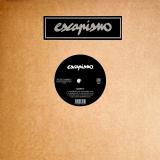
“Quinto” is Escapismo’s finest release to date. An exceptional blend of shoegaze, darkwave and gothy electronics that poetically appeals to the emotions with thunderous guitars and captivating melodies. Limited edition of 99 numbered copies on 10″ vinyl (33 black, 33 crystal clear and 33 translucent red). No reissues planned.
Shape of the Unknown’ is kind of a double LP that fully embraces the idea of exploration. It is CHLOÉ’s most expansive and immersive work to date. ‘Shape of the Unknown’ is CHLOÉ’s fourth proper studio album. Its predecessor, ‘Endless Revisions’, was released in 2017. Nine years have passed. Nine years during which CHLOÉ has continued digging for music, DJing at internationally renowned clubs and festivals including Rex Club, Robert Johnson, Panorama Bar, Nuits Sonores, Glastonbury and many more, releasing EPs and remixes, while also allowing herself the time to explore entirely new creative paths.
The challenge is to capture the unknown, make it her own, endlessly reshape its textures, and ultimately preserve its mystery.
The first single ‘Drifter’, released back in June, already offered a striking glimpse of the sonic territories the album would venture into, driven by its hypnotically contoured basslines. The album's two other singles offer different windows into her world. 'Shapeshifter' captures CHLOÉ at her most hypnotic, balancing stripped-back techno and melodic house through deep rolling grooves, expansive bass chords and subtle rhythmic shifts that constantly reshape the listener's perception without ever disrupting the flow. Later, 'Repeating The Obvious' takes a more leftfield route, pairing staggered rhythms with retro-inspired harmonics and an understated indie dance pulse that feels simultaneously familiar and unpredictable.
CHLOÉ has ventured into live performance through new formats, notably alongside percussionist Vassilena Serafimova; immersed herself in film scoring with soundtracks for Paris la Blanche, Arthur Rambo, The Mountain, Blanquita, Guru and Unsubmissives; and developed compelling collaborations, from High Season, her project with Ben Shemie of Canadian band Suuns (which resulted in the album The Call), to her own organic, experimental audiovisual performances under the name Slo/Mo AV.
Throughout Shape of the Unknown, CHLOÉ blurs the boundaries between deep house, hypnotic techno, electronica and cinematic sound design with remarkable fluidity. The album unfolds as a continuous narrative rather than a sequence of tracks, moving effortlessly between beatless ambient passages, rolling analogue grooves and emotionally charged club music. Organic percussion, sweeping bass movements, melancholic harmonies and richly textured synthesisers create a body of work that constantly evolves, where no section feels static and every transition reveals another layer of depth. There is an unmistakable warmth running through the record, with grainy analogue textures and spacious production giving even its most driving moments an intimate, almost tactile quality.
The album’s title is no coincidence. It evokes a form that has yet to be named, something language itself struggles to grasp. CHLOÉ approaches it through an organic creative process. Each piece must first be performed in the studio, almost as if it were being played live. The album will be followed by a series of live performances and DJ sets, including a show at the Olympia on March 18, 2027.
She is joined by a handful of steadfast collaborators. Jazz trumpeter David Enhco appears on two tracks, ‘Undertow’ and ‘Inner Bass’. But above all, there are the voices: Ben Shemie lends his unmistakable presence to the radiant ‘More Than Just a Feeling’. Olivia Merilahti, singer, songwriter and one half of The Dø, appears on the otherworldly ‘TWYR’. Working with Olivia’s already hypnotic voice, CHLOÉ has approached it like a sculptor, enhancing its strangeness and dreamlike quality.
And finally, impossible to miss is the instantly recognizable voice of Kittin. A longtime accomplice, she lends her distinctive phrasing to CHLOÉ’s music here for the very first time. The strongest collaborations are often those that take their time, arriving only when the moment is right. Same kind, same bass, same vibe, same pride.
The result is an enigmatic, nocturnal record, drifting between introspective listening and dancefloor functionality, revealing an artist who remains far more interested in atmosphere, movement and emotional storytelling than conventional club structures. It is an album that invites us to dream more deeply and to dance again, both within ourselves and out in the open.
We are honoured and excited to share the fourth Dream Space EP with the world: Domenic Cappello - Celestial Wave.
For more than three decades, Domenic Cappello has been at the helm of Subculture - the innovative and vastly influential Saturday night at Glasgow’s Sub Club. A true master DJ with deep rooted influences from Detroit & Chicago, Dom has consistently pushed things forward over the years and remains at the cutting edge of modern dance music.
Throughout the 90’s and early 2000’s, he put out high-quality records under various monikers on labels such as Soma, 20:20 Vision & Seventh Sign. Fast forward to recent years and Domenic has been on nothing short of a hot streak - releasing music under his own name on Craigie Knowes, Clone Royal Oak and his outstanding ‘Basement Philosophy’ LP on Alien Communications.
He brings the heat once more for this record; blurring the lines of house, techno and electro to deliver four awe-inspiring cuts of electronic music.
‘The Secret Moon Party’ sets things off, nodding to a certain Highland gathering by some of Scotland’s finest purveyors of quality tunes. A warm, gritty bassline carries the track, evolving into a symphony of precise sound design that is in equal parts playful and euphoric.
Dom’s knowledge of the dancefloor shines through on ‘Acid & Love’. This early night floor filler is the alchemy of just about everything you want to hear when things are getting going. Pure warmth and bliss throughout, also holding its place played deep into the late hours.
‘We Loved Your Ears (in memory of Keith)’ is a heartfelt tribute to the one and only Keith McIvor aka JD Twitch of Optimo. Dom wrote this track as something he thought Keith would have loved, and for this one, we’ll let the music do the talking.
Keith was, and continues to be, an enormous inspiration for us and so many others. In his memory, all proceeds from the digital sales of ‘We Loved Your Ears’ and 25% of all vinyl sales will be donated to Beatson Cancer Charity and The Scottish Brain Tumour Research Centre of Excellence.
Closing the EP is title track ‘Celestial Wave’, which does exactly what it says on the tin. A beautiful piece of music and fitting soundtrack for star gazing, moon dancing and dreaming.