Towards an Expanse Follows the acclaimed 2020 collaborative album “Buffering Juju” with Kechou, a fellow South African musician and artist, lauded as Global album of the month and “a wonderfully inventive debut” in The Guardian.
Sometimes gospel, sometimes electro-psychedelic space travel, the project starts with a languid lament that whispers a close-to-the-ear invitation up and between the folds of what unfurls into an ever-expanding sonic universe.
Towards an Expanse began in 2019 at Figure 8 Studios (Brooklyn, NYC) under the generous guidance of Shahzad Ismaily. It was written in Port Alfred and Cape Town and matured in Berlin and has evolved into a companion, a pulsating vessel of grief, vitality, and reclamation. The album meditates on learning to live with damage while regaining autonomy over how Black life is archived: a dialogue between the artist, her ancestors,
voices like Miriam Makeba, Busi Mhlongo, Princess Magogo, Madosini, and the psychoacoustics of South Africa’s lore as a timeless technology. It brings these elders into a conversation with Dumama’s global orientation
and experimental sensibilities.
The Yawpers planted their flag at the intersection of the delta, the dive bar, and the mosh pit. We’re proud to drag their most feral albums back to the turntable.
Four years after American Man, the band moved to Chicago’s Electrical Audio to record Human Question live to tape with producer Alex Hall. The result was a record Americana UK called a “shambolic rock and roll” masterpiece, earning a 10/10 for its refusal to polish its own edges. While American Man was a “frantic folk stomp,” Human Question shifted into what Punk Rock Theory dubbed “pedal-punk,” a noisy cocktail of psychobilly and gospel, presented here on sunburst splash vinyl
These records aren’t just artifacts of a specific scene; they are honed to a shiv point, designed to cut through the noise of an oversaturated market. Restored and remastered with original posters dropped in for good measure, these are loud, lean, and necessary.
The Bay Area’s electro-pop underground gets a neon-lit revival with a limited repress of The Limousines’ cult-classic 2010 debut album, Get Sharp, on frosted pink vinyl.
The album features the single “Internet Killed the Video Star,” a blog-era anthem with an instantly recognizable synth line and a self-aware chorus that captured the anxieties and possibilities of the digital age. Heavy rotation at alternative radio juggernaut Live 105 helped transform the song into a regional hit and an indie-dance mainstay.
“Very Busy People” is a high-energy critique of hyper-productivity and modern ambition, personifying a band that synthesized sharp songwriting, glossy synth hooks, and cultural commentary. Together, these elements mark a moment when Bay Area forces aligned to launch a record that continues to resonate.
Aspen is very proud to introduce ‘Non Sonett’ by the Christian Wallumrød Ensemble. This ensemble is a pioneering Norwegian chamber group whose work on ECM and Hubro has redefined the boundaries between jazz, contemporary composition and folk music.Across seven albums, the ensemble has developed a highly distinctive l anguage built on restraint, timbral nuance and collective interplay, placing it among the most influential European ensembles of the 21st century.
Bringing together some of the finest musicians in Norway, the ensemble draws on a rare collective sensitivity, where each player contributes to a deeply integrated and texturally rich sound world.
With Non Sonett, the Christian Wallumrød Ensemble opens a new chapter that grows directly out of recent years of work in more solitary and cross-disciplinary contexts. In this period, Wallumrød has developed material for solo performance as well as for dance, allowing ideas to take shape in more fluid and exploratory formats. Some of this material now finds its way into the ensemble, where it is met by the possibilities offered by instrumentation, collective playing, and the distinct voices of the musicians. At the same time, older pieces—originating in entirely different settings— re-emerge here in new forms, reshaped by the ensemble context.
A defining aspect of Non Sonett is the way many of the pieces function less as fully determined compositions and more as open frameworks: starting points, suggestions, or “springboards” for music. These structures invite response rather than prescribe outcome, relying on the ensemble’s inherent sensitivity and capacity to realize and transform the material in performance. The result is music that feels both precise and fluid, shaped in equal measure by composition and by the interpretative presence of the players.
Central to this album is a continued deepening of Wallumrød’s long-standing interest in ambiguity and in dissolving boundaries between different musical elements and expressive worlds. By placing contrasting materials and associations side by side—sometimes subtly, sometimes more overtly—the music opens up spaces where meanings remain fluid and interconnected. On Non Sonett, this approach is taken a step further, allowing these juxtapositions to play an even more active role in shaping the music’s character and flow.
This approach connects closely with the ensemble’s broader artistic trajectory. Over time, the Christian Wallumrød Ensemble has developed a language that is immediately recognizable—marked by reduction, clarity and a deep attention to sonic detail. While each release has its own character, the underlying aesthetic remains consistent: a focus on the inner life of sound itself. Rather than foregrounding gesture or virtuosity, the music draws the listener toward the smallest elements, where meaning emerges gradually through texture, spacing and timbre.
The listening experience becomes one of concentration and proximity, where each sound carries weight, and the accumulation of detail forms a larger whole. References may be sensed—to early polyphonic music, Norwegian folk traditions, or more recent experimental practices—but these are absorbed into a singular musical language that resists categorization.
As with the ensemble’s recent work, Non Sonett also continues the integration of electronics as a fundamental part of the sound world. Each musician engages with electronic elements alongside their acoustic instruments, creating a layered and dynamic sonic environment. At times, this leads into extended, exploratory passages reminiscent of analogue musique concrète; at others, electronics operate almost imperceptibly, subtly altering and extending the acoustic textures in real time.
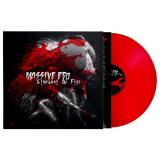
In 2025, we celebrate 30 years Out Of Line - Three decades of chaos, passion and 0 Years in - Still defiant, still evolving…2026 marks the 30th Anniversary of Massive Ego, and the release of a brand new album: “Symphony Of Flies” is revealed on May 8th, 2026 and marks the band’s first ever vinyl release. Available as Digipak CD and Limited Red Vinyl. Symphony Of Flies is a powerful, defining statement in Massive Ego’s long and uncompromising career, marking not only the band’s 30th anniversary, but also a moment of reckoning, survival and renewal. Across ten tracks, Massive Ego transform personal collapse, recovery and resistance into one of their darkest, most personal and emotional works to date. Musically, the album moves effortlessly between darkwave, electronic rock, EBM, glam-infused bombast and confrontational pop, pairing club-ready intensity with deeply introspective lyricism. Singles such as “In Your Own Darkness”, “Hit The Kerb Running”, “(My) Death Song”, “Man Become Monster”, and “Broken Tomorrow” showcase the band at their most fearless, culminating in a standout collaboration with Boy George, whose presence underscores the album’s themes of endurance, reinvention and personal growth. Lyrically, Symphony Of Flies reads like a confession and a journal. Frontman Marc Massive confronts mental health, betrayal, isolation, and the long climb back from the brink, reframing darkness not as something to romanticise, but something to fight through. The album’s central metaphor, the “Symphony Of Flies,” evokes surveillance, toxicity, decay and transformation: the unseen forces that drain, observe, and attempt to undermine, until they are finally confronted and dispersed. “The worst things that happen to you are the best things that happen to you”
Budapest-based concept label, Blue Sun is launching their new line of vinyl focused releases, aimed primarily on DJs and collectors: the Blue Series. A counterpart to the Orange Series launched last year that showcases a more upbeat side of the label, the new collection presents a darker, more experimental, and introspective musical vision.
The first release in the Blue Series is a six-track EP by Budapest based multimedia artist, Virág Réti. Choosing her legal name as her artist persona (“Flower of the Meadow" in Hungarian) also with the track titles capturing the folk names of local fauna, Peremidő evokes the artist's innate connection to nature as a place of refuge from the noise of Eastern European urban life.
The EP’s motifs point back to early memories of sitting by a river, simply observing time flowing by. The arc of the songs follow the passage of a day, beginning with the hesitant sounds of early morning, gradually moving on toward more defined, rhythm-driven forms. As the airy textures slowly give way to structure and percussion comes to the forefront, the sense of direction becomes clearer, letting moments of gentle disorder and unexpected sounds to surface.
Virág previously appeared on the label’s Blue Sun VA II compilation with her track Bíbic. Since launching her ambient music project in the fall of 2024, she has become one of the promising newcomers in the Hungarian experimental electronic music scene. Her debut EP, Minden Ami Megmaradt (All That Remains), was released last November as the final offering of temporary nites label (2023–2025). She is also the founder and organizer of the Budapest-based experimental electronic event series Still Places.
The Godfather of Hardcore, Marc Acardipane, needs no introduction. His outstanding releases over the past 30 years speak for themselves. He has been instrumental in helping to create electronic music history, with countless well-known productions which have been unsurpassed by any other artist of this calibre. His timeless masterpieces have been and always will be heard at hardcore raves spanning the circumference of the Planet. With "9 Is A Classic", "Slaves To The Rave", "Pitch-Hiker", "Stereo Murder" and "We Have Arrived", just to name a few, he clearly proves who's the boss. "The Most Famous Unknown" is a well compiled collection of Marc's music, which showcases a mere portion of what he has composed and produced since the early nineties! The vinyl and digital selection of "The Most Famous Unknown" features remixes by Body Sushi a.k.a. VTSS & Randomer, Dasha Rush, Gabber Eleganza feat. Delirio, Jasss, Kilbourne, Minimum Syndicat, Nina Kraviz, Perc, Solid Blake, Stranger, Umwelt and VTSS, which all deliver excellent interpretations of tracks they have chosen to revamp. All original tracks have been re-mastered to the highest possible standard of quality.
out of Stock
Last delivered 4 months ago available to reorder, subject to availability
Morcheeba unveil Remix The Chaos: Volume 1, the first instalment in a three-part remix series drawn from their 11th studio album, Escape The Chaos (2025).
Spanning four tracks per volume, the project brings together an eclectic, global roster of electronic producers, each offering a distinct reimagining of Morcheeba’s unmistakable sound. Multi-genre and far-reaching, the series expands further into the rich sonic world the band have built over the past few decades, pushing their music into bold, contemporary electronic territory. Volume 1 features remixes from Paula Tape, the Chilean superstar producer, recent Mixmag cover star and one of electronic music’s most exciting names heading into 2026; Trance Wax (a.k.a. Ejeca), the prolific Belfast producer specialising in high-energy breakbeat and trance-leaning remixes; Frazer Ray, the London-based underground force known for UK bass, breaks and garage; and Brothers Counsell, a side project from the formidable Joy Anonymous.
Together, the tracks form a journey of dancefloor-ready hard hitters, powered by Morcheeba’s iconic vocals and signature guitar lines. Pressed on limited edition traffic light red vinyl, Remix The Chaos: Volume 1 comes with deep-cut grooves designed to hit just as hard on a club sound system as they do from the comfort of your living room.
Originally released on CD in 2006, It's A Feedelity Affair marked a formative moment in Hans Peter Lindstrøm's early career, compiling key tracks from his first wave of 12-inch releases between 2003 and 2006. Now, twenty years after the founding of his Feedelity label, the album is presented for the first time as a newly remastered vinyl edition.
"Listening back now, I hear an artist still figuring things out, but with a clear instinct for where I wanted to go. It was a period defined by freedom - no rules, no expectations." - Hans-Peter Lindstrøm
Released at a time when electronic music was shaped by extended runtimes and physical formats, It's A Feedelity Affair captured a club culture rooted in patience, atmosphere, and spatial awareness rather than immediacy. Its long-form approach remains central to the album's lasting appeal and resonates strongly with today's renewed focus on vinyl and immersive listening experiences. The album stands as a document of an era marked by experimentation, expansive club tracks, and an open-ended vision of electronic music.
Upon its original release, the album received widespread international attention, including a Best New Music rating (8.4) from Pitchfork. The track I Feel Space has since become one of Lindstrøm's most enduring and recognizable works. The album also documents some of his earliest collaborations with Prins Thomas and Christabelle, resulting in tracks such as Boney M Down and Lovesick.
Lindstrøm relaunched Feedelity in 2024, with the label returning in 2025 alongside his most recent album Sirius Syntoms and the single Cirkl, marking a full-circle moment for the imprint. A new studio album is currently in progress and expected in autumn 2026.
out of Stock
Last delivered 27 days ago available to reorder, subject to availability
Continuing Blueprint's 30th anniversary celebrations, James Ruskin welcomes the return of Oliver Ho, whose relationship with the label is deep-rooted.
Oliver Ho has spent the last 30 years devoting his life to creating some of the most intense and compelling electronic music out there. Debuting his signature raw sound in 1996 on Blueprint Records, he cemented himself in the underground of the '90s UK techno scene. With a plethora of aliases, he has navigated his way through many different genres. From the frenetic tribal sounds of his own Meta imprint, the off the wall house music made as Birdland and Raudive, the grinding industrial of Broken English Club and the heavily textured ambient of his Slow White Fall and Zov Zov projects. While pushing and pulling at the fringes of electronic music, at the very centre has always been the beating heart of hypnotic techno, an art form that is both brutal and bewitching; techno as ritual magic. Oliver's live shows and DJ sets showcase this expression of music as shamanic experience, metallic and relentless, pure and direct.
An integral figure in shaping Blueprint's early sound, Oliver Ho returned in 2016 for their 20th anniversary with the "Burning Heretics EP", which was followed by a remastered reissue of 1999's "Awakening The Sentient". So it's fitting that he's now back for this latest milestone with a new EP, "Our Secret Religion" dropping in May.
Laurel Halo returns with an album of original soundtrack music, composed for the film Midnight Zone by visual artist Julian Charrière. Following the path of a drifting Fresnel lighthouse lens as it descends through the Clarion-Clipperton Fracture Zone — a remote abyssal plain in the Pacific Ocean, rich in rare metals and increasingly targeted for deep-sea mining — the film traces a descent into one of Earth’s last untouched ecosystems.
Charrière’s film reveals the deep not as void, but as a luminous biome teeming with fragile life: bioluminescent creatures, swirling schools of fish, and elusive predators. The suspended lens becomes an abyssal campfire, attracting species caught in the tides of uncertainty, their futures hanging in the balance.
Echoing this tension, Halo’s compositions evoke a sensory freefall, where gravity falters and light and sound flicker in uncertain rhythms. Midnight Zone is a sonic drift through the space between what we seek to extract, fail to understand, and must protect.
Halo’s score evokes the life that exists beyond our physical airbound capacity. The material features long, subtle passages of electro-acoustic ambient, drone and sound design, slowly flowing and unfolding with rich detail. The music, composed largely on a Montage 8 synthesizer and Yamaha TransAcoustic piano at the Yamaha studios in New York City, possesses an uncanny quality: that of synthetic waveforms being amplified and sung through the stringboard of the physical body of the TransAcoustic piano. Combined with stacks of violin and viol da gamba, the music on Midnight Zone possesses trace elements of a human hand in an otherwise sunken landscape. Patient, submerged, and alive. The album will be the third on Halo’s imprint, Awe.
The film is central to Charrière’s current solo exhibition Midnight Zone. The exhibition engages with underwater ecologies, exploring the complexity of water as an elemental medium affected by anthropogenic degradation. Reflecting upon its flow and materiality, profundity and politics, its mundane and sacral dimensions, the solo show acts as a kaleidoscope, inviting us to dive deep.
out of Stock
Last delivered 5 months ago available to reorder, subject to availability
A tribute to Bob the Landlord from Rotterdam. Bob the Landlord became known in Rotterdam after appearing in a documentary about the harbor cafe Willems Kantine. He was a loud and direct landlord who rented small rooms to people around the area. Bob was famous for his strong Rotterdam attitude and the way he spoke to people without filtering his words. One of the most famous moments was when Cowboy Jos asked him for five euros. Bob angrily replied, "Five euros? On your face!" This line later became a well-known quote in Rotterdam. Even though he could be rough and strict, Bob became a memorable character and a small cult figure in the city. 4 tracks on one very special release. A1 by Doctr - Our Minds Belong Together. The long awaited super nu italo hit already played by David Vunk at many festivals and clubs where everyboday is waiting for! A2 by Theo Scuera - Your Virus. Club banger and Dancefloor filler with crazy sexy bassline and pumping rhythm section. Half electro half techno. Endmix legendary by Endrik schroeder. A1 David Vunk and Ben la Desh - Unrealized prophet. Long time friends Ben la Desh and David Vunk team up again with another super deep techno house track, layered analog sequencial prophet 5 synths sound, Erica Perkons drums and fx. All of this comes together in an exciting tech break with space-like sounds. Be prepared for this secret wapon. B2 Patricio Diaz - Come To My Hell A Parisian space house techno track with energetic beats and 90ies vibes. Pure energy. Get your 10000 steps on this one. Hint: Most likely people will already buy this just for the cover. So be quick for this release and don't miss this.
out of Stock
Last delivered 5 months ago available to reorder, subject to availability
"Late '80s and early '90s electronic music has had a steering influence on the Altered Circuits catalog curation, so we are delighted to present an EP by one of the pioneers of that era: Olivier Abbeloos. His 40 years of experience as a producer and DJ translate into a Discogs profile so extensive it reveals his real name alone can be (mis)spelled in 20 different ways. "1993-1994: Rare & Unreleased 1" features five tracks produced under three different aliases, all sourced from the artist's DAT tapes vault, dating back to the prolific two-year period referenced in its title. ALT024 opens with two "Conga Squad" tracks. "Combo" is a high-energy cut driven by a savory staccato chord progression, and "Substitute" works a similar, yet more restrained dynamic, that is, until a boisterous vocal sample enters. The quirky bass lines and moody synth work of "Under The Ground", the first "Holographic Hallucination" inclusion, concludes the A-side. Its twilight atmospherics fit right in amid the B-movie horror electro trending on contemporary dancefloors. The flip opens with "Psychosky", which caters slightly more to a slow-burner vibe and sets the stage for extensive piano work. "Dj Flavour", composed under the "Warp Factor One" alias, closes the EP. Here, the Latin-tinged percussion that runs as a subtle thread throughout the release takes the spotlight, while funky basslines and manipulated vocals add layers of detail. It is the only track on the EP that was already released in 1994, appearing as part of a - by the standards of that era - obscure and very limited 300-copy pressing. Those times sure have changed, but the music still sounds as fresh as ever."
out of Stock
Last delivered 5 months ago available to reorder, subject to availability
The Story — From the Streets of Rome to the Male Productions Label
In the early 1990s, Rome lived in a kind of suspended moment. The city was still tied to its historic clubs, yet in the outskirts—inside abandoned warehouses, quarries along the coastline, and the wooded parks north of the capital—something new was beginning to stir. A nocturnal, constantly shifting movement fuelled by a hunger for freedom and a sonic curiosity that reached far beyond the mainstream.
Moving through this ferment was Francesco “Chicco” Furlotti. First an organizer of unconventional parties and underground nights, he soon became one of the driving forces behind Rome’s itinerant rave scene. Furlotti sensed that a wave of change was about to sweep across the city. It wasn’t just about parties: it was the rise of a culture, a new way of thinking about music, community, and belonging.
It was within those nights—later held with official permits, properly built sound systems, and an ever-growing crowd—that Furlotti recognized the existence of a distinctly Roman sound, and the need to capture it, preserve it, and give it tangible form.
So, in 1991, he decided to take a bolder step: to found an independent record label—small, determined, and far removed from the commercial logic that dominated at the time.
That was the birth of Male Productions.
Male was not a label like any other: it was a workshop, a gathering point, a creative hub where DJs, producers, friends, and wanderers converged. Within that environment, an artistic core took shape—Stefano Di Carlo, Leo Young, and Mauro Tannino, along with other collaborators orbiting around Furlotti. From their synergy emerged a project whose very name declared its mission:
The True Underground Sound of Rome.
The collective did not simply aim to release music; it sought to tell a story of Rome through sounds that defied categorization: house, techno, ambient, electronic mysticism, psychedelic visions… a unique blend, instantly recognizable, emotional, and experimental. The sessions unfolded using essential yet razor-sharp gear: Roland drum machines, analogue synthesizers, Akai samplers, stripped-down mixers. Few tools, endless imagination.
The first result of this work was the 12” Secret Doctrine, released in 1991 in an extremely limited run—around 500 promotional copies, according to accounts. The record captured something that until then had floated only in the air of Roman raves: enveloping atmospheres, deep rhythms, melodies built to make the mind travel far beyond the dancefloor. A sound that did not imitate what was happening in Detroit, London, or Berlin, but absorbed those influences and re-sculpted them with a distinctly Roman sensibility.
Yet, precisely because it was independent and detached from commercial circuits, Male’s output remained sparse: few EPs, few copies, irregular distribution. Over time, those records became rare artifacts—almost mythical objects within the Italian electronic scene. The legacy of Male Productions seemed destined to survive only in the memories of those early years, in the stories told after raves, and in the private archives of a handful of collectors.
Many years later, thanks to the almost accidental rediscovery of a few original copies of the first two releases issued by Male Productions, it became possible to undertake a meticulous process of recovery and restoration of the audio etched into those grooves, with the aim of preserving as fully as possible the quality and character of that unrepeatable sound.
We are therefore able today to present — at last in a complete and faithful form — the first two mixes created for Male Productions, now released on a double vinyl that brings back into the present the exact moment when it all began: the nomadic nights of the raves, Furlotti’s vision, the creativity of Di Carlo, Young and Tannino, and the sonic identity of a Rome in the midst of transformation.
This is not merely a reissue.
It is a historical document.
A fragment of a culture that changed the city.
The authentic sound of the Roman underground, finally returned to the world.
out of Stock
Last delivered 45 days ago available to reorder, subject to availability
Peer Du is the next artist to be released on the ever-versatile Zenit Ltd.
This EP fully reflects the spirit of the label, unfolding through a wide range of moods and textures. Side A opens with “Spezial,” the title track of the release: a melancholic yet hopeful piece suspended somewhere between electro and trance, and one that is hard not to be moved by. The A-side closes with another version of the same track, deeper in tone, yet still as dreamy and ethereal as the original. Side B shifts gear and atmosphere, reaching further into the night. “DYT” is an insistent breakkatone cut with moments of lift and openness, as if stretching toward the sky. The mood remains recognisably Peer’s, but there is also a clear change in intention. DYT reworks a minimal electro break, drawing its roots from the late 1990s. The release closes with “Rabotnik,” where all the uncertainty of the night takes shape. An intense and multifaceted release, rich in nuance and hard to walk away from untouched.
out of Stock
Last delivered 45 days ago available to reorder, subject to availability
This isn’t a compilation—it’s a vinyl conversation between cities, generations, and musical bloodlines. This inaugural release embodies the spirit of collaboration, community, and cross-generational artistry that defines each artist’s deep musical legacy.
A statement on wax bringing together Glenn Underground, Coflo, Jon Dixon, Kevin Reynolds and sillygirlcarmen, this four-song project documents the shared language of five Artists through deep house, jazz roots, and forward-looking soul. Though these artists have shared DJ booths and dance floors around the world, this release marks a rare moment where their creative voices intertwine on wax. Each track stands on its own, but together they form a continuum—past, present, and future etched into wax. Pressed with intention and made for real systems, this release exists for the heads, the selectors, and anyone who still believes vinyl is where the story lives. Meant to be played—not archived. The kind of tracks that feel alive in the room and grow every time you hear them.
‘Ease’ EP tracks:
Glenn Underground ‘Dive (Into The Deep)’; the Chicago legend & Strictly Jaz Unit co-founder combines deep house, freeform jazz & soul, here in a jazz-infused, laid-back, hypnotic melange of house beat, synth chord riff, rippling arps, with a whisper of disco in the bassline and 80’s electro in the high, singing strings.
Coflo x sillygirlcarmen ‘Never Forget (That Feelin’)’; East Bay CA-based Coflo combines Hawaiian & Portugese roots with a global reach. A collaborative skipping house beat, pattering percussion & melodic jazz synth piano embrace sillygirlcarmen’s soulful voice and heartfelt lyrics. This collaboration marks a merging of emotional storytelling and percussive sophistication.
Jon Dixon ‘Saturday At Northland’; Detroit’s modern jazz & techno fusionist, rooted in long study and prestigious performance of classical & jazz piano both in orchestral and electronic contexts, employs his keyboard virtuosity in a thrilling wave of melodic piano improvisation & complex lively percussion, combining sheer craft with spiritual heft.
Kevin Reynolds ‘I Got Music’; from an Irish/US Detroit family, producer/live artist Reynolds blends techno, jazz, soul, from influences as diverse as 90s underground techno, Kraftwerk & John Coltrane, and roles/performances in multiple prestigious venues & positions. Here, a stealthy beat & Kraftwerk-evoking robotic electro synth theme are joined by a dual vocal used as a riff, while clusters of piano chords flower into jazz motifs.
out of Stock
Last delivered 65 days ago available to reorder, subject to availability
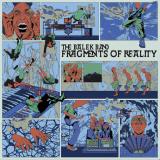
Some grooves don’t rush to the dancefloor — they crawl there, slow and heavy, like smoke wrapping around a bassline. With Fragments of Reality, The Balek Band sculpt an electronic funk that lives between shadow and light — an end-of-the-world fever dream, a Barjavel-style Ravage where chaos turns nihilistic.
No sequencer grid here — just four musicians sharing the same room, shaping air and tension together: drums locked tight with a slap bass, a guitar dripping with echo and heat, and a one-man orchestra behind his machines, weaving acid lines and synth arpeggios while mixing the band live — drenching it in delay, reverb, and saturation, like a dub producer in a Kingston studio, Lee Scratch Perry or King Tubby conjuring ghosts through smoke.
This isn’t fusion — it’s friction. A living ritual where the TB-303 hums, and machines don’t dominate but converse with the human pulse. Each track feels like a night that refuses to end — that humid in-between where trance slips into languor, and the body starts to think for itself.
The record recalls the cosmic jazz of Alain Mion or Eddy Louiss meeting the fiery energy of West African afrobeat musicians freshly arrived in a smoky Belleville basement in the mid-’80s. When The Balek Band summon ghosts, it’s only to reshape them — bending the past into something futuristic, alive, and strangely refreshing. Both disciplined and delirious, Fragments of Reality feels like a promise at dawn: dark funk for the late hours, slow acid for warm blood.
This EP isn’t nostalgic, though it remembers. It’s a transmission from a parallel past — a moment when jazz players met drum machines and decided never to stop playing. Each note sweats, each rhythm breathes. You can almost see the light cutting through the haze, faces half-awake, half-possessed.
The Balek Band aren’t recreating a moment — they’re keeping it alive.
Flesh and cables. Impulse and patience.
A band, not a loop.
A trip, not a format.
out of Stock
Last delivered 4 months ago available to reorder, subject to availability
This is a highly limited pressing, please order your desired quantity and we’ll see what we can supply.
We are pleased to be back with the talented Groof, the experienced producer from Madrid’s legendary electronic music scene, who is responsible for our eighth release and his debut on Kontralamakina.
We welcome you to “Simulation.” This EP/LP consists of a collection of 5 tracks that explore repetition and dynamism, with structures generated by various noise sources and algorithmic sequencing with a raw and forceful sound. It consists of excellently stomping techno rawness exercises.
Plus 1 remix by the techno legend Oscar Mulero Remix; Outstanding mind bending tools, Expertly careful Drone treatments, Stunning, deep, atmospheric but energetic Techno voyage.
out of Stock
Last delivered 5 months ago available to reorder, subject to availability
Foxbam Inc is building up a fine head of early steam and after featuring the likes of LFO's Gez Varley and Mark Archer, that looks set to continue into 2026 with this latest various artists EP. It's a white knuckle ride through panel beating techno fervour, starting with Foxtrot's 'Tartam Tripper', which could be called paint stripper, it's that caustic. Collision lays down flat, hard, distorted drums on 'Plop Projekt', Egebamyasi offers up a stuttering, bass-driven club take on an unmistakable 80s electronic classic and Minimum Syndicat's 'Tunnel Chase' is a slower, darker, more foreboding closer that carries serious weight and a soot-black atmosphere from which there is no escape.
out of Stock
Last delivered 5 months ago available to reorder, subject to availability
Katz Mulk's ''All the mess'' is a collection of songs about playing and play-work, recorded between 2023-25 in Glasgow and Tokyo. Developed from performances across the UK and during a residency at Xevarion Institute in Hong Kong, with dancers, costume design by Mary Hurrell, and mobile speaker design by Chris Ball. Slithering breath, crackling synths, dented gongs, and dub loops pull songs into unexpected, unsettling patterns, like being a kid again but with more electronics.
Calibre announces his new album 'Tricklemore Sea', set for release on vinyl and digital on 1st May via Signature Recordings.
A deeply personal and exploratory body of work, the album moves through ambient, shoegaze, electronic, blues and folk, all subtly shaped by the low-end sensibility that has defined his music for decades. It resists easy categorisation, reflecting an ongoing interest in blending bass culture with forms that sit outside it. Following the release of 'They Want You' at the end of 2025, this new project marks a clear shift in tone. Where that record leans into intensity and forward momentum, 'Tricklemore Sea' turns inward, occupying a more introspective space. Featuring entirely his own vocals and production, it carries a more exposed and vulnerable quality.
The album has taken shape gradually, drawing from material written in the years after 'Planet Hearth'. Rather than forming around a fixed concept, it emerges as a collection of pieces connected by tone and instinct. Tracks move between simplicity and abstraction, with piano-led compositions sitting alongside field recordings, improvisations and bass-driven works. Ideas often begin quickly, then evolve over long periods of revisiting and reworking. His voice takes on a more central role throughout, bringing a heightened sense of vulnerability. Lyrics and delivery are often left open, allowing space for interpretation. His process remains fluid and instinctive, with ideas written quickly, revisited over time and combined across different periods.
Moments such as 'Little Blend' carry a quiet melancholia balanced with hope, while 'Free One' reflects on the pressures of contemporary life. The title track considers the scale of human existence within a wider universe, framing individual lives as small but meaningful within something larger. Elsewhere, 'Deflower' and 'Pigeon Luncheon' draw from recordings made in Berlin at the end of lockdown, capturing a sense of movement and return. Older material, including 'Living In Your Head' and 'Hyndsight', is recontextualised and sits naturally alongside newer work. Threads from his wider catalogue remain present. 'Able Son Dub' nods to longstanding reggae influences, while 'Bit Broken Stream' appears here in a downtempo form alongside its drum and bass counterpart from 'They Want You'. Tracks like 'United Pull' and 'Mizzle Mine' lean further into abstraction, using minimal language and space to suggest mood rather than define it.
Over more than 30 years, Calibre has built a catalogue that moves across drum and bass, ambient, dub, techno, house, jazz, soul, blues and folk. His work is marked by restraint, quiet melancholy and a singular approach that continues to evolve. Complete authorship remains central, with all vocals, lyrics and production on both 'They Want You' and 'Tricklemore Sea' created solely by him. This breadth extends into his DJ sets, where he draws heavily from his own catalogue, often performing entirely self-produced material across a wide range of tempos and styles. His ability to move between contexts has seen him play at Boomtown, Houghton and Atonal Berlin, delivering distinct sets while maintaining a clear identity.
With 'Tricklemore Sea', that identity leans toward stillness, introspection and emotional depth. It is a record that prioritises feeling over definition, holding space for ambiguity while remaining grounded in a strong sense of authorship. Each release carries an element of exposure, a moment of vulnerability in letting the work go. At its core, the album seeks to capture something fleeting but recognisable, a sense of beauty that sits just beyond language.
He describes it simply: "The river inside of me flowing into the sea."
Wasteland is a record that is unafraid to plunge into the darkness of the modern world and embrace the weirder, edgier and more unnerving moments that come from doing so. It is an album that captures all the enormity of life from the micro to the macro, zooming in on the personal as well reflecting on broader societal issues.
“Wasteland is about the idea of a place once known or familiar that is now broken down and unrecognisable,” says Ghedi. “It’s about exploring the process of watching someone’s surroundings and environment collapse.” And within that you have a lot going on. “It also explores death, personal loss, grief, mental health and how the natural world provides solace and meaning for that loss and how these worlds blur into one another.”
Ghedi has always been an artist that in many ways perfectly encompasses folk music in its purest form but he is also someone that frequently pushes the boundaries of that label and no more so is that apparent than on this record. As like previous albums, such as 2018’s A Hymn for Ancient Land and 2021’s In the Furrows of Common Place, Ghedi uses traditional folk songs as a means to explore contemporary issues via modern and experimentally-leaning music. “With the traditional material on this album I wanted to find songs with content that resonated with me,” says Ghedi. “But also that were based roughly around the north of England.” This is a central underlying theme to the album for Ghedi. The feelings of loss, erosion, and degradation are often most pronounced in working class communities and this was something he wanted to weave in. “It was important to voice and choose material that represented or expressed issues that correlated with things going on around me.”
However, as remarkable as some of the traditional material is, some of the most arresting work on the album is Ghedi’s entirely original compositions. Lead single ‘Wasteland’ is a stunning piece of work that while rooted in an environment being corrupted and broken – “there’s violence on these hills” Ghedi sorrowfully sings, before claiming this is no longer somewhere that can be called home – it is also a stirringly beautiful composition that soars and glides as it opens up, as sweeping strings swoop and in and out of Ghedi’s twangy electric guitar.
The decision to incorporate more fuller sounds, such as electric guitar and huge drums, results in a notable shift and evolution in tone for Ghedi. “The lyrical content needed something more band-driven and loud to deliver them,” he explains. “Incorporating the electric guitar in my songwriting was also a big part of opening the sound up, using drop tunings pushed me to use my voice in a wider range, which forced me to use falsetto a lot which I haven’t previously done before. That then opened the sound up and gave me creative ideas for bigger arrangements and to sonically really push things.”
What Ghedi has done in creating his masterpiece is construct a remarkable space where deeply intimate and personal feelings coexist with reflections on environment, place and society, while also interweaving historical context via traditional songs. Wasteland is as much of a world to explore and exist in as much as it is an album, with Ghedi carving out his distinctly unique sonic language and voice to explore that singular environment.
Wasteland is a record that is unafraid to plunge into the darkness of the modern world and embrace the weirder, edgier and more unnerving moments that come from doing so. It is an album that captures all the enormity of life from the micro to the macro, zooming in on the personal as well reflecting on broader societal issues.
“Wasteland is about the idea of a place once known or familiar that is now broken down and unrecognisable,” says Ghedi. “It’s about exploring the process of watching someone’s surroundings and environment collapse.” And within that you have a lot going on. “It also explores death, personal loss, grief, mental health and how the natural world provides solace and meaning for that loss and how these worlds blur into one another.”
Ghedi has always been an artist that in many ways perfectly encompasses folk music in its purest form but he is also someone that frequently pushes the boundaries of that label and no more so is that apparent than on this record. As like previous albums, such as 2018’s A Hymn for Ancient Land and 2021’s In the Furrows of Common Place, Ghedi uses traditional folk songs as a means to explore contemporary issues via modern and experimentally-leaning music. “With the traditional material on this album I wanted to find songs with content that resonated with me,” says Ghedi. “But also that were based roughly around the north of England.” This is a central underlying theme to the album for Ghedi. The feelings of loss, erosion, and degradation are often most pronounced in working class communities and this was something he wanted to weave in. “It was important to voice and choose material that represented or expressed issues that correlated with things going on around me.”
However, as remarkable as some of the traditional material is, some of the most arresting work on the album is Ghedi’s entirely original compositions. Lead single ‘Wasteland’ is a stunning piece of work that while rooted in an environment being corrupted and broken – “there’s violence on these hills” Ghedi sorrowfully sings, before claiming this is no longer somewhere that can be called home – it is also a stirringly beautiful composition that soars and glides as it opens up, as sweeping strings swoop and in and out of Ghedi’s twangy electric guitar.
The decision to incorporate more fuller sounds, such as electric guitar and huge drums, results in a notable shift and evolution in tone for Ghedi. “The lyrical content needed something more band-driven and loud to deliver them,” he explains. “Incorporating the electric guitar in my songwriting was also a big part of opening the sound up, using drop tunings pushed me to use my voice in a wider range, which forced me to use falsetto a lot which I haven’t previously done before. That then opened the sound up and gave me creative ideas for bigger arrangements and to sonically really push things.”
What Ghedi has done in creating his masterpiece is construct a remarkable space where deeply intimate and personal feelings coexist with reflections on environment, place and society, while also interweaving historical context via traditional songs. Wasteland is as much of a world to explore and exist in as much as it is an album, with Ghedi carving out his distinctly unique sonic language and voice to explore that singular environment.
This is the age of post-factual lies, which is reflected in MESH's album title "The Truth Doesn't Matter" and a dark undertone that occasionally seeps into their new songs. What remains entirely true is the fact that the UK duo has a nearly uncanny knack for writing electronic hits that are as elegant as they are captivating. "The Truth Doesn't Matter" bursts out like a sparkling firework while subtly referencing three decades of electronic music spanning from GIORGIO MORODER, YAZOO, and DEPECHE MODE via GARBAGE and MASSIVE ATTACK to more contemporary artists. At the same time, MESH always maintain their easily recognisable and unique musical identity as well as the trademark sounds that they have cultivated since their beginnings in the early nineties. With "The Truth Doesn't Matter", MESH climb yet another rung on the ladder leading to electronic music heaven. Each song wriggles its way happily into the brain and sticks around leading to spontaneous whistling of melodies and the public singing of extremely catchy chorus lines. You have been warned: "The Truth Doesn't Matter" is highly infectious and leads to a happier life!"
8 years after their last LP Kites, Submotion Orchestra return with their long awaited sixth studio album, the remarkable Passed Me By. A deeply personal journey into memory, creativity, and the passing of time, it shows the band continuing to push their signature electronic sound forward, and the result is some of the boldest and most emotional territory of their storied career.
The album sees the band dive further into the synth-led, minimalist electronic textures and driving beats explored on the 'Five Points' EP, creating hypnotic analogue patterns alongside the post-dub spaciousness and celestial effects of their earliest work. With Ruby Wood's always-emotional vocals soaring over the top, the tracks effortlessly glide through genre and mood, resulting in the widest range of expression and emotion found in a Submotion album yet.
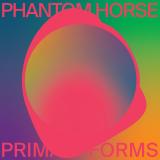
After their last album six years ago, "Primal Forms," the new album by Phantom Horse, finally arrives. The German duo of Ulf Schütte and Niklas Dommaschk have long established a reputation for expertly crafted, hypnotically slow-burning electronic music, and we do not hesitate to say that "Primal Forms" stands among the epitomes of their discography.
The sequencing of "Primal Forms" cannot be underestimated. It is an album in the classic sense. It demands to be listened to in its entirety, which also points to a closer affinity with Krautrock. Likewise, a touch of dub is perceptible, wafting around the songs, which, as usual, bear clandestine titles. It is not unreasonable to see in these compact compositions a clear statement against multitasking.
Phantom Horse are not trumpeters of dystopia. They present themselves resolutely, almost stoically, turned away from the world. This turning away is clearly a statement that can be contemplated in the Mariana Trench as well as in comet belts. In any case, it is best experienced in a space without any human beings. This does not mean that grumpy hermits are tinkering with synths behind closed shutters, armed with wooden walking sticks. This is still open minded music with a connection to current developments. The approach itself is what is audible, and with it, Phantom Horse proves once again that their main connection to time is timelessness.
In an age of all-encompassing distraction on every sensory, thematic, and semantic level, Phantom Horse explores the possibilities of reduction, searching for simplified melodic arcs without resorting to the vocabulary of classical minimalism. The overall impression is more electronic; the slowly shifting, polyrhythmic compositions repeatedly lead to a peculiar danceability. However, these are perhaps the dances of mechanical birds, undeterred by anything.
Written and produced in Hamburg, Nijmegen and Ojén by Niklas Dommaschk & Ulf Schütte
Mastering by Rafael Anton Irisarri at Black Knoll
Artwork by Daniel Castrejón
Anenon's tenor saxophone breathes an emotive contemplation on loss, meshed with sustained piano and field recordings. 'Moons Melt Milk Light' is a hyper-personal statement contained in a visceral beauty.
LA native Anenon returns with a highly anticipated new album 'Moons Melt Milk Light' on Tonal Union, bearing his most personal, expressive, and arresting works to date. Anenon is the ongoing solo studio and live project of Brian Allen Simon, whom since 2010 has released multiple albums and EPs to critical acclaim, including the highly revered 'Tongue' (2018) and 'Petrol' (2016).
'Moons Melt Milk Light' is direct, efficient, and unwavering in its immediacy. Anenon departs from the electronics of previous works, and embarks on a reductive, almost entirely acoustic approach consisting of piano, tenor saxophone, bass clarinet, and field recordings. All of the music was improvised with everything recorded as either a first or second take with no edits. Any layering happened fast and in the moment, and yet the sonic architecture of the whole feels both planned and refined.
"I feel a kinetic and messy honesty that doesn't exist in any of the other music I've ever made. There is also a sense of being settled, of calm. There is no faking it here."
out of Stock
Last delivered 17 months ago available to reorder, subject to availability
They Came Like Swallows is the first album-length collaboration between Thurston Moore and Kramer (now officially Bonner Kramer), two giants of alternative/ experimental music. The accomplishments and influence of these two artists in the world of independent music cannot be overstated and the result of their artistic union is a startlingly cohesive statement that burns through landscapes of primitive outsider rock, avant-garde composition, progressive ambient and further locales boldly and beautifully unnamable. “Kramer and I reconnected in Miami, Florida, a few years back, many many years after each of us had departed NYC on separate life adventures. It was only a matter of time before Kramer and I started making plans to record together and with his irrepressible due diligence he quickly set up a mobile recording contraption in the pad I was decamped in, the Florida sunshine flowing through the palm leaves, lithe lizards skittering across the windowsills, and we just went for it.
Kramer had the idea to cover a Joy Division tune, a left turn from the improvisations we had been tracking, though wholly in keeping with both our sensibilities of light and dark unifying in transcendent songwriting, both of us devotees of 'the song' as well as 'the freedom.’ What transpired is They Came Like Swallows, a session we immediately felt should exist as a prayer to the war-torn souls of the families of Palestine continually decimated by the brutality of genocide. We agreed beyond words to offer our music as a sonic activism and as a beneficent energy. This album is our duo exchange for human dignity, it is our soul music for any semblance of a peaceful planet.” ~ Thurston Moore “For the first time in our nearly 45 years of friendship, we had identical time windows open to make a record together,” recounts Kramer. After all this time not a moment is wasted as the duo immediately taps into the heightened core of improvisational tension across these seven offerings. Volcanic opener “Urn Burial” notches a similar historic union (John Cale and Terry Riley) to meet the circumstances of the moment, with swirling mists of organ and pounding toms over guitar that thickens the atmosphere with jagged, grimy dissonance.
Solemn strings open the second track, “The Redness In The West,” with Kramer’s cello and viola in dueling bow beneath the high tension drive and sustain of Thurston’s electric guitar, tapping out a Morse code of tension that mounts endlessly into a fog of inevitable war by the end. Moore and Kramer’s sense of experimentalism is in free and full grandeur throughout They Came Like Swallows, though the duo keep a strong and constant sideways eye on melody, composition and architecture, to the ends that any strict lines between song and improvisation are blurred beyond qualification.
As if to punctuate this point, Swallows closes with a nightwork cover of Joy Division’s “Insight,” a doleful coda that breathes out with a solemn inner grace under Thurston’s instantly stylistically recognizable guitar melodies as they weave into he and Kramer’s unison voices. As the lone vocal piece and only traditional ‘song’ form on the album, “Insight” is unique to this set and as a closing statement draws connective lines back to the kind of dynamic, electrified melodicism that wove deep, melancholy patterns into the untamed fire of Sonic Youth’s Sister and Daydream Nation. In the album’s final moments, the two voices repeat the lyric “I’m not afraid anymore” as mantra, underscoring the heavy, unsettled themes and methods that preceded it. Kramer describes the creative process of They Came Like Swallows: “I had composed and recorded a few pieces at my home studio over the course of a couple weeks. Thurston was spending the winter in South Florida, so I flew down and spent a few days recording his guitar parts in his home there. Watching him spontaneously compose his parts was pretty astonishing, to say the least. Once we'd finished working on those pieces, we began improvising and following wherever the music pointed us, and another few pieces were born. We got straight to it, without anything driving us other than the joy of finally working together.
My personal goal was to remain present and catch as many surprises as I could from Thurston's guitar work, and there were plenty during those few days. We had a fucking blast.” Thurston’s contributions here will be readily familiar to any acolytes of his other works, the through-line between his inspired playing, cradled in Kramer’s meticulous, solid arrangements. “If I had to make this record again, I'd do it all exactly the same way,” Kramer says. “It’s like jazz, you don't think about it. You just do it. It was miraculous, and you don't fuck with a miracle.”
They Came Like Swallows is the first album-length collaboration between Thurston Moore and Kramer (now officially Bonner Kramer), two giants of alternative/ experimental music. The accomplishments and influence of these two artists in the world of independent music cannot be overstated and the result of their artistic union is a startlingly cohesive statement that burns through landscapes of primitive outsider rock, avant-garde composition, progressive ambient and further locales boldly and beautifully unnamable. “Kramer and I reconnected in Miami, Florida, a few years back, many many years after each of us had departed NYC on separate life adventures. It was only a matter of time before Kramer and I started making plans to record together and with his irrepressible due diligence he quickly set up a mobile recording contraption in the pad I was decamped in, the Florida sunshine flowing through the palm leaves, lithe lizards skittering across the windowsills, and we just went for it.
Kramer had the idea to cover a Joy Division tune, a left turn from the improvisations we had been tracking, though wholly in keeping with both our sensibilities of light and dark unifying in transcendent songwriting, both of us devotees of 'the song' as well as 'the freedom.’ What transpired is They Came Like Swallows, a session we immediately felt should exist as a prayer to the war-torn souls of the families of Palestine continually decimated by the brutality of genocide. We agreed beyond words to offer our music as a sonic activism and as a beneficent energy. This album is our duo exchange for human dignity, it is our soul music for any semblance of a peaceful planet.” ~ Thurston Moore “For the first time in our nearly 45 years of friendship, we had identical time windows open to make a record together,” recounts Kramer. After all this time not a moment is wasted as the duo immediately taps into the heightened core of improvisational tension across these seven offerings. Volcanic opener “Urn Burial” notches a similar historic union (John Cale and Terry Riley) to meet the circumstances of the moment, with swirling mists of organ and pounding toms over guitar that thickens the atmosphere with jagged, grimy dissonance.
Solemn strings open the second track, “The Redness In The West,” with Kramer’s cello and viola in dueling bow beneath the high tension drive and sustain of Thurston’s electric guitar, tapping out a Morse code of tension that mounts endlessly into a fog of inevitable war by the end. Moore and Kramer’s sense of experimentalism is in free and full grandeur throughout They Came Like Swallows, though the duo keep a strong and constant sideways eye on melody, composition and architecture, to the ends that any strict lines between song and improvisation are blurred beyond qualification.
As if to punctuate this point, Swallows closes with a nightwork cover of Joy Division’s “Insight,” a doleful coda that breathes out with a solemn inner grace under Thurston’s instantly stylistically recognizable guitar melodies as they weave into he and Kramer’s unison voices. As the lone vocal piece and only traditional ‘song’ form on the album, “Insight” is unique to this set and as a closing statement draws connective lines back to the kind of dynamic, electrified melodicism that wove deep, melancholy patterns into the untamed fire of Sonic Youth’s Sister and Daydream Nation. In the album’s final moments, the two voices repeat the lyric “I’m not afraid anymore” as mantra, underscoring the heavy, unsettled themes and methods that preceded it. Kramer describes the creative process of They Came Like Swallows: “I had composed and recorded a few pieces at my home studio over the course of a couple weeks. Thurston was spending the winter in South Florida, so I flew down and spent a few days recording his guitar parts in his home there. Watching him spontaneously compose his parts was pretty astonishing, to say the least. Once we'd finished working on those pieces, we began improvising and following wherever the music pointed us, and another few pieces were born. We got straight to it, without anything driving us other than the joy of finally working together.
My personal goal was to remain present and catch as many surprises as I could from Thurston's guitar work, and there were plenty during those few days. We had a fucking blast.” Thurston’s contributions here will be readily familiar to any acolytes of his other works, the through-line between his inspired playing, cradled in Kramer’s meticulous, solid arrangements. “If I had to make this record again, I'd do it all exactly the same way,” Kramer says. “It’s like jazz, you don't think about it. You just do it. It was miraculous, and you don't fuck with a miracle.”
Oceanine, Jolanda Moletta’s third album and her first for Beacon Sound, is a powerful and ethereal statement of artistic community. Expanding on her previous work, each track represents a collaboration with a different female vocalist, with the foundational elements being generated entirely by her own voice. By turns haunting, enchanting, and inspiring, you won’t want to come up for air once you’ve been pulled under. Representing a musical practice that is distinctly feminist, this is an album with a longer view in mind, to an age when the altars were to goddesses and women were centered as powerful beings representing the earth’s cycles of regeneration and renewal. Oceanine then, in all its beauty, can be viewed as an album of survival. It is deeply transportive, accessing something that lies within all of us. As the late, great Lithuanian folklorist and archaeologist Marija Gimbutas noted, “We must refocus our collective memory. The necessity for this has never been greater as we discover that the path of 'progress' is extinguishing the very conditions for life on earth.”
Jolanda Moletta is a multimedia artist and one-woman electronic choir. She creates wordless compositions through extended vocal techniques, integrating wearable-controlled live processing, alongside symbolic visuals. Moletta considers her performances to be a collective ritual and creates her Sonic & Visual Spells following the cycles of nature and the moon. Jolanda's 2022 critically acclaimed album Nine Spells was released on the Ambientologist label, followed by Night Caves on Whitelabrecs in 2025. Moletta’s artistic practice is a radical and spiritual journey through sound art, ritual, and the symbolic archaeology of the feminine.
Oceanine is inspired by sirens, water nymphs, and the timeless call of the sea. At its core lies Jolanda’s deep, lifelong connection to the Mediterranean Sea and to the ancient and modern myths and folklore that have emerged from its waters. Growing up by the Mar Ligure, Jolanda was surrounded by stories carried by salt, wind, and waves: legends of sirens, echoes of ancient voices, and the sea as both origin and oracle. This intimate relationship with the Mediterranean is not merely a backdrop, but a living source that shapes Oceanine’s emotional, symbolic, and sonic world.
Each track features a different female vocalist, creating a rich tapestry of voices, styles, and perspectives. This artistic choice not only broadens the album’s sonic palette, but also deepens its narrative core: celebrating the power, beauty, and mystique of feminine energy through myth, history, and sound.
The entire album is built exclusively from the human voice, processed and layered, yet always remaining voice, and nothing else. For each piece, Jolanda invited every vocalist involved to contribute a raw stem: a short, unedited melodic fragment of just a few seconds, inspired by the album’s themes. These intimate vocal seeds became the foundation of each track: the guest artists’ voices appear as brief, melodic stems, while the entire surrounding “orchestral” fabric is created solely from Jolanda’s own layered and processed voice. In this way, Jolanda’s voice becomes the Ocean itself, embracing, absorbing, and carrying the sirens’ calls within a vast, immersive soundscape. Every song is a unique expression of the feminine experience, revealing its depth, complexity, and emotional range, echoing the call of the sea and the many faces of the siren archetype.
The figure of the siren has transformed across centuries. In myths of Ancient Greece and Rome, sirens were hybrid beings, part woman, part bird, whose irresistible songs lured sailors to their doom. During the Middle Ages, the image shifted toward the half-woman, half-fish figure, often associated with temptation and danger. Historically, the voice of women has often been feared. Sirens were considered harbingers of misfortune not simply because they seduced or destroyed, but because they were powerful liminal beings.
In Ancient Greek, sirens functioned as psychopomps: figures who existed between worlds and guided souls, especially between life and death. Their songs were believed to carry forbidden knowledge, including prophetic insight and the ability to reveal truths about fate and the future. The danger of the sirens lay in what they revealed: knowledge that humans were not meant, or ready, to hear.
Oceanine confronts this legacy head-on. The voices heard throughout the album are not merely beautiful: they are dark and luminous, wild and enchanting, magical, soothing, dreamy, and at times fractured or distorted. They whisper, lament, beckon, and enchant. Like sirens, they skim the surface of the water and sink into its depths, hovering on the edge between tenderness and danger, vulnerability and power. They rise toward the sky, dissolve into mist, and return as echoes charged with raw, elemental emotion: voices that seduce, warn, mourn, and remember. They refuse to be reduced to decoration.
Alongside the album’s release in May, Oceanine will also unfold as a visual and performative work through a short art film. The film includes a live session recorded inside a sea cave facing the Mar Ligure, the very coastline where Jolanda spent her childhood, dreaming of sirens and listening to the sea as if it were speaking directly to her. This site-specific performance reconnects the music to its place of origin, allowing the voice to resonate within stone, water, and air, and transforming the cave into both a sanctuary and a threshold between myth and reality.
What if the sirens’ songs were considered dangerous because they carried another truth, an ancient truth long forgotten?
Oceanine embraces the idea that we are still deeply woven into myth. Though we may see ourselves as rational and modern beings, our world is saturated with ancient symbols and archetypes, often distorted, simplified, or stripped of their original meaning. And if those symbols are allowed to shift, if the mirror once held by the siren becomes an invitation to look beyond appearances and into what has been obscured, then we may finally uncover a deeper truth and reclaim the voice that was always ours.
Oceanine is not just an album. It is a reclamation, a spell, and a call from the depths.
Serge Hirsch / LeSerge is a multi-instrumentalist based in Paris.
He plays the violin and keyboards, and composes and produces his own music.
His music blends jazz improvisation, a rhythmic approach drawn from hip-hop, and the sonic experimentation of contemporary bedroom music.
His main band, a trio featuring Noé Bénita on drums and Yungccos on electric bass, aims to create music that is social, joyful and musically demanding, yet never becomes esoteric.
His debut album is set to be released in partnership with Roche Musique in early 2026.
As well as composing and performing his own music, he has collaborated with numerous artists, either as a string arranger or as a producer and pianist. (Bonnie Banane, Shygirl, Lossapardo, Lablue, Swing, Madone...)
He notably made a name for himself during FKJ’s 2020 European tour, where he performed all the support slots alongside electronic music producer CRAYON.
As a bandleader, he has built a solid reputation by performing at numerous venues and residencies at Le Silencio des Près in 2024, at Soho House and at Le Serpent à Plume. He also served as deputy musical director at Le Serpent à Plume during the venue’s early years from 2019 to 2025.
Cranes is a dream pop/shoegaze band formed by siblings Alison and Jim Shaw, who rose to stardom following a world tour with the Cure in 1992. After the influential Dedicated label folded in 1998 they went on a two-year hiatus after which they set up their own label Dadaphonic. On Dadaphonic, they released three studio albums between 2001 and 2008, of which Future Songs is their first.
Between 1986 and 1997 Cranes released a steady stream of records on Bite Back! and of course Dedicated, and when the latter folded, the Shaw siblings took a relatively long break from recording. Then, in 2001 they returned with a different bassist and drummer, their new Dadaphonic label and a fantastic new record to go along with it. A breathe of fresh air,
Future Songs acts as a bridge between their somewhat brusque approach to shoegaze from the 90s and electronica-infused sound from the zeroes. A remarkable effort, especially considering the Shaws recorded almost everything on their own.
Future Songs is available as a 25th anniversary edition of 1000 individually numbered copies on yellow marble vinyl, and includes an insert.
CrackedanklesRecords are proud to present Polypores “Wrigglers” - the latest emergence from Stephen James Buckley’s strange and overgrown brainforest, an artist who has seen recent albums crack the national top 40 charts.From the opening bars of lead single ‘Memespawn’, it is clear that this incendiary release is going to defy all precedent Polypores releases. Kicking off with a heady mix of woozy, slewed melody lines and a relentless Motorik beat, it soon breaks down into a gritty instrumental redux and a frenetic syncopated woodwind jazzathon before bursting out again into spine-tingling melody that resembles some deformed cousin of synth-pop. It’s beautifully melodic, whilst still maintaining Buckley’s trademark sense of the chaotic and the downright wonky. Endlessly listenable electronic music that breathes and moves like a physical organism, and always refuses to stand still. A restless misfit of an artist who inhabits the fringes of whatever scenes he inhabits, Buckley maintains a certain crackling unease throughout the whole thing, but it results in jubilant outbursts and freewheeling joy, tethered only by the mechanical constraints of the machines it’s wrought from, like some broken robots have cobbled together an orchestra and they’re writing a soundtrack for a film they haven’t seen.
Newly remastered from the original tape transfers, the album now sounds more dynamic and detailed than ever, reaffirming its place as one of UFO's most accomplished works. This deluxe edition also includes a brand-new mix of the previously unreleased Live at the Hammersmith Odeon, recorded on 29th January 1981, by Brian Kehew, offering an electrifying snapshot of UFO's energy on stage. Original 7" edits of the two singles released with this album are included as well as an alternative mix of album standout "It's Killing Me". The set is rounded out with newly written liner notes by Michael Hann, featuring fresh interviews with Phil Mogg and Andy Parker, alongside a collection of previously unseen photographs from the era -- making it an essential addition for fans and collectors alike.
With Diving Inward, the first release under the alias Dziad, Aleksander Filipiak melds the frigid indifference of synthesised textures with exploratory re-imaginations of his first instrument as an industrial buzz saw of unpredictable metallic fluctuations. The sonic landscape is a tribute to a multiplicity of (once) cutting edge, experimental techniques from the golden age of electroacoustic composition, combined with the composer’s enduring love for organic and unpredictable textures, transportive folk motifs and hypnotic pads.
Recorded in the winter 2022, this amalgam of the tangible and imaginary, shudders and re-lives a sombre season of isolation and loneliness. The pieces stand as an ode to the optimistic acts of play and creativity; an antidote to a reality which, at times, feels tolerable at its best. With this release, Filipiak encapsulates emotions that are overdue to be left behind. Shelve them for another day.
Rosita is a cheerful, well-liked woman with a fiery desire to have children. Those around her find it irresponsible because she can barely take care of herself. When Rosita does manage to become pregnant, she chooses to keep her pregnancy a secret.
David Martijn, guitarist and synth player in the electro-rock band GOOSE, wrote the music for the full-length album 'Holy Rosita'. His experience as a composer for projects such as 'De Dag', 'War of the Worlds', 'De Twaalf', and '1985' contributed to Martijn's desire to challenge himself again to come up with a fresh, distinctive sound, as he does with every project.
"My initial feeling was that I would have to step far out of my comfort zone to let the music tell this delicate story. I soon felt that the music needed to be light and open, in contrast to the uncertain and complex reality in which Rosita finds herself. Therefore, it seemed like a good plan to keep the score very close to Rosita and much less focused on her surroundings or reality. The music had to be, as it were, a reflection of the thoughts and feelings playing out in Rosita's mind. That is often hopeful, determined, lively, sometimes a bit naive, and at other times very lonely, sad, and uncertain." - David Martijn
The second season of the funny and heartfelt fiction series by Flo Van Deuren and Kato De Boeck takes us along as Bibi and Ama move on to the next chapter of their lives and into their new, unexpected home: an old daycare building. With school no longer providing structure and their wallets running on empty, they dive headfirst into adulthood.
This results in eight new episodes that, like the main characters, have grown up, yet remain just as hilarious and moving as ever.
With the second season of Roomies, the show’s award-winning music makes its return. This time with a powerful soundtrack featuring Eefje de Visser, Ategha (Ahlaam Teghadouini) & Mickael Karkousse (Goose), Maria Iskariot, and Porcelain ID.
“(Tijdbom) Tikkend” is a dark, electronic track that feels like a constant run: sometimes away from the other, sometimes right toward them. It captures the feeling of running out of time, losing each other, and wanting to reconnect. That push-and-pull dynamic felt like a perfect fit for Roomies, where relationships, drama, and fun are always intertwined. - Eefje de Visser
“Whatever Happens” came together in a very organic way, and you can hear that in the track. Raw, genuine, and effortless. What’s unique is that we hadn’t even met until a few days before. Ahlaam walked into the studio and said, “I’ve prepared something.” That opening line alone was fantastic and immediately showed confidence and courage. “Perfect,” I thought. Then we turned the volume up to maximum, and I listened as Ahlaam sang right by my ear. Instant goosebumps! - Mickael Karkousse
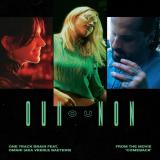
Comeback tells the story of Ava, a 14-year-old girl trying to navigate the complex relationship between her divorced parents. Her mother, Naomi, a former successful techno DJ, is determined to revive her career and make an international comeback. Ava's father, Dominique, has withdrawn from the hectic nightlife and now leads a quieter life. As Ava becomes increasingly drawn into her mother's vibrant nightlife, she finds herself entangled in the expectations and dreams of her parents.
With a musical score by Raf Keunen and techno tracks by Jeroen De Pessemier (One Track Brain) – founder of the Belgian electro band The Subs – and the visually stunning cinematography of Sander Vandenbroucke, Comeback, shot on 16mm film, combines intimate family conflicts with the energetic, pulsating rhythm of techno.
“Oui Ou Non” by One Track Brain ft. Omani (aka Veerle Baetens) is one of the tracks from the movie "Comeback", now available on 7-inch.
Critically acclaimed American producer Tomu DJ (Pitchfork, Dazed, NPR++) debuts on sound as language with her fourth album, 'antagonist.' Recorded in the artist’s Oakland, California home throughout 2025 using only a digital piano, her intention for the album was to “free myself from conventional notions of electronic music”. This is perhaps seen clearly on standout tracks “loose interpretation” and “careful deliberation”, which in their cinematic splendor evoke the beauty and thoughtfulness of classical music. Even so, 'antagonist' is “not intended to be like classical music, rather a stream of consciousness akin to spoken word poetry”. It is easy to see what she means on tracks like “antagonist” and “dance” which weave familiar elements into personal narratives of loneliness, perseverance and redemption. Despite its specific sonic palette, 'antagonist' fits right in with Tomu DJ’s discography, continuing to build on the musical ecosystem she has thoughtfully tended to over the course of the last decade.
After releasing their third album, Maintenant Jamais, and touring in Europe, the United States, Canada, and Mexico in 2025, Population II now announces Gimmicks, a new synthedelic rock EP.
Blending vocal and instrumental tracks, Gimmicks is a companion piece to the Montreal band's latest full-length. It's an extension of the electronic sounds we explored on Maintenant Jamais, with tracks like “13 1 3 1” and “Poudreuse Blues, explains Pierre-Luc Gratton. Even though we added upright piano and fuzz bass to some of the songs, our number one rule for this project was: keyboards and synthesizers, first and foremost! This is why they decided to ditch the guitar completely on these new songs, once again demonstrating the extent of their versatility.
Rhythm-wise, the use of a drum machine allowed the musicians to push their own boundaries and take this exercise in style to a higher level. It made us rethink our rhythmic habits and add bursts of intensity by experimenting with timbres and sound dynamics. The result is an EP at times unsettling, at times dreamy, but perfectly calibrated, where constraint gives way to ingenuity, freedom, and friendship. Although prog and krautrock fans will recognize the influence of Syrinx, Tangerine Dream, and Cluster, Gimmicks is, above all, the affirmation of a band capable of looking back to move forward.