
pre-order now27.03.2026
expected to be published on 27.03.2026
26,01 €
expected to be published on 27.03.2026

Maui Blue & Orchid Vinyl. Nachdem wir American Don mit (Steve) Albini fertiggestellt hatten, waren wir kurz davor, dass die Spannungen zwischen uns so groß wurden, dass wir uns trennen mussten. Ich (Eric) war überzeugt, dass wir bei den Aufnahmen die wahre Essenz der Songs verloren hatten. Es war keine einstimmige Entscheidung, mit Steve aufzunehmen. Wir haben das Album komplett mit Gitarrenloops geschrieben, und Team Storm & Stress wollte im Studio mit Pro Tools weitermachen, was sowohl zu dem passte, was wir machten, als auch zu dem, was wir erreichen wollten. Steve hatte gerade den großartigen A-Raum bei Electrical fertiggestellt, und Damon bestand darauf, dass wir dort die Drums aufnehmen würden. Er gab in dieser Frage nicht nach. Sobald wir dort ankamen, wurde uns klar, dass alle Songs, die wir mit unseren Pedalen in mehreren Overdubs geschrieben hatten, nur Mono-Gitarrenaufnahmen zuließen. Wir haben das Problem gelöst, indem wir die Songs zu einem einzigen Loop gespielt und alle Gitarren später überlagert haben, sodass ein volles Stereofeld entstand, das zu den grandiosen Drum-Aufnahmen von Steve passte. Dieser Ansatz hat unsere Spielweise total verändert. Das hat zwar magische Momente der Improvisation ermöglicht (Peter Criss Intro), aber als das Album fertig war, klang es aufgebläht und die Darbietungen waren träge. Ich war mir immer sicherer, dass der Sound des Akai Headrush und die Tempi, die er für Damon vorgab, das Herzstück dieser Songs waren. Ian stimmte mir zu. In einem gewagten letzten Versuch hatte ich die Idee, Greg Norman (der für Steve arbeitete!) anzurufen und ihn zu fragen, ob wir nach unseren nächsten Shows heimlich in sein Studio in S. Chicago kommen und das Album LIVE neu aufnehmen könnten. Es war ein riesiger Schritt, der niemals hätte funktionieren können, aber wie durch ein Wunder waren alle einverstanden, und wir versuchten es. Greg hat uns persönlich und professionell in unserer heißesten Phase eingefangen. Die Tempi sind schneller, und niemand hält sich zurück. Diese echten Live-Bänder zeigen die Songs genau so, wie wir sie auf Tour gespielt haben, wo sie zwischen Juni 1999 und Juli 2000 entstanden sind. Jetzt, 25 Jahre später, wurden die Greg-Norman-Aufnahmen entstaubt und digitalisiert. Mit Hilfe moderner Restaurierungswerkzeuge und dem Fachwissen von Sir Bob Weston konnten wir diese Aufnahmen zum ersten Mal neu abmischen und mastern. - Eric Emm, Bassist
expected to be published on 27.03.2026
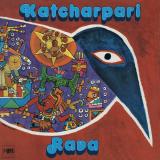
The breakthrough album. Enrico Rava's second solo record, recorded in Milan in January 1973 and released on the German BASF label, is nothing less than a cornerstone of Italian jazz-rock - the record that caught Manfred Eicher's attention and opened the doors to ECM. Rava himself has called it his breakthrough, and history proved him right.
The lineup is killer: John Abercrombie on guitar, Bruce Johnson on bass, Chip White on drums. Four musicians operating at the absolute peak of early seventies fusion energy - electric, cosmopolitan, burning with that particular fire that only existed in that brief window when jazz met rock and nobody knew the rules yet. Abercrombie, already on his way to becoming one of the most distinctive voices in electric jazz guitar, delivers some of his most ferocious early work here. White's drumming is relentless, pushing the music forward with an intensity that never lets up.
If Miles' Bitches Brew-era speaks to you, if Ian Carr's Nucleus gets you moving, if you know Sun Ra's Lanquidity and Don Cherry's Relativity Suite by heart - this is essential listening. Rava's vision was already fully formed: South American rhythms, Mediterranean warmth, free jazz ferocity, rock power - all flowing together without borders or categories. By the early seventies, Rava had absorbed everything - the New Thing, the European free scene, the electric revolution coming out of Miles' studio - and forged something entirely his own.
The seven tracks cover serious ground. "Bunny's Pie" introduces the music with an almost cosmic atmosphere of suspense, hovering in that liminal space before it trails off into the up-tempo vibrant frenzy of "Trial N. 5" - Abercrombie and Rava trading swirling solos at full intensity, the rhythm section locked in tight. "Dimenticare Stanca" moves from Rava's expressive balladic intro into pure funk, guitar and trumpet steering over the rhythmic drive with absolute confidence. The title track carries the lyrical feel and cadence of an Incan-Peruvian folksong - that cosmopolitan spirit made audible. "Fluid Connection" rides a funky bass riff into fusion heaven, with standout trumpet and guitar solos that build and release with perfect tension. "Cheerin' Cherry" pays homage to the great Don Cherry - Rava's spiritual mentor and fellow traveler in world music - exploring a North African soundscape that points toward the global jazz to come. Johnson's "Peace" closes the album with a minute and a half of serene, blissful calm - a moment of stillness after the storm.
This audiophile reissue - cut from the original masters, pressed by Pallas in Germany on 180gm vinyl, housed in a thick laminated hand-glued gatefold - does full justice to an album that remains a collector's holy grail.
Don't sleep on this one. Limited Edition.
expected to be published on 20.03.2026
With two deeply cherished compilations already in the bag, Luke Una steps up for the third volume in his É Soul Cultura series on Mr Bongo. A love letter to the dancefloor and its power to unite people from all corners of society amid growing division and extremist politics. Genre-spanning in nature, the 15 tracks travel between cosmic soul, boogie, proto-house, slo-mo technoid grooves, drum machine afro, astral bass-bugging futurism, jazz funk, dance, and disco. Each having the ability to move the body as much as the heart.
From his formative years in Sheffield to co-founding Manchester’s much-fabled Electric Chair with Justin Crawford, through to helming the iconic LGBTQ institutions of Homoelectric / Homobloc, Luke has spent 40 years immersed in dance music. His latest outlet, É Soul Cultura, has grown from a label to a globe-spanning events series with Luke holding residencies and embarking on tours across the world from Japan and Australia to America and Europe.
“For me, the dancefloor was never about a one-dimensional, thudding, 130 BPM beat only. It's a much more dynamic, broader vision than that. I cut my teeth in an era where a 100 BPM record had as much impact, excitement, and energy as a 134 BPM dancefloor jazz funk or techno record”, Luke mentions. É Soul Cultura Volume 3 is the perfect embodiment of that notion: “It’s about four decades in the trenches playing dance music, the late-night afters, the shebeens, the basements, warehouse parties, the eight-hour journeys in East London, through to festival sets at Houghton and We Out Here. It’s music unconstrained by genre or tempo and more about making your body move”.
But this isn’t simply a collection of disparate dance tracks; they carry meaning and soul. “It’s less about escapism, more about reconnection. My experience of post-covid has been the coming together of all the clans in various clubs and gatherings. A reaction to a very toxic world out there, where the aggro rhythms of division have sought to divide us, and people don't meet as often. The coming back together face-to-face in clubs has encouraged a real love in the air, there's a real togetherness and collective spirit”.
Opening up the compilation is a track that channels that very message, the transcendental, soul-rousing Harris & Orr ‘Spread Love’. Joining the dots from there, to the low-slung deep house closer of Fatdog ‘Remember’, you’ll find electronic drum machine Nigerian funk, sitting side by side with dancefloor Cape Verdean brilliance, a post-punk cover of Fela Kuti, rubbing shoulders with cosmic electro, and an Una-championed, 8-minute, kickless DJ Harvey remix. There’s jazz funk in various guises moving from boogie synth to astral travelling, slo-mo acidic raw techno, and a ‘79 soul stepper, alongside swirling percussive Italo disco and tribal-charged house. All infused with an innate ability to bring people together.
As society becomes increasingly fractured, É Soul Cultura Volume 3’s message is more than movement. It’s about dance music’s power to unify people from all walks of life and break down the barriers that divide us.
Order now and we will order the item for you at our supplier.
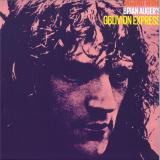
Strut Records highlights a landmark in British jazz-rock with Second Wind, the 1972 album from keyboard visionary Brian Auger and his powerhouse group Oblivion Express. Capturing a fully matured lineup, the record finds Auger expanding his fusion language - bridging jazz sophistication, funk-driven rhythm, and soul-infused songwriting with the clarity and fire that defined his early ’70s work.
Though Auger’s roots lie in the lineage of hard-swinging jazz organ and the improvisational fire of the ’60s British scene, he has never been an artist content with tradition. With Second Wind, he moves further into a hybrid language that fuses rhythm with harmonic depth and groove, without sacrificing sophistication. His playing is expansive yet precise, translating the electricity of live performance into a studio work that breathes with immediacy.
At the heart of this era of Oblivion Express is the telepathic rapport among its members. Vocalist Alex Ligertwood (in one of his earliest major recordings before Santana fame) brings a soulful intensity that feels both grounded and forward- looking. Second Wind contains tracks that have become deeply significant in Auger’s discography - original compositions Second Wind, and Truth to name a few - but it was Auger's high octane revisioning of Eddie Harris' Freedom Jazz Dance, (adding new lyrics to the original instrumental) that genuinely broke barriers. The track became a DJ friendly classic and highlighted the groups deeply original approach.
The rhythm section of Barry Dean and Robbie McIntosh balances weight and fluidity, giving Auger the space to stretch across Hammond organ, Rhodes, and keys with characteristic boldness. Their collective sound is one of seamless motion: jazz-inflected lines swelling into rock-driven crescendos, funk-leaning grooves locking with vocal hooks, moments of quiet clarity emerging between bursts of improvisation.
Second Wind stands as a pivotal moment in Auger’s discography: a record that bridges the exploratory spirit of his earlier projects with the more groove-oriented approach that would soon bring international attention. More than five decades later, it remains a vivid document of a band carving out its own language. Music born of instinct, collaboration, and a restless desire to push beyond the expected.
Order now and we will order the item for you at our supplier.

Abdou El Omari was born in 1945 in Tafraout, south of Agadir -- a village suspended between the pink granite peaks of the Anti-Atlas and the waves of the Atlantic. A landscape already musical in itself. He grew up in the dry mountain light, surrounded by the rhythms of nature and Berber's culture. Very little is known about the man -- a veil of mystery still surrounds his life, only deepening the fascination. In the 1970s, as Morocco was transforming, Abdou El Omari shaped a sound of his own -- a visionary blend of spiritual jazz, psychedelic funk, Moroccan traditions, and early electronic experimentation. Today, his work is resurfacing, rediscovered by a new generation of listeners in search of lost horizons. This record stands among its rarest and most precious fragments. At twenty-two, he founded his first group, Les Fugitifs, which gained him local fame. Soon after, he released records and cassettes on labels such as Cléopâtre, Hassania, Boussiphone, Hilali, and his own, Al Awtar, while performing on RTM (national radio and television). He also composed for artists like Naima Samih, Laila Ghofran, and Aicha El Waad. In 1976, through the label Gam, he released his only vinyl album, Nuits d'été -- a record that would become cult decades later, reissued in 2017 by Radio Martiko. In the 1980s, his music grew quieter, more secret. He tried to recover his old tapes from the studios he had recorded in, but gradually withdrew from the scene and returned to hairdressing. A pioneer of musical fusion, he opened paths that would remain unexplored for years. He passed away in 2010, never witnessing the rediscovery of his music by diggers, bloggers, and collectors online. One day, his close friend and poet Aziz Essamadi, rescued a cardboard box from the trash -- a box containing Abdou El Omari's personal archives. It was later entrusted to Casablanca based collector Ahmed Khalil, founder of the label Dikraphone. Inside were treasures preserved by chance: demos, rehearsals, private recordings, unseen photographs -- and a stunning, almost forgotten cassette. Here, El Omari sounds bolder than ever, exploring territories where pop, cosmic disco, electric blues, and Moroccan tradition merge without boundaries. Armed with his ARP Odyssey synthesizer, hypnotic grooves, and the celestial layers of his Farfisa, he expanded the dialogue between deep roots and electronic exploration. This album is the continuation of a vision -- a music of the Moroccan future: rooted, but reaching for the unknown. Colorful, magnetic and timeless, here is music for dancing as much as for dreaming.
expected to be published on 13.03.2026

In the ever-evolving yet foundational landscape of instrumental groove music, F-Spot Records is proud to debut "Monkey Part 2 b/w Lully" from up-and-coming, multi-faceted keyboardist and composer Max Naseck. Raised in Dallas, Texas, but having worked throughout the Los Angeles music scene for almost a decade, Max Naseck, joined by guitarist Brandon Bae and drummer Julian Allen, brings his new trio project to life. After chasing this sound and style of playing for several years, Appropriately given the name "The Left Hand of God" by some of his musical peers, Max takes the classic soul jazz trio setting of holding down both the bass and melody elements and moves them to a unique combination of funky Moog synth (Key bass) and a Wurlitzer 200A electric piano. This 45 provides a fresh yet retro sound that is sure to leave listeners grooving and locked in.
From the first notes and tight 4-on-the-floor rhythm, "Monkey Part 2" kicks off the A-side with a unique psychedelic blend of soul, funk, and a touch of disco. With Allen's groovy touch, Naseck perfectly locks in with his left hand, followed by Bae's precision-picked electric guitar, which completes the trio's solid groove, further propelled by Naseck's right hand taking the melodic lead. Then on side B, "Lully" brings the tempo down to a more soulful, atmospheric blend that's equal parts Khruangbin & modern jazz pioneers, a la John Scofield. Recorded live together in one room, Max brings his strong compositional style to the table, showcasing how three musicians can interact in a playful, melodic, and groove-focused way.
Order now and we will order the item for you at our supplier.

Finally, finally, FINALLY! After many years of fruitless praying, a true collector grail can finally grace every turntable the world over. Bright And Shining is a miraculous leftfield library classic from the genius mind of Barbara Moore. It's Highly Addictive Happiness Music TM and one of the coolest records to come out of anywhere...ever! With originals almost impossible to find - and, when they do, going for over £300 - you already know how crucial this beautiful reissue is.
Recorded in 1981 for Sylvester Music Company, Bright And Shining is breezy, dreamy and funky in a perfectly smooth jazzy-soul-groove fashion, with Moore's patented celestial male-female vocal harmonies this time benefitting from the addition of Fender Rhodes and pumping bass lines.
As one particularly enthusiastic Discogs user put it: "If Eno is responsible for Music for Airports, Moore is responsible for Music for Holidays." Indeed, this is brilliantly unique, "maximum happiness music". If you miss the sun-dappled soft-psych soul of Koushik, the heavenly vocal arrangements of the great Library Music doyenne Barbara Moore - her depth, richness, sophistication and warmth - will see you just right.
The gigantic title track, "Bright And Shining", gallops out the gate, all sophisticated, jazzy leisure-soul with sax and guitars backing Moore's effortless vocal swag in this relaxed, mid-tempo head-nod strut. Worth the price of admission alone. Up next, the sunny, vibey "Fly Me High" features strolling, "unworded" vocals (aside from the refrain of the title) alongside breezy alto sax and electric guitar. Pastoral and perfect. The slow'n'sultry "Affluence" presents a moody elegance, a classical "downlifting" gem. Another crucial highlight is the breezy "Going On Holiday". It's happy. It's sunny. It's lively. It's cool and happy. Did we say happy? A mid-tempo, romantic sax workout, "Alto Sex"presents smooth jazzy funk before the first side closes out with the soaring, jazzy "Stay With Me". Seriously uplifting.
Side B opens with "Feel Fine", an excellent uptempo and bright jazz groove. Up next, "Canon" is wracked with refinement, a peaceful, smooth vocal harmony over repeating bass making for an elegant, late-night classic. It's followed by the laconic "Smooth And Soft", a laidback, casual sophisticated soul and easy-feeling jazz gem. The jazzy "Real Thing" is another exercise in strolling sophistication, complete with wordless vocal harmonies. The fairly self-explanatory "Voice Over Sax" sounds precisely how you would expect; a relaxed sax number with heavenly vocal support! To close, the carefree "Feeling Free" is a pleasant, light and breezy mid-tempo groove.
The audio for Bright And Shining has been meticulously remastered by Be With regular Simon Francis, ensuring this release sounds better than ever. Cicely Balston's expert skills have made sure nothing is lost in the cut whilst the records have been pressed to the highest possible standard at Record Industry in Holland. The original, iconic sleeve has been restored here at Be With HQ as the finishing touch to this long overdue re-issue. We'll grant the final word to MillionDollars. on discogs from about 10 years ago: "If you listen to the record on a sunny day you feel like going out surfing in a white linen suit with a blunt on your lips, catching a cool breeze."
Order now and we will order the item for you at our supplier.

With four albums already behind them, Sababa 5 have earned global support, from Songlines magazine and BBC Radio 6 Music tastemakers including Gilles Peterson, Jamz Supernova and Iggy Pop to France’s FIP Radio and Radio Nova, for their unique blend of traditional Middle Eastern celebration music with psychedelic grooves, funk, jazz, rock, and international vocal collaborations spanning Japan to India. The Paris-based group have taken this sound to stages across Europe, including Reeperbahn Festival and Dresden’s Super Fest.
Ça Va Ça Va is the band’s hafla album – a return to the wedding and event celebration music that first shaped Sababa 5. Recorded in Paris, it draws directly from the sounds of hafla – the joyful, communal music heard at Middle Eastern weddings, parties and festive gatherings – with a sprinkling of influences from the wider Mediterranean. The group utilise their classic combination of electric guitar, bass, drums, organ, and synths to transform these ideas into vibrant melodies, dance-ready rhythms, and a spirit of abundance and
togetherness.
Opening track “Bienvenue” sets the tone with a mysterious, longing guitar solo before bursting into an irresistible rhythm and jubilant guitar motif. It flows seamlessly into “Allô”, straight into wedding-riot territory – a fast-rising instrumental that showers the dancefloor with energy as it builds around a hypnotic, arpeggio-driven riff. The album is almost entirely original material, with two key exceptions: “Ypárcho” (I Exist), a beautiful instrumental journey inspired by a classic Greek song traditionally performed by Stelios Kazantzidis, and “Asunsan”, an instrumental flip of the much-loved Sababa 5 collaboration “Nasnusa” with Yurika Hanashima. Another impressive step in the Sababa 5 story, Ça Va Ça Va captures both joy and longing – the unmistakable warmth of Eastern Mediterranean celebration and the band’s surf-rock edge – sounding more confident, spirited and deeply rooted than ever.
expected to be published on 20.02.2026

Bass: Sam Jones
Cello, Bass: Isao Suzuki
Drums: Billy Higgins
Electric Guitar: Kazumi Watanabe, Kazumasa Akiyama
Recording & Remix Engineer: Yoshikane Okada
Executive Producer: Toshinari Koinuma
Piano, Electric Piano, Fender Rhodes: Cedar Walton
A gem of a crossover album from Isao Suzuki, who has continued to lead the Japanese jazz scene as a bassist.
Capturing the vibrant energy of the 1970s, this record has been rediscovered by club music aficionados and rare groove collectors alike.
The album fuses Van Morrison–like bluesy grooves with deep funk and jazz sensibilities, along with a uniquely Japanese melodic sense.
expected to be published on 13.02.2026

Tilaye Gebre is one of Ethiopia’s most soulful saxophone giants, with a musical legacy that’s hard to surpass. A founding member of the Equators, later renamed the Dahlak Band, he was a key figure in Ethiopia’s vibrant hotel music scene and a sought-after musician and arranger for artists like Aster Aweke, Mahmoud Ahmed, Tilahun Gessesse, and Muluken Melesse.
Tilaye — still going strong — was at the epicenter of the Ethiopian music scene during one of the most turbulent periods in the country’s history. Tilaye’s musical trajectory, regardless of the forms it has taken over the decades, is simply ceaseless. The road to a musical career spanning six decades started out winding, and the first steps came almost as a fluke.
With the Dahlak Band, Tilaye had managed to secure a musical residency at the legendary Ghion Hotel, where they honed their skills and developed their musical expression to unparalleled levels. From the late sixties onwards, Dahlak Band lit up Addis Ababa with a mixture of James Brown and Wilson Pickett tunes, rhythm and blues, soul, funk, and the sound of the disco era — mixed with modern Ethiopian styles — serving up majestic concoctions with full-range instrumentation, featuring trumpet, keyboard, saxophone, bass, drums, and guitar. Through their hotel sessions, Tilaye developed further as an arranger, arranging fellow band member Muluken Melesse’s first solo album, Muluken Melesse with the Dahlak Band (Kaifa Records – LPKF 39), recorded during the turbulent years of 1975–1976, following the fall of Haile Selassie. Everything was in flux in this transitional period, but a constant was how Tilaye stood in the spotlight. On that record, there’s a loose vibe to the soundscape that lets Tilaye’s skills shine, while all the other musical contributions coalesce into a slowly cooking atmosphere where the groove at times fluctuates into psychedelic territory, making the music stand out from most contemporaries.
Most of their recorded output came from one-take live cassette recordings at the Ghion, or from music shops at that time — one microphone at the front, hit record: no EQ, no reverb, just some delay. Some of the Dahlak Band’s releases featured Tilaye as frontman, such as Tilaye’s Saxophone with the Dahlak Band from the late 1970s — typical of a rare groove on the Ethiopian scene — with excursions into reggae territory, including the band’s characteristic sound featuring Tilaye Gebre (tenor and alto saxophone), Dawit Yifru (organ), David Kassa (electric guitar), Shimelis Beyene (trumpet), Moges Habte (tenor saxophone), Abera Feyissa (bass guitar), Tesfaye Tessema (drums), and Muluken Melesse (cowbell). The Dahlak Band’s output was so prodigious that they simply couldn’t be pigeonholed.
No saxophonist in Ethiopia influenced the sound of popular music more than Tilaye in the 1970s, yet his recordings have been hard to come by for ages, which has meant that newcomers to the scene have gems to uncover in retrospect. Arguably, Tilaye shifted gears when he relocated to the U.S. to such an extent that his musicianship became even more renowned, accompanying the greatest of his contemporaries internationally. Tilaye is one of Ethiopia’s all-time greats, with a musical legacy — both as musician and arranger — that’s hard to surpass. It’s a wonder to be able to enjoy a recording like this half a century later.
Order now and we will order the item for you at our supplier.

Super Spicy Records label head and Mexican edit king Monsieur Van Pratt steps up to Funkyjaws Music with four more of his irresistible heaters. 'Moovin' is first and has funky, bouncy drums and expressive trumpets bringing big vibes then 'Sweet' layers up tight bass riffs and electric synth work with a soulful vocal and muscular beats. There is a smooth cruising and blissed out feel to 'If You Feel It' then 'The Best In Me' shuts down with a retro soul edge and expressive guitar licks, slapping bass and gorgeous vocal hooks. As always these are high-grade tools that can't fail to cut through.
Order now and we will order the item for you at our supplier.

The Modern Sound Quartet represents one of the most treasured, yet least documented, outfits in the history of Italian library music. An exceptional studio band of session musicians with a formidable groove, they released only a handful of albums under this name in the second half of the 1970s. However, their sound indelibly shaped dozens of "invisible" soundtracks, often without ever receiving an official credit on the back sleeve.
Led by pianist and composer Oscar Rocchi, and featuring Andrea Surdi (drums), Luigi Cappellotto (bass), and Ernesto Verardi (guitar), the quartet embodies the more jazz-funk, cinematic, and irresistibly groovy side of the 1970s Milan scene. They established themselves as a compelling alternative to the already established groups operating primarily out of Rome, such as I Marc 4 or I Gres.
Juggling late-night club jam sessions, tours supporting Italian pop giants like Ornella Vanoni, and creating rhythmically intense library records, the Modern Sound Quartet forged a unique sonic aesthetic: sophisticated, electric, and profoundly metropolitan.
This boxset celebrates their funkiest side—an irresistible combination of incandescent drum breaks, tight grooves, and high-intensity fusion passages—bringing together some of the most sought-after tracks from legendary LPs like Erbe Selvatiche (1977), Floreama (1977), Horoscope (1978), and I Tarocchi (1980). The selection also delves further back to the roots of their sound, including two powerhouse tracks from Pop-Paraphrenia (1973), a project where Oscar Rocchi—backed by a young, lethal Tullio De Piscopo on drums—sowed many seeds that would fully blossom in the subsequent Modern Sound Quartet output.
Created with DJs, beatmakers, and collectors of Italian library music in mind, this boxset deliberately features tracks that were never previously released on 7 inch—an ideal format for maximizing the rhythmic punch of the quartet's sound.
Available in a limited worldwide edition (500 copies), enriched by iconic 70s-style artwork conceived and designed by Eric Adrian Lee.
expected to be published on 30.01.2026

Soul Visions is an instrumental journey into the world of Deheb, who, after several years of continuous sound research, continues to draw inspiration from jazz, soul, funk, and progressive rock records, first discovered through his father and then through his fellow collectors and DJs, including his partner DJ Marrrtin from Funky Bijou.
The Breton artist is renowned in the beatmaking world for his collaborations in New York in the mid-2000s (Moka Only, Sean Price, Torae, Tye Phoenix, Apani B, etc.) and for his album “LEAF”, released in 2015 with Swiss producer Chief. He is best known for producing classic Funky Breaks in the global breakdance scene with Marrrtin under the name Funky Bijou, whose tracks have been played at the world's biggest breakdance events since 2011 (Battle Of The Year, Red Bull BC One, etc.). All their tracks have been listened to more than 30 million times on various platforms and social networks.
A prolific artist who draws much of his inspiration from funk and jazz, he is based in Nantes and has collaborated with groups from the French Neo Soul scene, such as J-Silk from Bordeaux, Jo Wedin from Sweden, and Keysuna from Nantes. Close to the dance scene, he has also collaborated with dancer and choreographer Mackenzy Bergile, which led him to join the CCNRB's choreographic project “Earthbound” by choreographers Saïdo Lehlouh and Johanna Faye in 2023.
Deheb has also been composing for documentary projects since his first collaboration with director Shyaka Kagamé in 2015 for “Bounty”. In 2024 and 2025, he worked on two critically acclaimed projects: “Boulevard du village noir”, produced by Radio Television Suisse, and “IMIHIGO, le pacte rwandais”.
This year, 2025, he brings us “Soul Visions”, a journey through the cinematic sound of the early 1970s to the soul funk and jazz funk of the late 1970s, a pivotal period in his own musical identity that contributed to the funk sound of his guitars and the texture of his synthesizers and electric pianos.
Soul Visions is first and foremost a tribute to the artists and composers, the geniuses of that era, such as the Mizell brothers in “Larry and Fonce”, the Bell brothers in “Ron and Don”, and giants of the genre such as Isaac Hayes, Yuji Ohno, Roy Ayers, and Clarence Reid. All these masters of the genre had their own distinctive sound and arrangements, which were easily recognizable and which are among Deheb's major inspirations.
Order now and we will order the item for you at our supplier.

Originally released as a digital double a side both lead tracks were chosen by the remixers and the results are like an electrical storm.
Newark, NJ’s Dälek (Will Brooks) drags T. Relly’s growl through the quicksand, a cacophony of whiplashed beats and visceral loops spurring our protagonist on. It’s a gaggle of Ghostface Killas trapped in a hall of mirrors; it’s next door’s MBV heard through the walls whilst submerged in a low-lit bathtub. And Wu Tang are pulling the plug out.
Kevin Martin aka The Bug continues to release teeth rattling sonic masterpieces, his most recent being November’s ‘Implosion’ on his own Pressure label. In his hands ‘Protein’ becomes a submarine bass, head n’ rig wrecker opting here for more of his hooky ‘In Blue’ style Bug mix. As Kevin said – “to my fantastical mind it sounds like Bug dirt ‘n’grind Vs Yin Yang Twins’ louche swagger and Neptunes funk”.
“In Bristol, it was hip-hop and reggae renegades meeting up with white ex-punk guitarists, alternative pop pioneers hanging out with underground roots music makers, and sound system sonic stalwarts grooving out with rave’s space cadets that laid the bedrock for such an explosion. And if you think that such an eclectic melting pot ever went away, you would be wrong. Ree-Vo is all the proof that you need” – The Big Takeover
expected to be published on 16.01.2026

The capstone of Miles Davis’ electric period, Agharta reigns as a funk-rock fireball — a blazing comet streaked energy and elan, a fearless organism feasting on adventure and freedom, a seven-headed Godzilla stomping its way through Osaka, Japan. Recorded on February 1, 1975 at Osaka Festival Hall at the first of a two-show stand, the double album offers an endless abundance of surprises and shifts — as well as a road-proven ensemble whose chemistry and abilities equal that of any of Davis’ celebrated bands. If the true measure of jazz is the capacity to adapt to the moment and challenge perception, Agharta is consummate.
Sourced from the original master tapes, housed in a Stoughton gatefold jacket, and pressed at Fidelity Record Pressing in California, Mobile Fidelity’s numbered-edition 180g 33RPM 2LP set of this epic live release presents it in audiophile sound on a domestic pressing for the first time. Offering greater degrees of separation, detail, and richness than the compressed CD editions and more clarity, openness, and presence than older vinyl copies, this version of the 1975 release helps bring the concert stage to your home. Just make sure your turntable and speakers are up to the challenge of Davis and Co.’s explosive performances — and producing the decibels they demand.
Teeming with vibrant colors, tones, and pace, Mobile Fidelity’s reissue captures the hear-it-to-believe-it flow, sweep, and moodiness of the music. Though the group honors looseness and freedom with religious verve, the specificity and scale rendered by this remaster allows you to detect methods behind the alleged madness that are often otherwise harder to discern. This insight extends to the understated changes in volume, harmonics, and phrasings. In many ways, you can listen as Davis himself did that early February evening as he helped coordinate the overall direction and decided on whether to blow his wah-wah-wired trumpet or take a turn on the organ.
Tellingly, Agharta would likely never have been made if not for Davis’ ventures overseas and, specifically, to the Land of the Rising Sun. Having for years faced a backlash on his native soil for his choices to experiment and blow past all known borders, Davis was welcomed with open arms in Japan. The concert documented on Agharta — as well as the day’s later show, captured on the equally exciting Pangea — stemmed from a sold-out three-week tour that would ultimately mark Davis’ final public appearances for years, as he soon settled into semi-retirement and nursed the wounds connected to an unprecedented stretch of restless and relentless output.
For all the band-fueled merit of Agharta — and there’s plenty, given the cast of saxophonist Sonny Fortune, bassist Michael Henderson, drummer Al Foster, percussionist James Mtume, and guitarists Reggie Lucas and Pete Cosey seemingly blasts off to outer space and travels distant galaxies by the time this minimally edited record runs its course — Davis’ own playing often remains overlooked. As critics Richard Cook and Brian Morton observed, it is “often fantastically subtle, creating surges and ebbs in a harmonically static line, allowing him to build huge melismatic variations on a single note.” He attacks like a man on a mission, out to prove naysayers wrong and bent on trailblazing another new path forward. Convention and skeptics be damned.
Noisy and furious, dark and discordant, abstract and off-balance, radical and intense, abrasive and atmospheric, strangely beautiful and hypnotically eccentric: Agharta evades simple description, and refuses to be pinned down in any established category — rock, jazz, punk, ambient, prog, avante-garde, or otherwise. Shot through with trench-deep grooves, screaming riffs, scalding solos, and free-improv leads, its cosmic thrust comes on as the equivalent of an animated pointillist painting comprised of millions of textured dots, dashes, and dabs that hold your attention so raptly you want to revisit the ideas again and again.
Always steps ahead of everyone else, Davis knew what he was doing even when Agharta debuted in Japan before later hitting U.S. markets. Though “Maiysha” and “Theme from Jack Johnson” are identified in the track listing, the record contains a number of uncredited references to other Davis works, including a nod to “So What.” This decision to bypass labels only adds to the art of the reveal — the rare black magic in which Agharta expertly deals.
This item has not yet been released. You can pre-order the product now.

At the beginning of the 1960s, at the Berklee College of Music, Byard Lancaster met some feisty friends: Sonny Sharrock, Dave Burrell and Ted Daniel. It is easy to see why he rapidly became involved in free jazz. Once he was settled in New York, he appeared on Sunny Murray Quintet, recorded under the leadership of the drum crazy colleague of Albert Ayler.
In 1968, the saxophonist and flutist recorded his first album under his own name: It’s Not Up To Us. The following year he came to Paris in the wake of… Sunny Murray. He would come back to France in 1971 (again with Murray) and in 1973 (without Murray for a change). This is when he met Jef Gilson, the pianist and producer who encouraged him to record under his own name again.
On Palm Records (Gilson’s label), he would release four albums: Us, Mother Africa, Exactement and Funny Funky Rib Crib.
A few months after recording “Us”, Lancaster recorded “Mother Africa” along with Clint Jackson III, a trumpeter, partner of Khan Jamal or Noah Howard on other recordings.
On march 8th, 1974, Lancaster and Jackson headed up a group composed of Jean-François Catoire (electric and double bass), Keno Speller (percussion) and Jonathan Dickinson (drums).
Together, they create an immediate impression. From the first seconds of “We The Blessed”, they develop a free jazz which rapidly abandons any virulence under the effect of blues and soul based interventions.
When Gilson’s composition “Mother Africa” begins, listeners are transported into the studio, listening to the musicians setting up: chatting and joking… Then comes the melody: a dozen or so notes of a repeated theme which is accelerated and deformed according to their whims… The jazz played by the association Byard Lancaster / Clint Jackson III is rare: creative AND recreational. “We the blessed”, is apt listening to this again today!
This CD edition contains a bonus track, the magnificent “Love Always” that was originally released on the fourth (and last) volume of the Jef Gilson Anthology series released in 1975.
Recorded on 8th March 1974, it is a beautiful 15-minute-long modal jazz piece. Four notes from the bass (the relentless Jean-François Catoire, who makes up the rhythm section alongside drummer Jonathan Dickinson and percussionist Keno Speller), and the group is up and running!
On piano, Gilson shows the subtle tact of a sideman, leaving the lions’ share of the place to the horns. This allows us to hear the trumpet of Clint Jackson III and the alto (which sometimes sounds almost flute-like) of Byard Lancaster each staking their claim in a long hallucinatory march which moves from moments of direct exaltation to profoundly sensitive collective playing.
expected to be published on 05.12.2025

At the beginning of the 1960s, at the Berklee College of Music, Byard Lancaster met some feisty friends: Sonny Sharrock, Dave Burrell and Ted Daniel. It is easy to see why he rapidly became involved in free jazz. Once he was settled in New York, he appeared on Sunny Murray Quintet, recorded under the leadership of the drum crazy colleague of Albert Ayler.
In 1968, the saxophonist and flutist recorded his first album under his own name: It’s Not Up To Us. The following year he came to Paris in the wake of… Sunny Murray. He would come back to France in 1971 (again with Murray) and in 1973 (without Murray for a change). This is when he met Jef Gilson, the pianist and producer who encouraged him to record under his own name again.
On Palm Records (Gilson’s label), he would release four albums: Us, Mother Africa, Exactement and Funny Funky Rib Crib. “Us”, the first of the four records was recorded on November 24th, 1973 with Sylvin Marc on electric bass (a Fender… Lancaster?) and the evergreen Steve McCall on drums.
On the album, the trio works from the John Coltrane model; free jazz shook up by the timely contributions of the bassist, followed by a mesmerizing atmospheric music. Then, Lancaster delivers a sinuous solo path, which is a reminder of his unique tone. On the album’s companion single, the trio launches into great black music of a different genre which would lead the clairvoyant François Tusques to claim that Byard Lancaster is an “authentic representative of soul/free jazz”, to sum up this is Great Black Music!
crédits
expected to be published on 05.12.2025

Paul Murphy’s Claremont 56 label welcomes a genuine legend of UK music to its roster – Chaz Jankel, the man whose dizzying musicality and love of soul, funk and disco did much to shape the sound of Ian Dury’s Blockheads band in the late 1970s and early ‘80s.
A virtuoso keyboardist with a deep love of Black American music, Jankel’s arrangements and compositional skills were key to the success of their records, the funkiest of which not only became crossover pop hits – see ‘Hit Me With Your Rhythm Stick’ and ‘Reasons To be Cheerful, Part 3’ in particular – but also saw heavy rotation in now iconic New York clubs including the Paradise Garage and Studio 54.
This continued during the formative years of his solo career, with ‘My Occupation’, ‘Questionnaire’ and ‘Glad To Know You’ (later famously re-edited and dubbed out for nu-disco dancefloors by Todd Terje) all becoming club hits. The great Quincy Jones also covered Jankel’s infectious single ‘Ai No Carrida’, while experimental, club-ready synth-jam ‘3,000,000 Synths’ was also influential during the early years of the electro movement.
For his Claremont 56 bow, Jankel has delivered an all-new workout recorded earlier this year, the simply titled ‘Rhumba Jam’. A typically warm, groovy and rolling affair, it features Jankel delivering infectious, stretched-out Rhodes electric piano solos over toasty bass, clipped guitar licks, warm bass, accordion-style synth motifs and a densely layered Rhumba rhythm. While relaxed and sun-soaked, it also has bags of Balearic dancefloor potential.
Murphy remixes under his now familiar Mudd alias, leaning into the track’s languid Balearic vibe while keeping a firm focus on the dancefloor. Beginning with an enticing mix of metronomic drums and jangly acoustic guitars, Murphy slowly layers up key elements of Jankel’s original – think rubbery bass, rhythmic handclaps, mazy synth sounds and those wonderful, stretched-out solos. It’s a version that pays due reverence to the quality of Jankel’s musicianship, production and arrangement while subtly extending it and reframing it for 21st century Balearic dancefloors.
Order now and we will order the item for you at our supplier.

Juga-Naut, cultural Renaissance man, master of crafts, has done it again. Out of the deepest recesses of Nottingham’s underground caves, in brain-melting stereo and mesmerising technicolor, comes… Bem II.
Following on from 2020’s Bem, while defying the outdated belief that a sequel never outshines its predecessor, this is a lyrically ascendant, sonically euphoric, genre-defying, fever-inducing, hellcat of an album. Built upon the backbone of Juga-Naut’s inimitable production, wry, streetwise and knowing poetics, with hooks so catchy they cause problems when swallowed, Bem II gives listeners more funk, more soul, more grooves, more breaks, and more grit than ever before. The album’s co-stars include incredible artists and collaborators from both sides of the Atlantic, such as Crimeapple, Vandal Savage & Yumah.
Inspired by legendary cinema, each track is filmic in and of itself, a collection of twelve potent and timeless songs that together mean more than a million vapid viral videos. If played in the presence of the planet’s most infamous haters in a darkened theatre on a moonless night, Bem II has the power to unite even the most acrimonious of enemies.
This album is best listened to just before your decide to ask Jugz in 2024 after a decade plus of releases if he is 'still doing his little music thing?'.
expected to be published on 28.11.2025

Quadratschulz returns to Clone / Dub Recordings with a sonic ode to Tokyo - ??six beautifully crafted tracks inspired by the neon-lit nights and electric pulse of the city. Drawing from the spirit of Japanese electronics, arcade culture, and city pop nostalgia, he blends crisp rhythms with emotive melodies and playful synth work. It'??s a journey through dreamy downtowns and rain-soaked alleyways, full of warmth, precision, and imagination. Of course, Japanese electronics play a key role - ??led by the unmistakable playful sound of the Roland TB-303 weaving through the tracks like a main character. Braindance for the dancefloor - ??Quadratschulz in top form. First limited press on opaque red vinyl.
b 02 The Garden of Evermod Shoseien Version
Order now and we will order the item for you at our supplier.

Released here for the first time on vinyl, Science-Fiction is one of Mazalda's early albums, originally released in 2008 on CD only. Mazalda is a legendary band for anyone who's been to French venues and festivals in the last 20 odd years ; the Lyon-based collective have played – literally – thousands of shows, always with a high level of breathtaking musicianship, sensitivity and energy.
Although mostly known for their fruitful collaboration with raïsinger Sofiane Saidi in the late 2010's, Mazalda started off as a street brass-band circa 2001. Soon, they integrated specific modern elements to their sound : 70's analog synths, psychedelic guitars, electric mandoline, Wurlitzer piano, Ewi electronic saxophone.
Stéphane Cézard, Mathieu Ogier, Lucas & Adrien Spirli, Gilles Poizat and Julien Lesuisse were influenced by numerous styles of instrumental music from across the Eurasian continent since their teenage years ; yet with Science-Fiction they broadened their field of inspiration to both pop and experimental horizons. Gilles Poizat (Orchestre Tout-Puissant Marcel Duchamp) and Julien Lesuisse (Crimi)'s clear and melodic vocals pair with a great sonic depth created by the countless possibilities of instrumental combinations.
Mazalda chose to record a handful of cover versions such as the majestic opener " Thu Og Eg " by Icelandic prog musician Gunnar Thordarson, or a funk-fuelled version of a 1920's protest song by Neapolitan singer Alfredo Bascetta. A majority of the selection, though, is masterfully penned by members of the band.
Science-Fiction captures the fresh and boundless creativity of a young band of mates who, as well as being top-rank interprets, draw unique inspiration from timeless musical wells. It just wasn't fair that this album never got released on vinyl or online. Meanwhile, Mazalda are still alive and well, as they released their latest album Special Key in 2023 (Airfono) and are currently playing shows across France and Europe with Franco-Egyptian singer Hend Alrawy (Orange Blossom) as "Zerzura".
expected to be published on 14.11.2025

When Straight Ahead hit the shelves in 1974, it marked another bold chapter for Brian Auger’s Oblivion Express. The band—Steve Ferrone on drums, Barry Dean on bass, Jack Mills on guitar, and Lennox Langton on congas— was firing on all cylinders, pushing jazz fusion into fresh, uncharted territory.
Critics took notice, with Billboard praising the album as “excellent in development and inventiveness, ” and it found its way onto multiple charts at once.
The journey begins with “Beginning Again, ” a lively opener built on Langton’s congas and Ferrone’s muscular groove. Auger’s electric piano sparkles here, immediately setting the album’s adventurous tone. Then comes their take on Wes Montgomery’s “Bumpin’ On Sunset. ” Darker in mood and drenched in atmosphere, Auger stretches out into improvisation while still honoring Montgomery’s spirit. The interpretation struck such a chord that, years later, Wes’s widow wrote to Auger to tell him it was her husband’s favorite version of his much-loved tune.
The title track, “Straight Ahead, ” shifts gears into funk, showcasing the group’s ability to slide effortlessly between genres. “Change” pushes further, blending rock’s raw energy with jazz’s improvisational freedom, driven by Auger’s command of the Hammond organ. To close, “You’ll Stay in My Heart” brings the tempo down with a tender, soulful ballad—an intimate ending to an album full of bold explorations.
At the time, reviewers hailed the record as a gem. One called it “a minor masterpiece of incredibly engaging and melodic keyboard-centric jazz-rock fusion. ” Another singled out “Bumpin’ On Sunset” as “the best reason to own this recording.”
Half a century later, Straight Ahead still resonates. It captures that fertile moment in the 1970s when jazz, rock, and funk were colliding, and artists like Auger were busy redrawing the map. To this day, it stands as proof of Auger’s fearless curiosity and his knack for breaking boundaries—music that looked forward then, and still feels ahead of its time now.
expected to be published on 07.11.2025
Following the cult success of the first two EPs and debut album Cinema 3000, Common Saints returns with the highly anticipated EP, Equinox - a release that"s already generating excitement within the Common Saints community. The record blends the signature soul, funk, and psychedelic influences fans have come to love, but this time with a livelier tempo and renewed energy.
Order now and we will order the item for you at our supplier.

An electrified meeting of minds, Candy Girl is a lost 1975 session by jazz pianist Mal Waldron, recorded in Paris with core members of the mighty Lafayette Afro Rock Band, the American funk unit who had made France their home and whose deep grooves would later be mined by generations of hip-hop producers.
By 1975, Waldron was a decade into his self-imposed exile from the United States—a transformed musician who had reassembled his sound in Europe and Japan after a devastating breakdown in the early '60s. His post-1969 output had stripped jazz down to its core elements: modal intensity, locked grooves, and hypnotic repetition. Candy Girl doesn’t interrupt this trajectory—it extends it, wrapping Waldron’s minimalist mantras around the funked-up chassis of the Lafayette rhythm section.
Originally released in microscopic quantities on the Calumet label and long shrouded in obscurity, Candy Girl was recorded spontaneously in the studio of French producer Pierre Jaubert, whose Paris HQ had become the workshop for both avant-garde jazz (Archie Shepp, Art Ensemble of Chicago, Steve Lacy) and psychedelic funk (Lafayette Afro Rock Band AKA Ice). This session finds Waldron jamming freely with bassist Lafayette Hudson, drummer Donny Donable, and keyboardist Frank Abel on clavinet, Moog and more—laying down raw, unfiltered instrumental funk with an experimental edge.
Highlights include the low-slung vamp of “Home Again”, the crisp, break-laden groove of “Red Match Box”, and the mesmeric swirl of the title track “Candy Girl” —a minor-key electric piano waltz with hints of cosmic soul. There's even a deep cut for the crate diggers: the somber yet meditative “Dedication to Brahms”, where Waldron deconstructs the Romantic composer’s third symphony into a sparse jazz reverie.
Unlike his polished sessions for Japanese labels or the avant-garde swing of his earlier Prestige work, Candy Girl feels more spontaneous, even accidental — and that’s part of its power. It’s a document of Waldron as bandleader, collaborator, and explorer, captured in the midst of a vibrant, cross-cultural scene in mid-70s Paris. Never officially issued with a cover and barely released at all, Candy Girl is a rare convergence of two underground traditions: Waldron’s Euro-exile electric jazz and the raw, sampled-future funk of the Lafayette Afro Rock Band. Now finally resurfaced, it deserves its rightful place in both stories.
Order now and we will order the item for you at our supplier.

Hailing from Raw Culture, Anna Funk Damage returns with his third release on the Roman label, delivering a record as fierce as it is intimate. Tarantola was born out of a winter suspended between contrasting emotions – melancholy, anger, love, confusion – distilled into a sound that transforms personal fragility into collective energy. There’s no pursuit of perfection here, but rather an urgency running through the veins, taking shape across supersonic punk, wave, ambient and industrial.
Each track is an emotional fragment, a bite that leaves its mark: from the electric tension of Vivere Distaccati to the feverish rush of Trasmissione, from the rawness of Decadente to the hypnotic title track Tarantola, which embodies the beating heart of the album. Side B unfolds into more nocturnal and intimate landscapes, from Chiang Mai to the disenchanted sincerity of Lavoro Troppo, closing with a party that carries the bittersweet taste of reality.
Tarantola is a journey into the chaos of human emotions, an album that doesn’t just narrate but pulls you deep into its sonic labyrinth, giving noise back its vulnerable yet powerful soul.
expected to be published on 03.11.2025

HOLLY GOLIGHTLY ist zurück mit ihrem ersten neuen Album seit "Do The Get Along" vor sieben Jahren! "Look Like Trouble" enthält zehn neue Originalsongs in ihrer Mischung aus Pre-Rock-Electric-Blues, Folk-Rock und weniger hektischem Rock'n'Roll, die wieder einmal HOLLYs einzigartige Sicht auf das Leben widerspiegeln und dessen viele Höhen und Tiefen aufzeigen. Dabei dient der Album-Opener "Black Tongue" als "ein melodischer Fluch", so HOLLY, "nutzt ihn ruhig, er funktioniert!" Ein weiterer herausragender Titel auf dem neuen Album ist "It's All", den HOLLY als Gedenksong beschreibt. "Dieser Song ist mehreren alten Freunden gewidmet. Ein Beitrag zu Beerdigungen, an denen ich nicht teilnehmen konnte", sagt sie. Wie immer werden die düsteren Songs durch hellere Titel ausgeglichen - ",Rolling Along' ist ein fröhliches Liedchen, das allen Mut machen sollte." Aber es wäre auch kein HOLLY GOLIGHTLY-Album, wenn es nicht ein oder zwei bissige Songs gäbe. ",Miss Fortune' ist ein unverblümter Ratschlag für alle, die keinen Funken Verstand haben", sagt Holly zur ersten Single-Auskopplung aus dem Album.
expected to be published on 17.10.2025
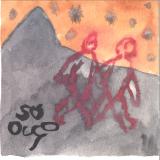
"Taking influence from the pioneers of Música Popular Brasileira, Wolfgang Pérez has crafted an exquisite album of summery experimental pop music that encapsulates the beauty and chaos of modern Brazil. A must-listen for fans of Tom Zé, Gilberto Gil, Kiko Dinucci, Negro Leo, Ricardo Dias Gomes, and João Gilberto.
Genre-blending songwriter, arranger, and guitarist Wolfgang Pérez is set to release his highly anticipated new album Só Ouço in July 2025 on Hive Mind. Known for his unique fusion of influences, the German-Spanish artist first captured attention with his 2021 debut WHO CARES WHO CARES (Fun In The Church), followed by the critically acclaimed Spanish-language album AHORA (BAUMUSIK, 2024).
Só Ouço is the fruit of an 18-month creative residency in Rio de Janeiro, where Pérez collaborated with a group of young Brazilian musicians. Deeply inspired by the city's sounds and rhythms, the album marks an exciting chapter in Pérez’s evolving artistic journey.
In 2022, Wolfgang Pérez arrived in Rio de Janeiro on a university exchange to study composition, and quickly found himself immersed in the city’s rich musical landscape. Introduced early on to Rio icons like Thiago Nassif, Arto Lindsay, and Ana Frango Elétrico, what began as a semester turned into a transformative three-semester stay. Pérez absorbed the city's contrasts - it's beauty, its people, it's chaos and violence, all it's contradictions and life - while deeply studying Brazilian music at UFRJ/UNIRIO under the guidance of masters Josimar Carneiro, Marcello Gonçalves and Almir Cortes.
Wolfgang spent the first 6 months or so soaking in as much as possible, going to shows, to the baile funk parties, walking the streets, hiking the mountains in and around Rio, listening to music, making friends, learning where to go and where not to, learning the language, learning the slang, incorporating the culture. He used the time to forget himself in the vibrance of the city.
After this the band came together through a series of chance encounters and happy accidents...some loose jam sessions led to shows around Rio, where Wolfgang, alongside Luis Magalhães (bass), Pedro Fonte (drums) and Paulo Emmery (electric guitar), started to flesh out some of Wolfgang's compositions. At a show at Audio Rebel they met Angelo Wolf (owner of Wolf Estúdio and engineer for artists such as Bala Desejo, Dora Morelenbaum, Zé Ibarra, Marcos Valle, Antonio Neves and Ana Frango Elétrico); moved by the music, Wolf offered Pérez residency and studio time at Wolf Estúdio, providing the foundation for Só Ouço. Angelo was a catalyst for the production of Só Ouço, his openness and generosity helping to shape the sound of the record. Carol Maia, a young guitarist, lyricist and singer brought a sensitivity and tenderness to the songs, while Antonio Neves helped to pull together the brass and woodwind players who would complete the lush sound of the album.
Meticulously arranged, and beautifully composed, Só Ouço is a joy to listen to and surprising at every turn. Classic songwriting and cutting edge production blend to produce an album that is by turns tender and gentle, abrasive and unsettling, a joyful celebration of life in all its complexity."
Order now and we will order the item for you at our supplier.

Order now and we will order the item for you at our supplier.

The Keith Tippett Group's Dedicated to You, But You Weren't Listening is a landmark in cutting edge fusion/avant-jazz. A vital and profoundly adventurous Jazz-Rock record that still swings very hard, it was first released on Vertigo in 1971.
Original copies are now very tricky to score and, as most of you really should know, it’s aged ridiculously well.
A legendary work, this Be With re-issue has been newly remastered from the original Vertigo master tapes, demonstrating just why this deserves to be back in press. The stunning gatefold jacket fully restores Roger and Martyn Dean's original, arresting album artwork to complete this must-have reissue.
Alive and bursting with a joyful energy that has to be heard to be believed, Dedicated to You, But You Weren't Listening flirts with perfection. It's truly magical and forever essential.
A brilliant jazz pianist, composer, arranger and bandleader "who could make the outlands of modern music feel like the most hospitable of places" (The Guardian), Keith Tippett's second album is oft-regarded as his Canterbury album.
Indeed, not only does he draw heavily on Soft Machine members past, present and future but the album title itself archly references a Soft Machine composition. Ray Babbington handles bass alongside Neville Whitehead and the drums are shared between Brian Spring (Nucleus), Robert Wyatt(!) and Phil Howard (who would go on to replace Wyatt in Soft Machine). Gary Boyle (Isotope) is on guitar whilst the great percussionist Tony Uter is enlisted for his conga and cow bell expertise. Elton Dean on Alto Saxello, cornetist Marc Charig and Nick Evans on trombone round out this quite stunning ensemble.
Dedicated to You, But You Weren't Listening presents a collective of superhuman musicians really, *really* enjoying themselves in the studio. The sheer exuberance of the performance is totally infectious. It's wild, energetic, atmospheric and, bluntly, bordering on chaotic at points. In a word, it's beautiful.
Robert Wyatt's drumming opens the record with a bang on the majestic Be With favourite "This Is What Happens". Some have described his work here as "easily the most inspired of his career on record." It's an ultra-funky conga-driven groove that truly sparks via the duelling interplay between the three horn players. In the background, Keith's insistent piano, in conversation with those unignorable drums, is the anchor that keeps this piece rollicking away. Breathtaking.
The epic, energetic "Thoughts to Geoff" is a 10-minute jammer that tends towards the dissonant and improvisational but becomes more fluid, laconic and melodic as it unravels. The interplay between soloists and ensembles is particularly dazzling here - blazing solos by Evans, Charig and Tippett himself in a flourish of angular arpeggios interspersed with chordal elocution. Phew.
Up next, the no less-urgent Mingus-referencing "Green and Orange Night Park" is a soaring example of ambitious jazz mixed with rock aggression, with Dean strutting his stuff by launching into a scorching solo. An absolutely jaw-dropping piece. Arguably the highlight of this album of huge highlights!
Though much of the album tends to fall on the raucous side ("Gridal Suite" approaches free-jazz at its most chaotic and, dare we say it, "difficult"), there are a few more sedate, at times spacey numbers, such as the deeply impressionistic "Five After Dawn". The rhythmically complex "Black Horse" is the most accessible track here, a sort of swinging Big Band number with tight grooves, soaring horn & reed melodies, a sizzling Boyle guitar solo and tasty electric piano riffs from Tippett. An hypnotic climax to a staggering record.
This Be With edition of Dedicated to You, But You Weren't Listening has been re-mastered from the original Vertigo master tapes, Simon Francis’ mastering working together with Cicely Balston's cut at Abbey Road Studios to weave their usual magic with these wonderful recordings. The stunning gatefold sleeve has been restored in all its brainchild glory so you know you're dealing with the definitive reissue, here. Now, are you listening?
expected to be published on 03.10.2025

François and Sylvain Rabbath have turned six years of touring into a joint album that patiently and intensely distills a variety of musical flavors gathered from around the world.
Since the early 1960s, François Rabbath's double bass has resonated through enough landmark recordings to fill several shelves in a record collection. As an arranger, composer, and musician, his imprint on music goes far beyond his collaborations with Barbara, Paco Ibáñez, Charles Aznavour, or Édith Piaf. Aspiring double bassists owe him a groundbreaking method for learning the instrument. Born into a lush musical universe that quickly became his own, his son Sylvain first accompanied him on his travels before settling at the piano and sharing stages around the world at his side.
Those years of accumulating visas in their passports were put to good use by father and son. The continents, countries, and cities they passed through became a rich source of inspiration for composing Amall, the album by the Rabbath Electric Orchestra.
Long hours spent in the air or on the road, watching passing landscapes that never stayed the same, were transformed into compositions imbued with the atmospheres of the places they crossed or visited. Inspiration sometimes struck with force, like a green oasis appearing in a desert of stone—unexpectedly, as glowing red rocks suddenly dominated an otherwise open landscape with an endless horizon, while the mind wandered into a state between meditation and introspection.
Born from these travels, the pieces took on their final colors once brought into the studio, refined, and finally arranged to welcome the guitars of Keziah Jones and Matthieu Chedid, the piano of Laurent de Wilde, the bass of Victor Wooten, the saxophone of Raphaël Imbert, and the percussion of Minino Garay. Enhanced by the scale of the jazz-soul orchestrations, by the richness of arrangements bursting from strings, brass, rhythms, or keyboards, the epic breath of vast plains became ingrained. The urban tension of funk, echoing their movements, found its place—alongside more electric expressions or the ambience of a darkened room.
Melancholic and melodious, expressive and edgy, the bowed double bass—played in the high register where few dare to go—emerged as the musical guide. One that draws a path between Seville and Minneapolis, connects François Rabbath's native Syria to France, and bridges South America to Europe. It sets the tone to follow—the emotion that will carry the piece, and if not filled with light, will carry it there nonetheless.
Musical visions packed in luggage, transported in cargo holds, or imprinted in their minds just long enough to cover the distances to the next stop—father and son deepened their bond, beyond family and art. And their hands have never held each other more tightly.
François et Sylvain Rabbath ont fait fructifier six ans de tournées pour un album commun distillant patiemment et intensément la variété de parfums musicaux récoltés autour du monde.
Depuis le début des 60’s, la contrebasse de François Rabbath résonne dans assez de références pour combler plusieurs étagères d’une collection de disques. Arrangeur, compositeur, musicien, l'empreinte laissée dans la musique va bien au-delà de ses collaborations avec Barbara, Paco Ibanez, Charles Aznavour, ou Edith Piaf. C’est à lui que les
apprentis contrebassistes doivent une méthode novatrice pour apprendre l’instrument.
Né dans un univers musical luxuriant qui est vite devenu aussi le sien, c’est d’abord dans ses voyages que son fils Sylvain l’a accompagné, avant de s’installer au piano, et parcourir les scènes du monde à ses côtés. Ces années où les visas se sont entassés sur leurs passeports, père et fils les ont mises à profit. Continents, pays, et villes qui se sont succédés sont devenues un gisement pour composer Amall, l’album du Rabbath Electric Orchestra.
Les longs moments passés dans les airs ou sur la route à contempler un paysage qui défile sans pour autant rester le même, se sont convertis en compositions habitées par les ambiances de ces endroits traversés ou visités. Là où l’inspiration s’est imposée parfois brutalement, sous
la forme d’un oasis de verdure surgissant au milieu d’un désert de pierres. Au hasard d’imposantes roches rougeoyantes s’invitant dans un paysage jusqu’alors dégagé sur un horizon sans fin, quand l’esprit se laisse aller à un mélange de méditation et d'introspection.
Nés de ces pérégrinations, les titres ont pris leurs couleurs définitives une fois ramenés en studio, peaufinés puis, enfin, pensés pour y inviter les guitares de Keziah Jones et de Matthieu Chedid, le piano de Laurent de Wilde, la basse de Victor Wooten, le saxophone de Raphaël Imbert, les percussions de Minino Garay. Sublimé par la dimension des orchestrations jazz-soul, par la richesse des arrangements jaillissant des cordes, des cuivres, des rythmiques ou des claviers, le souffle épique des plaines immenses s’est imprimé.
La nervosité citadine du funk rythmant les déplacements a trouvé sa place, non loin d’une expression plus électrique ou d’une atmosphère de salle obscure.
Mélancolique et mélodieuse, expressive et nerveuse, la contrebasse jouée à l’archet, dans les notes hautes du manche où peu s’aventurent, s’est érigée en guide musical. Celui qui trace le chemin entre Séville et Minneapolis, relie la Syrie natale de François Rabbath à la France,
réduit la distance entre l’Amérique du Sud et l’Europe. Donne la note à suivre, l’émotion qui traversera le morceau qui, s’il n’est pas habité par la lumière, le portera néanmoins jusque là.
Visions musicales mises dans le coffre, transportées en soute ou imprimées dans l’esprit le temps de couvrir les distances qui les mèneront aux prochaines, c’est côte à côte que père et fils ont prolongé leur lien par delà des seules limites familiales et artistiques. Et leurs mains ne se sont jamais serrées aussi fort.
credits
expected to be published on 19.09.2025

Give It Up Or Turnit a Loose (Edit) by James Brown b/w Web (Edit) by Hampton Hughes / Give It Up or Turnit a Loose (Bonus Breaks) by James Brown| Galaxy Sound Company — GSC45-044, test pressing | The long-running @galaxy_sound_company imprint has been responsible for some superb re-edits over the years, most of which are pleasingly purist in tone — meaning they are pro rearrangements with no added effects but & needless new beats or cheap trickery like so many out there— making any of their releases cop-on-site. & as you can hear from the test pressing, the 44th in the stellar series delivers yet again.
Side A is a masterclass in breakbeat editing of a b-boy classic sample source. Yes, there are many killer JB edits out in the universe, but when you see that the legendary Black Cash & Theo AKA Thelonious Beats take a turn, you know you gotta cop this mutha on site. Here the edit master bravely returns to one of the main sources of the dawn of hip-hop — JB’s comp “In The Jungle Groove” which was released in 1986 to capitalize on it’s popularity in the genre at the time. The comp is named for a breakdown section that appears in “Give It Up Or Turnit a Loose” which is the workout we have here. JB quiets the band down to handclaps, footstomps & congas played by Johnny Griggs. After he raps a little, JB cues legendary drummer Clyde Stubblefield back in, followed by bassist Bootsy Collins & the rest of the band. JB wasn’t intentionally trying to create a perfect batch of hip-hop samples in the late 60s & early 70s, but he couldn’t have succeeded any better if he had been. This edit may enter well-worn territory but he uniquely delivers an edit that showcases why it inspired so many & still delivers the goods to help you get your party started off right & quickly.
Next up on the flipside we are treated to an edit of “Web” by Hampton Hughes, from his 1974 David Axelrod produced & arranged album “Northern Windows”. Heads will recall it as the core sample for “Off the Record” by Hieroglyphics, from the 1998 LP “3rd Eye Vision”. This jazz-funk burner features a stellar line-up:
Piano/keyboards = Hawes
Trumpet = Allen DeRienzo, Snooky Young
Trombone = George Bohanon
Sax/flute = Jackie Kelso, Jay Migliori, William Green
Electric Bass = Carol Kaye
Drums = Spider Webb
But wait, GSC ain’t done yet! We get some bonus beats from the A-side. Another reason why doubles are highly recommended when you need assistance in your set.
Order now and we will order the item for you at our supplier.

In an ever-expanding musical universe, Azymuth have long existed as a celestial giant, drawing countless artists, musicians and followers into their orbit. Marking fifty years since their 1975 debut album Azimuth, their new album Marca Passo proves that the band’s alchemic brew of Brazilian jazz-funk and cosmic samba soul remains as vital as ever, as the group honours the profound legacy of their departed founders.
Recorded in Rio de Janeiro, Marca Passo is the first full-length release since the passing of founding drummer Ivan "Mamão" Conti in 2023, following the earlier loss of keyboardist José Roberto Bertrami in 2012. Alex Malheiros, the sole remaining original member, sees his stewardship of the band’s musical legacy as his spiritual duty. He is joined by the equally devoted Kiko Continentino (Milton Nascimento, Djavan) on keyboards, who has been with the group since 2016, and new recruit Renato Massa (Marcos Valle, Ed Motta) on drums.
Yet since their earliest recorded music, Azymuth have always been far greater than the sum of their parts. The "three-man orchestra’s" unmistakable sound is rooted in Brazil's MPB studio scene of the 1970s and early 1980s—a time when artists blended traditional Brazilian rhythms with global jazz, rock, and emerging psychedelic and progressive elements. Marca Passo continues this legacy, seamlessly fusing Brazilian musical traditions with global influences while showcasing the exceptional musicianship that powers Azymuth's distinctive, multi-dimensional sound.
The album is produced by studio mastermind Daniel Maunick, responsible for Azymuth’s two previous studio albums, Fênix in 2016 and Aurora in 2011. Daniel’s credits also include albums by Marcos Valle, Sabrina Malheiros and Terry Callier. Azymuth also invited Daniel’s father, British jazz-funk royalty Jean Paul “Bluey” Maunick, of Incognito, to play guitar on a new version of Azymuth’s eighties classic “Last Summer In Rio”, in tribute to the song’s composer, José Roberto Bertrami. Equally, “Samba Pro Mamao” is a new composition dedicated to Azymuth’s beloved original drummer, Ivan “Mamão” Conti.
Credits:
Alex Malheiros - Bass, Acoustic Guitar & Vocals: 1,2, 3, 4, 5, 6, 7, 8, 9, 10
Kiko Continentino - Keyboards, Organ, Vocoder & Vocals: 2, 3, 4, 5, 6, 7, 8, 9, 10
Renato Massa - Drums & Vocals: : 2, 3, 4, 5, 6, 8, 9, 10
Ian Moreira - Percussion: 1, 2, 3, 4, 5, 6, 8, 9, 10
Sidinho Moreira - Percussion: 1, 2, 3, 4, 5, 7, 8, 9, 10
Dudu Viana - Keyboards & Vocals: 1
Victor Bertrami - Drums: 1
Mangueirinha - Repinique: 3
Jean Paul ‘Bluey’ Maunick - Electric Guitar: 5
Jose Carlos Bigorna - Soprano Sax: 9
Daniel Maunick: Additional Percussion, Synths & EFX: 1, 2, 3, 4, 5, 6, 7, 8, 9
Produced, Engineered, Mixed & Arranged by Daniel Maunick
Co-Produced & Arranged by Alex Malheiros
Executive Producer: Joe Davis
Recorded by:
Daniel Maunick & Leonardo Vieira @ Estúdio Nos Trilhos, Santa Teresa, Rio, Brazil
Daniel Maunick & Amadeu Signorelli @ Sigstudio, Niterói, Rio, Brazil
Daniel Maunick & Alex Malheiros @ Estúdio Basslab, Piratininga, Rio, Brazil
Mixed by Daniel Maunick @ The Sugar Shack, Carluke, Scotland
Artwork & Design: Tyler Askew
Order now and we will order the item for you at our supplier.

„Rivière Noire“ ist das erste Album von Reginald Omas Mamode IV auf dem Kölner Label Melting Pot Music und sein erstes Solo-Projekt seit 2022.
Reginald Omas Mamode IV ist ein anglo-mauritischer Sänger, Produzent und Multiinstrumentalist. Geboren und aufgewachsen in Großbritannien, pflegt er eine enge Verbindung zur afrikanischen Insel Mauritius, der Heimat seines Vaters. Seine musikalischen Wurzeln reichen von Süd-London bis zu den Maskarenen-Inseln (Réunion, Mauritius und Rodrigues), wo seine Familie einst an den legendären „Electric Sega“-Aufnahmen der 1970er beteiligt war. Musik liegt den Mamodes im Blut: Auch seine Brüder sind als Musiker aktiv.
Reginalds Stil vereint Elemente aus Golden Era Hip-Hop, Jazz, Soul, Afro, Funk sowie den traditionellen mauritischen Stilen Sega und Maloya. Man hört Einflüsse von J Dilla und D’Angelo, aber auch den Spirit von Sly Stone, Shuggie Otis oder Lee Perry. Mit vier Soloalben auf dem Londoner Label Five Easy Pieces sowie zahlreichen Kollaborationen gehört Reginald zu den prägenden Stimmen der britischen Beat- und Jazzszene. Seit 2012 wird er regelmäßig von BBC-Legende Gilles Peterson unterstützt, der seine Musik seither kontinuierlich spielt.
Gemeinsam mit seinen Brüdern Mo Kolours und Jeen Bassa sowie langjährigen Weggefährten wie Al Dobson Jr. und Tenderlonious zählt Reginald zu den Mitbegründern der 22a-Kooperative. Das US-Magazin The FADER beschrieb deren Sound einmal als „ein kaleidoskopisches Patchwork aus Hip-Hop-, House- und Groove-Explorationen – verbunden durch den zeitlosen Glauben an Rhythmus als universelle Sprache.“
„Rivière Noire“ markiert eine künstlerische Weiterentwicklung – fast schon eine Wiedergeburt. Zum ersten Mal verzichtet Reginald vollständig auf Samples. Stattdessen spielt er sämtliche Instrumente und Gesangsspuren selbst ein. In seinem bescheidenen Studio erschafft er organische Grooves aus Live-Drums, Drumcomputern, Perkussion, Gitarre, Fender Rhodes und Synthesizern.
Seine Musik ist Ausdruck einer tiefen Sehnsucht nach universeller Liebe und Mitgefühl. Sie reflektiert globale Herausforderungen ebenso wie persönliche Erfahrungen: wachsende Armut, politische Spannungen, ethnische Spaltungen – aber auch alltägliche Beobachtungen. „Rivière Noire“ ist Reginalds Aufruf an die Menschheit, sich ihrer Verbundenheit bewusst zu werden.
Order now and we will order the item for you at our supplier.

Debut LP by Benedikt Montiel Mathews
Frankfurt-based producer, multi-instrumentalist, and DJ Benedikt Montiel Mathews is set to release his debut LP in August 2025 in collaboration with Jazz Montez. Fusing Jazz, Funk, Electro, House, and Techno, the album reflects Benedikt’s genre-bending sound and unique musical voice — shaped by his skills on keys, trombone, guitar, bass, and vocals.
The record will be released on vinyl and accompanied by a music video and a release gig on August 31st, where Benedikt will curate and DJ the entire night. Expect rich textures, danceable grooves, and a fresh perspective from one of Frankfurt’s most exciting young talents.
Order now and we will order the item for you at our supplier.

BLKG 7 is an essential triple-threat for collectors who go deep into that jazz-funk-psych crate.
Side A features Joe Pass’ haunting “A Time For Us,” lifted from his slept-on Guitar Interludes LP (1970, World Pacific). Heavy w/ cinematic strings, sparse drums & spacious guitar—perfect for blends, loops, or just zoned-out listening. J Dilla thought the same on “Chopped Thoughts”, & for Slum Village’s “Too Much”, but the original stands alone as pure mood.
Side B is a masterclass in moody grooves: “Enchanted Lady” (Milt Jackson & Ray Brown, Much In Common, 1964) is an underrated modal slow-burner w/ a hypnotic swing. Pete Rock & CL Smooth double dipped in “Caramel City” & Escape”, but others were also inspired: Large Professor “Ijuswannachill”, De La Soul“Dinninit”, Rob Swift“Natural Hight”, Knxwledge “3Koins”, among others.
Then comes “Cross Country” by Archie Whitewater—famously Kanye chopped it for Common’s “Drivin’ Me Wild”, but the OG is all groove: head-nod drums, brass stabs & electric piano that goes there.
Order now and we will order the item for you at our supplier.
Cinematic funk visionaries The Diasonics drop a new disco-funk 45 vinyl with two killer tracks tailor made for DJs and cinematic funk fans. Only 500 copies pressed wordwide, instant collector's item. From the snowy streets of Moscow to the crates of vinyl diggers worldwide, cinematic instrumental combo The Diasonics unleash a new limited edition clear vinyl 45 with two killer tracks taken from the upcoming new album "Ornithology", set to drop worldwide on October 3 via Record Kicks. On the A side "Oriole" is a vintage disco-funk stormer taking inspiration both from the Soviet-era disco and jazz fusion records, as well as from 70s European library music and synth-funk movement. A minimalist synthesizer melody echoing the song of the oriole, paired with a steady disco-funk groove reminiscent of a train in motion ("Oriole" is also the name of a popular Russian electric train) lay the foundation of their most danceable track to date. The b-side holds the equally strong "Chickadee" a funk stomper with bold bassline and heavy b-boy breaks and percussions and a NY early 80 vibe able to set every dancefloor on fire. A peerless party-starter that you just don't want to miss it. Formed in 2019, this four-piece instrumental unit _ Daniil Lutsenko (electric guitar), Kamil Gazizov (keyboards), Maksim Brusov (bass), and Anton Moskvin (drums & percussion) _ quickly gained cult status through a series of sought-after 45s on Mocambo and Funk Night Records. Their critically acclaimed debut album "Origin of Forms" mixed by Henry Jenkins, producer of the Australian cult band Surprise Chef, came out on Record Kicks in 2022. The vinyl went sold out in few weeks and is now in-demand on the international cinematic funk scene.
Order now and we will order the item for you at our supplier.

The Italian duo of Fabio della Torre & Ennio Colaci, founders of Bosconi Records, are in sprightly mood on their latest EP for Jorge Caiado’s Inner Balance label, one of the catalogues under Chez Damier’s legendary Balance imprint. Funky, snappy, playful — these four whipsmart house tracks skip along like Gemini records of old, trading sinuous leads and walking basslines with cheeky abandon. Minimono have been doing this for a while now yet their signature sound hits as fresh as ever.
Order now and we will order the item for you at our supplier.

Claremont 56 founder Paul ‘Mudd’ Murphy has been in a rich vein of creative form of late. Having released his first solo album in 18 years in 2024, the effervescent and picture-perfect 'In The Garden of Mindfulness', Murphy is well on his way to finishing solo LP number three – a set you’ll be able to hear in full later in 2025. To get us in the mood, he’s offering up a two-track taster featuring instrumental takes on cuts that will appear as full-vocal songs on the final album. Both were written with, and feature instrumentation by, regular collaborator Michele Chiavarini, an Italian musician, producer, composer, and arranger who has long been part of the Claremont 56 family.
Up first is ‘Mahalo (12" Instrumental Mix)’, a languid and emotion-rich groover built around a smooth, mid-tempo jazz-funk-goes-disco groove – think crispy drums, delay-laden hand percussion and rubbery bass guitar – and all manner of ear-catching musical details. As the track unfolds, you can expect to hear lilting strings, warming electric piano chords, mazy synth solos, heady horn-style blasts and glistening, eyes-closed guitar licks. It’s a genuinely superb slab of musically rich dancefloor warmth. The track that follows, ‘Mata Ne’, is an altogether dreamier and more dub-influenced affair. Featuring some sublime piano playing from Chiavarini, it sees Murphy layer simmering strings, cascading guitar licks, spacey synths and blissed-out melodic motifs atop the kind of chunky, dubby groove that has long been one of his aural trademarks. Offering positivity and melancholia in equal measure, ‘Mata Ne’ is Mudd at his most musically majestic. His forthcoming album will be worth waiting for.
Order now and we will order the item for you at our supplier.

Juan Ramos is up to bat for the next Körperspannung release with the four-track stunner EP ‘Hard Bois’. Deeply connected to the ongoing pursuit of gay excellence and endeavors, Juan honors those who have come before us and touches us deeply in our soft spots at all the right moments. Across ‘Hard Bois EP’, the Berlin resident and behind the scenes operator (IYKYK) shows precisely why he’s one of dance music’s most exciting and dependable prospects. Opening the release, ‘Hard Bois’ combines snaking drums in a melange of samples with bff Kris Baha vocalizing sizzling and snaking lyrics winding around this propulsive club cut that could easily be a snapshot right out of a scene from Chicago’s iconic Medusa Club. ‘Saviour Sound’ is music that makes iron pipes sweat with hedonistic abandon. Exposed steel vibrates to a hardcore beat. Gears interlock to move the whole building into autonomous productivity. Conduits of electricity pulsate to the drama unfolding in a dim lit factory with dank corridors leading us on a path to a flowerbed growing and thriving in a subterranean hydroponic garden.
On the flip, the alarm strikes and it’s (shout it out): ‘Werk Day’! This is your call to get buttoned up and ready to make dreams reality. Head to the gym, pump those guns and then house your body. Technological funk winding through a sturdy and rock hard kick that helps you ride through the chasms of pleasure and pain. Rounding out the release is your ‘Acid BB’ rocking and roaring through the airspace of atomized acid matter, a perfect closer to a thoroughly exciting direction Juan Ramos takes with his newfound sound. Play it loud. Play it proud. Juan is one of our own and we do all we can to take care of each other.
expected to be published on 11.07.2025