2nd installment in RZA's brandnew 2022 Bobby Digital Trilogy on Electric Blue vinyl! Rza returns with the second of his three record Bobby Digital Trilogy, coming on the heels of his critically acclaimed first installment "Saturday Afternoon Kung Fu Theatre Rza vs Bobby Digital, Produced by DJ Scratch! The album is also the soundtrack and addition to the new Bobby Digital comic of the same name. "Dating back to the 1990's RZA has been using Bobby Digital as a pseudonym for various solo projects. These are not strictly outside of the Wu-Tang Clan diaspora as various members make cameos or co-produce, but they've allowed Diggs to explore musical and lyrical ideas that fight better with his alter ego. Bobby Digital can be considered a comic book superhero, fighting evil in both the physical realm and the virtual world of cyberspace, achieving a "meta" reality long before Facebook thought to trademark the term." - rap revies 2022 2022 release. The founding member of the multimedia supergroup, The Wu-Tang Clan, introduced the world to his alter-ego in his 1998 album Bobby Digital in Stereo. With lush digital orchestral sounds and inventive beats, he was putting the love of comic books on full display through it's concept and execution. Now, exactly 23 years since it's original release, RZA announces a partnership with Z2 Comics to give the character a story in the medium which inspired his creation! Bobby Digital: Pit Full of Snake pairs RZA with White Noise Studios member Ryan O'Sullivan, whose last collaboration with Poppy was widely celebrated by fans and critics alike, with Sound & Fury artist Vasilis Lolos rounding out the team to bring the world of Bobby Digital to life.
Limited rerelease. Unavailable for years. The legendary album from 1984. Fully remastered by David Cunningham. These recordings were originally released on cassette by Touch in 1984 with the exception of 'Parts Of My Body', released on a single by Canal Records in 1979. Performed by: Steve Beresford: bass, piano, farfisa organ, prophet 5, trumpet, flugelhorn, euphonium, percussion, glockenspiel, voice, toy piano, melodica, noises, rhythm tracks, drumkit. David Toop: guitar, prepared guitar, bass, percussion, flute, alto flute, glockenspiel, voice, tapes, noises, rhythm tracks David Cunningham: tape treatments with guests: Lol Coxhill, Dawn Roberts and Maartje ten Hoorn 'The atmosphere which General Strike conjure together suits an old fashioned, cold war-ish scenario of technology. Their 'Interplanetary Music' is the space pop of George Pal and 'The Day The Earth Stood Still', of computers built like Blackpool Tower in order to struggle through simple trigonometry, of 'The Jetsons' and I.G.Y. They go no further than Expo 67, the world's last gasp of optimism. And although there are dark and disquieting moods set in this mosaic which their listeners have pieced together, it is made with a humour which is true to the spirit of adventure which those references apply. The sanitation merchants who make up most of the world's record-makers today would forbid our ears from hearing these strangely electric keyboards, earthworked textures, bizarre chattering of percussion, and voices that seem like puzzled robots. Cataloguing the sound in that way makes it all seem a bit of a joke, but it isn't: laughter is encouraged, but it's serious music, made with a great deal more serious spirit than the great and disheartening mountain of music which today implores you to hear and not listen.' (Richard Cook).
The undisputed king of Japanese noise MERZBOW returns, as the landmark album Venereology celebrates 25 tinnitus-inducing years with its inaugural vinyl pressing! Remastered by James Plotkin (ISIS, ELECTRIC WIZARD, FULL OF HELL, and more) and featuring reworked art, this is the most extreme recording of harsh electronic sickness you will ever own! Venereology features a second LP with more than 20 minutes of unreleased bonus material. - Highly influential noise album from a scene torchbearer/pioneer - Remastered by James Plotkin (ISIS, ELECTRIC WIZARD, FULL OF HELL, and more) - Reworked cover art - 25th Anniversary - Bonus material with unreleased music For Fans of: Prurient, Whitehouse, Wolf Eyes, Masonna, Sunn 0))), Full Of Hell Select Press Quotes: - "A masterpiece..." - The Quietus - " severe and atrophic, but also entertaining, heterogeneous, energizing, malleable. " - Pitchfork
Since the early 2010s, Josh Mason has slowly amassed an enchanting discography, publishing recordings on labels such as Florabelle, Dauw, Longform Editions, and his retired Sunshine Ltd. imprint. Whether focusing on electric guitar or modular synthesizer, Mason approaches his music with intentionality, tenderness, and a keen ear for detail, resulting in an exceptional and enduring oeuvre.
His workmanlike approach to craft and monomaniacal interest in circuit design culminated in 2021’s “Utility Music,” a daunting book/CD project that documents and unpacks a yearlong exploration of a Doepfer A-100 Eurorack system. The irony of such a project is that it might lead listeners to believe that academic technique and synthesis technology are the animating principles of his practice, but the reality is that this is only part of the story. Listening to Mason’s music one gets the sense that, like a good novelist, he truly cares about his characters, which take the forms of the textures and timbres of archaic wavetable oscillators, idiosyncratic filters, pulverized samples, and exotic noise sources.
“An Anxious Host” feels like a pivotal release in Mason’s catalog. It’s his first vinyl outing since 2019’s astounding “Coquina Dose,” and it may be the most succinct and potent album he’s made. The track titles function like stage directions in a play, intimating a hazy, filmic narrative populated by schemers, dreamers, and lost souls. As ever with Mason’s work, place is paramount, and this record is thoroughly shot through with the humidity, warmth, and “end of the line”-ness of the state of Florida. Seasick swells and sunken melodies; swampy, sputtering loops; sonic flotsam pooling together and flowing out, beckoning the listener to come have a soak.
Codek is the brainchild of Jean-Marie Salaun who grew up in Paris influenced by the folklore of the inner city. In 1978 he joined art rock group SpionS alongside Gregory Davidow and recorded two singles. Diving into the Paris post punk scene he met Claude Arto and designed the artwork for Claude's single on Celluloid Kwai Systeme / Betty Boop.' Robin Scott (M Pop Music') had produced the SpionS first single and wanted to collaborate further. With Claude, Jean-Marie wrote Me Me Me', intended for a choir, for M. Then SpionS split and Robin was off to Switzerland to record an album to follow-up his hit single. That left Jean-Marie alone in London, where he began working as Codek, a play on the brand name Kodak The Me Me Me' single was released by MCA Records in 1980. Back in Paris, now with some studio experience, Celluloid Records hired Jean-Marie to produce records for Artefact and Les Orphelins. Over the next 2 years he began working on ideas for the next Codek single Closer / Tam Tam'
Closer' started its life as an electric baseline played by Jean-Marie. Claude Arto sequenced the floating synthesizers. Laurent Grangier and Frédéric Lapierre of reggae band Immigration Act played the horns. The lyrics Hard to say. Easy to do. We don't need to say what we do' were a statement on creation as narration expressed Jean-Marie's ennui, I'm tired with it.' Tam Tam' was inspired by Burundi drummers playing on the plaza in front of Beaubourg where the song was recorded. Jean-Marie enlisted one of the drummers from the circle, Georges Atta Dikalo, to lay down percussion for the song. The female singers were from the French Caribbean and added falsetto tribal chants. JM was part of the the African night scene in Paris, remixing Xalam's Kanu' and Touré Kunda's Salaly Muhamed.' Claude achieved complex rhythmic patterns using a modular synthesizer and heavy processing. Jean-Marie recorded himself beating his chest for the thump noises. The recording of Tam Tam' and Closer' spanned over two years. They started on 16-track in Studio d'Auteuil, where JM blew the woofers, before resuming in Studio Centre Georges Pompidou with an added 8-track recorder. Jean-Marie was producing other bands, and a lot of this was recorded on "borrowed" studio time. The single was released in 1981 on West African Music, a tiny label from the Ivory Coast, and was re-released a year later by Island Records in the UK (where the B-side was re-named Tim Toum'). Both tracks were staples in the DJ sets of Beppe Loda and Daniele Baldelli, finding a spiritual home in the Cosmic scene of Italy.
Both songs have been remastered for vinyl by George Horn at Fantasy Studios in Berkeley. The jacket is an exact replica of the 1981 edition with artwork by Angela Boy, inspired by primitive electronics and African paintings. Each copy includes an doubles-sided insert with photos and liner notes by Jean-Marie Salaun.
Long time Leng recording artists 40 Thieves are back with one of their most notable singles to date – a surprise collaboration with two NYC disco originals, storied vocalist Cinnamon Jones and multiinstrumentalist/producer Gary Davis.
San Francisco outfit 40 Thieves has been serving up cosmic, dubbed-out and otherworldly contemporary disco treats since the mid 2000s, and have been part of the Leng family since 2011. The crew, headed up by Layne Fox, Jay Williams and Corey Black, have released countless killer cuts on the label, as well as an expansive
debut album, 2014’s The Sky Is Yours.
They’ve worked with other artists before, but nobody at the same legendary level as Cinnamon Jones and Gary
Davis. The latter cut his teeth as a musician working with iconic disco producers Patrick Adams and Peter Brown at their P&P Records stable, before becoming a producer and artist in his own right writing and arranging the disco classic ‘Got To Get Your Love’ performed by Clyde Alexander & Sanction.
Jones, meanwhile, has enjoyed a hugely successful career both in her native New York (as Joyce Jones, an original member of First Choice) and on the West Coast, where she not only became an in-demand performer, but also snagged a role in the Supremes biopic Dream Girls.
‘The Gift’ is one of Jones’ most cherished solo songs – a joyful celebration of a new day dawning that has long been popular in her live sets. With input and instrumentation from Davis and a fantastic delivery of her own lyrics by Jones, 40 Thieves has successfully re-framed the track as a sunrise-ready future Bay Area free party
favourite; a dubbed-out, suitably cosmic creation that’s presented in three potent versions.
Leading the charge, and stretched across side A of the vinyl version is the band’s ’Disco Mix’ which boasts a fully realised instrumental arrangement and extensive use of passages from Jones’ vocals. Not all the lyrics are present as the Bay Area band has chosen to focus on selected lines that most neatly fit their musical vision and
celebrate the joys of dancing at sunrise. There are more spaced-out keyboard solos, sharper guitars (smothered in effects in true 40 Thieves fashion) and sound design that’s as immersive as it is heady and intoxicated.
On the flip is the ‘Disco Dub’. A bona-fide dub disco chugger rich in relentless synth-bass, addictive guitar licks, echo-laden vocal snippets, sparkling nu-disco electronics, tactile, deep house style electric piano stabs and cosmic effects aplenty, it’s a track tailor-made for slowly shuffling while the sun peeps over the horizon.
To complete an inspired package, 40 Thieves have also included a killer DJ tool: a ‘Beats’ take that wraps energy packed percussion hits, trippy electronic noises, trailing dub delays and sparse melodies around a metronomic drum machine beat. It’s a wavy, groovy and pleasingly mind-altering way to conclude one of 40 Thieves’ most magical EPs to date.
out of Stock
Last delivered 20 months ago available to reorder, subject to availability
Going past musical genres and instead straight towards something more elemental - Selvhenter’s music creates a strikingly direct, physical experience of sound composed of polyrhythms, acoustic and electric melodies, heavy music and improvised beauty.
Since forming in Copenhagen in 2010, drummers Jaleh Negari and Anja Jacobsen, saxophonist Sonja LaBianca and trombonist Maria Bertel have forged a unique approach to making music that starts with their instrumental setup: two drummers that interlock as frequently as they go their own way, a trombone put through a bass amplifier loud enough to rattle your chest and a saxophone put through a range of effects so that it often sounds unrecognisable. Selvhenter work within their own idiom, drawing from the individual players’ personalities and interests to make a highly collective music, where all four musicians are absorbed into a total sound where an improvised free jazz approach collides with experimental electronic music and avant-garde noise/post-punk sonorities.
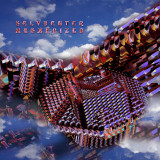
Their new LP Mesmerizer - which marks their first physical album release in nearly a decade and their debut on the French label Hands in the Dark - carries forward this process of exploration, deploying original and complex patterns of rhythm through various percussive instruments and finely textured horns and synths. The attention to sonic details is also almost pushed to an extreme on this new offering, making the open auditory adventure suggested by the title of the album all the more captivating. These creative developments have brilliantly kept Selvhenter’s music alive to new uncharted moods and possibilities, while at the same time strengthening their core elements: a propulsive, dense and often ecstatic music.
To mark its ten year anniversary, Mexican Summer presents a new, limited edition pressing of No Joy’s classic album Wait to Pleasure expanded with two new tracks from the beloved band's original line up. Wait To Pleasure is the product of the Montreal noise-pop band’s first foray in a fullyfurnished studio environment. Here the band has flourished, delivering their finest set to date, rooted heavily in shoegaze ripcurls and devastating melody, finishing sentences whispered long ago with depth, variance and force. Singer-guitarists Jasamine White-Gluz and Laura Lloyd and drummer Garland Hastings knock down the fence between nostalgiaand modernity, chaos and control, in a perfectly- realized effort made to bridge their uncompromised musical pasts with the alarmist tendencies of the present. Wait To Pleasure found No Joy set loose in Mexican Summer’s studio, Gary’s Electric, for two weeks in 2012, with producer Jorge Elbrecht at the helm. “Our earlier records are purely guitar-based, rock band lineups,” Laura adds, “and with Wait To Pleasure we seized the opportunity to change things up a bit.”
Lime green (yellowish?) vinyl LP Finnish noise rock duo NYOS deliver a clairvoyant Celebration of the present, written at a time when that present was shimmering just like the feathers of the cover art courtesy of animal photographer Zac Herr. Combining the danceable grooves of Battles with Sonic Youth - infused noise bursts and the yearning electric melodies of And So I Watch You From Afar, Celebration is a defiantly joyful, loud, and festive affair. A promising cure for the drudgery of the times we live in. Recorded by Brooke in his own Tonehaven Recording Studio, Celebration is the latest testament to the undeniable synergy these musicians have built over the past seven years. With the material largely written before the advent of corona, Celebration is a reflection of life before lockdown, filled to the brim with infectious grooves and glaring melodies. "We tried for something upbeat this time to contrast the times," explains Tom Brooke about the recording process, which in turn did take place during pandemic life. "We always love it when people can move to our music, so a big focus for the record was to embrace the dance vibe and go for it." This collection of eight colourful, jarring tracks is rife with small nods to dance music throughout the world. Take a song like "Light" with its complex syncopated drum pattern that recalls the Amen Break so typical for drum and bass music, but listen closely and the song reveals an off-beat skank that flips over into experimental reggae territory. Similarly, a track like "Tucano" recalls the experimental IDM of Bristol-based producer Vessel, while "Gold Vulcan" offsets a gnarly gyrating guitar riff with Latin- American and oriental melodies. The attention to detail on Celebration is phenomenal. The album contains some of the band's most layered compositions to date, but it is also the first NYOS record to feature improvised live recordings, the aptly named "First Take" as well as the celestial "Cloudberry". These musical sketches show two musicians at the apex of their connectedness. Every time that one of them appears to be taking a somewhat questionable turn, you'll find yourself carefully and respectfully readjusting your own interpretation of the song's intention - and what NYOS are all about.
After a creative break of more than 10 years the Contemporary Noise Ensemble returns with the brand new album called »An Excellent Spiritual Serviceman«. With the band’s line-up reduced and the sound of the brass section replaced with programmable synthesizers comes an entirely new sound of the band’s music. Leaning towards composition instead of improvisation the music is now less jazzy sounding - with electric bass being used instead of double bass and drums actually being the only strictly acoustical instrument. But then again you can hear a lot of other prerecorded instruments like marimba, vibraphone, Rhodes and upright pianos surrounded by arpeggiated synths and other programmable electronic instruments.
The album takes you to a journey through jazz, space rock, funk and electronic music with a destination in a form of a rock song which is as well the title song of the album. The Contemporary Noise Ensemble still impresses with maturity and class.
LNS and DJ Sotofett return to Tresor Records with The Reformer EP. This new record moves forward with a crystal clear, direct and controlled output, leaving their debut album "Sputters" as an end-mark of a sonic era. Here they evolve into a topography full of contrasts, where harsh digital artefacts, scanner sounds, and vocoder voices cast melodic colors across cold landscapes of club-ready electro.
"Reform" plunges deep into an electro sound splintered by binary bits and submerged pads that beckon a serene melody, which echoes and loops to entangle with mutant voices, noises and buzzes. "Plexistorm" leads with synthesized strings and arpeggiated acidic bleeps until a thick bass emerges, sounding almost like a long-lost Analord record. Heavily shapeshifting with eects processing, it proves primitive movements in dubbing are the perfect counterpart to this precise electro sound.
With "Electric Terraforming", the duo uncover charged energy sources required for life on another planet, as broad synth pads
and memorable vocoder harmonies draw this earworm to a close. Mighty washes of dub rule on "909 The Controller" as a skipping beat invites a slow, rippling melody and percolating reverberated synths.
The vinyl record has significantly dierent sonics to the digital release, and, exclusively, each side ends in a locked groove produced by DJ Sotofett.
out of Stock
Last delivered 23 months ago available to reorder, subject to availability
Everything eventually turns to dust. Everyone knows this, but few want to acknowledge that our time on this mortal coil is fleeting, preferring to remain in stasis, in hopes that "the end" will pass them by. Chicago trio FACS (guitarist Brian Case, bassist Alianna Kalaba & drummer Noah Leger) have been perfecting their brand of intense, cathartic post-punk over the course of four ever-evolving albums, beginning with 2017's "Negative Houses" thru 2021's landmark "Present Tense', which saw the trio dig deep into the gaping maw of a black hole & pulling back whatever debris they could grasp onto. Their newest "Still Life In Decay" comes as an addendum to the last album - a "post-event review" if you will. "Still Life In Decay" starts with a squall of white noise before collapsing into the band already locked into "Constellation"s lumbering groove, with Case's guitar a ghostly presence, appearing & disappearing in washes of gauzy feedback throughout the track. FACS have never been more locked in as a unit, and "Still Life In Decay" is a decidedly more focused effort. The apocalyptic chaos that defined their previous album "Present Tense" is waved away in favor of an examination of events with cumbrous clarity. FACS are a heavy band, but they don't necessarily FEEL like one (see side two's "Still Life", where Case's fluttering, melodic guitar lines are buoyed by the insistent, underlying pulse of the bass & drums). As a rhythm section, Kalaba & Leger dance & twist around each other like a double helix, forming the DNA of what makes FACS special. Collectively they approach rhythm from outside the groove as opposed to inside it, creating a lattice where Case weaves guitar lines like creeping vines, which makes the moments on "Still Life In Decay" where the band DOES lock in even more powerful. When the guitar punctures the lock-step swing of "When You Say", it hits like a hammer. Case utilizes his lyrics like a person suffering from anterograde amnesia; repeating phrases & holding onto old memories in a desperate attempt to avoid the slide into oblivion. Freeform poetic missives touching on themes of resignation, cynicism, class warfare, and a search for identity & meaning in a crumbling society; A primal desire to hold onto anything in a post-pandemic barrage of sensory overload. The album is a decidedly local affair; recorded once again at Chicago's famed Electrical Audio by renowned engineer Sanford Parker & mixed at his Hypercube Studio in Chicago's Ravenswood neighborhood & mastered by Matthew Barnhart at Chicago Mastering Service.
Everything eventually turns to dust. Everyone knows this, but few want to acknowledge that our time on this mortal coil is fleeting, preferring to remain in stasis, in hopes that "the end" will pass them by. Chicago trio FACS (guitarist Brian Case, bassist Alianna Kalaba & drummer Noah Leger) have been perfecting their brand of intense, cathartic post-punk over the course of four ever-evolving albums, beginning with 2017's "Negative Houses" thru 2021's landmark "Present Tense', which saw the trio dig deep into the gaping maw of a black hole & pulling back whatever debris they could grasp onto. Their newest "Still Life In Decay" comes as an addendum to the last album - a "post-event review" if you will. "Still Life In Decay" starts with a squall of white noise before collapsing into the band already locked into "Constellation"s lumbering groove, with Case's guitar a ghostly presence, appearing & disappearing in washes of gauzy feedback throughout the track. FACS have never been more locked in as a unit, and "Still Life In Decay" is a decidedly more focused effort. The apocalyptic chaos that defined their previous album "Present Tense" is waved away in favor of an examination of events with cumbrous clarity. FACS are a heavy band, but they don't necessarily FEEL like one (see side two's "Still Life", where Case's fluttering, melodic guitar lines are buoyed by the insistent, underlying pulse of the bass & drums). As a rhythm section, Kalaba & Leger dance & twist around each other like a double helix, forming the DNA of what makes FACS special. Collectively they approach rhythm from outside the groove as opposed to inside it, creating a lattice where Case weaves guitar lines like creeping vines, which makes the moments on "Still Life In Decay" where the band DOES lock in even more powerful. When the guitar punctures the lock-step swing of "When You Say", it hits like a hammer. Case utilizes his lyrics like a person suffering from anterograde amnesia; repeating phrases & holding onto old memories in a desperate attempt to avoid the slide into oblivion. Freeform poetic missives touching on themes of resignation, cynicism, class warfare, and a search for identity & meaning in a crumbling society; A primal desire to hold onto anything in a post-pandemic barrage of sensory overload. The album is a decidedly local affair; recorded once again at Chicago's famed Electrical Audio by renowned engineer Sanford Parker & mixed at his Hypercube Studio in Chicago's Ravenswood neighborhood & mastered by Matthew Barnhart at Chicago Mastering Service.
Everything eventually turns to dust. Everyone knows this, but few want to acknowledge that our time on this mortal coil is fleeting, preferring to remain in stasis, in hopes that "the end" will pass them by. Chicago trio FACS (guitarist Brian Case, bassist Alianna Kalaba & drummer Noah Leger) have been perfecting their brand of intense, cathartic post-punk over the course of four ever-evolving albums, beginning with 2017's "Negative Houses" thru 2021's landmark "Present Tense', which saw the trio dig deep into the gaping maw of a black hole & pulling back whatever debris they could grasp onto. Their newest "Still Life In Decay" comes as an addendum to the last album - a "post-event review" if you will. "Still Life In Decay" starts with a squall of white noise before collapsing into the band already locked into "Constellation"s lumbering groove, with Case's guitar a ghostly presence, appearing & disappearing in washes of gauzy feedback throughout the track. FACS have never been more locked in as a unit, and "Still Life In Decay" is a decidedly more focused effort. The apocalyptic chaos that defined their previous album "Present Tense" is waved away in favor of an examination of events with cumbrous clarity. FACS are a heavy band, but they don't necessarily FEEL like one (see side two's "Still Life", where Case's fluttering, melodic guitar lines are buoyed by the insistent, underlying pulse of the bass & drums). As a rhythm section, Kalaba & Leger dance & twist around each other like a double helix, forming the DNA of what makes FACS special. Collectively they approach rhythm from outside the groove as opposed to inside it, creating a lattice where Case weaves guitar lines like creeping vines, which makes the moments on "Still Life In Decay" where the band DOES lock in even more powerful. When the guitar punctures the lock-step swing of "When You Say", it hits like a hammer. Case utilizes his lyrics like a person suffering from anterograde amnesia; repeating phrases & holding onto old memories in a desperate attempt to avoid the slide into oblivion. Freeform poetic missives touching on themes of resignation, cynicism, class warfare, and a search for identity & meaning in a crumbling society; A primal desire to hold onto anything in a post-pandemic barrage of sensory overload. The album is a decidedly local affair; recorded once again at Chicago's famed Electrical Audio by renowned engineer Sanford Parker & mixed at his Hypercube Studio in Chicago's Ravenswood neighborhood & mastered by Matthew Barnhart at Chicago Mastering Service.
The axolotl is a species of salamander native to Mexico, living in a state of larva and having the capacity to regenerate damaged organs. This brief introduction doesn’t tell us if the axolotl sings. But, for the one that concerns us here: yes indeed.
In Paris, at the end of the 1970s, Etienne Brunet and Marc Dufourd would improvise regularly, inspired by some other saxophone-guitar duos: Claude Bernard-Raymond Boni firstly, then Evan Parker-Derek Bailey. When Jacques Oger (a saxophonist whom Brunet had met at a workshop given by Steve Lacy at the Châteauvallon festival in 1977) joined the duo Brunet-Dufourd, Axolotl was born.
Iconoclastic, the trio was bound to please Jac Berrocal, and he proposed to record their first album on the label ‘D’avantage’. In spring 1981 three days were just enough for Oger (tenor and barytone saxophones), Brunet (alto saxophone, bass clarinet and ‘things’) and Dufourd (electric guitar) to complete Axolotl, the first album by a group which would record ... two.
If there was a collective of iconoclasts, the trio would be there with some relatives: Alterations, Fred Frith, John Zorn, the ROVA Saxophone Quartet... and then because we mention a collective, Axolotl steps (considerably) beyond the domain of free improvisation to lean towards jazz (“Illusion”, “Paris, froissé”), No Wave (“Ombre pilée”, “Trottoirs défunts”), contemporary (“Oreiller”, “D’autres seuls”), and even what we could call ... acid fun (“Dehors”).
Above all, Axolotl wanted to really get to grips with sound via an expression as direct as it was liberating, as can be heard on “Ozone, flocon, torsion”, producing a noise that, even today pierces the brain. All we can hope is that now, thanks to this wonderful reissue, listeners will be able, like the axolotl, of regeneration.
Calisthenics is the first album by Institute for Certified Nomadic Illicit Sonic Practices (ICNISP), the Berlin-based duo of Brazilian musicians Marina Cyrino (flute) and Matthias Koole (el.guitar).
With a mixture of electronic and acoustic sound sources, objects and preparations, inside amplification and no-input mixing, the duo leads guitar and flute towards a common hybrid terrain. Sound perspectives are shifted, instrumental identities are displaced. The piccolo can function as a noise generator and a percussion instrument, the guitar can sound like a bird, the alto flute can be played by an external balloon that moans. Partly inspired by drawings of the Handbook of Calisthenics and Gymnastics: A Complete Drill- book with Music to Accompany the Exercises by J. Watson, first published in 1864, ICNISP came up with a series of musical exercises to stay healthy and fit during the several lockdowns over the past few years. In a playful way, the title Calisthenics also translates an agitation present in many of the duo's energetic playing modes.
On Side A, Calisthenics comprises 7 tracks - or exercises - of different lengths, with a focus on specific instrumental materials or preparations. Side B consists of one track in which a larger form unfurls, with elements of the exercises concatenated into a Full Arch.
No cuts or overdubs.
Marina Cyrino - Amplified Piccolo and Alto Flute.
Matthias Koole - Electric Guitar.
Recorded and mixed by Rabih Beaini at Morphine Raum in Berlin.
Mastered by Paulo Dantas in Rio de Janeiro.
Cover art by Sara Lambranho.
Electric Light Orchestra leader Jeff Lynne did more than figuratively reach for the sky on Eldorado. Daring to be bold, and creating imaginative worlds that invite the listener to escape the mundane, the visionary composer-musician achieved a multidisciplinary fantasia and, in the process, a prog-rock landmark. Nearly 50 years later, the concept album's brilliance can be experienced like never before in cinematic, IMAX-worthy fashion.
Sourced from the original analogue master tapes, pressed on MoFi SuperVinyl vinyl at RTI, housed in a keepsake box, and limited to 10,000 numbered copies, Mobile Fidelity's UltraDisc One-Step 180g 45RPM 2LP set of Eldorado allows the long-time audiophile staple to resonate with reference-setting dynamics, tones, and colours. Conjuring the feeling of journeying to different horizons, the record's songs teem with layer upon layer of details, which can now be heard as the producers intended. This very special release both pays tribute to the record's merit and enhances the spectacular program for generations to come.
Presenting the album with breathtaking clarity yet retaining the warmth, texture, and emotion that differentiate live music from reproduced sounds, the collectible reissue features beguiling levels of in-the-moment presence, grand-scale sound-staging, and instrumental balance. Bursting with a veritable cornucopia of stimuli, MoFi's Eldorado package also benefits from superb separation and immersive atmospherics that stem from the meticulous remastering process – as well as an ultra-low noise floor, industry-leading groove definition, and dead-quiet surfaces courtesy of the MoFi SuperVinyl properties.
The premium packaging and gorgeous presentation of the UD1S Eldorado pressing befit its extremely select status. Housed in a deluxe box, it features special foil-stamped jackets and faithful-to-the-original graphics that illuminate the splendour of the recording. No expense has been spared. Aurally and visually, the reissue exists as a curatorial artefact meant to be preserved, touched, and examined. It is made for discerning listeners that prize sound quality and production, and who desire to fully immerse themselves in everything involved with the album.
An artistic breakthrough that established Electric Light Orchestra as a pioneering band (and confirmed Lynne as the leading practising Beatles disciple), the 1974 effort remains notable for its involvement of a full orchestra and choral section, the range of which are captured with exquisite results on this LP. Eldorado distinguished itself from the band's first two works not only via Lynne's sharpened songwriting but due to the hiring of an orchestra that augmented the group's three string players. Co-arranged by Lynne and conductor Louis Clark, the symphonic movements bolster the contagious fare without ever drowning it. The accents also act as transports into the varied narrative universes.
Finished as a story before Lynne put notes down on paper, Eldorado ironically owes its inspiration to Lynne's father. In response to his dad's criticisms about the band, Lynne conceived a melodic tour de force that, like The Wizard of Oz, which informs the cover art, emphasizes the power of everyday dreams and everyman heroism. It's no coincidence that the sonic journey begins with an overture punctuated by the words of a cynic who condemns "the dreamer, the un-woken fool."
Beautiful yet fun, ambitious yet consistent, Eldorado proceeds to celebrate such romantics and escapists. A Technicolour escapade marked by lush melodies, fluid crescendos, and an intoxicating blend of energetic rock and sweeping orchestral elements, the album weds rich imagery and sweeping sounds in manners that make the two inseparable. In Lynne and company's hands, reality and fantasy collide, and dissolve any dividing lines. The proof is not just in the epic production, but in the timeless (and catchy) nature of songs such as the balladic "Boy Blue," power-pop packed "Illusions in G Major," and, of course, the aptly titled hit, "Can't Get It Out of My Head."
Decades later, Eldorado doubles as an invitation to break away from monotony whether you're listening to your Mobile Fidelity reissue on a large system or an excellent pair of headphones.
MoFi SuperVinyl
Developed by NEOTECH and RTI, MoFi SuperVinyl is the most exacting-to-specification vinyl compound ever devised. Analogue lovers have never seen (or heard) anything like it. Extraordinarily expensive and extremely painstaking to produce, the special proprietary compound addresses two specific areas of improvement: noise floor reduction and enhanced groove definition. The vinyl composition features a new carbonless dye (hold the disc up to the light and see) and produces the world's quietest surfaces. This high-definition formula also allows for the creation of cleaner grooves that are indistinguishable from the original lacquer. MoFi SuperVinyl provides the closest approximation of what the label's engineers hear in the mastering lab.
More About Mobile Fidelity UltraDisc One-Step and Why It Is Superior
Mobile Fidelity Sound Lab's UltraDisc One-Step (UD1S) technique bypasses generational losses inherent to the traditional three-step plating process by removing two steps: the production of father and mother plates, which are created to yield numerous stampers from each lacquer that is cut. For UD1S plating, stampers (also called "converts") are made directly from the lacquers. Since each lacquer yields only one stamper, multiple lacquers need to be cut. Mobile Fidelity's UD1S process produces a final LP with the lowest-possible noise floor. The removal of two steps of the plating process also reveals musical details and dynamics that would otherwise be lost due to the standard multi-step process. With UD1S, every aspect of vinyl production is optimized to produce the best-sounding vinyl album available today.
Canto Ostinato is the new volume of classical minimalism from musician and producer Erik Hall. Written for four pianos in 1979 by Dutch composer Simeon ten Holt, the piece is freshly framed as an intimate, hour-long solo performance consisting of multitracked grand pianos, electric piano, and organ. Modern yet warm, ethereal yet tangible, Hall's Canto Ostinato expertly bridges a revered piece of meditative concert repertoire with a tactile and highly personal studio setting. Chicago-born and Michigan-based, Erik Hall is known as a multi-instrumental pillar for the groups NOMO, Wild Belle, and his own songwriting moniker In Tall Buildings. He has composed music for feature films, and as a producer/engineer he has shaped records for Natalie Bergman and Western Vinyl labelmates Lean Year. In a 2020 creative pivot, he chose to reinvent composer Steve Reich's monumental contemporary classical masterpiece Music for 18 Musicians as a solo undertaking, applying the piece's score to the familiar keyboards, guitars, and synthesizers in his studio. "At the time I think I was working through my identity as a musician and an artist," Hall explains, "and on a level there was some sort of exorcism of a long held pop spirit." The album was celebrated for being "freshly thrilling" and "legible in history but assertive of the moment" (Pitchfork) and "beguiling, meditational, and magical" (Electronic Sound). It won the 2021 Libera Award for Best Classical Record, and it quickly joined the canon of the piece's quintessential recordings. "There is a pseudo-meditational benefit to working on a longform piece that's built on repetition," Hall says. "Every stage- from internalizing the music, to executing the performance, to editing and mixing the record- requires deep and sustained presence of mind. I've always been drawn to a hallucinatory combination of harmony and repetition, and I found the entire process addictive." An apt second chapter, Canto Ostinato is inherently vast, and its score gives great creative license to the performer. Comprising 106 sections, complete freedom is given to repeat each one as many or as few times as desired. Additional leeway is given with regard to dynamics, articulation, and even instrumentation. On the heels of his previous, rather maximal arrangement, Hall chose to limit this album's palette to three foundational keyboards of his studio: a 1962 Hammond M-101 organ, a 1978 Rhodes Mark I electric piano, and his family-heirloom 1910 Steinway grand piano. "This particular piece brought the added challenge of rekindling my dexterity as a pianist, something I haven't maintained in earnest since I was a teenager," he admits. The ensuing five-note rhythmic motif- the piece's primary building block- is steady and workmanlike, forgoing virtuosic flare for depth, texture, and resonance, and eventually giving way to the stunning gratification of a gorgeously lyrical left turn. As with Music for 18 Musicians, Hall employed no loops nor quantization nor any programmed or sequenced instruments of any kind. Every part was performed live in a room and captured with microphones, one at a time, each informed by, and reacting to the last. In this way the record breathes with interplay and an organic humanity, complete with flaws, noise, and the faint sound of turning pages. The recording quality is nonetheless toneful and saturated, characteristic of Hall's production style and straying from the usual transparency of classical albums by using gear with tubes, transformers, and various stages of compression in the signal path. Always there is unmistakable realism and the feeling of being present in the room, sitting among the keys, hammers, and tines. Ten Holt said: "Time, patience and discipline are the prerequisites for making a genetic code productive." His landmark composition provides Hall once again with a wondrous space in which to reverently embody this sentiment and deftly convey the elegant beauty of this music.
"Photographs as Memories" was the British cult band Eyeless in Gaza’s debut album. A truly kaleidoscopic picture dominated by Martyn Bates’s highly expressive vocals and Pete Becker’s peculiar analog synth lines in a jungle of electric guitars, plastic organs, soprano saxophones, percussion, violin, stylophone and tapes. An album which comes as a vivid snapshot from the very dawn of the 80’s.
Everest Magma’s career over the past 10 years has been slowly building one of the most ecstatic and singular paths of the Italian underground scene. His dense and beautiful three albums were not afraid to cross boundaries with a mix of hypnotic tape beats, digital wonk, psych folk tropicalia and kinetic dub. This new offering ‘Alto//Piano‘ once again sees him in uncharted territories, where nature is sublimated into a personal alien vision mixing acid-folk fingerpicking, tonal ambience, psychedelic eccentricity and Italian 70s minimalism.
Everest Magma rediscovers the folk roots of his dreamy alter ego Woodcutter. Once again he appears as a minstrel crossing moonstruck woods inhabited by gnomes, butterflies and crawling creatures. Nature is sublimated into a personal alien vision in which a lysergic approach triumphs in the arrangement of sound material and immersive musique concrète. Pure acid-folk fingerpicking communicates directly with the forest’s humus, steeped in wild and ethereal moods. Between schizoid or more lyrical moments, a persistent taste for subtle subterranean noises, electric flashes, radio and ufological interferences, deviant scents.
Whether intentional or not, Philadelphia’s Circa Survive have become experts on that critical second word of their band name. With six full-length records and three EPs behind them, the beloved alt-prog/post-hardcore giants are entering their 17th year together amid global upheaval and personal renaissance, creating together while navigating through one of the most unstable chapters in American history. It’s a necessarily existential period, where that one imperative rises to the top: survive.
In early 2020, the band was forced to reschedule the tenth anniversary tour for their ground-breaking 2010 LP Blue Sky Noise. Pushing off the tour—now slated for 2022—and delaying plans for a new record has ushered in a new chapter for Circa Survive.
Two Dreams, the forthcoming seventh full-length record from Philadelphia’s Circa Survive, is a project of dual realities in both theory and practice. The 12-track record comprises two individual six-song EPs, titled A Dream About Love and A Dream About Death. The dreams in question aren’t the idyllic material of sleep, but a much more tangible, dark surrealism. They’re the twin experiences of vocalist Anthony Green after relapsing and overdosing on heroin during the writing of the album.
With Two Dreams, Circa Survive aims higher in both collective spirit and individual practice. After nearly two decades of international tours and festival mainstages, the band has regrouped to protect one another and their work. They’re playing the long-game. “I want to make 100 more records,” laughs Green. But now, the goal isn't to simply survive. It’s to thrive.
2nd installment in RZA's brandnew 2022 Bobby Digital Trilogy on Electric Blue vinyl! Rza returns with the second of his three record Bobby Digital Trilogy, coming on the heels of his critically acclaimed first installment "Saturday Afternoon Kung Fu Theatre Rza vs Bobby Digital, Produced by DJ Scratch! The album is also the soundtrack and addition to the new Bobby Digital comic of the same name. "Dating back to the 1990's RZA has been using Bobby Digital as a pseudonym for various solo projects. These are not strictly outside of the Wu-Tang Clan diaspora as various members make cameos or co-produce, but they've allowed Diggs to explore musical and lyrical ideas that fight better with his alter ego. Bobby Digital can be considered a comic book superhero, fighting evil in both the physical realm and the virtual world of cyberspace, achieving a "meta" reality long before Facebook thought to trademark the term." - rap revies 2022 2022 release. The founding member of the multimedia supergroup, The Wu-Tang Clan, introduced the world to his alter-ego in his 1998 album Bobby Digital in Stereo. With lush digital orchestral sounds and inventive beats, he was putting the love of comic books on full display through it's concept and execution. Now, exactly 23 years since it's original release, RZA announces a partnership with Z2 Comics to give the character a story in the medium which inspired his creation! Bobby Digital: Pit Full of Snake pairs RZA with White Noise Studios member Ryan O'Sullivan, whose last collaboration with Poppy was widely celebrated by fans and critics alike, with Sound & Fury artist Vasilis Lolos rounding out the team to bring the world of Bobby Digital to life.
Föllakzoid are nearly unparalleled in the hypnotic lysergic drenched neo-psychedelic experience. On their debut it is mostly a rather bulky one, determined by the downright dirty, distorted electric guitar, which is also usually accompanied by a spacey, howling and herbaceous howling one. In addition, there is fat bass and powerful drums. During the prolific post-napster musical era dominated by myspace, the Chilean musical field opened up so that many bands could broaden their creative spectrum by taking global and timeless references as an aesthetic holy grail. This experimentation had the internet and specialized forums as a search engine, which not only provided the world parameters in trends, but also allowed to find true hidden gems, bands that were adored by a few connoisseurs of the real quality left behind by the record labels. In this context, a group of university students who have known each other from school began to rehearse in the Caracol Vip underground (Santiago, Chile), in a room owned by a local heavy-metal legend, Juanzer. Equipped with tube amplifiers, Marshall and other custom made, the members of that time: Gonzalo Laguna on vocals, Juan Pablo Rodriguez on bass, Domingo García-Huidobro on guitar, Diego Lorca on drums and Francisco Zenteno on second guitar, they began to play endless jams without a strict sense of songs or directed compositional notion. The rule was to follow the noise in a journey through valleys and peaks that allowed the spontaneous appearance of textures, lyrics, phrases and some invented chords that did not resemble anything that had been heard at that time. The rehearsals were transformed into true live performances without an audience, which were only seen by a few curious, among alcohol, smoke and deafening noise, which could only end when the owner of the room (Juanzer) entered to turn off the equipment. Over time he himself stayed as an auditor, witnessing how the musicians stripped themselves in their rehearsals. Considered at that time as play or fun, the idea of forming a band with a name came with the real live performances to which they were invited, without yet having songs made, at the end of 2006. The myth of their first live performance alludes to a numerical superstition, on July 7, 2007, in a small bar in Providencia (Santiago), which also provided the band with an upward recognition for the psychedelic-punk music they were doing, with a voracious vocalist who destroyed everything on stage and a band that stood firm on the endless songs they built. The name that was invented for that occasion was the result of a nonsense about the German word feuerzeug brought to the group by their close friend Alfredo Thiermann (who would later make the cover of the first album and become keyboardist), which the members of that time took and Spanishized at will. This neologism represents the second founding myth of the band since the interest in bands like Can, Neu! and AMON DUUL II and the characteristic motorik rhythm would soon arrive, in the form of kosmische musik. By 2008 the band had already added several live performances and some songs appeared, among which were Directo al Sol and Loop (nod to the English band), which allowed a greater deployment of ambient-noise resources, almost close to the 'concrete' music. The deconstructed rock of Spacemen 3 was also present in the form of repeated sequences on the bass and drums, as the layers of shrill guitars formed the foam of the tide bursting in the darkness of space. With the ideas and general feeling of the sound that they already had, the band made the decision to record their first album with the sound engineer and Juan Pablo's brother, Ignacio 'Nes' Rodríguez, who later together with JP would form the BYM label to make the first CDs of the forthcoming debut of Föllakzoid and other bands that Nes was recording. Sheltered that winter in the studio that Nes had built in an old house in Recoleta, the band recorded the bulk of the songs on the album with a new jam that emerged in that room composed of 1 note and moments of rising intensity: Sky Input I and II appeared to complete a set of songs that came from rock but were slowly passing to a level of trance and cacophony typical of orchestrated and atonal music. With three takes per song but only one take of the jam, the album was finished with a few extra takes and overdubs, some made in the house of Nes himself, who contributed a guitar to Loop, although it does not appear in the credits, and additional takes of "Pelao" Zenteno with delay and reverse for almost all songs. The names of the songs came from the lyrics that Laguna had worked from the live versions to the studio finals, except for Loop, Sky Input and El Humo. The cover of the album, which as mentioned was made by Thiermann, represents well the spirit of those days, when creative magma looked for an outlet through the instruments without any restriction or explicit direction from any of the members of the group. The image of the tree towards the sky speaks of the roots that rise towards the immensity, the nature projected towards the stratosphere. Ideas that the neo-psychedelia of those years seemed to capture well, echoing in the Chilean bands that at that time were gathering around the BYM label. Both the creative fluency and the lack of a musical director ensured that Föllakzoid was an original band that did not impose themselves a way of doing things or sounding, collective music took shape in the most wonderful way, without characters, without a record name, without faces. Just an instant in space. 2022 GALAXY GREEN coloured vinyl
out of Stock
Last delivered 3 years ago available to reorder, subject to availability
Futurismo are proud to present a deluxe remastered vinyl package of the classic 1980 album: Red Exposure by the uncompromising Chrome.
Arguably considered the San Francisco bands greatest work, Red Exposure, the fourth album to feature core members Damon Edge
and Helios Creed, was the definitive version of Chrome’s idiosyncratic approach to sound: a projected vision of near future dystopia via an undefinable guise of experimental space rock and punk-tinged alien soundscapes. Here, the band simultaneously draw from the otherworldly noises of their past records, whilst pushing their synthesizers forward into, albeit oblique, pop song structures.
Edge’s vocals are structured more like an instrument than a voice, lyrics painting images of humanities future on the edge of total destruction. As Creed’s guitar work multilayersit’s way into a completely different aural spectrum, beautiful yet violent, slashing against rhythmic pulsations, loops and experimentations, to create a sound that even today feels beyond the here and now. This distillation of the bands repertoire seemed to envision a deconstruction of rock ‘n’ roll, aimed to break past the shell of cliché that it would of course eventually come to inhabit. Which is why despite it’s age Red Exposure remains a record that still sounds like the sonic product of a far off civilisation, making this disk of new wave nihilism vital for fans of Space rock, Krautrock, Throbbing Gristle, Cabaret Voltaire and Suicide.
The deluxe remastered version of this out of print 1980 LP is presented here in ltd edition coloured vinyl. It comes packaged in a chromed mirrorboard sleeve, contains a large screen printed poster printed with neon ink featuring unseen photographs of the band, and a bonus track.
Members of Papir & Causa Sui travel through new musical realms. 3 musicians with their own compass: Martin Rude & Jakob Skott have shared a wide range of musical quests: from Causa Sui's "Bitches Brew of Stoner Rock" crossing the folk meditations of Sun River and arriving most recently as members of the pre-fusion electric dealings of the London Odense Ensemble. Papir guitarist Nicklas Sorensen is not merely adding a new layer to an established duo, but his presence to the party have brought it into more meditative dwellings. These pieces move slowly, evolving like the slow growth underneath the ground. Whereas Causa Sui & Papir have always excelled at blistering panoramic and often sundrenched sounds, Edena Gardens take a dive inwards and downwards rather than outwards. But there's also an electrically charged ecstatic rawness to the dealings. Like Æther, the 10 minute opener's 2 guitars-and-a-drum kit improv, finding it's way from tumbling drones into monolithic slow riffage. Elsewhere, we find trails of electronic vapors, misfiring bursts of noise and slow drones stretched out. Edena Gardens is a thing to be experienced first hand - it's not for everyone, but those who decide to stay are greatly rewarded. It's a debut unlike any other record on El Paraiso, perhaps unlike any you've ever heard. Welcome to Edena Gardens.
Country Girl marked a distinct sonic shift with the band, as the EP was the first group of songs written in their new home in rural Massachusetts. The novel isolation of the Northeast gave Jae and Augustus plenty of time to write and explore new sounds, while reminiscing about their time in the south. The move also put the band within driving distance of New York City which was another important factor in their progression. The band attributes partial influence on Country Girl EP to their frequent shows in Manhattan and Brooklyn. Playing parties like Nothing Changes and Lost Enterprises gave them access to a vibrant new music community. From industrial to noise table techno, the band was enamored by the raw sound and fearless attitude of the artists and crowds alike. The sound of Country Girl is defined by these two worlds that the band existed within - their quiet, modest life in small town Massachusetts and their speedfueled weekends in New York. Country Girl Uncut includes the complete track list of songs from this time period. The album is out on the band’s imprint “Nude Club” on digital, cd, tape, and vinyl formats.
out of Stock
Last delivered 4 years ago available to reorder, subject to availability
Beautifully drunken it hums, the piano in “PianoPiano”, the last tune of “How to Spread Lies”, the first EP by Roman Flügel for the Hamburg based label Dial in the year 2010. Or take “Strich”, a peculiar electrical slow-motion grinder, out on his “Mutter” EP for Klang Electronic in 2006. Since long, the renowned Berlin based DJ and producer is investigating in spheres beyond the dance, the groove, the ecstasy. Zones, where the molecules harmonize, senses relieve, and the soul quietens. All his last albums, “All The Right Noises” (Dial), “Themes I-XIII” (ESP Institue), “Eating Darkness” (Running Back) have moments of tension and relaxation in a deep harmonious connection.
Now “Balmy Evening”, a sundown record for sunup’s. Eleven notions in adventurous journey music, embracing the freedom of structure, blurring the musical pulse into harmonic meditation and mysteriously grooving zones, leaving all unnecessary accessories behind. A quality, that many of his collaborative and solo productions from past 30 years comprise. Still, most of them squint on the dance floor, where jack is king. Not so “Balmy Evening”, where real party bangers are absent. There are moving tunes like the slow Kraftwerk-melody-leaning funkateer “Duftschulter”, or the artificially jacking “Greenhouse”, where nervous Synth patterns ball along soft breaks and decreet kicks. Also, “Super Sonne”, an odd, seemingly improvised synth conversation might ask some souls out for a dance.
But all others, like “Atmosphere”, “Frei”, Dolphins, “Goth”, or “Ambienteuse”, rather seek for the tranquil in each one’s spirit. Listeners need be ready for surprises. Ready for impulsive ideas, linked to a harmonious flow, always ready to grow. An album full of silence, utterly loud, beautifully diverse humming, displaying a playful, exploratory side of a celebrated club music producer, to whom atoms dance in manifold ways.
out of Stock
Last delivered 3 months ago available to reorder, subject to availability
France is the trio of Jeremie Sauvage on electric bass, Mathieu Tilly on drums and Yann Gourdon on amplified hurdy-gurdy. They play one note / one rhythm producing energetic performances reminiscent of the early collaborations between Faust and Tony Conrad. Creativly recycled influences result in intense shows with pounding overtones and repetitive pulsing rhythms. Loud straight and trance-inducing.
The pertinency of the recordings only slowly appear On Occitanie" in the mass of sound, the rhythmic repetition and the elongated drones. The hurdy-gurdy forces you deeper, highlighting points of microtonal flux, cracking open the single note, the nodding rhythm, to imply the presence of every note, every sound, inside it. The insensible evolution, lurks in a corner of noise and finally imposes itself slowly on careful listening.
The band members of France perform in various other projects: Tanz Mein Herz, Toad and Jérico, all are member of the collective La Novià, an organisation based in Haute-Loire which brings together professional musicians and is a place for reflection and experimentation around traditional and / or experimental music.
In 2009, France was invited to play in Pau, a city far south-west of France, next to spain, by the people running Pagans Musica, a like-minded traditionnal-oriented group of people, also bent on educational issues concerning the local music and dialect: Occitan and on fusioning traditional musics and rock related sounds and instruments. They had set up a show for France and their band Artus and originaly wanted to have Acid Mother's Temple join the bill. The japanese band had done versions of songs coming from their village (eg. "La Nòvia") but weren't touring near France so instead they invited Duo Ancelin Rouzier as the third act, a band both Artus and France were also very fond of.
Pagans had everything set-up for the concert to be recorded and as France had plenty of time for sound-check, they went on to record the Pau" album in the afternoon, taking a thirty seconds pause in the middle of the session so as to mark both sides of the vinyl. The Occitanie Lp is the recording of the live set later that night, with no cut and a longer, more savage performance.
The first Austin Psych Fest was held in March 2008, and expanded to a 3 day event the following year. From there the festival quickly developed into an international destination for psychedelic rock fans, with lineups spanning the fringes of indie rock, from up-and-comers to vintage legends, and capped off with headlining performances from The Black Angels each year. The Black Angels and Levitation helped spark a movement, inspiring the creation of similar events across the globe and a burgeoning psych scene that would soon ignite. The series captures key moments in psychedelic rock history, and live music in Austin, Texas. The artists and sets showcased on Live at Levitation have been chosen from over a decade of recordings at the world-renowned event, and document key artists in the scene performing for a crowd of their peers and fans who gather at Levitation annually from all over the world. When it comes to following the beat of their own drum, New York’s Psychic Ills have exemplified the phrase since their beginnings in 2003. Initially spawned from electronic-centered home recording experiments, they progressed into all-night full-band exploration in a neighborhood where noise wasn’t a problem. They soon after evolved into a live band seemingly at home within the extended jam, exploring a variety of musical terrain. The early years saw several releases for Social Registry, tons of time on the road, and collaborations with artists as diverse as Gibby Haynes (Butthole Surfers) and Sonic Boom (Spacemen Three/Spectrum). We are proud to welcome Psychic Ills to the Live at Levitation series. The release showcases the band's appearance at Austin Psych Fest 2012. Mixed and Mastered for Vinyl. 1) Midnight Moon 2) Mind Daze 3) Incense Head 4) Ring Finger 5) Electric Life 6) Meta 7) Diamond City 8) January Rain 9) I’ll Follow You Through The Floor
Recommended If You Like: Deerhoof, Tune-Yards, CAN (if they were a band in like, 2070), Blonde Redhead, Horse Lords, Tigue, Lil Nas X (in spirit). Over eighteen boundless albums as experimental as they are pop, Deerhoof has continuously quested for radical sounds and daring storytelling.
Dates Aug 28 Summerhall, Edinburgh, Aug 29 The Cluny, Newcastle Upon Tyne, Aug 30 Brudenell Social Club, Leeds, Aug 31 Electric Ballroom, London, Sep 01 Hare and Hounds, Birmingham.
"Matasuna Records" returns to Mexico for a third time to dig for rare treasures. They got their hands on a special gem - two obscure Latin/Jazzfunk tunes by a band called "Colorado" from "Mexico City". The songs were released in 1976 on the Mexican label Peerless and the super rare original 7inch is virtually unavailable. Fortunately, the release is finally available for the first time as an official reissue in a remastered edition. An unjustly under-the-radar Latin jazzfunk highlight!
The song "Colorado", named after the band, opens the "A-side" of the single. The hypnotic fender rhodes puts the listener in the right mood right from the start, before the drums and percussion set the rhythm. The horns also add depth and melodiousness before the song takes a turn and reveals its funky side with guitars, synths and bass. A nice guitar solo also reveals the affinity for rock music without losing sight of the vibe of the song or tipping it a different direction. Definitely a fabulous song that comes up with a lot of ideas and inspirations, offering an unexpected richness in the under 3-minute running time.
The "B-side" also continues musically energetic in the same way with "Para Ti". Here, too, you can feel and hear the playfulness and experimentation of these extraordinary musicians. Atmospherically dense passages alternate with quieter phases and solo parts, before the tension rises again and literally explodes. As in the song "Colorado", rhodes, brass, guitars & bass offer a great and varied interplay. The secret highlight, however, might be the drum and percussion parts in the middle of the track, which will surely enchant not only the B-Boys and B-Girls.
Artist info:
The internet, a source of almost endless knowledge, offers no information about the band Colorado. All the more fortunate that one of the band's founding members, "Emilio Espinosa Becerra", provides detailed info for the reissue.
In 1968 the three brothers "Luis", "Francisco" and "Emilio Espinosa Becerra" from Mexico City started to rehearse together to play wellknown rock & pop songs at friends or family parties. At first, they played on Japanese guitars and a Teisco bass borrowed from a school friend. They saved up money to then buy guitar & bass amps and a microphone, which they always had to rent until then. However, the budget was only enough for Mexican replicas of the legendary Fender Bassman and the Fender Super Reverb. Original equipment was simply unaffordable.
Shortly thereafter, more members joined the band. Three musicians from the school band "Tepeyac": "Marco Nieto Bermudez" (trumpet), "Raymundo Mier Garza" (tenor saxophone) and "Alfonso Romero" (trombone). Another classmate named "Carlos Mauricio Fernández Ordóñez", who studied piano, also joined the group. His father had a chemical factory in the United States and helped bring equipment (amplifiers and a Farfisa Fast 5 organ) - hidden in the back of a truck - to Mexico. In the time that followed, more instruments were acquired, including bass and guitars (from Gibson, Rickenbacher and Fender) and microphones (from Shure) for vocals and horns.
With a larger band and new equipment, they played many parties in their district of "Lindavista" in "Mexico City" and neighboring areas from 1970 to 1973, as well as gigs at various festivals and school events. The group's band name at the time was "Sound Core Brass". However, more and more often people with turntables and speakers showed up at parties, which were also able to heat up. The so-called "Sonideros", a sound system culture that was emerging in the 1960s, charged less than a multi-piece live band, so the band's performances declined.
During those years, three other "Espinosa Becerra" family members joined the band: "Jorge Rafael" (trombone), "Sergio Alejandro" (tenor saxophone) and "Felipe de Jesus" (drums and percussion).
A brother of the musicians, "Carlos Espinosa Becerra", studied electrical engineering at the University. Together with another fellow student, he designed and built a 10-channel console with a variety of functions and features that far surpassed the devices available at the time. They also went to the US again to buy JBL speakers & tweeters to build their own sound system. On another trip to Los Angeles, they bought Phase Linear amplifiers, which offered enormous power by the standards of the time and had an extremely low distortion factor. With this equipment they could turn up the volume really loud and noise-free.
This was also the time when they stopped playing music from English bands & youth groups and changed their repertoire completely. They played mambos, chachachas, pasodobles and tangos on special occasions in big ballrooms and halls. Also, every now and then they hired a string quartet of well-known Mexican violinists to provide the musical entertainment at dinner events.
During those years, classmate "Pablo Rached Diaz" joined the band, playing tenor saxophone. Pablo was very active and organized many parties. He was also the one who helped the band to record on the Mexican label "Peerless". So in 1975 they were asked by Peerles Records to record their own songs. They had recorded a total of 12 songs - six of these songs were released on three vinyl singles (45rpm). Most of the songs were composed by "Gustavo Ruiz de Chavez Sr.". The band was asked to adopt a more commercial name, and so they had chosen the band name "Colorado". In the course of the releases, the band made some promotional tours and appeared in shows on "Televisa", the most important television station in Mexico in those years.
Later, several members of "Colorado" graduated and began to pursue regular professions. They didn't stop playing at events, but priority was given to more formal duties and the band was no longer as active as it had been in its heyday.
About 8 years ago, the band got back together to play again. The next generation of musicians also joined the band: two sons, a nephew and a brother-in-law of the original band members. Currently, they are back playing at friends' parties and family gatherings in Mexico City.
out of Stock
Last delivered 3 years ago available to reorder, subject to availability
LP on Black Vinyl. First new album 2018’s Romance. Mastered by Alan Douches. Recommended If You Like: Can, Tortoise, OOIOO, Sonic Youth, Ty Segall, King Gizzard & the Lizard Wizard, Bitchin Bajas, The Cars, Liars. Experimental psych-punk institution Onedia returns with Success, the band’s most guitar-centric, rocking album in decades. Long straddling the gray area between the NYC punk/psych/rock community and the art/experimental world, the music of Oneida is celebrated for its mix of abstract, atmospheric sounds and pulsing, hammering anthems. Success finds the band getting to the core of what makes minimal rock music so good - songs pared back to beat and melody with a limited number of guitar chords. If a song or two gets ripped in half later by a corrosive guitar solo, well, what did you expect? This is Oneida. “Oneida are the rare experimentalists who can hammer away at a riff or idea incessantly and somehow make it really last.”
LP on Black Vinyl. First new album 2018’s Romance. Mastered by Alan Douches. Recommended If You Like: Can, Tortoise, OOIOO, Sonic Youth, Ty Segall, King Gizzard & the Lizard Wizard, Bitchin Bajas, The Cars, Liars. Experimental psych-punk institution Onedia returns with Success, the band’s most guitar-centric, rocking album in decades. Long straddling the gray area between the NYC punk/psych/rock community and the art/experimental world, the music of Oneida is celebrated for its mix of abstract, atmospheric sounds and pulsing, hammering anthems. Success finds the band getting to the core of what makes minimal rock music so good - songs pared back to beat and melody with a limited number of guitar chords. If a song or two gets ripped in half later by a corrosive guitar solo, well, what did you expect? This is Oneida. “Oneida are the rare experimentalists who can hammer away at a riff or idea incessantly and somehow make it really last.”
Aidan Baker is a classically-trained multi-instrumentalist using the electric guitar as his primary instrument. Using prepared and alternate methods of playing the guitar, along with various electronic effects, Baker creates music which generally falls within the ambient/experimental genre but draws on influences from rock, electronic, classical, and jazz. A highly prolific artist, Baker has released numerous recorded works, both solo and with various group projects - most notably the duo Nadja - on such independent labels as Karlrecords, Important Records, Southern Lord, and his own imprint, Broken Spine Productions. Baker is also the author of several books of poetry. A regular live performer, Baker has toured extensively around the world, including appearances at such international festivals as FIMAV, SXSW, Incubate, Unsound, and Mutek, among others. Originally from Toronto, Canada, Baker currently resides in Berlin, Germany. Recorded mid-pandemic, Songs of Undoing cannot help but have a sort of mid- or post-apocalyptic overlying concept, lyrically dealing with themes of exodus and travel / wandering, self-reliance, the weight of history...with pointed references to two post-apocalyptic, societal / environmental collapse novels, Octavia Butler's "Parables of The Sower" and Kate Wilhelm's "Where Late The Sweet Birds Sang." Musically, the songs move between minimal slowcore and a sort of textural noise-rock or what might be called deconstructed grunge, taking influence from artists like Lungfish, American Analog Set, PJ Harvey, and Stina Nordenstam.
Eric Dolphy's final studio album is hailed as one of the finest examples of mid-'60s post bop. Its reputation is purely one of backwards significance. Dolphy, having recorded the album in February 1964, was in Europe less than six weeks later and his all-too-brief life ended less than two months after that. Though likely he never held a copy in his hands or heard any critical opinion of it, it marked his last flurry of original compositions and is considered his apex. It is fascinating to consider whether he would had moved past or away from the album in 1965, had he lived.
Though Dolphy should not be considered an avant-garde musician by the term's most common definitions, most interpretations of Out To Lunch have been done by players working squarely in that area. So it is with this album, the most ambitious in its recreation of the five-tune disc (with one original added to the final "Straight Up and Down, extending the piece to almost thirty minutes). All five compositions from the original quintet LP are revisited in the same order, the record sleeve even duplicates the old album jacket, down to the typeface and black-and-blue color scheme, although a photo taken by Daidō Moriyama inside Tokyo's massive (and massively busy) Shinjuku railway station replaces the Dolphy's album's enigmatic "Will Be Back" sign, whose clock hands indicated no conventional time of expected return.
Otomo Yoshihide first came to international prominence in the 1990s as the leader of the experimental rock group Ground Zero, and has since worked in a variety of contexts, ranging from free improvisation to noise, jazz, avant-garde and contemporary classical. The always surprising and sometimes confounding turntablist, sound artist, onkyo improviser and now avant jazzer heading up a 15-piece aggregation of Japanese and European experimentalists. Who better to grapple with Dolphy's legacy -- so idiosyncratic in its day and yet so influential to creative improvisers who followed -- than a musician with his own singular take on how sounds can be organized in the jazz realm over 40 years later and half a world away? In other words don't expect the conventional from Otomo any more than you would from Dolphy himself. That's not to say that recognizable themes ("Hat and Beard," "Out to Lunch," "Straight Up and Down") don't appear, or that individual players -- including Alfred Harth on bass clarinet bursting into the mix and leaping across the instrument's tonal range in a way that recalls the master himself -- don't carry forward echoes from the past in the spirit of a sincere and heartfelt homage.
However, a good deal of the time all bets are off; in addition to the usual brass, reeds, bass, and drums (and of course a bit of vibraphone, here played by Takara Kumiko in far less prominent role than that of Bobby Hutcherson) are such sonic paraphernalia as sine waves, contact mike, no-input mixing board, and, of course, "computer." (Otomo himself plays skronky electric guitar.) From composition to composition and even during episodes within compositions, the band takes radically different approaches. There are blasts of free jazz energy not too far removed from the Peter Brötzmann Tentet, an impression reinforced by the presence of spluttering wildman Mats Gustafsson on baritone sax. Not surprisingly and often in contrast with the Dolphy original, the music is dense and filled to overflowing with sounds -- sometimes due to fundamental reworkings in structure rather than just the larger size of the ensemble. The middle section of "Something Sweet, Something Tender" somewhat belies the original's title with elongated howls and cries from the horns over slo-mo bass, drums, and electronic noise poised somewhere between dirge and drone, and the sudden explosion of punk-ish rock energy in the following "Gazzelloni" is a startling contrast.
At times, the feeling is that of listening to the original Out To Lunch while a séance is going on to contact Dolphy's ghost, with supernatural sounds swirling around the stereo. The effect is disconcerting, as is the post-apocalyptic cloud hanging over the arrangements, but it makes the effort more than an unnecessary tribute album. Instead, Dolphy is transported into the 21st Century and allowed to romp through modern developments in music. An inspiring concept and an album that will stretch the boundaries of anyone who comes into contact with it.
out of Stock
Last delivered 4 months ago available to reorder, subject to availability
Limited Vinyl Box Set including 6x blue vinyl & download code
Another year, another expertly curated compilation touches down courtesy of Cocoon Recordings. Somehow, the world keeps turning and with it the Cocoon universe keeps expanding, causing subtle yet persuasive shifts in the sonic soundscape that continue to
capture and captivate the imagination. In time-honored tradition the old guard and the new combine with devastating effect, to define the current state of play…
Veteran Techno producer Stephen Brown makes it clear the compilation series is back with a bang, opening things up in epic fashion with the lucid dreamscape ‘Level Steps’ - a true work of art. Another heavy-weight hitter steps straight up in the form of Claude von Stroke, who adds his own unique swagger to proceedings with those trademark shuffling beats and freaky, hypnotic bleeps scuffling for dominance on ‘Moody Fuse’. Denis Horvat then slows things down on ‘Monomono’, with post-raveNew Release Information
abstractions and disobedient synth-patches causing mayhem before the track finally unfolds in all its terrifying beauty.
Motoring on, the collection wastes no time reaching that familiar tipping point as we enter the techno phase of the journey. A very special appearance from Daniel Avery makes it all the more worthwhile amid a dense forest of chiming melodies and blistering electrical surges on ‘Your Future Looks Different In The Light’, before Jeroen Search’s aptly titled ‘Subversive Elements’ lead us deeper and
deeper, into the matrix.
Marco Bailey then kicks off a triptych of trance with some massive filtered piano action on ‘Kanai’ that’s destined to trigger a serotonin smile with everyone it touches. Revisiting the huge,
ever-growing pulsating brain of planet Orb, Damiano van Erckert continues the loved-up vibe on the gorgeously titled ‘500 People 500 Hearts 1 Love’, expertly complimenting the classic ambience with
some slick 909 snare and cymbal interplay. The melodic pull of ‘Vision99’ then signifies that the party is peaking at just the right moment as YOKTO concocts a glistening, psychedelic groove. The
emotional resonance climbs ever higher with brittle melodies endlessly circling a lush, throbbing bass drone to create the sense of something stirring out of reach.
Just when you think the acid sound is done and dusted, up pops a track like Jonathan Kaspar’s ‘CCC’ that somehow manages to offer an entirely new perspective. Riding in on a wave of expectant
arpeggios, the squelching bass and noise filter go toe to toe before Kaspar gets busy with a freaky tempo excursion that’ll be destroying dance floors all year long. ‘The Art of Electronics’ is, as the title
suggests, another superlative example of pure analogue fire, served up by UK legend, Andrew Meecham aka The Emperor Machine. The funk starts to flow as the bass drops, the machines cut loose and a swarm of cascading bleeps ride the trans-europa express to oblivion.
Electro overlord Carl Finlow, has come to define the UK take on the genre over the last couple of decades. Here, he makes his long overdue label debut, taking us into the closing straight with a
nervous sliver of dystopian futurism, complete with molten basslines and a fuzzy logic that underpins the tight, laser-guided groove on ‘Surface Control’. DeFeKT then draws this great adventure to a close
with the deliciously dark robo-disco overtones of ‘Terraform’ creating a dusky landscape that skillfully seduces the listener before the tension finally breaks in a wash of ecstatic chords.
All in all, it’s a supremely ambitious collection of tracks, generously featuring some of the most inspirational and durable artists of their respective generations. In fact, is this perhaps the best Cocoon
Compilation to date
out of Stock
Last delivered 12 months ago available to reorder, subject to availability
Heavy as f-ck and deep as hell, this devastating split album gleefully corrupts and corrodes Dub’s sunshine reflections. Celebrating rhythm & noise in its dank echo chamber, these demolition dub tracks are built from obsessive studies in distortion, overdrive and seriously ruff textures, amongst an absolutely insane amount of sub-bass level.
‘Disintegration Dubs’ is a three way low end collision, between G36 (The Bug aka Kevin Martin/Gorgonn’s rig torturing beat project) and JK Flesh (Justin Broadrick of Godflesh/Jesu etc…). As the album title suggests, this instrumental pile up of floor crawling, sound system crushers, is a clearer sign than ever, that these three producers crave their dub cuts to be mutant and heavyweight, totally damaged and completely atomised. Dub as sonic obliteration
Anyone previously smitten by Techno Animal’s deeply psychedelic face off with Porter Ricks, on the long out of print ’Symbiotics’, or who worshipped Zonal’s recent rhythmic wreckage via Relapse records, will surely gorge greedily on Disintegration Dubs’. Likewise, newbies, who have snapped up this year’s ‘Fire’ by The Bug or ‘New flesh in dub’ by Godflesh, will find endless pleasure within these dread-tech, annihilated dubs and Industrial strength steppas rhythms. Echoes of Basic Channel, early Iration Steppas, Public Image Limited or even Andy Stott can be heard within this collection’s haunted atmospherics and bulldozing rumble. Yet, these three individual producers have obviously found their own recognisably original sound, within these monolithic grooves, and what makes this album so utterly refreshing, is just how well the three disparate sound manipulators complement each other fully, as they collectively set their sights on some shared, relentlessly futuristic sci-fi vision, for a new form of dub.
Obviously, Martin as The Bug, and Broadrick with his colossal dubs of Godflesh and his filthy back catalogue of JK Flesh releases, have both long since subscribed to the genre, aesthetic and fragmentation of Dub. Meanwhile relative newcomer, Gorgonn, is The Bug’s long time, live soundman, and former bandmate with DJ Scotch Egg in Devil Man, as well as having formed Dokkebi Q with Kiki Hitomi (ex-King Midas Sound), so he is no stranger to the art of deviant dubs either…
G36 dropped their appropriately titled debut EP ’Floor Weapons’, in 2018, on PRESSURE, as well as providing the backing riddim for the first ever release from Jamaican MC phenomena Nazamba, with his startling debut, ’Vexed’. Alternately, Justin has previously released seven albums solo, as JK Flesh, that systematically contorted, distorted and completely bastardised techno for labels such as Hospital Productions, Downwards and Speedy J’s Electric Deluxe… (Next year will also see a full JK Flesh album on PRESSURE too…!)
This album is Mastered by Stefan Betke aka POLE, at Scape Mastering.
out of Stock
Last delivered 4 years ago available to reorder, subject to availability
MASTERED FROM THE ORIGINAL ANALOGUE MASTER TAPES AND PRESSED ON MOFI SUPERVINYL
· A Bold Celebration of Romantics, Escapists, and Dreamers: Electric Light Orchestra’s Eldorado Marries
Rock and Symphonic Elements, Includes the Aptly Titled Hit “Can’t Get It Out of My Head”
· Mastered from the Original Analog Master Tapes for Audiophile Quality: Mobile Fidelity 180g Vinyl LP and
· Melodic, Beatles-Inspired Tour de Force Features Full Orchestra and Choral Section: Arrangements and Lyrics
Transport the Listener to Faraway Horizons
Electric Light Orchestra leader Jeff Lynne did more than figuratively reach for the sky on Eldorado. Daring to be bold, and creating imaginative worlds that invite the listener to escape the mundane, the visionary composer-musician achieved a multidisciplinary fantasia and, in the process, a prog-rock landmark. Nearly 50 years later, the concept album's brilliance can be experienced like never before in cinematic fashion.
Mastered from the original analogue master tapes, pressed on MoFi SuperVinyl vinyl at RTI, and housed in a tip-on jacket, Mobile Fidelity's numbered-edition 180g LP of Eldorado allows the long-time audiophile staple to resonate with previously unheard dynamics, tones, and colours. Conjuring the feeling of journeying to different horizons, the record's songs teem with layer upon layer of details, which can now be heard as the producers intended.
Presenting the album with breath-taking clarity yet retaining the warmth, texture, and emotion that differentiate live music from reproduced sounds, this collectible reissue features reference-quality levels of in-the-moment presence, grand-scale sound-staging, and instrumental balance. Bursting with a veritable cornucopia of stimuli, MoFi's Eldorado LP also benefits from superb separation and immersive atmospherics that stem from the meticulous remastering process – as well as an ultra-low noise floor, industry-leading groove definition, and dead-quiet surfaces courtesy of the MoFi SuperVinyl properties.
An artistic breakthrough that established Electric Light Orchestra as a pioneering band (and confirmed Lynne as the leading practicing Beatles disciple), the 1974 effort remains notable for its involvement of a full orchestra and choral section, the range of which are captured with exquisite results on this LP. Eldorado distinguished itself from the band's first two works not only via Lynne's sharpened songwriting but due to the hiring of an orchestra that augmented the group's three string players. Co-arranged by Lynne and conductor Louis Clark, the symphonic movements bolster the contagious fare without ever drowning it. The accents also act as transports into the varied narrative universes.
Finished as a story before Lynne put notes down on paper, Eldorado ironically owes its inspiration to Lynne's father. In response to his dad's criticisms about the band, Lynne conceived a melodic tour de force that, like The Wizard of Oz, which informs the cover art, emphasizes the power of everyday dreams and everyman heroism. It's no coincidence that the sonic journey begins with an overture punctuated by the words of a cynic who condemns "the dreamer, the unwoken fool."
Beautiful yet fun, ambitious yet consistent, Eldorado proceeds to celebrate such romantics and escapists. A Technicolor escapade marked by lush melodies, fluid crescendos, and an intoxicating blend of energetic rock and sweeping orchestral elements, the album weds rich imagery and sweeping sounds in manners that make the two inseparable. In Lynne and company's hands, reality and fantasy collide, and dissolve any dividing lines. The proof is not just in the epic production, but in the timeless (and catchy) nature of songs such as the balladic "Boy Blue," power-pop packed "Illusions in G Major," and, of course, the aptly titled hit, "Can't Get It Out of My Head."
Decades later, Eldorado doubles as the equivalent of an out of body experience, an invitation to break away from monotony whether you're listening to your Mobile Fidelity reissue on a large system or an excellent pair of headphones.
MoFi SuperVinyl
Developed by NEOTECH and RTI, MoFi SuperVinyl is the most exacting-to-specification vinyl compound ever devised. Analog lovers have never seen (or heard) anything like it. Extraordinarily expensive and extremely painstaking to produce, the special proprietary compound addresses two specific areas of improvement: noise floor reduction and enhanced groove definition. The vinyl composition features a new carbonless dye (hold the disc up to the light and see) and produces the world's quietest surfaces. This high-definition formula also allows for the creation of cleaner grooves that are indistinguishable from the original lacquer. MoFi SuperVinyl provides the closest approximation of what the label's engineers hear in the mastering lab.
Sweetness and noise, light and dark, soul and body - KICK are back with
the new album Light Figures
KICK are Chiara Amalia Bernardini (vocals, bass) and Nicola Mora (guitars,
electric piano, synths, samplers), from Brescia. Their sound combines rough
elements and others more dreamy in a sound that could ideally be defined "sweet
noise", a style on their own melting the noise with the softness of the
atmosphere, without any limits of genre. The production of Light Figures,
composed between 2019 and 2020, was curated together with Marco Fasolo
(Jennifer Gentle, I Hate My Village), known for the international reach of his
works.
The only album by Austrian trio Cultural Noise is a an electronic marvel. Band members were Gerhard Lisy, Walter Heinisch and Karl Kronfeld, and instruments used included an ARP Sequencer, an ARP 2600, a VCS 3, an EMS Digital Sequencer, a Mellotron M400, a Micro Moog, a Roland Studiosystem 700, a Roland Analogue Sequenzer and an electric guitar. With these weapons and a strong influence from the Berlin school Cultural Noise created a rich electronic tapestry which expanded through the two pieces of this record, one per side, being compared by reviewers to works by Zanov or Anna Själv Tredge. Mentions of Tangerine Dream are also present on reviews, although Cultural Noise have a pretty unique personality on their own and besides sharing the use of Mellotron, sequencers and analog synths we have a totally personal concept here which sets them aside from all TD impersonators of the era.
The album was originally released in 1980 on CBS and later repressed in 1981 which came in a B&W version of the sleeve that some sources list as a self release private pressing done by the band themselves - this has been denied by members of Cultural Noise.
500 copies only reissue, housed in its original full colour version artwork.