"(…) Pak Yan Lau, one of the most original pianists of the new European creative scene, has the ability to build complex formal architectures starting from minimal materials – insistent rhythms, barely hinted melodies, electronic effects as evocative as they are mysterious. Darin Gray uses his long experience as the backbone of many improvisational groups with a painstaking work on timbre and a deep and multiform sound, providing a solid support to extemporary creations that have the solidity of pondered compositions. The music of the duo develops on wide structural strings, elegantly combining the continuous surprise of free improvisation with the material suggestions of electroacoustic experimentation, in a game of references and narrative developments almost cinematic, which tell a fascinating sound world, strangely familiar yet constantly new and surprising."
(Nicola Negri, Centro d’Arte Padova, Italy)
"In Vivo" is the result of the photographic work of Klavdij Sluban at the Fleury-Mérogis Young Offender Institution (France) from 1995 to 2016 Beds in addition to his work from Izalco prison, located in El Salvador, from 2008 [visiting rooms] connected to the music of Gareth Davis.
Gareth Davis is an artist, composer and musician living in Amsterdam. He plays clarinet(s), the result of a somewhat impulsive purchase whilst window shopping in Covent Garden, London, around ten years before the turn of the century. The serendipitous location of a rather wonderful (and equally important, rather cheap) second hand record shop less than 10m from the bus stop required for seven years of schooling, combined with delivering newspapers on a daily basis, lead to a somewhat eclectic, dusty and generally unclassified taste in music.
The result. Activity covering sonic art and contemporary classical music through rock, improvisation and noise with collaborations that have included the premiering of new written pieces by composers such as Bernhard Lang, Peter Ablinger, Toshio Hosokawa and Jonathan Harvey, soloist with orchestras including the SWR Symphonieorchester, Warsaw Philharmonic and Orquesta de la Comunidad de Madrid, performances with groups and performers ranging from the Neue Vocalsolisten and Arditti Quartet through to improvisers Elliott Sharp and Frances Marie Uitti, electronic artists Robin Rimbaud and Merzbow and multimedia work with artists including Christian Marclay and Peter Greenaway.
"In Vivo" is his second solo release after to have recorded a bunch of collaborative albums with artists such as Scanner, Machinefabriek, Steven R. Smith, Kleefstra Brothers, Frances-Marie Uitti, Merzbow, Adain Baker, Duane Pitre and more...
Klavdij Sluban, winner of the European Publishers Award for Photography 2009, of the Leica Prize (2004) and of the Niépce Prize (2000), main French prize in photography, is a French photographer of Slovenian origin born in Paris in 1963.
He develops a rigorous and coherent body of work, nourished by literature, never inspired by immediate and sensational current affairs, making him one of the most interesting photographers of his generation. The Balkans, the Black Sea, the Baltic Sea, the Caribbean, Central America, Russia, China and the Antarctic (first artistic mission in the Kerguelen islands) can be read as many successive steps of an in-depth study of a patient proximity to the encountered real.
His images have been shown in such leading institutions as the Metropolitan Museum of Photography of Tokyo, the Maison Européenne de la Photographie in Paris, the Rencontres d’Arles, the Museum of Photography in Helsinki, the Fine Arts Museum in Canton, the Musée Beaubourg, the Museum of Texas Tech University. His many books include East to East (published simultaneously by Actes Sud, Dewi Lewis, Petliti, Braus, Apeiron & Lunwerg with a text by Erri de Luca), Entre Parenthèses, (Photo Poche, Actes Sud), Transverses, (Maison Européenne de la Photographie) and Balkans -Transit, with a text by François Maspero (Seuil). Since 1995, Sluban has been photographing teenagers in jails. In each prison he organizes workshops with the young offenders to share his passion. First originated in France, in the prison of Fleury-Mérogis with support of Henri Cartier-Bresson during 7 years, as well as Marc Riboud and William Klein punctually. This commitment was pursued in the disciplinary camps of Eastern Europe –Serbia, Slovenia, Ukraine, Georgia, Moldavia, Latvia – and in the disciplinary centres of Moscow and St Petersburg as well as in Ireland. From 2007 to 2012, Sluban has been working in Central America with imprisoned youngsters belonging to maras (gangs) in Guatemala and Salvador. In 2015, he started photographing imprisoned teenagers in Brazil. In 2013, the musée Niépce showed a retrospective of K.Sluban’s work, After Darkness, 1995-2012. In 2015/16, he was awarded the Villa Kujoyama Residence in Kyoto, Japan. K.Sluban is member of national and international jurys, such as prix Niépce, prix de la Jeune Photographie de Niort, prix Leica, All About Photo…
The second and, as later would turn out, also the last release in Heinrich Tillack's critically acclaimed Tick Trax-series. The first Tick Trax-release by this talented producer from Braunschweig (Germany) was released as Volume 1 on U-TRAX in 1994 (cat. no.: 13 UTR SYS 1). It was a very successful record, however a bit too 'rough' for U-TRAX. Therefore, Volume II is launched on the U-TRAX sublabel Phoq U Phonogrammen, that has a more raw approach to techno, acid and electro.
Heinrich is a bit of an enigma. Having released some 12"s on Detroit's Plus 8 Records (as Sysex), Force Inc. Music Works (as Absolute) and Disko B (as Festival) and his own label Jakpot (both as Festival, as well as Co-Jack, together with Olivier Bondzio aka Hardfloor), he more or less disappeared from the face of the earth. It is said that he is a developer of children's apps for mobile phones nowadays.
This second Tick Trax release has 6 tracks, all in the distinctive raw Chicago-style that Heinrich uses only in his Tick Trax-identity. For minimalists, the CR-78 orientated beats on 'Samba Track' (from '93!) will be the track to go for. For heavy pounding floor fillers you can rely on 'Heavy Weight Track' and 'Super Heavy Weight Track'. Our personal favorite is 'Rush Track', another minimal track, but heavy and dark at the same time. The power is the drive in this one!
Tenor saxophonist Timo Lassy, one of Finland's leading jazz artists, is back with a new album release "Trio" on We Jazz Records. The album, to be released on 27 August, introduces Lassy's new combo with bassist Ville Herrala and drummer Jaska Lukkarinen – both We Jazz Records roster artists on their own right.
The new Lassy sound is tight, swinging and funky, led by the strong and riff-ready sax of the tenorman. That being said, the album's sound is not limited to that of the swinging trio. Lassy's new vision also brings in some subtle electronics (played by Lassy, Dalindèo frontman Valtteri Laurell Pöyhönen and Ilmiliekki Quartet pianist Tuomo Prättälä) and lush strings performed by Budapest Art Orchestra as arranged by Finnish artist Marzi Nyman. It's a new sound for Lassy, but one which keeps true to his no-nonsense cookin' on the tenor.
This combination proves to be a winning one on the album, ranging from the more solemn moments on tracks such as "Sunday 20" and "Sointu" to the all out groovers like "Pumping C" and "Subtropical". The basic three sylinders of the band tenor sax, bass and drums, are strong throughout and the strings add air beneath the wings to really lift things off. Electronics are used as a tasty condiment, not taking over the main course but adding to it just right.
"We began the process with the bare bones trio but along the way, the sound started evolving into something else" Lassy explains. "That's how I like to work, anyway, while the trio can take this music to great lengths live, on the album I like to paint a fuller, more colourful picture sonically."
Speaking of painting, the sleeve of the album features the original artwork "Subtropic" by Finnish artist Ilari Hautamäki. "Trio" by Timo Lassy will be released by We Jazz Records as blue and black vinyl editions complete with a heavy duty tip-on sleeve, on CD and digitally. The special BUNDLE version includes the LP with a 7" featuring two non-LP tracks, available with blue LP + blue 7" or as black LP + black 7", bound together in a re-sealable "Japanese styled" sleeve, plus a We Jazz sticker.
out of Stock
Last delivered 4 years ago available to reorder, subject to availability
Brooklyn based drummer/producer Jason Nazary (of Anteloper) makes his We Jazz Records debut with "Spring Collection", released on 25 June. The album sees Nazary crafting some deliciously sparkly solo cuts plus working long disctance with choice collaborators Jaimie Branch, David Leon, Ramon Landolt, Matt Mitchell, Grey McMurray and Michael Coleman. This is essentially a collection of home recordings and the whole operation has an infectious feeling of immediacy to it. The result is improv adjacent electronic music, with modern production aesthetics transposed over spontaneous compositions.
Jason writes:
"With Spring Collection, my aim was to capture the spirit of spontaneity & collaboration lost in the absence of live music. Like most everyone else last spring, I suddenly had a lot of time on my hands and with all my work cancelled, and with an indefinite lockdown in effect, it became immediately apparent that most of my time – save a walk or two a day around the neighborhood – would be spent in the tiny one bedroom apartment I share with my wife and two cats.
What kind of music does one make during lockdown? I would begin my days with a cup of coffee and all the cables of my modest little modular set up in my lap, slowly discovering new sound worlds as I connected one cable after another – these became the beginnings for the pieces in Spring Collection. With these unformed sketches, I would record an improvisation, an exploration of sonics: a small kit of bells, shakers, pans, pots; their resonance captured in fine detail with ultra sensitive microphones. These became, in effect, a conversation first with myself, but later one I knew I had to open up, make social. In the desire not to diminish my collaborative impulses, I felt compelled to involve some of my favorite musicians in the process alongside me."
"Spring Collection" is released by We Jazz Records on 25 June on vinyl (neon orange & black vinyl editions), tape and digital formats. The vinyl edition comes with a booklet including original artwork and poetry by Todd Colby.
out of Stock
Last delivered 4 years ago available to reorder, subject to availability
Strap in for another standout release from Hell Yeah, and their final 12" of the year. 'Lagos Connect' is a one-off dance floor bomb from Aura Safari, one of the hottest names on the Italian electronic-jazz-funk circuit. Vocals come from Nigerian singer Villy and the artwork is by long-time label collaborator Andrea Amaducci who finishes off this package in style.
Aura Safari are Alessandro Deledda, Andrea Moretti, Lorenzo Lavoratori, Daniele Melloni and Nicholas Iammatteo. They contributed to the first volume of the Buena Onda compilation in 2020 and released the critical acclaimed Hotel Mediterraneo EP after years entrenched in the local scene of Perugia, attending the Umbria Jazz Festival every summer and legendary Red Zone Club during winter, both of which shaped the sound of Aura Safari. Now, they showcase their good-time grooves and vibrant vibes on two brilliant new tracks.
'Lagos Connect' is a gloriously upbeat tune that brims with musicality. The bass is fat, the chords seductive and the guitars slide in and out with funky charm. It immediately drops you in the middle of an open-air dance floor in high summer. Villy's soulful lyrics are socially and politically aware. They talk of living life with good vibrations even in the face of adversity. They speak of how society views those less fortunate and of staying true to yourself. They add realness and emotion to a sizzling and timeless track that will unite hearts and minds around the world. A reprise, radio edit and dub mix are also included, then 'Moving Rivers' ups the jazz-funk. It's another majestic arrangement packed with dazzling Rhodes chords, crashing drums and squelchy bass that demand that you move every limb in your body.
Keep yourself warm this winter with this pair of irresistible dance floor heaters from Aura Safari.
out of Stock
Last delivered 4 years ago available to reorder, subject to availability
It’s not normal to take 31 years to release a follow up album. But then Network was never a normal sort of record label, and often opted for the quirky rather than the quick buck. The logo was launched in 1990 and that year, along with a slew of startlingly good singles, created and issued two bio-rhythm compilations, each of which showcased cutting edge USA techno rubbing shoulders alongside its’ sparse UK bleep counterpart.
At the time the words quality and dance music compilations were not phrases shared that much. bio-rhythm 1 and it’s almost instant follow up bio-rhythm 2 bucked the trend with groundbreaking exclusive tracks, iconic minimal artwork and surreal sleeve notes.
Each of the albums have been hailed by many as piece de resistance primers to electronica music.
As well as capturing the zitgeist of a blurry everything of that moment experimental time, they have endured to be acclaimed as all time iconic classics. So why was there no follow up? One reason was that things were moving so bewilderingly fast at the time for Network that the emphasis was always on the next thing, not regurgitating repetitive beat ideas.
Another was that the opportunity arose to direct the acumen gained from the bio-rhythm experience at the release of two (now equally acclaimed) compilations from Frank and Karen Mendez’s cult Nu-Groove label.
The current Network reconstruction meant an opportunity to re-indulge and finally release bio-rhythm 3. Matt Anniss’s splendid sleeve notes are reproduced below and tell you all you need to know about the carefully selected (and mostly exclusive to this collection) tracks on 2 x 12 vinyl for increased sonic joy. Network. We continue.
out of Stock
Last delivered 8 months ago available to reorder, subject to availability
Digital Afrika return to the fray with this incredible EP for ASW. Featuring the original Gnawa plus it’s acoustic source recording as performed by Radouan Naim in Morocco PLUS two truly excellent remixes from the legendary Jose Marquez and Melbourne’s own TEYMORI (Amin Payne).
The original source recording for this track was laid down in Planet Essaouira and recorded by Zhonu “Nui” Moon (Digital Afrika ) on one of his many cultural trips to his ancestral home land. The studio is situated on the Moroccan coastal town of Essaouira , a cultural hub for the Berber (indigenous Moroccan) traditions.
This enigmatic town , popularised by the beatniks and bohemians of the 60ʼs, most famously by Jimi Hendrix and The Rolling Stones , has a mystique all its own as well as a long musical history.
“Gnawa” in Berber language literally translates as “Trance“ music , and is traditionally performed in “Lilas” musical ceremonies accompanied by dance that can go on for days .. where the purpose is to produce trance-like states of being where different types of healing or catharsis can occur ..
The recording was then brought back to Melbourne, Australia. Where the Digital Africa team applied its electronic Afro-house touches , while keeping true to its original North African aesthetic.
out of Stock
Last delivered 4 years ago available to reorder, subject to availability
Tenor saxophonist Timo Lassy, one of Finland's leading jazz artists, is back with a new album release "Trio" on We Jazz Records. The album, to be released on 27 August, introduces Lassy's new combo with bassist Ville Herrala and drummer Jaska Lukkarinen – both We Jazz Records roster artists on their own right.
The new Lassy sound is tight, swinging and funky, led by the strong and riff-ready sax of the tenorman. That being said, the album's sound is not limited to that of the swinging trio. Lassy's new vision also brings in some subtle electronics (played by Lassy, Dalindèo frontman Valtteri Laurell Pöyhönen and Ilmiliekki Quartet pianist Tuomo Prättälä) and lush strings performed by Budapest Art Orchestra as arranged by Finnish artist Marzi Nyman. It's a new sound for Lassy, but one which keeps true to his no-nonsense cookin' on the tenor.
This combination proves to be a winning one on the album, ranging from the more solemn moments on tracks such as "Sunday 20" and "Sointu" to the all out groovers like "Pumping C" and "Subtropical". The basic three sylinders of the band tenor sax, bass and drums, are strong throughout and the strings add air beneath the wings to really lift things off. Electronics are used as a tasty condiment, not taking over the main course but adding to it just right.
"We began the process with the bare bones trio but along the way, the sound started evolving into something else" Lassy explains. "That's how I like to work, anyway, while the trio can take this music to great lengths live, on the album I like to paint a fuller, more colourful picture sonically."
Speaking of painting, the sleeve of the album features the original artwork "Subtropic" by Finnish artist Ilari Hautamäki. "Trio" by Timo Lassy will be released by We Jazz Records as blue and black vinyl editions complete with a heavy duty tip-on sleeve, on CD and digitally. The special BUNDLE version includes the LP with a 7" featuring two non-LP tracks, available with blue LP + blue 7" or as black LP + black 7", bound together in a re-sealable "Japanese styled" sleeve, plus a We Jazz sticker.
Brooklyn based drummer/producer Jason Nazary (of Anteloper) makes his We Jazz Records debut with "Spring Collection", released on 25 June. The album sees Nazary crafting some deliciously sparkly solo cuts plus working long disctance with choice collaborators Jaimie Branch, David Leon, Ramon Landolt, Matt Mitchell, Grey McMurray and Michael Coleman. This is essentially a collection of home recordings and the whole operation has an infectious feeling of immediacy to it. The result is improv adjacent electronic music, with modern production aesthetics transposed over spontaneous compositions.
Jason writes:
"With Spring Collection, my aim was to capture the spirit of spontaneity & collaboration lost in the absence of live music. Like most everyone else last spring, I suddenly had a lot of time on my hands and with all my work cancelled, and with an indefinite lockdown in effect, it became immediately apparent that most of my time – save a walk or two a day around the neighborhood – would be spent in the tiny one bedroom apartment I share with my wife and two cats.
What kind of music does one make during lockdown? I would begin my days with a cup of coffee and all the cables of my modest little modular set up in my lap, slowly discovering new sound worlds as I connected one cable after another – these became the beginnings for the pieces in Spring Collection. With these unformed sketches, I would record an improvisation, an exploration of sonics: a small kit of bells, shakers, pans, pots; their resonance captured in fine detail with ultra sensitive microphones. These became, in effect, a conversation first with myself, but later one I knew I had to open up, make social. In the desire not to diminish my collaborative impulses, I felt compelled to involve some of my favorite musicians in the process alongside me."
"Spring Collection" is released by We Jazz Records on 25 June on vinyl (neon orange & black vinyl editions), tape and digital formats. The vinyl edition comes with a booklet including original artwork and poetry by Todd Colby.
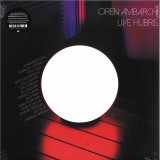
Black Truffle is pleased to announce Live Hubris, documenting the hypnotic and electrifying live performance of Oren Ambarchi’s 2016 LP Hubris by a fifteen-strong band at London’s Café Oto. Over three days in May 2019, Oto toasted Oren Ambarchi at 50/Black Truffle at 10 with Ambarchi and a large group of close friends and collaborators in a series of performances that interspersed existing projects with new collective endeavours, culminating with this: fourteen members of the extended Black Truffle family together on stage, joined by one special virtual guest, to translate the intricately studio-constructed layers of Hubris into a muscular live band workout.
Operating with only the bare minimum of pre-gig preparation after the planned afternoon rehearsal had to be wrapped up prematurely due to noise complaints, the gargantuan group lurches into motion with a 21-minute rendition of ‘Hubris Part 1’, powered by the pulsating electronics of Konrad Sprenger (the ‘ringmaster’ at the ensemble’s core) and no less than seven electric guitars spinning a web of intricately interlocking palm-muted polyrhythms. The layers of closely related but metrically distinct lines create ripples of shifting accents, flickering changes in emphasis that ricochet along the endless central pulse. Gradually building in density, this motorik continuum becomes the backdrop for the haunting tones of Eiko Ishibashi’s processed flute and an extended feature from long-distance guest Jim O’Rourke on guitar synth.
After the brief interlude of the second part, where Albert Marcoeur-esque guitar arpeggios accompany a halting attempt at phone conversation, the full ensemble gears up for the epic side-long rendition of ‘Hubris Part 3’. Now joined by the astonishing triple drum line-up of Joe Talia, Will Guthrie and Andreas Werliin, the layered pulse of the opening piece becomes a burning funk-fusion groove. Beginning on a medium simmer, the ensemble initially stick to its pulsating one-note mantra, over which Ambarchi unfurls a beautiful example of his signature shimmering Leslie-toned guitar harmonics, eventually joined by Ishibashi’s flute and some brooding, distorted dissonance from Julia Reidy’s guitar. Building steadily for the first nine minutes, the heat then rises dramatically with a first, gloriously loose chord change: with the all drummers now rolling and tumbling like a twice-cloned Jack DeJohnette circa 1970, Mats Gustafsson enters on baritone, his tortured roars and shrieks driving the band to peaks of insane intensity. Finally, the exhausted ensemble drops out, leaving only the jagged, skittering fuzz of Ambarchi’s guitar, brought to an abrupt conclusion at the command of crys cole. Arriving on hot pink vinyl with artwork by Lasse Marhaug and an extensive selection of live photos by Ivan Weiss and Fabio Lugaro, Live Hubris brings this ambitious and outrageous evening of music to the safety of the home stereo.
out of Stock
Last delivered 4 years ago available to reorder, subject to availability
CAM Sugar is proud to present the first physical release, on LP and double CD, of the original soundtrack to the TV series “MEDICI - MASTERS OF FLORENCE” (2016-2019), that received international praise following the Netflix distribution. The original score composed by Paolo Buonvino brings the Italian Renaissance back to life. The soundtrack mixes traditional instruments belonging to classical music (a common practice with historical dramas) with smooth electronic elements, allowing the listeners to take a journey of exploration through one of the most exciting periods of European history as much as into one’s intimacy. The result is a score that is impactful and enjoyable for a broad audience, also thanks to the voice of Skin (Skunk Anansie), who performs “Renaissance” and “Revolution Bones”, respectively the theme songs to season 1 and season 2 & 3. The LP version offers a selection of the best tracks composed for the 3 seasons, while the double CD edition features the series’ complete soundtrack.
The original Environments album was conceived and written back in 1993. It became one of the great lost albums by The Future Sound Of London before the guys took in back to the studio to complete and issue in 2008. Since then has come the success of further instalments and following additional studio work during a period of extreme creativity comes two further volumes. Released separately but simultaneously, Environment 6 and accompanying Environment 6.5, when combined, create two CDs of 46 tracks. Sweeping between luscious dreamscapes to delicately melodically compositions to intensely highly programmed electronics sculptures Environment 6 and Environment 6.5 continue the journey towards the boundaries of the future of sound.
Blood On Satan’s Claw – AKA Satan’s Skin in the USA, is a cult British horror movie from 1971. It’s a film from the golden age of British horror, and one that ticks most of the horror connoisseur’s boxes - it stars the Devil, Olde England, it has nudity, strange ritualism, a fair smattering of blood and of course, sublime music. Produced by cult masters Tigon, this film was the perfect companion piece to their earlier Witchfinder General (1968). Set in rural 17th century England, it tells the fine story of a small village that quickly falls under the devil’s spell. It’s brilliantly told and quite beautifully shot with a very fine cast of superb character actors.
Over many years the film has slowly gained a cultish reputation, and there are rumours that good old Tim Burton is a very big fan and used the movie as an influence for his “Sleepy Hollow” production.
The score was never released. Written by Marc Wilkinson, former director of music for the National Theatre, this cult soundtrack takes its lead from “The Devil’s Interval”, but more about that in the next paragraph. Musical appearances from the Ondes Martenot (the earliest electronic instrument) and Cimbalom add to the overall spookiness of this recording. And in 38 years the music has lost none of its depth or addictive, evil hooks. The first pressing sold out many years ago and commands high prices. A repress has been requested for many years.
Here’s Marc Wilkinson’s thoughts…
“The descending chromatic scale which features throughout the music omits the perfect fifth (the only true consonant in the chromatic scale) and therefore highlights the diminished fifth, which ever since the middle ages in Europe has been known as the Devil's Interval!!”
BRIEF ARTIST INFO: Marc Wilkinson was musical director of the National Theatre throughout the 1960s. He scored a number of films in the late 1960s and 1970s including “If” for Lindsay Anderson. Wilkinson currently lives in France.
‘Expressions of Interest’ is the debut album from Melbourne/Naarm post-punk group screensaver.
Sonically, the 10 track album is rich and detailed, and pays homage to its era of inspiration (late 70s-mid 80s post-punk and new wave) with gripping vocals, dissonant guitar, melodic basslines, washes of synths and motorik drumming. Engineered by Julian Cue alongside band member Chris Stephenson and recorded over multiple studio sessions between 2020-2021
The album opens with the ominously titled ‘Body Parts’, an immediately arresting song that showcases the bands penchant for blending classic post-punk elements, leaning into a sound somewhere between the Banshees and Protomartyr.
Maynard doubles down on these themes in the frenetic second track, ‘No Movement’. Guttural organ tones swim under overdriven guitar, jagged and intense. Additional textures and sound effects are used percussively to embellish the dynamics, creating a feverish atmosphere with some Martin Hannett like flourishes.
The album takes a surprising turn into electronic driven krautrock on track three with 'Buy, Sell, Trade' - a rollicking piece of danceable ephemera, dominated by swirling synth sounds and punctuated with electronics reminiscent of Sparks/Moroder collaborations. Chris Stephenson's masterful guitar work begins with Greg Sage-esque determination before a crescendo into a lush Frippertronics outro.
'MEDS' transports us back to the foundation established on 'Body Parts', a gothy piece, full of tribal toms and dirge-y synths. Industrial punk rock nearly swallowed whole by the keys in the middle and slowly building back to complimentary guitar and vocal hooks.
It's from this point in the album that the band let's their other influences rise to the surface, as they explore touches of EDM on 'Static State' - a brutal, death-disco style track, Krystal Maynard's lead synth and gloomy vocal complimenting the pounding drums and dub-esque bass line culminating in a track worthy of the dancefloor.
Opening side two we have 'Skin', beginning with a solid and simple backbeat, James Beck’s post-punk percussion provides a steady and minimal framework for the rest of the band to colour in with great depth and detail. Giles Fielke’s bass guitar wobbles brilliantly leading the verse melody, whilst Chris Stephenson’s guitar drives the chorus that folds neatly in on itself.
In ‘Attention Economy’, Krystal Maynard is flexible with her lyrical style, and knows how and when to lend her voice to the greater backdrop of the composition. ‘Attention Economy’ has an almost Kraftwerkian structure - repetitious, but engaging with its constant tom driven beat, lush synth lines and minimal bass tones.
Just when you thought things had slowed down, screensaver ramp things right back up again with ‘Overnight Low’ - a no holds barred thumper. Giles Fielke underpins the hard-edged sound with his bassline, keeping things smooth and tight. It brings to mind a hybrid of PiL’s ‘Annalisa’ and Wire’s ‘Two People In a Room.’
Before you can catch your breath, we have ‘Regular Hours’ - another industrial track, and perhaps the sister song to ‘Static State’ heard earlier on side one. Seething electronic drum samples cut through an abyss of growling synths, Giles Fielke hanging up the bass temporarily to accompany Krystal Maynard on synth duties.
The album closes with the fittingly titled ‘Soft Landing’, literally bringing the listener back down...softly. The song is heavy on atmos, and resembles the aesthetics previously encountered on ‘Attention Economy’ a few tracks earlier.
‘Expressions of Interest” was recorded at various locations across Melbourne, with a handful of songs being captured before the start of the Covid pandemic in January 2020. With the recording timeline being drastically altered, the band shifted focus to work on what would become their first single ‘Strange Anxiety’, throughout the first months of the Melbourne 2020 lockdown.
out of Stock
Last delivered 4 years ago available to reorder, subject to availability
EPMD’s initial success in 1987 seemed to take a lot of people by surprise. Without build-up or fanfare, they launched this stunning debut 12” and, so ill-prepared were people for it, that the label was still misspelling their name.
Those early 12” copies of ‘It’s My Thing’ – and the hard to find UK 7” that followed shortly after – have them billed as EPEE MD. Before they were signed, they were going by EEPMD, but they decided to drop an E due to the success of the west coast’s Eazy E. The one person not surprised by their success, however, was hip-hop pioneer and producer Kurtis Mantronik, who actually signed them to Fresh Records.
It’s fitting that he’s the man that saw their promise, as he himself was one to go against the grain. His electro-influenced productions for Mantronix and Just Ice were ahead of their time, and perhaps in EPMD he saw kindred spirits. Because, at the time this dropped, hip-hop was going up tempo, taking its cue from James Brown samples and picking up the pace.
On both ‘It’s My Thing’ – underpinned by the languorous ‘Seven Minutes of Funk’ by The Whole Darn Family – and ‘You’re a Customer’, with its combination of ZZ Top and Steve Miller Band – Erick Sermon and Parrish Smith slow things right down. It gives their vocals time to breathe and allows us to enjoy the interplay of their metaphor and simile-heavy lyrics. As calling cards go, they don’t come any better than this.
• Stunning debut that has become a Hip Hop classic.
• Only previous 7” release very hard to find.
out of Stock
Last delivered 8 months ago available to reorder, subject to availability
Glimmering medieval weaponry forged, polished and brandished, Zhenya Lavrinov arrives to take us back in time and beyond the stars. As LVRIN, he appeared opposite Maoupa Mazzochetti on a split EP for Arma – but one pockmark in a scattering of machine-powered ruminations for respected, proudly underground labels – and now he returns to wield a new alias across five tracks of ominous, night-creeping sonics.
The tracks making up Milky Way were recorded by Bryansk-based Lavrinov between 2013 and 2020, reflecting a side of his musical demanour not betrothed to the demands of the dancefloor. Golden Axe is far from ambient though – this is still resolutely rhythmic music spoken by specifically sculpted synths and powered by purposeful sequencers.
There’s a cosmic theme at play here, but ‘Moon Influence’ speaks as much to ancient rites and man’s obsession with lunar forces as any space-age sci-fi symbolism you might associate with gurgling electronic patterns. ‘Rhythmbox From Space’ may be brimming with analogue freakery, but it’s also locked into a rhythmic mantra which tracks back to the dawn of humanity.
Cementing the philosophy of the record visually, Milky Way comes clothed in a striking artwork by Alina Vinogradova. Lavrinov’s Golden Axe seems to hail from this very space depicted on the cover, speaking through time-honoured tools and revelling in universal mysticism as it opens a new chapter in his darkly seductive, psychosomatic music.
out of Stock
Last delivered 4 years ago available to reorder, subject to availability
Editions Mego is proud to welcome Powell to its roster with a bizarre and strangely emotive new LP of synthetic computer works entitled Piano Music 1-7.
Via his own Diagonal Records imprint, his work on XL Recordings and, most recently, the opening of audio/film platform A Folder afolder.studio, Powell has firm footing in the contemporary electronic landscape. During a wry and obstinate musical life he has twisted myriad synthetic forms into shapes that explore and expand upon the districts of post-punk, techno, noise + computer music, and in the the last year alone he has released four albums of hi-def abstractions, each inspired by a formalisation of music proposed by Iannis Xenakis.
As an extension of this intense period of work/research/play with stochastic functions using probabilities to compose music, various processes emerged that Powell then began to apply to more traditional musical events. Where ordinarily in his work the probabilities and relationships are used to define parameters such as wave-shape, folding, FM, filter modes etc., he now began to use them to create musical formations and visual scores that could be played back using any software/MIDI instrument one of these can be seen on the rear cover of the LP release. While mapping out this cartography of relations, he used a basic Grand Steinway sampler as a placeholder instrument; the longer the process went on, though, the more he began to embrace the acoustic properties of the synthetic piano and make it the bedrock for this new constellation of work.
Piano Music 1-7, subtitled 'Music for Synthetic Piano and Assorted Electronics', consists of seven different synthetic islands strung together into a single composition. All were composed using the aforementioned processes that allowed Powell to play a piano, even if he never learned to do so with his hands. After all, 'In writing electronic music,' Robin Mackay once wrote, 'you also have to direct the invention of new tools.'
At times the piano skips gleefully over shadowing synthesis, whilst at others the synthetic sheets swarm and envelope the keys. The interplay between the two create a fantastical alternate reality, a cosmic machine in which time is eroded, shrunk and expanded, like a wax upon which operations and relations are inscribed or engraved. Many of the pieces express a playfulness or optimism verging on vitalism, as bundles of piano notes dance and interpolate with a never-repeating range of electronic gestures. The feel is of a brightly coloured flower-bed in various stage of bloom. This interplay of the artifical acoustic and the electronic builds on the pioneering processes developed by David Behrman in works such as Leapday Night, and Piano Music 1-7 could also be posited as a modern take on Conlon Nancarrow's investigations for player piano. Similarly, the razor-sharp sonic properties and unfolding of non-human events recall the computer works of Xenakis and the surgical precision of Mego mainstay Florian Hecker.
Recorded in late 2020, these new Powell works propose not just a bold and bright vision of electronic music but serve also as a map with which, for 35 minutes at least, we can navigate our way out of the current milieu. As the artist himself remarks in the sleeve-notes, '. . . What emerged from this fog or soup for me were ideas and processes that felt affirmative and life giving — sensations I had always hoped to convey in my music. Perhaps the optimism or positivity I felt at these musical events unfolding, these clusters and knots tumbling in different directions across time, can also be felt by you.'
out of Stock
Last delivered 9 months ago available to reorder, subject to availability
Biogen's a different kind of musician, always travelling the road less trodden. All law's broken - no chords, no build-ups and no traditional drum patterns. Instead Biogen offers listener's fragmented shredding's, constant irritations, glitches, imbalance—and enough creative ideas to supply a whole battalion of electronic musicians. His works are full of contrast. Occasionally soft and mellow - like a cloud in trousers - Biogen would call that 'sofa-trance'. Other times the music's harsh and uncompromising with uncomfortable, irrational beats and glitches - 'Weird-core' - a vast uncharted territory. Some might be tempted to connect the contrast and contradictions in his music to his long battle with manic-depressive disorder. But the disparity in his music is its strength, confounding and delighting the listener.
It's five years since Biogen passed away, but his influence is keenly felt among Icelandic electronic musicians. In the early '90s, Sigurbjörn 'Bjössi' .orgrímsson was a pioneer of the modern electronic scene as a member of the old skool hardcore band Ajax, who for a short time counted Goldie as vocalist, and cemented his reputation for pushing the limits under his Biogen pseudonym. His musical creations weren't made to serve the past or the present, but the future.
Each release and concert offered something different. Concerts were supposed to be challenging and engaging. His releases were not easy to come by and often he'd sell his music on Laugavegur - to unsuspecting tourists intrigued by his Viking-like appearance or mesmerised by his big blue eyes. He was a friend and a mentor to many; in 1995 he was a founding member of Thule Records, and in 2007 one of the leading forces in the Weird-core movement, a group of artists focusing on the unconventional. He'd encourage young artists to release their music into the cosmos - to make mistakes and learn from them - and that wouldn't be done while sitting in a basement. Many have memories of their first gig, watching a tall and comforting figure hovering above everyone else in the crowd. That was him, and it happened rarely that he wasn't there.
A fair amount of tracks on 'Halogen Continues' are previously unreleased, or self-released in very small amounts. The music moves from 'Irrelevant Information' where Biogen illuminates on 'Stabastab" a mysterious international institute he dreamt up, originally on the 'Mutilyn' LP that he handmade and sold himself. It was an anti-LP, a non-linear album of drones, crackles and weirdness. 'Bliss' is from the 1996 double CD compilation entitled "Icelandic Dance Sampler' that he helped compile. '303 Ambient' one of the recent works of the "Weird-core" era - also a regular event showcasing abstract electronica. He was the front man of the movement; regularly performing in Reykjavik with shows included lots of break-beats and 303's.
His creativity and freedom from tradition have seen Biogen gathering appreciation as an artist with the passing of time, and are hand in hand with the concept of . The artwork by Tombo is inspired by the idea of eternity and reverence after death. Nina compiled the tracks much like other album journeys on - 'I was in the car driving in the middle of nowhere in Iceland when I heard Biogen's music for the first time. Dramatic weather conditions outside probably influenced that instant emotional connection that I had with his music. Later navigating through a large archive of his recordings it took me some time until the album took form. I picked the most idiosyncratic cuts that show his creative approach most brightly. Some of them are short cuts ending obnoxiously with a lot of temper and others gorgeous atmospheric narratives - so deep and haunting that it feels like they are not familiar with a notion of time and dissolve slowly into the eternity. It's been an honour and felt exciting to have complied his work, a responsibility I feel keenly, and I hope he would like his music together in this album.'
Biogen's friend the Icelandic musician Ruxpin (Jonas Gudmundsson) who has worked to collect together Biogen's musical legacy through his DAT recordings and hard drives, and kindly granted Nina access to the files, provided much of the text for the press release. Following the album release of 'Halogen Continues', a further album of Biogen's ambient and experimental works will be released on GALAXIID later this year.
out of Stock
Last delivered 4 years ago available to reorder, subject to availability
Minimal Wave presents a reissue of the seminal first album from Swiss Wavers, Guyer's Connection. Tibor Csébits and Philippe Alioth formed Guyer''s Connection in Basel, Switzerland when they were only 14 and 15 years old. At the time they were in a new wave rock band called 'Kurtzschluss' which they decided to break from in order to make purely electronic music. They began with two synthesizers, a drum machine, a 4-track tape recorder and a multitude of ideas. They channeled their unique and humorous vision into their first album, entitled Portrait which they produced themselves and self-released in 1983. Over the years, the album became a highly sought after minimal synth cult classic. It stands alone as one of the strongest examples of Swiss Minimal Wave, and probably the only one that is in Baseldytsch.
In 1981, Brenda Ray / Naffi Sandwich released the sweetly yearning “D’ Ya Hear Me!” The song is now considered a post-punk classic, and here we have a warm digi-reggae version sung by Kyoto composer/producer/vocalist NTsKI (“Natsuki”), with backing tracks performed, recorded and mixed by Osaka-based producer/guitarist 7FO ( “nana f o” ). Also on this release are a karaoke version, plus two remixes, the first a dancehall-flavoured version by Bim One Production, a Tokyo electro-reggae production duo. The second mix is from Nagoya-based electronic producer CVN, who provides a harder version. This revisioning of a much-loved classic is available on 10" and CD.
Recorded in a pool house surrounded by an evergreen oak tree forest just outside of Madrid; musician and composer Oliver Patrice Weder’s second artist album ‘The Pool Project’ combines textural and meditative sounds that touch on global influences from jazz, ambient and modern composition. In conjunction with the album, Spitfire Audio has released ‘The Pool Project’ sound library, inviting composers and producers to reimagine, recreate or completely pull apart Oliver’s sound world to facilitate their own vision. Capturing the unique acoustics of the pool house, the library is presented in Spitfire Audio's award-winning, easy-to-use plug-in and features a range of controls and effects. While ‘OPW’ was inspired by constant movement and travelling, ‘The Pool Project’ had quite a contrary motivation. Oliver explains “After making my debut album, it was clear for me that it was only the beginning of a long journey. I enjoy the process and idea of creating something deeply personal and connected to the situation I am in, a snapshot of time so to speak, so I had to start writing a second album sooner or later. I love change and find it very inspiring to creatively adapt to my surroundings and circumstances to see what comes out at the other end. I spent the lockdown time living in a countryside cottage just outside of Madrid, surrounded by holly oak trees. The combination of this and seeing my one year old daughter grow up, as well as expecting another baby boy, created a very unique and fruitful environment to draw inspiration from.” Confirmed press/radio: Future Music - Album review Electronic Sound - Album review Scala Radio -Ambient Track of the Week Scala Radio - Session Track/Interview Reviews: "Rich in beauty and emotion… one of the finest modern composers around" - 8/10, Future Music Mag "Sounds like a warm oasis of calm" - 8.5/10, Higher Plain Music Achievements: Recorded and toured across Europe with various bands including psychedelic rock band Time for T. Composed for the BBC. Lead composer at Spitfire Audio. In 2017, Oliver co-scored the feature film ‘The Haunted’ and made a vlog style series Inside the Score with Spitfire Audio, documenting the entire process — from meeting the director, to seeing the film shown at various international film festivals. Released OPW, a sample library and album, in 2019 with SA Recordings x Spitfire Audio. Interview with MusicTech.
Bumps Per Minute is a full-throttle reinvention of the traditional fairground dodgems, from Mercury Award-shortlisted composer, producer and musician Anna Meredith. The music is part of the DODGE installation, which can be experienced until 22nd August at Somerset House.
For Bumps Per Minute, Meredith has collaborated with BAFTA-winning sound artist Nick Ryan to design a bespoke tracking technology so that every thump, bump and swerve of the 18 dodgems around the track can trigger a separate composition. This results in a kind of ultimate shuffle where high octane music and ideas compete for airtime and each performance is unique. The installation will occur approximately every hour at DODGE through the day/evening.
The idea for Bumps Per Minute came about when the composer was thinking about what might be a more pandemic friendly replacement for the ice rink at Somerset House where she has her studio. The idea grew from there and now this summer DODGE is taking over the main courtyard at Somerset House, featuring a full smorgasbord of Yinka Ilori designs, DJs, food, drink and of course, dodgem rides.
Today, Meredith announces that she will be releasing a special extended cut of her material via Moshi Moshi out on the 15th July 2021. Bumps Per Minute: 18 Studies for Dodgems will feature full-length individual musical identities of all 18 dodgems – each one a bold and distinct musical track in its own right as well an intro and outro track (voiced by comedian Rob Broderick).
The key to both the dodgems themselves and the release is a user ‘driven’ triggering and shuffling of the material. Meredith encourages the listener to ‘take the driving seat’ and jump from one track to another, mirroring the real dodgem ride, shuffling and curating their own listening experience via the virtual interactive dodgems page or their preferred listening platform.
Bumps Per Minute: 18 Studies for Dodgems explodes out of the starting gate with Meredith’s uncategorisable sound and signature energy, combining fairground wildness with a healthy dose of the nostalgic electronics of old school gaming.
Fine Place is a new duo comprising Frankie Rose (Vivian Girls, Crystal Stilts, Dum Dum Girls) and Matthew Hord (Running, Pop. 1280, Brandy). Based in Brooklyn, NYC together they’ve crafted a crystalline full length of nocturnal, electronic pop music that charts a way out the post-global, cyberpunk dystopian environment it was crafted in. Their debut album This New Heaven drenches minimalist song structures in post-industrial washes of sixstring delay and gothic post-punk synths. Presiding over it is the most evocative, emotive vocal performance Frankie
Rose has committed to tape to date.
Following Hord’s relocation from Chicago, the pair wanted to explore new avenues apart from their respective bands or solo projects. “The sound we were going for was an attempt to capture the dystopian feel of New York during a period of desertion by the wealthy. It was produced in a time-frame saturated in both uncertainty and serenity, and the soundscapes we created felt fitting and almost organic as a response to our surroundings. The title also reflects this in an arguably literal, maybe even satirical way.” Sonically, Fine Place references the pioneering mid-to-late 80s pioneers of icy melodrama The Cure and Cocteau Twins, while reflecting both the individuals’; music trajectories thus far. Modular synthesis triggers rhythm boxes and fluttery arps chirp around clanging 808-patterning as Rose’s reverb-laden vocal layering envelops the remaining headroom. The result is massive; a towering, shadowy music that embraces darkness while offering Rose’s bright vocal as chinks of light in the cracks; the production filling the head space of the beholder with preternatural imagery and emotional resonances that are real but not quite defined.
The title song propels forth out of the fog, scintillating with delayed guitar before the reverb-immersed vocal injects the human drama. The chorus constantly teases a big release but holds back creating a taut, dynamic tension. Cover Blind’s slow march makes full use of Rose’s layered vocal sinking and emerging from Hord’s bank of synths. Stand out It’s Your House is pure honey pouring from the speaker on a bank of of arps and near-hymnal vocal layering, a syrupy light offering in the mist. It’s an emotive highlight that only increases as the album progresses; Impressions Of Me is the Lynchian ballad that glides onward into the sunset. The album finishes on a choice re-interpretation of the 1989 track The Party Is Over by Belgian group Adult Fantasies, one of the great over-looked ballads of the era given an almost ecclesiastical makeover by Matthew Hord and Frankie Rose in 2021.
Says Hord: “This record was an incredibly challenging endeavor to make, as I had just come home from a European tour with another music project and wanted to invest into and focus on this collaboration with Frankie. I essentially reimagined how to approach writing basic sequences with the synthesizers I had been rehearsing and performing with for months prior to make something more accessible and pop- like for Frankie to build upon. Frankie is an unsung hero when it comes to mixing, and she was constantly mixing down and processing elements of the tracks to create different atmospheres as we forged forward with every song.”
This New Heaven is an ecstasy of sorts, a half-dream in the border between sleep and daylight.
Limited edition 12" dedicated to the Neve A Maggio song flavoured with four remixes. Three from Mushrooms Project and one with a 90's house style by Deep88.
Wrapped in elegant electronics and an international flavour, Sara's voice recounts the unusual in these days characterized by strong anomalies and cold solitude. Like when it snows in May, like when you want to pick a rose and instead find yourself blinded by a white reflection, completely out of place. Yet there is life, under that white; breath, pulsation, a rhythm that presses and makes you dance: a song that drags you away from a daily life troubled by extraordinary events, which become intimate and confidential, but still unique, like every single snowflake.
Archeo Recordings is a reissue record label that regenerates old, lost, obscure and forgotten rare gems of mostly Italian music but also all over the world of the 70s, 80s and 90s.
All releases are licensed audio tracks re-mastered in their original form with sleeves recreated for today but all based on the original images.
Archeo would like to make the music available to a wider audience of collectors, DJs, music lovers of a forgotten time.
out of Stock
Last delivered 17 months ago available to reorder, subject to availability
In 1977, in the midst of a period of political turmoil and social unrest that went down in Italian history as "years of lead", screenwriter and director Massimo Pirri made a film no one else had the courage to make: Italia: ultimo atto? (Could It Happen Here?). Here, Pirri explores the controversial (and, in the 70s, very current) topic of left-wing armed struggle. He does so through a storyline that is almost prophetic: in the film, a mysterious ultra-leftwing armed group plans and executes the killing of the Ministry of the Interior; in 1978 Christian Democrat leader and former premier Aldo Moro was kidnapped and killed by the Marxist-Leninist Red Brigades).
The violence of Pirri's storyline is fully captured by the score composed by Lallo Gori, who uses obscure synths, analog keyboards, and dry-sounding acoustic drums to create an extremely tense and frenzied soundscape of electronic textures.
The result is an album that combines dark, haunting jazz-funk with ambient atmospheres and suspenseful electronic sounds, and which ends up sounding like an instrumental proto-hip hop record where Moog synths take the lead together with drums.
At the time, this must have seemed like a low-budget, ramshackle soundtrack – essentially, a B-movie soundtrack. Indeed, the extensive use of electronic sounds was meant to compensate for the lack of acoustic instruments, such as the bass or (alas!) brass, which were replaced by keyboards and MiniMoog synths. Today, however, Lallo Gori's odd and minimalistic style of arranging makes this score sound unexpected, avant-garde, and innovative. In short, modern and contemporary.
Previously unreleased in any format, all tracks have been remastered from the original master tapes.
out of Stock
Last delivered 4 years ago available to reorder, subject to availability
Tartelet has a knack for uncovering virtuosic, off-kilter electronic music. Max Graef—born, bred and still holding it down in Berlin's Prenzlauer Berg—is their latest artist in this mold. Though adventurous dance music is thick on the ground in the German capital, Graef's 2013 run of singles, cropping up on Graef's own Box aus Holz, plus Melbourne Deepcast, The Gym, Heist and Tartelet, continually surprised, infusing worn-in house with manic energy and acrobatic elasticity. Where many of his peers make languid, self-consciously laid-back tunes, Graef makes brilliantly restless ones. Dropping the needle on one of his EPs, you nearly expect it to pop right off again.
Rivers of the Red Planet, Graef's first full-length and Tartelet's latest album project, takes all that wildness and refines, expands, updates and scrambles it. It's as ambitious and deviously entertaining a record as you'll hear in 2014, the fulfillment of Graef's desire to make anything but another contemporary house music album. At any given moment, Rivers of the Red Planet feels like it could have been recorded through the smoke at a jazz club in the booth at a techno club 30 years from now or inside an MPC stocked with crusty dollar-bin samples. (We'd guess the staff at Graef's beloved OYE Records in Berlin will have a difficult time settling on which section to file it in.) If it sounds sampled, it's a testament to Graef's natural musicianship and production prowess —the record is heavy on sounds he played himself, from drums and Rhodes to fat synth melodies wrung out of an old Crumar Performer water-damaged to perfection. For vocals, Graef enlisted Nigerian singer Wayne Snow, whose rugged soulfulness makes him a natural pairing. On cuts like "Drums Of Death" and "Speed Metal Jesus," the club- readiness of his EPs lives on. But Rivers of the Red Planet may be most at home in your living room, with a good bottle of red and a roaring fire's crackles mixing with the pops and hiss of the vinyl—a playful listen that sinks in, burrowing deep and getting you all warm and gooey on the inside.
out of Stock
Last delivered 4 years ago available to reorder, subject to availability
Sharing his InBach album with the world in 2020 set events into motion that ultimately led to Arandel making second edition in the critically acclaimed, borderless project that unites rare instruments, musical reimanigation.
Arandel unites once again behind the musical phrases of the Leipzig composer specialists of ancient and modern instruments (Thomas Bloch), modern synthesizers and moogs, strings experts (Gaspar Claus), and the poetic spoken word of Myra Davies and Bridget St.John.
Textextext - (add your write up)
"There is a Bach for everyone" Arandel says, "and that discovery is what led me here, to InBach". Beneath the intricate history, the godlike adoration placed upon Bach, he was a playful musician, an eclectic one even. And so, a full year after the release of the first InBach record on InFiné, there is enough material to make a second one. "There is so much about Bach I didn't even know when making the first one - but after the release, people kept coming to me, telling me about certain pieces I should listen to or rework; songs that I had never even heard of."
The second InBach grew like a garden from the seeds of the first one - an eclectic journey through melodic fantasies, intricate sound design and a certain Pop silver lining. Some tracks were born out of Arandel's band performing on stage, experimenting with the songs live and composing them anew, like "Nos Contours", a new, French-lyrics version of Bodyline with Ornette, Arandel's stage partner.
InBach vol. 2 is a logical consequence then, of someone diving into a pool of music and history so large that it is being chronicled to this day. A substantial part of the instruments used on the lofty, eclectic album were recorded at the Musée de la Musique Paris: rare instruments like the *Erard square piano, ondioline, Zach's cello, Stroh violins*. They help shape the unique sound of Arandel's InBach project: sometimes _eerily familiar, always otherworldly and elusive.
In the vein of rare instruments, the first guest musician Arandel approached for InBach was Thomas Bloch, who lends his gift to four tracks over the two albums, playing the ondes Martenot, one of the first electronic musical instruments ever invented. Thomas has worked with many major artists in his career of ike of Radiohead, Gorillaz, Marianne Faithful, Tom Waits, Daft Punk.
The record travels *between styles, ideas and moods elegantly - it is a distinctly fun and personal album. Freeing himself from the weighty shackles of expectation surrounding the classical maestro, Arandel goes for the core of every Bach piece he tackles, making them his own. on "Octobre", based on Air On G-String, from Orchestral Suite No. 3 D-dur, BWV 1068, his nephew tells a dreamlike story of an ominous gang of children, literally blossoming in the mud. "Fabula" - featuring the French singer Scalde - based on the melancholic, Christian lament Meine Seele wartet auf den Herrn, becomes a grandiose, auto-tuned pop ballad on InBach vol. 2, featuring the virtuoso cello of fellow InFiné associate *Gaspar Claus*.
The use of spoken word is another new layer to InBach, and acts a lyrical thread carrying the listener through InBach vol.2: the closing track features Bridget St.John, John Peel-associated folk legend from the UK to offer to collaborate on a poem for this second volume, she replied to him with a line from André Gide : "You can't discover new land if you aren't willing to lose sight of every shore". A lovely way to sum up the InBach experience for both artist and listener.
out of Stock
Last delivered 4 years ago available to reorder, subject to availability
strumentalist Teddy Lasry's story is noteworthy not just in regards to the music he released, but in the ways approached the craft of composing and experimenting with sounds and sonics.
Always intrigued with the capabilities of instruments, their groove and their feel, it was very much his family’s influence that helped to fuel these life long affections. As a performer in a parisien cabaret, Teddy’s father Jacques would mingle with giants like Serge
Gainsbourg and Charlie Chaplin (impressed by his ability to improvise, Chaplin wanted him to become his accompanist, but the pianist politely refused). Jacques and his wife (Teddy’s mother Yvonne), would later become members of the innovative experimental group Les Structures Sonores, and surround their children’s lives with sounds. Electronic music was still in its infancy and Les Structures Sonores, with their resonators that produced long, mysterious tones, were deemed ‘cosmic’. It was the era of the launching of the first Russian Sputnik and every time a radio or television station wanted music for their science fiction programs, they turned to one of their compositions. Showing a natural ability with multi instrumentalism, Teddy was rewarded with a spot in the band, allowing him to really explore unconventional methods of composition.
Following a brief stint with Ariane Mnouchkine's avant-garde Théâtre du Soleil after graduating school, Teddy joined the pioneering prog band Magma, with whom he would record three groundbreaking records during the early 1970s (According to former member
Laurent Thibault, their album Mëkanïk Dëstruktïẁ Kömmandöh and its sound were strong influences on David Bowie during the recording
of Low and Iggy Pop’s The Idiot at Hérouville). Despite the successes with these projects, Teddy was constantly searching for new ways
of expressing himself through music, leading him into the beginnings of a solo career that would last the better part of three decades.
Teddy’s transition into his solo career came with contrasting fortunes, in that he was now becoming a music to image composer but with the unfortunate realisation that his eyesight was gradually worsening (due to being diagnosed with retinitis pigmentosa at an early age). Nonetheless, his solo career would begin in 1975, and for the rest of the decade his sound would become increasingly mired in electrified Funk-Fusion and its endless sonic possibilities. The resulting music would serve to highlight Teddy’s love affair with the possibilities found within tireless instrumentation, with the flute and particularly synthesisers becoming a mini-obession of his (he once spent a 7,000 Francs loan, which was meant to be spent on fixing his roof, on synths).
To this day Teddy continues to record and experiment with music, a passion which in many ways has never left his sid, even at the age of 75. His career was one that was fuelled by innate curiosity and an intrinsic desire to discover new methods of expressionism, be it through the realms of Jazz-Funk, ambient electronics, Swing music or indeed through the medium of instrumentation itself. On this compilation, we look to encapsulate the essence of his innovative sound, and from start to finish a sense of his ingenious approach to composing structure and mood is made abundantly clear. The funk-jazz fusion style that embodied the majority of his 70s work is on full display here, with the vibrant flute driven "Los Angeles", the Miles Davis inspired "Blue Theme", the progressive and driving
"Chamonix", and the deeply intricate "Krazy Kat", along with one of his finest 80s slow jams, "Funky Ghost". Two cuts off the ‘Back To
Amazonia’ album are also featured (Teddy’s last album including his Prophet T8, Yamaha DX7 and Oberheim drum machines). "Raising
Sun in Bali" and the title piece both emphasise an ever present passion for synthesisers. "Birds of Space", a standout track off the e=mc2 album, closes the comp, and is a fitting way to end this journey.
Pulled together in close collaboration with Teddy and his family, this collection of songs looks to introduce new listeners to his work and we are proud to present this limited and carefully remastered compilation on vinyl, including extensive liner notes.
out of Stock
Last delivered 23 months ago available to reorder, subject to availability
The original Soundtrack to Greek-German director Nikias Chrssos’ new feature, ‘A Pure Place’, scored by John Gürtler (Eigenlicht, COUNTER019), with his studio partner Jan Miserre, and featuring a track by chameleonic British artist Shackleton.
The script for A Pure Place had a dizzying effect on John Gürtler & Jan Miserre; their minds reeling with the possibilities.
From Persian sheep bells, Chinese sheng, prepared trombone, quarter-tone piano, a beaten-up cembalo, hand percussion, and a room full of synthesizers, embryonic compositions and experiments came to life early on in the project.
An electro-acoustic extravaganza, the soundtrack for A Pure Place takes a deep bow towards the many magnificent composers and scores from the late 60s and 70s where orchestral arrangements met with tape loops, psychedelia, and instruments from across the globe. Listening to that era of film music, anything seems possible.
The minimalist tones of ‘Ritual Bells’ set the dial to weird in the opening sequence of the movie, whilst ‘The Island’ makes use of ambient vocals recorded through an oil drum, gently introducing one of the score’s main themes with a distant quarter-tone cembalo.
Acclaimed British artist Shackleton’s eerie original version of ‘Fust’s Song’ (also included) was a tonal keystone for the entire soundtrack. Gürtler and Miserre translated his psychedelic electronic blueprint, layering acoustic instruments and bottom-heavy percussion in their ‘Paradox Paradise’ production style. The vocals, written by Chryssos, and sung by the cast on set, capture the sonics of the actual crypt-like space where cult leader Fust addresses with his following.
‘A Glimpse of the Other Side’ speaks of love and death in a 70s-indebted composition reflecting John and Jan’s shared love for melancholic and suspenseful chord progressions. Meanwhile, the sparkling synths of ‘Athens’ - the children discovering neon-lit civilisation after years confined on the island - transplant us to an entirely different era.
Greek artist Maroulita del Kol features heavily throughout - her choir of vocals on ‘Erotica’ were recorded late at night in the studio foyer, capturing its unique tiled reflections and concrete reverb.
On ‘Purification’ Maroulita’s voice guides us alongside a Moog bass drone, building to an ecstatic climax, whilst she also features in the film’s disco-centric ending credits on ‘Gatoula Mou Mikri’.
out of Stock
Last delivered 4 years ago available to reorder, subject to availability
Armand Bultheel is half of the group Agar Agar. He also makes music on his own, which he now feels ready to present to the world.
He composed an album, Lullabies For Computers which will be his first to be released on vinyl.
It's a series of lullabies, addressed to our computers that so often accompany us in bed and sleep - even if in the end, while composing the tracks, Armand felt more like writing them for his friends. With this album, he presents a sensitive and organic electronic music,
whose softness provokes a contrast of emotions between joy and melancholy.
Happy to share these tunes, he put in the softest ingredients possible, with round bass and little melodies that wander over.
He slipped in the colors of his favorite synths, one of which he made in the shape of a human mouth.
Lullabies for Computers is the second part of the new "Meditations" series from Cracki Records, a series of records made to listen (for once) to escape and dream.
out of Stock
Last delivered 4 years ago available to reorder, subject to availability
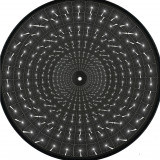
Science Cult is proud to presents CYRK’s second outing on the label via the Kinetic Series: A limited edition of Picture Discs with kinetic artwork crafted by Chris Dowding.
Berlin based duo CYRK regards “Hidden Geometries” as one of their favourite tracks ever made, hence no expense was spared to give it a special home on Vinyl along with a remix by the iconic Plaid. Rounding out the release are 2 more instant classic electro tracks.
out of Stock
Last delivered 3 months ago available to reorder, subject to availability
SectorSept’s ‘954’ is a boldly original record, one which announces the arrival of a singular musical mind. Its creator states that he crafted this EP by trying to make tracks that were ‘a representation of how I believe music would sound in some distant land in the future’. On ‘954’ this vision takes flight in the form of eight multifaceted, genre-defying electronic productions.
To unpack this record one must first understand the myriad influences which feed into SectorSept’s style. The producer grew up between the UK and Florida - indeed, the record’s title references the area code he had while in the USA. His formative years were spent soaking in the dancehall sounds he heard around him in his Jamaican household as well as techno, jazz, Miami bass and the city’s ‘Love 94 Smooth Jazz’ radio station.
All of this and more can be heard in the fabric of ‘954’. The drum programming alone reveals SectorSept to be someone with extremely wide-ranging musical tastes. Cuts such as ‘Get Ready For The Programme’ and ‘Be There’ are powered by deft beats that have Miami bass, Jersey Club, juke and more in their make-up. Drexciya-adjacent machine-funk creeps into the mix in ‘954’s mid-section, ‘Golden Third Eye’ touches on trap, and closing duo ‘Tropic Universe’ and ‘Prize’ bring dancehall dembows to the fore.
The productions of ‘954’ are simultaneously driving and chilled, coasting nicely yet still plumbed with enough bite to do damage on the dancefloor. It’s a feeling which is heightened by SectorSept’s gorgeous textural work. Several of the tracks here soften up collages of vocal clips with wistful, dreamy synths - see the way that club-caller snippets orbit Boards Of Canada-esque keys on ‘Get Ready For The Programme’ or how closing cut ‘Prize’ works both the classic Warp/Planet Mu sound and the pitched-down stylings of DJ Screw. It’s a rich and fully-formed artistic aesthetic, something which is all the more impressive when you consider that ‘954’ is SectorSept’s first official release.
That said, while the overall flavour of ‘954’ is SectorSept’s and SectorSept’s alone, one also finds links to Gobstopper’s previous output here. Those dancehall influences on ‘Tropic Universe’ and ‘Prize’ line the record up with Gobstopper drops like Otik’s ‘Thousand Year Stare’ while the emotive, soulful synth work that has long been a Gobstopper calling card is also in evidence here. Perhaps the thing about ‘954’ which makes it feel most at home on Mr. Mitch’s label is SectorSept’s imaginative futurism. SectorSept is a keen scholar of anime composers Kenji Kawai and Joe Hisaishi, and as such it is no surprise that there is a slightly fantastical quality to ‘954’. This is most boldly expressed on ‘Intuition Segment’, a magic-realist vignette which looks to Oneohtrix Point Never.
Blending ethereal textures with hybrid electronic grooves, SectorSept’s ‘954’ EP uses the sounds, influences and cultural experiences that have shaped its creator in order to build a vibrant vision of the future.
Hedvig Mollestad must surely be one of the hardest working musicians on the Norwegian music scene at the moment, with “Tempest Revisited” being her third album in a mere 18 months, all at a consistently high artistic level. Her first solo album, “Ekhidna” (2020), received a Spellemannpris (Norwegian Grammy), appeared on several jazz and rock best of the year lists and got her into Downbeat´s “25 for the future” selection. “Tempest Revisited” draws lines back to 1998 and the very beginning of Rune Grammofon. This was the year we released “Electric”, the collected electronic works of Arne Nordheim, one of Norway´s greatest composers. It was also the year when parts of “The Tempest”, possibly his most cherished and well-known work, was chosen to be performed at the opening of Parken, the new cultural house in Ålesund, birthplace of Hedvig Mollestad. To celebrate 20 years, the culture house was ready for a new storm, and the first name that came to them was Hedvig, a local artist that was already making waves on the international scene with her power-trio. Hedvig took inspiration from the front of the house, adorned with Nordheim´s score for “The Tempest”, at the same time making a direct connection to the sometime heavy weather conditions of this coastal area in the northwest part of Norway. One could say it´s a big paradox that over all this might be Hedvig´s most lyrical and less aggressive collection of music. On the other hand it´s quite a dynamic record, lots of light and shade and enough sonic parts at work to evoke the elements, the mighty Gran Cassa drum only one of them. The music included here was adapted from the initial performance in 2018 and produced by Hedvig in the studio the following year for this album release. The musicians included are old friends Marte Eberson from the Ekhidna band, Ivar Loe Bjørnstad from her trio and Trond Frønes (Red Kite) on bass as well as three sax players. Yet another triumph in a more than impressive discography.
What or HOO do you get if you mix guitarist Neil Halstead, Farmer Dave of Beechwood Sparks with uncompromising folk angel- Jackie Oates, producer-songwriter and organic gardener with a penchant for wah-wah, Nick Holton? The answer is the widescreen, heartbreaking glory of HOO’s second album WE SHALL NEVER SPEAK. A more song filled leap forward from debut CENTIPEDE WISDOM’s post-rock electro adventures. Holton is a master builder of woozy dynamics, his songs unfurl with a mysterious, hooky logic all their own - this is cinematic and deeply emotive machine music. A glorious hybrid of electro, shoegaze, dubby ‘niceness’ and floating dream pop. The spooked, narcotic throb of opener GHOST IN YOU. The pounding, chewy Kraut/Space rock of CRANIUM. THE MIGHTY’s exquisite slow build towards Can-like lift-off. The snarly, groovy drive of centrepiece & single STILL DREAM. A brief flirt with musique concrète on the metronomic NO ONE CAN SEE THIS. The Halstead co-penned shoegazy, echoey swagger of WE SHALL NEVER SPEAK. The album’s poisoned chalice & peak song moment, POWDER MOON. The synthpop of YOU CHANGED THE WAY YOU SMILE. Closer SEA OF GLASS sounds like Leonard Cohen visiting Kraftwerk’s Klingklang studio. Let that sink in - the idea is perhaps the heart of this venture.The detail and texture is extraordinary. A glorious hybrid of an album that over eight songs builds into something unique. Epic and homegrown. Upbeat and melancholic. Questing and questioning. Haunted by loss but future-facing. It’s a genuine marvel. Holton’s HOO co-conspirators this time are Neil Halstead, Charlie Holton, Ian McCutcheon, Paul Blewett, Chris Monger and Lee Lavender. Guests include acclaimed folk singer Jackie Oates and West Coat Legend Farmer Dave Scher
What or HOO do you get if you mix guitarist Neil Halstead, Farmer Dave of Beechwood Sparks with uncompromising folk angel- Jackie Oates, producer-songwriter and organic gardener with a penchant for wah-wah, Nick Holton? The answer is the widescreen, heartbreaking glory of HOO’s second album WE SHALL NEVER SPEAK. A more song filled leap forward from debut CENTIPEDE WISDOM’s post-rock electro adventures. Holton is a master builder of woozy dynamics, his songs unfurl with a mysterious, hooky logic all their own - this is cinematic and deeply emotive machine music. A glorious hybrid of electro, shoegaze, dubby ‘niceness’ and floating dream pop. The spooked, narcotic throb of opener GHOST IN YOU. The pounding, chewy Kraut/Space rock of CRANIUM. THE MIGHTY’s exquisite slow build towards Can-like lift-off. The snarly, groovy drive of centrepiece & single STILL DREAM. A brief flirt with musique concrète on the metronomic NO ONE CAN SEE THIS. The Halstead co-penned shoegazy, echoey swagger of WE SHALL NEVER SPEAK. The album’s poisoned chalice & peak song moment, POWDER MOON. The synthpop of YOU CHANGED THE WAY YOU SMILE. Closer SEA OF GLASS sounds like Leonard Cohen visiting Kraftwerk’s Klingklang studio. Let that sink in - the idea is perhaps the heart of this venture.The detail and texture is extraordinary. A glorious hybrid of an album that over eight songs builds into something unique. Epic and homegrown. Upbeat and melancholic. Questing and questioning. Haunted by loss but future-facing. It’s a genuine marvel. Holton’s HOO co-conspirators this time are Neil Halstead, Charlie Holton, Ian McCutcheon, Paul Blewett, Chris Monger and Lee Lavender. Guests include acclaimed folk singer Jackie Oates and West Coat Legend Farmer Dave Scher
GENRE: Modern Classical, Experimental, Ambient Metal. RIYL: György Ligeti, Sarah Davachi, Stars Of The Lid. 180g LP pressed at Optimal, 350gsm jacket, inner & DL card. Jessica Moss Also Known For Her Tenure In Thee Silver Mt. Zion (2002-2015), Black Ox Orkestar (2002-2007), Recordings By Vic Chesnutt, Carla Bozulich, Arcade Fire, Basia Bulat, Roy Montgomery, Sarah Davachi, Big Brave & More. A phosphene is “the phenomenon of seeing light without light entering the eye.” The title of the heart-rending and resolute new album by composer/violinist Jessica Moss could not be better chosen. Moss is by now a seasoned practitioner of immersive isolation music; across three previously acclaimed solo records of minimal and maximal post-classicism, her acoustic, amplified, and electronically-shifted violin is the raw material for deeply expressive, palpably haunted, wholly committed compositions. But Phosphenes inscribes fleeting halos of refracted ghostly light out of a prevailing darkness with especially plangent determination and intensity. This is the most overtly searching, mournful and inexorable music Moss has made to date. The pieces on Phosphenes exquisitely navigate consonance and dissonance, building patiently from single notes to multiple voicings, harmonic stacks and clusters. These compositions channel themselves like slow-moving water in a dark cave, finding small eddies and catching glints of luminescence from within. Signal processing is kept to a minimum in the three-movement “Contemplation” suite on Side One, where Moss deploys amplification chiefly in the service of activating overtones and pitch-shifts, thickening and widening the sonics, carving out her unique timbral space. Based on a four-note sequence that sets whole tones against one another, “Contemplation” is a bona fide requiem that finds Moss at her most instrumentally naturalistic, measured, and modern. Side Two unfolds in a more foreboding vein: “Let Down” is marked by cavernous octave-dropped arco and pizzicato, providing a gothically-inflected substratum upon which hauntingly wordless vocal invocations and cumulative gyres of violin melody unfurl. “Distortion Harbour” grinds with noisier grit and a more harrowing complexion, highlighting Moss’s ambient-metal sensibility and her distinctive palette of industrial-inflected power electronics a reminder of why she’s also been a go-to player on albums by the likes of Big Brave, Oiseaux-Tempête and Zu in recent years. These two songs also feature upright bass from old friend and former bandmate Thierry Amar (Godspeed You! Black Emperor, Thee Silver Mt. Zion, Black Ox Orkestar). Album closer “Memorizing & Forgetting” is inarguably the most tender and beautiful song in Jessica’s oeuvre: a keening lullabye of sorts, on which she plays piano, violin and guitar, joined by her partner Julius Levy in a lustrous ambient vocal duet. Everyone has been trying to find a way through and out of pandemic, lockdown, social isolation and often darkened hope and for many musicians, the absence of touring, of live performance, live sound, live audiences, and a living. For Moss, it’s also been “like when you press your fists hard against your eyes and eventually there is fireworks.” The light gets in where it can, even or maybe especially as imaginative sensory simulacra (if/when we shut down our screens and are left to our own devices). Phosphenes is a stoic, acutely sensitive, superlative musical statement from Moss
For its 20th anniversary, Keplar presents an absolute milestone in the history of IDM and ambient music for the first time in its definite form: »Together Is the New Alone« by Donnacha Costello was originally released on Mille Plateaux in 2001 as the second LP under the Irish producer’s given name and firmly established him as one of the leading artists in the field of forward-thinking electronic music after he had primarily made a name for himself with house and techno releases under the Jayrod moniker. This vinyl reissue with an entirely new artwork comprises all ten tracks originally only included on the CD version in their edited and final form in which they were last presented on the digital re-release under the name »Together,« remastered by Stephan Mathieu and self-published by Costello, in 2015.
Truly prescient artists rarely opt for introspective sounds, however that was the case when Costello set out to produce »Together Is the New Alone« during nightly session in his hometown Dublin between April and July in 2001, and it also explains the album’s enduring appeal and unwavering radiance twenty years on. While many of his contemporaries dedicated themselves to explore the musical zeitgeist and notions of the future in conceptual terms, Costello made them emotionally tangible, allowing his audience to feel their underlying ambiguity rather than just reflect on it. »Together Is the New Alone« is an album that wordlessly speaks of the paradoxical sense of social alienation and isolation expressed by its title and thus seems even more topical today than it did at the time of its release.
Working with elements from techno culture, glitch aesthetics, intricate IDM rhythms and lush ambient textures, Costello never once throughout the album adheres to tried and tested formulas and conventions, but holistically moulds complex compositions out of distinct and discrete parts. The result is a record that is at once easily accessible and deeply affecting, but also infinitely rich and stunningly sophisticated in musical terms. A personal record expressing a universal sentiment—a truly timeless statement that will reverberate for decades to come.
(Kristoffer Cornils)
out of Stock
Last delivered 4 years ago available to reorder, subject to availability