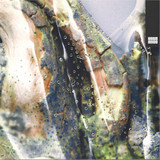
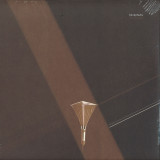
‘Evolve’ is the first full length album from composer, music producer and violinist Vito Gatto, a concept album that guides the listener on a one-way journey through the various phases of an imaginary evolutionary process. Gatto graduated in Violin from the Milan Conservatory of Music, his research starts from the unconventional application of a classical background into both making music in the studio, and live performances. For this work, Vito decided to put himself in a restricted composing and technical environment; all the arpeggiated sounds on the album are made from one single violin note that Vito sampled. He transforms the same note throughout the entire album, using the different treatment of this micro sample and the arpeggiator programming as the construction of a mutating and evolving structure. The album is Instinctively executed, almost improvised, and elements like distorted bass lines, hardcore inspired percussions, whistles and alienating string melodies represent unexpected alterations. Vito decided to keep these instinctive additions clean from excessive control as a representation of the beauty of the unpredictable. The album track list is an expression of evolutionary phases. From the minimalistic piano piece ‘Decomposition’ to ‘Quiete’ which expresses the state of calm after a shift has occurred, ‘Nostalgia’ and ‘Stasi’ represent a hazy trance like state. Vito challenges the listener to ask questions like ’am I in the right place? Is this who I set out to become? Do I have to keep evolving, or should I try to regress?’ ‘Evolve’ creates continuous connections between traditional and experimental music, creating dialogue between classical instruments and industrial techno, ambient, noise and de-constructed sounds. The Album will be released in both digital and vinyl formats via NeMu, a fresh new label founded by Vito Gatto himself. The label will focus on experimental projects based on the exchange between acoustic, concrete and electronic sources. The Artwork is part of ‘Jewels’, a series of ceramic sculptures by Benni Bosetto, courtesy of the artist and ADA Project, Rome
Cerca:electro one
From Mille Plateaux to Leaf, Staubgold and Raster-Noton, ~scape, or on his own label Ripatti, the Finnish artist Sasu Ripatti aka Vladislav Delay has been exploring various iterations of the dub culture vs. electronica, since 1997. His sonic crafts and unique signature sound has been sought after by an eclectic range of bands and artists, ranging from Massive Attack, Hauschka, Black Dice, Autopoieses, Animal Collective or AGF.
Somewhere between the old-school electronica culture, the soundscaping, the experimental paths of Lee Perry and Adrian Sherwood, ghostly clubbing anthems, minimalism, pop, jazz, without being, influenced, Vladislav Delay is building a drifting and coherent sound enigma.
Vladislav Delay met Sly Dunbar and Robbie Shakespeare (the most prolific Jamaican rhythm section and production duo) thanks to a series of jam sessions. Trumpet player Nils-Petter Molvaer had been asked by the Jamaicans to join them and he invited Delay alongside guitar player Eivind Aarset to tag along, which eventually turned into the Nordub project.
The result of these jam sessions turned into an album, mixed and mostly produced by Vladislav Delay, released on the label Okeh. It was also followed by an extensive series of live dates. This one-shot reunion was the beginning of another story: a trio composed by Delay, Dunbar and Shakespeare.
In January 2019, Vladislav Delay went to Kingston and spent some days at The Anchor studios, to record drums and bass with S&R, some voice takes and a series of atmospheric field recordings. Back to Finland, Delay started to experiment with this precious material, mixing and overdubbing, in the comfort and quiet of his studio, based on the island of Hailuoto, Baltic Sea, Northern Finland, giving another feeling to the Jamaican trip.
This became a tribute to the 'dub spirit', but in a very personal way, far beyond any influence or "the obvious". 500-PUSH-UP is two worlds collapsing, merging, also showing some intriguing approach of the Jamaican groove, used as a filigree, like the echo or the ghost of reggae, converging and conversing with a post-industrial and experimental approach. To file beside experiments - for instance - such as Lee Perry's 'Scientist Rids The World Of The Evil Curse Of The Vampires' or the On U-Sound productions.
Following the first episode, Drivecom presents the second part of the Generative Operations series. It continues with the dark,
technical and minimal concept of music mixed toguether with contemporary, cinematic elements and experimental sounds and textures.
The vision and workflow keeps up the same vibe as with the first ep and you will find more synth lines involved into a generative structure from complex and massive modular patches. The sequencing is always different each time every track is being played back giving us a unique listening.
About the sound design all the tracks have a cinematic vibe as in the first 12”. Always looking for a situation where cinema meets electronic music as being planned as a film sound track. Also constructed from the point of view of a minimalistic vision, you’ll find long progressions and small details focused in electro rhythms as a basic and main structure.
In the other hand all the tracks have a common target: a cinematic vibe. As if they were composed thinking about to fit in any sci-fi thriller movie. Again we can hear massive granular sythesis pads, background noises, experimental compression routines that help to fullfill the Generative Operation series.
The limited edition vinyl has been pressed in 180gr. keeping up the analog character sound in this format, meanwhile the digital version will be a clearer and clinical one.
West coast composer, artist, and producer Kaitlyn Aurelia Smith has chartered a pioneering career with multiple critically-acclaimed albums since 2015. Following the release of The Kid in 2017, Smith focused her energy in several directions. She founded Touchtheplants, a multidisciplinary creative environment for projects including the first volumes in her instrumental Electronic Series and pocket-sized poetry books on the practice of listening within. She's continued to explore the endless possibilities of electronic instruments as well as the shapes, movements, and expressions found in the physical body's relationship to sound and color. It is this life-guiding interest that forms the foundational frequencies of her most recent full-length, The Mosaic of Transformation, a bright, sensorial glide through unbound wave phenomena and the radiant power discovered within oneself. "I guess in one sentence, this album is my expression of love and appreciation for electricity," says Smith. While writing and recording, she embraced a daily practice of physical movement, passing electricity through her body and into motion, in ways reflecting her audio practice, which sends currents through modular synthesizers and into the air through speakers. Not a dancer by any traditional definition, she taught herself improvisatory movement realizing flexibility, strength, and unexpectedly, a "visual language" stemming from the human body and comprised of vibrational shapes. Understood as cymatics, as Smith says, "as a reference for how frequencies can be visualized," much like a mosaic. Smith describes her first encounters with this mosaic; "the inspiration came to me in a sudden bubble of joy. It was accompanied by a multitude of shapes that were moving seamlessly from one into the other...My movement practice has been a constant transformation piece by piece. I made this album in the same way. Every day I would transform what I did yesterday...into something else. This album has gone through about 12 different versions of itself." As it has arrived, in a completed state, The Mosaic of Transformation is a holistic manifestation of embodied motions. Smith's signature textural curiosity that fans have grown to adore pivots naturally into a proprioceptive study of melody and timbre. Airy organ and voice interweave with burbling Buchla-spawned harmonic bubbles. "The Steady Heart" quivers to life, peppering blasts of wooden organ between winding vocal affirmations. As with a body, moving one portion requires a balance and counterbalance; here, subtle tonal twitchy signals fire in conjunction with coiling arias to create a mesmeric core. When the beat arrives at the midway mark, a swooping and jittery waltz, a sense of stasis in motion, a flow state, is sonically achieved. As soon as it syncs, it disappears back into the swirling ebbs of electric force. Other tracks stray into more ruminative physical realms. "Carrying Gravity" is built around string-like pads that expand and contract like a solar plexus, becoming taught and then loose. If the record could be summarized in a single movement, it is the 10-minute closing suite, a rapturous collage called "Expanding Electricity." Symphonic phrases establish the piece before washes of glittering electric peals and synthesized vibraphone helix into focus. Soon, Smith's voice grounds it all with an intuitive vocal hook, harmonized and augmented by concentric spirals of harp-and-horn-like sounds. Smith's music doesn't capture a specific emotion as much as it captures the joys of possessing a body, and the ability to, with devotion and a steady open heart, maneuver that vessel in space by way of electricity to euphoric degrees.
'Legend' is lofty praise that is often used lightly, however, Mike D from the Beastie Boys certainly is one in the truest of spirits. We are delighted after over 30 years of being involved in music to finally release a project involving such a hip-hop pioneer and icon as Mike. In keeping with the maverick attitude of the Beastie Boys, you don't always get what you expect. For this release there isn't a hip-hop beat, instrumental-funk or hardcore-punk joint in sight, rather an electronic-African club banger.
Mike took it upon himself to rework Malian artists Idrissa Soumaoro and L'Eclipse De L'I.J.A. and their track ’Nissodia', which is taken from the 'Le Tioko-Tioko' album originally released in 1978 on the German Democratic Republic (GDR) label ETERNA. The song was also featured on 'The Original Sound Of Mali' compilation released on Mr Bongo back in 2017.
It was November 2019 and the day before a Mr Bongo 30 years celebration event in Paris at the Pedro party in the 'New Morning' club, when out of the blue the remix landed in Dave Mr Bongo's inbox. We loved it straight away and decided to road test it the next night in the club. Whether it be a remix/re-edit/rework, it doesn't matter, what does matter is that it works spectacularly in the club and had people jumping on the stage to dance at the party. A sensational track and one which leaves a beautiful memory of good-times from a night out in Paris (and one which is in retrospect is even more poignant as the late-great maestro Tony Allen was in the club that night), and we are sure it will light up many more dancefloors to come.
Limited to only 300 copies this trio of tracks dangled in classic disco juice is one of Picnic Records finest.
"Disco Ynferno" is not quite a cover of The Tramps hit but borrows the lyrics to stay in theme with the release. A driving deep house groove, 909 drums gets things moving and when the big buzzy bass, smooth breaks and nonchalant vocals drop at the halfway point it just feels right.
Company B's Hi-NRG banger get chuggified. "Phasinated" vocals by Aussie soul diva 'Ofa Fotu shine through this deep and funky 110bpm disco groover. Tropical percussion sits underneath a bouncy electro synth bass. A bit of a Crooked Man vibe going on.
The stand out, "Dubbing Alive", a tropical dubbed out version of arguably the biggest disco track ever. It just settles in and washes you with familiar melodies pushed along by a weirdly amazing honky bass. Perfect for coming up, coming down or a Sunday session down the pub.
Songs for dancing, having fun, and vibing out, B. Bravo's latest project, the "Cosmic Mind" EP, brings listeners to the dancefloor by way of a healthy dose of talk-box, retro synths and irresistable boogie grooves.
Los Angeles producer, talk-boxer, remixer, DJ & instrumentalist, B. Bravo, has been flipping interstellar references and laying down galactic beats for over a decade. From 2009's Analog Starship to 2020's Cosmic Mind EP, the funk in him is alive and well. Born in California with roots in Japan, Bravo combines his love for jazz, soul, hip hop and electronics into his own signature sound of swinging grooves, melodic synths and bouncing analog basslines.
Alexis Cabrera debuts on FUSE sister imprint Infuse as he releases his four-track ‘Acidity’ EP.
Argentinian born, Berlin-based producer and live act Alexis Cabrera has emerged as one of South America’s finest electronic music exports with a string of stand-out releases via the likes of Raum…Musik, Moscow, Yaji and Salty Nuts over the past few years alone. A co-founder of Fun Records alongside fellow Argentian Barem, Cabrera’s sophisticated, groove-heavy sound combined with his impressive live performances have seen him take to world renowned venues such as Watergate, Tresor and Hoppetosse in his adopted hometown, and September now welcomes another ‘feather in his cap’ as he makes his debut on FUSE sister imprint Infuse to deliver his four-track ‘Acidity’ EP.
Taking cues from its title, lead cut ‘Acidity’ unveils a bubbling acid-driven production guided by sweeping synths and slick drum licks, whilst ‘Bulevardò’ journeys through warping electronics, shuffling percussion and off-kilter vocal murmurs to offer up a twisting, hypnotic ride. Next up, ‘Tocado’ introduces an infectious medley of organic drums, resonant bass melodies and icy hats, before closing proceedings via the jazzy chords and funk-heavy bass licks of the infectious ‘Esa Vaina’.
Searching for new ways to express himself, Maarten Smeets (one half of Detroit Swindle) has found a new perspective on music in his alter ego “Wanderist”. Here, he shares his unique view on contemporary electronic music with strong influences from dub, electro, techno and ambient in tempo’s that match the intensity, funk and drive of his sound. As Wanderist, he has been writing some of his more abstract work of recent times. His sound is melancholic yet euphoric, using powerful loops and dreamlike melodies to create a dense flow in his compositions. His debut release is signed to Aus music later in 2020 and he has also launched his own label titled ‘Transient Nature’ where his own work will be released along with the work of like-minded artists. With a large catalog of music ready to release and collaborations with various labels planned for 2021, the future is bright for Wanderist.
This record is about absence. Absence of change, of better days, of delights and pleasures that are still to be invented. Longing for better times, missing something that hasn’t happened yet but needs to come, being nostalgic of the future like a cold empty bed longs for warm bodies. Cause the present is resisting, holding on to the comfortable violence of the status quo, closing the castle’s gates ; trying to keep its land, its power and its crown. We can already feel the breeze of the unknown, the urge of better times slowly unfolding, the flames getting stronger.But we’re not there yet. The road will be long and exhausting. I feel like I have been waiting for you in this cold empty bed for a hundred years already and I can’t wait to set it on fire.
Known for his dilapidated vocal electronica and releases on Jealous God, Blackest Ever Black and L.I.E.S.,
December returns to Veyl with ‘A Hundred Years Without You’,
"Imagine the opposite of a snake shedding its skin: a body slithering among the debris of 21st-century music; a porous, viscid body, its skin an adhesive, lodging onto itself bits and pieces along the way. Some are scraps, rusted, discarded parts. Some are the jewels of crowns, unglued and fallen from grace, now re-attached on this makeshift contraption. Where does a body end? Does it end where these prostheses begin?
Jay Glass Dubs’ Soma (“body” in Greek) is a palimpsest. Look closely and you can find all sorts of DNA microarrays on the body’s skin – Bristol voices, Detroit electro hums, the amen break, the all-encompassing dub haze – but, as with all palimpsests, they are simultaneously one and a multitude. The body lives, its prostheses live.
The body moves."
2024 Repress
KMRU is the moniker of Joseph Kamaru, a sound artist, and producer based in Nairobi. One of the leading exponents of the burgeoning experimental music scene in Nairobi and beyond he was listed by Resident Advisor as one of '15 East African Artists You Need To Hear' in 2018 and is a regular performer at the fabled Nyegenyege Festival having also presented live performances at CTM festival and Gamma Festival. Peel is KMRU's first release for Editions Mego. exquisite mix of field recordings and electronics unravelling at a repetitive and leisurely pace to expose a rich tapestry of sound that has been revered for it's ability to cross bordear with the sheer undertow of emotional content. The subtle calming atmosphere within Peel belies the compositional prowess as layers of delicate sounds wrap around each other creating a hybrid new form ambient musics both captivating through it's textural depth and kaleidoscopic patterns. The track titles lend themselves to the themes and mood set within: Why are you here, Well, Solace, Klang, Insubstantial and the title track. This is a deep heartfelt journey with a new strong voice being expressed through the means of organically presented electronic ambient sounds, one which reveals further layers on repeat listens.
PRESSED ON ECO-FRIENDLY VINYL AT THE GREENEST PRESSING PLANT IN THE WORLD
The ends of days are ones with which Damian Lazarus is familiar, but, much like his biblical namesake, he too, has come back from the brink and risen to fight on, his career is interwoven with themes of survival and re-birth. Fittingly then, his second solo album does not wallow in our current dark times but charts a path of hope. Flourish, offers a glimpse of a new world worth living in and surviving for.
Flourish takes us through the many lives of Damian Lazarus, who, as he has grown older, and traversed the globe, has come to more deeply examine the role the dance floor plays in his own life and that of others. With parties cancelled, it would have been easy to wallow, but instead urgency took hold, and isolated Italian countryside Damian took the space to tackle the larger questions he has been grappling with for years.
As anyone who has watched Lazarus DJ can attest, his inspirations are deep and varied, criss-crossing show tunes, drum n bass, jazz, electro, soul, house, techno and everything in-between. This album reflects his immersion in a multitude of scenes over the years, from the early days of London drum n bass, to his role as a figurehead in the electroclash scene, and of course the significant impact his Crosstown Rebels label has had on contemporary underground house and techno. Flourish is far from a box of functional DJ tools, in the same way as Damian’s debut album Smoke The Monster Out or the more worldly outings in his brace of albums with the Ancient Moons. It’s a personal, brave and varied body of work. It’s also the work of an artist who has grown over the ten years since his last solo album. Lazarus plays with nuances of texture, tempo and style to create a rich and dense album that takes us on an odyssey that is at times both dark and uplifting. Vocals of his own cast an intimate shadow over the album with those of his sole collaborator Jem Cooke offering a soothing balance amidst the madness.
Damian’s work reminds us that however taxing the journeys there are always moments of beauty to be found.
Barcelona to Brooklyn via UK: following two very special releases from Beartrax, for their third release (and second of 2020) hot new NYC label Melodize welcome one of Spain’s most consistent electronic ambassadors, Factor City co-boss Undo, and Cin Cin bossman Fort Romeau for remix duties.
Hot on the heels of his stunning ‘Dark Woods’ EP earlier this summer, Undo comes packing some stunning electronic tackle. Sitting somewhere between Border Community and Underworld, both cuts are lavishly layered as myriad synths bubble and ripple away in their own little co-existing worlds.
Baggy, charming and just nicely off-grid, both sides of the coin can be flipped; those looking for a darker jam will be all over ‘Sixty Days’, a powerful cut where the basses melt into swaggering loose kicks. Need things even darker? Then jump on Fort Romeau’s remix where the kicks are cemented into place with a stark acidic twist.
Meanwhile those of us hungrier for more of a cosmic head trip will find serious pots of gold at the end of the rainbow that is ‘Just One Day’. A twinkling, shimmering odyssey, tracks like these don’t come round all that often. Melodize realise total bliss once again.
A 38 minutes exorcism, dionysac sexyness fueled with romanticism, made of mechanical incantations mixed with spectral vocals of forgotten imaginary tribes, words from a physicist (Incomprehensible Image), and mystical breathings… To remind you that music is demanding your soul and body, fully.
A master irritator, disclosing this talent all the way, down to every chosen title, for the album itself and all of its components (would you put Milk in Water ?). As repetitive or minimalist music may already make some of you feel nervous, it seems more accurate to talk here about primitive music – notwithstanding a non violent anarchism. But those are only words and vain attempts to attach TLT to a region or a family. Neither the burden of classical European music legacy, which eventually lead to pop music, seemed to interfere with his wild mind, and if it is no surprising to hear Bach in German electronic music, there is here a clear statement that you are out of this sirupy prison…
For D.W. is a sorcerer. He’s been empirically learning the speaking of trance with years of touring and experimenting with all kinds of audience and venues, from clubs to museums, from Mongolia to Brazil, from his performances with his bands Kreidler or Toresch to solo ones, sustained by a steady limited set up, as the one used when he’s recording : one MPC, rudimentary synths, few effects and a mixer. No sound engineer on stage as only he knows his secret language… Raw dubmaking, leaning towards hip hop, indubitably underlining here a significant distanciation from his previous industrial inspirations. The bewitchment of this record is operating with no warning from the very first seconds until the last epiphany of Sales Pitch.
He is using his knowledge of techno, psychedelism (Inverted Sea), UK bass (Jumping Dead Leafs), only to bring you out of it. We all tend to be slaves, without even being conscious about it, and a balance must be existing between being a slave and showing off. Mr. Weinrich’s answer is unsettling because it is an utter call to this balance, in our world of black and white and political correctness. There is no morality in music… Don’t expect anything else than an unaccountable liberating immediate experience. Don’t expect any kind of music because you are already in the past or the future… From his recording technique mainly relying on one takes, his adoration of mistakes and jeopardy, to the core essence of repetitive music, it is all here about being in the present. No ears no glasses.
Washington collective, The 3 Pieces, privately-pressed Iwishcan William on their own DL Records in 1982. The 12 has Discogs, for one, confused. Is it soul, rap, jazz, go-go, funk, electro, or educational? By nature of its birthplace and date of birth, it`s all of those.
Synths shimmer in harp-like glissando. The bass grumbles, rumbles, machine-made. The beat pops and locks. The whole thing grooving and exuding positivity. One part the cosmic funk of say Cloud One`s Patty Duke. Another, the balearic chug of Will Powers` Adventures In Success. Like Brother D it looks to “agitate, educate, and organize”, and stirs in the sentiments of Razzy`s I Hate Hate. Imagine if the Last Poets jammed with sister Sarah Webster Fabio. Keys parp like car horns, a real trumpet blows a Don Cherry solo, but the track really revolves around its sweet Sesame Street call-and-response chorus:
“I wish love. I can love. I will love. I am love.”
Swiss gentleman DJ and Phantom Island resident, Lexx, produces a killer remix - smoothing out the OG`s jerky edges, upping its sophistication. Making clear the contributions of Lexx` new bubbling electronics. rescuing a clipped guitar, previously lost deep in the mix, and moving the children’s voices to the fore. Ensuring you’ll remember that
““I am” is the glory of a wish come true.”
Idjut Boy Dan Tyler then ties up the package, well he actually kinda sends it out into space - expanding everything in echo. NYC Peech Boys-esque delay. The result is a mind-blowing, psychedelic, almost ambient, Larry Levan-like, Paradise Garage dub. Where fragments of song fly at you from four corners. Trippily pan from left to right. The horn blasts now paying tribute to King Tubby`s Hi-Fi. François Kevorkian going bang!
All carefully mastered with love from the original master tapes by Sam Berdah at The Wall studios.
Two things become immediately clear when you hear “Body Electric”, the third original album by White Haus, João Vieira (X-Wife / Dj Kitten)’s solo project. The first is that we’re faced with an insatiable music lover, with an exemplary historical awareness. The second is that is music, although it channels all that passion, does it in such a way that is increasingly all his own. The thing is, that if on one hand, in these twelve new tracks, we’re assailed by the presence of the tutelary Talking Heads and their satellite projects, by Vivien Goldman, Sexual Harrassement or Konk’s New York No Wave, by the electronic pop of Soft Cell or New Order, by the hybrid funk of Prince and his Minneapolis accollites, by the Italo-Disco inspired by Giorgio Moroder or Patrick Cowley or the Acid House of Adonis or Maurice.
“Don´t go out there, you might get shot” was the warning from Donna Maya relatives when she visited Detroit two years ago. That makes her even more curious to explore the city. Disturbed by, as well as fascinated from the dystopian state of Detroit she recorded many places that made (industrial) history, including the Ford factory, the world’s tallest, now abandoned central station and the once magnificent Michigan Theater, that was brutally converted into a parking garage. Donna Maya transformed the sound recordings into artificial sound sculptures combined with electronic beats. Every track is dedicated to one of those places and makes it musically alive. With her theremin Donna Maya guides the listener deeply inside. The result of Donna Mayas 6 weeksstay in Detroit is her album “Lost Spaces -> Detroit". “Lost Spaces ? Detroit” is about how to handle crises, how individuals get along with it and the relationship of society to its culture. Donna Maya understands Detroit as a perfect example for what capitalism does when people give up cultural values. With “Lost Spaces ? Detroit” Donna Maya draws a musical picture of how she experienced Detroit that shows that not only a city got lost, but a living space for everyone: Pure urban experimental electronics with theremin.
Hypnoskull is part of the global anti-music conspiracy networkTM (since 1992). Hypnoskull was created in 1992 as a solo project in order to experiment in the area of electronic noise combined with rhythmical structures. In the first years of its existence, Hypnoskull was releasing cassettes and tracks on international labels in the so-called cassette network, a widely spread network of independent and experimental musicians and artists who expressed themselves throughout limited tape releases often including artworks, ideas, texts. In 1998, hypnoskull signed to the German label ant-zen and up to today he is still releasing his albums on this highly influential record label. That is not a coincidence: ant-zen stands for ‘anti-zensur’ (anti-censorship), one of the main starting points of the provocative hypnoskull project. Patrick Stevens does not limit himself to just producing music as such, albums always include a severe message, a thought-provoking underlying concept text, questions. The main philosophy: ‘the dance floors, the clubs, the festivals,… are staged warzones with a different set of rules – a therapeutic zone where hidden anger and even aggression of both the artists as well as the spectators can be released in a proper, human way. Music as a means to open up the deepest anger inside human beings, letting it out in a way which is not harmful to others. A strange symbiosis between the two worlds Patrick Stevens is a part of: the techno and the industrial scene. Techno being a genre promoting a peaceful yet hedonistic way of life, industrial on the other hand being a highly nihilistic, philosophic but pitch black reflection on society. The mix of both musical as well as content wise elements of these genres result in what hypnoskull is all about. Added to this an explosive mixture of post-war and contemporary western subversive philosophy – in a rather impulsive manner – makes the project what it is today, after 30 years of existence.
Minimal Wave is honored to present a reissue of Jyl's self-titled full-length album from 1984, originally released on Klaus Schulze's Inteam label. Born and raised in California, Jyl travelled to Europe in her twenties to dance and met several talented and like-minded collaborators along the way. She ended up in Germany, and worked with Ingo Werner, Angela Werner, and Klaus Schulze, on what would become one of the most important and forward thinking electronic albums of the time. Shortly after its release, the song "Computer Love" became a mini-hit along with the album's opening track "Mechanic Ballerina". The lyrics of "Silicon Valley" and "Computer Generation" are reflective of the times and have become even more relevant now, 36 years later. The production and song arrangement on the album is immaculate. The synthesizers, drum programming and vocal contributions complement Jyl's voice perfectly. The album contains an incredible depth beyond a regular dance album likely due to the spirit of the people behind it - the list of contributors add to its significance and near-mythological mystery.
Having previously brought together world-renowned Theremin soloist Carolina Eyck and electronic producer Eversines for a specially commissioned collaborative mini album, yeyeh founder Pieter Jansen has now conjured up another unlikely but inspired joint album, this time featuring award-winning free-jazz vocalist Greetje Bijma and leftfield house, techno and ambient producer Oceanic.
The project has its roots in a chance meeting between Jansen and Bijma, a legendary figure on the Dutch jazz scene who in 1990 became the first woman to win the country’s top jazz accolade, the VPRO/Boy Edgar award. Apart from having previously worked with the likes of Anna Homler (aka Breadwoman), Jasper van ’t Hof, Han Bennink, Louis Andriessen and Willem Breuker and her own solo projects, she’s in a league of her own.
Jansen is a big fan of Bijma’s 1996 heavily electronic collaboration with Jasper van’t Hof and Pierre Favre, Freezing Screens, and was with the friend who first introduced him to it when he bumped into Bijma.
Excited to meet someone who had made one of his favourite records, Jansen took the opportunity to ask Bijma if she would be interested in working with young electronic music producers. To Jansen’s delight, Bijma quickly agreed.
Weeks later, Bijma stepped into the studio with Oceanic, a rising star of the Dutch electronic underground whose releases as Oceanic for Nous’klaer Audio and BAKK Plafond revolve around mechanical rhythms, opaque ambient textures, minimalist melodic movements and effervescent electronics. The pair quickly connected on an emotional and musical level, with Bijma taking her cues from Oceanic’s electronic sounds and rhythms, and Oceanic drawing inspiration from Bijma’s dexterous, mind- bending and otherworldly vocalizations.
After two hugely productive days, the cross-generational duo had completed a couple of mesmerizing songs – breathlessly haunting album opener “Swallow a Party” and chilly ambient closer “A Window Drifting” – and recorded several hours or improvisations that Oceanic later edited, layered-up and re-modelled.
The results are little less than spellbinding. The range and versatility of Bijma’s vocalizations is breathtaking, while Oceanic’s music – which cleverly incorporates the free-jazz singer’s vocal notes, tones and proclamations – swings between becalmed beauty and breathless intensity.
Some of the set’s most striking moments are those where Oceanic re-contextualizes Bijma’s varied vocal sounds with the dancefloor in mind. On the pulsating “Technicolour Memories”, up-tempo “Step Snakes” and hypnotic “Never Done”, Bijma’s scat outbursts not only ride Oceanic’s rhythms, but also form part of the densely layered percussion tracks beneath.
Like the release’s more downtempo and ethereal moments, these hybrid organic- synthetic compositions defy easy categorization, offering a unique brand of alien electronic/acoustic musical fusion that lingers long in the memory.
Faitiche presents a new album by Frank Bretschneider. abtasten_halten was made as part of the raster.labor installation first presented at CTM Festival in 2019. It is perhaps the most radical work in Bretschneider’s distinctive oeuvre: abtasten_halten is a self-generating composition for synthesizer modules whose sole sound source is the movement of two VU meter needles. The resulting percussive sounds coalesce into rhythmic combinations – all random, without repetition. The album resembles a meditation on infinite rhythmic variation. abtasten_halten is Frank Bretschneider’s first release on Faitiche.
One sound can give birth to thousands of tones through self-fertilization. Pierre Henry, 1982
Frank Bretschneider on abtasten_halten:
abtasten_halten (sample_hold) is a largely self-generating composition for a modular synthesizer system. Self-generating here means that as soon as a current flows, the various modules interact, but within limits set by the composer via the connections between the modules (patches): timing, tempo, timbres, dynamics. These conditions are kept variable to a certain extent or left to chance, so that the composition created is always similar but never the same. On the one hand, the use of random generators opens up possibilities that would not otherwise have been considered. On the other, it offers the fascination of the unfinished and the unique: totally unexpected musical events that you might hear only once.
abtasten_halten combines my preferences for percussive music in general and electronic music in particular. Largely avoiding repetitive structures, the piece is more like a free improvisation, quiet and diffuse, but also extremely dense, in ever-changing contrasts and transformations.
The tone generators are two modified VU meters whose needles, driven by trigger impulses, create a simple one-bar pattern by hitting against a metal spring that is connected to a piezo element (thanks to Gijs Gieskes / Gieskes.NL). The tempo is continuously varied over a period of about ten minutes by several mutually modulating LFOs, ranging from about 0.06 Hz up to the lower audio range of about 18Hz.
The percussive sounds thus obtained are then passed through low-pass filters with moderate resonance and random frequency modulation to additionally colour the sound. Further processing is then executed by an echo module whose tempo and repetitions are again determined by random parameters. Finally the audio signal is occasionally enriched with reverb to add more spaciousness to the sound.
The concept for the installation raster.labor was developed by Olaf Bender, Frank Bretschneider and David Letellier. Many thanks to raster - artistic platform.
On Frank Bretschneider:
Frank Bretschneider works as a musician, composer and video artist in Berlin, making mainly electronic work based on complex rhythmic structures and interlocking textures, whose many-layered sound is inspired by the experimental set-ups of modern physics, often supplemented by perfectly synchronized computer-generated visualizations. In 1986, he founded AG Geige, one of the most influential underground bands in East Germany. In 1996, he co-founded the label raster-noton and has since released many solo albums.
When Joakim aka Cray76 moved back from NYC to Paris in 2019, he knew he wouldn't have access to a studio for a little while. And although he welcomed that forced pause in making music, he felt the need to take at least one piece of gear with him in his suitcase. It was the legendary Roland TB303, one of the simplest and quirkest synth ever made and maybe the one that had the most important influence on electronic music since the mid 80s. Having recorded a few beats on his Roland TR808 before he packed his studio in Brooklyn to be shipped back to France, Joakim decided to make a record only using those 2 machines, an « exercice de style » that is a tribute to 30 years+ of acid house and techno and a way to make tools that he could use in his DJ sets. It goes deep, it goes hypnotic, it goes rough, many flavors of acid are packed in this 808+303=1111 12inch.
Isolating is the industrial solo alter ego of London-based, Stephen Hindman, one half of The Golden FIlter. Coming off of their moody 2020 debut EP on Optimo Music, On August 28th, Isolating will release an analog, lo-fi, gritty full-length LP called Perennial on their own 4GN3S label. Disquieting and dystopian, the album shifts from the beatless drone of ‘Mortification’ to the IDM inspired electro in ‘Sacrament’, each track melding into each other with an unsettling anxiety.
The LP mirrors the concepts behind ’Perennial Philosophy’ by Aldous Huxley. Solitarily created in London room on a Modular system, ‘Perennial’ tackles the perspective in spirituality that views all of the world's religions as sharing a single, metaphysical origin, with a nod to the Lucretius quote; “To such heights of evil are men driven by religion.” The album photography of Stephen is by Agnes Haus.
- 1: Distorting Time
- 2: Hidden Intentions
- 3: The You Of Now
- 4: Hybrid Feat. Vocal (Tbc)
- 5: Seat 47
- 6: Highline Feat. Theo Croker
- 7: The Frame
- 8: Blow Up
- 9: Perlage
- 10: Faced With A Choice, Do Both
One of the most successful German jazz musicians, Nils Wülker has won multiple awards, and collaborated with the likes of Jill Scott, Craig Armstrong, OmaraPortuondo (Buena Vista Social Club), and Peter Vettese.
“Go” is Nils’ excursion into the world of electronics. The recording is "maximally not live" with analog synthesizers, the arpeggiator, the organic loops and beats.
In contrast it presents some of his most beautiful compositions so far - and his most dynamic trumpet playing beyond his live albums and concerts.
Recorded with members of his live band, as well as American trumpeter Theo Croker on "Highline", their remote duet.
- A1: Brian Bennett - The Swan 1
- A2: Francis Monkman - Stargazing
- A3: Steve Gray - Billowing Sails
- A4: Frank Ricotti - Vibes
- A5: Frank Reidy & Eric Allen - Reflections
- A6: John Cameron - Tropic 2
- B1: Orlando Kimber & John Keliehor - One Language
- B2: Johnny Scott - Utopia Revisited
- B3: Les Hurdle & Frank Ricotti - Dissolves
- B4: John Cameron - Floatation
- B5: John Cameron - Drifting
- B6: John Cameron - Trek
- B7: Alan Hawkshaw - Saturn Rings
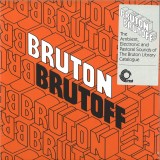
Rare musical magic from the Bruton library catalogue – ambient, spacey, pastoral and electronic. Music by John Cameron, Alan Hawkshaw, Fran-cis Monkman, Brian Bennett and more – all total masters of the scene. All very cool. All very now. All will sell very fast.
Over the last three decades Jonny Trunk has collected and written about library music. But he’s never had a great deal of luck with the Bruton catalogue. By this he means that he’s never stumbled across a massive stash, or lucked-out buying a huge run for practically nothing –that’s the kind of thing that used to happen in the 1990s and the early noughties if you were out there looking hard for library music. But he did manage to get about 25 in one hit about 20 years ago when the BBC shut down their “TV Training Department” near Lime Grove and also when a box of Brutons ended up being dumped at a hospital radio, and they didn’t want the records, so Jonny got a call.
There are lots of Bruton albums in existence – over 330 LPs in the vinyl catalogue, issued between 1978 and 1985. That’s a lot of music to wade through if you are looking for sublime modern day sounds. For many years now the “trophies” from the Bruton catalogue have been the beat or action driven LPs – the two Drama Montage albums (BRJ2 and BRJ8) have always been the big hitters, and others such as High Adventure (BRK2) too.
But Jonny has always found himself drawn to the lime green LPs, the pastoral, peaceful albums (The BRDs), which were full of the kind of gentle, lovely music that would turn up in Take Hart as Tony was paint-ing a woodpecker or a badger or an Autumn tree. The other Brutons he likes are the orange ones (The BRIs) simply because they are full of ex-perimental futuristic electronics and would remind him of 1980s ITV backgrounds. This LP series includes Brian Bennett’s cosmic classic Fantasia (BRI 10). Jonny has been knows to refer to this style of library music as “Krypton Factor library”, because it’s exactly what that strange but successful 1980s TV quiz show sounded like.
In recent years as interest in library music has expanded, we’ve watched
the price of a handful of Brutons really going through the roof - not the just the action and drama ones, but the more esoteric and experimental LPs too – like the BRDs and the BRIs. Jonny gets the vibe that people fi-nally want to hear this other more interesting and experimental side of the Bruton catalogue. So what better time than now to put together a compilation of such sublime period sounds.
Not only does this album bring together a set of fabulous cues that would cost the average man in the street a month’s wages (if the origi-nals were all wanted and if you could even track them all down), but it also chops out the need to listen to other tracks on library albums that are nowhere near as good.
The cues here all date from between 1978 and 1984. They come from the BRD, BRI, BRH, BRJ, BRM, BRR and BRs catalogues.
The composers are all legends within the genre, and here, were doing what great library composers do best – fulfilling a brief and utilising modern studio equipment to both commercial and beguiling effect.
- A1: 4Hero - Hold It Down (Bugz In The Attic's Co-Operative
- A2: Nsm - Dj Power (Use It)
- A3: Domu Feat Face - Save It
- B1: Jazztronik - Samurai
- B2: Kaidi Tatham - Organic Juggernaut
- B3: Vikter Duplaix - Manhood
- C1: Agent K - Feed The Cat
- C2: Fourth Kind - Take Me To Your Sky
- C3: Taylor Mcferrin - Broken Vibes (Feat Vincent Parker)
- D1: Agent K - Hands
- D2: Nova Fronteira - Baila Conmigo (Atjazz Remix)
- D3: Blakai Feat Bembe Segue - Afrospace
At the end of the 90s, a movement began in West London that birthed a fresh direction in dance music. Though this movement never got mainstream press coverage, never had a crossover chart single, and never really transcended its community roots, there was a unique alchemy at work - a fertile moment of creativity, where a group of friends began to experiment with new cadences, rhythms and distilled influences, crafting a new direction in the attics and bedrooms of their neighbouring postcodes. Their music was a head-on collision between the sounds they had been raised on; the reggae sound system culture of Notting Hill Carnival, the sophistication and sheen of Electro-Funk, Jazz Fusion, Soulful House and Disco, the Afro-Beat sounds of Tony Allen and Fela Kuti, and the raw minimalism of early Hip Hop. Though "Broken Beat" was never a tagline that the producers anticipated, and one that they often publicly resisted, those two words would gradually come to represent the scattered rhythms, rolling basslines and soaring changes that were inherent to this exciting new sound. It's not clear who first coined the term "Broken Beat", but try to imagine how it felt to hear it for the first time; the production was grounded in MPCs and SP1200s, the hand-me-down samplers of the Hip-Hop and Jungle golden eras, and the drums that tumbled out of these machines at the hands of these creators had a jagged, stuttering feel, almost as though the groove was close to collapse.
Despite experiencing moments of some uncertainty across the planet, the Gladio Operations label nevertheless takes a gamble and launches its third EP titled “The Dark Phase Experience”, once again opting for an EP by several renowned artists.
Latvian artist Dmitry Distant opens the EP with “Latvian Electronics” an excellent and intriguing cut of dark atmospheres, based on a very well moulded line of acid.
The renowned French producer Fleck E.S.C who has releases on labels such as Central Processing Unity or Electrix Records among others, gifts us “Mocboss”, an extremely enigmatic track with powerful bass, which clearly breaks away from the traditional electro sound.
The British electro producer Scape One returns to Gladio with “Click Click Drone” a fantastic track where the sequences especially stand out, and which inevitably resonates with the mythical German group Kraftwerk.
The talented duo from Madrid Telephasycs!, and label owners of Rator Mute, close the EP with “Head Rush” a powerful and dark dance floor-oriented cut, beautifully infused with mysterious and captivating harmonies.
»Sonic Healing« is the third full-length release by Martin Steer’s Bad Stream project. While the concept was started by one person in response to a singular situation, it fully came to life as a product of collective imagination. For the album, Steer sent a single guitar loop to twelve musicians from the extended network of his ANTIME label who improvised with the recording, which was later collaged by Steer into a single, 39 minute long track that stylistically ranges from feverish jazz to brooding ambient and abstract electronica. Together with the Iranian artist Arash Akbari’s vivid animations based on generative algorithms and real-time processing, »Sonic Healing« does not ask how one person can deal with turmoil in their life alone, but how we can create new forms of being together with art as a mediator.
Along with its sister imprint Fluid Electronics - dedicated to all things more muscularly 4x4 oriented, from house to techno via ambient, Fluid Funk will offer a platform of choice for creators and lovers of soulful house, hip-hop, jazz, funk, disco et al. The goal of the label is to bring a community of like-minded people together, cleared from the complexities that sometimes hamper the good course of the label-artist relationship.
First to grace Fluid Funk's dance floor-ready grooves is Rotterdam-based emerging talent Beau Zwart. Fresh off a choice inaugural sortie on INI Movements that hit the streets a few weeks ago, Beau steps in with his debut 12", "Beyond Two Souls" - an infectiously smooth and solarpowered six-track platter featuring Dutch duo Fouk on remix duty.
Expect lavishly orchestrated cascades of ankle-twisting breaks, prismatic synthwork and summer-flavoured melodies to wrap your ears around as your feet and body give in to the power of that funky bass. Brewing elements of fuzzy pop, pixelated soul and tropicalised rhythms, Beau Zwarts sound takes us on a wildly enjoyable ride across luxuriantly flowered scapes and fluttering cosmic house horizons. Interlaced with sugary Rhodes stabs and 8-bit harmonics a la "Floating Points", Sykes' warm vox intonations shows us the way into a pulsating heart of wonky, bop-infused boogie.
Expanding to further out-there, club-optimised bravura, Fouk's take on the title-track is the kind of track that'll make an impact in the sweatbox as well as in a more cabaret-like setting. Pulling out the weirdo harmonics and left-of-centre jazz aerobatics, "Ixodus" lets its free spirited sense of playfulness take over completely. Flip sides and here's "Marble Book" unbolts the spacious pads and whirling alien riffs as a sturdy sub-bass and gut-churning kicks beat time onto further estranged
dimensions.
A slightly more muscular but thoroughly sensuous workout, "Bustin Out" fuses classical two-step-indebted breaks with lascivious "P-Funk" tropes into one compelling club heater, before the EP's sluggish closer "Illustrate My Way" sends us into orbit for good with its slowed down romanticism and otherworldly piano fantasy.
Linda “Babe” Majika’s insanely brilliant Don’t Treat Me So Bad is a tight six tracks of blistering electro-flavoured bubblegum and synth-drizzled solar-powered machine-funk. It has become increasingly hard to find, with copies currently moving for over £200. But this is definitely a case of eye-watering price equalling heart-thumping quality.
Once of the Hot Soul Singers, Don’t Treat Me So Bad was Linda’s debut LP as a solo artist. It was produced by Ace Mbuyisa of boogie-funk maestros Freeway and was originally released on Umkhonto Records in South Africa in 1988.
The enormous “Let’s Make A Deal” is probably the best known track here, and it’s definitely the best one if you ask us. Linda’s vocals drip with attitude over warm, breezy synths and an urgent, edgy electro beat to create a timeless club-ready bomb that sounds as fresh as ever. But the rest of the album is far from filler.
Opening track “Kunzima (Tabalaza Mjita)” instantly brings the sunshine vibes, strutting out the gate with that unmistakable South African steppers groove. It’s a deceptively simple song, with multiple instrumental elements arriving and taking leave with admirable restraint.
“It’s Our Home” is a powerful showcase for Linda’s vocals, enhanced by some life-affirming call and response backing vocals throughout. In fact they’re a joyous presence on the whole album. The insistent pipes and swirling, bubbling synths of title track “Don’t Treat Me So Bad” follow. A spacious proto-piano house banger that closes out the first side in phenomenal fashion.
Arriving as track two on the second side, “Unga B’Omthemba Umuntu” has the unenviable task of following the huge “Let’s Make A Deal”. It does the job with class, bringing the tempo down to a mid-paced tropical bounce with lilting harmonies and welcome traces of hi-life guitar. Wonderful stuff. “Playboy” is is another unbeatable head-nod groover rounds out the set wonderfully. That bassline high in the mix is to die for, and the chorus will make any dancefloor smile.
As ever, Simon Francis on mastering duties elevates this release, adding heft and elegance in all the right places with his customary deft touch. The memorable cover art, in which Linda appears straight out of the 1950s with her polka dot skirt and butter-wouldn't-melt pose, has been faithfully restored. But don’t let the innocent styling fool you - Don’t Treat Me So Bad is the work of one badass woman who can hold her own, and then some.
Pascal Terstappen a.k.a. Applescal has released his new artist album, ‘Diamond Skies’ on Atomnation. The nine-tracker is a collection of expertly-produced, instrumental melodic house with lush, ambient soundscapes and a nod to the analog sounds of the 90’s. The album has received heavy support from key names in underground electronic music community and is Applescal’s sixth studio album to date.
Terstappen has been running Atomnation full-time since his early twenties and has shaped it into one of The Netherlands’ leading independent labels and a home for an eclectic mix of electronic music including signed artists such as Gidge, Polynation, Tunnelvisions and Sam Goku. ‘Diamond Skies’ exemplifies the vibrant sound of Atomnation, a lush, colourful album which journeys through melody, ambience and emotion while offering an occasional surprise to the senses. The album was written and produced through 2019 and completed in the early days of March 2020 when dark skies were looming.
‘Diamond Skies’ represents a creative optimism and brings a sense of something to look forward to. Applescal has created a musical dreamworld for a listener to step into as an antidote to troubled times. ‘Diamond Skies’ is an album which feels uplifting and effortless, a confluence of melodic house, occasional breakbeat and ambient energy; the sound of a producer at the height of his powers.
GEN-Y debuts on BAKK with a release that hits every corner. Four refreshing tracks that dabble in familiar styles without a single concern for tradition. Packed with three tracks by GEN-Y solo and one as G.F. together with Paule Perrier. Whether you like acid breaks, snappy electro, dreamy psychedelica or ghetto house with a twist, GEN-Y got you covered. Comes freshly served in screen printed comicly radiant artwork by the BAKK Catharsis Company.
For Farsight, California’s bucolic San Geronimo Valley was the space that allowed for the creation of this handpicked selection of artistic output. Following a period of deep interest in abstract painting and its relationship to music, the artist found this lush and sparsely populated region to be an ideal location for contemplation and composition.
Although the majority of the work was executed in the first two months of 2020 in this forested setting, some of the pieces were based upon drafts created as early as Summer 2017. United in their eclecticism, the six cuts that comprise “Not Here, But Somewhere'' reveal a broad spectrum of musical influences. They are statements in an age in which influence is omni-directional, and in which the pace of artistic invention outstrips the ability of observers to identify and reify sub-genres. Although each track presents a unique approach, “Cadena,” “Sans Titre,” and “Door to the River'' reflect the continuing global suffusion of Latin American and Carribean styles such as reggaeton and dancehall. Simultaneously, the duo of “While” and “Hot Half” suggest the ongoing dialogue of techno, electro, and industrial music and the interstices between them. “Mid-Winter Burning Sun”
invokes the intensity of American trap music with its booming bass while touching equally upon the feel of early dubstep.
Ultimately, the idea that there is a “space for each artist” can be taken both in a literal sense— One’s physical environment— And also in the figurative sense that there is room enough for the ideas of all artists, who are kindred spirits in the endeavor of radical self-expression. In this way, “Not Here, But Somewhere” exists as an acknowledgement and gesture of goodwill towards every artist daring enough to explore the unknown.
- A1: Curiouser And Curiouser
- A2: Better For Us Never
- A3: Wanderlust
- A4: Plain Song
- A5: Ribbons And Tie
- B1: Descent
- B2: Paper Dolls
- B3: Silent Society
- B4: The Boy With The Stars In His Eyes
- B5: Fail To Bloom
- C1: Anais Lullaby
- C2: The Boy (Reprise)
- C3: Dew
- C4: Run
- C5: Fail To Bloom Part Ii
- D1: Obsessed
- D2: Reason
- D3: Tinkerwish
- D4: Wanderlust (Direct Action Remix)
Lamunai Records presents Curiouser and Curiouser, a treasure trove of millennial music era from a duo pop group called Santamonica from Jakarta, Indonesia.
The concept of this album is making music from a trip to the adventures of Alice In Wonderland, an eclectic mix of pop, bossanova, electronics, waltz and shoegaze. From Astrud Gilberto and Antonio Jobim, Pizzicato Five meets My Bloody Valentine or Stereolab's 60s sensitivity to Broadcast. A collection of multi-layered analog audio sets, the noise of Joseph Iyup's noisy guitar combined with Anindita's fairy voice melodious lines of strange lyrics wrapped in curling beats, very dynamic, very rich. Listening to the album, on several tracks, we can hear French Pop's acrobatic 5/4 beats until the roar of the wall of
sound becomes a combination that is difficult to imagine at the time and is still very relevant to listen to now.
Now, for the first time ever, one of the phenomenal albums of the 2000's Indonesia wave is now available in a limited format in 2xLP-Gatefold-Marble colors vinyl with an additional 1 song that has never been released before.
ALTER is proud to present ‘Tendrils’, the first LP release from London based artist & musician Malvern Brume. After gathering some hushed praise from the UK underground for a couple of excellent cassette releases and strong local live performances, ‘Tendrils’ is the first definitive document of the Malvern Brume sound world. His instrumentation and sound sources would be considered familiar staples in the world of “experimental” music, but Salter does an admirable job of making them his own. Comprised of 8 pieces, this is electronic music at its core but a kind that sounds as if it’s being played through fog. Like spores growing on a damp surface. Densely composed and thick with an almost asphyxiating atmosphere - even during the record’s more minimal moments - track titles like ‘Caught In The Exhaust Trails’ and ‘Sunk Into Plastics’ only heighten the tone further.
Salter was originally born in the countryside and since relocated to London, a place he finds “over stimulating in every sense”. Much of ‘Tendrils’ could be taken as a response to the city and a means of equating the two. Camberwell is listed as the location for composition, but field recordings are attributed to rural landmarks. The Rollright Stones on the Oxfordshire / Warwickshire border and Seven Sisters Cliffs by the English Channel are two in case, but despite their picturesque origins Salter renders them into abstract clatter. As if dubbed from the private tape archive of an old eccentric. In addition, synthesised electronic tones hum and buzz, occasionally giving away to strange, slurring sequences that sound like lost transmissions from the radiophonic workshop. Despite the nod to this electronic music institution, it’s lacking the sincere level of esteem that can turn one into a heritage act. There is a strangeness and distant other worldliness to the music that feels unselfconscious and keeps Malvern Brume from being easy to define by contemporary terms.
Salter says the album is defined by movement and the environments that have inspired him over the years. In his own words, “each of these tracks is inspired by a journey or moving through a space, not in a wishy-washy cosmic sense but more as a practical A to B.” With that in mind, ‘Tendrils’ is perfect music for solitary inner-city marshland walks and urban bike rides to forgotten local suburbs.
- A1: Matthew Halsall & The Gondwana Orchestra - When The World Was One
- A2: Yazmin Lacey - 90 Degrees
- A3: Hector Plimmer - Communication Control
- B1: Ill Considered - Long Way Home (Live At The Crypt)
- B2: The Expansions - Mosaic
- B3: Chip Wickham - Red Planet
- C1: Levitation Orchestra - Odyssey
- C2: Emma-Jean Thackray - Walrus
- C3: Tenderlonious & The 22Archestra - The Shakedown
- D1: Joe Armon-Jones & Maxwell Owin - Tanner's Tango (Feat Nubya Garcia)
- D2: Collocutor - Gozo
- D3: Makaya Mccraven - Track 12
- E1: Nat Birchall - Ancient World
- E2: Ruby Rushton - Moonlight Woman
- F1: Ebi Soda - Dimmsdale
- F2: The Cromagnon Band - Thunder Perfect
- F3: Seed Ensemble - Mirrors
3LP + MP3
Soul Jazz Records' new album 'Kaleidoscope - New Spirits Known and Unknown' brings together many of the ground-breaking artists involved in the new jazz scene that has developed in the UK over the last few years. Featured artists include Matthew Halsall, Yazmin Lacey, Ill Considered, Tenderlonious, Theon Cross, Emma-Jean Thackray and many, many more in this ground-breaking release. As well as sharing a pioneering spirit in these new artists' approach to frontier-crossing musical boundaries, a further theme of this album is that many also share a determination to independent practices - and most of these artists' recordings featured here are either self-published or released on independent labels. While the attention of this new wave of jazz artists up until now has been Londonbased, this album shows how this movement is spread across the whole of Britain (and indeed beyond). 'Kaleidoscope - New Spirits Known and Unknown' shows that while there is commonality in these artists' approach to music, there is a wide variety of styles - from deep spiritual jazz, electronic experimentalisation, punk-edged funk, uplifting modal righteousness, deep soulful vocals and much more.
First up is Nehuen, an Argentinian born but Barcelona based artist who is notorious for his abrasive dance floor workouts on I Love Acid, BNR Trax and the Classicworks label he co-owns with Cardopusher. Cardopusher is, of course, a true electronic legend from Venezuela. His dizzyingly diverse sound takes in rave, acid, electro, techno and house influences and distills them into hugely
Raw and energetic new forms.
Nehuen's Psyops Part One kicks off with the excellent title track, which contorts acid and electro into a writhing monster filled with dark energy. The visceral 'Toxic' is built on slapping hits and spangled basslines that will tie you in knots as the bumping drums drive things forward. The late-night menace continues on 'Bailar', with tight synth arps layered up in robotic forms over clunky drums that are industrial and futuristic in equal measure. Last but not least, the eerie 'Desire' strikes a more twisted note with double kicks juddering beneath echoing hits. It's pure, filthy, brilliant body music.
Cardopusher kicks off Part Two with the fantastic 'Disobedience' (feat. Lbeeze) a slow-motion drum workout that is like dark disco mangled through a psychedelic filter, with robotic vocals and stiff arp
jerking your body. 'Abyss Antidote' is then a flurry of drum breaks and electro bass, frazzled synths and whipping hits that keep you on the edge of your seat. Darkness abounds on the gritty 'Initial Decay' (ft. Lbeeze), which layers up taught drums and hits with spraying synths that come from a dystopian planet.
Closing out this epic mini-series is 'Mutant Brain', a cyborg techno meltdown with manic acid for
company.
These are devilishly distorted tracks from two of the best producers around.
Italian Disco remixer extraordinaire Moplen is back at the controls with a super sublime reworking of a wonderful and rare early 80's Leroy Burgess jam from the Salsoul vaults. 'Heartbreaker' is an underground classic, seeing Burgess back in the studio with longtime collaborator Sonny T. Davenport and Kiss FM mastermixer and producer Shep Pettibone on mixing duties. A tight and flawless early 80's production sensibility and the incredible vocal arrangements and lyrical performance of Leroy Burgess make this one a definite essential in any DJ's box. This is the real deal. If you dig that post-Disco electronic sound this one is for you, simply perfect in every way and quite tough to track down these days in its original form with copies reaching high figures on the second hand market. Needless to say, Moplen injects his own personal style into his remix and adds his unique flair creating an essential new version of this classic on the B-side. Always understanding, respectful and fresh, Moplen pumps 'Heartbreaker' in all the best ways, crafting a drum and bass heavy DJ version and new arrangement that you will be hearing for many years to come! Disco bliss.
This remix and reissue is 100% supported by Leroy Burgess, who dug Moplen's new vision of this 1983 classic. Fully licensed, sanctioned and released by Above Board distribution and Salsoul Records, 2020. Accept no imitations!
Following the last Ma.to's EP we joined forces with two artists taking care of music and artwork on the 4th release. The first one delivered by the infamous Italian legend Miki 'aka' Major Hypnotic Key Institute. His resume and collaboration's list are known and long enough to establish him as a pioneer and precursor of electronic and rave music since the 80s. 4 tracks ranging from slower hypnotic rhythms to speed-up marched techno/trance.
And for the occasion on the artwork we collaborated with friend and genius Conxi at Ivvoki Studio, the result speaks beautifully for itself. Proudly presenting this 4 track Ep with included a repress of an old work from Miki on Interactive Test and a Re-Edit of miki and 2Volt of an early work from the Italian synthpop electronic band A.T.R.O.X.
Well balanced music, techno / trance / minimal spreading pure 90s vibes from both sides but sounding so contemporary.
A Must! have.
Chra is the artist moniker for Austrian Christina Nemec (Bray, Shampoo Boy). SEAMONS is the latest missive in her ongoing exploration of suffocating abstract audio. At once designed and falling apart SEAMONS is rough and crude, a stumbling and staggering electronic expedition where nothing presents itself explicit in intent. It’s a tense obscure record that teases you into it’s peculiar vortex from it’s suggestive nature of exploring the enigma beyond it’s haunted facade.
VICIOUS WATER REGIMES stutters along as an ‘ugly’ mass of grey electronica. CAST(O)RO shines from light from the depths with it’s occasional foray into glistening tones. COLONIA MARINA SERENELLA is a dank squelching backdrop for a dark age. CAST twists tension with flickering electronics chaotic in their perpetual design of order confronting inevitable collapse. LET SHARKS SLEEP is not only a great title but a mind tickling adventure of descending/rising digital dance that builds in intensity with it's relentless repetition. WIDOW WALKS gallops and creaks along a path veiled in whispers. ENGE lunges through time with an air of deep uncertainty. SEAMONS hovers on the outskirts, crawling out of the speakers with endless surprising turns, few of them comfortable.
SEAMONS is progressive ambient, not the kind that makes you escape, but rather one you can't escape from. SEAMONS crawls into the very guts of sound to uncover and unravel the uneasy and unsettling underbelly within.
Sublime, unique, sexy and peculiar unreleased scores by electronic and jazz pioneer Ron Geesin, made for the sublime, unique, sexy and peculiar films by maverick director Stephen Dwoskin. There. we’ve said it. And if you have not heard of one or either of these two dudes it doesn’t really matter. Geesin made great music and worked with Pink Floyd. Dwoskin made odd films, most of them are in the BFI permanent collection. They are great and a bit strange.
These superb unreleased soundtracks come from a fascinating, progressive and important period in British film history. They represent an intriguing collaboration between the lively Ron Geesin from Scotland and the American Stephen Dwoskin, who both met in London.
Musically they are minimal, charismatic and quite groundbreaking. Here is the story…
HISTORY:
Steve Dwoskin arrived in London in 1964, aged 25, with several 16mm films in his trunk, shot in the cold-water flats of Greenwich Village. He had been on the fringe of the Factory scene, and some of his films starred Beverly Grant, ‘the queen of the underground’. But they had scarcely been seen, and they didn’t have soundtracks. For almost a year they stayed in the trunk, and stayed silent. Then he met Ron Geesin, somewhere around Portobello Road.
‘Slept last night, completely dressed after working over 12 hours on sound tracks at Ron’s,’ wrote Dwoskin in his diary for 29 July 1965. ‘My films are not anywhere near being anything. I need more energy, more concise and positive ideas and less inhibition. And of course space, money and people.’ Dwoskin, who taught and practised graphic design by day, had recently decided to stay in London beyond the term of the Fulbright scholarship that had brought him there.
Ron, living with Frankie in a basement flat in Elgin Crescent – they would marry the next year, with Dwoskin as best man – was about to leave the Original Downtown Syncopators, the trad jazz band he had joined aged seventeen-and-a-half, and was trying to go solo. On stage he would make vigorous use of piano and banjo; at home Frankie had bought him a new kind of instrument – a tape recorder. ‘Soon I had one tape recorder, two tape recorders, three tape recorders.’
Ron, wrote Dwoskin in his unpublished autobiography, ‘loved to record, and to cut and splice the quarter-inch recording tape to make new sounds. This triggered in me the idea of getting back to my films and finishing them’. Soon he was living in a dank basement in Denbigh Road, a few minutes’ walk from Elgin Crescent. Ron’s soundtracks for Dwoskin’ films, recorded in the Geesins’ flat, encompassed Ron’s very eclectic range of styles – madcap piano and fretted banjo as well as tape manipulation.
Aside from Ron’s soundtracks, some of which belong to films that no longer exist (including Pot Boiler), Frankie would act in one of the films that Dwoskin either lost or never finished during these years. He was disabled, having contracted polio as a child, and Ron and Frankie were both carers and collaborators; Ron had met him when he was struggling into his car.
There was no London equivalent to the underground film scene that Dwoskin had known in New York, and his films remained unseen until such a scene began to come into being, in the autumn of 1966. Some of them made their debut at the Mercury Theatre, near Notting Hill Gate, that September. Dwoskin wrote that Alone, starring Zelda Nelson (from Ron Rice’s Chumlum), and Chinese Checkers, with Beverly Grant and Dwoskin’s friend Joan Adler, went over best.
Soon both Dwoskin and Geesin became involved in the nascent London Film-Makers’ Co-op, which put on screenings in Better Books on Charing Cross Road – ‘if you can call them screenings,’ Ron recalls; ‘I’d call it fifteen blokes in various stages of disarray, peering through the smoke’. One or more of the films had been ‘striped’ with magnetic audiotape; with others ‘we had no means of direct syncing to the picture, so he started the film and I started the tape recorder’.
In the same autumn, Dwoskin moved into a flat almost opposite the Geesins on Elgin Crescent. More collaborations followed, including Naissant, on which Gavin Bryars, whom Geesin had met during a stint on the northern club circuit with novelty act Dr Crock and His Crackpots, played double bass.
Around the end of 1967 Geesin released his first solo LP, A Raise of Eyebrows, and Dwoskin won recognition the Fourth Experimental Film Competition, aka EXPRMNTL 4, an occasional film festival staged at Knokke-le-Zoute in Belgium. By now the films had optical soundtracks.
It was only after this that Dwoskin completed his first ‘British’ films, including Me Myself and I, with Barbara Gladstone, an American dancer who had appeared in Barbara Rubin’s Christmas on Earth, and with whom Dwoskin and Geesin had at one point devised a stage show, never produced. For Moment, a single-shot film, Geesin provided his most experimental score yet. At the time of its debut in 1970, Dwoskin and the Geesins were sharing a house in Ladbroke Grove.
By then, Ron was working with Pink Floyd, and soon afterwards he and Frankie moved out to the country, to be replaced by Bryars both in the house and as Dwoskin’s principal collaborator.
Until now these scores have remained part of the Geesin Archive and have never been issued.
This first album proper from Polish composer/violinist Olga Wojciechowska was originally released on CD only by Time Released Sound, and has been out of print for some years. We are very pleased to be bringing you this long overdue vinyl re-press, in an edition of only 200 copies, each of which comes in a beautiful 24pt heavyweight jacket, with translucent 180gm disc.
Maps and Mazes is a stunning collection of 10 pieces that were originally written for various international theater and dance productions, and their overall feel reflects this performative nature. These electronically treated, modern-classical beauties are somewhat dark and moody at times, and with their elegiac violin and haunting horns are both elegant and absorbing, and the ultimately lingering effect is one of series of spine tingling, late night serenades.
Working with sonic archetypes rather than genres, in recent years Moscow's Pavel Milyakov has transcended the average practices of what one might call "the electronic music scene" and built his personal artistic universe where the visual and time-based arts are blended into one another. His new conceptual album PSY X, a collaboration between Gost Zvuk and Buttechno's own imprint Rassvet, can be understood as a collection of audio, video and graphic documents fused together in a homogeneous form. Profoundly rethinking the interactions between various media, Pavel utilizes a vast variety of creative tools and technologies - from generative music algorithms to laser equipment - to create (in)determinate "environments", rather than simply "tracks" or "pictures". The result is simply stunning: a meticulously crafted visual container that encases kinetic, alluring and deeply immersive music from one of Russian burgeoning scene's most vivid voices.
Sex Judas feat. Ricky started out as the solo project of Norwegian producer Tore Gjedrem known for his work as one half of electronic duo Ost & Kjex. Over time the project has developed as a fully fledged band including the talents of multi instrumentalist Ivar Winther, the bass magic of Kristian «Gesse» Edvardsen, the percussive force that is Sidiki Camara and Tore Brevik and the vocal talents of Tracee Meyn. The band has also many friends, most notably modern composer and violinist Ole Henrik Moe which often lends his avantgarde leanings to the group. Illustrator Sindre Goksøyr is also a key member, giving visual life to the project. The bands foremost home is the Glasgow label Optimo Music, that released Sex Judas debut album «Go Down Judas» in 2018. Earning the band a Norwegian Grammy, called the Spellemann.
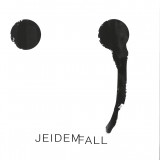
The man in the crowd is a wonderer with relaxed habits. In him the course of things and movement of the city is reproduced. The Düsseldorfer Detlef Weinrich is such a man in the crows. Some one who is constantly listening to future winds through rushes of the past. He loves the night for its free will. And his music tells stories about it. You might know him as a member of the band Kreidler. As a solo artist he goes under the name Tolouse Low Trax. And he's already got three Eps and two albums under his belt. His first solo album „Mask Talk“ thrives on a feathery beat frequency and cool new-wave-strength. His recently released piece „Corridor Plateau“, which appeared as a limited edition to accompany the exhibition „Corridor Plateau“ contains percussive electronics and Industrial sounding like its from the second industrial revolution. His third album „Jeidem Fall“, is also not from here. It sounds like music brought down to earth from the heavens. But its a dark cosmos in which there are only fleeting glimpses of light. All eight tracks were composed in a short space of time over the period of just a few months and fit together perfectly atmospherically. With a musical expressiveness that undoubtedly twists your emotions, „Jeidem Fall“ attacks the subconscious and clouds the mind. The drums have more movement that on „Mask Talk“. Along with the constant tapping of drumsticks goes melodical arpeggios dancing dark and dirty. At times longing vocals drift abstractly through the room, as on „Sa Seline“ or „Geo Scan“, without telling any obvious story.
To sound like stylistic cross references from the present and past is all just speculation for nothing on „Jeidem Fall“ really sounds like anything that has gone before. You could compare the dark minimal timbre of the drum computer aesthetic with Craig Leon's first reductive album „Nommos“. There is also a hint of the minimallist industrial of the Spanish band Esplendor Geometrico in the bubbly textures. But Tolouse Low Trax is still looking from the present into the future and filter and filters all his personal preferences through his MPC and his small synth setup to make them come alive here and now in a new way. Again Tolouse Low Trax has created a truly mysteriously vibrating drum computer music which offers hypnotic magic for the shadowy dance floor. Only a little light should illuminate the whole thing and the bodies that move above them should have no fear from threatening percussion which are displaced into a misty trance. A dark swaying shadowy mass, ideal for a journey at the end of the night and all those non-places where longing sleeps and the last romantics dance while getting drunk.
Berlin-based Swedish saxophonist Otis Sandsjö returns with the eagerly-awaited sequel to "Y-OTIS". On "Y-OTIS 2", released by Helsinki's We Jazz Records on July 24, Sandsjö and his close associate, bassist/producer Petter Eldh (of Koma Saxo), deepen their vision of genre-bending, forward-looking "liquid jazz" of tomorrow. The core group also includes Dan Nicholls on keys and Tilo Weber on drums, and also featured on the album are Swedish jazz greats Jonas Kullhammar (of Koma Saxo) and Per "Texas" Johansson, cellist Lucy Railton and trumpeter Ruhi-Deniz Erdogan.
Diving deeper into "Y-OTIS 2", you'll find details and ideas galore. The album is an inviting and inspiring audio mosaic, which links back into the previous Sandsjö/Eldh collaborations, namely "Y-OTIS" and "Koma Saxo". The result is a balanced album which quenches your thirst while making you more thirsty in the process. In other words, the many micro moods and sonic levels herein invite repeated listening, while the underlying rhythmic approach is informed as much by hip hop and electronica as by jazz, making the music approachable in a very natural way.
It seems unnecessary to pull the album apart by name-checking individual tracks but just for the sake of easy introduction, the single cuts "tremendoce", "ity bity" and "abysmal" offer one idea of signposts along which to navigate. "tremendoce" brings in Swedish jazz great Jonas Kullhammar (of Koma Saxo) and Per "Texas" Johansson, introducing an infectious flute loop integrating into the Y-OTIS sound, making it organic to the bone. "ity bity" could be built on a new wave synth sample (but it's not) and "abysmal" brings more serene, even ambient-sounding sonic pathways onto the map. It all belongs together, and makes for a sound that is instantly recognisable and constantly fresh. This is "Mauerpark liquid jazz" for the new decade.
- 1: Waldo (Feat. Petter Eldh, Dan Nicholls & Tilo Weber)
- 2: Tremendoce (Feat. Petter Eldh, Dan Nicholls, Tilo Weber, Jonas Kullhammar & Per "Texas" Johansson)
- 3: Oisters (Feat. Petter Eldh, Dan Nicholls & Tilo Weber)
- 4: Abysmal (Feat. Petter Eldh, Dan Nicholls & Tilo Weber)
- 5: Koppom (Feat. Petter Eldh, Dan Nicholls & Tilo Weber)
- 6: Ity Bity (Feat. Petter Eldh, Dan Nicholls & Tilo Weber)
- 7: Sapiens (Feat. Petter Eldh, Dan Nicholls & Tilo Weber)
- 8: Bobby (Feat. Petter Eldh, Dan Nicholls, Tilo Weber & Ruhi Erdogan)
- 9: Fruehling (Feat. Petter Eldh, Dan Nicholls & Tilo Weber)
- 10: Atombahn (Feat. Petter Eldh, Dan Nicholls & Tilo Weber)
Berlin-based Swedish saxophonist Otis Sandsjö returns with the eagerly-awaited sequel to "Y-OTIS". On "Y-OTIS 2", released by Helsinki's We Jazz Records on July 24, Sandsjö and his close associate, bassist/producer Petter Eldh (of Koma Saxo), deepen their vision of genre-bending, forward-looking "liquid jazz" of tomorrow. The core group also includes Dan Nicholls on keys and Tilo Weber on drums, and also featured on the album are Swedish jazz greats Jonas Kullhammar (of Koma Saxo) and Per "Texas" Johansson, cellist Lucy Railton and trumpeter Ruhi-Deniz Erdogan.
Diving deeper into "Y-OTIS 2", you'll find details and ideas galore. The album is an inviting and inspiring audio mosaic, which links back into the previous Sandsjö/Eldh collaborations, namely "Y-OTIS" and "Koma Saxo". The result is a balanced album which quenches your thirst while making you more thirsty in the process. In other words, the many micro moods and sonic levels herein invite repeated listening, while the underlying rhythmic approach is informed as much by hip hop and electronica as by jazz, making the music approachable in a very natural way.
It seems unnecessary to pull the album apart by name-checking individual tracks but just for the sake of easy introduction, the single cuts "tremendoce", "ity bity" and "abysmal" offer one idea of signposts along which to navigate. "tremendoce" brings in Swedish jazz great Jonas Kullhammar (of Koma Saxo) and Per "Texas" Johansson, introducing an infectious flute loop integrating into the Y-OTIS sound, making it organic to the bone. "ity bity" could be built on a new wave synth sample (but it's not) and "abysmal" brings more serene, even ambient-sounding sonic pathways onto the map. It all belongs together, and makes for a sound that is instantly recognisable and constantly fresh. This is "Mauerpark liquid jazz" for the new decade.
The Oystercatcher is the first collaborative LP from Cucina Povera (Maria Rossi) and ELS (Edward Simpson)
Recorded in London over two days, hours' worth of improvisations have been edited down to form these six tracks.
A fragile interplay is at work between Maria's drifting vocals and the ominous churn of Edward's modular synth. Each sonic element takes a turn at leading the way.
The opening track 'Mantle' is formed from sparse, monolithic electronics, woven gently with a thread of vocals. In the closing track 'Eon' Maria's voice shepherds spontaneous bursts of sounds, almost Rave-like if order were imposed, through 15 minutes of turmoil and resplendent until the end.
Maria's vocals make their own trails amongst the noise, bringing to mind the the exploratory language from Ursula K. Le Guin's album 'Music and Poetry from the Kesh', recalling the same understated mystery.
The overall effect of this collaboration is a completely unique creation albeit within a recognisable lineage of predecessors.
The artwork reflects the vision of these two artists, collaged together. Both images are from a trip to Helsinki. Edward's photograph of Tulips caught after dark are reviled by a flash. Maria's seemingly abstract drawing is a graphite rubbing taken from a granite slab of a pavement somewhere in Kallio. Together the two images represent two different methods for capturing a city's haptic landscape.
The album moves with a feeling of transience, which is no surprise given that the idea to collaborate was formed in Helsinki, realised in London and edited together in Rotterdam.
The Oystercatcher tells a fragile tale, one that spins out into the unknown. A cold union of voice and machine, still tentative and probing, learning to co-exist. A kind of fundamental shift whereby shared moments have been turned to sound.
The Oystercatcher is a bird that can freely travel between the earth, sea and sky. The motif is taken from a Tove Jansson short story. A dead bird washes ashore, two different versions of events are presented to how the bird came to die. The album feels like two different stories being presented on top of one another but ultimately coming to the same tragic conclusion.
Cucina Povera is Maria Rossi - Vocals
ELS is Edward Simpson - Synthesisers
Recorded in London across two days during the Summer of 2019
Mastered by Russell Haswell
A creative partnership between Tom Laroye and Yam Who, Qwestlife is a trans-continental boogie trip between the two producers' respective homelands of Paris and London. Fulfilling the Glitterbox philosophy by crafting great songs the old school way with analogue and weird electronic gadgetry, Qwestlife's 'Give Me A Minute' appeared first on Glitterbox's Disco Revenge compilation and now graces vinyl for disco connoisseurs everywhere. Featuring the vocals of a frequent Yam Who collaborator, soul diva Jacqui George, 'Give Me A Minute' is an instant party anthem. Disco-fuelled synths and strings plus live sax, trumpet, guitars and bass give a glorious saturated dancefloor vibe rolled into one by sticky hooks and a timeless catchy chorus. Accompanied by the Dubbed Out Version, plus an Accapella and Bonus Beats, this sweet vinyl release provides all the good stuff that Qwestlife have to offer.
Musique Pour La Danse presents Roomservice, Dutchman Orlando Voorn's forgotten yet unforgettable IDM-leaning, home-listening electronica / techno album from 1994 under his Living Room alias, originally released on the producer's cult Night Vision label.
Praised unequivocally by those lucky enough to have heard it, this criminally underrated record nonetheless deserves pride of place when talking about forward-thinking electronic music from the early 90s.
While it is widely acknowledged that Orlando Voorn's productions are one of the most fascinating prisms through which to experience a European take on the Detroit sound, Roomservice is also a strong reminder that the paradigm shift from sweaty raves to enhanced home listening, championed by Warp's Artificial Intelligence series, early Rephlex releases, along with projects such as The Black Dog, Plaid or Autechre was in fact not only limited to British artists.
As its name indicates, The Living Room is not geared for warehouses but instead interested in a more intimate and domestic setting. As such, it does not contain over the top bangers, but it's hard to find any filler in this album where all the tracks are killer, catchy and memorable. All displaying a sophisticated yet immediate focus on warm melodies and grooves no heavier than a feather, these emotional cuts provide a wonderful and intricate soundscape for introspective listeners to explore, and they will surely find echoes of ideas developped by Manuel Gottsching, Steve Reich and Pat Metheny scattered accross the album.
While some tracks are rhythmic and would fill a dancefloor in a second with their four to the floor or broken beats, the album also gives room for more ambient excursions to occur and develop brilliantly. But once again, it's more likely you'll end up dancing on your couch rather than dozing off.
2020 might be the most difficult year in recent history for dancefloors worldwide, yet that's not going to stop Musique Pour La Danse from reissuing this gem of an album for listeners, dancers, and DJs of today and tomorrow.
Words by Ed Isar.
The original, the inspirational, the bombastic, the never bettered, the one.
'Don't make me wait' is all of the above and so much more. Classic to the core. Huge earth shattering record right here.
OK, so the scoop, for the uninitiated is this - the Peech Boys were Larry Levan's group, we're talking early 80's NYC here, 1982 to be precise, around the height of the Paradise Garage as Larry was making the transition from superstar DJ to producer. He brought a sparse, dubbed out, narcotic late night feel to the overall sound of this record. This was a short-lived project, but the influence is still felt today, the Peech Boys DNA is inside the veins of modern dance music, as is Larry's. There is no underestimating what an impact this record had. 7+ minutes of electronic bliss, trailblazing stuff, and don't get us started on the dub. Do yourself a favour, BUY this classic if you don't own it already, you'll keep coming back to it time and time again. Guaranteed. This essential 12" is repressed here in it's original 1979 glory, an essential classic that has stood the test of time for the last 30+ years & is now available again, remastered & repressed for 2017 in conjunction with West End Records, NYC.
First up is Nehuen, an Argentinian born but Barcelona based artist who is notorious for his abrasive dance floor workouts on I Love Acid, BNR Trax and the Classicworks label he co-owns with Cardopusher. Cardopusher is, of course, a true electronic legend from Venezuela. His dizzyingly diverse sound takes in rave, acid, electro, techno and house influences and distills them into hugely
Raw and energetic new forms.
Nehuen's Psyops Part One kicks off with the excellent title track, which contorts acid and electro into a writhing monster filled with dark energy. The visceral 'Toxic' is built on slapping hits and spangled basslines that will tie you in knots as the bumping drums drive things forward. The late-night menace continues on 'Bailar', with tight synth arps layered up in robotic forms over clunky drums that are industrial and futuristic in equal measure. Last but not least, the eerie 'Desire' strikes a more twisted note with double kicks juddering beneath echoing hits. It's pure, filthy, brilliant body music.
Cardopusher kicks off Part Two with the fantastic 'Disobedience' (feat. Lbeeze) a slow-motion drum
workout that is like dark disco mangled through a psychedelic filter, with robotic vocals and stiff arp
jerking your body. 'Abyss Antidote' is then a flurry of drum breaks and electro bass, frazzled synths and whipping hits that keep you on the edge of your seat. Darkness abounds on the gritty 'Initial Decay' (ft. Lbeeze), which layers up taught drums and hits with spraying synths that come from a dystopian planet.
Closing out this epic mini-series is 'Mutant Brain', a cyborg techno meltdown with manic acid for
company.
These are devilishly distorted tracks from two of the best producers around.
- A1: Fireflies & Palmwine
- A2: Big Man (Feat Shungudzo)
- A3: Patty Cake
- A4: Rebosando (Feat Chico Mann)
- A5: Body Yako (Feat Kongo Elektro & Thornato)
- A6: Ghost Dance
- B1: Fly Where You Want (Feat Jesse Royal)
- B2: Mi Poni (Feat Zuzuka Poderosa)
- B3: Makubenjalo (Feat Ongx & Epplesauce)
- B4: Yalla (Feat Karenbe)
- B5: Come Along (Feat Sye Elaine Spence)
- B6: Ghazal (Feat Alsarah)
- B7: New Story
The globetrotting beat maestro is back, with a truckload of tropical vibes and the irresistibly danceable soundtrack to your Summer! 3 years after releasing his groundbreaking collaborative album with singer Chico Mann (which landed him live sets on Boiler Room & KCRW's Morning Becomes Eclectic as well as a feature on NYTimes "Best Songs Of The Week") DJ/producer Captain Planet returns with NO VISA, set to drop June 26th on Bastard Jazz Recordings. In his trademark "Gumbo Funk" sound, the album mixes rhythms and musical styles from the Caribbean, Latin America, the Middle East and Africa, over highly danceable electronic beats, all firmly rooted in the hip hop, dancehall and house music that the Captain grew up playing as a DJ. Seamlessly bouncing from Brazilian Baile Funk, to Afrobeat, to Roots Reggae and Latin House, the entire record delivers the uplifting feel of one of the Captain's legendary boundary-crossing DJ sets. Building on these traditions he draws from, the Captain has created something fully original and unique.
NO VISA, the 5th full-length album from producer Charlie Wilder (aka Captain Planet), is both a return to form and a launchpad into the future. With 13 songs that feature vocalists from around the world, long-time fans will recognize several previous collaborators as well as the global influences that have always been central to Captain Planet's music. New friends, like prolific Zimbabwean-American singer Shungudzo (who has recent hits with Oliver Heldens & Rudimental), and Jamaican reggae star Jesse Royal, bring powerful subversive messages to the music as well. Showcasing the Captain's production chops and songwriting talents equally, the album unveils a unique musical landscape, a place where our political boundaries and cultural hierarchies begin to dissolve, where foreign languages mingle together and deep rooted traditions dance with the future.
With NO VISA, Captain Planet unveils a fully matured and truly unique form of electronic music- one that bridges gaps between worldwide cultural diasporas as well as contemporary dance music sub-genres (house, hip hop, dancehall & global bass). Throughout every Captain Planet song, it's clear to hear his inspired appreciation for breaking the boundaries between genres and bridging continents through rhythm.
L’Escalier des Aveugles, or The Stairway of the Blind, was commissioned in November 1990 by Spanish National Radio (Radio Nacional de España). Asked for a piece to premiere as part of the European Day of Music, Luc Ferrari returned with a radiophonic concept that organised his anecdotal music into montage form, sequencing short, elusive narratives in a successive way.
The completed composition is formed of thirteen chapters containing a mixture of environmental and synthesised sound, commentary, chatter, and encounters with people and places. Each focuses on a small event within this playbook, and Ferrari notes that each “in addition to being a realistic photograph, will be the subject of a ‘setting to music’: fragments of voice and atmosphere will be sampled and will produce musical matter or a ‘song’.”
The sonic language of Madrid forms the setting to which Ferrari lays out the persistent theme of the piece, that of the composer being guided throughout the city by a young woman. Using a game-like structure (liners for this edition include Ferrari’s “Regles de Jeu”, or “Rules of the Game” which act as a script or score to the piece) the motivation is posed: imagine that one day you are told “I know a place in Madrid that sounds amazing (or bizarre)”, to which you reply “Let’s go to it together.” The recordings toy with the relationships between guide and tourist, translator, director and actress, and masculine and feminine that emerge as Ferrari and the actresses follow this action, documenting the shared experience and connections they make as they visit these places.
Six actresses guide Ferrari (and the listener) through locations simultaneously ordinary and sonically rich: the metro; the El Corte Inglés department store where we hear the gossip from changing rooms set against music emanating from the PA; vagabonds declaiming their political stance in the Conde de Barajas plaza; interactions buying apples in a market; the reverberant and spacious halls of the Prado Museum where one actress gives a moving description of her favourite painting - Goya’s The 3rd of May 1808.
Ferrari replies in French to their comments in Spanish, and there are several self-referential plots, devices, and word games that flirt with the poetics and rhythm of language and sound. A recital of Lorca’s poem "La Casada Infiel" in “Hommage À Lorca” in amongst the location recordings feels striking, and the call and response of “La Nouvelle de L’Escalier”, where one of the actresses descends the staircase of the blind - a long stone stairway in Madrid proposed to Ferrari as an interesting location to visit during the trip by producer José Iges. She replies to Ferrari’s vocal enunciation of the place (and title) in French - L’Escalier des Aveugles - with the place-name in Spanish: La Escalera de los Ciegos.
Using this repeated title and image of the staircase of the blind as a symbolic place, a line is drawn to a situational landscape experienced and diffused through snapshots and allusion rather than holistically overviewed, sound conjuring pictures within the imagination. In the sensorial qualities of Ferrari’s treatment of emotion and language—fortified with electro-acoustic motifs and musical properties—the piece accelerates towards a render that is truthful, beautiful, yet also surreal; somewhere between theatre and reality, a gonzo cinema of the ear.
- A1: Kosei Fukuda - ?? - Enso (4 18)
- A2: Uchi - Zro (6 42)
- A3: Ypy - Circulation (6 44)
- B1: Recent Arts - My Default Emotion (5 43)
- B2: Renick Bell - Organize And Unite (4 09)
- B3: Ma + Kosei Fukuda - ????(????)- Enso No Ma (Furutsuki) (1 30)
- B4: Yvesdemey - The Chosen Home (6 11)
- C1: Tobias - He Turned Into Him (5 52)
- C2: Katsunori Sawa - The Stonewall (5 21)
- C3: Yuji Kondo - Zenith (6 09)
- D1: Rabih Beaini - Circle (8 03)
- D2: Ena - 42 1 (4 36)
- D3: Lemna - Moments In Eternal Recurrence (5 00)
Japanese sound artist and producer Kosei Fukuda’s presents a collaborated vision of the first edition of ENSo¯, a two-day audio-visual event collated around the REITEN label. The ENSo¯ Festival invites its artists and audiences alike to appreciate the merging of the improvisational, with the contemplation of rhythmic cycles, based around the conception of enso¯ – ?? – meaning a hand-drawn circle created by one uninterrupted stroke. Now, with an elongated stretch of time in front of us before the next edition of the festival, the compilation stands to provide a sustained glimpse into the world imagined by Fukuda. Blending spontaneity and gravity alike, the record features an array of idiosyncratic artists set to play ENSo¯, all purveyors of their own shaped sound-worlds.
For the A-side, we have Fukada’s own contribution ‘?? – ENSo¯’; a slice of ambient techno dotted somewhere within a faraway galaxy. Venezuelan noise artist UCHI crafts a fourth-world hymn with tribal percussion on the expansive ‘ZRO’, and Osaka based experimentalist YPY aka Korshiro Hino shapes an elusive polyrhythmic ambience on ‘Circulation’. The B-side presents a colossal improvisational track ‘My Default Emotion’ from Berlin based duo Recent Arts. Formed of Chilean artist Valentina Berthelon and German musician Tobias Freund, the duo are masters in audio-visual experimental performances that both surprise and challenge an audience. Renowned artist, programmer and teacher Renick Bell is noted as a pioneer for live coded performance, conducting mutated rhythms that cut across the landscape of electronic sound. His addition to the compilation is a luminescent IDM piece, titled ‘Organize and Unite’. A polished ambient club track from Fukada and MA titled ‘????(????)’ provides a state of organized tranquility, whilst the track ‘The Chosen Home’ from Belgium artist YvesDeMay, whose move from breakbeat to experimental producer has produced gratifying results for all, is a welcome slice of pensive dub- techno.
The C-side brings us a textured and haunting techno track ‘He Turned Into Him’ with revered German artist Tobias, veteran mainstay with an expert hand in shimmering sound design; Kyoto based 10 Label heads Katsunori Sawa and Yuji Kondo brings sample-heavy rushes of sound, the former with ‘The Stonewall’ and the latter with ‘Zenith’, both multi-faceted in their reference points. The D-Side presents the grainy and expansive ‘Circle’ from Lebanese producer Rabih Beaini, who expertly combines club tropes and avant-gardism in his DJing and music. Hypnotic skeletal beats circulate on the pulsating ‘42.1’ by Tokyo artist ENA. Japanese composer Lemna, the alias of Maiko Okimoto rounds it off with a dreamy noise ambience on ‘Moments In Eternal Recurrence’. Released on vinyl July 24th, the compilation stands as a traversable artefact of the festival, rich in spontaneous beauty.
Black Truffle is pleased to announce a new solo album by Eiko Ishibashi, her first for the label, following on from the duo recording Ichida alongside bassist Darin Gray. Hyakki Yagyō (Night Parade of One Hundred Demons) was produced for the ‘Japan Supernatural’ exhibition at The Art Gallery of New South Wales, Sydney focusing on ghost stories and folklore from the Edo period onwards. As with The Dream My Bones Dream (Drag City, 2018), the album is a response to troubling questions about Japanese history, and the influence of the past upon the present, but finds Ishibashi shifting further away from her earlier piano-led songwriting and showing a deepening interest in electronics and audio collaging.
The two sidelong parts of Hyakki Yagyō feature layered synthesisers, acoustic instrumentation, recited verse and field recordings, at times densely mixed but always with a subtle interplay of changing elements. The influence of European and American forerunners as diverse as Alvin Curran, David Behrman and Strafe Für Rebellion can be traced, yet at the same time Ishibashi evokes the flute and string sounds associated with Japanese storytelling, and draws directly on the subversive literary tradition of Kyoka (‘mad poetry’) with a verse by the 15th-century poet Ikkyū Sōjun repeated throughout the album. Revisiting what has gone before, re-thinking what is possible musically, as a way of articulating what else might be possible in the future.
As Ishibashi’s liner notes make clear, the album reflects an attention to persistent dangers, myths and evasions in Japanese culture – as well as the lurking uncertainties that might threaten positive change. This would seem to be manifested in the emerging melodies soon met by dissonance, erratic collisions and near silence, as well as the eerie manipulation of the double-tracked vocals. Ishibashi’s underlying concerns ring true more widely of course. Hyakki Yagyō is a work of multiplicities, and mystery, a landscape where nothing is as it seems at first, and everything is vulnerable to sudden violent interruptions.
The album was produced with regular collaborators Jim O’Rourke (double bass) and Joe Talia (percussion), and features dancer and choreographer Ryuichi Fujimura performing Ikkyū’s satirical tanka. O’Rourke’s immersive mix creates a three-dimensional effect, with Ishibashi’s various sound sources enmeshing and interacting in captivating ways.
Pressed on coloured vinyl and presented in a deluxe package with an inner sleeve featuring and artist portrait and liner notes from Eiko Ishibashi. Cover and label design by Shuhei Abe.
Back cover design by Lasse Marhaug. Mixed and mastered by Jim O’Rourke.
key selling points:
- Black Truffle is pleased to announce a new solo album by Eiko Ishibashi, her first since her acclaimed 2018 Drag City release The Dream My Bones Dream.
- This album finds Ishibashi shifting further away from her earlier piano-led songwriting and showing a deepening interest in electronics and audio collaging.
- Hyakki Yagyō (Night Parade of One Hundred Demons) was produced for the ‘Japan Supernatural’ exhibition at The Art Gallery of New South Wales, Sydney focusing on ghost stories and folklore from the Edo period onwards and is a response to troubling questions about Japanese history, and the influence of the past upon the present.
- Produced with regular collaborators Jim O’Rourke (double bass) and Joe Talia (percussion), O’Rourke’s immersive mix creates a three-dimensional effect, with Ishibashi’s various sound sources enmeshing and interacting in captivating ways.
- The two sidelong parts of Hyakki Yagyō feature layered synthesisers, acoustic instrumentation, recited verse and field recordings, at times densely mixed but always with a subtle interplay of changing elements, hinting at an influence of European and American forerunners as diverse as Alvin Curran, David Behrman and Strafe Für Rebellion.
- Pressed on coloured vinyl and presented in a deluxe package with an inner sleeve featuring an artist portrait and liner notes from Eiko Ishibashi. Mixed and mastered by Jim O’Rourke.
For that 15th Acid Avengers split EP, we welcome two providers of acid music who know each other very well, as they're also associated in the duo Nite Vision.
On the A-Side, English producer Perseus Traxx, known for his raw house & electro bombs on Bunker, Solar One, I Love Acid or his own imprint Future Flash.
On the B-Side, Barcelona-based producer Mantra, also know under his aliases Myriadd or Acid Phreex, and responsible of several ravey bangers on Pinkman, Creme Organization, Bunker and Polybius Trax.
Two virtuoso producers for five acid pearls!
Songs for dancing, having fun, and vibing out, B. Bravo's latest project, the "Cosmic Mind" EP, brings listeners to the dancefloor by way of a healthy dose of talk-box, retro synths and irresistable boogie grooves.
Los Angeles producer, talk-boxer, remixer, DJ & instrumentalist, B. Bravo, has been flipping interstellar references and laying down galactic beats for over a decade. From 2009's Analog Starship to 2020's Cosmic Mind EP, the funk in him is alive and well. Born in California with roots in Japan, Bravo combines his love for jazz, soul, hip hop and electronics into his own signature sound of swinging grooves, melodic synths and bouncing analog basslines.
Sometimes, what seems “to be” ... isn’t. And what “was” actually wasn’t. What’s "in" is sometimes out. And what was thought to be "north" is sometimes south.Similarly, up until now, there just wasn’t enough ... of TOO MUCH.
That’s how its been, ever since dynamic-duo TOO MUCH — Rich Morel & Ian Svenonius – let the world listen in on their once-in-a-millenia electro-beat gobstopper “PATENT LEATHER” (MERGE RECORDS); the monster hit which defined dance floors since its release in 2019.
“PATENT LEATHER” a bewitching blend of lechery and love, was tattooed on the brain of every loitering lothario in every night-club, roadhouse, and streetlight latrine in both the free and not-so-free worlds.It was so incessant; it shook houses down, burned parliament, and crashed the stock market. Dancers everywhere pleaded for more.
TOO MUCH have finally relented and deigned to give the heaving, begging, prostrate mass a new mess of motor-robot rhythm rockers. Yes, that's correct. TOO MUCH have a full length record and they call it ... “CLUB EMOTION.”
CLUB EMOTION is nine songs of pure ecstacy perfectly suited for the club, the car or the closet.Its a pure joy to listen to in one’s bedroom or at the beach. On a stroll, at a drive-thru, or while careening through the astral-plane, looking for a ro- mantic rendezvous.
Rival Consoles is 21-year old IDM-smith Ryan Lee West from Leicester in the Midlands of England. After having supported his city neighbours and label comrades Kyte on an extensive European tour in November 2008, West locked himself away all winter to finish his first full-length album, set to see the light of day in mid 2009. In the meantime fans of his debut 'The Decadent EP' will be pleased to hear that on February 23, 2009 Erased Tapes Records will release an exclusive 4-track 7" single / download bundle ? Rival Consoles' take on classical music entitled 'Helvetica'. Instead of X-Box versus Playstation, here West plays classical against dance music! Influenced by impressionists like Claude Debussy and modern electronic artists such as Autechre and Daft Punk, Ryan Lee West created a unique signature sound for Rival Consoles. A playful and brutal mix of electronic beats, emotive piano melodies and warm synth string arrangements. Ryan repeatedly performed at the Tate Britain Museum in London where he drew over 2000 visitors into his unpredictable, yet detailed sound drawings. He was the first to represent Erased Tapes Records at the British Music Week 2007 in Cologne, Germany. Limited to 500 copies only: with download code. Album due later in the year, and it will be one of the years hittest tips...
Newcomer Hekla releases her uniquely beautiful debut album for solo theremin and voice Á through Phantom Limb Records - run and curated by former FatCat Records, Thrill Jockey and Royal Albert Hall execs James Vella, Ken Li and Mark Pearse.
A Berlin-residing Icelander, Hekla's sparse, delicate, fractal music exists within these two worlds: dark and magical as Iceland's permanight folklore; and (though beatless) as deeply sonic and intense as Berlin's electronic scene. A long-term scholar of solo theremin, Hekla (shortened from her own name Hekla Magnúsdóttir) uses her instrument as an otherworldly and highly evocative Siren-call. A spectral, wailing, howling, lamenting yearning second-voice that underpins a soft vocal delivery, as if her studio had been haunted with a chorus of ghostly backing singers.
While a handful of reference points share a similar ground to Á - Colleen's interplay of voice and instrumentation; the richly immersive filmscore work of sadly passed fellow Icelander Jóhann Jóhannsson's; 'grandmother of theremin' Clara Rockmore's close relationship with such a singular instrument; Julia Holter's intelligent and classically-aligned songwriting - Hekla's music still exists singularly. A one-off talent, emerging from no particular scene, ascribing to no particular rules.
As a creative tool, the theremin - bizarre, unique, rarely heard - can be expressive, intuitive and highly adaptable. In Hekla's hands, her instrument covers an enormous range, from skittering birdsong of high frequency chirrups and chirps, to grinding, tectonic sub-bass. We are given the throbbing, apocalyptic dread of 'Muddle' and the baroque beauty of traditional Icelandic hymn 'Heyr Himna Smiur' in sequential tracks on the album's a-side. Appropriately, she also writes that the album title - Á - is similarly multifaceted in her native Icelandic: 'a river is an á and also it means ouch like when you hurt yourself, and also when you put something on top of something you put it á (on) something.'
The album was written and self-recorded by Hekla in her home studio in Berlin around her son's daycare schedule. Icelandic super-musician Mr Silla (a part-time múm member) guests on a number of tracks. Tallinn-based engineer Jose Diogo Neves - a stalwart of Icelandic and Portuguese music - mixed and mastered Á.
James Vella formed Phantom Limb in June 2017 after eight years in A&R for FatCat Records. Mark Pearse (formerly head of contemporary music programming at the Royal Albert Hall) and Ken Li (formerly of Thrill Jockey, now of Nettwerk) joined the team shortly after.
DNGDNGDNG is Dengue Dengue Dengue's new alias for this release of extra sensory perception. The duo have projected rhythmic visions of lost continents, unknown worlds and the unseeable past and future that is present all around us. By channeling rhythmic patterns from the matrix they're able to translate the waves of radiation around us which originated at the cosmic event which created the universe. DNGDNGDNG reach deep into their sonic imagination to draw from interlocking time signatures and variant tempos. From the cosmic interference and mathematics DNGDNGDNG create a polyrhythmic theme that brings the sound of continents lost and imagined to our ears. Dengue Dengue Dengue have established themselves as one of the most pioneering artists on the leftfield electronic scene in recent years with heavyweight support by the likes of Boiler Room, Resident Advisor and Bandcamp weekly.
This is the 4th ep that continues a volume of a 5 ep project. Its own kind of album type edition so to speak. Destination celebrates the drum and bass genre with its own style reminiscent of Aphex Twin and Squarepusher. type programming. It fuse’s eclectic beats with a more common flow of bass licks that cruise throughout the track. With a more psychedelic presence this track offers a complexity of rich sounds that will encapsulate any avid lover of electronic music from the headphones to the dance floor. Bouncy and fun yet with deep exploration of ‘Abstract sounds’ bringing a serious edge, Destination is equipped for any explorer seeking any type of Destination. Then comes Arrival. Not an ordinary piece of music, with the artist expressing themselves from past musical influences, to curve their own piece of storytelling art, through audio sonic means. An inner world reflective explanation can be as follows - An epic piece revealing the adventures of seeking depth, from ones dense conscious reality, tribal like mannerisms, traveling to a higher frequency of light and wonder, breaking through to the heart centre of ones own unique truth. By doing so, welding together the whole aspects of being, Arriving at ones own true balance of self. Reuniting with the dense tribal like self yet with a complete transformative understanding of life and self in relation to life as a whole. Ones outer world of reflective explanation can be this - starting from earth, leaving the tribal terrains of earth based reality, exploring out into the cosmic wilderness, looking back from a distance, witnessing Earths magnificence and enigmatic beauty. Continuing to swim out to the depths of the galaxy to ‘Arrive” at an unexpected splendour unknown to the human consciousness ,to a cosmic giant….. giant what? This remains to be unseen! It’s left to the imaginators discretion of wonder within the experience of the audio sonic delights presented in,….. ‘Arrival’.
Like many electronic artists, Ryan Lee West aka Rival Consoles spent his early years experimenting with IDM, glitch and dance, but one consistent element in his musical journey has been his desire to create a more organic, humanised sound. Through these experimentations he has found a process of producing electronic music that feels close to this urge. Restricting himself to a small selection of analogue equipment, West engages his hands directly with instruments and is very selective about what he then records into the computer. He reduces musical parts even further, leaving enough space around the sound for it to breath.
‘Odyssey’ is a reflection of West’s quest to create atmosphere and space from minimal arrangements. ‘I don’t like music to sound overly laboured, so I restrict how much is going on. I’m kind of obsessed with the idea of reduction.’ The new 5-track EP was mastered by Naweed and will be released worldwide on October 21 in the form of a 12" Vinyl and Download via Erased Tapes.
‘Odyssey’ and ‘Voyager’ are both incredibly stripped down and have a great sense of space throughout them. It's all about using the right ingredients at the right points in time. A lot of these ingredients are short recordings, such as ice cracking, mechanical clicks, clicks from synth errors, sounds of debris, guitar plucks etc., which interact with the simple arrangements and create little hints of rhythm. I also love the technique of swelling in music, but I realised that hardly anyone has done that in electronic music. So when I first got the synth to swell in and out with the opening chords of ‘Philip’, it was a great moment. Because it creates a human mood in a matter of seconds, which is very difficult to do with electronic sounds. That track is very important to me, and I think it will influence how I make music in the future.’ – Ryan Lee West
West will perform alongside his contemporary composer mates Ólafur Arnalds and Nils Frahm for a special electronic Erased Tapes night as part of London’s The Hydra series on October 18. The same day will also see a special in-store event at Phonica Records, where West will showcase the ‘Odyssey’ EP amongst other tracks on his beloved analogue gear, joined by South London artist Supermundane creating a live art piece in the shop window.
Originally recorded direct to disc and released by Incus in 1978, this new edition from Treader is pressed from the original stampers. Hand-finished sleeve.
‘Parker uses rapid tonguing techniques and circular breathing to create a sound all his own, marked by the simultaneous intonation of multiple notes. One hears a note as well as all the residual tones around it; each breath ends up sounding like a battle between the different registers of the horn. At various times, Parker’s saxophone sounds like dolphin speech, electronic tape squeals, or human murmurs; namely, anything but what it actually is. His language on the instrument is essential listening for anyone interested in acoustic experimental music’ (AllMusic).
‘Eight years after Topography Of The Lungs, and two years after his Saxophone Solos, Monoceros was the most muscular statement of Evan Parker’s solo saxophone muse. Superbly recorded, it seemed to place the listener within the chaotic air flows of the saxophone’s own tubing. Philip Clark said: ‘Parker’s dialogue with the saxophone throws up so much that is unexpected, and indeed unknowable, that the problem he faces is how to keep pace with his own invention’’ (The Wire, Best Albums Of The Year).
Finland’s Luke Lund is one of the most inspiring modern dub aesthetes. Using odd number time signatures, warped bottom end, and proper experimental murk, HOPIUM creates fiendishly innovative electronic groove and atmosphere. Existing in a far away land tucked north of techno, dub, and noise where all blend and connect, HOPIUM is a wise encoding of fear, frustration, anxiety, and false hope. Luke Lund’s sound is unquestionable sincerity of exploration, equally inspired by Finnish electronic masters such as Mika Vainio and Ilpo Väisäinen, as well the legends Justin K Broadrick and Mick Harris – as such, absolutely at home on our label. Releasing on labels such as Youth, Co-Depedent, Totes Format, as well his own encyclopedic Terranean Recordings, Luke’s catalog of work continues to expand as does his global profile – assisted by touring Europe and playing at venues from Berlin to London to Helsinki. All tracks produced and recorded at Solace, April 2018 – June 2019. Mastered by Daniele Antezza at Dadub Mastering Studio. Design by Luke Lund. Executive producer Kurt Gluck.
Suction Records welcomes Roger Semsroth back to the label - having previously released 2 full-length albums with us under his retired electro-pop alias, Skanfrom. “Grøndal” (suction051) is the debut vinyl release under a new alias, Nordvest.
These days, Semsroth is best-known for his stark and minimalist techno project, Sleeparchive. The material on Grøndal - icy, melodic, and mostly beatless - is comprised of tracks that were originally released digitally as Sleeparchive, via Bandcamp. The releases were met with general disinterest from Sleeparchive fans, prompting Semsroth to re-brand them as Nordvest, before removing them from Bandcamp altogether.
We’ve chosen 11 highlights from 3 of those digital albums, “Rooftops & Chaotic Streets”, “Scribbles”, and “Sleepless”, for a cohesive 11-track LP of austere, synthetic ambience. Think Tangerine Dream as reinterpreted by Incunabula-era Autechre, and you might be getting somewhere close. While “Rooftops & Chaotic Streets Seven” recalls Sleeparchive, and “Sleepless Six” could very well be a lost Skanfrom track, the rest of the LP clearly warrants a new alias - Nordvest is a new side of Semsroth that we haven’t heard before.
Warning! This record contains traces of acid and spaced out tripping techno!
Classic unpredictable SW. goodness straight outta SUED: Detroit hitek soul & UK broken beat vibes meet subtle swinging & warm sounding lo-fi house. Artist Info: - SW. is one of the heads behind SUED records - his album from 2017 got voted by Rolling Stone Magazine to the top 20 electronic music albums of the year - this year he is releasing also on Kimochi and a famous label from Salzburg - his past remixes were on Kimochi, Acid Test, Klasse Wrecks, Bright Sounds, and Kalahari Oyster Kult
Mono Han are brothers Alessandro and Davide, who collectively have a deep and long understanding of electronic music. Davide is a co-founder of N.O.I.A, one of Italy’s first electronic live acts to perform and record with drum machines and synths as early as 1978. He was also behind seminal Italo outfit Klein + M.B.O and proto-house hit “Dirty Talk”. Alessandro, following in his brother’s footsteps was inevitable and he too became hooked on the incredible new sound palette emanating from the early electronic machines.
Since then they have released under an array of aliases, have clocked up numerous club hits and this project brings them back to their 80’s roots.
On Sunset features ten classic yet modern Paul Weller songs. On Sunset is a soul album. At the same time it’s also an electronic album, an orchestral album, an album packed with masterly pop songs and heart-tugging ballads, and an album filled with touches of experimentalism. It’s also an album that sees Weller taking a rare glance into the rear-view mirror as he speeds into the 2020s. Most of the album sees Weller multi-tasking on various instruments with accompaniment from his regular band - Ben Gordelier appears on all tracks and Andy Crofts on most whilst Steve Cradock pops up with his guitar on 4 songs. An eclectic and sometimes surprising gathering of guests appear on On Sunset including Slade’s Jim Lea contributing violin to the Bonzos-esque “Equanimity”, and Paul’s old Style Council chum Mick Talbot adds his signature Hammond Organ sound to 3 tracks. The beautifully lush “More” features a verse sung by French singer Julie Gros, from the band Le Superhomard (whose album Meadow Lane Park was one of Weller’s favourites of 2019) as well as the return of The Strype’s guitarist Josh McClorey. English folk trio The Staves contribute backing vocals for 3 tracks. Once again Hannah Peel sprinkles her magic over the album with string arrangements and The Paraorchestra were invited to add their expertise to 4 tracks. Formats include Black double Gatefold Heavyweight LP, a CD Mintpack and a Deluxe Hardback CD version with additional tracks.
The third release on Tempo Dischi is 'Keep On Dance' by Contact Music, a little gem that is part of the Italo Disco history, but has characteristics of the early Proto House sound.
Antonio Cucaro, the Italian musician, songwriter and producer behind this project recalls ‘I started playing guitar very early. I drew my inspirations from the echo of Woodstock that came through the ‘Bandiera Gialla’ show on Radio Rai: emotions that were equal to true revelations when listening to Jimi Hendrix, Eric Clapton, Cream, Jimmy Page, Ritchie Blackmore (Deep Purple), Joe Pass, Alvin Lee, George Benson. Stimulated by various musical contamination, which came from rock and Italian authorial music, I started immersing myself into searching new exciting sounds, applying composition to various directions while trying to produce something new without worrying about genres or people's judgements, all without a compromise. I would not have imagined that one evening in 1983, 'Keep on Dance' would be born. It was produced together with three DJs who wanted a sort of opening track for their sets, putting together some sequences recorded by myself using percussion, acoustic and electronic drums (Linn, Oberheim, Simmons). The fact that after almost forty years it has been revived and considered a Proto House pearl really honours me. Composing music is like breathing pure oxygen: you compose, record and realise that you are already thinking about the next step to keep breathing’.
While the ongoing global pandemic means our chances to gather and dance beneath deep blue skies are likely to be limited, there’s never been a greater need for warm, positive and life-affirming music. NuNorthern Soul has decided to do its bit by offering up a brand new 'Summer Selections' sampler that’s packed to the rafters with magical musical treats lifted from some of the label’s most potent forthcoming releases.
The EP begins with something rather special from Canadian producer Igor B: a gentle, sunrise-ready soundscape rich in languid hand percussion, bubbly synthesizer lines and glistening guitars. Entitled 'Deep Breath', the track is just one of the many highlights you’ll find on his forthcoming debut album, “Stranded Seaside”.
There’s a similarly tactile and immersive feel to 'Early Morning Ferry' by George Koutalieris, a Greek producer whose debut album 'Stop, Look, Listen' will be released by NuNorthern Soul later in the year. On his contribution to 'Summer Selections Two', Koutalieris wraps lilting, sun-soaked guitar solos and soft-touch electronics around a chunky groove that doffs a cap to the more laidback end of the 1970s West Coast rock spectrum.
Next up, long-time friend of the family Chris Coco delivers a stunning interpretation of 'Dinum', an overlooked neo-classical/ambient fusion track by Faroe Islands-based producer Kristian Blak’s Yggdrasil project. Coco’s simmering, string-drenched re-imagining is featured here as a teaser of NuNorthern Soul’s reissue of the 2014 track in the autumn, which will also feature a mind-blowing 10-minute rework by Mike Salta – an artist who is also featured on 'Summer Selections Two'.
This time round you’ll find Salta collaborating with Mortale on the starry, EP-ending ambient bliss of 'Bells of Burgibba', a deliciously drowsy mixture of twinkling electric piano motifs, chiming lead lines and woozy pads taken from the forthcoming “Celestial Hike EP”. It paddles in similar sonic waters to label boss Phil Cooper’s stretched-out, slo-mo Balearic dub of new signing Faint Waves’ 'Aphrodesia', a teaser of the artist’s “Islands In Time EP” which can be found elsewhere on 'Summer Selections Two'.
No NuNorthern Soul label sampler would be complete without a contribution from BJ Smith, an artist who has been with the imprint from its earliest days. Smith returns to the imprint with another reminder of his uncanny ability to deliver ear-catching cover versions that re-cast classic cuts as loved-up rays of Balearic sunshine. This time round Smith takes us on a huggable shuffle through Prefab Sprout’s 'All the World Loves Lovers', re-imagining it as a future Balearic anthem and a summer 2020 sing-along. It’s not only a sneak peak of what we can expect from 'Dedication to the Greats Volume 3', his first covers collection for nigh on six years, but also a life-affirming highlight of an EP that oozes musical positivity from start to finish.
Multidisciplinary NYC artist Gavilán Rayna Russom launches her own label Voluminous Arts, dedicated to highlight electronic and experimental artists whose work challenges fixed categories of genre and categorization. Her aim is to create a platform for multidisciplinary work and events. The inaugural release being her second solo album as Gavilán Rayna Russom 'Secret Passage', following up last years 'The Envoy, an homage to the East Side Rail Tunnel in Providence, Rhode Island, and the friendships she made there.
In Rayna’s words:
“I grew up in Providence, Rhode Island in the 1970’s and 80’s. The booming jewelry and textile industries of the previous decades had pulled out by that point. The Italian mob ran most details of the day to day operations of the city. As kids coming up in that environment, before the internet, me and the people I hung out with didn’t know anything else and we worked with what we had to entertain ourselves. We found places that had been forgotten by market interests and made them spaces of creative community building. One of the most special of these places was the East Side Rail Tunnel. Running for almost exactly one mile beneath the city’s streets, the tunnel and nearby Crook Point Bridge were unsupervised autonomous zones where I tasted the possibilities of a world without surveilance. The tunnel was particularly important in my creative development because not only was it a marginal zone apart from monetized spaces of creative consumption, but it also had specific experiential properties. It had a bend in it which meant that when you got to the middle of it you were in complete darkness, and I learned quickly that when you spend enough time in complete darkness you start to hallucinate, which I liked. The acoustics were also remarkable; long natural delays and harmonic-reinforcing reverberances. Making any sound in there added layers of acoustic effects which made noises physical and fluid and, combined with the complete darkness, absolutely dissolved boundaries between internal and external experience. I started hanging out there when I was 14 and continued to return there regularly until development, gentrification and policing eventually made it inaccessible. By the mid ‘90s it was sealed off with progressively more impenetrable barriers. Nowadays it looks very different. This music is about some of the significant experiences I had in this beautifully neglected place and the people I had them with.”
Following up Batozsek’s four slices on Vol 2, Ecdisis Vol 3 is fresh and ready to wreak some havoc.
Some familiar names from the first volume of these series return for the third instalment as well as an otherworldly figure in the electronic music world.
Up first is Vinilette, returning after her excellent appearance on Ecdisis Vol 1. A brood of beats take hold for Vinilette’s rework of Flux of Pink Indians’ “Nothing Is Not Done.” Tribal, this rhythmic romp is inspired by the 1986 piece on Uncarved Block. Layers of kick drums, bongos and toms echo and
judder as a cold line circles and closes ever tighter. Following we have the head honcho, Juanpablo with his extended edit of Mac Blackout’s “Do The Dance In Your Head” which original version came out in Valencia’s imprint B.F.E. in 2011. The original song with its guttering guitar strings and nicotine
stained vocals, proves ample ground for the Frigio boss to work with. The intro is given room, adopting a doom disco march, before the fearsome crash of strings. The lyrics, a lurid tale brimming with menace, are sweetened with twirling notes in this grisly stomper. The final attack sequence comes care of Mick Wills with his amazing cut of an unreleased track by Argentina’s great producer NGLY. Dark and looming this distortion streaked encounter will leave bodies and speaker cones raw. Three edits with one central vision. This is music that cuts to the bone, these are tracks that continue
that intent first established by Ecdisis Vol 1. A collection with a serious impact, no doubt.
Reemerging from the threshold of the cosmic vortex, Black Lodge returns with another sonic artifact that is charged with vigorous chaotic energy, known as EXPERIMENT_ZERO. Accounts of the radiant object's origin are as mysterious as the raw energy that utters from its core. Following a close study, the guardians of the portal suspect that "Experiment Zero" was a primordial experiment rooted in the slam jack pits and DIY warehouse rituals of ages passed. A sonic dialog constructed of various languages, spanning from roots-house jak to bare-knuckled electro are revealed across the artifact - a revolutionary tale that surpasses the constructs of ephemerality, with a refusal to be ignored. Across the release the listener is confronted with fearless acid lines that are underscored by a tone of revolution, and sets the stage for a human voice that switches between modes of a sharp and mutated presence. The power of such sonic objects are both celebrated and rejected by various tribal societies. It is all dependent on the belief structures and traditional histories of its members. Those that belong to the cult of Ron Hardy, Mad Mike Banks, Traxx, and JTC will welcomingly be drenched in its riotous energies. It is for the dedicated, not the light-hearted. After further research it has been discovered that, Experiment Zero is the product of Dona, aka Dj Plant Texture and Mike Tansella Jr. of Son of Traders, both products of the ancient mercantile city of Bari in Southern Italy. Previous works from these artists have been featured on Creme Organization, Gravitational Waves, Unknown to Unknown, and Illian Tapes. All sonic experimentation was recorded in one take to capture the raw energy of instantaneous collaborative sound craft operating in flux. Black Lodge's 4th release is sure to find a space in the music collections of those seeking to travel within the uncanny portals that unforgivingly defy the status quo. Mastered by: Alex J Michalski Label design: Kosmik Pressing: Deepgrooves (NL)
Trad Vibe Records is proud to announce the Cassettes of the three first albums by French Jazz-Funk band, Cortex: Troupeau Bleu, Cortex Vol.2 and Pourquoi, all originally recorded between 1975 and 1978.
This is the very first time that these 3 masterpieces will be available together in Tapes. This French Jazz group has become a cult classic for Jazz-Funk addicts worldwide. From the US to Japan and across the world, many are the stars of Hip-Hop, Rap and Electronic music, who have sampled the compositions of Alain Mion with Cortex. These 3 albums have become mythic collectable classics and a favorite for international funk collectors for years! Everyone will now be able to discover or re-discover this trilogy; and one of the finest and most representative bands from the French Jazz scene of the 70
Trad Vibe Records is proud to announce the Cassettes of the three first albums by French Jazz-Funk band, Cortex: Troupeau Bleu, Cortex Vol.2 and Pourquoi, all originally recorded between 1975 and 1978.
This is the very first time that these 3 masterpieces will be available together in Tapes. This French Jazz group has become a cult classic for Jazz-Funk addicts worldwide. From the US to Japan and across the world, many are the stars of Hip-Hop, Rap and Electronic music, who have sampled the compositions of Alain Mion with Cortex. These 3 albums have become mythic collectable classics and a favorite for international funk collectors for years! Everyone will now be able to discover or re-discover this trilogy; and one of the finest and most representative bands from the French Jazz scene of the 70
Let’s be honest – the first time many of us heard the otherworldly talents of the Ultramagnetic MC’s was on a compilation. A smattering of singles in 1986 had barely registered beyond a small circle in New York, but the inclusion of the 1987 single ‘Travelling at the Speed of Thought’ on Street Sounds’ ‘Hip Hop Electro 16’ set, sandwiched between classics from MC Shy D and Just-Ice, was a watershed moment.
In a way, it’s their most atypical release. The deceptively simple combination of drums ‘borrowed’ from The Rolling Stones and a scratched hook from The Kingsmen’s definitive version of Richard Berry’s ‘Louie Louie’ is one thing. The simple by their standards vocals, however, render it into a loveable pastiche of rock-rap, a more esoteric equivalent of Run DMC’s ‘Walk This Way’.
The flip is more in keeping with their style both on their earlier ‘Ego Tripping’ single and the soon-to-arrive landmark classic album ‘Critical Beatdown’. Over some heavily chopped drums from erstwhile breakbeat classic ‘Apache’ by the Incredible Bongo Band, Ced Gee and Kool Keith showcase flows that were different from anything out there at the time.
‘M.C.’s Ultra (Part II Edit)’ is part brag-rap, part baffling science lecture. Leaning heavily on the thesaurus, it’s a slang heavy manifesto that elevated the boast rap to the next level. While Kool Keith would go on to be the group’s breakout star, this is a showcase for the whole collective, right down to DJ Moe Love’s slithery scratching sliding from one channel to the next.
Only previously released in the UK as a 7” that’s now very hard to source, this is a chance to re-embrace this breakthrough from a legendary group.
- A1: Nitribit – Harmonic Drive (No Connection Mix)
- A2: Samoa Park – Tubular Affair (Vocal)
- A3: Telex – Moskow Diskow (Maxi Version)
- A4: S-50 – Input (Maxi Version)
- B1: Boytronic – You (Extended Version)
- B2: Axodry – Feel It Right (Part One)
- B3: Silicon Dream – Marcello The Mastroianni (Monster Mix)
- B4: Laser-Cowboys – Ultra Warp (Death Mix)
Since making his debut as 96 Back in 2018, Evan Majumdar-Swift has become one of underground electronic music's genuine rising stars. To date, the Sheffield-born producer has released two acclaimed albums for labels such as Hypercolour and CPU as well as a string of singles and collaborations. His EP for Happy Skull showcases his growing versatility as a producer and marks the labels return following a brief hiatus.
"143 Connections", is a rapidly unfurling club cut that sees him pepper a weighty 140 rhythm track with crispy arpeggios and rolling acid motifs . The track increases in intensity as it progresses, with Rob Gordon's immaculate mastering work bringing out the cut's inherent weight, sharpness and subtle Bleep influences.
Elsewhere across the EP, 96 Back takes the opportunity to expand his trademark sound a little further. "Set Science" is a colourful slab of electro machine funk, full of fizzing sci-fi melodies and brain dance era synth work while "In The Trunk, Belting Down The Highway" drops the tempo but turns the intensity up to red with a slow motion chunk of mutant electronica complete with misty eyed breakdown.
The premise for Quindi Records is simple – to represent music with a universality at its core.
Without adhering to specific genre tropes, the releases are intended to have a meaning and purpose in all kinds of situations – a social soundtrack as much as a stimulating experience,
feeding emotions and the psyche with a sentimental palette of sounds. Lovers’ music, loners’ music, music for friends and family alike.
Woo makes for a perfect choice to meet this loose concept head-on – the music of Clive and Mark Ives straddles disparate worlds and finds its own peculiar balance. On one hand it’s delicate synthesizer music with a minimalist bent, while on the other their joyous, twinkling harmonies have an immediacy that speaks to the soul. You can detect privacy in their craft – the brothers originally recorded their music in relative isolation in London in the 70s, 80s and early 90s. It’s only in recent years their sublime work has enjoyed a wider audience through an extensive run of reissues.
Arcturian Corridor ? presents a rare, previously unreleased piece of music from Woo – the expansive suite of the title track that unfurls across five parts. It’s an enchanting listen that shows a new breadth and depth to the duo – detailed drum programming and a broader palette of synth tones cascading in elegant unison. The name refers to Arcturus, the fourth brighteststar in the night sky. As Woo themselves explain, “The Arcturian Corridor is said to be a channel of light that brings unconditional love and wisdom from Arcturus to Earth.”
In addition to the 20-minute A-side piece, Woo also presents a new version of “Love On Other Planets”, a standout piece from their 1990 album ?Into The Heart of Love? . The fragile subtlety of the original has been embellished here with rich new passages that turn it into a kind of electronica epic, although still marked out with the sensitivity one expects from a Woo record.
Two remixes complete the set, both furthering Quindi’s modus operandi as a genre-agnostic force for cosmically charged music. Dublin’s Wah Wah Wino collective present their Wino Wagon manifestation for a tastefully strange house version of the fifth part of “Arcturian Corridor” that channels the freakiness of Pepe Bradock, the robo-funk of Metro Area and a soupcon of pop nous. British duo Ultramarine maintain the stylistic ambiguity as they channel decades of expressive experimentation between live band dynamics and machine soul on their version of the title track’s second chapter.
Mooring the 'Train Of Thought' at Hamburger Hafen, Latvia's R_R_ delivers aquatic ambience, buoyant electronics and tidal rhythms on the Growing Bin. Hold this shell(ac) to your ears and you’ll hear the sea…
As we hasten towards the inevitable Waterworld of the next century, Latvian composer, sound artist and lecturer Reinis Semēvics charts our safe passage to dry land with his debut album 'Train Of Thought'. Inspired by the rhythmic movement of water and how its rippled reflections bend our perception, Reinis sculpts an immersive sound collage - a precise mixture of field recordings and self-made sounds which swell and swirl as we bathe in their beauty.
Bookended by the Baltic's roar at the Bay of Rīga, 'Train Of Thought' drifts from the harbour to the open sea, conveying the restful calm and frenetic power of a body of water throughout. Misty pads and delicate piano conjure lapping waves and blue skies, bubbling sequences ripple up from the deep and cascading melodies fall around hypnotic rhythms, each distinct droplet offering a different feeling and mood. One moment flows into the next, nine rivers pouring into a single ocean of sonic bliss.
The alias R_R_ is a tribute to his grandfather, the composer Ģederts Ramans, whose influence helped set Reinis' sonic journey in motion. We're very happy he's decided to stop off in the Growing Bin, and we're sure you will be too.
Patrick Ryder
Hihats In Trees is the solo project of drummer Lander Gyselinck, 3 times in a row best musician for the Belgian Music Industry Awards.
Emerging out of the jazz/experimental music scene and beat-oriented music as well, Lander Gyselinck is the thriving force behind bands such as BeraadGeslagen, STUFF., LABtrio and more. He became widely known as one of the most exciting European drummers of the last few years.
Hihats In Trees is Lander his first solo record.
It's an anthology of beat compositions that is highly electronic in design yet consist of not one synthetic sound. Driven by the authenticity of the 'natural' human-driven sound from tangible objects such as wood, rubber, plastic... these 'real' textures serve as the molecular basis of these peculiar dance tracks.
It's his synthesis of the very physical and acoustic world of improvised music timbres colliding into the realm of electronic dance music and it's 40 years of sequencer-influenced beat vocabulary.
HHIT is a drum computer most poetic burnout.
Pleamar(Spanish for high tide) is the first collaborative release between Chancha Vía Circuito and El Búho for Wonderwheel Recordings, and stands as one of the most refreshing EP's within the Latin American downtempo electronic genre.
On this release the vision of both artists is united as one. This unity is reflected through "Real Fun, Wow!"'s artwork, presenting an image of a centered eye, reminiscent of historic drawings from tide studies. The representation of Earth, with a central circle surrounded by two ellipsoids that rotate and align in perfect harmony, mirrors the meeting of the two producers, the moment when the seawater reaches its apex andPleamaroccurs.
Like a metamorphosis that - without knowing it - we had been waiting a long time for, the EP reconstructs Pedro and Robin's encounters over the years. It transports us into the history of migrant sounds, the salvaged sound of floral jungles, high mountain forests and the ocean deep. We hear a sonic beauty filled out by deep personal stories - four humble and honest tracks that demonstrate the fusion of these artists and both them and the genre into new territory.
Starting with "Oruga"'s deep ambience, dub atmospheres and space echo reverberations, the album follows this line of reverberated rhythms and relaxed percussion lines throughout, carrying us along with a pulsating, deep, natural tempo. "El Mago Georges", perhaps the Pleamar'sjewel, is bursting with life - impactful depth and perfectly tuned melodies yet tribal and delicate at the same time. "Murga del Viento'' recalls another meeting of these two minds: El Búho's much-loved remix of "Sueño en Paraguay" a beautiful track from Chancha Vía Circuito ("Amansará" 2014). Here the whistle meets the owl from the previous track and the two birds take us a step forward in this collaboration with chords superimposed on a haunting bass. The release ends with "Una Pulgada de Silencio", a track of cosmic synthesizers, trickling water samples and the voice of argentine folk singer Gus Goncalves. Through Pleamar we come to find a much needed peace and clarity hidden beneath the rolling waves, a deep-sound escape to get lost in.
Historic cassette of first Tuareg guitar studio recording. Newly restored and remastered. Tuareg guitar gets the electronic treatment, with a reissue of the cassette by legendary Nigerien composer Abdallah Oumbadougou. Produced in Benin in 1995, “Anou Malane” is one of the first studio recordings of Tuareg guitar. The genre, known for minimal folk ballads performed on acoustic guitar, is transformed with a full-on 90s swinging groove. Abdallah Oumbadougou is one of the original creators of Tuareg guitar music. Active in the Tuareg rebellion in the 1990s, his early compositions were politically charged, addressing the fighters scattered in the desert. These low-fi recordings were recorded on boomboxes, and found their way throughout the diaspora, passed through clandestine networks of cassette dubbers. In exile, Abdallah traveled to Benin to record an official release with Nel Oliver, a West African producer known for his work on a number of seminal boogie and afro-funk records. Oliver’s influence is heavily felt on the recordings with early digital techniques of programmed drum effects and backing synthesizer, transforming Saharan political ballads into Afro-boogie anthems for the discotheque. The resulting album went on to become a classic and pushed Tuareg guitar and the rebellion into the public consciousness
Fantastic first album of Tunisian producer Azu Tiwaline, melting psychedelic dub, industrial and hypnotic techno deeply rooted in her berber culture, supported by Lena Willikens, Nicola Cruz, Toma Kami and Violet, to name a few!
Azu Tiwaline is a new name for a new spirit: one of a producer inspired by the need to explore her origins, rooted in the Tunisian Sahara. The Call to a different sound, organic and raw, vibrating in the great spaces of the African desert where trance music resonates... Ecstatic ritual.
Her first album, Draw Me A Silence, conceived as a diptych, reveals the multiple facets of her identity. Uniting the bonds that connect Berber music, dub culture and techno hypnosis, Azu Tiwaline invites us to refocus on our senses and our Nature. She knows how to use contrasts between light and the invisible, exploring the complexity of our emotions and the mystery that emanates from them, in a polyrhythmic chiaroscuro that runs through each one of her tracks, and of which we discover, as we go along, all the outlines.
Draw Me A Silence Part. I (to be released in February 2020), delivers the most hypnotic variant of her music, centered on dark percussive rhythms and a skillful use of repetition; each of the 5 tracks ineluctably carrying the listener into a trance. Two major tunes particularly illustrate the artist's imagination: "Itrik" and "Berbeka", perfectly synthesizing the heritage of Berber trance music and her techniques derived from minimalist and repetitive electronic music.
The continuation, Draw Me A Silence Part. II (to be released in April 2020), gives prominence to a deep heritage drawn from the dub culture and its numerous bass music filiations. This second part thus gives a new breath in the use of sound space, exploited in a much broader way, leaving all their space to complex syncopated percussive lines, supported by massive basslines dedicated to the best sound-systems. Omok, the first of the five tracks of this Part II is the perfect demonstration of this, playing here the essential role of a bridge to the darker waters of this album's end.
Each of these two parts exist as an Entity, and it is only when they are united that they will reveal their full meaning. Thus, in May, Draw Me A Silence will find its final form in a double-vinyl unifying them. Listening to this album in its entirety offers us a wide panorama of the sound landscapes visited by Azu Tiwaline, who seems to breathe primitive sounds of a faraway desert into a music with modern tones - and vice versa. A resolutely hybrid sound and a singular experience, playing with contrasts and nuances to catch the listener in vast and so far unexplored territories.
Uniting cosmic tones and lovely notes, unique sound collages and electronic noises, Muzak pour ascenseurs en panne ("Muzak for Broken Lifts"), Brigitte Barbu's first album, explores a dreamy universe, at the crossroads of electronica and the 70s’ post-tune-in/drop-out, echoing shadows of the peculiar doppelgänger; Pépé Bradock. Ça Plane pour Brigitte Barbu…
Resonant guitar notes, odd sounds, electronic hallucinations, and unexpected warm synth layers all gather together in Brigitte Barbu's first enigmatic album. Recorded and mixed during a reclusive one-week residency in a very special studio, under the benevolent cubic radiation of "Our Lady of the Ark of the Covenant,” using a computer, synthesizers, and various string instruments, giving birth to this resolutely unique album. The guitars were sharply disciplined, propelling strings into strange and hypnotic limbos, somewhere between a weightless journey through time and a fresh science lab experiment.
A perky cosmic album running away from rules and gravity.
"I wanted to compose an ethereal abstract Hip-Hop LP" says Brigitte, "with guitar as a brainwashed instrument, mirroring machines and computers, even if surely far from being unplugged". So much for that… With a real introspective dimension, the record stands out for its pure whimsical mood. The artist had strict rules for composing: “Each track is based on the association between a title chosen for its consonances, an open tuning, a random tempo and frequencies chosen for their supposed effects, real or imagined, on the mind, body & soul.” For example: Taro Patch -> Whale -> 93,75 BPM or Dobro -> Bear-> 118,125 BPM, Air Resistance -> Open Em -> Panther-> 480 BPM etc.
Brigitte surgically framed an electro-acoustic compendium, finding its atmospheric mothership… Brigitte Barbu, referring to a special interlude from a vintage release "Escalope de Dingue” (Fool’s Cutlet), explains that Muzak pour Ascenseurs en Panne is in fact a custom tribute to family, friends, triggered cosmonauts, René Clément and the card game where the winner is the bearded monarch nonchalantly stabbing himself in the head. It’s a lot!
As witnessed in the preceding decades of electronic music fragmentation, it is a bit of a phenomenon that entire threads of sound exist elusively between the tempos and syncopation of rhythm and percussion of each respective genre. just as dubstep was evolved into & somewhat stumbled upon it is somewhat certain that many more areas of illumination lurk in the echoes & shadows of sound.
As has been hinted on sonically with Surface Tension I, Clubroot's previous release & first foray into the second decade of the new millennium, the elusive aforementioned producer from St. Albans has managed to alloy a new sound with the swing and BPM of uk garage, space, air and atmosphere of true dubstep, and with all the unparalleled virtuosity and unmistakable aural DNA of Clubroot, which we dare say is rarely equaled. in doing so, clubroot illuminates the realm of uk garage and electronic music in general towards a currently unforeseen future.
Surface Tension: II further explores these discoveries and further reinvents them in the process. starting with the expansive 'Infatuated'; with its gradual, intensifying movements towards the ultimate reveal, and supported by the equally singular 'Explorer' and 'For You', Surface Tension: II is as much an additional high watermark in clubroot's overall discography as it is a companion piece to Surface Tension: I in both its genre-straddling style and overall ethos, with the vinyl release being pressed on one-time 'solar flare' color vinyl featuring moving original art which stylistically continues the narrative through the as of yet not fully revealed tetraptych.
Mameen 3 are soFa and Cheb Runner from Brussels. Both versatile players in the rather niche scene of oriental electronic music in the European capital, they only ran into each other at the Nyege Nyege Festival in Uganda two years ago. They clicked and after a first jam session they immediately launched Mameen 3.
Cheb Runner is the young Moroccan producer previously known as Gan Gah, now focussing on giving a modern outfit to various MENA music traditions. soFa is a true digger between all crates (his Pingipung Podcast is a gem!), as well as the curator behind the highly recommended Elsewhere vinyl compilations, released on labels such as Emotional Response or Music For Dreams. Following the Mameen 3 debut singles on Bongo Joe with excellent spaced out reggae- disco hybrids, Pingipung proudly unearths the Collapse EP featuring two collabs with legendary musicians.
A side: "Impostrazione" is a collaboration with Claudia Radulescu and Walter Hus. Radulescu is a Romanian visual artist who has written the lyrics for the song, boldly interpreted by the legendary Walter Hus on the occasion of her exhibition 'Hit' in Kanal - Centre Pompidou Brussels in 2019. Hus gained international reputation as a pianist in the 1980s and works as an avantgarde composer today, among many projects he created an opera for the graphic novel “Lint” by Chris Ware. Walter Hus performs an effusive vocal style accompanied by his modified Decap organ which became his trademark sound in the past decade. This jam delivered the material which Mameen 3 subsequently transformed into a hypnotic oriental slow-mo banger.
B side: "Wireless C" features another music veteran, Rodion GA, who describes himself as „Romania’s first one man band". He produced a remarkable electro-prog output in the 1970s and 80s. “Rodion GA sounds like he learned about music from hearing someone describe it in their second language, drunk. It sounds like nothing else: wrong in all the right ways,“ says The Guardian about his music. His collab with Mameen 3 turns out as a balearic, space reggae trip, with dreamy vocals by Rodion and solid bass, definitely a hymn in this year’s festival season, if only there was one...
- A1: Dissolving Clouds
- A2: Birds Fly By Flapping Their Wings
- A3: Warmed By The Drift
- A4: In Triple Time
- B1: From A Solid To A Liquid
- B2: Arafura
- B3: Fall In Fall Out
- C1: Daphnis 26
- C2: Altostratus
- C3: Sherbrooke
- D1: People Are Friends
- D2: In The Shape Of A Flute
- D3: Fair Winds For Escort
- E1: Windscale Piles
- E2: Insolate
- E3: La Caldera
- F1: Birds Fly By Flapping Their Wings
- F2: Warmed By The Drift
- F3: Lost Horizon
Dropsonde was originally released by Touch (UK) in 2006. This is a reissue with seven previously unreleased recordings.
Widely regarded as one of Norwegian electronic music's most important artists, Biosphere's Geir Jenssen career spans nearly two decades, several albums, lots of remixes, various sound installations, commissions, soundtracks and even the odd Himalayan summit.
You may recognise his work without knowing it, so frequently does it crop up on TV trailers and idents. In the early 1990s he was a pioneer of so-called 'Ambient Techno', but since then, he has refined his sound into something more magnetic and enduring.
Dropsonde' isn't a soundtrack like the interwoven 'Substrata' nor an episodic journey in the way that 'Autour de la Lune' is. Here Geir Jenssen is pushing new directions towards the jazz colours of Miles Davis and Jon Hassell, whilst re-invigorating the pulse and projection of his signature sound: a hypnotic combination of pleasure and dread.
The spatial aspects some have dubbed "Arctic sound" but it summons strong feelings, or as Exclaim from Canada put it, "in order to climb higher, you must first go deeper". Jon Savage adds: "As with all of the Biosphere albums, the music draws you in and makes you want to listen and feel. Jenssen's work acts on a very emotional level, one that encourages you to drift away into a haze of images and scenes brought to you by the music, where spectacular beauty hides unseen danger. Intense and moving, but comforting and soothing at the same time."
A 'dropsonde' is a weather reconnaissance device designed to be dropped from an airplane or similar craft at altitude to take telemetry as it falls to the ground. It typically relays information to a computer in the dropping airplane by radio. The fall may be slowed by a parachute. Information collected by a typical dropsonde may include wind speed, temperature, humidity, and atmospheric pressure.
Cap'tain Créole - formerly known as Trenchtown Meditation - was a band formed in 1984 by Clément, José, Jean-Pierre and Serge.Cap'tain Créole was a pioneering creole-speaking French reggae band with the aim of exploring new musical horizons. With the help of 3 new members - among them a sax player and a trumpet player, both coming from the jazz scene, Cap'tain Créole recorded their unique outing, Ni Bel Jounin.
A single composed of 2 titles Fré Moin / Ni Bel Jounin, both sung in creole, using with great impact some subtle electronic elements.Both tracks are at the crossroads of many universes: Afro, Rock, Funk, Reggae. The result is quite unique and foremost, the spiritual vibe that oozes from the record is an obvious marker of their reggae roots.Privately pressed and self-distributed in small quantities at the time, BeauMonde is proud to make the one and only record of Cap'tain Créole available again
Limited to 300 units.
Project founded in Mallorca circa 2015 releasing 'Four Seasons' by the end of that year, it was a digital and musical tribute to nature itself.
Then based in Barcelona on december 2017 came out an EP/Anti titled 'Continental', 41 minutes of pure melancholic weird dreams with crunchy beats.
On may 2019 Diürn presents 'Una Història Hologràfica', one hour of experimental electronic music that expands through downtempo, techno and ambient. The album pushes the sound boundaries further by exploring the consciousness of the unknown.
Chris Korda's new album "Polymeter" is unique as entirely composed in complex polymeter sequences, a unique way to compose music with a new generation of algorithm, inside which Chris injects DNA of neo classical, ambient and jazz music.
This refreshing album will please both those who are into complex musical composition, conceptual music and who are just seeking for a beautiful, emotional and accessible, unique, musical moment.
This is a "In your hearts not the charts" album, as Irdial Discs once said.
Chris Korda is a transgender, vegan and relentless critic of consumerism, leader of The Church of Euthanasia (willing to halt the overpopulation through suicide, sodomy, abortion and cannibalism) and composer/performer of electronic dance music. She has previously released albums on Kevorkian, International Deejay Gigolo Records and Perlon.
Please read below Chris Korda's introduction to his new album "Polymeter":
Polymeter is an album of virtual solo instrumental performances. They're mostly piano pieces, along with a couple of guitar pieces. They sound uncannily similar to human performances, but they aren't. On the contrary, they are algorithmic music, pure applied mathematics.
The compositions are generated by elaborate networks of polymeter modulation. This sounds complicated and will need some explaining. But the most important point is that these are compositions I didn't write in any usual sense of the word. I created systems of rules, and the compositions emerged from those rules. The rules that generated these pieces can be conceptualized as kinetic sculptures that produce intricate non-random patterns of musical interference. The resulting patterns repeat themselves over long periods, measured in hours, days, or in some cases years.
In order to create this album, I had to write my own MIDI sequencer from scratch, because commercial MIDI sequencers lack the necessary degrees of freedom. My sequencer is also called Polymeter, and I started writing it in 1994. I used a relatively primitive version of it to create my earlier techno and electro releases, but the rapid evolution of computer technology made my original so ware hopelessly obsolete by the 21st century. Like its immediate predecessor "Akoko Ajeji" (Perlon) this album was created using a much more sophisticated version of my sequencer. It took me many years to learn the programming skills I needed to modernize my sequencer, which is one reason why such a long hiatus occurred between my older and newer releases.
Chris Korda
Rome's Egisto Sopor has been making little waves with his releases for quite a while now. As Polysik, he’s put out music on Legowelt’s Strange Life Records, on 100% Silk label, and on Mike Paradinas' Planet Mu. As ‘TheAwayTeam’ he’s released a DVD ‘Relax & Sleep’ and a cd ‘Star Kinship’ on Japanese label Moamoo, and he's also one half of the low key video unit AAVV (whose work has graced many of the important releases of new lofi electronic movement). This time around he delivers another fine instalment to the Edizioni Mondo's kaleidoscopic catalogue. If you've been following Egisto Sopor's productions over the years, chances are you're already familiar with the visual, highly cinematic, quality of his works – it's music that don't evoke just emotions, it suggests landscapes, painting vivid pictures as it builds up. In the same way, Flora e Fauna tells the story of an extemporaneous, surreal walk in Rome. The 8-track album, organically navigates through imaginary urban and maritime scenarios, with an expansive sound palette that draws on deep and shimmering atmospheres, occasionally drifting from blissful textures and sub-aquatic, swirling moods to eerily quiet, suspended moments, often perfused by subtle field recordings of city life, wild animals and distant shores. Take a deep breath and soak away.
Following up on the waves made by his latest Diaphragm EP, Cri Du Coeur injects his signature high-octane sound into another techno venture. This one comes in the form of the electrifying 4-track EP Warning on the Belgian producer’s fledgling-but- headstrong label Arkham Audio. Featuring three remixes interweaving threatening cosmic soundscapes with pounding industrial beats, this latest EP pulls no punches in delivering a menacing wall of sound. The A-side opens with Cri’s original mix for Warning, showing off his signature style of making jumpy, liquid 303 basslines bounce around a consistent dark pad sound. The combination emanates a lingering sense of dread intensified by warped delayed vocal samples and high-voltage buzzing underpinning the whole experience. Following up is a remix from American producer Dustin Zahn, who delivers a pulsa- ting battleground of modular noise. The essence of the track is the controlled chaos of the abstract mechanical whirring and wailing born from Zahn’s extensive synthesis experience, having worked as a remixer for Adam Beyer, Chris Liebing, Dubfire and many other high-profile acts. UK producer Mark Broom dedicates two remixes for the B-side of the EP. The first is a dark, atmospheric groove with expert attention to detail paid to the percussive effects and the controlled movement of the synth parts, creating a powerful ebb and flow of soundscapes and textures and a set of unique builds and drops. Closing off the EP, Mark Broom’s second track is a track more faithful to Cri’s original, opting to beef up the kick and switch up the pattern for an original clap intonation and, naturally, Broom’s own signature offer of complex intertwined synth effects. The result is an anthemic warehouse filler that feels saturated with organic layers of electronic foliage.
2x12"
since long, chilean/swiss producer and dj luciano is a prominent figure in the global electron-ic club music circle. already from a young age on he was exposed to music profoundly, as his father worked as a jukebox repairman and possessed a large record collection.
when he was twelve, his mother gifted him a guitar, that turned luciano shortly into a mem-ber of a school punk rock band. soon after, his passion for electronic music rose. infected by detroit techno and engaged by close friends like producer dandy jack, he started to play rec-ords in local santiago de chile dance clubs and became involved in the minimal techno scene around friends like ricardo villalobos.
when luciano moved back from chile to switzerland in 2000, he established a residency at weetamix club in geneva, started releasing his own productions on labels like mental groove and joining the cocoon team in ibiza to play at the famous monday night at club amnesia.
since then he is a regular on the balearic island, holding residencies at clubs like dc10 or, with his “vagabundos” serial, at ushuaïa. besides playing around the globe with the likes of carl craig, richie hawtin or loco dice, he is releasing groundbreaking minimal techno and house on his label cadenza since 2003, featuring music by artists like nsi, ricardo villalobos, pikaya, reboot, maayan nidam and himself.
his very own music, so far issued on three albums and countless eps, was always ambiguous. there is his club leaning creativity that can dance slightly into pop spheres while never for-getting the power of precise sliced rhythms and subtle bass sensations.
and then there is a calmer luciano, that displays his love for “music to listen at home, done for a spiritual travel, an inner universe and a moment paralyzed in ether”, as he describes it.
on his first ever mule musiq album release “luci neu house”, luciano now delivers meditative journey music full of repetitive patterns that slowly playing tricks on the listeners subcon-sciousness. “i love music that has a dimension more than music designed for the radio or tv format. mu-sic, that is designed to bring you a higher level of energy and creativity.
so, there is no pretentious things in it ... more just sounds and dimension that will lead your head into the fall of jupiter” he reveals about the one-hour long composition “luci neu house”, whose esoteric deepness reminds on the intensely meditative class of his older pro-ductions like “behind my soul” from 2010.
an epic tune cut on vinyl into four 15-minute long pieces, who shift slowly, almost unper-ceived, whilst absorbing the mind of close observers into a micro-sliced world of moving gen-tleness.
maelstrom magnetism against the gravity of time, that also can be found on the additional mule musiq 257 12inch, which functions as a soothing footnote to luciano’s album.
the almost 13 minutes long trip “flags of himalaya” opens with restful percussions that unhur-riedly start to dance with soft string, piano and horn melodies. on the opposite, the nine-minute long “the evasion of the spiritual soldier” grooves laidback with jazzy rhythms and italo leaning melodies.
a perfect tune for slow dance sensations and endless sunset seaside drives. at a total length of almost 90 minutes, all new mule musiq music composed by luciano distributes a mesmer-izing healing spirit, that grounds organically, even if it is totally rooted in the digital, soft-ware driven world of composing music. “check your buddha” tunes, that somehow sound novel during each new listening circle.
As we travel further along the murky 2020 time-continuum we are pleased to deliver the next release for Pure Space Recordings. This time from one of Melbourne’s most acclaimed producers, Rings Around Saturn.
Rings Around Saturn delivers us with two club focussed tracks that skilfully toe the line between electro and bass music.
On the A-sde you will find ‘Grip’, a heavy hitter that’s weight comes from the deep sub-rhythms and hefty drum programming. The melodic, acid-infused arpeggios that fill the tracks body seemingly pull you further and further off the ground until finally the suspension is released through a glistening breakdown.
On the flip you will find ‘Subterranean Electro’, a track titled aptly to describe its heady electroism. Here deep bass is met with skittering pads, and tension fuelled melodies whilst a constant rhythm that feeds the tracks subterranean ecosystem. The gritty melody is fast and jittery keeping you on your toes whilst you complete your journey.
A1 was first played at Inner Varnika Festival 2019. B1 was included in Andy Garvey’s RA Podcast.
Despite this difficult time for everyone, one thing we all still have and need is music. Therefore after much thought we have decided to continue with the new Cod3 QR, providing a diverse style of electronic music that will hopefully help lift your spirits.
With previous releases including tracks from the likes of Agents of Time, JoeFarr, Nicolas Bougaieff, Madben and raising talent R.O.S.H; plus support from from Djs like Laurent Garnier, who licensed one of the previously released tracks to his Tsugi 'Electro' mix (Francois V ‘Electro’ taken from Cod3QR001) Cod3QR’s profile is steadily growing as a label releasing quality music.
With music being the main focus you'll have to wait another 2 months to find out who is behind this latest release. The curiosity continues.
Head to their Instagram page (ig: cod3qr) for clues to the artist identities of Cod3QR001, 002, 003, 004, 005, 006 & 007!
To celebrate 40 years since the release of their first ever recording, Soft Cell are set to re-issue their seminal debut EP Mutant Moments.
Originally released as limited run of 2000 7” EPs in October 1980 on the band’s own Big Frock imprint, the release sold out immediately. Apartfrom various unofficial bootlegs, this much-revered and influential slice of electronica has been unavailable on vinyl for nearly four decades.
Soft Cell, aka Marc Almond and Dave Ball, went on to release their debut single proper, Memorabilia, cited as one of the most influential club records ever. This was followed by the multimillion-selling single Tainted Love, which topped the charts in 17 countries worldwide in 1981. The band have released four critically-acclaimed albums, including the genre-defining Non-Stop Erotic Cabaret. After a 17-year hiatus, Soft Cell returned in 2018 for a sold out show at London’s O2 Arena, and are currently working on new material.
This new edition of Mutant Moments is pressed on deluxe 10” clear vinyl to upgrade the sound quality from the original 7”. In addition, the four tracks have been remastered especially for vinyl using the most cutting-edge digital technology available.
Soft Cell’s Dave Ball has personally supervised the remastering process, and comments: ‘A vintage slice of lo-fi Polytechnic synthpop, lovingly remastered for you’.
WRWTFWW Records is excited to announce the official reissue of Motohiko Hamase’s remarkable ambient/environmental/minimalism project #Notes of Forestry, available for the first time since 1988. The album is sourced from original masters and available on vinyl and CD with liner notes from the artist. This marks the third release from the ESPLANADE SERIES which focuses on the works of Yoshio Ojima, Motohiko Hamase and Satsuki Shibano. One of the most fascinating and peculiar works from the golden era of Japanese ambient, #Notes of Forestry was initially released in 1988 by Newsic, the cult label started by Tokyo’s Wacoal Art Center (also known as Spiral), home, notably, of Yoshio Ojima who co-produced the album. Conceived by Jazz bassist turned experimentalist Motohiko Hamase, the magnum opus offers an enchanting mix of free-form pastoral electronics, otherworldly percussions by Yasunori Yamaguchi, and delightfully allusive piano played by none other than Satsuki Shibano (Sound Process’ Wave Notation 3). Vibrant, sometimes eerie, and absolutely captivating, #Forestry captures Hamase’s quest for musical freedom, he explains: “Inside the body of a musician, music is always transcendentally resonating. More than language, music reigns. When creating music overlaps with the moment my body performs, I strive to be as close as possible to the feeling of musical freedom. I feel that this notion lies at the foundation of this album". Musical freedom, here, provides an essential escape, extending the path uncovered by pivotal releases such as Midori Takada’s Through The Looking Glass, Satoshi Ashikawa’s Still Way, and Yutaka Hiros’s Nova. #Notes of Forestry is reissued in conjunction with Motohiko Hamase’s Technodrome and Anecdote albums,
new quartet by Samuel Rohrer, Max Loderbauer, Stian Westerhus & Tobias Freund In the present era of media saturation, the artist's dilemma has shifted away from the question whether to fuse disparate stylistic elements, towards the decision of which energies to draw upon: a situation most rewarding for those who listen to musicians navigating this limitless terrain. One such journey, the captivating full-length release from Samuel Rohrer's new Kave quartet coming out this May, is bringing together players who are equally well-versed in the quick-thinking mechanics of free group improvisation and the compositional strategies of contemplative / ‘ambient’ electronic music. With Rohrer acting as creative director and most of the quartet sharing synthesizer duties, there’s a strong sense of unified purpose to this set, and a narrative flow that never causes the listener to focus on one constituent part at the expense of the whole. At the same time, the players know all well that cohesion counts for little without those constituent parts being compelling in their own right. Rohrer and Loderbauer, for example, have previously crafted a unique techno-organic approach with the Ambiq trio, and the lessons learned from that partnership are put to inspired use within this new configuration. Stian Westerhus’ contributions on guitar and vocals, along with Tobias Freund’s electronic reinforcements - Freund also has worked since many years with Max Loderbauer as NSI - all conspire to make something that Rohrer aptly compares as “forest”-like. It’s a descriptor that will have vastly different meanings for each listener. For Rohrer, it refers to music that is confident in the “deep-rootedness” of its foundations and defined by a density and mystery easily confused with darkness, while nevertheless proving its bright vitRight away, on the introductory odyssey 'Cambium' the quartet sets out to make good on this metaphor, creating a hypnotic foundation for what is about to unfold during the next 42 minutes, with brooding, slow, 'searchlight in a fog,' synth washes and percussive stridulation. The twin 'Hibernation' tracks show all the unique elements beginning to coalesce: the emotional tenor is one of vulnerability that melts into the determination of 'staring into the void', a temperamental state challenging to represent authentically in music. The atmosphere of psychic challenge effort lessly gives way to the faintly nostalgic glimmers of 'Giant Peach' - a literary reference to the macabre whimsy of Roald Dahl. The ultimate dissolution of barriers between organicism and synthesis is accomplished on the majestic 'Divided We Fall', a title referring to Westerhus’ smoky vocalization that winds into a double helix formed from electronic surges. Again, the ease with which it all comes together is mesmerizing, and while there’s an aura of risk accompanying this walk through the woods, there’s a much more enduring impression of carefully orchestrated growth and change.
Axel Larsen is one of those prolific bedroom artists who spend their day composing nuggets music with improbable set-up, it can be home made synth, cheap rhythm box, 4 tracks tape recorders, delays or whatever is possible to find to create the weirdest tunes. Axel is from the Simple Music Experience crew, member as Haydée of Radiante Pourpre, Violent Quand On Aime, Simplists, etc.. representing the modern electronic DIY punkish french scene.
We are really excited to welcome him on board and release his first solo record as a 10 inch on our « Special series » MMS.10 inch - Limited to 200 copies only.
- A1: Noir
- A2: Des Plumes Dans La Tete
- A3: Au Nombre Des Choses
- A4: Within The Orderly Life
- A5: Le Brasier De Tristesse
- A6: Anthracite
- B1: Pour Les Oiseaux
- B2: The Plot
- B3: Blanche Comme L'infini
- B4: Everything Will Be Fine
- B5: Notre Etrangere
- B6: Beast
- B7: Strangers Forever
- B8: Murmure
- B9: Situation Finale
- B10: Blanc
- B11: For C
- B12: Derniere Etape Avant Le Silence Ii
Active since the late 1990s, Brussels-based Frenchman Sylvain Chauuveau is an unsung pioneer of a now burgeoning scene and was making elegant post-classical compositions years ahead of celebrated current peers like Max Richter, Nils Frahm, Olafur Arnalds, Dustin O’Halloran and Hauschka.
Now reissued in a remastered, first-ever vinyl edition, ‘Simple’ was originally released in 2012 as a CD collection of Sylvain’s works for cinema - a set of out-of-print, rare, and unreleased tracks composed between 1998-2010 that span stark / minimal electronic drones, processed guitar explorations, chamber pieces, solo piano and two 40-piece string orchestra recordings.
Chauveau’s work here sounds as fresh and relevant today as it did back then and its author is long overdue some recognition / reappraisal of his role in helping prepare the ground for today’s scene. His music has been praised by numerous peers - Ryuichi Sakamoto listed ‘Nocturne Impalpable’ as one of his Top 5 records; Hauschka and Peter Broderick have admitted his influence and Jóhann Jóhannsson, Adam Wiltzie (A Winged Victory / Stars Of The Lid) and Fennesz have also praised his work.
“Occupies the twilit area where downbeat, muted experimental electronic music melts into downbeat, muted chamber music” - Pitchfork “One of the most brilliant minds of French Music” - Les
InRocks
For fans of Max Richter, Olafur Arnalds, Nils Frahm, Johann Johannsson, Erik Satie, Arvo Pärt, Labradford, Mogwai, Peter Broderick and Hauschka.
- A1: Lucid Dream - 04 54
- A2: La Marbrerie - 06 22
- A3: Sophora Japonica - 02 47
- A4: Ginkgo Biloba - 03 31
- B1: Nouveau Monde - 06 45
- B2: Room With A View - 03 31
- B3: Le Crapaud Doré - 03 30
- B4: Liminal Space - 04 05
- C1: Human - 06 55
- C2: Babel - 04 18
- C3: Esperenza - 04 22
- D1: Raverie - 07 56
- D2: Solastalgia - 04 00
- D3: Human 07:25
Color Vinyl[20,63 €]
2x12"
„Room With A View“ sees Rone returning to his musical roots and the set-up of his early albums: purely electronic, solitarily conceived without any musical collaborators. At the same time he was able to leave his comfort zone through a new kind of artistic liaison. The album was produced alongside a live show commissioned by the Théâtre du Châtelet in Paris and developed together with choreography collective (LA) HORDE and 20 dancers of the Ballet National de Marseille. This new kind of collaborative approach allowed Rone to produce his most sincere and far-reaching music in some time. Inspired by discussions of collapsologie and climate change, „Room With A View“ offers food for thought on how to deal with one of the most pressing issues of humanity.
The Fenchman manages to let his trademark sound shine in a new light, pleasing early fans as well as every electronica enthusiast. Typically melodic beats like „Ginkgo Biloba“ nestle against tracks that exhibit classic influences from Boards of Canada („La Marbrerie“) to SAW-era Aphex Twin („Raverie“), euphoric dancefloor rhythms sit next to contemplative synth work. Tracks like „Sophora Japonica“ showcase Rone’s mastership in atmosphere, which sometimes requires no drums at all. Elsewhere, Rone is clearly reviving the club-centric vibe of „Tohu Bohu“ and experimenting with elements of dub. It all makes for and adventurous and rewarding listen.
Most importantly, Rone is redefining the notion of „organic“ in electronic music through use of field and voice recordings. Be it his own child chattering, Aurelien Barrau or Alain Damasio debating, or the dance troupe rehearsing and discussing the show. "Because the writing process of the album was very machine focused, it seemed appropriate to feed back a human touch into the music and to still have bodies involved". Thus „Esperanza“ uses the steps of the dancers as a rhythm to start a new track, while in „Human“ they serve as a choir. This idea of extended human collaboration becomes apparent also on the album cover.
- A1: Lucid Dream - 04 54
- A2: La Marbrerie - 06 22
- A3: Sophora Japonica - 02 47
- A4: Ginkgo Biloba - 03 31
- B1: Nouveau Monde - 06 45
- B2: Room With A View - 03 31
- B3: Le Crapaud Doré - 03 30
- B4: Liminal Space - 04 05
- C1: Human - 06 55
- C2: Babel - 04 18
- C3: Esperenza - 04 22
- D1: Raverie - 07 56
- D2: Solastalgia - 04 00
- D3: Human 07:25
Black Vinyl[17,10 €]
2x12" Marbled Vinyl
„Room With A View“ sees Rone returning to his musical roots and the set-up of his early albums: purely electronic, solitarily conceived without any musical collaborators. At the same time he was able to leave his comfort zone through a new kind of artistic liaison. The album was produced alongside a live show commissioned by the Théâtre du Châtelet in Paris and developed together with choreography collective (LA) HORDE and 20 dancers of the Ballet National de Marseille. This new kind of collaborative approach allowed Rone to produce his most sincere and far-reaching music in some time. Inspired by discussions of collapsologie and climate change, „Room With A View“ offers food for thought on how to deal with one of the most pressing issues of humanity.
The Fenchman manages to let his trademark sound shine in a new light, pleasing early fans as well as every electronica enthusiast. Typically melodic beats like „Ginkgo Biloba“ nestle against tracks that exhibit classic influences from Boards of Canada („La Marbrerie“) to SAW-era Aphex Twin („Raverie“), euphoric dancefloor rhythms sit next to contemplative synth work. Tracks like „Sophora Japonica“ showcase Rone’s mastership in atmosphere, which sometimes requires no drums at all. Elsewhere, Rone is clearly reviving the club-centric vibe of „Tohu Bohu“ and experimenting with elements of dub. It all makes for and adventurous and rewarding listen.
Most importantly, Rone is redefining the notion of „organic“ in electronic music through use of field and voice recordings. Be it his own child chattering, Aurelien Barrau or Alain Damasio debating, or the dance troupe rehearsing and discussing the show. "Because the writing process of the album was very machine focused, it seemed appropriate to feed back a human touch into the music and to still have bodies involved". Thus „Esperanza“ uses the steps of the dancers as a rhythm to start a new track, while in „Human“ they serve as a choir. This idea of extended human collaboration becomes apparent also on the album cover.
Iconic cultural engineer and prolific music pioneer Daniel Miller, aka The Normal responsible for the timeless post-punk / wave classic “Warm Leatherette” and founder of Mute Records, collaborates with avant-techno artist Nicolas Bougaïeff to instigate another revolution with the inaugural release as Populist on Avi Caspi’s newly founded imprint The Temple and The Low Dive. Miller and Bougaïeff provide four purist modular techno explorations that are prepared to carry the listener into stellar dimensions. Introductory A1 track “Center” is a sophisticated, minimalist, stripped down piece with dynamic elements and a cinematic aesthetic that introduces the mood of the entire EP, defined by spectral micro movements and a touch of liquid textures.
Further navigation through the EP reveals more of the aesthetic intent while, at the same time, retaining a specific uniqueness found in each track. There is a definitive interstellar cosmic feeling throughout that brings the future back to the present and with B2 track “Temple” we discover that Miller and Bougaïeff are no strangers to a provocative and discerning dancefloor. “Temple” guarantees ecstatic dance floor moments that define experience. The digital bonus track “Dogma” continues to keep up the pace and here is what will be imminently essential for any serious purveyor of explorative techno to include in their repertoire.
This first installment on The Temple And The Low Dive gives us something that is as special as it is unique, paying homage to one of electronic music culture’s most admired artists and icons, and introducing the world to new artists and proponents of the global electronic scene, Caspi and Bougaïeff. TIP!
Repress!
From his earlier work with pioneering London production outfits like Bugz In The Attic, DKD, Silhouette Brown, Blakai, Likwid Biskit, Neon Phusion and Agent K, to his recent releases and collaborations with Dego and the extended 2000black family, Kaidi Tatham is one of the most quietly influential British artists of his time.
2008's 'In Search of Hope' is the second solo album from Tatham and the first under his own name. It pushes the musical boundaries of electronic and dance music in a way that is still rarely heard today. While the album retains its contemporary London influences, it allowed Tatham to stretch out musically in a way he hadn't done on record before. The majority of the album's tracks aren't in the standard 4/4 time signature that most contemporary dance music follows, and some switch between a handful of different time signatures over the course of a few minutes. In a way, the album could be viewed as Tatham's mission statement and a sign of what was to come from him as an artist: uncompromisingly and unapologetically sophisticated modern black music. His face melting virtuosity never gets in the way of coherent groove, melody, harmony and arrangement. Originally released on Tokyo based label Freedom School and recorded on a modest set up at his flat in south London, 'In Search of Hope' has become a holy grail record for dance music fans and jazz heads alike. Its mythical status is spurred on by the fact that it was unavailable digitally, until now, with physical copies fetching astronomical prices online, especially considering how recently it was released compared to other records that reach similar prices.
“When I was asked to put my hands on the original tracks of Blancmange I was instantly excited. They were one of my favourite Bands when I grew up as a teenager in the 80’s. Listening to their music walking around with my Walkman back then was adventurous. Mainly because I was already in love with the aesthetics of synthesisers and drum machines. But also because it was unusual pop music with an extraordinary energy that made it in the charts. Remixing a favorite Band is challenging but I’ve tried to keep the free spirits and playfulness in my mix that makes Blancmange still so special after all these years” – Roman Flügel
Roman Flügel remixes the cult 1980s classic that is ‘Living On The Ceiling’, and the result is a killer, off-kilter slice of club-focussed machine funk that contains the same wonderfully bizarre cocktail of traits, that Blancmange always boasted in spades. Eerie and schizophrenic but also both bright and triumphant. Also features the original and sought after extended mix.
The first in a new series of ‘London Records Remixed’ releases on 12” and digital. Now at its new home as part of the Because Music Group the London Records catalogue is being revisited by pioneering, contemporary electronic producers.
On his third solo album, following the success of "Éternel été", the founder of the electro duo Nôze is exploring, through piano and synths, the encounter between poetry and song. In this new work he has set to music verses by William Shakespeare, Victor Hugo, Pablo Neruda and on three songs, those of the poet Marceline Desbordes-Valmore, a pioneer of romanticism who notably influenced Verlaine and Baudelaire.
But what does this Oh !, giving its title to Ezéchiel Pailhès' third solo album, stand for? Is it an Oh ! of surprise, admiration or pain? "It is rather the Oh ! found in romantic poetry" says the French composer and singer with his deep and sweet voice. "An interjection that refers to a form of lament", even though it can convey other emotions such as complaint, nostalgia, a sad delight or a longed-for solace.
In Tout va bien, his previous album released in 2017, Ezéchiel Pailhès had set two Shakespeare sonnets to music. One of them, "Eternal été" has become a great success, thanks to its lines tinged with spleen and bliss. "Poetry, and its musicality, have always been part of my universe. For this new album, I therefore wanted to explore further the adaptation of poems into songs. "Bien Certain" is, once again, taken from William Shakespeare. "Tu te rappelleras" comes from Pablo Neruda's collection La centaine d'amour. "Oh ! Pourquoi te cacher ?" is from Victor Hugo. As for "Sans l'oublier", "La sincère" and "J'avais froid", they were all written by Marceline Desbordes-Valmore, a 19th century French poetess, still fairly unknown".
With Oh !, Ezechiel Pailhès has become more of a singer than ever before, through seven songs and four instrumental compositions, with intimate and warm modulations, carried by hypnotic piano melodies, instruments with unusual timbre and a subtle electronic production that recalls his past productions with his former duo Nôze.
"I wanted to expand my music further into songs" Ezéchiel adds, "to work more with my voice as a solo instrument and to limit the overlapping of voices and choirs found in my previous records". Produced in his Montreuil home studio, Oh ! is nevertheless imbued with an emotion found in his previous albums, close to 'saudade' or a slight melancholy, sometimes enhanced by chosen texts that evoke the disappointment of love, the longing, the distance between two people, or even men's weakness. "These poems evoke themes that may seem far from the concerns of our times. Yet, they are timeless and eternal; they manage to convey emotions that can often be difficult to say or write."
Among the texts chosen for this new album, the verses of the poet Marceline Desbordes-Valmore (1786-1859) are on a par with William Shakespeare's sonnets or Pablo Neruda's poem found on the same record:
" Sans l'oublier, on peut fuir ce qu'on aime.
On peut bannir son nom de ses discours,
Et, de l'absence implorant le secours,
Se dérober à ce maître suprême,
Sans l'oublier ! "
(…)
" Sans oublier une voix triste et tendre,
Oh ! que de jours j'ai vus naître et finir !
Je la redoute encore dans l'avenir :
C'est une voix que l'on cesse d'entendre,
Sans l'oublier ! "
"Without forgetting, we can run away from what we love.
Banish their name from our conversations,
And, begging the absence for consolation,
Escape the grip of this supreme master,
Without forgetting! "
(…)
"Without forgetting a sad and gentle voice,
Oh, how many days have I seen rise and fall!
And still I fear from the future:
A voice that can no longer be heard,
Without forgetting! "
Although less known today than her male counterparts, Marceline Desbordes-Valmore marked her times and the Romantic movement through the quality of her texts and her formal inventions, which Balzac admired, and whose influence seems to have been decisive on Verlaine and Baudelaire.
"Marceline Desbordes-Valmore's poetry is highly musical," says Ezéchiel with admiration. "Her artistry with rhythm and repetition sounds very good and takes on a new dimension when set to music. She even meant for some of her texts to become songs"
**LP FORMAT IS VERY LIMITED - PLEASE BE AWARE THAT UNFORTUNATELY THERE MAY BE CUTS TO ORDERS**
For Los Angeles' The Black Queen, the depths of isolation and loss have always functioned as a gateway to being born anew. Much has transpired since the band released their cold, cutting debut album Fever Daydream (a record that Revolver described as 'a haunting exploration of the darker side of pop music'). But throughout it all, the trio of Greg Puciato (former frontman of the now-defunct The Dillinger Escape Plan), Joshua Eustis (of Telefon Tel Aviv, Puscifer, and Nine Inch Nails), and Steven Alexander (a tech member for Nine Inch Nails, Ke$ha, and A Perfect Circle) have emerged as triumphant and intense as ever, documenting their journey via the synth-streaked industrial anthems of their sophomore release, Infinite Games.Formed in 2011 after a chance meeting between Puciato and Eustis backstage at a Dillinger show in which they both realized they were huge fansof each other's work, The Black Queen became a labor of love for its members to explore sounds and emotions that they couldn't quite fit into their full-time projects. Injecting a pained, twilit edge into slick new-wave tracks as fit for the dance floor as they are for some imagined dystopian skyline, the trio have managed to channel their scattered, eclectic influences into a surprisingly cohesive vision. 'We've got a pretty weird cross section,' Puciato says of the band's musical chemistry. 'We can go out for food and listen to Power Trip on the way there, then Baltimore club music on the way back, and then talk about how killer Maxwell's Embrya album was, and then get sidetracked and talk about the Celeste video game soundtrack, then all have to be quiet so that we can grab a voice recording of some weird sounding radio interference. It's all over the place and unusually far reaching,and there's a lot of passion for discovery.'After releasing their 2016 debut album Fever Daydream to critical acclaim however, the trio underwent several major upheavals that cast the project in a completely new light. Puciato's main project The Dillinger Escape Plan disbanded. Chris Cornell of Soundgarden killed himself while Puciato was on tour with him. Eustis put out music under his beloved Telefon Tel Aviv monikerfor the first time since his former bandmate Charles Cooper died in 2009. Thetrio's storage space was robbed. Puciato suffered a relapse into crippling anxiety and paranoia. Once again, in the face of tragedy, The Black Queen had to rebuild everything from the ground up.The first step was acquiring a new studio space, which immensely helped the band get back into the rhythm of freely collaborating with one another, and experimenting with sounds for as long (and as loud) as they wanted. The resulting album, Infinite Games, marks a massive leap forward for The Black Queen. Not only are the band's icy R&B instincts more sharply pronounced; they've also rendered their morbid electronics in more lush detail than ever before, filling out the corners of their songs with chilling ambient passages
that create a wide-screen backdrop for Puciato's eerie, tortured vocals. 'I think this album is actually hookier, but more insidious in that it reveals itself over time,' Puciato says about Infinite Games. His choice of words says something about the album's creeping, pitch-black approach to pop music.With this release, the group have also announced a new undertaking in the form of their new label, Federal Prisoner. Resisting the more marketing-centricapproach that feels standard at this point for the record label game, the goal of Federal Prisoner is to provide an outlet for projects that emerge naturally from The Black Queen's own creative endeavors and collaborations with otherartists. In a way, Federal Prisoner solidifies TBQ's commitment to creating music on their own terms, following the same organic sense of inspiration that led them to forming in the first place. As Puciato puts it, 'It's just an expression of passion and individualism in a way that opens more doors for us to create and to own what we create with minimal compromise. It's as much an act of refusal as it is a statement of intent.'Infinite Games, the second album from experimental Los Angeles synth-pop trio The Black Queen, comes out on September 28th
The collaboration between Gino Pavan and Guido Frezzato began in 1995, with the creation of the soundtrack of Giancarlo Marinelli's movie "Scano Boa - Dannazione".
Gino Pavan recorded and produced, in his own "Noi Studio", the music of Frezzato, then given to an ensemble of 15 musicians, among them a strings quintet, and the folk ensemble Marmaja, along with the ethnic suggestions of the percussions by African Brothers. In the following two years, their collaboration would lead to the production of two albums for African Brothers: "N'der Tangana" and "Voodoo".
Followed by the soundtrack of "Alla ricerca dell’uno” (Searching for the One) with the musicians of the Compagnia dei Popoli, and the music for the dance-theatre performance of Belgian dancer Thierry Parmentier. Also worth mentioning, the album by Luca Xodo & Frezzato "Didjeridu", later to be used as a soundtrack for the movie "Case" (Homes) by Rodolfo Bisatti (Ipotesi Cinema). After twenty years spent piling up autonomous musical experiences, Pavan offered Frezzato to try their hands at a musical project that sees them, for the first time, composing music together.
The result is the "NOT LINEAR" project, a musical dialogue between electronics (Pavan) and acoustic instruments (Frezzato), using an "online" form of composition.
Recorded in separate locations, between December 2017 and February 2018 and subsequently mixed at "New Frontiers” studio by Ugo Bolzoni, "NOT LINEAR" collects, within these first 6 tracks, the fruit of this artistic collaboration.
"NOT LINEAR" is enriched by the collaboration of Pavan and Frezzato with two internationally-acknowledged, exceptional artists such as Giulio Aldinucci and Eraldo Bernocchi, each one interpreting a track of their choice out of all those initially selected out of the studio sessions, in a furrow of continuity of the "non-linear" concept that inspires this work. NOT LINEAR design has been curated by renowned visual artist Petulia Mattioli.
Puzzlebox Records Classic Electro / Techno Label Returns. Label owner Keith Tucker aka K-1 is back with his own Brand of Electro Funk with infectious bass lines and unmistakable vocals from one of the genres hardest working artist and label owners.
Over the years Tucker has done it all from visuals for live shows , label art work, dj’ing all over the world to also touring as a founding member of Aux88.
His new release is “Modular World “side A is an electro banger with Tuckers amazing arpeggiator work reminiscent of his great Optic Nerve techno alias. Modular World has a hypnotizing arp and Funky bassline that hits your soul and quickly programs your mind to
dance mode. The haunting Vocal and electronic vocoder work is unmistakable K-1 at his best. Listen to the way he combines his
voices to form his own distinct sound.
Side B. “Schematix” brings this special two track ep to A thunderous boom with a more retro bass styling that shows his programming skills, K-1 is able to manipulate his mixes to showcase his intelligent techno side with the street funk of Detroit. “Schematix” dark sci-fi drone vocals kick off the k-1 mix to get any crowd to run to the dance floor.
JK Group are a powerhouse nu-jazz band fronted by Melbourne saxophonist Josh Kelly, best known for his work with future soul-jazz collective, 30/70, and being the 2019 PBS Young Elder of Jazz.
They sit in the crossover of raw, live jazz and electronic/dance production. At times synth-heavy, effected and soundscapey, while at other times hard hitting groove laden with spiritual jazz overtones and no-holds-barred improvising. Their sound nods respectfully to classic
jazz traditions, whilst carving a path that unashamedly looks towards the future, embracing modern influences and production techniques.
The album received a 5* review from Melbourne's own Mike Gurrieri, and has garnered radio play on PBS, RRR, Worldwide FM, NTS and more. The debut LP 'The Young Ones' is due out on La Sape March 27th. (SAPE010).
Village Of The Sun is the new collaboration between London jazz trailblazers Binker & Moses and Simon Ratcliffe, one-half of legendary UK Electronic pioneers Basement Jaxx Evocative of Ratcliffe’s inspirations such as Alice Coltrane alongside Masters at Work, the track ‘Village Of The Sun’ itself is awash with atmospheric vibes, a future Balearic classic ‘TED’ is enormously catchy, uplifting and feel-good. And classy as you like. Written around an extraordinary chord porgression by Ted Moses from the tune ‘Dreamship’, it compels you to dance with a smile on your face Initial pressing comes in a special edition die-cut sleeve
Two celebrated collaborative recordings by Croatian Amor & Varg2TM available on limited vinyl for the very first time! “Body of Water” from 2018 was the first collaboration between Croatian Amor & Varg- 5 tracks of aquatic ambient celebrating the myth of brilliant summers. It was followed in late 2019 by the lean and quick, beatdriven “Body of Carbon”. Now available together on limited vinyl presented in black disco sleeve with printed labels. "Hazmat bouquets drenched in rain, A tiny piece of coral on a chain around neck, An invitation to see the miracle in the things around us. Croatian Amor & Varg2TM together. Contemporary electronic music.
Gigantic producer/DJ from Scotland, Creep Woland, lands back on the Astral Black heli-pad with his 'Chamberlain' EP. Four blistering breaks-led, club ready, jungle tracks intended as an ode to the rolling bass and rainy days that raised him. Picking up near enough where his Close Reading debut left off, Chamberlain sees a more refined and honed execution of the hard hitting electronica Woland has become known for.
Informed by the experience of playing to dance-floors, as well as educational journeys down to London for radio sets, these new tracks are fine tuned and bass heavy - perfect for existential club experiences or the driving of sports vehicles. The subdued intrigue of EP opener 'Imposter Syndrome' sets the mystical and reflective tone of the record, while down the line junglist anthems 'Medieval Draw' and '0800-Falkirk Triangle' call for slow motion gun finger. Written at a time of personal hardship and mastery of oneself, the hopeful promise of closer 'Lord Chamberlain' acts as a sonic representation of the proverbial light at the end of the tunnel of this particular time in Woland's life.
Recently, Chamberlain EP's 'Imposter Syndrome' has been receiving early radio support from Rinse FM's Jossy Mitsu & Impey on NTS, whilst his debut release Close Reading received radio support from the likes of Josey Rebelle (in her award-winning Essential Mix), Om-Unit and JD. Reid as well as critical acclaim from FACT, CLASH & Hyponik. In addition to its various accolades, Close Reading also lead to Woland being handpicked by Lanark Artefax as the opening act for his 'Enter The Gateway' performance, and has since performed alongside the likes of Om-Unit, Proc Fiskal, DJ Storm and more.
Curtis Electronix delivers his second release. 4 originals from one of the most remarkable and reliable artists in the game, Rotterdam dungeon master DJ Overdose. The A side drops two club ready electro tracks molded with his unique cyberfunk style, punchy analog drums, heavy dystopian basslines and gently spaced out melodies. On the flip side things turn into a murky slow tempo affair. Industrial solid drums and distorted sonic grounds will turn your captivating journey into a dark machine odyssey.
Kicking off the new decade, Control Freak co-founder Customer Service makes his production debut with five tracks of adventurous outsider electronics.
On the A-side, ‘Dance First, Think Later’ is a bass-heavy dancefloor destroyer guaranteed to send the club west. It's followed with the ethereal sound design and off-kilter rhythms of ‘Recalcitrance’.
On the flip, ‘Betty’s Audition’ takes the pace down a notch with rolling, hypnotic drum programming and plenty of low end punch, whilst ‘B1SM’ deploys a skeletal breakbeat - one for the early hours. Rounding things off, ‘Exquisite Corpse’ locks into a rigid 4/4 groove combining acid with delicate, textured pads.
Control Freak Recordings is the sister label of London-based party Cabin Fever. They are next at The Cause on 20th March with Inga Mauer and Dark Entries. In April they head to Corsica Studios with Anthony Linell and Barker.
"Halfie" is compiled of eight tracks and a bonus track, which have been written and produced in 2020 by Anushka Chkheidze, 22 years old up and rising Georgian female electronic music producer. Despite her young age , her music is well though and intelligent. Her work includes music for film and theater. Anushka is one of the participants of "Sleepers Poets Scientists". "Halfie" is her debut album where she feels her new, completely different side is born.
The photograph of artwork of the vinyl, is taken by George Zatiashvili, resembles the concept of the music nonetheless.
- A1: Bop - Magic.gif
- A2: Keeno - Lost For Words (Feat Walk R & Natalie Wood)
- A3: Phase - Ringer
- A4: Royalston - Mark's Shibari Groove
- B1: Villem - Stereogram
- B2: Facing Jinx - Rest Assured
- B3: Etherwood - Nowhere To Go But Everywhere
- C1: A Fruit - Bike Paths
- C2: Kimyan Law - Kaleido
- C3: Ac13 - Techniquest
- C4: Illexxandra - Emergency Medical Hologram
- D1: Whiney - Close To You
- D2: Bop & Unquote - Drifting Away
- D3: Polaris - Computer Music
- D4: Frederic Robinson - Skip
- E1: Askel & Elere & Trisector - Last Days
- E2: Natus - Kind Words
- E3: Whytwo - Armour
- F1: Lung - Stop Crying
- F2: Miss Redflower - Conundrum
- F3: Synkro - Driveway
- G1: S P Y - Black Flag
- H1: Lakeway - Massive
After thirteen years and over ninety releases, Med School has stacked the chairs and closed it's doors. As a final farewell to the label, the “Med School: Graduation” compilation celebrates the life of Hospital Records’ sister label, as well as the musicians and culture that defined it.
With 23 brand new tracks from label stalwarts such as Bop, Keeno, Etherwood and Whiney as well as the new blood that was always so important to the labels experimental output.
In Med School fashion, the album brings together a myriad of drum & bass stylings and beyond. From the microfunk movements of Bop to Illexandra’s warped emergency warnings, Lakeway’s upfront grime beats to the unique electronic musings of Frederic Robinson, A. Fruit and Kimyan Law.
Representing the serene side of Med School is Etherwood’s “Nowhere To Go But Everywhere”, alongside beautiful contributions from Keeno, Natus and Polaris. The tribal infusions of Royalston’s stepper “Mark’s Shibari Groove” and Lung’s technofused rabbit hole “Stop Crying” switch up the pace to reflect the breadth of Med School’s outputs. The compilation also calls back to the very beginnings of the label with a special VIP treatment of S.P.Y’s first release in the Hospital camp, MEDIC1 “Black Flag”.
Whiney not only brings in his deep new stepper “Close To You” but is also the man behind the continuous mix on the album, seamlessly bringing together all 23 tracks for one final salute to Med School Music.
“Medschool was an amazing label for taking risks. from Syntax to The Erised and everything in between... Without risks and new talent we cannot grow. Without you believing in our risks and new talent we are nothing”
Echocord welcomes the return of STL this May with the ‘Take Off Music’ EP, comprised of three murky, dubbed out cuts from the acclaimed German producer. Stephan Laubner, better known as STL has long been one of the most respected producers in the underground electronic music scene. Racking up releases on the likes of Smallville, Perlon, Echospace Detroit, his own Something and of course Echocord where he returns here. ‘Fluxxy’ leads on the package, embracing STL’s signature style via, dusty analogue drums, choppy dub stabs, penetrating low end flutters and airy atmospherics before ‘Dub Plus’ lays focus on a stripped-back, perfectly balanced drum groove, hazy field recordings and bubbling chord delays and bell chime synths. ‘Magic Thing’ then rounds out the release, fusing fm synth melodies and gritty bass stab sequences with thunderous subs and Laubner’s robust rhythmic style. Once again STL delivers a touch of class with a contemporary Dub Techno style for Echocord.
"BRUK" is a new platform for fresh variations on the soundsystem ethic, in particular where high-end sound design intersects with formidable bassweight. It's an artist-focused endeavour geared towards producers with range, depth and ingenuity in their sound.
The first transmission comes from "FFT", the latest alias from accomplished producer Josh Thompson. Thompson established the Super Hexagon label with long time friends J. Wiltshire and Arthur Scott-Geddes and he's also released on heritage label R&S (as Alma Construct) and the excellent offbeat techno upstarts Power Vacuum, and more recently developed the FFT moniker via essential drops on The Trilogy Tapes as well as Super Hexagon.Thompson helps launch BRUK with a two-pronged attack that shows off the breadth of his artistic scope.
The lead 12" is a dynamic club release that pivots between razor-sharp drum programming, hyphy synth acrobatics, breakbeat science and dub-loaded atmospheres. If there's one constant that runs through all Thompson's work, it's a resounding confidence with melody, and that comes through even in the rowdy chops of "Month" – a track that exudes hope even in its gnarliest bars. From the dreadweight minimalism of "Fask" to the expansive electronica shock out of "Sacrifice (The Truth Mix)", this is a head-twisting release that feeds into the vital new energyreverberating around the 150+ axis.
Accompanying that 12" is a cassette album which provides that polar opposite side to FFT – a collection of compelling beatless ruminations under the banner of Total Self-Fulfilment. Gliding from low frequency industrial textures to expressive synth modulation, this is far from static music, even as it moves without the aid of a traditional rhythm section.
It's a strong first chapter for BRUK, with future releases lined up from artists similarly poking at the fabric of contemporary club music to find their own unique spaces for expression.
- A4: Opals (Andhim Remix)
- A5: New Gods (Ron Basejam Remix)
- B1: Satisfied (Soundbwoy Killah Remix)
- B2: Silver Linings (Dj Seinfeld's Drum Dream Remix)
- B3: When The Sun Bursts (Grandbrothers Remix)
- B4: Z (Laurence Guy Remix)
- A1: Opals (Analogue Dear Remix)
- A2: Daymarks
- A3: Kite Hill Theme (Freddie Joachim Remix)
- B5: Satisfied (Ambient Reprise)
Set for release on 17th April, Catching Flies presents 'Silver Linings Remixed', a remix album featuring versions of tracks from his debut album reimagined by DJ Seinfeld, Andhim, Soundbwoy Killah, Laurence Guy, Ron Basejam, Grandbrothers and more.
Support for 'Silver Linings Remixed' so far from Mixmag, DJ Mag, Crack Magazine, Pete Tong, Gilles Peterson, Mary Anne Hobbs, KCRW, Bonobo, Solomun, George Fitzgerald, Mall Grab, Hernan Cattaneo, Kolsch, Nick Warren & more.
George King began Catching Flies in late 2012, drawing inspiration from a wide-ranging palette of music including jazz, soul, hip-hop, house and electronica. His debut album 'Silver Linings' was released in July 2019 and was hailed as "a soundtrack to summertime" by The 405 and awarded Album of the Month by Future Music who described it as "a brilliantly eclectic record…a moving journey that will last long in the memory".
Clash Magazine praised the LP's "killer beats" and "artfully orchestrated introspection" whilst London In Stereo praised its "exceptional production". Other coverage for the album included
The Guardian, Complex, Dazed & Confused and Nowness, with radio support across BBC Radio 1, 6 Music, Worldwide FM and more. Artist support for 'Silver Linings' has come from the likes of Bonobo, Jungle (BBC Radio One Residency), Loyle Carner, George Fitzgerald and Lane 8.
a 1 Opals (Analogue Dear Remix) feat. Analogue Dear
c 3 Kite Hill Theme (Freddie Joachim Remix) [feat. Freddie Joachim]
[d] 4 Opals (Andhim Remix) [feat. Andhim]
[e] 5 New Gods (Ron Basejam Remix) [feat. Ron Basejam]
[f] 6 Satisfied (Soundbwoy Killah Remix) [feat. Soundbwoy Killah]
[g] 7 Silver Linings (DJ Seinfeld's Drum Dream Remix) [feat. DJ Seinfeld]
[h] 8 When The Sun Bursts (Grandbrothers Remix) [feat. Grandbrothers]
[i] 9 Z (Laurence Guy Remix) [feat. Laurence Guy]
One Sided 7", Limited edition of 200 copies on black vinyl, handstamped whitelabel with additional photo inlay.
Tribe'n'Bass? Tech'n'Bass? Drum'n'Tech? Whatever you might call it, the first ever vinyl release of the freshly launched imprint Freebreakz.FWD is a quite trip, a journey into the unknown and unexplored.
For their conjunctional studio effort that is „Alien Swamp“ we see Hamburg's baze.djunkiii and Berlin-based Donna Maya draw influences from spiralling TribeTekno and the freeform approach of the teknival scene, pay homage to their love for advanced, experimental Drum'n'Bass and fuse these elements with a stripped down high tech vibe somewhat reminiscent of early Minimal Techno coming out of Motor City Detroit. Imagine all these bits falling together at breakneck speed and with a well psychedelic notion and you'll be
captivated by one of the most unique dancefloor cuts from a space-exploring future, the electroid soundtrack for illegal raves taking place under the two suns of life-bearing exoplanets in binary star systems far far away.
Amsterdam might be susceptible to grey skies and rain as any other, but cup your ear to the music flowing out of the Dutch capital, and another story emerges. The Mauskovic Dance Band are a prime example of an act who have been dialing up the sunshine over the river Amstel in recent years.On Shadance Hall, their first release of 2020, they concoct a tantalising brew of no-wave, psych rock, cumbia, power dub and numerous other colourful shades of global grooves.
No stranger to Dekmantel as one of half of electro-grouping Bruxas, Nicola Mauskovic leads his percussive troupe through a heavy, trippy, disco fiesta with this, their first debut on Dekmantel Records.
The Mauskovic Dance Band’s epic sonic journey on Shadance Hall began deep in the Welsh valleys. Partnering dusty drum machines alongside phat layers of congas, assorted bric-a-brac of percussive tools, and distortion-soaked guitars, Mauskovic’s ensemble suspend the tempo and turn up the grooves. on this soundsystem-inspired, post-punk odyssey. The resulting soundsystem-inspired concoctions are a mixture of 130bpmbeats (‘Ventura Phase’), Jah Wobble-influenced bass rhythms (‘Squeeze Dogs’) and Carnival-ready soca-jams (‘Theorie Amerikaan’).
Taken back to Amsterdam’s famed Electric Monkey Studio (a favourite for Ghanian great Ebo Taylor and Dutch youngbloods Jungle By Night alike, Mauskovic teamed up with engineer Kasper Frenkel to mix down the record. Here the two acted as Mad Professors, experimenting with the recordings and making multiple versions of each track by creating tape loops, bouncing the audio back and forth and layering the resulting recordings in waves of reverb and echo. In classic dub style, the band ended up with dub edits, rich in space echo, reverb, crush, and dub-goodness, completing the second half of Shadance Hall like a funky palindrome. It rounds off an expressive EP steeped in musical history, bursting with inventiveness, projected at the listener as a maze of influences to get lost within.
Faze Action return with the 3rd instalment of their 4 part series featuring Zeke Manyika. "Sununguka", sung in Zeke's native Shona, is literally translated to mean, "To unravel oneself and unlock yourself".
It's set over an infectious reggae, boogie rhythm, with an early proto house feel. Featuring backing vocals from Sharon Manyika and heavenly keyboard solos from Rob Lee, this EP is set to take us into summer and beyond.
The package comes with a stunning remix from Alan Dixon who has been lighting up dance floors with his releases on Running Back and more. Here he turns the original into an Italo/electronic Aend of night classics, managing to seamlessly Amerge Zeke's African vocals with a serious bass line, ahead of the curve, contempory production whilst placing the release firmly in the credible main room department.
On "A2" we have Rwendo where Zeke really stretches his songwriting skills as the whole track manages to fuse a variety of rhythms together to create a beautiful downtempo masterpiece.
Finishing off we have the "Special Extended Dub Mix" which strips back the original and turns it into a balearic house gem made for the summer ahead.
DJ Die Soon is a local legend and ongoing inspiration in the Berlin underground electronic music scene. Remaining largely unknown outside the city, with only a handful of releases and appearances to date, the man behind the mask delivers truly freakish beats built from chaos driven crushed drums and eerie horror style basslines.
KAPPA SLAP wrenches the Morphine catalog by the neck, takes it off it’s feet and slams it back unsteadily in front of the fans who loved the Container, Metasplice and Hieroglyphic Being output of the label. DJ Die Soon delivers extreme work here. The album is a mixture of instrumental pieces and vocal tracks featuring the talents of five contrasting MC's. Three Ugandan lyricists feature: there’s MC Yallah, with whom he worked during a residency for the Nyege Nyege Festival , Lord Spikeheart from the Duma hardcore pressure band, and the mighty ECKO BAZZ. Long time friend and collaborator Infinite Livez (Ninja Tunes) appears on the cosmic & eccentric Ranthworth, and finally there’s Japan’s MA, who recently dropped the incredible AMA album on the label. Incidentally, the pair (both Japanese) decided to collaborate after acclaimed performance at the Morphine Showcase Berlin’s Berghain in 2019.
KAPPA SLAP contains a lot of our favorite sounds all in one album. Stunningly, DJ Die Soon manages to paint the Morphine picture in one hard stroke.
Artwork courtesy of Lorenzo Mason Studio
The man behind The Girls of the Internet returns to his techno-leaning alias with five resounding cuts entitled ‘My Dreams Are Slowly Dying’.
Following Tableland’s debut release at the end of the decade that picked up support from the likes of DJ Bone, Laurent Garnier, Jon Hester and Nemone on BBC 6 Music, the Girls of the Internet producer re-joins his self-titled imprint in 2020. The Girls Of The Internet continue to feed their superb reputation of delivering funk-fuelled electronics that draws inspiration from a variety of electronic music styles from the last 40 years.
‘My Dreams Are Slowly Dying’ kicks things off with pulsating kicks, undulant euphoria in the form of dreamy leads and stabbing melodies that fluctuate throughout. ‘Pyramid Scheme’ surges into squeaky modulations, jazzy tones and funky atmospherics that rolls with vibrant energy while ‘Charlie + Suzie’ offers up shuffling rhythms, subdued yet emotive synths underneath clattering highs and snares that get introduced in the latter stages, before ‘Wormwood’ rounds off the enchanting EP with a calming house cut harmonising together exquisite keys, deep bass vibrations and uplifting oscillations which carry you away until the end.
DJ support from Laurent Garnier, DJ Bone, Namone (BBC 6 Music), rRoxymore, Shy One, Ooft, Young Male, Brendon Moeller, Severino (Horse Meat Disco), David Martin (Dimensions Soundsystem), Massimiliano Pagiara, Dan Curtain
Pitto is not one to flood the scene with new music considering he’s only released two ep’s in the last three years. He takes the time to let ideas evolve and it’s clearly noticeable on last year’s EP on ‘Something Happening Somewhere’ sublabel ‘Ooshaa’, where his feel for an almost poppy hook is perfectly combined with his love for darker electronics. On the ‘Baila baila EP’ –his return to Heist after his last ep in 2018- he explores this path further. The EP is filled with live percussion, a dark and rolling acid line, chopped beats and catchy piano riffs. The three originals are accompanied by a remix courtesy of Pete Herbert that has ‘summer’ written all over it.
Opening track ‘Sammie’ has a beautiful sense of melancholy to it, where an emotional piano riff is combined with some 80’s tinged vocals and loads of live percussive elements for a smile inducing experience.
‘Discko’ takes a darker approach with a deep and ‘dubby’ low end and a guitar riff that wouldn’t be out of place on a Caribou track. The horn section and synth lead give it a real crossover appeal and it’s the kind of track you imagine working just as well on a summer festival as in a dark basement.
On the flip, there’s the title track ‘Baila’, a proto inspired acid stomper with a nice wink to early 90’s dance music vocals. An acid line gives the track its backbone, but it’s the combination of Pitto’s chords and instrumentation that give this track it’s unique edge.
The EP finishes off with Pete Herbert’s remix of ‘Sammie’. Pete’s version has that full-on summer appeal with his recognizable style of modern day island disco. He adds a bit of drama to the track with some big breakdowns, changeovers in the piano riff and turns the Balearic vibe up a notch with an added dreamy solo.
We’re happy to have Pitto back on Heist and this unique and diverse EP is one we hope will create a lot of smiles on the dance floor in the coming months.
Yours Sincerely,
Lars & Maarten
Seb Wildblood readies his first new release of 2020, the ‘Hazy House’ EP. After a year that saw Wildblood releasing his landmark LP, ‘sketches of transition' – which received a glowing 8/10 review in DJ Mag and made it into Mixmag’s of Albums of 2019 round-up – his new two-tracker is set for release via his London / Los Angeles based label, all my thoughts, on April 17th. Along with his recently released edit of Rosalia’s ‘A Palé’ for charity, the EP marks the DJ/producer’s return to a more dancefloor-focused sound, having ventured further into the worlds of downtempo electronics, R&B and Balearic-imbued house on his introspective and accomplished debut album.
‘Hazy House’ is an encapsulation of what a Seb Wildblood DJ set sounds like in 2020, fusing tough house rhythms with electro’s futuristic atmosphere and an ear for emotive melodic hooks. With dreamy flourishes and subtle complexities, the EP retains much of the depth that ‘sketches’ emphasized, despite being his most club-ready work since 2018’s ‘Grab The Wheel’ EP. The resulting release is one that showcases Wildblood’s considered, painterly technique, and his capacity to create thoughtful soundscapes even when focused on mobility and energy.
‘Hazy House Vol. 1’ on the A-side is buoyant and lush, with a warm synth bed hovering on top of its bouncy beat before a soft, chiming arpeggio motif floats into the mix, tying everything together in a silky deep house bow.
‘Vol. 2’ is similarly inviting, if a little more robust. With a sharp beat, angelic choral synths, and a subtle vocoder, the track is one for the depth of the night, when the last push of energy carries you through, right into the warmth of the afterglow.
Inspired by moments experienced throughout his second world tour in 2019, which saw him playing DJ sets everywhere from Australia and Japan to the UK and across North America, the title ‘Hazy House’ is a tongue-in-cheek nod to the assumptions some may have about Wildblood’s sound. But as the EP highlights, there’s a subtle intricacy at play in the producer’s work that further establishes him as a distinct voice for both club-driven sounds, and for those more suited to headphones.
Something is stirring in downtown Tucson. That's no great surprise perhaps: Calexico have been sending out missives from the desert for 20 years now, Giant Sand for even longer than that, and the Green on Red revival is surely overdue. Let us remind ourselves that this isn't a big city in the American sense, but that its hinterland is indeed as big as it gets. For an hour south, Mexico starts. And this is where things get interesting.
Born in Nogales, Arizona, raised in Nogales, Sonora, multi-instrumentalist and band-leader Sergio Mendoza grew up listening to the Mexican regional styles jostling for headspace in a young, music-mad mind - cumbia mainly, but mambo, rancheras and mariachi too. The border is always a fierce arena of exchange, both commercial and cultural, and so there was American music too. At one point 'rock and roll, the classics', as Mendoza himself deadpans, seemed to win out and he stopped playing those 'Latin styles' for a good decade and a half.
The return to those sounds was a strong one in 2012's Mambo Mexicano, co-produced by Mendoza and Joey Burns of Calexico - a band for which Mendoza has become an increasingly integral touring and recording member. While that record had a studied air, tentative in parts (as befits the renewal of an old love affair), ¡Vamos A Guarachar! is another beast entirely: by turns raucous ('Cumbia Volcadora', featuring Mexican electronic pioneer Camilo Lara), tender ('Misterio', surely Salvador Duran's finest moment with the band so far) and plain serious fun, as in 'Contra La Marea' and 'Mapache', it also bears a robust electronic edge, a keen pop sensibility and all the hallmarks of Mendoza's love of 60s rock, with the closing track, 'Shadows of the Mind', sure to be included if anyone decides to update the Nuggets collection for the 21st century. This is roundabout way of saying that it appears to have everything, but never too much of anything. Focused, fierce and beautifully executed by a superbly drilled set of musicians, it is a record that fully matches the band's explosive live performances.
You could, of course, take the trip to Tucson yourself, to the home of this essential set of field recordings. The scene hangs out together, so ... if the stars align and their frantic tour schedules permit, you might see any number of folks from Calexico, Giant Sand or up-and-coming cumbia rockers Xixa deep in conversation somewhere in town with a quiet young man in black. That's Sergio. Right now, in this endless game of Tucson tag, Orkesta Mendoza are IT.
22a main man Tenderlonious returns with a brand new 4 track EP, seamlessly cooking up a blend of hybrid house and broken beat with his unique analogue productions and signature flute instrumentation. The title track 'After The Storm' picks up where 2019 album 'Hard Rain' left off (Bandcamp's electronic albums of 2019) - a stormy, atmospheric 4/4 groove, with flute flurries, build the track to a state of euphoria. The EP continues with 'G Flex', a tune dedicated to Tender's mentor Sterling Styles, aka Equinox (Scientific Wax). Broken drum machine loops are brought to life by classic Tender flute and synth solos. Fans of his 2016 'On Flute' EP will be feeling this one!
M Parent brings us a soundtrack of American dystopia, one that gives a pointed sonic voice to the bubbling frustrations and anxieties of our time. While American politics play out like a circus on the world stage, M Parent responds to the question of what it means to be American through dirty acid riffs
and eerie electro synth stabs. The album opens up with the title track where a deep voice bellows, “The American Dream was a lie,” setting the stage for what comes next. A warped sense of reality bubbles over in Lose Your Mind, as a wailing electric guitar plays a distorted rendition of the Star Spangled Banner. On the track They Gave You What, a glitched out 808 breakbeat unwinds as
psychedelic paranoia sets in over a stiff melodic hook.
But it’s not all doom and gloom, as it wouldn’t be a complete encapsulation of the American dream without a sense of hope. Balancing the LP out are playful tracks and aural details that keep the American tradition of funk alive. Fucked Acid offers a bright acid track with a funky falsetto synth line.
At the album’s cheeky climax, Electric Snake, a reptilian beast is lured out with 808 toms and beat back by unrelenting snare rolls. Maniacal laughter and an acidic bubbly lead race towards the album’s conclusion in the track Get In. The LP finishes with Groovy, an uplifting track that adds a fragile sense
of optimism.
New Zealand/Aotearoa is an island known for its lush nature and unique geographical positioning: at the centre of the Water Hemisphere, its surreal blend of beauty and isolation has a distinctive effect on its inhabitants and the art that they create.
With NZ ELECTRO, INDEX:Records brings to the fore one of the genre mutations caused by this unique environment, hoping to expose the people pushing dance music deep in the Pacific.
250 limited edition 12" vinyl in white polylined inner sleeve and purple card outer sleeve.
In 2017 Brooklyn's Bryce Hackford spent a week at the PRAH Foundation in Margate (UK) recording rhythmic foundations and the environment around him. After his residency, eleven musician friends contributed their performances to what would become Safe (Exits). All of these contributions, however, were made in isolation and the task of mixing them together became the crux of the production.
Bryce's records largely explore improvisation with electronics, using recording as the compositional medium, and feature the occasional contributing musician. Eleven make Safe (Exits) more of a chance ensemble record, with players in unlikely combinations, from disparate backgrounds both personal and musical, pushing a collage aesthetic beyond sampling. The poetics of these sounds is the focus of this album.
Safe (Exits) attempts to create a rare space where rhythms get propulsive enough to make one dance yet become subtle enough to make them nod into the serene vistas of distant, contemplative waves.
Safe (Exits) is Bryce's first album since 2015 and second release with Spring Theory.
Featuring: Gabi AsFOUR, Brian Close, Matt Evans, Adrian Knight, Kiki Kudo, David Lackner, Frank Lyon, Camilla Padgitt-Coles, Bernardo Risquez, Viktor Timofeev and Justin Tripp
Franky Rizardo announces the launch of his new label, LTF Records with four-track EP ‘Primrose’. The culmination of a number of years hard work, the Dutch DJ, producer, promoter and now label head proudly presents an outlet for his own music.
Encompassing an immersive feeling of energised focus, involvement and enjoyment of his journey within the industry so far, LTF Records (Listen To Flow) is Franky Rizardo’s new platform to transport its listeners and followers into a flow state of mind.
One of The Netherlands finest exports, Franky Rizardo has established himself as an international touring artist, as well as name renowned within his own country. Being an ever present on Dutch national radio station, SLAM! has provided him with the perfect platform to develop and nurture a label that is crafted with clear intentions and identity. Building a career based on strong philosophies, Franky has consistently aimed to do his own thing, keep everything in perspective and most of all, having fun.
From ingraining himself within the ANTS and elrow camps, to releasing on labels such as Strictly Rhythm, Rejected, Saved and 8Bit, Franky has become a name synonymous with deep driving house music that blurs the lines between Techno and House. The multi-faceted Dutch artist has also represented himself and his brand FLOW, at events such as Tomorrowland, Fabric – London, Shelter – Amsterdam, Amnesia – Ibiza and Soho Garden Dubai, further cementing his status as a one of electronic music’s most dynamic individuals.
Across four-tracks on the ‘Primrose’ EP, Franky focuses his energy firmly on the dancefloor, keeping people locked into his flow state. Opening with ‘Primrose’, the tracks low-end rumbles throughout, supplying the perfect atmosphere to keep the crowd moving. ‘Faze’ offers a wonky blissed out vocal alongside stabbing synth. Whereas ‘DC Terrace’ is a nod to the peak-time movements at Ibiza’s famous club, DC10. Closing the EP ‘Clouds’ provides an energised up-tempo focus track to engage to zone.
The label launches at time when authenticity within the industry is key, Franky continues to focus on his own output, never taking himself too seriously and always keeping full perspective on the task at hand. Inviting you to join him with LTF Records, Franky wants you to enter his flow state.
Matière Mémoire presents the MMXX Series: In anticipation of the year 2020, Matière Mémoire asked 20 experimental/electronic artists to create an original 20 minutes piece and an artwork. Throughout this year, each quarter will see the release of 5 new vinyls.
Each record is limited to 500 copies and comes as a crystal clear vinyl featuring an original track of 20 minutes on one side, and a laser engraved artwork on the other. Each 12" is housed in a transparent sleeve printed with the MMXX logo, coming with a print of the artist artwork.
Participate in this series:
Franck Vigroux, John Duncan, Phill Niblock, Jim O’Rourke, Reinier Van Houdt, Stephen O’Malley, CM Von Hausswolff, Hampus Lindwall, Oren Ambarchi, Kevin Drumm, Bérangère Maximin, Kassel Jaeger, Daniel Menche, Charlemagne Palestine, Giueseppe Ielasi, Carlos Casas, Susanna Santos Silva, Joachim Nordwall, Karbé Dinel, Mauro Lanza
Very limited 12" (200 copies worldwide).
In a perfect world one would expect to find the music of Klaus Waldeck in the genre of electronic music. With his new project "The Waldeck Sextet" he leaves this stereotype behind and surprises us with a very pleasant acoustic experiment.
It all began with an analogue recording session in Vienna´s legendary supersense studios.And although it is hardly a perquisite to form a new project for these kind of recording ventures, Waldeck - quite obviously enthused by the idea of this analogue adventure - founded his new project "The Waldeck Sextet". Such was his excitement that he lost track of the number of musicians and thus founded the worlds first sextet that consists of 10 members, including his main vocalist Patrizia Ferrara.
F.S.Blumm enters Andi Otto's studio with a whole palette of strings and a mission to create quirky, peaceful soundscapes. The artists intertwine acoustic and electric guitars, harps, electric bass, psaltery and cello in eleven electronica compositions ranging from neo-classical gravity ("Entangleland") to spaced-out dub jams ("Active Fault Map"). "Yukiyama" evolves in multilayered patterns braided over warm tape-noise. "Kilani" reminds of Rabih Abou Khalil's ECM recordings, with its oriental scale and a beat that counts to seven. The tunes shine most when silence takes over, when the sounds find space to unfold and decay. Far from being trivial ambient lullabies, these compositions burst with detail: Bells rattle, a kalimba resonates, and vintage synths induce their voltage into the acoustic framework. Andi Otto and F.S.Blumm have been musical collaborators in the studio as well as on stages between Berlin and Tokyo for more than a decade now, the heyday being their previous duo album "The Bird And White Noise" in 2014. On "Entangleland", Andi Otto contributes the cello, harp and synth recordings and takes care of the mixing. Compared to his recent releases on Multi Culti or Shika Shika, these tracks are less dancefloor oriented. The calm of this album is a flourishing environment for Otto to pluck the acoustic cello which we usually hear in a more processed way in his solo works. F.S.Blumm contributes guitar and bass recordings as well as saturated percussion echoes from his self-made spiral box. Blumm is famous for his acoustic solo productions since his early outings on Morr Music or Tomlab. He has also appeared on Pingipung a few times, for example with his album "Up Up And Astray" or as a Lee 'Scratch' Perry collaborator with the "Quasi Dub Development" project. He recorded three duo albums together with Nils Frahm and is a member of the mighty "Jeff Özdemir & Friends" collective in Berlin. "Entangleland" sees the two artists weave together a mass of acoustic motifs, synthetic melodies, riddims and improv jams where the magic emerges from the sum of the parts. "It's not about accompanying a cello theme with the guitar or vice versa," Andi Otto says. "Entangling sound means letting go of hierarchies, that no one is first. Our studio is not a control room, it's a place of imagination where we take things apart and make things whole."
Just act like it didn’t happen…
Reznik & Mikesh crack open a fine vintage bottle of conspiracy with the scorching truth bomb ‘The Moon
Landing Was A Hoax’. Following their remix of Telepopmusik last year, the freshly-formed duo of
Keinemusik affiliates deliver such an acid weapon Justin Strauss insisted they release it after it caused
total Panorama Bar meltdown for him.
In case you missed the inaugural edit, ‘The Moon Landing Was A Hoax’ takes off with pure 303 bounces
before sharp vocal cuts pepper the mix leading to a heaven-opening breakdown. Total euphoria; it’s so
powerful it totally misses the lunar landscape and spins us back around our own planet faster and faster
with every emphatic layer. Reznik & Mikesh’s ‘Area 51 Infinite Mix’ adds three more minutes of feels,
creating this immense drama that sits somewhere between Chemical Brothers and Two Lone
Swordsmen.
It’s backed by a giant leap of a remix by Justin Strauss himself. Teaming up with Throne of Blood’s Max
Pask, they take it up through the gears, ramping the rolling acid tension until the last two minutes pays
out the euphoria jolt we’re waiting for. File under rocket-fuel.
There are no small steps elsewhere on this trip either; ‘The Nostromo Swerve’ goes intergalactic with
such tense, epic acid techno thunder it could dodge entire black holes while ‘Kiss My Axe’ goes all-out
Stingray-style electro with its gravity-defying breakbeat swing and sweeping layers of melancholy
synths. Total celestial immersion: in space, no one can hear you scream, dream or even make up
hoaxes… Happy landings.
Bastard Jazz is proud to present the sophmore solo album by one of the gems of the New Zealand underground soul scene, Isaac Aesili. Woven through electronic soul, with threads of jazz, funk, R&B and house music, Isaac's 'Hidden Truths' is the stylistic unification of all his previous projects (Karl Marx, Funkommunity, Sorceress) into a dazzling and diverse body of work. Three years in the making, its depth is clear from the first listen, and is peppered with some of New Zealand's finest soul and jazz musical talent, including two stunning female feature vocalists from New Zealand; Ladi6 and Rachel Fraser.
The album opens with an ominous instrumental 'Mirror' setting a dark a tone for the album the start, shimmering with shades of Dilla swing snapping over metallic chords and a graceful trumpet solo that enters midway through. Wild feat. Ladi6' is a heavy downbeat future soul joint with stratospheric synths layered over driving beats that build alongside the elegant vocal weavings of New Zealand's first lady of soul, Ladi6, while 'Player' sees Isaac's unique vocals tell a tale of dangerous seduction within a synth funk-driven dancehall cum house music that feels like the Gap Band on a tropical vacation. 'Jungles' is a deep, native and ocean-like soundscape that begins with syncopated synths and beats that collide dramatically into a frantic, sweeping synth outro, followed up by'Realms' , an intricately crafted song that has sonic elements from techno-house that are other-worldly accompanied by live drums that flip after the breakdown into a swinging conclusion of the album's first half.
'Run Every Way' is an epic percussion-driven electronic blues that begins with a vocal chorus from Isaac that could just as easily be interpreted lyrically as a warning about climate change as it could an expression of the inner-self, while "Refugee" is also a heavily percussion orientated joint that fuses romantic classical strings with otherworldly synth stabs and Isaac's haunting vocals moving climactically into a tender coda conclusion. "Rain Gods" feat. Rachel Fraser is a heavenly pathway into Rachel's luxurious vocals with clever lyrics merging the soaring synths and looped bassline into a short yet memorable chorus'and 'Steps' is classic Isaac Aesili production including deep Rhodes chord changes, a knocking beat with layers of percussion, synths and horns providing a warm emotive accompaniment to Isaac's vocals. 'Last Minute' is a simple yet sophisticated jewel of space and time that concludes the vocal tracks of the album in a proper soulful style, and 'Maureen' rounds out the album as an expressive instrumental outrolude that features Isaac's trumpet.
Isaac Aesili is an Internationally acclaimed solo artist and the producer and creative force behind Funkommunity, Sorceress and Karlmarx. Isaac's original productions have been supported internationally by DJs such as Gilles Peterson (BBC Radio 6 Music), Benji B (BBC 1), and Lefto (Belgium, Worldwide FM). His trumpet playing features on many collaborations including 'Layer' by Julien Dyne (Wonderful Noise/BBE) and 'Midnight in Peckham' by Chaos in the CBD (Rhythm Section). A world-renowned musician on both trumpet and percussion, Isaac is a member of the Lord Echo band. His music fuses Soul, Funk, Jazz, Afro and Latin styles with R&B, Hip Hop and Electronic music. Isaac's much anticipated sophomore solo album "Hidden Truths" is out on Bastard Jazz (NYC) in 2020.
R&S welcome electronic composer Matthew Puffett AKA Future Beat Alliance with his killer single ’Never Forever’ a sublime slice of broken beat techno that originally had a limited release on his “Patience and Distance” album in 2009. It now comes backed with a first rate remix courtesy of R&S regular Afriqua.
A veteran of the UK electronic scene originally from Oxford but now located in Berlin, Puffett made his name in the late 90s with a string of sought after releases on Void Records under the aliases Mode-M and Soul Electrik before settling on the Future Beat Alliance handle. Notching up releases with the likes of Delsin, Rush Hour and Versatile as well as with the storied Tresor imprint, both as a DJ and an artist. In 2019 Matt started his new imprint Reward System to self release new creations.
Life long friend from Oxford, Mo’ Wax and Unkle maestro James Lavelle reached out in 2012, which led to a further creative chapter in Puffett`s story that culminated with him co-writing & programming on Unkle’s 5th studio album ’The Road Part 1’ as well as some singular work in film and television. “The moving image plays a key creative motive in my process,” Matthew explains. “Sound & picture married together is such a powerful combination that always inspires me every time to make my own version, 'Never Forever' is one of my many attempts to try and
capture that.”
Taking cues from modern cinema masters like Denis Villeneuve, Panos Cosmatos, Steven Soderberg and Jonathon Glazer and their respective composers, Puffett's widescreen sonic craftsmanship alongside his irresistible rhythmic sense are a key part of what makes Future Beat Alliance music so alluring; "I want my tracks to guide the listener on a exit route far from this world”
Two years after the drop of his latest solo effort, 'Strangers', Budapest cross-dimensional vibes trader Imre Kiss clocks in on Dalmata Daniel with the eagerly awaited followup to his widescreen, sci-fi ready sonic adventures. Here again, the Hungarian producer - who's made a name for himself through discerning blends of kosmische-infused nostalgia and uplifting emotional apexes, takes us off to a world of sense-awakening wonders and hidden alien treasures, well supported in his quest by Den Haag's legend Intergalactic Gary, up on the flip with a heat-seeking belter of a remix.
Written during a tour across Japan, the title-track 'Oimachi' breaks things in on a punchy yet immersively emotional note, flexing out the blunt Casio arpeggios and muscular bass leads for what results in a soul-whelming, wildly enjoyable trip away from the gridlocked 4/4 paradigm. The further jagged and wonky 'Whipromance' extrudes a weirdo-friendly piece of stretchin' electronics from its squelchy gangue of acid subs and straightforward drumwork, all set against a refreshingly contemplative dawn of pastel-brushed pads and ample beat-free sequences that shall leave weary dancers in a daze.
Flip sides and here comes 'Soft Obsession' - a fine-tuned assembly of organic envelopes, plurally sourced sample library and that idiosyncratic sense of otherworldliness the name of Imre Kiss has become synonymous with. Opening the sunroof onto a luxuriantly arranged and incredibly deep forest of rhythmic folds and textures, this is the very kind of track to send you off to the zone on a one-way trip. Rounding off the journey in true Moebius-esque fashion, Intergalactic Gary lets his unmatched jockey know-how do the talk through a mind-expanding finisher that'll be sure to please both the lovers of stadium-sized epics and all-night-long chock-a-block sweatbox action.
/Baptiste Girou/
Clear Vinyl
Between Sleeps is a french producer based in Paris, passionate about sound design and synthesizers. His stage name and musical world evoke the state of semi-consciousness, when neither awake nor asleep. With dreamy pads and strong rythms, his music mixes electronica, house and techno. Boards Of Canada, Lone or The Field are among his main influences. All the tracks included in the EP Fantasia have been composed with the same hardware set-up: a sampler, an FM synthesizer and a substractive analog synthesizer. Every track has been recorded in one stereo take.
Låpsley releases her highly anticipated second
album. Titled ‘Through Water’, it is the follow up to
her 2016 album ‘Long Way Home’, one of that
year’s most acclaimed debuts. Released while she
was still a teenager, ‘Long Way Home’ featured
Låpsley’s breakthrough moments ‘Station’ and
‘Falling Short’ and spawned one of the biggest club
tracks in recent years (DJ Koze’s edit of ‘Operator’)
as well as inspiring a new generation of
electronically minded songwriters including Billie
Eilish, who namechecked it as a key influence on
her sound.
‘Through Water’ is without doubt Låpsley’s most
accomplished work to date, written and recorded
during her transition into young womanhood. With
Låpsley as the major producer and songwriter, the
ten songs (whittled down from over one hundred)
reflect her newfound confidence, clarity and selfawareness as an artist, documenting a wealth of
personal experiences and coming-of-age stories
set against a thematic backdrop of water, climate,
weather and the elements.
Fast-rising Lisbon-based DJ/producer PEDRO has shared details of his long-awaited debut album, ‘Da Linha’, which releases on March 20 via Enchufada. First teased with the release of bubbling lead single ‘Calores’ in January, ‘Da Linha’ crowns a defining breakthrough three years for PEDRO that has seen him establish himself as one of Portugal’s most vibrant and exciting new-school producers. His debut EP, ‘EP ‘Damaia’ (2017) – named after the suburb of Lisbon he was born in – immediately signposted a bright, borderless club sound rooted in experimentation, which has since been best emphasised by 2019 releases including the Buraka Som Sistema-sampling ‘Rapazes’ and a breathless collaboration with Nigerian MC, Magugu (‘Too Much’), both of which feature on the LP tracklist.
First inspired by his older brother, who would introduce PEDRO to the latest electronic music coming out of Portugal, he still references DJ Rolando’s ‘Knights Of Jaguar’ as a memorable early touch point – a record he still credits with influencing the melodies he writes to this day. Living and growing up in Damaia, PEDRO also went to school with friends of Angolan, Cape Verdean, Brazilian and Mozambican descent, exposing him to a whole patchwork of new sounds and genres like kuduro and kizomba from a very young age. With such a rich and diverse musical upbringing, it is perhaps no wonder that ‘Da Linha’ is bursting with energy and colour across all 10 tracks, melding together the hyper-specific sounds, instruments and voices that have sound-tracked PEDRO’s life so far. From the marching, militant rhythm of ‘Stuck On You’ ft. standout Ghanaian MC, Bryte, to the silky, bubblegum vocals and gloopy, earworm melodies of closing track ‘Para Ti’ featuring Xcelencia, you’d be hard pushed to find a debut record that captures a city so viscerally.
Lazy Harts Club man Evan Baggs is not one for keeping up a regular release schedule; in fact, his last single of note appeared way back in 2015. This first appearance on Time Passages has arguably been worth the wait, though. The Neu Rochelle EP offers a quartet of contrasting cuts. For example, compare the rough-and-ready, bass-heavy Drexciyan space electro of "UTL", the rolling, acid-flecked old school tech-house of "Neu Rochelle", and the melodious machine jam that is closer "Still Breezin". Best of all, though, is "All Question All Answers", which comes on like an unlikely collaboration between 'Pure Trance' era KLF, bleep types Sweet Exorcist, and late '90s tech-house jams.
Beyond the Mikrosector, passed the Love Quadrant and over the Intersect lies another reality that exists in contrary to our own. This is where we now find Mr. 8040, the Space Dimension Controller, on a planète contraire, a world very much like our own, but one that runs in opposite to the norm. Here he toys with intergalactic Detroit funk and sequenced machines, creating celestial signals of minimalistic, atmospheric boogie. It’s a new course of interconnected, cinematic electro that exists outside of time and yet is apt for moments of timelessness.
Within the world of astrophysics there are select scientists out there that believe space-time gradually loops in on itself. Within this infinite realm of time and space, we can find ourselves once again living our past lives. It’s in this eternal domain that the Space Dimension Controller returns once more, applying his knowledge from the planète contraire to his absorbing palette of C-beams, moon-lit orchestrations, and graviton beats. Matured from his time cavorting through the core of the unknown, the Space Dimension Controller’s sound becomes more focussed, filled with the knowledge of the worlds his visited.
On the A side, Mr. 8040’s strain of progressive and unequivocal deep-space disco lends towards his studio competence, creating lush melodies that will have even the geysers of Enceladus erupting in time along with the symphony of syncopated drum machines. On the flipside, the prodigious Jack Hamill, aka. the Space Dimension Controller, flexes his machine savviness once more creating a timeless electro-funk rhythm for a timeless, time-travelling pioneer.
buffering juju, the title of dumama + kechou's debut album, relates to the process of "excavating spiritually charged content from within". The duo's textural sound, driven by cyclical song structures and chant making, not only captures the angst of the modern world but mines this state of affairs for regenerative potential.
dumama (vocalist and uhadi player) + kechou (multiinstrumentalist with a focus on indigenous African instruments and handmade instruments) met in Cape Town in 2017. There was an instinctive pulse to the initial clutch of shows they played together, blowing open vast sonic and conceptual possibilities. "I guess we were in similar places with our music processes in trying to push healing music to the edges and be more experimental with it," says dumama. The narrative of the album unravels as a piece of magical realism informed by South African folklore and reality, detailing a woman's liberation story where the characters shift shape and traverse multiple realms, deploying various iterations of their power or lack thereof. "It has an organic, natural, cyber and modern kind of energy - all rooted in African aesthetics of sound and storytelling," says kechou. All of this sits on a bed of the duo's unique musical language, one that, although applied electronically in the form of looping and soundscaping, is founded on approaches to string, vocal and percussion tones that reflect a merger between Northern and Southern African heritage.
Recorded primarily in Cape Town and Johannesburg over the first quarter of 2019, buffering juju is a conduit to a past we were not necessarily present for, and a future where threatened indigenous technologies thrive in an increasingly digitised world.
Lucindo signs the 6th release on Nexe Records with a 6 tracks EP which includes also a superb Umwelt remix. In this release, the Italo-Brazilian Berlin based artist explores two sides of his exquisite multiface production capabilities range. The first side consists of unconcealed thumpy techno, and the second one, leaning towards high class electro.
“Act_99” is a beat-less intro track to begin with an intense noisy drone which act as prelude of “Act_2000”, a mental, straight and driving tune. “Act_186” is closing the A side, an epic and melancholic broken techno, delicious for advanced dance-floors.
B side continues with a fascinating, melodic, electro track named “AG6”, which is the track remixed by Umwelt who developes his magic and elevates the original to a new highs. The punk “AG4” is the last track of this release, delivering a faster beat, providing a dark, refined electro touch. Definitely a marvelous piece of art ought to be on the bag of any precious vinyl collector.
After his last release on Dirt Crew in 2017 we are more than delighted to bring back the talented Harry Wolfman.
With impressive records on labels like Phonica, Omena, Outplay and Toy Tonics in the last years he has drawn up a fine new selection of music that spans across many genres and moods. This is also the first release for us in the new year after a lil break and it continues to explore the more eclectic approach we are following for a while now since the outings of artists like Dampé, S3A and Dan Only.
Harry presents an exciting opener for his new EP, together with vocalist Christian Crow he has made the blissful and breaks laden “poppy” good feel tune “A Way You Come Home to Me” that shines a bright light in these darker months. Followed by the deeper club tune “Step by Step”, building around yet another vocal recording. This time it’s Harry sampling his own voice and looping it into a repetitive piece of good feel House music.
We are getting deeper on the B side with “Speaking Raman”, one of these signature Harry tunes, a playful dusty lo-fi piece of music build around a piano theme and embedded in deep bass and driving beats, his sound trademark on all of these more floor orientated tracks on the EP. To close out the record we added two of his cinematic, ambient electronica works that we personally love so much. The haunting “Always 3” is a deep sphere that sucks you in a meditational and soothing womb of sounds. Ending with the electroid cut “Green Trees”, it’s broken and fragile and gives this indie-tronica track a warm and gentle touch.
We hope you enjoy these tunes and that they may be your soundtrack to the upcoming warmer months.
Venus Volcanism is the musician and electronic artist Rena Rasouli. She presents her first solo mini-album “Rizitiko’ on Optimo’s sub-label, Weaponise Your Sound, using traditional folk songs of her native island Crete as a basis for this work.
‘Rizitiko’ evolved from Rasouli’s thesis titled “the music performances based in traditional dialect focuses on the healing ability of sound”. The songs were created and sung by folk troubadours. Expanding on these oeuvres, Rasouli seized on the idea that the melodic use of voice is the oldest form of therapy in human culture. This primary and ritualistic material was intertwined with electronic and natural ambient soundscapes. The resulting compositions express the omnipresent sensations and emotions that play a key role in the healing process whilst communicating an intense connection to the collective unconscious. Traditionally sung by men there are numerous reasons to believe that many of the songs were initially created by women. To sing them in a female voice projects a different approach to the traditional rendition – one closer to that of a lullaby.
LTD editon - Orange vinyl and high quality download codes
Homemade synthesizers, banjo, guitar, recycled toys and broken electronic beats .. there’s more to Solo Moderna than just an unconditional love for analog tweaking. From his native town of Tilburg, Netherlands, Multi-instrumental virtuoso Bas Voorn is peaking in on all corners of the world, infusing Mento, ska, cumbia, Balkan, dancehall, dembow or afrohouse, into his minimal, joyful, 8-bit, approach towards electronica, to create strangely syncopated, ridiculously infectious grooves. It’s as if Kraftwerk and Señor Coconut went on a trip to Africa, the Balkans, the Caribbean and South America, and "Republica Moderna" emerged from these adventures. From the Balkan-Dembow of “Escúchame Como Soy” and the cumbia of the Washington-based Empresarios in “La Bandolera”, to the sun- kissed, afrohouse vibe of “Sonido SID Africano” and the west African “Republica de chonta”, Solo Moderna gleefully shifts from the acoustic to the synthesized to create a surprisingly coherent work. For Solo Moderna, life is not something to be taken so seriously. Instruments are toys, and Earth and it’s cultural diversity a playground. It is this unique lightheartedness and flippancy, moving you to smile, dance and enjoy life as it is, that makes Solo Moderna one of the few artists you can recognize immediately after an 8- bar snippet of a song heard in any club around the corner. Republica Moderna, his 3rd album to date, is a vibrant, delightfully upbeat, timeless homage to the world’s musical diversity.
This is GCLP157
It's an Orange LP and brings download Codes
Welcoming the highly anticipated record label from the Reculture team following 2 years of successful London events. Reculture founder Hardt Antoine sets the tone with a 3 track instrumental EP.
The record holds 3 separate grooves and colours linked together by their analogue sound palate and grooving flow.
"The One" was written as Antoine's personal 'handover' track . It begins heavy groove with a powerful backbeat and electronic synths. Following the breakdown the sounds evolve into heavier patterns creating a special moment to let the dancefloor know - they are here to experience something memorable.
Ambre Noir is a sophisticated record with a breakbeat groove, evolving melodic touch. The name is inspired by the dark yet warming colours of the track. Redux's dark, modulated baseline hold in the listener while the progressive trip above takes them to another unique environment - a powerful weapon for a longer DJ set.
'CYAN’ is the third full length LP from San Francisco Bay Area-based band The Seshen. Taking its name from a colour that is both strong and soft, the LP unravels the progression that has been made since 2016’s ‘Flames and Figures’, both as a band and as individuals; “Since ‘Flames and Figures’, a lot has been taking place both internally and externally.” Lyricist and vocalist Lalin St. Juste recollects, “we were on tour for the last album during the 2016 US election. There was an intense heaviness, a familiar one, one that extends generations and it just sunk in even further.”
The battle to overcome this heaviness, felt as a result of political and social issues and through Lalin’s own experiences with combating depression, fuels ‘CYAN’. “I was at the edge of myself,” she confesses. “This album is about pulling back the layers of who I am in order to push through sadness and grab onto what’s underneath”. From the opening lines of the LP on “Take It All Away”, these ideas are displayed - “I think it’s been too long that I’ve been your puppet / Cut these strings, I don’t want any of it”, she sings. Led by exposed yet bold musical endeavours from bassist/producer Akiyoshi Ehara, the album sees The Seshen delve into uncharted eclectic realms; “I think that there’s a lot more rawness on this record” Aki muses.
Anchored by Lalin’s sly, silvery vocals (which draw frequent comparisons to Erykah Badu) and cerebral yet playful rhythms from producer- bassist Aki, The Seshen’s music pulls from a deep well of electronic influences, R&B, and indie rock. Drummer Chris Thalmann, keyboard/synth player Mahesh Rao, percussionist Mirza Kopelman and sequencer Kumar Butler make the music three-dimensional, blending live and digital instrumentation for a mercurial, transportive sound. Since 2012, the Seshen’s live show has earned them critical acclaim and a dedicated fanbase on multiple continents, as they’ve shared stages with the likes of Hiatus Kaiyote, Petite Noir, tUnE-yArDs, and Thundercat.
Limited edition 180g 12″ record featuring 5 bangers. Comes with high-quality gloss sleeve featuring Gobsmacked skull artwork.
Taking influences from underground spaces and dark clubs, the GOBSMACKED! 12” series kicks off with a bang, dropping a five track vinyl from Diarmaid O Meara. The Irish producer describes himself as “trying to push the boundaries of electronic noise” and he couldn’t be more right. It’s just 30 minutes long and hugely pulsing, but packs more punch than a gym full of heavyweight boxers. “While working on new tracks in the studio, I’m always trying to create my own personal rave, and when I find myself in the middle of a dark and twisted sound, then I know I’m on to something,” he says of the creative process in his Berlin bunker studio.
The 12” includes a number of previously released digital singles by Diarmaid O Meara, which have been his chart topping and most widely played tracks, that have not yet made it onto black gold until this point. Featured as multiple Beatport number ones, peak time festival big room sounds, countless Boiler Room recordings, the 12” is a collection of club belters, tried and tested over countless sound systems and DJs.
At Diarmaid O Meara’s touch in the studio, the technotic sounds released from his control become alive, while dark vibes take a stormy ride through intense rhythms. Track titles like ‘Selfish Bass’ convey the vibe of music that chews up and spits out razor-sharp techno and rave fusions that race to tempos upwards of 140BPM. There are playful techno tracks like ‘In Your Head’ next to euphoric rave ups like ‘Live In The Night’ and bass contortions like ‘Ripcord’ that are masterfully concise but utterly devastating. Not to mention the ever hypnotic, chugging sounds meets massive crescendo of ‘Improbable Strip’.
“Whenever something crazy emerges through a rig, enough for you to you hear people screaming in ecstasy, and you know the production has delivered”, he says. And it is exactly this momentum that GOBSMACKED! wants to deliver – it sounds loud and obnoxious but also fun that draws on real appreciation for dancefloor destruction as well as countless hours of studio work. Therefore, it is no surprise that the artwork for the series also features the style of the well known Gobsmacked bunker parties run in Berlin venues like the infamous Griessmuehle, where said music has probably been overplayed to crowds with goldfish length memories. .
Fortuna Records return with an exceptional reissue of a mid-80s early electronica LP by keyboardist Raviv Gazit. The album was composed entirely on the Synclavier synthesizer in the basement of the Tel-Aviv University in 1985. Gazit was ahead of his time composing cold yet blissful electronic music for film and theatre which he later released as an album. An unexpected yet extremely welcome addition to Fortuna's killer catalog.
After an intensive 2019, which saw Michal Wolski release a number of EPs, he’s starting 2020 with a return to Boddika’s Nonplus Records with ‘Chant’ - a 12 filled with deep, driving, detailed Techno. This new release, explores more nuanced and hypnotic territories of electronic music, placing off-beat and ambient structures alongside 4x4 Techno rhythms.
‘Chant’ is a sonic experimentation with modular synthesizers and a plethora of modern, digital-era tools.
In addition to Wolski’s original work, is a remix from one of the most visionary modern Techno producers of our time, Anthony Linell, co-founder of the Northern Electronics record label.