This publication combines an artfully designed book (design: Martin Stiehl) and a USB-Stick with high-quality audiovisual recordings of the three parts of the project. The book offers an introduction to the project as a whole but also expands it with articles from the past and the future (co written by Marko Ciciliani and Nicolas Trépanier), as well as a link to online content. Published by MILLE PLATEAUX (MP70) and Galerie der Abseitigen Künste, 2023
"In 1833, Sieglinde Stern, a professional weaver and amateur engineer, invented the first
electromagnetic pickup and thus the first electrically amplified stringed instrument. One hundred years later, in 1933, her invention enabled the production of the first electric guitar, which became one of the most popular and widely played instruments in the history of Western music. Yet today, another 150 years later, no one plays this instrument anymore! What led to the rise and fall of the electric guitar? What is it about this instrument that had its suppressed origins in the craft of weaving and that in its final evolution mutated back into a loom? And who was its inventor Sieglinde Stern, erased from history and only resurrected as David Bowie's Ziggy Stardust?" Why Frets? consists of three works - an audiovisual performance, a mixed-media installation and a performance-lecture - that illuminate different aspects of this fictional history of the electric guitar from various angles. The story is based on speculative fabulation - a deliberate reinvention of the past. Rather than pursuing the idea of creating novelties as an envisaging of the future, speculative fabulation and the rewriting of history proceed from an examination of the conditions under which society and culture arrived at their present state. In this way, the three individual works Why Frets? - Downtown 1983, Why Frets? - Tombstone and Why Frets? - Requiem for the Electric Guitar complement each other in the sense of transmedia storytelling: Each is a self-contained entity, but taken as a whole, the three works shed different lights on the electric guitar, focusing on aspects such as technocultural developments, inscriptions of gender, and social values
mule musiq welcomes british producer jimmy wallace, presenting his debut album “red, yellow, black” - a nine track strong record that partly leaves the dancefloor behind.
since childhood, music has been a strong influence on the 33-year-old artist. his mother, a music teacher, exposed him to classical sounds from an early age.
but it was hearing the electronic tones of the french touch movement, which really ignited his mu-sical journey. a year later he started to dj, acting out his love for four-to-the-floor grooves in local clubs. today you'll find him on the bill with artists like ruf dug, mr scruff, or bradley zero, heating up the dance floors.
as a producer he has already released a handful of stunning eps, including one for sweden’s finest house label studio barnhus, and one for london’s revered rhythm section international imprint.
both feature house tunes with an edge, house tunes with a love for the roots of the genre along-side more reflective, ambient moments. he also runs the label tartan records, where he publishes dancefloor focused white labels.
his music has been championed by titans of the scene such as palms trax, ryan elliott, dj tennis, gilles peterson, dixon, and hunee. axel boman even coined his debut ep as “one of the very best demo emails ever received at label studio barhnus hq”.
an advance praise, that wallace now acknowledges with an album full of deeply crafted music. some tracks lean towards the dancefloor, like the swung sounds of “bubbles”, the hypnotic mael-strom of “good morning”, or the epic, jazzy moments of “labyrinth”.
the theme of nature is evident throughout, with field recordings and environmental sounds he rec-orded on the road, being fused with his own musical ideas.
tracks like “waterfall” and “tokyo street”, draw influence on time spent in asia, whereas "dhq", "by the river", and "by the lake" are inspired by his childhood and hometown in the shropshire country-side. “i’ve been writing ambient and more nature focused material for a few years now without really having a plan for it.
finally, this year after writing the tune “labyrinth” i felt i had a body of work which was both diverse and cohesive enough to bring together on a record. so, the album represents moments of time i have spent in various outdoor spaces around the world, using sound to try and turn these experi-ences into musical format.” wallace discloses.
the result is a mesmerizing long player featuring an evocative, emotional story arc that avoids ste-reotypes and straight party orientated narration. “having written plenty of club music for the past few years, i wanted to show a different side to my sound.
something more intimate, private, experimental which can be listened to away from the party.” he reveals on the meditative, blissful “red, yellow, black” - an album, which has the power to transport listeners to places and spaces new – for inspiration, relaxation, and dancefloor moments off the beaten path
out of Stock
Last delivered 10 months ago available to reorder, subject to availability
After almost 25 years a new studio album of the German prog rock legend in original lineup! Agitation Free was one of the leading representatives of German experimental rock
music in the early 1970s. The Berlin band developed long, for that time unusual, free
instrumental improvisations from the end of 1967. They achieved cult status as early as
1972 with an independent mixture of improvised rock paired with electro, ethno, jazz and
trance elements.
Extensive live activities gave the band a steadily increasing level of recognition throughout
Europe. For example, the group performed in the cultural program of the Olympic Games
in Munich in the summer of 1972, toured France for two months in early 1973, performed
at the "German Rock Super Concert" in Frankfurt in May, produced the second album "2nd"
and then went on tour through France and major German cities. In 1974, the band began
to show signs of fatigue, which led to their temporary breakup at the end of the year after
a farewell concert.
Although a number of albums (with recordings from 1972 to 1974) were released after the
group's breakup and the studio album "River of Return" was released in 1999, it took
almost 35 years for the original band to reunite for concerts. In February 2007, Agitation
Free, with the original lineup from 1974, gave a series of concerts at Tokyo's "Shibuya
O'West."
In retrospect, it became clear that the experimental circle Agitation Free was one of the
important bands of the "Berlin School" and furthermore a career springboard for several
German musicians. Christopher Franke, for example, helped the band Tangerine Dream
achieve worldwide recognition. Michael Hoenig worked with Klaus Schulze and Tangerine
Dream before he became known as a film composer in Hollywood after a solo album
(among other things, the film music for the blockbuster "9 1/2 Weeks" with Kim Basinger
and Mickey Rourke). Axel Genrich moved to Guru Guru, Burghard Rausch became a
founding member of Bel Ami. Gustl Lütjens, toured with Shirley Bassey and Nena and later
found a large audience with his new age band Living Mirrors, especially in the USA. Lutz
"Lüül" Ulbrich joined Ashra, worked with ex-Velvet Underground singer Nico, produced
solo records in addition to theater music, and has enjoyed success with the 17 Hippies since
the late 1990s.
In the line-up Michael Hoenig (keyb, syn, el. perc), Burghard Rausch (dr, el. per), Lutz GrafUlbrich ((git, acc. git, bj), Gustl Lütjens (git acc. git, vocals) and Daniel Cordes (b, syn) the
new studio album "Momentum" was recorded.
»Tropic of Capricorn« is the second album by Lawrence English and Werner Dafeldecker. Based on field recordings made by the prolific Room40 owner that were subtly but decisively altered with electroacoustic techniques through the German improv legend, these two long-form pieces blur the lines between acoustic ecology and aesthetic interventions, concrete local sound worlds and boundary-defying art. They put a focus on our relationship with nature as listeners as much as they call into question where nature ends and human perception begins. They are deeply confusing, disorienting perhaps, in the most beautiful ways.
English recorded the material that form the basis of the duo’s Hallow Ground debut on two different field trips. One led him from the Western coast to the Pilbara region in the North of the country called Australia, the other to the central desert into the lands of the Arrernte people. »These are vast spaces, and in some respects they shun contemporary ideas of civilisation which seek not to listen to the country,« says English. When recording the soundscapes, the artist put a focus on the residues of failed colonial aspirations. »The buildings and objects that remain from the failed cattle pastures and other endeavours create uneasy sound worlds of their own,« he says of the regions that are also places of extraction, especially the heavily mined Pilbara. »There is a distant drone of industry in even the most remote of places; an unsettled sense of heavy breath on the land.« He brought home a document of natural reclamation in time.
The rich source material was then given to Dafeldecker. Spatialising the recordings with transducers applied to different surfaces such as wood, stretched animal skin, glass, or metal surfaces and also re-recording parts of the recordings, he created discrete events that were inserted into, or rather enmeshed with English’s recordings. You’ll hear plenty of birdsong, insect noises and the sound of rain during these 39 minutes; the sounds of a life you can tap into if you tune into your environment. But there are also other things, things that are impossible to categorise even after repeated listens and that call into question whether or not those were really birds, insects, or the sound of rain in the first place. What »Tropic of Capricorn« invites its listeners to listen beyond the preconceived notions of how nature is supposed to be represented in sound and to instead embrace the immediacy of the sensation.
Volume 3 of the TRUST XY recombination series again sees four unique artists channel sonic echoes from the label's past. Stenny is up first, the Italian producer whose name is synonymous with Ilian Tape's much acclaimed crossover of techno and bass music. He complements the deep pads of Versalife's 'Nova Prospekt' with a scorching bass line and rolling breaks programmed in his unmistakable style. Canadian producer and Planet Euphorique label owner D.Tiffany is a champion of complex percussions and an obvious choice to rework Alex Cortex's percussive electro anthem 'We Run Your Life'. Her take chops and warps Cortex's vocals around a twitching techno beat that's both experimental and effective. Side B has UK electro and breakbeat pioneer Clatterbox return to TRUST, reshaping one of the very first Microthol tracks into modern form. At his hands 'Intertronic' turns into a bleeping and hissing, snarling and growling electro bass monster. Lastly Delsin's dub master and TRUST alumni VC-118A takes on 'Tides' by /DL/MS/, replacing the original's sparse funk with a low slung dub techno groove that serves as the foundation for perpetually cascading ebbs and flows of lush and dreamy soundwaves.
out of Stock
Last delivered 22 months ago available to reorder, subject to availability
Malian and French pairing Siraba return to Secret Teachings with a third superb single, ‘Nase’, from their forthcoming debut album, accompanied by US talent Joeski on remix duties.
Malian hunter Boubacar Samake and Damien Vandesande, one half of the French electronic band dOP, use their Siraba project to bring the traditional sound of the Wassoulou - a river valley of West Africa - to the electronic world. They have been friends for 20 years and look to fuse Mali’s rich musical traditions with cutting-edge electronic music, always with an underlying message of love and respect for all. Their stunning work has found a perfect home on Damian Lazarus’ Secret Teachings imprint, a left-of-centre and experimental alternative to his club-focussed Crosstown Rebels, and the pair return in excellent fashion once again to drop the penultimate single ahead of their debut album release.
Joining the package is US house legend Joeski, whose roots in the scene date back to the early 90s. A founding member of The Chocolate Factory DJ collective, he has been a vital part of the scene ever since with releases on Crosstown Rebels, Relief and an array of other heavyweight labels. His sympathetic remix elongates the groove into immersive, deep house sounds richly layered with elegant synths and soul-rousing chords that are delicate yet impactful.
out of Stock
Last delivered 16 months ago available to reorder, subject to availability
For this special release he provides 8 cuts of advanced techno, from mental and hypnotic to broken and industrial or simply arpeggiated and beatless.
WHEN THE UNCANNY ARISES starts with No Gender Role an elastic mental exercise with metallic and processed components flying over a solid kick and white noise percussive elements add some hypnotic pads and you have a powerful mind and body tool.
Blue follows in a similar approach, clean drum programming, bleepy synth lines and a progressive arrangement constantly evolving and changing Flipping the vinyl, it’s time for the broken rhythms of Feel and understand combining distorted kicks with gummy sequences again administered in a quite wise structure.
Klonger closes the B side with obsessive metallic hits repeating until madness, a powerful industrial beat for the experienced dj’s out there.
The second vinyl slice begins with Negative One, returning to the martial beat combining a precise drum workout with floaty and liquid components, followed by Anonimo coercitivo exploring the deepest side of techno using textures and drones to spice the relentless beat.
Zero opens the C side, providing a solid distorted groove with metallic details and sci fi interstellar bell like sequences, proper futuristic vibes here.
Saying goodbye, the beatless Nothing To fear, an arpeggiated synth solo reminiscent of the old Berlin School of electronics from the seventies.
A touchable proof of his craftsmanship in the studio by one of the key figures in the European techno scene.
out of Stock
Last delivered 2 years ago available to reorder, subject to availability
Back in 1998, legendary Metroplex Records released ''Techno drivers''. It became one of Erik Travis' best known songs. Despite many requests, there hasn't been an updated mix until now... ''Techno drivers 2023â?Â� is styled with the Techno sound that enhances it to the next level. Also included is the original instrumental version and two additional fast paced Electrofunk tracks that have that trademark Erik Travis style we love so much.
out of Stock
Last delivered 2 years ago available to reorder, subject to availability
Grand River and Sofie Birch are set to unveil their collaborative EP, titled “Our Circadian,” on November 24, through Melantónia.
The two-track release follows Grand River’s final release under the now-discontinued Editions Mego label earlier this year, and Sofie Birch’s two solo albums from 2022. Our Circadian represents the second collaborative release on Melantónia, a platform founded by Hanna Maria & Mattia Onori in 2021, dedicated to music for non-dance environments, featuring early contributions from artists like Polygonia, Plants Army Revolver, and Melantónia co-founders Hanna Maria & Mattia Onori themselves, amongst others.
“Our Circadian” was conceived remotely in 2021 during the lockdown, with the aim of encapsulating two distinct moments of those days – early morning and late afternoon – along with their subtle emotional nuances. The first track of the release – 7PM – conveys dreamy atmospheres that flow into colorful rhythms, recalling the electroacoustic nature of the label’s melancholic sounds. The gloomier 3AM, on the other side of a 7“ record, offers a timeless introspection of a gently intensifying synth sound’s fling.
Grand River, a composer and sound designer, brings her background in linguistics to her work. She draws inspiration from minimalism and ambient music, resulting in atmospheric and rhythmically intricate compositions. Her artistic pursuits traverse the realms of art and electronic music, exploring forms of communication that transcend language, often influenced by nature, scale, and movement. Grand River’s impressive portfolio includes sound installations at 4DSOUND/Monom and Terraforma’s Il Pianeta, as well as performances at prestigious venues like Barbican, Rewire, MUTEK, Le Guess Who?, CTM, Draaimolen, and Atonal’s Kraftwerk. She has also worked on remixes for notable acts like Tangerine Dream. Since 2016, she has curated the label One Instrument, offering a unique creative challenge to artists: creating music using only a single instrument.
Sofie Birch, a celebrated sound artist and producer, is known for her lush ambient releases, art installations, live performances, DJ sets, and her NTS show “Ambient Abracadabra.” Her sonic creations can manipulate space, infuse it with a profound sense of calm, and invite listeners to engage in meditation and introspection through the healing qualities of sound and vibrations. Her music acts as a conduit for understanding the complexities of the mind and body through artistic expression, characterized by a distinct emphasis on stillness, suspension, and sustain. Sofie’s soundscapes open gateways to dream-like states of perception and heightened presence, providing a transcendental journey into an alchemical biosphere. Her extensive repertoire includes performances at renowned events such as Barbican, Roskilde Festival, MUTEK, Unsound, CTM, Rewire, Monom, and Terraforma, as well as award-winning compositions for VR experiences and animated films, in collaboration with artists like Baum & Leahy and animation director Pernille Kjaer.
As Our Circadian takes its final form, it promises a narrative of resilience, creativity, and the indomitable human spirit guided by the artistic mastery of Grand River and Sofie Birch.
out of Stock
Last delivered 2 years ago available to reorder, subject to availability
Singer, songwriter and author Ali Sethi had been entranced by Jaar's music long before they began collaborating. He'd absorbed the sounds over a number of years, listening casually and taking in their subtleties in bars and rooftop parties across Lahore and London. "It felt familiar to me, that sense of adventure you have when you hear his music, like a tale that teases you and plays with your expectations as it unfolds," says Sethi. "In that sense it resembled the leisurely improvised ghazals and qawwalis I grew up hearing in Pakistan." So when the two were finally introduced by Indian visual artist Somnath Bhatt, a regular Jaar collaborator who also handled the album's artwork, Sethi was well prepared. He began to sketch out voice notes using loops snipped from Jaar's acclaimed 2020 album 'Telas', improvising vocalizations and seductive Urdu poems over Jaar's weightless, time-bending productions. Jaar was astonished by the result; "It was what 'Telas' had been missing," he explains.
Improvisation has been important to the Chilean artist for many years. Before he had even started making electronic music, Jaar jammed on accordion with friends on the street in New York City. It's at the core of his practice, "a moment in time," in his own words. 'Intiha', the opening track on the album, is the first they finished together, and positions Sethi's evocative phrases over Jaar's faded, metallic percussion. It's a perfect proof of concept, re- imagining the world of 'Telas' and augmenting it with a sense of ancestral melancholy and giddy euphoria that's truly transformational.
Sethi is best known globally for his attempts to revive the ghazal, an ancient poetic form that was taken by Sufi mystics from the Arab world to Persia and throughout the Indian subcontinent, where it captivated the royal court. It's been unfashionable in the last few decades, a mannered style associated with decadence, and Sethi offers it a new lease of life through his playfully revisionist covers and renditions. (His most popular single 'Pasoori' is a global phenomenon, one of the most Googled songs of 2022, with hundreds of millions of listeners tuning into its timeless message of forbidden love.) Sethi updates the ghazal form by using his years of training in raga music, lifting metaphors that reflect his journey as an out-of- place queer kid in Pakistan who became a US citizen and now lives in New York City.
out of Stock
Last delivered 2 years ago available to reorder, subject to availability
‘A Concrete Pasture’ by Coen Oscar Polack is the follow-up to ‘Haarlemmerhout’ (2020), an album named after a park close to his home in Haarlem in the Netherlands. ‘A Concrete Pasture’ brings Polack’s interest in exploring the larger world around him back into his music. Polack is a magician in combining field recordings from all over the world, be it a temple in Bangkok, the Dutch Wadden Islands or a the percussive Gamelan instruments, and electronic processing of these recordings. With all these ingredients he creates a vivid, nostalgic, futuristic but familiar world of sounds and emotions.
At first, the colors of the recordings seem scattered, the sounds unrelated, but there is a deeper train of thought running through the music. It is the persistent impression of a travelogue; of places, family and friends, helping Polack in co-creating his music. In ‘Cuore Nero’, nostalgic powerchords are composed into tapestries of ambient-noise, ‘Unseen Shores’ uses a recomposed recording of Polack’s children on the Dutch island of Schiermonnikoog and develops into visceral, almost spiritual music, and a field recording of Wat Po in Bangkok in ‘Phra Buddhasaiyas’ becomes a luminous homage that the incorporated guitar sound burns into your skull.
While listening, it becomes evident that Polack is being reflective in auditive images and memory, giving a meaning to a music that is liberated of its formalities and charged with a poignant imagery by transformation, one that is bright and lucid and respects the process from recording until ornamentation.
The longest piece of the album ‘Kraaiennest’, starts with the recording of a Hong Kong traffic light, later to be cut up and transformed into a technoid Musique Concrète piece, with a slow progression into a warm crescendo-decrescendo themed electroacoustic piece, which takes on a life on its own. The finale is Polack on this tenor saxophone putting a stamp on the completion of his work, a performance reminiscing of the raw expressiveness of Albert Ayler.
‘A Concrete Pasture’ points to a landscape, or to a person’s current situation in life. Coen Oscar Polack did himself justice by writing an elegant, vibrant album, a tribute to his reflection of reality, his aesthetics, and with raw authenticity and skill, leaving a great space for the audience’s imagination.
Cycles is a concept which is deeply intertwined with everyday life, both on a micro and macro level. They manifest in various natural, biological and societal processes, influencing our daily routines, behaviours and the world around us. Unconventional rhythms and time signatures, complex patterns, evolving modulations and shifting textures were created and used to present it (Cycles) as an integral part of our existence, shaping how we navigate to the world, make decisions and experience the passage of time..." Kostas Giazlas (Onepointwo). Kostas hails from Thessaloniki, Greece, and describes himself as a keen record collector, who is "always trying to emulate a musical journey into space, time, memories and frequencies". With Influences ranging from late 50s electronic experimental sounds, motorik krautrock bands, lush shoegaze melodies and modern electronica, Onepointwo seeks to crystallise this musical backdrop via judicious use of minimal arrangements, abstract and distorted shortwave radio signals, dystopian soundscapes made up of both digital and analogue sources, all punctuated with heavily affected percussive sounds. The listener is drawn in by the psychedelic impact achieved through repetition. Onepointwo's previous discography ably demonstrates his consummate skill in this field. Keene (Poeta Negra) / SANS (Lotus RecordShop Editions), plus various appearances / remixes in domestic label compilations. He has also clocked up an number of releases on UK labels, including Miracle Pond, Woodford Halse, Werra Foxma and Subexotic Records across various formats; plus several live performances/dj sets and a host of rave reviews including Electronic Sound Magazine.
tom Ravenscroft at 6music amongst others. And now, in true AMO1 creative fashion they are presenting an off-shoot release of that album, one completely reimagined by the man, the myth: Ricardo Villalobos.
Much has been written and talked about when it comes to producer/DJ Ricardo Villalobos over the years.
The mercurial Chilean-German artist has consistently redefined the boundaries of techno and electronica over the past 30-years as a producer, whilst also traversing the world and expanding minds as a DJ who can equally delight as he does challenge.Like a great jazz drummer (he was a percussionist before discovering mixing records), Villalobos has not so much as broken “the rules” of structure as just created his own unique approach. One that is often surprising, ever open-minded, and clearly lead by whatever happens to be inspiring him at any given moment. Watching him work or hearing him play music always feels live and free. He’s an artist. And that is exactly how this (perhaps unlikely) collaborative album has come to light – but then this is Ricardo, so maybe we should all know by now that anything is possible.
Villalobos explains, “In my scientific search for some electroacoustic musical landscapes, the offer of remixing ‘Black Apple Pink Apple’ was just perfect for me… In general, the song writing is so very good and particular, with all the instruments played into a sequencer, so it was very inspiring to strip down these pop songs into my dubby extensions, taking only the drums, bass, and vocals of the song.” Expanding further, “After delivering the first remix, Mo and myself came up with the idea of reimagining the whole album in a new way, mixed simple with other ears and my inspirations, with a new and different point of view of what instruments are important to hold the song to bare itself.”
It says a lot, and somehow captures the essence of Ricardo’s approach to music (and life), that one remix soon evolved into a whole plethora of reimagined works, driven by a creative slipstream and a clear connection to the songs created by A Mountain of One.
Mo Morris provides more insight into his own connection with Villalobos, “I lived in Berlin back in 2002-04 and used to religiously go to dance to Rici at the after (after) hours parties: little, tiny events. And he just used to blow my mind, I hadn’t heard anything like it before (or since). Ultra-modern and forward thinking.”
Mo continues, “A good friend connected to Ibiza happenings introduced me to Ricardo as it transpired that he was a fan of our early material, so I sent him some demo’s when we were in the studio creating ‘Stars Planets Dust Me’ and he loved ‘Black Apple Pink Apple’. The relationship and collaboration grew from there really, and I hope that this release is still at the start of what we can all create together.”
Focussing in on the album at hand – ‘Ricardo Villalobos reimagines: Stars Planets Dust Me’ – we are treated to a concept listen that guides us from dreamy daytime Balearic pop – staying very true to the original songs – all the way through to completely original deep dubby techno excursions. And to Villalobos fans, it will perhaps surprise (and hopefully delight) how light a touch he has provided to the opening tracks, focussing more on enhancing the sonics, and allowing the originals to shine brighter through remastering and mixing down. It’s in these moments that we see Ricardo as a pure music fan, needing not overly change or alter what’s already been created, but simply doing what he can to maximise what’s already there.
What will certainly delight Ricardo fans are the four full ‘klub’ remixes provided of ‘Black Apple Pink Apple’, ‘Make My Love Grow’, ‘Softlanding’ and ‘Dealer’ that each boldly explore the outer regions of the dancefloor in a way that only Villalobos can.
Mo rounds off, “From an electronic and sonics standpoint he’s kind of out there on his own. It’s such a unique sound. Weatherall also had this, and Harvey has that unique flavour, and also people like Nils Frahm and Max Richter have this gift. It’s not an easy thing to produce. Ricardo has his own personal cosmic trademark.”
Indeed he does. Take a trip with him around the stars and planets and see for yourself.
out of Stock
Last delivered 2 years ago available to reorder, subject to availability
Unknown Mortal Orchestra came to life in basements and bedrooms, the musical vision of Portlander-via-New Zealand Ruban Nielson that fused guitar-god riffs, choppy percussion, soul and funk. II, the sophomore album from UMO, emerged in an era rampant hedonism and isolationism and became the blueprint for everything Nielson has become renowned for. It was, and is, the solidification of Unknown Mortal Orchestra as an endlessly intriguing, brave and addictive band. Ten years on, it's back with an expanded edition. Written during a punishing, debauched touring schedule during which Nielson feared for both his sanity and health, II illustrates the emotional turmoil of life on the road, painting surrealist, cartoonish portraits of loneliness, love and despair. These conflicting themes are evident immediately; on the album's sleeve is an unnerving image of Janet Farrar, the famous British witch, Wiccan, author and teacher of witchcraft. The chilling refrain of opener "Into The Sun" sees Nielson deliver the line "Isolation can put a gun in your hand," softly, his words starkly intelligible above a warm, slow-burning melody that quickly brands itself onto your brain. His playful imagery ("I'm so lonely I've gotta eat my popcorn all alone") mirrors the melody, before a solo that borders on psychotropic ends II`s introduction. UMO is unafraid to dig deeper than the rest, their intoxicating, opiate groove bringing rock'n'roll's exaggerated myths to life. And as it unfolds, II does find Nielson reenergized. "One At A Time" and "Faded In The Morning" boast dizzying choruses and instrumentals; these crusty hunks could have been excavated from a lost 1960s treasure trove. "Monki" unravels over seven minutes like the yarn from a stoner's cardigan with an eye-frying pattern. "Dawn" is a minute of disconcerting noise that stands out between the nooks and crannies of the choruses, guitar solos, groove-heavy bass and drums that were recorded live by newly-recruited drummer Greg Rogove and Kody Nielson in a move away from the electronic percussion employed on album one. II closes with "Secret Xtians," a tender observational puzzle that fizzes to a satisfied end. In celebration of the album's 10th anniversary Nielson's complete collection from the II era is finally available in one compilation, and features the five acoustic tracks from the Blue EP as well as two additional B-sides. Unknown Mortal Orchestra was once Nielson's closeted concern. With an album that uses his singular musical imagination and extraordinary talent to parade his emotions with unyielding honesty, it is now a fully realized band operating at the peak of its powers ten years on.
2023 Repress
Moon in Earthlight describes the phenomenon one can see in the first few days after a New Moon, when the slim crescent of the moon is completed into a full circle by a faint light that is not lit by sunlight but by the light reflected from Earth. It is also the apt title for the first album from an artist whose first love was astronomy. After 6 EPs over the course of 5 years, Wolfgang Tillmans now releases his first album, Moon in Earthlight, a singularly plural 53-minute piece comprised of 19 tracks.
Opening with more that connects us than divides us, 'Celloloop / More That Connects Us', a looped cello sets out a discursive path for a bright keyed melody to flirt with while the sounds of the organ and synthesizer build their supporting roles, all along a bouncing four-to-the-floor beat punctuated with bright electronic chimes and the rhythmic tempo of a shaker. The invitation is hard to resist as a yearning voice opens up to let us know he's left his "place in security." And, "you're shining … All the way down to this glittering place … you're shining." Where voices and laughter are then overheard in the background of another field recording sounding water dripping from a 'Rain Gutter' later caught by the soft, warm rhythmic bounce between two synth notes on 'Fourth Floor' where chime-like and percussive timbres resonate from the metal tine keys of the kalimba creating a meditative acuity, which Tillmans peppers with arpeggiated synth riffs.
A composition of multiplicities, Tillmans' album debut is a collage of sounds, field recordings, words, studio jam sessions and live recordings, voice, soundscapes, and instrumentation scored with audible space to breathe along the way. Keeping pace, the first 'Kardio Loop' is a vocal callisthenics contemplating 'the possibility of a happy life' and/or the propositional properties of its semantic constructions backed by the recording of a heartbeat from a cardiogram. This movement is gradually accompanied by a set of orchestral synth pads that build to a crescendo before the soft, twirling melody of 'Stonerella' carries us along a carousel-like melodic, pop, instrumental timed in the percussive clapping of pebbles.
Not knowing where one leaves off and the other begins is part of this album's enigma, as we move in and out of these aural spaces choreographed with the slightest, open hand, where we can float through 'Don't Kill It by Naming It' before dancing along 'Insanely Alive' all the while contemplating the inherent, fragile complexities of language and being.
This enigma also stems from the raw vulnerability of Tillmans' voice. Whether lyrically playful or introspective, it is always giving: intimately unfolding as in the surprising take on Simon & Garfunkel's 'El Condor Pasa' or shapeshifting in 'Can't Escape into Space' or fully naked as raw material expression in 'Kantine' and 'Ocean Walk'.
Whether it's Tillmans voice or voices overheard, a field recording or a pop synth melody, these sounds defy track listings, audibly held together as one of many in an aural space that becomes a reflective cycle that develops over the course of the album. The accumulative effect of which (reminiscent of the artist's installations), drives the singularity of each of the album's elements into a complete, unconsolidated whole. Like a phenomenon that marks time, Moon in Earthlight is the shadow and the reflection, fifty-three minutes in time.
out of Stock
Last delivered 4 years ago available to reorder, subject to availability
With 2 solo albums («Digital Pixel » in 2016 and « Bass Attack » in 2018 ), a dozen of EPs and more than 800 shows performed all over the globe, the most international French beatmaker in the world of Reggae is back on November 2023 with his brand new album « Step Up », in which he pushes further the fusion between Reggae and Bass Music. With « Step Up » Manudigital made his music evolves toward more electronic and hybrid productions. He navigates between musical genres like no one does, inviting guests from all over the world. Armed with his bass, MPC and synthesiser, Manudigital surrounded himself with no less than 17 hand-picked artists to make his productions their own. « (…) I was already working on my upcoming album and I thought I would keep this small Reggae loop to take it to another style, fully electronic which has given my new album’s DNA » - Manudigital about the track « Step Up » The album opens with the eponymous explosive track « Step Up » featuring veteran Jamaican deejay Joseph Cotton and British Drum & Bass MC Bellyman, author of the successful YouTube video series « Carz Barz ». Among the artists of the British underground musical scene, Reggae/Soul genius Liam Bailey has been invited on the Pop-infused Digital Reggae track « Enough » which will delight the lovers of soulful Reggae. Manudigital also reminds us Reggae has always be his first love and, after having produced Alborosie and Protoje’s hit « Strolling » a few years ago, he proposed the Sicilian MC to collaborate with Jamaican artist Yami Bolo on the track « Reggae Music and Love ». A big tune built upon a classic digital riddim in the Jamaican way, a catchy chorus carried by the high voice of Yami Bolo and the legendary flow of Alborosie of the verses. Cult band Asian Dub Foundation’s singer Ghetto Priest takes also part of the project with « Rasta Corner », MC Caporal Negus joins Manudigital on « Dub and Bass » and on tour, and Jolly Joseph sings on « The world is Hell » for the Reggae Dub tracks of the album. In terms of surprises, Manudigital takes pleasure in inviting benchmark artists in each musical genres, walking through Lo Fi Hip-Hop’s path with the Dancehall President aka Skarra Mucci on « Fi Di Youths », Baile Funk with Punjabi-American rapper Alo Wala and their song « Love on Tap » or even Afrobeat with Dynamq for the last song « Piki Piki ». Finally, whereas Manudigital will soon celebrate his career 10th anniversary and as his name resonates in sound systems from all over the world, we appreciate each risk taken and each nod to Reggae Culture, wondering what his next shape will be. First parts of response on November 17, 2023 with the release of
Faitiche releases the album Improvisations And Edits, Tokyo 26.09.2001 on vinyl for the first time. For the original 2002 CD on Soup-Disk and Sub Rosa (Audiosphere), Jan Jelinek and the Japanese trio Computer Soup (Satoru Hori – trumpet, Osamu Okubo - toys & electronics, Kei Ikeda - toys & electronics) presented eight tracks all recorded one afternoon in the trio’s living room in Tokyo. They are excerpts from a joint group improvisation that subsequently underwent rudimentary editing, on which Jelinek and Computer Soup worked separately.
Jelinek met the three musicians at his first concert in Japan in 2001, at Tokyo’s Yellow club, where Computer Soup performed as the support act. Delighted by their free improvisation on pocket-sized electronic toys, trumpet and oscillators, he arranged to meet Hori, Okubo and Ikeda a few days later for a session at their apartment. The resulting three-hour recording, made on their living room floor, formed the basis for Improvisations and Edits. A few days later, Jelinek returned to Berlin. Over the following months, they separately chose passages from the recording that were then edited and assembled into an album.
Formed in Tokyo in 1996 as a quintet (including Shusaku Hariya and Daisuke Oishi), Computer Soup began by performing with acoustic instruments on the streets of Shibuya. Ikeda und Okubo soon switched instruments, and from then on the group’s minimalistic but densely woven sound was defined by electronic toys, oscillators and Satoru Hori’s trumpet. Their first album was released in 1997 on the Japanese label Soup Disk. Eight further releases followed.
From the reviews of Improvisations and Edits, Tokyo 26.09.2001 in 2003:
"The mind-blowing first track Straight Life is perhaps the best example of what the album has to offer. Jelinek's trademark smears and washes occupy the midrange, like ghosted images of Joe Zawinul's electric piano floating quietly in the wind. DSP jazz modes are set against a walking bassline (possibly computer generated) and a gently tooted trumpet complete with Harmon mute, a dead ringer for Miles Davis' Prestige-era ballads. The effect is something like a three-dimensional film, with different realities on each layer; images of what jazz was manage to interact with a real-time demonstration of all it could be."
pitchfork, 2003
"Improvisations and Edits is a warm and mellow Ambient release with beautiful glitch fragments, static noise bursts and real trumpet intersections. However, there are times where it is the exact opposite, mainly effect-laden, overdriven and bouncy with a lack of melodies and focus, so be aware of these specific tracks."
ambientexotica, 2003
"Often deliciously dreamy and hazy, Improvisations and Edits is like listening to an exceptional instrumental jazz performance while half-conscious or under some sort of chemical influence. Computerised blips and bleeps, loops and treatments and murky sonic skips curl up around desolate horn notes and scattered instrumental noises that culminate in elegant music."
exclaim.ca, 2003
out of Stock
Last delivered 2 years ago available to reorder, subject to availability
Since their formation in 1977 Mark Perry’s group Alternative TV have moved far away from their more direct punk rock beginnings into all manner of other areas of music that have sometimes themselves drawn from improvisation, free jazz, industrial and electronic music. On Direct Action, Alternative TV’s first studio album since Opposing Forces in 2015, we are presented with six instrumental tracks which steadily rip apart all expectations as they shed all allusions to rock music in favour of the kinda sonic mutilations that once helped 1979’s classic (and Nurse With Wound list endorsed) Vibing Up the Senile Man (Part One) stumble into weird and wonderful shapes. Direct Action marries guttural electronics to sounds most artists would consign to the bin and through Perry’s long perfected mastery of pulling together disparate strands to create something entirely alchemical and invigorating delivers a unique stamp to the ATV story. With the help of longtime collaborator Dave Morgan alongside the input of Gareth Matthews, Ruth Tidmarsh and Cos Chapman, abstract patterns of dishevelled sound rub alongside occasional percussion, disembodied plasma guitar strums and even what seems like an oboe groaning in a murky corner. Similar to its distant cousin of Vibing…, everything adds up to a whole that’s demanding yet completely rewarding as every listen prises open the dark scab of contemporary malaise to reveal something fresh. The front cover’s homage to an incredible album by a pioneering electronic group we are not going to name should in itself point to the unpredictable nature of the music here. If you are savvy enough to get that reference, then you’re on the right path to understanding where Direct Action resides. Easy listening this ain’t. Limited to 600
-Domino is a spooky, bittersweet collection of cinematic soul cuts influenced by 1970’s ‘Giallo’ film scores layered with luminous vocals.
-Ella Thompson's first solo LP release since Janus (2015).
-Ella is the vocalist from the electro duo GL and formerly frontwoman of The Bamboos.
-Music by Karate Boogaloo aka The Frollen Music Library.
-She will be opening for Lee Fields on his Australian dates in December.
-For fans of Kadhja Bonet, Cleo Sol, Nancy Sinatra, Lady Wray.
Ella Thompson’s Domino is a spooky, bittersweet collection of cinematic soul cuts influenced by 1970s Italian 'Giallo' film scores, with luminous vocals that draw a line between 60s icons like Nancy Sinatra and contemporary soul artists like Kadhja Bonet. Ella’s effortless singing and haunting lyrics paint angular pictures in the moody darkness.
The sparse production is intentionally cinematic, deeply influenced by the music of Italian ‘Giallo’ film scores of the 1970s, particularly by composers like Piero Piccioni but comparable to current artists like Adrian Younge or Bad Bad Not Good in a meditative mood. Minimal but propulsive bass and drums know when to hang back, as they do in the title track and when to step forward as they do in the chugging, deep and funky rhythm section work on the single Never Fight The Way You Feel.
All the instrumentation used in Domino was created by Frollen Music Library, a library music project by the musicians behind Karate Boogaloo, Henry Jenkins, Hudson Whitlock and Darvid Thor, all long-term collaborators and friends of Ella’s.
Ella returned to making music under her own name in 2023 after years of releasing music with her electro-pop duo GL and cult indie band Dorsal Fins. One of Australia’s truly accomplished singers, Ella’s range ranges from art music to cinematic soul, jazz, and pop. In addition to her solo project and bands, she has been a featured artist for numerous acts, most notably deep funk pioneers The Bamboos and Mark Ronson.
Brueder Selke, a polyinstrumental composer duo originally from East Berlin, consistently enriches the repertoire of their two primary instruments: cello and piano. Their independent curator role shines through as they frequently host boutique concerts and happenings, featuring both established and emerging artists during their yearly Q3Ambientfest.
'Go East' marks a significant milestone in the long-term collaboration of Brueder Selke, two brothers who grew up on the socialist side of the Berlin Wall. The tracks are driven by the essential components of a restored Piano-Strings machine, along with two electronic organs named Sandy and the ET6-1, and a E-Piano, all manufactured by Vermona in the late 1970s and early 1980s.
Their innate sense of interplay, developed during their upbringing in GDR times, stems from a deep-rooted longing for connection and exchange with like-minded musicians and individuals. Through their music, they convey ideas that embrace a universal duality, showcasing how diverse elements harmoniously complement each other. The album encompasses a wide range of atmospheric moods, from intimate classical chamber music to expansive textural landscapes created by these now rarely intact socialist synthesizers, with their parameters mimicking strings and keyboard instruments. In this ironic and thoughtful manner, Sebastian and Daniel once again skilfully let their main instruments, cello and piano, merge into one another.
'Go East' aptly reflects the artist's profoundly experimental yet accessible approach, making it their 8th duo album. The 2x2 recordings were produced in their Klingenthal Studio in Potsdam in February 2022.
Wildly acclaimed, Grammy-winning artist Flume is releasing his surprise album; a surprise package of unheard music from the last decade ‘Things Don’t Always Go the Way You Plan’ on vinyl on November 17th via Transgressive Records.
‘Things Don’t Always Go The Way You Plan’, released via Transgressive Records, features tracks with Injury Reserve, Panda Bear and Isabella Manfredi - with whom Flume previously collaborated on “The Greatest View” and “TRUST.” The collection is an immersive dive into the various eras of Flume with a combination of experimental and vocal material. There’s uplifting cinematic moments, “Close 1.2 2016 Export Wav,” wonky mixtape era beats, “Nice 2 Know U 1.5.3 2020 Export Wav,” a return to hip hop, “Counting Sheep (V2) [2018 Export Wav],” and classic song driven material, “Rhinestone 1.7.2 [2018 Export Wav].” It’s all very Flume and consistent with the eclecticism that has earned him his unique lane in electronic music and popular culture.
L+P-2 is Rivet's second album following his acclaimed debut, On Feather and Wire, released on Editions Mego in 2020. The wheels were already in motion for a subsequent album on the same label, but tragedy struck. Peter "Pita" Rehberg, the legendary owner of Editions Mego, suddenly passed away at only 53 years old, leaving the experimental electronic music community in a state of pitch-black grief. Rivet was among the many deeply affected by this loss. The inspiration and support from Rehberg had propelled Rivet to create at a level he himself was uncertain he had mastered. For Rivet, Rehberg's death felt like the death of music.
However, that brooding sentiment was abruptly shattered when Rivet's beloved dog and companion, Lilo, was diagnosed with incurable cancer just a couple of months later. They were inseparable, and now they would be separated nonetheless. The only way Rivet could cope with this double blow was to compose—for Lilo, for Pita, for his own sanity. L+P-2 is the result.
While the album naturally emerges from a place of despair, it's remarkably comforting. Partly, this stems from Rivet's singular ability to make machines not only sound human but also act human—sincere and warm, yet flawed. In more than one track on L+P-2, you'll encounter a distinctive melody and a gnarly bassline dancing hand in hand with Rivet's eccentric and captivating drum patterns. Then, seemingly on a whim, the melody takes off on its own, leaving the faithful bassline behind—much like a dear friend that suddenly vanishes from your life without warning. Yet life goes on, and so does the music. But never unchanged. Never.
L+P-2 is an album of lamentation, yet also of resolve—a dedication to those who go through life losing more than their share because they always carry too much.
out of Stock
Last delivered 2 years ago available to reorder, subject to availability
The composer behind one of the most sensational breakthroughs in Danish music invites you on a crackling, ever-changing and deeply personal journey. His third album Atmospherics drops after a decade in which Mike Sheridan has searched deeply to find and capture his inner sound.
Films, theatres and art museums have benefited from Mike Sheridan‘s sense of sound and melody for the past 10 years. An album has been a long time coming because, in the wake of his breakthrough at the age of 16, he needed to listen extra closely to his inner sounds.
With Atmospherics, he unfolds the music in a meeting between who he once was and who he is today.
Three years ago, he began to create what is now the album Atmospherics. The term refers to electrical disturbances in the atmosphere, such as during a thunderstorm, which can interact with and distort wireless signals. Here, the title refers to both the sound of the album itself, where computer collages, classical instruments crystal clear melodies and heavy rhythms collide, and to the electronic processing and reworking. But really, he thought it would be a quiet release, almost devoid of melodies. Themes and music slide in and out of each other on the album. There are moments of dub, techno, pop and modern compositional music.
There are sounds and beats that crackle, dissolve, replace each other, or connect with each other in new ways.In this way, Atmospherics can be listened to as a long exhalation from an artist who has dared to hold his breath longer than most.
Atmospherics features both Danish and international guests such as Agnes Aldén (a singer, songwriter and producer from Falun, Sweden), Indra Rios-Moore (a singer, songwriter and arranger, from the Lower East Side of Manhattan), BYLJA and Janus Rasmussen - as well as a host of Sheridan‘s regular musicians.
The artwork for Atmospherics is created by visual artist Nicolai Howalt.
out of Stock
Last delivered 2 years ago available to reorder, subject to availability
After two years, Carl and Andreas present their second album, and once again, it opens up a wide associative space for us. What strikes us initially is the uncommon instrumentation: a church organ, harpsichord, glass tubes, and more. Like their first album (The Aporias of Futurism), it is mysterious and dark. But it also carries a strong touch of rebellion and adrenaline, sometimes quite pointedly. The pieces are now shorter and feature intricate yet irresistible rhythms. The impact is immediate, yet it maintains a sense of solemnity and ceremony. The Apollonian complexity of the rhythms and subtle melodic interweavings is transformed into a Dionysian, ecstatic, hypnotic, and at times tribal context. "Music for Unknown Rituals" oscillates between primitive instincts and avant-garde intrigues.
The process began in Döblitz, a small village on the Saale river in Germany, inside an old church that houses an organ built in 1886 by Johann Adolph Ibach. Carl and Andreas gained access and secluded themselves there for a few days, accompanied by the organ, an instrument made of glass tubes, and a set of modular synthesizers. After recording the basic tracks in Döblitz, the work continued in Munich and Berlin. Carl played electric guitars, harpsichord, bass, metallophone, xylophone, Indian harmonium, and various percussive instruments. Andreas added layers of electronic sounds, noises, and atmospheric drones. He also created percussive structures extracted and derived from recorded material of technical and industrial noises, which contrasted with the acoustic drums played by Carl. The antithetical approach continues with the dichotomous arrangement of the instruments, often panned hard left and right in the stereo field, creating an antiphonic communication. Some parts, especially the use of the electric guitar, evoke memories of the psychedelic sixties. However, this is anything but a nostalgic album—these musical references are merely remnants, set pieces, and fragments used from a contemporary, post-modern, post-youth-cultural, and post-romantic perspective.
Although Andreas and Carl continue on their chosen path of composing music with an almost literary narrative structure, this album is conceptually and formally completely different from their first effort. If “The Aporias of Futurism” was a revolutionary manifesto (in a pataphysical sense), "Music for Unknown Rituals" is more like the implementation in action; it is the practical application of the previous statement. To put it another way, if "The Aporias of Futurism” was the conceptual manifesto of a dark utopia of modernity, "Music for Unknown Rituals" is the staging of free will surrendering to the myths and catharsis of a Greek tragedy. And in response to this, the artwork features a leitmotif of histrionics with hands, the hands being the first and intuitive part of the body to express something: a ritual, a prayer, a defeat...
— Andreas Gerth is one half of Driftmachine, and Carl Osterhelt is part of F.S.K and collaborates with Hans-Joachim Irmler of Faust. Both became connected through their participation in the Tied & Tickled Trio.
Australia post-punk duo The Native Cats - bassist Julian Teakle and singer and electronics operator Chloe Alison Escott (who released solo album Stars Under Contract via Chapter in 2020). Spiritual forebears to the current wave of speak-singing post-punk a la Dry Cleaning and Sleaford Mods, The Native Cats have grown a sizable cult following from their home in Tasmania (Australia's remote and chilly island state) since the late 2000s. Their minimal bass and drums rumble is offset by Chloe's lyrics which twist, confound and linger. The band have toured the US and played Memphis' legendary Goner Fest, been written up by the likes of Stereogum, NPR and Brooklyn Vegan, and performed at the Sydney Opera House. In 2020, they were riding a growing wave of recognition and admiration following their best run of records to date, culminating in killer double A-side single Two Creation Myths. But the pandemic and Australia's extended lockdowns brought with them a period of intense loneliness, isolation and despair. Chloe's confidence as a lyricist, singer and performer was at an all-time low. Even in those low times, the apparition of Native Cats LP #5 just kept on calling out. Julian never stopped recording instrumental demos and emailing them to Chloe. Chloe never stopped writing, and even began revisiting lyrics that had previously felt too raw or revealing to include.. Small moments of inspiration grew into more substantial ones. The band committed to weekly songwriting sessions, started to accept invitations to perform again, and had crowds fall instantly in love with their new songs. Recorded with producer Ben von Fürstenberg, The Way On is the Way Off takes a meticulous, painterly approach to the band's heavy, scorching songs. Every element is chosen for its thematic resonance and emotional impact. Chloe's lyrics arise from deep-rooted trauma and identity issues she is finally facing head-on, as well as reflections on post-punk history and lineage - the title of the album is drawn from the rules and principles David Thomas wrote for his band Pere Ubu. With the setbacks and self-doubt now a distant memory, The Way On is the Way Off is everything The Native Cats believed it could be when its completion seemed impossible, and everything they have been working towards since the day they began.
KOU is the new project by Apolline Schöser (half of Nina Harker) & Thomas Coquelet.
Apolline & Thomas have been performing since 2022 under the KOU guise with 24 electronic harmoniums. Producing dense layers of tones & overtones. On their debut album KOU steers in another direction. The harmonium appears occasionally, but more prominent are delicate guitar pluckings, distant vocal effects, synths, flutes, piano strokes, a touch of musical magic and Apolline’s jazz not jazz vocals.
As soon as the needle drops it’s clear we are jump-cutting straight to the other side of the mirror. Cats purr, a woman sings as if asleep, drum machines stutter and warp and Alvin Lucier is not 'sitting in a room that is not different to the one you are not in now’. If you’re already confused, join the club. But, it’s the good kind of confused, a bewildering experience akin to the first time hearing the Faust Tapes or watching Inland Empire. Wait though, as pigeons coo and the tape machine clunk-clicks a gorgeous weirdo version of Roger's and Hart’s Blue Moon emerges to let you know this isn’t just dada splurge, there’s a genius pop sensibility at work here too. Side two takes us further into the murk with mournful detuned brass, stoned Joan La Barbara-esque vocalese and a droning Farfisa hymn, before ending with another too-tempting snatch of DIY pop. Some of the references are recognisable. All kinds of 70s/80s European art prog - think early Battiato, Pierot Lunaire’s Gudrun, Lucia Bosè and Gregorio Paniagua's Io Pomodoro etc etc. There’s a strong whiff of 90s us goof-off surrealism too- Bongwater, Siltbreeze, Royal Trux’s Twin infinitives, the damaged folkier side of Alastair Galbraith, Half-Japanese, early Beck even all feel relevant.
Like an oddball group of friends you might meet by chance and end up weirding-out with for days, the minds behind this deliciously odd music allow you to stay for a while in their strange subcultural world. You might not want to live here forever but a short trip, while it lasts, rewires your brain for the better.
Univers Zero's new album (since 10 years) follows the lineage of 'Phosphorescent Dreams', originally released only on CD in Japan in 2014, and reissued as an LP on the Sub Rosa label in 2019. Lueur is the fruit of two years' work and reflection, the foundations of which were laid by Daniel Denis (keyboards, drums, percussion...), then enriched by the contributions of Nicolas Dechêne (guitars), Kurt Budé (clarinet / bass clarinet) and Nicolas Denis (bass, percussion, vocals), all three present on Phosphorescent Dreams.
With this reduced line-up, Lueur offers a dense journey, rooted in the balance between power and calm, raging and serene sound. A balance, too, between complex arrangements and more contemplative moments. While this album continues the avant-rock tradition of Univers Zero, it also features some very short pieces, more electronic, tribal and haunting sounds, and voice work that is new to the U.Z. universe. Between tradition and subtle evolution, Lueur is a major new contribution to the discography of this band, which will be celebrating its fiftieth anniversary in 2024.
Univers Zero represents one of the longest-living bands in Belgium. It was established in 1974. Drummer Daniel Denis had the brilliant idea to gather together a team of professionals sharing the same taste for music. The band has adopted an instrumental progressive style. Over the last couple of decades, the band has also implemented a series of influences from chamber music - most commonly, chamber music from the 20th century. Even if the line-up changes a lot over the years, the overall sound of UZ remained fairly consistent.
Rhythm Cult's unstoppable momentum continues after achieving consecutive number-one positions across online and physical platforms. RCM019, their most recent release, welcomes the incredibly gifted Chilian producer Dinky into the fold.
Dinky's hypnotic blend of deep house, strong techno, and precise minimalism has earned her a residency at the famed Panorama Bar, in Berlin confirming her position as a unique voice in the electronic industry.
The EP kicks off with the soulful and uplifting "Come Hold Me," a futuristic house anthem that effortlessly fuses tribal rhythms with intricate stuttering synth patterns.
Dinky provides the unmistakable and irresistible vocal hook that suggest this will be a summer anthem in the making. "She's Got Nowhere To Go" follows, riding on an insistent one-note bass line and yet more addictive vocal snips, complemented by disco stabs that complete the party vibe. Dinky's skilful use of stuttering glitches and inventive sample manipulation showcases her love for minimal detail and angular funk.
Finally, dOP turn in not one but two remixes of their unique and unconventional take on house and techno. First, their reinterpretation of "Come Hold Me" takes us on a journey to the deeper realms of house, riding on a low-slung acidic bass groove while enveloping the listener in waves of lush synths, perfect material for warming up dancefloors or setting the mood for the early hours. Then they wrap “She’s Got Nowhere To Go’ around an elastic bass and dosed with warped synth lines to create an irresistibly explosive dancefloor weapon.
The EP exudes sophistication, weaving intricate futuristic house sounds that are imprinted with the influences of Balearic, acid, and deep house. These heaters are undoubtedly set to light up dancefloors throughout the summer season. With this exciting collaboration, Rhythm Cult further cements its position as one of the industry's most cutting-edge labels, and Dinky's addition adds a distinctive dimension to their roster.
Prepare to find yourself absorbed by this exceptional release from two forces shaping the future of electronic music.
out of Stock
Last delivered 19 months ago available to reorder, subject to availability
After a hiatus of quite some time, the Belgian duo composed by the world renowned model Kim Peers and post-metal band Amenra’s guitarist Mathieu Vandekerckhove, is finally back with a new full-length album.
Four years have passed since their debut Benevolence. Meanwhile Skemer took the time to let all sides of their personality grow and eventually explode. You remember their minimalist cold wave deconstructions equally made of brutal and erotic components. A duality deeply rooted in the band’s music as well as in their line-up and obviously their live shows, where romantic and ethereal atmospheres collide with the gothic side of electronic and techno music. This is even more present on their new LP Toasts & Sentiments.
Eleven new cuts where every side of Skemer’s nature gets its own share of expression only to leave you wrapped in one pitch black cloak. A few episodes in the duo’s native language Dutch, add even more mystery to the occult receipt.
Get in the introspective, tranche insistent riff on the opening track Eyelashes and get catapulted, quite literally, on the dark side of the moon. Keep on wandering the alien surface with Seen and its solemn gait. Pick up your pace with the pounding drums of Easy To Embrace and Kiss Me Kill Me. Go down the stairs to the dungeon of the club culture with lead singles Overgave and Out Of Favor claustrophobic electro. Remain bogged down in the darkness with New Born Babe, get slapped by Apocalypse’s industrial trance crescendo. Rest and collapse with the final track’s texture of ambient synths and reverberating guitars.
It may have taken four years for Skemer to present their new creation but it was definitely worth the wait. Walk the night with us.
out of Stock
Last delivered 2 years ago available to reorder, subject to availability
Hilary Woods' artistry is one of rare emotive reach. Her minimalist and compositional finesse combine with densely layered atmospheric instrumentation and dreamlike vocals to create music rich with both delicacy and intensity. The Sunday Times hailed her early solo recordings as "a revelation."After the release of two critically acclaimed EPs, Woods spent 2017 writing and recording songs on an eight-track in an abandoned flat she was living in at the time. Layering piano, synth, tape machine, field recordings, vocals, drone, unadorned beats, and old string instruments, these songs culminate in her debut solo LP Colt. Straddling the acoustic and electronic worlds, Colt is an intensely personal journey through grief, abandonment, and mutating love. Woods navigates this journey with a lyrical potency that cuts through stark piano, sensuous synth work, and textural acoustics. Somewhere between Marissa Nadler, Grouper and Julee Cruise, these songs evoke both the anguish of their content and the ecstasy of their craft.
From south Kampala, via South London, comes this upfront Electro butt-shaker, the product of a collaboration between one of Uganda’s most talented MCs, Blessed San, and veteran British producers, DJ Moocha and Controlled Weirdness.
Got Your Rolex shamelessly revampes ODB & Kelis’ “Got Your Money”, in a pungent homage to Uganda’s legendary egg-based street snack, the Rolex. This driving Hip Hop headbanger was originally released as the lead single from Blessed & Moocha’s 2020 album "Animal Farm".
On this 2022 Remix EP, Controlled Weirdness ramps up the bass with a full-on Electro Remix bonus Dub Version, with an Extended Discodub of the original tune by DJ Moocha.
Dirty Electronics (John Richards) and Oliver Torr met in a bar in Prague. One thing led to another. After collaborating at Prague Quadrennial to create a sound-installation in a repurposed ice-hockey arena, gigs followed. They vowed to make an album together, which
finally happened in the geographical space between Prague, London, Brno and Athens. The album brings together disparate spaces and connected artists as a distorted memory trace.
Improvised group scenarios and abrupt electronic episodes are placed side-by-side in a brutal marriag
Five groups, one mythical studio - documenting the emergence of a generation!
The initial postulate was simple: five groups, one emblematic studio and 24 hours for each to imagine and record two unreleased tracks with one objective - the will to document a French jazz scene in the midst of renewal.
In these last few years, several innovative currents have shaken up the world of jazz and attracted new fans. They have bubbled up from Los Angeles, impregnated with hip-hop culture (Kamasi Washington, Terrace Martin, Thundercat), or from London, tinged with African rhythms (Nubya Garcia, Kokoroko, Ezra Collective). Meanwhile, in France, a new scene is emerging, carrying with it more of a dancefloor-oriented sound influenced by electronic music - an obvious kinship with the French Touch explosion of the late 90s.
Historically, every movement has been assimilated to a certain neighbourhood, to specific clubs where late at night, young guns stayed up to imagine the jazz of tomorrow - the Cotton Club for the jazz of the 20s, Minton’s Playhouse in Harlem for Be-Bop, the Black Hawk in San Francisco for West Coast jazz, Birdland in New York for Hard-Bop or a lot more recently, the Total Refreshment Centre which has been the playing field for the new London scene.
In Paris too, this new sound is associated with actual venues, places which have allowed these groups to form, create a repertoire and forge an aesthetic - Le Baiser Salé for Monsieur Mâlâ, La Gare/Le Gore for Photon, La Pêche in Montreuil for Ishkero, La Petite Halle for Underground Canopy and also le Duc des Lombards and le 38 Riv’ for Alex Monfort; it’s in a live context that this music will always continue to evolve.
Keeping this “live” spirit, with all its spontaneity, was actually the guiding line for the elaboration of this Studio Pigalle compilation. Each take was recorded in the most organic way possible, bringing all the musicians together in the same room to limit post-production alterations before the final cut was assembled, in just one day, by studio in-house sound engineer, Felix Rémy.
A feeling of urgency permeates a record guided by an artistic production taking care to crystalise the essence of this artistically free-range generation whose childhoods were rocked just as much by Bill Evans and Roy Hargrove as by J Dilla and Jeff Mills. One of the two tracks recorded is geared towards the dancefloor, and the other, more cosmic/ambient gives freer rein to individual interpretation.
There were therefore many possible ways of interpreting these guidelines for the five formations which number among the most distinctive on the current French musical landscape, and the occasion, for some, to rummage through their archives! With Transe (Mbappé) and Da Verdere (Vella), Monsieur
Mâlâ present us with two unreleased tracks issued from the very first rehearsals of the quintet reworked especially for this compilation. “Seen the aesthetic range of this group, it all worked out very naturally in the studio”, recounts keyboardist Nicholas Vella “Recording like they did in the sixties with all the channels live and working with small imperfections was a very interesting task, even when it came to the mix, we had to make do with the takes we had... “
“Our group is very recent, and with this session, in just two tracks, we had the opportunity to present the entirety of our musical universe,” says Photons pianist Gauthier Toux. “All too often, we assimilate this fusion between jazz and dance music to computers and post-production modifications. For “Dessine”, we kept the first take, and we must have recorded just three or four for the other track with more of a techno bent. In one day, we understood that we could play our entire repertoire live, from A to Z”.
“When the Komos label offered me this project, it immediately spoke to me”, remembers Alex Monfort “Straight away, I thought of “Since I Met You”, a track with a nine/four time signature which really is reminiscent of a new- soul groove, but with this extra cosmic vibe! I wrote the words to the chorus and Nina Tonji placed her voice on the track, adding her own verses. For “Tonight”, the up-tempo track, I wanted to head off in more of a hybrid direction inspired by Kaytranada or the Black Radio series by Robert Glasper. A cross-over between jazz and hip-hop which really does represent my world, and I also tried to place vocals centre stage (Emcee Agora)”.
“We truly resonated with the way Antoine Rajon imagined this compilation and the recording session”, confide Warren Dongué and Jérémy Tallon from Underground Canopy. “When arriving in this studio we felt as if we had gone backtothe70s! Inkeepingwiththespiritofthisera,heknewhowtoletus keep our spontaneity, without recording in too many takes, and that’s how we like to work”.
“We managed to adhere to the themes of the compilation without changing our instrumentation, we wanted to remain faithful to the sound of Ishkero on these new compositions and take them somewhere else” – says drummer TaoEhrlich -“Withoutaddinganyelectronics.Thesessionwassupervisedin a truly subtle and benevolent manner. From a human perspective, it was also a wonderful experience”.
Whether turned towards hip-hop, ethnic or electronic music, the artists featured on this Studio Pigalle compilation represent the eclecticism of a new generation in the process of writing the first chapters of its history. Open to experimentation, these artists continue to hold high an immutable love for improvisation and creation in the moment... another definition of the word Jazz!
Berlin-based Swedish bassist and producer Petter Eldh returns with a new Koma Saxo album Post Koma, out on We Jazz Records, 10 November. The title Post Koma aptly describes the vibe of this one: The Koma Saxo sound continues its evolution, morphing into a holistic vision of jazz now and soon, where live instrumentation and repurposed sampling lose their boundaries.
Over the course of its three iterations (self-titled debut in 2019, LIVE in 2020, Koma West in 2022) Koma Saxo has sounded at times "liquid" and postproduced, at times raw and direct, at times acoustic and at other times oddly electronic (even while still being made with acoustic instruments). Post Koma is a culmination of this sonic study by Eldh, resulting in a music vision that never second-guesses throwing tasty hooks and everlasting melodies out the window after a mere bite of them. But fear not: there are even more new ideas just around the corner.
Eldh's compositions and ideas merge together in a way that just flows. There are quality musicians in the mix, including Koma Saxo live band members Sofia Jernberg, Jonas Kullhammar, Otis Sandsjö, Mikko Innanen, Maciej Obara and Christian Lillinger, but that's like saying that a cake includes flour and sugar. This music is not about playing, it's essentially about how the music is and how it takes its shape, so you quickly lose track of who did what, and that's all in the benefit of encountering this music as an entity that is constantly challenging itself while moving forward. The musicians are valued contributors, and an integral part of what's here, but this is far from traditional jazz playing where a band sits in a room playing takes after takes of compositions on sheet.
That being said, this is jazz to the fullest. That is, music that understands its past but always moves forward, and is never afraid of taking risks. Petter Eldh uses jazz as a starting point, not the end goal. This gives his music edge and mobility beyond what can be contained on one album. In a way, an album, then, becomes a snapshot of a creative process in constant flux and evolution.
Opening track "Koma" is literally drum & bass. It only consists of those two elements, yet what comes out of it is an open invite, a way of clearing your palette. It would be useless to describe individual tracks beyond that, but there's a strong sense of deliverance to the set. It feels like an ending, and also like a new beginning.
Bas Jan return with a polished and poignant collection of perfectly-crafted pop songs that retains their authentic indie edginess. 'Back To The Swamp' is a heady tussle between their incorrigible DIY ethics and new responsibilities. Serafina Steer, Charlotte Stock, Emma Smith and Rachel Horwood cast an examining eye over modern times, lost love, Tarot intuition and long days in an everyday swamp. Awash with lush chorale effects, orchestral hewn loops, pin sharp electronic beats and sublime harmonies. Back To The Swamp is filled with thought-provoking stories, it's a reflective worldview. It's a polished and poignant collection of perfectly-crafted pop songs that retains their authentic indie edginess. These new studio recordings feature more accomplished pop production; filled with cerebral one-liners that pluck at the senses. And, there's a nod to an eclectic mix of influences; The Pet Shop Boys, Lizzy Mercier Descloux, Kate Bush, Heaven 17 and Jon Hassell by way of Brian Eno. Witches, Tarot readings, road signs, Salt-N-Pepa namechecks and a river all cried out, welcome to the swamp_ "Beautifully fractured art-pop" MOJO
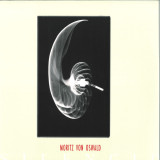
What are the differences and similarities between human and artificial sound, between oscillations generated by vocal cords and synthesizer voices, voltage amplified by speakers? On Silencio, his latest album for Tresor Records, Moritz von Oswald works with a 16-voice choir to explore this concept.
Drawing from the ensemble works of long-standing inspirations Edgard Varèse, György Ligeti and Iannis Xenakis, von Oswald and Vocalconsort Berlin delve into the space between sounds, creating a deeply textured collection that shifts between light & ethereal and
dark & dissonant.
As masterfully demonstrated in the early work of von Oswald and Mark Ernestus’ influential Basic Channel project, repetition and reduction are key elements here, much in the tradition of techno and minimalism. The vast dynamism of the human voice adds to the
profound weight of electronics while offering up a rhythmic source and sonic noise palette unexplored in von Oswald’s repertoire. In Silencio, von Oswald dredges a dank murk, pulling clouds over a distant pulse. It hangs, ready to take on new forms.
The compositions were written in von Oswald’s Berlin studio on classic synthesizers, such as the EMS VCS3 & AKS, Prophet V, Oberheim 4-Voice and the Moog Model 15. These abstract recordings were transcribed to sheet music for choir by Berlin-based Finnish composer and pianist, Jarkko Riihimäki and performed by Vocalconsort Berlin in Ölberg church in the city’s Kreuzberg district, only few metres down the road from where Dubplates & Mastering and Hard Wax opened their doors for music enthusiasts for many years so long. The recordings of the choral versions were then incorporated into the synthesized parts of the album and brought into anew electronic context; in Silencio, the focus is not on using one means to imitate the other, but to sonically discuss the tensions and harmonies between the two worlds and create a dialogue between them.
The relationship between von Oswald and Tresor Records goes back thirty years, all the way to Blake Baxter’s Dream Sequence in 1991 - which von Oswald engineered alongside Thomas Fehlmann. The collaboration with Fehlmann lived on, seeing the duo team up as 3MB with Eddie Fowlkes or Juan Atkins. More recently, the Detroit-Berlin connection continued as Juan Atkins & Moritz von Oswald present Borderland.
For von Oswald, Tresor Records and also the participating guest musicians of the choir, this release brings together audiences from other musical areas, cross-pollinating; Silencio is an album that stands for itself beyond the musical genre boundaries.
out of Stock
Last delivered 17 months ago available to reorder, subject to availability
Zero Years Kid is the alter ego of Joachim Badenhorst, one of the most fascinating and adventurous Belgian jazz musicians from the last 2 decades. He plays with the international band Carate Urio Orchestra but also as musician with Naima Joris or Chantal Acda.
Zero Years Kid started of as a solo project, but has grown into a full and organic live band.
Badenhorst sees Zero Years Kid as a kindergarten to explore other ideas and interests besides of jazz. Together with Jan de Vroede, Lennart Heyndels and Erik Heestermans he brings a colorful amalgam of hip-hop, pop, dance and r&b with playful and poetic lyrics in his native language: Dutch. Next to his clarinet and sax he adds samples and electronica which results in a surprising fantasy world where it is wonderful to wander.
In 2019 debut album Ongerijmde Rijmen was released. Successor Geen Grenzen is ready and will be released on November 10th of this year on Klein. Geen Grenzen is an ode to breaking boundaries, to color outside the lines and to don’t get hung up on expectations.
The title track is a rework of No Limits by 2Unlimited. The song got translated, slowed-down and distorted to the universe of Zero Years Kid. The album is a poetic and humorous trip with a melancholic twist, and themes like the covid pandemic, intense arguments that are forgiven, writers-block, desire and love.