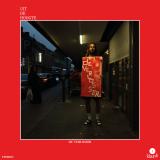
For the best part of the last decade, Dumfries-born, Glasgow-raised Liam Shortall AKA corto.alto has been in his home studio in the Southside of the Scottish city, cooking up frenetic improvisations, diligently wonky productions and genre-spanning compositions with a close-knit group of local collaborators. Now signed to Ninja Tune, the multi-instrumentalist producer, composer and performer announces “SOME SMALL FORTUNE”, which finds Shortall at his most expansive and unpredictably exciting, working with his widest range of features to date, collaborating with the likes of Mick Jenkins, Vector, anaiis, Oscar Jerome, Jacob Alon (Brit Award winner), BINA., Terra Kin and Eriff alongside his longtime Glaswegian band, drummer Graham Costello, Mercury Prize nominated Fergus McCreadie and saxophonist Mateusz Sobieski to produce an electronic, classical, pop and indie-influenced record that extends far beyond the confines of its meticulous making
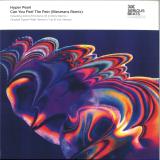
HYPER PEARL'S ICONIC TRANCE ANTHEM "CAN YOU FEEL THE PAIN" RETURNS WITH NEW REMIXES BY BIESMANS AND ZZINO.
First released in the mid-1990s, Hyper Pearl's cult classic Can You Feel The Pain is set to make a powerful return. Released via Serious Beats Classics, the new package features brand-new remixes from Biesmans and Zzino, alongside remastered versions of the original mixes.
Biesmans: "I grew up with the Serious Beats compilations and started buying my first vinyls around the time "Can You Feel The Pain" got released. Remixing this project really felt like a full circle moment for me."
Joining the release is a brand-new remix from Zzino, one of the pioneers of the Belgian techno movement and a key figure behind Hyper Pearl. His version reconnects directly with the track's roots while bringing fresh energy and perspective.
Together, these remixes celebrate the enduring legacy of "Can You Feel The Pain" while introducing the track to a new generation of listeners. The release highlights the lasting influence of Belgian electronic music and demonstrates how truly great records continue to evolve across decades.
About Biesmans:
Biesmans is a Belgian producer residing in Berlin, composer, and DJ known for his cinematic approach to electronic music. Blending elements of house, techno, synth-pop, and ambient music, his work has earned support from tastemakers and audiences across Europe and beyond.
About Zzino:
Zzino is widely regarded as one of the founding figuresof Belgium's techno scene. As a DJ, producer, label owner, and creative force behind numerous influential projects, he has played a pivotal role in shaping the country's electronic music landscape for more than three decades.
Repress! Back by popular demand–VSR 001 is designed to take you to the outer reaches of where you need to go. Wiersma has created a world where with your eyes closed and head down, the dance-floor can transport you to the outer reaches of space and back again for another beautiful night with all your favorite people.
Vermilion Sun Records was started as a passion project in 2025 with a belief in the magic of physical media juxtaposed against the incursion of AI. The original release featured just 100 copies and utilized US-only distribution; it was sold out in less than 5 months. After being brought across the pond from Boston to Brussels by local DJ & tastemaker Rasaaq, it was subsequently shared, quickly gaining popularity on Discogs. This repress is a testament to Vermilion Sun’s core belief; that is meant to be shared and enjoyed by everyone, and there is magic in that ritual.
Wiersma is a cherished member of the electronic music scene in Boston/Cambridge, MA. A DJ, partygoer, and prolific producer, he has played many of the city’s favorite nights sharing bills with other local talent and setting the stage for international acts like Bradley Zero, Garrett David, and Cinthie. Tapping all of these channels brings forth a creativity where memories from nights in Boston and other global travel transform his unique productions. His release VSR 001 showcases this style, exploring the darker and proggier sides of the house universe while making sure to stay tethered to a reality with firm roots on the dancefloor. A1 begins with Once Around Vega where a cinematic opening draws you into groovy and spacey loops demanding you to move. Syntactic Roles churns more deeply, incorporating layered dystopian vocals, rolling basslines and light acidity that is sure to help you close your eyes and put your head down for a dance. The B side keeps the space station grooving with Transmission from L3, and closes out with Rules of Teleportation incorporating more vocals over chugging electro infused grooves.
Erol Alkan returns to his vinyl Reworks series for ‘Part 6’ the first new pressing since 2017. A long-awaited addendum to a series that has previously encompassed artists including Daft Punk, Justice, Hot Chip and Tame Impala, Alkan delivers two club-friendly tracks from his own Phantasy Sound imprint, both previously only available digitally.
For a propulsive take on Josh Caffe’s emotionally defiant, warehouse-bound ‘You’, originally produced in collaboration with Quinn Whalley of Paranoid London, Alkan delves deep into a lifelong appreciation of Chicago house. Stripped, spacious and tough on the drums, Alkan keeps Caffe’s demands front and centre while riding out an irresistible bassline and conjuring a brooding, typically psychedelic atmosphere.
Flipping from minimal jack to maximal funk, Alkan pays a visit to the esoteric archives of Cowboy Rhythmbox, the partnership of much-loved London DJ Nathan Gregory Wilkins alongside pop-provocateur Richard X. ‘Rock Music’ arrives rescued from a dormant hard drive of demos, its frenetic collage of samples stitched back together and fully recharged for a circuit-frying electro workout by Alkan, operating here at full tilt for the dancefloor.
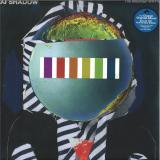
Celebrate a decade of a modern masterpiece. Originally released to critical acclaim, DJ Shadow’s The Mountain Will Fall gets a definitive reissue for its 10th Anniversary. Featuring the explosive, Gold-certified hit "Nobody Speak" featuring Run The Jewels, this album remains a towering achievement in instrumental hip-hop and experimental electronic production. This special anniversary edition is pressed on 2 x 140g classic black vinyl, delivering the rich, warm analog sound the album deserves. The release is housed in a stunning gatefold jacket showcasing brand-new artwork by the renowned artist Paul Insect, complete with premium spot gloss hits that make the visual design pop.
More than two decades after its original release, "Just the Way You Are" is experiencing a remarkable global resurgence. With over 13 million monthly Spotify listeners for the original recording alone, becoming a radio and stadium anthem in new heights! To celebrate its enduring popularity, the track is returning to vinyl with an exclusive limited-edition tricolour pressing, with the added bonus of 2026 remixes.
Originally released in August 2002. While the track did not chart in the band's native Italy, it became an international hit, reaching No. 8 on the UK Singles Chart and securing Top 30 positions in Ireland, the Netherlands, New Zealand, and Romania. In the United States, the song made history as the first official No. 1 on Billboard's Dance Radio Airplay chart, having already topped the chart during its unpublished testing phase.
The song's revival gained significant momentum in 2026 following a viral remix by Australian DJ Mall Grab, which introduced the track to a new generation of listeners and sparked widespread streaming growth and social media engagement. The renewed interest was further amplified by a series of high-profile remixes from Australian electronic duo Pnau, Austrian producer Ely Oaks, and French superstar DJ David Guetta. Together, these releases have cemented "Just the Way You Are" as a cross-generational dance anthem, reaffirming its lasting influence and global appeal more than 20 years after its debut.
Emotional Rescue returns after a much-needed year hiatus, refreshed and ready, as it moves into its 15th year, to further explore the environs of oft-forgotten musical secrets and present them to new heads and minds.
To celebrate, the label looks back to one of its favourite collaborations, the music of French ‘Ethno-Industrialists’ Vox Populi! in presenting a truly unique EP of “In Dub”, inspired remixes by 4 fellow Paris based artists of today in Full Circle, Froid Dub, Krikor and Shelter.
“In Dub” takes a selection of songs from the series of albums reissued or compiled on Emotional Rescue and sister label, Platform 23, and gives the Master tapes to this talented ensemble to offer their own, unique dub reworks. The project explores the on-going advances in technology offered, mixed with pure talent and a respectful homage.
Formed by Axel Kyrou and including wife Mitra, as well as long-term music and art partners Pierre Jolivet aka Pacific 231 and Francis Lafont aka FR6 Man, they forged a path from obscure, drum and drum-based cassette releases on to fully realized albums and compilations on their now cult Vox Man Records.
Alexis Le Tan and Joakim’s Full Circle project starts, with their electronic dub remake of Soleyman Dub from the ‘Alternatif Réalisme’ compilation (ERC079). With releases on Good Morning Tapes, Offen and their own “Released” label, their plaudits as master diggers and producers of dubby tripped-out inspired electronics – releasing slowed Trance some 10 years before anyone else – is inspired. Tuning in and turning on the original dub into a mantra style slow-breaks (Digi)dub is the perfect experimental flavour.
Jube Man is next, a twisted, psychedelic dub out by rising stars Froid Dub. The stand-out from the ‘Magiques Creations’ release (ERC052), an album that explored Vox Populi’s furtive post-industrial period of 1984 to 1988, Jube Man was the perfect selection by the duo of François Marché and Stéphane Bodin.
Froid Dub have steadily developed their “cold” Digidub style to acclaim –
releasing a steady flow of dub inspired electronics on their own label Delodio, as well as recently appearing on sister label Emotional Response’s 10th year anniversary collection, ‘All Trades’. Their haunting, shuffling and murky acid / piano dub, with the drifting “Space Echoing” of Mitra’s vocals from the live desk mix, creates a ghostly version to effect.
Next, master mixer, producer and engineer Krikor serves a steppers remake with his “OverDub” of Zen-Dub. With a career that spans releases on Tigersushi, LIES and Soul Jazz, his sound has developed from Electro, House and Techno, to Acid, Bleep, Dancehall, Dub and touches of Gabba.
Taken from Vox Populi!’s master-opus Aither (ERC030), the first of our reissues dating back to 2016, Zen-Dub’s pacey, lo-fi dub experience is transformed and overdubbed into an incessant sound system throb, a true bass quaking “steppa”.
To close, Micro Climax is put through Shelter’s increasing avant dub exposition. Appearing on the likes of Growing Bin, Emotional Response and his own Protopost, as well for – and being in-house designer – on the much-missed Séance Centre, Alan Briand aka Shelter productions have developed from Balearic, Edits and House to explore Avant, Raga and live Dub productions.
Appearing on the recent ‘Ethniques Pyschedeliques’ compilation on Platform 23 (PLA032), in original form Micro Climax is a sprawling 10-minute ethno-dub of whispered vocals, drone and sub bass. Shelter strips it back, keeping background effects, adding live bass and percussion to create a wonky, slow, shuffling ska-lite excursion to complete a true “In Dub”.
This has been a very personal project and a mammoth undertaking for us folks here PACE HQ: 12 tracks unearthed from the cult Scottish figure’s completely overlooked back catalogue. Collected archive material from the past 25 years, originally composed as an OST for the feature length film The Flesher (1992) which was also written, shot and directed by Rae. No copies remain. Deep cuts that span G-funk, hip-hop, house, synth-pop, electro, dub, downtempo, funk/soul, R’n’B with appearances from Rae’s heavyweight list of frequent collaborators… Bernie Worrell, Adrian Sherwood and Jimmy Douglass.
"In 1991, the Scottish Rugby Union & the Royal Bank of Scotland, commissioned me tae make the world's first Scotland World Cup music video... they didn’t pay me so I fought back. It took 18 years tae win, and I nearly lost everything. I turned to audio visual art: under the pseudonym Jock Pleasure - I wrote and directed a feature length film called The Flesher as well as creating 100s of full length DVDs and tracks” (Jesse Rae).
One man took on the banks and won, but it took its toll and in this totemic corpus of work Jesse Rae counts the cost. The Flesher is art as pure defiance: “this stuff is very dark and deep, it is such a vast body o’ work, but when I won my battle against the bank, I secretly returned tae Hodge Close (in the Scottish borders) and dropped the entire work sealed in stone intae the deep deep murky depths of that water, where it has remained since 2009. There are no mair copies."
What we have here then is the salvaged remains. A hopeful dunt of Scottish erotica that gets you right in the pits.
Splice DJ Screw with Dean Blunt, Moodymann, Prince, Cocteau Twins, MF DOOM, Luther Van fuckin’ Dross, Barry fuckin’ White; run that through the B-movie videotape static meets Harmony Korine, Les Blank & early Grand Theft Auto. Empty boulevards. Small-town strip joints. Late-night dial-up. Sacrifice and solace. Outside of the OST, there’s a cast of forgotten characters: primary school kids making house jams, teenage popstars from the Scottish Borders, and the rhapsodic Ayrshire soprano NIKA laying down haunting vocals in Miami.
Celebrated as a cult figure in the USA, Jesse’s work has never fully had the appreciation it deserves at home. Not really. Aye, we know Inside Out and The Thistle. But he’s too easily fobbed off as an eccentric outsider: a helmet-wearing, claymore-wielding gimmick. But do we really know the extent of what this man has done - and gone through - for the sake of art?
FELT wade deeper into the murky waters of contemporary Scandinavian electroacoustic music following the recent reissue of Johan Wieth’s Health & Safety project on sub-label LEFT and established gems from the likes of Civilistjävel!
Gintė Preisaitė, a Lithuanian artist and graduate of Copenhagen’s Rhythmic Music Conservatory, reveals her first solo release under her own name, following a collaborative effort with Toshimaru Nakamura in 2025 and a number of cassettes as “Baraboro”. The deliberately genre-blurring sound Preisaitė deploys works with composed pop vignettes, sustained drones, FX manipulations and guttural bursts of noise. Sparse piano movements, sample-laden psychedelia and moments of big beat/trip-hop rhythms gel with crowd noise, close mic’d intimacy and experimental percussion with a focus on instrumental timbres and extended techniques.
With a background in composing for large ensembles, Preisaitė's multi-instrumental approach is evident across the eight tracks, moments of dense concrète-style sound collages anchored by the human voice never being far away. She laments on fantasy, absurdity and relationships as a cast of players contribute string, brass, accordion, and guitar parts. Passages move from delicate acoustic folk motifs through to wide-eyed, cut-and-paste glitch electronics and spectral melodic riffs, making the album an unorthodox and welcome addition to Denmark's current world-class music scene.
Following the launch of the label late last year, Tripsitter Records returns with its second release, Social Memory Complex EP, a four-track Various Artists compilation that explores the evolving intersection of speed garage, warped low-end pressure, and contemporary tech house. Featuring contributions from Baumb, Marcos Coya, New Balaance, and Voosen, the EP captures a shared fascination with the resurgence of UK garage aesthetics while pushing the sound into new territory through modern club production and forward-thinking songwriting.
Across the release, listeners are met with rolling grooves, swung percussion, and a heavy emphasis on elastic warp basslines that nod to the roots of speed garage while embracing the power and functionality of modern tech house. Built equally for dark club rooms and open-air festival systems, each track offers a distinct perspective on the genre's current evolution. Baumb delivers a driving, high-energy cut that balances hypnotic rhythm with low-end intensity, while Marcos Coya leans into deeper club textures and precision-engineered groove work. Voosen rounds out the collection with a track that further reinforces the EP's dancefloor focus, combining punchy drums with unmistakable garage-inspired movement. Perhaps the most unexpected contribution comes from New Balaance, whose track ventures into synth-pop territory without abandoning the EP's core identity.
Melodic hooks, emotive synth work, and song-oriented structures are woven together with speed garage rhythms and bass design, creating a standout moment that broadens the compilation's sonic palette while remaining firmly connected to the release's underground roots. With Social Memory Complex EP, Trip Sitter Records continues to establish itself as a platform for artists exploring the spaces between genres—where UK garage heritage, tech house functionality, and contemporary electronic songwriting converge. As speed garage continues its resurgence across clubs and festival stages worldwide, Social Memory Complex EP arrives as a snapshot of a scene in motion: nostalgic without being retrospective, and innovative without losing sight of the dancefloor.
Blending British techno and hyperpop with the Baile Funk and samba of singer Paula's native Brazil, PPJ are considered by British magazine NME to be one of the most innovative bands of the moment.
The double EP "Bloco Vol.1 & Vol.2" tells the story of the band's journey to Rio de Janeiro, far from the postcards we know of Brazil.
"One of the most innovative new names around" NME
"A fascinating and exhilarating blend of neoperreo, techno and electroclash from a group to watch" RESIDENT ADVISOR
"Kaleidoscopic techno-pop" DJ MAG
"A real anti-depression remedy"LINE OF BEST FIT
"Their main goal? To make everybody dance" METAL MAGAZINE
‘It’s hard to find an act as distinctive as PPJ » MIXMAG
Jay-Jay Johanson's 1998 album Tattoo is a captivating blend of trip-hop, jazz, and electronic music, showcasing the Swedish singer-songwriter's unique melancholic sound.
Tattoo features standout tracks like "Quel Dommage" and "Even In The Darkes Hour," which highlight Johanson's smooth vocals and atmospheric production. The album's moody, cinematic style is characterized by its downtempo beats, lush arrangements, and introspective lyrics, creating an immersive listening experience. Tattoo marks Johanson’s evolution as an artist, blending influences from jazz noir and electronic music to craft a sound that's both haunting and elegant.
Fans of trip-hop and experimental pop will find Tattoo a timeless gem, embodying Johanson’s signature emotional depth and musical sophistication. Listening to it will take you on an evocative journey into one of the most distinctive albums of the late '90s.
Tattoo is a limited edition of 500 numbered copies on translucent red coloured vinyl.
* Edition of 500 colored vinyl (transparent purple)
* Artwork developed in collaboration with Paris-based visual artist Caroline Ventura
* Including download code
i got a song, it’s gonna make us millions is the highly anticipated new album by Sirens Of Lesbos, led by sisters Jasmina and Nabyla Serag. The dynamic release is a vibrant showcase of the group's expansive musical range, blending R’n’B/Soul, Afrobeats, electronic music, and lo-fi indie pop into a rich, genre-defying experience. With its eclectic sound and captivating melodies, the album solidifies Sirens Of Lesbos as a standout force in modern music.
Featuring on the album are the singles “Room 333” feat. Kendrick-Lamar-collaborator Zacari, a futuristic R’n’B song with progressive club beats; the epic “Call Me Back” (feat. Drake-co-signed rapper SadBoi and the Kabusa Oriental Choir); and dub-infused reggae song “Let It Hurt”, plus new song “My Moon”, which draws inspiration from artists like Bruce Hornsby, Justin Vernon, and Jai Paul. Sirens Of Lesbos have earned widespread acclaim from outlets like CLASH, COLORS, Dork, Tsugi and Earmilk, with BBC 1Xtra’s CassKidd calling the collective “magical.”
As Black women living in the diaspora, Jasmina and Nabyla navigate the intersection of their parents’ collectivist North-East African culture and the Western emphasis on individuality. Questions of identity have always been central to their journey. While society often demands clear-cut definitions, the sisters have come to embrace their multifaceted identities: “We have always been many things.”
Both artists are deeply rooted in the technical and philosophical dimensions of sound. Jasmina recently completed her Sound Arts degree, and Nabyla is now finishing hers. Their academic pursuits have included creating abstract sound installations in exhibition spaces. However, their focus for the foreseeable future is on elevating the Sirens Of Lesbos project, writing and producing standout indie pop tracks, performing live, and delivering unforgettable experiences for their audiences.
—
The vinyl version of i got a song, it’s gonna make us millions is published by Präsens Editionen, a Switzerland-based publishing house and music label. Founded in 2011 in the process of launching zweikommasieben Magazin, Präsens Editionen has since released music on vinyl, cassette, CD, and digital formats—alongside magazines, books, and other printed matter. Recent audio releases include works by Martina Lussi, spalarnia, Magda Drozd, Anom Vitruv, Belia Winnewisser, and Red On, among others.
“Twenty-five years into their existence, The Album Leaf are an old comfy sweater. It might not be the most fashionable thing in your collection but it always feels good when you put it on. Jimmy LaValle’s synth textures are warm, nostalgic and steeped in Boards of Canada / Ulrich Schnauss-style soundscapes that are relaxing, otherworldly and melodic” – Brooklyn Vegan
The Album Leaf shares his new ambient LP, Rotations. The record is a mediative experiment into atmospheric sound. Creator Jimmy LaValle explains, “This collection of music is a true reflection of my creative process—rooted in sound exploration, experimentation, and spontaneous response. Each track captures a moment of creative discovery, free from the pressure of achieving a polished result. Throughout my career, I’ve often placed significant weight on what an album should be. With this release, I’ve let go of those expectations to share a body of work that feels genuine and authentic.
The Album Leaf began as the solo project of Jimmy LaValle, who came up in the San Diego music scene playing in hardcore bands and the instrumental rock band Tristeza. He had inked a deal to release his next solo album through the indie label Tigerstyle Records, so he put the modest advance towards a self-recording starter setup, building out the sound with occasional studio access. The music that emerged — vivid, rhythmic, soaring instrumentals guided by lines of Guitar and Rhodes — not only set the path for The Album Leaf over the next two decades of acclaimed releases (for Sub Pop, City Slang, and others), it became a touchstone for the next generation's wave of melodic and meditative electro-organic music.
Julian Sanza clearly knows the difference between an edit and a rewrite, and both cuts here lean toward respectful expansion rather than reinvention. The A-side takes that unmistakable 80s pop groove and stretches it into genuine nu disco and house territory while allowing subtle dub and London-inflected touches from the original to still bubble up, and in the process also gives DJs a nice extended tool to work with. The flip does similar work on an 80s Argentine classic, deepening the rhythm and adding modern electronic polish without losing the emotional heat. Two well-judged edits.
Originally composed by Collage in 1985, Herzschlag returns in a newly recorded cover version by Berlin-based synth-wave duo Bionda e Lupo. Describing themselves as a “boy/girl band like no other,” Lupo recreated the NDW-electro tune from the ground up using an impressive array of vintage instruments and studio equipment, including classic synths such as a Pro-One, a Roland Juno-60, and a Farfisa Syntorchestra. Bionda’s distinctive voice adds a new emotional depth to Katrin A. Kunze’s lyrics while still remaining true to the original spirit of the song.
Lupo of Bionda e Lupo has long been a devoted fan of Mit den Puppen tanzen, Collage's only release at the time, originally issued as a 12" single in 1984. Despite never managing to acquire an original copy, he considers the record unique within the German NDW landscape thanks to its unmistakable "Bravo-breakdance-meets-synth-pop" character. Indeed, Markus Kammann, Jürgen Grah, and Katrin A. Kunze drew significant inspiration from the electro-funk pioneers of the era, particularly Afrika Bambaataa's iconic Planet Rock. When we approached Bionda e Lupo about re-editing a track from the Collage's Motel d'amour release, they instead proposed recording an entirely new cover version.
Work on the project began in spring 2025 in coordination with Markus Kammann, who, together with Jürgen Grah, originally composed the music. Sadly, Kammann, born in 1958, passed away unexpectedly on October 17, 2025. This release is dedicated to his memory.
The liner notes reveal additional details about Kammann's remarkable life and achievements. He was the founder of the legendary Beatbox club in Wuppertal, which was once recognized as the "Best Club in Europe," and a co-founder of the Groove Attack record store. Groove Attack would later grow into one of the world's most influential music distributors, especially for Hip-Hop.
The 12" release is limited to 200 copies. Pressed on transparent red vinyl with black "smoke" effects, it comes housed in a picture-disc sleeve with an accompanying sticker. As an additional highlight, the record includes a previously unreleased NDW bonus track recorded around 1983 by Collage. It features Katrin A. Kunze as well as Thomas Kohl, the vocalist of Schwarze Bewegung.
- Red transparend vinyl with black smoke
- Housed in a picture-disc sleeve with large sticker
- Released in memory of Markus Kammann (1958-2025)
- Contains A4-sheet with liner notes
- 5 tracks, including the vinyl only bonus track "Hallo E.T.",
- Quality lacquer cut by Manmade Mastering
Sextile, das in Los Angeles beheimatete Duo, das für seinen unbeugsamen, elektronischen Punk-Sound gefeiert wird, hat Details zu ihrem kommenden, starken Album „Yes, please.“ bekannt gegeben, das am 2. Mai 2025 auf Sacred Bones erscheint, sowie Pläne für eine umfangreiche Europatournee in diesem Sommer geteilt. Sextile, die sich derzeit mit ihren Labelkollegen Molchat Doma auf einer großen US-Tournee befinden, kündigen ihr neues Album mit der Single „Freak Eyes“ an, die ihren dunklen, pulsierenden Sound in neue Höhen treibt. Der Song beginnt mit einem fiesen Bass-Growl, das abrupt in einen Techno-Beat übergeht, der mit klirrender Kuhglocke und scharfer Hi-Hat gespickt ist. „I feel the pressure / Man the pressure I feel when we're together“, singt Sänger Brady Keehn kühl, aber bestimmt, in den ersten Zeilen. Inspiriert von der Art und Weise, wie Druck sowohl Herausforderungen als auch Verbesserungen hervorrufen kann, beschwört „Freak Eyes“ elektrisierende Bilder von schäbigen Hinterzimmern auf dem Sunset Strip und von in Leder gekleideten Tanzflächen in Lagerhäusern herauf.
Manche Bands finden ihren Groove und bleiben dabei, andere erfinden sich ständig neu. Sextile gehört zu den letzteren, die den Nervenkitzel einer sich ständig verändernden Landkarte genießen. Das Duo Melissa Scaduto und Brady Keehn aus Los Angeles macht Musik mit Lebenslust und lässt sich dabei von No Wave bis Hardstyle inspirieren. Ihr neuestes Album „yes, please.“ stößt in kühnes Neuland vor, indem es anarchisches Elektro-Feuer mit rohen persönlichen Erinnerungen verbindet - und mit genug aufgemotzten Bässen, um ein oder zwei Boxen zum Platzen zu bringen. „yes, please.“ ist ein Album der Kontraste: eine verletzliche Platte, die ihre Seele ebenso entblößt wie sie im Exzess schwelgt und zeigt, wie weit man seinen Sound treiben kann, wenn man seine Hemmungen abschüttelt. Zusammen verraten die beiden ein Selbstvertrauen, das niemals schwankt, und machen einen kühnen Spritzer auf dem schnellen Intro mit einer Rave-Sirene, die aus einer New Yorker Hausparty der `00er oder einem verschwitzten Brooklyn-Lagerhaus stammt. Auch der Geist des Electroclash pirscht sich an das Gebäude heran, zeigt seine Identität bei den mit Kuhglocken gespickten Donnerschlägen von „Freak Eyes“ und „Rearrange“ und sorgt mit „Women Respond to Bass“ für eine schmutzige Dancefloor-Bombe. „Push Ups“ - mit dem Gesang von Jehnny Beth - ist pure Muskelmusik, gestärkt durch einen wummernden Bass und ergänzt durch Synthies, die so hart hämmern wie Hagelkörner auf einem Glasdach. Aber hinter den Slogans, der Frechheit und der monstermäßigen Tanzenergie verbirgt sich eine Intimität, die man nur finden kann, wenn man sich über schmerzhafte, lebensverändernde Ereignisse öffnet. „Hospital“ und ‚Soggy Newports‘ reflektieren Scadutos erschütternde Erfahrungen in einer staatlichen Einrichtung in New York nach einem beinahe tödlichen Unfall. „Resist“ befasst sich mit Abtreibungsrechten, während ‚Penny Rose‘ das amerikanische Bildungswesen, künstliche Intelligenz und zukünftige Generationen thematisiert. Scadutos elastischer Gesang glänzt überall, von den messerscharfen Synthesizern von „S is For“ bis zu den Trance-Pop-Höhen von „Kids“ mit Izzy Glaudini von Automatic. „yes, please.“ ist eine actiongeladene Dance-Platte, vollgestopft mit wilden, berauschenden Gassenhauern, aber im gleichen Atemzug auch ein Zeugnis dafür, zu leben und niemals zurückzuschauen. Indem sie sich für eine neue, „befreiende“ Art des Musikmachens öffnen, haben Sextile ihr bisher kreativstes Werk geschaffen. Bisher, denn man spürt einfach, dass sie noch so viel mehr zu geben haben.
Mihai Popoviciu, one of the most esteemed names in the deep house and minimal scene, is set to unveil his anticipated new album, ‘Puzzle Box’, on Bondage Music. As one of the label’s core artists, Popoviciu returns for his second full-length album release on the imprint following his successful 2016 album, ‘Home’ - available on vinyl from 15th November 2024.
With a career spanning over a decade and with releases on numerous influential labels such as 8Bit to Berg Audio, Popoviciu has firmly established himself as a go-to within the minimal-leaning realms of house music. Known for intricate soundscapes and deep, hypnotic grooves, his work continues to captivate audiences globally. On ‘Puzzle Box’, he delves deeper into his signature stripped-back yet soulful aesthetic, offering a diverse collection of tracks that traverse through various sonic textures.
“With Puzzle Box, each track unlocks something deeper with every listen” - Mihai Popoviciu.
Consisting of thirteen tracks in total, ‘Puzzle Box’ showcases the Romanian’s sound to its fullest. On the vinyl edition, fans are treated to standout tracks like ‘Batiscaf’, ‘Storm Rider’, and ‘Far Gone’ — vinyl-only gems that capture Popoviciu’s talent for layering subtle, dubby tones with groovy rhythms. The opening track, ‘They All Say’, sets the mood with smooth, atmospheric beats with a skippy groove, followed by the dynamic “Video” and the driving, pulsating energy of “Frankfurt.”
Popoviciu’s skill in crafting versatile productions is showcased throughout the album, with each track offering something unique.
From the sleek, melodic strains of ‘Puzzle Box’ to the hypnotic, rolling basslines of ‘Kinetic’, this LP is a journey into his meticulously constructed sound. The digital version also features the bonus track ‘Body Count 2’, offering a final, rhythmic flourish to round off the release.
‘Puzzle Box’ further cements Mihai Popoviciu’s role as a mainstay on Bondage Music, a label which continues to champion forward-thinking, minimal-leaning house music. With this latest LP, Popoviciu once again proves why he remains a favourite, building on his storied career with another masterclass in refined, deep electronic music.
Anthony Hüseyin presents their new album O Geliyor (Making O), in which they return to the rediscovery of their gender, their childhood, and their attachment to Zeki Müren.
Müren is widely regarded as the most important queer exponent in the history of Turkish Art Music (Türk Sanat Müzigi). This genre of music was open to musical hybridism, and Müren himself also included elements of jazz and pop music.
Stylistically, O Geliyor (Making O) is a combination of contemporary discoid electro-pop music, based on Turkish Art Music by Zeki Müren. After successful current re-interpretations of Turkish music styles like neo-Anatolian pop and neo-Arabesk, this album provides a first take on neo-Turkish Art Music.
The album title is referring to the third genderless person pronoun in Turkish called "O", which encompasses all gender possibilities in one word. The album reflects on the memories that haunt us and the indescribable wounds of displacement. Set against the backdrop of Berlin, home to many immigrants and political and queer refugees, it exposes the profound emptiness in a metropolis wishing to imagine itself as a safe haven for the free-spirited, yet always reminding the Other that they don't belong. At the same time, it delivers anthems for the displaced, for the queer migrants who traverse internal and external landscapes in search of a place called home.
Anthony Hüseyin is a non-binary musician and performance artist of Kurdish-Turkish and Arabic descent who works with voice, text, film, dance, and installation. Raised in Urfa in Southeastern Turkey, where they learned traditional local music, they went on to study both classical and jazz singing in Istanbul and Rotterdam. Their works combine the personal and political to explore memory, identity, community, collective consciousness, and the body.
For their fourteenth installment, FELT look once again to their city of Copenhagen, specifically to more alumni of the Rytmisk Musik Konservatorium (Rhythmic Music Conservatory). Following soon after Ginte Preisaite’s debut for the label, this long player from Vincent Yuen Ruiz is a grand departure from Preisaite’s experimental electroacoustic pop compositions, instead offering an elegant and pensive suite of late-night, wide-eyed ambient jazz works centred on piano, double bass and percussion; “I seek a dramaturgy of restraint, where silence, space, and collective attention become structural elements of the music.” (Yuen Ruiz)
Originally forming in Copenhagen in 2019, the group's language sits at the crossroads of contemporary jazz, improvised music, and experimental sound practice and deploys a non-hierarchical collective approach. Taking harmonic cues from Bach and Ravel but expanded into a dialogue between players that is repetitive, spacious and informed by minimalism as much as ECM chamber styles, the resultant four pieces move between precise formal structural rules and spontaneous improvisation. Silence and restraint is as important a device as timbre and unity. The group are concerned with dispelling the traditional jazz trio model, e.g. three unique displays of virtuosity, instead exploring how each player may help add to the overall emotive atmosphere the use of ambient space provides. To borrow a quote regarding the hard to classify music of Czech duo Irena & Vojtěch Havlovi, this interplay strikes at times like the shadows contrasting with the light.
More intimate than Yuen Ruiz’s Le seul salut que je connaisse (2021), an album recorded with a 6-musicians ensemble, this latest album Trio continues the composer’s research and moves towards a more focused, condensed writing style and a clear statement of intent.
¿DONDEDOS is young dude/unc duo hailing from the Mission. Pascual Martinez (young dude) and BPT head honcho Jeremy Castillo (unc) have spent the last few years in the stu, cooking up this deep fried, groovin' 4 tracker. Fans of 2011-16 LIES and Future Times releases, “Biology" era Young Marco, Juju and Jordash, and the Wah Wah Wino crew are in for a treat.
In an era where literally every aspect of dance music is overly programmed and manicured, ¿DONDEDOS take a massively refreshing approach marked by true experimentation. All drums were recorded on the Roland R8, and the melodies were live played with a loose, jammy feel not felt on many electronic 12" releases in 2026. They're a jam band baby!!!!!
The fun starts with "Drifting Nowhere," a fried oddball deep house record with one of the year's most infectious basslines. Be ready for it to be on a loop in your brain long after the track has stopped playing.
2nd track "Dies Varos" was described by BPT fam Izaak from Loveshadow as sounding like "part of the Mediterranean touching Mexico." Ahhhhhhhhhhhhhhhhhhhhhh. (that was a deep relaxed sigh, not a scream for once!!!)
"Music for Patios" sounded pretty good on a walk and not on a patio so, just FYI, only a suggestion not a requirement.
Ender Noche Caminando features Diego Herrera (AKA Suzanne Kraft) on sax. In Jeremy's own words, this track features "oddball dancehall drums on the R8 with 80s synth pop dub melodic sensibilities."
Featuring Sarathy Korwar, Dudú Kouate, Marysia Osu and more
French-born, London-based composer and musician Pascal Bideau aka Akusmi announces his second full-length Terra Incognita, an album of intrepid sonic exploration that delights in the sensation of being somewhere you've never been before. The listener is invited to experience seven faraway sonic imaginariums, as global and spiritual jazz are fused with modern electronics and life affirming minimalism into a hypnotic, polyrhythmic odyssey.
The album's rich multilayered sound world features contributions from tabla virtuoso Sarathy Korwar, Senegalese musician Dudú Kouate adds an array of percussions, ngoni and flutes and Levitation Orchesta's Marysia Osu brings harp and flutes. Following Akusmi's widely acclaimed debut album Fleeting Future (2022) which was supported by The Guardian, The Quietus, MOJO , Gilles Peterson, Mary Anne Hobbs etc, this time, the sound palette for Terra Incognita is more vibrant, earthy and abundant, drawing inspiration from the radiating optimism and high-energy sources heard in Afrobeat, Highlife and Electronic Afro-pop music, sounding looser, free and primarily interested in raw sensations
'Electronic lullabies and folk songs from Ethiopia! A landmark recording from Ethiopia’s vibrant cassette era of the 1980s, Resonance of Time features pioneering composer Wesenyeleh Mebreku reimagining Ethiopian folk melodies through the humble circuitry of an early Casiotone keyboard.
'Historically, the works featured on Resonance of Time (የጊዜ ቃና Yegizie Kana) stand as quiet documents of Ethiopian musical memory. Many of the original songs included in this release emerged during important moments in Ethiopian history when music carried the collective emotion of the nation - love, loss, resistance, dignity, and hope. By arranging these pieces from Ethiopia’s musical heritage instrumentally, Wesenyeleh Mebreku aimed to preserve their essence while protecting them from being confined to a single era or performance style. In doing so, his preservation of Ethiopia’s musical heritage became a contribution to his country’s musical legacy itself, as Resonance of Time serves as an important musical milestone of this composer’s innovative recordings and musical developments in the prolific era of Ethiopia’s 1980s cassette tape culture.
'On Resonance of Time, Wesenyeleh made use of the first Casio electronic keyboard - the Casiotone CT-201 - to arrange and perform Ethiopian folk songs in his own unique style. Implementing the soulful, lo-fi character of the keyboard, Wesenyeleh’s interpretations of these works take on a life of their own. Charming analog tones interpret swirling sounds of organ and piano in kignit modality to the beat of a nostalgic rhythm machine while twinkling synthesizer sounds carry the melodies drifting out of time. The recordings reflect a watershed moment in Ethiopian musical history - when traditional melodies started being interpreted on electronic keyboards, and the advent of cassette tape recording allowed for music to be transmitted more accessibly than centuries-old oral traditions. During this time, Ethiopian musical modes were syncretized with new technology and budding musical experimentation, and Wesenyeleh’s interpretations on Resonance of Time are a landmark recording of this era, following in the tradition of reflecting upon and re-interpreting historical Ethiopian music for a new generation.
'Featured on the release are timeless Amharic folk songs and lullabies, Tigrinya love songs, Gurage and Oromifa popular songs, and even works closely associated with performers from Ethiopia’s 1970s popular music era such as Tiz Alegne Yetintu (ትዝ አለኝ የጥንቱ) which was famously performed by Tilahun Gessesse. Each piece, thoughtfully chosen by Wesenyeleh, is beautifully transformed into instrumental music of his own style - allowing these worlds of song to echo into the future while they are synthesized with the electronic innovations of the 1980s and Wesenyeleh’s own musical history.
'Wesenyeleh says this about his musical approach - ”Instrumental music, for me, is a space of reflection. Without words, the listener is invited to remember, imagine, and feel freely. In Resonance of Time, I hear my own musical philosophy: respect for Ethiopian kignit, careful dialogue with Western harmony, and a deep trust in melody as a storyteller.”
'Each piece performed on Resonance of Time speaks to a time when Ethiopian music was shaped by oral transmission through live performance and communal listening. In today’s fast-moving musical environment, revisiting these works is an act of cultural responsibility. These works remind us that melody once traveled slowly, settling deeply in the listener’s heart. The instrumental format allows these works to cross linguistic and generational boundaries, making them accessible to audiences who may not know the original lyrics but can still feel their spirit.
'Resonance of Time also reflects a broader historical dialogue: the meeting of tradition and adaptation. Ethiopian music has always evolved while holding onto its core identity. These arrangements affirm that evolution does not mean abandonment. Instead, it can be a form of safeguarding - ensuring that the musical wisdom of the past continues to resonate in the present and inspire the future.
'In this sense, the album is both personal and collective. It carries Wesenyeleh Mebreku’s own musical fingerprint, shaped by decades of practice, but it ultimately belongs to a wider cultural continuum. It is the artist’s contribution to keeping time audible so that memory, history, and sound may continue to speak to one another.'
WRWTFWW Records presents the first ever vinyl release for the Startled Insects’ 1984-1985 abstract/synth-pop/post-punk/electronic run compiled into one album : The Antenna Years. The Bristol music must-have comes as a limited edition LP with astonishing artwork, liner notes and a heavyweight sleeve.
The Antenna Years compiles the independent EPs/mini-LPs the Startled Insects released in 1984 (self-titled) and 1985 (Underworld/Black Spring), with two bonus unreleased tracks that were only ever played in their live shows (W.W.W and What A Waste, both amazing).
Astonishingly futuristic when they landed in 1984, the Startled Insects sounded like they came from another planet while staying rooted in Bristol’s underground. Abstract electronic, leftfield synth-pop, dub science, gamelan heat, post-punk edge, cinematic atmosphere : The Antenna Years delivers one beautifully odd voyage into the sonic unknown.
In the 90s, the band released two albums, including the classic Curse Of The Pheromones via Antilles New Directions (Island Records), then evolved into The Insects: film composers for BBC/National Geographic, Emmy winners, and key architects of the 90s Bristol orbit, working with Massive Attack, Goldfrapp, Tricky, and members of Portishead.
Four decades on, The Antenna Years still hits like a transmission from the future. Dive in with no fear.
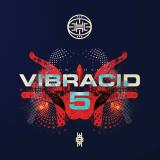
In a dystopian universe where elites manipulate memory to control the population. Vibracid emerges as a technique of liberation through sound: a method for erasing induced memory.
THE RHYME marks the counterattack phase. The insurgents infect the system used by the elites for control and reprogram it from within: patterns, voices and sequences as active code.
Contemporary bass, electro, breaks, acid and rave converge as transmission vectors. Each track operates as a unit of intervention within this science fiction scenario.
At this stage, new signals are incorporated. Power, with a solid trajectory within the underground circuit, opens the EP in a forceful way, with an acid, surprising and spectacular impact. Exieve, a young producer from Chernihiv, continues the attack with a raw tension where vocals cut through the signal like sharp fragments. Alongside them, Lups Digga, Atix, Parand and Calagad 13 continue expanding the system’s reach.
Terrestrial Funk presents a piece of Detroit history. Born and raised in Motor City, Karl Fultz knew at the age of twelve that he wanted to be the most talented and successful DJ in the world. In 1999 he released on Juan Atkins’ Metroplex under the alias People Mover and in 2000 he released as Black Electric on Puzzlebox. Inspired by British synth-pop duo Eurythmics, Fultz says Black Electric was a way to get more women involved in the techno movement. Together alongside vocalists Tiffany Elliott, Kim Glover & Talena Fultz, Black Electric brought sex appeal to the scene. Their first and only release stays in demand and has become inaccessible until now. Terrestrial Funk’s reissue provides two fresh cuts on the new 12”; ‘Purple’ a chugging Detroit acid track describing soul modification to enhance intimacy and a proper bassed out club mix of the nasty electro sex song ‘Work That’, which was only featured as an acapella on the original release. The release also features updated mixes of both the title track and the half-time anthem 'Come To Me' alongside the original y2k mix of 'Colors'. Black Electric stands as a testament to turn of the millennia Detroit and the city’s undying devotion to expand our connection to music.
LBD Issues continue with their quest of reissuing music from Eastern European region previously unavailable on Western markets. The third release is a compilation that showcases the collaboration work of duo Eva Hurychová and Jan Neckář. The two met in 1982 and Eva started performing with Jan's band Bacily. Jan was already established and hugely successful musician and producer, mainly for his brother Václav, who was a real pop superstar in former Czechoslovakia and still remains very popular to this day. Eva was a composer and lyrics writer for other successful artists too. However, the duo soon started recording stuff on their own, experimenting with electronic productions and the sound not at all common for its day in Czechoslovakia. This compilation cherry-picks the tracks from various different singles released between 1984 and 1986.
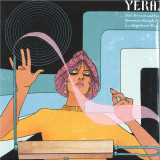
Featuring virtuosos of "Contemporary Armenian" music such as Bei Ru, Lara Sarkissian and Armen Ra, as well as shedding a light on the independent music scene in Yerevan, "YERAZ" is an exercise in ethnomusicology. Classical songs and instruments collide with the full spectrum of electronic-based music from ambient to techno and everything in between, building a mosaic inside of a specific cultural context. Whether you are looking to get lost in meditation or bring dynamic energy to a room, this record serves as a tool kit for all intents and purposes with a traditional touch. The double-LP is split between Angeleno artists (Sides A and B) incorporating folk instruments and melodies to reinterpret the "Contemporary Armenian" idea outside of the established pop landscape, and Yerevani artists (Sides C and D) emulating popular musical trends of the West through their native lexicons. Critique will be donating 100% of its net profits from sales of YERAZ to Kooyrigs, a non-profit organization providing resources for women and transparent aid to the Armenian homeland.
Jungle by Night Speaks Out on their latest full length album, Bar Dancing: An Ode to Friendship, the Dance Floor, and the Voice
Since their teenage years, the Amsterdam-based groove collective Jungle by Night has been conquering music venues and festivals with their ever-expanding mix of styles—krautrock, nu-disco, electro-pop. After six largely instrumental studio albums, the group—now consisting of six musicians—changes course on their seventh long-player. On Bar Dancing, set for release in early 2027 via the Amsterdam-based Rush Hour label, the band does something they have never done before: they sing.
Where brass, percussion, and synths previously told the stories, lyrics and vocals now demand their space as well. It gives the band room to put words to the topics that occupy their minds: the pitfalls of digital addiction, the dark sides of fake news, toxic masculinity, and the connection they experience while touring together.
The title Bar Dancing captures the essence of the album. It is an ode to friendship, connection, and the night. The record radiates the atmosphere of a pub where you sit at the bar discussing life, only to find yourself dancing in that very same bar moments later. Analog and warmly produced, the album builds on influences from '80s pop, krautrock, and Neue Deutsche Welle. Think of the playfulness of Talking Heads, the dub influences of UB40, the electronic layers of Air, and the tight "computer love" of Kraftwerk.
Band member Hy Tienson explains: "For the first time, we are literally giving a voice to our thoughts. It makes the music more personal, more direct, and more layered, without losing that signature, uplifting Jungle groove."
With Bar Dancing, Jungle by Night delivers an album that invites both listening and dancing. It marks a new phase for the band, taking another step forward with a renewed sound and their own lyrics.
Gorizont Sobytiy (Event Horizon), the duo of veteran electronic musician Nocow and his wife, DJ Designer, mark the project's debut with an album worth of material of 'frogg-step' / Pankratov Step. It's safe to say this is an intriguing proposition for even those well-initiated into the world of the contemporary Russian underground. What is perhaps most immediately obvious across the 11 tracks is a clear appreciation for golden-era Rephlex records, as if the duo are reflecting on how the iconic label was perceived in the Eastern bloc at the time. There's a nostalgic touch tugging at the heart strings with the warm ambient tones of 'Bananoivy Twist' or even the ballroom-esque organ melodies of follow up 'Chacha', both swiftly followed by a switch back into frantic gabber style kicks that recur across the album.
To give a little more away in terms of a background story, Nocow and DJ Designer draw influence from a film called Winter Evening in Gagra, a somewhat distant feeling artefact of late-Soviet cinema about a tap dancing champion's late nights spent gallivanting across the glitz of Moscow's pop music scene in the 1980s. Maximalist in its sound design, Pankratov Step draws its name from actor-protagonist Pankratov, not quite an out-of-time soundtrack as such but at the least a wry nod to the former world in which the film takes place. The cascading, brittle synthesis of 'Cemetry's Boss' forms an icy cinematic fusion again with a gabber influence at play whilst a fierce acid line works alongside myriad glitch rhythms and repeating keys on 'Octopus Werk'. Influenced by the local humour and sentimentality surrounding the film, a melodrama with themes of lost art and a kind of old-world transcendence the young circus performer yearns for, the duo use it as a vessel to describe the projects sound - a coalescing of vintage Soviet soundtracks, early IDM, Jake Slazenger and Expert Knob Twiddlers album. 'Pankratov-Step' becoming their own fictional genre. The LP marks another avant-garde chapter in Nocow's long back catalogue, as well as a fully formed collaborative debut for the currently enigmatic DJ Designer. Pankratov Step is the second release on GOST ZVUK sub-label MEMONT, curated by Kuzma Palkin.
Welcome to THE VAULT for 1985. A collection that digs deeper into the year’s musical landscape – uncovering singles that may not have always reached the highest chart positions but remain essential to the rich and diverse pop story of 1985. Some were overshadowed at the time, some were highlights from albums that had already sold huge amounts, some found greater success internationally – but all deserve their place in this continued celebration of 80s pop.
45 tracks across 3-LPs – pressed in gorgeous green vinyl – NOW Yearbook – The Vault: 1985.
LP1 opens with a trio of tracks from huge-selling albums:- Bruce Springsteen’s ‘My Hometown’, the sixth single in the UK from ‘Born in the U.S.A’ - one of the best-selling albums of the decade, followed by Bryan Ferry with the stunning ‘Windswept’ from ‘Boys And Girls’ and Sting’s ‘Love Is The Seventh Wave’, taken from his solo debut ‘The Dream Of The Blue Turtles’. Next up, Go West with a U.S single release ‘Eye To Eye’, Scritti Politti with ‘Perfect Way’ – their biggest hit in America, and ABC with ‘Be Near Me’. The first side closes with two established bands; Heaven 17 and Orchestral Manoeuvres In The Dark… Flip the LP over for Adam Ant with ‘Vive Le Rock’, Midge Ure, Blancmange and the second collaboration between Philip Oakey & Giorgio Moroder with ‘Good-Bye Bad Times’. The Style Council’s ‘Welcome To Milton Keynes’ leads to LP1’s closer’s from Simply Red and Fine Young Cannibals who followed their debut ‘Johnny Come Home’ with ‘Blue’.
LP2 opens with Cocteau Twins and the dream-pop atmospherics of ‘Aikea-Guinea’, ahead of The Jesus And Mary Chain with ‘Just Like Honey’, and The Dream Academy with ‘The Love Parade’.
Brilliant with their cover of James Brown’s ‘It’s A Man’s Man’s Man’s World’ and jazz-influenced pop from Matt Bianco are up next ahead of the sublime ‘Castles In The Air’ from The Colourfield and Elvis Costello & The Attractions, who released the 1979 track ‘Green Shirt’ to promote their ‘Best Of’ collection … and the side closes with The Clash’s ‘This Is England’ which would become their last originally released hit…whilst on the other side…celebrate the dancefloor, with a vibrant mix of Hi-NRG, soul, electro and club-influenced pop:- Opening with Sheryl Lee Ralph’s ‘In The Evening’ and Barbara Pennington’s equally superb ‘On A Crowded Street’, the hi-energy continues with Miquel Brown and Hazell Dean ahead of a US hit from Laura Branigan (‘Spanish Eddie’) and Divine’s cover of ‘Twistin’ The Night Away’. LP2 finishes with a massive U.S. dancefloor smash for Eddie Murphy with ‘Party All The Time’.
The final LP kicks off with a bunch of singles that achieved bigger hit status in the US than here and opens with Billy Joel’s ‘You’re Only Human (Second Wind)’, a track written exclusively for his ‘Greatest Hits – Volume I & II’ compilation, ahead of pop-rock from John Mellencamp plus an anthemic smash from Bon Jovi. Pat Benatar’s ‘Invincible’ features ahead of The Power Station’s third US Top 40 hit…whilst back in the UK Chris Rea enjoyed his biggest chart hit to date with ‘Stainsby Girls’ and the side is completed by Marillion with ‘Heart Of Lothian’ the third hit from their huge ‘Misplaced Childhood’ album… Flip to the final side for the stellar vocals on ‘Act Of War’, the huge collaboration between Elton John & Millie Jackson ahead of dancefloor smash ‘New Attitude’ from Patti Labelle and ‘Show Some Respect’ a U.S. single from Tina Turner. Sophisticated pop-R&B from Michael McDonald and Daryl Hall & John Oates come ahead of the collection’s closers- and two outstanding vocal performances: Chaka Khan’s ‘Through The Fire’ and the U.S. breakthrough hit from Whitney Houston with ‘You Give Good Love’ – signalling the arrival of one of the decade’s brightest new stars.
NOW Yearbook – The Vault: 1985 – A deeper dive into an unforgettable year in pop.
Originally released by Time Capsule in 2021 and long out of print, Stories From Another Time 1982-1988 returns in an upgraded edition following years of demand and rising collector prices on the secondhand market. Widely regarded as a modern cult classic, Mário Rui Silva’s visionary recordings blend acoustic folk, cinematic soul, spiritual jazz and saudade-filled Lusophone rhythm into a deeply timeless and universal work that transcends genre and geography.
This new edition features half-speed mastering cut at Metropolis alongside an expanded 4-page insert with a tribute essay and unseen photographs following Silva’s passing in 2024.
The roots of Angolan popular music explored in the meticulous guitar studies of Mário Rui Silva. For fans of Naná Vasconcelos, John Hassell’s Fourth World ambient, Eduardo Mateo’s psychedelic folk and Cameroonian electronic music visionary Francis Bebey.
Whether on mesmerising acoustic ballads or hypnotic groove-led tracks, the music of Angolan guitarist, researcher and intellectual Mário Rui Silva has a beguiling, melancholy quality, woven into the dynamics of his deft guitar playing.Rhythmically complex yet supremely effortless, the music collected here stems from three albums Mário released in Luanda in the 1980s that reflect his diverse range of influences, from traditional Angolan and West African rhythms to European jazz and classical instrumentation. It is united by a sense of low-key beauty, whether on the chugging opener ‘Kazum-zum-zum’, the jazz-funk keys of ‘Lembrança Dum Velho’, or the twinkling, late-night poly-rhythms of ‘Kizomba Kya Kisanji’.
Born in Luanda, Angola in 1953, Mário dedicated his life to Angolan popular music. His fifty-year career has seen him live between Angola and Europe, rub shoulders with Cameroonian musicians Francis Bebey and Ewanjé, record the seminal album Angola ’72 with fellow Angolan musician Bonga, and draw influence from Brazilian guitarist Baden Powell.
It was the teaching of Angolan legend and Ngola Ritmos co-founder Liceu Vieira Dias that Mário gained a technical, political and spiritual understanding of Angolan musical culture. In the hands of Liceu, the traditional Angolan semba and kazukuta rhythms of the 1940s and ‘50s helped create an emancipatory sense of national pride and collective agency that awakened its listeners to the racism and tyranny of colonial rule, underpinning the country’s push for independence in the process.
What might sound like the intonations of Brazilian influence are what Mário attributes to the “African rhythms taken by the slaves which gave rise to other musical cultures” around the globe. Instead, this music emerged from a collective instinct to assert a cosmopolitan Angolan identity free from the patronising falsehoods of Lusotropicalism.
“There was a need within me to contribute in doing new things,” Mário describes. “In the sense of solidifying the music of Angola that was the result of the meeting of two cultures, and wanting to value the Angolan part whenever possible.”A selection from Mário’s three 1980s albums, Sung’Ali (1982), Tunapenda Afrika (1985) and Koizas dum Outru Tempu (1988) have been compiled here as a 2xLP release by Time Capsule’s Sam Jacob and Kay Suzuki. Together, they provide a snapshot of one man’s journey to the core of his nation’s music, charged with the search for a culture uprooted by colonialism
Speak to Orlando Higginbottom, aka TEED, and themes of love and obsession with electronic music quickly emerge, rooted in a childhood shaped by classical training and underground dance culture. His project Totally Enormous Extinct Dinosaurs, initially a joke, grew into a global success, taking his melodic, vocal-driven dance pop to clubs and festivals worldwide. Since relocating to Los Angeles in 2015, the city"s sounds and "pre-gaming" nightlife culture have inspired his upbeat, club-focused DJ-Kicks mix. The compilation includes new exclusive tracks by TEED alongside exclusives from Joe Goddard, Jacques Greene, Austin Ato, Casino Times, and Oscar Farrell.
Packed with live classics and brimming with his frenetic brand of mutated, electronic, anti-pop, this album marks the next step in Anklepants' march to world domination.
Anklepants' act gets a reaction from everyone that witness it. The hysteria surrounding him has gained momentum since the release of his 12' vinyl 'SPEEK You Little Re-facéé' on Love Love in 2013, propelled by a European tour last year with Otto Von Schirach and his sensational Boiler Room set. The 'SPEEK You Little Re-facéé' vinyl single served as a taster of what was to come with its 2 bombastic extended cuts (both also featuring here). Now, having sown the seeds of his message around the world, his debut album has arrived on Vinyl and CD.
The CD version of this album comes with a second disc containing reworkings of Anklepants' original tracks by other artists similarly carving their own paths through the modern übergründé, including Eomac, Valance Drakes, Kraig Grady, Lenkemz, Monster X, Bintus, FUKNO + more.
Thirteen years have passed since their debut album, but now Oppenheimer MKII is ready to release their long-awaited second album "Embrace The Dark”.
Oppenheimer MKII is Andy Oppenheimer, singer, songwriter and formerly one-half of 1980s synth-pop duo Oppenheimer Analysis, one of the leading bands of the ‘minimal synth’ scene, and inspiration behind the New York-based Minimal Wave label and Mahk Rumbae, electronic musician and producer known for his work with Codex Empire, Mitra Mitra, and long-running UK industrial/experimental band Konstruktivists.
“Embrace The Dark” does exactly as its title suggests: it embraces dark, apocalyptic themes for our current turbulent times. In nine mind-blowing tracks, Mahk’s thunderous dance rhythms and addictive synth-pop melodies combine with Andy’s latest dystopian – and sometimes utopian – visions of our past, present and future.
From the atmospheric title track, greatly influenced by Andy’s lifelong obsession with space – ‘When you embrace the dark, you gaze back in time...’ to delusional tech-bro world domination in “I Went Too Far” – ‘The sky is not the limit; my wealth is infinite’ and the pounding paranoid lead track “Oh! My Mind is a Storm” – ‘When I go dark, I'm into demon mode’, the new Oppenheimer MkII album “Embrace the Dark” ventures deep into futuristic dreams and nightmares and is guaranteed to fill the dancefloor.
Jump Source, the Montréal-based duo of Patrick Holland and Francis Latreille, also known as Priori, announce their debut full-length album Fold, due April 30 via NAFF Recordings.
Fold is their most ambitious project yet—echoing the electronic LP boom of the early 2000s while balancing peak-hour club anthems with an everything-goes pop ethos. Featuring collaborators including POiSON GiRL FRiEND, billy woods, and CFCF, the album moves fluidly between candy-glossed hooks, folktronic balladry, and unexpected rap turns, tracing the turbulence of life in music across shifting cities and timezones.
Through her compositions, Oonagh Haines explores nocturnal atmospheres where contemporary electronic music, underground aesthetics and deconstructed pop forms intersect.
Her music is built on a play of opposites: a modified voice performs its antipodal double, while avant-garde techno and sentimentalism coexist, carried by a certain nonchalance and a restrained posture that is not without recalling Anika.
Not Not Pretending is her first album. It will be released by moli del tro on 24 April 2026.
DJ support from Soul Clap (Soul Clap Records) / Walla P (Voyage Funktastique) / DJ Notoya (Tokyo Condition)
Minoru “Hoodoo” Fushimi is something of a cult favorite among purveyors of obscure Japanese sounds from the 80's. Running parallel to the city pop phenomenon but existing distinctly outside of it, Fushimi's sound is a lo-fi blend of electro synth funk, drum machine beats, & early hip hop. His “Thanatos Of Funk” album lives on many a record collector's want list, and has already been
reissued more than once. Upstart imprint Tokyo Love Song, a spin-off of XL Middleton's MoFunk label, brings one of Fushimi's signature cuts, “In Praise Of Mitochondria,” to the 7” format for the first time ever. On the flip, Middleton himself teams up with Japan's leftfield modern funk favorites Milk Talk to deliver a remake of the song, entitled “Funkin Me Up.” This quasi-cover blends XL's signature squiggly funk sound with the quirky vocal stylings of Q.i, along with guitar & bass licks courtesy of Hairkid, the other half of Milk Talk.
Dario Rossi approaches electronic music like few others. His work as a percussionist has brought his unique rhythmic abilities to audiences around the globe. Born in Italy, Rossi combined percussion with samplers and synthesizers. His energy and talent have allowed these machines to be incorporated into his distinctive palette with very special results. 07Sep83 is his Bordello debut, with the title piece opening the four tracker. Beats cascade as analogue warmth laps the shore. Slow with a magnetic groove, elements of italo, wave and synth-pop intertwine to create a clean, bright sound that is at once familiar and totally unique.
Vocals arrive with “We’ll Meet Again.” Tempos rise while keys are emboldened by rich guitar strings. Lyrics counter with a melancholic tone that shifts into hope and fortified belief as melodies rise ever higher. The flip is “Lost.” Sharp drum patterns support notes that hark back to the majesty of Bobby O, the live sax by Augusto Pallocca and disco glory combining in this journey through genres. “Beat the Devil” closes. Sizzling from the outset, snares roll and snap. Rossi’s percussive prowess is on full display as synthlines flow over rhythmic ripples to the subtle and soulful strings that bring down the curtain.
POEME ELECTRONIQUE was Dave Hewson (synthesisers, production), Sharon Abbott (lyrics, lead and backing vocals), Julie Ruler (backing vocals) and Les Hewson (bass), formed in 1980 by Dave Hewson in South London, UK, in 1980. Dave was studying music and as a rare kind of student species he had a deep fascination for New Wave and electronic music thus also playing and recording electronic music ever since like using the Boss DR-55, Cosmo Sound Super Drum, Elka Rhapsody 610, EMS Synthi AKS, Korg MS-20(X2)/Polysix/Polyphonic Ensemble 1000/VC-10 Vocoder, Linn Electronics LM-1, Octave Kitten, Roland RS-09/VP-330 Vocoder Plus, Simmons SDS-V Kit and Yamaha CS-80 on this retrospective POEME ELECTRONIQUE album with original material from 1981/82 only. Over the period of more than two years, Dave has remastered these tracks using the latest high-end tools making them sound better than ever before. The deluxe 2LP vinyl album comprises 16 tracks of which 14 have never been published before. “The Echoes Fade” and “Voice” are the original versions taken off their original 7” from 1982. The album “The Echoes Fade” cannot be described other than being a masterpiece and one of the best-ever early 80’s electropop records ever, and it surely has to be lined up with Rational Youth or Experimental Products’ cult albums (in terms of being minimal synth/wave scene reference albums), but to be frank, Anna thinks that POEME ELECTRONIQUE were even above their level.
Truly, they had deserved to go on the successful path like Depeche Mode, OMD or Soft Cell, but fate was against them as it seems. The main difference to other electropop groups of the time was definitely that Dave did not only master his synths technically-wise, no, he also knew how to actually play, and when you hear his amazing multi-track ‘manual sequencing’, programming skills, great harmonies and melodies throughout the tracks, along with the two girls’ performances – well they can really sing! – you will agree there is some something remarkably extraordinary in these tracks. You will find minimal electropop super hits like “Rendezvous”, “She’s an Image”, “Fragile”, or “Dilemma”; hauntingly beautiful melancholic tracks like “A Mourner’s Lament”, “This Night” or “It’s in the Atmosphere”; darkest minimal electronics on “Inside his Head”; and even more poppier tracks like “Follow”. This record will hopefully be loved by any electronic music lover and most probably marks the highlight in the growing Anna Logue Records catalogue – therefore Anna did not shy away from any costs and the album is truly an outstanding release in every single aspect including sound and artwork presentation. Apart from the bonus tracks you will find in the 2LP deluxe vinyl edition glossy inner sleeves with lyrics to all songs, as well as individual mini 7” sleeves for each song designed by our dear graphic designer Steve Lippert plus many additional group photos on the gatefold sleeves’ inner. After so many efforts and more than two years passing by, Anna is so over the moon to see this release being ready now and we have done all we could to make this an outstanding release, so now it’s up to you to give the band their final glory, but Anna is in no doubt that – at least after hearing the sound samples – you will.
Balancing glitch-pop and contemporary piano, the Belgian pianist explores the edges of her voice, language and twisted electronica
The Belgian pianist and producer maya dhondt releases a new album titled 'wow, x', marking her debut solo album under her own name. Navigating between bedroom glitch-pop and contemporary piano, she presents sounds of alienating beauty.
The album ‘wow, x’ will be released on September 13 on vinyl and all digital platforms via VIERNULVIER Records.
“I find beauty in the uncomfortable and disorienting" - maya dhont
The first single, 'desire,' is a mutated synth-pop track that gets under the skin. The song centralizes longing for something you don't know (yet). Perhaps it's the smell of damp earth, which can be both pleasant and unsettling? The single is now available on all streaming platforms and comes with a schizophrenic video by Sakis Brönnimann.
The first release show is scheduled for Saturday, October 5, at De Koer, Ghent.
More shows will be announced soon.
A postmodern cramp, that's how one could describe the music of pianist and producer maya dhondt. Her music is an intuitive and a never ending exploration that has the potential to be and become a multitude of things at once.
On her first solo album under her own name, 'wow, x,' she presents 10 varied tracks in which she creates equally idiosyncratic sound worlds. She takes the liberty to endlessly experiment with vocals, piano, and a mix of distorted lo-fi electronic sounds with an open mind. The result is sometimes synthetic and weird, sometimes compellingly beautiful, and always captivating, drawing you into its underlying melody. These intelligently crafted productions are connected by a penchant for alienating beauty: like a warm, but damp cave where it’s pleasant to linger just a little longer. Her original sound moves within a sonic spectrum reminiscent of contemporary artists such as Lolina, Astrid Sonne, claire rousay, aya or Carla Dal Forno.
"What I create never stands alone, it can be many things at once"
If the world were a sculpture garden, maya dhondt eagerly picks from it to draw inspiration from both visual and literary passages as well as personal experiences. Her highly personal bedroom productions are grounded firmly in the world due to philosophical references and politically charged messages. And the world she lives in is being questioned on 'wow, x', as the title refers to "What Or Why?". This is evident in the single 'desire': "What is the thing that matters / to exist / or to know you’re existing?" What does one choose in life: to live in the moment or to live to remember that moment?
In the lyrics on 'wow, x', maya dhondt plays - at times childishly - with language and its boundaries. On 'tip toe tip,' banal wordplay leads to an unexpected confession, and the seemingly simple phrases in 'untitled' conceal hidden life lessons. dhondt's world of words is multilayered and multilingual: Dutch ('kleine cijfers, groot verlies'), English ('desire'), and French ('untitled') are at her disposal. And on the fierce track that is 'minimalinvasiv,' not only she turns to hardstyle, but also to German - a language dear to her due to her Swiss heritage.
Depeche Mode, Yazoo, Erasure's Vince Clarke, Blancmange's Neil Arthur and the electronic producer-writer-synth-nerd Benge have joined forces to form the new project Doublespeak. Set to be released on May 29th, their self-titled debut album revisits eleven of their favourite songs from the past four decades, each reimagined and renewed in the timeless space of gleaming analogue electronica.
The 'Doublespeak' album is divided between songs from the postpunk netherworld brought blinking into the light (Fad Gadget, The Sound, Young Marble Giants), pop radio monsters ushered back down a dark stairway into the club (ABBA, David Essex, The Carpenters) and buried treasures from the 1990s onwards (The Magnetic Fields, Ed Dowie and Laptop).
Collectively, the album amounts to a shadow autobiography of the three collaborators' continuing musical education. Doublespeak is the great human songbook, synthesised.
Empathic vocals, bold arrangements and glowing analogue electronics turn familiar and forgotten songs into a personal, forward-looking electronic statement.
For his sixth solo album, Ezéchiel Pailhès returns with a new collection of songs infused by a sunny wandering spirit.
Within each of the twelve songs on SOL is a thread of melancholic happiness that has permeated much of Pailhès’ music and songwriting. He addresses love, the passing of time, hope, lost illusions, fleeting moments of grace, the temptation of forgetting, a need to escape, and desire. All this is
insulated by understated orchestrations that blend acoustic and electronic instrumentation with deft confidence.
The Portuguese and Brazilian concept of saudade—a form of melancholic longing and nostalgia— pervades, thanks in part to Pailhès decision to record the album in Rio de Janiero and to reinterpret some of the finest works of Música Popular Brasileira (MPB). In particular, he revisits a handful of
lesser known classics from the mid-century samba and bossa nova era—originally written or performed by talents including Vinícius de Moraes, João Gilberto, Tom Zé, Dorival Caymmi, João Donato, Os Tincoãs, and Ataulfo Alves.
The shift from Brazilian Portuguese to French and the decision to adapt rather than perform a straightforward cover versions, allows Pailhès to invent a form of prosody and euphony (the musicality and harmonious combination of words) that feels vibrant and unlike anything else in today’s French
chanson landscape.
“Some lyrics are simple translations from Portuguese, in what I’d call an expanded version. For others, I started from a single word or a single phrase and embroidered an entirely new text that carried me elsewhere,” explains Pailhès. “I allowed myself great interpretive freedom, while preserving the humanist dimension of the original songs. I’ve always been deeply moved by the way Brazilians transfigure reality through heightened emotion. I love this visceral and spontaneous country, which always seems to live through emotion. And above all, I love its music both popular and unifying,
bringing together all social classes. In that sense, it’s very political music, but even more so utopian, made by the people and for the people.”
On this new album, however, the French artist was keen to avoid cliché. Each song is therefore built around a carefully balanced interplay between Pailhès’ piano and synthesizers, alongside restrained arrangements of percussion, brass, bass, and cavaquinho (a small four-string plucked guitar). These parts were recorded in Rio de Janeiro with two musicians who regularly perform alongside the legendary Caetano Veloso—Kainã Do Jêje and Alberto Continentino—joined by Thomas Harres, Antônio Neves, Eduardo Neves, and Gabriel Loddo.
Since the 1960s, France and Brazil have shared a long-standing cultural and musical relationship. Some Brazilian artists, most famously Gilberto Gil, took refuge in France during the dictatorship years (1964–1985). But above all, French chanson quickly fell in love with the richness and ingenuity of
bossa nova and samba, translating and reinventing them in the language of Molière. Throughout the 1960s and 1970s, albums and hits by Henri Salvador, Georges Moustaki, Pierre Barouh, Pierre Vassiliu, and Claude Nougaro all drew from the MPB repertoire.
Fifty years later, with SOL, Ezéchiel Pailhès reinvents this rich Franco-Brazilian musical legacy, bringing to it a personality and modernity that stand confidently alongside those of his forbears.
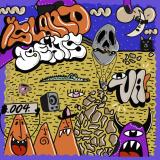
After years of building this project quietly and patiently, ISLA004 feels like a reflection of everything that shaped the island along the way.
Between hypnotic techno, trance, electro and synth-pop influences, this release moves through nostalgic melodies, dark textures and emotional tension balancing moments of introspection with the energy of the dance floor.
More than defining a genre, this VA captures a state of mind: late nights, distant memories and the feeling of getting lost in sound.
As the so-called “Latin boom” becomes a new anchor for hard-swung club sounds, it is crucial to recognize that the region’s musical culture extends far beyond dembow edits and the pop-trap hybrids that have edged into the mainstream. Monterrey-born, New York City-based producer and DJ Delia Beatriz, aka Debit, returns to NAAFI with Potpourri, a generous and kinetic collection of dancefloor-oriented tracks filled with percussive flourishes, squelching 303 basslines, and rhythmic mutations that actively challenge the status quo. Rather than rebuilding “Latin sounds” as a fixed category, the album rethinks their internal logic, tracing the evolution of techno and house in cities like Detroit, Chicago, and New York alongside parallel innovations emerging in Mexico, Colombia, and across the wider Latin world. Positioned on the bridge between Mexico and the US, Potpourri does not seek synthesis as a gesture of smooth fusion, but as a site of disruption.
The album can be heard as a loose follow-up to System (2018), Debit’s NAAFI-released EP that expanded the sonic potential of tribal guarachero through triplet-driven rhythms, industrial pressure, and noisy reconstruction. Potpourri retains guaracha as a structural backbone while drawing further influence from veteran DJ and producer Javier Estrada—who also appeared on System—and particularly from his fast-paced, nonlinear style of mixing. That approach becomes a formal principle here: canonical structures are dismantled, repetition is avoided, and tracks evolve without sacrificing propulsion. Coming after the introspective temporal inquiry of Desaceleradas and the speculative historical acoustics of The Long Count, Potpourri arrives as a deliberate surge of energy. As Beatriz explains: “It’s a manifesto for rethinking form and sound in dance music. By stepping outside traditional structures and embracing the potpourri approach, I’m creating new meaning with familiar rhythms. I’ve also been applying this to my DJ sets, using it as a tool to break free from established norms and explore new narrative possibilities.”
Years in the making, Potpourri imagines an alternate timeline in which the psychedelic squelch of acid—echoing pioneers such as DJ Pierre and Mr. Fingers—and the dub-inflected atmospheres of Basic Channel entered into direct and sustained contact with Latin American club mutations. Those references are legible, but never merely quoted. Instead, they are folded into syncopated hi-hats, overdriven kicks, and unstable arrangements that absorb both the intensity of the parties Beatriz remembers from Monterrey and the abrasive edge she sharpened at DIY noise shows in New England. The result is unmistakably a dancefloor record—heard in tracks as forceful as “Pero like” and the peak-time pressure of “tuvesuerte”—but one saturated with grotesque, psychedelic atmospheres, where sounds dissolve into hoarse croaks, acidic smears, and anxiety-inducing growls. Here, the rave becomes not simply a site of release, but a platform for navigating identity, hybridity, and artistic formation across borders. Moving through peaks and ruptures, Potpourri reveals a party narrative that is not linear but multidimensional.
By folding together the fluidity of DJ culture, the experimental charge of acid, and the rhythmic vitality of guaracha, Potpourri proposes a space of formal and political innovation within Latin America’s rapidly expanding electronic music landscape. It is a record that refuses containment, pushing against the templates through which Latin electronic music is often consumed, and insisting instead on friction, instability, and transformation as generative conditions for the dancefloor.
"Over the past three decades, Philipp Lauer has produced an incredible body of work, deploying a myriad of aliases, both as a solo artist and as a part of collaborative projects. From his hardware-steeped Frankfurt studio Pyramide 2, he has built this catalogue through original material and remix commissions, taking on the full spectrum of electronic music while retaining an unmistakable signature. He combines a hands-on approach to rhythm and composition with a DIY MO and a love of big hooks. The level of expertise at hand seems to facilitate a playfulness that subtly permeates all layers of his work. He's a pop melody natural who just so happens to love fiddling with synthesizers, drum machines, and effects an equal amount. All of these qualities are exemplified on "Embalmed In Martino": Lauer's four-track ode to the Belgian Martino sauce, a spicy tomato-based condiment, and arguably the essential ingredient to top off the namesake raw meat sandwich. On "Embalmed", which makes use of instrumentation that would fit right in on an early eighties Manchester cut, and "Martino", where a sturdy, electroclash flavored arp bass provides the stamina, a slew of big and small riffs easily work their way in, thirsting for our ears. On the other side, "Transactional" combines Miami basslines and similarly electro-fundamental twinkling synth work with a flanger-laced 4/4 beat, while "Don't You Know" features soaring synthwave patterns and the only vocal samples on the EP. Both sport rich arrangements as well, right down to the cowbell overdubs. Lauer's often lauded for his "summery sound". In this light ALT026 lands right on time - yet we might disagree here, as it's suited for all seasons, and all terrains, both the shiny festival grounds and the dim-lit club floors."
If – in some parallel universe (or perhaps a not-so-distant-future version of the one we’re already sentenced to living in) – the evil overloads of artificial intelligence were actually successful in their attempts to create convincingly enjoyable “original music,” more specifically tasked with wholly encapsulating my own personal tastes by data-chugging some cocktail of – oh, I don’t know – the posters on my wall, the records in my “most listened to” pile, the mixtapes I made for others, intensive physical scans of my auditory cortex, amygdala, hippocampus, heart strings, whatever else they have splayed out on their autopsy table with the intention of generating one all-encompassing “perfect band” based on the fruitful sum of their findings – that band, for me, would be (or would at least sound exactly like) the Tara Clerkin Trio. It is, quite simply, without exception, the music I wish to hear.
Formed in Bristol UK (where none of them are from yet all of whom are deeply engrained) in 2020, the Tara Clerkin Trio – as it somewhat democratically exists today, despite the singular authority implied by its name – consists of the titular Tara Clerkin, her partner Sunny Joe Paradisos, and Sunny’s brother, Patrick Benjamin. I’ll confess, I don’t know what their respective roles are within the operation and there’s only a very small part of me that cares to learn, as one of my favorite qualities in an objective listening experience is the mystery of who is playing what, which sounds are “authentic” versus synthesized, which chunks are performed “live” in a room together versus meticulously Frankenstein’ed from measure to measure, or how exactly the overall sound is so (seemingly) effortlessly achieved. Though, I suspect, if and when I do witness a live performance by this band at any point, my enjoyment of the music will not be lost in my better understanding of it.
With two extraordinary mini-albums – In Spring (2021) and On The Turning Ground (2023) – making a splash on London’s formidable World of Echo label in wake of their self-titled 2020 debut, this upcoming Somewhere Good LP is, in many ways, the band’s most realised work. In running their usual gauntlet of idiosyncratic (*an overused adjective for which here there is regrettably no sufficient alternative) approaches, Clerkin & co. colour in and outside of compositional lines over the course of 40+ celebratory minutes - never wallowing, despite inherently somber subject matters of self-defeat, disease, displacement, restlessness, gentrification - allowing their arrangements and improvisations ample space and time to situate, stretch out, breathe, cross-pollinate, and ultimately take deeper hold on the listener’s imagination – all while somehow sounding more like themselves than ever before.
Of course, there are traceable influences herein, if one felt that such comparisons were necessary to properly examine and enjoy this music (they aren’t)… Being the big dumb American from the small boring town that I am, cornfed on ‘90s alternative radio with the enchantingly exotic sounds of Maxinquaye and Mezzanine emanating from my chunky tube television, I can’t help but to make a blatantly obvious reference to a “Bristol sound”, ie the whole trip-hop trip, the pastoral crooning over the suggestive urban grime of cracked electro/piano treatments, the digitally-yet-primitively reconstructed James Bond soundtrack string-beats, etc.. But the Tara Clerkin Trio is so infinitely much more than that. There are elements of avant-pop, modern classical, kraut-folk, audio verité, dare I say indie rock (and not of the beer guzzling, masturbatory fuzz-flex variety but perhaps more like a Trish Keenan-fronted Faust, Adrian Sherwood at the mixing desk of If You’re Feeling Sinister, or – in expanding on our alternate reality – a world in which High Llamas cut a full-length for Warp Records with Andrew Weatherall on coffee duty).
The hazy, unmappable skyline-mirage of droning harmonium, upright bass, peculiarly accentuated wind instruments, acoustic guitar, hushed yet literally mighty keys combine to hypnotizing effect. The band may make underlying nods to jazz, sure, but it’s not appropriation, it’s that they have the actual chops to build it out. Beneath the janky samples and oddball percussive embellishment lies actually great drumming. Beyond the manipulated vocal witchery and woefully reflective plain-spoke moments are Tara’s subtly inspired melodies, sung with what might honestly be the glue to the whole crazy equation. A calming consistency throughout the otherwise unpredictably dynamic, boldly intuitive, uniquely British exploration of this (their own) universe in song. – Ryan Davis (Chicago, February 2026)
Unlike the main Magic Wand label, the imprint's offshoot 'Special Editions' series is a little more fluid about what it releases, with some EPs sporting original productions - many of which are admittedly sample-heavy - as well as re-edits. That's the case for this second missive from Matsoaka (real name Matt Lundgren). So, while the EP begins with a genuinely gorgeous and Balearic original cut (the dreamy and slow-motion folk-rock of 'Butterflies', featuring the emotive and harmonic vocals of Butterflies), much of the rest falls into the "Balearic re-arrangement" category. In this camp you'll find the immersive, trip-hop style dreaminess of 'Faith', the mid-80s Yellow Magic Orchestra-style Fairlight-sporting electro of 'Gin Yuzu', and the dollar bin brilliance of 'Sheriff' (a take on a Japanese city-pop cover of a reggae favourite).
Art teacher by day and musician by night, Aleksandar Ordev is a veteran of the Macedonian electronic scene, experimenting with DIY electronics and sound design since the early '90s. Jester is his latest release, stitched together under the glow of a disco ball in his home studio on Maksim Gorki Street in Skopje. With modular synths tangled into a chaotic harmony of obscure archives, the deep internet void, vintage pop, and Balkan pathos, he reshapes memory and sound into something strangely moving. Equal parts serious research and inside joke, this is a sonic journey at its most personal and peculiar.
Now into its sixth year, NuNorthern Soul’s Summer Selections series has become a popular annual fixture. Like its predecessors, 2026’s edition showcases a variety of Balearic dancefloor workouts, sensual soundscapes and tracks tailor-made for poolside sun-down sets.
As usual, Summer Selections Six is a vinyl-first affair, offering wax enthusiasts a chance to cop killer cuts set to feature on a swathe of forthcoming NuNorthern soul releases – including some that would otherwise be unavailable on physical formats.
To begin, is It Balearic? label regulars and Rotation Sound System crew members Wrekin’ Havoc turn their attention to NuNorthern Soul favourite B.J Smith’s 2014 cover of Outkast’s ‘Prototype’. Their take, which will be featured on a forthcoming collection of reworks of Smith’s NNS material, places the long-serving producer’s beautiful, beguiling vocals atop lo-fi 80s electro beats, moody pads, squelchy synth sounds and far-sighted electronics.
Up next is label newcomer Sasha Foam, a fast-rising Lisbon-based DJ/producer whose Memoria EP is set to land digitally soon. ‘Curios’, his contribution to Summer Selections Six, is a propulsive and ear-catching affair, with joyful synth melodies, rushing piano riffs and cheerful TB-202 style acid tweaks rising above a crunchy, drum-machine driven mid-tempo groove.
Rounding off side A is ‘Call To Wind’, a rootsy, warming and sun-baked slab of Balearic dub gorgeousness from Strictly Dub Records founder Saimon AKA Roots Artefact. The track, which marks his first new material since last year’s NuNorthern Soul debut Different Perspective, is one of the many highlights set to be featured on the Estonian’s forthcoming Rocking Boat EP.
Turn to the flipside and you’ll find three more inspired, immersive treats. Dan Dub Lounge, Muzka and Simon Sheldon being their Visions of Light project back to NuNorthern Soul with the borderline genius ‘ReBorn Slippy’, an exotic, intoxicating and sitar-laden slow-motion instrumental cover of the Underworld favourite taken from their soon-come collection of ‘mild pitch’ takes of dance and electronic classics.
To complete another stellar Summer Selections 12-inch label founder Phil Cooper platforms two recent additions to the roster. First is Potteries-based producer Andrew Wright AKA Lonely Deckchair. Wright offers up ‘Adaflo’ from his forthcoming debut album. Atmospheric and magical, ‘Adaflo’ is a simmering, slowly unfurling fusion of poignant pianos, minimalist beats, shuffling bass and tumble-down chords.
Then there’s Aussie artist Perth Lewis, whose first two self-released albums (Moments In Time and Distance Between) were recently reissued by NuNorthern Soul. The Sydney-based producer is set to release a new EP, Cherry Moon, soon, and ‘Monolith’ is taken from that collection. Deep, dubby and beguiling, it sees Lewis pepper a head-nodding, effects-laden beat with spacey sonics, cascading piano motifs and some seriously sparkling synths.
Red and Black Galaxy Vinyl. Kmoe is a young Canadian artist who emerged from the 2021 SoundCloud/Discord scene. Kmoe blends hyperpop and glitchy production with catchy indie-pop melodies and pitched up vocals. His sound is characterized as a "modern-day romantic" take on electronic music, heavily influenced by shoegaze, hip hop and experimental pop.
Following two 12-inch singles released via the self-run label Plastic & Sounds, which launched unexpectedly this past July, the culmination of their work to date—the album Silent Way, comprising ten tracks—will be released on 27th March as a coloured vinyl 2LP (gatefold sleeve/33RPM/limited press) and digitally.
Mastering and record cutting by Rashad Becker in Berlin. The artwork centres on photographer Yusuke Yamatani's work, with Satoshi Suzuki—who handles all P&S releases—constructing the overall aesthetic.
Last October, they appeared on Resident Advisor's popular series “RA Podcast”, with audio from their world premiere live performance in April 2023 released. They held the “Plastic & Sounds” label launch party at Shibuya. In January 2026, they performed a live set of their acclaimed album “Haet” at the venue's New Year's party.
This release comes amidst growing international acclaim, with their previous album ‘Discipline’ featured in Pitchfork's ‘The 30 Best Electronic Albums of 2025’, and one of their signature tracks, ‘Butterfly Effect’, selected for RA (Resident Advisor)'s ‘The Best Electronic Tracks of 2000-25’.
The tenth anniversary edition of Venetian Snares' Traditional Synthesizer Music adds ten more tracks and alternative versions previously available only on a limited edition compact disc from the artist's Bandcamp.Traditional Synthesizer Music is a collection of songs created and performed live exclusively on the modular synthesizer by Aaron Funk. Each sound contained within was created purely with the modular synthesizer. No overdubbing or editing techniques were utilized in the recordings on Traditional Synthesizer Music. Each song was approached from the ground up and dismantled upon the completion of its recording. The goal was to develop songs with interchangeable structures and substructures, yet musically pleasing motifs.
Many techniques were incorporated to "humanize" or vary the rhythmic results within these sub structures. An exercise in constructing surprises, patches interrupting each other to create unforeseen progressions. Multiple takes were recorded for each song resulting in vastly different versions of each piece, a number of which are released for the first time on vinyl and digital for this updated version of the album. BIO Aaron Funk, mainly known artistically as Venetian Snares, is a Canadian electronic musician based in Winnipeg, Manitoba who’s been working since the mid nineties. He is widely known for innovating and popularising the breakcore genre being something of its breakout star. His signature style features complex drums and unusual time signatures and a knack for making ultra-vivid music that takes listeners into unusual places, from the aggressive and extreme, to the surreal, comic and sometimes plain beautiful. His musical explorations extend out in many different ways, from the complex Hungarian, classical-inspired Rossz Csillag Alatt Született, to acid explorations as Last Step, to innovations with modular synths on Traditional Synthesiser Music.
As a collaborator, he’s made music using intimate recordings as musical elements with the artist Hecate as Nymphomatriarch, as Poemss with Joanne Pollock, where they both sing over strange delicate pop. He’s recorded an album of rich, edited improvisations with producer and guitarist Daniel Lanois and he’s also part of the sometime duo Speed Dealer Moms with John Frusciante. Most recently he features on Rosalia’s album Lux on the song Reliquia, providing drum programming and production input.
Thessaloniki is a hotbed of electronic talent. Tendts are testament to this. The triumvirate of brothers Christos and Fotis Papadakis, joined by guitarist Elias Smilios, have carved out a truly unique sound. Blending disdainful punk with synth‑pop sheen, the group arrive at the Bordello with Ghost Boys. Cymbals crash in the title piece, a lone key circling percussive precipitation before rich guitar strings bring balance and ballast. The song, an emotion‑stripped story of missed opportunities and narrowing prospects, is sensitive and sharp; an emblazoned anthem to the lost and forgotten. Distilled down to a powerful essence, the radio version focuses on the throaty message, meandering synth melody, and smoky strings.
Lauer steps in for remix duties, dipping the original into a blue acid‑electro syrup before it re‑emerges as a fresh‑faced reimagining, its chorus lanced with vocoders while a minimal melody simmers beneath Chicago‑style knob twists. Taking another direction, Boys’ Shorts melt broken‑beat revelry into their countrymen’s original. Smilios’ guitar riff becomes a central column around which samples spin and house warmth emanates. Sheer quality from needle drop.
‘Sustained’ is the new album by Jungstötter, the solo project of Berlin-based songwriter and musician Fabian Altstötter. With sparse, poignant arrangements of piano, strings, electronics, and noise, Jungstötter composes a tender, raw, and poetic song cycle of exquisite romanticism, featuring a cast of close collaborators including the Berlin-based artist Ronja (Roomer). Evoking the fervent vocal versatility of ANOHNI and Scott Walker, Jungstötter adopts the human breath as a central metaphor in a miraculously moving opus of intimacy, vulnerability, and communion.
Across ten tracks of experimental pop songcraft, notes oscillate, soft strings linger, piano ambles, noise billows up and sears back into itself – and all of it is bound by a distinct voice that roams from a remote, warped undertone to an immediate melodic intensity.
Distorting the soft edges of vocal melody with rattling tactile noise, ‘Sustained’ is a mercurial portrait of layered lyric and contracting sound. The third album by Jungstötter, ‘Sustained’ bends away from the more dense, knotted sounds of his last two solo albums, ‘Love Is’ (2019) and ‘One Star’ (2023), toward a particular rawness that reestablishes the strength of poetics, of vocal sound, and the softness of song when reduced, restrained, redirected.
Mark Pritchard (Global Communication / Africa Hi-Tech / Reload / Harmonic 313) produced gem from 2004. Featuring Eska, Nina Miranda and other vocalists. TIP!
An expanded edition of a long out of print Far Out classic. This double vinyl edition will include the track 'Strikehard' for the first time, which was omitted from the original pressing, only released on a separate 12" and CD.
Far Out Recordings announces the Record Store Day 2026 deluxe double LP reissue of Troubleman’s Time Out of Mind. Originally released in 2004, the album marked a distinctive turn in Mark Pritchard’s expansive career, channeling his pioneering electronic instincts through a filter of Brazilian grooves, African rhythms, and global soul. This special edition includes the underground club classic “Strike Hard” (previously unavailable on the original vinyl), alongside the album’s flawless blend of early-noughties space-age bossa, broken beat, future soul, and psychedelic downtempo.
Under the Troubleman alias, Pritchard stretched his focus outward in every direction. From the UK rave continuum to Brazil, the US, Africa, and beyond, he drew on the psychedelic soul of Dorothy Ashby and David Axelrod, the Afrobeat drive of Fela Kuti and Tony Allen, and the samba-doido energy of Azymuth. Filtering golden-era seventies influences through early-2000s pop, club, and rave lenses, the album moves effortlessly between club-ready tracks like “Strike Hard,” and more laid-back, tripped-out moments that highlight Pritchard’s range, shifting seamlessly from dancefloor heat to outer-bongolian cloud watching.
Featuring vocal contributions from Nina Miranda (Smoke City, Da Lata), Steve Spacek (Spacek, !K7), and Eska (New Sector Movements), the record captures Pritchard at a pivotal moment, exploring how electronic production could absorb and expand the rhythmic complexity of global sounds.
One half of Global Communication and Jedi Knights with Tom Middleton, and Harmonic 313 with Dave Brinkworth, Pritchard has since built a dense, acclaimed discography across numerous aliases and labels. His work on Warp Records has included collaborations with Thom Yorke, and his remix portfolio spans Depeche Mode, PJ Harvey, Underworld, Aphex Twin, Lamb, KRS-One, A Tribe Called Quest, The Orb, and The Beloved.
Remastered from the original sources and pressed to vinyl exclusively for Record Store Day 2026, this edition also faithfully reproduces the album’s psychedelic artwork by renowned British artist and designer Swifty.
With "De Verlosser EP," producer Uit De Hoogte leaves the dance floor behind. In five murderous ballads, he explores themes of loneliness, faith, longing, love, and lust. Dutch poetry and electronica merge into a sound that leans on synthpop, indie, dream pop, wave, and even the Dutch folk song.
Scruniversal never misses, no matter what he takes aim at, be it disco, jazz, funk or whatever else. Here, label head Scru's friends are assembled to edit and remix a fine pair of jams. The first is a curious one that marries clary 80s electro and hip-hop with a hint of Latin percussion and jungle bird calls, filtered spoken word and a taught bass twang. It's body popping bait at a slow, inviting tempo. Martem & Ferdi Ferreira then step up with 'Chumba Lala,' which has muscular analogue drums and grinding bass, snappy hits and old school house chords that all add up to a colourful wedge of playful, rigid proto-breaks funk.
A. WandalHouz – Jazz Do it
Full 13 and a half minute ride, Wandalhouz wanted you to nab some quality use of your favorite material on this earth (vinyl) to its fullest potential. “Jazz Do It” sparks the same feeling and vibe as a sit in studio in session. Using a unique spacey Sci Fi sound creation as its main loop character, its main stand out is its big, bouncing fatty synth bass. Each introduced sound is eloquently placed upon its next, giving each individual sound its own time to welcome itself to the greater whole, and no moment is wasted. Each sound is playfully placed, perpetuating a bounce between the synths rubbing the low end frequencies, while the melodic pipe organ stabs shine bright through the ebbs and flows of sweeping fx to give it movement through the entire wave of sound. Its a driving deep, jazzy, and funky House track that truly encourages you to “Jazz Do It” on the dance floor, and as much as you can, for as long as you can.
B. Dj Mourad TD216 – Summer night talk
“Summer Night Talk” is Deep House cut that meets Electronic Jazz for a drink, at a Broken Beat art show, thats coming from the brain of a Techno OG, and Professor with years of producing, Djing, remixing, and sound design.
Mourad uses “Summer Night Talk” as his latest musical canvas. His machines are his paint brushes, and this song is his poem for its soundtrack. Mourad delivers thumping bass, peppy percussion, skippity snares, and fx that grab attention like poppin off fire crackers inside an art museum. Hypnotizing bass rumbles up your backside, creeps over your shoulders, and then whispers in your ear with a moist breath “Listen….” With each kick of the drum, each new brassy and chunky horn that graces your ear drum, you get further lost in the groove. His melody grab and spin you around, making you take another moment to catch your balance. “Summer Night Talk” is thumping and melodically techy in all the right ways to keep it deep, and true to its title.
In discotheques and dark rooms across Europe, Boys’ Shorts have earned the trust of the queer and wider clubbing communities as generous stewards of a timeless sound that, like themselves, never stops moving forward. The duo of Vangelis and Tareq initially met at an underground club in their native Greece. Sensing a rare sonic connection, the pair became friends, forming Boys’ Shorts to meet again and again, travelling from their adopted cities of Thessaloniki and London to appear as far afield as Berlin’s Panorama Bar and New York’s Le Bain, as well as supporting Goldfrapp and Hot Chip on tour. Their motivation? In their own words, “we make people dance!”
Following years of gradual, thoughtful studio sessions, and EP releases on tastemaking electronic labels including Phantasy Sound and Live At Robert Johnson, Boys’ Shorts establish their own imprint, ALL SORTS, in order to deliver a fantastically ambitious debut album, ‘What Does It Take To Make These Men Happy?’
The LP opens with the grandiose, cosmic vista of ‘The Space Between Us’, a classic passage of strings and synthesis, before the shared Boys’ Shorts vision falls back to earthier territory with deep groove of ‘Let’s Fall In Love’, mixing universal sentiment with a patient vision of human potential and the voice of Greek electronic pioneer, K.BHTA. ‘Come’ aligns with NYC’s Michael Cignarale, offering an excitable invitation to the mind and body sculpted by the way of a throbbing, warehouse-sized statement of nineties house sensuality. Channeling heroes Lowe and Tennant at their most introspective, ‘Short Life’ maintains the dance, yet dares to ask, “what if the parties aren’t enough anymore… Can you ask for something more?”
Out of the pet shop and straight into the strobe lights, ‘Disco Romantica’ makes true on the promise of its title, a lovelorn monologue giving way and slipping into rave stabs and whirring synthesis that looks forward to a memorable, emotionally-charged night ahead. Underpinning this feeling of anticipation, ‘Going Out Hoping To See You’ introduces the voice of Justin Strauss to Boys’ Shorts' musical world. A certified icon of club culture, spinning from The Mudd Club to modern day DJ booths, Strauss’s generation spanning experience of nightlife leans into the fundamentals of human connection and the pleasure of musical discovery, wrapped in irresistible chug.
Another transformative figure in club music, Fischerspooner’s own Casey Spooner dips into French for the Motorik cyber sleaze of ‘MECANIMAUX’, their own vocals pitching up and down with playful EBM abandon. ‘Montage’ offers a different kind of composition, conjuring an ecstatic club banger that finds inspiration in nineties indie rock motifs alongside the rave scene, while ‘Run’ promises to blow out sound systems before its weighty electro bassline succumbs to waves of glistening synths.
Such bombast into beauty perfectly sets up the record’s blissful conclusion; ‘The Stars Are Out For You’ is electro-pop so delicate as to heal aching feet (and mend broken hearts), while offering the final tender moments of the album as a form of tribute on ‘Untitled (For Mitsi)’. It’s a thoughtful ending to a thrilling trip through a shared passion for electronic and pop music in all its glorious potential. What does it take to make these men happy? It’s a pleasure to find out.
Sueño Stereo is the final album recorded by Argentine rock band Soda Stereo. By 1995, it was clear that the band was the most important Argentinian group of the decade. The album went platinum in 15 days and Rolling Stone considered it the fourth-best album in Latin rock history.
The album is a true reflection of the times, blending Britpop, dream pop and electronic music. Next to that the band named The Beatles as a major influence on the album's structure. Inspired by The Beatles did the band end the album with a medley on the D-side. This gives the album a strong conceptual feel.|
Sueño Stereo is available as a limited edition of 2000 individually numbered copies on transparent vinyl, is packaged in a gatefold sleeve, and includes an insert.
Anané’s colourful life in music has seen her do everything from singing at the famous pre-game show at Super Bowl XLI as part of the group Elements of Life, DJ at hotspots like Hi Ibiza, Pacha NYC and Ushuaïa to name a few, while also curating her own monthly residency Nulu Movement, now ten years strong at Le Bain NYC, release unique blends of Afro, house, and pop on labels like Vega Records, and head up her own imprints, Nulu Music and Nulu Electronic. The Cape Verdean-born DJ, producer, vocalist, and songwriter has had countless club hits and has released acclaimed albums like ‘Ananésworld’ and ‘Chapters Of Becoming’, often with a lush, live, and orchestrated style that is truly unique.
With this release, Anané steps forward with her first solo production to date. Here she serves up the sumptuous ‘It Looks Like Love’, a poised, elegant house sound with her own smoking, soulful vocals and classy strings bringing colour to an Afro groove packed with infectious bounce. Neat guitar riffs and silky synths all enrich this most sophisticated sound. The first mix sees Anané link up with veteran Italian Christian Mantini, who has hosted Sunset Ritual parties with Anané and Louie Vega since 2013. Their dub is rooted in warm, rubbery drums that are even deeper and more immersive than the original.
Manda Moor & Sirus Hood are a red-hot contemporary pair who run the Mood label and are defining the contemporary underground. Their remix is more driving, but it retains the soulful vibe with breezy pads and jazzy motifs drifting in and out above the swaggering groove.
Rotterdam-based Chicagoan Jamie 3:26 is a master at blending disco, soul, and house into timeless sounds, and here he delivers a loopy rework that pairs deep drive and sun-kissed vibes with funky, Chic-style bass guitar motifs.
DJ Support: Paul Woolford, Machinedrum, Kettama, LDLDN, Sinistarr, A.Fruit, Machine Woman, Octo Octa, Paco Osuna, Bradley Zero, Tzusing, Lefto, Synkro, John Tejada, 12x12 and many more
BBC6Music - Gilles Peterson
NTS - LDLDN
BBC6Music - SHERELLE - DJ Mix and Interview
NTS - Ross Allen
Enter the kaleidoscopic world of Lone - returning to Greco-Roman for his first album in five years, ‘Hyperphantasia’
An artist who has been soundtracking dancefloors since the early 2000s, Lonemade his production debut in 2008 with “Lemurian”, a hip-hop inspired release before moving into the vibrant future-facing soundscapes we have come to know. His back catalogue ranges through house, rave, ambient and electronica, and on ‘Hyperphantasia’, Cutler sets himself the challenge to bring all of those influences together for one body of work that he describes ‘like an album in my mind’. Referring back to the album title, the definition of hyperphantasia is a condition characterized by exceptionally vivid and detailed mental imagery and for this album he tested himself to see how close he could get the music to sound exactly like what he was hearing in his imagination.
On Hyperphantasia, Lone deepens his relationship with vocals. Having previously relied on vocal samples or more abstract live vocal treatments, this latest album marks a shift toward richer, more pop-leaning sensibilities. Cutler makes a clear lyrical statement, enlisting a diverse and carefully chosen cast of collaborators: London-based artists and fellow Greco-Roman affiliates Ell Murphy and Lou Hayter, Barcelona’s breakthrough singer Bikôkô, cult Nottingham rapper Juga-Naut, and Hong Kong-born, London-based musician Merry Lamb Lamb. Together, they contribute to what stands as a career-defining project.
The end result is a cinematic experience exploding full of colour. You are introduced to the album with an old school rave anthem ‘Life Spark’ and an interlude welcoming you into this musical world. Like chapters in a novel, the album ebbs and flows beautifully between stripped-back melodies ‘Opening A Portal’, ‘Photographs That Don’t Exist’, ‘Sickly, Sweetly, Summer Movie’ and ‘Fruit Rots, Water Floats Downstream’, bubbling feel-good house ‘Affinity (Cloud Four Four Mix)’, ‘Triton’ and ‘ Wemove’, the rap-influenced ‘Throw The Ember’ and epic future-pop tracks ‘Miracle Mile’, ‘Big World’, ‘Scattergun’ and ‘Home’. The album ends with a full circle moment, back to the early hardcore and jungle rave scene, on ‘Ascenscion.png’.
Celebrating three decades of cutting-edge electronic music, iconic Canadian Melleefresh’s Play Records marks its 30th anniversary with a premium collector’s edition vinyl release. Founded in 1996, Play Records was the launchpad for much of deadmau5’s early catalogue as he rose to global stardom. This special anniversary edition dives deep into the Play Records archives, showcasing previously unreleased gems, exclusive tracks, and rare remixes and covers spanning the label’s storied history. The release comes as a 2×LP transparent yellow vinyl, housed in an iconic artwork sleeve with photography marking the label’s rich legacy.
Following Parnell March’s Back Bar Grooves EP in February and November’s release of the Dust Tears (lead song from Sarah/Shaun’s debut) remixes, Edinburgh’s Hobbes Music label returns with a second EP of dream pop from husband-and-wife duo Sarah/Shaun (pronounced simply Sarah Shaun), alias Sarah and Shaun McLachlan (pronounced McLochlun), who wooed hearts and wowed critics with debut EP ‘It’s True What They Say?’ last year.
‘It’s True What They Say?’ attracted fans across the board: Artist Of The Week in The Scotsman, rapturous reviews from The Skinny and Tokyo's Ban Ban Ton Ton blog, BBC 6Music airplay courtesy of Nemone (Mary Anne Hobbs' Morning Show), more radio play from Radio Scotland's Roddy Hart & Vic Galloway, plus Simone Butler (Primal Scream) and Jim Sclavunos (Bad Seeds) via their respective Soho Radio shows, not forgetting ringing endorsements from the likes of David Holmes, Youth, Kevin Bales (Spiritualized), Brent Rademaker (Beachwood Sparks) and Julian Corrie (Franz Ferdinand).
They played gigs supporting Glasgow's huge Glasvegas, at festivals (Kendall Calling, Dunbar Music, Hidden Door), plus a slew of venues across the Scottish capital, ending the year with a trio of shows supporting Glaswegian 80s pop legends The Bluebells at Aberdeen’s Tunnels, Dunfermline’s PJ Molloys and Edinburgh’s Liquid Rooms, while The List magazine tipped them among their Ones To Watch For 2025, with journalist Fiona Shepherd suggesting they were “blending the starry-eyed pop of Sonny & Cher with the electronic experimentation of Chris & Cosey.”
Very much the companion piece to the debut EP but arriving a full twelve months later, Someone’s Ghost is emblematic of the duo’s desire not to rush things or release anything half-baked.
“I’ve always wanted to create the perfect pop record and I do really feel that we’ve achieved that with this one,” says Shaun. And he’s clearly not the only person who thinks so.
REVIEWS, FEEDBACK ETC:
"I LOVE that! Dreamy dreamy pop." ROY MOLLOY (Marvellous Crane/Alex Cameron) on BLAST RADIO, Sydney
“the Scottish music scene’s cream of the cool... buzzy drum beats, high, distant chimes, and heavenly electronics…. very ethereal.” THE SKINNY
"Listening to Sarah/Shaun is like eavesdropping on a noir dreampop, long-distance phone call between them both, across two separate sonic locations. On this stunning 4-song EP, Sarah’s voice, effortlessly mesmerising, draws you into these big beautiful and haunting passages of perfect dream-pop. All beautifully produced in a multi-layered-scape of low-fi analogue textures, epic cinematic crescendos, intense electro-pulse grooves and warped psycho-pop guitar riffs. Within the songs lurk a sense of unresolved emotions, longing and pathos. There are shades of classic Lee Hazelwood & Nancy Sinatra but also Post-Punk Electronica and Beach House. But what a unique sound they’ve created of their own. I love it" DAVID MCCLUSKEY (The Bluebells)
"Absolutely beautiful" SEAN JOHNSTON (A Love From Outer Space)
"Lovely stuff here! Total quality." MARTYN 'MASH' HENDERSON
"Ooooh. Everything the last record promised is here. Well done" GEORGE T aka George Demure (Accident Machine)
"Vince clark Era Depeche Mode in places" KEVIN BALES (Spiritualized)
"Sounds cool. Well done" PETE KEMBER (Sonic Boom, Spacemen 3)
"Glorious, it (Debbie Harry) grabs hold of you and doesn't let go." IAIN DAWSON aka RAVECHILD (Everyone Wants To Play The Hits Podcast)
SOMEONE’S GHOST
Born out of an incredibly anxious, stressful time, the songwriting process for these recordings has been something of a personal tonic for Shaun…
“There was a period when I was having nightmares,” he reveals. “Apparently I was saying there was someone in the room, I was talking to that person and Sarah was seeing all this while I was still asleep.
So, I was thinking that this was my ghost. I started writing songs because I was going through something and I was dealing with something and writing songs was a comfort. My ghost was a comfort, whether it was real or not. The idea of it was a comfort.”
“I firmly believe that everyone has someone who watches over them but all of the songs are essentially about being there for someone,” he says. “Everybody needs someone but also everyone needs to stay real and keep what you have, keep it close, never let it go. If you don’t have it, continue to tell people you’re there for them. It’s about loving and hoping people will be good to you in return.”
While Shaun took the songwriting lead on Filter Of Love and EP closer The Sound Which Stresses The Sound Of My Ears, Debbie Harry was originally instrumentally conceived by producer Jaguar Eyes, alias Ali Chisholm, later lyrically completed by Shaun, and the EP’s lead track, Anhedonia, and one of its stand-outs (much like Starbed on the debut) was conceived by Sarah, as a result of experiencing a bit of a spiritual epiphany of her own.
“When I first heard the word Anhedonia, I didn't know what it meant but when I found out I thought about it quite a bit. How sad it would be to have no enjoyment in anything,” she explains. “This song is really about my own personal beliefs. When I have been down, that's one of the things that helps me the most. It talks about trying to make amends but realising, for some things, you can't. But I think with any kind of faith comes hope… which is always a good thing.”
A record about hope, truth, honesty, a belief in something bigger than oneself… and all set to a soundtrack that wouldn’t feel out of place in a David Lynch or Eighties feature film. What more could anyone ask for, really?
There’s equally a desire to offer something universal and positive to anyone who tunes in. The labels for the 12” edition reveal the dual mantras “Who just wants to survive?” and “It’s about time to live a little”, with both messages also engraved in each record’s run-out grooves. T-shirts accompanying debut EP It’s True What They Say? bore the slogan “Kill Them With Kindness” - leading caps intentional. Shaun carries the acronym KTWK everywhere he plays, as a reminder: it’s stitched into his guitar strap. And this particular wee pebble has already caused a few ripples: people have been approaching him at gigs to acknowledge their appreciation and respect for it.
"We feel we have made an honest, open, colourful, body of work,” say the duo. “We hope to go out and play the songs with the guys (our band) and then potentially make more records. We are taking things as they come. Everything has been organic so far, after all. We are looking forward to whatever this brings."
It’s True What They Say is the debut EP from Edinburgh-based, husband-and-wife duo Sarah/Shaun (pronounced simply Sarah Shaun), aka Sarah and Shaun McLachlan (pronounced “McLochlin”).
“Sarah and I both have a love for nostalgia,” explains Shaun. “We watched that amazing old 80’s Sci-Fi, (John) Carpenter movie, Starman, a few months back. Myself and my brother David used to watch it all the time. We must have been, roughly, 5-7 at the time. I remember loving the movie but the end, you know, with the beautiful, atmospheric, synth ending, I love that particular moment the most - best part of the movie, you know, when he goes home… It’s heartbreaking but stunning, all the same. It’s the music that moves you most… It did when I was 5 and it still does to this day. It must have had some form of a (much deeper) impact on me.”
The duo narrates stories across themes of love, hope, family, friends, dreams and sadness - the good that comes with the bad in everyday life, not just on a personal scale but within a community as well.
“Starbed is the first song I have ever written and just came out of the blue really, with Shaun playing a melody and me singing along,” says Sarah. “It’s simple and just about two people in love. Love songs are always the best songs, after all… Music has been a big part of my life from a young age. I was unwillingly dragged to piano and violin lessons, which I’m thankful for now! I’d say the first band I really became obsessed with growing up were the Beatles, and on the back of that a lot of 60s music and fashion. From then on, I had a love for music.”
“Shaun definitely opened my ears to a lot of sounds and got me thinking about soundtracks and all the noises that can be made,” she goes on. “We love just spending time experimenting in the house with instruments, pedals etc and Ali is a real magician to work with, too…”
The recordings took place over the summers of 2022 and 2023, with fellow Delta Mainline member Ali Chisholm (aka Jaguar Eyes) plus long-term friend and collaborator Gavin King. Further collaboration then came via the ‘net from the (international) likes of Chris Dixie Darley (Father John Misty), Darren Coghill (Neon Waltz) and Daniel Land (The Modern Painters), among others (see a full list of credits below).
Both Sarah and Shaun have a love for uber-soundtrack producers such as Hanz Zimmer, Max Richter, Cliff Martinez plus live acts such as Beach House, Spiritualized, M83, Suicide, Moby and OMD (to name a few). Shaun also credits the work of Kyle Dixon & Michael Stein (from Survive) on the Stranger Things score… “Even a moment in a movie, whether it be just 30 seconds during a particular scene, it grips you,” he says. But there’s something much deeper at play as well. “Music is a healer,” he goes on, “and I write from my own perspective but more so for others. Once I've done my bit, it doesn't belong to me any longer. It belongs to whoever wants it or needs it.”
The result is a cinematic, synth-wavey, dream poppy and downright beguilingly beautiful body of work. And they’re just getting started…
REVIEWS/RADIO/FEEDBACK:
“Starbed is folky, flavoured by pedal steel, cello, and brass. Dust Tears, in stark contrast, is a mini synth-pop rave epic. Part Bicep. Part Human League. Keep Your Eyes Closed summons a mood that’s romantic, but also dark and potentially doomed – like David Lynch’s Twin Peaks meets Cliff Martinez’s Drive score. My pick though is It’s True What They Say, whose interwoven jangle and picking recalls New Order’s more introspective moments (Love Vigilantes, Love Less… ). Drums crashing, cathartic. Guitar raising dramatic arcs. Its chorus a rush, like a reprise of Pains Of Being Pure Of Heart’s ‘Higher Than The Stars’.” BAN BAN TON TON
"Dust Tears sees them sharing vocal duties over a synth foundation reminiscent of Moby’s Go - Artist Of The Week” THE SCOTSMAN
"Woozy pop" NEMONE (Mary Anne Hobbs Morning Show, BBC 6Music)
"Nice one, very David Lynch meets Euro dream pop" YOUTH (Killing Joke, Paul McCartney, U2, The Orb, Spiritualized etc)
"Music sounds killer! Real emotion” DAVID HOLMES
"I’m enjoying it” TIM BRINKHURST aka LONDON (IKLAN, Young Fathers, Callum Easter)
“Oh, this is lovely!” SEAN JOHNSTON (A Love From Outer Space)
"It’s totally my cup of tea with milk and biscuit" BRENT RADEMAKER (Beachwood Sparks/GospelBeach)
"Beautiful, ecstatic electronica! Short and to the point" KEVIN BALES (Spiritualized, Julian Cope, Soulsavers, BE)
"Makes me wanna sit in the sun and sip an Arnold Palmer" CHRIS DIXIE DARLEY (Father John Misty)
“Really beautiful - Cocteau Twins / Spiritualized vibes but has its own thing going on, too - worth checking out!” JULIAN CORRIE (Franz Ferdinand, Miaoux Miaoux)
‘Sounded nice on a sunny day, makes me think of Twin Peaks, nice moods’ EAMON HAMILTON (Sea Power)
"Dealing in nostalgia, no bad thing at all, great to play that (Dust Tears) for you” RODDY HART (BBC Radio Scotland)
“I'll give the vocal tracks a spin before the release." VIC GALLOWAY (BBC Radio Scotland)
"Rather good!" IAIN ANDERSON (BBC Radio Scotland)
CREDITS:
Lyrics, Guitars, Keys, Synths, Drums, Drum Programming, Percussion, Mandolin, Glockenspiel: Shaun McLachlan
Lyrics, Vocals, Keys by Sarah McLachlan
Guitars, Synths, String Arrangements, Drum Programming, Engineering: Jaguar Eyes Percussion/Drums/Effects, Fire Extinguisher: Darren Coghill (Neon Waltz)
Guitars by Daniel Land
Slide Guitar by Chris Dixie Darley (Father John Misty)
Brass by Bruce Michie
Keys, pre-production & engineering on “It’s true what they say”: Gavin King
All produced by Jaguar Eyes and Shaun McLachlan and then mixed at Glasgow’s Chem19 Studios by David McCaulay (From Scotland With Love, Rick Redbeard, BBC TV’s Attenborough and The Mammoth Graveyard score).
Artwork: Jamie Walman (Fourteen Admirals)
MORE INFO:
Although Shaun released a pair of solo singles (When We Dance and Give Your Love To Me) during Lockdown, he will be better known to many via his work as the multi-instrumentalist in Edinburgh band Delta Mainline. With two albums released to date, Oh! Enlightened and Bel Avenir, both rapturously received by fans and critics alike, Delta Mainline have developed an international, cult following. Oh Enlightened (2013) achieved widespread critical acclaim on release, earning the band comparisons to Arcade Fire and Echo & The Bunnymen, while 2019’s Bel Avenir pulled in references to The Flaming Lips, Pink Floyd, David Bowie and krautrock. A third DM album is currently being mixed and due for release later this year…
LP Purple Splash Vinyl in Picture Sleeve + Sticker
Rediscover the vibrant energy of Crooked Colours' debut album, ‘Vera’, as they release a limited edition ‘Purple Splash’ vinyl pressing. This seminal 2017 record introduced the world to the trio's signature sound, blending deep, atmospheric house with sun-drenched, indie-electronic pop. Featuring breakout tracks such as platinum-certified ‘Flow’ and fan favourites ‘Come Back To You’ and ‘I Hope You Get It.
Münchenbuchsee, a suburb of Bern, Switzerland. Stephan Eicher is the youngest of three children. His father, a radio and TV repairman, is also a jazz violinist and a sound tinkerer in his spare time. In the family home's converted fallout shelter turned studio, Mr. Eicher experiments with homemade sequencers, tortures handcrafted drum machines, and abuses reel-to-reel tape recorders—all under the fascinated gaze of young Stephan.
The boy quickly develops a musical curiosity, exploring sound through various experiments and wanderings. Alongside his younger brother Martin, Stephan crafts audio plays on a homemade multi-track recorder (essentially several cassette decks hooked together!), which they write, record, add sound effects to, and perform for family and friends. Just a couple of nice kids, really...
Then comes 1972, and Lou Reed's Transformer album changes everything for the Eicher kids. For 13-year-old Stephan, it's a revelation—especially "Vicious", the opening track, which he plays on repeat for months. He convinces his father to buy him an electric guitar. Not stopping there, his father also builds him a tube amp using an old radio.
Then comes adolescence. A rough one. Stephan leaves home at 16 and moves to Zurich. With obvious artistic talent, he persuades his art teacher to help him get into F+F, a radical, alternative art school—despite his young age. Accepted, he starts learning video techniques, determined to become a filmmaker.
At F+F, Stephan organizes Dada-style happenings and concerts with a group of friends known as the Noise Boys. Among them: one of his teachers on bass, Veit Stauffer on drums (who would later found ReR/Recommended Records), his girlfriend Sacha on vocals, and Stephan on guitar. In one of their early performances, they release a remote-controlled mouse covered in dull razor blades into the audience to create panic and chaos. Keeping with this aggressive, confrontational spirit, they once played a concert while wearing headphones blasting Tristan and Isolde, trying to perform their own songs simultaneously—to maximize the cacophony. The goal was always the same: clear the room.
Their “songs,” if you can call them that, followed suit. Take "Hungeriges Afrika", for instance—performed entirely with power drills and some drum feedback.
To make ends meet, Stephan returns to Bern on weekends to work as a waiter at the Spex Club, the city’s main punk venue. On September 16, 1980, during a show by proto-electro group Starter, the police raid the club and arrest everyone. Stephan, who manages to avoid arrest, seizes the opportunity to “borrow” Starter’s gear left behind. He suddenly finds himself in possession of a Roland Promars synth, a Korg MS20, and a gorgeous CR78 drum machine, which he runs through a Big Muff distortion pedal to get that perfect gritty sound.
He then sets out to reinterpret some Noise Boys tracks, reworking them during impromptu sessions recorded on a dictaphone (yes, a dictaphone—now the lo-fi sound makes more sense, doesn’t it?). He ironically titles the resulting cassette "Stephan Eicher spielt Noise Boys" ("Stephan Eicher plays Noise Boys"). This gem features seven tracks, which are the ones reissued here.
Back in Zurich, he visits his friends Andrew Moore and Robert Vogel, who have a DIY cassette duplication setup. They make 25 copies of Stephan Eicher spielt Noise Boys for Stephan and his friends. Robert encourages him to visit Urs Steiger of Off Course Records and play him the tape.
Without much hope, Stephan shows up at Urs’s office. But Urs is instantly hooked and suggests releasing a 7” single. Due to space constraints, they reluctantly drop two of the seven tracks ("Hungeriges Afrika" and "One Second"). As for the musical score featured on the cover—it was randomly chosen and remains a mystery to this day. Calling all music theory nerds!
The 7-inch is pressed in 750 copies and released in the first week of December 1980—a date Stephan remembers well, as it’s the same week John Lennon was killed. Smartly, Urs sends a promo copy to François Murner, Switzerland’s answer to John Peel, who hosts a show on alternative station Sounds. Murner falls in love with the record and starts giving it airtime. To Stephan’s surprise, sales follow—and people actually seem interested in his music.
Even this modest underground success scares Stephan a bit. He stops making music for a year and moves to Bologna, where he works as a programmer at Radio Città, a feminist radio station.
Meanwhile, Stephan’s younger brother Martin, who’s also involved in the punk scene, joins the band Glueams as a singer and guitarist. Glueams, named after the fanzine run by two of its members (drummer Marco Repetto and bassist GT), eventually rebrands as Grauzone. Stephan is invited to their shows to project hacked Super 8 visuals live on stage.
Urs Steiger, now working on a compilation titled Swiss Wave – The Album, asks Grauzone to contribute alongside bands like Liliput, Jack and the Rippers, The Sick, and Ladyshave (Fall 1980).
For the album, Martin tasks Stephan with producing their recording sessions. Under Stephan's artistic direction, two tracks emerge: "Raum" and "Eisbär". During "Eisbär", Martin plays a minimalist bass line borrowed from post-punk band The Feelies (just an open string). Drummer Marco Repetto struggles to keep time. Later that evening, unhappy with the takes, Stephan builds a four-bar drum loop from a ¼-inch tape and uses it instead of the flawed original. He then adds bleepy synths and wind sounds to complete the track’s icy vibe before handing it over to Urs.
The Swiss Wave – The Album compilation is released quietly at first, but things snowball thanks to "Eisbär", which eventually becomes a smash hit—selling over 600,000 singles.
Meanwhile, Stephan plays in a rockabilly band called SMUV (named after Switzerland’s social security agency) and begins producing artists, including the debut album of Starter (1981), which includes a more pop-oriented version of "Minijupe".
By early 1982, Stephan starts spending time with the post-punk girl band Liliput (formerly Kleenex). They’re older than him, and he happily drives them around in his Renault Major, acting as their roadie.
By 1983, Grauzone—signed to the major label EMI, which turned out to be a misstep—is falling apart. Stephan begins to pivot toward a more mainstream pop sound with his debut solo album Les Chansons Bleues.
High Cube is the beat-focused brainchild of Brian Foote (Peak Oil, Leech) and Paul Dickow (Strategy, Community Library), two low-key legends of the American experimental underground. After some 30-odd years of making music separately and together, Foote and Dickow are collaborating in earnest for the first time as a duo. For this debut, the pair enforced a simple, stringent set of rules: five instruments, a one-hour timer, and a total ban on overthinking.
The result is a record that is the sound of two old friends unplugging the usual levers and letting the "accident" of their chemistry take the wheel. It is drier, sparser, and decidedly "chunky"—a fictional band stepping into a suit to drive around for a while. It is neither dance nor chill-out, but a moody, complex trajectory defined not by the gear used to make it, but by the narrative mood it compels.
"Volcano Snail” starts things off in a disheveled shuffle, locking into gear with blurred and bubbling effluence. The shimmering dimness is lit low, with a woozy gait that recalls the headiest highs and luminescent lows of Jan Jelinek. “Underwater Welder” is a foggy, neon-lit cruise of skittering low-ends suspended in a permanent fall of color, while “A Dragon’s Treasure is its Soul” offers blown-apart, low-end city pop fragmented into an array of rhythmic detritus. Chordal textures hover in the air as a percussive loop takes its beguiling and frolicking shape.
B-side opener “Yonaguni” shapeshifts in real time, drifting with the grace of a glacier before bobbing in a frigid pool of vibrating clatter, static, and synth stabs. “Ofid+wor” offers a tried and true blitz of braindance, nodding to an endless list of 20th and 21st-century electronic body music. Buoyant closer “Mother of Thousands” holds a gravity-defying tenderness, pirouetting on a breeze with the elegance of effervescent longing. Woven together, the six extended tracks of High Cube are tethered to nothing but the ether—a giant sonic leap of peripheral absurdity from two artists with a lifetime of shared rhythm.
As Nathan Fake rises from the nocturnal subterranea and rave catharsis of his previous records, on Evaporator, he resurfaces into the domain of daylight, bringing a tangible sense of air rushing against your face, of big skies, and endless landscapes. The idea of pop accessibility that trickled into 2023’s Crystal Vision is refracted here through the prism of sweeping ambient, deep electronica, and trance uplift. Evaporator is Fake’s idea of “airy daytime music”, with each track a different barometer reading across the album’s varying atmospheres, which range from vibrant sunbursts, bracing rainscapes, and fine mists of clement melodics. “It’s not overtly confrontational electronic club music,” states Fake. “It’s quite pleasant, it’s accessible. As I was progressing through making the tracklist, I called it a daytime album. It doesn’t feel like an afterparty album.” For the past decade Fake has been gingerly introducing collaborations with heroes and friends alike into his lone, idiosyncratic working process. Border Community alumni Dextro AKA Ewan Mackenzie transmutes his ferocious drumming for Pigs Pigs Pigs Pigs Pigs Pigs Pigs into the blurred choral thump of ‘Baltasound’. ‘Orbiting Meadows’, meanwhile, is his second collaboration with Clark, an eerily idyllic duet where microtonal 18EDO piano clangs slowly twirl around wailing pads. Evaporator marks the junction point of old technology and ever fresh creativity for Nathan. The trusty “dinosaur” age software, particularly Cubase VST5, that has powered two decades of music is rarely updated. “I used to sort of feel a bit ashamed of using such old software, and then I kind of had an epiphany – that’s just how I work”, comments Fake. “That’s just how I play. I’m very fond of these old tools, and I get the most joy out of them, but now I’ve incorporated new technology too.” When an artist accumulates so much synergy with their instrument, music making becomes instinctual. By Fake’s account, much of Evaporator just fell into place. The album title arrived randomly in his head (“it felt completely perfect. Airy.”), ideas looped and developed until things locked into place and just felt right. ‘The Ice House’ is a fleeting glimpse of the sonic world he taps into in this creative state, its glassy FM synths built around a counterpoint between rough-hewn crystalline arpeggios and sparse yet gravitas-bearing bass. “That riff I just wrote out on the keyboard, I just played it forever and ever and ever. The original track ended up being really short. Here you go, and it’s gone!” These unplanned channellings of sound call forth records from Fake’s past while he looks ahead, perhaps getting at the very essence of his musicianship. The opener ‘Aiwa’ (“the breeziest,” he muses) reminds of the introspection that characterised Providence, excited by the fire and grit of Steam Days’ textural experiments, its chunky slams and clatters surging into a flood of harmonic buzzing as they reach out for old wisdom. ‘Hypercube’ stampedes in a similar chronological confluence, infusing an incessant synth line reminiscent of the golden age of rave with the crackling, ecstatic energy of modern festival anthems. Like the vaporisation of liquid to particles, everything that Evaporator presents has a mutant desire to be amorphous. Sounds rarely settle; the irradiated garage beat of ‘Bialystok’ is pitched downwards to driving, rebounding effect, while ‘You’ll Find a Way’ warps static into shivering energy, cinematic synth strings building anticipation into a gradual gush of chords. This translates into a more expansive stereo field than Fake has explored before. ‘Slow Yamaha’ saves the wildest, most kinetic transformations for last with a cornucopia of crispy melodies and fried drums; a sibilance of cymbals on the left, a susurrus of shakers on the right, and kaleidoscopic lasers pulsing and fizzing all around. Evaporation culminating in pure excited atoms. In a world where music has increasingly become background content, making albums remains lifeblood for Fake: “It makes me realise how long; twenty years is ages! It’s weird to see how much the world has changed. Release day back then you did fuck all, now you spend all day on socials. When I grew up the people who made the electronic music I was into were quite mysterious, and the artwork was very abstract. There was a massive distance between you and that music, and that was a key part of it, really. Now it helps to be an extrovert, and I'm just not, but the album marks the first time my face has graced the cover art. I’ve never wanted to do this before, I'm very shy, and generally I don’t like being seen,” he professes. “But, twenty years in, I supposed I could try something new. I'm very lucky that I'm somehow surviving in this world, where the media world favours extroverts and interesting looking people. It’s not my world but somehow I’m still in it.” Evaporator continues to prove Nathan’s necessary presence, with some of his most engaging, varied, and magical music yet.
ARCHIVE veröffentlichen am 27. Februar 2026 ihr 13. Studioalbum Glass Minds über ihr eigenes Label Dangervisit / PIAS. Nach dem monumentalen Triple-Album Call to Arms & Angels (2022), das europaweit Top-10-Erfolge feierte und in einem triumphalen Konzert in der Pariser Accor Arena mündete, kehrt die Band mit einem Werk zurück, das intime Tiefe und epische Weite meisterhaft verbindet.
Musikalisch schlägt Glass Minds eine Brücke zwischen minimalistisch-introspektiven Klangwelten und treibenden, genreübergreifenden Arrangements – von hypnotischem Electro-Pop (Wake Up Strange) über motorische Gitarren-Power (Look At Us) bis hin zu tiefen Ambient-Atmosphären. Ergänzt wird das Album durch starke Gäste: Rapper Jimmy Collins verleiht „Heads Are Gonna Roll“ eine schneidende Intensität, während Lisa Mottram auf Songs wie „Glass Minds“ oder „The Love The Light“ ihre hypnotische Stimme einbringt.
Glass Minds markiert eine neue Schaffensphase in den drei Jahrzehnten von Archive. Von der Melancholie eines „So Far From Losing You“ bis hin zur Euphorie von „Shine Out Power“ demonstriert das Kollektiv seine ungebrochene Innovationskraft. Begleitend startet im Frühjahr 2026 eine große Europatournee mit Konzerten u. a. in Amsterdam, Paris, Hamburg und London.
NEOCLASH is DJ Hell's new work.
The Electroclash of the early 2000s is reconstructed here, its characteristic codes extracted and reshaped into a modern, reflective form.
NEOCLASH is a cultural experiment - music as a medium of reflection, a structure for space and time, and a vehicle for exploring the tensions between technology, the body, and perception.
Electroclash now - or a manifesto for the aesthetic relevance of electronic club music, combining strong old-school references with a new understanding.
DJ Hell, a.k.a. Helmut Josef Geier, delivers a contemporary reinterpretation of the Electroclash genre.
International Deejay Gigolo Records was the pulse of the movement 25 years ago - and Hell, its very namesake. Godfather of Electroclash reloaded.
25 years and many milestones later, DJ Hell returns to his roots with NEOCLASH, proving that Electroclash in 2025 can sound not nostalgic, but forward-thinking and visionary.
NEOCLASH builds a bridge between past and present within electronic dance culture and club music.
Italo Disco, New Wave, Indie Dance, Disco, Pop, Chicago House, Acid, Detroit Techno, and Avantgarde Music merge here into a bold new interpretation.
Already in its title, Plume Girl’s debut thoroughly lets things go and takes them in – all at once. “In the End We Begin” is the first solo full-length from Sowmya Somanath, a Hindustani classical singer/composer and half of alt-pop duo Felt Out. Plume Girl’s music takes inspiration from the semi-regular musical form of the rāga (translated as ‘tinting’), invoking mood and atmosphere, each rāga thought to have its own distinct nature and personality, brought to life through improvisation. String swells and Somanath’s searching vocalisations envelop every track’s own blissful chamber. Exploring imagined binaries along the way — eastern vs. western, traditional vs. experimental, acoustic vs. electronic, Sowmya sees music as a curious dialogue between divine Self and an invisible reality. Beneath the illusion of a chromatic world, there remains a blissful oneness.
Plume Girl’s songs sit between ambient Hindustani music and emotionally-encumbered pop. In front of backdrops comprising sundrenched drones or glitches, sketched out beats, and criss-crossing glissandi or flutes, Somanath both murmurs intimately and spirals upwards into soaring choruses. The lyrics ponder innermost thoughts, never more literally than on the blissful emo folk closing track: ‘In my heart I know / what’s in my heart / I know what’s in my…’
“When I began writing this music, I was fresh off of an experience that completely twisted my reality,” explains Somanath. It was the end of a years-long relationship, and the blossoming of a long-buried love hidden in plain sight: “a best friend of a decade, my musical partner, someone who had always seen me completely…At once, I felt grief and loss. At once, excitement and love.”
Vinylneuauflage von Mobys Sampler "Early Underground" (1993), einer Zusammenstellung seiner Frühwerke unter zahlreichen zusätzlichen Pseudonymen wie Barracuda, Brainstorm, UHF oder Voodoo Child. Mit Ausnahme einer limitierten Vinylausgabe 2022 gab es diese Kollektion nur als CD, nie flächendeckend auf Vinyl. "Early Underground" enthält auch seinen Techno-Klassiker "Go" in der Original Version, laut Rolling Stone "einer der besten Tracks aller Zeiten". Moby hat die Techno/Electronic-Szene massgeblich beeinflusst, später den Popmarkt erobert und Acts wie David Bowie, Public Enemy, Ozzy Osbourne, die Beastie Boys und Daft Punk produziert und geremixt.
A rising artist of the French electronic scene, Naajet asserts her identity with The Night Starts Now, a four-track EP that celebrates the freedom and intensity of the night. Co-founder of the Bande de Filles collective and known for her explosive universe blending House, Hardgroove and Breaks, as well as for the unique energy inherited from her dance background, Naajet delivers here a sonic manifesto conceived as an ode to club culture and to the present moment.
“I imagined this EP as an anthem to the world of the night. The night offers us unparalleled freedom, an outlet that allows us to be ourselves, to create, to love. The Night Starts Now captures this celebration of the present moment and this declaration of independence.” Naajet Opening the EP, “Ready To Shine” unfolds radiant House nourished by Pop and 90’s sounds. With a clear and ascending rhythm, the track combines euphoria and introspection. “I composed this track as a joyful and introspective journey that prepares us to embrace the night. For me, it is a call to accept our wounds, to transform them into light and strength, so that we may shine brighter when we enter the club,” explains Naajet. Between ethereal vocal lines and shimmering pads, the track acts as a ritual of entering the night, inviting us to turn wounds into strength and to shine on the dancefloor. The second track of the EP, “Sugar”, embodies the effervescence of the club. Carried by a hypnotic voice and an effervescent rhythm, the track celebrates the communion of bodies and the liberating energy of dance. “It is an ode to dance and to bodies coming together. This track speaks of those moments when, on the dancefloor, boundaries fall: we sweat together, we free ourselves together, and energy flows from one body to another,” says Naajet. A true concentrate of intensity, “Sugar” captures the moment when sweat, rhythm and abandon merge into a collective movement towards freedom.
With “I Can Be Anything”, Naajet changes register and flirts with deeper, even techno textures. Built on a throbbing pulse and sharp synths, this track is meant as a manifesto of identity. “I really wanted to propose a track that claims our right to free and plural expression and sexuality. I Can Be Anything is about our multiple identities, our ability to reinvent ourselves and to refuse any form of formatting,” she says. Between club intensity and political resonance, “I Can Be Anything” questions our multiple facets and embodies the assertion of an elusive and free self. Closing the EP on an euphoric note, “May It Never End” stands out with its broken rhythms and powerful synths. The track conveys the transcendent energy of the end of the night, when dawn arrives but we refuse to leave the collective trance. “I wanted to put into music this feeling of infinite energy, when time is suspended and the party seems to never have to stop. It is this euphoric vertigo that connects us all in the same breath, this utopia of a night that would never end,” says Naajet. A true apotheosis, this track embodies the utopia of an eternal night.
DJ, producer and co-founder of the Bande de Filles collective, Naajet has established herself with a singular universe where House, Hardgroove and Breaks blend, nourished by her background as a dancer and an instinctive sense of groove. For the past three years, she has performed on French and European stages – from Berlin to Amsterdam, via Geneva and Oslo – and has made her mark in clubs such as Rex Club, Le Sucre and Badaboum, as well as festivals like Nuits Sonores and Kolorz. On the production side, she has released several acclaimed EPs on renowned labels such as Shall Not Fade and Monki & Friends. In 2025, she takes a new step with the launch of her label SWEAT Records and a residency at Le Sacré in Paris, affirming her role as an ambassador of a free and intense club culture. She also collaborates with the waacking company MADOKI, for which she composes and mixes projects at the crossroads of dance and music. With The Night Starts Now, Naajet confirms her status as an essential artist of the new electronic generation1
To mark 10 years since SOPHIE’s game-changing singles collection PRODUCT, Numbers are celebrating with a special edition featuring 11 songs across Deluxe Vinyl and Compact Disc.
This anniversary release includes bonus tracks, track-by-track slide posters, and a SOPHIE PRODUCT Card. Physical editions are now available for pre-order and released on 11th July 2025.
SOPHIE classics ‘BIPP’, ‘LEMONADE’ and ‘VYZEE’ are joined by two immaculate PRODUCT-era songs ‘OOH’ and ‘GET HIGHER’ recorded and produced at the time, each with colourful single artwork completing the set.
‘OOH’ is one of SOPHIE's earliest productions that has been through several revisions since 2011. It was one of three original tracks that Numbers had signed when SOPHIE uploaded the song alongside 'BIPP' and 'ELLE' to her Soundcloud, and while it had been through several iterations and speed changes, this finalised version was completed by SOPHIE in 2019.
SOPHIE once described ‘OOH’ as “hi tech club dance pop”. Musically speaking, the earworm hook is carved out by her signature portamento-infused synths and candy-coated lyrics, a firm cult classic approved by AG Cook and Charli XCX. Initially titled 'MAKE RESPECT', the track was first performed live by SOPHIE in 2011 to a handful of lucky people at a beach afterparty surrounding Sonar Festival, Barcelona and later that year at Manhattan's New Museum. The vocal was recorded as the first track in the same one-day recording session as SOPHIE's debut single 'NOTHING MORE TO SAY', released on the Huntley & Palmers label, where Sophie's songwriting was performed by the London vocalist Jaide Green.
The genesis of the ‘OOH’ and ‘NOTHING MORE TO SAY’ recording session is lore-worthy in its own right: after watching Jaide Green perform live with Olly Murs during the sixth series of The X Factor in 2009, SOPHIE reached out and invited Jaide to record in her home bedroom studio.
‘GET HIGHER’ was born during joyous sessions in 2013, when SOPHIE’s beat was introduced to the vocalists Cassie Davis and Sean Mullins. The track feels like a visionary precursor to ‘Vroom Vroom’, and doesn't sound out of place next to the sub-clang intensity of SOPHIE’s ‘HARD’ and ‘MSMSMSM’. Striking a playful balance between blissed-out hyperpop and club-ready Atlanta trap, it showcases SOPHIE’s signature, laser sharp sound design. Originally released as a bonus track on the Japanese CD edition of PRODUCT, ‘GET HIGHER’ has remained a hidden gem.
A groundbreaking producer, songwriter and performer, SOPHIE's visionary approach reshaped the landscape of pop and electronic music. Emerging in the early 2010s, SOPHIE introduced a hyper-detailed, futuristic sound defined by metallic textures, elastic basslines, and an uncanny blend of synthetic and emotional tones. Collaborating with artists including Charli XCX, Madonna, Vince Staples and Arca, SOPHIE helped pioneer a new pop movement while challenging conventions around identity, genre and production. SOPHIE's work continues to resonate deeply, leaving a lasting impact on a generation of artists and listeners alike. Discography: PRODUCT (2015), OIL OF EVERY PEARL'S UN-INSIDES (2018), SOPHIE (released posthumously, 2024).
nagoyaka na kaze / 和やかな風 (quiet wind): a collection of forward-thinking electronic experiments sourced from central Japan - co-curated by Nagoya artist abentis for Facta & K-LONE’s Wisdom Teeth imprint.
The project profiles a close-knit community of music makers operating in and around the Japanese city of Nagoya: one of the country’s most populous and industrial cities, but one all too often overlooked in terms of its cultural significance.
Curated in close collaboration with local scene organiser Yuya Abe - aka abentis - the record seeks to capture the creative energy of a community of artists making hard-to-define, future-facing electronic music away from the clamour of the bigger cities. “In Nagoya, there’s a strong culture of supporting artists. Even if you pursue music in your own way, as long as it’s good, you’re encouraged to keep doing what you want”, explains abentis. “Within that environment, my generation has been able to freely bring in elements we like from all kinds of genres, combine them in our own way, and express ourselves individually. If you go to Tokyo or Osaka, that kind of freedom isn’t something you can take for granted.” Spiritually, Nagoya fits the mould of cultural hotbeds like Bristol, Detroit or Melbourne, showing that some of the most innovative creative communities form away from the glare of the capital cities. Like Detroit, Nagoya is principally known for being a major auto manufacturing hub, famous for being the home of Toyota Motors - but behind the scenes, it is quietly harbouring one of Japan’s most vibrant and forward-thinking electronic music scenes. “In a good way, Nagoya is a bit removed from the cutting edge, so you find people making all kinds of music”, explains Karnage. “If you’re making music, you feel like part of the crew, and people of different ages mix together without much hierarchy.” The city’s music scene is characterised by a freedom to mix genres and an open-door approach to creatives of all disciplines. The artists featured come from a diverse set of backgrounds, ranging from hip-hop to noise music, but have found a common collective identity in their omnivorous approach to genre. As such, the record moves fluidly between shimmering ambient and new age (Am Shhara, DHYAN, daiki hayakawa), psychedelic minimal house (Methodd, abentis), abstract, low-slung downtempo (baptisma, Nasty Soupman) and spaceage steppas (Karnage). “I’d say the way ambient, new age and that kind of sound design are blending nicely with dance music feels somewhat new”, says baptisma, the crew’s eldest member and de-facto scene leader. Responsible for bringing artists like Basic Channel, Mala and Jan Jelinek to the city, baptisma has been crucial in establishing underground electronic music in Nagoya since the 90s, and now helps cultivate the next generation of local talent. “Artists and DJs are seamlessly mixing ambient and new age with techno, house and bass music. I think that’s a really interesting development.” nagoyaka na kaze has its roots in a one-off event held in October 2024 as part of the 10 Years of Wisdom Teeth Japan tour. Curated by abentis in collaboration with Facta & K-LONE, the showcase featured live sets from eight artists based in and around Nagoya at one of the city’s key dance music hubs, Club JB’s. Each of the artists features again here, on record, presenting an original commission produced especially for the project. The record’s art direction was led by Yudai Osawa - in-house designer for Kankyō Records, the much-loved Tokyo record shop run by H. Takahashi - and features original photos by Hayato Watanabe.
Grace & Raffaella is the first collaborative release by ML and Vittoria Totale. Over nine tracks, the album strikes a deceptively minimalist tone, taking in a ton of musical as well as literary references. An elegy on a journey back to the present, with all the hushed intensity of an informed fever dream, Grace & Raffaella has a magic-realist feel. Its vocal parts serve as loopy self-fulfilling prophecies. Cut off from the sun, the gorge grows darker. Using an electroacoustic sense of spacing, as well as abstracted current-day club influences, with scraps of background noise fading in and out, this album's use and treatment of a snippet-like narrative is its core aesthetic. A digital gleam drenches the spoken bits into instances of subtle surrealism. Like a kitchen sink drama stripped of all deadweight. We are on the edge of relinquishing all control here. Rip up your diary and let go of the language of the old ones. Grace & Raffaella is a seductive slice of modern hyper-pop that defines its own intentions over and over again.
‘Desire’ is the sophomore full-length album by TLF Trio, following their beloved debut album ‘Sweet Harmony’ from 2022. On ‘Desire’, the group presents their signature, contemporised chamber music through their main instruments: piano, cello and electric guitar; now enhanced by a pervasive use of sampling and a distinct use of silence as musical material.
The album is an aesthetic voyage in a musical landscape of minimalism, classical music, free improvisation, left-field-electronica, and references to pop and house music. It blends into a sound that is experimental and unpredictable – yet at the same time strangely familiar and self-explanatory.
The ten pieces balance an open-ended improvisational intimacy with a tight compositional intention. Each track's repetitiveness operates as a trickling plateau of layered sentiments of times and spaces through the sampling of different acoustic rooms, the playing in specific styles and the curated selection of sounds and instrumentations; a collage of memories and associations patched together to create new meanings.