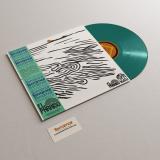
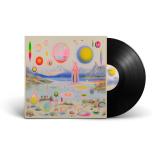
Following the release of Electric Rescue's new album, "Different Horizons", Laurent Garnier's COD3 QR returns to its signature various artists format for a new vinyl-only release featuring six new tracks, by WheelUP, Rapson & Kathy Brown, Mirko Loko, Costello, Jules Wells, Rod20 and James Warburton.
WheelUP is West London producer and DJ Danny Wheeler who's released music on CoOperation Records, Jamz Supernova’s Future Bounce and his long-time home Tru Thoughts. After appearing on COD3 QR in July with a track alongside Blu James, he now teams up with regular collaborator, music producer, DJ and keys player, Rapson, alongside acclaimed US vocalist Kathy Brown for the intensely soulful "Music".
Mirko Loko is a prominent Swiss talent, known for his work as resident DJ at Couleur 3 and Loft Electroclub, artistic director of Polaris festival and releases on Planet E, Border Community, Cocoon and Visionquest returns once again to COD3 QR with the Detroit-influenced "Silent Failure".
French electronic DJ and music producer, Costello returns for his sixth track on COD3 QR, having also released on Solomun's Diynamic, Chloé's Lumière Noire and most recently Maceo Plex's Ellum Audio. His bright Techno groover, "Cocotte" closes the A-side.
Another COD3 QR regular, Jules Wells opens the B-side. Influenced by the Motor City, Jules has released on labels like Electrofunk, Submerge, Twilight 76, KMS, Planet E, Brique Rouge and Logos. Here, he takes the EP into atmospheric territory with "The Rooster".
Benny Rodrigues has previously delivered tracks for COD3 QR as The Lost Souldancer. But now he reprises his Rod20 alias with "Stars Of Bethlehem". Rod20 is the dedicated hardware-only techno project he began in 2020, which prior to its standalone vinyl imprint, launched with a self-released compilation, followed by a dual-part album on Jeff Mills' legendary Axis Records.
To close the EP is the experimental ambient work of "You Are Carried On Waves Of Endless Love" by James Warburton. James is a composer and multi-instrumentalist whose work has appeared on TV and film including Netflix’s "Squid Games", HBO’s "Succession", the title music for Channel 4’s "Manhunt" and the original score for Endemolshine/Banijay’s hit TV series "Murdertown" and NBC Universal’s "Faceless" podcast.
Berlin-based Dutch-Italian composer and musician Aimée Portioli aka Grand River presents the new album Temporary, returning to the renowned Editions Mego label with her most expansive and focused LP yet.
Rooted in existential ideas of impermanence and flux, Temporary is a deeply emotive work centred on the rich interplay between resonant guitar work and innovative electronics. Written in the wake of profound personal grief and loss, the album sees Portioli infuse her music with a raw, expressive intensity anchored in this experience. Across eight strikingly melodic and affecting soundscapes, Portioli powerfully embodies a dramatic encounter with mortality.
Temporary reprises Portioli’s exceptional streak of material across acclaimed labels including Donato Dozzy and Neel’s Spazio Disponibile, Caterina Barbieri's light-years, Ghostly International, Tresor and Umor Rex. The LP represents the latest tour de force in her distinctive electronic practice. Alongside a raft of lauded releases, Portioli has devised visionary multichannel installations which dissolve the boundary between the art gallery and the performance space.
Her new album signifies a culmination of her work, imbued with the depth of Portioli’s artistry. Shaped by a paradigm shift rising from loss, the record reflects a contemplation of the human condition and the ephemeral nature of existence. Ruminating on the thoughts and experiences that have fed into the record, Portioli reveals a consequential recognition underpinning the record:
"Sometimes, when travelling in places far from home that I know I will most likely never return to, or while accompanying someone I loved towards the end of their life, I become intensely aware of the singularity of the moment, and of how precious and sad this feels at the same time. It carries a particular weight because it will never happen again in quite the same way. Through experiences like these, I have gradually come to understand the temporary nature of all things. They taught me that to live is to experience the present while already feeling the trace of its disappearance, something both painful and blissful." - Aimée Portioli, Grand River
The album is invested with a potent mood and momentum from the outset. Establishing an evocative tone with the subtle, pulsating synthesis, rustling undertow, and oceanic low end of 18 circles to heaven, Portioli gradually ascends through the incandescent modular majesty of Come to stay, and the turbulent, brooding guitar figures of The crossing of the body, the crossing of the mind. The album progresses through the rapturous electronic phasing of The little we last into the coruscating synth grandeur of Let me know when you’re pure, before a thrilling endgame.
Closing with the wavering harp runs, heavy percussive thud, and cataclysmic guitar discordance of Maybe I am dead and this is paradise, and the evanescent atmospherics and beautiful acoustic refrains of Work of ending, Portioli takes the listener through vast landscapes of sound and mercurial emotional states. Intimate and immersive in equal measure, the record traces a compelling sensory journey.
Each part of the album is part of a larger poetic sentence, with track titles forming fragments that together articulate a meditation on transience. From 18 circles to heaven and Come to stay through From the other side and Work of ending, they read like quiet statements about being human, about loving, losing, remembering and eventually fading. The record moves through these states as a continuous passage, depicting a poignant soundworld guided by temporality.
The awareness that our time is limited sharpens the value of what remains. Each encounter, each gesture, each fleeting moment becomes more vivid. Temporary lingers in the space where presence and disappearance coexist, where everything is already passing away and therefore becomes infinitely precious. Things matter because they do not last. Mortality does not diminish life; it intensifies it. In confronting these ideas, Temporary feels irrepressibly alive.
Composed, produced and mixed by Aimée Portioli
Production and mixing assistance by Luca Sammartin
Acoustic piano on Maybe I am dead and this is paradise by Andert Tysma
Mastered by Rashad Becker
Cut by Marta De Pascalis at Schnittstelle, Berlin
Artwork by Nicola Tirabasso
Layout by Riccardo Piovesan
New 3-sided double vinyl edition with bonus tracks. The first album contains the original album, while the second features a collection of bonus tracks originally included on the first bonus cd edition.
This album represents the musical mutation that occurred after the post-punk hangover gave way to more frigid emotional shores, in-line with the synth-wave moment that was sweeping Europe and the white cliffs of Albion. This scene flourished in Italy between 1981-1985, and the musicians that came out of it are still revered today (particularly in the US). Robotic rhythms and intuitions that, besides sharing common ground with the electronic movements that had come before, also knew how to fill up the dancefloor! Featuring four previously unreleased tracks by Der Blaue Reiter, along with tracks by Modo, Actor’s Studio and La Maison, as well as the still fresh sounding contributions by true pioneers of the genre Neon and Naif Orchestra.
Precious Bloom producer Dea returns on the Rush Hour Store Jams imprint with a fresh four tracker... tip!
The idea for Fairlight began shortly after Aradea Barandana purchased a Yamaha DX1 synthesizer. While exploring its presets, one sound in particular—called Fairlight sparked the initial concept for the EP. From there came the desire to create an Italo wave inspired track that would feel fresh to contemporary ears while still referencing the character of early electronic music.
Rather than following the traditional structure of dance music where drum machines and synthesizers lock into repetitive synchronized patterns the EP approaches composition more like a narrative. The music gradually unfolds, allowing melodies and harmonies to evolve so the listener is encouraged to stay with the piece from beginning to end.
Some of the harmonic ideas draw inspiration from Baroque music, particularly chromatic ascending progressions and voice-leading techniques. In contrast, other moments introduce playful bubblegum-inspired synth lines, adding lightness and color to the overall sound.
The result is a small collection of tracks that sit between nostalgia and experimentation where vintage synthesizers meet a compositional approach that values movement, surprise, and a sense of musical journey.
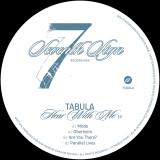
Scottish producer and label owner Graham Wilson signals a new phase for Seventh Sign Recordings with a four-track EP that blends Detroit techno roots with bright European electronic colours. Across the release, Wilson moves between pulsing four-on-the-floor rhythms, analogue basslines, crisp drum-machine percussion and shimmering synth work. "Mode" opens with an energetic, uplifting drive with steady kicks, pulsing bass and bright synth leads shaped with clean, modern production and side-chained pads. "Oberheim' follows with warm analogue textures, arpeggiated lines and optimistic pads, carrying a classic synth-wave feel while keeping a tight, Detroit-leaning groove. "Are You There" pushes into tense, atmospheric territory: rising pads, crisp hi-hats and a pumping bassline build momentum, giving the track a spacious, late-night techno edge. Closing cut "Parallel Lives" shifts into retro-futurist mode, neon-lit and melodic, evoking 80s energy and nocturnal late night drives. All in, a strong, forward-looking EP that connects machine-soul heritage with modern electronic clarity, ushering a fresh chapter for Seventh Sign.
Helene Rikhard had remained a hidden gem in the Norwegian electronic music underground for years, before she fully emerged on the international scene with these two critically acclaimed albums. Her sound is an ingenious mix of psychedelic disco, 80’s wave music, techno, krautrock, ambient and it truly operates in a world of its own. Drawing inspiration from the cosmic disco of Daniele Baldelli, the jazzy depths of Detroit techno and the esoteric dreamscapes of Laraaji, it’s astral music for astral people! Psychedelic to the core, but also warm, adventurous and highly original.
Her debut album Unpredictable Express is a dark, brooding masterpiece combining elements of cosmic disco, electro and techno Everlasting High serves as a beautiful, atmospheric counterpoint to its moody and mysterious predecessor, Feeling like a blissed out, hazy summer day, echoing childhood memories from Helenes youth, in the beautiful southern part of Norway. Everlasting High also sees Helene’s vocals coming more to the front. Mad Girl and Lions Eye are both beautiful, dubbed out synth pop with traces of 80’s synth, shoegaze, and reveals a fine-tuned pop sensibility, with a vocal style that’s sits somewhere between Kate Bush, Enya and Fever Ray.
Both as a producer and DJ, Helene’s style is easily recognized for her bold, genre-blending approach to electronic music. Mixing elements of ambient, techno, and experimental sounds, creating immersive, intricate and psychedelic tracks. Her DJ sets work the same way, blending Italo, High Energy and synth nuggets, effortlessly with strange, modern club sounds.
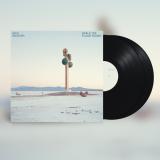
Oscar-nominated composer Max Richter's new album While The Flood Rages, drawn from Richter's latest collaboration with choreographer Wayne McGregor, MaddAddam, inspired by Margaret Atwood's trilogy.
Across 15 tracks split into three acts, Richter blends orchestral writing, electronics, processed field recordings, choir and piano to create an immersive sonic journey.
Themes of ecological collapse, technological acceleration and resilience run throughout, with recurring piano motifs providing moments of reflection amid dense, cinematic soundscapes.
Terramar is the confluence of Causa Sui and SoCal guitar genius Isaiah Mitchell. Recorded during a week-long immersion in the El Paraiso studio in Odense, Denmark, the group manifests deep currents of psychedelia and kosmische, riding them into a heavy, uncharted swell of sonic exploration.
On the group's self-titled debut album, Isaiah Mitchell – best known for expansive, high-powered guitar solos in Earthless – brings previously unrecognized sides of his musical personality to the surface. And what better assemblage for this endeavor than the El Paraiso Records crew – known for their genre-defying deep dives that explore krautrock, spiritual jazz and even electronic minimalism? The result is exactly what one could have hoped for in a trans-atlantic session like this: a collaboration where each party reveals new angles in the other's musicianship. A joint venture that manages to bring something new to light by paying homage to traditions of the past: Californian psychedelia, German kosmische and Scandinavian commune rock.
The group flies high on tracks such as ”Swell” and the scorching ”Melted Mountain”, but pushes into deeper experimental territory on ”Ritual De Fantasmas”, ”Caterpillar” and ”Borrego”, weaving synthesizers and studio manipulation into the fabric of their sound. Terramar is a true psychedelic delight.
Terramar is the confluence of Causa Sui and SoCal guitar genius Isaiah Mitchell. Recorded during a week-long immersion in the El Paraiso studio in Odense, Denmark, the group manifests deep currents of psychedelia and kosmische, riding them into a heavy, uncharted swell of sonic exploration.
On the group's self-titled debut album, Isaiah Mitchell – best known for expansive, high-powered guitar solos in Earthless – brings previously unrecognized sides of his musical personality to the surface. And what better assemblage for this endeavor than the El Paraiso Records crew – known for their genre-defying deep dives that explore krautrock, spiritual jazz and even electronic minimalism? The result is exactly what one could have hoped for in a trans-atlantic session like this: a collaboration where each party reveals new angles in the other's musicianship. A joint venture that manages to bring something new to light by paying homage to traditions of the past: Californian psychedelia, German kosmische and Scandinavian commune rock.
The group flies high on tracks such as ”Swell” and the scorching ”Melted Mountain”, but pushes into deeper experimental territory on ”Ritual De Fantasmas”, ”Caterpillar” and ”Borrego”, weaving synthesizers and studio manipulation into the fabric of their sound. Terramar is a true psychedelic delight.
Existing between Moscow and Milan, Interchain is a group that has been a cornerstone in the Moscow scene through the years, appearing and disappearing as they see fit.
The duo now debuts on L.I.E.S. with their "In My Apartment" lp. This records steps into a world of total disjointed angular electronic no-wave madness, somewhere between Devo and Liasions Dangerous...sharp sequences, thumping dx basslines, freaked out, on the verge of snapping vocals and bugged out textures. This music pushes and pulls the listener around until something just goes off inside of you. These nine tracks are on the boiling point, absolute frantic no-wave energy that will rock the floor.
This year marks the 40th anniversary of one of the true cult classics of the Italo Disco universe: Mike Mareen’s “Love Spy.” Released in 1986, the track sounded strikingly different from much of the dance music around it: futuristic, dramatic, playful and instantly recognisable. It quickly found its way into DJ cases across Europe and became one of the records that would define Mike Mareen’s electronic sound.
But the story actually began under a different name. An early incarnation of the song was called “Batman,” with lyrics inspired by the adventures of the famous comic-book hero and the villains surrounding him. A small number of promotional copies circulated before copyright concerns meant that the concept had to be abandoned. The title and lyrics were rewritten and “Love Spy” was born. The early “Batman” version has since become one of the most fascinating curiosities in Mike Mareen’s catalogue.
Four decades later, we felt an anniversary like this deserved something special.
LOVE SPY 40th Anniversary will therefore arrive in two parts, bringing together some of our favourite producers from today’s Italo, synth and electronic scene.
Part One features brand-new remixes by Luca Dell’Orso, Flemming Dalum, Also Playable Mono and Disco Computer. And enthusiasm was never going to be a problem here. “Love Spy” is not simply an ’80s classic, it remains a genuine DJ favourite, loved by old-school collectors and a new generation of Italo-wave selectors alike.
Alongside four killer new interpretations, we are bringing back the original Badman Mix, plus the highly sought-after “MAKE YOUR OWN MIX” material – rare set of individual elements created for DJs to deconstruct, combine and rebuild “Love Spy” themselves. These samples have become particularly desirable among collectors and make the perfect addition to the first chapter of our anniversary edition.
Four new remixes. Two pieces of history. Forty years of LOVE SPY.
And we are only halfway there.
LOVE SPY 40th Anniversary Part Two, featuring another line-up of major names from our scene arrives in November.
On the occasion of the 40th anniversary of the release of Remek Depo, the very first electronic record from the former Yugoslavia, the group Beograd has decided to unveil eight previously unreleased tracks in the context originally intended. The band initially planned to title their first album as Mrak ( eng. Dark). Recorded with Du Du A and other collaborators, this album serves as a manifesto of resistance—not only in Belgrade and Yugoslavia but everywhere else.
The A-side opens with the track 1984, named after George Orwell’s seminal novel. This piece was recorded in a single night in the same year, featuring Zoran Zagorcic (Du Du A) and one of the first Yamaha DX7 synthesizers. It encapsulates the dark and tense atmosphere of Belgrade during a period marked by economic crisis, characterized by shortages of essential products like coffee and oil, as well as electricity restrictions. This oppressive environment also impacted personal relationships, leading to unconventional expressions of passion and desire, as exemplified by the subsequent track from 1985, Mracni Predjet Zelja (eng: That Obscure Object of Desire). However, the primary source of frustration was political, stemming from the abuse of nationalism and the incitement of inter-ethnic conflicts within the complex Yugoslav society. This sentiment is vividly illustrated in the songs Hare Krishna and Belgrade Beat, recorded just before the country’s collapse in 1991. Remarkably, despite their protest, these songs convey messages of strong optimism and hope. In “Belgrade Beat Dejan Kostic (Du Du A) raps and Dejan Stanisavljevic sings. ”Od Studija B do Amerike, Beograd širi svoje talase, mi nismo sami u nama je svet, dolazi veliki preokret” (eng. “From Studio B to the USA, Belgrade spreads its waves, we are not alone, the whole world is with us, a great change comes!”). It is no surprise that this song was frequently broadcast on student Radio Index during the student and anti-war protests in 1992.
The B-side features contemporary songs produced by Beograd, which reflect protests against the current societal conditions in post-war Belgrade. Crafted with musical clarity and irony, these tracks satirize figures of repression, hitting their mark with an almost childlike purity, reminiscent of Hans Christian Andersen’s fairy tale, “The Emperor’s New Clothes.” The collaboration between Dejan Stanisavljevic, the leader of the Beograd and the Du Du A group not only influenced his musical expression but also laid the groundwork for the group’s socially engaged music in their later career.
As we remember the two late leaders of the Du Du A group, Dejan Kostic and Zoran Zagorcic, alongside the recently departed member of the Beograd, Milan Bubalo, this gramophone record stands as an important testament to the contributions of previous generations of artists in the fight for a fairer society. We hope it will inspire the younger generation in their current struggles, especially at a time when such inspiration is needed more than ever.
Since his 2013 debut album, Body Issues, Max Ravitz—better known to you and me as Patricia—has been zeroing in on the kernel of an idea. Across seven albums for labels like Opal Tapes, Spectral Sound/Ghostly International, and Acid Test, he’s applied his hand to a lean, focused vision of electronic music, paring away excess to lavish attention on carefully sculpted acid lines, stealthy drum programming, and warmly emotive melodies. For all their restraint, though, his tracks could never be called merely rote or efficient; even at their simplest, they’re steeped in atmosphere and shot through with layers of mystery. Now, on his first record for Balmat, he strips things down even further, revealing the ambient essence of his music.
Across eight tracks, he pours everything he has into the most minimalist music of his career. Many tracks
seem to have been made with just one synthesizer patch and some carefully applied effects—a honing of
his materials that brings the nuances of his music to the fore as never before. Elastic pitches warp and drift; fleeting harmonies bring out new dimensions in his synths’ timbres. “Murmuration” sounds almost like
Baroque music in its lithe, undulating counterpoints. “Birdsong” takes a classic choral pad and stretches it
horizon-wide. And songs like the closing “Yearn” allow the expressive dimension of his music to fill the
frame as never before.
The title Songs for Josephine pays tribute to Max’s wife. For years, she’s told Max she’d like to hear him
make an album without drums; he assembled these songs over time, always with her in mind. “Even with
my beat-driven music, I’ve gotten a lot of comments in the past about the ambient textures tucked into
those tracks, so I feel like people have been drawn to that aspect of my music for a while,” Max says. “It’s
been an interesting change of pace making a record with that side of my sound as the focal point.”
For listeners familiar with Max’s music, the effect may be uncanny: This is Patricia through and through, but heard in a whole new way.
—
Balmat is a label with a cloudy outline. Jointly shepherded by Albert Salinas and Philip Sherburne, two
friends living in Cardedeu, Catalonia, and on the Balearic island of Menorca, Balmat grew out of Lapsus Radio, a weekly show born almost ten years ago. Balmat’s mission is simple: to foster new ideas, expand upon personal obsessions, and put enveloping sounds out into the world. “Balmat” means “empty” or “void” in Catalan. But quite apart from any negative connotations, we prefer to think of it in terms of possibility: a space waiting to be filled.
Exos inaugurates the new sub-label on SHDW's Mutual Rytm with four 90s techno cuts, with offshoot imprint X building on the main imprint's DJ-friendly tools to delve deeper into a broader spectrum of electronic music.
Founded in 2022, SHDW's Mutual Rytm label has quickly become one of techno's most supported labels, with wide-reaching love and well-earned hype following a series of carefully curated VA offerings and solo EPs from a wealth of the scene's best. Continuing to push the pace, with more records capturing high-quality, fresh soundscapes, April brings a new project to the mix with the launch of a new sub-label X, with techno pioneer Exos drafted to deliver the first instalment.
Hailing from Iceland, the Planet X boss is a master of crafting perfect dancefloor weaponry. Over the last twenty years, his high-octane sounds have come via vital labels like Figure and X/OZ, never failing to make an impact with both DJs and dancers. Whether dubby or hard, his techno is always authentic and channels the purity of the 90s sound, and he brings this signature sound to four fresh productions across his 'Infrared' EP, marking an impressive debut for both label and artist.
The title cut 'Infrared' opens up the package in style and showcases a track that looks set to be a go-to anthem for many in the months ahead. With searing synth lines and drilling bass, the blistering production delivers a thrilling, high-impact techno sound that will devastate the dancefloor. The well-designed 'Kaldur Klaki' ups the ante even more with tightly coiled loops of drums, rusty hi-hats and stuttering synth lines that canter along with a muscular feel. 'The Bad' is twitchy and paranoid, anxiety-riddled techno that is perfect for dark warehouses and freaky dancers before digital bonus 'DS4BR' lands with a more stripped-back aesthetic with dubby undercurrents and static electricity fizzing across the face of the cut.
Each of the releases on Mutual Rytm X will be available on limited edition, coloured 10" vinyl, hence the Roman numeral X, and Exos' 'Infrared' EP kicks off the series on 19th April ahead of a new wave of killer releases scheduled across 2024.
Macedonian artist Stojche kicks off Mutual Rytm Xs 2025 schedule with his blistering new EP, Stomping Ground.
Stojche is an exciting DJ and producer from Skopje, Macedonia, who is currently based in Madrid. He heads up his Tangible Assets imprint and has been making waves in the electronic underground for over 20 years. His music takes inspiration from the classic sounds of Detroit and dub techno, and in 2024, he impressed with his Metaphor EP on F.U.S.E. Following on from his superb contribution to Mutual Rytms Federation of Rytm II compilation, here, he now serves up his first EP of the year with a first outing on X, the sister label of SHDWs Mutual Rytm, w Stomping Ground.
This EP opens up with the powerful Stomping Ground, a scintillating blend of tightly programmed kicks and reverberating percussive lines. The textured percussion shimmers over the racing beats and cannot fail to sweep dancers off their feet. Oberheim is another high-class, high-impact sound with muted melodies thinking over the twisting and turning drums and bass which never let up and ooze warm machine soul. Consequence keeps the pressure on with tight drums and raw percussive layers softened by smeared dub chords. Digital bonus The Vault shuts down with thumping kicks and rave ready synth stabs that will erupt on peak-time floors.
Cold and sinister combat electro by Russian newbies Larionov & St Theodore. Infectious analogue rhythms emerged deep down the hearts of these young souls. Bleak Warfare presents five cuts with each their own desire for the dancefloors.
In 2023, Kraków-based composer Martyna Basta and Los Angeles-based sound artist claire rousay were invited to Poland by Unsound for a short residency, where they spent a few days trading ideas and concepts, and brainstorming their first collaboration. Initially motivated to create lengthy, expansive pieces together, they also ended up experimenting with shorter vignettes, and ‘hotel room’ expresses these two extremes, featuring three long-form tracks and three brief, euphoric songs. “It wasn’t something we specifically planned,” explains Basta. “It just unfolded that way.” The most important stage of the process, however, was the period that followed the residency, when rousay and Basta began working on their sketches in isolation, trading drafts and sculpting the sounds independently before rousay handled the final mixdown. In the comfort of their own bedrooms, they were better able to reflect their individual creative routines, organically reaching a junction where their music felt truly unified. Even while they were in Poland, the duo joked that it might have been easier if they’d been holed up in separate rooms emailing each other.
Both artists have had an energetic few years: after steadily building a reputation for her diaristic and candid concrète experiments, rousay signed to Thrill Jockey in 2023, releasing the acclaimed ‘sentiment’, ‘a little death’ and the more eaze collaboration ‘no floor’; Basta, meanwhile, followed up 2023’s hallucinatory ‘Slowly Forgetting, Barely Remembering’ and her debut for Belgium’s Stroom imprint, ‘Diaries Beneath Fragile Glass’ with a studio album on !K7’s 7K sublabel: ‘Winged in Collapse’. The title of their collaboration reflects rousay and Basta’s hectic touring schedules in the wake of these releases, the constant feeling of displacement and the emotions that emerge when the environment is in flux. “I know we aren’t the only musicians traveling and creating work at the same time,” says rousay, “but being able to speak about that experience and all the things that come with it was comforting.” And the music itself, assembled from hypnagogic field recordings, spectral voices, electronics and filtered instrumental improvisations, sounds bewitchingly unmoored, not tied to a specific location but hovering around the uncanny space in-between.
Scratchy ASMR sounds introduce us to the opening track ‘zoom’, initially obscuring the duo’s elegiac harmonies. They are careful to let the various elements evolve at their own pace, with the fictile guitar drones melting into the foreground while Basta’s dissociated whispers and rousay’s illusory synths pick out the subtlest subliminal shades. It all builds to the piece’s dramatic third act, when layered chords ring out like organ blasts, enveloping the negative space. The shorter, more anxiety-provoking ‘denim’ is remarkably divergent, a dismantled folk memory pieced together from skeletal piano notes, vaporous choral echoes, haunting string plucks and pulsating feedback. Where the music aligns is in the mood itself, capturing a feeling that’s neither completely abstract nor fully referential. Not ambient exactly, ‘hotel room’ is a suite of soundscapes that gesture towards structure while repeatedly folding in on themselves.
On ‘Lost and Found’, wordless Autotuned ad-libs spiral around delicate guitar plucks and washing waves, coalescing into a faded Polaroid of opiated Americana, and on ‘Where Are You Now’, operatic squeals and corroded orchestral scrapes are juxtaposed with nauseous low-end tones. Evaporating until only industrial whirrs and music box chimes remain, the latter encapsulates the entire album’s chilling liminality, smudging saturated voices with casual electro-acoustic interjections before it erupts abruptly, transforming into a dense, pitch-skewed hymn. ‘hotel room’ plays like a surreal travelogue, teasing listeners with airy familiarities as it humidifies dry, awkward spaces. More a labyrinth of catacombs than a single, fixed chamber, it’s Escher-like – cryptic and seductive – and decked out with personal asides and intimate details that reward the most patient, curious listeners.
Devo Marries Gritty Guitars with Expansive Keyboard Canvasses on Duty Now for the Future:
Transitional Album Furthers the Band’s Satirical Stance, Includes Cover of “Secret Agent Man”
Hear the 1979 Record in Audiophile-Grade Sound and at 45RPM for the First Time:
Mobile Fidelity’s Numbered-Edition 180g 45RPM 2LP Set
Benefits from Enhanced Definition and Presence
1/4” / 15 IPS Dolby A analogue master to DSD 256 to analogue console to lathe
“Pop music needs a big enema.” Devo created Duty Now for the Future with that mission statement, relayed to the press by co-founding bassist/vocalist Gerald Casale, in mind. Though unfairly pegged by some as an example of the common sophomore slump, the record spurred the group’s interest in electronic instrumentation, extended its penchant for biting social satire, and contained another transformative cover song in the form of “Secret Agent Man.” Above all, the 1979 work proved the Ohio pranksters were anything but a joke even if they would have to wait one more year until for their mainstream breakthrough.
Sourced from the original master tapes, mastered by engineer Krieg Wunderlich, pressed at Fidelity Record Pressing in California, and housed in a Stoughton gatefold jacket, Mobile Fidelity's numbered-edition 180g 45RPM 2LP set presents Duty Now for the Future in audiophile-grade sound. Benefitting from the extra groove space on this first-ever 45RPM version, it plays with enhanced definition, deep-black backgrounds, and ultra-quiet surfaces.
Though certain band members later expressed regret with some of his decisions, the merits of Ken Scott’s production emerge like never before. A lurking edginess serves as a signpost in Devo’s progression before it fully embraced keyboards as a primary tool. Guitars possess punch and grit and, along with the crisp arrangements, are sharpened with an ear toward accuracy and vibrancy. It all helps give Duty Now for the Future a direct immediacy that answers the complaints of listeners who felt the affair too processed or sterilized.
Notably, a majority of the material here stems from the same grab bag of songs Devo banked before Warner Bros. signed it to a deal. The album marks a capstone to Phase One of a career that for all intents and purposes began in 1973. And just like many of the group’s performances of that era, Duty Now for the Future remains just as famous for the critical disdain it inspired as the music itself. A vicious review in Rolling Stone — the very publication that a few decades later would trumpet the band as one of the most important of its age — ended with the writer offering to send readers shards of the LP he planned on smashing to bits.
Perhaps he just needed to experience this new-wave effort with the restored sound that makes everything now feel so explosive and urgent. Whatever the case, the songs hold up and, amid a contemporary period which gives increasing license to artificial intelligence and behemoth conglomerates, seem more apt than ever before.
Consider “Blockhead,” which skewers the predictable appearances and numb-to-the-world actions of a rule follower. Or the similarly themed “Clockout,” an uptempo ditty whose thumbing-its-nose bravado and sardonic lyrics send up corporate culture with an irresistible smirk. As for the wiry, hard-hitting urgency of “Wiggly World” and Mark Mothersbaugh’s loud declaration that “They say the fittest shall survive/Yet the unfit may live”: Evidence these art-school rabble-rousers still had some punk fury to flush out of their system. And the sincere allure of the charged power pop and wishful circumstances of “The Day My Baby Gave Me a Surprize” cannot be denied.
To point to an interesting bit of history that makes Duty Now for the Future all the more intriguing, particularly for the most committed Spuds, more than half its tracks were selected for Greatest Misses — a 1990 anthology that celebrates lesser-known cuts and functions as a rejoinder to a hits compilation from the same year. (The only track from the 1979 album to make the “hits” disc: “Smart Patrol/Mr. DNA.”)
Indeed, tunes like the riff-driven albeit controversial “Pink Pussycat,” atmospherically twitching “S.I.B. (Swelling Itching Brain),” and ceremonial instrumental “Devo Corporate Anthem” may lack the catchy appeal and all-together coherence of what follows on the group’s third and most commercially successful effort, Freedom of Choice. Yet in order to get there, to de-evolve if you will, the band needed the smorgasbord that is Duty Now for the Future.
Move in Stereo: The Cars’ Eponymous Debut Album Functions as a Greatest-Hits Set with Classics Such as "You're All I've Got Tonight," "Good Times Roll," and "Just What I Needed"
Experience the Six-Times-Platinum Record in Definitive Sound on
Mobile Fidelity’s UltraDisc One-Step 180g 45RPM 2LP Box Set:
Strictly Limited to 4,000 Numbered Copies,
It Plays with Reference Definition and Presence
1/4” / 15 IPS analogue master to DSD 256 to analogue console to lathe.
Among the most critically and commercially successful debuts in history, the Cars' eponymous album doubles as a greatest-hits collection. Not one song on it is widely unrecognized or unknown. Consider the list: "You're All I've Got Tonight." "Good Times Roll." "Just What I Needed." "Moving in Stereo." "My Best Friend's Girl." "Don't Cha Stop." “Bye Bye Love.” Just call The Cars the best new-wave rock album ever made. And a natural candidate for preservation on a Mobile Fidelity UltraDisc One-Step pressing.
Sourced from the original analog tapes, pressed at Fidelity Record Pressing in California, mastered by engineer Krieg Wunderlich, and strictly limited to 4,000 numbered copies, MoFi’s UD1S 180g 45RPM 2LP box set presents the six-time platinum record in the most vivid, wide-spanning, three-dimensional sound it has enjoyed on vinyl. Compared to the label’s outstanding and out-of-print 180g 33RPM version, this collectible edition features richer textures, broader openness, greater presence, and bigger dynamics.
Benefitting from the extra groove space on 45RPM by playing with enhanced definition, deep-black backgrounds, and ultra-quiet surfaces, this reissue portrays the band’s oscillating rhythms, futuristic keyboard passages, and panned images with stunning realism. Songs take on an absolutely surreal quality. The Cars and producer Roy Thomas Baker manipulate arrangements at will to mesmerize listeners' senses. The concept of "moving in stereo” has likely never been truer.
The industry-leading packaging of the UD1S set gives fans another reason to gravitate towards the 1978 album. A deluxe slipcase, two foil-stamped jackets, faithful-to-the-original graphics, and MoFi inner sleeves make for a premium tactile experience. It invites you to immerse yourself in everything about the record, including the now-familiar cover art depicting Nataliya Medvedeva behind the wheel. Enhanced by her glistening ruby-red lips, her face flashes an expression caught between surprise, ecstasy, and disbelief — an apropos way of responding to The Cars whether you’re hearing it for the first or 1,115th time.
Introduced in 2024 into the National Recording Registry for its significance, and ranked the 353rd Greatest Album of All Time by Rolling Stone, The Cars explodes with emotion, energy, and hooks. Its songs unite then-disparate styles: bubblegum melodies, art-rock angularity, progressive structuralism, terse minimalism, and power-pop sheen. The stylish arrangements also benefit from a laidback cool and understated irony that remain uncommon in the world of contemporary mainstream music.
Equally rare is the deep chemistry the members shared before they entered London’s AIR Studios and knocked out the record in less than a month. Benjamin Orr and Ric Ocasek began their first band together in the early ‘70s. A subsequent group with future Cars keyboardist Greg Hawke preceded Orr and Ocasek bonding further by temporarily performing as a duo. One final pre-Cars ensemble, Cap’n Swing, brought guitarist Elliot Easton into the fold. A decision by Ocasek to take the band in a rock direction, a crucial lineup shuffle, and a name change begat the Cars so many listeners know and love.
Already a going concern in Boston, the quintet cut its teeth and woodshopped songs for nearly a year and a half before signing with Elektra and partnering with Baker. The Cars enjoyed success right out of the gate, hitting No. 18 on the Billboard Top 200 chart and netting a pair of Top 40 singles in the form of “Just What I Needed” and deceptively happy “My Best Friend’s Girl.” The sarcastic “Good Times Roll” climbed to No. 41, but soon enough, almost every track on The Cars became a radio staple — an honor far more meaningful than chart positions.
Obsessed with incorporating the latest technologies and sounds into its palette, the band spiced tunes with delightful and quirky accents — country-tinged guitar fills, echoing Syndrums, reggae splashes, hard-rock tones, robotic pulses. Orr's low, nuanced deliveries and Ocasek's cool, detached vocals lend shades of doubt and double meaning to the lyrics, which are further counterbalanced by synthesizer flourishes and electronic beats.
Accessible and eccentric, edgy and catchy: The results comprise a landmark whose characters come to vivid life with nuclear boots, dry-drip gloves, ribbon-festooned coiffures, suede-blue eyes, and rock ‘n’ roll hair. It's practically impossible to avoid humming along to every song, all enhanced by Baker's stellar production. Best known for his work with Queen, he ensured the record packed a punchy midrange, opened up with instrumental and vocal separation, and breathed with airy harmonies.
Indeed, from the timeless music to the sleek production and sonic restoration, The Cars on UD1S is just what you needed.
The NE21 stands as one of the most mysterious and elusive projects within the contemporary post-punk and minimal wave landscape. With only two previous releases—through Domestica and She Lost Kontrol—the project has already secured an unquestionable place among the essential names of the genre. After five years of complete silence on the release front, “No Zone” marks their long- awaited return. The record expands the project’s unmistakable universe: cold synth lines, suspended atmospheres, hypnotic rhythms, and a haunting sense of isolation that moves between Trisomie 21 minimal wave austerity and Neon’s emotionally charged post-punk tension, aligned with other Italian wave visionaries such as DsorDNE while connecting with newer tendencies in electronic krautrock and proto-experimental music. Everything in “No Zone” feels deliberate and restrained, unfolding a ghostly elegance, balancing shadowy electronics with sharp melodic instinct. With “No Zone”, The NE21 not only return—they reaffirm their singular position as one of the most distinctive and enigmatic voices operating in the darker edges of underground electronic music. Presented in ONE-OFF truly limited edition of 300 copies lacquered pressed on 180 gr. high quality solid BLACK vinyl. All tracks have been specially remastered and mastered for vinyl by Daniel Hallhuber at Young and Cold Studios (Germany).
Logout Record Shop Firenze is happy to present its first official release: LGT 001, signed by Novosti Kulturi. Known for his raw blend of electro, raw synth and underground industrial textures, Novosti Kulturi has been active within the darker electronic circuit through the Waveform community — a cult underground platform and party series connecting artists and dancefloors across Europe and beyond. Alongside connected to legendary German coldwave label Kernkrach, Berlin-based cassette label Detriti Records and London’s Meta Moto. Widely associated with contemporary electro, dark disco, techno and EBM-oriented dancefloors, Novosti Kulturi continues to shape a personal sonic language balancing cold machine-driven rhythms with saturated synth pressure, cinematic atmospheres, tape saturation and distorted nocturnal nostalgia. Built around classic TR drum machines, VCO and DCO synthesizers, 12-bit sampling and tape recordings, Novosti Kulturi operates like a transmission from an unidentified place — where past and future dissolve into raw sonic waves and frequency distortions.
This debut EP delivers five tracks moving across sharp electro rhythms, stripped techno structures and darker EBM-infused territories. Cold machine grooves, industrial tension and late-night melancholia define the release, balancing dancefloor functionality with a distinctly cinematic approach. Influences from electro-industrial, new beat and dark synth-driven club music emerge throughout the record’s sonic palette. With LGT 001, Logout Record Shop introduces a vision centered on artistic identity and storytelling, embracing a broad sonic spectrum rather than a fixed aesthetic direction. The label’s first release reflects this approach through Novosti Kulturi’s personal language — crossing styles, moods and textures while keeping a strong connection to modern underground dancefloors.
Returning to Samurai Music following last year's Between Veils, Sciama opens up a new portal of exacting sonic exploration with Wave Interaction. Moving through dense drone shrouds, steely sound design and tense, taut rhythms, Michael Watters lays out a manifesto for waveform resonance within the half-time D&B tempo range. Wave Interaction is the precursor to a forthcoming album that will lay out a purposeful study of the interaction between machine-made sound waves and human perception, inspired by the teachings of early electronic music pioneer Daphne Oram. As an opening statement, 'Cele' maximises on a patient, spacious arrangement that allows the carefully sculpted layers of waveforms to resonate with minimal distractions. Far from minimal, it's a dense and evocative sound world Watters builds up. 'Excitation' brings more detailed percussive sequencing into the mix, teasing pin-prick snatches of breakbeats and designer ripples that dart around the psychoactive tonal elements in the mix. 'Intermodulaton I' opens the second half of Wave Interaction on a crisp, stepping beat more than ready for the club. As ever, functionality is only one part of the picture as further uncanny sheets of ambiguously tuned synth work unfurl across the austere framework. 'Shifting Formants' has a knottier, tunnelling quality that joins the dots with techno hypnotism, made all the more immersive by the harmonic overtones radiating off the vibrant lead lines that give the track its distinctive character. Guided by a clear intention and a finely honed studio practice, the return of Sciama hails an impactful addition to his considerable catalogue and tees up further compelling exploration on the impending long player.
Double vinyl reissue of Skullflower’s epochal “IIRD GATEKEEPER” album - the first time that this album has been available on vinyl for 30 years. In addition to the original LP this definitive and expanded edition includes extra and unreleased tracks taken from the recording sessions. For the first time all the tracks recorded by the band during this period can be heard together giving fans unprecedented access to material previously only available in the bands’ archives. Recorded in London in 1991 and released in 1992 on Justin “Godflesh” Broadrick’s HeadDirt label in 1992, IIRD GATEKEEPER established a worldwide reputation and following for Skullflower and convinced many who heard it that they had encountered nothing less than the best band on the planet. Arriving at the height of the “grunge” and the expansion of underground guitar “rock” into corporate America, IIRD GATEKEEPER had its roots deep in the UK noise and power-electronics scene. Guitarist Matthew Bower and bassist Anthony Di Franco were both graduates of the Broken Flag school of British noise making with their respective projects PURE, TOTAL and JFK. IIRD GATEKEEPER was Skullflower’s third album and was the first of the band’s albums to feature a consistent line-up throughout its production: Matthew Bower (guitar), Anthony Di Franco on (bass) and Stuart Dennison (drums). Recorded and mixed in four sessions between January and June 1991the tracks on this edition of IIRD GATEKEEPER shows the band’s new line up developing their sound, warping and evolving in real time. As such this edition of IIRD GATEKEEPER provides a unique document of the band in a state of transition, with the chemistry of the individual playing combusting in the studio to create a wave of astonishing creativity. IIRD GATEKEEPER is perhaps the definitive British underground rock album of the 1990’s – unique and never equalled. With this new edition Dirter Promotions allows Skullflower fans old and new to listen to this classic album as it was intended: spark up, crank it up and prepare to have your ears and mind blown
For thirty years, Alden Tyrell has been at the forefront of electronic music. This analogue alchemist has concocted heady grooves that transmute genres: acid, disco, electro, house, italo and techno; no style left unturned. Under his Tyrell Corporation moniker, he returns to the Bordello with a sound forged for dancefloors. Midnight Machines is a warm embrace that melts electro‑disco with star‑gazing synthlines. “Midnight Machines Pt. 1” balances robust melodies and incising snares with soulful undercurrents and joyous breaks. Past energies are re‑channelled. Arpeggiators rumble as beats throb. Beneath it all, there is a greater consideration of the interplay of elements.
This focus pulsates through speaker cones on the needle‑drop of “Love in Decay.” Elated key changes and bright shifts are tempered by bittersweet moments, early‑morning light piercing fresh mists of grey. Tempos rise on the flip with “Midnight Machines Pt. 2.” Sci‑fi‑scored disco lifts ever higher as scaling notes untether themselves from the floor and soar above vibrant rhythms. Coy and alluring, the bright “Romance Obscura” closes the record. Cowbells and bending wavelengths open into an expansive, intoxicating melody where keys search the horizon as arms fold around celestial bodies.
A deliberate sonic and emotional architecture that doubles down on intensity to shatter and rebuild the listener in one unrelenting wave.
Third album from System Olympia, following acclaimed releases like New Erotica Collection LP (2023) and Delta Of Venus LP (2020), solidifying her as a bold, self-produced voice in electronic and italo-disco-inspired music.
Releases on Okay Nature Records (her own independent label), with digital out now (March 6, 2026) via Bandcamp/Spotify and limited-edition black vinyl 12" LP shipping from April 6, 2026-fully written, recorded, produced, and mastered by System Olympia herself.
Extended tour in the months ahead, kicking off with confirmed live events including a Double Climax Listening Party, plus performances at The Cause (60 Dock Road, Outside) in London on April 3, 2026, and Burgess Park in London on August 2, 2026-expect further dates to build momentum through spring/summer 2026.
Compounding a reputation for his unique vision on techno with an uncompromising underground ethos utilising a fusion of deep and energetic electronics, Lee’s sound always creates a myriad of tension and construction which has seen him become one of techno’s elite, appearing in the most prestigious underground venues across the planet. His consistently original and dynamic productions, which have earned him much international ecognition, are frequent and in great demand. Appearing on many impeccable cutting edge and classic imprints over the years, Lee’s music has generated relentless plays and support from the brightest and leading connoisseurs in the underground techno scene.
Continuing with the ‘Limited As Fuck’ series of releases, on our fiercely independent techno label based in Scotland, we’ve got an electronic guardian of such resolute astral belief in how the purest of dance music should be relayed to the occupants of any Celestial City. You will believe in RIOT when we say “The ‘Sentinel’ has awoken.”
Featuring eight tear drops out of the smoke fuelled rain from a distant belt in the galaxy, no ‘Moonrunner’ will be able to surf the ‘Gravitational Waves’ this Motor-City inspired journey takes you on. Book yourself passage on the Starliner ‘Off-World’ for a stargazing extravaganza into ‘The Gates Of Orion’ and witness the brightest of glimmers ........... in the dark.
The full digital release also features one bonus spellbinding track so your mind can melt into the depths of
space and time.
WARNING: YOU WILL OBEY IN ORDER THAT RIOT CAN TAKE YOU ONE STEP BEYOND …………….
Credits:
Written by Lee Holman
Mastered by Joe Farr
Artwork by Alan D. Oldham & Nomad
OMEN's self-coined descriptor "broken cyberpunk ritual mechanical techno" could sound like hyperbole, that is, until you drop the needle on 'Inner Brilliance' and the rugged off-beat kicks and towering saw wave pressure back up the claim. Elsewhere, 'Paraphysics' descends further into claustrophobic industrial hostility, while 'Propensity' introduces alien electronics and futuristic vocal fragments that shift and mutate with unsettling energy. The remix package is equally formidable as ORPHX bring decades of techno craft to a fluid, timeless rework, while label heads AXKAN and DUELLIST deliver feral, heavyweight peak-time destruction. 'Void That Binds' closes with lingering mechanical unease. Uncompromising and brilliant.
“Nimm die rosa Brille … sag was Du siehst … alles viel besser”
44 years after its original release, one of the most idiosyncratic DIY minimal electronics / synth / new wave records of the early ’80s returns: the legendary 7” by German group DEUTSCHE SCHÄFERHUNDE (engl. German shepherds)—now remastered and reissued for the first time as a one-sided 12” on Anna Logue Records. Recorded in the winter of 1981/82 between rehearsal space, provincial disco and bar nights, and a humble four-track setup, these tracks capture the raw spirit of a generation that simply started creating—no formal training, but plenty of attitude. Minimalist, uncompromising, and inspired by krautrock, punk, new wave, electronic music and dub, the songs move between raw electronics, percussive noise, new wave experimentation, and sharp social commentary. „Rosa Brille“ (rose coloured glasses) in particular feels as urgent today as it did back then—a track that has lost none of its relevance, „Gasmasken“ tells of gas masks dancing in the woods to the sound of sirens, and a timeless Holger Czukay/Jah Wobble inspired „Mein Herz“ (my heart).
Originally pressed in a small run of just 500 copies and later becoming a sought-after collector’s item now worth 200€, the record now returns in a carefully crafted edition featuring a laser-printed reverse side and additional materials such as original lyric sheets and articles, postcard and poster. DEUTSCHE SCHÄFERHUNDE thrived on paradox—a provocative name paired with a clear stance, and lyrics that still resonate today. Shaped by Cold War tension, political unease, and youthful rebellion, their sound refused to fit into any neat category. Only few other bands, such as Der Musikant, Im Namen des Volkes, Thorax Wach, Klinisch Sauber oder Stephan Eicher spielt Noise Boys come to mind.
This release is more than a reissue—it’s a document of its time that still hits with full force.
12″ features: limited to 400 copies, hand-numbered, one-sided 180g black vinyl, laser-etched B-side, outer sleeve printed on reverse side of the board, printed inner sleeve with original lyrics sheets and original articles, DIN A3 poster, double-sided postcard
Thirteen years have passed since their debut album, but now Oppenheimer MKII is ready to release their long-awaited second album "Embrace The Dark”.
Oppenheimer MKII is Andy Oppenheimer, singer, songwriter and formerly one-half of 1980s synth-pop duo Oppenheimer Analysis, one of the leading bands of the ‘minimal synth’ scene, and inspiration behind the New York-based Minimal Wave label and Mahk Rumbae, electronic musician and producer known for his work with Codex Empire, Mitra Mitra, and long-running UK industrial/experimental band Konstruktivists.
“Embrace The Dark” does exactly as its title suggests: it embraces dark, apocalyptic themes for our current turbulent times. In nine mind-blowing tracks, Mahk’s thunderous dance rhythms and addictive synth-pop melodies combine with Andy’s latest dystopian – and sometimes utopian – visions of our past, present and future.
From the atmospheric title track, greatly influenced by Andy’s lifelong obsession with space – ‘When you embrace the dark, you gaze back in time...’ to delusional tech-bro world domination in “I Went Too Far” – ‘The sky is not the limit; my wealth is infinite’ and the pounding paranoid lead track “Oh! My Mind is a Storm” – ‘When I go dark, I'm into demon mode’, the new Oppenheimer MkII album “Embrace the Dark” ventures deep into futuristic dreams and nightmares and is guaranteed to fill the dancefloor.
Tadan’s area127 returns with Sun & Moon, a two-sided exploration of modern psychedelia and exquisite sound design — balancing sprawling daylight hypnosis with nocturnal pull.
The LP’s “Sun” side reflects an uplifting current. Kaspiann’s “Lilja” deploys deep techno finesse, flowing through contours of luminous synth progressions and forest-dwelling resonance. A resurfaced 1996 cut, Deviant Electronics’ “Radio Silence” emerges from the Goa continuum — progressive chord sequences, sci-fi atmospherics, and euphoric momentum recalibrated for contemporary dancefloors.
The “Moon” side turns inward and nocturnal. Whrikk’s “Specter” drifts amid ghostly psychedelia, pairing dreamlike synth work with evolving arrangement pressure and submerged low-end movement. On “Seijaku”, Solarythm distills ritualistic hypnosis and rolling bassline into a fluid story — a forward-facing statement from the blooming wave of trance.
Electron waves rise high.
Paula's eyes half open, heart pounding, as she
seeks the line, carving through the curving crown.
And as the sine collapses she exits as one.
POEME ELECTRONIQUE was Dave Hewson (synthesisers, production), Sharon Abbott (lyrics, lead and backing vocals), Julie Ruler (backing vocals) and Les Hewson (bass), formed in 1980 by Dave Hewson in South London, UK, in 1980. Dave was studying music and as a rare kind of student species he had a deep fascination for New Wave and electronic music thus also playing and recording electronic music ever since like using the Boss DR-55, Cosmo Sound Super Drum, Elka Rhapsody 610, EMS Synthi AKS, Korg MS-20(X2)/Polysix/Polyphonic Ensemble 1000/VC-10 Vocoder, Linn Electronics LM-1, Octave Kitten, Roland RS-09/VP-330 Vocoder Plus, Simmons SDS-V Kit and Yamaha CS-80 on this retrospective POEME ELECTRONIQUE album with original material from 1981/82 only. Over the period of more than two years, Dave has remastered these tracks using the latest high-end tools making them sound better than ever before. The deluxe 2LP vinyl album comprises 16 tracks of which 14 have never been published before. “The Echoes Fade” and “Voice” are the original versions taken off their original 7” from 1982. The album “The Echoes Fade” cannot be described other than being a masterpiece and one of the best-ever early 80’s electropop records ever, and it surely has to be lined up with Rational Youth or Experimental Products’ cult albums (in terms of being minimal synth/wave scene reference albums), but to be frank, Anna thinks that POEME ELECTRONIQUE were even above their level.
Truly, they had deserved to go on the successful path like Depeche Mode, OMD or Soft Cell, but fate was against them as it seems. The main difference to other electropop groups of the time was definitely that Dave did not only master his synths technically-wise, no, he also knew how to actually play, and when you hear his amazing multi-track ‘manual sequencing’, programming skills, great harmonies and melodies throughout the tracks, along with the two girls’ performances – well they can really sing! – you will agree there is some something remarkably extraordinary in these tracks. You will find minimal electropop super hits like “Rendezvous”, “She’s an Image”, “Fragile”, or “Dilemma”; hauntingly beautiful melancholic tracks like “A Mourner’s Lament”, “This Night” or “It’s in the Atmosphere”; darkest minimal electronics on “Inside his Head”; and even more poppier tracks like “Follow”. This record will hopefully be loved by any electronic music lover and most probably marks the highlight in the growing Anna Logue Records catalogue – therefore Anna did not shy away from any costs and the album is truly an outstanding release in every single aspect including sound and artwork presentation. Apart from the bonus tracks you will find in the 2LP deluxe vinyl edition glossy inner sleeves with lyrics to all songs, as well as individual mini 7” sleeves for each song designed by our dear graphic designer Steve Lippert plus many additional group photos on the gatefold sleeves’ inner. After so many efforts and more than two years passing by, Anna is so over the moon to see this release being ready now and we have done all we could to make this an outstanding release, so now it’s up to you to give the band their final glory, but Anna is in no doubt that – at least after hearing the sound samples – you will.
"MODEM - In itself, as a name invented for a band, it's significant. MO comes from "MOdulazione." DEM comes from ''DEModulazione'', logical functions in analog and digital transmissions. And the signal that the Bologna duo AMIN-PECK want to give us is that "Your Fun" and "Valerie" contain artistic and musical information, especially avant-garde, created in an electronic style with strong new wave tendencies, but absolutely ahead of its time. Among the Italian discos of end 70s that represented a cultural phenomenon that has remained in the collective imagination, ''Picchio Rosso'' stands out. Besides serving as an entertainment venue for thousands of young people, it served as a bridge between DJs and many talented young musicians. The discotheque was the laboratory for 4 Italo-Disco productions, all recorded at the Amin-Peck studios in Bologna, under the direction of Giancarlo Meo, who, after the successes of Easy Going and Vivien Vee and other Claudio Simonetti productions such as Capricorn and Kasso, enjoyed great esteem and prestige. This is how excellent Italo-Disco songs like "Another Song" by Music Service, "Eve of Destruction" by Vivien Vee, "Boogaboo" by The Jugglers, and "Running Straight" by Amin-Peck were born, the latter being the true musical architects of Peecker Melody, including the one-off project MODEM.. What can be said about "Your Fun" and the instrumental "Valerie"? Simple, slightly hypnotic, wellconstructed, and catchy songs. Just as the two songs were mixed by various Picchio Rosso DJs of the time--Luca Zanarini and Silver were the most legendary--Best Record has reissued them, with the same cover designed by Leonard Parker and featuring Claude Gorial, the man who 40 years ago designed the original cover and the current reissue. Same names, same success !!!"
Thirty years. That is how long it has been since 1996, when European electronic music was
overwhelmed and reshaped by a wave of melody, melancholy, and rhythm. At the center of that
big bang was Roberto Concina, known ar1s1cally as Robert Miles—a visionary capable of bringing
Dream Trance to the global stage. Today, to celebrate three decades of pure sonic magic, "Fable"
returns to the turntable in a splendid celebratory reissue that stands as a well-deserved act of love
for an ar1st who passed away far too soon.
If Children was the programma1c manifesto of that era, Fable was its emo1onal evolu1on—the
track that proved dance music could touch in1mate and cinema1c chords. Listening to it today,
remastered for vinyl, is an experience that goes way beyond a simple nostalgia trip. This 30th-anniversary reissue splits into two versions to sa1sfy both purist DJs and avid collectors,
offering two excep1onal vinyl op1ons:
The Standard Edi3on (Black Vinyl): Perfect for audiophiles and DJs who want to spin this
track in their sets without the fear of wearing out a museum piece. The warmth of the
black groove enhances the dynamics of the famous piano line and the depth of the
enveloping bass.
The Limited Edi3on (Transparent Blue Vinyl - Limited & Numbered): The true crown jewel
of this release. Visually stunning, the transparent blue vinyl seems to evoke the dreamlike,
liquid, and suspended atmosphere of the track itself. The fact that it is a limited, handnumbered edi1on instantly makes it a grail for collectors worldwide.
Thirty years. That is how long it has been since 1996, when European electronic music was
overwhelmed and reshaped by a wave of melody, melancholy, and rhythm. At the center of that
big bang was Roberto Concina, known ar1s1cally as Robert Miles—a visionary capable of bringing
Dream Trance to the global stage. Today, to celebrate three decades of pure sonic magic, "Fable"
returns to the turntable in a splendid celebratory reissue that stands as a well-deserved act of love
for an ar1st who passed away far too soon.
If Children was the programma1c manifesto of that era, Fable was its emo1onal evolu1on—the
track that proved dance music could touch in1mate and cinema1c chords. Listening to it today,
remastered for vinyl, is an experience that goes way beyond a simple nostalgia trip. This 30th-anniversary reissue splits into two versions to sa1sfy both purist DJs and avid collectors,
offering two excep1onal vinyl op1ons:
The Standard Edi3on (Black Vinyl): Perfect for audiophiles and DJs who want to spin this
track in their sets without the fear of wearing out a museum piece. The warmth of the
black groove enhances the dynamics of the famous piano line and the depth of the
enveloping bass.
The Limited Edi3on (Transparent Blue Vinyl - Limited & Numbered): The true crown jewel
of this release. Visually stunning, the transparent blue vinyl seems to evoke the dreamlike,
liquid, and suspended atmosphere of the track itself. The fact that it is a limited, handnumbered edi1on instantly makes it a grail for collectors worldwide.
Dutch electronic maverick Spekki Webu stretches out on an expansive album for new label Outer Orbit Records, exploring his deep and wide-ranging influences across a captivating narrative of tripped-out beatdowns and evocative dreamscapes. Spekki Webu is someone who was naturally drawn into the magnetic pull of Outer Orbit after playing for their sister party Mizz Softee. As the time-travelling album title suggests, it's a meditation on formative sounds that propelled him on to myriad adventures across the many microcosms of electronic music. That means indulging in slower tempos and crooked grooves, with the influence of trip hop and illbient looming large in the boom bap drums that punctuate many of the album's passages. There is also space for immersive techno that operates as a lighter reflection of the sound he is best known for, as well as hints of buoyant house music, rolling breakbeat, dislocated ambient and intricate electronica. Cari Lekebusch, a key influence, contributes a rolling, heavy-grooving remix that closes out the record.
Sometimes the title of an album tells you everything you need to know. Laurence Pike’s Possible Utopias for Jazz Quintet is like that: The music within represents a search for freedom, potentiality—liberatory strategies that transcend the ego and the solitary, atomized figure.
But in this case, the album title is also a red herring, because there is no jazz quintet here—just Pike, his drums, and his machines, not so much an ersatz ensemble as a purely notional one, a thought experiment equipped with drumsticks, circuitry, and the desire to go beyond hardwired limits.
And the results, strictly speaking, aren’t really jazz, though they incorporate the vocabulary of jazz, along with that of ambient, electronica, and post-rock. They are some other thing, cognizant of genre but never beholden to it. Again, we’re talking about a search for freedom here.
The Sydney-based musician has a long history of coloring outside the lines, not just in his solo recordings—including four albums for the Leaf label between 2018 and 2024—but also in the trio Pivot (later PVT); Szun Waves (alongside saxophonist Jack Wyllie and Border Community’s Luke Abbott); Triosk, which recorded an album with Jan Jelinek in 2003; and even post-punk titans Liars, whom he joined in late 2018.
Of his first album for Balmat, Pike says, “My loose concept was: What does music sound like when the expectations of late capitalism are removed from it? How might a jazz musician from an idealised culture of the future, or even another world, utilise musical language when the conventions of style and marketing are no longer a factor in music making?”
That inquiry, he says, connects to his “guiding principle: that the purpose of music is to access something bigger than the individual, and reveal a sense of possibility and freedom in the world to the listener. To create an understanding that the future can be something other than what we imagined or expect, even unconsciously.”
Heady ideas, but plug into his stream-of-metaconsciousness flow and you may start to intuit what motivates him. There is a deeply lyrical expression in these pieces—in the ruminative piano of opener “Guardians of Memory,” for example—but also a sense of exploded perspective, of ideas approached from more angles than any one mind could dream up. Of a collectivized consciousness, of mycelial networks branching across tone and rhythm and timbre, of ideas articulated in distributed fashion, nodal points dancing across drum heads.
Pike’s imaginary quintet is hardly without precedent; it’s a continuation of concepts floated across Jan Jelinek’s Loop-Finding-Jazz-Records, Burnt Friedman’s many guises, and much of the recombinant improv of the International Anthem roster, not to mention the far corners of ECM’s catalog in the late 1970s and 1980s, which Pike says have been integral to his development since he was a teenager. Possible Utopias for Jazz Quintet is a point in a continuum, a voice in a conversation, a question with no obvious answer: How can the search for otherness in music manifest something true about ourselves?
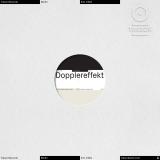
Marking the anniversary of three decades of career, Dopplereffekt debuts on Tresor Records with Metasymmetry, arriving 12 December 2025. This latest release finds members Rudolf Klorzeiger and To-Nhan in deep inquiry in sound, contemplating structure and pattern in physics and nature resulting in a harmonious audio tessellation.
Metasymmetry itself relates to a kind of second-order reality found not in the structures of life but in the rules that govern these structures; that order exists not only in things but in the relationships among systems of order. It is a structure of structures, a logic of laws, an abstract unity embedded in the act of transformation itself.
Accordingly, the four-track EP reflects this duality. Each side opens with a piece of electronic music at its most precise and immovable: defined, kinetic, architectural. This is followed by a second composition that dissolves into a weightless, atmospheric counter-form.
The shift evokes a higher symmetry: an alignment not of parts, but of principles; a sonic model of the universe’s hidden invariance.
Metasymmetry also echoes across Dopplereffekt’s extended sonic continuum; this stands as the first offering on Tresor under the Dopplereffekt name despite an association with the label and club going back to the start. In this, it becomes the source of an echo that reverberates backwards through time; its own reflection:
Long Island Sound's new self-titled 6-track EP captures the Dublin duo at their most dynamic yet.
Following heavy rotation on BBC Radio 1, alongside support from industry heavyweights the likes of Marco Faraone and fka.m4a, the new record brings their trademark blend of energy and emotion to new heights.
Marking a defining moment in their trajectory, the EP is a snapshot of a duo stepping fully into their identity. With growing international attention, a forthcoming Irish tour and a sound that continues to resonate across scenes, this EP positions them firmly at the forefront of Ireland’s electronic music wave.
Selection of IKIGAI Album by Nadia Struiwigh. IKIGAI was born in the quiet space between grief and remembering... Made entirely on hardware, from my living room in Berlin near Hermannplatz (my dad's name is Herman -- the odds), in the months my father passed away. Every sound, every sequence, every texture carries his fingerprint. Not because he made music, but because he made me love gadgets. Circuits, signals, blinking lights. He was the man who opened me up to machines and taught me how, eventually, to listen to them and use them for my craft. The name IKIGAI, a Japanese word for ''reason for being,'' found me when I was at a crossroads. The kind where you ask yourself: Why am I still here? What am I still creating for? What part of me still believes in beauty when everything feels like it's falling apart? These pieces came through slowly, on Japanese gear like Yamaha SEQTRAK, KORG, Roland -- like threads weaving a tapestry I didn't know I was making. Each track is a kind of purge... to him, to myself, to the listeners who find themselves in the in-between. The space where you're not who you were, and not yet who you're becoming. I found myself back into soundscapes and Ambient with a touch of Electronica. I weaved in sounds I captured from daily life, memories -- like the laugh of my sister. I built in silence and let the machines cry for me and let them tell the story I couldn't find the words for. IKIGAI is spacious. It's not trying to impress anyone. It's trying to just be, and hold space for all kinds of emotions. It moves like memory... slow, sacred, shifting. This release needs to be close to home, and will be released on my own imprint Distorted Waves, on the day 11.11 -- which refers to my first album that my dad had hanging up in his shed. For my father. Nadia
![Various - [QR]V.324.SDD.26](https://www.deejay.de/images/l/1/1/1270011.jpg)