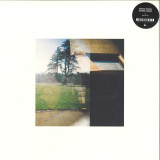
Meg Baird’s songs are rarely made up of tidy stories. In fact, for Meg, mystery itself is often the
medium. With ‘Furling’, Meg’s fourth album under her own name, she explores the breadth of
her musical fascinations and the environments around them - the edges of memory,
daydreams spanning years, loose ends, loss, divergent paths, and secret conversations under
stars. ‘Furling’ moves through these varied spaces with the slippery, misty cohesiveness of a
dream - guided by an ageless, stirring voice that remains singular and unmistakable.
Since co-founding the beguiling and beautiful Espers in the mid-aughts amid Philadelphia’s
fertile underground music community, Meg’s solo recordings have constituted just a fraction of
her work.
Her first solo LP, the disarmingly out-of-time ‘Dear Companion’ (2007), saw her carve a quiet,
sunlit space away from the flickering swirl of Espers. Since her last solo releases, ‘Seasons on
Earth’ (2011) and ‘Don’t Weigh Down the Light’ (2015), Meg has lent thunderous drumming,
lead vocal, and poetry to Heron Oblivion (Sub Pop) on an album that garnered praise from the
New York Times and made Mojo’s Top Ten Albums Of 2016 list. She collaborated with harpist
Mary Lattimore on the mesmerizingly hazy ‘Ghost Forests’ (2018). She’s played drums with
Philadelphia scuzz-punks Watery Love (In The Red, Richie Records) and explored her deep
familial folk roots in the Baird Sisters (Grapefruit Records). She also contributed her vocal
arrangements to albums from Sharon Van Etten, Kurt Vile, Will Oldham and Steve Gunn, and
toured with Angel Olson, Dinosaur Jr., Bill Callahan, Thurston Moore and Bert Jansch, among
others.
Yet ‘Furling’ is the album that most irreverently explores the span of her work and musical
touchstones. It showcases her natural tether to 1960s English folk traditions. But it also reveals
her deep love for soul balladry, the solitary musings of Flying Saucer Attack and Neil Young
shackled to his piano deep in the foggy pre-dawn, dubby Bristol atmospherics, the melancholy
memory collage of DJ Shadow’s ‘Endtroducing’, and the delicious, Saturday night promise of
St. Etienne.
‘Furling’ was primarily recorded at Louder Studios by Tim Green (Bikini Kill, Nation of Ulysses,
Melvins, Wooden Shjips). Additional piano and vocal recording were captured at Panoramic
Studios in Stinson Beach, CA with Jason Quever (Papercuts). It was mastered in Brooklyn by
Heba Kadry, who mixed Bjork’s ‘Utopia’ and mastered albums for Slowdive, Cass McCombs
and Beach House.
For all its adornments, ‘Furling’ remains deeply intimate. The entire album was performed by
Meg and her long-time collaborator, partner, and Heron Oblivion bandmate Charlie Saufley.
While her prior solo work hinted at more expansive horizons, ‘Furling’ explores the idea of Meg
Baird as a band much more freely. Venturing beyond the musical confines of fingerstyle guitar,
she plays drums, mellotron, organs, synths, and vibraphone over her piano and guitar
foundations. Her distinctive, simultaneously elegiac and uplifting vocals, meanwhile, connect
surreal dream montages, graft sunshine sonics to swooning mediations on romantic solidarity
in trying times, and weave odes to the simple gestures of friendship - and the loss of family and
friends.
This rich sound world makes the songs a varied bunch: ‘Twelve Saints’ mates Pacific sunset
ambience and Pink Floyd pastoral to a meditation on mortality and escape. The infectious and
kinetic ‘Will You Follow Me Home’ contemplates hope and longing through the looking glass of
a Jimmy Miller-era-Stones strut. And in the closing piece, ‘Wreathing Days’, language
disintegrates over tone clusters that feel somewhere between falling and flying.
‘Wreathing Days’ also reveals much about Meg’s mastery of contrast - situating the dear and
delicate adjacent to chaos. And while it’s true that some songs on ‘Furling’ grapple with
humanity’s existential unknowns in stark terms, they primarily revel in the mysteries that hide in
nature and humanity at their most ordinary. ‘Furling’ lives in the notion that whole universes of
experience, enlightenment, elation and ecstasy can bloom in these corners.
Suche:elegia
Tape
Originally released in 2019, Craig Tattersall unspooled a gorgeous tape of disintegrated piano meditations and dusty lower case ephemera.
On the A-side it’s a dreamily searching, silty flux of piano notes peeling in slow motion. Strings drift over, connoting cold breezes and infrasonic, spectral presences, but the effect is far from menacing, it’s more a tranquil shade of sublime, like those hours after midnight when the meridian sounds of road traffic and human life have ebbed off into the distance and you’re left with the sighing creaks of a room.
The sound is remarkably different on the B-side. Here the air gradually thickens with murkier sub-harmonic distortion, bordering on a seething sense of aggression relative to most of Tattersall’s other output, pushing the grim murk to a logical entropy that precipitates elegiac pauses for reflection and warbling closure.
MONO’s first-ever feature-length motion picture soundtrack. My Story, The Buraku Story is a new feature-length documentary film that explores the discrimination against a group of people – commonly called “the burakumin” who were classed into lowly groups and segregated from the rest of Japanese society. This discrimination is not by race or ethnicity, but rather by place of residence and bloodline, and has existed for centuries – albeit very rarely acknowledged or discussed in Japan. When director Yusaku Mitsuwaka imagined the exemplary score for such a culturally sensitive and significant subject, he idealized MONO to help tell this story through their legendarily cinematic music. Following their recent experiments with electronic textures infused into their trademark dynamic rock compositions, My Story, The Buraku Story finds MONO at their most understated and elegiac. The songs that make up My Story, The Buraku Story are largely built around piano, strings, synths, and choral vocal loops. As one might expect from MONO, the arrangements are masterworks of understated execution with oversized emotional resonance. By far MONO’s most delicate album, it is a fitting document of the band’s first-ever full-length film soundtrack.
Human Remains follows Creatures of the Deep and Black Sarabande as the final installment of a trilogy of piano based recordings by Robert Haigh for Unseen Worlds. The trilogy marks the end of the late era of solo albums by Haigh before he steps away from music production. The title, Human Remains, was initially based on a painting of the same name by Haigh that is suggestive of an ancient structure resolute in the wake of overwhelming forces. As a metaphor for our current times, it could be interpreted as human frailty in the face of nature's unyielding dominion. Conversely, it could represent the persistence of human spirit and resourcefulness in the midst of catastrophe and upheaval. The album opens with 'Beginner's Mind' - a semi-improvised motif develops into an impressionistic refrain. This is followed by "Twilight Flowers" and "Waltz On Treated Wire" - intimate, monochrome piano portraits. Later tracks such as "Lost Albion" and "Signs Of Life" build on skeletal piano motifs with subtle electronic washes, textures and field sounds. The album ends with the elegiac "On Terminus Hill" where a stately piano refrain explores a series of sparse harmonic variations evoking a sense of closure.
As Far As Death is the cross-generational debut of fire music evangelist and saxophonist Paul Flaherty with double bassist and composer Zach Rowden. The Connecticut natives forge an album of dynamic free jazz interplay that also draws on imporous textures of contemporary music - an ecstatic reflection. After a half century of blowing the alto and tenor saxes, Flaherty's playing continues to molt and electrify. Whether solo, or with collaborators (Joe McPhee, Chris Corsano, Bill Nace, Daniel Carter, etc.), his blues-based, lyrical melodies anchor lung-bursting gallops. Rowden - whether as Tongue Depressor (a string duo with Henry Birdsey), in performance with cellist Leila Bordreuil, or his own musique concrète constructions - balances harshness and elegiac drones. His past releases resemble resolute exploration into acoustics and noise. Together, Flaherty's monstrous howl is perfectly matched by Rowden's subterranean pitched drone and glacial pace. Each offers weeping lurches of tune, gasps of balladry and microtonal fields of interplay on five pieces. The side-long "Thrown Shadows" is an epic passage of avant jazz vs minimalism, as Rowden's low-register bowing offers a blackened landscape for Flaherty's most mournful notes. Artwork by Chris Corsano.
West Mineral return with a followup to Mister Water Wet’s 2019's subtropical ambient slow-burn debut ‘Bought the Farm’, expanding Iggy Romeu's horizons to contrast feverish Afro-Caribbean ambient jazz with jaunty illbient and atmospheric freakouts. Low-lit heat that’s highly recommended if yr into Nick León, Carlos Niño, Kelman Duran, Gonçalo F. Cardoso.
Mister Water Wet continues to excavate the tropical soundscapes that simmer the producer's Kansas City home with his Puerto Rican roots, on a new album of extended vignettes and mood pieces that cross a late 90’s Mo Wax instrumentals vibe with present day feelings of displacement and ennui.
LP opener ‘Bory’ tunes us into Water Wet’s weirdly fuzzed frequencies, where tremeloed strings and found sounds resemble what might have been a lost dean blunt x dean hurley sound design concept for Inland Empire, while ‘I Saw the Green Flash' opens a swirl of strings and traditional rhythms caught in a reflecting pool of canned classical orchestrals and 1950s theremin wails. 'Good Apple’, meanwhile, cranks up the mood with aged x looped piano paired with an undulating, bass-heavy shuffle that wouldn't sound out of place on a Kelman Duran x Martin Denny mixtape.
'When Kennybrook Burned to the Ground' leans into heady jazz vapours, spreading crackle over pitch-fucked horn samples, but it’s the producer's weird use of percussion that keeps us gripped: scattering his arrangements across the grid, mimicking an ensemble of players deployed in irregular formations. Romeu embraces trip-hop on 'Any Other Time', blending Afro-Caribbean percussion with a swung downtempo beat, while ‘Isthmus’ reminds us of the clatterbox plunder of Moonshake’s PJ Harvey hookup ‘Just a Working Girl’ - with all its asymmetric hooks.
The extended closing track 'Losing Blood' takes a leaf out of Fennesz's glitched rulebook, stretching and folding disintegrating loops through an 11 minute descent into the elegiac aether.
As a duo they embrace both sides of the coin, drums and guitar, chaos and order, male and female, ying and yang, the angel and the devil. They are more than the sum of both counterparts though, making for a maximalist auditory experience. PIKA brings her skills of mystifying performance to the table, all free-drum bluster and vocals veering between shrine maiden and wild spirit. Kawabata's guitar-work moves from a roar to a whisper, a yell to a sob, he's working on the same canvas of extremes. The aim of their unity is to write truly celestial hymns for the outer world and odes of love for the inner cosmic context.
No strangers to one another, the pair have not only gigged together with their respective bands but also recorded together, when these two outfits temporarily fused in 2005 to become Acid Mothers Afrirampo (releasing an album of the same name). Two years later they distilled their collaboration, all other players being stripped away to leave the core of Pikacyu's manic drums and pop vocal, and Makoto's schizoid guitar conjurings. In 2011 they spent five weeks touring the US and their first album, 'OM Sweet Home: We Are Shining Stars From Darkside', which was released by the esteemed UK label of all things heavy and brilliant, Riot Season. Last year they spent two weeks touring through Europe whilst writing a new album suffused with the outreaching sound and message of their impulsive live performances. This new album is entitled 'Galaxilympics' and will be released by Upset The Rhythm on August 4th on LP and CD.
'Galaxilympics' is an album of contrasts, so much colour, so much shade! 'Space Sumo' kicks off the record in explosive style. Pikacyu's drums jitter, crash and stumble, but steadfastly refuse to groove. Makoto attacks his guitar, cloaking himself in reverb to produce a wall-of-sound, alternating between melody and noise. 'Funifunikonefuni' follows with it's frenzied take on pop music, bubbling with energy and PIKA's multiple vocal layers. 'I'll Forgive' is chant-like in its devotion to following the tumbling melody line of the song even to absurd and unpredictable dimensions. 'Pika Mako Hall' is a more serene affair, with whispered echoes and guitar drones swirling amongst bursts of rapid sequencer ambience. 'Castle Of Sand' picks up on this more spacious approach with slowly developing programmed electronics, before the title track erupts with gurgling synths, soaring guitar trails and PIKA's most searching vocal yet.
The album concludes in reflective manner with the suitably titled 'Sayonownara', a song as much in the present as it is in the act of saying farewell. It's positively elegiac with washes of cymbal and deep acres of guitar drone for the first five minutes before PIKA's drums take things up a gear and into more psychedelic out-rock terrain. This insurgence eventually peaks and the album melts away to silence. PIKACYU-MAKOTO have made an album that takes you on a trip into your very soul before emerging once more at the edge of another galaxy. 'Galaxilympics' is a triumph of opposites united, it enjoys walking out into the unknown, but it's also a portal into the very real world of two musicians who find peace and semblance through their interaction. Hymns and odes to one side, this is a giant album of future-facing song and noise, where better to find harmony enthroned
With selections ranging from Praetorius to Britten,
plus all-time favourites by J.S. Bach (The
Christmas Oratorio) and Handel (Messiah), this
album brings together some of the most beautiful
and justly famous musical settings of the Nativity
story.
Festive or intimate, exuberant or elegiac, these
highlights from iconic recordings in harmonia
mundi’s voluminous catalogue are an ideal
sampling of the Christmas magic across epochs
and styles.
Experimental and improvisational psychedelic rock, for fans of White Heaven, Les Rallizes Denudes, Headroom, Düngen, Heron Oblivion, Comets On Fire, The Renderers, Bardo Pond. Mountain Movers arguably are the perfect band for all the true "heads" out there. The New Haven quartet have been at it for 15 years, and the "newest" lineup (now at it for well over a decade; vocalist/guitarist Dan Greene, bassist Rick Omonte, guitarist Kryssi Battalene and drummer Ross Menze) have firmly grasped what it takes to fry brains; achingly beautiful melodies buoyed by a life raft of white-hot guitar scree and mind-melting feedback. "World What World" is the band's eighth album and third for Trouble In Mind Records. "World What World" is the newest chapter of the group's continued explorations and efforts to refine their sound. The lyrics of "World What World"s songs all imply a protagonist on a quest; the title itself is an implied query with no question mark; is it a question, or a statement?. The one-two punch of opener "I Wanna See The Sun" and "Final Sunset" lay out what's in store; Crazy Horse-inspired sandpaper melodies sit comfortably next to improvised, PSF-influenced six-string ragers. The group performs together effortlessly and telepathically, subverting the loud/quiet/loud dynamic that has saturated independent music since the late-Eighties. The loud parts and quiet parts are like waves; indistinguishable from each other, creating a fluid dynamism and intensity that swallows the listener up in its current, sweeping it toward oblivion. Hyperbole, you say? Watch out for midway through "Then The Moon" when the tune's lilting waltz pivots into a casually blistering solo by Battalene before fading into the melancholic "Haunted Eyes" - beckoning you with a mournful sidelong glance. Side Two opens with "Staggering With A Lantern", an elegant, lumbering instrumental improvisation again showcasing the synergistic shredding of the group's guitarists. The sticky lyrical hooks and sideways jangle of "Way Back To The World" and "The Last City"s midnight-hour, mellow singe come next, before concluding "World What World"s journey with "Flock of Swans". The song is the perfect closer and culmination of the album's mission statement. The subjects that populate Greene's songs and visual imagery augment his elegiac lyrics, awash in magical realism and fantastic symbolism; knights, fighters, dragons, masks. Poetic missives are launched from the heart straight into the neural pathways, guided by the rhythm section's otherworldly chemistry and Battalene's masterful control over her instrument. Mountain Movers have been at it too long to care about acclaim. They do it because the music calls out to them, and they let it carry them away.
Three decades on, Nick Lowe has evolved from British pub-rock pioneer
(with Brinsley Schwarz) to new wave godfather (producing Elvis Costello,
among others) to postrock crooner.
It’s a surprising but convincing transformation, begun with the country-inflected minimalism of 1994’s superb The Impossible Bird and pared to an even
leaner chamber pop on this subdued charmer. Bird found Lowe damping his
jokester’s instincts to dig deeply and soberly into romantic despair and a gnawing, midlife confrontation of self.
While the tracks on Dig My Mood suggest that some of the wounds have
healed, there’s still an elegiac air to songs like “Faithless Lover,” “What Lack of
Love Has Done,” and “Failed Christian” that qualifies these as songs of experience. Lowe’s baritone has deepened and acquired a deft finesse with redeeming glimmers of wit and no loss of intelligence.
The 2021 reissue of Dig My Mood is remastered from the original tapes.
- A1: Prelude
- A2: A Minor Astronomical Event
- A3: A Move To Neptune
- A4: Physical Description Of The Last Human Beings
- A5: Architecture
- A6: Supreme Monuments
- B1: Telepathic Unity
- B2: Childhood/Land Of The Young
- B3: The Navigators
- C1: The Sun
- C2: A New Doom
- C3: Task No 1 The Scattering Of Seeds
- C4: Task No 2 Communicating With The Past
- C5: The Last Office Of Humanity
- C6: Slow Destruction Of Neptune
- D1: The Few That Prevail
- D2: The Last Men
- D3: Remembrance Of The Past
- D4: The Universal End
- D5: Epilogue
(Re-Issue)
This reissued standard vinyl edition of Jóhannsson’s brilliant and seven years in the making work 'Last and First Men' is replacing the limited edition box set, that has originally been released with the album. Please note the Blu-Ray and art prints from the limited edition box set are not included. While composing haunting, elegiac concept albums of lost utopias and working for TV and film the Icelandic composer Jóhann Jóhannsson was thinking about a project on an even larger scale since 2010 - a multimedia work that would include his own visual concept, direction and music. Based on the cult science fiction novel by Olaf Stapledon, Jóhann Jóhannsson's opus magnum Last and First Men artfully combines music, film and narration from Tilda Swinton, sitting somewhere between fiction and documentary to form a poetic meditation on memory and loss.
- A1: A Military Alphabet (Five Eyes All Blind) (4521.0Khz 6730.0Khz 4109.09Khz)/Job's Lament/First Of The Last Glaciers/Where We Break How We Shine (Rockets For Mary) (Five Eyes All Blind)
- B1: Fire At Static Valley
- C1: Government Came (9980.0Khz 3617.1Khz 4521.0 Khz)/Cliffs Gaze/Cliffs' Gaze At Empty Waters' Rise/Ashes To Sea Or Nearer To Thee
- D1: Our Side Has To Win (For Dh) (For Dh)
180g LP + 10" im Gatefold mit Thermographie, bedruckten Innenhüllen und Download Coupon. GY!BE kehrt mit einem weiteren Soundtrack für unsere Zeit zurück, wie ihn nur dieses unnachahmliche und ehrwürdige Ensemble schmieden kann. Das neue Album besteht aus zwei fesselnden, 20-minütigen, LP-Seiten füllenden Epen aus lärmgetränktem Breitwand-Post-Rock, während die beiden begleitenden 6-minütigen Stücke der 10" die Band aus Kanada in ihrer verheerendsten, eindringlichsten und elegischsten Form zeigen. Unerbittliches Tuckern blüht auf, während einige der hochfliegenden, brennenden Melodien der Band inmitten von Geigen- und Basskontrapunkt abprallen und zusammenlaufen. Field Recordings und aufgewühlte, halb-improvisierte Passagen umrahmen diese inbrünstigen Epen. Ergreifende Atmosphären, geräuschhafte Orchestrierung, Drone, hypnotische Swingtime-Crescendos, unaufhaltsam geschichtete Türme aus verzerrtem Klargesang: STATE'S END verkörpert jede geliebte Facette der Band. Fünfundzwanzig Jahre später ist dieses neue Album so vital, mitreißend, zeitgemäß und unerbittlich wie jedes andere in der geschichtsträchtigen Diskographie von Godspeed You! Black Emperor. So wie STATE'S END die ganze Bandbreite der klanglichen Trademarks von Godspeed vereint, so umspannt auch das Album-Artwork die gesamte visuelle Geschichte der Band: die körnige, monochromatische Fotografie der letzten Veröffentlichungen findet ihren Weg auf die Innenhüllen, während das Klappcover auf die ikonischen Grafiken früherer Klassiker wie Slow Riot For New Zero Kanada und Lift Your Skinny Fists Like Antennas To Heaven zurückgreift. STATE'S END ist mit Illustrationen von William Schmiechen versehen, wobei die Taijitu-Blumen auf der Vorderseite und die Tränengaskanister auf der Rückseite des Covers in erhabener, thermografischer, schwarzer Tinte auf dem Doppelvinyl-Albumcover abgebildet sind. Das leuchtende Kreuz von Godspeeds Debütalbum F#A#INFINITY taucht auch auf der Innenseite des Klappdeckels wieder auf, als wiederkehrende Hommage an das elektrifizierte Hügelkreuz in der Heimatstadt der Band in Montreal. STATE'S END wurde im Oktober 2020 in Montreal im Homebase-Studio der Gruppe, Thee Mighty Hotel2Tango, von Jace Lasek aufgenommen und abgemischt, dem altgedienten und preisgekrönten Indie-Produzenten (und Mitbegründer von The Besnard Lakes), der mit Godspeed bei dieser Aufnahme zum ersten Mal zusammenarbeitet. Danke fürs Zuhören. UNSERE SEITE MUSS GEWINNEN. (R.I.P. D.H.) ENG audiophile 180gLP + 10" in gatefold jacket with thermography, colour flood interior, artworked inners, DL card. GYBE returns with another soundtrack for our times, like only this inimitable and venerable ensemble can forge. As the heretical impudence of the anarcho-punk title implies, Godspeed harnesses some particularly raw power, spittle and grit across two riveting 20-minute side-length trajectories of noise-drenched widescreen post-rock: inexorable chug blossoms into blown-out twang, as some of the band's most soaring, searing melodies ricochet and converge amidst violin and bassline counterpoint. Field recordings and roiling semi-improvised passages frame these fervent epics, and two shorter self-contained 6-minute pieces find the band at its most devastatingly beautiful, haunting and elegiac. Poignant atmospherics, noisedrenched orchestration, drone, hypnotic swingtime crescendos, inexorably-layered towers of distorted clarion sound: STATE'S END encapsulates every beloved facet of the band. Twenty-five years on, this new album is as vital, stirring, timely and implacable as any in Godspeed You! Black Emperor's storied discography. Just as STATE'S END summons the gamut of Godspeed's constituent sonic trademarks, so the album artwork spans the entirety of the band's visual history: the grainy monochromatic photography of recent releases finds its way onto the inner sleeves, while the gatefold cover art harkens back to the iconic graphics of earlier classic records like Slow Riot For New Zero Kanada and Lift Your Skinny Fists Like Antennas To Heaven. STATE'S END features illustrations by William Schmiechen, with the front cover taijitu flowers and back cover tear gas canisters rendered in raised thermographic black ink on the double-vinyl album jacket. The illuminated cross from Godspeed's debut F#A#8 also makes a reappearance on the inside gatefold drawing, in recurrent homage to the electrified hilltop landmark crucifix of the band's Montreal hometown. STATE'S END was recorded and mixed in Montreal in October 2020 at the group's homebase studio Thee Mighty Hotel2Tango by Jace Lasek, the veteran awardwinning indie producer (and co-founder of The Besnard Lakes) who works with Godspeed for the first time on this recording. Thanks for listening. OUR SIDE HAS TO WIN. (R.I.P. D.H.)
Gerald Clayton gehört zu den wichtigsten Modern-Jazz-Pianisten unserer Zeit. Auf seinem zweiten BlueNote-Album will sich der sechsfach Grammy-nominierte Musiker mit den Auswirkungen der abstrakten Kraft der Zeit auseinandersetzen.
Bei der spannenden Umsetzung in mal lyrische, mal swingende, mal treibende Jazz-Klänge unterstützen ihn niemand Geringeres als sein berühmter Mentor Charles Lloyd am Saxophon, sein Vater John Clayton am Bass, Justin Brown am Schlagzeug und erstmals MARO als Vokalist.
Zu hören sind Originale, Stücke des katalanischen Komponisten Federico Mompou und von Geralds Onkel Jeff Clayton sowie zwei atemberaubende Solo-Klavierversionen des Standards „My Ideal“
- 1: Summer's Children
- 2: Joyous Lake
- 3: Treetops
- 4: The Big Deep
- 5: Mumbly-Peg
- 6: Slow Fawns
- 7: Camp Sunfrost
- 8: Overlook Mountain House
- 9: Saw Teeth
- 10: Witch Water
- 11: Magic Meadow
- 12: Summer's End
A Letter from TreeTops is the debut album from Pneumatic Tubes, the solo project of multi-instrumentalist Jesse Chandler. Grounded here in his own bucolic makings, Chandler opens his imagination to the world with this very personal and contemplative album. It’s a kind of American Kosmiche Music, a paean to the wild landscapes of the Adirondacks and Catskills of Upstate New York where he grew up. (TreeTops is the name of a summer camp, fondly remembered by several generations of the Chandler family.)
The album came to Chandler almost as an automatic transmission. Shortly after the death of his father, he holed up alone in the old family home with a few synths, a couple of vintage keyboards, percussion instruments and of course his beloved flutes and clarinets - the “pneumatic tubes” of his nom de plume. Channelling raw memory and landscape, Chandler laid down most of the material for this mystical and elegiac suite of music in just a few days. He later called on some talented friends to flesh out the final recordings; Paul Alexander on bass, Bill Campbell on drums, Marissa Nadler backing vocals and Robert Gomez on electric guitar.
The result is a series of beautifully faded musical photographs. Gentle melodies are propelled along by synth arpeggiators or laidback sidestick and felt beater drums. Chandler’s wind instruments are woven throughout like wild vines binding the elements together. Towards the end of the album an underlying note of melancholy swells into grief during the very moving Witch Water, which is subtly underpinned with Marissa Nadler’s haunting voice. The clouds soon clear, the mountains reappear, and the wheel of the year and of the generations turns again as A Letter from TreeTops signs off with the same lilting melody on which it began.
Originally hailing from Woodstock, New York and now living in Denton, Texas, Jesse Chandler is the keyboard and woodwinds player for the bands Midlake and Mercury Rev. His particular warmth as a composer and improviser is informed by a childhood ensconced in the mystical Catskill mountains, where he absorbed the area’s rich musical history and developed a fascination with keyboard and woodwind instruments.
A Letter from TreeTops is not his first appearance on Ghost Box, he also contributed organ and flute on the Soundcarriers’ incredible Entropicalia album.
Evocative liner notes are provided by Justin Hopper, author of Old Weird Albion and writer of the Ghost Box spoken word album Chanctonbury Rings. By happy coincidence Hopper also grew up in New York State and has his own deep connection to the landscapes there.
You might know Barnt as one of the people behind the idiosyncratic imprints Magazine and Schalen, through which he released his most of his EPs and the incomparable 2014 debut album, Magazine 13.; or maybe you know the thread of beautiful, unpredictable club hits he’s woven with labels like Cómeme and Hinge Finger.
Despite living in Cologne, and being friends with the label, Barnt has not put out anything on Kompakt yet, apart from an one-off appearance on Pop Ambient 11 over a decade ago. An EP had been in the air for several years, but it took Barnt a bit of time to get into the right state of mind, because he wanted to make sure the music paid tribute to “the ceremonial, emotional, grand sprit” that he connects with Kompakt.
Typical to the producer’s modus operandi, ProMetal Fan Decor Only Product spins out a surprising narrative, catching the listener unawares, while remaining fundamentally Barnt. After the elegiac opener “Fan”, stately in its melancholic, epic flourish, “You Know What’s Gone” stomps into earshot, the pounding thud of the drums pinning clanging patterns to the dancefloor, a Sturm Und Drang symphony, the tones all clashing metals and silvers.
After that, there’s release – the hypnotic psychedelic reels of “This Is For Decor Only” are Barnt gone trance, a sensual glide of a track that pirouettes out an eternity of sizzling hi-hats and strip light melodies. While you might want to be alone when listening to “Fan”, you might have the time of your life dancing to “This Is For Decor Only”, played by your favourite DJ at your favourite festival this Summer.
With ProMetal Fan Decor Only Product, wrapped in a sleeve by artist Lukas Heerich, Barnt and Kompakt finally come together, equal parts refined elegance and sweaty fervour.
Triumph breeds confidence, and with confidence comes an expansion of ambition, a focus of ability, an emboldening of audacity. De-Loused In The Comatorium had risked everything Omar and Cedric possessed on the wildest of gambits, the most impossible of dreams: making sense of the riot of influences ricocheting about Omar’s head, and memorialising their departed friend Julio Venegas through Cedric’s magical realist roman-a-clef. It Clouds Hill shouldn’t have worked. But it did, and with that fiendish tightrope act successfully accomplished, the duo stretched the wire even further and higher, over a figurative fiery pit peopled with lions, crocodiles, piranha and other sharp-toothed beasts not yet known to man. Because how do you make great art without taking great risks? Frances The Mute was no De-Loused Part Two. For one thing, the band’s configuration had changed, in the most painful way. Shortly before the release of De- Loused, sound manipulator and founder member Jeremy Michael Ward passed away, a wound Omar says the group never recovered from. But even though his inspired fucking- with-the-sonic-parameters is absent from Frances The Mute, his spirit and influence can still be determined, the album’s concept derived from a diary Ward had encountered in his day-job in repossession. “Jeremy picked up lots of interesting stuff when he was a repo man,” remembers Cedric. “Weird things, including this diary, He let us read it a bunch of times. It was by a guy who’d been adopted and was searching to find his real parents. It was very surreal, it didn’t make much sense – the guy might’ve been schizophrenic – but it was very inspiring. It felt like how certain music helps you escape your boring every-day life. The names and scenes in the diary directly inspired these songs.” Some of the tracks pre-dated De-Loused, having their origins in early demos Omar recorded at the duo’s Long Beach home Anikulapo, songs such as The Widow and Miranda The Ghost Just Isn’t Holy Anymore. Cedric had heard these jams in their embryonic state and began working in his mind on what he could bring to them. “I was attracted to The Widow like you would be to a lover, right?” Cedric remembers. “I sang over it with Omar while we were touring De-Loused in Australia on the Big Day Out, like, ‘Okay, I’ve got something for this.’” A potent ballad, laden with emotional crescendos and evoking the epic drama of Ennio Morricone – an effect aided by an elegiac trumpet part performed by Flea – The Widow would become The Mars Volta’s first song to chart on the Billboard Top 100, capturing the album’s potent sorrow and widescreen sprawl in miniature. Indeed, the lush sound of the album, the depth of detail and breadth of instrumentation, belies its grungy roots. Having tasted the luxury of Rick Rubin’s mansion, Omar veered in the opposite direction when recording Frances, cutting the album in what he describes as “a shithole... Basically a warehouse with one little air conditioner on its last legs, awful wiring and a console you couldn’t rely on. We were there night and day – I would literally lock engineer Jon DeBaun in there. He slept on a mattress in the vocal booth.” A considerably more complex and ambitious album than its predecessor – four of its five tracks lasted over ten minutes in length, with its closing epic Cassandra Gemini spanning over half an hour – Frances The Mute wasn’t recorded “live” by an ensemble, but with the individual musicians coming into the “shithole” and recording the parts Omar had scripted for them separately. “They had to have absolute trust in me,” Omar remembers, “Like actors trust their director.” In addition to the core band – now fleshed out with incoming bassist Juan Alderete, and Omar’s brother Marcel on keyboards and percussion – the album featured guitar solos from John Frusciante, saxophone and flute by future member Adrian Terrazas-Gonzales, a full string section, and piano played by Omar’s hero, salsa legend Larry Harlow. “It was a childhood dream come true,” Omar says. “We recorded with him in my hometown in Puerto Rico, and my father flew in to watch the session. Larry was a perfect gentleman, and a very lively spirit.” The album’s fevered intensity infected even the staid string section, Cedric remembers. “When they performed the part on Cassandra Gemini, ’25 wives in the lake tonight’, one of the guys in the orchestra played so hard he broke his bow, this real old, antique bow. And you could see his ‘classical’ side come out – like, ‘I broke this playing a fuckin’ rock song??’ He was pissed off. But I was like, ‘Fuck yeah, man, that’s on the record! You’ve got to realise things like that are cool.’” The album also features field recordings of “the coqui of Puerto Rico” during the opening minutes of Miranda That Ghost Just Isn’t Holy Anymore. “We took a page out of the Grateful Dead’s book there,” laughs Cedric. “They recorded air. We recorded fuckin’ frogs in Puerto Rico.”
Red Vinyl
nown for her delicate compositions, soaked in dream-like surrealism, Icelandic musician Sóley has attracted a huge following since launching her solo career back in 2010. Her 2012 single ‘Pretty Face’ went on to generate an enormous amount of buzz, and quickly became a viral sensation. Now, with three solo LPs under her belt, Sóley is preparing to debut a completely new sound via the release of her new concept album, Mother Melancholia, on October 22nd.
Described by the artist as "Nosferatu meets Thelma and Louise in a vampire church under the watchful eye of David Lynch", Mother Melancholia is the soundtrack to the end of the world as we know it. As a self-confessed news addict, Sóley became obsessed with the idea that the world is ending. Having surrounded herself with real-life stories of global warming and patriarchal politics she couldn’t shake the feeling that she was going to die. This feeling was so all encompassing that it sparked the idea for a new project. Could there be a soundtrack for the last days of humans on earth? How would that sound?
“I read books about possible dystopian worlds and started writing poems about irrational and in love characters who live in gray and cold imaginary loneliness. In each other’s burning arms. Walking in circles with no way out” she explains. “After all, the album reflects our life here and now. Our life and reality is a kind of dystopian world.”
Whilst writing the album, which serves as a tongue-in-cheek eulogy to our planet, Sóley began reading about ecofeminism, a branch of feminism which uses the concept of gender to analyse the relationship between humans and the natural world. Ecofeminism emphasizes that both women and nature must be respected but also separated. Since the beginning of time, the natural world has been synonymous with female identity, phrases like Mother Nature are commonplace. “The patriarchy views women as volatile and hysterical. Earth and women are either our saviours or our destroyers,” explains Sóley. “It’s so easy to abuse the earth, like the patriarchy has abused women since the dawn of time, then ask for forgiveness afterwards and promise they´ll never do it again”.
The new album sees Sóley move away from the indie-pop of her previous releases. She began by experimenting with writing songs on the accordion, allowing her a new sense of freedom in her writing. The process allowed her to broaden her horizons even further and experiment with a whole range of new and exciting sounds. “I bought myself a theremin as I was really excited about the unpitched sound and there is no perfect pitch during the end of days,” she laughs. “I also bought a mellotron, my first moog and a cello and taught myself how to play each of them. All of these new instruments are particularly suitable for the kinds of aesthetic inconveniences which I have learned to embrace.”
Album opener ‘Sunrise Skulls’, one of the most cinematic moments on the album, was inspired by the Me Too and SlutWalk movements and tells the story of a group of women who rise up and fight the patriarchy. ‘Blows Up’, a track that would be at home on any horror soundtrack, is a sarcastic love letter from the Earth to humans. Standout track ‘Desert’ is an incredibly moving song dedicated to the next generation. “It’s about the guilt you feel, as a mother, for having children and leaving them on the frontline. My daughter, for example, will take over this inevitable war” explains Sóley.
In true soundtrack style, the album flows through the end of the world in chronological order, closing with the Earth’s final moments. ‘Sundown’ is a dark piano ballad detailing human kind’s final day on Earth. “And everyday, I dig my own grave, and as I dive in you´ll hold my hand” she sings, over twinkling piano and swirling synths. We then hear the world end on ‘XXX’, a dark and swirling soundscape that swells before fading to silence. On ‘Elegía’ the silence then turns to the sound of the ocean, as we hear the Earth, like a woman finally free from a violent relationship, healing on her own.
Mother Melancholia is the mark of an artist confidently striding into more experimental territory. With a lengthy and successful career behind her, Sóley felt compelled to try something new and express the real her. The music might be shrouded in darkness but it’s a move that fills her with joy and freedom. “I hope that people not only enjoy the new sound, but also that Mother Melancholia might raise some questions in people, particularly women,” she says. “I’m under no illusions that this album will change the world but I hope that people can connect with the idea”.
Three years ago Danish guitar player and highly acclaimed session musician Jacob Gurevitsch made his solo debut with 'Lovers In Paris', a sweetly melancholic single which conquered sunsets worldwide and earned a place in many quality compilations and has over 10 million views on Youtube. Roll forward to 2018 and this stunning track now heads up the Danish guitarist's first vinyl album, on Kenneth Bager's renowned Music For Dreams label. The original album of 'Lovers In Paris' album entered the iTunes chart at #1 position in Denmark and was (back then) being hailed as one of the Records of the Year by the Balearic Community. And the success story continues. With over 2 million monthly streams Jacob Gurevitsch is a name to watch.
This vinyl debut album 'An Introduction' consists of selected works from the 'Lovers In Paris album, a few from his 'Cinematica' Ep and some from his forthcoming album 'In Search Of Lost Time.'
One could say A kind of Greatest Hits.!
10 melodic and beautiful originals.
'Mexican Margarita' is a truly impressive piece of guitar work with superb bongos and bass - already an essential tune for any Balearic collector - and the recently released single 'Spanish Inquisition' a current DJ Harvey fave, shows his technical and compositional ante into the world of Flamenco. 'Mapa De Soledad' and 'Poesia Del Mar' both gorgeous and moving Mediterranean-flavoured ballads full of emotional keyboards, soulful strings and accordions. The indelible upbeat of 'Motive Loco' and elegiac cinematic 'In Search Of Lost Time' remains memorable long after listening and this hits the nail on the head.
Jacob Gurevitsch the guitar player and composer has a unique sensibility to write themes and melodies that transcend time and sound like divine interventions.
Not Waving renders his pop soul on a definitive album opus ‘How To Leave Your Body’, starcrossed with guest appearances by Jim O’Rourke, Jonnine Standish, Marie Davidson, Spivak and Mark
Lanegan
An escapist parable for the times, Alessio Natalizia marks a career high with his most sensitive production and songwriting illuminated by a coterie of notable collaborators. Its 11 songs deal with the necessity of friendship, the fragility of loss and spiritual transcendence via a spectrum of strategies that ultimately arrive at a mutual conclusion: love is the message. It packs sample amounts of nostalgia into a fantasy sequence of elegiac pop, skewed rave and midnight lullabies that fine-tune over 20 years of devotion to his craft, perfectly matching experimental restlessness with enduring pop appeal.
Perhaps unavoidably, circumstances had a hand in the creation of ‘How To Leave Your Body’, forcing Natalizia to work with collaborators remotely. Yet the strength of his bonds bleeds through in the album’s handful of poignant vocal pieces, none more so than the hushed intimacy of Marie Davidson on the bewitching downbeat trance hymn ‘Hold On’, but also in the bruised blush of ‘My Sway’ featuring Jonnine’s spine-tracing lilt over hovering organ and dembow bumps, while the hook-up with Mark Lanegan once again yields bittersweet fruit on ‘Last Time Leaving Home Part 2’, with gravelly blues vox diffused into detuned, miasmic cello that really tugs.
Effortless and made for rinsing, the whole album is testament to the humility and pathos of Natalizia’s oeuvre, which has gotten better with age. It plays out like a lovingly crafted mixtape, decanting all original material with a classic cadence and fleeting play of styles, from aerial jazz notes in ‘You Are Always Younger Than The Future’, to the gnawing club grind of ‘Define Normal’, a noisily gurning ‘Self-Portrait’, and the lushly resolved admittance of ‘My Best Is Good Enough.’
Comparisons don’t really work with this one, it’s just Not Waving.
Silent Room, the duo formed by Enzo Carniel and Filippo Vignato is a conversation.
Between the piano of the first and the trombone of the second, two living forces of the
European jazz scene; between France and Italy; between acoustics and electronics. A
patient dialogue initiated on the benches of the conservatory in Paris, which was nourished
by the music of German trombonist Albert Mangelsdorff (to whom the duo paid homage for a
concert at the Cité des Arts in 2014), musical moments shared as a group (Enzo Carniel's
sextet at the Jazz à la Villette festival in particular) and in pairs - for numerous concerts
given on both sides of the Alps - before perfecting their common grammar, giving birth to
their own repertoire, creating their own space.
This first album, Aria, released on the Franco-Japanese label MENACE, was recorded in the
setting of the Villa Cicaletto in Tuscany, whose Silent Room the duo made their own in
September 2019. Carniel had just released Wallsdown, the third elegiac disc of his House of
Echo project (Jazz & People, 2020) and Vignato of an intense live duo recorded with
American cellist Hank Roberts (Ghost Dance, on CamJazz in 2019).
The album is carried by simple melodies, tenuous threads on which the two improvisers who
have slowly got to know each other crisscross and let their voices express themselves. Aria
can refer to the opening of Bach's Goldberg variations, to sung opera arias, but above all to
any expressive melody that develops the imagination. Aria is also the air in Italian: the air
that comes from the breath, the air that fills the room, the air that vibrates and is transformed
into sound. The repertoire is therefore this collection of Arias composed by Enzo Carniel and
Filippo Vignato.
If the duo advocates with this album its jazz heritage - that of improvisation and
conversation, of freedom and virtuosity - and claims to be Carla and Paul Bley, Keith Jarrett,
Gary Valente, Albert Mangelsdorff, Ornette Coleman or John Surman; it also explores the
contemporary colors of electronic music, ambient and Japanese minimalism. The use of the
prepared piano, Fender Rhodes and synthesizers colors the sound space of the acoustic
piano and trombone. The eponymous composition that opens the album in acoustic, closes
it in an electronic version, illuminating the path of the duo between the two universes.
In the almost plant-like composition "In All Nilautpaula", Enzo Carniel evokes the water lily
(in Sanskrit) coming to purify the water around him. On "Babele", Filippo Vignato invokes the
great question of language: thanks to Arias, and therefore melodies, language becomes
universal through music, and only the sensory experience counts.
Born from Carniel and Vignato's desire to create a sound space that would be filled with as
many melodies as silence, a place for listening, dialogue and meditation, Aria is one of those
rare records that contain entire worlds.
- A1: Bonnie
- A2: Violet
- A3: Polly
- A4: Celeste
- A5: Melody
- A6: Alice
- A7: June
- A8: Odette
- B1: Vivian
- B2: Marcy
- B3: Jude
- B4: Sabine
- B5: Isla
- B6: Claudia
- B7: Jane
- B8: Christine
Blue Chemise documents the hermetic soundworld of Australia's Mark Gomes. 'Daughters of Time' follows 2017's brilliant full-length 'Influence on Dusk,' released in micro-edition on Gomes' own Greedy Ventilator imprint. It is an elegiac set of vignettes recorded straight to dictaphone with minimal post-production. These pieces function in a manner akin to Loren Connor's evocative 'airs,' conjuring poignant, intangible senses of longing and nostalgia then disappearing well before overstaying their welcome. Regarding their genesis, Gomes points to a quote from Australian artist Robert Hunter: "It's like I'm external to them. They develop their own assertion and character; their becoming finished is a thing they decide themselves. It's unexplainable."
Kleistwahr is the solo project of Gary Mundy, the legendary power electronic and noise-rock musician who is a founding member of Ramleh and runs the highly influential Broken Flag label. Solemn drones and elegiac long-form passages gird Kleistwahr’s Winter, which often chimes, glistens, and glows through a unhurried constructs for organ, synth, guitar, and electronics. Yet Mundy pivots throughout with triumphant explosions of shrill noise, redlined overload, and harrowingly anguished vocals from the great unknown. Quintessential Kleistwahr.
Winter was originally published as part of the instantly out of print On Corrosion - a 10 cassette anthology from 2019 that was housed in a handcrafted wooden box and featuring full albums from Kleistwahr, Neutral, Pinkcourtesyphone, Alice Kemp, She Spread Sorrow, G*Park, Relay For Death, Francisco Meirino, Fossil Aerosol Mining Project, and Himukalt. The collection also stood as the 50th release for The Helen Scarsdale Agency, an imprint founded in 2003 and dedicated to post-industrial research, recombinant noise, surrealist demolition, existential vacancy and then some.
With the necessary reissue of Winter, The Helen Scarsdale Agency will embark upon the reissue of much of that material from On Corrosion.
Satomimagae is a songwriter, singer, producer and composer residing in the environs of Tokyo, Japan. Hanazano is Satomimagae's fourth album and first for RVNG Intl. Her last albums Kemri (2017), and Koko (2014), were released on Chihei Hatakeyama's White Paddy Mountain. A tribute to everyday mysticism, Hanazono (translated as "flower garden") is an ecology of simple, cyclical refrains and elegiac entreaties cross-pollinating with ludic and layered folk vibrations. Each song on Hanazono is dedicated to a simple theme, object or image, out of which grows uncomplicated melodies wrapped in layers of textural warmth, like a flower subtly moving in sway with its environment. Accompaniments of avian calls and electric guitar strata, added by Hideki Urawa, who also mixed Hanazono, suggest a spacious firmament above this burgeoning bed of earth. An ecology of simple, cyclical refrains are bathed in humming ethers, elegiac entreaties cross-pollinating with ludic and layered folk vibrations. These are songs, lyrically light footed and tunefully mellow. Every element has its place, blooming in synchronicity with its sphere. Hanazono realizes a shift in the artist's habitually intimate and introspective tendencies. Though there are perceptible shades to this space_suggestions of isolation and vulnerability_there is a balance of light which resonates outwards. There is a sense of seeing the world around with wide-eyes, and belonging to it. This way of looking and being is reflected in the folktale relief print illustration which covers the album, setting a scene of sanctuary and insight for this green, growing patch of sound.
Veteran NYC based Scottish electronic musician Drew McDowall's latest work is his loftiest, most liturgical, and least industrial outing to date —and potentially the apex of his recent discography.Named after an ancient Greek word for votive offering, Agalmaexudes a hooded, devotional aura, creaking and keeling under vast rafters of stone, stained glass, and shredded wires. It's a music of majesty and mystery but also modernity, McDowall's refined modular system shape-shifting strings, piano, pipe organ, and choral masses into disorienting synthetic mirages of the sacred. He cites the intersection of “joy, terror, and the elegiac” as a centering inspiration –or, phrased more bluntly, “that 'what the fuck is going on' feeling.”
As a career collaborator himself, with stints in Coil, Psychic TV, and countless other shorter-lived partnerships, it's telling that McDowall chose this project to gather such an impressive spectrum of peers. Italian synthesist Caterina Barbieri, American drone organist Kali Malone, prolific multi-instrumentalistRobert Aiki Aubrey Lowe, operatic Humanbeast vocalist Maralie Armstrong-Rial, Saudi producer MSYLMA, and warped futurist beat-makers Bashar Suleiman and Elvin Brandhi cameo across the album's 42 minutes, contouring McDowall's nuanced negative spaces with shudders, shadows, and shivering flickers of serenity. Each of them shines in their spotlight, elevating these elusive alchemical states into surreal revelations of texture and transcendence.
McDowall's original working title for the record is revealing: Ritual Music.He speaks of his creative practice in ceremonial terms, negating binaries by seeking the middle path to anuminousequilibrium that erases the distinction between the inner and outer worlds.These compositions feel similarly processional and intuitive, at the crossroads of holiness and hallucination, the sacred vertigo of yawning naves rising into untouchable night skies. It's a vision of industrial music as enigma and invocation, cryptic hymnals of shroudedbeautysummoned in catacombs and crumbling cathedrals.
Despite its depths, Agalmais also an album of immediacy and emotion. Celestial laments of and for times of unrest and suffering. McDowall characterizes his initial intention for this music as an to attempt to convey experiences he felt incapable of putting into words: “To try and approach sublimity, or at least acknowledge it in some way.”Agalmamore than acknowledges the ineffable –it embodies it.
Over the course of four albums, Manchester based trumpeter, composer, arranger and band-leader Matthew Halsall has carved out a niche for himself on the UK music scene as one of it's brightest talents. His languid, soulful music has won friends from Jamie Cullum and Gilles Peterson to Jazz FM and Mojo as well as an ever-growing international following. His label Gondwana Records is home to GoGo Penguin and his own albums have found Halsall exploring the modal jazz of John and Alice Coltrane, paying tribute to the hard bop of the late '50s and early '60s or most recently on Fletcher Moss Park drawing on Eastern influences in his most personal statement yet. His latest album When The World Was One is something of a companion piece to Fletcher Moss Park (much of the music was written at the same time) but draws more explicitly on Halsall's love of spiritual jazz and Eastern music as well as his own studies in meditation and travels in Japan. Beautifully recorded at Hasall's favourite studio, 80 Hertz in Manchester, and engineered by Brendan Williams and George Atkins it features the recording debut of Halsall's large ensemble, The Gondwana Orchestra, which utilises the exotic flavours of harp, koto and bansuri flute and Eastern scales to create a global palate for Halsall's life-affirming sounds.
The Gondwana Orchestra features long time collaborators Nat Birchall, saxophone, Gavin Barras, bass and Rachael Gladwin, harp as well as Taz Modi on piano. Modi who also plays with Halsall in their more electronic trio shares his passion for spiritual jazz and plays the music with real feeling while the role of the harp here is to bring a touch of 'magical reality' a floating dreaminess that is a vital part of Halsall's elegiac and beautiful music. The drummer Luke Flowers is perhaps best known as part of Cinematic Orchestra, and Halsall describes him as 'one of the best drummers in the world' and hails him for 'playing the music exactly as I heard it in my head', Keiko Kitamura is a Japanese Koto player who is becoming an increasingly important part of the Gondwana Orchestra, her role is similar to Gladwin's in that the koto helps free up the music while also bringing a real sound of the East. Finally, flautist Lisa Mallett brings a love of Indian music to the orchestra, much travelled on the continent she brings all of her knowledge and experience to play offering a unique texture to Halsall's dreamy melodies.
The album opens with the title track, When The World Was One, an expansive ascending tune that nods to Art Blakey and McCoy Tyner and draws the listener in before giving way to the dreamy, meditative A Far Away Place which features great work from Gladwin on harp and draws on Eastern influences alongside the music of Alice Coltrane and Yusef Lateef. Falling Water which features the beautiful soprano of Nat Birchall nods to classic spiritual jazz as well, but mixes in the more contemporary influences of Nostalgia 77 and Cinematic Orchestra, while the hard-driving Patterns conjures an up-lifting celebratory vibe with fine work from pianist Modi to set the mood. The beautiful Kiyomizu-Dera is inspired by Halsall's travels in Japan and in particular his visit to the Buddhist temple of the same name. Likewise Sagano Bamboo Forest is named for another place that left a deep imprint on Halsall and aims to capture his feelings as he worked through the vast maze of bamboo trees. Finally the album closes with the self-explanatory Tribute To Alice Coltrane a grooving tribute to one of Halsall's key influences. Driven by a powerful bass line and featuring wonderful work from Mallet on bansuri flute and harpist Gladwin, the band all really find their way into Halsall's groove before the leader plays a beautiful wistful solo of his own and it is the oneness of the Gondwana Orchestra that makes it such a powerful vehicle for Halsall's music as the leader takes you on his very own journey through his musical and spiritual world.
- I Remember Clifford (Benny Golson)
- Pandemic Of Ignorance
- (David Helbock)
- Prelude In E-Minor, Op
- 28: No. 4 (Frédéric Chopin)
- Truth (David Helbock)
- Hymn For Sophie Scholl (David Helbock)
- Time After Time (Cyndi Lauper & Rob Hyman)
- Solidarity Rock (David Helbock)
- I Feel Free (Jack Bruce)
- On The Shore (Arne Jansen)
- Korona Solitude #1 (Sebastian Studnitzky)
- Angel Eyes (Matt Dennis)
- Surrounded By The Night (Peter Madsen)
“It was my wish to cool things down a bit,” says David Helbock. The
Austrian-born pianist has formed a new trio with guitarist Arne
Jansen and trumpeter Sebastian Studnitzky and it is clear when he
talks about it how far he has already moved on since his previous
group: “In the Random Control Trio we had a lot of instruments on
the stage, there was a lot of changing from one instrument to
another… and a lot of notes.” And the new group? “It is more about
emotions. And emotions are the most important thing in music.”
There are other differences too. Whereas Helbock’s previous groups
have consisted of musicians from his native Austria, he has now lived
in Berlin for five years, and ‘The New Cool’ presents his first group
formed with players who have also adopted Berlin as their home city.
With Arne Jansen, originally from Kiel, what appeals to Helbock is
that “he is such an unselfish player, very centred and very calm - and
subtle too. With him it’s all about the music.” Studnitzky is originally
from the Black Forest and Helbock liked “his style of playing with that
very airy sound” and the fact the range of timbres and moods he
creates with just one effects device. And how does it work in the
trio? “All three of us are melody players, but we are all capable of
holding back and giving space to the others.”
It would be wrong, however, to see the elegiac feel of much of this
album as a response to the pandemic. Helbock and producer Siggi
Loch were having “a productive and fruitful discussion” about these
ideas a full year before the recording sessions took place at the Emil
Berliner studios in August 2020. Loch has a fascination for the way
cool jazz “turned the wheel around” to connect with a wide audience
and references and connections with the cool jazz movement are
scattered throughout this album. It is also the very first time that
Helbock has included a tune by his teacher for over a decade,
American pianist Peter Madsen, who toured extensively with Stan
Getz and also taught Maria Schneider.
Helbock has been inspired by the innovations and concepts of Lennie
Tristano and his sense of affinity with the Chicago-born genius runs
deep. Tristano once decreed that “the jazz musician’s function is to
feel.” Helbock, Jansen and Studnitzky have taken that maxim to their
hearts.
LP pressed on 180g vinyl with digital download included.
The collaborative debut of American minimal techno pioneer Troy Pierce and Colombian audiovisual artist Natalia Escobar aka Poison Arrow was conceived in reverse: first they created a collection of shadowy surrealist videos, then wrote music inspired by them. This inverted process proved remarkably fruitful. Shatter is a simmering, slow-burn noir odyssey inspired by the Greek myth of Echo and Narcissus, traversing subtle shades of sleepwalker dub, metallic lament, broken beats, and erotic negative space. It's an effectively unsettling evocation of the legend's core theme: "There is nothing more complex than a shattered heart, or a heart that can't love." Considering their shared background trafficking in darkened dance floor modes, what's most striking about Pierce with Arrow's partnership is its rhythmic restraint. The album's 10 tracks seethe and shudder between glamor and gloom, with only occasional dread-steeped metronomes mapping the malaise to a grid. They speak of pursuing a "spatial approach" with this project, which manifests in the music's immersive design and patient execution, each mangled clang and rippling pool of bass allowed to reverberate its full flickering waveform. Guest appearances by austere techno producer Konrad Black ("Obsidian Glass") and drum n bass institution dBridge ("It's A Love Story, After All") flow seamlessly into the whole, subtle sculptural accents on a dimly lit descent through purgatories of longing and lust. But the shadows recede for the record's closing cut, "Narcissus," which swells elegiacally in a mass of devotional drones over a muted heartbeat, like Narcissus gazing upon his reflection in holy awe: elusive true beauty, finally beheld, by itself.
- A1: Aqua Bassino - A Mellow Key
- A2: Elegia - Way Form One So Hard *
- A3: Thomas Ferriere - If You Can’t *
- B1: A Reminiscent Drive - Fly Over Bombay *
- B2: Juantrip’ - Switch Out The Sun
- B3: Jori Hulkkonen - Lo-Fiction (Alternative Version)
- B4: Aqua Bassino - Rue De Paris
- C1: Rodriguez Jr - Siempré Siempré *
- C2: Frederic Galliano - Bko-Dkr *
- C3: Scan X - Turmoil
- C4: Maxence Cyrin - Acid Eiffel *
- D1: Gong Gong – Atone *
- D2: Laurent Garnier - Greed (Avril Remix)
- D3: A Reminiscent Drive - Two Sides To Every Story
To finish to celebrate the 25th anniversary of the legendary label F Communication:
For the first time available on vinyl a compilation of the famous Megasoft Office series. Included many unreleased tracks.
The Megasoft Office series started 10 years ago. Since this time, visions and emotions inspired by music became a more popular feeling. Most of the tracks on this album are unreleased music which has been specially created by F Com artists to feed your creativity.
More releases from these artists are available all year long through albums or singles on the label.
(*) first time on vinyl
- A Intro (My Single Isn't Finished Yet)
- Deep Blue Monday
- In The Game
- Chance Encounter (Jungle Theme)
- Call Of Beauty
- Welcome To Soma
- Unreal
- Superstar
- One Nation
- Beware Your Fans, Diva
- Call Of Beauty (Esports Reprise)
- Followers (Diva's Theme )
- Farsight's Greatest Star
- In My Prime (Bonus Track)
- Apocalypse (End Credits)
500 COPY LIMITED EDITION ~ INCLUDES 4 INDIVIDUAL FULL SIZE ARTWORK INSERTS. Hyperdub are excited to present our first soundtrack release, Lawrence Lek's score for his debut feature film `AIDOL', which premiered at Sadie Coles HQ in 2019 and has been shown at numerous virtual and physical festivals and exhibitions worldwide. Lawrence Lek is a simulation artist who uses computer-generated animation and video game engines to create films and virtual worlds that play with the language of science fiction, music videos and corporate world building. He has released soundtracks to five of his previous projects, most recently `Temple' OST (Vinyl Factory, 2020). `AIDOL' continues his on-going 'Sinofuturist' cinematic universe, which posits the creative theory that China's technological rise is an emergent form of Artificial Intelligence. `AIDOL' is a CGI fantasy that tells the story of a fading superstar, Diva, who enlists an aspiring AI songwriter to mount a comeback performance at the 2065 eSports Olympic finale. Set in a realm of spectacular architecture, sentient drones and snow-deluged jungles, `AIDOL' revolves around the long and evolving struggle between humanity and Artificial Intelligence; a shifting and seductive virtual reality, punctuated by Diva's songs and the voice of Kode9 as the unforgiving label boss. The soundtrack is a delicate lattice - complex, opaque and entirely synthetic. Diva's yearning vocals - created with a Vocaloid voice synthesiser, sung in English and Mandarin - cast classical melodies over billowing, intricate arrangements. The instrumental tracks, produced with composer Seth Scott, are elegiac and beautiful, hybridising the film score archetype, folding in patterns from game soundtracks, vaporwave, and ambient fourth world music.
Third number in the DDS split series after a pair of releases courtesy of Betonkust/Uj Bala and DJ Overdose/Sematic4, "DDS03" sees Budapest duo SILF (alias Farbwechsel chief-operators Alpar & S Olbricht) and Den Haag-based pair Intergalactic Gary and Pasiphae join forces on a quartet of elusive, unpigeonholeable power moves.
Four years after the drop of their debut joint EP on Biorhythm, "Made of Glass", I-G and Pasiphae are back at it with two left-of-centre hybrids of futuristic techno on a whirring electro-industrial tip. An off-kilter jam percolating fine hints of spiritual elation and post-apocalyptic anxiety, "Microwaves" gets the ball rolling on a dichotomous note. To slo-scudding flocks of loud, bouncy kicks supersede skeins of brittle chimes and rattling drums, all woven together by subtle tectonic shifts of moody pads.
A further hi-intensity affair, "Indistinct Chatter" drives that essential heavenly/nightmarish duplicity to higher spheres of consciousness. Fusing lighthearted, daydreaming tonalities with brooding, cavernous onslaughts from the depths, the track has us navigating in a zone of its own, deftly oscillating betwixt moments of mystique-imbued euphoria and darkling introspection. A choice exponent of the Hague-based dyad's capacity at busting antiquated patterns and limitations.
Having slept in the label's vaults for a few seasons, the two tracks composing the B-side emerge from their slumber in all their time-proof bravura. An in-your-face trampler, the ten-minute long "Mono Miner" takes no byway to get its point across, all set to smash basements and warehouses by the dozen with its electrifying compound of 909-emulated gut churn and spinning synth arpeggios circling like birds of prey over your sore, rhythm-enslaved carcass.
Closing the journey on a much softer, hazier vibe, "Aces" steers us towards a realm of ambient wonder, where slo-drip cascades of tapping percussions and elegiac synth waters flow into warm, glimmering summer beds. A most contrasting, tranquillising finale to an EP defined by its propensity to change colours and intensity throughout.
Veteran NYC based Scottish electronic musician Drew McDowall's latest work is his loftiest, most liturgical, and least industrial outing to date —and potentially the apex of his recent discography.Named after an ancient Greek word for votive offering, Agalmaexudes a hooded, devotional aura, creaking and keeling under vast rafters of stone, stained glass, and shredded wires. It's a music of majesty and mystery but also modernity, McDowall's refined modular system shape-shifting strings, piano, pipe organ, and choral masses into disorienting synthetic mirages of the sacred. He cites the intersection of “joy, terror, and the elegiac” as a centering inspiration –or, phrased more bluntly, “that 'what the fuck is going on' feeling.”
As a career collaborator himself, with stints in Coil, Psychic TV, and countless other shorter-lived partnerships, it's telling that McDowall chose this project to gather such an impressive spectrum of peers. Italian synthesist Caterina Barbieri, American drone organist Kali Malone, prolific multi-instrumentalistRobert Aiki Aubrey Lowe, operatic Humanbeast vocalist Maralie Armstrong-Rial, Saudi producer MSYLMA, and warped futurist beat-makers Bashar Suleiman and Elvin Brandhi cameo across the album's 42 minutes, contouring McDowall's nuanced negative spaces with shudders, shadows, and shivering flickers of serenity. Each of them shines in their spotlight, elevating these elusive alchemical states into surreal revelations of texture and transcendence.
McDowall's original working title for the record is revealing: Ritual Music.He speaks of his creative practice in ceremonial terms, negating binaries by seeking the middle path to anuminousequilibrium that erases the distinction between the inner and outer worlds.These compositions feel similarly processional and intuitive, at the crossroads of holiness and hallucination, the sacred vertigo of yawning naves rising into untouchable night skies. It's a vision of industrial music as enigma and invocation, cryptic hymnals of shroudedbeautysummoned in catacombs and crumbling cathedrals.
Despite its depths, Agalmais also an album of immediacy and emotion. Celestial laments of and for times of unrest and suffering. McDowall characterizes his initial intention for this music as an to attempt to convey experiences he felt incapable of putting into words: “To try and approach sublimity, or at least acknowledge it in some way.”Agalmamore than acknowledges the ineffable –it embodies it.
This first album proper from Polish composer/violinist Olga Wojciechowska was originally released on CD only by Time Released Sound, and has been out of print for some years. We are very pleased to be bringing you this long overdue vinyl re-press, in an edition of only 200 copies, each of which comes in a beautiful 24pt heavyweight jacket, with translucent 180gm disc.
Maps and Mazes is a stunning collection of 10 pieces that were originally written for various international theater and dance productions, and their overall feel reflects this performative nature. These electronically treated, modern-classical beauties are somewhat dark and moody at times, and with their elegiac violin and haunting horns are both elegant and absorbing, and the ultimately lingering effect is one of series of spine tingling, late night serenades.
Chicago-based contemporary electronic musician Steve Hauschildt has composed panoramas of synthesized sound for over a decade. First within his former band, Emeralds, an American touchstone of 2000s home-recorded psychedelic noise music, and later across a steady and critically-acclaimed stream of solo releases spanning ambient techno, arpeggiated electronica and post-kosmische styles utilizing synthesizers, computers, and digital processing. In 2018, he extended a collection of rich, visceral tracks titled Dissolvi, his first release on Ghostly International and his most collaborative work to date. Just a year later, Hauschildt returns with Nonlin, an album that's freer, leaner, and looser, both structurally and conceptually; less linear compared to its predecessor, but still captivating. Developed and recorded in several studios during and around the edges of tour - Chicago, Los Angeles, New York, Tbilisi, and Brussels - this material emulates an alienating encounter with a smattering of places, a replicant of culture shock, a solitary and stark experience with uncanny environments, melody and dissonance as oblique locales. Nonlin finds Hauschildt evolving his palette of tools, integrating modular and granular synthesis. The improvisatory and generative nature of modular systems, when paired with his signature grid-oriented and hand-played techniques, guides these compositions slightly out of line to hypnotic effect. Opener "Cloudloss" permeates the mix with an unsettling smog, which reappears and all but engulfs "A Planet Left Behind." On cuts like "Attractor B" and "Subtractive Skies," pockets of air rest between sequenced pulses, whose crumpling and flattening folds build into a restrained rapture of crisp frequencies and milky reverb-swallowed coruscations. The album's title track and centerpiece logs on to a foreign network, a fractured percussion signal that modulates and stutters into static amidst curious melodic sparkling in the hazy bandwidth. "Reverse Culture Music" casts an elegant and brooding stream of strings, pizzicato and churning bow from Chicago cellist Lia Kohl, against chiming minimalist synth frameworks. A surprising pattern emerges in the taciturn systems at work. Hauschildt continues to expand his already horizon-wide repertoire, here exploring the effects of corrupting coordinates; a flight subject to the collapsable abilities of time in remote spaces, a smearing of the axis to elegiac ends.
“What to do with a spud like you?” Melbourne post-punk wags Terry return this summer with their new EP ‘Who’s Terry?’. You can just make him out in his hobnail boots, peering from behind the sandwich board, wink, wink. Following on from last year’s huge-sounding ‘I’m Terry’ album, this third EP from the band brings you right up to date with their wobbly politico-pop.
‘Spud’ is a class A toe-tapper that sees the band don fatigues and set their sights on the enemy. The rough and the tough, wrestled wrists and fools with crooked smiles all make an appearance as Terry sing as one over snare snaps and keyboard croaks. ‘Bizzo and Tophat’ follows with a stride across the underbelly, a thick slice of bop-heavy observation that gives way to one of Terry’s most elegiac refrains… “holding on and going forth”! Their gang vocal approach never sounding more resolute. ’Eggs’ then picks up the pace, a sure-footed romp that skips alongside prods of saxophone to join the parade.
‘Drawn for Days’ pulls the EP to a close, a sedate, melodic ponderance of strummy guitar, jangling bells and Amy and Xanthe’s soft-sung vocals. “Haunted by the big and small, hunted hanging for the fancy fall”. “I can’t stand up” the band decry in unison as the track scales its peak and gives way to warping synth noise. ‘Who’s Terry’ encapsulates what Terry does best, the queasy marriage of the upbeat and traumatic, the catchy instant and the nagging distance. Their alliterative lyrics always sharp as tacks, their sense of melody and beat sunk deep in the heart of now.
Picture Vinyl "A balance between things that you know people will like and things that you think people will like" is what John Peel had to say on his BBC homepage about Apparat's music programming concept. Apparat then appeared at the Peel Session in May of 2004 substituting like with die for in JP's statement. Indeed, it's sad but true: John Peel passed away a few months later to a heart attack while vacationing in Peru. Apparat could only find a more fitting farewell mood with the rerecording of his session: a sonic dedication to the huge mentor John Peel from Shitkatapult and their people.
Apparat is known as a fluctuating mood-maker by way of his computer companion. In this case he leaves his garb behind. Apparat swings the composer's stick with emotion to give yearning its segway by conducting pieces of lonely melancholic beauty with godly discretion. New strings are thanks to the violin and cello of Kathrin Pfänder and Lisa Stepf aka Complexácord, whose soul-drenched expression lets your mind sway.
The trio harmonizes with dream-like perfection. It reminds one once again of the experimental modus operandi combining classical instruments with electronic music. Singer Raz Ohara and clarinet/sax player Hormel Eastwood find their chosen virtuous and emotional space on this promising cloud. What remains are warm dark drops of elegiac pop the pour down the back of your heart.
This Apparat John Peel Session was remastered by Bo Kondren at Calyx Studios in February 2019 incl. the digital bonus track - Komponent as Telefon Tel Aviv Remix.
The physical appears as picture disc featuring the wonderful original design by Hanna Zeckau & Carsten Aermes on vinyl.
The original release from 2005 (Strike 153) also contained more Remixes by Bus, Rechenzentrum and Apparat himself.
Initially a duo formed in Berlin, FITH have since multiplied and expanded to become a revolving collective of musicians and poets spread out across a Paris/Manchester/Berlin axis. The project, currently comprised of members Dice Miller, Enir Da, Rachel Margetts, ChrIs Lmx, & Arnaud Mathé gesture towards notions of the literary salon, expanded cinema happenings, and the ancient traditions of Greek oratory and religious sermons. Driven by the spell of the spoken word, minimal percussive refrains, oneiric textures & deep melodic synths, FITH channel cinematic imagery, enigmatic narratives & spiritual frenzy.
Their self-titled debut 12' album was released via their collectively run imprint Wanda Portal in November 2016, a 'quietly alluring debut of post punk tempered avant-pop songs' (Boomkat) that laid out the project's foreboding mystique and intoxicating dream sequences with a lurking, devastating sense of purpose and (mis)direction. Other outings have included myriad solo collections of poetry, a two-track release of lurid dissonance and elegiac elevation (Signs / Cornerstone, December 2016) and an extraordinary reinterpretation of the soundtrack for cult film & iconic document of modern alienation Wanda (1971, dir. By Barbara Loden)
With Swamp, their sequel to this activity and their first appearance on Outer Reaches, FITH become a refined force, on a record where all their compelling pluralities and attributes are honed and augmented; everything dilated to delirium. The atmosphere here is one of veiled dread and psychic disturbance, a haunting and macabre psychedelia strewn with echo and dub FX, fragmentary fever dream poetics, elemental drum patterns and volatile synthetic interference. Although the collective conserve the raw crux of their earlier material their execution is, in this special instance, heightened by an intent to broaden and prolong their unique strain of intensity.
Emphatically sinister openers like Forest and Pound present sidereal sequences before building to barrelling, corrosively processed percussion, paroxysmal free jazz and a baleful, concrète-inflected score of electronics, while Swamp introduces phasing currents and a vocal evocative of a chorale from some forgotten giallo film. Elsewhere l'au delà (the beyond) presents a stunning, sombre passage to another state entirely, like some desolate new inflection on Coil's Going Up, before Bialystok shifts into a finale of transportive and meditative evaporation. Together these tracks make for an incredibly immersive and congruous conception; an utterly complete and mesmerising document.
In Swamp's various dimensions perhaps there's comparisons to be drawn with the ritualistic krautrock of Conny Plank and Holger Czukay's Les Vampyrettes, with the hallucinatory, tribal rhythm cycles of Shackleton & Anika's Behind The Glass collaboration, with the primeval drone of Jeremie Sauvage, Mathieu Tilly and Yann Gourdon's France project, with the echoic, disquieting chamber intimacies of Tuxedomoon's Pink Narcissus material and with Lucrecia Dalt's eerie free verse abstractions. But really, we've not heard anything like this before.
Discussing their own inspirations and touchstones the collective cites Franz Kafka, Dario Argento, Lucrecia Martel's La Ciénaga (The Swamp - the film the record is named after) and Yiddish ghost theatre as figures, works and artforms that were prominently drawn upon during the making of Swamp. Yet whilst their imprints could be traced by some, they resemble more of a covert presence within a nuanced whole rather than obvious aspects which moor this record to any familiar setting.
Instead, the acutely unsettling yet poignant spoken word of Miller and the mercurial nocturnes and visitations produced by Margetts, Lmx, Mathé and Da make for a record of strange, novel and striking energies. In revealing the remarkable location and period in which Swamp was recorded Margetts and Miller give a vivid indication as to how these energies are so potently invoked:
'The record was mostly recorded in a caretaker's wing of a 17th century castle in Normandy. It was early March 2018, and our first encounter with the Spring. We had no idea how everything would unfold. There was a lot of tension. Some of us felt compelled to get out the attic room where we had set up our makeshift recording studio and just walk and walk down the vast flat meadows and explore the relics of the wartime barracks, others wanted to keep recording. The outside was serene and inviting, and even though we had been cooped up indoors recording for long stretches of time, we could see from the corner of our eyes, the branches of the trees quivering; an impersonal energy blew through us and then things just happened.'
LP,180, 2018 REISSUE - REMASTERED FROM ORIGINAL TAPES, CAREFULLY REPRODUCED ORIGINAL ART
Piano Viberations' 'small group jazz featuring piano and vibes with rhythm' makes for a gorgeous Francis Coppieters showcase, surely one of Belgium's best-kept musical secrets. Released in 1975, and arguably the most low-key of the KPM and Themes records we're re-issuing, this is easily our current favourite.
'The Open Highway' is the appropriately-named opener, and immediately demonstrates Coppieters' dexterous interplay between piano and vibes in assured, joyous fashion. The shufing bossa of 'Sales Notes' is a jaw-dropper, well-mined by samplers with impeccable taste. The mellow head-nod drum-break
that is 'Funky Chimes' brilliantly demonstrates Coppieters' quiet majestic side with its slow-motion funk rhythm with beautifully refective notes throughout.
The upbeat and joyful 'Cross Talk' closes out side A. Vibes and piano are defnitely at the heart of the arrangement here. The quick cut movement of 'Piano In Transit' is another gem, driven principally by piano but those vibes along for more than just the ride. On a more gentle, elegiac note, 'To Shearing With Love' is a warm, slow, romantic piece in the style of George Shearing. It's
plaintive and sublime.
Piano Viberations is one of those rare library records the original description of which makes as much sense now as it did when it was frst released. Piano and vibes with rhythm indeed.
As with all ten re-issues, the audio for Piano Viberations comes from the original analogue tapes and has been remastered for vinyl by Be With regular Simon Francis. We've taken the same care with the sleeves, handing the reproduction duties over to Richard Robinson, the current custodian of KPM's brand identity.
From the heart of Macedonia comes Herzel with his first EP for Uncanny Valley. The four tracks point him out as an expert for creating tracks on the blurred line between Rave and darkness. If you are listening on a proper sound system, it is almost impossible not to be moved by the mighty drones of FORMS that almost feel like tectonic shifts. GLIDE runs in similar veines and brings power to the dance floor with rolling bass synths and sublime pads. A little more straightforward is GLOWWORMS with sharp drums and an acidic synth theme only to finally merge into an elegiac climax. Finally, TWO hits hard with slapping synths and a dubby bass line, a gripping yet somehow nasty track.
- A1: Odonata
- A2: Shaping The Mud
- A3: Nymphs Dance
- B1: Pond Mood
- B2: Standing/Crumbling
With this new work Maurizio Abate recovers the discourse started with Loneliness, Desire and Revenge (2016) but with a different narrative sensitivity. The symbolic air that you breathe suggests a personal and universal experience in which thoughts and perceptions remain as enveloped in an eternal cosmic wheel. It's a condition that flows sincerely into an emphatic introspection and identification between the stasis of an inner soul and the flowing vitality of stagnant aquatic landscapes. In this direction the music of Abate always condenses multiple ranges of different emotional spectra evoked by profound naturalistic references. The airy openings of the strings, the distant whispers of the harmonica, cascades of phrasings more calm or more torrential can lead into the magnificent climax of the Nostalgia. The string arrangement for violin and cello by Lucia Gasti introduces in a dimension of idyll, in elegiac passages of touching poetry almost of chamber music but at the same time wet by the pastoral and bucolic moods of autumn landscapes, they are paintings imbued with different flavors and colours that recall the light and the candor of the Venetian tonalisms or the moving paintings full of meaning of Tarkoski. In the darkest and saddest moments the open chords are like suspensions of unresolved questions and torments, but the cathartic finale with a free and minimalist piano prelude to possible future glares, almost to perceiving that even where there's stasis the sun can still shine the hope for the new on the clearing of the pond. Remains the feeling with that stylistic "freedom of expression" dear to the visionaries Fahey and Basho, but also a clear interpretation of the expressive possibility of the lead guitar, absolutely lyrical and contemporary for refinement of the crystalline sound, which places this work in parallel with the basic acoustic tests of others great like Jim O'Rourke, Jack Rose or James Blackshaw.
Wave Stu might just be the Platonic ideal of icy, emotionally fraught synth-pop. On his debut release for Origin Peoples, Stockholm-based musician Michel Isorinne puts paragons of this style like Orchestral Manoeuvres In e Dark in his slipstream. Laced with spoken-word passages from films and television shows, Wave Stu weaves a loose tale about the nature of time, physics, and mortality that can be summarized by the key phrase, uttered by a woman scientist somewhere throughout the album, 'magic is in the molecules...'
Isorinne essentially creates introverted minimalist symphonies in which sprightly synth leads peacefully coexist with melancholy, drone-y undercurrents. Throughout the record, Isorinne's melodies bear a fruitful contrast between the morose and the jubilant. He repeatedly places exceptionally delicate and beautiful tunes amid subliminal waves of pensiveness. It truly is a masterly balancing act. e zenith of this approach is Side A's closing track, in which gorgeous countermelodies intertwine like lovers on a tropical beach while a pistoning rhythm pumps up the libido. It's instant paradisiacal bliss.
Side B contains Wave Stu 's most cheerful, uptempo track yet it never bursts into full-on euphoria. Elsewhere, Isorinne reverts back to more somber moods: an eerie, methodical chiller full of quiet wonderment and subdued sparkle reminiscent of Casino Versus Japan, Plone, and others of their gnomic ilk; a low-key anthem in which '70s Vangelis grandiosi meets the workmanlike bass-synth chug of Ulrich Schnauss; an elegiac piece that conjures an intimate majes ; a bass-heavy dirge festooned with forlorn wisps of melodiousness.
The complex, paradoxical happy/sad pendulum at the heart of Isorinne's music lends Wave Stu a tingly resonance that will reward repeat listens. Please welcome an extravagantly rich synth-pop classic.