ICONYC steps into new territory with Traffk, a spellbinding EP from UVITA, Twiins, and Motip White. Built around two deeply immersive compositions, Traffik operates as a threshold rather than a destination — a carefully measured passage into unfamiliar territory where tension is curated, expectations are subverted, and every detail feels deliberately withheld until the right moment.
At the center lies the title track, “Traffik,” a commanding convergence of three distinct creative voices distilled into a singular, unsettling vision. Suspended between austere minimalism and intricate design, the piece unfolds with a forceful rhythmic backbone that plunges into subterranean depths. Twisting brass motifs flicker and bend like fractured light across polished surfaces, creating an atmosphere that is both tactile and elusive. As the groove locks into a hypnotic oscillation, a spectral vocal presence emerges, injecting a sense of weight and foreboding before the track fractures inward, collapsing into a violent release that ejects us from its vortex with uncompromising intensity.
On our B-side, UVITA and Twiins reconvene for “Lucy Tried For It,” a continuation that trades overt drama for a slow-burning psychological pull. Anchored by a prowling low-frequency current and a relentless percussive drive, the track draws us deeper through carefully placed sonic detonations that expand its spatial dimension. Gradually, malfunctioning mechanical textures and distant, almost feral cries seep into the framework, setting the stage for an introspective spoken-word moment that nudges the piece further into the subconscious. As fragmented melodic elements begin to surface, “Lucy Tried For It” reaches a moment of suspended reflection before surging forward once more, closing the EP on an emotionally charged and resolute note.
Search:elusive elements
- A1: Paul St Hilaire & Mala - Like It’s Always Been
- A2: Paul St Hilaire, Aurora Halal & Dj G - Mary Jane Greenfield
- A3: Paul St Hilaire & Cousin - Back Inna Business
- B1: Paul St Hilaire & Priori - Send Them On
- B2: Paul St Hilaire & Shinichi Atobe - Time To Wake Up
- C1: Paul St Hilaire & Batu - Free Your Mind
- C2: Paul St Hilaire & Azu Tiwaline - Let The Night Start
- D1: Paul St Hilaire & Gavsborg - Confidential
- D2: Paul St Hilaire & Russell E.l. Butler - What’s This
Legendary dub techno artist Paul St. Hilaire (AKA Tikiman) announces new collaborative album, marking 10 years of Kynant Records
Building on the success of Paul St. Hilaire’s landmark solo album for Richard Akingbehin’s label Kynant in 2023, w/ The Producers switches up the formula to pair St. Hilaire’s with a different producer on each track. Referencing fellow dub techno pioneers Mark Ernestus & Moritz von Oswald’s acclaimed album w/ The Artists as Rhythm & Sound, St. Hilaire flips the concept to feature as the lone vocalist.
Over the album’s nine tracks, St. Hilaire offers a range of conscious song-writing and headtop musings, such as the spoken-word dread of “What’s This” or the sparse call-to-action of “Send Them On”. The record weaves through all shades of contemporary dub evolutions, showing the vocal range and versatility of St. Hilaire. w/ The Producers is yet another essential record in St. Hilaire’s unmatched discography.
The producers were curated by label owner and DJ Richard Akingbehin to give the new album a future-facing feel and mark 10 years of Kynant Records. Akingbehin sourced beats from luminaries such as Digital Mystikz boss and dubstep trailblazer Mala or elusive Chain Reaction artist Shinichi Atobe. They sit alongside some of the most exciting names in recent electronic music - Batu, Gavsborg, Azu Tiwaline, Priori, Cousin, Russell E.L. Butler, Aurora Halal and DJ G - all of whom bring different elements of dub techno into their productions.
w/ The Producers finds Kynant Records bridging the original voice of dub techno with the genre’s new wave. It’s a statement of intent from the label, which began 10 years ago with deep, hypnotic techno and has veered gradually towards more dubwise sounds
Welcoming elusive Japanese guitarist, Kouhei Fukuzumi, for his 3rd solo full-length as Ultrafog. ‘A Replica Screams’ emerges as a collection of drifting memories, a chain reaction of unique combinations of elements already present in the World. It embraces the idea that existence itself is positively shaped by serendipity and meaningful coincidences, and that we are all falling together, in time, and on time.
The vinyl edition contains an original artwork poster presenting João Bragança Gil’s ‘The Origin’ (On & On), an installation on synchronicity and fossils, which materialized in conjunction with Ultrafog’s live show at Ufonic (Lisbon, September 2024).
Mastering by Giuseppe Tillieci in Rome
Design by Eunseo Kim in Seoul
Manufacturing by AFG in Rome
A central figure in the contemporary scene, Setaoc Mass delivers five tracks of intimidatingly dystopian techno for Fuse's next release. Synth-heavy and melodically focused, the UK native brews moody tones over his signature percussion to provide a touch of improvisation for balance. In Static Rush, genres and influences collide under the persistence of concrete club music.
A haunting synth sequence opens FUSE10 with 'The Sky Above', showcasing Setaoc Mass's intentions for the rest of the release. Playing with decay and sifting through shakers, the seasoned producer fills the spectrum with constant tension throughout the entirety of the A1. In 'Shaded', whipping white noise over sixteenth synth notes, the pressure rises and falls with whistling accents on the transitions. Keeping the dancer on their toes with a lively arrangement, Setaoc Mass keeps his hands on all elements to maximise the record's progression. Moving to the B side, Feeling blends harmony and robust tone. Claps thunder through the track's warehouse acoustics, complemented by a sharp lead cutting through a heavy low end. The structure remains elusive and quick like the previous two, and it boasts a full, grinding sound destined for peak-time sets.
The end of Feeling then dips down into a two-track journey of ethereal sound designs and soft melodies. Keeping the rhythm swinging, Flutter By settles the atmosphere with an IDM-inspired iced synth and pads. This change of emotion pushes depth into the record, providing a welcome surprise in Static Rush. Setaoc Mass then signs off with the final contribution to the EP, Overload. Pushing further than ever into melody with hints of Detroit electro and a complete absence of a kick, the producer teases a slithering arrangement that ends his record with a bold conclusion.
On H008 Len Faki goes back to his crate for a unique journey through synth-led landscapes, carefully selected and bolstered up for the dancefloor.
Starting with 2000 And One - Edge Of No Return from the mid 2000s, when it was just a standout synth-line - no beats. The Hardspace Mix takes this masterclass in building tension, adds a driving beat and searing percussion while keeping the iconic synth-play intact -layered with big, booming bass for that full-bodied, dancefloor-ready energy.
The flip boasts two of longtime Figure-collaborator Viers' productions. Re-L, released almost 10 years ago, it delivered that unmistakable pulse of deep, dubby, shimmering synths. Hardspace picks up these potent elements and injects them with a new low-end, dramatic rises and tight rhythms, creating a high-energy yet hypnotic flow.
Equally energetic but much more brooding in atmosphere is the Hardspace version of Free Your Mind. An elusive original, this mix builds on dense percussion, subdued vocals and droning horns while carrying some seriously spaced-out acid synth textures. One for the wee hours and those special memorable moments in a set.
Best known for his cinematic jungle excursions, Seb Uncles returns to Livity Sound for a second extended release of introspective electronics with a strong influence from mystical sources.
As Eusebeia, Uncles has developed a strong, independent presence in modern electronic music defined by a prolific run of deep-diving, breakbeat-driven albums and EPs. In 2022 he released Cosmos on Livity Sound, a mini-album that zoomed out to a more reflective strain of electronica shaped by atmospheric synth lines in the hauntological vein of Ghost Box, Pye Corner Audio et al.
The Wyrding Way finds Uncles delving even deeper into this area of his output, keeping drums to a bare minimum and focusing instead on powerful melodic lines. There are still considered soundsystem moments that connect with Livity's long-standing sonic focus, not least the subtle dub inflection of EP centrepiece 'By The Light Of The Moon'. Elsewhere Uncles leaves the melodic parts unaccompanied, letting the phrasing and emotional pull of the title track tell its own story.
Balancing light and dark elements and drawing inspiration from personal experiences and perspectives, combined with spiritual and existential observations, Uncles capitalises on the evocative streak in his studio practice to deliver a timeless, immersive experience unlike anything else in his considerable back catalogue.
Livity Sound is a label set up by Peverelist in 2011 as a vehicle for a raw and exploratory strain of UK techno, rooted in the heritage of UK dance music and sound system culture. It has since become one of the UK's foremost protagonists for cutting edge underground electronic music.
Since its founding back in 2014, Blume has carved a unique place in cultural landscape, issuing free-standing works, spanning the historical and contemporary, that represent singular gestures of creativity within the field of experimental sound. Joining their broad efforts in building networks of context and understanding that already includes the works by Werner Durand, Sarah Hennies, Bruce Nauman, John Butcher, Jocy de Oliveira, Mary Jane Leach, Valentina Magaletti, Alvin Curran, Julius Eastman, Alvin Lucier, and others, Blume return with the first ever vinyl release to attend to James Tenney’s legendary “Postal Pieces”, Marking the first ever appearance of five of the suite’s works - “Maximusic, for Max Neuhaus” (1965), “Having Never Written a Note for Percussion, for John Bergamo” (1971), “FFor Percussion Perhaps, or... Night, for Harold Budd” (1971), “Cellogram, for Joel Krosnick” (1971), and “Beast, for Buell Neidlinger” (1971) - on vinyl, drawing upon recordings made in 2003, by the Amsterdam based ensemble, The Barton Workshop, under the direction of James Fulkerson. Among the most important and highly regarded efforts in Tenney’s canon of compositions, as well as within the history of 20th Century music, these five pieces represent a crucial bridge between Fluxus-oriented conceptualism, minimalism, and the microtonal complexities that would emerge in their wakes. Issued in a highly limited vinyl edition of 300 copies, it includes exact replicas of the original postcard graphic scores, and features newly commissioned liner notes by Bradford Bailey, Blume’s brand new edition takes great steps to centring Tenney at the eye the storm during some of experimental music’s most important years.
A student of composition under Carl Ruggles, John Cage, Harry Partch, and Edgard Varèse - remaining close to all of them, and later performing in both Cage and Partch’s ensembles - as well as acoustics, information theory, and tape music composition under Lejaren Hiller, James Tenney carved a wide path within the contexts of experimental and avant-garde music during the second half of the 20th Century. Not only was he a tangible bridge between the generations of composer’s who laid much of the groundwork and the later movements of Fluxus, Minimalism, and the broader practices of experimental music, but Tenney is credited as having contributed one of the earliest applications of gestalt theory and cognitive science to music in 1961, before helping to pioneer the field of computer music at Bell Labs, during the following years.
Over the course of his career, Tenney produced music of such complexity and sophistication - paying little mind to the seductions of taste or dominant tropes of its own moment - that his work and legacy have largely remained under-recognised by the broader publics that have attended to most of his peers. Perhaps more pertinently, the body of work he produced can be perceived as too varied and complex to fit neatly within standard creative histories or critical frameworks, comprising harmonically complex works for acoustic instrumentation, musique concrète, the groundbreaking 1961 “plunderphonic” composition, “Collage No.1 (Blue Suede) (for tape)” - sampling and manipulating a recording of Elvis Presley - as well as algorithmic and computer synthesized music. Even here, within this single decade, a clear image of Tenney’s endeavours remains elusive. In addition to penning important theoretical texts, he collaborated and / or played with Max Neuhaus, La Monte Young, Steve Reich, Philip Glass, Michael Snow, Terry Riley, and numerous others; was an active member of Fluxus; starred in and composed music for Stan Brackage’s films; regularly worked with the Judson Dance Theater; co-founded and played in the ensemble, Tone Roads, with Malcolm Goldstein and Philip Corner; was a vocal advocate of the works of Conlon Nancarrow and Charles Ives, playing a significant part in the revival of both of their legacies; and regularly collaborated as a composer, musician, and actor with his then-partner, the artist Carolee Schneemann, notably co-starring in her film, “Fuses” (1965) and her legendary 1964 performance, “Meat Joy”, as well as creating sound collages for her films “Viet Flakes” (1965) and “Snows” (1970). Curiously, for a relatively absent figure in the historical and critical narratives, Tenney seems to have been the thread that bound multiple generations and disciplines of avant-garde practice in New York during this period.
Tenney was deeply invested in the quality and perception of sound. By 1970, this led him back to composing exclusively for acoustic instrumentation (though sometimes processed with tape delay) - in most cases utilising non-well tempered tuning systems to explore harmonic perception - a practice that he would remain steadfast to for the remainder of his life. This development roughly corresponded with his relocation to California, at the outset of the 1970s, following an invitation to teach at the newly founded music department at California Institute of the Arts (CalArts) in Valencia. Finding himself in regular contact with the harpist Susan Allen and the artist Allison Knowles, as well as at a great distance from many of his friends, in 1971 he completed (with the assistance of Knowles and Marie McRoy) “The Postal Pieces”, a project he had begun in 1965.
A suite of eleven compositions, “The Postal Pieces”, stands among Tenney’s well known and celebrated compositions, and illuminates the dualities embraced by the composer, notably his use of sound to develop consciousness in and of others, and his willingness to draw on elements and observations of everyday life; citing his strong dislike of writing letters as being the primary inspiration for their inception. In lieu, he conceived to send his friends - John Bergamo, Allison Knowles, Pauline Oliveros, La Monte Young, Harold Budd, Philip Corner, Joel Krosnick, Buell Neidlinger, Susan Allen, Max Neuhaus, and Malcolm Goldstein - short scores on the back of postcards. The suite is composed around three themes: Tenney’s concept of swell form (utilizing repetition and progressing through a structurally symmetrical arch), intonation, and the desire to produce “meditative perceptual states”.
A hugely important addition to Blume’s ever expanding efforts in context building and networks of creative practice, James Tenney’s “Post Pieces” is issued in a highly limited vinyl edition of 300 copies, which includes a exact replicas of the original postcard graphic scores, and features newly commissioned liner notes by Bradford Bailey.
Highly original material on a very limited EP... be quick!
POLYPHONIC WAVES OF SOULFUL MADRIGALS
The power of duality is an inscrutable thing: we’re endlessly fascinated by the interplay between light and darkness, East and West, voice and silence, our senses tingling from the compelling synergies that thrive in perceived opposites. Drawing from an urbane Antwerpian upbringing and a Moroccan family lineage, the Brussels-based multidisciplinary artist Younes Zarhoni, embraces these very dualities in all of his projects, exploring those murky areas of contrast and bringing all their ambiguous energy to crystal clear focus.
A longtime staple of the local electronic music scene with his hypnotic techno outings as YZ, Zarhoni’s latest focus is on the compositional power of pure harmony and silence: namely, his polyphonic renditions of medieval mystical poetry, sung in multiple voices and left to solemnly radiate beyond their given spatial grounds. Stripped of all instrumental accompaniments, what you get is Gregorian chant meets Boyz 2 Men, articulated by the lyrical ineffability of Arabic tongues and finding their rhythm in the silences that act as the juncture between observation and anticipation.
These sparse stanzas tread under an elusive referential threshold, conjuring visions of architecture and archaism, madrigals and MTV, the sacred and the profane ~ ostensibly disparate elements that seamlessly fold themselves into the radicality of the compositions. In these 20 minutes of verse, Zarhoni oversteps the margins of categorization to deliver an immersive story of song, flowing freely and sustaining the arc of the narrative long after it has ebbed into silence.
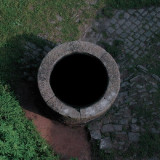
The album opens with the ominous guitar-driven Hollow Sky, accompanied by its haunting music video's verdant vistas. The song, with Iceglass ghostly vocals, shimmers with that sounds like an Omnichord flittering like sonic firefly lights and brooding bass. This perfectly scores the less traveled wanderings through the dark wooden path of Dante's perdition, leading to the titular well that graces the album cover. The Crater opens with an unsettling riff and bass, with low, repetitive frequencies on the synth create a sense of unease. Here, Iceglass recounts a fatalistic requiem for the king of romance that is cataclysmic and leaves a scar upon the earth. With Fall Industrial Wall, once again, Iceglass channels a silky and Nico-like emotive deadpan; against a dirgelike melody backed by minimal synth, bass, and drum. Almost medieval and plaintive, with its folk droning horns, deep and shallow in their resonance. This song is anachronistic, setting the scene of ruins centuries-old with crumbling edifices strewn about like memories lost in time. With the poetic lyrics of The Chamber do we find the eponymous abyss. Here, dualities are laid bare; besides love, there is heartbreak, and without this sorrow, what meaning would there be to love if one knows not what it is to lose? This song encapsulates the idea that love is heartbreak, and love lost is reaching the deepest chamber of the heart. This is carried through a sombre horn, minimalist drum machine, and deliberate bassline overlaid with Iceglass german and english lyrics. The Well is led in with a softly distorted bassline overlaid with eerie banshee howls give way to Iceglass otherworld vocal refrain, echoing through time as if emanating from a hole in the ground, and encircling that hole is a garden of woe and despair. The sinfully seductive song The Moor features a captivating SAX SOLO courtesy of Perseas; a welcome shift in tone, juxtaposed well with the intensity of Iceglass tenebrous vocal purr. This hitherto unexplored foray into dark sensuality takes the song into sordid mid 80s territory, bringing to mind a dusky drive along a serpentine road, with equally haunting instrumentations straddling time with icy fire. Broken Characters is an acoustic folk interlude featuring Selofan's Dimitris Pavlidis on guitar. Here we find a more gentle approach with its earnest and romantic lyrics. The song's melodic hook is a soft caress along with the forlorn horn elements highlighting Iceglass at her most Nico-sounding vocal yet, singing the sorrowful truth that most artists are indeed broken characters. Chimerical opens with dirgelike synth organs. The chill of winter has befallen the lamentations sung by Iceglass carried by haunting chord progressions and minimal percussion, plaintively beseeching the song's subject to remain elusive, idealistic, and a dreamer. After an album highlighting more Jill than Jack, our male protagonist finally makes his ascent in the sonorous and breathtaking Dark Hill, a masterful march of sweeping synth horns, and trepidatious drum machine with William Maybelline's bellowing voice cracking like thunder, rattling the atmosphere like his heart against his ribs. Spirals swirls in a cautionary knell of cathedral-esque droning synth dirge, with Icarian lyrics shining like a sombre ray of hope; like the sun's rays creeping into the darkest of places. The song, minimalist in its tight percussion, echoes with the solace of Larissa Iceglass vocal litany; invoking elements of the supernatural, almost like a Casio preset sequenced to the beating of an angel's wings.
- A1: Sunlight Zone
- A2: Clarion-Clipperton Zone
- A3: Oreison
- B1: Twilight Zone
- B2: Fracture
- B3: Abyss
- B4: Polymetallic Nodule
- B5: Hadal
- B6: Sunlight Zone (Strings Version) *
Laurel Halo returns with an album of original soundtrack music, composed for the film Midnight Zone by visual artist Julian Charrière. Following the path of a drifting Fresnel lighthouse lens as it descends through the Clarion-Clipperton Fracture Zone — a remote abyssal plain in the Pacific Ocean, rich in rare metals and increasingly targeted for deep-sea mining — the film traces a descent into one of Earth’s last untouched ecosystems.
Charrière’s film reveals the deep not as void, but as a luminous biome teeming with fragile life: bioluminescent creatures, swirling schools of fish, and elusive predators. The suspended lens becomes an abyssal campfire, attracting species caught in the tides of uncertainty, their futures hanging in the balance.
Echoing this tension, Halo’s compositions evoke a sensory freefall, where gravity falters and light and sound flicker in uncertain rhythms. Midnight Zone is a sonic drift through the space between what we seek to extract, fail to understand, and must protect.
Halo’s score evokes the life that exists beyond our physical airbound capacity. The material features long, subtle passages of electro-acoustic ambient, drone and sound design, slowly flowing and unfolding with rich detail. The music, composed largely on a Montage 8 synthesizer and Yamaha TransAcoustic piano at the Yamaha studios in New York City, possesses an uncanny quality: that of synthetic waveforms being amplified and sung through the stringboard of the physical body of the TransAcoustic piano. Combined with stacks of violin and viol da gamba, the music on Midnight Zone possesses trace elements of a human hand in an otherwise sunken landscape. Patient, submerged, and alive. The album will be the third on Halo’s imprint, Awe.
The film is central to Charrière’s current solo exhibition Midnight Zone. The exhibition engages with underwater ecologies, exploring the complexity of water as an elemental medium affected by anthropogenic degradation. Reflecting upon its flow and materiality, profundity and politics, its mundane and sacral dimensions, the solo show acts as a kaleidoscope, inviting us to dive deep.
Childhood Intelligence Nineteen by Dan Piu “The Mystic Mind” 2x12 LP
As the vortex of time evolves, Swiss Underground Legacy “Dan Piu” returns to his home planet “Childhood intelligence”. A rare specimen and artifact known for his timeless & intelligent soul-infused music, arises with his 3rd solo album on Childhood. “The Mystic Mind” 2x12 Lp as the trilogy, the sequel of “Tru Time And Ages” and “Inside Universe”.
This Full-Length player is a voyage through yet another unexplored realm of Dan's creativity, where listeners are invited to explore a vast network of emotions. As the album organically unfolds, tales of spooky synth worlds emerge, where hypnotic atmospheres collide with analog technoid elements, guided by classic JUNO chord progressions. Witness the alchemy of vintage ARP, Jupiter, Mono/Poly, and 80s Yamaha sounds as they morph into an elusive journey of electronic mysticism crafted by the otherworldly mind, the “Mystic Mind” of Dan Piu.
Ostinato as resistance: Rafael Anton Irisarri’s landmark work reimagined. Marking the tenth anniversary of the American composer’s critically acclaimed album 'A Fragile Geography', this new edition arrives renewed, both sonically and visually.
First released in 2015 (Room40) during a period of personal upheaval and creative reinvention, it endures as a testament to resilience, transformation, and the connection we hold with the places that shape us.
Written in the aftermath of a devastating theft, A Fragile Geography was born out of loss. Just days before a cross-country move to New York, Irisarri’s entire Seattle-based studio was wiped out. Instruments. Recordings. Archives. Gone without a trace. He arrived on the East Coast to an empty room and the daunting task of starting over.
“This album wasn’t just a record; it was a lifeline,” Irisarri reflects. “It became a way to process the emotional chaos that followed: uprooting, instability, and ultimately, the slow, intuitive rebuilding of a life.”
Composed and recorded in the rural woods of the Hudson Valley, the album took shape in seclusion, surrounded by nature, and through a process guided by improvisation. Embracing limitations, Irisarri wove textural layers of field recordings with half-remembered melodies from his Seattle years, piecing them together like fragments of memory. Tracks like “Displacement,” “Hiatus,” and “Persistence” juxtaposed haunting stillness with restless momentum, mapping an inner terrain of grief, catharsis, and rebirth.
Among its defining sounds is “Empire Systems,” a monumental centerpiece built around a simple four-chord progression, organ textures, and guitar drones. Gradually, the track expands into layers of immersive loops and thick, enveloping distortion that wash over the listener like a rolling wave. Often cited as the album’s most majestic passage, it captures Irisarri at his most sonically ambitious. With a harmonically saturated structure crafted from restraint and repetition, it remains one of his most recognizable compositions: an exercise in the art of maximal minimalism.
From the outset, “Reprisal” received praise from BBC’s Mary Anne Hobbs, who championed the track on her radio show. Her support played a key role in introducing Irisarri’s work to wider audiences and solidifying his place within the lineage of electronic, drone, and experimental sound artists. A slow-burning elegy, the piece emerges from a haze of distortion and sub-bass, with dense, unrelenting drones carrying a sense of mounting tension. Just as it seems to collapse under its own weight, flickers of guitar emerge like distant light through fog. It’s a meditation on dissonance, resolve, and the elusive possibility of release.
The closing track, “Secretly Wishing for Rain,” is steeped in saudade: a longing for Seattle’s dour grey skies, lush green landscapes, and desaturated sunsets. Through it, Irisarri mourns a vanished chapter of life bound to the city, a time documented in scattered mementos and cherished collections, now permanently gone. A reflection on what could never be recovered: an era lost to time. Julia Kent’s looped cello motifs added a melancholic warmth to the track, marking the first collaboration between the two artists and sparking a musical dialogue that would keep growing in the years that followed.
More than a career highlight, A Fragile Geography has laid the foundation for Black Knoll studio, which Irisarri rebuilt from the ground up. The studio has since grown into a creative hub for countless projects, with Irisarri engineering records for iconic music figures like Terry Riley, Ryuichi Sakamoto, William Basinski, MONO, Devendra Banhart, Grouper, Emeralds, Steve Hauschildt, Julianna Barwick, and many others. Carried by its lasting influence, the album has quietly captured the ear of a younger generation, its sound and emotional arc finding new listeners in unexpected corners.
The album’s new visual language was reimagined in collaboration with Mexico City–based designer Daniel Castrejón. Irisarri captured ghostly images at Gaztelugatxeko Doniene, a historic coastal site in Bermeo, Euskal Herria. Castrejón then treated the photographs with distressed textures and spectral overlays. The final artwork channels the rugged, elemental forces that shaped both the music and Irisarri’s aesthetic, renewing his ties to ancestral ground inspired by the Basque homeland of his bloodline.
Mastered by Stephan Mathieu with exceptional attention to detail, this anniversary edition uncovers every nuance in the sound design, enhancing clarity and presence. With each listen, new elements emerge, inviting discovery and reconnection.
“I don’t experience this album as a document of grief anymore,” says Irisarri. “I hear adaptation and I'm reminded that when everything falls apart, something meaningful, maybe even beautiful, can emerge.”
Ostinato as resistance: Rafael Anton Irisarri’s landmark work reimagined. Marking the tenth anniversary of the American composer’s critically acclaimed album 'A Fragile Geography', this new edition arrives renewed, both sonically and visually.
First released in 2015 (Room40) during a period of personal upheaval and creative reinvention, it endures as a testament to resilience, transformation, and the connection we hold with the places that shape us.
Written in the aftermath of a devastating theft, A Fragile Geography was born out of loss. Just days before a cross-country move to New York, Irisarri’s entire Seattle-based studio was wiped out. Instruments. Recordings. Archives. Gone without a trace. He arrived on the East Coast to an empty room and the daunting task of starting over.
“This album wasn’t just a record; it was a lifeline,” Irisarri reflects. “It became a way to process the emotional chaos that followed: uprooting, instability, and ultimately, the slow, intuitive rebuilding of a life.”
Composed and recorded in the rural woods of the Hudson Valley, the album took shape in seclusion, surrounded by nature, and through a process guided by improvisation. Embracing limitations, Irisarri wove textural layers of field recordings with half-remembered melodies from his Seattle years, piecing them together like fragments of memory. Tracks like “Displacement,” “Hiatus,” and “Persistence” juxtaposed haunting stillness with restless momentum, mapping an inner terrain of grief, catharsis, and rebirth.
Among its defining sounds is “Empire Systems,” a monumental centerpiece built around a simple four-chord progression, organ textures, and guitar drones. Gradually, the track expands into layers of immersive loops and thick, enveloping distortion that wash over the listener like a rolling wave. Often cited as the album’s most majestic passage, it captures Irisarri at his most sonically ambitious. With a harmonically saturated structure crafted from restraint and repetition, it remains one of his most recognizable compositions: an exercise in the art of maximal minimalism.
From the outset, “Reprisal” received praise from BBC’s Mary Anne Hobbs, who championed the track on her radio show. Her support played a key role in introducing Irisarri’s work to wider audiences and solidifying his place within the lineage of electronic, drone, and experimental sound artists. A slow-burning elegy, the piece emerges from a haze of distortion and sub-bass, with dense, unrelenting drones carrying a sense of mounting tension. Just as it seems to collapse under its own weight, flickers of guitar emerge like distant light through fog. It’s a meditation on dissonance, resolve, and the elusive possibility of release.
The closing track, “Secretly Wishing for Rain,” is steeped in saudade: a longing for Seattle’s dour grey skies, lush green landscapes, and desaturated sunsets. Through it, Irisarri mourns a vanished chapter of life bound to the city, a time documented in scattered mementos and cherished collections, now permanently gone. A reflection on what could never be recovered: an era lost to time. Julia Kent’s looped cello motifs added a melancholic warmth to the track, marking the first collaboration between the two artists and sparking a musical dialogue that would keep growing in the years that followed.
More than a career highlight, A Fragile Geography has laid the foundation for Black Knoll studio, which Irisarri rebuilt from the ground up. The studio has since grown into a creative hub for countless projects, with Irisarri engineering records for iconic music figures like Terry Riley, Ryuichi Sakamoto, William Basinski, MONO, Devendra Banhart, Grouper, Emeralds, Steve Hauschildt, Julianna Barwick, and many others. Carried by its lasting influence, the album has quietly captured the ear of a younger generation, its sound and emotional arc finding new listeners in unexpected corners.
The album’s new visual language was reimagined in collaboration with Mexico City–based designer Daniel Castrejón. Irisarri captured ghostly images at Gaztelugatxeko Doniene, a historic coastal site in Bermeo, Euskal Herria. Castrejón then treated the photographs with distressed textures and spectral overlays. The final artwork channels the rugged, elemental forces that shaped both the music and Irisarri’s aesthetic, renewing his ties to ancestral ground inspired by the Basque homeland of his bloodline.
Mastered by Stephan Mathieu with exceptional attention to detail, this anniversary edition uncovers every nuance in the sound design, enhancing clarity and presence. With each listen, new elements emerge, inviting discovery and reconnection.
“I don’t experience this album as a document of grief anymore,” says Irisarri. “I hear adaptation and I'm reminded that when everything falls apart, something meaningful, maybe even beautiful, can emerge.”
- An Ephemeral Radiant
- Savonarola's Insight
- Ocular Creature
- The Elusive Beings
- Neri
- Afterglow Apprehension
- The Gulf
- Ladder Of Meaning
- Evade The Swirling Mimicry
- Inscape
- Veiled Grammar
- Iron Staircase
- Luminous Seeping Through The Crevices
- A Subdued Longing And Gentle Ache
- In Bethulia
- Deep Sea's Rainbow Part1
- Deep Sea's Rainbow Part2
- Deep Sea's Rainbow Part3
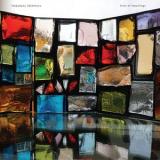
Nobukazu Takemura"s music is singular in its ability to create a musical sense of childlike wonder and curiosity, with gracefully executed yet complex compositions. His pieces embody an innocence and the intricacies of self discovery that every human is faced with as their worlds become more complex. An acclaimed producer and composer, Takemura is known for his idiosyncratic music and video artistry as well as his prolific collaborations including those with Tortoise, Yo La Tengo, DJ Spooky and Steve Reich. knot of meanings, Takemura"s first proper album in a decade, finds the Japanese artist wrestling with the rise of technological influence on art and culture in the modern era, in tandem with his own relationship to religion, and where those struggles meet. Like the colorful, irregularly shaped glasses on the cover, the album is a mosaic of technicolor elements that come together to form a complete picture, a dense portrait of interconnected struggles and triumphs.
Ostinato as resistance: Rafael Anton Irisarri’s landmark work reimagined. Marking the tenth anniversary of the American composer’s critically acclaimed album 'A Fragile Geography', this new edition arrives renewed, both sonically and visually.
First released in 2015 (Room40) during a period of personal upheaval and creative reinvention, it endures as a testament to resilience, transformation, and the connection we hold with the places that shape us.
Written in the aftermath of a devastating theft, A Fragile Geography was born out of loss. Just days before a cross-country move to New York, Irisarri’s entire Seattle-based studio was wiped out. Instruments. Recordings. Archives. Gone without a trace. He arrived on the East Coast to an empty room and the daunting task of starting over.
“This album wasn’t just a record; it was a lifeline,” Irisarri reflects. “It became a way to process the emotional chaos that followed: uprooting, instability, and ultimately, the slow, intuitive rebuilding of a life.”
Composed and recorded in the rural woods of the Hudson Valley, the album took shape in seclusion, surrounded by nature, and through a process guided by improvisation. Embracing limitations, Irisarri wove textural layers of field recordings with half-remembered melodies from his Seattle years, piecing them together like fragments of memory. Tracks like “Displacement,” “Hiatus,” and “Persistence” juxtaposed haunting stillness with restless momentum, mapping an inner terrain of grief, catharsis, and rebirth.
Among its defining sounds is “Empire Systems,” a monumental centerpiece built around a simple four-chord progression, organ textures, and guitar drones. Gradually, the track expands into layers of immersive loops and thick, enveloping distortion that wash over the listener like a rolling wave. Often cited as the album’s most majestic passage, it captures Irisarri at his most sonically ambitious. With a harmonically saturated structure crafted from restraint and repetition, it remains one of his most recognizable compositions: an exercise in the art of maximal minimalism.
From the outset, “Reprisal” received praise from BBC’s Mary Anne Hobbs, who championed the track on her radio show. Her support played a key role in introducing Irisarri’s work to wider audiences and solidifying his place within the lineage of electronic, drone, and experimental sound artists. A slow-burning elegy, the piece emerges from a haze of distortion and sub-bass, with dense, unrelenting drones carrying a sense of mounting tension. Just as it seems to collapse under its own weight, flickers of guitar emerge like distant light through fog. It’s a meditation on dissonance, resolve, and the elusive possibility of release.
The closing track, “Secretly Wishing for Rain,” is steeped in saudade: a longing for Seattle’s dour grey skies, lush green landscapes, and desaturated sunsets. Through it, Irisarri mourns a vanished chapter of life bound to the city, a time documented in scattered mementos and cherished collections, now permanently gone. A reflection on what could never be recovered: an era lost to time. Julia Kent’s looped cello motifs added a melancholic warmth to the track, marking the first collaboration between the two artists and sparking a musical dialogue that would keep growing in the years that followed.
More than a career highlight, A Fragile Geography has laid the foundation for Black Knoll studio, which Irisarri rebuilt from the ground up. The studio has since grown into a creative hub for countless projects, with Irisarri engineering records for iconic music figures like Terry Riley, Ryuichi Sakamoto, William Basinski, MONO, Devendra Banhart, Grouper, Emeralds, Steve Hauschildt, Julianna Barwick, and many others. Carried by its lasting influence, the album has quietly captured the ear of a younger generation, its sound and emotional arc finding new listeners in unexpected corners.
The album’s new visual language was reimagined in collaboration with Mexico City–based designer Daniel Castrejón. Irisarri captured ghostly images at Gaztelugatxeko Doniene, a historic coastal site in Bermeo, Euskal Herria. Castrejón then treated the photographs with distressed textures and spectral overlays. The final artwork channels the rugged, elemental forces that shaped both the music and Irisarri’s aesthetic, renewing his ties to ancestral ground inspired by the Basque homeland of his bloodline.
Mastered by Stephan Mathieu with exceptional attention to detail, this anniversary edition uncovers every nuance in the sound design, enhancing clarity and presence. With each listen, new elements emerge, inviting discovery and reconnection.
“I don’t experience this album as a document of grief anymore,” says Irisarri. “I hear adaptation and I'm reminded that when everything falls apart, something meaningful, maybe even beautiful, can emerge.”
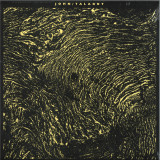
If there is one person, who has been causing a stir on the international club circuit recently, it is Barcelona's John Talabot. Already his debut “My Old School“ (which is meant literally by the way) on Permanent Vacation in 2009 and shortly after that the single “ Sunshine”, which he put out on his own Hivern Disc imprint, made him one of the most promising musicians of the Spanish electronic scene. And those two releases also already set the mark for John Talabot’s unparalleled music: raw, loopy, heavy on the kick drum, sample based, moderate on the tempo, distorted on the drums and light years away from the clean and ever revolving house sound of today. This unique style which also blends influences from afro beat, Detroit techno, Chicago house and cosmic disco, but also northern soul or the energy of Flamenco, immediately turned some heads around. James Murphy, Âme and Aeroplane started including Talabot music in their sets like it was the most natural thing. However - and this is quite rare - he not only gained legions of fans in the house and disco community, but also amongst the leftfield pop and indie rock followers. NME and Resident Advisor both had “Breakthrough“ features on John Talabot and he can be proud of a “Best New Music“ dubbing on
Pitchfork. (Being rather elusive on showing his face in magazines or the web it also came to some funny rumors that John Talabot was the alter ego of a well-known techno producer from Detroit).
At the same time he drew the attention of like-minded artists like James Holden and Luke Abott from Border Community, Blondes or Delorean, which lead to a bunch of fertile collaborations: Luke Abbott and Blondes remixed Talabot’s “Sunshine“ single , John Talabot remixed a track by Delorean and vice versa Delorean’s Ekhi contributed vocals to the track “Journeys “ on John’s album). Another example is the Young Turks Label (home of Jamie XX, Holy Fuck, El Guincho or SBTRKT ) on which he released the “Families“ EP in 2010. It was praised beyond limits. Pitchfork for
instance hailed: “… where pop and house influences sweetly buffer up against one another to provide an unyielding sense of elation“ and even brought Talabot a comparison with artists like Four Tet or Caribou.
While staying true to his sound, John Talabot has nevertheless shown a constant evolution as a producer since his first release. He has traced a solid musical path that has turned him into one of the big references of European House and has made him also a highly in demand Remixer (for the likes of The XX, Francesco Tristano’s “Aufgang” project, Shit Robot on DFA, Thaiti 80, Joakim or Teengirl Fantasy to name just a few ).
A progression that now crystallizes in “ƒin”, his first full-length album for Permanent Vacation. A record, in which the Barcelona mastermind sets aside the danceable immediacy to expand his stylistic palette more than ever. For that purpose, Talabot melts all the elements that have constructed his distinctive sound until now and makes them emerge from a new perspective, in which the construction of complex song structures, intricate rhythms and superpositions of ever-evolving melodies and atmospheres pick up the baton of the “a kick-drum and a sampler” philosophy of his initial productions. The result brings us 11 tracks (we should call them songs really!) dominated by dark ambiances, gaseous textures and bittersweet moods that, above all, reveal a kind of vivacity that’s really hard to find in contemporary electronics. “Fin” is far from being a track collection. From the majestic opener “Depak Ine“ to it’s solemn ending with
“So Will Be Now“ , one of the two tracks that features Talabot’s soul and label mate Pional, each song traces an overall dialogue with the rest, culminating a highly emotional journey through Talabot’s always compelling and unique musical vision.
'Quiet Pieces' initiates Abul Mogard’s personal imprint Soft Echoes with a definitive self-portrait of calm, contemplative, and discreet inner landscapes made audible. It is the first solo album on vinyl in four years. RIYL Alessandro Cortini, William Basinski, The Caretaker.
While sifting through archived material left idle from earlier projects, a chance encounter with a late uncle’s trove of beloved 78rpm classical and opera records prompted the reworking and completion of what would eventually become the album. Spinning dusty records at 33 and 45rpm, Abul Mogard recombined their enduring spectres with unfinished sketches from his archive. The resulting soundscape blurs distinctions between his memories and those of another, exquisitely short-circuiting the senses with its waking, dream-like lucidity.
This was a process I hadn’t explored in my earlier works. I began sampling brief moments from these records, altering them with studio effects and playing them at slower speeds. In many cases, I wasn’t entirely sure how the original music sounded. These fragments, once further processed, became a source of inspiration for my new compositions. Over time, I realised that the old pieces from the archive and the new material derived from the samples naturally complemented each other.”
The resulting pieces hover over a threshold, a liminal space that harmonises the old and older material. Voluminous waves of quiet and loud undulate between consonance and dissonance, conjuring imagery of a decaying grandeur that humanity’s decadence has surrendered to the elements. Abul Mogard’s seemingly abandoned yet vast landscapes are nevertheless intimate with timbral frissons of red-lined distortion. Elusive, yet as tangible as sea spray or smog, they affect the olfactory senses with a rarified, synesthetic quality that modestly engages one’s emotional register – a hypnotic, distinguishing feature long hailed as one of the hallmarks of his work. A fidelity to memory and dream recall is sensitively probed in the journey from the stately symphonic stasis of 'Following a dream' to the almost industrial, untethered brutality evoked by a looming silhouette that’s never fully visible in 'Constantly slipping away', culminating in the foreboding coda of 'Like a bird'. Those pieces appear to shield the album’s sentimental core, where the tempestuous play of light and shadow of 'In a studded procession' escalates to breathtaking, panoramic climax, while 'Through whispers' evokes an out-of-body-like experience encountered with visceral poignancy.
Looking back, Mogard notes an unexpected influence: “I realise being inspired by Phill Niblock, whose work I had barely known at the time but explored after his passing in 2024. His album 'Boston Tenor Index' changed the way I approached dissonance. It encouraged me to push my sound further, to the edge of a space where I began to feel uncomfortable.”
The album artwork, created by longtime collaborator Marja de Sanctis, features a photograph taken at the Temple of Jupiter Anxur, an archaeological site overlooking the Mediterranean Sea. Captured with an iPhone, the image traces the residual presence of construction techniques and architectural forms of the Romans, where material history is transcribed through contemporary tools. The convergence of ancient and modern technology aims to reverberate the site’s lasting spiritual presence – an echo persisting in what is now perceived as a quiet, emptied space. The spiral gestures towards infinity and light. Past and present dissolve into one another, reflecting 'Quiet Pieces' meditation on sound, memory, and time.
RIYL Alessandro Cortini, William Basinski, The Caretaker
Moving Pressure 03 lands as Rene Wise's third release on his imprint. With a refined approach to rhythm and restraint, the artist once again distills techno to its purest form: hypnotic, percussive, and propulsive. Across four tracks and in line with the label's essence, MP03 thrives on movement-low-end mastery meets tightly coiled grooves, while textural elements shift and evolve with subtle precision.
A1 'Relax' sets the foundation with a mighty sub-base, rolling forward with effortless force. Chopped-up claps ricochet through the mix, while a funky, disembodied vocal repeats a single command: "relax". Then comes 'Chomp Chomp', a denser offering in Wise's sensorial arsenal. Layered with gritty textures, his signature percussion builds a soundscape that is both tactile and weightless, evoking a kinetic dream state where groove and space are in constant conversation. On the flip, 'Cave' plunges into murkier terrain. Swathed in fog and sinister atmospherics, it unfolds through an eerie blend of sci-fi surrealism and grounded physicality. Bleeps hover like distant signals, their sharpness softened by a cavernous, smothering embrace. It's a study in tension-hypnotic and unsettling in equal measure. Closing the release is 'Deep Under', a track that embodies its name with subterranean mystique. The soundscape is rich with detail, an ecosystem of sonic fragments shifting beneath the surface. It's immersive yet elusive, like catching glimpses of something just out of reach-a mirage that flickers between the tangible and the ethereal.
This is minimalism with intent, built for deep immersion. Less, here, is infinitely more.
The first-ever reissue of Gianni Marchetti's 1978 LP "Solstitium", released as part of RCA's venerable "Original Cast" series in a handful of promo copies only, sits among the most rare and enigmatic artifacts of Italian library music, it is heralded by collectors as one of the greatest free-standing gestures in the entire genre.
RIYL: Piero Umiliani, Egisto Macchi, Stefano Torossi
Gianni Marchetti's Solstitium, originally released in 1978 as part of RCA's prestigious Original Cast series, stands as one of the most elusive and iconic records within the realm of Italian library music. Its first-ever reissue brings this long-sought gem back into circulation, offering an opportunity for modern listeners to experience its raw, innovative energy and immersive soundscapes. Originally released in only a handful of promo copies, Solstitium quickly became a holy grail for collectors, its rarity only adding to its mystique and allure.
The album embodies a free-spirited, avant-garde approach to composition, blending elements of jazz, progressive rock, and experimental electronic music. Marchetti’s use of unconventional instrumentation and studio techniques marks Solstitium as an audacious departure from the more conventional library music of the era.
‘Solstitium’ remains a fascinating listening experience, revealing new layers with every listen, and it is not surprising that it has earned its place as one of Marchetti's most revered works, continuing to fascinate old fans and new listeners alike.
Black Truffle is thrilled to begin 2025 with a rare solo release from Konrad Sprenger, alias of elusive Berlin composer-producer-instrument builder Jörg Hiller. A prolific collaborator, Sprenger has worked extensively with icons of American minimalism such as Ellen Fullman (with whom her recorded the gloriously eccentric song album Ort) and Arnold Dreyblatt (as a core member of the Orchestra of Excited Strings since 2009), as well as releasing their music on his impeccably curated label, Choose. As an instrument builder and installation artist, he has overseen the creation of a computer-controlled multi-channel electric guitar and, with Phillip Sollmann, a modular pipe organ system designed to be reconfigured from space to space.
In much of Hiller’s work, a scientific approach to acoustic phenomena co-exists with a pop sensibility and a sly sense of humour. Nowhere is this unique combination more in evidence than in his slim body of solo work, beginning with the startling diversity of instrumentation and compositional approaches heard on the short pieces of Miniaturen (2006) and Versprochen (2009), followed by the more single-minded exploration of the computer-controlled electric guitar on Stack Music (2017). Set brings together these various strands of Sprenger’s work into a wildly infectious, playful epic, performed by the composer and the mysterious Ensemble Risonanze Moderne. On the LP’s second side, we are also treated to a guest appearance from longtime collaborator Oren Ambarchi, on whose recent solo releases Simian Angel and Shebang Sprenger has made key production contributions. Ambarchi’s signature stuttering, swirling harmonics weave through a sparkling assemblage of electric guitars, acoustic instruments, percussion and electronics—though, given the deft use that much of Sprenger’s recent production work makes of midi-controlled sampled instrumentation, it’s anyone’s guess where the acoustic ends and the digital begins here.
As soon as the needle drops on the first side, we are inside a musical world that Set will inhabit for its 33 minutes: sparkling guitar harmonics and palm-muted notes, tuned percussion, crisp electronic drum hits, flashes of horns, and untraceable bursts of synthetic sound are arranged into a skittering polyrhythmic framework calling up the detail-rich percussive constructions of contemporary techno filtered through the pointillism of the post-serialist European avant-garde. Behind this shifting mist of particulate sound, winds and strings sound out held chords, reminiscent of Arthur Russell’s Tower of Meaning in their epic yet seemingly aimless drift. The relationship between elements is mysterious, appearing both carefully considered and almost random. Though never straying too far from where it begins, as the piece moves along, it spotlights increasingly bizarre instrument choices (shakuhachi and steel drums, anyone?) as well as momentary liftoffs into motorik propulsion. Set is a fascinating, mercurial thing: at once propulsive and fragmented, essentially static in form yet ever-changing in detail, unabashedly egghead in its construction yet sure to get the feet tapping.