Pål Waaktaar-Savoy has explained that much of the atmosphere and the lyrical themes of Savoy’s seventh album “Under” are drawn from his move with his fellow songwriter and wife Lauren Savoy to Los Angeles, where they found themselves surrounded by loneliness.
Waaktaar-Savoy is one of the most prolific and impressive songwriters of the twentieth century and beyond, and having been working at the very top of the music industry for as long as he has, it is no surprise that the record is well-crafted. The production is good, with careful arrangements and instrumentation. Every instrument’s voice is given room and there is space in the mix. Only occasionally does this slip over into over-production, as with the treated strings on the opening track “Lonely Surfer” or the treatment of Lauren’s vocals, which sound overly processed.
It is also true that the record exhibits a fair measure of melancholy. The chords and melody lines are dark in places, and there is a hint of sadness in the lyrics, many of which have a retrospective quality, describing moments in the past. However, beyond this, the understated feel of the record is just that – understated. Many of songs feel a few RPM too slow and the delivery of the vocal lines too underplayed to give them any emotional authority. At times, it also seems like the arrangement has to step in to bolster the songwriting or lyrics, by filling space with strings or brass, or the counterpoint of the instrumentation on “Camden Palace Chronicles” which distracts from some fairly mediocre words. It is important to emphasise that this is a joint songwriting exercise for Pål and Lauren, so we should not compare the output to the work of a-ha, but still, the themes lean in the direction of suburban banality, far from Pål’s more oblique or allegorical writing.
There are other moments of real quality beyond the production and arrangement. The title track has an excellent Bowie-esque chorus (and there are echoes of his work and sound throughout, along with Beatles and Beck), “The Life and Times of a Wannabe” has some first-rate guitar work on it, edgy riffs and some good textures. Likewise, “Coming Down”, which also exemplifies Frode Unneland’s drumming on the record, which is generally prominent in the mix, and with good reason, as it carries the record along well.
Suche:emphasis
"NY Psychedelic Art Rock!
Touted as the “new Doors,” Ars Nova’s second release shows the band genre-bending jazz and heavy psychedelia in a style that’s their own. Shifting from a largely classical centric sound, this was the group’s last album before going their separate ways. Pressed on pink vinyl!
Sunshine & Shadows takes the baroque-meets-psych sound of the debut and turns a bit more to the psych side. The stately brass interludes are gone, but horns still figure prominently in the mix. There’s some jazzy New Orleans flavor to a couple of the tunes, albeit twisted into a 7/4 vamp on “You Had Better Listen.”
The instrumentalists in the band, featuring trumpet and trombone, really give the music a unique flavor, setting them apart from the multitudes of other American psych bands. Ars Nova might be likened to Ultimate Spinach (but without the overly serious, pretentious lyrics) or later Zombies (though with less emphasis on the keyboards).
It’s all very well written and nicely played, and when they do a tender ballad like “Temporary Serenade,” the acoustic guitar is very lute-like, much more along the lines of classical than folk (like the later work of Jan Akkerman with Focus), and the trumpet descant adds a lovely spice.
“Well, Well, Well” is the heaviest rock tune in their repertoire, with a great electric guitar riff and hot organ playing, again set apart by trombone and trumpet. This one is definitely worth seeking out for baroque pop fans."
"NY Psychedelic Art Rock!
Touted as the “new Doors,” Ars Nova’s second release shows the band genre-bending jazz and heavy psychedelia in a style that’s their own. Shifting from a largely classical centric sound, this was the group’s last album before going their separate ways. Pressed on pink vinyl!
Sunshine & Shadows takes the baroque-meets-psych sound of the debut and turns a bit more to the psych side. The stately brass interludes are gone, but horns still figure prominently in the mix. There’s some jazzy New Orleans flavor to a couple of the tunes, albeit twisted into a 7/4 vamp on “You Had Better Listen.”
The instrumentalists in the band, featuring trumpet and trombone, really give the music a unique flavor, setting them apart from the multitudes of other American psych bands. Ars Nova might be likened to Ultimate Spinach (but without the overly serious, pretentious lyrics) or later Zombies (though with less emphasis on the keyboards).
It’s all very well written and nicely played, and when they do a tender ballad like “Temporary Serenade,” the acoustic guitar is very lute-like, much more along the lines of classical than folk (like the later work of Jan Akkerman with Focus), and the trumpet descant adds a lovely spice.
“Well, Well, Well” is the heaviest rock tune in their repertoire, with a great electric guitar riff and hot organ playing, again set apart by trombone and trumpet. This one is definitely worth seeking out for baroque pop fans."
IMOGEN presents WIGS002 - a four track EP celebrating the women of Wigs, featuring Grace Dahl, NVST, Rebecca Alle Paine and IMOGEN.
WIGS002 kicks off with heavy breaks and kick drums bringing a rough hardcore vibe to IMOGEN’s latest single ‘SHOUTOUT 2 LDN’, premiered by radio legend Mary Anne Hobbs on her Radio 6 show.
IMOGEN samples a vocal from her favourite 90s MC Alex Pearce, adopting the same “zero f***s attitude” of the early 2000s techno scene. She combines this with squelching reese basses and slick programmed breaks to bring the same energy of early warehouse parties to the dancefloors of today.
Next up, Grace Dahl departs from her usual rolling techno style with electro banger ‘I Like Em Sexy’. A fast-paced distorted vocal slides its way through the drums into an epic breakdown before an unexpected 4/4 drop. IMOGEN and Dahl’s musical chemistry shone in their B2B on the Wigs NTS show, making this the perfect A-side combo of the EP.
Upcoming Italian DJ and producer Rebecca Alle Paine keeps up the EP’s high energy with the perfect DJ tool of rolling 909 drums. Hardgroove is having its resurgence right now and Rebecca is a leading light in the genre currently flooding the scene. Wigs isn’t the only label to pick up on Rebecca’s driving style - she recently released an album on hardgroove legend Ben Sims’ label as well as featuring on Freddy K’s KEY. It is clear Rebecca is one to watch for 2024.
NVST closes off the EP in a mind bending Aphex Twin-style crescendo. ‘A Face Has No Voice’ is an eight minute long saga boasting her skill as a multiverse producer. It follows a journey through dub, breaks and IDM. WIGS002 showcases the true diversity of the next generation of musicians, and that one piece of music can traverse many genres.
Wigs kicked off as a project aimed to offer a new approach to party series and workshops with an emphasis on community, bringing like minded ravers together to build a platform for the next generation of artists and party goers. As well as a residency at Tresor Berlin, Wigs has hosted sold out parties across Europe bringing names such as Daria Kolosova, Dr Rubinstein Salome and more. After the success of WIGS001, Wigs is proving itself to be a staple sound in dance music right now.
Exin follows 2021"s Companion, the final part of a trilogy of solo piano records that began with 2014"s Pinô and continued with 2019"s The Lost. Given their intimate, subtle nature, many of these compositions have accumulated remarkable streaming figures, but Totland"s musical miniatures are as emotionally eloquent as they are technically elegant, with this latest set proving no exception. A humble man by nature, however, Totland"s keen to emphasise that his work isn"t intended to change the world.
Black Truffle is pleased to announce Resonant Trees, the first vinyl release from French composer-performer Léo Dupleix. An active member of the international community of younger musicians working with just intonation, Dupleix has composed works for solo instrumentalists and ensembles in Europe and Japan, as well as performing extensively on harpsichord, piano and electronics. His music is distinguished by a formal clarity and elegance of surface, gently shaping pure intervals into delicate melodic patterns and shimmering harmonic planes.
Resonant Trees presents two side-long pieces for harpsichord and ensemble, both setting slowly repeating patterns played on harpsichord and guitar within an environment of sustained tones. Dupleix performs on a French double manual harpsichord (tuned to a just intonation scheme of his own devising) and Prophet synthesizer, joined by Juliette Adam (bass clarinet), Johanna Bartz (traverso flute), Cyprien Busolini (viola), Fredrik Rasten (6- and 12-string guitars), and Mara Winter (traverso flute). The harpsichord begins Resonant Tree I alone, slowly sounding out a series of arpeggiated chords that emphasise the unique (and for unaccustomed listeners, sometimes unsettling) harmonic and timbral qualities of justly tuned intervals. Long tones from synthesiser, bass clarinet, viola and Baroque traverso flutes slowly creep into the spaces between the arpeggiated chords, joined after several minutes by delicate patterns of harmonics played by Rasten on acoustic guitars.
On Resonant Tree II, a similar structure and ensemble (without the flutes) are used with quite different results. We again hear only the harpsichord at first, but this time playing a series of flowing melodic lines, each of which is repeated several times. Joined again by long tones from the ensemble, here the viola is particularly prominent and its interplay with the harpsichord creates fascinating acoustic effects. In both pieces, repetition gives the music a static, stable quality while, at the same time, the exact shape of the repeating patterns remains difficult to grasp. As Dupleix writes, these pieces dream of music as ‘space and a sound that one could grasp in one’s hand.’ As the near-static quality of the repetitions and long tones with little incident make these two stretches of musical time feel like spaces for the listener to inhabit, the small variations on a narrow range of related material act like a three-dimensional object whose each facet is examined in turn. At once austere and seductive, Resonant Trees takes its place beside the work of contemporaries like Catherine Lamb, while also calling up the languorous melodic world of Mamoru Fujieda, the dignified melancholy of Satoshi Ashikawa’s classic Still Way and the espaliered chamber atmospherics of the Obscure catalogue.
Attention, aficionados of sublime pop music! Jim is, in fact, the older brother of pop singer Gerry Rafferty. Following two albums of sophisticated, melodic material with strong emphasis on vocal harmonies (not dissimilar to his brother"s work), Jim entered the 80s with no record deal, but good new tunes to shop. His original demos provided chart fodder for Frida (late of Abba), Clannad and Ian Matthews, but Jim"s versions outshine them all!"I See Red" was picked up by Phil Collins for Abba star Frida"s 1982 solo album.The flip-side of Jim"s "I See Red" has its own cover history - "Fear Strikes Out" first appeared on Ian Matthews" 1984 LP, Shook. Now, some 40 years later, the superior versions of these two Jim Rafferty originals arrive on a 7" single.
Pål Waaktaar-Savoy has explained that much of the atmosphere and the lyrical themes of Savoy’s seventh album “Under” are drawn from his move with his fellow songwriter and wife Lauren Savoy to Los Angeles, where they found themselves surrounded by loneliness.
Waaktaar-Savoy is one of the most prolific and impressive songwriters of the twentieth century and beyond, and having been working at the very top of the music industry for as long as he has, it is no surprise that the record is well-crafted. The production is good, with careful arrangements and instrumentation. Every instrument’s voice is given room and there is space in the mix. Only occasionally does this slip over into over-production, as with the treated strings on the opening track “Lonely Surfer” or the treatment of Lauren’s vocals, which sound overly processed.
It is also true that the record exhibits a fair measure of melancholy. The chords and melody lines are dark in places, and there is a hint of sadness in the lyrics, many of which have a retrospective quality, describing moments in the past. However, beyond this, the understated feel of the record is just that – understated. Many of songs feel a few RPM too slow and the delivery of the vocal lines too underplayed to give them any emotional authority. At times, it also seems like the arrangement has to step in to bolster the songwriting or lyrics, by filling space with strings or brass, or the counterpoint of the instrumentation on “Camden Palace Chronicles” which distracts from some fairly mediocre words. It is important to emphasise that this is a joint songwriting exercise for Pål and Lauren, so we should not compare the output to the work of a-ha, but still, the themes lean in the direction of suburban banality, far from Pål’s more oblique or allegorical writing.
There are other moments of real quality beyond the production and arrangement. The title track has an excellent Bowie-esque chorus (and there are echoes of his work and sound throughout, along with Beatles and Beck), “The Life and Times of a Wannabe” has some first-rate guitar work on it, edgy riffs and some good textures. Likewise, “Coming Down”, which also exemplifies Frode Unneland’s drumming on the record, which is generally prominent in the mix, and with good reason, as it carries the record along well.
Pål Waaktaar-Savoy has explained that much of the atmosphere and the lyrical themes of Savoy’s seventh album “Under” are drawn from his move with his fellow songwriter and wife Lauren Savoy to Los Angeles, where they found themselves surrounded by loneliness.
Waaktaar-Savoy is one of the most prolific and impressive songwriters of the twentieth century and beyond, and having been working at the very top of the music industry for as long as he has, it is no surprise that the record is well-crafted. The production is good, with careful arrangements and instrumentation. Every instrument’s voice is given room and there is space in the mix. Only occasionally does this slip over into over-production, as with the treated strings on the opening track “Lonely Surfer” or the treatment of Lauren’s vocals, which sound overly processed.
It is also true that the record exhibits a fair measure of melancholy. The chords and melody lines are dark in places, and there is a hint of sadness in the lyrics, many of which have a retrospective quality, describing moments in the past. However, beyond this, the understated feel of the record is just that – understated. Many of songs feel a few RPM too slow and the delivery of the vocal lines too underplayed to give them any emotional authority. At times, it also seems like the arrangement has to step in to bolster the songwriting or lyrics, by filling space with strings or brass, or the counterpoint of the instrumentation on “Camden Palace Chronicles” which distracts from some fairly mediocre words. It is important to emphasise that this is a joint songwriting exercise for Pål and Lauren, so we should not compare the output to the work of a-ha, but still, the themes lean in the direction of suburban banality, far from Pål’s more oblique or allegorical writing.
There are other moments of real quality beyond the production and arrangement. The title track has an excellent Bowie-esque chorus (and there are echoes of his work and sound throughout, along with Beatles and Beck), “The Life and Times of a Wannabe” has some first-rate guitar work on it, edgy riffs and some good textures. Likewise, “Coming Down”, which also exemplifies Frode Unneland’s drumming on the record, which is generally prominent in the mix, and with good reason, as it carries the record along well.
DJ Polo returns to Livity Sound with an EP that moves beyond the UK funky styles he established alongside Tribal Brothers on The Link Up EP in 2021. Through his productions and steady online radio presence, the Bristol-based producer has been flying the flag for lean, punchy rhythms with a low-end focus, but on If The Glove Fits Polo has branched out to explore different tempos and sounds taking influence from gqom, techno and Afrobeats.
Much like his approach to funky, this isn’t a set of genre exercises but more a celebration of the shared qualities which bind together dance music from different parts of the world. The result is four sharply-defined club workouts unique to DJ Polo that balance tension and release, flair and subtlety and a consistent physical weight true to Livity’s emphasis on soundsystem suitability.
Livity Sound is a label set up by Peverelist in 2011 as a vehicle for a raw and exploratory strain of UK techno, rooted in the heritage of UK dance music and sound system culture. It has since become one of the UK's foremost protagonists for cutting edge underground electronic music.
Solo Throat is the first solo LP from vocalist, composer and movement artist Elaine Mitchener. Drawing on the work of African-American and African-Caribbean poets Edward Kamau Brathwaite, Aimé Césaire, Una Marson and N. H. Pritchard, these twelve new vocal compositions disrupt semantic sense, play with the margins of lyrical translation, and give rise to new voicings. Elaine Mitchener is a veteran of vocal expression in the global Black Avant Garde, traversing free improvisation, cross-disciplinary music theatre and contemporary composition with clarity and joy. Most recently, Mitchener has been improvising and composing with the written word as source material - challenging classical ensembles with her piece (“the/e so/ou/nd be/t/ween”), and commissioning composers Matana Roberts, Jason Yarde and George Lewis to respond to the work of Sylvia Wynter (“On Being Human as Praxis”, Donaueschinger Musiktage, 2020). Her performance of Umbra poet N.H Pritchard’s text FR/OG at OTO in 2021 was a revelation - a solo vocal recasting of the powerful visual-material form that Pritchard uses to disrupt semantic ‘sense’. Building on this performance, Solo Throat takes the work of Pritchard alongside poets Edward Kamau Brathwaite, Aimé Césaire and Una Marson as its source material. Its compositions are a loose translation - a carrying from text to voice which holds multiplicity and celebrates the transformative power of literary possibility. Surrendered to the spacing and repetition of consonants and vowels, Michener’s exceptional phonetic freedom gives rise to a sensuous experience which intensifies the roles of rhythm, timbre and breath in expressing meaning. Solo Throat comes together as much through difference as similarity. Mitchener’s own solo improvisations sit alongside the work of Brathwaite, Césaire, Marson and Pritchard, forming a constellation of unlikely alignments which make no aesthetic conclusion. Instead, Solo Throat is a site of encounter, an irreducibly plural de-composition of words into a heterogeneous assemblage of sounds and impulses, emphasising what Anthony Reed calls, “the play on and the surplus of margins of lyrical translation to resituate other pathways of expression”. Just as the poets cited use white space to complicate our act of reading, so Mitchener utilises silence and multiphonics to complicate the act of voicing and the way we listen. Genre: Experimental / Vocal / Poetry
- A1: Pacho Galán Y Su Orquesta - Funeral Del Labrador
- B1: Orquesta José Ramón Herrera - Cumbia Sabanera
- C1: Super Combo Los Platinos - La Reina Y La Cumbia
- D1: Cuarteto Del Mónaco - Cumbia Gua Gua
- E1: Andrés Landero Y Su Conjunto - El Nacimiento De La Cumbia
- F1: Andrés Landero Y Su Conjunto - Sabor De Gaita
With this new three 45 set, the second in our "Cumbia Sabrosa" series, Rocafort digs deep into the vaults of Discos Tropical to bring you six more vintage cumbia sound system bangers. Each 45 showcases a different type of flavor with the emphasis on big band brass (Pacho Galán, José Ramón Herrera), electric guitar (Super Combo Los Platinos, Cuarteto Del Mónaco), and accordion (Andrés Landero). Like its larger rivals Discos Fuentes and Sonolux, Tropical was one of the most influential in the development of cumbia as an important genre not only in its home country of Colombia, but also in Mexico (and beyond), participating in a cross-cultural exchange that would spawn Mexico's own domestic musical artists, sonidero DJs and sound systems, record collectors and a dance scene devoted to tropical music with Colombian roots.
"Named for the band’s third lease on life, Third Wind finds Gulfer at a unique moment in their ten-plus year career. When they started in 2011, Gulfer played scrappy, complex math rock influenced by the emo revival. But in 2024 they’ve emerged almost unrecognizable, while still retaining the spirit of what made them all fall in love with Gulfer in the first place.
Third Wind’s stylistic turns are emphasized by deeper texture and simpler songwriting, influenced by the reemergence of 90s alternative and shoegaze. With a new emphasis on atmosphere and more straightforward composition, Gulfer give themselves space to explore audaciously.
Album opener “Clean” gets as close to pop as the band has ever been, where “No Brainer” dabbles deftly in downer rock that asks “what even is my fucking place in the world? "Bold juxtapositions feature elsewhere on Third Wind: pop-punk bruiser “Too Slow” stops on a dime before evolving into a slow burning drum n bass passage, all within two minutes. And then there’s “Heartshape”, a downright love song shrouded in virtuosic performance and electric-acoustic counterpoint. Although these contrasts could be construed as aimless fiddling, their seamlessness is the true essence of Third Wind, indicative of a sage band with a renewed love for what they do."
For his sophomore album, songwriter William Prince begins with a single word, Reliever, which informs a collection of exceptionally rendered explorations of what, who, and how peace is found. Relievers come in all forms; for Prince, it is song. With its emphasis on words and confidently unfussed accompaniment, Reliever puts Prince's gift for sparking powerful emotions of both personal and communal relevance at the fore. A masterclass in skillful simplicity, Reliever works a generous and profound kind of magic. Now available on limited edition white-vinyl.
Afro-Cuban star Daymé Arocena has announced her new album 'Al-Kemi' which will be released on February 23 via Brownswood Recordings. It is her first album since 'Sonocardiogram' in 2019.
Dayme's new single "American Boy" accompanies her album announcement. No other song on the album embodies Arocena’s artistic liberation like “American Boy” - an exhilarating, futuristic slice of progressive pop. “I wrote it ten years ago, but thought it was too much of a pop song,” Dayme reflects. “In an indirect way, the music industry had shown me that I wasn’t welcome in that world. There isn’t a Black woman like me who enjoys the kind of success usually reserved for Rosalía or KAROL G. The image of music genres like salsa or bachata has been painfully distorted throughout the years. You are supposed to clone and fuse yourself in order to conceal your Black or indigenous side. They told me I didn’t fit in that world, but I’m going to prove them wrong.”
When Daymé decided to switch gears and record her fourth studio album in Puerto Rico with the iconic producer Eduardo Cabra (Calle 13), she never imagined that she would end up moving there.
“From the moment I stepped foot on the island, I realized that I never wanted to leave,” says the 31 year-old Cuban singer/songwriter with a hearty laugh. “At the time, I had spent three years away from Cuba, living in Canada with my husband. I called and asked him to come over to Puerto Rico, and to please bring all my stuff. It wasn’t a conscious decision on my part. It was simply love at first sight.”
Relying on instinct and intuition is how Daymé has managed her career since she burst on the international scene with 'Nueva Era,' her prodigious debut album, in 2015. Now, she has fully reinvented her sound with 'Al-Kemi,' a revolutionary – and transformative – fusion of neo soul singing, Afro-Caribbean beats and slick new millennium pop.
The album is titled 'Al-Kemi' with the Yoruba word for alchemy. "It means the cosmovision of transformation," she explains. "It is mixing all the elements to achieve an unbeatable result, full of shine and light, like gold springing from the skin."
From the cosmopolitan smoothness of lead single “Suave y Pegao” – an effortless fusion of jazz, bossa nova and urbano stylings with reggaeton star Rafa Pabön on guest vocals – to the smoldering neo-soul of “A Fuego Lento,” with Dominican singer Vicente García, Daymé’s latest album relies on sacred formats of the past but rearranges them in a conscious quest to redraw the very definition of what Latin pop is supposed to sound like.
“It was definitely a team effort,” she reflects from her new home in San Juan. “Flexibility may well be my biggest virtue. I’m always open to every possible suggestion when it comes to making things better. My piano player, Jorge Luis "Yoyi" Lagarza, and I worked on the demos with the rest of my band. Then with Eduardo Cabra’s direction, we enlisted musicians from all over the Caribbean – Cuba, Puerto Rico, the Dominican Republic. Everybody added their energy and coloring.”
It was Daymé’s piano player who originally suggested she contact Eduardo Cabra known for combining commercial aptitude with a refined sense of craftsmanship. Not only did Cabra accept the singer’s offer, but he also invited her to stay at his home during the four months when they recorded 'Al-Kemi' in his Puerto Rico studio.
“I had no idea that he was familiar with my music,” she enthuses. “Eduardo has been in the industry for a long time, and he comes from a world that is more global and commercial than mine. He was the ideal candidate for this project, but I initially didn’t know if he would understand the social, psychological and personal complexities of the message that I wanted to express.”
“Daymé is one of the most talented musicians that I’ve ever worked with,” says Cabra. “Working together was a joy, because she knew exactly the kind of fusion that she was going for: a cross between her Afro-Cuban roots – which clearly are strong on this album – with the more contemporary vein of analogue synths, samples and a bit of electronica. We wanted both worlds to communicate, to be both respectful and disrespectful to the ancestral colors. I feel comfortable with both, and even Calle 13 walked the two paths. This is also the album where Daymé opened up to the Caribbean at large. Her understanding of harmony and her performance skills are out of this world.”
Born in Havana in 1992, Daymé grew up immersed in Afro-Cuban folk, but also listening to cassette tapes of Sade Adu, her father’s favorite singer. She was identified as a prodigious
talent at only 8 years old and soon started studying music. After studying at the prestigious Amadeo Roldán conservatory, she became co-founder and band member of the Cuban-Canadian jazz collective Maqueque in 2017. With the collective, she launched several international tours and earned a GRAMMY nomination.
“In Cuba, the emphasis on technique is exacerbated,” Daymé explains. "At the same time, opportunities are scarce on the island. A career in music provides a potential for escape, which is why the competitiveness is off the charts.”
Maria Chiara Argirò's album "Closer" departs from her prior work, fueled by an indescribable, dreamlike feeling. The album's core duality of blurred lines and clarity reflects Argirò's philosophy. A philosophy encapsulated in the urgency of her production process and the unique lucidity with which she weaves ambient, dance, jazz, and experimental pop seamlessly together. The album defies easy definition, emphasising an inner self-discovery process, detached from external influences, not only breaking sonic ground but signifying a deeply personal journey, anchoring Argirò to her creation. Argirò has previously seen critical success with support from Pitchfork, The FADER, FLOOD, Brooklyn Vegan and Clash Magazine. “Closer” will be released on the 26th of April 2024
Keplar presents the first-ever vinyl edition of the 2003 album »From Tokyo to Naiagara« by Tujiko Noriko. This reissue with new artwork by Joji Koyama is an abridged version of the album as Tomlab label owner Tom Steinle and producer Aki Onda had originally intended to publish it alongside the original CD version. Written by the France-based Tujiko while she still lived in Japan, »From Tokyo to Naiagara« followed up on her two seminal Mego albums and marked a turning point in both the artist’s career and personal life: While she was preparing to leave Japan behind, she succinctly connected the dots between her experiments in pop music and her interest for more abstract sounds. Tujiko worked primarily with a Yamaha synthesizer and an MPC sampler while also incorporating contributions by other musicians such as Onda, Riow Arai and Sakana Hosomi into the pieces. Sometimes approaching an IDM and clicks’n’cuts-style production or working with trip-hop and hip-hop beats while using conventional song structures in the most unconventional of ways, the album showcases her multifaceted influences and skills as a singer and musician to full effect.
Tujiko fondly remembers the time when she made the album. »I had a lot of time for myself back then and I didn’t even feel like I was very busy,« she says today. She describes producing it in close collaboration with Onda, who would relocate to New York City shortly after, as »quite Tokyo and very local.« They explored parts of the city that they hadn’t yet been to for a photography project (finding, among other things, a coin laundry called Naiagara—a transliteration of Niagara). This left its mark on a record that mixes melancholia with joy. The driving opener »Narita Made,« named after one of Tokyo’s airports, already makes this clear: Tujiko’s wistful vocals and lyrics like »I miss you terribly« emphasises the sense of bittersweetness that forms the common thread for a sonically diverse and stylistically open-ended album—this music is looking back while moving forward. It is probably no surprise that its reissue too evokes tender memories of Onda and Steinle in Tujiko, while also reminding her of what lies ahead. »I have so much more to do and not enough time for that,« she muses, before quickly adding: »But I also feel less alone having that album again.«
Influenced in equal parts by the experience of strolling through previously unknown Tokyoite back alleys and thinking about the paths not (yet) taken, »From Tokyo to Naiagara« is precisely that: the perfect travel companion for a journey that leads its listeners from past to future.
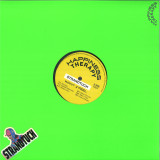
New signing of the French label Happiness Therapy, rising Parisian producer Strandtuch unveils his debut vinyl EP "Want 2 Feel"
Drawing from an eclectic array of influences, the Parisian producer has meticulously crafted his signature style, which he aptly describes as Power House. Seamlessly fusing elements of House, Acid, Ghetto House, and Trance, his music transcends conventional genres.
His world is wide and rich, just as his live : full of energy and surprises.
"Want 2 Feel" is set to be released on March 22nd. This groundbreaking collection of tracks showcases the producer's unparalleled talent for blending nostalgic 90s sounds with innovative modern treatments. With an emphasis on dynamic tonalities, infectious melodies, and sophisticated rhythms, his new release on Happiness Therapy promises to be a must-have addition to any electronic music aficionado's collection.
US progressive metal band EXIST make their return this Spring with their fourth album, Hijacking the Zeitgeist, set for release via Prosthetic Records on April 12. EXIST’s latest full-length sees the group expand upon their established dichotomy of extreme metal technicality and sanguine atmospherics with an intentionally more concise approach to songwriting, resulting in the most direct and emphatic album of their 14 year career. Similarly to 2020’s Egoiista, EXIST took on a keen co-production role as recording sessions commenced in early 2022, with the band emphasising a collaborative approach to the songs arrangements. Drum co-production was handled by John Douglass (Mr. Bungle, Entheos and The Contortionist) before vocals were handled by Mike Semesky in the winter. Hijacking the Zeitgeist’s sonic heft isn’t without its diaphanous counterpoints too, as Phelps and new addition Charles Eron (guitar and synths) craft deceptively complex interplay on album high points in Thief of Joy (featuring Sanjay Kumar of Inferi and Wormhole), Blue Light Infinite and soaring closer Window to the All. EXIST’s sonorous sonic landscape is bolstered by immersive rhythmic lock-ins between Alex Weber (bass and vocals) and Brody Smith (drums), that shine in Anup Sastry’s mix and Kris Crummett’s mastering work. At the core of Hijacking the Zeitgeist lies a multifaceted exploration of algorithmic rabbit holes, conspiratorial paranoia, and the universal traits that lie within humanity - these cautionary tales are tied together in striking detail with album art by Sebastian Jerke. EXIST treats both the allure and perils of both digital mazes and the real world, with equal parts wide eyed awe and horror.
- Dodge The Rain|The Gentle Spring (Previously In The Field Mice)
- Just Who Are The Cockleshell Heroes?|Action Painting!
- Alone Tonight|The Catenary Wires (Previously In Heavenly)
- Apple Tree|The Hit Parade
- Look Alive!|Jetstream Pony (Previously In Aberdeen)
- Everything Is Real|Soundwire (Previously In The Sweetest Ache)
- The Branch Line|Leaf Mosaic (Previously In The Springfields)
- Captivate This Broken Love|Secret Shine
- Beauty, You Will Break Us All
- Double Ninth|Gnac (Previously In St Christopher)
- Chemistry|Tufthunter (Previously In Heavenly)
- In This, The...|Useless Users (Previously Action Painting/Secret Shine)
- A Final Love Song| The Orchids
- Wake The Silver Dancing Waves|Wandering Summer (Previously In Boyracer)
- Open Your Eyes|Mystic Village (Previously In The Sea Urchins)
- Unknown Frequencies|Boyracer
- Pamela|Robert Sekula (Previously In Fourteen Iced Bears)
- Laugh...|Vetchinsky Settings (Previously The Orchids/St Christopher)
- Burnout '23|St Christopher
- June In Her Eyes|Sepiasound (Previously In Blueboy)
Second Compilation Of New Music By Ex-Sarah Records Bands! Under The Bridge 2 is the sequel to the celebrated 2022 compilation album that reunited groups and songwriters who had once recorded for cult label Sarah Records. The new album showcases the continuing creativity of a special group of musicians who have never rested on their laurels. Bigger and more expansive than the first album, Under the Bridge 2 is a double LP, containing twenty brand new tracks. There is a huge range of material here, from intense, dark chamber pop to dense shoegaze to out-and-out indiepop. Exciting new groups are unveiled: The Gentle Spring (a new project by Michael Hiscock of The Field Mice); Vetchinsky Settings (a collaboration between Mark Tranmer and James Hackett of The Orchids); and Mystic Village (which features new songs by Robert Cooksey of The Sea Urchins). You will also see familiar starry names like Even As We Speak, The Orchids and Secret Shine - bands whose line-ups have remained mostly unchanged since the 1990s. And there are established bands who didn't appear on the first album but are now represented - bands like Action Painting! and The Hit Parade. Most of the tracks are exclusive and unreleased: there's the first new song from The Catenary Wires since 2021, a brand new fizzbomb from Jetstream Pony, a haunting instrumental from GNAC. The emphasis of Under The Bridge is on the new. The bands' shared history means they have a shared aesthetic, even a shared ethos - they all believe that the future is more important than the past. They are as independent and as uncompromising as ever, but they are still uncynical - and still excited about what Pop Music can be. Under The Bridge 2 is available as ltd vinyl double LP, CD and digital download. It will not be on streaming sites. CDs and LPs include a 12 respectively 24-page illustrated colour booklet.
Miles Davis' boundlessly influential On the Corner was so far ahead of its time upon release in 1972, the jazz cognoscenti rejected its groundbreaking concoction as middling in nature. Yet time has a way of righting wrongs and shifting views by adding needed context and perspective to visionary ideas, music, and approaches — the likes of which fill Davis' boldest and most controversial — undertaking. Designed to bring the focus back on the groove and bottom-end frequencies, the funk-loaded On the Corner revolutionized jazz. It also set new standards for record production, presaging remixing and electronica by more than a decade. And the work has never sounded more thrilling thanks to this very special pressing.
Sourced from the original master tapes and pressed on MoFi SuperVinyl, Mobile Fidelity's numbered-edition 180g 33RPM SuperVinyl LP of On the Corner exposes the internal mechanisms, free-associated playing, and then-unmatched studio techniques in vivid fashion. The low end, crucial to every composition here, is both heard and felt, with locked-in bass lines and low-range percussion conveyed as taut, solid, and visceral passages. You can discern the multiple layers of rhythm Davis employed on complex tracks such as "Black Satin," as On the Corner stands as his first effort to use overdubbing and multiple tape machines. As a pioneer, Davis likely would’ve loved MoFi’s groundbreaking SuperVinyl profile that features the lowest-possible analogue noise floor as well as pristine transparency, dead-quiet surfaces, and superb groove definition.
New degrees of spaciousness and airiness — equally important to the musique concrete arrangements — give the impression Davis and Co.'s creations float in space. Instruments are portrayed in three-dimensional manners, rhythmic loops retain tonal purity, and horn solos skitter across an extra-wide soundstage that takes listeners into Columbia's Studio E. Mobile Fidelity's SuperVinyl LP captures Teo Macero's innovative production — and the trumpeter's cutting-edge aural collages — in definitive fashion.
Heavily inspired by Sly and the Family Stone, On the Corner portrays street vibes and remains Davis' Blackest-sounding record. The conscious attempt to connect with youthful audiences tapped into rock and funk is evident not only on the colorful cartoon cover art depicting hot-pants and zoot-suit revelers, but in the music's emphasis of recurring drum and bass grooves. Distinct from Davis' earlier fusion experiments, the record's long-misunderstood set dials back improvisation in favor of beats, loops, and atmospherics that generate trance-like effects. While Davis utilizes his band for core duties — Chick Corea and Herbie Hancock prominently figure — he also relies on an all-star cast of side-men for concentrated soloing and additional support.
With rhythm providing the basic foundation, other notes fall into place, with their positioning steered by Macero and Davis' editing-room techniques. Looking to the manipulation-based work of Karlheinze Stockhausen and teaming with Stockhausen disciple Paul Buckmaster, Davis re-imagines what grooves constituted and could accomplish throughout On the Corner. The shapes of the songs become completely transformed as they progress. Faint melodies, spacey chords, chunky riffs, wah-wah fills, and repeated motifs bounce in and out of a sonic funhouse that wouldn't be out of place at a Harlem block party.
Exotic, intrepid, and filled with Davis' "jungle sound," On the Corner remains daringly hip more than four decades later.
Jimpster delivered some great releases in 2023, most notably his Natural Child collab EP with Crackazat as well as his Tribute EP featuring South African vocalist Mavhungu and including heavy Osunlade remixes. He also produced some of his best remixes to date including Thakzin’s Don’t Let Me See, Blaze’s Wonderland and Detroit Rising’s Rocket Love.
It’s always a good day to announce a new Jimpster EP on Freerange and with two captivating originals plus a stunning Atjazz remix you’re in for a treat! You’re My Ecstasy sets the tone with Jimpster’s trademark deep Rhodes pads, punchy bassline and shuffling classic house drum groove. He once again manages to strike a great balance between soulful, musical, warm and just a touch moody.
Next up we have The Passion which builds a deep and jazzy mood around a 4 bar piano progression whilst the sampled interviewee gives his insight into how he maintains his passion for music. London based trumpet player KingCrowney adds some lovely horn parts, emphasising the jazz feel to compliment the spoken word.
Atjazz gets well and truly stuck in on his remix of The Passion. Reportedly completed in just two studio sessions the hardest working man in deep house (as Jimpster calls him) brings his well-loved deft touch introducing an beautifully syncopated bassline and classic Atjazz drums making for a clubby interpretation for the deep, discerning dance floors.
Williams was one of the greatest jazz pianists of all time, but she was also a victim of geography. Her technical brilliance, complete control of the piano, creative imagination, wit, and constant desire to stretch herself put her at the top of her field although relatively few (beyond her fellow pianists) seemed to realize it during her lifetime. Born and raised in Baltimore, she recorded her first three albums in her hometown. But other than a few lesser-known sets in Europe, a handful of albums for Jazz Focus in Canada and her Red & Blue label in Detroit, and just two projects in New York for the Max Jazz label, all of her recordings were made on the West Coast where she lived starting in 1976. Jessica was reluctant to travel much, particularly in her later years, and her visits to New York were rare so she was largely overlooked by East Coast critics. Listeners who are only familiar with Jessica Williams’ later work where she is generally heard with a trio or as a soloist stretching out mostly on standards (although focusing more on originals on her own small label’s releases) will be surprised by Orgonomic Music. The pianist heads a septet, the largest group on any of her many recordings. While Jessica plays some stunning lines on the piano, the emphasis is as much on her writing as on her playing, and each of the other musicians get opportunities to have their say. Orgonomic Music, which was released by the small Clean Cuts label in 1981, has been out of print for decades. The original eight selections (six of the pianist’s originals, one piece by Stone, and John Coltrane’s “Dear Lord”) are joined by two previously unreleased performances.
As a composer Martijn Comes has a special interest in timbral music and various musical traditions, with an emphasis on the electro-acoustic history. His works for the carillon were performed live at festivals like Le Guess Who and Rewire. He also released several solo-albums and collaborated with a wide range of contemporary artists like Frans de Waard, Lukas Simonis, Nicoleta Chatzopoulou and Hessel Veldman, with whom he co-produced the album EPoX, published by Bedouin Records in 2020.
Veldman is a veteran of the Dutch musical avant-garde and published several legendary cassettes on his label EXART in the early 80’s. His experimental soundscapes are laced with industrial elements, creating a hypnotic, dark undercurrent of sounds. Besides operating under his moniker Y Create, he was a member of the improvisation group Gorgonzola Legs and kept working intensively with Fluxus artist and Dutch underground cult-figure Willem de Ridder. The home-taping era shaped his free approach to music. His diverse musical practices have been traversing several decades by now and he continues to play music according to his own insights and intuitions.
Because of the emotional and poetic weight of the pieces, reverend Tom de Haan was consulted for this collaborative album. It was the start of a musical exploration and a search for peace, balance and above all freedom. Reaching out to a distant world, a place to come to terms with ourselves. A journey full of obstacles and setbacks. Sometimes persistently moving forward, sometimes doubtful. 'Are there Gods among us or inside us?' The music as a manifest, the expression of an inner struggle.
Throughout the chapters of this album layers of sound and distant voices arise and seem to float on the surface before they disappear again. Swaying on the gentle waves, running ashore, we find ourselves in unknown places. Manifest Exodus is an album for deep listening in the vein of Lustmord, Lawrence English or Rafael Anton Irisarri. It contains 4 rich, immersive pieces with austere drones, ambience, intense sonic textures and an incredible sense of detail to create a multi-layered escape to a better world.
“Though seeing they do not see, though hearing they do not hear or understand.”
NYC-based producer/visual artist Nathaniel Young returns with the sophomore 12” under their techno-focused alias, Guilt Attendant. “A Flower Wilts Under The Heat Of The Son” is cut from the same cloth as 2020’s “Suburban Scum” where Young delves into overtly religious motifs and ideological critique of their cult-like upbringing. Here, though, Young challenges themself and the listener to seek hope and resolve rather than hatred and contempt.
Considering its sometimes-monolithic sound palette, the timeless sub-genre of dub techno has long stood as a versatile vehicle for exploring and expressing a wide range of emotions. From mourning those we’ve lost, to somber reflection, to hope and celebration–all united by warmth, soul, and perhaps most importantly, groove. This versatility has underpinned Young’s affinity for the dub techno framework, and this collection of tracks is the culmination of material that they’ve long aspired to manifest. Atop this foundation, Young explores the place of acceptance and understanding that they’ve ultimately had to reach in relation to their religious upbringing and the inherent dualities that plague dogmatic religious circles and our beloved dance-floor communities alike.
“A Flower Wilts Under The Heat Of The Son” places a heavy emphasis on groove and swing while attempting to stretch the limits of classic dub techno tropes. Through creative melodic layering, swung low-end, and syncopation, these tracks hope to offer a fresh take on the sound while remaining solely devoted to the dancefloor.
Through their design work for Dais Records and Hospital Productions, Young had the pleasure of crossing paths with the recently departed Juan Mendez (Silent Servant), who graciously contributed a striking, cacophonous, and noise-laden remix. Given Mendez’s expansive and diverse body of work, as well as his own affinity for dub techno, Juan’s contribution could not be more harmonious. A singular talent and an extremely kind, generous soul, Juan will be dearly missed.
Rest in peace Juan Mendez, 1977-2024
Available on vinyl LP & CD (with extra tracks). Robin Way has been making psychedelic music for decades under the name Oak Acetator. Mostly home recorded, Oak Acetator’s world of sound encompasses an intoxicating mix of psychedelia, punk, space rock and pop, with the emphasis strongly on hallucinogenic psych. ‘Power Trip’ is Robin’s seventh album, his previous six coming out on the hallowed Dig The Fuzz label, though strangely, none of his work appears on Discogs! Robin wrote, produced and played everything on ‘Power Trip’ in his Folkestone attic studio, and it is a work of crazed brilliance. Respected musician and writer Louis Wiggett summed it up succinctly when he said of Power Trip ‘Oh, that bonkers genius from Folkestone, can’t get enough of it. So good, almost sounds like a cosmic Stooges with synths and deadpan humour. Love it!’ And he’s absolutely right. Robin exudes his unique, very British style from the first moment to the last, sounding at times like Johnny Rotten backed by Hawkwind, but with touches of Gong and Krautrock thrown in for good measure, but really just like himself. It’s a total joy to be able to put this deranged masterpiece out on Blue Matter. We adore it, and we hope you will too
"Nadine Shah announce her fifth album Filthy Underneath will be released on 23 February as the inaugural release on EMI North. The follow up to 2020's critically acclaimed Kitchen Sink and 2017's Mercury Prize nominated Holiday Destination, the announcement comes alongside lead single 'Topless Mother' which was just premiered by Steve Lamacq on BBC 6 Music.
Filthy Underneath chronicles a period of unprecedented turbulence in Nadine Shah’s life. And yet, the experience of listening to it is oddly life-affirming – a parade of ghosts spanning the entirety of Nadine’s thirty-seven years, moving with balletic beauty to the music that Nadine and long-time co-writer and producer Ben Hillier have created around them, with renewed emphasis on placing melody and movement front and centre."
Groove To Grave Records is back with a second vinyl release, and for this one they are welcoming the Parisian trio Kitchen Plug.
From ghetto house to break and minimal these 3 silly boys love to produce tracks with nasty bass, metallic acid and raw drums. For their first solo EP on vinyl, they wanted to add a early 2000’ electro vibe to their ghetto style for a brainless result. Get ready for 4 bangers, including a tremendous remix from Karaba.
Our travel start with Hm that bass that tells the delicious story of a young pretty cuistot who discovers the secret for a round and saucy gourmet bassline. Next we have Amor da Franceca who is the class clown of this promo. Ready to throw all hopes of a bright future away only to entertain the class. Despite its quite chill demeanor, Meleee packs a devilish punch and boisterous accents of childhood, lost but not forgotten. And last, Karaba’s remix for melee, emphasises the french cancan aspect of our 3 majorettes. Dark red light, pale skin, round booties, dark blue eyes on a shady scene.
Justin Drake and Clive Henry, recognised as the legendary Peace Division, stood out as one of the UK's most successful tribal/tech house production duos from the late 90s to the mid-00s. Their contributions extended to renowned British labels such as NRK and Junior London, as well as releases with Hooj, Crosstown Rebels, and major label remixes.
Lesser-known but equally intriguing was their venture into a different musical realm under the alias Soul Purpose. Shifting towards a deeper shade of house, Soul Purpose featured tracks characterised by lush chords and rolling basslines, placing a strong emphasis on the soulful elements.
Originally released on Low Pressing Limited, an offshoot label of Clive Henry and Rocky (X-Press 2) iconic Low Pressing, the four Soul Purpose titles emerged between 1997 and 1998. Despite being somewhat under the radar, these tracks gained recognition among DJs in the know. Now, the Selected Works release, compiled from the original DAT tapes and fully remastered, reunites the entire Soul Purpose catalogue for the first time in 27 years since their initial release.
Presenting the second thematic volume on the “Aquapelagos" series - a collection of split LPs where selected artists offer their own take into water surrounded cultures and communities. After the initial release of the Anthology compilation Aquapelago in 2022 (Discrepant ,CREP91) and the split LP Atlantico by Lagoss & Banha da Cobra (Keroxen, KRXN027) we proudly introduce an unique collaboration in the series in the shape of no other than two improvising giants, Mike Cooper and Pierre Bastien.
This second volume blows the lid wide open with a sound journey inspired by the equally majestic and mysterious Indian Ocean, a wide space of open ocean bounded by Africa, to the west, Asia to the north and north-west and Australia, to the south west.
From Philip Hayward and Matt Hill’s liner notes:
‘’The album opens with Return To Chagos by emphasising human presence in the oceanic space, opening with gentle percussive taps and distant looped male vocalisation that gradually come into sharper focus, layered and thickened, accompanied by thicker percussion and mouth harp. The sense of departure is taken up in Trincomalee, which lifts over the oceanic textures, opening with slow, struck and scraped metallic sounds before thick low pitched wind instrument sounds enter, oscillating around shifting microtonal frequencies. The shore returns on Side 2, with the miniature epic of Nicobar elaborated over looped ‘atmos’ sounds of birds and insects over which tonal, slightly distorted electric guitar lines enter before looped high pitched feedback squeals join the texture. Summoning tropical storms and the disruption to the region caused by western intrusion, strong and startling brass accents appear, melding with the looping guitar feedback, creating eeriness and a sense of alarm. Tuangku is permeated by restrained dynamics and an expressive, breathy, low pitched, animalistic melodic voice that offers intermittent and ambiguous utterances, as if rendered in a language essential to and evocative of a place and time but impossible to precisely comprehend – coming from an ocean-aquapelagic beyond that can only be glimpsed and rendered by affect.’’
Philip Hayward and Matt Hill, March 2022
On Natura Morta, Sven Wunder is exploring art as a bridge between nature and the human ability to judge and observe in eleven musical compositions with brightly colored textures and an emphasis on vibrant melodies.
Throughout human history, we have depicted the world we live in through art. By reworking what we see in the world, the simplest things have helped us understand the beauty of nature and to evaluate the material world that we have created around us, as a window to a constantly changing reality, through our own perception. It is that absolute reality that appears in the seam of human and nature and that can be revealed through art.
Still life painting, also referred to as Natura Morta (”dead nature”) in Italian, stretches back to ancient times. Some of the earliest works, found in Pompeii, depict commonplace objects such as fresh autumn fruits alongside man-made objects such as a small amphora and a small terracotta heap with dried fruits. These two-thousand-year-old paintings give a snapshot of Roman life, and also creates a link to time and space. A slice of life has been created by binding the earth’s pigments with extracts of oil, made from nuts and seeds, painted with brushes, made from a variety of fibers, such as trees and hair from animals. While life wanes with each brushstroke, by shifting reality into the past, art exists to make us come alive, being a living image of a dead thing, a surface and a symbol with symbolic powers of its own. Still life works celebrate material and ephemeral pleasures by returning to nature as the ultimate source for our standards in art as well as in life itself.
Natura Morta collects pieces from a continuous variety of melodies — supported by a decisive rhythm section — creating a musical kaleidoscope of ever-changing colors. Sven Wunder brings life into this rich assortment of musical implications by fusing and combining melodic instruments with each other in a setting that spans from a classical to a modern idiom. The author evokes this panoramic portrait by articulating an instrumental dialog between a chamber orchestra and a jazz ensemble. The result is a musical celebration of material pleasures that also serves as a reminder of the brevity of human life. This album was produced with financial support from the Swedish Arts Council.
Change Everything is an apposite title for this album, the first since Waking
Hours, their breakthrough record which had appeared in 1989. Starting off as a
janglesome Scottish indie group, Del Amitri had developed into a west- coast
influenced leftfield pop act, and now with the wind of success in their hair (after
the protracted build of Waking Hours), the group – Justin Currie, Iain Harvie,
David Cummings, Andy Alston and Brian McDermott – paired up with producer Gil
Norton and crafted a handsome rock album to capitalise on their success.
It's a varied, expansive selection. Ballads are represented by the delightful First
Rule Of Love and Be My Downfall, but it is the uptempo numbers that shine,
typified by Change Everything's lead single, Always The Last To Know, a No 11 hit
in the UK and a No 30 stateside. All 12 tracks emphasise just how important Del
Amitri were to 'the other 90s': straightforward, intelligent music, away from the
headline fads
Provocative percussion from the jazz trio Zen Widow!
Recorded live to 2-track analogue tape at Capitol Studios (CAP A)
Produced by Tone Poet's Joe Harley, recorded by Mike Ross
100% analogue mastering* by Kevin Gray at Cohearent Audio
Pressed on 180-gram ultra-quiet vinyl at RTI
Deluxe Old Style Tip-On single pocket gatefold jacket by Stoughton Printing
*Track 8 finished from high-resolution digital for vocal track
Intervention Records presents a special collaborative distribution effort with Italian objet-a records, Zen Widow IV – (from one dark age to another). This AAA 180G vinyl release is the fourth recording of Zen Widow, and it places an emphasis on highly melodic, spacious, and engaging treatments of medieval compositions ranging from Gesualdo Da Venosa, the Burana and Chantilly Codex, Welsh Gower folk melodies and texts, as well as the Bach Cello suites. These rich compositions are then reimagined through the lens of a highly accomplished and adventuresome jazz-improvised music trio.
Zen Widow is an international improvisational music-jazz super group. They have recorded and performed in clubs and festivals throughout the United States and Europe for that last 20 years. The trio consists of Gianni Gebbia (Bb soprano saxophone – cornettophone ) from Sicily, Italy, Matthew Goodheart (grand piano – transducer-actuated gong) from New York, Garth Powell (drums, percussion, and gongs) from Los Angeles, and is joined by special guest Dwight Trible (vocals) for this recording. Their previous release featured trumpet and jazz master Wadada Leo Smith, and like this recording was produced by Joe Harley (Blue Note – Tone Poet Series, Charles Lloyd, and Music Matters Jazz).
Garth Powell is also an audio industry legend, and AudioQuest’s Sr. Director of Engineering. Garth is the driving force behind the company’s multi award-winning line of Niagara series power conditioners and its Mythical Creatures ultra high-performance cables.
As powerful as these performances are, the sonic results created by this production/engineering team is equally stunning – a truly reference quality analogue experience.
This recording is captured live-to-two-track analogue, 30ips tape at Capitol Studios (studio “A”) by Mike Ross and Steve Genewick. 7 of the 8 tracks are AAA, while the last track alone is finished high-res digital to accommodate the vocal track. Mastering and lacquers cut by Kevin Gray at CoHEARent Audio, with 180-gram pressings by RTI (Camarillo, California).
The single-gatefold jacket is a deluxe Old Style “tip-on” from Stoughton, designed by Intervention’s longtime Art Director Tom Vadakan.
Marbled[27,69 €]
House of Harm are proud to announce the forthcoming release of their new album Playground, out December 1st, 2023. The new record builds and expands upon the three-piece’s enthralling shadow-pop sound, a mix of midnight atmospherics, 90s era jangle pop, and contagious synth drenched hooks that further elevate the transcendent vocals of lead singer Michael Rocheford. Rounded out by Cooper Leardi (guitar / synths) and Tyler Kershaw (guitar / synth), House of Harm have amassed an impressive following as something of a best kept secret among their growing fanbase, leading to sold out shows on both coasts by the power of word of mouth alone. The band members have been drawn to music for as long as any of them can remember, and the drive to be around like-minded artists and make their own noise drew them all to Boston after high school. There they all quickly enmeshed themselves, playing in other bands before meeting each other. Ever since, House of Harm have been quietly making a name for themselves among music fans with darker pop persuasions via a steady stream of releases in single, ep and album form. That attention to detail and workmanlike approach at the expense of chasing instant gratification seems to be paying dividends after years of steady effort. The journey of their new album Playground saw House of Harm stay true to that ethos. The band painstakingly narrowed the record down to an efficient 10 tracks that they felt made the most sense, both standing on their own as well as fitting into an LP that built a cohesive world for the listener to get lost in. The album’s name also reflects the experimentation and happy accidents that came about during the writing and recording process. On “The Face of Grace” they set out to explore different dynamics by writing a song entirely without drums, but couldn't help themselves from putting emphasis on the song’s 6/8 waltz time signature. “Two Kinds” is another first for House Of Harm in that it’s predominantly driven by acoustic guitar. That aforementioned vulnerability shows up in other areas of the songwriting process as well with “Two Kinds”, one of their most revealing songs to date from a lyrical standpoint, written from a place of reflection and weakness and tackling feelings uneasy to be put on display for public consumption. Taken as a whole, the end result is an album representing a collection of the band’s most raw and expressive songs yet.
The Touch Infinity project involves the creation of works of art based on Spira and the way it is harmonized in modern art, an action with an emphasis on design and contemporary electronic music. We live in a spiral galaxy. The first sensation that a spiral shape gives is the image of evolution and the will to touch the infinity. Modern technology and binary code give us the ability to touch the infinity. With the use of modern technology, the music will be rendered in addition to vinyl and in shape and color in the form of a spiral ceramic vase.
With the financial support and under the auspices of the Hellenic Ministry of Culture.
Drawing inspiration from his homeland Germany, with a particular focus on the organic house and techno scene of Berlin, Sanoi has meticulously crafted Echoes Of Home to reflect his diverse influences.
Echoes Of Home finds Sanoi challenging conventional music production norms, steering clear of familiar tropes and techniques. The result is eight carefully curated tracks with a rich tapestry of ambient layers, recorded sounds, and melodies that range from quirky and playful to nostalgic and melancholic. The finely crafted drums take centre stage, emphasising the unique groove that defines Sanoi's distinctive sound.
The album traverses warm, bouncy & melodic house music, with touches of deep-house, techno & organica. While largely instrumental, the album’s centrepiece is a collaboration with Christchurch artist Beacon Bloom on the track ‘Silver’. Both artists previously collaborated on the popular single ‘Club Jesus’, once again featuring Ryan Ferris' delicate yet strong vocals. The final track on the album, ‘Moon Boy’ offers a few moments of quiet as the journey draws to an end with just Sanoi & his piano.
Created at his home in Auckland, and road-tested across multiple live performances across NZ & Australia over the past two years, Echoes Of Home sees Sanoi’s composition & production step up another level. Available on limited edition vinyl, the digital release also includes an eclectic collection of four remixes from acclaimed New Zealand artists micronism & Paige Julia, alongside German producers Gabriel Ananda & Fabian Krooss.
Over the past five years, Sanoi has become an integral part of the growing underground house and techno scene in New Zealand, all the while expanding his international presence with releases on labels Bar 25, Stil Vor Talent, Magician On Duty, and Zehn Records. Sanoi's music has already gained support from student radio stations in New Zealand and has caught the attention of tastemaker DJs worldwide
Fourth studio album by the British metalcore band Bring Me the Horizon. The album features three singles, 'Shadow Moses', 'Sleepwalking' and 'And the Snakes Start to Sing'. The x11 trk album, the title of which means 'everlasting life', entered the UK Albums Chart at #3. To mark the decade of an album with a heritage and sonic veracity still firmly intact, a special 10th anniversary vinyl pressing has been carefully fashioned to emphasise the music and underline the enigmatic artwork still steeped in symbology and mystique. A picture disc edition hosts the album's opulent and iconic flower of life design, with a colour inversion of the album's original palette further accentuating the ornate beauty of this album. Stock is limited & will be allocated. Promo & marketing activity across all media outlets.
Silver Vinyl[28,53 €]
Their echelon was stark and meaningful. Within the stretch of 3 albums as well
as dense and triumphant live shows across the globe, they have not only spiked
the map of extreme metal music, but their unrelenting touring schedule an
unbridled will to push forward into new horizons has also earned them a
reception in all the extremes imaginable, be it worship or spite.
5 sonic vessels form the nucleus of 'Crepuscule Natura', and within its 41
minutes, the record easily creates a sonic and aesthetic bridge between the
band's debut, 'Devoid of Light' (2016), and their sophomore effort 'Cult of a Dying
Sun' (2018), only to forge onward upon the relentless path set forth with
'Djinn' (2020). Here, a more refined and muscular, yet no less melodic stronghold
awaits. On 'Crepuscule Natura', UADA provides all their memorable hooks,
tasteful leads, and riding blasts in their distinct style, balancing their epic surging
melodies with powerful spurts of aggression. Just like the band's smoke-heavy
shows, the momentum and emphasis of their craft always stays grandiose,
mythical, and triumphant - all the while making sure to birth a couple of new fan
favorites and soon-to-be staple live songs.
'Crepuscule Natura', once again graced by the artwork of legendary Kris Verwimp
and photography by Peter Beste, shows UADA on fire to unleash the marrow of
black heavy metal
Black Vinyl[26,68 €]
Their echelon was stark and meaningful. Within the stretch of 3 albums as well
as dense and triumphant live shows across the globe, they have not only spiked
the map of extreme metal music, but their unrelenting touring schedule an
unbridled will to push forward into new horizons has also earned them a
reception in all the extremes imaginable, be it worship or spite.
5 sonic vessels form the nucleus of 'Crepuscule Natura', and within its 41
minutes, the record easily creates a sonic and aesthetic bridge between the
band's debut, 'Devoid of Light' (2016), and their sophomore effort 'Cult of a Dying
Sun' (2018), only to forge onward upon the relentless path set forth with
'Djinn' (2020). Here, a more refined and muscular, yet no less melodic stronghold
awaits. On 'Crepuscule Natura', UADA provides all their memorable hooks,
tasteful leads, and riding blasts in their distinct style, balancing their epic surging
melodies with powerful spurts of aggression. Just like the band's smoke-heavy
shows, the momentum and emphasis of their craft always stays grandiose,
mythical, and triumphant - all the while making sure to birth a couple of new fan
favorites and soon-to-be staple live songs.
'Crepuscule Natura', once again graced by the artwork of legendary Kris Verwimp
and photography by Peter Beste, shows UADA on fire to unleash the marrow of
black heavy metal
As well as having many literal and metaphoric messages running throughout the record - a theme that Jonny wanted to emphasise is learning to realise what you have rather than do not. On this note, the music was written and recorded with many close friends of his and is a celebration of what can be achieved through collaboration. Some of the wonderful names on the record include Jamie Lawson, Tom Bright, Eve Lesedi, Bailey Tzuke, Holly Carter (AMA UK Instrumentalist of the year), Joe Coombs, Roisin Mcneil, Liam Bauman & Taylor Raynor. Available as a vinyl LP and digital formats