I Started Making These Tracks Without Much Of A Plan Of How I Would Want Them To Turn Out, Other Than That I Desired Something To Sound Ethereal, Weightless But Also Palpable. After Looking For Hours Outside Of My Window, Watching The Subtle Movements Of The Elements In The Sky And Listening To The Sounds I Was Making And Letting Them Do Their Own Thing, Things Started To Shape In A Way That Felt Effortless And Natural. The Sounds I Had Created Were Moving On The Vertical And Horizontal Axis In A Micro And A Macro Level, But Also In And Out Of The Depth Axis. Beat Rhythms And Basslines Were Intertwined With A Web Of Never Resting Sound Modulations, Mixed With Sinusoidal Pads, Chimes And Hidden Bird Voices, Creating An Other-sound-wordliness, For An Otherworldly Club Space.
This Personal Attempt Of Simulating And Re-interpreting The Flow Of Nature's Phenomena, Produced The Two Tracks, "ektos" And "en", That Comprise Disk Capita's New Release.
Dj Dem
Berlin 2018
Search:en
- A1: Subterranean Homesick Blues (Tristezas Del Blues Nostálgico Y Subterráneo)
- A2: 45.000$ (Guapapasea)
- A3: Sabes Quién Te Quiere
- B1: Un Limón En La Cabeza
- B2: Te Estás Equivocando
- B3: How Come You Do Me Like You Do Me (Big Bang Romeo)
- C1: Rainbow Country
- C2: Psychocalimba
- C3: Niña Del Guadiana
- D1: Did Ya Black Up Today
- D2: Dime Que Te Quéa
- D3: Dizzie
- D4: Monk Among Us
Guapapasea! is the first album by Gecko Turner, a unique creator from southern Spain. Born and bred in Extremadura, near Portugal, Gecko has an original and tasteful Latin personality, and during the 90s he was responsible for some locally quite successful bands like Perroflauta, and The Reverendoes.
Acclaimed by Spanish critics as the best debut album upon its original release in 2003, Guapapasea! is a musical journey blurring the boundaries in Latin music. It's a nice blend of different styles - from soul and Brazilian-flavoured songs like the free and easy (and all-time underground hit) "Un Limón en La Cabeza"; Afrobeat-driven tracks like "45.000$ (Guapa Pasea)"; and the flamenco-reggae of his rendition of Bob Marley's "Rainbow Country", to the infectious Latin rhythms of "Did You Black Up Today"; Monk tribute "Monka Mongas"; the original adaptation of Bob Dylan's "Subterranean Homesick Blues"; and the radio-friendly, straightforward reggae track "Te Estás Equivocando".
Guapapasea! features contributions by some of the greatest musicians active at the time on the Spanish Afro-Cuban jazz scene, such as Rubem Dantas (Paco de Lucía's percussionist and regular member of Chick Corea's band), Rodney Dássiff, and Brazilian trumpeter Irapoam Freire. The album was licensed to Quango in the US.
It's been 15 years since its original release, and to celebrate this, Lovemonk's reissuing the album on double 12" vinyl for the first time, alongside Gecko's second album, Chandalismo Ilustrado, and the CD compilation Soniquete: The Sensational Sound Of Gecko Turner. The CD version features bonus remixes by Quantic, Mexican Institute Of Sound and Watch TV.
Slovenska Televiza Are A Two-piece Act Based In Valladolid And Barcelona. They Produce Music That Is Hard To Define With Simple Comparisons Or Oblique Generalisations, But Perhaps An Amalgam Of Minimal Synth And Coldwave Would Best Express Their 'sound'. With That In Mind, There Is Also A Melancholy Underpinning This Release, Perhaps It's The Haunting Vocals Of Lunademayo, Or The Heavily Reverb Laden Soundscapes Of Wladyslaw Trejo's Analogue Synths. You'll Have To Wait Patiently To Find Out....
Slovenska Televiza
Slovenska Televiza Is A Minimal Electronics Duo Based In Valladolid And Barcelona. Wladyslaw Trejo And Lunademayo Stays Close To Coldwave Then Expands To Avant-garde And Experimental Approaches, Reaching A Proposal As Strange As It Is Fascinating.
It Must Be Said That Slovenska Televiza Is Not Only Limited To The Musical Arena, Its Commitment Extends To Other Artistic Facets As Already Shown With Their Very Special Debut, A Performative Action Implemented In Latvia, Where They Traveled To Leave Behind The Entire Output In Several Locations.
Auf ihrem zweiten gemeinsamen Album "Imagori II" zeigen Hans-Joachim Roedelius (Harmonia, Cluster) und Christoph H. Müller (Gotan Project) neue Facetten ihrer Zusammenarbeit. Die zwölf Stücke pendeln zwischen Zartheit und scharfen Kanten, zwischen Science Fiction und Garten Eden, lassen organische Klangkörper aufkommen, die sich wieder fragmentieren, erschaffen Stimmungen zwischen Melancholie und Euphorie, stets begleitet von jenem filmischen Pathos Roedelius', der ohne große Gesten auskommt und vielmehr die Grenzen des Minimalismus auslotet. Auffällig oft kommt dabei auch Sprache zum Einsatz, so zum Beispiel in der ersten Single "Fractured Being", der Miss Kenichi alias Katrin Hahner ihre Stimme leiht.
- A1: Planetarios Suite
- A2: Part 1 - Planetarios
- A3: Part 2 - Tres Gringos Perdidos En La Selva
- A4: Part 3 - Viaje En Topolino Por Los Caminos Del Sur
- A5: Part 4 - El Pirata Del Grijalva
- A6: Part 6 - Los Suenos Del Pirata
- A7: Part 7 - Supernova En Macuspana
- B1: La Constelacion Del Pejelagarto (Bambuco
- B2: El Grito De La Lluvia
- B3: Lux Aeterna
Reissue of Eblen's fourth album, wonderful experimental music here. Tip!
.
Mexican guitarist and ambient artist Eblen Macari's Música Para Planetarios (Music for Planetariums) was originally composed for weekly performances in the Luis Enrique Erro Planetarium in Mexico City to accompany a voyage through the galaxy. The album, released in 1987 was based around Macari's solo performances using Ensoniq ESQ-1, a Korg Poly 800, two guitars and pre-hispanic Ocarinas. The expanded arrangements recorded for the album include a full stable of pre-hispanic percussion and beautiful baroque harpsichord played by Macari's wife. This expansive interplanetary soliloquy is undoubtedly Macari's masterpiece. Remastered from the original master tapes.
- A1: Paula, Mi Habitación
- A2: Salomé, Soy Muy Poca Cosa
- A3: Cocky Mazzetti, ¿Por Qué ¿Por Qué
- A4: Elsa Baeza, Guapa
- A5: La Nueva Generación, Tim Dom Dom
- A6: Bruno Lomas, Nuestro Momento
- A7: Seison Show, La Muchacha Del Week-End
- B1: Antonio González, Notarás Que Aún Te Quiero
- B2: Antonio Prieto, Chove Chuva
- B3: Los 3 Sudamericanos, Un Hombre Y Una Mujer
- B4: Los Aguacates, Agua De Beber
- B5: Hermanas Benítez, Nada, Nada
- B6: Los Millonarios, Más Que Nada
- B7: Richard Y Sus Bambucos, Música En La Bahía
Mid last century. Commercial Music is a machine that generates dances that run each other over in the urge to reach the audiences and mark their place in time and history.
A never-ending list of choreographies co-habit: hully gully, madison, rock, limbo, twist and a long etcetera, until a new dance, bossa nova takes over the dance floors. Joao Gilberto, Tom Jobim or Vinicius de Moraes reach stardom in Brazil with this mix of samba and jazz, but the genre doesn't explode internationally until a few American jazzmen decide to import it. From there it reaches Europe, via France, thanks to Sacha Distel, the first on the continent to record an EP completely dedicated to this phenomenon.
It is 1962.
Shortly after in Spain, the number of artists including original or adapted tracks in their albums, escalate: Tony Vilaplana, Mina, Duo Dinámico, Latin Combo, Los 4 Brujos, Gina Baró, Grau Carol, Salomé or Marisol, who popularizes the new trend by recording 'Marisol rumbo a Río', a blockbuster film partially filmed in Brazil. The maestro Augusto Algueró writes the films soundtrack.
For this compilation we have consciously dug into the archives of three Barcelona based labels like Belter, Discophon and Olympo to serve Spanish sung bossa nova songs that have never, inexplicably, been released on vinyl, all songs are recorded during those two (musically speaking) prodigious decades: the twentieth centuries sixties and seventies.
The Disco music fever was also present in the Rumba and Flamenco scene of Spain in the late '70s / early '80s. Producers, sound engineers and studio musicians, collaborated closely with flamenco / rumba singers and bands, highlighting the productions that genius Josep Llobell did for the Belter label in Barcelona. Here you got 12 disco-rumba-flamenco bombs, a time machine to the boites and discotheques of the late 70s and the perfect soundtrack to an imaginary Kinki' cinema soundtrack.
Featuring Sangre Gitana, Rumba 3, Tobago, Los Gachós, La Marelu, El Turronero...
Insert with liner notes by Txarly Brown and photos.
- A1: La Chanson De Prévert
- A2: L'eau À La Bouche
- A3: Mes Petites Odalisques
- A4: Requiem Pour Un Twisteur
- A5: Sois Belle Et Tais-Toi
- A7: La Femme Des Uns Sous Le Corps Des Autres
- A8: La Recette De L'amour Fou
- A9: Jeunes Femmes Et Vieux Messieurs
- A10: L'amour À La Papa
- B1: Le Poinçonneur Des Lilas
- B2: Viva Villa
- B3: En Relisant Ta Lettre
- B4: Du Jazz Dans Le Ravin
- B5: Mambo Miam-Miam
- B6: Le Charleston Des Déménageurs De Piano
- B8: Black Trombone
- B9: Les Cigarillos
- B10: Les Goémons
'Madrid Fue Una Ciudad Mundial' compiles four of the most important Spanish electronic projects from the 80's. A compilation released in cooperation with a show organised in Madrid last May, 18th where Aviador Dro, Flash Cero, Azul y Negro and Esplendor Geométrico played together for the very first time.Aviador Dro offers two unpublished early recordings from 1981. Flash Cero includes an unreleased song recorded back in 1987. Azul y Negro collaborates with a demo version of their cult classic 'La Torre de Madrid' from 1981. And Esplendor Geométrico give us a couple of live tracks recorded in 1989 for the first time available on vinyl
Co´meme writes a new chapter of its own history, introducing a new artwork, a new logotype and new music starting with these three Various Artists EPs. We have decided to call it 'Solidarity Forever' as a motivator for our everyday actions, and as a reminder of why we are doing what we do.
These 12's will introduce artists new to the label, new collaborations and new approaches from Co´meme members already familiar to you.Volume One will feature tracks by MATIAS AGUAYO, KATERINA, DANIEL MALOSO x RED AXES and GLADKAZUKA, you will be able to hear heavy modern latin riddims, technotic melancholia, lysergic disco fantasy and post internet underground funk - utopian music against dystopian times.And this is only the beginning.
Stash 01 is the debut release of Stash Trax, a brand new imprint based in France. The label focuses on deep and groovy visions of house music produced exclusively on wax. This first various delivers 4 tracks one from each member of the label. Each artist offering a different definition to the word deepness.
'III' is the third studio album of the Spanish act WE ARE NOT BROTHERS, their style is an amazing mix and match between post-punk (more punk than post) and industrial experimental techno making of them one of the most interesting and suprising proposals in the spaniard electronic scene, prove of that is the high interest of spanish main press on their 'surely not for all but completely new and different' work. 'III' will be presented on 12 EP format and produced in a ONE-OFF truly limited edition of 300 copies lacquered pressed on 180 gr. high quality solid black vinyl. Printed with deluxe silver metalic ink. Includes printed innersleeve. All tracks have been specially mastered.
Original year of release: 1991. Features the tracks 'Le Soleil de Bodega', 'Face A La Mer', 'Famille Heureuse', etc. Les Négresses Vertes was the biggest French act touring the world in the beginning of the 90's. The band has just reunited and will tour Europe this year to celebrate the 30th anniversary of 'Mlah'. The album 'Famille Heureuse' has been unavailable on vinyl since their first original pressing.
Respuesta Alternativa or the Alternative Response was the project of Spanish musician Jesus Mª Catalan, created with the help of Julián C. Pérez.
.
As the title implies the music was generated in response to traditional music notions of the time, and reflects how Jesus Mª Catalan would challenge these traditional ideals using a fusion of styles and his unique vision. Jesus laid out his synths and drum machines, while other musicians played traditional instruments over the top. This unique approach worked to create atmospheric tracks capturing simple themes, with each influence being carefully thought of in the joint result. As he explains each instrument weaves independently throughout a passage in a curious game where the listener's attention goes from focusing on a keyboard, guitar to bass or percussion. Previously only released on a cassette album in Spain, Left Ear have polished 5 choice cuts for a 2018 12'.
Music made from Automatic Vocals AI reradings textes... A concept ambum. Very special humor and bloody electro cheap tunesChnasons résieuses. Tirtes tres cnonus. C'est n'imrpote quoi. Vive Blind Sport quoi.
- A1: Plage De La Concurrence Ojard
- A2: Dormir Ojard
- A3: Regarde En Bas, Où L'ombre Est Plus Noire Ojard
- A4: Phonogénie Ojard
- A5: Sans Craindre Le Vent Et Le Vertige Ojard
- B1: Les Machines Parlantes Ojard
- B2: La Question Ojard
- B3: Les Coursiers De L'exil Ojard
- B4: De Sang Bleu Ojard
- B5: Quelle Histoire, Là-Bas, Attend Sa Fin Ojard
LP Maxime Daoud, a much sought after musician accompanying Forever Pavot and his brother Adrien Soleiman, has released under the alias Ojard a first album of soft and delicate instrumental vignettes. If '' Euphonie '' calls for cinematographic comparisons (Vladimir Cosma, Basil Kirchin), the minimalism of the arrangements, the simplicity of the melodies conjure up to Erik Satie's '' furniture music '' and Brian Eno's 'thinking music.
Solitary moods...
LCN was present on the 'Noblesse Oblige' compilation (Gooiland 23) with a sweaty EBM influenced track... on this 4 track EP you can expect dark and cold elektro sounds... it is reminiscent of Invasion Planete and Kommando 6 output but with a cleaner and more modern sound... still if you like(d) these early 2000's elektro sounds you will love this too... this EP follows up on the steady stream of releases LCN has been putting out lately... among them on labels as Frigio Records and Return To Disorder... but this is probably his most dark and freaked out release up till now...
I have no words to say about this album but, wow... Simply, Wow.
What is this Who is this dude
He (Atle) got the funk. Atle got the soul. Atle got the smooth sound of Westcoast. When he was in his teens, he spent all his money on music, women and party. Here is the result of 10 handpicked demos from his vast archives. This stuff has been sitting on the shelves since late 70's and has been carefully restored, mastered and produced exclusively for this album.
- A1: Par Hasard
- A2: Au Jeu Du Mikado
- A3: Ce Garcon-La
- A4: Les Enfants Du Piree
- A5: Un Naufrage En Hiver
- B1: Attends Ou Vas-T'en
- B2: Anita
- B3: L'exotisme
- B4: Quand Viendras-Tu
- B5: Si Tu M'aimes
- C1: Night Of The Hunter
- C2: D'accord, D'accord
- C3: L'ile Sauvage
- C4: L'amour Est Un Peu Fragile
- C5: En Souriant
- D1: La Fille Du Soleil
- D2: Carnaval
- D3: Emma Et Vienna
- D4: C'est Le Vent
- D5: La Tour Eiffel
- D6: Romance
Hailing from Paris, Mikado featured singer Pascale Borel and instrumentalist Gregori Czerkinsky. As well as cult debut single Par Hasard, issued by Crepuscule in October 1982, the remastered collection includes subsequent singles Naufrage en Hiver, Carnaval and La Fille du Soleil as well as debut album Mikado from 1985, executive produced by Haruomi Hosono of Yellow Magic Orchestra.
Bonus tracks include b-sides, jungles, and several demo songs for an unfinished second album. There is also an English language version of Par Hasard (Romance), Christmas album track Noel Sous le Soleil, plus a previous unreleased cover version of the theme from Night of the Hunter.
Cover photography is by Pierre et Gilles, the famous French artists celebrated for creating a world where painting and photography meet. The 2xCD edition is housed in a 6 panel digipack with a 12 page booklet. The double vinyl set comes in a gatefold sleeve and includes a free digital copy.
- CD1 1: Life Is Strange
- CD1 2: The Black Frame - Black Rainbow Woman
- CD1 3: Maceo Plex - Discotico Plexico
- CD1 4: Paulor - Discotico Desertico
- CD1 5: Superpitcher - Rainboy Superspacer
- CD1 6: Pow Pow
- CD2 1: A Numb Gas To The Future
- CD2 2: Fantastic Twins - Fantastic Pow Pow
- CD2 3: Want
- CD2 4: Mike Simonetti - Discotico Simonettico En Panico
- CD2 5: Mike Simonetti - Discotico Simonettico Hypnotico
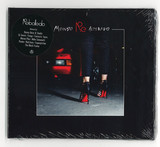
Following 2016's much-acclaimed solo album Mondo Alterado (HIPPIE 008CD/LP), original Pachanga Boy and Hippie Dance mentor Rebolledo returns to the limelight with the jam-packed Mondo Re-Alterado, tapping into his vast and varied network of friends and fellow soundsmiths. Artists such as Superpitcher, DJ Tennis, Maceo Plex, Red Axes, Fango, or Fantastic Twins deliver stunning takes on Rebolledo's unique signature sound, creating a full suite of exclusive remixes, cover versions, and reinterpretations. From the super-energetic club rumblings of Maceo Plex's "Discótico Pléxico" to DJ Tennis's dreamy "Pimiento Drive Version" of "A Numb Gas To The Future" or Fantastic Twins' party bomb "Fantastic Pow Pow", the journey through Mondo Re-Alterado is full of twists and turns -- a world where an epic, cinematic soundscape such as Superpicher's "Rainboy Super Space" sits comfortably alongside the claustrophobic, punishing banger that Fango sculpted from stand-out cut "Pow Pow". Meanwhile, Red Axes turn the casual narrative of "Life Is Strange, Life Is Hard, Life Is Great" into a bouncing workout -- a great companion piece to "WANT", Danny Daze and Shokh's propulsive, jagged dub version of "Fears Come True". Other highlights include Jörg Burger aka The Black Frame with the lush "Black Rainbow Woman", Paulor's country rock extravaganza "Discótico Desértico" and not one, but two excellent contributions from former Italians Do It Better honcho Mike Simonetti. It's a magical, surprising ride that finds beauty in contrasts -- while staying tuned to Rebolledo's spirit of adventure and powerful sense of style.
- A1: Juaneco Y Su Combo - Perdido En El Espacio
- A2: Los Wembler's De Iquitos - Bola Bola En El Tres
- A3: Los Orientales De Paramonga - La Danza Del Mono
- A4: La Mermelada' De Jose L. Carballo - Olvidate De Mi
- A5: Grupo Rosado - En El Campo
- B1: Jaime Gale Y Sus Profetas - Cumbia Profeta
- B2: Anarkia Tropikal Feat. Los Chapillacs - El Silbido Del Tunche
- B3: Sonido Gallo Negro - Inca-A-Delic
- B4: Afrosound - María Isabel
- B5: Chicha Libre - Alone Again Or
- B6: Bareto - No Hay Vuelta Atrás
This Rough Guide features deeply cool cumbia influenced by 1960s Western rock and the hippy movement, spanning the spectrum of psychedelic cumbia from the 1960s pioneers to today's innovators. A classic selection ranging from the vintage Peruvian recordings to classic contemporary bands from Colombia, Chile, Mexico and beyond highlighting how cumbia was reborn in the 1960s to make it relevant to the younger generation.
Includes a FREE download card allowing you to download the full album
Peru has had its share of great electric guitarists bending strings to the rolling beats of cumbia - from Enrique Delgado to José Luis Carballo - who came from its own important domestic tradition of criollo guitar music as much as rock). So it's not an exaggeration to say cumbia peruana (and regional variants at times referred to as cumbia andina, cumbia selvática, and more recently chicha) has had the lion's share of Carlos Santana influences evident in the mix.
Interestingly the Peruvian psych sound so prevalent in the early 1970s had a profound effect on the originators of cumbia; hence we offer the two fine examples from 1970s Colombia that follow. We round out the mix with a gaggle of contemporary artists from Chile, Mexico, USA, Peru, Colombia, Argentina, and Germany, bringing the psychedelic tropical vibe up to date while still retaining the trippy trappings of yesteryear.
The first release of Alienata's label is coming from Artificiero, which is the alias of Alfonso Alfonso (Murcia, Spain), an experienced musician who has released nine records with his psychedelic rock band Schwarz. 'Masa Negra' will be his first album with this new project.
In it, Artificiero delivers a sort of 'electronic esoterica', an inner ritual where repetitive beats and drones have an important roll. A ceremony where textures are more prominent than melody.
Lagartijeando is the name of producer, musician and DJ Mati Zundel. Born, raised and currently living in a small town on the outskirts of Buenos Aires called Dolores. From a very early age, he was musically curious- experimenting with percussion, charango, guitar, bass, voice, and beyond.
Strongly influenced by his travels through Latin America, Mati's signature psychedelic dance tracks latch onto everything from traditional folk sounds from the Bolivian altiplano to the jungle beats of Brazil. Mati hypnotically fuses his traditional influences (with an emphasis on shaman chant and charango loops) with contemporary electronic beats, creating a sound that once left NPR speechless.
Lagartigeando was signed to the infamous ZZK Records in 2009 (Chancha Via Circuito, Nicola Cruz, etc.) on which he released his first EP Neobailongo- a mix of cumbias with electro and dubstep elements. After releasing the EP, Mati soon took to the road and dove deeper into the music of the Andes, studying charango and various traditional folk styles. In 2012, under the name Mati Zundel, he released his first full length album Amazonico Gravitante, via ZZK as well as Waxploitation (Gnarls Barkley, Danger Mouse) in the U.S.
Some more miles later, Mati released his second LP Cardos Redondo also on Waxploitation, which featured 8 songs recorded across Latin America- an album he calls an 'imaginary sound map of Latin America,'
Freshly into 2017, Mati brings us El Gran Poder via Wonderwheel (Novalima, Alsarah & The Nubatones)- named after an important Aymara festival that takes place in Bolivia and Peru, purely to celebrate family. At these festivals, the community also celebrates their culture and the importance of the collective identity. Like these festivals, the album is a celebratory one, and will tempt any listener out of their seat. The album was recorded in Mati's town, Dolores, outside of Buenos Aires. Once again taking a huge variety of sounds- this time influenced by Brazilian house,afro-brazilian rhythms, and folkloric Andean music. All songs are written and produced by Mati, apart from Lunita, a danceable track written in collaboration with Barrio Lindo.
Original release from 1977 "Reissues of a legendary artist, pioneer of the French electronic music. "The French proto-electro is making a come-back as we've seen it with the success of both Cosmic Machine compilations. "Their 7 Onyx"sold over 3 million copies worldwide. "Space Art is behind the massive hits: Onyx", Give Me Love", Love In C Minor"and more "One of half of the band, Dominique Perrier, is one of legend Jean-Michel Jarre's closest collaborators. Recognized as a keyboard virtuoso, he worked on all Jarre's albums from Rendez-Vous"(1986)to Oxygène 7-1 (1997) and still tours with him around the world. Space Art also toured with him in China in the early '80s. "Alongside Jean-Michel Jarre and Cerrone they are one of the most influential bands that pioneered electro music.
Bocal 5 were a No Wave art group composed of Doc Pilot (synths, vocals), Zouka Dzaza (bass), Florian Guillou (synths), Mickey Lepron (electronic drums, bass) and Evy Tinguette (lead vocals). The project was born in November 1980 in Tours, France as the brain child of Doc Pilot. Between 1981 to 1986 Bocal 5 recorded one 7' single and a cassette-only album before taking a year off in 1984 to launch X-Ray Pop. Influenced by Erik Satie, Brigitte Bardot, Suicide and Young Marble Giants, they call their music "minimum naive new wave."
Musique Électronique' is a 19-track compilation of songs recorded across 1983, most of which have never been released on vinyl before. 16 tracks appeared on the From Bocal 5 To X-Ray Pop' album originally released on cassette by Sound of Pig in 1984. Both tracks from their debut 7' originally released in MB5 1984 are included and show a progression in sound as a result of newer recoding equipment and techniques. Also present is a song from the tape compilation Andreas N°3 L'Animal" released by Fraction Studio in 1984. Armed with a Korg 770, MS-10, Prophet Pro-One, Roland TR-707 and TB-808 they crafted their own brand of quirky synthesized electronic pop. Songs are short, concise and well structured, richly textured, moving at a quick speed with hardly a pause. Evy's pouting, tongue-in-cheek vocals (sung in French) come together for a catchy, sensuous, danceable, eccentric psychedelic ride. This collection shows the group's sense of humor, vitality and carefree playfulness.
All songs have been remastered for vinyl by George Horn at Fantasy Studios in Berkeley. Each jacket displays a bright neon green collage of photos and ephemera from the band's archives designed by Eloise Leigh that exudes the project's DIY spirit. Each copy includes a 6-page xeroxed booklet with photos, original artwork and press clippings.
Diseño Corbusier is the avant-garde electronics duo of Javier G. Marín and Ani Zinc, formed in Granada, Spain 1981. Like Sheffield's relation to London during the punk explosion in the UK, Granada developed an experimental music scene 400 kilometers south of Madrid. As a child, there were no records in Ani's house, so she grew up listening to the radio and was hypnotized after hearing 'Remember Love', by Yoko Ono. While attending university in Granada she responded to an ad in a music magazine by Javier, If you're into bands like Cabaret Voltaire or Flying Lizards, call me'.
The duo recorded their debut album Stadia' in 1982 and self-released as a limited edition cassette on their label Auxilio de Cientos. They drew influences from contemporaries like SPK, Throbbing Gristle, Esplendor Geométrico and DAF. They employed the 'cut-up' technique William Burroughs used to write his books to splicing their magnetic tape loops. Instruments used included a Korg Lambda, Boss DR-55 drum machine, Roland SH 101, and MFB 501 drum machine. The lack of money to buy more expensive instruments forced the duo to be more creative. Everything was recorded directly to a cassette player that was plugged into a Revox B77 reel to reel tape machine to add echo. Ani manipulated and treated her naive, menacing vocals to match Javier's processed rhythms. These early sketches contain atonal, arhythmic, thick shifting curtains of synth, loops and radio samples. For this reissue we've added 7 bonus tracks taken from various cassette compilations, as well as three previously unreleased songs. Elements of industrial music, primitivistic techno and vocal manipulation are fused with a Dadaist approach utilizing modern technology.
All songs were remastered for vinyl by George Horn at Fantasy Studios in Berkeley. The front cover is an exact replica of the band's original design, restored by Eloise Leigh. Each copy includes a 4 page xeroxed booklet with photos, press clippings and liner notes from Javier. Powerful and evocative, soundtrack music for a rising storm or revolt.' Sound of Pig magazine 1985
- A1: Interview - Salut Des Salauds
- A2: Philippe Krootchey - Qu'est Ce Qu'il A (D'plus Que Moi Ce Négro-Là)
- A3: Gérard Vincent - Gérard Vincent Pas Gérard Vincent
- A4: Style - Playboy En Détresse
- B1: Pierre-Edouard - A Mon Age Déjà Fatigué
- B2: Casino - Pât Impérial
- B3: Bianca - La Fourmi
- B4: Trigo & Friends - La Dégaine
- B5: Hugues Hamilton - Je M'laisse Aller
- C1: Pascal Davoz - Cinéma
- C2: Anisette - Scratch Au Standard
- C3: Pilou - Ça Va
- C4: Henriette Coulouvrat - Miam Miam Goody
- D1: New Paradise - Easy Life
- D2: Gérard Vincent - Tas Qu'à Fermer Ta Gueule
- D3: Ich - Ma Vie Dans Un Bocal
- D4: Attaché Case - Les Crabes
- D5: Yannick Chevalier - Ecoute Le Son Du Soleilv
This is France in the Mitterrand years: fashions fleet as fast as governments. In the early eighties, the happy-go-lucky gather the nectar of each and every new release.
Believing in a bright future for videotex, and loosened up by the sexy talks broadcasted on the budding pirate radios, the new generation dreams of dance floors and holiday clubs. French Boogie, which preserves the spirit of these years of boodle and bunkum, is the ideal soundtrack to their dreams.
What the web now refers to as French Boogie is some synthetic funk reflecting the spirit of those days when nothing was impossible, or so it seemed. Its syncopated flow heralded the dawning of French rap. Often considered as some kind of post-disco, inspired as much by black music as by new wave, this carefree pop music with bawdy lyrics indulged in simple pleasures: holidays, swank and sun were recurrent themes. Totally in tune with its time, it incidentally glorified luxury, success, and a certain consumerism embodied, for instance, in Bernard Tapie.
In popular clubs such as La Main Bleue in Montreuil, or L'Echappatoire in Clichy-sous-Bois - where Micky Milan could be seen behind the decks - an enthusiastic audience discovered this new sonic wave, influenced as much by French pop as by Sugar Hill Gang or Kurtis Blow. The artists who first launched the movement engaged in it wholeheartedly, but as often the case with new music trends in France, humour and casualness quickly became a decoy to impose a new style. This explosive mixture, in which startling and typically Frenchy French lyrics go along New-York-style tunes, is sometimes reminiscent of the kinky comedies directed by Max Pécas or Claude Zidi. On this prolific scene, partly originating from the Jewish community, everybody was looking for success, trying to hit the jackpot with what was to hand. Famous media personalities, one-hit wonders or John Does in quest of fame, all had a go at French Boogie - more or less successfully. Apart from « Vacances j'oublie tout » by Elégance, « Un fait divers et rien de plus » by Le Club, or « Chacun fait ce qui lui plaît » by Chagrin d'amour (produced by Patrick Bruel), very few songs became hits: the story of funk in France is that of a half-baked robbery.
In this myriad of new musicians, the very young François Feldman and Phil Barney pioneered a fresh and hybrid style. Other well-known artists like Gérard Blanc from Martin Circus (Attaché Case), Richard de Bordeaux (Ich), or Jean-Pierre Massiera (Anisette, Pirate Scratch Band, Mandrake, Scratch Man...) added an eccentric touch to this sound-wave, making it often entertaining, and sometimes showy.
Capture d'écran 2015-10-26 à 12.55.43Singers like Agathe (the author of 'La Fourmi' and of the hit song 'Je ne veux pas rentrer chez moi seule') were far more than just window dressing. They even tried to give an ironic and subversive twist to this rather harmless genre. The very vindictive rebel Gérard Vincent shared in this spirit, but as a whole, French Boogie became associated with nonchalance and sauciness. Thus, Stéphane Collaro, Gérard Jugnot, Alain Gillot Pétré and other TV clowns would clumsily contribute to this French variation on funky sounds. In a few but intense years, French Boogie gave all the tips to party with style.
If some hits made it possible for the happy few to get a real house under truly exotic palm trees, the wave actually ebbed away very quickly, leaving quite a few musicians stranded on the shore. Whether they were sincerely motivated, or simply opportunistic, they had failed. In 1984, French Boogie was already breathless, and got merged with other genres: on the one hand, rap and breakdance adapted its flow to a more urban world, especially with Sydney's show, H.I.P.H.O.P, and Dee Nasty's broadcasts on Radio Nova; on the other, italo, new beat and house began to rule over dance floors, even more strongly asserting the will to develop music for clubs.
Squeezed in between the age of disco and that of modern electronic music, French Boogie was a transitional phase, but it remains an amazingly refreshing testimony to the intermingling of pop and underground cultures. The genre was hastily categorized as anecdotal in spite of its pioneering synthetic groove and matchless bass lines. An attentive ear will discover the poetry of the ephemeral beyond the eccentricities of the genre, as well as a certain unexpected avant-gardism. At the origin of major music trends, always cheerful and catchy, French Boogie is what you need to party.
- A1: Weronika
- A2: Véronique
- A3: Tu Viendras
- A4: L' Enfance
- A5: Van Den Budenmayer
- A6: Véronique
- A7: Solitude
- A8: Les Marionnettes
- B9: Thème : 1Re Ttranscription
- B1: L' Enfance Ii
- B2: Alexandre
- B3: Alexandre Ii
- B4: Thème : 2E Transcription
- B5: Concerto En Mi (Instrumentation Contemporaine N° 1)
- B6: Concerto En Mi (Instrumentation Contemporaine N° 2)
- B7: Concerto En Mi (Instrumentation Contemporaine N° 3)
- B8: Van Den Budenmayer
- B9: Générique De Fin
The Original Soundtrack of ZBIGNIEW PREISNER /KIESLOWSKI / LA DOUBLE VIE DE VERONIQUE - THE DOUBLE LIFE OF VERONIKA in a collectors edition CD Digipack
- A1: El Yayabo - Ruben Gonzalez
- A2: Me Diras Que Sabroso - Compay Segundo
- A3: El Platanal De Bartolo - Ibrahim Ferrer
- A4: Tu No Eres Nadie - Tito Puente
- A5: En Guantanamo - Abelardo Barroso
- A6: Francisco Guayabal - Beny More
- A7: Patricia - Perez Prado
- A8: Oye Mi Ritmo - Omara Portuondo
- B1: Goza Negra - Celia Cruz
- B2: Tirando Tiro - Bebo Valdes With Sabor De Cuba
- B3: Eso Se Hincha - La Sonora Matancera
- B4: Comiendo Y Cantando - Pio Leyva
- B5: Ya Tu Lo Ves Campeon - Chapotin & His Estrellas
- B6: Soy Del Monte - Beny More
- B7: El Jarabe Loco - El Negro Peregrino
- C1: Bodas De Oro - Ibrahim Ferrer
- C2: Mambo No.5 - Perez Prado
- C3: Juancito Trucupey - Celia Cruz
- C4: Mango Mangue - Aldemaro Romero
- C5: Nuestras Vidas Mi Corazon Es Para Ti - Ruben Gonzalez
- C6: Tin Tin Deo - Chano Pozo & James Moody
- C7: Suena Tu Bongo - Conjunto Roberto Faz
- C8: La Campnia Cubana - Alfredito Valdez & Trio Caney
- D1: Cao Cao Mani Picao - Vicentico Valdes
- D2: Maracaibo Oriental - Beny More
- D3: Zambia - Machito
- D4: Mosaico - Lecuona Cuban Boys
- D5: Merengues, No - Bebo Valdes
- D6: Voy Pa Mayari - Compay Segundo
- D7: Tinguaro - Tito Puente
Whether you're beginning a love affair with cuban music or renewing the relationship, this double
album of vintage recordings, served up on vinyl in the traditional way, will bring sunshine into your life.
Buena Vista Social Club release 'Lost and Found,' a new rarities compilation packed with previously unheard live and in-studio material.
Coming almost two decades after the release of the original Grammy-winning, self-titled LP, the new album is a collection of previously unreleased tracks—some of which were recorded during the original album's sessions in Havana and others from the years that followed. Lost and Found is available to pre-order in iTunes and the Nonesuch Store (and outside of North America in the World Circuit Store) with an instant download of the album track "Macusa."
The studio tracks on Lost and Found were recorded at the 1996 Egrem studio sessions in Havana and during a period of rich and prolific creativity stretching into the early 2000s following the recording of the original album. Lost and Found also features live recordings from the world tours of Buena Vista's legendary veterans.
"Over the years we were often asked what unreleased material was left in the vaults," says World Circuit's Nick Gold. "We knew of some gems, favorites amongst the musicians, but we were always too busy working on the next project to go back and see what else we had. When we eventually found the time, we were astonished at how much wonderful music there was."
The original Buena Vista Social Club album became a surprise international best seller and the most successful album in the history of Cuban music. It was recorded for World Circuit Records by Ry Cooder over seven days in Havana in 1996, bringing together many of the great names of the golden age of Cuban music in the 1950s, several of whom were coaxed out of retirement for the sessions.
Bell Gardens combines the musical visions of Kenneth James Gibson (formerly of Furry Things, now recording as
*Bell Gardens' origins began arguably as more of an experiment than the duo's current 'experimental' projects - McBride's drone- and string-laden ambient symphonies, and Gibson's ventures in dub and minimalist techno - as they sought to manifest their mutual reverence for folk, psychedelia and chamber pop in a traditional band structure without cannibalising any particular past genre. Bell Gardens' sound is less reliant on effects and studio trickery than the pairs' independent guises, laying bare as it does vocals and live instruments with emotional sincerity, and presenting songs imbued with an almost pastoral or gospel simplicity and timelessness.
Slow Dawns for Lost Conclusions was again recorded mostly at home studios, but additionally the band made use of a friend's desert cabin in Wonder Valley, California, and it seems this willingness to retreat from the city has lent an expansiveness to the tracks, in particular the spacious, ceremonial 'Silent Prayer' (written in a snowbound mountain cabin in Idyllwild, C.A.) and the crepuscular 'She's Stuck in an Endless Loop of Her Decline' (mapped out under the stars in the desert).
While the addition of strings (contributed by Lauren Chipman of The Rentals and The Section Quartet) and trumpet (Stewart Cole of Edward Sharpe and The Magnetic Zeros) provides a double rainbow of tonal textures throughout, the nine tracks of Slow Dawns for Lost Conclusions are united by an understated elegance belying the newly expanded, communal effort in the studio: each instrument earns its place, nothing is overwrought or conspicuous. Moreover, it is McBride and Gibson's artistry in building stirring soundscapes from the barest of materials in their other guises that lends such assurance and sophistication to these arrangements.
The band is a result of the complimentary cross-pollination of Gibson and McBride's musical tastes - borne from a late-night conversation between the two that grew wings - and it is the universality of the sentiments and their restrained, reflective approach to writing and recording that allows the music to simultaneously straddle the past and the present. The music avoids pastiche, its pedal steel, sleigh bells and harmonies giving a nod to the ghosts of musical genres past, but never overriding or distracting from the emotional content of the sum of its parts.
The album ends with the glorious 'Take Us Away' - one of the first demos Gibson gave McBride when he was on tour with Stars of the Lid - neatly bringing their work to date full circle and exemplifying the band's mindfulness of their own serendipitous beginnings: the dawning of an auspicious, unique musical force.
Bell Gardens - Take Us Away -
Harmonies alert!! Actually, this is rather lovely. Slow-tempo, just the right side of 'twee' and packed full of strings, as if Air and Midlake had been taking balloon trips over the mid-West and sprinkling good-vibes dust across the land. From L.A. and subconsciously plugged into the '60s dream-pop scene, taking in a little bit of Mercury Rev and Brendan Perry en route, stopping off at Pearls Before Swine and Big Star's house for inspiration, before getting stoned with '70s era Brian Eno and Harold Budd.
Gray Hoodie is the debut album from french musician / composer Elise Mélinand. The album, written in Berlin then sequentially recorded throughout various locations in France, was initially inspired by the techniques she was exposed to after being recruited as part of Christina Vantzou's (Kranky / The Dead Texan) Little Prism Ensemble. Her newly adapted recording and composition tool, the laptop, is undeniably the norm today. However, it allowed Mélinand to better visualize her compositions while experimenting with techniques that Gray Hoodie so skillfully showcases. Crafted by Mélinand to tell a story of a friend who gave her a gray hoodie one cold evening. This gray hoodie was a symbol of their friendship and this album is said by Mélinand to be "A way to thank him for everything he gave me". Gray Hoodie showcases Mélinand's childlike voice and legato string work juxtaposed over frenetic experimental beat-work that is injected into ten cinematic vignettes that exude the comfort and warmth of a sweatshirt on a cold day.
clear vinyl pressing!
Soundtravels Recordings proudly presents "Point Of View Part 1". We have compiled six contemporary, electronic bombs from artists all around Europe.
For some we didn't have to travel that far though...
The Hagues Baz Reznik provided us with "Nightdrive To Stuttgart", a moody, sinister track with that typical raw Reznik sound and a melody that will stick in your head for days after you first heard it.
Amsterdam based Arctic Boogie boss Endfest came up with another killer, "Von Heijden En Verre". Almost ten minutes filled with frosty synths and arctic melodies, accompanied by an ever present, very sophisticated 303 which peaks halfway the track, shivers!
Our last, but not least, Dutch contributor is Rotterdam based Louis Guilliaume who you might know from several straight forward techno releases on various quality underground labels. "Promiscues" is a rough edged, energetic track which fits somewhere between Detroit techno and Dutch Westcoast elektronica. At the end of 2013 he will release the "Unknown Forces EP" on Soundtravels.
Okay, now we fly all the way over to Croatia for Le Chocolate Noir with "Futu.e Is B.ight". A short but powerful EBM track with vocals from the man himself. Dark industrial mechanics accompanied by a threathening bassline, but no need to worry... cause Futu.e is B.ight! In 2014 he will release his first EP on Soundtravels.
Next stop... Düsseldorf. After discovering Dircsen's tracks we definitely had to have him on board. The first result of that can be heard on his astonishing "Aspiration EP" (Soundtravels 003). This guy keeps on producing his solid, high quality electronics and shows us his love for the TB 303 machine in a brilliant way. "Exist" is actually a downtempo dubtechno track but off course it has a fierce 303 all over it. Timeless again. Early 2014 his second EP named "Acid Wheel EP" will be a fact.
New to our family is the Russian Neotnas. He makes his first appearance with "Rewind". Typical for his sound is that warm, organic feel all over his house and dubtechno productions. Very often accompanied by female vocals and it's almost like you hear somebody play a live instrument if you listen carefully. At the end of 2013 he will release his "Slow & Steady EP".
After several hot releases on Labels like Cadenza, Kling Klong, Globox, Capsula and his own imprint called Andes Music Chile based Producer Francisco Allendes is back on the street and debuting for Phaze Records. Two great tribalistic tracks with hot remixes from Someone Else (Foundsound, Resopal, Glückskind, Microcosm) and the Bad Boys !!