
non in magazzino
Ordina ora e ordineremo l'articolo per te presso il nostro fornitore.
7,52 €
Ordina ora e ordineremo l'articolo per te presso il nostro fornitore.

dovrebbe essere pubblicato su 30.10.2026
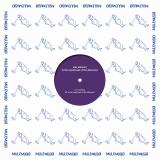
alex albrecht returns to mule musiq with his second release for the label, following his 2022 ep “a clearing.” while “a clearing” explored a more delicate and slow-moving side of his sound, this new four-track ep finds albrecht moving deeper into the rhythm. warm, organic textures, subtle melodies and hypnotic grooves come together to create a sound that feels both deeply electronic and strangely natural.
“in service” opens the record with a driving, spacious groove, gradually revealing layers of melodic detail. the title track, “in the turpid heat of the afternoon,” follows with a deeper and more hypnotic ap-proach, balancing a steady pulse with hazy, atmospheric textures.
on the b-side, “shutter encoder” pushes the rhythmic element further, with a restless, intricate groove and a more kinetic energy. “folding & unfolding” then brings the ep to a more spacious and reflective conclusion, slowing the pace while retaining the subtle movement that runs throughout the record.
across all four tracks, alex albrecht finds a beautiful balance between club music and more contempla-tive listening. it is a natural continuation of his relationship with mule musiq, but also a clear step for-ward from “a clearing” — deeper, more rhythmic and quietly psychedelic.
welcome back, alex albrecht.
dovrebbe essere pubblicato su 06.11.2026

After a very long silence, Wasser Bassin proudly presents Christine Fowler‘s third album, Anthology Of Oddities!
Almost ten years after her last effort, Christine returns with a handful of diverse and unique tracks. On the A-side, the skillfully crafted field recording, ‘Arctic Exortation”, which, literally, breaks the listener’s ice, is followed by the morse encoded distress of “Sinking Vessel Mayday. “Now There Has Been A Delay” and “Elegy For Dead Guitars” both work as somewhat melodic, somewhat tense acoustic guitar innuendos.
The B-side starts off with the long and epic ‘An Unfinished Portrait For Peter And Jean-Luc’, an actual soundtrack for things that never came to life; whilst, the brief and minimal, “Crevasse” ends the album in a sort of synth-like meditation.
So, there you go. It is all brand new and limited to 100 copies!
Disponibile in Stock e pronto per la spedizione

Blue Limited Edition[21,43 €]
Spandau20 delivers its eleventh various artists release, a sonically rich and future-facing blend of broken grooves, spatial moods and modern Detroit romanticism. Four tracks, four new angles on the dancefloor. ANNA Z sets the tone with 'Kabeljau', an eclectic, IDM-flirting workout. On the opening track, elastic rhythms stretch and snap while ethereal pads drift overhead, punctured by sudden turns and glitchy surprises. Moody, weird and beautifully unpredictable. Dajusch continues with 'Fallout', diving into shimmering Detroit-inspired chords and pristine production. Clean yet full of soul, its dreamy propulsion moves with effortless optimism. It's a track that lifts heads and hearts without ever losing its club focus. Flip the record and FJAAK welcome you into a breakbeat-infused haze. 'Your Time' pairs groovy percussion and airy atmospheres with those unmistakable powerhouse vocal chops, a warehouse anthem with a gentle cosmic touch, driving yet deeply emotional. Closing the EP, Claus accelerates the pulse. 'Moist Logic' is a faster, more urgent exploration of the techno continuum. Machine funk encoded into a forward-thrusting groove, a sleek atmosphere swirling around a sharp, kinetic core. With SPANDAU20 011, the West-Berlin collective celebrates a hybrid future that is rhythmically adventurous, melodically rich and rooted in the love for the dancefloor. This record combines Berlin grit with dream-state techno, balancing rough energy and refined emotion across four cuts that leave their mark on the floor.
Disponibile in Stock e pronto per la spedizione

2024 Repress
Berlin techno talent Regent is next up on Mutual Rytm as he returns with a compelling new five-track 12" titled 'Coral Knife', plus a digital bonus cut.
Regent emerged only in 2020, but has fired out quality tunes on Planet Rhythm Records, Arts Collective and Warg Records since then. His already extensive catalogue of standout releases combines tough and rapid grooves with cerebral qualities and a real depth of writing and sound design, resulting in timeless yet avant-garde material optimised for the dance floor. For that reason, he is one of the new forces emerging from the German capital and why his next EP, 'Coral Knife', sees him find a perfect home on SHDW's Mutual Rytm imprint as he returns with his first 12" on the label following his appearance on the 'Federation Of Rhythm II' compilation earlier this year.
The tight and funky 'Brickyard' opens with a high-speed groove and a taught synth riff darting about the mix to seductive effect, before 'Driftage' gets more raw with rickety percussion over bulky drums. The synths are dubby and liquid as they get smeared about the mix to bring dynamism to the groove. There is then darkness and heaviness to 'Nocta' with weighty kicks and alluring vocal sounds drifting through the late-night airwaves.
Title track 'Coral Knife' cannot fail to sweep dancers off their feet with its fizzing synths and smooth drum loops overlaid with icy hi-hats that get you into a meditative state, while 'Encoder' layers up bleeps and squeaks over a signature linear groove that is detailed with muffled vocals and distant cosmic stars.
As always with Mutual Rytm, the package rounded out with an impressive digital bonus in the form of 'Multiversa' - a driving and thunderous techno cut that closes the show emphatically.
Disponibile in Stock e pronto per la spedizione

Dedicated to the captivating essence of feminine expression, this album pulsates with deep bass and raw emotion. This release is more than just notes and beats; it's a celebration of diversity, creativity, and the profound impact of music on our hearts and souls. Each track is a unique reflection of its creator, showcasing an array of styles and perspectives.
Disponibile in Stock e pronto per la spedizione

opo’s 666ridims (2020 - 2026), compiled by J.TRIPP, brings together tracks from his 666ridims netlabel, reflecting on the singular sound worlds of some of his solo work. Like a discovery made by neutrino sensors, opo’s tracks research the transformation of rhythm, swing, and structure, aiming for a new grid. Sketchy and raw, processing emotions and experiences, regaling stories, and asking questions, opo relates in trance verse. All tracks here breathe his focus on improvisation, experimentation, and collaboration. Some of the beats featured on 666ridims (2020 - 2026) are outlines for freestyles and songwriting ideas, a practice formed during a long-distance music conversation with illustrator, printmaker, painter, designer, and maker Billy Bigwood. Other tracks are more club-oriented, like speculative genres programmed in odd meters. Japanese Barcelona-based DJ Hanakito contributes to one track, using samples and chops sourced from her vinyl imports.
Through Afroelectronic experimentation and diasporic narratives, opo encodes his soul's past and future through his music. Encoded, activated, returned. Initiate only when you receive permission from all your mental fragments. Keep transmissions in mind and dislodge and follow the command cluster's trail. Strongly influenced by sci-fi, ancestral afro musics, jazz, performance art, and food, as musical lines and shards of meaning cascade, 666ridims (2020 - 2026) is a minimalist dive into strange meters, polyrhythm, and the transcendence of ideas. Fast, slow. Exhilarating. We don’t discover physical laws; we just collaborate on them.
Ordina ora e ordineremo l'articolo per te presso il nostro fornitore.
Ordina ora e ordineremo l'articolo per te presso il nostro fornitore.
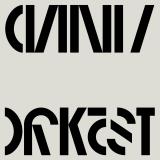
BUCHLA MEETS ORCHESTRA IN QUADRAPHONIC SPACE ON CIANI/ORKEST
Suzanne Ciani, Metropole Orkest and Simon Dobson release historic immersive performance in multiple immersive formats including quad vinyl.
Silverlake, CA \\ June 4, 2026 – Electronic music pioneer and five-time Grammy nominee Suzanne Ciani joins the internationally acclaimed Metropole Orkest, conducted by Simon Dobson, for the release of CIANI/ORKEST, a landmark live album composed entirely of new work, created specifically for this unprecedented collaboration.
Recorded at Amsterdam Dance Event (ADE) before a rapt audience, CIANI/ORKEST is not a retrospective. It is a bold, immersive meeting of the Buchla electronic instrument and 50-piece orchestral sound. The result is a sweeping sonic landscape, at once intimate and monumental.
Under the direction of the Metropole Orkest, renowned for its genre-defying collaborations with artists from jazz to contemporary classical - strings shimmer, brass swells and woodwinds echo the organic, fluid qualities that have always defined Ciani’s sound. “This project feels like a homecoming,” says Ciani. “The Buchla was always orchestral to me, an instrument capable of infinite color. Hearing those colors unfold through the Metropole Orkest has been profoundly moving.”
At the heart of CIANI/ORKEST lies Ciani’s lifelong commitment to quadraphonic sound. From her early Buchla performances in the late 1960s to her 2018 release LIVE Quadraphonic, Ciani has treated space as a primary compositional parameter. Working alongside immersive producer KamranV, Ciani continues to explore immersive sound as both artistic and human gesture. Kamran’s decades of work in spatial formats, converge here in service of a singular goal: to let sound behave as it does in the physical world. “For both of us, quad is musical,” Kamran notes. “The way Suzanne works, quadraphonic is nested in — not the technology per se — but the intent you bring to the work.”
The recording stands as a meditation on legacy, evolution, and the enduring dialogue between technology and human expression. The live album captures the electricity of performance, the immediacy of touch plates under Ciani’s hands, the collective of musicians responding in real time, and the audience’s shared immersion in quadraphonic-inspired space.
CIANI/ORKEST is released by Atmospheric/AKP Recordings/CyKiK in multiple double-disc quadraphonic 12” Record packages designed by grammy-nominated designer Rebeka Arce. Each pressing is made regionally to minimize carbon emissions and also contributes to nature via Brian Eno's EarthPercent, the music industry's climate and nature foundation.
The release is encoded using the dublab Quadraphonic Universally Accessible Resource Kit (QUARK). QUARK enables binaural listening via standard 2-channel playback or 4-speaker playback via Involve Audio hardware decoders, vintage Regular Matrix quadraphonic receivers, Dolby Pro-Logic II/Dolby Surround Upmixer (DSU) receivers, or any multi-channel audio interface equipped computer. This album is immersive via all formats: digital download, streaming (Qobuz, Spotify, SoundCloud, Bandcamp), radio broadcast, vinyl and high-resolution Dolby Atmos (Apple Music, Tidal, Amazon HD, IIA), Sony 360RA (Nugs, Amazon HD) and Eclipsa Audio (YouTube).
About Suzanne Ciani
Suzanne Ciani is a composer, pianist, sound designer, and electronic music pioneer whose work spans experimental, new age, classical, and cinematic sound. A five-time Grammy nominee and recipient of the Moog Innovation Award, she continues to perform internationally, captivating audiences with immersive modular synthesis performances.
About Metropole Orkest
Based in the Netherlands, the Metropole Orkest is one of the world’s leading genre-crossing orchestras, known for collaborations with artists including Brian Eno, Herbie Hancock, Snarky Puppy, Jacob Collier, and within contemporary classical and electronic spheres.
dovrebbe essere pubblicato su 31.08.2026

The beauty, confusion, complexity, and intensity of their youth - lived under the shadow and around the scars of conflict - are entangled in the industrial dance-punk hybrid encoded in the record's DNA, aptly entitled Crystalpunk. "This record is us waving a flag for that generation -- the ones who inherited confusion, resilience, and a fractured sense of self." They're waving that flag as intensely as possible too. For the uninitiated, Chalk mainlines the reaction between genres, eras, and cultures, commuting this collision into their sound. The Belfast group could comfortably power an underground warehouse party after-dark, incite a mid-day festival mosh-pit, or shake an arena on any given evening.
Their power has seamlessly translated to the stage with the group packing venues and delivering alternately sweaty and electrifying performances to a growing rabid fan base. As a group, they've sold out shows across the UK, EU and USA, notched festival performances such as Glastonbury, SXSW, BBK, Trans Musicals and more across 11 countries and were handpicked to tour alongside IDLES and Fontaines D.C.. Coming from dissimilar backgrounds and rallying together naturally, Ben and Ross first crossed paths in film school. As the story goes, Ben had noticed a framed poster of Dublin disruptors Gilla Band in one of Ross's Instagram photos and felt a kinship before ever actually speaking to him.
"Nobody else at our school was into experimental noise guitar bands, so that was all I needed to see," laughs Ben. Emerging in 2022, Chalk initially made waves with songs like "Them," "Velodrome," and "Static." Ultimately, they come-of-age and tell a story that resonates beyond borders. Not just a portrait of the band, but one of their home, a complicated place where the sacrifices made and risks taken by activists, artists, ravers and punks created the only environment that a band like Chalk could emerge from. Crystalpunk is not about choosing a side, it's about choosing the future.
dovrebbe essere pubblicato su 13.03.2026

Period Music is a research process involving Susanna Gonzo, Merma Suelo, Tuce Alba, Elizabeth
Gallon Droste, Agnese Menguzzato, and Farah Hazim. The six artists aim to attune to the different
temporalities experienced through our bodies, drawing from multiple meanings of period – from the
menstrual cycle to musical repetitions and astronomical revolutions.
r'tu
A central meaning of the Sanskrit word for ritual, r'tu, is menstruation, the original ritual. The root of
r'tu is in arithmetic and rhythm/.
Period Music has been staying with essential matters on how we listen to time and rhythms in our
bodies and in the world. Questioning the tempo of everyday life in an accelerated system like that of
modern society, the group has opened up co-creation spaces to listen to embodied memories.
Through dialogue, improvisation and jam sessions, the six artists attuned to e ach other’s processes,
composing music, word scores and drawings – ultimately sounding together.
This work embodies other notions of community through archetypes, embracing the impermanence
that reveals the countless rhythms of life. Period Music speaks of friendship and connection, and
invites you to take on a journey of interconnectedness between our rhythms and the broader social
structures influencing our lives.
The project emerges from conversations that began in Berlin in the fall of 2023, including a one-week
residency at Atelier Josepha in Ahrenshoop by the Baltic Sea in April 2024. The first physical iteration
of this project will consist of a book and a vinyl. The album features looping improvisational compositions encoded with messages about multiple temporalities. The accompanying book gathers poetic memories, letters, photographs, symbols, and drawings that emerged during the process
dovrebbe essere pubblicato su 13.03.2026

1. Special remarks: 116 pages A5 format, risograph printing with thread binding, exposed spine
2. GENRE/S: Poetry/Art/Photography
3. SHORT INFO:
Period Music is a research process involving Susanna Gonzo, Merma Suelo, Tuce Alba, Elizabeth Gallon Droste, Agnese Menguzzato, and Farah Hazim. The six artists aim to attune to the different temporalities experienced through our bodies, drawing from multiple meanings of period – from the menstrual cycle to musical repetitions and astronomical revolutions.
r'tu
A central meaning of the Sanskrit word for ritual, r'tu, is menstruation, the original ritual. The root of r'tu is in arithmetic and rhythm1.
1Judy Grahn, Blood, Bread, and Roses: How Menstruation Created the World (Boston: Beacon Press, 1993), 45.Period Music has been staying with essential matters on how we listen to time and rhythms in our bodies and in the world. Questioning the tempo of everyday life in an accelerated system like that of modern society, the group has opened up co-creation spaces to listen to embodied memories.
Through dialogue, improvisation and jam sessions, the six artists attuned to each other’s processes, composing music, word scores and drawings – ultimately sounding together.
This work embodies other notions of community through archetypes, embracing the impermanence that reveals the countless rhythms of life. Period Music speaks of friendship and connection, and invites you to take on a journey of interconnectedness between our rhythms and the broader social structures influencing our lives.
The project emerges from conversations that began in Berlin in the fall of 2023, including a one-week residency at Atelier Josepha in Ahrenshoop by the Baltic Sea in April 2024. The first physical iteration of this project will consist of a book and a vinyl. The album features looping improvisational compositions encoded with messages about multiple temporalities. The accompanying book gathers poetic memories, letters, photographs, symbols, and drawings that emerged during the process
dovrebbe essere pubblicato su 13.03.2026

Black Vinyl[16,39 €]
Spandau20 delivers its eleventh various artists release, a sonically rich and future-facing blend of broken grooves, spatial moods and modern Detroit romanticism. Four tracks, four new angles on the dancefloor. ANNA Z sets the tone with 'Kabeljau', an eclectic, IDM-flirting workout. On the opening track, elastic rhythms stretch and snap while ethereal pads drift overhead, punctured by sudden turns and glitchy surprises. Moody, weird and beautifully unpredictable. Dajusch continues with 'Fallout', diving into shimmering Detroit-inspired chords and pristine production. Clean yet full of soul, its dreamy propulsion moves with effortless optimism. It's a track that lifts heads and hearts without ever losing its club focus. Flip the record and FJAAK welcome you into a breakbeat-infused haze. 'Your Time' pairs groovy percussion and airy atmospheres with those unmistakable powerhouse vocal chops, a warehouse anthem with a gentle cosmic touch, driving yet deeply emotional. Closing the EP, Claus accelerates the pulse. 'Moist Logic' is a faster, more urgent exploration of the techno continuum. Machine funk encoded into a forward-thrusting groove, a sleek atmosphere swirling around a sharp, kinetic core. With SPANDAU20 011, the West-Berlin collective celebrates a hybrid future that is rhythmically adventurous, melodically rich and rooted in the love for the dancefloor. This record combines Berlin grit with dream-state techno, balancing rough energy and refined emotion across four cuts that leave their mark on the floor.
Ordina ora e ordineremo l'articolo per te presso il nostro fornitore.

Funnuvojere’s curator and founder, Massimiliano Pagliara, reunites with longtime collaborator Gian to present a new chapter in their shared musical exploration: a full-length album under the moniker Hidden Frequencies. The pair’s creative dialogue began with a 2017 release on LACKREC — itself a tribute to Detroit electro — and this LP continues that sonic discourse, refining and expanding their vision. Hidden Frequencies pays homage to the emotive minimalism of acts like The Other People Place, channeling the melancholic elegance and machine soul of Detroit’s second wave.
It’s a record built on analog textures, brooding basslines, and crisp drum programming — both a reverent nod and a forward-looking reinterpretation. Tracks like “Oscillations Of Us” and “Dreaming In Electric Blue” inject peak-time energy into the atmospheric and almost restrained narrative, with a techno drive built for the dancefloor. “Obsidian Reflections” walks the line — structured around classic electroarchitecture but charged with intense propulsion. Pieces like “Dancing On Data Streams” — the contemplative title track — and “EncodedWhispers” offer more introspective soundscapes, inviting deep listening and emotional immersion.
Together, these tracks form a nuanced body of work that shifts seamlessly between reflective and kinetic, minimal and expansive. Familiar yet exploratory, Hidden Frequencies is the sound of two artists in conversation —not just with each other, but with a musical legacy they continue to honor and reshape. This is a modern electro séance that blends introspection with intention, nostalgia with forward motion.
Ordina ora e ordineremo l'articolo per te presso il nostro fornitore.

I must admit to being a sucker for two-guitar bands. Ok, Hendrix pulled off a trio. But I don’t care what anybody says: The Yardbirds were a better band than anything that came out of them (Ok, maybe not Zep. But Cream?).
Maybe the reason I go back so far in my references is that, within the two-guitar band format, original new roles are difficult and rare. There’s the classic (socially problematic and often boring) “rhythm/lead” solution. There’s the JB’s or Nile Rodgers’ chicken pickin’ vs comping solution (which avoids chordal clashes by relegating one of the guitars to the role of single-note percussion instrument). There’s Ornette’s Prime Time division between Bern Nix’s rolled-off “jazz” tone and Charles Ellerbee’s trebly wah. Almost everything else is a variation on one of these.
In Ches Smith’s record Clone Row, each piece is built around a different concept for guitar interaction. The delightful and gifted weirdness of Mary Halvorson’s playing is counterpointed, contrasted, unisoned with, played off, juxtaposed (that is to say, enters every relationship possible) with Liberty Ellman’s equally amazing sound palette, chops, and imagination. This definitely ain’t your father’s guitar band.
The overall vibe of the record—despite Halvorson’s occasional noise outbursts or Ellman’s distorted guitar lines (see Mixed Fridge) is neither punk/funk, nor Zorn-ish metal—and certainly not the looser parameters of Ornette’s improvised harmolodics. Smith’s vibraphone playing, Halvorson’s guitar tone (whammy pedal squiggles aside), the brilliant electronics, and (most of all) the compositions themselves are somehow strangely West Coast cool. It’s as if I’m hearing a Jim Hall concert in which one of us did a lot of mushrooms, or (dare I write this?) some post-punk post-Dave Brubeck post-trip-hop experiment with classical form.
This recording is, most of all, about Ches as composer. He’s picked up a lot on his long, strange trip of the last few decades. The Haitian funkiness of his work with We All Break is audible—but deeply buried, encoded in the polyrhythms (check out Heart Breakthrough). His long-running side musician collaborations with John Zorn and Tim Berne are also evident but sublimated here into something new.
Not that improvising is absent. Check out the compelling collective statements in Sustained Nightmare and Ready Beat. Check out the brilliant interplay and bass soloing on Abrade With Me (a Weather Report for the age of extreme weather?) Nick Dunston is my favorite bassist of the new generation, and he plays brilliantly throughout. And Ches’ drumming here has all the groove, energy, and incredible range that have kept him in demand from Saturday night Vodou services to jazz and new music recording sessions (…the thinking man’s rock barbarian?).
The sus chords in Abrade With Me do build, for a moment, towards a fusion type of climax...but just at the moment I was gritting my teeth in anticipated defense against some horrible synth solo, the drums drop out, and we’re transported to the ambient lounge at the rave, and we suddenly understand we’re in the hands of a composer with the power to transport us just about anywhere.
So, this is a composer’s record most of all; a composer’s record performed by musicians who happen to be great improvisers. Ches Smith builds here on his reputation as a gifted new voice with an important vision, while showcasing some of the most creative musicians of our time.
dovrebbe essere pubblicato su 06.06.2025

“It’s just too easy to make a standard dance track,” Aphex Twin said of his mindset back in 1992. “You’ve got to put a bit of thought into it to get something a bit different.”
‘Didgeridoo’ was released on the Belgian R&S Records label in 1992, and originally peaked at #55 in the UK singles chart in May of that year. Over the last 32 years the track has become one of the essential Aphex Twin tracks in a gargantuan catalogue that continues to amaze and inspire.
“I wanted to have some tracks to play to finish the raves I used to play in Cornwall, to really kill everybody off so they couldn’t dance,” Richard D James, AKA Aphex, told Select magazine back in the 90s. “Digeridoo came out of that.”
Released as a 4 track EP that also included early Aphex productions (now classics) including the industrial, acidic clang of ‘Flap Head’ and hyperbolic futurism of ‘Isopropanol’, the release cemented a relationship with the R&S label that went on to release the ‘Xylem Tube’ EP and the pivotal album ‘Selected Ambient Works 85-92’ in the same year. The label’s owner & A&R Renaat Vandepapeliere reflected “When I first heard Aphex Twin’s music I said, ‘This is it!’, and everybody else said, ‘You’re crazy!’ …a lot of the hardcore R&S fans dropped us. To them it wasn’t music.”
‘Didgeridoo’ (Expanded Edition) is the first time the EP has been re-issued with extra material. Whilst digging in his DAT archive (allegedly stored in an airtight military ammo box), Richard James revisited the recordings, encoding them through a Nakamichi CR7e cassette deck, using the customised deck with vari-speed to encode at speeds “felt right at the time”. Alongside these CR7e versions, the original mixes have been remastered by Beau Thomas at Ten Eight Seven Mastering, offering a dilated insight into one of electronic music’s most endearing releases.
‘Digeridoo’ (Expanded Edition) by Aphex Twin is available on R&S Records from 31st May 2024.
Ordina ora e ordineremo l'articolo per te presso il nostro fornitore.

Funkrockfolk mit animierenden Grooves aus Berlin Bis zur Pandemie konnte sich Holler my Dear über jede Menge Resonanz und internationale Bühnenerfolge freuen. Die drei Alben des weit gereisten Berliner Sextetts erhielten auch außerhalb Deutschlands viel Lob. Bei Festivals (u.a. X-Jazz, Reeperbahn, Jazz Open Stuttgart, Jazz & the City Salzburg, Mexico City, Penang, Kairo, Teheran) und in Clubs feierte die Band rauschende Feste. Im Juni 2023 veröffentlichte Holler my Dear die EP Aftermath, deren Songs u.a. mit der (Post)-Coronastimmung abrechnen und die eine elektronischere Soundästhetik ausloten. Nun schlägt Holler my Dear das nächste Kapitel auf. Die Songsammlung An Only Me Is A Lonely You präsentiert einerseits eine Rückbesinnung auf die akustische Grandezza von jazziger Trompete und Akkordeon, neben Winklers extrem variablem Gesang von jeher Markenzeichen der Band. Andererseits wagt das Sextett neuerdings gewitzte Flirts mit rauem Funk, Soul und Rock im Stil der frühen Siebziger oder auch im Geist des unvergessenen Prince. Verglichen mit dem Vorgänger wirkt die neue Produktion etwas heller, teils geradezu uplifting. Dafür sorgen stärkere Grooves von Schlagzeug und E-Bass, prägnante Riffs und eruptive Instrumental-Einsätze sowie mehr Humor in musikalischen und textlichen Details. So unmittelbar wie nie wird die immer wieder hochgelobte Dynamik und Bühnenenergie von Holler my Dear auf Tonträger eingefangen. Die absichtsvoll "schmutzige" Ästhetik sei einerseits aus der Stilistik der Songs erwachsen, sagt Laura Winkler. Andererseits hat Produzent Dennis Rux (Angels Of Libra, Hamburg Spinners, Tetrao Urogallus) einen starken Anteil daran. Der Hamburger ist ausgewiesener Spezialist für hochkarätiges Vintage-Studioequipment, von Mikrophonen über Vorverstärker bis zu Band-Echos und anderen Effektgeräten, die er schon seit Dekaden sammelt. Während der Aufnahmen befand sich die Band größtenteils im selben Raum, was den bekannten Live-Esprit entfachte. Auf nachträgliche Korrekturen oder gar Overdubs wurde weitgehend verzichtet, das verstärkt den direkten Eindruck. Dazu passend erscheint Winklers gravitätische Stimme wendiger denn je. Neben eingängigen und fast hymnischen Melodien setzt sie verstärkt auf rhythmische Phrasierungen bis hin zu Rap-ähnlichen Passagen mit perkussivem Charakter.
dovrebbe essere pubblicato su 22.03.2024

Ordina ora e ordineremo l'articolo per te presso il nostro fornitore.

The first vinyl release from American artist Sydney Spann, Sending Up A Spiral Of well encapsulates Spann’s body of work thus far. On their music, which reacts to themes of family systems and care work, Sydney writes, “people who have done care work —nannies, sex workers, therapists, nurses— may possess their own musical knowledge, developed over time through particular modes of voicing practiced to achieve a desired outcome in their labor. Attending intimately to these ways of voicing and listening and bringing them into a sound practice could be a way to legitimize a less recognized kind of musical knowledge.”
Sending Up A Spiral Of explores this unarticulated expression through sound and song. The titular piece traces Spann within some quixotic woodland, as if beginning inside of some urban fairy-story. Self-soothing singing quivers under dragging branches, peeling cement and other tactile grit. The work drops into a new proximity half-way through as electronic contours overtake the environment. Sine-tones smolder in a pulsating choreography, perhaps reminiscent of Richard Maxfield’s “Night Music” played at half-speed.
The second section of the record depicts a series of five smaller portraits, expressed (or disguised) as lullabies. An oceanic humming permeates them. “Possession” and “Purposeful Evening” are the most song-like lullabies, with their verse-chorus repetition and melodic simplicity. Innocuous words “baby” and “honey” are encoded with deeper, often painful connotations. Sydney’s voice and vision for this album is ambitious, cloaked in the strains and contradictions of what love means in the nuclear family.
A 16-page artist pamphlet of rubbings, photographs and sheet music accompanies the LP, along with a digital PDF of Spann’s thesis “Sending Up A Spiral Of: A Musical Epistemology Made Through Care Work.”
dovrebbe essere pubblicato su 08.09.2023

"Hungarian guitarist Gabor Szabo (1936-82) issued only three live recordings during his lifetime. Significantly, the first of these, The Sorcerer (1967), remains the most popular album in the guitarist’s all-too abbreviated discography. But there were also More Sorcery (1968) and Gabor Szabo Live with Charles Lloyd (1974), offering Szabo totally in his element and at his bewitching best.
Several more of Szabo’s concert recordings have surfaced in the intervening years, including this one, superbly captured for radio broadcast live in 1976 at the 600-seat Agora Ballroom in Cleveland, Ohio. It is a revelation. There is a sense here that concert patrons may have been hearing an altogether different Gabor Szabo than record buyers.
For one thing, Szabo is heard fronting what is likely his own group, rather than an army of studio musicians. In 1976, Szabo was leading a tremendous quartet with George Cables (or Joanne Grauer) on piano, Tony Dumas on bass and Sherman Ferguson on drums. Szabo had not had a band with this much jazz clout since his famed quartet with Jimmy Stewart in 1967-68 – and it is a union worth savoring: Szabo’s records during this period were light, at best, on jazz.
It’s unclear if any of these musicians are on the Agora date, but as Dumas’s “It Happens” opens the program, it’s a good bet, at least, that the bassist is on board here. But as Szabo’s ’76 quartet is not known to have recorded a studio record, Live in Cleveland is the closest thing to what a mid-seventies Szabo jazz album would sound like.
Gone, are the strings, vocals and concessions to commercial consideration so prevalent on so many of Szabo’s studio records at the time. What is present, though, is fine craftsmanship, tremendous interplay, and the exciting improvisation that good jazz always yields.
This particular concert was part of Sansui’s “New World of Jazz,” a series of 13 hour-long jazz concerts recorded at Cleveland’s iconic Agora Ballroom and broadcast over 40 FM radio stations. The series was sponsored by Sansui Electronics, a Japanese manufacturer of audio and video equipment, which previously sponsored a similar series of rock concerts recorded at the Agora as well.
Sansui was promoting its matrix QS 4-channel sound system – offering, what was considered at the time, superior diagonal separation and stereo compatibility. The firm, partnering with Agora Ballroom and Agency Recording Studio owner Hank LoConti (1929-2014), was looking to take advantage of what they rightly felt was the then-current jazz renaissance.
Each show’s 16-track master tape was mixed through the Sansui QS 4-channel encoder,” according to an August 1976 Billboard article detailing the arrangement, “for distribution to the 40 FM stations throughout the United States that bought the series” – allowing for three commercial spots for local dealers to advertise."
The recording is available for the first time on CD and VINYL. Mastering by grammy-nominated Jessica Thompson.
dovrebbe essere pubblicato su 31.03.2023

O-Wells and 41ISSA have teamed up for their first joint EP. Marking 41ISSA's release debut, the result is three tracks full of speed and space-filling melodies: think big festival stage, think rave, think 2010 dance music (in the best possible way). Taking influences from their early clubbing years in the late noughties, O-Wells and 41ISSA found a mutual musical voice in a large and crisp sound between electro, techno and trance. Catchy melodies take the lead, backed by reverberating claps and relentless basslines that build up to rich club tracks. Opener "Suzuki" is a 149-bpm laser-focussed workout with a raucous deep synth. The Berlin-based producers embrace the trancier side of contemporary club music in "Are You Ready", with a breezy ambient intro that leads into an epic dome of darkness. The more reflective"Pulse" takes it down a notch, breathing a sense of calm - an introverted techno track dripping with melancholy. A bleepy electro remix by Finnish DJ and producer Sansibar completes the spectrum of "BKM", an EP sure to be heard across club dancefloors this winter. "BKM" marks 41ISSA's first release as a producer. She's been part of Live From Earth since 2018 as a DJ, covering a wide range of genres with a zeal for emotional sound textures and a lot of bounce, from ambient to club and techno. O-Wells has been producing for more than a decade now, having found a musical home at Die Orakel lately. Both are not only partners in music, but also in life. "BKM" is short for "blutigekaesemauken", their joint alias as which they've been making music since their early days of dating.
Ordina ora e ordineremo l'articolo per te presso il nostro fornitore.

Ordina ora e ordineremo l'articolo per te presso il nostro fornitore.

Peace And Love, Inc, the fourth album from Information Society is
celebrating its 30th anniversary, which was initially released on October 26, 1992.
The track "300bps N, 8, 1 (Terminal Mode Or Ascii Download)" is actually a text file encoded as modem tones. When decoded, the content is a tale by Kurt Harland about a bizarre but purportedly true event that took place when the band was playing in the city of Curitiba, Brazil. The title track, which hit #10 on the Dance Chart, takes aim at corporate culture and blind conformity but the band envisions themselves as one that sells peace , love and truth.
Ordina ora e ordineremo l'articolo per te presso il nostro fornitore.

Master’s second album recorded by Scott Burns at Morrissound Studios! Classic 1990’s Death Metal! One of the problems with looking back on a musical genre from a perspective years or decades removed from the core of the movement itself is that subsequent developments tend to obscure both a genres origins and threads within a tradition that died out without offspring. As a result, interesting and deserving albums often get lost in the shuffle as reviewers reflect on those albums most “influential” upon later achievements. Death metal pioneers Master are among those who have been shortchanged as a result of that phenomenon, and their 1990 masterpiece “On the Seventh Day, God Created... Master” remains a fascinating exploration both of the genre’s roots and of spaces it might have occupied had different paths been taken. There are a couple of things that leap out immediately to even the casual listener. The first is the seeming primitivism of the music, with songs consisting of relatively brief, bludgeoning pieces driven by relentless rhythms, cyclic riffs and simple melodic hooks. The second is the realization that someone is playing some seriously insane, brilliantly constructed leads. In this case, that someone is Paul Masvidal, far exceeding anything he ever achieved with Cynic. Beneath the surface simplicity, lies a creative spirit that at once recalls the primal birth of death metal (which Master was both present for and very much a driving force behind) and points the way to what the genre might have become. Very apparent are the genre’s hardcore roots, Master here eschewing the Slayer-derived technical architecture that came to dominate most “modern” death metal in favor of structures that would not have been out of place on Discharge’s landmark “Hear Nothing See Nothing Say Nothing” release (there are even a few appearances of the infamous D-beat). Within the unrelenting storm of brutal repetition, the music’s core meaning is encoded, a sheer primal rage dripping from thunderous cycles of power chords and the open throated roar (again the hardcore influence) of vocalist and chief songwriter Paul Speckman.
dovrebbe essere pubblicato su 30.09.2022

"We’ve reached book IV in Rupert Clervaux’s series of “Zibaldone” audio diaries, at which point we find him telling a different kind of story.
“The first three all had very specific themes, while this one feels a little bit looser and doesn’t have just one thematic thrust,” he tells me, which maybe explains why listening feels a bit like annotating. I’m underlining, emphasizing, drawing arrows from here to there, highlighting symbols and noting motifs, realising, questioning, eureka-ing. An impressionistic meaning’s been encoded in and we’re lucky to be given the space to play that most poetic and boundless of all mental games: narrativization.
There are no wrong answers, but Rupert offers some clues either way. If there’s any cipher here it’s “something like a meditation on the concept of ‘depth’––in all its connotative forms.” Think below the surface, (the) underground, yawning oceans, being ‘down in the dirt’, soil, roots, rootlessness, pulling at the dregs, collapse, profundity, stable and unstable horizons, distance, perspective, intuition, not to mention relative opposites: to be shallow, to be above, to be beyond.
It’s got me thinking of Bresson’s “Bring things together that have as yet never been brought together and did not seem predisposed to be so.” His: “Dig deep where you are. Don't slip off elsewhere.” Rupert has realized these—two favourite goals of mine!—here.
This is music that catches you at your own periphery, gives pause, has you offering a little “huh” to, asking “I wonder why” to. Again, it’s got me musing on another mindworm, this time from New York publisher and multi-sensory reading room Dispersed Holdings: “Feeling-making-knowing feedback loop; cartography of feeling; water as text, read to know the land beneath and around it, and body as reader.”
Is it ok to offer up these other contexts out of context? I think so, because Zibaldone IV articulates a similarly swirly tone. Like, we’ve got Rebecca Solnit talking through Kropotkin’s “Mutual Aid” and later calling out to Michael Ruppert a ways away, and “Easy Rider” is playing in the wings. We’ve got Susan Sontag magically contextualizing Mariah Carey with poet Thylias Moss triangulating in order to sketch out (Rupert again) “something a little more interesting than wilful eclecticism or that laboured and patronising kind of pop-savvy.”
Are we following? Whether yes or no Vanessa Bedoret follows on with a performance of a performance of Moss’s 'Water Road’: to be once or twice removed, via strange transitions, purposeful confusions, and, suddenly, seagulls. We’re on a boat with Ingeborg Bachmann—and how I wish I could actually be! But maybe thanks to this music I can as literature, films, friends, lethargy, coincidences, little mental links, eternal wormholes, lingering notions come together to imagine something better."
Text by Natalia Panzer
Ordina ora e ordineremo l'articolo per te presso il nostro fornitore.

'Dwell Time' focuses on the moments in between. Expanding on Satie's Furniture Music, which explores the role of music as a backdrop, Dwell Time explores the moments in between active and passive listening. A sound that maintains a unique balance of properties can start as an active relationship that slowly dissolves into the background and accompanies a listener over its course. The Dwell Time signal remains completely analog, utilizing homemade tape samples and hardware synthesizers to encourage the listener to move between the different states of listening. Produced by Rafael Anton Irisarri and Mastered by Taylor Deupree.
Ordina ora e ordineremo l'articolo per te presso il nostro fornitore.

'Dwell Time' focuses on the moments in between. Expanding on Satie's Furniture Music, which explores the role of music as a backdrop, Dwell Time explores the moments in between active and passive listening. A sound that maintains a unique balance of properties can start as an active relationship that slowly dissolves into the background and accompanies a listener over its course. The Dwell Time signal remains completely analog, utilizing homemade tape samples and hardware synthesizers to encourage the listener to move between the different states of listening. Produced by Rafael Anton Irisarri and Mastered by Taylor Deupree.
dovrebbe essere pubblicato su 18.02.2022

Following up on 2021"s highly acclaimed Hologram EP, the rebooted lineup'
vocalist/guitarist Oliver Ackermann plus drummer/vocalist Sandra Fedowitz and
bassist John Fedowitz (both of Ceremony East Coast)' delivers an overclocked
set of futuristic electronic punk music encoded with punishing industrial rhythms,
swirling voltage- starved guitars and unclassifiable auditory annihilation. Across
thirteen tracks recorded in seclusion throughout the nihilistic absurdity of the
coronavirus pandemic, See Through You is proof-positive that the group hailed as
'The Loudest Band in New York' is still finding new ways to push the needle
deeper in the red
dovrebbe essere pubblicato su 04.02.2022

The seventh album, The Night Before, by the Belgian band Hooverphonic was originally released in 2010 and marked a new period in their existence. Singer Geike Arnaert left the band and was replaced by Noémie Wolfs. The new formation worked out well, since the album went platinum in Belgium. The two singles “The Night Before” and “Anger Never Dies” entered the top five of the Flemish single chart.
The Night Before is available on black vinyl.
Ordina ora e ordineremo l'articolo per te presso il nostro fornitore.

This is the Second edition of Illegal Alien LTD new Various Artists Compilation Series called ‘Between Lands & Oceans’ this series will become an annual compilation and it will be presented in Vinyl, CD, Cassette and Digital format. For our first Volume, we are proud and delighted to count with all this great artists, some of them already with a very successful career and others with a very promising future. Nothing but quality Techno music inside this Various Artists and we thank everyone that is involved on the second Volume of Between Lands & Oceans’.
Ordina ora e ordineremo l'articolo per te presso il nostro fornitore.

We are thrilled to announce the first release in 25 years on Suzanne Ciani's Atmospheric label, which focuses on her live electronic music. Improvisation on Four Sequences was performed live in quadraphonic on the Buchla 200e and the Animoog at Festival Antigel in Geneva, Switzerland on January 25th, 2020. This record is specially encoded to be played back in quadraphonic sound and is also stereo compatible.
Ordina ora e ordineremo l'articolo per te presso il nostro fornitore.

Raymond Scott (1908-1994) was a renowned bandleader, composer and pianist from the 1930s to the 1950s. Many of his playful riffs, originally recorded from
1937 to 1939 by the Raymond Scott Quintette, are genetically encoded in every earthling, having covered by many artists while also being adapted for cartoons like Bugs Bunny, Daffy Duck, The Ren and Stimpy Show, The Simpsons and Animaniacs.
His Soothing Sounds for Baby (SSFB) trilogy showcased Scott as a pioneer of electronic music. His ambient minimalism ultimately became a source of inspiration for musicians like Terry Riley, Phillip Glass, Kraftwerk and Brian Eno. But SSFB couldn’t prepare the world for the exotic artifacts found on Manhattan Research Inc. MRI, first issued on Basta in 2000, contains 69 tracks recorded from 1956 to 1969—over two hours’ worth of Scott’s ground-breaking electronic work in adult dimensions. Forays into abstract musique concrete are heard alongside film soundtrack collaborations with a young pre-Muppet Jim Henson, and pan-galactic sonics seemingly beamed down from hovering UFOs. In addition, MRI presents some of the first TV and radio commercials to feature electronic music. MRI also features many of Scott’s instrumental inventions.
dovrebbe essere pubblicato su 12.03.2021

Hunt & Gather’s debut vinyl release comes by way of Pezzner’s cryptic moniker “The Native Language”. Written as a quasi-homeless man living off the rich in the San Juan Islands who writes music once per year to suffice his own delusions.
Walking the streets in these damp, anxious days that all run together lately, I was approached by a man who would blend right into the neighborhood, layered in flannel and sweatshirts for sleeping.
Rough, but for his shoes. (Never cheap out on anything that separates you from the ground.) “Pezzner,” he called out, from a safe distance. “What did the mangrove say to the marauding hordes.” My soul left my body for a moment and my voice responded on its own. “Petrichor.”
He caught my eye, nodded, left a padded envelope on the ground and vanished. The envelope had passed through many hands, slipped into the bed of a ferry-bound truck, passed from one fellow traveler to another, stashed under the counters of anarchist bookstores, left tucked between books at Little Free Libraries. The greenish stains suggested that at one point it had been swum across a lake. Another DAT, contents encoded here unabridged, and a letter from someone who called himself The Sentinel.
The Vessel lived out his days on Shaw Island, under a canopy of trees that gets smaller and smaller every season. His condition the same, any electricity lit his brain on fire, could only bring himself to compose one day a year, only at night, out of sight. Until he met The Angel, an eccentric with means, who built for him a device.
A Faraday Cage to block all electromagnetic emissions. Burlap walls, for atmosphere. A system of pulleys and levers, wood and rope, all running into a box that sat outside. An entirely mechanical control surface. No electrons in here. The Vessel lit fires, watched the shadows dance, closed his eyes and disappeared into the motion for hours at a time. The Sentinel came every morning to change the tapes. The Angel watched and pondered, his plans unknown.
The box sat sealed, bare except for another set of ideograms, scratched in day by day over time. Inside, the usual bedroom-producer shit. Outside, the ideograms told a story, passed from the Vessel to the Sentinel and drawn by the Angel, of a man who became another creature. Alert to the lowest frequencies, feeling music deep in the soil below their feet. Music that brings messages, from distant friends, warning of new creatures and the danger they brought. Skin alive to the world, so sensitive it can detect the landing of a single fly. A mind capable of keeping a map of the world inside. A mind that can look in a mirror and see a soul it knows well. A mind that can grieve.
After processing its contents, I filled the envelope with granola bars and walked it down to the market. The clerk gave me a knowing look as I placed it on the counter behind a stack of pork rinds from the previous century. As I walked out, a young man carrying a plastic bag and wearing impeccable shoes walked in.
Ordina ora e ordineremo l'articolo per te presso il nostro fornitore.
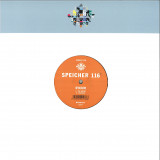
Trends come and go, but our SPEICHER series has never been shy of releasing futuristic, renegade TRANCE. Though the hallowed grounds we inhabit may be on pause, we are always slaves to the rave.
Welcome the debut from SYCUM. An alias from a legendary Berlin musician who needs to remain faceless in order to let the music speak first. So let us dive in….
“The Dream” whispers to the early days of UK rave. Ecstasy encoded transmissions are sent via a galactical groove, set out to space amid a constellation of euphoric sounds that make shapes. “Decoded” is built on the foundation of relentless progression – layered with synth built sorcery of the most profound kind.
Trends kommen und gehen, aber unsere SPEICHER-Reihe hat sich nie davor gescheut, futuristischen, abtrünnigen Trance ans Tageslicht zu bringen. Auch wenn die heiligen Stätten, die wir normalerweise unser Zuhause nennen, zurzeit geschlossen sind – wir bleiben dem Rave Untertan.
Wir heißen das Debüt von SYCUM willkommen. Es ist das Pseudonym eines legendären Berliner Musikers, der gesichtslos bleiben muss, um zuerst die Musik sprechen zu lassen. Tauchen wir also ein…
"The Dream" flüstert von den frühen Tagen des UK-Raves. Ecstasy-codierte Übertragungen werden über einen galaktischen Groove gesendet, der sich inmitten einer euphorischen Klangkonstellation in den Weltraum begibt und dort Form annimmt. "Decoded" steht auf dem Fundament unerbittlicher Progression – Schicht um Schicht baut es sich auf einer Synthesizer-Zauberei der tiefgründigsten Art auf.
Ordina ora e ordineremo l'articolo per te presso il nostro fornitore.

Jon Tye and Pete Fowler have been making music as Seahawks for a decade now. Given the sounds they’ve been exploring over those ten years it was a cosmic inevitability that they would be asked to contribute to the catalogue of the legendary library label KPM.
They replied with Island Visions, an exploration of sound for vision where they construct “audio micro-worlds to explore and inhabit”. A way to transport the listener away from the everyday without the bother of getting on an aeroplane. Mind travel is space travel after all, and much better for the environment.
Mostly recorded at The Centre Of Sound in Cornwall, with additional recording at Studio 34 in London, Jon and Pete’s travelling companions on this particular trip were boogie wunderkind Sven Atterton on fretless bass and keys, Nick Mackrory on percussion and the Seahawks live team of Dan Hillman and Alik Peters-Deacon.
From the grooves of Brian Bennett to the moog vibrations of Mike Vickers, the lush textures of Les Baxter to the experimental sounds of Delia Deryshire and David Vorhaus, this new music channels sounds and moods from across the KPM universe.
The spacious “Hot Sand Shuffle” opens the record with some of Seahawks’ familiar “deck-shoegaze”. The slinky digi-dub of “Sky Blue Sky” follows, gently encouraging us to lay back and relax. “Mystic Beach” is a refreshing ocean spray of a synthetic groove that clears the head, priming a pathway to receive “Crystal Forest”, a new age house groove of birds and flutes.
Dense, deep and dreamlike, “Distant Shore” is ambient rainforest house with a 90s vibe, its dense foliage clearing to let us bask in the shimmer and shine of “River Run”. Hang drum, electric gamelan, flute and loon close side A.
Side B bounces into being with “Catch A Wave”, an upbeat beach groover of synthetic guitar, effervescent synth and snappy drums. Equatorial bubbler “Paradise Bird Bath” soon glides in with marimba, crisp beats and fat synth bass. Fender rhodes, space echo and fretless bass make “Smooth Runnings” a laid-back poolside groove.
“Spirits Have Flown” conjures a hazy vibe with marimba, sax, synth funk bass and chilled beats before “Rolling Deep” serves up a light cocktail of sultry rhythms, refreshing textures, cooling sax and fretless bass. Almost-title track “Island Blues” brings the horizontal poolside feels with melodic chimes, oboe and more fretless bass for maximum vibrations. The marina drone of modular electronics, celestial trumpet and jungle ambience pay the album’s final respects to the cosmos on “Sun Salute”.
Like many KPM suites, this is a record of two distinct sides. The sunrise of side A brings a deep meditation, a journey within to renew the jaded self. Side B refreshes with cocktails by the pool and a chance to groove away the evening at some sunset beach party before dancing under the stars in the house of dreams.
Pete’s front cover for the LP is part map, part postcard: “the record has five different sections and I wanted to reference those in the worlds they created, musically and physically. From beach campfire, to poolside hanging and nighttime dancing. A kind of portal to those places and the pictures they inspired in my mind. All places we’d like to be in this turbulent year”. The track descriptions on the back help guide the way.
2020 marks 10 years since Ocean Trippin’, the first Seahawks release, and Island Visions is the perfect distillation of the sounds, sights, textures and moods that Jon and Pete have been exploring over the last decade. Sunrise to sunset condensed to two sides of an LP. The normal rules of space and time don’t apply here.
This is the first time Be With has worked with Seahawks, but individually Jon and Pete have been members of the extended Be With family since forever (Pete did those posters for our Ned Doheny tour and we worked with Jon on the vinyl version of Hatchback’s Colors Of The Sun). Of course we were going to put this out on vinyl.
Mastered by balearic engineer of choice (and Be With’s regular audio co-pilot) Simon Francis, cut by the legendary Pete Norman and pressed in the Netherlands by Record Industry, the sonic frequencies of these Island Visions have been precision tuned and encoded for optimum travelling conditions. Take the trip.
Ordina ora e ordineremo l'articolo per te presso il nostro fornitore.

On his third and album, Rainbow Doll, the New Jersey house mystic Joey Anderson speaks to us. Of course, like everything Anderson does, the message is encoded. On tracks like "Beside Me" and "Cindy," his voice rings out in dream incantations-on the latter, he repeats a Mark Hollis-like mantra over a perfect, minimalist house loop while the former sounds like the late, great Ron Hardy taking the razor-and-tape to Ike Yard.
It's his third record for the Berlin-based label Avenue 66, and graciously illuminates the dream logic introduced on his debut for the imprint, the 2013 leftfield classic "Above The Cherry Moon." While Rainbow Doll satisfies those outre impulses, the album's core comprises what are perhaps Anderson's most indelible dance tracks to date, like "Bounce With It," a jacking anthem which sees him at mission control, sending widescreen synth lines soaring through the atmosphere.
With the aforementioned vocals punctuating five of the eight tracks, Rainbow Doll is Anderson's most personal work to date. It's his first album in four years, but also his shortest, most concise full-length. Even with a more direct approach, the elusive, dreamlike quality which has made his work so intriguing remains intact. He speaks of dreams throughout the record, even as his uncanny methodology comes into focus. More than ever before, we understand the materials Anderson uses to construct his Escher-like tracks. We hear his fingers on the keys, the sturdy east coast house beats he learned to dance to. The dreams have become lucid. As he puts it deep in the album, they "seem so real."
Ordina ora e ordineremo l'articolo per te presso il nostro fornitore.

DeForrest Brown Jr. is an outspoken theorist, journalist, curator, visual artist and musician. Raised in the deep South, DeForrest moved to New York a few years ago and has been shaking things up IRL and online ever since.
- He asks difficult questions that make us relook at how we think
about race, class, post-racial ideas, historical events and the social
structures in America.
- His work defies narrow bags and he’s truly a unique cultural polygot
comfortable booking an artist like Felicia Atkinson at Issue Project
Room or shaking up people on the street with his “Make Techno
Black Again” hat line.
- His project Speaker Music was inspired by Rhythmanalysis, a book
of essays by urbanist philosopher Henri Lefebvre as well as
considerations of momentum and the “chronopolitical” from British
cultural theorist Kodwo Eshun. Mobilizing freely improvised
electronic percussion and stereophonic audio recordings, Speaker
Music yearns to caress, engineer and sculpt sentiment into a multi-
textural rhythmic body, quivering moments into a collapsed
“nonpulsed time.”
- His debut for Planet Mu centers around weary sonic portraiture of
sonorous and cybernetic energy music – a music encoded with an
encrypted heat but made “with empathy and without excess.” His
“touching of frequencies” unveils a romantic abstraction of sonic
narratives that recalls previous innovations by musicians such as
Les McCann, Urban Tribe and James Stinson.
DeForrest Brown Jr. will be present at Unsound Festival in October at which he’ll be launching a new publication w/ Primary Information.
He will also present a special event at respected New York art gallery Artist Space on Friday December 13th at which he’ll be launching a book related to the album.
Additional dates will happen between October and next Spring - A Video will also be launched when the album is announced in early October (...).
Ordina ora e ordineremo l'articolo per te presso il nostro fornitore.

TALKING OF POST-TECH DIALECTICS,
THIS IS A TRIBUTE TO THE CYBERPUNK.
The mother of technology collapses. Ten fragments of her soul are spread in cyberspace. The last encoder composes the pieces to a manifest. A poem that is a call for the distortion of the artificial.
Manifest is an album, in which CORIN synthesizes the reconciliation of the dystopian and utopian. It is a story of manipulated time that exists out of instrumental and vocal proportions.
CORIN's debut on Bedouin Records will be released in late June. The LP includes 10 tracks.
Ordina ora e ordineremo l'articolo per te presso il nostro fornitore.

BX127 signs back in with Figure for an EP that is maybe his most intricate as to date.
Four groovy alien transmissions, sent in directly from his headquarters somewhere in the outer rims of Saturn. Seemingly effortless these creatures build their momentum, treating the theme of miniscule power to the maximum effect. The tracks have an elegant air to them, each moving gently at its own pace. Whether through ticks and bleeps, finely plucked 303s or swaying dub chords; all the sounds on display know how to work their magic for some stellar listening experience.
Ordina ora e ordineremo l'articolo per te presso il nostro fornitore.