The soundtrack for Quentin Tarantino’s heavily anticipated music laden film Once Upon a Time… in Hollywood, personally curated by Tarantino himself, the soundtrack is a love letter to the music of 1960s era Hollywood. The Once Upon a Time… in Hollywood soundtrack features over 20 standout tracks from artists such as Paul Revere & The Raiders, Deep Purple, and Neil Diamond, as well as vintage radio advertisements, creating a true time capsule of a golden era of filmmaking.
Quentin Tarantino’s Once Upon a Time… in Hollywood visits 1969 Los Angeles, where everything is changing, as TV star Rick Dalton (Leonardo DiCaprio) and his longtime stunt double Cliff Booth (Brad Pitt) make their way around an industry they hardly recognize anymore. The ninth film from the writer/director features a large ensemble cast and multiple storylines in atribute to the final moments of Hollywood’s golden age. Written and directed by Quentin Tarantino. Produced by David Heyman, Shannon McIntosh and Quentin Tarantino. Georgia Kacandes, YU Dong and Jeffrey Chan serve as executive producers. The film also stars Margot Robbie as Sharon Tate plus Al Pacino, Emile Hirsch, Timothy Olyphant, Dakota Fanning, Bruce Dern, Lena Dunham and more.
out of Stock
Last delivered 5 years ago available to reorder, subject to availability
The teen girl falling in love with greasy biker melodrama that set The Shangri-Las on the scene was beaten to the core when English high society child Lynn Ripley -better known as Twinkle- took it to the next level on her own composition "Terry". Penned at the tender age of sixteen, Twinkle's lyrics were found so twisted and bad tasty that the song got the honour of being banned at the BBC thirteen years before the Sex Pistols ran the same luck with "God Save The Queen." A ban that, as you would have guessed, instead of hiding the song from the era's teenage record hunters made it even more coveted. Thus "Terry", Twinkle's first 45 issued on Decca in October 1964, became an instant top 5 hit in the UK and was released successfully worldwide as well as covered by many bands (like Claude François French version or Los Extraños cover sung in Spanish).
The success of "Terry" encouraged Decca to release other comositions by Twinkle, along with her recordings of songs by other songwriters, in 6 singles and one EP published between 1964 and 1966. Another of Twinkle great tunes, "Golden Lights", was covered by big Twinkle fan Morrissey and The Smiths in their 1986 "Ask" 12" EP.
The 14 songs from the Decca 45s are collected in this fatastic LP, housed in an amazing period style sleeve w/backflaps and including a gatefold insert with photos and first hand told liner notes by Twinkle's own sister Dawn James, a music journalist working for New Musical Express back in the 1960s.
It comes in a limited edition of only 500 copies : if you like sixties girl-pop sounds like those of The Shangri-Las, pop stars like France Gall, singer-songwriters like Margo Guryan and Phil Spector-ish productions you must get your copy of Twinkle's "Golden Lights" before it sells-out!
out of Stock
Last delivered 6 years ago available to reorder, subject to availability
‘Green & Gold’ is the second collaborative release from Mr Key & Greenwood Sharps, the long awaited follow up to their
critically acclaimed 2015 album ‘Yesterday’s Futures’. The record was written and recorded between Greenwood Sharps’
cottage in the verdant English countryside and the off grid Finca in the foothills of the Andalusian Sierra Nevada, Spain where
Key is based.
The title has multiple meanings none of which are anything to do with weed or money. First and foremost, green and gold are
the colours which synesthete (a person who sees sound) Greenwood Sharps, composed the record in. It also alludes to the
dialogue between the green of the UK and the dusty gold of Andalucia which created the project. Finally green and gold speaks
of the dynamic between the sun and photosynthesising organisms, the driving force of life on earth.
‘Yesterday’s Futures’ took the listener on a meandering journey through a vast landscape of moods, sounds and ideas,
leading ultimately to redemption and the possibility of resolution. Thematically, ‘Green & Gold’ picks up where ‘Yesterday’s
Futures’ left off, but structurally it takes the opposite tack; an extended exploration of a single ubiquitous idea: universal love for
all things and all people and the challenge of maintaining these shiny ideals in day to day life, as our cynical side reasserts itself.
Key’s first output after an extended hiatus from releasing music makes it obvious that during this time he continued honing his
craft. The unique perspectives and disarming honesty which set him apart from his peers remain, but his technical prowess and
capacity to convey sentiment are notably enhanced. The same applies to Greenwood Sharps, who’s masterful production has
risen to new heights yet still maintains the rich and subtle sonic palette he has become known for.
Dropping alongside the EP is a short film featuring the works of long time collaborator Jamie Johnson, the man behind the
artwork for both ‘Green & Gold’ & ‘Yesterday’s Futures’. The short film is the visual counterpart to the EP and serves as the
perfect introduction to the world of ‘Green & Gold’ as it visually explores all the themes present in the music & provides a snap
shot of the incredible tracks on offer.
In a troubled and busy world, marred with anxieties and uncertainties, ‘Green & Gold’ comes as a breath of fresh air and offers some valuable food for thought for those searching for real heart felt substance rather than the sanitised, individualised &
commodified norm we have all become accustomed to.
Mecanica Popular is back 9 years after their LP “Neguentropia” and 4 years after Dead Cert reissued their first LP “”Que Sucede Con El Tiempo”
Mecánica Popular is ’s an experimental and industrial band formed in the late 70s by Luis Delgado (Finis Africae, Ishinohana...) and Eugenio Muñoz (Randomize), who rapidly gained cult status between the genre fans. The band experienced a renovated international success after their record "Que Sucede Con El Tiempo" (1984) was repressed in 2015 in Andy Votel and Demdike Stare's Dead Cert imprint.
Arriving 9 years after “Neguentropia”, “Estridentismo” is the group’s fourth record and the product of new material that was developed over the last 3 years.
“Estridentismo” is based on the avant-garde movement of the same name that was born in Mexico during the early 1920s (known as Stridentism in English). Each track uses this lens to explore a different thematic concept, from “Jouer Avec Schaeffer,” based on musical pioneer Pierre Schaefer, to “Mikado,” which draws inspiration from the sounds of Mikado steam locomotives.
Following the sound of their previous releases while also introducing elements that reflect their continued evolution, “Estridentismo” is a record that owes as much to the Industrial movement as it does to the work of early electronic pioneers.
Mecánica’s inventive style, and their blending of older techniques like tape manipulation with newer digital technology, allows the record to incorporate Industrial and experimental aesthetics to create a sound that plays with categories and ultimately creates its own.
The record has received praise from the press and artist alike, and it has been played by the likes of JASSS, Demdike Stare, Cera Khin and Ossia.
“Estridentismo” comes in a luxury vinyl edition with a printed inner sleeve full of text and pictures.
out of Stock
Last delivered 6 years ago available to reorder, subject to availability
For its 3rd releases, Nubiphone is proud to present you a compilation of the best early 7inch releases of the mythical Cameroonian band Los Camaroes.
10 raw tracks taken from various singles from 1968 to 1975, that present the musical diversity played by those seven young people: Bikutsi, Afro-Funk, Jerk, , Soukous, Rumba & Blues music. The band led by the charismatic lead vocal Messi Martin that managed to modernized Cameroonian music. Deluxe edition that includes an 8-pages booklet, with exclusive pictures, biography in both English and French languages, and a HQ digital download
card.
out of Stock
Last delivered 7 years ago available to reorder, subject to availability
Singer, lyricist and composer Nirox Romão aka Diron Animal was born and raised in Cazenga, Angola. Diron Animal's involvement in the music world began early: he was part of a traditional Angolan music band and capoeira group, followed by a hip hop project. 12 years ago he moved to Portugal to study, but music became more than just a passion when he landed in kuduro.
For over 6 years, he sang, danced and traveled the world with Afro Portuguese act Thoes + The Shine, mixing rock and kuduro, becoming an explosive ensemble. At one moment, Diron wanted to record a solo album to show a bit more of his own personality and in late 2017 his debut album ‘Alone’ appeared on Soundway Records, where he himself worked out the melodies, rhythm, vocals and even the guitar parts between classic funk to afrohouse and kuduro bass. Through that album he explored major festivals in Europe during 2018, such as at Paléo Festival Nyon, Trans Musicales Festival, Amsterdam Dance Event and others.
On ‘Pair’, his 2nd album and released on Brussels outernational label Rebel Up Records, he has worked hard to enhance his special formula. Inspired by the cruel death his nephew, it became a testament against oppression via the mixed sounds of afro boogie, disco, funk, afrohouse, coupé décalé and kuduro, with English and Portuguese lyrics.
The first single of the album, ‘You and Me’, is an English sung afro boogie disco song and produced by Diron with the support of musician and producer Moullinex, actor André Cabral and video made by director Vasco Mendes. In the video, featuring dancer and actor André Cabral, Diron Animal takes on the role of a gay man to express that a homosexual is a normal person who loves, feels desire, dreams, conquers, wants to be loved and desired, wants to live next to a being that completes him. With “You and Me”, Diron Animal above all wants to appeal to society, respect for the choice of people and non-discrimination of sexual choices. For in life we all deserve to be happy regardless of our sexual choice.
out of Stock
Last delivered 7 years ago available to reorder, subject to availability
'Mantra Moderne' is a stunning, contemporary masterpiece that fuses Anatolian Psychedelia, Brazilian Tropicalia, 60’s European pop and American jazz. A must for fans of Khruangbin, Portishead, Arthur Verocai, Goat, Caetano Veloso, Tom Zé, Os Mutantes, Cortex and co.
The duo is formed of Kit Martin, who lives between London and France and plays all instruments on the album, and Merve Erdem, vocalist and multi-disciplinary artist from Istanbul, now based in London. This is their debut album.
The album explores universal themes such as love, loss, decay, language and ideology, mixing three different languages: English, Turkish and French. Written and recorded by the duo - Kit composed all the songs and Merve wrote the lyrics - in rural France during 2018, each song was completed within a 12-hour window, pawning contemplation for spontaneity.
Dubbed by Kit and Merve as ‘lo-fi-hi-fi’ in reference to the high-end tube equipment that helped it find its way to 8-track cassette tape. The style owes its sound to narrow tape width, valve distortion, spring reverb, the mixture of high end gear with lo-fi equipment as well as a disregard to the norms of hi-fi studio techniques. All instruments were analogue and no samples were used. The instruments that are used range from tablas to darbukas, balalaikas to ouds, MS20 synths to Farfisa organs and a lot of cuica. The mixing techniques were done on-the-fly, tracking immediately to tape: compression, EQ, delay and reverb; meaning mixing could not be revisited!
out of Stock
Last delivered 6 years ago available to reorder, subject to availability
“Stop here!” exclaimed Robert Oumaou as we passed a mango tree on the side of the road just outside of Point-a-Pitre, the balmy capital of Guadeloupe. He filled a plastic bag with ripe fruit, and we set off on our journey across the small Caribbean island in search of musicians he hadn’t seen in years. On the way, we shared stories in broken French and English, stopping at truck stops to eat delicious fried fish. Robert took me to his hometown, and placed a mango and a flower on the grave of his teacher and mentor, a local poet. The seeds of Vwayajé (Traveller) were sewn on this trip, but shortly after returning home, I heard that Robert was ill, and he sadly passed away in 2018. This compilation was originally intended as a way to share Robert’s brazen work with a wider global audience, but it now also serves to immortalize his indomitable spirit.
Gwakasonné is the ecstatic articulation of Robert Oumaou’s artistic and political vision, a unified expression of his interests in American jazz, pre-colonial rhythms, Guadeloupian independence, and Créole poetics. Over the course of three albums, all released in the 80s, Robert piloted a revolving cast of musicians, a venerable who’s-who of Point-a-Pitre avant-jazz pioneers, to deftly intone his creative communal concepts. The songs on Vwayajé are compiled from these three releases, Gwakasonné, Temwen, and Moun, along with an electronic mantra taken from his 2007 solo album Sang Comment Taire. Viewed from our current artistic and cultural landscape, Robert’s work is exceptionally enduring, grounded in its declarations of freedom and foundational use of the Ka (drum) and voice, and prescient in its borderless explorations of protest folk, electronics, ambient atmosphere, music from the African diaspora, and spiritual jazz. The long-form hive-mind expression of the group has parallels with similar explorations by The Grateful Dead, electric
Miles, Pharaoh Sanders, and even the Boredoms, but these are only oblique references for a truly peerless sound. Like other conceptual children of Gérard Lockel, the group was part of a progressive movement of like-minded musicians, such as Serge Fabriano, Dao, Erick Cosaque, and Gaoulé Mizik, who embraced Lockel’s modernist ideals, fusing Gwo Ka drumming and tuning systems with contemporary jazz and vanguard recording technologies. Robert’s ecstatic phrasings, embrace of electronic instruments, and daring lyrics set the group apart as the beatific expression of a sagacious soul.
out of Stock
Last delivered 7 years ago available to reorder, subject to availability
L’Illustration Musicale, Sonimage, Técipress-In Editions (Timing), Musax, Freesound,
Montparnasse 2000 in France but also De Wolfe and Chappell in England, every of these
sound illustration labels have in common to bring out as a legendary spectre the name of Jacky
Giordano and his aliases. Widespread practice in the library music world, Joachim Sherylee,
chosen for the In Motion album, is one of his plentiful aliases (with José Pharos, Jacky
Nodaro, Gruppo Sounds, Rubba...) used by the french composer, that we regain as well for
Black Devil with Bernard Fèvre or even for the Shifters with Yan Tregger.
For his enthronement on the mythical English label De Wolfe, it's under the obscure name of
the Rubba collective that Jacky Giordano aka Joachim Sherylee sneaked in the londonian De
Wolfe studios with the companionship of British colleagues such as John Hyde (aka John
Saunders, James Harrington, Astral sounds or even Wozo) and his wife Monice Hyde (aka
Monica Beale), Alan Howe (aka John Collins), Robert Poole and Tim Broughton.
Published in 1980, the In Motion: Modern Progressive Group Sounds Played By Rubba LP
and its minimalistic and utilitarian red record cover which contains 13 tracks, mainly composed
by Joachim "Giordano" Sherylee and was never reissued since then. This record became cult
over time; it will have taken that the Hip-Hop world seizes it in order to dig out from the
disregarded and underestimated musical gems graveyard. First of all with beatmaker Madlib
and Freddie Gibbs in 2011 with the track “Thuggin'”, in which he sampled the track “Way Star”,
also used more recently by Mil and the rapper Westside Gunn on his track “Brains Flew” by
(1964 Version).
Nearly 40 years after, the Farfalla Records label, after publishing Timing Archives, presents
another aspect more progressive and psychedelic of the multi-faceted composer Jacky
Giordano by fully reissuing at last this coveted, mysterious and mesmerizing "Rubba". Very
desired by crate-diggers, In Motion appears in the want-list of plenty enthusiasts in this
enigmatic world of the library music. (Erwann Pacaud)
out of Stock
Last delivered 4 years ago available to reorder, subject to availability
“Built By Humanoid” is Humanoid's second album, a mere 30 years after the debut, though Brian Dougans claims the first album wasn't really him anyway.
Humanoid's classic acid house single, ‘Stakker Humanoid’, highly regarded as one of the key tracks from the era (Richard James (Aphex Twin) sights the Stakker project as a major influence), enjoyed massive success in 1988. Reaching No.1 for 5 weeks in the UK dance charts, performances on Top of the Pops, a John Peel session for the BBC and European tours eventually led to an album deal.
Whilst all this was happening, Brian Dougans (one half of electronic legends Future Sound of London) claims he was returning to his squat in Kings Cross with no electricity or water. He not only became disillusioned with the business, but also became increasingly ill from the conditions he was living in. Around 6 tracks into the album, he left London and record label, Streetsounds, returning to Manchester to recover and regroup his thoughts. However, Steetsounds pressed ahead with the album and it was finished in Brian’s absence with guest performers.
Brian left Humanoid behind and went on to create FSOL with Gaz Cobain becoming leading lights in the burgeoning ambient scene, scoring a top 10 album "Lifeforms" on Virgin Records.
In 2003 Rephlex (Aphex Twin’s label) released a posthumous album of 1988 out takes compiled by Brian.
Recently Humanoid tracks have been popping up on modern compilation albums (Touched Music / Gasman, etc) signalling a possible return.
“Built by Humanoid” is a brand new nine track album of future acid cuts, breaks and electronics, a lot of which is credited to 2 synthesisers co-designed by Brian Dougans and English Electronics company Digitana. It is this innovation that has helped usher Humanoid back into the limelight and consequently the album has a rather new and unique sound and style.
The track ‘Polymath’ is created using a possibility / probability theory that results in a track which at no point repeats itself - 303 tinged acidic bubbles. Meanwhile ‘Traktion’ is a break beat, pulse laden, bass heavy monster. ‘Fu*k It’ is the future sound of 303. Fast, frantic and beat driven. Whilst ‘Post Humans’ combines thumping 909 and 303 into an acid hallucination.
out of Stock
Last delivered 7 years ago available to reorder, subject to availability
Celebrating its 25th anniversary, Far Out Recordings proudly presents two albums of previously unheard Azymuth demo recordings from 1973-75
Since their debut album release in 1975, Azymuth have risen to rank alongside the world’s greatest jazz, funk and fusion artists. As young men in Rio de Janeiro, they stood out for both their exceptional talent as musicians, and their wild rock ‘n’ roll antics in the predominantly middle-class worlds of bossa nova and jazz. Their signature ‘Samba Doido’ (crazy samba) sound ruptured the tried and tested musical structures of the day, resulting in what can only be described as an electric, psychedelic, samba jazz-funk hybrid.
Before they became Azymuth, José Roberto Bertrami (keyboards), Ivan ‘Mamão’ Conti (drums), Alex Malheiros (bass) and Ariovaldo Contesini (percussion) played backing band to just about every major artist in Brazil. Bertrami was also contracted as an arranger and songwriter at some the biggest labels of the era: Polydor, Philips, Som Livre, and EMI being just a few. Azymuth’s name can be found on record sleeves by the likes of Jorge Ben, Elis Regina, Marcos Valle, Ana Mazzotti and countless others. But at the dawn of the seventies, fascinated by developments in improvisational music - from jazz in the US, to progressive rock in the UK and of course samba, bossa and tropicália on home turf - the energetic young group were inspired and ready to move forward. Any spare moment in which they weren’t in sessions and writing music for other artists, they would be carving out their own sound.
These previously unheard recordings took place between 1973-75 at Bertrami’s home studio in the Laranjeiras district of Rio de Janeiro. At the time of recording, there was nothing in Brazil, less the world that sounded anything like them, so perhaps it’s unsurprising that when Bertrami presented his demos to the record companies he had been working for, he was turned away, and told in effect that the music was ‘wrong’.
One of the demos ‘Manhã’ would be picked up by Som Livre and Azymuth released their seminal debut album in 1975. Throughout the late seventies and eighties, the group released a series of now classic albums for Milestone Records, before taking an indefinite hiatus to pursue their individual careers.
When English producers Joe Davis and Roc Hunter arrived in Brazil in 1994 to record the first Azymuth album in over a decade, Bertrami dug out the demos which had sat virtually untouched for over twenty years. Joe recalls how he was “blown away by the freedom and intensity of the music, as well as the genius of the ideas musically.” Beginning a long and fruitful relationship, ‘Prefacio’ would be the first track Azymuth recorded for Far Out Recordings and was released on the Carnival album (1996).
Along with ‘Manhã’ and ‘Prefacio’, only a handful of these demos were ever professionally recorded and released, making this the first opportunity to hear many of these early Azymuth compositions in their raw, original form.
On every track the frenetic energy in the studio is palpable, giving the recordings a beautifully personal feel and a sense of the phenomenally creative vision Bertrami, Malheiros and Conti were realising at the time. Fifty years on, Azymuth’s earliest recorded music retains an ineffable, futuristic quality, standing amongst their most captivating and moving work.
Credits:
Keyboards: José Roberto Bertrami (Mini Moog Series One, Arp Omni, Arp 2600, Arp Solina Strings, Fender Rhodes 88, Hammond B3 with box speaker, Clavinet with Wah Wah)
Drums: Ivan ‘Mamão’ Conti
Bass: Alex Malheiros
Percussion: Ariovaldo Contesini
Produced by Azymuth and Jose Roberto Bertrami
Recorded at José Roberto Bertrami’s home studio in Laranjeiras, Rio De Janeiro, Brazil between 1973–1975.
Issue and project co-ordinator: Joe Davis
Tape transfers by Roc Hunter (thanks to Simon Hitner)
Mastered by Daniel Maunick at the Sugar Shack, Lanark, Scotland
Mastered by Frank at Carvery Cuts
All tracks published by Far Out Music Publishing/Westbury Music LTD
out of Stock
Last delivered 10 months ago available to reorder, subject to availability
Celebrating its 25th anniversary, Far Out Recordings proudly presents two albums of previously unheard Azymuth demo recordings from 1973-75
Since their debut album release in 1975, Azymuth have risen to rank alongside the world’s greatest jazz, funk and fusion artists. As young men in Rio de Janeiro, they stood out for both their exceptional talent as musicians, and their wild rock ‘n’ roll antics in the predominantly middle-class worlds of bossa nova and jazz. Their signature ‘Samba Doido’ (crazy samba) sound ruptured the tried and tested musical structures of the day, resulting in what can only be described as an electric, psychedelic, samba jazz-funk hybrid.
Before they became Azymuth, José Roberto Bertrami (keyboards), Ivan ‘Mamão’ Conti (drums), Alex Malheiros (bass) and Ariovaldo Contesini (percussion) played backing band to just about every major artist in Brazil. Bertrami was also contracted as an arranger and songwriter at some the biggest labels of the era: Polydor, Philips, Som Livre, and EMI being just a few. Azymuth’s name can be found on record sleeves by the likes of Jorge Ben, Elis Regina, Marcos Valle, Ana Mazzotti and countless others. But at the dawn of the seventies, fascinated by developments in improvisational music - from jazz in the US, to progressive rock in the UK and of course samba, bossa and tropicália on home turf - the energetic young group were inspired and ready to move forward. Any spare moment in which they weren’t in sessions and writing music for other artists, they would be carving out their own sound.
These previously unheard recordings took place between 1973-75 at Bertrami’s home studio in the Laranjeiras district of Rio de Janeiro. At the time of recording, there was nothing in Brazil, less the world that sounded anything like them, so perhaps it’s unsurprising that when Bertrami presented his demos to the record companies he had been working for, he was turned away, and told in effect that the music was ‘wrong’.
One of the demos ‘Manhã’ would be picked up by Som Livre and Azymuth released their seminal debut album in 1975. Throughout the late seventies and eighties, the group released a series of now classic albums for Milestone Records, before taking an indefinite hiatus to pursue their individual careers.
When English producers Joe Davis and Roc Hunter arrived in Brazil in 1994 to record the first Azymuth album in over a decade, Bertrami dug out the demos which had sat virtually untouched for over twenty years. Joe recalls how he was “blown away by the freedom and intensity of the music, as well as the genius of the ideas musically.” Beginning a long and fruitful relationship, ‘Prefacio’ would be the first track Azymuth recorded for Far Out Recordings and was released on the Carnival album (1996).
Along with ‘Manhã’ and ‘Prefacio’, only a handful of these demos were ever professionally recorded and released, making this the first opportunity to hear many of these early Azymuth compositions in their raw, original form.
On every track the frenetic energy in the studio is palpable, giving the recordings a beautifully personal feel and a sense of the phenomenally creative vision Bertrami, Malheiros and Conti were realising at the time. Fifty years on, Azymuth’s earliest recorded music retains an ineffable, futuristic quality, standing amongst their most captivating and moving work.
Credits:
Keyboards: José Roberto Bertrami (Mini Moog Series One, Arp Omni, Arp 2600, Arp Solina Strings, Fender Rhodes 88, Hammond B3 with box speaker, Clavinet with Wah Wah)
Drums: Ivan ‘Mamão’ Conti
Bass: Alex Malheiros
Percussion: Ariovaldo Contesini
Produced by Azymuth and Jose Roberto Bertrami
Recorded at José Roberto Bertrami’s home studio in Laranjeiras, Rio De Janeiro, Brazil between 1973–1975.
Issue and project co-ordinator: Joe Davis
Tape transfers by Roc Hunter (thanks to Simon Hitner)
Mastered by Daniel Maunick at the Sugar Shack, Lanark, Scotland
Mastered by Frank at Carvery Cuts
All tracks published by Far Out Music Publishing/Westbury Music LTD
out of Stock
Last delivered 10 months ago available to reorder, subject to availability
Considering He Was A Self Taught Pianist, Brian Auger's Progress Into The Heart Of The British Modern Jazz Scene Of The Late 1950's And Early 60's Was Particularly Impressive. He Gained Invaluable Experience The Hard Way, Paying His Dues At The Cottage Club, And The Original Ronnie Scotts On Gerrard Street, Working With Renowned Saxophonists Tommy Whittle, Dick Morrisey And Jimmy Skidmore - And Sessions In Smoky East End Pubs With His Friend, Arguably Britain's Greatest Jazz Saxophonist Tubby Hayes.
The Inclusion Of Several Of His Rare, Early 60's Piano Trio Tracks On Both Volumes Of 'back To The Beginning - The Brian Auger Anthology' Brought Long Overdue Attention To Brian's Early Jazz Career, Which Many Were Simply Unaware Of Prior To Their Release. The Enthusiastic Reaction To Those Tracks That Stuck In Brian's Mind, And Later, Fate Intervened, As He Himself Explains, "a Couple Of Years Later, Ken Greene, The Music Director Of Bogie's, Called And Told Me That He Was Starting A Project, To Whit, A Week At Bogie's With A Different Jazz Piano Trio Each Night".
The Material Brian Decided To Play Features Tracks From A Selection Of His Musical Influences, Heroes And Friends Including 'chelsea Bridge' By One Of His Favourite Composers, The Great Billy Strayhorn, Freddie Hubbard's Ever Green 'little Sunflower', The Much Loved Standard 'there Is No Greater Love' Which Brian Used To Play In His Original Early 60's Piano Trio, And His Own Composition Victor's Delight He Wrote A Tribute To The Great English Jazz Musician Victor Feldman Who He First Discovered Via His Tenure With The Cannonball Adderley Quintet.
Surprisingly, This Is Brian's Very First Jazz Piano Album Of His Illustrious And Award Winning Career, And Marks A Return To The Instrument And The Music That First Entranced And Enthralled Him As A Young Boy. His Musical Journey, Which Began In Austere Post War London, And On Which He Absorbed So Many Varied Styles Of Music, And Literally Took Him Around The World, Enrapturing Audiences Worldwide, Has Indeed Come Full Circle.
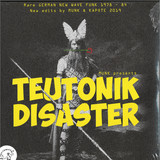
There have been millions of typical disco edits in the last years. But there is so much more interesting music from the late 1970s and early 80s yet to bubble its way to the surface. One of those lesser explored fields is the crazy funky side of Germany's underground disco and new wave from that period. At the time, many German bands were trying to make their own version of English and American styles. After Kraftwerk and Can had started to use the German language in a cool, new way, many bands that followed in their steps experimented with German new wave. Most of these bands didn't reach a bigger audience. Their records never got pressed to more than 300 - 500 copies as they were a number of years ahead of the huge commercial explosion of German pop in 1984: The NDW aka 'Neue Deutsche Welle", with Nena's humongous hit 99 Red Balloons. The bands featured on the compilation released their music before the NDW hype and later broke up. Plenty of these early bands are best forgotten but if you dig deeper you'll find the gems, bursting with style and attitude. And that's just what Toy Tonics heads Mathias Munk Modica & Kapote did. They hit gold.
From four individual parts, with distinct musical pasts but also
overlapping histories, a new unified chapter begins with Piroshka and
the quartet's thrilling debut album 'Brickbat'.
The album is named after the word for a missile, which nails the
record's heavyweight lyrics if not the music's gorgeous, bittersweet
and euphoric pop. Think of 'Brickbat' as a wolf in sheep's clothing -
which suits the name Piroshka, the Hungarian take on the wolf
terrorised fairytale hero Little Red Riding Hood - a subtle nod, too, to
a certain red hairdo that stood out in the 1990s Brit-guitar-pop
scene...
The four band members are former Lush vocalist / guitarist (and
former redhead) Miki Berenyi, former Moose guitarist KJ 'Moose'
McKillop, Modern English bassist Mick Conroy and former Elastica
drummer Justin Welch. The connections between them are a
veritably tangled family tree. Before they lived together and raised a
family, Miki and Moose were notable figures on the so-called
shoegaze scene, while Elastica were Britpop peers. After post-punk
pioneers Modern English split for a second time, Mick became a
latterday member of Moose, while Justin joined the reformed Lush in
2015. And when Lush required a bassist for what proved to be their
final show (in Manchester) in November 2016, Mick stepped in.
It was the rehearsals for that Manchester show that laid the
foundations for Piroshka. 'We sounded great!' says Justin. 'Like a
proper punk band. Mick brings a huge amount of enthusiasm and
livens up the room, and I thought, this is the kind of band I want to
be in again.' Mick agreed. 'I'd seen Lush so many times, it was like
playing with old friends. Miki agreed it was good fun too. And with
Moose available, we thought, let's all have a bash, see what
happens.'
Though 'Brickbat' kicks off with a squeal of feedback, the album is far
from a proper punk record, with as much sublime delicacy as physical
force, with guitars to the fore but also electronic flourishes in all
manner of spaces. Combined, they drive the nuggety melodic bombs
long associated with Miki's songwriting
LP format includes digital download code.
As Metronomy work on their forthcoming sixth album, they take a moment to reflect on the 10th anniversary of their breakthrough album 'Nights Out'. Metronomy's Joseph Mount has delved into the archives for 'Nights Out: 10th Anniversary Edition' which will be released on February 8th on Because Music.
It features the original critically acclaimed album alongside a second LP which expands upon Mount's vision with a set of unreleased demos, rarities and b-sides - many of which make their first appearance on vinyl. Two of the highlights come with alternative versions which have become staples of the Metronomy live set: a bedtime dub version of 'Holiday' which takes it into a darker, glitchier direction, and a French-language version of 'Heartbreaker'.
Mount's Francophile leanings are also explored in Breakbot's remix of 'A Thing For Me', which contrasts French touch vibes with Mount's distinctly English-accented vocals. Previously issued on an exclusive Rough Trade bonus disc, 'Over' is an instrumental of cinematic scale, while the disc closes with four previously unreleased demos including the leftfield minimalism of 'Das Booty'.
Although Metronomy's 2006's debut album 'Pip Paine (Pay The £5000 You Owe)' was discovered by those in the know, it was 'Nights Out' that captured the imagination of a much wider audience. Mount achieved the seemingly impossible: he highlighted both the joyous atmosphere of a big night out and a taste of the resultant comedown in a set that playfully veered towards being a concept album.
About Nights Out Joseph Mount says: 'Oscar reminded me the other day how I said to him on completing Radio Ladio 'I think I've just written my first number 1'. I hadn't. We also reminisced about the day we borrowed the Honda Insight for the album artwork: I found the owner on an enthusiast chat room, we gave his daughter two Kate Nash tickets and a meet and greet with Kate in exchange for a few shots with the vehicle... simpler times. Shout out to Myspace.'
Metronomy's most recent album 'Summer 08' was released in 2016 to widespread critical acclaim. DIY described it as a 'pure-pop odyssey' and NME concluded, 'Mount has done it again. He could write music about the impact of Brexit on the UK's trade with China and make it sound amazing. He's that good.'
Metronomy bring 2018 to a close when they play Edinburgh's Hogmanay Street Party on December 31st. The 65,000 capacity show is headlined by Franz Ferdinand and completed by Free Love.
A mythical and misplaced masterpiece of lost soft rock and acidic folk funk by a one-hit wonderer lost in the wilderness for four decades. From the producer of Margo Guryan, writer behind Wool, Gerry Mulligan collaborator, Tarantino soundtracker and Wendy & Bonnie confidant, Paint A Lady now emerges from folkloric obscurity, to bring a wash of soft psychedelic colour to your vinyl collection and quench the repeat requests of a thirsty new found audience waiting for the rain.
Within certain record collecting circles, especially those who gather under the umbrella that covers fragile niches like 'acid folk' and 'soft rock', it's difficult to imagine a time when the legendary Susan Christie album didn't exist. When Finders Keepers Records first shared the unheard 60's songs like Paint A Lady, For The Love Of A Soldier and Echoes In Your Mind with a wide-eyed audience thirsty for organic soul and festival friendly acoustic funk, Susan's new found fan base instantly felt like they had known these songs all of their lives, and with a single needle drop we saw the birth of what could rightfully be described as an 'instant classic'. Which is why it's hard to believe that the music on this lost 60s acetate was only pressed 12 years ago. As our lucky seventh release in an international discography that now surpasses the 100 mark (and one of a small clutch of English language recordings on the label) Paint A Lady has slowly become one of our most requested re-releases, and with this 2018 edition it is technically accurate to say that this pressing is the first-ever reissue of this elusive and essential LP.
The oft over used term mythical applies to this album on many levels. Perhaps it's the woozy nostalgia found within the pop craft of Paint A Lady that has led to false rumours that original 1960's copies used to exist on the collectors market, or the bizarre claim that songs like the head-nodding title track, and the acid-drenched sound effects on Yesterday Where's My Mind were just a product of a contemporary studio band trying to create a fake folk funk red herring. As a result Susan Christie and her producer and husband of 40 years, John Hill have happily taken the repeat phrase 'unbelievable' as a compliment to their songwriting skills and foresight. In all fairness, with a decade to ponder, the original 1969 song titles alone do seem custom-built for the nostalgia market... No One Can Hear You Cry might lament the unrequited yearning for a record deal which never quite followed Susan's won one-hit wonder novelty hit I Love Onions; similarly When Love Comes might allude to the subsequent 35 year wait for the right label to eventually come along. Echoes In Your Mind and the aforementioned Yesterday... could easily allude to the haunting melodies that sat in the can on John Hill's studio shelf while his projects for Margo Guryan, Wool and Pacific Gas & Electric sat proudly in record racks before benefitting successful French cover versions or making their way on to Quentin Tarantino soundtracks. The track Paint A lady itself, complete with it's future-proofed sample-worthy rhythm section, seems like the perfect title for a mock rock pseudo psych contender - at which point you eventually step back and see the bigger picture. These guys were simply one drop too far ahead of their time; a family force of experimental pop perfection that late 60's America simply wasn't ready for. It is just over 12 years since champion record rustler Keith D'Arcy (who you'll meet on the inside sleeve) stumbled upon one of the original acetates that led to the final release of Paint A Lady, and it's almost a longer 50 years since Susan and John added their final touches to these recordings which tragically went into hibernation for over four decades.
Whether this album has been on your wish-list for what seems like a lifetime, or you are taking a plunge into this deep puddle for the first time, when the needle drops on the first track you'll find that Susan Christie, John Hill and Finders Keepers have been saving up for a very rainy day.
White Shadows In The South Seas is the title of a book written in 1919 by Frederick O'Brien as part of a trilogy he wrote based on his experiences living in the Pacific islands in the early part of the 20th century. His book was taken as the starting point for a film to be directed, initially, by Robert Flaherty (famous at the time for his groundbreaking documentary / fiction film Nanook Of The North) with W.S.Van Dyke as his support. The film, ultimately, apart from the title, had little to do with O'Brien's book and Flaherty left the film after a few months leaving Van Dyke to finish it.
I purchased O'Brien's book, along with many others, from Basement Books, a secondhand bookstore in Melbourne/Australia. Part of my 'Islomania' and on going fascination with all things Pacific. When I discovered there was a 1929 silent film based on the book I sought it out and started to present it as part of my 'Live Music/Silent films' repertoire. Tabu by Frederick Murnau, which coincidently also had Flaherty as co-director originally, was the first film I ever wrote / improvised a score for and presented as a live film/music performance. My repertoire extends to over 23 films now.
My eclectic and diverse musical and artistic interests extend into 'Hawaiian', 'Exotica', 'Ambient' and 'Electronic' Music. I have produced several volumes of so called 'Electronic, Ambient, Exotica' on CD and Vinyl, including Kiribati, Globe Notes, Rayon Hula ( on Vinyl, CD and digital format ) and most recently, New Globe Note on Vinyl and White Shadows In The South Seas on CD.
White Shadows In The South Seas features some of the music presented in my live screenings of the 1929 silent film.
The film is the story of Dr. Matthew Lloyd, an alcoholic doctor who is disgusted by the exploitation by white people of the natives on a Polynesian island. The natives dive for pearls, however, numerous accidents occur and one diver dies. In anger, Dr. Lloyd punches Sebastian, the employer. As revenge and to prevent further interruption of his activities, he tricks Dr. Lloyd onto a ship with a diseased crew (thinking they are ill) and his men rough him up and send the ship off into a storm. Dr. Lloyd survives and is washed ashore on an island where none of the natives have ever seen a white man before. Lloyd is rescued and ultimately falls in love with the chief's daughter, who is Taboo, hence Lloyd is prevented from pursuing his love for her. An incident occurs and a young boy is thought to have drowned but Lloyd is able to revive him, earning him points and permission with the chief's daughter. Lloyd begins to realise that the local islanders have no sense of the value of the black pearls which grow in abundance around their island and he starts to dive for them and collect them. One morning the white man Sebastian unexpectedly turns up on a scooner and starts to offer the islanders trade for their pearls. Llloyd tries to interrupt the encounter and is shot and dies. His wife and the islanders morn for his dead body and, symbolically, the passing of a way of life.
Mike Cooper plays - Electric and acoustic lap steel guitars / electronics / Zoom Sampletrack / Kaos Pad / Casio SK1 / Korg Drum Machine / Self Made Instruments.
It also features field recordings made on Pulau Ubin by Mike Cooper during a month as Artist In Residence for The Artist Village / Singapore.
I would like to acknowledge and thank Lawrence English (Room40 Records) for his assistance and encouragement with the original recordings and the CD version of White Shadows In The South Seas.
All music written and played by Mike Cooper PRS/MCPS - except Po Mahina (trad. Arr. Cooper) and Hilo Hanakahi (trad. Arr. Cooper)
Recorded and Mixed at the Steelworks in Rome 2012/2013.
A White Shadow In The South Seas
In February 2014 'A White Shadow In The South Seas' was the title of an audio-visual installation I made at the Teatro In Scatola in Rome, Italy, presented as part of a series of sound installations titled 'Visitazioni' produced by Proposte Sonore.
The essay below, as well as our collection of Hawaiian shirts, Exotica and Hawaiian vinyl records, was an inspiration for this installation.
'..the transformation and reconstitution of the souvenir commodity as an indigenous ethnic art form and a scarce relic of Hawai'i's romanticized past...' from - Clothing and Textile Reasearch Journal - From Kitsch to Chic by Marcia A. Morgado.
And....
Michael Thompson's Rubbish Theory (1979)
' ...a critical aspect of Western culture is the pre-disposition to see objects in terms of two overt categories: the transient and the durable. Objects identified as transient have finite life spans and lose value over time, whereas those identified as durable have infinite lives and over time increae in value....category assignments are arbitrary, but once assigned a category membership determines relative value. Fashion apparel-by defenition-is assigned to the transient category; paintings commonly are designated durables....how is it that transient objects.. ( e.g. Hawaiian shirts and vinyl records ) ..sometimes become durables.
Objects assigned to the rubbish category are largely invisible, have no value and, ideally, no life span. Fashion for example, no longer worn and relegated to the back of the wardrobe has fallen into the covert rubbish category. But rubbish can be rescued and transformed. Thompson says ' What I believe happens is a transient object gradually declining in value and in expected life span may slide across into rubbish. Here it exists in a timeless and valueless limbo where it has a chance to be re-discovered and be successfully transformed to a durable. Such transferes are radical: objects gradually slide from transcience to rubbish, but the transformation from rubbish to durable involves an all-or-nothing leap across two boundaries, that separating the worthless from the valuable and that between the covert and the overt. Things drift into obscurity but they leap into prominence.
The delightful consequence of this hypothesis is that in order to study the social control of value we must study rubbish.
The rubbish-to-durable transformation is accompanied by the development of highly specialized knowledge derived from the discovery of subtle variations and complex details that went unnoticed in the objects transient stage. The discoveries initiate renewed interest in the object and its market value begins to climb. As prices soar beyond the reach of ordinary people, the object becomes available only in high priced collectors' markets. Furthermore, as market values rise, the aesthetic value of the object undergoes a reassessment as well, and it becomes increasingly apparent that the objects intrinsic beauty has been overlooked. Ultimately the object is re -assigned as a durable and becomes recognized as a timeless classic.
Exotica, Ambience and Pacificism - A dialogue with Mike Cooper & Professor Philip Hayward Deputy Pro Vice Chancellor of Research Southern Cross University, Lismore, Australia.
Colombian musician, Mario Galeano, the force behind the band Frente Cumbiero, and English producer Will Holland a.k.a. Quantic, joined forces in 2012 to create the celebrated Ondatropica project.
Recorded at Discos Fuentes in Medellin, Ondatropica exists to explore and expand the tropical sound of Colombia in its rawest form and to marry it with contemporary influences from around the world. The concept brings together an iconic group of top Colombian musicians representing both the classic and more modern styles of la musica Colombiana. Artists such as Fruko, Anibal Velasquez, Michi Sarmiento, Alfredito Linares, Pedro Ramaya Beltran, Markitos Mikolta and Wilson Viveros joined a group of younger Colombian musicians, members of both Mario's band Frente Cumbeiro and Quantic's Combo Barbaro, to (re)generate the excitement that positioned Colombian music as one of the most influential in South America.
Ondatropica's eponymously titled double album fuses traditional Colombian styles such as cumbia, gaita, champeta with boogaloo, ska, beat-box, MCs, ska, dub, funk and creates a progressive collection of 26 tracks that re-interpret the tropical musical heritage of Colombia with new approaches in composition, arrangement and production.
A doctor by day and a musician by night, Leon x Leon has been producing songs in his
Parisian home studio since 2013, where house, italo-disco and boogie are mixing. When he
was younger, he was immersed in music by taking jazz drum lessons at the conservatory,
and especially by seeing his father, a sound engineer, who had been building his own
synthesizers since the 1970s. As a tribute, he used one of these unique synthesizers on a
title of the disc.
After a remarkable remix of Cerrone's "Funk Makossa" and several tracks on various from
'Red Laser Disco', he released his project My Solar Brass on the same English label in
2017. Organizer of many Parisian parties, he also participated in the founding of the
publishing label 'Good Plus". With the release of Rokanbo on Cracki Records, Leon x
Leon signs a mature EP with the influence of different styles.
The first eponymous title is a manifesto mixing Acid, House and Zouk. As soon as we
launch the track, the pop & acid 80's sounds takes us to another world... A UFO from the
Islands! The other parts of the EP don't leave us in the lurch! 'Formant Sweep' delivers a
soft and groovy bass that responds to an endless, spatial synthetic takeoff. On 'Red
Footpath', the harder kick cleverly blends with an atmospheric blanket and a bright, lively
flute solo straight from an abandoned piece of bamboo on a deserted beach. After that,
'Jungle Juice' lets a crazy keyboard solo resonate in the middle of tropical fauna and flora,
and finally on 'Horizon', the EP ends in beauty with an airy atmosphere. This last piece
sounds like a beautiful sunset at the end of a long summer day.
Through all these tracks, Rokanbo EP offers us a clever contrast between synthetic notes
and the warmth of tropical groove, and places our gaze towards the horizon, seeking the
groove to disturb its line on the infinite sea.
Perhaps one of the most unique and unlikely exponents of the highly collectible genres of ambient electronics, experimental tape-music and PINA (Private Issue New Age), this English-born Jamaican- raised sound designer, artist and existentialist furrowed his own unblinkered path through lesser chartered electronic fields for many moons before eventually teaming up with Bill Laswell (with Material) and Daevid Allen in New York to bring self-taught synthesis to Gong during their most oblique periods.
Creating two impossibly rare self-pressed vinyl LPs of conceptual inner-visionary outer-galactic angular tonal-dronal alien-art soundscapes in the process, the man known under figure shifting guises such as Dennis Wise/Denis Weise/Dr. Wise etc, combined a culture of sound system circuitry and radiophonic trickery adding Tea-pot poetry and sci-fidelity future- folk to his magnetic mesh.
Presented here as the first ever dedicated Wize Music collection this record combines compositions spanning 1979-1984 in both a solo capacity as well as small- group projects featuring members of the Emerald Web band.
Imagine a comic book where a Funkenstein monster called 'Laraaji-Scratch Perry' invaded your record shelf while Komendarek and Holger Czukay kept lookout... Dr. Dennis might be the only one Wise enough to outsmart all of them with his powerful amorphous anaesthetic.
SWINGTING017 is a bouncy JA-to-UK bashment banger that features a hefty combination of producers and vocalists from both the Equiknoxx & Swing Ting camps. The tune finds each artist at their most playful, riding the sparkly, jiggy riddim impeccably.
Jump to the Bar was built and voiced in two days at London Bridge's Red Bull Studios, late Summer 2017.
Day one involved Gavsborg , Time Cow , Platt & Samrai arriving from various residences of friends and family in the vicinity of the English Capital (shout to the Epsom crew). Alway early-birds, Gavs and Cow set to the task on various machines and available gear to construct the rough instrumental, with Platt & Samrai assisting on percussion and programming. Soon lush synths, tough kicks, flanged hats, grimy bass and snappy claps were combining neatly and the backdrop was set.
Day two featured Kingston's queen of the cool kids club Shanique Marie flying straight into the big smoke to lay down a witty hook in minutes before earning a lie down on the sofa. Original Brum-town don RTKal rolled in from the West-Midlands (driven by Farda Neeko) dropping a one-take freestyle (egged on by an excitable studio gathering including Randy Valentine, Mr Williamz & Specialist Moss) that later became his verse and the pre-chorus. With the clock ticking on the session, the flask was neatly passed to Mancunian stalwart Fox for the final flourish, giving shouts to buckfast tonic wine & organic herbal treats.
Supported by Toddla T (Coldest Record), Jubilee (BBC Radio 1 Residency), Chal Ravens (Top Flight), Max Glazer (Federation Sound Radio) as well as being added to Spotify's Dancehall Official Playlist.
German electronic originator Gudrun Gut's latest solo collection distills a lifetime of persuasions and obsessions into a compelling 14-track statement: "Moment." Stark, somber, sultry, and clever, the sides slide between ballad and lament, synth-pop and spoken word, anthemic and abstract.
Gut's background as a key figure in Berlin's first-wave industrial uprising still casts an aura in the music's mechanized rhythms and frozen emotional palette but decades of improvisation and collaboration have deepened her sense of composition and melody beyond any easy genre categorization.
If anything "Moment" finds Gut's muse at its most enigmatic, threading shades of motorik hypnosis, technoid laboratory, coldwave pop, glitchy gauze, and even a gender-bent Bowie cover ('Boys Keep Swinging') into its eclectic web. It also showcases the depth and detail of her voice, reserved but suggestive, intoning blunt truths and opaque poetry in both German and English.
This is music of history and heartache, modernity and desire, alienation and expression, by a singular creative committed to the complexities of sound. - Britt Brown
Gudrun Gut's story spans many years, scenes, and sounds, from the 'ingenious dilettantes' subculture of early 1980's Berlin as part of Mania D, Einstürzende Neubauten, and Malaria! to her twilit industrial pop trio Matador into an expansive solo catalog of later work scoring films, videos, and radio plays. Her talents extend beyond musician, however, to include founding record labels (the influential imprints Moabit Musik and Monika Enterprise), club nights (progressive electronic pop collective Oceanclub), and experimental feminist collaborations (Monika Werkstatt).
Gut also works extensively in the technical sector of the recording industry, as a producer. Recent projects have included collaborations with Antye Greie (AGF) and Hans-Joachim Irmler of Faust, participating on the advisory committee for Musicboard Berlin, and performing at The Royal Albert Hall with Âme as part of an Innervisions label night.
Last February, We Had The Delightful Surprise To See Dominique Dalcan On The Victoires De La Musique Stage (main French Musical Award). The Elegant Singer Received The Award For The Best Electronic Album For His Project Temperance, An Album In English Full Of Reliefs, Dense And Splendid. We Are Delighted To See Today That Dominique Publishes A Second Volume Of Temperance. The First Albums Of Dominique Dalcan Came Out In The Early 90's, Especially On The Belgian Label Crammed Discs. He Is Considered One Of The Ambassadors Of The New French Pop, Combining Electronic And Orchestral Arrangements. At The Same Time, Under The Name Of Snooze, He Immerses Himself In Electronic Music And Creates Soundtracks For Cinema And Contemporary Art. In 2013, He Switched To The English Language And Adopted A New Artistic Identity: Temperance.
The Project Moves Away Freely From The Format Of The Song To Dive Into A Vast Electronic Palette. In Temperance 2, We Hear Contemporary R & B Ballads Full Of Artificial Strings, Collisions Of Textures, Even Balinese Sounds But Nothing That Never Steals The Show With Dominique's Voice And Lyrics. The Temperance Repertoire Addresses The Confusion Of The Human World And A Wild Nature. There Is Also A Question Of Fusional Love With Pop And Soul Songs. This Gives An Album That Rushes Against Each Other Joy, Fury, Despair, Desire Or Pleasure, Without Them Ever Contradicting Each Other, And That Moderates With Art And Temperance, In Short.
Double LP on heavyweight 180 gram audiophile black vinyl in a wide spined sleeve with new artwork layout. Re-mastered by John Rivers at Woodbine Studios especially for vinyl release. Includes a bonus track not on the CD version and new artwork design. Never has a record been so aptly titled, or so perfectly descriptive of a band's particular vision of the universe. For all that, the original appearance of Taking Drugs was in fact a bootleg on the semi-legendary/semi-notorious Father Yod imprint in 1990, later supplemented with contemporary outtakes and cuts for the Bomp reissue in 1994 and one further song for the Space Age version in 2000. The original seven tracks, dated January 1986 and the first recordings to feature Pete Bain on bass, are collectively known as the Northampton Demos, understandably named for the recording location in a studio outside said English city. Both Sonic and Pierce have been on record as long preferring these takes to the eventual versions that surfaced for the most part on Sound of Confusion. Certainly it's a fine set of performances, showing a definite step toward the more familiar sound of the group and away from the rougher takes on For All the Fucked Up Children of the World. "The Sound of Confusion," aka "Walkin' With Jesus," rips along with fierce energy, Pierce's singing and the rampaging, primitive wail and rumble of the band just wonderful. "Losing Touch With My Mind" takes things to an even higher level, a huge wallop of feedback and beat (Natty Brooker's drumming in particular delivers just what the doctor ordered), Pierce delivering the lines with a flat, cutting drawl. On the slightly lighter tip, "Come Down Easy" is more or less fully in place (aside from singing about it being 1986!), possessing a more upfront but less vocally distinct feel than the Perfect Prescription take. The tracks that surfaced on the later reissues come from a variety of different sessions, including the original take on "Feel So Good" and a good live version of "Things'll Never Be the Same," one of several cuts featuring Brooker's drumming replacement Rosco.
Strut Present An Exclusive New Compilation Curated By Optimo's Jd Twitch, 'kreaturen Der Nacht', Bringing Together Classics, Rarities And Oddities From Germany's Original Post-punk And Diy Scene. 1979 To 1984 Was An Era Of Particular Artistic Upheaval In Germany As Strong Subculture Scenes Formed In Many German Cities. Emphasis Was Placed On Expression Rather Than Technical Perfection, Artistic Impact Rather Than Skill. Diy Self-organisation Prevailed With The Establishment Of Small Record Labels And Independently Produced Records And Cassettes. Bands Experimented Across Genres And Consciously Abandoned The English-speaking Mainstream With German Band Names And Lyrics. 'although We Had A Small Underground
Scene, It Was Very Vibrant,' Explains Gudrun Gut Of Malaria! 'bands Like Die Haut, My Frst Band Mania D., Malaria!... We Organised Gigs Ourselves Or Friends Would Open A Gallery And
Have Bands Playing. We Hung Around Together In A Handful Of Clubs Like Risiko Or Dschungel And Went To Gigs At So36. West Germany Had Other Regional Scenes Too: Düsseldorf And
Köln Around Der Plan And The Ata Tak Label And There Was The Hamburg Side With Abwärts. Germany Didn't Have A Real Music Industry Like The Us Or England Back Then.'
This New Collection Is A Personal Selection From Jd Twitch, Built Over Years Of Playing The Tracks In Club Sets. 'it Is Not Designed To Tell A Defnitive Story Of What Was Going On In
Germany In This Era,' He Explains. 'rather, It Is Simply An Arbitrary Collection Of Records I Adore From A Specifc Era With A Specifc Attitude That Hopefully Together Sum Up Some
Of The Musical Undercurrents In Germany At That Time.'
The Package Features A Host Of Rare And Unseen Photos From The Period Along With Extensive Interviews With Artists Including Beate Bartel (mania D.), Christoph Dreher (die Haut),
Michael Hirsch (p1/e) And Thomas Voburka (weltklang). All Tracks Are Remastered By The Carvery With Artwork By Optimo's In-house Design Man Andrew Beltran.
Beautiful 1 Lp Edition With 140g Vinyl, Stoughton Tip-on Sleeve, Liner Notes (english & Japanese) By Chee Shimizu, Sticker Official Reissue Of Diggers' Favorite Colored Music Available On Vinyl And Cd Or The First Time Since 1981. Genre: Electronic, New Wave, Pop, Synth, Experimental Wrwtfww Records Is Deliriously Happy To Announce The Reissue Of The 1981 Self-titled Album From Cult Japanese Duo Colored Music, Available On Vinyl (housed In A Stoughton Tip-on Sleeve) And Digipack Cd, With Liner Notes By Digger, Curator, Connoisseur, Writer And Legend Chee Shimizu. An Incredible Mix Of Cosmic New Wave, Unconventional Disco, Avant-garde Synth Pop, And Hybrid Electronic Funk, Colored Music Is Enchantingly Unique, A Sort Of Experimental And Magnetizing Take On David Bowie's Berlin Trilogy With A Psychedelic Haruomi Hosono Touch. From The Groovy Post-punk Glam Title Track To The Proto-house Dance Floor Killer heartbeat", Ichiko Hashimoto And Atsuo Fujimoto Hit All The Right (and Sometimes Not-exactly-right-but-truly-genius) Notes To Create The Odd And Beautiful, An Unparalleled Audio Escape To The Best Elsewhere You Can Think Of. Also Playing On The Album Are Celebrated Musicians Mansaku Kimura, Shuichi ponta' Murakami (pacific, Ki-motion By Mkwaju Ensemble, Collaborations With Jun Fukamachi, Yasuaki Shimizu, Haruomi Hosono...) Kiyohiko Semba, Tamio doyo' Kawabata, And Tatsuhiko Hizawa.
World Music And Ethno Sounds With An Obvious Japanese Origin Meet Progressive Rock And Psyche. The Result Is A Captivating Piece Of Melodic And Deeply Atmospheric Music That Paints Pictures Of Life In Ancient Japan Into Your Mind When You Lay Back, Close Your Eyes And Listen Closely With Your Thoughts Turned Off. If Pink Floyd Were Japanese Their Music Might Have Sounded Like That. The Frequency Of The Arrangements On - benzaiten Reminds Of What Our English Heroes Have Created In The Early To Mid 70s Just With A Different Ethnical Approach. - benzaiten Is Even A More Progressive Effort Than Anything Most British Bands Have Ever Managed To Fabricate And Still Utterly Natural And Vivid Concerning The Flow Of The Music. All Participating Musicians Here Are Professionals And Their Performances Are Tight And Still Passionate. The Sound Is Warm And Vivid, The Song Structures Are Wide Open And Welcome You To Slip Inside. East Meets West On This Record And Osamu Kitajima And His Companions Really Grab You By The Soul. Electronic Elements In The Percussion Section Add Some Oddity To The Whole Musical Picture. Not Sure What Osamu Kitajima And His Band Intended When They Recorded This Record But I Am Certain They Achieved It. The Cool Aspect Of - benzaiten Is The Rocking Guitar Which Keeps The Whole Album Together. Must Be The Japanese Pendant To German Acts Like Amon Düül Ii, Embryo And Guru Guru. Well, There Is Definitely Some Truth In This Comparison. Anyway, This Album Will Enchant You!
* As we all know, reggae music was created in the Ghettos and has helped many people in their struggle & creating many opportunities for those who worked hard for it. Reggae developed its own alternative industry with the support of sound systems and gave opportunities to so many deejays, toaster and singers. In Brasil, with the rise of sound systems inspired by the UK and JA scene, Monkey Jhayam was one of the first artists to express his art and also build a solid and prominent career alongside many sound systems in his country. Out of São Mateus, Monkey broke barriers and has been collaborating with producers from all over the world with his uplifting Portuguese message.
Kendrick Andy's Roots song 'Great Old Men' lends itself to a new version by the major Brasillian Reggae artist, Monkey Jhayam. The 7 single features back to back versions, both in English (A) and Portugese (B). Rhythm: Alien Dread. The tracks also feature Alvin Davis (Hornz), Asha B (Congos & Percussion) and Rhythm/Lead Guitar by Steven 'Marley' Wright.
For its tenth year as a label, 4Weed Records proudly presents Zion Kingdom, a special EP we've been working on since long time. A feature between historical sound system Dread Lion Hi Fi, also active as producer and promoter, and Mr Biska, this release is enhanced by legendary Henry Tenyue's trombone melody, aka Matic Horns, and it is mixed, dubbed and mastered by Steve Vibronics.
Over the years Matic Horns has been collaborating in studios and live performances with the best Jamaican and English talents such as Gregory Isaacs, Freddie McGregor, John Holt, Luciano, Aswad, UB40, Horace Andy, just to name a few. Dread Lion Hi Fi crew is a historical Italian sound system, that has been a reference point for the reggae vibez in Italy, promoter of historical events such as the Milano Dub Club and the Dubwise Festival, where the best producers, singers and selectas of the international scene have been hosted. The combination with master Steve Vibronics was born far away in time, from a consolidated relationship over the years that brought about this collaboration.
The track opens with a magical trombone melody by Matic Horns that perforates the pad carpet laying down the whole tune while indicating the path, a victorious march to Zion. The guitar riff, which perfectly fits to the trombone melody, introduces the drop of a deep overwhelming rhythm that transmits the desire of moving and dancing, and at the same time a spiritual mantra for high meditation. The production is enriched by three different dubs, mixed and made unique by Steve Vibronics' technique, reverbs, filters and delay, a very guaranty for the lovers of Uk Dub in roots and culture style.
Moscow Is Mythologized For Its Grandeur And Gravity But Its Parable Pleasures Offer Splendor And Even Absurdity. Over The Ten, Symmetrical Pieces Of For, Kate Nv Scores Her Native Urban Environment With Just Enough Whimsy To Gurgle Through The City Cracks And Grow Psychotropic Foliage. Each Sound Assumes Its Own Personality, Moving Through The Album Metropolis Like Miniature, Mutating Molecules Viewed From Nv's Apartment Window.
Alternately A Guitar-wielding, Post-punker And One Within The Multitude Of Moscow Scratch Orchestra's Avant-garde, Nv Is A Versatile Artist That Maneuvers Instinctively In Whatever Musical Environs She Finds Herself. Nv's Second Solo Album Is An Even More Abstract Endeavor Than The Hybrid Pop Of 2016's Binasu. Inspired By Casual Moments Of Ephemeral Sound From Within And Beyond Her Apartment Walls, The Record Has A Clarity Arrived Altogether And From Right Under Her Nose. Recorded At Home, Nv Says It Was As If The Music Was Not Written By Herself, But Her Chair.
For Inhabits A Stage That Piero Milesi & Daniel Bacalov, Ann Southam, Or Hiroshi Yoshimura May Have Written Music For And Dresses It With Viktor Pivovarov's Psychedelic Depictions Of Moscow - Contorting Bodies, Flying Pencils, And Multi-dimensional Faces Dance With Subtle Arpeggiations, Conversational Voice Synthesis, And Anthropomorphic Midi. Animating Objects Is Essential To The Album. Like A Surreal Still Life, Each Piece Is An Alien Arrangement Of Common Elements That Extend The Everyday Ritual Into An Eternal Landscape Of Unconscious Activity. Somewhere Along That Landscape, Kate Awaits And Greets With Apples For Hands And Fish For Feet.
Like The Album Title, Each Composition Contained Within Is Represented As A Three Letter Word, In Russian And English. The First Half Of For Was Written In The Spring. Starting With yxo Ear,' Previously Released On The Peaceful Protest Compilation Cassette In 2017, Melodies Meander And Lollygag. a Two' Incorporates Human Breath Played Like Notes On A Pump Organ. Oak' Offers A Warm Tune To Tango. How' Loops Curious Notes That Bump Into Each Other With A Chirpy Acknowledgement. You,' The Only Track On For With Lyrics, Sets A Wassily Kadinsky Poem To Song.
The Second Half Of The Album Was Written In The Autumn. The Feathery Edges Of One' Extend Like Watercolors Bleeding Off A Rubber Scroll. See' Is A Subdued, Shadowy Variation Of How', As If The Same Song Were Played In Different Weather, Dimmer Light, Or By Kate's Devious Doppelganger. The Electronics Unravel And Unwind On Dog' Until The Final Track, Who,' Ends With Vague Solemnity And Rattled Metals.
A Short Online Film Series By Shura Kulak Will Accompany The Release Of For. The Films Follow A Solitary Figure Performing Ordinary Tasks Through A Slow, Warped Lens — Each Song Enacting A Daily Habit: Waking, Dressing, Reading, And So On. In Her Live Performances Around The Album, Kate Nv Will Play Each Song From Memory, Allowing For Variation From The Recorded Tracks, And Scenes From The Films Will Be Re-created And Improvised In The Moment.
Wan Chai Records is a Hong-Kong based label, specialized in rare Asian records and quality reissues.
After a few years of hard diggin' in Asia, meeting the artists and many local figures of the 60's, 70's and 80's Scene in Hong Kong, Singapore, and Taiwan, they wanted to share their best finds and put them together on vinyl with the best productions ever made in Soul-Jazz, Disco, Funk, Modern-Soul, and AOR.
The result is a selection of 10 totally unknown gems sung mostly in English and Cantonese with amazing covers of classics like Lovin' You', Make Me Believe In You', or Hurt So Bad' in a nice Artwork Gatefold LP.
Includes 12' Vinyl and Deluxe CD album, 30 page hard back book
Now that I've been to Nashville,' Kylie Minogue says with audible affection, I understand. It's like some sort of musical ley-line...'
Golden, Kylie's fourteenth studio album, is the result of an intensive working trip to the home of Country music, a city whose influence lingered on long after the pop legend and her team returned to London to finish the record: We definitely brought a bit of Nashville back with us,' she states. The album is a vibrant hybrid, blending Kylie's familiar pop-dance sound with an unmistakeable Tennessee twang. It was Jamie Nelson, Kylie's long-serving A&R man, who first came up with the concept of incorporating a Country element' into Kylie's tried-and-trusted style. That idea sat there for a little while, with Minogue and her team initially unsure about how to bring it to life. Then, when Grammy-winning songwriter Amy Wadge's publisher suggested Kylie should come over to collaborate in Nashville, a city Kylie had previously never visited, something clicked. You know when you're so excited about something,' she recalls, that you repeat it an octave higher and double the decibels I was like that. 'Nashville! Yes! Of course I would!'. I hoped it would help the album to reveal itself. I thought 'If I don't get it in Nashville, I'm not going to get it anywhere.''
Kylie's Nashville trip involved working alongside two key writers, both with homes in the city. One was British-born songwriter Steve McEwan (whose credits include huge Country hits for Keith Urban, Kenny Chesney and Carrie Underwood), and the other was the aforementioned Amy Wadge, another Brit (best known for her mega-selling work with Ed Sheeran). It was then a truly international project: Golden was mainly created with African-German producer Sky Adams and a list of contributors including Jesse Frasure, Eg White, Jon Green, Biff Stannard, Samuel Dixon, Danny Shah and Lindsay Rimes, and there's a duet with English singer Jack Savoretti.
However, the album's agenda-setting lead single Dancing was, significantly, first demoed with Nathan Chapman, the man who guided Taylor Swift's transition from Country starlet to Pop megastar. If anyone knows how to mix those two genres, Chapman does. Nathan was the only actual Nashvillean I worked with. He's got a huge studio in his house, which is probably due to his success with Taylor... there's plenty of platinum discs of her, and others on his walls.' There's something of the spirit of Peggy Lee's Is That All There Is, of Dylan Thomas' Do Not Go Gentle Into That Good Night, even of Liza Minnelli's Cabaret about Dancing, a song which not only opens the album but sets out its stall, providing a microcosm of what is to come. You've got the lyrical edge, that Country feel, mixed with some sampling of the voice and electronic elements, so it does what it says on the label. And I love that it's called 'Dancing', it's immediately accessible and seemingly so obvious, but there's depth within the song.'
The experience of simply being in Nashville was an overwhelming one, before Kylie had even arrived. Once I knew I was going to Nashville, people talked about the place with such enthusiasm. They said without doubt I would love it and, I would come back with songs. They were sending lists of restaurants, coffee shops and bars. It really was a beautiful and genuine response and it felt like I was about to have a life changing experience and in a way, I did.' The reality came as something of a surprise, when she found a far more modern metropolis than the vintage one she'd envisaged. I thought it would be like New Orleans: little houses and bars, with music spilling out onto the street. It reminded me more of Melbourne: apartment blocks going up everywhere! The main strip, Broadway, where the honky tonk bars are, that's where the street was filled with music and it was just amazing.' Mainly, Minogue remembers the heat and humidity. It was 100 degrees. It was like it was raining with no rain.' She also relished the chance to wander around unrecognised, visit a few venerable music bars and soak in the atmosphere. I didn't get to the Grand Ole Opry or the music museums but I managed to go to a couple of the institutions there like The Bluebird Cafe and The Listening Room, and just by being there, through some kind of osmosis, you get this rejuvenated respect for The Song, and the writing of The Song. There's no hoo-hah around it. There's a singer-songwriter there, talking about the song and singing the song, to an audience who are there to listen. Although, I have to confess I was guilty of starting to clap too soon during a long pause at the end of one of the songs. The guy made a bit of a joke out of it and got a laugh from it, but I thought 'Of all people in the audience, no...''
It's probably no coincidence, therefore, that every track on Golden is a Kylie co-write, making it arguably her most personal album to date. The end of 2016 was not a good time for me,' she says, referring to well-documented personal upheavals, so when I started working on the album in 2017, it was, in many ways, a great escape. Making this album was a kind of saviour. I'd been through some turmoil and was quite fragile when I started work on it, but being able to express myself in the studio made quick work of regaining my sense of self. Writing about various aspects of my life, the highs and lows, with a real sense of knowing and of truth. And irony. And joy!'
The songwriting process allowed Kylie to get a few things out of her system. Initially, she admits, it was cathartic, but it also wasn't very good. I think I was writing too literally. But I reached a point where I was writing about the bigger-picture, and that was a breakthrough. It made way for songs like Stop Me From Falling and One Last Kiss. It also meant I had enough distance to write an autobiographical song, like A Lifetime To Repair, with a certain amount of humour. The countdown in that song: 'Six-five-four-three, too many times...'. I don't know if that will be a single, but I can just imagine a girl with framed pictures of past boyfriends, and kind of going 'Oh god, when am I going to get this right'' When she listens back to Golden, Kylie can vividly hear the Nashville in it. It is, she'll agree, probably the first time that a Kylie album has sounded like the place it was made. You wouldn't normally relate my songs to the cities. Can't Get You Out Of My Head sounds more like Outer Space than London. But Shelby '68, for example, was written in London but it was done with Nashville in mind. It's about my Dad's car, and my brother recorded Dad driving it! I don't think I'd have written a number of the songs, including Shelby '68 and Radio On without having had that Nashville experience.'
The latter, she says, is about music being the one to save you.' Throwing herself into the making of the record, she says, crystallised that idea. If there's one love that will always be there for you, it's music. Well, it is for me, anyway.' That song, in particular, carries nostalgic echoes of the golden age of Country, as heard through Medium Wave transistors and tinny home stereos in the distant past. Like any child of the Seventies, Kylie had a basic grounding in Country music, mainly absorbed from older family members. My Step-Grandfather was born in Kentucky and though he lived most of his adult life in Australia, he never stopped listening to his beloved Country artists.' If there's any classic Country singer whose imprint can be heard on Golden, it's Dolly Parton.
Kylie saw Dolly live for the first time at the end of 2016, at the Hollywood Bowl. It was like seeing the light,' she beams. It was incredible. Everyone, whether they know it or not, is a Dolly Parton fan. When I was in Nashville, I did pick up a T-shirt that said 'What Would Dolly Do' Maybe that should be my mantra.' And, whether consciously or otherwise, there's a timbre and trill to Kylie's vocals on Radio On that is distinctly Parton-esque. My delivery is quite different on this album,' she says. A lot of things are 'sung' less. The first time I did that was with Where The Wild Roses Grow. On the day I met Nick Cave, when I recorded my vocals, he said 'Just sing it less. Talk it through, tell the story.' This album wasn't quite to that extreme, but a lot of the songs were done in fewer takes, to just capture the moment and keep imperfections that add to the song. I remember on my last album, a lot of producers were trying to take out literally every vibrato they heard. And that's not natural to my voice. I mean, I can make myself sound like a robot, but it's nice to sound like a human!' Working within the Country genre also gave Kylie permission to write in the Nashville vernacular. Because we were going there, I wasn't afraid to have lines like 'When he's fallen off the wagon we'd still dance to our favourite slow song', 'Ten sheets to the wind, I was all confused', 'I'll take the ride if it's your rodeo'. The challenge of bringing a Country element to the album made the process feel very fresh to me, kind of like starting over. I started to look at writing a different way, singing a different way.'
If ever Kylie lost confidence in the Country-Pop concept, and found herself pondering This is great, but back in the real world - my real world - how will this work', Jamie Nelson was there to badger her into sticking to the path. We found a way to make it a hybrid with what we'll call my 'usual' sound. It had to stay 'pop' enough to stay authentic to me, but country enough to be a new sound for this album. The closer we zoomed in, and the more we honed it, I knew Jamie was right. We sacrificed good songs that weren't right for this album, because we wanted it to be as cohesive as possible. The songs that were hitting the mark were these ones, so we decided to be strong, and that's how we wrapped up the album. What he said, that stuck with me, was that 'I'd hate to get to the end of this and really wish we'd gone for it.'' Having worked with Kylie for so long, Nelson was able to put this latest shift of direction into perspective. He said 'You've traditionally done it throughout your career. You had your PWL time, then you did a complete turn when you went to deConstruction, then another complete turn with Spinning Around, and R&B dance-pop, and then another turn with Can't Get You Out Of My Head, icy synth-pop, and this is another one.' He was right. It felt like the right time to have a change sonically. New label, new stories to tell, and a new decade almost upon me.'
Kylie Minogue will, it's scarcely believable, turn 50 this year. This looming milestone is partly behind the album's title, and title track. I had this line that I wanted to use: 'We're not young, we're not old, we're golden' because I'm asked so often about being my age in this industry. This year, I'll be 50. And I get it, I get the interest, but I don't know how to answer it. And that line, for my personal satisfaction, says it as succinctly as possible. We can't be anyone else, we can't be younger or older than we are, we can only be ourselves. We're golden. And the album title, Golden, reflects all of this. I liked the idea of everyone being golden, shining in their own way. The sun shines in daylight, the moon shines in darkness. Wherever we are in life, we are still golden.' One of the album's shiniest moments is Raining Glitter, an exuberant banger which ventures closest to Kylie's traditional dance-pop comfort zone. Eg White, who is one of the producers and writers and a great character, was talking about disco one day. I said 'I love disco, but you know the brief.' We needed to be going down the Country lane, so to speak. But we managed to bring them both together. When I wrote it, I was thinking about the Jacksons video for Can You Feel It where they're sprinkling glitter over everyone. And I think there's a Donna Summer record that's got that feel to it. I think that's my job: I basically leave a trail of glitter after every show I do anyway.'
Kylie is looking forward to the challenge of incorporating the Golden material into her live shows. Mixing these songs in with my existing catalogue is going to be fun. And it could be fun to do some of those songs with just a guitar. It'll make my acoustic set interesting...'Her incredibly loyal fans - to whom one Golden song, Sincerely Yours, is intended as a love letter' - will, she believes, have no problem with her latest stylistic shift. My audience have been with me on the journey, so I shouldn't be afraid that they won't come with me on this part. I've had fun with it, and I'm sure they will too.'
The time spent making Golden has, Kylie says, been a time of creative and personal renewal. I've met some amazing people, truly inspiring writers and musicians. My passion for music has never gone away, but it's got bigger and stronger.' And if there's an overriding theme to the record, it is one of acceptance. We're all human and it's OK to make mistakes, get it wrong, to want to run, to want to belong, to love, to dream. To be ourselves.'
I was able to both lose and find myself whilst making this album.'
* Still Circles announce the release of their debut album, 27:36, available March 30th via Killtone Records.
* Currently at 7 in the chart on the Josh Hannen show Amazing Radio
* Session for Alan Raw BBC Introducing on Sat March 3rd 2018
* Comprised of Natalie Kolowiecki and Jack Donnison, the Bradford based duo bridge the worlds of trip-hop and ambient music: splicing slo-mo beats, grainy atmospherics, haunting melodies and soft-wax drones. Their first single, 'Only Noise' is testament to this - with its manipulated vocals, heavy bass line and lurching percussion, the track's stark surrealism evokes the thrum of their northern English town.
* Upon the surface, 27:36 has the indelible markings of the band's influences: Brian Eno, Poliça, Adrian Sherwood (to name a few) - but the duo never settle into pure pastiche. Instead, they contort the sounds of these artists into something all their own. 27:36 is an alien vision of what pop music could be.
Our latest examination of Esoteric, Modal & Progressive Jazz of the 20th Century has taken us to Japan. The liberating force of jazz has been created and felt all around the world, but few nations on earth embraced the jazz message with the passion and intensity of Japan. From the dawn of the jazz age to the present day, Japanese audiences have been renowned tastemakers, enthusiasts and champions of the music - in the 1980s, Japan was the biggest per capita market in the world for jazz records, and it has even been said that Japanese jazz fans kept the jazz record industry alive through the lean years of the 1970s, when the music fell from commercial favour in the land of its birth.
But while the jazz aficionados of Japan are celebrated as sophisticated fans and consumers of the music, comparatively little is known outside Japan of the remarkable and abundant music produced by generations of Japanese jazz musicians. Numerous Japanese jazzers have found enormous success on the international stage - Toshiko Akiyoshi, Sadao Watanabe, Teramasu Hino, and many others are household names among jazz listeners all over the world, and with good reason. But if such global figures are put aside, the stunning heritage of Japanese jazz remains poorly understood outside Japan. As a result, the work of many celebrated Japanese jazumen has remained largely unknown to international audiences, and the extraordinary scope and depth of Japanese jazz has not been widely recognised.
Compiled for the Spiritual Jazz series in collaboration with the celebrated collector and DJ Yusuke Ogawa (Deep Jazz Reality, Tokyo), this 2CD/twin set of double LPs aims to correct that omission by uncovering the uniquely deep sound of esoteric, modal and progressive jazz from Japan - music of the heart, soul and Japanese spirit!
Each 2LP set comes complete with OBI strip and thick, textured sleeve. Our extensive liner notes extend onto printed inners, and are in both Japanese and English.
Original year of release: 1989. Features the tracks 'King Kong Five', 'Pas Assez De Toi', 'Sidi H'bibi', etc. Mano Negra the legendary first band of French singer Manu Chao ... featuring songs in Spanish, French, English and Arabic.. We are celebrating this year the 30th anniversary of its foundation. The album has been unavailable on vinyl since its first original pressing.
Original year of release: 1988. Features the tracks 'Mala Vida', 'Ronde De Nuit', 'Salga La Luna', etc. Mano Negra the legendary first band of French singer Manu Chao ... featuring songs in Spanish, French, English and Arabic.. We are celebrating this year the 30th anniversary of its foundation. The album has been unavailable on vinyl since its first original pressing.
Original year of release: 1991. Features the tracks 'Out Of Time Man', 'King Of Bongo', 'Madame Oscar', etc. Mano Negra the legendary first band of French singer Manu Chao ... featuring songs in Spanish, French, English and Arabic.. We are celebrating this year the 30th anniversary of its foundation. The album has been unavailable on vinyl since its first original pressing.
out of Stock
Last delivered 7 years ago available to reorder, subject to availability
The latest vinyl slice from FBNM sees us head to the depths of central Africa via Paris to track down a feast of rare seventies afro funky jams from Cameroonian master musician EKO. We've brought FBNM favourite Riccio along for the journey too, who has provided us with a fantastic Rerub coaxing out some modern dancefloor sensibilities and production sparkle.
Eko Roosevelt Louis has had a music career spanning over forty years, born the grandson of a Kribi tribal chief, his musical persuasion beginning humbly with his village's local church before his formal education at the Senegal conservatoire and Paris' École Normale de Musique. EKO made a number of jazz funk and disco records in the mid seventies during a stint recording and touring in and around France before returning to Cameroon to take over his grandfather's tribal chieftaincy, a role he still holds today! Alongside this position of office EKO has continued to work with music, performing, teaching and even leading Cameroon's national orchestra!
The tracks we have selected for reissue are all taken from EKO's third album, Funky Disco Music which was recorded in Paris and released on his own Dragon Phenix imprint. Sung in a combination of English and EKO's native tongue we've lined up a real excursion in feel good afro-jazz, funk and soul made purely for dancing feet and boogying butts!
All tracks have been officially licensed and lovingly remastered for this special release by Andreas (Lupo) Lubich (CALYX Berlin), packaged alongside Riccio's sympathetic work in the cutting room on 12" vinyl with a special interview with Eko Roosevelt Louis himself!