
Reservar06.10.2025
debe ser publicado en 06.10.2025
29,20 €
debe ser publicado en 06.10.2025

debe ser publicado en 19.09.2025

Nach dem Erfolg der ersten zehn Alben der Vinyl Edition von Hyperion (veröffentlicht im September 2024
und März 2025) folgen nun sechs weitere LPs. Alle Alben erscheinen erstmals auf Vinyl und zeigen weltweit
tourende Künstler, mit denen das Label seit langem eng zusammenarbeitet. Jeder der sechs Titel wird als
limitierte 180g-LP erscheinen, die in einem vollfarbigen Gatefold präsentiert wird und mit einem Begleitheft
ausgestattet ist.
2025 feiert das Nash Ensemble sein 60-jähriges Bestehen, und Hyperion begeht diesen Anlass mit einem
Programm aus Debussys Sonaten & Prélude à l’après-midi d’un faune. Das Originalalbum stand Anfang
des Jahres auf Platz 1 der britischen Specialist Charts, und die Times schrieb: ”Sechzig Jahre haben uns
gezeigt, dass mit den Musikern des Nash Ensembles, ganz gleich, welches Repertoire sie spielen, eigentlich
nie etwas schiefgehen kann.
Das Nash Ensemble, residierendes Kammerensemble in der Londoner Wigmore Hall, gilt als Vorreiter
des britischen Musiklebens und wurde von The Independent als „unvergleichliche Kammermusikgruppe“
bezeichnet. Das Nash Ensemble hat sich einen bemerkenswerten Ruf als eines der besten Ensembles
Großbritanniens erarbeitet und sich dank des Engagements seiner Gründerin und künstlerischen Leiterin
Amelia Freedman und des Kalibers seiner Spieler einen ähnlichen Ruf in der ganzen Welt erworben.
debe ser publicado en 12.09.2025

debe ser publicado en 26.06.2025

Latency presents the first-ever arrangements of iconic Ethiopian composer Emahoy Tsege Mariam Gebru"s music for piano and strings, honoring her desire to broaden the interpretation of her work beyond the piano. Led by pianist, composer, and Emahoy"s close friend Maya Dunietz, a nine-piece string ensemble performed her compositions during two tribute concerts at the Bourse de Commerce in Paris, in April 2024. This album celebrates the centenary of Emahoy"s birth and commemorates the first anniversary of her passing.
Haga su pedido ahora y le encargaremos el artículo en nuestro proveedor.
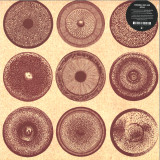
Black Truffle is thrilled to announce Spilla, the second album from Nantes-based Ensemble Nist-Nah, 48 minutes of music for Gamelan, drum kits, wood and metal percussion instruments, and plucked strings that will surely count as one of the most electrifying records you hear this year. Founded by the Australian drummer/percussionist Will Guthrie in 2019, continuing the explorations begun in solo form on Nist-Nah (Black Truffle, 2020), the ensemble (eight or nine core members with occasional guests) has been consistently active in the half-decade since: composing, rehearsing, recording and touring Europe (with a mass of equipment in tow) to great acclaim. Spilla tracks the continuing evolution of the project since the recording of their first album, Elders (Black Truffle, 2022). The two sides of this record document two different iterations of the group, and the members' compositional input has increased: each side contains one piece by a member other than Guthrie. It has become clearer than ever that Ensemble Nist-Nah is not an attempt at a European Gamelan ensemble but rather a hybrid percussion ensemble that uses instruments from a Javanese Gamelan alongside other percussion to perform original music informed by a variety of South East Asian music but also by everything from free jazz to contemporary hip-hop: while Nist-Nah and Elders both featured traditional Javanese pieces, on Spilla the only tune not generated by a member of the group is by Guthrie’s long-time musical hero and occasional collaborator Roscoe Mitchell.
The two short pieces that open the record could almost be the two sides of a wild 7” selected to show off what the Ensemble can do. On opener ‘Gerak Maju’, intricately skittering open-snare patterns bounce over clanging metal, chiming bell-like tones and deep gong hits, adapting the rhythm-register connections heard in traditional Gamelan musics—where the lowest pitched sounds are heard least frequently—to a cut-up breakbeat straight off Feed Me Weird Things. ‘Strollabout’ then moves into an entirely different realm of meditative repeating patterns, performed entirely on Chinese, Javanese and Vietnamese gongs. The remaining seven pieces, ranging from three to twelve minutes, offer up a wealth of different percussive, compositional and arrangement possibilities. On ‘Ghostly Klang’, two drumkits mirror each other’s moves, bouncing hats and snares across the stereo field in a way that recalls On the Corner and the jittering hi hat patterns of trap, while slow moving melodies on the tuned instruments add a sense of majesty contrasted by scurrying details in resonant wood. The epic closing track presents a take on Roscoe Mitchell’s ‘Uncle’, performed by the Art Ensemble of Chicago on their classic Urban Bushmen live album. Where the Art Ensemble used Mitchell’s dirge-like melody as a jumping off point for virtuosic improvisational flights, Ensemble Nist-Nah rethink the piece as a near-static dialogue between the monumental, slow-moving sequence of unison tuned percussion notes and a textural cloud that grows in richness and intensity from whispering cymbal rolls into a mass of gong overtones and bowed metal.
Beautifully recorded and mixed, Spilla arrives in a sleeve decorated with core member Charles Dubois’ drawings of cymbals and gongs. Against the backdrop of a wider musical landscape dominated by over-produced electronic slop and bland harmonic wallpaper, Ensemble Nist-Nah stands out as a reminder, vital and unpretentious, of the joys and possibilities of human beings playing instruments together.
Haga su pedido ahora y le encargaremos el artículo en nuestro proveedor.

For years, whispers circulated through the jazz scenes of Denmark and Poland - rumours of a lost recording session featuring the legendary Polish trumpeter Tomasz Stanko and a group of Scandinavian and Polish musicians. Now, nearly a decade after the session and seven years after Stanko's passing, these long-awaited recordings are finally seeing the light of day. The project originated at Vallekilde Højskole in Denmark, where Stanko was invited to teach at JazzDanmark's annual Summer Session. A storied program that has hosted luminaries including Bill Frisell and Anat Cohen, the summer school became the birthplace of this unexpected ensemble. Here, alongside a dynamic ensemble of young musicians, Stanko found renewed inspiration, embracing their compositions as much as his own - a rare occurrence for an artist known for leading his own groups. Scandinavian Art Ensemble with Tomasz Stanko is the result: two albums of expansive, deeply expressive music that merge the melancholic depth of Polish jazz with the spacious, atmospheric qualities of the Scandinavian sound. As trumpeter Tomasz Dabrowski recalls, Stanko wasn't just a mentor - he was an equal, driven by curiosity and the desire to push boundaries. "He wanted to play our music. He was always listening, always searching." Across these two albums recorded at The Village Recordings in 2016, listeners will hear Stanko's unmistakable tone interwoven with compositions by both himself and the ensemble members. Pieces like 'The Dark Eyes of Martha Hirsch' and 'Before the Rain' showcase not just his signature lyricism, but also his willingness to step back, listen, and let the younger generation shape the sound. Beyond his unmistakable sound, Stanko's influence was about energy - his presence elevated those around him. Bassist Richard Andersson put it simply: "He brings together the energies, and makes us all play better than usual." This project captures that essence: a legendary artist meeting the next generation on equal footing, creating something entirely unexpected. A decade after the session, the members of the Scandinavian Art Ensemble have forged their own paths, shaping the jazz landscapes of Copenhagen, Malmö, Reykjavik, and beyond. But the impact of their time with Stanko remains profound. "Releasing these albums is about more than just the music," D?browski says. "It's about preserving the spirit of Stanko - his generosity, his curiosity, his way of bringing people together. Even after all these years, his presence can still be felt in every note we played."
Haga su pedido ahora y le encargaremos el artículo en nuestro proveedor.
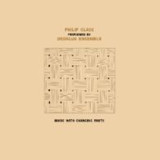
Founding work of minimalism, Music with Changing Parts is a piece with free instrumentation.The musicians choose which part to play among the 8 staves of the score. At each indicated cue, the musicians can change part, which produces an abrupt change of instrumentation. While the music is based on a melodic material limited to a few notes that are repeated in patterns that expand or contract, the changes in orchestration refresh the listening experience by producing sonic contrasts. These techniques at work
in Music with Changing Parts , written in 1970, will lead Philip Glass to renew his language and move from the monochromatic works that precede it to more dramatic works such as music in 12 parts and especially the opera Einstein on the Beach. When Philip Glass began rehearsing the piece, he was surprised to hear long notes when everything was written in eighth notes. After making sure that none of the musicians were playing held notes, he realized that the fact that the same notes were played by all the instruments in the ensemble produced, through a psycho-acoustic effect, a harmonic substrate of resonant frequencies. He then decided to add to
the score the possibility of playing long notes to reinforce this effect
debe ser publicado en 16.05.2025

Comes on Black & White Marbled Vinyl, complete with a printed inner sleeve featuring insightful liner notes. CHARLY RECORDS present the first ever reissue of the sought-after cult New York, gospel street opera, Free The Black Man’s Chains. The most intriguing, and certainly the most ambitious project on the city’s GSF label (see more stunning titles on GSF exclusively from Charly). The project had its roots in a trio of singles released by the mysterious Broad Street Gang in 1971. The first, on the Cougar label called “Fair Skin Man” and its two follow-ups “L-o-v-e Love” and the title track from the album “Free The Black Man's Chains”. Celebrated musicians on the sessions were Mitchell Rowe, Bobby Eli, Len Pakula, Daryl Hall, Ron Baker, Norman Harris, The Raelettes and strings arranged by Richie Rome. A project like Free The Black Man's Chains should have been perfect for the multi-media nature of GSF. The album could have led to a film in the way that it had for Jesus Christ Superstar, but instead like so many of the label's releases, the album failed to make its mark due to a lack of promotion. GSF would barely reach its second birthday before it – and its parent company – shut down. A Black Opera…
debe ser publicado en 09.05.2025

Combines Northern Soul, Psychedelia, 90s Indie Rock and an orchestral soundtrack feel into a homogenous, convincing work that looks promising and feels damn good in a not so rosy time.
The fourth album by the Frank Popp Ensemble, will be released on Unique Records. Written. recorded and produced in Spain in 2024. As with the predecessor ,Shifting", various guest singers can be heard on the lI brand new tracks.
Gerry Love, once the lead singer of the legendary Teenage Fanclub, who, according to Popp, wrote and sang almost al of the Glasgow cult band's favorite songs. lends his captivating voice to an orchestral, soulful version of "Save", a rather unknown but brilliant piece that Love wrote for the Scots in 2004. Gerard Love already contributed a cover of Frank Popp's "The World Is Waiting" to the "Under Covers" compilation and has now done another wonderful job on Waves.
Another hero from Popp's record collection is Nicke Andersson. Formerly a drummer with the death &rollers Entombed. then singer of the incomparable Hellacopters and mastermind behind other top bands such as The Solution, Imperial State Electric, Lucifer, etc., can be heard on "Caught In AWeb". A Northern Soul stomper in classic "Magic Touch" mania.
Emma Noble, an up-and-coming soul singer from London sings on the girl-groupish soul anthem "Unstoppable". The second single from the album has what it takes to be the next UK floor filler and was already played and praised on Craig Charles' Soul Show on BBC a t the end of 2024.
An absolutely exceptional artist is J Mahon, who can be heard on 5 tracks on the album and contributed significantly to the album. His sweet voice works on his songs as well as on "Going Going Gone", which is the first single release and is reminiscent of certain young Motown artists in the early 70s with its catchy brass hooks and j's androgynous soul vocals.
Audrey Ollesen from Cologne, an old buddy from the Rhineland mod scene, joined by chance after Popp became aware of her singing skills through private recordings. On "Common Stranger" Audrey can be heard on a recording for the first time.
On "Waves" Frank Popp combines Northern Soul, Psychedelia, 90s Indie Rock and an orchestral soundtrack feel into a homogenous, convincing work that looks promising and feels damn good in a not so rosy time. We are all excited...
f Heartbreak (In A Really Good Way) [feat. J Mahon]
[f] Heartbreak (In A Really Good Way) [feat. J Mahon]
debe ser publicado en 02.05.2025

debe ser publicado en 02.05.2025

FIRE UP: Fifteen successful releases later, Anetha continues to fan the flames with MTY-FEU, an incandescent new compilation. Titled «Ils s’embrasèrent, réduits ensemble», the release stands for fusion and oneness.
Bursting from the depths of the earth, magma is devouring: melting hot techno, deep techno, fast techno, firestorms of trance, eruptions of hard groove, break, mental, smoldering experimental… MTY-FEU is a lava flow of boiling, vital energy, unstoppable and full of blistering textures.
During the Nuit Blanche (A1), we surrender. We, the offer. Our fire is combusting. Our feet, stomping.
Berserk, in a fury, there’s No End (C1) to this party. In a trance, Eternal Echoes (E2) beguiles us all, until we become one into the Molten Core (H2) of Inferno. Ils s’embrasèrent, réduits ensemble.
The incredibly talented visual artist FEMUR crafted the artwork by creating an AI-generated meta-crackle of fire. Diplomatie Studio handled the design while mastering was entrusted to Sixbitdeep, except for Anetha’s edit, where mix and mastering credits go to Le Dom. We’ve opted for bio-vinyls for this release, knowing that one day these records will return to ashes, only to rise again, like the phoenix.
Haga su pedido ahora y le encargaremos el artículo en nuestro proveedor.

Black Vinyl[20,13 €]
Das vierte Album des Frank Popp Ensemble auf Unique Records. Geschrieben. aufgenommen und produziert 2024 in Spanien. Wie beim Vorgänger sind diverse Gastsänger auf den il brandneuen Stücken zu hören.
Gerry Love, einst Leadsänger der legendären Teenage Fanclub, der laut Popp fast alle Lieblingsstücke der Glasgower Kult-Band geschrieben und gesungen hat. verleiht hier seine hinreißende Stimme einer orchestralisch-souligen Version von „Save", ein eher unbekanntes aber geniales Stück, welches Love 2004 für die Schotten schrieb. Gerard Love trug bereits mit einem Cover von Frank Popp's "The World Is Waiting" zur Under Covers' Compilation bei und hat nun auf Waves ein weiteres Mal wundervolle Arbeit geleistet.
Ein weiterer Held aus Popp's Plattensammlung ist Nicke Andersson. Früher Schlagzeuger bei den Death&Rollern Entombed, dann bis heute Sänger der unvergleichlichen Hellacopters und Mastermind hinter weiteren top Bands wie The Solution, Imperial State Electric, Lucifer, etc., ist auf „Caught In AWeb" zu hören. Ein Northern Soul Stomper in klassischer Magic Touch* Manie.
Emma Noble, eine aufstrebende Soul-Sängerin aus London singt auf dem girl-groupigen Soul-Anthem Unstoppable*. Die zweite Single-Auskopplung vom Album hat das Zeug zum nächsten UK-Floorfiller und wurde bereits Ende 2024 in Craig Charles Soul Show auf BBC gespielt und angepriesen.
Ein absoluter Ausnahme-Künstler ist J Mahon, der auf 5 Stücken des Albums zu hören ist und erheblich zum Album beigetragen hat. Seine zuckersüße Stimme funktioniert sowohl auf seinen Stücken, als auch bei _Going Going Gone". welches die erste Single-Auskopplung ist und durch die eingängigen Bläser-Hooks und J's androgyne Soul-Vocals an gewisse junge Motown-Künstler in den frühen 70s erinnern.
Audrey Ollesen aus Köln, eine alte Bekannte aus der rheinischen Mod-Szene. kam durch Zufall hinzu. nachdem Popp durch private Aufnahmen auf ihre Gesangs-Skills aufmerksam wurde. Auf .Co|mm|on Stranger* ist Audrey zum ersten Mal auf einem Tonträger zu hören.
Auf "Waves" vereint Frank Popp Northern Soul. Psychedelia, 90s Indierock und orchestralischen Soundtrack-Feel zu einem homogenen, überzeugenden Werk, was vielversprechend wirkt und sich verdammt gut anfühlt in einer nicht so rosigen Zeit. Wir sind alle gespannt...
Haga su pedido ahora y le encargaremos el artículo en nuestro proveedor.

debe ser publicado en 11.04.2025

MAROON VINYL[23,49 €]
Im Lateinischen bedeutet das Wort Gemini "zwei zusammen" oder "Zwillinge". Astrologisch gesehen sind Zwillinge unter anderem dafür bekannt, dass sie neugierig und vielseitig sind. Für die 9-köpfige (meist) instrumentale Combo The Sure Fire Soul Ensemble aus San Diego waren Jazz und Funk schon immer die beiden Genres, die sie konsequent und effektiv miteinander verschmolzen haben und die das Fundament ihres Sounds bilden. Mit ihrer stilistischen Neugier und Vielseitigkeit haben sie dieses Fundament auf ihrem neuen 11-Song-Longplayer für Colemine Records weiter ausgebaut. Aufgenommen zwischen Ende 2021 und Anfang 2024 im The Kitchen II in ihrer Heimat Lemon Grove, Kalifornien, lenken SFSE ihre ,introspektive Partymusik" in neue klangliche Gefilde. Während ihr Breakbeat-lastiger Funk-Soul-Jazz immer noch der Eckpfeiler ihres Sounds ist, wie er in Stücken wie ,Makin' Moves", ,TheGrifter" und ,Don't Trip" zum Ausdruck kommt, haben sie begonnen, mehr und mehr Einflüsse von Library-Musik-Labels wie KPM Music, spirituell orientierten Jazz-Labels wie Tribe & Black Jazz Records und exotisch angehauchten Jazz-Künstlern wie Cal Tjader und Dorothy Ashby aufzunehmen. Jetzt lehnen sie sich mehr an den ,introspektiven" Teil ihres Sounds an, insbesondere bei ,Mother Earth", ,Freddie" und dem Titeltrack, und beschwören die Geister von Freddie Hubbard, Phil Ranelin, Wendell Harrison, Bubbha Thomas, Chester Thompson und sogar Cannonball Adderley in seiner kopflastigsten und kosmischsten Zeit herauf (hören Sie sich Adderleys Alben ,Soul Zodiac" und ,Soul of The Bible" als Referenz an). ,Corporatocracy" geht noch einen Schritt weiter mit einem ausgedehnten Tabla-Solo, das auf der perkussiven Welle reitet, bevor es in seinen funkgetriebenen, modalen Vibe übergeht. In der aktuellen Besetzung mit Tim Felten an den Tasten, Jake Najor am Schlagzeug, Omar Lopez am Bass, Kiko Cornejo Jr. an Conga/Percussion, Aquiles ,Lito" Magana an der Gitarre, Wili Fleming an der Posaune, Sheryll Felten an der Percussion, und Jesse Audelo und Travis Klein am Saxophon und an der Flöte. SFSE bleibt dem Funk treu, traut sich aber auch, neue Wege zu gehen, die sie bisher noch nicht beschritten haben, und betritt damit faszinierendes Neuland in ihrem Gesamtsound.
Haga su pedido ahora y le encargaremos el artículo en nuestro proveedor.

Im Lateinischen bedeutet das Wort Gemini "zwei zusammen" oder "Zwillinge". Astrologisch gesehen sind Zwillinge unter anderem dafür bekannt, dass sie neugierig und vielseitig sind. Für die 9-köpfige (meist) instrumentale Combo The Sure Fire Soul Ensemble aus San Diego waren Jazz und Funk schon immer die beiden Genres, die sie konsequent und effektiv miteinander verschmolzen haben und die das Fundament ihres Sounds bilden. Mit ihrer stilistischen Neugier und Vielseitigkeit haben sie dieses Fundament auf ihrem neuen 11-Song-Longplayer für Colemine Records weiter ausgebaut. Aufgenommen zwischen Ende 2021 und Anfang 2024 im The Kitchen II in ihrer Heimat Lemon Grove, Kalifornien, lenken SFSE ihre ,introspektive Partymusik" in neue klangliche Gefilde. Während ihr Breakbeat-lastiger Funk-Soul-Jazz immer noch der Eckpfeiler ihres Sounds ist, wie er in Stücken wie ,Makin' Moves", ,TheGrifter" und ,Don't Trip" zum Ausdruck kommt, haben sie begonnen, mehr und mehr Einflüsse von Library-Musik-Labels wie KPM Music, spirituell orientierten Jazz-Labels wie Tribe & Black Jazz Records und exotisch angehauchten Jazz-Künstlern wie Cal Tjader und Dorothy Ashby aufzunehmen. Jetzt lehnen sie sich mehr an den ,introspektiven" Teil ihres Sounds an, insbesondere bei ,Mother Earth", ,Freddie" und dem Titeltrack, und beschwören die Geister von Freddie Hubbard, Phil Ranelin, Wendell Harrison, Bubbha Thomas, Chester Thompson und sogar Cannonball Adderley in seiner kopflastigsten und kosmischsten Zeit herauf (hören Sie sich Adderleys Alben ,Soul Zodiac" und ,Soul of The Bible" als Referenz an). ,Corporatocracy" geht noch einen Schritt weiter mit einem ausgedehnten Tabla-Solo, das auf der perkussiven Welle reitet, bevor es in seinen funkgetriebenen, modalen Vibe übergeht. In der aktuellen Besetzung mit Tim Felten an den Tasten, Jake Najor am Schlagzeug, Omar Lopez am Bass, Kiko Cornejo Jr. an Conga/Percussion, Aquiles ,Lito" Magana an der Gitarre, Wili Fleming an der Posaune, Sheryll Felten an der Percussion, und Jesse Audelo und Travis Klein am Saxophon und an der Flöte. SFSE bleibt dem Funk treu, traut sich aber auch, neue Wege zu gehen, die sie bisher noch nicht beschritten haben, und betritt damit faszinierendes Neuland in ihrem Gesamtsound.
debe ser publicado en 28.03.2025

Red Motorbike maestro Eddie C drops on the ensemble with an anthemic ode to the most sought-after of desires. We’ve been keeping this secret for far too long; it’s time to bring U Be Mine into the light, complete with remixes from Lex, Da Silva and Marcello Giordani aka Italo Deviance.
It was just over a year ago when Eddie sent us his original demo of U Be Mine. I remember plugging i the speakers in my fat, pressing play. A fash from a place of love that wet, grey day. The lyrical bass, euphoric stabs, the iconic delay, the pining vox. There are times where things seem naturally bound, designed to intertwine. An instant essential. We couldn’t wait to throw it down in the disco. Much like the coveted desire of its vocoder-clad protaganist, we needed a club-ready fx. Eddie, getting the message, sent us over a quick master - the Eddie C ‘Cash’ Version. Over the next year, at parties from Lisbon to Ibiza, I saw how those swirling arps locked onto the foor, how dancers cosied up to its decadent groove. It was peak time, warm-up and wind-down at once. In the true spirit of the ensemble, we got to work curating a cast of balearic technicians to write their distinct shade of depth onto Eddie’s golden letter. And that’s where it lands.
Lex from Athens casts an exotic, eclectic spirit with his Plaka Remix, all shufing percussions and wild, breezy strings, rejigged baselines and NYC disco tackle. Label curator Da Silva ups the ante with his 7-minute club-ready fx: tight kicks and searing acid, all the bells and whistles for your peak-time excursions. Finally, Marcello Giordani shifts into hyperdrive with the ITALO DEVIANCE ACID CONTROL version, conjuring creatures of the night in kaleidoscopic confgurations, a trusted party roller for the most decadent dancefoors.
We’re releasing U Be Mine on 150 pristine discs only. Claim it as yours, forevermore.
Haga su pedido ahora y le encargaremos el artículo en nuestro proveedor.

Wewantsounds is delighted to reissue Roy Haynes' 1971 LP 'Hip Ensemble,' recorded in New York for Bob Shad's Mainstream Records and featuring Hannibal Marvin Peterson, George Adams, Teruo Nakamura and Lawrence Killian. Together the musicians create a superb mix of jazz funk and spiritual Jazz showcasing Haynes powerful drumming and creativity. "Hip Ensemble" is reissued here for the first time on vinyl since 1971, in its original gatefold artwork with first generation photos and includes the bonus track "Roy's Tune." It comes with newly remastered audio and a 2-page insert featuring new liner notes by Kevin Le Gendre.
debe ser publicado en 28.02.2025

Celebrating 50 years of Kahil El'Zabar's Ethnic Heritage Ensemble's legacy and unwavering contribution to Great Black Music. 'Open Me, A Higher Consciousness of Sound and Spirit' is a new Ethnic Heritage Ensemble sound, constantly shifting gears and tempos in a jazz-blues continuum, in perpetual spontaneity, combining their meaningful music history with an innovative approach to arrangements, performance and improvisation. This is Ancient / Future Music for the Now and Beyond.
Open Me is a joyous honoring of portent new directions of the Ethnic Heritage Ensemble; it's a visionary journey into deep roots and future routes, channeling traditions old and new. It mixes El'Zabar's original compositions with timeless classics by Miles Davis, McCoy Tyner, and Eugene McDaniels. Thus, the Ethnic Heritage Ensemble continues affirming their indelible, half-century presence within the continuum of Great Black Music.
For Open Me, El'Zabar has chosen to push the sound of the EHE in a new direction by adding string instruments --the addition of strings opens new textural resonances and timbral dimensions in the Ensemble's sound, linking the work to the tradition of improvising violin and cello from Ray Nance to Billy Bang, Leroy Jenkins, and Abdul Wadud.
Open Me contains a mixture of originals, including some El'Zabar evergreens such as "Barundi," "Hang Tuff," "Ornette," and "Great Black Music" (often attributed to the Art Ensemble of Chicago but is, in fact, an El'Zabar composition).
As a milestone anniversary celebration and a statement of future intent, Open Me effortlessly carries El'Zabar's healing vision of Higher Consciousness of Sound and Spirit.
Haga su pedido ahora y le encargaremos el artículo en nuestro proveedor.

Black vinyl / 505mcn paper / 30 x 60 cm Insert with Liner Notes by Tony Higgins printed on 250 mcn Lenza Top Recycling Paper / Condensed interview to Spata Sisters and exclusive pictures.
Personnel:
Enzo Randisi - Musser Percussion Keyboards
Riccardo Randisi - Acoustic Piano, Rhodes, ARP & Korg Keyboards
Marcello Pellitteri - Drums
Giuseppe Costa - Acoustic Bass & Electric Bass Guitar
Mimmo Cafiero - Congas & Percussions
Sandro Palacino - Tenor and Soprano Saxes
Loredana Spada - Vocalist
Cinzia Spata - Vocalist
Mary Lo Giudice - Vocalist
Mariella Gueli - Vocalist
Notes:
Did someone say Summer? Sicily is what Cuba is to the Caribbean, sun, sea, easy and friendly people with lots of troubles! You won't find anything better around that identifies the summer more than this album by Enzo Randisi who at the beginning of the 80s put together a Swing Ensemble as a tribute to that "cheerful" movement of Jazz music. But Enzo and his fellas just couldn't stay on track and put in the best that the alternative Palermo area could offer in that historical period, like the sisters Cinzia and Loredana Spata, who brought the production to a next level in the vocal version of All Blues or in Chic Corea's Spain. But what really struck us was Charles Cables' version of "Quite Fire" (here missspelled as "Quite Fair"), released a few months earlier only in Japan and which would only become famous in the 90s with the Acid Jazz movement, and this tells us a lot about how hungry Enzo and Riccardo were of musical knowle, to be able to find some pearls in a city with basically no record shops and isolated...well...it's on an island! For this re-press we enlisted Tony Higgins, who recently finished a very long commitment and greenlight to delight us with his polished English...Welcome back Tony!
debe ser publicado en 14.02.2025

Love Ensemble Quatuor is back with a fresh release that redefines their vibe. Half a decade later, the crew of ICTV, Nephews, and DimSum return under their solo aliases with a slick new record. This German-Swiss-Lebanese connection known for blending their respective styles, builds on the success of their first EP, while taking their sound into a new direction.
Side A kicks off with “Midnight Mirage,” a smooth, melodic track that mixes tight percussion, soft chords, and a rolling bassline – perfect for easing into a set. “Love Ensemble Theme” follows with deeper beats and rhythms that show the seamless chemistry between the four producers.
On the B-Side , “Elevated Workout” ramps up the energy with a punchy, club-ready vibe, packed with whistles, sound effects, and a nod to ‘90s rave energy. It’s been tested on the floor and gets the crowd moving every time.
To top it up, two remixes round out the record: Irish Hitmaker Trent Voyage delivers a hard-hitting take on “Elevated Workout,” while Venezuelan Swiss based producer Giorgio Maulini gives “Love Ensemble Theme” a unique breakbeat twist, adding more flavor to the release.
Haga su pedido ahora y le encargaremos el artículo en nuestro proveedor.

debe ser publicado en 31.01.2025

debe ser publicado en 31.01.2025

GC'mon Tigre announces their new instrumental project, Instrumental Ensemble - Soundtrack for Imaginary Movie Vol 1. This album offers an alternate view of cinematic music: a soundtrack composed for a fictional film using a challenging and inventive method. This project investigates an alternative approach in which music shapes and guides visual storytelling. It's the first in a series of albums dedicated to as-yet-unmade films, enabling listeners to explore music as a key component in cinematic narrative. The original story that inspired this music was created in partnership with a large language model, which was taught and instructed in substance and style to best fit the project's artistic concept. C'mon Tigre works with AI to achieve collaborative harmony while contemplating on the unavoidable future ahead. Each track on the album depicts a scene, delivering stories about humans juggling personal issues and contacts with advanced technology. The end result is a story told by sound and text, designed to immerse listeners in a multisensory universe.
debe ser publicado en 24.01.2025

Recorded in the 1980's and snapped up upon arrival in Europe by the Soho Boho's, Acid Jazzuals,Cuboppers, Jazz Massivists and Mojo Jazzmuziker, "Le-Le" by The Arpeggio Jazz Ensemble is a unique one off Spiritual Soul-Jazz outing with Avant Garde touches and more than a hint of Afro-Cuban Orientalism.
The percussion drenched title track has that special Worldwide Sound and the Cool Jazz Get Down Groove of "Wet Walnuts and Whipped Cream" is a DJ's delight, whether played over the Airwaves or to a crowded Dancefloor.
An adventurous jazz outfit that has been playing around Philadelphia since its formation in 1979. The Ensemble was founded by Warren Oree, an acoustic bassist, producer and composer who continues to lead the band. Eclectic and far from predictable, on this album the Ensemble has embraced a variety of acoustic and electric jazz styles combining them with African and Middle Eastern influences and mixed together with the "New Thing" have managed to make a timeless underground classic.
Haga su pedido ahora y le encargaremos el artículo en nuestro proveedor.

The Wild Classical Music Ensemble is a Belgian experimental rock band formed in 2007 by artists with mental disability within the social-artistic non-profit organisation Wit.h in Kortrijk. Their unique sound is a blend of punk/rock riffs, fanatical rhythms and soaring flutes and fiery synths, over which gravitate multiple, multilingual voices that scratch harshly as much as they comfort. There's something very Belgian about this harshness and noisiness. We often think of compadre Arno, from the TC Matic era. During the Covid crisis, the disabled members of the Wild Classical Music Ensemble were undoubtedly subjected more than others to the harsh conditions of confinement, alone in their rooms. Damien Magnette was still able to visit them with sound equipment. This was one of their all-too-few windows onto the world. Forbidden to meet, let alone play together, the members of Wild were nevertheless able to compose songs in tandem with Damien. The tracks were then sent to musician friends - Fabrice Gilbert, Ava Carrère, Wim Opbrouck, Shht, Arthur Satàn, Nathan Roche and Julien ZLDR - who added their artistic touch. Jean Lamoot and Carl Roosens joined the adventure, one as mixer, the other as video director. It's a result of the conditions under which it was created, this is the band's most highly-produced album, and perhaps its most accessible: frankly rock, with a great deal of freedom in production, and sometimes with a certain pop allure. Jean Lamoot's contribution to the mix had a lot to do with it. In addition, the forced slowdown allowed us to devote much more time and attention to writing the lyrics. Leader Damien Magnette says: "For over a year, we were all confined. But what about when you're a mentally handicapped person? Well, it's very different from you and me... We have the right to choose, the luxury of deciding for ourselves what rules we want to follow or not. We have free will. They don't. This series of confined songs is dedicated to all the people who have gone through this crisis, deprived of their free will. We send them our thoughts, hugs and kisses full of true love! The songs respond to a deep desire to look out for each other in adversity (the so obvious "Comment ça va?" by Johan Geenens and Wim Opbrouck, or "Waarom ben je boos" by Sébastien Faidherbe with Wim Decoene, the latter full of empathy). A sense of loneliness is logically present on the album ("Dat is mijn verdriet" by Linh Pham, a very real, very concrete and particularly touching poem, or "Loneliness", whose text was improvised by Wim), if not an understandable rage ("Je ne veux pas" and "My Frustrations"). It worth noting that on "On reste heureux", Sébastien Faidherbe composed all the parts in one go, with an optimism that stands out from the anger expressed in his other songs. Let's make no mistake: none of this is really over. All these emotions, suffering, pain and hope, speak to us far beyond this grim story of covid.
debe ser publicado en 25.10.2024

Das japanische No ist die älteste lebendige Theaterform. Themen wie Schuld, Liebe und Erlösung werden in Text, Tanz und Musik verhandelt. Eric Schaefer ist dem Land Japan und der japanischen Kultur schon seit vielen Jahren verbunden. So begann er, inspiriert durch seine Besuche des No-Theaters, während eines dreimonatigen Aufenthalts und Unterrichts bei Prof. Takanori Fujita (Kyoto City University of Arts) den Liedzyklus HAYASHI zu komponieren. Ein Begriff, der das im No agierende Musikensemble benennt, der aber auch einen Hain beschreiben kann. Die Erstaufführung von HAYASHI fand beim Jazzfest in der Oper Leipzig 2023 statt - gespielt vom Eric Schaefer Ensemble und gemeinsam mit den japanischen Künstler*innen Ichi-Go (Tanz) und Acci Baba (Videokunst). Nun liegt die Studioproduktion von HAYASHI vor. Auf Vinyl und in einer limitierten Auflage. Mit einem Coverbild der in Kyoto lebenden Kalligraphin Chizu Ikura. Die Musik des No hat sich aus einer heterogenen Vielzahl volkstümlicher und religiöser Spielarten (Matsuris, buddhistische Rituale) entwickelt und besitzt eine kompositorische Struktur, die den Ausführenden einerseits exakte Vorgaben macht, aber andererseits selbstbestimmte Räume und Unschärfen besitzt, die sich zu Improvisationen öffnen. Die Komposition HAYASHI von Eric Schaefer nimmt diesen Modus Operandi des Musizierens im No-Theater auf. Durch die Zusammenarbeit von klassisch gebildeten und improvisierenden Musizierenden wird eben dieses fluide Durchwirken von festgelegten und frei zu interpretierenden Kompositionsteilen ermöglicht. Es gibt hier nur eine Partitur für alle, eine semantische Ebene, auf der sich alle bewegen. "Letztlich", so Eric Schaefer, "gehen wir mit dem Ensemble HAYASHI der Frage nach, was uns diese alte Kunstform des No heute ästhetisch sagen kann, wie wir mit Freiheit und Gebundenheit in der Musik umgehen." Dies geschieht im Geiste Zeamis, dem Gründer des No-Theaters, der vor 600 Jahren schrieb: "Das Alte befragen, das Neue begreifen".
debe ser publicado en 25.10.2024

Mit dem Label MPS wurde in Deutschland musikalisch Nachkriegsgeschichte geschrieben: edle Musikproduktionen mit vielen internationalen Größen kommen aus dem Schwarzwald. In dieser Tradition bewegt sich das sich das Villinger Label HGBSBlue mit Neu- und Archivaufnahmen auf hochwertigem Vinyl, teilweise aus dem MPS-Archiv. Was sind das für Klänge? Sie sind eigenwillig, machen fast süchtig. Sie sind mitreißend, wehmütig und lassen sich in keine der gängigen Schubladen stecken: Georgische Polyphonie gemischt mit Minimal Music, einer Prise Jazz und prickelndem Elektro Pop. Grenzen kennt diese Musik nicht. Gibt es Vergleichbares?? Kaum. Björk vielleicht. Es geht um Russudan Meipariani, eine Pianistin, Komponistin und Sängerin aus Tiflis, die seit gut 20 Jahren in Stuttgart lebt. Gemeinsam mit Schwester Natalie und Schwager Giga bilden sie das Russudan Meipariani Ensemble und spielen jenseits der üblichen musikalischen Grenzen. Dementsprechend auch der Titel ihres neuen Projekts: "Beyond The Boarders", welches im Oktober als Vinyl-Platte auf dem Schwarzwälder Label HGBSBlue herausgebracht wird. Die Polyphonie ihres Heimatlandes Georgien hat es der aus einer Musikerfamilie stammenden Komponistin Russudan Meipariani naturgemäß angetan. In den 1990 Jahren spielte sie mit Schwester Natalia (Geige) und Schwager Giga (Cello) als klassisches Trio zusammen und machten sich dann auf nach Deutschland. Hier setzten sie zunächst ihre Musikausbildung fort, um und dann als Musiker tätig werden. Russudan war sogar Studentin bei der Komponistenikone Wolfgang Rihm (1952-2024). Das neue Album des Russudan Meipariani Ensembles ist eine musikalische Besinnung auf Herkunft und Heimat, eine Musik über Sehnsucht und Erinnerung. Das Trio bringt Welten zusammen und schafft einen einmaligen Klangraum an der Schnittstelle von Klassik, Jazz, georgische Polyphonie, Postminimalismus und Improvisation. Die Musik steckt voller Sentimentalität und Weite, ist dann wieder mitreißend oder auch wehmütig. Viele ungewöhnliche Facetten tauchen auf, aber niemals Langeweile. "Diese Musik ihrer steckt voller erzählerischer Kraft und einer soghaften Poesie. Man möchte nicht aufhören, ihr zuzuhören", schreibt Julia Neupert, Redakteurin für Jazz und Neue Musik beim SWR in Stuttgart, die die Liner Notes zu dieser LP geschrieben hat. Ein ungewöhnliches Hörerlebnis!
debe ser publicado en 25.10.2024

debe ser publicado en 08.09.2024

Reissue
'Find Me Finding You', the new album from the new organization called the Laetitia Sadier Source Ensemble, manages to strike new chords while touching familiar keys in the song of life.
From its percolating opening beat, 'Find Me Finding You' locates new systems within the sound-universe of Laetitia Sadier. This in itself isn't a surprise - Laetitia has relentlessly followed her music through different dynamics and into a variety of dimensions over the course of four solo albums since 2010 (not to forget her three albums with Monade and the long era of Stereolab) - but the nature of the construction here stands distinctly apart from her recent albums. Laetitia was inspired by a mind's-eye envisaging of geometric forms and their possible permutations. As she sought to replicate the shapes in music, this guided the process of assembly for the album.
Part of the freshness of 'Find Me Finding You' comes from working and playing within the Source Ensemble and exploring new sound combinations via a set of youthful and evolving musical relationships. Laetitia recognized the energy of the tracks in their initial form and sought to preserve their vitality by not retaking too many performances - instead, the rawness in the tracks was retained and refined at the mixing stage, maintaining an edge throughout. When we hear synth lines diving, lifting and drifting, unusual guitar textures, the plucked sound of flat wound bass strings or the bottomless pulsing of bass pedals stepping out of the mix with an exquisite vibrancy, this is the sound of the Source Ensemble.
A key to Laetitia's music is her use of vocal arrangements. Throughout 'Finding Me Finding You' the shifting accompaniment creates space to bring this element gloriously forward. Arranged by Laetitia with Joe Watson and Jeff Parker making string charts that were subsequently transposed to vocal parts for several songs, richly arranged choirs of voices provide depth along with the thrilling presence of extra breath in the sound. Laetitia's community-politic is well-served by the groups of voices lending support to the machining of the song craft, providing additional uplift to her quintessentially forward-facing viewpoint - as well as massed voices from three different countries sharing space in harmony.
Working in collaboration is Laetita's tradition and a key to this album's view on being free together. The designation of Source Collective implies a new togetherness phase, alongside long time collaborators Emmanuel Mario and Xavi Munoz, keyboard and flutes parts played by David Thayer (Little Tornados) were essential contributions, as well as further keys, synths and electronics from Phil M FU and several intense guitar sequences from Mason le Long. Chris A Cummings (aka Marker Starling, Laetitia's favourite composer) graciously wrote 'Deep Background' for her. The duet with Hot Chip's Alexis Taylor on 'Love Captive' (not to mention Rob Mazurek's distinctive coronet playing) gives voice to an ideological cornerstone of 'Find Me Finding You'
debe ser publicado en 06.09.2024

Das international gefeierte 12 Ensemble veröffentlicht mit "Metamorphosis" sein drittes Studioalbum, aufgenommen in den legendären Abbey Road Studios. Von der göttlichen Natur der Transformation bis zu außerirdischen Visionen neuer Welten und Wiedergeburt erforscht das dirigentenlose 12 Ensemble Renaissance-Hymnen, die als futuristisches Gebet, altjapanisches Ritual, überirdische Opernarie und monumentale Elegie wiedergeboren werden, in denen das Ensemble seine bislang stärkste Leistung zeigt. Mit einem Vorwort des Autors Charlie Fox, Linernotes von Hugh Morris und Fotos von Greta Ilieva.
debe ser publicado en 06.09.2024

Mesdames et Messieurs! Another 7" from FLEUR! If you dig THE KINKS, HOLLY GOLIGHTLY, FRANCOISE HARDY and THE REMAINS, this 7" is essential!
A-side "Nous Continuerons a Marcher Ensemble" is a stop-and-go pounder that starts with a biting guitar riff and builds to the catchy and powerful chorus. This song will also feature on her upcoming new album later this year.
B-side (and 7" exclusive!) "Tu M'as Mise a Genoux" is a fast moving punker with leading fuzzbass.
Two uptempo pounders written by Mark ten Hoor from THE KRYNG. These cats also recorded all the backing tracks for this 7", the previous 7" "Tu Es Un Etre Parfait" and the upcoming album.
This fabulous black vinyl 7" comes with a sticker!
debe ser publicado en 06.09.2024

Das Bristoler Jazz-Kollektiv Ishmael Ensemble verdeutlicht mit "Visions Of Light", dem Nachfolger ihres gefeierten Debüts "A State Of Flow" (2019, "Album Of The Month" Mojo, The Guardian), wie zwischenmenschliche Beziehungen unter den Musikern atemberaubend ehrgeizige und emotional eindrucksvolle Kompositionen entstehen lassen können. Unter Leitung des Saxofonisten Pete Cunningham hat sich das Ensemble als explosive neue Kraft im UK Jazz profiliert, deren cineastischen Tracks Dub und elektronisches Feingefühl aus der vitalen Bristoler Szene kombinieren. Cunninghams Aufstieg als gefragter Produzent führte zu Remixen für Techno-Legende Carl Craig und das legendäre Blue Note-Label.
Haga su pedido ahora y le encargaremos el artículo en nuestro proveedor.

This work has become more popular in recent years because of its gentle style. Of particular note is the masterpiece "Walk The Way Of The New World," which is beautiful to the core due to the balance between the mellow electric piano melody, light flute, a flowing track with female scat, and Madhubuti's heroic poetry. The plaintive and mystical tone of the song is ear-catching. The funky, high-speed jazz of "Talking Stick" and the fast-paced title track "Rise, Vision, Comin" are also superb. This is a masterpiece of an album that is even better than "Medasi".
debe ser publicado en 22.07.2024

Haga su pedido ahora y le encargaremos el artículo en nuestro proveedor.

Das 50-minütige Werk für 3 Vibraphone und 20-kanalige 1-Bit-Elektronik wird von der dynamischen französischen Gruppe ensemble 0 aufgeführt, die nach ihrer Zusammenarbeit mit Peter Broderick im Jahr 2023 zu Erased Tapes zurückkehrt. Perichs Musik überspannt die Kluft zwischen Elektronik und Klassik, wobei er Streichinstrumente, Klavier, Orgel und andere akustische Instrumente mit speziell angefertigter 1-Bit-Elektronik kombiniert. Open Symmetry reduziert das Ensemble auf nur drei Musiker, die die resonanten Metallstäbe von drei Vibraphonen spielen, begleitet von einem glitzernden Ensemble aus 20 Lautsprechern, von denen jeder seinen eigenen musikalischen Teil der Komposition spielt.
debe ser publicado en 21.06.2024
Green Marbled Vinyl[27,52 €]
debe ser publicado en 07.06.2024

With the brand new single 'Solid Air' (featuring Rosie Frater-Taylor), we announce the eponymous album from 'The Modern Jazz & Folk Ensemble', out on 24 May on Acid Jazz. It follows the release of two singles ‘I’ve Got a Feeling’ (with Jacqui McShee) and the spellbinding version of Nick Drake’s ‘Parasite’ (featuring Kindelan),
Led by the trail blazing London based saxophonist Sean Khan, the album pays tribute to the sounds of the late ‘60s and early ‘70s folk revival, recast and reimagined in a jazz setting, with featured guest vocalists, including compositions by Pentangle, Sandy Denny, John Martyn and Nick Drake.
Featured singers include the legendary Pentangle lead singer Jacqui McShee, acclaimed singer-guitarist Rosie Frater-Taylor on the back of her recently released and critically acclaimed ‘Featherweight’ album on Cooking Vinyl, plus emerging artist Kindelan from vibrant Leeds folk and jazz scene.
Sean Khan is known as one of the UK’s premier saxophonists, driven by a serious work ethic and urge to create new sounds. The Modern Jazz and Folk Ensemble is his follow up to Supreme Love: A Journey Through John Coltrane released on BBE Records. His distinctive playing can be heard throughout, as he successfully connects the dots between Coltrane and Nick Drake
debe ser publicado en 24.05.2024


