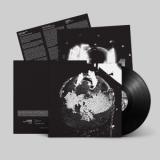
“There's a clarity here that feels hard-won. Honing ideas first explored with his Organic Music series, Tiago Sousa unlocks the final puzzle pieces on Sustained Tones Vol 1. This music is enchanted, the way each layer moves in conjunction with the others: complex structures that feel less constructed than discovered, like stumbling upon ancient mechanisms still whirring beneath the earth. "Readily Reliance" opens as an effervescent sea, waves gilded in neon creating an enveloping sense of eternal motion. Bright organ timbres throw silhouettes and cast Sousa as the deft puppeteer keeping everything moving with an effortless precision. These evolving shapes suspend listeners somewhere between the physical and the cosmic, held in place by nothing but intention and sound.
Drones build rippling foundations in other places, using slower tempos to construct immersive, off-kilter sound worlds where minimalism becomes emotive, almost poignant. The fluctuating tones have a gossamer sheen, creating this interesting sonic dichotomy: a solid surface with fragile rotations beneath. It's music that commands attention; it is so much more than simply aural furniture. Sousa writes these beautiful sequences that are all interconnected, intricate sonic architecture that pulls us further into some kind of unknowable ether.
On the piano pieces, "Smooth Flow Into It" and "Swirling Mist and Thin Dust," Sousa shines sunlight through all the cracks. Washes of melody are effervescent, clouds clearing to reveal the day has not gone. Not yet. Positioned in the middle of Sustained Tones Vol 1, these pieces ground the album in something transcendent yet still earthen: moments of breath inside all that cosmic drift. Darkness finds its way through on "Restlessness," where Sousa smears sinuous electronics into a ghostly sonic mesh that seeps through the skin. It feels like a slow inhale, time suspended long enough to take note of where we are and how we feel before moving forward. Expressive, almost sparkling synth arrangements return to send us back into reality on closer "Becoming a Landscape." Its title hints at larger concepts at play throughout this album, where lines between our physical beings and the wider environment are blurred. The tones that echo throughout these six pieces mirror the echoes inside our bodies, from heartbeats and voices to something quieter, something much smaller and more elemental. By immersing us inside these mesmerising, beautiful soundscapes, Sousa immerses us within ourselves.’’

Brad Rose, 2025
Suche:environ
2025 repress.
Rhythm Section International proudly presents it's 8th offering from local boys Chaos in the CBD. Born in New Zealand, but based in Peckham for the last few years (literally just around the corner from Henry Wu and Bradley Zero), these brothers have made a real mark on the scene here in London town and with their latest set of productions are set to take this message further afield.
Having already released internationally on labels such as ClekClekBoom (Paris), Hot Haus (London) and Amadeus (Montreal), the duo's approach to production has matured immeasurably in the last year, as is evident in the restrained potency and poetic subtlety on the 4 tracks across this accomplished EP, Midnight in Peckham.
Taking it's title from the locale the boys have come to know as home, the record channels a delicate late night energy - equally indebted to the hypnotic incantations of Ron Trent as it is to the hazy suburban atmospheres of Burial. These 4 classic cuts pay homage to deep house in it's truest sense - at once sublime, melancholy and meditative . Chaos in the CBD have clearly taken their cue from the mid-west masters of the genre but have not been afraid to let their own influences and environ creep in, and in doing so have created something that is unmistakablely London and infact, timeless.
- A1: Situazione Del Mezzogiorno
- A2: Problemi Del Mezzogiorno
- A3: Paesani
- A4: Paesani
- A5: Disperazione Atavica
- A6: Inquiamento
- A7: La Gente
- A8: Corruzione Al Vertice
- B1: Omerta
- B2: Inquiamento Biologico
- B3: Delitto Contro La Natura
- B4: Le Strade
- B5: Angoscia Del Futuro
- B6: Rassegnazione Atavica
- B7: La Noia
- B8: Terre Abbandonate
- B9: Danza Locale
At the end of the Sixties, the production of soundtracks for small and big classics of Italian cinema is now joined by another business which has proved to be less profitable but more creative and, in best case, free from the constraints imposed by clients on duty: the composition of music libraries. Almost all of the artists for the eighth art have finalized at least one or more music libraries. Names famous and not, old and young composers, real outsiders and meteors, usually hidden behind pseudonyms: this is the case, for example, of Braen and Peymont. The first needs no introduction, it was the one adopted by the former arranger, multi- instrumentalist, singer and composer Alessandro Alessandroni. The second is closely linked to the mysterious American composer, but resident in Italy, David Hoyt Kimball. The two are authors in different measure of an interesting album with an experimental background, “Paese Sotto Inchiesta” (1971), originally published by Flirt Records.
The titles of the tracks appear in connection with the socio-cultural climate of Italy after 1968 and can be relocated as a background for journalistic-like images. The latter is a hypothesis not supported by facts, but some titles seem to be referred to the perception of a subsisting economic backwardness of the southern regions compared to the other ones; to a situation of collective tension, thanks to the global revolutions; in addition to the new concerns with an ecological background. Overall, the seventeen tracks on the album are mostly 'dirty', characterized by an even atonal setting, with long repetitions in a noisy key, more fundamental reverbs and echoes for the different keyboard instruments. In a few words, abstract sounds, some guitar notes, echoes of Gruppo Di Improvvisazione Nuova Consonanza, flute melodies and proto- ambient intuitions. Composers like Alessandro Alessandroni and David Hoyt Kimball deserve to be rediscovered.
*Following the essence of the work, for this press, MPI release a 100% recycled vinyl that reduce waste, minimize environmental impact and support the planet*
Gargantuan is the debut studio album by U.K. electronic duo Spooky (Charlie May and Duncan Forbes), released by William Orbit's Guerilla Records in March 1993.
Today Gargantuan is regarded as a landmark album in the history of progressive house and British dance music. As Guerilla’s standard bearer, they helped coalesce an immersive sound that was neither Detroit, nor Chicago, nor Manchester.
The duo became renowned for being at the forefront of the progressive house scene that emerged in the aftermath of the "post-rave comedown", joining fellow acts like Orbital and Underworld in re-casting house music in an energetic live environment.
Gargantuan has been out of print on vinyl since 2006 and is re-released on 21st June.
Step into the ethereal soundscape of Mark Vernon's LP, "The Dramaturgy of Decay." Reminiscent of early fears surrounding recording technology, the album explores ghostly voices, distorted and elusive. Vernon's sonic cinema mirrors the decay found in ruined films, capturing the essence of disappearing places and voices. Amidst themes of death and environmental destruction, the album maintains a delicate balance with humor and familiarity. Through snippets of reworked audio letters, it unveils a soundscape of forgotten moments, extracting life from the transient. "The Dramaturgy of Decay" is a beautifully haunting reflection on time through sound--an otherworldly musical experience for the present.
WRWTFWW Records is thrilled to unveil the limited edition vinyl reissue of Natural Sonic, the groundbreaking 1990 environmental percussion album by Japanese composer and performer Yoshiaki Ochi. Long a hidden gem of the kanky? ongaku movement, Natural Sonic finally returns in its full analog glory, housed in a heavyweight sleeve with obi and carefully remastered from the original archives of Wacoal Art Center / Spiral's visionary NEWSIC label.
Originally released only in Japan at the dawn of the 1990s, Natural Sonic is a mesmerizing exploration of earthly sound and rhythm - a sonic tapestry woven from wood, water, and stone, and skin. Ochi, who at the time was the in-house composer and performer for world-renowned designer Issey Miyake, created a series of elemental pieces that blur the line between avant-garde percussion, ritual music, and environmental sound art. The result is both deeply physical and profoundly meditative - an album that breathes with nature itself.
Echoing the organic minimalism of Midori Takada's Through the Looking Glass and the ecological grandeur of Geinoh Yamashirogumi's Ecophony Gaia, Ochi's compositions open portals into primal landscapes, evoking forests, rivers, and stones in flux. Part of NEWSIC's celebrated experimental catalog - alongside Yoshio Ojima's Une Collection des Chaînons, Motohiko Hamase's #Notes of Forestry, and Satsuki Shibano's Rendez-Vous - Natural Sonic now finds new life for contemporary listeners seeking sound that feels both timeless and vital.
A singular album of resonance and restraint, Natural Sonic is a treasure from the golden age of Japanese environmental music, finally available again over three decades later.
‘Pilot’ is the debut album from London quintet Miniseries. Channelling the epic sweep of TV themes and movie soundtracks into resplendent space rock they explore themes of youth and ageing, heartbreak and paranoia, euphoria and existential dread.
Songwriter Doug Morch (Longview) had been working on largely acoustic folk songs when he met Angela Gannon (The Magic Numbers) at Glastonbury 2017. Romance and musical collaboration ensued. The band coalesced in the hallowed environs of Farringdon's The Betsey Trotwood pub – a musical nexus where burgeoning indie and Americana scenes collide – where they met fellow songwriter and guitarist Dermot Watson (from Brighton's The Dials) and drummer Danny Abbasi and were joined by Doug's former bandmate Aidan Banks on bass. When they came together, their indie folk mutated into motorik art rock, with their first single being an eight-minute jam called "Road".
When it came to capturing their sound, the band reached for maverick musician and producer Sean Read. They recorded tracks at Read's Famous Times studio in Clapton, London, as well as at Edwyn Collins' Clashnarrow in Helmsdale, Scotland – one of the world's most breathtaking and idiosyncratic studio locations, adding unquantifiable magic to the proceedings.
For the closing track "May You Always", they headed to another studio imbued with tangible inspiration: Blueprint Studio in Salford with producer Craig Potter (Elbow) at the helm. For the song, Dermot drew cinematic inspiration from the Withnail & I line "I'll never play The Dane", the song is about realising that the things you aspired to in youth will never come to pass and being at peace with that realisation.
The recurring themes of youth and ageing are apparent in the resplendent lead track ‘You're Gold’ – a heartfelt call for young people to reject materialism and exploitative influencer culture in search of life's deeper meaning, with stylistic nods to The Pixies and early Stereolab.
On the opposite end of the spectrum, "Sepia" explores old age and fading memories through dementia, where the ending descends into chaos like a fragmenting mind. Elements of "Sepia" are foreshadowed in the album's opening track, the instrumental "Pilot Theme", which pays homage to TV theme music, invoking spy thrillers or perhaps something otherworldly from science fiction.
“Offcumdens” is a Calder Valley, Yorkshire term for people who live in the area but come from somewhere else. Hailing from Bury, Lancashire, Morch wrote the song while living in Hebden Bridge (and watching too much Happy Valley) and found himself being an offcumden. It’s a pop at the kind of local nativism which breeds intolerance and an illustration of the sinister rise of wider political populism.
Miniseries' Pilot is just the beginning of the story. Enthralling and atmospheric, the London quintet have created something familiar yet timeless. As singer Doug Morch says, "It's the Miniseries Pilot episode. Like the TV episode a studio makes to test whether it's viable.” In the age of streaming and box-sets, this is an album to truly binge on. We can’t wait to hear what happens next.
An’archives presents 'sensitive', a new album, and the first solo vinyl release, by Japanese keyboardist and synth player, Mitsuhisa Sakaguchi. A deftly assembled suite of glistening electronic tonalities, 'sensitive' is the latest in a lengthy run of excellent, idiosyncratic albums by Sakaguchi. A low-key yet productive artist, Sakaguchi has released banks of solo titles via his own Bandcamp page, and is also an in-demand improvisor for electronics: see, for example, recent collaborations with Yoshiki Ichihara ('TO(R)RI INFRANTA', 'Ftarri', 2025), Tatsuhisa Yamamoto ('non equal mad', self-released, 2020), and the - trio with Yamamoto and Uchihashi Kazuhisa ('self-titled', Modern Obscure, 2023).
'sensitive' is a startling album for many reasons, not least its rich attention to detail. Sakaguchi’s ear is sensitized to the complexity of electronic sonority, something he’s developed through decades of performance and improvisation, though he’s not limited to that language. “I mainly use multiple synthesizers and process the sounds with effects,” he clarifies, detailing his approach to his music. “I also use a lot of acoustic sounds such as field recordings and percussion; sometimes I also use sounds such as prepared piano.”
Indeed, you can hear this see-sawing balance between the electronic and acoustic written across 'sensitive' – see the activated cymbals that twist and stutter through the first half of “metatoxic”, which are soon replaced by a similar stream of burbling synth-flow. The opening “sensitive rot” folds field recordings into Sakaguchi’s electronic kit to such a degree that the differing forms dissolve into each other; on “green shrine”, the field recordings are more present, yet still poetically framed, taken as they are “from the mountains of my hometown, Yawata City, Kyoto,” Sakaguchi explains.
The tender balance achieved by Sakaguchi as he moves between practices, tonalities and temporalities helps manifest the guiding conceptual force behind 'sensitive', where Sakaguchi explores a cleansing reverie. “What I wanted to portray with this album was to create an album of sounds that shattered and reassembled my current ‘sense’ and ‘toxins’,” he nods, “along with the ‘nature’ around me. Electronic sounds, our bodies, the environment around us, and nature all blend.”
From there, Sakaguchi attempts a transformation, or transmutation – an alchemical process of exchange. “I am attempting to explore whether it might be possible for the sounds to come closer to each other,” he concludes, “or perhaps even to interchange places.” On the five pieces that comprise 'sensitive', you can hear this fusing and exchange. Inhabiting similar spaces as the music of Nuno Canavarro, Asmus Tietchens, Omit, and other like-minded visionaries, 'sensitive' traverses curious, quixotic terrain between electronic composition, electro-acoustics, and improvisation.
- 1: A.o.a - Murder In The Woods
- 2: A.o.a - For Those Who Suffered
- 3: A.o.a - All Our Anger
- 4: A.o.a - Death On A Plate
- 5: A.o.a - Holy Hypocrisy
- 6: A.o.a - O.s.a
- 7: A.o.a - Aftermath
- 8: Oi Polloi - Go Green
- 9: Oi Polloi - You Cough/They Profit
- 10: Oi Polloi - Punx Or Mice
- 11: Oi Polloi - Nuclear Waste
- 12: Oi Polloi - The Only Release
- 13: Oi Polloi - Apartheid Stinx
Nearly 40 years ago A.O.A. and OI POLLOI joined forces to condemn what they saw as an Unlimited Genocide. Fast forward to 2025 and nothing has changed for the better, with everybody witnessing a genocide unfolding in front of our eyes daily, while humanity hits rocks bottom. So Sealed Record decided it was the right time to bring back this classic slice of Scottish punks and skins protest music.
Originally released on the ever impressive Children of the Revolution Records Unlimited Genocide features the hardest side of the OI POLLOI vast catalogue. Full of rage and anger, tensely tuneful with earnest anarcho conviction. With A.O.A. On the flip side delivering seven tracks of full in your face hardcore punk, carrying the torch of the DISCHARGE influenced thrash of the era.
The record has a strong 80’s production and touches on green and environmental issues, apartheid, nuclear power, religion, vegetarianism and much more. It’s raw, direct and a great snapshot of an era that is often mimicked but never bettered.
This reissue has been remastered and includes a printed inner sleeve as well as a slightly altered artwork.
Shadows Lifted from Invisible Hands is an autobiographical record, comprised of four songs that Hoff refers to as ambient media. Each track is composed from sources drawn from his own involuntary aural landscape, specifically musical earworms and tinnitus frequencies.
Neither sound nor a daydream, the earworm (or stuck song) emblematizes music as a commercial form—immediate, ubiquitous, and persistent. Likewise, tinnitus is inaudible and unscrupulous, manifesting across a spectrum of frequencies at will. The cognitive swirling of these phenomena provides an ambivalent, internal soundtrack that scores a person’s movement through the world.
Those suffering from tinnitus or those who have grown accustomed to the “Tinnitus Effect” in movies will likely recognize the buzzing pitches on the record, but will likely not recognize the songs. Distorted and distilled, Shadows Lifted from Invisible Hands features altered versions of four commercial pop songs: Blondie’s “Heart of Glass,” David Bowie’s “Space Oddity,” Madonna’s “Into the Groove,” and Lou Reed’s “Perfect Day.”
Having been haunted by these songs on and off for years, Hoff tweaks the tracks, transposing and recomposing them for orchestral instrumentation. Speaking back to these involuntary echoes, these tracks go to great lengths to obfuscate their sources; to be sure not to simply re-introduce each earworm, as though they were samples. Otherwise, what’s the point? No one needs another stream.
Besides, earworms are not music, although we perceive them as such. They are non-cochlear and exist as an affective force that is neither subjective nor objective, which is to say they are an invasive—and alien—phenomenon. Like tinnitus, they are aggravated by economic, social, and environmental forces as well as emotional states, mental health, and aging. Hoff doesn’t underplay his own struggles with mental health in discussing the record—noting a long history of depression and its acuteness over the last few years, which serve as the backdrop to the composition of this record.
Scratch any pop song hard enough and you’ll find sadness underneath it. Subdermal, the songs on this record evoke a type of ephemeral weariness and despair. By recasting the original songs through their shadowy doubles, Hoff provides a window into the dark core of pop music. At the center of which lies capitalism’s desperate attempt to replicate itself through a cheap high built on echoing refrains. Just below the surface the listener finds a hangover of shadows dancing through the mind.
»Hug of Gravity« is the second solo album by Raphael Loher and his first for Hallow Ground. The Swiss pianist and composer uses piano preparations, tape machines, and digital means to forge an aesthetic of playful reduction and rhythmic abstraction. The source material for these four sprawling pieces was culled from recordings of the artist performing the album’s predecessor, 2022’s »Keemuun.« Loher used them in a painstaking two-part working process to create an album that is both a product of and an ode to transformation, exploring themes of alternative temporalities and spatialities. »Hug of Gravity« oscillates between experimental electronic music, ambient, and minimal music and calls to mind the work of artists like William Basinski, Linda Catlin Smith, or label mate Andrius Arutiunian.
Loher laid the foundation for »Hug of Gravity« in 2020 with ten solo performances at his studio, during which he presented the pieces from his debut album. For these intimate concerts, he prepared the piano with modelling clay in order to move beyond the well-tempered tuning that dominates most of Western music. He then used a consecutive three-month residency in the Blenio Valley to refine the recordings. »I cut up and rearranged the material, then transferred the results—around 30 pieces—to a varispeed tape machine and then back to the computer. After that was done, I cut them up and rearranged them again,« he laughs. By radically reworking the material, he created an album that eschews traditional notions of time and space.
Loher points out the influence that his surroundings had on him. »The process created the music—and the place was essential to the process.« he says. He wandered through the mountains for up to nine or ten hours a day, which gave him a sense of what he calls expanded temporality. »Time just felt longer, my experiences seemed more diverse and nuanced, and it was as if I perceived my environment more clearly,« he explains. This shift in Loher’s perception of time and space—the latter also expressed in the album’s title—influenced his work with the varispeed tape machine. It allowed him to change the pitch of different recordings while layering them to let interference patterns emerge and emphasise the emotional qualities of the unconventional tunings he had used.
In this way, Loher constructed numerous interlocking narrative arcs throughout »Hug of Gravity,« an album that is ever-changing; an exercise in calm ecstasy that provides its audience with the feeling of being removed from conventional time and space. This approach is also reflected in the artwork for »Hug of Gravity,« which is based on drawings Loher made during his residency at Blenio Valley. Their fine hand-drawn lines run in parallel and let incidental patterns emerge, an effect that is only multiplied when the six different drawings that accompany each vinyl copy of the album are overlapping, forming ever-new visual constellations.
- A1: Les Arbres Grincent Pour Se Parler
- A2: Temple Bouddhiste Amidain, Ogimachi, Île De Sado
- A3: Les Démons S'absentent
- A4: Bulbul À Oreillons Bruns Et Autres Oiseaux De L'île De Sado
- B1: Kigi Ga Kotoba O Kawasu Tame Karada O Yusuri Kishima Seru
- B2: Fête Du Daimyō Gyoretsu, Hakone
- B3: Herbes Argentées
- B4: Criquets De Kurashiki
blickwinkel warmly welcomes Brussels-based composer Roxane Métayer to the label with her new album »Vies Sylvestres«, out on November 21 on vinyl and digital formats. The album was conceived and developed during performances and travels in Japan in 2023, where its sounds and ideas gradually came together.
»Vies Sylvestres« continues the direction of her previous release on Kraak, where Métayer built imagined narratives unfolding in forests or urban spaces inhabited by animal and plant characters. On this new album, however, the presence of these elements becomes more explicit and central. Field recordings are not solely used as backdrops but become compositions, complementing the instrumental works and expanding the album’s narrative into the realm of lived sound and place.
The listener encounters recordings of crickets and birds but we're also witnessing a scenery at a Buddhist temple. As such, combined with violin, electronics, and voice, Métayer explores the relationship between the natural environment and human culture. Her work bridges both worlds, showing how sound can connect different spaces and contexts.
Album Sampler[22,27 €]
Metalheadz and Quartz present Interloper, a body of work years in the making that captures the evolution and persistence of a truly singular producer. Sparked by an invitation from Goldie in 2018, the project developed organically into a statement piece, shaped by shifting environments and a relentless drive to refine his craft. Quartz, also known as Elliot Garvey, has long stood apart from the noise. A Welsh producer with little interest in visibility or self-promotion, he has built a reputation on substance alone. Interloper reflects that focus: textured, brooding, and meticulously detailed, balancing grit and clarity while maintaining the looming tension that defines his sound. The album’s title hints at Garvey’s place within the culture - present but never fully belonging - and the music carries that same sense of quiet defiance. Intense without theatrics and deeply personal without pretence, Interloper is a record that doesn’t ask to be seen, only to be felt.
e B3. One Last Word ft. Selena Jones (Posthumous) Outro
[e] B3. One Last Word [ft. Selena Jones] (Posthumous) [Outro]
[e] B3. One Last Word [ft. Selena Jones] (Posthumous) [Outro]
[e] B3. One Last Word [ft. Selena Jones] (Posthumous) [Outro]
[e] B3. One Last Word [ft. Selena Jones] (Posthumous) [Outro]
[ft. Selena Jones] (Posthumous) [Outro]
[ft. Selena Jones] (Posthumous) [Outro]
- A1: At The Shore
- A2: Morning Glory ~ River
- B1: My Story
- B2: The World Of The Sun
- B3: Her Story
- C1: Kind Japanese
- C2: Elegy Of Betrayal
- C3: Me On The Shore
- D1: The Mystery Of Union
In March 2025, "On the Love Beach" completed a highly successful solo concert in Shanghai and Beijing with Toushi Naoki.
In 2025, marking the 30th anniversary of their memorable debut album, "On the Love Beach," the band's first three albums will be reissued on CD and vinyl!
All three albums use the original master tapes, and each has been thoroughly remastered under the supervision of Shinji Shibayama for high-quality sound!
This is Nagisa Nite's second album and only live recording, released in 1998. Featuring an acoustic arrangement featuring acoustic guitar and djembe,
the band's imaginary concept is "A Tyrannosaurus Rex from Osaka." This is a realistic documentary of a solo performance held in a dilapidated wooden
apartment building in Tokyo during a scorching heat wave in July 1997, a space that was barely a free space. The band performed in the scorching heat
of July, with the venue lacking air conditioning, forcing them to play with the windows open. This resulted in "ambient music" that occasionally blended with
the sounds of the outside world and the barking of dogs. The band's determination to never perform in a place like that again led them to believe that this
unique and intriguing experience was what made this album so unique.
The environment forced the band members and the audience to remain unwavering, creating an undeniable tension in the small venue, creating a literally
"hot" groove despite the entire performance being acoustic. This experiential live album, the polar opposite of the '71 Nippon Genya Festival, is impossible
to recreate, even for the band members themselves, including the immersive recording.
The 1998 album was only available on CD, but this time, the album is available on vinyl for the first time on a 2LP!
Remastered using the original master DAT tape, it recreates the "hot" and "ambient music" atmosphere even more realistically. T
akeda's cover of Midori Mako's "Yasashii Nipponjin" is also a must-listen!
- 1: Overture
- 2: Dear One / Querido
- 3: I Do Miracles
- 4: Her Name Is Aurora (Stagg)
- 5: I Will Dance Alone
- 6: A Visit
- 7: Her Name Is Aurora (Gala)
- 8: Gimme Love
- 9: Never You
- 10: An Everyday Man
- 11: She's A Woman
- 12: Kiss Of The Spider Woman
- 13: Where You Are
- 14: Only In The Movies
Dream Girls, Beauty And The Beast director Bill Condon returns to the movie musical in this dazzling Technicolor-hued fantasy. Valentín (Diego Luna), a political prisoner, shares a cell with Molina (Tonatiuh), a window dresser convicted of public indecency. The two form an unlikely bond as Molina recounts the plot of a Hollywood musical starring his favorite silver screen diva, Ingrid Luna (Jennifer Lopez). Based on the Tony Award-winning Broadway musical hit. "The film juxtaposes very gritty, graphic, prison scenes with equally extreme 1950s period authentic technicolor musical sequences that replicate both technicolor look and aspect ratio as the film switches between both environments. Lopez looks great and the musical sequences are glorious. The supporting cast, especially the two male leads are top shelf Oscar worthy performances. It is superbly executed.
Samurai Music heralds a new seam of spacious, rhythmically curious exploration with the launch of the Saibai sub label, opened in mesmerising fashion by Brendon Moeller.
The overarching premise of Saibai is to nurture a more delicate, meditative inversion of Samurai's physical, dense sound, leaning less on the dynamics of the dancefloor while holding true to the intricate drum play and dubby principles that bind the label's sound together.
In this open-eared, inquisitive environment, Moeller is the perfect fit as an artist with decades of diverse offerings across all kinds of dubwise manifestations. On SAIBAI1, the US-based, South Africa-born producer stretches out with a live-sounding drum palette and exquisitely rendered synth work loaded with detail, character and organic flourishes. It's a light-footed approach with plenty of air flowing through the mix, but there's considerable weight in every notch of the production, not least the imposing channels of sub bass coursing beneath the frequency range.
SAIBAI1 is a feast for the senses, wholly immediate and front-loaded with fascination, setting the perfect tone for Saibai as a platform for charming, immersive electronics that take a fresh diversion from the fundamental core of Samurai's sharply defined sonic focus.
American ambient powerhouse zake is back with a meditation on stillness, memory and the quiet power of seasonal change. Rooted in the Midwestern winter that inspires much of his work, his latest album Cantus for Winter in Six Parts unfolds in slow-moving analogue drones, soft hiss and faint environmental textures that are both intimate and expansive and true to his signature style. Each piece drifts gently into the next, evoking cracked wood, falling snow, distant strings and the eerie calm of frozen landscapes. By the time the 19-minute finale arrives, you are lost in a world of solitude and reflecting deeply on many things that will ultimately leave you feeling restored.
On her fourth full-length album as Shedir, Sardinian sound artist Martina Betti offers a profound meditation on what it means to be human on the threshold of uncertainty.
We Are All Strangers is a series of ambient tapes-tries shaped by duality and introspection, where sound becomes a space to explore the tension between identity and ambiguity, presence and disappearance, connection and solitude. Inspired by the idea that we are all strangers, however, first and foremost to ourselves, Betti crafts seven fluid, slow-burn compositions that inhabit a sociological liminal zone—what she comments as an “inner elsewhere.”
These aren’t songs in the traditional sense, but evolving sonic environments that feel like emotional states made audible. Environmental textures, submerged electronics, and deep low-end pulses coalesce into a dreamlike architecture of sound: immersive, fragile, and quietly transformative.
Rather than offering answers or closure, the album invites us to live in radical openness—to stop trying to define everything we see and feel, and instead bathe in what remains unnamed. In this sense, We Are All Strangers is an invitation: to sit with uncertainty, to embrace the unfinished, and to find resonance even in our collective disconnection.
For listeners drawn to the introspective frequencies of Rafael Anton Irisarri, Félicia Atkinson, or Lawrence English, Betti’s music offers a similarly haunting and immersive experience—one where strangeness is not a flaw, but a starting point. In her hands, ambient music becomes a kind of reflective shelter: a place to brush against each other in the dark and begin to learn, as she puts it, “the difficult art of closeness.”
- A1: Evil And Flowers (Piano Version)
- A2: Forget Me Not
- A3: Your Butterfly
- A4: Hickey Hickey
- A5: He
- A6: Eve's Apple
- A7: 金魚
- B1: Meddler
- B2: Masquerade
- B3: Quiet Life
- B4: Only For Him
- B5: Fallen Sun
- B6: Evil And Flowers
This is an entry for Record Day DAY 2. Released on 180g heavyweight vinyl!
Following on from their hit previous album, this is their third album, produced by Tore Johansen in 1998.
The band changed their production environment, spending two months at Tore's home/studio in Sweden.
Includes 13 tracks, including "Evil and Flowers (Piano version)" "Forget Me Not," and "Kingyo"
TIMEPOINT is the studio album distilled from Stéphane Bissières’ eponymous audiovisual performance, where modular synthesis meets generative real-time visuals. In the live show, sound and image are intertwined: each musical gesture informs a visual response, creating a dynamic, evolving environment where music and visuals interact organically.
Paris-based composer and new media artist Stéphane Bissières works at the intersection of electronic music, generative art, and cybernetics. He develops algorithmic systems that explore timbre, structure, and the interplay of energies, translating data into immersive sensory experiences.
For TIMEPOINT, Bissières transforms the live, algorithmic energy into a self-contained sonic journey. Using modular synthesis and generative composition, he builds intricate, evolving textures that balance chaos and structure — a sonic ecosystem reflecting movement, pattern, and organic order.
The music explores timbre as a central element, sculpting sounds that resonate with the visual patterns of the performance. Each track functions as a microcosm of the show: algorithmically generated sequences, cybernetic textures, and evolving layers converge to form a lush, immersive soundscape.
TIMEPOINT invites listeners to explore a world where technology, imagination, and organic structure coexist. It’s an intimate translation of a live audiovisual universe, now accessible as a focused listening experience.
- Threetoone
- Freaks Of Nature
- Burning Air
- First Contact
- Humans
- March Of The Lost Souls
- Underground
- Ashes To Ashes
- It Up To You
- This Means War
- The Hum
Rot/Schwarzes Ink-Spot Vinyl, limitiert auf 300 Exemplare. Drei Buchstaben. Drei Musiker. Drei Instrumente. Drei Jahre. Graf Zahl hätte seine Freude an diesem Album_ HUM loten ihre dunklen Stoner-Klangwelten weiter aus. ,three" bringt sowohl druckvolle Post-Rock-Songs als auch psychedelische Klangexperimente. Jeder Track scheint eine Idee zu verfolgen; jeder eine 4-Minuten-Reise. Die Themen drehen sich um Umweltzerstörung, gesellschaftliche Irrwege und Spacetrips. ,three" ist das Album für die Apokalypse oder für einen Abend im Weltraum. Der Spaß kommt dabei nicht zu kurz: Die Dunkelheit wird auf fetten, langsamen Grooves präsentiert. Die Stücke sind kompakt und melodisch. Katharsis ist das Ziel: Wer mit offenen Ohren hört, dem könnte es nach den 11 Tracks und 41 min besser gehen_ Eine aufregende Reise durch musikalische Klangwelten (Surf, Gothic/Dark Wave, Kraut und Prog-Rock) mehrerer Jahrzehnte. Die HUM-typischen schweren Riffs (im Schatten von Godzilla) mit komplexen Rhythmen und Breaks werden erweitert durch neue Elemente wie Surfgitarre, Synthiesounds und gesangliche Experimente. Der meist mit Effekten verfremdete Gesang wird spärlich und gezielt eingesetzt mit oft kurzen Textfragmenten, welche die Stimmung der Songs textlich untermalen. Dazu kommen drei instrumentale Soundcollagen, die als düstere Überleitung zwischen den Songs dienen. Ein gewisser roter Faden scheint sich thematisch durch das Album zu ziehen. Red/black ink spot vinyl. Limited to 300 copies. Three letters. Three musicians. Three instruments. Three years. The Count would have loved this album...HUM continue to explore their dark stoner soundscapes. "three" features both powerful post-rock songs andpsychedelic sound experiments. Each track seems to pursue an idea; each one a 4-minute journey. The themesrevolve around environmental destruction, social aberrations, and space trips."three" is the album for the apocalypse or for an evening in space. But there's no shortage of fun: thedarkness is presented on fat, slow grooves. The pieces are compact and melodic. Catharsis is thegoal: if you listen with open ears, you might feel better after the 11 tracks and 41 minutes...An exciting journey through musical soundscapes (surf, gothic/dark wave, kraut and prog rock) spanning severaldecades. The heavy riffs typical of HUM (in the shadow of Godzilla) with complex rhythms and breaksare expanded by new elements such as surf guitar, synth sounds and vocal experiments. The vocals, mostlydistorted with effects, are used sparingly and purposefully, often with short text fragments that underscore the moodof the songs lyrically. In addition, there are three instrumental sound collages that serve as dark transitions betweenthe songs. A certain common thread seems to run through the album thematically.
Ston Elaióna is John Also Bennett’s first album for Shelter Press since his 2019 solo debut Erg Herbe. The American born, Athens, Greece, based flautist, synthesist, and composer weaves a strikingly singular electroacoustic excursion for bass flute and Yamaha DX7ii, largely recorded in the golden haze of the early morning hours - bending time at the otherworldly juncture of consciousness and place. Translating from Greek as “in the olive grove”, Ston Elaióna is permeated with the ambiences of the ancient and present world, guided into form by a playfully rigorous approach to sound.
Initially emerging during the mid 2000s as part of Columbus, Ohio’s noise scene, before relocating to NYC around 2010, Bennett’s diverse activities picked up an increasing sense of pace over the following decade - performing and recording as a solo artist (JAB), with the trio Forma and with CV &JAB, his prolific duo with his partner Christina Vantzou, as well as playing in Jon Gibson’s ensemble among many other multifaceted collaborations. However, since 2020 the flautist and electroacoustic composer has existed in a semi nomadic state: drifting between Brooklyn, Brussels, extensive tours, and Greece, where he finally came to rest in Athens last year.
Drawing upon a carefully honed attentiveness to the environments and experiences of everyday life, Ston Elaióna is a suite of nine pieces (with an additional track exclusive to physical formats), many of them composed and played live as the early morning sun touched the Parthenon, in full view from Bennett’s studio window in Athens. Bennett’s refinement and restraint, honed over his years adrift, led him to adopt a limited palette focused on his primary instrument, the bass flute, and a Yamaha DX7ii synthesizer tuned to just intonation scales. Alongside a handful of other keyboards, digital oscillators triggered by his flute, and occasional field recordings, this simple palette is reflected by the deeply emotive sense of minimalism that permeates the album’s two sides. Following two solo albums defined by outward facing temperaments - 2022’s Out there in the middle of nowhere (Poole Music), which used a lap steel guitar and generative oscillators to evoke the surreal landscapes of the South Dakota badlands, and the largely synthetic atmospheres of the 2024 anthology Music For Save Rooms 1 & 2 (Editions Basilic) - the shift in Bennett’s worldly circumstances offered an intuitive return to the calm, inward states of creative exploration that have historically defined JAB’s sound. In parallel, context provided clear sources of inspiration for many of the album’s themes, as well as sources for some of its sounds. The aura of Greece, from the ancient to the present, from its stones and olive groves to its traffic, figures heavily across Ston Elaióna’s two sides. John Also Bennett’s Ston Elaióna forms an elegantly rigorous world of electroacoustic sonority, bridging the expanse of time with the immediacies of environment and happening in the here and now: a profound sonic mediation on the countless dimensions unlocked by life in Greece.
In TIME TO FACE, Boris Divider seems to operate from an invisible sub-layer of the system, where machines no longer execute orders—they interpret, react and reconfigure themselves.
Each track works as a fragment of a world in mutation, a territory where the friction between algorithm and synthetic consciousness generates brief sparks of humanity.
On Walls, structures rise like barriers erected by the network itself, while Time To Face opens the first emotional fracture within this controlled environment.
Benchmark Test #T08A2 acts as a short diagnostic interlude, an internal check-up that prepares the ground for Rival, where the tension amplifies and takes shape as an open confrontation between forces that can no longer turn back. A cold, persistent inner pulse suggests that something is about to break—or awaken.
It is in Time To Face and, especially, Your Fate that this fracture becomes pure emotion. Divider introduces melodies that do not intend to move you, yet inevitably do; minimal gestures that feel like residual memory trapped between cables and predictive models.
Rival works as the bridge between diagnosis and collapse, driving the narrative toward a point of no return.
Each frequency feels like a message transmitted from an eroded future, where technology no longer imitates the human—it analyses it, reflects it and confronts it. TIME TO FACE confirms Divider’s singular approach: advanced electronic music that is direct and elegant, built on a constant balance of tension, detail and a deeply personal futuristic sensibility.
- Swing Low Sweet Chariot
- Double-Barrel Prayer
- Let's Not Chat About Despair
- Birds Of Death
- You Must Be Certain Of The Devil
- Let My People Go
- Malediction
- The Lord Is My Sheperd
Riding in on an eviscerating vocal alarm call and originally released in 1988 as the final installment of her Masque of the Red Death trilogy, Diamanda Galás" You Must Be Certain of the Devil is as unflinching now as it was on release in 1988. It remains a swaggering, furious fuck-you to those who might cast aside the sick and dying in the name of faith and scripture. Often misunderstood as simply dark for its subject matter, You Must Be Certain of the Devil in fact shines a light of such total exposure it leaves nowhere to hide, forensically unmasking the fury and pain of real grief and the vast spectrum of emotions rendered by the AIDS epidemic. It is an album that looks you square in the eye, pins you against a wall and makes you look at and feel the horror the virus visited upon a person, the knowledge of certain death in a hostile environment, and the hypocrisy of those who claim to be Samaritans or protectors.
What We Do When in Silence is the trio of Nicola Ratti, Alessandra Novaga and Enrico Malatesta.
Imagine a series of small movements in an empty space. Imagine their shadows on the floor, there’s a natural light sliding in from the 3 windows on your right side. There’s no silence here. There are people outside waiting for others, waiting for the people since what we do is not visible, since we do it when in silence and there is no silence here. Synthesizer, piano, whistling, electric guitar and percussions.
Nicola Ratti is a versatile musician and sound designer who has long been active across diverse experimental fields. His sound production creates systems shaped by repetition and expansion, with a particular focus on building environments that resonate with the spaces and architectures we inhabit, and on balancing the emotional and perceptual orientations to which we are accustomed.
Alessandra Novaga is a guitarist who has been exploring, for years, the possible territories her instrument can lead her to. She has crossed through the most classical worlds, reaching into intangible abstractions without setting boundaries between the two. Sound, meanings, encounters, and narratives are the elements that guide her path.
Enrico Malatesta is a percussionist and independent researcher working within experimental contexts that intersect music, performance, and territorial investigation. His practice explores the relationship between sound, space, and movement, and the vitality of materials, with a particular focus on surfaces, listening modes, and the articulation of multiple layers of information through an ecological and sustainable approach to percussion instruments.
Xexa is still undefined, gliding over her origins, influences, and points of reference. Her music is informed by uploads from all that, processing heritage and future in much the same democratic way, sure of its (her!) path. Synthetic as it may sound, »Kissom« contains the very human element of Xexa's presence, not only through her instantly recognizable ethereal vocals but also manifest in the web of grooves stopping short of »dance«. »Kizomba 003« is the closest she comes to the dancefloor, a reduced take on the popular style of kizomba, a low-key interpretation but with the vocals atypically high in the mix. A brief breath of nostalgia. »Kissom« (title track) prolongs the slow pace, almost as an extended mix of »Kizomba 003«, stretching the sexy bounce for close to 4 extra-delightful minutes.
Everything seems to dissolve into space, as if every track gently expires only to be reconfigured somewhere else, molecule by molecule, perhaps in a different location within our mind. The artist somehow corroborates the feeling, particularly regarding »Será«, »Xtinti«, and »Txe«, which she says »finish exactly where I wanted. They all end with an EQ that mutes the frequencies until they cease to exist«. Here, there, sparse beats, successive waves of ambience, half-machine lips singing close to our ears, a blend of classic 4AD and a metallic environment warmly wrapping around the music. Extra-long, »Quem és tu?« poses the question – Who are we? Who is she? And the title »Kissom« stems from another question Xexa often hears from people, »Ki som é este?« (What is this music?). The answer might well be the artist's own paste of the words »kiss« and »som«. Lovely.
Striking out in a new creative direction while retaining her trademark dimensionality and shapeshifter styles, Yu Su’s first singles for Short Span set the pace for what's to come in 2026.
Folding together certain elements of minimal, the warm shade of downtempo, and the momentum and horsepower of techno, “Foundry” and “Bonita” highlight the producer and DJ's keen ear for detail and textural variety, carrying the depth and sensitivity which has always made her music so alluring and kaleidoscopic as it twists between genres.
But these are also club tracks and the most dance-forward release from Yu in a minute. The two tunes were engineered as exclamation points and decentered grooves when built for live sets throughout 2025 at festivals like Mutek, and serve as a taste of the bossier, growling end of her forthcoming album’s full range.
In the interim Yu Su's practice has continued to push boundaries. Her Polyphonic Eating series, begun in 2022, has evolved into a transformative approach experimenting with modern culinary environments, applying concepts of Oliveros-inspired deep listening and the heightening of perception through a theatrical marriage of multisensory elements, set in intimate venues. Her relocation from Vancouver to London and immersion in a new location also contributed towards developing perspectives on sounds and sonic inputs that ultimately shaped the direction of these tracks.
Mastered by Miles.
Artwork by Lucas Dupuy.
Kevin Sery is the ambient guitarist behind From Overseas and now returns with a brilliant follow-up and stylistic evolution of his 2020 debut, Home. This one was inspired by fatherhood and the artist's studies in environmental philosophy, which is why the eight luminous soundscapes feel both intimate and immense. Layers of shimmering guitar, airy drones and organic resonance add up to a sonic meditation on awe that cannot help but have a profound effect. From the cascading beauty of 'Appalaches' to the radiant calm of 'Infinite,' this is ambient music that is too emotional and cinematic to be simply left playing in the background. It's a contemplative heavyweight that demands and rewards your full attention.
- A1: Night Whisper (Trance - 1992)
- A2: Eliana (Totem - 1985)
- A3: Nomad (Trance - 1992)
- B1: Stefania’s Song (Still Chillin’ - 2005)
- B2: Seducing Hades (Luna - 1994)
- C1: Zone Unknown (Zone Unknown - 1997)
- C2: Silver Desert Cafe (Tongues - 1995)
- C3: Totem (Totem - 1985)
- D1: Dancing Path Chaos (Initiation - 1988)
- D2: Labyrinth (Luna - 1994)
- D3: Shavasana (Still Chillin’ - 2005)
Ground-breaking percussive ambient recordings from Gabrielle Roth & The Mirrors, inducing altered states of consciousness through ecstatic dance. "Selected Works from 1985 to 2005" finally available on Time Capsule
Despite featuring an extraordinary cast of musicians (with credits including Pharoah Sanders, Miles Davis, Sun Ra, Santana and Milton
Nascimento) and selling hundreds of thousands of albums, the music of Gabrielle Roth & The Mirrors remains largely unheard beyond their sphere. Conceived as live, improvised soundtracks to Roth’s transcendental dance workshops, musical acclaim was never on the agenda.Instead, for a passionate dancer and spiritual polyglot like Gabrielle Roth, movement was a means through which to channel a wide spectrum of teaching, from experimental psychology to psychedelic counter-culture. It was from this heady mix that she devised a movement meditation known as 5Rhtyhms, which came to define her life’s work.
As “guide and catalyst”, Roth would dance to inspire the percussion-led instrumentals that would in turn fuel her 5Rhythms workshops, stimulating a secular form of ecstatic dance with roots in Native American shamanic traditions, Afro-Brazilian Candomblé and Yoruba drumming. Using anything from a Sioux pony drum to East African kihembe and Japanese Kabuki drums, Gabrielle’s lawyer-turned-drummer husband Robert Ansell set the foundational rhythms for The Mirrors’ recordings, each of which would then feature a rotating cast of friends and professional musicians.
“The secret of everything we’ve done is that we never told anybody what to play,” Robert shares. “Instead of our albums being a musical vision of one person like me or Gabrielle, they were the musical vision of a whole bunch of people.”At times the recordings have a Middle Eastern flair, at others, West African and spiritual jazz modes come to the fore. Hints of kosmische musik, proto-house and electronic ambience are laced like LSD through the organic rhythmic structures. This was kaleidoscopic ambient music to stir the body and free the mind.
In practice, the task of synthesising these different elements fell to Scott Ansell, Robert’s son and a recording engineer whose credits now include Nile Rogers, Duran Duran, Grace Jones. With meticulous attention to detail he captured and translated the dynamic energy of each drum onto record. Their sessions became legendary, and with access to the best studios in the NYC, The Mirrors sparkled.
Despite being initially overlooked by the burgeoning ‘80s New Age market, which preferred pipes and gongs to The Mirrors’ heavy-grooving drums, Robert Ansell set up Raven Recording to self-release the music, creating a vast sonic archive of sixteen albums over almost forty years. The breadth of Raven’s catalogue is such that curator Pol Valls had to cut an initial selection of sixty-six tracks down to the eleven featured here. What crystallises is a stunning, mind-altering collection which spans, in Pol’s words, “a variety of genres, styles, and vibes within their catalogue, whether it is emotional, esoteric, spiritual, melancholic, hypnotic, dark, or at times a combination of these elements together.”Music for immersive and intimate environments, Gabrielle Roth & The Mirrors were born from the dance. In the hands of the right DJ, at the right time, in the right place, they might just return there.
- Specimen 1.1
- Specimen 2.1
- Specimen 3.1
- Specimen 4.1
- Specimen 5.1
- Specimen 6.1
- Specimen 7.1
- Specimen 8.1
- Specimen 9.1
- Specimen 0.1
After screaming to the world You Don't Know What Chiptune Is, arottenbit returns with an even more radical and collective statement: You Don't Know What A Rework Is. Ten tracks, completely deconstructed and rebuilt by twenty Italian bands, each in their own sonic language. From drone swallowing the void to the most savage death metal, from visceral punk to a fearless flamenco twist, every track becomes an uncharted territory, a journey where arotttenbit's identity dissolves and multiplies into twenty new forms. Most of the recordings were captured by Otto himself with his mobile studio, during a tour across Italy that took him into basements, rehearsal rooms, and underground spaces, harnessing raw and direct energy from the bands in their natural environment. Mixing and mastering then came to life at Otto Engineering Labs, his personal sound-space where everything was stitched together and transformed into a single living organism.
[a] SPECIMEN 1.1.[FLC:011-015] (FEAT. FULCI)
[b] SPECIMEN 2.1.[ISK:006-008] (FEAT. JASON DAHLKE)
[c] SPECIMEN 3.1.[FSG:005-007] (FEAT. FOSGENE)
[d] SPECIMEN 4.1.[OVO:004-007] (FEAT. OVO)
[e] SPECIMEN 5.1.[UND:008-010] (FEAT. UNDERTAKERS)
[f] SPECIMEN 6.1.[HWF:007-009] (FEAT. HYPERWÜLFF)
[g] SPECIMEN 7.1.[3ST:009-010] (FEAT. THREESTEPSTOTHEOCEAN)
[h] SPECIMEN 8.1.[MBR:006-007] (FEAT. MASTER BOOT RECORD)
[i] SPECIMEN 9.1.[LXN:010-011] (FEAT. LESLIEXNIELSEN)
[j] SPECIMEN 0.1.[8NE:006-008] (FEAT. OTTONE PESANTE)
- 1: Call Me Silent
- 2: Won't Obey
- 3: Thinking Of You
- 4: Hear Me Out
- 5: Will I Ever Feel Again
- 6: Stay Along/Sail On
- 7: Hold Onto You
- 8: Swallowing Your Pride
- 9: In Your Heart Again
- 10: Talking On The Phone
- 11: Cruel
Fronted by Dutch-born singer and songwriter Michelle Hindriks, the band evolved into a duo in the studio with the addition of drummer Tim Spencer. CIEL's sound is both atmospheric and urgent-- heavy guitars, pulsing basslines, and driving rhythms providing the backdrop for Hindriks' haunting yet intimate vocals.
Think of a sound that sits somewhere between the hazy allure of Slowdive, the urgency of Wolf Alice, and the brooding cool of The Cure-- ethereal yet punchy, nostalgic yet fresh, and leaving room for wonky sound experiments through the use of vintage synths and samples. Visual art has as much a place in the world of CIEL too, where paintings and images can show you a different place and make you wonder about the environment, the characters, what is their story? Such as the work of Tilo Baumgartel; sometimes beautiful and strangely dreamlike, sometimes dark and nightmarish, but always mysterious. Having toured extensively and gained strong support from platforms such as BBC Radio 6 Music (A- list rotation), BBC Radio 1, Clash, and DIY, the band continues to push their sound forward. After two EPs and having toured the EU with Blood Red Shoes, in December 2024, CIEL joined The Jesus and Mary Chain on their full UK tour, further cementing their place as one of Brighton's most exciting rising acts.
»Chronotopia« is the second album by composer-performer Elisabeth Klinck. After collaborating closely with artist Oscar Claus to blend her violin playing with electronic soundscapes and field recordings on her 2023 debut Picture a Frame (Hallow Ground), Belgian electroacoustic artist Elisabeth Klinck now turns inward. On Chronotopia, she takes a more song-oriented approach, embracing her voice as a vital counterpart to her violin, intertwining their sounds like threads in a dynamic, multicolored fabric. The record marks an essential turning point in her artistic evolution and opens up a rich internal world. It is a tapestry of sound, emotion, and curiosity spun from—both literally and figuratively—her growing voice.Klinck, who works as a composer and performer in theater, wrote the pieces between tours and recorded the album in the same place as its predecessor, the Spanish Pyrenees. Though the outside world isn’t as explicitly reflected in the recordings as it was the case on »Picture a Frame,« her sophomore album responds to the outside world by capturing both the expansive serenity of the mountains and the frenetic pulse of life on the road. Eschewing her previous, more atmospheric and abstract approach, Klinck creates a landscape that is built on the song and filled with intimacy. Her music feels at once vulnerable and deeply human, balancing the rawness of improvisation with the careful precision of melody-led composition.Klinck describes »Chronotopia« as a playful exploration of time—its fluidity, its constraints, and its influence on how we navigate the world. These notions reverberate through her melodies and lyrics, which dance between moments of shimmering clarity and messy, beautiful chaos. These contrasts are further accentuated by the cunning interplay of voice and violin, which itself reflects the artist’s fascination with duality and transformation. Recorded in both organic and controlled environments, »Chronotopia« blurs the lines between intuition and design. The »time space« into which Klinck invites her audience is a place where sound becomes touch, time bends like light, and every moment carries the thrill of discovery
Born from a profound devotion to the piano and a reverence for the organic flow of life, byt’ surprises listeners by presenting "paths of sand", a remarkable creation by Amsterdam-based composer xico, offering sound and soul to those willing to listen beyond the surface.
Through the magic of experimentation, xico captured the fleeting beauty of the muse of improvisation, as described by Nachmakovich, transforming the ephemeral into something lasting. Performances recorded on the same old piano during the 2023 Kaalstaart Festival in the Netherlands have since evolved into a fully realized work. A journey of nearly three years of dedicated silence that began with Telva’s intuitive recognition of xico’s voice, starting with an invitation to her radio show and blossoming into a captivating fascination with what unfolded. This process led to the art of shaping the selected live recordings into a collector’s item, now materialized as a limited edition of 200 pressed vinyl copies, forever remaining as an artistic memento.
Perfectly attuned to the energy of the autumn equinox, paths of sand unfolds as an intimate reflection of music’s ability to hold what cannot be held, to speak what cannot besaid, and to embody what can never be described.
xico is a sound artist and improviser from Ibiza whose work explores the merging point between disruptive and post-natural soundscapes, crafting immersive sonic environments through compositions that unfold like ecosystems.
Encouraged by an understanding of chance as nature’s and awareness' most accessible voice, he focuses on creating generative live-sets with varying degrees of unpredictability. For him, subordinating human intention to nature’s order is a conscious choice, and making art through this lens becomes a statement and a spiritual practice. With his distinctive touch, his compositions resonate with the world in unexpected and profound ways, offering experiences you may never have heard before.
Do you believe in spring? Simon Wangen (cello) and Philipp Sutter (piano) pose this question as the title for their new project. Whereas Bill Evans made a demand in 1981, the two Cologne-based musicians believe that in times of uncertainty, crisis, and environmental destruction, it is ok to set a questin mark here. But politics and world events aside: Do you believe in spring? Of course! It's never too late to start something new, get creative, and test your own limits. Simon Wangen is a classically trained cellist, Philipp Sutter a trained jazz pianist. Their different musical roots merge on this instrumental album into a lively mix of neoclassical, new jazz, and Cinéma Nordique. Ten pieces come across as sometimes dark, sometimes wild, sometimes delicate, always focusing on the dialogue between the two instruments that harmonize so well. The subtle use of electronic effects constantly opens up new perspectives and builds a bridge to contemporary sound aesthetics. Cello and piano—this combination has been established for centuries, but can still add new facets today. Do you believe in spring? begins stormily and turbulently, oscillating between romantic, sad, and beautiful moments, and leads from a rather dark beginning to the final and eponymous piece in C major, which leaves the listener with a glimmer of hope. Do you believe in spring? From October 24, 2025!
Do you believe in spring? Simon Wangen (Cello) und Philipp Sutter (Klavier) werfen den Titel für ihr neues Projekt als Frage in den Raum. Wo Bill Evans 1981 eine Forderung formulierte, sind die beiden Kölner Musiker der Ansicht, in Zeiten der Unsicherheit, der Krisen und Umweltzerstörung durchaus ein Fragezeichen setzen zu können. Aber abgesehen von Politik und Weltgeschehen: Do you believe in spring? Natürlich! Es ist nie zu spät, etwas Neues zu beginnen, kreativ zu werden und die eigenen Grenzen zu testen. Simon Wangen ist klassisch ausgebildeter Cellist, Philipp Sutter studierter Jazzpianist. Die unterschiedlichen musikalischen Wurzeln verschmelzen auf diesem Instrumentalalbum zu einer lebendigen Mischung aus Neoklassik, New Jazz und Cinéma Nordique. Zehn Stücke kommen mal düster, mal wild, mal zart daher, stets die Zwiesprache der beiden so gut harmonierenden Instrumente im Fokus. Der dezente Einsatz elektronischer Effekte öffnet immer wieder neue Perspektiven und schlägt eine Brücke zur zeitgenössischen Klangästhetik. Cello und Klavier - diese Besetzung ist seit Jahrhunderten etabliert, aber kann auch aktuell immer wieder neue Facetten hinzubekommen. Do you believe in spring? beginnt stürmisch und aufgewühlt, changiert zwischen romantisch - traurig - schönen Momenten und führt von einem eher düsteren Beginn hin zum letzten und namensgebenden Stück in C-Dur, das die Zuhörenden mit einem Hoffnungsschimmer entlässt. Do you believe in spring? Ab 24.10.2025!
- 1: Be Faster Than Your Own Depression (Roland Alpha Juno-) 03:4
- 2: The Tenderness Of Our Own Autobiography (Roland Alpha Juno-1) 03:8
- 3: Eternal Life Makes Your Past Grow Too Big (Roland Alpha Juno-1) 0:24
- 4: You're Mist To Us (Roland Alpha Juno-1) 02:06
- 5: Blissfully Tired (Roland Alpha Juno-1) 06:28
- 6: Breakfast In A Night Club (Roland Alpha Juno-1) 03:59
- 7: Always Ready To Drop It (Roland Alpha Juno-1) 02:33
- 8: A Visit To The Brion-Vega Tomb (Roland Alpha Juno-1) 03:54
- 9: Don't Ask, Don't Pray (Roland Alpha Juno-1) 04:54
- 10: Keep Your Spirits (Roland Alpha Juno-1) 04:48
One Instrument welcomes Morning Seance, composer and sound artist, originally from Italy and based in Vienna. On this debut LP, Morning Seance traces a drifting narrative composed of unstable harmonies, fluid structures, and ghostlike forms. The album unfolds like a dream told in fragments, oscillating between fluctuating pulses and decaying transmissions, from nocturnal stillness to acoustic mirages. The first half of the record moves through zones of suspended tension and evanescent contours, where tracks like “Be faster than your own depression” and “The tenderness of our own autobiography” sketch fragile architectures of affect. The second half enters a more spectral terrain — “Breakfast in a night club,” “A visit to the Brion-Vega tomb” — not places, but agglomerates of sonic sensation, detached from any personal frame.
With each piece, the music dissolves and reconstitutes itself, resisting finality or form, and doing so with an indestructible joy that hums beneath the wreckage. This is degenerate ambient music: anti-geometric and subject to emotional weather — not a refuge, but a slow collapse of structure and purity, where atmosphere gives way to excess and disobedience.
The album is crafted entirely from a single source: the Roland Alpha Juno-1. Despite this constraint, it achieves a vast sound spectrum, transforming one synthesizer’s voice into a layered landscape of textures and moods.
The electronic music of Morning Seance is built on constant variation and intricate, looping patterns with no clear beginning or end. This variation is not simply applied to an audio element, but enacted as a compositional logic — avoiding mechanical combinations and obvious rhythms. The result is a mutable mass of audio matter and tonal debris, guiding the listener through richly divergent environments.
As always - the U JAZZ ME vinyl is numbered to 100 copies and it was pressed on 180g black wax.
Music was composed and produced by Bartosz Weber (guitar, electronica) with creative aid of Michał Fetler (saxophones) & Jacek Prościński (drums).
This Molar record was created in a few stages. First it was substantial to find creative means which would spark the new material. The Polyend Tracker was perfect for that as it is both simple and surprisingly fresh. Only after that I applied my favourite environment and comfortably sat in my digital domain. The next stage was to find kindred spirits who share the same mental and musical sensibility. Michał Fetler and Jacek Prościński seemed to fit like a custom-made rubber glove. It was equally important that they are excellent and experienced musicians as well as good humans. Fetler brought his own sensitivity and ideas, we tried sampling his instruments live which you can hear in quite a few places on this record. We still apply this technique during performances. His contribution is best heard in Berry Teaching, or Stimulating Labourer. In both cases he starts the fun and I enter sampling and answering to his parts. Jacek Prościński fits the bill both in terms of his creative approach and contagious enthusiasm. His style also encouraged me to pick up the guitar and completely change a few parts which led to a more extreme ending in Brav0o (initially it was played on synths and calmly faded out into oblivion). What more is there to do than sit back (or stand up, run, float or fall, whichever you prefer listening to music) and enjoy this selection of audio extravaganza.
„Cloudy Eyes (Dance Tonight)“ marks Reznik’s and Jesse Boykins III’s second collaboration. Remember Rez’ remix for Tiga & Hudson Mohawke’s „Silence Of Love“ from last year? Working with Jesse’s vocals struck quite a few chords, so the next obvious move was to produce an original track together. And that one just hits all the sweet spots. Those piano chords. Those string pads and synth arpeggios. This driving rhythmic footing. Quite the ideal sonic environment for Jesse’s soulful croon to thrive on. „Cloudy Eyes (DanceTonight)“ has become a set-highlight of all the Keinemusik members throughout the summer season and the triggered feedback and ID requests have been no less than overwhelming. Safe to say, this is one of the most anticipated tunes of the year and its unmistakable imperative to dance tonight is about to wreak a lot more of the sweetest emotional havoc on dancefloors worldwide.
DarkSonicTales is a project by Rolf Gisler and his eponymous album his first for Hallow Ground. Having been granted an artist residency by the label in a 300 year-old farm house in the Swiss countryside in autumn 2019, the Lucerne-based musician and sound artist explored the peculiar sonic environment of the building and its surroundings through the use of field recordings, modular synthesizers, guitar, bass, kalimbas, a singing saw as well as self-built instruments. "DarkSonicTales" starts with kalimba sounds and field recordings, setting the stage for "Sonic Darkness"- a self-referential spoken word piece whose sinister jazz-like sound calls to mind Bohren & der Club of Gore. The following "Spring Feelings" contrasts insect sounds with harsh noise elements, elegiac drones and a throbbing rhythm. It's not quite what you'd expect from a piece with such a title, but the stories that Gisler tells throughout the record are more concerned with uncovering the hidden histories underneath what meets the eyes than (re-)creating idylls. The nine minute-long "I Still Believe" further underlines that by bringing together glistening synthesizer notes with industrial-like drones and field recordings that give it a palpable effect before Gisler unexpectedly changes course and quite literally bursts into song. Towards the end of "DarkSonicTales," the music becomes notably more minimalistic. Gisler experiments with the dynamics of modular drones on "Kind of Restless," juxtaposing birdsong and ominous electronic noises on "Best Buddies" before a mid-tempo beat emerges, making the record close on a decidedly hopeful note. These dark sonic tales, they have a happy ending. "DarkSonicTales" is an organic album in more than one sense of the word. Reacting to and reflecting the world around him as well as expressing his inner one, Gisler gives the sounds at the core of his multifaceted compositions space and lets them breathe. Working along stark contrasts and with surprising twists, he also shines a light on the atmospheric and emotional ambiguity of the world he encountered during his solitary artist residency-unearthing the hidden layers underneath what is perceivable.
Cassette[16,60 €]
2LP, transparent blue vinyl. The acclaimed Yuzo Koshiro is back with the incredible score to Earthion! Listen to the sounds of this modern classic shmup. Featuring 31 tracks from the video game mastered especially for the format, along with a packaging featuring artwork by illustrator Mitsuhiro Arita. The vinyl edition contains liner notes by Yuzo Koshiro (in English and Japanese). Created by Japanese developer Ancient Corporation, studio of the legendary video game composer Y?z? Koshiro (Streets of Rage, ActRaiser), Earthion is a space-themed 2D side scrolling shooter that sees players guide space fighter pilot Azusa Takahashi through eight chaotic levels, each with their own unique environments, enemies, and screen-filling boss fights.
Vinyl[35,08 €]
Transparent blue music cassette. The acclaimed Yuzo Koshiro is back with the incredible score to Earthion! Listen to the sounds of this modern classic shmup. Featuring 31 tracks from the video game mastered especially for the format, along with a packaging featuring artwork by illustrator Mitsuhiro Arita. The vinyl edition contains liner notes by Yuzo Koshiro (in English and Japanese). Created by Japanese developer Ancient Corporation, studio of the legendary video game composer Y?z? Koshiro (Streets of Rage, ActRaiser), Earthion is a space-themed 2D side scrolling shooter that sees players guide space fighter pilot Azusa Takahashi through eight chaotic levels, each with their own unique environments, enemies, and screen-filling boss fights