As the tides change and the majesty of the moon once more begins to illuminate our forgotten domain, the hotly-tipped Incus has made the jump to hyperspace and determined that now is the time to unleash his neoteric creation into the macrocosm of music. At the behest of the sonic social masters, "INC.AUDIO" will be deemed a passion project, but in reality it will rip the very fabric of what it means to have a personal creative outlet, curtailing boundaries and expectations alike. Based on the creed of freedom of experimentation, the label will allow Incus and close friends within the industry to share their creative expressions within a familial and contemporary framework free from third-party limitation.
For now we start at the first chapter of the INC.AUDIO narrative, and the inaugural release which comes from the architect himself. His first solo EP contains 4 tracks conceived at home during lockdown, combining new sound design techniques developed through the mediums of trusty Korg Hardware and Ableton live. The end product is a consummate representation of the benefits of free time, reckless abandon and zero red tape.
Kicking off with "Design Your Mind", Incus draws on his longstanding influences collected via years of crate-digging and supporting underground idols in the UK and Ibiza. Shuffling percussion, jittering stabs and percolatin' chords wax and wane, submitting us to the will of its deep, minimal groove with a sultry sensibility. Next is "New Dog Old Tricks", the one with "that" bassline. No holding back from the get-go, the punching percussion is waylaid sporadically by erratic tones and steadied by placid, ambient chords. The charming breakdowns are peculiarized by a haunting saxophone sample, firmly establishing the clear-cut level of advancement and attention to detail achieved by the creator.
"Calm in the Chaos" steps back from straight-up grooving, inviting an equatorial temperature to come and play. Tantalising acid-inclined bass notes perforate the horizon, aiding the insistent percussion and creating a sunny, party-ready disposition infectious as they come. Feel like you're on a beach or in a rainforest? Snap. After the party we finish in the "Morning Haze". Alien-like frequencies and UFO bleepology steer the good ship Incus on this extra-terrestrial journey through the tech-house heavens to its final resting point. The seductive vocal cut adds a beautiful edge to the track, creating a minimal yet also expansive soundscape perfect for disembarkment. So, now you see what INC.AUDIO is all about, why wouldn't you stick around? Fight the bureaucracy and become who you need to be today, not tomorrow.
Buscar:eq why
2023 Repress
Life At Robert Johnson is a natural home for Superpitcher, and this two tracker shows his sense of belonging.
Lush Life featuring vocals by Fantastic Twins was inspired by Corsican polyphony, an epiphany after a church concert though as ever with Superpitcher, simplicity is multi-layered: the track itself could be a trip back to the golden (rave) days of deep electronic US house à la François K, dubby yet peacefully driving the ecstasy home. No religious gospel euphoria though, the lyrics are a pagan hymn to Eventide presets. You can’t take the geek out of the schatzi.
Diario stretches its 10 minutes in a misleading laidback groove: Sueno Latino languid clichés are blown away by a smoothly unforgiving acid line. This is a trip, not a journey, a trip dedicated to the young raver in all of us and to a friend too soon departed. As Pasolini said in the poem of the same name: “That’s why I've never abandoned happiness, that’s why in the anxiety of my sins I’ve never been touched by real remorse. Equal, always equal, to the inexpressible at the very source of what I am”
In other words, kids, keep faith out there.
‘Paint It Blue’ is dedicated to the man who, for many still today embodies
the central figure at the genre’s source: Julian Edwin ‘Cannonball’
Adderley (1928 - 1975). Maybe he didn’t invent Funk. Together with his
co-musicians in his 60s quintet, Cannonball’s alto sax style, his attitude,
humour great musicality, and his love for his audience allowed him to
become a synonym for funk.
Nils Landgren, born in 1956, grew up between the music of his father, a
Jazz cornet-player, and the music of his grandfather, a pastor on the
island Gotland. He first heard Cannonball Adderley on ‘Kind Of Blue’. In
this Miles Davis Sextet of the late 1950s, they were all together: “Miles,
the master of beauty. Coltrane, the master of sound. And Cannonball
Adderley, the master of funk,” Nils Landgren writes in the liner notes to
‘Paint It Blue’. From that point on, he procured everything of
Cannonball’s that he could lay his hands on. “Without the soul of
Cannonball it would have been impossible to form my group Funk Unit
many years later,” he writes.
Landgren edited Cannonball’s live concert announcements into his own
arrangements, so that the time jump between the original and the
nouveau arrangement appears non-existent. An effective device that
literally brings this revered musician into the fold of Nils Landgren’s Funk
Unit.
Whoever speaks of Cannonball Adderley, must also speak equally of his
brother Nat Adderley. It was an obvious thought to invite the most
important brothers in Jazz after the Adderleys to guest on ‘Paint It Blue’;
with the high energy Funk-Jazzrock of the late 70s, the Brecker brothers
have proven worthy heirs to the Adderleys. Both of them solo on
Landgren’s track ‘You Dig’.
The equally noble and forcible groove is delivered by the sideman to
countless Soul greats, Bernard Purdie. Bernard’s own stylistically related
production with the Brecker Brothers, Nils Landgren, amongst others is
now strongly in the public consciousness on ‘Soul To Jazz’. Much like
Cannonball Adderley, Airto Moreira owes important impulses to his time
with Miles Davis.
‘Paint It Blue’ is possibly Nils Landgren’s most lavish record to date and
with some certainty also his best. Landgren’s playing is cool and smooth,
with warmth, temperament and thought. Here his sound combines
organically with everything he surrounds himself with. The album sounds
as if the recordings for it were a pure joy for all participants. Nils
Landgren has the prerequisite for serious fun, the gift of intelligent
serenity.
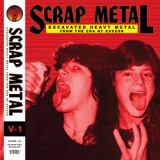
By now you’re probably familiar with our wildly popular Brown Acid series of rare, lost and unreleased proto-metal and stoner rock singles from the 60s-70s. In the endless pursuit of those glorious gems, we often uncover equally brilliant rarities from the late-70s to late-80s Golden Age of Heavy Metal that also just must be heard, but they don’t fit the series’ aesthetic. Scrap Metal, Volume 1 collects some of the greatest unknown and lost Heavy Metal tracks, long buried beneath the avalanche of the era’s classic output.
We all know the old adage that history is told by the winners. But sometimes the losers tell the best stories. And while none of these bands found fame and fortune, this artifact and the volumes to come are testament to the enduring power of heavy music. You can hear the blood, sweat and beers that went into each of these singles. The recordings may be low budget, but the inspiration and talent is immutable. Not only are the amps turned up to 11, the boyish sexual innuendo is cranked to 69. You can hear the convergence of influences — NWOBHM, thrash, glam metal, doom, etc — colliding at once as the era birthed a wellspring of subgenres.
Many of these singles are self-released and were thus limited to a small run of copies. Those that remain are hoarded by collectors and sold for exorbitant amounts. We’ve collected the best of the best for you here. As with Brown Acid, all of these tracks are licensed legitimately and the artists all get paid. Because it’s the right thing to do.
LINER NOTES:
Rapid Tears launch this series with the perfect christening. The Toronto, ON quintet’s 1981 single “Headbang” is such the pinnacle of heavy metal madness that it almost sounds like a spoof. There’s also enough of the rapid-fire sputum that inspired Metallica to bang the head that doesn’t, as such, engage in said practice, to be found on the band’s sole full length Honestly. But “Headbang” is a straightforward glammy anthem for the ages.
Air Raid’s “69 In A 55” may be lyrically so sophomoric that it’s actually pretty clever, but this 1983 Bay Area power metal single is loaded with sleek Judas Priest riffs and interwoven melodies that are downright sublime. The band’s sole release, the 2-song Rock Force 7” features a curious band photo in which 3 band members — dolled up in Crüe makeup and leather — are sexually menacing the lead singer/guitarist tied to a bed. Another low budget highlight is when singer/guitarist Tommy “Thrasher” Merry imitates a delay effect on his vocals as he sings, “tonight!...tonight...night.”
Hades’ “Girls Will Be Girls” has a real demo cassette feel to its vastly uneven mix, but the energy to the performance makes this an undeniable keeper. The long running Paramus, NJ quintet’s 1982 2- song debut 7” titled Deliver Us From Evil features this blistering thrasher dominated by shimmering leads and confident vocals that show why the band went on to near-fame on Metal Blade Records.
Resless don’t need no T to prove that they’ve got “The Power” with this 1984 driving mid-tempo rocker in the vein of Mötley Crüe and Ratt. The River Vale, NJ quartet’s tight crunch wails all over Bon Jovi posers but it’s the band’s unique and subtle deployment of background vocals that gives this rager its staying power.
Pittsburgh, the Steel City, is home to Don Cappa, a band that pays tribute to the burgh, the metal, and the awesomeness of both with “Steel City Metal.” Their lone single, issued in 1987 with only 300 copies released, sounds like the work of some serious steel driving men, with a drummer who might’ve forgotten to wear a hard hat one too many times on the construction site.
The Beast has more of a punk feel to their aggressive “Enemy Ace” track from the 4-song Power Metal EP from 1983 — something like Dr. Know meets D.O.A. But their look, artwork and lyrics all prove that Heavy Metal is where their hearts lie. And this hook filled monster delivers repeated lines like, “I command them all in my lofty realm,” with commendable conviction.
Dead Silence from Denver, Colorado, debuting in 1984 is not to be confused with Dead Silence from Denver, Colorado, who also debuted in 1984. The former a workman’s hard rock bar band, the latter a political peace punk band and neither knowing of the other’s existence throughout their tenure. The pre-internet days were a marvel, indeed.This Dead Silence spits out a slick, Nugent tinged rocker called “Can’t Stop” about life on the road.
The Danger Zone is, by all accounts, not the place to be. And, Hazardous Waste of Boston, MA saw fit to add their two cents on the matter with this 1986 single that combines Van Halen’s flashy musicianship with NWOBHM aggression that sounds so awesome it teeters on itself entering the “Danger Zone.”
Czar’s heavy, doomy “Iron Curtain” single from 1982 hearkens to the sleazy sounds of Saint Vitus and Pentagram with its cranked up DOD Distortion pedal in a Peavey combo amp guitar tone and meaty, barking vocals. The upstate NY quintet only issued this 2-song single, but its driving rhythm, nosedive whammy-bar guitar solos and comparatively mature Cold War subject matter show they had real potential.
Not much is known about Real Steel’s majestic “Viking Queen” from 1987, other than it rocks hard and the 7” 45 sells for upwards of a grand on the collectors market. The Flint, Michigan band recorded at the home studio of local radio personality Bill Lamb, who primarily released Christian Gospel recordings. So, perhaps the band was struck down by a bolt of lightning shortly after this rare single’s release. Whatever the case may be, it’s a must have for fans of classic metal mayhem.
When we think of the phrase Bonded By Blood, we think of two things: a brotherhood that is meant to outlast the trials of war, pain, and time... and the almighty EXODUS. With a bond forged in youth and decades-old friendship, the undisputed masters of thrash metal return with their eleventh studio album: PERSONA NON GRATA. Literally translating to “an unwelcome” or “unacceptable” person, PERSONA NON GRATA touches on themes of modern societal disgust and degradation. “The people that disgust you - cut ‘em out like cancer,” explains guitarist Gary Holt. “Who is that person? It could be anybody. That’s up to the listener. Who is ‘Persona Non Grata’ to them?”
For decades, EXODUS has impressed us with the ability to attract opposing factions to their music because of its intensity and versatility. A track like “The Beatings Will Continue Until Morale Improves” was inspired by the riots both in theme, and sound. “Without seeming insensitive to the riots, the song is tongue in cheek about what the people beating on the rioters were expecting to happen. Did you think you would beat a smile onto their face? At 3 minutes in length, it’s probably the shortest EXODUS song we’ve ever done. It gets in, gets out, and is just crushing,” describes Holt. While most of the songs do run on the shorter side, this album also comes equipped with crushing, epic tracks.
Whether it’s the music industry gossip sites, or the big players like CNN and FOX, we’re all aware of how news outlets love to set little rat traps; “Clickbait” discusses their methods of picking things out of context to grab your attention, add to their page views, and increase their revenue all while riling up your emotions. “It’s all journalistic dishonesty,” explains Holt, “it’s a modern-day version of Al Capone’s vault, everyone tunes in, and then there’s NOTHING.“ Evenly balanced with extraordinary speed and tremendous, catchy choruses, “Clickbait” is a song that explodes with vigorous energy. “As heavy as this album is, and it’s heavy as fuck, if times were different and there was still metal radio, this song, and probably over half the album, has single capabilities.”
Sitting as the second to last song on the album, “The Fires of Division” keeps PERSONA NON GRATA strong all the way through. “This album doesn’t operate on the normal parameters,” describes Holt, “we didn’t frontload this one, it’s strong right through to the end. It’s supposed to be a musical journey as the songs segway together.”
For the third time in the band’s history, EXODUS returned to Swedish artist Par Olofsson to create the album artwork PERSONA NON GRATA. “After this album, I feel like we probably won’t work with anyone else again, Par just gets it,” states Holt. A three-faced, winged creature sits atop a bloody pile of diseased and rotting humans as they scream in pain and reach their hands up desperately towards the beast. Undead riot cops beat mercilessly, and senselessly upon this pile of the dying and the world is red with fresh, sopping blood. “Is it an angel, a demon? Is the world being created or destroyed,” asks Holt, “you don’t really know.”
EXODUS don’t fall into the usual recording slump that most bands get stuck in. Gathering at Tom Hunting’s house up in the mountains, they avoided the need to book studio time or adhere to a certain schedule. “At first it was just Tom, myself, a half stack, and a drum kit; we call it jam camp. We lived there. We built the studio, we immersed ourselves in it. Number one, because we still enjoy each other’s company enough to do it. When we’re not actively rehearsing or recording, we’re still sitting there talking about the songs, working on them, plucking on acoustics until things really work,” explains Holt, “we’re not settling.” Working from three home-built studios, the band recorded PERSONA NON GRATA themselves with the help of Andy Sneap on mixing and mastering and with Steve Lagudi at the helm of engineering.
“As a band, I’m super grateful. I’ve seen a lot of things around the world and we’re still a band that loves each other, have each other’s back, and we genuinely like to hang out with each other,” explains Holt. “Take it how you will, but I’m this band’s biggest fan. We write songs that are designed to make us feel fired up - that’s why it’s still heavy.”
When we think of the phrase Bonded By Blood, we think of two things: a brotherhood that is meant to outlast the trials of war, pain, and time... and the almighty EXODUS. With a bond forged in youth and decades-old friendship, the undisputed masters of thrash metal return with their eleventh studio album: PERSONA NON GRATA. Literally translating to “an unwelcome” or “unacceptable” person, PERSONA NON GRATA touches on themes of modern societal disgust and degradation. “The people that disgust you - cut ‘em out like cancer,” explains guitarist Gary Holt. “Who is that person? It could be anybody. That’s up to the listener. Who is ‘Persona Non Grata’ to them?”
For decades, EXODUS has impressed us with the ability to attract opposing factions to their music because of its intensity and versatility. A track like “The Beatings Will Continue Until Morale Improves” was inspired by the riots both in theme, and sound. “Without seeming insensitive to the riots, the song is tongue in cheek about what the people beating on the rioters were expecting to happen. Did you think you would beat a smile onto their face? At 3 minutes in length, it’s probably the shortest EXODUS song we’ve ever done. It gets in, gets out, and is just crushing,” describes Holt. While most of the songs do run on the shorter side, this album also comes equipped with crushing, epic tracks.
Whether it’s the music industry gossip sites, or the big players like CNN and FOX, we’re all aware of how news outlets love to set little rat traps; “Clickbait” discusses their methods of picking things out of context to grab your attention, add to their page views, and increase their revenue all while riling up your emotions. “It’s all journalistic dishonesty,” explains Holt, “it’s a modern-day version of Al Capone’s vault, everyone tunes in, and then there’s NOTHING.“ Evenly balanced with extraordinary speed and tremendous, catchy choruses, “Clickbait” is a song that explodes with vigorous energy. “As heavy as this album is, and it’s heavy as fuck, if times were different and there was still metal radio, this song, and probably over half the album, has single capabilities.”
Sitting as the second to last song on the album, “The Fires of Division” keeps PERSONA NON GRATA strong all the way through. “This album doesn’t operate on the normal parameters,” describes Holt, “we didn’t frontload this one, it’s strong right through to the end. It’s supposed to be a musical journey as the songs segway together.”
For the third time in the band’s history, EXODUS returned to Swedish artist Par Olofsson to create the album artwork PERSONA NON GRATA. “After this album, I feel like we probably won’t work with anyone else again, Par just gets it,” states Holt. A three-faced, winged creature sits atop a bloody pile of diseased and rotting humans as they scream in pain and reach their hands up desperately towards the beast. Undead riot cops beat mercilessly, and senselessly upon this pile of the dying and the world is red with fresh, sopping blood. “Is it an angel, a demon? Is the world being created or destroyed,” asks Holt, “you don’t really know.”
EXODUS don’t fall into the usual recording slump that most bands get stuck in. Gathering at Tom Hunting’s house up in the mountains, they avoided the need to book studio time or adhere to a certain schedule. “At first it was just Tom, myself, a half stack, and a drum kit; we call it jam camp. We lived there. We built the studio, we immersed ourselves in it. Number one, because we still enjoy each other’s company enough to do it. When we’re not actively rehearsing or recording, we’re still sitting there talking about the songs, working on them, plucking on acoustics until things really work,” explains Holt, “we’re not settling.” Working from three home-built studios, the band recorded PERSONA NON GRATA themselves with the help of Andy Sneap on mixing and mastering and with Steve Lagudi at the helm of engineering.
“As a band, I’m super grateful. I’ve seen a lot of things around the world and we’re still a band that loves each other, have each other’s back, and we genuinely like to hang out with each other,” explains Holt. “Take it how you will, but I’m this band’s biggest fan. We write songs that are designed to make us feel fired up - that’s why it’s still heavy.”
Ltd White vinyl LP w/ printed inner sleeve lyric insert (1000 copies ww)! Emma Ruth Rundle's forthcoming Engine of Hell is stark, intimate, and unflinching. For anyone that's endured trauma and grief, there's a beautiful solace in hearing Rundle articulate and humanize that particular type of pain not only with her words, but with her particular mysterious language of melody and timbre. The album captures a moment where a masterful songwriter strips away all flourishes and embellishments in order to make every note and word hit with maximum impact, leaving little to hide behind. "I really wanted to capture imperfection and the vulnerability of my humanity," Rundle says of the album's sonic approach. "Here are some very personal songs; here are my memories; here is me teetering on the very edge of sanity dipping my toe into the outer reaches of space and I'm taking you with me and it's very fucked up and imperfect.'" Emma Ruth Rundle has always been a multifaceted musician, equally capable of dreamy abstraction (as heard on her album Electric Guitar: One), maximalist textural explorations (see her work in Marriages, Red Sparowes, Nocturnes or collaborations with Chelsea Wolfe and Thou), and the classic singer-songwriter tradition (exemplified by Some Heavy Ocean). But on Engine of Hell, Rundle has opted to forego the full-band arrangements of her previous albums in favor of the austerity of a lone piano or guitar and her voice, which creates a kind of intimacy, as if we're sitting beside Rundle on a bench, or perhaps even playing the songs ourselves. It's an extremely up-close and personal confessional with a focus on the rich subtleties and timbre of Rundle's graceful performances. "For me this album is the end of an era to the end of a decade of making records. Things DO have to change and have changed for me since I finished recording it." In essence, Engine of Hell signifies a major turning point for Rundle as both an artist and as a person. The catharsis of this type of songwriting has effectively served its purpose, and to continue ruminating on the past going forward is less of a healing process and more like picking at a scab and refusing to let it heal. This may help explain why Rundle is less than enthusiastic about divulging the details about her muses, but it doesn't alter the fact that these songs served a purpose in their creation, and that they may continue to bring comfort to others.
When we think of the phrase Bonded By Blood, we think of two things: a brotherhood that is meant to outlast the trials of war, pain, and time... and the almighty EXODUS. With a bond forged in youth and decades-old friendship, the undisputed masters of thrash metal return with their eleventh studio album: PERSONA NON GRATA. Literally translating to “an unwelcome” or “unacceptable” person, PERSONA NON GRATA touches on themes of modern societal disgust and degradation. “The people that disgust you - cut ‘em out like cancer,” explains guitarist Gary Holt. “Who is that person? It could be anybody. That’s up to the listener. Who is ‘Persona Non Grata’ to them?”
For decades, EXODUS has impressed us with the ability to attract opposing factions to their music because of its intensity and versatility. A track like “The Beatings Will Continue Until Morale Improves” was inspired by the riots both in theme, and sound. “Without seeming insensitive to the riots, the song is tongue in cheek about what the people beating on the rioters were expecting to happen. Did you think you would beat a smile onto their face? At 3 minutes in length, it’s probably the shortest EXODUS song we’ve ever done. It gets in, gets out, and is just crushing,” describes Holt. While most of the songs do run on the shorter side, this album also comes equipped with crushing, epic tracks.
Whether it’s the music industry gossip sites, or the big players like CNN and FOX, we’re all aware of how news outlets love to set little rat traps; “Clickbait” discusses their methods of picking things out of context to grab your attention, add to their page views, and increase their revenue all while riling up your emotions. “It’s all journalistic dishonesty,” explains Holt, “it’s a modern-day version of Al Capone’s vault, everyone tunes in, and then there’s NOTHING.“ Evenly balanced with extraordinary speed and tremendous, catchy choruses, “Clickbait” is a song that explodes with vigorous energy. “As heavy as this album is, and it’s heavy as fuck, if times were different and there was still metal radio, this song, and probably over half the album, has single capabilities.”
Sitting as the second to last song on the album, “The Fires of Division” keeps PERSONA NON GRATA strong all the way through. “This album doesn’t operate on the normal parameters,” describes Holt, “we didn’t frontload this one, it’s strong right through to the end. It’s supposed to be a musical journey as the songs segway together.”
For the third time in the band’s history, EXODUS returned to Swedish artist Par Olofsson to create the album artwork PERSONA NON GRATA. “After this album, I feel like we probably won’t work with anyone else again, Par just gets it,” states Holt. A three-faced, winged creature sits atop a bloody pile of diseased and rotting humans as they scream in pain and reach their hands up desperately towards the beast. Undead riot cops beat mercilessly, and senselessly upon this pile of the dying and the world is red with fresh, sopping blood. “Is it an angel, a demon? Is the world being created or destroyed,” asks Holt, “you don’t really know.”
EXODUS don’t fall into the usual recording slump that most bands get stuck in. Gathering at Tom Hunting’s house up in the mountains, they avoided the need to book studio time or adhere to a certain schedule. “At first it was just Tom, myself, a half stack, and a drum kit; we call it jam camp. We lived there. We built the studio, we immersed ourselves in it. Number one, because we still enjoy each other’s company enough to do it. When we’re not actively rehearsing or recording, we’re still sitting there talking about the songs, working on them, plucking on acoustics until things really work,” explains Holt, “we’re not settling.” Working from three home-built studios, the band recorded PERSONA NON GRATA themselves with the help of Andy Sneap on mixing and mastering and with Steve Lagudi at the helm of engineering.
“As a band, I’m super grateful. I’ve seen a lot of things around the world and we’re still a band that loves each other, have each other’s back, and we genuinely like to hang out with each other,” explains Holt. “Take it how you will, but I’m this band’s biggest fan. We write songs that are designed to make us feel fired up - that’s why it’s still heavy.”
Recorded in Havana’s famed Egrem Studios, the group displays a cohesion forged by an intense performing and touring cycle. The musical conversation that began in the Areito studios three years earlier blossomed into an easy, intimate dialogue between good friends - allowing full, fearless musical expression and risk-taking outside of their comfort zones.
Building upon Perez Prado’s dissonant, near avant-garde vision of the mambo, and highlighting the Lucumí subtext of Cuban rhythms and styles, the band continues to explore, develop and expand the island’s rich rhythmic palette and repertoire - pushing the conventions of what is considered “mambo” - and drawing deeply from folkloric and religious traditions seldom heard in popular music. 16 Rayos is here to shine its musical rays on us, warm our hearts, and irresistibly move our bodies.
When Orquesta Akokán burst onto the global music scene a mere three years ago, their no-holds-barred 21st century take on the venerable Cuban mambo lit up stages around the world with a fierce and unremitting joy. Singer José "Pepito" Gómez, Chulo Records producer and multi instrumentalist Jacob Plasse, and arranger Michael Eckroth joined forces with a carefully curated selection of Havana’s most extraordinary musicians as Orquesta Akokán, polishing Cuban mambo’s golden sound to a luminous, contemporary sheen. Along the way Orquesta Akokán imbued these legendary Cuban grooves with a renewed vitality and powerful sense of akokán ---the Yoruba word used by Cubans to mean “from the heart” or “soul.”
On the Cuban side of the equation the Orquesta boasts some of the island’s greatest instrumentalists culled from members of near-mythical groups such as Los Van Van, NG La Banda, and Irakere (notably César Lopez, Orquesta Akokan’s point man in Havana). The ensemble for 16 Rayos shines a light on Cuba’s musical families and multigenerational legacy with the participation of two fabled Vizcainos on percussion - Roberto "Tato" Vizcaino Jr. and his father Roberto Vizcaino Guillot, a member of Chucho Valdes’ seminal 90’s quartet. Another family duo added their masterful legacy to the recording, with trumpeter Reinaldo “Molote” Melián bringing in his son, Reinaldo Melián Zamora, to play trumpet on several tunes alongside lead trumpet Harold Madrigal Frías. The winds and brass are rounded out with a rich saxophone section made up of young lion Jamil Shery and Germán Velazco (musical director for Pablo Milanés)on tenor, with Evaristo Denis on baritone and César López on alto, along with Yoandy Argudin and Heikel Fabián Trimiño on trombone. Coros were sung by Eddie Venegas and Luis Soto. Significantly, Orquesta Akokán added strings to the ensemble for the first time, with the participation of violinists Amelia Febles Díaz, Jenny Peña and Anabel Estévez Acosta, whose virtuosity stems from the classical training for which Cuban musicians are so renowned. The power and grace of Pedro "Tata" Francisco Almeida Barriel’s vocals lead the way on “4 de Octubre” and “Llegue con mi Rumba,” evincing why he is considered one of the Cuban rumba’s premier exponents. Another highly recognized singer, legendary guarachera Xiomara Valdés - who’s shared the stage with legends such as Beny Moré and Omara Portuondo and received the Ministry of Culture’s Distinción por la Cultura Nacional de Cuba as a significant contributor to Cuba’s musical legacy - is the featured guest on the title track.
Since their debut, Whitehorse has traveled from magnetic folk duo to full-blown rock band and beyond. In truth Whitehorse is never fully either one or the other, but an ever-evolving creative partnership that challenges both artists, Melissa McClelland and Luke Doucet, to explore new instrumental and lyrical terrain with each record. Steamy, swampy and squalling in equal measure, Whitehorse’s signature sound is guitar-heavy, harmony-abundant and lyrically deft. Now, the JUNO Award winners return with Strike Me Down, a collection of disco-twirling, hard riffing tales from the brink. Strike Me Down showcases Whitehorse’s masterful, fantastical storytelling and melodic pop sensibilities, with plenty of space made for guitar shredding, epic basslines and spaced-out vocal layering. High-impact production and prismatic visuals contribute to Strike Me Down’s high-stakes, epic vibe.
Listening to the story of Canadian duo cleopatrick is a bit like hearing the plot of the best, most righteously validating coming-of-age film never made. Two friends meet aged four in Hicksville, Nowheretown (real name: Cobourg, Ontario, population 19,000), grow up completely inseparable, form a band and, against numerous obstacles, blossom into a genuine, global underground sensation. There are heroes and villains, highs and lows and, crucially, some of the most poetic plot twists that could seem almost too perfect, were they not completely true. Take the story of 2017 breakthrough track ‘hometown’ for example. “It’s one of the craziest, most ironic things that’s ever happened,” begins vocalist and guitarist Luke Gruntz. “I was going to college because I was too scared to put all my chips in the band pile, and that’s what ‘hometown’ is about: it’s a song about feeling like we’re doing all this stuff and we’re working so hard and we’re just never going to be heard. It’s literally a song about people probably never hearing our songs. And then by some act of the universe, that song ended up unlocking all the doors for us.” Today, cleopatrick has logged 77 million streams and counting - all from an increasingly dedicated fanbase who’ve found the duo, completed by drummer Ian Fraser, their own way: no major label, no big budget, just two best pals knuckling down, cementing a unique sonic alchemy and filling a space of honest, empathetic yet undeniably heavy-hitting rock music that they’d been searching for themselves for years. Between multiple sold out tours in Canada, the US and the UK/EU and appearances at Lollapalooza, Austin City Limits and Reading/Leeds, the pair have been crafting BUMMER: a debut album that sees cleopatrick harness all the magic they’ve been brewing over their two-decade friendship and funnel it into a record that aims to reinvigorate the rock landscape from the ground up. Taking the ethos of their New Rock Mafia collective - a group of friends and fellow bands, united in making a more inclusive, equality-driven space in rock music - and imbuing it with the sonic ambition and ferocity of a record designed to be played hard and loud, it’s an album about two friends, who’ve been with each other since the formative first steps that adorn ‘BUMMER’’s heartwarming cover image and made something that’s a testament to the power of sticking to your guns.
SO WHAT's debut LP is filled with stompers, hand clappers, and all the riffs that matter. Co-released by Just Add Water Records (USA) and Surfin' Ki (Italy). From the GLAMTASTIC pounding drums, Moogs, and big fuzzy riffs of "Where We Going" and "Why Can't I See You Tonight" to the serious EQUALS worship of "Don't Come Back" and "What You Said", this album is chock-full of HITS!
- A1: Hey Lover Feat. Roy Ayers (Instrumental)
- A2: Oi Feat. Marcos Valle (Instrumental)
- A3: Visions Of Love Feat. Gary Bartz (Instrumental)
- A4: Aquarius (Why Do You Cry) Feat. Joao Donato (Instrument
- A5: Soulful And Unique Feat. Roy Ayers (Instrumental)
- A6: Isso É Que Eu Sei Feat. Marcos Valle (Instrumental)
- A7: Nao Negue Seu Coracao Feat. Joao Donato (Instrumental)
- A8: Sunflowers Feat. Roy Ayers (Instrumental)
- A9: Queira Bem Feat. Marcos Valle (Instrumental)
- B1: Day By Day Feat. Gary Bartz (Instrumental)
- B2: Gotta Love Again Feat. Marcos Valle (Instrumental)
- B3: Forever More Feat. Joao Donato (Instrumental)
- B4: Synchronized Vibration Feat. Roy Ayers (Instrumental)
- B5: Viajando Por Ai Feat. Marcos Valle (Instrumental)
- B6: Gravity Feat. Roy Ayers (Instrumental)
- B7: Nao Saia Da Praca Feat. Marcos Valle (Instrumental)
- B8: Beauty Feat. Joao Donato (Instrumental)
- B9: African Sounds Feat. Roy Ayers (Instrumental)
- B10: A Gente Volta Amanha Feat. Marcos Valle (Instrumental)
Ali Shaheed Muhammad and Adrian Younge are best known for their collaborations with vocalists and MCs, but these two multi-instrumentalists and producers excel in their ability to conjure musical moods with or without vocal accompaniment. Similarly, the musical legends that these two handpicked to collaborate with across this series are all jazz legends equally at home crafting unadorned compositions as they are collaborating with vocalists. This collection presents exclusive instrumental versions of songs originally released on the Jazz Is Dead albums; Roy Ayers JID002, Marcos Valle JID003, Gary Bartz JID006, and Joao Donato JID007. More than the previous eight Jazz Is Dead releases Instrumentals JID009 delivers on Adrian and Ali's original promise of showcasing the music made with their heroes, laying bare the inspired compositions created when different generations of musicians come together to collaborate in the studio. For nearly all of these songs, Adrian and Ali began with sketches and elements of songs that they developed alongside the featured musicians live in Adrian Younge's Linear Labs studio located in the Highland Park neighborhood of Los Angeles.
- A1: The Nips - Gabrielle
- A2: Dolly Mixture - New Look Baby
- A3: The Blades- Revelations Of Heartbreak
- A4: The Crooks - Modern Boys
- A5: Inspiral Carpets - Saturn 5
- A6: The Users - Kicks In Style
- A7: Untamed Youth - Untamed Youth
- B1: Les Elite - Get A Job
- B2: The Gents - The Faker
- B3: The Name - Fuck Art Let’s Dance
- B4: The Scene - Something That You Said
- B5: The Killermeters - Why Should It Happen To Me
- B6: The Accidents - Blood Spattered With Guitars
- C1: The Fixations - No Way Out
- C2: The Leepers - Paint A Day
- C3: The Variations - Fight Back
- C4: The Same - Movements
- C5: The Kick - Stuck On The Edge Of A Blade
- C6: Daggermen - Ivor The Engine Driver
- C7: New Hearts - Only A Fool
- D1: The Long Ryders - Looking For Lewis And Clark
- D2: Ocean Colour Scene - The Day We Caught The Train
- D3: Nine Below Zero - Pack Fair & Square
- D4: The Jolt - I Can’t Wait
- D7: The Moment - Sticks & Stones
- D5: The Inmates - Dirty Water
- D6: Scarlet Party - 101 Dam-Nations
In 1979 as a 15-year-old Eddie Piller was perfectly placed to be at the epicentre of the Mod revival. An inquisitive passion
for music, a family connection to Mod royalty The Small Faces, and an attitude that saw him travelling his home city, then
the country and then the world to take in the sounds that were emerging. In the years since, Piller has been a legendary
figure within the music industry setting up and continuing to own the ground-breaking Acid Jazz label, signing multiplatinum artists such as Jamiroquai and The Brand New Heavies collaborating on compilations with Martin Freeman and as
an award winning broadcaster even setting up his own Totally Wired Radio station. In The Mod Revival he looks back at the
movement that set him on his way.
• Mod is a sixties youth movement original built on sharp clothes, American soul music and nights on the town, that has never
really died. The originals added young British groups to their likes and then moved on, but their influence echoed on
through the 1970s in Northern Soul clubs, and in the sixties influenced bands of the pub rock era. When punk arrived, it was
supposed to sweep away the past, but instead the Sex Pistols were covering the Small Faces. The Clash brought in Mod DJ
Guy Stevens to produce London’s Calling, The Buzzcocks sounded closer to the Hollies than The Ramones and in The Jam’s
Paul Weller there was a musical and sartorial nod to the past of The Who, The Beatles and pop art arrows.
• Weller had spent the 1970s becoming obsessed by mod and saw punk as having a similar youthful energy to the era he had
missed by being born a decade too late. For others Weller’s style proved an inspiration, and as the Jam broke through in late
1978, they saw a wave of bands follow in their wake, and they themselves influenced others to form their own groups. But
there were other things. In bleak late 70s Britain the glorious optimism of the 1960s looked bright and shiny, and as it was
only a decade or so in the past, it was easy to pick up original records, clothes and books for pennies, and as you bought
these you met other like-minded souls who did the same. For those a little too young for punk, it was a community of gigs,
scooters, clothes, bands and records, and for many it developed on through.
• Eddie never stopped being a mod and has a unique perspective having now lived through four decades of being intimately
involved in the music that has emerged from the mod scene. In this part two double vinyl edition (Part 1 and its CD
equivalent reached #14 in the UK compilations charts) Ed guides us through some of his favourite music from the scene. He
guides us through a plethora of bands whose influences include The Who, The Kinks and the Jam, to sixties soul and R&B,
those with an eye on psychedelia. The records have a vitality and a certain stylish swagger to them, that marks them out as
mod. In the deluxe booklet, Piller has written a 5000 word note describing what it meant to him and has granted access to
his own scrapbooksfrom his many years of gig-going from which pages and memorabilia are reproduced.
• Eddie Piller’s Mod Revival is a personal appraisal from the founder of The Modcast, on what the mod explosion of the late
70s and 80s means to him…
- 1: Shelter Song
- 2: High & Hurt
- 3: Love Kills Slowly
- 4: Vendetta
- 5: Drink Rain
- 6: Gold City
- 7: Dear Saint Cecilia
- 8: The Wider Powder Blue
- 9: The Holding Hand
A decade on from their first record, Iceage continue to harness their lives together through music. This journey, in music and life, has never progressed in a linear fashion. Seek Shelter — Iceage’s fifth LP and first for Mexican Summer — is proof that their lives are still happening through their music, and that they remain determined to harness it. Enrolling Sonic Boom (Pete Kember of Spacemen 3) to produce, Seek Shelter sees Iceage’s propulsive momentum pushing them in new, expansive, ecstatic directions. The sound of an emotional core unwound, Seek Shelter radiates warmth and a profound desire for salvation in a world that’s spinning further and further out of control. In an extraordinary and unexpected run following the release of their debut LP, Iceage went from the fertile hyperlocal Copenhagen scene to stages all over the world. Their recordings reflect their journey: 2012’s You’re Nothing was hard, fast and raw, a bold doubling-down on the aggression of youth in the first record as well as the weight of expectation. Plowing Into the Field of Love (2014) and Beyondless (2018) saw a softening of the band’s hardest edges and the arrival of a certain world-weary vaudeville in the Iceage sound. The band’s past two records — all filtered twangy guitar riffs, sparse piano arrangements, and slinky, slow-moving rhythms — ventured into an intoxicated but knowing swirl, surveying the party at the end of the night. They’d seen it all, at least once, and their music rode the crest of that chaos. Seek Shelter, the band’s first record made with an outside producer, is the place they have been called to next. The LP was recorded at Namouche, a dilapidated wood-paneled Lisbon radio studio of 1960s vintage where the band set up for 12 days. It is the longest time they have spent recording a record. Steady rain dripped through the ceiling; they had to arrange their equipment around puddles and slowly-filling buckets covered in cloth so that the sound of droplets wouldn’t reach the mics. Sonic Boom arranged garden lamps from a nearby party store for mood lighting in the high-ceiling space. A choir, the Lisboa Gospel Collective, joined the band for two tracks on the final day in the studio providing a new scale to Rønnenfelt’s incantations. Singer and primary songwriter Elias Rønnenfelt casts their new producer as a sparring partner, another wayward mind to bounce ideas off of. “We wanted a partner that had some noise that we didn’t have, more a wizard than a producer. “When we started, I think we were just lashing out, completely blindfolded with no idea as to why and how we were doing anything. For Seek Shelter, we had a definite vision of how we wanted the album to be carved out, yet still the end result came as a surprise in terms of where we sonically were able to push our boundaries.” He’s speaking of the new record and also of their entire existence as a band, a travelogue that has catapulted these four friends far past the horizons of punk. “Some of that we wanted to remain intact. We try to keep the mystery. If there's no sense of mystery in it for us, then it's not fun.” Seek Shelter is a record that now exists at a moment of a collective unknown, when every beating heart wonders what will happens next.
- 1: Love Has Finally Come At Last
- 2: It Takes A Lot Of Strength To Say Goodbye
- 3: Through The Eyes Of A Child
- 4: Surprise, Surprise
- 5: Tryin’ To Get Over You
- 6: Tell Me Why
- 7: Who’s Foolin’ Who
- 8: I Wish I Had Someone To Go Home To
- 9: American Dream
Womack updates his material for the 80s, creating grown-up sensual soul.
The passion for earthy R&B seemed to have dimmed as the 80s began.
Synthesised confections abounded and veteran Bobby Womack, the Midnight Mover, was at a crossroads. His peers were either in the wilderness (Marvin Gaye, James Brown and Isaac Hayes) or otherwise indisposed (Sam Cooke, Jackie Wilson, Sly Stone), so it was left to Womack to fly the flag for down-to-earth, quality soul.
Womack had been a recording artist for best part of two decades when he made The Poet. After making his name with The Valentinos in the 60s, he cut a string of heartfelt, emotional albums for Minit, United Artists and Columbia throughout the 70s. The Poet was written with great optimism; Womack was out of contract and was approached by agent Otis Smith to set up on his new label, Beverly Glen.
Working with Patrick Moten, Womack crafted eight songs that sounded breathlessly contemporary. If this material had been put in the hands of a soul crooner, it could have sounded perfunctory. The Poet works because of the juxtaposition of Womack’s feral growl with the album’s sweet, smooth, urbane soundtrack. This is grown-up, sensual music; from So Many Sides of You to its epic closer Where Do We Go From Here, this is a luscious collision of Womack’s soul mastery and slick musicianship. It rises and falls, with Womack sidestepping cliché thanks to his preaching, heartfelt delivery. For example, when he cries “I wanna dedicate this song to all the lovers tonight / And I expect that might be the whole world,” on If You Think You’re Lonely, it sounds honest, simple and sincere.
The Poet put Womack back on the map, and gave him his first US R&B chart-topper and first mainstream top 30 album. It was adored in the UK, and sent many back to investigate his grittier 70s heyday as an albums artist. The album became the best-selling record of Womack’s career
Womack cut the equally sublime follow-up The Poet II, released in 1984.
Daryl Easlea – BBC
Back in 2015, to celebrate the 50th anniversary of the BBC broadcast of Delia Derbyshire & Barry Bermange’s “Inventions For Radio: The Dreams”, The Eccentronic Research Council released their own super-limited edition cassette soundtracking the recalled dreams (and nightmares) of friends, artists, actors, musicians, scientists, poets and filmmakers. The release was called “The Dreamcatcher Tapes Volume 1”. Five years on, and with a large part of the planet under lockdown and with nowhere to go but within their imagination, the ERC put a call out once again to music collaborators, nurses, teachers, truck drivers, writers, journalists and shop workers to upon waking, record their dreams straight into their phones and to then send them to the ERC to soundtrack. And thus, Volume 2 of The Dreamcatcher Tapes was born!
How did you make the album during lockdown?
“We got around 26 dreams sent to us via email over the space of a couple of weeks then Dean Honer my partner in The ERC and I revved up the old analogue equipment and would record music and collage sounds to the dreams (remotely) from our home recording studios and bounce them back and forth to each other till they were done. It was a really good way to work actually, sometimes I didn’t even have to put on any trousers!” says ERC/ Moonlandingz founder Adrian Flanagan. Why a second volume of The Dreamcatcher Tapes? “I was really interested to see how the enforced lockdown and the removal of people’s basic needs such as human contact and hanging out in close proximity to friends was affecting the dreams of my friends, peers and those at the very front line of this horrible pandemic”, Adrian continues. “The Important shared experiences for people’s mental health such as going out to gigs, the pub, the cinema etc. ”It was an interesting experiment. Nurses dreaming of inadequate PPE and having to use blow up Elvis costumes to protect themselves. Teachers dreaming of zombies and lots of people dreaming about sex - where the hair of Greek sorceress’s Circe meets bouncy castle breasts and where other dreamers dream of serial killers or seeing dead family members, or taking baby elephants for a walk, or having discos for one in the middle of the ocean and so much more. I’m really proud of this record. It’s psychedelic in its truest most cerebral form”
Who’s on “The Dreamcatcher Tapes Volumes 1 & 2”? Who are the dreamers?
“Although our long time collaborator Maxine Peake wasn’t on the very first tape (her dream ended up on LTD edition split 7” ERC single we did with Pye Corner Audio) - she was the first dream that we soundtracked when I came up with the idea of doing the concept record. However, on the new vinyl and tape box set - she opens volume 1. Across the 2 volumes there’s film maker Carol Morley, Andy Votel from Finders Keepers records, John Doran from The Quietus (who also wrote the albums brilliant sleeve notes), acclaimed writers Benjamin Myers & Adelle Stripe, musicians such as Evangeline Ling from the group Audiobooks, Lias Saoudi from my ‘semi fictional band’, The Moonlandingz and fat white family, Sidonie from The Orielles, journalists /writers Wyndham Wallace (he wrote lee Hazelwood’s brilliant biography) and Daniel Dylan Wray amongst a whole array of musician friends, eccentrics and people with actual proper jobs!”
Why did you chose Castles in Space for this release?
“Jim Jupp at Ghost Box records suggested them to me so I looked into them and saw they were doing loads of really great strange little bespoke electronic record releases. I think that because this is a very niche limited run release, it required a label that was willing to treat it like a piece of art and not a throwaway mass produced commodity. So making sure the packaging was special, the artwork was bang on point and the sleeve notes were written by a writer we like all were very important to us. “It was also important that we could turn it around from the finished recording to being in people’s hands really quickly as Dean and I have another ten projects between us on the boil - and so far, Castles in Space have been true to their word. It’s an artists label done with love and there’s not many of them about anymore - believe it or not.“
“The Dreamcatcher Tapes Volumes 1 & 2” is an immense collaborative achievement which makes for a thoroughly compelling, and gloriously disorientating listening experience.
It is released as a double coloured vinyl LP in deluxe gatefold sleeve w/insert and a highly limited deluxe double cassette box set. The album is released on March 19th, 2021.
A quick, spontané voyage to the French Riviera ca. 1968, good times long before things went south, Organi’s “Parlez-vous Français?” is a woozy, tripping, soothing sojourn: DIY dream pop, hazy psychedelia, blurred-but-steady beats dripping down the golden boulevard, complete with mystical chants, a dash of half-remembered Franglais that goes down like some vintage eau-de-vie. There’s a fine massage waiting behind those venetian blinds. Pay half an hour, you’ll be relaxed and revived after 22 minutes. Très irrésistible when streamed, Organi’s haunting, hard-boiled French lesson is even better with that classique vinyl crackle in the mix.
Following the cinematic title skit with its bass loop appendix, Oakland-based producer and multi-instrumentalist Mike Walti (and his songwriting partner Maryam) aka Organi invites singer Jessica Bailiff along for the majestic entrée, an interpretation of Philamore Lincoln’s 1970 tune “The North Wind Blew South” (doesn’t it always?), adding anticon. heavyweights Jel and Odd Nosdam on synths and bass for à la mode enhancements and additional bric-à- brac.
Whereas the theme tune “Organi” comes with big drums, big organ, seductive overtones, pure hypnosis, “Whispers” is the soundtrack to some kind of psychedelic campfire tableau vivant: all brumeux, hazy, with spare guitar, Gauloises or Gitanes dangling, a glass of Bordeaux waiting on the dusty old amp, and featuring guest vocalists Yea-Ming Chen & Susy Borhan. It gets even more Parisienne after that: a French woman just knows how to look classic, even when all she’s got is some attitude, a ramshackle tambourine, a craving for old Sukia weirdness and those budget-couture “4 Dolla Jeans”...
Clearly in love with analog equipment, Organi turn The Vaselines’ “Slushy” into a slow- moving, bottomless lullaby – “... you'll never miss what you never had” –, and the femme fatale minimalism of “Stay The Night” is too magnétique and alluring: A fuckin’ sexy chanson, très léger and yet such a hard-knockin’ head-nod anthem, it’ll make you stay for sure, hungry for la petite mort.
Before the expansive denouement – a bank robbery in style: with bangs and a bucket bag (“Danger Walked In”) – the session gets super loose on “The Getaway,” head scarves and berets shimmering in the cabriolet, and featuring Jena Ezzadine on vocals & Headnodic on bass.
Mike Walti aka Organi is an Oakland-based musician and producer. A third generation Bay Area native, Walti has been running wyldwood Studios in Oakland CA for 10+ years (recording artists like Why?, Latyrx, Del, Dan The Automator, and Big Freedia, to name but a few). A longtime friend of Odd Nosdam, he loves to work with analog equipment (“We just love us some analog!” “Just listen to those relays purr...”). Recorded and mixed by Mike Walti at wyldwood, and mastered by Odd Nosdam.
Little do we know about Moondance, in fact when these tracks just showed up in the inbox one day, we said "Moon who?".
All we got was a link to a dropbox folder with three tracks signed Moondance.
One thing is for sure though, the music peaks volumes and that is why we didn't hesitate to sign all three of them.
The title track, 'Never Found Love' comes in two different shapes. While the original is a colourful, rich, and jazzy piano driven house track with a vocal to tie it all together, the Amen Mix is an off-kilter dub inspired version, it sounds like something straight out of a Innerzone Orchestra jam session
Moondance's own theme, 'The Moon Dance (2020)' sounds like the perfect blend between house and techno, carefully dipped into a pot with equal parts of forward thinking Detroit style and organic house.
Part 2[14,08 €]
A rare treat for Drumcode faithful: A-Sides Vol.10 is set to drop in December, the second edition of the beloved series to come in 2020.
Fuelled by the extra time and space to be creative during lockdown, Drumcode’s collective of artists have stepped up. Across 17 contributions, the producers have gone deeper into their sonic repertoire, crafting powerful, yet reflective works that capture the range of the label’s sound.
Jay Lumen leads the way with a rousing riff-driven weapon, ‘Galactic Rainbow’, while Ramon Tapia brings us the muscular gem ‘Drum Control’, mixing up ruffneck techno with a barrage of synapse-tickling synths in the second half. Both rousing highlights of the compilation.
Victor Ruiz, Drumcode’s most prolific contributor in 2020, dishes up ‘Love Story’, led by a huge vocal lead. Zimmz also returns with ‘Tension’, which deftly combines deep squelchy grooves with a silky synth interlude. Thomas Hoffknecht follows up his debut on Vol.9 with ‘Escape’, keeping listeners on their toes with dynamic, choppy shifts throughout. Veerus joins with another stirring addition ‘I Know’, reinforcing why Beyer rates him so highly.
Elsewhere a string of debutants feature: buzzy newcomer Lilly Palmer gives us ‘Amnesie’, a brilliantly pummelling and eerie cut; Alex Lentini & Stomp Boxx serve up ‘Expanders’ mixing up drone effects, trippy vocals and an unsettling melody line; and Patrik Berg’s ‘Activated’ is full-bodied techno that drops down into funky rhythms.
Long-time DC family member Bart Skils brings his A-game with the thrilling no-nonsense ‘Solid State’ that hits like a steam train. Likewise, Alan Fitzpatrick who brings a momentous slab of techno energy with ‘Rochus’, while Thomas Schumacher, now feeling like a regular on the imprint, crafts another dark techno opus, this time in collaboration with CAITLIN.
There’s even a special appearance by the chief Adam Beyer, who makes a welcome return with the progressive-tinged ‘Changes’, driven by organic tones and spacey atmospherics. The track stands as his first original contribution to A-Sides since 2017.