2 rare historical recordings (1983 and 1986) originally released as single sides and gathered here for the first time.
"Conductor might be my favourite composition and Life And Death Of Pboc might be my most sincere. Conductor was my first composed piece with no obvious reference points ... Life And Death Of Pboc was the second. These two compositions gave me the title Godfather of Dark Ambient."
Carl Michael von Hausswolff, born in 1956 in Linköping, Sweden, lives and works in Stockholm. Since the end of the 70s, von Hausswolff has worked as a composer using recording technology as his main instrument and as a visual artist using light projections, film/video and still photography as well as other media. He has exhibited at dOCUMENTA (Kassel), the biennials in Venice, Moscow, Liverpool, Istanbul, Sarajevo etc and in Copenhagen, Stockholm, Nicosia, Kaliningrad, Tokyo, London, New York, Philadelphia etc. His music has been played in festivals such as Sonar (Barcelona), CTM (Berlin), L'audible (Paris), el niche Aural (Mexico City), MUTEK, (Montreal) etc. and release works on LP/CD/DL by labels like Erototox (Ashevile), Sub Rosa (Brussels), Touch (London), Pomperipossa (Göteborg) and iDeal (Göteborg). He recently curated the 2nd part the sound-installation FREQ_OUT named freq_wave in co-operation with TBA21-Academy and collaborates with artist Leif Elggren, EVP re-searcher Michael Esposito, composers Hans-Joachim Roedelius, Mark Fell, Jim O'Rourke, author Leslie Winer and as Dark Morph (with Jónsi of Sigur Rós). He has also collaborated with Pan sonic, The Hafler Trio, Freddie Wadling and Erik Pauser (as PHAUSS).
Search:erot
Reissue of George Duke's classic 1976 jazz-funk-fusion album 'Liberate Fantasies'
This 1976 album, the last one of the MPS fusion series, continues George Duke's tendency to couple his fusion world with accessible R&B songs. Once again, he shows a discernible vocal development. In "Tryin' And Cryin" the Californian together with rock singer Napoleon Brock overlays multiple vocal tracks.
On "Seeing You" Duke lays on a glaze of soulful tenderness, whereas "What The…" is 30 seconds of frivolous funning around. "Back to Where We Never Left" is a witty gem in which Duke bundles his pool of synthesizers into a united groove, whereas "I C'n Hear That" shows off synth and marimba tonal colors in dialogue, with the bass riffing on the bottom.
The album flows into the final bend carrying along the sonorous richness of Brazil. "After the Love" plays with the languorous erotic colours of the tropics, whereas all the band members are allowed to shine on the epic circa ten minute title track with its hot samba flair: the rhythm section with "Ndugu", Al Johnson, and Airto Moreira's percussion arsenal, Daryl Stuermer with his rock interludes on guitar, and Duke himself with inspired virtuosity on all sorts of synths and
keyboards.
- A1: Scarred
- A2: 06:00
- B1: The Mirror
- B2: Caught In A Web
- C1: Erotomania
- C2: Voices
- C3: The Silent Man
- D1: Lie
- D2: Lifting Shadows Off A Dream
- D3: Innocence Faded
- D4: Space-Dye Vest
- E1: Scarred (Cd)
- E2: 06:00
- E3: The Mirror
- E4: Caught In A Web
- E5: Erotomania
- E6: Voices
- E7: The Silent Man
- E8: Lie
- E9: Lifting Shadows Off A Dream
- E10: Innocence Faded
- E11: Space-Dye Vest
Heavy 180g black vinyl. First time on vinyl. 350gsm Gatefold, interior sleeve printed. Half Speed Mastering. 45 rpm.
The Threshold HouseBoys Choir was a project by Peter "Sleazy" Christopherson. Operating out of Bangkok, Thailand, the Throbbing Gristle and Psychic TV founding member started this audio and visual endeavour following Coil's end. File under COIL Forever, Erotic Trance, Religious IDM, Ecstatic Classical, Post Ethnic Industrial Exotica and best album ever heard.
Back In Stock!
The debut collaboration between techno alchemists Ben Klock and Lucy will probably provoke quivers of anticipation before a single note has been heard. After all, both producers have carved out names for themselves as scene innovators at what they do, and both have already proven that they can more than capably work in a duo format without sacrificing an iota of their unique aesthetics: in Lucy's case, there has already been the sublime Zeitgeber pairing with Speedy J., and Klock has joined forces with the likes of Marcel Dettmann to craft some of the more memorable output from the Ostgut Ton label. This new release makes good on each producer's talent for working with epically unfolding tracks, maintaining a strong command of both 'drone' and melodicism, and envisioning sound as a kind of inter-dimensional mass transit. As the record indicates, things can get very interesting when the two working methods superimpose perfectly, but can be just as interesting when the two fall slightly out of phase with one another.
Listeners familiar with the classic kosmische feel will be taken immediately by the opening gambit "Bliss," whose feeling of floating through the coldness of space is accompanied here by nicely warm production values. The bassline that introduces the subsequent track ("War Lullaby") is close to being a continuation of the opener's leitmotif sequence, although with a change in atmosphere that will keep curious ears from turning away too soon: an FX-shrouded voice delivers a monologue at once seductive and foreboding, followed by a confident kick thump with ephemeral trailing clatters in tow. This affective orientation pulses through the whole record well, building up to the second rhythmic track ("Santeria") which is the busiest and most engaging of the bunch. Here a variety of sonic flavorings are ritually thrown into the pot and allowed to simmer - fleeting snatches of conga, phasing zaps and rhythmic ricochets all make for a rich concoction that epitomizes the progress that has been made in techno music within this decade. The closing "A Ghost Love story," like the opener, is a non-'dance' piece, but is no less compelling for that fact: as a foam of white noise pans between the listener's ears, a slurred / pitch-bent refrain conjures the feeling of either entering or exiting from some erotically tinged hypnagogic state.
Speaking of which, the overall impression given off by this record is that of a special kind of reciprocity: that is, of dreams influencing reality and reality feeding back into dreams. The rhythmic intensity of these tracks, at once an indicator of a hard and immediate reality, is regularly complemented by oneiric flourishes that make the partitioning line between these two realms of consciousness less distinct. As the next chapter in the Stroboscopic Artefacts saga, and in the personal journeys of both Ben Klock and Lucy, it will contribute to the ongoing mission of all these parties: giving longtime fans what they want while expanding their consciousness and inquisitiveness.
CM von Hausswolff pays tribute to writer Ira Cohen and musician Angus MacLise in this piece recorded in Kirtipur, Nepal.
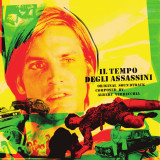
Between the 60s and 80s, Albert Verrecchia played a major role in Italian pop music and on the European disco and Afro-cosmic scene, both under his own name and under the monikers Albert Weyman and Albert Prince. He was the keyboardist of legendary Italian-French r'n'b band I Pyranas, served as a session Hammondist for singer and TV star Raffaella Carrà, and produced the disco trio Belle Epoque as well as the debut album of singer-songwriter Alan Sorrenti. Among his many incarnations, in the early and mid-70s he also composed a few soundtracks for Italian genre cinema, including for movies such as the poliziottesco Roma drogata, la polizia non può intervenire (Hallucinating Trip, 1975, Lucio Marcaccini) and the erotic drama Tecnica di un amore (1972, Brunello Rondi).
The score he wrote in 1975 for Il tempo degli assassini (Season of Assassins, a film about a gang of criminal youths who terrorize the city of Rome in the already violent 70s) is certainly his most accomplished work in the genre. Conceived for a small ensemble, it was written almost entirely on the spot in the recording studio. Verrecchia himself played the Moog, and his dynamic and percussive approach to the instrument resulted in a style midway between funk and proto-disco. A modern rhythmic style - or Ritmico Moderno, which is the title chosen by CAM for the LP containing the soundtrack and released two years later as part of a promotional library music series only distributed to film professionals and radio and TV programmers (CML series, cat. no. 131). One is led to wonder whether it was thanks to that LP that, in 1977, three pieces from the soundtrack found their way into another film about youth gangs, the Spanish Perros callejeros (Street Warriors), written and directed by Jose Antonio de la Loma. On a side but important note, there's the added bonus of popular 70s and 80s entertainer Sammy Barbot singing on Gang Leader alongside female vocal group Baba Yaga. What a pity that Verrecchia's career as a film composer ended here!
- A1: Erotic Aroma 04 28 Min
- A2: Pachamama 05 34 Min
- A3: Cool Dudes In Hot Water 05 43 Min
- B1: Ipsum 04 55 Min
- B2: Dance 04 28 Min
- B3: Awry 05 16 Min
- C1: The Coming 04 49 Min
- C2: Cosmic Pratt 05 54 Min
- C3: Htp 06 02 Min
- C4: Hot Mm & Hmm’s 03 09 Min
- D1: Way With Fantasy 04 11 Min
- D2: Yardmaster Pt Ii (Feat. Eden Burns) 06 15 Min
- D3: Hot Mm & Hmm’s (Club Mix) 05 45 Min
Sharing with you the debut Album of Nice Girl titled “Ipsum”.
As a natural progression from her prior singles on Public Possession the music has a very capturing energy, although essentially machine music every single sound on the record seems connected with mother earth.
It’s rooted in the common ground that is home to all of us: the soil that nurtures flora & fauna, the air we breath, the water we drink, the sun & moon that shine upon our bodies.
One tribe, a million rituals, a common ground: The Dance (the Beat). Repetitive rhythms creating a sense of community & togetherness.
- A1: Pop's Lolly
- A2: Dior Dance
- A3: Mani In Alto (M16 - Previously Unreleased)
- A4: L'assassino (Titoli)
- A5: Autoradio
- A6: Tre Per Una Rapina (Titoli - Previously Unreleased)
- A7: I Dolci Inganni (M11)
- B1: Dea Di Un Sogno
- B2: La Notte Brava (Atmosfera Romantica)
- B3: Danza Selvaggia
- B4: Tema Di Doni
- B5: Tema Di Titina (Previously Unreleased)
- B6: Chorus In Fa
- B7: Tema Favola
- B8: Le Altre (M10)
- C1: Significa Amore (Previously Unreleased)
- C2: Per Questa Notte (M20 - Previously Unreleased)
- C3: Addio Alexandra (M6)
- C4: Citta E Campagna (Finale)
- C5: Magic Of New York
- C6: Stampe Erotiche (Previously Unreleased)
- D1: Riavanti Marsch! (M25)
- D2: Papa Funky
- D3: What Is There To See?
- D4: Lo So Che Tu Sai Che Lo So (Titoli)
- D5: Rag Arturo De Fanti Bancario Precario (Tema Valzer - Piano Elettrico)
Piero Piccioni undoubtedly was the most “dandy” of Italian film music composers. The most stylish one, in art as in life. On the centenary of the composer’s birth, CAM Sugar celebrates his art with a compilation that draws from both his well-know and lesser-known works, alongside a precious handful of tracks that, surprisingly, have remained fully unreleased until today. The result is a journey of rediscovery of the unique, dazzling and unmistakable sound of the Turin-born composer. The silky, sensual and emotional “Piccioni's touch” can be detected in every single composition he happened to work on during his long career which spanned jazz, bossa nova, funk, disco, and orchestral music. It is a touch that gives harmony and coherence to a corpus of soundtracks that stands out as one of the most prestigious and important discographies in the world: eternal music destined to last forever, without ever sounding out of place, just like the timeless elegance of Italy and Piccioni.
The original Soundtrack to Greek-German director Nikias Chrssos’ new feature, ‘A Pure Place’, scored by John Gürtler (Eigenlicht, COUNTER019), with his studio partner Jan Miserre, and featuring a track by chameleonic British artist Shackleton.
The script for A Pure Place had a dizzying effect on John Gürtler & Jan Miserre; their minds reeling with the possibilities.
From Persian sheep bells, Chinese sheng, prepared trombone, quarter-tone piano, a beaten-up cembalo, hand percussion, and a room full of synthesizers, embryonic compositions and experiments came to life early on in the project.
An electro-acoustic extravaganza, the soundtrack for A Pure Place takes a deep bow towards the many magnificent composers and scores from the late 60s and 70s where orchestral arrangements met with tape loops, psychedelia, and instruments from across the globe. Listening to that era of film music, anything seems possible.
The minimalist tones of ‘Ritual Bells’ set the dial to weird in the opening sequence of the movie, whilst ‘The Island’ makes use of ambient vocals recorded through an oil drum, gently introducing one of the score’s main themes with a distant quarter-tone cembalo.
Acclaimed British artist Shackleton’s eerie original version of ‘Fust’s Song’ (also included) was a tonal keystone for the entire soundtrack. Gürtler and Miserre translated his psychedelic electronic blueprint, layering acoustic instruments and bottom-heavy percussion in their ‘Paradox Paradise’ production style. The vocals, written by Chryssos, and sung by the cast on set, capture the sonics of the actual crypt-like space where cult leader Fust addresses with his following.
‘A Glimpse of the Other Side’ speaks of love and death in a 70s-indebted composition reflecting John and Jan’s shared love for melancholic and suspenseful chord progressions. Meanwhile, the sparkling synths of ‘Athens’ - the children discovering neon-lit civilisation after years confined on the island - transplant us to an entirely different era.
Greek artist Maroulita del Kol features heavily throughout - her choir of vocals on ‘Erotica’ were recorded late at night in the studio foyer, capturing its unique tiled reflections and concrete reverb.
On ‘Purification’ Maroulita’s voice guides us alongside a Moog bass drone, building to an ecstatic climax, whilst she also features in the film’s disco-centric ending credits on ‘Gatoula Mou Mikri’.
- A1: Tumblack - Invocation
- A2: John Ozila - Funky Boogie
- A3: Erotic Drum Band - Jerky Rhythm
- A4: Airto - Toque De Cuica
- B1: Ralph Macdonald - Jam On The Groove
- B2: Barrabas - Woman
- B3: Titanic - Sultana
- B4: Black Soul - Mangous Ye
- C1: Kongas - Anikana O
- C2: Brooklyn Express - Hollywood Party
- C3: Bob-A-Rela - Spend The Night
- C4: Spaghetti Head - Big Noise From Winnetka
- D1: Bohannon - Dance With Your Parno
- D2: Larry Page Orchestra - Erotic Soul
- D3: Voyage - Point Zero
- D4: Black Soul - Mangous Ye (Instrumental)
Prodigal son of the ESP Institute, Juan Ramos, rises from the cesspool of a world gone mad with 'Agua Del Cenote', his fifth release with the label. Whilst many artists are following their inner light to bring us some much needed joy amidst these rotten times, Juan (being the little shit that he is) follows an inner demon and delivers listeners and dancers a demented clusterfuck of sadistic chaos. The title track opens with what sounds like a butane torch and we metaphorically freebase into oblivion. Our perception of reality unravels, writhing in abrasive textures smeared across a low-slung, mid-tempo erotic thump. Everything feels blurry and distant, as if we’re swimming through an underground aquatic tunnel, in a panic, searching for an invisible band of spirits whose tune summons us into certain annihilation. Following this is a remix from a decorated lord of 20th Century electronics, Harald Grosskopf AKA The Synthesist. Harald wipes away grit and lethargy to reveal elements hidden deep within the mix as well as softens Juan’s sense of terror by building up to an optimistic layer of added synth. We’d love to offer some relief with the balance of the EP, however, the remaining two tracks paint complimentary hues in the same cerebral palette. 'Let It Go (Freaks Only)' veers closely to House in terms of tempo and gestalt, utilizing a vocal sample from Third Generation (Kerri Chandler) and a healthy dose of sub bass, but Juan hardly apologizes for his masochistic tendencies and certainly never relents into an uplifting mood. Closing the EP, Juan serves an antidote of sorts with 'Cuko', as if suggesting a way out of the swamp, but leaves it up to the listener’s intuition to not only see the carrot, but actually follow it into the light, thus completing the quest.
Leng Records has long admired Andrew Meecham’s work as the Emperor Machine. Last year, Meecham made his first appearance on the label via a fine remix of Harks & Mudd favourite ‘Susta’. 12 months on, Meecham returns to Leng with his first Emperor Machine outing of 2021, a typically eccentric, heavily electronic dancefloor outing featuring the seductive vocals of rising star Séverine Mouletin. Meecham is one of British dance music’s most experienced and lauded producers, with a packed history stretching right back to the acid house era. He first rose to fame as part of Bizarre Inc and Chicken Lips (both alongside long-term studio partner Dean Meredith), but over the last two decades has devoted far more time to solo work as The Emperor Machine. In the process, he’s developed a sparse, hypnotic, heavily electronic trademark sound that combines analogue and modular synthesizer sounds with nods to post-punk disco, new wave, trippy proto-house and the mind-altering experiments of the Radiophonic Workshop.
‘Dance Par Amour’, his first solo single on Leng, is typical of his now familiar personal sonic style, with echoing, alien-sounding synthesizer motifs (some reminiscent of those that marked out Chicken Lips’ club classic ‘He Not In’), with bubbly sequenced bass, unfussy machine drums, rubbery slap-bass riffs and flashes of post-punk disco guitars.
Sparse but weighty and pleasingly trippy, the EP-leading ‘Extended Vocal Mix’ is classic Emperor Machine: a near ten-minute workout in which Mouletin’s tender but confident vocals rise above Meecham’s stylish and note perfect backing track, which sits somewhere between early ‘80s ‘no wave’ New York disco, lo-fi European synth-pop and the trippy late night dancefloor dubs that were once a feature of American boogie and proto-house records. Meecham further explores his love of these sparse, effects-laden “synth-dubs” on the accompanying ‘Erotique Dub’, a thrillingly heavy, heads-down affair awash with echoing vocal snippets, hypnotic drums and synthesizer flourishes that attractively echo across the sound space. Like the best DJ-focused dubs of the early 1980s, the remix is propelled forwards by a strong bassline, around which other elements – guitar, bass guitar, sparkling synth sounds and mind-mangling electronics – appear, make their mark and then drift off into the ether. With key passages of Mouletin’s vocal appearing periodically to encourage people to dance, it’s the kind of delightfully wayward revision that will keep people dancing well into the early hours.
Emerging from the Toronto warehouse scene, Tush is a rising electronic music act powered by Kamilah Apong and Jamie Kidd. Taking inspiration from electro funk, early disco, post-punk and '90s house; their debut album 'Fantast' embodies the rawness, vulnerability, and intimacy of the dancefloor.
'Fantast' kicks off with the slow burning 'Wavy Baby', an invitation to get close, get intimate and submit to the groove: "Vulnerability is the key to us getting to that next step of intimacy". Up next is lead single 'Chrysalis', a high octane ride through a technicolour fantasy world of heady synths and driving rhythms that propel Kamilah's voice into an erotic stratosphere.
'Don't Be Afraid' is about having the courage to love defiantly, urgently, and with intention. Driven by Jamie's infectious bass lines and FX blasts, it smoothly transforms into an uplifting gospel-infused track.
Two high points of the album, 'Jessica F***' and 'Marathons', highlight Tush doing what they do best. These tracks are the sound of the warehouse scene that birthed the project in the first place and the late night jam sessions that were full of possibility pre-pandemic. Here, Tush really stretch their improvisational muscles - the interplay of raw soulful vocals, hypnotic basslines, synth pads, and heavy disco rhythms is at the core of what makes them so invigorating.
'Fantast' closes with the uplifting sunrise energy of 'My Joy', the light at the end of the tunnel. "This song is enchanted by the backing vocals of my friends and chosen family, who are my cornerstones to working through the wonderful mess that I am". Kamilah adds "The track gives me this feeling that - no matter how hard the world tries to beat it out of me - I can and I have had to work hard to cultivate my own happiness in my own sacred spaces - one of those being Tush. Ultimately, this is all I really need".
- A1: Rita « Erotica »
- A2: Francoise «Hum ! Hum ! Love Is Strange»
- A3: Armando Travaioli « Sesso Matto »
- A4: Monsieur Goraguer « Sexy Dracula »
- A5: Jacques Frençay & Sonia Reff « Top Secret »
- A6: Geraldine « Les Chattes»
- A7: Jean Yanne « Coït »
- B1: Prince Buster « Big Five »
- B2: Bourvil Et Jacqueline Maillan « Ça (Je T’aime Moi Non Plus »
- B3: Philippe Nicaud « C’ex »
- B4: Noelia Noel « Encuentro »
- B5: Jean-Benard De Libreville « Sex-Phone »
- B6: Mchele Mercier « Six-Huit»
- B7: The Afro-Rhythm Group « African Love »
What a relief to escape the humdrum, to conquer one’s ennui, to spice up the too-long evenings stuck at home... Here’s a proposition: SEX-O-RAMA!!! Oh la la, such an aptly named compilation! Rascally El Vidocq this time dares to sway outside his comfort zone. Here humanity’s oldest obsession is tackled tastefully, with class. The selection is amusing, but ever well-meaning, for these songs are as stimulating to listen to as they are to dance to! Naturally, our intrepid collector had to roam beyond his habitual ‘50s and ‘60s, for the real sexual revolution did occur a tad later... A few seductive caresses of varying insistence (Michele Mercier, Geraldine), a few advances “in due and proper form” (naughty Prince Buster!), an eloquent series of moans and groans (Rita, Armando Travaioli, Noelia Noel), chance encounters (intransigent Jean Yanne)... not to mention a few exquisite parodies (Jacqueline Mayand and Bourvil, as drole as they are tender)... So hesitate no longer! Stop biting your lip! The sap is rising, as they say, so time for a change of ambiance... Time to slip on some SEX-O-RAMA!
180g Coloured Vinyl Series. Contains New Specially Prepared Liner Notes By Penguin Guide To Jazz’s Writer Brian Morton And By Paris’ Prestigious Jazz Magazine. “....The mood of their Verve recording together, though, was deliberately gentler, less taxing, more intimate. These tunes, light in their way, almost homespun, are invested with an extraordinary humanity. There isn’t an ounce of sentiment in “Under a Blanket of Blue” or “Isn’t This a Lovely Day?”, but there is deep feeling and a profound sense of human solidarity. They were not singing about civil rights, there is no erotic charge in the encounter; when they sing about breaking hearts, it’s clear that everything is mendable. The challenge of bebop had been met and quietly negotiated. Here was jazz with its original message: the individual matters, but others matter, too. The mutual respect with which Ella Fitzgerald, Louis Armstrong and the other four exceptional musicians go through a repertoire of unforgettable standards selected by Granz is readily apparent. Songs like “They Can’t Take That Away from Me”, “Tenderly” and “April in Paris” make Ella & Louis a jewel of simplicity and timeless humanity.” Vocals; Louis Armstrong, Trumpet & Ella Fitzgerald Vocals; Oscar Peterson, Piano; Herb Ellis, Guitar; Ray Brown, Bass; Buddy Rich, Drums Hollywood, August 16, 1956. Original Session Produced By Norman Granz. *Bonus track: Ella Fitzgerald (vc), Louis Armstrong (tp, vc) with Bob Haggart & His Orchestra. New York, January 18, 1946. 5 Stars - Down Beat Magazine Ella & Louis is one of the very, very few albums to have been issued in this era of the LP flood that is sure to endure for decades.” (Nat Hentoff)
- A1: Yo Zwanie!
- A2: Houston, Wir Haben Kein Problem
- A3: Es Ist Nett, Nett Zu Sein
- A4: Männer Mit Schönen Haaren
- A5: 5 Gewöhnliche Sur Mer (Album Mix)
- A6: Kilo Shop Mod Tip Top
- A7: 2020 - Das Erotische Jahr
- A8: Später Kommen, Früher Gehen
- A9: Ferien Für Immer
- A10: Kleines Wochenende
- A11: Rebekka Will Ihr Rad Zurück
- A12: Cheer Up (You're On Holidays)
Die Liga der gewöhnlichen Gentlemen ... sind sie Troglodyten, welche mit heiligem Ernst über Hemden, Speiseeis und Ferien singen? Sind sie vollkommen aus der Zeit gefallen, mit ihrem aus zerkratzen alten Madness-, 60s-Pop-, A&M-, Northern-Soul-Platten destillierten DIY-Sound? Oder gerade deshalb modern? Schaffen sie nicht gerade aufgrund ihrer Sturheit stets etwas Eigenes, etwas Neues, ja etwas Modernes? Ja, Ja und nochmals Ja! möchte man nach Hören der "Gschichterln aus dem Park Café" ausrufen. Die Liga der gewöhnlichen Gentlemen ist die größte kleine Popband der Welt! Zumindest aber die größte kleine Popband West-Hamburgs.
A fantastic little record – and very much the kind of set that the Strata East label was created to represent! The music here would hardly have found a home on the bigger jazz labels of the period – not because it's too avant-garde or non-commercial, but just because it's so deeply personal and powerful – the boldest vision on record of trombonist John Gordon, who composed a mind blowing suite of tracks for the first side of the album, as well as some equally great tunes for the second half! Gordon leads the group on trombone – with solos that are soaring and soulful, alongside work by the great James Spaulding on alto and flute, Waymond Reed on trumpet, John Miller on piano and keyboards, Lyle Atkinson on bass, and Frank Derrick on drums! If you know some of the other players here from their own work of the time, you know you're in for a treat – as the music has this fantastic sound of strong individual voices coming together, instruments lifted high on a mission of music – with results that are as fantastic all these many years as they were in the 70s.